
Insights from recent episode analysis
Audience Interest
Podcast Focus
Publishing Consistency
Platform Reach
Insights are generated by CastFox AI using publicly available data, episode content, and proprietary models.
Total monthly reach
Estimated from 2 chart positions in 2 markets.
By chart position
- 🇨🇦CA · Relationships#1525K to 30K
- 🇵🇭PH · Relationships#167500 to 3K
- Per-Episode Audience
Est. listeners per new episode within ~30 days
1.6K to 9.9K🎙 Daily cadence·57 episodes·Last published today - Monthly Reach
Unique listeners across all episodes (30 days)
5.5K to 33K🇨🇦91%🇵🇭9% - Active Followers
Loyal subscribers who consistently listen
2.2K to 13K
Market Insights
Platform Distribution
Reach across major podcast platforms, updated hourly
Total Followers
—
Total Plays
—
Total Reviews
—
* Data sourced directly from platform APIs and aggregated hourly across all major podcast directories.
On the show
Recent episodes
Ep 61: How to Build Self Trust to Break Toxic Patterns in the Workplace
May 20, 2026
Unknown duration
Ep 60: How to Stop Feeling Stuck in Toxic Workplace Patterns
May 13, 2026
Unknown duration
Ep 59: What to Do When You've Done Everything Right But Still Feel Off with Malaika Smyth
May 6, 2026
Unknown duration
Ep 58: How to Give Gen Z Employees Feedback That Actually Lands
Apr 29, 2026
Unknown duration
Ep 57: AI in the Workplace - Will AI Replace Jobs? with Erin Turnmeyer
Apr 22, 2026
Unknown duration
Social Links & Contact
Official channels & resources
Official Website
Login
RSS Feed
Login
| Date | Episode | Description | Length | ||||||
|---|---|---|---|---|---|---|---|---|---|
| 5/20/26 |  Ep 61: How to Build Self Trust to Break Toxic Patterns in the Workplace | Last episode, Tess told you why the toxic workplace pattern repeats, and identified each of the patterns: avoidance, disconnection, and measuring the environment instead of looking inward. This follow up episode provide 3 exercises to disrupt those patterns.These exercises are designed to go to the root of where you actually get stuck.If you haven't listened to Episode 60 yet, start there first. This episode will make a lot more sense once you've identified which pattern is yours.In this episode:Why avoidance is an anxiety problem, not a communication problem, and why that distinction changes everythingStephen Hayes's avoidance trap from Acceptance and Commitment Therapy: why avoidance works in the short term and costs you everything long termThe exposure therapy approach that actually rewires the pattern, starting with one small moment this weekWhy disconnection from your own feelings is a survival strategy, not a character flawAntonio Damasio's research on how the body sends signals your brain needs to hear, and how to start listening againThe one question to ask yourself at the end of each day that rebuilds your internal compassWhy most people measure opportunities by the wrong things not because they weren't taught better, but because the right questions are scarier to answerKristin Neff's research on self-compassion and the fear of honest self-assessmentThree questions to ask before your next interview, your next career decision, or your current job right nowResearcher credits:Stephen Hayes, developer of ACT (Acceptance and Commitment Therapy)Antonio Damasio, neuroscientist, research on somatic signals and decision-makingKristin Neff, self-compassion researcher, University of Texas AustinFollow The Gen Mess with Tess for weekly episodes. Visit tessbrigham.com to learn more. Hosted on Acast. See acast.com/privacy for more information. | — | ||||||
| 5/13/26 |  Ep 60: How to Stop Feeling Stuck in Toxic Workplace Patterns | You left. You reflected. You did the work. You asked better questions, watched for red flags, and turned down offers that didn't feel right. And then six months into the new job, the same feeling came back.This isn't bad luck. And it isn't a failure of effort. It's psychology. In Part 1 of this two-part series, licensed therapist and certified coach, Tess Brigham, breaks down the real reason so many people, especially Gen Z workers entering or re-entering the workforce, end up repeating the same patterns at work even when they're actively trying to avoid it.The answer is uncomfortable but important: most people do a thorough post-mortem on the wrong thing. They autopsy the job. They never examine themselves.In this episode:How to identify a toxic workplaceWhy leaving a toxic workplace and doing all the right things still isn't enoughThe three patterns that follow people from one difficult job to the next: avoidance, disconnection, and measuring the wrong thingsWhat years inside a difficult work environment does to your beliefs about yourself, and how those beliefs travel with youWhy salary, title, and company reputation are the wrong filters for evaluating a new opportunityThe questions that actually predict whether you'll thrive somewhere, and why no one ever taught you to ask themAmy Edmondson's research on psychological safety, and why it's the most important thing almost no organization measuresWhy Gen Z's willingness to say "this doesn't feel right" isn't a weakness. It's the question every generation should have been asking.Researcher credit: Amy Edmondson, Harvard Business School, psychological safety researchCHAPTER TIMESTAMPS00:00: Opening story: the client who did everything right and still ended up back in the same place01:40: The hard truth: she solved the right problem the wrong way02:00: You autopsied the job. The job isn't what repeated. You repeated.02:25: The three patterns that follow people from one workplace to the next02:35: Pattern 1: Avoidance and what making yourself smaller to survive actually costs you03:30: How avoidance rewrites your beliefs about whether it's safe to speak up04:10: Pattern 2: Disconnection and losing touch with how you actually feel at work04:35: Pattern 3: Measuring the wrong things, salary, title, and the cold brew on tap05:15: The questions that actually predict whether you'll thrive somewhere05:40: Why most people were never taught those questions were valid to ask06:00: Amy Edmondson's research on psychological safety and why organizations don't teach it06:55: Gen Z is not the problem. They're the first ones saying what everyone should have been asking.07:45: What to ask yourself if you've repeated the pattern08:30: The bottom line: you were handed the wrong checklist09:00: Preview of Episode 61: three exercises that go to the root of each pattern Hosted on Acast. See acast.com/privacy for more information. | — | ||||||
| 5/6/26 | 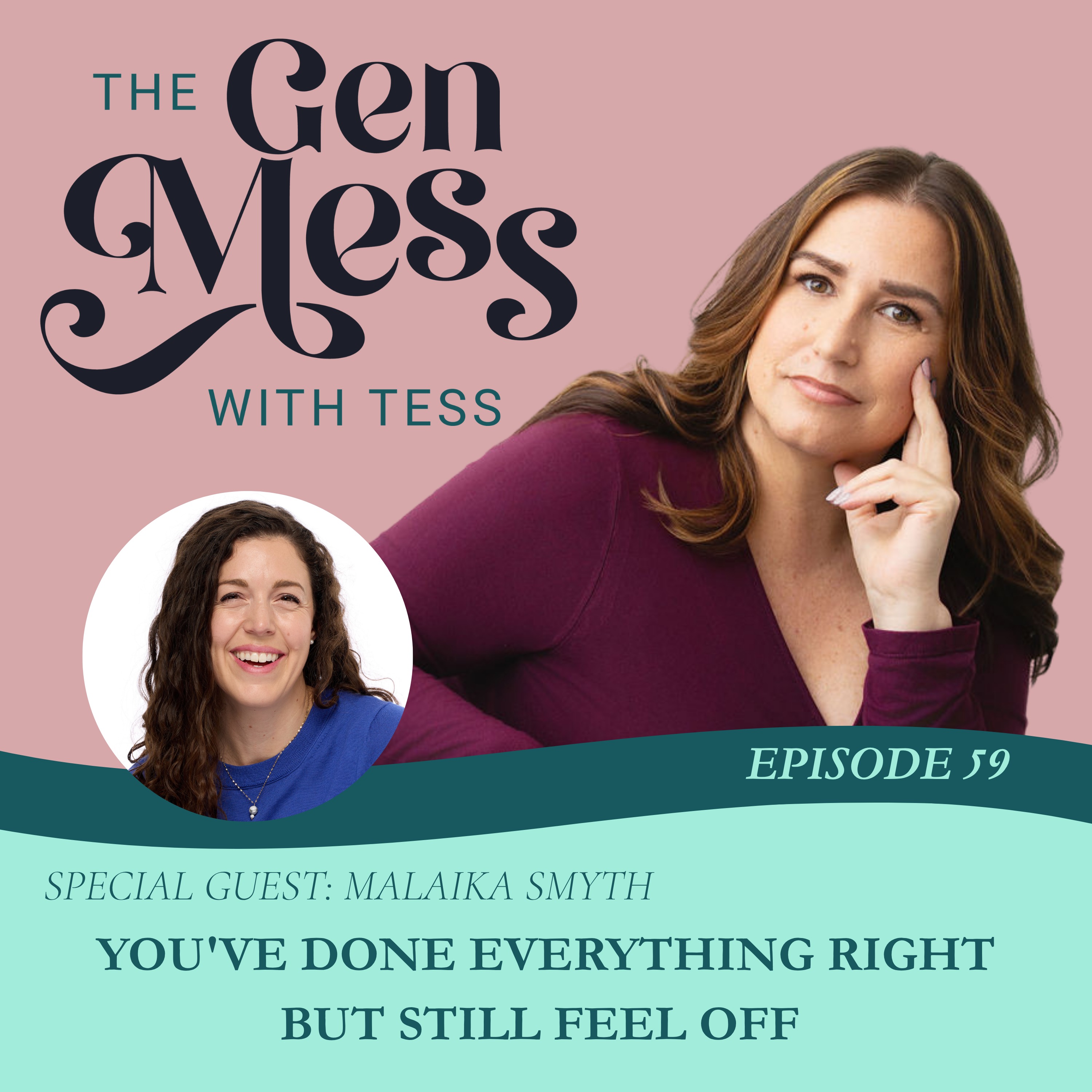 Ep 59: What to Do When You've Done Everything Right But Still Feel Off with Malaika Smyth | You did everything right. The school, the job, the hustle. You followed the path, and you're good at it! So why does it still feel like something's missing?This week, Tess sits down with Malaika Smyth, a coach for high achievers who have checked every box and still find themselves asking a surprisingly hard question: what do I actually want for myself?Malaika brings a rare combination of experience as a Division I athlete background, nearly eight years scaling coaching operations at BetterUp from 50 to over 3,500 coaches, and her own winding path through quarter-life crisis, identity shifts, and a gift box business detour. She helps people build success that actually feels like theirs.This conversation goes deep on the psychology of high achievement, what Silicon Valley's performance culture does to young people, and why so many accomplished professionals have never once stopped to ask what they actually want.In this episode:Why high achievers often tie their entire self-worth to how hard they workThe Silicon Valley "duck effect" — calm on the surface, paddling furiously underneathWhat a Gen Z employee taught Malaika about a kind of career maturity she'd never seen beforeWhy age doesn't automatically equal wisdom — and what actually doesThe sunk cost trap that keeps high achievers stuck on the wrong pathWhat every client ultimately wants at their core (it's always the same thing)The 75-year-old exercise that cuts through all the noise and gets to what actually mattersWhere AI fits in the future of coaching — and where it absolutely doesn'tTo connect with Malaika Smyth, visit malaikasmyth.com or find her on LinkedIn.CHAPTER TIMESTAMPS00:00 — Welcome & Malaika Smyth introduction01:20 — When Malaika first questioned whether being a high achiever was actually working for her02:43 — Where the drive came from — internal wiring or outside pressure?04:10 — Growing up in Silicon Valley: the unspoken assumption that you had to do something "big"07:00 — The duck metaphor: calm on the surface, paddling furiously underneath08:40 — College as non-negotiable — and how environment sets a path without anyone saying a word09:50 — Graduating in 2014: a Bay Area overflowing with opportunity and equity dreams11:00 — Following her brother into product management — and realizing it wasn't right11:40 — Quarter-life crisis at year two: the moment she knew something had to change12:40 — Designing Your Life — the book that opened a new door13:50 — Joining BetterUp and discovering what coaching actually was14:55 — The question Malaika asks clients who are rewarded for hustle16:00 — "My only value is that I work hard" — and why coaching helped her see beyond it17:00 — The decision to leave BetterUp and what came next18:30 — The gift box business detour — and the important lesson it taught20:25 — The sunk cost trap: why people stay on the wrong path long after they know better23:40 — Selling yourself vs. selling a product: the vulnerability of a coaching business24:35 — "I don't really care if you work with me. I care that you work on yourself."28:45 — The power of silence — and celebration — in a coaching session32:00 — Learning to trust your instincts and why being wrong can still be useful37:30 — What every client ultimately wants at their core39:50 — Managing both younger and older employees at BetterUp41:10 — The Gen Z employee who floored Malaika with an unexpected kind of maturity43:00 — Age does not equal wisdom — a lesson that changed how Malaika leads46:45 — "I've been talking to ChatGPT all morning and I need to talk to a human"48:00 — Tess on AI: the real hope, the real fear, and what's actually at stake54:15 — The first question to ask when you've done everything right and it still feels off55:00 — The 75-year-old exercise: what do you want your life to have been about?57:00 — How to connect with Malaika + closing thoughts Hosted on Acast. See acast.com/privacy for more information. | — | ||||||
| 4/29/26 |  Ep 58: How to Give Gen Z Employees Feedback That Actually Lands | You gave the feedback carefully. You were constructive. You even thought through every word. And they still shut down.If you're a manager or HR leader wondering why feedback conversations keep going sideways, this episode is the one you've been waiting for.Tess Brigham breaks down the neuroscience of why feedback feels like a threat, why Gen Z is particularly activated by it (hint: it makes complete psychological sense), and why the feedback models most leaders were trained on were built for a different era.You'll walk away with a completely different understanding of what's happening in that room and three concrete shifts you can make starting with your very next conversation.In this episode:Why the brain experiences feedback as a social threat, and what that means for your employeesDavid Rock's SCARF model and the five psychological domains a single feedback conversation can trigger simultaneouslyWhy Gen Z carries a higher baseline of anxiety into these conversations than any previous generation, and why that's not the same as being fragileThe critical difference between feedback landing as information versus landing as a verdictWhy technically correct feedback still fails when the environment isn't psychologically safeThree shifts to make right now: establishing safety first, separating behavior from identity, and giving space to processThe fourth shift most managers skip, and why it changes everythingCHAPTER TIMESTAMPS00:00 — The feedback conversation that went sideways — and the question every manager has01:00 — "Can't they just take feedback like an adult?" — naming what nobody says out loud01:45 — The neuroscience: why feedback is a threat, not just information02:27 — The SCARF model: the five domains your brain monitors for safety03:30 — What a single feedback conversation triggers simultaneously in the brain04:45 — Why this hits Gen Z harder — and why it's not about fragility05:30 — How social media turned their adolescence into a constant performance evaluation06:15 — Graduating into a pandemic: what Gen Z never got from their first jobs07:00 — When criticism lands as a verdict, not information07:45 — A real client story: the five-minute feedback that caused four days of dread09:00 — Why the old feedback playbook is quietly breaking down09:28 — The broken assumptions behind the feedback sandwich and annual reviews11:00 — Three shifts to make starting with your next conversation11:15 — Shift 1: Establish safety before you say anything critical13:00 — Shift 2: Separate behavior from identity — out loud, every single time14:30 — Shift 3: Give them time and space to process before expecting a response16:20 — Why "closing" a feedback conversation is the wrong instinct17:30 — The fourth shift: check your own nervous system before you walk in19:00 — Why walking in frustrated defeats the entire conversation20:00 — The bottom line: what managers who are getting this right actually understand21:00 — Free resources: the Gen Z Playbook + related episodesDownload Tess's free Gen Z Playbook at TessBrigham.com. Related episodes:Episode 52 (Why Gen Z Keeps Asking Questions at Work) Episode 47 (The Manager Effect | Why Your Boss Impacts Your Mental Health More Than You Think with Ashley Herd) Hosted on Acast. See acast.com/privacy for more information. | — | ||||||
| 4/22/26 |  Ep 57: AI in the Workplace - Will AI Replace Jobs? with Erin Turnmeyer | Is AI really replacing jobs, or are we misunderstanding AI's role at work?In this episode of The Gen Mess with Tess, Tess Brigham sits down with People Operations executive Erin Turnmeyer to break down what leaders, employees, and organizations are getting wrong about AI in the workplace.With 15+ years of experience building talent systems, including time at the Office of the Director of National Intelligence, Erin brings a data-driven perspective on how AI, automation, and analytics are reshaping work.💡 In this episode, we cover:Why AI is a force multiplier, not a replacementThe real reason companies are making AI-related layoffsWhat tasks should (and should NOT) be automatedHow to use AI without losing the human element at workWhy resume screening with AI can backfirePractical ways to start using AI without feeling overwhelmedHow early-career professionals can stand out in an AI-driven worldIf you’ve been feeling anxious, confused, or curious about AI, this conversation will help you rethink what’s actually happening—and how to adapt without fear.Whether you’re a leader, job seeker, or just trying to keep up with the future of work, this episode will give you clarity and practical takeaways.Timestamps00:00 – Intro: “Fixing the mess vs living in it”00:42 – Meet Erin Turnmeyer (People Ops + AI perspective)01:05 – From chem bio weapons analyst → HR leader03:10 – What people get wrong about AI at work04:00 – “AI is a force multiplier, not a replacement”05:00 – Fear-based headlines & why they’re misleading06:00 – Why fear blocks people from learning AI07:30 – How companies fail at AI adoption08:15 – Real example: teaching AI internally at work09:30 – What AI should NOT replace (human touchpoints)10:30 – What to automate vs keep human11:10 – Why AI resume screening is flawed13:00 – Smart ways to use AI in recruiting (without bias)15:00 – Removing “administrative weight” from work16:00 – Will AI lead to layoffs—or growth?17:00 – The real opportunity: 20% more strategic thinking18:10 – Why companies must allow time to learn AI19:20 – Advice for early-career professionals20:00 – Using AI as a daily learning coach21:30 – Don’t outsource your thinking23:00 – Could AI finally deliver work-life balance?24:00 – The 4-day workweek conversation25:00 – Real-world AI use cases (healthcare, systems, etc.)26:00 – What happens to jobs AI can fully replace?27:00 – What actually gets someone hired today28:00 – Why AI-generated resumes are hurting candidates30:00 – How to use AI correctly for resumes32:00 – Training AI to sound like you34:00 – Spotting AI-generated applications instantly35:00 – How young professionals can “train” AI on themselves37:00 – Using AI as a thinking partner (not a cheerleader)38:00 – Trust but verify: why sources matter40:00 – First step: how to start using AI today41:00 – Unexpected tip: use AI for shopping decisions43:00 – Final thoughts + where to find ErinConnect with Tess at tessbrigham.comSubscribe to Erin's Substack, AI for Human Operators, at hrai.substack.com Hosted on Acast. See acast.com/privacy for more information. | — | ||||||
| 4/15/26 |  Ep 56: Why Work Feels So Personal (Part 2) Early Career Stress: What Young Professionals Are Really Experiencing | No one really warns you how psychologically hard early career can be.You learn how to write a resume, interview, and get hired, but almost no one explains what it feels like once you’re inside the workplace. You're being evaluated constantly, questioning yourself, guessing the rules, and trying to build confidence without experience.In this episode of The Gen Mess with Tess, Tess Brigham explains why the beginning of your career can feel so mentally intense, and why that experience is often misunderstood. She breaks down the psychological weight of uncertainty, self-doubt, comparison, unclear expectations, and why many young professionals incorrectly assume they are the problem when they are often responding normally to a demanding environment.Tess also addresses something leaders need to hear clearly: being early career does not mean someone should tolerate unhealthy behavior, poor emotional regulation, or unclear leadership.This is Part 2 of Tess’s solo series on the psychology of work and why younger employees need more clarity, not more criticism.Chapter Timestamps00:00 Why early career hits harder than expected01:05 Learning who you are while being evaluated02:20 Why young professionals internalize stress03:05 High expectations, low control, constant comparison04:20 Why unclear environments create self-doubt04:50 What young employees should never normalize05:30 Why yelling at work should not be accepted06:15 Discomfort vs unhealthy environments06:50 How to separate mistakes from identity07:40 What leaders owe early-career employees Be sure to subscribe so you never miss a weekly episode. To learn more, or to Shop available resources, visit tessbrigham.com Hosted on Acast. See acast.com/privacy for more information. | — | ||||||
| 4/8/26 |  Ep 55: 3 Ways to Take Back Your Morning Routine with Movement, Mindfulness, and Mastery with Amy Landino | Think you're not a morning person? Think again.This week, Tess sits down with Amy Landino, bestselling author, content creator, and founder of Vlog Boss Studios. Together, they blow up everything you think you know about morning routines, productivity, and what it actually means to start your day on your own terms.Amy's newly expanded book, Good Morning, Good Life, isn't about waking up at 5am or turning your morning into an Instagram aesthetic. It's about reclaiming ownership of your day before the world gets a vote, and her simple three-bucket framework (Movement, Mindfulness, and Mastery) makes that possible for anyone, in any season of life.Tess and Amy also get into the messy generational stuff: why Millennials were conditioned to believe "work harder" was always the answer, why a six-figure business might actually be the wrong goal, and the moment Amy told her dad she'd already made $90K that year and watched him go completely speechless.In this episode:Why your morning routine is probably built around someone else's agendaThe key difference between starting your day "on offense" vs. "on defense"Amy's three-bucket framework: Movement, Mindfulness & Mastery explained simplyThe real reason you're "not a morning person" (it's not what you think)Why a six-figure business might be the worst goal you're chasing right nowThe Millennial financial reality: student loans, a broken housing market, and boomer advice that no longer appliesHow self-compassion and accountability actually work together, not against each otherAmy Landino's book Good Morning, Good Life is available now. DM Amy on Instagram @AmyLandino the word "Tess" to receive her free Extraordinary Action Framework.CHAPTER TIMESTAMPS00:00 — Welcome & Amy Landino introduction01:00 — Amy's origin story: moving out at 18 and the "there's gotta be a better way" mindset04:00 — The wedding video that started everything — and how YouTube changed her life07:00 — What people get wrong about morning routines (hint: Instagram flex culture)09:30 — Checking email vs. checking your goals: offense vs. defense12:00 — Why you apologize for not replying fast enough — and why you need to stop13:15 — Is Good Morning, Good Life the Gen Z version of Miracle Morning? Tess makes the case16:45 — The three-bucket framework: Movement, Mindfulness & Mastery19:20 — Tess's morning confession: sitting with her dogs, and finally giving herself permission21:00 — "I'm not a morning person" — the #1 objection, completely reframed24:00 — "But I have kids" — excuse #2, and Amy's surprisingly honest answer28:45 — The Extraordinary Action Framework: DM Amy on Instagram to get it free29:20 — Self-compassion + accountability: why they're not opposites33:45 — Screw "realistic" — why shooting for the unrealistic actually makes sense34:45 — Hot take: Why Amy tells clients with six-figure businesses to just go get a job40:00 — Generational spotlight: Millennials as the internet's guinea pigs42:30 — Student loans, the housing market, and what Millennials actually inherited47:20 — Boomer advice vs. Millennial reality — a tension that's very, very real48:00 — The $90K moment: Amy's dad, and why the people who love you don't always know what's possible for youSUBSCRIBE to The Gen Mess with Tess podcast for weekly insights on workplace culture, generational challenges, and relationship advice. Hosted on Acast. See acast.com/privacy for more information. | — | ||||||
| 4/1/26 |  Ep 54: Why Work Feels So Personal (Part 1) The Psychology Behind Stress, Feedback, and Gen Z at Work | Why does one vague comment from your boss stay in your head all day? Why does being left off a meeting invite suddenly feel personal? Why can work feel emotionally exhausting even when you’re technically “doing fine”?In this episode of The Gen Mess with Tess, Tess Brigham explains why work is never just about tasks, productivity, or performance—it’s psychological.From feedback and comparison to belonging, safety, and identity, Tess breaks down what’s happening beneath the surface when work stress feels bigger than the moment itself. She also explains why so many leaders misread performance issues that are actually clarity issues, communication issues, or nervous-system responses.If you’ve ever replayed a Slack message, questioned yourself after feedback, or wondered why Gen Z seems to experience work differently, this episode explains why.This is part 1 of a 2-part solo series on the emotional reality of work, leadership, and what younger employees are actually experiencing in today’s workplace. Part 2 will be published next week. Chapter Timestamps00:00 Why work is more psychological than most people realize01:10 Why your brain treats work stress like threat02:20 Why vague feedback feels personal03:15 Work, identity, and self-worth04:10 Why comparison intensifies workplace anxiety04:45 What leaders misunderstand about Gen Z retention06:00 Why Gen Z isn’t “too sensitive”07:10 Communication problems are often anxiety problems08:05 Why retention is a mental health issue09:00 The key question leaders should ask instead visit tessbrigham.com to learn more Hosted on Acast. See acast.com/privacy for more information. | — | ||||||
| 3/25/26 |  Ep 53: How High Achievers Burn Out Twice: Stress, Joy at Work, and What Leaders Still Get Wrong with Amy Leneker | In Episode 53 of The Gen Mess with Tess, Tess Brigham sits down with Amy Leneker, founder and CEO of the Center for Joyful Work, to explore why burnout keeps happening even to highly successful leaders who know better.Amy has helped more than 100,000 leaders and teams, including Fortune 100 companies, rethink leadership, workplace stress, and employee well-being. A former public policy executive and recovering workaholic, Amy shares how burning out twice forced her to confront the internal patterns that kept driving overwork, achievement, and chronic stress.Together, Tess and Amy unpack why burnout is not simply about workload; it is often tied to identity, workplace systems, leadership culture, and the stories people tell themselves about success.This conversation explores:why high performers often confuse overworking with worthhow burnout can repeat even after changing jobswhat workplace stress is doing to leadership pipelineswhy younger employees are redefining ambitionhow Gen Z experiences stress differently at workwhy recognition and appreciation matter more than many leaders realizethe three conditions that create joy at work: meaning, mattering, and momentumhow AI may force a new era of critical thinking in leadershipAmy also shares findings from her national workforce research showing that employees increasingly need joy at work to perform well, yet many leaders still operate inside systems that reward exhaustion instead of sustainability.For HR leaders, managers, and executives, this episode offers a practical framework for understanding employee burnout, generational tension, workplace stress, leadership development, and what healthy ambition may need to look like next.If your organization is asking why employees are disengaged, overwhelmed, or pulling back from leadership, this conversation explains what may be underneath it.Chapters with Timestamps00:00 – Why Amy Leneker Burned Out Twice02:14 – The Stress Story High Achievers Carry04:12 – Why Leadership Still Rewards Burnout06:45 – Why Joy Belongs in the Future of Leadership08:21 – Gen Z, Stress, and New Definitions of Work11:52 – Are Younger Workers Redefining Ambition?16:15 – The Three Conditions That Create Joy at Work20:23 – Why Gen Z Needs Appreciation More Than Leaders Think25:36 – The Exercise That Changed Amy’s Career31:13 – Parenting, Leadership, and Invisible Overwork35:01 – Why Workplace Systems Keep Breaking People40:13 – AI, Critical Thinking, and the Future of Work Hosted on Acast. See acast.com/privacy for more information. | — | ||||||
| 3/18/26 |  Ep 52: Why Gen Z Keeps Asking Questions at Work | In Episode 52 of The Gen Mess with Tess, Tess explores one of the most misunderstood workplace dynamics right now: why younger employees keep asking for transparency, and why many leaders misread that as entitlement.While transparency is often described as a Gen Z workplace preference, Tess argues it is something much deeper: a psychological response to growing up in a world where trust has become increasingly fragile.From financial instability and public institutional failures to social media fabrication, layoffs over Zoom, and the rise of AI, younger workers have developed a sharper need to understand what is real, what is changing, and what leaders are not saying.In this episode, Tess explains why transparency is no longer just a communication style. and is now the foundation of trust in modern organizations.Why Gen Z’s questions are often about safety, not defianceHow uncertainty activates worst-case thinking in the brainWhy silence from leadership often increases workplace anxietyThe difference between transparency and oversharingHow honesty improves motivation, engagement, and retentionWhy every generation benefits when leaders communicate clearlyFor HR leaders and managers, this episode offers a practical lens on why communication gaps create disengagement — and why explaining reality clearly may be one of the most powerful leadership tools available today.Because in today’s workplace, transparency is not a bonus. It is how trust gets built.Chapters with Timestamps00:00 – Why Transparency Keeps Coming Up in Every Workplace Conversation 02:20 – Why Gen Z Grew Up Distrusting Systems 04:38 – What the Brain Does When Information Is Missing 06:15 – Why Transparency Matters More Than Perfection 07:04 – A CEO’s Silence During Uncertainty 08:45 – How Honesty Calms the Nervous System 09:26 – Why Motivation Drops When Trust Is Unclear 10:45 – Transparency vs Oversharing 11:46 – Why Every Generation Needs More Clarity 13:10 – The Leadership Advantage of Honest Communication 14:04 – Final Takeaway: Transparency Rebuilds Trust Hosted on Acast. See acast.com/privacy for more information. | — | ||||||
Want analysis for the episodes below?Free for Pro Submit a request, we'll have your selected episodes analyzed within an hour. Free, at no cost to you, for Pro users. | |||||||||
| 3/11/26 |  Ep 51: Why Fast Growth Breaks Company Culture | In Episode 51 of The Gen Mess with Tess, Tess is joined by Corrine Ishio, founder of My Working Soul, to explore a challenge many fast-growing companies face but rarely talk about: scaling the business faster than the culture can keep up.When organizations grow quickly, hiring often becomes reactive. Leaders focus on roles and results, while the human side of the company quietly gets lost. The result? Misalignment, disengagement, and teams that no longer feel connected to the mission that once energized them.Corrine shares her perspective from years working in talent, recruiting, and HR; helping founders and leadership teams rethink how they hire, communicate, and define culture during periods of rapid growth.In this conversation, Tess and Corrine explore:Why companies struggle to maintain culture as they scaleThe complicated role HR plays between employees and leadershipHow generational misunderstandings shape today’s workplaceWhy Gen Z communication patterns are confusing many managersThe influence of social media on workplace behavior and identityWhy purpose is becoming central to work in the AI eraThey also discuss how leaders can create healthier workplaces by focusing less on rigid definitions of culture and more on communication, self-awareness, and intentional hiring. Because when companies grow quickly, it’s easy to forget the most important part of any organization: the humans building it.Chapters (Timestamps)00:00 – Introduction to Corrine Ishio & My Working Soul 01:05 – Corrine’s Path Into HR & Human-Centered Work 04:00 – What HR Actually Does (vs. what people think it does) 07:00 – Why HR Often Feels Stuck Between Employees & Companies 11:00 – The “Human” Lens Inside Business Operations 13:00 – The Meaning Behind “My Working Soul” 17:00 – Why Culture Breaks When Companies Grow Quickly 20:30 – What a Healthy Workplace Actually Looks Like 23:00 – Communication Differences Across Generations 29:30 – Why Younger Workers Are Often Misunderstood 34:30 – Purpose, Work, and the AI Era 38:30 – Are Younger Employees Harder to Manage? 43:00 – Millennials, Social Media, and Cultural Fragmentation 49:00 – Safety, Identity, and the Digital Workplace Hosted on Acast. See acast.com/privacy for more information. | — | ||||||
| 3/4/26 |  Ep 50: Let Go of the Outcome | In Episode 50 of The Gen Mess with Tess, Tess explores a dynamic that quietly derails high performers at every level: the moment work starts to feel like a test.When every meeting feels evaluative and every decision feels like it determines your worth, anxiety rises, and performance often drops. Tess unpacks why this happens and why the solution isn’t caring less, but redefining what actually belongs to you.Drawing from her clinical work with emerging leaders, she breaks down:Why over-focusing on outcomes increases anxiety and self-consciousnessThe psychological difference between effort and approvalHow new managers get stuck trying to predict reactionsWhy Gen Z struggles uniquely in a metrics-driven cultureThe mindset shift that restores confidence, clarity, and flowFrom a first-time manager learning to lead without control, to unexpected lessons from Olympic figure skating and competitive design, Tess illustrates one central truth:Your job is the effort. The outcome was never yours to manage.For HR leaders and executives, this episode is also a leadership lens. When organizations unintentionally create constant evaluation environments, employees tighten up — and innovation suffers. If you’re navigating pressure, perfectionism, or performance anxiety — this episode will help you rethink control and reconnect with your best work.Chapters with Timestamps00:00 – Welcome: When Work Starts to Feel Like a Test 02:00 – Why Anxiety Increases When Outcomes Feel Personal 04:30 – What “Letting Go of the Outcome” Actually Means 06:00 – Effort vs. Approval: The Critical Distinction 07:30 – Case Study: Brittany’s Transition to Management 11:00 – The Office Hours Experiment 13:30 – Changing Your Relationship to Response 15:30 – Performance Pressure & Young Professionals 18:00 – The Gen Z Metrics Trap 21:00 – Why Measured Lives Create Outcome Attachment 23:30 – Flow State & Releasing Control 26:00 – Care Deeply About What’s Yours 28:30 – Final Reflection: Own the Effort, Release the Rest Hosted on Acast. See acast.com/privacy for more information. | — | ||||||
| 2/25/26 | 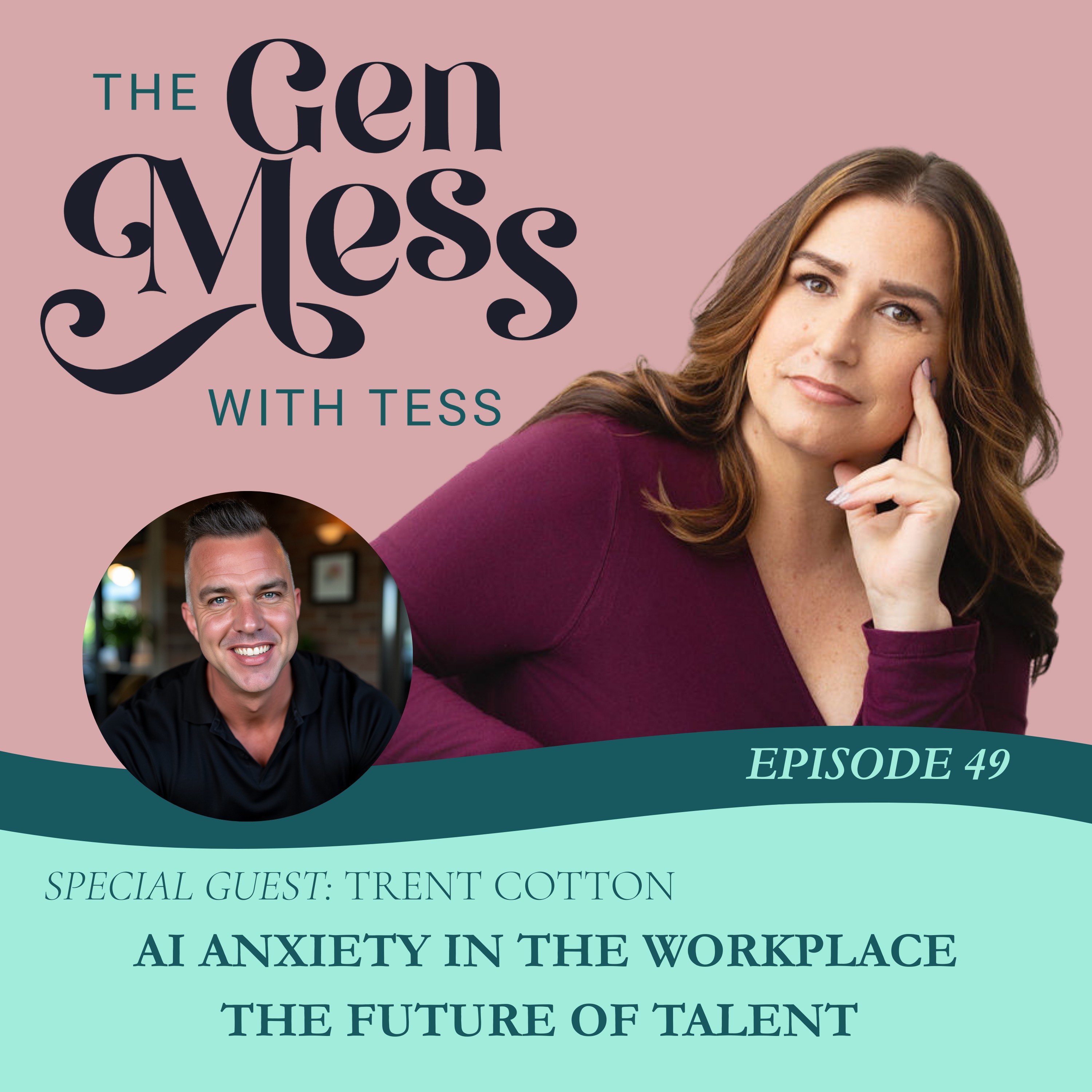 Ep 49: AI Anxiety in the Workplace & The Future of Talent with Trent Cotton | Tess sits down with Trent Cotton - self-described “non-HR HR executive,” author of Sprint Recruiting and High Performance Recruiting, and Head of Talent Insights at iCIMS. Discussing the nuanced conversation about what the data tells us about AI, generational skepticism from Gen Z to Boomers, and what leaders are getting wrong about the future of work, including:Why leaders often hide behind data instead of using it to deepen human conversationsWhat current workforce data actually says about AI adoption across generationsWhy Gen Z may be more skeptical of AI than expectedThe risk of eliminating entry-level roles too quicklyThe emerging power skills of “agency” and “orchestration”How AI can both enhance human potential and erode connection if misusedThis is not a hype conversation about AI. It’s a grounded discussion about leadership responsibility, workforce redesign, emotional regulation, and the long-term talent implications organizations must prepare for now.If you’re an HR leader, executive, or people strategist navigating uncertainty around automation, layoffs, bias, and generational tension — this episode offers clarity without panic.Because the future of work isn’t just technological. It’s psychological.Chapters with Timestamps00:00 – Welcome + Meet Trent Cotton The “non-HR HR executive” and why business fluency matters in people strategy.04:20 – Data vs. Humanity: Where Leaders Get It Wrong Why hiding behind numbers erodes trust — and how to use data to deepen conversations.11:20 – AI Anxiety: Survival Instinct or Rational Fear? Why resistance to AI may be more about control than job loss.14:50 – The Early Career Crisis No One Is Talking About The danger of automating entry-level roles too quickly.21:00 – Is AI Replacing Human Connection? Attachment to tech, loss of discomfort, and emotional consequences.29:00 – How to Actually Use AI Without Losing Your Voice Practical examples of human-AI collaboration.38:45 – What the Data Says About Generations & AI Why Gen Z may be more skeptical than you think.43:05 – The New Power Skills: Agency & Orchestration What leaders should be developing now.48:05 – AI, Disability & Expanding Human Capability Where technology can increase access and inclusion. Hosted on Acast. See acast.com/privacy for more information. | — | ||||||
| 2/18/26 |  Ep 48: When Your Boss Isn’t Safe | How to Protect Yourself Without Quitting | In Episode 49 of The Gen Mess with Tess, Tess tackles a reality many professionals experience but rarely have language for: what to do when your manager does not create psychological safety and you cannot simply walk away.Drawing on the research of Harvard Business School professor Amy Edmondson, who coined the term psychological safety, Tess breaks down the difference between discomfort and harm, high standards and humiliation, resilience and self-abandonment.This episode explores:Why unpredictable leadership activates the nervous systemHow generational conditioning shapes our response to toxic managementThe hidden cost of “enduring” unsafe environmentsFive strategic tools to protect your identity and regulate anxietyHow to decide whether to adapt, escalate, or exit intentionallyFor HR leaders and executives, this episode is also a mirror. Psychological safety is not about lowering performance expectations, it is about creating conditions where people can meet high standards without fear. Whether you are managing up, supporting emerging professionals, or building healthier leadership pipelines, Tess offers practical insight into how psychological safety shapes retention, burnout, and long-term performance.Chapters with Timestamps00:00 – Opening: Living in the Mess 01:00 – The Reality of Unsafe Managers 02:24 – “Paying Your Dues” and Toxic Normalization 04:45 – Defining Psychological Safety 07:07 – What Psychological Safety Is (and Isn’t) 09:28 – Your Nervous System at Work 11:52 – Generational Patterns: Gen Z, Millennials, Gen X 14:18 – Strategy #1: Containment (Observe, Don’t Absorb) 16:05 – Strategy #2: Clarity in Writing 17:45 – Strategy #3: Borrow Safety Elsewhere 19:03 – Strategy #4: Emotional Boundaries 20:30 – Strategy #5: Identity Protection & Your “Reality File” 21:23 – Discomfort vs. Harm 23:00 – Adapt, Escalate, or Exit? 24:45 – Psychological Safety Is Not Entitlement Hosted on Acast. See acast.com/privacy for more information. | — | ||||||
| 2/11/26 | 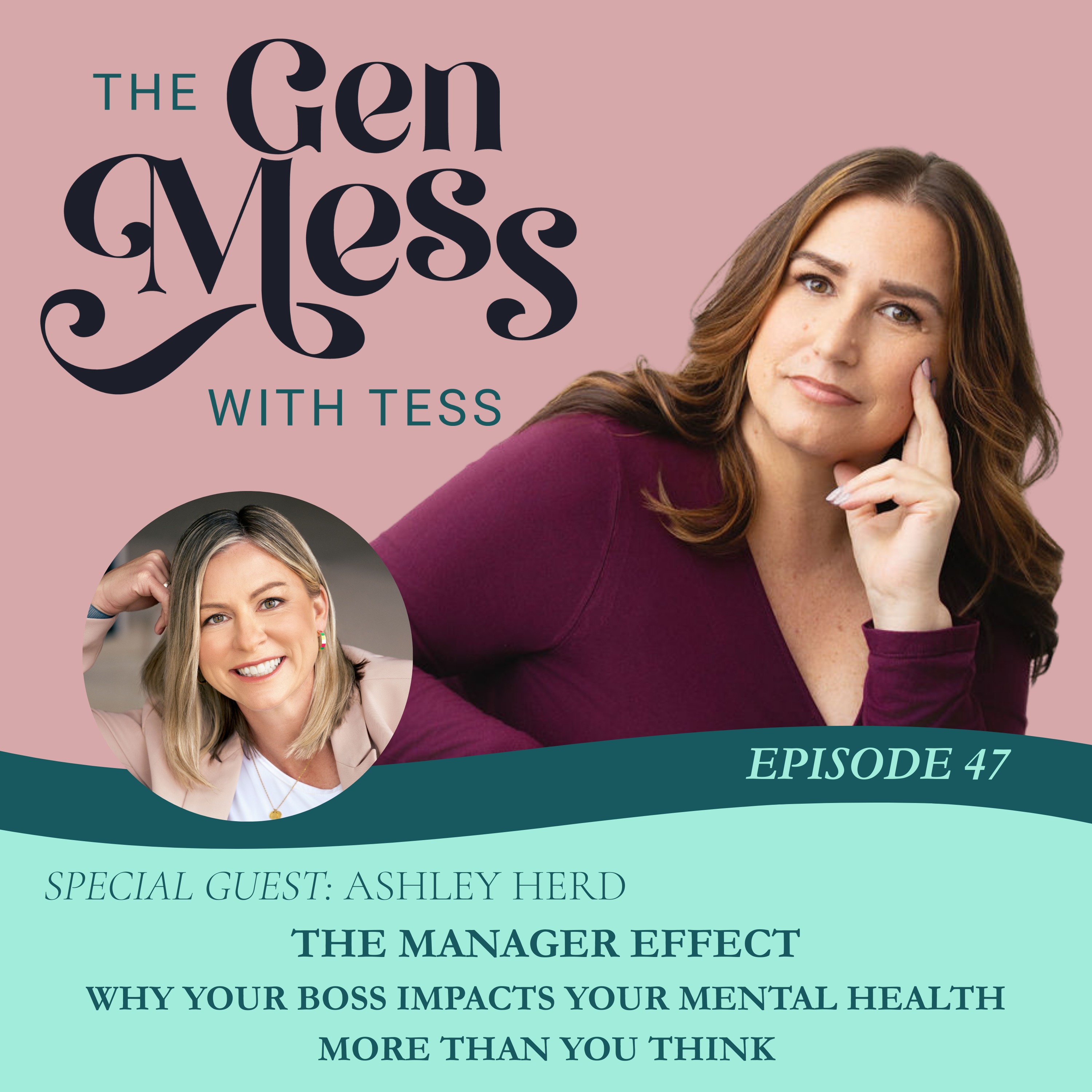 Ep 47: The Manager Effect | Why Your Boss Impacts Your Mental Health More Than You Think with Ashley Herd | In this episode of The Gen Mess with Tess, Tess is joined by Ashley Herd, founder and CEO of The Manager Method, employment attorney, former HR leader at McKinsey & Company and Yum Brands, co-host of the HR Besties podcast, and author of the newly released book The Manager Method: A Practical Framework to Lead, Support, and Get Results.Ashley brings a rare, inside view of management from every angle - frontline work, legal risk, HR leadership, and executive training - to unpack why managers have an outsized impact on employee mental health, engagement, and retention. Drawing on research showing that a manager can influence wellbeing as much as a spouse, Tess and Ashley explore how leadership behavior ripples far beyond performance metrics and into people’s lives at home.This conversation tackles the realities facing modern managers: promotion without training, identity loss when high performers become leaders, generational misunderstandings, and the crushing pressure placed on middle managers. Together, they offer practical, human-centered strategies for leading effectively without burning people out, including Ashley’s core framework: Pause, Consider, Act.This episode is essential listening for HR professionals, people managers, and executives responsible for building sustainable leadership pipelines and healthier workplace cultures in 2026 and beyond.Be sure to subscribe to The Gen Mess with Tess podcast for new episodes weekly. 00:01 – Welcome & Introducing Ashley Herd 02:02 – From employment attorney to leadership educator 03:29 – Why great individual contributors often struggle as managers 05:31 – Promotion myths and the cost of untrained leadership 07:59 – Identity loss when high performers become managers 10:06 – The “LinkedIn test” and chasing titles over fit 12:19 – Why work identity is so powerful (especially in the U.S.) 16:05 – Middle managers: too much responsibility, too little support 18:58 – Why one-on-ones still matter at every leadership level 21:33 – The data: managers impact mental health as much as spouses 24:20 – How leadership stress follows people home 27:58 – Generations at work: framework, not stereotypes 32:23 – Technology, boundaries, and modern burnout 38:22 – Overcorrection, distrust, and workplace isolation 41:16 – One shift every manager can make today: Pause, Consider, Act 44:33 – Ashley’s book, resources, and closing reflections Hosted on Acast. See acast.com/privacy for more information. | — | ||||||
| 2/4/26 | 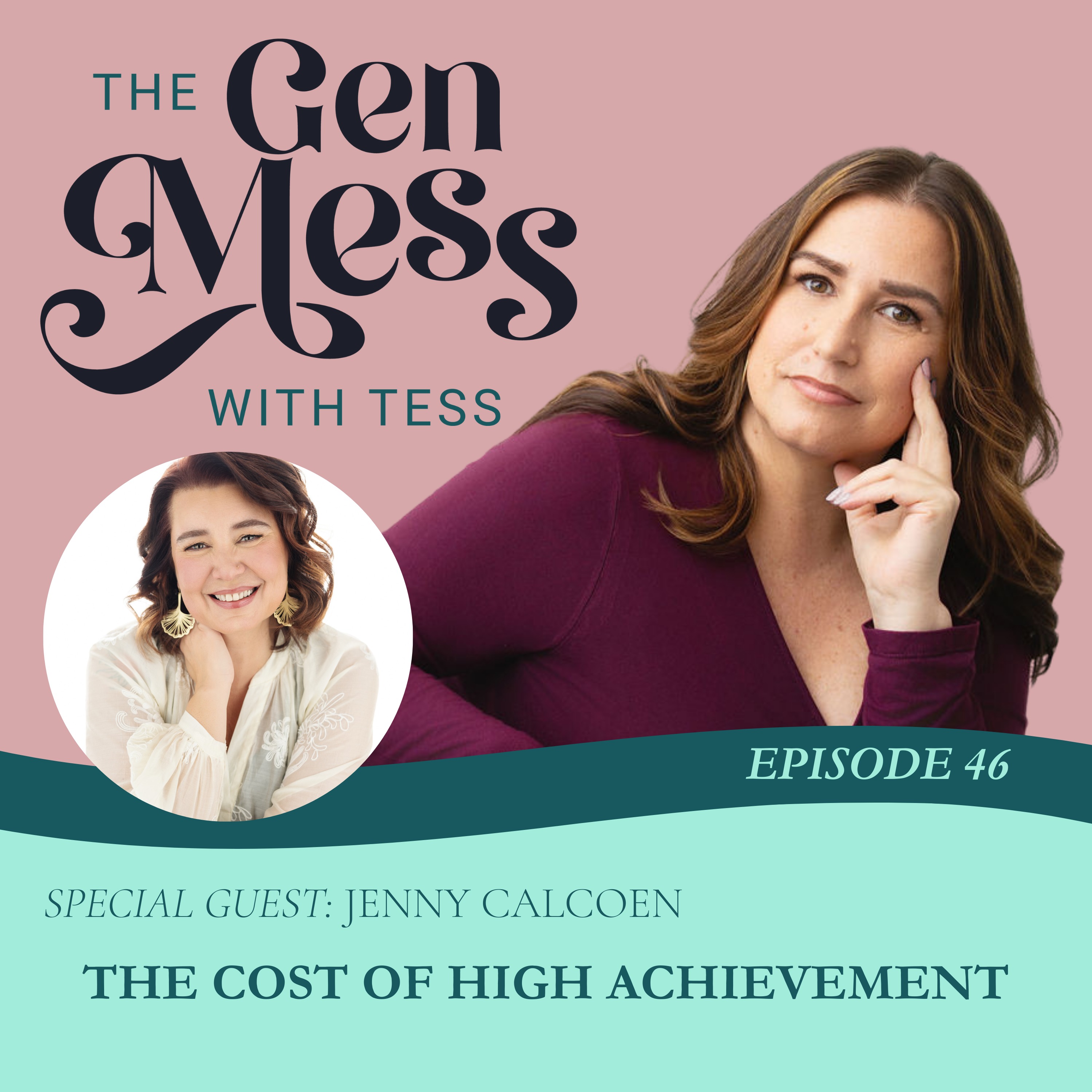 Ep 46: The Cost of High Achievement: Burnout, Identity, and Leadership Transitions with Jenny Calcoen | On this episode of The Gen Mess with Tess, Tess is joined by Jenny Calcoen, CEO and founder of Inner Earthquake LLC, former executive, and private coach to high-achieving women navigating burnout, grief, and major life transitions.Jenny shares her own “inner earthquake” - the moment when outward success no longer matched inner truth - and how a life-altering diagnosis forced her to confront the cost of living according to expectations rather than values. Together, Tess and Jenny explore what happens when achievement masks disconnection, why burnout is often an identity crisis rather than a workload problem, and how leaders can recognize the early cracks before they become breaking points.This conversation offers powerful insights for HR leaders, executives, and people managers navigating retention challenges, disengagement, and leadership fatigue. It reframes burnout not as a failure of resilience, but as a signal that both personal and organizational systems are misaligned.If you’re responsible for developing leaders, shaping culture, or supporting high performers who look “fine” on paper but feel depleted inside, this episode offers a crucial lens for understanding what’s really happening beneath the surface.Resource by Jenny Calcoen: "The Boundary Whisperer" is available as a translation tool for internal signals, or for people who know something is off but don't quite have the language yet so they can simply practice boundary literacy. Here it is - https://chatgpt.com/g/g-688fdd4aa33c8191b5503765ba20cee8-the-boundary-whisperer00:01 – Welcome to The Gen Mess with Tess00:52 – Jenny Calcoen’s story: success, identity, and the first “inner earthquake”01:32 – When illness becomes a wake-up call02:38 – Rebuilding life… while unknowingly repeating old patterns04:30 – Burnout as an identity crisis, not a performance issue06:45 – Why high achievers ignore early warning signs09:10 – The danger of living by expectations instead of values11:40 – What leaders misunderstand about burnout and resilience14:20 – How HR and managers can spot “quiet breaking points”17:10 – Supporting transitions without pathologizing employees20:00 – Redefining success in leadership and work22:40 – Final reflections: listening before the earthquake hits Hosted on Acast. See acast.com/privacy for more information. | — | ||||||
| 1/28/26 |  Ep 45: Why Discomfort Is a Missing Skill in Today’s Workplace | In this solo episode of The Gen Mess with Tess, Tess Brigham explores a surprising social experiment that connected strangers across political divides and why it offers a powerful lesson for today’s leaders in the workplace.Drawing from her background as a therapist and her coaching work with organizations, Tess unpacks what HR leaders and managers are experiencing in 2026: burnout that isn’t driven by workload or flexibility, but by chronic psychological strain, emotional role overload, and an increasing inability to tolerate discomfort.Using the “Party Line” experiment as a metaphor, Tess examines how algorithm-driven culture has reshaped our nervous systems, intensified polarization, and made everyday workplace conversations feel high-stakes and unsafe. She breaks down how different generations experience discomfort at work, why psychological safety is often misunderstood, and how avoiding discomfort quietly erodes trust, collaboration, and culture.This episode reframes discomfort not as a failure of leadership, but as a critical skill organizations must relearn if they want healthy teams, resilient managers, and sustainable workplace cultures.00:01 — Welcome to The Gen Mess with Tess Introducing the episode and the theme of learning to live in the mess.00:58 — The “Party Line” Social Experiment Explained Two payphones, two cities, and a radical idea: conversation without algorithms.02:21 — Why Human Connection Changes the Nervous System Dopamine, cortisol, and why constant conflict keeps us dysregulated.03:42 — It’s Hard to Demonize a Human Voice What happens when stereotypes are replaced with real conversation.04:42 — What We’ve Lost Culturally Discomfort avoidance, algorithm-driven identity, and polarization.06:05 — When Beliefs Become Identity Why disagreement now feels like danger instead of difference.06:56 — Connection Requires Discomfort Why real connection—socially and at work—has always been uncomfortable.08:19 — Why Shaming Hardens People The psychological cost of humiliation, judgment, and moral certainty.08:49 — The Workplace Parallel Why the “Party Line” is a metaphor for modern workplace culture.09:16 — Generational Relationships to Discomfort Boomers, Gen X, Millennials, and Gen Z, and how each navigates stress and challenge.11:36 — Discomfort vs. Harm Why discomfort is often misinterpreted as trauma or boundary violation.12:34 — Nervous Systems, Not Moral Failures Reframing generational conflict at work.12:34 — The Leadership Skill We Avoid Curiosity, repair, and staying in the conversation.14:18 — Discomfort as Leadership Work Why these “soft skills” are actually advanced leadership competencies.14:48 — Final Reflection Discomfort as the doorway to healthier workplaces and human connection. Hosted on Acast. See acast.com/privacy for more information. | — | ||||||
| 1/21/26 | Ep 44: The Real Reason HR, Managers, and Employees Are Exhausted | In this solo episode of The Gen Mess with Tess, host Tess Brigham addresses a question she hears from HR leaders, managers, and employees alike: Why does work feel so heavy right now, even when things look better on paper?Drawing from her background as a therapist and her work with organizations, Tess explains the challenges HR leaders are facing in 2026: burnout is no longer just about workload or flexibility, but about chronic psychological strain shaped by generational experiences, unclear expectations, and emotional role overload.She breaks down how burnout shows up differently for Millennials, Gen Z, and Gen X, how remote and hybrid work have changed trust, communication, and boundaries, and why managers and HR leaders are often carrying emotional responsibilities they were never trained for.This episode reframes burnout as a human, nervous-system issue - not a performance failure - and offers business leaders a clearer way to think about empathy, accountability, psychological safety, and sustainable workplace culture. Hosted on Acast. See acast.com/privacy for more information. | — | ||||||
| 1/14/26 | Ep 43: Going No Contact | Acknowledgement, Repair, and the Generational Divide We Keep Missing | In this solo episode of The Gen Mess with Tess, Tess Brigham unpacks one of the most emotionally charged conversations happening right now: adult children going no contact with a parent.Drawing from her work as a therapist and her own lived experience, Tess challenges the oversimplified narratives dominating social media and reframes "no contact" not as a trend, punishment, or failure, but as a response to long-standing emotional disconnection and a lack of acknowledgement.This episode explores the generational divide shaping these conversations, why intent does not erase impact, and why emotional safety, accountability, and repair matter more than endurance or tradition. Tess also shares a deeply personal story about her relationship with her father, illustrating how acknowledgement - not perfection - creates the possibility for healing.For leaders, HR professionals, and parents alike, this episode offers a powerful reminder: relationships break down not because people are “too emotional,” but because discomfort is avoided instead of addressed. Hosted on Acast. See acast.com/privacy for more information. | — | ||||||
| 12/31/25 |  Ep 42: Gen Mess Reflections: Surviving Change, Loss, and Family Shifts Across Generations | What if the person giving you life advice is, behind the scenes, completely falling apart?In this deeply moving solo episode of Gen Mess with Tess, Tess Brigham pulls back the curtain, sharing the raw, unfiltered story of a year that shook the very foundations of her life. From the staggering loss of her father to the painful journey of caring for her mother as dementia set in, Tess Brigham—the certified coach and licensed therapist—describes what happens when every piece of her own identity is "activated in crisis mode."Far from the highlight reels and inspirational soundbites, this episode reveals the messy, complicated realities even therapists and coaches face. Tess Brigham explores generational differences in dealing with grief, mental health, self-reliance, and asking for help—drawing wisdom (and exposing blind spots) from Boomers, Gen X, Millennials, and Gen Z. She reflects on the exhausting duality of caring for aging parents while supporting her own child through mental health struggles, and how real-life heartbreak changed her perspective as both a professional and a human being.Key highlights include:The overlooked emotional cost of being the "strong one" in the familyGenerational patterns and how each age group defines asking for help and resilienceWhy anticipatory grief and caretaking are acts of love—and also sources of silent painLessons Tess Brigham is carrying forward, and the generational beliefs she's choosing to leave behindA vulnerable reminder that "hanging tough" means allowing yourself to soften, seek support, and be humanThis solo episode is a must-listen for anyone navigating family caregiving, loss, or simply questioning how we all handle life's hardest seasons.Episode Overview 00:00 – Intro Announcer sets up the show's generational lens00:31 – Tess Brigham addresses why sharing her own story matters03:02 – Navigating simultaneous personal crises: parental loss, caregiving, and self-identity06:33 – The unique grief of losing a parent's mind versus a parent's body08:40 – Generational patterns: independence, vulnerability, and the cost of stoicism11:32 – Tess Brigham on what Millennials and Gen Z are teaching the rest of us13:05 – The realities of “functioning” through grief and anticipatory loss17:17 – Each generation’s wisdom, and what Tess Brigham plans to carry—and leave behind20:35 – A gentle call to "hang tough" in a way that honors both strength and softnessReady to feel seen and understood in the messiest moments of life? Hit play and join the conversation. Hosted on Acast. See acast.com/privacy for more information. | — | ||||||
| 12/24/25 |  Ep 41: From PR Glam to Career Jam: Storytelling Your Way Out of the Void | What if finding your dream job actually takes a year—or even longer? In this eye-opening episode of "Gen Mess with Tess," host Tess Brigham sits down with career strategist Liz Helton to pull back the curtain on the realities of job searching and career transformation in today's ever-evolving workforce. If you've ever wondered why sending off hundreds of applications can feel like shouting into a void, this episode will reveal why—and most importantly, what you can do about it.Together, Tess Brigham and Liz Helton dig into:The shocking length of the modern job search—and why it’s no longer a "three-month process"How technology and AI have totally transformed the hiring landscape (for better and worse)Actionable strategies for networking that actually work, whether you’re an introvert, a new grad, or making a mid-career pivotThe key differences in how Gen Z, Millennials, and Gen X approach work, fulfillment, and branding themselvesWhy keeping your own “brag book” is essential for beating imposter syndrome and keeping your confidence alive amid career changesHow AI isn’t taking jobs, but people who know AI are—and how you can upskill right nowYou’ll learn practical tips for standing out in a crowded applicant pool, making LinkedIn work for you, and reframing both rejection and uncertainty as essential steps toward meaningful work. Plus, Liz Helton shares her own journey from PR exec to career consultant, and why sometimes your superpower is that thing that feels as natural as breathing.If you feel stuck, overwhelmed, or unsure about your next step—no matter your age—this heartfelt, actionable episode is for you.Episode Overview with Timestamps:[00:00:01] Introduction: Bridging generational gaps at work[00:01:16] Meet Liz Helton: From PR to guiding career transformations[00:06:44] The evolving job search: Why it takes so much longer now[00:08:47] Why everyone feels like they’re “shouting into a void”[00:13:13] How to beat interview anxiety and imposter syndrome[00:17:44] Building resilience: The emotional side of job hunting[00:19:38] Essential networking tips for introverts and extroverts alike[00:27:40] AI in the job hunt: What you need to know now[00:36:42] How Gen Z, Millennials, and Gen X view work differently[00:43:01] Liz Helton’s #1 piece of advice for anyone feeling stuck[00:46:49] Where to find Liz Helton and free career resourcesTune in to discover why you’re not alone in your career mess—and how you can thrive in it. Hosted on Acast. See acast.com/privacy for more information. | — | ||||||
| 12/17/25 | 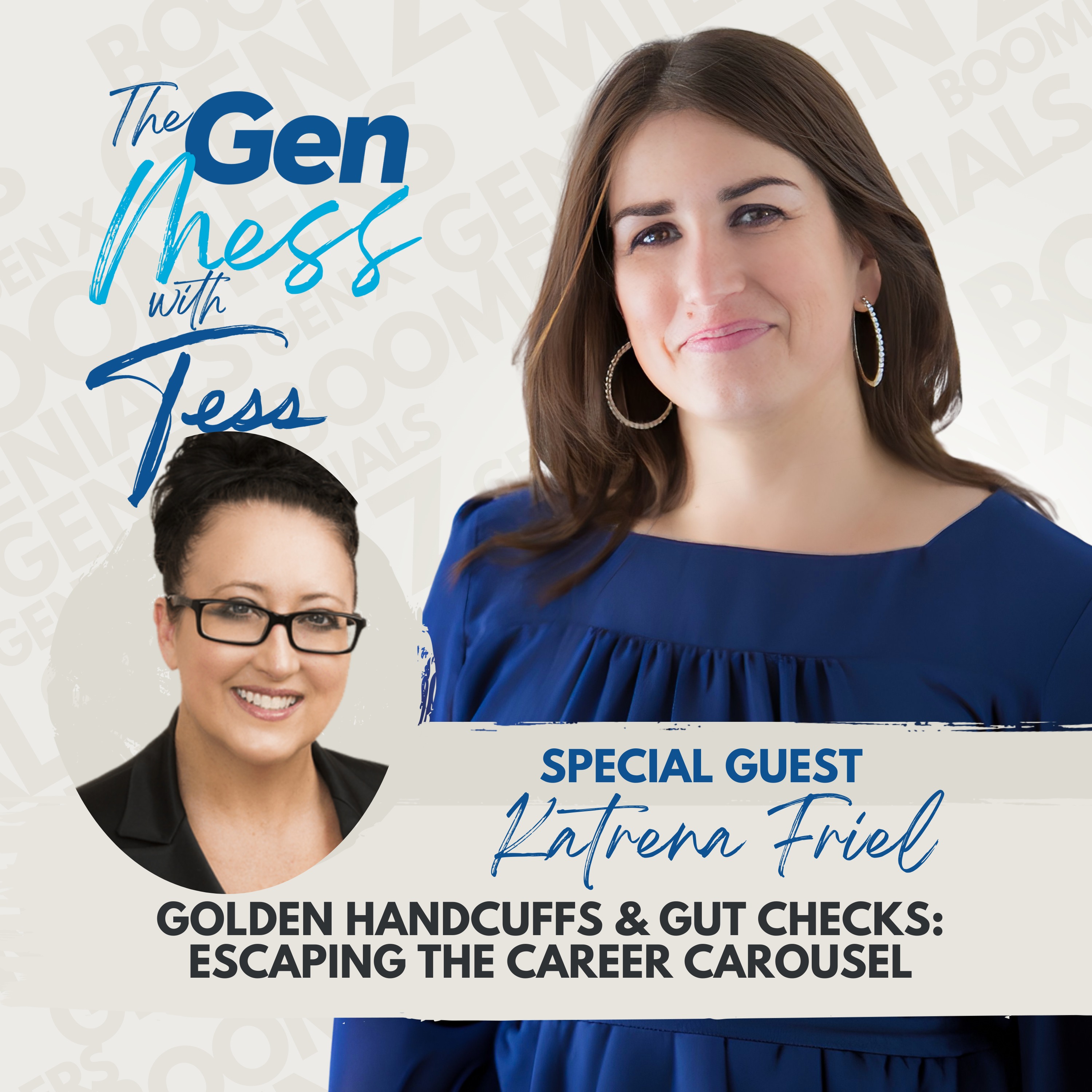 Ep 40: Golden Handcuffs & Gut Checks: Escaping the Career Carousel | What if the brutal truth is that your corporate job is more likely to slowly kill you with stress than set you up for a dream retirement?In this episode of Gen Mess with Tess, host Tess Brigham sits down with powerhouse business mentor, international speaker, and award-winning author Katrena Friel for a candid and eye-opening conversation about breaking free from the golden handcuffs—and finding your true value.Katrena Friel pulls back the curtain on her own journey, from teenage jobs and personal heartbreak to a devastating $30,000 scam—a turning point that sparked her to build her own thriving training and mentoring practice. Together, she and Tess Brigham dissect why so many Gen Xers are “quietly quitting” or burning out, how younger generations are refusing to repeat the cycle of debt and overwork, and why we need to rethink the way we approach careers, money, and even family living.Key highlights include:The shocking downside of “more with less” workplace culture—and Australia’s new laws holding employers accountable for worker burnout and stressKatrena Friel’s $30,000 lesson in self-belief (and how that “scam” became the best investment of her life)The three inner compasses—mind, heart, and gut—and how to use them to turn self-doubt into an allyWhy so many “expert” coaches out there deliver nothing but an expensive lesson (and how to spot the real deal)Generational shifts: Why Gen Z is saying "no" to the boomer/American dream—and the case for embracing multi-generational homes and decluttering your life to gain headspaceBuilding your own brand: What it means to be the product, and how Katrena Friel helps you discover the million-dollar model inside your life experienceThe truth about online programs: Why up to 95% are never completed—and why transformation requires actual mentorship, not just another “passive income” promiseLoaded with tangible advice, real talk, and a bit of industry myth-busting, this episode will make you rethink everything you thought you knew about career success, purpose, and what it takes to build a legacy—on your terms.Episode Overview by Timestamp:[00:00:01] – Welcome and intro to Katrena Friel’s journey[00:02:11] – Early jobs and learning to be a self-starter[00:05:02] – Miscarriage, grief, and the life-changing $30,000 scam[00:08:17] – The unregulated coaching industry and lessons from mistakes[00:11:14] – The three inner compasses: Mind, gut, and heart[00:16:39] – Why it’s so hard to leave corporate: Golden handcuffs and generational differences[00:24:20] – Declutter your life: Practical steps for big change[00:27:28] – Rethinking the family home and intergenerational wealth[00:31:09] – The career marathon mindset and building your own expertise[00:34:09] – “Done for you” programs vs. the myth of the passive online business[00:42:59] – How to connect with Katrena Friel and next steps for listenersTune in for an episode packed with hard truths, practical strategies, and inspiration to reinvent work and life—no matter your generation! Hosted on Acast. See acast.com/privacy for more information. | — | ||||||
| 12/10/25 | 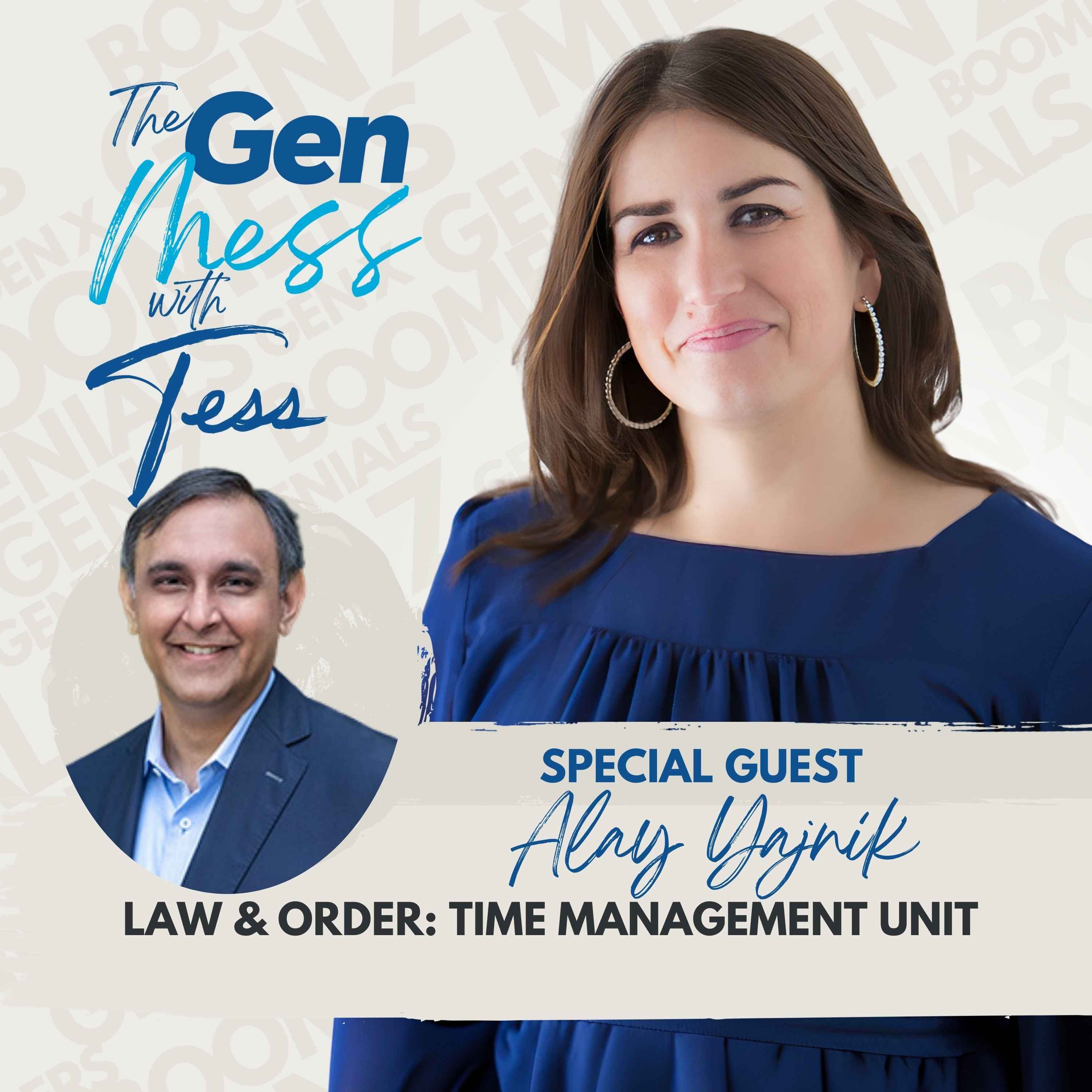 Ep 39: Law & Order: Time Management Unit | What if the secret to building a thriving law firm wasn’t about grinding out endless billable hours—but about rethinking the entire way attorneys work and lead? In this eye-opening episode of Gen Mess With Tess, host Tess Brigham welcomes law firm growth expert Alay Yajnik for a candid conversation that shakes up everything you thought you knew about legal hustle and business success.Discover how Alay Yajnik pivoted from running multimillion-dollar Silicon Valley companies to coaching attorneys—and why most lawyers stumble when it comes to building a lasting, profitable business. You’ll learn why working harder doesn’t always mean earning more, and how breaking out of traditional law firm mindsets—from hourly billing to team management and rate setting—is the real game-changer.Key episode highlights:Why technical skills don’t equal business success (and how “The E Myth Revisited” nails the problem for lawyers, therapists, and service pros)The biggest pain points holding law firm owners back—hint: it’s not just the “hours in a day”How shifting your mindset can help you work smarter, not harder—and finally create the time and income you wantNavigating generational tensions in the workplace: What attorneys get wrong about Gen Z, and why the newest workforce expects more work-life balance and financial stability than everReal talk about raising rates, burnout, hiring, and having those difficult employee conversations (plus how to screen for clients who are truly ready for change)Whether you lead a law firm, run a small business, or just want to understand how generational perspectives are upending the way we work, this episode is loaded with actionable insights and relatable stories.Episode Overview:[00:00:31] Tess Brigham: Welcomes Alay Yajnik; his background in law firm growth[00:01:23] Alay Yajnik: Story of switching from Silicon Valley to coaching attorneys[00:03:08] Discussion: Why attorneys make great clients and what they uniquely struggle with[00:05:15] Skills gap between technical expertise and business acumen; "The E Myth Revisited"[00:07:16] The real issue: Time, burnout, and working smarter[00:09:32] Traditional law firms vs. startup mindset; resistance to change[00:12:11] Symptom vs. cure: Time management as a lever for transforming business results[00:13:19] Raising rates, money fears, and business growth challenges[00:17:27] Navigating client readiness and coaching intake[00:18:07] Generational tensions: Gen Z’s approach to work, bonuses, and raises[00:22:05] How the cost of living, technology, and burnout are shaping new workplace expectations[00:27:04] A deeper look at employee expectations, creativity, and the evolving legal workplace[00:36:33] Final reflections: Lessons from coaching lawyers, generational stereotypes, and business owner frustrations[00:41:06] How to connect withAlay Yajnik and his resources for law firm owners[00:43:17]Intro Announcer: Show outro and next episode previewTune in for an episode that’s more than just law—it’s about building the future of work, one honest conversation at a time. Hosted on Acast. See acast.com/privacy for more information. | — | ||||||
| 12/3/25 |  Ep 38: How To Handle Difficult People at Work | What if the only way you could escape your toxic work environment was being hit by a bus—not to die, but just to get a break? Shocking as it sounds, that’s the level of desperation bestselling author and executive coach Diana Lowe once felt, and she’s not alone. In this riveting episode of "Gen Mess with Tess," Tess Brigham pulls back the curtain on the hidden emotional toll of modern workplaces and the true meaning behind being “hard to handle.”Join Tess Brigham as she sits down with Diana Lowe—author of "Hard to Handle"—for a raw, honest conversation about surviving abusive bosses, how ‘difficult’ is just a matter of perspective, and why clinical depression became a turning point for radical career reinvention. Together, they untangle how we can learn to live in the mess of work (and life) and find purpose where others might only see crisis.Key highlights include:Diana Lowe’s journey from enduring toxic workplaces in finance, to becoming a champion of emotional intelligence and intentional leadership—even when her own breaking point was a diagnosis of clinical depression.Surprising ways we internalize abusive work environments and why so many suffer in silence, secretly hoping for an unexpected event to rescue them.The real story behind "Hard to Handle": Why every villain has another side, the value of seeing the strengths in ‘difficult’ coworkers, and why we’re all someone’s ‘Chuck’ at work.Generational shifts in the workplace, from tattoos and dress codes (bras at board meetings?) to new norms around mental health—and how leaders can adapt.The truth about DEI (Diversity, Equity & Inclusion) in organizations: why emotional intelligence—self and other-awareness—is the missing foundation, and how unconscious biases persist, even with the best intentions.If you’ve ever felt misunderstood at work, frustrated with your boss, or questioned your place in the corporate ladder—this episode will not only validate your experience but give you practical wisdom on how to lead (and live) with more awareness and empathy.Episode Overview00:00:00 – Tess Brigham introduces Diana Lowe and her unconventional career path00:01:04 – Diana Lowe on surviving bad bosses and finding mission in adversity00:03:05 – Recognizing abuse and the moment depression forced a life change00:06:31 – The origins and real meaning behind “Hard to Handle”00:08:25 – Why ‘difficult’ is always in the eye of the beholder00:12:01 – The case study format of the book and lessons from corporate life00:22:18 – Growth, vulnerability, and choosing whether to stay or go in tough situations00:25:14 – Generational differences: mental health, tattoos, and the bra at work debate00:34:45 – Feedback, personal growth, and the art of building people up00:37:39 – DEI, emotional intelligence, and the nuances of real inclusion00:51:07 – How to connect with Diana Lowe and explore her upcoming projects00:53:04 – Closing thoughts: learning to live in the messDon’t miss this episode’s honest, no-fluff take on surviving—and thriving—in the workplace chaos. Hosted on Acast. See acast.com/privacy for more information. | — | ||||||
| 11/28/25 |  Ep 37: “Emotional Availability”: Now Trending at Work and Home | What if everything we thought was “wrong” with Gen Z was actually the outcome of generations striving to do better for their children? In this solo episode of Gen Mess with Tess, host Tess Brigham turns the tables on common complaints about today’s youth and boldly reveals how every “mess” in the workplace and at home is really generational evolution in real time—and a sign of remarkable progress.Drawing deeply from her own life as a Gen Xer, therapist, and parent to a Gen Z son, Tess Brigham unpacks the hidden links between generational values, shifting parenting philosophies, and the transformation of work and life. She discusses the evolution from silent survivalists, boomers’ pursuit of success, to Gen X’s badge of independence—and how each generation has tried to heal the wounds of the last, often by swinging the pendulum in new directions.Key highlights from this episode:Why labeling Gen Z as "entitled" or "too sensitive" misses the bigger story of progressTess Brigham’s personal journey parenting a son with mental health challenges—and how it shaped her view of parenting and resilienceHow workplace frustrations with Gen Z are linked to conscious choices Gen X and Millennial parents made to create emotionally safer homesThe groundbreaking shift: Gen Z prizes wellness, therapy, and boundaries not as luxuries, but as new standardsA timely message for every parent and leader: Why the generational mess we’re in is not a mistake, but humanity learning to live, not just surviveBy the end of the episode, you’ll see generational “mess” through a new lens—one of ongoing evolution, empathy, and hope.Timestamped Episode Overview:00:00:01 – Tess Brigham sets the stage: generational challenges and introducing00:00:32 –Tess Brigham: Opening thoughts on Gen Z, the new world of work, and the evolution of values00:02:22 – The progression from the Silent Generation to Gen X: how each raised their children to break new ground00:05:21 –Tess Brighamreflects on Gen X parenting—its aspirations and overcorrections00:07:00 – Ad break:Tess Brighamdiscusses her work with organizations to “clean up the gen mess”00:07:54 – Personal story: Raising her son Max, the challenges of mental health, and questioning modern parenting00:12:06 – The new parenting paradigm: Responding to the child you have, not the one you imagined00:12:44 – The impact on the workplace: Today’s Gen Zers as products of generational evolution00:13:24 – Generational values: How priorities have shifted over time00:14:19 –Tess Brigham shares about her father’s late-in-life emotional growth and seeing progress across the generations00:15:15 – Looking at Gen Z through a lens of celebration, not criticism00:16:19 –Tess Brighamwraps up with a call to embrace the mess as part of evolution00:16:51 –O utro Voiceover: Closes with info about connecting with Tess and future resourcesReady to witness how generational messiness is actually a story of hope and healing? Press play. Hosted on Acast. See acast.com/privacy for more information. | — | ||||||
Showing 25 of 62
Sponsor Intelligence
Sign in to see which brands sponsor this podcast, their ad offers, and promo codes.
Chart Positions
2 placements across 2 markets.
Chart Positions
2 placements across 2 markets.