
Insights from recent episode analysis
Audience Interest
Podcast Focus
Publishing Consistency
Platform Reach
Insights are generated by CastFox AI using publicly available data, episode content, and proprietary models.
Most discussed topics
Brands & references
Total monthly reach
Estimated from 5 chart positions in 5 markets.
By chart position
- 🇰🇷KR · Technology#1331K to 10K
- 🇫🇷FR · Technology#1851K to 10K
- 🇿🇦ZA · Technology#4610K to 30K
- 🇨🇱CL · Technology#923K to 10K
- 🇸🇬SG · Technology#137500 to 3K
- Per-Episode Audience
Est. listeners per new episode within ~30 days
4.7K to 19K🎙 Daily cadence·40 episodes·Last published 4d ago - Monthly Reach
Unique listeners across all episodes (30 days)
16K to 63K🇿🇦48%🇰🇷16%🇫🇷16%+2 more - Active Followers
Loyal subscribers who consistently listen
6.2K to 25K
Market Insights
Platform Distribution
Reach across major podcast platforms, updated hourly
Total Followers
—
Total Plays
—
Total Reviews
—
* Data sourced directly from platform APIs and aggregated hourly across all major podcast directories.
On the show
From 10 epsHosts
Not detected.
Recent guests
Recent episodes
Own or Be Owned: Why Every Company Needs Its Own AI Model (Yash Patil, Co-Founder & CEO of Applied Compute)
Jun 23, 2026
1h 08m 06s
What America Is Missing Between Sanctions and Nuclear War (Bryon Hargis, Co-Founder & CEO of Castelion)
Jun 2, 2026
1h 16m 20s
“Our Goal Is to Build an Electrical Engineer.” (Davide Asnaghi, Co-Founder & CEO of Diode)
May 19, 2026
1h 12m 24s
Investing Like A Mystic: How Cyan Banister Finds Outliers (Co-Founder of Long Journey Ventures)
May 5, 2026
1h 13m 22s
The Future Of Drug Discovery Is 4 Billion Years Old (Viswa Colluru, Founder & CEO at Enveda)
Apr 21, 2026
1h 22m 56s
Social Links & Contact
Official channels & resources
Official Website
Login
RSS Feed
Login
| Date | Episode | Topics | Guests | Brands | Places | Keywords | Sponsor | Length | |
|---|---|---|---|---|---|---|---|---|---|
| 6/23/26 |  Own or Be Owned: Why Every Company Needs Its Own AI Model (Yash Patil, Co-Founder & CEO of Applied Compute) | Yash Patil is the 23-year-old founder and CEO of Applied Compute, a $1.3 billion company helping businesses train custom AI models on their own data: smaller, cheaper, and purpose-built for the work they actually do. Before founding the company, Yash dropped out of Stanford and spent two years at OpenAI working on post-training infrastructure and Codex. He left with one core conviction: every company that runs its critical workflows on someone else’s model is building on shifting sand. Applied Compute is his answer to that problem, already serving customers including DoorDash, Cognition, and Mercor.In our conversation, we explore:• Why “own or be owned” is becoming existential for any company that relies on frontier AI models• What it was like inside OpenAI the weekend the board fired, and then reinstated, its CEO• Why post-training is where competitive advantage is now being built, and what reinforcement learning with verifiable rewards actually is• Why evals have become the new production environment, and why companies will never share them with frontier providers• How a specialized model built for DoorDash outperformed frontier models on a narrow, high-value task• Why cost, not capability, is now the primary driver pushing companies toward custom models• Why Yash believes AI’s transformation of the economy will unfold over decades, and why near-term fears about mass job displacement are misplaced—Thank you to the partners who make this possibleBrex: The intelligent finance platform.Guru: The AI source of truth for work.Persona: Trusted identity verification for any use case.—Transcript: https://www.generalist.com/p/own-or-be-owned-why-every-company—Timestamps(00:00) Introduction(03:50) Fable 5 and the case for owning your own models(09:22) Why Applied Compute is betting on custom AI models(12:30) Yash's early influences and first projects(17:42) His brief time building at Stanford(19:29) Leaving Stanford for OpenAI(25:58) Inside OpenAI during Sam Altman's firing(28:18) What Yash admires about Sam Altman(29:43) Teaching models to reason(35:39) The core insight behind Applied Compute(39:40) How Applied Compute works with its customers(45:55) Why model training never ends(48:56) Why not every task needs a frontier model(51:25) The culture and people of Applied Compute(54:50) Applied Compute's training infrastructure(58:43) The coming compute crunch and other predictions(1:03:48) Final meditations—Follow Yash PatilX: https://x.com/ypatil125Website: https://yashpatil.meLinkedIn: https://www.linkedin.com/in/yash-s-patil—Resources and episode mentions: https://www.generalist.com/p/own-or-be-owned-why-every-company—Production and marketing by penname.co. For inquiries about sponsoring the podcast, email jordan@penname.co. This is a public episode. If you'd like to discuss this with other subscribers or get access to bonus episodes, visit www.generalist.com/subscribe | 1h 08m 06s | ||||||
| 6/2/26 | 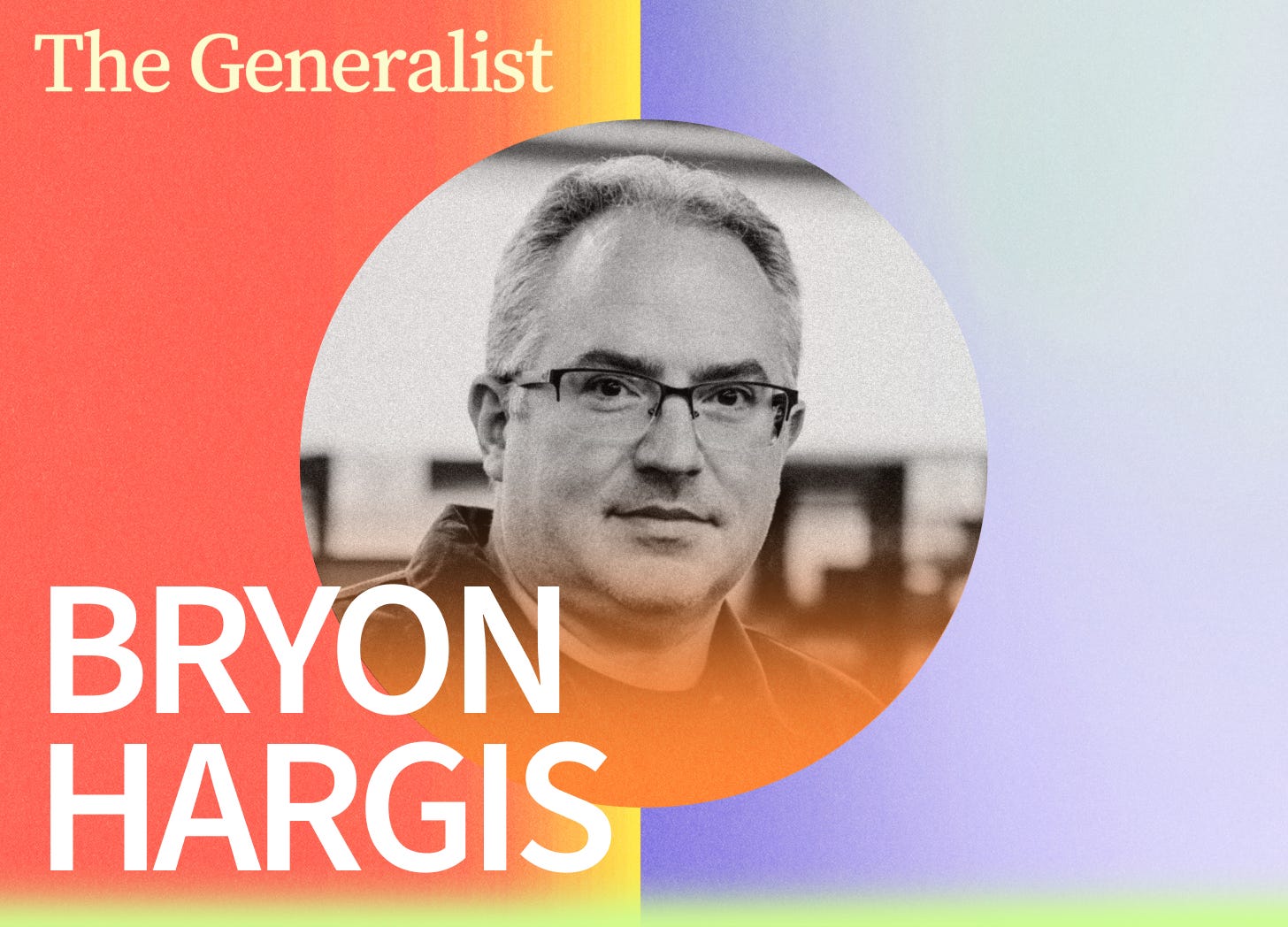 What America Is Missing Between Sanctions and Nuclear War (Bryon Hargis, Co-Founder & CEO of Castelion) | Bryon Hargis is the co-founder and CEO of Castelion, a defense startup building low-cost hypersonic missiles designed to be manufactured at scale. Before founding Castelion, Bryon spent more than a decade at Johns Hopkins Applied Physics Laboratory and nearly six years at SpaceX, where he worked on national security space programs and saw firsthand how iterative engineering and manufacturing speed could reshape aerospace. Castelion’s first missile, Blackbeard, is slated for integration on the Navy’s F/A-18 Super Hornet in roughly a year.In our conversation, we explore:• Why Bryon believes building missiles is paradoxically essential to maintaining peace• The game theory behind warfare and why tit-for-tat strategies require credible middle-ground responses• How China’s 2021 hypersonic test revealed not just a capability gap but a manufacturing and cost advantage• Why traditional aerospace processes—optimized for low risk and high cost—can’t compete with rapid iteration• What Bryon learned in his first week at SpaceX (after 12 years in traditional aerospace)• Why building a carrier-based, air-launched hypersonic missile as a first product was the hard but right choice• How focusing on manufacturability and cost over maximum capability can produce more effective deterrence• Why the person who adapts faster in warfare always wins, and how that shapes Castelion’s philosophy—Thank you to the partners who make this possible.tech domains: An identity for builders at their core.Ahrefs Brand Radar: Find your brand in AI results.Persona: Trusted identity verification for any use case.—Timestamps(00:00) Intro(04:01) Why America needs hypersonic missiles(07:13) China’s edge in hypersonics(12:05) The missing middle ground in deterrence(18:05) Preventing warhead ambiguity(19:40) How hypersonics differ from ballistic missiles(25:05) The economics of defensive vs. offensive systems(28:21) How SpaceX differs from traditional aerospace(37:40) Why Bryon chose to build in defense over space(42:42) Key factors that drove Castelion’s success(48:28) Designing Blackbeard, Castelion’s first hypersonic missile(1:01:06) The importance of lower costs and quicker manufacturing(1:10:04) Book recommendations—Follow Bryon HargisLinkedIn: https://www.linkedin.com/in/hargsbX: https://x.com/hargsb—Resources and episode mentions: https://www.generalist.com/p/what-america-is-missing-between-sanctions—Production and marketing by penname.co. For inquiries about sponsoring the podcast, email jordan@penname.co. This is a public episode. If you'd like to discuss this with other subscribers or get access to bonus episodes, visit www.generalist.com/subscribe | 1h 16m 20s | ||||||
| 5/19/26 | 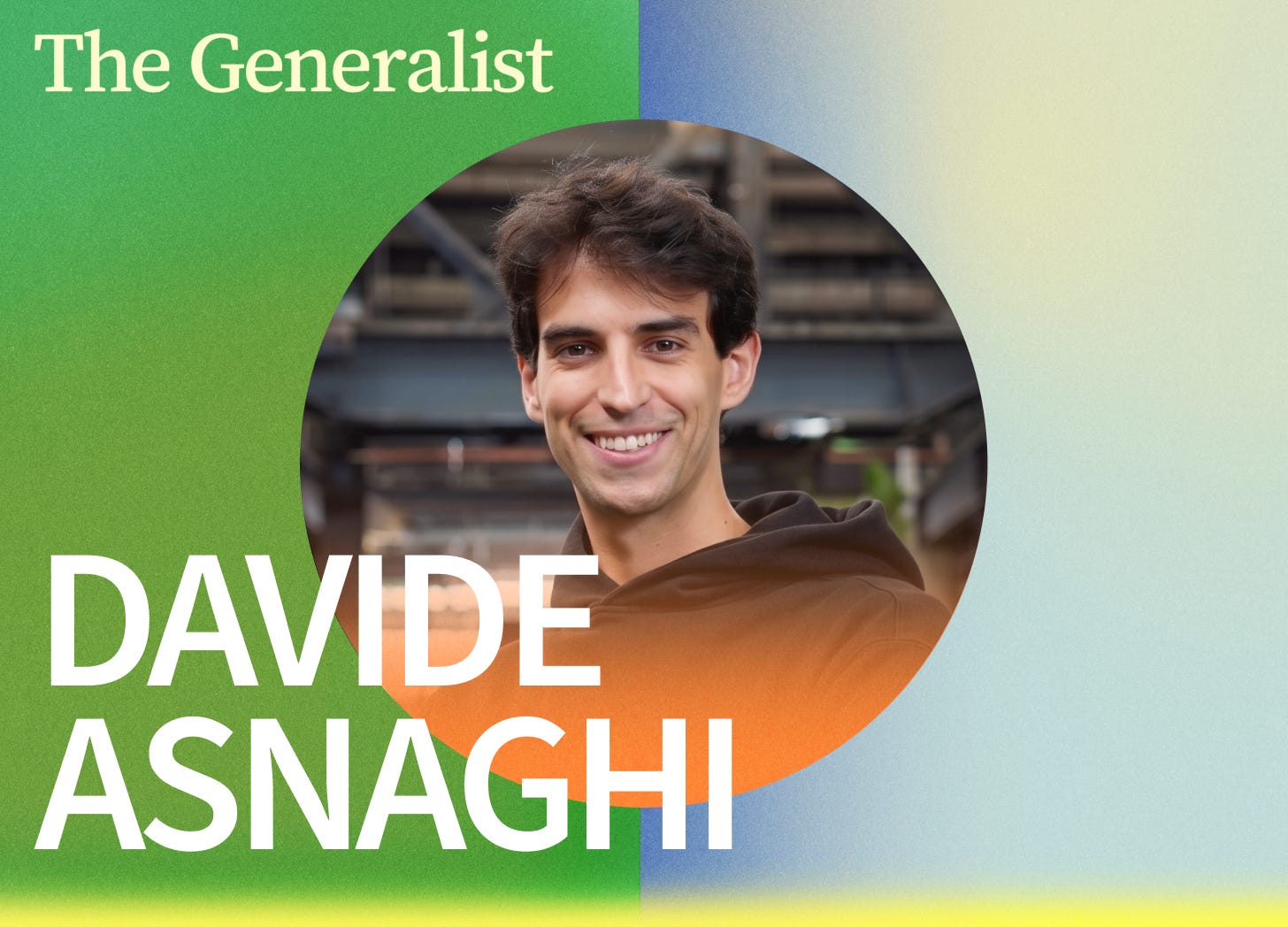 “Our Goal Is to Build an Electrical Engineer.” (Davide Asnaghi, Co-Founder & CEO of Diode) | Davide Asnaghi is the co-founder and CEO of Diode, a Brooklyn-based startup using AI to design and manufacture circuit boards in the United States.Before Diode, Davide worked on Apple’s Special Projects Group and spent time in Hong Kong and Shenzhen studying Asia’s electronics manufacturing ecosystem. That experience convinced him that PCB design, despite powering everything from smartphones and satellites to medical devices and autonomous systems, remained one of the most overlooked layers of the tech stack.Since its founding just two years ago, Diode has landed Physical Intelligence and Saronic as customers and partnered with Anthropic to help Claude become a better electrical engineer. The company’s ultimate ambition: to make hardware as nimble as software.In our conversation, we explore:• Why the West outsourced PCB manufacturing to Asia in the 2000s and why bringing it back matters for American competitiveness• What Shenzhen’s manufacturing culture does better than Silicon Valley (and what the U.S. can learn from it)• How Diode’s models can one-shot much of schematic design and compress hardware timelines from months to weeks• The three-week YC pivot that transformed Diode from a design validation tool into a full-stack manufacturer• Why circuit boards are the “forgotten middle child” between silicon and software• How Diode partners with Anthropic to make LLMs better electrical engineers• What it takes to build a hardware company in 2025—and why the talent bar must stay incredibly high• How Italian, American, and Chinese cultures shaped Davide’s approach to entrepreneurship and manufacturing—Thank you to the partners who make this possible.tech domains: An identity for builders at their core.Guru: The AI source of truth for work.Brex: The intelligent finance platform.—Timestamps(00:00) Intro(04:15) Why Davide calls himself a copper merchant(05:53) Diode’s mission to rebuild PCB manufacturing in the U.S.(07:58) What success looks like(09:00) Growing up in northern Italy and spending a year in Minnesota(13:14) Why Italy produces fewer venture-backed founders(15:30) Why Hong Kong accelerated Davide’s learning(19:09) Silicon Valley vs. Shenzhen(22:05) What Davide learned in Apple’s Special Projects Team(24:11) Why Davide left Apple after two years(26:54) Meeting his co-founder, Lenny(29:32) How Davide uncovered the need for better PCB design and manufacturing(33:23) PCB manufacturing in Asia, and Diode’s approach(41:29) The YC pivot that changed Diode’s business(44:39) Inside Diode’s customer journey(48:10) Where the value is in electronics manufacturing, and Davide’s AGI thesis(51:30) What separates a working board from a great one(55:32) Where Diode fits in the electronics stack(59:55) Diode’s early near-death moment and long-term vision(1:02:30) Diode’s exceptionally high bar for hiring(1:04:48) Where Davide gets his best ideas(1:07:00) Final meditations—Follow Davide AsnaghiLinkedIn: https://www.linkedin.com/in/d-asnaghiX: https://x.com/davideasnaghiGitHub: https://hexdae.github.io—Resources and episode mentions—Books—Breakneck: China’s Quest to Engineer the Future: https://www.amazon.com/Breakneck-Chinas-Quest-Engineer-Future/dp/1324106034Chip War: The Fight for the World’s Most Critical Technology: https://www.amazon.com/Chip-War-Worlds-Critical-Technology/dp/1982172002—People—Alex Wong on LinkedIn: https://www.linkedin.com/in/alex-wong-6b8930205Lenny Khazan on LinkedIn: https://www.linkedin.com/in/lennykhazanBrendan Eich’s website: https://brendaneich.com—Other resources—Diode: https://www.diode.computerAWS: https://aws.amazon.comArduino: https://www.arduino.ccBending Spoons: https://www.bendingspoons.comFortell (formerly Chromatic): https://www.fortell.comButterfly Network: https://www.butterflynetwork.comFoxconn: https://www.foxconn.comJLCPCB: https://jlcpcb.comAnthropic: https://www.anthropic.comQuilter: https://www.quilter.aiKiCad: https://www.kicad.orgCadence: https://www.cadence.comStripe: https://stripe.comDogpatch: https://en.wikipedia.org/wiki/Dogpatch,_San_Francisco—Production and marketing by penname.co. For inquiries about sponsoring the podcast, email jordan@penname.co. This is a public episode. If you'd like to discuss this with other subscribers or get access to bonus episodes, visit www.generalist.com/subscribe | 1h 12m 24s | ||||||
| 5/5/26 | 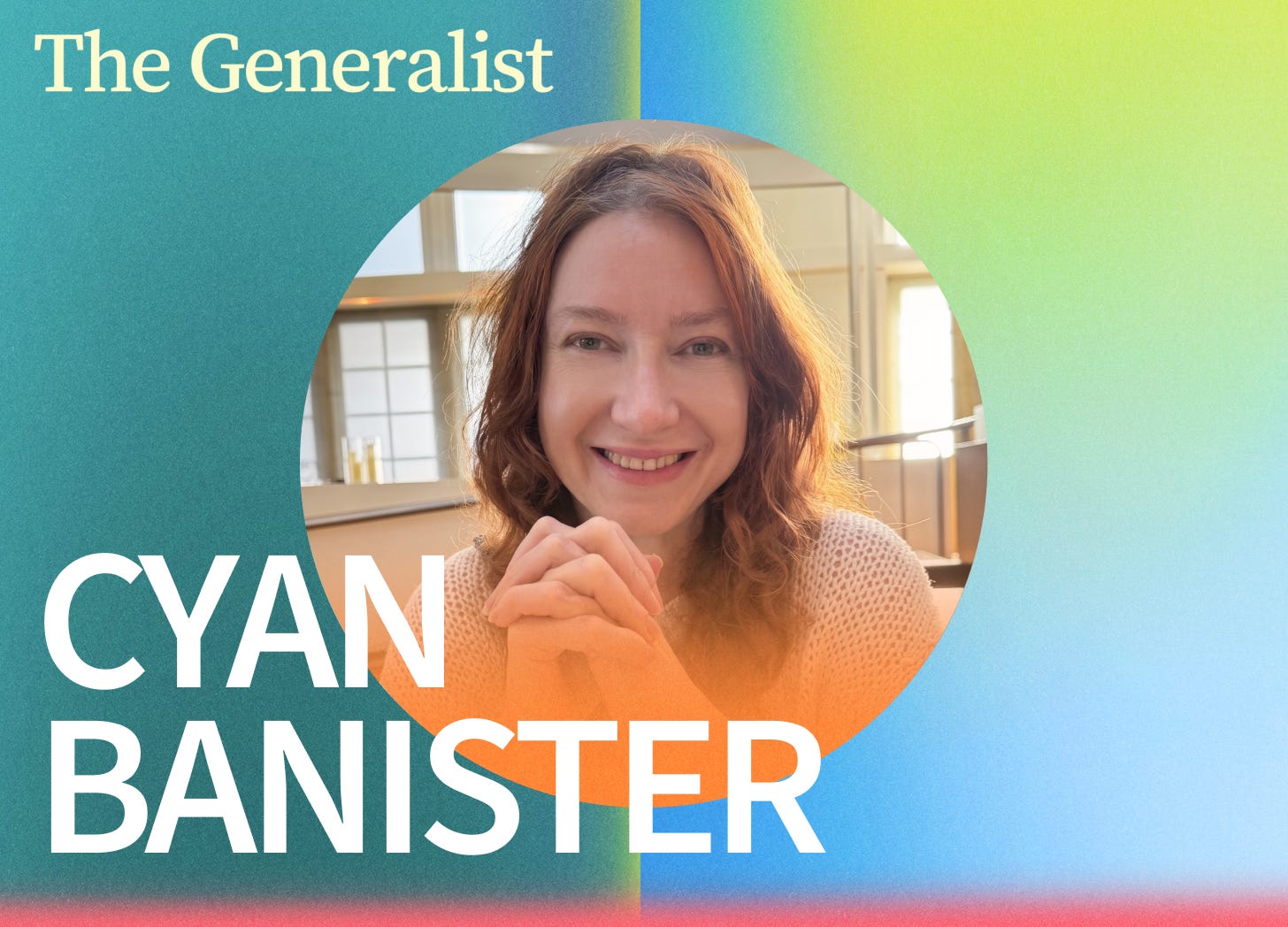 Investing Like A Mystic: How Cyan Banister Finds Outliers (Co-Founder of Long Journey Ventures) | Cyan Banister has built one of the most distinctive early-stage track records of the last fifteen years, with early bets on companies like Uber, SpaceX, DeepMind, Niantic, and Postmates. Today, she is co-founder and general partner at Long Journey Ventures, where she backs what she calls “magical weirdos.” Banister describes herself as a professional daydreamer, running constant thought experiments and paying close attention to signals others ignore. In this episode, she explains how that mindset translates into investing, and why many of her best opportunities have come from observation, curiosity, and a willingness to look in unlikely places.In our conversation, we explore:• Cyan’s philosophy of treating life as a series of experiments• The strange, profound experiences that led her to question and ultimately move beyond her atheism• How scanning Wi-Fi networks in a Four Seasons café led her to Flock Safety, last valued at $8.4 billion• Long Journey Ventures’ “Biz, Tizz, and Rizz” framework for identifying exceptional founders and why the trifecta is rare• How AI will enable the age of the polymath• Why she believes brain-computer interfaces are closer than most people think• Why she says Pokémon Go was “the closest we ever came to world peace”• Why she lives part-time in a retirement community and her vision for a more connected future—Thank you to the partners who make this possible.tech domains: An identity for builders at their core.Brex: The intelligent finance platform.Persona: Trusted identity verification for any use case.—Timestamps(00:00) Intro(03:51) Never playing the game you appear to be playing(07:18) Practicing childlike wonder as a daily discipline(10:08) Questioning belief after her stroke(13:30) Cyan’s metaphysical experiments(23:24) Non-local consciousness and creativity(27:22) Investing with extreme openness to signals(29:05) The importance of timing in investing(32:26) Meeting Travis Kalanick(34:19) Finding Flock Safety through a chance encounter(38:23) The summer of Pokémon Go (what worked and what didn’t)(39:55) Human nature and what makes something "stick"(42:15) Brain-computer interfaces and AI’s accelerating effect(52:53) “Biz, Tiz, Riz:” her framework for evaluating founders(59:20) Why Cyan lives in a retirement community part-time(1:03:50) A unique way of finding books that speak to you(1:08:44) Final meditations—Follow Cyan Banister:LinkedIn: https://www.linkedin.com/in/cyanbX: https://x.com/cyantistNewsletter: https://uglyduckling.substack.comWebsite: https://cyanbanister.com—Resources and episode mentions: https://www.generalist.com/p/investing-like-a-mystic-cyan-banister—Production and marketing by penname.co. For inquiries about sponsoring the podcast, email jordan@penname.co. This is a public episode. If you'd like to discuss this with other subscribers or get access to bonus episodes, visit www.generalist.com/subscribe | 1h 13m 22s | ||||||
| 4/21/26 |  The Future Of Drug Discovery Is 4 Billion Years Old (Viswa Colluru, Founder & CEO at Enveda)✨ | drug discoverynature+2 | Viswa Colluru | BrexEnveda+5 | India | Enveda Bioscienceschemistry+3 | — | 1h 22m 56s | |
| 4/14/26 |  How a 20-Person Startup Won Gold at the Math Olympiad—Tying With OpenAI & DeepMind (Tudor Achim, CEO of Harmonic)✨ | AImathematical reasoning+2 | Tudor Achim | HarmonicAristotle+9 | — | International Math OlympiadHarmonic+4 | — | 1h 04m 44s | |
| 4/7/26 |  30% Of Network Engineers Are Retiring. What Happens Next? (Anil Varanasi, Co-Founder & CEO of Meter)✨ | network engineeringAI+3 | Anil Varanasi | GranolaBrex+5 | — | MeterCisco+3 | — | 1h 10m 45s | |
| 3/24/26 |  Why One Superintelligence Is More Dangerous Than a Thousand (Vincent Weisser, CEO & Co-Founder of Prime Intellect)✨ | AI alignmentsuperintelligence+3 | Vincent Weisser | ZuzaluGranola+3 | Europe | Prime IntellectZuzalu experiment+3 | — | 1h 19m 01s | |
| 3/17/26 |  Why Robots Still Struggle With Simple Tasks (And What Might Finally Change That) | Karol Hausman, Co-Founder & CEO of Physical Intelligence✨ | robotsartificial intelligence+2 | Karol Hausman | Physical IntelligenceBrex+13 | Poland | robot learninggeneral-purpose AI+2 | — | 1h 14m 20s | |
| 3/10/26 |  America’s Electric Power Grid Is Broken. This Startup Is Trying to Fix It. (Zach Dell, co-founder & CEO of Base)✨ | electric power gridenergy innovation+3 | Zach Dell | BrexGen 2+8 | AmericaIndia+3 | Baseenergy+3 | — | 1h 11m 47s | |
Want analysis for the episodes below?Free for Pro Submit a request, we'll have your selected episodes analyzed within an hour. Free, at no cost to you, for Pro users. | |||||||||
| 2/24/26 |  Everyone Is Betting on Bigger LLMs. She's Betting They're Fundamentally Wrong. (Eve Bodnia, Founder & CEO of Logical Intelligence)✨ | large language modelsenergy-based reasoning models+3 | Eve Bodnia | KonaLogical Intelligence+5 | — | KonaLogical Intelligence+3 | — | 1h 07m 48s | |
| 2/19/26 |  How Bolt Survived An 85% Revenue Crash And Became Europe's Ride-Hailing Champion (Markus Villig, Founder & CEO)✨ | ride-hailingentrepreneurship+3 | Markus Villig | GranolaBrex+18 | EuropeEstonia+1 | BoltUber+3 | — | 1h 20m 06s | |
| 2/3/26 |  The Private Company Bringing Nuclear Enrichment Back to America (Scott Nolan, CEO of General Matter)✨ | nuclear energyuranium enrichment+3 | Scott Nolan | General MatterFounders Fund+11 | AmericaU.S.+2 | nuclear powerenergy policy+3 | — | 1h 16m 29s | |
| 1/20/26 |  Programming Sunlight: How Reflect Orbital Is Building Satellites to Redirect Light From Space (Ben Nowack, Founder & CEO)✨ | satellitessunlight+3 | Ben Nowack | Advanced Composite Solar Sail SystemReflect Orbital satellites+5 | Earth | Reflect Orbitalprogramming sunlight+2 | — | 1h 18m 51s | |
| 1/13/26 |  Nothing’s Carl Pei on Building a $1B Smartphone Company, Why He Left OnePlus After 10 Days of Retirement, and Why He Thinks About Death Every Week | Carl Pei is the founder of Nothing, the consumer electronics company known for its distinctive transparent design language across smartphones and audio products. Before launching Nothing in 2020, Carl co-founded OnePlus, where he spent seven years helping build it into a major smartphone brand. But Carl’s instincts as a builder showed up much earlier. As a teenager, he taught himself to code by building Pokémon fan sites, all while moving between China, the U.S., and Sweden. That combination of early creation and constant change shaped a founder comfortable with uncertainty—and deeply motivated by questions bigger than products. Carl thinks often about time and mortality, is skeptical of early retirement, and believes creativity is humanity’s real advantage. In an industry obsessed with optimization, he’s focused on making technology feel meaningful again.In our conversation, we explore:• The origins of Nothing’s transparent design language and how it helps differentiate the brand in a mature, competitive market• Carl’s childhood fascination with mortality and how it continues to drive his ambition today• Nothing’s multiple near-death experiences, from 80% defect rates on first products to fundraising struggles• Why India has become a crucial market for Nothing’s smartphone business• How Nothing approaches community involvement, including letting users invest alongside VCs• The company’s approach to integrating AI features without overhyping the technology• Carl’s admiration for Genghis Khan’s management style and talent acquisition approach• The future of consumer electronics beyond smartphones—Thank you to our sponsor, Guru — The AI source of truth for work—Transcript: https://www.generalist.com/p/nothings-carl-pei-on-building-a-1b-smartphone-company—Timestamps(00:00) Introduction to Carl Pei and Nothing(02:44) Nothing’s long-term vision(06:33) How existential thinking shapes Carl’s motivation(10:12) Why Carl’s planned sabbatical ended after ten days(12:35) Carl’s international upbringing(16:02) Entrepreneurial experiments in China(19:10) Carl’s competitive nature and attitude toward school(25:30) Lessons from seven years at OnePlus(28:07) Taking a break at age 31(30:50) Carl’s fundraising strategy(33:26) Why Carl chose London for Nothing’s HQ(35:12) Lessons from Genghis Khan(38:38) Nothing’s first near-death moment(42:56) Nothing’s product evolution and breakout hits(45:24) Partnering with Teenage Engineering(49:28) Design inspirations(51:36) How Nothing recruits talent(53:42) Nothing’s approach to marketing(56:51) How India became a key market(59:48) Why Nothing created CMF(1:02:12) Why Carl is bullish on India(1:03:32) How Carl thinks about AI(1:07:05) Rethinking ads based on community feedback(1:09:05) How Nothing leverages community(1:11:23) Why AI hardware is struggling(1:13:37) Carl’s thoughts on the future of consumer electronics(1:15:10) Philosophies that shape Carl’s worldview(1:16:45) Final meditations—Follow Carl PeiLinkedIn: https://www.linkedin.com/in/getpeidX: https://x.com/getpeid—Resources and episode mentions—Books—Apple in China: The Capture of the World’s Greatest Company: https://www.amazon.com/Apple-China-Capture-Greatest-Company/dp/1668053373Conqueror (5 book series): https://www.amazon.com/dp/B074C4LS8DZen Mind, Beginner’s Mind: Informal Talks on Zen Meditation and Practice: https://www.amazon.com/Zen-Mind-Beginners-Informal-Meditation/dp/1590308492—People—Genghis Khan: https://en.wikipedia.org/wiki/Genghis_KhanElon Musk on X: https://x.com/elonmuskJesper Kouthoofd on LinkedIn: https://www.linkedin.com/in/jesperkouthoofdCharlie Smith on LinkedIn: https://www.linkedin.com/in/charliejamessmith—Other resources—Nothing: https://us.nothing.techCarl’s AMA thread on X: https://x.com/getpeid/status/1796233634376216610Steve Jobs’ 2005 Stanford Commencement Address: https://www.youtube.com/watch?v=UF8uR6Z6KLcNaruto: https://en.wikipedia.org/wiki/NarutoLeague of Legends: https://www.leagueoflegends.comOnePlus: https://www.oneplus.comKing: https://www.king.comKlarna: https://www.klarna.comEar (1): https://us.nothing.tech/products/ear-1Teenage Engineering: https://teenage.engineeringDior: https://www.dior.comGucci: https://www.gucci.comIpren the Intelligent Painkiller: https://adsspot.me/media/tv-commercials/ipren-the-intelligent-painkiller-7295f9e7a6fcGet to Know Creative Museum Tokyo ‐ Experience the Creativity of Diverse Works and Creators in an Expansive Space Presented by Sony: https://www.sony.com/en/SonyInfo/blog/2025/02/192001: A Space Odyssey: https://en.wikipedia.org/wiki/2001:_A_Space_OdysseyHAL 9000: https://en.wikipedia.org/wiki/HAL_9000Loewe: https://www.loewe.com4K Restoration: 1984 Super Bowl APPLE MACINTOSH Ad by Ridley Scott: https://www.youtube.com/watch?v=ErwS24cBZPcCMF: https://us.nothing.tech/collections/cmfEssential apps: https://playground.nothing.tech/appsPorsche: https://www.porsche.com/Humane: https://en.wikipedia.org/wiki/Humane_IncLimitless: https://www.limitless.aiRabbit: https://www.rabbit.tech/rabbit-r1Friend: https://friend.com—Production and marketing by penname.co. For inquiries about sponsoring the podcast, email jordan@penname.co. This is a public episode. If you'd like to discuss this with other subscribers or get access to bonus episodes, visit www.generalist.com/subscribe | 1h 19m 04s | ||||||
| 12/9/25 |  Why Being a Generalist VC Is a Competitive Advantage (Aydin Senkut, Founder & Managing Partner at Felicis Ventures) | Two decades ago, Aydin Senkut was a first-time fund manager with a thin track record to show prospective backers. LPs didn’t believe a solo GP, especially one without experience at a legacy firm, could build a lasting franchise. They were wrong. Today, Felicis is a Silicon Valley mainstay on its 10th fund, a $900M vehicle. Across its history, Felicis has backed a slew of winners, including Shopify, Canva, Crusoe, and dozens of other billion-dollar outcomes. Rather than specialize over time, Aydin has remained a true generalist, investing across markets and cycles. In this conversation, we dig into the frameworks, stories, and philosophies that shaped Felicis into what it is — and where Aydin believes the next decade of technology is heading.We explore:• How growing up in Turkey with entrepreneur parents shaped Aydin’s approach to risk and investing• Lessons from working alongside Larry Page and Sergey Brin during Google’s early days• Why Felicis deliberately chose a generalist strategy when most VCs were specializing• How international experience became a competitive advantage in finding global winners• The mathematical case for portfolio diversification (50-70 companies per fund)• Why valuation concerns are often overblown when revenue growth is exponential• Felicis’s aggressive AI investment strategy and what other investors are missing• The future of robotics and physical AI through companies like Skild AI• Why learning and adapting rapidly is Felicis’s constitutional principle—Thank you to our sponsor, Guru: The AI source of truth for work.—Timestamps(00:00) Introduction(03:09) How Aydin made his way to Silicon Valley(06:15) What he learned from his entrepreneurial parents(08:55) Learnings from the early days at Google(15:05) The childhood roots of his investing philosophy(16:31) Why rejection became a catalyst for his venture career(19:28) Strategy behind Felicis's first $41M fund(25:44) How his international background became an investing edge(28:17) How Aydin approaches diversification at scale(32:08) How he sizes investments based on conviction(33:15) Generalist vs. specialist investing(38:23) Why founders are the foundation(42:48) Why success may look different than expected(43:46) The Felicis journey(48:18) Why Felicis is going all in on AI(54:54) Why entry point matters less than potential(57:33) How the AI bubble debate misses the point(59:47) What makes Skild AI a standout company(01:04:58) The AI bets Felicis missed(01:07:55) How missing Airbnb and Uber led to backing Adyen(01:11:20) Final meditations—Follow Aydin SenkutLinkedIn: https://www.linkedin.com/in/aydinsX: https://x.com/asenkut—Resources and episode mentions—Books—Antifragile: Things That Gain from Disorder: https://www.amazon.com/Antifragile-Things-That-Disorder-Incerto-ebook/dp/B0083DJWGOClear Thinking: Turning Ordinary Moments into Extraordinary Results: https://www.amazon.com/Clear-Thinking-Turning-Ordinary-Extraordinary/dp/0593086112—People—Larry Page: https://en.wikipedia.org/wiki/Larry_PageSergey Brin: https://en.wikipedia.org/wiki/Sergey_BrinEric Schmidt: https://en.wikipedia.org/wiki/Eric_SchmidtBrian Chesky on X: https://x.com/bcheskyShane Parrish’s blog: https://fs.blog—Other resources—Felicis: https://www.felicis.comMastering Portfolio Construction: https://www.generalist.com/p/mastering-portfolio-constructionSteve Jobs’s quote on focus: https://www.goodreads.com/quotes/629613-people-think-focus-means-saying-yes-to-the-thing-you-veAngry Birds: https://www.angrybirds.comRovio: https://www.rovio.comAdyen: https://www.adyen.comCanva: https://www.canva.comShopify: https://www.shopify.comn8n: https://n8n.io/Tines: https://www.tines.comCrusoe: https://www.crusoe.aiSupabase: https://supabase.comSkild: https://www.skild.aiAnthropic: http://anthropic.comOpenAI: https://openai.comMistral: https://mistral.aiAirbnb: https://www.airbnb.com—Production and marketing by penname.co. For inquiries about sponsoring the podcast, email jordan@penname.co. This is a public episode. If you'd like to discuss this with other subscribers or get access to bonus episodes, visit www.generalist.com/subscribe | 1h 16m 42s | ||||||
| 12/2/25 |  Joey Krug on Prediction Markets, Crypto Treasuries & the Next Era of On-Chain Finance (Partner at Founders Fund) | Prediction markets are no longer a fringe curiosity. They are becoming one of the most revealing instruments in modern finance. Platforms like Polymarket, once a niche corner of crypto, now regularly clear billions in monthly volume as traders speculate on everything from political outcomes to sports to cultural events. Few people saw this future as early, or as clearly, as Joey Krug.A decade before prediction markets went mainstream, Joey dropped out of college to co-found Augur, the first decentralized prediction market protocol. He later became one of the most influential investors in the category by backing Polymarket at Founders Fund. In this conversation, Joey shares why the moment for prediction markets has finally arrived, what has changed, and how these markets are reshaping information flows across society.We explore:• The experimental mindset that led Joey from horse-racing predictions to mining bitcoin in high school• Why Augur was the right idea at the wrong moment, and what it taught Joey about timing and infrastructure• The product, liquidity, and founder-market fit signals that persuaded Founders Fund to back Polymarket• Why resolution is the hardest problem in prediction markets, and how Polymarket approaches it• How crypto treasury companies are emerging as a major force and where ETFs fit in• Why mimetic behavior drives entire sectors and how savvy investors read those waves• The rise and fall of Operation Choke Point and its impact on crypto• How Founders Fund reframed Joey’s approach to evaluating founders, markets, and structural shifts—Thank you to the partners who make this possibleGuru: The AI source of truth for work.Auth0: Secure access for everyone. But not just anyone.—Transcript: https://www.generalist.com/p/joey-krug-on-prediction-markets—Timestamps(00:00) Intro(04:10) How Joey began making predictions with horse racing(08:00) Why Joey began coding with Applesoft BASIC(09:32) How Joey first discovered crypto(11:06) Why Joey dropped out of school to pursue crypto(12:52) The origins of Joey’s interest in medical school(16:15) How Joey spends nights and weekends splitting time between biotech and trading(17:18) The early influences behind Augur’s creation(19:40) Why prediction markets captivated early crypto thinkers(23:26) The unlock crypto created for prediction markets(29:22) How Polymarket began and why Joey decided to back it(32:11) What made Polymarket the right team(35:25) The FBI raid and how Shane responded(38:20) Why Joey expected Polymarket’s volume to hold after the election(40:20) The trend toward duopolies in financial markets(42:37) What sets Polymarket’s product design apart(45:25) How to keep prediction markets clear and unambiguous(48:31) The rise of crypto treasury companies and FF’s work with BitMine(51:26) The value of crypto treasuries and the role of ETFs(54:33) The mimetic rise of crypto treasury companies(57:03) Joey’s take on where the crypto market stands now(1:00:23) Why Founders Fund is bullish on ETH(1:03:03) Operation Choke Point, regulatory whiplash, and the end of the crypto crackdown(1:06:04) Where the Clarity Act falls short(1:08:56) How Joey’s thinking has evolved since joining Founders Fund(1:13:21) Final meditations—Follow Joey KrugLinkedIn: https://www.linkedin.com/in/joeykrug—Resources and episode mentions—Books—Zero to One: Notes on Startups, or How to Build the Future: https://www.amazon.com/Zero-One-Notes-Startups-Future/dp/0804139296The Power Law: Venture Capital and the Making of the New Future: https://www.amazon.com/Power-Law-Venture-Capital-Making/dp/B094PSKDZVMore Money Than God: Hedge Funds and the Making of a New Elite: https://www.amazon.com/More-Money-Than-God-audiobook/dp/B004AUQPF0The Alchemy of Finance: Reading the Mind of the Market: https://www.amazon.com/Alchemy-Finance-Reading-Mind-Market/dp/0471043133——People—Dan Romero’s website: https://www.generalist.com/p/dan-romeroSean Parker on LinkedIn: https://www.linkedin.com/in/parkerseanVolodymyr Zelenskyy: https://en.wikipedia.org/wiki/Volodymyr_ZelenskyyMicree Zhan on LinkedIn: https://www.linkedin.com/in/micree-zhan-305a1817aTom Lee on X: https://x.com/fundstratMichael Saylor’s website: https://www.michael.comPeter Thiel on X: https://x.com/peterthiel——Other resources—No Rivals: The Prophet (Part I): https://www.generalist.com/p/founders-fund-1No Rivals: The Disciples (Part II): https://www.generalist.com/p/founders-fund-2Founders Fund: https://foundersfund.com/The Kentucky Derby: https://www.kentuckyderby.comApplesoft Basic: https://en.wikipedia.org/wiki/Applesoft_BASICBitcoin: A Peer-to-Peer Electronic Cash System: https://www.ussc.gov/sites/default/files/pdf/training/annual-national-training-seminar/2018/Emerging_Tech_Bitcoin_Crypto.pdfEthereum Whitepaper: https://ethereum.org/whitepaperAtypical Hemolytic Uremic Syndrome: https://my.clevelandclinic.org/health/diseases/atypical-hemolytic-uremic-syndromeSoliris: https://www.drugs.com/soliris.htmlAlexion: https://alexion.comAugur: https://en.wikipedia.org/wiki/Augur_(software)#ReferencesThe Future of Farcaster with Dan Romero: https://www.generalist.com/p/dan-romeroPolymarket: https://polymarket.comKalshi: https://kalshi.comAlchemy: https://www.alchemy.comPantera Capital: https://panteracapital.comCME Group: https://www.cmegroup.comCBOE: https://www.cboe.comBitMine: https://www.bitminetech.ioWorkrise: https://www.rigup.comClarity Act of 2025: https://www.congress.gov/bill/119th-congress/house-bill/3633Joining Founders Fund: https://medium.com/@joeykrug/joining-founders-fund-4c3544633081—Production and marketing by penname.co. For inquiries about sponsoring the podcast, email jordan@penname.co. This is a public episode. If you'd like to discuss this with other subscribers or get access to bonus episodes, visit www.generalist.com/subscribe | 1h 15m 30s | ||||||
| 11/18/25 |  How a Solo Founder is Reshaping Global Finance (Parth Garg, CEO of Aspora) | In the summer of 2022, Parth Garg woke up in Bangalore to discover that his co-founder had fled the country and emailed their investors to tell them their company was dead. Just over three years later, Aspora is one of fintech’s fastest-growing startups. The company, which makes it faster and cheaper for India’s diaspora to send money home and access banking services, now processes close to half a billion dollars in volume every month and has earned a $500 million valuation with backing from elite investors like Hummingbird Ventures, Sequoia, and Greylock.In this conversation, Parth shares his journey from physics prodigy to fintech founder, offering insights into what it really takes to build resilience as a founder and how to create a culture where feedback flows freely, even without a co-founder to provide checks and balances.We explore:• The moment when Parth discovered his co-founder had left the country and told investors the company was shutting down• How Parth’s childhood moving between cities in India and later to the UAE shaped his adaptability and entrepreneurial mindset• His journey from physics prodigy to startup founder, including early ventures before Aspora• The process of discovering product-market fit through structured experimentation after the initial business model failed• Why the Indian diaspora represents a massive, underserved financial opportunity (1% of the population contributing 30% of deposits)• How stablecoins dramatically reduced Aspora’s working capital requirements and transformed their business model• The regulatory landscape for fintech and crypto in India and the impact of the GENIUS Act in the US• Aspora’s vision to become a comprehensive cross-border bank serving multiple diaspora communities globally—Thank you to the partners who make this possibleGoFundMe Giving Funds: One Account. Zero Hassle.Guru: The AI source of truth for work.Persona: Trusted identity verification for any use case.—Timestamps(00:00) Intro(03:53) How Parth felt when his co-founder fled the country(07:04) Parth’s early days in India and the UAE(09:37) Parth’s love of physics and competitiveness(12:15) The not-so-straightforward path from studying physics at Stanford to entrepreneurship(14:13) Parth’s physics heroes(16:24) The gap year that sparked Parth’s entrepreneurship journey(18:36) Parth’s first startup: selling near-expired groceries(21:58) Moving back to the United States and founding Vance(28:00) Joining YC and finding early backers(31:14) How Parth realized Vance needed to pivot(35:22) How Parth moved forward after his co-founder fled(37:37) Building psychological safety and open debate at Aspora(40:15) How conversations with immigrants inspired Aspora’s idea(45:13) How stablecoins solved Aspora’s biggest operational challenges(46:57) Aspora’s current scale and why India was the perfect starting point(51:34) How Aspora builds loyalty in a low-switching-cost market(52:42) The GENIUS Act and the real opportunity in stablecoins(55:52) The evolution of crypto and stablecoins in India(56:50) The importance of partnerships for scaling Aspora in India(58:18) The next phases of Aspora’s growth(01:00:04) The role of Aspora’s new bets team(1:01:20) Final meditations—Follow Parth GargLinkedIn: https://www.linkedin.com/in/parth29—Resources and episode mentions—Books—• “Surely You’re Joking, Mr. Feynman!”: Adventures of a Curious Character: https://www.amazon.com/Surely-Youre-Joking-Mr-Feynman/dp/0393355624• Elon Musk: https://www.amazon.com/Elon-Musk-Walter-Isaacson/dp/1982181281—People—• Carl Sagan’s website: https://carlsagan.com• Isaac Newton: https://en.wikipedia.org/wiki/Isaac_Newton• Leonard Susskind: https://sitp.stanford.edu/people/leonard-susskind• Richard Feynman: https://en.wikipedia.org/wiki/Richard_Feynman• Firat Ileri on LinkedIn: https://www.linkedin.com/in/ilerifirat• Akshay Mehra on LinkedIn: https://www.linkedin.com/in/akshaymehra-• Lee Kuan Yew: https://en.wikipedia.org/wiki/Lee_Kuan_Yew• Dee Hock: https://en.wikipedia.org/wiki/Dee_Hock—Other resources—• Dark Energy Spectroscopic Instrument: https://www.desi.lbl.gov• Club Rise: https://clubrisead.wordpress.com• Amway: https://www.amway.com• Shorooq: https://www.shorooq.com• Starbucks, a Tech Company: https://www.generalist.com/p/starbucks-a-tech-company• Y Combinator: https://www.ycombinator.com• Hummingbird VC: https://www.hummingbird.vc• Zip: https://zip.co• GENIUS Act: https://en.wikipedia.org/wiki/GENIUS_Act• Stripe completes Bridge acquisition: https://stripe.com/newsroom/news/stripe-completes-bridge-acquisition—Production and marketing by penname.co. For inquiries about sponsoring the podcast, email jordan@penname.co. This is a public episode. If you'd like to discuss this with other subscribers or get access to bonus episodes, visit www.generalist.com/subscribe | 1h 09m 25s | ||||||
| 11/11/25 |  How Do You Build a New Singapore? Inside Próspera’s Bet on Private Governance (Erick Brimen, Founder & CEO) | What if you could redesign the rules of society? Not tweak the margins, but start over entirely. That’s the question driving Erick Brimen, founder and CEO of Próspera, a private charter city in Roatán, Honduras. Próspera is a radical experiment in governance: a platform that lets governments and entrepreneurs build cities with new legal systems, regulatory frameworks, and institutions from the ground up. Brimen believes that governance itself can be innovated upon. That cities, like software, can be upgraded. His goal isn’t just to build one new jurisdiction, but to create an operating system for hundreds of prosperous, self-governing communities around the world. In this conversation, Erick and I explore what it really takes to build a modern Singapore from scratch — and why better governance might be humanity’s most powerful lever for progress.Together we explore:• How Brimen’s childhood in Venezuela shaped his understanding of governance and poverty• The historical precedents for charter cities like Dubai, Singapore, and Hong Kong• Why common law, trusted dispute resolution, and dynamic governance are essential foundations• How Próspera’s Governance-as-a-Service model aligns incentives between governments, operators, and residents• The current state of Próspera in Honduras, including its three hubs and economic impact• The political challenges Próspera has faced and how international arbitration has protected the project• Why regulatory innovation enables industries like biotech, crypto, and advanced manufacturing to flourish• How the model could be applied to “catch-up growth,” industry diversification, and accelerating growth in developed nations• The vision for a modern Hanseatic League of charter cities operating on shared governance principles—Thank you to the partners who make this possibleGoFundMe Giving Funds: One Account. Zero Hassle.Guru: The AI source of truth for workTezi: The AI agent for recruiting high-quality candidates quickly.—Transcript: https://www.generalist.com/p/the-170m-experiment-to-build-a-private-city—Timestamps(00:00) Intro(04:10) An overview of Próspera and charter cities(06:43) City of Próspera vs. the platform(08:06) How growing up in Venezuela shaped Erick’s entrepreneurial vision(12:36) The limits of seasteading and why Erick took a different path(15:20) The opposing philosophies that shaped Erick’s path(16:16) The moment that reshaped Erick’s understanding of poverty(19:57) The limits of learning from Dubai, Singapore, and Hong Kong(23:01) Building on the DIFC blueprint(25:12) From Arizona to Honduras: how Próspera built its first city(30:36) Why Honduras won(32:12) Inside the ZEDE framework(36:56) Próspera’s business model(43:45) Conditions on the ground in Honduras(47:14) A quick summary of how it works(48:24) Quick stats on Próspera’s scale and financing(50:47) What years of preparation made possible(52:44) The scale and purpose of Próspera’s three hubs(58:12) Próspera’s 10-year vision(1:01:12) The people Próspera was built to serve(1:04:10) Why less regulation unlocks more innovation(1:05:58) Próspera’s political headwinds(1:12:36) Why Erick remains optimistic that things will work out in Honduras(1:14:44) Addressing criticism of ZEDEs and Próspera(1:18:08) What’s next, and why the U.S. may be the greatest opportunity(1:22:30) Final meditations—Follow Erick BrimenLinkedIn: https://www.linkedin.com/in/erickbrimenWebsite: https://www.erickbrimen.com—Resources and episode mentions: https://www.generalist.com/p/the-170m-experiment-to-build-a-private-city—Production and marketing by penname.co. For inquiries about sponsoring the podcast, email jordan@penname.co. This is a public episode. If you'd like to discuss this with other subscribers or get access to bonus episodes, visit www.generalist.com/subscribe | 1h 24m 22s | ||||||
| 10/28/25 |  Why Psychedelics Might Be the Breakthrough That PTSD Patients Need (Kevin Ryan, The Godfather of NYC Tech) | Often called the godfather of NYC tech, Kevin Ryan is one of America’s most influential entrepreneurs and investors. He co-founded MongoDB, Business Insider, Gilt Groupe, Zola, and Transcend Therapeutics, and continues to build and back new companies each year through AlleyCorp. Earlier in his career, he led DoubleClick from a 20-person startup to a global leader, taking it public before its acquisition by Google.In this episode, Kevin shares his insights on two surprising pockets of the future that he’s betting on: psychedelics for mental health and AI-powered materials science. He unpacks how psychedelics are showing remarkable success in treating depression and PTSD, and why AI may discover revolutionary new materials, from helicopter blades to smartphone glass, that humans never imagined possible.We explore:• The promising results of psychedelics in treating depression, PTSD, and addiction• How AI is accelerating materials discovery by exploring combinations humans wouldn’t try• The challenges of building successful incubators and why most attempts fail• How MongoDB lost $1 billion before turning a profit (and why it was worth it)• Why e-commerce businesses like Gilt Groupe often struggle against physical retail• How AlleyCorp plans for the future when shaping its investment strategy• What it really costs society to imprison someone for a year• The hard truth about Europe’s tech ecosystem and why it struggles to compete with the US—Thank you to the partners who make this possibleEnterpret: Transform feedback chaos into actionable customer intelligence.Auth0: Secure access for everyone. But not just anyone.Persona: Trusted identity verification for any use case.—Timestamps(00:00) Intro(04:30) How Kevin collaborated with Scott Adams(07:11) The origins of AlleyCorp(08:33) The challenge of incubation(10:00) Why intellectual flexibility matters(10:54) What made MongoDB a breakout success(13:49) How shifting market dynamics hurt Gilt’s business(16:22) What Kevin would do differently if he built Gilt again(17:45) Juggling AlleyCorp’s long-term vision with day-to-day demands(20:26) How to make boards more productive(22:25) Why Kevin believes investors should also found companies(24:18) Future spaces Kevin is excited to invest in(25:52) Kevin’s interest in psychedelics and founding Transcend(28:20) Psychedelics for mental health(32:03) How psychedelic therapy is being conducted(34:11) Transcend’s work and the path to approval for methylone(37:47) The challenges of psychedelic research(40:28) How the Trump administration aims to accelerate psychedelic research(41:50) The size and growth of the psychedelic market(44:28) Materials science: What it is, its design tradeoffs, and how AI speeds discovery(49:02) Radical AI’s work creating new compounds(50:34) The industries Radical AI is targeting(52:50) The state of European tech and why it still lags behind(58:26) Final meditationsFollow Kevin RyanLinkedIn: https://www.linkedin.com/in/kevinryan3/X: https://x.com/alley_corp—Resources and episode mentions—Books—• How to Change Your Mind: What the New Science of Psychedelics Teaches Us About Consciousness, Dying, Addiction, Depression, and Transcendence: https://www.amazon.com/Change-Your-Mind-Consciousness-Transcendence/dp/1594204225• Breakneck: China’s Quest to Engineer the Future: https://www.amazon.com/Breakneck-Chinas-Quest-Engineer-Future/dp/1324106034• Why We Sleep: Unlocking the Power of Sleep and Dreams: https://www.amazon.com/Why-We-Sleep-Unlocking-Dreams/dp/1501144324• Outlive: The Science and Art of Longevity: https://www.amazon.com/Outlive-Longevity-Peter-Attia-MD/dp/0593236599• Birnam Wood: https://www.amazon.com/Birnam-Wood-Novel-Eleanor-Catton/dp/1250321719• The Odyssey: https://www.amazon.com/Odyssey-Homer/dp/0393356256• Invisible Man: https://www.amazon.com/Invisible-Man-Ralph-Ellison/dp/0679732764• Abundance: https://www.amazon.com/Abundance-Progress-Takes-Ezra-Klein/dp/1668023482• The Optimist: Sam Altman, OpenAI, and the Race to Invent the Future: https://www.amazon.com/Optimist-Altman-OpenAI-Invent-Future/dp/1324075961• The Gods of New York: Egotists, Idealists, Opportunists, and the Birth of the Modern City: 1986-1990: https://www.amazon.com/Gods-New-York-Idealists-Opportunists/dp/052551063X—Episode resources continued at: https://www.generalist.com/p/why-psychedelics-might-be-the-breakthrough—Production and marketing by penname.co. For inquiries about sponsoring the podcast, email jordan@penname.co. This is a public episode. If you'd like to discuss this with other subscribers or get access to bonus episodes, visit www.generalist.com/subscribe | 1h 08m 10s | ||||||
| 10/21/25 |  The Trillion-Dollar AI Hardware Opportunity (Navin Chaddha, Managing Partner at Mayfield) | Navin Chaddha has spent three decades at the forefront of innovation—first as a founder, and now as managing partner at Mayfield, one of Silicon Valley’s oldest venture firms. A 17-time member of Forbes’ Midas List, Navin has guided generations of entrepreneurs through waves of technological change, from the dot-com boom to the AI era. At Mayfield, he champions a philosophy rooted in the firm’s founding ethos: investing in people, not markets. That approach has shaped his perspective on what it takes to build enduring companies. In this conversation, Navin shares why $1 trillion in infrastructure spending is fueling a new hardware renaissance, how stealth startups are going from zero to billions in a year, and what it means for the future of innovation.We explore:• How “vibe coding” is democratizing technology creation through conversational, collaborative, and cognitive interfaces• Why Navin believes the “vibe economy” will transform how we work, live, and play• How Mayfield’s 56-year focus on “backing the jockey, not the racetrack” shapes its investment approach• The massive opportunity in AI hardware infrastructure• How stealth AI hardware startups are going from zero to billions in under a year• How India’s tech ecosystem has evolved and where the real opportunities are today• How cricket taught Navin crucial lessons about company building—Thank you to the partners who make this possibleGoFundMe Giving Funds: One Account. Zero Hassle.Auth0: Secure access for everyone. But not just anyone.Tezi: The AI agent for recruiting high-quality candidates quickly.—Transcript: https://www.generalist.com/p/the-trillion-dollar-ai-hardware-opportunity—Timestamps(00:00) Intro(04:52) Cricket and its parallels to venture capital(08:13) Navin’s journey to Silicon Valley(10:28) Growing up in an entrepreneurial family(12:00) Early mentors and becoming an “accidental entrepreneur”(13:46) Navin’s first company and unconventional fundraising approach(17:35) How Navin moved from founder to venture capitalist(20:11) What has worked in India’s tech market and what hasn’t yet taken off(23:31) The future of outsourcing in the AI era(27:14) How Navin landed at Mayfield(30:36) How Mayfield’s people-first approach works in practice(34:50) Why Navin sees AI and vibe coding as the next great wave of innovation(38:13) Why Navin believes AI will push humans to level up their skills rather than lose them(44:50) The hardware opportunities that excite Navin and where Mayfield is investing(48:49) An overview of photonics and why it matters now(50:06) How Mayfield balances market insight, big ideas, and the people behind them(52:50) The surprising pace of growth in AI hardware(54:54) The timeline from idea to product and scale in hardware startups(56:26) Final meditations—Follow Navin ChaddhaLinkedIn: https://www.linkedin.com/in/navinchaddha/X: https://x.com/navinchaddha—Resources and episode mentions: https://www.generalist.com/p/the-trillion-dollar-ai-hardware-opportunity—Production and marketing by penname.co. For inquiries about sponsoring the podcast, email jordan@penname.co. This is a public episode. If you'd like to discuss this with other subscribers or get access to bonus episodes, visit www.generalist.com/subscribe | 1h 00m 18s | ||||||
| 10/14/25 |  Biological Time Travel: How Cryopreservation Could Transform Medicine (Laura Deming, CEO & co-founder of Until) | From a child prodigy in a genetics lab to building a company that can pause life itself, Laura Deming has made a career out of chasing time. At just eight years old she became obsessed with aging. At eleven, she joined Cynthia Kenyon’s pioneering longevity lab. At seventeen, she launched The Longevity Fund—one of the first venture firms dedicated to extending human healthspan. Now, she’s tackling her boldest challenge yet: building a “pause button” for biology.As the co-founder of Until, Laura is developing reversible cryopreservation: the ability to cool living tissue to ultra-low temperatures, hold it there, and then bring it back fully functional. By achieving vitrification (the process of turning tissue into glass instead of ice), Until aims to make organ preservation, and eventually medical hibernation, a reality.We cover:Why longevity was once stigmatized, and what changed to make it one of the most credible fields in biotech todayWhy Until’s approach focuses on preserving the living, not the deadThe physics and biological challenges of scaling reversible cryopreservation from embryos to human-sized organsHow vitrification is making cryopreservation possibleHow this breakthrough could transform organ transplantation by eliminating time constraints (and eventually enable medical hibernation)The philosophical and social implications of being able to “pause” life and effectively time travel into the futureHow growing up homeschooled in New Zealand shaped Laura’s unconventional way of thinkingThe story of how legendary biologist Cynthia Kenyon invited 11-year-old Laura into her lab, sparking her lifelong obsession with agingHow she learned to embrace her weirdness and trust it as her creative superpowerThank you to the partners who make this possibleGoFundMe Giving Funds: One Account. Zero Hassle.Brex: The banking solution for startups.Persona: Trusted identity verification for any use caseTimestamps(00:00) Intro(04:55) How Laura became interested in longevity at such a young age(07:40) The impact of homeschooling on Laura’s thinking(09:29) The invitation from Cynthia Kenyon that set Laura on her path at age 11(10:39) Why pursuing longevity once meant working in the shadows(14:20) Why Laura shifted into VC at The Longevity Fund(17:24) How longevity transformed from fringe science to a legitimate field(19:40) Why Laura was driven to start Until(21:08) A simple explanation of reversible cryopreservation(23:10) Science fiction’s explorations of cryo(25:38) What sparked Laura’s interest in reversible cryo(27:35) How cryonics and reversible cryo differ, and the mechanisms behind each(29:00) Until’s roadmap, beginning with cryopreserved organs for transplantation(34:00) The biggest challenges in developing preservable organs(35:53) How cryopreservation works(38:30) Until’s building philosophy(42:34) How Laura learned to trust her weirdness(49:10) Finding the right co-founder in Hunter Davis(51:17) Future applications beyond medical necessity(53:00) Unanswered questions in cryopreservation(55:05) What’s missing in Hollywood’s portrayal of genius(56:21) Laura’s unique process for exploring ideas(59:58) Personal longevity practices(01:01:30) The positive impact of Bryan Johnson’s work(01:02:38) Final meditationsFollow Laura DemingLinkedIn: https://www.linkedin.com/in/laura-deming-b255362a/X: https://x.com/laurademingWebsite: https://www.ldeming.com/Resources and episode mentions—Books—The Three-Body Problem: https://www.amazon.com/Three-Body-Problem-Cixin-Liu/dp/0765382032The Dark Forest: https://www.amazon.com/Dark-Forest-Remembrance-Earths-Past/dp/0765386690/Cell Biology by the Numbers: https://www.amazon.com/Cell-Biology-Numbers-Ron-Milo/dp/0815345372/Free version of Cell Biology by the Numbers: https://book.bionumbers.org/—People—Cynthia Kenyon: https://www.calicolabs.com/people/cynthia-kenyon/James Bedford: https://en.wikipedia.org/wiki/James_BedfordPeter Thiel on X: https://x.com/peterthielHunter Davis on LinkedIn: https://www.linkedin.com/in/hunter-davis-b7ba1423/Rob Phillips on LinkedIn: https://www.linkedin.com/in/rob-phillips-a223341a/Bryan Johnson on X: https://x.com/bryan_johnson—Other resources—Antimemetics: Why Some Ideas Resist Spreading | Nadia Asparouhova (Writer and Researcher): https://www.generalist.com/p/antimemetics-nadia-asparouhovaThe Longevity Fund: https://longevity.vc/Loyal: https://loyal.com/H1: https://h1.co/Until: https://www.untillabs.com/Alcor: https://www.alcor.org/My mental models: https://barnacles.substack.com/p/my-mental-models-2020Production and marketing by penname.co. For inquiries about sponsoring the podcast, email jordan@penname.co. This is a public episode. If you'd like to discuss this with other subscribers or get access to bonus episodes, visit www.generalist.com/subscribe | 1h 06m 20s | ||||||
| 10/7/25 |  "This feels like 1996": Why a16z's Martin Casado believes the AI boom still has years to run (General Partner) | Martin Casado has lived through multiple tech waves—first as a founder, now as a16z’s leading voice on AI and infrastructure. He helped pioneer software-defined networking, then moved from academia to entrepreneurship, and today backs founders building at the frontier of technology as a General Partner at Andreessen Horowitz. In this conversation, Martin shares his unique perspective on the AI boom, his market-first investment philosophy, and why he believes we’re still in the early days of AI’s impact.We explore:* Martin’s path from game engines and simulations to investing at Andreessen Horowitz* Why Martin believes we’re only in “1996” of the AI boom cycle with years to run before any bubble* Why Martin approaches investing “from markets in” rather than “from companies out”* Why the AI coding market represents a potential $3 trillion opportunity* The transformation of Andreessen Horowitz from a small generalist partnership to a specialized 600-person organization* The concerning dominance of Chinese companies in open source AI models* Why Martin thinks AGI discussions encourage “lazy thinking” and obscure meaningful conversations* How World Labs is solving the 3D representation problem that could unlock robotics, VR, and more—Thank you to the partners who make this possibleAuth0: Secure access for everyone. But not just anyone.Brex: The banking solution for startups.Persona: Trusted identity verification for any use case.—Timestamps(00:00) Intro(04:50) Martin’s early career(08:35) Martin’s shift from academia to founding his own company during an economic downturn(11:25) The story behind Martin joining Andreessen Horowitz(17:55) Ben Horowitz’s most impactful advice(19:49) How Andreessen Horowitz has transformed since 2016(22:20) Why product experience matters more than technical prowess for infrastructure investing(26:26) Martin’s market-first investment philosophy(28:39) Andreessen Horowitz’s framework for assessing founders and startups(33:14) Why Martin thinks Hock Tan may be the best CEO today(35:18) The controversy around non-consensus investing in early stages(38:42) Why today’s AI boom reminds Martin of the mid-’90s tech environment(44:38) How today’s AI boom differs from 2021’s tech bubble(47:10) Why the promise of AI in organizations remains largely unrealized(50:29) How Martin uses AI for coding and as a reading thought partner(52:56) Why Martin doesn’t use AI for writing(53:24) Martin’s interest in Eisenhower and historical parallels to today(55:33) Two equally important paths for AI’s future(58:33) Why Cursor stood out as the leader in AI coding tools(01:01:14) The lack of inherent defensibility in AI and how to build moats(01:03:30) World Labs’ mission to transform 2D images into 3D environments(01:06:42) 3D’s emerging use cases and why the VR market may expand(01:11:50) Why Martin isn’t an “AGI guy” and how the term erodes conversation quality(01:14:59) How seeing AI as a continuum creates room for future products and investment(01:16:28) The security and regulatory challenges of Chinese open-source AI models(01:19:23) Final meditationsFollow Martin CasadoLinkedIn: https://www.linkedin.com/in/martincasado/X: https://x.com/martin_casado—Resources and episode mentionsBooks* The Weirdest People in the World: https://www.amazon.com/WEIRDest-People-World-Psychologically-Particularly/dp/1250800072/* The Beginning of Infinity: Explanations That Transform the World: https://www.amazon.com/Beginning-Infinity-Explanations-Transform-World/dp/0143121359* Statistical Consequences of Fat Tails: Real World Preasymptotics, Epistemology, and Applications: https://www.amazon.com/Statistical-Consequences-Fat-Tails-Preasymptotics/dp/B0CD8X5YC5* The Art of Doing Science and Engineering: Learning to Learn: https://www.amazon.com/Art-Doing-Science-Engineering-Learning/dp/1732265178* The End of History and the Last Man: https://www.amazon.com/End-History-Last-Man/dp/0743284550People* Andy Rachleff on LinkedIn: https://www.linkedin.com/in/rachleff/* Ben Horowitz on LinkedIn: https://www.linkedin.com/in/behorowitz/* Marc Andreessen on X: https://x.com/pmarca* Mike Moritz on LinkedIn: https://www.linkedin.com/in/michaelmoritz/* John Doerr on X: https://x.com/johndoerr* Peter Thiel on X: https://x.com/peterthiel* Hock Tan on LinkedIn: https://www.linkedin.com/in/hock-tan/* Dwight D. Eisenhower: https://en.wikipedia.org/wiki/Dwight_D._Eisenhower* Ben Mildenhall on LinkedIn: https://www.linkedin.com/in/ben-mildenhall-86b4739b/* Christoph Lassner on LinkedIn: https://www.linkedin.com/in/christoph-lassner-475a669b/* Justin Johnson on LinkedIn: https://www.linkedin.com/in/justin-johnson-41b43664/* Yann LeCun on X: https://x.com/ylecunOther resources* Andreessen Horowitz: https://a16z.com/* R.I.P. Good Times: https://articles.sequoiacap.com/rip-good-times* Martin’s post on X about non consensus investing: https://x.com/martin_casado/status/1959485916894167162* Terra Incognita: https://en.wikipedia.org/wiki/Terra_incognita* Beware the AI Experimentation Trap: https://hbr.org/2025/08/beware-the-ai-experimentation-trap* Cursor: https://cursor.com/* Grok: https://x.ai/grok* Warren Court: https://en.wikipedia.org/wiki/Warren_Court#Historically_significant_decisions* CodeX: https://openai.com/codex/* Genie3: https://deepmind.google/discover/blog/genie-3-a-new-frontier-for-world-models/* Midjourney: https://www.midjourney.com/* WorldLabs: https://www.worldlabs.ai/* Suno: https://suno.com/* GitHub Copilot: https://github.com/features/copilot* SB 1047: https://en.wikipedia.org/wiki/Safe_and_Secure_Innovation_for_Frontier_Artificial_Intelligence_Models_Act* Siesta: https://en.wikipedia.org/wiki/Siesta—Production and marketing by penname.co. For inquiries about sponsoring the podcast, email jordan@penname.co. This is a public episode. If you'd like to discuss this with other subscribers or get access to bonus episodes, visit www.generalist.com/subscribe | 1h 24m 44s | ||||||
| 9/30/25 |  How to be Agentic in the Age of AI (Cate Hall, CEO of Astera) | Cate Hall is the CEO of Astera, a private foundation focused on AI risk and frontier technology. Before leading Astera, Cate’s unconventional career path took her from practicing law (including work on Supreme Court briefs) to becoming the world’s top-ranked female poker player in 2016. After overcoming personal struggles with addiction, she co-founded Alvea, a biotech company developing shelf-stable vaccines for pandemic response, before joining Astera. In this conversation, Cate shares insights on human psychology, agency as a learnable skill, and why she believes AI’s biggest risk may be a “soft takeover” in which humans gradually lose independence and meaning.We explore:• How Cate’s approach to poker focused on reading people rather than pure game theory, and why this contrarian strategy worked• Why people who always try to “play” high status in conversations often have psychological issues• The critical difference between ambition and agency, and why they’re often confused• How LSD helped Cate break out of her career path and discover her own agency• Why Cate believes we need a slowdown in AI development to develop the social technologies to manage it• The challenge of maintaining meaning in human life as AI systems increasingly mediate our experiences• How Astera is using investment as a philanthropic tool to help steer frontier technology development—Thank you to the partners who make this possibleAuth0: Secure access for everyone. But not just anyone.Brex: The banking solution for startups.—Timestamps(00:00) Introduction to Cate Hall(03:56) Cate’s role as CEO of Astera(04:52) Cate’s poker career and focus on live reading(07:02) The intuitive ‘people radar’ Cate has in identifying exceptional talent(11:16) Status dynamics in conversations(16:13) The parallel between poker and startup evolution(19:18) The German wave in poker and game theory(24:22) Cate’s legal career and Supreme Court experience(27:05) The difference between ambition and agency(29:13) How LSD helped Cate discover her agency(31:26) Leaving poker and dealing with mental health issues(34:26) The founding story of Alvea(38:14) The founding story of Astera(43:15) Cate’s journey into AI risk(45:50) The concept of a “soft takeover” and how AI might hollow out human experience(49:46) The overwhelming challenge of addressing AI risk(51:20) Astera’s approach to steering technology development(53:15) Astera’s investment in Last Energy(54:20) How philanthropy and investing work together at Astera(57:22) Practical ways to increase personal agency(1:07:20) Final meditations—Follow Cate HallX: https://x.com/catehallLinkedIn: https://www.linkedin.com/in/cate-hall-9a81a35/Newsletter: https://usefulfictions.substack.com/—Resources and episode mentions—Books—Zero to One: Notes on Startups, or How to Build the Future: https://www.amazon.com/Zero-One-Notes-Startups-Future/dp/0804139296/Impro: https://www.amazon.com/Impro-Improvisation-Theatre-Keith-Johnstone/dp/0878301178Superintelligence: Paths, Dangers, Strategies: https://www.amazon.com/Superintelligence-Dangers-Strategies-Nick-Bostrom/dp/0198739834/The Righteous Mind: Why Good People Are Divided by Politics and Religion: https://www.amazon.com/Righteous-Mind-Divided-Politics-Religion/dp/0307455777/—People—Jed McCaleb on LinkedIn: https://www.linkedin.com/in/jed-mccaleb-4052a4/Charlie Carrel on X: https://x.com/charlie_carrelSeemay Chou on X: https://x.com/seemaychouBen Kuhn on X: https://x.com/benkuhn—Other resources—Astera Institute: https://astera.org/Rounders: https://www.imdb.com/title/tt0128442/Hummingbird VC: https://www.hummingbird.vc/Palantir: https://www.palantir.com/Game of Gold: https://www.imdb.com/title/tt34936977/Alvea: https://www.alvea.bio/Reviving Forgotten Technologies: How Airships, Supersonic Flight, and Geothermal Energy Could Transform Our World | Eli Dourado (Head of Strategic Investments at Astera Institute): https://www.generalist.com/p/reviving-forgotten-technologies-eli-douradoLast Energy: https://www.lastenergy.com/How to be more agentic: https://usefulfictions.substack.com/p/how-to-be-more-agenticStaring into the abyss as a core life skill: https://www.benkuhn.net/abyss/—Production and marketing by penname.co. For inquiries about sponsoring the podcast, email jordan@penname.co. This is a public episode. If you'd like to discuss this with other subscribers or get access to bonus episodes, visit www.generalist.com/subscribe | 1h 11m 28s | ||||||
| 9/23/25 |  Can Humans Stay Smart in the Age of AI? (David Krakauer, President of the Santa Fe Institute) | David Krakauer is a leading complex systems researcher and the president of the Santa Fe Institute, a unique institution dedicated to studying complex systems across disciplines. In this episode, David challenges conventional wisdom about AI, arguing that large language models pose a more immediate threat to humanity than commonly discussed existential risks—not by destroying us directly, but by eroding our cognitive capabilities through addictive, low-quality information.We explore:• Why David believes LLMs aren't intelligent at all and how the AI community misunderstands emergence• The three dimensions of intelligence: inference, representation, and strategy—and which one LLMs lack• How AI acts as a "competitive" rather than "complementary" cognitive technology, atrophying our thinking abilities• What makes great minds unique, from analogical reasoning to the cultivation of unconscious creativity• How Cormac McCarthy's approach to knowledge and creativity offers lessons for the AI age• Why David believes the greatest threat from AI isn't existential risk but cognitive atrophy• How to protect your mind against AI's addictive pull and maintain cognitive autonomy—Thank you to the partners who make this possibleBrex: The banking solution for startups.Enterpret: Transform feedback chaos into actionable customer intelligencePersona: Trusted identity verification for any use case—Timestamps(00:00) Intro(04:39) The Santa Fe Institute’s approach to complex systems(06:45) Murray Gell-Mann’s ‘Odysseus vs. Apollonian’(10:35) How SFI was shaped by the legacy of Los Alamos(12:45) Traits David looks for in great minds(14:43) Cormac McCarthy on naivety and how thoughtful people treat knowledge(19:24) A simple explanation of complexity science(22:50) Why vantage point doesn’t matter when studying systems(24:36) Aesthetic preferences among complexity scientists(26:07) Films and directors with complexity science themes(29:57) Why David argues LLMs are not intelligent(32:10) What’s missing in the study of LLMs(36:40) The three qualities of intelligence and how LLMs measure up(42:19) Lessons from "The Glass Bead Game"(44:00) David’s perspective on reinforcement learning(45:38) The greatest threat of LLMs: overreliance and the decline of thinking(47:40) Competitive vs. complementary cognitive artifacts(51:55) Why exposing yourself to quality ideas matters(54:00) How to derisk LLM use(58:32) Cormac McCarthy’s legacy at SFI and beyond(1:02:40) The Kekulé Problem: cultivating the unconscious(1:05:01) Why David and McCarthy were inspired by Wittgenstein(1:09:00) What Cormac McCarthy liked to talk about(1:12:20) David’s questions to a higher being(1:14:46) Final meditations—Follow David KrakauerWebsite: https://davidckrakauer.com/—Resources and episode mentions—Books—“The Hedgehog and the Fox”: https://www.amazon.com/Hedgehog-Fox-Tolstoys-History-Second/dp/069115600XThe Birds and The Frogs: https://www.amazon.com/Aristophanes-Frogs-Birds/dp/B000QBPUTYThe Glass Bead Game: https://www.amazon.com/Glass-Bead-Game-Magister-Novel/dp/0312278497Frankenstein: https://www.amazon.com/Frankenstein-Mary-Shelley/dp/0486282112Blood Meridian: Or the Evening Redness in the West: https://www.amazon.com/Blood-Meridian-Evening-Redness-West/dp/0679728759Stella Maris: https://www.amazon.com/Stella-Maris-Cormac-McCarthy/dp/0307269000The Passenger: https://www.amazon.com/Passenger-Cormac-McCarthy/dp/0307268993/Pale Fire: https://www.amazon.com/Pale-Fire-Vladimir-Nabokov/dp/0679723420Tractatus Logico-Philosophicus: https://www.amazon.com/Tractatus-Logico-Philosophicus-Routledge-Classics-123/dp/0415254086Ludwig Wittgenstein: The Duty of Genius: https://www.amazon.com/Ludwig-Wittgenstein-Genius-Ray-Monk/dp/0140159959Ellmann's Joyce: The Biography of a Masterpiece and Its Maker: https://www.amazon.com/Ellmanns-Joyce-Biography-Masterpiece-Maker/dp/0674248392Moby Dick: https://www.amazon.com/Moby-Dick-Herman-Melville/dp/1503280780Hyperobjects: Philosophy and Ecology after the End of the World: https://www.amazon.com/Hyperobjects-Philosophy-Ecology-after-Posthumanities/dp/0816689237The Anatomy of Melancholy: https://www.amazon.com/Anatomy-Melancholy-Review-Books-Classics/dp/0940322668The Golden Bough: A Study of Magic and Religion: Volume I: https://www.amazon.com/Golden-Bough-Vol-Study-Religion/dp/1480131466Three Critiques: https://www.amazon.com/Three-Critiques-3-Set-Practical/dp/0872206297The World as Will and Representation: https://www.amazon.com/World-Will-Representation-Vol/dp/0486217612/——People—Cormac McCarthy: https://en.wikipedia.org/wiki/Cormac_McCarthyMurray Gell-Mann: https://en.wikipedia.org/wiki/Murray_Gell-MannArchilochus: https://en.wikipedia.org/wiki/ArchilochusFyodor Dostoevsky: https://en.wikipedia.org/wiki/Fyodor_DostoevskyLeo Tolstoy: https://en.wikipedia.org/wiki/Leo_TolstoyAristophanes: https://en.wikipedia.org/wiki/AristophanesHesiod: https://en.wikipedia.org/wiki/HesiodHomer: https://en.wikipedia.org/wiki/HomerEugene Wigner: https://en.wikipedia.org/wiki/Eugene_WignerLeo Szilard: https://en.wikipedia.org/wiki/Leo_SzilardJohn von Neumann: https://en.wikipedia.org/wiki/John_von_NeumannMichel de Montaigne: https://en.wikipedia.org/wiki/Michel_de_MontaigneMelanie Mitchell’s website: https://melaniemitchell.me/Ingmar Bergman: https://en.wikipedia.org/wiki/Ingmar_BergmanAkira Kurosawa: https://en.wikipedia.org/wiki/Akira_Kurosawa#Legacy_and_cultural_impactAndrei Tarkovsky: https://en.wikipedia.org/wiki/Andrei_TarkovskyJohn Henry Holland: https://en.wikipedia.org/wiki/John_Henry_HollandChristopher Nolan: https://en.wikipedia.org/wiki/Christopher_NolanJonathan Nolan: https://en.wikipedia.org/wiki/Jonathan_NolanHenry James: https://en.wikipedia.org/wiki/Henry_JamesVladimir Nabokov: https://en.wikipedia.org/wiki/Vladimir_NabokovFrank Lloyd Wright: https://en.wikipedia.org/wiki/Frank_Lloyd_Wright——Other resources—The Santa Fe Institute: https://www.santafe.edu/The Cormac McCarthy I Know: https://davidckrakauer.com/artifacts/2022-the-cormac-mccarthy-i-knowMichel de Montaigne’s quote: https://www.goodreads.com/quotes/6873908-we-can-be-knowledgeable-with-another-man-s-knowledge-but-weThe Seventh Seal: https://www.imdb.com/title/tt0050976/Rashomon: https://www.imdb.com/title/tt0042876/Stalker: https://www.imdb.com/title/tt0079944/Solaris: https://www.imdb.com/title/tt0069293/The Exterminating Angel: https://www.imdb.com/title/tt0056732/2001: A Space Odyssey: https://www.imdb.com/title/tt0062622/Large Language Models and Emergence: A Complex Systems Perspective: https://ui.adsabs.harvard.edu/abs/2025arXiv250611135K/abstractKind of Blue: https://www.amazon.com/Kind-Blue-Miles-Davis/dp/B000002ADTWhy neural net pioneer Geoffrey Hinton is sounding the alarm on AI: https://mitsloan.mit.edu/ideas-made-to-matter/why-neural-net-pioneer-geoffrey-hinton-sounding-alarm-aiWhy the Real Computer Revolution Never Happened | Alan Kay & Anjan Katta: https://www.generalist.com/p/why-the-real-computer-revolution-never-happenedZettelkasten: https://zettelkasten.de/overview/ImageNet: https://www.image-net.org/The Kekulé Problem: https://nautil.us/the-kekul-problem-236574/Robert Frost’s quote: https://www.goodreads.com/quotes/71609-writing-free-verse-is-like-playing-tennis-with-the-net—Production and marketing by penname.co. For inquiries about sponsoring the podcast, email jordan@penname.co. This is a public episode. If you'd like to discuss this with other subscribers or get access to bonus episodes, visit www.generalist.com/subscribe | 1h 20m 36s | ||||||
Showing 25 of 44
Pitch Fit is a Pro feature
See how bookable this show is for guests, which brands already advertise, the per-episode ad value, and the best-fit guest and sponsor profile. The numbers are blurred on the free plan.
How readily this show books outside guests like you.
How proven this show is for host-read sponsorships.
For Guests
ProFor Advertisers
ProUpgrade to Pro to unlock guest cadence, sponsor categories, fit scores, and per-episode ad value for this show.
Chart Positions
5 placements across 5 markets.
Chart Positions
5 placements across 5 markets.