Insights from recent episode analysis
Audience Interest
Podcast Focus
Publishing Consistency
Platform Reach
Insights are generated by CastFox AI using publicly available data, episode content, and proprietary models.
Most discussed topics
Brands & references
Est. Listeners
Based on iTunes & Spotify (publisher stats).
- Per-Episode Audience
Est. listeners per new episode within ~30 days
10,001 - 25,000 - Monthly Reach
Unique listeners across all episodes (30 days)
25,001 - 75,000 - Active Followers
Loyal subscribers who consistently listen
5,001 - 15,000
Market Insights
Platform Distribution
Reach across major podcast platforms, updated hourly
Total Followers
—
Total Plays
—
Total Reviews
—
* Data sourced directly from platform APIs and aggregated hourly across all major podcast directories.
On the show
From 10 epsHost
Recent guests
Recent episodes
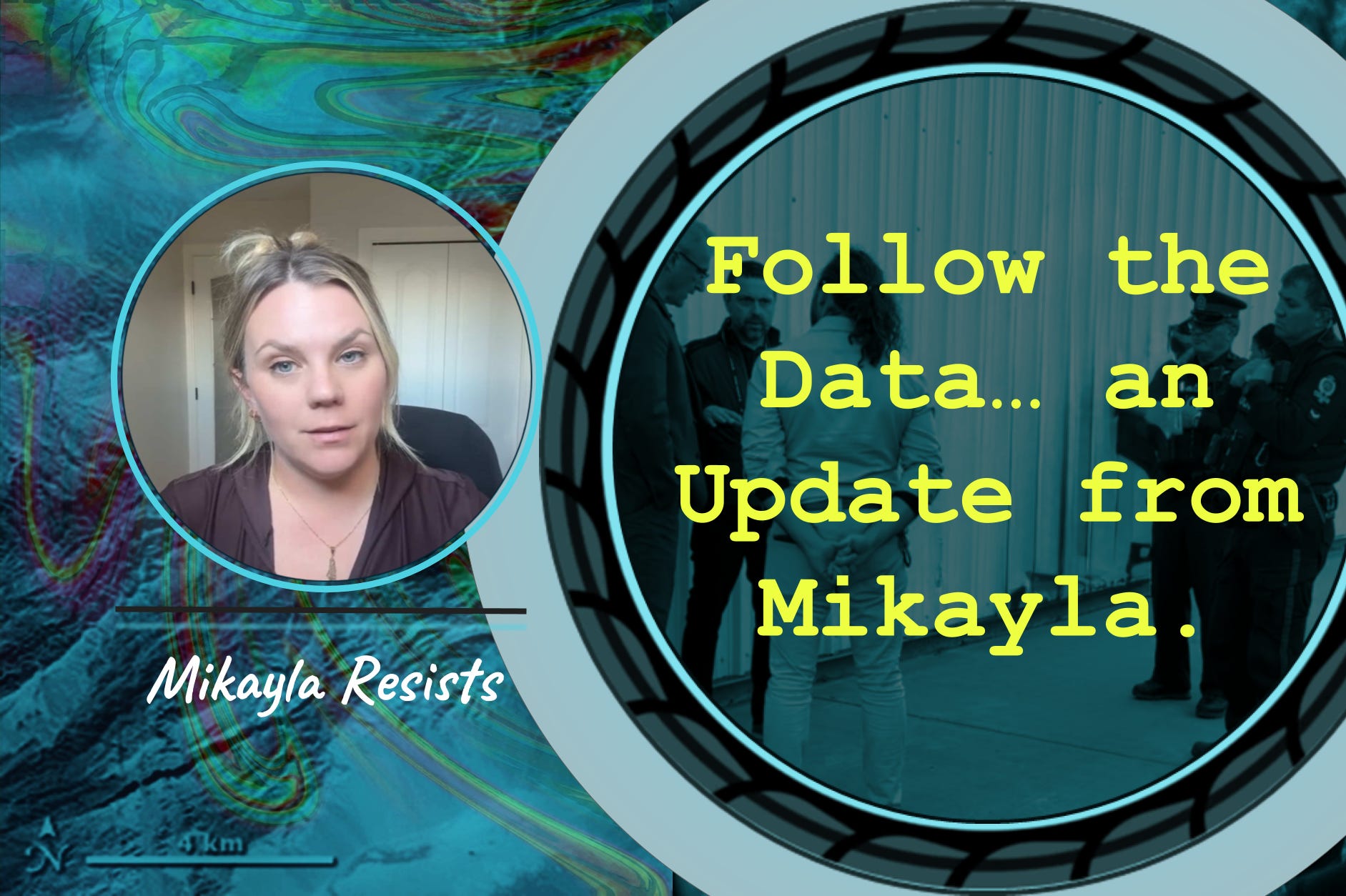
Follow the Data... an Update from Mikayla
May 3, 2026
48m 57s
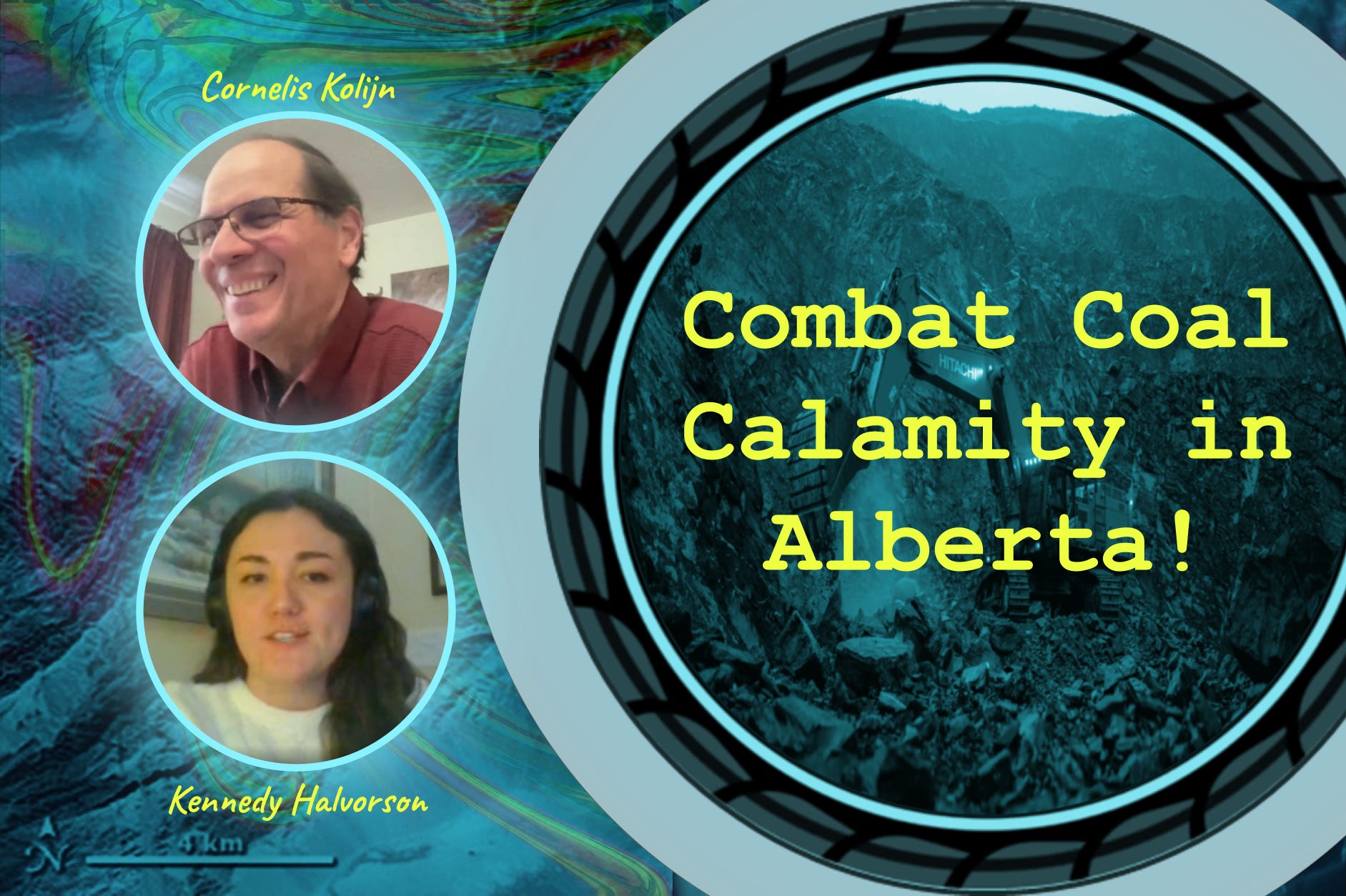
Combat Coal Calamity in Alberta!
Apr 29, 2026
54m 09s
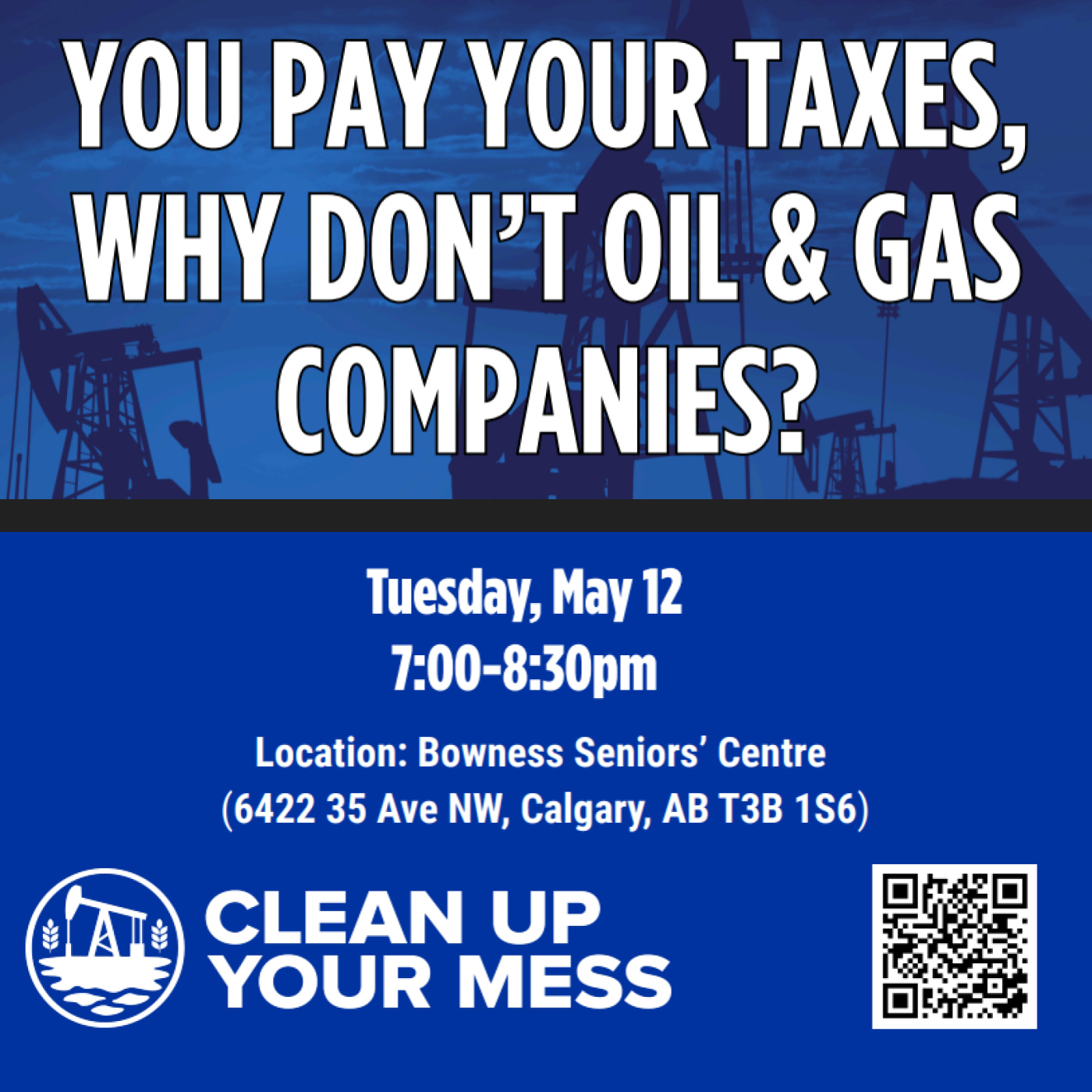
Water & Energy LIVE in YYC
Apr 27, 2026
2h 07m 21s
LaRose Vs. His Majesty the King
Apr 22, 2026
30m 45s
Is Gerrymandering Coming to Alberta?
Apr 20, 2026
34m 38s
Social Links & Contact
Official channels & resources
Official Website
Login
RSS Feed
Login
| Date | Episode | Topics | Guests | Brands | Places | Keywords | Sponsor | Length | |
|---|---|---|---|---|---|---|---|---|---|
| 5/3/26 | ![]() Follow the Data... an Update from Mikayla✨ | separatist movementAlberta politics+4 | Mikayla Resists | Edmonton Police ServiceAlberta Prosperity Project+1 | AlbertaIsrael+2 | separatismAlberta Prosperity Project+6 | — | 48m 57s | |
| 4/29/26 | ![]() Combat Coal Calamity in Alberta!✨ | coal misinformationmetallurgical coal+3 | Kennedy HalvorsonCornelis Kolijn | Alberta Wilderness AssociationTeck Resources | AlbertaDelft University of Technology+4 | coalAlberta+5 | — | 54m 09s | |
| 4/27/26 | ![]() Water & Energy LIVE in YYC✨ | energy transitionpolitics+3 | Markham | Energi.MediaPolluter Pay Federation - PPF+3 | CalgaryBowness Seniors’ Centre | energy journalismAlberta+3 | — | 2h 07m 21s | |
| 4/22/26 | ![]() LaRose Vs. His Majesty the King✨ | climate changelawsuit+4 | Sadie VipondAndrew Gage | West Coast Environmental LawDavid Suzuki Foundation+2 | Canada | climate change lawsuityouth plaintiffs+6 | — | 30m 45s | |
| 4/20/26 | ![]() Is Gerrymandering Coming to Alberta?✨ | gerrymanderingelectoral boundaries+3 | Duane Bratt | Mount Royal University | AlbertaCalgary+4 | gerrymanderingAlberta+5 | — | 34m 38s | |
| 4/14/26 | ![]() Public Education is Under Attack!✨ | Public EducationGovernment Policy+3 | Heather QuinnJay Prockter+2 | Alberta Teachers’ AssociationFriends of Medicare+1 | AlbertaCalgary+1 | public educationAlberta+5 | — | 1h 00m 14s | |
| 4/6/26 | ![]() Take Action! Stop the Caribou Eviction✨ | woodland caribouland use plan+4 | Tara Russell | Canadian Parks and Wilderness SocietyAlberta Wilderness Association+2 | AlbertaSouth Athabasca+2 | caribou evictionAlberta land use+4 | — | 41m 17s | |
| 4/2/26 | ![]() What Comes Next? Accessibility Rejected✨ | accessibilitydisability advocacy+4 | Zachary Weeks | Alberta Chambers of CommerceUCP government+1 | AlbertaEdmonton | cerebral palsyadvocacy+6 | — | 45m 27s | |
| 3/18/26 | ![]() Energy Market Volatility✨ | energy market volatilityLNG market+4 | Seb Kennedy | Energy Flux | RussiaUkraine+5 | energy marketLNG+6 | — | 44m 04s | |
| 3/17/26 | ![]() Native Calgarian Podcast on Treaties✨ | treatiesIndigenous rights+4 | Michelle Robinson | Native Calgarian PodcastThe Gravity Well | AlbertaCanada | treatiesIndigenous+5 | — | 57m 38s | |
Want analysis for the episodes below?Free for Pro Submit a request, we'll have your selected episodes analyzed within an hour. Free, at no cost to you, for Pro users. | |||||||||
| 3/14/26 | ![]() Reclaim Alberta from AI Data Centers | Updates from me:Good afternoon, I am Jenny Yeremiy, I’m broadcasting from Calgary, Alberta. I’m a geophysicist turned oil and gas liability expert turned podcast host and public activist. Defined by Mark Dorin: a person who stands up for citizen and indigenous rights and public safety then damn right I’m an activist. I’m here to create a better story for Alberta than one of pollution and populism by breaking through propaganda. We would not be living in this tumultuous time without it. Please remember to like and subscribe to The Gravity Well, your doing so helps boost the voices and views of these stellar people and important issues.Recall updatesThere are 4 recalls of interest rounding down: Recall Mickey in Calgary Cross; Recall Jackie in Fort Saskatchewan-Vegreville; Recall Justin Wright in Cypress-Medicine Hat; Recall Wiebe in Grande Prairie-Wapiti. Thank you again to everyone who stood up against this unconstitutional government!Recall Nicolaides is working on some data analysis for you, look to our socials for them! That’s @RecallNicolaides Shout out to all my recall Nico-laides, thanks Aimee for pointing this pun out! To get involved in phase two of the recall efforts, subscribe to Recall Nicolaides for now.PLEASE go to OperationTotalRecall.ca to support the final 4 campaigns. Also, BOOST their social media posts!The Gravity Well updatesLast week, you got a glimpse into my Calgary Citizens on Climate Change group, as Bob Sandford presented to us in it. Check out the episode titled Reclaiming Alberta from Water Bankruptcy. And I had a fabulous conversation with Wesam Cooley of Calgary Peoples’ Assembly, please check it out. We discuss the illegal and unconstitutional war against Iran in Reclaim the Middle East from US-Israel Domination. This illegal aggression is changing the global economic system dramatically . New limits are being exposed, fertilizer travels from that area and has been choked off. This will impact producers in North America. Wow! I am chatting with Seb Kennedy of Energy Flux on Monday about the changes to the oil and gas volumes before and after February 28th. That is going to be great.I also just concluded a joint podcast with Michelle Robinson of Native Calgarian Podcast. I hope to share it with you on Tuesday next week.Forever Canadian & Charlie Angus’ Meidas CanadaPhase two of the forever-canadian.ca is underway. Thomas Lukaszuk—former MLA, Minister and Deputy Minister for Edmonton-Castle Downs from 2001-2015, where I grew up—is now focused on re-activating, educating, and ultimately voting down Smith’s 9 referendum questions. Thomas and I had a stellar conversation on Meidas Canada, I am looking forward to watching it myself. Hoping it might be out tomorrow: Sunday, March 15.I am supporting the leader of the Calgary Forever Canadian volunteer effort, Janel’s been an organizing mentor, I am super grateful for her leadership. Sign up for the newsletter to get involved at forever-canadian.ca! I’m excited to see how this project grows!Water Not CoalBecome a canvasser with the WaterNotCoal.ca petition is underway. I have been bringing it around with me and now have a permanent signing location in Cougar Ridge, you can find it on WaterNotCoal.ca I am very much enjoying meeting the people who are going out of their way to sign, I met a wonderful couple from Drumheller on Thursday night. A shout out to Andrew and Jody, it was such a pleasure to meet you!The Coalition for Responsible Energy (C4RE)I have been working with a group called the coalition for responsible energy, you can find us by searching cleanupyourmess.ca. Mark Dorin has been increasing awareness in a big way lately. Firstly, Avi Lewis came to meet with Mark about the Reclamation Boom that Alberta is being held back from. Thank you to Avi for taking the time to understand the risks and opportunities for Albertans and Canadians in this space.In addition, Mark is making landowners aware of their right to address messes on their lands. Check out his conversation with Markham Hislop on Energi Media from yesterday.Common Purpose, Collective ActionI am co-presenting an Alberta Participatory Water Democracy (PWD) project with Colin Smith. It is directly related to Robert Sandford’s address to my Calgary Citizens on Climate Change (4C) group last week. Which I will get to in just a moment.Charlie Angus is a keynote speaker, and I am thrilled to be co-hosting a plenary, at the Public Interest Alberta: Common Purpose, Collective Action Conference in Edmonton, May 8-9.MARK YOUR CALENDAR: May 29th Alberta Day of Action!The goal is to have 1,000,000 Albertans on the street that day. This effort is being led by the Alberta Federation of Labour, please go to: Fight Back Now! - Alberta Federation of Labour, subscribe to spread the word and organize. It’s gonna be quite something!Jody MacPherson – AI Data CentersJody MacPherson, a journalist with a background in the oil and gas industry, is currently engaged in investigative reporting on AI data centers and their connection to oil and gas production in Alberta. Her work focuses on the Wonder Valley Project, a proposed $70 billion AI data center in the Grand Prairie area, and the Olds project, which is progressing rapidly. These data centers are linked to the government’s strategy to double oil and gas production, raising concerns about their environmental impact, particularly regarding water and energy usage.The projects have faced scrutiny over their approval processes and the lack of transparency, especially concerning water permits and indigenous consultation. Local communities have organized to express their concerns, particularly about the environmental and social impacts of these developments. Jody’s investigation also touches on broader issues of data sovereignty and the role of large American tech companies in these projects.Jody’s work is supported by donations through the energy mix and her Substack, where she provides additional insights into her investigations. She continues to explore the implications of these data centers, including their potential benefits and the challenges they pose to local communities and the environment. Excellent investigative reporting you won’t want to miss! If you’re interested in following them or the issue you can do so on Facebook search: Old’s Community Transparency Project.Jody’s coverage of this issue:Hidden Wonder Valley series: https://www.theenergymix.com/hidden-wonder-valley/Latest on Olds:https://www.theenergymix.com/developer-presses-ahead-with-mega-gas-plant-after-alberta-regulator-rejects-deficient-plan/Latest on Wonder Valley:https://www.theenergymix.com/alberta-municipality-bets-tens-of-millions-on-wonder-valley-data-cMore coverage on AI data sovereignty here (Canada is mentioned near the end):https://www.theenergymix.com/openai-calls-for-100-gw-of-new-power-each-year-to-secure-ai-dominance/The Energy Mix donations page: https://www.theenergymix.com/donate/Subscribe to Jody’s Substack newsletter:Send Jody news tips on Signal at: JodyMacPherson.64.Her social media links here: https://about.me/jodymacpherson.Caffeinate her to keep up with her grandson: https://buymeacoffee.com/jodymacpherson. Get full access to The Gravity Well with Jenny Yeremiy at www.thegravitywell.net/subscribe | 43m 03s | ||||||
| 3/7/26 | ![]() Reclaiming the Middle East from US/Israel Domination | Wesam Cooley rejoins The Gravity Well (see Season 1, Episode 20 and Season 2, Episode 7) podcast to delve into the complexities of Middle Eastern geopolitics, including the ongoing conflicts involving Iran, Israel, and the United States, and the broader implications for global stability. The discussion also touched on the role of media in shaping public perception and the strategic responses of nations like Iran in the face of external pressures.Note: some audio issues occur when Wesam shares important information around the University of Calgary student protests. Here’s what Wesam was hoping to share: “The broader progressive movement in Alberta has allies in the anti-imperialist struggle and it’s important that we work together as allies. The movement against the genocide in Gaza is the best example of a mass movement in a critical historical moment that could have been so much more impactful, even on politics in Alberta, if it had received full support across the progressive spectrum.The Calgary Palestine movement has been battling police and state repression and defending protest rights that will affect the civil liberties of all of us. The most important of these battles relates to the police/provincial scandal around the crackdown on the University of Calgary encampment. You’ll remember that in May 2024 a group of students established an encampment at the U of C protesting the University’s complicity in the genocide, and the Calgary Police came in with tear gas and batons and violently dispersed them, putting several people in hospital. That police action was so controversial that it got referred to an ASIRT investigation, but the whole thing ended up getting covered up and ASIRT in the end declined to investigate. A later FOIP request revealed that a conversation had taken place between then-Calgary Police Chief Mark Neufeld and Safety Minister Mike Ellis where Ellis assured Neufeld that there would be no substantive investigation by ASIRT into the issue. We have it on record that Ellis and Neufeld essentially decided the result of ASIRT’s investigation before any investigation had even taken place. This was reported by Jeremy Appel at the time.In other words, we uncovered smoking gun evidence that the Smith government directly participated in an outright cover-up of what was likely the worst case of police misconduct and violence against peaceful protesters in Calgary’s history. If that had received any real attention from progressives in this province, it might have dealt a serious blow to Smith and her cronies. (Who knows, it might have been enough to even take down her government? Neufeld himself ended up resigning, for reasons that weren’t stated publicly but were most likely related to this, since the Police Commission used his resignation as an excuse to not look into this issue any further.)So when I say you have allies in the anti-imperialist movement that you aren’t utilizing, I’m not saying it in some general or sentimental way. I mean what might have been the best opportunity progressives may ever get to actually take down the Smith government is slipping through their fingers because most (white) progressives in this province still see Palestine as an “alien” issue and aren’t willing to stand with us. And they do that not only to Palestine’s detriment, but to their own as well. We’re still here, still fighting the same fight you are, and this issue is still out there if anyone wants to pick it up and help us try to blow the Smith government wide open with it.But it will require progressives to actually ally with the Palestine movement. And it seems to me that there are some “progressives” in this country who would rather see us all become Yankees than take a stand in support of Palestine.”The podcast encourages listeners to engage with these issues critically and to participate in actions that support peace and justice, both locally and globally. Here are some ways to take action: Actions for PeacePalestine, Lebanon, and Iran Rally Sunday, March 8, 3 pm at Calgary City Hall.Withdraw Canadian troops from region assisting US/Israeli aggression on IranWrite your federal representatives here: https://actionnetwork.org/letters/withdraw-canadian-soldiers-assisting-us-aggression-on-iran.Daily Phone PledgeCall your MP before March 11, 2026 to confirm they are voting “Yes” to Bill C-233 to close loopholes for weapons to Israel. Use: https://armsembargonow.ca/phonepledge/ as your guide.Tell Carney: Oppose Illegal Attacks on IranJoin Canadians for Justice and Peace in the Middle East (CJPME) in emailing Prime Minister Carney and Foreign Minister Anand to demand that they retract their support for illegal US-Israeli attacks on Iran and impose sanctions on Israel. Go to: https://www.cjpme.org/carney_iran.Recall updatesThe recall campaigns are down to 6: Nate Glubish in Strathcona-Sherwood Park; Recall Mickey in Calgary Cross; Recall Jackie in Fort Saskatchewan-Vegreville; Recall Justin Wright in Cypress-Medicine Hat; Recall Wiebe in Grande Prairie-Wapiti; and saving the best for last Recall Danielle Smith in Brooks-Medicine Hat). Remember to tell your Brooks-Medicine Hat friends to call: 587-448-8911. It’s truly a 9-11 situation here in Alberta.PLEASE go to OperationTotalRecall.ca to sign and support the final 6 campaigns.Podcast updatesI had a fabulous conversation with Mary Stuart of Desmog regarding our premier’s addresses from May of 2025 and Feb 2026. Desmog is a global news organization focused on cutting through the climate misinformation machine. Yesterday, I posted an episode with the address that Robert Sandford offered my Calgary Citizens on Climate Change group called Reclaiming Alberta from Global Water Bankruptcy.Forever CanadianPhase two of the forever-canadian.ca is about to be start, the goal is to educate, activate, and ultimately get Albertans out to vote down Smith’s 9 referendum questions on October 19, 2026. Go to Forever-Canadian.ca to join in.Water Not CoalThe WaterNotCoal.ca petition is underway. It’s very well organized and great community spirit around it! Go to WaterNotCoal.ca to join.MARK YOUR CALENDAR ALBERTA: May 29th Alberta Day of Action!The goal is to have 1,000,000 Albertans on the street that day. This effort is being led by the Alberta Federation of Labour, please go to: Fight Back Now! - Alberta Federation of Labour, subscribe to spread the word and organize. It’s gonna be quite an accomplishment. Get full access to The Gravity Well with Jenny Yeremiy at www.thegravitywell.net/subscribe | 1h 07m 51s | ||||||
| 3/6/26 | ![]() Reclaiming Alberta from Global Water Bankruptcy | After I provide updates (see below) on the growing grassroots movement in Alberta, this episode features a discussion led by Robert Sandford, a senior government relations liaison for the United Nations University Institute for Water, Environment and Health, focusing on the global water crisis and its implications for Alberta. The speaker highlights the concept of “Global Water Bankruptcy,” a term used to describe the unsustainable overuse of water resources, which is becoming a critical issue even in water-rich regions like Canada. The report co-authored by Bob and released by the UN emphasizes the need for Alberta to acknowledge its water management failures and to protect its natural water-generating capital to avoid severe consequences.The discussion also touches on the broader implications of climate change, with references to recent scientific findings predicting accelerated global warming and its potential impacts on water resources and weather patterns. Bob criticizes the current Alberta government’s policies, which are seen as neglecting environmental concerns in favor of industrial growth, and calls for a shift in focus towards sustainable water management and democratic engagement.Additionally, the conversation explores the interconnectedness of water security with food security and economic stability, stressing the importance of collaborative efforts to address these challenges. Bob advocates for a reframing of the sustainability narrative, arguing that the term has been diluted and misused, and emphasizes the need for honest acknowledgment of environmental realities to drive meaningful change.Bob concludes with a call to action for Alberta to lead by example in addressing water and climate issues, suggesting that this could also serve as a catalyst for broader democratic renewal in the region.Updates from me:Good afternoon, I am Jenny Yeremiy, I’m broadcasting from Calgary, Alberta. I’m a geophysicist turned oil and gas liability expert turned podcast host and public activist. I’m here to create a better story for Alberta than one of pollution and populism by breaking through propaganda. We would not be living in this tumultuous time without it. Please remember to like and subscribe to The Gravity Well, your doing so helps boost the voices and views of these important issues.Recall updatesOK, first let me update you on the recalls. The recalls are down to 6: Recall Fir in Calgary-Peigan; Recall Peter Singh in Calgary-East; our Healthcare Minister and MLA for Red Deer North, Recall Lagrange are complete;Nate Glubish in Strathcona-Sherwood Park; Recall Mickey in Calgary Cross; Recall Jackie in Fort Sask-Vegreville; Recall Justin Wright in Cypress-Medicine Hat; Recall Wiebe in Grande Prairie-Wapiti; and saving the best for last Recall Danielle Smith in Brooks-Medicine Hat). Remember to tell your Brooks-Medicine Hat friends to call: 587-448-8911. It’s truly a 9-11 situation here in Alberta as our government now looks to mount more than $100 billion in debt.PLEASE go to OperationTotalRecall.ca to support the final 6 campaigns. It’s getting harder with the aggression from the separatist agenda. Lots of women are leading these efforts. I am so grateful to everyone who took the leap with me. Our community is 30,000 people strong, and growing! You can check out my interview with Radio Canada about the recall outcomes in the substack post which will accompany this episode.Podcast updatesI had a fabulous conversation with Mary Stuart of Desmog, please check it out. Desmog is a global news organization focused on cutting through the climate misinformation machine. Desmog’s founder, Geoff Dembicki, is an Albertan and the author of The Petroleum Papers, which is being made into a series, btw. The book outlines the climate misinformation machine centered out of Alberta since the mid-90s using organizations like the Canadian Taxpayer Federation, founded by none other than Jason Kenney. When you consider his influence on our province please understand that he started in 1995 not 2019.Remember, I have the pleasure of speaking with Charlie Angus on Meidas Canada. Please check out the few episodes I’ve done with him already, the latest being one on Danielle Smith’s address to the nation, titled: RECLAIM ALBERTA - DANIELLE SMITH IS LOSING IT.We speak about Danielle Smith’s addresses and the many grassroots movement in Alberta! Like… Forever Canadian.Forever CanadianPhase two of Forever Canadian is about to be start with a new partner the Association canadienne-française de l’Alberta (ACFA). Thomas Lucaszuk and the Forever-Canadian.ca campaign team are now focused on activating, educating, and ultimately voting down Smith’s nine referendum questions. I am supporting the leader of the Calgary effort, Janel’s been an organizing mentor to me. Sign up for their newsletter to get involved! Water Not CoalBecome a canvasser with the WaterNotCoal.ca petition is underway. I have been bringing it around with me and now have a permanent signing location at the Calgary Waldorf School in Cougar Ridge. I’ve already had 3 people sign and TWO offer to get me a local lineup! Tons of fun, get involved. It’s very well organized! Again, go to WaterNotCoal.caCommon Purpose, Collective ActionI am co-presenting an Alberta Participatory Water Democracy (PWD) project with Colin Smith. It is directly related to Robert Sandford’s address to my Calgary Citizens on Climate Change (4C) group last week. Which I will get to in just a moment.Charlie Angus is a keynote speaker, and I am thrilled to be co-hosting a plenary, at the Public Interest Alberta: Common Purpose, Collective Action Conference in Edmonton, May 8-9.MARK YOUR CALENDAR: May 29th Alberta Day of Action!The goal is to have 1,000,000 Albertans on the street that day. This effort is being led by the Alberta Federation of Labour, please go to: Fight Back Now! - Alberta Federation of Labour, subscribe to spread the word and organize. It’s gonna be quite something!Bob Sandford–Global Water BankruptcyOK! Now onto Bob Sandford, I am so grateful to my friend James for introducing me to Bob Sandford. I first came into contact with James and Bob on World Water Day in 2024. He and Kevin Van Tighem presented together at a World Water Day Virtual Event in 2024. Highly recommend you listen to it, especially in light of Bob’s Global Water Bankruptcy report released in January.Bob is the Senior Government Relations Liaison for the Global Climate Emergency Response team within the United Nations University Institute for Water, Environment, and Health, joined the Calgary Citizens on Climate Change (4C) meeting last week to explain how the Global Water Bankruptcy impacts water decision-making in Alberta.This is the first glimpse into both the new reality, sustainability has failed, climate emergency talk has failed, we are now aiming to avoid water bankruptcy. I am super excited and ready for the mountain of work and opposition that is ahead of us. It will be up to you, dear listener, to convince the public to care about this.Before I share Bob’s presentation, I wish to offer my regret and disappointment to the people of Iran and the broader gulf region. The illegal and unconstitutional war against Iran will have drastically detrimental impacts on the global economy, the ecology, and of course supply chain for both food and water. Tune in again today at 5 pm MT/7 pm ET, I will be rejoined by Wesam Khalid to discuss this in detail. There is a LOT to unpack as I haven’t spoken with Wesam since May of 2025 before the 12-day war which we were told ended in World Peace. Not so much!I am proud to share this discussion with Bob and look forward to continued discussions with him. Please listen to the end for Bob’s heartfelt compelling call-to-action. Have a great rest of your day everyone. Get full access to The Gravity Well with Jenny Yeremiy at www.thegravitywell.net/subscribe | 1h 01m 49s | ||||||
| 3/1/26 | ![]() Desmog Alberta Report | In this episode of The Gravity Well podcast with Jenny Yeremiy, Mary Stuart of Desmog Canada joins me to break down Premier Danielle Smith's addresses to the province from May 2025 and February 2026. DeSmog is a global organization working to clear PR pollution blocking climate action, including in Canada. Get your updates on grassroots movements in Alberta, focused on environmental activism and social justice. I update you on recall petitions against separatist movements against unjust government actions, such as the use of the notwithstanding clause by the justice minister, MLA for Calgary-Cross, Mickey Amery. Visit recallmickey.ca to upend him. Have your friends in Brooks-Medicine Hat text or call 587-448-8911 to remove Danielle Smith from her seat. Go to OperationTotalRecall.ca to support a recall campaign near you. Join waternotcoal.ca to gather signatures to stop coal mining in the Eastern Slopes. Or, if you aren’t a part of the Forever-Canada.ca already, join it to learn how to ensure the Alberta Government’s referendum is met with an informed Alberta public.Take ActionUse this post to write to the Canadian Pension Plan Investment Board (contact@cppib.com), let them know you oppose funding genocide and ecocide (via fossil fuel expansion). Get full access to The Gravity Well with Jenny Yeremiy at www.thegravitywell.net/subscribe | 1h 00m 02s | ||||||
| 2/21/26 | ![]() Reclaiming Forest Management | In this episode of The Gravity Well with Jenny Yeremiy, I give the week’s highlights in Alberta politics before sharing my in-person interview with Dr. Younes Alila of the Department of Forestry and Environment at the University of British Columbia. I remind you to sign your recall petition, you can find your Member of the Legislative Assembly at operationtotalrecall.ca. The episode also highlights the importance of public education, the teachers’ strike, and the role of teachers in political engagement. I emphasizes the need for collective action against government policies and the significance of using scientific evidence and indigenous knowledge in decision-making. The podcast is available on YouTube and other streaming platforms, I encourage you to like and subscribe to spread awareness of the valuable work being done in Alberta and beyond. Younes’s interview starts at ~24:30.The Gravity Well UpdatesI had three stellar conversations recently. First, with Mikayla Resists who’s been attending and sharing separatist signing locations and events to call out the misleading and treason. Andy Sytsema walked us through what Project 2025 is and what it would mean for Alberta if we were to fall to the USA. And Grande Prairie teacher, and former chair for the Alberta Teachers’ Association’s central bargaining committee, Peter MacKay on what teachers have done and continue to do to reclaim Public Education in Alberta. Please listen to those conversations.What we do in the resistance matters, it’s already making a difference. As Peter MacKay reminded me, the teacher’s strike prevented an early election in the 2025. The polls were suggesting Smith’s Government of Alberta was set to gain even higher popular support last fall. Those polls did not factor in the overwhelming public support for the teacher’s strike. They tried hard to villainize teachers but failed. Well done teachers. It is the time to be political, and you have rose to the occasion! Remember, Alberta needs a better story than one of treason and tyrants. I am proud to share the people, places, and plans to Reclaim Alberta. Join your nearest OperationTotalRecall.ca team or join The Gravity Well community.Minister Nicolaides Lashes out at City NewsCalgary-Bow MLA, Demetrios Nicolaides is upset with himself over his decision to fly the Alberta flag on Mount Kilamanjaro.As Tania Vanderland asks in this the City News article which set Nicolaides off, “It is curious to see him use this platform to raise the Alberta flag,” she says. “And it is also curious that he chose to do that as well on this Mount Kilimanjaro trip, which is a different issue that he was trying to raise awareness around.”The recall petition for Nicolaides failed to reach the required benchmark of 16,500 signatures by nearly 10,000. It was the first of 26 launched against members of the legislature in the final months of 2025. Twenty-four are against members of Smith’s caucus, including herself. Two are against members of the Alberta NDP.However, Vanderland says the failed recall bid wasn’t a total loss, as it led to political engagement.As for the flag, she wants to know why Nicolaides chose the one he did and feels, given he is a provincial minister, it is an appropriate question.“Why didn’t he raise a Canadian flag?” she asks. “Or was it necessary at all to use that platform and that moment to raise a flag? You know, I understand the trip was about his sister.””I appreciate Tania’s curiosity but Nicolaides feels quite differently. A letter (photo below) from his office explains he will make no further statements on the matter with CityNews. That they need to remove the story and apologize. Oh my! It’s important to note that recent changes made to family violence legislation in Alberta have increased the likelihood for more violent behavior by cutting the family violence death review committee. Remember, Minister Nicolaides and MLA Angela Pitt pay no mind to the more than 8,700 Albertans who formally expressed their objection to them as representatives of their constituencies. Many recalls are wrapping up this weekend, do your best to give them a final boost at OperationTotalRecall.ca.Take ActionAlberta is Canada, Canada is Alberta RallyAttend your local rally for Alberta in Canada tomorrow, Saturday, February 21. I will be in Lethbridge on Sunday to sign the People’s Petition against Neudorf as he faked his own recall campaign.Let’s bombard the CPPIB meetingI will be at the BMO Center on Monday, Feb 23rd at 6 pm. The Edmonton event is on Wednesday, February 25. The link to register for either is here: https://www.cppinvestments.com/public-meetings/.There’s a better story to be told by you for Alberta and Canada. Get full access to The Gravity Well with Jenny Yeremiy at www.thegravitywell.net/subscribe | 1h 30m 24s | ||||||
| 2/13/26 | ![]() Reclaiming Public Education | In this episode of The Gravity Well, I focus on the crisis in public education with guest Peter McKay, the former chair of the central bargaining committee for the Alberta Teachers’ Association and a Grand Prairie Middle School teacher and advocate. The conversation highlights the systematic underfunding of public education in Alberta, which has led to larger class sizes and insufficient resources for disabilities and immigrant students. The podcast also addressed the Alberta government's use of the notwithstanding clause to bypass negotiations with teachers, which has led to a lack of enforceable class size and composition conditions. The episode concluded with a call for teachers to become or remain politically active and engaged, emphasizing the need for grassroots efforts to address the challenges facing public education and other public services.The teachers’ strike has changed the direction of the political conversation in Alberta and Canada, let’s keep the conversation going. A fabulous conversation you won’t want to miss! Get full access to The Gravity Well with Jenny Yeremiy at www.thegravitywell.net/subscribe | 1h 00m 45s | ||||||
| 2/13/26 | ![]() Reclaiming Alberta Report with Andy Sytsema | This episode begins with highlights from my collaboration with Charlie Angus / The Resistance in the “Reclaim Alberta” feature. In the latest episode: Charlie and Jenny address concerns about foreign interference and misinformation by the fossil fuel industry. Charlie highlights the importance of grassroots efforts to pushback against the impact of deregulation on the oil and gas industry. It is evident the resistance is growing.Andy Sytsema of Taking Alberta Forward, an online presence and community Andy built to pushback against “Take Back Alberta" misinformation. Andy shares a background in the oil and gas industry who calls for transparency and integrity in government and advocates for universal public healthcare, education, social services, and the environment. He researches and writes online often about issues that matter to Albertans, in this episode he shares information around Project 25: its connection to Christian nationalism and executive overreach in Alberta’s politics. The podcast also covers various recall campaigns in Alberta, encouraging public participation and highlighting the importance of democracy activism. The conversation concludes with a call to action for a rally celebrating Alberta and Canada, emphasizing unity and community engagement on February 21, from 10 am to noon. I will be at the rally at Calgary City Hall.This weeks’ actionUse this EcoJustice letter writing tool to send an email to your MLA calling for a public inquiry into the $130 billion oil and gas liabilities not dealt with. Demand a public inquiry to keep Alberta’s Polluter Pays principle alive. Add: “No More Pipelines” until the liabilities are funded.Expect a canned reply from your MLA like I received from Demetrios Nicolaides: Dear Ms. Yeremiy,Thank you for taking the time to write and share your concerns regarding Alberta’s Mature Asset Strategy and the management of historic oil and gas liabilities. I appreciate your perspective on this important issue.Managing inactive oil and gas wells is a challenge faced by energy-producing regions worldwide, and Alberta is committed to addressing it responsibly. Our government’s approach is guided by the polluter-pays principle, ensuring that companies—not taxpayers—are responsible for cleaning up their sites.Since introducing the Liability Management Framework in 2020, Alberta has made progress. The number of inactive wells has decreased by nearly 20%, from 97,000 to 78,000 as of December 2024. Industry is also meeting and exceeding annual closure spending requirements, investing hundreds of millions of dollars into cleanup efforts. For example, in 2023, companies spent $769 million on closure work—10% above the required amount.The Mature Asset Strategy builds on this progress. It was developed after consultations with municipalities, landowners, and industry to ensure a balanced approach. Key recommendations include:* Preventing insolvent operators from continuing operations* Ensuring municipal taxes and landowner leases are paid* Accelerating the closure of non-commercial wellsites* Supporting the polluter-pays principle without relying on public fundsOur goal is to protect taxpayers, uphold environmental standards, and maintain Alberta’s reputation as a responsible energy producer while supporting economic growth and good-paying jobs.Thank you again for sharing your views. Your input is valued as we continue working to ensure Alberta’s energy sector remains strong and accountable.Regards,Demetrios NicolaidesMLA, Calgary-BowHow should I respond? Get full access to The Gravity Well with Jenny Yeremiy at www.thegravitywell.net/subscribe | 52m 55s | ||||||
| 2/7/26 | ![]() Reclaiming Alberta Report with Mikayla Resists | This episode of The Gravity Well with Jenny Yeremiy features Mikayla, the founder of the Alberta Civic Integrity Project, who discusses her involvement in resisting fascist forces in Alberta. Mikayla shares her experiences on the picket lines and her efforts to hold the government accountable through rallies and recalls. The conversation highlights the challenges faced by Recall campaigns in Alberta, emphasizing the high thresholds required for success and the importance of civic engagement.The podcast also addresses the separatist movement in Alberta, with Mikayla detailing her interactions with separatists and the misinformation surrounding the movement (example: treaty misinformation countered by Sturgeon Lake Cree Nation courtesy of Jody MacPherson. The discussion underscores the need for dialogue and the importance of standing united against divisive forcesA Fabulous Note on Recall CampaignsCheck out this fabulous post by Jon Auger on the Canadian Politics… Feed Back Facebook page:RECALL SIGNATURES ARE VOTES WALKING AWAY“Alberta, here is the reality hiding in plain sight. Recall petitions were built with thresholds so high they are almost impossible to win, but that was never the real story. The real story is what the signatures reveal. In Calgary-Bow alone, 6,519 people went out of their way to complete a formal, verifiable civic act saying they wanted their MLA gone. That petition “failed.” But those 6,519 names are not a failure. They are a record. They are neighbours who crossed the line from frustration into action, who put their identities on the record in a way far stronger than a poll answer or a social-media post. This is why recall matters for the next election. A recall signature is not a ballot, but it is something politically louder: documented evidence of a voter in that riding who is unlikely to support that MLA — or the party they represent — when the next vote comes. That is a behavioural signal campaigns and parties understand very well. Multiply that kind of civic action across dozens of ridings and you are no longer looking at paperwork. You are looking at a living map of political disengagement from incumbents that no one can spin away. And here is the part that turns this from observation into message. If you care, if you are already talking about this with friends and neighbours, then adding your name where a recall petition exists in your riding is the clearest way to be counted. Not because you expect it to “win,” but because every signature strengthens the record showing how many Albertans have already decided they expect something different. The higher those numbers climb, the louder that message carries into every campaign office, every doorstep conversation, and every ballot box in the next election.”This weeks’ effortsI am dedicating The Gravity Well podcast to the recall and other citizens’ led efforts to uphold democratic rights and institutions, creating a better story for Alberta than one of traitors and tyrants. I’ve hosted two livestreams so far: solo and with Mikayla Resists. Next week, I am hosting the former Chair of the Alberta Teachers’ Association’s bargaining committee, Peter MacKay: Wednesday, Feb 11 at 4:30 pm MT/ 6:30 pm ET.This week, I am supporting the: Recall Sawhney, Recall Fir, Recall Red Deer, and Recall Mickey campaigns. I will share these activities for you on my social media. If you are a doorknocker and up for supporting the Recall Peter Singh campaign with me on Saturday, Feb 14 from 12-3 pm, please let me jenny@thegravitywell.net and recallpetersingh@outlook.com know. Thank you to Lindsay and Tobi for joining me there last weekend! Like Doras’ exploring! I had a great visit with Henry in Calgary-NorthWest and Chelsea in Calgary-Peigan this week. Healthy and spicy conversation both. They feel the revolution is upon us, too!Next, I am SUPER proud to be a part of the Charlie Angus / The Resistance community. Charlie is hosting me on Meidas Canada as a regular contributor. If you haven’t watched them already, I was on in December, the episode is titled: THE BATTLE FOR ALBERTA - RECALL MOMENTUM GROWS !!! And released yesterday with its new name the first report titled: RECLAIM ALBERTA - THE FIGHT BACK AGAINST MAGA.There's a better story to be told for Alberta and Canada. I am excited to share the people, places, and plans to Reclaim Alberta. Join your nearest OperationTotalRecall.ca team. Put up your Canada flags to stand with Treaty 6, 7, & 8 Chiefs and First Nations. Join the fun!Your Action for this Week: Write your MLATo the MLA for Calgary-Bow and Education Minister, Demetrios Nicolaides,I, Jenny Yeremiy, a Canadian born citizen, and an Albertan, stand with First Nations.They are protecting ALL proud Canadians in Alberta, and the safety and security of ALL Canadians.I respect and will defend Treaty 6, Treaty 7 and Treaty 8, alongside First Nations Chiefs and people with millions of non-First Nations people who also respect these Treaties.Reconciliation has undoubtedly taken hundreds of steps backwards as a result of the actions of the separatist movement, a movement enabled by you under Danielle Smith’s United Conservative Party.In addition to this, I am not at all comfortable paying Danielle Smith’s salary or the salaries of her separatist caucus members who are using their positions, at Canadian taxpayers’ expense, to divide our nation. And ask that Members of the Legislative Assembly and fellow premiers denounce her leadership by stepping aside or requesting an inquiry into foreign interference around separatism, respectively.Issues can be resolved with dialogue.... but removing Alberta from Canada should have NEVER been on the table in the first place. Not on Alberta taxpayer’s time, or dime—and not at the detriment of First Nations (opposite of truth and reconciliation) and Canadian people. This entire dilemma has grossly and negatively impacted not only First Nations people, but millions of Non-First Nations people living in Alberta, and our neighboring Provinces and Territories, citizens throughout the country.The anxiety and distress caused to date is immeasurable.Your immediate resignation from the United Conservative Party is urgently requested.Sincerely,Jenny Yeremiy, Calgary-Bow resident, Albertan, Canadian, Treaty Rights DefenderCourtesy of Sarah Johnston (source: First Nation chief calls on Smith, UCP to resign).Cc admin@treaty7.org, amanyheads@treaty7.org, mmaherali@treaty7.org, mike.oka@bloodtribe.org, ira.provost@piikaniconsultation.com, Cedrics@siksikanation.com, bills@stoney-nation.com, violet.meguinis@tsuutina.com, consultation@acfn.com, lorna.auger@bigstone.ca, jmccracken@doigriverfn.com>, lands.dir@duncansfirstnation.ca, reception@doigriverfn.com, lindeed@lrrcn.ab.ca, kennedy.tuccaro@mikisewcree.ca, vernon.alook@ptfn.net, Consultation.director@sturgeonlake.ca, reception@treatysix.org, exec.assist@treatysix.org, lmills@treatysix.org, policydirector@treatysix.org, consultation@enochnation.ca, carol@ermineskin.ca, vernon@kehewin.ca, info@clfns.com Prime Minister of Canada: pm@pm.gc.ca Alberta Premier: premier@gov.ab.ca British Columbia Premier: premier@gov.bc.ca Manitoba Premier: premier@leg.gov.mb.ca New Brunswick Premier: premier@gnb.ca Newfoundland and Labrador Premier: premier@gov.nl.ca Nova Scotia Premier: premier@novascotia.ca Ontario Premier: premier@ontario.ca (or use the online form at correspondence.premier.gov.on.ca) Prince Edward Island Premier: premier@gov.pe.ca Québec Premier: premierministre@quebec.ca Saskatchewan Premier: premier@gov.sk.ca Northwest Territories Premier: premier@gov.nt.ca Nunavut Premier: premier@gov.nu.ca Yukon Premier: premier@gov.yk.ca Get full access to The Gravity Well with Jenny Yeremiy at www.thegravitywell.net/subscribe | 52m 22s | ||||||
| 1/28/26 | ![]() The Reclaiming Alberta Report | In this the first episode of third season of The Gravity Well, Jenny provides updates on her activism in Alberta, including her work on recall campaigns and efforts to address provincial concerns. She shares her background as a geophysicist and liability expert, highlighting her transition from the oil and gas industry to focus on restoration efforts in Alberta, British Columbia, and Saskatchewan. Jenny discusses her passion for environmental restoration and her wanting to be working within the fossil fuel industry to achieve these goals.The podcast also covers various recall campaigns across Alberta, with Jenny expressing gratitude for the contributions of numerous volunteers and canvassers. She highlights the importance of community involvement and encourages participation in citizen assemblies to address public issues such as public school funding, coal mining, and public health.Jenny addresses the challenges faced by teachers in Alberta, including the impact of the Back to School Act, which restricted teachers’ rights to strike, negotiate, and work in safe conditions. She emphasizes the need for public engagement and action to address these issues.The podcast concludes with a call to action for listeners to get involved in recall campaigns through operationtotalrecall.ca to uphold democratic values. And to focus on water through the Eastern Slope Watershed Protection Assemblies to begin with to safeguard and reclaim public interests in Alberta and beyond. Here’s that great action you can take, feel free to edit and send to any UCP Caucus & Alberta MLA you see fit!Write to Assistant-Minister of Multiculturalism & MLA for Calgary-North, Hon. Muhammad Yaseen via: Calgary.North@assembly.ab.ca Dear Hon. Muhammad Yaseen–Assistant Minister of Multiculturalism and MLA for Calgary-North,I am writing to you as an (add if applicable: Calgary-North constituent or) Albertan who is genuinely frightened.I am watching what is happening in the United States, studying the steps that brought them to their current reality, and increasingly recognizing those same steps being taken here in Alberta. What we are witnessing south of the border is not sudden—it is the outcome of years of political decisions made when party loyalty was placed above the common good.I wrote to you or your leader asking that you protect minority groups—specifically trans youth—who already face disproportionately high rates of suicide, discrimination, and violence. I asked you not to support legislation that would strip them of their rights. I asked, directly, who the next target of the Notwithstanding Clause would be if it was used so readily against a vulnerable minority.You did not respond. Instead, you voted in favour of using the Notwithstanding Clause against teachers in Bill 2: the Back to School Act (Oct 27, 2025), which imposed terms on striking teachers: ordered them back to work into unsafe conditions without arbitration. Then on December 10, 2025, you voted in favour of that legislation I wrote you about — the Protecting Alberta’s Children Statutes Amendment Act (Bill 9, on Dec 10, 2025) — which invoked the notwithstanding clause to shield multiple anti-trans laws from Charter challenge.This is not an abstract concern. It is recognizing a pattern.We are watching law enforcement in the United States become increasingly militarized and brutalized against civilians. Alberta itself has a troubling history of law enforcement struggling under strained services and a lack of preventative support. Yet you voted in support of creating an additional provincial police force rather than strengthening support and accountability within our existing systems — through legislation such as the Public Safety and Emergency Services Statutes Amendment Act (Bill 4, 2025) and prior clauses enabling an independent provincial police service.We are witnessing the murder of protesters, the abduction of children, and the detention and deportation of legal citizens in the United States. And yet, when separatists in Alberta openly praised joining the United States as a “51st state” and called for legislative changes to allow an otherwise unconstitutional separatist petition to proceed, you voted in favour of Bill 14: Justice Statutes Amendment Act (2025), which amended the Citizen Initiative Act and the provincial referendum framework to remove the safeguards that had prevented such petitions from moving forward.At each of these moments, through your privileged position of power, you have voted in ways that bring Alberta closer to the political conditions we are watching unfold in the United States—and further from the safety, freedom, and democratic stability we cherish in Canada.You cannot undo the votes you have already cast.But you can still show Albertans that you are unwilling to let the UCP lead this province further down that path. Demonstrate your lack of support for separation and the above by stepping aside from the UCP caucus and party. You can use your voice to state clearly that you support conservatism rooted in democratic restraint and respect for rights—not separatism, authoritarianism, or governance by override. Not the pollution of our drinking water, not an Alberta Police Force. Not the stripping of our Canadian Pension Plans. Reinstate the rights of municipalities and restore their funding. Redirect fossil fuel funding towards public schools and hospitals.You can resign in honour, sending a message to your party that these are not the values you—or your Calgary-North constituents—stand for.I am asking you, sincerely and urgently, to stand up for us so that Alberta does not become the 51st state, by name or by nature. Look to the state of Puerto Rico to know what this will look like for Alberta and Canada by extension.Truly,Jenny Yeremiy, P. Geoph and Calgary-Bow, Alberta, Canada resident and citizen.Adapted from Julietta Sorensen Kass’s letter issued to you. Cc Premier of Alberta | UCP Leader Smith Premier@gov.ab.ca Cc MLA for | NDP Leader Nenshi edmonton.strathcona@assembly.ab.ca & Nenshi@albertandp.ca Cc MLA for Airdrie-West | APTP Leader Guthrie airdrie.cochrane@assembly.ab.ca & info@albertaparty.ca Cc Your MLA for Calgary-Bow | Education Minister Nicolaides Calgary.Bow@assembly.ab.ca Get full access to The Gravity Well with Jenny Yeremiy at www.thegravitywell.net/subscribe | 53m 46s | ||||||
| 12/11/25 | ![]() The Future of Water in Southern Alberta | This episode about the future, is the last of the 2025 mini-series on Water in Southern Alberta. It features experts J. Bruce Smedley, a 50-year engineer, and Kennedy Halverson, a conservation expert with the Alberta Wilderness Association. We discuss topics such as irrigation, resource extraction, and water security. The conversation highlights the over-allocation of water resources, the need for comprehensive water management, and the importance of biodiversity conservation. The podcast advocates for a dedicated water preservation agency to address these challenges and emphasizes the role of public pressure in driving much-needed change. A wonderful conversation!Introduction of Kennedy Halvorson and a Re-Introduction of J. Bruce SmedleyWelcome to The Gravity Well Podcast with me Jenny Yeremiy. I host The Gravity Well to celebrate and share the stories of people looking to empower others with the knowledge and skills required to reestablish stability in our communities. My mission is to work through heavy issues in conversation and process in order to lighten the load. I acknowledge that I live on the traditional territories of Treaty 7 and Metis districts 5 and 6. The treaties and self-governance agreements established by indigenous peoples were created to honour the laws of the land maintained balance with nature and give back to uphold reciprocal relationships. This knowledge and intention are what guide The Gravity Well conversations. I ask for genuine dialogue, real hearts, and openness to different perspectives. This is your invitation to find common ground with me. Positions taken by participants either individually or collectively do not necessarily represent those of The Gravity Well. This podcast is dedicated to the natural world, our children, nieces, nephews, grandchildren, and all future generations. The Gravity Well is on YouTube and streaming wherever you get your podcasts. If you like what you see in here, remember to like and subscribe.Good afternoon, Bob. Thank you so much for being here again with me. How are you doing today?Bob:I’m doing okay. Fine, have a cold.Jenny:Try to get around that. Yeah. Thank you so much, Bob. Good afternoon everyone. I’m rejoined here with Bob for what is potentially our last water in Southern Alberta podcast, potentially of the well likely of the year, and potentially there may be more in the new year. Let’s see. We’re hoping to potentially have a conversation with Bob Sanford, but we’re going to bring in some of his thoughts into this conversation from Cop 30. Stay tuned for any of those details. This is episode 12 in this mini series. On this episode is on the future of water in Southern Alberta. We’ll be chatting with Bruce Smedley, who participated last year in episodes 18 and 22, and Bob and I are thrilled to welcome Kennedy Halverson of the Alberta Wilderness Association as well. We’ll get to them in a moment. Reminding folks, we have covered irrigation, resource extraction, the Water Act and licence transfer system, water modelling watershed and lake stewardship, dry land irrigated and ranch farming insurance. And then after a summer break, we returned to meet with Dr. Brad Sta Fox to learn about land use limits. Dr. David Sauchyn on climate change, Dr. David Swan and Jason Unger on water security, and Dr. Judy Stewart and Cheryl Bradley about Aquatic and health. Sorry, aquatic and riparian health. It’s been quite a learning experience. I’m so appreciative of you, Bob, for your leadership through this. This wouldn’t have been possible without you, and I’m super grateful for all the work you’ve done and for everyone that you have brought forward. And for all I’ve learned, this has just been remarkable.Bob:Well, back at you, Jenny, for all your organizational skills. Speak to this is totally disorganized on most days.Jenny:Yes, you’re very humble. You have done so much work in this and you have kept us all on track to do this. Like I said, this has been an incredible experience and I’m just so grateful for it. Okay, let’s welcome first Bruce Smedley back to the studio. Thank you so much, Bruce for being here again with us.J. Bruce:Well welcome to be here. I do appreciate it and I appreciate the work you’ve done so far in the podcast to date and I urge people to watch them. There’s a lot of information there.Jenny:Thank you, Bruce. Bruce has a master’s in, excuse me, and bachelor’s in chemical engineering. He studied in both British Columbia and Alberta. He has over 50 years of industry, government and global bank experience, which is a trifecta. It’s quite incredible in both the public and private sectors. Bob and I know Bruce from the 4C group, so that’s our Calgary Citizens on Climate Change group. We meet Thursday mornings to help each other learn and attempt different strategies to help inform people about these critically important issues and how to move ideas forward together. He also last year during episode 22, which I do encourage you to watch as well in the context of this work, he brought forward the idea of an integrated water resource preservation and restoration agency. So I’m sure we’ll discuss that. Welcome back, Bruce. Thank you for being here. Okay, so Kennedy, thank you so much, Kennedy for joining us.Kennedy Halverson is currently with the Alberta Wilderness Association. She has a BSc in chemistry. She did a stint of honeybee research that convinced her to be that work at climate controlled laboratory bench. It led her to work with the climate controlled laboratory bench. Fast forward through a graduate degree in environmental studies focused on native plants and pollinator conservation. Kennedy has worked in research and projects on food policy for Canada, finding flowers at York University. Before joining the Alberta Wilderness Association, she helped develop a bumblebee pathogen sampling protocol for environment and climate change. Canada, it’s just wonderful to have you here, Kennedy. I was saying before we went live that I get the opportunity to see you in such a different space. You spoke so well at the coal hearings in Southern Alberta and you’ve just been such a big voice for conservation in the province. It’s just such a pleasure to have you here. Thank you.Kennedy:Thanks for having me. Yeah, no, hearing the cast of people who’ve been on the episodes preceding me, they’re all people I really look up to in this field, it feels a little big shoes to fill to be here to talk. I don’t know if I’ll say anything new that they haven’t already set, but we’ll see.Jenny:Funny enough, you came up actually several times, Kennedy, with your expertise, I appreciate your humility, but you are very, very on equal footing in this conversation, so thank you. Why, before we dive in, we forgot to mention, I would love to just hear a little bit about how you came into this work. Kennedy, it sounds like you started having interest in bees and that’s what led you into the work that you do now. Is that right?Kennedy:Yeah, yeah. I definitely started at a biochemistry bench and realized I did not want to stay in a lab my whole life working on proteins. I needed to work on something a little bit bigger and then I was with honeybees and salmon and then I got an interest in our native species and that led me into conservation. And I wasn’t able to do a master’s in biology because the prof that I wanted to work with, she didn’t have any spaces left for that. But she said take a master’s of environmental studies. And I said, sure, I’ll do that. I’ll do it on native plants and pollinators. And it ended up being a really happy accident because I think it gave me the opportunity to work in a lot of different disciplines that now inform my conservation work today. And water is one of those things that pops up everywhere. When I was working in food policy, water is a really important input to agriculture. It’s an important for health anyways. It pops up everywhere. I just keep finding it. And then when I joined AWA as a conservation specialist, I was given the waterfowl to work on and have been immersed in water policy ever since.Jenny:Fantastic. Same for you, Bruce. What brought you into this climate work? Initially IJ. Bruce:Fishing. I do a lot of fishing around the province and I’ve actually spent quite a bit of time. I’ve fallen out of a canoe several times and thought that I should maybe go to a row boat and float down the Bow river south of Calgary. And I just have a great appreciation for a lot of the water systems. I used to ski on the glaciers, I’ve watched their progress over the years. I have that history from a technical point of view. I started out in wastewater treatment systems for meat packing plants, actually in British Columbia. I worked on that for a while. I worked on the pulp and paper industry. I worked in the cattle industry. I worked on a lot of oil and gas projects over the years. And at some point in my life I got asked to go to Thailand and give a talk. And since then I’ve travelled the world on behalf of the World Bank and the Asian Development Bank to look specifically at the interface between people and the projects that they were funding and the consequences on the community and on the culture and that as they relate to these projects. I’ve had a lot of interesting projects to look at in and in a lot of industries as well.Jenny:Yeah, you bring such a broad perspective to this dialogue, Bruce. I’m much appreciated. Okay, Bob, I will let you lead off the questions, please. Thank you.What is working in water management, use, and protection?Bob (00:09:45):Okay. I’ll start with a pretty basic question. In terms of the future, what are the strengths and weaknesses in our system of managing water, using water, protecting water here in southern Alberta? Just basically what are the good things that we’ve got that we want to make sure we strengthen, at least keep? And what are those things that we really want to improve upon? I’ll start with you, Kennedy.Kennedy:Yeah. I think some of the things that are strong with how we manage water right now is we do have some good legislation in place that if it was implemented fully, I think we could have really good water protection in the province. Things like the Alberta Land Stewardship Act is a really interesting act in that it enables us to essentially plan out on a regional scale how we’ll have industries work and what areas we’d like to protect, things we’d like to prioritize in the region. And I think if it was implemented fully and maybe through a more environmental lens, we could have really strong environmental policy that does protect our watersheds. But I think maybe a reoccurring theme, and what you’ve probably come up on in your other conversations is that a lot of the legislation we have meant to protect our watersheds and protect the ecosystem services they provide is not necessarily being implemented fully or there’s a lot of loopholes or ways around protecting water.Bob:It’s very important to have some sort of regulatory system that actually provides that umbrella to work under. Is that what you’re saying?Kennedy:Yeah, absolutely. I also would say too, in addition to having a good regulatory system, we want to have the data available to make those informed decisions. Recently, the Alberta government has been doing pretty extensive engagement on water availability in the province where they were asking folks how we can make more water available. And while that’s on its own, maybe a little bit of a, maybe not a correct, like we’re not going to make more water available, there is a closed amount of water in the system. It did show a lot of people’s opinions on waters and how we should manage it in the province. I recently submitted a FOIP request to get the feedback from that engagement because the government hasn’t yet released it publicly. And one of the things they noted, the environment and protected areas staff in their summaries within that FOIP request was that there’s a recognized need for stronger water use reporting and measuring in the province, but that’s not happening right now. Right now they have, it’s something like less than 10% of water users actually report their water use. When that’s the dataset you start with, it makes it really difficult to make informed water management decisions because we just don’t have the necessary data. Not only do you need a good regulatory system in place to ensure it, you need to have the information so we can make those informed decisions and we’re not just, we’re flying blind there.Bob:Yes. That’s one of the things that we noted when we looked at the licences that are out there, particularly older licences, licences don’t have that kind of reporting and measuring. And even the ones that do, it’s not even on a daily basis. It can be monthly, maybe even yearly. Bruce, in terms of the system we’ve got out there for managing water, using it, protecting it, where do you see the strengths and weaknesses?J. Bruce:Well, I think the strengths are in the people that are involved looking at the podcasts and the people involved in the papers. I read even the history of where we at. We’ve certainly put a lot of energy into water management in the province. We have one of the most, I would say, managed rivers anywhere in the world really in terms of the power dams and the rest of it. I think that’s certainly a strength. The problems I find is we don’t have the time and we don’t comprehend the situation we’re actually in. And we’re trading our demand for really our supply model. We should be looking at the river from the point of view of how much water is actually there that we can actually utilize over a very long time. And yet we manage it from the point of view of the water we want rather than the water we have. In a long-term sense, I’d like to see a much stronger organizational process that’s current and responsive in a very short time. And I equate that to things like how quickly our weather’s changing and how far out we are from the norms in terms of the possibilities of what the weather might be in the future, and we don’t have a system for alerting us to those kinds of effects.Bob:Yes. Go ahead, Jenny.Jenny:Oh, thanks. I just wanted to add, yeah, I love, thank you for bringing in the land stewardship laws right away, Kennedy. Yes. To me, it’s such a well constructed story and it includes all the components, it has all the stakeholders mentioned in it, but it’s not being applied and it’s not being looked at from the lens of an environmental integrity standpoint and being upheld to those standards. It’s just a concept and it keeps getting, I hear things like, oh, it’s too complicated. Well, we don’t really have much choice to not be looking at the complicated nature of the landscape and addressing it. Thank you, Bruce, for bringing in the fact that it’s the strength of the people. We have to look to the people who know this information, who are willing to actually get into these challenging conversations because quite frankly, that’s what it’s going to require.The Pitfalls of Water Allocation(00:16:22):And to understand that management is not going to be a real solution and that we have to look at the problem from an actual ecosystem stability standpoint rather than a what can it deliver for us standpoint. Thank you guys for those wonderful introductions. If we can talk a little bit about, I think, Bob, this is where you wanted to go next, and you can stop me if I’m wrong, but to talk about allocation, can we get a little bit into how are we doing this wrong? A little bit about the allocation process and what are the pitfalls that we’re creating with it? Kennedy, can I start with you again?Kennedy:Yeah, yeah. I guess the situation in southern Alberta was recognized as really as 2007 that we had essentially over allocated our rivers, which means we’ve licensed out more volume than they can withstand. The whole basin was closed to any future water licences. The only way you can get water now in the basin is if you get a water licence transfer. The issue is that we don’t have anything in the water act to essentially restore balance and return flows to our rivers in a meaningful way. Oftentimes you’ll hear, especially from industry that, well, we’ve over allocated the basin, but we don’t necessarily use all of our allocation every year. But the allocations have been set based on the average natural flow of our rivers. That’s the flow we expect to come through our rivers every year, but that’s not necessarily the flow we get every year.We’ll often get years much higher, years much lower. You can imagine if you’ve already over allocated a basin, it’s a year of low flows, industry’s going to use the regular amount they use, you suddenly get circumstances where you’re using 50% of the river flow for industry. And we know from really good research that you need to have a certain amount of flow in your rivers at all times to maintain their function and their structure, which is called the instream flow needs. When you have those years of really heavy use, which are often years of drought conditions of dry conditions, we can have times where we don’t have enough water in the rivers to meet the instream flow needs, which is something that threatens their long-term health and security. If we’re planning long-term in the future, we need to figure out a way to rewrite our rivers so that their needs are constantly being met and then we can balance use after that, which is, it’s like a wicked problem, I think is what, there’s a term called a wicked problem where it’s such an insurmountable problem that people don’t even want to begin dealing with it, but by not dealing with it, we’re making it worse essentially.Yeah. I’ll stop there.Jenny:Yeah. I was listening to a podcast from the Climate Town podcast series from last year talking about water, and they were talking specifically about FITFIR and explaining how the water licence transfer process encourages full use because if you don’t use it, you lose it. To your point about exasperating a problem, we are not only discouraging overuse, we’re actually encouraging it in the face of limitations as we learned from Dr. Sauchyn. I’m sorry, Bob, you were going to add something there. Go ahead.A Comprehension ProblemBob (00:20:13):Well, Kennedy, you hit on something that Stelfox said when we talked to him that when people are confronted with these unpalatable choices, they tend to ignore them. Let me start with Bruce on this question then. Is the problem really a technical, an engineering a biological problem, or is it really a political problem? Is that where things start to fall apart?J. Bruce:I think it’s a comprehension problem. I think that we’re focusing so much on our own needs that we’re not really focusing on the needs of the river. I would start there, then I would look at this whole issue of how do you manage this system given that we have to be able to predict what the weather’s going to do and the variation that we might get in a different year and have some kinds of indicators of whether we’re going to have enough water or not have enough water. And then the allocation applies after that. We’re putting the cart before the horse here in terms of allocating. Rather than having fixed allocations, we might even have consideration for not so much irrigation for instance, or we may actually want to change the crops we’re growing and the extent of which we’re actually growing crops. I think we have to look at a much more comprehensive idea of what’s really happening here.Bob:Kennedy, what are your thoughts on that?Kennedy:Yeah, I agree with Bruce on that. If you think about this area, it’s an area that has these really rich soils because they had thousands of years of native grass growth that enriched the soils. These soils look and appear as if they would be good to grow crops, but the limiting factor has always been precipitation, it’s always been water, irrigation was the solution to that. But we’re now using this massive input of water every year to sustain crops in this region. Even doing so, we’re growing crops that are water heavy, they consume a lot of water. We’re not growing drought tolerant crops. We’re growing things like sugar beets that we’re forcing crops to grow where they wouldn’t naturally grow at the expense of our rivers. Lots of the argument will be that irrigated agriculture is this massive part of our agricultural industry, but really only 5% or a little bit more than 5% of all agricultural land is irrigated, and yet they have 44% of the water licences in Alberta.This is the last time I looked at the math, it was in 2022, 1 fifth of the water we used in Alberta went to 5% of these irrigated lands. And they don’t necessarily, the majority of our agricultural industry comes from, or the economy comes from our dry land crops. We’re just removing so much water onto these irrigated acres to grow food that we don’t even necessarily eat. And I guess it begs the question is, is where we’re irrigating now appropriate knowing we’re heading into this future where water scarcity and water security are going to become much more common. I think we do have to start managing our water like it is this commonly held public good, but it is really difficult in the current system we have, because right now water is primarily held by people, a small minority of licences that have held that water for a really long time. Trying to figure out how we move forward is, yeah, it’s very difficult.Jenny:And just to add that the geography of it is bizarre too, that the most senior licence holders are downstream of most of Alberta too. It’s just such a wild thing to think about in terms of that allocation. Sorry, Bob, go ahead. Lead into your next…Water Over-AllocationBob (00:24:52):Well, I was going to get back to this allocation, the over allocation problem back in the 1990s, the provincial government basically said, we’ve got to deal with it somehow. And they basically put a cap on irrigation acres in southern Alberta. They changed their mind in the early two thousands with the new water management plan that’s out there, and they basically put a cap on everybody as Kennedy mentioned by saying that you now can’t get any new licences, you have to rely on the transfer system. Those are similar approaches. They’re obviously trying to put some sort of a limit, but they are very different in terms of who gets affected because with the first approach, the irrigation industry would certainly be limited unless they could come up with more efficient use of water.On the second approach, everybody gets affected, but the irrigation industry, particularly because they hold senior licences, get an advantage because now they can transfer water that maybe they weren’t using or they no longer need because of efficiencies. Which of those two approaches do you think is better? Because they are very different in terms of the impact on people. Certainly municipalities now are paying a lot of money, although we don’t know how much because it’s all confidential to get water from whoever has it available. Bruce, which of those approaches do you think is better? Or do you think there’s a third approach that might work better than either one of ‘em?J. Bruce:I don’t like either one. I think that they point to resource conflict. For me, it means that eventually we’re going to reach a point where we have to decide whether we want agriculture or cities and we should have an allocation process that’s maybe much more, if you will, weather centered and cost effective for where we live and how we want to live. Otherwise, we are going to end up with Phoenix, for instance. They’ve allowed housing to get out of control down there, and they’re debating whether they’re going to bypass the city entirely with water because they just haven’t got any more for the growth that they’ve allowed to have happen and Calgary’s facing the same entity. I also think that we don’t do urban planning at all in the context of the water. We have availability or the kind of weather we actually have here. I mean, when you get four insurance companies leaving the province, they’ve obviously indicating that there’s something wrong with their mismanagement of our insurance industry relative to what we’re building and the weather we’re getting. Those issues are the kinds of things I look into.Jenny:Yeah, I was really interested by Judy Stewart’s comments last week about how the municipalities have, they should have the authority to be making water decisions, and yet every level of government has the ability to overwrite the municipal decision making process. Yes, therefore it’s not happening for that reason. It’s just being avoided altogether. Really good point. Sorry, go ahead, Bob.Bob:Yeah, I’ll put it to Kennedy. Bruce doesn’t like either of those solutions. What are your views?Kennedy:I think they were not so much solutions as they were knee jerk reactions to a really bad situation where it was like, we have to stop something and this is how we do it. And I think what at least the 2006 or oh seven decision shows is recognizing that there are ecological constraints that we all live in. There’s only so much water in this river. There’s only so much water that can be taken out of this river for use. I think that maybe something better would be looking at how we can all work with the environment instead of against it to ensure that the water that is here and moves and flows in a way that is more conducive to our lives. One of those things, like Bruce has mentioned, we’re going to have changing weather patterns increasingly in the future.In southern Alberta, one of the things we expect is we expect when the snow is going to melt, we expect when we’re going to get our highest flows in that June time, we’ll have our lowest flows in the summer. And that’s how water is currently managed all throughout the year. Those are the predicted time periods that we base our agriculture on. Knowing in the future that we are now going to be seeing a lot less snow falling and more of our water is going to be coming as precipitation throughout the year, we know that our snow is going to start melting earlier, we’re going to have higher peak flows earlier. Those are all things that we need to be planning for. But they also, those climate predictions show a really worrisome case for things like our agricultural industry.It means that the water that they usually hope and expect for in June and July is going to be coming closer earlier June, earlier in May, and they’re not going to have it in those mid-summer months where it’s really hot and their crops need it the most. We need to be thinking about how can we store and slow water on the landscape that doesn’t, what’s the word, intensify the climate system even worse, which means not using these conventional sort of human infrastructure grey approaches, but using our natural ecosystem approaches. I think a solution to me would be investing in our ecosystems. We invest in infrastructure like dams and reservoirs, moving that money and looking towards our headwaters and how do we make our headwater forests more resilient? How do we retain wetlands on the landscape? How do we increase complexity to the streams and tributaries that feed our rivers? How do we restore beavers to the landscape? All these things are things that could be done very simply that would help also fulfil our commitments to supporting biodiversity while also making us a more water secure region.Biodiversity and Water Supply LossesJenny (00:31:57):That’s wonderful. Kennedy. I think if we can lead in then to some of the ways that we could do that biodiversity, it’s just so as Bruce was saying, this is such a complex problem, when we talk about water, it also brings in the thought of biodiversity loss. Those two things go hand in hand. If [there is] lost water, we’ve lost ecological or habitat, let’s say we’ve lost biodiversity, we’ve lost water. These are all the ways that you’re saying that we should reverse the bus and start investing in those things. Can you speak a little bit about the loss of biodiversity? Can you help people understand, I mean, I could use an example of the cold lake sub-regional planning I was involved in, and I know that we were 96% disturbed and needed to move back to, I can’t remember what the percent was we were looking for, but if you can just speak to some of those kind of the logic behind the land stewardship laws and how that is meant to move us back from that footprint. Thank you.Kennedy:Yeah. Yeah. I think when we think about biodiversity loss, you could think about it sort of both spatially and temporally. Spatially it’s important to have intact ecosystems and big areas of them, but it’s also important to have connected ecosystems. One of the things, a really great data source I always go to is the Alberta Biodiversity Monitoring Institute. They have really great layered data that you could visualize on a map that shows all of Alberta. I think right now it’s something like 30% of, I think Alberta is human footprint is impacted by human footprint, and that is largely concentrated in southern Alberta where agriculture and cropland dominates. But while I guess only 30% is human footprint, you can see on the map visually that human footprint extends to every point in the province, which means that we are fragmenting habitat.That’s one of the ways we’ve lost biodiversity. And then on a timescale, you can also look to species and species populations. Some of the species we have that we think of as bio indicators, these are species that are really intimately tied to the ecosystem that they’re in, and their health reflects the health of an ecosystem we’re seeing declines in their populations. Bruce mentioned earlier that fishing was where he got his start in water, and I don’t remember these times, but maybe he can recall a time the bull trout in Alberta is Alberta’s trout, and it used to be one of the most populous fish species in our river systems. And now the bull trout is a threatened species. It’s increasingly on a decline, and one of its major threats is the fragmentation of its habitat, which means its streams and rivers are getting chopped off, and then it’s also the degradation of its habitat.Our land use is too close to the streams it uses, and its habitat quality is decreasing in such a way that it can no longer thrive. When we look to this increasing habitat loss and fragmentation and the species decline, we know that we’ve lost biodiversity in these ways and it has really real implications. I think a lot of people will think, well, what does it matter if we lose one fish species? Well, the bull trout is one fish species, but it’s emblematic of a whole ecosystem. And if its health is declining, if it’s health in our headwater streams and in our southern tributaries, if it’s not there, it indicates that our southern tributaries are suffering. It shows that we really need to do something to repair it because inevitably as ecosystems work, it’ll cascade up that food chain and we’re there at the end. Right. Investing in species health is investing in our health.Jenny:Wonderful. Bruce, did you want to add to that?J. Bruce:Yeah, I think Yellowstone is probably a good example of that. They brought back, I think it is the wolf, to bring the whole habitat of Yellowstone back to its former self, and I think it shows that every species has its value in maybe having ended up in this part of the world after centuries of working with other animals and you end up with this kind of habitat. And I think that’s what we have to get back to. We have to get back to appreciating all of those various otherwise insignificant aspects of even just losing one bull trout. I mean, it’s important to keep those habitats as sound as we can. I think the other concept I like to look at is that we are not separate from the water. We are in fact water.I weigh about 150 pounds and a hundred pounds of me is water. You’re almost 60% water as an individual. You’re not much different than a trout, really a different outlook on the outside, I guess. But for me, we have to appreciate this in a much more cohabitation kind of way with what is our ecosystem and what we have to do to preserve it. And it’s the little things that add up to the big things like too many roads, no planning for drainage and putting houses in the wrong place. There’s all kinds of issues that we could address to deal with that balance, if you will, or that cohabitation of this particular part of the world.Jenny:Wonderful. Bob, did you want to lead into the next?Is reversing biodiversity loss possible?Bob (00:38:12):Yeah, Bruce, you mentioned the wolves in Yellowstone, and they’re basically the keystone species there, particularly in terms of managing, naturally managing wildlife. We’ve become in a sense, the keystone species in terms of managing things here in the Southern Alberta because it is such a managed system. Our governments and land managers actually capable of changing their behaviour to reverse the loss of biodiversity. And if so, how will that happen? Let me throw that out to Kennedy first.Kennedy:I think if it happens, it will only happen if it’s forced. Right now, I don’t see any amount of data or information speaking to our current government to change how things are done, and I think that it will take a lot of public pressure or a massive natural disaster event to really get people to commit to action. I think we can look to something like the floods in Calgary in 2013. That is something that really changed how people thought about water and plan for water. And I think, or even I guess, yeah, the wildfires in Jasper as well, when we see how quickly the systems we built up can be taken over by these natural events that have been made more severe because of climate change, I think it really shows that while we believe we’re managing the land, at the end of the day, nature bats last, which is something Lorne Fitch loves to say. I think things like that are what really forced change, unfortunately.But it’s one of those things that we just don’t have another choice moving forward. We have to be building cities that are resilient to climate change because unfortunately, we have not taken action fast enough to stop climate change. In the context of water, that means making cities that are not these concrete jungles that do not allow water to actually infiltrate into the ground. It means not draining our wetlands endlessly and keeping them as these natural reservoirs on the landscape that do filter and store and slow flows. There are many things we could do, and we’re choosing not to do them because they do not pay us back immediately. But I think, yeah, something needs to happen to reframe our mind and recognize that we’re investing for our own futures. I don’t know. I don’t know. Maybe Bruce will have another answer.Bob:Well, I think before Bruce jumps in, Brad Stelfox mentioned the same kind of thing when we asked him a similar question, and it was basically, he used an example in India, I think it was, where basically a crisis happened in terms of their managing the land. They became much better than that. We had a crisis here with the flood, the big flood in Calgary and the one that came a couple years before that. Bruce, are we really faced with a situation from your understanding of human behaviour? Are we really faced with a situation where you have to have a crisis first before people will actually make significant change?J. Bruce:It would appear that’s the case. I don’t think it necessarily has to be the case. I don’t see anything happening in this province from a political point of view that suggests that we’re on track to have much of a future. I get a sense that we can do and manage and plan our futures much better. There’s certain areas of the world where it’s been very successful to do that. There’s a little island off the coast of southern Japan that had been there for thousands of years, and they have a maintained population and survive very well. It can certainly be done. I just think we have to find what our real objectives are, whether we want the capitalism, the way in which we apply it or whether we want to have a future for our children, it becomes a kind of a social culture, cultural entity rather than a political entity.Bob:Well, in a way, the people in the future, in terms of our support or benefit to them, it’s how much they’re in debt to us for what we did now, I don’t think it came out quite the way it was supposed to, but the crises are there in terms of global warming, in terms of our own use of water and land. We’re going to expect to see more frequent, more severe droughts, floods, and weather events. I think you both Bruce and Kennedy, you both have identified the kinds of things that we already have that can help us deal with those kinds of things. But can we actually move beyond that? And I know that Bob Sanford said, and I’ll just get the proper quote here so I don’t misquote him here if I can get my computer to move. He said that in terms of climate vulnerability and water security, Alberta is essentially ungoverned and therefore totally unprepared. Do you sense that, and if so, what can be done to improve the governance with all these wonderful people? We have all these wonderful laws, we have all these wonderful systems we have. Do you agree with him? And if you do agree with him, how can we make the political model, I guess, work better? Bruce, I’ll start with you.J. Bruce:Yeah, we can do it better. I get to see it feeling that we’re chasing resource extraction in this province, whether it’s coal, oil or anything like that for a short term economic gain and to maybe satisfy investors somewhere else in the world. But we’re not really looking at again, what this province is capable of sustaining the fact that we can be continuing to produce hydrocarbons at the rate at which we’re doing and in the way in which we’re doing it and not appreciate what we’re going to be left with. I mean, at one time I worked on the tar sands, on the reclamation part of the tar sands, and nobody was interested in actually following through with any of that. The government wasn’t interested. The Energy Resources Conservation Board wasn’t interested, the investors weren’t interested, the oil companies weren’t interested. We end up with probably the largest black spot on the globe in Northern Alberta. I mean, you can see it from space. The only other place I’ve seen it is actually in Indonesia. There’s a tailings coming from the gold mining there. It’s about the same as what’s happening in Alberta. I think that we either have to do it in a different way or we have to follow through on our commitments to actually appreciate the environment while we’re doing it.Bob:Okay. Kennedy, are we essentially ungoverned from a climate and a water security point of view?Kennedy:Yeah, it’s tough right now. I think I’ve seen a lot of, really a lot of our water legislation worsen at least, especially in the last year, which makes it seem, which will govern it worse. And then the reports we get coming out from people like the auditor general that says Alberta has little knowledge of how much water it uses, if it’s meeting its conservation objectives, those things all suggest that we are ungoverned. And I think that’s, that’s the same for climate. This is not a province that prioritizes addressing the climate crisis, unfortunately. But what I think is a good thing is that there’s a lot of people who are not the government who do know these things and are working very hard to try to address these things. We have had and have some very brilliant scientists that work here. We have water leaders like David Schindler who has passed, but people like that, we have people from I guess Saskatchewan that help a lot like John Pomeroy.We have leaders here who are internationally recognized for their knowledge on water and watersheds and water systems. And then behind that, we have many different groups like the people we see here today and many different associations who are concerned about water. I think that the people power and the knowledge that we have outside of that are things that give me hope that we can change how we manage water in the province. But I do think it starts with really increasing maybe just general public knowledge of the situation we live in and we live, especially in southern Alberta, we’re in a dry arid landscape. We need to act like we are in a dry arid landscape. Even at the municipal level, places like Okotoks that recognize and have always planned for having limited water supplies, I think that’s something we need to see on a widespread scale for municipalities in southern Alberta. Yeah, maybe the change starts at a grassroots level.Key TakeawaysJenny (00:49:13):Wonderful. Yeah, I think this is a great time to shift into some of the takeaway ideas that we each have. I’m going to offer some things that I do really appreciate. First of all, Bruce, and I’ll tip it to you next, the thought about having an actual entity that is dedicated to water preservation and restoration. To me, we talk a lot about management. We’ve heard the word management throughout this conversation, but we don’t have a specific group of people that are dedicated to that. Aside from what you described, Kennedy, these individuals and organizations that are working to help inform the public and essentially get that tipping point of people who are asking for this to be a priority by this government. Because fundamentally that’s what’s needed is we need the public to acknowledge that this is happening. Bruce spoke, or sorry, Bob mentioned the example that Brad Stel Fox used.It was not only… it was a place in India that they had had shortages and they had gone in and drilled water wells and they had created irrigation and they had done all sorts of things and then it all collapsed. Like he said, it was down to rubble. That’s how bad it was that they were actually trying to regain soil in the area. That’s how bad it was. I don’t want us to go there. None of us want us to go there. This is a battle, quite frankly, of the people to establish what is actually needed. And I’m going to say something that I heard a toxicologist, Mandy Olsgard, say to a public audience in Nanton, which was, this is not going to happen unless we make it happen. This isn’t a priority. We’ve heard it through from Bob, we’ve heard it from Kennedy, I’ve seen it.We’ve all seen it in terms of what’s happening with the water decision making in this process. It’s getting more lenient rather than more conservationist, and it will break. There is no question I’ve heard from specialists like Dr. Cathy Ryan at the U of C say, they are not clear on when the water table might break, meaning we could prevent trees from being able to catch root, and that means you would lose that soil like what just happened in India. These are real situations that we are facing if we don’t turn the ship around. I will tip it to you first. Bruce, can you expand on what that looks like for you? That group, for example, if we were to establish it, what does it look like? And Kennedy, you can think about how you might add to it too. You go ahead, Bruce.J. Bruce:Yeah, a couple of aspects to it. I’m talking about an institution that is separate from government in the sense that it is fully funded by government for some significant period of time, but it isn’t up to the government to decide what the future is. It’s time that all of these specialists get together and work on this problem and make recommendations to the government that we expect the government to actually fulfil. And I think it’s, it’s not the politics so much as it’s the understanding that this is a very complex system and we have to trade things for other things, and we have to balance our investments or our funding, our dollars. We have to make things practical, inexpensive, and function well. And the only way I can see you do that is to bring the various parties together in one place where they can work on these problems and come up with a specific answer that maybe then take to the government to actually make it happen. I’m quite concerned that the government is not telling us things that we should be knowing right now rather than telling us what they want us to hear. I think this province is in a different state than we are all imagining that it is right now.Jenny:Agreed. And you help me remember, I wanted to expand a little bit on what this action looks like. Kennedy, you mentioned we’re irrigating in a landscape which we know can’t tolerate that long-term. Therefore we need to be thinking about drought tolerant crops. We need to be thinking about water preservation and restoration rather than conservation in terms of those water management systems. And then also local food systems. If we were to reduce our expectation of growing on the landscape, in some cases we have the capacity to have greenhouses in Calgary, especially with the amount of natural gas we have. There’s a massive opportunity there to couple those things and provide some, alleviate the landscape, if you will, while we recover that landscape. And again, this isn’t coming from a place of wanting to take away from those who are managing the landscape. This is trying to help them prevent them from witnessing and suffering that collapse. Let’s be real. We’ve talked about it a couple of times in this conversation that there are farmers who are committing suicide because they are experiencing such severe changes on the landscape that they don’t know how to handle it, and this is therefore a way to provide them support. Sorry, I went off there, but I wanted to get that in the conversation. Go ahead, Kennedy. Please offer your thoughts in this space.Kennedy:Yeah, I guess maybe just even speaking to that a little bit, I think the recognition is, and I think farmers would know this firsthand, especially in the area that it is requiring more and more inputs to grow crops. And this ask for them to continually grow more and more is not possible. You hit your limits eventually. We can’t keep putting fertilizer and pesticides and water, and there’s only so much where you plateau, and it is not necessarily sustainable if this is what is required to grow crops in these regions. It’s not sustainable. I think, I don’t even know how you begin to do this, but you need to somehow figure out what is a just transition for these people as a way to recognize that there’s some areas in the province where we’ve decided to grow agriculture, where agriculture is not an appropriate land use because it requires such intensive inputs and the loss is so heavy in drought years. And how can you essentially help those people either continue their livelihood until they’re done and then you transition that land out of use for agriculture, return it to native grassland, which is something that would be a climate solution. Native grassland is drought resilient. It helps store water on the landscape as well.It would return licensed water back to the rivers. I think a lot of the climate conversations is just figuring out what does that just transition look like for people who work? Things that just are not sustainable anymore in the reality we live in. And I don’t know, I think it just has to start. It has with some sort of legislation and political will and public power, but I don’t obviously have the solution for that. But I do really love the idea of a dedicated water preservation group or a climate core people that would go around the province and find areas that are biodiversity hotspots are ecosystem services like priorities for conservation. In Alberta, that would be places like our remaining native grasslands, our remaining wetland complexes, the Rockies and Foothills, which are our water towers. Focusing those areas for conservation would help us in a lot of ways. But yeah, I think it’s tough to say how that gets done with so many competing interests and without the political will there.Jenny:Yeah, I love the thought of looking, I think of it as like the 80-20 rule. If we just focus our efforts on the most bang for our buck, that’s where we can really see the change and then people will get behind this concept more broadly. I love that idea, Kennedy. Bob, did you want to make sure that we covered off all the questions that you had in mind or any comments that you wanted?Bob:We’ve covered the questions I wanted to ask. And Jenny, that was a great question at the end here because it’s touched on several of the things we’ve already talked about on the other podcasts, including what is the role of these watershed planning and advisory councils? Because Bruce’s agency that’s funded by the government, but independent looks a little bit like them. The WPACs don’t have all the regulatory responsibility that they should have. In fact, they have none. And in terms of the just transition Canada, you’ve hit upon the issue of do you move the water to the people or do you move the people to the water? And maybe there is a more significant cap that you have to put on Southern Alberta that encourages, as you said, Kennedy, with a just transition to locate where the water is, rather than try to make more out of the little bit of water that we have. Very interesting question at the end, Jenny, very good responses from you, Kennedy and Bruce. I’m very appreciative of all of you in terms of joining this podcast, joining this series, and helping us figure out what the future of water management might look like. Thank you.Jenny:Yeah, anything that we missed, please Bruce, if you have any final thoughts, I’d love to hear them from both of you as well. Please goJ. Bruce:Ahead. Yeah. Part of this agency I’m talking about is to hold people accountable and to know who’s collecting the information and why we’re not getting the results we’re supposed to be getting. If we distribute the responsibility, then we end up with not understanding what’s happening and why it’s happening and why we’re not meeting our future water needs.Jenny:Yes, I think like you’re saying, you can’t solve a problem. You’re not including in your logic. I think to back up the bus and make sure we have a tendency of, like you said, Bruce, especially right now with this government to hide things or not leave the outliers out of the discussion. And rather, we need to have all of those outliers in the discussion.That we can make sure that we’re incorporating all of those issues at once. And when I think we’ll realize, I think of Bruce was saying, or Bob was just saying, these watershed councils, they’re already in place. They’re already on the watershed. If we can just empower ourselves to support them in a meaningful way, I think there’s a big opportunity there for us to make use of a system that’s already in place. Kennedy, did you have any, oh, go ahead, Bruce. Was there anyJ. Bruce:We need to do it in a timely manner too.Jenny:Yeah. Thank you. Kennedy, any final word before we wrap?Kennedy:No, I think that covered everything. Yeah, that I have to say today. I think a lot of good questions and discussion.Jenny:Yeah, Kennedy, you brought it. I have to say that was phenomenal. Thank you guys so much. And this is also from my friend, my client, who would like to say thank you folks as well for a brilliant chat. He’s not wrong. Okay. Thank you. This has been incredible, Bob. Again, I’m so appreciative of us having done this, and I am excited to see what comes next. We will take action with this. Thank you very much for your time, everybody. And remember, please to like and subscribe to the gravity wall. Sorry, Kennedy, that’s not cool. Get the word can get out about this and that we can get enough public pressure to make sure that this stuff gets done. Okay. Have a great rest of your day, everyone. Take care for now.J. Bruce:Thank you both. Get full access to The Gravity Well with Jenny Yeremiy at www.thegravitywell.net/subscribe | 1h 02m 19s | ||||||
| 12/5/25 | ![]() The Myth of Carbon Capture and Storage | This episode features Professor Mark Jacobson of Stanford University, who has focused his career on understanding air pollution and climate problems and developing renewable energy solutions. Jacobson criticizes carbon capture technology, arguing it increases CO2 emissions and air pollution, and is primarily used to justify continued fossil fuel development. He advocates for a transition to 100% renewable energy, which could reduce world energy demand by 54% and eliminate a significant number of air pollution-related deaths.Jacobson highlights the inefficiency and high costs of carbon capture compared to renewable energy solutions, which offer greater health, environmental, and economic benefits. He also addresses concerns about the mining required for renewable technologies, noting that it is significantly less than that for fossil fuels. The transition to renewables is feasible and beneficial, particularly in resource-rich countries like Canada. Jenny adds that ecological services need to be restored to genuinely reduce carbon emissions and address water and land contamination and degradation, with renewable and battery technology deployment. Want this, fellow Canadian, as the alternative is clearly a lie.Introduction to Stanford University Professor Mark JacobsonJenny (00:05):Welcome to The Gravity Well Podcast with me, Jenny Yeremiy. I host The Gravity Well to celebrate and share the stories of people looking to empower others with the knowledge and skills required to reestablish stability in our communities. My mission is to work through heavy issues in conversation and process in order to lighten the load. I acknowledge that I live on the traditional territories of Treaty 7 and Metis districts 5 and 6. The treaties and self-governance agreements established by indigenous peoples are created to honour the laws of the land, maintain balance with nature, and give back to uphold reciprocal relationships. This knowledge and intention are what guide The Gravity Well conversations. I ask for genuine dialogue, real hearts, and openness to different perspectives. This is your invitation to find common ground with me. Positions taken by participants either individually or collectively do not necessarily represent those of The Gravity Well. This podcast is dedicated to the natural world, our children, nieces, nephews, grandchildren, and all future generations. The Gravity Well is on YouTube and streaming wherever you get your podcasts. If you like what you see and hear, remember to like and subscribe.Good afternoon, everyone. Today’s interview is very meaningful to me. I’ve mentioned on several occasions now that I worked as a geophysicist and liability expert in the oil and gas industry in Alberta for over 20 years. I worked in the office next to the individual who is credited with the birth of the Pathways Alliance. The Pathways Alliance is a project intended to offer mitigation for CO2 emissions to justify future fossil fuel development in Canada. It’s the biggest project of its kind in terms of concept and justifies things like LNG and Oil Sands development plans. On that note, I am thrilled to be having a discussion with Professor Mark Jacobson today of Stanford University. Welcome to the stage, Mark.Mark (02:12):Hi, Jenny. Thanks for having me on.Jenny (02:14):Yeah, thank you so much. As I was saying off stage, I have to go through an extensive introduction of Mark, bear with me, Mark as I do so. Mark Jacobson has been a professor at Stanford University since 1994. His research has crossed two fields, atmospheric science and energy. Mark’s career has focused on better understanding air pollution and climate problems, and developing large scale clean renewable energy solutions to them. He’s developed and applied three computer models: atmosphere, biosphere and ocean, and has used their simulations to understand air pollution, weather, climate, and renewable energy systems. He’s developed roadmap maps to transitions in countries, states, and cities towards a hundred percent clean renewable energy. Mark has also published 191 peer reviewed journals and articles. He’s given over 800 talks. He founded and has directed the Atmospheric Energy Program at Stanford. He’s published seven books. Four of those are related to atmospheric work, and the last three are related to his energy work. And based on all of this, Mark is ranked as number six in terms of publication since 1980. Wow. Thank you so much, Mark, for taking the time to be with me today.Mark (03:32):Yeah, thanks for having me on.Jenny (03:34):Yeah, if you don’t mind, actually, I didn’t mention off stage, but I’d love to hear a little bit of what brought you into this work. What’s been your journey to this? A lot of people will say it’s just a love of nature or whatever. What brought you into the climate field? Can you say?Mark (03:50):Well, when I was a kid, when I was playing tennis, I travelled to Los Angeles and San Diego, and especially in San Diego, the air pollution was so bad. I thought, why should people live like this? I wanted to solve that problem ever since then. And I focused my studies and my research on doing that. For the last 36 years as a scientist, I’ve been trying to understand and solve large scale air pollution and climate problems through clean renewable energy. Part of my work has been to understand the problems. That’s where computer model development came in. And then overlapping the last 25 years now, I’ve been trying to solve the problems. When you’re looking at solutions, I mean, I first look at carbon capture back in 2008, and nothing’s really changed since then except it’s been implemented. Trying the policies, trying to implement it have been expanded a bit, but no actual benefit because as I’ll talk about, carbon capture only increases carbon dioxide. It should be called carbon release, not carbon capture. No kidding.Jenny (05:01):Yeah. I was saying to you, I also have had exposure since that time about, actually, I worked two fields in Canada that doing what we called CO2 flooding at the time. That’s what we would call carbon capture utilization and storage, I suppose. But we would see breakthrough, what we would call breakthrough from one well to another instantly, almost within a week. To me, the idea of capturing this carbon and sequestering it long-term is not a practical solution. Rather, the site cleanup and storage or cleanup and closure of sites would do both things. Well, actually three things, as you were mentioning with the water system, the land system, and the air pollution all in one. Anyway, that’s how I came into this work as well, Mark. Let’s start with why are we talking about carbon capture and storage? If you can just remind people what was the intention of this technology to do in terms of justifying new fossil fuel development, let’s say?The Justification for Carbon Capture and Storage (Hint: there isn’t one)Mark (06:04):Well, the justification was that, well, really it’s fossil fuel companies wanted to keep their fuels moving, being sold. And because of all the policies that were being put in place, they had to come up with a way to keep doing that and also pretend to keep selling fossil fuels, but then pretend as if they’re actually helping to solve the problem. They came up with this idea carbon capture, where you add equipment to, let’s say a coal plant to where the carbon dioxide emitted from the coal plant gets absorbed and then basically captured as a gas, and then that CO2 is compressed and put in a pipeline and then piped somewhere. In theory, they were saying most of it would be piped for storage and be put underground and stored forever. In reality, 82% of all their carbon captured worldwide to date has been used to just drill for more oil through what’s called enhanced oil recovery, where the carbon dioxide is piped to a nearby oil field. The CO2 is then mixed with the oil, it bonds with the oil, makes the oil less dense, more of it floats to the surface faster. And for every ton of carbon dioxide, you get a couple more barrels of oil.Even if you’re just that process alone, by the way, 30 to 40% of the CO2 captured during this enhanced oil recovery process is released right back to the air during the enhanced oil recovery process. And then the additional barrels of oil you get, depending on whether they replace existing oil or their new oil, there’s 20 to 80% more of the CO2 gets released to the air by burning this oil. You end up with 50 to 130% of the CO2 captured just going back to the air just from enhanced oil recovery, which I, again, 82% of all the CO2, that’s what happens to it. Right there, you’re having no benefit. And that’s not even the worst part of it, which we’ll probably talk about later. I’m just saying right off the get go, it’s a useless technology that is only designed to keep the fossil fuel industry going. There’s no benefit whatsoever to humankind.Jenny (08:33):Right. Thank you so much. Yeah, we would call that tertiary production. That’s what we refer to it in the industry is when you’ve got, you can do just regular primary production and then you can do water flood production, which is what we’d call secondary enhanced and then enhanced, sorry, being the third that CO2 injection, whether you’re doing natural gas flooding or CO2 flooding or Yeah, that’s basically the two that I’ve been involved in. But yeah, and like I said, in all of those cases, you’re right, I’ve only been involved in where we’re using it to produce more production. We’re not actually using it to store it and be able to know that that’s being stored long-term. And the other thing, if we can, since we have a little time, I want to talk a bit about the impacts of CO2 and other, let’s call it contaminants in the natural gas system, which causes actual risks to pipelines, et cetera, from erosion. And there needs to be, or yeah, corrosion I should be saying in those pipelines based on these additives, if you will.Mark (09:43):Well, with the carbon capture, the things they add a whole set of new pipelines. And for example, there was a proposal to add carbon capture equipment to ethanol refineries in the upper Midwest in the US to a few dozen ethanol refineries. And then once they capture that CO2, what do they do with it? Well, they were going to build like 2,500 miles of pipelines, CO2 pipelines, just to carry the CO2 to some in North Dakota. And first of all, aside from the fact that you’ve got to build these pipelines, you’ve got to invade people’s land to put the pipelines in, and farmers don’t want pipelines in. It is like an invasive thing. They have to go through thousands or hundreds to thousands of individual homeowners and landowners to try to get them to agree to put a pipeline. And if they don’t want to agree, then they’re trying to get a forced court order to do this.It’s really an invasive process too, and it’s just crisscrossing this pretty landscape with these pipelines, and then you need more energy. I mean, the main problem with carbon capture, aside from the fact that most of it’s used for enhanced oil recovery, which is just ridiculous in the first place, is that it increases CO2 and air pollution and fossil mining and fossil infrastructure and worsens people’s health and increases cost of energy for everybody. You might ask, well, how does capturing carbon increase carbon dioxide? Well, it’s really simple. You need energy to run capture equipment and to run the CO2 through pipelines and compress it. And it’s so much energy. It’s about 25% of the energy of a coal plant is needed to add carbon capture to a coal plant. So that means if you add carbon capture to a coal plant, you need 25% more coal.And when you have 25% more coal, you’re burned 25% more coal, and you have 25% more air pollution. Right away you have more air pollution and you have more mining of coal, and the cost of this equipment is high and it’s going to be passed on to customers. For example, there was only one coal plant in the US where carbon capture was added, and that was in Thompson, Texas called the Petra Nova Project, and that cost 1 billion for the carbon capture equipment. And what did they do to provide the energy for the capture equipment for the coal plant? They built a gas plant to run the capture equipment for the coal plant. You have to imagine how ridiculous this is. They not only built a gas plant next door to the coal plant, then they have to build pipelines to pipe the gas.They have to mine the gas. There’s leaks of methane. They’re burning gas while they’re to produce electricity for the running, the capture equipment. None of that CO2 is captured by the way, just gets released to the air. None of the methane that is captured, none of the coal mining emissions are captured, including leaked methane, including the combustion emissions. You have all this pollution continuing and you have more pollution now because you’re burning gas now and mining the gas, and you have the CO2 that’s being emitted, and plus the methane equivalent of CO2 that’s being emitted is right there virtually the same as the CO2 that’s captured. You’re really doing nothing. In fact, some people say, well, why not just use wind or solar to run the capture equivalent? Then you’re not emitting anything. Well fact you’re up or you are emitting because that’s the best case.Let’s say you use wind or solar, that means that the wind or solar cannot replace the coal plant. If you have wind or solar to run carbon capture equipment, why wouldn’t you use that wind and solar just to replace the coal plants in the first place? It turns out that you can eliminate more CO2 by using the exact same amount of wind or solar that would run the capture equipment just to replace a portion of the coal plant, and you’ll reduce more CO2. By not using that wind or solar to replace the coal plant, you’re actually then increasing CO2 because you’re using it for a lower carbon purpose. And plus, if you use wind or solar to replace the coal plant, you eliminate the air pollution from the coal plant. Whereas if you use carbon capture equipment, you just keep that air pollution from the coal plant. If you use wind and solar to replace the coal plant, you eliminate the mining of coal. If you use carbon capture, you maintain the mining of the coal.And then if you use wind and solar and eliminate the coal plant, wind and solar are now cheaper than coal. You reduce your cost. If you use carbon capture, you not only have to pay for the wind and solar on top of the coal plant, but you have to pay for the capture equipment. In this plant in Thompson, Texas, it costs 1 billion to add the gas plant and the carbon capture equipment to the coal plant. Who pays that $1 billion? Well, and by the way, this plant was shut after three years because there was so many. And all the CO2 that I was captured was sent for enhanced oil recovery, by the way. Who pays over three years that billion dollars? Well, it’s rate payers, and who pays the highest fraction of their income for electricity? It’s low income rate payers. It’s low income rate payers that are saddled with these huge bills for carbon capture equipment and the pipelines and the energy requirements for it. It’s just a complete ridiculous scam. I mean, it’s a scam that pretending as if they’re doing somethingJenny (15:38):Right. Yeah. I heard it’s justifying demand because you’re expanding and therefore you need this demand. It’s increasing mining. It’s not actually getting all the emissions. The other thing, I don’t know if you like this analogy, but I’ve been saying, you’re having people increase smoking and you’re just capturing the secondhand smoke. I think that’s a fair analogy. Yes.Mark (16:04):Yeah, that’s one way to put it. Yeah.Natural Gas is Worse than CoalJenny (16:07):And then to justify. If you could expand a little bit on the gas piece, because like I said, I’m a geophysicist and I feel like sometimes it’s easy to lose the plot in the lies that are spread around. For example, I remember talking about this natural gas transition. One of the things that’s talked a lot about in Canada is LNG is a clean energy, not clean, sorry, green energy solution. To me, when I think back on it now, as you were just describing, we have all of this leakage between, well, first of all, you have to actually drill the wells, and then you have a bunch of emissions that are associated with that. Then you have leakage from the wells themselves. You have leakage from the pipelines, you have leakage from the transport systems. And the only place where you’re actually potentially capturing emissions is from the stack itself at those facilities, correct?Mark (16:59):Yeah. Well, when you have gas or coal or oil, you’re mining and especially gas, which has mostly methane, it’s like 90% methane, and methane is like the third leading cause of global warming. But per unit mass, it’s actually on a 20 year timescale. It’s like over 80 times the global warming impact of carbon dioxide. The average methane. It’s not only leaks, it’s forced emissions. I mean, the word leaks is kind of a misnomer. I mean, there are leaks, but they’re also gas companies will release methane intentionally or gas intentionally into the air, either through flaring or just releases to relieve pressure on the pipelines anyway, the average leakage rate across all types of gas mining is around three and a half percent, and it’s up some places up to nine, 10%. Other places it might be 2%, but it’s like on average it’s around three point half percent.(17:59):And that’s a lot of methane that’s coming out and never going to be captured. And you need, if you’re using gas, for example, to run capture equipment through by creating electricity or something, then you’re going to be mining more gas, and you’re going to have more leaks, and you’re not capturing that. That just goes into the equation of why this is useless. It’s not actually helping anything. And the CO2 that is captured, first of all, the industry claims, oh, they get 95% capture rates of the CO2, and that just has never occurred anywhere. In reality, the real life, in theory, with perfect conditions, you could get 95%, but all real projects across all capture types is the range is 10 to 80%. The capture rate, it’s because sometimes they capture equipment is off, sometimes it’s down. Sometimes they can’t move the CO2, they turn it, they don’t actually capture anything for a while.(18:57):And a lot of them, half of them are less than 50%. You have really low capture rates. First of all, not high capture rates, lots of huge amounts of leaks upstream that are never accounted for, big energy penalty to run the capture equipment. But again, in the best case, you’re using renewables. You don’t even have these mining. In the best case of using renewables, you are preventing the renewables from replacing a coal or gas plant. And by doing that, you actually then increase CO2. You’re always increasing CO2. Carbon capture always increases CO2, no matter what they’re capturing from the stack, because they’re pretending as if the energy they’re using couldn’t be used better for something else.(19:42):And it’s like when you just draw your boundaries very narrowly, you get one result that you then try to advertise, but that’s not actually what’s happening. In reality, what’s happening is now you can’t use that wind or solar to replace fossil fuel source. It’s the same thing with direct air capture. When you’re using clean renewable energy to power, direct air capture, you’re just creating a new demand for energy that would otherwise not be there. Now you’re just making more demand on the grid, and then now you can’t use that electricity, that renewable electricity to replace a fossil source. You have to now need some more. If you don’t have, because there’s limited amount of renewables available, you just have to start burning more fossil fuels to replace the renewables that you’re using for your capture equipment.The Primary Energy Fallacy: a 38% reduction in world energy demand.Jenny (20:26):Right? Yeah. Just quit smoking altogether. Right. I’m going to go back to you were talking about, it’s called the primary energy fallacy where people assume that we, it’s this, the amount of energy we’re using today is the equivalent of what we need in the future versus what if we switch to a renewable? Maybe if we can get into, let’s say we killed this. We think this should be abandoned technology, what should we be doing instead, Mark, what does the renewable transition look like? You’ve talked about a 38% decrease in world demand based on an renewable transition. I don’t know what that number means in the context of where we’re at in this conversation, but if you could just expand on how we would reduce energy demand if we were to move in another way, please.Mark (21:16):Yeah. Well, we developed plans for states and countries and provinces to transition to a hundred percent renewables across all energy sectors. The idea is simple. You electrify as much as you can and provide the electricity with wind, water, solar, which is really wind, solar, geothermal, hydro, and the electrification process itself, you can eliminate about 38% of world energy demand because like an electric vehicle uses one fourth, the energy as a gasoline vehicle to go the same distance, but averaged overall energy sectors. That’s about a 20% reduction of demand. Electric heat pumps use 75% less energy than combustion heating and electric conduction cooktops use 60% less energy than gas to do the same thing. When you average across all energy sectors, that’s another 14% reduction of demand. If you electrify industry, that’s another 4% or so, you’re up to 38%. But then, well, actually it’s a little more than that then.(22:21):But then there’s another 11% of all energy worldwide is used just to mine transport and refined fossil fuels in uranium. And we don’t need to do that if we have wind and solar and geothermal hydro because those are renewable resources where the wind comes right to the turbine, solar comes right to the panel, water comes right to the reservoir, geothermal gets replenished by heat from deep in the earth. We can eliminate another 11% of energy worldwide, and then we can, on top of that, we can get end use energy efficiency improvements beyond business as usual for a few more percent. We can actually get a 54% or reduction of world power demand just by electrifying and providing the electricity with wind, water, and solar. That’s without people changing their habits.(23:09):The fuel under the fossil fuel paradigm where they use carbon capture, well, you don’t get any of that 54% reduction because you keep burning fuels, inefficient fuels. You keep using gasoline, you keep using gas heating for buildings, you still burn coal and oil for industry, and you still mine transport and refine fossil fuels and uranium. You barely get any change of your energy, but you then increase your energy needs because you need to run the capture equipment. You need 25% more energy than you did for electricity generation. Your energy demand in fact goes up. It doesn’t go down 54%, it actually goes up. Again, this is like the fossil fuel industry wants to trick you into thinking that they’re doing something useful when they’re just preventing you from doing something efficient, and this is really dangerous. And then you can really see the opportunity cost here, because then when you electrify provide the electricity with wind, water, and solar, you are eliminating the air pollution deaths from the fossil fuels.(24:21):And worldwide, they’re about seven and a half million premature deaths from air pollution, from fossil and bioenergy fuels. And we could eliminate like 90% of those deaths just by transitioning to clean renewable energy. And same thing with global warming agents. You can eliminate them just by electrifying providing the electricity with clean renewable energy, whereas you’re hardly reducing CO2 with carbon capture. When you compare those two scenarios, which we did in a paper recently, where you compare the scenarios of electrifying providing the electricity with wind, water, solar versus not electrifying, but just using carbon capture or direct air capture, what you find is the social cost is about nine to 12 times higher of going the carbon capture route than wind, water, and solar. A lot of that’s due to the air pollution, health cost. A lot of it’s due to the higher carbon emissions from carbon capture, direct air capture, and the rest is due to the higher energy costs from carbon capture, direct air capture. On the order of a factor of 10 higher costs, and that’s no matter how you slice it, you get factor of 10 higher costs. Yeah, if you want to keep paying higher social costs, dying more, having more damage to the climate, having more damage to your environment and paying higher bills, electricity, heat, everything, bills, yeah, go for that carbon capture, it’s just a scam. It’s a greenwashing scam that does nothing but raise costs for everybody.Jenny (25:59):Yes. Thank you. That was great. I heard, well, I mean, this is an increase of nine to 12 times magnitude of harm essentially to people versus something that would half the harm by more than half the harm that we’re experiencing in terms of our pocketbooks, but also in terms of the impact in air quality and land degradation and water stability, let’s say. The one thing I wanted you to expand on, if you don’t mind, is when people make the argument of, oh, well, but then you’re just mining a whole other industry to be able to justify this transition. That’s the argument in the industry is that there’s this whole mining aspect for renewables and for the electrical transport system, let’s say, which is just not attainable, et cetera. I’ve seen the numbers that this system uses 5% of the material usage that the fossil fuel system does. Can you elaborate on that point, please?Addressing the disinformation around renewable (vs. fossil fuel) miningMark (27:01):Yeah. Well, fossil fuels use orders of magnitude. I mean, you have to mine fossil fuels every day for eternity to keep using fossil fuels because in the case of wind, solar, et cetera, wind comes right to the turbine, solar comes right to the panel, you eliminate fuel binding altogether. Whereas the main mining from fossil fuels is fuel mining, which is done every single day, and it’s just orders of magnitude, larger mining for fuel. Now, when you have renewables, yeah, you have to do some mining one time at the beginning, like for lithium, for batteries, for example. But first of all, batteries, you put ‘em in a car once and that car is now they’re going 20, 25 years and then they get recycled. The lithium, you can recycle a hundred percent of the components up to a hundred percent, but say 97 to a hundred percent of the components in a lithium battery can be recycled, and they are being recycled now, and they will be more in the future.(27:58):That same lithium can be reused in 20 years, 25 years for another car or for stationary battery storage. And whereas meanwhile that if you’re going the fossil fuel route, you’d be mining gasoline every day for those 25 years plus the next 25 years plus the next 25 years. You have one time mining versus continuous mining. Basically over a hundred year period to drive, if you converted all the vehicles in the world to lithium-ion vehicles, this includes passenger vehicles and trucks and buses, you’re going to be mining 10,000 to a hundred thousand times less fueled over that a hundred year period versus for mining fossil fuels for fossil fuel vehicles. It’s, its like a speck that you couldn’t even see in a sea of dots of how small the mining is compared to the mining you need for fossil fuels. In the US we drill 50,000.(29:05):Well, actually in the Great plains of both the US and Canada, we drill 50,000 new oil and gas wells every year. In the US we have a million active oil and gas wells and 4 million abandoned ones. And the fossil fuel industry occupies about almost 1.2% of all US land. The ethanol industry for corn is another 1.24% of land. We’re close to 2.4% of US land is used just for energy with fossil fuels and ethanol. If you electrify everything, provide the electricity from clean renewable sources, we’d need on the order of 1% of us land. We’d reduce land use if we go to the wind water, solar route versus keeping with fossil fuels. And you have to keep growing that fossil fuel land every year because you need more fossil fuels. A lot of that’s land is not only for the mines, but for the pipelines.(29:58):There’s millions of miles of pipelines crossing the US for fossil fuels and hundreds of thousands of gas stations. You need to keep growing the land needed for fossil fuels, whereas with renewables, there’s a little bit of growth, but it’s much slower because it’s really one time mining and one time infrastructure, and then it slowly grows as population increases. It’s not a comparison. There’s just in terms of health benefits, in terms of climate benefits, in terms of cost benefits, in terms of reduced land use, and also in terms of jobs worldwide, we estimate over 25 million more full-time jobs produced versus lost when we go wind water, solar versus a fossil fuel economy.Jenny (30:45):That was fantastic, Mark. Yeah, thank you. It’s so fascinating. Again, these stories all seem to weave together in terms of it is a lie to say that we need this carbon capture and storage, let’s say, to justify additional production. And you think of all the reduction in all of these areas. Like you said, I’m picturing all of these ships going across the oceans daily to provide this constant source of fuel versus you do a delivery of solar panels and wind turbines, and your ongoing shipping system is, I’ve heard that the global supply chain system is changing rapidly right now because of this massive demand shift in material movement. Can you speak to that at all, or are you familiar withMark (31:47):I can’t really say much about it. I haven’t looked into that issue too much.What does renewable deployment look like?Jenny (31:51):Okay. If you wouldn’t mind just expanding a little bit on what does a renewable deployment look like? You mentioned you’ve been in countries and cities, and can you speak to, I’m in Calgary, Alberta where there is, I would say we’re, I don’t know what we are right now. I want to say we’re 80% fossil fuel dependent or something like that in our electrical system. I think maybe it’s not as bad as that anymore. I’m not sure. But what does a transition look like just in terms of renewable deployment? How do you go about doing that work forMark (32:27):Jurisdiction? Well, in Canada it’s pretty easy because you have so much land and so much resource. In the south of Canada, there’s a bunch of solar, especially in the summer. In fact, there’s a community, Drake’s Landing that for a couple decades. There are homes where there’s solar collectors on the garages of homes that would take heat from the sun store it underground and soil for up to six months. You have long summer days and you can store that solar heat for up to six months and then use that heat to provide a hundred percent of home heating in the winter. That’s a district heating system. You can use sun, not only for heat, but also electricity generation as well. But there’s, there’s solar in the south, there’s wind pretty much everywhere, but the selected places, there’s hydro in a lot of places in Canada. There’s enhanced geothermal everywhere, which is a new commercial technology where you can just dig down into the earth. If you dig deep enough, you get high enough temperatures to heat the heat water that then provides electricity because you can use a turbine to generate electricity with high enough temperature, heat when you evaporate a fluid. And so now you can do that anywhere. You’ve got hydro, you’ve got geothermal, you’ve got wind, you’ve got solar, and it’s combine that with battery storage for electricity. You already have hydro storage and a lot of hydroelectric dams.(33:59):Then there’s heat storage and there’s cold storage, but you require electrification of buildings, electrification of transportation, electrification of industry. That’s what it looks like. Electrifying, going to electric vehicles, going to electric homes, going to electric industry, providing the electricity from clean renewable sources, which there’s plenty of in Canada, we’ve done a plan for Canada and actually several plans for Canada, and they all are, it’s one of the easiest countries to transition from a technical and economic point of view.Key Takeaways: Reclamation and Renewable DeploymentJenny (34:30):Fascinating. Yeah, I was thinking about all of these oil and gas sites that are powered by a solar and battery system today, and thinking about how those could be redeployed, like you’re saying, those are generally mobile sites as well. Anyway, I’m sure there’s a whole bunch of very easy things that could happen. In fact, I’m almost convinced that we have all the solar and battery technology we need, if not more, where I live, if we just looked to it and deployed it properly. Thank you so much for that. I’d like to, if you don’t mind, just explore a little bit with you because of my experience and site cleanup enclosure, when you’re talking about landmass, for example, you talked about how if we just reduced, went away from both fossil fuel and ethanol types of energy use towards renewables, let’s say a third of the land would be used.(35:25):And I look at that as an opportunity to potentially use some of these contaminated lands as another potential deployment of solar and then be able to keep, because they would be tied into the electrical system already. I guess what I’m saying is I see an opportunity to be doing renewable deployment in marriage with site cleanup en closure, and I look at, as somebody, as an industry professional would love to see, instead of drilling a well, we are abandoning wells. Instead of putting in a new pipeline, we’re removing a pipeline. Instead of deploying new facilities, we’re removing them and et cetera, et cetera. Instead of mapping reservoirs, we’d be mapping contamination plumes. These are the types of activities I see in terms of jobs. When you talk about jobs and those opportunities and that, what if any work or thoughts do you have in that space, Mark, about trying to marry those two activities together in terms of reducing the footprint from fossil fuels while deploying renewables?Mark (36:29):Yeah, there’s a lot of places that we can put renewables that don’t take up new useful land. Aside from just putting solar on rooftops, but you don’t need new land or putting solar on agricultural fields where you can combine agriculture and solar in what’s called agrovoltaics, where you space the solar out. You can put wind and solar on degraded land. Contaminated land, and you can reduce even the land use of wind and solar by putting solar, combining it with wind at the same place. There’s wind. You don’t take any land on the ground with wind. They’re just a pole in the ground. But you do have what’s called spacing area, and people equate spacing area while you’re just occupying all that land where you’re not, you’re actually allowing farmers to grow their crops underneath, or you’re still open space or grazing land or ranch land, or if you’re offshore, there’s no land at all. But you could combine solar and wind and battery storage at the same location. And then when you do that, you provide more stable power because wind and solar are complimentary in nature. When the wind’s not blowing, the sun is off and shining during the day and vice versa.(37:41):And by combining the two, you actually get smoother overall output, especially if you add batteries, then you can smoothen the output even more. Yeah, there’s a lot of opportunities in taking these degraded fossil fuel lands and turning them into renewable energy fields. And you can even add geothermal in there too, because that doesn’t take that much land either, especially if they want to keep drilling, just drill for geothermal, and that’s a better drilling.Jenny (38:10):It is, yeah. But I’ve seen that industry a little bit. I think there’s some potential in the regulations that would help make that industry more attractive. I think if anything, there’s been some handcuffing happening between that deployment versus drilling for new fossil fuels and also for renewables. Our province did a whole, what’s interesting to be considered almost like a removal of landowners rights when it comes to renewable deployment versus where they’re forced to receive fossil fuel development on their lands. They can’t pursue a renewables. It’s pretty remarkable despite the handcuffs that this technology is finally making its way that technology, I mean, solar, wind, and batteries and renewable, other renewable sources. Thank you so much for all of this, mark. This has been tremendous. Is there anything in this conversation that you’d like to add? I’m just going to close with that. Thank you for reminding folks why carbon capture and storage is not a legitimate solution. It actually increases emissions. It doesn’t address the primary problem, which is methane emissions, and it is justifying a growing energy demand world in a situation where there is an opportunity to half it and also provide some social and environmental justice along the way. Anything else you’d like to add that I missed in this?Mark (39:43):No, I just suggest we keep our eye on the ball and focus on what works and not ignore these greenwashing planes about carbon capture, direct air capture, also blue hydrogen electro fuels. These are all constructs of the fossil fuel industry. We just want to focus on clean, renewable energy, electrification. That’s what works. We don’t have much time. Let’s just do that and we will get solved these problems together.Jenny (40:09):Yeah. Thank you so much. It’s because of people like you that I’m aware and working on this with you. Thank you for spending some time with me this afternoon, mark.Mark (40:17):Yeah, happy to.Jenny (40:19):Thank you. Take care for now.Mark (40:20):Thanks. Get full access to The Gravity Well with Jenny Yeremiy at www.thegravitywell.net/subscribe | 40m 24s | ||||||
| 12/4/25 | ![]() Aquatic and Riparian Health | The Water in Southern Alberta podcast miniseries covers topics such as irrigation, resource extraction, water security, and climate change, featuring experts like Dr. Brad Stelfox and Dr. David Swann. The series seeks feedback to provide summaries and recommendations for legislative change.This episode features Cheryl Bradley, Judy Stewart, and David Barrett who bring diverse expertise in environmental management, law, and aquatic health. Cheryl Bradley has been involved in water management planning in southern Alberta for decades, focusing on river conservation. Judy Stewart, a retired lawyer and poet, emphasizes the importance of water management in municipal planning. David Barrett, a researcher at the University of Calgary, studies aquatic ecosystems and advocates for water protection.The podcast discusses complex water management issues, including the impact of irrigation on river health, the role of municipalities in land use planning, and the need for comprehensive data collection to monitor water quality and flow. Concerns are raised about recent amendments to the Water Act, which may increase director discretion and affect water conservation efforts.Introductions to Cheryl Bradley and Dr. Judy Stewart, and a Re-introduction of David BarrettWelcome to The Gravity Well Podcast with me, Jenny Yeremiy. I host the gravity well to celebrate and share the stories of people looking to empower others with the knowledge and skills required to reestablish stability in our communities. My mission is to work through heavy issues in conversation and process in order to lighten the load. I acknowledge that I live on the traditional territories of Treaty 7 and Metis districts 5 and 6. The treaties and self-governance agreements established by indigenous peoples who are created to honour the laws of the land, maintain balance with nature, and give back to uphold reciprocal relationships. This knowledge and intention are what guide the Gravity Well conversations. I ask for genuine dialogue, real hearts, and openness to different perspectives. This is your invitation to find common ground with me. Positions taken by participants either individually or collectively do not necessarily represent those of the gravity well. This podcast is dedicated to the natural world, our children, nieces, nephews, grandchildren, and all future generations. The Gravity Well is on YouTube and streaming wherever you get your podcasts. If you like what you see and hear, remember to like and subscribe.Good afternoon, Bob. How are you today?Bob:Pretty good. And you, Jenny?Jenny:I’m well, thank you. Yes, I’m excited. This just keeps getting better. We’ve been through the first half of this In May, we did seven episodes. We spoke about irrigation, the history of irrigation, resource extraction, the water act and licence transfer system, water modelling, watershed and lake stewardship, dry land, irrigated, ranch, land, farming and insurance. And then we returned just this month to talk with Dr. Brad Stel Fox. We spoke about land use limits, Dr. David Soin. We discussed coping with climate change. Yesterday we met with David Swan and Jason Unger to talk about water security. Encourage everyone to listen to each of those podcasts. We are looking for feedback and input for all that we want to do with this work. At the end of the day, we want to provide a summary, a written summary, and some recommendations to people that are focused in these areas and have the power to potentially make enact change in legislation. Was that a good summary of what we’re up to, Bob?Bob:That’s great, Jenny.Jenny:Wonderful. Okay. Just a reminder to everyone, please like and subscribe to The Gravity Well so that the time and effort that people put into this is worthwhile. It does matter you paying intention and engaging and sharing this with your community. Thank you for that. Alright, let’s get going here today. I am super excited to invite first off, Cheryl Bradley to the stage. Thank you so much for being with us, Cheryl.Cheryl:Thank you very much for having me. Jenny and Bob, this is a very important topic in southern Alberta.Jenny:Thank you. Cheryl has represented environmental interest in numerous water and watershed management planning processes in southern Alberta for four decades. She has also engaged in regulatory processes regarding water allocation decisions. She began her career as a professional biologist studying cottonwood forests along the rivers in southern Alberta, and has facilitated the development and strategy for their conservation. Cheryl lives in Lethbridge now, and I’m proud to say I had your husband on the show last year to speak about water and restoration in Alberta. It’s just such a pleasure to meet you both and to have the opportunity to speak with you. Thank you for being here.Cheryl:Thank you.Jenny:Can you offer a little bit more of your background? What brought you into this work before we bring the others through?Cheryl:It’s a love of rivers. I love to paddle rivers and I have paddled a lot of rivers in southern Alberta and I enjoy healthy wild places. I really spend a fair bit of time in the eastern slopes, which is the headwaters, which is where 80% of the flow in our rivers comes from. And I just love to think about the connections of rivers flows and the life that’s in them and along them because they’re intimately connected and I enjoy trying to understand that.Jenny:Wonderful, wonderful. Okay, I’m going to go ahead and bring on our next guest. We welcome Dr. Judy Stewart to the stage now. Thank you for being here, Judy. I’m just going to switch the settings here. We’ve got Whoops. No, I want to do this one. That’s what it was. Excellent. I’ll bring myself here. Okay. Thank you Judy for being here. Judy was a research fellow at the Canadian Institute of Resource Law and is now the chair of the Policy and Legislative Committee for the Bow River Basin Watershed Council. She’s a retired lawyer and is now a poet and lives in Cochrane. Welcome to the studio. Judy, would you please elaborate a little bit on what brought you into this work for us, please?Judy:I guess I spent most of my life as a child in water. I’ve been immersed in water my entire life. As you say, I live in Cochrane and the beautiful bow river flows by who could not want to be involved in water management activities. I’ve been very, very blessed my entire life with having connections to water and the watersheds that I live in. And I see this as an opportunity to give back something of the way I’ve lived my entire life to society and especially to my community. It’s something I live with every day and I enjoy. I am not a paddler, I’m not a swimmer, but I certainly spent a lot of time in water getting thrown in there and playing in it. We didn’t have lakes where I grew up. What we had was some rivers and creeks and ponds, dump ponds and woodlands and swamps. I grew up in Quebec where there’s lots of swamps, and it’s a different immersion than what Cheryl’s talking about. I guess that’s what you could say. I’ve had to defend water bodies my entire career as a lawyer. I’ve spent a lot of time trying to find mechanisms and legal platforms to protect the water bodies in my community and elsewhere. I think that’s a launching pad for everything else I have to say today.Jenny:Incredible. I’ve had the opportunity to see you, Judy, at work in the Bow River Basin Council meeting. You held a meeting, I believe it was in May of last year when we were very concerned about water shortages and it was very well run. It was probably one of the best meetings I’ve been to in that. Thank you for everybody who keeps in this work as you retire so vital for the knowledge to be ongoing, and I appreciate you learning as we go. Thank you so much. Okay, lastly, I’m happy to welcome David Barrett to the stage. Thank you so much for being here, David. David actually participated, this is a return of David to the stage here. He participated in the series I did with the Calgary Environmental Roundtable for the municipal election. Unfortunately, David did not get into a position, but obviously he’s doing very important work at the U of C, I’m really excited to talk about that.David is a researcher who’s focused on the aquatic health. He manages the aquatic ecology lab where they undertake a wide range of research, including looking at the impacts of municipal wastewater on the Basil food web of the Beau River. And he has a number of different projects. He’s done a number of different projects, excuse me, in the Athabasca oil sands region and other cold lake aquatic research. I’m sure you and I need to go for lunch and talk about that. But instead, can you please elaborate a little more on what brought you into this work, David, and yeah, just anything else you’d like to add.David:Absolutely. Yeah, similar to Judy and Cheryl, I’ve long been immersed or around water. I’ve worked in rivers, lakes, ponds, wetlands, the whole gamut. I’ve been really privileged that I’ve had the opportunity to work in the Arctic in southern Alberta, in BC, all around. And it’s just so important. Water is life and if we do not protect that, if we are not advocating for water, there’s so many just different knock on effects that happen after that. I’m really excited. I said to you, Jenny, I think my expertise is dwarfed by that of Judy and Cheryl. I am excited to also be taking in a lot. I’ve also been involved with the Bow River Basin Council on state of the watershed reporting and a few other things. I’m also deeply immersed in this world.Jenny:Wonderful. Yes, I love how humble everybody is in this work too. It’s impressive. Okay, I’m going to let Bob take over here. Bob, you can lead us off with our first questions, please.What are the water conservation objectives?Bob (00:10:01):Okay. Let me get down to a basic acronym problem. Cheryl, can you tell me the difference between WCO’s, IF’s, all the other acronyms that are out there that people use to deal with the aquatic and riparian environment?Cheryl:Well, I’ll try. I wouldn’t get caught up on the acronyms, but we do use them in water management in Alberta. The first attempt we had to keep flows in the rivers to make sure we kept rivers flowing was to define what are called instream objectives. And they were a guideline for operators of dams and diversions in the 1950s, sixties, seventies when there was a lot of dam construction on rivers going on in Alberta. Those instream objectives, we call them iOS as an acronym, are minimum flows that need to be released through a dam to either allow for assimilation of wastewater past municipal communities. And in two instances, they were defined to be what we call the 80% fish rule curve that protects habitat for fish. It’s a minimal protection so that fish don’t die in rivers. And those instream objectives apply on the old man river below the old man dam and on the Bow River from above Bassano Reservoir where we have prime trout fisheries.They are the minimum that you need to be able to assimilate waste and in some situations keep fish alive. Those are instream objectives. Instream flow needs were something that we started to evaluate and use in the early two thousands as we were developing as those Saskatchewan River Basin and water Management plan. And they’re an integrated aquatic ecosystem need. They consider that what you need to maintain the river channel, which is a variety of flows. You have need to have flood flows and then you don’t want to dry out the channel completely. They considered water quality. What aspects of the flows would address diluting pollution and keeping the river of a good quality? They look at it riparian vegetation. When I say riparian, that’s the plants that grow along the river in the green zone. They roots benefit from being able to get water that the river provides.And they also looked at fish habitat. That’s the instream flow need. And what was determined by a group of very competent scientists who were experts in channel maintenance, fish habitat, water quality, and riparian vegetation, they determined that the rivers should have about 80 to 85% of their natural flow throughout the year. When there’s high flow, you get 80%. When it’s a low flow, you have 80%, but also we sometimes need to make the minimum flow or that low flow higher then the 80% because of the pollution that we’re putting into the river. These are the ideal flows that we would be managing to keep in the river. The water conservation objective is defined in the water act, which was revised in the 2000 and it’s a compromise. The water conservation objectives are developed through multi-stakeholder consultation as part of a river basin water management planning process.And they’re a combination of what ecologically science-based instream flow needs are and what society demands for our uses of water. For example, in the Saskatchewan River Basin water management plan, water conservation objectives were defined as 45% of natural flow. They’re better than instream objectives, but they’re well below instream flow needs. But it was determined that that was what we could reasonably try to achieve given how much water we had extracted from the river. There’s no guarantee that the river will stay healthy with the water conservation objective, but it would be a great improvement over managing our rivers as instream objectives. The Saskatchewan River Basin and Water Management Plan sets water conservation objectives as something we should aspire to achieve in the future. Does that answer your question, Bob?Bob:That’s an excellent description of some fairly complicated acronyms and a complicated process that’s very helpful. Now, I don’t know if I should give this one to Cheryl or Judy because it’s a legal question, but it’s also an environmental question. The WCO have something to do with the transfer system that’s out there where people can buy water rights. How does that work with the water conservation objectives?Jenny:Are you able to speak to that, Judy?Judy:I can tell you water conservation objectives are considered when the government does a water transfer approval. Certainly they look at the applications with a fine tooth cone, make sure that the water conservation objectives is one of the matters and factors that have to be considered. I’m not sure if the water conservation objective is always a adhere to or followed, and I’m not sure if the monitoring and reporting on water conservation objectives, whether they’ve been able to achieve them once the licence has been issued. I’m not sure how that falls through. But often the water conservation objective becomes a condition that is in the transfer agreement and it’s also a condition that you see in every single licence, granted under the director everywhere across the province. Whatever that water conservation objective is becomes a condition of approval. But I’ll let Cheryl correct me on anything I’ve said here that’s out of line.Cheryl:Well, I think you’ve represented it accurately. Judy Water, the only tool that we were given in the South Saskatchewan River basin and water management plan to restore flows to rivers was what we called conservation holdbacksOn when licences were transferred. Every time there’s a transfer, the director can take 10% of the volume transferred and put it under a water conservation objective licence that should stay in the river. Now that’s the only tool that we have. And that tool has not been effective. It’s way less than 1% of mean annual flow has been restored to the rivers based on taking holdbacks on transfers to meet a water conservation objective. And I should say that water conservation objectives were not a condition on licences that were held before. The water management plan was approved in 2006, and when the plan was approved, the basin was closed to any new licences. Essentially all the licences in the South Saskatchewan River Basin do not have to meet the water conservation objective.Bob:In terms of that 10%, it seems like they haven’t been doing a very good job of even taking that 10%. I know that in the old man on average, it’s about 5% that they’ve taken out of those transfers. Despite the fact, if I’m correct, Judy, the current act says that you take the 10% unless there’s some compelling need for not taking it, that basically the 10% is the default setting. And it seems like they’re finding lots of exceptions to that.Judy:You’re right about that, Bob. The government hasn’t always taken into the 10% and there is no requirement to take it. It’s something that’s negotiated these days. And what Cheryl was explaining is very, very important because the licences that were issued years and years ago, for example, to the irrigation districts, didn’t have this wonderful WCO that we negotiated during our consultations over the closure of the basin and the creation South Saskatchewan Management Fund. But what is important to bring out is that when water is transferred, the transferee then has a WCO imposed on the transfer. The transfer might have conditions that are quite a little bit different than what the original recent show. It’s very complex. The director has to go through all of these negotiations and through the public process dealing with the transfer upstream or downstream and the use of the water that’s going to be made. And I think quite frankly, Bob, the transfer system and all the permutations and the contribution holdbacks and whether they’re effective or not, that is subject matter for a completely different discussion because it is complex and you almost need a director to help us understand how these approvals are given. And one of the things I did,Bob:Judy, Judy, Judy, we had a previous podcast on the transfer system with a person who deals with transfers as well as Arlene Kwasniak. I was trying to get at this issue of the compelling need for not taking the 10%. And David, I gather that you’ve been working to a certain extent on these water amendments and they aren’t going to change that criteria, aren’t they?David:I was just going to flag that actually in April of this year, they removed the requirement on most of the water licences for that holdback. It’s now unclear what decisions are leading to any back being imposed the amendments, the Water Act amendments, and I would defer to Judy and legal experts, but from what I understand are giving a lot more ability for the director’s discretion, essentially amendments as opposed to saying you shall or environmental protected areas shall do this. A lot more of that discretion is being moved to the administration side of government for better or for worse. But I did just want to flag to that 10% holdback on most transfers is actually being removed as of April. And there is, as Judy was saying, general mentioned too, the efficiency or effectiveness I should say, of those holdbacks as a whole different kettle of fish. If you’re holding back 10% on a tiny water licence, can you even measure that? Volume is a big question, but again, that’s perhaps a different discussion. Okay.Bob:Jenny, I think this leads to a question about the rights of Rivers.What are the data gaps in water quality and quantity monitoring and objectivesJenny (00:24:26):Wonderful. Yes, let’s get into that. Actually, I wonder, I’m going to let David potentially lead off this question and then I’ll get to Judy, but my thoughts are around, can we talk about data gaps or some of the gaps that we know about with respect to the legal system so that we can then talk about what are some ways that we can apply some new types of legislation?David:Sure. Again, this is a broad thing that I’ll try to touch on in a number of factors. First and foremost, I do want to emphasize that predominantly our water management system is very western science based. It’s very much this value, this water quality parameter needs to not cross this threshold. There are, I should say, development of both aboriginal flow needs that are actually part of the legislation up in the Peace— Athabasca area or the Lower Athabasca Regional Plan, I believe has aboriginal base flow or extreme flow requirements. It’s entering into the conversation, but again, most of our discussions about what data we need to collect are really, really heavily based in western science methods. That’s a gap. I think initially we do need to be working with partners, communities, indigenous communities that have different forms of data that can be used in this decision making process in the South Saskatchewan. There’s some areas that are really strong. I am based here in Mohkinstsis, in the City of Calgary. The City of Calgary does have a very extensive watershed monitoring team, and I actually, I always sing their praises. They’re doing work well beyond the City of Calgary as far as again, western data science collection. They do some excellent work on that front. Still isolated though, right? It’s still very concentrated in and predominantly upstream of Calgary.We haven’t done a lot, the province, I should say, hasn’t done a lot on say that riparian area, and Cheryl can talk way more about that than I could. But as far as say macrophytes, the plants growing at the edge of the river, mapping, understanding how those are shifting over the years, how they’re impacted by flow, that kind of thing has been done very sporadically, I guess is the best way to put it. It’s often relying on outside partners to conduct it, right? Whether that be academics, whether that be community organizations, water stewardship groups, Alberta somewhat uniquely, really heavily relies on a lot of these watershed stewardship groups to complete some other, to fill in the gaps I guess on a lot of this, which provides some really interesting opportunities for that community input, but also can lead to some challenges with consistency. I’ll stop there, Jenny, unless you have specific other points and I’ll let the others jump in and add more.Jenny:Yeah, I was wondering about the data quality issue and Cheryl, I can potentially flip this to you, but again, I’m peripherally a part of the Bow River Basin Watershed Council, one of the committees, which is the coordinating committee. I get to hear what everybody’s doing in the southern part of Alberta. And one of the comments was around we don’t really have good well monitoring data for quality extensively. In fact, there are several gaps. I wonder, Cheryl, can you speak about, I hope you said water quality was one of the things you did want to talk about. If I’ve mistaken it, let me know.Cheryl:Yeah, water quality isn’t my forte, but I do know the opposite. I do know that you need sufficient flow in a river to keep it alive.My focus over much of my involvement in water management planning has been understanding that and helping with others understand that we cannot separate the water from the living system, but we do it all the time. We look at water as a resource that we can pull out of a river or withdraw from a lake and use it and put it to our use without understanding how that’s impacting the river. One of the fundamental measures of health of the aquatic ecosystem, including the riparian ecosystem is the flow. We do do constant flow monitoring from a couple of dozen flow monitoring stations in the South Saskatchewan River Basin. We do keep that data. The problem is that when are shrinking the rivers and we’re measuring their demise, we know that we’ve down in medicine hat which is below the confluence of the bow and the old man, the summer flow, the mean summer flow is now 30% less than it was when we started keeping flow records in the early 19 hundreds. And in Lethbridge along the Old Man River, we’re closer to 40%, 50% less flow during the primary irrigation season than would’ve happened naturally. And I guess that’s another point I want to make is that we record flows, which are the actual flows in the rivers, and from that information we calculate what the natural flow would be if we didn’t have all these dams and diversions. That’s a very important distinction for us to understand too. And like our apportionment agreements with Saskatchewan require, we pass 50% of natural flow,We have to calculate what the natural flow would be in order to understand if we are meeting our apportionment agreements. I am probably deviating a bit from your question, but with respect to water quality monitoring, I have talked to individuals, and David probably knows this better. In our rivers there are long-term water quality monitoring stations, but they just grab a value maybe once or twice a month.And some you can by just once or twice a month, you’re going to miss big events or something that’s released into the rivers that shouldn’t be released. I’ve been puzzled that we don’t have of water quality, at least total dissolved, solid monitoring on a continual basis as we do monitor the flows. I mean we could set those up together and the amount of sediment you have in a river tells you a lot about the water quality. There are a lot of gaps, Jenny. It’s very hard for us to get a handle on trends in water quality in the rivers of the South Saskatchewan reasons.Legalizing Rights of NatureJenny (00:33:07):Yeah, this is a prevalent issue that happens in all areas it seems where we are doing monitoring. I hear the word monitoring and I think monitoring is not mitigating. I keep hearing that in my head. We’re doing this monitoring, we’re doing this measuring, we’ve got gaps in the data and then there’s no objectives that are actually getting us back on track. Like this 10% number. You guys didn’t even actually say what it means. What does it translate to in terms of restoring that and considering we’re seeing a loss in these river volumes over time, it’s not enough. We’re not doing enough to keep the instream flow objectives needs, excuse me, in place. Okay. Judy, with all of that background, can you speak to some of the legal ways that places have added rights of nature into law so that there is an opportunity to make sure that we are actually meeting objectives in this way and some of the ways that the approaches that people are using? Thank you.Judy:Okay. This is very complex. As you know, land use is primarily done through land use. Planning and management is done through the municipal governments unless it’s public land or federal land. Municipalities are tasked with managing the land but not having very much of a say on how water is meshed. The water runs through and is part of the landscape in every single municipality in Alberta. And yet very little is actually done by municipalities to make sure that the watershed and the water features water bodies are protected during land use planning. But municipalities can actually do a lot. If you go back to the framework for water management planning that was put out in 2000, there is a strategy for protecting the aquatic environment that was written right into that document. And it’s available saying what kind of data that needs to be collected and updated and kept current and reported upon.That includes quantity quality, it includes looking at the fish and the health of the fish. It’s the vegetation, all of the structure of the river, how it’s being affected by erosion, sedimentation, all of those things are part of aquatic health management. And yet municipalities are not charged with having to look at any of that. And most municipalities, except for City of Calgary or city of Lethbridge that have a lot of money, can’t afford to have an environmental manager on staff. They have to hire consultants who cost so much money. Often they just rely on reports that come in from the consultants who are part of the development industry. There’s so much data that’s missing for every single parcel of land that’s developed in this province if it’s on private land. There’s all this complicated discussion about how we manage the land, but it doesn’t include maybe more than four sentences about how we manage the impact of land use on our water.We look at this system and say, what’s missing? What’s missing is the understanding of the connections and how critical it is for people to understand that everything we do on the land impacts the water, everything, everything we do, including walking trails, including how we flatten the landscapes, you’re stripping and grading and compact the land and then allow all this water to flow off these impervious surfaces into our water bodies unimpeded in many cases without any other infrastructure to sustain it. What can we do? That’s your question. But what we can do is we can look at our planning documents, and I have the perfect one here and I’m going to bring it up because it was so critical. I don’t know if you can see it, but it’s Alberta Land Use Framework and it was probably the most important public consultation that was ever done in this province.And it was done extremely well. And out of the land use framework came our regional land use plans that asked us as citizens and as communities to consider that we should start doing land use from a regional perspective. And they gave us the watersheds as the location for us to focus our ideas. And everything has been working quite well until you look at how municipalities are required to implement aspects of the plant, the regional plans. And quite frankly, they’re not. They’re required, not required. They’re expected to do certain things, but even if they don’t do it, no one cares. There’s no penalty, there’s no accountability, there’s no monitoring or reporting required at the municipal scale. And yet that’s where all of our human activities are affecting the aquatic environment and drastically, I know in my own community, there is a drastic impact on the Bow River. Thank goodness it’s such a short stretch of the river because we have a very negative impact on our aquatic ecosystem here in my town.And I think what we can do for the positive thing is we can work with our municipal councils and teach them that they have the most important tool available of all. They have the land use bylaw and they have these statutory plans. The land use bylaw gives us an opportunity to create these overlays of policy on how we want the land to be used close to our water bodies, and that includes our wetlands, our streams and creeks. And if those overlay of policy are put in place, just that one little rule, we would see a major change in how our aquatic ecosystem is sustained or can be more resilient over time. I’ve taken up way too much time. I tend to wax eloquent, I’ll be quiet now. The Untapped Power of MunicipalitiesBob (00:39:35):Judy, Judy, you raised some very important issues that we’re trying to grapple with because in addition to the federal legislation, the Fisheries Act, the Navajo Waters Protection Act, the provincial legislation like the Water Act and the Environmental Enhancement Act, those things are all designed to help protect the river. But you’re making a very good point that land use is one of those key factors that also needs to be considered. Just a real quick question with a quick answer. I think in this case, the Water Act contains some provision for municipalities to manage the rivers within their jurisdiction. Am I reading that right? And does that actually have any significance?Judy:I wrote a paper on that exact topic. Section 60 of the Municipal Government Act (MGA) says very, very clearly that municipalities have direction, control and management of all the water bodies, which includes all the wetland streams, creeks, everything, drainage courses within the municipal boundaries. But the big writer here is that the beginning of that section 60 says subject to every other enactment. And an enactment is a federal or a provincial law or regulation. Look at all the federal provincial laws and regulations dealing with water, what’s left for municipalities to have direction, control and management of? Even things like boating, they don’t have regulation, regulatory authority to deal with. I encourage you to get my paper. It’s still relevant. I wrote it, it was published by the Alberta Law Society on that exact section 60 of the MGA and what it means, what I did in that paper, and this is probably too complex, but what I did in that paper was show that yes, municipalities could do something.They could look at all the tools that they have available to them to protect the water bodies through land use management. I did articulate very clearly in that paper how Section 60 could be translated and married to the planning provisions in part 17 of the MGA. That’s a short answer, but it’s not a simple question, Bob. None of these questions are simple. What we have to do is start looking at ecosystem management, start seeing ourselves on the landscape instead of looking, and I would say this, maybe this will be the last thing I’ll say on this program today, but if we see ourselves as an embodiment of the water that we’re born with water a certain amount, we’re all finitely, married to a finite water system, no more is being made, this is it. If we start seeing ourselves it’s integral, integrated right into the water management system and how absolutely critical it is that every drop counts, then we may start to get on the right path to managing how we use the land and how that impacts our water and how our cumulative population economic growth is having tremendous negative impacts on the very, very system that sustains our ability to survive as a species.That’s maybe more than you wanted, but this is where we have to land. We have to land as seen ourselves there and connected to all of this.The Challenges with Irrigation ExpansionBob (00:43:18):That’s very helpful. But speaking about land use, Cheryl, one of the major factors in water management, certainly in terms of water supply in the province and the southern part of the province is irrigation. And I gather there are moves afoot to actually expand irrigation even more than it currently is. How are they going to be doing that and what can we expect in terms of its impact on the river?Cheryl:Well, that’s a big question and I don’t have all the answers, Bob. I do know that irrigation agriculture has been a major economic generator in southern Alberta ever since the early 19 hundreds. And we have over that a hundred years allocated about 75% of, I guess it’s closer to 70% for the whole basin of water, average water, annual mean water to irrigation. That’s like almost three quarters of the water flowing in our rivers is irrigation. Districts are able to secure that water. Well, no, I’m confusing it a bit, sorry about that. But it’s like 70% of the water is allocated and of that 70%, 75% is allocated to irrigation districts. It’s closer to 90% in the old man river basin. In dry years, the districts are needing to take most of that allocation, which means that very little is left for the river. In wet years, irrigation districts don’t need as much, and so the river gets to flow more fully. The critical times are those dry years in terms of ensuring we have sufficient flow in our rivers to keep them alive.Now, as I said, irrigation agriculture has the majority of allocation and now they are doing these conservation efficiency and productivity measures to use less water for acre of crop cultivated. And I have argued in several processes, government is helping to fund for those improvements in efficiency. We should be taking some of the water that’s saved and assign it to the river to make sure the river stays alive. Well, I’ve been a voice in the wilderness, so to speak in these planning discussions. And because the way our legal structure is set up for water licences, irrigation districts can use whatever they save to intensify their use. They are intensifying use with their existing allocations. They’re growing more crop land, more crop with less water, but that doesn’t seem to be enough. Now they are proposing to build, there’s nine irrigation dams that are undergoing various levels of review in the province now in the South Saskatchewan River basement.And four, those are onstream dams like on the Red Deer, the Bow and the Belly River. There’s two proposed on the Bow River and five of them are off stream reservoirs so that the districts can store more of the water so they can use their full allocation. The implications of all of those projects proceeding is in terms of the health of our rivers is really mind boggling to me. And yet we are not taking what we would call a cumulative effects approach to understanding what all of that intensification of use and additional withdrawals will mean for not only river health, but for our economy in the future. Because we’ve got a growing population, we have different industries coming into our region, and if we’re stuck in this ratio of 75% allocation goes to irrigation districts and only 15% to municipalities, maybe 5% to industry, it’s far worse in the old man basin where 90% goes to irrigation districts and only 2% goes to municipal, uses 5% for industry. We get stuck. Our choices for our future are very limited based on how our current government is managing.Bob:The upshot of all this is that if there is going to be irrigation efficiency improvements, then basically the extra water that is saved is going to be going to irrigation. You’ve been trying to get them to put some some water in the river or put some more back in the river. You talked about withdrawals. What’s the prospect for the change in return flows because there are return flows coming back into the river from these irrigation districts. How will this irrigation expansion potentially affect return flows?Cheryl:Well, of course it’ll reduce them. And as far as I can understand, there’s no, most licences don’t have a designated return flow. And besides we don’t measure return flow very well at all. There’s no monitoring if a licence does have a return flow condition, whether it’s actually being met. I think the prevailing view is that the more water you can use from your licence to grow crop, the better it is for Albertans generally without any thought of the river, what it’s doing to the river. But yes, it’s going to harm our rivers. It’s a good question, Bob, if we are intensifying use of the current allocations, and I guess one point I want to make is that irrigation uses 80% of what it’s allocated, of what it withdraws because that’s taken up by crop or evaporated from soil and reservoirs or canals. They only return on average 20% of what they take out of the river municipalities return 80% of what we take out because it passes through us and through our wastewater system and goes back to the river. There’s much higher level of use with irrigation agriculture and which we need to be mindful of that when we’re trying to figure out what uses we can accommodate in the future.Bob:And David, this gets back to the whole thing that I think Cheryl raised, if I recall correctly, and my memory sometimes doesn’t last very long in terms of if you keep taking the water out of the river, if dilution is the solution to pollution, how are you going to be able to manage the water quality, particularly because you are getting contaminants coming in from irrigation districts, but you’re also getting contaminants coming from storm water, from municipalities in particular, from wastewater treatment plants. How are we going to manage that kind of thing in the future?David:And just before I answer that too, I just want to add one layer on what Cheryl was saying that the other aspect here is that irrigation districts are often senior licence holders, right? If we’re talking about the allocation is under ideal flows or whatever, but without going into the first in time, first in right discussion because done that, and I think there’s plenty of other discussions that have been had on that. The irrigation districts are quite senior in that as well. And I would also draw attention to the letter, the direction letter for the associate minister of water, which was put out in the fall here. And it is very specifically focused on dam structures, increased irrigation, increased economic return with an area mentioned of environment or flow needs being considered in there. I just wanted to add that on. Cheryl, you eloquently put everything there.I just wanted to add that extra piece of context there. And then Bob, with regards to your question, this is a challenge, right? And Judy, you were mentioning that the larger municipalities having the capacity, whether it’s funds, whether it’s staff to do appropriate monitoring, similarly, the larger municipalities are the ones that are going to have the capacity for wastewater treatment essentially, right? And high quality wastewater treatment. In the City of Calgary here, we have very high, we have tertiary, it’s very well-treated water. That’s not to say that there’s not contaminants being released with it, nutrients and pharmaceuticals and everything else. And Bob, to your point, if that water is getting withdrawn, we have less to dilute it, right? Those considerations are not aligned. As Judy was saying, there’s municipal responsibilities for certain pieces but not others. And the effluent, the output from those wastewater plants is measured at the end of pipe, right?It’s measured right before it goes into the Bow River without, broadly I’ll say the regulatory requirement does not consider necessarily the flow. It’s based on average flows, it’s based on other calculations, it’s end of pipe. You’re right, if we’re, no matter how well we’re treating the water, if we’re just adding more wastewater that we need to release and we are drawing down flows, there’s definitely going to be negative water quality impacts associated with that regardless of how you treat it. And that’s even just considering a city or municipality that has the ability and the capacity finances to do a really high quality treatment, not just the bare minimum. If you start looking at other municipalities and regional districts that might have, or counties that have less capacity to do it again, that effect could be amplified. Unfortunately, there’s a disconnect between those different regulations and requirements. Again, I think echoing what Judy and Cheryl have already said.Key Takeaways and Comments on Changes to the Water ActJenny (00:56:25):Wonderful. Wow. You guys have shared so much with us today. I think what I’m going to do is offer some of my takeaways from this conversation and perhaps we can in each of our opportunities to do the same, think about the changes, the amendments to the water act that are being proposed right now and offer your thoughts about what we should be doing instead. I’m just going to mention, like I said, I heard multi-stakeholder engagement having not more essential focus on indigenous science. That is quite simply ecological science. Let’s be clear. Both Judy said that, you said that David Cheryl said that having more of that focus of ecological stability being the central focus of each of these conversations, I love this thought about the municipalities being this major gap. This is clearly the problem. I’m going to use gravel as for instance, they are approved in principle by the municipalities and then approved by the government without any of that review of the cumulative impacts and those things that would otherwise prevent those projects from proceeding. I think closing that gap is massive. I am curious, David, can you just remind us who the associate minister of water is? Just quickly please.David:Yeah, that’s Grant Hunter, I believe, isn’t it? Yes.Jenny:Okay. Okay. Yeah. That’s fascinating that there is, as you were saying, more authority being granted, discretion being granted to the directors across the province. And as we heard from our conversation with Davin Macintosh, there is already a very big difference between various directors as to how they allocate licences and how they approve them and transfers, et cetera. Yeah, those are some of the main things I wanted to hit home. And then also just that we could have quality testing along with flow flow testing so that we have this marriage and this understanding of what’s happening together rather than the separation of each of these aspects, I’ll say. Those are my takeaways. David, you’re at the top of my screen, I’m going to flip you back in and let you offer some closing thoughts. First please. And then we’ll move down the row. Thank you.David:Yeah, absolutely. And Judy, I really liked what you were saying about seeing ourselves as part of the ecosystem. I think that’s critical. How we need to continue this conversation is with that as a central tenant, not us in the middle, but us as part of that ecosystem and impacting it. I’ll say one thing on the monitoring, Jenny, just because you just mentioned it, we have the ability to do, Cheryl, you stood on my soapbox for me about point sampling, which is fantastic because you capture one point in time if you take a grab sample, if you dip your water bottle in and take your sample at that point, you’re not seeing what happened 10 minutes ago a week ago. We can use, there’s continuous monitoring, but there’s also biological monitoring that we can use to see, right? If the biology is responding in a certain way that’s telling us, or if there’s certain body loading, if there’s contaminants accumulating in, piling up in the bugs in the fish that can tell us how things are being exposed or what they’ve been exposed to over a longer period of time, they integrate over time.That’s, again, this comes back to that cumulative effects that was also mentioned. And I guess my other soapbox is how we grow, and this was already mentioned, but how we grow in Southern Alberta is going to be critical to our water availability, security, quantity, quality, all of that we’ve seen historically because we’re not constrained by space. We’ve seen sprawl, we’ve seen encroachment into those riparian areas. Even just recently, the city of Calgary approved development right along close to the River bank, into a ecologically sensitive area that had heron rooks and all sorts of stuff. How we grow is a huge part of that. That’s again, one of the reasons I read in the municipal election was because that is often not, look how we grow impacts both the water, the return, the impact on the environment, on the river, but also our own consumption, right?As we add more and more distribution network, we’ve got more loss just because we’ve got pipes, right, that we’re piping it around on Bill seven, the Water Act amendments, I think it is quite concerning some of the wording changes, and again, Judy’s much more of an expert on the legal side than I am, but the folks that I’ve been talking to, there’s wording changes in there that a give a lot of discretion to directors without, it removes the discussion. Interbasin transfers for an example, used to have to go to the legislature to be discussed. Now it’s being removed into the ministerial office to be discussed, and there’s no requirement at that point in this water act for certain assessments or scientific rigour to be applied to those decisions. That’s a little bit concerning. I am interested, I was a little bit hopeful, I guess that there would’ve been more on the water reuse side so that we could more effectively use the water that we’ve already used, right? Whether that’s from water funds, whether that’s wastewater treated, wastewater use, that kind of thing. But unfortunately, there wasn’t. There’s a whole other kettle of fish that needs to be addressed with the Water Act amendments that I would encourage anybody involved in water to be looking at this and seeing, because this is going to chart the path for water management in the province for the foreseeable future. We have an opportunity right now.Jenny:Yeah, agreed. It’s definitely something to look at. Before I flip it to you, Judy, I did want to add too, there are a lot of places in the world that are removing dams, to hear that Alberta is looking to add dams to this, this is one of the things that’s really concerning to me. We’re still talking about managing rather than thinking about restoring and actually increasing water capacity. With that, Judy, may I ask you the same question? Some thoughts about the Water Act amendments and your concerns, and I know you’ve done a tremendous job in providing a bunch of people some recommendations as alternative language. In two minutes, just kidding, give us your lowdown of what the key things are that people need to look for and advocate against or for Oh, I’m sorry, I muted you. The dogs were barking. Sorry about that. Go ahead.Judy:My puppies might cooperate, so maybe we can keep my mic on. Anyway, the changes to the water act are very, very stressful to me, and I have nightmares because all of this water that we’re saying is now a new source or an alternate source of water is basically taking it out of the system. It’s not new water, it’s the same water. And if we don’t appreciate that the rain and the storm drainage and the return flows are already part of a water management system, they’re not new or alternate sources, then we’re in big trouble. The aquatic environment already is struggling even though the return flows are going back and we’re not taking the storm drainage and using it for something else. And we are minimizing how we use our rainwater. What’s going to happen to the aquatic environment if all of a sudden these water supplies our commercialized, let’s say that they’re commercialized to allow for further growth in communities and further economic growth, what’s going to happen to our aquatic ecosystem?And that’s the big question that we’ve asked government from so many different people and we don’t get any answers. The last thing I want to say on amendments to the Water Act, we haven’t heard about it publicly, but I’ve been hearing about privately and professionally, is this new trend to allow farmers to destroy seasonal wetlands without having to adhere to the Alberta wetland policy. This is just coming out that there’s been an interim directive telling directors that they don’t have to use the Alberta wetland policy so far, it’s just among some of the experts legal community that we’re struggling with this because if we allow this and we don’t ensure that the Alberta wetland policy is adhere to by everyone, we’re creating a double system. And we’re not respecting the fact that these wetlands are absolutely critical to sustaining the ecosystem and the aquatic environment that we’re used to having at our disposal for all of our different needs, whether it’s industry or just to live, whether it’s crop production, whatever it is, the wetlands are critical.We understand that in this province, and so much has been written about it, but yet with the stroke of a pen, perhaps that’s all going to change. We have to be very mindful, and I appreciate the opportunity to say this today, and I appreciate all of you for being as concerned as I am about the CU of effects of the regulatory change and how our lives are going to change as a result. Not just the water and not just the animals, and not just the riparian habitat, but also our lives, the very what makes us able to survive in this southern Alberta where water is scarce. That’s all going to change. I’m glad that we’re having these discussions, but I’d like us to just for one second, stop and think about the aquatic environment where you are right now, wherever you live and how you’re connected to it. And if each of us did that every day, paid homage to that, I think we would treat it a little bit better and help to protect it a little bit better as well.Jenny:Wonderful. Judy, thank you so much, Cheryl. Your turn please. Some closing thoughts.Cheryl:Well, when I came to Alberta in 1971, we viewed water as abundance. And in one generation we’ve gone from abundant water perceptions to shortage. And that’s alarming to me how quickly we have come to that. And I think like Judy and David, the health of our water in our wetlands or our rivers or groundwater reflects how well we’re living on the land. And I think right now we’re getting a failing grade based on the bits of information we, we don’t have the full picture because we don’t do enough monitoring and collection of data. And what keeps me awake at night is thinking about, as I mentioned before, our shrinking rivers and how early in my career I participated in water management planning with a great deal of optimism and belief that the system, we could all work together and make improvements. And over the last several years, I’ve become quite disheartened that we appear to have seeded water management planning to irrigation industry, which holds the lion’s share of the water allocation. And instead of proceeding with intents that we had put forward in the South Saskatchewan River basin and water management plan, including trying to achieve water conservation objective, we’ve given up on it and the changes to the water act affirm that for me, that were making it easier to intensify use. There’s nothing in there for the rivers. I just think as a population, southern Albertans need to be very mindful of the current direction our water allocation system is taking and who’s in charge. And I think I’ll just leave it at that.Jenny:Yeah, this came up in our conversation yesterday with David and Jason, is that the less engagement with the public is happening and more decision making is happening in the hands of the senior licence holders, as David alluded to earlier. And more and more where we should be now is the time to be spending time adding back into the system. And we’re still drawing, if not more, well, not if more than we should be. Okay. Letting Bob wrap up the final world for us, please.Bob:Okay. Well, first of all, thank you very much for giving us your valuable time. We really appreciate that. And I think Jenny has done a great job summarizing the issues that came out of that. And then I think you three have then expanded it considerably beyond what we actually talked about today. Certainly in terms of the community working together and not excluding certain points of view, the role of the government. And those are the kinds of things we’re actually going to be dealing with in our next podcast. Next week, I think, is it Friday.Bob:We’re going to be talking about the future of water? You’ve given us even more stuff to try to include in that hour and make some sense of it. The thing that has struck me the most from our conversation is the data gaps, or let’s just call them gaps because they aren’t just scientific gaps, they are legal gaps. They are decision-making gaps. And we hope that through these podcasts and the information we’ve gained, we may be able to provide some good advice thanks to your help in terms of how to close at least some of those gaps, whether they’re scientific, political, legal, whatever. Thank you very much and thank you to Jenny and I don’t do this enough because she’s the prime organizer behind this. I think up lots of questions, but we wouldn’t ever get to those questions unless Jenny had organized us. She’s a good mother to us.Jenny:Thank you. Thank you, Bob, so appreciative of you. These conversations wouldn’t have happened without him. Thank you so much, everyone, for being here, and yeah, it’s been a real honour. Thank you so much, ladies and David, thank you so much for coming back, especially last minute to join us here. Big pleasure. Okay. Yes, our next conversation is happening on Friday next week with Kennedy and Bruce, who’s also been a guest on this show. And we’re also looking to hopefully sit down with Bob Sanford at some point too. Really excited to have that conversation as well. Thank you very much, everyone. Have a great rest of your day. Take care for now.Cheryl:Thank you. Thank you. Bye bye. Get full access to The Gravity Well with Jenny Yeremiy at www.thegravitywell.net/subscribe | 1h 13m 44s | ||||||
| 12/2/25 | ![]() Water Security in Southern Alberta | This is episode 10 of a miniseries on Water in Southern Alberta with co-host Bob Morrison, discussing topics such as water security, irrigation history, resource extraction impacts, and climate change. Guests include Dr. David Swann, a retired medical doctor and former politician and founder of the Fish Creek Watershed Association (FCWA), who emphasizes the importance of water quality and quantity, and Jason Unger, executive director of the Environmental Law Centre, who discusses legal frameworks and environmental accountability. The conversation highlights challenges in water management, including the need for better monitoring, compliance, and public engagement to ensure sustainable water use and protect aquatic ecosystems. This conversation underscores the urgency of addressing water issues in the face of climate change and the importance of community involvement in water policy decisions.Reintroductions to Dr. David Swann and Jason UngerJenny (00:00:05):Welcome to The Gravity Well Podcast with me Jenny Yeremiy. I host The Gravity Well to celebrate and share the stories of people looking to empower others with the knowledge and skills required to reestablish stability in our communities. My mission is to work through heavy issues in conversation and process in order to lighten the load. I acknowledge that I live on the traditional territories of Treaty 7 and Metis districts 5 and 6. The treaties and self-governance agreements established by indigenous peoples are created to honour the laws of the land, maintain balance with nature, and give back to uphold reciprocal relationships. This knowledge and intention are what guide The Gravity Well conversations. I ask for genuine dialogue, real hearts and openness to different perspectives. And this is your invitation to find common ground with me. Positions taken by participants either individually or collectively do not necessarily represent those of The Gravity Well. This podcast is dedicated to the natural world, our children, nieces, nephews, grandchildren, and all future generations. The Gravity Well is on YouTube and streaming wherever you get your podcasts. If you like what you see and hear, remember to like and subscribe.Hello Bob, how are you doing today?Bob:Pretty good. How are you, Jenny?Jenny:Good, thank you. We were always trying to get through so much. I forgot to just slow down and say hello. Yes, thank you so much. This has been a great start to the second half of the water, sorry, water in Southern Alberta’s miniseries. How do you think it’s going? Bob, are you pleased so far?Bob:We’ve learned even more than we didn’t know, and we’re starting to get down to the tough questions about water security. What about the aquatic environment and what does the future hold? I’m looking forward to thisJenny:Very much so. Yes, and we have some incredible people who’ve already participated and I’m super excited about hearing from the people we have today and ongoing super good turnout and great dialogue so far. We went through the history of irrigation, the impacts of resource extraction on water, the water act and licence transfer system, the water cycle and modelling watershed and lake stewardship, dry land, irrigated and ranch, land farming and the impacts of climate change on water with respect to insurance. That was the first half of the program. We then met with Brad Stelfox to speak about land use limits and Dr. Dave Sauchyn to discuss how we cope with Climate Change in Southern Alberta. I encourage everyone to listen to each of those and this one of course. I’m going to start with Dr. David Swann to welcome Dr. David Swann back to the studio. Hi David, how are you today?David:All good, thanks Jenny. Great to be with you.Jenny:Great. Firstly, Dr. David Swann is a friend and collaborator of, and Bob and me. David is a retired medical doctor who focused on preventative medicine and he became a politician. He was the leader of the Alberta Liberal Party and the leader of the opposition in Alberta legislature from December, 2008 until September, 2011. He returned as an interim leader of the Alberta Liberal Party on February 1st, 2015. That’s very specific and resigned, sorry, led the party through the 2015 provincial election and actually David is the last liberal elected official in the Alberta legislature, that’s something to think of. It’s very interesting. And he was also a guest on the show with Brad Stel Fox and Dr. Norm Campbell to discuss the harms of coal mining as well. Well, thank you so much for being here, David. Any other things you’d like to add in terms of your introduction today, please?David:Well, as a public health officer, I was certainly very concerned about water quality, water quantity in the context of this podcast, and part of our responsibility, of course was to monitor water quality as far as potable water was concerned and enforce regulations when we found any risks to the water supply that people were drinking. As a politician, I was involved in a number of issues as the environment critic in association with both air quality and water quality concerns around oil and gas activity and inter basin transfers for example, which I hope to say a few words about. And in the last five years, I kicked off a watershed stewardship group called the Fish Creek Watershed Association, in which we have really endeavored to get a clear handle on one of the tributaries of the Bow River outside of Calgary up to the Kananaskis Park, how significant they are in the terms of the question of water security. And I guess I want to ask at the outset, security for whom, because this government seems to prefer and prioritize water security for irrigation and commercial interests over the instream flow needs, and that’s a serious concern for those of us who recognize that the environment has only the advocates as citizens that decide to step up. The fish don’t speak, the biodiversity doesn’t speak, we have to recognize limits if we’re going to protect the instream flow needs and healthy biodiversity related to that.Jenny:Wonderfully said. David, thank you so much for being here. I’m really excited to get into this conversation with you, but before we do that, let’s make sure we re-welcome Jason Unger back to the stage. Thank you so much for joining us, Jason. Jason was also on the podcast in this miniseries. I poked him in September when I saw him in person and said, we’re going to be flagging you again, and here he is. I’m really pleased that you’re back with us Jason. Just a reminder that Jason is the executive director and general counsel of the Environmental Law Centre and Alberta based charity focused on legal education and environmental natural resource law reform. The ELC’s mission is to educate and champion for strong environmental law so that all Albertans can enjoy clean water, clean air, and a healthy environment. Jason worked in the private practice before this in both Edmonton and Calgary and he’s worked for Alberta’s Court of Queen Bench as well. Jason also sits on the Alberta Water Council, which is a multi-stakeholder organization that provides advice and input on provincial water policy. Very pleased to know that we didn’t quite catch that the first time we interviewed you, this is wonderful to have you. Jason, thank you so much for participating again.Jason:Thanks very much for having me. It’s a great and very timely, I guess water’s always timely but extra timely as there’s changes to the water laws and policy as ongoing issues that we see on the landscape and the water.Jenny:Yes, in so many ways it’s becoming more urgent. Both the discussion and the changes and the proposed ways of managing those changes are very urgent. They require urgent attention. Thank you so much for acknowledging that. And before we get into it, Jason, do you mind just giving a little bit of background like we offer David, just how you came into this work and a little bit about what you’re doing in these roles? Thank you.Jason:Sure. Yeah, I’ve been a lawyer for quite a while back to the early two thousands and since the beginning I’ve always had a very keen interest in environmental law and how we manage our natural resources and for the protection of the environment. It’s why I went into law school in the first place, and I’ve really focused on the long-term, looking at things around water loss specifically. It’s always been an interest of mine, everything from federal fisheries, law impact assessment, species at risk, all of which touch Alberta’s waterways as well as how we manage the natural resources on the landscape itself because they have direct implications for aquatic health, whether we’re talking about diversions in water quantity or the water quality. What we’re putting in the water from our wastewater streams, both industrial and municipal and otherwise, both from point sources and non-point sources.I’ve had a long history. I have been on part of the Water Council, which is a consensus-based decision-making organization that was struck as a result of the Water for Life strategy, which dates back a couple of decades now, which has the typical three pillars around social, economic and environmental outcomes. Although they’re phrased in a bit different manner, but I’ve been a long [time] advocate for accountability for environmental outcomes and that goes for water law as well as water policy, whether it’s around our wetlands or our rivers or our lakes. There’s a whole host of law and policy that applied to them and I’ve been active in that area for a long time, advocating for water laws that ensure accountability on the environmental outputs or outcomes that we all want to see.Jenny:Incredible. Thank you so much, Jason. This is great. This has just been a wonderful experience, I have to say, to meet all the people working in this space. Okay, we’re going to let Bob lead off the questions today. I’ll just offer some comments as we go. Thank you so much. Bob, take it away.What are we doing well and what are the areas of concern in terms of water security in Southern Alberta?Bob (00:10:15):In terms of water security, making sure that we actually do have and how much water and good quality water for everyone, not just in particular special interests. Where are we doing well in Southern Alberta and where are we facing some serious problems that we need to deal with? Jason, why don’t I start with you?Jason:It’s a great question and a huge question. I think it’s where are we doing well? I think the challenge is as we’ve evolved as a society, as we’ve evolved in terms of our infrastructure around irrigation and use, I think there’s a lot of different things that come into play there. The history is a big piece of it because as you may have talked about previously, we have a legal system where the rights of historic users of water have those embedded rights to divert that water. And as the climate changes, as water supplies change, the question becomes, well, how do we manage this system when there’s ongoing growth in the population of Alberta? There’s ongoing expectations of growth for the economy and how do we ensure that we’re not undermining the instream flow needs of our rivers and all the ecosystems that rely on them, whether that’s floodplains or fisheries or other things.How do we make sure that is considered in a system that’s really modelled around licensing diversions? The issue of security is really high. Obviously the licence holders want the security of the water supply to know that they can use that water, but at the same time when there’s a shortage of supply, the legal system is not really well set up for dealing with that. We have a long history of water law that drives us towards a situation of when there is shortages of supply, we have to look to government to really focus on protecting the environmental flows and what measures of accountability we have to reflect that security, the instream security I guess I’ll call it, or the security for those flows in water quality I think is one of the key issues and one of the key challenges we have now and into the future for sure. You asked what do I think we’re doing? Well, I think we’re getting there in terms of starting to look at how much we’re diverting, how much is returning, how much we’re actually using. I think we have a long way to go still there, but I think we have a huge way to go in terms of understanding what it means for the aquatic environment, what type of security, what does security look like for the fish and other organisms living in their aquatic ecosystems and on the landscape itself that’s fed by the water of course.Bob:Water supply has caught people’s attention, obviously, which is a good thing. But you mentioned the legal system, it’s based upon that principle of prior allocation or first in time, first in the older licence gets first grabs at the water, but when it comes down to a real shortage in Southern Alberta, at least generally they don’t use the first in time, first in they use some sort of a cooperative agreement. Is that really the way we’re headed? Is first in time first in just simply not workable or untenable?Jason:Well, I think that’s a good question. I think the challenge with first in time, first in in the time of shortage as we’ve seen illustrated is then you have to turn to non-legal or less certain avenues, right? Voluntary agreements between licence holders to share the water. I think the outstanding question in my mind is how long will fit for last or the first in time, first right allocation system last in that structure? I think you could still have a system whereby priorities to water can still be granted based on a historic allocation, but then I think we need to start looking at systems where we formalise a system where, okay, there’s not enough water for everyone. How are we going to share it? Obviously picking winners and losers in water is not an acceptable solution because obviously that can’t be an outcome. I think as time goes by and the pressures go by on our water system, the first and time first and right system is kind of being maintained, but at the same time when we’re always having to resort to voluntary agreements on the side, then really fit for isn’t really being maintained because no one’s going to be calling priority, or if they do, then the system’s going to be really under restrained.Under our legal system, there’s the ability for a licence holder to call priority, which means they get all their licence allocation before the next lower priority licence holder. In that type of system, if that priority call happens, then I think the real strain and kind of emergency happens and there’s legislation, our legislation does allow for the minister to essentially declare an emergency and say the priority system is not being applied, and that was kind of contemplated in 2024, but didn’t have to occur. I think that the whole FITFIR system and the allocation system and security has to be a part of a broader dialogue that we have as a society and who has the voice for instream flows or fish and that type of thing is one of the key concerns that the Environmental Law Center has as we talk about healthy aquatic ecosystems as a core foundation of a healthy and vibrant society with a high quality of life.Jenny:Right? Yeah. Can’t really have a life without high quality water. Just so you guys know, David is on my phone, we can tap him with the question in the background here.Bob:I’m ready for my follow-up question with him because we’ve talked about water supply that David’s experience has been mainly in the water quality area in terms of being a medical doctor and he mentioned the whole issue with potable water. David, how secure are we in terms of water quality from what you’ve experienced, both in terms of your medical background and what you’ve seen on Fish Creek?David:Well, I think it’s an important question that relates very much to how much we’re willing to pay Bob. You’re increasingly degrading upstream activities in our water sources and having to pay increasingly expensive water treatment both before drinking and after wastewater goes through the treatment plants. We are tremendously wasteful of water still in this province, and we are allowing activities upstream that very much increase the cost of creating potable water.Jenny:Right. Go ahead. I’ll just add, would you say ranching in the headwaters for one or oil and gas activities or roads or logging, all of those things are impacting water quality, would you say?David:All of the above. Indeed. Anything that creates more sediment, more organic material, more chemicals including pesticides and fertilizers, all of these add to the challenges I guess, of making sure we have safe drinking water.Jenny:Did you have a follow up?How are we monitoring water quantity and quality?Bob (00:18:39):Yeah, and this gets into the whole question of monitoring what’s going on out there, and they do measure a number of water quality issues, but there are a lot that simply are not measured very often if they’re measured at all. Things like pharmaceuticals, the, you just mentioned that and I forgot what the other one was.Jenny:Fertilizers.Bob:Fertilizers, exactly. That sort of thing. Do we really have the monitoring system, David, to be able to keep track of what’s happening in the rivers and dealing with the quality in the streams themselves?David:Well, I take your point, Bob, especially with respect to pharmaceuticals and point source pesticides and herbicides, which we may not pick up entirely because they’re so expensive, these tests that it, it’s intermittent testing that goes on. But in general, I think we do have very high quality water because of the very expensive treatment programs that we have for our water supplies. I would just add that the water flows have declined 40% in the South Saskatchewan River Basin according to John Pomeroy over the last a hundred years. And when water quantity declines and it has 40%, as I said, that means it’s much more concentrating the pollutants and it takes as I’ve said a much more expensive treatment protocol.Jenny:Of course.Bob:How can you dilute the pollution if you keep taking the water out?Jenny:That’s right. Yeah.Bob:Jenny, you’re up next, I think.Jenny:Oh, sure. Okay. Can we talk a bit about water monitoring and reporting, Jason, because you and I just were discussing, we attended, we attended a meeting together in September in Fort Chippewan First Nation about water security and all I heard that week was about monitoring and it just made my stomach sink because monitoring isn’t mitigating, and as you were alluding to in your opening here, you’re seeing a lot of gaps in the ways that we’re measuring and monitoring, and then also do we understand the impacts of how we’re using water on the aquatic habitat and system function. I know that’s a big question, but can you speak to a little bit around just this, what’s happening in terms of reporting and monitoring and any gaps that you see that are meaningful for us to think about going forward to close? Jason:That is right. Yeah. Well, it is a big issue and I think, monitoring is one part of a broader system that you have to have in place compliance with monitoring and reporting is a challenge I think for the government in terms of licences, in terms of the stream flows themselves and water quality being a key indicator that you’re going to have a variety of things that you have to monitor there, including emerging issues like PFASs and other chemicals that are continuing to show direct impacts on the aquatic environment, specifically salmon species for instance. And I think the challenge, the government actually in the Bill seven, they are amending some areas where they’re trying to expand the monitoring and reporting requirements, and I think the challenge there is to really have the capacity to ensure the water use reporting and that type thing is accurate and actually enforced and every reason’s complying with it in terms of the industrial licensed users.But I think that’s different from, for instance, the water quality challenges around water monitoring, because oftentimes we’re very reactive in terms of our approaches. Our view at the Environmental Law Centre is dilution isn’t the solution to pollution. Pollution prevention is the first order of business. I think one of the key aspects is we need systems and accountability around how we can monitor, but also how we’re going to respond to those shifts in water quality and even reporting on enforcement issues. Certainly up north, a major issue happened when a leak from tailings wasn’t reported by the regulator to the community downstream, and that raised a lot of alarm bells for people. I guess the regulator thought it was of minimal risk or whatever, but there was some decision making there and accountability around how we monitor water quality and how we report to the public, and then on the backend, how we manage the landscape for a variety of very challenging, admittedly challenging areas of water quality and diminishing water quality, whether it’s nutrients like phosphorus and nitrogen or other more targeted pollutants coming from the landscape or points or submissions or wastewater streams.How prepared is Alberta for an oil sand’s tailing breach?Jenny (00:24:00):Right. You’ve made me think about with, let’s be specific with the oil sand, if there was a major breach, do we have a plan in place for those types of things? Is that something that youJason:Yeah, well, I think there’s probably a variety of emergency plans that are sitting there, whether they’re fully operational, if an incident actually happened, for sure there’s been very large dam breaches in the recent past both in BC and Alberta in the Obed mine for instance. I think an ongoing challenge for sure is there’s a high risk and we try to mitigate those risks in terms of having regulatory standards in place, but we’ve seen witness to those bigger issues failing and resulting in these big incidents. The long-term planning and monitoring and compliance issues are key there in terms of ensuring the safety of downstream communities for sure.Jenny:Yeah, the compliance, you’re right, I heard a lot about monitoring and not a lot about compliance that weekend, that or a couple of days that we spent together. Same question for you, David. Can you outline as well what you think are some of the ways that we’re missing in terms of reporting and monitoring with respect to conservation objectives?David:Well, yes I can. In fact, the whole schedule of notifying organizations across the province when there’s a low flow advisory, for example, was really inadequate when we first started up the Fish Creek Watershed Association, and only through we start to get actual reporting when we should be reducing our demands on that Fish Creek watershed system. I know that the other environments and protected areas is underfunded. It’s been underfunded for the last 15 years since I was in politics, and they struggle to not only capture the data but have someone have the time to go through it. They operate in general on a complaint basis. If someone is doing something that appears to be damaging to the watershed, they’ll investigate it. But in terms of reporting the consumption of licences and the return flows that, for example, the irrigators are supposed to be returning to the watershed, it’s very hit miss and everything I hear is that, well, when I’ve asked, they suggested I go online and look at the numbers myself because they simply don’t nothing to properly monitor both consumption and return flows to the rivers.Jenny:Right. I’m just going to get you to expand on that concept for folks that aren’t as familiar. When I hear that, David, I hear that you have this licence allocation, but we don’t necessarily know when that water was used and if any of it was actually passed through and the cases where it is a licence that they own the volume outright where it isn’t expected to flow through. I don’t know if I’m saying that. Well, Jason, but do you understand my question, David? Can you outline that a little bit more for people?David:I think what you’re asking is whether or not we know how much people are taking, if they have a licence for so much volume, whether they’re actually taking that amount or whether they may be taking more. In many cases they’re taking less in southern Alberta, but that’s partly because we’ve closed the Saskatchewan River Basin since 2007, and we realized at some point there that we had over allocated the river basins south of Red Deer River. We do need to have more handle on the reporting that is supposed to be in the large users monthly, but how much do we audit the reporting and how accurate is it? And in terms of the return flows to the rivers, I don’t think we’re monitoring that at all. And there’s some suggestion now that the irrigators are using what’s supposed to go back into the river for expanding the irrigation in Southern Alberta. Those kinds of monitoring and oil and gas use of water, for example, isn’t being monitored. We really seriously need to look at this critical resource called water and treat it as the vital resource that it is for all of us or we’re going to be in serious trouble, I believe, in the next decade, if not now.Jenny:Yeah. Thank you. Okay, your turn, Bob.Bob:Okay, David, you’ve mentioned over allocation, which is a big problem in the South Saskatchewan system in the 1990s, early 1990s, the province took the approach of we’ve got a problem in terms of allocation, let’s cap the irrigation districts in terms of how much acreage they can actually irrigate and give them the opportunity to improve how many acres they can irrigate by taking efficiency measures. The government changed its mind later on when the South Saskatchewan Water Management plan was put together and decided they were going to cap everybody that is no new licences and go to a trading system where you buy and sell water rights as opposed to the water, and then you have to pay for that. Those seem like two very different approaches, and it gets into the thing that David raised about who are we managing the water for. Jason, do you have any experience or understanding of those two different ways of managing the overall allocation problem?Jason:Well, sure. Yeah. The water transfer system, the water allocation transfer system came into place primarily. I mean it did exist to a degree previously, but in the Water Act itself in 1999. The ability to transfer a portion of your allocation to another water user, water user, it has evolved since then. And certainly I think the intention is to use the allocation that was granted and intensify the use of that water. That could happen through, for instance, expansion of irrigation or otherwise, or through a system where you’re selling water, maybe you’re not using your whole allocation and you’re able to sell part of your water to another party. And I think that’s one of the areas where there has been a lot of transparency around those transactions and a lot of questions arise because no one pays for water in Alberta other than the cost of moving that water or potentially treating the water as well.Obviously that’s a significant cost for potable water, but there’s no raw water cost in Alberta, the fact that people are now able to sell those things is an interesting notion that there was of reset button in an auction around water or anything like that. I think there’s a variety of things at play there in terms of we have limited allocation in the South, we closed applications, we want to grow still, and we’re going to intensify uses within those allocations, and the question becomes, well, when does that have an impact on the environment itself and the long-term sustainability of that system? It brings in things about water waste, water conservation, water efficiency, all these things as well, and how we can get water back into the river because we know that overall in low flow years that we’re not meeting the instream flow needs as they would be scientifically derived. We’re just doing the best we can in a system that’s highly allocated and we’re trying to intensify more water use within that allocation. I think that’s one of the key challenges is how do we move more water back into the stream at the essential times, recognizing that the pressures on the system are really significant and they’re only going to grow as we move forward. A Price on WaterBob (00:32:58):You mentioned not charging for water for the actual taking the water out of a stream, and it seems like if you’re creating a water market, which was their intent, I gather at the province, you have to have some price on the actual water that you’re using. We have a price on oil, we have a price on gas, we have a price on forestry may not be perfect, but at least somebody is saying, okay, it’s going to cost you something that reflects presumably some market demand and also might reflect the cost of the environment. Is pricing actually viable for water?Jason:Right. Well, I would distinguish between the market price between two licence holders that are having their private agreement because we don’t know what those prices are. I think that’s one of the issues that the government actually has seen and is trying to address is that, well, there needs to be transparency so people know how much water is going to cost, aside from the fact that the water in Alberta has historically been owned by the province of Alberta. The notion of charging for that water has been raised in the past. The government has not gone down that route. In BC for instance, they have a price, a volumetric price for industrial water uses and certainly Alberta could do that if they wanted to and that would drive, and I think everyone would see that that would drive conservation because the more you’re using, the more cost it is and look for alternatives as well in terms of alternatives to potable water or high quality water.I think there’s a variety of things that pricing can do. It’s also very contentious because people sometimes think that, for instance, using it in their home will cost more or that type of thing or using it from a water well or that type of thing. I think the overall trend though is you could price the more industrial uses and recover water and that could grow your capacity to deal with some of the monitoring and compliance issues that we’ve been talking about as well. I think one of the key things is that to truly manage and plan around water, you need a lot of resources in terms of capacity within government to actually deal with those things, and I think that’s one of the outstanding challenges, how you pay for that. It has to be a priority for the government moving forward in my view.Interbasin Transfers Create Many RisksBob (00:35:40):Right. Jason, you mentioned the whole thing about getting more water and David, I think you mentioned inter basin transfers. That certainly is in some people’s view, the way that you solve water supply problems. I gather that the bill seven that’s going before the legislature at some point is going to be making it easier to deal with inter basin transfers. Am I correct on that and what impact are you expecting?David:Well, Jason may also have some important comments to make about basin transfers, but when I was in the legislature, it was a very serious matter to consider transferring water from one basin to another in terms of the biology, some of the species that are there and some of the contaminants that might be transferred. Invasive species in particular, a concern in fish species, bill seven, as some of many of the changes are said to improve water security, but they benefit a few large industries over some of the issues that Jason has raised, which is instream flow needs and maintaining some kind of flow that will protect species within the river. I would have to say that without a very good science and very rigorous debate, we should not be transferring water from one basin to another, and Bill seven is going to make it easier for both the legislature to pass such a motion if they were even going to address the issue because they wouldn’t have to address the issue if this new bill goes through.It would be ministerial discretion. The other side of this though is my concern about the massive expansion of irrigation in Southern Alberta when we are already not meeting basic water conservation objectives in the South Saskatchewan basin. It’s appalling that the irrigation industry has managed to, without any major consultation with Albertans extracted significant funds up to almost $800 million from federal and provincial bodies to expand by up to 500,000 acres in Southern Alberta. The irrigation potential and no public debate, no public input, and in some cases no environmental impact assessments. They’re planning 10 new reservoirs or expansions of reservoirs and as I say, based on their calculations of saving water through canalization as opposed to open dikes, they feel they can meet the objectives of massive expansion of irrigation just through those savings and there’s very little evidence that we’ve seen that that’s going to be successful. Allowing that expansion and then transferring from the north to the south, not only is it extremely costly, but many more risks are involved than I think we’ve been led to believe.Jenny:Yes. Can I just get you to expand again on the, that you said we’re not meeting instream flow objectives. Can you just remind people what that means to me? It means we’re not making sure that the species at risk and aquatic habitat are sufficiently sustainable. Is that accurate?David:That’s correct. Water conservation objectives relate to 45% of natural flow, and that’s one indicator which we have not been meeting again in the South Saskatchewan River and Instream objectives are even more minimal flows in the creek creeks and rivers that we in many cases are not measuring and not enforcing. Once again, we need to properly fund upward environment to enable it to do adequate monitoring and put in place some accountability when these flows are not being supporting life in the rivers and the creeks.Jenny:Right. Compliance again, did you have something to add there, Bob?Bob:Yeah, I was going because David said Jason might have something to offer and I go on inter basin transfers and Bill seven and the whole question around how we manage water legally.Jason:Yes, yes. The water act is being amended through Bill 7 and it’s currently before the legislature. Currently under a current law, you require a special act of the legislature to transfer water between basins. Importantly for people in the north, the bill seeks to amalgamate fully the piece and the Athabasca Basin, in which case there would just be normal licences between basins, those river basins because it wouldn’t be considered an inter basin transfer. I think that’s a huge change and I’m not sure, I think it should be not going forward and really addressed in a more nuanced and direct way in terms of interacting with communities and getting their input in terms of that. The bill also enables what their framing lower risk transfers, and there’s some volumetric limits to those lower risk transfers, although there’s a lot of uncertainty about what those might be because they’re going to deal with a variety of the issues with the regulations.But I think the challenge within any interbasin transfer, our starting point is, okay, the first thing is should be maintaining watershed integrity, meaning you should maintain the waters within your watershed because as soon as you start moving water between watersheds, you can move invasive species, you can move chemicals, you can move biological contaminants in a variety of other things, as well as it’s saying, well, we don’t have to worry about water because we’ll just shift it around and really not take ownership of our water use. And I think that’s to the same notion of being preventative and making sure we’re conserving water. I think we should be looking at our watersheds and the water available to us in a way that is more constrained and really dealing with the things that we need while maintaining a healthy aquatic ecosystem at the same time.I think there are basin transfers for sure, but I think there’s a variety of ways where a higher level of assessment, a higher level of scrutiny has to be maintained. The current proposal does provide for the minister to hold public reviews of those lower risk transfers, but what a public review, for instance, should entail, it needs to be detailed because even with water allocation transfers, which are different, the language in the legislation currently provides for public review and what we’ve seen is that doesn’t really occur. We get notice of an application for a transfer, but then beyond that we don’t have much information about what it actually is transferred. That’s one of the challenges is a lot of the water act amendments are enabling with regulations and policy to come, but I think the risk is that you’re taking the guardrails off as soon as you enable those things, and really that’s one of the things that I think is a lot of risk to it, where the current system of special active legislature admittedly, is probably not the most efficient because you have to wait for the legislature to be in session and all these other things.But I think there’s a need to ensure that decisions, because there are long-term impacts with these decisions are taken with the most full understanding and community input as you can have. That’s where I think these amendments are perhaps need to be amended further to reflect that.Bob:The devil’s in the detail.Jason:Yes.Managing Source Point and Non-Point ContaminationJenny (00:44:14):When we interviewed Tim Romanow, he was talking about how that the water in, oh geez, I can’t remember the basin now I should remember this, but the water that comes from Montana that’s rerouted into the St. Mary, that that’s one of the original water base and transfers and it’s still going. Speaking of long term, that’s why I brought it up, is this is 115 year timeframe. This is how significant these decisions are and how this cannot be taken lightly. I also like that you’re bringing in the maintaining watershed integrity piece because there’s a lot of risks happening in these basins without any water transfers to put the watershed integrity at risk already. To layer on some allocations that you don’t know where they’re going, you don’t have the transparency, and then you’re going from basin to basin potentially spreading contamination. Let’s go into that a little bit, if that’s okay, is to talk about how we’re maintaining water quality. David already alluded to we have this unfortunate collision that seems to be happening where we have contaminants that are increasing and then water volume is decreasing, those potential concentrations are increasing with time the way we’re headed. Especially in a legal framework.Can you speak Jason to what are the ways that we can mitigate harm to people based on what is coming based on the information we’ve just been discussing? Thanks.Jason:Well, I think that there’s two distinct areas where water quality are a challenge for regulatory systems. The one side is less of a challenge. They deal with point sources, those areas where, for instance, a wastewater stream from a municipality or wastewater stream from a specific industrial facility can be conditioned and monitored and reported on specifically in that area. The other bigger, more challenging area is what is often referred to as non-point source pollution, where it might just be things like nutrients or fertilizer on a landscape, which is then runs off during spring fresh or during a rain event or other contaminants that are getting in through aerial deposition or other things like that. The non-point source pollution area is really a challenging area to regulate, and a lot of different jurisdictions have tried to do that. I think Alberta does need to start dealing with non-point source pollution, more substantively around the impacts on surface water bodies, whether that’s lakes or rivers, because those often related to nutrients in the water, they can have adverse effects on water quality and actually can, they’re what drive algal blooms and blue green algae and toxins that result from those blooms.I think there’s a lot of challenges around water quality. The government does have a system around in certain basins around surface water quality management frameworks they call ‘em, which is attempting to do with deal with the notion of cumulative effects on water quality. They do our, for instance in the south, they have various rivers where they’re monitoring water quality and they’re trying to have that ability to track changes and to respond to them. I think the challenge there again is it’s better to be preventative because trying to identify the impacts or the causes of specific water quality indicators and then actually mounting a management response to that is a huge legal challenge in terms of how to identify who’s responsible, who’s doing these things and that type of thing. I think we need to move to more proactive management of landscapes, more proactive and more higher quality wastewater stream systems. Obviously, over the decades we’ve done pretty well in major urban centers. Obviously we have the amount of tax base to pay for some of these wastewater treatment systems where we need to see that expanded to other areas of point source and non-point source pollution into the landscape, into the water bodies that we’re talking about.Jenny:Yeah. Did you want to expand on that, David, do you have anything to add?David:Yeah, I would thanks Jason for outlining that very well, and I guess the implication is not only increasing the revenues coming into government that they can fund the necessary experts in upward environment to do the monitoring and enforcement, it’s clear that this has not been a priority for governments in the last 15 or 20 years, and it has to be if we’re going to have real quality and sustained quantity of water for basic human uses as well as for commercial and agricultural use.Jenny:Okay, I see we are almost at the hour. I can’t believe how quickly this conversation went. Bob, I’ll let you lead off maybe into some takeaways and then a final question for these guides. Does that work for you?Bob:Sure. This has certainly raised a lot of issues, ones that are very troubling and very complex, particularly as Jason was mentioning on the water quality side. And I will follow up with one maybe a technical question, and Jason, I think you’re probably the person who might be able to answer it, but I gather that the City of Calgary in terms of managing water quality has some umbrella approval from the province now that includes both its wastewater treated water going into the rivers, and it also combines the non-point stormwater type of pollution that’s coming from the city. Is that a good idea or should we keep those two kinds of pollution separate? Because if you combine them, that tends to put the burden back onto these very expensive wastewater treatment systems that David had mentioned earlier on and takes the kind of relieves us as individual land managers, homeowners or businesses takes the pressure off on us in terms of being good stakeholders. Am I missing something here or is that really an issue?Jason:I think management of wastewater versus stormwater are both very important water quality issues that need to be dealt with. I think the challenge is that our historic treatment of stormwater in separate streams from wastewater resulted in the stormwater typically just going into the rivers and having consequences there, whether it’s salt from road salting to other things like other spills and other things on the landscape or sediment. I think the combining of those systems is important to capture as much pollution as we can. I think there are probably some other alternatives as well, but I know that certainly different municipalities have challenges on different aspects in terms of having the infrastructure to actually deal with both those issues. I know that some stormwater systems also can be managed somewhat by more of the outlets. You could put in more compact treatment systems or even systems of stormwater management where you’re trying to keep the stormwater from flowing into the river at least so quickly where you have natural infrastructure that can be used to treat those things.I think again, it’s water management is an area where it’s complex and there’s so many, everything we do from an urban landscape perspective has a direct impact on our water quality downstream. Whether it’s moving our waste away from us or otherwise. I think those are the challenges that we face in terms of we still have relatively high water quality in terms of Alberta. We’re very lucky to be close to headwaters and not a lot of communities upstream, but I think it’s incumbent on us to take as much as we can in terms of minimizing our water footprint on the landscape or in the rivers.David:Okay.Jenny:Did you want to ask David one last final question, Bob, or not to put you on the spot?Bob:Well, I had one and I’m not sure how much time do we have left there.Jenny:Well, I realized we started late, maybe we’ve got a few more minutes. Sorry, I just didn’t want to cut short.Bob:Yeah, I’m looking at the timer. We’ve got about seven minutes left.Jenny:Yeah, let’s [go] with one more.Bob:In terms of Fish Creek, which has been very lucky, at least in the downstream reaches to have a park surrounding it, but people are living upstream. What are the challenges you see on a small tributary like that in terms of managing the land in particular the way we use the land that then affects the river or the stream?David:Well, Bob, the Fish Creek starts up in McLean Creek, Kananaskis country, and there’s clear cut logging going on up there. There is seasonal grazing of animals. There is off-road vehicles running through the creek often without being regulated. They’re supposed to follow certain trails and use bridges. That’s not being well monitored unfortunately. But indeed, further downstream, we have 2200 people now outside the city in acreages depending on the groundwater and the surface water between Calgary and Kananaskis, agricultural operations, a 36 hole golf course. All of these have obvious impacts and potential risks and affecting both quantity of water, which has significantly diminished over the last four years, particularly with the climate impact. It appears and it’s a real concern that with diminishing quantity and diminishing fish wellbeing there, we’ve done our fish survey in the last two months that is still to be recorded, but it’s very evident that the numbers and the species have declined significantly, especially the native species and all of this to say that like most places on the planet, if you’re not careful and you allow unfettered development and extraction and activities on the landscape, you can predict a decline in quality, quantity and species, which we’re trying to educate both the public and the government on at the present time.Bob:Right. Well, and we have really a really good idea of what’s happening to the main stem rivers, but the tributaries where people actually see the impacts first and the impacts more directly. We don’t know as much about those tributaries and Fish Creek is one of those examples where thanks to you folks, you were at least trying to get some decent information there.David:That’s right. Yeah. We’re learning a lot as citizen scientists and I monitor some of the chemistry in the water every two weeks with a kit that’s created by a group called Creek Watch or River Watch in Alberta. There are many lay people across the province that are testing the water every couple of weeks and identifying if there are changes, significant changes in the common parameters like oxygen level, pH temperature, which are critical for fish habitat.Key TakeawaysJenny (00:57:04):Right. Thank you. Okay, I’m going to offer some of my key takeaways and let us all offer some final thoughts on anything that we wanted to add or that we feel is important. The first thing is we’ve got monitoring in place. We’re doing reporting. We have some conservation objectives. They’re not being met, compliance is not in place and there isn’t a cost to potentially continuing going in the wrong direction here. Those are the key things that I took away. We’re not looking at the maintenance of watershed integrity, we’re not being proactive enough and that we’re not looking at these non-point source issues closely enough as well, that there’s a lot of things we’re not seeing on, as David just said, and Bob, that those tributaries, for example, are the ones that potentially are seeing those higher concentrations of issues that are not necessarily being seen, and then they also experience climate change more severely and urgently, we’re not fully seeing that picture as well. Those were my key takeaways. Maybe I’ll go to you, Jason next to see if you have any things that you wanted to add or anything you wanted to say that we didn’t touch on, please.Jason:Well, I think one of the key challenges we have is we have a pretty substantive regulatory system, but I think we’ve had this discussion around water availability and water supply, and yet we still don’t really engage communities and a broader discussion with Albertans around what their expectations are around their rivers and lakes and streams, because I think that’s the only way we’ll prioritize these things is we have a true understanding and a true engagement with communities. I think inherently we all probably tend towards saying, yes, of course we want healthy rivers, healthy lakes, and yet it’s not prioritized. It’s easy to look at the engineered responses to these things of supply and vulnerability, and really what we need to be having the dialogue is how are we going to prioritize these things as a society and move these things forward? Because I think that’s the only way we can actually get past some of these challenges, which are complex and have trade-offs and all these things, but I think that’s the dialogue that we need to start now because the more, the worse it’s going to get or the harder it’s going to get.Jenny:Yeah, good to bring that up. Thank you. The overarching problem is that we’re not properly engaging people in this work, in this knowledge, and then it would become a priority like you’re saying, and people would be very concerned about interbasin transfers, for example. Okay. Bob, how about you? Did you want to offer some thoughts quickly and then we’ll let David wrap us up?Bob:Why don’t we go straight to David summarizing?Jenny:Okay, thank you. David, did you want to offer some final takeaways?David:Well, what an excellent discussion we’ve had. I appreciate what you’re doing, Jenny and Bob and Jason. I really appreciate your comments. I guess from a more political point of view, I recognize that public education is absolutely essential to get political change and policy change that would result in better monitoring and analysis and enforcement. If people understand more about what we’ve talked about today, which thanks to your podcast, some will, they will be more intentional about connecting with their member of the legislature in this case because this is primarily a provincial issue and that’s incumbent upon both those of us who are involved in NGOs and those involved in the scientific community university, for example, to pay more attention to educating the public on the quality and quantity issues and the impacts coming of climate change and the need to be ever more careful about land use and protecting and conserving water because absolutely, there are examples in the states, for example, and around the world where the failure to plan ahead and protect these vital sources has resulted in tremendous conflicts and even wars. And it’s, as I’ve said in some of the literature, whiskey is for drinking and water is for fighting, and we have to take some of that historic wisdom to heart.Jenny:Thank you, David. That’s brilliant. I am going to be very specific for you and your example about speaking to your MLA. I am doing one step further right now and actually trying to hold my MLA accountable for these massive decisions that are misleading us, specifically in my case, the misinformation around fossil fuel pollution and how that impacts water and everything else is one of the main reasons why I’m doing a recall campaign in my constituency to hold my MLA accountable. This is the real life concerns that we are facing and the ways the tools that we have available to us to address ‘em. Like you said, I’m hoping these conversations will help people also understand why somebody like me would be doing this. You talked to David about scientists in taking these samples, and I picture the people that are going through with ATVs and probably not even understanding what’s going on there and the importance and the value of staying on those paths, for example, and not going off course. Okay, that’s a lot. Thank you so much everyone for your participation. Please remember to and subscribe to The Gravity Well help this message get out, help make Jason and David’s time and Bob’s for that matter worthwhile. I really appreciate you guys being here. Take care for now.Bob:Thank you. Thanks all. Thank you. Great discussion. Get full access to The Gravity Well with Jenny Yeremiy at www.thegravitywell.net/subscribe | 1h 03m 12s | ||||||
| 11/26/25 | ![]() Coping with Climate Change in Southern Alberta | Episode 9 of a podcast mini-series focused on Water and Southern Alberta, co-host Bob Morrison joins Jenny to discuss topics such as irrigation history, resource extraction impacts, water legislation, and climate change effects on insurance. The series features experts like Dr. David Sauchyn, who studies climate and hydrology in Canada’s Western interior, contributing to future climate and water supply scenarios. Dr. Sauchyn has served as an expert witness on climate change in Canadian legislative bodies.This conversation highlights the incremental nature of global climate change, emphasizing regional climate phenomena over global statistics. Southern Alberta faces unique challenges, with drought identified as a significant risk due to its creeping nature and potential for long-term impacts. The discussion underscores the importance of local adaptation within regulatory frameworks, with provincial governments playing a key role in water allocation.This episode also addresses the need for transformational adaptation strategies, focusing on reducing water demand and enhancing soil and land water retention. The conversation concludes with reflections on the emotional response to climate issues and the challenge of reducing consumption to mitigate climate impacts.Introduction to Dr. David Sauchyn and his Climate WorkJenny (00:00:06):Welcome to the Gravity Well Podcast with me, Jenny Ami. I host the gravity well to celebrate and share the stories of people looking to empower others with the knowledge and skills required to reestablish stability in our communities. My mission is to work through heavy issues in conversation and process in order to lighten the load. I acknowledge that I live on the traditional territories of Treaty seven and Metis districts five and six. The treaties and self-governance agreements established by indigenous peoples were created to honour the laws of the land, maintain balance with nature, and give back to uphold reciprocal relationships. This knowledge and intention are what guide the Gravity Well conversations. I ask for genuine dialogue, real hearts, and openness to different perspectives. This is your invitation to find common ground with me. Positions taken by participants either individually or collectively do not necessarily represent those of the gravity well. This podcast is dedicated to the natural world, our children, nieces, nephews, grandchildren, and all future generations. The gravity well is on YouTube and streaming wherever you get your podcasts. If you like what you see and hear, remember to like and subscribe.Good afternoon, Bob. Thank you so much for joining me again. Just a reminder for everyone. This is Bob Morrison. He’s my co-host through the Water and Southern Alberta mini series that we’ve been working on. Bob has been hard at work over the last few months, regrouping us for the second half of this series. We started this series off learning about The History of Irrigation from Professor Shannon Stunden Bower and Jordan Christianson. We talked about The Impacts of Resource Extraction on water from David Mayhood, Dr. Younis Alila, and David Unger. We talked about The Water Act and Licence Transfer System with Professor Arlene Kwasniak and Davin Macintosh. We discussed The Water Cycle and Modelling with Dr. Tricia Stadnyk of the U of C. We discussed Watershed and Lake Stewardship with Mike Murray, Susan Ellis and Tim Romanow. And then we discussed Dryland, Irrigated, and Ranchland Farming with Dwight Popowich, Julian Vandenberg and John Smith, and Markham Hislop met with me and Derek Connick to talk about The Impacts of Climate Change on Insurance.Then on Monday we met with Brad Stelfox to talk about The Impacts of Land Use on Water. And today we are thrilled to welcome Dr. David Sauchyn to the studio. David is a professor of Geography and Environmental Studies at the University of Regina. His research focuses on climate and hydrology of the past millennia in Canada’s Western interior and how this knowledge can inform future climate and water supply scenarios. He’s been involved in various roles at the Prairie Adaptation Research Collaborative over the past 25 years, including a director since 2017. Dr. Soin has been invited as an expert witness on climate change in the Canadian Senate and House of Commons, and at forums hosted by provincial premiers and environmental ministers. Welcome to the studio, David. It’s a pleasure to have you here.David:Thanks for having me. Hi, Jenny. Hi, Bob.Jenny:Yes. We’d love for you to just start and offer your background. How did you come into this work and how your focus came to be, what it is today, please. Thank you.David:How I came into studying climate and climate change? Well, I grew up east in Edmonton and I actually don’t remember a whole lot about living at Edmonton because when I wasn’t in school, my father took us hunting and fishing in the foothills and in the summertime we spent a lot of it on our grandparents’ farm near Hardesty, Alberta. I guess growing up I spent a lot of time and I had to walk to school, I spent a lot of time outside and just developed an interest in the natural world. Went to the University of Alberta as an engineering student, decided I didn’t want to be an engineer. And I looked at the course calendar and discovered, wow, you can actually take courses in rivers, glaciers, weather, climate. I didn’t know that because in the Alberta public school system at the time, they didn’t teach those things in high school. I switched from engineering to science, just loved it. And I went to graduate school in Colorado so I could ski. And I lived in a log cabin up in the mountains for two years and one month, no plumbing, no heat. It was fantastic.And then for a PhD, I went to the University of Waterloo because there was a professor who was from Calgary and did his research in Kananaskis. I spent three years living with my wife in a tent in summertime in Canon ascus before it was developed and did research. My graduate research was on natural hazards, so snow avalanches, rock slides, mud flows, and the kind of weather that triggered these things. There you go.Jenny:That’s incredible. It’s it’s been in you from such a long time to just, yeah, and it’s funny, I actually did a similar exercise at the U of A myself. I started as a chem student and then decided to go into geophysics. Same thing, looked at what programs were offered and that’s how I selected it. That’s really interesting. Wow, that’s so cool that you’ve lived on the landscape like that as well. Very neat, David. Okay, Bob, you can go ahead and lead us off with the first question, please.What does the future hold for Southern Alberta?Bob (00:06:12):Well, we hear a lot about what the future is going to hold in terms of climate and how it’s going to affect water. We’re talking about bigger floods, more drought, hailstorms that are going to be more severe, various things like that. From what you’ve found, what does the future hold for us, particularly in Southern Alberta, but maybe globally?David:Well, globally, I think everybody knows, I mean, if you’re ever online or if you read any kind of media, you’re aware of the fact that the temperature of the entire world has been changing incrementally, a few factions of a degree warmer every year. And that’s the result of a change in the global energy balance where there is less energy escaping back into space because it’s being trapped near the surface of the earth. We’ve changed the chemistry of the atmosphere. We’ve released certain gases. The concentration of certain gases has been increasing, trapping more heat. Globally it’s well documented that the average temperature of the whole world has been going up. Unfortunately, people translate that into heat waves and extreme heat, but the climate isn’t changing all the time and everywhere it’s changing more rapidly at certain places than others, in particular the Arctic. But also that concept of global warm is kind of misleading because the temperature of the whole world doesn’t exist.It’s a statistic, it’s a statistical concept. You can’t find it on the weather app on your phone. We have to think in terms of how the human modification of the atmosphere, how this change in the amount of heat is affecting the climate where you live. Because after all, climate is a regional phenomenon. There is no climate of the whole world. There’s only climate in certain places. At our research center, we focus on the climate of the prairies and how that’s changing and it’s actually changing quite a bit differently than other parts of the world. That’s the danger in extrapolating from the concept of global warming and applying it to a place like the Canadian prairies. You have to know the prairies and study the prairies to realize that the trajectory of climate change is somewhat or quite a bit different than the rest of the world.Bob:How is it going to be different in the future for us, whether it’s compared to somebody else or compared to our past?David:Well, to begin with, like I said, we seem to be fixated on this idea that there is extreme heat. And certainly in certain parts of the world there have been record high temperatures. Parts of Europe, for example, Mediterranean, they have had record high temperatures, but not here. The highest temperatures ever recorded on the Canadian prairies were in the 1930s and that we’re not exceeding 40 degrees as often as we did in the 1940s, the 1980s. And the warmest summers we’ve had have been the driest years. 1961, 1988, 2001, when the soil is so dry that not much of the energy goes towards evaporation, a lot of the energy goes towards hitting the air. As you probably know, water has a cooling effect. And therefore in the driest summers are the warmest, our driest summer on record, 1937. Despite what people think and people tell me, boy, it’s getting so hot. Well, that’s not what the weather records show.Jenny:I’m curious, when you bring in water, as you already did here into the conversation, does that change the discussion? I’ll say, the thing that I’ve heard is that there’s a global water shortage in our future. Can you translate that to a local perspective for us, David?David:Yeah, that’s a good point, Jenny. Because we are so fixated on this temperature statistic that we don’t recognize that most of the impact of climate change in our part of the world is not a change in temperature. It’s a change in the availability of the water.Jenny:Water.David:I don’t understand that concept of a decline in the global water supply because the global water supply is pretty much fixed. We don’t lose much water to space, and we don’t create too much more water on new water. There’s some, but the water balance, again, is a regional concept. It’s most meaningful to think in terms of watersheds or other types of regions, although the watershed is the most physically reasonable way to think in terms of the water supply.Jenny:I guess the ways that I think that water might be removed from the system, if you will, and I understand what you’re saying, the system must be in balance, but the things I’ve heard are things like with reduced vegetation and with reduced forests, that water that would normally be kept in the system is free to move to the oceans ultimately. So that fresh water is actually being net added to the oceans rather than that balance that we want where it stays locally and in the local system. And I guess the other thing I’d add is from a industrial water use perspective, we are in fact moving some water out of the system through disposal as well.David:Yeah, quite a bit of water. The major consumptive water uses in the southern prairies are irrigation and pot ash mining solution pot ash mining. In Saskatchewan, by far the largest consumptive use of water is for ash mining. And in Alberta, of course, it’s irrigation. And as a result, the water level record at Medicine hat the flow of the South Saskatchewan River at medicine hat has been declining quite a bit, but most of that is extraction of water for irrigation. Some of it is the wastage of the glaciers. Now, the major loss of water under natural conditions is evaporation. We have a large amount of evaporated water loss, there is the potential for an increase in the evaporative water loss. If our summers get longer, they don’t necessarily have to get hotter, but as they get longer, there’s more days of net evaporation. We expect in the future that we’ll have evaporation, for example, in May and September, even April and October, whereas historically it’s been the temperature has not supported much evaporation.Jenny:That makes so much sense. We’re having, just the other day, we had massive chinook winds, and I just kept thinking, there’s so much water that must be leaving our system. Whereas normally we would be receiving snow and we’d be actually being net gaining water. That’s the alarming piece from an observation perspective. Like he said, we often, I dunno, you’re saying that that one is potentially real, that we could be experiencing loss of water right now rather than a net gain. Interesting.David:Yeah. The loss of water during chinooks is most obvious. When there’s snow on the ground, they call it a snow eater. Right. The snow just sublimates it.Jenny:Fair enough. Yeah, I know exactly what you’re talking about.David:But you just made a good point. I mean, I started by saying that it’s not getting hotter on the prairies. I’m not denying climate change. It’s just that that’s not the type of climate change we’re observing in terms of extreme temperatures. But we are observing longer frost-free seasons. And especially, it’s not so much getting hotter, it’s getting much less cold. Our winters are much less cold than they used to be.Provincial Governments are Responsible for Water SecurityJenny (00:15:04):Oh, great. Yeah, I remember Christmas being very snowy, and the last five years it’s been in Calgary pretty much no snow until New Year’s, which is a big, big change. Yeah. I could go down a rabbit hole there, but let’s move forward for us. One of the things we were wondering about is around who’s responsible. Where do water decisions get made with respect to in particular rivers, ensuring that they’re monitored, they’re assessed, and that there is sufficient water security. Can you help us understand where are the roles and responsibilities around that this big topic, if you will?David:Well, ultimately it’s a responsibility of the provincial government. It’s the province. It’s the province that allocates water and makes those decisions. The federal government is involved if it’s a trans-boundary water supply. But otherwise, it’s the province. Although there are a lot of stakeholders, I mean, everybody’s a stakeholder. We all need water, and we all use water. Major stakeholders include the irrigation districts, the municipalities, the industrial water users are all involved in that conversation, although it’s the province that ultimately makes those decisions. For example, following the severe drought of 2001, 2002, there was a fairly radical change in water policy in Alberta, might be aware of that, where they actually closed the southern tributaries of the South Saskatchewan River. Ever since the mid 2000 lots that the bow and the old man river basins have been closed, with the exception of certain stakeholders who were able to apply for water licences.Jenny:Right. Is that when we would describe that the basin is considered to be fully allocated and that there’s no more licences available? Is that what you mean by that, David?David:Yeah, and actually those two basins, the Old Man and the Bow are the only two river basins in Canada that are considered fully allocated.Jenny:Wow.David:The two major basins, there’re probably some small basins in BC or somewhere, but in terms of larger river basins, those two are the only two. Wow, okay. You want to,Bob:And that’s been a significant change in terms of policy, but in terms of dealing with the climate impacts on water, is it again a provincial issue or are we talking about a federal issue, or are we basically talking about an international issue?David:All of the above, but very different responsibilities. And ultimately, water use and adaptation to climate change occur locally because adaptation to climate changes is adjustments to policy infrastructure, industrial water use, residential water use, everything we do pretty much we can adjust or adapt to lower the demand and possibly increase the supply. It’s all local in nature, but it’s within a certain regulatory framework. And those regulatory frameworks are established by provincial and national governments and municipal governments. I mean, there’s certain things you can do in your own backyard, although it has to be within the bylaws established by your municipality, but ultimately, it comes down to what individuals decide to do in terms of how they use water. And we’re all consumers and we can make decisions about the stuff we consume and whether it requires more or less water. And I mean, the ultimate, I’ve always thought that the ultimate solution to, not the ultimate solution, but a major solution to climate change is just don’t drive,Jenny:WhichDavid:Seems ridiculous.Jenny:Right? Yeah. David:There are places, there are cities where people don’t drive, believe it or not.Jenny:A hundred percent. In Europe, there’s a couple of them, right. I know Spain just changed one, and there’s one in, is it one of the northern countries?David:Finland, Helsinki. I’ve been to Helsinki. I was blown away because the sidewalks are wider than the streets.Jenny:Amazing. The other thing I’ve been noticing, you see these videos of these massive flooding events, and I see these cars wash away, and I think, I wonder which ones of those are EVs? This is, to me, the scale of the issue that we’re not really realizing. Would you agree that I understand electric vehicles will use less materials and things like that, but I just think that that’s underestimating the scale of the challenge we’re facing when we’re thinking that just changing a vehicle and not changing our entire way of consuming less, which we sort of got into with Brad this earlier this week.David:Good. Yeah. I mean, electric vehicle is still a vehicle, like you said, has to be manufactured, and it still impacts the road. It requires a road network. The better solution is park your vehicle.Jenny:Right, altogether. Yeah, I hear that. That’s so fascinating. One of, go ahead. Yeah,Are government’s incorporating limits to growth?Bob (00:21:03):We have met the enemy, and they are us, the old pogo saying. But there are lots of things that are happening, particularly at a municipal level and provincially in terms of managing the land. And our conversation with Brad Stelfox very much got into where are the limits to how much we expand onto the landscape, whether it’s urban sprawl, living in floodplains, developing the systems of roads and other kinds of linear disturbances. Do you see the different levels of government, municipal or provincial actually moving in the direction to limit growth to go back to the Club of Rome phrase? Or are they just simply so committed to more of one thing or the other that they’re incapable of dealing with those kinds of issues?David:Yeah, I like listening to Brad when he talks about that. I find it inspiring. And in my experience, I just can’t imagine governments limiting growth. I can’t imagine a government being elected on a platform of limiting growth, but they can certainly determine where that growth occurs. Climate hazards, climate change, climate variability, extreme events, they’re a problem only if people are exposed to them. In fact, the entire concept of risk, risk is at the intersection of the hazard exposure and vulnerability. Climate hazards can exist, but only if you’re exposed and vulnerable to them will you suffer. And there are ways that we can limit our exposure and vulnerability. That’s the whole purpose of adaptation, is to limit the exposure to climate hazards is to reduce the risk or avoid the risk altogether. And probably the best example is floods work, just get out of the floodplain. You’re not exposed to that hazard unless you’re below a certain flood level.Bob:A strategic retreat from the floodplain, as Blair Feltmate said, from The Intact Center,David:Right? Yeah. Blair says it well, and certainly that’s a chronic problem in other parts of Canada, not so much in the prairies, even though there is this concern about flooding, and certainly it was heightened by the 2013 June, 2013 floods. Ultimately, the bigger hazard on the prairies is drought,Jenny:Right? Yeah. We could have instant, would you say it would be more like instantaneous flooding concerns, but long-term drought is more.David:The impacts of flooding are immediate. They’re damaging, they’re insurable. They get a lot of media attention. We call drought a creeping hazard. And a lot of the cost of drought is not insured. With the exception of crop insurance, but there’s a lot of loss in the ag sector that’s not insured. There’s a lot of, and I remember being at a meeting in Ottawa, and we were discussing natural hazards in climate change, and drought wasn’t on the list. And I said, what’s going on? They said, well, drought doesn’t kill people. I had just been to the family farm in eastern Alberta. My uncle told me that during the drought of 2001, they found his neighbour hanging in his barn by his neck.Are we helping people prepare for disaster?Jenny (00:25:04):Yeah, I was just thinking that. I went to a watershed council meeting last year, and they were talking about the increased risk, and we talked about it with those three farmers. We met with the increased risk of suicide. And it was awful to hear, this is real, this is growing. Here’s a number you could call. And that was it. So this is when I think one of the questions that Bob was alluding to here is, are we equipped to make these changes, these decisions for, let’s use farmers as an example on the prairies. As you said, irrigation is such a big part of our business, especially in Alberta. Are we helping mitigate the chance of what extreme drought will do to irrigators? Should the supply not be there? Are we, is there, I dunno, I’ll stop there. I know you’re a climate expert. This is not necessarily your specific focus, but can you speak from your perspective what you know in that space?David:Yeah, I could speak to what terms of what producers have told me, because I hang out with them a lot. For some reason, they ask me to come into their meetings, and I think we are well equipped in a certain way. We’re well equipped technically and institutionally, and we have a lot of capacity to deal with these things because we’re a fairly wealthy country, not everybody, but we have good institutions and we have technical capacity, we have good education system, intellectual capacity, and we have the tools. I guess where we’re lacking is, and this is almost human nature, we have tremendous difficulty preparing for impacts that will occur in coming decades.And when you think about it, and I’ve done a bunch of reading and social psychology and social history, is that for most of human history, we’ve been preoccupied with finding our next meal or avoiding the predator when we go down to the water hole, and we still instinctively have this recency bias, we have this distance bias where something has to be near to us in time and location for us to deal with it. That’s why natural disasters get a lot of attention is because we’re great at dealing with them after the fact, right after a flood or a storm or a hurricane. There’s all these stories about how people rallied together. Communities got bonded. We’re great at that. We chip in because it’s an immediate concern, immediate problem, but tell people, if we don’t prepare that there’s going to be a drought 20 years from now that’s going to just devastate our economy. We’re just not equipped intellectually to deal with that somehow.Bob:Well, and you mentioned time and location, and that flooding is the one hazard that we actually can predict in terms of both timing, frequency and in terms of where it’s going to occur. It’s certainly not one of those dispersed hazards that could happen anywhere.David:That’s a good point, Bob. Within a certain timeframe, we can actually fairly accurately predict, but then you need a warning system. You saw what happened in Texas when those poor kids had no idea what was coming.Bob:Right. Well, that’s also personal responsibility because the warnings did get through to some people, and they may have been able to stop it, stop the deaths if they had acted quickly enough. But in terms of the adapting to the hazards, where are the successes that you have seen in terms of adapting to those kinds of hazards, being able to get out of the floodplain, build better buildings, stop sprawling further and further out into the countryside? Where have you seen the successes?David:High River Calgary, mostly the result of the 2013 flood. Not necessarily as a result of climate change, but if you’re better prepared for flooding, then that represents an adaptation to climate change, even though that wasn’t the motivation for it. And there’s a lot of actually success stories in southern Alberta. A fair number of municipalities have climate adaptation plans, Lethbridge Medicine hat Okotoks.Jenny:Ok. Yeah.David:Venture Creek, the MD of Bighorn. I know about some of these because our Climate Change research center was contracted to provide the climate science for some of these plans. There’s a relatively fair number of small to media, municipalities, indigenous communities, sorry, the blood tribe that have developed resilience to climate change. And partly it’s because, and you mentioned before, what’s the role of provincial and federal governments? Well, to a large extent is because they had made funding available. The province had a municipal climate action fund money well spent. A lot of, especially compared to provinces like Saskatchewan in particular, but also Manitoba, there has been more effort made to prepare for climate change, at least developing strategies and plans. They haven’t necessarily been implemented, but at least they have a plan.Bob:Well, and I hear, oh, go ahead.Jenny:Okay. I was just going to ask, because Okotoks is something that we’re quite familiar with, obviously, because in our basin, and I look at Okotoks is getting some of their water from Calgary still. I wonder about, is there a gap between what is truly climate resiliency versus adaptation through human infrastructure that might not be available to us? And I’m just curious, is that a risk, is that something that we need to take seriously when we’re thinking about climate resiliency in a watershed?David:Well, nearly all the adaptation has been to historical natural climate variability.Jenny:Not thinking of those future shortages that might be.David:Yeah, exactly. We wouldn’t be here. We wouldn’t be having this conversation if there hadn’t been a whole lot of adaptation. Because when you think about it, there’s very few places on earth where there is an advanced economy in such a harsh climate, find someplace else on earth where they practice commercial agriculture at the latitude of Peace River, maybe on a coastline somewhere in Scandinavia. But there was a whole lot of adaptation throughout the 20th century that resulted in a viable commercial agricultural industry on the prairies and enabled cities to get established and succeed. And probably the city that has done the most in Canada, other than Vancouver, which they can, they don’t have Irish climate, but Calgary, I mean, Calgary has a pretty advanced climate adaptation strategy and devoted a fair bit of, in fact, this coming week, city of Calgary is hosting a week long climate change symposium.Jenny:I did not know that. Yep. Are you attending David?David:I’m speaking on Thursday. I think I speak on Thursday. Yeah. Okay. Most of it’s virtual.Jenny:Yeah. Wonderful.David:Though our climate change research center has a big project with ENMAX, and ENMAX, of course is the electricity supplier for Southern Alberta. Yeah.What are our prospects of major drought?Bob (00:34:09):Well, there’s certainly, certainly lots of talking going on. And I know that Bob Sanford is monitoring COP30, and when we have him on for the podcast on the future of water in Southern Alberta, he’ll be updating us on what he’s seen coming out of the latest cop exercise. But you talked about basically a good crisis is a way for people to adapt, and Brad Tel Fox talked about that, about a place in India where they had a lot of overpopulation and mismanagement of the land, and then they had a terrible drought and a collapse of their economy, and they adapted to it successfully, apparently, but they only did it because they had such a disaster. You mentioned drought as creeping, a creeping disaster. What’s our prospects in terms of drought from a climate point of view that you’ve been able to see from the modelling or from your research you’ve been doing?David:Okay, now I’m feeling comfortable in my space here. That’s mostly what we’ve studied for the past 30, 40 years. And Brad made a very good point. People ask me, what’s it going to take for us to do something about climate change? And I said, probably a disaster, a catastrophe. It’s just human nature. And we hear the terminology all the time. We’re in the climate crisis, climate catastrophe, well, perhaps globally, but locally, not really. Although when we get a multi-year drought, that’s when we’ll have a climate crisis, because unfortunately, that’s the worst case scenario for the prairies, is a drought that lasts year after year after year.And it happens. I mean, it hasn’t happened in our lifetimes unless you’re a hundred years old. But when I said, you’re in my space, in the 1980s, my students and I began collecting wood in the Cypress Hills because trees need water. The amount of tree growth each year is a function of water. And we were able to determine that in these trees. A couple hundred years old, there was a drought that lasted about 20 years in the mid 19th century, A is actually well documented when Captain John Palliser came through with his crew and said, I wouldn’t farm here. He said, A large area will be forever comparatively useless. Well, he came through during a 20 year drought now since, because that worked pretty well every summer since the late 1980s, I’ve hauled students out to all over Alberta, Saskatchewan, NWT, Montana, North Dakota, up and down the eastern slopes of the Rockies collecting. And now we have thousands and thousands of samples, and we have about 4.8 million measurements of tree growth. And each of those measurements is actually a measurement of soil moisture, because that’s what determines tree growth in our dry climate. We have a thousand year millennial record of drought on the prairies, and there have been droughts that were decades in duration, and they will reoccur. But when they do, it’ll be in a warmer climateJenny:Well, and in a bigger drawing system. The thing I struggle, I attend these watershed council meetings to understand, and I see these as you’re talking about these 20 year drought cycles and that we’re in these shorter drought cycles more frequently in the last 80 years. But then what I layer on is well, but we also had glaciers as a water backup supply, and we also had, we weren’t using, as Brad says, the biggest amount of water per person. Well, he didn’t say water, but resources in general, natural capital as we are today. I see those two things coming together in such a, you talked about Canada’s being a wealthy nation, and I look at that as being something that could change on a dime if the way that we’re having these two things potentially come together, the growth of the irrigation districts, let’s be specific. And this long period drought coming into play, is that what you foresee as a potential catastrophe that might surface in the prairies?David:I like the way that you used your hands to show that it’s a threshold. Like Bob said, it’s a threshold. We pass a certain threshold or water demand exceeds supply, which happened historically in the old man and basin. But throughout the prairies, if we have a drought that lasts more than a few years, there won’t be enough water to go around.Jenny:Right. Yeah.Bob:Now you mentioned, oh, sorry, go ahead.David:No, and people say, yeah, okay, well, multi-year drought, and they talk about it, but I don’t think we really prepared for it. Yeah,Bob:Because recently the droughts we’ve seen, if you wanted to call them natural or manmade, were basically two year at the most. You weren’t seeing these decade long kinds of droughts recently, at least in terms of the, sorry, I’m losing my train of thought here. Oh, sorry. In terms of the climate and these multi-year droughts that you’ve been talking about historically, is there that connection between greater warmth and the drought? Or is it the rainfall in the drought? What are the connections there that you’ve seen historically?David:Well, periodically you’ll see a headline that say that climate change caused a flood or drought. That doesn’t make any sense. That’s ridiculous. It’s just that these are perfectly natural events. They’re occurring in a warming climate.To some extent, the impacts, the impacts of these events could be exacerbated because they’re occurring in a warming climate, but also in a population that is exposing itself to these events. We’ve increased our exposure to flooding a drought because there’s a lot more of us, and we’re not necessarily functioning in a way that prevents the impact.Multi-Year Drought Future ModellingBob (00:41:33):I was thinking of your thousand year record, going back in terms of how the climate has changed or the weather, I guess in this case might be the best term, as opposed to climate. What were the factors that were driving these multi-year droughts that you could see from the data you’ve collected?David:Great question, Bob. And that’s an area of research where a number of scientists, especially in the Western North America, have been focusing their attention because, and the simple answer is it’s mostly related to the circulation of the Pacific Ocean, because most of our weather on most of our water comes from the Pacific. And there is the slow, and it’s huge. The Pacific Ocean is 16 times larger than Canada. One third of the earth is a Pacific Ocean, and they’re at this slow circulation. There’s an annual cycle called El Nino | La Nina, which is sea surface temperatures in the tropical Pacific. But then there’s a slower cycle circulation of the ocean water where the North Pacific Ocean, off the coast of the Pacific Northwest, it cycles in terms of the sea surface temperature, which can have a profound effect on our climate because the ocean temperature and the temperature of the water that is above it will determine the circulation of the atmosphere. We can’t get into these longer cycles where the storms, the air masses that bring us water go someplace else. They take a different trajectory, they follow a path. It’s that through California, for example, or through Oregon, California, the Southwest us. The water has to go somewhere, and there are years and the fact there are decades where it tends to go elsewhere and not here, and it’s related to the circulation of the Pacific Ocean.Bob:Okay. Is human caused climate change having those kinds of effects now on that larger system of circulation within the Pacific?David:It is, because most estimates are about 90% of the extra heat that we’re trapping next to the Earth. It’s being stored in the oceans. Most of the world is ocean, and water has a very large heat capacity to store water. The oceans are warming. And even though these are natural phenomenon, the circulation of the ocean and the fluctuation or oscillation in sea, sea surface temperature is natural. They’re occurring in a warming ocean, just like droughts and floods on land are occurring in a warming atmosphere. These oscillations of sea surface temperature are occurring in a warming ocean.Jenny:I just want to repeat what I, you’re saying we have these natural occurrences, but then we have this warming that’s happening underneath that which is altering these natural occurrences. You’re talking about the specific circulation, but I’ve heard comments around the Atlantic, like the AMOC, so the Atlantic…David:Meridional Overturning Circulation. It’s a jargon.Jenny:Yes. Thank you. Can you expand on, because I’ve understood, and I’m not sure if you’re familiar with that ocean, forgive me if you need to translate it to what you’re talking about here, but that it’s slowing, and that’s due to this, like you said, the heating and it’s actually causing the Atlantic circulation to slow in a much faster way than modellers had been predicting. Is that true in the pacific?David:In the Atlantic, it’s a different system because the Greenland ice sheet is in the North Atlantic. The Greenland ice sheet is melting, and all that cold, fresh water is causing is running off into the North Atlantic, affecting the temperature gradient. You have all this fresh cold water being input. It is affecting the circulation of the Atlantic Ocean and the climate of places that are in close proximity to the Atlantic. But out here in the west, Western North America we’re affected more so by the circulation of the Pacific Ocean. And the equivalent would be, there’s all kinds of jargon. I mentioned Enso, there’s the Pacific Dec oscillation, there’s the Pacific North. I dunno, there’s a bunch of acronyms. It’s not important. But they all refer to these oscillations of sea surface temperature at different tempo or scale, annual decal, multi decal.Jenny:Okay. And are we seeing a rapid change in those oceans right now relative to human impacts, or,David:I’m not aware of any rapid change. It’s more incremental. In fact, most of the global climate change is steady and incremental in nature, which doesn’t make for great headlines. The media focuses on these extreme weather events that may or may not be related to climate change. But most of the global climate change, like I said, is incremental in nature. But at some point, it passes a threshold beyond which we get some damage. We can only withstand so much heating, although it may not occur until several decades from now, which again, is not conducive to people doing something about it right now.Bob:Okay. Is the science, as you understand it, in terms of the Pacific and Southern Alberta, is it telling us that the multi decade, multi-year multi, maybe multi-decade droughts are going to be a reality? Do they have the ability to say that? At this point,David:Yes, but we can’t say when. Bob:No, I know. I understand that.David:Yeah, yeah. I mean, just the probability, our thousand year record, there was a multi-year prolonged drought in every century. The 20th century was the 19th thirties, the 19th century was 1850s and sixties. Every century has had its prolonged drought. It’s yet to occur in the 21st century. Just the probability.Bob:Okay. Are they, oh, sorry, go ahead.David:Yeah, but also that’s just in terms of the empirical evidence, the statistical probability. But there’s also the geophysics where we get these, these drivers, these determinants of drought, and there’s a bunch of them, and they’re all occurring at different wavelengths. If you know anything about spectral analysis or wavelengths, at some point they all line up and bang, you get this ideal ocean for a long drought.Jenny:Gotcha. There a convergence, I would call that, well, in this case, destructive interference. Are you seeing a convergence of those things in the modelling? Again, I know you can’t put a time on it, but are you at least seeing indications of those converging?David:And you mentioned modelling because the only information we have on the future is models.Jenny:Of course.David:We have no weather data for the future. We have no tree rings for the future. And even though models have their limitations, even though, and this is kind of a cliche, but all models are wrong, some are useful, and we know they’re wrong because we can’t possibly know what the future climate is going to be, but we can simulate the climate and we don’t even say predict. We can project what the future climate might be like.The problem is that because every model is likely wrong, we use a whole bunch of models. That’s the safe bet. That’s the most rigorous scientific approach. At our research center, we use output from a whole bunch of models. We even run our own model for Southern Alberta thanks to ENMAX. We look for consensus amongst the models, and nearly all the models will produce a multi-year drought in the future, but at different times, they all occur at different times. We can’t really say when it’s going to occur. It’s just that there is a high likelihood of a multi-year drought because nearly all the models will produce one.Jenny:If I were to do any forward modelling, remember I was a signal processor, the work that we would use, I can’t remember the term. It is an envelope like what you’d expect to be in the realm of possibility to narrow, like you said, these simulated annealing processes, let’s say. I guess my question is, are you finding that envelope is changing? Is there some indication that No. Okay.David:It’s not getting smaller. Ideally, would you would think the more research we did and the more models we have, the envelope would shrink, but it’s not. And the best explanation is most of the uncertainty is natural climate variability. We have a pretty good handle on how humans are affecting the climate, and we have a pretty good handle. We’re able to model the response to changes in the chemistry of the atmosphere. What’s difficult is modelling the natural climate variability and how these different drivers interact over time to produce more or less water or drought or higher and lower temperatures. Because even if you look and you can go online, there’s a bunch of websites that have the average temperature of the world every year, every month back to 1880. And you can see this big upward trend, but look more closely and it fluctuates from year to year. There is natural variability even at the global scale. And the more you scale down to smaller and smaller areas, there’s increasing natural variability. Of course, until at a regional scale, it’s pretty hard to detect climate change because there’s so much natural variability. And people complain when I’m giving talks in Vancouver, Toronto people, those prairie people, those farmers, they don’t believe in climate change. And I say, wait a minute, they don’t experience climate change. They experience year to year variability.Bob:They experience weather,David:They experience weather. We’re exposed to weather. Weather is real. Climate is abstractBob:Now. What I’m hearing in terms of drought, to get back to that, we know that the natural occurrence of these decade long or more or longer droughts is basically one a century to put a gross generalization on it.David:Exactly.What are the solutions and what are not? Key takeawaysBob (00:54:10):But we don’t quite know whether that once in a century, one in 100 years might turn into one of every 75 years or one in every 50 years. Is that a fair assessment of where we stand at this point in terms of getting down to this regional level?David:Sure. I wouldn’t say we don’t know because we do classify droughts according to their severity and duration, and we extract from the model the probability of a drought of a certain length in severity. We do that kind of analysis. But the fundamental problem is not so much the hazard is that we are adapted on, the prairie used to deal with a two year drought. Nearly everything we do equips us to deal with a two year drought and beyond two years. Oh, the reservoir is empty. Wow. Reservoirs are built the whole store, two years of water. If there’s no rain for two years, you’ve got this reservoir. But look at the old man reservoir in 2023, it was virtually empty. We’ve done a whole lot of historical adaptation to climate variability, but it equips us to deal with drought of about two, maybe three years in duration and beyond that we have to go to government for relief.Bob:Well, and the belief that the Alberta government wants to do is to basically build more storage, build more reservoirs to extend that period from maybe two years to a third year or maybe a fourth year, possiblyDavid:In dry climates. The default approach is irrigation and reservoirs. And this worked well for millennia, but I think that’s kind of old thinking. We need some more transformational adaptation to climate change. We have to in terms of lowering the demand as opposed…Bob:Well, that’s what happens is you build the storage and then you have more irrigation, which puts more stress on that storage, which means you want more storage, which then leads to more irrigation or municipal use or whatever it happens to be.David:Yeah, I mean, irrigation districts in Alberta are very efficient. They’ve really ramped up the efficiency of the application of water. But I think we need to pay more attention of means of retaining that water, not just in reservoirs, but in the soil on the land.Bob:Well, and the efficiency, as I understand it at this point, they’ve pretty much used up all the good efficiency measures in terms of using water more efficiently for irrigation in particular. There’s not much more they can then do than maybe a little bit more of what they’ve already done.David:Yeah, I’m sure you noticed in the irrigation podcast. I’m sure you heard about that. Yeah.Jenny:Well, I want to make sure that we honour your time here. I would love to, I’m sure Bob will too, want to offer some takeaways and then maybe leave you with some comments to offer. The key takeaways I had for this is that one of the main concerns or the ways we are going to experience climate change in the prairie provinces is through drought. That drought is our biggest risk in terms of our long-term access to water security and water quality. Our biggest draw is irrigation in Alberta. We have had some tributaries being closed off. We are having evidence of those, of that water insecurity coming into light that we don’t have. The local climate can be very specific, that it has a lot of variability. And those are the issues with nailing down the timing of these severe events that might cause us issues. And then I love that you spoke about climate risks is at the, well, maybe I’m not saying it right. Climate hazards is at the intersection of risks, vulnerability, risk and vulnerability. Is that right?David:And exposure.Jenny:And exposure. That was the word I missed. I think that’s one of the things that I would like to ask you as we’re potentially closing is you mentioned that you don’t see a growth model going away in our economy, but you said we can certainly grow in certain areas. From my perspective, as somebody who’s looking at the amount of land use that we have, adaptation you’ve said that we’ve done, I would love to see our governments invest in water regeneration to have some thoughts about how do we reforest, how do we just flipping the switch in that regard, it’s certainly growth, but growth in the sense of climate resiliency and climate stability, if you will. So I’m just curious from your perspective, if you could say, this is the area where I’d like to see growth. What does that look like for you?David:I mean, that makes perfect sense that we would want to invest in these climate resilient technologies and uses of water. And we haven’t talked about mitigation at all. That’s not my area, but I know that the more we slow climate change, the less adaptation we have to do. Although we don’t seem to be, well, like I said, that’s a different topic. Ideally, we would undertake actions, technologies, land uses that are both mitigative and adaptive. Wonderful. For example, there are farming practices whereby you can store carbon and you can store water. Right? Well, that’s mitigative and adaptive at the same time. That’s kind of a win-win,Jenny:Right?David:Yeah. Although it has to be economically viable,Jenny:Right? The potentially incentives for that type of, like you’re saying, both adaptation and mitigation strategies, right? Yeah.Okay. Bob, your turn. Let’s let you ask him some hit your last question home before we let him back to his family.Bob:I don’t think I’ll ask another question because we’re almost over time here. But you’ve done a good job, Jenny, summarizing what I got out of the conversation. And it’s been an excellent conversation, Dave. It’s been terrific. You’ve really expanded my understanding of where we are and where we’re probably going to end up if we don’t adapt, if we don’t mitigate the kinds of problems that we have with water and climate. Very much appreciative of you taking the time to chat with us, and hopefully you’ll be able to continue all the good work you have been doing because you certainly are adding a lot of valuable knowledge and expertise to the issues we face.David:Thanks, Bob. I can’t believe it’s been an hour. I was having so much fun that hour. Just,Jenny:Yeah. Is there anything we missed that you would’ve liked to touch on before we let you run, David?David:I don’t think so. I gave a TEDx talk. TEDx, yeah. Talk last spring and said it has to be motivational. I avoided the science because people don’t respond to facts. People respond emotionally.Jenny:Right?David:That’s why, like I said, the solution is a disaster because then people have an emotional response. And that’s why I tossed out the idea that the problem is consumption. We’re just consuming individually way too much. And I talked about the very small proportion of people who actually are attempting to under consume, and I expressed my admiration for them because I drive a 2012 gas guzzling Chevy Silverado, and I just love my fossil fuel lifestyle. We know the solutions and we know the adaptations. It’s just extremely difficult to get there.Jenny:Yeah, I’m sure we could have another conversation entirely because I’m left with a whole bunch of other questions in this, but I think the main thing for me is I think there’s other pressures that are going to come into this too. We talk about this fossil fuel lifestyle, and there are limits to that availability as well. That’s certainly going to be a limit from a availability perspective for it to continue. Yeah, exactly. Anyway, thank you so much. I’m taking you over time here. I hope you have a good rest of your afternoon. Thank you Bob Morrison for organizing this for us.Bob:Okay, thank you, Jenny. Thank you, Dave.Jenny:Thank you. Get full access to The Gravity Well with Jenny Yeremiy at www.thegravitywell.net/subscribe | 1h 03m 51s | ||||||
| 11/19/25 | ![]() Land Use Impacts and Limits in Southern Alberta | Bob Morrison is welcomed back to discuss the second half of the series on Water in Southern Alberta. The series began with discussions on irrigation history, resource extraction impacts, and water management, featuring experts like Professor Shannon Stunden Bower, David Mayhood, and Dr. Trisha Stadnik. This episode features Dr. Brad Stelfox, a scientist and thought leader, who groundbreaking work has influenced land management across Alberta and beyond, ensuring a balance between development and ecological integrity. Brad was also a guest on The Gravity Well podcast, Season 2, Episode 2 where we discussed The Harms of Coal Mining in Southern, Alberta.Brad highlights the challenges of linking social, economic, and environmental models, emphasizing the need to understand trade-offs and prioritize sustainable land use. He discussed the degradation of natural capital in Alberta, particularly in the eastern lowlands and the foothills, due to excessive land use and the failure to account for environmental liabilities. The conversation also touched on the importance of the Eastern Slopes for water quality and quantity, advocating for careful land use management to preserve these critical areas.The podcast concluded with a call for a shift in economic models to prioritize natural capital to ensure a sustainable future for Alberta’s landscapes.Re-Introductions to Dr. Brad Stelfox and the Water in Southern Alberta PodcastJenny (00:00:05):Welcome to the Gravity Well Podcast with me, Jenny Ami. I host the gravity well to celebrate and share the stories of people looking to empower others with the knowledge and skills required to reestablish stability in our communities. My mission is to work through heavy issues in conversation and process in order to lighten the load. I acknowledge that I live on the traditional territories of Treaty seven and Metis districts five and six. The treaties and self-governance agreements established by indigenous peoples are created to honour the laws of the land, maintain balance with nature, and give back to uphold reciprocal relationships. This knowledge and intention are what guide the Gravity Well conversations. I ask for genuine dialogue, real hearts, and openness to different perspectives. This is your invitation to find common ground with me. Positions taken by participants either individually or collectively do not necessarily represent those of the gravity well. This podcast is dedicated to the natural world, our children, nieces, nephews, grandchildren, and all future generations. The Gravity Well is on YouTube and streaming wherever you get your podcasts. If you like what you see and hear, remember to like and subscribe.Good morning folks. I am very pleased to be welcoming back Bob Morrison to the studio. Bob has been working hard over the last few months to generate the second half of our series water in Southern Alberta. Much gratitude to you, Bob. Without you, this second half would not be happening. First of all, thank you for that.Bob:You’re welcome.Jenny:Yeah, I’m just going to quickly, we’ll run through where we’re at. We started this series in May of this year. We started with Professor Shannon Stunden Bower and special areas expert Jordan Christiansen. They discussed the history of irrigation with us. Then we discussed the impacts of resource extraction on water with limnologist, David Mayhood, Dr. Younes Alila, who’s a forestry expert and engineer and environmental law expert, expert Dave Unger. We learned about the Water Act and the water licence transfer system from Professor Arlene Kwasniak, a law professor, and Davin McIntosh, who’s a water transfer expert. We discussed the water cycle and modelling with Dr. Trisha Stadnik of the University of Calgary. We engaged with Watershed and Lake Stewardship current and former leaders, Mike Murray, Susan Ellis and Tim Romanow. We listened to Dryland, Irrigated, and Ranch land farmers, Dwight Popowich, Julian Vandenberg, and John Smith about the changes they’re seeing on the farming landscape.And then finally, I was joined by Markham Hislop to have a conversation with Derek Connick about the impacts of climate change or water on insurance. We have come a long way, and now we’re in the second half where we’re helping to help unwind all of what we learned and take it forward. I’m very pleased to, and I recommend you please have a look at those seven episodes as we dive into these next ones. Now I’m pleased to invite to the stage Dr. Brad Stelfox, who I’ll lead with. Brad has for more than 35 years, Brad has been a driving force in reshaping how Albertans and the world understand cumulative effects of land use. A scientist, educator, and thought leader, Dr. Stelfox, has dedicated his career to helping policy makers, industry leaders, and communities make informed decisions about environmental sustainability. His groundbreaking work has influenced land management across Alberta and beyond ensuring a balance between development and ecological integrity. Brad was also a guest on The Gravity Well podcast for episode two this year where we discussed the harms of coal mining in Southern Alberta. Welcome back, Brad.Brad:Thank you very much, and thanks for the invitation. Good to talk to both of you, Bob and Jenny.Jenny:Great, it’s greatly appreciated, Brad, your episode has been very popular. People really resonated with the thought about being somebody who’s been working in water and land use for decades and suffering the consequences of the average person not paying attention to these vital things that we do. Thank you very much. I’m really pleased to hear more from you today. And with that, I’m going to let Bob lead us off with some questions for you. Thank you.Bob:Great. Thanks, Jenny. No, we were hoping to hear from Brad first in terms of his experiences.Jenny:Oh, yeah, go ahead. Bob would like you to lead us off with some of your experiences, please.Brad:Okay. Well, I’m Albertan, born in Edmonton, but grew up west of Edmonton on a small ranch northwest of Stony Plain. Yeah, my university background is primarily as a zoologist at U of A. And I had an opportunity after my undergrad to go to East Africa and look at land use, particularly livestock and wildlife in Kenya where I lived for several years, and also set up a university campus and taught there and then came back to Canada and where my wife and I raised a family, had an opportunity to go down to Jackson Hole and work at the Teton Science School in Grand Teton National Park, looking at environmental relationships dynamics, primarily environmental education where I taught from basically six year old’s to 96 year old’s. That was thoroughly enjoyable. We moved back to Canada and that’s where I started working with the provincial government for a few years, heading up the Wildlife Ecology Program, then what was called the Alberta Environmental Centre, and then branched out on my own, starting to build some of the early cumulative effects models which tried to look at how a collection of overlapping land uses were reshaping the landscape of Alberta and other provinces.And that of course, led to some opportunities with my colleagues who really helped build some wonderful software to look at these relationships in countries like United States and Australia, parts of Europe, southeast Asia. That’s kept me busy over most of my career. Bob is looking at the interface between humans and their landscapes primarily through all the land uses that makes humans human, I guess.Jenny:Yeah, that’s wonderful. I’ll just offer that I saw you speak in Bragg Creek where you were showing just that how you would put road use and agriculture use and oil and gas and et cetera, et cetera, into these models to help us see how they add together and how they can cause what I would call deconstructive interference on the landscape.Brad:Right? Yeah, that’s a good way of describing it. Yeah, there’s a lot going on and Albert’s a very busy placeJenny:For sure. Okay, go for it, Bob.What are the gaps between different types of models generated?Bob (00:07:24):Okay, well let’s start off with modelling because you’ve done quite extensive mound of that. And there are economic models, there are water management models out there, there’s some, I gather environmental models in terms of what’s the impact of one thing or the other. We’re not doing well in some cases on political models in terms of how decisions should be made. Where are the gaps in terms of making all those models work together that you see?Brad:That’s a good question. I mean, I just say there’s just so many models out there and I think we as society, struggle with scale and how we relate these models together. There’s thousands of models that just deal with how water moves for the landscape or how wildlife walk through habitat or how people select the homes they live in or how our climate may change, whether it’s the next forecast or the next 12 hours or two weeks or next 18 decades. There’s an abundance of models out there. I think one of the historical problems that we as modellers have had is in linking effectively social, economic and environmental models together. And our particular focus with the work that I’ve done and with the colleagues that I’ve worked with is trying to help people understand at a strategic scale that humans and their land uses all create benefits. They create social benefits. It could be, okay if we have a commercial logging operation area, what does this mean to royalties and rents in that area that might help fund all sorts of infrastructure that’s critical to the community or just build a community of people that are making adequate money so that they can live together and have community. Those are examples very roughly of social benefits. Other people for any given area want to know how land uses create economic benefits. Again, the jobs, the royalties, the rents, how does this contribute to GDP?And those things are critically important. And I think most probably of listeners have heard of tryout approaches that are trying to help people understand the social, the economic and environmental effects. What we’ve tried to do is a good strategic job of quantifying social dynamics, economic dynamics, but mainly try to focus on how do land uses affect natural capital or environmental variables. The landscape habitat, carbon in the soil, the wildlife themselves or populations, biodiversity water, both quality and quantity, and help people understand that all land uses, I guess without exception, create benefits, social and economic benefits. I don’t know of any exception to that. They also create liabilities. Where we think a lot of historic models may be struggle a little bit is that they don’t do a good job of highlighting the trade-offs, the liabilities. My personal belief is too many models that are used by industry and government are looking for win-win win scenarios.We’re going to have all the force we sector logging and energy and mining and agriculture, whether it be livestock or crops and recreation settlements. And if we’re wise about it, we are not going to compromise water quality or water quantity or biodiversity or carbon. And I don’t know of any examples on earth historically where that’s the case. It’s all about trade offs and many governments, and I think the current administration in Alberta is basically spun a narrative that smart people with smart models can figure out how we can have it all and we can’t. Our modelling approach has been to help people understand that there are trade-offs and that Alberta or any other jurisdiction needs to figure out what their priorities are and to make hard decisions about where are we going to get our jobs from, where are we going to produce our food?Where are we going to get our wood fiber from? How important is water? And if so, where are we going to get it from? Same with biodiversity. And instead what I’m seeing is a hyper exponential growth in almost all land uses and a narrative message from much of industry and certainly government that if we’re just careful about this, we can do it all and have it all, or in fact, we can’t. Any objective examination of the quality and quantity of water in Alberta today compared to when this place became a province in 1905 or biodiversity or soil carbon shows an absolutely profound loss of natural capital. Clearly we traded off a lot, and I think the rate at which we’re trading off what remains, what little remains is alarmingly fast. Yeah, just a few thoughts on modelling. Anyway, wellJenny:Now…Bob:Go ahead, Jenny.Jenny:Oh, I was just going to reflect back a little bit of what I heard. From what I’m seeing, and you and I have talked about, I’m a liability expert as well, and the first rule I’ve learned is we don’t talk about liability as much as possible. This is part of the problem is we’re not accounting for those genuine risks to a continued freshwater source if we continue to take more than the system can allow. That’s what I think you’re describing. Is that correct, Brad, that we are taking more from the system in Alberta that will allow for the water and biodiversity to recover? Is that a good summary?Brad:Yeah, land use, I have no problem with logging and mining and oil and gas and people and residential patterns and recreation. As long as we have people we’re going to have land use. The problem is the number of people that we have has grown quickly and the average significantly normal human, they’re per capita resource use. Just looking at the three of us compared to our parents or our grandparents or our great grandparents, the water, the carbon, the land, the electricity, our footprint is large compared to previous generations. The basic equation is number of people times per capita resource equals true effects. And as Jenny indicated clearly is with so much of the historical work we have, I think intentionally externalized natural capital, there is this trade off and we do not factor it in. And if we’re going to have people, we’re going to have land use, we will be using carbon, we will be using water where there will be losses of biodiversity, and those systems can support a certain amount, we could call out the interest, but we’re not taking water away at any sort of natural interest rate.We are profoundly cutting into the capital. We’re literally choosing what this province has been around 120 years. I guess this year we have a profound loss in the capital of biodiversity. I think many Albertans would be amazed to know that pre-European times, if you just looked at mammals, they probably native mammals. That would be all mammals except for humans or pets and livestock that yeah, they’d probably, yeah, we’re not doing as well as we were say three, 400 years ago because three or 400 years ago, they were like 99.2% of all biomass or numbers. In Alberta, there were people, first nations and they had dogs.Most people would say, yeah, we’re down, but we’re not down to 90% of, or 80 or 70 or 60 or 50 or 40 or 30 or 20. And a lot of people in Alberta would say, if you’ve got friends in Argentina or Germany, come over to Alberta. It’s this beautiful natural place. And maybe biodiversity or wildlife would be part of the attraction to bring them over. But we’re not down. It’s not like we have 90% of what we had and we’re not down at 30%. We’re not down at 20% of, we’re not even down at 10% today we’re maybe 4% of what we had pre-European. And the severely normal Albertan doesn’t get it. Part of it is shifting baselines because this stuff, we’ve been losing it at maybe one and a half percent per annum. Very few people effectively see these one and a half percent changes per annum.And of course we have some biodiversity, maybe white-tailed deer or coyotes that are doing really well. But on mass, we just wiped out our native biodiversity and replaced it with humans and livestock and pets, and we’ve largely lost our natural capital and water, both quality and quantity. I mean, the water we have today is just unbelievably different. Qualitatively, many parents that want to throw their kids into creeks today, they get quite sick, especially in the southern half of the province and most of our creeks and the prairies, they’re just gone. I mean, they’ve been ploughed over and put into canals for irrigation. This goes back to what Jenny said is all land uses require the use of natural capital. We externalize it. We don’t factor it into long-term equations because for the most part, Albertans and their governments are, they’re me here now type of people. I’m an Albertan and most of my friends are Albertans. I love Albertans. But our actions tell us that we’re not really concerned about our kids or our grandkids. We’re concerned about ourselves, and we’re not concerned about regional landscapes, we’re concerned about where we live, and it’s a me here now type of mentality, which is fundamentally externalized natural capital. We have grown economically, unbelievably, we have very affluent people, but in a province that has been mined of most of its natural capital and all evidence is that we’re going to accelerate that rate.Where are we in the most trouble with respect to land use?Bob (00:18:34):Well, most of us see natural capital and biodiversity and all those things. When we go to a park, we go out to the mountains, we go out to Banff, we go to our local park and walk around and say, oh, isn’t this wonderful? Where are in the southern part of the province? Where are we most in trouble? If you compare, say the mountains to the foothills, to the parkland areas we have to the prairies, where are we having the greatest problems from what you can see?Brad:Well, that’s a good question. I would suggest, I would think about it in terms of, let’s say if you’ve got a bank account full of natural capital, whether it be water quality or water quantity or biodiversity or soil carbon. In southern Alberta, there is a very noticeable gradient from west high elevation to east low elevation hard. I guess the good news is we’re not losing a lot in the eastern lowland parts because it’s already empty. There’s nothing to lose. Okay? If you have a bank account, you got a hundred pennies in it, and two weeks ago you ain’t gotten any more money in that bank account. I don’t think you’re worried about losing anything because nothing to lose. The biodiversity of the water quality, the water quantity in the lower eastern portions of Alberta is gone. I’m not too worried about losing a lot there.The only way we could move is to talk about how we could reclaim it, and then people will point to an individual species of a bird or a mammal or reptile that’s doing reasonably well. And yeah, that’s true. But if you look across the board, the full communities, whether it be insects or birds, mammals, amphibians in these landscapes that have been heavily transformed by agriculture, water quality, water quantity, and biodiversity is basically gone. The ones that are at greatest risk right now, I would argue are the foothills and the mountains where we seem to have this attitude that we want to love them to death, we want to recreate in them. We’ve got this human population that’s growing at 2% and quite affluent, and they want to recreate in motorized and non-motorized ways. We have a protected areas network still quite small in many ways, larger than other people’s landscapes and others going from Waterton, Kananaskis, Banff, and Jasper, there’s places to go.Those places are full of land use, but they’re primarily recreational. Although there’s a lot of residential too. If you think of places like Banff, Kananaskis has got a lot of residential. We have a bow wave of rural, residential and acreage owners like what I used to do or I used to live. These landscapes in many ways are critical. It comes back to us soon. One of the key topics of this interview, which is water. I dunno, what I think this province gets must be seven, 800 billion cubic meters of water fall on it every year, and about three quarters of that evaporates. It’s not available for land use, it’s back in the atmosphere. And we probably have 130 to 150 billion cubic meters that will flow in streams and rivers or slowly in our aquifers, and then we use some of that. But that water, which in all lands require water, we have a part of Alberta in the southwest part where it’s high in elevation and it’s colder, and a good chunk of that precipitation falls in the form of snow and it accumulates through these winter months.It gets bigger and bigger and bigger. And then in the spring it warms up and we have this fertile discharge of water, and that is critical to our fish, our wildlife, and also our land use. And southern Alberta, we’ve got logging and we’ve got agriculture, both crops and livestock and mining and oil and gas and transportation and residential. We’ve got it all and they all need water. And those east slopes are absolutely critical. And it seems like somehow Albertans have forgot their original conversation with the federal government when those resources transferred to us as a province, which everyone back then knew in the absence of all the amazing science we have today from the Pomeroy’s and Sauchyn’s and others of just how important these slopes are to water. Yeah, they’re there. It’s an important land use, just let ‘em be, let them do their dynamics, let them accumulate that water, leave the organics in the soil so that some of that water can be absorbed and replenish aquifers and allow them to deliver profound quantities of high quality water for downstream land uses. And now we are incrementally eroding that with every time we put more acreages or more roads or more people hiking that pee and poop in that landscape and more cattle.But in architectural sense, we have all of this logging that is profoundly changing the hydrology of that area and its infiltration rates. We’re just treating these slopes as some sort of bank account we want to draw down in one generation, and we are drawing it down, it is being destroyed at a stunning rate at the same time, probably no more than maybe one point a half percent per year. Then if you’ve got a hundred pennies in your bank account and someone takes out one point a half, next year you’ve got 98.5, the average severely normal, Albertan doesn’t detect that, and on it goes, but over a few generations it’s all gone. And we’re mining it down so quickly right now, in my view anyway.How can ranching be viable in a water limited Southern Alberta?Bob:And I know in terms of ranching, and you came from a ranch originally, that there are many ranchers who would say, yeah, we agree, but tell us what to do and make sure that we can still survive as ranchers. How do you somehow accomplish that with a land use that’s already established? How do you make sure that those folks can still be viable unless you’re going to kick them off the land and still be able to protect the environment in the way that they would like to protect it?Brad:Well, I think first you admit if you believe in an empirical world in science, that it’s not protected now. It’s not a matter of we need to protect it for something that’s coming. We’re already dealing with something that is being profoundly transformed. Your questions still bang on Bob. I think you need to recognize that that landscape can receive some land use. The first thing is, what should the east slopes before? I mean, maybe their destiny is we just log the heck out of them because we as Albertans can just accept completely damaged water quality. Okay, that’s a decision I guess, in a society if they want to make that decision. And others would say, well, no, it’s priority land use as oil and gas or cattle or recreation or coal. But right now the answer is we think it can sustain all of it and it can’t.A blunt conversation like the Alberta Land Stewardship Act was designed to do, which is recognizing that we need landscape legislation that says you can’t do everything everywhere all the time, the time. You need to figure out what the priorities of the landscapes are. And of course, in the East slopes, and even Elsa said, that’s a great example, it’s for watershed protection. And then you could ask the question of what land uses can occur. If you did that, then I think the answer would be what land uses could be compatible with water quality and water quantity because there’s no part of Alberta that gives us more water quality and quantity than southwest Alberta. And then you could look at cattle and crops and logging and mining and rural residential in that context. If we’re losing it already, I think the first thing we need to do is stand back and say, we’re already in trouble. We have to start looking at reclaiming these landscapes, and we have to instead of growing, because all these land uses are growing, like logging is a land use that even though I think it’s over allocated, it’s growing. We’re finding ways…Jenny:At an accelerated, right? It’s accelerated growth, not just growing. Yeah, yeah. Sorry. Keep going.Brad:It is, yeah. And we already have a bow wave of rural residents that are living up and down the east slopes, and that’s growing. And we have an oil and gas sector, and many people would like to see it grow. Coal mining would be an example. We could conceivably mine commercially valuable deposits of coal right up the east slopes. That’s an area that has been seriously entertained. As everyone in Alberta knows, in recreation, we could say, well, we need another 15 or 20 Canmore that be wonderful, and we could increase the number of livestock on it. If it were me, I would say what land uses would be compatible with water quality and quantity? Then those are different things. Some land uses agriculture is massive on the water use side. And I would say I’m quite impressed by many, not all, but many of the local ranchers who do a pretty good job of putting cattle on these foothill landscapes and keeping ‘em out of streams and keeping their densities low.And they’re there and encouraging native grasses and the soil dynamics that let water infiltrate, but not all of ‘em. Many do. But those cattle, like the others in Alberta, I think we’ve got about four or 5 million head of cattle. They all go to feedlot systems. And those feedlots need, well, every cow needs to eat two and a half percent of its body weight per day. And they’re not getting that from feeding on any field. They’re in feedlots. They get that from literally tens of millions of hectares of cropland that are grown, much of it even on the irrigation side, which needs water. I’m a pretty big advocate of sustainable cattle ranching. I’m not a big advocate of feedlot systems, but our livestock system in Alberta is, I’d say entirely based on feedlots, at least in terms of number of animals that are processed well over 98% and tremendous water.We have the cattle ranchers going, we need feedlots, we need good quality water, let’s not damage it upstream. I get that. But they’re by far the biggest users. And then of course, irrigated crops for humans too. That’s a lot of humans. I would be looking at what land uses can exist and more importantly, how to conduct them. And I think quickly you’d start looking at logging and forestry and say, well, first of all, I think we’d back up the eastern slopes in their forest. These are disturbance ecosystems. There’s nothing wrong with disturbance. Ever since glacial ice sheets retreated, what, 14,000 years ago, these systems have been kicked in the midsection regularly by fire, by insects, by floods, by droughts. There’s nothing wrong with disturbances, and we still have them. And because of climate change, we’re actually radically changing the intensity and the frequency of natural disturbances.It’s now an anthropogenic system. That’s a problem in and of itself. But in addition to that, we have all these land uses, which are disturbances. The disturbances are additive. It’s not like we’ve removed natural disturbances and just put human made ones on. We are logging at a very high intensity. We need roads to get up there. It’s causing immense amount of sediment, which is going into our streams. Bigger streams, bigger streams, yet rivers and downstream, we are removing so much carbon, the amount of carbon that’s being able to decompose and maintain organics and soils is going down. We’re doing a poor job of holding and absorbing and replenishing that water into aquifers. Logging, there’s just too much of it. And we’re not conducting best management practices, even though the fourth sector and the government would say we are, I think there’s often a fairly good agreement as to what best management practices should be in terms of, for example, how many residual green trees should be left in cut blocks, how big cut blocks should be?What is the rotation age? How far back from large creeks and rivers should we go before we log anything? Our practices in reality are different than the best management practices on paper. And then best management practices, I would say are essentially useless if industry doesn’t actually implement them. And if there isn’t an enforcement to monitor, then you don’t have a good system. We have a lot of logging, but when I look at it, it is not configured in a way that fundamentally respects the value of water. And I mean just the number of roads, the number of crossings, the number of hung culverts, the amount of sediment getting into it, the shift in reduction in our age class structure, and the changes in biodiversity. That’s just be an example of one land use that could be conducted in slopes, but I would say at far lower rates and with fundamentally different practices.And the same with mining if you want mining, but why would you put mines at the headwaters, these water towers that everyone realizes nothing’s more important than water. Why would we want any land you said is going to interfere with the quality of water in these headwaters? And why would we let off highway vehicles up there? Why would we allow in municipal lands, acreage owners to build right on parent habitat? First of all, it’s a liability for them and floods. And secondly, those landscapes are critical to flood dynamics, and they need to be allowed to do their own thing. What I would suggest, Bob, is a bottom up by a physical strategy that recognizes these ecological processes and say, okay, how much disturbance can they take? What land uses could we fit in? And how much of them, and in the east slopes, I just can’t imagine where we’d be more careful with those discussions than there I would think.Bob:Well, wasn’t that the purpose of the Eastern Slopes policy back in the 1970s?Brad:Yeah,What is the land’s carrying capacity and in what direction do we need to go?Bob (00:34:33):Okay, what’s our carrying capacity and where should things go?Brad:There were a bunch of thought leaders. I called ‘em the Lorne Fitch’s and Cheryl Bradley’s of the world who back then, of course, those two were part of those conversations and people could very clearly see the degradation in natural capital. It was occurring on e slopes. There was some very progressive encouraging discussion about the role of e slopes and that what we could do or couldn’t do. But at the same time, Alberta is a, for the most part, pretty right-leaning, economic driven. This is a province where we need to see our economy grow rapidly. Land uses need to expand so we can attract risk capital and we can get high profit margins. And I mean, just look at the land uses we have today in Alberta, whether it be forestry, energy, agriculture, transportation, residential recreation, or I don’t know, whatever.Today they’re all, if you read their business plans of either industry or government, they’re all unacceptable today to their own sectors and why they’re all unacceptably too small. They all have to grow, and they’ve all experienced exponential growth, but they’re unacceptable. You look at their five or 10 or 20 year pounds, they all, no one says, we’re going to hold our own. We’re all going to grow. It was against that backdrop that those early discussions on the East Slope said, okay, we just can’t allow that to happen. But we’ve had a series of governments that said, we’re smarter than the rest of humans on earth. We can make it all. We can have our cake and eat it too. We can have win-win, win win, win win scenarios. Just because we’re so smart, we can put another 300,000 residential homes and right here habitat, and as long as we do it well, there won’t be a problem.We can put another 15 coal mines into the headwaters of the East slope. And as long as they all adopt best managed practice, there’s no problem. We can put more cattle, we can mine these landscapes for gravel. We can have rural residential urban sprawl. It’s just, nothing’s going to be adversely affected because we’re just so damn smart. And the evidence suggests that there’s no truth to that at all. But it’s a great mantra, civilian norm, Albertan goes, yeah, that’s what being an Albertan is. We’re just smarter than everyone. And how else could I buy my fourth pickup unless this whole system continues to grow. The whole system is based on this insufferable, grow, grow, grow, grow, grow and solve at the expense of natural capital. If we can do that elsewhere, we can certainly do it for the East Slopes sickness.Land Stewardship Laws (aka the Laws of Nature)Jenny (00:37:26):I’m wondering, Brad, if you can unpack a little bit, you touched on something that is obviously very close to my heart, which is the land use management programs. I would describe that work. I had a view of it when I was in the industry and we were looking at, I’ll say, I’ll be specific. We were looking at caribou habitats and we were looking at restoring those habitats by 2060. And part of the issue with those conversations I saw is that it’s very, what does that mean for humans? We hear this concept of species at risk, and I understand it to be that’s an indication of ecological health. And if those species are intact, then your ecological system is intact. That’s a very, I would say for the average Albertan, that’s not really something that is resonates with them. I’m going to share a short story. I was at the water and land conference for the Athabasca Fort Chippewan First Nation in September, and they were talking about indigenous land rights, like access to traditional ways of living. But the challenge I see when you talk about biodiversity losses, we’ve also had indigenous community losses as well. I look at, and I’m curious how you would describe this, Brad, because I look at all of us living in a basin should really think about having those traditional land access to those traditional land rights. Meaning if we don’t have caribou, then there isn’t a sustainable land, or sorry, a sustainable food system, let’s say, in our watershed. And I would say the same thing for trout species. That’s another example of species at risk where, that to me is the purpose of those. And I think that’s often lost on people that when we talk about species at risk, we’re ultimately talking about the human species being at risk. And you already talked about how we are overstretched right now. We’re not in a position where we have this option to say, well, let’s just keep going. We are keeping going, but it’s going to lead to catastrophe, meaning we will have a breakdown in our water system. I’m thinking of, I’ll be specific around Lethbridge, we just heard Chris Spearman explain that we’ve got piped water a hundred meters around Lethbridge, the same thing in Edmonton since the spill that was experienced in Wabamun Lake and Two Hills all the way out to those areas.That’s 150 kilometer radius around Edmonton that is sustained by Edmonton’s water system. These are the ways that we have taken more from the bank account than we can sustain, which will lead to catastrophe ultimately if we do not make restoration the center of our economy. Is that a fair summary of what you’re arguing? We need to look at these land uses and say, which are the things that need to cease and which are the things that we can sustain in a way that will serve us both locally? And I don’t even know if globally will be an option if we do let it break. I don’t know if you can sort of clarify what I said here in terms of how do we help people understand what it means to be restoring and what that looks like in terms of those difficult conversations.Brad:The Alberta Land Stewardship Act, and I can’t even remember when it came out, I want to say 15, 20 years ago, it seems like yesterday it was on the bus piece of legislation that was supposed to ride over top of all other types of legislation and crystallize precipitate the conversation, Jenny, you just talked about. And it started it. But I think once, and I saw a fair bit of appetite for it at the community level or for the severely normal Albertan. But I think once industry and government understood that that conversation would lead to, Hey, we have to stop growing the total amount of water. We take out the total number of cubic meters of wood. We harvest the total amount of cubic meters of natural gas or conventional or shale gas or whatever that we extract that there needs to be a limit maybe on our livestock population.People started, some people said, well, you know what, this could mean that we need a limit on number of people. And everyone got, oh my God, who said that? It became a very awkward conversation and the initial efforts within the land use framework to do this work well and show the trade-offs were just politically, they’re just non palatable. And I also saw, and unfortunately I think I detected that people could have that conversation theoretically, but in their own watershed, and of course it’s another person, people Albertan say, when I’m in the watershed, there’s never been an Albertan’s ever got out of the watershed. We’re always in the watershed, should remind ourselves. But anyway, when you start talking about people’s individual watersheds, it could be the upper bow or it could be Red Deer or Athabasca, that there needs to be trade-offs in terms of growth opportunities, in terms of the primary resource sectors.People became very quiet and would ask, well, what does this mean to the funds coming into my municipality or my job, or maybe even the performance of their investments in the stock market? It just reminded me in a very sobering way that this is a fundamentally difficult, maybe impossible conversation for humans. Only a very small fraction of them seem to be able to be willing to actually change their behaviour today to not only stop the growth of these land uses, but as Jenny was saying, how do we put money and effort and time into reclaiming them so that we might have streams in the future, which are the ones that our grandparents talked about putting their kids in or drinking water that is not treated chemically or physically or being able to see the suite of wildlife.I’ll just say we’ve lost 96% of our native wildlife, native mammals and birds are very similar insects. We really don’t know. We’re sitting at with a grade of F minus right now. Maybe we want to reclaim it back to a C. Well, that would take tens of billions of dollars. And most people, they might think it’s a good idea in theory, but the effort and the money, they’re going, no, my primary concerns are the flame’s going to win tonight, and what kind of pizza am I going to order? More important things like that. People struggle with this conversation, immense thatHow do we address the most damaged lands?Bob (00:44:54):Well, you’ve hit upon two things there that are very much interconnected. First of all, can people actually manage their land the way they probably should, at least in terms of their own self-interest and also in terms of the overall societal good? And the whole question of in floodplain management, they talk about a strategic retreat from floodplains that is, we’re already developed these floodplains. How do we somehow get the worst potential damaged areas out in terms of the land use? And I know that after the Calgary flood, the provincial government actually did go in and buy out some of the most threatened properties just so that we could at least reduce some of the impact. And you’ve hit upon this whole question of how do you get people to understand that and then be able to willingly talk about those non palatable at this point?Brad:Yeah.Bob:Well, that is what, are you enough of a sociologist as opposed to a zoologist to be able to answer that question?Brad:Well, I was one of those guys that had my house severely damaged by that flood living in Sunnyside in Calgary at the time. Isn’t it interesting, and I’ve heard estimates that that was the single most expensive catastrophe in the history of Alberta in terms of the total cost. Some people said it was 4 billion, I think it was 9 billion. Anyway, it was a major one, just inconvenienced a lot of people and destroyed a lot of floodplain infrastructure. And yeah, there’s some of it, maybe 2% that’s been removed since then. But isn’t it interesting after that event, I would bet anyone that for every house or piece of infrastructure that’s been removed from floodplains, and we’re not talking about Alberta, but just southern Alberta, I would say it’s a 10 to one ratio. We’re building 10 for every one we’ve reclaimed. That event has had no effect.All you have to do is hop in a car and start driving up and down not only the main stem rivers, but the smaller trips on the elbow and Bragg Creek and Sheep Creek, and just look at all the new driveways and new well pads or cut block access roads that are going up and down riparian. I have seen no evidence of a reduction in the amount of infrastructure in the province of Alberta going into floodplains despite this teeny meanie, teeny little 8 billion flood that happened in Calgary once upon a time. Now that was, I’m trying to use hyperbole here, hopefully effectively, but that was an event some people should have heard about or experienced. Maybe they saw it in the news, but it was just way too small an event to get anyone interested in doing anything than try to mitigate it by saying the solution isn’t getting out of the floodplain. The solution is paying TransAlta to manage water volume so that they don’t release water or to build a big or dam face on the Glenmore or to have off river storage like SR one outside of Bragg Creek. The answer is to tame mother nature not to get our infrastructure out of the flood plane.What will collapse look like?Jenny (00:48:42):Right? We’re still solving the infrastructure or over land use problem with more land use solutions.One of the questions I have then, because like you said, we’re refusing to have this conversation, let’s put it that way. We’ve decided that we’re going to keep burning the flame at both ends and keep going with this. From your experience, from your knowledge, Brad, where do you think the areas will show up first? I’ll be specific. I look at any natural gas, oil sands, coal mining, gravel mine sites and know that they are at the worst quality for the highest damage to the ecology going forward. The cost to extract them is getting so expensive for the reward that it is just not valuable, add that the rest of the world is now rapidly moving into renewables, that demand is also falling as well. To me, those are some of the ways that I think that this conversation will be forced upon Albertans. Let’s say from your understanding of, as you were talking about from example feedlots, is that a place where you anticipate will be where we will see a breakdown? Can you say from, you talked about scale from a scale perspective, can you highlight the areas where you think Alberta might feel the pinch and be forced to move in a more restorative manner, if you will?Brad:I remain stunned that Albertans don’t respond to the signals they see, and we can pick on any land use, but Jenny, you just talked about feedlots. Let’s look at those. And it goes up and down year to year, decade to decade. But often we have around 4 million ahead of cattle, and we generally have, we’ve recently grown into Ford of approaching 5 million head of humans in this province too. But they outweigh us, I think probably six to one, and all our cattle with very rare exception go through feedlots. And on the provincial herd, about 25, 20 5%, about one out of every four cows or beef. Are you going to go into a feedlot in any given year? Okay, we’re processing one and a half million head per year in feedlots. That’s more cattle biomass than we have the whole weight of all humans in this province.And those animals need good water. The ranching community and rightfully so, says, I’m really concerned about what’s going on upstream. It might be like, I don’t want coal mining happening because of selenium, and those are very legitimate concerns. But if anyone wants to just go out and look at the quality of water coming into feedlots and the quality of water leaving feedlots, you’d be stunned. It’s already, we’ve lost it. And that is especially in feedlot alley. And of course we’ve literally got tens of thousands of lots in Alberta, depending on their scale. Of course, we’ve got the big ones that can hold 20, 30,000 animals, but we’ve got so many smaller ones too. But the water quality that exits to the east moving downstream out of feedlots is just, in my view, horrible. And the watershed report cards tell us that, but they \say, you know what?It’s holding its own or it hasn’t deteriorated. But I mean, if you’ve got a D minus, there’s not much lower. You can go in a report card, right? And the severely normal Albertan just accepts that. If I was from Saskatchewan, I might wonder why the water is not very good, and they should, and I think they do. But we already have this massive degradation of water quality, whether it be sediment or organics or pesticides, insecticides, fertilizers, growth hormones. The whole cornucopia is there. Myself, I’d go, I’m pro livestock, I think we should have a livestock sector. I think we should have a lot of ranch gate or farm gate sale of cattle. I think we should significantly reduce the population. I don’t think it’s Alberta’s job to feed every human, but when you talk to the Alberta Cattle Commissions or Alberta beef producers are going to go, yeah, there’s 9 billion people on earth and the population’s growing.We have a responsibility. And you walk out of that door and you go into the next door and there’s all the oil and gas people and say, well, they’ve got 8 billion people and we’re cooking nine and their per capita demand for hydrocarbons growing. We have a responsibility, an ethical, maybe even a religious responsibility to energize these people. And the same with coal, and the same with everything. And there’s 9 billion people, and I represent the tourism boards. I want them all visiting the headwaters of the bow every day because my goodness, our province is beautiful. Wouldn’t that be nice? It’d become wealthy, and of course it would be no adverse effect. And it goes on and on and on. The problem isn’t the land uses per se, it’s just the intensity and the amount and the province of Alberta hasn’t changed by a square centimeter in area. It’s the same province it was in 1905, but the land use has gone up by multiple orders of magnitude. It goes back that base equation, total number of people times per capita resource use. Whether it be water or distance travelled or carbon or food or oil and gas, it’s just we’re using, whether looking at Bob or Jenny or Brad, if we were average Albertans, we’re using probably seven or eight times as much resource per capita as our grandparents.And the province hasn’t changed at all in size. Oh.Bob:Brad,Brad:I couldn’t hear you, Jenny.Bob:Brad, in terms of the extensive experience you’ve had, where have you seen successes and in terms of people being willing to first of all talk about these non palatable and be able to actually do something about it?Brad:Well, I don’t think I have a very encouraging response to that important question where in my own experience where I’ve seen communities with tremendous commitment actually doing something would probably be the ole region of India, where I worked for a bit in an area that allowed all their land uses to grow, and particularly fueled by more water because they over the previous decades had discovered the ability to drill their aquifers. It was an area that was basically low intensity agriculture, sustainable been going on for probably thousands of years. And then foreign aid from Canada and Europe and the United States came in and said, you know what? If you guys could just start using borehole, you’d be much better off. Tens of thousands of bore holes go in, food production goes up, population explodes. Yeah, family size goes down, but youth survivorship explodes up. Populations are growing now at four and 5%.Aquifers get drained, crops fail, people starve, but you can’t, when you’re starving, you’ll eat whatever’s around. They ate everything they could. Vegetation was gone, no vegetation. The soils got eroded and it went back to rock. And then it was in the aftermath of that, and others were invited into Look at that. And I saw people committed to doing something, and I thought, wow, I couldn’t imagine a more blunt signal. Basically everyone that anyone knew was dead, and my goodness, these people were committed. Now at this point, they’re dealing with rock. They wanted rock to turn into soil, and they wanted soil to turn into vegetation, and they thought vegetation could be eaten by humans, and then they are working. They have people out on the ground working with particles of soil just to try and move this particle here so that maybe a water droplet might stay there for six seconds, not two. I saw immense commitment. Now, I don’t think there’s any hyperbole in that narrative, but the point I’m trying to make is I’m stunned at how bad s**t has to be before anyone seems to go beyond rhetoric and want to do something about it. But those people were actually serious.Jenny:Right. It’s fascinating. Like you said, how low do we have to go before we finally change? And yeah, it seems like we aren’t there yet, at least in Southern Alberta. We’re still going to play this game. But I do think that those pressures are coming, Brad, I don’t know how they’re accumulating, if you will. It is different pressures from different areas that will potentially lead to one of these catastrophes. Like you said, when we had our conversation about water transfers with Davin Macintosh, the one example he used where the fit for allocation system broke was in a feedlot. That was the precise example he used that there was not enough water to provide for them who were lower licence or lower ranking in the fit for model, and therefore the ranchers had to make those trade-offs to make sure that those feedlots were able to sustain themselves. I definitely think those types of situations are the things that we should be looking for as those big signals that something is needed rapidly. If you wereBrad:Those scenarios, Jenny, I’d be curious how well are those scenarios embracing the full suite of what if scenarios on climate change and looking at the probability of intensity and duration of droughts? Because the ones that I’ve looked at are looking at some variances, but not the kind of variances that I think are reasonable relative to the work of Bill Donahue and David Schindler and Dave Shan. Tell us about the magnitude and intensity of droughts that we’re likely to experience. We’ve been unbelievably secure in our water for many decades, and that’s in a non climate change scenario. We have every good reason to expect that we’re going to be dealing with a whole lot less water in the future just because of natural dynamics. It should reappear plus all the climate change scenarios, and we’re building a demand complex in Southern Alberta that is highly unlikely to be met by the future water availability we’re going to encounter, I think.Jenny:Right.Bob:Go ahead.Jenny:I was just going to… Go ahead, Bob.Bob:We’ll be talking to Dave Sauchyn in a future podcast. Good. I think it’s next week, or maybe it’s this week. I don’t rememberKey TakeawaysJenny (01:01:03):Any closing comments that you wanted to offer, Bob, and then maybe a last question for Brad before we set him free. Thank you so much for joining us. Go ahead, Bob. Brad:Your welcome, thanks for the questions. Bob:Thank you, Brad. It’s been very, very informative. Very great discussion. Do you have any hope that we can get around this problem where we need to maybe even get into Degrowth rather than growth exponentially?Brad:I think I’d answer this question differently today than maybe 10 years, but I think unless Albertans and more broadly Canadians want to have a heart to heart about not only the benefits but the liabilities of growth economies, I don’t know how we rationalize the fact that economies need to grow and deal with environmental issues. I think we have to rethink our economic models if we want to see a pragmatically helpful discussion on how to manage natural capital because a continuous growth economy, I don’t see examples where it’s effectively internalizing natural capital, maybe in words, but not in practice,Jenny:Right? Yeah, I mean, we decided that growth and that the oil standard was our economic backbone, and we can decide that water is, and that could be our focus. It’s certainly something that I think we need to come to grips with as a country, and specifically as you said, as Albertans in Southern Alberta, we have to cherish those eastern slopes and start fighting for their restoration. To me, that is the 80 20 rule. If we can get after that and make sure that we are preserving that sacred area, then we have a hope of restoring the rest of it too. Is that true?Brad:I wouldn’t disagree. I think that would be a good per step, and I don’t think that’s it’s anti economy. It’s just like let’s define an economic model that actually makes sense and perhaps does a good job of allowing our great, great grandchildren to have a healthy lifestyle in a landscape that has some reasonable natural capital. Because right now, the prospects I think are indeed poor.Jenny:Yeah. Well, I am committed to making sure people understand this and moving us forward. Thank you so much for joining us today, Bob. Thank you, Bob. Sorry, Brad. Thank you, Bob, for getting this going for us. I’m really pleased to be back in conversations around water and I look forward to hearing the rest of them. Just lastly, please remember to and subscribe to The Gravity Well, make sure that these important conversations do have a broader reach for the precious time that Brad offered us today. Thank you so much, Brad, and have a good rest of your day everyone.Brad:You guys too. And thank you so much. Take care. Thanks. Get full access to The Gravity Well with Jenny Yeremiy at www.thegravitywell.net/subscribe | 1h 04m 05s | ||||||
Showing 25 of 81
Sponsor Intelligence
Sign in to see which brands sponsor this podcast, their ad offers, and promo codes.
Chart Positions
1 placement across 1 market.
Chart Positions
1 placement across 1 market.