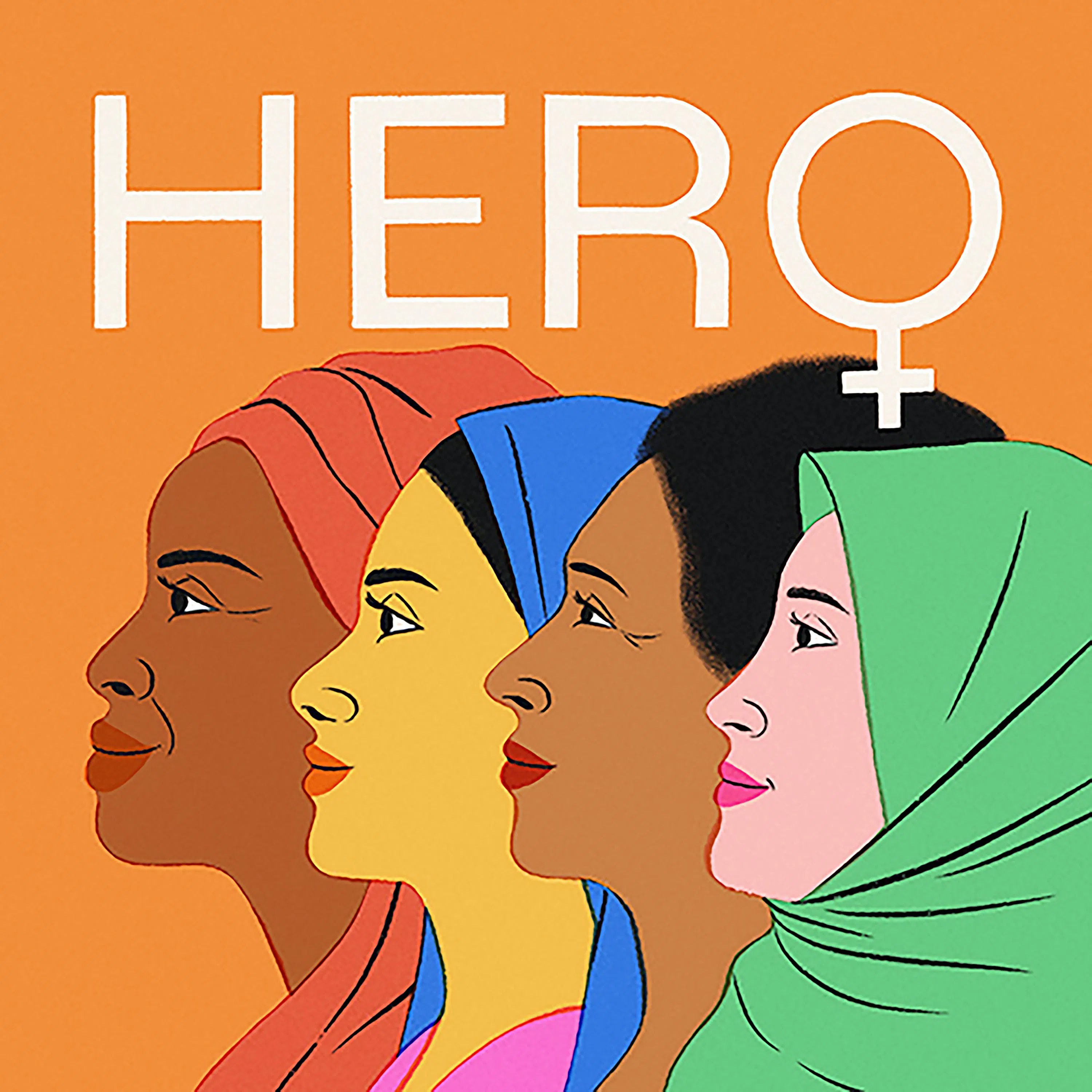
The Hidden Economics of Remarkable Women (HERO)
by Foreign Policy magazine
Is this your podcast?On the show
From 10 epsHosts
Recent guests
Recent episodes
Building Economies That Keep Women Safe
Oct 9, 2026
27m 17s
Online Gender-Based Violence
Sep 29, 2026
38m 05s
Unlikely Allies
Sep 22, 2026
35m 25s
How to Prevent Gender-Based Violence
Sep 15, 2026
32m 28s
The Economics of Safety
Sep 8, 2026
29m 59s
Insights from recent episode analysis
Audience Interest
Podcast Focus
Publishing Consistency
Platform Reach
Insights are generated by CastFox AI using publicly available data, episode content, and proprietary models.
Most discussed topics
Brands & references
Total monthly reach
No chart positions, follower counts or reviews yet. We will not guess.
Built from
By chart position
- 🇰🇪KE · Documentary#4N/A
- 🇮🇩ID · Documentary#69N/A
- 🇰🇷South Korea · Documentary#99N/A
- 🇳🇬NG · Documentary#48N/A
- 🇻🇳VN · Documentary#82N/A
- Per-Episode Audience
Est. listeners per new episode within ~30 days
N/A🎙 Weekly cadence·69 episodes·Last published 1w ago - Monthly Reach
Unique listeners across all episodes (30 days)
N/A - Active Followers
Loyal subscribers who consistently listen
N/A
Market Insights
Platform Distribution
Reach across major podcast platforms, updated hourly
Total Followers
—
Total Plays
—
Total Reviews
—
* Data sourced directly from platform APIs and aggregated hourly across all major podcast directories.
Social Links & Contact
Official channels & resources
Official Website
Login
RSS Feed
Login
| Date | Episode | Topics | Guests | Brands | Places | Keywords | Sponsor | Length | |
|---|---|---|---|---|---|---|---|---|---|
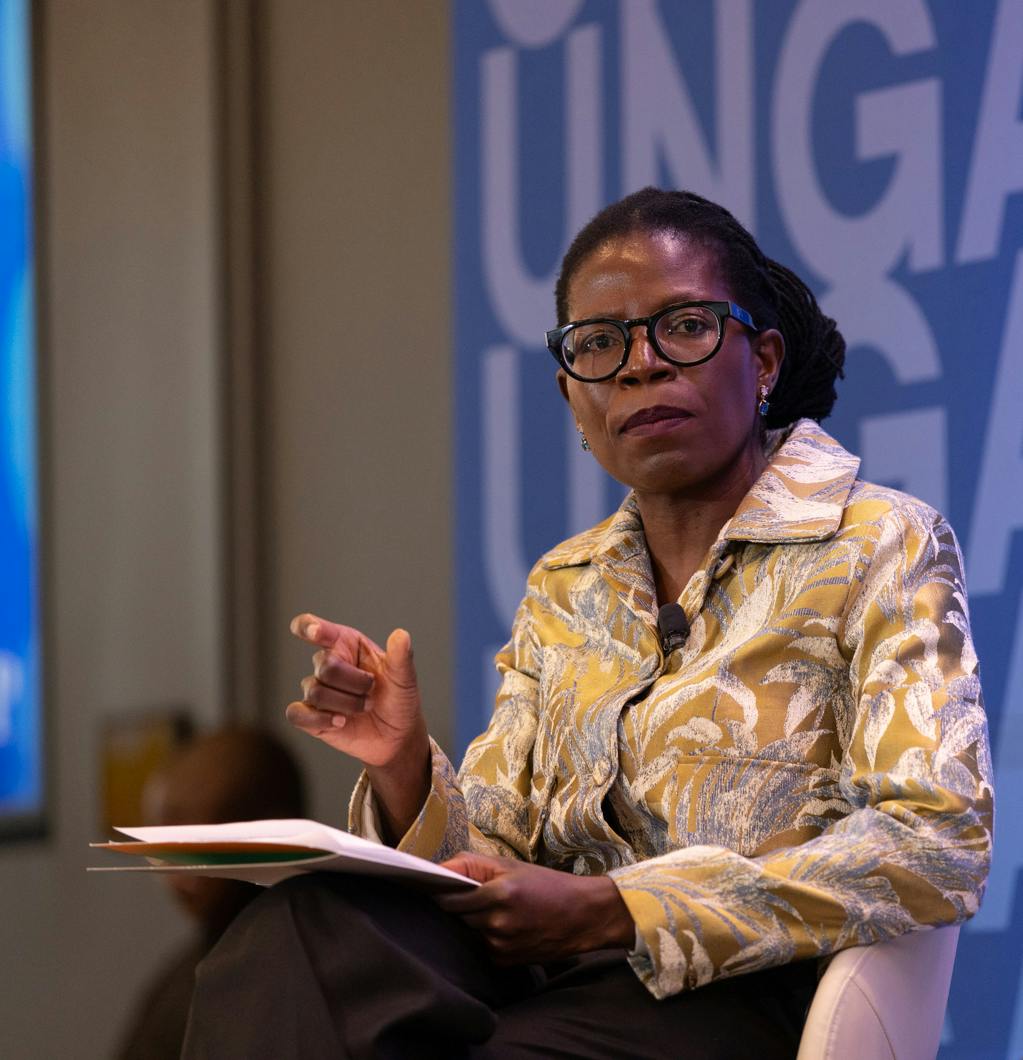
| 10/9/26 |  Building Economies That Keep Women Safe | At Foreign Policy’s Her Power summit, which took place during the UN General Assembly in New York, host Reena Ninan moderated two live conversations about how to build economies that keep women safe. The first is with Abigail Erikson, Chief of the UN Trust Fund to End Violence Against Women and Girls, and Dr. Valeria Esquivel, Senior Employment Policies and Gender Specialist at the International Labour Organization. They are both experts on macroeconomic ways to reduce gender-based violence. Then, Ninan spoke with Roxana Mînzatu, the European Commission’s Executive Vice-President for Social Rights and Skills, Quality Jobs, and Preparedness. Mînzatu shared how she approaches gender equality and makes the case for policies that enable women to be safe and thrive. This bonus episode of the Hidden Economics of Remarkable Women is supported by the Ford Foundation. Guests interviewed: Abigail Erikson, Chief of the UN Trust Fund to End Violence Against Women and Girls Dr. Valeria Esquivel, Senior Employment Policies and Gender Specialist at the International Labour Organization Roxana Mînzatu, the European Commission’s Executive Vice-President for Social Rights and Skills, Quality Jobs, and Preparedness Learn more about your ad choices. Visit megaphone.fm/adchoices | 27m 17s | ||||||
| 9/29/26 |  Online Gender-Based Violence | Nearly 60 percent of women and girls have experienced online gender-based violence. It’s a difficult problem to address because it involves governmental policy as well as private companies. How can tech platforms become accountable not only to this abuse, but also, for creating safer digital spaces? In our final episode of this season, we learn about how technology is facilitating gender-based violence, as well as promising strategies to reduce online GBV. Reporter Sanjna Selva travels to Kuala Lumpur, Malaysia to understand how the online abuse of a TikTok star rattled the country. She also speaks with Serene Lim, Co-Founder of MataSEA, about how feminist tech approaches could address online GBV in Malaysia. Then host Reena Ninan speaks with Hera Hussain, Founder and CEO of Chayn, a global nonprofit creating online resources to support GBV survivors. Hera shares what she believes are the strongest points of leverage in dealing with major tech platforms. The Hidden Economics of Remarkable Women is a podcast from Foreign Policy, supported this season by the Ford Foundation. Guests interviewed: Hera Hussain, Founder and CEO of Chayn Wani Muthiah, Journalist at The Star Serene Lim, Co-Founder and Coordinator of MataSEA Learn more about your ad choices. Visit megaphone.fm/adchoices | 38m 05s | ||||||
| 9/22/26 |  Unlikely Allies | In the fight to end gender-based violence, there’s a stark fact that’s hard to shy away from. Put simply, the majority of GBV perpetrators are men and boys, accounting for more than 90% in most estimates. On today’s episode, we hear from a variety of perspectives about how to work with men and boys to end GBV. Host Reena Ninan speaks with Gary Barker, Founder, CEO, and President of Equimundo: Center for Masculinities and Social Justice. Barker has worked in dozens of countries over the course of three decades. His organization has also conducted decades of research on men and boys' attitudes toward gender equality, including gender-based violence. Senior producer Laura Rosbrow-Telem also talks to Laxman Belbase, Co-Director of MenEngage, a global alliance of more than 1,000 groups from some 90 countries. They are creating a shared vision for how to work with men and boys for gender equality. Plus, reporter Ebere Ekeopara covers women recently elected to local traditional councils in Southeastern Nigeria – a phenomenon that began just a few years ago. She speaks with Faithful Ani, a new member of the traditional council in Umuode, Nigeria, John Onovo, chief of the Umuode council, as well as Blessing Uchendu, the head of gender programming at the South Saharan Development Organization, a nonprofit leading local advocacy on GBV. The Hidden Economics of Remarkable Women is a podcast from Foreign Policy, supported this season by the Ford Foundation. Guests Interviewed: Gary Barker, Founder, CEO, and President of Equimundo Laxman Belbase, Co-Director of MenEngage Blessing Uchendu, South Saharan Development Organization Faithful Ani, Member of Umuode Council John Onovo, Chief of Umuode Council Nnenna Anozie, Human Rights Lawyer Learn more about your ad choices. Visit megaphone.fm/adchoices | 35m 25s | ||||||
| 9/15/26 | 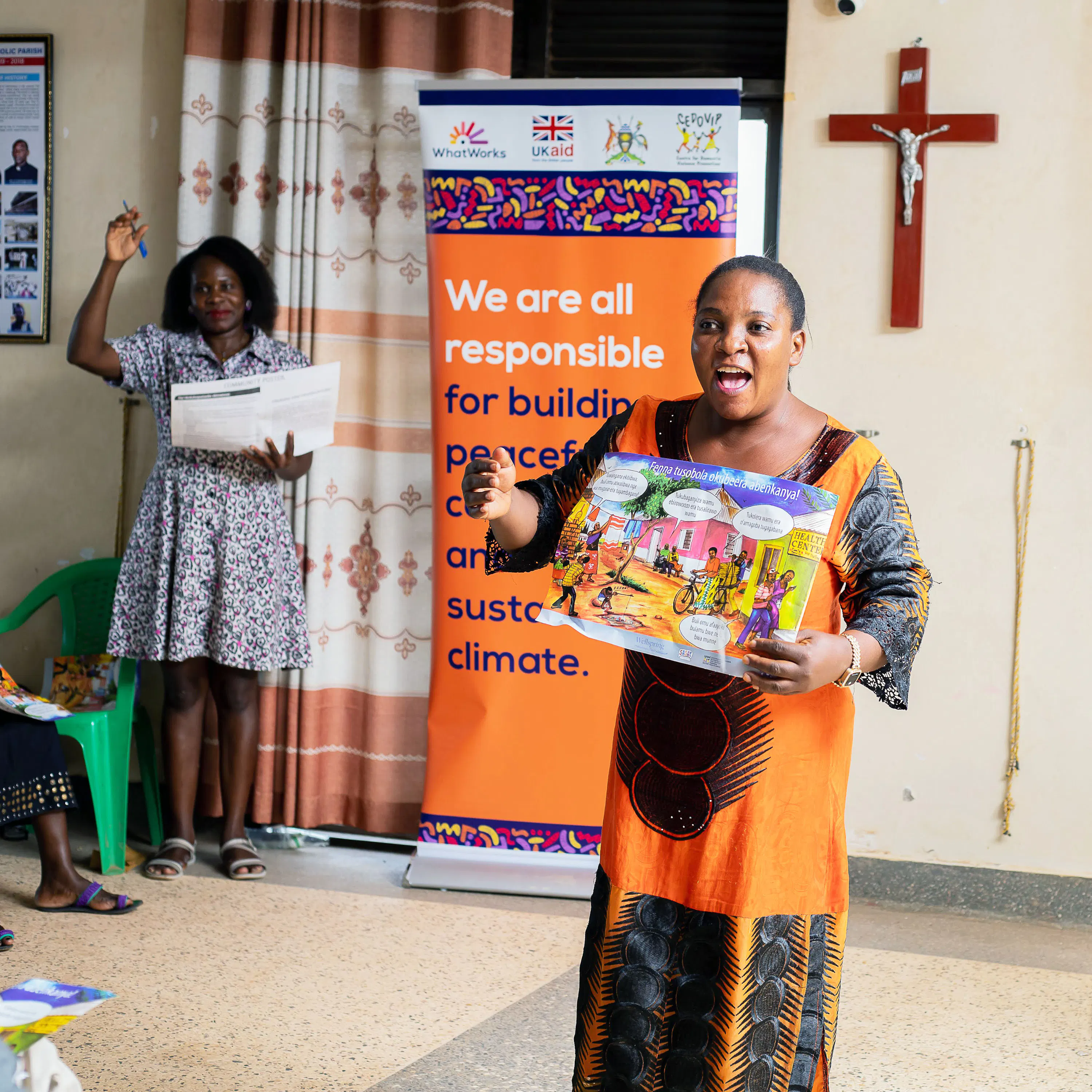 How to Prevent Gender-Based Violence | What works to prevent gender-based violence from occurring in the first place? In this episode, reporter Leah Kahunde Ndung’u profiles a leading community-based prevention model called SASA! from the nonprofit Raising Voices in Kampala, Uganda. She also examines the Ugandan government’s newly launched national policy to prevent gender-based violence. Then, host Reena Ninan speaks with Avni Amin from the WHO. She is one of the chief architects of the World Health Organization’s “RESPECT” framework, a global blueprint for policymakers on best practices for preventing gender-based violence. Amin is head of the Rights, Equality and Wellbeing throughout the Life Course Unit, which is part of WHO’s Department of Sexual and Reproductive Health and Research. The Hidden Economics of Remarkable Women is a podcast from Foreign Policy, supported this season by the Ford Foundation. Guests Interviewed: Avni Amin, WHO Unit Head, Rights, Equality and Wellbeing throughout the Life Course Yvette Alal, Technical advisor at Raising Voices Zainab Kyotungire, SASA activist Jacinta and Solomon, couple with whom Zainab works Lillian Magezi, gender specialist and researcher formerly affiliated with Uganda Christian University Natsnet Ghebrebrhan, Co-Director of Raising Voices Learn more about your ad choices. Visit megaphone.fm/adchoices | 32m 28s | ||||||
| 9/8/26 | gender-based violenceeconomic issues+4 | Sonya PassiTarisai Mchuchu-MacMillan+3 | FreeFromMosaic Training Service and Healing Centre+1 | — | gender-based violenceeconomic insecurity+6 | Ford Foundation | 29m 59s | ||
| 9/1/26 | gender-based violenceeconomic security+5 | — | UN Women | — | gender-based violenceeconomic impact+5 | Ford Foundation | 2m 07s | ||
| 3/25/26 | deforestationsupply chain sustainability+3 | Maria Jose “Chochi” Iturralde | Fundacion PachaysanaPatagonia | AmazonSouth America | Amazondeforestation+5 | — | 35m 51s | ||
| 3/18/26 | nature-based solutionsclimate change+4 | Dayana Blanco QuirogaNela Duke Ekpenyong+1 | Uru Uru TeamObudu Capital+3 | BoliviaLake Uru Uru | nature-based solutionsclimate change+5 | — | 32m 48s | ||
| 3/11/26 | environmental solutionsconservation+3 | Jody AllenDr. Shivani Bhalla+1 | Daughters for EarthInternational Monetary Fund+3 | KenyaZimbabwe | conservationeconomic impact+3 | — | 27m 07s | ||
| 3/4/26 | climate crisiswomen leadership+3 | Christiana Figueres | Global OptimismForeign Policy+2 | — | climate movementChristiana Figueres+3 | Daughters for Earth | 32m 22s | ||
Want analysis for the episodes below?Free for Pro Submit a request, we'll have your selected episodes analyzed within an hour. Free, at no cost to you, for Pro users. | |||||||||
| 2/25/26 | climate crisiswomen's leadership+3 | — | Foreign Policy | — | climate crisiswomen+3 | Daughters for Earth | 3m 00s | ||
| 12/9/25 | gender inequalityChinese feminism+4 | Leta Hong Fincher | Foreign Policy magazineLeft Over Women: The Resurgence of Gender Inequality in China+1 | — | Chinafeminism+6 | — | 37m 59s | ||
| 10/23/25 | infectious diseasesHIV prevention+3 | — | LenacapavirForeign Policy | — | HIVAIDS+4 | — | 33m 10s | ||
| 10/16/25 | family planningreproductive rights+4 | Dr. Samukeliso DubeGeorge Roberts+1 | BayerIndonesia Ministry of Health | — | family planningreproductive rights+4 | FP2030 | 22m 30s | ||
| 10/9/25 |  The Hidden Economics of Menopause | In this special bonus episode, we explore a topic the show hasn’t covered before: menopause. We delve into what would need to change with healthcare and the workforce to better support women through menopause, as well as the economic factors that could enable those policies. Host Reena Ninan speaks with Dr. Jessica Shepherd, gynecologist and author of the new book Generation M, Dr. Claus Runge, Bayer’s chief health equity officer, and Kathryn Schubert, President and CEO of the Society for Women’s Health Research (SWHR). This live panel discussion was recorded at Foreign Policy’s Her Power Summit, which took place on the sidelines of the UN General Assembly. The Hidden Economics of Remarkable Women is a production of Foreign Policy, with support for this episode from Bayer. (Photo credit: Jonathan Heisler) Guests and organizations: Dr. Jessica Shepherd, Gynecologist and Author of Generation M Dr. Claus Runge, Bayer Chief Health Equity Officer Kathryn Schubert, President and CEO of the Society for Women’s Health Research (SWHR) Suggested reading: Foreign Policy Analytics’ Report: The Health and Economic Impacts of Menopause Learn more about your ad choices. Visit megaphone.fm/adchoices | 23m 44s | ||||||
| 4/29/25 |  You Might Like: What Could Go Right? | This week, we’re bringing you an episode of What Could Go Right from our friends at The Progress Network. Each Wednesday on What Could Go Right, hosts Zachary Karabell and Emma Varvaloucas converse with diverse experts to have sharp, honest conversations about what’s going on in the world, even during difficult times. In this episode, they dive into the global health crisis that doesn’t get nearly enough attention - tuberculosis (TB). Tuberculosis is one of the deadliest infectious diseases in the world, yet it has been largely ignored by wealthy nations and Big Pharma. One person who refuses to let that stand is #1 New York Times bestselling author, YouTuber, and activist John Green. His new book, Everything is Tuberculosis, explores the history, science, and injustices surrounding this disease. Tune in to new episodes of What Could Go Right every Wednesday wherever you get your podcasts, and don’t miss the Friday episodes where Emma and Zachary highlight the latest progress from around the globe. Learn more about your ad choices. Visit megaphone.fm/adchoices | 30m 53s | ||||||
| 4/22/25 |  You Might Like: Cramped | This week, we’re sharing another show you might like. Cramped is a podcast created and hosted by Kate Downey, “because having a microphone gets you more answers than having a uterus.” In this episode, Kate talks to her mom about joining the Boston Women's Health Movement in the 1970s. Why was body literacy such a big part of feminism in the 70s, but when Kate became an active feminist in Boston in the 2000s, she didn't get information about body literacy? To learn more, Kate talks to Laura Prieto, program director of Our Bodies, Ourselves. Listen to more episodes of Cramped here: https://www.katehelendowney.com/cramped Learn more about your ad choices. Visit megaphone.fm/adchoices | 42m 04s | ||||||
| 4/15/25 |  You Might Like: The Most Important Question | While the show is on hiatus, we want to share a few podcasts on the HERO feed that we think you might like. We will release these episodes over the next month. This first one is from a podcast called The Most Important Question from the Important, Not Important team. When HERO first launched, Important, Not Important featured one of our early episodes. It’s a good show, and we’ve been happy to remain in touch over the years. This episode fits in well with our recent season. It’s an interview with Dr. Ticora V. Jones, who served as the chief scientist for the United States Agency for International Development (USAID). She’s currently the chief science officer at the NRDC. ----------- Have feedback or questions about the episode? Tweet at the show, or send a message to [email protected]. Want more? Get started with fan favorite episodes at podcast.importantnotimportant.com. Learn more about your ad choices. Visit megaphone.fm/adchoices | 1h 06m 04s | ||||||
| 4/1/25 | Series Reflections: Reporters’ Roundtable | First, we need to share some news. This may be our last episode. We are so grateful to the funding we have received for this podcast over the past four years. But our largest grant is ending soon. So for now, we are saying goodbye. We truly hope to be back in your feed someday. To commemorate HERO, we are doing one last “follow-up” episode. This was an idea from you, our listeners. You suggested talking to past interviewees and seeing what they are doing now. For today’s show, we’re doing a “reporters’ roundtable” where we look back and look ahead at some of our most impactful stories of the past eight seasons. Host Reena Ninan talks to Kenya-based reporters Sharon Kiburi and Eunice Maina as well as South-Africa based journalist Elna Schutz. If you are new to the show, you may want to go back and listen to the stories that Kiburi, Maina, and Schutz talk about on this episode: What Works in Defeating Workplace Sexual Harassment (Sharon Kiburi) How Men Are Trying to End Gender-Based Violence in South Africa (Elna Schutz) The Hidden Economics of Female Genital Mutilation (Eunice Maina) The Economics of Period Poverty (Elna Schutz) Fighting for LGBTQ Rights in Kenya (Eunice Maina) What the Debt Crisis in Kenya Reveals About International Lending (Sharon Kiburi) In the meantime, please stay in touch. You can email us at [email protected] or contact our senior producer Laura Rosbrow-Telem at [email protected]. We hope to be back soon. The Hidden Economics of Remarkable Women is a podcast from Foreign Policy, supported in part by the Gates Foundation and Northwestern University’s Roberta Buffett Institute for Global Affairs. Learn more about your ad choices. Visit megaphone.fm/adchoices | 25m 08s | ||||||
| 3/25/25 | Sabrina Habib Reflects on Kidogo’s Growth | The idea for today’s show came from you: our listeners. Many of you wanted to hear follow-up stories. You suggested talking to past interviewees and seeing what they are doing now. In particular, you were curious if the gender equality issues they were advocating for had advanced or backslid since we first reported on them. Today, we are coming back to Sabrina Habib, who was on our very first episode in 2021. Habib is the CEO and co-founder of Kidogo, a nonprofit focused on creating affordable high-quality daycare centers in Kenya. Since we last spoke with Habib, Kidogo has greatly expanded. Host Reena Ninan asks her what led to this growth and about her recent endeavors with Melinda French Gates. The Hidden Economics of Remarkable Women is a podcast from Foreign Policy, supported in part by the Gates Foundation and Northwestern University’s Roberta Buffett Institute for Global Affairs. Learn more about your ad choices. Visit megaphone.fm/adchoices | 24m 10s | ||||||
| 3/18/25 | The Impact of USAID Cuts | Health and human services. Nutrition. Job programs. These are just a few of the sectors impacted by the United States Agency for International Development (USAID) cuts in Nigeria—one of the top 10 recipients of U.S. foreign aid. U.S. Secretary of State Marco Rubio recently announced the elimination of 83 percent of USAID programs. On today’s episode, senior producer Laura Rosbrow-Telem talks to aid workers and direct recipients in Nigeria about the fallout of the cuts so far. After that, host Reena Ninan interviews two special guests about what can be done to address the funding gap. First, Ninan talks to Nabeeha Kazi Hutchins, president and CEO of Population Action International (PAI). Since it launched more than 60 years ago, PAI has advocated for sexual and reproductive health care in the United States and abroad. Then, Ninan speaks with Michael Jarvis, executive director of the Trust, Accountability, and Inclusion Collaborative (TAI). TAI is a network of funders focused on strategic and systemic ways to do philanthropy, including the MacArthur and Ford Foundations, among others. Jarvis reveals what he thinks funders can and can’t do at this moment. Guests Interviewed: Edward Clement, BMG Foundation Yusufa Adamu / Aisha Madu, Fatima Orphanage Sani Salihu Mohammed, Health and Social Awareness Foundation (HASAF) Nabeeha Kazi Hutchins, president and CEO of PAI Michael Jarvis, executive director of the Trust, Accountability, and Inclusion Collaborative The Hidden Economics of Remarkable Women is a podcast from Foreign Policy, supported in part by the Gates Foundation and Northwestern University’s Roberta Buffett Institute for Global Affairs. Learn more about your ad choices. Visit megaphone.fm/adchoices | 32m 34s | ||||||
| 2/27/25 |  Bonus: Advocacy Advice from Preethi Herman | As a special bonus, we're sharing an interview host Reena Ninan recorded with Preethi Herman about how to launch a digital campaign that actually changes policy. Herman led the Change.org Foundation, supporting 100 million people in campaigns worldwide. Currently, Herman is the CEO and co-founder of the Nguvu Collective, a women-led organization that has impacted more than 200 million lives. **Note: This interview took place before the U.S. foreign-aid freeze, which we will address more in coming episodes. Still, Herman’s advice about advocacy could not be more relevant. ***** If you want to share how the disruption of aid is impacting your life, please be in touch. It can be anonymous, if you prefer. You can reach us at [email protected]. The Hidden Economics of Remarkable Women is a podcast from Foreign Policy, supported in part by the Gates Foundation and Northwestern University’s Roberta Buffett Institute for Global Affairs. Learn more about your ad choices. Visit megaphone.fm/adchoices | 15m 06s | ||||||
| 2/19/25 |  Disrupting Aid: The Security and Economic Implications | The United States has long been the largest aid donor in the world, accounting for about 40 percent of humanitarian assistance globally last year, according to the United Nations. But that is quickly changing. Most U.S. foreign aid is currently on hold. Thousands of projects are at risk of elimination. And nearly all staff from the U.S. Agency for International Development are on administrative leave. How did we get to this moment? And what has been the impact of the foreign aid freeze so far, including on women and girls? In the newest season of the Hidden Economics of Remarkable Women, we are following the U.S. foreign aid news. In this first episode, you will hear a conversation we taped at Foreign Policy’s Emerging Threats Forum, an official side event of the Munich Security Conference, about the economic and security implications of halting overseas development assistance. Foreign Policy editor in chief Ravi Agrawal spoke with Ndidi Okonkwo Nwuneli, the president and CEO of the One Campaign, and Umulkher (Umi) Harun Mohamed, a member of Kenya’s National Assembly. Their conversation focuses on Africa, which gets about 30 percent of U.S. foreign aid annually. If you want to share how this disruption of aid is impacting your life, please be in touch. It can be anonymous, if you prefer. You can reach us at [email protected]. The Hidden Economics of Remarkable Women is a podcast from Foreign Policy, supported in part by the Gates Foundation and Northwestern University’s Roberta Buffett Institute for Global Affairs. Learn more about your ad choices. Visit megaphone.fm/adchoices | 23m 37s | ||||||
| 12/17/24 | The World Bank’s New Gender Strategy | On today’s episode of the Hidden Economics of Remarkable Women, the final in our season focusing on the World Bank/IMF meetings this fall, we dive deep into the World Bank’s newly launched gender strategy. We will hear from two leaders driving this vision forward, as they explain why the Bank decided to prioritize some new goals. First, host Reena Ninan speaks with Hana Brixi, Global Director for Gender at the World Bank, from the Atlantic Council’s pop-up studio in the IMF atrium. Then, Ninan talks to Anna Bjerde, Managing Director of Operations at the World Bank. Bjerde oversees a portfolio of programs worth about $340 billion and is leading new Bank reforms to make it more efficient. Guests and organizations: Hana Brixi, Global Director for Gender at the World Bank Anna Bjerde, Managing Director of Operations at the World Bank The Hidden Economics of Remarkable Women is a podcast from Foreign Policy, supported in part this season by the Gates Foundation, Northwestern University’s Roberta Buffett Institute for Global Affairs, and the Atlantic Council. Learn more about your ad choices. Visit megaphone.fm/adchoices | 28m 34s | ||||||
| 12/10/24 | How Climate Change Impacts Gender | The number of people exposed to floods globally has surged by nearly 25 percent since 2000, with Africa experiencing the most dramatic increase. Floods this spring were especially brutal in East Africa, killing nearly 530 people and most heavily impacting Kenya. On today’s episode of the Hidden Economics of Remarkable Women, we analyze the relationship between climate and gender equality. Host Reena Ninan begins by hearing from Nairobi-based reporter Eunice Maina, who spoke with a family deeply impacted by the spring floods. They dig deeper into how these floods and climate change in general disproportionately affect women and children. Then, Ninan speaks with Tariye Gbadegesin, the CEO of the Climate Investment Funds. It is one of the world’s largest multilateral climate funds, and a significant portion of their work targets women and girls. We recorded this interview during the annual World Bank-International Monetary Fund meetings in October. Guests and organizations: Eunice Maina, journalist based in Nairobi, Kenya. This is her fifth time reporting for HERO. Tariye Gbadegesin, CEO, Climate Investment Funds The Hidden Economics of Remarkable Women is a podcast from Foreign Policy, supported in part this season by the Gates Foundation, Northwestern University’s Roberta Buffett Institute for Global Affairs, and the Atlantic Council. Learn more about your ad choices. Visit megaphone.fm/adchoices | 23m 06s | ||||||




Showing 25 of 69
Pitch Fit is a Pro feature
See how bookable this show is for guests, which brands already advertise, the per-episode ad value, and the best-fit guest and sponsor profile. The numbers are blurred on the free plan.
How readily this show books outside guests like you.
How proven this show is for host-read sponsorships.
For Guests
ProFor Advertisers
ProUpgrade to Pro to unlock guest cadence, sponsor categories, fit scores, and per-episode ad value for this show.
Chart history for The Hidden Economics of Remarkable Women (HERO)
Peaked at #4 in KE, top 10 in 1 of 9 tracked markets, currently #4 in KE.
| Market | Genre | Peak | Current | Trend |
|---|---|---|---|---|
| KE | — | #4 | #4 | — |
| KE | — | #28 | #28 | — |
| NG | — | #48 | #48 | — |
| ID | — | #69 | #69 | — |
| VN | — | #82 | #82 | — |
| South Korea | — | #99 | #99 | — |
| PH | — | #121 | #121 | — |
| CZ | — | #170 | #170 | — |
| TR | — | #198 | #198 | — |
Chart Positions
9 placements across 8 markets.
Chart Positions
9 placements across 8 markets.