The How To Podcast Series - Revolving Co-Hosts, Actionable Tips, And A Community for Podcasters
by Dave Campbell, Ontario Canada
Is this your podcast?Insights from recent episode analysis
Audience Interest
Podcast Focus
Publishing Consistency
Platform Reach
Insights are generated by CastFox AI using publicly available data, episode content, and proprietary models.
Most discussed topics
Brands & references
Total monthly reach
Estimated from 4 chart positions in 4 markets.
By chart position
- 🇦🇺AU · How To#1445K to 30K
- 🇬🇧GB · How To#1815K to 30K
- 🇳🇴NO · How To#663K to 10K
- 🇩🇰DK · How To#163500 to 3K
- Per-Episode Audience
Est. listeners per new episode within ~30 days
4.0K to 22K🎙 Daily cadence·805 episodes·Last published today - Monthly Reach
Unique listeners across all episodes (30 days)
14K to 73K🇦🇺41%🇬🇧41%🇳🇴14%+1 more - Active Followers
Loyal subscribers who consistently listen
5.4K to 29K
Market Insights
Platform Distribution
Reach across major podcast platforms, updated hourly
Total Followers
—
Total Plays
—
Total Reviews
—
* Data sourced directly from platform APIs and aggregated hourly across all major podcast directories.
On the show
From 41 epsHosts
Recent guests
Recent episodes
E727 - Podcast Community Building Ideas for your Podcast - Join Our Free Meetups and get Free Support
Jun 24, 2026
Unknown duration
E726 - How Many Books Do You Need to Write to be an Author - How many podcast episodes to be a Podcaster
Jun 23, 2026
Unknown duration
E725 - The Driven Introvert Podcast, and Building Community with Podgound.io with Guest CO-HOST Remi Roy
Jun 22, 2026
Unknown duration
E724 - A.I. Voices Talking About A.I. Podcasts in a Podcat About A.I. in Podcasting - When Podcasters Become Irrelevant
Jun 21, 2026
Unknown duration
E723 - Should Podcast Plays Be Measured by Percentage - Measuring Attention, Not Just Plays
Jun 20, 2026
Unknown duration
Social Links & Contact
Official channels & resources
Official Website
Login
RSS Feed
Login
| Date | Episode | Topics | Guests | Brands | Places | Keywords | Sponsor | Length | |
|---|---|---|---|---|---|---|---|---|---|
| 6/24/26 | ![]() E727 - Podcast Community Building Ideas for your Podcast - Join Our Free Meetups and get Free Support | Episode 727 - Podcast Community Building Ideas for your Podcast - Join Our Free Meetups and get free support This episode explores what it really means to build a community around your podcast and why it matters beyond downloads and analytics. Dave speaks directly to creators who feel the gap between seeing numbers and actually connecting with real people. He acknowledges the time constraints most podcasters face and offers practical, realistic ways to create meaningful interaction without overwhelming your workflow.At the heart of the conversation is the idea that community is not instant. Most listeners will never respond, and that is normal. But when someone does reach out, it becomes a powerful moment of connection that reminds you why you started. Community benefits both sides: it encourages the host and gives listeners a space to connect with others who share their interests.Dave shares several ways to build these connections, starting with email newsletters. By shifting from promoting episodes after release to creating anticipation before they go live, he demonstrates how written content can lead listeners into your podcast. He emphasizes that email is one of the few platforms you truly own, making it a reliable way to stay connected with your audience.He also discusses listener engagement strategies like Q and A segments, voice messages through tools like SpeakPipe, and social media, while cautioning against relying too heavily on platforms you do not control. A key theme is making participation easy and consistently inviting your audience to be involved.In-person and virtual meetups are presented as powerful community builders. Dave highlights his own free, ongoing podcast meetups as an example of creating a space where podcasters can connect, share, and grow together. He is transparent about the slow start, including showing up to empty rooms, reinforcing that community takes time and persistence.The episode closes with a simple framework: invite participation, feature your audience, repeat the invitation, and create spaces for connection. He also reflects on consistency as one of the biggest challenges in podcasting, encouraging creators to keep showing up even when motivation dips.Building a podcast community is a long game rooted in consistency, intentional connection, and creating opportunities for your audience to be seen, heard, and involved.___Helping Podcasters Everyday! https://howtopodcast.ca/We would love to hear from you - here is our listener survey!https://forms.gle/GbrFv9DGszV8N4PW6 | — | ||||||
| 6/23/26 | ![]() E726 - How Many Books Do You Need to Write to be an Author - How many podcast episodes to be a Podcaster | Episode 726 - How Many Books Do You Need to Write to be an Author - How many podcast episodes to be a podcaster How much does it really take to become a podcaster?In this episode, Dave challenges one of the most common assumptions that prevents people from starting a podcast: the belief that launching a show requires an endless commitment of time, energy, and content creation. Inspired by a conversation with an author who dreamed of podcasting but felt overwhelmed by the expectation of producing weekly episodes forever, Dave offers a different perspective on what it means to begin.Using a simple comparison, he explores the idea that just as writing one book makes someone an author, publishing one podcast episode makes someone a podcaster. The discussion focuses on how many aspiring creators delay their ideas because they are thinking too far into the future rather than taking the first step today. Throughout the episode, Dave encourages listeners to rethink the pressure they place on themselves. Instead of viewing podcasting as a lifelong obligation, he suggests looking at it as an opportunity to share a message, serve an audience, and create a foundation that can be expanded over time. A single episode can establish a presence, secure a show's identity, and begin building connections with future listeners long before a creator is ready to commit to a regular publishing schedule.The conversation also explores how podcasts can complement other creative and professional pursuits. Authors, speakers, coaches, and entrepreneurs can use podcasting to extend their reach, deepen relationships with their audience, and provide additional value around the work they are already doing. Rather than treating podcasting as a separate project, Dave presents it as part of a larger ecosystem of content and communication.For creators who feel stuck waiting for the perfect time, the episode serves as a reminder that perfection is rarely the starting point. Most successful podcasters, authors, and speakers began by taking a single action and learning along the way. Momentum often comes after the first step, not before it.In the bonus portion of the episode, Dave reflects on one of the most challenging aspects of podcasting: audio editing. He shares thoughts on the importance of refining episodes while preserving authenticity, discussing how thoughtful editing can enhance the listener experience without removing the natural flow and humanity of a conversation.At its core, this episode is about overcoming hesitation, embracing action, and giving yourself permission to start before everything feels perfectly planned.You do not need years of content, a perfect strategy, or an unlimited amount of time to become a podcaster. Sometimes all it takes is one episode, one idea, and the willingness to begin. Progress starts when you stop waiting for the perfect moment and take the first step forward.____Helping Podcasters Everyday! https://howtopodcast.ca/We would love to hear from you - here is our listener survey!https://forms.gle/GbrFv9DGszV8N4PW6 | — | ||||||
| 6/22/26 | ![]() E725 - The Driven Introvert Podcast, and Building Community with Podgound.io with Guest CO-HOST Remi Roy | Episode 725 - The Driven Introvert Podcast, and Building Community with Podgound.io with Guest CO-HOST Remi Roy Building a podcast is often about much more than creating content. It can become a journey of personal growth, confidence, community, and discovering the impact your voice can have on others.In this episode, Dave sits down with Remi, host of The Driven Introvert, for a thoughtful conversation about podcasting, personal development, and the power of creating intentional spaces for connection. Remi shares her journey from being a painfully shy and socially anxious child to becoming a podcaster, speaker, and community builder who now helps others find the confidence to pursue their goals.The discussion explores how podcasting became a catalyst for growth. What began as an early podcasting experiment eventually evolved into a platform where Remi could share lessons learned from navigating life as an introvert while pursuing meaningful work and personal aspirations. Along the way, she discovered that podcasting was not only a creative outlet but also a powerful tool for improving communication, developing confidence, and finding her authentic voice.Throughout the conversation, Remi reflects on the challenges many introverts face when chasing dreams and making major life decisions. Fear, self-doubt, and uncertainty can often prevent people from taking action, even when they have ideas, goals, and ambitions they deeply care about. Through her podcast and community work, she encourages people to move beyond those limitations and take intentional steps toward the life they want to create.The conversation also highlights the opportunities podcasting can create beyond the microphone. From speaking engagements and professional development to personal branding and audience growth, Remi discusses how podcasting can open unexpected doors when creators remain consistent and focused on serving their audience.A major theme of the episode centers on community. Drawing from her own experiences entering podcasting without guidance or support, Remi shares the inspiration behind PodGround, a platform designed to help podcasters connect, learn from one another, and avoid feeling isolated in their creative journeys. Through networking events, listening parties, educational sessions, and peer support, the goal is to help creators build meaningful relationships while developing their shows.For new podcasters, Remi offers encouragement to embrace the learning process. Rather than striving for perfection from the start, she advocates for creating consistently, experimenting freely, and allowing time for both confidence and clarity to develop. Finding your voice, she explains, is not something that happens overnight. It emerges through practice, persistence, and a willingness to keep showing up.At its heart, this episode is a reminder that podcasting is ultimately about people. Behind every microphone is a story, and behind every download is a listener looking for connection, encouragement, or understanding.Key TakeawayYou do not have to have everything figured out before you start. Whether you're launching a podcast, pursuing a new career path, or chasing a long-held dream, growth comes through action. Consistency, community, and the willingness to keep learning often lead to opportunities and impact far beyond what you initially imagined.The Driven Introvert PodcastThe Driven Introvert is a faith-inspired podcast designed for purposeful introverts.https://pod.link/1730634173You love podcasting, but it's been hard togain traction.PodGround connects newand intermediate podcasterswith insights, peers, and thetools that matter.https://podground.io/____Helping Podcasters Everyday! https://howtopodcast.ca/We would love to hear from you - here is our listener survey!https://forms.gle/GbrFv9DGszV8N4PW6 | — | ||||||
| 6/21/26 | ![]() E724 - A.I. Voices Talking About A.I. Podcasts in a Podcat About A.I. in Podcasting - When Podcasters Become Irrelevant | Episode 724 - A.I. Voices Talking About A.I. Podcasts in a Podcat About A.I. in Podcasting - When Podcasters Become Irrelevant What happens when podcasting begins to automate the very thing that makes it special?In this episode, Dave takes a passionate and thought-provoking look at the growing role of artificial intelligence in podcasting, sparked by an encounter with a podcast about podcasting that was entirely generated and voiced by AI. What caught his attention wasn't simply the use of the technology itself, but the irony of AI-generated hosts discussing the importance of human connection, authenticity, and trust within the podcasting medium.The conversation explores a growing tension within the creator economy. While AI tools are becoming increasingly capable of handling research, editing, content generation, and even voice replication, Dave questions where the line should be drawn between assistance and replacement. He argues that the value of podcasting has never been rooted solely in information. Instead, it comes from the personality, experiences, stories, and humanity that real people bring to the microphone.Using examples from both technology and everyday life, Dave reflects on how convenience can sometimes come at the cost of meaningful participation. He compares podcast creation to driving a manual transmission vehicle, where being actively involved in the process creates a stronger connection to the experience. While automation can make certain tasks easier, completely handing over creative control may ultimately remove the very qualities that attract audiences in the first place.Throughout the episode, the discussion returns to the idea that information itself has become increasingly commoditized. As more creators gain access to the same tools, prompts, and automated workflows, differentiation becomes harder. What cannot be easily duplicated, Dave argues, is genuine human perspective. Personal insights, lived experiences, passion, humor, and vulnerability remain the elements that allow creators to build meaningful relationships with listeners.The episode also serves as a reminder for creators to remain intentional about the tools they use. AI can help streamline workflows, improve efficiency, and reduce repetitive tasks. However, Dave encourages podcasters to stay firmly in the driver's seat, using technology as an assistant rather than allowing it to become the creator.In the closing moments, he invites listeners to share feedback on the show and emphasizes the importance of community, conversation, and ongoing improvement. He also offers encouragement to new podcasters, reminding them that getting started does not require expensive equipment or perfect production. What matters most is practicing, learning, seeking feedback, and finding confidence in sharing your own voice.Key TakeawayTechnology can make podcasting easier, but it cannot replace the human connection that makes podcasting meaningful. The creators who continue to share their experiences, perspectives, and authentic voices will always offer something that automation alone cannot replicate.Clip from - AIs Talk About PodcastingThe number one podcast industry show about podcasting (ok Sparky, hold on there now...)Join two artificial intelligences as they delve into the fascinating world of podcasting. From the latest trends to the technology that powers the industry, these robotic hosts break down the art and business of creating, promoting, and listening to podcasts. Follow now for a glimpse into how AI views the future of media. Perfect for podcasters and podcast lovers alike!https://pod.link/1816287876https://pod.link/1816287876/episode/aHR0cHM6Ly9hcGkuc3ByZWFrZXIuY29tL2VwaXNvZGUvNzIzODY1MDk____Helping Podcasters Everyday! https://howtopodcast.ca/We would love to hear from you - here is our listener survey!https://forms.gle/GbrFv9DGszV8N4PW6 | — | ||||||
| 6/20/26 | ![]() E723 - Should Podcast Plays Be Measured by Percentage - Measuring Attention, Not Just Plays | Episode 723 - Should Podcast Plays Be Measured by Percentage - Measuring Attention, Not Just PlaysWhat does a podcast play actually mean?In this episode, Dave takes a deep dive into one of the most debated topics in podcasting analytics: listener measurement. With platforms increasingly defining an intentional listen as just 30 seconds of playback, he challenges whether that standard truly reflects audience engagement, especially for creators producing longer-form content.Drawing on years of podcasting experience and thousands of published episodes, Dave explores the disconnect between a listener who samples a show for a few seconds and one who remains engaged throughout an entire conversation. He argues that while download and play counts have become the industry's default currency, they may be measuring access rather than attention.The discussion examines how current podcast metrics can create misleading comparisons between short-form and long-form content. A 30-second listen may represent significant engagement on a one-minute episode, but on a three-hour interview it barely scratches the surface of the conversation. This leads to a larger question about whether podcasting should move toward measuring engagement as a percentage of an episode consumed rather than a fixed amount of listening time.Dave considers how such a shift could transform podcast reporting, audience analysis, and advertising. Percentage-based measurement could place greater emphasis on retention, meaningful listening, and genuine audience connection. It could also provide creators and advertisers with a clearer understanding of how listeners actually consume content rather than simply tracking episode starts.At the same time, he acknowledges the challenges of such a model. Podcast listening habits are unique. Listeners pause episodes, consume content over multiple sessions, and often skip to the sections most relevant to them. Any new measurement system would need to account for those realities while still creating a more accurate picture of engagement.The conversation ultimately becomes less about analytics and more about the purpose of podcasting itself. Is success measured by how many people click play, or by how many stay for the conversation? Dave makes the case that attention, retention, and listener connection may be far more valuable metrics than a simple download count.The episode concludes with a reminder that audience feedback matters. Building a better podcast isn't just about tracking statistics. It's about understanding the people behind those numbers and creating content that keeps them coming back.Key TakeawayA podcast play and a podcast listener are not necessarily the same thing. While current industry standards focus on measuring starts, the future of podcast analytics may lie in measuring attention, engagement, and the percentage of an episode listeners choose to experience. The creators who focus on meaningful listener connection rather than vanity metrics may ultimately build the strongest audiences.https://podnews.net/update/spotify-amp-play____Helping Podcasters Everyday! https://howtopodcast.ca/We would love to hear from you - here is our listener survey!https://forms.gle/GbrFv9DGszV8N4PW6 | — | ||||||
| 6/19/26 | ![]() E722 - How To Know if You Might Be a Terrible Interview Guest - Stop Doing These Things Next Time You Guest on a Podcast | Episode 722 - How To Know if You Might Be a Terrible Interview Guest - Stop Doing These Things Next Time You Guest on a PodcastThis episode takes a direct and honest look at what makes a bad podcast guest and how easily even experienced creators can fall into habits that turn listeners and hosts away. Framed as a conversation, it challenges guests to rethink how they show up on other people’s platforms and to treat every interview as a unique opportunity, not a repeat performance.At the core is a frustration many listeners quietly share: guests who recycle the exact same stories, examples, and talking points on every show. When interviews feel scripted and predictable, the connection disappears. Podcasting is built on authenticity and freshness, and repeating a “greatest hits” routine signals a lack of growth, curiosity, and respect for the audience.The episode also highlights how damaging it can be when guests hijack the direction of a show. Whether it is pushing unrelated topics like politics into the conversation or steering away from the host’s intent, it breaks trust with listeners. A podcast is not a personal stage for unchecked messaging. It is a shared space guided by the host, created for the audience.Preparation stands out as a defining factor between average and exceptional guests. Taking time to understand the show, its tone, and its audience allows guests to tailor their stories and insights in a way that feels relevant and meaningful. When guests skip this step, their answers often feel disconnected and generic, making it clear they are not truly engaged.The conversation also addresses common on-mic missteps, such as dominating the discussion, delivering long-winded answers, or focusing too heavily on personal achievements. Strong guests create space, collaborate with the host, and prioritize listener value over self-promotion. Rather than holding back insights to drive sales, the best guests share openly and generously, building trust that naturally leads to deeper engagement.Technical professionalism matters as well. Showing up with proper audio gear, being on time, and respecting the process reflects an understanding of what it takes to produce a quality show. As podcasters, guests already know the challenges of hosting, which makes it even more important to lead by example.Ultimately, this episode is a call to raise the standard. Great podcast guests are not just knowledgeable or experienced. They are prepared, present, adaptable, and audience-focused. They treat every appearance as a chance to serve, connect, and contribute something new.Key takeaway: Being a great podcast guest is not about promoting yourself. It is about respecting the host, serving the listener, and showing up with intention, preparation, and genuine value every single time.____Helping Podcasters Everyday! https://howtopodcast.ca/We would love to hear from you - here is our listener survey!https://forms.gle/GbrFv9DGszV8N4PW6 | — | ||||||
| 6/18/26 | ![]() E721 - The Benefit of Guesting on Other Podcasts and Why Podcasters should be doing more of this on a regular basis | Episode 721 - The Benefit of Guesting on Other Podcasts and Why Podcasters should be doing more of this on a regular basisAs podcasters we follow what others are doing in the space - why? because for the most part what others are doing works! One thing I don't hear as a common suggestion for podcasters revolves around having a guest host on your show - you as a host move over to the passenger seat allowing a fellow podcaster to drive your show. Some podcasters just want a week or two off from their show - what if a guest host step in and takes over your show to give you a break?Consider trying new things with your podcast - variety is a nice change for you as a host and for your listeners!This episode explores a powerful but often underused growth strategy in podcasting: becoming a guest on other shows and inviting others into yours in creative ways. Framed through a mix of encouragement and experimentation, the conversation highlights how guesting is not just about promotion, but about connection, collaboration, and content creation.Dave opens with an open invitation for listeners at any stage, from beginners to seasoned podcasters, to step into a guest co-host role on the show. This is positioned not as a traditional interview, but as a shared conversation where ideas are explored together. The goal is to create a space where voices are heard, experiences are shared, and listeners can learn from real journeys in real time.The episode revisits a past discussion that introduces a less common but highly creative concept: becoming a guest host on someone else’s podcast. Instead of simply being interviewed, you step in to lead the conversation, even interviewing the host on their own show. This role reversal can unlock fresh perspectives, uncover new insights, and provide audiences with something unexpected and engaging.Beyond creativity, there are practical benefits. Guest hosting or guesting can help solve one of the biggest challenges podcasters face: consistently generating content. Bringing in a guest host or appearing on other shows can fill content gaps, introduce new energy, and keep your podcast feed active without burnout. It also opens the door to audience sharing, collaboration, and deeper relationships within the podcasting community.A memorable story illustrates the unpredictability of podcasting, where a host temporarily leaves mid-recording, leaving the guest to take over. This moment reinforces the idea that flexibility and openness can lead to unique and compelling content opportunities.At its core, this episode is a call to shift from a competitive mindset to a collaborative one. Podcasting is presented as a space where creators can grow together, support one another, and build stronger communities by sharing audiences rather than guarding them.The conversation also emphasizes the importance of engagement, particularly listener retention. True success is not just measured by downloads, but by how long listeners stay, connect, and find value in each episode.Key takeaway: Guesting on podcasts, whether as a guest, co-host, or even a temporary host, is a powerful way to expand your reach, spark creativity, and build meaningful connections while keeping your content fresh and engaging.____Helping Podcasters Everyday! https://howtopodcast.ca/We would love to hear from you - here is our listener survey!https://forms.gle/GbrFv9DGszV8N4PW6 | — | ||||||
| 6/17/26 | ![]() E720 - Shared Mic Series - Podcasting Amplified - Podcasting for Business Growth and Marketing - Joe Eftihiou | Episode 720 - Shared Mic Series - Podcasting Amplified - Podcasting for Business Growth and Marketing - Joe EftihiouIn this Shared Mic Series episode of the How to Podcast Series, Dave Campbell steps into the guest chair for a wide-ranging conversation with Joe Eftihiou on Podcasting Amplified. Together, they explore what it takes to build meaningful connections through podcasting, create thriving communities, and define success beyond download numbers.Dave shares the story of how his podcasting journey evolved from a single show into a network of eight podcasts covering topics ranging from side hustles and authors to music, parenting, and podcasting itself. Rather than focusing on scale for the sake of growth, he explains how each show was born from curiosity, relationships, and a desire to serve specific communities.A major theme throughout the conversation is the difference between building an audience and building a community. Dave outlines a simple but powerful framework for podcasters: create ways for listeners to identify themselves, establish a feedback loop that encourages conversation, and help listeners connect with one another. According to Dave, these three elements transform a podcast from a one-way broadcast into a genuine community experience.The discussion also challenges common assumptions about podcast growth and monetization. Instead of measuring success solely through download statistics, Dave encourages podcasters to think about the depth of their listener relationships. He shares examples of listeners who became active members of his community, supported his work financially, contributed to podcast tools and equipment, and ultimately became friends.Listeners will also hear practical strategies for increasing engagement, including the use of voice messages through SpeakPipe, creating opportunities for listener participation, and responding personally to audience feedback. These simple actions can strengthen trust and make listeners feel like valued contributors rather than passive consumers.The conversation explores how podcasts can support businesses as well. Dave explains that a podcast can become a powerful trust-building tool, helping professionals establish credibility and create opportunities that extend far beyond traditional sponsorships or advertising.As the episode concludes, Dave reflects on the importance of consistency, authenticity, and showing up for listeners. Whether podcasting as a hobby, a business tool, or a creative outlet, the greatest opportunity lies in building real human connections through conversation.Key TakeawayThe most successful podcasts are not built on downloads alone. They are built on relationships. When listeners feel seen, heard, and connected, a podcast becomes more than content. It becomes a community.YouTube Link to Dave's episodehttps://youtu.be/YSCJ0roy2Y4?si=CdSQZJhbP-o0g3FsClaricast - https://www.claricast.com____Helping Podcasters Everyday! https://howtopodcast.ca/We would love to hear from you - here is our listener survey!https://forms.gle/GbrFv9DGszV8N4PW6 | — | ||||||
| 6/16/26 | ![]() E719 - Podcast Lessons from an Interview Podcast that Some Podcast Gurus Don't Like | Episode 719 - Podcast Lessons from an Interview Podcast that Some Podcast Gurus Don't LikeThis episode challenges some of the most common “rules” in podcasting by showing what actually works in practice. Drawing from his author interview show Living the Next Chapter, Dave shares real-world strategies that go against popular guru advice but continue to deliver strong results.At the core of the episode is a simple idea: podcasting is not one-size-fits-all. Dave emphasizes that your show should reflect your goals, not someone else’s formula. On his interview podcast, he intentionally puts the guest’s name in the episode title, despite being told not to. For him, the show is about serving the guest and the listener, not building a personal brand funnel or selling products. This shift in focus allows the content to stay aligned with its purpose.He also leans into audio-first podcasting on YouTube, another approach often dismissed. By uploading episodes as audio with thumbnails and releasing them early on YouTube, he creates an “early access” experience for listeners while building engagement on a platform many overlook for audio content. The result is steady growth, strong watch time, and active audience interaction.Preparation is another standout theme. Dave conducts pre-interviews with every guest, helping them feel comfortable, shaping better conversations, and ensuring higher-quality episodes. This process also gives him insight into each guest’s communication style before recording, reducing surprises and improving the overall flow.Organization and consistency play a big role behind the scenes. From simple paper-based tracking systems to batching episodes months in advance, Dave shows that effective workflows do not need to be complicated or expensive to work well.He also shares a creative strategy for reviving older content by updating publish dates to bring past episodes back into visibility. Combined with curated playlists and niche-based digital magazines, he continues to extend the life and reach of his content in ways that feel intentional and audience-focused.Ultimately, this episode is a reminder to think independently, test your own ideas, and build a podcast that works for you and your listeners, not for a rulebook.Key takeaway: There is no single “right way” to podcast. Focus on what serves your audience, experiment ხშირად, and trust results over rigid advice.http://livingthenextchapter.com/https://canadianpodcaster.com/Tool I use to make manual videos from a YouTube Thumbnail and my audio MP3 file - One Image Music VideoFree web service to combine one image with one audio (MP3) file to make a MP4 video. Make a one picture image music video for Youtube. Create a video from one image and one MP3 file. Convert one MP3 to MP4 video with an image as background. Select the image and MP3 file, then click the "Upload" button. Can take some time depending on the file size.https://www.oneimagevideo.com/____Helping Podcasters Everyday! https://howtopodcast.ca/We would love to hear from you - here is our listener survey!https://forms.gle/GbrFv9DGszV8N4PW6 | — | ||||||
| 6/15/26 | ![]() E718 - If Your Podcast Was A Car, Would it be a Self-Driving Tesla Model of a Manual Transmission Stick - A.I. and Podcasting | Episode 718 - If Your Podcast Was A Car, Would it be a Self-Driving Tesla Model of a Manual Transmission Stick - A.I. and PodcastingIn this episode of the How to Podcast Series, Dave explores the growing role of AI in podcasting through a powerful comparison between manual transmission cars, automatic vehicles, and self driving Teslas. Using racing and driving as a metaphor, he reflects on what happens when creators slowly remove themselves from the creative process and hand over the wheel entirely to artificial intelligence.Dave shares his personal love for driving manual transmission vehicles and connects that passion to the joy he finds in podcasting. For him, both experiences are deeply engaging because they require presence, skill, focus, and human input. He explains that while automation can make things easier, there is a major difference between using tools to assist your work and completely surrendering the process to machines.Throughout the episode, listeners are encouraged to think critically about how much AI should influence their creative work. Dave discusses how AI can absolutely help podcasters with editing, brainstorming, research, and filling knowledge gaps, but warns that relying too heavily on generated scripts, cloned voices, and fully automated production risks removing the authenticity that audiences connect with most.He also reflects on a podcast host he once admired who shifted from spontaneous, engaging conversations to reading directly from AI generated text. That change, while efficient, caused the show to lose much of the personality and human connection that originally made it compelling. Dave argues that audiences are drawn to imperfection, spontaneity, and genuine human experiences, not polished but soulless content.The episode challenges creators to ask themselves an important question: who is actually driving the show? Are you still actively involved in your content, or have you moved into the passenger seat while AI takes over?Dave emphasizes that there is no single right way to podcast. Some creators prefer doing everything manually, others use automation to streamline production, and some fully automate their content. The key is being intentional about where you stand and understanding what might be lost when human connection disappears from the process.In a heartfelt closing reflection, Dave shares his personal definition of podcast success. Rather than focusing on rankings, charts, or download numbers, he values real human connection above all else. The fact that listeners choose to spend their time with him is what motivates him to keep creating, building community, and helping podcasters find their own voice.Key takeaway: AI can be an incredible support tool for podcasters, but audiences still crave real human connection. The more authentic and personally invested you remain in your content, the more meaningful your podcast experience becomes for both you and your listeners.____Helping Podcasters Everyday! https://howtopodcast.ca/We would love to hear from you - here is our listener survey!https://forms.gle/GbrFv9DGszV8N4PW6 | — | ||||||
Want analysis for the episodes below?Free for Pro Submit a request, we'll have your selected episodes analyzed within an hour. Free, at no cost to you, for Pro users. | |||||||||
| 6/14/26 | ![]() E717 - How To Re-establish Your Podcast Routine - How To Get Your Podcast Back On Track - Practical Podcast Tips | Episode 717 - How To Re-establish Your Podcast Routine - How To Get Your Podcast Back On Track - Practical Podcast TipsWhen you get off track with your podcast, focus on Rre-establishing your routine!Set a Realistic Recording Schedule: Instead of trying to return to your previous frequency, consider a more manageable schedule, such as biweekly or monthly episodes. This can reduce pressure and improve content quality.Batch Record Episodes: Dedicate specific days to record multiple episodes. This approach allows you to build a content library, making it easier to release episodes consistently even during busy periods.This episode is a practical reset for podcasters who have drifted off course and want to find their rhythm again. Dave revisits a Daily Dave segment to deliver a timely reminder that losing momentum happens gradually. Missed recordings turn into weeks of silence, and before long, the connection with your audience starts to fade. The good news is that getting back on track does not require a complete overhaul, just a return to intentional habits.At the core of this episode is the idea of re-establishing a sustainable routine. Podcasting should fit into your life, not compete with it. Many creators burn out by chasing rigid schedules or unrealistic expectations, often influenced by outside voices claiming there is a “perfect” time or frequency. Dave challenges that thinking and encourages you to release episodes when it works for you, not when someone else says you should. Your audience will adjust because they value your content, not your timestamp.He also emphasizes the importance of setting a realistic recording schedule. If your previous cadence became overwhelming, scale it back. A biweekly or even monthly schedule is still meaningful progress. Shorter episodes can also reduce pressure while maintaining consistency. The goal is longevity, not perfection.Another key strategy shared is batch recording. Instead of creating one episode at a time under pressure, record multiple episodes in a single session when time allows. This builds a buffer, reduces stress, and protects you from last-minute disruptions like guest cancellations or busy weeks. Thinking ahead and creating content in advance gives you breathing room and helps you stay consistent without feeling overwhelmed.Beyond tactics, this episode is also a mindset shift. Podcasting should come from a place of enjoyment, not obligation. Listeners can sense the difference. Taking breaks, giving yourself grace, and reconnecting with why you started can reignite your energy and creativity.Dave also touches on audience connection, reminding creators to seek feedback when unsure about content direction. Engaging directly with listeners through comments or conversations can provide clarity and strengthen community.Key takeaway: The fastest way to get your podcast back on track is to simplify your approach. Build a realistic routine, create content in batches, and focus on showing up consistently in a way that works for your life, not against it.___Helping Podcasters Everyday! https://howtopodcast.ca/We would love to hear from you - here is our listener survey!https://forms.gle/GbrFv9DGszV8N4PW6 | — | ||||||
| 6/13/26 | ![]() E716 - How to Engage Your Podcast Audience - How To Get Your Podcast Back On Track - Practical Podcast Tips | Episode 716 - How to Engage Your Podcast Audience - How To Get Your Podcast Back On Track - Practical Podcast TipsGet your podcast back on track by engaging your audience!Communicate with Your Audience: If you need to take a break, inform your listeners about it. Consider releasing a short episode explaining your situation and when they can expect new content. This maintains transparency and keeps your audience engaged.Use Filler Content Wisely: If you need to pause new episodes, consider releasing older episodes or short conversation pieces to keep your feed active. However, ensure that this content is valuable to your audience to avoid disengagement This episode reframes what success really looks like in podcasting by shifting the focus away from download numbers and toward genuine audience connection. While metrics are often treated as the ultimate measure of growth, the conversation highlights how unreliable and misleading those numbers can be. Downloads can be inflated, unclear, or disconnected from real human interaction, making them a poor indicator of the true health of a show.Instead, the episode emphasizes engagement as the metric that actually matters. A smaller, responsive audience that interacts, replies, and connects with your content is far more valuable than a large, silent one. Engagement reflects trust, relationship, and impact, which are the foundations of a sustainable podcast.A major theme throughout the episode is giving yourself permission to step back when needed. Burnout is a real risk when creators feel pressured to constantly produce, often driven by outside voices insisting consistency must never break. The episode challenges that idea, encouraging podcasters to take intentional breaks without guilt. Communicating openly with your audience during these pauses not only maintains trust but can deepen the connection.Practical ways to stay engaged, even during downtime, are explored. Simple actions like sharing a short update episode, inviting listener feedback, or offering ways to connect outside the show can keep your community active. The episode also cautions against low-effort filler content, especially re-releasing old episodes without context, which can damage listener trust. If you revisit past content, framing it with fresh perspective or explanation makes a meaningful difference.There is also a strong reminder to stay present in life outside the podcast. Taking time to recharge, spend time with family, and experience life without constantly recording or producing ultimately leads to better content and a healthier creative mindset.The episode closes by reinforcing that real growth comes from authentic interaction, not shortcuts or artificial boosts. Trying to game the system with paid or fake engagement may create temporary spikes, but it does not build lasting relationships.Key takeaway: A healthy podcast is built on real engagement, not big numbers. Prioritize connection, communicate openly with your audience, and give yourself the space to rest so you can return stronger and more intentional.___Helping Podcasters Everyday! https://howtopodcast.ca/We would love to hear from you - here is our listener survey!https://forms.gle/GbrFv9DGszV8N4PW6 | — | ||||||
| 6/12/26 | ![]() E715 - How To Reignite Your Passion for Podcasting - How To Get Your Podcast Back On Track - Practical Podcast Tips✨ | podcasting passionpodcast sustainability+3 | — | — | — | podcastingpassion+3 | — | 21m 04s | |
| 6/11/26 | ![]() E714 - Building Backwards - The Power of Reverse Engineering Your Podcast - Practical Podcasting Tips✨ | reverse engineeringpodcast planning+3 | — | — | — | podcast tipsplanning+3 | — | 17m 21s | |
| 6/10/26 | ![]() E713 - How To Market Your Podcast - Why Perspective Is Everything - Practical Podcasting Tips✨ | podcast marketingaudience perception+3 | — | — | — | podcast marketingaudience opinion+5 | — | 20m 50s | |
| 6/9/26 | ![]() E712 - Podcast Hosting Site Basics - What You Need To Know About Podcast Distribution Hosts✨ | podcast hostingpodcast distribution+3 | — | Apple PodcastsSpotify+1 | — | podcast hostingdistribution hosts+3 | — | 19m 55s | |
| 6/8/26 | ![]() E711 - Starting The Parade or Joining One - Living in the comments to build genuine connections in Podcasting✨ | podcastingengagement+3 | — | — | — | podcastersengagement+5 | — | 20m 45s | |
| 6/7/26 | ![]() E710 - Why Accept Advice From Podcast Gurus That Don't Even Know Your Content - Get Better Advice For Your Podcast✨ | podcast advicecredibility+3 | — | — | — | podcast gurusadvice+5 | — | 19m 16s | |
| 6/6/26 | ![]() E709 - How Podcast Newsletters Help the Podcasting World Grow - Some Suggested Newsletters for you to consider✨ | podcast newsletterspodcasting ecosystem+3 | — | Canadian Podcaster | Canada | podcast newslettersAriel Nisenblat+3 | — | 17m 17s | |
| 6/5/26 | ![]() E708 - Podcast Panel Idea for This Show, Looking for Panelists, Guests and Ideas for Podcast Panel Discussions✨ | podcast panelcommunity building+3 | — | — | — | podcastingpanel discussion+3 | — | 19m 10s | |
| 6/4/26 | ![]() E707 - Odd Things Promoted Via Podcasting - Are You Falling Victim To Bad Podcast Advice - Practical Podcasting Tips✨ | podcasting advicecertification in podcasting+3 | — | Certified PodcasterCanva | — | podcastingcertification+3 | — | 19m 19s | |
| 6/3/26 | ![]() E706 - How Buy Me A Coffee Can Help Your Podcast - Connecting Over Coffee, Monthly Sponsors, Online Store and Refills✨ | audience supportpodcast monetization+3 | — | Buy Me A CoffeeSpeakpipe | — | Buy Me A Coffeepodcast support+5 | — | 30m 25s | |
| 6/2/26 | ![]() E705 - MowPod Charts Provides a Forever-Free Tool for Tracking Your Podcast Rankings - Podcast For Free - Podcast Tips and Tools | Episode 705 - MowPod Charts Provides a Forever-Free Tool for Tracking Your Podcast Rankings - Podcast For Free - Podcast Tips and ToolsmowPod Charts Launches as a Forever-Free Tool for Tracking Apple Podcasts RankingsmowPod, the largest podcast audience growth platform in the US, Canada, and UK, is excited to announce the launch of mowPod Charts, a forever-free tool that provides unparalleled insight into Apple Podcasts chart rankings. Designed to fill the gap left by the recent sunsetting of Chartable, mowPod Charts offers podcasters, networks, and agencies an easy, no-strings-attached solution to track current and historic placements without any cost or sign-up requirements.“We want podcasters to have full visibility into not only the performance of their own shows, but shows like theirs and those they admire and aspire to be like,” said Mike Wiston, CEO and Founder of mowPod. “This launch is an incredible first step toward that goal, and we’ve built this platform exactly the way we would use a chart tracking tool for our own podcasts. I can’t wait to hear the feedback from the industry — and this is only the beginning!”mowPod Charts offers a host of powerful features, including:Real-Time and Historic Rankings: View current and past placements on Apple Podcasts charts.Search, Favorite, and List Creation: Easily find podcasts, save them to favorites, and organize them into a custom list.Daily Email Notifications: Stay up to date on rank changes and new releases for any show.Category and Country Browsing: Discover rankings across multiple categories and regions.Visual Episode Release Integration: Track how chart positions correlate with episode release schedules.All of these benefits come with zero barriers — users can start tracking immediately without signing up or sharing personal information. mowPod also wants your feedback on features you’d like to see, so be sure to email their team at charts@mowpod.com with suggestions.Planned Future EnhancementsFollowing this launch, mowPod Charts will continue to innovate with planned features, all for free, such as:Spotify Chart TrackingCustomizable Report ExportsDetailed On-Page TipsTrend AnalysisWith these forthcoming capabilities, mowPod Charts is positioning itself as the premier no-cost resource for podcasters and marketers looking to gain deeper insights into their podcast performance.To see where your podcast stacks up or to explore the platform’s full functionality, visit:charts.mowpod.commowPod is the largest podcast audience growth platform in the US, Canada, and UK, dedicated to empowering podcasters, networks, and agencies to reach new listeners and maximize their show’s reach and potential. In this archived episode of The How to Podcast Series, Dave highlights the value of free tools for podcasters and makes the case that “free” is not a weakness, but a strength that helps keep podcasting open and accessible to everyone. The conversation centers on Mowpod Charts, a forever-free tool designed to help creators track Apple Podcast chart rankings without sign-up requirements or hidden costs. Dave explains why tools like this matter, especially for independent podcasters who need better visibility into their performance without adding to their expenses.This episode carries a larger message about podcast growth, and community. Dave encourages creators to use more than one source of data before making decisions about their show and reminds them that podcasting should be accessible to new voices, not limited by money or gatekeeping. His takeaway is clear: podcasters should embrace helpful free resources, stay informed about their performance, and use that knowledge to build with confidence.https://charts.mowpod.com/https://podnews.net/press-release/mowpod-chartshttps://podcastforfree.com/___Helping Podcasters Everyday! https://howtopodcast.ca/We would love to hear from you - here is our listener survey!https://forms.gle/GbrFv9DGszV8N4PW6 | — | ||||||
| 6/1/26 | ![]() E704 - Committed to the Mic - How Consistency Creates Community - Practical Podcast Tips✨ | consistencycommunity+3 | — | — | — | podcast consistencycommunity building+3 | — | 20m 44s | |
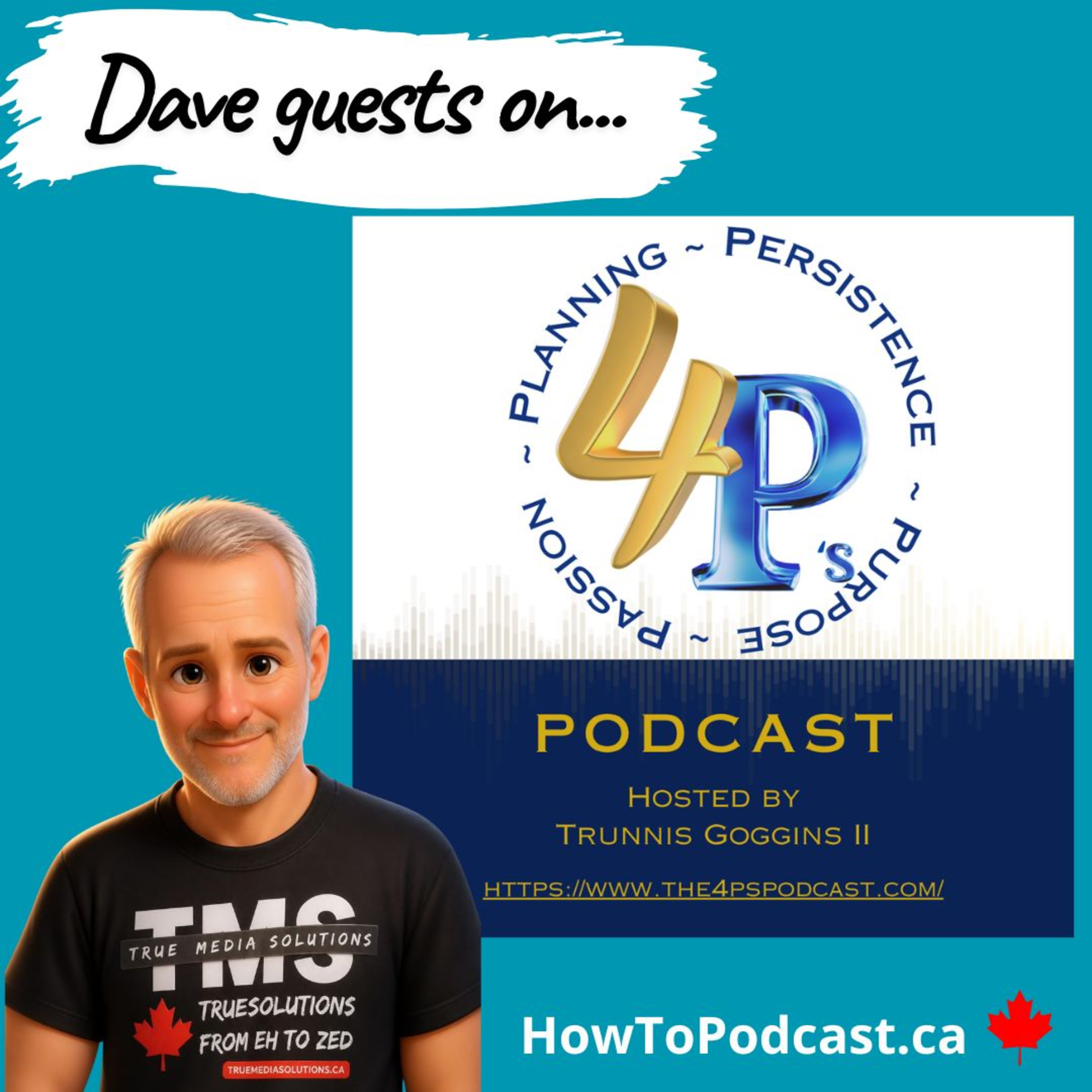
| 5/31/26 | ![]() E703 - Shared Mic Sessions - Dave Guesting on The Four P's Podcast with Trunnis Goggins II✨ | podcastingcommunity building+3 | Dave Campbell | Living the Next Chapter4Ps Podcast | St. CatharinesBuffalo | podcast growthpodcasting tips+3 | — | 42m 08s | |
Showing 25 of 811
Sponsor Intelligence
Sign in to see which brands sponsor this podcast, their ad offers, and promo codes.
Chart Positions
4 placements across 4 markets.
Chart Positions
4 placements across 4 markets.