

Insights from recent episode analysis
Audience Interest
Podcast Focus
Publishing Consistency
Platform Reach
Insights are generated by CastFox AI using publicly available data, episode content, and proprietary models.
Most discussed topics
Brands & references
Est. Listeners
Insufficient chart data. Estimates will improve as the show charts.
- Per-Episode Audience
Est. listeners per new episode within ~30 days
N/A🎙 Weekly cadence·71 episodes·Last published 1w ago - Monthly Reach
Unique listeners across all episodes (30 days)
N/A - Active Followers
Loyal subscribers who consistently listen
N/A
Market Insights
Platform Distribution
Reach across major podcast platforms, updated hourly
Total Followers
—
Total Plays
—
Total Reviews
—
* Data sourced directly from platform APIs and aggregated hourly across all major podcast directories.
On the show
From 11 epsHost
Recent guests
Recent episodes
Ep075: Running Toward the Minefield with Scott Abels
Jun 18, 2026
Unknown duration
Ep074: Fifty Years of Precious Metals with Larry Drummond
May 18, 2026
32m 45s
Ep073: From One-Room to 40,000 Pounds a Day
Apr 27, 2026
54m 29s
Ep072: Software as a Competitive Advantage with Gordon Driscoll
Mar 17, 2026
42m 41s
Ep071: IC-DISC from Start to Finish: The Complete Setup and Compliance Guide
Jan 29, 2026
1h 00m 50s
Social Links & Contact
Official channels & resources
Official Website
Login
RSS Feed
Login
| Date | Episode | Topics | Guests | Brands | Places | Keywords | Sponsor | Length | |
|---|---|---|---|---|---|---|---|---|---|
| 6/18/26 | 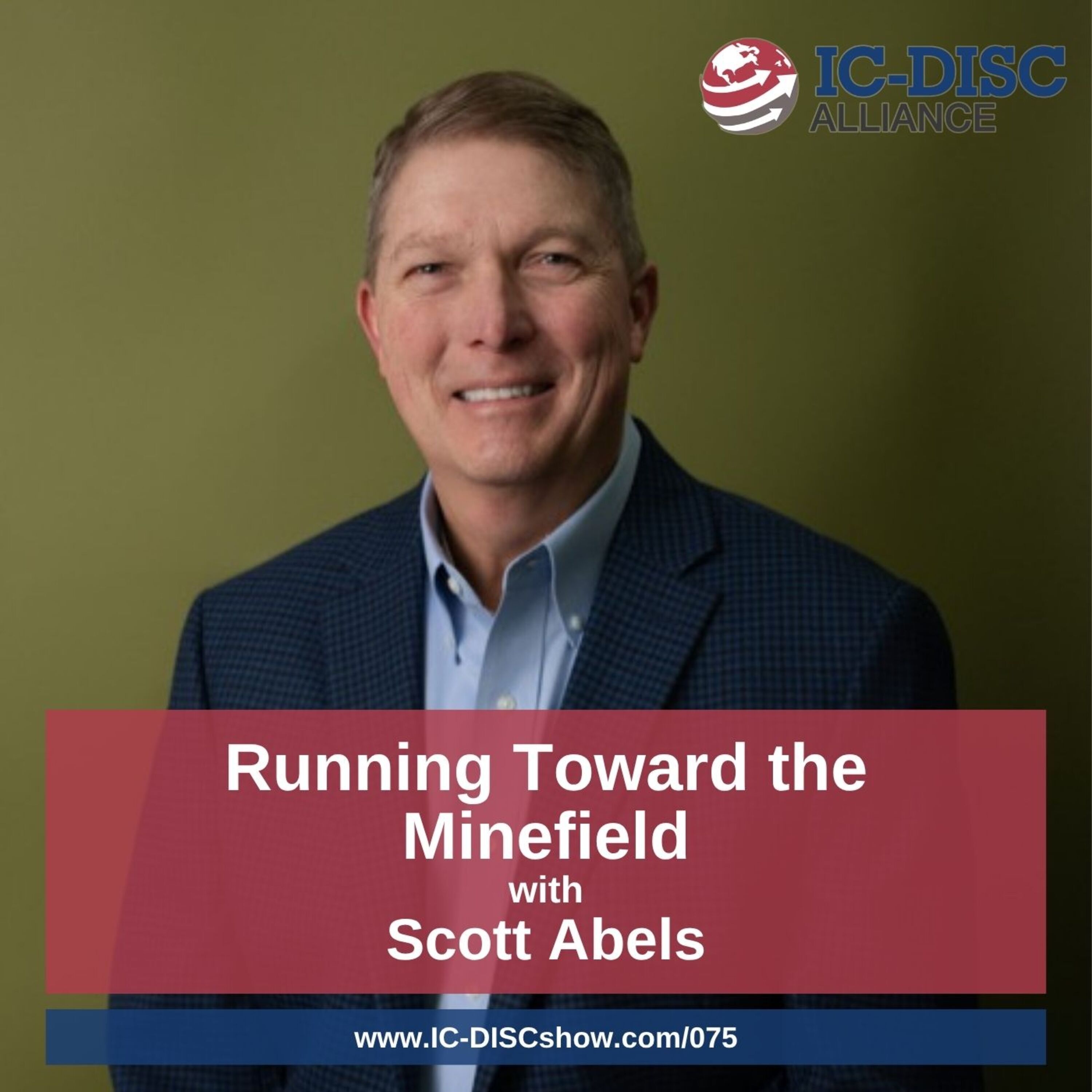 Ep075: Running Toward the Minefield with Scott Abels | The biggest opportunities often sit in the work everyone else is afraid to touch. In this episode of the IC-DISC Show, I sit down with Scott Abels, a CPA and business valuation specialist in Austin, to talk about why he built his practice around estate, trust, and gift valuations, the one area most professionals avoid. Scott spent 25 years in corporate finance at Dell and Motorola before launching his own firm. He moved from CFO consulting into valuation, then narrowed further into estate and trust work, an area with its own IRS code sections, examination rates above 20% on large estates, and the highest error rate he's seen. He walked through the landmines, retained rights and marketability discounts among them, where a single mistake can wipe out a client's discounts entirely. What struck me was his case for getting the valuation expert in during planning, not after, when it's often too late to fix anything. The same logic shows up in his turnaround standard of 30 to 45 days and the dozen questions he tells attorneys to ask before hiring anyone. Scott also revealed a project he'd been quietly working on, a plain-English book for Texas attorneys, and his answer for how the busiest professionals actually want to be helped. SHOW HIGHLIGHTS * The riches really are in the niches: narrowing from CFO work to a field with fewer than 10 true specialists turned a commodity service into a moat. * The IRS examines large estates more than 20% of the time, because it knows that's where taxpayers try to avoid taxes, so the valuation has to hold up. * Get your valuation expert involved during estate planning, not after; retained rights and other landmines often can't be fixed once the structure is set. * A buy-sell agreement signed and executed perfectly still won't bind the IRS, which weighs economic reality over legal form every time. * Overstep on discounts and the penalty isn't just losing them; the IRS can throw out your whole valuation and re-value with no discounts at all. * Before hiring a valuation pro, ask their guaranteed turnaround time and whether they offer audit defense; vague answers signal it's a side service, not their focus. Contact Details LinkedIn - Scott Abels LINKS Show NotesBe a Guest About IC-DISC AllianceAbout ETG Valuations TRANSCRIPT (AI transcript provided as supporting material and may contain errors) Dave: Good morning, Scott. Welcome to the podcast. Scott: Thanks, Dave. Thanks for having me. I'm looking forward to visiting with you. Dave: Sure. So where are you located today? What part of the world are you calling into from today? Scott: I'm in Austin, Texas. Cloudy, Austin, Texas this morning and just up the road from you a bit. Dave: Okay, well, that sounds good. So I've been really excited to have you on here. You were a guest a while back. You've kind of had some updates that I want to talk about. So why don't we just talk out. Scott: Talk. Dave: Give me a little bit of your background, you know, where are you from, what you're, you know, how'd you get to this point in your career? Scott: Sure. So I'm a Texas boy, born and raised. Went off to college, majored in accounting, got my accounting degree at the University of Houston and went, went straight into industry. Got my CPA shortly after. After I graduated and went into industry. And I spent about 25 years in what I call corporate America. Dell, Motorola, in corporate finance. And you know, most of my background is running a business division of a larger business. So it's really understanding how businesses work, how the day to day operation works, how's. How does the business model work from a financial perspective? Because I did that for about 25 years. Started my own consulting business about 15 years ago now. Dave: Okay. Scott: Initially, I started out as a CFO consultant, just kind of using the things that I learned in corporate America for smaller businesses in the. Mainly in the Austin area. And really quickly I, I had a client early on who needed help with business valuation, wanted to buy out a minority partner, and so I went away and got the valuation credential, the cva. It's essentially a CPA for business valuation. Dave: Okay. Scott: And I did a couple of these business valuations and I realized several things really quickly, Dave. I realized that these are like business valuation is like a puzzle. It's like a little business puzzle. And it's just perfectly suited to my background in understanding how businesses work. So I really, I like the work and it's well suited to my background. Other things I realized is as a CFO in Austin, I'm probably one of a thousand. Lots of competition, really. A commoditized service at the time that I started out, probably still is. As a business valuation professional, though, I'm probably one of 15 or 20. Okay. And there's probably only, you know, there's probably fewer than 10 of those that specialize and do nothing but business valuation. It's much more of a niche and you know, Much more of a specialized industry. And it just was a great fit with my background. So that's where I am today. I'm specialized in business valuation. And, you know, my background as a CPA and in corporate America has really kind of lent itself well to what I do currently. Dave: Okay. No, I appreciate that oversight. And, you know, my business is somewhat similar that, you know, there's a saying the riches are in the niches, and I'm convinced. But I find most professionals don't have the courage to really truly focus on a niche because to say yes to the niche, you have to say no to everything else. And so I really respect, you know, niching know, you know, kind of highly focused on the valuation. But then it sounds like you've done. You've decided to niche even further. So talk to me about that. I see what's in your background. I assume that's got something to do with does. Scott: It does. And you know, Dave, I'd like to tell you that I planned this whole thing out and that it was all this, you know, deep thought and yeah, this business research and everything else. But it really just has kind of evolved along the way, you know, from doing CFO work, which is pretty broad, to. To doing business. Valuation was, you know, really a specialization move there. But it made sense for my background and it was a, you know, a good opportunity based on. On, you know, what my skill set was and what I found now after doing valuations for several years is that one area that I think has the, you know, maybe a greater need than any other is estate trust and gift valuations. And, you know, the reason, there's really three reasons that I can think of. One is that it's. It has its own specialized IRS rules and regulations for estate trust and gift. So it's almost like there's every other valuation and then there's estate trust and gift that has its own specialized code sections, and it's very different from typical valuations. Another reason is that the IRS really scrutinizes estate, trust and gift valuations more than any other. So, for example, large estates, they are examined greater than 20% of the time when their returns are. Their tax returns are. That's a really high examination rate. And the reason is because the IRS knows that there's ways in there that taxpayers can avoid taxes. And so, as you might imagine, the IRS is not a big fan of taxpayers avoiding taxes. So they're going to examine those, especially the big estates. So specialized rules. The IRS loves to look at these. And the last reason is this is an area that, where evaluation folks make mistakes probably more than any other is what my research has told me. You know, it cries out for somebody to really specialize in this kind of work. And because, like I said, just because not everybody can do this. The problem is a lot of folks try to do this as a one off. And that's where we really end up hearing the horror stories about how the IRS picks these things apart. So for me, where a lot of people see this as an area of risk they don't want to touch. It's an area that I run to because it, you know, again with my specialization in this area, it allows me to work in the here and to see it as a real opportunity to serve clients better than what they might normally get from their, from their okay CPA or from, you know, from many other valuation professionals. Dave: Yeah, and I suppose it's a little bit like you, like a generalist valuation person. Doing a state trust or gift valuation is a little bit like a corporate attorney who really is great at corporate work. M and a contract work. And then they have a buddy who says, hey, we need to do this, we need to set up some, you know, this is this trust and we need to do some gift work. And the attorney says, yeah, sure, no problem. Right? I mean, technically they're qualified, right. They're a member of the state bar, they have a law degree. And so, you know, and the IRS recognizes that degree. But is it kind of a similar thing where you just, people just don't know what they don't know? Scott: It is. And I just look back to when I started doing these, I didn't know about all of the different code sections either. I wasn't doing these things at the time. And when I started doing these a few years ago, I realized, you know, some of the specialized knowledge and code sections that you have, and after doing them for a number of years now, I think I realized it even more. And it just is, it's a flashpoint area for the irs. They know that there is a lot of potential to go in here and claw back revenue because of things like discounts and retained rights. Things that don't come up in normal, you know, discounts come up in normal valuations, but not the way they do in estate and trust and gift valuations. And it's a, it's an area where you can, you know, clients can take advantage of the rules to save themselves significant taxes, but if they don't do it properly or if they, if they overstep the penalties are huge. So not only do they lose what they thought they had in discounts, for example, but the IRS may completely invalidate their whole valuation and go back and value it for them with no discounts. So the penalties are huge here. Which, again, I think is a reason that I see this as a huge opportunity to help clients navigate what is really a minefield here. It's a, it's an opportunity, but it can potentially be a huge downside if it's not done properly. And being able to offer that kind of specialized knowledge, I think is very valuable to clients and especially to their attorney partners. Dave: Yeah, I can understand that. And, you know, is this is when you get, when you pick up valuation clients in this space, is it like it was in the. When you're doing general value valuations where you just get a call from somebody out of the blue and they say, hey, Scott, you know, I've got this trust set up and I need evaluation done. Is that how the clients come to you? Is it just the actual end user calling you, or does it come to you some other mechanism? Scott: So it's. The short answer is no. It's seldom the end user because the end users don't usually know what they don't know. Right. They are reliant upon an attorney. So in almost every case it's going to be in a state and trust attorney who's going to recognize there's a triggering event where they need to get evaluation done and they'll reach out to me or to another valuation professional at that point in time. And so that's where the whole process usually starts. Interestingly enough, what I share with estate and trust attorneys when I visit with them, have a coffee shop conversation, is that it's even better, more advantageous to them and their clients to get their valuation person, regardless of who that is, to get them involved on the planning side way at the beginning of this, when the estate and trust attorney is putting together the whole, you know, the whole package of here's what we're going to do, here's the way we're going to set these things up, and here's how it's all going to flow. Because, you know, sometimes what we find is we do that valuation way later, way after the estate planning has been done, and we find these issues like retained, retained rights, for example, it's too late, then there's nothing else we can do. It's already, it's going to do, you know, it's going to, it's going to be a negative for the clients at that point. Whereas if we had been involved on the front end of the planning in this thing, we might have been able to say, hey, look, the IRS is going to look at that and they're going to disallow that as far as a tax advantage goes. So let's find a different way, you know, to work around that. But all that work, regardless, it comes in through attorneys or their CPAs. Client CPAs. Attorneys and CPAs who have business owner clients who experience a triggering event. And that's how we get involved. Dave: Yeah. And I know, I know that attorneys get a bad rap in certain circles, but I know that you and I, one, you know, we've known each other a while and one thing we each have in common is we, I think in a different life, either or both of us could have very well gone to law school, practice law. I know you have a brother who's an attorney, but I think early in your professional career, I think you had an insight into the legal profession that I think helped develop that appreciation for the profession. Is that right? So tell me about that. I know there's a story, but I really don't remember much about it. Scott: So you've been digging into my background here, Dave, I can tell. And you've done a good job. So early on. You're exactly right. Early on, I was from a small town in Texas called Bay City, about an hour and a half southwest of Houston there, and small town. And I worked for an attorney who was a family friend, a well known guy in the community. We knew him from church and like family and everything, and he was kind enough to let me work for him as a small one man office during the summer and during breaks and I got exposure to the legal profession like, like you could never get today, you know, here I am, a kid in college, don't have, I don't have any kind of legal skills or background or anything, but. But the one thing I was curious and willing to kind of jump in and wanted to learn stuff. And the attorney's name was Lynn Grebe. He was a general practitioner. So I got to see estate, trust wills, I got to see general business stuff. I got to see divorces, real estate, even did some small criminal defense stuff. So he's a generalist. Dave: Yeah. Small town, you kind of have to be. Scott: Right, exactly. So I went to the courthouse and filed suits and filed documents. I did some legal research, some, you know, lightweight legal research, but. And I listened, you know, I drafted documents for him and I just, I got to spend a lot of time with this guy. He was very generous. And as a one man office, I had access to him on a, you know, on a, you know, full day basis. So I got to see how he thinks, I got to see how attorneys work, I got to see how the legal profession works. And what I figured out was it really is, it's a very logical thinking kind of, you know, of a practice of a work. And, and it just thought, hey, you know, I, I like this. It's logical, it makes sense, Communication is really big. And I was always a good writer and I was just kind of drawn to that work. And I got to see again how a law office works early on. And Lynn was really a, was a professional role model for me. My parents were not professionals, business professionals. So he was, early on he was a role model for me as to how you conduct yourself, how you run a business. And, and I just really, you know, kept a lot of those things that I learned from him early on. And so I, you know, when I got out of college, got my cpa, when I started my own business working with attorneys, it was, it was kind of a natural, comfortable throwback for me, Remembering how law offices work, remembering how attorneys think, the time pressures, the schedules, all of those things that go in with being attorneys. It was kind of a, like I said, a natural return to some of those things for me. The other thing you didn't mention is, you're right, I've got a brother who's an attorney, I've got a son who's an attorney. You know, I can't do lawyer jokes anymore. I'm not allowed to do those without really offending family members. I've learned to, I've learned to huddle with attorneys on a regular basis at home and at work. Yeah. Dave: And the other thing that I've noticed About attorneys and CPAs is that, and I think it's part of what motivates them professionally. And when I tell this to attorneys and CPAs, they kind of all shucks, downplay it, but they really are, in many situations, they're a hero, they're a superhero to their clients. They are either saving them from a dire circumstance like, you know, the client was audited and they have to come in and clean up, or they were sued or they're doing planning that, that really relies on that. And I think one of the things that I especially appreciate about attorneys is they are this in some ways, you know, they're right up there, I think, with the cpa and you can make a case of which one is the more trusted advisor and maybe depends on the circumstances. But I've noticed the attorneys I've met, they really relish that fiduciary duty to their clients. They don't take it lightly. And they really are about the big picture and especially on the estate and trust side. I mean, they're doing work that, that's going to survive them and they're, they have to have a long term focus and a patience and a discipline and they have to be willing to push back on the client and say, yeah, I know it's helpful if we value this business at $5 million, but come on, Charlie, this business is worth $40 million. So maybe we can get some discount, you know, and maybe make it valued at 30 or 35 million. But we can't value it 5 million. And if we do, we're just asking for trouble. Scott: So anyway, that's kind of been my Dave: experience of working with attorneys. How has yours been? Have you had a similar experience? Scott: Yeah, and I go back to Lynn, Lynn Grievy, the attorney that I worked for. You just explained exactly the relationship that Lynn had with his clients. You know, these people looked up to him as a, you know, one of the, one of the towers of the community. He really was the guy that, that, you know, that looked out for the, you know, the common man in, in many ways, like you said. So he really was, you know, just a great figure in the little small town when I was there. And so many of the attorneys that I work with now, and especially estate and trust attorneys, Dave, as I work with these folks and, and I know a number of them and you know, and speak with them on a regular basis, even when we're not working on a particular evaluation case. And they are, like you said, they are not just doing a service for that client, they are doing something for that client's children and grandchildren oftentimes. And the clients are trusting these attorneys, especially the estate and trust attorneys, to know this mountain of regulation and to understand how to help them navigate based on their, their particular circumstances, something that's going to survive them and their children and maybe down to their grandchildren. So I agree with you. Most attorneys that I know relish what it is that they do because they can do something that not everyone can do for those clients and they love making clients happy. Dave: Yeah, yeah, that's certainly been my experience as well. Well, why don't we dive just a little bit more into the estate and trust and valuation discount. What are some other, like, if there's an estate attorney Listening to this, what are some other things that maybe they're not familiar with? As far as landmines or opportunities on the valuation side? What are some other things that come to mind? Scott: You know, it's interesting that you, that you mentioned that there's several IRS code sections that deal with very specialized rules. And so we actually, you know, have done some research to find out what are the rules that most often trip up, you know, attorneys and their clients. And we recently put together a white paper that I've shared with a lot of my trust and estate attorney friends of some of the, in this case, the six top things that tend to trip up attorneys and their clients. And it's, you know, it's things like treating a family buy sell agreement as fair market value. Just because you prepare a buy sell agreement and you go through the formal documents and have everyone sign it and you say, hey, here's what the value of our LLC is going to be. Just because you've done everything properly legally doesn't mean that the IRS is going to accept that. The IRS looks at the economic reality over the legal form. So just because you say, you know, hey, we gave this property away, you know, from this client, this client, you know, gave this property away, and so it's not included at his estate, the IRS looks at it differently and they say, okay, you gave it away, but you gave it away two days before you died. You know, this is almost, it's not, you weren't really looking to give this stuff away. You're looking to avoid taxes to your estate, right? Or let's say that the client says, hey, I'm giving away this, this, this business interest, you know, to my kids, but I'm retaining the right to, to make dividends, you know, from that business interest. The IRS looks at that and says, you're like, we call that retained rights. The IRS says, hey, you're retaining, you know, certain rights to that business that suggests that you still control it. So guess what? That business interest, you know, for $30 million that you said you gave away is not part of your estate. You effectively kept that. We're going to pull that back into your estate now and you're going to owe us taxes on that. And you've got a huge estate. So this means that your marginal tax rate on that business is, you know, it's astronomical. So, so those are some of the types of things. But it's, you know, it's knowing specialized rules like, you know, retained rights. It's another area where the IRS really gets folks is in discounts. Dave: Okay. Scott: Oftentimes. So discounts are a legal tool to use to represent a market reality. And so let me just give you an example there. You know, we have what we call a marketability discount that we can take on a business interest. And what that means is I can't turn this into cash very easily. A marketability discount shows the market reality that my privately held business, if I wanted to liquidate it, it would take me some amount of time and probably a lot of time, probably many months to liquidated. And therefore a, an informed investor would pay me less for that. They would discount that. Dave: That's a, sooner you want to close, the bigger the discount. Scott: Right? Dave: I mean, if you went to an arm's length transaction, that said, I have this $50 million business that would normally require a year of due diligence and you say to them, what will you give me to close on this business in one month? Well, they naturally are going to put a huge discount on that to account for the fact that they're having to skip their normal due diligence to offset their risk. Scott: Yeah, it really is a risk and return thing, is what these discounts represent, but it represents a market reality. Okay. What you can't do, though, what the IRS really frowns on is when maybe, let's say it's a CPA or somebody who only does valuations part time and they, you know, they're going to go look and they're going to say, oh, okay, for, for this type of asset, the average marketability discount is 35%. So boom, there we go. We're going to put 35% on it. They don't bother to explain it in the report because there's nothing to explain. They just went and found the market average. And the IRS is going to say, absolutely not. The discount needs to reflect the market reality of what's going on here. And, and using an average is not acceptable. And there's tons of court cases that show this. Now, if you went, for example, and found a court case with an asset that was very similar to yours, and they took a 50% marketability discount because of certain market realities with that business, and you and your business was very similar and had the same set of facts and circumstances, you might be able to take a 50% discount, but you've used a court case or you've used, you know, solid reasoning for how you did that. You didn't just take an average. So discounts are a huge area that the IRS loves to attack. And then like I said, the Last thing, really is the overriding theme in so many of these estate, trust and gift rules of the IRS is valuing the economic reality over the legal form. So just because you say that you gave something away, if you retain the right and use, you know, the ability to use it and to enjoy it and to have certain rights, the IRS says, I don't care that you've got a legal document that's signed. You didn't really give away those, those things from an economic perspective. And so you lose your discount and we're going to hit you where it hurts, which is in tax dollars. So that's what makes, you know, this area of specialization, you know, so difficult for a lot of folks. You don't want somebody who dabbles in this stuff. You really need to know these rules and to have dealt with them and to be experienced in this. Dave: So that's a really interesting point on the discount because, and I guess it's because these are related party transactions is what causes the scrutiny. Because if you have a $50 million business and you have a unrelated third party and they strike a deal to buy the business for $25 million and that's what everybody agrees to, then that's the price. And there's really no way for any other entity, a government body, a bank, anyone else, to really question it. Or conversely, if they're. A bidding war happens and that $50 million business sells for $100 million, that the contract governs it. As long as, you know, it meets the elements of a contract, that contract is valid. And it just strikes me that I could see somebody being tripped up on this because like you said, they could have all the I's dotted, the T's crossed, it being notarized, being signed by all the parties, I could see all that happening. And it seems like that $50 million business that you valued at $25 million, on the surface, everybody may think, hey, we're in great shape, I's dotted, T's crossed, everybody signed it, we had it notarized, we signed in a fancy office, everybody was sober, we're good. So is that, is it the related party aspect that creates the nuance and the difference? Scott: That. That is a big part of it. So in estate trust work, we're talking about, you know, it's clients that are doing things for themselves that often involves their family members or close friends. And so that's exactly what it is. So if, like you said, if, you know, a sale to an unrelated third party, that's market value, unless there's something else going on under the table. Otherwise, it's, by definition, it's what the market would pay and, you know, a buyer who doesn't have to buy and a seller who doesn't have to sell. But when you're doing these things, when you're gifting something to your children or to your spouse and you're assigning a value to that, it's a much different story, right? Because now it's, that's a family member or a person that's close to you. And you know, the real thing here, that that's, that that causes the friction, Dave, is that, you know, IRS rules allow people to take advantage of certain things to pay less taxes. There's certain things you can do. You can take discounts. The thing is, you can't take, you can't just willy nilly take discounts. They have to be properly supported and they have to be market based. And, and unfortunately, those things are not clear and objective. It's like, okay, you get, you do 1, 2, 3. And it works perfectly every time, right? There's a lot of subjective knowledge that goes into this, but at the end of the day, it needs to make sense to the irs. And they make the assumption they're at, they're adverse from us, right? From us and our clients. And their assumption is this thing is probably wrong unless you can prove to me that it's right. And that may not seem fair, but oftentimes that's kind of the way it is with the valuation. So it's really important to prepare that valuation from the perspective of, I'm expecting that the IRS is going to ask me these questions and they're going to push on me on these areas. And so I want this report to be so clear, when they look at it, it's like, okay, well, I see what he did. I may not fully agree with it, but what he did was reasonable and he didn't take any crazy positions. As opposed to just doing a standard valuation where you don't really speak specifically to some of those issues. You leave those areas of interpretation open for the irs and they're going to take advantage of that every time because they've done way more of these than our client has. Right? Dave: Well, I couldn't. But I always thought that once you did the valuation, you were done, you washed your hands of it. You said, hey, that's it, we got this crazy 80% discount. I'm done, I've washed my hands of this, and I never am going to be asked about this again. Is that how it goes. Scott: And I'm sure that you're being facetious when you ask that question. That's how it goes with some evaluation professionals, unfortunately. But that's not how it goes at atg. The way that we do these things, when we do evaluation like this, we always offer what we call audit defense. And you know, what that means, is that if the IRS picks this thing up and does a first line of examination of this, we're going to represent you. Whether that means sitting down with him face to face or answering emails or getting on a zoom call, we're going to defend our work. And so we're going to talk to the IRS and say, hey, look, here's what we did. Here's why we did it. And, you know, the IRS doesn't always have to agree with you. That's okay. They may not agree with you on everything. They probably won't. But as long as you. As long as you can clearly explain and it makes sense from a market perspective, you're going to be okay. And so when we prepare these things, we know that we are going to be having to explain this to the IRS potentially, and that's the perspective that we take. You know, one of the things we. That we typically say is we think like the irs, before the IRS ever shows up, we're thinking like, okay, what are the questions that they're going to ask? What are the areas that we need to really do? Make sure that we've got this thing perfectly buttoned up and prepare that. Like, we're going to sit down with an IRS agent who's angry and hasn't had his coffee on that day. And so we do that in advance for every one of these, knowing that we're going to. That we're going to be. That we're going to be on the hook if they examine this thing? And so we're never. We don't ever leave the client, you know, hung out to dry. It's like, okay, I do see that from time to time where clients come and they've got a. They've got evaluation, or their attorney comes and says, hey, we got this valuation. And it seemed really great, but the IRS has got all these questions about this 80% discount, and we don't know how to answer them. And we can do what we can do to try to, you know, to try to help the situation. We can't fix those things that, that, you know, if it's. If they've taken. If somebody else has taken a position that's not defensible. Not a whole lot we can do, but hopefully what we can do is just to help to, you know, to smooth it as much as possible or to prepare the client in advance for, you know, for what is likely to happen here is oftentimes what we do. Dave: Well, it sounds like your approach is more thorough and probably takes more time than just, you know, somebody who, you know, has some boilerplate language. They do 10 minutes of research, they say the average discount for this industry should be 40%. They plug it in, they have a five page report and they say that's that. You know, is this one of those things of you, you get what you pay for? It is. Scott: It is. It definitely takes more time for us to do it the way that we do it, which is building that report, assuming that the IRS is going to ask us questions, takes more time and it costs the client a little bit more to do that. But the downside is such that it more than pays for itself. If you think about it, we're, you know, I talk with the clients, with attorney referral partners about this. Where would you rather your client be? Would you rather them be elated about that 80% discount that they got that is not defensible? Or would you. Are you still going to be there when the IRS examines this? They got a 1 in 5 chance of examining it. Are you going to want to be there when you have to give them the bad news that the IRS disallowed the discount? And the problem is, Dave, that if the valuation is off significantly, the IRS doesn't just say, oh, no, that's not 80, it should have been 50%. So we're just going to take the delta. They look at it and they say, it's 80, it should have been 35. You guys screwed this up so bad that we're going to disallow the whole discount. And oh, by the way, that other discount that you took to, you took a control discount, it's automatically disallowed too, because you have so egregiously misstated this. And they can take the final step of saying, we're going to disallow the whole valuation here. We're going to set the value and you don't get any discount. So that's the absolute worst that could happen. But think about it. When they disallow that, that big discount that you've promised your client, and they've probably put the money in the bank and maybe even spent it, now you got to go back and say, hey, we don't. Not only do we not get that. That 50 or 80% discount, but you got to turn around and pay taxes on that whole amount. And, you know, for these larger estates, it could be millions of dollars. It's oftentimes. It's always thousands, hundreds of thousands, oftentimes millions of dollars that the client didn't think they were going to have to pay. They were super happy when they got that really cheap valuation. But. But it's like, okay, would you have paid, you know, 25 or 30% more for the valuation if. If you would have known that it was going to save you this whole debacle? Dave: Yeah. We're talking thousands of dollars in additional fees versus millions or tens of millions of dollars of tax exposure. Scott: Absolutely. That. That is potentially it. So I have never seen a case where, when the IRS reviews these things, where the incremental fee, you know, that the client, you know, would have paid is more than the, you know, the exposure that they have to the irs. It's always, you know, a multiple of that. So that, you know, the easy way to say it is there's huge downside here. And a lot of times, if it's a big estate and, you know, and there's some thorny issues involved, it makes much more sense to go ahead and get these things done right the first time. Dave: Okay. And, I mean, I. I know a lot of attorneys and some of the estate planning attorneys I know just getting ready for this call, I'd asked them, like, what are some of their frustrations with valuations? And one of the things they said is just re. Is responsiveness. They said, there are some firms out there. They said, you know, we're kind of under the gun. We brought the valuation person in too late, and they need three months to do this valuation. And, you know, sometimes it's a part of a large bureaucratic organization, and it's just, you know, there's just that. And my sense is that you all, being a boutique firm, focused purely on this, I'm guessing you have service options where you can turn things around more responsively than, you know, months. Is that true? Scott: Yeah, that is absolutely, Dave. You know, our standard Turnaround is usually 30 to 45 days. Oh, wow. Dave: Okay. Scott: You know, for an estate trust or gift valuation. And we, you know, we don't. As part of our standard package, we don't offer it quicker than that. We can deliver sooner than that. But of course, it's going to be an additional fee if you wait till the last minute. Yeah. Dave: You're paying overtime for your team and Scott: all somebody's got to sleep less when we do this thing and somebody has to sleep less. Dave: And, and that's what they're paying for. Scott: They're paying for those hours of sleep that they missed. But, but you know, Dave, I put together for, for some of my referral partners, I put together a list of 11 or 12 questions that, that they should ask or that they should think about when they're looking for a valuation professional. And this is one of them. You know, you know, one of the questions is do you have the, do you have evaluation credentials? Some of those are easy, but you know, another question is what's your turnaround time on these things? And, and if they say, oh, it's, you know, 60 days, 90 days, we don't know. Those are all signs that either they don't know what they're doing and you know, it's a crapshoot as to how long it's going to take them or they're busy. The valuation is not really their primary line of business. Oftentimes it's happened with CPA firms. Tax, tax or audit is their primary focus. Yeah, maybe the two or three folks that do business valuation part time are slammed with tax deadlines. And so, yeah, so if you call Dave: them in late January, good luck in getting anything done before May. Scott: I have this happen all the time where clients, you know, they don't get any responsiveness during tax season because they, their CPA or you know, a well known firm here in town who may have evaluation person or two that do this stuff. They can't get to it because their primary focus is tax or audit. And even worse is when the clients have questions about evaluation that their CPA firm valuation department did and they can't get anybody to call them back because they're slammed with deadlines. So just, it's another good reason why, you know, I encourage clients or referral partners to ask about those things on the front end. You know, what's your turnaround time? And you know, do you have a guaranteed turnaround time? Do you have, do you offer audit defense if you don't, why, you know, with the big firms, with the, you know, the large regional or national firms, the reason they don't is because they don't have to. They can afford to charge you whatever they want. Dave: Sure. Scott: But you know, but attorneys should ask those questions up front when they're interviewing potential valuation professionals. Ask those questions and you know, get answers on those things beforehand so that you're not, you know, three months later waiting to get that information. Dave: And yeah, it really sounds like you really could be a great resource for estate attorneys. You know, have you ever thought about writing a book or something geared. Sorry, I should have waited for you to finish your drinking coffee. Have you ever thought about writing a book like, geared specifically toward estate planning attorneys on some things they might need to know about valuation in the estate, trust and gift valuation world? Have you even thought about it, Scott? Scott: You know, we should have done the Tonight show together. You could be Ed McMahon and I could be Johnny Carson or Vice, but. Yeah, you're kind enough to bring that up, Dave. Actually, I have just recently written a book. It's actually in print now. I just. I just yesterday, probably two or three weeks away from having copies in my hand. And the name of the book is Business Valuation A Plain English Guide for Texas Attorneys. Oh, wow. Dave: Okay. Scott: It's exactly what it sounds like. It's written in plain English. There's no technical jargon, no acronyms, no mathematical formulas or anything else. What we did was, you know, we wrote a book that. That answers the questions that attorneys have most often. Do I need evaluation? Does it need to be certified? What are the landmines I should look out for? Is there certain terms that I need to understand in order to be conversant in this? That's what we've done. We've written a book. I go around meeting attorneys on a regular basis, as we do, networking, like we all do, and meet them oftentimes in a coffee shop. I call those coffee shop conversations, where it's just a casual conversation with an attorney, and he may. He or she may bring up a. An issue, you know, a specific issue they have with a client or something, and we can just. It's just a casual conversation. And that's what I want this book to be, is I want it to be like a coffee shop conversation where we can just. We can talk about, you know, the basic questions that they need to know. They don't need to know how to do a DCF calculation or a capitalization of earnings. They don't need to worry about what multiples are or anything else they need to know. They just need to have their basic questions answered so they can advise that client properly. Do we need to get an expert involved or do we not? And that's what we've done with this book, and I'm very excited about it and looking forward to. Dave: Yeah. So by the time this episode goes live, I expect your book will be out. And, you know, it's funny, in my niche tax arena of the IC Disc. I always tell our clients and advisors because they always kind of get overwhelmed with the details and the nuances, and they're trying to make sure they remember it. And every year, the same controller has the same question year after year, and they feel bad about it because, like, Dave, I know I asked you about this last year, and I'm asking you again, and I always tell them, I say, hey, look, I deal with this 365 days a year. You deal with it one day a year. And I. And in fact, I just had this call with a client yesterday, and I said, kayla, all you need to know about the IC disc is my phone number. And I'd argue that's all the attorneys need to know. They just need Scott's phone number, because all the other pieces you can take care of. Scott: Absolutely, Absolutely. And that's, you know, that's why I wrote the book, was just to. To be able to be a simple guide, you know, for attorneys to say, what do I do next? What are the questions that I need to. That I've got, and what do I need to do next? Dave: And. Scott: And you're right. Ideally, let me worry about the details, and I can take them through those details and as much, you know, take as much time as they would like. But ultimately, usually when I deal with attorney referral partners, they're just looking for that. That basic guidance. What do we need to do here? What should I look out for? Those types of things. So it's the approach you take with your clients? Yeah. No. Dave: So even though the book is really geared toward the attorney, if you. If the attorney had a client who was, you know, like, say, an engineer, you tend to be detail oriented and is really pushing back. And they say, well, my research says I should be able to get a 70% discount on this. Now, would the book be written in simple enough terms? That attorney could give a copy to a client who's detail oriented to at least cause the client to say, okay, all right, I get it. It's more complicated than I thought. So do you think it's plain language enough for a business owner or somebody, A client of a c. Of an estate attorney? Scott: Yes. The short answer is yes, Dave. I wrote it specifically for attorneys because those are the folks that I talk to the most often, and they're the primary referral partners, the primary point of contact I have when valuation issues come up for a client. But, you know, this book, you know, it would be very helpful for attorneys, CPAs, wealth planners, or the top folks that would find this thing Interesting. And. And it really is written in simple, easy to understand terms. And it covers some of the primary reasons why they might need evaluation. Things like M and A, estate and trust, divorce, business disputes, or IP valuations. And it gives just the basic questions that they need to understand to be conversant enough to know what they need to do next. And I give some very simple but practical examples for most of the issues. Most of the questions that I answer in there, I give simple examples. Here's an example of how this works or how it worked in the past with a client so that they can quickly and easily consume the things that they need to figure out. What are the next steps here? So there. No, no CPA is going to sit down with this book and say, okay, this is going to teach me everything I need to know to do evaluation. It's not meant for those folks. There's plenty of those out there that are written by people, you know, that have every detail in it. Dave: Yeah, textbook type. Scott: Exactly. This is really meant to be just a reference guide, a place to, to guide you so that you can figure out the next steps. Dave: Okay, well, hey. Well, Scott, I think this has been your second time on the podcast. It's been even more fun the second time. As we wrap up here, is there anything I didn't ask you that you wish I had? Scott: I wish you would ask me about my dog, Buddy, my office mate here, but otherwise, I, you know, I. There's nothing that really comes to mind that I could think of, honestly. I think we had a really good discussion about these issues. And, you know, the main thing I would leave you with and your audience with is I enjoy, you know, talking about this. This is, like you said, this is what I do seven days a week. And anytime that somebody has a question about evaluation, especially the state trust and gift valuations, I'm always happy. It's easy to find my contact information on LinkedIn and I'm always happy to have a conversation and, and if I can't help, you know, the person, then I can always point them in the right direction. Happy to be a resource for you, for your clients, for anybody who's got a question. Happy to do that. Dave: And just curious, do you, like, charge for a preliminary conversation like that? Scott: We never charge until the. And unless the client decides to engage us to do the work. So all my conversations are free up front. And, and that's, you know, that's just the way that we do business is we can give you honest information and have that, that, you know, simple conversation with you up front so that you're armed with what you need to make that, well, awesome. Dave: Well, Scott, this has been a lot of fun. Best of luck in the release of your book. I'm looking forward to getting a copy of it. Scott: Thank you, Dave. It's been a pleasure to be on with you again. I appreciate the opportunity. Dave: All right. Hey, you have a great day, buddy. Scott: Thanks.Special Guest: Scott Abels. | — | ||||||
| 5/18/26 |  Ep074: Fifty Years of Precious Metals with Larry Drummond✨ | precious metalsindustry collaboration+4 | Larry Drummond | International Precious Metals InstituteEngelhard+1 | — | precious metalsIPMI+5 | — | 32m 45s | |
| 4/27/26 | 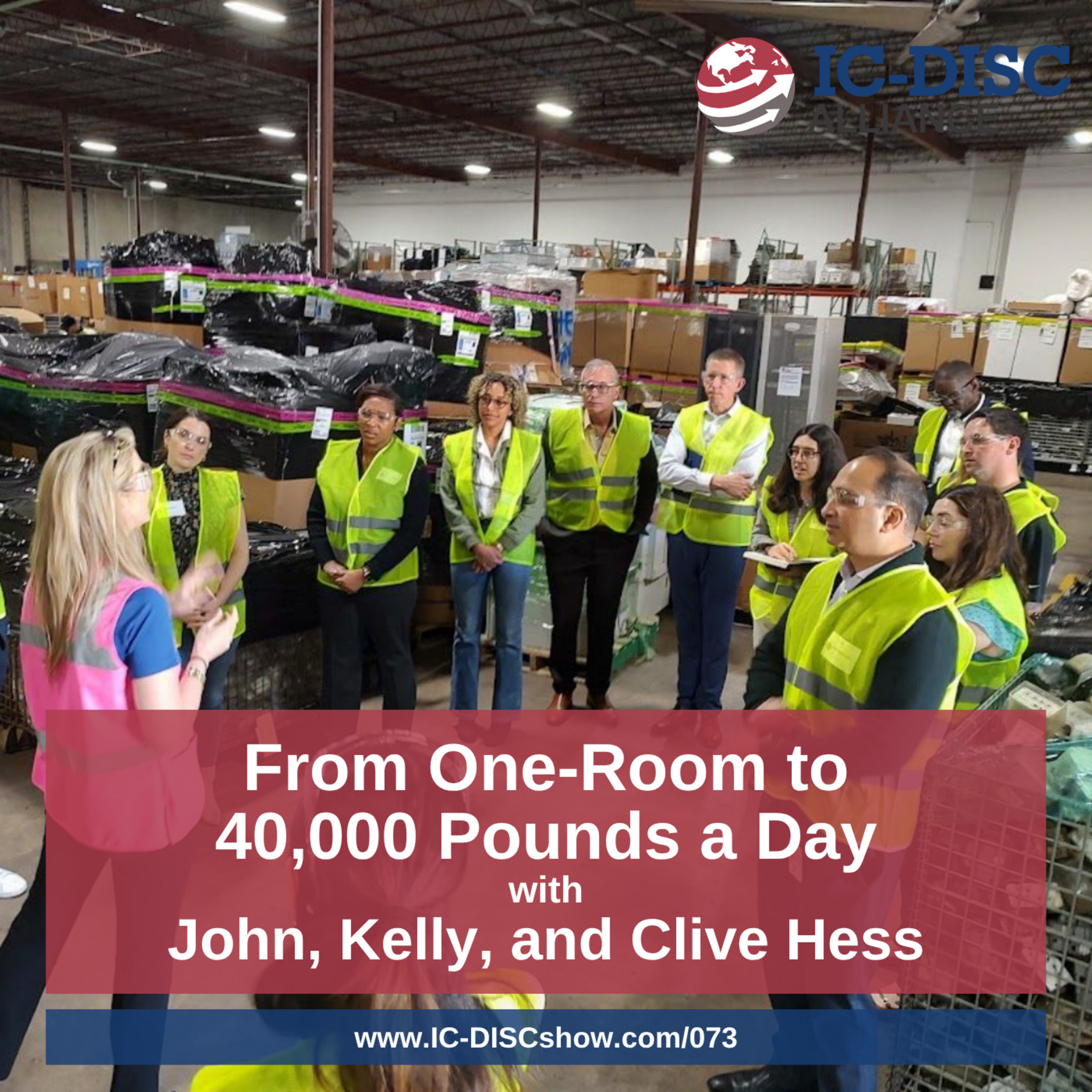 Ep073: From One-Room to 40,000 Pounds a Day✨ | electronics recyclingmultigenerational business+3 | John HessClive Hess+1 | CompuCyclePearland ISD | South AfricaHouston | electronics recyclingscrap metal+3 | — | 54m 29s | |
| 3/17/26 | 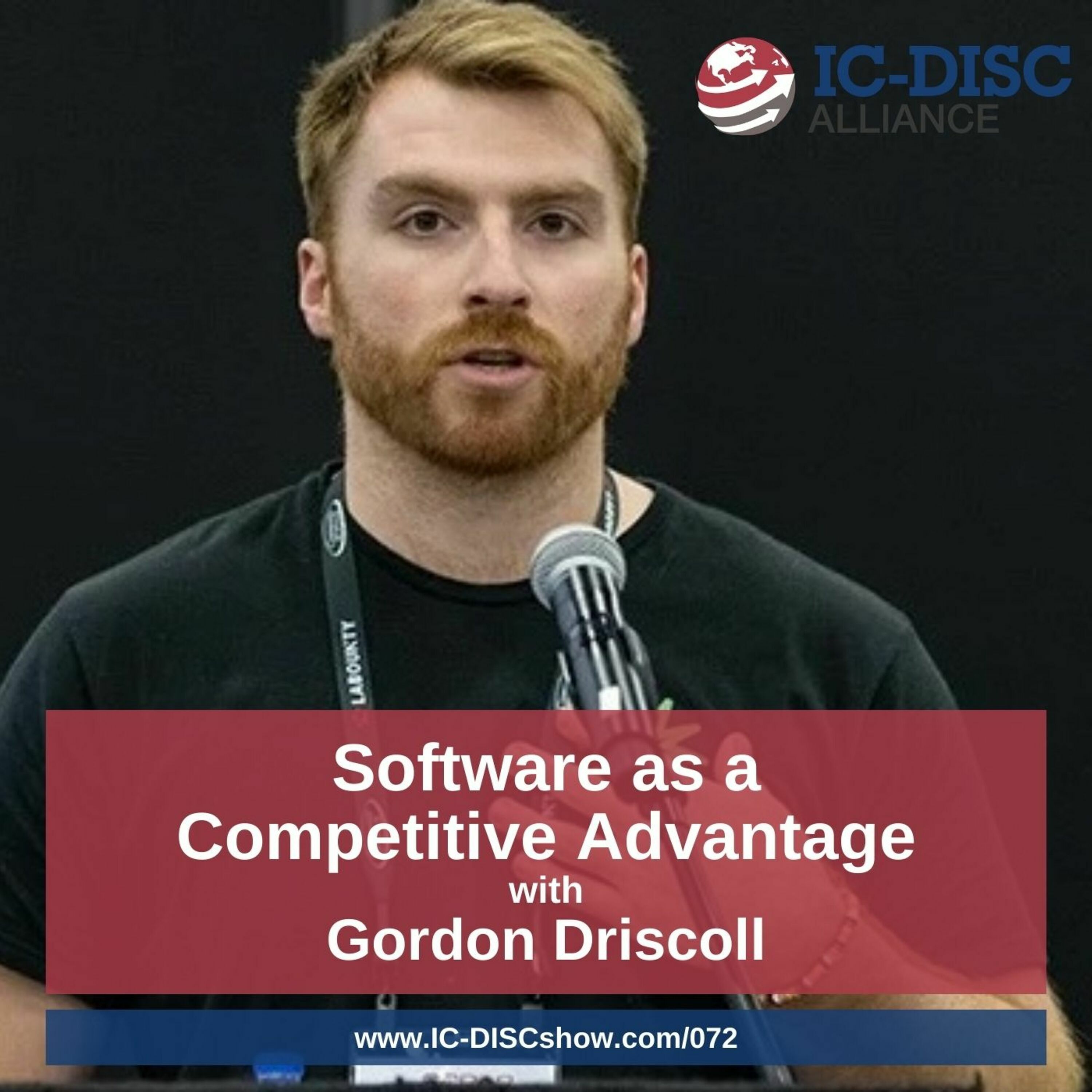 Ep072: Software as a Competitive Advantage with Gordon Driscoll✨ | software as a competitive advantagescrap metal industry+3 | Gordon Driscoll | Goldman SachsGreen Spark | scrap metal recycling | softwarescrap metal+5 | — | 42m 41s | |
| 1/29/26 |  Ep071: IC-DISC from Start to Finish: The Complete Setup and Compliance Guide✨ | IC-DISC setuptax savings+4 | Brian Schwam | IC-DISCCPA | — | IC-DISCtax attorney+5 | — | 1h 00m 50s | |
| 12/12/25 |  Ep070: IC-DISC Myths, Mistakes, and Opportunities with Brian Schwam✨ | IC-DISC misconceptionstax benefits+4 | Brian Schwam | WTP Advisors | — | IC-DISCtax benefits+5 | — | 52m 03s | |
| 11/21/25 |  Ep069: Subscription Pricing Success with Raffi Yousefian✨ | subscription pricingspecialization+4 | Raffi Yousefian | The Fork CPAs | — | subscription pricingaccounting+4 | — | 53m 50s | |
| 10/22/25 |  Ep068: Beyond Banking Silos with Randy Gartz✨ | capital advisoryfinancing solutions+3 | Randy Gartz | Trinity Bay CapitalFirst City | — | capital financebanking+5 | — | 33m 37s | |
| 9/18/25 |  Ep067: Highest and Best Use with Mike D'Onofrio✨ | tax strategiesbusiness transactions+3 | Mike D'Onofrio | Engineered Tax Services | — | tax opportunitiesbusiness transitions+3 | — | 35m 49s | |
| 8/7/25 |  Ep066: From Silicon to Steel with Ronak Shah✨ | entrepreneurshipcareer transition+4 | Ronak Shah | IntelSchnitzer Steel+1 | New Caney, Texas | entrepreneurshipcareer shift+4 | — | 49m 04s | |
Want analysis for the episodes below?Free for Pro Submit a request, we'll have your selected episodes analyzed within an hour. Free, at no cost to you, for Pro users. | |||||||||
| 7/11/25 |  Ep065: From Family Venture to Industry Powerhouse with Matt Kripke and Scott Chaffee✨ | business growthscrap metal industry+4 | Matt KripkeScott Chaffee | Kripke EnterprisesMid-South Aluminum | — | Kripke Enterprisesscrap metal+5 | — | 57m 45s | |
| 6/17/25 |  Ep064: Exploring Sealink's Impact on Global Shipping with Zohra Shroff✨ | global shippingfreight forwarding+5 | Zohra Shroff | Sealink Logistics | HoustonIndia+1 | freight forwardinglogistics provider+7 | — | 48m 47s | |
| 3/26/25 |  Ep063: From Packaging to Eco-Innovation with John Sacco | Finding what you love doing beats chasing money every time. Today on the IC-DISC Show, we're talking with John Sacco, owner of Sierra International Machinery, a trailblazer in the recycling industry. Starting as an agri-packaging business, John transformed the company into a recycling equipment powerhouse, moving from marketing Italian made machines, to designing their own balers and conveyors, and now offering a comprehensive range of recycling equipment with renowned service quality. He's been a lifelong industry advocate. Serving as past ISRI chairman and creating the "Repurposed" docuseries on Prime Video, a series showcasing how 75% of new American steel comes from recycled materials. Activities that help companies recruit talent by highlighting the environmental benefits of an industry often misunderstood by policymakers and the public. It's a great conversation revealing how critical recycling is for disaster recovery, processing debris, and supplying rebuilding materials. Listen in to hear why John believes finding your passion, as he did at age 59, brings more satisfaction than any bank account. SHOW HIGHLIGHTS We explore Sierra's transformation from a leader in agri-packaging during the 60s and 70s to a pioneer in recycling machinery, sparked by the introduction of an Italian machine in the 1980s. John discusses the significance of Sierra's involvement with trade associations like ISRI, now REMA, emphasizing the role of advocacy in correcting industry misconceptions and celebrating milestones such as serving as chairman. John and I delve into Sierra's innovative marketing approach, highlighting their docuseries on steel recycling that unexpectedly gained popularity on Prime Video, enhancing the industry's image. He addresses the broader industry challenge of attracting and retaining talent, drawing parallels to Mike Rowe's advocacy for essential yet undervalued jobs. We highlight the environmental advancements in the U.S. steel industry, including its leadership in recycling and the significant role of recycled aluminum in the automotive sector. John shares advice on prioritizing passion over profit, emphasizing personal growth and the rewarding aspects of the journey, including attending industry conferences and personal milestones. He reflects on Sierra's collaborative team effort in expanding product offerings, driven by customer needs and market opportunities, while maintaining a strong reputation and high-quality service. Contact Details LinkedIn - John Sacco LINKSShow Notes Be a Guest About IC-DISC Alliance About Sierra International Machinery GUEST John SaccoAbout John TRANSCRIPT (AI transcript provided as supporting material and may contain errors) John: And there's a lot of misconceptions about our industry. So staying involved is, you know, I've done it and that's kind of why I've also done a lot in regards to the docuseries on our industry and stuff like that. Dave: Good morning John. How are you today? John: Doing good. Doing good, that's awesome, not bad. Dave: How are you today Doing good? John: Doing good. That's awesome, not bad. How are? Dave: you doing Dave. That's good, I'm doing great Now are you a? Native of California. John: Yeah, I was born and raised in Bakersfield, California. Dave: Oh, wow, Okay. So did you grow up around the scrap business? John: Well, actually I grew up more in the agri-packaging side of Sierra. We used to have a company called Sierra Bag and we used to supply agri-packaging products. We were at one point the leader in selling bagging and ties to the cotton industry. Years ago in the 60s and 70s, there used to be over 2.2 million bales a year of cotton grown in the San Joaquin Valley and we used to sell the bagging and use bags and make potato bags and onion bags. We had the recycled materials facility but I really wasn't involved with that. I was more involved during the summers as a kid working in the bag plant. Dave: Okay, so how did the transformation then go on your end to where you get more involved in the recycling space. John: Well, it started when my dad had found a machine out of Europe, out of Italy, and he thought that the market in America could use these machines. Which he was right. And at 19, by late 1985, his partner, 42 years, a buddy of his, who he met during World War II, was, he was ready to retire, he had some health issues and he was just ready to call it quits. And so, in early 1986, what he did was sold the Jagger packaging, bought his partner out and had me start marketing the machines. So, not knowing a whole lot about Ferris and non-Ferris, quite frankly, I was forced to learn it kind of on the fly and getting involved with selling the equipment. Dave: Okay, and did you get involved with the company right after you graduated from USC? John: I did. For two years I was on the agri-packaging side, traveling around to potato sheds, onion sheds, selling the products that we had, and then in 85, started going to the cotton gins. Also, we held a at the time a patent on the cotton module which when they harvested cotton in the field they'd make these big well, for lack of a better word a big log of cotton before they sent it into the cotton gin and we had a tarp for it into the cotton gin and we had a tarp for it. So when it if it rained because the harvesting of cotton was late September, early October and so if it rained it could ruin the grade so we had this cotton module cover and we had a patent. So we sold a lot of those throughout America to the cotton industry. Dave: Okay, and then it was shortly after that that you got more involved in the recycling machinery. John: That's correct. Yeah, when my dad sold all the agri-packaging in 86, all of that went away. So that was when he wanted me to market the machines, because I had taken marketing at USC. So I just basically said, hey, market these machines. Dave: That's what I've been doing ever since and there's a little more to it than that because at some point you all started developing your own machinery. Is that correct, that's? John: correct. We you know our clientele base also was in need of two-ram balers for the processing of non-ferrous materials, you know, aluminum, copper, and also in the fiber industry for paper. And so we decided to start building two-ram balers and hired an engineer who was at the time unemployed and got involved and built a plant down in southern Georgia and expanded today. So we finished, we opened up in October of 2008 and building two ram balers and conveyors for the metal side and also the waste sector. So that's grown nicely over the years. Dave: That is great. And then you guys have expanded your product offering. Then beyond that to other aspects, right? John: That's correct. Yeah, so you know, for recycled materials facilities we offer a wide variety of products from 2-ram balers, conveyors, shears, shear balers, portable balers, grapples and material handlers, so it's a wide variety of equipment that can go into a lot of different aspects of the waste sector and the recycled material sector. Dave: Okay, and then at some point, you became involved in the Trade Association. Was it ISRI then, or was that? John: Yeah, it was ISRI back. It was in the late 1990s that I got involved and you know I got involved, I enjoyed and it was fun for me on a personal level and then in two I was elected to be secretary-treasurer of at the time it was ISRI. It's now REMA, the Recycled Materials Association. So I did that stint, you know, as secretary-treasurer and you move up to chair, and I was chairman in 2011, 2012,. But have stayed involved with the Trade Association because I believe in having a strong voice for an industry in the states and in, you know, in the nation's capital. You know policymakers don't really know what we do and there's a lot of misconceptions about our industry. So staying involved is you know there's a lot of misconceptions about our industry. So staying involved is, you know, I've done it and that's kind of why I've also done a lot in regards to the docu-series on our industry and stuff like that. Dave: Okay, I can't believe that it's been 12 years ago. 13 years ago I guess that you were the chair. I think that's when I first met you in San Diego, I think on the aircraft carrier at a social function. John: Yeah, when we met on the aircraft carrier, that was 2010. Excuse me, that was 2000. Yes, it was 2010. And that was the final night party of ISRI at the time on the USS Midway, and at that party I was officially at that moment, the chairman of ISRI. So yeah, as long as it was, it does seem just like yesterday, david, and it was a great party. But yeah, it just seems like yesterday. Yeah, the sound of it is a long time ago. Dave: Wow, yeah, the time does go by. Now I'm curious, as your product line expanded, I'm curious was that more of a case of you just saw an opportunity and that's kind of what drove it, or was it more your customers coming to you saying, hey, we really need help in this area. Would you guys develop something? Or is it a mix of the two? John: Well, it's a little bit of everything. I have a great team here and the people at the time who was on the team, you know, said well, we should get involved with this type of equipment because we have a need for it. You know our customer base asked for it and you know I won't take the credit for it and you know it's I won't take the credit for it because in the end it's a team here at Sierra and you know I have a brother involved who's my partner now, his son, my nephew's involved and so over the years it's just it's about discussing what we can do, how we grow. How do we you know you got to grow your revenue. How do we grow it? And by adding different products into the mix. And then the manufacturer out of Italy, the Tabarelli family, they have a wide, they had the material handler. So we just started just a couple years ago starting to really, you know, push into that market and you know we'll gain our traction. It takes a little time but it's a team effort here and it's just a lot of people have. You know my general sales manager has been with us since 1988. And you know he has a lot of great ideas as well. So, as a team, we've worked together to develop the products we needed to come into the market. And what's really unique is when you deal with our company. There's, like I say, a wide variety of equipment that you can handle or you can purchase from Sierra and that we service. So we have the ability to sell a lot of different machines, yet we have the ability to service each and every one of those machines with the same intensity. So it's been good. Dave: No, that's excellent. With the same intensity, so it's been good. No, that's excellent. Do you? Is it that aspect of that ability to you know service, all that equipment? Is that one of the main reasons your clients choose you? What's the feedback you receive from your customers, as far as you know why they end up choosing you? John: Well, there's a lot of reasons. We have built, you know, a really good reputation and we work on it every day to improve. In our service department we carry the parts and we have the technicians, but we also have a very high quality piece of equipment. Series repurposed season one, season two really tells the story of our industry and, as the former chairman of israel, now rima, I keep advocating for the industry with what I do with our social media and you know, when you have two seasons on prime video, people notice that. So there's a lot of things involved. We have good people, we try to do the right thing at all times and that's our motto the Sierra way is the right way. It's not fancy. So I think there's a lot of things that we do that enhance our image and you know people like to do business with us because of all the above. You know, is it just one thing? You know, one customer may like the service, one customer may like our advocacy, which I've heard. A lot of people like our equipment per se, and there's just a lot of things that go into it. So I think it's multifaceted, dave, and it's just not one item. We try to just try to build everything we do, improve our marketing, our brand, improve our service. You know that's our motto is to try to get better every day. We don't want to be the best, we just want to be better, because being better is a journey that every day, if you come in the office and you say how can we be better, you don't rest on what you did yesterday. So it's, you know, we got a good culture, we got great people. You know our technicians also are a great face to the company, our salespeople as well. So I think it's just a multitude of things. Dave: Well, that's an insightful answer. I appreciate that. As far as that docuseries, I've always been curious what's the story behind that? Did you just wake up one day and say you know what I want to be on TV, or was it a little different than that? John: Oh, it's a lot different than that. Interesting how it all came about. A gentleman I've worked with Darren Doan for over a decade on creating content and stuff we've done together. We had this idea back I don't know 22, early 22, to do a thing called the Sierra Summit. We were going to bring in Mike Rowe and the top 100 metal processors in America have this big event and the Ukraine war broke out and what happened with that is a lot of processed steel out of Europe was handled through in Ukraine and our supplier of the Shears, portable balers, had a supply chain issue plus a pricing increase. That was dramatic. And so we decided well, we better keep our powder dry and not spend this money for the summit. And so about a month later things you know, the steel market for europe started settling, and I don't know. I just had this idea of doing this docuseries on steel making being made from recycled steel and start changing the narrative, because I got tired of hearing the word junk, waste, trash. And I think that was one of the biggest obstacles to our industry. And I don't know, I've been in front of the camera with my social media posts, so being in front of a camera didn't bother me. But telling the story of a steel mill using recycled steel as the raw materials coming from out facilities like our own here at Sierra was a fun thing. So I thought, well, you know, we could put our equipment in this, we can tell the story. We're going to advocate for the industry, we can get this out there. I never had any intention of getting it out to Prime Video. My whole intention was to tell a fun story in a cinematic way that people would like and find entertaining and educational. And it turned out to be just that. And so we did season two, where we actually what we learned from season one. So then we weren't focused on the output of rebar at cmc and the construction projects needing rebar, so we showed a lot of projects that had rebar. And where did the rebar come from? So you backtrack it all into the recycled materials and so, uh, it just kind of grew from that. I don't mind being in front of a camera, you know, wanting to be in front of a camera or not minding it, or I think are two different things, but the fact is that I enjoy creating the content. It's fun for me to get into a steel mill. It's fun to tell the story, to talk to people and you, you know, when I released the series, there's so many people who've used it to show their families what they do. You know there's so many people who don't understand what our industry is about. And then you got schools and you know companies using it, even like SAB they were season one. They used it for recruiting and safety and telling their story and CMC is the same as well as telling their story of how their steel mill is really the foundation of infrastructure, because you have to start with rebar and any hospital and school and manufacturing plant. You've got to start with rebar in any hospital and school and manufacturing plant and you know you got to start with rebar and rebar comes from recycled metal, so it's a good story and they've been able to educate people to draw, you know, to attract and retain talent. Our industry isn't the sexiest, so it's shed a light on our industry that our industry actually is doing more to reduce CO2 emissions than any other industry in the world today and it attracts people who want to do something good for the mother earth and have a good paying job at the same time. Dave: That's awesome. Did that surprise you when, like CMC and some other companies, use that as like a recruiting and education of themselves? John: No, that was part of my sales pitch to them. Dave: Okay, okay. John: I knew, for whatever reason, why I knew that our industry has we have an image problem this I know, and it was still there. And attracting and retaining talent is a struggle, and it's not just our industry. If you talk to any facility, any company in America today, they all have the same issues. You know, I've just finished filming at the Toyota Motor Plant in Troy, missouri, where they make cylinder heads and their number one issue is attracting talent in the mechanics. They can't find them. And steel mills same thing. Every industry in America is struggling to find talent, and so I know that if you don't tell your story, if you don't make your company look cool, who wants to come to work for you? Dave: Yeah yeah, it seems like Mike Rowe is kind of on a similar mission from a little different perspective, really trying to encourage, you know, more people to come into the trades. John: Well, mike Rowe, yes, and you know, look, mike Rowe is an incredibly successful human being and you know, he has to show. You know, dirty jobs and I think kind of that's what we are. We're dirty jobs but we're networked. You know, I don't say we're essential. Essential is a COVID word that the government used to pick winners and losers. You know, you go to the hospital, david. Do they take your essential science or do they take your vital science? Sure, they take your vital science, right. So our industry is vital for the health of the nation. You don't build a hospital with us, right? You know, if you build a hospital, expand a hospital, you got to start where, on the ground floor, you have to start with the foundation, and that starts with rebar that starts. That comes from our industry. You want to build a school? Same thing. You want to build a highway. You know the steel used in the highway. You know, when you think this, 75% of all new steel in America is made from recycled steel Three quarters, that is a monstrous percentage and it's only growing. And you know another thing that is vital to national security is a vibrant steel industry. Okay, you don't build Navy ships with plastic. You don't build a military without steel, right? So you better have a very vibrant and strong steel industry, at the same time saying that America's steel industry is the cleanest steel industry in all the world. Over 75% of our steel mills are EAS electric arc furnace steel mills that use recycled steel to make new steel. Well, why is that important One? We're producing the steel a country needs for our infrastructure, for our military, healthcare, education and our farming and food industry. We also do it in the cleanest way, because recycled steel at EAF reduces CO2 emissions in the 60 percentile. And now that there's more micro mills coming online, more straight line casting of products and steel mills, with the new mills coming online, which reduce the energy consumption and reheating and continuous casting, so you're actually starting to see the numbers improve versus the BOF furnaces that you see that are heavy in China and India and Russia and Europe, south America yes, there are new EAFs going to those parts of the world, but their main steel production comes from the integrated steel mill that uses coking coal and iron ore, which is far greater pollutant, gives us far greater CO2 emissions. So not only is our steel industry vibrant in the United States, we are the cleanest in all the world. So we really are leading the way and I think people. That's kind of why I want to tell the story because people don't. You know we did man on the streets. You know you get me started on this, but you know people don't know steel's the most recycled item in America today. People don't even know what a steel mill is. They don't even know where new steel comes from. You drive a car. You don't have any idea. The majority of the metal in that car comes from recycled steel or recycled aluminum, for that matter. So people don't know this. So it's been kind of fun telling the story with Repurpose and we're getting ready to. We just finished filming everything we need for season three of repurpose. It's going to be on aluminum recycled aluminum and our focus will be on driving the auto industry okay, because you know this, david, that you cannot build an aluminum motor block transmission housing or casings differential casings with virgin aluminum I did not know that. Dave: And it has to be made from recycled aluminum. John: So see this. People don't know this and why is that? because of the alloys, the strength of the material. To take virgin aluminum and then make all, put in all the additives to make the motor block the strength, you, um, you can't do it. So they use recycled aluminum, and you know toyota is a big user. And also recycled aluminum, you know it goes into the light weighting of um automobiles, which gives you much greater miles per gallon and you know produces co2. So again, people don't know this and so I'm enjoying telling the story and getting it out there. Dave: I can tell you have a real passion for the education and helping change or improve the image of the whole industry. John: Well, I think that our policymakers, like in California, we have a real problem in the state of California the automobile shredder they want to deem it hazardous waste facilities and that's just not fair. It's not accurate to recycle for recycling in its own right, but it's hugely detrimental to the raw material supply chain for our industry here in america. That makes all these products that we need. You know we talk about when you take it in the life of an automobile, what do you do with it? And the end of life of an automobile. When you shred it, you gain the, the steel, the aluminum, the copper, stainless and plastics. And what do you do with that? You recycle it and that gets repurposed into new steel, new aluminum, new copper products, new stainless, and it's so. You know. It's just detrimental because our image, because I'll guarantee you, if you walk the halls in Sacramento and you told people, do you know the car you drive that has aluminum transmission housing, that has the aluminum motor block can't be made with virgin aluminum, they wouldn't know that. And this is part of the education process and I think once people know more about what our industry is, they'll realize how vital we are and that's really been a lot of fun for me and you know season three, as we're getting ready to do it gonna use. You know our facility here in bakersville is. You know where we process aluminum? We bail it in the bailers we make. And it's a lot of fun to be able to say the bailers we sell, that process that bail aluminum, are made from steel that comes from recycled steel from ssab. That we did in season one. So it really shows the circularity of our industry and what real sustainability really is. You know it's a buzzword and people, quite frankly, just have no clue what it really means. So I'm trying to bring out the real identity of our industry and try to really change the narrative because it needs to be changed. Once we were heroes during world war ii by supplying the mills with all the metals they needed to fight tyranny, and now we're the bad guys. Dave: Um, that's, we got to get back to being the good guys again I agree, could I mean I, you know just general building anything in California has become more challenging and regulatorily limited. Do you think somebody could even put in like a new shredder operation today, or would it just take? Them Wouldn't even be able to do it Because it's considered hazardous waste Is this considered hazardous waste? John: Yeah well, it's just the process. Nobody, you know, it's just a really crazy process, but you know you reminded me of something. So we have these just absolutely horrific, devastating fires in LA right, and we saw the whole Pacific Palisades and Altadena, the Pasadena area just devastated. What industry is going to rebuild those neighborhoods? Dave: Yeah, the steel industry. John: Well, so when you clean up these neighborhoods and we have a new piece of equipment down there processing the metals and sending it down to a company at Long Beach to process, it's our industry that's going to rebuild these neighborhoods. We're cleaning it up because what's what is left after the fires? Metal products, and all these metal products are being processed and going to be repurposed and sent to mills, steel mills, aluminum copper foundries, and all this new material that they're making from that raw material is what's going to go into rebuilding these neighborhoods. And you can't rebuild a neighborhood without us because we're the raw material suppliers for all that stuff that goes into the housing from the rebar, from the foundation, steel stuff. Now you're going to see a lot more steel being used in the manual in the building of houses in this area because of the fire. What about appliances? You don't build appliances with plastic. Easy-bake ovens aren't how you build refrigerators and ovens and toasters and coffee pots. And all the copper that's going to go into the electrification of these neighborhoods will have 36% recycled copper content into it. All the window panes that'll have aluminum windows and brass, you know, forurposing in it, getting into the consumers to make new products so you can rebuild, wow that's. I haven't thought about that for a second. Dave: Yeah. John: You know. And so the policymakers need to hear this. They need to understand that this is what we do. They need to understand this the most vital. Because, let's say, we don't exist in California. Well, what would you do with all that material? Can't ship it to China. China doesn't take containers of steel anymore. They don't buy bulk loads of steel anymore from the West Coast of the United States. They don't. That's just a misnomer. People, oh, you're sitting in China. They don't, that's just a misnomer. People, oh, you're sitting in China. No, we're not. And people think that, again, it's the ignorance Not calling people ignorant in a negative way. They just don't understand what we do. They don't understand where our materials are going, and I like to say CO2 emissions have no borders. So if Our materials are exported to an EAF steel mill somewhere maybe Malaysia, vietnam, korea, japan, if you will Well, our materials are also going into EAF. So what is that doing? It's reducing CO2 emissions. So our raw materials, be it used here in the US or be it used anywhere in the world, is actually helping to reduce the CO2 emissions in the world. Sure, actually helping to reduce the CO2 emissions in the world? Sure, you know, aluminum reduces CO2 emissions and energy consumption in the 90 percentile, copper's in the 80 percentile. You tell me an industry that's doing that today. You can't the recycled material industry. It's our raw materials that we process. So this is why this narrative, this is why these type of conversations, hopefully are heard by people who will now understand. Wait a minute, I've got this industry all wrong. Dave: Yeah, yeah. No, that's your your passion for trying to educate as many people as possible. It really shows through and you can see it really. It really drives you, so I appreciate it. Well, I can't wait to see season three. I can't believe how the time has flown by. Just wrapping up, I have just three remaining questions. John: Yes, sir. Dave: One is in your role with Sierra. What gives you the most satisfaction and enjoyment? John: Great question. Well, I think we have some great people here and I enjoy the people in the company I've seen in our, for instance. This is an example only and this is, you know, this could be had in every department, but we just have some really high quality people who really are fighting for the same cause. You know fighting, I call it fighting for the same right. And you know I get great satisfaction seeing these young kids who are growing. You know are technicians, for instance, who are growing, who've committed themselves to this culture and you see them growing and they're growing in their abilities and they're growing in their pay scales and you see their cooperative nature and how nature and how they have the can-do spirit. That gives me great pleasure. I enjoy doing this content as well. This gives me great pleasure making the REAP series. So those are my answers to that. Dave: That's great. That's not surprising. So the second of the three is imagine if you had a time machine and you could go back and give some advice to the 25-year-old John. What advice might you give with the benefit of hindsight? John: look, I didn't find what I really loved doing until I was about 59 years old. I'm 63, okay, so find what you love doing, that that beats money all day long. Yeah, and the money I just think, chasing money. You know it's great. You know I mean sure it's. You know I've done well, I'm not gonna begrudge it. But I think the one who smiles and is happiest wins the game of life, not the one with the biggest bank account. I look at Warren Buffett a guy worth just oodles and oodles. I've never seen that dude smile. He is just a grumpy old man. That's my perception of him, my point. And maybe he is a gregarious guy in person, but God, his persona is just grumpy. And my point to you is money doesn't buy happiness. Sure, it makes misery more tolerable, as my dad used to say. But I would tell a 25-year-old me stop chasing money and find happiness through what you love doing. Dave: A great answer. So the last question is is there anything that we did not discuss today that you wish we had? John: Well, no, I you know, I think, david, you know your, your company, with what you do, with your IT desk and helping with consulting. You know that's important. You know there's so many facets of our industry that people can improve upon, and I guess what we didn't talk on are areas in which how can an individual who sees this and is in the recycled materials industry capitalize on stuff that they don't know exists and what you do? I mean, I get what you do and so how do people really, where do they go to learn more about this industry and how they can improve their business? You know there's a lot of things that can be done. You got to be careful how you say this, because you know taxes are burdensome, especially when you live here in California. How can you have a legitimate business concern that can reduce your taxes legally? Because you know avoiding taxes is one thing, evading is illegal. You go to jail for evading taxes, and so you know it's hard because I'm not an accountant and I don't understand the whole time. But there's so much more, I think, for people to learn about our industry and I think, david, with what you're doing, with your setting up companies that are exporters, to understand the benefit of the laws that are out there for companies that export. People need to learn more about that, and I think that's you know. I wish I could have touched more on it. I don't know it like you do, but it is something that I think that's what I would say is to help people learn. There's other avenues to make your business grow and save some of your money, and when you save legally on taxes, you're saving money, so you can invest that in your company. Dave: No, I appreciate you mentioning that. And you know, my most satisfying part of my role is helping our entrepreneurial clients, you know, increase their after-tax income. It's really just. It's such a privilege to be, you know, kind of in the stands watching these amazing entrepreneurs do their magic. And you know, we have scrap metal clients who have, you know, the last decade have, you know, increased their business 10X. And I'm not saying that's because of the IC disc, it probably has little to do with it, but it's just a great. It's just very enjoyable to see the best and the brightest entrepreneurs, just, you know, do their magic. So that's why I love, why I'll be at the REMA conference in May. I can't spend enough time with those people. It's a blast. Well, john, thank you again for your time and I look forward to seeing you in San Diego in a couple of months. John: I presume, yes, sir, I'll be there. I'll be coming for my son's graduation at TCU, so I'll arrive. I'll miss some of the governance you know, as a former chair you're always involved with that but I'll be there for the show and I'll have my. My son is will be a graduate and I will have no more kids going to school. Dave: That's awesome. Well, that's also a landmark event. Well, hey, john, thank you again for your time. I really appreciate it, Thank you. Special Guest: John Sacco. | — | ||||||
| 3/13/25 |  Ep062: The Hidden Potential of IC-DISC with Brian Schwam | In this episode of the IC-DISC Show, I sit down with Brian Schwam to discuss how Interest Charge Domestic International Sales Corporations (IC-DISCs) can help businesses save on taxes. With over 35 years of experience, Brian shares how IC-DISC has evolved since 1972 and why it remains a valuable tool for U.S. exporters. He explains how businesses, particularly in the aerospace industry's Maintenance, Repair, and Overhaul (MRO) sector, can take advantage of this incentive to improve their financial position. We walk through a hypothetical example to illustrate how an exporting business could benefit from IC-DISC. Brian explains how companies involved in manufacturing, repairing, or trading parts can qualify and why many eligible businesses overlook this opportunity. We also discuss the annual MRO conference in Atlanta, where industry professionals gather to share insights and best practices. This event highlights the ongoing impact of IC-DISC within the aerospace sector and beyond. Despite the clear benefits, many businesses hesitate to implement IC-DISC due to a lack of awareness or expertise. Brian talks about how our firm partners with CPA firms to integrate IC-DISCs into existing tax processes, making it easier for businesses to take advantage of these savings. He also highlights the underutilization of IC-DISC and why more companies should consider it as part of their tax strategy. We wrap up by discussing the upcoming MRO America's Conference in Atlanta, where exporting aviation maintenance companies can connect and learn more about IC-DISC applications. Whether you're new to IC-DISC or looking to refine your approach, this conversation provides useful insights for businesses considering this tax-saving opportunity. SHOW HIGHLIGHTS In this episode, I discuss the intricacies and benefits of Interest Charge Domestic International Sales Corporations (IC-DISC) with tax attorney Brian Schwam, who has over 35 years of experience in the field. We explore the historical context of IC-DISC, including its origins in 1972 and the significant changes it underwent following international scrutiny and U.S. tax reforms, such as the 2003 Bush tax cuts and the 2017 Tax Cuts and Jobs Act. Brian provides insights into how IC-DISC can serve as a valuable tax incentive for U.S. exporters, particularly those in the aerospace industry's Maintenance, Repair, and Overhaul (MRO) sector. Through a detailed hypothetical example, we illustrate how companies can leverage IC-DISC to maximize export profits, highlighting specific benefits for pass-through entities and closely held C corporations. We address common apprehensions businesses face regarding IC-DISC implementation and discuss how collaboration with CPA firms can facilitate a seamless integration into existing tax processes. Despite the clear benefits, IC-DISC remains underutilized, and we emphasize the potential missed opportunities for businesses not taking advantage of this tax-saving strategy. The episode also covers upcoming industry events, such as the annual MRO conference in Atlanta and the ICDISC Alliance Conference, which offer valuable networking and professional growth opportunities. Contact Details LinkedIn - Brian Schwam LINKSShow Notes Be a Guest About IC-DISC Alliance About WTP Advisors GUEST Brian SchwamAbout Brian TRANSCRIPT (AI transcript provided as supporting material and may contain errors) Dave: Hey, brian, welcome to the podcast. Brian: Thanks, dave, good to be here. Dave: So where on planet Earth are you calling in from today? It's hard to tell by looking at your background. Brian: Outer space. I am in the sunny South Florida. Dave: Okay. Brian: Breezy, south Florida, okay. Dave: Now are you a native of Florida. Brian: I am not a native of Florida. I spent 50 years of my life in the upper Midwest in Wisconsin. Okay, I had to move to Sunbelt. Dave: Okay, Now were you educated in the Midwest then too. Brian: I was. I'm a proud alum of the University of Wisconsin, both for an undergraduate degree in accounting and also my JD from the law school Okay. Dave: So you've and I take it and I've known you a while, so I think that's been several decades ago that your career was started. Is that about right? Brian: Several would be a good good approximation. Yes, I've been at this for 38 years. I know it doesn't look like it, right, okay? Dave: And so, and how long have you been involved in ICDISC? Then Most of that time 38 years, oh, 38 years in ICDISC. Then most of that time, 38 years, oh, 38 years in the disc, wow, yeah. So how does that do you know? Do you have any way to quantify that? Like how many you know ICDISC returns you've, you know, signed or reviewed or prepared, or Boy, it's a big number, dave. Brian: It's probably five figures. Okay, probably, so you know, somewhere north of 10,000 for sure. Okay, over that time period. Dave: Well, and that is why I'm glad that you are one of the founding members of the IC Disc Alliance with me that when I had a chance to partner up with you and some of your team when we created the IC Disc Alliance, I was really excited because in my book I pretty much knew all the players in the IC Disc space and once the famous Neil Block retired after 50 years to me you were without peer in the IC Disc space. Brian: So I really enjoyed collaborating with you through the years here in the ICDISC space, so I really enjoyed collaborating with you through the years. Dave: Thank, you for that, Dave. I hope to be able to follow Neil into that 50-year stratosphere. Yeah, that's big shoes to follow. So let's just talk a bit about the ICDISC. What the heck is it? Why does everyone use that silly acronym? Brian: Because what it really stands for is a mouthful. Dave: Okay. Brian: Discharged Domestic International Sales Corporation and that is what the ICDISC stands for, short right ICDISC. And I don't know if we'll get into. I'll get into what the IC stands for and everything. But basically this is an export incentive that's been in the Internal Revenue Code since 1972. Okay, in various forms. Initially it was an export incentive that just about any company could use, that was exporting goods that were manufactured, produced, grown or extracted in the US. It came under some fire from our trading partners and in 1984, it was transformed into the ICDISC. It started out just as the DISC in 1972 for the Boston International Sales Corporation and it, like I said, came under scrutiny. Our trading partners said hey, you're a, you can't have an exemption from income because you're not. You know you tax things differently in your country. This flies in the face of the other incentives you give your taxpayers. So they changed it into the ICDIS, which made it into, instead of a permanent tax savings, at least on its face, into a temporary savings where, to the extent a taxpayer saved tax and deferred income from tax, they were required to pay an interest charge to the IRS on that deferred tax. Hence the IC. Dave: Okay, okay. Brian: That rate changes every year. It's based on the one-year average TBLO rate as of September 30th annually. And at the same time they instituted something called the Foreign Sales Corporation, which was widely used by thousands of companies, and that came under attack and eventually became the extraterritorial income exclusion which was immediately attacked and eventually, a couple of years later, it just went away. In the meantime, the disk floundered for quite a number of years. In fact, in the year 2000 there were only 787 disks in existence. Dave: Wow, it seems like a shockingly small number. Brian: Well, the tax laws weren't real conducive to benefiting from the disk at that time. Then, in 2003, the Bush tax cuts brought in the concept of qualified dividend income and it took the disk off of life support and really put it on robust territory for pass-through entities, because they could now, to the extent that they could qualify and we'll get into that, to the extent they could qualify and to the extent that they could benefit it provided a 20% rate benefit between ordinary income and qualified dividend income, so it was a significant savings. Now that's been whittled away over time, where it's been reduced here and there. Various tax law changes and probably the largest or the next biggest reduction came in in 2017 with the Trump tax bill, the Tax Cuts and Jobs Act, which reduced the rate on qualified income on non-qualified income. So it reduced the rate on S-corp income partnership income in an individual's tax return to a 29.6% level, and so now the spread between the qualified dividend rate and the ordinary rate just isn't as great as it used to be. It's approaching 6%. So where it used to be 20, then it went to 15, and now it's 6. But it's still a permanent savings for these past three entities and it's not something that they should ignore, because it can save significant taxes, depending upon the level of export activity. Dave: Okay, and now to be clear, depending on a company-specific fact pattern, that spread could be greater. Right For a pass-through. It could be as high as what like? Brian: 13% or so For a pass-through it could be as high as what like, 13% or so For a pass-through business. Dave: It could be as high as 13.2%, okay, but in general we see that it and it could even be somewhere between that, depending on. Brian: Anywhere in between 5.8 and 13.2. Dave: And our experience has been that most companies tend to gravitate more toward the lower end of the savings than the higher end. Brian: Yes. Dave: Yes, okay. Now what about for a C-Corp? Brian: C-Corp is a different animal. Okay, a C-Corp can't use an disc to pay deductible dividends to its owners if it's a closely held C corp. This is not something that a public company can benefit from. But if a closely held business C corp is paying dividends to its shareholders and would like to be able to deduct those payments, rather than not being able to deduct those payments, using an ICDIS can transform the dividend into a deductible dividend. Now, it doesn't save the shareholders any tax, because they're paying tax on the dividend regardless of where it comes from, but it would eliminate the corporate level tax on the C corporation, so that benefit could be as high as 21%. Dave: Okay. Brian: Okay, another manner in which certain C corporations use the disc is to fund bonuses for shareholders and key employees, and then that saves the shareholders 17% tax the difference between a tax on a wage and a tax on a dividend, qualified dividend. So that's a 17% savings for the shareholder. In that case the C-Corp doesn't save any tax. They're getting a deduction either way wages or commission to the disk. And now that I've mentioned the word commission, that's probably a good segue into how does a disk earn income? Yeah, and what is its income? So most discs are what we call commission discs. They earn a commission when a operating business that's related to that disc makes an export sale of qualified export property. So let's dig down into that first. What's qualified export property? Well, that's property that has been manufactured, produced, grown or extracted in the US. So if I'm manufacturing in Mexico or Canada or China and I'm simply selling what I've made in those other countries, you know the disc is not something that's going to benefit that type of a business. Dave: Okay. Brian: It is there to spur US manufacturing, create US jobs, right in line with the America First proposition that's headlining Washington in 2025. Dave: Okay. Brian: So it should be on safe ground, everything that's going on there. So if a company has property that's been manufactured, produced, grown or extracted in the US and they sell it for export outside the United States and not to a US possession, then that sale can potentially generate an ICDIS commission that would be paid to the ICDIS. And keep in mind this ICDISC is not an entity that the outside world sees or understands or knows about. It's simply an entity that does business, if you will, internally with the operating company, so customers don't know about it. It's really transparent to the world. It's just there to help US exporters save tax. Dave: Okay, it's just there to help US exporters save tax. Okay, and the logistics of it. Like say a company has just for simple math, let's say they have $10 million of export, of qualified export revenue, and the ICDIS commission that's calculated to say 10% of that. Brian: Okay. Dave: So 10% of that would be a million dollars, and so walk me through kind of the that's correct and it accrues the deduction, assuming it's not a cash basis taxpayer. Brian: It accrues that deduction at the end of the year, the DISC accrues the income at the end of the year and then by statute the DISC does not pay income tax. So now we've gotten a deduction on one side, we have non-taxable income on the other side and then when the disc pays a dividend to its owners, that becomes a qualified dividend and is taxed at a lower rate. Dave: Okay, so then, effectively, that million dollars gets reclassified from being taxed at ordinary dividend rates to qualified dividend rates. Brian: From ordinary income rates to qualified dividend rates. Dave: yes, Yep, thank you for that. And where that shows up for a pass-through is going to be on the individual shareholders, k-1, right. That box up near the top that shows ordinary taxable income would basically go down. Let's say there was one shareholder, that number goes down by a million dollars. And then there's a box further down on the K-1 for qualified dividend income and that's where the number's being shifted to right. Brian: Right. Assuming the disc is owned by the operating company, which most of the time it is in the pass-through business context, then the ordinary income gets reduced on the K-1 and the dividend income will increase on the K-1, not necessarily in the same year, but that will be the result over time. Dave: And then that tax savings then will show up on the individual shareholders. 1040, right, because their ordinary income line is a million dollars less. The qualified dividend income line is a million dollars more, and that's where that arbitrage. Brian: They pay less tax if they're getting a distribution from the company to cover their taxes, which is often the case, the company doesn't have to distribute as much cash, therefore increasing the working capital of the business. Dave: Okay, well, thank you. Thank you for that. Now, what I want to drill down into a little more today is looking at the aerospace industry, specifically what's called the MRO space in aerospace. Do you know what MRO stands for? Brian: I believe, I do, I believe maintenance, repair and overhaul. Dave: That's my understanding as well. Brian: That's a significant area in the aviation space. Dave: yes, Okay, and I believe that there's a big conference in Atlanta in April with like something like 17,000 expected attendees. Brian: Yeah, just a small gathering. Dave: A small gathering. Brian: For sure. Yes, that's my understanding as well. In fact, I'll be there. Dave: Yeah, I believe we'll both be there, yeah we'll both be there A few of our colleagues. Brian: Yeah, so it's a one a year significant gathering of companies that operate in this MRO space, supporting airlines and other aviation companies, and basically MRO is important because it keeps planes able to fly. Yeah, and we actually have a booth there. Dave: Yeah, and we actually have a booth there. 1818 BC and it makes it sound like it's a date from a long time ago. But yeah, we'll be there and this will be our first year in attendance or exhibiting. And this has come from, in recent years, I'd say, a big ramp up in the number of MRO companies who we are helping with their IC disk. Is that right? Brian: Yeah, absolutely. In fact, one of the sponsors of the conference was a company I was doing some work with and I asked them if he thought it would be a good idea for us to attend, and it was a resounding absolutely that he thought that we could meet a lot of companies that could benefit from this ICDISC similar to his company. Dave: Okay. What are the elements in the MRO space or the characteristics of the companies that make them a good fit for the ICDISC, because my understanding is it's probably only one out of a hundred of like all the registered corporations in the US are really a fit for the disc. Brian: Yeah, so it takes a specific fact pattern to really benefit. So the companies in the service side of the business so let's say they're carpet cleaners or something to that nature they're not going to be able to benefit from the disk. But let's say it's a repair center and airlines will ship in parts to the repair center because they've worn out and they need it. They need a replacement part so that they can fly this plane. So what happens is maybe the repair center takes their part and repairs it, but they previously repaired another part that's identical and then to the customer and that plane gets back in the air right away. So in that scenario, even though it's a different part that's going back out versus what was coming in, that type of activity qualifies as long as what they're doing qualifies as manufacturing and that repair is occurring in the US. Dave: Okay. Brian: Then that type of a company could definitely benefit Other companies. I don't want to use this term, but it's kind of like horse trading. Sometimes companies will buy a surplus of parts, knowing that eventually they're going to be used by somebody and they hang on to these parts, or they find them from somebody who says I don't want these parts anymore, I haven't been able to sell them. So they take a flyer, they take a risk and they buy these parts and they hang on to them and maybe they sell them at a significant profit and maybe they don't. But there's that space as well that can benefit from the disc, and there's some misconception out there that some of the companies that are similar to what I just described can't benefit from a disc, and so, for example, if parts are obtained outside the US, they stay outside the US. They stay outside the US and they're repaired, recertified and resold. Those aren't going to qualify for the ICBITS. But sometimes parts are acquired outside the US and they're brought into the US, they're repaired, put it back into inventory in the US and then sold for export, and that activity does qualify for the ICs, and so it's very important to know where this refurbishment or remanufacturing is taking place. Dave: Okay and yeah, and there's a US content piece to it, right, like if they buy a part from China and all they do is they just put a little lubricant on it and throw it in a box. Brian: that may not qualify and then they export it. The test is what's the customer's value when that part comes into the US. So if it's a burned out hot engine part, for example, yeah there's no value or very little value and it comes into the US, its customers value is close to zero. It gets repaired, it's going to easily meet the content test and it's easily going to be considered manufactured in the US. It's rare, I think, that we'll find that somebody will buy a new part from outside the US just to inventory it here for export. Dave: Okay, yeah, because there's that it's a 50% US content test, right which? Is also, I think confusing on the surface if you don't really dive down into the rules, right, I mean, the layperson may find it. Brian: How do you know what's 50% US content? Well, the cost of good, I mean. Think of it the other way. The foreign content can't be more than 50%. And the foreign content is the cost, the customs value when it was imported. So if I'm selling something for $100, I imported it for as much as $49.99. That's going to qualify as long as I did something, you know, remanufactured it once it got to the US and once it got to the plus, more often than not, I think the value of those things coming in because they're used and worn and damaged parts, they're going to have a low customs valuation where there'll be no problem meeting that content. Dave: Okay, I can see that. Well, I find and my listeners tell me they really like kind of case studies, little mini of case studies, little mini, you know, client case studies On an anonymous basis. Do you have an example or two of some of the types of companies we've worked with, just to give people a flavor of them and, again, you know, being anonymous to you know? What company it is, but just a sense of like the sense of the size of the company, what the benefit might have been. Brian: The size is sort of across the board, right. So some of them are someone on the smaller side. They might have export sales between $5 and $10 million, and then some of them might have export sales of $100 million. It all depends on the size of their business and the benefits are kind of all over the map. Because we don't just do a simple calculation of the benefits. And the reason we don't is because in this industry what we find is there's a lot of margin variability in the companies that are exporting, and then a transaction-by-transaction analysis of the disk commission is what makes the most sense. That allows us to benefit from the margin variability, allows them to benefit from a higher disk commission and obviously then they're going to save more tax. And in some cases the commission grows by 10x by using the T by T. Sometimes it's two or three x, sometimes it's. You know, I've seen you know where it would have been zero because there was an overall loss in the company, but we were able to get a significant discommission with a T by T approach. So it's hard to pinpoint an exact number, but generally speaking it's 15 to 20, you know the commission ends up being 15 to 20% of sales. And if you look at the statutes, one of the statutes says oh, the commission can be 4% of sales, and another implies that it could be anywhere from 4% to 10%, but we generally see in this industry at least 15% on average. It's significantly higher. Dave: Yeah, and I'd like to drill down into that because I tell, and based on my understanding, we may manage more IC disks than any other organization of the country. I mean we I think our number is somewhere north of 500 companies now that we're helping out, and when I'm having these conversations, you know. So I'm, as you know, I'm more focused on the sales side. You know, and you and your team are more focused kind of on the technical aspect of producing these returns, and what I tell people is that our real value isn't being able to produce an IC disk return. Our value is the incremental benefit that the transaction by transaction calculation yields. That the transaction by transaction calculation yields. Because you know just about any any cpa firm you know most of them their software includes the ic disk return. You know, if they just go do a four percent calculation, it's a, you know, reasonably straightforward calculation. But we find that you know they're capturing only a fraction of the total benefit. Brian: That's true, and while I've seen a good number of interesting looking disc returns, I tend to agree that if you follow the directions, anybody can probably prepare a disc return. We do that as well. That's not where we add the most value. Where we add the most value, adding the value comes in unlocking the highest commission possible so that the tax savings are as great as possible. Yeah, and a lot of businesses that are high margin I'm sorry, low margin high volume businesses. When you look at the disc, on its face it looks like oh, there's not much benefit here, we're only making 2% or 3% of sales on our bottom line. So our disc commission would be 2% or 3% of sales. But, like I said, with the transactional approach, if the commission approach is 15%, well now we've taken the company into a tax loss which could potentially save additional taxes for the owners over and above that 5.8%, because now we're offsetting that loss against other income wages, interest, et cetera and being taxed just on the qualified dividend income of the disc. And so you can't just look at the overall margin or overall profitability of the company and project what that, what it's going to look like, Because they vary all over the place. Dave: Based on this transactional approach, yeah, and I would like to talk a bit about. Oftentimes, when I'm talking to a company that's considering a disk, oftentimes they've never even heard of it. Their CPA firm may not have even mentioned the idea. And they'll say, and they'll ask me hey, does this mean my CPA, you know, screwed up by not telling me about it. In my response, you know I try to be generous and I explain it that, look, you know, in our experience only about one out of 100 companies are a candidate. And so let's just say you have a large local CPA firm and they have 100, you know midsize corporate clients. Statistically we find that only one of them, you know, would be a fit for the disk. And your experience may be a little different, you know, feel free to correct me. And so when you think about it from the CPA's perspective, if there's a special part of the tax code and they only have one client that benefits, it's a difficult economic dynamic for the CPA firm to invest in a whole team and expertise to serve one client, right? Isn't that like part of the challenge that the and I know you've worked at a number of large CPA firms Is my understanding correct? That's part of the problem is just their clientele. There aren't enough of them. That makes it worth doing yeah. Brian: Yeah, I think that's a fair characterization. I might phrase it a little bit differently. I mean, there are thousands of CPA firms and they're all excellent generalists. This is not an area where you can be a generalist. Cpa firms often outsource R&D, tax credit work, cost segregation work. This, to me, falls right in that same category. You don't want to dabble in this, and if you're not sure what you're doing, you can get you and your client in trouble. Have good intentions, but if you don't execute it properly, it can be more of a headache than it's worth. And so, like most people, I think people gravitate towards what they know and understand, and things that they don't know and understand can look and sound scary. Dave: Yeah. Brian: So it's like, oh my God, an IC disc. I've never heard of that. I'm not sure I can bring that to my client because I don't really know what I'm doing. Well, I wish I knew somebody I could call to him. He's not a competitor right who could help me through this and help my client through this, and so that's really one of the reasons why we exist, because, as you stated, you don't want it to be a competitor that you call, and so, because we are so hyper focused on what we do and we don't do the things that I'll call the cpa's generalists, that the generalists do, we're an excellent partner because we're not looking to take away anybody's tax return or any of the other type of work that the CPA might be doing for that client. We just want to play in our space. Dave: Yeah, sometimes I'm sorry. Sometimes you know clients or potential clients will say, yeah, but you know our CPA firm does. You know all of our work. It's a one-stop shop thing and I'm afraid having you do the disc return and then doing the corporate return yeah, but our CPA firm does all of our work, it's a one-stop shop thing and I'm afraid having you do the disc return and then doing the corporate return it's just going to be a nightmare for you all to coordinate your efforts. It just sounds like too much trouble. What would your response be to that? Brian: My response is I work with over 500 companies. Generally we do the disk work for those companies. The regular mainstream CPA does everything else. We coordinate our work with that CPA and it's never a problem. We say, look, we're going to need X number of days to turn this around, so please have a draft of the operating company return by a particular date, and then they work towards that date. They give us the return, we get data from the company and we turn the number around so they can finish their tax return and then we go ahead and finish the disc return and I would say 99.9% of the time it works like we're all part of the same thing. Dave: Yeah, because really the CPA they prepare that final draft corporate return. They then pull two numbers from the disk return that goes into the corporate return and then they're done, basically right. Brian: And they're done and they can go ahead and finish up their disk return, I mean their operating company return and their state returns and everything. And then we just have to get the disc return done. And sometimes you know they file their tax return in april and you know the disc returns aren't due till september. So one might say, oh, you could just sit on them until september. But you know, we try to get them done at the same time. Sure sure Everybody can rest easy. But I mean we think of ourselves as a bolt-on resource to that CPA firm while we're working with that and we work with probably 50 to 75 CPA firms around the country in that role- yeah. It works well. I mean, you can talk to any one of them about what it's like to work with us, and I'm sure you'd get a glowing recommendation for how we work with them and for their clients. Dave: Yeah, no, I'm with you. So, as we're nearing the end here, the other thing that people find interesting you'd mentioned in 2003, there were 700 IC disks under 1,000. Yeah, 787. And then, according, if my recollection is correct, the most recent IRS stats that updated that were published, I think, in 2010. And I believe in 2010, there were like 2000 disks. Brian: Yeah, something like 1926. Okay, To be exact, and that number I'm sure has grown dramatically since then. I would guess there's somewhere between eight and 10,000 disks out there now. Okay, yeah. Dave: Yeah, now what's interesting? This is what people find interesting. I believe there's about 50 million business organization, you know business entities in the country, and so let's just assume that's the number, 50 million. Brian: I mean it's tens of millions. Dave: I'm certain of that. For some reason, I think it's 50 million. Does that sound reasonable? Brian: It does so let's think it's 50 million, does that? Dave: sound reasonable. It does. So let's say it's 50 million and on your average, you know we find around one out of a hundred. You know, maybe one out of 200 companies are fit for the disc. So if we run through the math, you know one percent of 50 million, I believe, is 500, 000. You know approximate companies that we think would benefit from a disc. Yet most recent stats, there's only 2000, you know, and maybe it's 4,000, 6,000, you know. Even, let's say it's 10,000 that exists now. So if you divide 10,000 by 500,000, what is that? Like 2%, I think, of the projected eligible company actually have a disc yeah, and people can't. They always are surprised by that and I usually tell them it might. And tell me if your numbers are consistent. I say about 100. One out of 100 benefit or could benefit. The ones who could benefit 90 percent of them have never heard of the disc, maybe 95%, and the 5% of the 1% who have heard of it, even once they hear about it, they usually haven't implemented it. Brian: Right. Then there's a percent that have implemented it. They're not getting out of it what they can. Dave: Right right. Brian: So it's so. There's a lot of missed opportunities by taxpayers and everyone's always trying to save some taxes. It helps fun, you know. It might help hire another employee might help, you know, if the savings are moderate and it's 50, 6070, 1000 of tax savings that still could pay for an employee to come work at the company. Why do? Dave: you think that utilization is so low? I mean because it'd be shocking if only 2% of the companies who did research and development took advantage of the RMD tax credit. Brian: I think it's just not well known. I mean it's very esoteric, it's been in the tax code for ages and ages and it just doesn't you. You know, there were so many years where it just wasn't relevant when you think that it's not something people think about. And then if you know, if you're a small exporter and you're exporting a half a million dollars a year a million dollars a year unfortunately it probably doesn't benefit you to have a disc and so maybe someone will look at it whether that size and they're like, oh yeah, it doesn't benefit you to have a disk and so maybe someone will look at it whether that size and they're like, oh yeah, it doesn't work. And then they grow and they forget that it might work once they've grown. So once a company hits about three million of export sales really should look at it again, because that's where it starts to have economic relevance that's where it starts to have economic relevance. Dave: Do you think some of it could be that? I mean, in general, public companies don't use disks, right? Brian: They just simply don't. Dave: Okay, and so I've found that oftentimes small to mid-sized privately held companies receive a lot of their sophisticated business knowledge from their Fortune 500 suppliers or clients. You know they'll hear from them about something and you know, like the payroll protection program during COVID, you know I suspect some of those might have heard about that from you know some of their large customers. Maybe that's not a good example, but you know that could be another reason. Right, there's just a dearth of knowledge that the CPAs aren't focused on it because the economics don't make sense. The large sophisticated public suppliers and clients don't use it, so they don't hear about it from them. Right, it's not really in the news, it's just. It just kind of flies below the radar screen, doesn't it? Brian: It definitely does, and that's certainly a reason why it's not as utilized as it probably could be. Dave: Yeah, and it seems like you know most of our, you know virtually all of our clients come as a referral from either an existing client or an advisor who we've worked with other clients you know, like a CPA or attorney or banker. So yeah, it's just a yeah, even though you know the podcast is called the Icy Disc Show. I don't get the sense that I'm ever going to. You know, reach Joe Rogan's audience size. It just seems to kind of fly below the radar screen. Brian: Yeah, and the potential audience is probably a little smaller than Joe's. Dave: Probably Well. So the last thing, the other thing people tell me they're surprised about the first year of the disk return. When they set up a disk is to get everything done. And we tell them the disk return's ready and they say, super good, and e-file it for me, like the CPA does the corporate and personal returns. And what is our response when they tell us to go e-file it for them? Brian: The response is unfortunately, the IRS doesn't provide for e-filing of disk returns and we'll need to send you a paper return. You're going to need to sign it and file it with the IRS and the unfortunate thing there is gosh, I don't know what percent of the time, but it's a growing percentage of the time the IRS loses the return Right and then sends a notice saying, hey, we never filed or whatever. And some of these disk returns are quite large. The fact that they because when you do the transaction by transaction analysis, there's a lot of paper that gets produced and filed and it's shocking to me that the IRS would lose those what they do. Dave: So it's interesting what they do. So it's interesting. I like to say that not only does the ICDISC fly under the radar screen of most everything, it even, in some ways, it's almost like it flies under the radar screen of the IRS itself. Brian: Yeah, and they put some things in place with regard to the ICDISC in 1984 and have never changed it. For example, if you're in the situation where you have to pay interest on deferred tax, which often occurs. First of all, a lot of times taxpayers don't realize it and they don't do it. Secondly, if they do it. It's so antiquated that the instructions to the form where you calculate the interest it says please staple a check to this form and mail it in. I mean, who does that in 2020, right? Nobody. People, businesses prefer to do things electronically to avoid checks being stolen, fraudulent activity, so on and so forth. But here the IRS is saying staple a check to this form and mail it to Kansas City, missouri. Dave: Yeah, and I guess it kind of makes sense that you know if there's only a few thousand of these disks in existence. In the same way, you can't expect the CPA firms to make it a heavy focus, I suppose even the IRS. You know there's a hundred other tax incentives or a thousand other tax incentives that are more highly utilized that you know they maybe are spending their time on. Brian: Yeah, as I like to say, the people at the IRS that understood the disc were working there in the 70s and 80s, OK, and they're long retired. Yeah, and they're long retired. There's really not a lot of bodies at the IRS that understand the DISC and certainly when you're doing a transaction by transaction study and calculating the commission on each individual transaction, there's nobody there that understands that. Dave: Nobody Well, and it's kind of the same thing outside the IRS, right? Nobody Well, and it's kind of the same thing outside the IRS, right? I mean I have this joke that nobody makes partner at a big four firm being the IC disk expert. Oh, that's true, so it even especially nowadays. Yeah, and so it seems like like the average age of IC disks experts is about the same as the average age of the average Fortran computer language programmer. It just seems like you know new people are not coming into the disk and there's just a dearth of knowledge all around. Brian: Right, right. And I myself learned COBOL, which is a choice between Fortran and COBOL, when I was in business school, both equally non-usable. Dave: Is it part of that? Because since the disk came on in 1972, it seems like since 1973, people have been talking about the IC disk going away. So is that maybe part of it? People think, well, why should I learn something if it's going away? Brian: Maybe part of it. People think, well, why should I learn something if it's going away? There's always been a fear that it's either going to go away or that there's a technical correction coming that the disk dividend is not a qualified dividend. But the bottom line is politically, I just don't see that happening. Dave: It stands for too many things that are positive for the US Job creation export sales for too many things that are positive for the US Job creation, export sales, us companies being more competitive in the global market. Brian: So it doesn't really lend itself to be repealed. What can be repealed are some of the tax rates. Some of the tax rates can change and that can change the benefits of the disc. The concept of the disc itself and what it stands for really is very consistent with our country. Dave: Yeah, wow, I can't believe how the time has flown by, brian. Is there anything else that you want to mention about the IC disc or the MRO industry? Brian: No, I can't think of anything specifically other than I'm looking forward to being there and meeting many of the attendees and other exhibitors that are there and spending some time with you and our colleagues in Atlanta. Dave: Yeah, it will be fun. So it's the ICDISC Alliance. If you want to look us up on the website for the conference or stop by 1818BC. We also have a LinkedIn page for the ICDISC Alliance, and so I'd love to meet with any of you who are going to be at the conference. Awesome, well, thank you very much for your time, Brian. This has been really useful. Brian: You're welcome. You're very welcome. Special Guest: Brian Schwam. | — | ||||||
| 2/25/25 |  Ep061: From Airlines to IT with Tim Loney | In this episode of the IC-DISC show, I speak with Tim Loney about his transition from airline industry professional to IT services entrepreneur. He shares his path from working at Continental Airlines through major mergers to establishing Solutions Information Systems, explaining how his experience with severance packages motivated his shift into entrepreneurship. We discuss the importance of business continuity planning, particularly for companies in hurricane-prone areas. Tim tells me about a Houston client whose facilities experienced severe flooding, highlighting how proper data recovery systems made a crucial difference in their ability to resume operations. Managing sensitive data is a key topic in our conversation, as Tim's company works with high-net-worth families, family office sectors, as well as companies in a variety of industries. He explains how word-of-mouth referrals have helped build trust with these clients who require careful handling of confidential information. The conversation turns to Tim's approach to business acquisition, where he focuses on purchasing IT firms from retiring owners. He describes his method of maintaining and growing these businesses post-purchase while sharing insights about how remote management tools have transformed IT services over the past 35 years. SHOW HIGHLIGHTS I discussed Tim's career evolution from working in the airline industry with Continental Airlines and American Express to establishing his own IT services firm, Solutions Information Systems, in Houston, Texas. Tim shared insights on how his managed IT services company has established a national presence by utilizing robust remote management tools and enterprise-class processes. We explored the importance of business continuity and rapid data recovery, highlighted by a story of a Houston-based company that faced severe flooding and required effective disaster recovery solutions. Tim's firm specializes in managing sensitive data for high-income families in construction and family office sectors, emphasizing the importance of trust and credibility built through word-of-mouth referrals. We discussed Tim's strategy for acquiring small businesses from retiring owners, focusing on enhancing the value of these businesses post-acquisition to ensure continued growth. Tim reflected on his entrepreneurial journey from modest beginnings, emphasizing the significance of diversifying income sources and the evolving importance of data protection in the digital age. The episode concluded with an exploration of the evolution of office communication over the last 35 years, showcasing the technological advancements that have redefined the IT industry. Contact Details LinkedIn- Tim Loney LINKSShow Notes Be a Guest About IC-DISC Alliance About Solutions Informations Systems GUEST Tim LoneyAbout Tim TRANSCRIPT (AI transcript provided as supporting material and may contain errors) Dave: Hey, good afternoon, Tim. Welcome to the podcast. Tim: Hi, Dave, good to see you. Dave: So where are you calling in from today? What part of the world are you in? Tim: I'm in Houston, Texas, just north of Houston, in the Tomball area. Dave: Okay. Tim: Up in our corporate headquarters for the company. Dave: Okay, and now are you a native Houstonian. Tim: I am not. I'm not a native Houstonian. I should be probably classified as a native Houstonian because I've been here for about 35 years or more. Dave: Okay. Tim: But my background is I migrated from Canada the day before my 21st birthday. Dave: Oh, you did. Tim: Yeah, I became a permanent resident here in the United States. And what caused you to want to do that? The economy was pretty bad in Canada at that time and I was working for a commercial airline that had gone through a severance package and they released me with my severance package and I said you know, maybe I should try another country, not just a job, but maybe another country. Dave: Okay, so when you came to Houston then did you stay in the airline? Tim: business I did. I worked for one of the large international airlines called Continental Airlines at the time, which has since been acquired by United Airlines. Dave: You know, to this day I can still tell a legacy Continental flight crew from a legacy United flight crew. Very different cultures, very different cultures, or, as I say, the Continental folks are nice and the United folks are not so nice. Tim: Correct, yeah, I was there during the heavy competition years between Continental Airlines and United. I was actually there in the process with Continental Airlines during a very large merger and acquisition of multiple carriers. We acquired Frontier, people Express and New York Air and put them all under the umbrella of Continental Airlines. So I was there during those years. Dave: Okay, so were you there in the late 90s. So were you there in the late 90s. Tim: I was there from 1985 to 1990. Dave: Okay, yeah, I was only asking because I'd worked at an executive search firm in the late 90s and we worked with Continental during their like, go forward initiative or move forward initiative. Tim: Yep the go forward plan with Gordon Blithoon. He was Yep. Dave: Yep, that was it. So then you left the airline business. What did you decide to go do then? Tim: So I left the airline business and I went to work for one of the largest credit card companies in the world called American Express. Dave: Okay, I think I've heard of them. Tim: Yep and because I had a lot of automation knowledge of how the airlines work. From an automation standpoint, American Express was interested in me and understanding the automation behind the airlines and travel agency systems and they brought me in to be a systems person for the airlines to help them in kind of standardizing a lot of procedures within American Express. Dave: Okay, well, that sounds like a fun opportunity. Tim: Yeah, very rewarding, very educational. I learned so much during my term at American Express. Dave: Okay, but you decided that at some point you wanted to unfurl your wings and see what you could do on your own. Is that right? Tim: unfurl your wings and see what you could do on your own. Is that right? Yeah, you know now that I look back at it. You know I was. I grew up in a family where you were encouraged to go work for a large organization and a big fortune 100 firm, and through your entire life, and leave with a gold Rolex watch and have a great retirement plan. Dave: Yeah. Tim: But as I followed that path, I found myself continuing to get severance packages over and in my experience with the Fortune 100s I received three or four severance packages and those packages kind of educated me on that. It was maybe not the right gig for me and, you know, I was smart enough to be able to exit out of the Fortune 100s and do something on my own, and that's when I decided to start my organization. Dave: Okay, and what's your company called? Tim: So my company is Solutions Information Systems Solutions IS to abbreviate it and we are a managed service provider of IT services across the United States, managing about 175 customers across the US oh wow. Dave: That's interesting. I would have thought you'd have your clients would all be in the Houston area. I guess this newfangled internet thing lets you serve clients remotely. Is that, I guess, how it works? Tim: Yeah, yeah, and we can talk a little bit about what makes us so successful, but the ability to manage and monitor and remediate issues remotely has come a long ways over the years that I've been in IT. Now it's pretty much if you can't do that, why are you in this industry, right? So yeah, and you know it's a lot of like the entire work from home program that the whole world has kind of moved to. We have that ability to do exactly all of that stuff, not only from our corporate headquarters, but remotely as well. If one of our employees needs to work from home, they can do remotely as well. If one of our employees needs to work from home, they can do that as well. So it requires a massive tool set, and I'll refer probably to our tool set a lot, because that's what makes us successful, right Is the tool set that I've been able to put together and build a toolbox full of tools to be able to manage, secure, maintain these infrastructures that we're responsible for. Dave: Well. Tim: I thought IT service firms were. Dave: I thought that was a commodity service. I thought they're all the same. Tim: Oh no, there's quite a bit of difference in how these managed service providers operate and I'll tell you, I would consider us probably in the top 100 nationally and probably the top three in our region of service providers, and the reason I kind of give us that grade and that's a grade that I've given us is that we've been at this for 25 years. I started this practice 25 years ago. I started this practice 25 years ago and over those 25 years I not only brought in enterprise class processes and procedures from my 10 years at American Express, but I've improved upon those processes and procedures over those 25 years. Dave: And we continue to improve on those processes. Okay. Well, what? Yeah, I'm guessing that you're. The clients tend to stay with you for a pretty long time. Is that like until they sell or go out of business or some significant event occurs? Absolutely. Tim: Yeah, and that and that's the type of client that we want to have in our portfolio, right? This is not a consumable product that you go and buy once and go away this is a partnership with our customers. Dave: It really is. Tim: You have to think about the IT infrastructure of any business out there. It's number one, a foundational piece of the business, and it is an instrumental piece in continuing to do business right. A lot of conversations I have are around data protection and security, and that's a lot of what we do right Is how do we protect the data that the customer has and how do we make sure that it remains secure and that nobody compromises that data or extracts that data or modifies that data that's on their infrastructure. Dave: Okay, and I'm guessing you're not trying to be the low-cost provider. Tim: We are not the low-cost provider. I wouldn't say we're the most expensive organization out there, but we are in the higher side, and the reason that we're the higher side is we bring a huge value to an organization. There is a lot of components within the IT support model that our lower competitors don't provide or don't understand, and those are the weaknesses within an organization that will cost them considerable damage to an organization if they get exposed right. Dave: Yeah. Tim: And then kind of go through those if you want to cover some of that stuff. Like let's just give an example of a business continuity plan right. If a company doesn't have a business continuity plan, that should be something that they should have in place, and they should have worked with their IT service provider or internal IT team to make sure that they've got a business continuity plan. If they don't, when an event happens, it's a total dumpster fire right, because they don't know what to do and they're very disorganized and it takes them an extremely long time to be able to recover, if they recover at all. So that's one example. Another example is compliance. There's a lot of compliance that's out there and that compliance is in place for a reason. Compliance is in there because somehow something got compromised and this is a compliance requirement that you now have to be in compliance with. It may be an access control compliance thing. It might be a reporting compliance to a legal agency. Dave: So talk to me about the first thing you refer to as the disaster recovery plan or the disaster recovery and business continuity. Okay, so my listeners love stories, so could you give me an example, like of one of your clients you know anonymously, that maybe went through a situation or maybe a company who was not a client but after they had an issue they hired. You guys give us a sense of like the elements of a really good you know continuity plan. Tim: Sure. So I'll give you an example. I had a neighbor that was in my neighborhood that you know. We would see each other at the neighborhood community pool. Our kids would play together, you know weren't real close to them. But you know you get into the conversation of having hey, what do you do by? The way, and you know, I told him I ran a managed service provider, an IT service firm, and we manage customer networks and we keep them secure. Dave: And he goes oh, okay, okay, Well, we got a guy. Tim: We got a guy he's good, he's been with me for five years. At that point, and you know, and wow, that's great. Well, if we need anything we'll call you, right, the conversation went away and that was about 15 years later. So the guy had been working for him for 20 years managing his stuff, managing his infrastructure, managing his backups, making sure again going back to data protection and security making sure that everything was safe and secure and we could recover it. Well, lo and behold, 20 years later he calls me up it. Well, lo and behold, 20 years later he calls me up, not him, but his wife calls me up, and his wife, you know, worked in the business for a period of time but it exited out. She called me up. She said by the way, I still have your cell phone number. I'm wondering if you're still doing IT, was their question. Dave: Okay. Tim: And I returned back and I said absolutely, I'm still doing IT. What's going on? She goes well. He was afraid to call you because he's embarrassed and we were in a very bad situation. This is a second generation builder supply company, probably doing annual revenue about $10 to $15 million in annual revenue. Dave: I said OK, what's going on? Tim: And she goes. Well, we've been ransomed and our data has been held for ransom and we don't know what to do. And our IT guy doesn't know what to do and he is really stressed out. And so the next step was is like well, I can jump in and I can help you. Let me know if you need my assistance. But these type of scenarios we've worked with before and we know how to be able to either negotiate with the criminals and negotiate the ransom to a point where you can actually pay it. If that's your only option, that's your worst option. But if we can recover your data from some sort of backup, we can go through the recovery process. Kind of summarize it we spent that particular client was not a client at the time and so they didn't have any of our backup or recovery procedures in place. They didn't have any kind of policy in place. They didn't have retention policies, they didn't have off-site backups. They had a lot of things. They didn't have offsite backups. They had a lot of things that were missing in that internal IT person's procedure. So what happened was is we came in and we immediately got on site and determined that they were using tape backup, and this is like way tape backup had expired like a long time ago. They had tape backup, they had ancient equipment, it was really. They obviously had put no money investment into their IT. Okay, the recovery for that client was about a week and a half and we were able to recover about 90% of their data. So it comes down to what we call RTO or recovery time objective. The recovery time objective is how long will it take us to recover your network based on our backup and recovery procedures? That particular customer we were able to get back up. Like I said, it was an extended period of time that they were out and they weren't able to do stuff. They were writing sales orders on paper and going back to a paper process. So they could continue their business, but we did get them back up and operational. We got them recovered and they became a customer and today we run very successful trials of the recovery system, as well as continue to make sure that their data is protected and secure. Dave: Did they end up paying the ransom they? Did not Because you got them close enough to 100%. Tim: We got them close enough where they had physical paper backup of the information that they were able to put back into the system. Dave: Okay, now help me understand the other end of that spectrum with somebody who was a current client that something like that happened to, and what was the difference as far as how long it took before you had them up and running? Tim: Well, you know, our current clients knock on wood have not experienced that. Dave: Because they've got a tighter IT infrastructure. Tim: Right, we've got the security and controls and again going back to the tool set to detect and have early detection of these type of events before they happen. So we have the security operations center that is constantly monitoring the security of the networks and the access to the networks and they look for anything that's kind of out of order. Dave: When something's out of order. Tim: then we identify it. We either isolate that system or we investigate it further and see is this a normal procedure that should be going or not? A normal procedure and a lot of this stuff is becoming part of AI now. Part of the AI capabilities is to be able to identify those things very early and stop them before they get any further into the network. So prevention is obviously a whole lot better than remediation. Right and that's what companies hire us to do is to prevent anything like that, a catastrophic event, from happening. Dave: Okay. Well, what about something that's more like a hurricane hits and wipes out their building? I assume you've had some kind of like natural disaster kind of thing where you've had to enact a continuity plan. Tim: Yep, yep, yep, absolutely so. Hurricanes here in the Gulf Coast of Texas, with the Gulf Coast of Texas being in a hurricane zone, we've had customers that their facilities have gone underwater. So one particular customer was on the south side of Houston and their facility went about five feet underwater. They, interestingly enough, had the server on a brick, thinking it was high enough. Well, it wasn't quite high enough, it was a foot off the ground, but it needed to be five feet off the ground. So that server went underwater and it was on when it went underwater. So it shorted out a lot of the components on the server, in which case, you know, they were like we don't know what to do In that scenario. We actually brought the hardware to our facility and we found out what component had failed and we replaced that component on the system and we were able to recover that system oh, wow, okay yeah, that's what we always want to do, is we want to try to use local recovery as much as possible just because of bandwidth or um, no, because of the time it takes to get the data transferred over from a replication process right. Gotcha If you're dealing with terabytes of data. You have to transfer that terabytes of data from either our data center facility or a cloud infrastructure, and that can be time consuming. That can be hours, if not days, depending upon the data. Okay, so some great stories. I mean, obviously we've had events happen. It's not uncommon for events to happen, but how we handle those events and how quickly we can recover from them is critical to a business to continue business for our customers and they can get back to business and be doing what they're doing selling things, manufacturing things, distributing things, whatever it is Okay. Dave: And are there any particular industries that you have, like you know, kind of particular expertise in where you know you would say that people in this industry might look out to you for yeah? Tim: There is. We're a very horizontal organization so we do have multiple industries that we play in. So we do play in the construction industry A lot of construction firms are in our portfolio, but also kind of an area where we've proven to have not only expertise in what we do but also the trust factor is in family offices. Dave: Oh, really Okay. Tim: Yeah, either high income families or ultra high income families. Obviously the privacy of those organizations, the privacy of the families, absolutely critical, and then the data that they're working with has high confidentiality. So, you know again, if that information was to leak out of the network or leak out of the system, then it would be a serious issue. So we've dealt with some of the highest wealth families in the world, oh interesting. Yep Obviously can't name them, but some brands that you would know, some organizations that you would know. It's amazing when I look at our portfolio, the amount of business like when I'm driving around town and I see companies around town and I'm like been in that building, worked in that customer, handled that particular customer, things like that. So yeah, you know, it's our high income or ultra high income. Families are probably a good percentage of our business. Okay, because they have multiple entities that we can support, consistent across all of those entities. So it's very standardized the way we do our business and very proceduralized so it makes it easy for them to understand. They get a quarterly report that provides them with the details and data that they know what we did for them previously and then we also forecast with a forecasting budget in the October November timeframe to provide them with a forecast so they can budget for their future IT needs and know what they're going to need replaced in the future. Dave: Okay, so was this just a case? You happened to stumble across, you know one of these family offices and then you know they run in the same circles and we're just got around that you guys were the go-to folks. Tim: I will say it has helped right In the. You know, in that particular market referrals are a huge thing. Our first family office we did stumble across. We didn't know we were working with an entity, one of their businesses, and then we, you know, they introduced us to another piece of their business and then they introduced us to the family office. You know we're having troubles with, you know, my buddy, my other firm over here, and we'd like you to kind of help in that area. So that expanded out quite a bit. And you know, again, there couldn't be. Our organization has to be the most trusted organization as a vendor that any company is going to hire, right? Sure, because you have to think about the access to the data that we have. We have access to absolutely everything. We're the administrator of your network, right? We have access to your email account. We have access to your email account. We have access to your employees' email accounts. We have access to your data, your financial data, your payroll data, your bonus data, all of the data that's out there on the network we have full access to. So you have to trust our team to the utmost in order to keep that information private, and I always approach a customer with. We're here responsible to secure and maintain that data. We're not here to look at what that data is. We don't know what that data is. Okay. Dave: Well, that's interesting here. I thought I figured you picked up that first client when you were on your mega yacht at the Cannes Film Festival. It didn't work that way. Tim: Huh, no it didn't work that way. No, it didn't work that way. I don't have a mega yacht and I wasn't at the festival, so okay, okay, yeah, not that I don't enjoy that stuff. I do have a house over at tpc, sawgrass and the players club and I do enjoy the country club life. You know I probably have the least expensive house in the neighborhood but I do enjoy the life. Dave: So nice, nice, I like it. So what do your clients tell you that makes your firm unique, like folks that have moved from another firm to yours, then they've been with you a while and I imagine you'll have a conversation hey, how's it going from your end? Are we meeting your expectations? I imagine you have conversations like that. What are they? What are? Are there any common themes? When they end up comparing you to the prior provider, they had, or how does that go? Tim: Yeah, there's a couple of scenarios there on why customers come to us and leave their current service provider right. One of the biggest things that I found with a customer that may be using a smaller service provider is they are really good at the tech stuff. They're not good at the business or the accounting side of the business, sure. So there's a delay in billing or an inaccuracy in billing and it's all of a sudden they get a stack of invoices three months later for work that was performed that they have no idea whether it got performed or what, and so there's a huge problem with the office operations of those particular service providers. So there's a pain point there and they're like I'm done, they come to me and they go, I'm done, this guy doesn't bill me. And then he bills me all at once, and then I got to try and back that information back into my financials and it totally screws up my forecast and my monthly reporting. So that's one reason that customers come to us. The other one is they don't get a response or the response is like unpredictable. So when they call in, they may get the guy right away, they may get the person like return their call the next day or three days later, so response time is really huge. I have a service desk here that is operated 24 hours a day, so our first level response is within minutes. So if you call my office, you'll get a response within minutes. If not on the first ring, it'll probably be the second or third ring. Dave: Oh, wow. Tim: Yeah, very rarely does any of our calls sit on hold or back up in the queue, so that's one way that customers come to us. The other way that customers come to us is that we have acquired eight other companies in the past 25 years. Dave: Oh, wow. Tim: Yeah, we completed our last acquisition in 2024. And we've gone out and found other service providers that may be struggling. They may not have the right business acumen to be able to run the business, so they're either marginally making money or they're losing money because they don't have the standard operating procedures that we have in place and the true business acumen to be able to run the service as a company. They've got customers, they're doing the work, they're getting paid, but they're not profitable. So we end up with firms like that that have come in through acquisitions. Dave: So yeah, I can see that and that's probably where your American Express background was helpful. Right Because you've had exposure to, you know, enterprise grade operations billing HR. Right operations billing HR right To where? Because American Express strikes me as just a well-run, well-oiled machine? Tim: Absolutely yeah, and I will say yeah, I will give them credit for that. You know it was a great run over there for 10 years and I learned not only about you know my job role and continuing to build on my experience in my job role, but how a company operates from a branding perspective, in branding your organization and keeping that brand consistent, but also in standard operating procedures and standardized deployment of systems. Right. I always refer back to not only my American Express days but the Southwest Airline days of standardization. If you can standardize the particular piece of your business that you're running, then it makes it so much easier. So we have standard software applications that we put out from a security tool set. We have standard equipment that we sell out to our customers, all on the Dell platform. My team is trained on the Dell hardware. They're trained on the tools that we use. The security tools, the management tools and all of those things integrate together to make a successful business. Dave: And again it goes back to enterprise level policies and procedures and way things that are, you know, repeating things that are successful you know, repeating things that are successful, okay Well, it sounds like like the first two parts of your success just seem mind blowing to me how you thought of this. But answer the phone when clients call and invoice timely Wow, I mean that's, that's quite a that's quite as. I mean I can't believe, to be honest, that you shared that secret sauce with me. I mean, my goodness, I mean that's. If you're not careful, there'll be other companies will start answering the phone and invoicing timely with that, you know inside knowledge. Tim: Yeah, I hope that we can improve the rest of the service providers out there, right. Dave: Sure. Tim: Competition is good. I like competition. It keeps us going. It gives us something to work towards as well. Dave: Yeah, so you talked a bit about some of the acquisitions and it sounds like you're kind of in a place where you're always open to the right acquisition. What are kind of the ideal characteristics of like the ideal acquisition? I'm guessing you're not going to try to acquire like E&Y's consulting group. I'm guessing you're looking for smaller operations than that. Tim: Yeah for sure you know. So an organization, the organizations we have acquired, have been anywhere from a half a million dollars to two million dollars in revenue. Those organizations the owners may be getting older, they may be getting ready to retire and they're not sure what they want to do with their business. What they do know is that they don't want to continue to run it Right and that it's marginally. They're making the same amount of money or less than if they had a corporate job Right. So it's sad to see, because they love what they do right and they want to place their customers in with a firm that has a similar culture, that takes care of their customers and really make sure that they're doing the right thing for their customers. So a firm that might be in a half million dollars to two million dollars in annual revenue, or the firm might be a five employee firm or smaller, and that they're getting to that point where they're kind of tired of running the organization and they'd like to transfer. They've taken care of their customers over the years and they've made relationships with those customers over the years and they like to put them with an organization that will take care of those customers and make it a seamless transition for the customer base sure, and I bet, I bet these sellers would probably be shocked if they were able to come in and look at the finances of their business like two years after you've acquired it. Dave: Right, because I'm guessing? Tim: Historically, yes, I will tell you, in probably at least half of those transactions that we've done in the either 12-month or 24-month payout period, they've made more money in that 12-month or 24-month period than they've made in the last three to four years. Dave: Oh, because that earn out ends up being a function of how much you bill over those 12 to 20. And you dramatically increase the revenues, so they're automatically getting participation in that. Absolutely. If they'd known that they would have sold to you 20 years earlier. They just wanted to work for you had their payout and then just become an employee. Right, they want to come out way ahead. Exactly, yeah. Tim: Yeah, now it's really good to see that. I mean, you know, that's one of the things that my competitors don't do. They try to come in and offer this ridiculous number for a business and then the earn out. They beat them up on the earn out and end up with anything. They end up with an initial payment and then maybe they'll get an earn out, maybe they they'll get an earn out, maybe they won't get an earn out, but they're going to tell them how horrible their organization was and how bad the customer base was and how it's not profitable and you know, it's just not how I do business. Dave: Yeah, and I'm having done. Did you say eight acquisitions? Correct, yeah, I'm guessing you've done enough now. That now you have the ability Correct? Yeah, I'm guessing you've done enough now that now you have the ability, the same way that I understand you know when Berkshire Hathaway acquires a at that same point. Now You've got enough success stories that you can point to those as another differentiator, right? Tim: Yeah, absolutely, absolutely. We're not at the Berkshire Hathaway point, but we got a couple under our belt and a couple of examples that we can refer back to and have some validation around our acquisition process. Dave: Yeah, because I'm just like, as I'm just playing through some hypothetical numbers, like you know, if a company had, say and you don't have to confirm these, but say a company was doing half a million in revenue, the profit is say you know 50 grand and you buy them, is say you know 50 grand and you buy them, and it wouldn't surprise me if, like, two years later, you know that revenue number doubled and the profitability number like quintupled probably, and or you just you know dramatic increase. Just because you know I mean, quite frankly, you just have a better run business model but they had you're able to plug them in and so that's absolutely our goal. Tim: Yeah, and so your win isn't so much we like to see play out right. Dave: Yeah, and so your win isn't like other folks where you promise the moon and then you figure out all of these ways to not pay them. It sounds like your process is just like hey, because in your mind, being a strategic buyer, that business is worth way more to you. You know two years later, once you've done your magic to it, that business is worth way more and so you're okay paying them on an earn out, on a growing revenue number that maybe they didn't even contribute to, because at the end you know, as a I mean like on the front end you might pay, say you know, one times revenue, let's say just to pull a number out but by the time you get to the end of it, if the business is doubled and the profitability is quadrupled, you really ended up paying only one third or one half revenue. And so all of a sudden, whether you know found a way to squeeze them to where the imputed value you paid was one third annual billings or it was half of annual billings really doesn't matter, because the real value for you is like, year three after the earn out. You've got this great profitable book of business that you know you didn't pay much for in comparison to what it's worth two, three years later in your enterprise. Is that right that's? correct, yep, absolutely but the reason you didn't pay much, though, in in all honesty, was because the business wasn't very valuable. Tim: And it really wasn't right. Dave: Yeah, I mean they had owner value. Tim: Street value had a zero valuation on it right. Dave: Yeah, they had probably owner concentration risk. They may have had customer concentration risk, poor processes systems. You know the type of company that you know. There weren't people beating their door down to buy their because, effectively, you're just buying a job. If you bought that business, all right. How much do you pay for a job? Most people don't want to pay very much for a job. Now, what do you look for in an employee, just like you know the most techie person you can find. Is that really all that matters? Tim: No, it's not necessarily you know the most skilled technical guy out there, right? So one of the strategies that we have and maybe I shouldn't share that because my competitors may hear it, but we are a strong supporter of our veterans, so we have veterans that work in our organization. We're probably a 75 percent veteran organization. Dave: Oh, wow, ok yeah. Tim: Yeah, and we enjoy that. They come to us with technical skills and abilities but we build upon those we really do Right and we develop those particular individuals to be much better at what they do. But having our veterans on our team has been hugely successful from a reliability standpoint, as well as a dedication standpoint and the understanding to be able to follow orders as given, right Okay. So that's how we've been able to do that and our retention rate is extremely high. I would say that our culture is very good. We're very family oriented. We're very you know when work has to get done, work has to get done. But we also realize that the family comes first and there's family things that come in the way that need to be addressed. Right. You can't. Your kid gets sick. You have to go take care of your kid, you can't be at your job, right? Those kinds of things and being able to balance that. That was one of my challenges at American Express. I was a new father in my ninth year at American Express and I realized that, even though it was written in the book and preached on the values of the company, when it came time to actually exercise that it wasn't as flexible as I had hoped I was like you know. This is another reason I kind of need to get out. I need to raise my daughter and I need to, you know, and I plan to have other children. So family values and longevity of employees, it makes a huge difference you have to think about. If you have an IT guy in your organization and they're only there for a year or two years, they've gained a little bit of knowledge about your business and how it operates and what computer systems are, what systems and software you're using in your business. They get intellectual knowledge right that walks out the door when that employee leaves or you release that employee. Dave: Yeah. Tim: With maintaining our staffing. I've got people on my team that have been with us 15 plus years and they have a history of our customers that is like you can't buy that right. Sure, you've got that knowledge of that network, of when it was built, like we've built some of these companies, so we know it from day one and what we've done to different applications and how we've modified them over the years. So just having that knowledge be maintained with your service provider is huge, so, and we can go back and look at you know, oh, here's a ticket from 15 years ago that I worked, that I resolved this issue, wow. Dave: And how do you know? You know, cause it sounds like the company has been growing both organically and through acquisition. How do you know when it's time to hire? Do you wait till? Like people are working a hundred hours a week in complaining and quitting. Tim: Is that? Dave: the point you say oh geez, we probably should get somebody hired and we should probably hire in a hurry. The first person we come across Is that your growth strategy? Tim: for your people? No, definitely not, definitely not. So we have a lot of KPIs in the business that we can measure the performance of our organization, and mainly that's around resource utilization. Okay, so we have a lot of tools in our toolbox that give us an indication of when an employee is overloaded or when they have too much on their plate, so we can shuffle that within the business and be able to see who's got the workload and who doesn't have the workload, be able to move things around within the organization. But then we can also look at our utilization levels and, number one, make sure that we're profitable with those utilization levels but also staff appropriately to those utilization levels and know when it's time right. It's like okay, we acquired a company with five big customers and we didn't get any employees with it. Do we have the bandwidth or do we need to increase our staffing? So we really have a lot of KPIs around measuring that to make sure that we don't stress our existing resources and we balance it out that our people are profitable but they're not overworked. Dave: Yeah, no, that makes sense. And then how do your new employees come to you? Is it referrals from other employees mostly, or no, we do have. Tim: I sit on the board for one of the technical colleges and I use that technical college as our you know more or less recruiting platform. We find the best of the students. You know the kids that are shining. You know they kids that are shining. You know they're showing up on time for their classes, they're interested in developing their skills and they're really, you know, the top students in the tracks right Okay. Yeah, and then we recruit them out of there. We recruit them in at our first level, our entry level, on our service desk team and we build them up in our organization over a period of time, so lots of opportunity for them to grow once they come into our organization. Dave: Yeah, that sounds like a great way to bring new folks on. You can train them the way you want trained with your processes and systems. Tim: And then keep them right. Keep them you can give them a growth path and keep them so that they can be. They can get better at what they do, get a higher compensation, be successful in life. There's nothing makes me happier as an owner than to see an employee grow from where they came in the day they started with us to being successful in life. Buying a home buying a car, having a family, all of those kinds of things right, those are really important for me. They're kind of like energy for me to see a person develop over the course of their career with our organization. Dave: Some of my guests. When I ask them, like what's the most satisfying or gratifying part of the job, it seems to fall into two categories. It's either the satisfaction they get from serving the customer or the satisfaction they get from watching their team grow. It sounds like you're probably more on that watching the team grow and that and then they. I think it was Herb Keller that had the idea of take care of your employees, and your employees will take care of your customers Absolutely. Is that right, that your satisfaction comes more from taking care of the employees, and then the happy customers are just an expected outcome? Tim: Yeah, that is a result, right, absolutely. So you know, when I started started this organization, I started in the spare bedroom of my house. Oh okay, I had two analog phone lines. One was for my phone and the other one was a backup phone line, but it was also used for my dial-up internet to be able to help, oh wow, remote into into customers. Right, and looking back, I walk in now to our operations center and we have a pretty impressive organization and a pretty impressive facility that we own. And walking in now I'm like, holy crap, what the heck did I build? Dave: right that's awesome. That's super satisfying right, super yeah I can imagine well I cannot believe how the time is flying by. I always tell my guests it's like the fastest hour of their life is being on the podcast. Tim: How are we going to fill that hour, Dave? Dave: Yeah, I know. So I've got just two questions just to wrap up. If you had a time machine and could go back and give some advice to like your 25 or 30 year old self, what advice might you give yourself? Tim: Ooh, that's a good question. I don't know. I don't know the answer to that. What do I give myself? I probably would have started my organization sooner. Dave: Bingo. That's the answer that 90% of the people have. Tim: Yeah, I would have started my organization sooner. I needed that enterprise expertise, but I would have started it sooner. Dave: Sure, yeah, it's yeah, because the funny thing when you're an employee and if you follow the career path that your family suggested is actually they think it's a low risk, safe career path. But it's actually a high risk path because you have a customer concentration issue, meaning you have one customer, your employer and, as you learned three or four times that if they decide they don't need you anymore, you basically lose 100% of your income. They don't need you anymore, you basically lose 100% of your income. So it's actually less risky to have you know, even if you're just doing like consulting and all yours, just like a contract employee working 10 hours a week for four different companies, doing whatever. I find that that's far less risky, because if one of the companies doesn't need you, then you know you've only lost a quarter of your revenue. Tim: Yeah, I call it a scenario of I get hired multiple times a month. I hope I never get fired, but occasionally I get fired. But it should have an impact. I like it Well. Dave: so here's my last question. So you're a naturalized Houstonian, like I, am Tex-Mex or barbecue. Tim: Ooh, I like both really well. But yeah, tex-mex thing. If I don't have Mexican at least once a week, I'm going through withdrawals okay, so Tex-Mex? Dave: yeah, now, one person answered that question. I borrowed this from somebody else. One person answered it. They told me about a Mexican restaurant that has great brisket and they make like brisket enchiladas and brisket tacos and brisket quesadillas and he said that was like the best of both worlds there. And I thought, boy, that sounds like it. Tim: Yeah, there's nothing better than a brisket taco, for sure. Dave: That is awesome, I make some of those myself. That is great. Well, hey, as we wrap up, is there anything? I did not ask you that you wish I had Tim. Tim: No, I'd like to close by saying I shared with my team today and I'm always trying to come up with something that I share with my team every day and today I came up with solutions as a defense system designed to protect the most critical assets of your business the data. I like to just kind of close with solutions I as a defense system designed to protect your most critical assets your data, think about think about if your business lost access to its data, regardless of the circumstance. If they lost access to the data, what would that do to your organization? That's what we protect from. That's what we protect from. That's what we protect from happening. Dave: Yeah, Charlie Munger talks about the number one key to recognizing a great business opportunity is finding a company who's riding a wave that's only going to grow and increase over time, Because really all they have to do is just stay on the wave. Well, that certainly has applied to you, right? Because 25 years ago you probably had some companies that said ah our data is not that important. You know, I've got a Rolodex with all my clients' phone number and email, and you know, so the importance of data has only increased during that time, right? Tim: Oh yeah, it's dramatically increased yeah. Dave: Well, it's also. Tim: Everybody trusts that data will be there when they're ready to use it. Dave: Yeah, well, and also the other fact is digitization right 25 years ago, most of their data may not have been digital, it may have been analog or paper or whatever, but now virtually everything is digitized, which makes the data even more important. Tim: I go back 35 years in this industry and when I go back and look at it, I replaced the inner office envelope. Oh yeah, people would type up a memo on a typewriter, put it in an inner office envelope and put whoever was going to and put it in their outbox and the mail guy would come by and pick it up. I replaced that guy. That's true? Dave: Well, that is awesome. Well, Tim, I really appreciate your time. This has really been fun and you've really given me kind of an insight into what makes a really well-run IT services firm operate. So I really appreciate your time. Tim: Yeah, I appreciate your time as well, Dave. Always good to chat with you and good to catch up and appreciate your time today as well. Thanks so much. Dave: All, right, yeah, you too. Special Guest: Tim Loney. | — | ||||||
| 12/6/24 |  Ep060: Decoding Trade Compliance with Susanne Cook | In this episode of the IC-DISC show, I speak with Susanne Cook, a senior partner at Denton's Cohen and Grigsby, exploring the world of international trade compliance. Based in Pittsburgh, Susanne chairs the firm's International Business Team and provides insights into import regulations and export control classifications. We dive deep into the complexities of U.S.-China trade relations, examining Section 301 tariffs and their impact on small-value imports. She shares practical strategies companies use to navigate these challenges, such as China's establishing factories in Mexico to counter tariff restrictions. The conversation highlights the critical importance of accurate prior disclosures to regulatory agencies. Through a compelling case study, Susanne illustrates how businesses can effectively manage compliance, demonstrating that U.S. agencies can be forgiving when companies approach disclosure with transparency and comprehensiveness. Beyond trade compliance, we touch on personal development. I share insights on work-life balance and the significance of building a capable team. Susanne's expertise provides a unique lens into how professional challenges can be navigated with strategic thinking and thorough preparation. SHOW HIGHLIGHTS Susanne Cook, a senior partner at Denton's Cohen and Grigsby, shares her expertise on international trade compliance, focusing on the import side of the practice. The episode discusses the importance of accurate prior disclosures to regulatory agencies and the potential consequences of incomplete disclosures. We explore the challenges and strategies related to U.S.-China trade relations, specifically regarding Section 301 tariffs and the implications for small-value imports. Susanne provides a case study on determining export control classifications, highlighting the role of full disclosure and the forgiving nature of U.S. agencies when proper steps are taken. The conversation covers the growth of Denton's trade practice, emphasizing their specialization in assisting foreign companies entering the U.S. market. We examine China's strategy of building factories in Mexico to circumvent tariffs through USMCA and the role of trade experts in advising businesses. The discussion touches on the characteristics of an ideal client for trade advisory services, including large companies with sophisticated internal traffic groups and growing businesses. We highlight the importance of early compliance to avoid potential pitfalls and the necessity for companies to understand their import-export responsibilities. Susanne and I delve into personal growth and team building, discussing the significance of surrounding oneself with a capable team and achieving work-life balance. The episode offers practical advice on personal and professional development, emphasizing teamwork and strategic client selection. Contact Details LinkedIn- Susanne Cook LINKSShow Notes Be a Guest About IC-DISC Alliance About Dentons GUEST Susanne CookAbout Susanne TRANSCRIPT (AI transcript provided as supporting material and may contain errors) Dave: Hello, this is David Spray and welcome to another episode of the IC Disc Show. My guest today is Susanne Cook, and Susanne is a senior partner and she chairs the Denton's Cohen and Grigsby International Business Team, so her practice is all international trade and one of the fun things we got into was on the import side, which I know little about. So, although our firm has an export focus, it was really interesting hearing about the import side, because many people assume that if we have exporting capabilities and expertise, that we have comparable capabilities on the inside, or the import in which we don't comparable capabilities on the inside, or the input, in which we don't. So this was a wide-ranging interview and Susanne is a really interesting person and she's from the Pittsburgh and in the Pittsburgh office of the firm and I hope you enjoyed this episode as much as I did. Good morning, Susanne. How are you today? Susanne: I'm doing well in sunny Pittsburgh. Dave: Oh, that is great. Now are you a native of Pittsburgh. Susanne: No, Pittsburgh is my adopted city. You may detect an accent I am German. Dave: I attended law school in the United. Susanne: States. I attended law school in the United States and Pittsburgh is my adopted city and I am a fan. Dave: Okay, that is great. Well, I know that you chair your firm's international business team. Susanne: What does that tell me about what that entails? Tell me about the international business team at DIMMS. It really consists of two pieces and maybe going into it historically kind of explain the development of that team. Being German, I've always had an interest in international law and I liked Pittsburgh and decided to practice international law from Pittsburgh, heading out of law school, and in those days it was a little bit more unusual than it is today. We lived through COVID and can connect from wherever we are. 10, 20 years ago it was more unusual to practice international law in Pittsburgh, but that's what we decided to do so. We tend the group tends to international clients coming to the United States to do business here and have developed what we call the soft landing program. And that grew the trade practice, the export-import trade practice that, frankly, within the last five years or so has quadrupled in size. We engaged additional attorneys in that field as trade. Dave: Everybody reading the paper can see how we impose additional tariffs, how we impose additional expert control measures and so, responding to that need, that part of our practice has grown incredibly of our practice has grown incredibly Okay, and so it's mostly I guess they would call this inbound business mostly foreign companies trying to do business in the US, or is it split pretty evenly between that and US companies like on the export controls work and such? Susanne: I'm glad you're asking. We do both, but the majority is really inbound. Yes, we do assist companies, do business overseas, but really what that entails is finding somebody in that country who is like the Susanne Cook overseas to do what we do here, and ultimately we just hand it off to a good resource. Now I think that's valuable for a client, but really where we are more engaged is on the inbound side. And then for on the trade side, it's also companies who do business internationally and need US export control advice. Dave: Okay, that's helpful and so help us understand. I love case studies, examples. Could you give us an example? And if you need to anonymize the client's name, of course feel free to do so but maybe give us an example of like a couple engagements that might be representative and maybe kind of lay out sort of the fact pattern and again, you know, anonymize as appropriate. Susanne: Right, of course. Of course, a simple case study would be a client who is engaged in exporting and at one point wonders whether the software or a hard product is export controlled and reaches out to us and we look at the product and assist in classification as to whether this item is controlled or not. If we determine it's not controlled, that's wonderful, the end of the story. The next step may be that it is controlled and at that point we look at okay, point, we look at okay. We look at past exports to see if any of those should have been pursued under a license, and that could be a license through commerce, it could be a license under ITAR, which is military, and ultimately, depending on the circumstances, that may lead to what we call a prior disclosure, where the client approaches through us, the regulatory agency in charge, and discloses the issues in the past. And I have to say that generally US agencies are pretty forgiving. Us agencies are pretty forgiving. If the prior disclosure is done well, the circumstances aren't too egregious. Generally, I have to say, our prior disclosures we've had great success in coming clean and the client then can walk away knowing that this is not in their past and could pop up any moment. Dave: Well, I'm really just, as a us citizen, I'm really pleased to hear that, because it would seem like like that's the system that we would want, that now I'm. I'm presuming, though, the flip side of that if the client does not identify the issue and the government agency somehow identifies it then the consequences are maybe not as favorable to the client. Is that a fair assumption? Susanne: That is, yes, that is the dynamic here and really also I always say there's one thing worse than not doing a prior disclosure and doing a bad prior disclosure At that point doing a prior disclosure means full disclosure, because if a partial disclosure is done and the agencies find out that this was really a very calculated prior disclosure, with keeping in the background some of the items that the client wasn't ready to share, that is actually viewed as an aggravating effect an aggregating, aggravating effect. Dave: So it's all, it's almost so. In the sequence, the worst thing to do is a prior, an incomplete prior disclosure, and then the next verse would be no disclosure and the agency comes calling and, just you know, plead ignorance. So you actually get in. Typically, the client would get in less trouble for just being clueless, if you will, than for strategically disclosing only some stuff. Susanne: Oh, absolutely, that goes to knowledge right. It is negligence, gross negligence, or this now goes to intentional misconduct. And with respect to intentional misconduct, even if the client decides not to do a prior disclosure for whatever reason and there are reasons what we consistently counsel the behavior cannot continue because once it has been determined that something should be corrected, if the client continues doing that now it becomes with knowledge intention. And so, yes, it has to change one way or the other. Okay, yes, yeah way or the other. Okay, yes, yeah, so that is on the export side. We also in the trade, we do the importation side and it's rather similar and again, like the export side, we like to stay ahead of trouble. I always say we can do it this way or this way. And this way is prospectively working with a client, developing a program where violations are likely not to occur, or we can assist after a violation occurred, and we much prefer to be on the front end and I think really the client is served better. Dave: Now, on the import side, where does the trouble lie? Susanne: Is it failing to pay like an import tariff, or and there I can tell you, we used to have tariffs averaging of maybe 0.4 to 0.6 percent. There were a few, maybe two, three percent duties, and companies, and the regulatory agencies as well, did not pay a whole lot of attention to payment of duties. But now we have the Section 305, 20 percent duties that are imposed on pretty much all goods from China. We have other tariffs, similar to the Section 232, imposed on most of steel that we import. So now everybody pays attention, as you can imagine, and so the incentive of trying to find a legal way to not pay those is, you know, much greater than it was a couple of years ago. At the same time, yes, customs pays attention much more than they did five years ago, because we're talking real money now. Dave: Yeah, yeah, it's much more material. So I'm really not familiar with the import tariffs. How do they logistically work? Does the importing company that's subject to the 25% tariff? Are they responsible for like remitting that to like volunteer? You know, I say voluntarily, but but is it their responsibility or is there somehow like a? Is that basically how it works? Susanne: Yes, the system works through customs brokers. Okay, so it's rare that a company will perform their own entry, so they engage a customs broker and the customs broker is like the intermediary in this system. And, yes, all duties are being paid through that system. Okay, all duties are being paid through that system. A significant part of determining what duties are due is what we call the harmonized tariff schedule classification of the product. Believe it or not, it's kind of mind-boggling, but anything, any product in the world has an HTS classification. Dave: Okay. Susanne: So, and it can get tricky, particularly sometimes products evolve. They were not even there when the HTS was developed. But still somehow we interpret it for those products to be classified in this HTS system. Sometimes reasonable people can disagree on classification and there's a ruling system. One can go approach customs and request a ruling. But really it's like anything garbage in, garbage out. If there is an incorrect determination on the HTS classification, only bad things can follow. Dave: Yeah, and I'm guessing the reason that you know that there may be a difference of opinion in the classification is because one product may have a higher import tariff than another, so thus the client seeks to make the case that it should fall under the lower tariff classification. Susanne: Absolutely, absolutely. And even when we submit rulings it's a little bit like you know, even court filings, you kind of make your best case as to why we believe this product falls in the category that we would prefer it to be in. Of course we have to be accurate and correct, but, yes, we stress the factors that would make it more likely for a product to be classified in our desired classification. Dave: Okay, and so, and again the process. So the customs broker is actually the one doing the classification of the product. Susanne: They do. However, they work on very, very small margins. Dave: Right. Susanne: And so in difficult cases, yeah, they will make a suggestion, but ultimately it's always the importer's responsibility. It's kind of like a tax return you engage your CPA, but if something goes wrong, it's the taxpayer, and here it is the importer of record who would be on the hook. So in difficult cases or if there is a whole lot of money involved, we get involved as a law firm in classification as well, and it's you know. The sums of money could be staggering. Dave: Yeah, yeah. And so the product comes in. The customs broker, either proactively or independently, will do a classification of the item, or maybe a preliminary classification, or, if it's not clear, they'll perhaps reach out to the client for guidance. Is that my right? So far, that's right. And then the product comes in. And then how soon does the company have to remit those tariffs? Is it a weekly process? A? Susanne: monthly process, quarterly. It's a simultaneous process. Dave: Simultaneous okay. Susanne: Simultaneous process. Dave: It's a simultaneous process, simultaneous. Okay, simultaneous process, obviously, but I'm guessing if they receive the product, if the product lands at 4 pm on a Tuesday, they don't have to remit the money at 4 or 1 pm on Tuesday. I assume there's some. Susanne: There's some leeway and there is a customs bond in the background. Dave: Okay. Susanne: Backing up the payments so as I increase their imports or they may not even increase them. But there is now all of a sudden a dumping duty applied to the product or a 25% additional tariff because the items are shipped from China. The bond may have to be increased because it doesn't cover the standard amounts anymore. Dave: I see, and the bond is that required by customs? Yes, and every company has to have one, or when they get to a certain size. Susanne: Every company has to have one, or when they get to a certain size, it's through the broker. The broker always yes, it's part of the system. Dave: Okay, yes. Susanne: So every product that gets imported is somehow falls under the umbrella of a particular bond. Unless, it's a one-off like you and I just importing things. We're not under that bond system but in professional companies who import as a business. Yes, a bond would be involved. Dave: So is there a threshold where those tariffs come into play? Like if I buy a hundred dollar item from China and I'm buying it with the intent of selling it in the US and I sell it for $150. I mean, is there a minimum threshold? Dollars $800. Susanne: Okay, yes, and this is actually subject to scrutiny, political scrutiny by now, at this point. To scrutiny, political scrutiny by now, at this point, because these de minimis entries are subject to no duties and in this age where everybody is ordering stuff online, and sometimes these are big businesses who are shipping entries, hundreds of entries every day into the United States to the ultimate customer under the $800 exclusion limitation, and a lot of them are country of origin, china, which is under scrutiny. China is a country that is under scrutiny. These de minimis shipments are currently scrutinized and I would frankly expect there to be additional regulations by the end of this year or beginning of next year, just cutting back on these exclusions, because you can see the Congress is suspicious that this is being abused by larger companies. Dave: Yeah, and is the 800 per order, or is it a cumulative amount for a period of time? Susanne: It's per entry per day, so if the US consumer are the recipient of I don't know what you ordered online, that would be, let's say, $600 worth. Dave: So the strategy if I imported $20,000 of goods annually from China and I divide that by you know 250 business days, I think that's like about $100, like a day. If I'm doing my math right, 250, 2500. Yeah, so that's about $100 a day. So if I had that, my strategy then would be to ensure that the imports are staggered such that no one day $800 is imported. Right, and that's the strategy. I can imagine where that'd be a complicated thing to try to pull off, you know the coordination and the timing and it wouldn't be so much there. Susanne: And it wouldn't be so much there. But if you're doing like $200,000 a year, or you divide that by $250, and you're approaching $800 a day, then I would imagine that it would be very difficult to try to manage the timing of all of that. And it's also an issue, frankly, on custom side, because those small orders typically are not scrutinized, and now, if we are scrutinizing them, that's also an increased bureaucracy. So there are considerations here on all sides. At the same time, there are in place, as we all know, increased regulations on imports from China. All these Section 301 tariffs are mostly from China, on goods from China, and one of the proposals is that these de minimis items still would be subject to the 25% Section 301 duties, which they currently are not. Dave: I see. So you're saying that $800 threshold would no longer apply. So if you import, an item that costs $2, you still have to pay 50 cents. Susanne: But then again the bureaucracy right. So there is a real it's not an easy issue, but yes, it's mostly targeted really at China. Dave: Yeah, so one of the things I follow closely it's just a hobby of mine is the electric vehicle space, and I don't know if that's something you pay much attention to, but China produces like I think the latest stats I heard 70 or 80% of the electric vehicles produced in the world are produced in China, and they have tremendous excess capacity. I want to say they produce like 100% 15 to 20 million electric vehicles a year, but they have capacity for like 15 months. So of course they're looking to export them, and so one of the ways that they're looking to get around this is to take advantage of NAFTA or whatever the new NAFTA name is. What's the name? Susanne: USMCA yes. Dave: So what they're doing then is they're building factories in Mexico. Yes, so what they're doing then is they're building factories in Mexico and then importing that way, and what's interesting is that's like historically seemed to be appropriate because it's been a Mexican produced product. It just so happens to be owned by a Chinese company. But the, the talking or the, the suggested proposals, I think by both parties, certainly by the Trump administration is to disallow those products to be exempt from the import tariffs. I'm just curious have you heard anything about this? Not particularly, I have not followed the electric vehicles. Susanne: But that doesn't surprise me at all because those issues are always raised and trying to fight circumvention, where the country of origin is being changed artificially or legitimately right, and that decision and determination is always in the eye of the beholder and there are significant incentives to try to deviate from the country of origin determination of China and at the same time, the United States is investigating these issues all the time. And yes, there are exclusions I'm aware of, for country of origin or to no longer benefit from USMCA for certain specific items, for example. Another item is steel from Russia. We impose more restrictions on that, even if it's channeled through Mexico, and really I mentioned that our group, trade group, has increased. Well, as these issues increase, it really requires more attention and more expertise to advise clients on what is permitted and what is not permitted. And, of course, as a US importer, you always want to import items with the least amount of tariff. Dave: Yeah, of course. Yeah, no, that makes sense, well, good. Well, that's really helpful, because the funny thing is, you know, our practice is all export driven, but the average person thinks export is a part of a compound word called import-export and they just assume that we're well-versed in all the import rules and I always have to keep telling people it's just, that's not what we're focused on. So my knowledge of import rules is now infinitely higher than it was an hour ago. So thank you for that, Susanne. Susanne: You're welcome. You're welcome, and I can see how clients view that. To them, it's just things that cross the border. Dave: Whichever way, yeah, it's all the same to them. So what would you say are the characteristics for you of like an ideal client? Because, like I'm guessing, somebody who imports you know $2,000 a year of stuff from outside the US and they have a business that does $50,000 a year in revenue, I'm guessing that's like you all. That's not a good fit for you. It's just like overkill, right, there's just not. So help me understand what just like. Maybe you just pick the perfect client. What would the characteristics be? Susanne: There are really two buckets, I would say. The one is, of course, we like working with large importers and exporters who do this all the time, who have a traffic department who manages these functions and, as it gets to be, let's say, like you mentioned, the electric vehicle to a very specific case where they need outside assistance, that would be then our role and that is an ideal client. There is another bucket, and the other bucket is really the growing business. You know, if you are the company that imports $100,000 a year, okay, often, really, the company doesn't even realize they're importing and they often do not pay a whole lot of attention to that. Dave: Sure. Susanne: In the way our international world is going, they probably will increase the imports and their exports over the next couple of years and to me it's always best to counsel that company on how to develop a department that looks at these issues and remains compliance, not when they are now importing or exporting 100 million. You want to catch them before that. I don't know when that ideal spot is to where they don't get into trouble. As I said, we always want to counsel companies before they get into trouble. Counsel companies before they get into trouble. The function is a little bit on how precarious the items is. If everything let's say half a million dollars all imports from China, I would take a look at that, the imports that will be scrutinized. Or if you export, and you export half a million of items that are export controlled, you need to pay attention. So there is a little bit of an overlay. How controlled is the item? But and if it's just, I always use the example of brooms where you import brooms or export brooms not regulated of course then the threshold would be higher. You're really not under much of a scrutiny at all Not that there are none, but it's much less and really I would love to get all these companies at the sweet spot. Sure they grow appropriately and have a system in place, because it's always harder If you get somebody with 100 million of imports. They don't even have a good system. That's a difficult task. Dave: Yeah, yeah. So just to recap, so kind of the two perfect types are one would be like a large company with a relatively sophisticated internal traffic group, that's, you know that you know is basically set up for success and you know, they kind of know what they're doing. And then they call on you for specific arcane cases or situations where they can pull you in, you know, kind of as the expert. Now do you actually do you do opinion letters? You all do opinion letters in your practice. Susanne: We do, we do, and opinion letters is really on both sides export control and on customs. It's only the agencies who can give a binding ruling on how these items are classified. We will give opinions. What that will do? It will mitigate culpability. It doesn't mean we say we are 100% right all the time, because only the agencies can give these rules. Dave: Of course. Susanne: But it will go a long way to mitigating any exposure because the company obviously went out of their way. Dave: Yeah, well, and they relied. I think the key term is the reliance. They relied on your opinion and so, like you said, that then gives them, you know, protection from you know the extreme impacts of regulatory rulings. Susanne: Correct, correct and, yes, we will give opinions. Of course, a better way, if it's possible, is to get a binding ruling, because it's actually, in a way, often less work to get a binding ruling. Dave: Oh, is it? Yeah, I can see why Because you only have to provide enough data to satisfy the regulatory agency, Whereas for an opinion letter you maybe have to be more comprehensive to encompass all these different factors Correct. Correct. Yeah, that makes sense. So this is where, as we're nearing the end here, so I'm going to put you on the spot with this one. Okay, Are you ready? So I'm guessing that Denton's is not the only law firm in the world that's involved in international trade. Is that probably a fair assumption? So why, when your clients select you specifically, or the firm, if you've ever asked them, hey, you know how did you choose us. Why did you choose us? You know why do you keep using us? What's the response you get from your clients as far as why they they use the firm? Susanne: I believe that they use us because we are extremely business oriented and a lot of the other trade outfits are much more theoretical and okay professorial and really I going back full circle to my introduction how we got into this. We got into this because we have had clients in that space that we wanted to assist. Dave: Okay. Susanne: So we're a little bit more of like an in-house legal department. How we look at this, we're very practical. What can the company do to implement these rules and regulations with undue burden? We don't just counsel. These are the rules. This is what you have to do. We always take it a step further and assist the client in finding the best way to be compliant. Dave: Okay. Susanne: And that's in our blood. Dave: Okay. Susanne: Any piece of advice we give, we always ask ourselves, when we look at it from the perspective of the client, the company Okay, how can they do that? How can they do that? Because one can give all kinds of theoretical advice, which is good advice, but it just doesn't work, and we always ask that question. So I think that's an advantage. The other advantage is just the location Pittsburgh. Our cost structure tends to be more competitive than a you know, yes, our competitors often sit in new york, manhattan, in chicago, miami, the big trade centers now Trade Center. So now yes, so our cost structure is a Pittsburgh cost structure. Dave: Yeah, and then I suppose for a client who's actually based in Pittsburgh, it's a you know kind of a bonus or that makes you uniquely attractive to have a local resource with the international capabilities that you all have. Susanne: Correct, correct. Dave: Okay, so I've got only two more questions. One's an easy one. One's gonna be the hardest that you're gonna have. So the easy one is is there anything I didn't ask you that you wish I had asked you? Anything we didn't cover? Susanne: No, I would say that the one area we all believe that trade compliance will continue on this trajectory of increased attention and I think duties will continue to increase Export control requirements will increase as well. So I think this trajectory, will continue for anybody doing business internationally, and really this is one of the areas where it does not matter how our election will turn out, that's the trajectory Our world is more complicated and increased trade rules will continue to apply. Dave: Well, I'm glad you brought that up, because for the listener who's thinking, well, yeah, this is kind of a problem now, but I'm sure it's just temporary. If the right person wins the election, then this is going to go away. So thank you for saying that, that they need to get that naive thought out of their mind, right, it's only going to increase. Susanne: It's continuing. Dave: Yes, yeah, and so it sounds like the real takeaway is the the company companies involved in international trade should just accept that and expect the increase in it and just basically be prepared for that. Susanne: And for business it's always a cost-benefit analysis right. Dave: Of course, of course. Susanne: And the cost will not go away. Dave: Exactly Yep, no, that makes sense. Cost will not go away. Exactly Yep, no, that makes sense. So the last question. So this is the tougher one, and it's okay if you need to take a bit to think about it. So if you could go back in time and give advice to your 25-year-old self, what advice might you give to yourself? Susanne: When the 25-year-old myself was mostly interested always in international trade but I was interested in outbound transactions doing joint ventures in. Brazil, in Russia, in travel and really being in private practice in Pittsburgh. That turned out to be a bad business plan Because if I did my job well, like I said, I would find the perfect match in those countries to tend to the client and I might continue having a supervisory role or occasionally advise the client. But if it was the perfect match, even that would start being less and less. So, yes, the more focusing on the inbound transaction is, the better business. Dave: Okay, so you would have. The advice you'd give is focus more on that import transactions earlier, sooner than later. Susanne: That's right. And on export transactions dealing with US companies. But don't expect on the outbound side to continue to do the work if they form a company, if they outside of the United States and it's logical, very logical, but the 25 year old me did not see that sure, and what about? Dave: and what about, like on a maybe a more personal perspective advice you might give yourself of just you know kind of lessons you've learned more on the personal side? You know work, more work, less travel more. Travel, less eat, eat more desserts, eat less desserts. Any advice you you'd have for your 25-year-old self personally? Susanne: The advice is you need a good team. Dave: Okay. Susanne: You just need a good team and pay attention to building that team, and it also you alluded to it balance of life kind of situations One person can't do it all. It's the team that performs. Dave: Understood Well that is really great advice. Well, Susanne, this has really been fun for me, and I've learned so much about import items that I didn't know anything about, so I really appreciate your time and I hope you have a great afternoon. Susanne: Well, thank you, David, you too. Special Guest: Susanne Cook. | — | ||||||
| 11/1/24 |  Ep059: Understanding Your Valuation with Scott Abels | In today's episode of the IC-DISC show, we had Scott Abels on the show to discuss his work as the owner of Precision Valuation Services. Scott has been in the business valuation game for over a decade and has helped over a hundred companies with business valuations. He fills us in on his two-part strategy for boosting a business's value. First, Scott runs the numbers to give owners an accurate picture of where they stand today. Then, he guides them through personalized steps to substantially increase that worth over time. Beyond the valuation nuts and bolts, we also dig into Scott's role as a business coach. How he really takes the time to understand each client's unique situation and goals. Plus, Scott keeps things straightforward with transparent, flat fees. All in all, If you want to learn how assessing and growing your business from the inside out can pay off big time, give it a listen. SHOW HIGHLIGHTS Scott Abels specializes in business valuations and operates Precision Valuation Services, aiming to increase a company's value through a two-step process. We discuss Scott's expertise in conducting over a hundred business valuations and his 13 years of experience in the field. Scott's approach involves a formal valuation to determine current business worth followed by a strategic process to enhance that value. We cover Scott's background as a CFO and how it provides a unique perspective on business valuation compared to traditional CPA views. Scott shares real-life examples, such as identifying profit leakage due to incorrect pricing and over-delivering on customer service. Scott details how a comprehensive valuation and growth coaching can help businesses plan for a more profitable future and prepare for potential exit strategies. We explore the value of Scott's flat fee structure for his services, which helps eliminate surprises and empowers clients financially. Scott offers an initial consultation to deeply understand client needs and is willing to invest his own time to assess the potential to help them. Scott is open to answering listener questions about his services and expresses a strong passion for helping entrepreneurs grow their businesses. We highlight the joy of working with business entrepreneurs and the fulfillment that comes from helping them succeed and contribute to economic growth. LINKSShow Notes Be a Guest About IC-DISC Alliance About Precision Value Services GUEST Scott AbelsAbout Scott TRANSCRIPT (AI transcript provided as supporting material and may contain errors) Dave: Hi, my name is David Spray and welcome to another episode of the ICDisc Show. My guest today is Scott Abels. Scott owns a company called Precision Valuation Services and they work with privately held entrepreneurial companies who are wanting to increase the value of their organization. Scott does it with a two-step approach. The first is he does a formal valuation to see what the current value of the business is, and then he has a process that he takes his clients through to help them increase their enterprise value. It was an interesting conversation. Scott's got a great background and he's laser focused on helping entrepreneurs be even more valuable and have more valuable companies. Good morning Scott. Welcome to the podcast. Good morning Dave. It's good to be with you. So are you in the mountains somewhere or are you here in Texas somewhere? Scott: No, I'm just bragging about my summer trip to the Smoky Mountains. Here as the background, I'm talking to you from Flugerville, Texas which is just outside of Austin. Dave: Awesome. Well, I'm glad that you could make it. So let's get right to it. You are. I believe you call yourself, or some of your clients call you, a enterprise growth coach, or did I butcher that description? How do you describe yourself? Scott: Yes, the growth coach. That's exactly how I describe it. And what does that? Dave: mean, do you help them, like go to the gym and lift weights and get bigger and stronger, or is there something different? Scott: Well, it's kind of lifting weights for your business. Is that maybe a way to finish that analogy? So what I try to do is to help business owners first of all figure out what their business is worth today and then figure out how to make it worth more in the future. And this is especially helpful, as you can imagine, for a business owner who is maybe planning to exit his business. You know, eight or 10 years, whatever down the road, that's going to be his retirement, and so he knows what he wants his retirement income stream to look like. But maybe it's not quite there today, Maybe the value of his business is not quite where he needs it to be. And so the growth coach program is to help business owners like that or any other business owner who just wants to take his business today and grow it and make it more valuable in the future. Dave: Okay, and is it a whole comprehensive program, or can they just start by having you do the valuation first and see where it goes from there? Scott: Yes, dave, usually where we start is with the valuation to see where the business owner is today, and then the growth coach program is done on a month by month basis, but there is a structure to it where we walk the business owner through working on the key drivers of their business that drive value, that either improve value or that help to eliminate negative value, if you will. So it really is done on a month by month basis. It's not a long-term commitment or anything like that, and I find, dave, that really puts the focus on me helping them to achieve results quickly. So if they're not seeing the results that they want, they don't have to continue with the program. But it is very helpful and it definitely helps business owners to get to where they want to be Okay. Dave: And so if they want to just start with the valuation and then go from there, they can right. Scott: Yes, and actually a lot of clients do come to me for the valuation first for various reasons. It could be to buy or sell their business, it could be to transfer shares of interest to family members or to key employees. It could be for any variety of reasons, and often what happens is the natural discussion that we have about hey, here's the value of your business, mr Business Owner, and here's a couple of things that I see in your business, using my CFO background, that if we could improve these, your business could be worth even more. And oftentimes then it involves into, it evolves into a growth coach program or a growth coach opportunity. Dave: Okay, and it seems like one of the biggest complaints of that our clients have shared with me when they have the valuation done is that it just seems to take forever. They needed the valuation yesterday. They really don't have 60 days to do it, which I understand that 60 days is kind of a normal turnaround time, but do you have any options where you can have, like an expedited turnaround time? Scott: Yes, absolutely, and so I should go back, I think, first Dave, and just also add so my background is really as a CFO, as a leader of a financial leader, a executive of a business division of a larger business, so really in corporate America Dell and Motorola. So my background is kind of unique in that I approach that business valuation from the perspective of a CFO as opposed to the perspective of a CPA, who may be a tax CPA or something. To answer your question, the typical turnaround time you're right for the industry is probably 60 to maybe even 90 days. But we really strive to be able to provide expedited delivery to these business owners because oftentimes there's some kind of an event, there's some kind of a deadline that they have. So I offer pricing that is pressing for a standard valuation with a 45 day delivery timeframe, and then I also offer pricing for expedited delivery as little as two weeks, and of course the prices is more when you need that kind of option, but it is there for the business owners who need it and who are really pressed for time. Dave: Okay, well, that is good to know. Okay, so have you done many valuations? I mean, is it a couple, is it a dozen, is it more than a hundred? I mean, is this your first rodeo at doing this valuation stuff? Scott: Actually, I've done more than a hundred of these things and I've been doing business valuations for about 13 years, when I originally I left corporate America after about 25 years, started my own business and initially I started out as a fractional CFO and I enjoyed that work. What I found was it was very competitive and very price sensitive, very much driven by the price. But I had clients who needed help with business valuation and so I went off and got the CPA credential which is essentially a CPA for business valuators went off and got the credential and started doing business valuations for some of my clients and figured out a couple of things. I really enjoy doing these. The valuation is like a business puzzle and having a CFO's mindset. It just naturally fits with what I enjoy doing, and there's also not nearly as many people who can do these things and do them well. There are some folks who dabble in these, but there's very few folks like myself who do nothing but business valuation. That is solely what I do, so I spend almost 100% of my time working on either business valuation or the growth coach which evolves out of that. Dave: Okay, so what are the characteristics of a company, who you are best positioned to help and add value? You're either kind of revenue size or other characteristics that somebody's listening to this they think, oh, he's describing me. Scott: I need to call Scott, so I would say that the size, the kind of the sweet spot is maybe from two to $10 million, is where I see the revenue yes, that's annual revenue. That's where I see the majority of my clients, but I see some there smaller for sure, and I see a number that are bigger as well. This is for the valuation is usually driven by some kind of a need that the client has and again, like I said, it may be a buy-sell need, it may be a tax-driven need, it could be a divorce, it could be any number of reasons that they need that. So oftentimes it doesn't so much matter even the size of the business if they really have that need to get the business valued and they have to have a third-party valuation. That's what really kind of drives the valuation side of things On the growth coach though what we're really, what we really are most successful there is. As I said, business is probably between two and $10 million generally, but they could be larger and businesses that are maybe doing good today, but they'd like to do even better, and ideally they're looking down the road and saying, hey, my business is $2 million in sales today, but I'd like to get it to $10 or $20 million and more profitable than it is today. How do I do that? And so growth coach is a perfect solution for those types of business owners who maybe they're doing okay, but they'd like to figure out how to do better, especially with an eye towards the future. Dave: Okay, that is helpful. Do you have an example that you could share with someone, either just on the peer valuation side or the growth coach side, somebody who came to you with a challenge and you were able to, you know, add value? Just, I just find personalizing and having stories helps the whole message resonate better. Do you have a success story or two you can share? Scott: Yeah, I've got a couple I've got one on each side there today that I can share. Let's talk about the growth coach side first. So I think about a client recently that has a service business, and they are here. They were here in Austin and it was an established business that was making several million dollars a year. They had a couple of different product lines or service lines, I should say and they had been pretty profitable for a number of years. And just over the last 18 months or so their profitability had just started to dry up and they were doing more revenue than ever. So the business owners came to me and they said hey look, our revenue is growing and we got this new cool service that's really profitable but for whatever reason, we're just not seeing the bottom line profit. Can you help us figure this out? And so by doing some analysis for this business, we were able to quickly help them figure out a couple of things. Number one this new service that they were really touting and trying to sell as much of this as they could. It was not priced. It was actually priced at below break even. Dave: Oh no. Scott: And the reason was because, obviously, the business owners are not cost accountants, so they figured out what the direct costs were that were related, you know, the technicians and their time, but they didn't factor in any of the overhead or some of the other indirect costs, and it was a pretty significant amount that they were missing, and so they weren't fully collecting the you know the fully burdened cost for this service. And so the answer and they're busy bidding these projects as fast as they can, and so the answer was really very simple. For that we were able to calculate a new, better hourly rate. They would bid these projects based on the number of hours and an average hourly rate. We were just able to say, hey look, your hourly rate was X, and so you need to add this much to it, and if you do, then you're going to be profitable again. The second thing that they had going on, though, was on the other revenue stream, the old revenue stream. They had one customer that was pretty big part of that, and this was their quote, unquote their great customer, you know their cornerstone customer, and what I found out is I did the analysis was I found out that they were selling this customer a certain level of service, maybe here, but the actual service they were providing was way up here and as you talk to the actual technicians and the folks who served that customer, you realize that the customer is getting whatever you want to call it deluxe level service, but they were paying for standard level service. So this customer is really not profitable at all. Dave: No wonder the customer, no wonder the customer loved them so much, no wonder they're their favorite, most happy customer. Scott: So I was able to show them, you know, that this customer was really not again, was not profitable, and they thought this was their poster boy, if you will, customer. And this had just happened over time. Is what we noticed, dave, was that over time, you know, the technicians or the folks who serve these customers had just kind of been, you know, just generously adding in a little bit of this and a little bit of that, a little bit more of my time, and so over time, this customer really evolved into an unprofitable account. So the combination of those two things made a huge difference for this business and they quickly found their profitability again, even better than it was before, and as they were growing, you know, their profits really accelerated quickly. So that's an example on the growth coach side of things. Dave: That's great, I can give you one on the valuation side please. Scott: This was a lot quicker. So I had a client who the client was the I guess it was the surviving children. The father had owned a business interest it was like a 1.9% interest in a successful electronics business there in Houston, and so the father had passed away and the children were just simply trying to liquidate his interest so that they could just divide his estate up and close out the estate. Well, the business had some super high-powered attorneys I think it was Vincent and Elkins actually was their attorneys and they came back to this family with a value for that interest of like $40,000. That's what they wanted to pay him. And so the family said, okay, well, if that's what it is. And so luckily, their attorney talked them into getting evaluation and what I found very quickly was the value that business interest was over $400,000. So it was a 10x difference in value. Dave: Maybe it was an honest mistake. Maybe they just forgot a zero. You know those honest mistakes never seem to be to the benefit of the person not making the honest mistake. Scott: Well, I'm not going to say that there was ill will, there was negative will there on the side of the business, but I will say that the difference was huge and for the cost of evaluation, for a few thousand dollars, they were able to realize a 10x return on that, which was a fair return in the first place. So you know, stories like that are there especially make you feel really good when you're able to really help people that they wouldn't have been able to do this on their own. Dave: Sure, yeah, those are two great examples. I like that. That first example their most profitable line and their most profitable customer that they're so excited about, turned out to be not their most profitable customer and not their most profitable service line. Scott: Yeah, and you know, dave, the thing that I find in working with business owners is, like I said, that unprofitable customer evolved over a number of years so that customer started out being their best customer. Maybe they're only customer, I don't know, but over the years it just the pricing and the service, the way that they provided the service, just got a little sloppy. And a lot of businesses that I see don't have a lot of discipline in the way that they price their services. They priced it at whatever it was priced at 10 years ago when they made it up, and plus 10% or something. But they haven't taken the time, maybe lately to go through there and really say, okay, what should it be priced at today? Is it at a reasonable price or not? And maybe if their bottom line is positive, relatively positive, they may feel like it's that it's where it needs to be. But a lot of times when you do that kind of analysis around pricing which is one of the things that we would do in the growth coach program you may find areas of opportunity there that they didn't even know existed. Dave: So it sounds. I hear your enthusiasm and passion for this work. What is it about this? You know, just aside from the dollars and cents, did you find so satisfying about serving these clients? Scott: Well, I like I may have said this earlier to me this is a business puzzle and I just enjoy the challenge of being able to unravel what may seem like a really complicated thing to the business owner, but to unravel it for them, to explain to them what's going on and then to help them, to help them to be better off at the end of the day. And so part of it is just, intellectually, I enjoy the challenge of these, of the business puzzle, if you will. And secondly, it's just it's nice to be able to to walk away from helping a client knowing that you've done something for them that is added value, that they're ecstatic about, that they couldn't have done for themselves. And so, just like you and I, would go to a specialist for whatever it is that we might be doing, business valuation for a lot of people is a specialization that they really need. They need somebody on their side, somebody to help them understand this stuff, and I just enjoy doing that. Dave: Yeah, that really resonates with me because that's how our business is, that, yeah, we add value. But the part I find most satisfying is just the sense that you've made a difference, you've helped. And, of course, my heroes are entrepreneurs. So the fact I get to work with entrepreneurs all day is I find to be just very satisfying that I feel like I'm helping the heroes of the economy. You know, just do a little bit to help them, be a little better at it. Scott: Yeah, let me add. I want to add on that too, dave, I completely with you on that. You know, having spent 25 years the majority of my career really in corporate America, I saw some really sharp people and some hardworking people. But I can tell you now, having spent 13 years with business entrepreneurs, people who they don't get a paycheck from some company on a, you know, bi-weekly basis, they have to go out and do it themselves, and I can't tell you how enjoyable it is to work with these types of people. They're usually, they're usually intelligent or they're, you know, studious people. They're driven and passionate about what they do. They're very positive and upbeat people and it just feels like a good crowd to hang with. Right, I mean, it's a positive, uplifting experience working for these clients, as opposed to, you know, working in a post office or something like that. Dave: Right, yeah, just being a cog. Scott: Exactly, I can really understand your point about working with these entrepreneurs and just how, how enjoyable it is. You know, it's just good to work with people like that. 0:19:01 - Dave: Yeah, and I think, if I'm correct, I think the data shows that the vast majority of new jobs in this country come from those smaller entrepreneurial companies. It's not the Fortune 500 companies that are creating the net jobs, and I hesitate to think that an additional government job is progress towards anything. Scott: Yeah, agreed. Dave: So what's the best way? If somebody wants to reach out to you, can they reach out on LinkedIn? Is that a good way to? Scott: LinkedIn is a great way. I've got all my email and the phone numbers and things on there on email on LinkedIn, on my profile page. That's probably the easiest way. I've also got a website that they could visit precisioncfosolutionscom, and that's, like I said, linkedin is probably the easiest way to reach out to me. Dave: If they just want to cut to the chase and just give you a call, what's the number they should call? Scott: 5.30 and that's my cell number. It comes directly to me, okay. Dave: Now, if somebody calls you, though, do they need to be careful that the clock's going to start ticking after the first minute and they're going to get a big bill for you if they only talk to you for half an hour? Scott: 45 minutes, no, and that's another pet peeve of mine, Dave. I think you and I may be on the same page on this one too. I don't charge for the initial consultation and, frankly, I don't charge the client until we both agree on the scope of work, whatever that is, and we both agree that we want to do it. And oftentimes that means that I have invested some of my time already to get there. Things like an initial phone call just to understand whether or not I can even help them with what they've got, or whether we need to maybe refer them to someone else if I can't. Things like initially looking at their financials. So oftentimes, to figure out the fee structure for the particular client, I need to see what the financials are and ask a few questions about what's going on there, how complex is the business entities and that sort of thing, and I don't charge the clients for that. So the other thing that I really I think is really beneficial to my clients as well is everything we do is based on a flat fee Okay what the fee is going to be, and it will never be more than that. It may be less than that, but it will never be more, and I think this really empowers the client because they know what they're going to spend. It's not going to be a penny more unless we both agree that we want to add something to the scope of the work. But otherwise I believe the flat fee structure really empowers the client, gives them a good feeling that they know what the cost is going to be. The other thing is it does. Is it really? Again, I think it incentivizes me to get my work done as efficiently as I can. But ultimately, like your original question, there's going to be there'll be a fair amount of conversation I may have with these clients before we ever even talk about what the fees are and the fee actually starts Okay. Dave: And if you're anything like me, that's probably your. Maybe the favorite part of your day is getting a phone call from somebody out of the blue that starts with hey Sunso, gave me your name. They said you might be able to help me. All right, don't you love those calls because you're like what's going on? Tell me what's up, what's the story, drill down, figure out if you can help them or not. Scott: Yeah, exactly Exactly. I enjoy getting those kinds of calls and you know, dave, I just tell my clients look, if a 10 minute conversation with me will save you a couple of hours trying to figure it out on your own, I'm happy to do that. Whether it's on the front end of engagement, whether it's on the back end of an engagement later on, or whether it's a client that I'm not even going to do work for, I'm happy to give a few minutes of my time because I think it. Number one, I just enjoy being able to help people solve problems and number two, you know, as we know, it all you know evens out. In the end it all kind of pays, pays itself forward. I think when you do the right thing for the clients, they can't wait to tell their friends hey, this guy did this for me and he didn't even charge, you know. And ultimately, you and I are looking for happy clients who get what they need done. Dave: Yep, I agree. Well, as we're around in the home stretch, I've got a couple of questions for you that I'm hoping will be a little bit curveball likes. I'm hoping to kind of put you on the hot seat. All right, go. So the first one. It's real simple, it's one sentence. I'm not going to clarify what I mean. You just have to give me your gut answer. Okay, tax max or barbecue? Scott: That is really close. I'd say tax max. But barbecue is probably 1B, so yeah, tax max. That's where I usually go for on the weekends. Dave: The best answer I received to that question. I'm going to get who it was and they said it depends. If I know it's going to be like top 10 percentile barbecue, I'll take the barbecue. If I know it's just going to be average, I'll take the Mexican food, because the tax max has more tolerance for imperfection. Would have to agree with that. Scott: It sounds like an engineer's answer to me. Dave: I mean a tough old piece of brisket. That's like chewing an old piece of leather. Scott: I mean no matter how tasty it is. Dave: it's not a great experience, but, heck, I can go to Taco Bell and make do right, if I'm hungry. It doesn't have to be world class, okay well, that one was pretty easy. This one's a little tougher. This one may make you think so. If you had a time machine and you could go back in time and give advice to your 25 year old self with the knowledge that you've had over the last you know, few decades, what advice might you give to yourself? You? Scott: know I get to do that, something similar to that, with my kids who are of that age now. The advice I would give to myself is I would have started my own business much sooner, when I was younger, you know, before I had kids to provide for and such. Start early building the value of that business. Whatever it is, you're going to learn so much from that. You may fail along the way You're going to learn, but you're going to learn a tremendous amount and by the time you get to be our age now, the benefits of that would just pay off dramatically. I think my background in corporate America is really good, but a background as a business owner, I think, is it cannot be matched. If you want to do the things like you and I, you want to run your own business and ultimately, if you want to generate wealth. You need to own your own business right Because if you're working for somebody else you're generating wealth for them, and then you have an income stream that will end when you stop working. And if you own a business, you have generated wealth and you have other options. You can. You know you could sell that business if you want and take the equity you built. But yeah, I would. That's what I would do. I would have started my own business much sooner and learned the ropes. Dave: That is probably the most common answer to that question oh, interesting, yeah, they had struck out on their own sooner. Well, I think we've covered a fair amount. Is there anything that we didn't talk about that you think we should talk about? Anything that you think we should have? Scott: I think we've covered. I think we've covered most everything and I appreciate you having me, having me on the podcast with you here, and I would love to you know, to help any of your listeners If they've got questions, however big or small, I'd love to be able to help them with that or point them in the right direction. So thank you so much for having me and my pleasure, I enjoyed it. Dave: My pleasure. I appreciate you carving time out of your day and I hope you hope the rest of your day is great and I'll look forward to catching up with you another time. Thank you, Dave. Thanks for having me All right. Special Guest: Scott Abels. | — | ||||||
| 9/12/24 |  Ep058: Unlocking Accounting Success with Geoff Bruskin | In today's episode of the IC-DISC show, I spoke with Geoff Bruskin of White Tiger Connections. Geoff provided his unique perspective on how a martial arts background influenced his visionary approach to accounting. He emphasized niche specialization as a winning strategy and offered case studies on recruiting and M&A success stories. Geoff also addressed the talent crisis through remote hiring. Additionally, the discussion delved into the evolving landscape of accounting firm acquisitions and metrics key for private equity interest. Lastly, Geoff highlighted critical steps for transitioning to remote operations, leveraging outsourcing to boost efficiency, and preparing firms for future selling opportunities. SHOW HIGHLIGHTS In this episode, I interviewed Geoff Bruskin, founder of White Tiger Connections, who shared his insights on niche specialization in the public accounting sector and how his martial arts background influenced his business approach. Geoff discussed the current talent crisis in accounting and highlighted remote hiring as a strategic solution, offering case studies to illustrate successful recruiting and M&A projects. We explored the four main types of buyers in accounting firm acquisitions: small accounting firms, regional or national firms, financial services firms, and private equity buyers, along with key metrics like EBITDA and gross revenue that attract private equity interest. Geoff emphasized the importance of transitioning to a remote client model to make accounting firms more appealing to potential buyers and discussed the benefits of training clients in remote interactions. We talked about outsourcing high-volume, low-value tasks to international teams to enhance efficiency and allow domestic talent to focus on more complex and high-value work. Geoff shared a case study of a rural firm struggling with debt due to hiring challenges and inefficiencies, suggesting an overseas model for high-volume work to improve financial health. We discussed the synergy between accounting and financial services firms, especially in light of the significant wealth transfer occurring as baby boomers retire. Geoff invited listeners to explore networking opportunities with White Tiger Connections, directing them to their website and LinkedIn profile for more information. Throughout the episode, Geoff provided actionable strategies for accounting firm owners to navigate acquisitions, improve efficiency, and prepare for a successful future. We concluded the episode with Geoff's insights on how accounting firms can position themselves for growth and potential mergers and acquisitions by adopting innovative operating models. Contact Details LinkedIn- Geoff Bruskin LINKSShow Notes Be a Guest About IC-DISC Alliance About White Tiger Connections GUEST Geoff BruskinAbout Geoff TRANSCRIPT (AI transcript provided as supporting material and may contain errors) Dave: Hi, my name is David Spray and welcome to another episode of the IC Disc Show. My guest today is Geoff Ruskin, the founder of White Tiger Connections, and he has a really interesting business in that he's hyper-focused on serving mid-market CPA firms in three ways recruiting, mergers and acquisitions work and other consulting. This was a broad ranging conversation and he had some interesting client stories of success and other outcomes with a variety of different CPA firms. So if you manage a CPA firm or own a CPA firm, this is a really interesting interview and there's a lot to take away from it. And even if you don't. If you use the services of a CPA firm, there's probably some interesting things to keep in mind from the customer side, so I hope you enjoy this episode as much as I did. Hi, Geoff, welcome to the podcast. Geoff: Thanks, David, glad to be here with you. Dave: Yeah, it's my pleasure. So where are you calling into from today? Geoff: I am in Long Island, new York, right in the heart of Nassau County, east of Brooklyn, in a little town called Massapequa. Dave: Okay, I've actually been to Long Island visiting some potential clients at the, I think, the far near the Eastern tip. Geoff: Yeah, the island's a great place. It's got something for everybody. The traffic is terrible, as it is around any major Metro. It used to be that if you were reverse commuting into the city from the Island it was fine, but now everywhere is congested. But I take that as a good sign. People like living here. Dave: Yeah, I would agree. Now, are you a native of Long Island? Geoff: From Connecticut originally and found my way to Long Island when my wife and two kids and I were looking for a place to call home. Dave: Oh, that's awesome. So tell me about your company. I see you're involved in several things, but let's talk about White Tiger. So where did the name come from? What do you? Geoff: guys do. How did it get started? Tiger style martial arts. It saved my life on more than one occasion. That's a story for another day. But as a way of showing respect to everything I had learned in the martial arts, which is not only things which are self-defense oriented, but definitely things that one can use in the boardroom as well, decided to name the company after the tiger style. And so what we do? So we are, as of today, january 16, 2024, we're about a four and a half year old company, founded in August of 2019, right before COVID started, and we do pretty much everything for public accounting firms except for public accounting. Okay, accounting Found our way into this space from the recruiting ecosystem. So my background is I did executive recruiting for venture and private equity-backed tech companies when I started my career and started my firm, as I said, four and a half years ago, and we started off as just a recruiting firm doing mostly middle market recruiting David for financial services and tech companies. And very shortly after founding, I was blessed to be introduced to Emeritus PWC guy who, in his retirement, was doing strategy work for $100 million public accounting firms. So companies like Marks Paneth, which was recently acquired by CBiz, friedman, which was recently acquired by Markham Anshin Block and Anshin PKF O'Connor Davies. These were really prestigious nine-figure public accounting firms in the New York metro area and he did two things for these clients. He did executive recruitment for them and he also did mergers and acquisitions for them. And so I came in with him to help him with his partner level recruiting projects for those large accounting firms and I got to ride shotgun to him on some very cool M&A projects learn how to do diligence, learn how to do integration, learn what not to do, and there are plenty of things that we should all avoid in an M&A capacity. And I haven't looked back. So that mentor of mine he retired to Israel. He's safe and sound in Tel Aviv today, and my business partner and I she's in Georgia, I'm here in New York we decided we wanted to be subject matter experts in accounting and we haven't looked back so just a few short years ago. But we've built a pretty formidable practice doing recruiting and M&A and consulting for accounting firms in the last three years. Dave: Okay, well, thank you. That's a great, a great overview and I love the niche focus right. So many you know search firms. You ask them, you know what specialization they have, and they're like oh no, we do everything. Any industry, secretaries to CEO of a fortune 10 company, we just do it all. Just call us with anything, which means you call them with nothing. Geoff: I like the niche it's. You know I can appreciate the diversity because you want to. You know, I guess for me personally, I never want to get bored. I always want to stay stimulated and having fun. But all people are different. So I might talk to 10 or 15 accounting firm owners a day, which we usually do, and every single one of those conversations is vastly different. So I have a lot of fun with it. Dave: That's awesome. So myself and my listeners love case studies. So can we go through two or three examples? And I understand if you'll need to keep the names anonymous, but let's through these case studies, let's give examples of the type of projects you all are really well positioned to take on. Sure. Geoff: So I'll start with a recruiting project and then I'll go to two M&A projects and then we'll talk, maybe just briefly, about consulting at the end. So there's a lot of talk about the talent crisis in accounting today. That's a really big thing. One of the mechanisms that I've seen a lot of success in is hiring remote employees. It doesn't mean that in-office staff is a thing of the past, but I think that business owners, accountants in particular, because there are simply not enough accountants in the sector. I've read statistics like 80% of CPAs are retiring by 2031. I don't know if I believe that. I think that's maybe a little far-fetched, but needless to say, there are not enough young people to do the mid-level work and there are not enough college people to do the low-level work and there are not enough hungry and competent middle-aged people to do the higher work. So we have to be creative. So a lot of my clients will say, well, it sounds great, but it can't be done. And I have one client which is an example of the opposite. They're about a 50 person firm based in a major metro area. They exclusively do tax work for ultra high net worth individuals. So personal tax, no entity tax on families that have more than nine figures in wealth. They are a 100% remote company. Dave: And I love the niche. I love the niche focus. Geoff: Totally niche focused, yeah, which I think you know is great, and I don't think it's required that accounting firms be totally niche, but it certainly helps, right, and you know that's another topic. But but so we, you know we were engaged by them to find them a strong manager, senior manager who had experience working with clients at that level in a tax capacity and had the cultural gravitas that they could be a self-starter, which is necessary in a remote environment. You can't have somebody who is not motivated, not self-motivated. So, and it took us about 90 days and we found a phenomenal person on the opposite coast who, seven months later, is still very happy, and I know that they're happy and the client is happy because they engaged us for a second project a couple of weeks ago. Dave: That's awesome. Geoff: So, so that's great so. Dave: I'm just curious about that project. Sure, so, being on opposite coasts, does the person ever meet in person with the team, or is it always been remote? Did they come to New York to interview or to the East Coast to interview? Geoff: So I think that I think they do a once annual offsite, but there was no in-person interviewing at all. I have to say I think their interviewing process is something that other firms should follow. It was so crisp and neat. They had people subordinates of this person, contemporaries of this person and seniors of this person, as well as HR interviewing them in 20 to 25 minute blocks and 60 to 90 minute meetings and it was just so crisp and it left the candidate feeling really taken care of and, like this firm, had their act together and a lot of candidates are repelled from accounting firms because it can feel very chaotic process, which I understand. You're managing internal stakeholders, your own concerns, but this firm just did a phenomenal job. Dave: That is awesome. Offline, I may want to get an introduction from you to this firm, because many of our clients would fall into that category for this, and I'm not really aware of another firm that has that, that has that focus, so so that's really. That's really interesting because it's. I heard somebody to say that Zoom is not a communications platform. It's a transportation alternative platform the way to travel anywhere in the world from without leaving your desk. Geoff: And you know, within a few years. And this we're not talking about technology, but you know, beam me up, scotty the. You know the Star Trek program, you know it's. You know it's a slow walk to our craziest imagination. So you know, I have conversations regularly with guys and gals who are in their seventies and talk about how their father or mother retired from the business, when usually it's father, you know, in the 19,. You know, whatever the invention of the calculator, even you know computer, but the calculator, so you know it's. We're going through leaps and bounds of change. I think the change is happening faster than it's ever happened. And you know, innovator or perish is the truth. Dave: Sure, I remember when I started Arthur Anderson in Houston in 1987, that there were partners there who remembered when it was mandatory to wear a hat to work, Like when you think about movies from like the thirties, forties, 50s men, that was just part of their attire. Right, it's part of the suit, and if they're in a tuxedo then they had, you know, a more formal hat. But like, have you ever seen the show? Leave it to Beaver. The father would come home. he would, you know, always take the hat off and hang it up, so it's interesting just to see you know the changes and so, yeah, so that is interesting, okay, so that's on the recruiting front. Let's talk about. Let's talk about some of the M&A stuff. M&a always sounds sexier than recruiting, so it does and it's David it's. Geoff: It sounds sexier. It seldom is so I. So first I'll share with you kind of a war story and then I'll share with you one which is probably about as sexy as it sounds. So one of the major things that my firm does now is there's a lot of non-accounting buyers of accounting firms. Yeah, I've heard that. So we certainly. So. I guess there's kind of four classifications for buyers. One would be the small accounting firm buying an even smaller accounting firm. One would be the regional or national accounting firm buying a smaller accounting firm. Then you have the financial services firm buying an accounting firm, which has really emerged onto the scene in a very big way in the last 12 months, and I think we're going to continue to see velocity there, and it's a topic that I'm fascinated with and would love to talk more about it. And then the fourth is more of the private equity buyer, and a lot of firms are too small to really, or, too, you have to either be a certain level of size and a certain level of niche to draw interest from the private equity buyer Typical. Dave: Let me just interrupt. What's a typical size or metric in either partner count or revenue size to have interest from a PE buyer? Geoff: It's much more driven by EBITDA and gross revenue secondarily than it is partner account or staff operating model of the firm. I mean a lot of people will say 3 million in EBITDA is the number. I think it's a little less than that. The reason why that number is considered market standard is because below that number in free cash flow, the burden of replacing the C-level people who may or may not be retiring, as well as other critical people in the organization, engaging consultants and vendors to backfill it makes the unpredictability of what you're buying too risk-heavy if you don't have enough freestanding cash to justify whatever changes could be necessary. If things go belly up for the buyer and then gross top line and this is more of an objective comment we like to see firms that are kind of a healthy class of firms or doing north of 40% EBITDA. 30 to 40 is considered moderate, acceptable to a lot of buyers for sure. And then you know less than 30% EBITDA and you know it's considered that you have room for improvement Doesn't mean nobody will buy your practice. A lot of people buy houses that need some work. It just you know kind of at the objective level how the market is looked at. Financial services are very interested in as you can Clients probably. Well, very interested in the clients tax-driven firms, I was going to say because the clients exactly to your point. There's a significant cross and upselling opportunity for them. It's not that they're opposed always to accounting work, cfo work, bookkeeping, entity work, but in financial services firms can sell employee benefit plans, they can sell all kinds of vehicles that are beneficial to an entity and if you have CFO level relationship, great. But the main vehicle for driving revenue to most financial services firms, at least that I've worked with successfully, is their asset management capability. And one of the reasons it's sexy not only for the buyer but for the seller as well to consider if you have a tax driven practice, to consider selling to a financial services firm, is because we're in the largest wealth transfer in history, as all of the baby boomers in all categories are preparing to exit trillions of dollars to their dependent, excuse me, to their heirs. The four or fifth generation family office client that you're working with may not have a successor and if your clients are planning a liquidity event, you, as the person with all of that relationship equity, mr Accountant has the opportunity to participate in some of your clients' liquid assets being managed by your financial advisory buyer and there's some nuances legally to how you can collect on that, but they are surmountable nuances. So there's a lot of synergy, especially if you have clients who are impending an exit or are on the higher net worth side for partnering with a financial advisory firm in an M&A capacity. And that is actually the first scenario I want to talk about, david. So I have a financial advisory client in the Northeast Like traditional financial advisory, AUM driven, comprehensive wealth management. Exactly, they're a four partnerpartner consortium inside of a four-advisor RIA. Okay and phenomenal culture, really nice guys. And they had tapped a young guy who was working on a trading desk for them to go and get his CPA license. So this young guy, at the age of 29, is a CPA. He's built organically a $100,000, $150,000 book of tax business, both individuals and entities nothing crazy. Very smart, very motivated. And they were looking for a practice for him to acquire so that with them, participate in the acquisition, help him fund it and obviously the channel opportunity on both sides. So we found I found a firm, my firm found a firm with a little less than a million in revenue. It was, it's in a very affluent town in the Northeast and perfect synergy. Owners. Retiring made a lot of sense. Younger partner was at this firm as well. Retiring made a lot of sense. Younger partner was at this firm as well and you know the younger partner was not going to be the successor to the older guy was more of a back office person than a radio worker, if you will, very competent, but back office and it was perfect. And six to eight months later, just a few of the hiccups that occurred, the young guy when we once we started conversations and it got real to him that in his mid-30s he would be going through a transfer of some kind, he left the accounting firm and took the largest client with him and did that because he actually went in-house. He joined them and it's a name that everybody listening to this podcast will know, and I will, of course, and it's a name that everybody listening to this podcast will know and I will, of course, not breach confidentiality and share it. But you know, mega client, you know, perhaps a good career move for him, perhaps not. The younger guy Totally convoluted the situation and it just made a lot of other hairy bats come out of the bag. But as of last Friday, that deal finally closed half the size of what we thought it was going to be. And you know, I guess, bragging about myself for a minute, one of the things that I do that's a little different than other brokers in the market, david is I am a neutral referee to these transactions. Brokers will either just represent the buyer or the seller. My firm represents both parties. We take half of our fee from both parties. Interesting, and we do that because we in accounting and accounting, m&a specifically unlike, say, real estate or manufacturing, where you have very hard asset driven purchases what someone is buying in accounting is an intangible asset. They're buying a book of relationships, perception of. There's nothing tying the client to your firm except for goodwill. Because of that, in traditional transactions the seller is expected in the open market to bear the majority of the burden on M&A. Dave: Yeah, it's usually done on more like an earn out type basis and tied to collection. Geoff: So, with that in mind, it's really important that you know, in my opinion, if I was selling a firm, I would want an advisor, a broker, whatever you want to call it who whose success was tied to my success. So not only do we take half of our fee from each party, david we take, we take our fee pro rata as the seller is being exited. So unless the seller receives their maximum earn out, we don't get our payment. Dave: I see Interesting, so it also motivates you to hang around after the transaction closes. Geoff: Yes, sir, we are, and there's no consulting fee associated with that. That's part of you know. We really look at ourselves as advisors and we try to put ourselves in the shoes of you accountants, who you know. Everybody wants a slice of the pie, right? You guys get hit up by bankers, by lawyers, by financial advisors, by consultants, because you've got great relationships with your clients. So I guess it's our way of saying you know, we don't want to treat you like everybody else does. We want to be, you know, very motivated by your success rather than you know just what you can give to us. Dave: That makes sense. Wow, I've got so many follow-up questions, so one was I was curious about. You know, when I came into the profession the normal rule of thumb was when it came to profits they called it the one-third, one-third, one-third model that you've probably heard of, where a third of the revenue goes to pay the staff to have the work done, a third goes to pay overhead and a third goes to profit. And my friends that I have in public accounting, my sense is that for a lot of firms that's drifted down from a 33% EBITDA to more like 25%. And then the other thing was it was a third, a third, a third, and then an average firm was worth one times revenues or three times EBITDA. I mean, it was just nice, easy rule of thumb. So you've answered my first question that apparently some of the folks I know that are partners in CPA firms maybe they're not in the top quintile in performance by their peer group, if you know of firms that are approaching 40% EBITDA margins. So that's the first thing. And then the second is what are the multiples then? Typically, what are the ranges, either on an EBITDA or gross revenue? Geoff: So I'm going to try to answer the question in a gigantic circle that adds the most value to your network Perfect, perfect. Dave: I like it when guests take my clumsy question and go ahead and answer the question I meant to ask. Not at all. No, it's all right, so go ahead. Geoff: Thank you. So the first thing is, if you are planning to sell your firm in the next decade and a lot of people won't like what I'm about to say, but it is the truth the very first thing that you should do right now, today, is you should start thinking about making your firm as remote as possible. Now, what do I mean by that? I don't mean you have to take all your in-office employees and let them work remotely. What I really mean is about your client's behavior. If you have clients who are coming in to meet with you at your office, if you have clients that are physically dropping off paperwork unless they are clients that are very niche and very high value to your firm, which is a strong exception to the rule which I am sharing you really should be working towards training your clients into the behavior where they are remote, where they do not need to see you. If they're older and they don't like the computer and they want to mail you all their documents, that's better than them coming into the office to drop it off. Best of all is if they're using a portal. A Zoom meeting, as David and I were saying at the beginning of this call, can go a long way, especially if you're working with an $800 1040, right, if you've got a $10,000 1040, or if you've got something, you've got a lot of K-1s, or you have complex audit work or you have serious CFO work that you do for clients. There's exceptions to this rule, but understand that buyers, if they are not in your backyard, are very seldom going to be interested in purchasing a firm which, from a client perspective, involves a lot of physical collateral. So if you're looking at a sale in the future, the biggest thing that you can do to help yourself down the road is starting to train your clients on remote behavior. The more remote client behavior you have, the more salient your firm is, even if you have a 25 or a 20 or a 15% EBITDA. Dave: So that's the first thing. I like it, and it makes so much sense I can understand it. Yeah, so it makes all the sense in the world, okay. So you're saying, even if you sacrificed EBITDA to get to that point. In the long run, it'll still be more valuable. A 15% EBITDA, totally remote firm is likely more valuable than a 25% EBITDA all in person. The employees have to come in the office, the clients have to come into the office. Is that what I'm hearing you say? Geoff: More valuable? Yes, but probably not for the reason you think. The firm that's 25% in EBITDA and 100% in office and its culture is probably going to be valued at zero. It's probably not going to be saleable. You know, unless you're talking about you know, if your firm is $6 million, a million, five of that is EBITDA and it's split between two partners who are taking home $750,000 a year including ad backs and the rest of the staff and the real estate and the technology makes up the four and a half million in spend. I could sell that firm. But if you're saying a $25 million firm is one guy who's running a million dollar book of business and he's taken home 250 a year including everything and his practices. You know, you know he's kind of a slave to his practice. Dave: Yeah, that's not worth anything. Geoff: I can't. I'm going to have a really hard time selling that to anybody. Now, that guy that I just mentioned, that guy that I just mentioned his dream is usually to have me hire someone who wants to sit in his chair. But understand this Number one there are very few talented, young, hungry people in accounting period, let alone somebody who has that profile and wants to inherit your mess. Very politely, I say that honestly, so you know these are things that we can talk about, you know, but I'll always be honest. I never want to hurt anybody's feelings, but I don't want to waste your time either. Dave: Yeah, that's, yeah, that makes a lot of sense. So about the only way that practice is really sellable is if he happens to know a guy in town who has a similar type practice that's maybe a little bigger, that you know, that happens to be, like down the street, similar enough clientele and they basically will take the practice off his hands, you know, make him a partner for a couple years in their firm, as he kind of does his phase out. Short of that there's not even really an exit, is there? Geoff: It's possible. It is possible, but I would say less than a 10% chance and that deal is mostly going to happen. I would say 99% of the 10% of the time that deal happens, david, it happens because the buyer and the seller have a relationship. They're golf buddies, they're cigar buddies, they're drink buddies, their wives are friends the wife being a friend is probably the most powerful, because the deal from the buy side doesn't make sense. If I have a, say, $3 million firm with similar clients but I have enough emotional capacity that I can absorb another million dollars in business, if I'm talking to me right, I'm not going to advise that person to take the practice which is a million dollars of chaos. I'm going to advise that person to let me start helping them develop a remote line of their business and to take something which is going to be massively streamlined. Now let's talk for just a minute about overseas. Everybody is terrified of the overseas conversation when it comes to delivery, especially if you're in a tax business because you have to inform clients that someone out of country will be working on your return. There's a tremendous amount of fear about it. David, in my experience, clients who make the transition lose less than 10% of their clients and the 10% or less of their clients that they use, that they lose are clients who are the 80% of their headache anyway. Now there's a major exception to this rule in my professional opinion, which is you do not outsource work which is complex or high value. If it's over a $1,000, 1040, you don't outsource it. If it's something that's more complex accounting work than simple bookkeeping, you don't outsource it. But if it's high volume, low value work, your valuable domestic people in this talent shortage market should not be working on high volume compliance work in any way, shape or form. Those people should be retrained to be doing management of firms in, let's say, india, for example, to review the work that they do before it goes out the door. It can be done in environments that are equally secure as to here. That's objectively true. I know it scares everybody, but it's true. And the other thing is that it equips a firm to be looking at growth rather than just managing all of the chaos that's happening around them. So a major piece of what I just say, for example, would advise that $3 million firm to do instead of buying the $1 million firm, is if you start to rethink the way that your operating model is conducted, your M&A prospects become much more dynamic. You have more internal capacity. You have the ability to acquire firms that are 100% remote. Today already I can't tell you how many $500,000, a million dollar fully remote firms are on the market in specific niches. And these aren't all people who are retiring. These are some people who don't want to do admin work, hiring and firing. They just want to sell business and serve clients all day. So they're looking to join up with another firm. And then the other thing is if that 3 million firm takes my advice, then he can actually acquire the million dollar book of business where everything's chaotic but it's still essential. Then a part of that acquisition is going to be well, mr $1 million firm, you have to now start training your clients into this behavior anyway, because nobody who I can get my hands on is going to have continuity in the in-person model for their low value clients. It just doesn't make sense. You're actually disrespecting yourself by doing it. You could talk all day about wanting to have a fantastic culture and provide a really warm and fuzzy feeling for your clients, but if you look at your balance sheet excuse me and your P&L, and you see you've got EBITDA. That is not where you want it to be. You shouldn't be sacrificing your well-being for culture, right? Dave: There's a balancing act here and I think we need to be realists about it that is so interesting how well you understand the situation going on in these firms, even though you yourself are not a CPA and, I'm guessing, never spent a day working in a CPA firm. Geoff: I couldn't do it. I couldn't do my simple 1040 to save my life, David. Dave: Understood, understood. So, man, we have really covered a lot. You'd mentioned the final piece, the consulting piece, that you may have an example of that, sure. Geoff: So let's see, I'll tell you. This is a great example. I'll tell you about someone who decided not to work with me recently, saltingside. So this is a lovely woman in a rural part of the country. She runs about a $500,000 firm about a $500,000 firm. And, by the way, my clients predominantly range in size between as low as 100,000 in gross revenue, david, and up to about 10 to 15 million. I have relationships with firms larger than that certainly many of them, but because it's so hard to have advisory level influence at those larger firms, they just see me as totally transactional, which right, making money, but it's not what gets me out of bed every day. So I like the smaller firms because we can have more impact there. Dave: Yeah, I understand. Geoff: So this woman runs a half a million dollar firm and she's in a tremendous amount of debt and the reason that she's in so much debt is because she can't find talent. That she's in so much debt is because she can't find talent. She doesn't like the outsourcing model and the talent that she has found, david has been people who you know. She'll hire them, she'll train them. Maybe they have some experience, maybe they don't, but then she ends up spending more time redoing their work than if she had just done the work herself to begin with. And this cyclical thing which is happening, where she places trust and hope in people and then gets burned, has manifested in her financial situation and she's got a load of debt. It's not insurmountable debt, but if I was to help her, it would take some significant movements on her part. Now her client roster is perfect for implementing this overseas model that we've talked about. She has about a quarter of her practice is high value and three quarters of her practice is really volume. If we look at this with just business lenses on for a second doesn't mean she can't provide the clients with an excellent experience. And Christmas cards, have a holiday party, you know. A summer bash, you know, be in the community with them. But when it comes to the workflow of, you know, 30 to 50 meetings a week this woman is doing in office during tax season, she can't get any of her work done because her clients are explaining the documents that they bring into her that she could be done with in 20 minutes. So what I said to her is what I will do in a consulting capacity is we're going to get into your firm and we're going to dissect everything. How is everything happening now? Where do we want to be from a financial aspect, and how can we get there without alienating the culture of your company? Because, you know, especially in rural geographies, you guys, you actually care about people, which is a lost art in this world. I don't want to. You know, I'm not trying to be soulless about this. I want to respect you and enable you to treat your clients well without it being at your expense. That's the goal here. And at the end of the day, she took the weekend. She spoke to her husband. She said this is a little bit too dramatic for me. I'm, admittedly, a little bit too afraid to do this. I appreciate your candor, but I'm going to have to figure out another way, and I said you know that's fine and I wish you all the best. I'm so glad, david, that we got to that outcome quickly, because where a lot of people would have taken her money or would have led her down a rosy road, I was very honest with her and I think I was understanding as well, but this woman needs someone to be truthful with her. She doesn't need more people to smoke and it is sad. Dave: I mean, it's a really sad story, because if her clients understood how hard she worked and she not only is not making money, she works hard and she's going backwards financially they would like offer to rally around her Right Fees, right, they would, right, they would. So that's the really, and she's stuck. There's really no hope to get out. She's going to probably just work until she has a health issue and that's yeah. That's a sad story. Geoff: And here's and here, you know, let's look at it from the and this is the last thing I'll say here If we look at it from the client's perspective for just a second, you know all of us. I talked to so many accountants who don't like the overseas model, even for their high volume work, and I know I'm talking a lot about volume. It's a very different conversation on the niche side that maybe we'll talk about another day. But just to conclude, the irony is that there are very few firms, when this woman does eventually stop working hopefully by her choice and not because she got sick who will take and now manage these clients at anywhere near I mean even double the fee that this woman is charging. The regional firms are like four or five times this woman's rate is their minimum. Yeah, maybe three times, if you know you'd be told, but you know three times is a minimum. So the irony is this woman's doing right by people there's, but there's nobody else locally who can perform in the same way she can. There's. She has, like one competitor within like a 50 mile, one other accounting firm within a 50 mile radius of where she is. Wow, it's a lot of people, you know, I mean it, where she is? Wow, it's a lot of people, you know, I mean, it's not like a Metro, but it's a lot of people need accounting. So who are all these people going to be serviced by? At the end of the day, h and R block tax, or, you know, it might not be what they were all using. We're all using either AI or overseas workers to have it done anyway and if this woman was doing the right thing, david, where you know, in my opinion, where she was she could provide them essentially with the same service she's providing them now, rather than having them talk to someone over there. They're talking to her, they're interfacing with her, they're interfacing with her managed operation, but she's using this resource, and I lied. I will say one more thing. I am a red-blooded American, I believe in this country. I have very dear people in my life who fought for this country. I am not a veteran. I wish I actually would have rather gone into the military than do college. If I could do it again, I would do it. That way, I would have learned more about the world, which would have benefited me in my 20s. Dave: Sure. Geoff: But I believe that what made this country great in the 50s and 60s and 70s in the wake of World War II was the American spirit and this desire for the layman to move from the lower class into the middle class. It's what gave us all of our gusto as the economy became the strongest in the world. Now, you know, we have a very different environment, but that human spirit is not lost. India is now the fastest growing economy in the world and by no means am I saying I don't want, you know, the United States to remain the main player. I do, I'm, you know, number one USA. But we have to be realists and there's not talent, we have no talent here. So we, you know, anyway, that's my opinion on the topic. Dave: No, that is really good. I cannot believe how the time has flown by. I have just two rapid questions, so give me the the characteristics of a perfect client for you. And I'm going to kind of force you to like really narrow, like you can only pick one. And the reason this matters is because a week from now, when I forget a lot of the details of our conversation, give me the one thing to remember the pain point, because we have hundreds of clients and they all have a CPA firm that we work with. So I know hundreds of CPA firms and most, most of them are in that you know five to $25 million size, so kind of in your sweet spot. So paint a picture for the person who you can best help and would most like to help. Geoff: So I have a prospect. Who's my probably my favorite prospect. He does about 6 million in revenue. He wants to get to 30 million. He's 45 years old. He wants to sell at 60. So the next 10 years his growth plan is 6 million to 30 million. And then he's going to ride the bus for five years. He wants to become an absentee owner, david. He wants to sit on a beach and run the firm from his cell phone and maybe a laptop for an hour or two a day and drink his margaritas and hang out with his family. And his practice is. He has a couple of key niches and he also does some volume work. So him and I are working together in a consulting capacity. We will be in short order. We have a great rapport and, in addition to the consulting work, I'm going to be doing transactional work for him. So hiring people fully remote, domestically, to help with some of these niche areas of growth, who will start off often as managers and ultimately become partners overseeing departments. And we validate that by hiring people, like I talked about with the first example, who have very strong character and are very self-motivated, with a niche pedigree from a larger firm where they weren't treated well, there are people who exist there. You know they're in the single digit percentile, but that's what we specialize in recruiting, finding those people. We'll be doing a strategic M&A for him. We'll be implementing overseas resourcing for him. So that's a client where I get to throw everything that I offer and the kitchen sink at him and it adds value. And the biggest piece of it is that he has one partner who's more of a service partner, less of a strategist and senior partner strategist and senior partner, even though they're 50-50 partners in the firm. He's really you know to hear him talk about it and I believe him, based on our relationship, he's really the driver of the firm and its growth. The biggest thing of all in that situation is our relationship. We have mutual trust for each other because in a retainer capacity, I'm not going to be taking a lot of money from him. You know, my success is his success and that's on recruiting, that's on M&A, that's on growth, top line and bottom line. And then you know I'm incentivized, of course, because 10 years from now, or 10 to 50, I'm going to sell his firm, right, right, I'm going to make millions of dollars selling this firm that I've helped him to grow. Dave: So I love it. I've helped him to grow, so I love it. He sounds like a great client. So, if I could distill what I think the elements are, it's a person, an ambitious person in the middle part of their career who wants to grow both personally and economically and wants you as their key partner over the next 15 years to accomplish that. Geoff: One of them. I mean I'm you know I'm not Jesus Christ David, but I appreciate the you know to be trusted enough to be listened to as one of the people who they take seriously. That's correct, yeah that is awesome. Dave: Well, as we wrap up, Geoff, is there anything that I didn't ask you that you wish I had? Geoff: No, this has really been a pleasure, you know, getting to talk about myself for a minute, so thank you for the opportunity. Dave: My pleasure. If people want to learn more, where should they go? Where are you going to send them to LinkedIn your website. Geoff: Both is fine, so website is whitetigerconnections.com. Geoff Bruskin, or you can find us at White Tiger Connections on LinkedIn too. Dave: Perfect. Well, Geoff this has really been fun. I really am excited about the stuff you're doing, and I think there are some synergies between our practices that I want to continue to explore in the future. So thanks for taking time, and I hope you have a great day. Geoff: Thank, you, you too, and to your listeners, bye-bye. | — | ||||||
| 8/16/24 |  Ep057: Outsourced Accounting Insights with Deanna Walker | In today's episode of the IC-DISC show, we welcome Deanna Walker, CEO of Venturity Financial Partners, to discuss the world of outsourced accounting. Deanna reflects on transitioning from banking to leading an accounting firm committed to transparency and team-based client service. We explore Venturity's unique approach to addressing private businesses' administrative and strategic needs. From supporting founder-led ventures to navigating COVID disruptions, Deanna shares insights into competently enhancing clients' capabilities. Our conversation considers the evolving role of CPA firms and the benefits of mentorship in this field. This episode offers not just information but valuable perspectives on outsourcing in today's accounting landscape, enlightening you on the potential strategies and solutions available. SHOW HIGHLIGHTS I discussed outsourced accounting services with Deanna Walker, CEO of Venturity Financial Partners, exploring their commitment to open book management and "The Great Game of Business" principles. Deanna shared her journey from a decade-long banking career to leading Venturity, highlighting her experiences in business development and the firm's team-based approach. We examined a case study involving a multi-entity dental service organization where Venturity's offshore team significantly improved financial reporting and reduced errors. The conversation included how Venturity supports founder-led companies by maintaining institutional knowledge while enhancing accounting capabilities amid a nationwide shortage of qualified accountants. We delved into the importance of quality work, proactive collaboration, and consistent communication with clients in financial services, emphasizing a team-based approach to outsourcing. Deanna discussed the evolving role of CPA firms in the outsourcing space and the impact of regulations like Sarbanes-Oxley on their services. We explored Venturity's advisory practice, which includes a team of CFOs and COOs providing operational expertise and strategic planning support to clients. Deanna highlighted the significance of mentorship, particularly for women in accounting, and the positive impact of open book management on team engagement and service quality. We addressed the challenges Venturity faced during the COVID-19 pandemic, including capacity issues and the necessity of prioritizing client relationships based on mutual value. The episode concluded with a lighthearted debate on the merits of Texas barbecue versus Tex-Mex cuisine, revealing a shared passion for Tex-Mex. Contact Details LinkedIn- Deanna C Walker LINKSShow Notes Be a Guest About IC-DISC Alliance About Venturity Financial Partners GUEST Deanna WalkerAbout Deanna TRANSCRIPT (AI transcript provided as supporting material and may contain errors) Dave: Hello, this is David Sprey and welcome to another episode of the IC Disc Show. My guest today Deanna Walker, the CEO of Venturity Financial Partners in. Deanna: Dallas. Dave: And Venturity is a outsourced accounting consulting firm and they've also grown into outsourced CFO, coo type work. We had a really great conversation talking about a variety of different things. One of the most interesting is they're committed to open book management and following the framework from the book the Great Game of Business framework from the book the Great Game of Business, and over time they've even gotten to where they are consulting with their clients on implementing open book management and all the benefits to it. So we went into some details there and I asked my standard questions, of course, about what they wish they had known when they were 25. And so it was a really great interview. Deanna has a really great story and we also got into a little bit of UT and A&M rivalry. So it was a fun conversation. I hope you enjoy it. Good morning, deanna. How are you today? Deanna: I'm great, David. How are you? Dave: I am doing great. I have my Yeti Whataburger cup and you'll see it as we talk. Deanna: There we go, let me some Whataburger. Dave: I know. So where are you located today? Deanna: I'm actually in Dallas, Texas. Dave: Okay, great, and I am in Houston, where I typically am. Hey, before we get started, I want to just address something that may cause this to be a very short podcast, so I noticed that you appear to be a proud graduate of Texas A&M University. Is that true? Deanna: Very true Well. Dave: I am a proud graduate of another large Texas State University in Austin. So I just thought, if this is going to be a problem. We should probably, you know get it out of the way right away. Deanna: I don't think it'll be a problem. I've already addressed this similar issue about 30 years ago. My husband went to the University of Texas, so we are divided. And I've got one graduate of there already and is soon to be graduate in May, and I can also probably say I am one of very few individuals, if not the only one, that has graduated with a degree from A&M that has a license plate currently that says hook'em. Dave: Yeah, you better not let too many Aggies hear about that, they may disown you. Deanna: Yeah, no. Well, we also have a text exchange that's called UT3 and a wannabe. So I would say I'm old Southwest Conference because I've got ties to SMU and Arkansas. So that may date me a little bit, but that's how far back I go with our Texas football. Dave: That's. That is awesome. So are you a native Texan then? Deanna: I am Born and raised in San Antonio, okay. Dave: Yeah, I grew up just east of San Antonio, so I know that part of the state. Well, let's get started. Tell me about Venturity Financial Partners. What the heck do you all do? Deanna: Well, we help business owners, CEOs, management teams solve problems that relate to their accounting back office, including the office of the C-suite. The CFO and the COO relate an alternative to becoming an in-house accounting and finance group. Dave: Okay, and where you see that you've been the CEO for a little, while not a long time. What's the background? How did you end up there? Did you start your career there? What's the story? Deanna: Yeah, no good question. I had about a 10-year banking career. So, coming out of A&M, moved to Dallas and worked in the investment banking field and corporate lending, acquisition financing field for about 10 years or so. Took a little bit of a break when my kids were younger and then got introduced to Chris McKee, the founder of Venturity, in 2001. I really fell in love with the business model and the opportunity to, like I said, help business owners, ceo-led teams, really focus on their back office accounting and bring expertise to the table, and so mainly grew up on the side of the business. That was, the business development side of the house. So most recently, before taking over CEO, I was the CRO. Dave: Oh okay, Chief revenue officer. Deanna: Yes. Dave: Okay, so who? What are the characteristics of the companies that you're kind of best suited to to serve then? Deanna: Yeah, Privately held companies really ranging in size from 10 to 500 million in revenue. Companies, like I said, people don't come to us generally because everything is working great in their finance and accounting department. They usually come because they're frustrated, can't get the right teams in place, not comfortable with their information, and so we can bring a lot of that expertise and partner with them. Dave: Okay, and what is that? And how does that look like? Is it, like you know, consulting engagements? Do they just completely like outsource their back office to you? Is it a mix? Deanna: It's a mix, it's a little bit of both At our core on the accounting outsourcing side. It's, like I said, an alternative to having an in-house team. It's a team-based approach and then we can augment that solution with special project resources, either on the accounting side and then, most recently in the last three and a half years, we added a COO advisory team that can really round out that finance function. And whether it's for an ongoing type of service there or popping in for a project either way. Dave: Okay, got it. Okay, I think I'm with you so far. Well, I love stories and I think our audience does too. Do you have some like client, like success stories that you can tell us about? And I realize you may have to have them anonymous, but I think that helps people understand, understand better with stories and examples. Do you have some stories? Deanna: I do. You know, I guess before I would launch into that I would say is just to add on a little bit to the concept of people don't come to us because their accounting is going well. You know, we're system agnostic, which I also think is a benefit. We work with a variety of industries and so just a lot of times people will come because they're very frustrated in terms of being able to attract and retain top talent where there's been a transition in their business and they're looking to augment and get information. So one that comes to mind in particular it's a family-run business, a wholesale distribution company, and they knew they wanted to sell second generation, but they really knew they wanted to sell. The CEO was not a family member. There was a family member that was still involved in the company and so they brought us on to help get their accounting ready for sale. I'm sure processes really make sure that they are adherence with GAP and so we worked with them probably for I don't know about a year and a half or so working through all of that, getting good cadence, with their month in close and their financial reporting really all in preparation to be put up for sale. Excuse me, they went through a successful transition. This one happened to be purchased by a private equity group, but we really help companies get ready for sale in all areas, but this one was private equity back and I think the interesting thing to note there is that this company has become now the platform for additional add-on acquisitions. So what we've also been able to do is augment to help the due diligence with this group in bringing the special project resources to bear, as well as CFO consulting and advisory. You know when it's needed. Dave: Okay, no, that's, that's great, did? I'm a big fan of John Wierlow's podcast. You know John. He wrote the book Built to Sell and he has a great podcast where he interviews every week an entrepreneur who had a successful exit and they kind of debrief on everything. Do you think that deal would have been much more difficult, if not impossible, to get done if they had not engaged you for the prior year and a half? Do you think it would have just been a non-starter for the private equity firm without that, or do you think it would have just been a lower price? Deanna: That's it lower price. There's a lot of capital out there that people have been to deploy, so I don't know that. I would say I think the accounting, when it's really bad, it may delay. I don't think it keeps the deal from getting done. But I think what we have seen and what our investment bankers and private equity folks will tell us, that having good information and your ducks in a row can really be the equivalent of two to three times turn on an EBITDA. So it's definitely an enhancer to valuation. Dave: Okay, give me one second. Hey, my dog is over in the corner. He woke up and decided his bed wasn't quite comfortable. He was just scratching around. Sorry about that, yeah, and that's, and that is what it comes down to, right, and then the due diligence was probably less painful. I'm guessing as well. Deanna: Yeah, it is. You know we have a product called an accounting assessment and it really sits in front of the Q of E reporting that is in either on behalf of the company or the private equity group and really just kind of what I'll call kick the tires on the accounting and it may seem like basic things but it can be very important. Are they really gap compliant? Are they matching revenue and expenses? Do they have an accounts payable process? Is there a revenue recognition need? That's out there for the type of company they are, and are they adhering to the right treatments there? So those are things where we can really go a little bit deeper into the accounting pretty quickly and that really helps with that Q of E and just helps the process move along to identify what might need to be shored up. Dave: Okay and Q of E quality of earnings. Deanna: Quality of earnings yes. Dave: Yes, thank you for clarifying. Yeah, okay. Well, that's a cool one. You have some other client stories. Deanna: Yeah, another one a little bit larger company. So we're, you know, like I said, we can work with companies 10 to 500 million in revenue, and this one was a multi-entity dental service organization and this one in particular had grown through acquisition. The CEO, when they came to us, was pretty frustrated and heavily involved in the accounting. They had a team in place, four or five person team, some offshore, some onshore and it just wasn't getting the information that he needed and instead of using the time when the financials were generated to analyze and look forward, a lot of time was spent checking for errors. This particular company had outside reporting to an investor group as well as to a bank, and so there was just a lot of eyes in different constituencies looking at the information. And there's just a lot of eyes and different constituencies looking at the information and there's just a lot of time checking for mistakes. And so we were able to come in and map out the very seamless transition over a period of a few months. We tapped into our offshore team as well that we've had since 2006. And we were able to transition to the accounting to our team really short processes and procedures move up the month-in-close timeframe so we could get information into the hands of the management team sooner and then hence out to the external reporting constituencies. And now the time is spent really looking at the operations of the business, figuring out what needs to be drilled down on getting information out to those individual locations more analysis and forward looking than looking for errors. Dave: Okay, did they end up just eliminating that internal team then? Deanna: There was a transition. A couple of people on their India side were kept and moved over to. We don't handle the billing, because insurance billing had a different team, but a couple of those folks were moved over to that team and then the others were transitioned out. We don't handle the billing, because insurance billing had a different team, but a couple of those folks were moved over to that team and then the others were transitioned out. We don't always have to be a situation where we transition team members out. A lot of times it's really based on sort of the level of talent and what the opportunity is there. We kind of round out that function if there's resources that need to remain in-house. Dave: Okay, so you had a situation here where, let me just recap because of the bank and the investor group, the accounting team was hyper-focused on not being in the uncomfortable position where the bank or an investor would say, hey, what's this expense? Then they look at it and then they come back and say, oh, that was a mistake, we had miscoded that, and which just crushes the confidence that those investors and users have. So it sounds like they were hyper-focused on preventing that and they probably got to that hyper-focused because they'd been burned, probably in the past. So they got to that position to burn probably in the past. So, yes, so they got to that position and because of that that slowed down the close and it just had them really devoting a lot of time and resources to just that. You know, no, no errors financial. Deanna: Yes, and also getting the senior management team involved and kind of running down those errors, spending way too much time in the higher level I mean, because the trust wasn't there and they were the ones that were putting their faces on the front lines right to the investor group and to the banks, and there was, you know, debt on the books and you know, and so they really wanted to kind of just glitched up sort of the roles and responsibilities and freed up the CEO to really, like I said, focus on more of the analysis once the team was able to start trusting in the numbers again. Dave: Okay, well, that's okay. That's another great story. Do you have a third one? Deanna: Let's see. You know, I think we've had lots of situations where we can come in, so these were involved, sort of taking over everything that. We have lots of situations, though, where we can come in, so these were involved, sort of taking over everything that. We have lots of situations, though, where we can come in. And you know the thing about some, especially the founder led companies they have really great people on their team that have grown up with them over time and they become family members, right, and so it can be difficult or challenging sometimes when you've got a really longstanding, committed team member, but maybe the company has grown to the point where it's maybe outstripped the skill sets of that individual or individuals, and so those team members bring a lot to the table in terms of institutional knowledge, but they may not have what's needed to take the company to the next level from the accounting standpoint, especially if there's complexity in the business. Sure, mentory management, manufacturing processes or, for construction, clients work in process. So we do this quite a bit. Actually, we'll come into scenarios where those types of team members are on the ground and a lot of times the business owner, the management team, really want to keep those folks and elevate them into new roles because of their operational expertise. So we can come in and augment and work with those types of team members so they don't have to be displaced and they can get more on the analytical side of it, or they can be a bridge between operations and accounting and then we can come in and do that blocking and tackling on the accounting and really get the books closed and make sure that we bring that type of product to the table for them, but that those individuals stay in place and are supported by us but also elevated and coached by us if need be too. So I don't have a specific particular client on that one, because that's a lot of what we do for clients. Dave: Yeah, no, that's great A representative example, because that's a lot of what we do for clients. Yeah, no, that's great A representative example. So the CPA firms we work with, you know, so basically all of our clients because we do just one, we do just one part of the tax process that we coordinate with their longtime CPA firms so we have interactions with hundreds of CPA firms each year. Firms so we have interactions with hundreds of CPA firms each year and, of course, a common theme is just the shortage of qualified people, and I'm guessing that's a similar problem in-house as well, not just in public accounting. Is that accurate? Does there seem to be a shortage of talented people? Deanna: Yes, we've had a shortage of accounting folks for quite some time, really even pre-COVID, but it's definitely been exacerbated by COVID and the opportunity for accounting folks to work remotely to service companies all over the country and, in fact, from all over the world. I think we've been doing outsourcing since 2000, and so we were a little bit on the cutting edge of, hey, you can get your accounting done and not be in the office, you know, sitting there. But now it's really opened all of that up, and so it has created some challenges in attracting and retaining folks. So for us we're not immune from that. But we offer our team members the ability to work with a lot of different clients and be promoted from within and a career path and, you know, in training as well, and so they're first and foremost employees of Venturity, which we are a 20% ESOP owned company and we're also open book management. So we invest a lot in our culture, which I believe helps us to attract and retain folks. We also have an offshore partner that we have worked with since 2006. And so we partner with them and so we divide and conquer on scope of resources between our two groups as well, which just helps us in terms of being able to, if an opportunity comes to us, especially if it's a large one, mobilize quickly to serve that client. But you're right, it's been tough for several years now. Dave: But it sounds like in on balance it's been more of an opportunity for you because you're better able to navigate that shortage than what your client is probably. Is that accurate? Deanna: Yes, I would say so. I think you know that's very true, and we can provide that ongoing training as well, and we have 50 accountants that come to the office every day. So there's a lot of collaboration, team-based approach, resource sharing, things like that, and so that's enticing to a lot of people, as well as the ability to get exposure to a lot of different companies and a lot of different industries. So being system agnostic, working in a lot of different systems as well as industry, provides a lot of opportunity for folks in the accounting field and the opportunity to be promoted as well. Dave: Okay, and you all don't like audit financial statements or prepare tax returns, correct? No? Deanna: that's a really great question. So we're really structured as a professional services company and we like to say we sit on the same side of the table as our clients. So while we have CPAs on staff and our founder is a CPA, our clients get audited by outsourced CPA firms and we don't do tax work either. So we're more of that internal accounting department resource and we partner a lot of times with the tax CPAs and the auditors in terms of giving them the information they need to discharge their services. Dave: Okay, what do your clients say? Or what would you think your clients would say if I said, hey, what makes Venturity so great to work with? What are the things that your clients tell you differentiate you in the marketplace or make you such a valuable partner? Deanna: Yeah, I would say the quality, two things the quality of our work as well as the proactive focus we have on collaboration and communication with our clients. We're consistent. We deliver our financials on time. We send out weekly updates to our clients that they even though we're not going on site to do the work on a regular basis they know at any given point in time where they stand. We're in constant communication with them. We do have onsite meetings it's not like they never see us by any means, but it's very reliable, very consistent. It's very process and team-based versus a people-based solution where you have, maybe you know, all of your accounting is done by one individual and it's tied up in the head and knowledge of that one person. We bring a team to the table and divide and conquer on skill sets, and that's a little bit unique in terms of the way outsourcing. We bring a team to the table and divide and conquer on skill sets, and that's a little bit unique in terms of the the way outsourcing it has been done. Dave: I know some of our the CPA firms. We know, because of the shortage of talent, they've had to make some hard decisions. You know which clients you know they can serve and they've had to actually, you know, disengage with clients just because they didn't. You know they just don't have enough people to really serve everybody. Have you all had to go through a similar process where there's just you know some of your smaller clients you just realized you just don't have the capacity for? Has that been a challenge for you as well? Deanna: We definitely have gone through that in various periods of time. You know we had a couple of things during and coming out of COVID. There was just more work to be done than you can have people for, and so you know there was at one time at our not proud of this, but we had a wait list of like six to eight weeks to bring on a new client and that's super challenging. And so at that point in time we, you know, we were working to have the most efficient client relationships that we can, and you know we want to make sure we have partnerships with our clients where there's mutual value in the relationship. We're more than just bookkeepers and ticking and tying on transactions. So our clients that really that we both collectively benefit the most from, are those that really value that collaboration that we were talking about getting together once a month and having financial summits or we call it getting the call, the ones that are going to pick up the phone and call us and include us in decision-making. And so when we have to have those times that are unfortunate, when we go through some of those analysis to make sure what's the best fit, we take all those things into consideration. So we have had to do it. We don't like to do it necessarily, but at the end of the day we're looking for the right fit on both sides, and so generally that works itself out in the way that it's supposed to. Dave: Okay, yeah, that makes sense. As far as new business the business that's referred does it come mostly from current clients, investors, cpa firms, banks, a mix of all of them, and are there any? There have been any trends in the last few years where it's shifted one way or another? Deanna: way or another, the answer is yes, it comes from all of those. We've got a really great business development team. So we're a referral-based, relationship-based selling organization. We do very little cold calling. We're keeping our eye on things that are out there in the market and definitely are opportunistic. If we come across a company that we may think that is looking for someone or could use our services, and we'll reach out. But yes, we, we develop a group of center of influence. You know relationships and they are comprised of everything you just mentioned. You know bankers, cpa firms, lawyers you know, other professional services providers that really have the ear of that client. You know as well. I would say, one of the things that's been an interesting trend as of late and I would say late, maybe four or five years is the CPA firms are more and more focusing on the client accounting outsourcing space Used to be they would do bookkeeping as a means to an end for the tax work and they weren't so much focused on providing what I would call ongoing accounting services to clients, but we've definitely seen a focus in that area in the last five or six years, but it's pretty popular right now and so, but there's still so many companies that need expertise. We don't often go up against five or six at a time when we're looking at a new relationship. It's still very rare, and mostly what we're competing against is companies choosing to build an internal team, but we're definitely the CPA firms putting more emphasis on it. We still have maintained those referral relationships because if you are auditing those companies, you generally don't want to necessarily be doing the accounting for them, and so we partner with folks that really want to put the best interest of the client first and foremost, and so our referral partners. You know there's sometimes overlap in terms of what maybe they can do and what we can do, but when we take that honest approach to what's the best in the best interest of the client, that tends to work itself out. So we want to have partners as well. When we come across something that is not going to be a great fit for us, that we can send and know that they're going to get taken care of in the way we would. Dave: Okay, no, I like it and that's interesting that evolution of the CPA firms really doing more and more outsourced accounting. It makes sense and I think back when I was at Arthur Anderson like a long time ago well, they'd been out of business for 25 years, so it's been a long time ago but I think back then the accounting firms could actually do consulting for clients they audited and I think that was part of the shakeout or the fallout from that and I think that's what led to Sarbanes-Oxley and some of that stuff. Deanna: Now you're getting a little technical on me, but it's actually true. So, public companies if you're a public company you really can't do it. If you are private, technically you can have that separation. The onus is on the CPA firm to make sure that if they're doing an audit and also doing the accounting, that they put the proper separation in place. But a lot of them just won't mess with it. You know because of things that have happened in the past. In certain situations it might make sense, but we oftentimes find that they like to maintain those relationships and so if they've got a strong audit relationship and there's an accounting need there, they generally will refer it out. Dave: Okay, well, that is excellent. We have covered a lot quickly as we're kind of nearing the home stretch. Is there anything I have not asked you that you wish I'd asked you? Deanna: You asked some really good questions. I mean, I think we haven't talked too much. We talked a lot about accounting. We haven't talked too much about our advisory practice. Dave: Yeah, let's talk about that. Deanna: It's relatively new. So our company is 23 years old and I've been with the firm for about 20 and off and on throughout that time. Actually, during all of that time our focus up until about three and a half years ago was the outsourced accounting piece and to get specific about, that's what I would call the controller level and down. So you know our relationships are rooted in that month in close in the financial reporting. We can also pay bills, invoice clients. We don't do actual payroll processing but we do payroll coordination. So a lot of balance sheet reconciliation work, that type of thing, and over the years there would be times where a client may need that forward looking piece or some additional consultation or an advisor to the CEO or what have you, and so we would bring in a CFO generally fractional CFO partner from the outside. So we would maintain those relationships as well and have good referral network there and that's worked really well and we've maintained those relationships. But about three and a half years ago we established our practice internally as well and we have five what we'll call CXOs. But the reason we have the CXO in there is because it's a combination of CFOs and a couple of folks that are COO, executive type individuals that are 25 plus 30 years plus of experience in the marketplace that can bring that expertise and knowledge to the table to really round out our accounting function and really have what we call that seat at the table with the management team. What that does is it allows us to go deeper with our clients and bring operational expertise to the table or kind of merge and mesh the operations in the accounting. Accounting is the ultimate scorecard. So if you're doing your accounting correct and you're analyzing your information, then you can take it back to what's going on in the operations right, whether it's a process you need to revamp or sales you need to focus on or handling something slightly different way, so that team can help. Those individuals can help bridge that gap and then take that information and look forward with the client as well, and get more into forecasting and budgeting. And how do we prepare for a sale, or where should we go next? A new market, that type of thing. So it brings that operational focus in, you know, to the forefront too. Dave: And that service? Was that more an augmentation of existing relationships or adding that piece? Or is that actually grown to be where you're actually bringing clients in through that service path and then sometimes adding the accounting outsourcing or not? Deanna: Yeah, that's a really great question. It's been a little bit of both. So, you know, we've been able to expand our existing client relationships and bring that level of you know of service to the table. But then we have a lot of opportunities that we may not have been able to do the accounting if it were not for that C-suite individual to lead the charge of the team. And those are usually, the more you know, david, the more complex situations where and it's generally not the complexity related to the accounting, it's the complexity related to the relationships, the management team folks, the constituencies, whether external reporting, things like that to have that C-suite individual to help manage all of that allows us then to come in and do what you do, what we do, really well, which is the accounting. It can be challenging for our controllers to have to manage multiple relationships at the client level because of the way that our teams are set up. So to have that extra level of expertise who can get in there and have those conversations and be a right hand to the CEO or other members of the management team, allows us to have a more expanded relationship in certain situations. Dave: OK, yeah, I can see why you all have gotten into that service line. And then how do you know when to still use one of your longstanding fractional CFO relationships, maybe industry expertise or something like that? Deanna: relationships, maybe a industry expertise or something like that. Yes, thank you for bringing that up, because I'm particularly proud of the fact that when we started the practice, we went to the folks that we had existing relationships with and it's you know, it's a variety and we said, hey, we're getting into this, but we don't want to displace our relationships with you know, with you for that very reason because they're you know, as I said before, our focus is to make sure that we've got the client's best interest in mind, and you know our folks are generalists that we have on our team, and so if there's a particular expertise that is needed, say, and really deep restructuring knowledge, or you know just something where we don't have that expertise, we want to be able to refer it out to someone that we know and can trust. So we've maintained all of those relationships. You know that if it doesn't make sense for us, then we know exactly where to go with it. Dave: OK, no, I'm glad that you mentioned that and I'm sorry I didn't ask you about that. What else? Is there anything else that you wish we'd covered, that we didn't get to? Deanna: I think a couple of things that might be unique about us that I think allow us to really bring a high quality service to the table is that we're a group of accountants, so we definitely know accounting, but we went open book management in 2017 through a relationship with an organization called the Great Game of Business I don't know if you're familiar with it, I do. Dave: Yeah, the Springfield remand. I forget his name, jim, something. Jack Stack, jack Stack, yeah. Deanna: Yeah, and so we really we went open book management, not because our folks didn't know how to do accounting, but we wanted them to be able to have a stake in the outcome and to really feel empowered, to know that they can make an impact in our business, and it's been very successful for us. As you can imagine, it's a process-oriented kind of system and a communication system, and so our folks love process and so we follow it. What I would say letter to the law. We huddle every week. We know where we stand at any given time in our financial situation, and the benefit to that is our folks are constantly having conversations and engaging themselves and services farm where the new deals come from. So it's much more expansive than just, hey, how do you calculate gross margin or net income. So that type of conversation really allows us to even be better and bring more of that type of conversation to the table with our clients as well, and we have clients that are becoming more and more interested in that, and so we can help with that as well in terms of helping them if they want to start thinking about how they can get their team members involved. Dave: That's great. Yeah, that was going to be. My next question was whether, having done that for seven years, you're advising clients who are interested in that as well. So that's great, yeah, it's been a lot of fun. That's great. Well, as we wrap up, I have just a couple of fun questions here at the end, Some curveball questions. Are you up for some curveballs? I am, let's see so if you'd mentioned that you've got a recent graduate of UT and then another one that's there. So the question almost could be a two-part, but I'll ask it the way I normally ask it. So if you could go back in time and give advice to your 25 year old self, what advice might you give? Like, with the benefit of hindsight and knowing how things turned out, is there any advice you might give to your 25 year old self? Deanna: Yes, absolutely so. I also have a 26 year old, so I have three children. So, I am tempering myself every single day on how much advice to give and how much to support. Sure, sure, I have evidence by my dinner conversation, even last night, with our oldest who is, you know, looking to make a career move. So I would say the advice I would give to myself is to I was someone who wanted, was very eager, to go to that next step. Have this planned out, have that planned out, get to this next step. And I think the advice that I would give to myself back then would be to take a little bit of time and try something new and not worry so much about if it doesn't go the way that you need it to, or think you might want it to, or you think it might should, and not be so worried about what happens if it doesn't work out, and that can translate to switching a career or maybe even moving away, or you know, for a period of time and just not being so planned out. Dave: Okay, yeah, I intentionally asked the question because it seems like we would be more amenable to advice from our future self than other people might be amenable to our insights. Deanna: Yeah, for sure, and you know, from my young career standpoint you didn't have this question, but I think you know I often get asked the question. I would say as soon as you can get a coach or a mentor, get one, even if you think you can't afford it. I would say invest in somebody who's going to really be objective, push you out of your comfort zone, you know, to someone that you can really rely on to to help you push yourself to grow. Dave: Okay, well, and maybe. Deanna: I've given you an opening there. Dave: So so now you, the next time you want to give advice, you can say hey, I was on this podcast and they asked what advice I would give to myself when I was your age and this is the advice I would have given to me. But I'm not saying you should take it, but this is if I knew then, what I knew now. This is what I would have told myself to do. So maybe I'll give you a new tack that you can take. Deanna: Yeah, I think, as long as it's not your kids. I do mentor a lot of women who are earlier in their career and trying to figure out how to navigate and manage and you know ebb and flow, the things that come with with life and so I really enjoy that and it's one of my, one of my passions, quite honestly. Dave: I think kids your own kids. Deanna: Having that separation is also the advice I would put out there. As we all know, we learn from that and I continue to learn that lesson. Dave: It's ironic. You could have an unrelated person who's virtually a carbon copy of you, and they could have a carbon copy family, yet their kids would take much more value from your advice, and vice versa it's something about you can't be a prophet in your own homeland, I guess you can't be a prophet in your own home either. Deanna: Yes, no for sure. Which is you know the benefit of like having a strong community. You know growing up and having kids and you know investing in your community because that part does help, yeah, but no that's absolutely true. Dave: All right. So the final question. This is the fun one, so I'm going to ask you a question and you just need to give your gut answer, right? So don't think too much about it. Okay, so we're both in Texas, barbecue Tex-Mex. Deanna: Oh, tex-mex hands down. Tex-mex hands down. I can eat beans and rice for every single meal. I actually love barbecue. Five or 10 minutes in it starts to get too much. No, but beans and rice, mexican, all day long. Dave: Yeah, I'm with you. Well, Dina, this was really fun. I appreciate you taking the time to join me this morning and I hope the rest of your week goes great. And again, it was a real treat and I appreciate you making the time. Deanna: No, I enjoyed it very much, thank you. Special Guest: Deanna Walker. | — | ||||||
| 7/11/24 |  Ep056: Business Protection Strategies with Andy Hein | In today's episode of the IC-DISC show, I sit down with Andy Hein of Patent Veritas. Andy shares his impressive journey from chemical engineering and law firms to establishing his firm. He reveals how Patent Veritas helps businesses secure their intellectual property through strategic patent licensing. I learn how industries like restaurants and stock trading benefit from robust patent protection. Andy demystifies securing patent licenses through the secondary market, allowing businesses access to a vast portfolio. Tailored solutions are key to understanding clients’ needs. For business owners, Andy discusses using patent licensing for long-term investment and coupling it with Private Placement Life Insurance. Andy offers valuable insights as we discuss real cases that illustrate high stakes, even in seemingly simple industries. We also touch on ethical considerations in competitive landscapes and ensure personalized services. SHOW HIGHLIGHTS Andy Hein shares his background in chemical engineering and patent law, discussing his experience at Skadden Arps and Sidley Austin before founding Patent Veritas. We discuss the role of Patent Veritas in helping businesses secure their intellectual property through strategic patent licensing, particularly focusing on mitigating litigation risks from patent trolls. Andy explains how Patent Veritas acquires patents from the secondary market and licenses them to clients, allowing companies to preempt costly legal battles and enhance their IP portfolios. We delve into the benefits of understanding clients' revenue streams and technological processes to offer tailored patent protection solutions, applicable to various industries, including non-high-tech sectors like restaurant chains and stock trading operations. Andy elaborates on the concept of Private Placement Life Insurance (PPLI) for accredited investors, highlighting its dual benefits for business owners in protecting both their business and personal interests. We explore real-world cases, such as a litigation involving used car sales companies, to illustrate the high stakes of patent protection and the strategic moves companies can make to safeguard their operations. Andy discusses the ethical considerations and strategic advantages of having a robust patent portfolio to counteract competitor lawsuits, emphasizing the value of being proactive rather than reactive. We reflect on the rewarding aspects of offering personalized legal services and the importance of ensuring a good fit between clients and Patent Veritas' offerings, with a unique fee structure based on patent licenses rather than hourly rates. Andy provides insights into the competitive dynamics of the patent marketplace, explaining how companies can leverage patent licensing as a long-term investment to enhance their business value. We conclude with advice for entrepreneurs and business owners, stressing the importance of being hardworking, available, and respectful in building successful client relationships, and offering complimentary initial consultations to make the first step towards collaboration accessible. Contact Details Email Andy LinkedIn LINKSShow Notes Be a Guest About IC-DISC Alliance About Patent Veritas GUEST Andy HeinAbout Andy TRANSCRIPT (AI transcript provided as supporting material and may contain errors) Dave: Hi, this is David Spray and welcome to another episode of the IC-DISC Show. My guest today is Andy Hein, a founder of a company called Cotton. Andy has a legal background. He's an attorney and worked at some of the top law firms in the world out of law school and then he saw an opportunity and started this business and it's really fascinating. And started this business and it's really fascinating. Apparently, almost every company, every privately held company, has exposure to being sued by patent trolls or competitors that use patents as a tool to extract money out of a company, and virtually every privately held, closely held company is at risk for this. And they have a solution that addresses this, by which the company can license or have a subscription that allows them to have access to tens of thousands of patents in the company's portfolio. So you don't need to own the patents, you can just license the necessary ones to protect you and your company. Andy: Anyway. Dave: Andy's a really dynamic guy, interesting guy, interesting service, and they can also wrap it in an estate planning wrapper to make it even more appealing. I hope you enjoy this episode as much as I did. Good afternoon Andy. Welcome to the podcast. Hey, good afternoon Dave. Andy: How are you doing? Dave: I'm doing great, thank you. So where are you calling in from today? Andy: You know I'm in the great town of Carmel, Indiana, so just right outside Indianapolis. Dave: I think you have more roundabouts than any city in the country, if my knowledge is correct on that. Andy: We do. I think we still have one or two stop signs and stoplights to take out, but they're getting thinner by the day. So, yeah, we have a lot of them Now are you a native of Indiana? Dave: I am, yeah, I'm originally from Crown Point, which is in Northwest corner of Indiana, and then eventually migrated our way down to central Indiana here, okay, well, my my all-time favorite basketball player is from Southern Indiana. Andy: Oh, who's that? Dave: That would be Larry. Andy: Legend, of course, yeah, no, obviously a great player, pretty famous around these parts too. Dave: Now you, you're an attorney. Where did you go to law school? Andy: So I went over to Georgetown Law Center over in DC and studied there, focusing mostly on patent law, but a bit on finance as well. Dave: And your undergraduate degree, I believe, is in engineering. Is that right? Andy: It is. Yeah, it's in chemical engineering from Trine University, which is a school just in northeast Indiana. Dave: Okay, yeah, it seems like most IP attorneys I know have a technical undergraduate degree. It seems to kind of go together. Yeah, it's like peas and carrots. Andy: You know, especially when you go to law school, they ask well, what do you study? A lot of folks study history or philosophy, and when you say engineering, they say you know you should think about being a patent attorney. And so you go into that and you think that's kind of interesting. Actually it's a lot of fun. So yeah, we all kind of end up there for the most part. Dave: Now, right after law school. Did you launch your own firm then, or did you take a different path? Andy: Yeah, no, I took a kind of a traditional path. So I started my career at a firm called Skadden Arps and I was in the Chicago office. There I worked on actually finance work, doing supporting M&A and chapter 11 bankruptcy, and then also did litigation there as well. So spent a few years there and then went over to another firm called Sidley Austin and there I concentrated just on patent litigation. Doing deals and litigation work is a lot of fun on paper but eventually you have to pick a horse to ride on. So I picked the litigation one, so just stuck with patent litigation and worked there for a number of years before setting out on my own. Dave: Yeah, and those are I mean arguably two of the top 10 law firms in the country, right by many metrics or top 20, you know very kind of traditional white shoe law firms right by many metrics or top 20, you know very kind of traditional white shoe law firms right. Andy: Yeah, they're up there for sure. So yeah, great place, great experience at both firms. It was a wonderful time there. Dave: So let's come up to the current time. So tell me about and off the top of my head, I don't even remember the name of the company. Tell me the name of the company and why you started it and what you guys do. Andy: Yeah, so our company is Patent Veritas. What we do is we help, for the most part, privately held businesses of all sizes with their IP litigation risk as well as enhancing their IP functionality within their business. It's kind of the culmination of what I've been doing over a number of years. We're very client focused and this is one where it kind of pulls together a lot of the past experience and work that I've done and my colleague Nick Stabinski and partner Nick Stabinski has done. So we formed that and the neat part about that is it addresses a real concern that some companies know about. Just actually had a conversation this morning where someone was very aware of what we're trying to do and trying to help the company with and others haven't heard of it. But it's a risk that's out there and a very real one that we're trying to help companies with. Dave: So I know what patent means. Veritas, I think is Latin, but I don't recall off the top of my head what does Veritas mean? Andy: So it's just patent truth. It just sounded pretty good Good Latin word in there, so we have to. We put it in there. Dave: That is great and it sounds like that you saw some opportunity in this space based on your prior experience or clients. Like was there a specific situation that made you say, hey, you know there needs, there's a hole in the market here and I think I'm the guy that needs to fill it. Was there anything in particular? Andy: Yeah, no, that's a great question and there was, it's. Mostly clients were coming to us. Two things we noticed over the years, and then also, more directly, folks were asking us On the patent side. Two things would happen, because what we do is the particular IP risk is against patent trolls. These are folks that buy patents. They don't make a product or otherwise, they just buy buckets of patents and they sue operating companies for licensing revenue. So we saw a number of clients getting sued that way, and patent lawsuits are expensive. I mean a cheap one. According to the AIPLA, which is an association of IP attorneys, a relatively lower cost one, or average one, is about $6 million if you're going to trial, which is, yes, it's a lot of money. We've had clients upwards of 50, spend 50 million plus on legal fees. So patent litigation is not cheap, and so a lot of the folks that are the patent trolls are also called non-practicing entities. These folks, they know that arbitrage costs right and so they'll come in, they'll buy the patents. A lot of times then they go to these companies and they ask for a license that's below the cost of the litigation and so that's their business model. So we saw that happening to a number of our clients and these are especially targeted now are oftentimes small and medium enterprises right, privately held businesses, because that's their money right, and so they're going to make a decision, perhaps different than a bigger company like a Samsung will make or otherwise, to say hey we have the money. Dave: Yeah, they may just make a more pragmatic decision, right, because they may not have $6 million to spend. Andy: Exactly so. The decision process by an Apple or Samsung, which has a much larger litigation budget, is a lot different than when you're targeting, say, privately held manufacturer or maybe a restaurant chain or something like that Very successful businesses and oftentimes making many millions of dollars, but their decision with that money is a lot different than an Apple. As to saying I'm just going to fight all this, we're just going to fight everything that comes our way which isn't really possible for these companies because they don't have that deep of pockets, and so we thought of a solution for that, which I'm sure we'll talk about soon. But it came from that. And then also in our work, we buy and sell patents. That's how we kind of got into forming Patent Veritas, and that comes into play here as well, where we see this secondary market of patent purchases and sales going through and oftentimes those patents ending up in the hands of these non-practicing entities or patent trolls, and then they go off and license that. So we see that market as well, and I think we're able to. We formed a company here to kind of make a difference for that and help folks out. Additionally, what we also saw a lot of times were our privately held clients again, successful businesses, all ranges of things but they didn't necessarily devote the resources or have the capability really in the IP space and so we also address that with Patent Veritas, which is helping companies have almost an instant patent portfolio when they work with us. That's also expensive to develop. You know it can cost several millions of dollars to develop your own patents organically and grow it, which is a great thing to do, but it takes money and time. It often takes several years as well. So our company kind of marries all that together, the experiences we've had with our privately held business clients, and put this together in a really neat service that we can provide to people. Dave: Okay, so I think, if my recollection is correct, I think it was in 1899 that the head of the patent office announced everything that could be invented had already been invented. Is this true? I think it was a moratorium on new patents for some period of time. Andy: Well, I think he wanted to. I don't know if he did, he might have, but that was definitely said and everyone always points to that as oh geez, you know, when everything is done, everything all the inventions are made, they point to this, you know. Some other interesting things were the patent office had kind of a list I think they still do of potential inventions or products that are impossible. One was heavier than air flight impossible right Until the Wright brothers came up with it. That didn't happen, so that was on the list. Another one that was on the list was I think this is funny hair growth for men. Almost impossible, right Until someone created it. So yeah, I think since 1899, we've had one or two inventions that have really helped us out, so I'm glad. Dave: Oh, that's funny. So you're saying so to kind of simplify things. The patent examiners just kind of had a cheat sheet of the 50 kinds of impossible things that some scam artist is going to try to patent and you can just automatically reject those when you just look at the impossible. Andy: That's right yeah. Dave: Well, talk to me about the patent, the secondary patent market. Andy: How large? Dave: like how many patents change hands a year, or what's the? How do you measure the size of that market? Andy: You know, honestly I'm not sure it's a private market. It's one where it's not there's metrics. But you know, this is one where companies buy and sell patents for strategic reasons. So it's not like the NYSE where you can go in and see how many million shares were traded. So it's one where it really is kind of a bespoke market. There's, I would say, several hundred thousand patents change hands maybe, or tens of thousands of patents maybe each year. It's quite a few, yeah. But it's a mixture between strategic players your Samsungs, your Apples, your Googles of the world maybe filling holes and doing deals with each other or other companies. And then it's also a combination of, say, these non-patent, non-practicing entities or patent trolls purchasing patents and that kind of makes this whole marketplace go. And it's a global market. People are buying and selling, especially you know some of the changes in Europe where they have a new patent court for the entire European Union, you know. So that made all these European patents change hands more often. So it really is one where there's no marketplace, single marketplace you go to and say I want to buy a patent. It's more of just folks brokering patents and just being part of the marketplace more of just folks brokering patents and just being part of the marketplace Gotcha. Dave: And then, in addition to the actual tens or hundreds of thousands of patents that are changing hands, you then have licensing deals, which are probably of a similar magnitude, I'm guessing. Andy: Yeah, oh, definitely. So there's a lot of licenses, yeah, and those now the patents, don't necessarily change hands, but certainly value does, right. So you'll see a lot of companies cross-license patents where they can have access to each other's portfolio, and then there's different degrees of licensing where, for example, at a university, you can license patents out on an exclusive basis. So you have every right as the licensee, almost every right except ownership of the patent itself, and so that too, even though that's a license, that's really closer to being a sale because of how many rights transfer over to the person. So, yeah, the patents are it's a little bit of a complicated business. Just because it's property, but it's intangible properties, you can do a lot of different things without actually changing hands, or you can change, actually have the property change hands. Dave: Fascinating. I wanted I'm really anxious to dive into this. I know you speak on the subject a lot. How do you want to kind of lay this out for the listeners? Andy: What kind of? Dave: sequence of events. Andy: You kind of want to go through to explain in more detail your services, your product and such yeah, we can just take it from the top of how we normally or folks will approach us because there's some, as you know, there's some interesting estate planning opportunities as well that we can put together with this. So, on the front end, with the businesses, a lot of times we'll be approached or we'll approach clients, or what have you usually referred over to? They're referred over to us and the ideal client is someone who's a privately held business, successful privately held business and it can be of a variety of. You know, a lot of times people think that the folks who need patents or use them are high tech, and that's not necessarily the case, especially in the fact of the non-patent. You know, the patent trolling side right, the patent trolls really like to have kind of simpler businesses to target, because even those simpler businesses use a lot of technology today. So our clients come to us all the way from their restaurant owners, successful restaurant chains, all the way to maybe trading operations where they're doing stock trading and they have their own software or sell software in that To, of course, you know your traditional high tech companies that are privately held, of which there's many, and then some people in between, so the metal benders of the world that you know are very. We have in the Midwest right A lot of manufacturing companies, so all those are great clients because they all use technology. Even real estate developers nowadays are using some really high-tech stuff and they're not just digging dirt and building houses. So really any of those clients are interesting folks to talk to and could use our services. So what we do is we'll sit down with them, talk about what we do, like we're doing, and then also just understand some of the risks they face, namely like what do you do to make money? How do you earn income? So we figure that out, because that's where the patent trolls are going to target. Then what we'll be able to do is match up. We have patents and then we can also purchase patents in the secondary market if we don't have the right ones for them. And then for the most part we'll figure that out and then we'll right size the license amount to see, okay, how many services of ours can we really help? What can we do? And then we'll get a patent license over to them, or the license or the patents from us. Because what we do is I didn't even mention this, I skipped ahead but we go in the marketplace, our marketplace that we're in every day, and we see these patents that are there that might be good patent, troll patents or targets, and we'll buy them before the trolls do. And then we own those patents, we put them essentially can think of in a bucket and then we license those out to our clients. So we have access whether we own them or have access to many tens of thousands of patents that can work for the client's purposes. So we do that client gets a license to this, and the longer they subscribe with us, the better. The value is because we'll charge a flat fee and we're going out there and buying patents all over the place for them. Also, what we'll do is kind of understand, okay, what are the risks that you face from competitors and what are some of your goals in the IP space. Like, do you have a patent portfolio? Do you want one? Should we have one? And then we can also use our own patents to provide that kind of starting point for them if they want to build their own portfolio or if they're sued by a competitor, which happens a lot, which is one of the reasons why we formed Patent Veritas, because we can instantly help them out and say hey, we have the following three or four patents you should probably use. You can sue the competitor, because the worst thing you can have is to be sued for patent litigation and not have a patent to sue back to somebody. They have a gun, you don't? That's a pretty bad fight and we get called a lot of times Again. One of the impetus, one of the reasons we started Patent Veritas we were getting calls from people to say hey, we have a patent lawsuit against us. I don't have any patents. Usually the lawyers would call us and say can you get us patents quickly? How fast do you need them, like in a day or two? Well, that's not going to happen. It takes a while to get these patents, to purchase the right ones. So now we can have these patents available in case they're sued by a competitor, and that really helps out a case. Dave: So that's on the front end. I was going to ask you, so your clients, are they licensing, like your whole portfolio of patents or just certain patents? How do you typically do that? Andy: Yeah, just the ones that are going to be of value to them. So we'll have groups of patents that are of value to almost any companies. I call them process workflow patents. So almost every business has some sort of process workflow that they go through, and it usually involves software. These are the most typical ones, but that's almost every company everything from a restaurant where you're purchasing you know you don't think about it, but if you order from a restaurant online on your phone, there's a process workflow that goes from start to finish, or even when you sit down. A lot of times restaurants are automated, especially some of the bigger, not necessarily publicly changed, but some of the better, even kind of privately held chained restaurants. They're going to have a process workflow from when you sit down, you order, you do this and there's going to be software and automation involved in that. So those sorts of patents, generally everybody should probably have a license to, and we're on the lookout for those all the time, because those are prime patent troll patents. So we want to buy those and at the same time then there's going to be some that are a little more bespoke to their industry, right. So if you're in the manufacturing business, you're going to have a certain need of different patents versus if you do, say, crypto trading, right, you're going to have a different set of patents that are more crypto specific. The metal benders of the world, the manufacturers of the world, are going to be over here. They're going to have a different group of patents, so we'll include those as appropriate. Or, if you're a restaurant, you're going to have different online ordering patents that are probably very relevant to your business, not so much to the crypto guys. So that's how we usually do that and kind of right size, which ones are going to work best for who? Dave: And you mentioned the scenario that an attorney representing a defendant will call you saying, hey, my client needs some patents. Can you help us out? It seems like, from what I know about litigation, it seems like it's almost too late by then. Is that true? Is it better, even if it was the day before they were sued, if they had the license in place? Yeah, oh yeah. Andy: Whenever, if you're the defendant and you're calling us looking for patents, it's on the late side and that's tough to get in place. We can do it, but it's going to take a while and that's not the position you want to be in, because the case isn't going to be stayed just because you don't have any defenses. It's going to keep moving. In fact, the plaintiff is going to be really happy. The adversary is happy that you don't have patents and to move that case along quickly because it's going to force you into a settlement. That's not very favorable. So yeah, so that's why we always try and get the word out, try and talk with people, like we're doing here, like, hey, guys, we can offer this, let's talk now, as opposed to when you're sued by a patent troll or you're sued by a competitor. Let's talk now and get this in place and let's get that access to the IP in place now. Dave: Okay, so let me just recap to make sure I have it. So you're having proactive conversations with these privately held companies and you're kind of assessing their current IP portfolio and then you're deciding if it should be supplemented with some patents licenses to patents that you own and then you kind of get them set up as a client to patents that you own. And then you kind of get them set up as a client and then over time you'll acquire more patents that they may just automatically benefit from. And then if they then do get sued, they have a really strong defense because they have access to all of the licenses or all the patents that they've licensed from you. So now, all of a sudden, instead of coming back saying, hey, you've infringed on the plaintiff's patent, they can say no, we haven't, and in fact we actually have intellectual property that protects what we're doing. Is that kind of the idea? Andy: Yeah. Well, it's even more than that they can use the patents to sue the other party. It's not so much it protects what they're doing, it's more of hey. They're going to say. The plaintiff is going to say, hey, you're using my patent. Look at this, You're manufacturing tires a certain way. That's fine. What they're going to say is now our client is going to be able to say fine, but we have five other patents that you're using right now, so we're going to sue you back, so we can either go through with this. We can either go through with this whole lawsuit and I'm probably going to make more money off this than you are or we can resolve this suit, Because the goal is to actually bring the suit to a close as quickly as possible for our client. And by doing that by having your own weapons, you can do that. Dave: Now with a patent troll, you won't have as much of an offensive approach. Right, that's really more if it's a competitor suing you. Andy: That's correct. Yeah, if it's a competitor, you have that. If it's a patent troll, the goal here is to try and starve the trolls of as many patents as possible and minimize that risk. So it's a double part that we're able to provide for that. Dave: Okay, okay, all right. Well, let's move on to kind of the next part of the process or the business. Andy: Yeah, no, I mentioned some really neat tax and estate planning opportunities here as well. So the way the business is structured is that, if we're able to allow our clients, this is kind of a longer term solution for them with their IP side, and that allows us to do some really neat things as well, because the most common, most popular thing is for us to actually then look at insurance and insuring our deal, if you will, and that is. There's a couple of different ways to do it and it really depends on the client's own estate planning. A lot of the folks that we work with are pretty well-off folks, pretty affluent folks from their businesses, but the simplest thing would be that we could take out a life insurance policy on the business owner who's of the company, and the reason we want to do that is because we want to make sure our deal goes through. So a lot of clients are going to sign a multi-year deal, three five-year deals, ideally even longer. We'll have you as a client as long as you want, but something in that order and then we're able to take out a policy and purchase a policy where we pay the premiums, and this is a whole life policy, and so the cash value is going to accumulate in that as we pay those premiums, and then if at a certain time the client decides to end the relationship with us, we're able to transfer that policy over to them in an efficient way however that works for them. Again, that's kind of bespoke to the particular client, but we can move that policy over to them. So the advantage is twofold. Now is that by working with us, their business is getting access to all these different patents, access to our portfolio able to counterclaim against adversaries if they're threatened or sued threatened or sued and at the same time now we can help them out with a life insurance policy where they name the beneficiaries, they do those sorts of things and then ultimately that policy will be sent over to them when our relationship with us ends. And so now they have a hopefully fully paid up whole life policy with cash value that they can use for whatever purpose they want. So it's a really neat way that it's structured. There's some other types of insurance as well. If folks qualify for that, it's called private placement life insurance, and with private placement life insurance that's for accredited investors. But that's another possibility where we can work with them via PPLI, or some of our clients have PPLI it's private placement life insurance is called PPLI. They have that in place already and so we can do something similar with that slightly different structure for our backend. But again, if it's already set up or if they want to set that up, that's a different form of life insurance and it really depends on what the client. What's best for the client as to their particular situation. But the neat part about that is is that they get a double. You know, they get both benefits, not just the. Their business gets the benefit and then they get the benefit as well. Personally for some of these in life insurance. So it's a neat system. We're able to work with that and to offer our clients. Dave: Okay. So let me just let me check for understanding there. So the client signs some, some contract with you, you know you, for some period of time three, five more years to basically have a subscription to the various bespoke combination of patents that they are licensing Because of that contractual relationship and the receivable that your company has, that gives you an insurable interest, because if the owner of that business were to die suddenly, that might jeopardize the ongoing nature of the business, which might jeopardize your ability to collect on this long-term contract, right? So that's what creates the insurable interest. And then, in theory, every client wants your product. They just maybe don't want to pay for it. Well, and it's not just your product, it's a lot of things, right? Most people want lots of stuff, they just don't want to pay for it. And so by using this structure, by adding the additional layer of the life insurance, it makes it a more attractive value proposition for them, and not only in the short run, but even in the long run. Andy: That does no well, said Absolutely, because, yeah, this is an extra benefit from working with us. It's not just, you know, especially privately held businesses, right, it's again, this is those owners money, right, and they're working hard for that. So they may want this service, but they say, like you said, geez, this is kind of expensive, because patent licenses are not cheap. There's several hundreds of thousands of dollars often. So this is a way, though, to provide an additional incentive for working with us over the long haul. Right, making a commitment with us will help make a commitment with you as well and provide a real benefit to you and your family from working with us, in addition to a client for the long term. And that's where the value can really accumulate for the business as well, because each year, we're going out, we're buying, we're bird dogging more patents, we're buying more patents, so that bucket, so to speak, just keeps getting bigger for that price. So it's a great thing for their business too, because the longer you work with us, the more patents you're going to have a license to, and the more value you're going to realize for your license, the more patents you're going to have a license to and the more value you're going to realize for your license. Dave: How do you decide, like, let's look at a hypothetical industry that has 10 players in it? Let's say it's some niche industry and there's 10 companies that all manufacture something similar? Well, obviously you can't go sell your solution to all 10 of the companies. I mean, I guess you could. It would at least protect all of them from the patent trolls, right? Give them any protection from one another. How do you? What's your strategy there? Is it kind of a once you know? In a situation like this, once you have one client in this space, do you not take on any more? Or by yeah, and I guess it depends on which risks they're trying to ensure. If it's the patent troll risk, in theory the 10 of them are all better off teaming up, if you will, to combine their resources, and it would be more cost-effective for you to license the same group of patents 10 times or sell 10 subscriptions instead of just one. Tell me about how you strategically look at that situation. Andy: Yeah, situations like that I mean you have to be careful on because you don't want to have where you know you start having kind of clients suing each other and both of them coming to you for patents to use against each other. So it's a great point made and we assess that on kind of a case by case basis. But it really is looking out for kind of a conflict of interest. We haven't had that happen, but if it is, we would look at that and say, okay, we'd be careful about what rights each party would have. Like you said, if they all want patent troll protection, that's not as big of a deal. But if folks want to have that access as well to the patent portfolio, now we really need to look at it and say, okay, what could happen if these guys sue each other and what should we do? And the right answer there is to not take conflicting positions. That's a pretty straightforward thing. Dave: Well, that's another reason. When you're talking to a potential client in this hypothetical scenario of 10 players in this industry, the fact that you're talking to one of them implies you don't have the other nine as a client. And if they say no to you in the back of their mind they have to be thinking well, you know who are they going to call next. Right, yeah no, that's. Andy: Yeah, we've had something not exactly similar but like that happened in other, and that's right. You know it's a Coke or Pepsi thing, so if Coke says no, we go to Pepsi, then Coke knows that. Well geez, that wasn't maybe the best thing. So yeah, that's absolutely right. It's a little incentive, I guess, for the client who we're talking to to sign up for us, in addition to all the benefits we just talked about. Maybe they don't want to see we'll be behind the scenes and all of a sudden get whacked over the head with some patents. That's never a fun day, sure. Dave: So can you for the listeners. I find that, like case studies, examples are really helpful to help learn. Do you have like an example or two you could give us and I'm sure you'll? You know they'll be anonymous, but maybe just an example of you know of maybe somebody who was a client who got sued and the outcome because of this? Or could you give us some kind of examples or a blended example of several things, a hypothetical, whatever you're most comfortable with? Andy: Yeah, we can do a couple different ones. I mean, we haven't had yet where a client was sued and had to access the portfolio. We haven't had that yet, but we have had in the past where we will get. As I mentioned, folks are sued, they don't have patents, their adversary does, and this was in an area where you wouldn't even think of as being like there's patents on this. Car sales, okay, used car sales, oh wow. No one thinks of this like that. But there is actually. There are patents out there. I know for a fact there are patents out there in the used car sales market at reaching pricing and reaching distribution and how to optimize inventory, all that. Those are real patents and they were issued by the United States government. And we were in the middle of that case won't name parties but where two competitors used car salespeople, big ones, very large companies, both privately held one sued the other. Not surprisingly, we got a phone call from their attorney and they said listen, we have a bit of a situation on our hands. These two companies are suing each other. Their competitor just sued them. They have a patent that pretty much covers 100% of their revenue, which is never a good position to be in, because that means that all of your businesses is at risk. We need patents. We need them now. We were able to help them and we were able to locate and find used car patents which was a great win. And they were very happy and were able to do that in a way that, in a timely fashion. However, that was a fire drill that I don't ever want to go through again and really did set this whole business of patent veritas in motion. One of the reasons because Nick and I Nick Stabinski and I looked at each other and thought there has to be a better way than this and so we formed this. So that's a great case study. Because, again, if I were to tell you before Dave, hey, a great case study. Because, again, if I were to tell you before Dave, hey, there's patents on used car sales, you'd think I'm crazy. But there is, and there's a lot of them out there. So that's a great example of that. And then, in terms of other folks just clients of signing up, how that works, sure, there's one. I'll give a more traditional role. They do they sell software, partially as a reseller of software and partially their own, and they have different process workflows that they have. They realize the value. I talked with these folks. They realize the value of our services and, fairly straightforward, just what I mentioned, which is you look, we sit down and say how do you earn your revenue, how do you make your money, what does your workflow look like? And you get a license in place relatively quickly. That only takes a license after we understand how the business works. It really only takes if the client's ready a day. It's very simple to have that we have, you know, our licenses we like to use. It's very simple to put one of these up and running, and so that was great. And then they also realized the value of the life insurance. And now that of course takes a little longer but the two can be done separately. We can get the license in place first and then let the process play out for the life insurance piece, because of course there's some underwriting for our client there personally to do and I should mention, there's at the same time depending on the carrier and provider. You know cause. Sometimes the question is well, what if I can't get insurance? Excuse me, there's actually ways, there's actually carriers that you can insure different groups and the like and still receive the benefit of some of those insurance things like cash value and the like that they might care about. You don't get all the benefits, but you can get some of the value still out of it. So you know, that wasn't this instance, the folks are going through the underwriting, no problem, but that's out there. So that's a fairly straightforward situation. Dave: Now, you're probably not going to like this question, but I'm going to ask it anyway, In this hypothetical example of the 10 companies in this one niche, and you're talking to one of them and they think might this be a strategy for me to weaken my other nine competitors? Might I be a little patent trollish, like, but this is at least a legitimate operating company and the patents that we would be seeking to enforce, I mean, actually revolve around our business. They're not the non. What did you call the patent trolls? Non-operating entities. Andy: Yeah, non-practicing entities Sure. Dave: So if somebody did that and let's just say they didn't even have the conversation, or a year into it, this idea suddenly strikes them and they get an aggressive attorney and they start suing these other folks. Is that a problem on your end, or whether they use their service offensively or defensively? Are you neutral to? Andy: that. So if they're a client and they come to us and say, hey, we want to use the patents offensively, we'd have to look at it and really think it might be best to even just sell them the patents at that point. So there's different ways. Yeah, we would talk with the client and understand their goals as to why they need it or otherwise, because, again, that's a competitive position. You know, it's obviously like in the example I gave with used car sales. The one company felt strong enough that they wanted to sue another used car sales company because maybe, it's you know, they're gaining market share or a whole bunch of reasons why companies might use patents, right. So you know, that's really a conversation we'd have to have with the client to understand is this the best way? Is this what you need for your goals? And then we'll kind of help them out as best as possible. Dave: Yeah, and especially with the Department of Labor. I think it was the Department of Labor that basically invalidated non-competes. So it could be, if this competitor is very good at stealing their top car sales people and they can't really use a non-compete to stop that any longer, maybe this would be another way to shut that off. Andy: Yeah, it could. I mean, these are kind of case-by-case examples that you want to really talk with the client. But yeah, that's correct. Especially it would be one where maybe they've stolen the IP that you have, they're implementing it in their system or whatever. Then you know, you really that's something that you, that's what patents are for, right, that's what we're here for. So we want to have that conversation, we want to talk with them and work with them to help our clients. Dave: What do you enjoy most about what you're doing now with Patent Veritas and your role within the company? What do you enjoy most? Andy: and a lot of money. And it's neat to see a lot of these folks grew the business from the ground up. Most of our clients are so. They started their businesses and have grown it the entire time, and in a whole bunch, like I said, everything from restaurants all the way to really complicated software that just boggles the mind when you look at it. But every single person is interesting because they all have some insight into their work that really has allowed them to be successful. And it's neat working with people like that. It's really a privilege. It's really fun because you learn something and you say why didn't I think of that? But then we're able to help them out and really help their business, protect their business with this and then help them personally as well, right With some of their estate planning, their tax and estate planning, with some of these insurance needs. So it's pretty cool to combine all that together. And it's never a dull day On the patent side, even you know, when we're out there in the market bird dogging and trying to buy patents, it's always interesting because you know you're always learning something off the patents themselves too. You get to read through those and kind of see is this something that's going to work for us, is it not? And you know, have the team kind of weigh in on all that, and that's a lot of fun too. So it's a really neat. It's a really neat business. It's every day is a little different. Every company definitely is a little different and every client's a little different, so it's always kind of cool. There's no, it's not a cookie cutter business where every day we're just like, okay, I mean, we have a nice workflow to get folks signed up, but it's always interesting to meet them and to learn more about what they do, like everything from the used car sales guys to, you know, the more traditional software folks and guys that manufacture, you know, boats. Dave: So it's kind of cool to just see like I can appreciate it, because that's really what I love about my role. You know, with my companies I'm working with the same type of clients. You are Mine just are in a niche where they export at least a portion of their product, and I love working with those folks because you know they're the lifeblood of our economy. You know there's just a, they're dynamic, you know ambitious, they're visionaries, they're successful. I mean just. You know there's a saying that you're the average of the five people you spend the most time with, and I can think of no better group of five people to spend the most time with than successful entrepreneurs. So I love that as well. Andy: It really is the best. I mean people I tell other, my friends or whatever, and I'm like it's pretty, it's just pretty cool, it's inspiring, like you said, just to be around these folks and to and then be able to help them. It's kind of neat Like hey, we're able to help your business just a little bit be more successful. That's pretty cool, it's a real privilege. Dave: Sure, Okay. So then that's the one side, that's the part you like some of the things your clients tell you. You know, like, once they become a client, you know they've started working with you. What are the things they tell you that they say that they really like working with your firm? What do they tell you makes your firm special and unique? Andy: You know, I we've been told a couple of different things. One is we're very, we're very hardworking. We're always working on their behalf, always going hard for them. That's always good, available. You know, we're very available to call folks like that and punctual, and also just actually had a nice award and they said you know, we treat people with respect and so it's. I think that's a big deal nowadays especially, so that's a wonderful thing. So folks like that as well, just I guess it's just we're hardworking, put our nose down for them and treat the folks with respect and be there for them. I think that's what I've heard. Dave: So that's great. That is great. Well, as we wrap up, I have three more questions. One is if somebody wants to reach out to you to explore the services, what's the best way for them to reach you? Linkedin, call you, email you. Andy: You know, email is always good, or a phone call, or LinkedIn, any of those. Dave: So I'll give you all three, yeah, the LinkedIn we'll put in the show notes so they'll have access to that. So what's the email? Andy: Sure, it's ahin ahein@patentveritas.com P-A-T-E-N-T-V-E-R-I-T-A-S.com, and then you can also phone. If you're so inclined to give a call, you can do so. It's oh geez, I just blanked that number because I don't call my own number. Dave: I know. Andy: But I'll give you another one 312-371-6578 is a direct number for me, so you can call that as well. Dave: It's kind of funny. I don't call myself, so I hear you Okay. Well, that's one of the three questions. The second one is there anything I didn't ask you that you wish I had? Andy: No, I think we covered a lot of information, so this is great. I'm sure I'll think about that an hour from now, but no. I think it's good Okay. Dave: Well, the last one. It's kind of a fun one and it's a question you may be don't get asked every day. So if you could go back in time and give advice to your 25-year-old self, when you were graduating from law school, what advice might you give to yourself? Andy: Wow, those are always that's tough to look back. I'd say you know it's going to. It all works out It'll work out Some things that happen to you. You don't realize why they do, but then later on, looking back, you understand that needed to happen. So some really good things happen later. Dave: So it works out and just keep moving forward, I and Well, that sounds like great advice for anybody, not just your 25 year old self. So that is great. Well, andy, I and Well, that sounds like great advice for anybody, not just your 25 year old self. So that is great. Well, andy I, this has really been fun and I've learned a lot and I think our listeners and my clients could really benefit from from knowing your company. Oh, I guess. The one other question so if somebody is interested in your service, you know you can take the law you're out of the law firm, but can you take the law firm out of the attorney? Does the clock start ticking, you know, the moment they call you, or how does your process work there? Do you have an introductory conversation? That's complimentary, or what's your? Andy: We don't. I mean we don't charge by the hour or anything like that. So all of this is the upfront work is done, just upfront work, just to see. Is this a good client? Is this a the person we're talking with? Would this be a good client, right? Would we be a good fit for them? Are we going to be able to provide the value that I just talked about and we just talked about? Are we going to be able to provide that value for you? Occasionally, the answer is no, because the business might not support it, and so that's simple. But no, our fees come from the patent license. That's how we make our money, and so we want to make sure that this is the right person that we're working with, because the right person. We can provide value to that person, we can actually add to their business. So there's no hourly rate, there's no anything that you know just to understand their business and otherwise have plenty of conversations, and if we're not the good fit, we'll tell you it's not going to be good for anybody. So we let folks know. Dave: That is great. Well, andy, again, thank you so much for your time. This has really been fun and you know, being from the Midwest myself, I'm from another one of those. I states Iowa. I always joke that, even though I've been in Texas for 40 years, I always joke. People in the West or the South, they all think Iowa, idaho, ohio and Indiana are the same place. All those states that start with a vowel end with a vowel somewhere up in the Midwest. They think they're all like the same place. Andy: Yeah, I've been asked if I like to ski in Colorado before, even though it's about a 12-hour drive, which the answer is yes, but I don't get there too often Understood. Dave: Well, hey, thanks again, Andy, and I hope you have a great afternoon. Andy: Cool Thanks, Dave. Thanks for having me, really appreciate it. Special Guest: Andy Hein. | — | ||||||
| 6/11/24 |  EP055: From Courtroom to Boardroom with Jane Howze | In today's episode of the IC-DISC show, I chat with Jane Howze, founder and managing director of executive search firm Alexander Group. Jane shares her remarkable transition from commercial lending and law into this male-dominated industry. Her insight into culture, growth, and talent acquisition provided invaluable counsel for aspiring leaders. We explore nuanced career shifts and hiring new teams, emphasizing integrity's strategic importance. Jane highlights fact-checking credentials for ethics and vetting, referencing a shocking case of credential fabrication. Our conversation sheds light on work evolutions, from mentorship changes to communication innovations over the years. SHOW HIGHLIGHTS Jane Howze shares her career transition from a commercial lending officer and lawyer to the founder and managing director of the Alexander Group, a top retained executive search firm. We discuss the early challenges Jane faced in a male-dominated industry and her experiences at Korn Ferry, emphasizing her success in executive search. Jane and I reminisce about shared history at The Alexander Group, including nostalgic and entertaining stories from the early days of our careers. Jane emphasizes the importance of integrity during career transitions, particularly when handling professional references and avoiding misrepresentation. We touch on the strategic advantages of honesty and the repercussions of fabricating qualifications, as highlighted by a CEO's false claim of a computer science degree. The episode covers the evolution of workplace dynamics, mentorship, and the practical advice Jane offers for aspiring paid board members. Crazy industry tales are recounted, such as an adventure with a $700 car in LA and setting realistic client expectations in executive search scenarios. Jane provides insights into networking and career strategy, especially relevant during the Great Resignation and for those aiming for public company board positions. We explore Dave's innovative client communication strategies and the impact of networking, as well as the significance of crafting a board-specific resume. The episode concludes with a light-hearted exchange about "tours of duty" within a firm, comparing it to conscription, and reflects on the demanding but rewarding nature of our work experiences. Contact Details [Email] (jhowze@thealexandergroup.com) LinkedIn LINKSShow Notes Be a Guest About IC-DISC Alliance About The Alexander Group GUEST Jane HowzeAbout Jane TRANSCRIPT (AI transcript provided as supporting material and may contain errors) Dave: Hi, this is David Spray and welcome to another episode of the IC Disc Show. My guest today was a very special guest. Jane Howes is the founder and managing director of one of the world's top retained executive search firms, the Alexander Group. Jane was actually my boss two different times about 25 years ago. As we talked about on the episode, she was both the greatest boss I'd ever had and my least favorite boss I ever had, sometimes in the same day. Jane has a wealth of knowledge on all aspects of culture building all aspects of culture building, firm building, growing a firm, picking the right people. We also took some stories down memory lane back from the days we worked together and when the firm was very young. This episode has a lot of great information for any executive or business owner who has any hiring responsibilities. Finally, if you've ever considered becoming a board member, jane has some great insights and tips on how to start your career as a paid board member. I hope you enjoy this as much as I did. Jane, welcome to the podcast. Jane: Well, Dave, it's wonderful to be with you. Dave: This is so. I was so excited for this, so I think I've told you this before. Jane, you were my all-time favorite boss and my least favorite boss, sometimes in the same day. Jane: And probably sometimes within 10 minutes of each other right. Dave: Perhaps, but you're the only boss I ever had twice. So I had left. I was gone a couple of years and then I was in a spot where I needed some contract work. This was before Uber, so I couldn't just go start driving my car around and you all were gracious enough to have me come back and it was wonderful. But I just want to thank you for all the opportunities you've given me, all that you've taught me. I've learned. I learned so much about business, communication, ethics, client service, so that served me the rest of my career. So thank you, jane. Jane: Dave, when you came back the second time, I was like our ship has come in. Dave Spray is back for more punishment, more reward, and I just feel really honored that our paths have crossed, because you could have been a great, you were a great recruiter, could have and still could. Dave, You're the best. Dave: Well, that's very nice of you to say so. Yeah, I enjoyed a lot of my time at the firm, so where are you calling in from today? Jane: I am in our Houston office today. As you know, we have offices in California, new York and DC. As you know, we have offices in California, new York and DC, but I will work out of Houston until it gets too impossibly hot to work out of Houston, as you know, and we'll head west. Excellent, well, that sounds great. Dave: Now, are you a native Houstonian? Are you one of those rare people born here that lives here? Jane: No, what's the saying? I got here as soon as I could, but I am from Birmingham Alabama and went to college in Memphis, tennessee, and my roommate from college was Houstonian and back in the day, you know, the Galleria had just been built and Houston was just this huge boomtown and I was glad to come here back in the infancy almost. Dave: Wow, and what did you do for work when you got here? Jane: I worked as. Are your listeners mainly in Houston, or are they scattered all over? They're all over the country in Houston or are they scattered all over? They're all over the country. Yeah Well, I worked for the largest bank in Houston and I was a commercial lending officer and attended law school at night. And then the story goes I practiced law and I left Houston and went to California and practiced law and then came back. So you know, kind of roads lead back to Houston. Dave: Ultimately, Okay, and then what? Did you just like have a dream or a vision or something that you needed to leave the law business and get into executive search? What prompted that? Jane: Well, a lot of practicing law, as I'm sure your listeners know, a lot of it is very compliance oriented, very regulatory oriented, and I'm not a regulatory kind of person. And I had gone from being a commercial loan officer, where my job was to deal with people all day, to being stuck in a law library reading compliance regulations. Oh my goodness, this is not good, this is not my personality. And read an article in Fortune magazine about Korn Ferry, the largest executive search firm in the world, and it was like the proverbial bolt of lightning went off. Dave and I was oh my gosh, I would be fabulous at this. I need to go work for Korn Ferry. And they had an opening back in Houston. So I left the practice of law in California and joined Korn Ferry in Houston. Dave: Wow, and you were, and I'm guessing that you were one of many women at the firm. I'm sure, right, this was the 80s executive search. Jane: Let's see there were 200 partners and two women, and the minorities were all in the Hong Kong office. Dave: Okay, I mean diversity was achieved, but there were like six men in the Hong Kong office. Jane: Okay, I mean diversity was achieved, but there were like six men in the Hong Kong office and that is not a knock on Korn Ferry that the executive search business was oh, we want to give a CEO search to somebody we've served in the military with, or somebody that we go hunting with, or somebody on our bowling, you know that kind of thing, and women just weren't in that place then. So it was definitely an early time and a good time to get into executive search. In retrospect at the time it seemed a little challenging. Dave: And you. So how did it go, did you? Was it all you hoped it would be? Jane: You know, the minute I started recruiting I was happy I knew I had found my calling. Before I got into search, I had always been one of the people that said I'd love to introduce you to this person, I'd love to fix you up with this person, and so I finally got in a position that you got paid for it which is great by two partners from KPMG who wanted to do recruiting of C-suite positions for their KP clients, and K wouldn't let them do it. So they formed Korn Ferry, and so I was lucky. It was kind of the early days of Korn Ferry they were maybe 15 years old by the time I joined them and global, so it was a really great move to learn the search business. Dave: You weren't there too long, right Before you felt the need to unfurl your own wings. Jane: Yes, that is true. I was wow. There are not many women partners here and I know I'm good at this and I know I can be successful at this. So, dave, I hooked up with another woman at Corn Ferry and the other big search firm is Russell Reynolds and we were like, well, let's start our own search firm, and I don't know that I would have done it by myself. But we started, really got going in 19, which is 40 years ago now. I feel like I'm the oldest living person alive still doing it. But we started and back then you didn't have the internet to do research and our first client was Grant Thornton the public accounting firm and the number two person at Grant met us and we went walking in their offices and there were no women audit partners then, or tax partners, and we went strolling in and he goes. Well, I believe in you all and I want you to help me build the firm. I'm going to do acquisitions, I'm going to do partner searches, I'm going to do campus recruiting, and we rode along for over 50 searches and practice acquisitions in our first years, which made it really a great foundation upon which to build. Dave: Oh, that's awesome. That is awesome, and that's been 40 years ago. Jane: Yeah, Dave, I probably tried to recruit you back in the days you were at Arthur Anderson. You were probably one of my recruits, even not knowing it. Dave: Yeah, you never know, you never know. And one of the is that when you started, the billing by the hour approach, or did that come later. Did you do that from the beginning? Jane: We started because, having been with a law firm where you're basically selling your time, we thought, well, we're going to be a different kind of search firm, we're going to bill by the hour. And it proved to be a great thing. And, dave, we were so cheap that people would go, you'll do, you'll take over all our campus recruiting for $50 an hour. And we were like, oh great, well, here's 10 colleges we don't want to go. You guys go, just do our recruiting for probably 10, 12, 13 years, which made it challenging because not everybody wants to fill out timesheets to the 10th of an hour, which we were. Dave: Yeah, no, but I remember when we would talk to potential clients, that was part of the pitch and the fact that they could do we could do all a card search for them. It's wrong as the source candidates, you know, we would just do that. And the other thing I loved was the independence that gave, because I know there were times that right late in the search we had three finalists and they would say, hey, we identified somebody on our own, can we throw them into the mix? And of course we were very receptive because we were just paid by the hour, like we didn't care. Whereas I think a lot of other firms, especially if there was a success fee component you know, would be very resistant to that, so I always thought that was great. What caused you to move away from that? Jane: Just the cumbers of it or just the greater tendency to do fixed. But you know, we started out doing lower level positions and as we built our reputation we were, frankly, we were leaving. Frankly we were leaving. We weren't great timekeepers and we kind of thought, well, let's still provide a win for our clients Because the big search firms you are obligated to pay the fee. Even if they find their own candidate, you're obligated to pay the fee. So what we decided was we will do a fixed fee. We will tell the client at the beginning of the search this is what your fee is. So it's not really tied to the compensation but the complexity of the search. So, for example, if we were doing a search in Fargo, north Dakota, in December, that might be a harder search. You know, with the pain in the bottom 10% of compensation ranges, that might be a harder search than doing a search in December in Florida, for example, or with the time. So we just pivoted I think it was in 2001 that we'll give you a fixed fee for the search, but it will be less usually than a third of total comp. So even if you put your own candidate into the process, you're still paying for it, but you're paying for a process, not a candidate. So we still had a competitive advantage. And it's interesting. Here we are today, in 2024, and some of the other search firms are now doing what we do. Some of our biggest competitors are going. Well, we'll give you a fixed fee if the Alexander Group's giving you a fixed fee. So it's interesting how it's turned out. Dave: But you were a disruptor in a number of ways in the industry. Jane: I mean it didn't seem like it at the time but now that I see other firms doing the same thing to try and compete effectively, they don't want to. They'd rather just get a third. But one of the things we tell our clients when they retain us is for your budgeting purposes, you're going to know how much the fee is and we'll have no reason to present the most expensive candidates because our fee is already in your budget and we're just going to be on your side of the table trying to find the best person at the most cost-effective salary compensation package. So I think it's a win and it's something that has worked for the clients. And you know the thing that and I know you know this we said it when you were there and we still say it 85% of our business every year is the same people and we're really proud of that because most search firms their repeat business is 6%. And why is that? And you know we laugh and say, well, we have an unstable product. You know and you know there's so many things that can go wrong when you're dealing with people, but we try and provide very I want to say a really strong relationship focus. I mean I tell clients. I don't want to just see you one time. We want a long-term relationship with you and that's really important to us and I think it makes a difference and I think the clients feel like we really care about being part of their team and that's really important to us. Dave: Yeah, that's great and I did experience that, and life's just more fun when you have happy repeat customers and clients Instead of people you try to squeeze for every last dollar for one time transaction. Jane: And you're well. I hope we don't have to see each other again. Right, you know it's like no, we want to be around for the long haul and I know you know this because but our first client from Grant Thornton, who's now 88 years old, is still a friend and a client and a mentor of the firm and we wouldn't really have it any other way. That means a lot to us. Dave: You know, one of the most valuable lessons you taught me was when I went into your office after I worked there about a year and a half and I just said, jane, I don't think this is for me and I don't know what I'm going to do, but I just want to set expectations. And you said hey, as long as you continue to do good work, you can stay. You know, as long as you want, right, I mean, just keep doing good work. And then the other thing you told me do you remember what you told me? You said, and it was very, it was good advice, but it was also clever on your end too. What did you tell me? Jane: I told you, no one will remember the job that you did, but everyone will remember how you leave. Dave: Yep, yep, that's so true and it's such simple advice, right? Because you work someplace for years and then all you really have to do to even make up for mistakes you made is just end on a really high note, right, you could have been a average employee, but just end on a high note and they'll all say, oh yeah, that change, she was great. She was great. We loved having her around. Jane: No, I remember that Because I mean I tell people I was not the best lawyer in the world, but I left, left. Like how do I transition my clients? How do I help train the new person? Can I be available after I'm gone? If I need to come in on a Saturday to help out? And I tell people when I make speeches no one will. You could be really bad at your job, but you can be a good, a great departing employee if you aren't a current employee. And that is just so true. And you know today, you never know when you're going to need a reference. Today, with everything so transparent, even if you don't give somebody as a reference, people will look on LinkedIn and say, oh well, I'm going to call this person and see how Betty was as an employee. So you're going to be found out, good or bad. So you might as well be the best ex-employee you can possibly be. Dave: I love it. Yeah, I know one of the things we did when I was with the team was we would do reference checks, and I think we would oftentimes do them even before the offer was extended. I forget. I think we did it both ways. Sometimes we did it subject to reference checks, sometimes we did the references first and I was always surprised. Every so often you'd find out people lied on their resume or exaggerated. But I imagine with social media and such, that's probably all gone away, right, nobody tries to get away with that anymore, I suppose do they? Jane: You know, dave, it's really interesting. Somebody asked me the other day what surprises you the most. That happens today, that happened 20 years ago. And the answer is exactly as you say. People still try and fudge. They'll say, well, I received an MBA when they did the coursework but didn't write the final paper. Or they'll be credit short of a college degree. Just last month we weren't at the final stages. But we try and check educational background and someone had on their resume they had on their LinkedIn received a bachelor's degree. And we check and there's no bachelor's degree. And they say, oh well, but I was only four hours short and I go. But four hours short does not a degree make, and I'm always surprised that. And people will have maybe a year gap where they're unemployed. And it's okay with COVID and all the changes that we have all gone through as a country, as a business community, it's okay that you have gaps, but it's not okay to misrepresent the gaps and sometimes you'll have people go. Oh well, you know, it was during COVID, I'll just kind of fudge it a little bit. And you're always going to be found out almost every single time, and I'm always surprised that people still do it, though, but even at the highest levels, dave, they still do it Like even like at the C-suite level, you mean. Yeah, at the C-suite level. You know, I wrote an article as a commentator for MSNBC 10 years ago because the CEO of, I think, hp said he had a degree in computer science, but it was a degree in history, you know, which is a pretty big difference. And I wrote an article saying and this was even before the proliferation of social media 10 years ago and I said you will be found out. This guy did, and it was very public and it was he got fired from H. It was a big deal and I was like do not let it stand. If you fudged, go fix it, fess up. Dave: The irony was, if he was, you know, at that level, he probably had graduated at least 25 years earlier. So the irony was his degree had no nothing to do with his current level. Yeah, nobody cared, except that he lied about it. If somebody lies about something that can be checked. What are they lying about that can't be checked, right? Jane: Exactly Well. And the other thing is, when you think about somebody's personal branding, wouldn't it make a great story? Hey guys, I don't know. I had a history degree and look how good I am. I'm running HP now and I had to leave the hospital. But to say he had a computer science degree. I mean it made no sense. But people do that still and I always tell people I know some of your listeners are small businesses where they don't have huge departments but one of the most important things you can do is do background checks and reference checks, unofficial and official, because people they never will stop doing it and no matter how many commentators tell them don't do it, they do it. Dave: Well, you know, I guess it's time for me to go update my LinkedIn. For all these years, jane, I've been telling the world that I was the CEO of the Alexander Group and you worked for me, so I think I'd better go fix that before it backfires. Jane: Well, you know, people always say how did you get the name the Alexander Group? And we, truly the name Alexander kind of has a masculine kind of connotation and you know, even when you were with us, dave, we would get calls once a week going Mr Alexander, please, yeah, and so so. So I think you just, I think not only did you say you were CEO, I think your name you've been passing off your name is David Alexander, right. Dave: That could very well be and I learned so much about presentation because, you know, when I was there, a lot of the the recruiters were young, you know, fresh out of college. The recruiters were young, you know, fresh out of college, and you know you and John did a great job of mentoring these folks and developing them. But it was always so interesting that, you know, we had a pretty casual environment and back then you would leave a message for a candidate and they would call back the main switchboard. I don't know we've, I don't think we even had direct dial numbers back then and they'd call back and switchboard. I don't know, I don't think we even had direct dial numbers back then. And they'd call back and here's this scruffy 23-year-old unshaven guy wearing, you know, birkenstocks to work, named you know Tom, let's say. And when the person would call back and they'd say, yeah, tom Smith, please you train the receptionist to say, oh, hold on. May I ask Mr Smith, you know who's calling you? know, just to I mean there's no harm in saying Mr Smith because that is his name, but why say, oh yeah, let me see if Tommy Boy's you know done, you know done having his afternoon tequila shot, right, I mean there's no use in. Jane: No, it was all about. It was all about the, you know, because we were so small in Scruffy and the other thing we would do would be to say I'd train the receptionist to go never say Mr Smith is not at his desk. Dave: Right, he is not at his desk. Jane: Right, he is not in his office and I will have one of his assistants call you back. Dave: Nice, nice, one of them. I like that. Jane: I know, I mean, you know, I just am blushing, thinking about what we did to make ourselves sound substantial. And there's Tommy Smith back in the back office, sound asleep at his desk, you know. Dave: Exactly. Jane: And sometimes I go, oh well, and sometimes you know candidates would call back. Well, is Tommy Smith calling me? And if I happen to be at the office late at night, you know some of it is the smoke and mirrors of making yourself sound like you're Well, I remember when I would like when you or John would be like traveling. Dave: I would try to book the mother BD. Right, you're interviewing folks in Kansas City, what other companies are headquartered in Kansas City or just other things. And one of the things that the things I did that I learned a lot about this is that even though you and John were based in Houston, if I was trying to set up Houston appointments, I would act as if you and John were based in San Francisco, like I'd say oh, you know Miss Howes will be in, you know she'll be in Houston for two days next week. You know she'll. she won't be in the San Francisco office, she'll be in the Houston office for two days Now the reality is you were going to be there for two weeks, but you were going to be there for those two days and it was what's the biblical saying you can't be a prophet in your own homeland. And I think it's still true to this day that expert from out of town and they rearrange their schedule for the person from out of town. Jane: Well, you know, there's a Buddhist saying that says the visitor from afar brings knowledge and I like that. Dave: I like that. Jane: And you know, sometimes I get asked to talk to college students about how our young people, about how do you find jobs, and my clients, kids, want to know how do we find a job. And I don't I'm not a career counselor but what I tell them is the further like if you went to NYU, say you're going to have more success calling NYU alums in Houston trying to get them to help you than you will in New York City. If you're a University of Houston graduate and you're in San Francisco, there's probably only 20 of you in the whole town and all people are hardwired to help people who come from afar. If there's a limited population and it goes kind of with that thing of being unique, like you know how many people come from Houston to San Francisco for a meeting. 20 years ago I mean it happened, but it wasn't every day that a head of human resources got that phone call right. Dave: In my business that it's easier for me to get an appointment in Syracuse, New York, if I'm going to be up there for business anyway. It's easier to get that appointment than it is with somebody in Houston, Because in Houston they're just like I'm busy this week, you know. Call me next month, you know, because you're so available. It's just like it seems like if you're meeting somebody for dinner, the closer the restaurant, the more likely you are. The closer the restaurant, the more likely you are to be late, or the more likely I am to be late, because if I'm driving 30 minutes I'm going to allow 45 for traffic and stuff, but if it's three minutes away, I'm going to leave two minutes before the dinner and then exactly a stoplight pot ad and then the parking lot's full and yeah no, it is, but it is something about the further something is away. Jane: And I remember one of the ways I built up our and some of our first clients. Most of our first clients were California companies because California had more. They were more used to women in doing C-suite searches. But you know, I was in California every two weeks for probably 30 years and I would call and go well, I'm from Houston, I'm a woman-owned search firm, I'm going to be in LA, can I come see you? And we got a lot of great clients like Wells Fargo, warner Brothers, yeah, a lot of McKesson company, because they were like oh, the visitor from afar they're coming to, they're coming from Houston and they're women in the search business Great, they're coming from Houston and they're women in the search business Great, you know. And I I spent a lot of time where people would go well, I have time tomorrow morning at 11 o'clock and I'm going to be there. And I quickly hung up the phone and called United and called Continental Airlines and started booking that airline ticket as fast as I could. Dave: Yeah, I do remember my listeners love stories. What are some stories of just interesting or amusing or candidate screw up things that come to mind where, yeah, I don't know a candidate showed up intoxicated or a candidate showed up and forgot to put pants on that day, you know. I don't know a candidate showed up intoxicated, or a candidate showed up and forgot to put pants on that day. Jane: You know, I remember way back in the early days one of my first big searches was a senior lending officer for a regional bank here and the candidate was great and it was. I was so excited and so I called the CEO of the bank after the interview and I said Rex, how did the interview go? He goes, jane, he didn't come. I said he didn't come. What the hell? Why didn't he come? He said, oh, it was okay. He drove through the teller window and passed a note to the teller to pass to me that he wouldn't. He changed his mind, you know, and you just go, who drives through the go in for the interview but drives through and says will you give this note, handwritten note on a scrap of paper I'm not coming. And so that was kind of the early days. A second story, and I mean it's crazy what we did back in the early days but one client wanted us to live in LA and take over all their staffing for it. This is when we were hourly billing and we were pretty cheap and they said, yeah, we'll get your room at the Biltmore Hotel in downtown LA. We want you there for a month and we're trying to figure out how to save money, because back then, you know, we just wanted to be and so we bought Dave a $700 car so we wouldn't have rental car charges, and we called it the gray ghost. It was a delta 80 and we drove this car and I am embarrassed to tell you, and I hope your listeners will think we were really creative rather than really cheesy but when we were done with the car, when we finished the search and the client actually is still a client in other iterations we just left the car at a Friday's Marina Del Rey and that was it, because it was on its last legs, you know, and we just that was it. We just left the keys in the car and that was it. Dave: That was it. We just left the keys in the car and that was it. You know you reminded me of something. A good friend of mine owes you his job because you just reminded me of something and I know I learned this from you. So it's really good friend of mine. Cpa, a classic, stereotypical CPA, introverted, not very outgoing but very technically sound, and he was working at a public accounting firm and he was kind of stuck at the senior level. He couldn't get promoted to manager, which usually happens after like five years. And there's a firm in town that I knew a guy there and they were looking for like a first year audit manager. So he was perfect for it. Looking for like a first year audit manager, so he was perfect for it. And so the three of us met for a drink at Papa Do's on Westheimer, over in the Galleria. But I told him ahead of time. I said Pete, he is. I'm just going to tell you right now, he's not Mr Personality. If you're looking for a glad handing, you know, outgoing salesman type, he's not the right guy for you. And so, of course, what did he say? No, we're not looking for a salesman, we're looking for a manager, right, somebody technically solid. So we met and afterwards we had a good time. And afterwards I said so what'd you think? And he said I'm glad you told me that he wasn't Mr Personality, because I was kind of prepared for it. And he did the same thing when they met with the people at the firm. He told them on the front end hey, this guy's not Mr Personality, but he's really smart. I think he can do the job. And 30 years later he's a senior partner at this Houston CPA firm and I know I learned that line from you. Now let me just tell you this person's not Mr Personality. Does that sound like something you might've said for? Jane: Yeah, well, you know what I mean. Part of what I look at a recruiter's job, an executive search person's job, is you tell the client what's wrong or what's missing, because they're smart and they're going to get it themselves. And if you tell them, you are adding value, you're being a consultant and you've managed expectations. So when we do a search, we write a paper, basically a report. These are the things that might not exactly fit, but these are the things that overcome what you are looking for. And which reminds me of one more story. I remember doing a audit partner search, for I think it was Grant Thornton up in St Louis and it was in Chicago actually, and so, as you recall, we would fly to the cities, park ourselves at a hotel restaurant and just sit there and make that our office. It was pretty soon, and so I got to O'Hare sitting down and my 3 o'clock appointment comes up at one o'clock and I go buddy, you're here a little bit early. He said, oh, yeah, yeah, I've heard great things about the Alexander group and I'm just going to sit at this next table and watch you in action. And I'm like, well, buddy, that's just not going, not gonna. And mentally I'm thinking well, buddy is no longer a candidate, but he wanted to sit and listen in on every other interview so he could get some good tips of how to interview himself, and anyway not a bad idea if he had just simply kept that information to himself. Right and not done it when I'd already started the interview. You know, I mean, I kind of lost two candidates right in one sitting. You know, you can't make this stuff up. Dave: That is something. I got a question somewhat related to search. Some of this conversation is about executive search. Right, we probably should have at least maybe a third of it about search. What about board members? So you know, I've got clients who ran, built, ran, sold $50 million revenue successful privately held companies, sold $50 million revenue, successful privately held companies. And they maybe think, yeah, I might like to be serve on a board. Now for somebody to be on a public company board do they need public company experience? Jane: You know, Dave, I think the question as I'm kind of rounding third base in my career and a lot of my peers are in their 60s and they're finishing, They've sold their private company, they retired from a public company. They, for whatever reason, they say well, you know, I'm going to retire, I'm going to, I want to be on a board. Can I get on a board? My answer is always this yes. However, it's a question of how much time do you want to spend to get on your first board? Once you get on one board, even if you're a private company executive, can you get on a public board, Asterisk, if you're willing to really work hard on at that. The average board tenure is 10 years. Board positions don't really turn over that much of a healthy company. So people get on a board and especially if it's a public board, there's incentive comp, there's options. It's not a hard gig for a lot of companies. So the answer is yes. And then what do you do if you want to get on a board? If you want to get on a board? Probably 70 percent of all board positions are not gotten through search firms. Does that surprise you? Dave: Maybe, yeah, maybe some. It's the network, the network of the other board members. Jane: Yeah, yeah, because people will say, oh well, I know somebody I'm going to, I'll go back to my UT alum group and see if they, you know, kind of knows around there. Or I'll see if, oh, I know a guy that works at Goldman Sachs, Maybe he knows somebody. I know a friend that's a part retiring from Ernst Young and I'll ask her. And so there's a lot of you know, with the call for diversity, search firms are becoming more involved but and doing more and 30% is still a lot to be putting out to search. But so the things that if any of your listeners are interested, I tell people, If any of your listeners are interested, I tell people, do a board resume. A board resume is different than a job resume. It's talking about your experience assessing risk, building a company, governance compliance, things that a board member would look at, governance compliance things that a board member would look at and the board members not looking at the details of you know, do you get two weeks or three weeks for vacation? They're looking at what's our strategic plan, the being the boss of the ceo, representing shareholders. So you want a board, one page board resume that talks about what you've done. That would be analogous to that. And then you really want to get on. A not-for-profit board Helps because, especially if it's big enough, there will be other corporate people there and you will make contacts. But it's really about making contacts. A lot of investment banks they don't use search firms when they take a company public. They have databases, they go through their contacts. Bankers know people. It's all about the three sources. I would say. If any of your listeners are saying I want to be on a board one day, do you know anybody in investment banking, private equity, public accounting, M&A law firms anybody like that and tell everybody you're looking for those recommendations. And then the last thing is a lot of your listeners are successful people who've had roles in companies that are entrepreneurial in nature, and a lot of them I know people that have taught an entrepreneurship class or a lecturer at Rice University here. And there's a lot of smart kids who are starting businesses. Let's not forget Google, Facebook, some of these companies that started from college kids, and I think that's a great avenue to think about when, if you're thinking about ways to get on a board. Dave: I like it. That's really cool. Well, speaking of rounding third base, I can't believe how the time has flown by. I have just a couple other questions for you. One is I've heard about this great resignation. For you One is I've heard about this great resignation. What has been your experience? Is this trickled up to the C-suite and the board level, or is this a problem that those people are having to deal with? People lower in the organization? Tell me about the great resignation from your perspective. Jane: Well, one thing hasn't changed. If you look at CEOs of Fortune 500 companies that are recruited from the outside, I would say they have a 50% chance of being there two to three years out. And why is that? Culture fit so the top. You will always have CEO changes, especially if they come from outside and they don't fit with the culture. What I think we are seeing and we see from our clients is post-COVID. There's been so many obvious changes but a lot of things that aren't obvious. People don't want to relocate as much as they might have pre-COVID. Why is that? Well, covid scared people in terms of my parents I've got to take care of my parents, I may have to have my kids at home for high school, and do I want to go to someplace new and have something like that happen? So I think you're having that we're coming out of. But you're also having middle range employees who aren't as loyal, and you know I always tease that a lot of the younger people today. If they have a bad Monday, they may be somebody someplace else by Friday. So I think there's not quite that dickiness of what you grew up with and I grew up with. Hey, you know we want to. You know we don't want to be a quote job hopper and I think people today don't care if they're job hoppers quite as much. And there's not that people are more willing. I think in COVID accentuated that where they're more willing to take risk. And, you know, maybe I'll be without a job for a month, two months, and yeah, I think we're seeing that. And what I tell small businesses that you know be focusing on long how do you make a culture that will keep people invested long term? And there've been a lot written on that and it's different for every company depending on where your location is and what your employee mix. But I think that's a really important thing that everybody's got to do in a bigger way. And also, lastly, dave, the emphasis on mental health, something that has changed dramatically in the last three years, where you know we've got to take care of people financially. And also, how are they doing? Because so many people were isolated during COVID and had mental health issues and people talk about that more, which we never did back in the day. You just bucked it up and, you know, kept making those source calls, dave, you know. Dave: For every six you made, you got to check off a tenth of an hour of work. Jane: Exactly. You had to make a left message with 10 people to get that six. I had it backwards. Dave: It was even harder than I remembered. That's why you get so excited if somebody answered the phone because that, even if you only talk 30 seconds, you got to put them down as a yeah, no, that's right they go no, I'm not interested and you go, that's OK. Jane: Awesome, ten minutes ahead here. Dave: That is great. So so I think the two questions left, so one. Is there anything that I did not ask you that you wish I had? Is there anything we did not talk about that you think we should have? Jane: No, you're a really good interviewer, Dave, which? Dave: I learned it from you. I learned it starts with interviewing candidates and it translates to other things. Jane: Well, I'm, you know, I'm really honored to be here, dave, because the people that you serve and that you do work for. I think it is much harder to run a smaller private company than it is a big company, because you've got to have employees who are multifaceted, You've got to have employees who have an entrepreneurial mindset, you've got to have employees who have an entrepreneurial mindset. So my hat is off to the work you do the clients that you serve, because it is a hard business. Dave: Well, I appreciate that. I love serving entrepreneurs, that is for sure. So here's the last question. This is a curveball one you may remember. When you asked if you need to do any preparation, I said no, we're just going to talk about your life story and you don't need any prep. But I promise you one curveball, and here it is. Are you ready? If you could go back in time and give advice to your 25 or 28 year old self, what advice might you give yourself? Jane: Yeah, oh, that is a great. That is a great question. Don't sweat the small stuff and it's all small stuff. Dave: Okay. Jane: And the things that you worry about about 90% of them do not materialize. Dave: Was that? Was it Mark Twain or Will Rogers? I always get their two quotes conflated. But one of them said I'm an old man, man, and in my life I've known a great many. I've known a great many difficulties, most of which never came to pass, or something to that effect yes, that's right. Jane: And Mark Twain, as you will recall from our time together, said I didn't have time to write a short story, so I wrote a long story, right? Dave: Exactly. Yeah, I learned a lot about incise writing and just I'm always amazed that people that just the simplest stuff that I never picked up in English class. Like you know, bob is a person who does XYZ, he's not. It's not Bob that does something, it's Bob. Bob's not a that, he's a who. Jane: That's, that's right and word choice, and. But you know I, you know I sound like a geezer, but you know stuff like that is. I mean a lot of people today really don't know that. I mean even you know I see at the executive ranks a lot of people who, who just, and you know, I think one of the things when I talk to people early in their career is learn to write, learn business writing out there. I mean especially now with Zoom and you can do business with people by email A lot of people. And if I get a resume from somebody that doesn't spell check or anything else. Dave, one final story, and it's so good and it reminds me. It does remind me of you for obvious reasons, but I don't know if you remember that we sent a letter out one time when you joined, maybe when you rejoined us, and we said Dave is from you know, arthur Anderson, a leading public accounting firm, but we left out the L of public. Do you remember that? Dave: I remember that does sound familiar. I remember somebody saying well, I don't know what it is, but we want some right, that's funny because, yeah, when you send out as many, as much written correspondence as the firm has for so long, it can't try as you might, it can't all be perfect. Just like I'm amazed when I read, like a bestselling book that sold 20 million copies and you find a typo. You're like but you know, when I talked to an author about that they said, yeah, there's, you know, 100,000 words in here, like you, just sometimes they slip through the cracks. Jane: Well, Dave, I the thing I remember about you and I always feel like I can learn something from everybody, even though there's an you're younger than I am. But even back when you were really young and with us, you were so effective at client communication and getting business. And do you remember that? You are the ones that taught us that people are hardwired to want to help, but you have to give them a way to help you. And you would come up with a list, Like, do you know people from any of these five companies? And people would look at and go, oh yeah, I can help you, I do know somebody from here. And what a great way to teach someone how to develop their own clients as to teach the client how to help the potential client or source how to help them. Dave: Well, that's one of the benefits of being a bad employee who changed jobs every year is I was exposed to a lot of things. I learned that in the financial services business and what made it so powerful was because in the financial services business you're always trying to get you know referrals to folks and if you just say, hey, jane, you know who, do you know who's looking to buy life insurance, probably nobody comes to mind. Nobody, because nobody's come up and said hey, I need life insurance. Do you know anyone? But what I learned in that is still helpful today. But instead, if you give somebody a list of 10 people and you say, jane, I'm going to be calling these 10 people next week, I'm just curious, can you tell me, is there anyone on this list you think's particularly great or you think really highly of? And they'd say, oh sure, let me borrow your pen. They check off the before names, you're like great. And then I would say, hey, by chance, if you happen to talk to them before next week, will you tell them I'm going to call them and they, of course, would say, sure, I haven't talked to this guy. I went to law school in five years. It's unlikely I'm going to talk to him this week, but sure, I'll tell him, okay. And then, finally, jane, when I talked to John Lamar, is it appropriate to mention that you know that we had a conversation? You know that he came up in conversation? Sure, yeah, no problem. So then, when I would call the person, it was so easy. Hey, john Lamar, by chance did Jane Howes tell you I'd be calling? No, how's Jane doing? I haven't seen her since law school. Boy, she's really wonderful, I like Jane. And so, yeah, you know Jane. Huh, yeah, I haven't known her a long time. I haven't known her as long as I've known you. Meaning I've met her for 10 minutes, but all of my dealings with her were first rate, all of them. And then just say, hey, you know, jane had some nice things to say about you and she thought we might benefit from knowing meeting one another. You know, know, when are you? It was amazing how well that. But it all started with just having a list to start with, because there's a difference between if somebody like, let's say, that conversation went poorly and john lamar called you back and said, hey, why'd you have? that dave spray guy call me. Well, if you can say, I didn't tell him to call you. He already had your name. He was going to call you anyway he just asked me. Jane: Anyway, great guy, yeah right. Dave: He just wanted to know if you were a jerk or not. And apparently I was wrong because you're gonna give me a hard time. All I did was say you were a nice guy and and now you're giving me a hard time, but yeah and and dave. Jane: What I remember the funny thing was john lamar are my 30 year partner. He went to a meeting with you and he said jane, dave pulled out the list. And I said he pulled out the list. And he said yes, and it worked and we just like we were so nervous about the list. But, Dave, it really worked. Dave: It is funny. And the irony is, the time you pull the list out is when the meeting doesn't go well. You know, like it's a brief meeting and they're like no, my best man at my wedding is a partner at Horn Fairy. That's where all of our search goes. We'll never give it to anyone else. Well, now you have nothing to lose by pulling out the list. I mean, if they on the spot want to sign you up for some searches, well, just keep the list in your pocket. But and the irony was the worse the meeting goes, the more helpful. Jane: They would seem to be right because they kind of feel bad that you flew away from houston. Dave: You flew all the way from houston out to see them and they can't help you. So now, sure, I'll look at your list. I'll give you some. Jane: But it's true, the list, dave, I mean that is a course in business development and we were like God, that list is not going to work. But it works, it absolutely does. Dave: Well, and you know when I first used that this shows what how I approach business development when I was in the financial services business right at Arthur Anderson attorneys were my best prospects. So this was like 1990, excel hadn't even been invented, they were using Lotus one, two, three. And I bought the Martindale Hubble legal director. You remember this thing? The blue, yeah. Maybe it was an yeah, but it was a blue thing and what I did that I was so proud of myself. I went through that and I created a spreadsheet and I knew one attorney in Houston and he was like a second year attorney at some place and he went to U of H and I played basketball with him and I went and I had lunch with him and I pulled out the graduates from like the top 20 law firms in Houston and I'm sorted by year in college. So the first list I gave him was all of the people who graduated from law school, the ones in his start class. And then I gave him a list of all the other U of H grads who were like a couple of years older to a year younger Same thing, who do you know? And then I made the call to them and then, jane, it got to be so crazy. I would go to like V&E and I would be there like I'd have like 12 meetings in a row, like, and they would literally walk me from one office to the next and they'd be like, hey, so who's next on your list? Oh, bob. Oh, he's a hoot, yeah, you'll enjoy meeting him. And so they would escort me into the office. It was like it was this introduction from one stranger to another one, but then the new person I would meet with. So you know, lauren introduced me to a guy who started with him that went to UT, so I would have all the other UT guys at his firm and at the other firms in town and it just exploded. Like in three or four months I was like the guy for all the third year attorneys at Baker Botts and V&E and Fulbright, but anyway, that is so fun, but it works, dave, and it's something you know. Jane: 15, 20 years later I still remember. Quote the list. Dave: Yeah, yeah, some great times. So, jane, thank you so much for not only inviting me to the 40th anniversary party that was just spectacular. Seeing some of my former colleagues, that was just great and just having the ability to be friends with you and your husband and John Lamar all these years is very special. I like to say there's only one ex-girlfriend I keep in touch with and there's only one ex-employer I keep in touch with, and that's you all when you are a VIP favored status. Jane: you work for us twice and we keep hoping that phone will ring the third time, dave, and it'll be the charm. Dave: Yeah, you never know. And I would jokingly say I did two tours of duty which you know doesn't really sound very complimentary to the firm. I must say, tour of duty has a certain negativity to it in a way, you know, conscription drafted. Jane: Yes, it's. At least it's not like prison sentence. You know I'll give you that. Dave: That is awesome. Well, Jane, I could talk all day to you. Thank you so much. I really appreciate everything. Jane: Oh, my pleasure, Dave. How much fun this has been. Dave: It has been have a great day. Jane: Thanks, Dave Bye. Special Guest: Jane Howze. | — | ||||||
| 5/7/24 |  Ep054: Wealth Preservation Masterclass with Jonathon Morrison | In today's episode of the IC-DISC show, I sit down with estate planning expert Jonathon Morrison. Listen in as he shares strategic guidance for business owners worth $10+ million on safeguarding wealth in the changing tax landscape. With the looming December 2025 deadline, Jonathon explains trust structures and exemptions that can freeze business value to minimize estate taxes. From revenue crunching to complex legislation, his expertise cuts through financial jargon. For those growing rapidly or concerned about legacy, this conversation provides nuanced counsel on leveraging sophisticated legal mechanisms. SHOW HIGHLIGHTS Jonathon Morrison, an estate planning expert, discusses strategies for business owners to preserve their wealth and protect it from potential estate tax changes expected by December 31st, 2025. We examine the importance of proactive estate planning for business owners, especially those with assets ranging from $10 to $100 million, to minimize estate tax implications. Jonathon emphasizes the benefits of sophisticated trust structures that can 'freeze' a business's value for tax purposes while providing robust defense against unforeseen events. The conversation covers the urgency for business owners to engage in estate planning before the anticipated decrease in estate tax exemptions in 2026. We explore how transferring business ownership into special trusts can help business owners maintain control of their assets while reducing their taxable estate. A case study is presented, demonstrating how strategic valuation discounts and transferring minority interest to a gift trust can result in significant estate tax savings. Jonathon outlines his unique business model, which includes direct engagement with clients, flat fee structures, and comprehensive annual reviews, to provide personalized estate planning services. The episode touches on the financial benefits of estate planning, such as savings on estate taxes and protection of inheritances from creditors, lawsuits, and divorce. During the podcast, Jonathon shares his personal background, including his passion for car collecting and his roots in Arizona. We delve into the complexities of funding designs for gift trusts, stressing the importance of optimizing both the trust structure and the funding strategy for maximum effectiveness. Contact Jonathon Email LinkedIn LINKSShow Notes Be a Guest About IC-DISC Alliance About Frazer Ryan Goldberg and Arnold LLP GUEST Jonathon MorrisonAbout Jonathon TRANSCRIPT (AI transcript provided as supporting material and may contain errors) Dave: Hello, my name is David Spray and welcome to another episode of the IC Disc Show. My guest today is Jonathon Morrison, a senior partner at the law firm of Frazer Ryan Goldberg in Arnold. Jonathon is a highly specialized estate planning attorney for people with large estates, Jonathon has a unique approach and covers a variety of different strategies. I think the biggest takeaway is that if you believe in hyper-focused specialists and you own a privately held business, then Jonathon is probably the guy for you. We covered again a number of different strategies and the urgency of December 31, 2025, why that's so significant for estate tax planning and he also encouraged everybody to address it this year rather than waiting until next year. I hope you enjoyed this episode as much as I did. Jonathon, welcome to the podcast. Jonathon: Thank you, David. Thanks for having me. Dave: Where are you connecting from today. Jonathon: I'm down here in Scottsdale, Arizona. I'm a senior partner with Frazier, Ryan, Goldberg and Arnold. We're the largest trust and estate firm in Arizona. I'm a senior partner focusing on advanced estate planning for large, complex estates. Dave: Awesome. So I know you went to Arizona undergrad. Are you from Arizona? Jonathon: Yeah, I grew up here, all 18 years of my life in the same house. I've got a nice-. Dave: You're like the only one. You're the only that's right, a lot of yeah. Jonathon: Yeah, so I went to U of A studied finance Accounting, and then I went up to law school in San Francisco. I lived in the heart of the city for about 11 years and met my wife, and then we came back to raise kids here in 2015. So I've got a six-year-old Jack and a three-year-old Rose. Dave: That's awesome, and I love Scottsdale. I go there every January for the Barrett-Jackson auctions. I always enjoy being there. Jonathon: Well, you probably saw my bio I am a car enthusiast, collector, track driver. Dave: Oh, I didn't realize. I didn't realize that. I know cars are like kids, you can't really have a favorite. But if you did have a favorite, what's your favorite? Jonathon: Over the years I've had a lot of cars, but I primarily drive and collect Bmws, Porsches and Ferraris.no, Dave: Okay, yeah do you have a 2002? Jonathon: I don't have a classic 2002, mostly modern stuff. Okay, all the modern sort of m2s, m3s. I usually I only have about three or four cars at a time, unlike a lot of guys, but I swap them every six, twelve months I'm changing them in and out understood, Dave: So I drove a Tesla model s plaid three years ago and my enthusiasm for gasoline engine just kind of went away. I always said I was brand agnostic and powertrain agnostic. So at one point I had the Tesla Model S Plaid, I had a Camaro ZL1 convertible six speed and I had a Jeep diesel Grand Cherokee which I had a special order to get the three liter diesel. So I'm like three brands, three propulsion types, but I'm down to actually one vehicle for the first time in a long time, a Rivian R1S, which is by far the best vehicle I've ever owned. My biggest concern with them is just whether they're going to be in business in another year or not. Jonathon: Right, right. It's like Fisker they keep coming in and out and I just saw news today they're not doing well. Yeah, I've never driven the Plaid, although my one of my Ferraris is faster than that Plaid, believe it or not? Dave: Oh wow.That's great. Well, we'll have to talk about it more and I'll be sure to look you up next January on Scottsdale, please do so. We're going to talk about estate planning and I know enough to be dangerous. My listeners and clients are privately held business owners with enterprise values between probably $10 and $100 million. The business represents the majority of their net worth and I understand there's some things going on that have some deadlines that create some urgency, so why don't we get into it? So just start wherever you want to. Jonathon: Sure, yeah. So those clients are really my clients, mid-market business owners for the most part. My practice, again, we call it advanced estate planning. What that means is the net worth, including business real estate, is high enough to warrant planning beyond just the will and living trust, powers of attorney, the core estate documents that everybody needs. Once you get to a certain wealth level or income level, then you need to start focusing on advanced planning, which encompasses, we joke all the acronym planning, all of those acronyms you hear about in the estate and gift world. So for mid-market business owners, right now generally you're looking at $10 million minimum enterprise value. That warrants a good look at estate planning. We have the urgency at this point it's not as urgent quite yet which is the time to catch us because there's a limited number of Jonathon Morrisons in any state other than, you know, California I practiced up in Silicon Valley for about a decade or Manhattan you know there's about 50 of us, but in most of the smaller, any other state, there's maybe five, maybe that really you know, do this day in and day out. It's like a heart surgery. I've done this over 500 times transactions, design, implementation, and you've got to have at least 200, 250 reps before you really know what you're doing, mastering the vehicles themselves and then being able to distill it and communicate it to clients and be able to then get it done very quickly without you know. Business owners they hate this stuff. This is complex, it's annoying. They don't want to talk about death and taxes. They want us to operate their business. So I've done a very unique model that we can get into a little bit. I wanted to focus on the urgency, but a very unique model that's really custom tailored for busy business owners that need to get this done quickly, with high quality and low stress. But the urgency back to the urgency. So I think most of your listeners probably know that the 2017 Tax Cuts and Jobs Act, the Trump tax reform, is going to expire or sunset as of January 1st 2026. Dave: Okay, Less than two years. Jonathon: Yeah, yeah. So you know a year and nine months and as part of that, in the estate planning world, really the biggest change, perhaps the only significant change, is the reduction in the federal gift and estate tax exemptions. Okay, what are those? Well, right now there are all-time highs, okay. Right now you can gift during life or at death up to $13.5 million if you're single, without any gift or estate tax. Or if you're married, you can give to about $27.2 during life or at death, and above that, if you go over that, there's a 40% gift tax. If you gift during life or at death, a 40% inheritance tax paid by your children, and so that exemption amount is scheduled to be cut in half on January 1st 2026. We don't know quite yet the number. It's probably going to be somewhere around $7 million for a single and $14 million for a married couple. So significant amount less that you can gift to individuals, children, grandchildren, anybody else in 2026, unless you lock-in that exemption before then. Dave: Let me just interject one second.So just understanding numbers that I do. If you consider a population one, everybody within a state over 27 million is group one and group two is everybody between 13 and 27 million of a state size. I'm guessing that group two is probably way larger than group one, even though on absolute dollars there's folks from 26 million all the way to billions. But I'm guessing is that assumption correct that a multiple of people who needed to worry about exceeding the exemption, those number of people, are now being multiplied. Is that right? Jonathon: Yeah, once exemptions go down. You've got a lot of people now that have to worry about estate taxes. So in 2026, there's going to be a lot more people that need my services. But between now and 26, it's really. You know, if I had to pick a number, it's somebody that either already has about $10, $15 million or more, because you're doubling every 10 years, assuming the rule of 72. Yep, those people need to look at this planning. But, more importantly perhaps, are a lot of your listeners. These are business owners and their businesses are on fire. They're just going out there. EBITA is jumping every year. Multiples might be getting higher and so between now and their death they might be in their 40s, 50s, 60s. They got a long life expectancy. They're likely going to have a lot of them over $100 million net worth at death. That's when you have to measure this tax. You file a federal estate tax return within nine months after death and the government wants valuations and they want to see what you're worth and there's a 40% tax imposed at that time and that's due within nine months. There's a huge check that gets written. The good news is, a Harvard professor famously said, the federal estate tax is optional as long as you plan for it. I don't care what you're worth If you've got 20, maybe 30 years to live, unless you're like over a half billion dollars of net worth. I can usually wipe out the federal estate tax through proactive planning and I've got, like I said, a finance and accounting background. I've got financial models that I run free of charge all up front to show you, Like I just did one for a $100 million business owner, and it showed that he had about 20 million of other assets. But it showed and he was 55, it showed that if he was willing to transfer 60% of his business into the special kind of trust that we were going to wipe out his $200 million projected estate tax in 30 years, it was going to go to zero and he had totally stabilized cash flow and liquidity between now and year 30. So the name of the game is to figure out how much do we need to transfer, and you got to run financial models. Most attorneys don't do that, but for a business owner there's so much that we can do because we can value the business at less attractive values at the time of gift, number one. So valuations in the tax code say the valuation firm has to look at it from a discounted cashflow perspective, not a strategic buyer perspective. I just had a $600 million company that just sold a year ago. We got a value to $80 million because it wasn't valued from a strategic buyer standpoint. So if you come to me and you're 80 and you've got $100 million of cash, it's a lot harder to wipe out the estate tax versus a business owner that's got a EBITA of $5, $10 million, but they're in their 50s. We can transfer some of that business out and rely on a number of other mechanisms to wipe out that estate tax and get asset protection while they're living, very easily. They keep total control over their estate if you do it right and the business. Dave: so I'm intrigued. Tell me more. Jonathon: Yeah, I'll tell you the exemptions going away when you run the financial models out 30 or 40 years for a lot of your business owner clients. Okay, there's, the exemption is prompting a lot of this planning and I'll explain one of the reason. But the exemptions are going down. It's use it or lose it. Okay. So let's say you've got a nice boring balance sheet $50 million stocks and bonds. Okay, single guy, you guys should definitely gift his $13.6 million exemption before 2026. We'll talk about you know, just gift it to kids. I've got a special vehicle that's done over 200 of these without an audit, making the cover of the state national state planning journal in May. So you've got a trust receptacle. If you do it right, that client could gift $13 million and keep total control and access while they're living. Again, if you know what you're doing and that irrevocable trust is designed from the outset correctly, which a lot of them aren't, I call that the optimized gift trust. So, again, that's a boring $50 million cash, stocks, bonds. So, business owners, we got the exemptions going away. That's prompting some of this. Here's the more important impetuses for reasons to act. Number one, the business keeps going up in value. We want to freeze that appreciation on that business, gift it out of the estate. So all that post-gift appreciation on the business when they sell, all of that is soaked up off balance sheet. You don't your clients, my clients are too wealthy and we don't want them getting any wealthier because there was creditor and lawsuit exposure while they're living and then at death the government takes the estate tax. So the sooner we can get a client before the business takes off, transfer some or all of that business to that special type of optimized gift trust. Get them all the control, but start building wealth off balance sheet. Rockefeller famously said you want to own nothing but control everything. If you do it right, they won't own that business anymore but they can control and access that gift trust in so many different ways. The IRS has lost so many cases in the last several decades. That allows us to pack those optimized gift trusts with so many controls. So again, number one urgency is really the fact that a lot of business owners are going to continue to grow their business and we want to shelter it. The second major reason is we have a lot of legislative risk right now. I mentioned how over the last 40, 50 years, the IRS has pretty much been on the losing end of all the cases in estate and gift. In the old days you couldn't pack that much control in these gift trusts. The IRS has lost cases or given up or acquiesced in rulings that now, if you do it right, these gift trusts that you put in your business or other assets into, there's pretty much nothing we can't. It's technically irrevocable if you don't own it anymore. But if you do it right, like you'll see in my paper, my materials for the gift trust, they have so much control. In 2021, they almost patched it. Remember that Building Back Better bill yeah. A lot of its owners were worried about. While there was a little piece nobody was paying attention to except for us in the state and gift tax eight pages it would have killed all of these flexible trusts that we use. Any quote, grant or trust would have been abolished unless you got it funded before Biden signed it into law. So I did 160 deals, $3 billion of gifts, that 18 month period. It didn't pass because remember there were two senators, Manchin and Sinema, that didn't vote for it but with and this is covered in my paper in the journal, they could, there's always rumors they could take another stab at trying to kill off Grantor Trusts. We also have interest rates that could keep going up. A lot of what we do leverages those interest rates. So there's a lot of headwinds in the near future, next few years perhaps. And the lowered exemptions this is sort of the “golden age of estate planning.” That's kind of fleeting because they're trying to kill off the trust. Exemptions are going down, interest rates are going up. If you're a business owner, this is the time to act. If you haven't already, okay. Dave: Yeah, because I'm assuming, since you're talking about valuations being discounted cashflow, that these higher interest rates are creating bigger discounts. Jonathon: That's part of it, I mean the major reason for interest rates being relevant is you can gift assets to these types of trusts. But you're limited by that exemption, $13 million. There's another way you can actually get up to 10 times that amount in these trusts and that's the so-called sale to a defective grantor trust. What does that mean? It means I put $13 million of cash in this trust. I can then actually transfer another $130 million, 10 times in exchange for a note back to me. That note, the IRS requires a minimum interest rate pretty much tracks the 10-year treasury. So the higher the interest rate, the more this trust is feeding back into your name, your taxable estate. So we want low interest rates, we want to be able to-. I see, a couple of years ago we were lending so much money at the 1% interest only 30 year fixed, Gift trust is arbitraging and we froze that client's estate at that note value with 1%. So there's other strategies like GRATS and CLATS that are interest rate dependent. But bottom line it's one headwind is the interest rate going on? So we talked about sort of the urgencies, business value going up. These cool trusts that we've been using for decades might be gone soon. If you don't get it done, you'd be grandfathered in under everything we've ever seen. So this is the time to act. Now let's talk about the importance of that gift trust being flexible. Okay, I developed this thing in 2020. I call it, I just I call it an optimized gift trust. Okay, it's. If you know any of my gift trusts and many of your podcast listeners, I've probably heard of Idgits or Generation Skipping Trusts or Dynasty trusts or Slats, all these things. All those things basically mean is, hey, they're features of a gift trust that give you either tax benefits or retained control. So what if you create a gift trust and you just put all those things into one? I call it a hybrid. It's nothing new. If you go to Manhattan or Silicon Valley, they're not going to call an optimized gift trust. It's just how we do it there. But you go to smaller markets like where I live, Phoenix or it isn't even a small market but there's attorneys that aren't just getting, they're just not getting enough repetitions over the years. So these gift trusts a lot of the ones I review locally, for example just don't have the maximum strengths and controls that your business owner client can have if they're gifting. And it's a big deal because if you run the financial model, the majority of wealth is going to be in these gift trusts. If they're not done from the outset, you might never be able to get that money back or change the beneficiaries or access it or do many, lots of different things. And I clean up bad, irrevocable gift trusts all the time. So in 2020, I developed this thing called the Optimized Gift Trust. Three page in out overview. I’ve got a seven page frequently asked questions. I try to productize things. I've done this 500 times. I try to take all this complexity and put it into a nice, easy to go package for business owners that are way too busy, and so this gift trust has all the bells and whistles and I mentioned. I was just asked by the National Estate Planning Journal, the top journal in my field. I made the cover back in 2020 with a different product. This one, in May 2024, in a couple of months will be on the cover, the full legal citations. It was peer reviewed, everything. There wasn't a single change. So it all checks out, never been audited. It's audit-defensible as well. We've got an army of lawyers here at this firm, about three or four of them that are former IRS trial attorneys that can defend it. But my point is, is these business owners need to make transfers here soon and you better darn have your gift trust within that 60 page document. It's irrevocable, meaning you can't change it, the terms of that trust, once it's done, and so if it's not optimized from the outset, that can be a big problem. So, yeah, you really want a flexible, accessible trust. If you do it right, the business owner, literally there's no downside. We can get it back in four or five different access points, make changes, especially if they're married. You can include slot powers, spousal life access, trust powers which give the marital unit even more control. So that's the again number one, the urgency to act, and the number two, making sure you've got a strong gift trust to receive that gift and make changes down the road. Dave: Okay, yeah, that sounds that makes a lot of sense. So could you give us maybe a case study example, like anonymously. You know just to kind of give some color to some of this. Jonathon: Yeah, sure. So I mentioned I have a unique process and as part of that, what I do is I prepare. I built out this financial model. Okay, if you go to any of the top I mean, I haven't found a bank yet that I really like their financial model. Even the top banks in the world. They've got these financial models that will illustrate what it looks like to gift into these gift trusts and they'll run it out 30 years and it'll show you cash flows and tax savings. But all the models I've reviewed are really developed by financial people, not estate and gift attorneys like me. So about 10 years ago I developed this bespoke model. It's Excel-based and we can input all you know. I basically have it custom tailored to what I like to do. So I put in spending, you know assets, asset performance, business assumptions, how long you're going to live all of these things and you put in. Really, it's determined, the goal of this is to output for me: How much does my client need to gift into this gift trust to cause it so that they, I joke die poor, if you get sued, you don't own it anymore. That objective, the competing objective, is we don't want them to put too much in the gift trust, because the IRS doesn't like if you're poking and prodding and grabbing the assets out of there. Ideally they'll never need to touch it. Okay, we've got all these access points that they need to get back in emergency, Great, but I want to make sure that they haven't given it away too much. They've still got plenty of liquidity, stabilized cash net of expenses, net of taxes, net of spending over here. So that's the output. So you wanted a case study. You wanted a case study so I just did one of the sample model, that's client business owner. He's got about $5 million of liquid assets, cash stocks, bonds. He's got $10 million of investment, real estate. He's got a $5 million home. So you know $20, $25 million, but the bulk of his net worth is in the business. It doesn't have to be that way. A lot of business owners have a lot less. But the assumption was it was you could sell the business to a strategic for $100 million in two years. We went and got a valuation, looked at the company from the worst possible lens defensively low, top valuation firm, looked at EBITDA, looked at the markets and also applied minority interest valuation discounts. So a lot of times we're gifting minority interest in the company to the gift trust. You get further discounts. Bottom line, It's not atypical for a $100 million company to be valued at maybe $20 million when all the discounts are applied. Okay enterprise discount, maybe down to 40, and then maybe another 40, 50% discount on that for minority interest. So we put all this in the model. He's spending $750 grand a year and then you've got inflation adjustments and everything. But the model showed that if he gifted 60% of the shares in his company to this special gift trust, that over the next 30 years, rather than his estate just growing, I think he has about $500 million in 30 years on these assumptions, causing a $200 million inheritance tax at death, 40% of 500. By gifting that 60% interest we froze his estate tax, I think about $15 million. So he always had about $50 million in his hands. But all but because he had that sweet spot, all of that future value, even when the business is sold and reinvested, we froze his net worth at about $50 over here and effectively, because of all the thing that's going on, the gift trust was worth $450 million at death. That gift trust is not only exempt from 40% of estate tax at his death but it's generation skipping, meaning it's totally out of, permanently out of the federal 40% gift inheritance tax for generations. In Arizona, we got 500 years. Depends on which state you live in or you set it up but we wiped out $200 million estate tax and it made sure he had plenty of money to spend. Totally accessible gift trust if he ever needed to access it. Controlled the business units that he gifted away. We can still make changes to beneficiaries or give it all to charity or some of the charity down the road he could borrow from the gift trust all sorts of stuff. His wife could take distributions out, so that's a great, I mean this is a very common example of the power that estate attorneys that know what they're doing can do for a business owner for relatively small fees, very small fees compared to that type of savings. Dave: Sure, and I presume that's where the word optimized comes in, because you're talking about that modeling and you're kind of trying to find that sweet spot of him having enough cash flow, enough control, right? Is that kind of what the optimization means? Jonathon: You hit it on the head. There's two optimizations okay. The first is making sure that gift trust has optimized his retain and control right. We've given as much as the IRS case law allows with minimal risk. We're not going over the edge and there's a ton of stuff we can pack in there. So if he needs to do anything with the gift trust, we've got that optimized. And then the second thing is making sure exactly that the transfer into trust I call it the funding design, how it's transferred. Is it a gift? Is it a sale? For a note back, are we loaning additional assets? Modeling that out so that the funding design is optimized. I have to put a disclaimer in here. I'd say 95% of trusts and designs that I review probably less than that are totally optimized. There's a lot of attorneys out there that are going to seminars. They're reading about certain gift trusts, especially SLATs, spousal Life Access Trusts and they think they can get on their computer and go on some document program and start pushing buttons and making it work. This is dangerous. I didn't know what I was doing until probably about 200 transactions. I was at the top firm in Silicon Valley, took public Apple, Google, Facebook, Amazon, Tesla and I was training for 10 hard years before I knew what I was doing. So making sure that your gift trust is prepared by somebody that specializes in the field has done it many times, and not just the trust being done right. Maybe you can get those buttons right if you're pushing them. The funding design is much more complex and I don't know many attorneys that can the no numbers backwards and forwards. They usually rely on the financial advisor usually doesn't really know how to apply their financial modeling to estate planning. It's just, it's a concern. So, anyways, that's enough of that disclaimer. But yeah, you got to optimize the trust and the funding design, which is my journal article 15 pages, goes into everything I'm talking about in detail. Dave: No, thank you very much. That is very helpful and we'll want to link some of that information that I'll get from you after we finish recording. Jonathon: Excellent, yeah, happy to. I'll share the overview. Frequently asked questions and I'm not sure if I can share that journal article. It's in the final peer reviewed draft but once that comes out, happy to share that over. Dave: That sounds great. Now what else do we need to talk about? Focusing on a business owner. So is it safe to assume that, say, somebody has a, They have a business that's worth $5 million. They have another $3 or $4 million outside the business. They don't anticipate huge growth in the business. Do they have a need for this planning? Jonathon: Yeah, I think I mean. Again, it depends on what the value of the business you know. If you pass away, the IRS is going to require a valuation of that company within nine months. If you're over the exemption amount again in a couple of years. Here you know, exemption is $7 million for single, $14 for married. So yeah, I think if the value of the company and all the assets are $10 million or above, I think it's at least worth a conversation. There's a different design for a $15 million individual or couple than $100 million dollar. You might, for example, you know a lot of 20 or 30 million dollar cases I come across, not all business owners. But, like the design there is, you want to consume one spouse's exemption you don't need and then preserve the second spouse's exemption. So gift out of that spouse's exemption, lock that in at least before 26. Right, partial forfeiture of the other spouse there's lots of things you can do. But yeah, I think I'd say it's probably closer. You know, 15 million is kind of net worth level, all in real estate business. If you die tomorrow it's worth talking about and running it, you know, and see if it's worthwhile. Dave: Yeah, and because, like you're saying, one of the biggest risks of that scenario is, let's say, this hypothetical person is married and you know, let's say the exemptions drop in 27 to what you're thinking they will be, yeah, but let's just say, though, that the year before. And then let's say he dies in 2029, but let's say the year before he dies he just has a huge year, a record year, yeah, and then the business gets valued within nine months of when he dies, he might have a surprise valuation, right? So so, like that's, another piece of it too is you're locking in this valuation at the most conservative value and it sounds like postmortem. Some of those tools may be limited. Jonathon: They're gone. Yeah, once somebody passes away, we can't do any estate tax savings for them. Yeah, you're right, locking in low valuation. So, for example, I just I represented these famous restaurateurs and you know definitely a couple hundred million dollars of restaurants. 2020 happened and all the restaurants shut down and I remember I was just I tried so hard they ended up not pulling a trigger. I said look guys, I said your value of your restaurants because of the COVID pandemic is like probably 20% of what it used to be. Nobody knows how long this pandemic's going. I said let's get these restaurants transferred out of your estate at a depressed gift value. By the way, we got a file the only filing for this is a one-time Federal gift tax return said hey, here's our valuation, IRS, here's what we transferred. There's only there's a less than 1% reported audit rate on those. Okay, IRS has three years to challenge the value. If they don't which they never do then you've cleansed that gift and that valuation. At death, Right now, there's almost 100% chance that an estate tax auditor at least somebody's going to look at it from the IRS. They might not do a full audit, but somebody's going to look at it. So if you've got attractive valuations, especially if it's a depressed year on your EBITDA. For whatever reason, that's the year to get it in. It's like buying low, selling high. Similar you want to transfer that into the gift trust when it's low, use a minimal amount of your exemption and soak up all that post-gift appreciation out of the estate. Two more things. Life insurance is a big deal. It's not something I sell, but for business owners it's just good estate planning. Dave: Yeah, just to have the liquidity to pay the estate tax. Jonathon: Exactly yeah, because there's a section of tax code the good news that says if you pass away and more than 35% of your estate is trapped up in a business, or even if you're a real estate professional, real estate business can qualify, and you get to pay that estate tax actually over up to 15 years. Okay, section 61. Here's the problem. The IRS wants liens. You've got now IRS as your partner or you died and your partner's now the IRS liens and all the headache. So here's what I tell clients. I say look, I can, if you live long enough, I can almost certainly wipe out your estate tax without you ever having to, you know, lose control or give up a penny, essentially. But until, like, if you've already come to me, you've got a hundred million dollars, say well, or a business worth a hundred, say it's going to take some, there's some time component. Can't immediately wipe out the death tax, but there's a time component, usually by like year 10, 20, we're getting close. So buy a big old policy of life insurance. We get it into the gift trust, irrevocable life insurance trust or ILIT, at least the death benefit isn't getting included in the estate. And then if you get a flexible life insurance policy, you can always scale down that death benefit as I'm doing my job over the years in the estate tax. You can reduce that death benefit, but if you have an unexpected death, at least we've got some liquidity to get the IRS out of the way and you don't have liens on the business for 15 years, right, yeah, so that's critical. We've got a few more minutes, unless you have something else, I want to talk about my process, yeah, so again, this is very unique. Attorneys drive me as crazy as they drive most businesses. What's the complaints about? In fact, in 20 minutes I'm going to present to all my attorneys here at the firm on best practices, on efficiencies and productivity, because I've got all these systems down. But what are the knocks? Right, attorneys, they never get back to you. They don't use email, hourly billing, some range, you know. I remember a famous quote. You know some attorney said oh, it's going to cost I don't know $5,000 to $10,000. And it was a construction, a builder, and I remember the builder said wait a second, I can quote a $20 million project down to the penny and you can't quote a darn estate plan to give me a $5,000 to $10,000 range. Anyways, hourly billings, all this, talking over their head. It takes five meetings to get anything done. It's complicated. So I solved all this. Five years ago. I went to just kind of revamp the whole model and I do a number of things. First, I don't have any junior lawyers. Okay, you think it's hard to hire in your industry for your business? Try the neurosurgery of the law in a small market it's impossible even find senior lawyers that are really good at this at the advanced planning. So it's driving me crazy. You know quality control and delays, where who's on which client stuff comes back. It's a mess. I got a red line in it, lots of control lock with control, caseload control and quality control and delay. So I'd only use no junior lawyers. I take a limited number of cases. I charge a premium fee but I joke that you buy my brain. You don't buy some 3rd year lawyers brain. Number two, it's a flat fee model. I've got a scheduled flat fee model, almost always tax deductible against the business income as a legal expense get. You get a 40, 50% discount right after that One-time fee. So we go through this process and we get it set up. Most people they need a will trust update. They need the optimized gift trust. Maybe they need this other charitable trust for income tax planning. But if you do it right, the structure is simple and it's easy to operate. At the very end of my process I've got an instruction manual. I call it. It says, hey, the lawyer set all this stuff up, but here's how you operate it. Copy the CPA, copy the investment advisor. Here's six pages. Here's what you did. Here's how to operate it. Let's have annual reviews. I don't charge for annual reviews. I don't charge for phone calls. After they've done it, they want to add some minor assets in there. We don't charge for that. You get a one-time fee and you'll get all these hourly billings. And then the third thing that I do that's pretty unique, although probably in the next two years I'll be buried, so I don't know if I can do this part always, but right now, when it's slow years, we don't have a tax law change. If I have a conversation with a new prospective client, 30, 45 minute call I then get all the information I need. I work for free initially, come back about four weeks later with a full roadmap recommendation memo about 10 pages. So here's your objectives, here's your background. Here's exactly what I would do if I were you. Include a diagram, include those financial projections. I give it all away for free, takes me maybe eight, 10 hours, but because I've it all away for free, it takes me maybe eight, 10 hours, but because I've got all the processes, it usually takes other lawyers a lot longer than that. And then it has the fee, quote one-time fee. I'd say three out of four times people say maybe one of that. People say I like this lawyer. I see I've gotten to know him, I've gotten to see his work. I like the plan and here's what it costs one-time fee. He's not relying on junior lawyers. He's going to get this done in three phone calls, maybe two, and so they like to probably get to sample the process without having to pay 20 grand in hourly fees find out this lawyer isn't going to do it. Dave: Yeah, lots of that is really. And the thing is, even if they took your roadmap to another attorney, unless they had your level of expertise, they really couldn't execute on that roadmap anyway, right? Jonathon: Yeah, that's the thing I joke. Sometimes I say I can give you the key to my Ferrari, but I don't know. It doesn't mean you can drive it right, you could turn it on, but you're not going to know how to really use it. So that happens every now and then and I'm straight up, I say look, if you shop this around, you can probably get it for half a third of the cost. Dave: But you're going to get a junior lawyer. Jonathon: You're not going to get somebody that's done this 500 times, Top firm in Silicon Valley. You know you're not going to get it in two or three phone calls. I mean you just I'm doing all the drafting over time. I mean iron sharpens, iron, you get those reps. Senior lawyers are lazy, they're just sourcing business and sending it down the hall to a junior and they don't know what's going on in those documents. And if it's not done right. You're building a house for all of your wealth $450 million my client projected. If that trust isn't done right, we have client, like a lot of our clients myself, we'll spend 20, 30 grand on a kitchen remodel. But I have clients that say wait a second, I don't want to spend $50, 100 grand on this, I can get it done for 15 or 25. And I'm like do you know how important this is? This is not the area to skimp. You want an experienced lawyer drafting because you can't change it later if it's not done right. Dave: Yeah Well, and then the fact that it's a, fact that it's a, it's an upfront payment. Jonathon: Like you know that they get the annual reviews for you know, right? No ongoing billings and you're working? Dave: yeah, there's huge value. It's unique it shouldn't be unique. Jonathon: In my industry it sounds like you know most industries they've come a long way. The law is still behind the times, at least in the state. Dave: Yeah, the law and in the accounting profession too. Yeah, right, so the other thing that I think people don't realize is that folks really don't need a pure custom estate plan. My sense is they need a standardized plan, right? Because I'm guessing that all of those 500 estate plans you've done fall into a small number of categories, fact patterns, right? Jonathon: I agree. There's probably about five fact patterns. You've done enough. You know this is this bucket, this is the design and then when you go through, there is customization, right, Once we go through I send out the draft gift trust. It goes out with an explanatory memo. There's 15, 20 custom decision points usually that we go through. So there's customization. But generally you're right, the design, the funding design, most of the time goes in four or five buckets. Dave: Well, it's the same reason that you know, for better, for worse, a Toyota objectively has better big build quality than a hand-built exotic car because of the repetitions and the standardizations and the perfection, and you know six Sigma, you know defect measurement, and now so I can appreciate the value of starting with a framework that's proven. I mean even just something as simple as you know when you're, if you start with standardized documents that you can search and replace, you know stuff with you're far better off than just starting with a clean slate or something that's very different than what you're going to end up. Jonathon: You're right. Yeah, I mean my process, my documents I put hundreds of hours into and I'm constantly. That's again, a benefit of doing it myself and not relying on junior lawyers is I'm constantly tweaking my forms. At least once a week there's something in a memo or something I'm going to add this or change this, and so you're constantly improving it. That happens at a lot of law firms, but again, it's usually junior lawyers that are updating, doing all that, and you don't have senior lawyers doing this over and over. Dave: So yeah. Jonathon: And again, the times suck for business owners. They, like you know, you know when I've done. Probably each of these cases takes me I don't know 10, 20 hours, all in right. If you multiply that by my billable rate, you know it's more expensive. You're buying the premium of making sure something that's been done. You know, optimized right and so yeah there's a premium. I have a buddy that jokes, or he's always asking me well, I've got this document model, this software that I can just push the buttons, like you know. Why are you charging so much? Like I said, it's so much more than just even if you get a good document. It's the funding design, it's being able to immediately respond with answers, being able to simplify complex things like we've had during this call, and spit it out in a digestible, understandable format. It's the process. It's the backend instruction manual and the front understandable format. It's the process. It's the back-end instruction manual and the front-end memo. It's all of that. That's where the value is. And again, I'm going to tell my lawyers in about 10 minutes. I'm going to talk about all this with them, because lawyers don't do this right. They don't do it. Dave: Yeah, they're really paying you not for your time, but for your expertise, knowledge, best practices, all of that. Well, hey, I know we're running up against our time limit. If somebody wants to reach out to you, what's the best way for them to reach out? Linkedin, email , phone? Jonathon: Email's best. jmorrison@frgalaw.com. So Frazer Ryan, goldberg, arnold, f-r-g-a-l-a-w.com, and again reach out say hey, here's my situation. Heard you on the podcast and I've got a forum process. I respond here's all the materials, here's where I think hop on a 45-minute Zoom. A paralegal usually gathers some 10 minutes of information before that. We'll run the numbers on the fly. We'll look at the stuff on the fly and see if it makes sense and I tell clients look, I make a good living. I say if this doesn't work for you, I'm happy to talk myself out of a job and tell you doesn't. But if it does, you know let's get going. Because there's so much there's no other industry that you can get thousand to one return. I mean $200 million of estate taxes saved for less than a hundred grand. No other any good financial advisor knows to run to the estate attorney, cause that's where the that's a low hanging fruit, it's the best money you can spend. And then making sure we also make sure all your kids inheritance protected from creditors, lawsuits and divorce like that may be more important than the tax savings. Making sure that the kids inheritance is well-managed and protected, even if they have control over it. We can do it, so it's all protected so a lot of there's a lot of benefits to what I do. I love what I do and it's easy to sell because it's something I believe in. Dave: Yeah, there's a lot of. Well, Jonathan, I can't tell you how much I appreciate you taking time out of your day. I know you have a meeting to get to, so why don't we wrap it up and again, thank you so much for your time and have a great day. Jonathon: Thank you, wonderful, appreciate it. | — | ||||||
| 4/12/24 |  Ep053: Unlocking the Potential of Export Credit Insurance with Eric Miller | In today's episode of the IC-DISC show, Eric Miller from the Export-Import Bank of the United States (EX-IM) provides valuable insights into how this 90-year-old institution supports American exporters through strategic financial services. I also learned that EX-IM is one of just two governmental agencies that is an actual profit center. Before joining EX-IM, Eric worked for a privately-held exporter that was a customer of EX-IM. His expertise both inside and outside of EX-IM sheds light on crucial products like export credit insurance, export financing, and financing for foreign buyers. These solutions can alleviate common hurdles inhibiting international trade growth. We also talk through some real-world examples of these various EXIM solutions. This is a must-listen episode for any company doing substantial direct exports. SHOW HIGHLIGHTS Eric Miller from the Export-Import Bank of the United States (Ex-Im Bank) discusses the role of the bank in aiding exporting companies with financial services, operating without costing taxpayers. We delve into how Ex-Im Bank and the Small Business Administration (SBA) offer loan guarantees and insurance to boost companies' borrowing capacity. Eric shares insights into export credit insurance and how Ex-Im Bank's products can help resolve common financial challenges in international transactions. The discussion covers Ex-Im Bank's new domestic project finance product, designed to support projects that have a significant export component. We touch on the requirement for a U.S. majority in product content, aiming to foster manufacturing and job growth in the United States. Eric explains the importance of services, like engineering and architectural services for foreign projects, requiring a U.S. majority for cost. We discuss government resources that can aid businesses in exporting, such as tax incentives and the Gold Key service provided by the U.S. Commercial Services. The episode highlights the STEP grant, a federal program managed by states to support companies with export-related expenses. Eric and I settle the Tex-Mex vs. BBQ debate with an appreciation for both, adding a lighthearted twist to the episode. Contact information for Eric Miller is shared for listeners who wish to connect and further explore export financing options. Contact Details [Email] (eric.miller@xmexim.gov) [Phone Number] (713-306-7969) LINKSShow Notes Be a Guest About IC-DISC Alliance About Export-Import Bank of the United States GUEST Eric MillerAbout Eric TRANSCRIPT (AI transcript provided as supporting material and may contain errors) Dave: Hi, this is David Spray. Welcome to another episode of the IC Disc Show. My guest today is Eric Miller of the Export-Import Bank of the United States, colloquially known by the acronym of XM. More useful takeaways for privately held exporting companies than any guest I've ever had. We talked about the history of the XM, its purpose and the four service offerings that they have for privately held exporting businesses. We also talked about three other governmental arms that can also be of value. The other interesting thing about Eric is he actually was a customer of XM early in his career when he was a minority owner of an exporting business. So Eric's a really dynamic guy. He's really passionate about serving exporting companies and he really understands what it's like to be in the shoes of their customers. I really recommend you take a listen to this one. It's really valuable hey good morning Eric. Welcome to the podcast. Eric: Thank you, Dave. It's a pleasure to be here. It's an honor. Thank you. Dave: Well, the pleasure is all mine. So where are you connecting from today? What part of the world are you in at the moment? Eric: The great state of Texas. I'm in the Houston area, born and raised in Texas and been all over the world, but this is home. Oh, that's awesome. Dave: In fact, I think you even stayed close for college, right. Eric: I did. I'm a Cougar alumni, so a proud Houston native. Dave: Awesome, so I'm really excited to have you on. You are with the Export Import Bank of the United States, correct? Correct so we also go by XM Bank, sorry. Eric: Yep. Dave: So tell me about XM, tell me about the kind of the history of the organization and why it exists, and then we'll get it. We'll see where the conversation goes. Eric: Yeah, no, it's a good question. I'm biased, of course, working here, but I think it's one of the most fascinating government agencies that exist. We're set up in the executive branch of the federal government. We've been around for 90 years. Most people haven't heard of us. We are small. We've got anywhere between 400 and 500 people as a part of the agency. Most are headquartered in Washington DC, but we do have a dozen regional offices scattered throughout the US and all the major cities. I cover the Houston office and in doing so, I work with exporters in the great state of Texas and help them export more US made products and services. That's really what we're about here at XM Bank is supporting our US companies that are exporting a US made good or service. We're on the finance side of that help. There's other government agencies. Throughout the whole process of a transaction, whether it's finding buyers, whether it's financing a transaction or even getting grant money to help you export. There's other support, but EXIM is specific on the finance piece. Dave: Okay, and so does EXIM. At the end of the day, you know, does this cost taxpayers, you know, billions of dollars to have this thing in place. Eric: Yeah, that's another good question. So you know, we're one of the few agencies historically that have actually built a surplus of money for the taxpayer. In other words, we're using less than we're making and we send money back to Treasury. It changes year to year, but historically, if you look over the past you the past 20, 30 years we're generating a surplus and sending that back to treasury, so costing taxpayers billions of dollars. No, we like to operate a little differently than a government agency. We are an independent government agency, which means we're not inside a cabinet, but we are set up in the executive branch and we like to say we run at the speed of business Internally, we're very efficient, we're very effective and we're very aggressive, trying to reach out to US companies and get them involved in helping them. Dave: Well, that is awesome. I think it sounds like just a win, right. It's a win for the taxpayers. It's actually a profit center, if you will, for the taxpayers. It's good for the exporters, it's good for the country. Am I correct? I think the only other government agency I've ever heard of that's a profit center is like the Patent and Trademark Office. Have you heard that too? Eric: I think you're right. Now, I haven't researched that myself, just in passing and conversations I've heard of the same and there might be one or two others out there. But yeah, it's an unusual feat of a government agency to kind of generate that surplus for a taxpayer and send it back to Treasury. We do charge, you know, fees and that's how the agency itself makes and brings in money. We charge fees for our different products and you know we have products like export credit insurance. To just kind of dive into what we do, yeah, let's do that In export credit insurance to just kind of dive into what we do yeah let's do that In export credit insurance. So let me take a couple steps back. When an exporter engages in international business, when they find a foreign buyer in a country and they say, hey, here's what I sell, whether it's a product or service, there's always a sticking point. If you will product or service, there's always a sticking point if you will in the negotiations, when it comes to money flow. And what I mean by that is the exporter will say, hey, I'll ship my product or I'll do the service, but go ahead and wire me money before I ship it. And then the importer, the buyer there's always a reluctance to say well, I don't want to wire you money, because what if you close your doors? I never hear from you again. So when there's a new relationship and there's a transaction that's trying to occur, money, the movement of money, is always a sticking point. Who sends it first? And exporters lose a lot of deals because of this. I speak to exporters on a daily basis and every week there's at least one that says I wish I would have known about this. It would have helped me with the last negotiation I had with a foreign buyer who said you know, ship me the product on open account and I'll pay you 60 days later. I wasn't comfortable with that as an exporter so I closed the door and lost the deal. So XM gets involved and we say no, go ahead. And you know, if they're asking for credit terms, go ahead and provide that to them and we will back you up on the payment. We will insure that receivable from default. So if something goes wrong and the foreign buyer doesn't pay back the exporter as intended, we will insure it. They put a claim into us. So when I say claim, just like any other insurance policy, right, you're driving a car and you get to an accident, you file a claim. Something goes wrong with the house, you file a claim with the home insurance provider. We're no different. We're an insurance provider on foreign receivables and the government gets involved in this space because you know, david, look at the trade deficit. Last year we're nearing a trillion dollars. Most years, from year to year in the last 10 years, it's getting worse and worse. So what I mean by that is we're bringing in way more than we're sending out, and what we have found through our research as a government agency is the number one reason more US companies are not sending more product abroad is the number one reason is fear. They are fearful of what that process looks like and the government gets involved. Then we say let's take away that fear. We'll put the risk on our shoulders as it relates to credit insurance. Go ahead and give your foreign buyer terms or open account. We'll shoulder the risk and if they don't pay you, we'll pay you. And we want to help the trade deficit. We want to as a government agency. We want to stimulate US manufacturing. We want to create jobs through exports. That's really what the mission is here at Ex-Im Bank. Dave: Okay, yeah, no, that's really good. And do you specifically underwrite each customer? You know each foreign customer, or is there just you guys? Just use some general parameters. Eric: Yeah, no, it's a good question, like what does that process look like? So we have four different credit insurance policies. We can do everything from hey, we'll underwrite every buyer if you're not comfortable with it. Or hey, we'll give you a policy where you can do your own underwriting according to our credit standards but give you that autonomy inside your company to do it without coming to us every time there's a buyer. So there's different approaches. Most exporters like the autonomy because they can approve a credit right then and there, rather than sending us the paperwork and then us process it and then get back to them. So it just depends on timeline. But yeah, we can do either. Dave: And does the policy insure 100% of the invoice or is there a co-insurance piece where your customer is taking some of the risk? Eric: So the coverage will be anywhere from 90 or 95%, depending on which policy. Most of them are in that 95% range, but some of them are in the 90. Okay, they have the option. Dave: Yeah. So it's enough that as long as the company's got decent margins right, if their margin's greater than 5% or 10%, then their risk is just if a deal goes bad. They didn't make any money on that deal. Eric: That's a fair way of looking at it? Dave: Yep, but they have enough skin in the game that they do want to make a profit on that transaction. They want to all that trouble. So they have a motivation to not, you know, sell to people who you know they have serious concerns about their ethics or integrity or ability to pay. Eric: Exactly, and that's really what it's all about. Hey, I've got a new relationship and you know, name a country. They're asking for open account. And open account, you know, most people are comfortable with that in the US. They have a recourse in mind. Hey, if I don't pay, here's the process where I can recoup. But that all goes away when you send it to a foreign country. Like you know, how do I even get my money if I don't? I'm dealing with a different legal environment, political currency, culture, I mean. The list goes on and on. So that's where, wherein lies the fear for the exporter. And there's government agencies, both local, state and federal, all of them. We want to surround the exporter, prop them up, take away the fear, shoulder the risk and get them comfortable in international business. Dave: Okay, so you may mention the one person you were talking to that said they wish they'd known about XM because they kind of lost this deal. Do you have another case study, if you will, or example and obviously you don't have to mention the specific company by name where everything did work out kind of a success story, where maybe they were not exporting much but with this credit insurance it really helped them materially increase their sales? Do you have any examples like that, just to help people further understand? Eric: Oh yeah, we have a whole list of resources on our website. There's a section dedicated to success stories of all the different companies and we like to diversify the industry and the product and we've got you name it and it's probably up there. One that just immediately comes to mind is a company and they've been kind of a strong advocate of Ex-Im Bank. They're called BuzzBalls and it's alcohol manufactured here in Texas in the Dallas area, and they were very successful domestically. I mean, you can find these little alcohol glasses basically in any kind of retail store in the US. But as they looked abroad they wanted to de-risk a lot of their open account with distributors and really I think the last I heard they either doubled or tripled the revenue by focusing on foreign buyers, distributing it to the distributors, the foreign distributors giving them credit to pay and Ex-Im Bank insuring the risk. I mean, it's just one interesting example that you know, if little cups of alcohol can move abroad, mostly anything can. Dave: Oh, that's great, I love that and thank you for that. Thank you for that example. So now let's say that a company is contemplating exporting and let's say they have this large potential order you know large for them, you say it's a $5 million company annual revenues and suddenly they have this pay for the materials from their supplier and they maybe don't have enough working capital to do that and maybe they're in a spot where you know a traditional bank loan or line of credit. They're maybe, just maybe what you'd call not bankable. What happens then? Does the whole process just fall apart? You know they've got the credit insurance but they don't have the cash to buy the goods. What happens then? Eric: Yeah, that's really the second big problem in international trade. So the US banking system in general is challenging to help US companies fill export orders, and what I mean by that is, in your example, a $5 million revenue company. It can even be bigger than that, it could be 20, 30, 40. The problem with a lot of US companies is when their foreign sales start to get significant and they go to the bank and say, hey, I need a line of credit, not just for my domestic business, I need it for my international too. There becomes a problem in the banking system. There's this view that it's high risk and, as bankers tend to be more conservative and shy away from risk, so most times US companies have problems getting the money they need to fill these export purchase orders. So government gets involved, Ex-Im gets involved and SBA also has a product similar to the Ex-Im bank. It varies according to the banker who wants to use the product, but the idea behind it is we become a guarantor of repayment to the lender. So in your example, $5 million a year company, $2 million foreign sale that we're going to insure they walk that over to the bank and they say, hey, I got insurance on the receivable. Great, it's a $2 million deal. Now I need a million bucks or whatever as a line of credit to build all this stuff or go out and buy it. The bank will say, okay, where's it going? Oh, it's leaving the country. I can't help you. But when you come back with a US purchase order, then we can get serious in our talks. The company is stranded and they can't get the money, the capital they need to fill these orders with working capital. So we get involved and we say, hey, if they're presenting financial statements and the financial statements merit the ability to borrow what they're asking for a million, whatever it is and you're only saying no because it's an export, go ahead and give them the money that they need that they're asking for again, as long as it meets the credit standards, and we'll co-sign, we become a repayment guarantor to that line of credit so they can have access to the money that they need to fill these foreign buyer purchase orders. Guarantees and insurance is really kind of what we're about here at Ex-Im Bank to enable this cross-border trade. On the finance piece, Now, with that line of credit that we guarantee, they could also use it to issue bid bonds or performance bonds or standby letters of credit. Because another problem in our banking system is when a exporter bids on a foreign tender, that tender sometimes will say hey, if you want to bid on this, you got to put up a performance bond or a bid bond and that kind of weeds out the non-serious suppliers versus the serious. And when they want to supply that bid bond and they go to the bank, put the equivalent amount of cash in your account, I'll escrow it and then issue the bond. And then the exporter you know has this confused look. And well, I don't want to pay for my own deal and block my own cash. So under the XM line of credit you can actually use borrowed money to issue those bid bonds, performance bonds, standby LCs at a reduced cash collateral, so you're not tying up your cash. Dave: Interesting. Eric: And what's the? Dave: typical I think the term like if you're factoring an invoice, it's called. I think it's called like the advance rate, like what percentage you could borrow, like on the you know the purchase order or the invoice that you create. What's that percentage? You know, through the XM financing. Eric: So we put it into two categories pre-export and post-export. Okay, pre-export is the working capital right, the inventory, work in process, finished goods. So under that you could borrow a 75% advance rate. Then post-export, once it becomes a receivable, you could borrow 90. So it's pretty generous advance rates and typically it helps exporters fill these purchase orders much easier if we weren't involved. Dave: Yeah, Cause I think I was a CFO of a company many years ago and we were growing rapidly and we're using factoring and the. It seems like the advance rate we were able to get on the factoring for domestic sales, let alone international, was only like 70 or 80%. So, and even I think I'm told that even if a company has a line of credit that they're backing with inventory and domestic receivables, that still a typical kind of advance rate is really only like I think, about 80. And so you're talking about an even higher, if I'm using the correct term, than what a traditional bank would provide to a traditional bankable customer for a domestic sale. Is that accurate, based on your knowledge? Eric: Yeah, very accurate. And sometimes you know I go back to the example of US banks don't like export orders, and they don't. Sometimes they will give an advantage. They've got a traditional line of credit set up for domestic. They may say we'll let you borrow 10, 20, 30% advance rate on the export stuff. With our guarantee we can expand that to 75, up to 90. So it could be that we expand the borrowing base or just let alone get them access to it for export orders, with our guarantee. Dave: Okay, yeah, this is really valuable and I can't wait to get the word out to our contacts. So, on the working capital piece so how does that work then? Is the process that they call up their bank and say, hey, do you guys do anything with XM and they just work purely through their banker? Or do they call you up and say, hey, we need some working capital? We don't really have a big banking relationship. Can you recommend somebody? Help me understand the logistics? Eric: of it, Absolutely. Yeah, it's a good question. We recommend starting with us. It's very easy to get lost in the banking system and trying to figure out who to talk to about getting the setup. A lot of time exporters will speak to their local relationship manager and they start talking about XM working capital and they're like you know who's XM? I don't, I don't even know what you're talking about. Slow down, so it's more efficient to start with us and if they're working with a bank that is in our lender network, we can go directly to the right person and connect them with the exporter to have those conversations. If they're working with a lender that is not inside our our network, we can still locate a lender to set up kind of a XM specific line of credit if that's something they want to pursue. Dave: Okay. Eric: Okay. Dave: Now this is really valuable. Does the bank have any other service lines besides the foreign receivables insurance and the working capital? Eric: We've got a couple others. One of them is called foreign buyer finance. Okay, this is a real interesting one. This is when a US company is selling capital equipment to a foreign buyer and when that capital equipment quotation gets to the foreign buyer, what we see often is they'll go to their bank. In some of these emerging markets, developing countries, the buyer will go to the bank and say, ok, you know, I got a quotation for, let's say, you know, john Deere equipment, ag equipment or Caterpillar, construction equipment or mining equipment, whatever. They go to their bank and they say I need to borrow to pay the US company for the equipment. And when they get a term sheet from their local bank, if you're familiar with international business and international finance, the cost can be much higher than what we're used to paying in the US as far as cost of capital Cost of capital I've seen even triple and quadruple in some of these developing markets. And then the buyer the deal falls to the wayside because the buyer can't afford to pay the bank all this cost associated with the capital. So in situations like that and kind of high cost capital markets, we can get involved and find a lender, as long as we've got good audited financial statements and they meet credit standards, we can find a lender to give that foreign buyer a term loan, a three to seven year term loan, of which we guarantee repayment of to the lender, to buy that US made capital equipment. So, in simple terms, we can finance a foreign buyer when the foreign buyer is buying US made equipment, and what we have found is the US companies that really know this product inside and out use that as a competitive advantage. They're saying, hey, sure, on one hand, here's my quotation for the equipment and on the other hand, I can get you finance if you need it. And I can get you finance if you need it. And the companies that do that well, I mean their sales shoot through the roof because now they become this finance facilitator for foreign buyers to access cheaper capital, which we've even seen companies where maybe they're 10% higher on the bid than some of the other countries, but they're saving them 15% on the finance. Dave: Yeah, I can see that. Yeah, I can see that that's really clever. I was familiar with the first two pieces, but I really was not familiar with that. I mean, yeah, that's a real competitive advantage. I mean it makes you wonder how a company in I don't know pick your country, brazil, that you know is trying to compete Like how do they compete when they can't? I'm guessing that they probably don't have the same type of capability to offer you know these, you know more attractive financing rates. Eric: So, yeah, that's a great point XM Bank we're also referred as an export credit agency, eca. So every developed country in the world has the equivalent of us. Out of, let's say, roughly 200 countries, there's 120 of us representing the nation of each country. So what we know is, as it relates to international business, there are, you know, foreign. When there's foreign competition in the tender, sometimes that foreign competition knows about their local ECA also. Right, so they could be offering the same thing. Hey, I can get you, you know, finance through my local ECA. You know name, a country, country. So we want companies in the US to be aware of how we can help them and support them, just like other member countries of partner ECAs do, because it's a competitive advantage and if they're not aware of it, it's a loss really for the exporter. And I mentioned four products. So we went over export credit insurance, the working capital getting the foreign buyer a loan, and then the fourth one. It came out about a year and a half ago. It's a new product that we're super excited about and it's really domestic project finance where there's an export nexus. And what I mean by that, david, is let's take an industry, let's take LNG. When an LNG liquid natural gas. When liquid natural gas projects in wherever let's call it Texas, when they go live and you've got a solid entity set up for the purpose of building an LNG plant maybe there's corporate shareholders, maybe there's individual shareholders, whatever it may be when banks take a look at this and they see that it's a domestic project finance structure meaning the off of any kind of contract will repay the loan Bankers don't like that. Bankers don't like project finance. If we look at a project where there's an export nexus and what we define as an export nexus is 25% of the sales will be exported we could potentially be a lender or a loan guarantor to that domestic project as long as there's going to be 25% foreign sales, and we could go down to 15% if it's a small business, so we can involve oh, that's really cool. Dave: Yeah, because I mentioned the bank is going to say, yeah, it sounds like a great opportunity. Go find some investors to fund this and then, once you start exporting the LNG, give us a call. We'll give you some working capital and you'll work with XM to ensure the receivables, but until then, hey, it's on you. Eric: That's it. That's the problem. That's where a lot of these projects get stuck in the banking system as it relates to traditional banking. They can't get the money they need to lift this project up, and it could be a great project, but yeah, banks like to see history right. I want to see your balance sheet income statement, cash flow last three years. Let me underwrite it Well, there is none. It's a new project and we're building it. Well, we can't help you Go find some investors, and that's typically the conversations. So, instead of these deals disappearing, as long as there is solid offtake agreements, we can look at that, potentially to repay the loan, and we do that on the foreign buyer side too. Dave: Yeah, and to be fair to the bankers I know many bankers and have great relationships If a bank is paying 5% for a deposit and they're lending it out at, say, 8%, by the time they pay their fees and stuff they really don't have a lot of margin left. So you know they have an imputed default rate. You know that they can tolerate of like half a percent, right, maybe 1%, right. I mean, that's just their model. Eric: Margins are thin, you're right. Dave: Yeah, and they're probably even I'm guessing even prohibited from saying okay, yeah, we'll finance this deal for you, but this is high risk. So instead of a 7% loan, it's gonna be 30%. I mean, the banks probably aren't even allowed to do. There's probably usury laws or something. Am I correct in that? Eric: Yeah, yeah. So they would definitely view the risk differently as a domestic project finance. But I would say, even more so, the regulatory issues involving domestic project finance probably prohibit the lenders from doing that. Dave: Even oh yeah, yeah, that's right. I never thought about that. Eric: There's definitely some challenges in that space. I never thought about that. There's definitely some challenges in that space. Dave: Yeah, that makes sense because really, from a holistic perspective, you would say hey, bank, this isn't your sweet spot. This is like venture capital, risk capital. Let them find a lender, like a hard asset lender, that'll charge a much higher rate, or let them raise equity capital to finance this. This isn't what you're designed for, mr First National Bank, Exactly. Eric: Okay. Dave: What are some of the limits, minimum maximums for these different products? Let's start with the credit insurance. Is there a minimum size that you all have insurance? Is there a minimum size like that you all have? I mean, I'm guessing if somebody has a hundred dollar foreign receivable that they want to insure, probably doesn't really make sense for everybody. So is there a minimum size? Is it a hard minimum or kind of a soft minimum? Eric: Yeah, that's a great question. So we don't have a minimum per se, documented minimum, but yeah, it's got to make sense right To go through the process. So I mean, we've insured receivables as low as a couple thousand bucks, so that's for credit insurance. For working capital we also don't have a minimum, but that's set by the lender. So we say hey, as long as the lender will do the loan, we'll take a look at the guarantee and most lenders that we have spoken to we probably would say that the minimum with most lenders is around a half a million for a working capital line of credit. And then on the foreign buyer side, again it's got to make sense to the lender. We don't have a minimum. Most lenders, I would say the minimum I've seen where a US lender would give a loan to a foreign buyer is also around a half a million. Maximum, no maximum, but anything above 25 million has to go to our board. The largest we did in the bank's history was in Mozambique, for an LNG facility was 5 billion. Oh wow. Dave: And then are there limits on the working capital and credit insurance, similar limits that require board approval. Eric: Anything above 25. Yep, it's the same 25 number, correct, which it's. You know it's not prohibitive, it just adds another layer to the process. Yeah. Dave: And even again, even if XM wasn't involved, I know a lot of banks, just you know, when loans get above a certain amount they want to syndicate them with other banks, just for their own risk. And I think a lot of times those syndication amounts for a medium-sized bank will start in that 10 to $25 million, as I understand it. And then what about the domestic projects that have 25% export expectations, any minimum or maximums there that you've seen? Eric: So I would say there's no hard set minimum, but the soft minimum I'm seeing is probably 5 million plus and the reason for that is the SBA, the Small Business Administration, also a federal government agency. They have similar products that go up to five, so this will take it past five and we don't want to compete with another government agency. They have similar products that go up to five, so this will take it past five and we don't want to compete with another government agency, so it's five below. Sba might be a better fit. Five above we're probably the only game in town. Okay, zero to five, taking some notes on this Five plus. Dave: You know, one of the other interesting things is we've had this conversation that if you think people have never heard of XM, they're even, I think, less likely to have heard of the ICDISC program. You know we specialize and what's interesting is how is the number of parallels? I mean, the thing that I can't, you know that blows me away is how logical everything is with XM. Like you know, there's a, you know there's a perhaps a belief that some government programs, agencies that there's no real logic to it. It was just it was some negotiation in Congress and they had just some arbitrary rules. But you know, as I kind of look at these, they just all seems very logical, right? And you know, like you know, above a certain amount you need board approval Again, just like in a bank, right, when they're doing a $25 million loan, it's probably got to go to a loan review committee or something. But the other thing is there's some similarities between XM and the ICDISC and one of them is the 51% US content. Can you explain how that works with XM, because I think it's pretty much the same as ICDISC. Eric: To my knowledge it is also yeah. So it goes back to really the mission right Creating jobs through US exports, and we want to stimulate US manufacturing. So we can't support a trade where you know Houston companies buying from China and sending it down to you know name a country in South America. There's no value add for the country. So Congress basically put a policy to the agency that says anything that we support has to be greater than 50% US content. So another way of saying it's just 51%. Right, majority of the product has to be US content, and the way that we calculate that is we look at the cost. So if they're selling a widget that they sell for $100, but it costs $70, we're going to look at the $70 and say $30 of that, 70 needs to be US content. So that's really we look at the cost and the majority of the cost needs to be US made, whether it's product. Dave: Or another way of saying it is no more than $36 foreign cost Yep, that makes sense. Eric: And if it's a service, by the way, sometimes we get these service questions, by the way, because sometimes we get these service questions where, hey, you know, I'm an engineering company designing, you know, a refinery plant for a foreign buyer. How do I look at that as far as US content? So what we do is we say, okay, start with your invoice. Right, whatever you're billing out, if it says engineering services or CAD drawings or whatever, take that and then look at the cost and greater than 50% needs to be US citizens or green card holders as part of that cost for services. So we basically look at the citizenship of the provider for evaluating US content and the cost. Dave: Yeah, and that's somewhat similar to the ICDISC really only includes two types of services that are eligible engineering services and architectural services for foreign construction projects or services that are an integral part of the sale. You know, like if you sell a product for a million dollars and there's a $200,000 installation service, as long as that's an integral part of the, you know the project that qualifies, you know that service does. But yeah, that's interesting. So let's say somebody says hey, you know, eric, I really like the sound of this and I'd like to talk to you. But you know, I just feel like you know, you're probably a lifelong government employee. You probably want to work right out of college. You don't know what it's like to sit in my shoes. You don't know what it's like to have been on the private side. You know having these foreign customers. What would you say to them? Eric: Yeah, so being a government employee is new to me also, yeah, so after college I started at a company and worked there for a decade, grew into sweat equity. I was a part minority shareholder and I was a customer of Ex-Im Bank for 10 years. Yeah, we were a company that exported capital equipment all over the world, but with a concentration in Sub-Saharan Africa. Okay, and we grew rapidly with the help of Ex-Im Bank. We used all the products of credit insurance, the working capital, getting the foreign buyer a loan and that really became a competitive advantage to the company. Because we looked at ourselves saying, hey, we're an equipment supplier, but so is the other hundreds of companies around, if not thousands of companies. How do we make ourselves different? And the finance became very important to that conversation, because you can Google, search equipment companies in the US and you're going through thousands of pages trying to find an equipment supplier. But not everybody is saying, hey, we have financial solutions too. If you need them, we can get you a loan. We can sell to you an open account with our insurance. We can get the capital we need to fill these export purchase orders. We can get the line of credit that we need to send bid bonds and performance bonds to some of these large tenders. So, going back to your question, I've been at Exxon for seven years, but the majority of my career was in the private sector and being a minority shareholder of a company that used the bank that I work for now to grow a small business. Dave: What a great story, like it would seem like you have the perfect background for your role I mean, you're actually a customer for your role. I mean you're actually a customer. So the private companies that you're trying to help you really do understand what it's like to be in their shoes. Eric: I think most employees that work here at ExxonMobil found we're very service oriented. We like to help. We like to help. It's fun for us to help. It's fun for me to help. The best part of my day is meeting small business exporters, helping them become aware of all the resources that are available to them to become more competitive and grow, like we did when I was with that company. Dave: Yeah, it's just amazing how similar our days are. That's also the favorite part of my job is when I get a phone call from somebody and they say hey, you know, bob said I should call you. You know we're. Our exports have really grown a lot, and there's this thing called ICDISC and you know, tell us about it, are we the right fit? And it's great to be able to help them. Oh, I was just going to ask you something. Oh, what about indirect exports? Do they qualify under an indirect export? Eric: Great question, yeah, so under the working capital it does. So if you have an exporter that's selling to you know name a major company, let's say a major oil and gas company who in turn is exporting that out, we call that an indirect export. That does qualify them to get the capital they need to fill that order. Dave: Yep, Another parallel with the IC disk. The IC disk is the same way. Yeah, Most of our clients are actually indirect exporters. So some of the products would not be as beneficial, you know, like the credit insurance, for example, because they don't have any foreign receivables. But you know, they don't have any foreign receivables, but they still may have use for some of the other products. Okay, so I've got just a couple more questions. Eric: Well, first off, is there anything we didn't cover that you wish I had? I would say there's other government resources that every exporter should know. Dave: Okay, what are those? Eric: Yeah, so one of them is the US Commercial Services. They're a part of the Department of Commerce and they've got an office in every major city in the US. I think there's a hundred, if I remember right, a hundred US Commercial Service offices scattered throughout the US. If you're in Houston, there's one in Houston. Great folks, we work with them closely. They've got some really good products as well for exporters. One of them is called the Gold Key, and the Gold Key it basically connects buyer and seller. So once the agency understands the company, they met with them. They understand the company, they understand what they're selling. They have to be what's called export ready. So an existing business that's already selling, let's say they're successful here domestically and they want to export. You know, let's say that to the, to our closest neighbors, first Canada and Mexico. But they're like hey, I don't, how do I even do that? How do I find a buyer, how do I find a distributor in these countries? That's really the first step in kind of the. The maze of exporting is first you got, you have to have a buyer. We're kind of second to that right. Once you have a buyer, then it's money talks and then we get involved. But even before us. The commercial services can get involved and under the gold key they can find distributors, partners, buyers in foreign markets. Wow, yeah, under the gold key. So they basically, once they understand the business, they work with the embassy in that country and say, hey, I've got, you know, bob, here's his company, been around for 10 years, successful in the U? S, but they want to start with Mexico. And can you find them buyers, can you find them distributors? And they try to play matchmaker. So they generate a list and they recommend going to the country that you want to export to shake hands, stare them in the face, sit down with them physically, because that's another important thing in international business you can't just stay behind the phone or email. You really have to go to these places. Dave: Wow, so that's amazing. Now the bad news, Eric, is you and XM may have just dropped to number two as far as my favorite government agency. I mean, depending on where a company is, that might be even more valuable, right? Because without the customers, they don't even need the other products of XM. That's really cruel. Eric: That's right yeah. I mean they need a buyer before they come to XM. They need a foreign buyer and commercial services can help with that. Dave: So be careful. You're about to list some other agencies and may further knock you down on the priority list, so be careful there. Eric: That's OK, we're here to help. So you know. Another problem with small businesses you know I'm selling domestically. You know successful I'm selling domestically. You know I'm successful. Maybe I'm running on thin margins. I don't have the capital that I need to go into all these countries and spend all this money and cross my fingers that I get business. And I just don't want to spend that kind of money and risk that kind of money because I need to keep my lights on and pay employees first. So there's something called the STEP grant S-T-E-P grant. Dave: STEP grant. Eric: It stands for statewide trade export promotion, so most states participate in it. It's federal money given to the states who in turn give grant money to companies who are looking to export, and they can use that grant money for travel you know, hotel, stay, airfare. They want to do website translation on their website from you know English to Mandarin and Spanish to. You know capture half the world. They want to. You know create design, create print flyers. You know any kind of marketing collateral that will aid them in promoting their company to foreign buyers. This is a reimbursable grant, which means you apply for it. You can say, hey, I want to go to Mexico, my airfare is going to cost this, my hotel is going to cost this, conference in Mexico is going to cost this, and all together it's going to be $10,000. So you apply for it and then, once approved, you can get up to 75% of that back. Dave: So you have to actually spend the money. Eric: First you got to spend. That's the key thing there. You got to spend the money, but you got to get it approved. Once it's approved, then you spend the money and then you come back and give them your receipts. Dave: Wow, that's pretty cool. Does that fall under one of the federal agencies? Is that kind of the ultimate umbrella, or is it really more of a state by state program? Eric: In Texas the Department of Ag is administering the fund and I think it does vary state by state on who holds the money and approves it and disperses the money, and I may be wrong, but I think it goes up to $10,000. It's either $7,500 or $10,000 max amount that can be approved. Okay, you can apply every year. Some companies do that. Okay, and what else? Are there some other? The SBA, small Business Administration Sure, most people know them for domestic business, but they also have an export arm called the OIT, which is Office of International Trade. So they have export finance products just like we do. They're not competitive to one another. They're slightly different in various aspects. They can get you working capital, usually for smaller loans, or they can get you something called an international trade loan and what that is used for is like, hey, I need to buy some capital equipment to go into my factory and it's going to cost a million bucks and it's going to generate export sales, that kind of finance structure. Dave: Is the structure kind of the same, or does the borrower have to put up a bigger percentage? Or do you know? Eric: For the international trade loan. I think it's similar. They guarantee the lender just like we guarantee the lender. The international trade loan I think it's similar. They guarantee the lender just like we guarantee the lender and lenders. You know, we like to say the lender makes the decision because our guarantees are slightly different than one another. So some lenders will say, hey, I'm more comfortable with XM, or hey, I'm more comfortable with the SBA, or hey, this is above $5 million. The only one you could do is XM Bank. So it's really up to the lender to evaluate the guarantee and what fits them best. Dave: Well, that is awesome. Any other government agencies that you tend to work with regularly those are the big ones. Eric: They'll always be in the same circles the SBA, the commercial services, and ourselves in the same circles, promoting as much as we can to our communities. Dave: That's awesome. Well, this has been so informative. I really appreciate the time. I just have two more questions, and they're really kind of fun ones, okay. So the first one is if you could go back in time and give advice to yourself, like right, when you were graduating college, what advice might you give to yourself? You know, with the benefit of hindsight, you know, if you kind of go back in time. Eric: What advice might you? Dave: give to yourself. You know, with the benefit of hindsight, you know if you kind of go back in time what advice might you give to yourself, you know? Things to do instead, or do sooner, or what comes to mind. Eric: That's a really good question, you know, going back in time, I would say, for the company that I worked for and some of the things that I don't like to say did wrong. But if we could repeat it and how we would do it differently. When the business grows and we grew fast our operational costs also grew fast and I think if we were better controlling the operational cost when there was a dip in revenue, there wouldn't be so much growing pains or slowing pains. I think getting a better grasp operationally on a business when it's going through the growth phase is key to its long-term success, because a business is not always going to accelerate up. There's going to be peaks and valleys and as long as you manage the operational cost of the company, it can get through. You know look at COVID right Nobody predicted that how many businesses went through all kinds of painful experiences. So that, going back in time, just from a business standpoint, I think that would have been super helpful in our judgment and assessment of looking towards the future. Dave: Okay, I really like that. Well, we just have one left, and this one's even more fun. Don't think about this, I just want. It's kind of a snap answer. Okay, so you're a native Texan, right Native Houstonian, tex-mex or barbecue. Eric: Oh, I got to go with Tex-Mex. I love barbecue, barbecue. Oh, I gotta go with tex-mex. I love barbecue, but you know the chips and queso and salsa and guacamole. Dave: I don't think everything competes with that. Yeah, I, I asked this question of all my guests and and I had two answers that were interesting. One answer was if it's, if I know that the food is going to be average, I, I absolutely would take the Tex-Mex, because Tex-Mex has more tolerance for averageness. Ok, they said. But if it's going to be world class, then they would take the barbecue. But they don't want mediocre, tough, dried out brisket. Ok, so I'm like, well, that's a good one. And then I had a guest telling me about I forget the name of the place, but it was a place that had like brisket tacos or brisket enchiladas, and they basically said both, they'll take both. Eric: There you go. I like that. Dave: Yeah, I am with you. If people want to get ahold of you, what's the best way to reach out? I know you're on LinkedIn. Are you very active on LinkedIn? Eric: Not super active on LinkedIn, but I'm very accessible Cell phone, email, office phone. You can always get ahold of me. Dave: What's the email address? Eric: So ericmiller M-I-L--LE-R X-M-E-X-I-Mgov gov. Dave: So eric.miller@xmexim.gov and if they want to just call you, what's the best number to reach you? Eric: at 713-306-7969 awesome. Dave: well, thank you so much for taking the time to come on here. This may be the most information dense episode I've ever done for an exporter. Usually it seems like we've got one or two good nuggets, but we may have a dozen takeaways, so thank you so much for making time out of your day and this has really been fun. And don't be surprised when this goes live if you don't have a few folks reaching out to you. Eric: I look forward to it. Thanks for having me. It's been an honor. Special Guest: Eric Miller. | — | ||||||
| 3/4/24 |  Ep052: Mastering Finance with Nearshoring Insights with Dan Corredor | In today's episode of the IC-DISC show, I sit down with Dan Corredor, the owner of Strategic CFO, to discuss how his firm is revolutionizing the accounting landscape through near-shoring in Mexico. We explore Dan's journey starting in Colombia and arriving in Houston, where his bilingual skills have helped Strategic CFO carveout a unique niche. Our conversation reveals how Strategic CFO blends accounting expertise with innovative strategies to strengthen businesses from the inside out. Through insights on US GAAP, technology, and building capable teams, Dan shows us why accounting is about more than compliance - it's about fostering strategic growth. Near the end, Dan offers us personal anecdotes about cultivating early savings habits and his culinary interests. Our discussion provides a blueprint for navigating accounting challenges with an international perspective and strategic foresight to propel businesses higher. SHOW HIGHLIGHTS Dan Corredor's firm, Strategic CFO, is leading a cost-saving revolution by near-shoring back-office accounting services to Mexico, significantly reducing costs compared to traditional US-based services. Strategic CFO was acquired by Dan Corridor in 2017 after the passing of founder Jim Wilkinson, and Dan has continued to evolve the company while maintaining its legacy. We discuss the importance of differentiating between bookkeeping and accounting, where bookkeeping involves recording transactions and accounting involves analyzing and interpreting financial data according to US GAAP. We highlight how an effective accounting team can steer companies beyond outdated systems, and how technology is transforming financial statement preparation. Dan emphasizes the symbiotic client relationships that result from a combination of coachability and strategic foresight in financial matters. There's a discussion about the challenges in the US accounting landscape, including talent shortages and wage inflation, and how near-sourcing with Mexican talent offers a solution. The near-sourcing model involves Mexican employees supervised by Texas-based controllers, ensuring quality control while offering CFO-level support to US companies. We touch upon the personal side of Dan Corridor's journey, including the importance of early financial savings and sharing personal culinary favorites, to connect with the audience. Strategic CFO brings a unique international perspective to each client they serve, emphasizing their hands-on approach and operational expertise. We wrap up with anecdotes and stories that provide insight into the practical application of financial strategies and how companies can scale efficiently with the right accounting support. LINKSShow Notes Be a Guest About IC-DISC Alliance About Strategic CFO GUEST Dan CorredorAbout Dan TRANSCRIPT (AI transcript provided as supporting material and may contain errors) Dave: Hi, my name is David Spray. Welcome to another episode of the IC-DISC Show. Today, my guest is Dan Corredor, the owner of Strategic CFO. Strategic CFO is like many virtual CFO service companies, except that Strategic CFO has an interesting twist that they implemented a little over a year ago. They use what Dan calls near-shoring similar to offshoring, but done in Mexico, where it is very near, and we go into great detail about how they have developed a model that allows for providing professional grade back office accounting for 60% less than a traditional US-sourced solution. There's a lot of great ideas in here, whether you're looking at developing a professionalized accounting group or not. I hope you enjoy this episode as much as I did. Good morning, Dan. Welcome to the podcast. Dan: Good morning David. Thanks for having me. My pleasure, my pleasure. Dave: So where are you calling in from today? What part of the world are you in? Dan: So we are in Shurgland, texas, which is a suburb of Houston, houston, gotcha. Dave: So let's so. You're a native of Houston. Dan: No, I was actually born in Bogota, colombia, in South America. Dave: Okay. Dan: My family moved to the States when I was a baby about six months old, grew up First 10 years in Ohio, moved to Houston area in 1976, and we've been here ever since. Dave: Oh wow, Did y'all speak Spanish at home then? Dan: We did. That was my first language. My dad always said speak Spanish at home and I don't care what you speak outside of house. We learned English outside the house when I went to school and we still speak Spanish today, and my kids do as well. Dave: That's awesome. I'm so jealous. My heritage is German and both of my grandmothers were born in the Dakotas in German communities. They only spoke German until they started school, but then they married non-German guys and then it was during World War II where, you know, speaking German was kind of frowned upon, so we lost the language. I'm always jealous of you truly bilingual folks, and bilingual with no accent in either language, because I'm assuming your Spanish has a nice Colombian accent. Dan: Right, it's pretty good as well. Yeah, it's certainly paid off. I really think that I've gotten a couple of jobs I've had in my career because most of the time I spoke Spanish and could be in Latin America. Dave: That's awesome and good for you for keeping it going to the next generation. I'm told that's easy to kind of let it slide. Dan: Especially as kids grow up, you know, get a little bit older and they start talking back in English and we have to kind of remind them. But it works. You know, my kids are not 20 and 21, and they both are fluent Spanish and English. Dave: That's awesome. What a great skill set to launch them into the world with. Dan: Yeah, we're proud of them. Dave: That's great. So you end up in Houston at some point, at least when you went to college. Dan: Yes, I went to University of Houston, got an accounting degree there and I started working in Houston in oil and gas production first, and then oil and gas services. So yeah, it's always been in Houston, except for two years in Dallas and then almost about four years as an expat in Mexico. Dave: So other than that, always based in Houston- Okay, yeah, I tell people you go through it's like the stages of grief. I tell people that like it's the stages of Houston, right, like when you first get here at least this is what I went through you hate it. There's like it seems like an ugly city. It's flat, you know the traffic, the humidity in the summertime. Then after a while you start to tolerate it and then at some point it kind of gets in your blood and if you ever move away you're like, wow, I really miss that place. That place has got a lot going for it. Dan: Yeah, I've always enjoyed it. You know I've always liked the Houston area and love Texas. Houston has been great. I love the climate, except for these January February days where you know we made it up in 32 degrees. I don't like that. But I don't mind. It has grown a lot. The last few years has experienced a tremendous amount of growth. Dave: Especially where you are. Yeah, I remember when Sugar Land was the middle of nowhere, the country it was nothing. Dan: It was nothing. I remember going to school elementary school we'd go to private school, st Thomas Memorial, and I'd tell kids where I live and I thought I was crazy. You live where you know, but it was only a 30 minute drive back then, so I know. Dave: Well, let's talk about strategic when. When did you become involved in strategic CFO? When did you acquire it? Dan: So I acquired the business in October 2017. The business has been around since the mid 90s. The founder, jim Wilkinson, was a colleague of mine and I actually met him in the 90s and it was ironic. I met him because my brother-in-law and his family hired Jim Wilkinson back in 96 or 97 to help him on a project as a CFO and my brother-in-law said, hey, you got to meet this guy. He's a really nice guy. You know, in Houston is your area. So I met him back then and you know, jim and I had similar backgrounds in regards to the type of things. We worked on our personalities, so we would do lunch and breakfast, you know, quarterly or every six months. Over the years Never worked with each other or for each other, but we'd networked a lot and we'd run into each other. We stayed in touch. We even referred business back and forth to each other, so that you know Jim is the founder and started this business, started the brand, did a great name, developing the brand, the strategic CFO, and he started our online business where we sell a membership subscription and some coaching workshops. Jim was very much a strategic coach. He loved the academic side of accounting and operations. He was very involved with the entrepreneurship program at the University of Houston, so all that really strengthened the business. And, unfortunately, jim went to bed one day in 2017 in the summer and didn't wake up and passed away. So it was really sad. I unfortunately didn't hear about his passing for two or three months afterwards and I was not able to attend his funeral, but I heard it was a beautiful funeral with, you know, a thousand people. So that was Jim. You know he was a network, he had lots of friends and you know so when he passed, I was at a company called Opportun and I was a restructuring group and I was finding an opportunity to love that firm. They've done a great job over there. But when Jim passed, you know, I thought to myself. You know, I've always been, you know, kind of un-perno myself. I've always had the back of my mind wanting to do something on my own. So when Jim passed, I approached the family and asked them what are they going to do with the firm? And they really didn't have a plan of action. So they put me in touch with their attorney and, make long story short, I acquired the firm in October 2017. And it's been great ever since. This is a year six. I can't believe we've already been here six years and we've had a great firm, great growth. We've got really good people. The brand continues to build and strength and it's a well-known brand and I meet a lot of people that a new Jim you know, and they go yeah, I knew Jim, you know, and congrats for taking over Jim's business. You know, so to me it's a privilege to take on his legacy. Dave: Yeah, no, I really like Jim. I think the last time I had dinner with him he had a restaurant I forget where it was in West U that he liked to go to and we'd had dinner or drinks probably after work one day, but that was about a year before his passing, and also like you. Well, no, I think I did hear about it, but I was out of town, I was in, I was out of state and was not able to make the funeral. But same thing I heard. Yeah it was well attended. Well, I'm glad that you reached out to the family because I'm sure they were. His wife was likely in shock from the whole thing. And so that probably worked out well that there was somebody that she knew him had a clean relationship with. So that's great. So talk to me about who are the companies that you all are best set up to serve what's really your sweet spot and who you really can add value to Right. Dan: So people ask us what are the typical companies you work on and boy it's a wide range Our clients, our smallest clients probably seven million in revenue, and our largest client is literally a 13 billion public and trade company. Dave: So it's a wide range. Dan: Now what's right down kind of the middle of the fairway? It's that typical entrepreneur or family owned business that started small and grew and is now doing 40, 50, 80 million hours in revenue and they need to professionalize the back office. It's the companies that started with very basic financial statements and cash reporting and things like that and have bookkeepers and then they move on and now their bank or their partners or investors somebody or the business owner needs professional financial statements. So we professionalize the back office, we professionalize your financial statements. I always explain to business I have this same discussion almost every single day with business owners there's a difference between bookkeeping and accounting and everybody knows bookkeeping. Everybody does bookkeeping. Bookkeeping is entering transactions into a system. You enter a PAR, you push a button, generate a report. That's bookkeeping. We don't do bookkeeping. We don't do that clerical, administrative entering transactions. We will do it as support staff, but we do accounting. We apply accounting principles based on US GAF to those transactions and it starts with everything on the P&L and everything on the balance sheet. You can go to line by line and there are some accounting principles that apply to each one of those transactions. Perfect example Yesterday I was at a client meeting. It's been a fairly new client and they have a lot of manual processes and the transactions on the bookkeeping side. And we said, hey, we can automate this and then all you're going to need is the controller and the accounting manager. And his response is wait a minute, but if you automate all this transactions, I don't need anybody. And I was like well, you're automating the bookkeeping, you're not automating the accounting. Somebody has to apply the knowledge of accounting principles to all those transactions to make sure you have the right P&L and the right balance sheet. But if you just do the bookkeeping, then all you have, in whatever accounting system you're using, is transactions in a system that are really meaningless because you don't have the right margins, you don't have the right assets, you don't have the right liabilities, because you're not applying accounting principles. So oftentimes we find ourselves as a firm educating and coaching the business owners on what is accounting. Why do they need financial statements based on US GAAP? It's not just for the public and credit companies that are trading on the Dow Jones, it's not for those billion dollar companies Every business if you don't have the proper financial statements the financial we call it financial tools, because it's more than just financial statements. If you don't have good financial tools, how do you make decisions in your business? How do you know what projects are making money and not making money truly based on accounting principles, not on a cash basis? So we have to often educate them. So our ideal company is one. Well, one is the entrepreneur or business owner that wants to listen, because we have some that they don't know what they don't know and they think. I had one business owner not too long ago, probably four months ago, telling me that these financial tools and financial statements are just purple unicorns. I was like, okay, so if somebody doesn't want to accept the fact that I've been doing this for 32 years and we know what financial statements are and how they improve your business, if that business owner thinks that they know more than we do, we can help them. If they don't want to be coached, if they don't want to listen, we can't, and we've run into those. We've run into business owners that they think they know everything. They've run their business 20, 30 years, which they run very well. They have good widgets that they make, but they don't know anything about financial statements or accounting principles. So that's the ideal client when it's coachable when it allows us to bring process and procedures and US gap so that they can have not only good financial statements, which are all historical in nature, but also what do we do with that data? Now we have to interpret that historical information, forecast it, analyze it, look at margins so that the business owner can make better decisions about the future. And we that's hence our name, strategic CFO we always want to think strategically. What do we do with that data? To interpret it so that we can properly forecast and know where the business is going and keep it financially healthy. The balance sheet and the P&L are going to describe to you the health of the business and we want to make sure it stays healthy. So that's the ideal client. Dave: So it sounds like yeah. So it sounds like really it's. Companies are kind of a victim of their own success. You know, companies who have, I mean, a $5 million company who stays static for 20 years, you know probably can't add as much value, but that $5 million company that quadruples in revenue over five to 10 years, where they outgrow their accounting system, their processes, the team. It sounds like that's where the opportunity starts, with you all. Dan: That's right. That's right when they want to grow, they want to professionalize the back office, have professional finance savings. Now there's a lot of companies do what we do and since I bought the firm, I've always thought how can we differentiate ourselves? How can we really stand out and bring something to the table? So initially, the first five years of voting the business, I thought that you know we're and it's true, we are very different because we do have a tremendous amount of operational experience. Myself speaking, I've been CEO of companies with as many as 2000 people. I've been general manager of business. When I was in an expat in Mexico, I was general manager for that business after first being the CFO. So we've got tremendous, got tremendous operational experience. I've been interim CEO for one of our clients as strategic CFO. We have that operation, and operations and accounting always have to talk to each other, Sure, but about a year and one month ago, year and two months ago, we really came up with a differentiating factor where yeah. So we, you know I've always been against outsourced accounting and I've been asked previously if we do outsource counting. I've always said no and I don't want to do it because the companies that exist today that do the traditional outsource accounting. I have two main problems with them. Number one is that they are very far removed from the operation. They are located somewhere else. They never said foot in the business, so there's not that connection with operations. Number two is that those companies do outsource accounting. They're working on 10 other clients at the same time, so the business doesn't really get the biggest bang for their buck, and that always bugging as being an operating guy. So, out of a need, one of our clients who came to us said Dan, we love y'all, we love these two people you have here. They're doing a great job, they find us. They finally got us professional accounting, financial statements and these tools and we budget and forecasting all this stuff. But we can't afford you because we're charging U of S rates and we have to charge US rates. We have to pay our people good wages, fair wages. We have to have a little margin in it. We're not going to become millionaires out of this, but we have to have a margin. So I told the owner. I said you know what? You're right, you can't afford us, you're too small. They were seven million in our business. So I went to the drawing board and came back a couple months later and we have developed now a product called mirror sourcing. Mirror sourcing is outsourced accounting, improved and on steroids. We took those two things that I don't like, which is far removed from the operation and working on multiple clients at once. So what we've done with mirror sourcing we will hire an accounting team and it's it starts. It could be a team of two kind of the typical model. It could be one, it could be 10. We actually have one that's 20, but the typical model is a controller and accounting manager. We hire them. They're dedicated to your business and they are on live every day. They only work for you. They are on teams. You go to the group and teams and join a meeting. You're talking to your accounting teams, like having them down the hall Monday through Friday. So that that eliminates that they only work for you, they're not working for anybody else. Number two the onboarding of that team and quarterly visits are on site. So the business owner, the operating team, the clerical staff. They get to know the accounting team because the onboarding is there and on according to the basis. They fly in and they sit there and they do a quarterly review review with you and they're usually there three to five days with you at the office, working with you, hand in hand. So now you start developing that relationship. Now you have a connection between the accounting team and the operations and it's dedicated team and we're able to offer that at a 60% savings. That's six zero, wow, that's huge. Yeah, because the team happens to be located in Mexico. Now why Mexico? Mexico? I spent four years in NexFAT there. I got to work with all the big four firms, got to establish a good network over there in Latin America and Mexico and Columbia and other places. There are very strong professionals. And let's just talk about accounting. The accounting professionals. The accounting professionals that we hire usually have big four experience. They work for US companies. They're all bilingual, they speak very good English, they all know US GAAP and they just happen to work remotely for that period of time between their visits and the wages and economy in Mexico is much different than US. A controller in the US will easily a qualified controller. Let me start with that, because I've seen people labeled controllers that aren't. A qualified controller is the $150,000 person in the US. An accounting manager is going to be $85,000, $90,000 person. In the US. You're spending with benefits and 401k and taxes and everything else. You're going to spend over $300,000, $350,000 on just two people for a small 10 million dollar business. That's a big pill to swallow, sure, we realize that. So we've brought that cost down. So for $12,500 a month, which is less than half of what you'd pay here, you get a team of two qualified professionals dedicated to your business that are providing this professional accounting. We started this out of a need with one company we're up to 10 and we had a very. I have got a contact at a very large public-traded company and I was telling her about this over dinner. She came back to me a couple of days later and she goes you know near source thing you told me about, can you scale that up? I said absolutely. Make long story short. We've opened up an office in Monterey, mexico, only for this publicly-traded company of 13 billion and we now have yeah, we now have I think we're at 22 accounts and that's probably going to be over 30 or 40 accounts because again, any business will benefit from reducing costs. So this large public-traded company is shifting some accounting rules and it could be AP accounts, payable accounts, receivable fixed assets, inter-company cash applications, whatever the needs are. We're able to provide that a huge savings. So with that we've developed near source and it's a successful model. It applies to any business anywhere in the US but we're able to finally bring professional accounting the work done remotely but it's on-site business every three months for 60% savings. So that's a new differentiating factor for our firm at strategic CFO and we think that's going to really take. It has taken off. We think it's going to be a change, game changer for us and our future as a business. We'll continue to do everything we're doing. We're not leaving that, but we're just adding to our revenue stream. Dave: That's really. I really appreciate the innovation of that, and it also just seems like the college students just are not enamored with entering the accounting profession right. There just seems to be staffing shortages and whereas it seems like these countries outside the US there's a greater enthusiasm to do the work. Dan: Yep, there's a large pool. There's a large pool there. You're right. I heard numbers as high as 30% less enrollment in accounting in colleges over the last couple years than historical. So there are less people entering the accounting profession. A lot of them have retired. A lot of people have simply left the accounting profession. It can be grueling, it could be long days and long month ends and long quarters, long year ends. So people have found other ways to make a living and that means it's supply and demand. That means the ones that stay in place, that are controllers and account managers. The wages they're demanding higher wages because there's less of them and there's high turnover. That's. The other thing is that companies, if they hire us in our near sourcing team, if there's tone or turnover, that's our problem, it's not the company's problem. We will fill in a role, fill in a position, if somebody leaves the near sourcing team and we have such a large stack of resumes that we're able to do this quickly. So now we've got now over 30, 35 accounts in Mexico working for us and we hope to double that number in 2024. So we are going to have a very large pool. We have a formal legal entity, we've got Bank account in Mexico, we've got any in Mexico. Payroll in Mexico. We're paying our taxes in Mexico, so it's all legit. It's all meeting all the guidelines and labor requirements that we do in Mexico. But even with all that, we're able to save US businesses a tremendous amount of money. Dave: That's awesome, and I was just reading about a new Department of Labor ruling making it even more difficult for companies to have contractors. There's always this desire by the federal government to have as few people classified as contractors as possible, and it seems like your model avoids those issues as well, because these aren't even US contractors. Right, that's right. Dan: That's correct. Yeah, they're all our employees but they're through a Mexican entity that we have down in Mexico. I failed to mention that. Each team is supervised by one of the controllers we have here in Texas. That controller is available if the client says, hey, I need to see somebody tomorrow. You know, all right, fine, controller myself can the car and go see the client and a month end all the. We have quality control. The controller here in Houston reviews a month and reports, meets with the team several times during the week. So the controller usually supervises three or four teams and that's how we're splitting it up. So the controller is busy full time. We'll continue to hire local controllers in Houston because we need more supervisors and are supervising these accounting teams in Mexico. So we do have local support and, being the strategic CFO, our specialty is CFOs, so we actually bring that to the table also. So a company, by signing up with us for the near sourcing, yes, they get the team, but they also get the support of our firm at the CFO level. So I've attended many bank meetings, many business owner meetings you know, strategic meetings with business owners because they are our clients and we're able to provide that CFO support by them joining our near sourcing model. Dave: Now I really, I really love that and I, you know, our clients tend to be similar to yours, you know, except all of our clients are privately held. You know median annual revenues probably 60 or $75 million, and so here's a question so there's obviously a cost to professionalizing the back office accounting function. Dan: What are? Dave: some of the financial benefits to having more. So, as I mentioned, there's a cost to professionalizing your back office, right, but I'm sure there's also financial benefit. What are some of the financial benefits that you've seen from companies who do upgrade their accounting function, the quality of their financial statement? I mean, I can imagine some benefits, but what are some of the benefits you've seen? Dan: Great question and oftentimes a new business owner that I meet will ask me the same question. So my response is if you do not do this, if you do not spend money on professional accounting we call US GAAP accounting whatever books and records you're keeping are wrong Period they're wrong. The most common example is cash basis account. If you manufacture widgets or you install something or you have contracts and you do not have the professional US GAAP accounting, you do not have a true picture of your margins Period Because it's cash basis. The world we live in is a world of accrual accounting and I don't want to get into accounting and accruals and all that, but it's a timing difference. The easiest example is an invoice and a counter-sealable. That is, in essence, the most basic example of an accrual. We have a timing difference. That's the economy we live in. Unless you sell the company that does not need professional accounting like we provide, is the guy who has a hamburger stand and sells burgers for cash and receives every day, for example, a little bit bigger than the hamburger stand or hotdog stand. We really can't help. For example, a fast food business that's point of sale. They sell a burger and fries and they collect At the franchisee level. At that small business level, they're not going to benefit from US GAAP accounting. Now the company that owns them and has multiple franchises will, because they've got accruals, they've got vendors and they've got this and they've got that and they buy machines the cash basis transaction. In the most simplest explanation, if I sell you something for cash and I don't have any inventory and I don't have any receivable or any payable or anything else, and I don't buy equipment, they don't need us. But that's a tiny business. That's what the US government calls a micro business. The companies we deal with are not micro businesses. The company we deal with have employees, they've got insurance, they buy equipment, they have inventory or they have complicated services or they have contracts that go over 30 days. There's some nuance and by not having professional accounting, you don't have a good financial statement. If you don't have a good income statement, how do you know your margins? How do you know what you really have? How do you know if you're losing money? By having them, not only do you have good reporting tools, but we've also increased your enterprise value. I've had several investment bankers tell me over the years that the difference between having the professional accounting versus not is at least a multiple of one of enterprise value. That's huge. If you've got a business that does a million dollars of EBITDA, that's a multiple of one. We just added a million dollars of value by bringing a professional accounting to your business. Not only does it help you in the short term which is running the business, because now you understand your margins and you're able to forecast and plan your cash flow and determine if you're going to reinvest in your business but we're also adding value on a long-term basis enterprise value those are the benefits and we're never going to cost you that added value that we bring to the table. We're not going to cost you a million dollars a year, but we're adding that value and what about Most business owners? Dave: will listen yeah and I can also imagine that, let's say, their bank starts requiring reviews or audits. I'm guessing that the audit fees by the accounting firm are probably going to be less if you're providing them professional financial statements that are gap basis already. Dan: That's right. So if somebody, first of all, I would recommend that everybody go through an audit because it's just good to have. But if you're required to have an audit, yes, an audit firm which we do not do audits we're not a CPA firm, but an audit firm will come in and do an audit First of all, they cannot complete an audit if you don't have professional accounting Right. So what the audit firm is going to tell you is you need to hire somebody, get your books and records per US gap so we can audit you. Otherwise, we're going to audit you and you're going to have a qualified opinion because you don't meet any of the accounting principles. And the audit firm cannot do that service for you because they get conflicted out. Dave: They can audit their own work. 30 years ago, I think they had more latitude. Dan: Yes, yeah, before my prior employer, enron, before Enron in 2000,. You know, the Sarbanes Oxley was formed. A lot of accounting principles were changed at that time. I think it was at that time that it was required that if you have to split your services, if you're going to be auditing, you can't be consulting and you can't be auditing your own work. So, and we've been hired by companies that are going through an audit, and audit firms have contacted us and said hey, I have a client, here's what they need help on to get their books and records to this professional level. And we are hired by the client. The audit firm comes in later, after we're done, and they can complete their audit and we're able to save us some money by doing that. Dave: But yes, I know that makes sense. What do you enjoy most about your role with the company? Dan: I love dealing with businesses that trust us and I've got, and most of our clients do, 95% of our clients do, or 99. We may have one or two that don't believe yet because we're still new, but I love getting involved with the business owner or business owners that trust us and they allow us to deliver over time. Because it takes time, it doesn't happen overnight. It'll take three or four months to develop a relationship. It'll develop six or eight months to finally get things really where they're seeing the deliverables. But I love seeing the transformation and we've got many examples in our firm of transformation where a company started with no financial reporting that was accurate to really good financial reporting and cash flow forecasts and budgeting and financial models where we interpret that data and everything's working. So watching that transformation is very rewarding. That's what I love the most and I love dealing with business owners on the operating side where we can add value as well. Dave: Sure, yeah, no, I can certainly relate to that. Well, I can't believe how fast this time has flown by. I've just a couple of kind of fun questions for you. Are you ready for some outside the box questions? Bring it on, I love it Awesome. So let's say you could go back in time and give advice to your 25 year old self. What advice might you give to your 25 year old self with the benefit of you know, the last few decades? Dan: If I were to go back to my 25 year old self, I'd say start saving money early. And that's what I tell my children. We had a discussion over Christmas In your early 20s. Unless you're really smart and talented and I wasn't you don't understand the time value of money and compounding interest. Dave: Yeah. Dan: Like you do now. And if I literally told my kids to go for Christmas, we had this exact same discussion. I said you know, take 25% of your paycheck and put it away in some account that you're never going to touch, yeah, don't even think about it. And by the time you're 50 or 60, you're going to see a huge nest egg and it's going to feel very rewarding. That's something I would do differently. I was. I got married late, you know, I was 34. So I worked hard. In my 20s I was already working for very large companies in nice positions controller roles. In my time I was 30 controller roles. So I was busy with making good money but also spending money, you know, getting the nice. I was really focused on getting the nice car, you know, traveling and, you know, not so focused on planning ahead and planning a family. Then I stumbled onto my beautiful wife and said, oh my God, I got to get married, you know. And then you know, soon after, kids, and then you know the house, and then but so anyway, that's the long response I would say early, mid 25, start saving early. Dave: Okay, yeah, I see I read a study once that said and it was a crazy number Like if you saved a certain you know amount of money you know call it $10,000 a year from the time you were 22 until you were 30, and then you stop saving, you never saved again. You'd have more money, like when you were 65 or seven. Then if you started saving at like 40, and you saved that $10,000 a year for 25 years, like you'd end up with less money than saving for eight years early on, which just demonstrates that whole time value of money. I think Einstein said the compound interest was the most amazing invention in the history of the world, or some crazy thing. Dan: It's crazy that the effect on that dollar saved early on is huge, you know, and I think I would do that different. Dave: Okay, well, here's the last question. I guess I have one and a half questions. I have the last fun one and then the last one will just be if there's anything we did and you covered, that we should have but the fun one is barbecue or Tex-Max barbecue. Okay, that's usually the most common answer. I stole that question. We helped Chris Hans, like the managing partner, and Boiler Miller. We were able to help them launch a podcast, and that's one of his standard questions that I've copied. I find it to be a fun question. Dan: It's a tough one. I almost said Tex-Max it's a tough one, or? Dave: I guess I should have asked you barbecue Tex-Max or authentic Colombian food. Dan: Yeah, I'd still go with barbecue or Tex-Max. Yeah, club with food is okay. I find it to be a little bit blander, but it's okay, that's good, I'm gonna knock it. My Colombian friends will hate me, but I don't know. It's good. Dave: Well, is there anything that I didn't ask you that you wish I? Dan: had. Well, maybe you know one other comment that I'd like to add about our firm, which is a little bit differentiated. Facts is, we have a lot of good international experience, not just myself, but my managing director, oscar Pinoe, cindy Dinn. They both have tremendous audit and international experience, oscar also interesting. If we haven't made it, let me tell you Oscar's story. We actually met in a small town in Argentina 23, 24 years ago when we were both at Weatherford. I hired him when I was in at Weatherford as controller for Latin America and he was an accountant that I hired. He ended up staying at Weatherford for 20 plus years, did very well, grew throughout the. You know the ladder at Weatherford and he left Weatherford a couple years ago and joined our firm. But we've got tremendous international experience, tremendous operational experience that could also add value to companies. Dave: So okay, well, yeah, that is great to know. Well, Dan. And then, if people want to learn more about the services, what's the best place to learn more Best? Dan: place to go to is our webpage, strategiccfocom. There's two C's in the middle there strategiccfocom. Or just call my cell phone. You know I don't mind people call my cell phone 713-501-7481. But we're still small enough that we touch every client I do. I like meeting all our clients and spending time with them. We're very involved with all of them. Myself and our managing directors are available to any one of our clients at any time. So yeah, we'd love to continue Jim's legacy and continue to build this firm. Dave: That's awesome. Well, Dan, thank you again for spending time with me today. I know the listeners are really good. Thank you, David. More and especially this near sourcing model. I think that's really intriguing, and I hope you have a great day. Dan: Thank you very much, appreciate your time and thanks for having me All right. Special Guest: Dan Corredor. | — | ||||||
| 1/10/24 |  Ep051: Pathways to Successful Business Transitions with Laurie Barkman | Today on the IC-DISC show, join us for an insightful discussion with Laurie Barkman, a renowned CEO and author of The Business Transition Handbook. As the acclaimed Business Transition Sherpa, Laurie sheds light on the reality that all business owners will exit someday. We explore the challenges of selling a business, like why most small businesses don't sell successfully and the potential pitfalls of an exit. We also discuss relying on experienced advisors and how understanding taxes and markets can aid planning. Laurie shares invaluable advice on navigating this critical phase successfully. This episode is a must-listen for any business owner planning to navigate their business transition. SHOW HIGHLIGHTS Laurie and I discuss her journey as a CEO and author of The Business Transition Handbook, providing insights into the realities of business transition. She highlights the hard truth of selling a business and how eight out of ten small businesses fail to do so successfully. We talk about the common pitfalls of business transition, the five "D's" that can disrupt a business, and the value of creating a satisfied client base. Laurie explains the unique challenges law firms face during business transition and offers her strategies for a smooth transition. We delve into the importance of a clear exit plan and the different options business owners have when transitioning their business. Laurie advises focusing on three primary goals during business transition: business, personal, and financial. We discuss the analogy of business transition planning to having a sherpa guide you through a treacherous terrain, making the process seem less daunting. Laurie emphasizes the significance of accountability in business and the benefits of having industry expert conversations during transition. We explore the upcoming online course based on Laurie's book that she plans to launch in the first quarter of 2024, aiming to reach a wider audience of entrepreneurs. We discuss the importance of having an experienced network of professionals to help businesses reach their goals and create a successful transition plan. LINKSShow Notes Be a Guest About IC-DISC Alliance About The Business Transition Sherpa About The Endgame Entrepreneurship Course GUEST Laurie BarkmanAbout Laurie TRANSCRIPT (AI transcript provided as supporting material and may contain errors) David: Hi, this is David Spray. Welcome to another episode of the IC Disc Show. My guest today is Laurie Barkman from Pittsburgh. Laurie is a really fun and interesting guest. She just released her first book entitled the Business Transition Handbook, and she is called in many circles the business transition, the idea being that a Sherpa guides somebody on a journey over a period of time rather than just a one-point event in time. Laurie has an impressive background as a former CEO of a large privately held company. She has a bachelor's and an MBA, and we talked about mistakes business owners make when they're transitioning their business. We talked about the sober reality that 100% every last business owner is going to exit their business and the question is will it be on their terms or someone else's? So there is some great advice and information for any company, any business owner who is looking to exit their business at some point, and I think you'll get a lot of value from this. Good morning, laurie. How are you today? Laurie: David, hey, great to see you, I'm awesome. David: That is great. Now, where are you located today? Laurie: I'm in the great city of Pittsburgh, Pennsylvania. David: Yes, now are you a native of Pittsburgh. Laurie: I am not. I am not. I'm an adopted daughter of the city. I'm originally from Albany, New York. David: Okay, so Ithaca wasn't too far to go for you. Laurie: That's right, it was not. It was only about three hours away. David: Okay, and then what brought you to Pittsburgh? Laurie: After graduating from college, my husband and I moved around Pennsylvania with different corporations. I was with Aigner Sol Rand Company and I was with a division in Shippensburg and after four years decided to get my masters, get my MBA, and decided to move to Pittsburgh. My husband had gotten a nice job with McKinsey and company and here we are. Okay 25 years later. David: You got your MBA in Pittsburgh, right at Carnegie. Laurie: Mellon. I did at Carnegie Mellon okay. David: Well, let's dig into this. So the business transition Sherpa. Where did this nickname come from? Did you come up with this yourself, or did somebody else give you that title? Laurie: You know, it's kind of an amalgamation of things. I remember talking to my husband about a trip that he and I had taken in 1997. We did a trek, we did a hike, and this idea of somebody guiding you and stuck with me. And as I was thinking about what I'm doing, working with business owners, it's not just one moment in time, it's over a period of time, and I really feel like my role is to be a guide. I don't have all the answers. I have a path, I have tools and, just like a Sherpa and the great work that they do, it's that same idea is we're on a journey together. Entrepreneurs build their business, sometimes on their own, but most likely not. Entrepreneurs are building their companies with other people, and so when they get to this other side of the mountain, so to speak, and thinking about their next chapter, why would they go about that by themselves? And I want to be the person that helps guide them. David: Yeah, I love the description of what you do because it picks up the fact that it's a journey, it's not a point in time and it's tough to do by yourself. In my experience I've just closely held small to medium sized business owners. Only sell a business once right, that's right. Laurie: We can regret things in our experience. We can regret what we do and wish we did something differently, or we do not take an action and we regret not taking that action. And my book the whole reason I wrote the book the business transition handbook was to help people proactively so that they don't have regrets. It's a very big, lofty goal to not have regrets in life, but if we can be proactive and we can understand what it takes to build a more valuable, transferable business and then understand what resources we might want to have on our side. I like to say, David, you can't do exit planning when you're exiting. It's just too late. So if you give yourself a time and space to work on having a more valuable, transferable business, the good news is that it's going to be a lot more fun to run your company. It's going to have an economic benefit to you and then in the future you'll have more options. You'll have more valuable options too. David: Yeah, I really enjoyed reading your book. In fact, behind you there, I believe, there's a blown up cover. Yes, it is. Laurie: That's right. Yeah, it was really interesting to write the book. I guess I could say it's my first book. I don't know that I'll have a second, but this, no matter what, is my first book and it was challenging, but at the same time, it was fun. It was like a giant puzzle. Once I mapped out what I believe the big pitfalls are right. So the subtitle of the book is how to avoid succession pitfalls. Each chapter in the book and I don't know if you picked up on this as you were reading it but each chapter is a pitfall. What do you want to avoid? And so what I tried to do was put myself in the reader's seat, the entrepreneur's seat, and how I developed that perspective was from my own experiences, client experiences and then integrating case studies and other learnings from my podcast. I have a show called Succession Stories that you will be a part of soon, and there are so many valuable things to learn from other people's wins and losses and challenges, and that's what I have always sought out to do with my show. The show is about three years old at this point and when I was writing the book, I had, I think, about 120 recordings, so that's a lot of knowledge and content. And what was so fun for me, david, was I was going back into the archives of a discussion. Every show I have has a transcript and of course I don't remember everything. But when I would write a chapter and I would need a case study, I had space for a case study in that particular spot, for a particular topic I would think, okay, which shows, should I go back to dive into those transcripts and then find these golden nuggets and I it was just so interesting to have the recall in writing of oh yeah, you know, she said that was an amazing conversation, and you, my memories are not long, right, we have so many, only so much storage in our brains, exactly. So it was really cool to go back to that body of knowledge that I had created, and I began to appreciate that body of knowledge even more. I think this case studies bring the book to life. I'd like to hear what you think about that, but that's that's what I hear from my readers is they love the, the learning and the concepts, the business concepts in the book, and they think that it's like me having a conversation with them by sharing these case studies and stories along the way. David: Yeah, I agree there were a number of. I mean, there was a lot of great stuff in there, but some of the particular ones I kind of wanted to dive in with you on is so this is a little bit of a quiz to see how much of your book you remember Do. When somebody, when people, decide to sell their business, do they just automatically sell it or do some portion of them? Are they unable to sell the business? Laurie: There's a mix, as you can imagine. Yeah, what percentage are you? David: able to actually sell it in the small business space. Laurie: It's a surprisingly low number. You know the statistics out. There is that every two out of 10 companies in the lower middle market actually sell. So that leaves eight out of 10 not selling. And you could ask, well, why is that? And there's a lot of reasons why. Sometimes along the way we have the five D's kind of pop up, or always also known as the 60s. These D's are taboo things, sometimes we don't want to talk about them, but they're real and we do need to talk about them. It could be the debt of an owner. It could be divorce disaster like COVID you know we put it in that category or disaster like fires and the business or the market has experienced is something traumatic it could be. Did I say divorce already? Divorce is another D. So these D's are something we can plan for. We don't want them to happen but we do need to be prepared. So if we're not prepared for the 60s, they can really wreak havoc on a business. Particularly death. The death of an owner can throw a business into a tailspin and I did cover that at some you know level in the book with a couple of episodes, snippets of people who had experienced that. The other reason why businesses don't sell, david, is because they're just not transferable. If they are so owner dependent and owner centric, that can be a really big reason why it won't sell and it's hard for owners to see that. You know, sometimes owners think that they are the secret sauce. I have a business assessment that one time I'm marketing. The owner of a marketing firm took this assessment and she said oh my God, she goes. I didn't realize I was standing in the way. She thought she, you know, she's a photographer, she's the creative, she's got the client relationships and she realized at that moment oh my goodness, I am making my company less valuable. So there's a pivot in our brains when we recognize some of the elements that help create a more transferable business and companies that have an owner who don't necessarily see the business as an asset, they see it as a job or they see it as a piggy bank. Those are different things, because if you see your business as an asset, you're going to want to create value in that asset over time. You're also going to want to protect that asset. If it's a job, right, I just accepted what is. And it's not growing, it's staying the same. Maybe you're not reinvesting in the business. You're not reinvesting in yourself or your people. And let's just jump to an example. I have a client who, in his favor, had very loyal people Once he got to his sixties, as did his key employees, and everybody's looking to retire. Buyers looking at that business said oh my goodness, how transferable is this business when all the key people are going to retire at the same time? So he had saved money, so to speak, by not bringing in new people, kind of underneath and over a period of training. So he recognizes that now, but it's too late. David: Sure, yeah, I was having this conversation yesterday with a group of CEOs and we were talking about enterprise value, increasing it, owner dependency, and there's a guy that owns a small boutique intellectual property law firm and they were asking him how sellable law firms are in general and he said not very and from his perspective that he said there's things he could do to make the business run without him better. But his model that he really likes to work with his clients directly, he doesn't like an associate between them and so that in his and a couple of his clients are actually in the room and they're like, and he's like, yeah, if I had like some associates that could potentially lower the fees to a client, you know, because there's more leverage in the client. So like no, we'd rather pay more and have you. So I've noticed in professional services there's this tradeoff between what. If you really want to have delighted clients, sometimes that's at odds with making your business the most valuable. And I know my business is like that. I mean I've got huge owner dependency issues because I am the key relationship, but I've gotten peace with the fact that it's just not very sellable and I like being a craftsman and just like it hit. Laurie: Yeah, and that isn't that the important thing. If you recognize it and are accepting of it, hey, you know what? That's okay. Not every business is going to be an asset to sell to another buyer and that's totally okay with the law firm. Just to circle back, because I do have some professional experience with law firms, one of the catch 22 things about law in particular is the code of ethics that they have to abide by. David: The non-competence, the non-compete. Laurie: Yeah. So if a lawyer leaves a law firm, they you know there's certain restrictions on when they can inform their clients and taking their clients with them, and I know there's lots of gray areas. I'm not going to talk about all of the nuances there. My point is that with law firms also there could be other types of professional services that run into this, but in law in particular what clients will say is that they hire lawyers, not law firms. Yeah, and so when you're tied let's just like you're talking about with that particular partner that the clients are willing to pay more because they want to work with that particular partner it could be highly likely that client would jump and go with them, no matter where they are. That can be particularly concerning for an acquiring firm, knowing that they may have some stickiness to certain clients and then they may not have other stickiness. So it really is dependent If there's a firm that's acquisitive and looking at buying other professional services, whether it's law or any other profession. I work with engineering firms quite a bit and in engineering firms there might be contracts but those contracts are not assignable and it might influence not only the type of transaction that we would do, whether an asset sale or entity sale, but it also would influence potentially on the transition for the sellers and how long they might want to stay, or the buyers might want them to stay under either an employment agreement or consulting agreement. It could also influence whether or not there's an earn out. You could structure an earn out, for example, if the buyer wants to structure an earn out to ensure a certain percent of those contracts are assigned over whatever time period or year and a half. So it could influence it in a big way. David: Talk to me about, and thank you for that. Talk to me about what you enjoy most, about being a business transition or not. I shouldn't say A, but the business transition, Sure. What are some of the aspects of that in working with those companies that you just find particularly satisfying or rewarding? Laurie: One of the things that I experienced as a CEO of a privately held company was the loneliness and being in my own head and having big questions and not really knowing where to go. I find that I bring kind of this EQ, if you will, of smarts and know-how and experiences and questions, and then I bring excuse me, the IQ around that, then the EQ, which is more of the emotional side. I've always been a kind of person that people confide in. Obviously, this is a highly confidential type of scenario but, I talk with my clients about the business. for sure, that's the practical side of everything, but we also talk about the personal side. We have to talk about them because remember earlier in our conversation I talked about regrets and there's some alarming statistics out there about experiencing regrets at least one year after the sale. I'm kind of on this mission to help business owners find clarity, and find clarity in a way that makes sense for them, for their family, for their stakeholders, which includes employees and other shareholders and their communities that they serve. A lot of people feel after a transaction that they let so-and-so down. Maybe they let their employees down, maybe they let their communities down. I had a guy in my show whose family business fourth generation chlorine cleaning product was sold in grocery stores and he could not walk down the aisle anymore. He couldn't bear to see that product under another name or by another. He said, yeah, there was a pride. We used to the small town and we had our name on the baseball team and people knew who I was. The identity that this particular person had his family name was on the company. Identity is a really big part of it, david. People go through almost like a withdrawal If they're not excited about what's next, this pull factor, what's pulling you forward to your next thing? If we're not excited about it, it can be really. You can imagine worst case scenarios. Those things do happen. But the in-between space is not that great either, for what makes me feel that I'm helping entrepreneurs? I've always orbited entrepreneurs with a great respect for the risk that they take. I've come to know family businesses as a category. Also. There's the founder-led, family-led, privately held company. I've worked in venture backed, so no offense to venture backed folks, but they're not really a focus for me. I'm really focused on call it the bootstrapped or family-led companies where they're the everyday entrepreneur making it happen. The sense of clarity clarity on three core types of goals is where we focus business, personal and financial. There's a lot of work to be done there. I think that's what makes me motivated, makes me feel appreciated by my clients. They are awesome people. I work with some amazing people that are doing really wonderful things for their community, for their family. They have excellent intentions. They just don't know how to put it all together. I don't either. I don't have all the answers, as I said earlier, but what I do have is I have an awesome Rolodex and I have an awesome way to bring professionals together and collaborate and help my client assemble a business owner transition team advisory team to help them make big decisions along the way. Again, this clarity is the number one thing that I think my clients benefit from. David: Yeah, no, that's really important because, as you talk about in the book, unfortunately 100% of the business owners are going to exit the business, just like 100% of us are going to exit this earth. I was thinking when you were talking about that fourth generation gentleman who couldn't walk down the grocery aisle, but it's one of those things, but it wasn't like he really had. He must not have had a great way to avoid that, because he wasn't going to run the business forever. So you come into what are the options? Basically, if somebody's not immortal, what are the options to exit a business? Because there's several paths, right? Laurie: Yeah, absolutely. Just to finish the statement with 100% of business owners are going to leave one day, there's a big however, you know. However, very few are planning for that day To leave on their terms, and when we have a plan, we're more likely to achieve it. That's just how it works, right. That's why we do strategic planning for businesses. So why don't we do strategic planning for our exit or our transition? And that's really the main advocacy I have in the book is let's have a process, let's have an understanding of what it takes. So to your question I think I address it quite a bit in one of my favorite chapters, which I think is chapter six, which is who should own your business after you, and it shines a spotlight on the different kinds of buyers. When I do workshops, david, I do webinars and I do in-person workshops, and I put up this slide and I have essentially three columns and I go through some examples of each bucket three buckets and people's eyes light up, they take out their camera, they start taking photos of this one particular slide and it is enlightening because we hear about certain kinds of buyers and we don't know that there might be other options out there and maybe not every option is a fit. So what I advocate for is let's understand what are some exit options for your company and which ones might be a better fit than others, and why let's prioritize those and let's come up with option A, b, c and if option A doesn't work out, then we know we've got an option B. It's just like in any negotiation If you have the power to walk away, then you know you're going to get the right deal for you. It's when you don't feel that you have any other options that you feel pinched. So that's why back to the conversation about the five or sixties if an owner passes away and the company is going in a tailspin, with employees leaving and the spouse doesn't know what to do, and they've inherited this company. They've never worked in it, it's a mess and the buyers come out like sharks and there's chum in the water. We want to avoid that. We want to avoid that. So, yeah, I mean we could talk about what. Who are the different kinds of buyers, if you want. David: Sure, yeah, because I mean, I, just off the top of my head, we've got passing it on to the next generation selling it to the employees. A third party buyer? What are some of the other options? Laurie: Yeah, let me just frame it out and that way, visually, I'm kind of working left to right as I talked about these three columns and I put it in that order for a reason. So the first column is strategic buyers, the middle is financial buyers and the one on the right is related buyers. So the examples you mentioned, family and managers would be in the related buyers category. Typically speaking, that is going to be more of a fair market value type of approach to valuing the business, of what price you might expect for your business, and if you kind of go left on that chart then the price expectation should go up right. David: Strategic generally not always generally speaking, will pay the most. Laurie: And why is that? Well, and also, what's a strategic? So a strategic is an entity, it's a company, it could be a competitor, it could be a marketplace vendor, it could be a customer, it could be an adjacent industry to yours where they want to make moves, either geography wise, or into your industry, if they're not part of it yet. So those are strategic and, typically speaking and this was my experience going through a pretty big M&A transaction with a third generation company that we were acquired by a Fortune 50. And, believe me, they had an M&A playbook and when they're that big and they've done that many transactions, so for us it was understanding what's the fit, what will this look like? And for them, I'm sure, in their financial models, it was about leverage what assets do they keep, what employee teams might they cut and how do they gain some cost leverage? And so that's typical where these pieces of the business might be kind of bolted into something else. Maybe it's standalone, maybe it's bolted in, but that's typically why strategic can pay more, because on the back end, as they're modeling out their financials, they know what costs they're going to take out. We don't necessarily know that, but that's what they're looking at. Financial buyer most often we think of private equity firms, and private equity groups will invest on a time horizon roughly five to seven years could be longer and they'll want to buy low, sell high, and so in between, they're investing in that business to improve it, they're putting in management teams and they will take a larger entity, maybe keep it as a standalone and that would be a platform deal. And a platform deal may eventually have other firms acquired to tuck underneath it. Those acquisitions we call tuck ins or add ons. And because they are taking assets and putting them into something larger, you could say, oh well, that kind of sounds like the strategic. And the answer is, yeah, kind of does. So that's why, in a private equity deal, the hybrid, as we might also call it, could, from a multiple standpoint, look more like a strategic offer. So that's just a little financial nuance there. But typically speaking, private equity groups are going to be the biggest, you know, the biggest buyers out there. There's still a lot of dry powder and another big category that I like to spotlight. Well, there's two others I would put under this financial bucket. One is family offices might be investing in privately held companies in different asset classes. So, for example, I had a family office. Second generation was on my show and he talked about what he and his father's investment thesis is. And they're focused on warehousing, like storage, you know, storage unit for consumer storage so you can rent one for a year or whatever and put your stuff in it. So he liked they like that asset class because it has a recurring revenue model to it. And that's just one example. And what's really interesting, if you compare the time horizons for these investments, well, a family office is looking for a buy and hold, more likely than buying, selling a short period of time. So, as I said earlier about fit, this is where it's really important. If the seller doesn't want to be in a situation where it could be sold to the one fish and gobbled up by another. They want to be held for like a longer period of time and perpetuity. Then maybe they should look to you know, talking with family offices who are doing acquisitions in their space. So that's a category that is kind of under the radar and I just put a spotlight on in the book. And then the third one are ESOPs, which is a you know, think of it like an almost like a 401k program for your people. When they retire from your company, they're incentivized to stay, and when they retire they will get a distribution check, and so an ESOP is an interesting option for some other companies Again, not a fit for everyone, but it might be a fit for companies of a larger size with enough employee base, where, again, you're going to have a liability at some point to pay these people, so you have to be able to fund that. But what happens in that transaction is that the company becomes a tax-free entity, and so that's a real incentive, you know for companies to reinvest and acquire others, and it can be very positive for the culture too, yeah. David: I know quite a bit about ESOPs because you were kind enough to introduce me to Mike Silverman and in fact he and his partner, Matt were, I guess, in my podcast a few episodes ago and it's really interesting on some of the ESOP opportunities. And I'm glad you brought up the family office because, right, people don't think of that. Laurie: But when? David: I think about the. What I think of philosophically is the super family office. I think about Berkshire Hathaway's acquisition targets. But the problem is I think now they're up to where. When I started reading Warren's annual letters, they were looking for businesses with enterprise value, I think of like 25 million and up, and I think the last I checked it's half a billion or a billion and up. Just because $25 million companies don't move the needle for them. But yeah and it's kind of like their sales pitch is similar to the family office sales pitch. So I guess one way to think of it is, if you like being an aquire of Berkshire Hathaway but you're smaller than a half a billion dollars, then maybe a family office might make sense. But even then when you think about Berk acquisition requirements. They want a business that runs independently of them. They do not want to manage the business. So you're right back to. A business that can run without the owner is more valuable for everybody. Laurie: Yeah, they have the portfolio largely independent of each other. They've kept the brands, I think, pretty separate because they appreciate the brand and the competitive moat, as they like to call it, around that business. I think they look for companies that have a competitive market differentiation, so it makes sense that they don't muddle the water. David: Yeah. Laurie: Yeah. David: Have there been any positive surprises from writing the book that you didn't anticipate when you wrote? Laurie: it Surprises. Let me think about that. I think just the reviews have been so delightful and meaningful to me and I guess I just didn't think about it. I don't know that it's a surprise, it was just. Maybe I could say a surprise and delight just to see how this book is helping people or how they've shared told me that it's helping people. I think that has been a really lovely outcome. As an author, you put good in the world and you hope goodness comes back, or you hope that it's helping, but you don't really know unless people tell you, and so that's been really great, I would say. The other is with my clients. I have my clients and meet with them on a regular basis and I have clients that are reading the book and then when I meet with them they're like, yeah, I just read chapter five, let's talk about it. So this combination of I'm not going to quite do this myself, I'm going to read the book, I'm going to get knowledge, but I still want to work with someone to help me along the way, was really reinforcing that what I expected. I expected that, frankly, and I think it's important. I do think people can go through this book on their own and at some point in this call give, I'll give the listeners an option to how to make the most of it, but you can do it on your own. You can. What I think is human nature is we want someone to hold us accountable, and that's, I think, not again not necessarily a surprise, but very reinforcing. That is true and that's why just a kind of a pre announcement here I'm going to be creating an online course from the book so that it can help more people in a different way, and hopefully they'll watch the videos and they'll read the book, and I, what I'm aiming to do is reach a wider audience of entrepreneurs, not just the people who are, you know, three to five years out. This is really a book, I think. If you are beyond startup phase but you're growing your business, why not read this book and understand what it's going to take to create a more valuable exit when you're ready? So it's exciting. I'm planning to launch it in the first quarter of 2024. David: Oh, that is exciting. If somebody is interested in learning more about that is do you have any place for them to go yet, or are we too soon? Laurie: We are too soon, but that's a great idea. I should put up like a waiting list or something on my website, but the businesstransitionhandbookcom is the website page for the blog BusinessTransitionHandbookcom. Yeah, the businesstransitionhandbookcom is a page on my site, so they'll see all other pages too, but this is the landing page for the book, so what I might do is put up I'll put up a blurb at some point about awaiting this for the class. And yeah, no, I'm excited about it. Like I said, I aim to reach more people and help more people with it. David: Yeah, and you know that accountability is interesting, because one of the things I see with our clients is that one of the things that's interesting about our clients is that 90% of them have revenues between 10 and 100 million probably somewhere in the light of your clients and the vast majority of them do not borrow money. They've been financially successful enough. They've been able to, you know, internally find growth and because of in that, in addition to other reasons, and most of these also, it's a single shareholder, they don't have a board, and so these clients have zero accountability, like their only accountability is like to their family, to make sure that you know the monthly income is what they're hoping it would be. But you know, they don't have a bank to be accountable to, they don't have a board, they don't have other shareholders, so I can see where that accountability is something that they could be really helpful for them, that they don't really have anywhere else. Now, of course, they may have done that on purpose. Maybe they didn't really like being accountable. You know they were an accountable employee and then they borrowed money from the bank to start a business, so maybe they don't really like me. What do you think? Laurie: I have a client that's about 120 million revenue business in the call it food production space and he's very purposeful, has very good intentions for transition with his daughter over time and really wants to see her be successful in the company and grow with the company. And his partner, to his credit, said hey, not real name. You know, joe, you're going to want we should do a new operating agreement. You know your daughter's in the business now. She's doing a great job. We need a new operating agreement. And this operating agreement was sitting on my client's desk coffee stains. You know he literally had it in the corner of his desk. He told me he was there for nine months and then I met him in a workshop and then that was it. He said oh, that's it, I have to do something. I can't just keep looking at that document. And of course in the transition it's more than just the operating agreement. But it was so many other things too and he just the accountability was really good for him. He needed that. He really did because he had the intention to do it. It just was, you know, backburner and it was never the thing to do when all these other important things are common. Adam. David: Now that makes sense, and I just want to be clear businesstransitionbookcom or businesstransitionhandbookcom. Laurie: I just want to make sure I had it. Yeah, that's okay. It's the title of the book. Yeah, oh it's the. David: Okay yeah, I'm looking at the book. Okay, yeah, that is easy note to remember. What do you enjoy the most about your podcast? Trying to switch gears a little bit. Laurie: I love talking with people on my show about what's worked for them, what they've learned and what they would do differently and if I have an entrepreneur. I have two kinds of entrepreneurs that come on the show. One type is looking in the rearview mirror and that's where they'll get the lessons learned right. We really learn a lot from others where it just didn't quite go the way they would have liked and when they have successes, of course we learn a lot from that too. So that's one type of entrepreneur. The other type of entrepreneur is looking forward and I've started to have more conversations with entrepreneurs and I'm asking them questions about their legacy and how their intentions are for their transition and legacy, if they're open to sharing it. I've had a gentleman came on my show. He's in the HVAC space and he had let his company, his partner, know his intentions to retire in three years and it was almost like this huge weight was lifted off his shoulders and now that it's out there, they can create plans, they can work on things and it's a little bit freeing to do something like that. Other people who aren't quite ready to say what it is they want to do. We talk a little more generally about what's important to them as they think about transition and leaving a meaningful legacy for their stakeholders or family or employees, and I'm really enjoying those conversations. I also talk with people who are experts in the industry on some particular topic, like tax advisors, financial advisors, legal advisors, and those conversations are wonderful because then, as I build my Rolodex of professionals that are able to be the best fit for my clients, it's a wonderful way to do business development and people who listen to the show have. You know, not every listener becomes a client, but I have had listeners reach out. They've listened to succession stories for a year, two years, whatever it is, and they reach out and they said Lori, a longtime fan would love to talk with you. And the resources that are available from the show are on my website, like business assessments and different articles and knowledge articles give plenty of videos and ask to help people learn about different topics. So I feel like this body of knowledge. You know this thought leadership type of approach where if people listen, they learn about me, they learn about what would they do, and then maybe they want to follow up. You know is pretty exciting. So I really like that. I like when I hear from my audience. They tell me what's an interesting topic to them or questions they might have, and I think the learning is really the main thing. I'm a continuous learner I always have been and I find that with every show I'm learning something. You know, I'm learning something every time and I just love that. David: Yeah, and I've probably listened to half of your episodes. I suppose and you know that episode you have with Mike Silverman was really memorable that you know have had to introduce several clients to Mike, and so I think having the advisors on is also a great idea and that's kind of how you fit short of on my show, right? We're not talking about the ICDisc program at all, but you're somebody who my clients outside the ICDisc may find value to this conversation and yeah and I'm like you I love to hear, to hear, people's stories on the Colby. I'm an 8643, which I don't know. If you know the Colby, I do know the Colby. So I'm. That's what's called high fact finding. Okay, so I lead with the fact finding. So for me, I'm always more comfortable, you know, asking questions than answering them. Maybe that's from childhood trauma, where I was forced to answer too many uncomfortable questions by my parents. I don't know. Well, I can't believe how the time has flown by. By the way, what's your website? Laurie: My website is thebusinesstransitionsherpacom. David: Oh, okay, I like it. Laurie: Thank you, you know. I just wanted to mention David, because if your listeners are finding this topic helpful, that's good, you know, and then they probably might be wondering well, what's the next step? Or you know how do I sort of take small nibbles as opposed to biting off a whole arm, and I would recommend that. You know, I don't want people to feel overwhelmed, I want them to feel reassured that we have a process and we'll work with them to meet them where they are and I guess the you know. The next thing would be to reach out and whether they are in a mode of transition and planning, which is what I'll call pre-M&A right, not that they have to sell, but just conceptually. And then, for folks who are anticipating selling to a third party or a family member, you know that transaction somehow some way. So I'm a certified Mergers and Acquisitions Advisor and can help steer them on that path, from the practical side as well as the emotional side, to get a deal done that makes them happy. Okay, I like it. David: If people want to reach out to you, is LinkedIn probably the best way. Laurie: Yeah, linkedin's a great way. Let me know that you heard me on the show. That would be awesome, and I think, david, you'd probably love to know that too. And they could reach me on my website. As you said, the business transition Sherpa, there's a spot to book directly with me. We can connect via Calendly. David: Okay, and then what's the website for the podcast? Laurie: Successionstoriescom is the name of the show and again, you can find it directly on my website in the podcast section. All the catalog of the shows are there, but it's in every type of platform, so if you're Apple or Spotify or whatever you like, you'll find it. David: That's great. So here's the surprise question I promised you. Laurie: So I have two questions left. David: And so here comes the surprise one. So if you could go back in time and give advice to your 25 year old self, what advice might you give? Laurie: I think I should have bought a business. David: Okay, so you would have encouraged yourself to buy a business. Laurie: Yes, when I was 25 and I was graduating from my master's program. It was all about the next great tech startup, yeah, and creating that from scratch. And that wasn't me, yeah. But I knew I wanted to be an entrepreneur. I just didn't feel like that was me in that mold. And I think now I'm more attuned to entrepreneurs through acquisition, you know as a category, and I didn't mention them, but they also would fall under the financial buyer category and there are many of them out there, not just in the US but around the world, who are interested in being part of that succession plan for a founder next generation leader. David: If you do you ever listen to the my First Million podcast. Laurie: I'd spent a while, but I'm familiar with it. You like that. David: They had a guest on recently. That is probably certainly my top five favorite podcast interviews ever and it's about a woman Sarah I forget her last name, but she was getting her MBA and decided she was going to buy a business with and she had zero money. She was going to buy a business you like these real estate advertisements? Buying real estate with no money down. She was going to buy a business with no money down and it's just a fascinating story of the process she went through through in just an astonishingly wonderful interview that I couldn't recommend highly enough. So apparently she was able to somehow go back in time and give her a 25 year old self that advice because she managed to pull that off. That's very cool. Is there anything we didn't cover that you wish we had? Laurie: Well, I think just to reiterate for people that when time is on your side, you can make an impact on your future and give yourself the space to work on your business and not just in your business. That would probably be my main advocacy and surround yourself with people that can help hold you accountable to the process and meet you where you are. So if they are just thinking about it, trying to figure it out, trying to understand what's their business worth today, yeah, that's a great place to start to. You know, try to figure out and model. Where are you now, where do you want to be and what's the gap and how are you going to get there? David: That's awesome, Laurie. I really appreciate your time on the show and I appreciate you taking the time to be on here. Laurie: Well, David, thank you for having me. I know this is my second time around you and I talked on a different show. We did. David: Yeah, we did. Laurie: It's lovely to be back with you and reconnect, and I'm just so glad that you are sharing this content with your audience, and I appreciate you, thank you. David: Yeah, it is my pleasure. Well, I hope you have a great day. Laurie: You too. Special Guest: Laurie Barkman. | — | ||||||
Showing 25 of 74
Pitch Fit is a Pro feature
See how bookable this show is for guests, which brands already advertise, the per-episode ad value, and the best-fit guest and sponsor profile. The numbers are blurred on the free plan.
How readily this show books outside guests like you.
How proven this show is for host-read sponsorships.
For Guests
ProFor Advertisers
ProUpgrade to Pro to unlock guest cadence, sponsor categories, fit scores, and per-episode ad value for this show.