Insights from recent episode analysis
Audience Interest
Podcast Focus
Publishing Consistency
Platform Reach
Insights are generated by CastFox AI using publicly available data, episode content, and proprietary models.
Most discussed topics
Brands & references
Total monthly reach
Estimated from 1 chart position in 1 market.
By chart position
- 🇰🇪KE · Science#160500 to 3K
- Per-Episode Audience
Est. listeners per new episode within ~30 days
250 to 1.5K🎙 Weekly cadence·39 episodes·Last published 1w ago - Monthly Reach
Unique listeners across all episodes (30 days)
500 to 3K🇰🇪100% - Active Followers
Loyal subscribers who consistently listen
150 to 900
Market Insights
Platform Distribution
Reach across major podcast platforms, updated hourly
Total Followers
—
Total Plays
—
Total Reviews
—
* Data sourced directly from platform APIs and aggregated hourly across all major podcast directories.
On the show
From 10 epsHost
Recent guests
Recent episodes
(Video) A Cure for HIV: Dissecting Africa's First HIV-cure Trial - Prof. Thumbi Ndung'u
Jun 15, 2026
Unknown duration
Nerves, Skin, and Immunity: Understanding Keloids through the Lens of the Immune System - GSS 3.0 (1/5) - Takunda Ngwenya
Jun 9, 2026
50m 28s
T Cells in Autoimmunity, Viral Diseases, and Vaccines - Annie Elong
Mar 18, 2026
52m 53s
Tackling Neglected Diseases: From Research to Impact - Lorraine Pfavayi
Feb 8, 2026
47m 04s
A Cure for HIV: Dissecting Africa's First HIV-cure Trial - Prof. Thumbi Ndung'u
Sep 15, 2025
58m 07s
Social Links & Contact
Official channels & resources
Official Website
Login
RSS Feed
Login
| Date | Episode | Topics | Guests | Brands | Places | Keywords | Sponsor | Length | |
|---|---|---|---|---|---|---|---|---|---|
| 6/15/26 | ![]() (Video) A Cure for HIV: Dissecting Africa's First HIV-cure Trial - Prof. Thumbi Ndung'u | Hosted by Wealth Okete, The Immunology in Africa Podcast explores narratives at the nexus of immunology & Africa. We ask professors, postdocs, PhD students, and everyone in between to tell us about their journey into immunology, the questions driving their current work, and the impact they hope to make on the continent.To support our efforts towards amplifying African stories of immunology, you can buy us coffee or nominate a guest. --Thumbi Ndung’u is a faculty member at the Africa Health Research Institute (AHRI) in Durban, South Africa; Professor and Victor Daitz Chair in HIV/TB Research at the HIV Pathogenesis Programme, University of KwaZulu-Natal; Programme Director for the Sub-Saharan African Network for TB/HIV Research Excellence (SANTHE); Professor of Infectious Diseases at University College London, UK; Associate Member of the Ragon Institute; Adjunct Professor of Immunology and Infectious Diseases at Harvard T.H. Chan School of Public Health; and Provost's Visiting Professor of HIV Virology and Immunology at Imperial College London, UK. He is the recipient of several awards for scientific excellence and leadership contributions, including the South African Medical Research Council Gold Scientific Achievement Award, the Leadership Award in Public Health Practice from the Harvard T. H. Chan School of Public Health, and the KT Jeang Retrovirology Prize in recognition of outstanding work on HIV. He has also received grant funding from the Bill and Melinda Gates Foundation, the Wellcome Trust, the Science for Africa Foundation, the Howard Hughes Medical Institute, the South African National Research Foundation, the National Institutes of Health, and others. His research focuses on understanding interactions between HIV and the immune system and how these may be harnessed and translated for HIV prevention or cure. --In this episode, he talks about his journey with HIV and immunology that has spanned at least three decades and birthed several groundbreaking contributions, the most recent being Africa’s first HIV cure trial for women living with the virus. | — | ||||||
| 6/9/26 | ![]() Nerves, Skin, and Immunity: Understanding Keloids through the Lens of the Immune System - GSS 3.0 (1/5) - Takunda Ngwenya✨ | immunologykeloids+3 | Takunda Lameck Ngwenya | ImmunoAfricaKing’s College London+1 | ZimbabweSouth Africa+3 | immunologykeloids+5 | — | 50m 28s | |
| 3/18/26 | ![]() T Cells in Autoimmunity, Viral Diseases, and Vaccines - Annie Elong✨ | T CellsAutoimmunity+4 | Annie Elong | La Jolla Institute for ImmunologyCenter for Vaccine Innovation+4 | Africa | T CellsAutoimmunity+7 | — | 52m 53s | |
| 2/8/26 | ![]() Tackling Neglected Diseases: From Research to Impact - Lorraine Pfavayi✨ | neglected tropical diseasesimmunology+4 | Lorraine Pfavayi | University of EdinburghUniversity of Oxford+1 | — | schistosomiasisneglected diseases+4 | — | 47m 04s | |
| 9/15/25 | ![]() A Cure for HIV: Dissecting Africa's First HIV-cure Trial - Prof. Thumbi Ndung'u✨ | HIV researchimmunology+3 | Thumbi Ndung’u | Africa Health Research InstituteUniversity of KwaZulu-Natal+6 | — | HIVcure trial+5 | — | 58m 07s | |
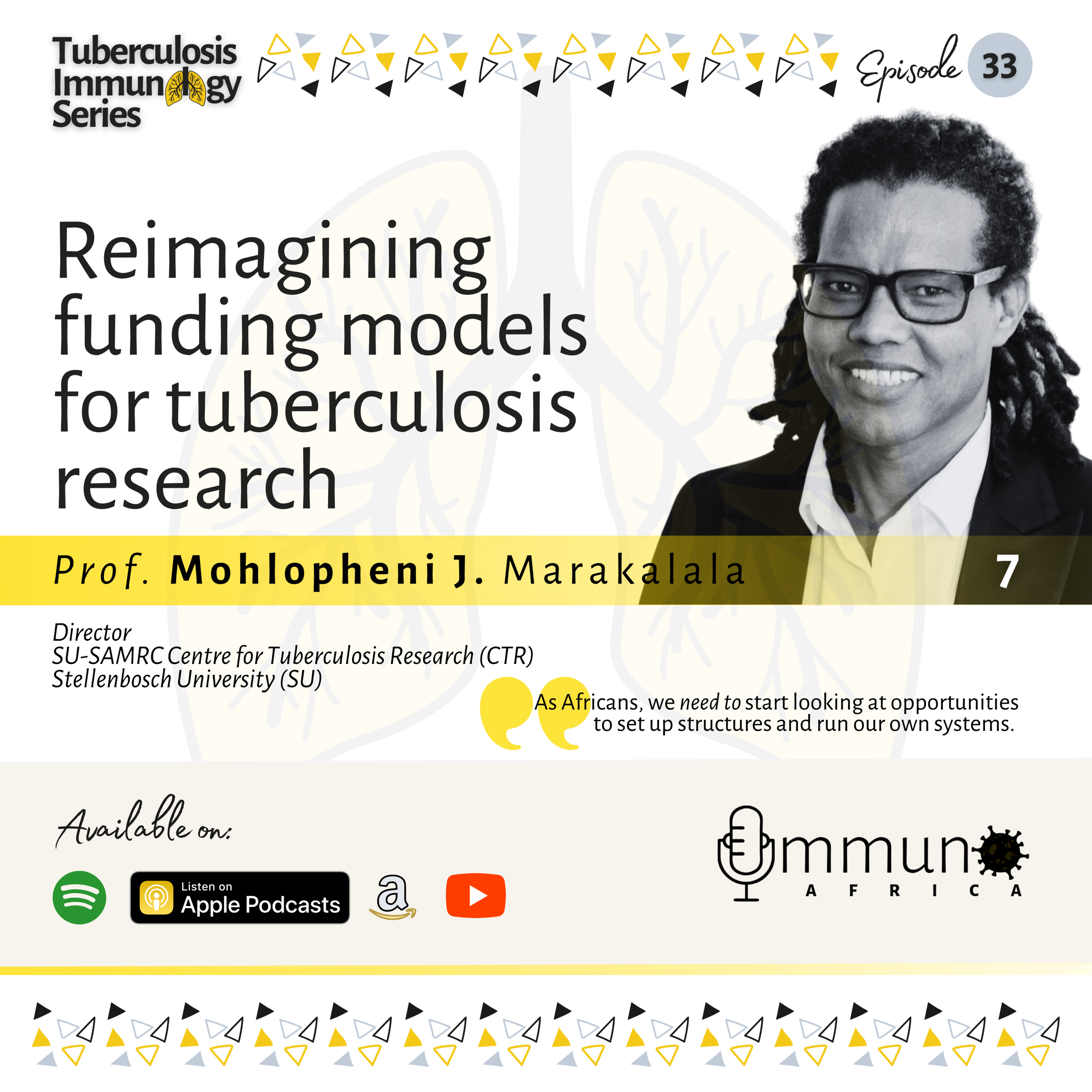
| 8/11/25 | ![]() TB Immunology Series: Reimagining Funding Models for Tuberculosis Research - Prof. Mohlopheni J. Marakalala✨ | tuberculosis researchfunding models+4 | Mohlopheni J. Marakalala | South African Medical Research CouncilStellenbosch University | South AfricaCape Town | tuberculosisimmunology+6 | — | 43m 13s | |
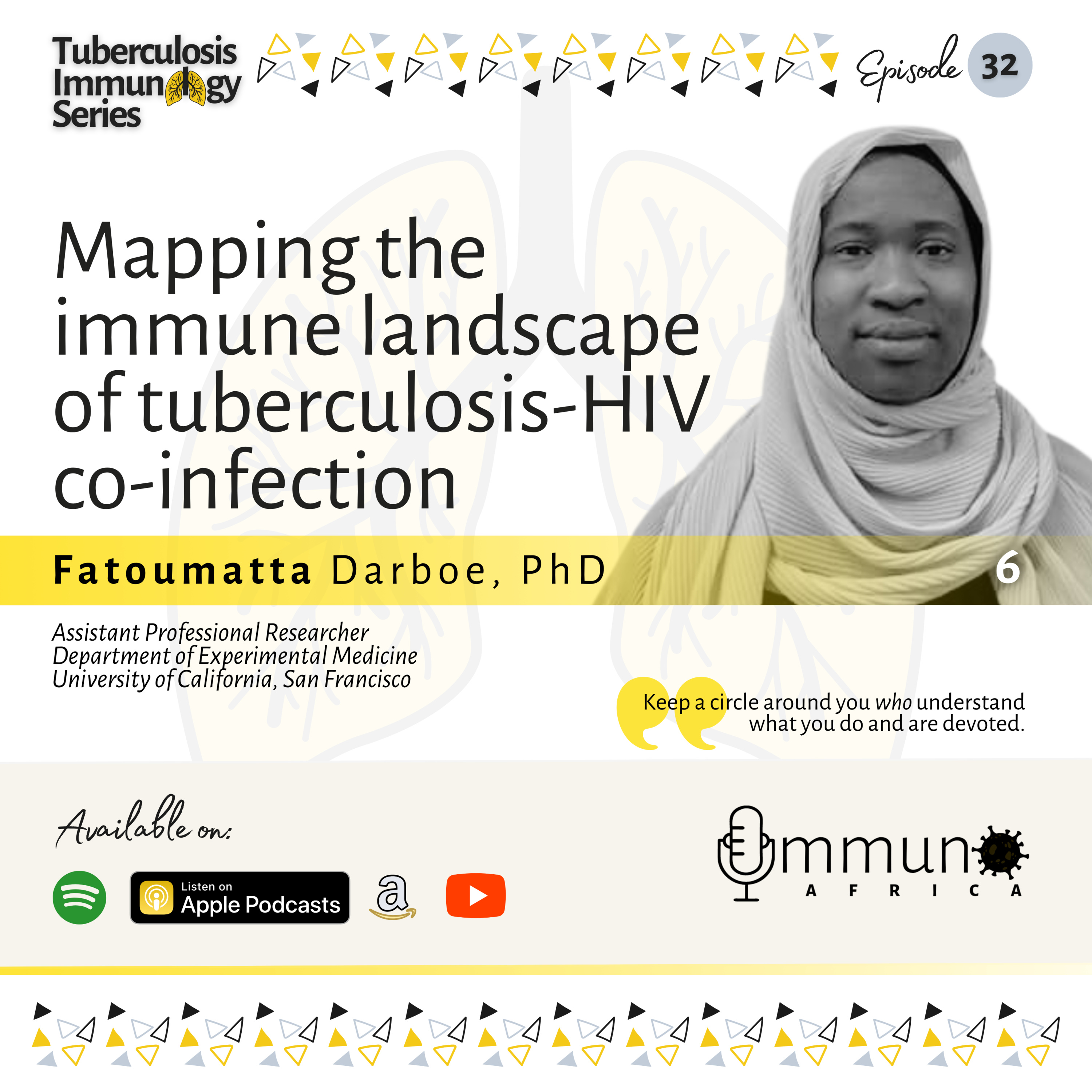
| 8/4/25 | ![]() TB Immunology Series: Mapping the Immune Landscape of Tuberculosis-HIV Co-infection - Fatoumatta Darboe✨ | tuberculosisHIV co-infection+4 | Fatoumatta Darboe | University of California, San FranciscoMedical Research Council Unit The Gambia+1 | The GambiaAfrica+1 | tuberculosisHIV+6 | — | 39m 37s | |
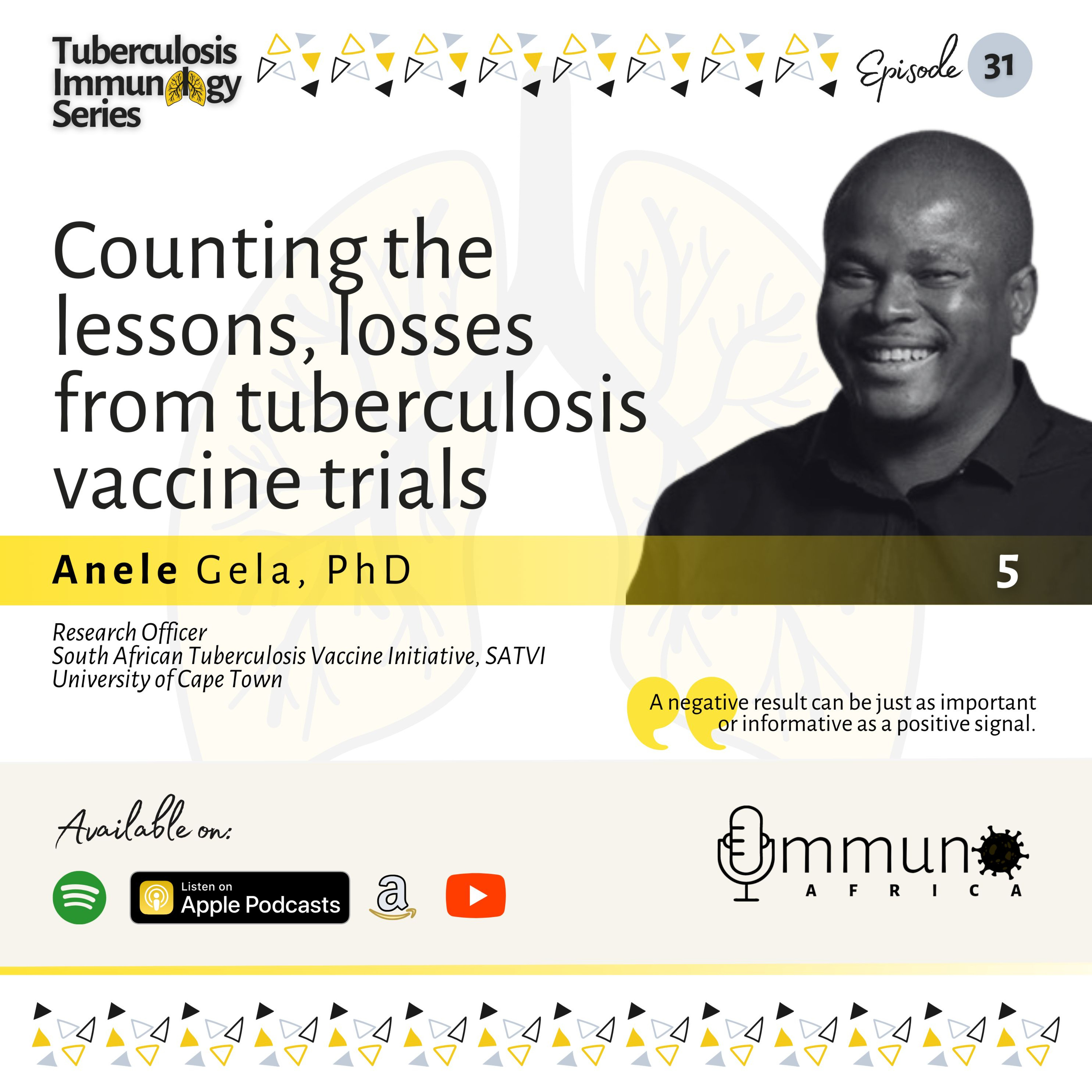
| 7/9/25 | ![]() TB Immunology Series: Counting the Lessons, Losses from Tuberculosis Vaccine Trials - Anele Gela✨ | tuberculosisvaccine trials+4 | Anele Gela | South African Tuberculosis Vaccine InitiativeUniversity of Cape Town+1 | — | tuberculosisvaccine+5 | — | 42m 48s | |
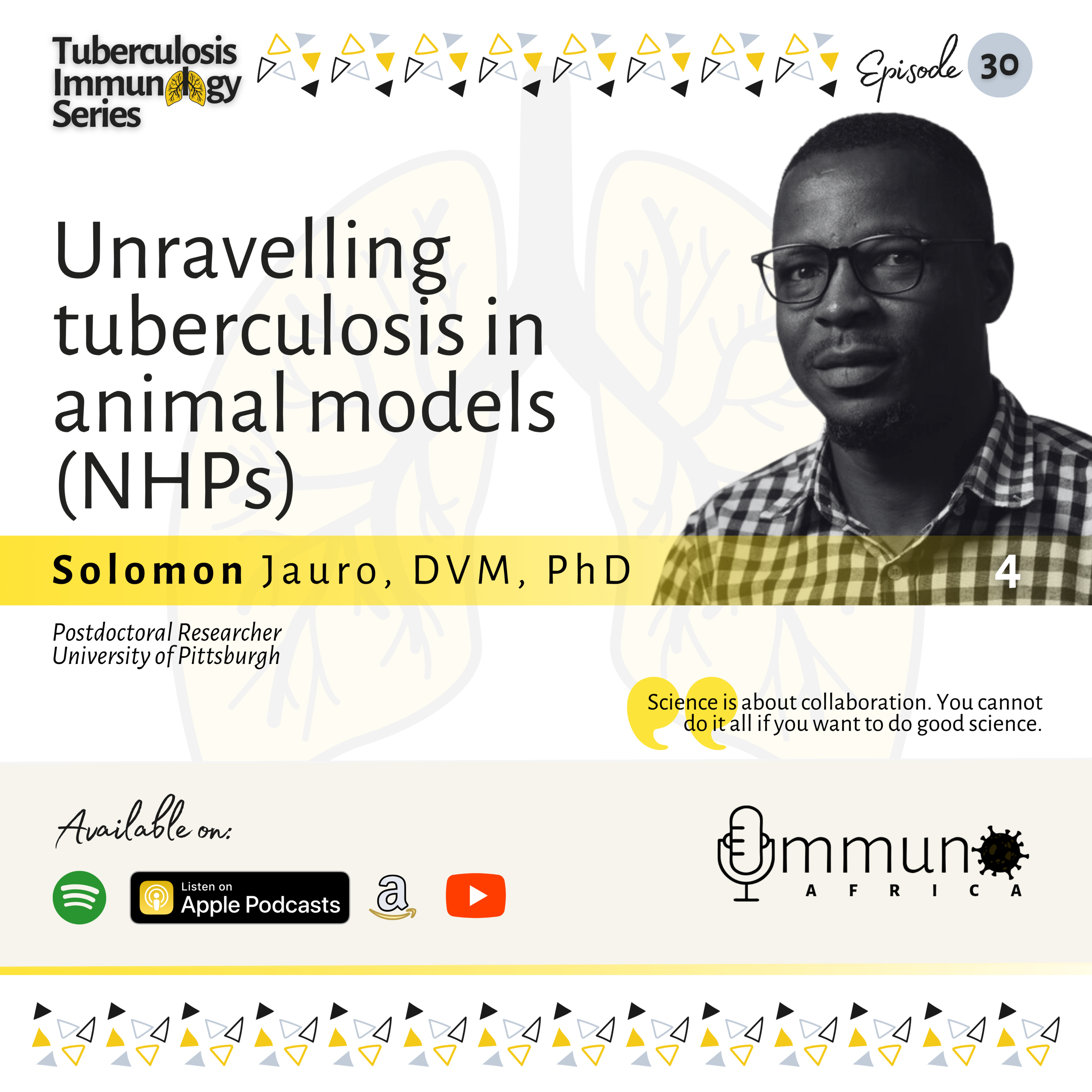
| 6/18/25 | ![]() TB Immunology Series: Unravelling Tuberculosis in Animal Models (Non-Human Primates) - Solomon Jauro✨ | tuberculosisimmunology+3 | Solomon Jauro | University of PittsburghUniversity of Maiduguri+1 | — | tuberculosisimmunology+3 | — | 41m 52s | |
| 5/31/25 | ![]() TB Immunology Series: Expanding the Vaccines Toolbox for Tuberculosis - Paul Ogongo✨ | tuberculosisimmunology+3 | Paul Ogongo | University of California, San Francisco | KenyaSouth Africa | tuberculosisimmunology+5 | — | 47m 18s | |
Want analysis for the episodes below?Free for Pro Submit a request, we'll have your selected episodes analyzed within an hour. Free, at no cost to you, for Pro users. | |||||||||
| 5/14/25 | ![]() TB Immunology Series: Zooming in on Antibody Responses in Tuberculosis - Simon Kimuda✨ | tuberculosisimmunology+3 | Simon Kimuda | Kings College London | — | tuberculosisimmunology+5 | — | 46m 59s | |
| 4/30/25 | ![]() TB Immunology Series: Predicting and Understanding Tuberculosis Risk - Sara Suliman | Hosted by Wealth Okete, The Immunology in Africa Podcast explores narratives at the nexus of immunology & Africa. We ask professors, postdocs, PhD students, and everyone in between to tell us about their journey into immunology, the questions driving their current work, and the impact they hope to make on the continent.To support our efforts towards amplifying African stories of immunology, you can buy us coffee or nominate a guest. --Launching in April 2025, our special TB Immunology series and first-ever disease-focused series dives deep into the science, challenges, and success stories behind the fight to end tuberculosis.We’re joined by leading scientists whose work in TB prevention, diagnosis, treatment, and vaccine development is shaping the current landscape of the disease in Africa and globally.Whether you're actively involved in TB research or simply curious about the field, this experience promises to be both eye-opening and engaging.The first episode in the series features Sara Suliman, an assistant professor in the Division of Experimental Medicine at the University of California, San Francisco, Zuckerberg San Francisco General Hospital. Her lab focuses on identifying host mechanisms underlying TB risk and pathogenesis. An immunologist by training, Suliman is interested in understanding the immunological determinants of TB risk, progression, and treatment response and developing predictive biomarkers for the disease.This episode explores Suliman's TB work, most of which began during her post-doctoral training at the South African Tuberculosis Vaccine Initiative, University of Cape Town. In addition, Suliman talks about how she blends hypothesis-driven and exploratory research in her science and why she finds the former 'more intellectually stimulating'.Timestamps:00:00 - Intro02:26 - Earliest steps in TB immunology04:30 - Overview of initial TB immunology projects exploring vaccines and biomarkers07:48 - Transitioning from cancer to infectious disease immunology12:47 - Genetic biomarkers for TB progressors and non-progressors19:06 - More on 'the biomarker study'24:55 - TB heterogeneity29:09 - Hypothesis-driven vs. exploratory science32:38 - The impact of viral co-infections, such as COVID-19, on TB36:41 - What do TB scientists disagree on? 42:34 - Lab culture, mentorship, and collaboration46:30 - On being 'scooped'48:23 - The future of TB in Africa51:23 - Closing remarks53:05 - Outro | — | ||||||
| 3/19/25 | ![]() Highlights & Key Insights - 2024 | This 'bonus' episode celebrates our growth over the past 2+ years and revisits insightful moments from past episodes published in 2024.If any of these highlights interest you, feel free to check out the full episode for a more enriching experience.---Hosted by Wealth Okete, The Immunology in Africa Podcast explores narratives at the nexus of immunology & Africa. We ask professors, postdocs, PhD students, and everyone in between to tell us about their journey into immunology, the questions driving their current work, and the impact they hope to make on the continent.To support our efforts towards amplifying African stories of immunology, you can buy us coffee or nominate a guest. ---Timestamps:00:00 - Intro01:04 - Segun Afolaranmi | "Optimising Natural Killer Cells against Cancers"01:14 - Oghenebrume Wariri | "Improving Access to Vaccines in Children"02:46 - Ousmane Traore | "Combating Malaria through Vaccines"03:14 - Samuel Essien-Baidoo | "Vaginal Microbiota and Cervical Cancer Risk in Women"04:12 - Rebecca Chukwuanukwu | "Immunity and Infection in Different Contexts"05:07 - Ane Ogbe | "T Cells Subsets in the Induction of Optimal Antibody Responses"05:42 - Catherine Kibirige | "Improving HIV Diagnosis through the HIVQuant Project"06:19 - Deo-Gracias P. Seyigbena Berry | "Could Vitamin D Protect Foetuses from a Deadly Parasite?"06:51 - Vania Maphossa | "Bridging the Gap: Immune Responses in the African Context"07:38 - Gatien Lokossou | "Immunity in Pregnant Women and Infants"08:12 - Samuel Essien-Baidoo | "Vaginal Microbiota and Cervical Cancer Risk in Women"10:10 - Ane Ogbe | "T Cells Subsets in the Induction of Optimal Antibody Responses"11:34 - Catherine Kibirige | "Improving HIV Diagnosis through the HIVQuant Project"12:08 - Segun Afolaranmi | "Optimising Natural Killer Cells against Cancers"13:15 - Onyeka Chukwudozie | "Outsmarting the Lassa Virus through a Multi-target Vaccine"13:53 - Ane Ogbe | "T Cells Subsets in the Induction of Optimal Antibody Responses"14:18 - Outro | — | ||||||
| 3/5/25 | ![]() Highlights & Key Insights - 2022, 2023 | This 'bonus' episode celebrates our growth over the past 2+ years and revisits insightful moments from past episodes published between 2022 and 2023.If any of these highlights interest you, feel free to check out the full episode for a more enriching experience.---Hosted by Wealth Okete, The Immunology in Africa Podcast explores narratives at the nexus of immunology & Africa. We ask professors, postdocs, PhD students, and everyone in between to tell us about their journey into immunology, the questions driving their current work, and the impact they hope to make on the continent.To support our efforts towards amplifying African stories of immunology, you can buy us coffee or nominate a guest. ---Timestamps:00:00 - Intro01:15 - Testimony Olumade | "Immunology in Africa: Telling Our Stories"01:36 - Marah Grace Chibwana | "Improving Health Outcomes in Inflammatory Diseases: From COVID-19 to Rheumatoid Arthritis"01:57 - Abena Amoah | "Understanding Variations in Vaccine Responses: What It Means for Africa"02:50 - Sonwabile Dzanibe | "Untieing a Gordian Knot: Mother-to-Infant HIV Exposure"04:01 - Raquel Matavele Chissumba | "Surmounting Hurdles: Charting a Course through the Immune System for Africa"05:17 - Mohamed Ahmed | "Rethinking Tuberculosis: Why Enhancing Immune Responses in Tuberculosis Might be Detrimental"06:01 - Fabien Prodjinotho | "Understanding Neurocysticercosis: How Tapeworm Cysts Thwart & Trigger Epilepsy"06:34 - Dimie Ogoina | "Immunology Talks to Public Health: Africa in Focus"07:15 - Raquel Matavele Chissumba | "Surmounting Hurdles: Charting a Course through the Immune System for Africa"08:03 - Mohamed Ahmed | "Rethinking Tuberculosis: Why Enhancing Immune Responses in Tuberculosis Might be Detrimental"08:58 - Muki Shey | "Carving a Niche: From Malaria to Tuberculosis & MAIT Cells"09:44 - Sonwabile Dzanibe | "Untieing a Gordian Knot: Mother-to-Infant HIV Exposure"10:27 - Dimie Ogoina | "Immunology Talks to Public Health: Africa in Focus"10:50 - Tatenda Murangi | "Decoding the Link between Alpha-Gal Allergy and Parasitic Infections"11:50 - Doudou Georges Niang | "Targeting Galectin-3 in Aggressive Breast Cancers: Implications for African Women"12:14 - Ubong Ekperikpe | "How Obesity Triggers Kidney Diseases: The Role of the Immune System"12:53 - Abena Amoah | "Understanding Variations in Vaccine Responses: What It Means for Africa"13:23 - Chinedu Ugwu | "Unravelling Viral Diseases: How the Immune System Responds to the Lassa Fever Virus"13:47 - Kumba Seddu | "How Sex Differences and Cytokines Shape Immune Responses"14:46 - Marah Grace Chibwana | "Improving Health Outcomes in Inflammatory Diseases: From COVID-19 to Rheumatoid Arthritis"15:30 - Richard Adeleke | "Tackling Viral Diseases through Vaccines: From SARS to Influenza"15:52 - Outro | — | ||||||
| 12/2/24 | ![]() Optimising Natural Killer Cells against Cancers - GSS 2.0 (4/4) - Segun Afolaranmi | ImmunoAfrica's Graduate Student Series offers emerging and aspiring immunologists the opportunity to connect with, learn from, and be inspired by some of the most talented immunology graduate students from Africa. For its second edition, this year, we peek into the fascinating work and busy lives of 4 graduate students (Vania, Onyeka, Deo-Gracias, and Segun), representing 3 African countries: Benin, Mozambique, and Nigeria. Our fourth and last guest is Segun Afolaranmi. Segun trained as a medical doctor at the University of Ibadan, Nigeria, and went on to complete his intern year of clinical practice. He developed a keen interest in cancer research and immunology towards the end of medical school, after noticing the grossly limited treatment options available to cancer patients in Nigeria. The desire to develop effective anticancer therapies that'd fit this context led him to study for a master's in Integrated Immunology at the University of Oxford, as a Clarendon Scholar. Shortly after his master's, he joined the de la Roche lab at Cancer Research UK, Cambridge Institute, in January 2022 to pursue his PhD in Cancer Immunology, with funding from the Gates Cambridge Trust. His PhD research seeks to make immune cells better cancer fighters by modifying an important developmental pathway. Alongside his scientific interests, Segun is passionate about expanding training opportunities for young scientists in Africa and working with others to accelerate access to cancer therapeutics on the continent. He is a co-founder of The Ganglion Initiative (TGI). This episode explores his journey to becoming fascinated with cancers and immunology, highlights what makes natural killer (NK) cells special to him, and curates his perspectives on local support for scientific research and development in Africa. Female Intro/Outro Voice-over: Ruth Ogboye Timestamps:00:00 - intro, about guest02:56 - career background, early journey into immunology05:19 - varied experience and exposures shape research interests08:19 - how interest in cancer immunology developed11:15 - updates on PhD research (making immune cells better cancer fighters) 16:37 - about natural killer (NK) cells 20:48 - cancers he's interested in tackling 22:38 - on collaborations (in cancer research; in Africa) 25:54 - local support for research and development in Africa 30:44 - PhD experience (time management, core values, lab skills and mistakes, etc.)39:38 - about The Ganglion Initiative43:36 - next steps post-PhD45:31 - fun tasks (which scientists in your field of study inspire you; transform CANCER into an immunology acronym)49:00 - outro | — | ||||||
| 11/18/24 | ![]() Could Vitamin D Protect Foetuses from a Deadly Parasite? GSS 2.0 (3/4) - Seyigbena P. Deo-Gracias Berry | ImmunoAfrica's Graduate Student Series offers emerging and aspiring immunologists the opportunity to connect with, learn from, and be inspired by some of the most talented immunology graduate students from Africa. For its second edition, this year, we peek into the fascinating work and busy lives of 4 graduate students (Vania, Onyeka, Deo-Gracias, and Segun), representing 3 African countries: Benin, Mozambique, and Nigeria. Our third guest is Seyigbena P. Deo-Gracias Berry. Deo-Gracias is a PhD student at the Technical University of Munich (TUM), Germany, where she researches interactions between mothers and foetuses, in the context of immune function and tropical diseases. For her PhD project, she is trying to understand how infection with parasitic worms, particularly schistosoma found in fresh water snails, modulates vitamin D levels and immune function during pregnancy. Prior to joining TUM, she studied for master's in Cell Biology and Immunology at the University of Abomey-Calavi in Benin, exploring malaria infection, also in the context of pregnancy. In this episode, Deo-Gracias discusses her research on vitamin D and schistosomiasis, highlighting some of its implications for women and infants in regions endemic to the parasitic disease. She also talks about her love for the vitamin D-enriching African sun and reminisces about some of the mistakes that have punctuated her journey and how she's managed to navigate and learn from them. Female Intro/Outro Voice-over: Ruth Ogboye. Timestamps: 00:00 – intro 01:25 – early career journey, entry into immunology 07:10 – MSc project (how malaria infection during pregnancy shapes infant immunity) 11:15 – PhD project (vitamin D vs schistosomiasis infection in mother-foetus pairs) – findings and potential implications [14:52-17:27] – about schistosomiasis [18:52-22:32] – vitamin D and immune modulation 31:46 – missing Africa, finding balance, and time management 38:44 – useful skills 41:34 – dealing with mistakes 49:57 – core values and how they inform her work-life 53:27 – fun task (what’s your favourite immune cell and why?) 55:32 – outro | — | ||||||
| 11/4/24 | ![]() Outsmarting the Lassa Virus through a Multi-target Vaccine - GSS 2.0 (2/4) - Onyeka Chukwudozie | ImmunoAfrica's Graduate Student Series offers emerging and aspiring immunologists the opportunity to connect with, learn from, and be inspired by some of the most talented immunology graduate students from Africa. For its second edition, this year, we peek into the fascinating work and busy lives of 4 graduate students (Vania, Onyeka, Deo-Gracias, and Segun), representing 3 African countries: Benin, Mozambique, and Nigeria. Our second guest is Onyeka Chukwudozie. Onyeka Chukwudozie is a virologist, immunologist, and structural biologist from Nigeria, with a bachelor's degree in Cell Biology and Genetics from the University of Lagos. Currently a PhD candidate at the University of California, San Diego, and a member of the Erica Ollmann Saphire Lab at the La Jolla Institute for Immunology, his research targets the notorious Lassa virus which has caused multiple outbreaks in West Africa for decades. He is leading research on the largest study to discover antibodies against the virus in Nigeria. Onyeka has received both the Curci and Merkin fellowships, collaborating with institutions such as IAVI, to advance studies on the Lassa virus vaccine. In this episode, Onyeka talks about his self-initiated journey to becoming fascinated with the field of immunology. He also shares updates on his current research to tease out antibody immune responses to the Lassa virus and develop a vaccine against its different lineages in Nigeria. Learn more about his work on ResearchGate. Female Intro/Outro Voice-over: Ruth Ogboye Timestamps: 00:00 - intro, about guest 02:45 - why immunology / how did you get into immunology 05:36 - about PhD research project (scope, implications, applications, etc.) 14:00 - how multidisciplinary expertise informs research 19:28 - PhD experience (time management and unwinding, mentoring and supporting junior and aspiring scientists, etc.) 27:07 - useful skills for graduate school success 32:07 - core values and principles 37:33 - next steps post-PhD 40:25 - fun task (transform ONYEKA into an immunology acronym; how many journal articles do you read in a day?) 45:16 - closing remarks 47:20 - outro | — | ||||||
| 10/21/24 | ![]() Bridging the Gap: Immune Responses in the African Context - GSS 2.0 (1/4) - Vania Maphossa | ImmunoAfrica's Graduate Student Series offers emerging and aspiring immunologists the opportunity to connect with, learn from, and be inspired by some of the most talented immunology graduate students from Africa. For its second edition, this year, we peek into the fascinating work and busy lives of 4 graduate students (Vania, Onyeka, Deo-Gracias, and Segun), representing 3 African countries: Benin, Mozambique, and Nigeria. Our first guest is Vania Maphossa. Vania Maphossa is a PhD student in Biosciences and Public Health at Eduardo Mondiane University, in Maputo City, Mozambique. Before commencing her PhD, she earned a bachelor's in Biology and Health and a Master's in Public Health at the same institution. Her current research largely focuses on unravelling immune responses to diseases endemic in Mozambique, including paediatric cancers , tuberculosis, and COVID-19. As part of her work, she also leads the Program for Endemic Diseases of Major Public Health Impact (PDEGIS) at the Mozambican National Institute of Health. -- In this episode, Vania talks about her research work and its implications for the development of vaccines and therapeutics. She also shares some of the challenges that come with doing a PhD in Africa, highlighting valuable insights for governments and other scientists. Female Intro/Outro Voice-over: Ruth Ogboye Timestamps: 00:00 - intro, about guest 02:25 - how did you get into the field immunology 04:40 - what questions are you currently addressing in the field 08:54 - updates on PhD projects, including findings, implications, reception, etc. 25:07 - next steps post-PhD 27:52 - PhD experience (time management techniques, useful skills, making and dealing with mistakes, etc.) 34:55 - thoughts on local support for PhD students 39:40 - fun task (if not immunology, then what?, describe your research to a five-year-old) 42:22 - outro | — | ||||||
| 12/11/23 | ![]() How Sex Differences and Cytokines Shape Immune Responses - GSS 1.0 (6/6) - Kumba Seddu | Graduate Student Series (GSS) 1.0 (Episode 6 of 6) Kumba Seddu started her PhD journey at Johns Hopkins University where she investigated male and female immune differences to viral vaccines and infections. Her research added to the growing evidence that vaccinated females have greater antibody responses than males. This increased vaccine-induced antibody response in females is due to hormonal (estrogen) effects and sex chromosome (XX) effects. Now at Harvard Medical School, she is studying the gene expression and immune cell activation cascade upon interleukin-2 [IL-2] cytokine stimulation. IL-2 treatment has implications from infection to autoimmune diseases and cancer. She has won several awards including the U.S National Institute of Health Specialized Centers for Research Excellence award, the Delta Omega Honorary Society in Public Health award, and the Paul Farmer Honorary award. Kumba is passionate about equipping researchers and young leaders from low- and middle-income countries to end infectious diseases and solve global challenges. This goal drives her commitment to mentoring students around the world and to leading community solution-driven projects in her home country, Sierra Leone. In this episode, she shares her inspiring journey from Sierra Leone to the United States, where she's currently pursuing her PhD in the field of immunology [Kumba's current research explores immune responses to the cytokine, interleukin-2 (IL-2)]. As usual, we also get to hear her thoughts on the current state of immunology in Africa as well as approaches for advancing research in the field. Time stamps: 00:00 - intro 02:43 - overview of academic and research journey 04:50 - how interest in immunology developed 08:03 - updates from research on sex differences and immune responses (at Johns Hopkins University) 12:50 - updates from research on IL-2 and immune responses (at Harvard Medical School) 15:47 - implications of research findings on infectious diseases 23:22 - life in graduate school (managing failures and successes; most favourite & least favourite experiments) 31:25 - core guiding principles 38:20 - thoughts on promoting immunology and scientific research in Africa 45:40 - fun task (share a eureka moment from the lab) 48:32 - outro | — | ||||||
| 11/16/23 | ![]() How Obesity Triggers Kidney Diseases: The Role of the Immune System - GSS 1.0 (5/6) - Ubong Ekperikpe | Graduate Student Series (GSS) 1.0 (Ep. 5 of 6) Ubong Ekperikpe is a Ph.D. candidate in the Experimental Therapeutics and Pharmacology program at the University of Mississippi Medical Center where he studies obesity and kidney diseases. He trained as a Pharmacist at the University of Jos, before earning a master's degree in Pharmacology at the University of Benin, both in Nigeria. He has also served as a Junior Research Fellow at the School of Pharmacy, University of the Western Cape, South Africa. Ubong’s current research is focused on understanding the role of macrophage inflammatory protein 3-alpha (MIP3α) and interactions between antigen-presenting cells and T-cells in the progression of kidney injuries in children with obesity. Findings from this research will not only enhance our understanding of how these immune cells contribute to the onset of kidney diseases but also inform the design of appropriate therapies. Cooking is one of Ubong's most enjoyable things to do, and he's been honing his skills since he turned 9. In this episode, Ubong shares findings from his PhD work exploring the immunology-link between obesity and kidney diseases in children. He also provides useful updates on his experience as a graduate student and thoughts on promoting immunology research in Africa. Time stamps: 00:00 - intro 02:29 - overview of academic and research journey 06:54 - blending background in pharmacy and research in immunology 08:32 - current research intersecting obesity, kidney diseases, and immunology 22:00 - implications of research for Africa's childhood obesity burden 28:30 - BONUS: linking kidney diseases and sleeping sickness in Africa 32:25 - life in graduate school (a typical day in the lab; managing failures and successes; on cooking) 39:34 - thoughts on promoting immunology and scientific research in Africa 43:36 - core guiding principles 46:40 - fun task (what one advice would you give to your younger self?) 51:35 - outro | — | ||||||
| 10/23/23 | ![]() Decoding the Link Between Alpha-Gal Allergy and Parasitic Infections - GSS 1.0 (4/6) - Tatenda Murangi | Graduate Student Series (GSS) 1.0 (Ep. 4 of 6) Tatenda Murangi completed his bachelor's degree in Biology, majoring in Tropical Disease Biology, at the Chinhoyi University of Technology, Zimbabwe. He is currently a PhD Candidate in Clinical Science and Immunology at the University of Cape Town (UCT), South Africa, where he studies alpha-gal allergy. His PhD work, which builds on his MSc research explores the role of parasitic infections in the onset of this allergy and is jointly supervised by Professors Michael Levin and William Horsnell. Alongside being an Immunopaedia ambassador, Tatenda is also passionate about science communication. In this episode, we talk about his research on the link between the not-so-popular alpha-gal allergy and parasitic infections. Tatenda also shared his thoughts on how African scientists can better promote and strengthen science research and engagement in the continent. Time stamps: 00:00 - intro 02:16 - overview of academic and research journey 04:00 - why immunology research/at what point did you decide to explore immunology? 07:23 - journey to current research intersecting immunology and parasitology 09:45 - on alpha-gal allergy 18:53 - exploring the link between parasitic infection (via tick and mite bites) and alpha-gal allergy 24:20 - where has alpha-gal allergy been reported? 27:30 - how do we manage the allergy? 31:42 - life in graduate school (typical research experiments; managing failures and successes; guiding principles) 44:20 - thoughts on promoting immunology and scientific research in Africa 52:00 - fun task (what's one thing you love that you've not given much attention to since you got into graduate school?) 56:50 - outro | — | ||||||
| 9/29/23 | ![]() Improving Health Outcomes in Inflammatory Diseases: From COVID-19 to Rheumatoid Arthritis - GSS 1.0 (3/6) - Marah Grace Chibwana | Graduate Student Series (GSS) 1.0 (Ep. 3 of 6) Marah Grace Chibwana holds a medical degree (MBBS) from the Kamuzu University of Health Sciences, and an MSc in Integrated Immunology from the University of Oxford. For her PhD, she was recently awarded the Rhodes Scholarship to read for a DPhil in Molecular and Cellular Medicine at the University of Oxford. Building on her MSc research, her PhD will focus on understanding the factors that drive neutrophil behaviour and heterogeneity. Findings from this study will contribute to improving the health outcomes of individuals living with rheumatoid arthritis and other autoimmune / inflammatory conditions. As an up-and-coming clinician-scientist in Immunology, Marah strongly believes in the translation of basic medical science research into bedside patient care and policy formulation to overcome diseases and improve health outcomes both locally and globally. She is also passionate about training the next generation of scientists and currently runs a science club where she mentors young people in her country to pursue careers in science. In this episode, we delve into her work on understanding and developing better therapies for rheumatoid arthritis, which ties into her overall goal of improving health outcomes in inflammatory diseases. Time stamps: 00:00 - intro 02:45 - overview of academic and research journey 05:40 - why immunology research? 08:25 - MSc research + implications for Africa 13:40 - current research + plans for PhD 19:07 - overlap between background in COVID-19 and current work in rheumatoid arthritis 20:33 - life in graduate school (typical research experiments; favourite task or activity; managing failures and successes) 30:10 - perspectives and attitudes to life 34:40 - thoughts on promoting immunology research and science/STEM in Africa 43:20 - fun task (what would you have been if you weren't a scientist?) 46:20 - outro | — | ||||||
| 9/6/23 | ![]() Targeting Galectin-3 in Aggressive Breast Cancers: Implications for African Women - GSS 1.0 (2/6) - Doudou Georges Massar Niang | Graduate Student Series (GSS) 1.0 (Ep. 2 of 6). Doudou Georges Massar Niang grew up aspiring to be a professional basketball player — but he's now enamored with the field of immunology. With a doctor of Pharmacy and two Masters degrees from Cheikh Anta Diop University, Doudou's background spans hematology, cancer immunology and genetics. He has spent the last four years of his PhD exploring the roles of galectin-3 and various cytokines on breast cancers. The overall goal of his research is to understand how galectin-3 might be used as a biomarker and therapeutic target in various malignancies, particularly breast cancers. In this episode, he shares some of the interesting findings he's made so far and the implications they hold for breast cancer patients in Africa. Time stamps: 00:00 - intro 02:20 - overview of academic and research journey 06:20 - why he got interested in immunology research? 10:25 - current research in graduate school + findings + implications 18:40 - on triple-negative breast cancers 21:00 - implications of current research for Africa 25:00 - life as a graduate student (typical day, lab work, coping with failure and success, etc.) 28:20 - challenges of studying in Senegal/Africa: funding, skills, etc. 34:22 - dealing with successes and failures 37:04 - creating more opportunities to promote immunology research in Africa 41:10 - guiding principles and perspectives 43:04 - fun task (what's your favourite immune cell) 45:10 - plans post-PhD 47:04 - outro | — | ||||||
| 8/17/23 | ![]() Tackling Viral Diseases through Vaccines: From SARS to Influenza - GSS 1.0 (1/6) - Richard Adeleke | Graduate Student Series (GSS) 1.0 (Ep. 1 of 6). Richard Adeleke (DVM) trained as a veterinarian at the University of Ibadan, Nigeria, where he first took an interest in immunology and vaccine development. He is currently a Ph.D. student in Immunology and Infectious Diseases at Cornell University, USA, and works in Professor Hector Aguilar-Carreno's Lab. His research centres around vaccine development for viruses with pandemic potential, specifically SARS (severe acute respiratory syndrome) and MERS (Middle East respiratory syndrome) coronaviruses. He also studies virus-host interactions and immune responses to vaccination. Outside the lab, Richard enjoys watching movies and meeting new people from diverse backgrounds. In this episode, we talk about a whole lot of fascinating things from how the desire to solve a problem got him hooked to the field of immunology and vaccine development to the promises his current research offers for navigating future pandemics in Africa and beyond. Time stamps: 00:00 - intro 02:10 - overview of academic and research journey; why immunology (and vaccine development)? 06:37 - current research in graduate school 12:22 - implications of current research for Africa 19:13 - life as a graduate student (lab work, coping with failure and success, etc.) 29:30 - core guiding principles 32:07 - thoughts on immunology research in Africa 37:20 - final thoughts + fun task (reverse-spell 'neutrophil') 41:52 - outro | — | ||||||
| 7/24/23 | ![]() Understanding Variations in Vaccine Responses: What It Means for Africa - Dr. Abena Amoah | Abena Amoah (PhD) is the lead for the HypoVax Global Knowledge Hub based at Leiden University Center for Infectious Diseases of the Leiden University Medical Center, Leiden University, in the Netherlands. The knowledge hub is focused on understanding variations in vaccine responses across geographical areas and populations. It aims to address the central question of why weaker responses to some vaccines are seen in some regions compared to others and brings together researchers from around the world to make connections and form a strong network. Originally from Ghana, Dr. Amoah was born and raised in Southern Africa. She holds a PhD. in immunoepidemiology from the University of Leiden in the Netherlands, an MSc in epidemiology from the London School of Hygiene and Tropical Medicine, and a bachelor's degree in biological sciences from Mount Holyoke College, United States. She has also held post-doctoral positions at both the London School of Hygiene and Tropical Medicine based overseas in Malawi and Leiden University Medical Center. In this episode, we explored her research career starting from her earliest foray into addictive diseases in the US, through her relocation to Ghana, which led her into the field of immunology and, by extension, her current role. The crux of this episode is the promises the project she oversees at the HypoVax Global Knowledge Hub hold for Africa, especially in the context of vaccine development and distribution. Visit www.hypovax.org to learn more about this project, make inquiries, or explore opportunities for collaboration. Time stamps: 00.00 - intro; 02.37 - overview of educational and research background; 09.43 - blending immunology and epidemiology (immuno-epidemiology); 12.08 - the long, winding journey to her current role in understanding vaccine responses in different populations; 19.30 - more on understanding vaccine responses (promises for Africa); 26.51 - challenges associated with the project; 33:28 - final words (words of advice for emerging and established scientists, on navigating career post-PhD, etc.); 38.45 - outro | — | ||||||
Showing 25 of 34
Pitch Fit is a Pro feature
See how bookable this show is for guests, which brands already advertise, the per-episode ad value, and the best-fit guest and sponsor profile. The numbers are blurred on the free plan.
How readily this show books outside guests like you.
How proven this show is for host-read sponsorships.
For Guests
ProFor Advertisers
ProUpgrade to Pro to unlock guest cadence, sponsor categories, fit scores, and per-episode ad value for this show.
Chart Positions
1 placement across 1 market.
Chart Positions
1 placement across 1 market.