
The Impactful Coach: Learn Coaching Skills & Coaching Demos
by Tobi Weghorn from metaFox Coaching Tools
Is this your podcast?Insights from recent episode analysis
Audience Interest
Podcast Focus
Publishing Consistency
Platform Reach
Insights are generated by CastFox AI using publicly available data, episode content, and proprietary models.
Total monthly reach
Estimated from 2 chart positions in 2 markets.
By chart position
- 🇦🇺AU · Entrepreneurship#1895K to 30K
- 🇸🇬SG · Entrepreneurship#4510K to 30K
- Per-Episode Audience
Est. listeners per new episode within ~30 days
7.5K to 30K🎙 ~2x weekly·45 episodes·Last published 1w ago - Monthly Reach
Unique listeners across all episodes (30 days)
15K to 60K🇦🇺50%🇸🇬50% - Active Followers
Loyal subscribers who consistently listen
6K to 24K
Market Insights
Platform Distribution
Reach across major podcast platforms, updated hourly
Total Followers
—
Total Plays
—
Total Reviews
—
* Data sourced directly from platform APIs and aggregated hourly across all major podcast directories.
On the show
Recent episodes
Supervision Demo with Pictures and Dr. Nannette Reuther
May 22, 2026
Unknown duration
The Art of Growing Up with Jerry Colonna: Coaching Queries, Ancestral Beliefs & Coaching vs Therapy
May 8, 2026
Unknown duration
Befriending Inherited Beliefs: Coaching Demo with Jerry Colonna
Apr 24, 2026
Unknown duration
Visual Coaching Demo with Christina Merkley
Apr 10, 2026
Unknown duration
From Graphic Recording to Visual Coaching with Christina Merkley
Mar 27, 2026
Unknown duration
Social Links & Contact
Official channels & resources
Official Website
Login
RSS Feed
Login
| Date | Episode | Description | Length | ||||||
|---|---|---|---|---|---|---|---|---|---|
| 5/22/26 | 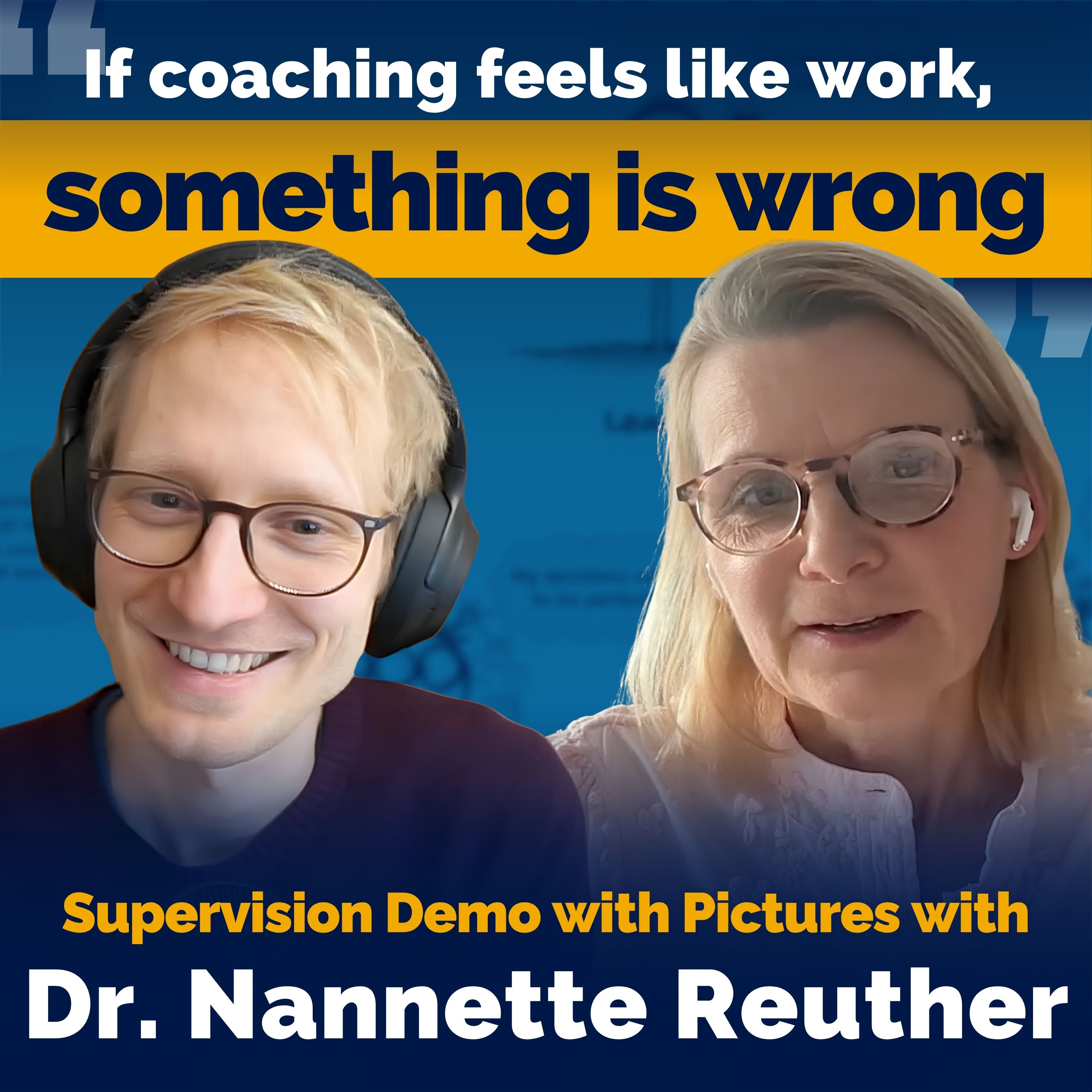 Supervision Demo with Pictures and Dr. Nannette Reuther | A coaching podcast with Dr. Nannette Reuther and Tobias Weghorn. In this episode, Tobias brings two real client cases to explore what coaching supervision looks like in practice, including a supervision demo for coaches using images and metaphor. You’ll hear how supervision helps coaches notice when they’re taking over “the steering wheel,” and how simple ICF core competencies contracting can reset the partnership when sessions start to feel heavy. Along the way, Dr. Reuther shares practical ways to use coaching with images to bypass pure logic, access emotions, and build accountability.Key Learnings:Use coaching supervision to spot early warning signs you’re “doing the work for the client” (busy, heavy, exhausting) and pause to re-center in the coach role.Re-contract in the moment using ICF core competencies contracting: clarify where the client wants to “drive,” what they need right now (venting vs. moving forward), and what role they want you to play.Try coaching with images to shift from analysis to emotion: ask the client (or supervisee) what the image evokes, then use it as an accountability anchor for the next session (helpful alongside inner team model coaching when clients stay overly cognitive).Resources:Dr. Nannette Reuther's Website: https://supervision.partners/Dr. Nannette Reuther's LinkedIn: https://www.linkedin.com/in/dr-nannette-reuther-453956102/Find your Coaching Tool: https://metaFox.euTry the metaFox Strengths Discovery: https://strengths-discovery.comConnect with Tobi on LinkedIn: https://linkedin.com/in/tobiasweghornEpisode Chapters:00:00 When Coaching Starts Feeling Like Work01:00 Why Coaching Supervision Matters (And Why Tobi Finally Tried It)06:00 Coaching with Images: Why Pictures Bypass Logic and Create Accountability09:00 A Supervision Demo for Coaches: Using a Library Image in Group Supervision13:00 Case 1: The “Storyteller” Client and Letting Go of the Steering Wheel20:00 ICF Core Competencies Contracting in the Moment (Where Does the Client Want to Drive?)24:00 Coach Position vs. Personal Patterns: “Put Your Baggage in the Trunk”31:00 Case 2: Inner Team Model Coaching Meets a Very Rational Client36:00 Coffee-Spilling Metaphor: When Coaching Feels Exhausting40:00 Re-Contracting So You’re Coach, Not Consultant53:00 How to Get Started with Coaching Supervision (Accredited Supervisors, Groups, Budget) | — | ||||||
| 5/8/26 |  The Art of Growing Up with Jerry Colonna: Coaching Queries, Ancestral Beliefs & Coaching vs Therapy | A coaching podcast with Jerry Colonna and Tobias Weghorn, digging into radical self-inquiry coaching and what it really means to “grow up” as a leader and as a human. Jerry shares why the past is always present in executive coaching with a psychoanalytic perspective, and how compassion and curiosity unlock the unconscious patterns that keep clients stuck. You’ll also unpack his well-known “how have I been complicit” question, why “complicit” is different from “responsible,” and how shame and guilt derail real change. The episode also gets practical about coaching vs therapy boundaries, including when to bring in a therapist, and why coaching supervision for coaches (and strong referral networks) is part of the ethical job.Key Learnings:Use radical self-inquiry coaching to surface patterns without triggering shame: ask “How have I been complicit in creating the conditions I say I don’t want?” and follow it with curiosity about the hidden benefit (the IPO / intended positive outcome).Tighten coaching vs therapy boundaries by screening for pathology vs non-pathology, and have a plan: build a therapist referral network and agree that the psychotherapist leads the treatment plan if one is involved.Make coaching supervision for coaches non-negotiable: debrief intense client dynamics with a supervisor/peer group so you don’t get pulled into “doing it right” or hiding behind a rigid methodology.Resources:Jerry Colonna's Website: https://www.reboot.io/team/jerry-colonna/Jerry Colonna's LinkedIn: https://www.linkedin.com/in/jerrycolonna/Reboot (Book): https://www.reboot.io/reboot-book/Reunion (Book): https://www.reboot.io/reunion-book/Reboot Self-Inquiry Email Course: https://www.reboot.io/resources/Find your Coaching Tool: https://metaFox.euTry the metaFox Strengths Discovery: https://strengths-discovery.comConnect with Tobi on LinkedIn: https://linkedin.com/in/tobiasweghornEpisode Chapters:00:00 Coaching vs Therapy Boundaries: When to Bring in a Therapist02:12 What It Means to “Grow Up” + Radical Self-Inquiry Coaching04:34 The “How Have I Been Complicit?” Question (Complicit vs Responsible)09:00 Why Shame, Guilt, and Blame Block Change11:22 Finding the Hidden Benefit: The IPO (Intended Positive Outcome)14:05 Don’t Turn Questions Into a Script: Coaching Presence Over Methodology16:20 Executive Coaching With a Psychoanalytic Perspective: The Reboot Venn Diagram19:10 “Who Are You Really Serving Right Now?” and Ancestral Patterns26:10 How Reboot Bootcamps Work: Safety, Container, Dyads/Triads33:10 Pathology vs Non-Pathology + Coaching Supervision for Coaches | — | ||||||
| 4/24/26 | 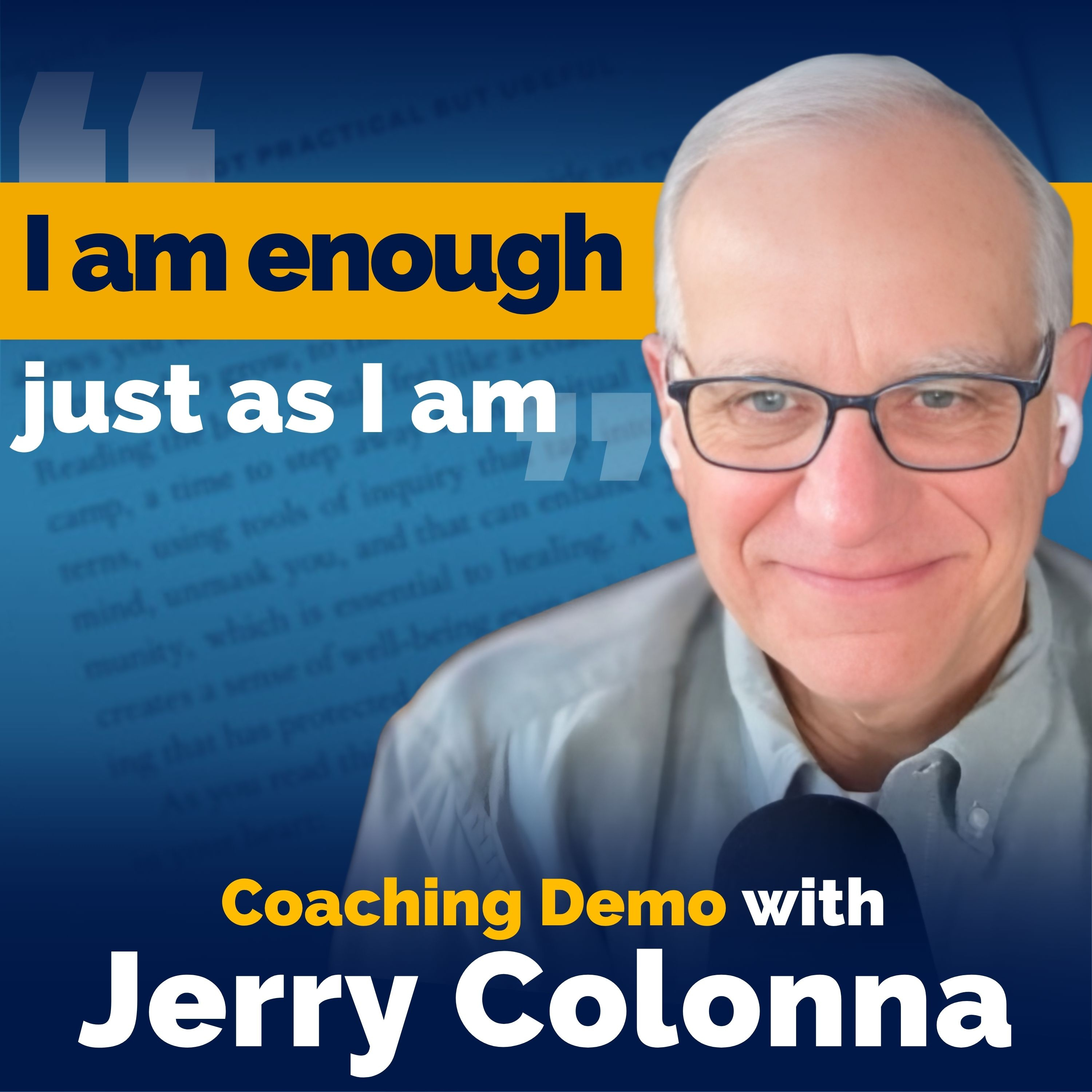 Befriending Inherited Beliefs: Coaching Demo with Jerry Colonna | A coaching podcast with Jerry Colonna and Tobias Weghorn, centered around a coaching demo that quickly moves from “Am I enough?” to where that belief may come from in the first place. Tobi shares how safety and financial security shaped parts of his family story, and Jerry helps reframe those fears through compassion for inherited patterns. They also unpack why coaching mastery beyond methodology often requires dropping the “right way vs. wrong way” obsession and paying attention to what actually works in the moment. Along the way, they touch on radical self-inquiry, the role of supervision, and how countertransference and the third can become practical data for coaches.Key Learnings:Use coaching demo moments to surface the real driver (e.g., safety beliefs behind “not enough belief (I am enough)”), then work with what’s alive rather than forcing a script.Practice radical self-inquiry without shame: name the benefit of the inherited pattern first, then build change through repetition (not just cognitive insight) so the coaching demo insight sticks under stress.Build coaching supervision into your craft: track countertransference and the third (what you feel in-session) as information, so you don’t default to “more methodology” when you and your client feel stuck.Resources:Jerry Colonna's Website: https://www.reboot.io/team/jerry-colonna/Jerry Colonna's LinkedIn: https://www.linkedin.com/in/jerrycolonna/Reboot (Book): https://www.amazon.com/Reboot-Leadership-Art-Growing-Up/dp/0062749530Reunion (Book): https://www.amazon.com/Reunion-Leadership-Art-Growing-Up/dp/0062910587Reboot: https://www.reboot.io/Find your Coaching Tool: https://metaFox.euTry the metaFox Strengths Discovery: https://strengths-discovery.comConnect with Tobi on LinkedIn: https://linkedin.com/in/tobiasweghornEpisode Chapters:00:00 Mastery Beyond Methodology: The “Right Way” Trap01:00 Introduction: The “Am I Enough?” Belief And A Coaching Demo Setup04:00 Leaders, Safety, And The Human Condition Behind “Not Enough”14:00 Coaching Demo: Inherited Family Trauma And Safety Beliefs21:00 Making “I Am Enough” Stick: Benefits, Repetition, And Radical Self-Inquiry30:00 Why Coaches Get Stuck: Methodology, The Third, And Countertransference43:00 Coaching Supervision And Tracking What You Feel In Session47:00 A Practical Habit: Notes On What The Client Says vs. What You Feel | — | ||||||
| 4/10/26 |  Visual Coaching Demo with Christina Merkley | A coaching podcast with Christina Merkley and Tobias Weghorn where Tobi steps into the client seat for a real coaching demo and you get to experience what visual coaching feels like on a live digital canvas. Christina guides a step-by-step process using her visual self-inquiry map, moving from the “mind and doer” into somatic signals (hello, tight lungs) and into parts work (IFS coaching) with an exile, protectors, and inner child healing. The session lands in a grounded future self visualization where Tobi meets his 55-year-old self, borrows some calm perspective, and leaves with a simple way to reconnect anytime. If you want to learn coaching through an honest, in-the-moment demo, this episode shows how visuals can make inner work more tangible.Key Learnings:Run a simple coaching demo check-in: start with the “mind/doer,” name the protector, and explicitly invite “being” as a job the doer can do (presence before problem-solving).When a client is logically “fine” but the body isn’t, pivot into visual coaching + somatic inquiry: locate the sensation (e.g., lungs), greet it, and notice what naturally shifts before interpreting.Use parts work (IFS coaching) + future self visualization in one flow: meet the inner child, offer adult ally support (“I’ll always be with you”), then ask the future self for next-step guidance and a memorable anchor to revisit it.Resources:Book a visual coaching with Christina: https://www.shift-it-coach.com/services/private-coaching/Christina Merkley’s LinkedIn: https://www.linkedin.com/in/christina-merkley-0790b33/Try the visual coaching platform: https://metafox.onlineFind your (physical) Coaching Tool: https://metaFox.euConnect with Tobi on LinkedIn: https://linkedin.com/in/tobiasweghornEpisode Chapters:00:00 Meeting The Younger Self (Inner Child Healing)01:00 Why This Coaching Demo Blurs Coaching vs. Therapy02:00 Visual Self-Inquiry Map: How The Process Works05:00 Parts Work (IFS Coaching): Protectors, Managers, And The Mind-Doer10:00 From Logic To Body: Tight Lungs And Somatic Clues13:00 Presence Creates Space: “Give The Doer The Job Of Being”17:00 Finding The Origin Story: Belonging, The Village, And The Exile23:00 Reparenting Moment: Hugging The 5-Year-Old27:00 Future Self Visualization: Meeting The 55-Year-Old On The Couch37:00 Making It Tangible: Why Visual Coaching “Completes The Puzzle” | — | ||||||
| 3/27/26 | 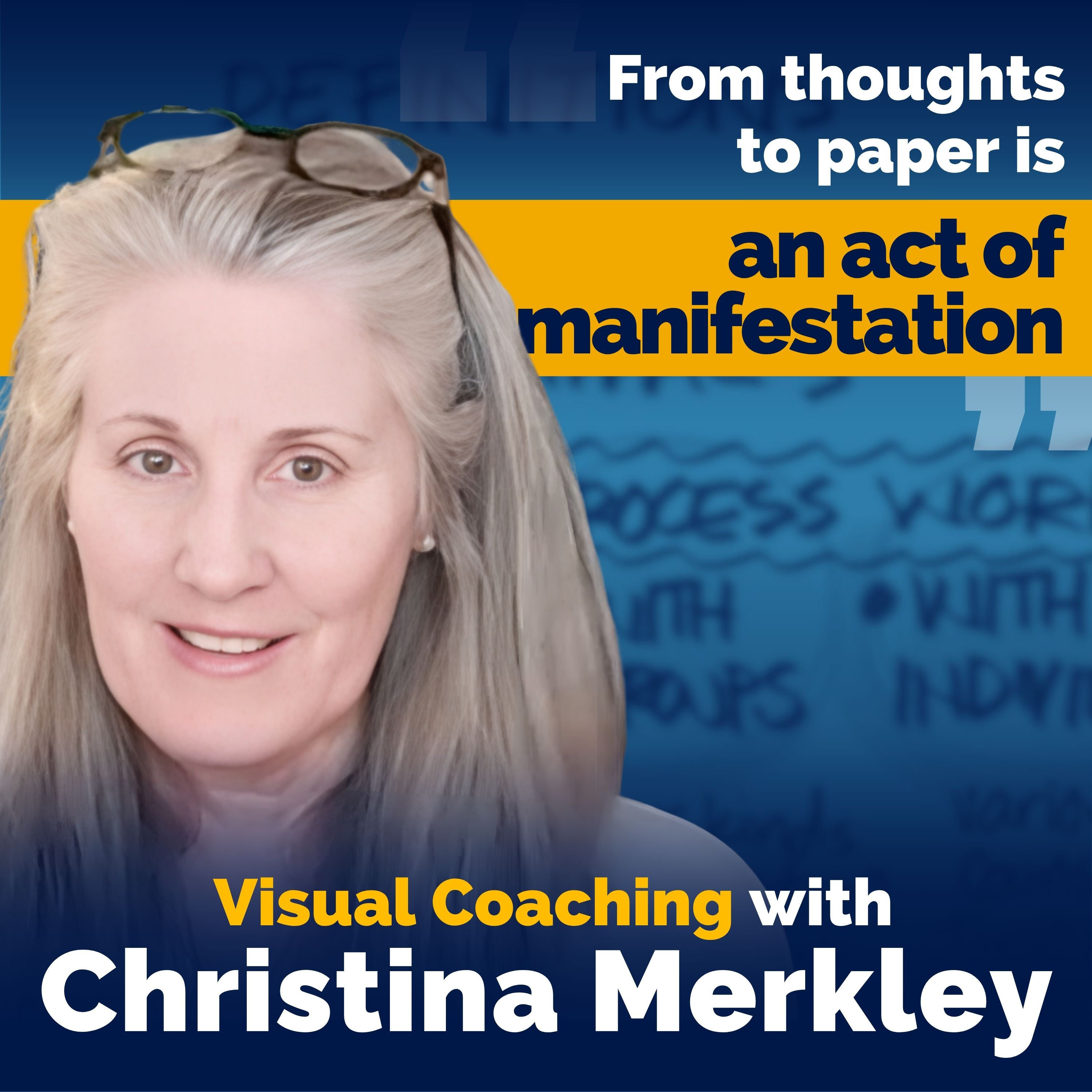 From Graphic Recording to Visual Coaching with Christina Merkley | A coaching podcast with Christina Merkley and Tobias Weghorn. They unpack graphic recording at conferences and how Christina's "visual coaching" work today goes deeper - combining visual work with the coach’s role of holding space, asking questions, and mirroring what clients say on a live canvas. You’ll hear how graphic facilitation works in real time (not just as “fun notes”), why listening and synthesis matter as much as drawing, and how visuals can support visioning and action planning. Christina also walks through her SHIFT-IT process, including life map coaching and the “alignment work” that helps when plans stall at the “trouble at the border” between where you are and where you want to be.Key Learnings:Use visual coaching to “capture and reflect back” what clients say: listen for the few key nuggets, condense them, and place them on a simple canvas clients can react to in the moment.Borrow from graphic recording and graphic facilitation by making the visual build live during the session; it can improve clarity, recall, and follow-through (especially when you turn visioning and action planning into something visible and revisitable).Add a life map coaching step (a quick lifeline or a fuller history map) to harvest patterns, beliefs, and turning points—then use alignment work when the client’s stated goals and actual behavior don’t match.Resources:Book a visual coaching with Christina: https://www.shift-it-coach.com/services/private-coaching/Christina Merkley’s LinkedIn: https://www.linkedin.com/in/christina-merkley-0790b33/Try the visual coaching platform: https://metafox.onlineFind your (physical) Coaching Tool: https://metaFox.euConnect with Tobi on LinkedIn: https://linkedin.com/in/tobiasweghornEpisode Chapters:00:01 Visual Coaching Beyond Graphic Recording00:05 Graphic Facilitation vs. Static Visuals (Interactive, Live, Fast)00:08 From Conference Graphic Recording to Deeper 1:1 Visual Coaching00:13 The “Four Animals”: Studio Work vs. Process Work00:18 How Graphic Recording Works: Listening, Synthesis, and “Gold Nuggets”00:22 What Visuals Do to a Room (Attention, Buffering Intensity, Recall)00:31 Visual Coaching with Individuals: From Strategy to Somatics and Trauma Awareness00:33 SHIFT-IT + Life Map Coaching, Visioning and Action Planning, and Alignment Work00:45 Where to Find Christina (Shift-It-Coach.com) | — | ||||||
| 3/13/26 | 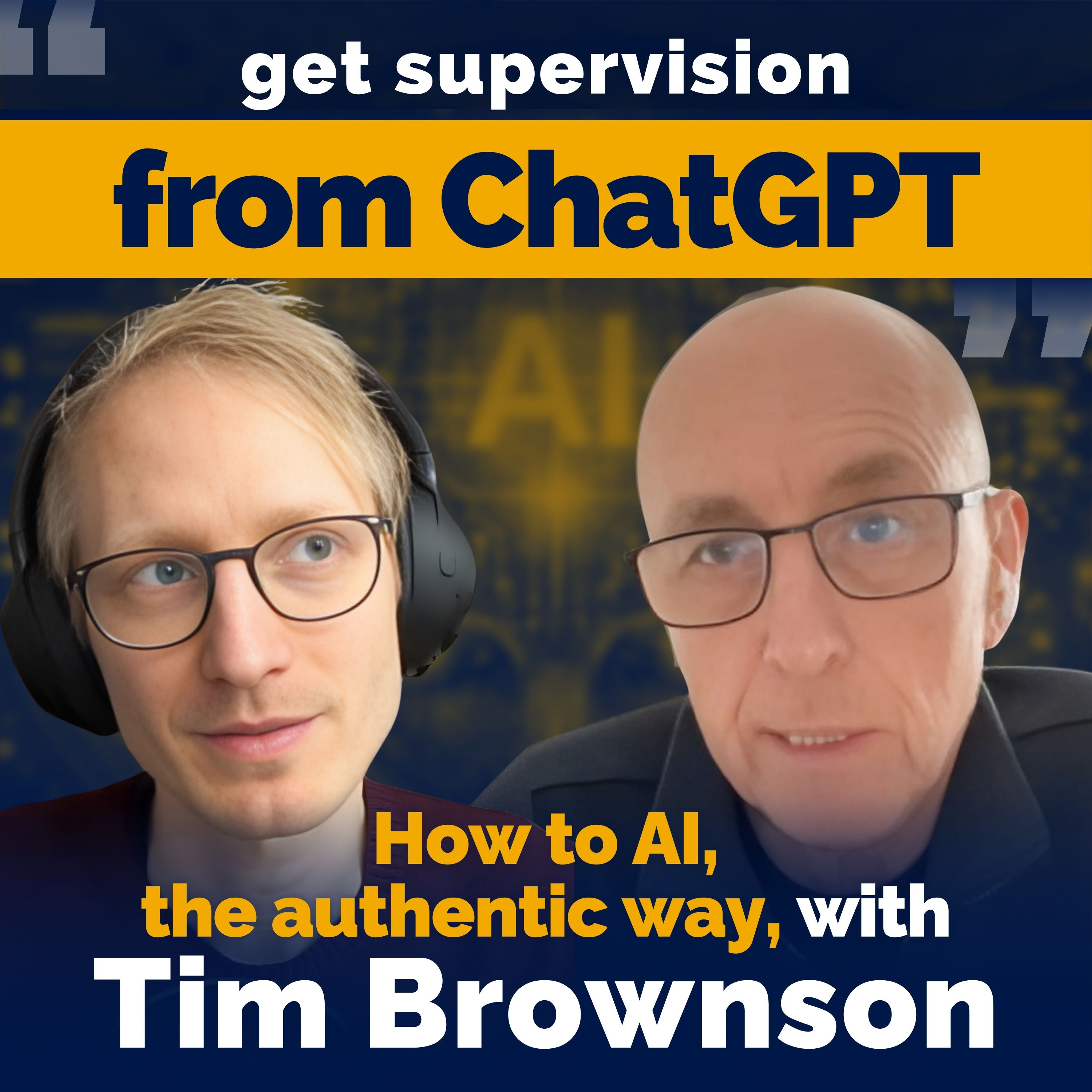 3 Ways to Use AI to Become a More Impactful Coach with Tim Brownson | A coaching podcast with Tim Brownson and Tobias Weghorn on how AI coaching tools can support (not replace) good coaching—if you use them with clear intent, permission, and discernment. In the intro, Tobi frames the big question: is AI a shortcut that dilutes the craft, or a tool that sharpens it while keeping your voice and integrity intact? Tim shares practical demos, including AI as coach supervisor for ICF mentor coaching feedback, plus ways to feed context fast (including voice-to-text prompts for ChatGPT). You’ll also hear how Google NotebookLM for coaches can help you stay “source-grounded” when working with your own transcripts and content.Key Learnings:Use AI coaching tools as a coach supervisor: with client consent, upload a session transcript and ask for ICF mentor coaching feedback on where you led the client, missed “killer questions,” or imposed values—then review critically and apply the learnings in your next session.Make AI outputs sound like you: improve results by feeding real context (your posts, transcripts, client avatar, values), assigning a clear role (e.g., mentor coach, copywriter), and iterating with “alternate viewpoints” to stress-test the draft.Speed up your learning and workflow: use Google NotebookLM for coaches to query your own library of episodes/transcripts and create summaries you can listen to, and use voice-to-text prompts for ChatGPT (or other models) to give richer instructions without typing.Resources:Tim Brownson’s Website: https://thefullybookedcoach.com/Tim Brownson’s LinkedIn: https://www.linkedin.com/in/timbrownson/Google NotebookLM: https://notebooklm.google/WillowVoice: https://willowvoice.com/WisprFlow: https://wisprflow.ai/Find your Coaching Tool: https://metaFox.euTry the metaFox Strengths Discovery: https://strengths-discovery.comConnect with Tobi on LinkedIn: https://linkedin.com/in/tobiasweghornEpisode Chapters:00:00 Pushing AI Harder Gets Better Results00:01 AI as Coach Supervisor: Shortcut or Sharpening the Craft?00:05 ICF Mentor Coaching Feedback with a Transcript + Prompt00:12 Google NotebookLM for Coaches: Source-Grounded Learning From Your Content00:19 Writing in Your Authentic Voice With Better Context00:23 Persona Prompts: Critique Your Copy Like a Skeptical Buyer00:30 Voice-to-Text Prompts for ChatGPT (Willow Voice, Whisper Flow)00:39 Getting Started: Why Paid AI Models Can Be Worth It | — | ||||||
| 2/27/26 | 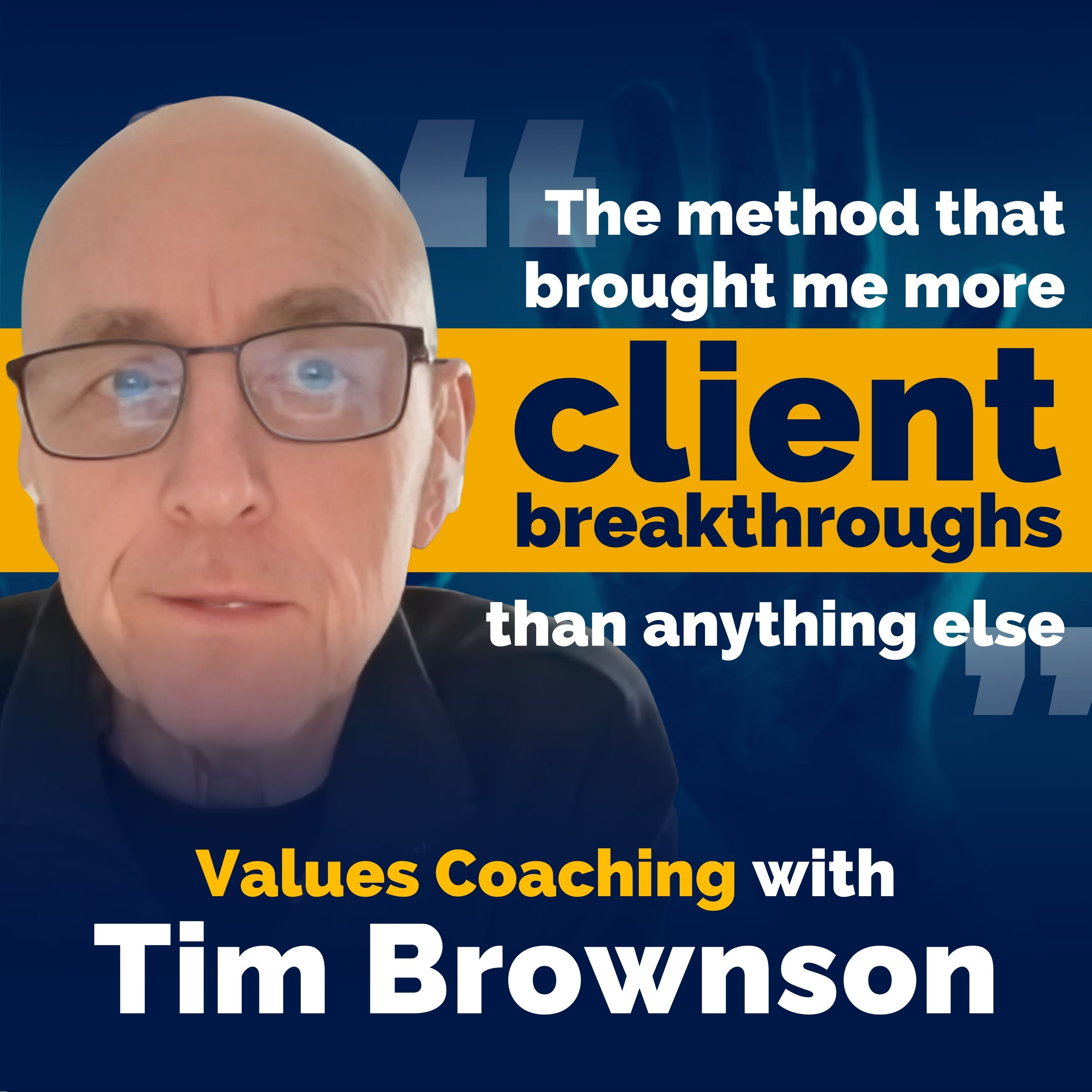 Values Coaching with the Clarity Method by Tim Brownson | A coaching podcast with Tim Brownson and Tobias Weghorn exploring values coaching as a practical way to create clarity when clients feel stuck, conflicted, or at odds with other people or their workplace. Tim (aka “The Fully Booked Coach”) breaks down his Clarity Method step-by-step: identifying what’s non-negotiable, using a values ranking exercise to build a core values hierarchy, and then spotting internal and external value conflicts. You’ll also hear why anti-values in coaching matter just as much as “positive” values, and how they can reveal what clients are strongly motivated to move away from. If you’re looking to learn coaching approaches that get concrete quickly, this coaching podcast is a hands-on walkthrough you can borrow for your next session.Key Learnings:Use values coaching to turn “I don’t know what to do” into a clear choice: define the client’s meaning behind each value word, then build a core values hierarchy instead of assuming you both mean the same thing by “freedom,” “integrity,” or “connection.”Run a fast values ranking exercise (pairwise comparisons) to reduce overthinking and surface gut-level priorities; use the resulting values hierarchy to highlight internal and external value conflicts driving the client’s stress or indecision.Add anti-values in coaching by asking “Which is worse for you?” and rank them the same way; use anti-values to explain strong negative reactions (people/companies) and to uncover missing values (e.g., avoiding arrogance can point to valuing authenticity).Resources:Tim Brownson’s Website: https://thefullybookedcoach.com Tim Brownson’s LinkedIn: https://www.linkedin.com/in/timbrownson The Clarity Method (Book): https://www.goodreads.com/book/show/45858326-the-clarity-method The online coaching platform Tobi & Tim use on their demo: https://metaFox.online Find your paper-based Coaching Tool: https://metaFox.euConnect with Tobi on LinkedIn: https://linkedin.com/in/tobiasweghornEpisode Chapters:00:00 Anti-Values And Moving Away From What You Don’t Want01:00 Values Coaching, The Clarity Method, And Value Conflicts03:00 Why Values Create Breakthroughs (More Than Other Tools)08:00 The 3 Stages: Define Values, Build A Core Values Hierarchy, Resolve Conflicts12:00 Clarifying What A Value Word Means To The Client18:00 Money Isn’t A Value: What Money Represents27:00 The Values Ranking Exercise (Pairwise Comparisons)34:00 Anti-Values In Coaching: Rank What’s “Worst,” Not What You Prefer41:00 Internal And External Value Conflicts In Real Client Situations51:00 How To Learn Coaching With The Clarity Method (Getting Started) | — | ||||||
| 2/13/26 | 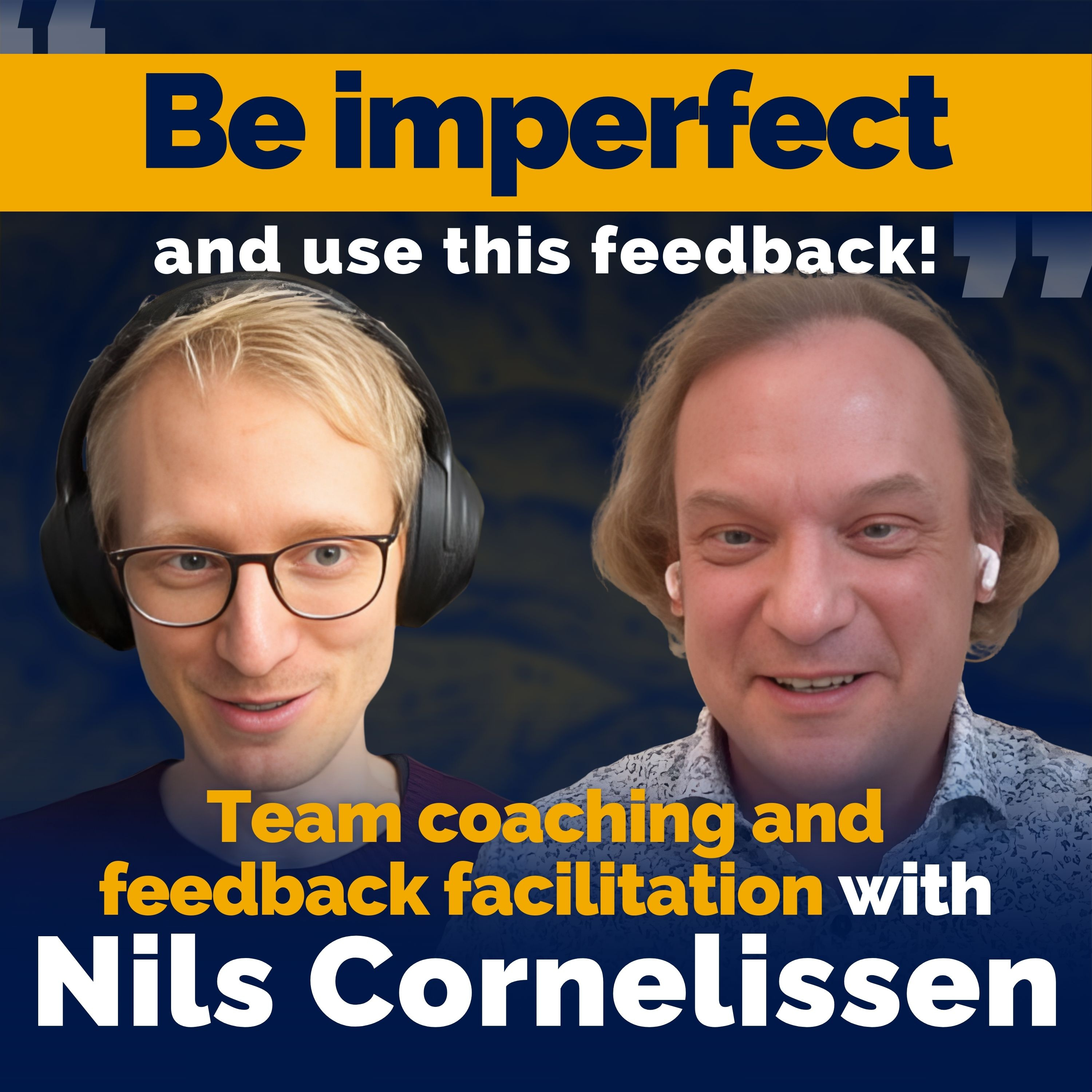 Facilitating Feedback and Psychological Safety in Team Coaching with Nils Cornelissen | A coaching podcast with Nils I. Cornelissen and Tobias Weghorn about psychological safety in teams and what it really takes to make high-performing groups speak honestly. Drawing on Google’s Project Aristotle, Nils shares how he helps executive team coaching clients build vulnerability in the boardroom (or offsite) without turning it into “touchy-feely theater.” You’ll hear why he intentionally “stains the white tablecloth” to role-model imperfection, plus two practical feedback methods you can use right away: the Keep Consider feedback method and a laser feedback exercise.Key Learnings:Build psychological safety in teams by role-modeling imperfection: name what you notice (as an offer), normalize reactive vs. creative states, and invite the “stupid questions” early so honesty becomes a habit.Use the Keep Consider feedback method as a 3–5 minute micro-ritual (e.g., monthly in exec meetings): each person shares one thing to keep and one thing to consider next time—no debating, just collecting patterns to improve collaboration.Run a laser feedback exercise to make behavioral feedback happen more often: pairs give 1 minute of pure appreciation, then 1 minute of “I’d appreciate it even more if…”, rotating partners to build trust and performance in executive team coaching.Resources:Return on Meaning, Nils' consultancy: https://www.returnonmeaning.com/nils-cornelissenThe Momentum Program of Return on Meaning: https://www.my-momentum.life/ Nils I. Cornelissen's LinkedIn: https://www.linkedin.com/in/nilscornelissen/Find your Coaching Tool: https://metaFox.euCoach online with https://metaFox.onlineConnect with Tobi on LinkedIn: https://linkedin.com/in/tobiasweghornEpisode Chapters:00:00 Failure Culture vs. “No Mistakes” and Missing Behavioral Feedback01:00 Intro: Psychological Safety in Teams (Google Project Aristotle)02:10 Entering the Boardroom: Executive Team Coaching Context and Characters06:00 Individual Journeys, Group Dynamics, and Creating Vulnerability08:00 Asking “Stupid Questions” to Shift Team Habits10:30 Contracting and Shared Responsibility in Team Coaching13:00 Role-Modeling Imperfection: The “Stain on the Tablecloth” Story20:30 Keep Consider Feedback Method (Fast, Balanced, Repeatable)26:00 Laser Feedback Exercise: Appreciation + “Even More If…”30:00 Habits, Feelings, and Getting Rational Leaders On Board | — | ||||||
| 1/30/26 | 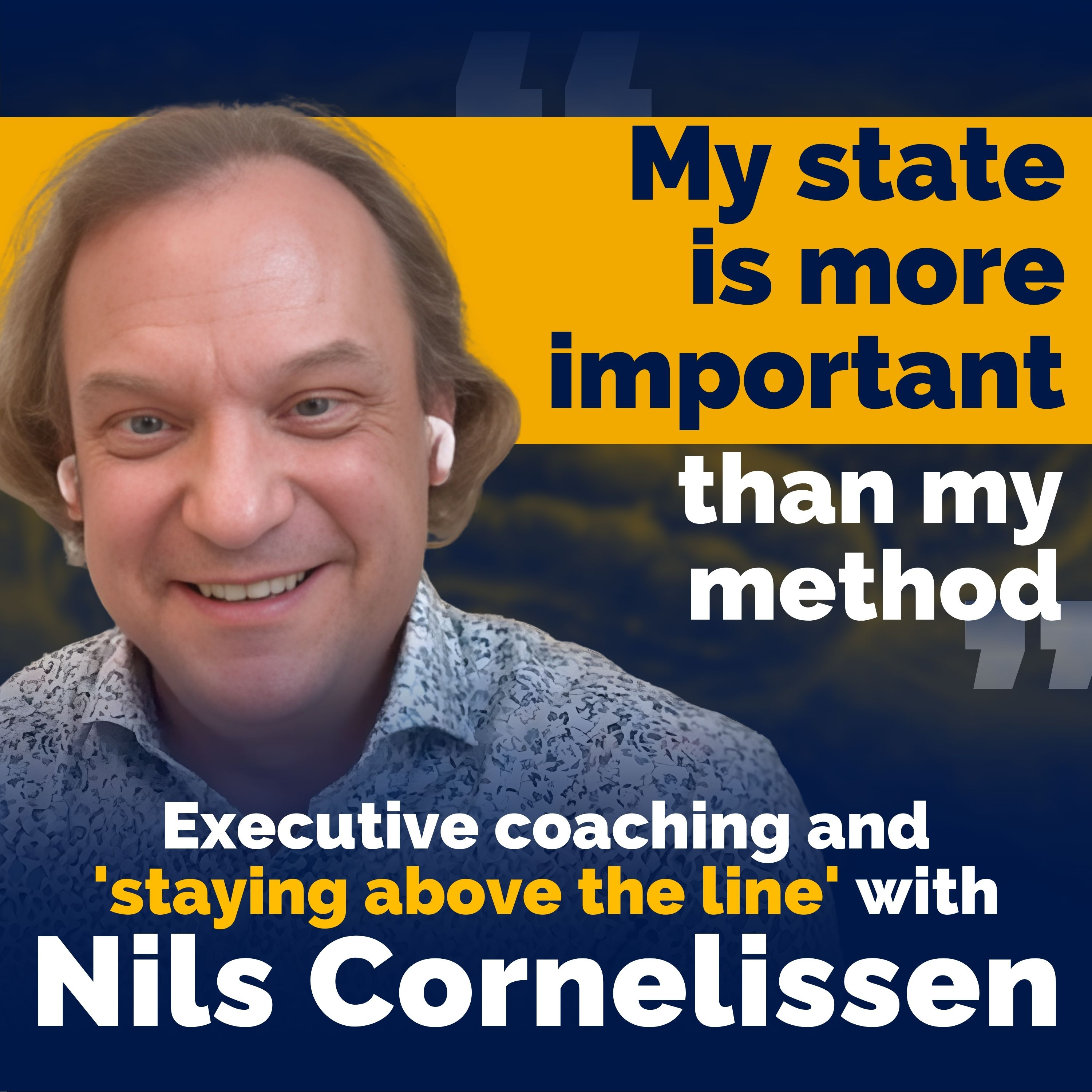 Executive Coaching and Preparing your State for Difficult Conversations with Nils Cornelissen | A coaching podcast with Nils I. Cornelissen and Tobias Weghorn on why leadership coaching in times of transformation starts with the leader, not the org chart. Drawing from his work with executive teams in large corporations, Nils shares why organizational change management so often fails even when the strategy looks “right” on paper. You’ll hear practical ways to stay “above the line” (vs. “below the line”) in difficult conversations, including tiny questions that build ownership and a short centering routine for high-stakes moments. It’s a candid look at emotional intelligence for leaders, self-management, and how to model the mindset you want to see across the organization.Key Learnings:Use leadership coaching to shift ownership back to the team: when someone asks for a solution, respond with “What have you already tried?”, “Who have you talked to?”, and “What do you need from me?” to support adult-to-adult leadership.In executive team coaching, normalize noticing the “above the line below the line mindset”: watch for cues like “I’m right, they’re wrong” or “I’m surrounded by idiots” as early warning signs you’ve slipped into reactive mode.Before a difficult conversation, train emotional intelligence for leaders with a 60-second reset: sigh/breathe out, relax shoulders, feel your stance, then actively generate gratitude and empathy (“Why might their reaction make sense?”) to re-enter a creative state.Resources:Nils I. Cornelissen's Website: https://www.returnonmeaning.com/nils-cornelissenNils I. Cornelissen's LinkedIn: https://www.linkedin.com/in/nilscornelissen/Above the line vs. below the line video, Nils mentions: https://youtu.be/fLqzYDZAqCI?si=sOzQEXMTFzPxQnuN Find your Coaching Tool: https://metaFox.euTry the metaFox Strengths Discovery: https://strengths-discovery.comConnect with Tobi on LinkedIn: https://linkedin.com/in/tobiasweghornEpisode Chapters:00:06 “How Are You Going To Change?” Starting with the Leader00:12 Coaching the Solution Out of the Client (Not Solving It for Them)00:14 The 3 Questions That Build Ownership (Treat People Like Adults)00:22 Preparing for the Boardroom: Your Mindset Is the Tool00:25 The 60-Second Centering Routine (Sigh, Gratitude, Empathy)00:33 Above the Line Below the Line Mindset in Executive Team Coaching00:35 Inner Thermometers: How to Notice You’ve Gone Reactive00:42 Training Emotional Intelligence for Leaders (Momentum Program) | — | ||||||
| 1/16/26 |  Mindset, Methods, Skills & Tools of Impactful Coaches: Highlights from one year 'Making of a Coach' | A coaching podcast with Max Friedle and Tobias Weghorn to close out a year of "The Making of a Coach" and kick off the rebrand to "The Impactful Coach". Using Max’s coaching development framework (mindset, methods, skills, tools), they look back at highlights from coaching demos and episodes - and what actually makes sessions more impactful in real life. You’ll hear how solution focused coaching keeps conversations light and future-oriented, when the miracle question helps clients move fast, and why “ready, willing, and eager” can be a useful readiness gate. They also get practical about emotional hygiene before coaching sessions and silence as a coaching intervention (yes: count to six).Key Learnings:Use solution focused coaching to shift fast from “what’s wrong” to “what’s desirable”: explore exceptions first, then use the miracle question to help clients describe the desired future in detail.Build a simple readiness gate: only coach clients who are ready, willing, and eager - so the work stays with the client (and solution focused coaching doesn’t turn into problem-fixing).Practice emotional hygiene before coaching sessions and train silence as a coaching intervention: ask the question, hold eye contact, count to six, and let the client do the work.Resources:Find your Coaching Tool: https://metaFox.euCoach online: https://metaFox.online Try the metaFox Strengths Discovery: https://strengths-discovery.comConnect with Tobi: https://linkedin.com/in/tobiasweghornConnect with Max: https://www.linkedin.com/in/maximilianfriedle Episode Chapters:00:00 Teaser: Ready, Willing, And Eager + “You Gotta Shut Up At Times”01:00 Anniversary Episode: Rebrand To Impactful Coach03:00 The Coaching Development Framework: Mindset, Methods, Skills, Tools06:00 Mindset: Hold Space, Don’t Fix (“It’s Not The Pam Show”)09:00 Emotional Hygiene Before Coaching Sessions11:00 Methods: Readiness Gate + Coaching Demos Focus13:00 Solution Focused Coaching: Exceptions + Miracle Question16:00 Zurich Resource Model (ZRM) Picture Work Meets Somatics18:00 Skills: Silence As A Coaching Intervention (Count To Six)24:00 Tools: Shared Language (Belbin, Strengths, MBTI) + Risks Of “Boxing”34:00 What Changes In 2026: More Coaching Skills, Less CV Stories | — | ||||||
Want analysis for the episodes below?Free for Pro Submit a request, we'll have your selected episodes analyzed within an hour. Free, at no cost to you, for Pro users. | |||||||||
| 1/2/26 |  Demo Coaching: Overcoming Imposter Syndrome through Clear Brand Positioning with Julika Franke | On this episode, Tobi meets Julika Franke for a coaching demo that starts as brand positioning and quickly turns into imposter syndrome coaching around stepping into a coach‑trainer role. Julika usually uses her Business Hub approach to map roles, goals, and visibility, revealing to come up with clear positioning and a crisp mission. In Tobi's example they find a way to fit all his hats under the vision statement of metaFox: "A world embracing emotional intelligence". Key Learnings:How a vision statement can serve as north star and unify different roles. How Julika defines a founder‑level role map (visionary, product developer, ambassador, trainer).How this kind of positioning work can be an alternative to mindset coaching for overcoming imposter syndrome.Resources:Julika Franke's Website: https://julika-franke.de/Julika Franke's LinkedIn: https://www.linkedin.com/in/julika-franke/Find your Coaching Tool: https://metaFox.euTry the metaFox Strengths Discovery: https://strengths-discovery.comConnect with Tobi on LinkedIn: https://linkedin.com/in/tobiasweghornEpisode Chapters:00:00 Opening: Emotional Intelligence And Identity Friction01:00 Coaching Demo Setup: From Positioning To Imposter Syndrome03:00 The Business Hub: Structuring Brand Positioning06:00 Meta Fox Inner Journey And Tools For Emotional Intelligence Coaching12:00 Training Roots: MBTI And Early Facilitation15:00 Naming The Imposter Syndrome Coaching Challenge18:00 Mission, Roles, And Personal Branding For Coaches25:00 Two Worlds Collide: Engineering Vs Coaching Identity35:00 From Clarity To Market: Positioning, Offer, And Visibility41:00 Rethinking The Coaching Industry And Value Focus | — | ||||||
| 12/19/25 |  Creating an irresistible coaching offer (feat. Alex Hormozi's value equation) with Julika Franke | On this 'Making of a Coach', Tobi meets Julika Franke for a deep dive into creating a compelling offer that genuinely helps coaches find paying clients. Grounded in Alex Hormozi’s Value Equation, Julika unpacks how to define a crystal‑clear dream outcome, increase the perceived likelihood of achievement, and shape real offer components that reduce time delay and client effort. They discuss ethics, specificity (“riches in the niches”), and how to align marketing with authenticity—not hype—for sustainable client acquisition. You’ll also hear practical ways to price your offer and become a “category of one.”Key Learnings:Map client A→B with a concrete dream outcome, then apply the value equation to raise value: pick a tight market, sharpen language in their words, and design components that increase perceived likelihood of achievement—test with 1–3 real clients for feedback.Compress time delay and lower effort/sacrifice: add structures that speed results (clear timeline, templates, checklists, accountability touchpoints, group/WhatsApp support), especially for B2B pilots or “offer ladder” entry points.Price the transformation, not the hours: anchor on what the problem is worth to solve, bundle your unique assets (method, tools, process) to be a category of one—this is the core of creating a compelling offer for client acquisition.Resources:Julika Franke's Website: https://julika-franke.de/Julika Franke's LinkedIn: https://www.linkedin.com/in/julika-franke/Alex Hormozi’s Value Equation: https://acquisition.comFind your Coaching Tool: https://metaFox.euTry the metaFox Strengths Discovery: https://strengths-discovery.comConnect with Tobi on LinkedIn: https://linkedin.com/in/tobiasweghornEpisode Chapters:00:00 Teaser: Niches And Offers00:01 Creating A Compelling Offer — Why It Matters00:03 Julika Franke’s Journey Into Coaching And Marketing00:09 The Value Equation For Client Acquisition00:13 From Dream Outcome To Target Market Clarity00:15 Riches In The Niches: Specificity Beats Generic00:23 Time Delay, Offer Ladders, And B2B vs B2C00:26 Reducing Effort And Sacrifice In Your Offer00:27 Relationship Coach Example: Should I Stay Or Go?00:36 First Steps And Pricing: Build Your Category Of One | — | ||||||
| 12/5/25 |  Coaching Demo with Lucy Higgins: Overcoming Restlessness with the Saboteur Assessment by Positive Intelligence | On this 'Making of a Coach', Tobi meets career coach and coach trainer Lucy Higgins for a coaching demo that explores restlessness using the saboteur assessment from Positive Intelligence. Drawing on the Introduction, we frame Lucy’s directive career change program for ambitious mothers and how she resolves blockers like unhelpful beliefs with lightweight mindset tools. Together, Lucy and Tobi run a live coaching demo around the Restless and Hyper‑Achiever patterns, aiming for presence and peace of mind during early parenthood. You’ll hear how a shared language from Positive Intelligence can carry through a coaching journey without needing the full accreditation program.Key Learnings:Integrate the saboteur assessment early to create shared language for your career change program; contract for a short coaching demo and use it to surface “judge + accomplice” patterns like Restless or Hyper‑Achiever.Translate insights into simple mindset tools: name the trigger thought, thank the saboteur’s old survival role, then practice a “switch‑off” ritual that redirects attention to meaningful connection (e.g., family time) using Positive Intelligence language.Build the client’s “healthy voice” from values and strengths; borrow Adult state from transactional analysis and ventral vagal cues to anchor presence, and repeat the coaching demo language in follow‑ups to reinforce new habits.Resources:Lucy Higgins’s Website: https://lucyhigginscoaching.co.uk/Lucy Higgins’s LinkedIn: https://www.linkedin.com/in/lucy-higgins-coaching/Positive Intelligence's Saboteur Assessment: https://www.positiveintelligence.com/saboteurs/Find your Coaching Tool: https://metaFox.euTry the metaFox Strengths Discovery: https://strengths-discovery.comConnect with Tobi on LinkedIn: https://linkedin.com/in/tobiasweghornEpisode Chapters:00:00 Seeking Peace Of Mind And Restlessness00:02 Intro: Lucy’s Directive Career Change Program00:05 Mindset Tools And When To Use The Saboteur Assessment00:09 How The Positive Intelligence Test Works00:13 Choosing The Restless Saboteur00:18 Coaching Demo Goal: Presence Over Restlessness00:21 Judge And Accomplice Saboteurs Explained00:26 Costs Of Restlessness And Finding Balance00:30 Switching Off: What Already Works For Tobi00:37 Beyond The Tool: TA And Polyvagal In Practice | — | ||||||
| 11/21/25 |  Becoming a Career Coach with Lucy Higgins: Reinventing Careers After Motherhood | On this 'Making of a Coach', Tobi meets Lucy Higgins to unpack how she became a career coach and built a private practice around a career change program for ambitious mothers. They contrast non-directive coaching with a more directive coaching offer and walk through Explore - Dream - Discover as adapted from Fireworks Coaching. Lucy connects her own matrescence journey to clear positioning, pricing, and the balance between platform work (BetterUp) and private clients - useful if you want to become a coach with a tangible, outcomes-based offer.Key Learnings:Decide when to use non-directive coaching versus a structured career change program: map client readiness (tweak vs reinvention), define deliverables, and set clear package lengths and outcomes.Productize your expertise into directive coaching: adapt a framework like Explore–Dream–Discover, add your own exercises, and price for both session time and between-session prep.Bring a motherhood studies lens where relevant: normalize systemic barriers, coach identity shifts post-matrescence, and translate insights into skills like stakeholder communication and personal branding to help clients move.Resources:Lucy Higgins's Website: https://lucyhigginscoaching.co.uk/Lucy Higgins's LinkedIn: https://www.linkedin.com/in/lucy-higgins-coach/BetterUp Coaching Platform: https://www.betterup.comFind your Coaching Tool: https://metaFox.euTry the metaFox Strengths Discovery: https://strengths-discovery.comConnect with Tobi on LinkedIn: https://linkedin.com/in/tobiasweghornEpisode Chapters:00:00 Welcome & Framing The Career Change Program00:03 Platforms vs Private Work00:04 Mission: Helping Women Navigate Systems00:06 Motherhood As Catalyst For Career Change00:12 What Is Matrescence?00:17 Non-Directive Coaching Packages00:20 Directive Coaching: Explore, Dream, Discover00:23 Tackling Fear, Identity & Systemic Barriers00:31 Pricing: Packages And Corporate Rates00:36 Advice To New Coaches: Lean Into What You Love | — | ||||||
| 11/7/25 |  Coach-Trainer-FAQ: A Masterclass in becoming a coach with Lucy Higgins | On this 'Making of a Coach', Tobi meets Lucy Higgins to unpack real "Frequently Asked Questions" from aspiring coaches wanting to become a coach. Drawing on her work training cohorts of new coaches at Animas in the UK and her own practice, Lucy digs into client acquisition strategies, whether to niche, and the true timeline of coaching business building. They also explore coaching pricing models, the balance between directive and non‑directive work, why supervision matters and when ICF/EMCC accreditation helps (and when it doesn’t).Key Learnings:Define a precise client avatar and map “Hell Island to Heaven Island” outcomes; choose outreach where those clients already are (e.g., LinkedIn, events), then prioritize referrals - practical client acquisition strategies to become a coach who consistently books calls.Run an 80/20 split: 80% delivering, 20% building; set up simple systems early (e.g. Calendly or similar tools for scheduling) to compound your coaching business building.Calibrate fees to client segment and outcomes, then review quarterly; consider sliding scales and raise rates as evidence and confidence grow - your working “coaching pricing models.” If you target corporates or platforms, evaluate ICF/EMCC accreditation requirements first.Resources:Lucy Higgins's Website: https://lucyhigginscoaching.co.uk/Lucy Higgins's LinkedIn: https://www.linkedin.com/in/lucyhigginscoaching/Animas Centre for Coaching: https://www.animascoaching.comInternational Coaching Federation (ICF): https://coachingfederation.orgEMCC Global: https://www.emccglobal.orgAssociation for Coaching (AC): https://www.associationforcoaching.comCalendly: https://calendly.comCoachHub: https://www.coachhub.comBetterUp: https://www.betterup.comFind your Coaching Tool: https://metaFox.euTry the metaFox Strengths Discovery: https://strengths-discovery.comConnect with Tobi on LinkedIn: https://linkedin.com/in/tobiasweghornEpisode Chapters:00:00 Teaser: Hell Island To Heaven Island00:02 Why This Coach‑Trainer FAQ Episode00:10 Client Acquisition Strategies: Avatar, Channels, Referrals00:13 Coaching Business Building Timeline And Buffer00:15 Should I Niche Or Be The Niche?00:17 Selling As A Helper, Not A Salesperson00:19 Coaching Pricing Models And Sliding Scales00:25 Systems That Save Time: Calendly, Xero, SEO00:36 Directive vs Non‑Directive Coaching00:40 Coaching Accreditation: ICF, EMCC, AC | — | ||||||
| 10/24/25 |  Entrepreneurship in the coaching industry: Making of the LINC Personality Profiler with Dr. Ronald Franke | On this 'Making of a Coach', Tobi meets Dr. Ronald Franke, the co-founder behind the LINC Personality Profiler, to trace how a psychology student became a coach, researcher, and entrepreneur. Next to a deep dive into the personality and coaching, the conversation unfolded as an entrepreneurial journey through the coaching industry - from cultural research to launching a B2B tool now used by 5,000+ coaches running 40,000+ assessments a year. Along the way, they unpack where personality assessments fit into real coaching versus debriefs, and why type-based tools fall short of trait-based approaches. Originally recorded in German and shared here via AI transcreation, this coaching podcast doubles as a candid playbook for turning expertise into a scalable tool.Key Learnings:Use a trait-based approach (e.g., Big Five) to link coachee goals to personality patterns; when it fits, bring the LINC Personality Profiler into leadership or team topics to speed insight without replacing coaching.If you build services around personality assessments, validate willingness to pay with small experiments and an MVP before scaling digital products.For revenue stability, go B2B: certify as a provider, package debriefs plus coaching for HR and leadership development, and track success by the implementation rate of agreed actions.Resources:More on LINC on: https://linc.de and https://linc-north-america.com Ronald's LinkedIn: https://www.linkedin.com/in/dr-ronald-franke-b5360123/Big Five Model: https://en.wikipedia.org/wiki/BigFivepersonality_traitsFind your Coaching Tool: https://metaFox.euTry the metaFox Strengths Discovery: https://strengths-discovery.comConnect with Tobi on LinkedIn: https://linkedin.com/in/tobiasweghornEpisode Chapters:00:00 Opening: Why Personality Assessments Matter01:00 Meet Dr. Ronald Franke And The LINC Personality Profiler03:00 From Psychology Studies To Coaching And Research05:00 Culture Research To Product: Early Tests And Pivots06:00 Choosing Coaches Over HR: Finding The Initial Niche12:00 Building Products, MVPs, And What Actually Sells17:00 Beyond The Tool: HR Solutions And B2B Services20:00 Big Five Model In Coaching: From Debrief To Real Change29:00 Internationalization And What’s Next | — | ||||||
| 10/24/25 |  Unternehmertum in der Coaching-Branche: Das "Making of" des LINC Personality Profilers mit Dr. Ronald Franke | This is a German Original Episode. For its English version, click here!In dieser Folge von Making of a Coach spricht Tobi mit Dr. Ronald Franke, dem Mitgründer des LINC Personality Profilers. Gemeinsam zeichnen sie nach, wie aus einem Psychologiestudenten ein Coach, Forscher und Unternehmer wurde. Neben einem tiefen Einblick in Persönlichkeit und Coaching entwickelt sich das Gespräch zu einer unternehmerischen Reise durch die Coaching-Branche – von kulturpsychologischer Forschung bis hin zur Entwicklung eines B2B-Tools, das heute von über 5.000 Coaches genutzt wird und jährlich mehr als 40.000 Auswertungen ermöglicht.Unterwegs beleuchten die beiden, welche Rolle Persönlichkeitsanalysen im echten Coaching – jenseits von Auswertungs-Gesprächen – spielen und warum typbasierte Instrumente gegenüber eigenschaftsbasierten Ansätzen an ihre Grenzen stoßen.Key Learnings:Eigenschaftsorientiert statt typbasiert: Nutze Modelle wie die Big Five, um Coaching-Ziele mit Persönlichkeitsmustern zu verknüpfen. Wo es passt, kann der LINC Personality Profiler in Führungs- oder Teamkontexten helfen, Einsichten zu beschleunigen – ohne Coaching zu ersetzen.Testen vor Skalieren: Wer Dienstleistungen rund um Persönlichkeitsanalysen aufbaut, sollte Zahlungsbereitschaft früh mit kleinen Experimenten und einem MVP prüfen, bevor digitale Produkte skaliert werden.Stabilität durch B2B: Für nachhaltige Umsätze lohnt es sich, im Unternehmenskontext anzusetzen – etwa durch Zertifizierungen, kombinierte Angebote aus Auswertung und Coaching für HR und Führungskräfteentwicklung, und Erfolgsmessung über die Umsetzung vereinbarter Maßnahmen.Ressourcen:Mehr zu LINC: https://linc.deRonald auf LinkedIn: https://www.linkedin.com/in/dr-ronald-franke-b5360123/Big-Five-Modell: https://de.wikipedia.org/wiki/Big_Five_(Psychologie)Finde dein Coaching Tool: https://metaFox.euStärken im Coaching: https://strengths-discovery.comTobi auf LinkedIn: https://linkedin.com/in/tobiasweghornEpisode Chapters:01:58 Die Entstehung des LINC Personality Profilers02:56 Von der Wissenschaft zum Coaching05:02 Herausforderungen und Learnings im Unternehmertum07:57 Die Rolle der Persönlichkeit im Coaching16:10 Entwicklung und Anwendung des LINC Profilers41:09 Unternehmenskultur und internationale Expansion44:46 Lightning Round Fragerunde zum Abschluss | — | ||||||
| 10/10/25 |  Unpacking Personality with the BIG 5 Model: Coaching Demo / Report Debrief with Lars Voigt from LINC Personality Profiler | Why is personality relevant in almost all coaching issues? How can we best assess and describe it? In this episode of "The Making of a Coach," Tobi from metaFox sits down with Lars Voigt from LINC and explores Tobi's Personality Profile. Lars shares insights into the Big Five model and how it forms the foundation of the Link Personality Profiler, a tool widely used in Europe and beyond. They discuss the importance of understanding personality holistically, incorporating character, motives, and competencies, and how these elements can be effectively measured and applied in coaching. After analysing Tobi's profile, they also compare the LINC Personality Profiler to other tools like DISC, emphasizing the depth and scientific grounding of the Big Five model.Key Learnings:Integrating personality assessments like the Big Five model at the start of a coaching journey provides a comprehensive diagnostic tool for both coaches and clients. Understanding the interplay between character, motives, and competencies is crucial for effective coaching and personal development.Coaches should be trained on the tools they use to ensure they can convey nuanced insights and avoid oversimplifying complex personality traits.Resources:Lars Voigt's Website: https://linc.de/unternehmen/Lars Voigt's LinkedIn: https://www.linkedin.com/in/lars-voigt-linc/Find your Coaching Tool: https://metaFox.euTry the metaFox Strengths Discovery: https://strengths-discovery.comConnect with Tobi on LinkedIn: https://linkedin.com/in/tobiasweghornEpisode Chapters:00:00 Introduction to Personality Assessments00:02 The Big Five Model and Link Personality Profiler00:04 Integrating Psychometrics in Coaching00:06 Understanding Motives and Competencies00:10 Comparing DISC and Link Personality Profiler00:20 The Importance of Training for Coaches | — | ||||||
| 9/26/25 |  Supervision in Coaching with Katja von Glinowiecki: Unpacking Professional Reflection and Industry Standards | In this episode of "The Making of a Coach," Katja von Glinowiecki, a seasoned coach and supervisor, shares her journey from feeling isolated in her coaching practice to discovering the transformative power of supervision in coaching. Based in Germany, Katja discusses how supervision in coaching provides a structured, professional reflection space that enhances both personal and professional growth. She explains the differences between coaching, supervision, and mentoring, and highlights the importance of supervision in maintaining coaching industry standards. Katja also touches on the cultural variations in the acceptance of supervision and the potential impact of making it a norm in the coaching industry.Key Learnings:Supervision in coaching offers a structured space for professional reflection, helping coaches to grow and maintain ethical standards.Engaging in regular supervision can prevent feelings of isolation and enhance resilience, ultimately benefiting client interactions.Understanding the cultural differences in coaching and supervision practices can provide insights into improving coaching industry standards globally.Resources:Join the metaFox Community: https://join.metafox.community/Katja von Glinowiecki's Websites: https://www.my-circus.de/ https://orientierungs-coaching.de/Connect with Katja on LinkedIn: https://www.linkedin.com/in/katja-von-glinowiecki/Connect with Tobi on LinkedIn: https://linkedin.com/in/tobiasweghornEpisode Chapters:00:00 Introduction to Supervision in Coaching00:05 Katja's Journey to Discovering Supervision00:10 Defining Supervision and Its Benefits00:15 The Role of Supervision in Professional Growth00:20 Cultural Perspectives on Supervision00:25 How to Get Started with Supervision | — | ||||||
| 9/12/25 |  Making of a Mental Health NGO: How Phlourish Coaches Teenagers using Psychoeducation Workbooks & Effective Altruism | In this "Making of a Coach," topical deep dive, we unpack mental health interventions with Rochelle Bata and Shen Javier, co-founders of Phlourish, a nonprofit in the Philippines. They discuss their mission to help adolescents flourish and solve a mental health crisis through evidence-based solutions, based on the principles of "effective altruism". The episode explores the challenges of mind-blowing suicide rates and mental health stigma in low-resource areas and the impact-driven approaches Phlourish employs to address these issues, including the use of lay mental health workers and guided self-help workbooks.Key Learnings:Understand the importance of mental health stigma (and literacy) and how it can be improved through targeted interventions.Learn how to effectively use lay mental health workers to bridge the gap in mental health services.Discover the principles of "effective altruism" in creating scalable and impactful mental health solutions.Resources:Meet Phlourish on: https://phlourish.phConnect with Roc: https://www.linkedin.com/in/rochelle-bata/ Connect with Shen: https://www.linkedin.com/in/reynaly-shen-javier/ Connect with Tobi: https://linkedin.com/in/tobiasweghornFind your Coaching Tool: https://metaFox.eu Try the metaFox Strengths Discovery: https://strengths-discovery.com Episode Chapters:00:00 Introduction to Mental Health in the Philippines00:02 Meet the Founders of Phlourish00:05 Phlourish's Mission and Approach00:10 Challenges in Mental Health in the Philippines00:15 Orientation and Parental Involvement00:20 John's Journey with Phlourish00:25 The Role of Lay Mental Health Workers00:30 Effective Altruism and Evidence-Based Approach | — | ||||||
| 8/29/25 |  Coaching-Demo mit Dr. Jasmin Messerschmidt: Coaching mit Bildern & dem Zürcher Ressourcen Modell (ZRM) | BeschreibungIn dieser Folge von „The Making of a Coach“ coacht Dr. Jasmin Messerschmidt Tobi live und zeigt, wie sich Arbeit mit Bildern und somatische Marker wirkungsvoll in Coachingprozesse integrieren lassen. Jasmin gibt Einblicke in das Zürcher Ressourcen Modell (ZRM) – eine Verbindung aus Motivationspsychologie und Neurowissenschaft – und wie es Klient:innen stärkt, selbstgewählte Ziele zu erreichen. Wir sprechen über Embodiment im Coaching und darüber, warum es für nachhaltige Veränderung entscheidend ist, Unbewusstes und Bewusstes in Einklang zu bringen.Key LearningsBildarbeit im Coaching einsetzen, um Bewusstes und Unbewusstes zu verbinden – für mehr Klarheit und Fokus in der Sitzung.Somatische Marker nutzen, um Körpersensationen und emotionale Reaktionen wahrzunehmen und so Selbstwahrnehmung zu vertiefen.Das ZRM anwenden, um strukturierte Selbstmanagement-Strategien zu entwickeln, mit denen Klient:innen ihre Ziele eigenständig verfolgen.RessourcenWebsite Dr. Jasmin Messerschmidt: https://messerschmidt-consulting.de/LinkedIn Dr. Jasmin Messerschmidt: https://www.linkedin.com/in/drjasminmesserschmidt/Bildkarten (deep pictures) von metaFox: https://metaFox.eu/deep-picturesmetaFox Coaching- & Workshop-Events: https://metaFox.eu/experiencesmetaFox Online-Kurse: https://metaFox.eu/learnFortbildungsangebot unseres Partners CoachingSpace: https://sites.coachingspace.net/coachingspace-weiterbildung-2025Kapitel00:00 Introduction and Welcome01:29 Coaching Session Begins04:16 Exploring Personal Challenges08:31 Selecting and Interpreting Images26:53 Formulating the Motto-Ziel34:20 Reflection and Embodiment42:17 Conclusion and Takeaways46:27 Additional Resources and Farewell | — | ||||||
| 8/29/25 |  Coaching Demo with Dr. Jasmin Messerschmidt: Learn Coaching with Pictures and the Zurich-Resource-Model | In this episode of "The Making of a Coach," Dr. Jasmin Messerschmidt, a renowned expert in the Zurich Resource Model coaches Tobi exploring the integration of image-based coaching and somatic markers in coaching practices. Dr. Messerschmidt shares insights into how the Zurich Resource Model, a blend of motivational psychology and neuroscience, can empower clients to achieve self-chosen goals. The discussion delves into the embodiment in coaching, highlighting the importance of aligning the unconscious and conscious mind for effective change.Key Learnings:Incorporate image-based coaching to connect the conscious and unconscious mind, enhancing clarity and focus in coaching sessions.Utilize somatic markers to identify and address clients' physical sensations and emotional responses, fostering deeper self-awareness.Apply the Zurich resource model to create structured self-management strategies, enabling clients to achieve their goals through self-directed efforts.Resources:Dr. Jasmin Messerschmidt's Website: https://messerschmidt-consulting.de/Dr. Jasmin Messerschmidt's LinkedIn: https://www.linkedin.com/in/drjasminmesserschmidt/Get picture cards from metaFox: https://metaFox.eu/deep-pictures metaFox Coaching & Workshop Events: https://metaFox.eu/experiencesmetaFox Online Courses: https://metaFox.eu/learn Episode Chapters:00:00 Introduction to Image-Based Coaching00:44 Understanding the Zurich Resource Model02:28 Personal and Professional Transitions05:08 Exploring Somatic Markers09:15 Selecting Images for Coaching13:00 Positive Associations with Images18:29 Formulating a Motto Goal24:11 Embodiment and Practical Application28:01 Conclusion and Reflections | — | ||||||
| 8/15/25 |  Learn Coaching with Picture Cards: Dr. Jasmin Messerschmidt About Accessing Emotions and Body Sensations Through Pictures | In this insightful episode of The Making of a Coach Podcast, Tobi sits down with Dr. Jasmin Messerschmidt, an expert in leadership coaching, the Zurich Resource Model, and the transformative use of images in coaching. Discover how picture cards, somatic markers, and visual resonance can help clients unlock emotions, overcome blocks, and create meaningful self-change — even when words fall short.What You’ll Learn in This Episode:How coaching with images accelerates self-reflection and self-management.The science behind somatic markers and their role in deep coaching work.Practical ways to integrate visual tools into facilitation demos and coaching demos.Strategies for helping clients who resist discussing emotions — including leaders, engineers, and researchers.Real client stories where a single image transformed a career or restored emotional balance.Resources & Links:Zurich Resource Model (ZRM) Overview - https://zrm.ch/deep pictures World of Emotions - https://metafox.eu/products/coaching-postcards-world-of-emotionsJoin the first metaFox Coaching Certification Program this November - https://metafox.eu/journeyChapters00:00 Emotional Impact of Images in Coaching00:56 Introduction to the Podcast and Guest01:22 Jasmine's Expertise and Dissertation on Picture Cards01:57 The Power of Images in Coaching02:28 Experimenting with AI Translation03:05 Jasmine's Personal Reflection on an Image05:35 Examples of Coaching with Images07:56 Deep Dive into Jasmine's Dissertation12:01 Understanding Somatic Markers14:14 Practical Application of Images in Coaching32:54 Using Positive and Negative Images42:28 Conclusion and Next Episode Teaser | — | ||||||
| 8/15/25 |  Lerne Coaching mit Bildkarten: Dr. Jasmin Messerschmidt über den Zugang zu Emotionen und Körpergefühl durch Bilder | In dieser Folge des Making of a Coach spricht Tobi mit Dr. Jasmin Messerschmidt – Expertin für Leadership Coaching, das Zürcher Ressourcen Modell und den transformativen Einsatz von Bildern im Coaching. Erfahre, wie Bildkarten, somatische Marker und visuelle Resonanz Klient:innen helfen können, Zugang zu ihren Körpergefühlen und Emotionen zu erlangen, Blockaden zu überwinden und nachhaltige Selbstveränderung zu bewirken.Was du mitnimmst:Die Wissenschaft hinter somatischen Markern und ihre Rolle in tiefgehender Coaching-Arbeit.Praktische Möglichkeiten, visuelle Tools in Facilitation und Coaching zu integrieren.Strategien, um Klient:innen zu unterstützen, die sich schwer tun, über Gefühle zu sprechen – darunter Führungskräfte, Ingenieur:innen und Forschende.Echte Fallbeispiele, in denen ein einziges Bild eine Karriere veränderte.Ressourcen & Links:Überblick zum Zürcher Ressourcen Modell (ZRM) – https://zrm.ch/deep pictures World of Emotions – https://metafox.eu/products/coaching-postcards-world-of-emotionsNehmen Sie im November am ersten metaFox Coaching-Zertifizierungsprogramm teil – https://metafox.eu/journeyKapitel:00:00 Emotionale Wirkung von Bildern im Coaching00:56 Einführung in Podcast und Gast01:22 Jasmins Expertise und Dissertation über Bildkarten01:57 Die Kraft von Bildern im Coaching02:28 Experimentieren mit KI-Übersetzung03:05 Jasmins persönliche Reflexion zu einem Bild05:35 Beispiele für Coaching mit Bildern07:56 Deep Dive in Jasmins Dissertation12:01 Verständnis von somatischen Markern14:14 Praktischer Einsatz von Bildern im Coaching32:54 Einsatz von positiven und negativen Bildern42:28 Fazit und Ausblick auf die nächste Episode | — | ||||||
| 8/1/25 |  Awakening in Coaching: Bringing Buddhist Teachings into Leadership Coaching with Monica Bryant-Ruiz | What does it mean to lead with both grit and grace—and how can coaching unlock that balance? In this episode, professional certified coach Monica Bryant-Ruiz shares how her awakening redefined her identity as a high-achieving executive. Today, she helps leaders navigate constant pressure and change not by pushing harder, but by letting go.Through deep presence, reflective dialogue, and Buddhist-informed coaching techniques, Monica invites her clients to explore what's driving their ambitions, question inherited narratives, and choose peace over performance. This conversation is a powerful look at how coaching becomes a space for awakening, authenticity, and courageous clarity.Key Learnings:How Monica integrates awakening and surrender into leadership coachingHelping clients move from resistance to intentional responseThe role of inner work, mindfulness, and values-based reflection in coachingResources & Mentions:MetaFox Mindful Moments Card Deck: https://metafox.eu/en-int/products/mindfulness-cards-mindful-momentsBook Mentioned: No Mud, No Lotus by Thich Nhat HanhJoin our first-ever metaFox Coaching Certification Program: https://metafox.eu/en-int/pages/coaching-trainingConnect with Monica Bryant-Ruiz: https://www.linkedin.com/in/monicabryantuk/Monica's library of mini video lessons: https://www.ingeniuminmovement.com/coachinglab | — | ||||||
Showing 25 of 48
Sponsor Intelligence
Sign in to see which brands sponsor this podcast, their ad offers, and promo codes.
Chart Positions
2 placements across 2 markets.
Chart Positions
2 placements across 2 markets.