
Insights from recent episode analysis
Audience Interest
Podcast Focus
Publishing Consistency
Platform Reach
Insights are generated by CastFox AI using publicly available data, episode content, and proprietary models.
Most discussed topics
Brands & references
Est. Listeners
Insufficient chart data. Estimates will improve as the show charts.
- Per-Episode Audience
Est. listeners per new episode within ~30 days
N/A🎙 Weekly cadence·46 episodes·Last published 1mo ago - Monthly Reach
Unique listeners across all episodes (30 days)
N/A - Active Followers
Loyal subscribers who consistently listen
N/A
Market Insights
Platform Distribution
Reach across major podcast platforms, updated hourly
Total Followers
—
Total Plays
—
Total Reviews
—
* Data sourced directly from platform APIs and aggregated hourly across all major podcast directories.
On the show
From 11 epsHost
Recent guests
Recent episodes
#46 - David Spiro : Iran, Petrodollars & the New World Order
May 9, 2026
34m 22s
#45 - Prof. Ian Morris : The Hidden Driver of Civilization: Energy & Human Values
Apr 3, 2026
57m 35s
#44 - Prof. Tim Minshall : Manufacturing 101: Why It Matters and How to Revive It?
Feb 1, 2026
53m 02s
#43 - Luc de Leyritz : Philosophy, Crypto & The Rise of Autonomous Venture Investing
Jan 3, 2026
43m 04s
#42 - Mehran Gul : The NEW GEOGRAPHY of Innovation: How Is The Global Innovation Map Changing?
Nov 29, 2025
51m 05s
Social Links & Contact
Official channels & resources
Official Website
Login
RSS Feed
Login
| Date | Episode | Topics | Guests | Brands | Places | Keywords | Sponsor | Length | |
|---|---|---|---|---|---|---|---|---|---|
| 5/9/26 | 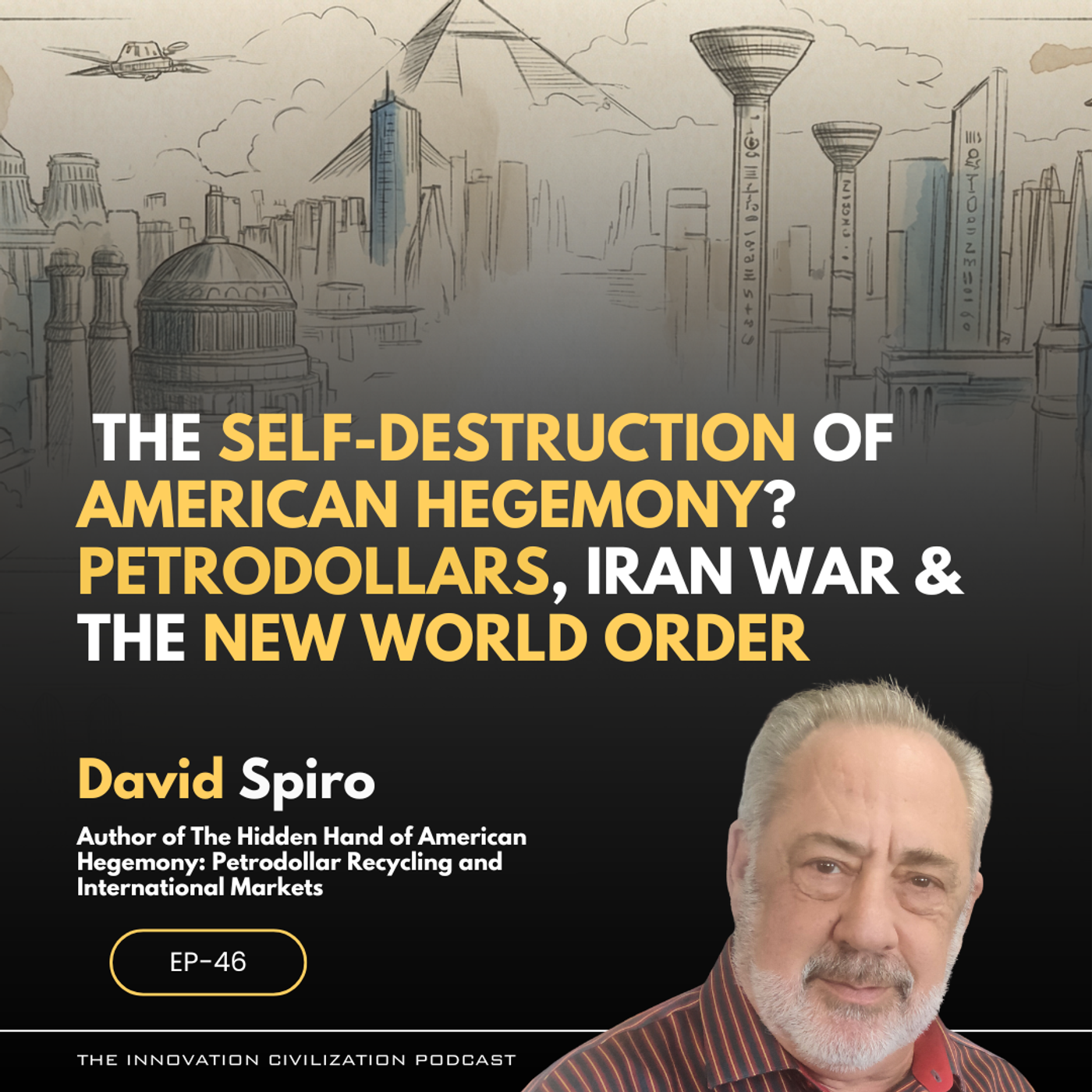 #46 - David Spiro : Iran, Petrodollars & the New World Order✨ | petrodollarsglobal finance+5 | David E. Spiro | Cornell University PressThe Hidden Hand of American Hegemony: Petrodollar Recycling and International Markets | United StatesIran | petrodollar recyclingglobal debt markets+6 | — | 34m 22s | |
| 4/3/26 | 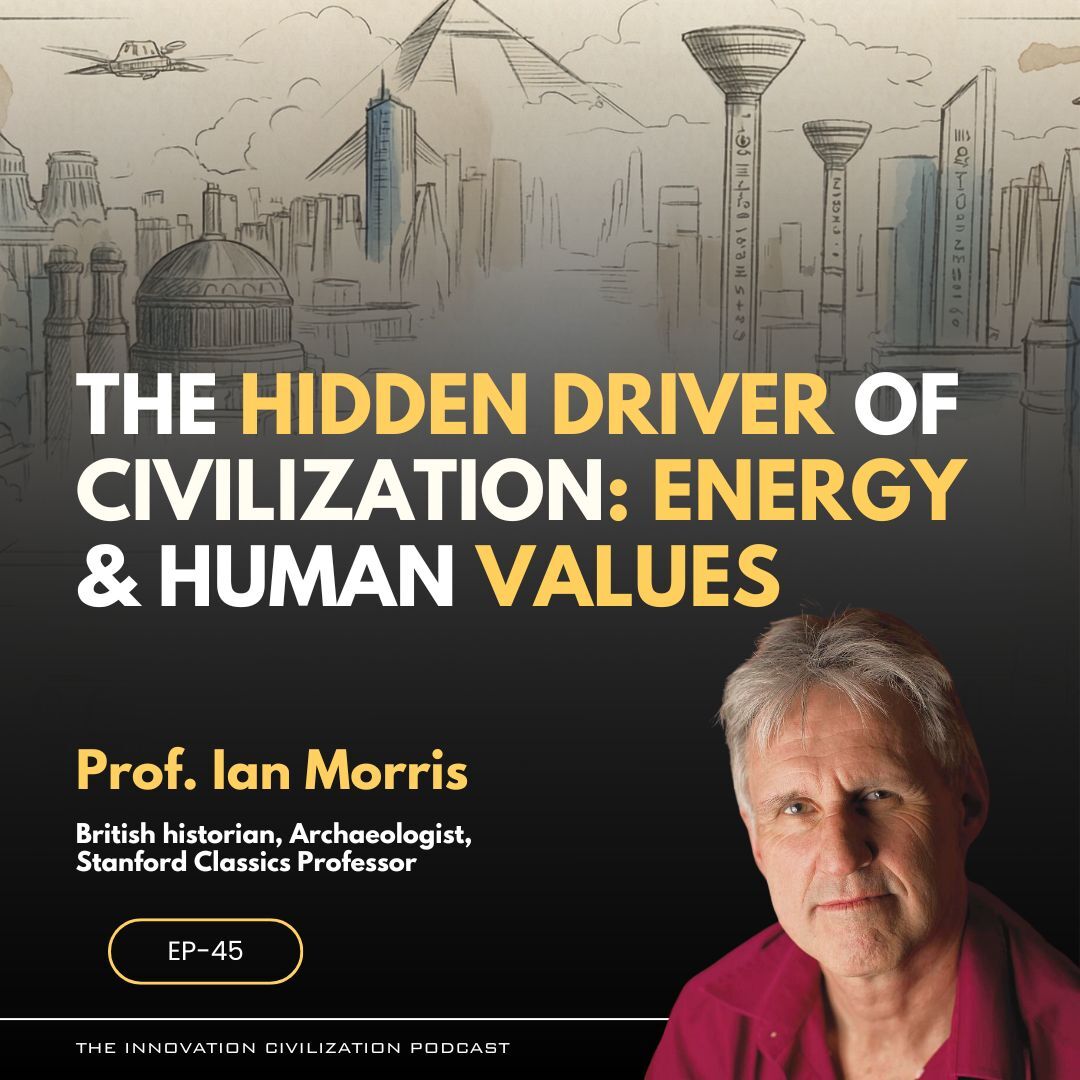 #45 - Prof. Ian Morris : The Hidden Driver of Civilization: Energy & Human Values✨ | energy and civilizationhuman values+4 | Ian Morris | Foragers, Farmers, and Fossil Fuels | — | energy systemshuman values+6 | — | 57m 35s | |
| 2/1/26 | 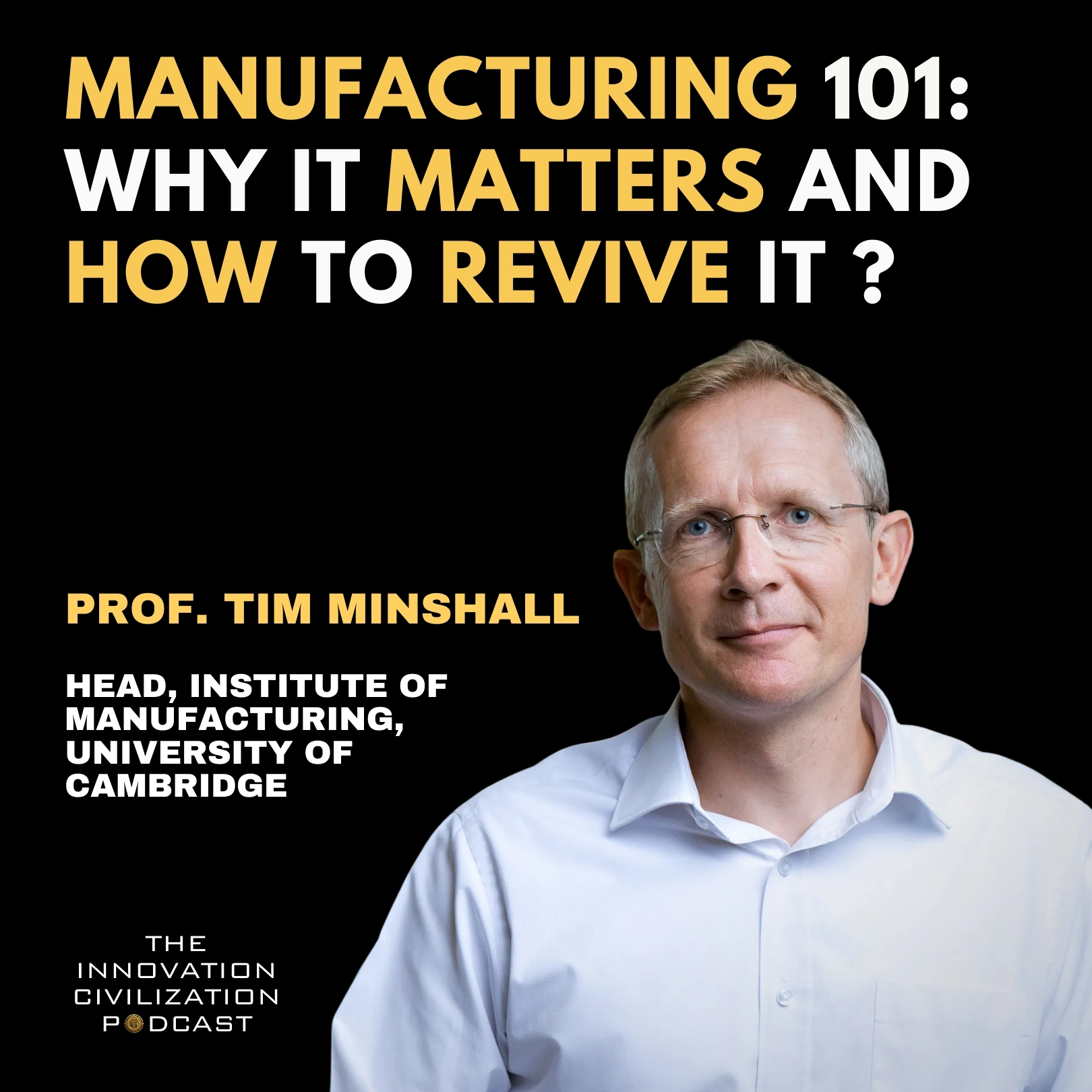 #44 - Prof. Tim Minshall : Manufacturing 101: Why It Matters and How to Revive It?✨ | innovationmanufacturing+4 | Prof. Tim Minshall | University of CambridgeInstitute of Manufacturing | UKEurope | innovationmanufacturing+5 | — | 53m 02s | |
| 1/3/26 | 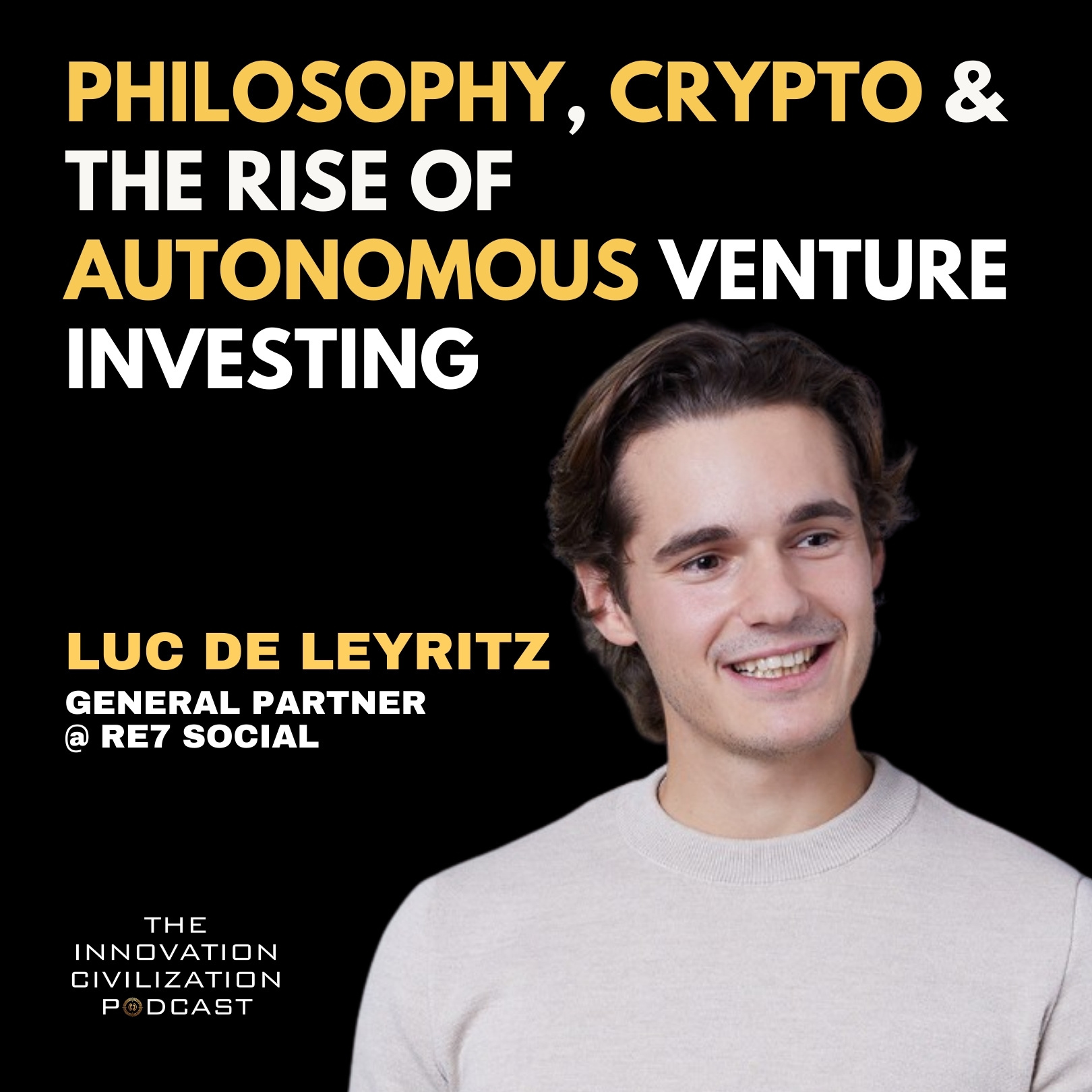 #43 - Luc de Leyritz : Philosophy, Crypto & The Rise of Autonomous Venture Investing✨ | philosophycrypto+5 | Luc de Leyritz | stablecoinsDeFi lending+4 | — | cryptoventure capital+6 | — | 43m 04s | |
| 11/29/25 | 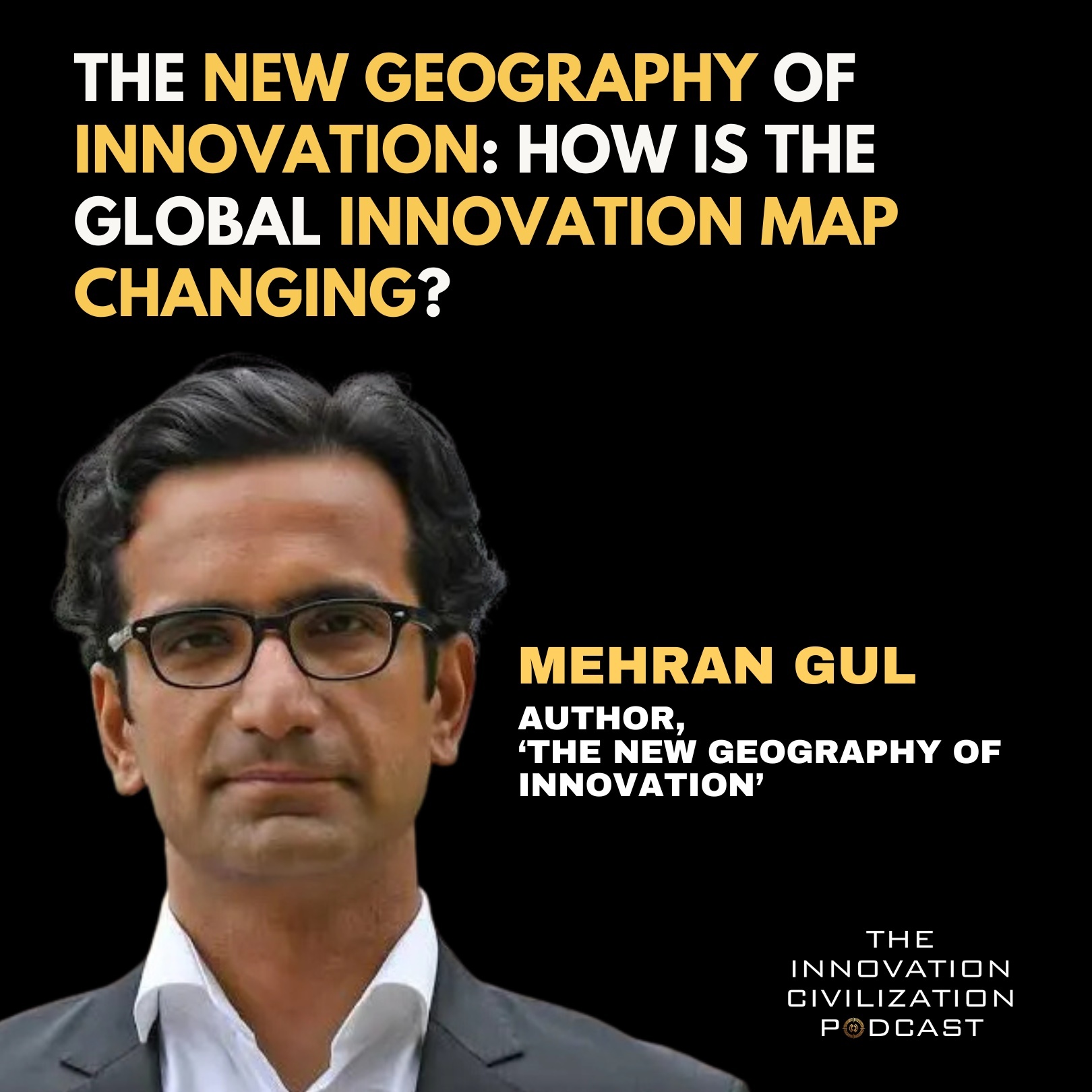 #42 - Mehran Gul : The NEW GEOGRAPHY of Innovation: How Is The Global Innovation Map Changing?✨ | global innovationtechnology development+4 | Mehran Gul | World Economic ForumWorld Bank+1 | ChinaSingapore+2 | innovationSilicon Valley+7 | — | 51m 05s | |
| 10/19/25 | 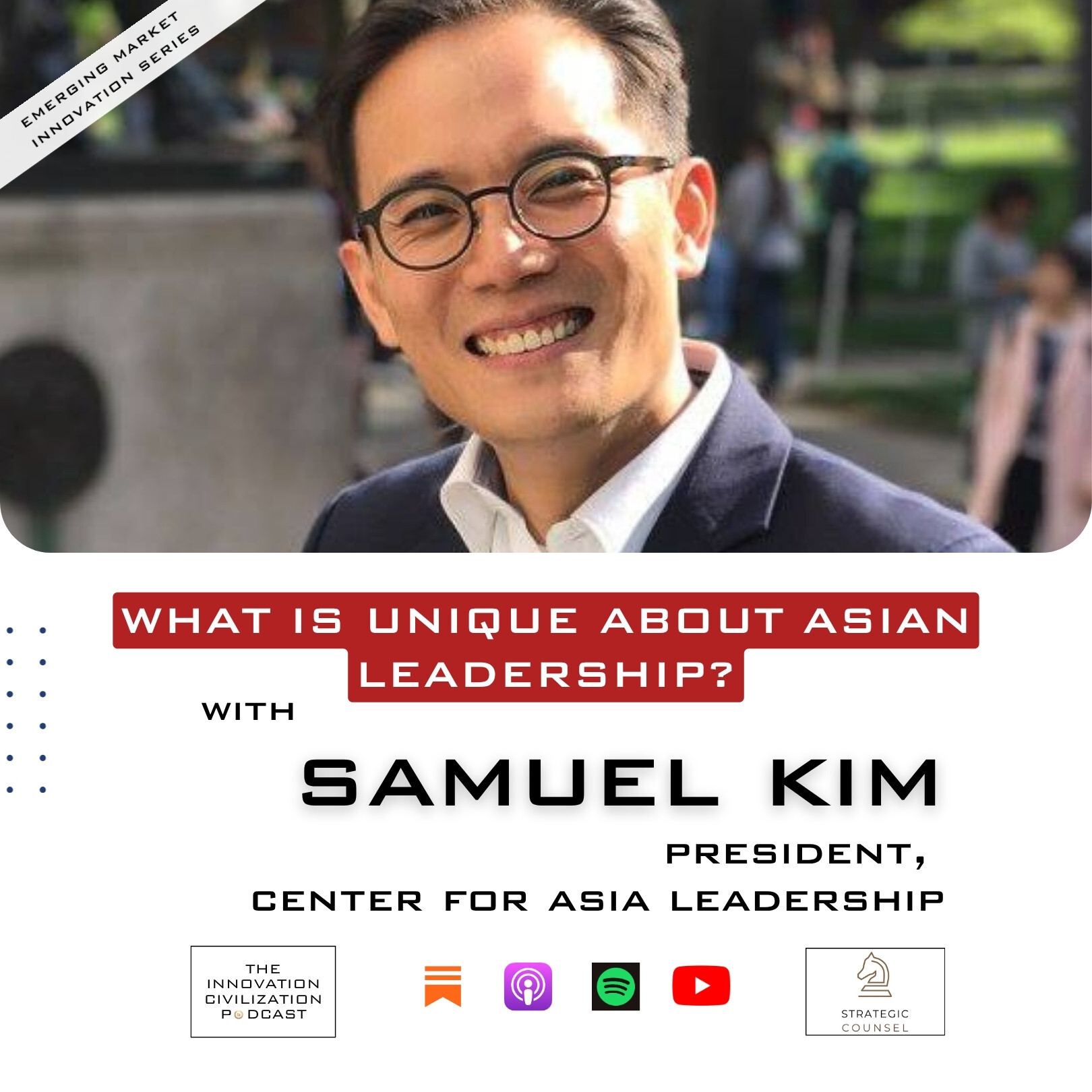 #41 - Samuel Kim : What Is Unique About Asian Leadership? Masterclass From An Expert✨ | Asian leadershipcultural differences+4 | Samuel Kim | Center for Asia LeadershipUN+1 | PhilippinesKorea | leadershipAsia+5 | — | 45m 32s | |
| 9/13/25 | 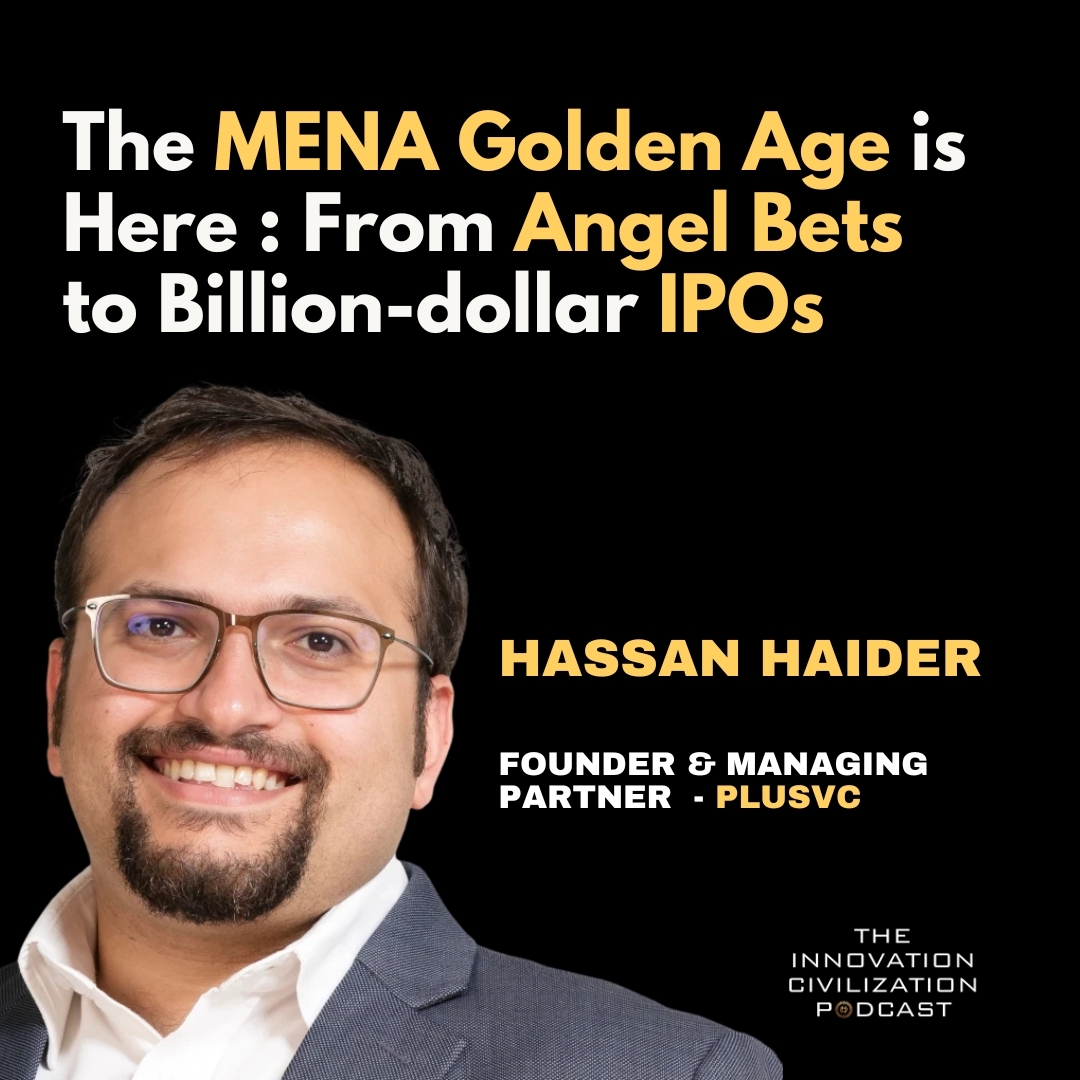 #40 - Hassan Haider : The MENA Golden Age is Here : From Angel Bets to Billion-dollar IPOs✨ | startup ecosystemventure capital+4 | Hassan Haider | AIcrypto+2 | Middle East and North AfricaBahrain+2 | MENAventure capital+5 | — | 37m 36s | |
| 8/22/25 | 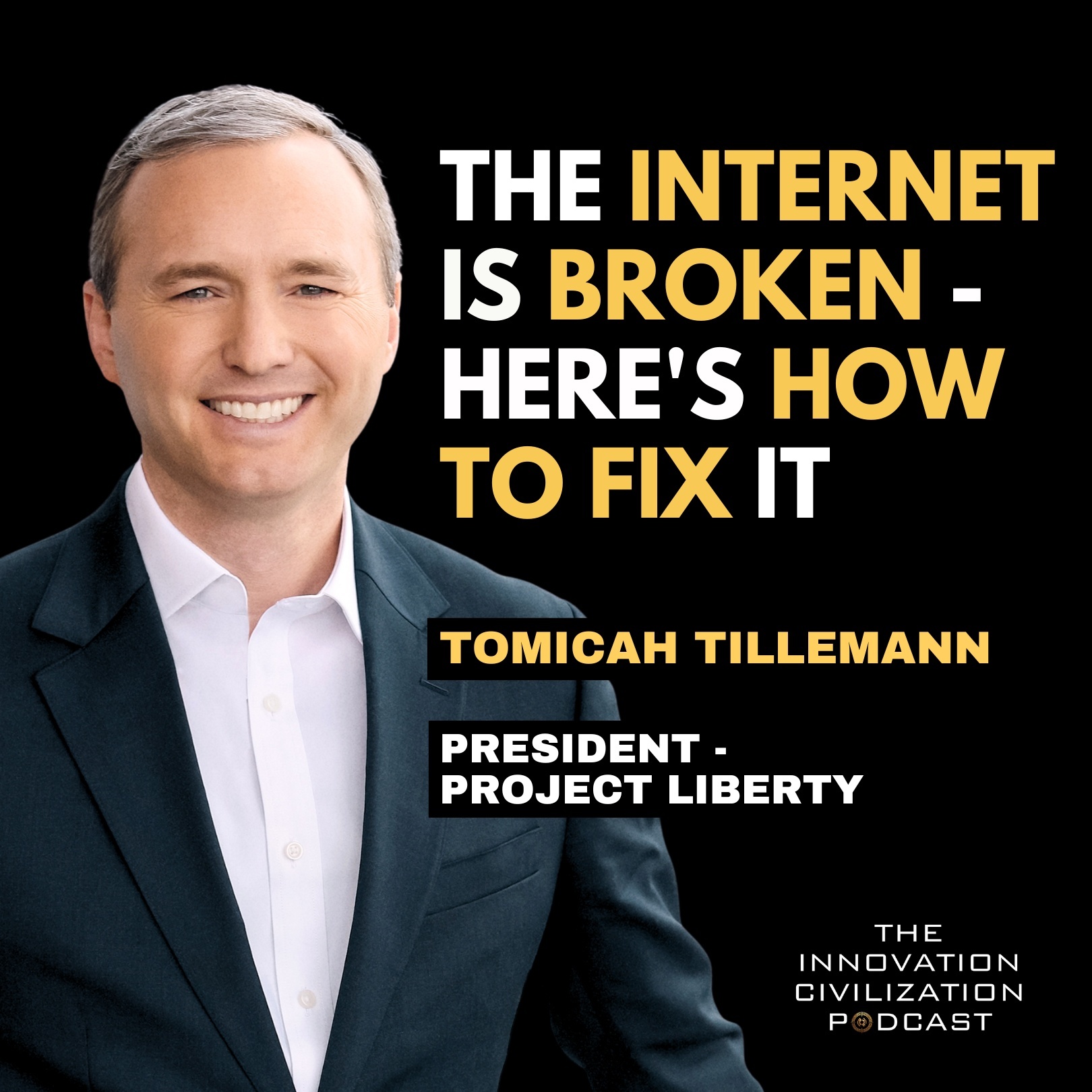 #39 - Tomicah Tillemann : The Internet Is Broken - Here's How To Fix It✨ | Internet governancedigital rights+4 | Tomicah Tillemann | Project LibertyU.S. State Department+3 | — | digital sovereigntydata ownership+4 | — | 45m 10s | |
| 6/27/25 | 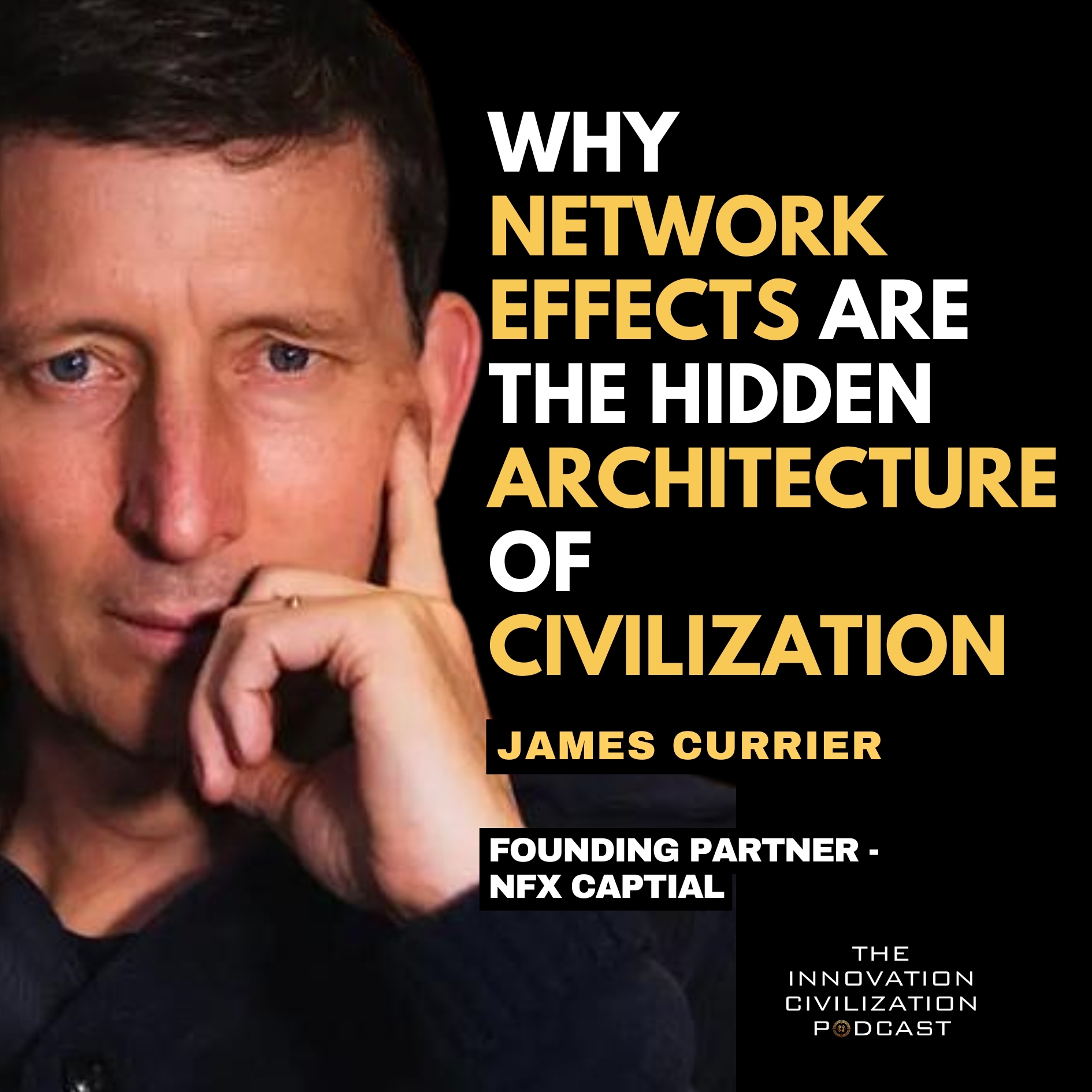 #38 - James Currier : Why Network Effects Are the Hidden Architecture of Civilization✨ | network effectsstartups+4 | James Currier | DoorDashLyft+5 | — | network effectsstartups+5 | — | 52m 27s | |
| 5/23/25 | 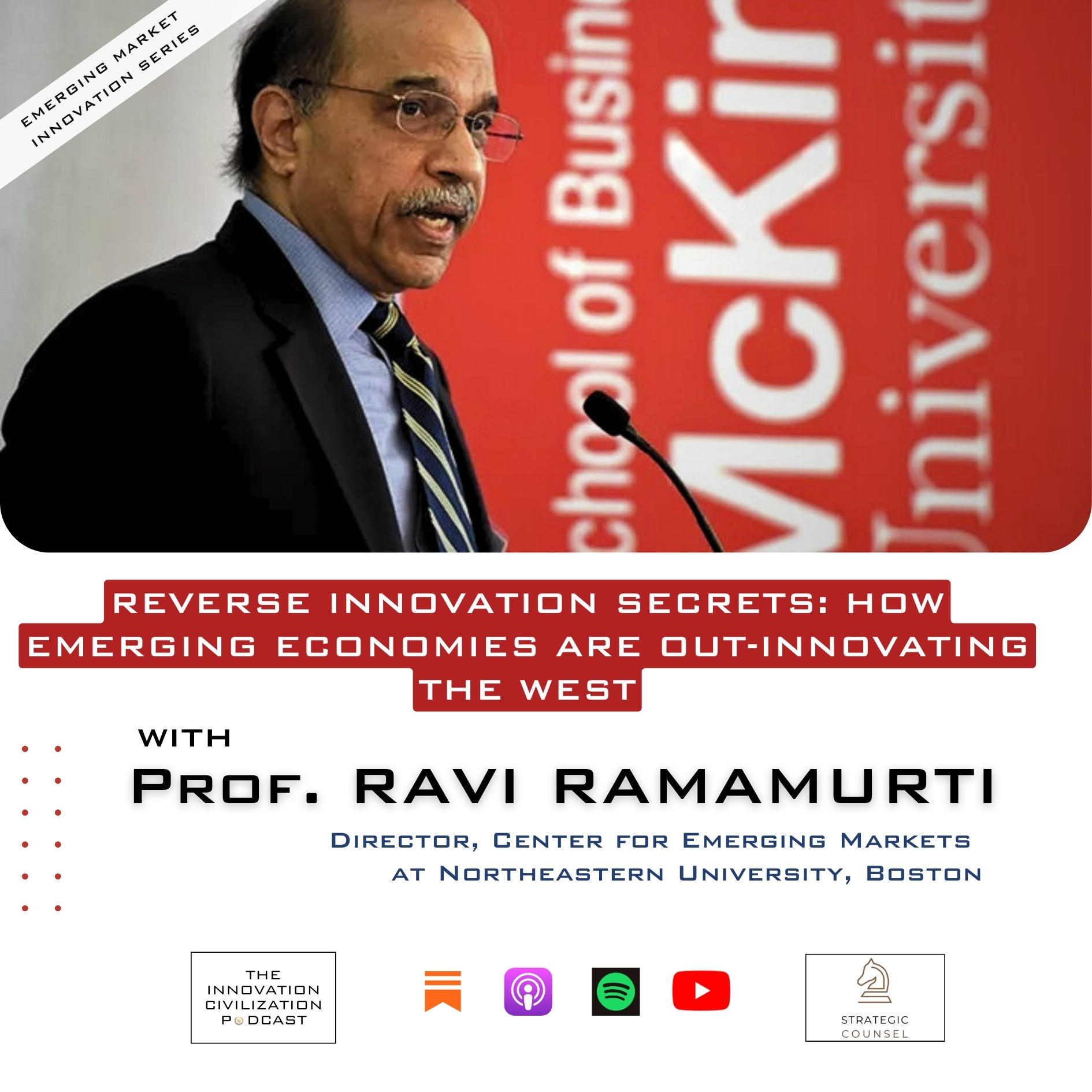 #37 - Ravi Ramamurti : Reverse Innovation Secrets: How Emerging Economies Are Out-Innovating The West✨ | reverse innovationemerging economies+4 | Ravi Ramamurti | Center for Emerging MarketsNortheastern University+1 | IndiaU.S.+1 | reverse innovationemerging markets+5 | — | 46m 18s | |
Want analysis for the episodes below?Free for Pro Submit a request, we'll have your selected episodes analyzed within an hour. Free, at no cost to you, for Pro users. | |||||||||
| 4/26/25 | 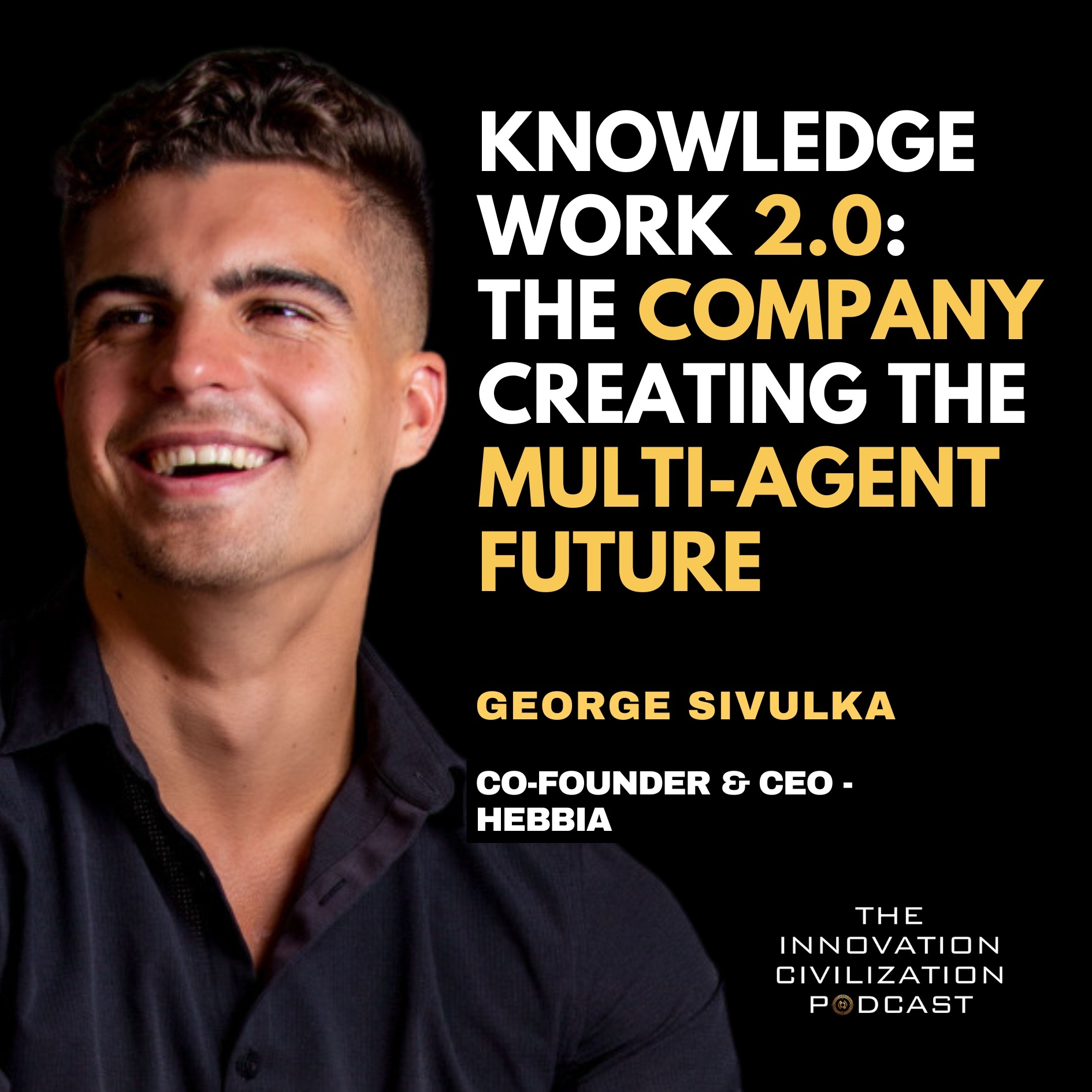 #36 - George Sivulka : Knowledge Work 2.0: The Company Creating The Multi-Agent Future✨ | future of workmulti-agent systems+5 | George Sivulka | HebbiaPaypal+7 | — | multi-agent orchestrationAI meta-learning+6 | — | 37m 50s | |
| 2/16/25 | 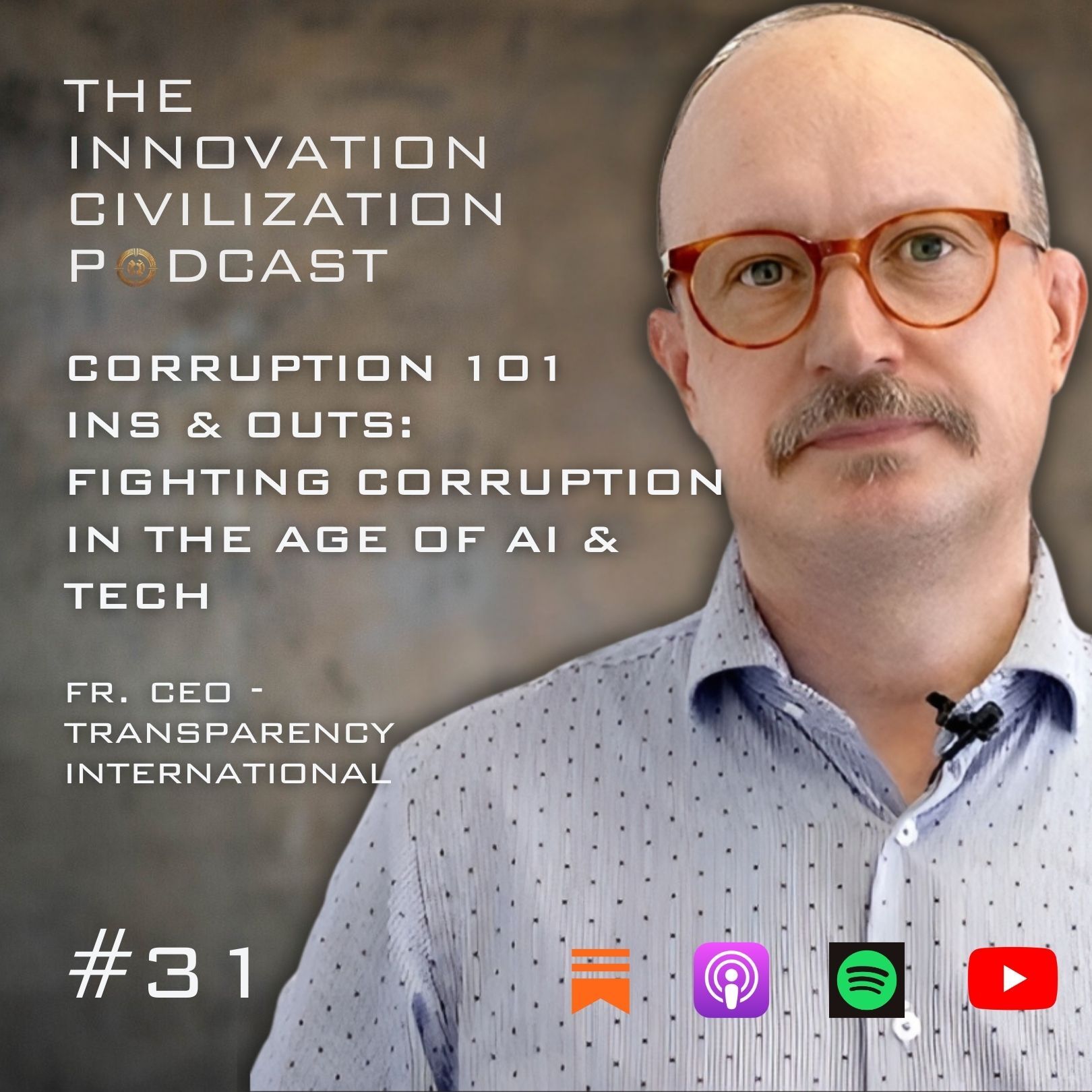 #31 - Daniel Eriksson - Corruption 101 Ins & Outs: Fighting Corruption in the Age of AI & Tech | In this episode, we sat down with Daniel Eriksson, former CEO of Transparency International, to explore how corruption operates globally and what can be done to combat it. Corruption is one of the most pervasive challenges facing the world today. But how do we dismantle it, especially when it's deeply entrenched in political systems? Daniel has spearheaded anti-corruption initiatives across more than 100 countries, leading advocacy efforts to challenge corrupt systems, promote transparency, and hold the powerful accountable. From state capture to the misuse of emerging technologies, he sheds light on how corruption evolves and how we can fight back. We dive deep into: Understanding Corruption: Breaking down the types of corruption, from petty bribery to grand corruption and state capture. The Role of Transparency International: How TI’s Corruption Perception Index works and its impact on global anti-corruption efforts. Global North’s Role in Enabling Corruption: How countries like the UK and Switzerland facilitate money laundering from the Global South. Emerging Technologies in the Fight Against Corruption: The potential of AI and blockchain to detect and prevent corrupt practices. Success Stories: How Ukraine’s digital transformation has made it a leading example in anti-corruption during wartime. Key Takeaways from the Episode: 1. Corruption Defined: Daniel Eriksson explains corruption as the abuse of entrusted power for personal gain, highlighting its various forms, from petty corruption to state capture. 2. Transparency as a Cure: Open data, digital public procurement, and accessible financial records are key to minimizing corruption, especially in high-risk sectors like defense and real estate. 3. The Global North’s Responsibility: Wealth stolen from the Global South often ends up in the Global North. Daniel calls for stronger regulations to prevent money laundering through real estate, anonymous shell companies, and financial systems. 4. The Power of AI and Blockchain: While blockchain remains underutilized, AI holds promise in analyzing large datasets to uncover hidden corruption, though challenges remain in its adoption. 5. Ukraine’s Anti-Corruption Journey: Despite being at war, Ukraine has climbed Transparency International’s corruption rankings through citizen-driven efforts, digitalization, and political will. 6. Challenges for Transitioning Countries: For countries like Bangladesh undergoing political transitions, Daniel advises focusing on high-impact sectors like public procurement to build transparency and trust. 7. Fighting State Capture: Addressing corruption at the highest levels requires systemic change, from legal reforms to digital transparency measures. 8. A Call for Global Action: Daniel emphasizes the need for democratic countries to block dirty money inflows and support global anti-corruption initiatives. Join us in this compelling conversation with Daniel Eriksson as we explore the complexities of corruption and the tools we need to fight it. Follow our host (@iwaheedo) for more insights on governance, transparency, and global development. Timestamps: (00:00) - Intro (02:12) - What is Transparency International and how does it fight global corruption? (03:07) - Is rooting out corruption the key to solving challenges in emerging markets? (07:05) - What separates legal lobbying from political power hijacking and corruption? (09:37) - How is the Corruption Perceptions Index constructed and what is it used for? (12:00) - Is there a link between corruption, lack of democracy, and weak institutions? (16:26) - Has global corruption increased, decreased, or remained the same over the past century? (18:05) - What is the cause of state capture corruption? (19:31) - How are emerging technologies reshaping the fight against corruption? (22:30) - Is blockchain transforming anti-corruption efforts with smart contracts and transparency? (29:08) - Can online tendering reduce corruption by increasing transparency? (30:30) - What government data should be open or closed to minimize corruption? (33:02) - Are large language models (LLMs) being used to combat corruption? (39:02) - Is the future of anti-corruption driven by grassroots citizen efforts or top-down government initiatives? (39:52) - What advice would you give to leaders of transition countries fighting corruption? (44:38) - Does systemic anti-corruption reform focus on laws, people, or processes? (47:49) - How can democratic leaders manage opposing forces when tackling systemic corruption? (49:25) - How effective are anti-corruption commissions in fighting systemic corruption? (52:12) - Could a national public dashboard of KPIs and finances revolutionize government transparency? (57:09) - Do global north countries have incentives to stop illicit money inflows from corrupt elites? (59:50) - Outro | — | ||||||
| 2/2/25 | 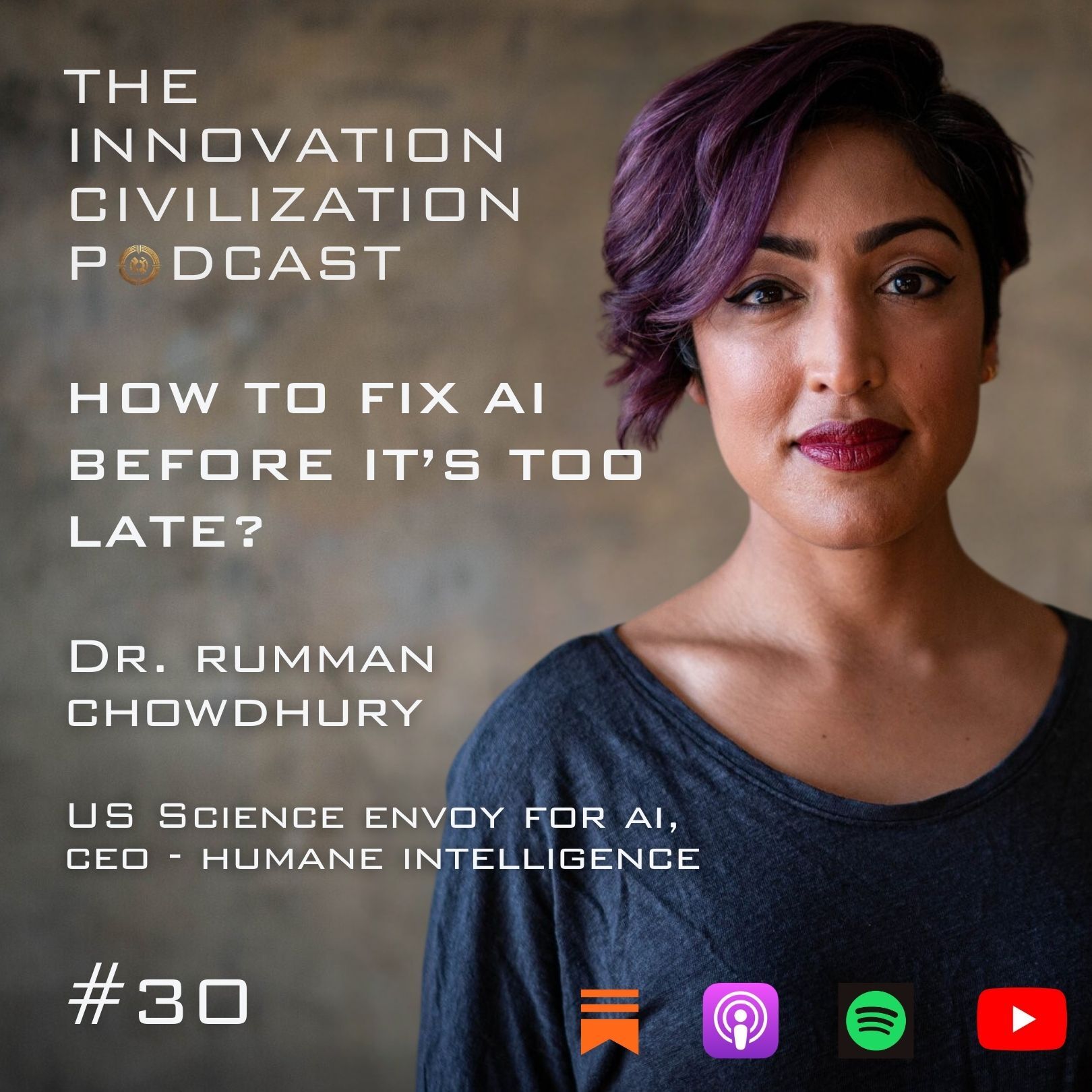 #30 - Dr. Rumman Chowdhury - How to Fix AI Before It's Too Late? | We're joined by the US Science Envoy for AI, Dr.Rumman Chowdhury, who's a leading expert in responsible AI. We uncover the ethical, technical, and societal implications of artificial intelligence. As AI rapidly eats up the world, the question is what happens when it doesn’t align with human values? How do we navigate the risks of bias, misinformation, and hallucination in AI systems? Dr. Chowdhury has been at the forefront of AI governance, red teaming, and AI risk mitigation. She has worked with global institutions, governments, and tech companies to make AI more accountable, safe, and equitable. From her time at Twitter’s (now X) Machine Learning Ethics Transparency and Accountability team to founding Humane Intelligence, she has actively shaped policies that determine how AI interacts with human society. We dive deep into: - AI bias, disinformation, and manipulation: How AI models inherit human biases and what we can do about it. - Hallucinations in AI: Why generative AI models fabricate information and why it’s not a bug but a feature. - AI governance and regulation: Why unchecked AI development is dangerous, and the urgent need for independent audits. - The risks of OpenAI, Meta, and big tech dominance: Who is really in control of AI, and how can we ensure fair oversight? - How companies should approach AI ethics: Practical strategies businesses can use to prevent harm while innovating responsibly. Key Takeaways from the Episode: 1. AI as a Tool, Not a Mind: Dr. Rumman Chowdhury debunks the myth that AI is alive or sentient. AI is a tool—just like a hammer—it can be used to build or destroy. The real issue isn’t AI itself, but how humans choose to use it. 2. Why AI Hallucinations Are Unavoidable: Unlike traditional machine learning models, generative AI doesn’t compute facts; it predicts what words statistically fit together. This means hallucinations—where AI completely fabricates information—are not a flaw, but an inherent feature of how these models work. 3. The Hidden Biases in AI Models: AI models are only as good as their training data, which often reflects human biases. Dr. Chowdhury discusses how AI systems unintentionally amplify biases in hiring, finance, and law enforcement, and what needs to be done to fix it. 4. The Illusion of AI Objectivity: Many assume AI models are neutral, but the truth is that all models are built with human input, which means they carry subjective biases. Dr. Chowdhury warns that the real danger is allowing a handful of tech elites to dictate how AI shapes global narratives. 5. The Need for AI Red Teaming & Auditing: Just like cybersecurity stress tests, AI models need independent stress tests to identify risks before they cause harm. Dr. Chowdhury shares her experience leading global AI red teaming exercises with scientists and governments to assess AI’s real-world impact. 6. OpenAI and the Power Problem: Is OpenAI truly aligned with public interest? Dr. Chowdhury critiques how AI giants hold more power than entire nations and explains why AI must be treated as a public utility rather than a corporate monopoly. 7. Why AI Needs More Public Oversight: Most AI governance is self-imposed by the companies that build these models. Dr. Chowdhury calls for third-party, independent AI audits, similar to financial auditing, to ensure transparency and accountability in AI decision-making. 8. The Role of Governments vs. Private AI Firms: With AI development largely controlled by private companies, what role should governments play? Dr. Chowdhury argues that governments must create AI Safety Institutes, set up national regulations, and empower independent researchers to hold AI accountable. Timestamps: (00:00) - Introduction to Dr. Rumman Chowdhury and AI ethics (03:03) - Why AI is just a tool (and how it’s being misused) (04:58) - The difference between machine learning, deep learning, and generative AI (07:43) - Why AI hallucinations will never fully go away (11:46) - AI misinformation and the challenge of verifying truth (13:26) - The ethical risks of OpenAI and Meta’s control over AI (18:20) - The role of red teaming in stress-testing AI models (30:26) - Should AI be treated as a public utility? (35:43) - Government vs. private AI oversight—who should regulate AI? (37:22) - The case for third-party AI audits (53:51) - The future of AI governance and accountability (61:03) - Closing thoughts and how AI can be a force for good Join us in this deep dive into the world of AI ethics, accountability, and governance with one of the field’s top leaders. Follow our host (@iwaheedo) for more insights on technology, civilization, and the future of AI. | — | ||||||
| 11/1/24 | 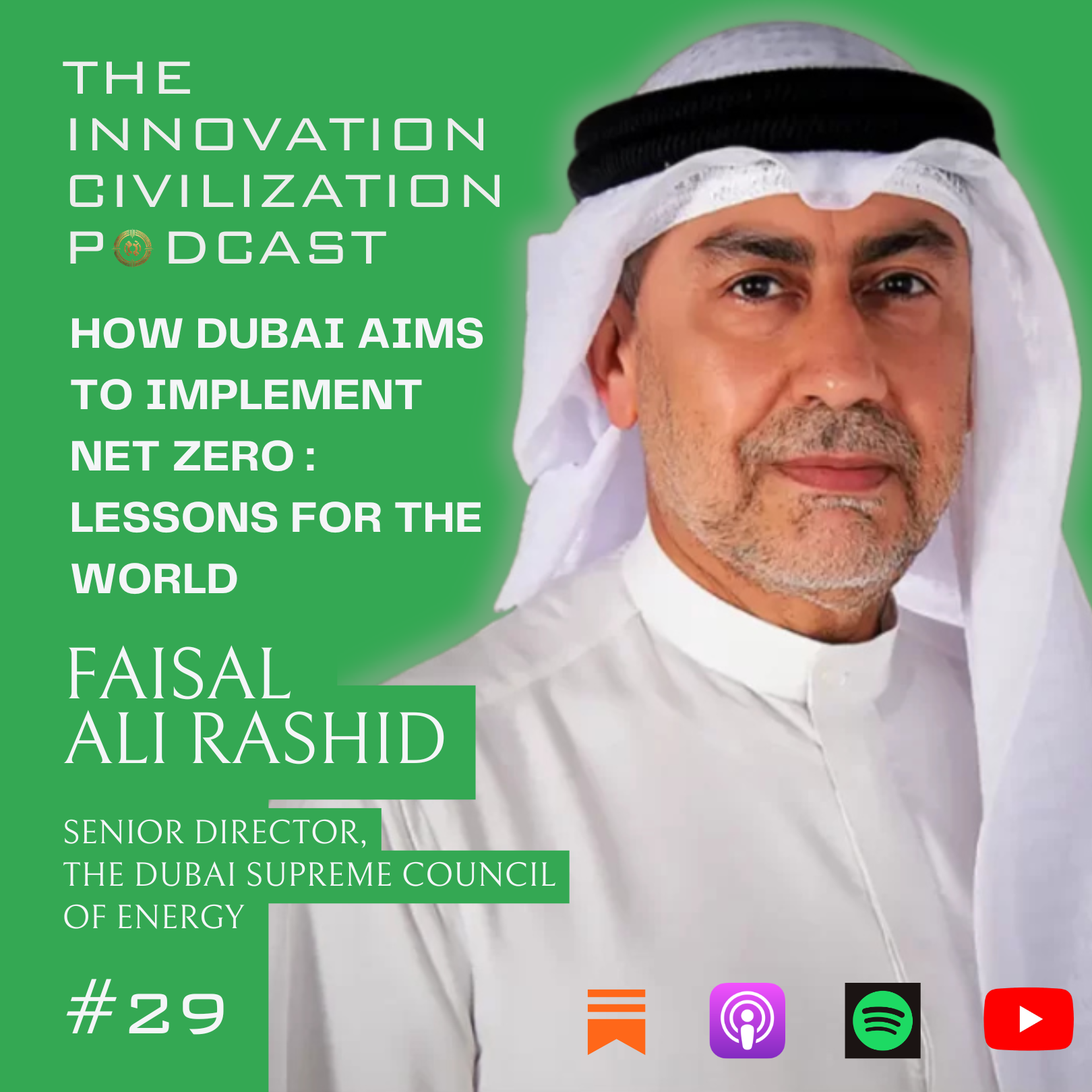 #29 - Faisal Ali Rashid - How Dubai Aims To Implement Net-Zero : Lessons For the World | We welcome Faisal Ali Rashid, Sr. Director at the Dubai Supreme Council of Energy, to learn from Dubai's ambitious drive toward achieving net zero by 2050. Faisal, a leader in energy strategy and sustainability, oversees programs transforming Dubai’s approach to energy, water, and waste management, setting a new standard for urban sustainability in the region. We were also joined by our friend on the podcast, Tushar Narula - a sustainability advisor and a climate change expert whose work has spanned different continents, industries, and top institutions like UC Berkeley, MIT, Harvard, & Imperial College London. In this episode, Faisal shares Dubai’s comprehensive strategies for renewable energy and demand-side management, revealing key milestones like achieving 25% renewable energy in the total energy mix and aiming for 100% renewable energy by 2050. He explains not only the WHAT but HOW Dubai plans to achieve these in detail. We also discuss the Dubai Supreme Council of Energy’s regulatory framework, incentive programs, and innovative public-private partnerships (PPPs) that fund green projects, including the groundbreaking Mohammed bin Rashid Al Maktoum Solar Park. Faisal highlights the role of community involvement and youth leadership in advancing sustainability, describing how the Advancing Net Zero initiative empowers the next generation to contribute to Dubai’s climate goals. All the topics covered in the episode: -Dubai’s Renewable Energy Goals: Achievements and future targets toward 100% renewable energy. -Demand-Side Management: Reducing consumption and increasing energy efficiency. -Policy and Financial Incentives: How Dubai fosters sustainable development through strategic regulations and PPPs. -Innovation and Technology: Cutting-edge projects in solar, smart metering, and energy storage. -Community and Youth Engagement: The role of education and volunteerism in driving net-zero progress. Join us as we dive into Dubai’s pioneering efforts to build a sustainable, net-zero future with one of its leading energy strategists. Follow our host, Waheed Rahman (@iwaheedo), for more updates on tech, civilizational growth, progress studies, and emerging markets. Timestamps: (00:00) - Intro (02:30) - Faisal’s background and Dubai’s sustainability journey (03:58) - Demand-side management and green building initiatives (05:47) - Dubai’s renewable energy milestones and 2050 goals (09:38) - Policy and incentives driving green transition in the middle east (18:43) - The role of PPPs in funding sustainability projects (24:12) - Dubai’s innovation in energy storage and technology (32:33) - Key lessons for global cities on climate action (38:33) - Youth and community involvement in net-zero goals (41:28) - Outro | — | ||||||
| 9/27/24 | 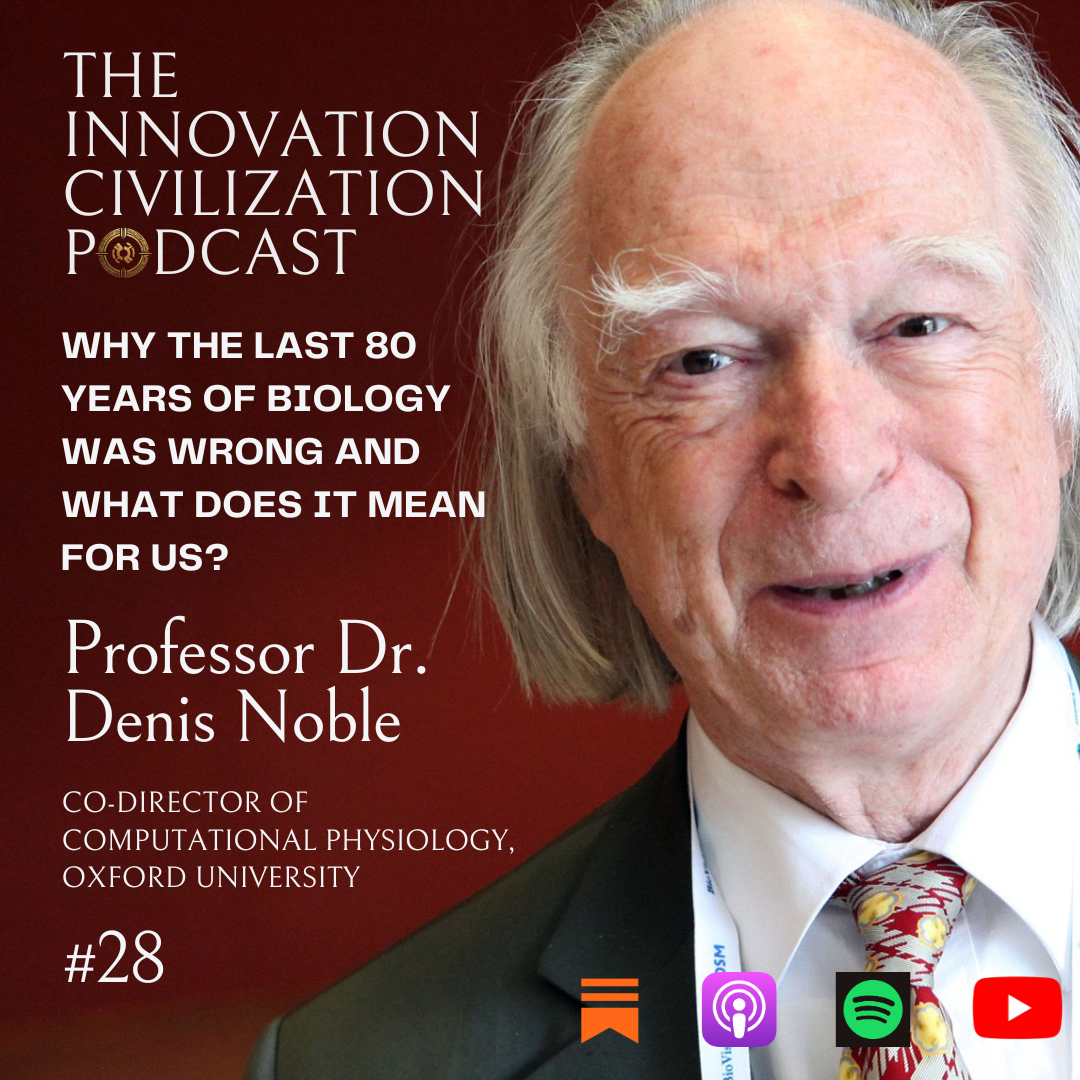 #28 - Denis Noble - Why The Last 80 Years of Biology Was Wrong & What Does it Mean For Us? | We're joined by Dr. Denis Noble, Professor Emeritus of Cardiovascular Physiology at the University of Oxford, and the father of 'systems biology'. He is known for his groundbreaking creation of the first mathematical model of the heart's electrical activity in the 1960s which radically transformed our understanding of the heart. Dr. Noble’s contributions have revolutionized our understanding of cardiac function and the broader field of biology. His work continues to challenge long-standing biological concepts, including gene-centric views like Neo-Darwinism. In this episode, Dr. Noble discusses his critiques of fundamental biological theories that have shaped science for over 80 years, such as the gene self-replication model and the Weissmann barrier. He advocates for a more holistic, systems-based approach to biology, where genes, cells, and their environments interact in complex networks rather than a one-way deterministic process. We dive deep into Dr. Noble's argument that biology needs to move beyond reductionist views, emphasizing that life is more than just the sum of its genetic code. He explains how AI struggles to replicate even simple biological systems, and how biology’s complexity suggests that life’s logic lies not in DNA alone but in the entire organism. The conversation covers his thoughts on the flaws of Neo-Darwinism, the influence of environmental factors on evolution, and the future of biology as a field that recognizes the interaction between nature and nurture. We also explore the implications of his work for health and longevity, and how common perspectives on genetics might need rethinking. All the topics we covered in the episode: -The critique of Neo-Darwinism and the future of evolutionary theory. -Systems biology: Understanding life beyond the gene. -The complexity of biology: Why reductionism falls short. -Evolution and inheritance: The role of environment in shaping species. -Health implications of Dr. Noble’s work: Longevity, lifestyle, and the limits of genome-based predictions. Join us for a thrilling discussion on the future of biology, evolution, and the practical implications for health and science. Follow our host, Waheed Rahman (@iwaheedo), for more updates on tech, civilizational growth, progress studies, and emerging markets. Timestamps: (00:00) - Intro (03:04) - Why Was The Last 80 Years of Biology Wrong? (08:17) - Where does Logic come from? (13:03) - Is Evolution Truly Random or Driven by Purpose? (22:05) - Is Nurture more important than Nature? (29:06) - Denis Noble calls for a rewrite of all Biology textbooks (32:48) - Is Neo-Darwinism Just a Model? Understanding the Difference Between Evolution and the Creationism Debate (39:22) - Natural Selection vs. Lamarckian Evolution: How Darwin Changed Our Understanding of Survival Traits (46:03) - Reductionism vs. Integrationism in Science: How the 'Third Way' Challenges Neo-Darwinism (49:43) - What Does Epigenetics Mean for the Average Person? How Denis Noble's Paradigm Shift Impacts Everyday Health and Life? (69:29) - Is Western Science Facing a Paradigm Shift? Rethinking How We Determine Truth and Health in Light of Eastern and Western Influences (75:21) - Why Reductionism Dominates Science: The Political and Practical Challenges of Embracing a Systems Biology Approach (82:49) - Can We Trust AI to Behave Ethically? The Need to Connect Philosophy with Technology in AI Development (86:46) - Outro | — | ||||||
| 8/24/24 | 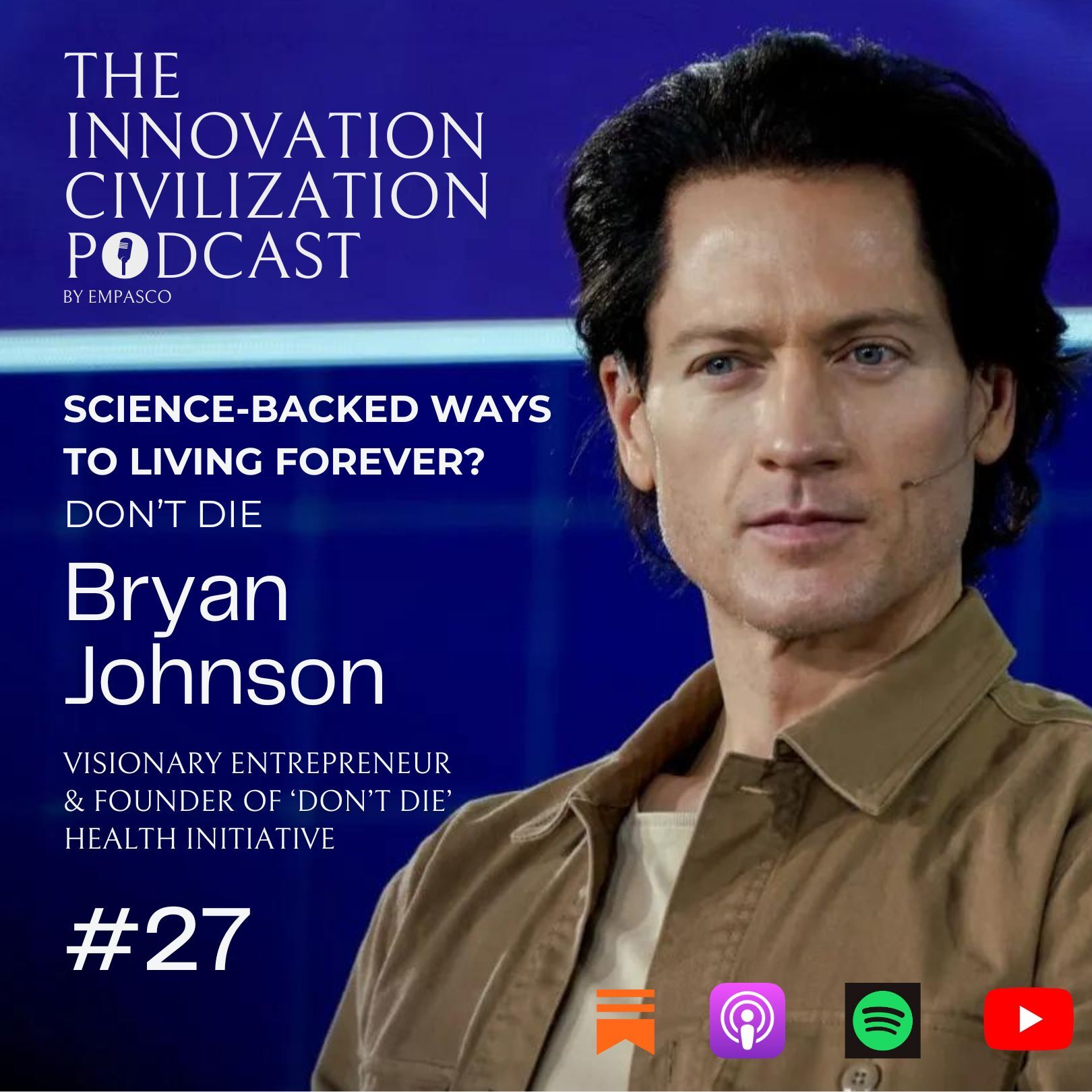 #27 - Bryan Johnson - Science-backed Ways to Living FOREVER? 'Don’t Die' | We welcome Bryan Johnson, multi-millionaire visionary entrepreneur and founder of "Don't Die." Known as the most measured man in human history, Bryan is pushing the boundaries of human longevity by meticulously tracking his body's biomarkers in pursuit of an extended health span, not just lifespan. His 'Blueprint' protocols can be found here. Bryan's journey from revolutionizing digital payments with Braintree Venmo, which he sold to PayPal for $800 million, to dedicating over $100 million of his fortune to extend human life reveals a deep commitment to humanity's future. Through his initiative Blueprint, Bryan is developing an algorithm that takes better care of our bodies than we can do ourselves, aiming for a world where "Don't Die" becomes a societal mantra. In this episode, Bryan discusses his philosophy behind "Don't Die" and how it could reshape politics, economics, ethics, and more. He explores the potential of AI to revolutionize decision-making and extend human capabilities beyond our current limitations. Bryan also put forward the challenges of aligning AI with human longevity and the ethical dilemmas that arise when pursuing extended life spans. The conversation spans topics such as the future of artificial intelligence, the exploration of human consciousness, and the need for societal shifts toward sustainable living. Bryan talks about the potential of technology to transform our understanding of life and offers a visionary perspective on what humanity might look like in the 25th century. We also cover how Bryan’s work could redefine what it means to be human, the importance of mastering the basics of health, and the potential for algorithms to outperform human decision-making in every aspect of life. All the topics that we covered in the episode: -Health and Longevity: Bryan's quest to extend life through science and technology. -AI and Human Potential: Artificial intelligence's role in shaping humanity's future. -Societal Transformation: How "Don't Die" could redefine our approach to politics, ethics, and economics. -Consciousness and Technology: Exploring the next frontier of human experience. -Ethical Challenges: The dilemmas of aligning AI with human longevity. Join us for a forward-thinking discussion as we explore the intersection of technology, longevity, and the future of civilization with one of the leading minds in the field. Follow our host, Waheed Rahman (@iwaheedo), for more updates on tech, civilizational growth, progress studies, and emerging markets. Subscribe to our newsletter to get these directly into your inbox. Here are the timestamps for the episode. On some podcast players, you should be able to click the timestamp for the episode: (00:00) - Intro (02:56) - Bryan's background and the origins of "Don't Die" (04:56) - Limitations of LLMs and their reliance on historical data for generating responses (07:57) - Living with a future-oriented mindset and connecting the dots retrospectively (09:41) - Trust in science through the use of biomarkers and objective data as a source of truth (11:15) - The philosophical motivations behind pursuing rejuvenation science and the desire to live forever despite not fearing death (14:37) - Why might humanity's progress in decision-making and societal improvements not continue at the same rate despite past achievements? (17:51) - Reflecting on the idea that 'Don't die' is the greatest virtue, contrasting it with the ethical teachings of philosophers like Socrates, Confucius, and Plato (19:47) - How does the paradigm shift of 'don't die' impact all actions and social structures and confront the influence of AI-driven recommendation systems on personal behavior? (21:54) - The contrast between inherent human nature, whether inherently good or bad and the internal conflict between different versions of ourselves, like 'evening Brian' and 'morning Brian? (25:36) - Discussing whether the goal of the Blueprint is to achieve a consistently performing self across different times and situations (27:54) - Reflecting on the overemphasis on material goals like financial success and questioning their true impact on long-term happiness (29:40) - The mental orientation needed to optimize for longevity, balancing material gains with a higher purpose and finding the best mindset to subscribe to (31:14) - How Stoicism and similar philosophies suggest that dissociating from base desires leads to personal freedom and an optimized self, including firing 'Evening Brian.' (34:38) - The possibility of developing technology or algorithms to eliminate the 'lower self,' reducing vulnerability to temporary pleasures and their negative biological consequences (36:38) - The development of protocols focused on the mind and consciousness, beyond biological approaches like diet and nutrition (38:13) - Implementation of the 'Blueprint' (41:54) - Comparing the concept of the Blueprint to religious protocols (43:52) - Explaining Zero-based thinking (45:50) - Discussing how generational context and societal stability influence decision-making, contrasting current choices with earlier necessities during foundational periods, like John Adams' era (47:58) - Outro | — | ||||||
| 5/24/24 | 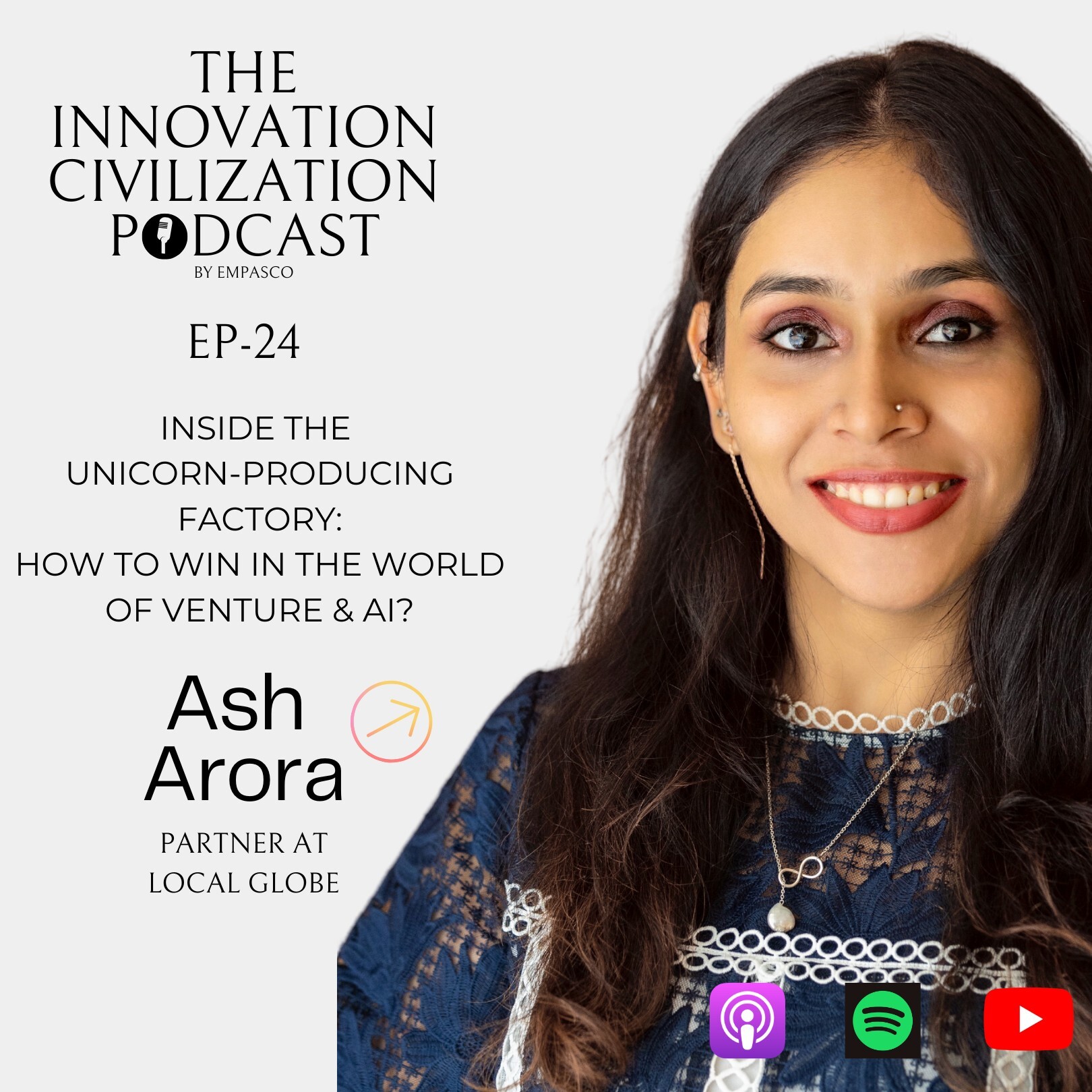 #24 - Ash Arora - Inside The Unicorn-Producing Factory: How To Win In The World of Venture & AI with LocalGlobe's Youngest Partner? | We're joined by Ash Arora, a Partner at LocalGlobe, to discuss the intricacies of venture capital, blockchain, AI investments, and market dynamics. LocalGlobe, one of the leading early-stage venture capital firms in Europe, ranked #1 early stage fund in EMEA and #3 globally with highest number of unicorns in portfolio, with companies like SoRare, Copper, Robinhood, Wise, Figma, Twitter and LP in a16z, Sequoia etc. Ash shares insights into what sets LocalGlobe apart in the competitive VC landscape, including their comprehensive 52-parameter framework for evaluating investment opportunities and the unique support structure they offer to startups. Ash takes us through the specifics of their blockchain investments, highlighting significant successes such as Sorare, Copper, and Improbable. She explains the importance of due diligence, the unique value-add LocalGlobe provides post-investment, and their strategic approach to both pre-seed and growth-stage funding. The conversation also explores the current market conditions, comparing them to past tech cycles and discussing the resilience of early-stage investments amidst broader market slowdowns. Ash provides her perspective on the impact of tech layoffs and the dynamics of acquiring talent in a fluctuating market. In a detailed discussion on AI, Ash outlines LocalGlobe's broad investment strategy, covering everything from semiconductors to AI applications. She shares thoughts on the future of AI in the venture capital landscape, emphasizing the irreplaceable human touch in evaluating and supporting founders. Ash's expertise in blockchain is evident as she discusses the state of the market, the potential of DeFi, and the future of blockchain technology. She also touches on the regulatory environment and the importance of innovation-friendly policies. Below is a quick synopsis of all the topics we cover: Venture Capital Dynamics: How LocalGlobe maintains its edge with a unique evaluation framework and extensive founder support. Blockchain Investments: Key insights into successful blockchain investments and the future potential of blockchain technology. Market Conditions and Talent Acquisition: Analysis of current market trends and the impact on talent acquisition in tech. AI Investments: LocalGlobe's strategic approach to AI investments, from foundational models to application layers. Regulatory Environment: The role of regulation in fostering or stifling innovation in blockchain and AI. Join us for a comprehensive discussion as we explore the intersection of venture capital, blockchain, AI, and market trends with one of the industry's leading experts. Follow our host, Waheed Nabeel (@iwaheedo), for more updates on tech, civilizational growth, progress studies, and emerging markets. Here are the timestamps for the episode. On some podcast players, you should be able to click the timestamp for the episode. (00:00) - Intro (02:39) - Ash Arora's background and role at LocalGlobe (04:40) - LocalGlobe's unique investment criteria and framework (10:23) - Supporting startups post-investment (13:11) - Investment stages and focus areas (15:24) - Current market conditions and tech layoffs (23:12) - AI investment strategy and market mapping (28:08) - The future of AI and its impact on VC (34:07) - Blockchain market analysis and investment thesis (38:29) - Layer 2 solutions and blockchain infrastructure (46:25) - Meme coins and market dynamics (48:46) - Regulation in blockchain and AI (50:06) - Intersection of AI and blockchain (51:45) - Outro Full Disclaimer: The views, opinions, and thoughts expressed by the guest in this communication are solely their own and do not necessarily reflect those of the hosting entity or its affiliates. The content provided is for informational purposes only and should not be construed as financial advice. The hosting entity and its affiliates do not endorse, recommend, or assume any responsibility for any investment decisions made based on the information provided. Always seek the advice of a qualified financial advisor before making any financial decisions. | — | ||||||
| 5/3/24 | 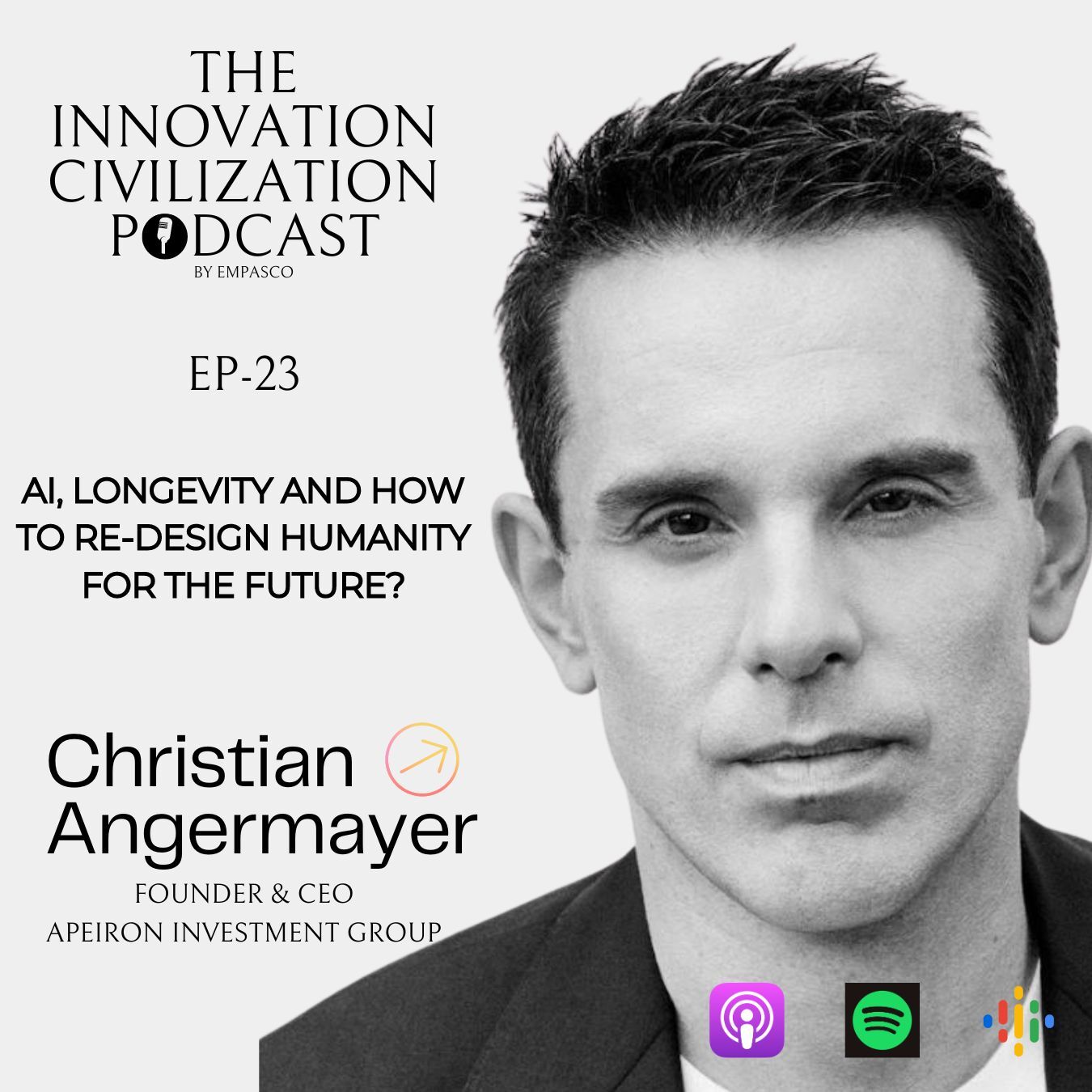 #23 - Christian Angermayer - AI, Longevity & How To Re-Design Humanity For The Future? | We're joined by tech billionaire and investor Christian Angermayer to discuss the 'Next Human Agenda,' i.e., the technological bets he's taking and how they will shape the future of humanity (in terms of computing, health, society, and governments). Over the past 20 years, Christian has been involved in directly building a lot of unicorns and decacorns and has been involved in more than 50 IPOs or exits in the public stock market. Christian is an active thought leader himself, and is affiliated with the World Economic Forum as a Young Global Leader. He's a partner of the Munich security conference and advisor to President Paul Kagame of Rwanda, and also a founding member of President Macron's scale-up Europe initiative. Christian's family office, Apeiron Investment Group, has more than 3 billion US dollars of assets under management and invests across life sciences, fintech, crypto, future tech, experience, hospitality, and happiness. He runs the Angermayer policy initiative and innovation forum, which convenes international heads of State, investors, politicians, and scientists to come together to discuss global priorities. Christian is also passionate about mental health and runs the Aurora Institute, which is the first nonprofit incubator of its kind focused on funding the world's leading individuals and NGOs related to solving the global mental health crisis. We cover a wide array of topics: -The Rise of AI and the Future of Society: What will society look like with full AI/AGI adoption, and how can we prepare for it? -Revolutionizing Biotech and Psychedelics: Gain insights into the ground-breaking developments in biotech and psychedelics, exploring their potential to revolutionize healthcare and mental health treatment. -The Middle Eastern Innovation Landscape: Christian shares insights into the burgeoning tech scene in the Middle East, particularly in countries like the UAE and Saudi Arabia, where governments are fostering environments conducive to technological advancement and biotech innovation. -Geopolitical Realities and Multipolarity: Reflecting on the evolving geopolitical landscape, Christian discusses the strategic maneuvers of emerging powers like China and Russia, as well as the savvy diplomacy of smaller nations seeking to navigate the complexities of a multipolar world. -Brexit and the Future of Europe: Offering astute observations on Brexit and its implications for the UK and Europe, Christian explores the missed opportunities and potential pitfalls in Britain's departure from the European Union while also reflecting on the broader trajectory of the European project. -Harnessing Innovation for Global Challenges: Christian emphasizes the transformative potential of technological innovation in addressing pressing global challenges, from climate change to economic development, underscoring the importance of agile governance and strategic investment in fostering sustainable solutions. Join us for an illuminating discussion as we explore the dynamics of technological disruption, geopolitical strategy, and the imperative of innovation in shaping the future of our interconnected world. Follow our host, Waheed Nabeel (@iwaheedo), for more updates on tech, civilizational growth, progress studies, and emerging markets. Here are the timestamps for the episode. On some podcast players, you should be able to click the timestamp for the episode. (00:00) - Intro (03:20) - What's the vision Christian has of the world 100 years from now? (11:06) - Does the unprecedented speed of technological advancement today, exemplified by OpenAI's rapid user growth, amplify the risk of social dislocation during these transitions, given historical trends of slower adoption? (14:08) - Can AI be perceived as both a catalyst for economic growth and a potential threat to traditional employment, considering its capacity to exponentially increase productivity and revenue, thereby prompting a discussion on the balance between efficiency and human labor? (17:50) - What actionable steps are recommended for individuals who may not be deeply engaged in tech discussions to prepare for the impact of AI and automation on their professions over the next decade, and what role should governments play in facilitating this transition? (22:39) - Use of Psychedelics for mental health problems (39:31) - What is the 'Next Human Agenda'? (47:47) - What breakthroughs can we expect in longevity research funding, and can we foresee substantial increases in human lifespan in the near future? (52:25) - How does the concept of biological age influence Christian's research, especially in relation to the lifestyles of centenarians in blue zones, and what implications does this have for longevity strategies? (56:51) - In the face of rapid technological disruption, what role do governments in the 21st century play? (60:22) - How can we address the short-term focus of politicians, especially in democracies, to ensure effective long-term planning for the future? (64:24) - How can we manage increasing debt in Western countries amidst the challenge of implementing unpopular but crucial policies for long-term fiscal stability? (67:27) - Less government intervention, like libertarians versus more regulation, as seen in Europe's approach to innovation? (69:00) - Do you think pharmaceutical innovation has been slowed by regulation compared to the faster progress seen in less regulated fields like computer science? (74:13) - Are there any government models you've encountered that effectively balance stability with the disruptive nature of technology, ensuring stable infrastructure alongside technological progress? (77:26) - Do you support the idea of city-states as a governance model reminiscent of the early United States, where states held significant governance roles, and do you see the potential for a revival of this approach? (81:12) - How can governments adopt lean methodologies for faster decision-making? (83:05) - Is there a burgeoning innovation hub in the Middle East, separate from Europe and the US, particularly considering your operations in emerging market countries like the UAE and Rwanda? (85:18) - Does Christian see a move towards a multipolar world, with rising powers like China and Russia challenging US dominance, and how do you view the strategic actions of smaller nations navigating this shift? (87:10) - What are Christian's thoughts on the trajectory of the European project, especially with the UK's exit from the EU and the challenges it poses, such as demographic aging and its impact on the tech landscape? (90:28) - What fuels Christian's optimism amidst the prevailing dystopian views, leading you to believe that technology and innovation will be our salvation rather than our downfall? | — | ||||||
| 4/19/24 | 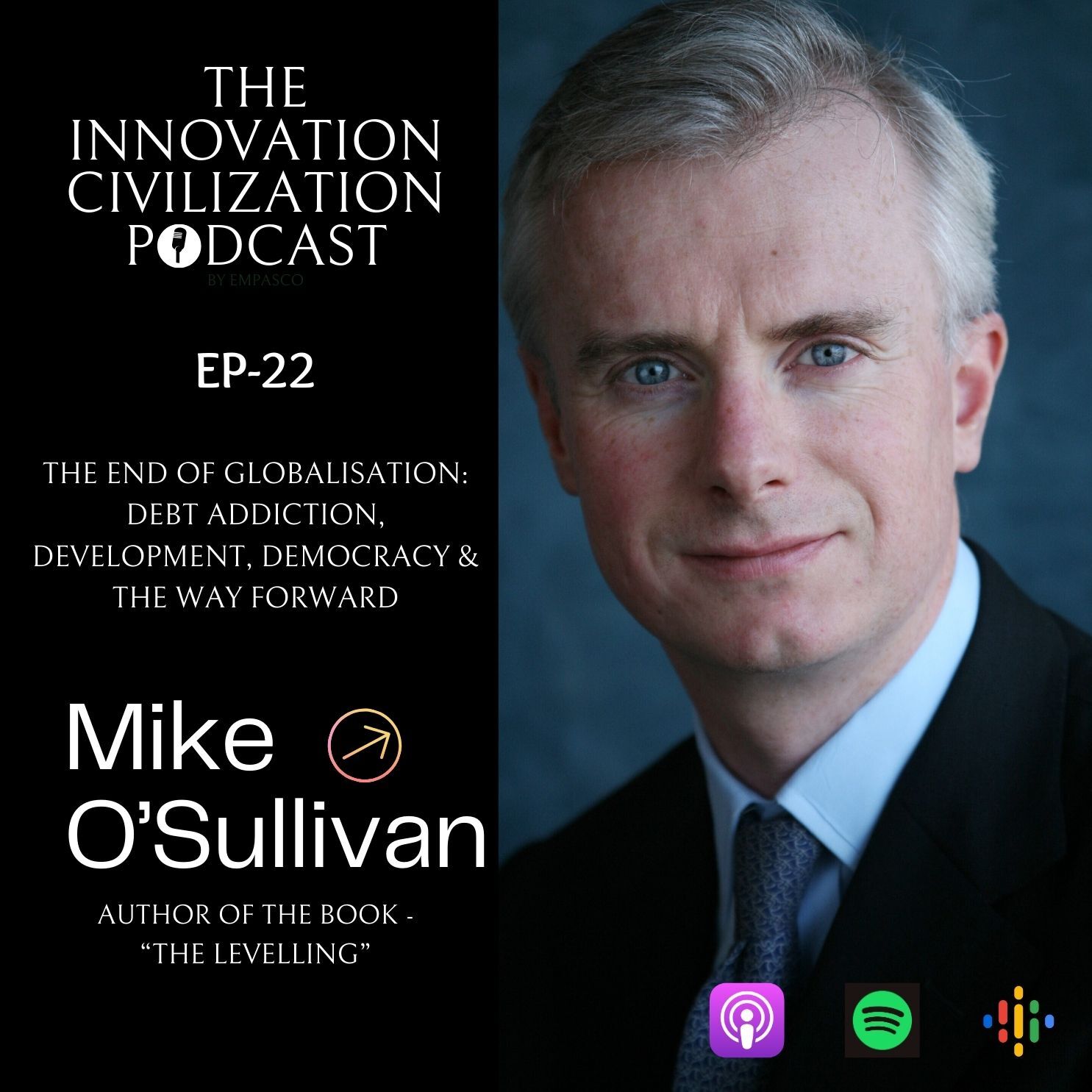 #22 - Mike O'Sullivan - The End of Globalisation: Debt Addiction, Development, Democracy & The Way Forward | We welcomed the author of the new book "The Levelling", Mike O'Sullivan, who's spent 20 years thinking and writing on macro economy and politics. He also served as the Chief Investment Officer at Credit Suisse and is the CEO of Harvest Innovation Advisory. We cover the end of globalisation, the future of democracy, economics, finance, geopolitics, and nation-building in the post-globalisation era. In the episode, we cover a range of topics: -Assessment of Globalisation: Critical examination of the concept of globalisation, probing its evolution, successes, and shortcomings, particularly in light of mounting debt, economic dependencies, and democratic deficits. -Geopolitical Realities: The shifting dynamics of global power & democracy, from the dominance of the West to the rise of multipolarity -Rethinking Economic Paradigms: Importance of R&D, education, and a conducive regulatory environment for fostering organic economic growth and escaping debt trap -Challenges of Development: Role of international institutions such as the IMF, leadership credibility, and effectiveness in managing financial crises (examples from Greece & Argentina) -Navigating Technological Complexity: The profound impact of technology on every aspect of society, from AI and blockchain to the fragmentation of media and its implications for democracy and social cohesion. Join us for this action-packed episode as we explore the growing backlash against globalisation and the future of global relations and economic growth potential. Follow our host Waheed Nabeel (@iwaheedo), for more updates on tech, civilizational growth, progress studies, and emerging markets. Here are the timestamps for the episode. On some podcast players, you should be able to click the timestamp for the episode. (00:00) - Intro (02:13) - Mike's background (03:38) - How globalisation led to increased economic integration? (06:54) - Why is the end of globalisation such a big issue? (09:56) - What are the biggest challenges of the next 30 years? (12:11) - Why is democracy under threat? (14:02) - How can we revive democracies? (17:18) - How can the effectiveness of governance in delivering tangible improvements to quality of life be assessed, particularly in contexts where traditional democratic norms may not be strictly followed, such as in Singapore or Rwanda? (20:20) - Where did The UK went wrong? (23:49) - How does Japan's economic performance challenge traditional notions of debt sustainability, especially in comparison to countries like the US and UK, and what implications does this have for the application of modern monetary theory (MMT) on a global scale? (25:52) - Why are we obsessed with debt? (28:31) - How do countries achieve organic economic growth? (32:14) - What is the well-being economy? (35:01) - How will this evolving digital landscape shape our societal values and political affiliations on a global scale? (40:38) - How should nations think about development and economic growth? (43:37) - Outro | — | ||||||
| 3/22/24 | 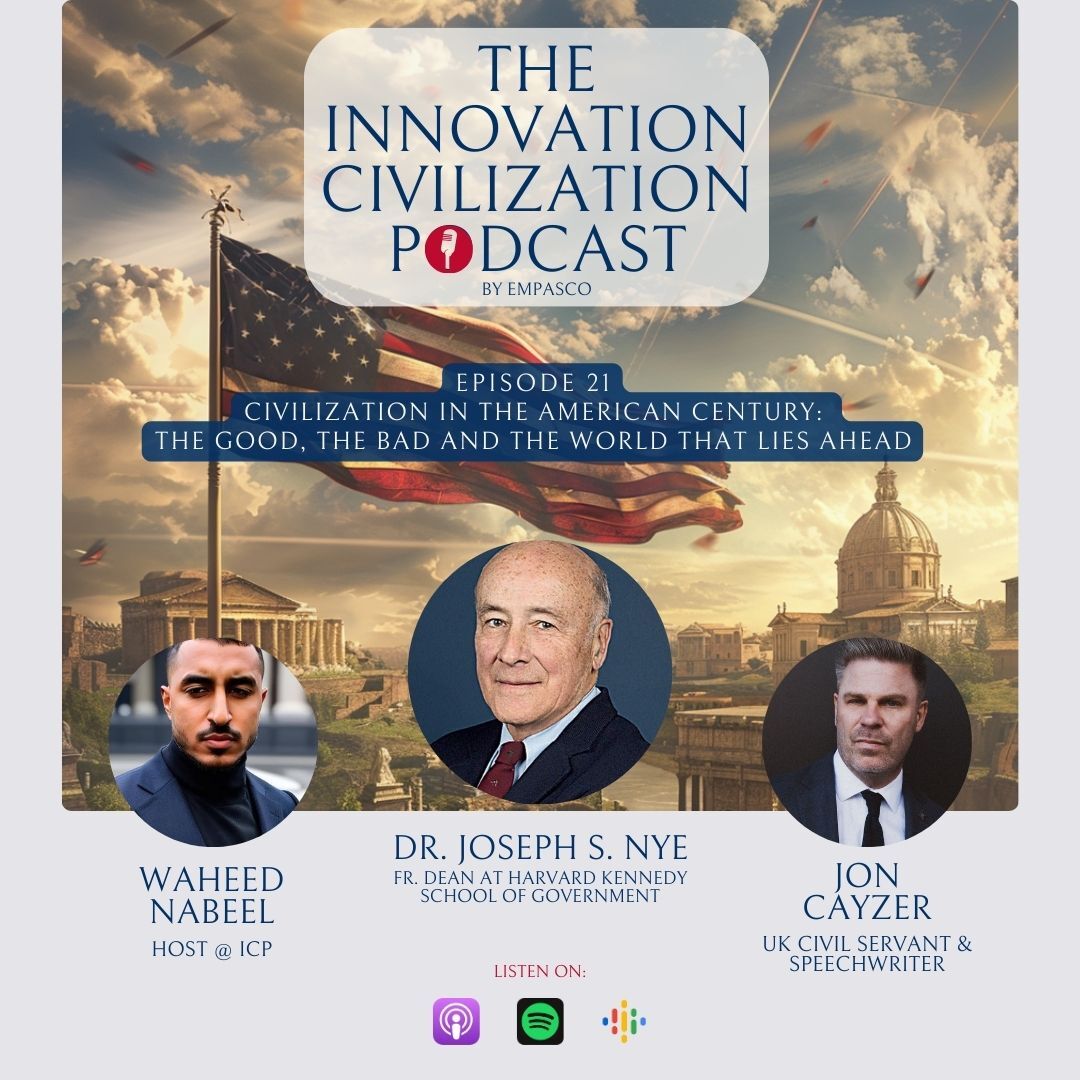 #21 - Joseph S. Nye - Civilization In The American Century : The Good, The Bad And The World That Lies Ahead | In season 2, we kick-off with America's foremost foreign policy scholar, Dr. Joseph Nye, the former Assistant Secretary of Defense and former Dean of Harvard Kennedy School of Government, to talk about how the American Century has shaped our civilization and what lies ahead in the road. Dr. Nye shares his profound insights on: - His personal reflections from his latest released book - The essence and impact of soft power, hard power and 'smart' power in shaping international relations, drawing from his extensive experience and academic work - Analyzing the concept of the "American Century," its historical context, and its relevance in today's shifting global order - Discussing the strategic challenges and opportunities presented by nuclear non-proliferation, with a focus on his contributions during the Carter administration - Providing a forward-looking perspective on the rise of Asia, particularly China and India, and the implications for global economic and political dynamics - Navigating through the complexities of U.S. foreign policy, from its triumphs to its missteps, and envisioning the path forward in an increasingly multipolar world - His thoughts on contemporary wars: from Israel-Palestine to Ukraine-Russia Accompanying Dr. Nye, we're privileged to have our very dear friend of the pod, Jon Cayzer who's a UK civil servant, adding depth to the conversation with his expertise and experience in public services and policy advising. Join us as Dr. Joseph Nye artfully connects past influences with present challenges, offering a roadmap for understanding and navigating the future of international relations. Follow our host Waheed Nabeel (@iwaheedo), for more updates on tech, civilizational growth, progress studies, and emerging markets. Here are the timestamps for the episode. On some podcast players, you should be able to click the timestamp for the episode. (00:00) - Introduction to Joseph Nye and his seminal contributions (02:13) - Nye's background and defining moments in global politics (07:04) - The American Century revisited: implications for global leadership (12:50) - The evolution and significance of soft power in the modern era (14:47) - Is the U.S.'s current foreign policy, particularly its support for Israel's actions in Gaza, leading to a decrease in its soft power, similar to the impact of the Iraq War? (16:46) - Is the current perceived political polarization in the U.S. truly unprecedented, or is it a return to historical levels of division experienced in past eras like the FDR presidency? (18:36) - Can the U.S. and China avoid the Thucydides Trap and prevent military conflict? (23:56) - Should Ukraine join NATO? (25:14) - Is China, despite its hard power, struggling to amplify its soft power on the global stage? (28:05) - How can a small country effectively increase its soft power—is it through cultural promotion like the British Council and Confucius Institute, or are there other strategies? (29:46) - In light of populism and Brexit, how can the UK rejuvenate its smart power and reestablish its international standing post-EU? (32:16) - How do advancements in technology and AI affect a country's balance of soft and hard power? (33:36) - Does the fragmentation of media through technologies like social media endanger the consensus-building essential to democracy in the 21st century? (35:32) - How can America, known for its innovation, adapt its foundational principles and values for future generations to bridge to the next century, moving beyond the notion of American exceptionalism? (37:35) - Discussing the shift in American values from 1998 to 2023, how has the perception of patriotism and other core values evolved over time? (27:20) - Analyzing Asia's rise and its global ramifications (33:35) - The interplay of technology, AI, and international relations (36:50) - Envisioning the future of diplomacy and international cooperation (39:07) - Outro | — | ||||||
| 11/10/23 | 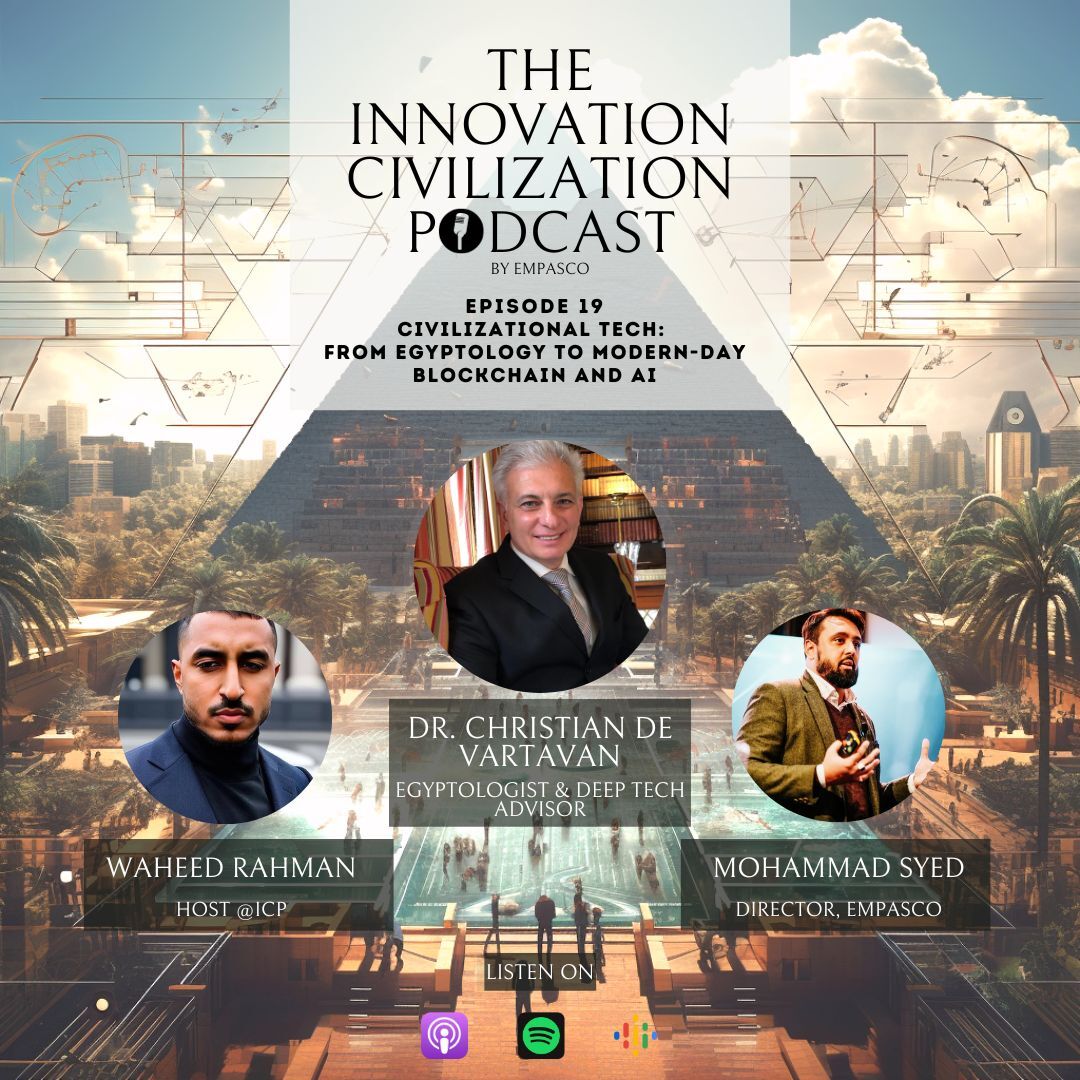 #19 - Dr. Christian De Vartavan - Civilizational Tech: From Egyptology to Modern-day Blockchain and AI | From the technology used to build pyramids by Ancient Egyptians to blockchain & AI today, there's tremendous continuity in how technologies developed. We're joined by Dr. Christian de Vartavan, a distinguished Egyptologist whose contributions include 10 seminal works in Egyptology and an impressive tally of 40 scientific discoveries. Beyond his expertise in Egyptology, Christian is also recognized as a technologist and an accomplished authority in blockchain and artificial intelligence who regularly advises the UK government on the strategic integration of these emerging technologies. We have also been joined by our Empasco director, Mohammad Syed. (@MohammadSyed159) Join us for a thought-provoking conversation that spans across epochs, connecting the wisdom of ancient civilizations with the forefront of modern technological innovation. In this episode, we delve into: -Christian's journey from the realms of Egyptology to the forefront of blockchain and AI -The parallels and intersections between ancient civilizations and cutting-edge technology -Insights into his ground-breaking scientific discoveries and their implications for the modern world -The role of blockchain and AI in shaping the future of media, society, and beyond -A reflection on his family's legacy of advisory roles in royal, presidential, and governmental spheres, influencing trade, business, economics, and science. Follow our host Waheed Rahman (@iwaheedo), for more updates on tech, civilizational growth, progress studies, and emerging markets. Here are the timestamps for the episode. On some podcast players, you should be able to click the timestamp for the episode. (00:00) - Intro (03:15) - Christian's background in Egyptology (04:50) - About Christian's technological advisory role for the UK government (06:41) - Technologies in Ancient Egypt (10:20) - Views on the Pyramid making process (13:01) - Controversial perspectives related to the Pyramids (19:06) - Have we forgotten how to build a Pyramid? (21:32) - Are we facing a modern-day puzzle with artificial intelligence, much like the ancient mysteries that confounded civilizations? (30:24) - Do AI and blockchain technologies pose a risk of widening societal disparities? Is there a global divergence in AI approaches among countries? (35:27) - How are we planning to enforce standards in regulating AI? (37:53) - Amidst growing distrust in giants like Google and Facebook and a rise in anti-globalism, how does society navigate diminishing faith in both private and global institutions? (42:06) - Considering the unmet expectations, boom-and-bust cycles, and recent downturn, what is the current assessment of the state and future direction of crypto and blockchain technology? (51:05) - What are the scopes of these technological development related to Christian's proprietary tech at Projectus that focuses on the classification of knowledge and the philosophy of the internet? (54:29) - How does Christian envision the future of statecraft, shaped by the concept of network states on the internet? (60:07) - Outro | — | ||||||
| 9/1/23 | 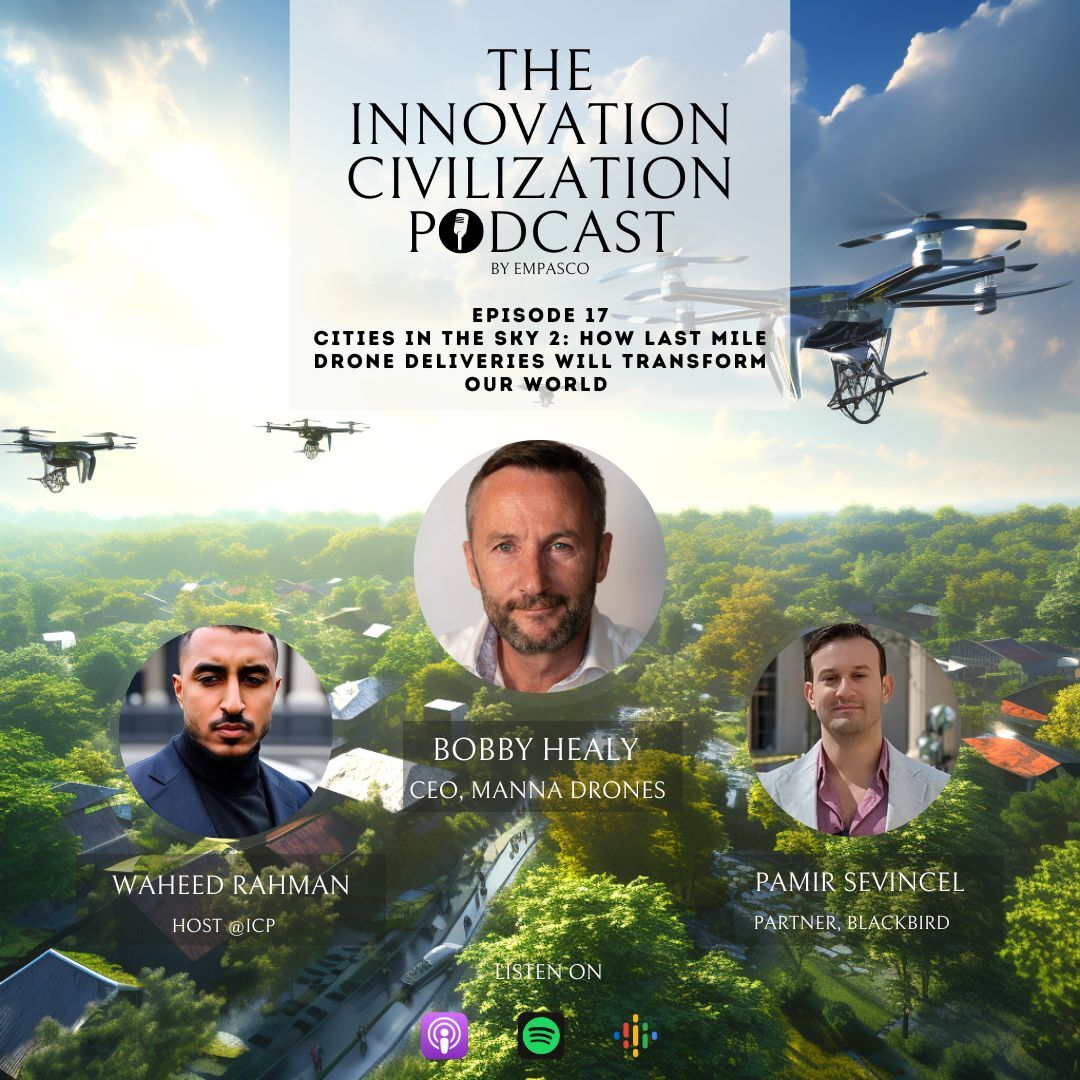 #17 - Bobby Healy - Cities in the Sky 2: How Last Mile Drone Deliveries will Transform Our World | On this episode, we're joined by serial entrepreneur and CEO of Manna Bobby Healy (@realBobbyHealy) who runs one of the Top 5 drone delivery companies in the world. We also welcomed back a friend of the pod Pamir Sevincel, Partner at Blackbird. Join us as we talk about the ins and outs of a fundamental technology that'll terraform the way we live: last-mile drone delivery. In this episode, we cover: -Bobby's entrepreneurial journey and the lessons learned along the way -The genesis of Manna and the vision for drone-powered deliveries -The environmental impact of replacing traditional delivery vehicles with drones - Business models and venture funding landscape: current, future and past. - Advice to founders building hardware-heavy companies -The challenges and opportunities in the emerging drone delivery industry -The future of on-demand delivery and its potential to reshape urban living Follow our host Waheed Rahman (@iwaheedo), for more updates on tech, civilizational growth, progress studies, and emerging markets. Here are the timestamps for the episode. On some podcast players, you should be able to click the timestamp for the episode. (00:00) - Intro (02:25) - Bobby's journey to leading several successful startups (03:16) - What is Manna Aero? (07:50) - Use case of drone delivery for E-commerce businesses (15:04) - Replacing traditional delivery vehicles with drones? (20:00) - How feasible is drone delivery in rural/suburban areas? (22:21) - Economic impact on suburban drone delivery (26:01) - Challenges in the delivery drone industry (33:12) - What factors make places like Texas particularly appealing for startups and investors in the consumer business sector? What should be the focus of startups in the drone delivery space: profitability or scalability? (40:02) - Can AI-generated models help optimize drone delivery services? (52:56) - Future of on-demand delivery and the impending challenges (65:12) - Competitive Advantage and Unique Value Proposition of Manna (67:48) - Quick Fire Round | — | ||||||
| 6/2/23 | 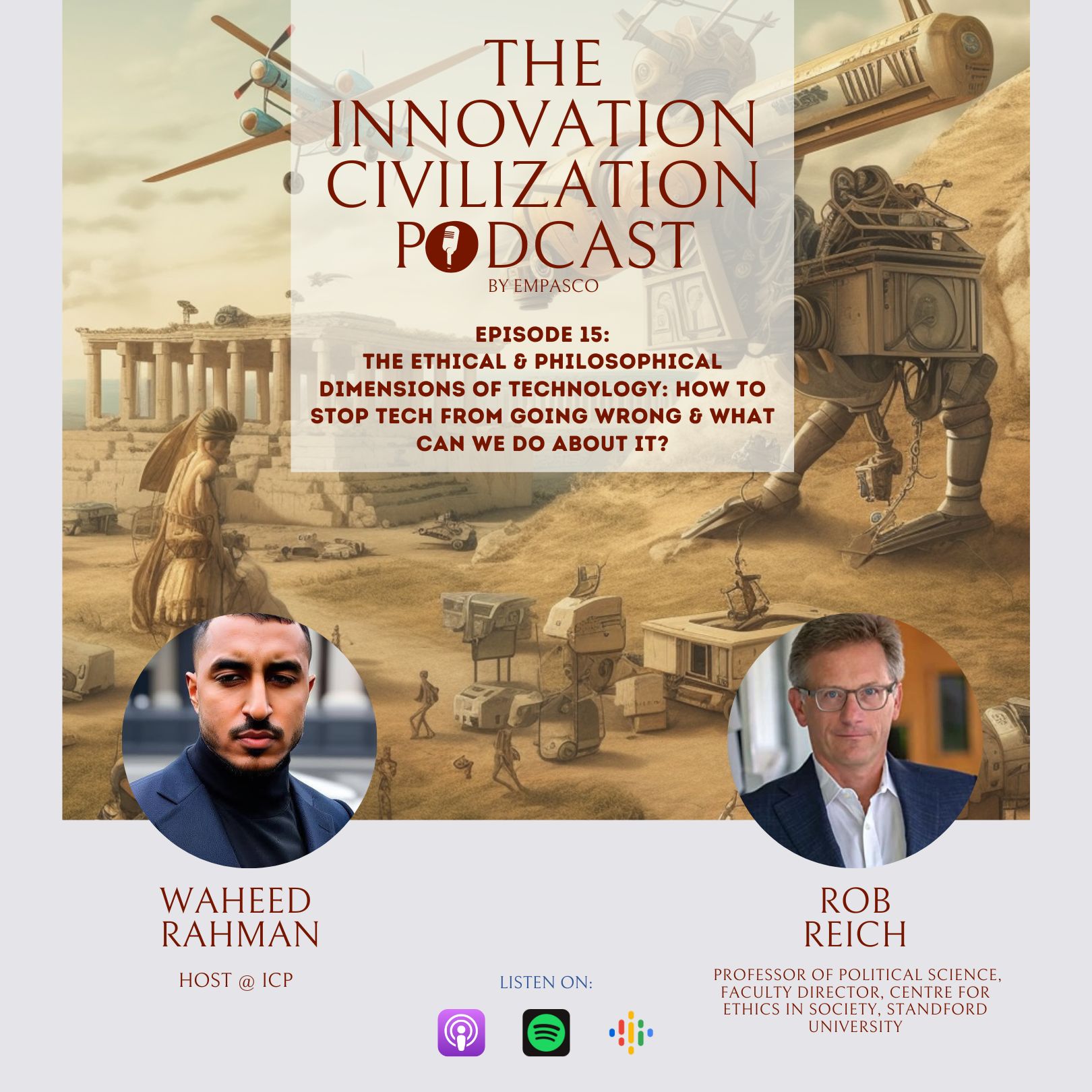 #15 - Rob Reich - The Ethical & Philosophical Dimensions of Technology: How to Stop Tech From Going Wrong & What Can We Do About it? | In this episode, we're joined by one of the founding faculties of Stanford's technology ethics course. Professor Rob Reich is the author of the recently published book "System Error: Where Big Tech Went Wrong & How We Can Reboot." In the face of society-altering AI and advancing technologies, we confront pressing ethical and societal challenges. How do we address them effectively without letting technology wreak havoc? In the episode, we discuss: -how technology is reshaping our society -the problem with the efficiency and optimization-only mindset -the ethical and social impact of the digital technologies -the problems with big tech -is democracy fit for purpose in the age of tech Join us as we analyze the critical challenges faced by the digital society and present thought-frameworks for a feasible system reboot. Follow our host Waheed Rahman (@iwaheedo), for more updates on tech, civilizational growth, progress studies, and emerging markets. Here are the timestamps for the episode. On some podcast players, you should be able to click the timestamp for the episode. (00:00)- Intro (03:31)- Origin story of the book -"System Error: Where Big Tech Went Wrong & How We Can Reboot." (05:17)- Does the specialization of knowledge witnessed in the past 2 centuries contribute more to our advancement or impede it? (09:56)- Is optimization bad for us? (13:23)- Is "stakeholder capitalism" the only way forward (14:26)- Is our current form of democracy optimized sufficiently to guide us towards the right conclusions amidst the rapid acceleration of technological advancements? (19:08)- Is sacrificing short-term prosperity for long-term stability and collective success worthwhile for societies pursuing lasting progress? (20:26)- How can we ensure that our institutions are adept at crafting agile regulations that can effectively address the evolving landscape of technology? (27:01)- How to strike a balance between implementing essential guardrails and the potential risk of losing innovation and economic benefits to jurisdictions with more permissive regulations? (30:32)- What are the limitations and potential drawbacks of relying solely on experts and dismissing the input and perspectives of the general public on important issues? (32:50)- How can we navigate towards a more balanced approach that incorporates stakeholder capitalism? (38:02)- How to assess the ongoing exploration and search for effective governance and cap table structures that successfully balance social impact and economic incentives? (39:00)- What is the problem with Big Tech? (41:25)- Outro | — | ||||||
| 7/22/22 | 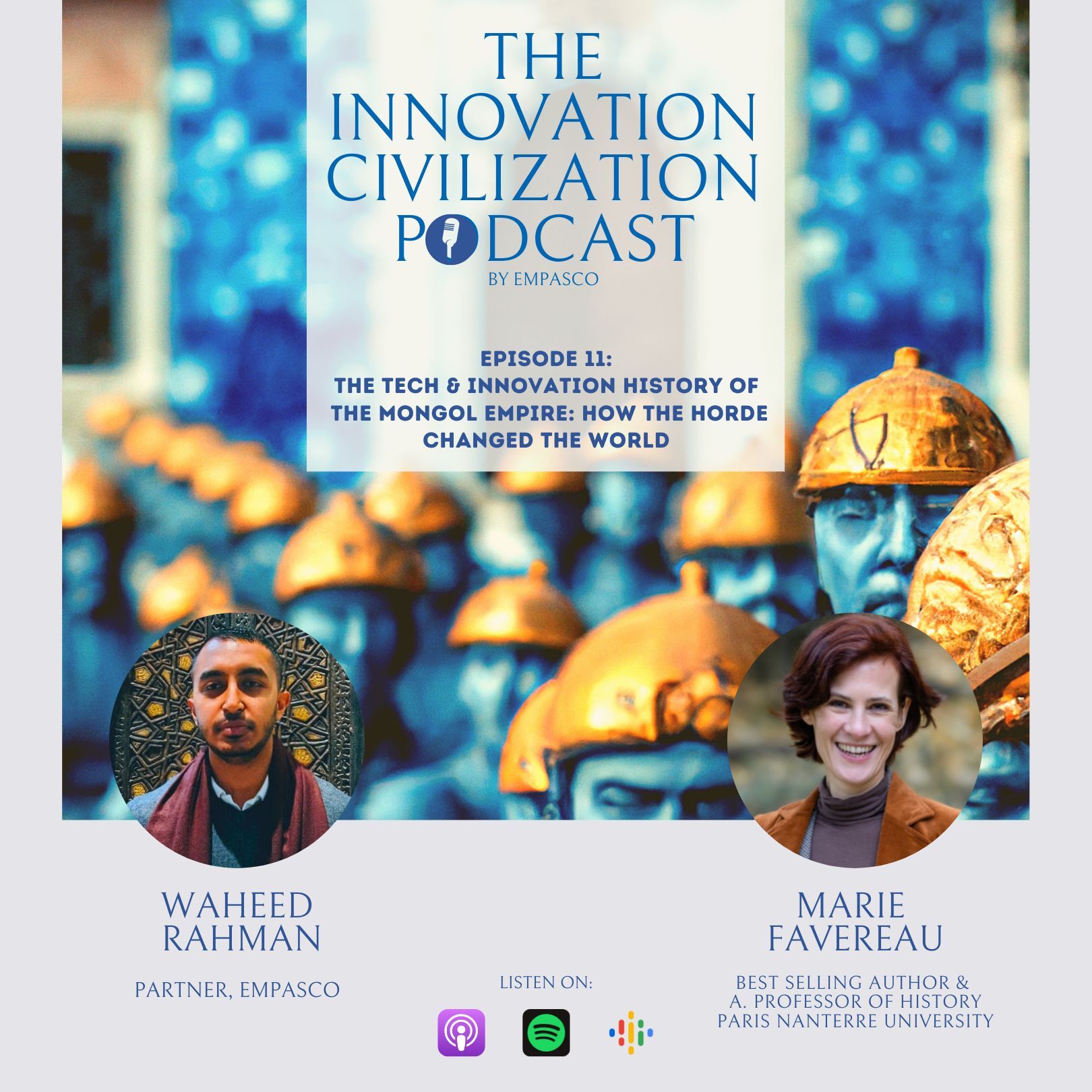 #11 - Marie Favereau - The Tech & Innovation History of the Mongol Empire: How the Horde Changed the World | Founded by the infamous Genghis Khan in 1206, the Mongol Empire created the 2nd largest kingdom in the history of the planet. What's less well known is that Mongol rule ushered in a plethora of technological innovation and development that shaped the formative years in trade & science infrastructure of a land mass spanning all the way to the East from Korea, through China, Central Asia, Russia, Persia and to even Eastern Europe parts like Crimea and modern day Ukraine. In an attempt to excavate and summarise the lasting impact the Mongol innovation, technology and governance had on the world, Empasco Partner Waheed Rahman (@iwaheedo) sits with historian and Financial Times best-selling author, Marie Favereau. Marie is an Associate Professor of History at Paris Nanterre University. She has been a member of the French Institute of Oriental Archaeology in Cairo, a visiting scholar at the Institute for Advanced Study, and a research associate at the University of Oxford for the major project Nomadic Empires. Her books include The Horde: How the Mongols Changed the World (https://www.amazon.com/Horde-How-Mongols-Changed-World/dp/0674244214) and the Mamluk Sultanate (published in French) and the graphic novel Genghis Khan. In the episode we cover: -the reason for the rise of the Mongol Empire in the 13th & 14th CE. -long-term innovation view that the Mongols took in terms of funding projects -the strategies they took to set up the agricultural production and taxation systems throughout the kingdom -how they built and sustained the system for continuous innovation processes in areas such as astronomy, agriculture, maths, medicine, trade, botany, etc. -Early forms of democracy in the Mongol empires - The reasons for the downfall of the Mongol empire Follow our host Waheed Rahman (@iwaheedo) for more updates on tech, civilizational growth, progress studies, and emerging markets. Here are the timestamps for the episode. On some podcast players, you should be able to click the timestamp for the episode. (00:00) - Intro (06:10) - Marie's background & inspiration for writing a book on Mongol innovation and tech history (08:05) - Who were the Mongols? (11:08) - What is the "Horde"? (13:33) - Were the Mongols just people who ravaged and conquered land through coercion and fear-mongering? (20:10) - What Military technology did the Mongols use? (27:38) - Mongol innovation,tech,governanace history (39:36) - Mongol economics (42:39) - Mongol system of wealth distribution (43:28) - How did the Mongols manage the Silk Road? (45:52) - About the creation of the largest integrated market in Pre-modern history (47:43) - How did the Mongols set up the infrastructure and economy of the cities within the empire? (52:40) - What was the Mongols' foreign policy to attract new trade and develop connections? (59:23) - The Mongol land law (61:25) - How did taxation help with the agricultural production? (62:30) - What led to the downfall of the Mongol Empire? (65:26) - Mongol Governance We used the world's most advanced AI 'DALL·E 2' by @OpenAI to generate the episode cover art. Special thanks to Pamir Sevincel (@PamirSevincel) We made this episode a special listening experience btw. Mongolian throat singing & classical instruments used: Yoochin- hammered dulcimer of varying strings struck using two bamboo hammers Khuuchir- two- or four-stringed instrument with a small sound box | — | ||||||
| 2/19/22 | 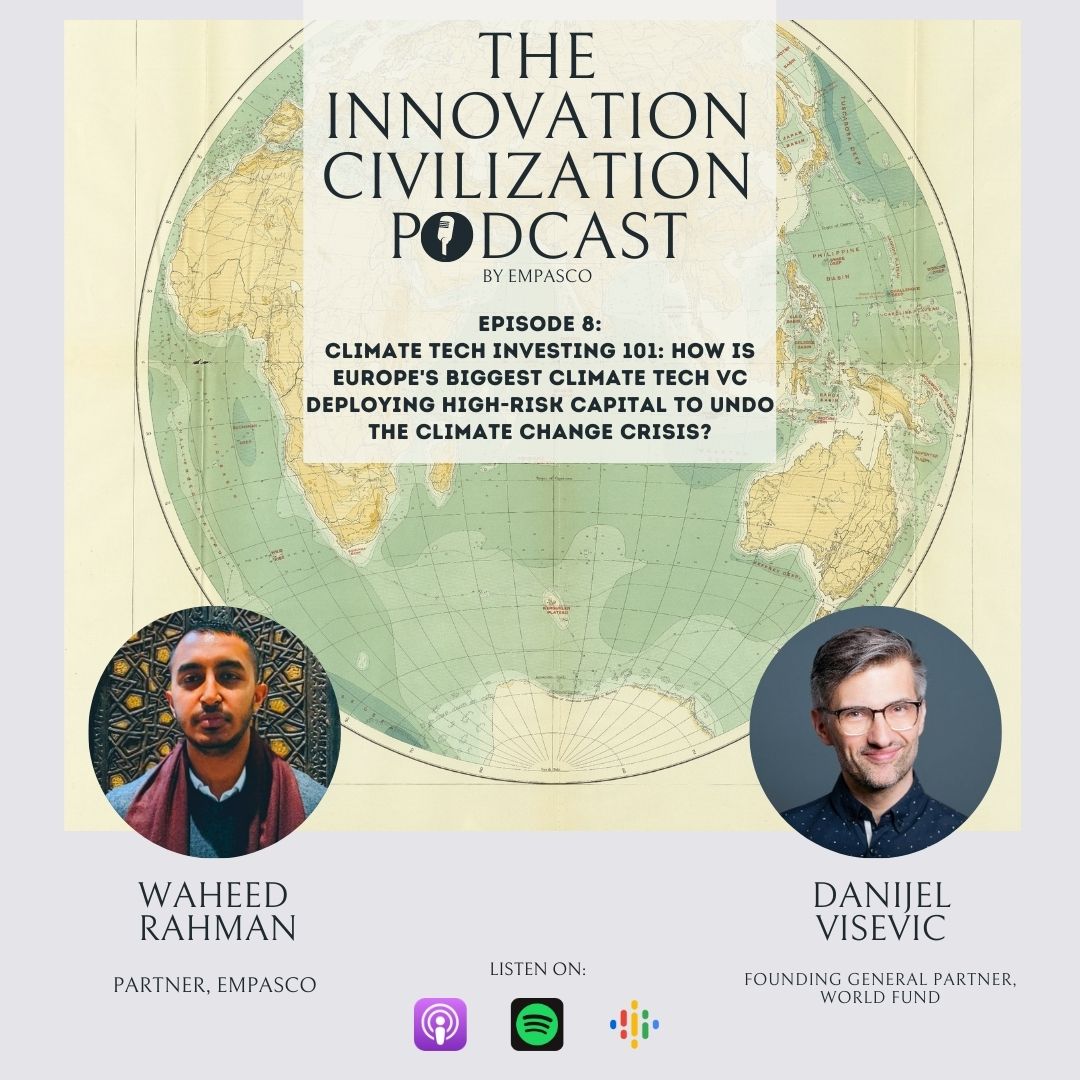 #08 - Danijel Visevic - Climate Tech Investing 101: How is Europe’s biggest climate tech VC deploying high-risk capital to undo the climate change crisis? | 60 gigatons of Carbon Dioxide (Co2) is discharged into the atmosphere every year. Co2 levels are now higher than they have been in at least 800,000 years making climate change the number 1 threat faced by mankind. What tech to invest in in order to 'unf*** the planet'? For a momentous & thrilling episode on understanding the successful approach of high-risk tech investing in combatting the climate change crises, our host at Waheed Rahman (@iwaheedo) sat down with Danijel Visevic (@visevic) - the Founding General Partner of World Fund, Europe’s biggest climate tech VC fund. We cover : - the fundamentals & purpose of climate tech investing - the mechanics of a climate tech fund - how to manage LP expectations - Key technologies to invest in to undo the effects of climate change - Climate change policy prescriptions for government Follow our host Waheed Rahman (@iwaheedo) for more updates on tech, civilizational growth, progress studies, and emerging markets. Here are the timestamps for the episode. On some podcast players, you should be able to click the timestamp for the episode. (00:00) - Intro (03:05) - Danijel's journey to becoming a leading climate tech investor (05:34) - World Fund's investment thesis for decarbonizing the planet (07:44) - Distinction between climate tech and clean tech (09:39) - Climate tech investing fund mechanics (12:24) - What are the upsides or downsides to being a dedicated fund vs private VCs like Sequoia & SoftBank (14:31) - The purpose of investing in climate tech (16:47) - Managing Limited Partner's (LP) expectations - How to prioritize between short-term profit maximization vs sustainability? (23:28) - Technologies that can help minimize the impact of climate change (25:07) - What makes Europe the most suitable place for climate tech investing? (28:11) - The different stages of fundraising for a climate tech startup (29:50) - How is World Fund developing the climate tech ecosystem in Europe? (31:13) - Next-generation climate tech innovations to look forward to (35:25) - What immediate policies can government undertake in mitigating the effect of climate change crises (40:07) - Outro | — | ||||||
Showing 25 of 47
Pitch Fit is a Pro feature
See how bookable this show is for guests, which brands already advertise, the per-episode ad value, and the best-fit guest and sponsor profile. The numbers are blurred on the free plan.
How readily this show books outside guests like you.
How proven this show is for host-read sponsorships.
For Guests
ProFor Advertisers
ProUpgrade to Pro to unlock guest cadence, sponsor categories, fit scores, and per-episode ad value for this show.