

Insights from recent episode analysis
Audience Interest
Podcast Focus
Publishing Consistency
Platform Reach
Insights are generated by CastFox AI using publicly available data, episode content, and proprietary models.
Most discussed topics
Brands & references
Total monthly reach
Estimated from 1 chart position in 1 market.
By chart position
- 🇮🇹IT · Science#1731K to 10K
- Per-Episode Audience
Est. listeners per new episode within ~30 days
500 to 5K🎙 ~2x weekly·39 episodes·Last published 3mo ago - Monthly Reach
Unique listeners across all episodes (30 days)
1K to 10K🇮🇹100% - Active Followers
Loyal subscribers who consistently listen
300 to 3K
Market Insights
Platform Distribution
Reach across major podcast platforms, updated hourly
Total Followers
—
Total Plays
—
Total Reviews
—
* Data sourced directly from platform APIs and aggregated hourly across all major podcast directories.
On the show
From 1 epsHost
Recent guests
Recent episodes
Applied Sciences at the Crossroads: Polytechnics, Place-Based Innovation, and Europe's Competitiveness Future
Mar 25, 2026
1h 12m 25s
From Wall Street to Science|Business: Richard Hudson on the Past, Present and Future of R&I
Mar 11, 2026
Unknown duration
The Legal Argument Brussels Doesn't Want to Hear!
Feb 25, 2026
Unknown duration
Partnerships in the Age of Strategic Autonomy
Feb 11, 2026
Unknown duration
Building the R&I Agency of the Future
Jan 28, 2026
Unknown duration
Social Links & Contact
Official channels & resources
Official Website
Login
RSS Feed
Login
| Date | Episode | Topics | Guests | Brands | Places | Keywords | Sponsor | Length | |
|---|---|---|---|---|---|---|---|---|---|
| 3/25/26 |  Applied Sciences at the Crossroads: Polytechnics, Place-Based Innovation, and Europe's Competitiveness Future✨ | applied sciencespolytechnics+3 | John Edwards | EURASHE | Europe | applied sciencespolytechnics+5 | — | 1h 12m 25s | |
| 3/11/26 |  From Wall Street to Science|Business: Richard Hudson on the Past, Present and Future of R&I | The Insider, Season 2, Episode 8 “From Wall Street to Science|Business: Richard Hudson on the Past, Present and Future of R&I” Research and innovation policy rarely develops in isolation. It evolves alongside markets, institutions, and the broader geopolitical environment shaping how knowledge, technology and investment move across borders. In this episode of The Insider,, host Ricardo Miguéis (Head of the INESC Brussels HUB) speaks with Richard Hudson, co-founder of Science|Business and one of the most experienced observers of Europe’s research and innovation ecosystem. Before launching Science|Business in 2004, Hudson spent 25 years at the Wall Street Journal, including as Managing Editor of its European edition. Since then, he has helped build one of the most influential platforms connecting universities, companies and policymakers across Europe’s R&I landscape. Drawing on that experience, the conversation reflects on four decades of watching European research policy evolve; from the early days of the Framework Programmes to today’s increasingly complex geopolitical context. Part 1 - Institutions, ecosystems and the evolution of European R&I The first part of the conversation explores the long arc of Europe’s research and innovation system. Hudson reflects on the early years of the Framework Programmes, when European collaboration in research was still a relatively new experiment. Over time, these programmes grew into one of the EU’s most distinctive policy instruments (bringing together universities, industry and governments around shared technological challenges). The discussion also revisits the origins of Science|Business itself. What began as a journalism project evolved into a network connecting three communities that often struggle to speak the same language: researchers, policymakers and industry leaders. This perspective offers a unique lens on how innovation ecosystems actually function; not only through funding instruments and policy frameworks, but through relationships, trust and shared spaces where ideas and partnerships can emerge. Part 2 - Geopolitics, trust and the future of global research cooperation The second part of the episode turns to the present moment, where the context surrounding research and innovation is becoming increasingly shaped by geopolitical dynamics. From technological competition to debates about strategic autonomy, the environment in which science operates is shifting. Questions about trust, international collaboration and the balance between openness and security are becoming central to research policy discussions. Hudson reflects on what these changes might mean for Europe’s role in the global research system. As alliances evolve and scientific cooperation becomes more complex, the challenge is not only about funding or programmes, but about maintaining the networks and communities that make international collaboration possible in the first place. Across the conversation, one idea stands out: science progresses not only through discovery, but through the connections that allow knowledge, talent and investment to circulate. In a more fragmented world, those connections may be more important than ever. Listen to Episode 8: “From Wall Street to Science|Business: Richard Hudson on the Past, Present and Future of R&I” on The Insider. | — | ||||||
| 2/25/26 |  The Legal Argument Brussels Doesn't Want to Hear! | The Insider, Season 2, Episode 7 "The Legal Argument Brussels Doesn't Want to Hear" Europe is redesigning its research and innovation architecture. FP10, the European Competitiveness Fund, defence research, dual use, competitiveness and security are all being pulled into the same conversation, and often treated as if the only question is how fast we can move. But there is a more fundamental question underneath it all: Are we still operating within the limits of EU law? In this episode of The Insider, host Ricardo Miguéis (INESC Brussels HUB) speaks with Prof. Kurt Deketelaere, one of Europe’s leading legal minds in research governance, about the issue almost no one in Brussels wants to confront: the legal validity of how defence research is being embedded into FP10 and the proposed European Competitiveness Fund (ECF). FP10, the ECF, and a governance problem hiding in plain sight Kurt explains why many universities and research organisations fear that, as currently drafted, FP10 risks becoming subordinate to the ECF. He discusses the joint statement issued by seven major university and research networks, and why they argue for two principles that must hold in the next cycle: Autonomy of FP10 and the ECFA clear interface that connects excellence to competitiveness (without merging them or placing one under the other) The metaphor he uses is simple but powerful: FP10 as the generator of excellent science and talent; the ECF as the amplifier that scales it where Europe has a strategic interest. The legal line: when a fund becomes a “specific programme” Then the conversation goes where policy debates rarely go: into the treaty articles that determine who decides what. Kurt lays out, in accessible terms, why he believes using the ECF regulation as the specific programme for FP10’s defence research might violate the EU’s “centre of gravity” principle; and why building a €125 billion line on shaky legal ground is a risk Europe cannot afford to ignore. This is the “legal argument Brussels doesn’t want to hear”: not sensational, but deeply structural because it forces Parliament, Council and Commission to confront how far they are prepared to stretch the treaties in the name of speed and strategic autonomy. Dual-use, safeguards, and Europe’s identity The conversation also touches on one of the most difficult questions in today’s research landscape: the growing blur between civilian, dual-use and defence technologies. Kurt emphasises the importance of: Clear definitionsTransparent flagging of dual-use callsGuarantees that researchers are not pushed toward militarised framingA firm separation between dual-use and deliberate defence research What is EU-level R&I actually for? The episode closes with the foundational question: what should EU-level research funding achieve? Kurt brings it back to the treaties: Europe’s R&I mission is both to generate new knowledge and to strengthen its competitiveness. The challenge isn’t excellence (Europe has plenty). The challenge is turning excellence into impact, without sacrificing academic freedom, legal certainty, or the institutional safeguards built after the crises of the 20th century. If you want to understand not just the proposals on the table, but what they mean for Europe’s long-term governance, legality and strategic direction, this episode offers a unique, unfiltered view from inside the debate. Listen to Episode 7: “The Legal Argument Brussels Doesn’t Want to Hear” on The Insider. | — | ||||||
| 2/11/26 |  Partnerships in the Age of Strategic Autonomy | The Insider, Season 2, Episode 6 “Partnerships in the Age of Strategic Autonomy” Europe’s research and innovation system relies heavily on partnerships, but how well do we understand the machinery behind them? And what will it take for these partnerships to deliver the kind of strategic outcomes Europe now expects? In this episode of The Insider, Ricardo Miguéis sits down with Niklas Blomberg, Executive Director of the Innovative Health Initiative (IHI) and former Director of ELIXIR, Europe’s life-science data infrastructure. Few people have been as deeply embedded in both the technical and governance dimensions of Europe’s collaborative ecosystem (from distributed research infrastructures to large-scale public–private partnerships shaping health innovation). Niklas brings a unique vantage point: years spent building frameworks that connect research, industry, public agencies and civil-society actors at European scale. Where coordination is complex, where legitimacy matters, and where design choices quietly determine what Europe can (and cannot) deliver. Part 1 - How European Partnerships Really Work The episode opens by unpacking how partnerships such as IHI are structured, what “capabilities” mean in practice, and why Europe’s model differs from the US or China. Instead of pooling cash alone, European partnerships pool expertise (industrial R&D teams, advanced engineering capabilities, public-sector knowledge, patient organisations, research infrastructures and regulatory actors). This allows Europe not just to do research differently, but in many cases to do different research. Thus, tackling problems that are too complex, too cross-sectoral or too high-risk for a single organisation or country to take on alone. Niklas reflects on the transition from earlier partnership models to Horizon Europe, how governance shapes trust and risk-sharing, why “no losers” is a design principle (not a constraint), and how the human side of collaboration, not structures, often determines whether partnerships truly work. Part 2 - Strategy, Governance and Europe’s Next Phase The second half of the conversation shifts from mechanics to strategy, examining what effective governance looks like when partnerships must deliver faster, under pressure and at scale. It explores how FP10 and the European Competitiveness Fund could reshape Europe’s approach, and what kinds of agency design, metrics and feedback loops are needed to sustain trust, adaptability and long-term learning. Here the episode goes deeper into questions of power, legitimacy, evaluation and institutional capacity; not as abstract concepts, but as practical choices that determine whether partnerships evolve or stagnate. This episode makes one thing clear: Europe’s real R&I challenge lies not in innovation or governance alone, but in the space where the two meet. It shows how scientific capability, institutional design and on-the-ground delivery shape one another; and what Europe will need to strengthen across all three if its partnerships are to turn ambition into outcomes as FP10 takes shape. Listen to Episode 6: “Partnerships in the Age of Strategic Autonomy” on The Insider. | — | ||||||
| 1/28/26 |  Building the R&I Agency of the Future | The Insider, Season 2, Episode 5 “Building the R&I Agency of the Future” Europe is not short on ideas. Over the past decades, it has built world-class universities, produced exceptional science, and developed some of the most advanced policy frameworks in the world. Yet when it comes to turning knowledge into strategic technologies, industrial strength and long-term innovation capacity, the results remain uneven — especially when compared with countries in East Asia that have managed to preserve and strengthen their institutional foundations. Why does this gap persist? And what would it take for Europe to rebuild the public-sector capacity that modern innovation systems require? In this episode of The Insider, Ricardo Miguéis sits down with Rainer Kattel, Deputy Director and Professor of Innovation and Public Governance at the UCL Institute for Innovation and Public Purpose (IIPP), to explore exactly that. Over the past 20 years, Kattel has become one of the leading voices on how innovation bureaucracies work, why they fail, and what it means for states to act strategically. His award-winning book How to Make an Entrepreneurial State puts forward a simple but provocative idea: bureaucracy is not the enemy of innovation; it is one of its essential conditions. The episode unfolds in two parts: Part 1 – How Europe lost (and others kept) institutional capacity The conversation begins with an honest look at Europe’s position: a continent that invests heavily in R&I but struggles with implementation. Ricardo and Rainer discuss how, from the 1990s onwards, many European countries gradually hollowed out their strategic capabilities, turning agencies into project managers focused on compliance rather than long-term direction. Kattel contrasts this with the trajectories of Japan, South Korea, Taiwan and other East Asian economies, which built public organisations able to learn continuously, anticipate technological shifts, and act with coherence across decades. The question they raised seems unavoidable: Can Europe still govern innovation in a world where second chances are disappearing? Part 2 – What enables real change The second half of the episode shifts from diagnosis to possibility. What would it take for European governments to actually strengthen their innovation capability, not on paper, but in day-to-day practice? Rainer outlines the core ingredients: institutions that learn quickly, agencies that operate with a degree of protected autonomy, and political systems that allow experimentation without collapsing into short-termism. He argues that reform is less about redesigning entire ministries and more about creating the spaces (and the incentives) for public organisations to think strategically, coordinate across sectors, and retain the expertise they need. The discussion also touches on talent, time horizons, and why the public sector’s ability to adapt often depends on the smallest units inside it: the teams empowered to test, adjust and build institutional memory before the next political cycle resets the conversation. With geopolitical tensions rising and major technological shifts already underway, Europe is rethinking its R&I system for the decade ahead. This episode goes straight to the core question: Can Europe rebuild the institutional capacity it needs to stay competitive (and to govern innovation) in a world that won’t slow down? A timely episode for a critical moment... Listen to full episode “Building the R&I Agency of the Future” | — | ||||||
| 1/14/26 |  A 2026 Deep Dive with Muriel Attané | The Insider, Season 2, Episode 4 “A 2026 Deep Dive with Muriel Attané” Europe enters 2026 with a strong inheritance in research and innovation. Well-established frameworks, mature institutions, and a long-standing reputation for scientific excellence continue to underpin its global position. But the year ahead will test something more demanding: Europe’s ability to act strategically in a context shaped by geopolitical pressure, industrial competition, and accelerating technological change. In this episode of The Insider, Ricardo Miguéis is joined by Muriel Attané, Secretary General of EARTO, for a wide-ranging conversation on where Europe’s research and innovation system stands, and the choices now taking shape beneath the surface. Part 1 – Looking at Europe from the outside The discussion deliberately starts beyond Europe’s own policy debates. Drawing on Muriel’s recent international engagements, including in South Korea and Canada, the episode explores how Europe is perceived as a research and technology partner, and how global actors assess its reliability, speed, and strategic clarity. The conversation looks at how international collaboration is evolving in a more politicised environment, where research, technology and geopolitics are increasingly intertwined. It also examines what external partners read into Europe’s current discussions around FP10 and the European Competitiveness Fund, and how those signals shape expectations about Europe’s future role. This first part focuses on positioning and perception: where Europe inspires confidence, where questions arise, and why credibility, coordination and clarity matter as much as formal frameworks. Part 2 – FP10, competitiveness and the capacity to deliver The second part turns inward, shifting from perspective to analysis. Rather than revisiting familiar reform narratives, the discussion looks at the quieter dynamics inherited from 2025: mounting pressure for speed and scale, changing governance patterns, and growing questions about institutional readiness. A central focus is the evolving relationship between FP10 and the European Competitiveness Fund. Beyond funding volumes or programme architecture, the conversation examines steering capacity, governance choices, and the challenge of aligning instruments, actors and timelines in a system under strain. Throughout the episode, Research and Technology organisations (RTOs) emerge as key, if often understated, actors. Positioned at the interface between research, industry, and policy, they are increasingly called upon to help translate ambition into action, coordinate across ecosystems, and respond at speed to shifting priorities. Rather than offering predictions, the episode closes with a set of questions that will define the years ahead: how Europe chooses to govern its innovation system, where it is willing to prioritise, and how long difficult decisions can be deferred without consequence. Rather than offering predictions, the episode closes by identifying the issues that will decisively shape Europe’s trajectory in the years ahead — and the risks of postponing difficult decisions. Listen to “A 2026 Deep Dive with Muriel Attané” — — — References: During the episode, Ricardo Miguéis refers to two books that help frame the discussion around state capacity, innovation and long-term competitiveness. For listeners interested in exploring these ideas further, the references are listed below: How to Make an Entrepreneurial State: Why Innovation Needs Bureaucracy Kattel, R., Drechsler, W., & Karo, E. (2022). Yale University Press. How Progress Ends: Technology, Innovation, and the Fate of Nations Frey, C. B. (2025). Princeton University Press. | — | ||||||
| 12/10/25 |  Beautiful Frameworks, Precarious Reality: How Europe Designs Research Careers | The Insider, Season 2, Episode 3 “Beautiful Frameworks, Precarious Reality: How Europe Designs Research Careers” Europe has spent years refining its approach to research careers. New frameworks, recommendations and initiatives now promise sustainability, fairness and better working conditions for researchers across the European Research Area. And yet, for many people working inside the system, precarity and pressure remain part of everyday life. In this episode, Ricardo Miguéis brings together Luísa Henriques and Susana Rodrigues to look more closely at the gap between policy ambition and lived experience, and to ask what Europe’s research career frameworks are really delivering. Luísa Henriques is a Senior Policy Analyst and Advisor to the Board of Directors at Fundação para a Ciência e a Tecnologia (FCT) in Lisbon. She has been closely involved in European discussions on research careers, including the 2021 Council Recommendation, and offers an insider’s perspective on how these frameworks were shaped, what they are meant to change, and the constraints that shape their implementation. Susana Rodrigues approaches the same questions from inside research organisations. As Head of the HR Department at INESC TEC and a researcher in Occupational Health at INESC TEC’s Centre for Biomedical Engineering (CBER), she works directly with researchers navigating short-term contracts, evaluation pressure and uncertainty, and studies the health consequences that follow. The episode unfolds in two parts: Part 1 – The promise behind the frameworks The first part looks at how research careers became a policy priority at European level. Luísa reflects on the intentions behind recent reforms, the focus on skills, mobility and sustainability, and the effort to professionalise career paths beyond the traditional academic model. At the same time, both guests point to a persistent tension: Europe continues to rely heavily on project-based funding and fixed-term contracts, even as it promotes long-term career development. On paper, the frameworks are strong. In practice, they sit within structures that often pull in the opposite direction. Part 2 – Human cost, awareness and implementation The second part of the conversation turns to the human impact of this gap. Drawing on occupational health research and European-level evidence, Susana discusses the high prevalence of stress and mental health challenges among researchers, not as individual issues, but as systemic outcomes. One idea keeps returning: awareness is no longer the problem. The real challenge lies in implementation. Building systems that genuinely support people takes time, resources and cultural change, both within institutions and across the wider research ecosystem. Rather than offering easy solutions, the episode closes with a more difficult question. If Europe chooses to keep its current research career structures, is it also prepared to be honest about what they demand from the people who make the system work? For The Insider, this conversation speaks directly to the broader theme of Season 2: how Europe designs progress, and whose realities are taken into account when policy meets practice. Listen to “Beautiful Frameworks, Precarious Reality: How Europe Designs Research Careers” on Apple Podcasts — — — Artwork note: The artwork for this episode reflects its central tension. Europe’s research career frameworks are carefully designed and elegant, like the ornate umbrella shielding the statue from the sun. They are built to address visible pressures in the system, represented by the harsh light above. But when the real rain comes (the less visible realities of precarity, uncertainty and mental strain) that protection often falls short. The rain symbolises what the frameworks struggle to cover: the human consequences that appear once policy meets practice. Elegant in theory. Precarious in practice. | — | ||||||
| 11/26/25 |  European Innovation Scoreboard 2025 Explained: Bridging Data and Policy with Alasdair Reid | The Insider - Season 2, Episode 2 "European Innovation Scoreboard 2025 Explained: Bridging Data and Policy with Alasdair Reid" Season 2 continues with a topic that sits right at the crossroads of evidence and strategy in European research: the European Innovation Scoreboard (EIS) 2025. We talk a lot about innovation in Europe — but do we really understand the numbers we rely on to judge how well we’re doing? In this episode, Ricardo Miguéis is joined by Alasdair Reid, economist and long-standing contributor to Europe’s innovation policy framework. Alasdair has been closely involved with the European Innovation Scoreboard since its origin, overseeing key elements of innovation policy benchmarking, and currently serves as coordinator for the 2024-2027 period. His perspective reflects a deep, system-level understanding of how innovation indicators are developed, interpreted, and translated into policy. With the new EIS 2025 now out, this conversation is a chance to take a step back and look at what these indicators actually tell us, and what they don’t. Part 1 – Making Sense of the Numbers The first half of the episode looks at how the scoreboard came about, how it has changed over the years, and what the 2025 edition reveals about Europe’s innovation landscape. Ricardo and Alasdair discuss: What stands out in the EIS 2025 results, and where the data remains silentWhy countries with similar tools and spending patterns often move in very different directionsThe role that governance, trust and institutional capacity quietly play in shaping innovationWhy benchmark indicators often become political stories, not just technical onesHow the scoreboard can be both incredibly useful — and sometimes misleading It’s a reminder that metrics don’t simply describe reality; they influence how we understand it. Part 2 – From Indicators to Strategy (and FP10) The conversation then widens to Europe’s bigger innovation challenges and the structural questions behind them. This includes: The long-standing regional paradox: why some areas surge ahead while others remain stuckLessons from countries like China or Canada, and what Europe can and cannot borrow from themThe persistent gap between policy intentions and actual outcomes on the groundWhether our current indicators are fit for a world shaped by green, digital, social and geopolitical transitionsHow FP10 might look if Europe treated metrics not just as a scoreboard, but as a steering tool One theme keeps resurfacing: measurement shapes strategy, and Europe may need to rethink what it values if it wants different results. For anyone involved in European R&I — from research organisations and innovation agencies to policymakers and analysts — this episode is an opportunity to hear directly from someone who has helped define the indicators we all work with. It sheds light on the logic behind the EIS, its limitations, and the broader implications for the next Framework Programme. Listen to “European Innovation Scoreboard 2025 Explained: Bridging Data and Policy with Alasdair Reid” on The Insider. | — | ||||||
| 11/12/25 | 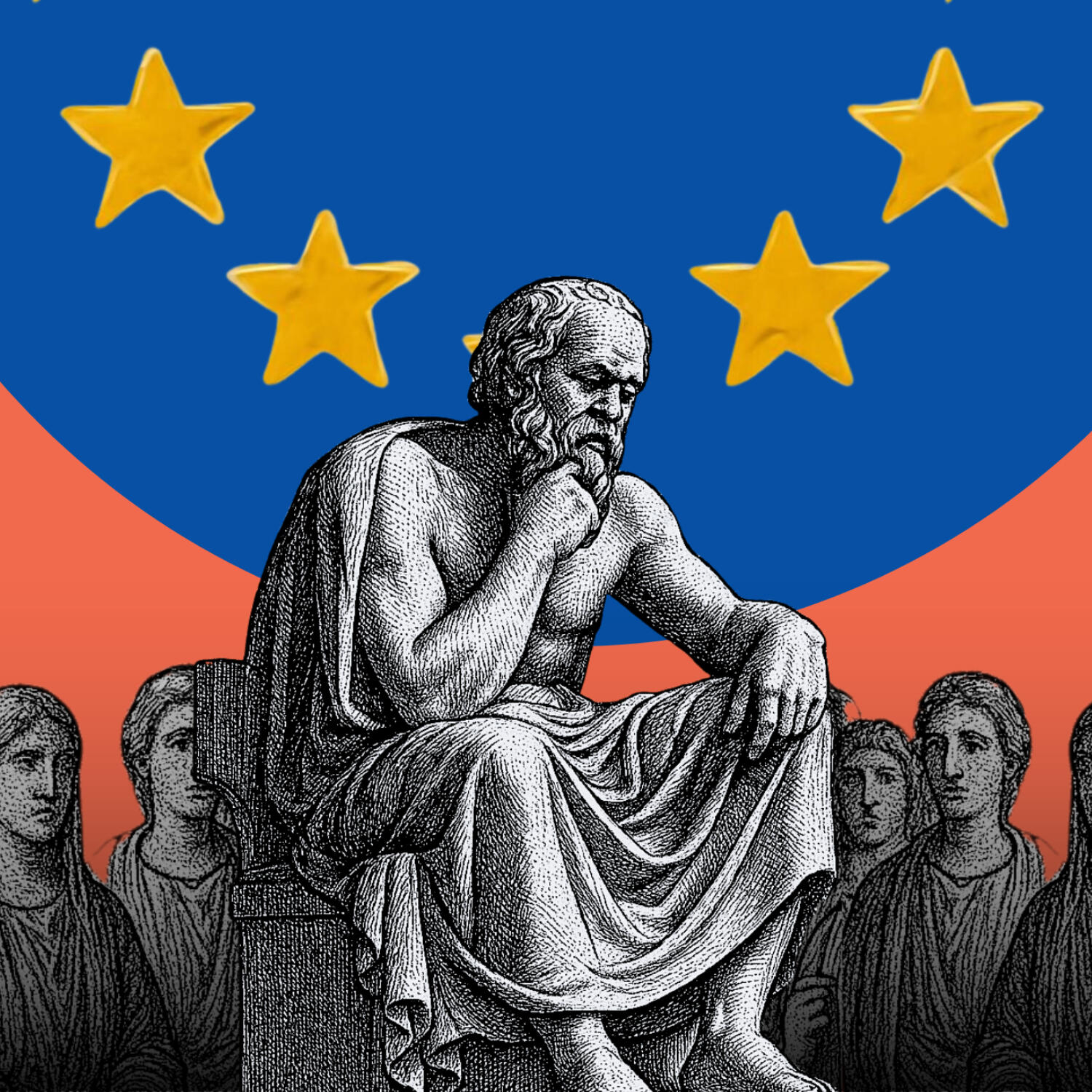 Progress Reimagined: Putting Societies at the Heart of European Research | The Insider Podcast - Season 2, Episode 1 "Progress Reimagined: Putting Societies at the Heart of European Research" We’re back! Season 2 of The Insider opens with a big question – maybe THE question – for European research right now: What happens when society becomes an afterthought in how we fund and govern science? And what would it take to put people back at the centre of the picture? In this first episode, Ricardo Miguéis sits down with Dr. Gabi Lombardo, Director of the European Alliance for Social Sciences and Humanities (EASSH) and someone who’s spent years trying to fix exactly that. Gabi has seen the system from every angle, from the London School of Economics and the ERC to Science Europe and EASSH, and she’s built one of the strongest cases for treating the Social Sciences and Humanities (SSH) as co-designers of European R&I, not just background noise. The episode unfolds in two parts: Part 1 – Where we come from Gabi reflects on her path, the institutional blind spots she’s seen up close, and why SSH remains structurally misunderstood in Europe. She talks about the famous Frascati Manual problem, fragmented national systems, and why “integration” is not the same as genuine collaboration. Behind the acronyms lies a deeper issue: the way Europe still defines what counts as “research excellence” – often in ways that overlook the human dimensions of progress. Part 2 – Where we go next The conversation dives into FP10, and the new Society policy window, asking what it would really mean to let SSH help design missions, instead of commenting from the sidelines. From the obsession with “resilience” to the need to look beyond GDP when measuring progress, this part links directly with how Europe defines ambition and what kind of future it is actually building. Throughout the episode, one idea keeps coming back: Europe doesn’t just need to fund SSH, it needs to learn from it. Because, if we want to talk seriously about trust, democracy, or legitimacy, we can’t treat social knowledge as an accessory. It’s a public good. For INESC Brussels HUB, this episode sets the tone for Season 2 – a season about how Europe chooses to innovate, and what kind of progress it truly wants to build. Listen to “Progress Reimagined: Putting Societies at the Heart of European Research”, now streaming on The Insider. | — | ||||||
| 11/5/25 | 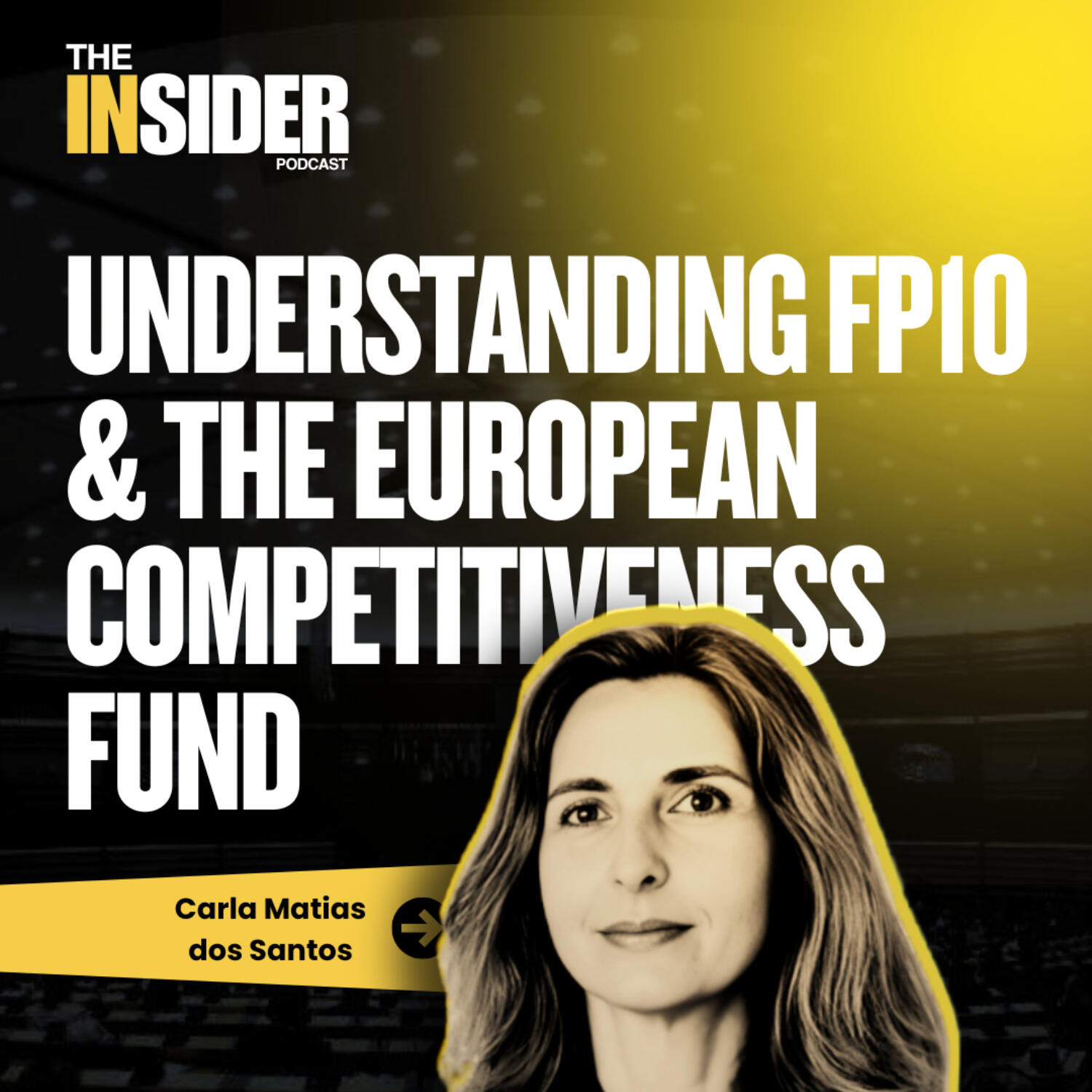 Webinar: Understanding FP10 & the European Competitiveness Fund | The Insider – Season 2, Episode 0 Season 2 of The Insider starts with a special Episode 0 – a pre-launch recorded live during an internal INESC webinar in October: “Understanding FP10 & the European Competitiveness Fund: Strategic implications for INESC.” In this episode, host Ricardo Miguéis talks with Carla Matias dos Santos, Research and Space Counsellor at the Permanent Representation of Portugal to the European Union. From her position inside the Council policy ecosystem, Carla has been closely involved in the political discussions around the Framework Programme 10 (FP10) and the proposed European Competitiveness Fund (ECF) – two instruments that will shape how Europe organises and funds research and innovation in the next decade. The session was originally designed as an internal workshop for the INESC community. We’re now sharing it more widely because the discussion is highly relevant for anyone trying to understand where the European research and innovation policy is heading. During the conversation, Carla and Ricardo look at: How FP10 is being structured – including key novelties such as dual-use research, research and technology infrastructures, and changes to widening measures. The rationale behind the European Competitiveness Fund, its four policy windows, and the idea of following the full path from research to deployment, manufacturing, and market uptake. The links between FP10 and the ECF: shared governance, a common rulebook, and what this means in practice for collaborative research and strategic domains like AI, digital, decarbonisation, health, resilience, security and defence. What all this implies for research organisations: larger and more directional projects, stronger emphasis on partnership-building, and the need to think earlier and more strategically about positioning. For INESC, this episode also serves as an early step on the way to the HUB Winter Meeting 2026, feeding into our work on scenario building, FP10 readiness and long-term strategic alignment across centres and institutes. Whether you work within INESC, lead a research organisation elsewhere in Europe, or are involved in designing and implementing R&I policy and programmes, this episode offers a very concrete, practitioner-level view of the FP10–ECF debate. Listen to Episode 0 and explore how FP10 and the ECF are likely to frame European research and innovation in the next decade. | — | ||||||
Want analysis for the episodes below?Free for Pro Submit a request, we'll have your selected episodes analyzed within an hour. Free, at no cost to you, for Pro users. | |||||||||
| 6/3/25 | 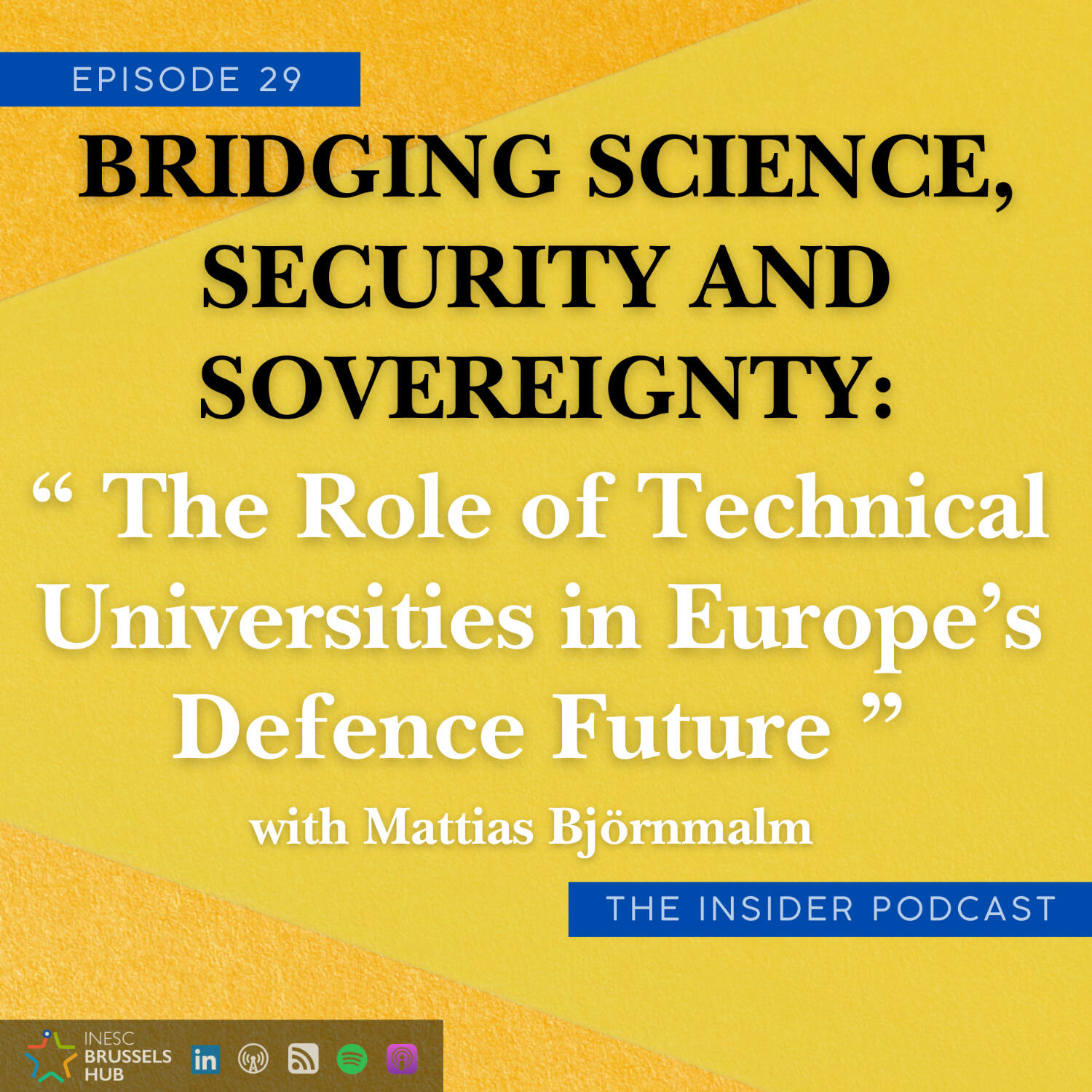 Bridging Science, Security and Sovereignty: The Role of Technical Universities in Europe’s Defence Future | In this episode, Ricardo Migueis speaks with Matthias Björnmalm, Secretary General of CESAR, about the shifting role of European universities in a time when science, sovereignty, and security are increasingly intertwined. Matthias reflects on his international journey through different research environments and how those experiences have shaped his views on collaboration, responsibility, and the broader role of science in society. The conversation dives into CESAR’s work supporting European universities of science and technology, its diverse membership, and the careful balance between openness and research security. Matthias explains how dual-use technologies, defense research, and governance structures require thoughtful, interdisciplinary approaches rooted in strong ethical foundations. Ricardo and Matthias explore the tension between academic autonomy and institutional compliance, the influence of European funding frameworks, and the risk of overly directive policies that could undermine innovation. They also discuss the importance of foresight in preparing for future skills needs and the responsibilities universities carry when it comes to societal impact and global engagement. Throughout the episode, Matthias makes the case for universities especially technical ones to act as reflective, engaged institutions that not only generate knowledge but help steer societal progress across local, national, and European levels. Takeaways European universities must navigate the growing intersection between science, security, and sovereignty while preserving academic integrity.Governance models in universities must balance institutional autonomy with compliance and societal accountability, particularly in sensitive domains.Ethical engagement in research, especially in defense and dual use technologies, requires interdisciplinary input and reflective institutional mechanisms.Top down policy frameworks risk limiting innovation and undermining the capacity for critical scientific exploration.Universities should actively shape policy discourse, particularly in strategic areas such as research security, knowledge protection, and societal resilience.Open engagement with global partners must be balanced against emerging constraints in knowledge security and geopolitical shifts.The concept of “autonomy traps” illustrates the risks of assigning universities responsibilities beyond their core missions without adequate support or authority.Strategic coherence across European funding instruments remains essential; policy structures should prioritise functional synergies over administrative consolidation.Technical universities have a pivotal role in foresight processes, particularly in anticipating future skills needs and guiding societal transitions.CESAR positions itself as a solution oriented, peer driven network that aims to elevate European science and technology in service of the public good.Research integrity frameworks must evolve to address contemporary challenges, supporting informed and contextual decision making at all institutional levels.Cultural change within funding institutions and governance structures is necessary to enable effective and resilient synergies.Universities are not isolated entities but are embedded in societal systems. They must engage meaningfully with their communities to retain legitimacy and relevance.Maintaining openness in higher education and research requires thoughtful mechanisms that do not compromise institutional trust or mission.Europe’s strategic autonomy in science and technology must be grounded in collaborative foresight, broad engagement, and support for bottom up innovation. The 2025 INESC Brussels HUB Summer Meeting, titled "Strategic Autonomy & Dual-Use R&I: Coherence, Capabilities & Europe’s Future. Access the full programme and registration details here | — | ||||||
| 5/20/25 |  Rethinking Widening - Eszter Lakos | In this episode, Ricardo Migueis sits with Eszter Lakos, a member of the European Parliament, to explore the concept of widening in European research and innovation. They discuss the importance of leadership, trust, and cultural shifts in fostering collaboration across Europe. Eszter shares her personal journey and insights into the challenges and successes of widening initiatives, emphasizing the need for a living system approach that goes beyond mere policy. The conversation highlights the interconnectedness of institutional structures and personal agency in driving change within the European research landscape. They discuss the complexities of mainstreaming in research funding, the importance of maintaining excellence, and the challenges faced by widening institutions. They explore the concept of a 'ghetto' in research funding, the need for alignment between funding programs, and the role of cohesion funds. The dialogue emphasizes the importance of political cohesion and the future of widening in European research, culminating in a vision for 2035 where institutions in widening regions are autonomous and competitive. Takeaways Widening is more than a policy; it's a living system.Leadership in research requires deep listening and understanding.Cultural shifts are essential for effective collaboration.Trust is a fundamental element in research and innovation.Widening countries carry historical legacies that impact development.Successful initiatives often stem from visionary leadership.Institutional inertia can slow down necessary changes.Collaboration between academia and industry is crucial for progress.Mainstreaming widening across EU programs is a potential solution.Flexibility in instruments can enhance stakeholder engagement. Mainstreaming in research funding must not dilute excellence.Widening institutions should not be seen as inferior.Positive self-reinforcement is crucial for widening programs.Alignment of funding programs is necessary for effective research.Cohesion funds play a significant role in research and innovation.Widening is a choice that reflects political cohesion.The future of widening must be integrated into the framework program.A strong knowledge base is essential for global competitiveness.Widening can help retain talent within the EU.Political conditions are necessary for a cohesive widening program. Chapters 00:06: Introduction to Widening in European Research 02:31: Eszter Lakos: A Journey of Leadership and Values 13:37: Widening as a Living System: Understanding the Ecosystem 22:31: Challenges in Resource Distribution and Trust 27:14: Navigating Institutional Structures and Personal Agency 31:57: Current Dynamics in Widening: Successes and Challenges 41:37: Mainstreaming and Excellence in Research Funding 44:11: The Ghetto Concept in Widening Institutions 46:40: Positive Self-Reinforcement in Widening Programs 49:15: Aligning Funding Programs for Research and Innovation 52:29: The Role of Cohesion Funds in Research 56:44: Widening as a Choice for Political Cohesion 01:01:12: Future of Widening in European Research 01:08:35: Imagining the European Research Landscape in 2035 The 2025 INESC Brussels HUB Summer Meeting, titled "Strategic Autonomy & Dual-Use R&I: Coherence, Capabilities & Europe’s Future," will bring together research-performing organisations (RPOs), EU policymakers, national authorities, and industry representatives to examine how Europe can reinforce its strategic autonomy through research, innovation, and coordinated funding. Access the full programme and registration details here | — | ||||||
| 4/30/25 | 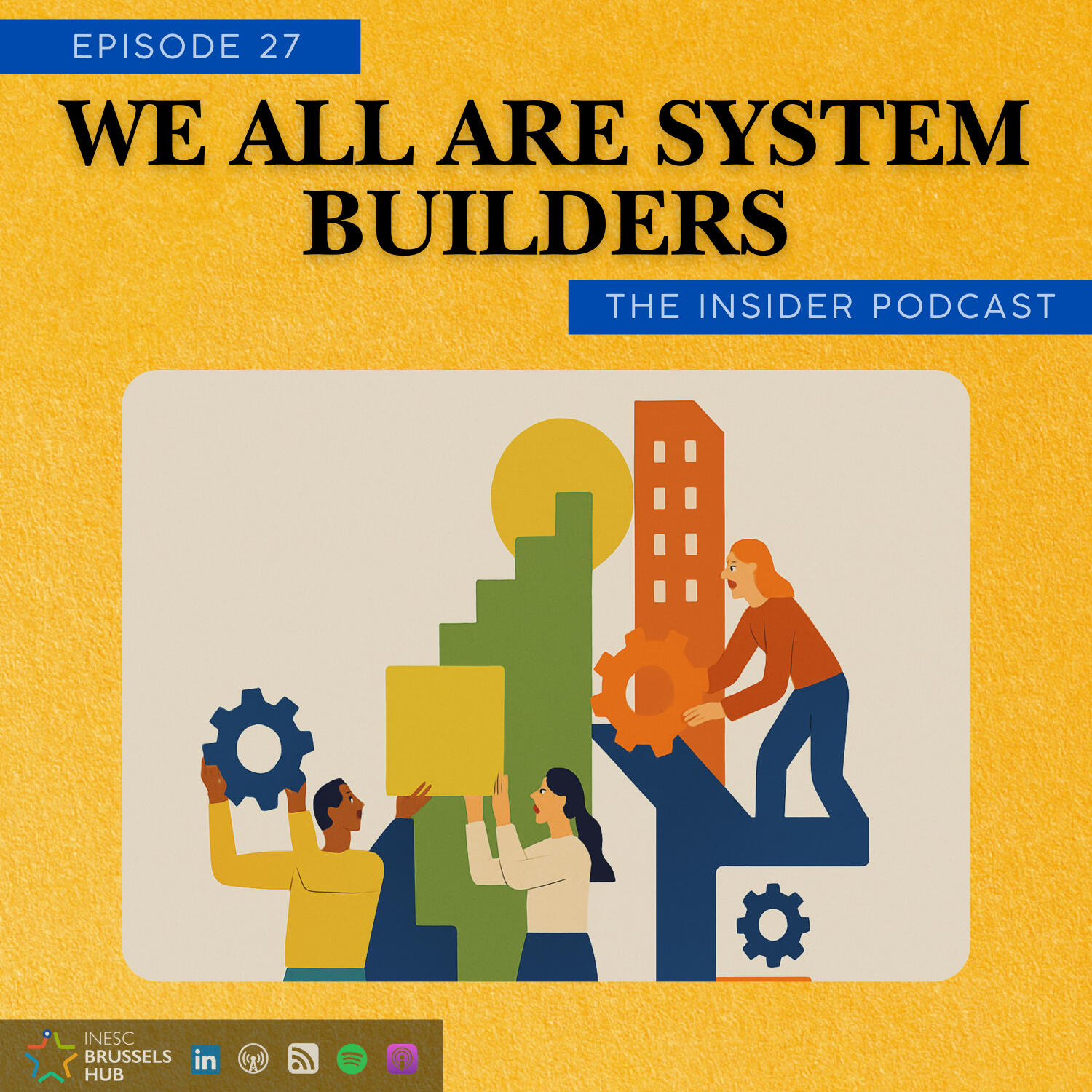 We All Are System Builders | In this episode of The Insider, Ricardo Migueis discusses the evolving role of research performing organizations in Europe, emphasizing the need for systemic thinking in research and innovation policy. He introduces the concept of the 'Fraunhofer moment' to illustrate how these organizations are becoming strategic actors in shaping Europe's future. Ricardo highlights the importance of building ecosystems that foster collaboration and adaptability, and outlines key priorities for future framework programs to support this vision. Takeaways We are all system builders now.Europe's ambitions require tangible outcomes, not just declarations.Research organizations are moving beyond traditional roles.Ecosystem thinking is essential for addressing complex challenges.Missions in Horizon Europe need to create space for connection.Public policy must focus on creating supportive frameworks.Excellence should encompass institutional management and collaboration.Building alliances is crucial for long-term impact.Leadership in research and innovation must be visionary and resilient.The real work lies in shaping the systems that carry ambition forward. Chapters 00:00: Introduction to The Insider 00:58: The Role of Research Performing Organizations 05:45: The Concept of Ecosystems in Research and Innovation 10:05: Priorities for Future Framework Programs 13:01: The Importance of Systemic Thinking The 2025 INESC Brussels HUB Summer Meeting, titled "Strategic Autonomy & Dual-Use R&I: Coherence, Capabilities & Europe’s Future," will bring together research-performing organisations (RPOs), EU policymakers, national authorities, and industry representatives to examine how Europe can reinforce its strategic autonomy through research, innovation, and coordinated funding. Access the full programme and registration details here | — | ||||||
| 3/25/25 |  Rethinking RTIs – Building the Framework Conditions Europe Needs | How can Europe’s Research & Technology Infrastructures (RTIs) create real impact, beyond research labs and into industrial resilience, digital transformation, and societal well-being? In this episode of The Insider, host Ricardo Migueis discusses the key takeaways from the HUB Winter Meeting in Porto, where experts examined one of the biggest gaps in EU innovation policy: the missing framework for technology infrastructures (TIs). With insights from leading voices at the European Commission, ESFRI, Technopolis, and TNO, this episode covers: Why bridging research infrastructures (RIs) and technology infrastructures (TIs) is essential for Europe’s competitiveness.How the RITIFI project is developing ecosystem-based approaches to unify RIs and TIs.The challenges SMEs face in accessing cross-border infrastructures and how policy must adapt.What it takes to fund and sustain cutting-edge pilot lines and living labs beyond single-shot grants. Europe has spent 20 years developing a policy for research infrastructures but what about technology ones? The Porto meeting addressed this question, and this episode shares the key discussions and insights. Listen now to explore how RTIs can strengthen Europe’s R&I landscape. | — | ||||||
| 2/25/25 |  How Governance and Partnerships Propel Research? ~José Manuel Mendonça Part 3 | This conversation explores the evolution of INESC TEC, a pioneering institution in Portugal that transformed from a national entity to a global leader in research and innovation. Professor José Manuel Mendonça discusses the challenges and decisions that shaped INESC TEC's trajectory, including its governance structure, collaboration with the University of Porto, the impact of structural funding, and the role of European integration in its strategic direction. The discussion highlights the importance of vision, resilience, and the relentless pursuit of innovation in navigating the complexities of research and development. In this conversation, José Mendonça discusses Portugal's manufacturing capabilities, the importance of quality representation in Europe, and the evolution of international partnerships, particularly with institutions like MIT and Carnegie Mellon. He emphasizes INESC TEC's role in supporting public policy and the need for structured science-based policy analysis. The discussion also touches on the importance of agenda setting in technology and innovation, and the future outlook for Portugal in the global context. Takeaways INESC TEC emerged during a transformative period in Portugal's history.The institution evolved from a centralized model to a multi-institutional approach.Collaboration with universities was crucial for INESC TEC's growth.Structural funding played a significant role in INESC TEC's success.European integration provided strategic opportunities for collaboration.INESC TEC's governance model fostered autonomy and professional management.The culture of innovation was cultivated through strong leadership and vision.INESC TEC's success is attributed to its ability to balance research and technology transfer.The institution's growth was supported by partnerships with local industries.INESC TEC's journey reflects broader changes in Portugal's research and innovation landscape. Portugal is strong in exporting high-value goods.European projects have significantly impacted traditional industries in Portugal.Quality representation in Europe has evolved over time.International partnerships with US institutions have been transformative.INESC TEC plays a crucial role in advising public policy.There is a growing demand for science-based policy analysis.Institutions should be systematically consulted for public policy advice.Agenda setting is essential for addressing future challenges.Technological trends must be filtered for relevance to local needs.The future outlook for Portugal is promising with ongoing innovation. Chapters 00:00: The Journey Begins: Portugal in the 1980s 17:40: Governance and Collaboration: INESC TEC and University of Porto 31:06: Structural Funding: A Catalyst for Growth 40:21: European Integration: Shaping INESC TEC's Strategic Direction 49:41: Portugal's Manufacturing Competence 58:44: Building International Partnerships 01:14:26: INESC TEC's Role in Public Policy 01:21:24: The Need for Structured Science-Based Policy Analysis ---------------- The INESC Brussels HUB Winter Meeting 2025 📅 Date: March 6, 2025 📍 Location: Faculty of Engineering, University of Porto (Faculdade de Engenharia da Universidade do Porto) The organisation welcomes the participation and partnership of the national research and innovation funding agencies (FCT – Fundação para a Ciência e a Tecnologia & ANI – Agência Nacional de Inovação). The event will bring together key European and national policymakers, research and technology infrastructure managers, and funding agencies to discuss the evolving policy landscape and identify strategic investment models for RTIs. Read more and register here: https://hub.inesc.pt/inesc-brussels-hub-winter-meeting-2025/ | — | ||||||
| 2/19/25 |  Will FP10 Survive the Shift to a Competitiveness Fund? Featuring Kurt Deketelaere | Welcome to The Insider, the podcast where we dissect the most pressing debates shaping Europe’s research and innovation future. And today, we go straight to the heart of one of the most defining battles in EU policymaking: Will we still have an independent, standalone Framework Programme 10? Will European research and innovation remain a driving force for competitiveness and discovery—or will it become just another budget line item in the competitiveness fund and broader priorities? The European Commission’s latest strategic documents—the Competitiveness Compass and The Road to the Next Multiannual Financial Framework have sent shockwaves through the R&I community. A European Competitiveness Fund is emerging, but with no explicit commitment to FP10. Meanwhile, the European Parliament continues to advocate for a robust, ring-fenced R&I budget. The battle lines are drawn. In this episode, your host, Ricardo Migueis, Head of INESC Brussels HUB, is joined by one of the most outspoken figures in European R&I policy—Kurt Deketelaere. As Secretary-General of the League of European Research Universities, he has spent decades leading the fight for R&I independence. A lawyer, professor, and policy strategist, he has advised governments, universities, and industry leaders, shaping the trajectory of EU R&I funding like few others. Today, we ask the hard questions: What happens if FP10 is absorbed into a broader industrial strategy? Can Europe afford to shift towards a more politically driven funding model? And should we—finally—rethink the balance between EU-level R&I investment and national R&I spending? Kurt has been vocal: He supports a €200 billion FP10, fully ring-fenced, protected from short-term budgetary shifts. But he also argues that Europe needs direct EU revenue streams, stable funding that isn’t subject to the political will of national governments. Meanwhile, the Commission is already laying the groundwork for conditionalities—if Member States want EU R&I money, they must step up their own investment, pushing towards 3% GDP in R&I. A revolution? Or just a necessary correction? Fundamental research. The independence of the European Research Council. The need to streamline the EU funding architecture. The role of R&I as a weapon of mass diplomacy. The fierce battle over efficiency, effectiveness, and political control over R&I priorities. And the existential question—who should pay for European R&I, the EU or its Member States? The answers will define the next decade. This is a conversation about R&I, about power, economics, and Europe’s place in the world. And with Kurt, we’re not here to tiptoe around the issues. We’re here to challenge, to debate, and to push for the future of European R&I. ---------------- The INESC Brussels HUB Winter Meeting 2025 📅 Date: March 6, 2025 📍 Location: Faculty of Engineering, University of Porto (Faculdade de Engenharia da Universidade do Porto) The organisation welcomes the participation and partnership of the national research and innovation funding agencies (FCT – Fundação para a Ciência e a Tecnologia & ANI – Agência Nacional de Inovação). The event will bring together key European and national policymakers, research and technology infrastructure managers, and funding agencies to discuss the evolving policy landscape and identify strategic investment models for RTIs. Read more and register here: https://hub.inesc.pt/inesc-brussels-hub-winter-meeting-2025/ | — | ||||||
| 2/11/25 |  ERA Hubs: The Missing Link for a More Integrated R&I Ecosystem, with Francesco Molinari | In this episode, Ricardo Migueis interviews Francesco Molinari, a prominent figure in European research and innovation. They discuss Molinari's extensive career, the concept of EraHubs, and the challenges facing European innovation ecosystems. The conversation highlights the importance of collaboration, knowledge valorization, and the need for a cultural shift in public administration to foster innovation. Takeaways Francesco Molinari has a diverse background in European innovation.EraHubs aim to bridge gaps in innovation ecosystems.Collaboration across regions is essential for innovation success.Knowledge valorization encompasses societal needs and policy changes.Public procurement can drive innovation at the entrepreneurial level.Smart specialization strategies have not fully achieved their goals.A multi-stakeholder approach is vital for effective innovation.Policy innovation is necessary to overcome existing barriers.Cultural change in public administration is crucial for progress.Learning from experience can transform public sector mindsets. Chapters 00:00: Introduction to Francesco Molinari and His Journey 11:18: Understanding Innovation Ecosystems and EraHubs 25:09: Defining EraHubs: Purpose and Importance 48:15: Challenges in European Research and Innovation | — | ||||||
| 2/6/25 |  Strategic Compass: Who's Rewriting the Rules of European Research and Innovation? | Has Europe's approach to innovation shifted? This episode of "The Insider" examines the European Commission's Competitiveness Compass, a strategic initiative that aims to redefine how research and innovation are funded across Europe. The Competitiveness Compass introduces changes that align research funding more closely with economic and industrial objectives. This shift has sparked extensive discussion among European academics, researchers, and policymakers. We highlight opinions from José Carlos Caldeira of INESC TEC, Marta Agostinho from EU-LIFE, and Silvia Gomez Recio of YERUN, who evaluate the potential effects on the research community and Europe's global competitive stance. This episode addresses concerns about whether these changes could compromise the core principles of independent scientific research in pursuit of economic goals. We also consider how this strategic direction might affect Europe’s standing as a leader in innovation while continuing its dedication to fundamental research. We discuss the implications of focusing on industrial and economic outcomes over scientific discovery and whether this focus could fundamentally alter the European research scene. The conversation aims to identify a practical balance that fosters economic growth without neglecting Europe's long-standing tradition of scientific excellence. Tune in for a detailed analysis of the Competitiveness Compass and its implications for reshaping European research and innovation. Takeaways The Competitiveness Compass represents a significant shift in EU research funding.There is growing concern about the influence of industrial priorities on research.Researchers fear a loss of autonomy and bottom-up research initiatives.Long-term funding strategies are essential for sustainable research growth.The EU's research funding is often treated as a secondary priority.National governments are increasingly relying on EU funding to compensate for underinvestment.The European Research Council's independence is at risk due to new funding priorities.Global competition necessitates a reevaluation of Europe's research strategy.Attracting top talent requires a commitment to open and collaborative research environments.The future of FP10 is critical for the sustainability of European research. Chapters 00:00: Introduction to the Competitiveness Compass 02:45: The Shift in Research Funding Priorities 06:09: Concerns Over Industrial Influence in Research 08:50: The Need for Long-Term Research Strategy 11:52: Impact of Funding Shifts on Research Landscape 15:15: Balancing National and EU Research Funding 18:05: Global Context of Research Funding 20:52: The Challenge of Attracting Talent 24:08: The Financial Commitment to Research 26:55: Conclusion and Future of European Research | — | ||||||
| 1/28/25 | 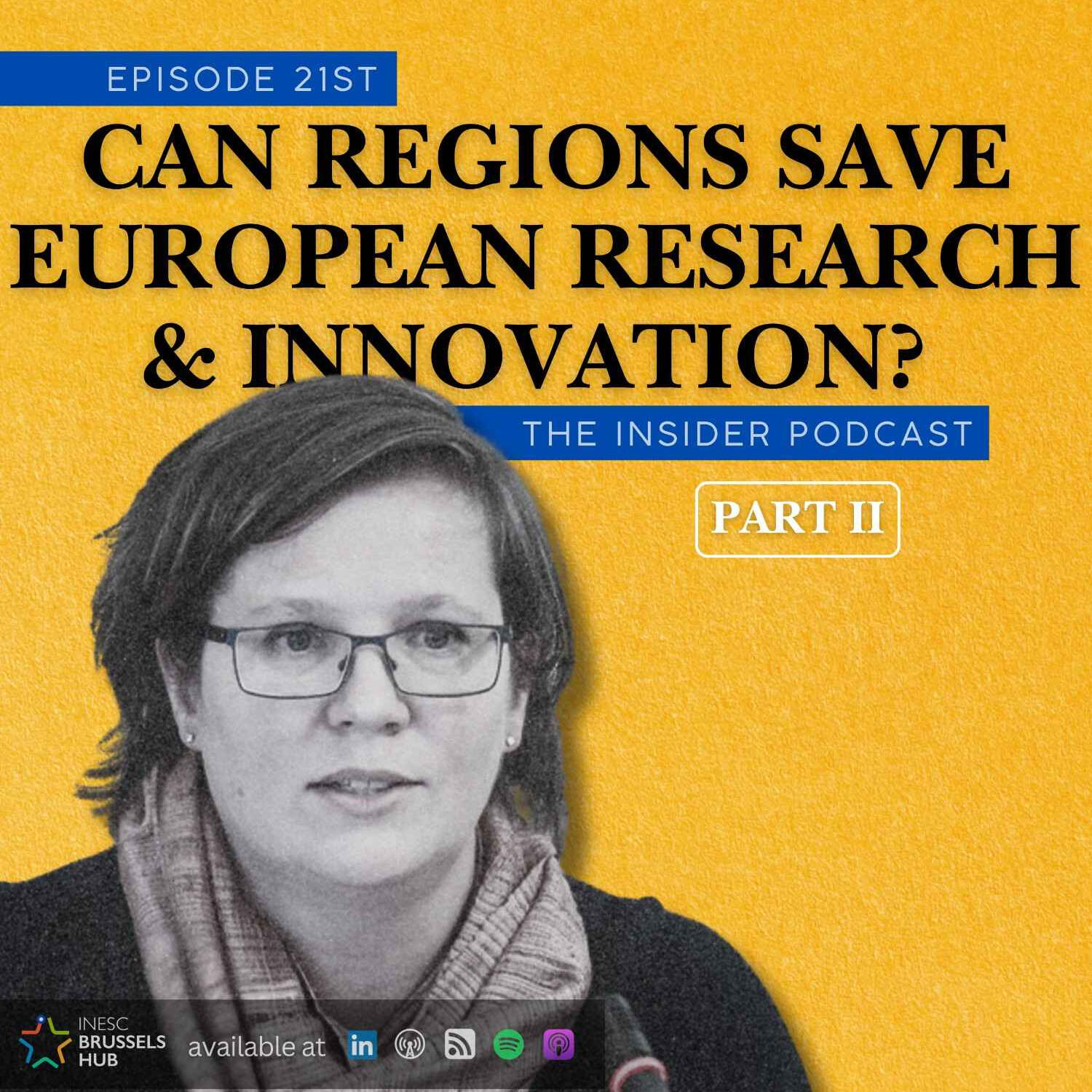 Can Regions Save European Research & Innovation? - Part II with Pirita Lindholm | In this second part of this conversation, Ricardo Migueis and Pirita Linholm delve into the critical role of regions in shaping Europe's research and innovation landscape. They discuss the importance of innovation ecosystems, the challenges of fragmentation, and the need for interregional collaboration to address the innovation divide. The conversation highlights the significance of inclusive policies that ensure no region is left behind, while also exploring the interplay between local and EU-level policies. Pirita emphasizes the necessity for proactive engagement from research and innovation institutions to align with EU priorities and drive sustainable results. This conversation explores the challenges and opportunities in European research and innovation, focusing on regional disparities, the role of missions, and strategies for empowering regions. The speakers discuss the importance of cohesion and alignment in policies, the need for collaboration among stakeholders, and the potential of mission-oriented approaches to address societal challenges. They emphasize the necessity of breaking down silos and fostering ecosystems that support innovation across Europe. Takeaways Regions play a crucial role in European research and innovation.Innovation ecosystems must be less fragmented to be effective.Robust ecosystems are essential for competitiveness.Regional innovation valleys have generated enthusiasm but face challenges.Less developed regions may be more open to collaboration.Widening engagement is a priority to include all regions.Innovation is inherently local, yet must align with EU goals.R&I institutions should proactively engage with policy discussions.Long-term impacts of policies should be prioritized.Excellence in innovation can be found in every region. We need to think about the EU's investment policy.Cohesion policy needs to be reformed for better alignment.Widening measures should be embedded across programs.Missions require strong ecosystem action to succeed.Collaboration is key to tackling climate change.Regional innovation ecosystems must be mobilized effectively.Breaking silos can lead to better funding outcomes.Missions can drive local engagement and innovation.It's essential to match local interests with broader goals.Long-term commitment is crucial for mission success. Chapters 00:00: Introduction to European Research and Innovation Challenges 06:31: Regional Innovation Valleys: A Step Forward? 11:51: Addressing Inclusion in Innovation Policies 19:45: Proactive Roles of R&I Institutions 26:21: Evaluating Current Widening Schemes 41:39: The Role of Missions in EU Research and Innovation 56:15: Empowering Regions for Future Innovation | — | ||||||
| 1/23/25 |  Trump 2.0: What’s at Stake for Portugal’s Partnerships with CMU, MIT, and UT Austin? | This is the Insider's Original Solo Episode with Ricardo Migueis. Where he explores the transformative impact of Portugal's partnerships with leading academic institutions like Carnegie Mellon, MIT, and UT Austin. It evaluates the achievements, challenges, and future potential of these collaborations in reshaping Portugal's scientific and innovation landscape. The discussion emphasizes the importance of sustainability, equity, and strategic focus in navigating the complexities of global research and innovation. Takeaways Portugal's partnerships with top universities have reshaped its scientific landscape.Over 1,000 students earned dual PhDs through these collaborations.Publications from these partnerships are cited 60% more frequently.Patents from partnership research are cited three times more than others.Entrepreneurship has flourished, with companies like Feedzai and Sword Health emerging.Private sector engagement amplified the value of these collaborations.The partnerships have created a network that transcends individual programs.Equity in outcomes remains a critical concern in academic partnerships.Sustainability of these partnerships is essential for long-term impact.Portugal must strategically prioritize areas for global leadership. Chapters 00:00: Introduction to Portugal's Bold Leap 02:53: Evaluating the Impact of Transatlantic Partnerships 06:12: Assessing Efficiency and Sustainability 09:00: Exploring Equity in Academic Partnerships 11:51: The Future of Portugal's Innovation Landscape 15:06: Strategic Focus and Global Positioning 17:54: Navigating Geopolitical Challenges 20:49: Conclusion: The Path Forward for Portugal | — | ||||||
| 1/14/25 | 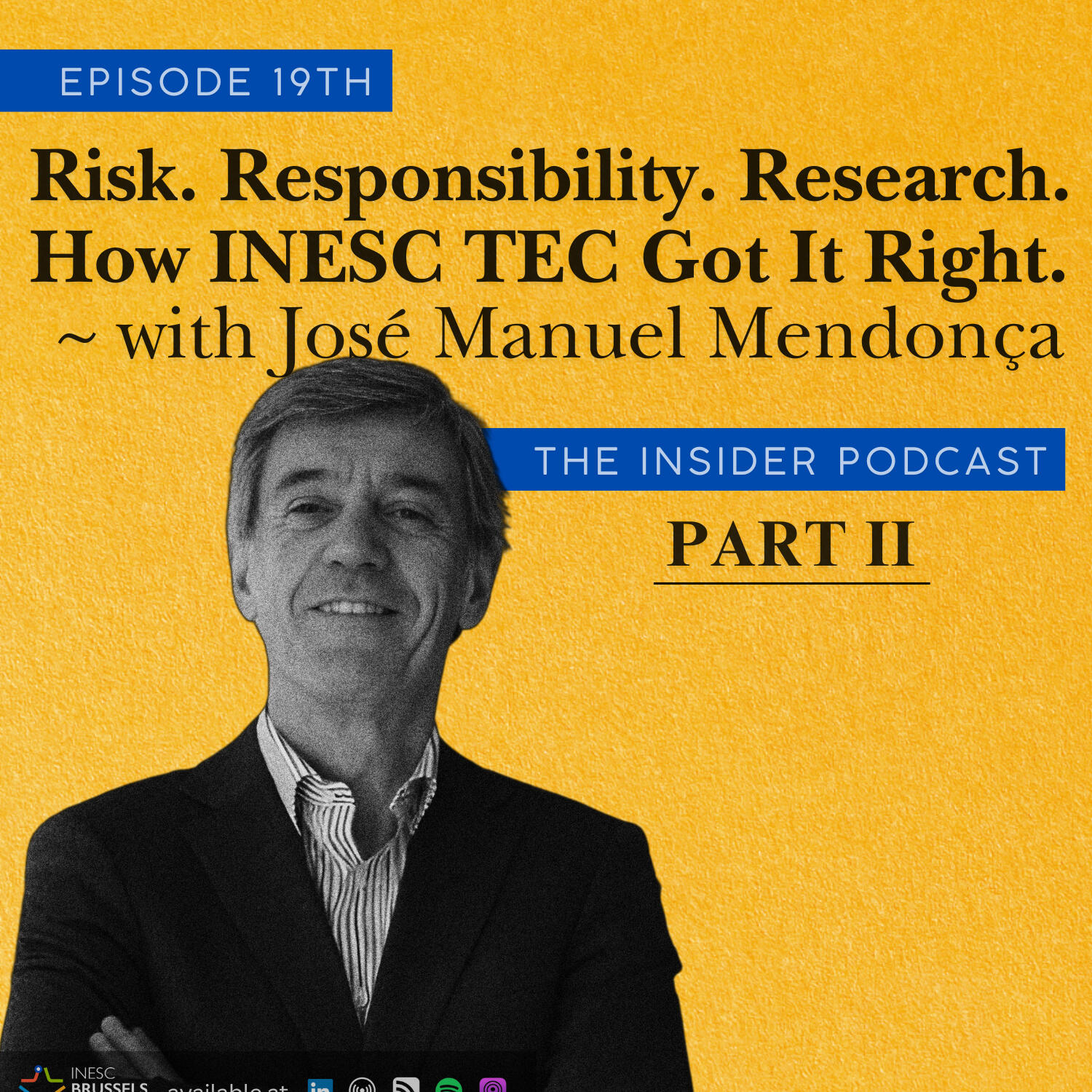 Risk. Responsibility. Research. How INESC TEC Got It Right – with José Manuel Mendonça | This is the second part of the series with with José Manuel Mendonça. It explores the unique governance model of INESC TEC, its evolution in relation to industry collaboration, the role of academia in research institutes, and the importance of multidisciplinary approaches in research. José Mendonça shares insights on how INESC TEC was established to bridge the gap between academia and industry, the challenges faced, and the strategies implemented to foster collaboration and innovation. The discussion highlights the need for a sustainable model that balances academic freedom with industrial application, emphasizing the significance of large, multidisciplinary teams in addressing real-world challenges. In this conversation, José Mendonça discusses the innovative models of laboratory sharing for impactful research, the evolving role of universities in the research landscape, and the complexities of governance in research institutions. He emphasizes the importance of mentorship and the dual missions of research institutions to serve both educational and research goals. The conversation also touches on the effects of European integration on research capabilities and the ongoing challenges and opportunities for INESC TEC in the future. Takeaways INESC's governance model is a pioneer in Portugal.The need for a model to interface with companies was clear from the start.Professors transitioned from researchers to project managers.The governance model allows for a sustainable structure.INESC TEC serves as a strategic glue for the ecosystem.Alignment of interests between INESC TEC and universities is crucial.The model requires continuous explanation to new university leadership.Multidisciplinary approaches are essential for tackling complex problems.Large groups enable collaboration across different scientific areas.The balance between academic freedom and industrial application is vital. State-of-the-art laboratories are essential for impactful research.Shared laboratories can accommodate large research groups effectively.Engineers play a crucial role in scientific research.Universities must adapt to evolving research demands.Governance in research institutions is complex and multifaceted.INESC TEC balances its dual mission to serve universities and researchers.Mentorship is vital for developing future leaders in research.European integration has transformed research capabilities in Portugal.Competition among institutions fosters innovation and improvement.The future of INESC TEC involves addressing funding and sustainability challenges. Chapters 00:00: The Governance Model of INESC TEC 07:07: Evolution of Research and Industry Collaboration 17:00: The Role of Academia in Research Institutes 30:02: Multidisciplinary Approaches in Research 35:52: Innovative Laboratory Models for Research 39:12: The Evolving Role of Universities 41:44: Navigating Complex Governance Structures 45:05: Balancing Dual Missions in Research 48:41: The Importance of Mentorship in Research Institutions 56:11: European Integration and Its Impact on Research 01:07:51: Future Challenges and Opportunities for INESC TEC | — | ||||||
| 1/8/25 | 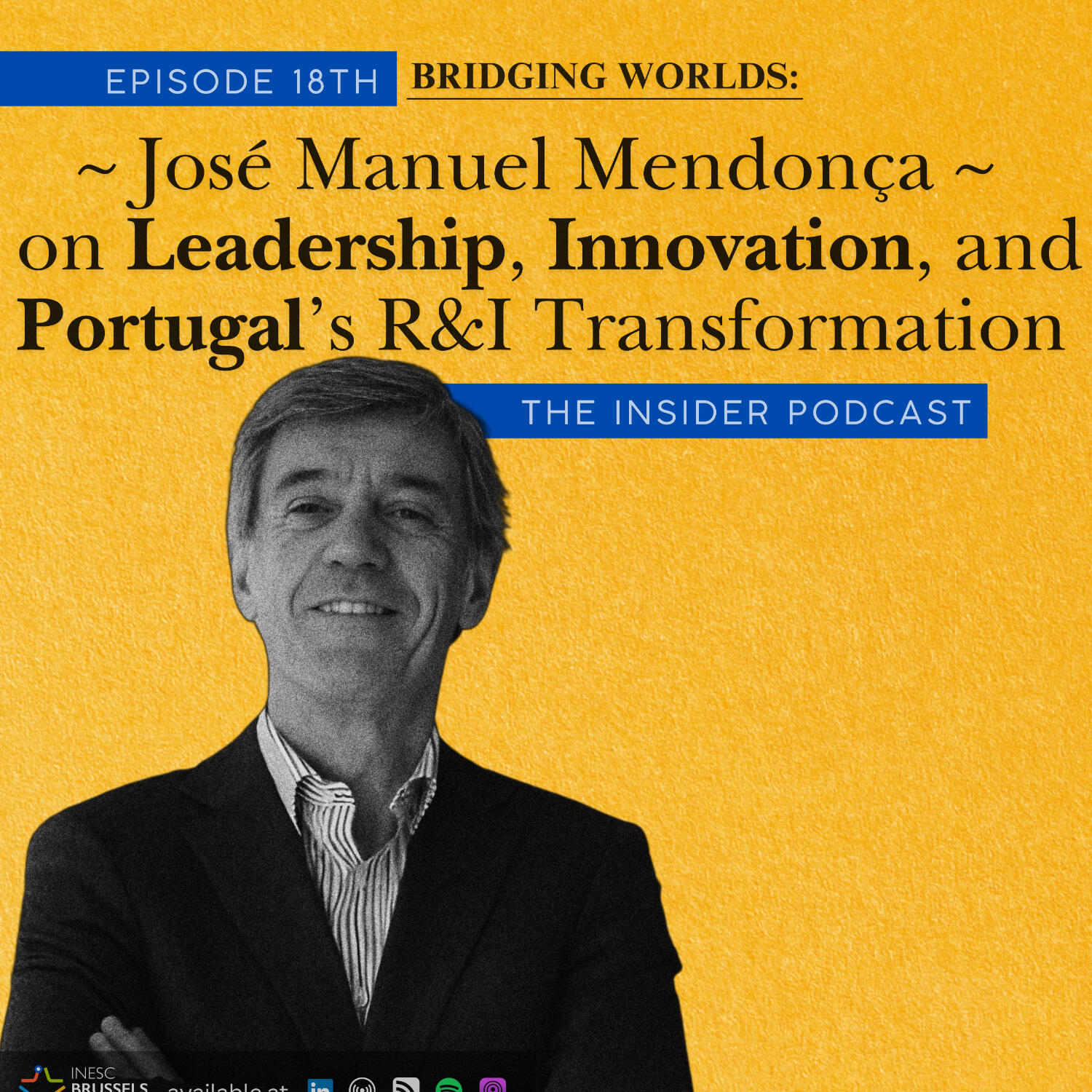 Bridging Worlds: José Manuel Mendonça on Leadership, Innovation, and Portugal’s R&I Transformation | In this insightful conversation, Professor José Manuel Mendonça shares his journey from a young engineer in post-revolution Portugal to becoming a prominent figure in research and innovation. He reflects on the challenges faced during his education, the cultural shocks experienced while studying abroad, and the lessons learned from martial arts that shaped his approach to leadership and resilience. Mendonça emphasizes the importance of mentorship and the desire to implement change upon returning to Portugal, ultimately contributing to the development of renewable energy and research institutions. In this conversation, José Mendonça reflects on his journey of learning from diverse sources, the evolution of research opportunities for young researchers, and the establishment of Inesq and InesqTech. He discusses the cultural shift in Portugal towards a more European identity and the impact of this shift on research and innovation. The conversation also highlights the role of Inesq in European research projects and the challenges faced by the current generation of researchers. Takeaways Portugal in the 1970s faced significant challenges in research and innovation.The Carnation Revolution opened new opportunities for young engineers.Studying abroad was a rare but transformative experience for Portuguese students.Denmark was a leader in wind energy, influencing Mendonça's career path.Mendonça's experiences abroad highlighted the differences in democracy and social harmony.Returning to Portugal, he aimed to apply his knowledge and experiences to improve the local research landscape.Mendonça's martial arts training instilled discipline, focus, and resilience in his professional life.The philosophy of 'be strong, be useful' guided Mendonça's approach to challenges.Mentorship played a crucial role in shaping Mendonça's leadership style.The DNA of an institution is formed by its people and their values. Learning can come from unexpected places.The importance of mentorship in personal growth.Current researchers have more resources but face greater challenges.Portugal's research landscape has significantly improved over the years.Young researchers must publish and have an impact to succeed.Cultural shifts influence institutional development.Inesq was pivotal in integrating Portugal into European research.Collaboration with European partners is essential for growth.The evolution of research opportunities reflects broader societal changes.Innovation requires a balance of ethics and practical application. Chapters 00:00: The Journey Begins: Portugal's Transformation 01:38: Dreams and Challenges of a Young Engineer 04:25: Pursuing Education Abroad: A Leap of Faith 10:37: Cultural Shock: Learning from the UK and Denmark 17:43: Returning to Portugal: A Pragmatic Approach 24:46: Discipline, Focus, and Resilience: The Martial Arts Influence 35:20: Mentorship and Leadership: Influences Along the Way 36:56: Learning from Diverse Sources 39:01: The Evolution of Research Opportunities 44:32: The Genesis of INESC and INESC TEC 46:15: Portugal's Cultural Shift and European Integration 51:09: INESC's Role in European Research Projects | — | ||||||
| 12/16/24 |  Europe’s Research and Innovation Future: Lessons from 2024 and Vision for 2025 | In this final episode of the Insider podcast for 2024, Ricardo Migueis reflects on the transformative forces shaping European research and innovation, focusing on the evolution of research infrastructures, the critical role of technology infrastructures, and the impact of AI. He discusses the need for alignment with European policy priorities, the ethical dimensions of AI, and the importance of addressing the capacity divide across regions. The episode emphasizes the necessity of inclusivity, adaptability, and collaboration in building a resilient and competitive research ecosystem for the future. Takeaways 2024 has been transformative for European research and innovation.Research infrastructures are evolving into dynamic ecosystems.Technology infrastructures are critical enablers of innovation.AI has emerged as the accelerator of innovation.We need to address the capacity divide across Europe.Public-private partnerships drive innovation.We must align AI initiatives with FP10 priorities.Inclusivity is crucial for research and innovation.We need to create a resilient and competitive ecosystem.The interplay between research and technology infrastructures offers opportunities for integrated ecosystems. Chapters 00:00: Transformative Forces in European Research and Innovation 08:15: The Role of Technology Infrastructures in Innovation 16:10: AI as an Accelerator of Innovation 23:52: Addressing the Capacity Divide in Europe | — | ||||||
| 11/28/24 | 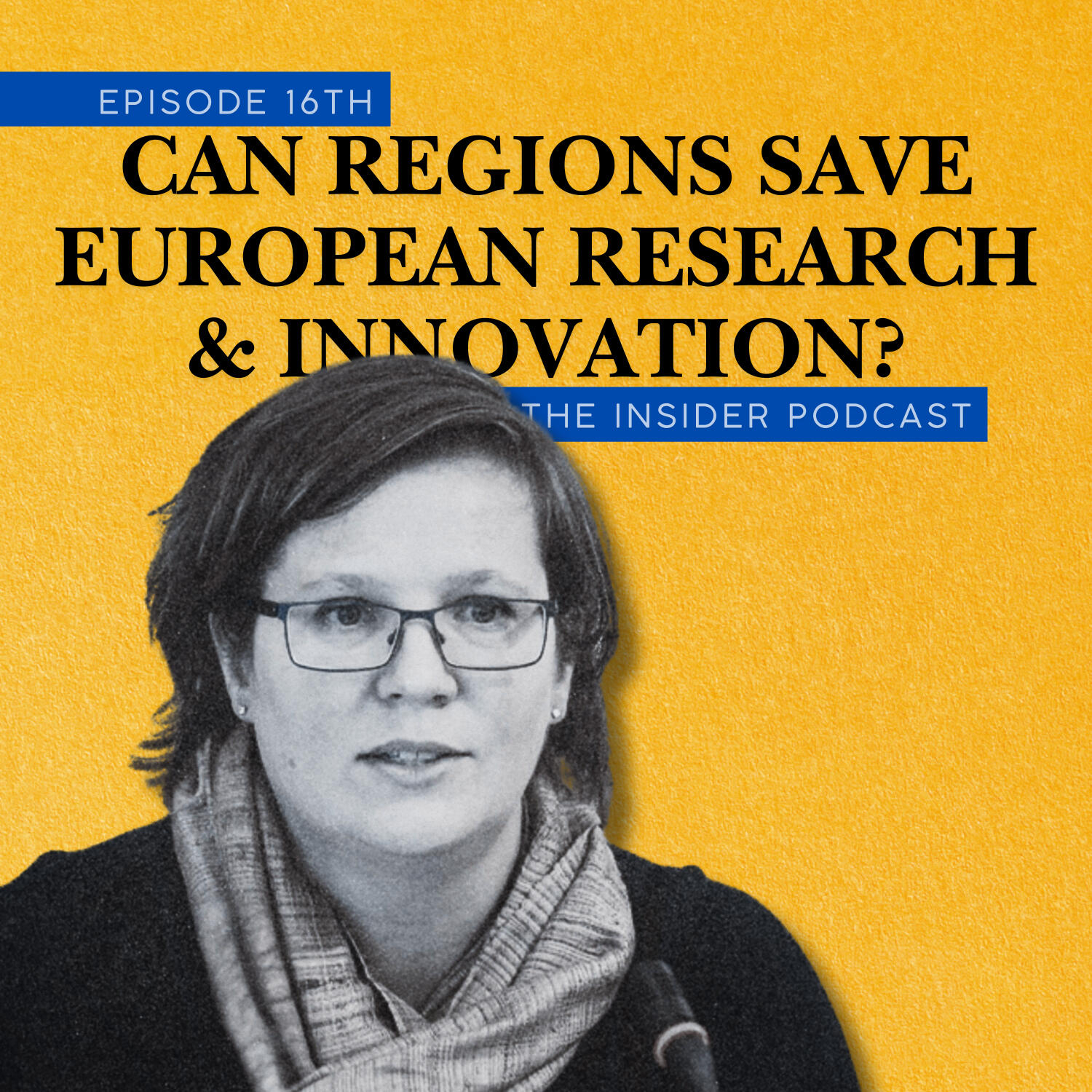 Can Regions Save European Research & Innovation? | In this episode of the Insider Podcast, Ricardo Migueis and Pirita Lindholm discuss the critical role of regions in shaping European research and innovation. They explore the challenges and opportunities within the innovation landscape, emphasizing the importance of place-based approaches and collaboration among diverse stakeholders. The conversation highlights the mission of ARIN, the significance of grassroots initiatives, and the need for effective frameworks to support regional ecosystems in addressing societal challenges and enhancing competitiveness on a global scale. In this conversation, Ricardo Migueis and Pirita Lindholm discuss the critical themes of resilience in renewable energy, the importance of digital sovereignty, and the interconnected challenges faced by regions in Europe. They explore the need for coherent policies that support green and digital transformations, the role of innovation ecosystems, and the significance of skills development in bridging the innovation divide. The dialogue emphasizes the necessity of balancing local strengths with EU priorities and preparing for future discussions on these pressing issues. Takeaways Regions play a crucial role in European research and innovation.A place-based approach is essential for effective innovation.ARIN connects over 120 regional organizations to foster collaboration.Diversity in regional capacities presents both challenges and opportunities.Fragmentation in research and innovation can hinder progress.Collaboration across ecosystems is vital for addressing complex challenges.Measuring the impact of ecosystems is necessary for accountability.Grassroots innovations can influence European policy discussions.The future of FP10 must prioritize regional engagement.Local voices are essential in shaping EU research and innovation policies. Building resilience in renewable energy is essential.Green and digital transformations are priorities for regions.Digital technology is crucial for accelerating the green transition.Policy coherence is necessary for effective energy transformation.Multi-level governance is vital for successful strategy implementation.Interconnected challenges require collaborative solutions across regions.Widening innovation is important for non-widening regions.Skills development is key to addressing the innovation divide.Balancing local strengths with EU priorities is a significant challenge.Storytelling is an effective way to engage audiences in discussions. Chapters 00:00: Introduction to European Research and Innovation Challenges 03:00: The Role of Regions in Innovation Ecosystems 05:10: Understanding ARIN's Mission and Membership 08:53: Place-Based Approaches in Research and Innovation 12:03: Navigating Diversity in Regional Innovation 14:55: Addressing Fragmentation in Research and Innovation 18:10: Collaboration Across Ecosystems 21:04: Measuring Impact of Ecosystems 23:59: Closing the Innovation Gap with Global Competitors 26:48: Grassroots Innovations and Policy Influence 30:10: The Future of FP10 and Regional Engagement 33:02: The Importance of Local Voices in EU Policy 35:55: Challenges Facing European Research and Innovation 47:09: Building Resilience in Energy and Technology 50:01: Understanding Digital Sovereignty 53:21: Interconnected Challenges in Regional Development 54:48: Widening Innovation and Skills Development 58:10: Balancing Local Strengths with EU Priorities 01:03:33: Preparing for Future Discussions | — | ||||||
| 11/18/24 | Defending Europe: Cybersecurity Challenges, AI Threats, and the Future of Digital Sovereignty | The Cyber Frontier: Europe’s Digital Defense in Action In this episode, we look into the high-stakes world of cybersecurity in Europe, where every click matters and every byte counts. From the escalating sophistication of ransomware to the invisible power of social engineering, this conversation pulls back the curtain on the challenges reshaping Europe’s digital future. Here’s the big picture: How geopolitical tensions are fueling cyber threats like never before.The uneven playing field of resilience across EU member states—and why it matters.The dual nature of AI: a game-changer for security and a new target for attackers.The looming risks of quantum computing to today’s cryptographic standards.Why collaboration between research and industry is no longer optional. We’re also breaking down the EU’s NIS2 Directive and its role in fostering innovation, while exploring critical areas of research like IoT security and Zero Trust architectures. If you’ve ever wondered what it takes to build a future-proof digital ecosystem—or why strategic autonomy in cybersecurity is key to Europe’s survival, this is your episode. Get ready to rethink cybersecurity from every angle. Because the future isn’t just about defense, it’s about staying one step ahead. Meet the Guest: Nelson Escravana With over 20 years of hands-on experience in cybersecurity innovation, Nelson Escravana is a force to be reckoned with. He leads the Cybersecurity R&D Unit at INOV, coordinating groundbreaking projects in offensive security, intrusion detection, and data security. Nelson’s resume is a masterclass in impact: Over 20 EU and national research projects, including the prestigious H2020 IRIS initiative focused on IoT and AI security.Critical contributions to organizations like ESA, NATO, and the Portuguese Government.Strategic leadership on H2020 projects like SECUR-ED, ECOSSIAN, and SPARTA. Takeaways Cybersecurity is a constantly evolving field that impacts all aspects of life.Ransomware attacks are becoming more targeted and sophisticated.Social engineering plays a significant role in cybersecurity incidents.Geopolitical tensions are increasing the frequency and severity of cyber attacks.Disparities in cybersecurity investment among EU member states can weaken collective resilience.The EU is making strides in cybersecurity research and innovation, but challenges remain.AI presents both opportunities and threats in the cybersecurity landscape.Quantum computing poses risks to current cryptographic standards but also offers new security solutions.Building a future-proof digital ecosystem requires investment in skills and awareness.Creating an environment that fosters innovation is crucial for cybersecurity advancement in Europe. Protecting AI is a top priority in cybersecurity.Early detection and threat sharing are crucial.Collaboration between research and industry is essential.Specific industry problems should drive research efforts.IoT security is a growing concern due to interconnected devices.AI cybersecurity requires serious attention and controls.NIS2 directive will push companies to comply with cybersecurity standards.Strategic autonomy in cybersecurity technologies is necessary for the EU.Investment in certification programs is vital for trust in products.Balancing EU values with competitiveness is a significant challenge. Hear all in about Quantum Computing: Click here | — | ||||||
Showing 25 of 39
Pitch Fit is a Pro feature
See how bookable this show is for guests, which brands already advertise, the per-episode ad value, and the best-fit guest and sponsor profile. The numbers are blurred on the free plan.
How readily this show books outside guests like you.
How proven this show is for host-read sponsorships.
For Guests
ProFor Advertisers
ProUpgrade to Pro to unlock guest cadence, sponsor categories, fit scores, and per-episode ad value for this show.
Chart history for The Insider
Peaked at #173 in Italy, currently #173 in Italy.
| Market | Genre | Peak | Current | Trend |
|---|---|---|---|---|
| Italy | — | #173 | #173 | — |
Chart Positions
1 placement across 1 market.
Chart Positions
1 placement across 1 market.