

Insights from recent episode analysis
Audience Interest
Podcast Focus
Publishing Consistency
Platform Reach
Insights are generated by CastFox AI using publicly available data, episode content, and proprietary models.
Total monthly reach
Estimated from 1 chart position in 1 market.
By chart position
- 🇦🇺AU · Tech News#1435K to 30K
- Per-Episode Audience
Est. listeners per new episode within ~30 days
2.5K to 15K🎙 Weekly cadence·4 episodes·Last published 2mo ago - Monthly Reach
Unique listeners across all episodes (30 days)
5K to 30K🇦🇺100% - Active Followers
Loyal subscribers who consistently listen
2K to 12K
Market Insights
Platform Distribution
Reach across major podcast platforms, updated hourly
Total Followers
—
Total Plays
—
Total Reviews
—
* Data sourced directly from platform APIs and aggregated hourly across all major podcast directories.
On the show
Recent episodes
Nathan Labenz: Why Transformative AI is Coming With or Without New Breakthroughs.
Mar 20, 2026
1h 30m 37s
Zoë Hitzig Left OpenAI. Here’s What She Told Us Weeks Before.
Feb 10, 2026
1h 02m 25s
Thomas Woodside (Secure AI Project): What SB 53 Actually Does and What Comes Next in AI Policy
Feb 10, 2026
1h 19m 04s
Thomas Larsen (AI 2027): We have to start preparing for AGI
Nov 16, 2025
1h 37m 42s
Social Links & Contact
Official channels & resources
Official Website
Login
RSS Feed
Login
| Date | Episode | Description | Length | |
|---|---|---|---|---|
| 3/20/26 | 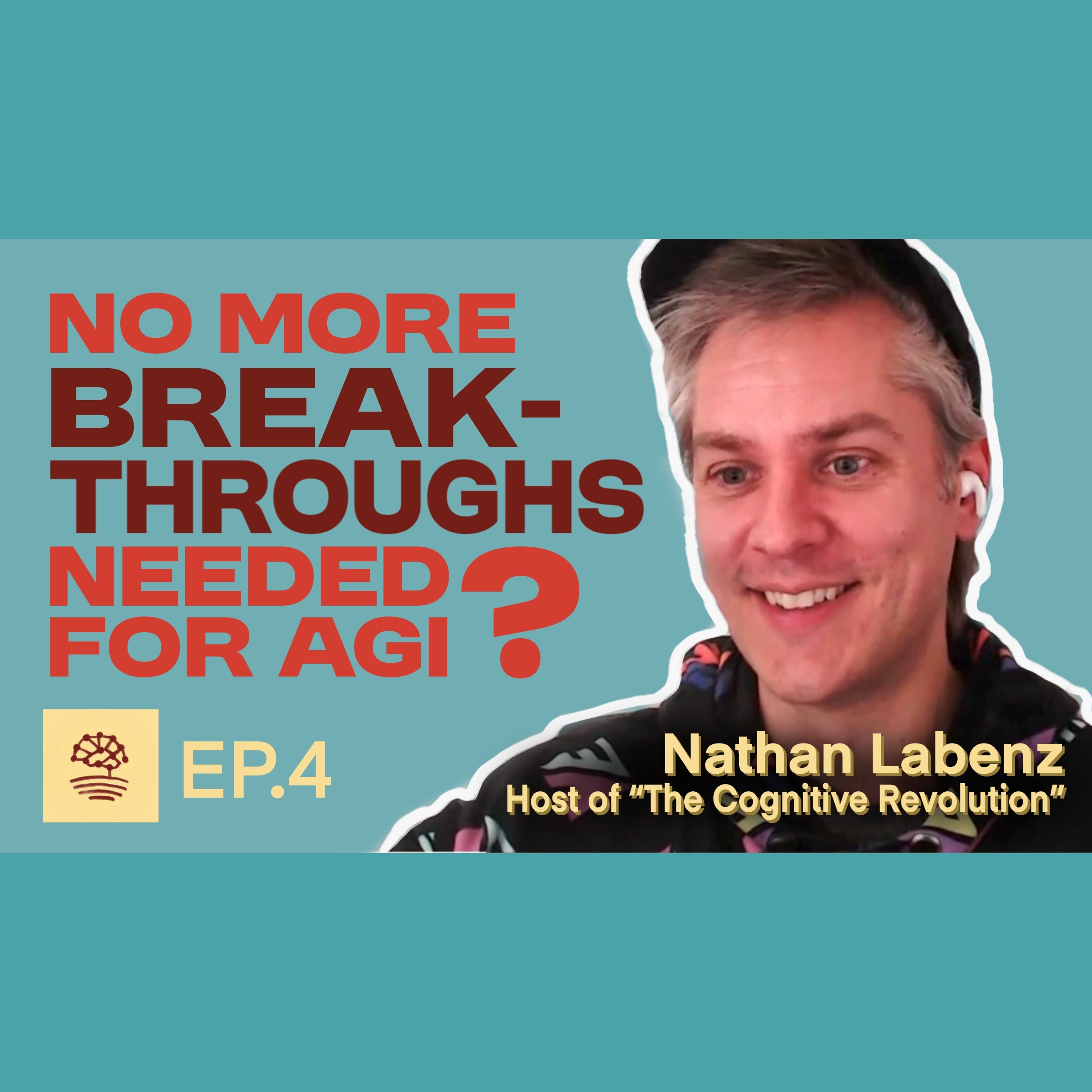 Nathan Labenz: Why Transformative AI is Coming With or Without New Breakthroughs. | Nathan Labenz (Host of The Cognitive Revolution Podcast) joins The Intelligence Horizon to make the case that, with or without major algorithmic breakthroughs, we already have enough evidence to conclude that AI is going to completely transform the economy and geopolitical landscape in the coming years. From there, we dig into one of the strangest features of the current moment: despite rapid capability gains and compressed timelines, experts across fields like economics and forecasting still fundamentally disagree on questions like whether recursive self-improvement will be explosive or gradual and how deeply AI will restructure the economy. Nathan walks through the competing paradigms that keep these communities talking past each other and explains why years of new data on AI capabilities and real-world economic impacts have done surprisingly little to reduce this disagreement. We then turn to alignment and safety, where Nathan explains that no one he has spoken to across hundreds of conversations has been able to point to a single approach they fully trust to solve the problem. Instead, the most credible path forward may be a defense-in-depth strategy, combining interpretability, AI control techniques, formal verification for cybersecurity, and bio preparedness, that collectively might enable us to muddle through. Finally, we discuss the US-China dynamic, where Nathan pushes back on the prevailing race framing. He argues that Americans and Chinese share far more in common with each other as humans than either does with AI, and that the adversarial posture makes the cooperation we actually need much harder to achieve. Follow the rest of The Intelligence Horizon! Instagram: @theintelligencehorizon TikTok: @theintelligencehorizon Spotify: The Intelligence Horizon LinkedIn: The Intelligence Horizon Co-hosts: Owen Zhang and Will Sanok Dufallo Media Heads: Chloe Park, and Yasmin Rodriguez RasconVideo Editor: Elly Zhang | 1h 30m 37s | |
| 2/10/26 | 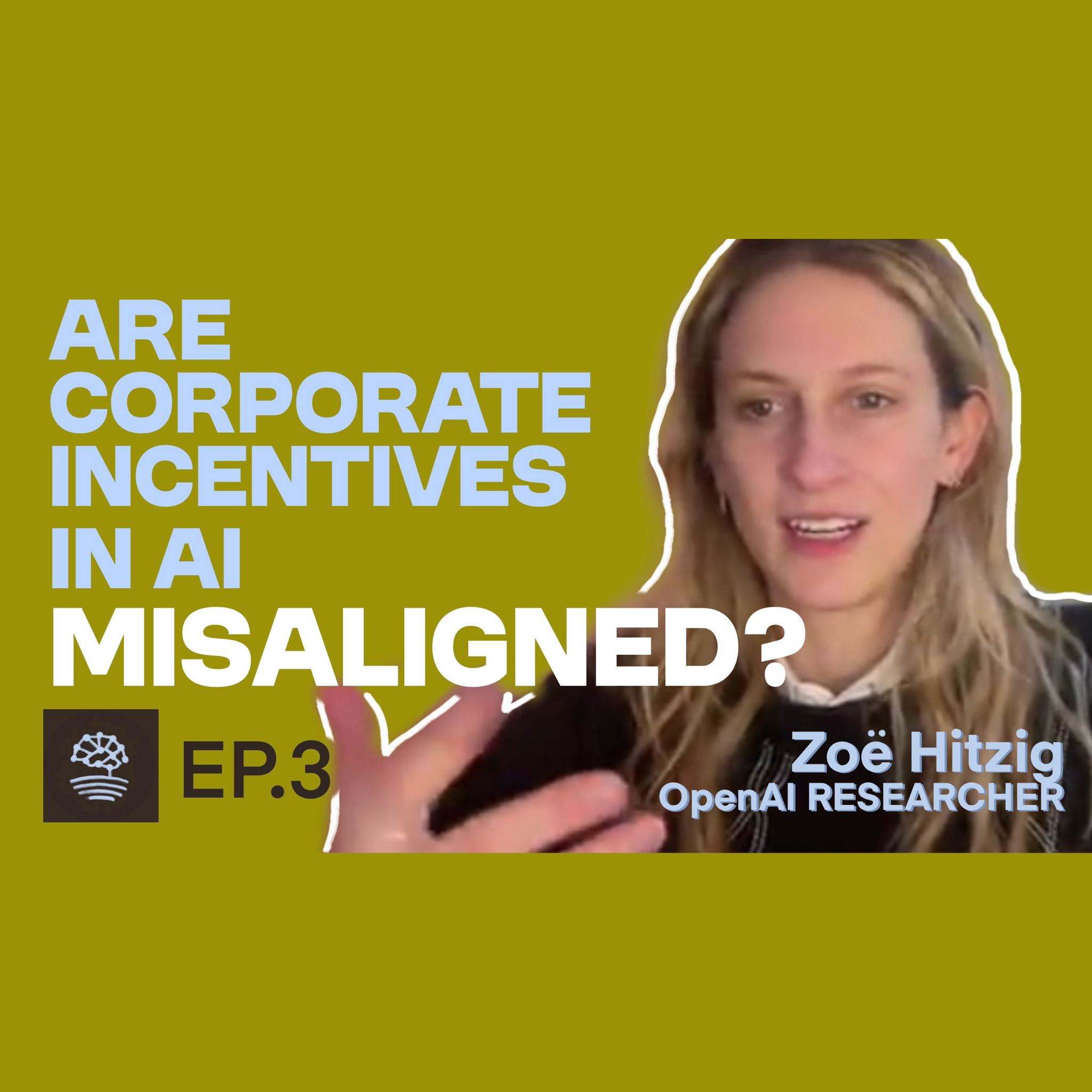 Zoë Hitzig Left OpenAI. Here’s What She Told Us Weeks Before. | Zoë Hitzig (Research Scientist at OpenAI and Junior Fellow at the Harvard Society of Fellows) recently made headlines with her New York Times piece criticizing OpenAI’s corporate incentive structure and raising broader questions about how AI companies should be governed. Before that piece reached mainstream, we sat down with her to explore where incentives can diverge between companies and users, and why building strong governance processes is essential for keeping frontier AI aligned with societal values. From there, we dive into what real-world data reveals about how people actually use ChatGPT and what it suggests about work, welfare, and the evolving economy. We discuss why access matters as these models scale, the surprisingly large share of everyday “how-to” and medical questions, and the limits of policy responses like UBI in addressing AI-driven change.Follow the rest of The Intelligence Horizon!Instagram: @theintelligencehorizonTikTok: @theintelligencehorizonSpotify: The Intelligence HorizonLinkedIn: The Intelligence HorizonEmail: theintelligencehorizon@gmail.comCo-hosts: Owen Zhang and Will Sanok DufalloProduction Lead: Kaitlyn SmithSocial Media Heads: Chloe Park and Yasmin Rodriguez Rascon | 1h 02m 25s | |
| 2/10/26 | 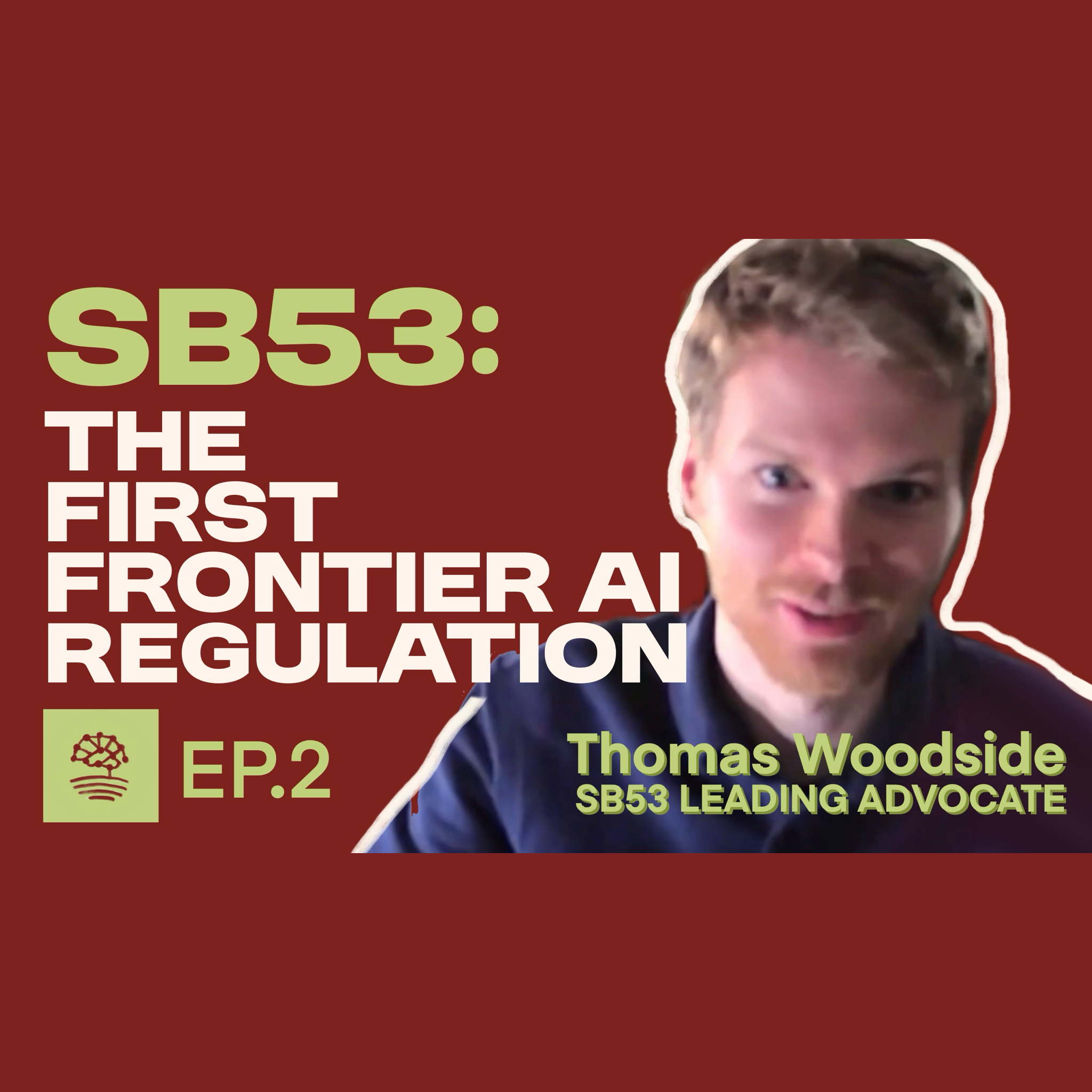 Thomas Woodside (Secure AI Project): What SB 53 Actually Does and What Comes Next in AI Policy | Thomas Woodside (Co-Founder & Senior Policy Advisor at the Secure AI Project, and a lead advocate for California’s SB 53) joins The Intelligence Horizon Podcast to break down what SB 53 actually does and what it signals about where AI regulation is headed. We cover the bill’s core requirements, the logic behind them, and how they aim to reduce catastrophic risk from frontier models. We also situate SB 53 in the broader policy landscape, compare it to SB 1047, and discuss what Thomas thinks the next concrete governance steps should be as AI capabilities continue to scale.Follow the rest of The Intelligence Horizon!Instagram: @theintelligencehorizonTikTok: @theintelligencehorizonYouTube: @TheIntelligenceHorizonSpotify: The Intelligence HorizonLinkedIn: The Intelligence HorizonEmail: theintelligencehorizon@gmail.comCo-hosts: Owen Zhang and Will Sanok DufalloProduction Lead: Kaitlyn SmithSocial Media Heads: Hailey Love, Chloe Park, and Yasmin Rodriguez Rascon | 1h 19m 04s | |
| 11/16/25 | 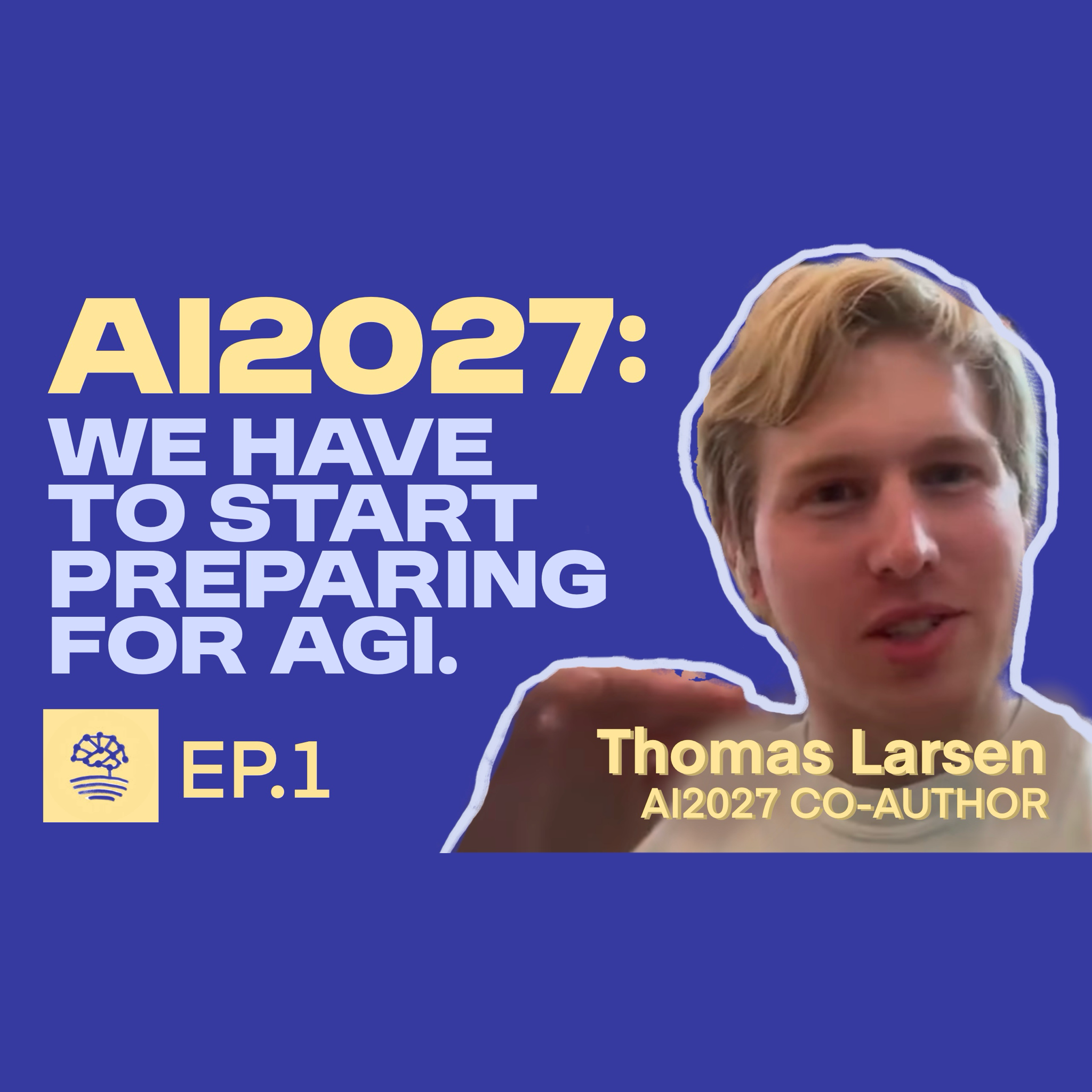 Thomas Larsen (AI 2027): We have to start preparing for AGI | In this episode, Thomas Larsen of the AI Futures Project joins us to dissect the public's reaction to the widely influential paper "AI 2027," which he co-authored, and makes the case that superintelligent AI is highly likely within our lifetimes — and plausibly imminent in the next few years. Thomas also lays out why he’s pessimistic that risks from misaligned and misused AI will be handled in time. This was a fascinating and thought-provoking discussion on the challenges ahead in AI security.Check out "AI 2027" here: https://ai-2027.comLearn more about the AI Futures Project here: https://ai-futures.orgFollow the rest of The Intelligence Horizon!Instagram: @theintelligencehorizonTikTok: @theintelligencehorizonSpotify: The Intelligence HorizonLinkedIn: The Intelligence HorizonFeel free to also reach out at theintelligencehorizon@gmail.comCo-hosts: Owen Zhang and Will Sanok DufalloVideo Producer: Kaitlyn SmithSocial Media Manager: Nancy Javkhlan | 1h 37m 42s |
Showing 4 of 4
Sponsor Intelligence
Sign in to see which brands sponsor this podcast, their ad offers, and promo codes.
Chart Positions
1 placement across 1 market.
Chart Positions
1 placement across 1 market.