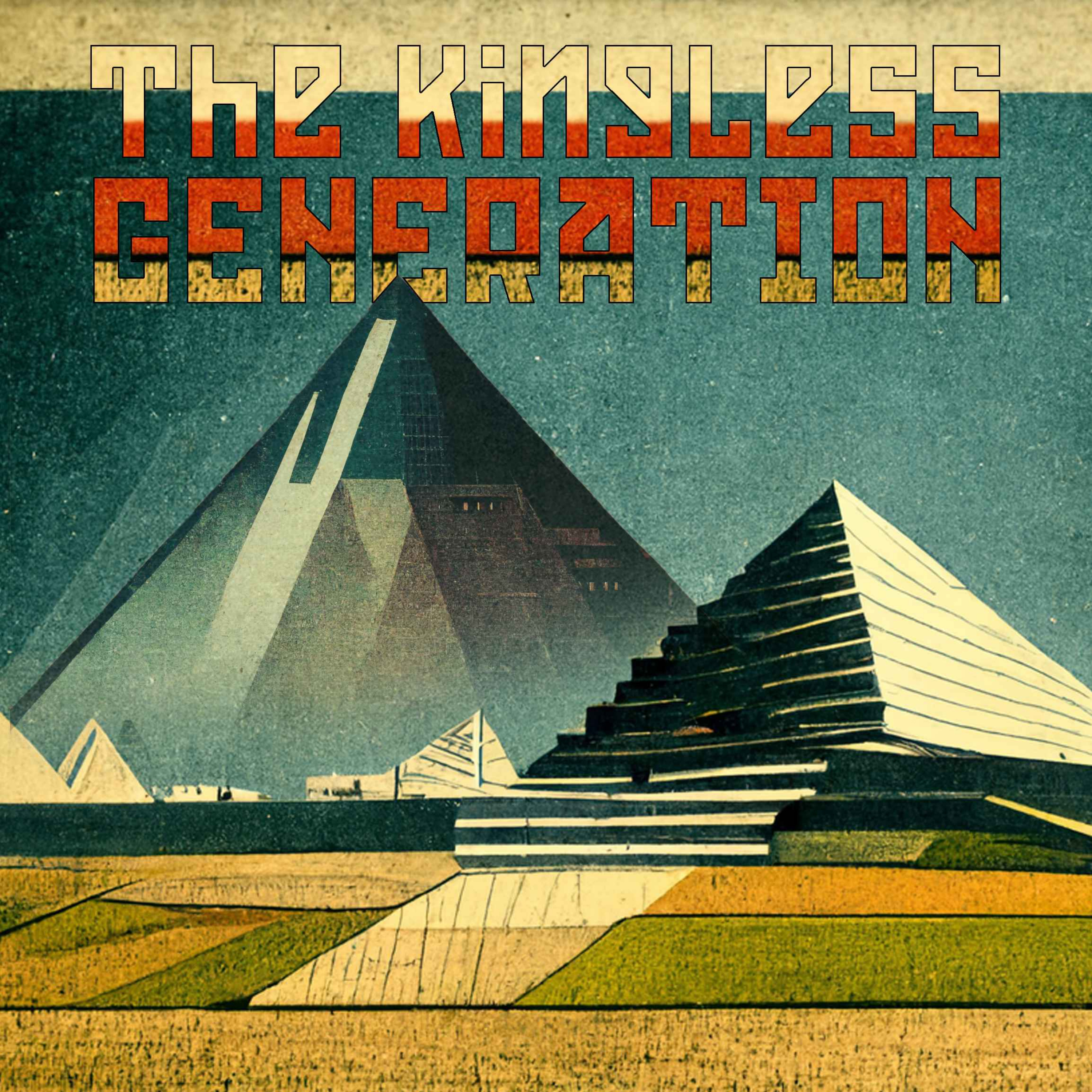
The Kingless Generation
by Fergal Schmudlach
Is this your podcast?Insights from recent episode analysis
Audience Interest
Podcast Focus
Publishing Consistency
Platform Reach
Insights are generated by CastFox AI using publicly available data, episode content, and proprietary models.
Most discussed topics
Brands & references
Total monthly reach
Estimated from 10 chart positions in 10 markets.
By chart position
- 🇯🇵JP · Social Sciences#1301K to 10K
- 🇮🇳IN · Social Sciences#1421K to 10K
- 🇸🇪SE · Social Sciences#1521K to 10K
- 🇵🇹PT · Social Sciences#3510K to 30K
- 🇮🇪IE · Social Sciences#4510K to 30K
- Per-Episode Audience
Est. listeners per new episode within ~30 days
8.4K to 34K🎙 Daily cadence·84 episodes·Last published 2w ago - Monthly Reach
Unique listeners across all episodes (30 days)
28K to 112K🇵🇹27%🇮🇪27%🇯🇵9%+7 more - Active Followers
Loyal subscribers who consistently listen
8.4K to 34K
Market Insights
Platform Distribution
Reach across major podcast platforms, updated hourly
Total Followers
—
Total Plays
—
Total Reviews
—
* Data sourced directly from platform APIs and aggregated hourly across all major podcast directories.
On the show
From 10 epsHost
Recent guests
Recent episodes
Dethrone the Dictaphone
Aug 18, 2026
Unknown duration
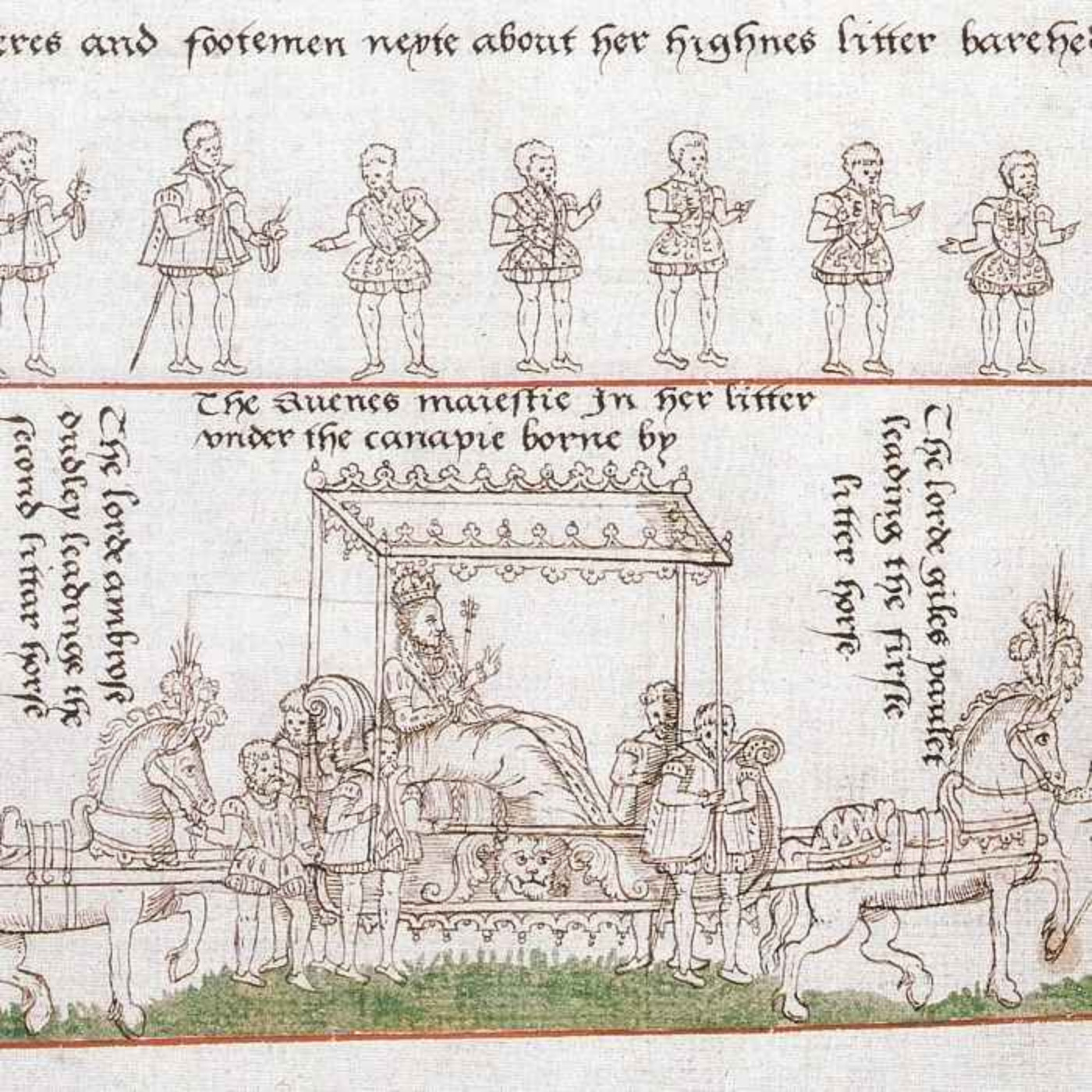
An Infant ‘West’ meets a Middle-Aged ‘East’ [PREVIEW]: Galland’s retelling of Shams-al-Nahār & Ibn Bakkār (1704–1717)
Aug 11, 2026
Unknown duration
Oriental Despotism comes w/ Occidental Colonization: Ibn Bakkār & Shams-al-Nahār in the Calcutta Ⅱ Nights (1839–42)
Aug 4, 2026
Unknown duration
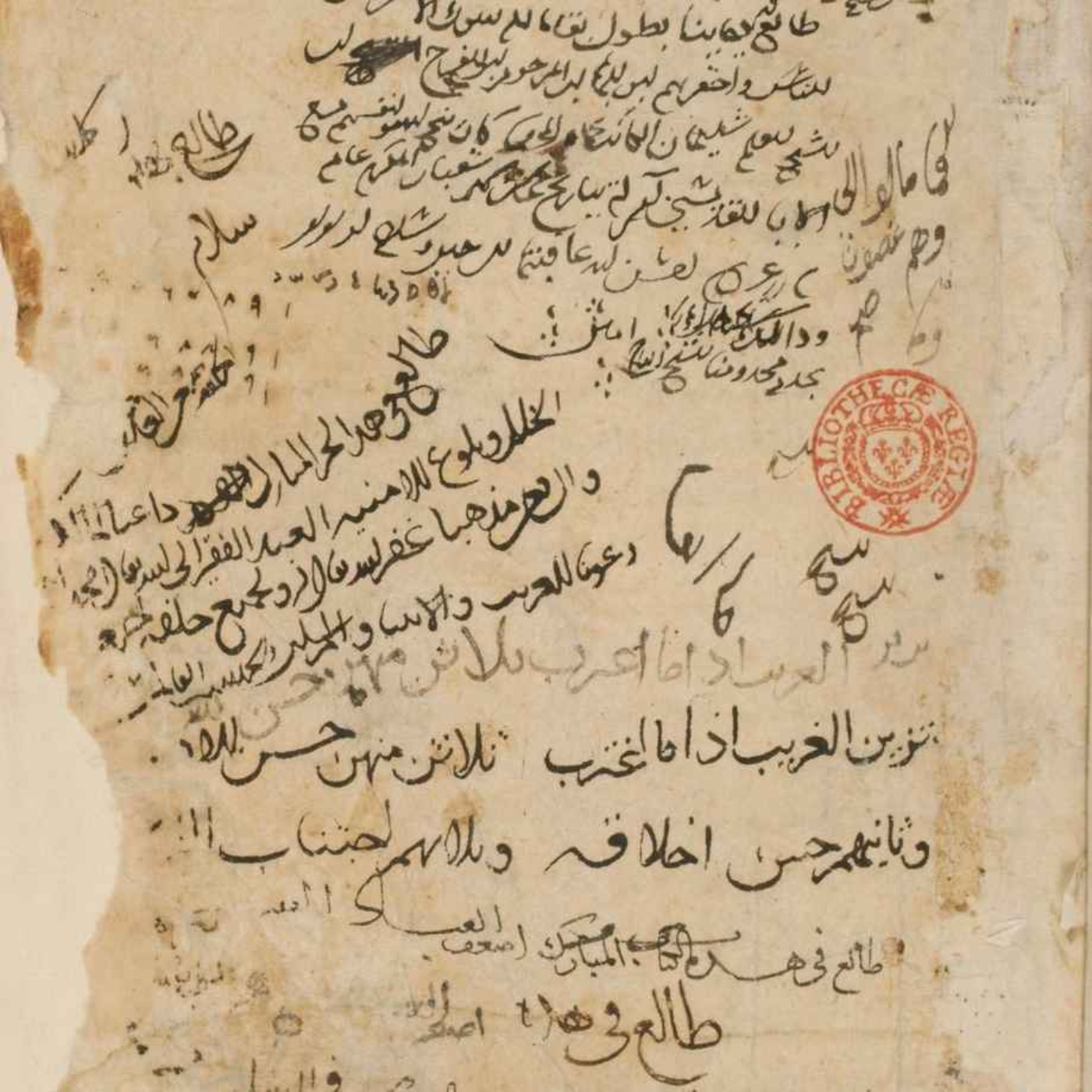
Truth and Testimony, Drugs and Attachment in Bourgeois-Revolutionary Baghdad [PREVIEW]: Re-Orienting Ibn Bakkār and Shams-al-Nahār in the Arabic manuscript of the 1,001 Nights
Jul 28, 2026
Unknown duration
1,001 Nights: A murdered ancestor to European Romance
Jul 21, 2026
1h 05m 29s
Social Links & Contact
Official channels & resources
Official Website
Login
RSS Feed
Login
| Date | Episode | Topics | Guests | Brands | Places | Keywords | Sponsor | Length | |
|---|---|---|---|---|---|---|---|---|---|
| 8/18/26 | 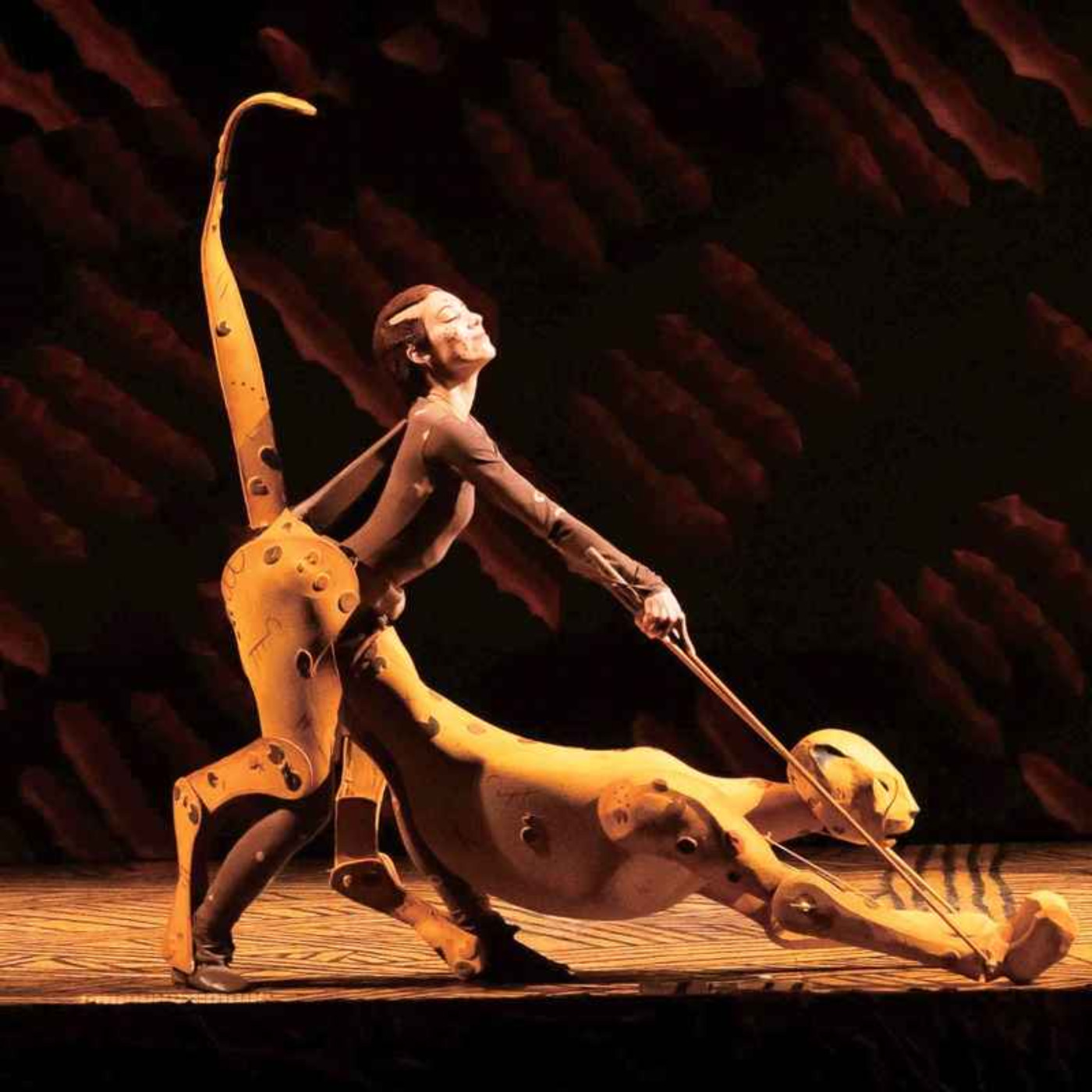 Dethrone the Dictaphone | A chatty hangout episode on recent events, the class politics of fashion in our post-cultural moment, and an American (...?) Broadway musical from the End of History as performed in Japanese in air-conditioned chambers surrounded by hordes of shrink-wrapped Teslas on reclaimed land developed Tel Aviv–style in the middle of Tokyo Bay. Hosted on Acast. See acast.com/privacy for more information. | — | ||||||
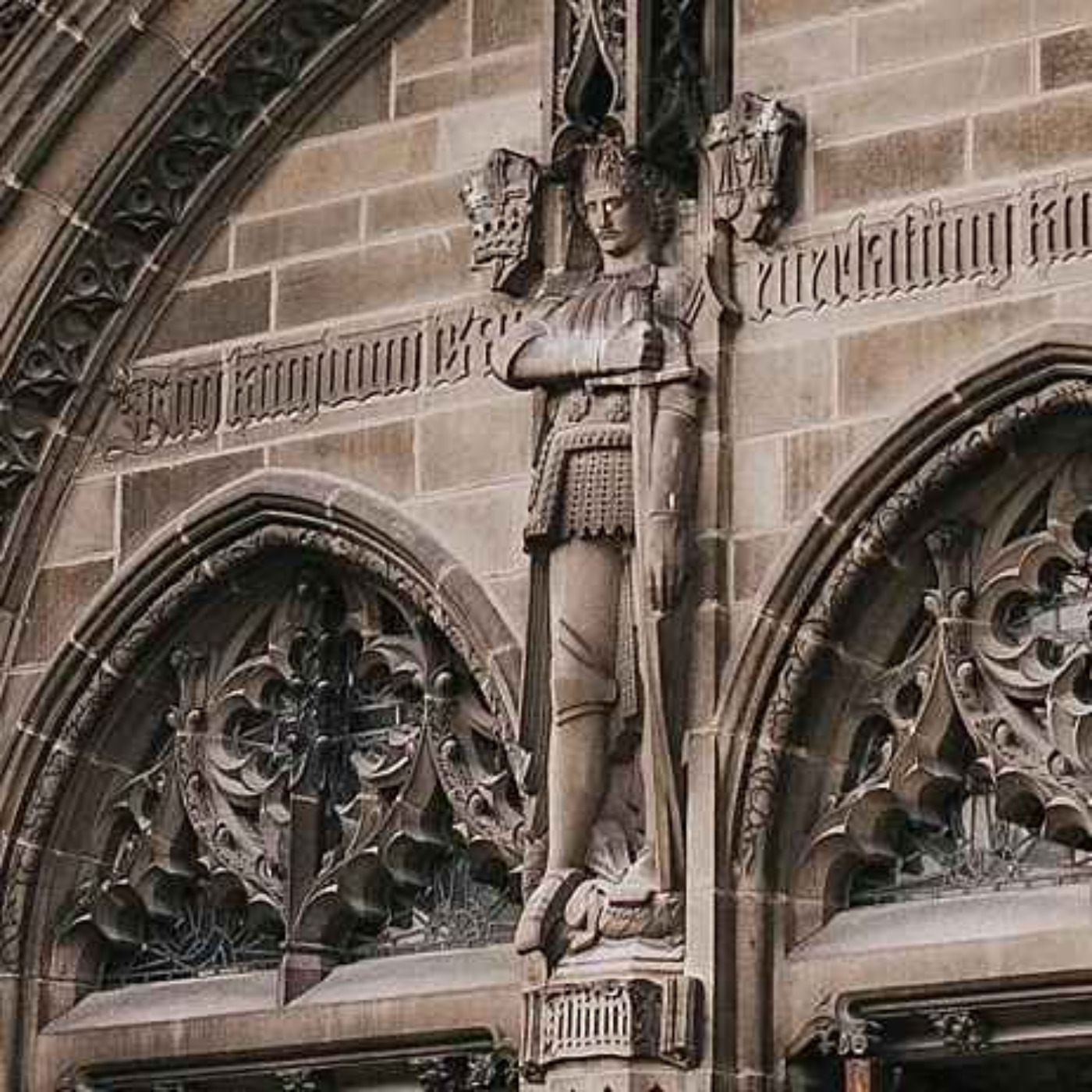
| 8/11/26 | ![An Infant ‘West’ meets a Middle-Aged ‘East’ [PREVIEW]: Galland’s retelling of Shams-al-Nahār & Ibn Bakkār (1704–1717) episode artwork](https://assets.pippa.io/shows/60daf5ffba5f4f0012e7c022/1786001155519-2bf1bc91-296f-47b9-baf9-901b2cacd9e5.jpeg) An Infant ‘West’ meets a Middle-Aged ‘East’ [PREVIEW]: Galland’s retelling of Shams-al-Nahār & Ibn Bakkār (1704–1717) | In this final episode of our first series on the 1,001 Nights, we take up Frenchman Antoine Galland’s adaptation, where we see a Europe that has only begun to see its nearest Afro-Asiatic merchant-capitalist great power as a different , “eastern” civilization whose cultural products must be held at arm’s length and ethnographically explained—rather than adopted wholesale without comment, as stories from the very same 1,001 Nights had been in medieval European literature like the Canterbury Tales (1387–1400) or Orlando Furioso (1516–1532). Galland introduces critical details and disparaging attitudes, writes new scenes not found in the Arabic, and sometimes misreads the Arabic quite dramatically. The things he needs to explain to his readers—that druggists can be respectable members of society, that poetry can express emotions vicariously—reinforce for us the low level of development of “Europe” as it begins to step onto the stage of history for the first time (it was not meaningfully continuous with Greco-Roman antiquity but rather borrowed most from the Arab-Islamicate Mediterranean world from whose side it sprang) and as an awkward newcomer rather than an overwhelmingly powerful main character (it would not even begin to dominate the Eurasian economy until after 1800). Finally, here too Galland’s central interest is evident in the bureaucrat-connected merchant rogues and organized criminals who are able to slip through the cracks of this highly developed and regimented society and accumulate capital—the Sons of the Silk Road who were already the main model for the Crusader bourgeoisie. Hosted on Acast. See acast.com/privacy for more information. | — | ||||||
| 8/4/26 | 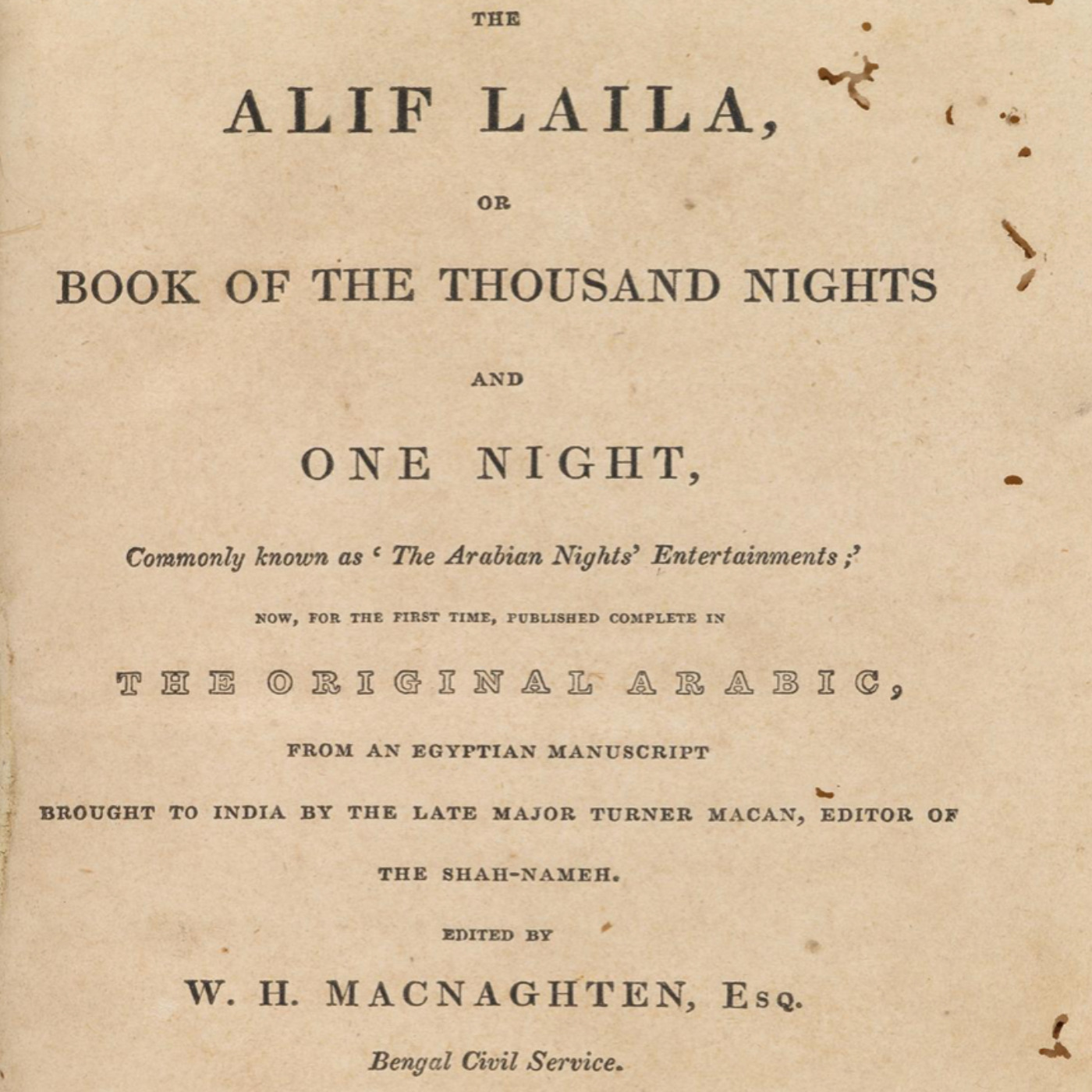 Oriental Despotism comes w/ Occidental Colonization: Ibn Bakkār & Shams-al-Nahār in the Calcutta Ⅱ Nights (1839–42) | In addition to filling in more background knowledge from a scholarly article that I did find on this tale by Jamel Eddine Bencheikh, as well as some musings on the formation of the discipline of Anglophone Japan studies under the influence of Francophone Arabology, we explore this same tale in the nineteenth-century colonial-era British-Indian edition of the now much expanded and more textually baroque version known as Calcutta II. There, we find the first-person narrative interludes removed, or at least refocused away from the process of establishing a secure communication channel between the worker go-betweens, on behalf of the elite patrons. That process also becomes top-down rather than bottom-up, as the negotiation of the connection much more clearly follows an elite commission rather than arising on the initiative of the workers themselves. Meanwhile, textual change has obscured some storytelling choices we saw in the post-1450 version, sometimes strengthening the story but also often leaving loose ends dangling and vestigial inconsistencies that only make sense if we know what the passage used to say. In the way, the text of Calcutta II embodies the growth of oriental despotism or decadence precisely in the time of occidental colonization, both in its form and in its content. Hosted on Acast. See acast.com/privacy for more information. | — | ||||||
| 7/28/26 | ![Truth and Testimony, Drugs and Attachment in Bourgeois-Revolutionary Baghdad [PREVIEW]: Re-Orienting Ibn Bakkār and Shams-al-Nahār in the Arabic manuscript of the 1,001 Nights episode artwork](https://assets.pippa.io/shows/60daf5ffba5f4f0012e7c022/1784855197521-ab525116-5cf8-4cf2-a512-3a1be247d656.jpeg) Truth and Testimony, Drugs and Attachment in Bourgeois-Revolutionary Baghdad [PREVIEW]: Re-Orienting Ibn Bakkār and Shams-al-Nahār in the Arabic manuscript of the 1,001 Nights | I dust off my Arabic for some weird scenes in Silk Road–era Baghdad: a story of drugs and ego death, deadly secrets and the workers who keep them. The only tragic love story in the Nights, the story of the Persian prince Ibn Bakkār and the courtesan Shams-al-Nahār also features, only in this earliest available Arabic manuscript tradition, a meta-narrative device whereby first-person interviews with certain characters—such as would be collected by a prosecutor as evidence for a trial—are interspersed throughout this story of elite parties, exotic drugs, and forbidden obsessions. Hosted on Acast. See acast.com/privacy for more information. | — | ||||||
| 7/21/26 | European Romancemurder+3 | — | — | — | European Romancemurdered ancestor+3 | — | 1h 05m 29s | ||
| 6/24/26 | Eranos milieucultic milieux+3 | — | Acast | — | Eranoscult+5 | — | 47m 31s | ||
| 6/10/26 | philosophydeath+4 | Scott Ryan | Dustlight ArchivesEranos | — | EranosMircea Eliade+5 | — | 1h 20m 23s | ||
| 5/29/26 | ideologymythology+3 | Scott Ryan | Dustlight Archives Podcast | — | Furio JesiEranos+5 | — | 35m 12s | ||
| 5/20/26 | spiritualismoccultism+4 | Scott Ryan | Dustlight ArchivesNXIVM | — | Eranosspiritual technology+7 | — | 1h 12m 11s | ||
| 5/7/26 | Elizabethan EnglandArabic literature+5 | — | The Unfortunate Traveller | EnglandSpain+4 | Elizabethan EnglandThomas Nashe+5 | — | 44m 27s | ||
Want analysis for the episodes below?Free for Pro Submit a request, we'll have your selected episodes analyzed within an hour. Free, at no cost to you, for Pro users. | |||||||||
| 4/10/26 | modern capitalismcultural history+4 | — | Water MarginArabic Maqama+3 | BritanniaEurope+1 | capitalismmodernity+5 | — | 1h 05m 01s | ||
| 4/10/26 | cultural analysishistorical context+3 | — | — | — | podcastcultural history+3 | — | 40m 22s | ||
| 2/9/26 | Lafcadio HearnJapanese culture+4 | — | NHKTV drama | JapanCinncinnatti+2 | Lafcadio HearnJapan+5 | — | 1h 12m 33s | ||
| 1/28/26 | bourgeois revolutionChinese literature+4 | River | Ming-dynastyWater Margin | East EurasiaChina | Water MarginSong Jiang+6 | — | 33m 59s | ||
| 1/27/26 |  Organizational Proprioception w/ River | Seasoned organizer and noided leftist River from River to Reality joins us to share their theoretical concept of organizational proprioception: just as our nervous systems need to communicate well with all parts of our bodies in order to experience all the parts of our bodies as our own and have control and feedback signals flow back and forth unimpeded through our nervous systems—incidentally, scientists are finding that body parts other than our brains can even store memories (maybe even participate in thought!), and the total state of the whole nervous system may be the minimum unit that we can call a conscious entity—in the same way, political organizations on the left, where transparency and trust are of the essence, must conduct audits of local organs with member-decided questions. The lack of organizational proprioception can and does lead to organizations being encapsulated and misdirected, as they are in the many proxy wars of national liquidation that form the basis of the emerging necro-capitalist world system today: gangs and counter-gangs like ISIS and YPG shredded Syria and broke the back of regional resistance to Zionist aggression, and one would hate to see, for example, a CIA-encapsulated leftist militia emerge to fight ICE but end up only running cover for further controlled demolition of society for the workers and colonized peoples of Turtle Island—speaking purely hypothetically. Hosted on Acast. See acast.com/privacy for more information. | — | ||||||
| 1/10/26 | ![A Holiday Ramble in Hibiya Park [PREVIEW] episode artwork](https://assets.pippa.io/shows/60daf5ffba5f4f0012e7c022/1768020079945-e2d85c81-920f-47f6-a048-946a06a4f5b7.jpeg) A Holiday Ramble in Hibiya Park [PREVIEW] | A quick, chatty, catch-up episode recorded in a park in central Tokyo. Hosted on Acast. See acast.com/privacy for more information. | — | ||||||
| 1/10/26 |  Left=Noided, Noided=Left: w/ River (featuring Fire in the Minds of Men) | On this podcast I have often argued against the “anti-conspiracy left”, but now that everyone and your mom can’t help but be noided, the relevant question is no longer, “If you’re on the left, can you be noided?” but rather, “Since you’re noided, should you be on the left or the right?” To argue this question, I do a quick hate-read of the Bible of 20th-c anti-revolutionary ideology on the cusp of the End of History, Fire in the Minds of Men, by Ronald Reagan’s Librarian of Congress—followed by a wide-ranging conversation with the roaring River, of the must-listen podcast River to Reality. The final song my incompetent rendition of “Happy Paddle”, a song about going by canoe to a festival, composed by Casey James of the Musqueam nation. Hosted on Acast. See acast.com/privacy for more information. | — | ||||||
| 9/3/25 | ![Britain is a Figment of the Crusader Imagination [PREVIEW]: King Arthur as Farang Mahdī episode artwork](https://assets.pippa.io/shows/60daf5ffba5f4f0012e7c022/1756872945407-cb54e505-de1f-4f5c-9579-af81e1221e56.jpeg) Britain is a Figment of the Crusader Imagination [PREVIEW]: King Arthur as Farang Mahdī | Much modern scholarship on King Arthur has revolved around the question of his historicity and origins, the recent greatest example being Higham’s magisterial 2018 survey of all the major theories—except the one that I advance here: Arthur was only one of many legendary chivalric heroes with whom continental Crusader and Reconquistador storytellers populated the North Atlantic archipelago, in their imaginations the spiritual homeland of a fictional Europe innocent of Semitic influences (both Muslim and Jewish). First, we run through all the major Arthurian theories—including the all-time banger whereby Arthur was a Croatian-Roman general who led nomadic Iranian horse-rider recruits to fight off the Angles and Saxons in the last days of Roman Britain—as exhaustively investigated by Higham. Then I state the obvious: that all the most distinctive features of the Arthur story appear for the first time in French chivalric romance (with many parallels in Spanish, Italian, and Catalonian stories featuring other characters) in the twelfth and thirteenth centuries, as the new Crusader concept of taking territory “back” from Muslims became the conceit of knightly adventure and conquest of “islands that the Emperor of Rome could not hold”, and the phenomenon of Crusaders bringing back relics from the holy land grew into legends like that of the Holy Grail. Finally, we explore one of foundational Japanese novelist Natsume Sōseki’s very first literary ventures, the Arthurian story “Kairokō” (“A Dirge”, 1905) and the modern, pseudo-modern, or hyper-modern twists and turns that it imposes on earlier Arthurian stories by Malory (1485) and Tennyson (1833), while trying to steer clear of allegedly un-civilized and un-modern predecessors in Edo-period kabuki and puppet theatre—which were perhaps in fact more authentically modern because rooted in Afro-Asiatic silk road capitalism. Hosted on Acast. See acast.com/privacy for more information. | — | ||||||
| 8/13/25 |  Sisterfucker: Profound Desires of the Gods w/ Nathan, pt 3 | In this final session, we put the proverbial big old boulder into the sweltering primordial pond with meditations on myths of brother-sister marriage and divorce from the Kojiki (712), the taboo on sibling incest in the mother-right kinship structures of Trobriand Islanders as seen in the anthropology of Malinowski and his debates with dogmatic Freudians in the 1930s, and finally the persistent postwar Japanese cultural theme of Japan as hotbed of incestuous “bed-creeping” (yobai), a feature which is either the dysgenic cause of the nation’s staunch patriarchy, persistent class rule, and gangsterismo (as in less helpful versions), or (as Nathan and I think) rather the effect of the mythopoetic comprador infestation of working-class movements and Indigenous resistance to dispossession which we have been discussing in this series. Hosted on Acast. See acast.com/privacy for more information. | — | ||||||
| 8/2/25 | ![The Birth of the Comprador Chief and the Defeat of the Secret Society [PREVIEW]: Profound Desires of the Gods w/ Nathan, part 2 episode artwork](https://assets.pippa.io/shows/60daf5ffba5f4f0012e7c022/1754114086922-9efe9cc4-89d5-4598-9829-42935aa298c2.jpeg) The Birth of the Comprador Chief and the Defeat of the Secret Society [PREVIEW]: Profound Desires of the Gods w/ Nathan, part 2 | This time we hit our stride, discussing the interplay of Indigenous state and deep state, chief and secret society, sometimes in resistance to colonization and sometimes in service of comprador opportunism—though as Nathan points out, which it might be in any given moment is worked out through a collective mythopoetic process. Hosted on Acast. See acast.com/privacy for more information. | — | ||||||
| 7/23/25 |  A Yakuza Filmmaker Takes it Back to the Dawn of Time: Imamura Shōhei’s Profound Desire of the Gods, part 1 | Nathan, AKA KUBARK Stare, @postcyborg on Twitter, an organizer of a film club in London which listeners should check out, joins me for a conversation about noided proletarian filmmaker Imamura Shōhei’s 1968 film Profound Desire of the Gods. Former Ozu disciple Imamura rejected the neat and clean nationalist family values of his early mentor to explore the deepest and most powerful forces slumbering fitfully at the bottom of fourth-reich Japanese society. Here he goes back to the “dawn of everything” (as he conceives of such things) to take up some prime paleo-parapolitical material—outcast shamans, tribal secret societies, masked death squads—so you know we have to check it out. Hosted on Acast. See acast.com/privacy for more information. | — | ||||||
| 7/18/25 | ![Japanese First! (into the digital prison and the war machine) [PREVIEW] episode artwork](https://assets.pippa.io/shows/60daf5ffba5f4f0012e7c022/1752799813127-84af2e03-1ebf-452f-b49e-0ec8f1fac1b9.jpeg) Japanese First! (into the digital prison and the war machine) [PREVIEW] | I have several episodes in development, but each one I feel like I need to read at least one more book before it’s ready, so for now, some newsy musings on current events mostly in Japan, where this weekend’s election sees a far-right populist party set to pick up a dozen seats: Sanseitō, whose draft constitutional amendments would abolish all individual rights and invest sovereignty in the state and not the people, and which is heavily astroturfed by all the usual suspects, including not only the original Unification Church but also Sean Moon’s Rod of Iron (known by the less openly violent name “Sanctuary” in Japan). All this they package under the racially provocatory slogan “Japanese people first!”, backed up by mass media campaigns about a wave of “crimes and annoying behavior by foreigners”—but of course tending in reality to shunt all Japanese class tensions onto the East, South, and West Asian captive nations that make up Japan’s proletariat, beef up digital surveillance and social credit systems, and further prepare Japan to become the Ukraine of the Pacific. Hosted on Acast. See acast.com/privacy for more information. | — | ||||||
| 6/20/25 |  Riffing in the Dark w/ Sina Rahmani | Sina Rahmani of The East is a Podcast and Red Media had planned to come on the show before this, and in light of the Zionist entity’s unprovoked attack on his ancestral country of Iran in violation of international law I offered him every chance to back out, but hardworking podcaster that he is, he joins us for some light vibing and riffing and unstructured meditations about, among other things, the unexpected similarities between the entity and postwar Japan, as well as the bright future that I nevertheless hope for in the latter (my adopted homeland in my recovering-settler existence)—which future must lie beyond the whiteness that Japan too has claimed for itself in the postwar, thereby following a path of delusion that many countries in Africa and West Asia are still being forced down today pending the working and peasant classes rising up and showing the way. Hosted on Acast. See acast.com/privacy for more information. | — | ||||||
| 6/6/25 | ![English for Compradors on the Eve of the Final Enclosure [PREVIEW]: A Journey into TED Talk Hell episode artwork](https://assets.pippa.io/shows/60daf5ffba5f4f0012e7c022/1749214774495-8c744990-3fdf-4012-811a-b9a054a5362b.jpeg) English for Compradors on the Eve of the Final Enclosure [PREVIEW]: A Journey into TED Talk Hell | It’s a pungent bouquet of TED Talks! A blast from the past! Some shots from the aughts! Put on your Pynchon goggles, your Mabeuf plague mask, and your Cuttlefish gloves, because we’re opening up this most dracular document of the moment before the long 2014.P.S. The episode art is from the actual cover art of the book in question, and it’s tragic that I neglected to discuss it: You there, third-world comprador! Walk on with me, deeper, yes, deeper, into ever darker and more eerie post-apocalyptic tunnels of the English language! Aren’t glad you survived the Cull? Hosted on Acast. See acast.com/privacy for more information. | — | ||||||
| 5/30/25 | 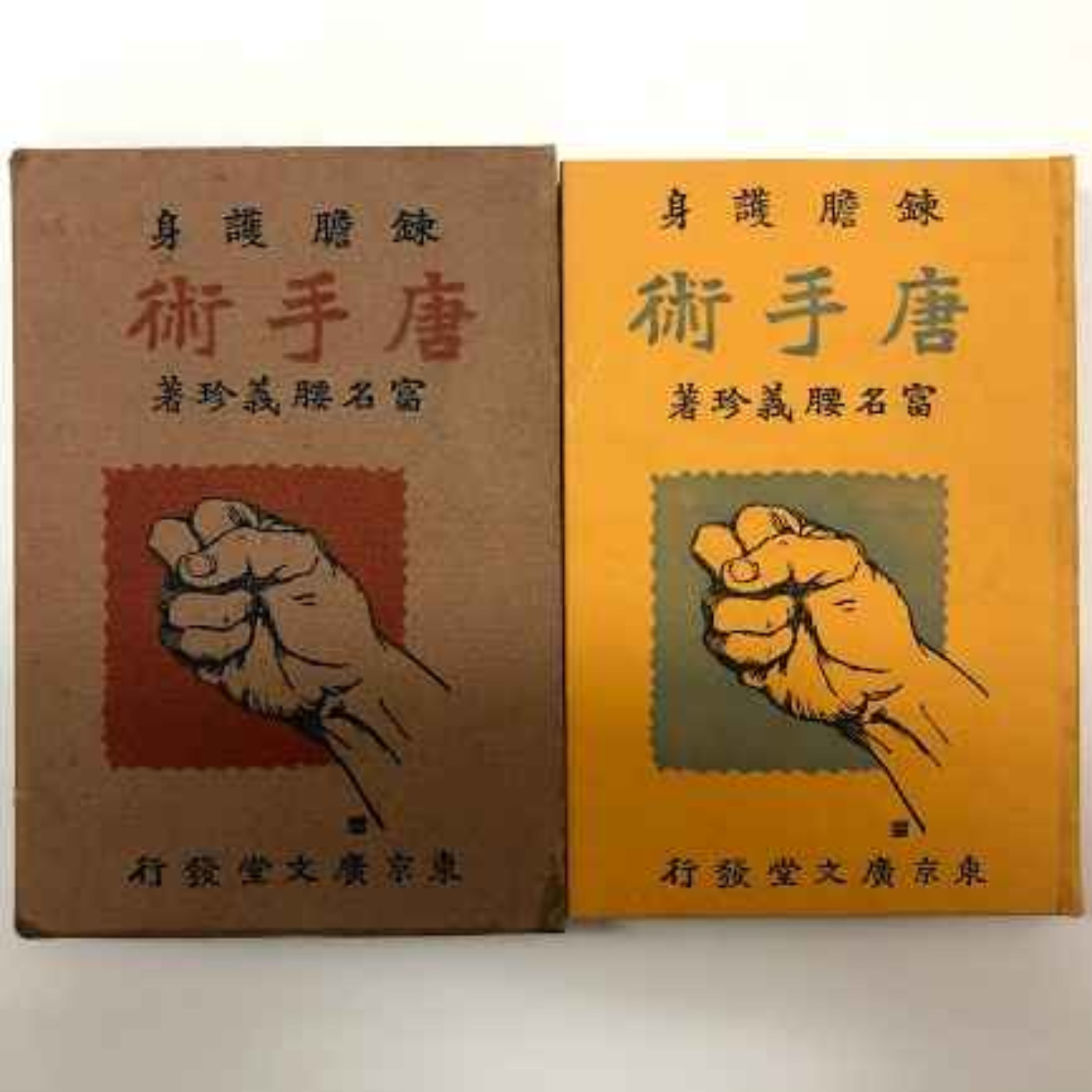 When Karate was a Weapon of the Colonized Working Class: The “China Hand Technique” in Japanese Proletarian Fiction | If you had a male-coded childhood at all recently in the Anglo-American world, you have felt the influence of the Soldier of Fortune culture of the 1980s, within which martial arts and other action films featuring Silvester Stallone, Chuck Norris, and Steven Seagal were prominent, and accompanied by dojos proliferating even in mid-sized American towns. But what you may not know is that, like the sushi boom around the same time period this shadow-reich version of the East Asian martial arts was quite deliberately seeded into the pop culture of the Reagan Era by a rogue’s gallery of all the usual WACL suspects: Moon Seonmyeong of the Unification Church, his high-ranking lieutenant Jhoon Rhee, Sasakawa Ryōichi—as well as Zionists like Menachem Golan and Haim Saban. Moreover, the hyper-individualism and hierarchicalism of this WACL school of karate, far from being inherent to the art, represents its co-optation and enlistment in a fight against its true roots in the struggles of the colonized and the working class in the Japanese Empire. In the proletarian fiction of 1920s Japan we find a little-known earlier chapter in the story of karate, when it was a new and exotic weapon, developed by Ryukyuan peasants under early-modern feudal and mercantile rule, and now wielded by Ryukyuan proletarians and the Korean and Japanese comrades to whom they taught it, to devastating effect against the bosses and their yakuza goons. Hosted on Acast. See acast.com/privacy for more information. | — | ||||||
![Eranos 4 [PREVIEW]: It was us (all along)... episode artwork](https://assets.pippa.io/shows/60daf5ffba5f4f0012e7c022/1782281713063-23dfbaec-23f7-4212-8188-1b6aa8d86f2f.jpeg)
![Eranos pᵗ 2 w/ Scott [PREVIEW]: Furio Jesi vs the Satanic-Orientalists episode artwork](https://assets.pippa.io/shows/60daf5ffba5f4f0012e7c022/1780032121771-48cc2730-b1a5-4fa5-80b5-8c1b617dcf45.jpeg)
![(15)90s kids: Thomas Nashe [PREVIEW], A Son of the Silk Road in Merry Old England episode artwork](https://assets.pippa.io/shows/60daf5ffba5f4f0012e7c022/1778126604217-a4162696-b847-4e39-ac98-2ecca408bce6.jpeg)
![Casual chat, core content [PREVIEW] episode artwork](https://assets.pippa.io/shows/60daf5ffba5f4f0012e7c022/1775798027749-ea4c449d-5ad5-41c9-90dd-fbc572519031.jpeg)
![Organizing Bourgeois Revolution in East Eurasia [PREVIEW]: The Water Margin (水浒传) w/ River episode artwork](https://assets.pippa.io/shows/60daf5ffba5f4f0012e7c022/1769576678939-207dd624-2d04-4183-aed5-52af8902cb32.jpeg)
Showing 25 of 94
Pitch Fit is a Pro feature
See how bookable this show is for guests, which brands already advertise, the per-episode ad value, and the best-fit guest and sponsor profile. The numbers are blurred on the free plan.
How readily this show books outside guests like you.
How proven this show is for host-read sponsorships.
For Guests
ProFor Advertisers
ProUpgrade to Pro to unlock guest cadence, sponsor categories, fit scores, and per-episode ad value for this show.
Similar Audience Demographics
Podcasts that attract a similar listener profile







Chart history for The Kingless Generation
Peaked at #35 in PT, currently #35 in PT.
| Market | Genre | Peak | Current | Trend |
|---|---|---|---|---|
| PT | — | #35 | #35 | — |
| Ireland | — | #45 | #45 | — |
| RO | — | #85 | #85 | — |
| AT | — | #111 | #111 | — |
| Japan | — | #130 | #130 | — |
| Finland | — | #136 | #136 | — |
| India | — | #142 | #142 | — |
| Sweden | — | #152 | #152 | — |
| BE | — | #162 | #162 | — |
| South Africa | — | #176 | #176 | — |
Chart Positions
10 placements across 10 markets.
Chart Positions
10 placements across 10 markets.