
Insights from recent episode analysis
Audience Interest
Podcast Focus
Publishing Consistency
Platform Reach
Insights are generated by CastFox AI using publicly available data, episode content, and proprietary models.
Most discussed topics
Brands & references
Est. Listeners
Insufficient chart data. Estimates will improve as the show charts.
- Per-Episode Audience
Est. listeners per new episode within ~30 days
N/A🎙 Weekly cadence·162 episodes·Last published 2w ago - Monthly Reach
Unique listeners across all episodes (30 days)
N/A - Active Followers
Loyal subscribers who consistently listen
N/A
Market Insights
Platform Distribution
Reach across major podcast platforms, updated hourly
Total Followers
—
Total Plays
—
Total Reviews
—
* Data sourced directly from platform APIs and aggregated hourly across all major podcast directories.
On the show
From 16 epsHost
Recent guests
Recent episodes
Computational Rap: Recognizing Analogous Patterns: Computational and Linguistic Perspectives on Rap Music
Jun 4, 2026
1h 10m 36s
Estuary: What is it? Why Join One?
May 28, 2026
49m 18s
Travel by Star, a Novel by Paul Scott Grill: Finding the Treasures on the Way Home
May 21, 2026
56m 39s
Weaving the Way by Annette Poizner: Exploring the Intersections of Chinese and Jewish Traditions
May 18, 2026
1h 05m 33s
Elan Barenholtz on Language, Music and Art
May 7, 2026
1h 29m 32s
Social Links & Contact
Official channels & resources
Official Website
Login
RSS Feed
Login
| Date | Episode | Topics | Guests | Brands | Places | Keywords | Sponsor | Length | |
|---|---|---|---|---|---|---|---|---|---|
| 6/4/26 | Computational Rap: Recognizing Analogous Patterns: Computational and Linguistic Perspectives on Rap Music✨ | computational approaches to raplinguistic perspectives+4 | Addy | MIT | — | rap musiccomputational theory+6 | — | 1h 10m 36s | |
| 5/28/26 | Estuary: What is it? Why Join One?✨ | community buildingEstuary meetings+3 | Jason | Estuaryestuaryhub.com | Portland, OR | Estuarycommunity+3 | — | 49m 18s | |
| 5/21/26 | 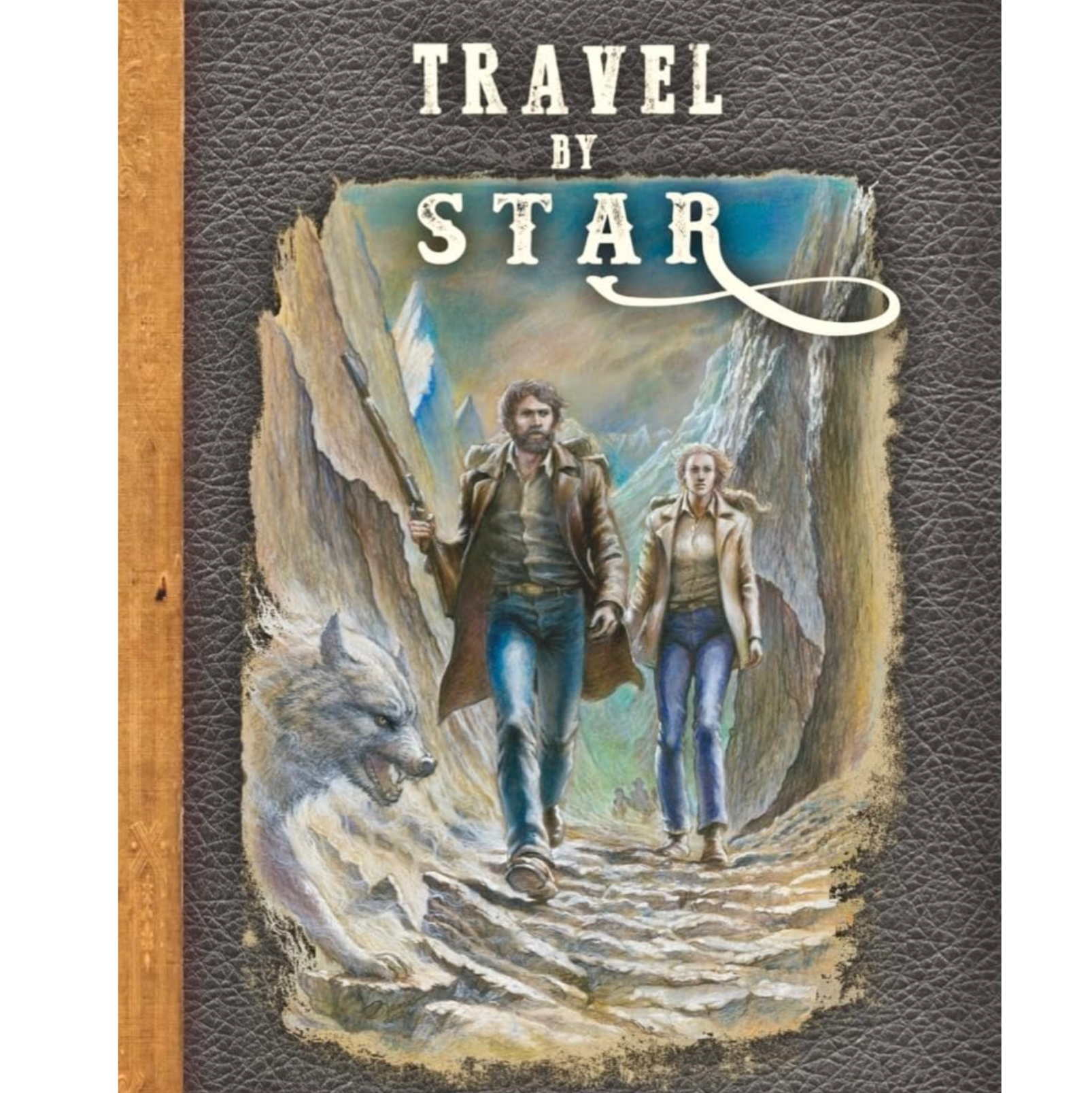 Travel by Star, a Novel by Paul Scott Grill: Finding the Treasures on the Way Home✨ | western fantasyburdens+4 | Paul Scott Grill | Travel by Star | — | Travel by StarPaul Scott Grill+5 | — | 56m 39s | |
| 5/18/26 | Weaving the Way by Annette Poizner: Exploring the Intersections of Chinese and Jewish Traditions✨ | intersections of culturesJewish traditions+4 | Annette Poizner | Weaving the Way: Jewish and Chinese Teachings for a Fractured World | — | Jewish cultureChinese culture+5 | — | 1h 05m 33s | |
| 5/7/26 | Elan Barenholtz on Language, Music and Art✨ | language developmentmusic+4 | Elan Barenholtz | Arca Musarithmica | — | languagemusic+5 | — | 1h 29m 32s | |
| 4/30/26 | Breaking the Modern Frame to Find Emotional and Relational Healing✨ | emotional healingrelational healing+4 | — | The Meaning CodeJames 1:2–8 | — | relational realismcounseling+5 | — | 1h 06m 56s | |
| 4/23/26 | Is the Algorithm Disintegrating your Attention? Save your Mindshare with Headwaterapp.com✨ | digital attentionAI implications+4 | Adam | HeadwaterYouTube+1 | — | attention fragmentationvideo content+6 | — | 1h 08m 46s | |
| 4/21/26 | 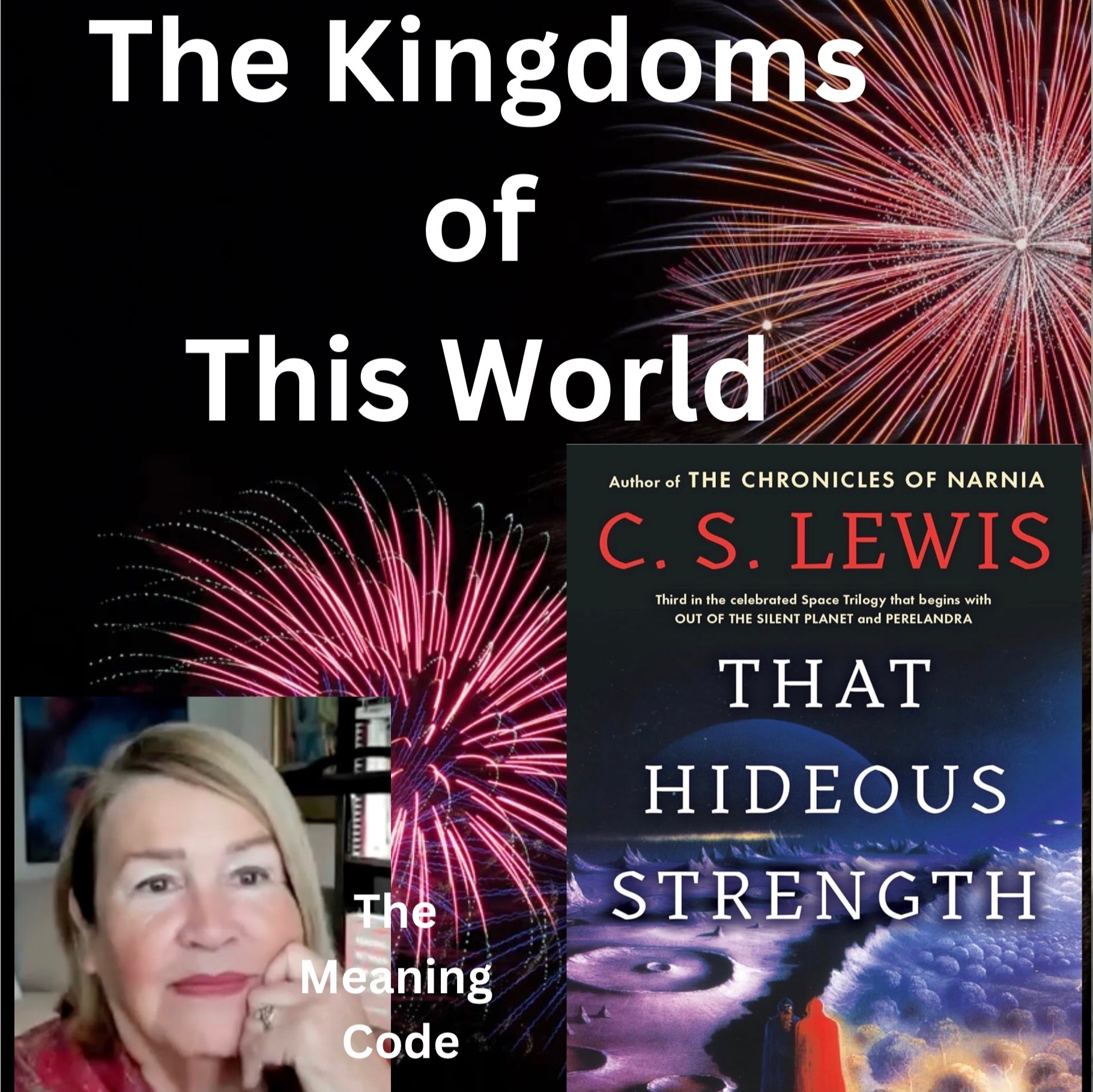 The Kingdoms of this World versus the Kingdom of Heaven✨ | C S LewisAugustine+4 | Annie Crawford | That Hideous StrengthCity of God | — | C S LewisThat Hideous Strength+5 | — | 4m 22s | |
| 4/17/26 | 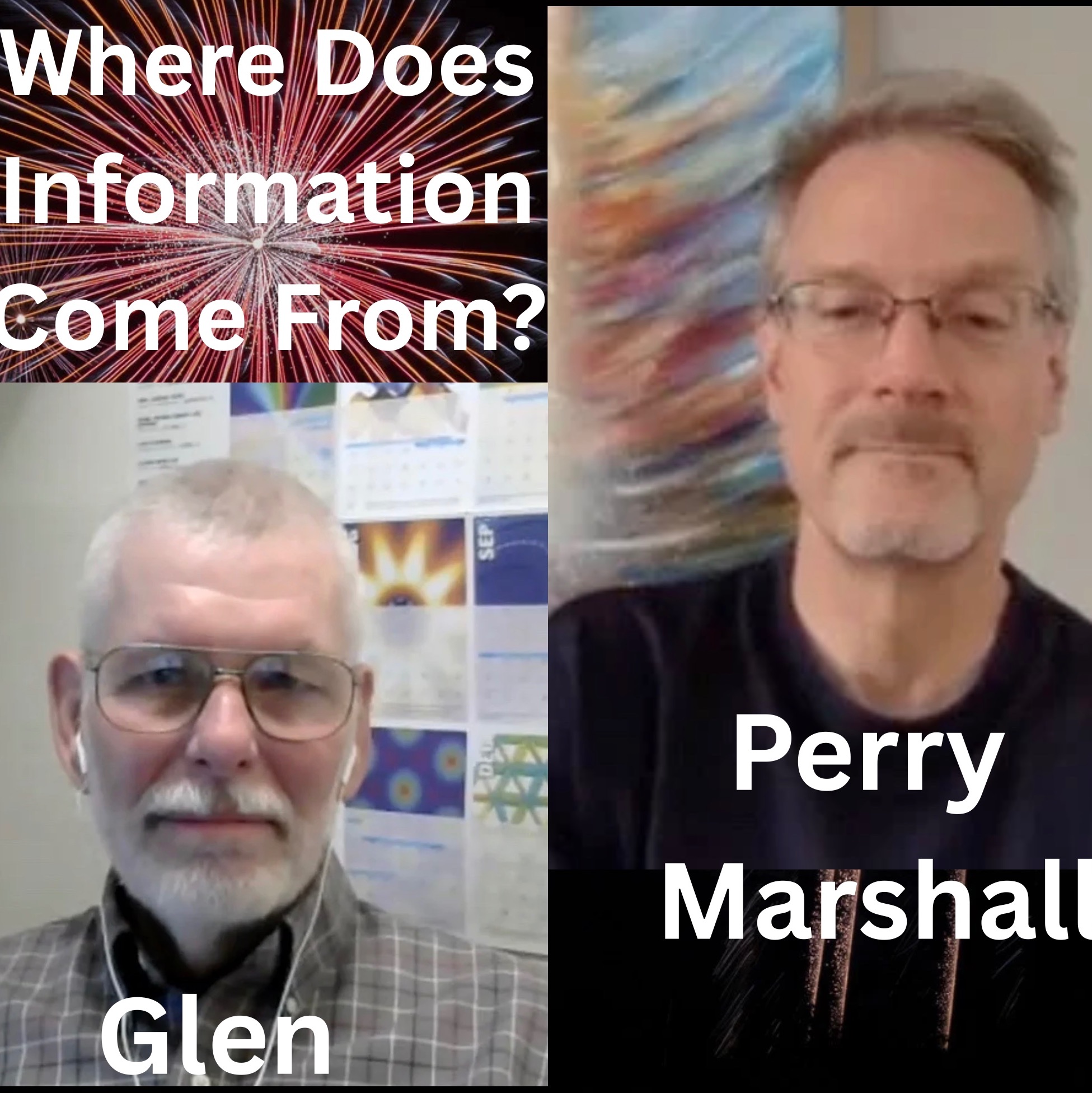 Information about a Physical System is a Record of Choices Made in the Past✨ | information theoryentropy+3 | Perry MarshallGlen | Evolution 2.0 | — | informationentropy+4 | — | 6m 18s | |
| 12/19/25 | Choose Your Own Path in the Branching Electracy of TLC, a Converzation with Parker✨ | electracydigital age+4 | Parker | TLC | — | electracydigital literacy+5 | — | 1h 22m 25s | |
Want analysis for the episodes below?Free for Pro Submit a request, we'll have your selected episodes analyzed within an hour. Free, at no cost to you, for Pro users. | |||||||||
| 10/23/25 | Approach the Sacred: Offer Gratitude, Dwell in Humility, Speak Truth and Let the Mercy In.✨ | spiritualityhope+5 | Dr. Iain McGilchristDr. Chris E W Green | All Souls College, OxfordGreen Templeton College, Oxford+8 | — | gratitudehumility+5 | — | 1h 49m 26s | |
| 9/20/25 | Grey Hamilton on Friends, Family and Flourishing✨ | relationshipseducation+3 | Grey Hamilton | — | — | Grey Hamiltonrelationships+4 | — | 1h 37m 32s | |
| 9/18/25 | Cassidy Van der Kamp on the Breakwater Festival, coming up November 7-9, 2025✨ | festivalCulemborg+3 | Cassidy Van der Kamp | — | CulemborgThe Netherlands | Breakwater FestivalCulemborg+3 | — | 1h 12m 14s | |
| 8/16/25 | 9 Steps to Build a Life of Meaning by Rick Walker: Redeeming Lost Treasures and Orienting towards a Higher Aim✨ | meaningpersonal development+4 | Rick Walker | The Meaning CodeRick Walker Podcast+4 | — | meaningpersonal growth+4 | — | 1h 22m 25s | |
| 8/7/25 | Play as a Metaphor for understanding the Dynamic and Creative Aspects of Theology and Existence✨ | Theological Concepts of CreationDynamics of Optimization and Context in Natural Selection+5 | Chris Green | Southeastern UniversityDiocese of St Anthony+2 | Lakeland, FL | theologycreativity+7 | — | 1h 30m 25s | |
| 7/31/25 | AI, Language and Art through the Lens of Coding, Psychology and Perception✨ | AILanguage+5 | — | — | — | AIlanguage processing+7 | — | 1h 31m 35s | |
| 7/24/25 | an Linguistic Systems: What can we learn from AI about Human Cognition, Memory and Language? | Michael and Karen consider the theories of Elan Barenholtz, an Associate Professor of Psychology at Florida Atlantic University. His self-description: "I use behavioral and embedded computational approaches (i.e. neural networks running in robots) to study the brain and behavior with the goal of developing a broad theoretical framework of neural function." The videos that Michael and Karen were discussing: https://www.youtube.com/watch?v=Ca_RbPXraDE with Curt Jaimungal, Elan Barenholtz and William Hahn positing a radical theory of human language generation https://www.youtube.com/watch?v=o1q6Hhz0MAg with Kenneth Stanley who used to be at Open AI talking about an earlier method of AI research through Picbreeder Karen ends the episode by reading from C S Lewis' essay on Transposition focusing on the necessity of a higher. | 1h 10m 00s | ||||||
| 7/11/25 | Why Isn't Your Story Working? Storycraft analysis of the Narrative Path, Puzzles and Anomalies | Exploring Story Craft and the Intersection of Faith and Hollywood with Justin Wells, filmmaker of documentaries, professor teaching documentary and story craft. On X as @onejwells https://www.youtube.com/@justinsmorningcoffee Seeing Story Structure through the lens of Complexity Theory Justin elaborates on the five-act structure of storytelling, emphasizing the importance of updating a character's mental map as they navigate challenges. He connects this process to complexity theory, outlining the journey from order to chaos and back to harmony. Apparently, Sean Coyne and John Verveke are working on a book titled "Story Principia," which will delve into these concepts. The importance of mental models in understanding character development. The development of a five-act structure for storytelling. Understanding the Journey from Law to Chaos in Storytelling The transition from a procedural phase, where rules are strictly followed, to a chaotic phase in storytelling when everything goes wrong. He uses the analogy of teaching a child a game to illustrate the importance of learning and applying the rules before questioning them. Exploring Creativity Through Chaos Creativity is rooted in chaos, citing research that shows how epiphanies occur when individuals abandon conventional thinking, leading to breakthroughs. Chaos and Creativity in Storytelling Justin emphasizes the importance of chaos in the creative process, suggesting that characters in the New Testament often experience a shift in perspective that challenges their expectations. He notes that this pattern of death and resurrection is essential for learning and creativity. The Stages of Learning and Knowing Outlining four types of knowing, including propositional, procedural, perspectival and participatory knowledge, he describes the procedural stage as a time of obedience and practice, akin to boot camp, before moving into a more fluid, participatory stage where one can innovate and adapt. | 1h 21m 05s | ||||||
| 6/12/25 | Infinite and Finite, Call and Response, What We Do Matters | Matthew Allison discusses the metaphysical and theological implications of infinity plus the influence of dualism and Gnosticism on philosophical discussions. Timestamps: 00:00 Intro 01:30 Matthew on the Infinite 06:00 Heidegger 06:55 Wittgenstein 08:00 The significance of chiasms in biblical texts and how they reflect divine inspiration 14:00 Phenomenology 22:00 Reflections on Hebrews chapter 11, focusing on the theme of faith and the biblical figures who endured suffering without receiving God's promises. 30:00 The Nature of time and relationship 34:00 Methodological a priori and its implications 43:00 Contrasting Maximus's approach with that of Neoplatonists, pointing out that while he engaged with their ideas, he did not adopt their analytic framework. This distinction is significant for scholars studying the intersection of philosophy and religion. 46:00 Exploring Ontology and Methodology in human experience 53:00 The connections between choreography and spirituality in community 59:00 Square dance and its potential relationship to experiential dna | 1h 22m 03s | ||||||
| 6/5/25 | The Depths of Time: an Exploration of Julian Barbour's Theory of Ratios | Karen and Haris explore Julian Barbour's theory of time and the universe, "nothing without ratios" while discussing the role of ratios in both mathematical theories and artistic expression. | 1h 37m 45s | ||||||
| 5/22/25 | AI Researcher and C S Lewis Scholar discuss Language, Randomness, Agency and Integrating Two Worlds | Balazs Kegl, Head of AI Research for Huawei Paris, meets Annie Crawford, C S Lewis Scholar, to discover the crossovers between AI research and Lewis' concept of transposition of the higher into the lower, also looking at Michael Levin's Bowtie Theory, Chiastic Structures and Modes of Knowing. Timestamps: 00:00 Intro and overview of AI and Transposition 13:17 Exploring AI Text Generating and style adaptation 15:31 Understanding Randomness in AI Outputs 20:10 Consciousness and Communication27:04 C S Lewis' concepts of Transposition and Modes of Knowing 36:49 Creativity and Memory in relation to Info Theory 46:09 Chiastic structures and bowtie theory in life and literature 51:13 The triune pattern in creativity | 1h 40m 45s | ||||||
| 5/8/25 | The Unbelievable Complexities of Music: Lenses, Ancient and Modern | Drew, with a master's in ethnomusicology and a voracious interest in all things music, joins The Meaning Code today to open up the ancient view of music as relationships, balance, proportion. Through the lens of Aristoxenus and Boethius, we explore -memory as the mother of the muses -the original meaning of Harmonia as proportion and balance -relationships between notes in a melody -principles of Melos - realign, reharmonizes body, soul, mind -dunamis (function - power & potential) Music doesn't exist at any one time but between times. Memory fixes the past and perception leads to the future. Before Plato, all knowledge was in poetry form. Music of the Spheres or Harmony of the Cosmos? Music as an apologetic | 1h 24m 12s | ||||||
| 4/26/25 | Metamodernism, Transcending Critique, Optimal Degrees of Freedom and the Return of Board Games | Brendan Graham Dempsey and Cory Barker help Karen to gain a greater understanding of Metamodernism. Brendan is writer, poet, farmer, and systems thinker. As Director of Sky Meadow Institute, he works on productively bridging the divide between science and spirituality. Cory has a Master of Arts in Social Science and Informatics and is working on a PhD with a research focus on applying big picture thinking to improved AGI design. He serves as President of the Archdisciplinary Research Center (Arc.voyage) If you haven't already seen it, I highly recommend my first conversation with Cory Barker as background (which explores the concept of moving from discipline, to interdisciplinary, transdisciplinarity and finally to archdisciplinarity as a method of solving intractable problems.) We also cover how the world works and other interesting things:-). https://youtu.be/LwqByLmk1AU?si=LqS2kXXfo4-Qj99_ Topics covered: (If anyone wants to turn this into timestamps, go for it.) AGI, LLM's, tokenization and statistical inference Computable functions related to development psychology The natural relations of Knowledge More efficient systems that take less energy to run The brain autonomously organizes information Universal classes of human experience Dynamic skill Theory, Kurt Fischer Reflexes, sensory motor, representations skills, pairing concepts and action/words, abstraction The Universal Learning Process Adaptive Complexity Coupling of an agent to its environment (wittedness) Variation and selective retention Autopoesis and cognition Coupling between elements and the formal systems Unlike other animals, we are not perfectly fitted to our environment, but are made for space Antagonism drives adaptation. We are not endlessly pliable Our linguistic component allows us to go off into abstract space The free energy principle, maximum freedom Think beyond our environments We advance on the basis of our previous equilibriums Ted Lasso and metamodernism Critique and transcend (the pattern of culture shock, also) Universal process of automation Cause and Effect Forming a stable system with a boundary space Cascades through the interior Universal process of concretion Creates a stake through the system The optical way to process info Free energy principal A set of expectations, a model that we hope will hold up and avoid surprise We continually update our model and that will minimize the distance between our expectation and the reality Anomaly drives hierarchical complexification How space affects equilibrium Turning point Ted Lasso and space Earnestness and Sincerity in the context of irony and cynicism Bill Tolbert, Action Inquiry A stage model of managerial styles postmodernism - ironist metamodern - a sense of coherence @ what is going on Understanding how things are relating to each other Arch modernism Entropy production is creative Alicia Juarrero Maximum complexity before it becomes chaos Randomness is not high in info Chaology - a study of the hidden order inside chaos, too difficult for us to understand at this point Metamodernism, transcending the critique of postmodernism | 1h 25m 17s | ||||||
| 4/5/25 | C. S. Lewis' Essays on Transposition and Bulverism | Brantley Vosler, host of the Transposition Podcast, joins Karen to talk about C S Lewis' essay of that name, as well as Lewis' argument against Bulverism. Along the way, we dive into the symbolism of Silo! Timestamps: 00:00 Intro 01:00 Exploring the Concept of Transposition 09:08 The Transposition of Ideas in Music 14:26 Vertical Causation and Spirituality 20:50 Themes of Power and Weakness in Scripture 27:34 Symbolism in "Silo" and Christian Hope 37:04 Discussion on Themes of Hope and Love in Family Dynamics 44:51 Reflections on Love and Gratitude 51:03 C S Lewis' argument against Bulverism 1:00:56 Transposition and AI Insights 1:06:01 Understanding Bulverism and Its Implications 1:13:57 Reductionism as an inversion of transposition | 1h 19m 36s | ||||||
| 1/21/25 | Neal asks: Is beauty an independent force in nature, or is it merely a projection of human values? | Neal initiated a discussion on the intersection of evolutionary principles and human social phenomena, particularly in relation to organizations and art. He critiqued the dominant scientific perspective that views beauty as a byproduct of natural selection, proposing instead that beauty and design principles are independent evolutionary forces. Neal introduced a dual force model that includes a push away from vulnerability and a pull towards an instinct for quality and beauty, referencing eight principles of design to illustrate these concepts. | 1h 36m 44s | ||||||
Showing 25 of 170
Sponsor Intelligence
Sign in to see which brands sponsor this podcast, their ad offers, and promo codes.