Insights from recent episode analysis
Audience Interest
Podcast Focus
Publishing Consistency
Platform Reach
Insights are generated by CastFox AI using publicly available data, episode content, and proprietary models.
Most discussed topics
Brands & references
Total monthly reach
Estimated from 7 chart positions in 7 markets.
By chart position
- 🇬🇧GB · Marketing#1495K to 30K
- 🇦🇺AU · Marketing#1695K to 30K
- 🇮🇪IE · Marketing#613K to 10K
- 🇧🇪BE · Marketing#953K to 10K
- 🇵🇪PE · Marketing#113500 to 3K
- Per-Episode Audience
Est. listeners per new episode within ~30 days
5.3K to 27K🎙 Daily cadence·220 episodes·Last published 2d ago - Monthly Reach
Unique listeners across all episodes (30 days)
18K to 89K🇬🇧34%🇦🇺34%🇮🇪11%+4 more - Active Followers
Loyal subscribers who consistently listen
7K to 36K
Market Insights
Platform Distribution
Reach across major podcast platforms, updated hourly
Total Followers
—
Total Plays
—
Total Reviews
—
* Data sourced directly from platform APIs and aggregated hourly across all major podcast directories.
On the show
From 13 epsHosts
Recent guests
Recent episodes
How outcomes measurement has changed the CMO-CFO relationship - with Nimmi Shah and Sameer Modha
May 11, 2026
Unknown duration
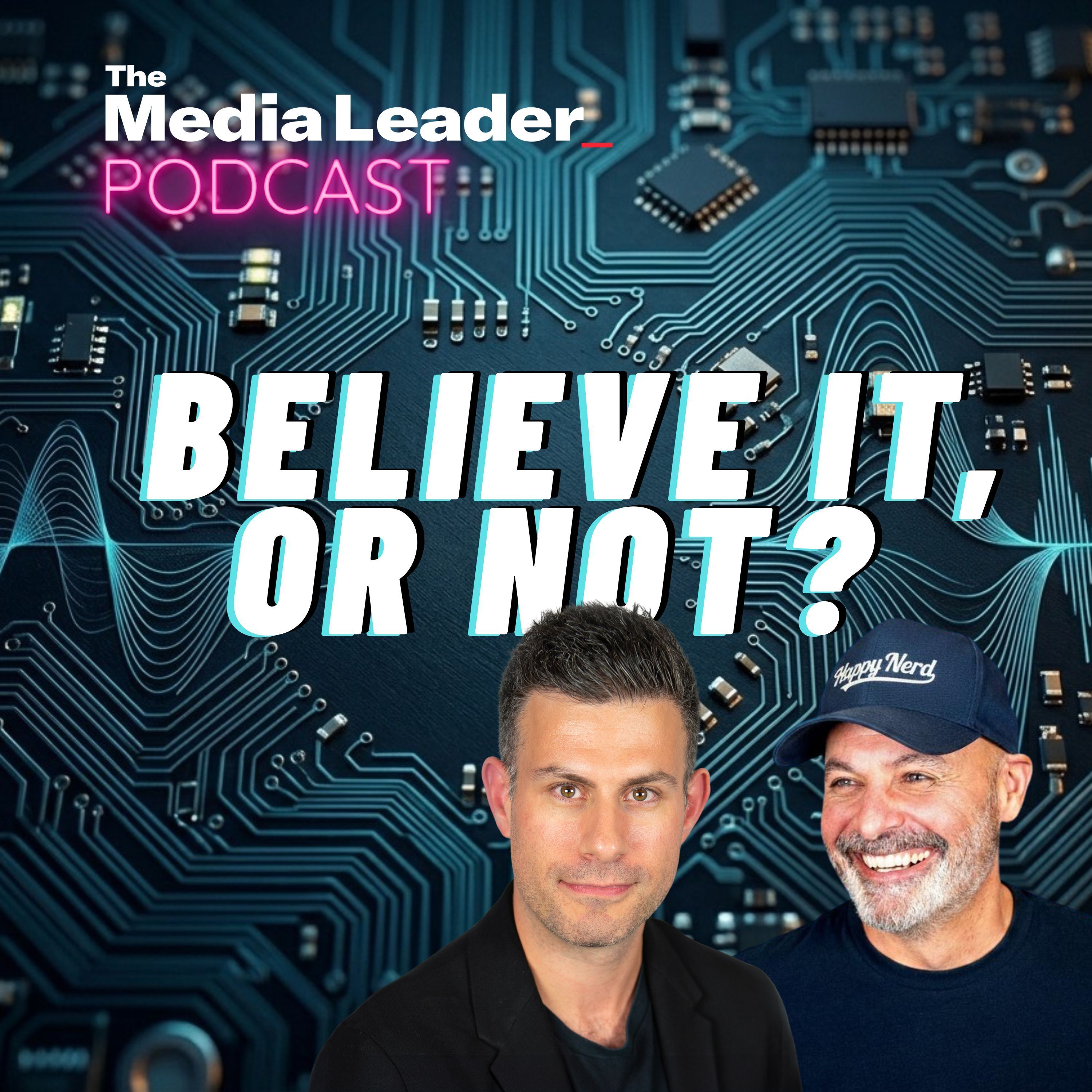
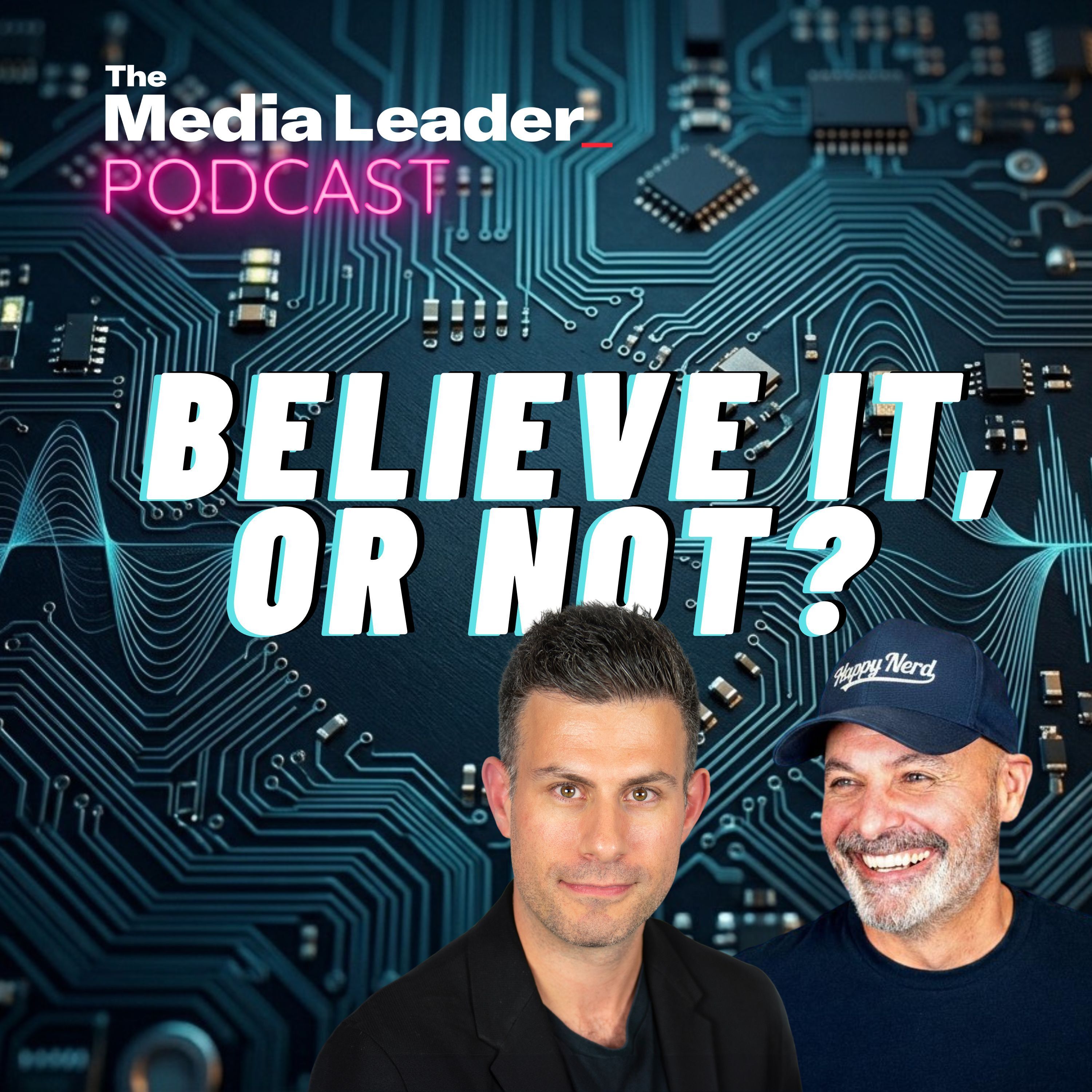
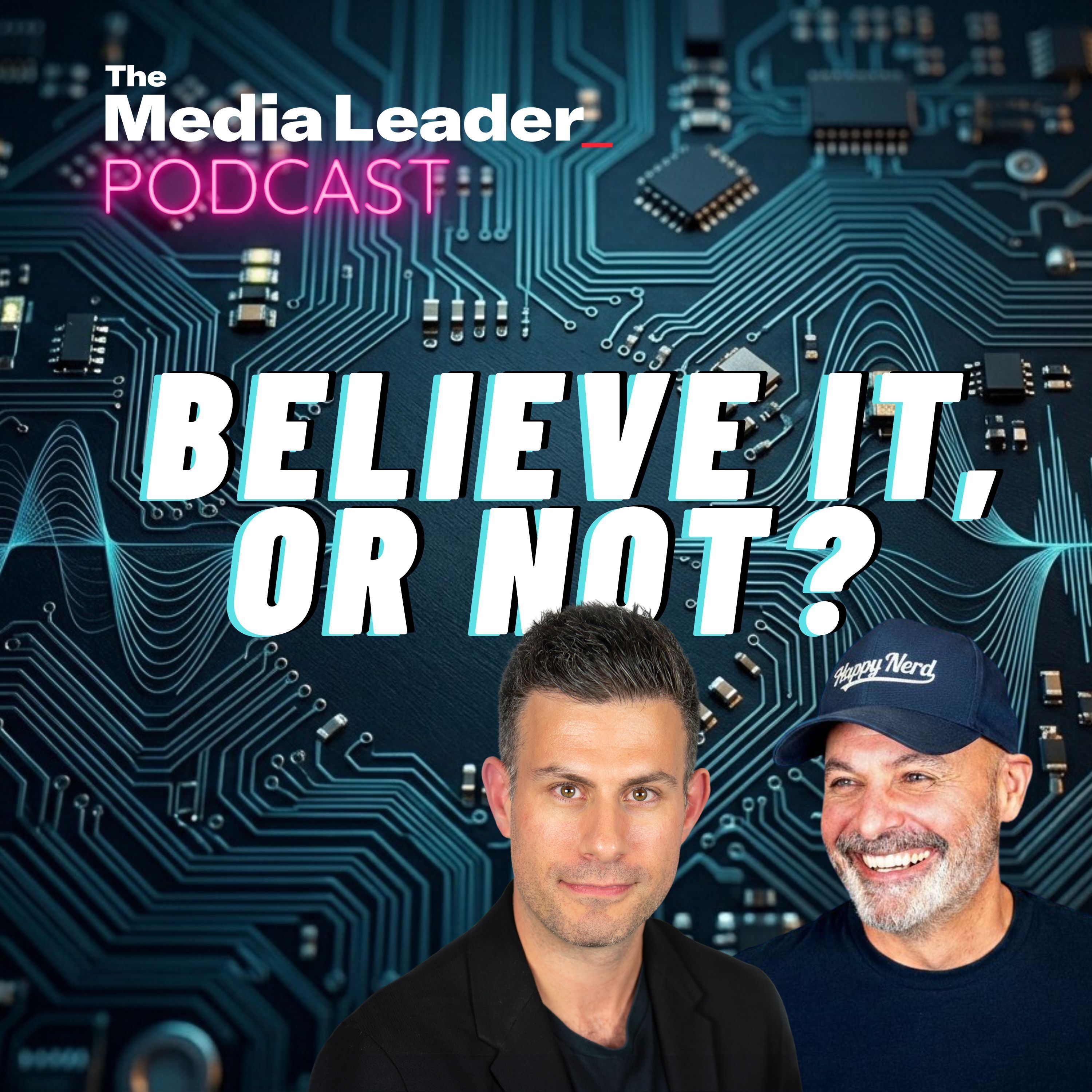
Believe It or Not Ep. 4: Is AI turning the internet into a sea of slop or has 'churnalism' already made it sloppy?
May 7, 2026
1h 03m 52s
Can retail media be a brand channel? With Tesco's Tash Whitmey
May 4, 2026
33m 46s
Believe It or Not Ep. 3: Is there still room for human creativity in the AI era?
Apr 30, 2026
56m 10s
What next after the social media addiction trial? With ScrollAware's Jess Butcher
Apr 27, 2026
51m 48s
Social Links & Contact
Official channels & resources
Official Website
Login
RSS Feed
Login
| Date | Episode | Topics | Guests | Brands | Places | Keywords | Sponsor | Length | |
|---|---|---|---|---|---|---|---|---|---|
| 5/11/26 | ![]() How outcomes measurement has changed the CMO-CFO relationship - with Nimmi Shah and Sameer Modha | Is there a more important relationship in our industry than that between the CMO and the CFO?Given the macroeconomic environment – war, inflation, AI threatening to upend entire industries – how are the the interests of financial leaders changing as they relate to marketing?Nimmi Shah is a consultant finance director for the media, marketing and PR industries and has worked with major agency groups.Sameer Modha is the outcome measurement innovation lead at ITV, and one of the individuals spearheading the broadcasters’ in-development outcome measurement solution, Lantern.The duo join host Jack Benjamin to discuss how financial pressures are having downstream effects on media investment, why outcomes-driven measurement has emerged as the way forward in the boardroom, and how AI is leading to new opportunities and new conundrums for marketers.Is media still being spent on eyeballs? Or is it being spent on, as Modha puts it, "a receipt that says I got something that I can take to the CFO which will continue to justify my budget".Highlights:1:34: How CFOs are navigating volatile macro pressures, and where the CMO fits9:24: The move to outcomes measurement as a "recepit", and how it's benefitted tech platforms23:58: Lantern, making TV show up in the nearer term, and the power of platform models36:37: Are platforms marking their own outcomes homework? How auctions work, and why "the machine knows better than you".46:48: Implications of the AI cost push: Is AI generating value? Will OpenAI compete with Google?1:05:19: What happens if finance and media decisions become automated?Related articles:How Lantern will bring outcome measurement to TV — with Sameer Modha and Matt HillHow to make marketing indispensable to the CFO? Focus on incrementalityMarketers must take an ‘investor mindset’ to bridge the CEO-CMO gap, McKinsey advisesIan Whittaker: How brands can truly ensure their CEO, CFO and CMO work together | — | ||||||
| 5/7/26 | ![]() Believe It or Not Ep. 4: Is AI turning the internet into a sea of slop or has 'churnalism' already made it sloppy?✨ | AI in journalismchurnalism+4 | Hamish Nicklin | Dentsu InternationalEsquire Singapore+1 | — | AIjournalism+6 | — | 1h 03m 52s | |
| 5/4/26 | ![]() Can retail media be a brand channel? With Tesco's Tash Whitmey✨ | retail mediaadvertising+3 | Tash Whitmey | TescoThe Media Leader+1 | — | retail mediaadvertising growth+3 | — | 33m 46s | |
| 4/30/26 | ![]() Believe It or Not Ep. 3: Is there still room for human creativity in the AI era?✨ | AI in advertisinghuman creativity+3 | Hamish Nicklin | MetaDentsu International+1 | — | AIadvertising+6 | — | 56m 10s | |
| 4/27/26 | ![]() What next after the social media addiction trial? With ScrollAware's Jess Butcher✨ | social media addictionlegal implications+4 | Jess Butcher | MetaGoogle+3 | UK | social mediaaddiction trial+7 | — | 51m 48s | |
| 4/23/26 | ![]() Believe It or Not Ep. 2: Will humans still touch media plans within five years?✨ | AI in media planningautomation+4 | Hamish Nicklin | WPP MediaDentsu International+1 | — | media planningAI development+4 | — | 54m 14s | |
| 4/20/26 | ![]() What does it mean to create 'thumb-stopping' content? With LadBible's LA Ronayne✨ | thumb-stopping contentGen Z marketing+4 | LA Ronayne | LadBibleUnilad+4 | — | LadBibleGen Z+5 | — | 35m 21s | |
| 4/16/26 | ![]() Believe It or Not Ep. 1: Will AI replace most white collar jobs?✨ | AI and white collar jobscreative industries+3 | Hamish Nicklin | Dentsu InternationalBlock+1 | — | AIwhite collar jobs+7 | — | 45m 07s | |
| 4/13/26 | ![]() Introducing Believe It or Not, a mini-series about AI in media hosted by Omar Oakes and Hamish Nicklin✨ | AI in mediaAI in advertising+3 | — | Dentsu InternationalThe Media Leader | — | AImedia+6 | — | 17m 53s | |
| 4/6/26 | ![]() Why cut-through, not scale, will be the real trick to this year's World Cup - with The Guardian's James Fleetham and Marcus Christenson✨ | World Cupmedia opportunities+4 | James FleethamMarcus Christenson | The Guardian | US | World CupThe Guardian+5 | — | 40m 05s | |
Want analysis for the episodes below?Free for Pro Submit a request, we'll have your selected episodes analyzed within an hour. Free, at no cost to you, for Pro users. | |||||||||
| 3/30/26 | ![]() What UM has learned from a year of Full Colour Media — with Susan Kingston-Brown✨ | media planningbrand-driven advertising+3 | Susan Kingston-Brown | UMInterpublic Group+2 | — | Full Colour Mediamedia planning+6 | — | 43m 01s | |
| 3/23/26 | ![]() Can GB News scale its advertising business? With chief revenue officer Ross Sergeant✨ | advertisingmedia industry+3 | Ross Sergeant | GB NewsAllwyn+6 | — | GB Newsadvertising business+5 | — | 1h 06m 12s | |
| 3/16/26 | ![]() How the BBC will fulfill its remit as global streaming giants encroach — with BBC iPlayer's Kerensa Samanidis✨ | BBCstreaming+4 | Kerensa Samanidis | BBCBBC iPlayer+2 | UK | BBCiPlayer+8 | — | 20m 30s | |
| 3/9/26 | ![]() What's behind double-digit digital ad market growth? With IAB UK's Elizabeth Lane✨ | digital advertisingmedia growth+4 | Elizabeth Lane | digital adspend reportsocial media+7 | UK | digital ad marketIAB UK+5 | — | 33m 01s | |
| 3/2/26 | ![]() Unpacking agency employment decline and progress on gender and diversity efforts — with Lianre Robinson | In February, the Institute for Practitioners in Advertising (IPA) released its latest Agency Census. The findings showed an agency market in contraction: employment at creative agencies fell 14.3% last year – and that’s before Omnicom completed its acquisition of IPG and subsequently announced it would cut thousands more jobs globally.New hiring dropped over 40%, with young people especially finding careers in media and advertising hard to break into, let alone remain in.However, the Census also registered continued progress in gender representation and ethnic diversity at agencies, even if pay gaps persist and geographical diversity is lacking.Lianree Robinson is the campaigning chair for Women in Advertising & Communications Leadership (WACL). She also works as the CEO of The Marketing Academy Foundation and as a mentor for Who’s Your Momma London.If that wasn’t enough to keep Robinson busy, she’s also begun writing a monthly column for us at The Media Leader.Robinson joins host Jack Benjamin to discuss the findings of the IPA Agency Census, and provide a sense check of the progress the media and advertising industries have made with regard to gender and ethnicity inclusion.Highlights:5:38: IPA Agency Census toplines7:16: What has caused the creative agency labour market contraction?10:20: Challenges faced by under-25s employees19:24: Progress, but "relatively slow progress", on gender representation and ethnic diversity24:43: Persistent gender and ethnic pay gaps27:59: WACL's key priorities31:33: Geographical diversity neededRelated articles:Agency employment declines 6.8% as creative roles hollowed outWhy do female-founded agencies remain the exception?I didn’t take the ‘traditional’ route into media. That’s exactly why it workedAsk Nabs Anything: Handling redundancy, rejection and mental health — with Nabs’ Annabel McCaffrey---Thanks to our production partners Trisonic for editing this episode.--> Discover how Trisonic can elevate your brand and expand your business by connecting with your ideal audienceVisit The Media Leader for the most authoritative news analysis and comment on what's happening in commercial media. LinkedIn: The Media LeaderYouTube: The Media Leader | — | ||||||
| 2/23/26 | ![]() Inside the anonymous group of senior leaders warning of advertising's moral failing — with Inside Track's Ned Younger | In January, an anonymous group of senior leaders at creative, media and adtech agencies released a memo warning that the industry is failing in its moral and civic duties to society.The memo argued that without an interruption to the status quo, advertising will “be a critical enabler to tech platforms that stoke hatred and division, facilitate hate groups to monetise their content at a time of increasing division in this country and many others, support the social license of the fossil fuel industry and provide broader greenwashing and social-washing services to industries that are under public scrutiny, and roll over in the face of anti-DEI rhetoric and desert those individuals, teams and communities that our industry has made commitments to.”It also argued that British business interests are losing independence to US political interests, that working groups have failed to drive internal change, and that the presence of Big Tech companies at industry-wide events and initiatives has stymied attempts at progress.The memo caused a stir, particularly given its timing just days ahead of the annual LEAD conference convened much of media and advertising's top brass to discuss the importance of trust.Its authors were criticised for remaining anonymous, but they nevertheless succeeded in sparking a conversation and renewed interest in key ethical issues that have arguably been suppressed since Trump’s re-election as US president in late 2024.Ned Younger is the director of Inside Track, the non-profit that was responsible for convening these anonymous individuals and facilitating their production of the memo.He sat down with The Media Leader earlier this month to discuss his takeaways from the group, and whether he thinks they will drive real change in the advertising industry.Highlights:2:04: What is Inside Track and how did it convene this anonymous group?6:41: Main concerns expressed by the group10:27: Future direction, calls to action, and the need for better forums of conversation15:16: Why remain anonymous?22:58: The risk of insufficient progressRelated articles:Anonymous group of senior ad industry leaders warns of industry-wide moral failingGovernment plans new powers to tackle online harms: ‘No platform gets a free pass’Meta admits revenue from fraud and scam ads ‘might’ have accounted for 3-4% of total revenueThe crisis in advertising: things we can do todayAct Climate Labs launches blueprint to phase out fossil fuel advertising---Thanks to our production partners Trisonic for editing this episode.--> Discover how Trisonic can elevate your brand and expand your business by connecting with your ideal audienceVisit The Media Leader for the most authoritative news analysis and comment on what's happening in commercial media. LinkedIn: The Media LeaderYouTube: The Media Leader | — | ||||||
| 2/16/26 | ![]() Why magazine brands united to launch the single marketplace Atria — with Immediate Media's Cath Waller | Late last month, a group of six magazine publishers – Bauer, Future, Hearst UK, Hello!, Immediate and Time Out – launched Atria, a single marketplace through which advertisers can engage with the combined reach of those publishers’ brands, equivalent to about 33m consumers.The effort is powered by publisher-owned first-party data. It is hosted by audience platform Permutive.Cath Waller is the managing director of advertising at Immediate Media. She is also the chair of PPA Magnetic, part of the Professional Publishers Association, the trade body for publishers.A leading voice behind the Atria effort, Waller sat down with host Jack Benjamin to discuss the marketplace's launch and where it might be headed next.The pair also discussed the current state of magazine publishing, and the headwinds and tailwinds facing Immediate.Highlights:2:43: The launch of Atria: how it works and how it came together10:12: "The industry is where it is": Magazine media is disinvested and publishers are under pressure15:25: The value of trusted editorial and a cleaner supply chain20:41: Future-facing goals26:59: How to handle AI? Embracing innovation as AI search reduces trafficRelated articles:Why quality pays: the power of trusted editorial in media planning – PPA Magnetic and The Media LeaderCMOs on what makes publisher partnerships work: ‘Great partners push back’PPA asks CMA to require greater transparency of Google’s AI search featuresThe Fishbowl: Cath Waller, Immediate Media---Thanks to our production partners Trisonic for editing this episode.--> Discover how Trisonic can elevate your brand and expand your business by connecting with your ideal audienceVisit The Media Leader for the most authoritative news analysis and comment on what's happening in commercial media. LinkedIn: The Media LeaderYouTube: The Media Leader | — | ||||||
| 2/9/26 | ![]() Why audio is embracing video — with News Broadcasting's Dave Wilcox and Russell Pedrick | At the end of January, The Media Leader held its first ever Audio In Focus Week. The audio landscape is evolving at a breakneck pace – with growing digital audio audiences, and audio businesses moving into video production. So, we decided to dedicate an entire week’s worth of our coverage to exploring the innovations, strategies and voices shaping the media channel.The week was launched in partnership with Octave Audio, the digital audio marketplace owned by News Broadcasting.During the week, host Jack Benjamin sat down with Octave’s managing director Russell Pedrick, as well as News Broadcasting commercial director Dave Wilcox, at in News' London Bridge studio to discuss how the company’s audio offering has developed over the past year.Octave came under the full ownership of News UK last summer, after News bought out Bauer’s share. Bauer went on to launch its own digital audio marketplace, AudioXi.Pedrick was appointed MD in April ahead of the relaunch of Octave, and he’s since worked to expand the service to encompasses visual inventory as well, as News Broadcasting products talkSport, Times Radio, Virgin Radio and Talk Radio transform from radio and podcast shows to visual shows commonly watched online and on TV screens.Pedrick and Wilcox discussed audio's transition to video, Octave’s new AI product, and why they believe digital audio is undervalued in the current market. Hint: it involves needing better measurement standards. Highlights:5:03: Octave's strategic priorities7:31: Octave AI: balancing generative AI creative with desire for the human element12:04: Audio and video are merging, creating new commercial opportunities18:53: Embracing an omnichannel approach and a platform-led audience strategy24:04: Does podcasting need its own JIC?27:24: World Cup opportunity and why digital audio is undervaluedRelated articles:Octave MD reflects on how ‘audio is becoming a bit of a bolt on’ in podcastingPredictions for audio in 2026 from industry expertsWhy the 2026 World Cup should be the ultimate multi-channel showcase Rajar Q4 2025: Top Takeaways---Thanks to our production partners Trisonic for editing this episode.--> Discover how Trisonic can elevate your brand and expand your business by connecting with your ideal audienceVisit The Media Leader for the most authoritative news analysis and comment on what's happening in commercial media. LinkedIn: The Media LeaderYouTube: The Media Leader | — | ||||||
| 2/2/26 | ![]() How to harness the value of trust — with Matt Bourn and James Best | This month, advertising industry trade bodies the IPA, Isba and the Advertising Association are spending a great deal of combined energy highlighting the issue of trust.That includes at the annual LEAD conference, which takes place this Thursday, and in a report released last week by the IPA that found trust-building ad campaigns improve business outcomes.Trust is what drives consumers to purchase goods and services from one brand over another; to give their attention to one media channel over another. And in a world of AI slop, misinformation, and falling trust in traditional institutions — a world in which trust is increasingly at a premium — it’s no surprise that the issue has been a core topic among executives in recent months, particularly those leading media channels like publishing and audio.Matt Bourn is the communications director at the Advertising Association. James Best is chair of the Committees of Advertising Practice (CAP) and Credos, the Advertising Association’s think tank.On February 3rd, the duo are releasing a new book, published by Kogan Page, titled Trusted Advertising – How to harness the value of trust in your brand. Bourn and Best joined The Media Leader to discuss takeaways the book, whether advertisers are sufficiently valuing trusted media channels, and what they can do to better build trust in their brands.Highlights:7:37: How the dynamics of trust have changed in the 21st century15:27: Understanding the public's trust in the advertising industry and trust in individual ads22:40: The business case for trust28:18: The tricky phenomenon of trust in influencers34:01: The AI issue: More slop, but also more monitoring36:56: What makes a trusted advertising campaign? Media choice, creative, measuring trust as a KPIRelated articles:Trust-building ad campaigns improve business outcomes, IPA research findsBauer Media Advertising MD Simon Kilby: We’re in a world that needs to start supporting trusted environmentsWhy quality pays: the power of trusted editorial in media planning – PPA Magnetic and The Media LeaderDoes trust matter in media?Trust is essential to the future of media. But how can advertisers measure it?---Thanks to our production partners Trisonic for editing this episode.--> Discover how Trisonic can elevate your brand and expand your business by connecting with your ideal audienceVisit The Media Leader for the most authoritative news analysis and comment on what's happening in commercial media. LinkedIn: The Media LeaderYouTube: The Media Leader | — | ||||||
| 1/26/26 | ![]() Open questions for the year ahead | It's nearly the end of January, and from a macroeconomic perspective, it’s been an absolutely wild month. The US threatened to invade Greenland and institute tariffs on European countries mobilising to resist that effort. In Davos last week, Trump appeared to walk back some of those threats, but it’s safe to say uncertainty is and will continue to be at very high levels.Uncertainty raises questions for the media industry, which sits at the centre of global business activity.Earlier this month, The Media Leader convened its annual Year Ahead event in London. The invite-only event is always a great way to kick off the year. This year, Tom Standage, The Economist’s deputy editor, gave a fantastic run-down of some of those macro factors to look out for, and we separately interviewed him afterward to ask a couple follow up questions.In addition to Tom, The Media Leader's content director James Longhurst and senior reporter Jack Benjamin to the stage both to recap some of the key themes from last year, and also raise key questions to industry leaders on their plans for 2026.The duo wanted to involve the audience, so they also asked Mail Metro Media’s commercial chief Dominic Williams, Thinkbox CEO Lindsey Clay, Bauer Media Advertising MD Simon Kilby, and World Media Group CEO Jamie Credland to share their predictions for the year ahead, too.Highlights:2:02: Key themes from 2025 in media: Consolidation, getting "easier to buy", AI search5:30: Stories to watch in 2026: European-American business relations, trust, ROI on AI9:30: Dominic Williams: The World Cup opportunity11:12: Lindsey Clay: A return to brand building13:39: Simon Kilby: Valuing trusted media amid AI slop and harmful images16:05: Jamie Credland: Quality journalism in an age of AIRelated articles:2026 will be the year of…The Economist: A look at the political economyInside the Grok CSAM scandal and how brands have faced ‘weaponised political pressure’ to spend with XWorld Media Group members on how AI will reshape the media industry in 2026Nine AI tool announcements from CES 2026 | — | ||||||
| 1/19/26 | ![]() Will 2026 be the year of the indie agency? With Martin Woolley and Paul Phelps | A year ago, the Alliance of Independent Agencies and the Land of Independents collaborated to launch a new initiative aimed at sharing knowledge and support for independent media agencies.Enter the Alliance of Media Independents (AMI), which has served as a single route to the indie media agency market for suppliers and media owners.The AMI has spent the last year expanding, now with over 30 members that represent combined billings that rival the global holding groups.Martin Woolley and Paul Phelps are co-founders and chairs of the AMI. Woolley also works as executive chair of indie media outfit What’s Possible Group, which owns agency The Specialist Works, and Phelps is CEO of AMS Media Group.The duo sits down with host Jack Benjamin to discuss how and why the alliance was founded, the benefits its delivered to members, their plans for expansion, and why indies might be the beneficiaries of a consolidating agency landscape.As Woolley points out, a few years ago there were “never indie-only pitch lists”. Now? “Half the pitches in our business are indie-only. So something’s changed.”Highlights:3:20: Why and how was the AMI created?13:10: Benefits of the Alliance: Media owner interest, incremental growth, resource sharing.23:00: Competing with holdcos: Loss of trust amid trading deals, lack of transparency.29:02: Could clients leave agencies in favour of self-serve platforms?35:20: Why 2026 will be the year of indies.Related articles:Shaping the industry’ next phase: One year on as AMIAlliance of Media Independents announces Experian as first official partnerAlliance of Media Independents adds 16 members and doubles billingsIndie agencies team up for Alliance of Media Independents-----> Discover how Trisonic can elevate your brand and expand your business by connecting with your ideal audienceVisit The Media Leader for the most authoritative news analysis and comment on what's happening in commercial media. LinkedIn: The Media LeaderYouTube: The Media Leader | — | ||||||
| 1/12/26 | ![]() How do advertisers view TV vis-à-vis platforms? With Unilever, PepsiCo, ex-Kraft Heinz | Last month at the Future of TV Advertising Global event in London, three key brand marketers spoke about how they view the strengths of TV, particularly as they compare to other audio-visual platforms.Richard Brooke is the global media trading and operations director at Unilever. Sorin Patilinet is the global marketing effectiveness lead at PepsiCo. Alison Keith was until recently the head of global marketing effectiveness at Kraft Heinz and, before that, the VP of global media at Coty.The trio sat down with event producer and Media Leader contributor Justin Lebbon to discuss what brands want from the TV and where TV is now situated in their marketing strategies compared to other video platforms.Is TV still "cool"? Does it have a narrative problem with ad buyers? Is YouTube TV? Brooke, Patilinet and Keith unpacked a media channel in flux.Brooke also discussed why Unilever moved to increase its spend on social media platforms last year – a bold move that could well have heralded in a new era of confidence for the creator economy.Highlights:1:25: Reactions to TV consolidation3:40: TV is effective, but the creator economy is the shiny new thing8:21: The definition of “TV” is changing, but the standards of quality aren’t the same15:19: Is ad investment consolidation in Big Tech platforms healthy?22:56: Less adspend is going through JICs. Does independent measurement still matter?Related articles:Comcast Ads president: Uneven measurement standards create an ‘existential’ challenge for TVChannel 4, ITV and Sky commercial chiefs ask advertisers to ‘turn down the toxic’Watch: TV trends to look out for | — | ||||||
| 12/15/25 | ![]() What a K-shaped economy could mean for the ad market — with Kate Scott-Dawkins | It’s the most wonderful time of the year. Yes, yes, it’s the holiday season and we’re just days away from Christmas. But it’s also the global adspend report season. Business leaders are getting a holistic look at how the total ad market performed in the UK and around the world, and also what to expect for next year.WPP Media’s This Year Next Year report released on 8 December, and it has become something of an annual tradition to host its author and global president of business intelligence, Kate Scott-Dawkins, on this show before the end of the year.She returns once again to unpack this latest report, which forecast global ad revenue to grow 8.8% year on year to $1.14tn in 2025, despite persistent macroeconomic headwinds. Next year, WPP Media is predicting further 7.1% global growth, the majority of which is being captured by a handful of tech platforms.Scott-Dawkins offers her view on the state of the global economy, downside risks for marketers, and whether AI is likely to drive growth next year.This is the final episode of the podcast we at The Media Leader are releasing this year. Thank you to our wonderful guests and to all you listeners out there for tuning in. We’ll be taking a few weeks off the holidays but will be back up and running in the New Year.Highlights:1:50: Toplines: an optimistic forecast driven by platform growth6:12: Expect more consolidation9:33: Downside risks: tariffs, uncertain consumer spending, K-shaped recovery14:52: Advertising is leading the global economy17:56: Could the commerce market be upended by AI?20:20: Why the UK ad market is still "pretty healthy"22:33: Things to look out for in 2026: AI search, an upper-funnel correctionRelated articles:WPP Media forecasts 8.8% global ad revenue growth in 2025 but warns of ‘K-shaped economy’ risk‘Agencies may get squeezed everywhere’: US tariffs cause ad industry angstUncertainty and soft guidance as holding groups struggle for growth in Europe---Thanks to our production partners Trisonic for editing this episode.--> Discover how Trisonic can elevate your brand and expand your business by connecting with your ideal audienceVisit The Media Leader for the most authoritative news analysis and comment on what's happening in commercial media. LinkedIn: The Media LeaderYouTube: The Media Leader | — | ||||||
| 12/11/25 | ![]() What will define the future of TV advertising? With Roku's Mike Shaw | This episode was produced in partnership with Roku.It's been a busy past few months for Roku: in the US, it launched a new low-cost subscription service, Howdy, which aims to be supplementary to the likes of Netflix and Disney+; in the UK, Roku launched 40 FAST channels on its platform.Last month, The Media Leader sat down with Roku’s content distribution director, Tom Price. If you haven’t listened, it’s worth your time – Price spoke about those developments, as well as how Roku works with its content partners to support their programming within the Roku platform.But that was only part 1 of a 2-part series produced in partnership with the company, timed to coincide with The Media Leader's focus on the future of TV at our annual Future of TV Advertising Global Event, held this week.For part 2 of the series, host Jack Benjamin is joined by Mike Shaw, the director of EMEA ad sales at Roku.Shaw discussed Roku's commercial strategy more broadly. He chatted about where Roku sits within the wider CTV ecosystem, how it’s working with retail media partners, innovations it would like to help drive in measurement, and how the TV market is changing to become more data-led and programmatic.Highlights:1:37: What will define the future of TV advertising?5:00: Growth and growing pains in CTV9:09: How to use data for brand and performance alike14:20: Linking CTV with retail media and driving innovation amid 'democratisation' of TV20:38: How Roku aims to grow market share in Europe: using TV OS for incremental reach26:36: The future of FAST and bundling amid subscription fatigueRelated articles:How Roku is piecing a fragmented TV landscape back together — with Tom PriceRoku launches FAST channels in UK marketHowdy confirms Roku’s growing interest in subscription streamingRoku eyes app bundling opportunity as next-gen aggregator---Thanks to our production partners Trisonic for editing this episode.--> Discover how Trisonic can elevate your brand and expand your business by connecting with your ideal audienceVisit The Media Leader for the most authoritative news analysis and comment on what's happening in commercial media. LinkedIn: The Media LeaderYouTube: The Media Leader | — | ||||||
| 12/8/25 | ![]() The rhythm of the week has changed. How should marketers react? With The Guardian's Imogen Fox | This episode was produced in partnership with The Guardian.Each year, The Guardian’s advertising team delivers a research project cheekily called Shift Happens.Blending survey data with first-party data, the study aims to unpack longer-term cultural trends in Britain that may well be of interest to savvy marketers.Imogen Fox is The Guardian's chief advertising officer. She returns to the podcast to unpack the report's key takeaways and its implications for marketers.These include five major changes consumers have made in how they spend their time throughout the week. Among them, people are waking up earlier, maximising weekends, heading to the pub early on Fridays, and taking reexamining their work-life balance priorities.Highlights:1:05: Shift Happens toplines5:00: How useful are trends reports?8:15: Lifestyle changes: joy slicing, return-to-office, weekend maximising, chatbot friends14:52: Advice for marketers20:40: The Guardian's plans for 2026Related articles:WTF happened to Friday?The Guardian promotes its creative canvas amid US investment driveIsn’t it time the ad industry embraces a 4-day week?---Thanks to our production partners Trisonic for editing this episode.--> Discover how Trisonic can elevate your brand and expand your business by connecting with your ideal audienceVisit The Media Leader for the most authoritative news analysis and comment on what's happening in commercial media. LinkedIn: The Media LeaderYouTube: The Media Leader | — | ||||||
Showing 25 of 228
Sponsor Intelligence
Sign in to see which brands sponsor this podcast, their ad offers, and promo codes.
Chart Positions
7 placements across 7 markets.
Chart Positions
7 placements across 7 markets.