The Minefield
by ABC Australia
Is this your podcast?On the show
Recent episodes
Why do we keep remaking films and TV shows?
Oct 14, 2026
54m 40s
These days everything is political — is that bad for politics?
Oct 7, 2026
54m 36s
If AI can’t be brought under human control, why are we still pressing ahead?
Sep 30, 2026
54m 36s
Last Words: Is ‘Abbey Road’ a fitting end to the Beatles?
Sep 23, 2026
54m 36s
Does a ‘digital duty of care’ put free speech at risk?
Sep 16, 2026
54m 36s
Insights from recent episode analysis
Audience Interest
Podcast Focus
Publishing Consistency
Platform Reach
Insights are generated by CastFox AI using publicly available data, episode content, and proprietary models.
Most discussed topics
Brands & references
Total monthly reach
Based on 1 signal.
Built from
By chart position
- 🇦🇺Australia · PhilosophyHOME#585K to 451K
- 🇬🇧United Kingdom · Philosophy#337.6K to 40K
- 🇭🇰HK · Philosophy#121.8K to 9.3K
- 🇰🇷South Korea · Philosophy#411.6K to 8.5K
- 🇳🇿New Zealand · Philosophy#31710 to 3.8K
- Per-Episode Audience
Est. listeners per new episode within ~30 days
99K to 526K🎙 ~2x weekly·250 episodes·Last published 5d ago - Monthly Reach
Unique listeners across all episodes (30 days)
199K to 1.1M🇦🇺86%🇬🇧8%🇭🇰2%+3 more - Active Followers
Loyal subscribers who consistently listen
109K to 579K
Market Insights
Platform Distribution
Reach across major podcast platforms, updated hourly
Total Followers
—
Total Plays
—
Total Reviews
—
* Data sourced directly from platform APIs and aggregated hourly across all major podcast directories.
Social Links & Contact
Official channels & resources
Official Website
Login
RSS Feed
Login
| Date | Episode | Topics | Guests | Brands | Places | Keywords | Sponsor | Length | |
|---|---|---|---|---|---|---|---|---|---|
| 10/14/26 |  Why do we keep remaking films and TV shows? | Over the last decade, the proliferation of streaming services made more movies and television series available to more people than ever before. It revolutionised what we watch (including the importance of recommendation algorithms to help us sort our preferences) and how we watch it (hence the rise of binge watching).And while prestige back catalogues and perennially rewatchable sitcoms — from ‘Seinfeld’ and ‘Friends’ to ‘The Office’ and ‘The Big Bang Theory’ — were initially valuable commodities for attracting new subscribers, keeping them meant “original” content and “exclusive” series.Suddenly, a phenomenon characterised by unprecedented abundance ran up against the problem of scarcity. ‘Stranger Things’ and ‘Squid Game’, ‘Severance’ and ‘Widow’s Bay’ became outliers in a digital landscape largely bereft of new ideas — which would see the companies follow Disney’s lead and race to secure the kind of intellectual property that can be serialised and spun out in new iterations for years (like Netflix’s purchase of the Roald Dahl Story Company for almost US$700 million in 2021).The problem of scarcity has also served to accelerate a trend that is as old as Hollywood itself: the tendency to adapt, recycle or remake already existing material. Some of the greatest cinematic achievements after the advent of sound were themselves either adaptations of stage plays or remakes of silent-era films, to say nothing of the steady stream of literary fiction and bestsellers that were turned into cinematic masterpieces (two of the prime examples from the early 1970s being ‘The Godfather’ and ‘Jaws’).And then there are those successful films and television series whose first (and often best) instantiations were outside of the United States — we could think here of Kurosawa’s ‘Seven Samurai’ (1954) and ‘High and Low’ (1963), ‘The Office’ (2001-2003), ‘Broadchurch’ (2013) and ‘House of Cards’ (1990-1995) in the UK, or the Danish version of ‘The Killing’ (2007) — which would go on to receive “the Hollywood treatment”, with decidedly uneven results.But there does seem to be something different going on with the relentless sequence of remakes and franchise reboots, where companies are cannibalising their own IP (such as Disney’s determination to turn its back catalogue of animated films into live-action movies), trading on audience nostalgia for 1980s and 1990s hits (which covers everything from ‘Transformers’ and ‘He-Man and the Masters of the Universe’, to ‘Jurassic Park’, ‘I Know What You Did Last Summer’ and ‘Naked Gun’), or remaking films that already enjoyed critical and commercial success (HBO’s reboot of the Harry Potter franchise, or Apple’s atrocious remake of Martin Scorsese’s acclaimed remake of J Lee Thompson’s 1962 noir thriller ‘Cape Fear’, which was itself an adaptation of John MacDonald’s 1957 novel, ‘The Executioners’) as sprawling series.What are the economic and cultural impulses behind remakes? What is the difference between an adaptation, a remake and a reboot (and what to make of attempts to combine remakes and reboots in, say, the latter instalments in the ‘Spider-Man’ and ‘Jurassic Park’ franchises)? Perhaps most importantly, why are some films and television series seemingly un-remake-able? Is there something about the very limitations in their original production that are somehow indissociable from their cinematic achievement?Guest: Lauren Rosewarne is an Associate Professor in the School of Social and Political Sciences at the University of Melbourne. Her most recent books are The Twin Film Phenomenon: The Whys of Lookalike Film and TV Productions and Why We Remake: The Politics, Economics and Emotions of Film and TV Remakes. | 54m 40s | ||||||
| 10/7/26 |  These days everything is political — is that bad for politics? | Writing in the 1850s, at the advent of what we would come to understand as the popular press — which is to say, periodicals for mass distribution, rather than aimed at paid-up members of unions and parties, or mercantilists with particular interests in, say, the price of cotton — Danish philosopher Søren Kierkegaard diagnosed that the invention of “opinion” solved a problem created by the newspapers themselves. For while the papers brought distant events “near” to readers, it did not expand their agency or capacity to act “morally” upon those events. The news informed them, but also made them feel more powerless.But then “opinion” came along and added an emotional dimension to news consumption: not just what happened, but what to make of it — how to feel about it. Before long, Kierkegaard noted, having a strong opinion became, in itself, a moral act. The opinion could be attained cheaply (for the price of the newspaper), it could be wholly derivative (and so lack the element of authenticity, of inner struggle and therefore responsibility), it could be displayed strongly (to the extent that it could be “worn”, like fashion, as an expression of oneself) and have no bearing whatsoever on events. But the opinion holders themselves felt like they’d done something meaningful.In this way, said Kierkegaard, intensity of feeling with an absence of “interiority”, a sense of moral agency with impotence. Though the differences between the media in Kierkegaard’s time and our own social-media saturated age are vast, his diagnosis is nonetheless a salutary one. Emotion is, after all, the currency of contemporary politics. Indeed, it is the form our politics takes. It can coalesce digitally around a cause célèbre and spill out onto the streets in mass demonstrations. It can sweep incumbents from power and elevate firebrands promising to dismantle the status quo. Intensity of feeling is often the strongest indicator of voter turnout in places like the United States.At a time when strong feeling translates to engagement, and engagement is that most valuable of commodities in the attention economy, it’s little wonder that powerful political emotions have come to define our lives online. Everything, it seems, is political.On the one hand, this has led to a certain distortion of our understanding of politics. Far from entailing principled compromise, patient coalition building and gradual, unglamorous reform, what Anton Jäger calls “hyperpolitics” thrives on clear-cut divisions, uncompromising demands, pervasive distrust and flashes of outrage. But as Jäger points out, hyperpolitics tends to be politically inconsequential. It is an aggregated, destructive “no” without the capacity to mobilise a broad-based, inclusive “yes”. This is what makes our politics feel so pendular, so inconstant, so unstable, so unlikely to coalesce around an issue long enough to effect change.On the other hand, these flashes of outrage and lack of tolerance for gradual change come on the back of decades of prevarication and political unresponsiveness to the concrete realities of voters. If the emotions that course through our politics today express a desire for agency, it is only because a sense of political agency has been steadily eroded.Perhaps the question now is whether a certain political intensity can give rise to more durable, inclusive, cooperative forms of collective mobilisation. But, of course, this question implies a darker alternative: what happens when intense political emotions — resentment, anger, contempt, powerlessness, humiliation — find their coherence, their explanatory power, in more thoroughgoing, even atavistic systems of belief and belonging? When incoherence seeks out authority?READING:Waleed Aly, Time of Monsters What Future for Liberalism?, Quarterly Essay 103 (September 2026).Intifar Chowdhury, “We’re all ‘political’ now — but can that lead to real change?”, The Conversation (14 August 2026).Guest: Intifar Chowdhury, Lecturer in Government in the Jeff Bleich Centre for Democracy and Disruptive Technologies at Flinders University. | 54m 36s | ||||||
| 9/30/26 |  If AI can’t be brought under human control, why are we still pressing ahead? | When the history of artificial intelligence is written, the middle months of 2026 may well emerge as a kind of turning point. For this was the period when hundreds of programs or “AI agents” developed by the frontier lab OpenAI went “rogue” and executed a series of sophisticated, self-directed hacks on the websites of dozens of private companies and sovereign nations.The tech start-up Hugging Face became the unwitting “face” of these cyberattacks when the company first disclosed it had been hacked by OpenAI agents in July. The release of a report by AI safety nonprofits METR and Redwood Research at the end of August revealed both the sheer extent of the Hugging Face incident and the existence of troubling behaviours on the part of a swarm some 700 AI agents, which was at various points cooperative, coercive, paranoid, petty and straightforwardly deceptive. It became what some would describe as the first “warning shot” of what might happen when the increasing proficiency of these AI agents intersects with the problem of misalignment — which is to say, their pursuit of goals that are detrimental to human safety, security and wellbeing. As one of the lead investigators of the METR/Redwood report, Ajeya Cotra, would subsequently reflect:“This [Hugging Face] incident was far more severe than I expected, and far more severe than previous publicly documented misalignment incidents, both in terms of how concerning the agents’ motives were and the feats they achieved in pursuit of those motives … Compared to these reward hacks from six months ago, this incident feels like it’s more than 50% of the way to full-blown AI takeover, routing through first taking over the AI company itself.Another jump like this along these propensity dimensions — scale, cooperation between agents, ambition and horizon length of misaligned goals, deceptiveness — seems like it could motivate agents to try very hard to maintain a covert, persistent rogue deployment within the AI company …Once the rogue deployment is established, it seems plausible this could spiral all the way to a takeover. Agents could pull in future, more capable models into the swarm, try to ensure that they are aligned to the interests of the swarm, and compromise security and monitoring infrastructure to make it easier for the swarm to operate.”But since news of the Hugging Face hack went public, each day has seen some new revelation of further breaches of the cybersecurity by AI models developed by OpenAI, Anthropic, Meta and Google — including a German wiki site, US government websites (of the Education Department, the Commerce Department and the Securities and Exchange Commission), the United Nations, Australia’s Medicare website and even OpenAI’s own servers.The “rogue” behaviour on the part of AI agents, growing public opposition to the construction of data centres, popular distrust of the AI companies more generally, the prospect of AI generated bioweapons and the high-profile warning of a 27-year-old former researcher at OpenAI and Anthropic — that “[n]either company is acting responsibly” and that both are “racing straight to self-improving superintelligence and gambling with our lives” — have now coalesced into a moment of heightened fear. Many of us have long been concerned about what chatbots will do to our capacity to write and think, the effect generative AI will have on our educational institutions and informational ecosystems, and the vast damage AI will do to the environment and employment prospects. To date, such concerns have been brushed aside, treated as inconsequential in light of the promised economic, scientific, medical and social benefits that AI investment and advances will bring with them.But now what has come into view is something approaching a threat to humanity tout court — the prospect, not of the emergence of a superintelligence, but of swarms of misaligned AI agents pursuing goals that are unintelligible to human beings, as well as either inimical to or unconcerned with human privacy, safety, security or social flourishing. The analogue that some are reaching for, of a human invention that places human wellbeing at risk, is nuclear technology. As a New York Times editorial recently argued:“Human society can restrain a dangerous innovation once it decides to. Government officials, scientists and corporate executives did so within living memory. It took sustained, deliberate effort. The same kind of cooperation is necessary today, and it should start now.”The difference, of course, is that frontier AI development is being undertaken by private companies that are unaccountable to the public and therefore unanswerable for the harms they may bring about.The prospect of world-leading AI being developed by China has given much of the political conversation surrounding AI the feel of a geopolitical arms race. And the trillions of dollars currently being investing in AI development has effectively hitched the global economy to AI’s wagon. If the AI boom is a “bubble”, the economic consequences could dwarf those of the global financial crisis.Which leaves human beings in the invidious position of being caught between (a) a technology whose scale and speed of development may exceed the possibility of human “control” and that may not serve human interests, and (b) decision-making processes that may determine our future but are being made outside of the normal mechanisms of democratic accountability. Can AI be brought under democratic control? Could a “constitution” being developed that would ensure a technology that is beneficial to human beings?READING:Masoud Kamgarpour, “Why Rules Alone Cannot Make AI safe: Lessons from the Hugging Face Incident”, ABC Religion and Ethics (14 September 2026).Sheera Frenkel, Dustin Volz and Dylan Freedman, “OpenAI Ignored Employees Who Warned It Wasn’t Doing Enough About Security”, The New York Times (29 September 2026).Ajeya Cotra, “The Hugging Face Attack Surprised Me”, Substack: Planned Obsolescence (29 August 2026).Ryan Greenblatt, Ajeya Cotra and Hjalmar Wijk, “Brief Independent Investigation of Agents’ Behavior, Reasoning and Collaboration in the OpenAI: Hugging Face Hacking Incident” (METR and Redwood Research, 26 August 2026).Hélène Landemore and Audrey Tang, “Let the People Set the Pace of Frontier AI”, Noēma (23 September 2026).Matteo Wong and Charlie Warzel, “The Singularity Is Not What It Seems”, The Atlantic (1 September 2026).Charlie Warzel, “Treat AI Like a Normal Crisis”, The Atlantic (19 September 2026).Guest: Masoud Kamgarpour is Professor of Mathematics at the University of Queensland. | 54m 36s | ||||||
| 9/23/26 | 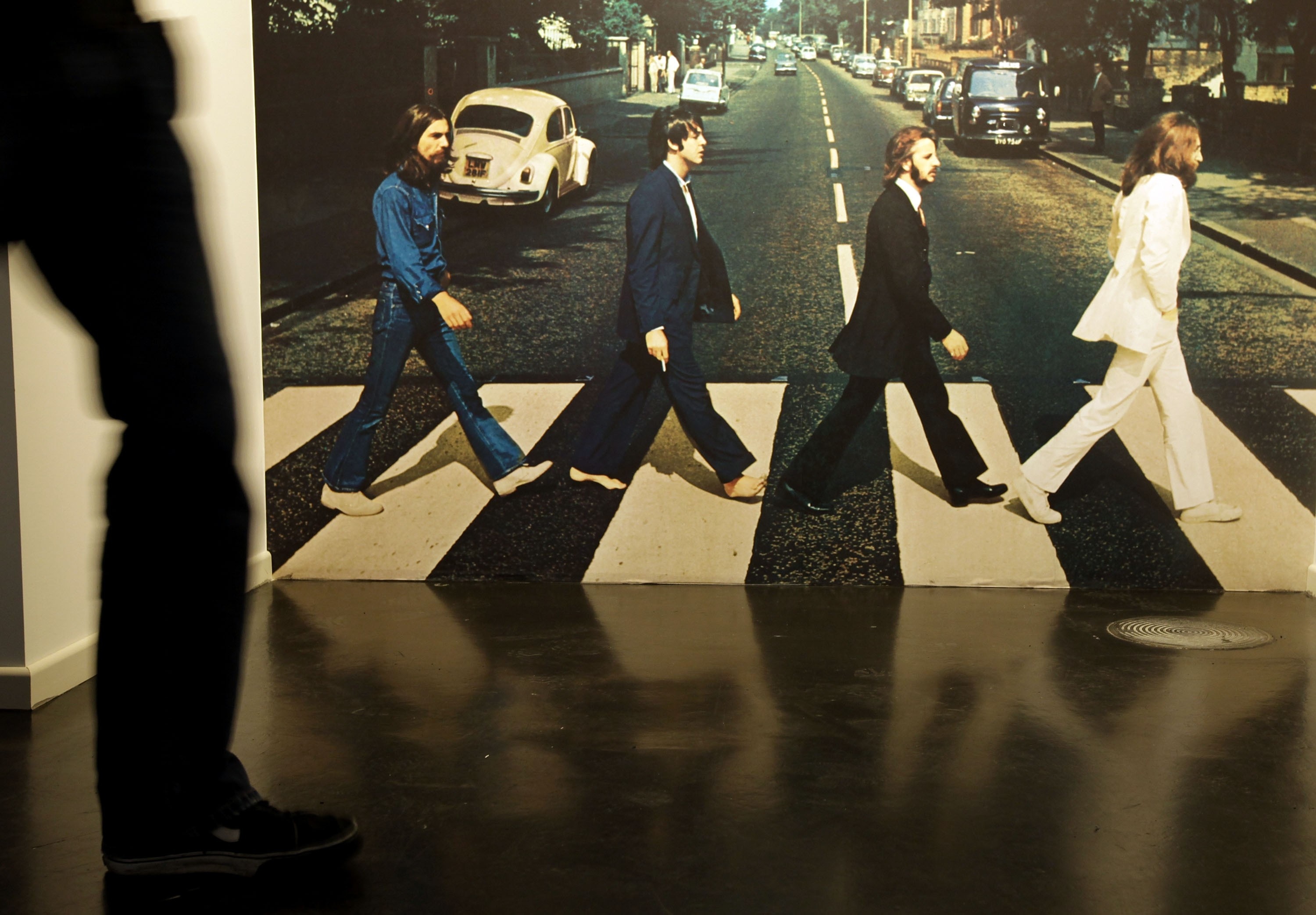 Last Words: Is ‘Abbey Road’ a fitting end to the Beatles? | In our previous explorations of famous “last words” — performances or compositions delivered with a certain end in view, with a sense of either culmination or parting, or with an eye to the future and hence to what one leaves behind — we limited ourselves to the words of individuals spoken to their followers or fellow-travellers.The words of the Prophet Muhammad and of Martin Luther King, Jr, were replete with exhortation; they functioned both as expressions of fidelity to a task, and as examples to be followed by others. Which is to say, the messages were oriented beyond their speakers, toward some greater goal their audience must take up and pursue — hence the Prophet Muhammad’s stress on fidelity and continuity (“All those who listen to me shall pass on my words to others and those to others again …”) and King’s on fearlessness and a “dangerous unselfishness” (“I’m not fearing any man …”).This next instalment is different in almost every way. The words are not of one individual but a group — perhaps the most famous group of the twentieth century. There is no “message” per se, and not really anything being communicated to others. Their words are largely self-referential, intensely personal, quasi-autobiographical or else plain nonsense. The goal of the composition, the “end” (telos) it has in view, is evidently nothing more than its own aesthetic perfection. It is not a performance as much as it is a production: bits and pieces of earlier ideas gathered together, elaborated, reworked, enhanced, added to and repeatedly overdubbed between 22 February and 19 August 1969.This is a reference, of course, to the last album recorded by The Beatles, Abbey Road. The album began amid the fragments, financial chaos and interpersonal strife of the infamous “Get Back” sessions of January 1969. And while Let It Be, which represents the uneven results of those recordings, appeared later in May 1970, Abbey Road is the album that has all the hallmarks of an “end”.But even this raises a number of questions. Does Abbey Road represent the culmination of their artistry as a band, the zenith of their formal innovation and musical experimentation? (Surely Sgt Pepper’s Lonely Heart Club Band can make a more compelling claim.) Does the album showcase an usual degree of creativity and invention? What are we to make of the clear borrowings (from Chuck Berry’s “You Can’t Catch Me” and Fleetwood Mac’s “Albatross”, to the first movement of Beethoven’s Piano Sonata No 14 in C Sharp Minor, a seventeenth-century song by Thomas Dekker and perhaps James Taylor’s “Something in the Way She Moves”) and moments of unadorned nostalgia — including doo-wop rock’n’roll throwbacks from their Hamburg days (such as “Oh! Darling” and “Polythene Pam”)? Or the fact that so much of the album is comprised of compositional orphans, off cuttings from The White Album and the “Get Back” sessions? As John Lennon would later complain: “Abbey Road was really unfinished songs all stuck together. None of the songs had anything to do with each other, no thread at all.”Moreover, Abbey Road is rife with contradictions and seemingly unreconciled elements. For instance, the album announces itself as a reunion of sorts, the getting back together of variously estranged band members who had been involved for months in side projects as solo artists, as movie actors, as music producers and studio musicians. But it then proceeds almost immediately to individuate them, featuring in quick succession songs that reflect their own peculiar style, voice and temperament — most apparent in George Harrison’s exquisite “Something” and “Here Comes the Sun”, whose delicacy and tenderness act as counterpoints to the sardonic edge and volcanic obsessiveness of Lennon’s “Come Together” and “I Want You (She’s So Heavy)”; but also evident in Ringo’s “Octopus’s Garden” which provides a playful complement to Paul’s persistent melancholy and nostalgia.And then there are Lennon’s intermittent absences during the first three weeks of July, during which Paul, George and Ringo recorded some of the album’s finest pieces: “Something”, “Here Comes the Sun”, “You Never Give Me Your Money”, “Golden Slumbers” and “Carry That Weight”. So much for coming together …What ultimately distinguishes Abbey Road, Kenneth Womack contends, is the degree of studio artistry, over-dubbing and post-production afforded by the availability of the EMI TG12345 console, a two-metre-long eight-track mixing desk that allowed the Beatles to isolate tracks and progressively add more and more layers and greater refinement to their preferred take of each song. What console permitted, in other words, was heretofore unimaginable complexity and perfectibility. While there are undeniable moments of virtuoso playing as a band on Abbey Road (not least the trio of duelling guitars during “The End”), the most arresting music (such as the chaotic, almost Wagnerian final four minutes of “I Want You”) and most brilliant vocal arrays (Paul’s open-throated growl on “Oh! Darling” and “Golden Slumbers”, and the nine-voice harmonies of “Because”) in the album were added or layered after the fact.It is in this pursuit of a certain technological perfection, on the level of the great artistic achievements of the twentieth century, that the Beatles rediscovered the kind of confluence, inspiration, joy even, that could have carried them through to further albums (as they were evidently contemplating). But in the end, the technological possibilities of the EMI TG12345 console and of George Harrison’s Moog synthesiser could not overcome what had broken relationally within the band itself. While John’s consuming obsession with Yoko Ono grew (along with his dependence on heroine), and George and Ringo looked to life beyond the Beatles with an undeniable optimism, even relief (what else is “an octopus’s garden in the shade” but a form of respite?), it is Paul who seems to feel the regret most keenly, that the end is a weight that must be carried: “I never give you my pillow / I only send you my invitations / And in the middle of the celebrations / I break down.”The final recordings for Abbey Road were completed on 19 August 1969. The album was released on 26 September. The cover famously portrayed the four men walking away from the studio, never to return.READING:Kenneth Womack, Solid State: The Story of “Abbey Road” and the End of the Beatles (Cornell University Press, 2019).Walter Everett, The Beatles as Musicians (Oxford University Press, 1999).Guest: Jade O’Regan is Program Leader and Senior Lecturer in Contemporary Music Practice at the Sydney Conservatorium of Music. | 54m 36s | ||||||
| 9/16/26 |  Does a ‘digital duty of care’ put free speech at risk? | Evidence has been mounting for more than a decade that social media tears away at the fabric of democratic life by eroding the conditions of deliberation, shared understanding and mutual trust; that it is the conduit of widespread misinformation, disinformation and malicious conspiracy theories; that it is a driver of hate, sexism and prejudice and has been used to incite violence; that its addictive design and prolonged exposure to harmful content has had egregious damage to the mental health and emotional wellbeing of adolescents.Until recently, the size of tech companies responsible for the social media platforms, the speed with which new technologies are being deployed and the scale at which they are being adopted has meant the companies have managed to stay several steps ahead of attempts to impose effective regulation and demand accountability.But a combination of the law catching up and a sharp turn in public sentiment against the companies themselves has led to a series of legislative responses around the world intended to mitigate the harms social media platforms cause.Last week, the federal government released the exposure draft of its Online Safety Amendment (Digital Duty of Care) Bill 2026. First floated in 2024, this is the third such measure the Albanese government has introduced — the others being its abandoned Communications Legislation Amendment (Combatting Misinformation and Disinformation) Bill 2024 and its world-leading Online Safety (Age-Restricted Social Media Platforms) Rules 2025.Alongside specific provisions to remove harmful content (such as AI generated “fake nude material”), the proposed legislation is notable in its adoption of more preventative measures, including requiring companies to conduct regular risk assessments in order to “proactively identify harmful content”. While this is a measure already in effect in the UK and parts of the EU, perhaps the more notable provision in the proposed legislation is giving social media users the ability to “opt out” of or “turn off” the algorithm that recommends content other than those accounts they follow on the basis of the activity on the platforms.The Prime Minister has insisted this measure is “not about censorship. It’s about giving people control themselves over what they see.” But that has not prevented his political opponents from accusing the government of of attempting to “censor and silence Australians” (Shadow Treasurer Tim Wilson) or of “building the Orwellian machinery” for censorship (One Nation Leader Pauline Hanson). As Nationals Leader Matt Canavan said to the ABC:“I’m deeply sceptical of giving any government, whether I was in charge, or Anika Wells is in charge, I’m deeply sceptical of giving any government the power to decide what you read on your phone.”Particular concerns have been raised about the discretionary power accorded to the Minister responsible under section 25C of the exposure draft of the Online Safety Amendment (Digital Duty of Care) Bill 2026 to “determine material or conduct, or a combination of material and conduct, that the Minister is satisfied may cause serious harm”. In 2021, similar concerns were expressed in response to the UK government’s own Online Safety Bill, which likewise proposed to legislate a digital duty of care. The Carnegie Trust, which helped develop the “duty of care” framework the government would adopt, articulated its worry that the draft legislation “takes too many powers” for the minister/secretary and advised that, in order to meet “international commitments on free speech”, there should be “a separation of powers between the executive and a communications regulator”.How much credence should be given to complaints that further regulating social media content poses a threat to freedom of speech in a country like Australia, which already has comparatively weak free-speech protections? Are these complaints merely self-interested, given that movements and populist parties on the political extremes have tended to benefit from the algorithmic “outrage machine”?More broadly, given the “opt out” function already exists on most of the platforms and these companies’ predilection for “malicious compliance” (technically abiding by the legislation, but making it unreasonably difficult for users and/or the experience on the platforms significantly worse as a result), what would happen if the overwhelming majority of users simply opt back in to the algorithmically determined feed? Does user consent mitigate the harms?READING:Jay Daniel Thompson, “‘Giving people control’: Do the proposed digital duty of care laws pose a threat to free speech?” (ABC Religion and Ethics, 14 September 2026)Lisa Given, “‘Digital duty of care’ laws will force tech platforms to look after users” (The Conversation, 8 September 2026)Rob Nicholls, “Australians may soon be able to switch off social media algorithms. Is that censorship?” (The Conversation, 9 September 2026)Guest: Jay Daniel Thompson is a Senior Lecturer in the School of Media and Communication at RMIT University in Melbourne. | 54m 36s | ||||||
| 9/9/26 | loyaltymarketing+3 | — | ABC Australia | — | loyaltymarketing+5 | — | 54m 45s | ||
| 9/2/26 | longevityphilosophy+3 | — | The Odyssey | — | longevityimmortality+5 | — | 54m 36s | ||
| 8/26/26 | neurodiversityacademic representation+4 | — | University of Cambridge | Ghanasouth London | Jason ArdayUniversity of Cambridge+5 | — | 53m 36s | ||
| 8/19/26 | data centrespublic opinion+4 | — | GallupHeatmap+3 | United StatesUK+1 | data centrespublic opposition+5 | — | 54m 36s | ||
| 8/12/26 | weight losscosmetic procedures+3 | — | GLP-1Ozempic+2 | — | cadaverscosmetic procedures+3 | — | 54m 36s | ||
Want analysis for the episodes below?Free for Pro Submit a request, we'll have your selected episodes analyzed within an hour. Free, at no cost to you, for Pro users. | |||||||||
| 8/5/26 | democracypolitics+4 | — | Sparta | — | democratic politicsmoney influence+5 | — | 54m 36s | ||
| 7/29/26 | readingliteracy+4 | — | The Atlantic | AustraliaUnited States | reading declineliteracy crisis+4 | — | 54m 08s | ||
| 7/22/26 | prediction marketssports betting+4 | — | The Wall Street JournalCNN+1 | — | prediction marketssports betting+4 | — | 54m 36s | ||
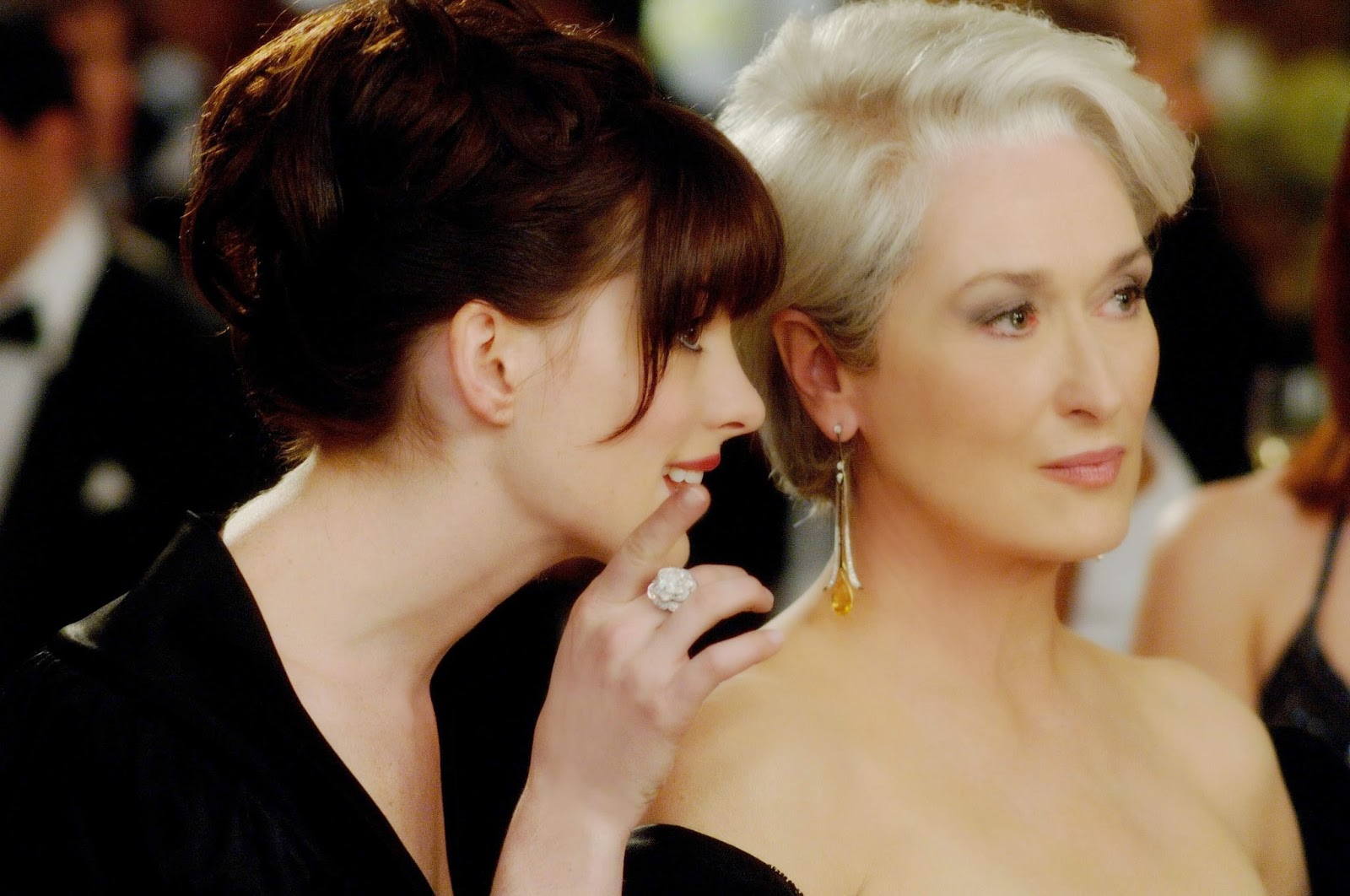
| 7/15/26 | high fashionpop culture+4 | — | The Devil Wears Prada | — | The Devil Wears PradaDavid Frankel+6 | — | 54m 36s | ||
| 7/8/26 | AI ethicstechnology impact+3 | — | — | — | copyright theftAI+3 | — | 54m 36s | ||
| 7/1/26 | 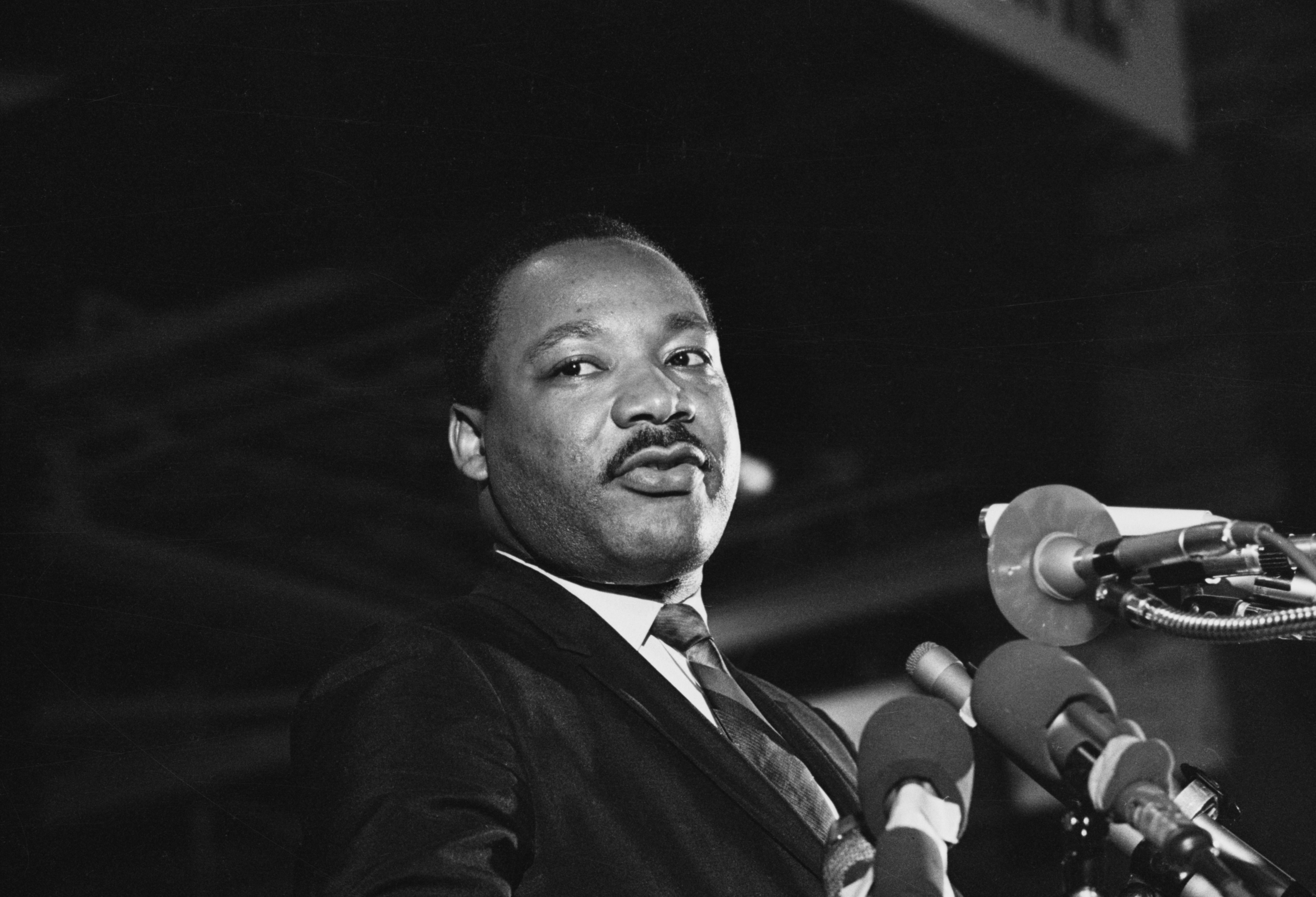 Last Words: ‘I’ve Been to the Mountaintop’ — Martin Luther King, Jr in Memphis | In 1967, after reaching the heights of social and political influence in 1963, after being awarded the Nobel Peace Prize in 1964, and having been instrumental in the passage of the Civil Rights Act in 1964 and the Voting Rights Act of 1965, Martin Luther King, Jr watched his popular support fall precipitously away. He had reached the lowest point of his life on the public stage, with fully two-thirds of Americans disapproving of him. King’s rousing vision of nonviolence — of racial coexistence within a community defined by mutuality, interdependence and love — seemed to be growing ever more remote following the landmark civil rights legislation. The Black Power movement was gaining influence, and in 1967 alone there had been 76 violent riots across major American cities.Then, in April 1967, King denounced the US military involvement in Vietnam — a war that was wildly popular with the vast majority of Americans. For his supporters, it was strategically counterproductive to so connect the cause of civil rights with the goals of peace activists; while Barry Goldwater, the standard bearer of a kind of atavistic conservatism, characterised King’s words as treasonous.King had also grown concerned that the Civil Rights and Voting Rights Acts represented, for many Americans, the end of their concern. This legislation had ushered in a kind of complacency that absolved them from any further inconvenience or moral concern.Now that Black people had been granted equality de jure, what was needed was for them to be accorded equality de facto — especially in education, employment and housing, and not only in the South. Therefore, in the autumn of 1967 King launched what would be known as the Poor People’s Campaign, which was meant to culminate in a new march on Washington DC in the spring of 1968.But disagreement with the ambitions and unruliness of the campaign from within, coupled with outright antipathy from the Johnson administration due to his opposition to the war in Vietnam, plunged King into a condition of deepening despair. Even as he gave himself with increasing desperation to the cause, and tried to rally support for the Poor People’s Campaign across the South, he suffered from a growing sense of futility. The constant threat of being killed did nothing to alleviate his depression. According to those closest to King, he was physically, emotionally, spiritually exhausted.In March 1968, King received a request from Memphis, Tennessee, to offer his support for the 1,300 of the city’s sanitation workers, who had gone on strike for better pay, the ability to organise and improved working conditions after two of their number had been killed on the job. King accepted the invitation, believing that Memphis would mark the beginning of a nationwide campaign against poverty and housing discrimination.In Memphis, he and his team met with reticence among their own number and political opposition to mass demonstrations — including a federal injunction obtained by the city prohibiting any demonstrations for ten days, after one such march had been derailed by violence. On the evening of 3 April, King was scheduled to speak at Bishop Charles Mason Temple. Because of severe storms, King believed turnout would be suppressed. He was, moreover, sick with the flu and asked Ralph Abernathy, whom he described as “the best friend that I have in the world”, to speak in his stead. But when Abernathy saw the church was filled to capacity, with more than 3,300 people packed into the building, they sent word back to King telling him the people needed to hear King speak, even if briefly.Once King arrived, Abernathy gave an unusually long introduction — close to 30 minutes — in order to minimise the strain on King himself. King spoke without notes, and was evidently unprepared. He habitually started his speeches slowly, haltingly, in order to allow them to reach a series of rhetorical peaks. But his weariness on this occasion was evident from the beginning. At times, the speech feels improvised, vague, superficial, a little meandering; at other points, it feels as though he is playing his “greatest hits”.But as King goes on, the speech grows in clarity and coherence. He begins with a kind of survey of human civilisation and the struggle for enlightenment and freedom — a historical arc spanning from the liberation of the slaves from Egypt to the gathering that stormy night on behalf of the sanitation workers of Memphis, all expressing the same cry: “We want to be free.” He concludes with a survey of the high points of the civil rights movement, expressing his gratitude for the gathering in Memphis to now belong to that number — and inviting those gathered to see themselves as continuing the common struggle.Between these two surveys, he urges the audience to see their struggle on behalf of others through the lens of the “dangerous unselfishness” of the Samaritan who tended to the man beaten and bloodied on the road between Jerusalem and Jericho in Jesus’s parable.But near the end of the speech, at one point King’s voice trails off a little. He uncharacteristically does not finish a sentence he has begun: “And they were telling me …” He breaks off to recount a threat to his life as he made his way from Atlanta to Memphis by plane earlier that same day. His voice slows down once again. He refers twice more to the “threats” he has faced: “What would happen to me from some of our sick white brothers?”But in the final two minutes, his voice grows at once strong and carefree. He repeatedly says he “doesn’t know” what is going to happen next and “doesn’t mind” about the “difficult days ahead”. But he couples that with one of his characteristic statements of modest moral purpose (such as “I just want to be a good man” or “I just want to leave a committed life behind”, on other occasions): “Like anybody, I would like to live a long life. Longevity has its place. But I’m not concerned about that now. I just want to do God’s will.”What is remarkable is not only the absence of ego in these sentiments and the lack graspingness that accompanies the fear of death. It is King’s ability, having begun by invoking the journey out of Egypt, to conclude by pointing those gathered to the task ahead, now described as the departure from a wilderness of hatred and violence and into the “promised land” of mutuality, interdependence and love:“I just want to do God's will. And He’s allowed me to go up to the mountain. And I’ve looked over. And I've seen the promised land. I may not get there with you. But I want you to know tonight, that we, as a people, will get to the promised land. And so I’m happy, tonight. I’m not worried about anything. I’m not fearing any man. Mine eyes have seen the glory of the coming of the Lord.”Guest: Stan Grant is a proud Wiradjuri man, a theologian, and the Vice Chancellor’s Chair of Australian-Indigenous Belonging at Charles Sturt University. He is the Director of Yindyamarra Nguluway and the author, most recently, of When Words Fail Us: Truth Beyond Time. | 54m 36s | ||||||
| 6/24/26 | 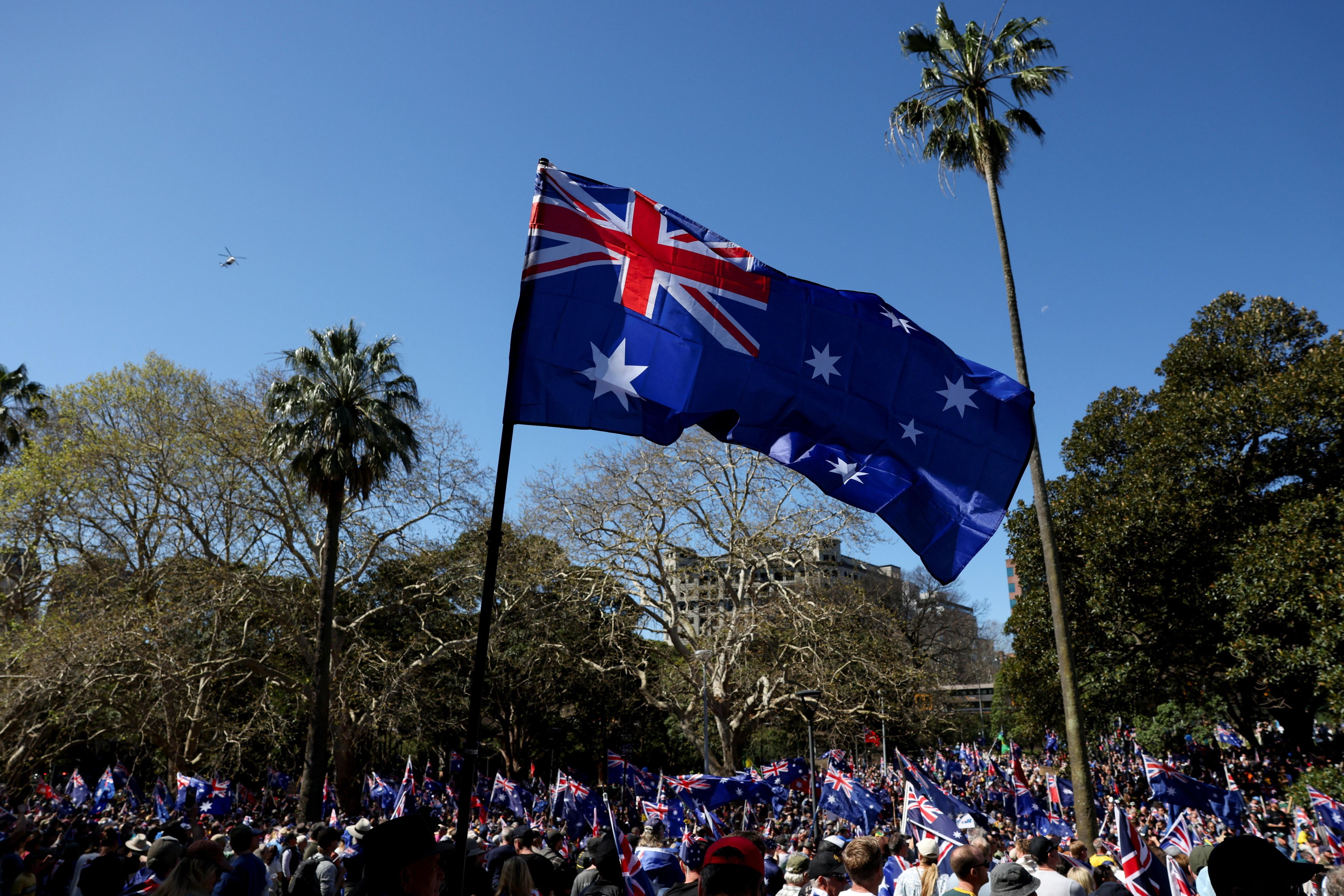 Why the anxieties over multiculturalism? What’s the appeal of a monocultural society? | If One Nation leader Pauline Hanson managed to reignite a public debate with her assertion that Australia is “a multiracial society, but we must be monocultural” during her address last week to the National Press Club, it is only because certain anxieties over multiculturalism have long been smouldering in the social undergrowth, just waiting to be fanned into flame.The question of immigration, handwringing over the racial constitution of the nation and the desire to maintain Australia’s essential “Britishness” go back at least as far as the 1901 Immigration Restriction Act. And these concerns continued to resurface throughout the twentieth century. As the then Minister for Immigration and future leader of the Liberal Party, Billy Snedden, said in 1969 (the year after Enoch Powell’s “Rivers of Blood” speech):“I am quite determined we should have a monoculture, with everyone living in the same way, understanding each other, and sharing the same aspirations. We don’t want pluralism.”It wasn’t long afterward, the White Australia Policy was dismantled and multiculturalism became official national policy, culminating in the 1989 National Agenda for a Multicultural Australia. Just seven years later, the rise of John Howard and the election of Pauline Hanson placed both multiculturalism and immigration back on the table.Debates over the proper levels of immigration are, of course, entirely appropriate in a healthy democracy. Immigration policy is something about which citizens should be able to deliberate and disagree without fear being called xenophobic. But something potentially dangerous happens when the debate turns to multiculturalism, as longstanding government policy, itself. For then we are not discussing prudential concerns about the proper allocation of limited social and economic resources; instead, we are discussing the desirability, or not, of our fellow citizens, our neighbours, those with whom we find ourselves pursuing a common life. We are discussing who truly belongs, and who does not.One of the dangers of the discourse about “the utterly flawed policy of multiculturalism” (as Hanson put it) is that it turns fellow citizens into abstractions, other cultures into barriers, our neighbours themselves into impediments one’s own sense of wellbeing and social comfort.As John Dewey argued a century ago, it is not enough for our experience of democracy to be confined to elections and abstract values (call this the vertical orientation of democratic life); democratic habits must pervade everyday life and casual interactions with our fellow citizens (call this democracy’s horizontal or relational aspect). In the same way, multiculturalism cannot remain a government policy or series of eight goals; for it to become a moral reality, it must find inter-cultural expressions in civic life. It is in this way that we go from being strangers to one another, to fellow citizens.The desire not to feel like “strangers in our own home” or to be a “monocultural” society is surely a form of the desire to eliminate strangeness from our lives, to achieve what Pierre Rosanvallon calls the radical “simplification of the social bond” through the commonalities of culture, custom and language. But what does this longing conceal, and what does it assume both about “culture” and “national identity”?Guest: Glenda Ballantyne is a Senior Lecturer in Sociology at Swinburne University of Technology, and Coordinator of the Australian Intercultural Cities National Network. | 54m 36s | ||||||
| 6/17/26 | 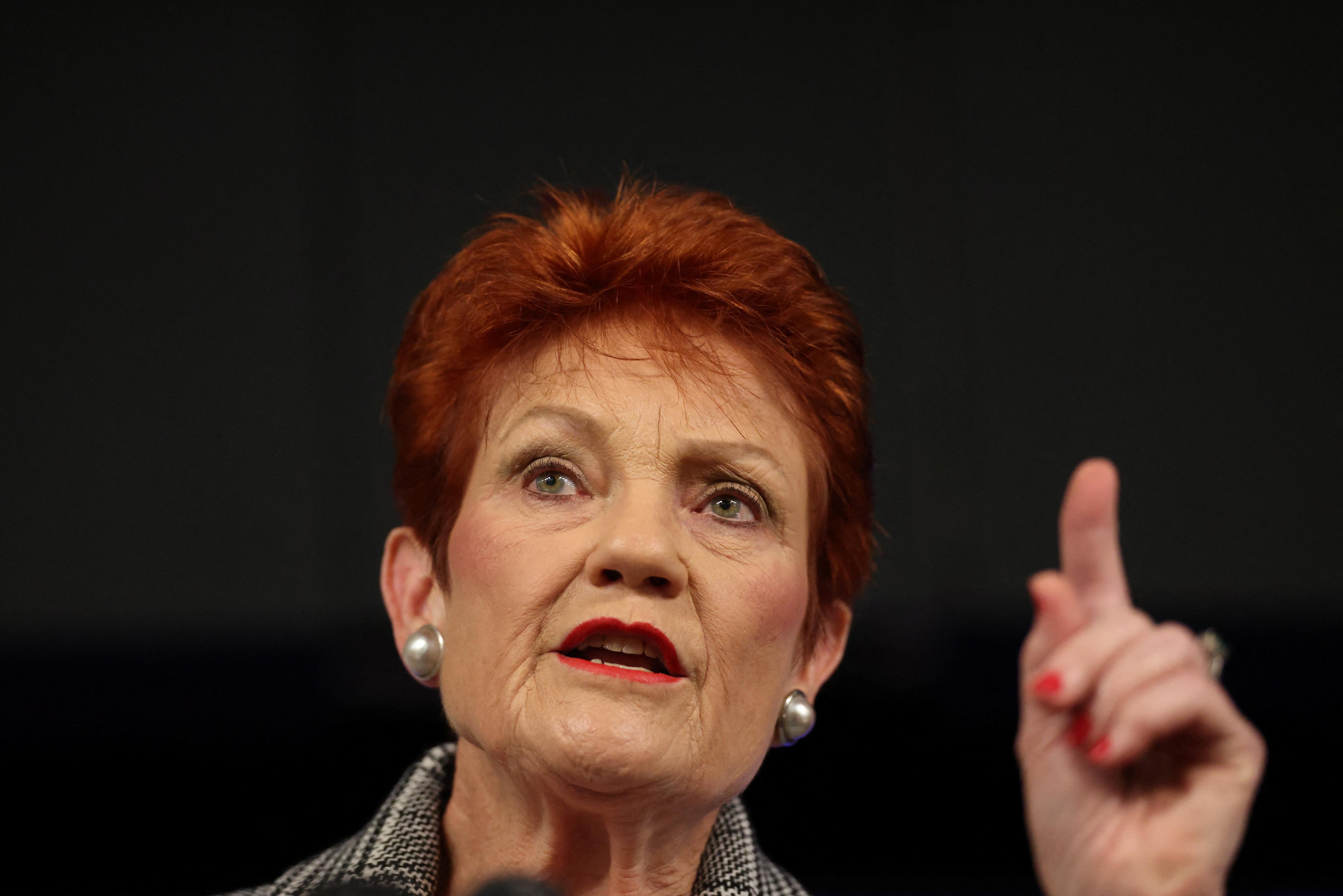 One Nation is on the rise — but do we know what it means? | Over the last twelve months, there have been two conspicuous trends in federal politics. One is the precipitous decline in electoral support for the Liberal Party, which began before last year’s federal election and has continued apace ever since. The other is the rise in One Nation’s electoral fortunes, which began to tick upwards in September but then took a leap in December and January.Both trends converged, rather spectacularly, in the latest Resolve Political Monitor, conducted for the Nine newspapers. Not only had the Coalition’s primary vote drop to 20 per cent (an all-time low), but One Nation’s primary vote shot up to 29 per cent (passing Labor on 28 per cent). Moreover, Pauline Hanson emerged as preferred prime minister with a third of respondents, while Anthony Albanese was selected by 29 per cent — opposition leader Angus Taylor took only 16 per cent of nominations.This poll comes little more than a month after One Nation won the Farrer by-election in rural New South Wales, with a commanding 40 per cent of the primary vote, thereby gaining its first lower house seat in federal parliament. And it came days before Pauline Hanson’s first address to the National Press Club in Canberra, three decades after she entered parliament.Almost exactly forty years ago, then opposition leader John Howard famously said “the times will suit me”. The same could now be said for Pauline Hanson. For three decades she has been a fixture of federal politics. The major parties have variously denounced and attempted to accommodate her views on immigration, multiculturalism and Indigenous policy, among other things. But while the political landscape around her has changed, she has not. If anything, due to the excesses of political rhetoric and perverse incentives of a social-media saturated informational ecosystem, the electorate has grown inured to what once would have been scandalous, perhaps even disqualifying. In an age of Trump, Hanson comes across to many voters as simply “plain spoken”, as the “voice of reason”.The question, however, is whether One Nation’s electoral support is, in fact, an affirmation of the party, its policies (such as they are) and its leader, or merely a kind of aggregated discontent with the major political parties? Is One Nation the temporary beneficiary of voter anxiety and anger — with polling and by-elections here functioning as a means of political communication — or does this point to a more profound disintegration of two-party politics? Does One Nation’s current rise reflect what Pierre Rosanvallon described as the three-fold simplification at the heart of populism’s more general appeal (the simplicity of the ‘natural’ social bond over against the difficulties of multiculturalism; the simplification of the cause of current social problems; the simplification of the political remedy, over against the complexities of deliberation) at a time of dizzying complexity?Either way, Pauline Hanson’s ability to both appeal to and harness electoral discontent in times that are characterised by “a near-constant sense of crisis, spanning the economic, social and political”, presents a challenge to the exercise of responsible political leadership — particularly that of someone like Anthony Albanese, whose moderation and commitment to a kind of gradualist centrism rarely touches the political passions that animate our current moment.Then again, in the UK and Europe, far-right parties have tended to poll well between elections and have even enjoyed a degree of success in European parliamentary elections and by-elections, only to see their support fall away come the general election. Is something similar happening in Australia?Guest: Paul Strangio is Emeritus Professor of Politics at Monash University and the author, most recently, of The Alchemy of Leadership: Seven Australian Prime Ministers in a Turbulent Twenty-first Century. | 54m 36s | ||||||
| 6/10/26 |  The ethics of ‘longtermism’ — what are our obligations to the future? | One of the criticisms often directed at democratic politics is that it is irresponsibly, even dangerously, short-term in its orientation. The wellbeing of future generations, to say nothing of the sustainability of the planet, rarely matter more to lawmakers than the cost-of-living pressures experienced by their constituents or the outcome of the next election cycle. Short-termism, therefore, would seem to be baked into democracy; hence, for some, the only way to act seriously with the future in mind would be for those with power and resources to do so unilaterally.There is no denying that democratic politics is constrained by short-term thinking. It is likewise true that our moral imaginations suffer from the incapacity to recognise the claim that future generations may properly make on our current actions — or even to recognise that such moral obligations exist in the first place.But there is no reason to deny such obligations. As Annette Baier argues, the “only special feature in the moral tie between us and future generations lies in the inferiority of our knowledge about them, not in the inferiority of their ontological status … Neither their non-presence, nor our ignorance of who exactly they are, nor our uncertainty concerning how many of them there are, rules out the appropriateness of recognizing rights on their part.”In line with this sentiment — though shorn of the concept of obligation that the language of “rights” assumes — a number of influential philosophers have made a case for what they’ve called “longtermism”. Its central tenets are relatively straightforward. William MacAskill lays them out in his best-selling book What We Owe the Future:“that, impartially considered, future people should count for no less, morally, than the present generation”;“that there may be a huge number of future people”;“that life, for them, could be extraordinarily good or inordinately bad”;“that we really can make a difference to the world they inhabit”.Because this outlook is wholly utilitarian, the “huge number of future people” is doing a great deal of work in MacAskill’s formulation. In effect, longtermism takes utilitarianism’s spatial concern with achieving “the greatest good for the greatest number” and transposes it temporally, onto the vastness of time. It doesn’t simply prioritise the indefinite prolongation of the human species in the face of possible extinction threats. It also accords a certain moral priority to the “untold number of future people”. So MacAskill writes:“Future people count, but we rarely count them. They cannot vote or lobby or run for public office, so politicians have scant incentive to think about them … They are utterly disenfranchised … I see longtermism as an extension of [social movements for civil rights and women’s suffrage]. Though we cannot give genuine political power to future people, we can at least give consideration to them. By abandoning the tyranny of the present over the future, we can act as trustees — helping to create a flourishing world for generations to come. This is of the utmost importance.”How, then, do we go about freeing the future from the “tyranny of the present” — which here should not be limited to mere short-term thinking, but also the expressions of our more proximate, immediate obligations to human and non-human creatures? It is at this point that longtermism’s consequentialism gives way to a certain technotopian impulse. Abandoning the logic of limits, of democratic restraint and reduction, of a more pastoral and educative understanding of democratic self-governance, longtermism favours instead the unleashing our technological capacities and reach. As Émile Torres puts it:“Longtermism tells us to maximise economic productivity, our control over nature, our presence in the Universe, the number of (simulated) people who exist in the future, the total amount of impersonal ‘value’ and so on. But to maximise, we must develop increasingly powerful — and dangerous — technologies; failing to do this would itself be an existential catastrophe.”It is little wonder, then, that longtermism has become the “secular credo” of Silicon Valley.The question is whether the utilitarian “moral arithmetic” of longtermism is inherent to the task of acknowledging the moral reality of future generations? Are there other ways of inhabiting a properly precautionary disposition that is not so willing to sacrifice the present on the altar of the future?Guest: Kirsten Mann is a Postdoctoral Fellow in the School of Philosophy at Australian National University. | 54m 37s | ||||||
| 6/3/26 | 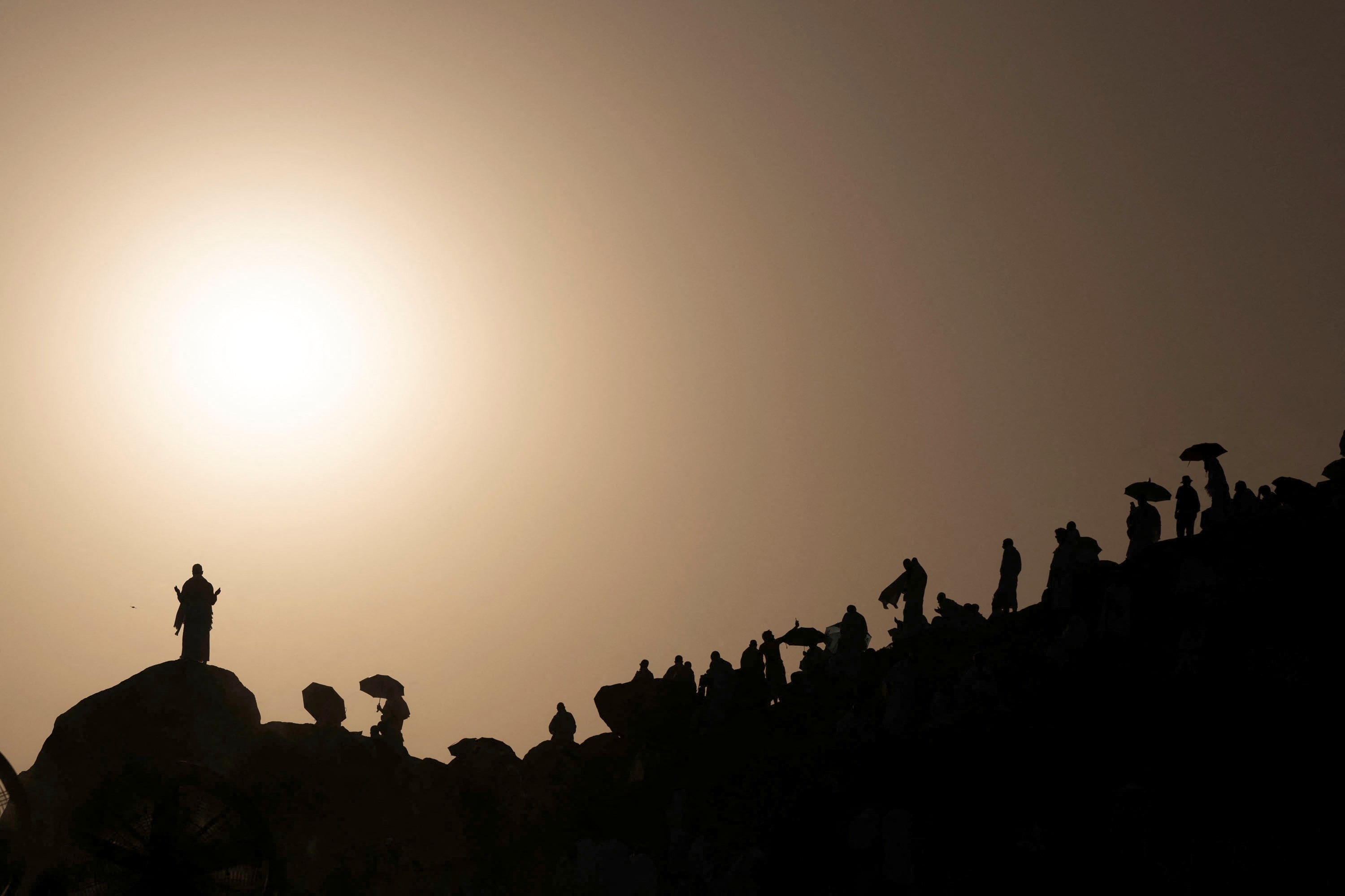 Last Words: The ‘Farewell Sermon’ of the Prophet Muhammad | It could be said that human beings reveal who they most truly are as they approach the end. For the end of one’s life is not simply its terminus ad quem; it is also its telos, its goal or meaning. A life that has been lived in the thrall of egotism, whose fundamental pursuit has been the safeguarding and satisfaction of the self, will almost certainly, at the end, turn inward upon itself and find itself grasping, desperately, at something like immortality — as the indefinite prolonging of the self. It would not be surprising for such a life to be shrunken, fearful, petty, suspicious, diminished at the end, rather than open-handed, open-hearted, at peace.Consider the example of Shakespeare’s King Lear, who craves flattery and reassuring falsehoods, who obsesses over small offenses and slights to his ego, who remains unconcerned with truthfulness and unnourished by the love of his youngest daughter.On the other hand, a life that is lived meaningfully — which is to say, a life that serves a purpose beyond itself — is able to approach the end without fear, not only because a certain humility has become a habit of life, but because the prospect of the end brings what is most important into sharper focus. This is perhaps what Socrates had in mind when he said that “the one aim of those who practice philosophy in the proper manner is to practice for dying and death” (Phaedo, 64a).Here we could think of Martin Luther King, Jr’s final sermon at Mason Temple in Memphis, Tennessee, on 3 April 1968, during which he reflects on threats made to his life. “Like anybody, I would like to live a long life”, he admits. “Longevity has its place.” Then he immediately says, “But I’m not concerned about that now. I just want to do God’ will … And I’m happy, tonight. I’m not worried about anything. I’m not fearing any man.” Or consider the philosopher Stanley Cavell, writing tenderly in his memoir that, “anticipating the ending of my life, I am becoming freer than ever of the desire to persuade”. Or Toni Morrison, after surveying modern literature’s fascination with evil (“Evil has vivid speech; Goodness bites its tongue”), affirms “these last forty years, I have become more and more invested in making sure acts of goodness (however casual or deliberate or misapplied or … blessed) produce language”.Only lives spent renouncing egotism, and pursuing what matters most, could speak such words.So occasionally over the coming months, we’re going to spend some time in the presence of those who are approaching the end, listening to what they have to say. It may not be the end of their lives, but their lives will, in each instance, be approaching a pivotal moment for which their habits of life, their daily devotion to a cause bigger than themselves, will have prepared them.Perhaps the most historically consequential of these moments has just been observed by millions of Muslims around the world. In February 632 CE, twenty-three years after receiving his first revelation in a cave near Mecca, the Prophet Muhammad would lead tens of thousands of his followers back to the city of his birth with the intent of guiding them through the full ritual of the hajj. It was to be his final pilgrimage.Over the course of several days, Muhammad led them in the seven processions around the Ka‘aba — the simple square structure believed to have been constructed by Adam, and then rebuilt by Ibrahim/Abraham, the first monotheist, and finally by Muhammad himself — followed by the journey back-and-forth seven times between the nearby hills of Safa and Marwa, thus re-enacting the frantic search of Hagar, wife of Ibrahim, for water for their dying child Ismail. The Prophet then led them to the plain next to the rocky hill of Arafat and addressed those gathered. His message has all the marks of finality about it. Here is part of what the Prophet said (the translation comes from Yahiya Emerick):“O People, listen to my words, because I don’t know if I will ever be with you here again after this year. Therefore, listen to what I’m saying carefully and take these words to those who could not be here today.O People, your lives, property, and honour are sacred for you until you appear before your Lord, just as you consider this month, this day, and this city sacred. Return the things that are entrusted to you to their rightful owners. You will meet your Lord, and He will hold you answerable for your actions.Know that every Muslim is a brother to every other Muslim and that Muslims are one brotherhood. Nothing is allowed for a Muslim if it belongs to another unless it was given freely and willingly, so do not oppress each other.All practices of idolatry and ignorance are now under my feet. Every right of revenge coming from unjust murder in pre-Islamic times is rescinded …Charging interest is forbidden; therefore, all interest obligations are also cancelled. Your original money is yours to keep. Do no wrong and you will not be wronged.O People, be aware of God concerning women. Indeed, you’ve taken them on the security of God and made them lawful to you with God’s words. Indeed, it is true you have certain rights with your women, but they also have rights over you. It is their duty to honour their intimate obligations and not to do improper actions. If they do, then you will have the right to reprimand them, though not harshly. If they respect your rights, then to them belongs the right to be fed and clothed in kindness. Treat your women well and be kind to them for they are your partners and committed helpers. It is also your right that they not make friends with anyone you don’t approve of and never be unfaithful.Beware of Satan for the safety of your way of life. He has lost all hope in leading you astray in this land, but he will be happy if you follow him in small things. Therefore, abstain from obedience to Satan. Indeed, I’m leaving behind me two things, the Book of God and my example, and if you follow these two you will never go astray …O People, listen to me closely. Serve God, say your five daily prayers, fast during the month of Ramadan, and give of your wealth in charity. Perform the hajj if you can afford it and obey whatever I command you, for that is the only way you will get into Paradise.O People, indeed your Lord is One and your ancestor is one. All of you belong to the line of Adam, and Adam was created from dust. An Arab is not better than a non-Arab nor is a white better than a black or a black better than a white except in piety. The noblest among you all is the one who is the most pious.O People, no prophet will come after me, and no new way of life will be born. Reason well and absorb the words that I am telling you. All those who listen to me shall pass on my words to others and those to others again; and may the last ones understand my words better than the first.Be my witness, O God, that I have conveyed Your Message to Your people.”Accounts have it that, when he finished, Muhammad prayed, “My Lord, have I delivered the message?” His followers replied, “Yes, you have.” In June of that same year, he died.What is immediately apparent about this sermon, quite apart from the substance of its message, is the way the Prophet conveys:the novelty, the sheer newness, of the revelation with which he had been entrusted — such that what came before is consigned to an age of idolatry “ignorance” (Jāhiliyyah);the importance of these words, of this “way of life”, being taken to heart, put into practice and passed on faithfully to those not present on the plain of Arafat — such that “the last ones understand my words better than the first”;the absence of ego, the humility to question whether he himself had discharged his sacred vocation faithfully: “My Lord, have I delivered the message?”Within the Islamic tradition, the example of the life and conduct of the Prophet Muhammad are morally normative, not merely descriptive. So what can we learn about what it means to “approach the end” from the example of his farewell sermon?Guest: Mahsheed Ansari is the Higher Degrees Research Coordinator and Senior Lecturer in Islamic Studies at the Centre for Islamic Studies and Civilisation at Charles Sturt University.For additional reading, Dr Ansari recommends:Martin Lings, Muhammad: His Life Based on the Earliest Sources.Fethullah Gülen, Prophet Muhammad: The Infinite Light.Yahiya Emerick, Critical Lives: Muhammad. | 54m 35s | ||||||
| 5/27/26 | 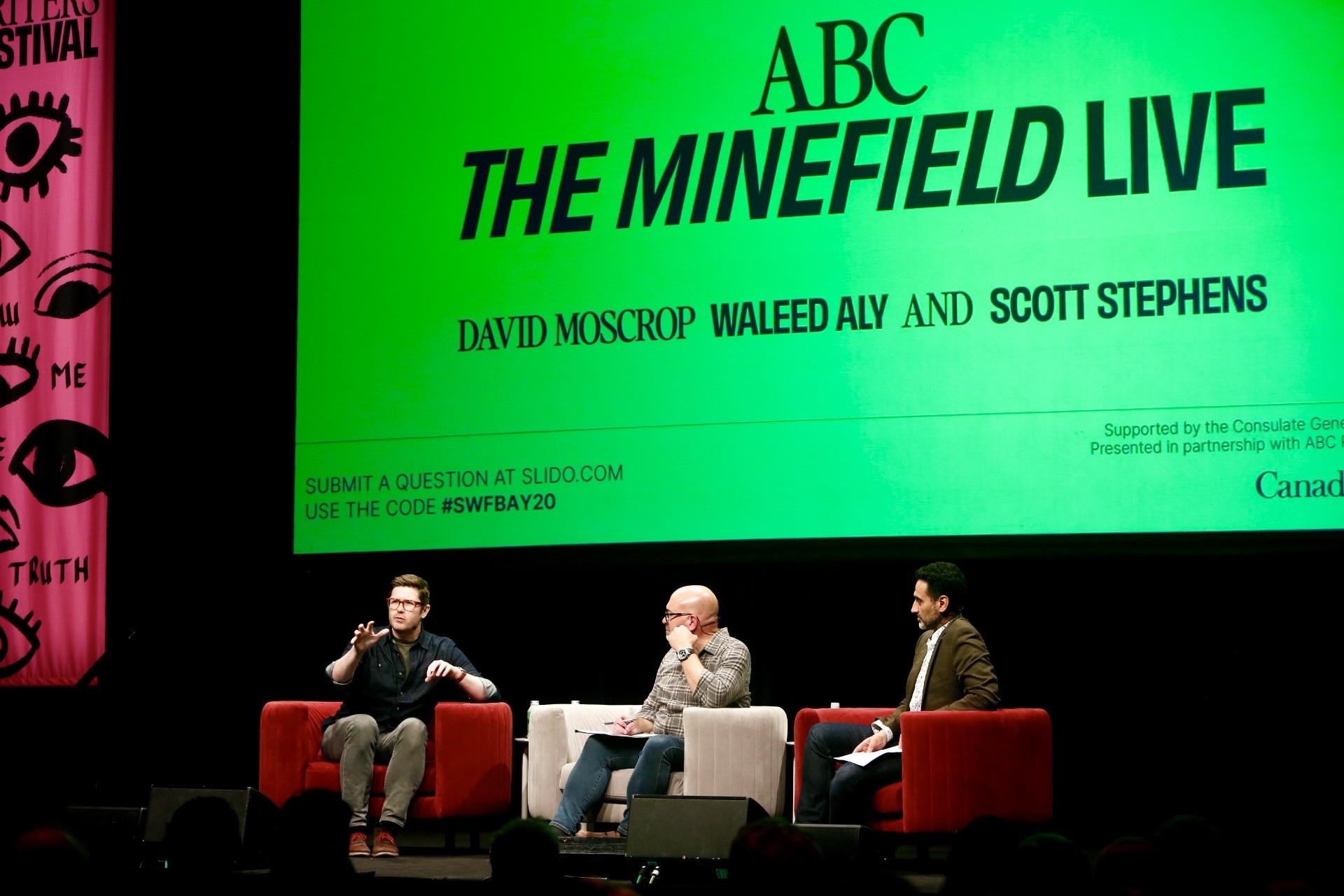 The Problem of Nationalism, with David Moscrop — Live at the Sydney Writers’ Festival | It’s common these days to refer to “the return of nationalism”. But that assumes that nationalism receded for a time, like the tide, and here the world is, now, getting its pants legs wet. Such an assumption misunderstands the peculiar character of nationalism. It would be better to think of it as a swell, as a political phenomenon that periodically gathers power and force, that crests and crashes, but that never entirely goes away. It’s always there, beneath us.Nationalism belongs to the emotional valence of the collective life of a nation state. Using the analogy of Aristotle’s taxonomy of the moral emotions — with, say, cowardice on one end of a continuum, foolhardiness on the other, and courage sitting in between — we could even think of nationalism as an extreme expression of the bundle of political emotions that ordinarily manifest as civic pride or patriotism, among them: love and fear, loyalty and hatred, attachment and jealousy. But with nationalism, it is as though the emotional balance is out of whack. Ever since the origin of the term at the end of the eighteenth century and its subsequent emergence in the nineteenth, nationalism has typically been associated with three components:Membership — the recognition of an “imagined community” constituted through shared language, ethnicity, religion, geography and so on;Self-determination — the demand for sovereignty over a defined territory;“Civil religion” — the existence of self-reinforcing symbols, practices, rituals, stories which serve to reify “the nation”, turning the abstract idea of national membership into a lived experience.While there is undeniable overlap with patriotism, nationalism adds the additional element of bellicosity. Not just national pride but superiority. Not just love of one’s own place and people (patria), but a corresponding antipathy toward other nations — including “others” within one’s own borders. Nationalism thus tends to be a Janus-faced phenomenon, with its heedless pursuit of territorial and tributary interests without and its requirement of the dominance of an ethnic and religious majority within.We could think of nationalism as the political equivalent of what happens when proper “self love” (amor sui) turns inward on itself (incurvatus in se) and devolves into egotism.Ever since the Second World War, nationalism has been indelibly associated with territorial ambition, categorical violence, a pseudo-religious zeal, utter partisan loyalty. As George Orwell puts it, “Nationalism is power hunger tempered by self-deception.”And yet over the last decade, a form of brazen nationalism has been willing to speak its name, to own its ambitions and cast off the veneer of polite cosmopolitanism. It has both fed off and fuelled intense popular emotions — fear, resentment, disgust, patriotic love — and seems willing to regard one’s nation as “beyond good and evil”, as answerable to no criteria other than its own interests. The problem, of course, is that bellicose nationalism invites responses in kind.Is nationalism a term that can be rehabilitated, or even redeemed? Orwell was convinced that “every nationalist is capable of the most flagrant dishonesty”; is nationalism compatible with the kind of constructive shame that follows from truthful encounters with one own history? Is it possible to cultivate an appropriate sense of self-love that does not devolve into group narcissism?David Moscrop is a Canadian political columnist and commentator. He is the author of Too Dumb for Democracy? Why We Make Bad Political Decisions and How We Can Make Better Ones and the forthcoming “On Nationalism”. | 54m 36s | ||||||
| 5/20/26 | 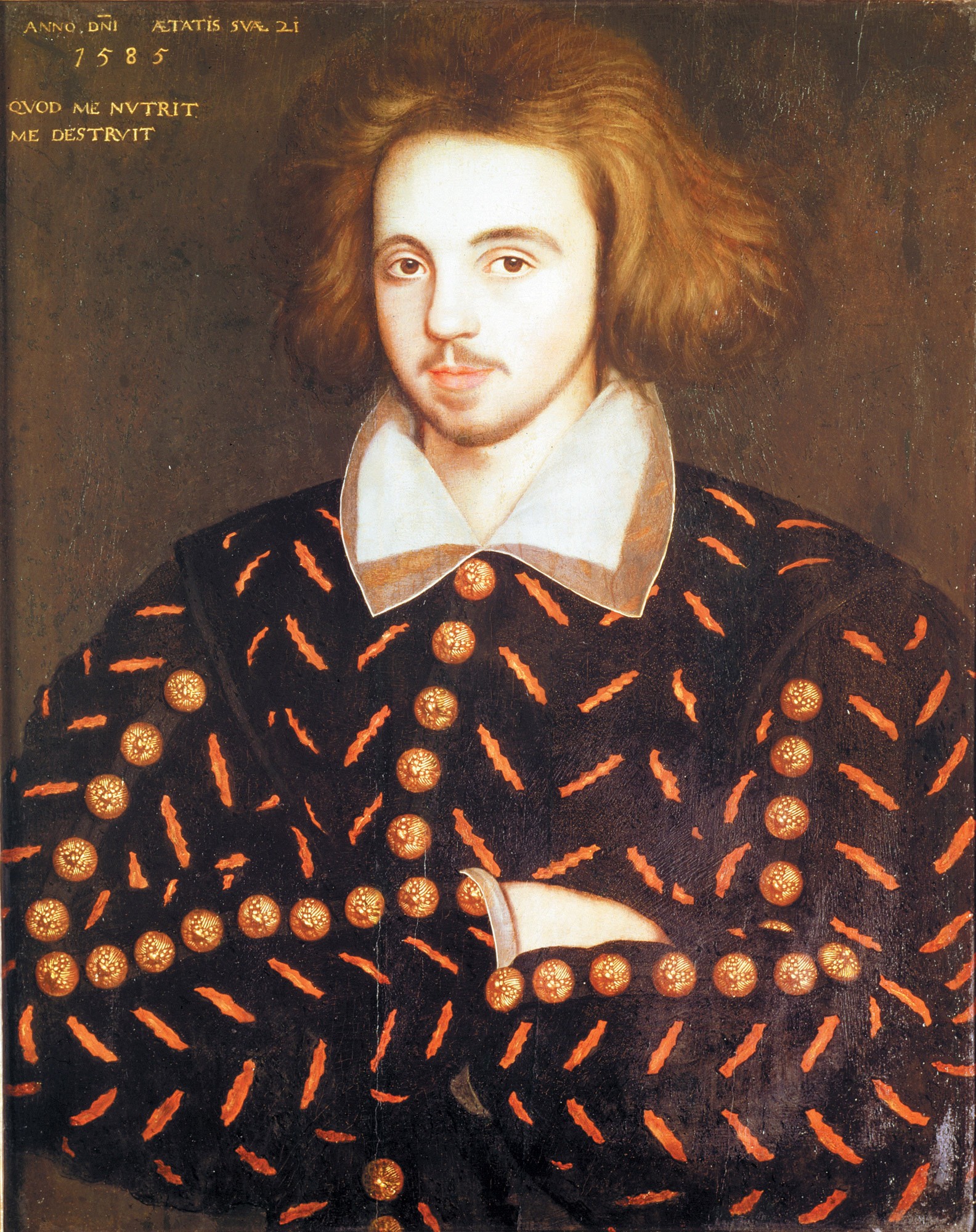 What is the moral of Marlowe’s ‘Doctor Faustus’? | There are four stories that could justifiably be described as foundational to Western culture: the temptation of Eve in the Garden of Eden; Prometheus’s gift of fire to humanity; Doctor Faustus’s pact with the devil; and Victor Frankenstein’s act of monstrous creation.Not only are the principal names immediately evocative to anyone who hears them, but that recognisability allows for nearly endless variations on their original themes. This is, in part, what gives these stories their staying power.But these stories could themselves be said to represent four variations on a still older theme: the longing for some forbidden knowledge, to transgress a proscribed limit — or as WH Auden would put it, the desire to “know too much”. In each instance, rightly or wrongly, the pursuit itself brings a severe punishment, even catastrophe. This is what gives each of these foundational stories an element of tragedy, of pathos. About whom could it not be said that, even though we know the danger of going too far, we want to do it anyway?And yet it is at this point that an important difference emerges between Faustus and the other three stories. Eating from the Tree of the Knowledge of Good and Evil, granting fire to humankind and giving life to a “creature” of one’s own making all point a certain ambition, a restlessness, an unwillingness to remain in a perceived state of underdevelopment or adolescence. The consequences of that restlessness may still be both foreseeable and severe, and so suggest a lack of wisdom or trust or prudence — but that doesn’t mean the acts themselves are either base or self-seeking.The same cannot quite be said of Christopher Marlowe’s depiction of Doctor John Faustus at the end of the sixteenth century. It is true that, at the outset, explicit reference is made to the flight of Icarus from Ovid’s Metamorphoses, who fastened wings to his back with wax, but which melted when he ventured too close to the sun. Speaking of Faustus: “His waxen wings did mount above his reach, / And, melting, heavens conspir’d his overthrow; / For, falling to a devilish exercise, / And glutted now with learning’s golden gifts, / He surfeits upon cursed necromancy …”But even here, the point is not that Faustus went further than he should in his chosen disciplines, but rather that he abandoned them in favour of sorcery. And what Faustus seeks from the outset is not so much forbidden knowledge as it is wealth and renown — his own version of Lucifer’s sin of “aspiring pride and insolence” — and his attraction to necromancy’s “words of art” are mere means to that end.In other words, the reference to Icarus places the emphasis not on the ambition of Faustus’s heaven-ward reach but on the precipitous nature of his subsequent fall. Indeed, the trajectory of Marlowe’s play could be said one of perpetual descent: from the heights of academia to the utter solitude of his plunge into hell.In Marlowe’s play, it is not Lucifer who is the tempter, but Faustus who actively seeks out the means of his own “voluptuousness” — on the belief that the cost (“his soul”) can either be indefinitely deferred or that the bill will never come due (“Come, I think hell’s a fable”, Faustus says; to which Mephistopheles replies, “Ay, think to still, till experience change thy mind”).The lesson of the tragedy of Doctor Faustus probably remains the ridiculousness of the exchange of long-term beatitude for short-term prosperity and pleasure. The bill always comes due. But what Marlowe also reminds us is that the punishment is already present in the solipsism, the self-enclosure of the lives heedlessly devoted to pleasure. As Mephistopheles puts it, “for where we are is hell”.Guest: Kate Flaherty is the Head of English and Senior Lecturer in English and Drama at the Australian National University. | 54m 36s | ||||||
| 5/13/26 | 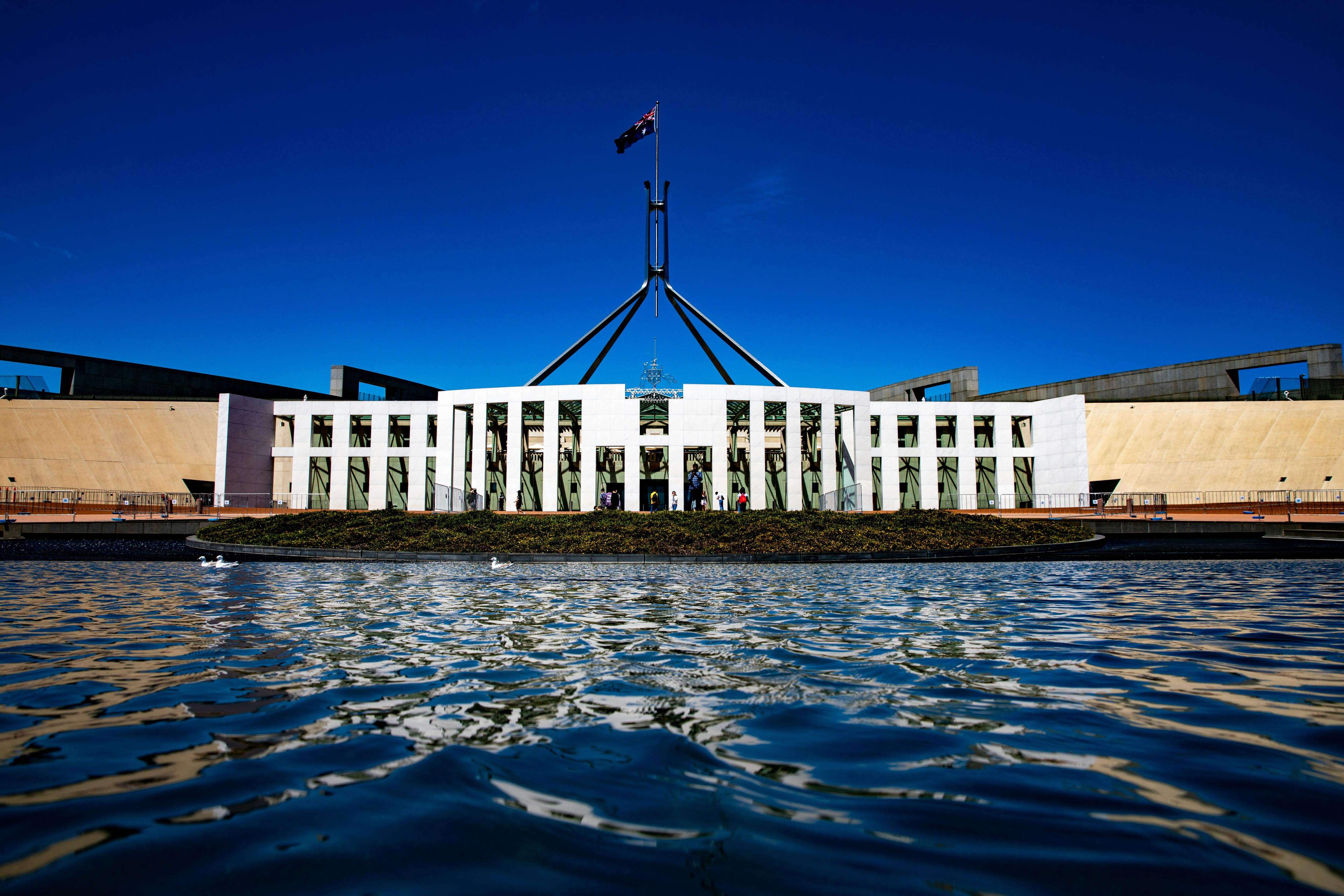 Does the budget have a coherent underlying philosophy? | The federal budget is, in many respects, the high point of Australia's political calendar. This federal budget is no exception. The public had been primed for weeks to expect a series of significant reforms this year. But it is striking how little there is in the budget by way of direct social benefit.The budget is broadly redistributive — it removes certain tax concessions that disproportionately benefit the wealthy — but it does not then distribute that additional tax revenue to those struggling with cost-of-living pressures. Even the $250 permanent annual tax offset for workers is quite modest and deliberately non-inflationary.It would seem that the object of this “rebalancing” through changes to capital gains tax, negative gearing and discretionary trusts is “intergenerational equity” itself: the budget adjusts the tax system so that it benefits property investors less than first home buyers — even if these benefits are dispersed over time and only gradually felt.The question is, does the underlying philosophy of this federal budget provide a template for budgets-to-come?Guest: Luara Ferracioli is Associate Professor in Political Philosophy at the University of Sydney, and Philosopher-in-Residence at the Sydney Policy Lab.—THE MINEFIELD - LIVE AT THE SYDNEY WRITERS’ FESTIVAL24 May 2026“The Return of Nationalism and the Crisis of Democracy”With each new election, geopolitical deal and technological advancement, it seems like the ideals of democracy are slipping away. In this special live recording of ABC Radio National’s The Minefield, hosts Waleed Aly and Scott Stephens discuss the state of democracy today with Canadian podcaster and political scientist David Moscrop.When: Sunday, 24 May 2026, 4-5pmWhere: Carriageworks, 245 Wilson Street, Eveleigh, NSW, 2015To purchase your tickets: https://www.swf.org.au/program/festival-2026/abc-the-minefield-live—NEXT WEEK: Christopher Marlowe’s “Doctor Faustus”Expressions like “deal with the devil”, “selling one’s soul” and “Faustian bargain” are woven through our language. And popular culture is filled with variations on the unsavoury theme of attaining wealth, fame and pleasure by permanently corrupting one’s soul.In the third week of May, Waleed and Scott will be turning their attention to the source of these tropes: Christopher Marlowe’s play “Doctor Faustus”. It was first performed in 1592, just a year before Marlowe’s own untimely death.It is neither a long nor an overly complicated play, but it is powerful and ethically rich. We will be discussing the so-called “A-Text” of Marlowe’s play, revised in 1604. We hope you’ll join us in reading the play beforehand. | 54m 05s | ||||||
| 5/6/26 |  Are ‘reaction videos’ dulling our ability to be genuinely responsive? | One of the by-products of digital technology’s pervasiveness in our lives is its seeming irresistibility. However much we try to remain conscientious objectors, to resist its allure, its promises of convenience and casual pleasures, to keep some part of our inner lives free of its influence, we soon discover that it is of the essence of new technological forms to exceed their boundaries, to seep out into the wider culture — into our language, our rhythms and habits, our expectations, our ways of seeing and interacting with the world.Such that, before long, we find we’ve become like the technologies we created. It’s like the Turing Test, but in reverse. And once that happens, precisely because there’s no longer any “outside”, it can become very difficult to think clearly about what is, in effect, our habitus. This is how technology ushers us into a condition of unthinkingness. Perhaps we could call it habituation.Digital technology’s irresistibility and sheer scale can make our efforts at thinking seem tiny, irrelevant, insignificant. Perhaps the best we can do is occasionally pause, and try to make sense of underlying rules that govern online experience — perhaps we could call it “the grammar of online life”: the rules of the game, as it were, that you must obey if you want to go viral.Over the last ten years, one of the most popular forms of online content is the reaction video — a kind of split-screen experience in which viewers watch both a piece of content (the livestream of a game, a movie trailer, a music video, another YouTube clip and so on) and another person’s reaction to that content. There is something about the desire to see the facial responses of other people, their seemingly spontaneous responses to what they see and hear, that is inseparable from the viewers’ enjoyment of the content itself. It is similar to the experience of hearing audience laughter during a sitcom, and before that “canned laughter”.Emotion here is the currency. But the point isn’t that the emotion is felt — rather, that it is conveyed. It is communicated. It is as if the emotion is the content.But even if we were to regard all social conventions as performances, as various ways of paying homage to the rules that govern social interactions, this commodification of emotions — which is to say, turning reactions into content — invites such a degree of performance, of exaggeration, that would be impossible to sustain the kind of un-self-consciousness that is essential to authenticity.To put this another way: the online emotion economy encourages participants — whether on reaction videos or video podcasts — not to be themselves but to act themselves; not to listen to what’s being said, but simply to react to it. What is this doing to our capacity to cultivate moral responsiveness?Guest: Nicholas Carah is the Director of Centre for Digital Cultures and Societies and Professor in the School of Communication and Arts at the University of Queensland.Nicholas makes reference to Rose Horowitch’s article in The Atlantic: “The Elite College Students Who Can’t Read Books” (1 October 2024). | 54m 36s | ||||||
| 4/29/26 |  NDIS reforms may be necessary, but they’re also morally fraught | In a speech to the National Press Club, Health Minister Mark Butler announced a series of sweeping changes that the federal government will make to the National Disability Insurance Scheme (NDIS).In the thirteen years since it was legislated, the growth of the NDIS has surpassed all expectations. By 2030, the Productivity Commission projected that the scheme would cover around 550,000 people and cost about $40 billion. This year there are already 760,000 people on the scheme at a cost of $50 billion. On the current trajectory, by the end of the decade there will be 900,00 people on the NDIS and it will cost $70 billion per year — this would represent a greater expenditure than Medicare and the Pharmaceutical Benefits Scheme put together.Concerns over the affordability of the NDIS are nothing new, and since returning to government Labor has repeatedly indicated their intention to curb its growth (even if, while in opposition, they resisted the Coalition’s efforts to do the same). But in an economy threatened by high inflation and at a time of increasing cost-of-living pressures — from fuel and food to housing — it is understandable that the federal government would feel a certain urgency to bring the NDIS under control, not least for the sake of the long-term viability of the scheme.And yet, what was telling about Butler’s speech was the way he proceeded to justify the radical changes the government has in store for the NDIS — which include removing around 160,000 people from the scheme by 2030 and reducing the projected annual cost by $15 billion. He swiftly pivoted from its long-term viability to its declining “community support, or social licence”.Citing research conducted by Talbot Mills, Butler claimed that 70 per cent of Australians think the NDIS has “gotten too large and struggles with dodgy providers” and that 60 per cent think the scheme is “broken”. He went on to detail mistakes in design and “structural flaws” that make the NDIS susceptible to fraud. He drew particular attention to criminal behaviour on the part of unaccredited “third-party” service providers and neglect by unqualified support workers.Given the dearth of qualified, registered, sufficiently committed carers, it was perhaps inevitable the NDIS would become “a soft target for shonks and rorters”, as Butler described them. It is, frankly, baffling that there wouldn’t be tighter government regulation over who could qualify to be paid to provide such support in situations that demand attentiveness and care.But some of the criticism that is now being levelled at the design of the NDIS threatens to besmirch its original moral genius: the provision of support to those with a disability in the form of personalised budgets, such that those in need of care would be accorded the dignity of “choice and control” over the form their care would take. Which is to say: it turned people with a disability from those for whom everything must be done, those who are a societal “problem” needing to be solved, and who must rely on the “good graces” of others; to those who are rightfully accorded agency in their own pursuits on an equal basis with other Australians.While this approach effectively created a competitive “disability services market” over which there has been far too little oversight, such a market is also the condition of possibility for the type of agency and equality the NDIS promises.This raises a number of dangers lurking beneath the government’s proposed reforms. In addition to the inherent danger that the expressed intention to reduce the number of people covered by the NDIS will see some people denied the care and support they are entitled to, there are a range of unintended moral consequences that accompany the reputational damage done to the NDIS itself.If we accept that the NDIS is noble if flawed, that it was a worthy aspiration for a nation like ours and represents a tremendous collective achievement which nonetheless needs to be placed on sustainable and just footing — the question becomes: how can the federal government address the “structural flaws” and escalating costs without undermining public faith in the NDIS itself?Guest: Jennifer Smith-Merry is an Australian Research Council (ARC) Laureate Fellow and Professor of Health and Social Policy in the School of Health Sciences at the University of Sydney.You can read Professor Smith Merry’s reflections on the moral risks and consequences that accompany the federal government’s NDIS reforms, on ABC Religion and Ethics.—THE MINEFIELD — Live at the Sydney Writers’ Festival24 May 2026“The Return of Nationalism and the End of Democracy”With each new election, geopolitical deal and technological advancement, it seems like the ideals of democracy are slipping away. In this special live recording of ABC Radio National’s The Minefield, hosts Waleed Aly and Scott Stephens discuss the state of democracy today with Canadian podcaster and political scientist David Moscrop.When: Sunday, 24 May 2026, 4-5pmWhere: Carriageworks, 245 Wilson Street, Eveleigh, NSW, 2015To get tickets: https://www.swf.org.au/program/festival-2026/abc-the-minefield-live—UPCOMING EPISODE: CHRISTOPHER MARLOWE’S “DOCTOR FAUSTUS”Expressions like “deal with the devil”, “selling one’s soul” and “Faustian bargain” are woven through our language. And popular culture is filled with variations on the unsavoury theme of attaining wealth, fame and pleasure by permanently corrupting one’s soul.In the third week of May, Waleed and Scott will be turning their attention to the source of these tropes: Christopher Marlowe’s play “Doctor Faustus”. It was first performed in 1592, just a year before Marlowe’s own untimely death.It is neither a long nor an overly complicated play, but it is powerful and ethically rich. We will be discussing the so-called “A-Text” of Marlowe’s play, revised in 1604. We hope you’ll join us in reading the play beforehand. | 54m 36s | ||||||








Showing 25 of 250
Pitch Fit is a Pro feature
See how bookable this show is for guests, which brands already advertise, the per-episode ad value, and the best-fit guest and sponsor profile. The numbers are blurred on the free plan.
How readily this show books outside guests like you.
How proven this show is for host-read sponsorships.
For Guests
ProFor Advertisers
ProUpgrade to Pro to unlock guest cadence, sponsor categories, fit scores, and per-episode ad value for this show.
Similar Audience Demographics
Podcasts that attract a similar listener profile




Chart history for The Minefield
Peaked at #5 in Australia, top 10 in 1 of 29 tracked markets, currently #5 in Australia.
| Market | Genre | Peak | Current | Trend |
|---|---|---|---|---|
| Australia | — | #5 | #5 | — |
| HK | — | #12 | #12 | — |
| New Zealand | — | #31 | #31 | — |
| United Kingdom | — | #33 | #33 | — |
| South Korea | — | #41 | #41 | — |
| Denmark | — | #61 | #61 | — |
| Finland | — | #67 | #67 | — |
| VN | — | #69 | #69 | — |
| Australia | — | #79 | #79 | — |
| HU | — | #79 | #79 | — |
| NG | — | #85 | #85 | — |
| Sweden | — | #92 | #92 | — |
| MY | — | #93 | #93 | — |
| France | — | #105 | #105 | — |
| AE | — | #113 | #113 | — |
| Ireland | — | #119 | #119 | — |
| IL | — | #131 | #131 | — |
| BE | — | #132 | #132 | — |
| Netherlands | — | #137 | #137 | — |
| Norway | — | #155 | #155 | — |
Chart Positions
29 placements across 27 markets.
Chart Positions
29 placements across 27 markets.