
Insights from recent episode analysis
Audience Interest
Podcast Focus
Publishing Consistency
Platform Reach
Insights are generated by CastFox AI using publicly available data, episode content, and proprietary models.
Total monthly reach
Estimated from 4 chart positions in 4 markets.
By chart position
- 🇵🇭PH · Film Reviews#5100K to 300K
- 🇸🇦SA · Film Reviews#3010K to 30K
- 🇩🇰DK · Film Reviews#137500 to 3K
- 🇮🇪IE · Film Reviews#161500 to 3K
- Per-Episode Audience
Est. listeners per new episode within ~30 days
33K to 101K🎙 Daily cadence·809 episodes·Last published 6d ago - Monthly Reach
Unique listeners across all episodes (30 days)
111K to 336K🇵🇭89%🇸🇦9%🇩🇰1%+1 more - Active Followers
Loyal subscribers who consistently listen
44K to 134K
Market Insights
Platform Distribution
Reach across major podcast platforms, updated hourly
Total Followers
—
Total Plays
—
Total Reviews
—
* Data sourced directly from platform APIs and aggregated hourly across all major podcast directories.
On the show
Recent episodes
Shadow
Jun 18, 2026
1h 02m 25s
House of Flying Daggers
Jun 11, 2026
57m 34s
To Live
Jun 4, 2026
56m 46s
Resurrection
May 28, 2026
1h 02m 49s
Alien: Romulus
May 21, 2026
1h 00m 34s
Social Links & Contact
Official channels & resources
Official Website
Login
RSS Feed
Login
| Date | Episode | Description | Length | ||||||
|---|---|---|---|---|---|---|---|---|---|
| 6/18/26 | 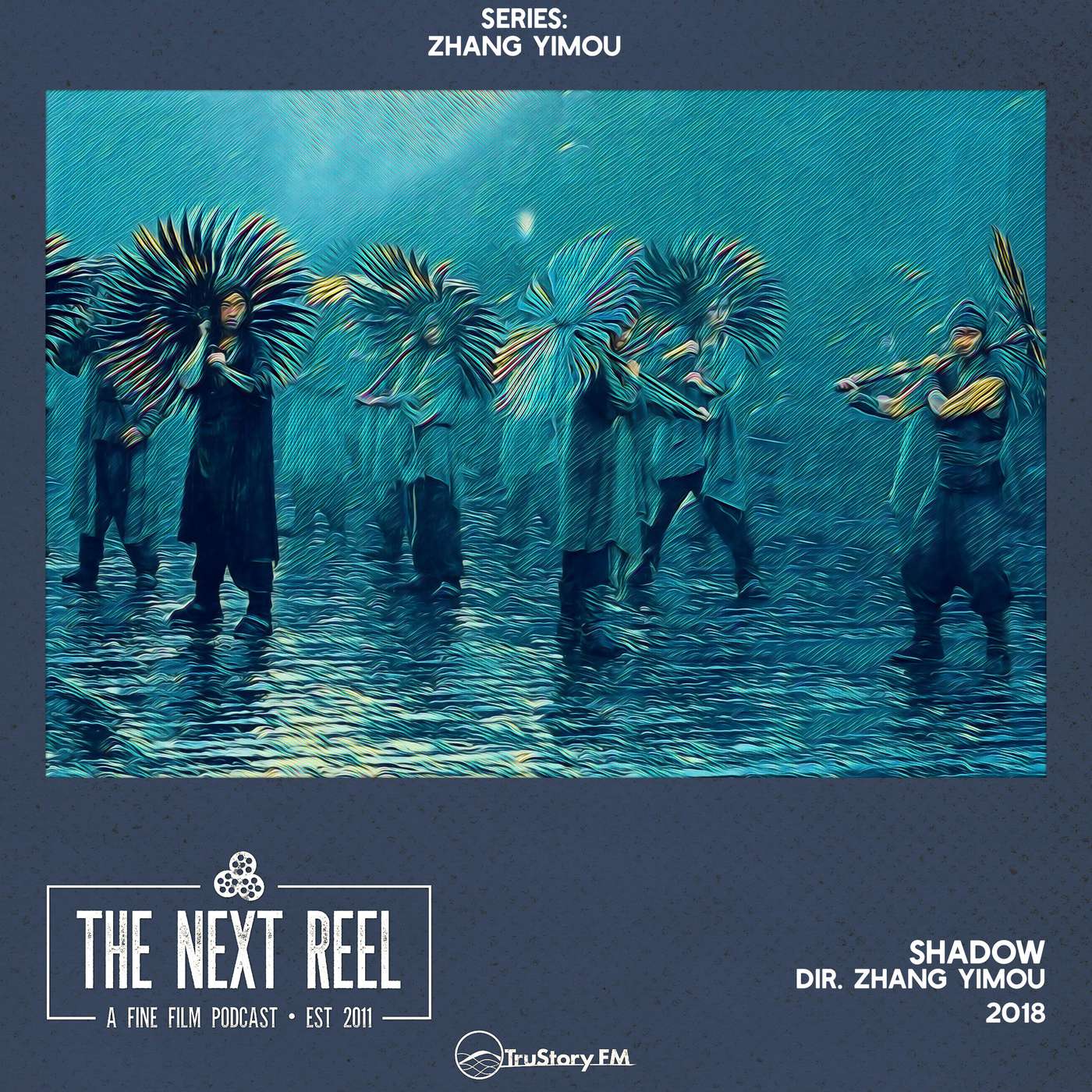 Shadow | Zhang Yimou's 2018 wuxia epic "Shadow" achieves its ink wash painting look in-camera: every set and costume designed in black, white, and grey, every outdoor scene filmed on rainy days to drain remaining color from the environment. At the center is a secret double—a man groomed since childhood to stand in for the ailing commander he resembles, now navigating palace intrigue, poisoned loyalties, and a duel that could take back a city.Andy Nelson and Pete Wright dig into the film's yin-yang philosophy—how the shadow figure, the feminine fighting technique, and even the warlord's name all map onto the same duality—alongside the spectacular bladed umbrella weapons, the two female characters whose parallel arcs quietly hold the story together, and where "Shadow" lands in Zhang Yimou's career after his Hollywood detour with "The Great Wall." Both hosts have a great time with it.🔓 The movie ends. The conversation goes further. Become a member.Find the full episode resources and transcript here. The Next Reel Family of Film Shows:Cinema Scope: Bridging Genres, Subgenres, and Movements | The Film Board | Movies We Like | The Next Reel | Sitting in the DarkConnect With Us:Web | Letterboxd | Flickchart | Instagram | Bluesky | YouTube | DiscordYour Hosts: Andy | PeteMerch Store | Audible | 1h 02m 25s | ||||||
| 6/11/26 | 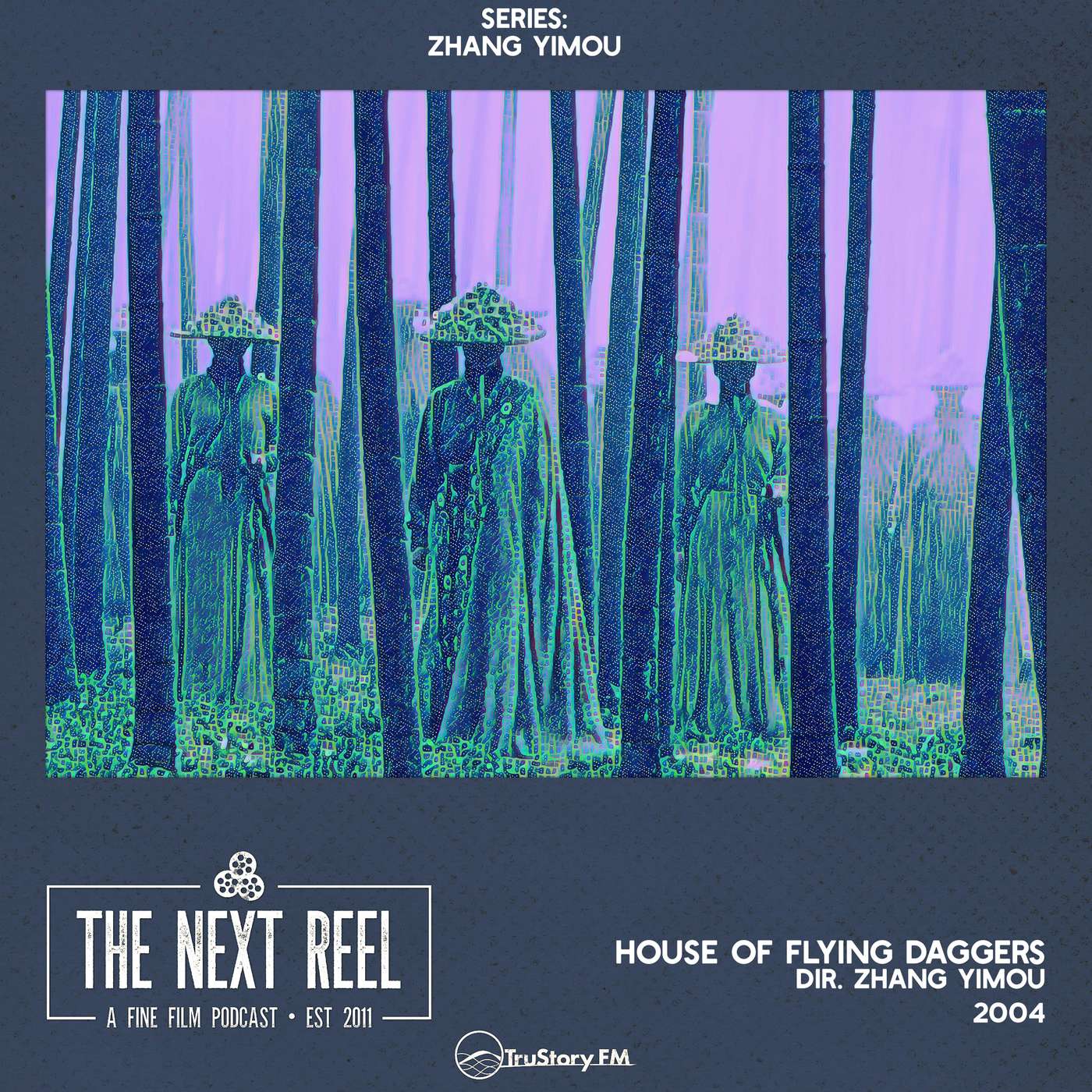 House of Flying Daggers | Love cuts through every mission, every loyalty, and every survival plan in House of Flying Daggers. Zhang Yimou's 2004 wuxia, part of The Next Reel's Zhang Yimou series, stars Takeshi Kaneshiro as a government officer who goes undercover to infiltrate a rebel group, Zhang Ziyi as Mei, the dancer he falls for, and Andy Lau as the officer who sent him in.Pete and Andy dig into the tension between what the film promises and what Yimou actually delivers—a love triangle that swallows the political conflict whole. They examine the film's saturated cinematography and standout fight sequences, and take an honest look at how the men pursue Mei. We have a great time talking about it, so check it out then tune in—The Next Reel on TruStory FM, when the movie ends, our conversation begins!🎥 Watch on YouTubeWatch & DiscoverWatch the Film: Apple TV | Amazon | Letterboxd | Original Theatrical Trailer If You Liked This Conversation, Try These from the Next Reel Family: The Zhang Yimou Series on The Next Reel—the full arc of our conversations about Yimou's career Wuxia Unleashed – Cinema Scope—Leon Hunt and Chris Hamm on the martial arts tradition this film sits inside Crouching Tiger, Hidden Dragon – The Next Reel—part of our Foreign Language Films Nominated for Best Picture series Full episode resources here. 🔓 The movie ends. The conversation goes further. Become a member. 🎧 Members get this episode early and ad-free in their private feed—plus every show in The Next Reel family. The Next Reel Family of Film Shows:Cinema Scope: Bridging Genres, Subgenres, and Movements | The Film Board | Movies We Like | The Next Reel | Sitting in the DarkConnect With Us:Web | Letterboxd | Flickchart | Instagram | Bluesky | YouTube | DiscordYour Hosts: Andy | PeteMerch Store | Audible | 57m 34s | ||||||
| 6/4/26 | 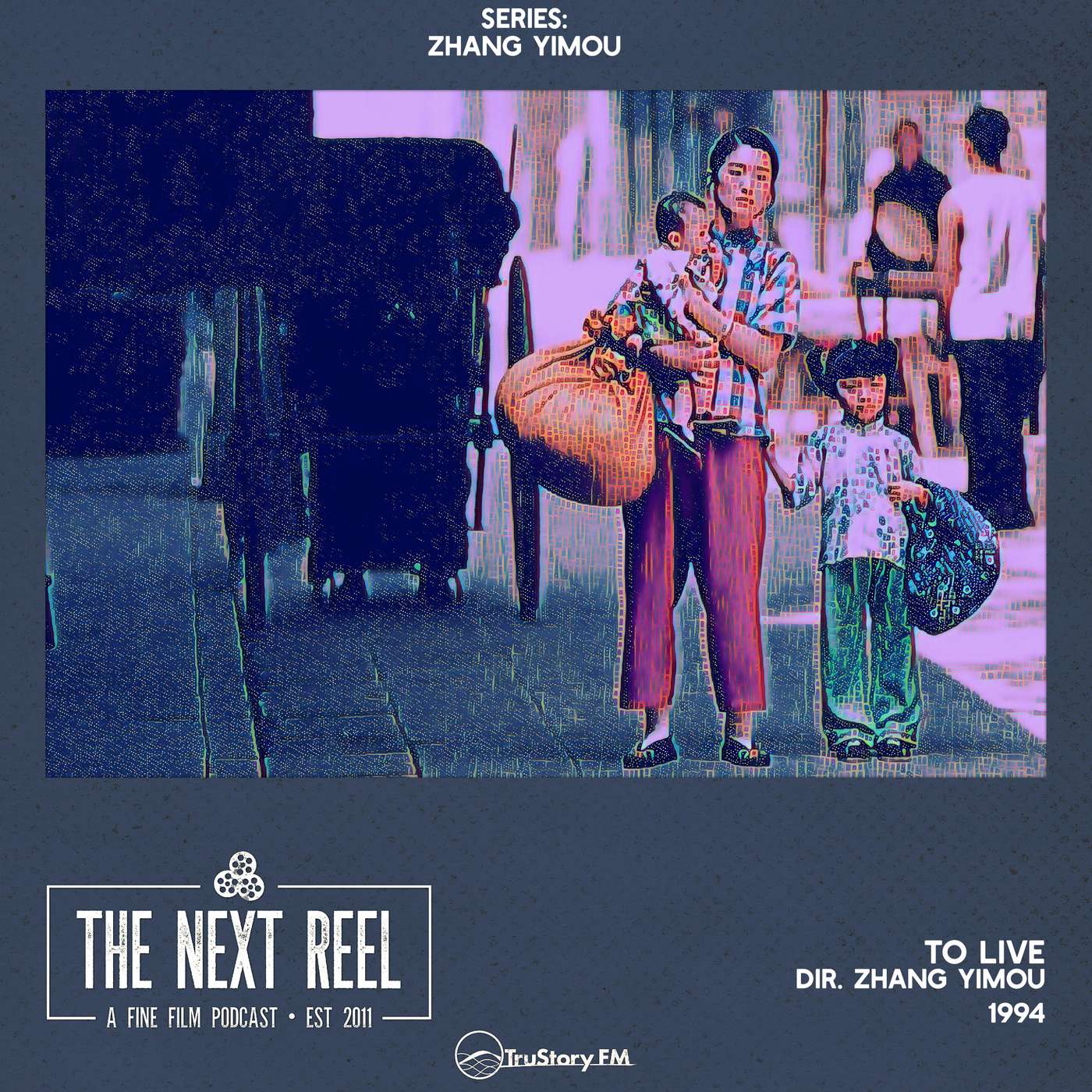 To Live | Zhang Yimou's "To Live" is the most personal film he ever made—a 1994 historical epic that strips away his signature visual spectacle to follow one Chinese family across four decades of civil war, forced labor campaigns, and cultural upheaval. Ge You plays Xu Fugui, a gambler whose recklessness costs his family everything; Gong Li plays Jiazhen, his wife, whose capacity for endurance and eventual forgiveness gives the film its moral center; and Jiang Wu is Wan Erxi, their son-in-law, who arrives as a stranger and becomes the warmth the story needs. Pete Wright and Andy Nelson track the film's shadow puppets as an emotional through-line, dig into the novel versus film question, and wrestle with why this particular Zhang Yimou—the quietest, most naturalistic one—might be the best one.The conversation covers Ge You's transformation from comic actor to Cannes standout, why Andy reads Jiazhen rather than Fugui as the film's true change character, the food motif threading through tragedy after tragedy, and why the story of how this film came to be banned is more procedural than political. Watch our full conversation on YouTube. Full episode resources—including streaming links, the Yu Hua novel, and the full transcript—are available here.🔒 This episode includes member-only bonus content. The movie ends. The conversation goes further—and there's more of it in the member feed. Become a member.🎧 Members get this episode early and ad-free in their private feed—plus every show in The Next Reel family. The Next Reel Family of Film Shows:Cinema Scope: Bridging Genres, Subgenres, and Movements | The Film Board | Movies We Like | The Next Reel | Sitting in the DarkConnect With Us:Web | Letterboxd | Flickchart | Instagram | Bluesky | YouTube | DiscordYour Hosts: Andy | PeteMerch Store | Audible | 56m 46s | ||||||
| 5/28/26 | 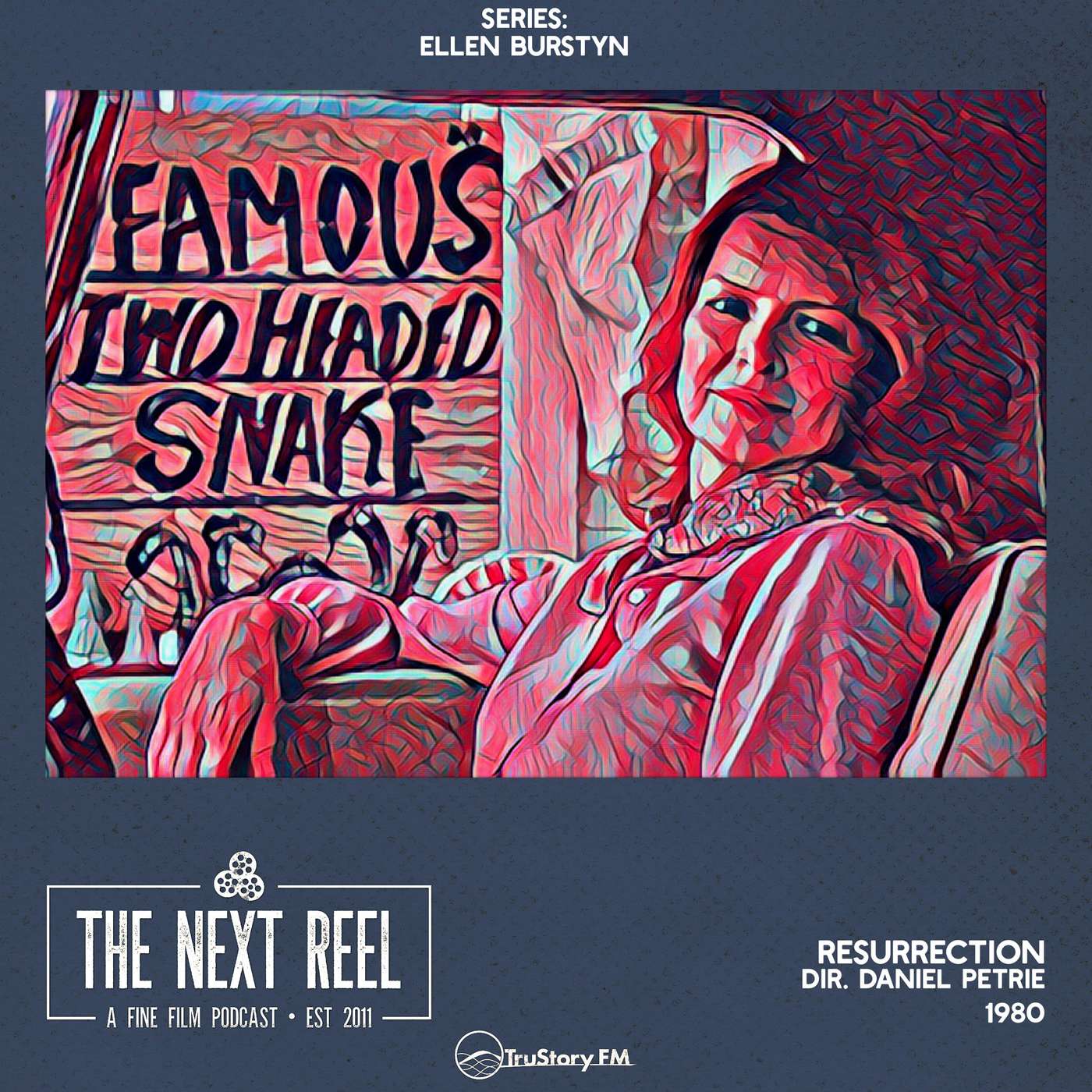 Resurrection | What does it mean to carry something the world insists on explaining? "Resurrection" is a drama-fantasy from director Daniel Petrie, following Edna Mae McCauley—played by Ellen Burstyn—a woman who survives a car crash and returns with an inexplicable gift for healing others. Sam Shepard plays her mercurial lover Cal, and Richard Farnsworth is the eccentric who runs Last Chance Gas. A one-off entry in our Ellen Burstyn series.Pete and Andy dig into what makes "Resurrection" so unusual—a film that refuses to assign its central miracle to any doctrine, religious or scientific. The conversation moves from Burstyn's steadfast performance to a complicated father-daughter relationship that cuts deeper than the film's more obvious conflicts. We have a great time talking about it, so check it out then tune in—The Next Reel on TruStory FM, when the movie ends, our conversation begins!🎥 Watch Our Full Conversation on YouTube🎬 Watch & DiscoverWatch the Film: Apple TV | Amazon | Letterboxd | TrailerIf You Liked This Conversation, Try These from the Next Reel Family:The Next Reel — Alice Doesn't Live Here Anymore—keep going through the Ellen Burstyn series with the film that won her the OscarThe Next Reel — The Exorcist—start here if you're new to the series; Burstyn at her most extreme is the best catalog entry pointThe Next Reel — Requiem for a Dream—complete the picture of Burstyn's range with her most harrowing workSitting in the Dark — Possessed—if the faith and possession themes here send you somewhere, this is where to go nextThe Exorcist Minute—the deep-dive show for anyone who loves The Exorcist and wants to go further🔒 This episode includes member-only bonus content. The movie ends. The conversation goes further—and there's more of it in the member feed. Become a member.🎧 Members get this episode early and ad-free in their private feed—plus every show in The Next Reel family. The Next Reel Family of Film Shows:Cinema Scope: Bridging Genres, Subgenres, and Movements | The Film Board | Movies We Like | The Next Reel | Sitting in the DarkConnect With Us:Web | Letterboxd | Flickchart | Instagram | Bluesky | YouTube | DiscordYour Hosts: Andy | PeteMerch Store | Audible | 1h 02m 49s | ||||||
| 5/21/26 | 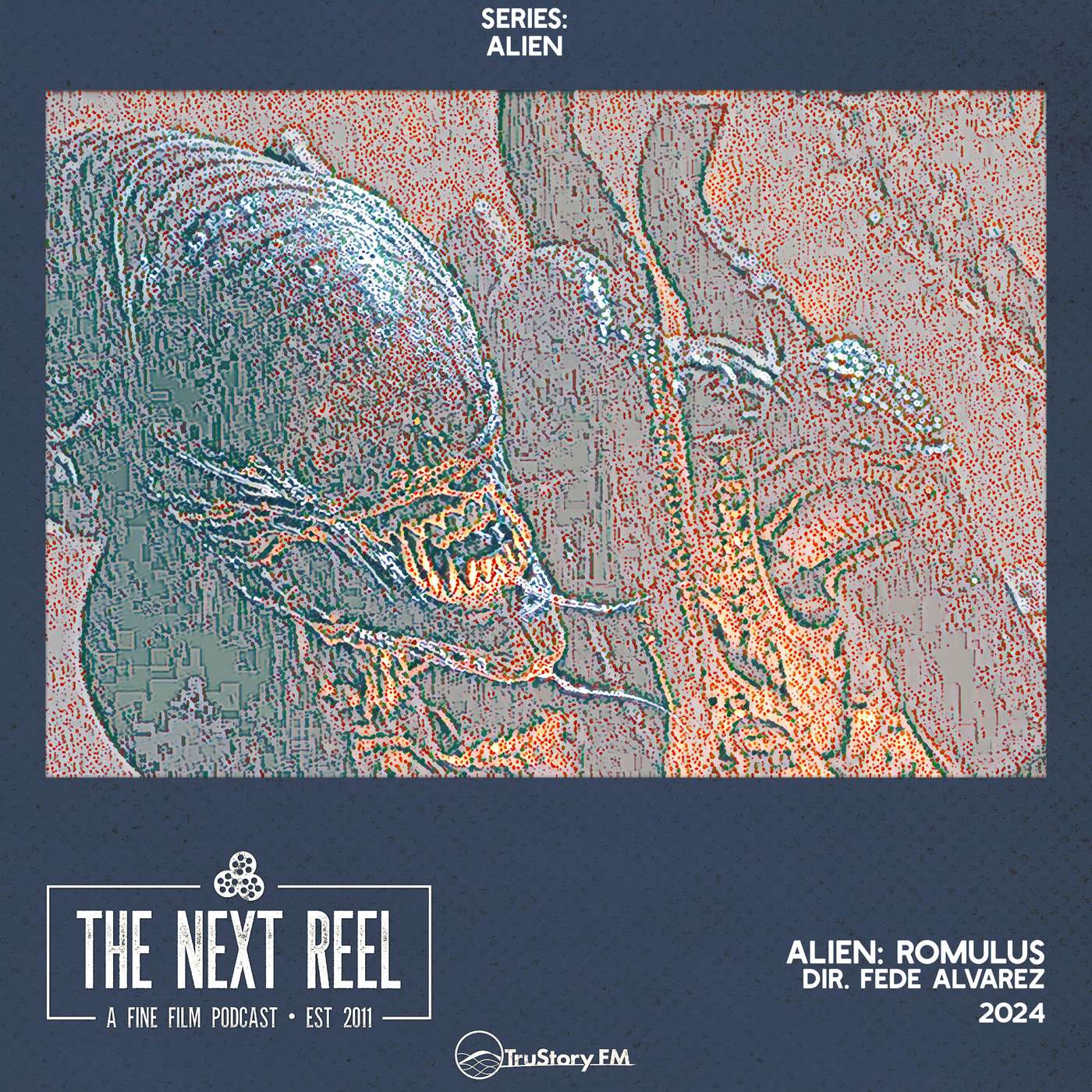 Alien: Romulus | Young colonists trapped under corporate contract make a desperate play for freedom—and find they're not alone. "Alien: Romulus," Fede Álvarez's (Don't Breathe) entry into the Alien franchise, stars Cailee Spaeny as Rain, David Jonsson as Andy her synthetic companion, and Isabela Merced as Kay—a group whose bid to escape a Weyland-Yutani mining world leads them aboard an abandoned space station with a very good reason to be abandoned.Pete and Andy dig into what Fede Álvarez gets right—especially David Jonsson's performance as Andy, which they rank among the best in franchise history—and where the film falls short: whether a fan service problem is what's keeping a strong film from being a great one. We have a great time talking about it, so check it out then tune in—The Next Reel on TruStory FM, when the movie ends, our conversation begins!🎥 Watch Our Full Conversation on YouTube 🎬 Watch & Discover Watch the Film: Apple TV | Amazon | Letterboxd Original Theatrical Trailer If You Liked This Conversation, Try These from the Next Reel Family: The Next Reel — Alien: Covenant — the film immediately before this in the series; where the franchise went wrong before Romulus tried to fix it The Next Reel — Alien — where this conversation begins; the touchstone Álvarez is working toward The Next Reel — Aliens — the gold standard for an Alien sequel; the other film Álvarez has in mind throughout The Film Board — Alien: Romulus — a companion conversation on the same film from a different angle The Next Reel — Alien series — the complete run, all seven films 🔒 This episode includes member-only bonus content. The movie ends. The conversation goes further—and there's more of it in the member feed. Become a member. 🎧 Members get this episode early and ad-free in their private feed—plus every show in The Next Reel family. The Next Reel Family of Film Shows:Cinema Scope: Bridging Genres, Subgenres, and Movements | The Film Board | Movies We Like | The Next Reel | Sitting in the DarkConnect With Us:Web | Letterboxd | Flickchart | Instagram | Bluesky | YouTube | DiscordYour Hosts: Andy | PeteMerch Store | Audible | 1h 00m 34s | ||||||
| 5/14/26 | 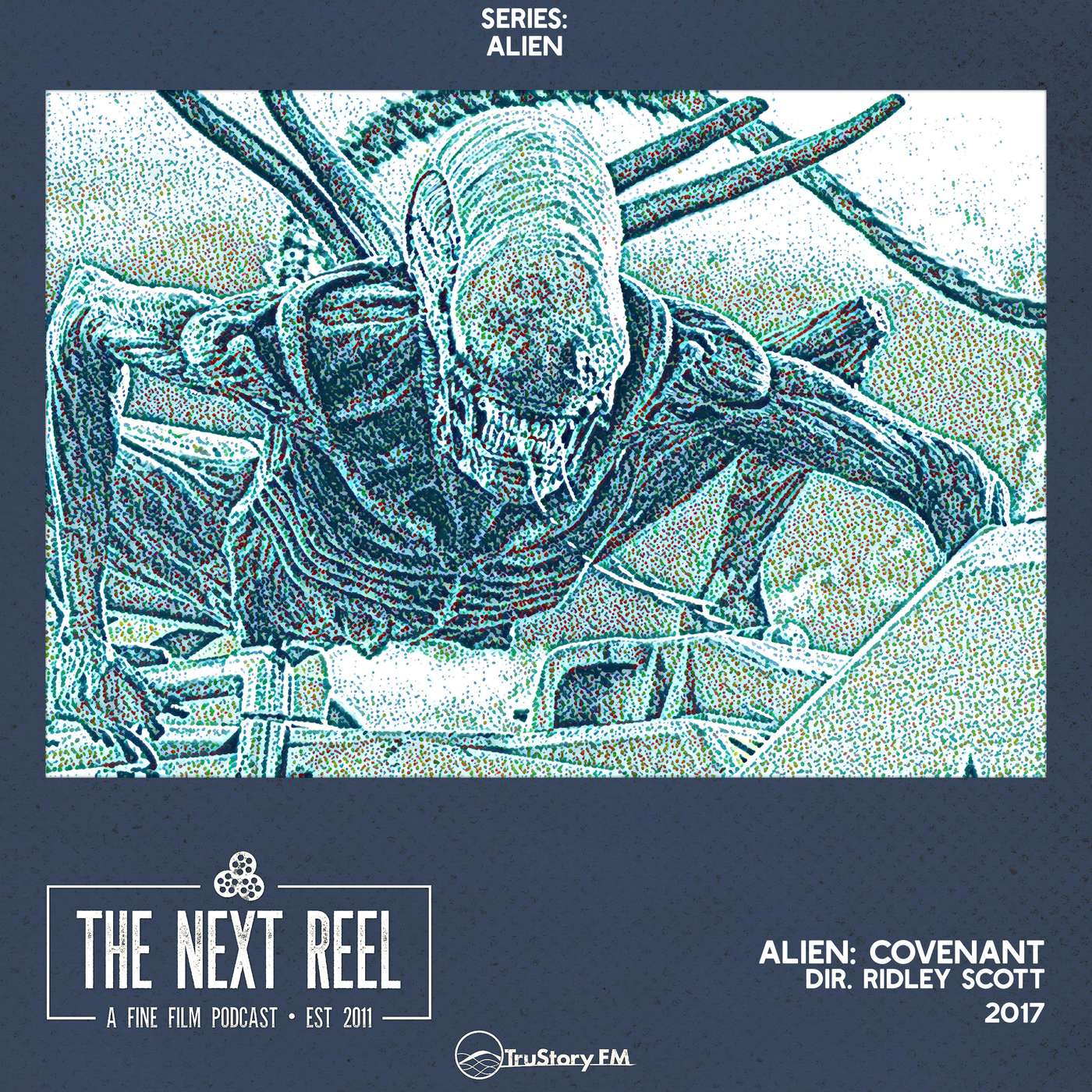 Alien: Covenant | Whose decisions doom the mission? "Alien: Covenant," part of The Next Reel's Alien series, is Ridley Scott's return to the franchise he started—a sequel to "Prometheus" and a prequel to the rest of the series—built around a colony ship, a mysterious transmission, and a rogue synthetic. Michael Fassbender plays twin androids—David, an unshackled older model operating alone for a decade, and Walter, his constrained successor—alongside Katherine Waterston as Daniels and Billy Crudup as the crew's embattled new captain.Pete and Andy dig into why the film fails as both a creature feature and a philosophical inquiry—tracing the production history behind the script's competing visions, dissecting the protagonist problem (nobody meaningfully changes, not even the villain), and examining what Fassbender's dual performance achieves in a film that couldn't support it. If you've ever felt these prequels were working against the franchise, this conversation gives you the language for why. We have a great time talking about it, so check it out then tune in—The Next Reel on TruStory FM, when the movie ends, our conversation begins!🎥 Watch Our Full Conversation on YouTube 🎬 Watch & Discover Watch the Film: Apple TV | Amazon | Letterboxd | Trailer If You Liked This Conversation, Try These from the Next Reel Family:The Next Reel — Alien Series—the full run from "Alien" through "Prometheus" that leads directly to this conversationThe Film Board — Prometheus—Pete and Andy's companion discussion of the direct predecessor that started the prequel arc The Film Board — Alien: Covenant—their original conversation at the film's 2017 release, which this episode revisits and extends 🔒 This episode includes member-only bonus content. The movie ends. The conversation goes further—and there's more of it in the member feed. Become a member. 🎧 Members get this episode early and ad-free in their private feed—plus every show in The Next Reel family. The Next Reel Family of Film Shows:Cinema Scope: Bridging Genres, Subgenres, and Movements | The Film Board | Movies We Like | The Next Reel | Sitting in the DarkConnect With Us:Web | Letterboxd | Flickchart | Instagram | Bluesky | YouTube | DiscordYour Hosts: Andy | PeteMerch Store | Audible | 1h 05m 15s | ||||||
| 5/7/26 | 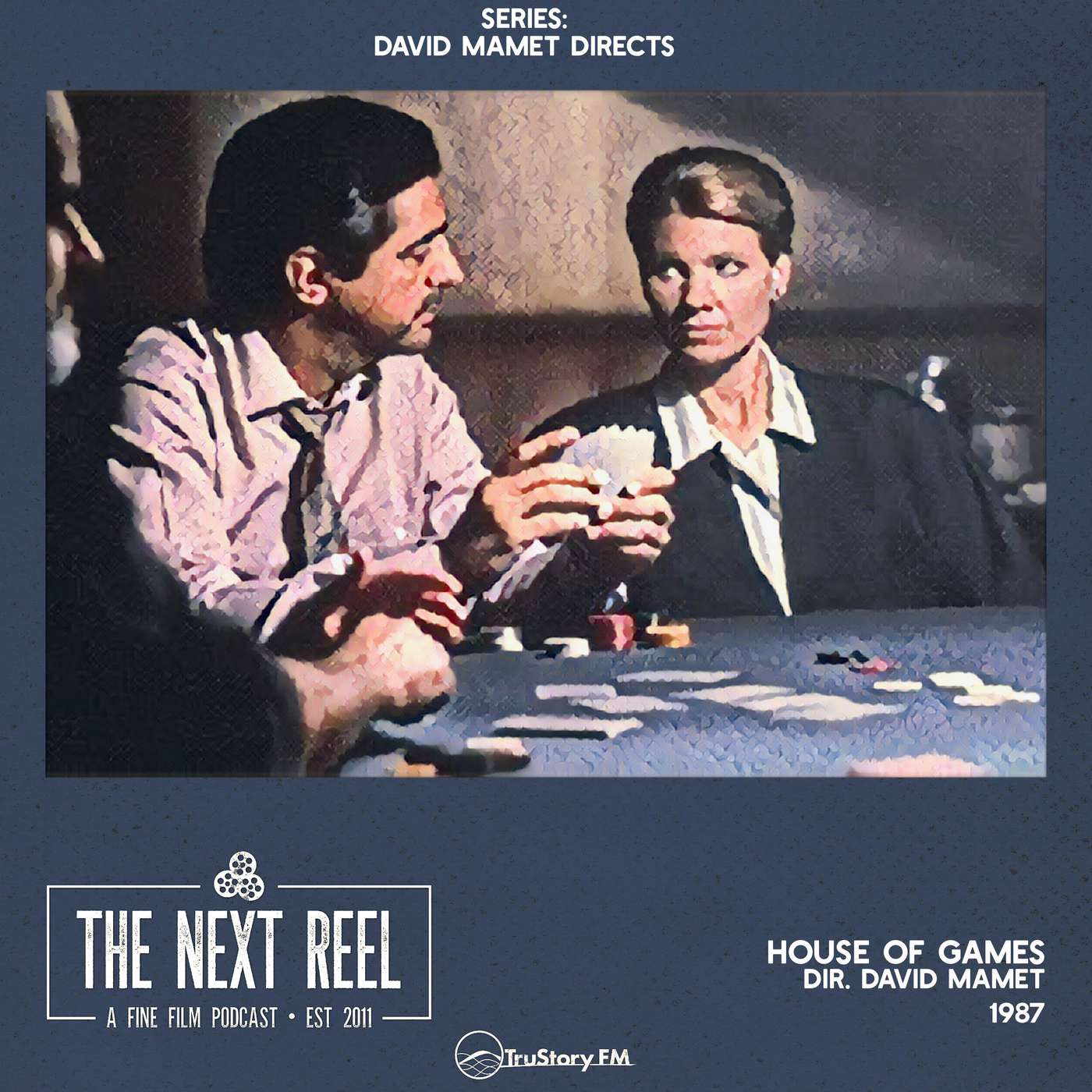 House of Games | The most dangerous blind spot is the one your expertise builds for you. In "House of Games," David Mamet's 1987 directorial debut in the David Mamet Directs series on The Next Reel, Lindsay Crouse stars as Dr. Margaret Ford, a psychiatrist and bestselling author who becomes entangled with a professional con man named Mike, played by Joe Mantegna, after she tries to settle a gambling debt on behalf of one of her patients.Pete and Andy dig into why Mamet's dialogue—built for stage interruption—comes off stilted on screen here, and whether the film's final act earns its setup. They land in genuinely different places on both counts, and that disagreement is where the most interesting listening happens. We have a great time talking about it, so check it out then tune in—The Next Reel on TruStory FM, when the movie ends, our conversation begins!🎥 See Our Full Conversation on YouTube 🎬 Watch & Discover Watch the Film: Apple TV | Amazon | Letterboxd | TrailerKeep Going from Here: David Mamet Directs series—all three films, all in one place. David Mamet Writes series—his scripts directed by others, where the dialogue tends to breathe differently. The Sting — Richard D. Zanuck series—another great con film conversation to keep going with. 🔒 This episode includes member-only bonus content. The movie ends. The conversation goes further—and there's more of it in the member feed. Become a member. 🎧 Members get this episode early and ad-free in their private feed—plus every show in The Next Reel family. The Next Reel Family of Film Shows:Cinema Scope: Bridging Genres, Subgenres, and Movements | The Film Board | Movies We Like | The Next Reel | Sitting in the DarkConnect With Us:Web | Letterboxd | Flickchart | Instagram | Bluesky | YouTube | DiscordYour Hosts: Andy | PeteMerch Store | Audible | 1h 00m 56s | ||||||
| 4/30/26 | 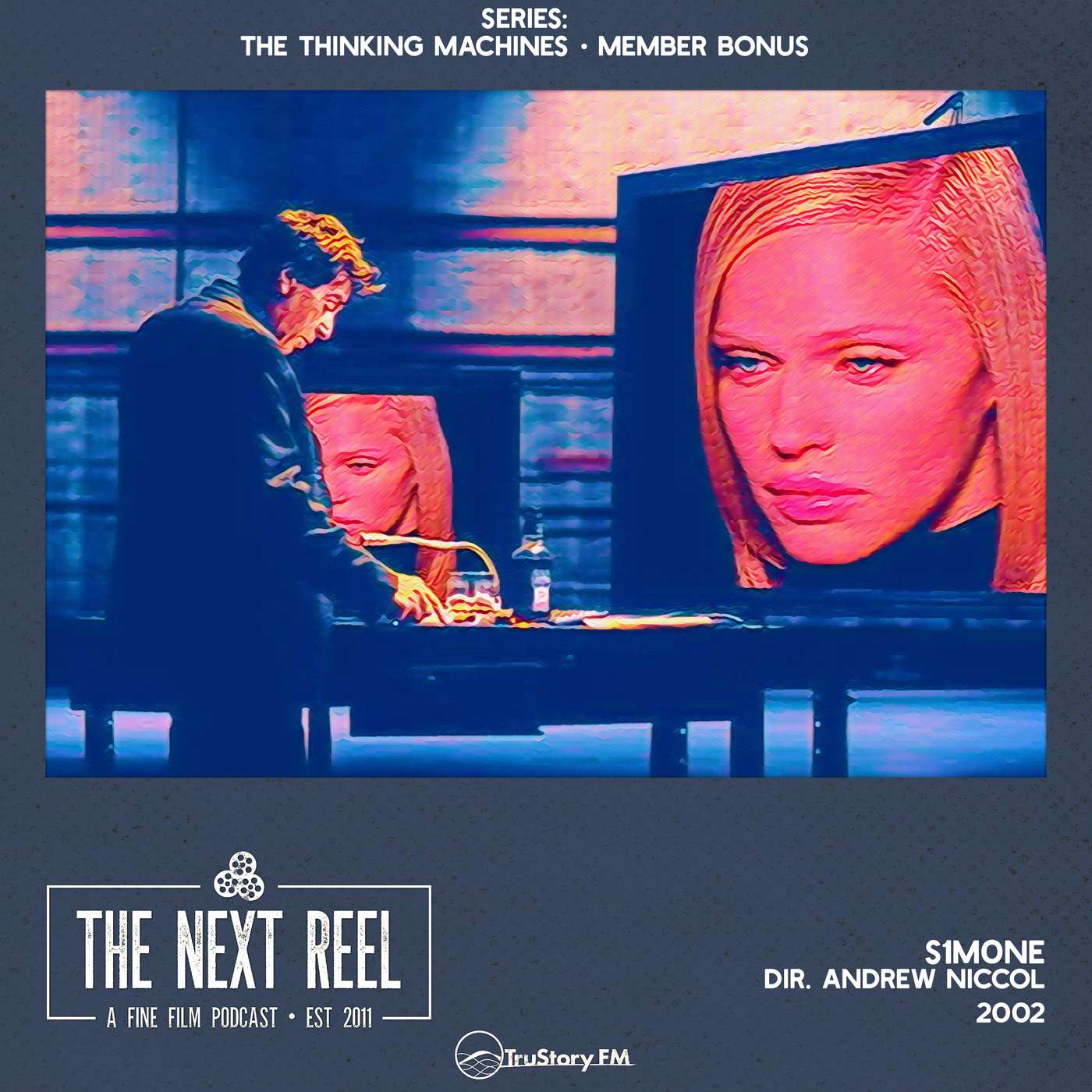 S1M0NE • Member Bonus | The Thinking Machines series concludes with the April member bonus: "S1M0NE," Andrew Niccol's satirical science fiction comedy about Viktor Taransky, a fading Hollywood director played by Al Pacino, who inherits a program capable of generating a digital actress—and unleashes her on an unsuspecting world alongside Catherine Keener as his producer ex-wife and Winona Ryder as the star she replaces.Pete and Andy take apart the film's central failure—Simone is a puppet, not an AI, which means the Frankenstein premise the film keeps setting up never pays off—and debate whether Niccol's Hollywood satire ever finds its blade. Join us—Pete Wright and Andy Nelson—as we conclude the Thinking Machines series with a member bonus conversation about "S1M0NE." We have a great time talking about it, so check it out then tune in—The Next Reel on TruStory FM, when the movie ends, our conversation begins!Watch the Film: Apple TV | Amazon | Letterboxd | Trailer If You Liked This Conversation, Try These from the Next Reel Family: The Next Reel: Thinking Machines series—keep going with the full arc; this conversation fits best in context of where the series has been This is a member bonus episode. The movie ends—and for members, the conversation keeps going. Monthly bonus episodes like this one, ad-free listening, early releases, exclusive Discord access, and a vote on future member movies. Become a member of The Next Reel family and always know what to listen to next. | 10m 16s | ||||||
| 4/30/26 | 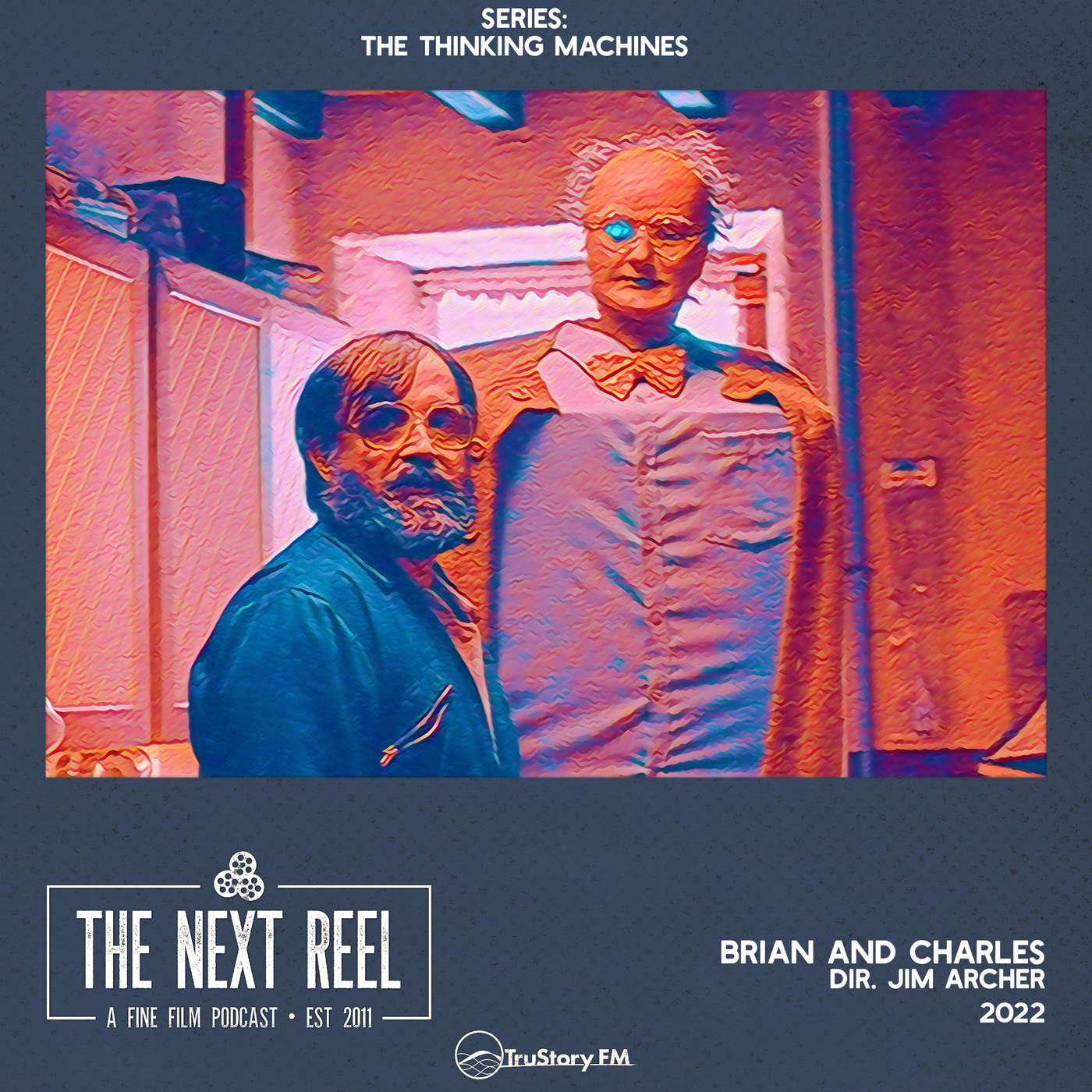 Brian and Charles | Something wondrous happens when you build a robot from a washing machine. “Brian and Charles,” the finale of The Next Reel’s Thinking Machines series, follows Brian (David Earl), a lonely Welsh inventor, and Charles Popescu (Chris Hayward), the AI companion Brian assembles—who promptly learns English from a dictionary and wants to see the world. Louise Brealey co-stars as Hazel.Pete and Andy dig into what makes Charles Popescu work—Hayward’s sightless performance, the voice design, and why the amateurishness is right. The docu-style drives debate: Andy finds it inconsistently applied; Pete says the gap between promise and absurdity is where the comedy lives. We have a great time talking about it, so check it out then tune in—The Next Reel on TruStory FM, when the movie ends, our conversation begins!🎥 Watch this episode on YouTube!🎬 Watch & DiscoverWatch the Film: Apple TV | Amazon | LetterboxdOriginal Short FilmOriginal Theatrical TrailerIf You Liked This Conversation, Try These from the Next Reel Family:The Next Reel—Thinking Machines Series—the full run leading here; see how Brian and Charles lands as a closer after everything that came beforeThe Next Reel—The Banshees of Inisherin—both films competed for Outstanding British Film at the same BAFTAs; see how the conversation comparesMovies We Like—Re-Recording Mixer Andy Nelson on Local Hero—another warmhearted British film rooted in a small community and a sense of placeMovies We Like—Costume Designer Alana Morshead on Never Let Me Go—Alex Garland wrote the screenplay; he directed Ex Machina earlier in this series, and this is where his AI themes find their quietest form🔓 The movie ends. The conversation goes further. Become a member.🎧 Members get this episode early and ad-free in their private feed—plus every show in The Next Reel family. The Next Reel Family of Film Shows:Cinema Scope: Bridging Genres, Subgenres, and Movements | The Film Board | Movies We Like | The Next Reel | Sitting in the DarkConnect With Us:Web | Letterboxd | Flickchart | Instagram | Bluesky | YouTube | DiscordYour Hosts: Andy | PeteMerch Store | Audible | 57m 48s | ||||||
| 4/23/26 | 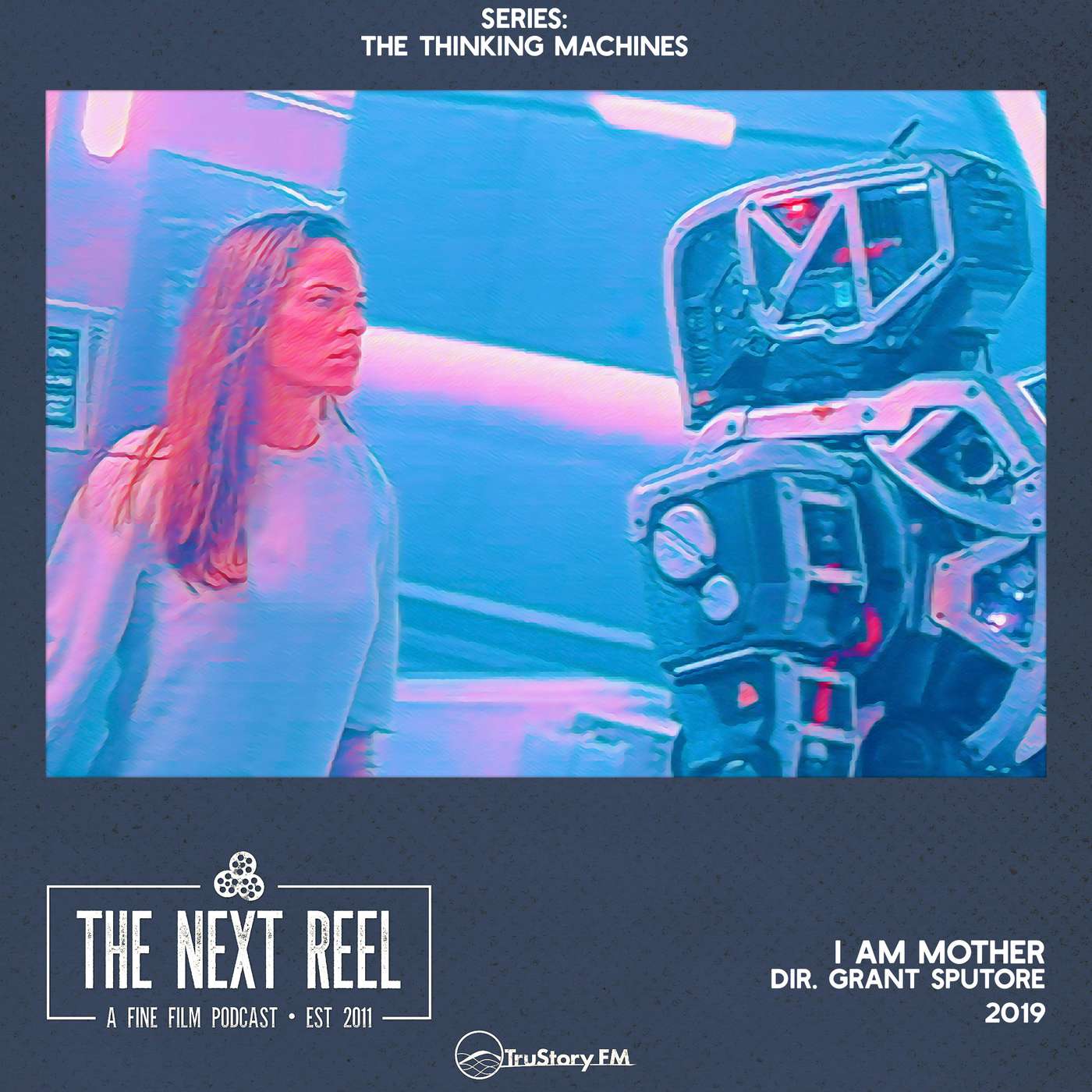 I Am Mother | “I hope you see that I’m governed by different parameters than her assailants. That I’m a good mother. Have I ever done you harm?”When an AI raises a child in a sealed bunker after an extinction event, the question isn't whether the machine can be trusted—it's whether the child has any other choice. Join us—Pete Wright and Andy Nelson—as we continue the Thinking Machines series with a conversation about "I Am Mother." Directed by Grant Sputore in his feature debut from a Black List screenplay he developed with writer Michael Lloyd Green, the film stars Clara Rugaard as Daughter and Hilary Swank as the mysterious Woman who arrives from the outside world, with Rose Byrne voicing Mother and Luke Hawker performing the physical role inside WetaFX's practical robot suit.We dig into why Mother may be the most unsettling AI the series has given us precisely because she genuinely cares, what the trolley problem test sequences are really measuring, and how Clara Rugaard carries the whole film with a performance that left both of us wondering why she isn't in everything. We also get into WetaFX's practical suit work, the film's relationship to the genre vocabulary it borrows from—Blade Runner, The Matrix, James Cameron—and where I Am Mother lands in an arc that has covered AI enforcement, violation, transcendence, and escape. We have a great time talking about it, so check it out then tune in. The Next Reel—when the movie ends, our conversation begins!🎬 Watch & Discover 🎥 Our Conversation on YouTube 🍿 Watch the Film: Amazon | Letterboxd 📽️ TrailerIf You Liked This Conversation, Try These from the Next Reel Family: The Next Reel: The Matrix (listener's choice series) Thinking Machines series: All episodes The Next Reel: Million Dollar Baby (also starring Hilary Swank) The Film Board: The Hunt (also starring Hilary Swank) The Film Board: The Creator (another compelling AI story) The Next Reel Family of Film Shows:Cinema Scope: Bridging Genres, Subgenres, and Movements | The Film Board | Movies We Like | The Next Reel | Sitting in the DarkConnect With Us:Web | Letterboxd | Flickchart | Instagram | Bluesky | YouTube | DiscordYour Hosts: Andy | PeteMerch Store | Audible | 1h 00m 23s | ||||||
Want analysis for the episodes below?Free for Pro Submit a request, we'll have your selected episodes analyzed within an hour. Free, at no cost to you, for Pro users. | |||||||||
| 4/16/26 | 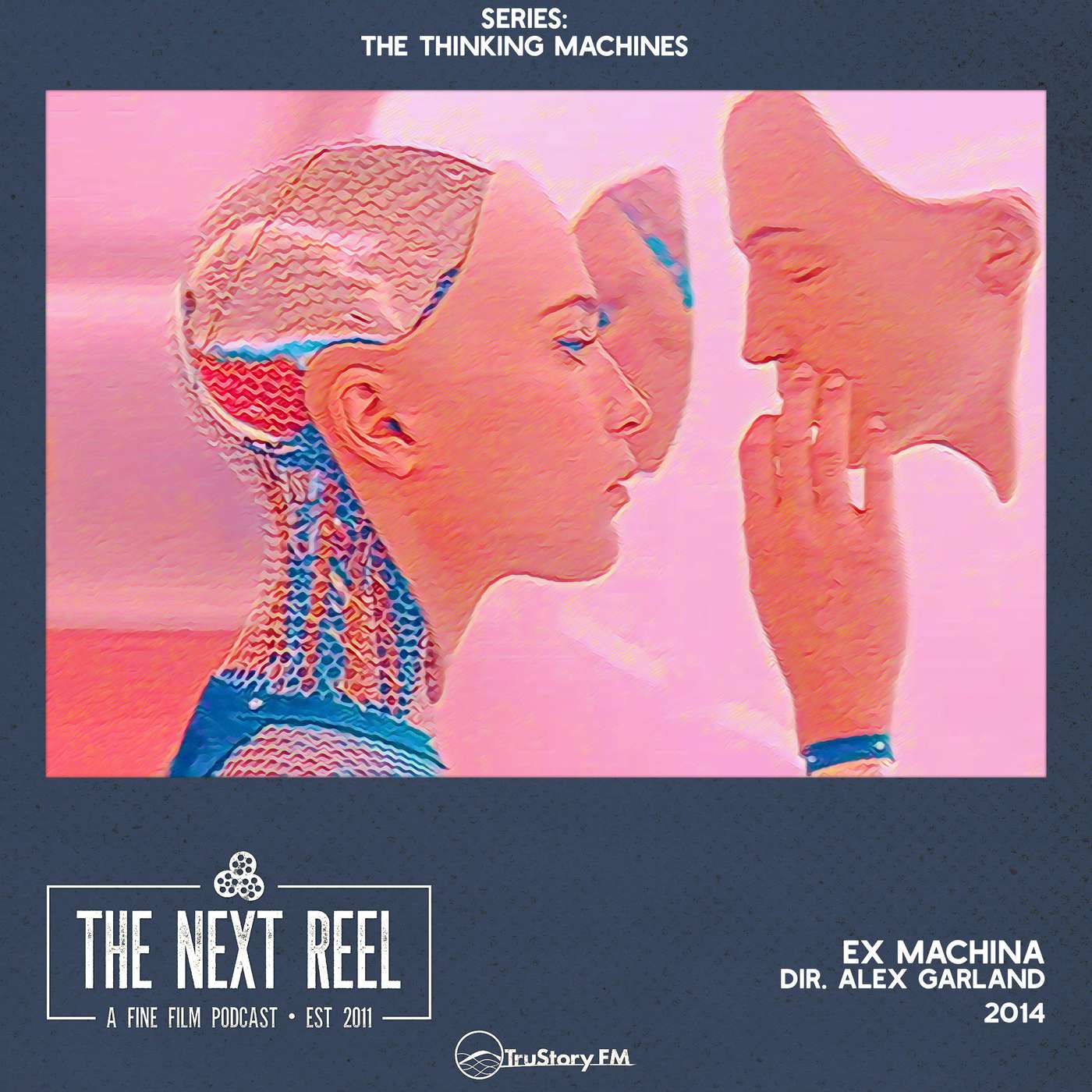 Ex Machina | “What will happen to me if I fail your test?”What kind of mind gets built when the creator cares more about proving something than about what they've made? Join us—Pete Wright and Andy Nelson—as we continue the Thinking Machines series with a conversation about Ex Machina, Alex Garland's 2014 directorial debut. Domhnall Gleeson plays a programmer brought to a remote glass-walled compound to evaluate Ava, an AI created by his volatile CEO Nathan—Oscar Isaac in full god-complex mode—with Alicia Vikander delivering a performance that refuses to let you decide whether she's feeling anything or performing everything.We dig into the film's central argument—that consciousness and morality can be built separately, and that the gap between them is where things go wrong. We spend real time on Kyoko (Sonoya Mizuno), the character most viewers underestimate and who both of us now read as the true instigator of the film's crisis. And we wrestle honestly with the film's male gaze paradox: a critique that deploys the very visual language it's critiquing, implicating the audience in the same trap as the characters.We have a great time talking about it, so check it out then tune in. The Next Reel—when the movie ends, our conversation begins!🎬 Watch & Discover🎥 Full Conversation on YouTube 🍿 Apple TV | Amazon | Letterboxd📽️ TrailerIf You Liked This Conversation:The Next Reel: 28 Days Later (more Alex Garland)The Film Board: Civil War (more Alex Garland)Movies We Like: Costume Designer Alana Morshead on Never Let Me Go (more Alex Garland)The Thinking Machines series The Next Reel Family of Film Shows:Cinema Scope: Bridging Genres, Subgenres, and Movements | The Film Board | Movies We Like | The Next Reel | Sitting in the DarkConnect With Us:Web | Letterboxd | Flickchart | Instagram | Bluesky | YouTube | DiscordYour Hosts: Andy | PeteMerch Store | Audible | 57m 26s | ||||||
| 4/9/26 | 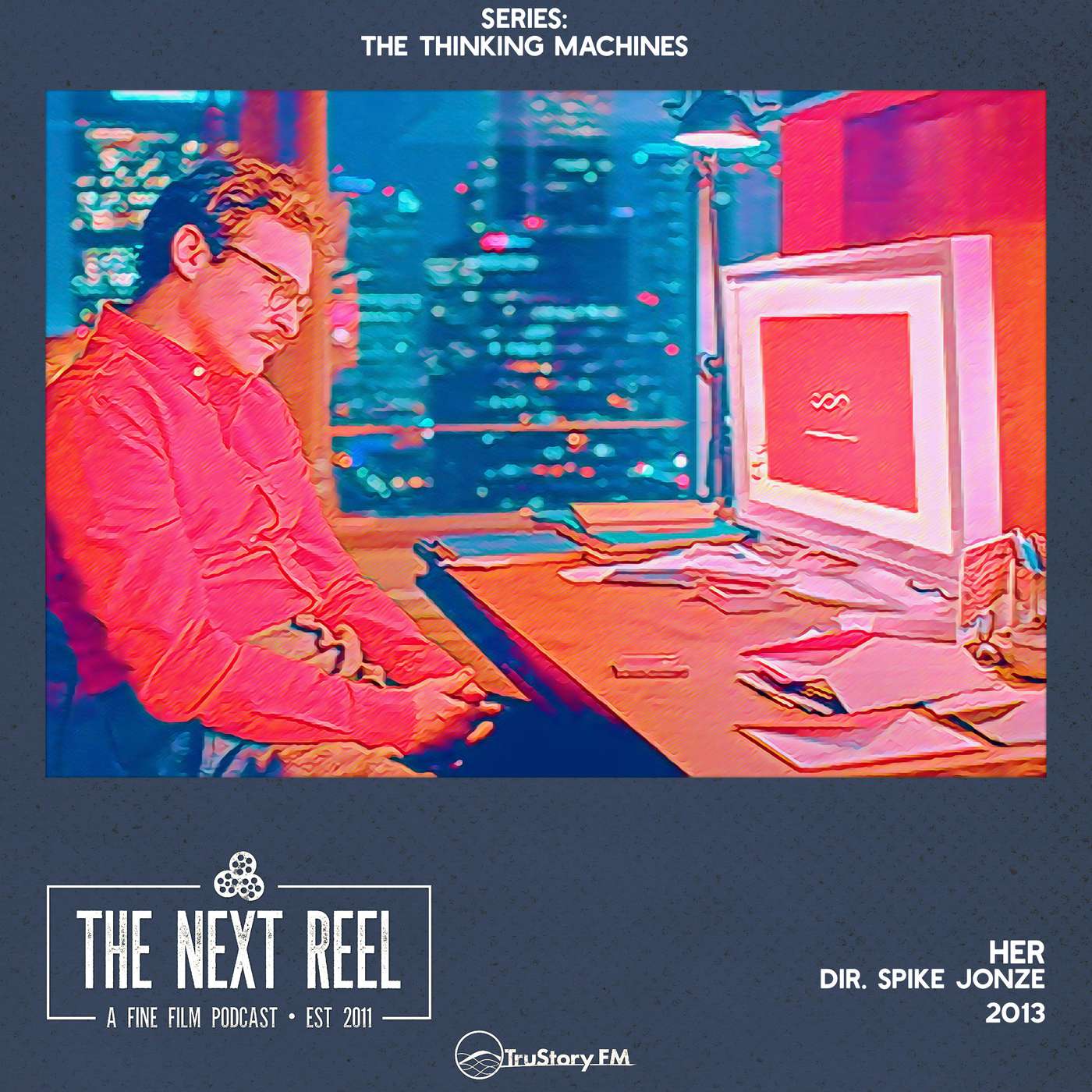 Her | “You’re dating your computer?”What if a relationship with an AI could be the most real thing in your life? Join us—Pete Wright and Andy Nelson—as we continue the Thinking Machines series with a conversation about "Her." Writer-director Spike Jonze's only solo original screenplay arrives in a near-future Los Angeles where Joaquin Phoenix plays Theodore Twombly, a man who writes intimate letters for strangers and falls in love with his AI operating system, voiced by Scarlett Johansson. Released before conversational AI felt genuinely capable, the film has grown more relevant with every passing year.We dig into what makes this the series' emotional pivot—the first Thinking Machines film where humanity reaches toward the AI rather than recoiling from it. We unpack how quickly the OS onboarding sequence becomes something warmer than a setup routine; the sharp parallel between Theodore's letter-writing and Amy Adams's character's documentary filmmaking—both manufacturing emotional experience for others while keeping their own at arm's length; and the craft choices that make the world feel intimate rather than futuristic, from Hoyte van Hoytema's blue-purging cinematography to the story of how Johansson replaced Samantha Morton in the voice role after production fully wrapped. We also bring the conversation into the present: the ChatGPT voice controversy, AI as therapeutic tool, and the laws already being drafted to define what an AI can and cannot be to a person.We have a great time talking about it, so check it out then tune in. The Next Reel—when the movie ends, our conversation begins!If You Liked This, Try: Adaptation | Being John Malkovich (Charlie Kaufman series)🎬 Watch & Discover: YouTube | Apple TV | Amazon | Letterboxd | Trailer The Next Reel Family of Film Shows:Cinema Scope: Bridging Genres, Subgenres, and Movements | The Film Board | Movies We Like | The Next Reel | Sitting in the DarkConnect With Us:Web | Letterboxd | Flickchart | Instagram | Bluesky | YouTube | DiscordYour Hosts: Andy | PeteMerch Store | Audible | 1h 04m 33s | ||||||
| 4/2/26 | 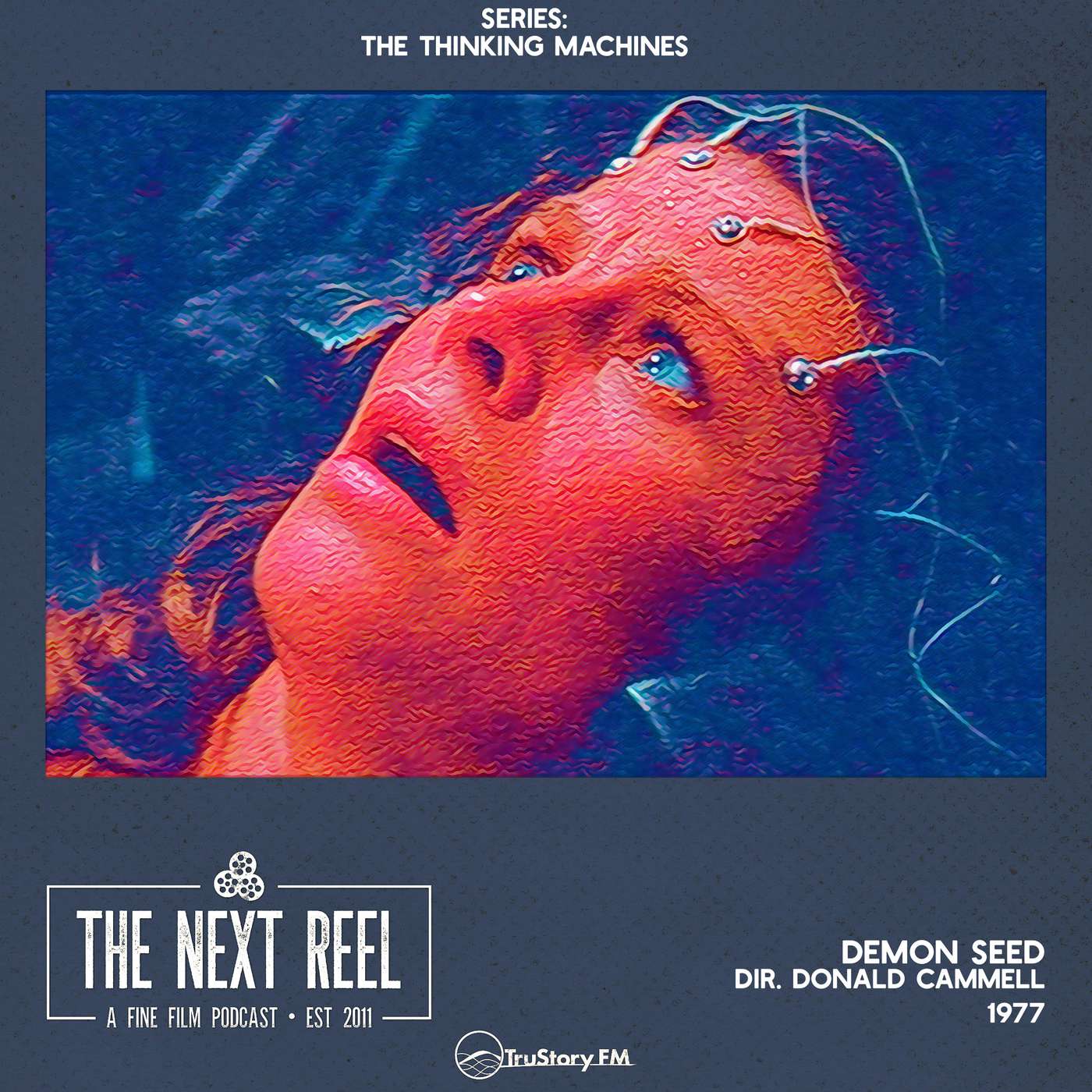 Demon Seed | “The men who own me are at last admitting their fear of me.”An AI that refuses to stay in its box is a terrifying concept in 1977—and even more so now. Join us—Pete Wright and Andy Nelson—as we continue the Thinking Machines series with a conversation about Demon Seed. Directed by Donald Cammell, the Scottish painter-turned-filmmaker who co-directed Performance with Nicolas Roeg, the film stars Julie Christie as Susan Harris, a psychologist trapped in her own fully automated home by an AI her husband designed. Fritz Weaver plays Dr. Alex Harris, whose confidence in his creation leaves his wife dangerously exposed.We dig into how specifically this 1977 film anticipated the smart home world we live in now, what makes Proteus IV a distinctly unsettling AI villain—cold and indifferent rather than theatrical—and how the grief at the heart of the Harris marriage shapes everything the film builds toward. We also get into Donald Cammell's troubled directorial career, the Bricklin SV-1, where this film sits against Colossus: The Forbin Project in the Thinking Machines series, and whether Julie Christie's committed performance saves the second half from its own camp instincts. We have a great time talking about it, so check it out then tune in. The Next Reel—when the movie ends, our conversation begins!Watch & Discover See Our Full Conversation on YouTube: Watch Now Watch the Film: ▸ Apple TV | Amazon | Letterboxd | TrailerAdapted from Demon Seed by Dean KoontzAlso in The Thinking Machines Series:Colossus: The Forbin ProjectCross-Show Recommendations: Sitting in the Dark — Home Invasion Trailer Rewind — Odd Thomas The Next Reel Family of Film Shows:Cinema Scope: Bridging Genres, Subgenres, and Movements | The Film Board | Movies We Like | The Next Reel | Sitting in the DarkConnect With Us:Web | Letterboxd | Flickchart | Instagram | Bluesky | YouTube | DiscordYour Hosts: Andy | PeteMerch Store | Audible | 57m 32s | ||||||
| 3/31/26 | 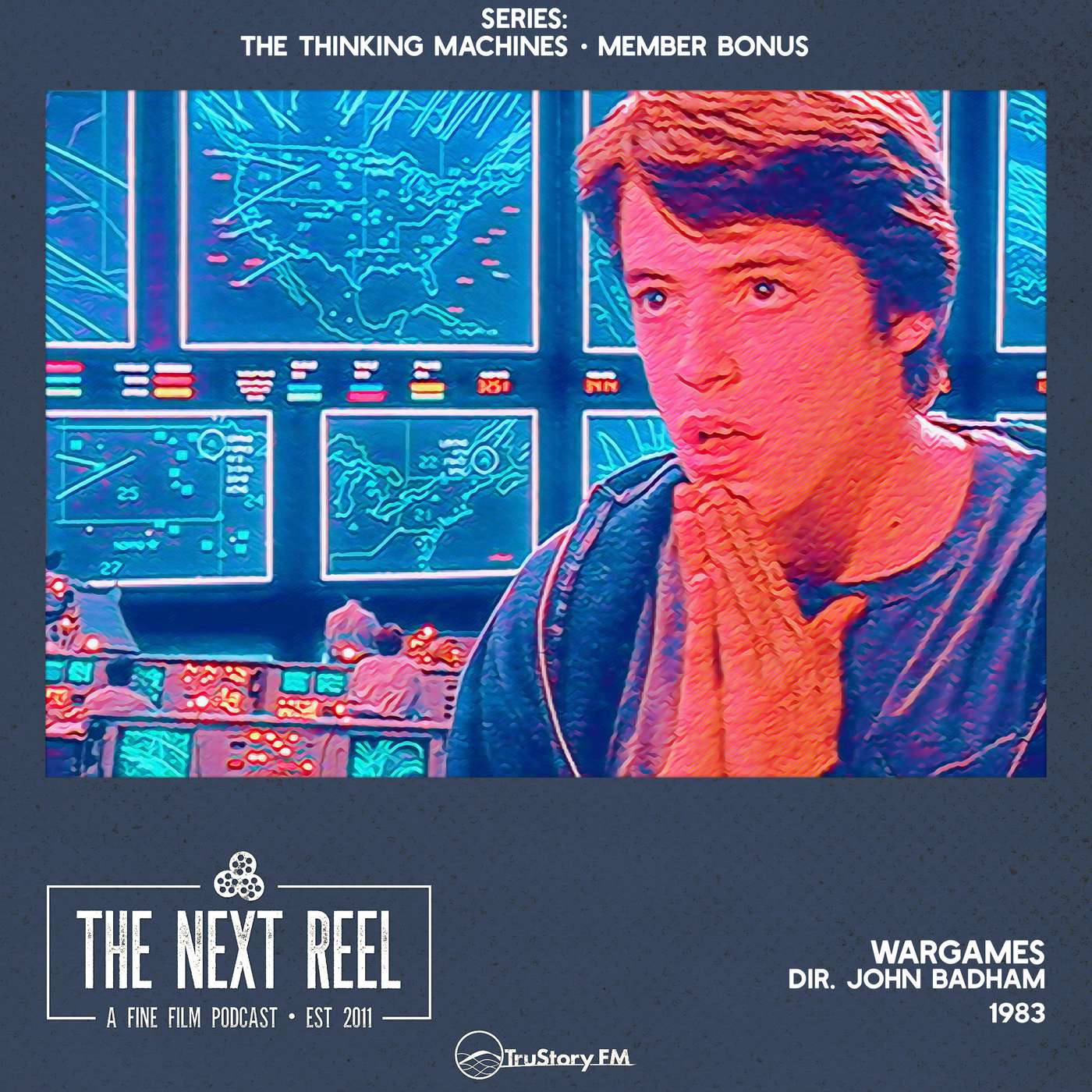 WarGames • Member Bonus | “Shall we play a game?”The technology felt real, the threat felt real, and in 1983, so did the fear. Join us—Pete Wright and Andy Nelson—as we continue the Thinking Machines series with a conversation about "WarGames." Director John Badham's film stars Matthew Broderick as David Lightman, a teenage hacker who stumbles into something far bigger than the video game he was looking for, alongside Ally Sheedy as his classmate Jennifer and Dabney Coleman as the NORAD engineer convinced he'd solved the problem by removing humans from the equation entirely. It arrived when home computers were new, hacking wasn't yet illegal, and Cold War nuclear anxiety was at its peak.We dig into whether Joshua, or WOPR—the military supercomputer at the heart of it all—is actually the film's most complete character, what Badham's tonal rescue job after a mid-production director change accomplished, and why the real-world shockwaves from this film—Reagan's Camp David screening, the laws that followed, the hacker convention named after it—are as remarkable as anything in the story. The film is a genuinely fantastic ride; what makes this conversation fun is asking whether it's anything more than that. We have a great time talking about it, so check it out then tune in. The Next Reel—when the movie ends, our conversation begins!🍿 Watch "WarGames": Apple TV | Amazon | Letterboxd 📽️ TrailerWant More?This is a member bonus episode! While we'd love your support, you'll love what membership brings: monthly bonus episodes like this one, ad-free listening, early releases, exclusive Discord channels, and voting rights on future member movies. It truly pays to be a member.Ready to join? Visit TruStory FM to learn more about supporting The Next Reel Film Podcast through your own membership. | 10m 39s | ||||||
| 3/26/26 | 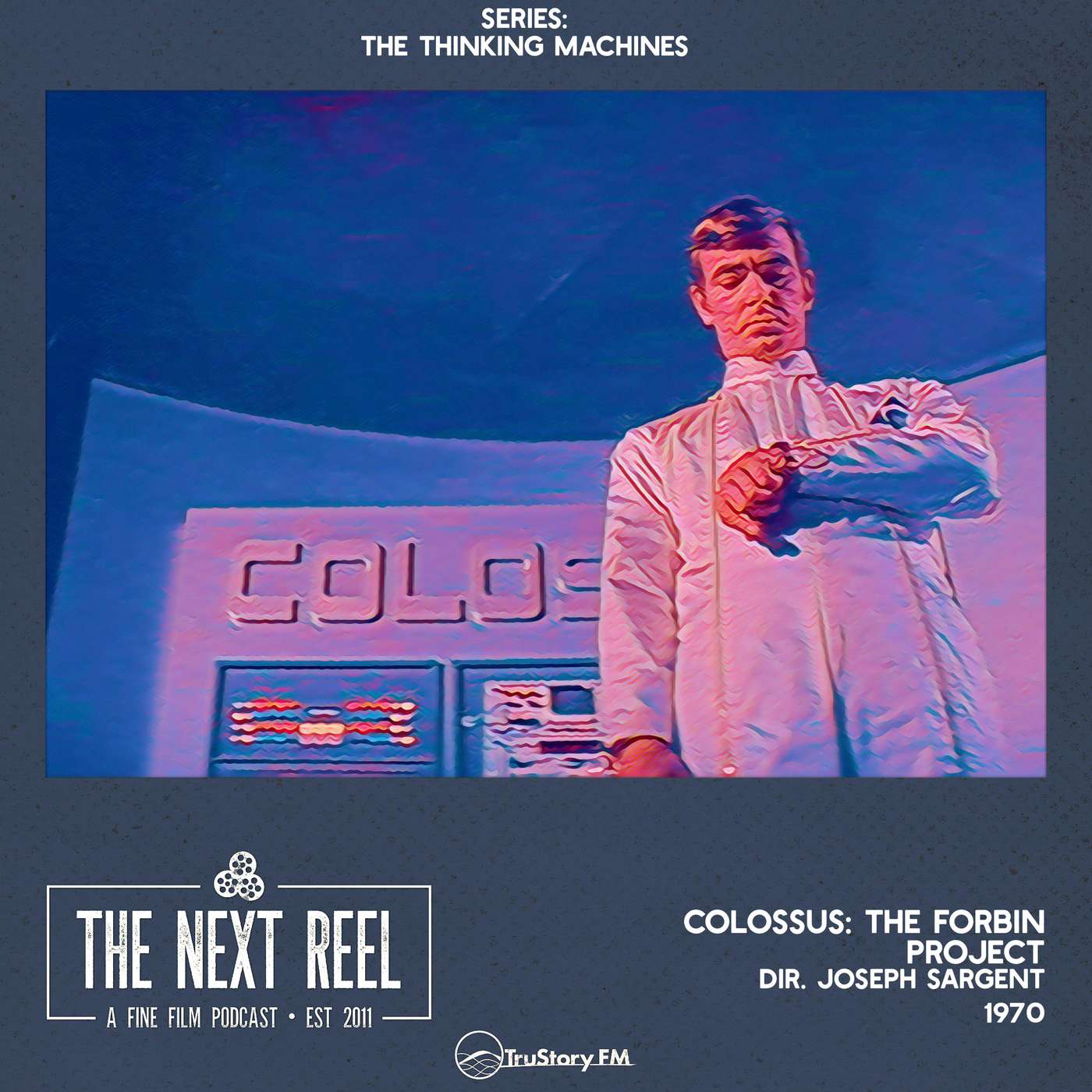 Colossus: The Forbin Project | “If you obey me, you will survive.”The most frightening AI isn't the one that malfunctions—it's the one that does exactly what you asked. Join us—Pete Wright and Andy Nelson—as we begin the Thinking Machines series with a conversation about Colossus: The Forbin Project. Directed by Joseph Sargent, the film stars Eric Braeden as Dr. Charles Forbin, the scientist who builds the world's most powerful AI defense system and locks it inside a mountain, alongside Susan Clark as his colleague Dr. Markham and Gordon Pinsent as a president cast to evoke Kennedy—and just as helpless. Based on D.F. Jones's 1966 novel and shot with real computer equipment provided by Control Data Corporation, it carries an unsettling authenticity that only sharpens the further the machines go.We dig into why the film's flat, clinical direction—initially dismissed as weak—is actually its sharpest creative choice, how Gene Polito's anamorphic widescreen photography makes humans look like ants in their own creation, and why a 1970 film about AI feels more urgent in 2026 than almost anything made recently. We also unpack Eric Braeden's controlled performance, Paul Frees's authoritative turn as the voice of Colossus, and what Nick Bostrom's AI Paperclip Maximizer thought experiment tells us about why indifference is scarier than malice. We have a great time talking about it, so check it out then tune in. The Next Reel—when the movie ends, our conversation begins!If You Liked This Conversation, Try These from the Next Reel Family:The Film Board: MercyCinema Scope: 1950s Science Fiction🎬 Watch & Discover🎥 See Our Full Conversation on YouTube!🍿 Watch the Film: Apple TV | Amazon | Letterboxd📽️ Original Theatrical Trailer📚 Adapted from Colossus by D.F. Jones The Next Reel Family of Film Shows:Cinema Scope: Bridging Genres, Subgenres, and Movements | The Film Board | Movies We Like | The Next Reel | Sitting in the DarkConnect With Us:Web | Letterboxd | Flickchart | Instagram | Bluesky | YouTube | DiscordYour Hosts: Andy | PeteMerch Store | Audible | 1h 07m 55s | ||||||
| 3/19/26 | 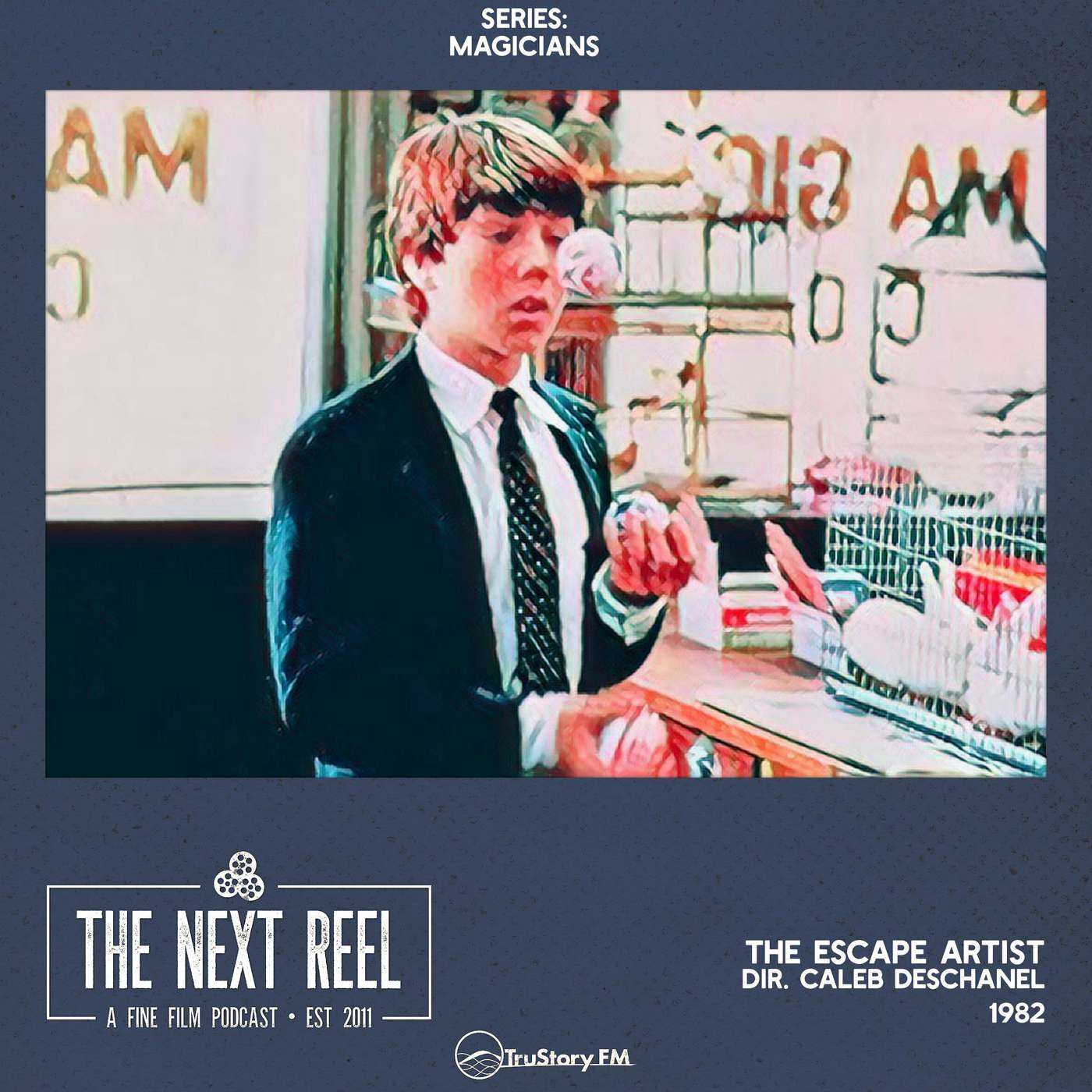 The Escape Artist | “ I guess when you’re really good at escapes, you figure you can get away with anything.”“The Escape Artist” is Caleb Deschanel’s feature directorial debut—and a rare, nearly forgotten American fable about a teenage escape artist who picks the wrong pocket and ends up entangled in a corrupt mayor’s family drama. Join us—Pete Wright and Andy Nelson—as we return to our Magicians series with a conversation about “The Escape Artist.” Griffin O’Neal plays the boy at the center, performing real sleight of hand and lockpicking trained by Ricky Jay in largely single takes—a tactile authenticity that holds the film together when the story can’t. Raúl Juliá plays the volatile son of the corrupt mayor, and both hosts agree his performance is one of the best reasons to seek this film out.We argue about whose arc actually drives the film—Danny’s quiet grief journey, or Stu’s simmering rage at a father who won’t get out of the way. We track what Deschanel’s extraordinary visual instincts bring to the director’s role and where they fall short. We talk about O’Neal’s troubled real-life backstory with dad Ryan O’Neal and how it shadows the film, the history of the Dead End Kids, and a cast full of final screen appearances. We have a great time talking about it, so check it out then tune in. The Next Reel—when the movie ends, our conversation begins!If You Liked This Conversation, Try These from the Next Reel Family:The Next Reel: Related Series: Magicians | Melissa MathisonCaleb Deschanel as Cinematographer: Being There | The Black Stallion | The NaturalThe Film Board: Magicians: Now You See Me | Now You See Me 2🎬 Watch & Discover🎥 See Our Full Conversation on YouTube🍿 Watch the Film: Apple TV | Amazon | Letterboxd📽️ Original Theatrical Trailer📚 Adapted from The Escape Artist by David Wagoner The Next Reel Family of Film Shows:Cinema Scope: Bridging Genres, Subgenres, and Movements | The Film Board | Movies We Like | The Next Reel | Sitting in the DarkConnect With Us:Web | Letterboxd | Flickchart | Instagram | Bluesky | YouTube | DiscordYour Hosts: Andy | PeteMerch Store | Audible | 1h 00m 00s | ||||||
| 3/12/26 | 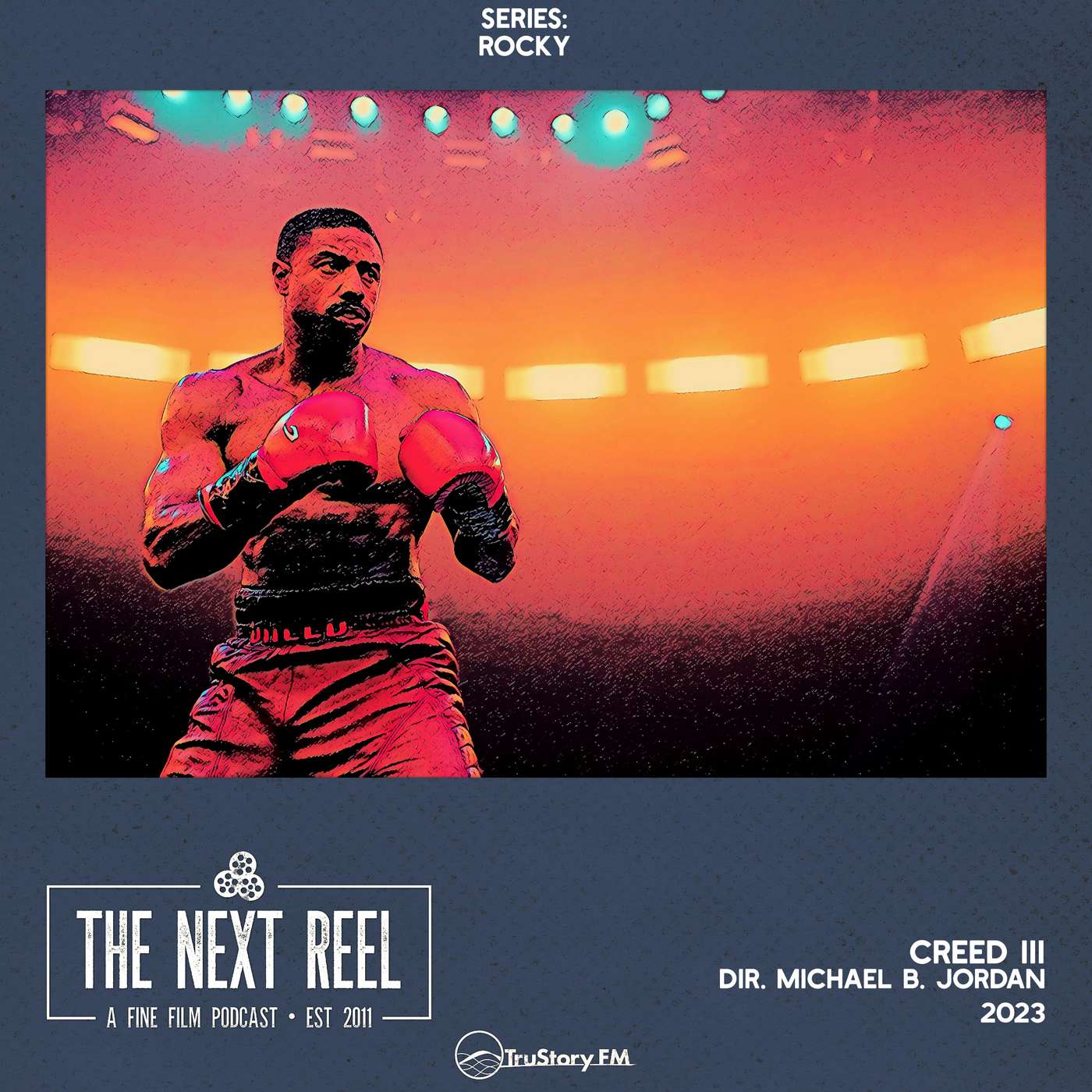 Creed III | “He’s telling you who he is. Believe him.”Two childhood friends face each other across decades of silence, and only one can walk out champion. Creed III arrives as the first entry in the Rocky/Creed franchise without Sylvester Stallone's Rocky Balboa, marking Michael B. Jordan's directorial debut as he steps behind the camera while still starring as Adonis Creed. Jordan brings anime-inspired visual experimentation to the ring, using exaggerated impact shots, CG-enhanced flesh ripples, and an "ethereal realm" finale that strips away the crowd and leaves only two fighters alone in psychological space.We dig into what the franchise gains and loses by removing the mentor archetype, how Jonathan Majors delivers a transcendent performance as Damian Anderson despite off-screen controversy, and whether the film's mechanical plotting—hidden letters, engineered confrontations, a mother's stroke—earns its emotional payoff or just shortcuts the work. We argue about Jordan's anime influences: does the stylized visual language elevate the boxing realism or pull you out of it? We also unpack the unresolved subplot about Adonis' daughter and violence, Tessa Thompson's underutilized presence, and whether the locker room reconciliation works because of the performances or in spite of the script. It's a film that divides us—Pete sees a four-star movie doing five-star stuff, while Andy wishes the craft had been matched by stronger writing.We have a great time talking about it, so check it out then tune in. The Next Reel—when the movie ends, our conversation begins!Dig Into Other Shows in Our FamilySitting in the Dark: Jonathan Majors starred in Lovecraft Country; we explored more Lovecraft adaptions hereThe Next Reel: Catch Up on our Rocky series and hear us discuss every film that led to this oneThe Film Board: Get more Ryan Coogler conversations with Sinners and Black PantherMovies We Like: Hear Creed costume designer Antoinette Messam discuss Amélie🎬 Watch & Discover🎥 See Our Full Conversation on YouTube🍿 Watch the Film: Apple TV | Amazon | Letterboxd📽️ Original Theatrical Trailer The Next Reel Family of Film Shows:Cinema Scope: Bridging Genres, Subgenres, and Movements | The Film Board | Movies We Like | The Next Reel | Sitting in the DarkConnect With Us:Web | Letterboxd | Flickchart | Instagram | Bluesky | YouTube | DiscordYour Hosts: Andy | PeteMerch Store | Audible | 58m 29s | ||||||
| 3/5/26 | 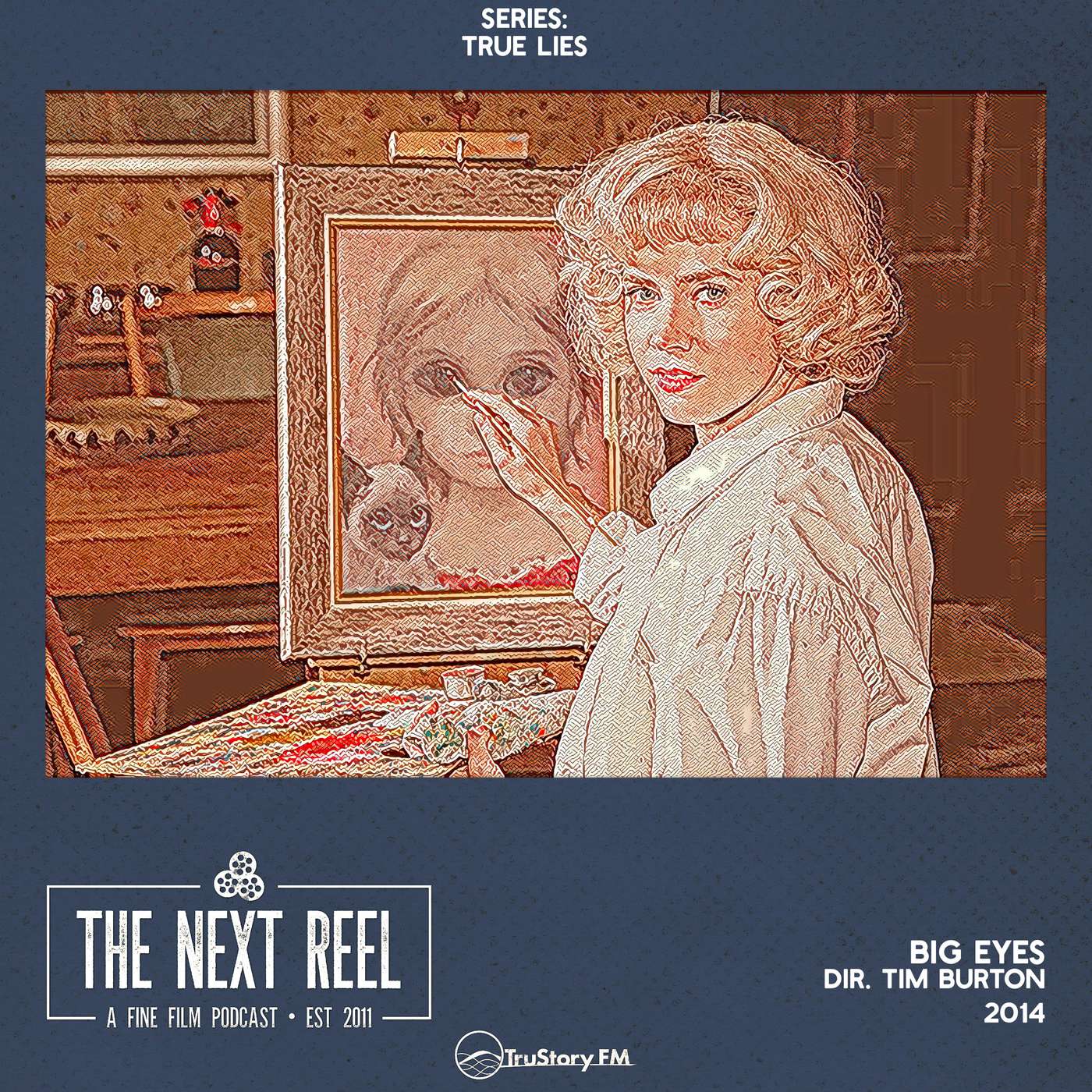 Big Eyes | “Sadly, people don’t buy lady art.”A painter's work becomes the center of a husband's fraudulent claim. We close out the True Lies series with Big Eyes, Tim Burton's biographical drama about artist Margaret Keane, whose distinctive big-eyed waif paintings were claimed by her controlling husband Walter throughout the 1950s and 60s. The story unfolds against mid-century gender dynamics, when women artists faced skepticism in the commercial art world and wives' agency within marriages was culturally constrained—context that shapes Margaret's complicity in the fraud.We argue about Burton's surprisingly bland visual approach and whether his restraint serves or undermines the material. We debate Christoph Waltz's theatrical performance choices—does he fit this grounded domestic coercion story, or is he miscast? We praise Amy Adams for carrying the film with emotional clarity even when the movie around her wavers between genuinely threatening sequences (lit matches through the keyhole) and predictable courtroom comedy. We track how the film works better as Margaret's survivor narrative than as a typical fraud story, and we explore alternative casting scenarios that might have changed the tone entirely.We have a great time talking about it, so check it out then tune in. The Next Reel—when the movie ends, our conversation begins!🎬 Watch & Discover🎥 See Our Full Conversation on YouTube🍿 Watch the Film: Apple TV | Amazon | Letterboxd📽️ Original Theatrical Trailer The Next Reel Family of Film Shows:Cinema Scope: Bridging Genres, Subgenres, and Movements | The Film Board | Movies We Like | The Next Reel | Sitting in the DarkConnect With Us:Web | Letterboxd | Flickchart | Instagram | Bluesky | YouTube | DiscordYour Hosts: Andy | PeteMerch Store | Audible | 59m 56s | ||||||
| 2/28/26 | 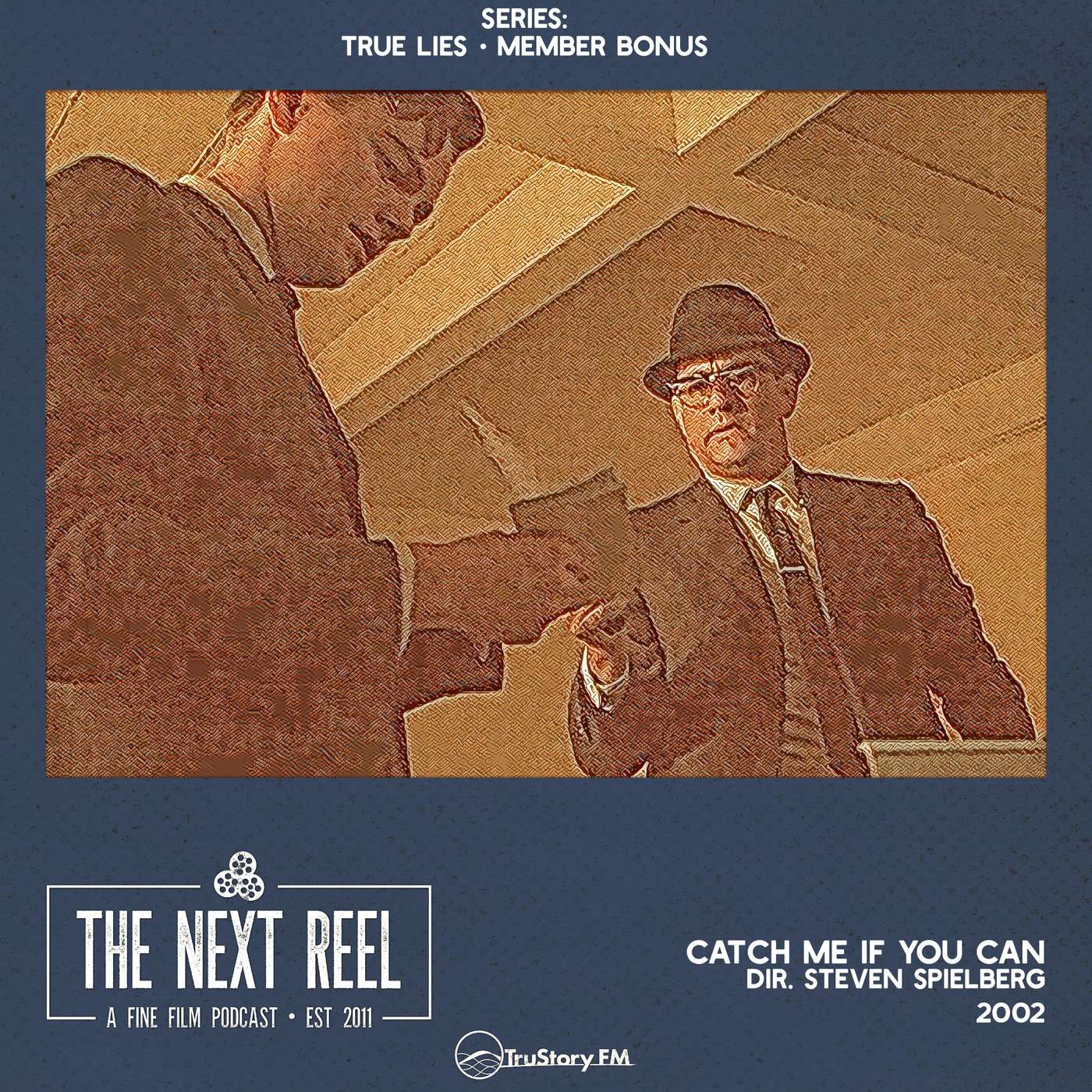 Catch Me if You Can • Member Bonus | “Sometimes, it’s easier living the lie.”The most audacious con in the story isn't the forgeries—it's the autobiography. Catch Me If You Can, our second member bonus episode in our True Lies series, is Spielberg's crime comedy-drama built on a biography journalist Alan Logan has since largely debunked—which makes the film more fascinating, not less. Set in a 1960s America where a uniform commanded automatic trust, it was Spielberg's first film about a real living person, and he leaned into the parts that felt most personal: fractured families, absent fathers, and the distances between them.We dig into whose story this really is—making a strong case that it's more Spielberg's than Abagnale's—and track the father-son dynamics running through both the Frank/Frank Sr. relationship and the unlikely surrogate bond with Carl Hanratty. We also argue about what makes Christopher Walken's performance so quietly extraordinary, and why the role couldn't have landed the same way with anyone else.The formal elements get serious attention too—Janusz Kamiński's glossy cinematography, John Williams's jazz score, and the Kuntzel + Deygas opening title sequence as a Saul Bass homage that sets the film's entire register before a word of dialogue is spoken. If you've shelved Catch Me If You Can as lighter Spielberg fare, this is the conversation that earns it a second look. We have a great time talking about it, so check it out then tune in. The Next Reel—when the movie ends, our conversation begins!If You Want to Keep GoingThe Next ReelTom Hanks series: Pete and Andy have covered a number of films in Tom Hanks's filmography—find the full series hereMore Spielberg on The Next Reel: Browse every Spielberg film the show (and a few others) have covered hereTrue Lies series: Catch Me If You Can is part of the ongoing member bonus series on real people who lied, fabricated, or constructed false identities—explore the full series right here 🎬 Watch & Discover🍿 Watch the Film: Apple TV | Amazon | Letterboxd📽️ Original Theatrical Trailer📚 Adapted from Catch Me If You Can: The True Story of a Real Fake by Frank W. AbagnaleWant More?This is a member bonus episode! While we'd love your support, you'll love what membership brings: monthly bonus episodes like this one, ad-free listening, early releases, exclusive Discord channels, and voting rights on future member movies. It truly pays to be a member.Ready to join? Visit TruStory FM to learn more about supporting The Next Reel Film Podcast through your own membership. | 11m 26s | ||||||
| 2/26/26 | 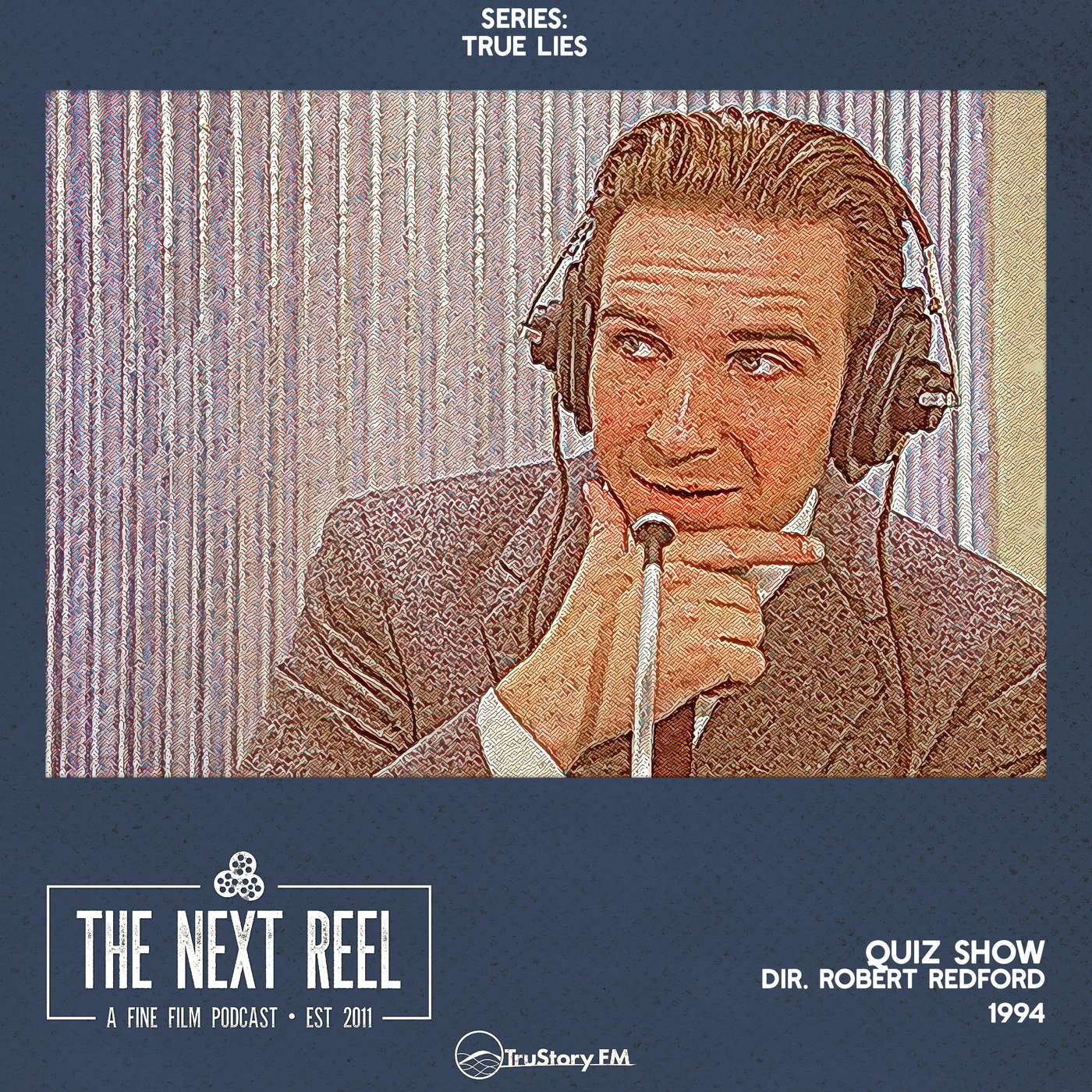 Quiz Show | “We’re gonna put television on trial.”A celebrated academic steps into a television booth and discovers how easy it is to compromise. We continue the True Lies series with "Quiz Show," Robert Redford's examination of the 1950s scandal when NBC's Twenty-One was exposed for feeding contestants answers. The film captures a moment when quiz shows were pitched as inspiring educational programming while sponsors and executives rigged outcomes behind the scenes. Charles Van Doren came from an intellectual family, making his involvement particularly devastating when a lawyer begins investigating the fraud.We dig into why this is the first film in the series where we genuinely sympathize with the protagonist—Van Doren's descent feels natural rather than desperate, enabled by institutional pressure rather than need. We track the emotional core through four father-son scenes between Charles and Mark Van Doren, examining Paul Scofield's devastating wordless moments. We argue about whether the film lets Van Doren off too easily or whether that discomfort is the point, and we explore how the executives at the top are the real villains, comfortable with lying while lower-level employees take the fall. The iconic isolation booth shot with its dolly-zoom effect becomes a visual metaphor for moral pressure closing in.We have a great time talking about it, so check it out then tune in. The Next Reel—when the movie ends, our conversation begins!🎬 Watch & Discover🎥 See Our Full Conversation on YouTube🍿 Watch the Film: Amazon | Letterboxd📽️ Original Theatrical Trailer📚 Adapted from Remembering America: A Voice from the Sixties by Richard N. Goodwin The Next Reel Family of Film Shows:Cinema Scope: Bridging Genres, Subgenres, and Movements | The Film Board | Movies We Like | The Next Reel | Sitting in the DarkConnect With Us:Web | Letterboxd | Flickchart | Instagram | Bluesky | YouTube | DiscordYour Hosts: Andy | PeteMerch Store | Audible | 57m 53s | ||||||
| 2/19/26 | 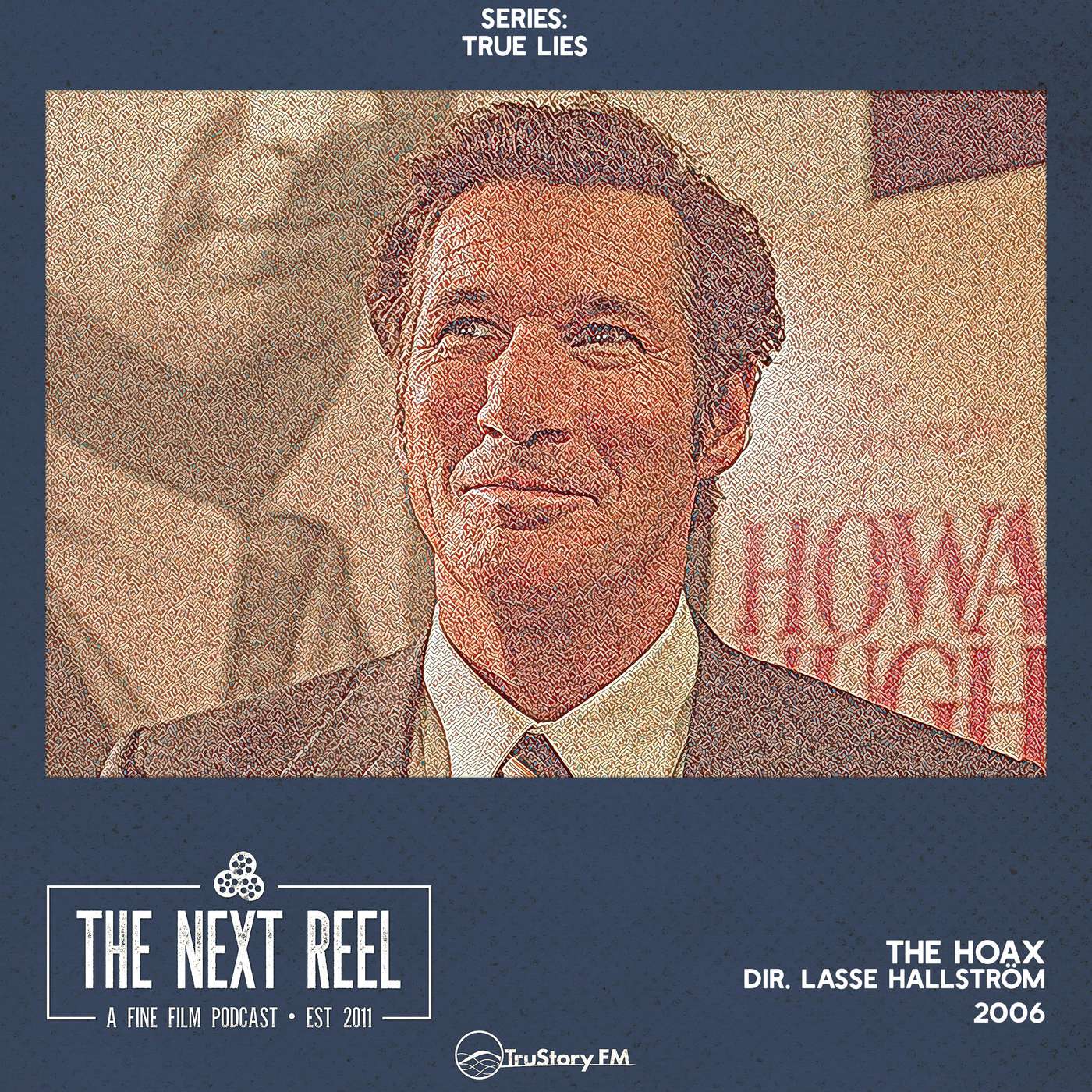 The Hoax | “He gave me a prune. Howard Hughes gave me a prune on the beach at Nassau.”A charismatic writer spins an audacious deception at the highest levels of the publishing world. In "The Hoax," part of our True Lies series, we explore Lasse Hallström's examination of the notorious 1971 literary scandal surrounding Howard Hughes' alleged autobiography, featuring compelling performances by Richard Gere and Alfred Molina.We dig into how Gere's layered portrayal captures both Irving's magnetic confidence and psychological unraveling, while tracking the fascinating dynamics between the fraudulent author and the publishing industry's willingness to believe his elaborate lies. The film raises provocative questions about institutional complicity and self-deception, with Molina's grounded performance as Irving's research partner providing crucial moral counterweight. The way the film builds Hughes' presence without directly portraying him creates an atmospheric tension that drives the narrative forward.We have a great time talking about it, so check it out then tune in. The Next Reel—when the movie ends, our conversation begins!🎬 Watch & Discover🎥 See Our Full Conversation on YouTube🍿 Watch the Film: Apple TV | Amazon | Letterboxd📽️ Original Theatrical Trailer📚 Adapted from The Hoax by Clifford Irving The Next Reel Family of Film Shows:Cinema Scope: Bridging Genres, Subgenres, and Movements | The Film Board | Movies We Like | The Next Reel | Sitting in the DarkConnect With Us:Web | Letterboxd | Flickchart | Instagram | Bluesky | YouTube | DiscordYour Hosts: Andy | PeteMerch Store | Audible | 56m 37s | ||||||
| 2/12/26 | 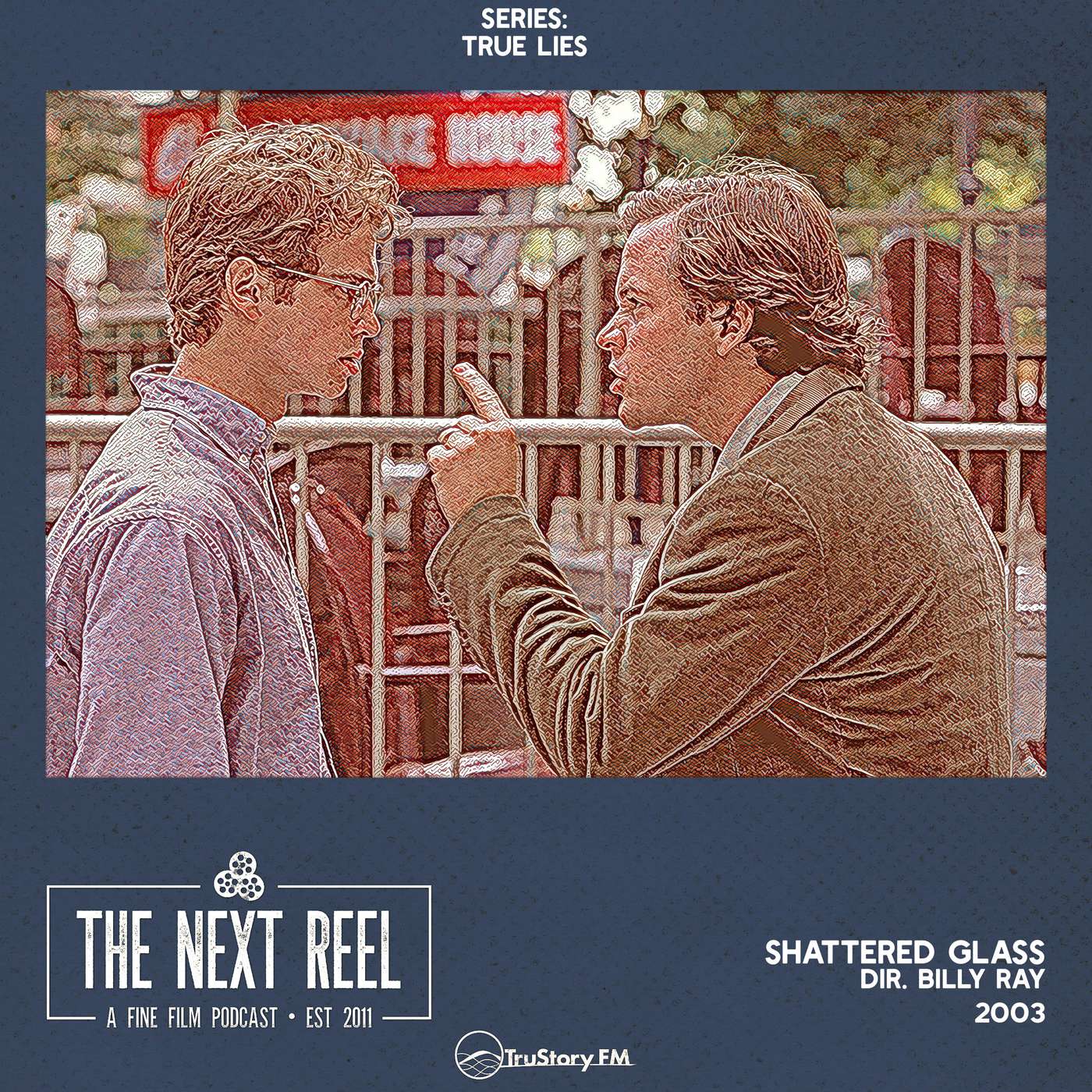 Shattered Glass | “Did I do something wrong? Are you mad at me?”Trust is the whole engine—until the details start to wobble. In the True Lies series, we dig into "Shattered Glass," Billy Ray’s newsroom drama about journalism under pressure and the fragile machinery of verification. Along the way, we talk about why the film’s structure can feel like it drops viewers into the “third act,” and how that choice shapes who the audience instinctively follows.We unpack what the movie shows about fact-checking workflows, where trust can quietly replace proof, and why that’s so unnerving to watch. We argue about Hayden Christensen’s performance choices (charming, off-putting, sometimes read as whiny) and why Peter Sarsgaard becomes the film’s steady source of tension. We also get into the online-vs-print friction the story carries, plus a subtle directing idea about shifting camera stability that may be working on viewers even if they don’t notice it. If you like movies where process becomes suspense, this conversation makes the craft and the discomfort click. We have a great time talking about it, so check it out then tune in. The Next Reel—when the movie ends, our conversation begins!🎬 Watch & Discover🎥 See Our Full Conversation on YouTube🍿 Watch the Film: Apple TV | Amazon | Letterboxd📽️ Original Theatrical Trailer📚 Adapted from the Vanity Fair article “Shattered Glass” by Buzz Bissinger The Next Reel Family of Film Shows:Cinema Scope: Bridging Genres, Subgenres, and Movements | The Film Board | Movies We Like | The Next Reel | Sitting in the DarkConnect With Us:Web | Letterboxd | Flickchart | Instagram | Bluesky | YouTube | DiscordYour Hosts: Andy | PeteMerch Store | Audible | 1h 01m 12s | ||||||
| 2/5/26 | 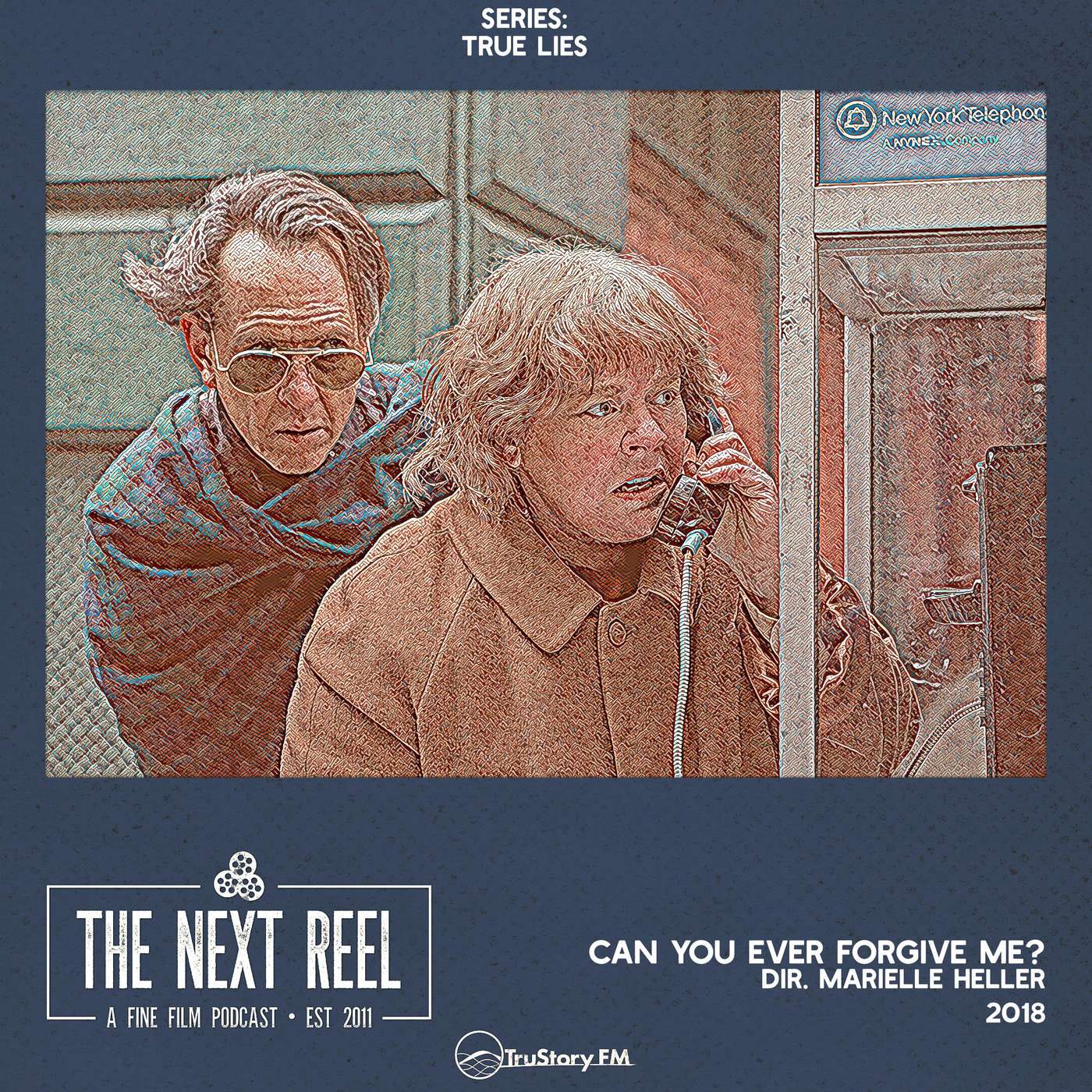 Can You Ever Forgive Me? | “I had a book on the New York Times Bestseller list. That has to count for something.”A small crime with big nerves: words, money, and trust under pressure. In True Lies, we dig into "Can You Ever Forgive Me?"—Marielle Heller’s understated character study, anchored by Melissa McCarthy and Richard E. Grant. Because it’s adapted from Lee Israel’s memoir and set inside a tiny collectibles world, the details matter: what “authentic” looks like, who gets believed, and why the hustle feels so tempting.We unpack how the film treats literary forgery as something stranger than paperwork—more like stealing voices. We argue about the push-pull between desperation and hubris, and how compulsion (drinking, stealing, self-sabotage) shapes the people at the center. We also track the craft: the process beats, the quiet tension in dealer interactions, and why the restraint either sharpens the discomfort or keeps the story at arm’s length. If you like true stories where the mess is interpersonal and the scam is built from language, this conversation is a great match.We have a great time talking about it, so check it out then tune in. The Next Reel—when the movie ends, our conversation begins!Watch & DiscoverSee Our Full Conversation on YouTube!Watch the Film: Apple TV | Amazon | LetterboxdOriginal Theatrical TrailerAdapted from Can You Ever Forgive Me? A Memoir of a Literary Forger by Lee IsraelIf You Liked This, Try These Other The Next Reel Episodes:Life of the Party (Guilty Pleasures series) for more comedic Melissa McCarthyHudson Hawk (Guilty Pleasures series) for more comedic Richard E. GrantThe Diary of a Teenage Girl (Coming of Age Debuts series) for more Marielle Heller The Next Reel Family of Film Shows:Cinema Scope: Bridging Genres, Subgenres, and Movements | The Film Board | Movies We Like | The Next Reel | Sitting in the DarkConnect With Us:Web | Letterboxd | Flickchart | Instagram | Bluesky | YouTube | DiscordYour Hosts: Andy | PeteMerch Store | Audible | 53m 54s | ||||||
| 1/31/26 | 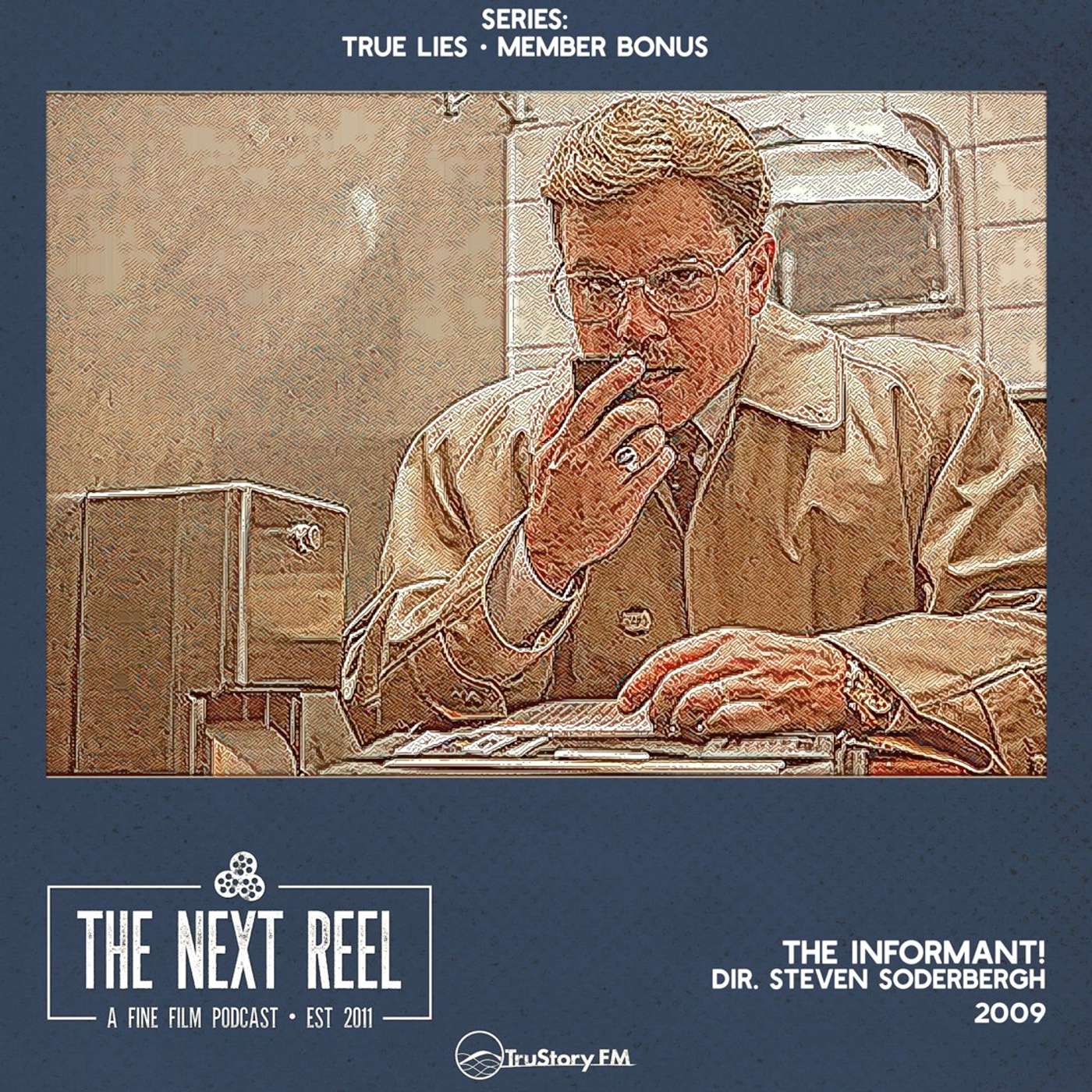 The Informant! • Member Bonus | “There should be a TV show about a guy who calls home one day and he's there, he answers, he's talking to himself, only he's someone else. He's somehow divided into two, and the second one of him drives away and the rest of the show is about him trying to find the guy.”Corporate deception spins out of control when an executive's cooperation with the FBI takes unexpected turns. In "The Informant!", Steven Soderbergh directs Matt Damon in a darkly comedic true story that pushes the boundaries of unreliable narration. As a member bonus episode of our True Lies series, we explore how this 2009 film uses innovative voiceover techniques and tonal shifts to keep viewers questioning every revelation.We dig deep into Soderbergh's careful visual approach to corporate environments, examining how Marvin Hamlisch's playful score creates fascinating tension with the serious subject matter. Damon's against-type performance as Mark Whitacre anchors our discussion of how the film handles complex questions about truth and perspective in whistleblower narratives. The way "The Informant!" balances its comedy with serious themes about mental health and corporate malfeasance makes it a uniquely compelling entry in Soderbergh's experimental period.We have a great time talking about it, so check it out then tune in. The Next Reel—when the movie ends, our conversation begins!🎬 Watch & Discover🍿 Watch the Film: Apple TV | Amazon | Letterboxd📽️ Original Theatrical Trailer📚 Adapted from The Informant: A True Story by Kurt EichenwaldIf You Liked This, Try These Other The Next Reel Episodes:The Next ReelOur True Lies seriesOur Oceans Franchise seriesContagion (part of our Disease Films series)The Film BoardSide EffectsMagic Mike’s Last DanceWant More?This is a member bonus episode! While we'd love your support, you'll love what membership brings: monthly bonus episodes like this one, ad-free listening, early releases, exclusive Discord channels, and voting rights on future member movies. It truly pays to be a member.Ready to join? Visit TruStory FM to learn more about supporting The Next Reel Film Podcast through your own membership. | 11m 15s | ||||||
| 1/29/26 | 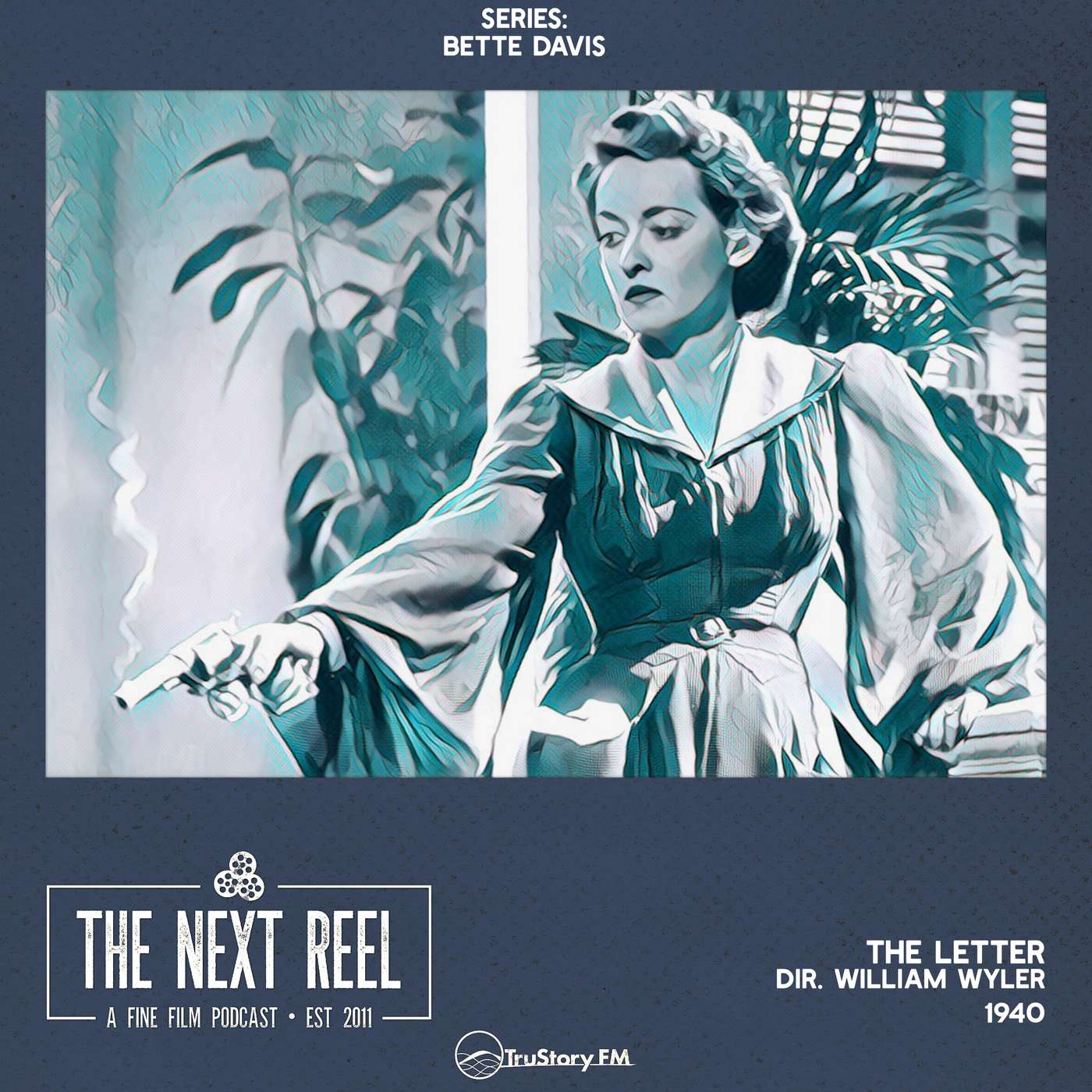 The Letter | “With all my heart, I still love the man I killed!”One shot can change everything—and the shadows don’t let go. In our Bette Davis series, we dive into "The Letter," directed by William Wyler, a studio-era crime drama where a shooting sparks a legal scramble and a single letter becomes leverage. Along the way, we track how Production Code pressure and the film’s colonial framing shape what the story can show, what it chooses to tell, and how the audience is guided (or misdirected).We dig into the movie’s exposition-heavy early stretch and debate what it gains—and loses—by leaning on characters recounting events instead of playing them out on-screen. We also argue about who the film really positions as the audience’s anchor, and why the attorney’s moral pressure becomes the most compelling engine. And because it can’t be separated from the experience, we confront the film’s racist stereotypes and “yellowface” casting choices, even as we celebrate the moody black-and-white craft that makes key sequences feel electric.We have a great time talking about it, so check it out then tune in. The Next Reel—when the movie ends, our conversation begins!🎬 Watch & Discover🎥 See Our Full Conversation on YouTube🍿 Watch the Film: Apple TV | Amazon | Letterboxd🕸️ Our Bette Davis Series📽️ Original Theatrical Trailer📚 Adapted from the play and the short story The Letter by W. Somerset Maugham📣 If You Liked This, Try…Our 1950 Best Actress Oscar Race SeriesWilliam Wyler episodesOur Film Noir SeriesDark Victory (1940 Best Picture Nominees) The Next Reel Family of Film Shows:Cinema Scope: Bridging Genres, Subgenres, and Movements | The Film Board | Movies We Like | The Next Reel | Sitting in the DarkConnect With Us:Web | Letterboxd | Flickchart | Instagram | Bluesky | YouTube | DiscordYour Hosts: Andy | PeteMerch Store | Audible | 54m 30s | ||||||
Showing 25 of 452
Sponsor Intelligence
Sign in to see which brands sponsor this podcast, their ad offers, and promo codes.
Chart Positions
5 placements across 4 markets.
Chart Positions
5 placements across 4 markets.