The Nonprofit Exchange: Leadership Tools & Strategies
The Nonprofit Exchange is built for nonprofit leaders, board members, donors, and interested parties.
AI overview.Hugh Ballou is an independent podcast creator known for his expertise in nonprofit leadership and organizational development. He combines his experience as a co…
Insights from recent episode analysis
Audience Interest
- nonprofit leadership strategies
- board member engagement
Podcast Focus
- tools for nonprofit leaders
- strategies for board members
Publishing Consistency
- 488 episodes produced
- active for 11 years
Platform Reach
- available on major podcast platforms
- targeted at nonprofit community
Insights are generated by CastFox AI using publicly available data, episode content, and proprietary models.
Total monthly reach
Based on 3 signals.
Built from
By chart position
- 🇨🇦Canada · Non-ProfitHOME#183.9K to 21K
- 🇬🇧United Kingdom · Non-Profit#14788 to 467
- 🇹🇷TR · Non-Profit#5783 to 437
- 🇦🇪AE · Non-Profit#9812 to 63
- 🇧🇪BE · Non-Profit#1706 to 33
- Per-Episode Audience
Est. listeners per new episode within ~30 days
4.1K to 22K🎙 Weekly cadence·506 episodes·Last published 5d ago - Monthly Reach
Unique listeners across all episodes (30 days)
8.2K to 44K🇨🇦95%🇬🇧2%🇹🇷2% - Active Followers
Loyal subscribers who consistently listen
4.5K to 24K180 real followers tracked across platforms
Market Insights
Platform Distribution
Reach across major podcast platforms, updated hourly
Total Followers
—
Total Plays
—
Total Reviews
—
* Data sourced directly from platform APIs and aggregated hourly across all major podcast directories.
| Date | Episode | Description | Length | ||||||
|---|---|---|---|---|---|---|---|---|---|
| 10/20/26 |  Listen First, Scale Later: Building Organizations From the Inside Out | Listen First, Scale Later: Building Organizations From the Inside Out Guest: Jacob Adams, Founder and Executive Director, Inner Spark Learning LabHost: Hugh Ballou | The Nonprofit Exchange What if nonprofit growth isn't about reaching more people, but about listening more deeply to the people you already serve? In this episode of The Nonprofit Exchange, Hugh Ballou welcomes Jacob Adams, Founder and Executive Director of Inner Spark Learning Lab, to challenge conventional thinking about nonprofit growth, organizational impact, and community engagement. Jacob shares how his organization shifted from delivering programs to thousands of students across Los Angeles to focusing on deeper relationships, meaningful learning, and lasting change. This strategic pivot revealed an important lesson: Scaling what we learn can be more valuable than simply scaling what we do. At the heart of their conversation is Jacob's Listen, Learn, Adapt framework, which helps organizations understand community needs, experiment with solutions, and continuously improve their effectiveness. Hugh and Jacob explore why nonprofits often ask the wrong questions, how traditional impact measurements can miss what really matters, and why authentic relationships with communities and donors are essential to sustainable success. In this episode, discover: Why listening should come before organizational expansion. How the Listen, Learn, Adapt framework strengthens nonprofit leadership. The hidden costs and unexpected benefits of choosing depth over rapid growth. Why asking better questions produces more meaningful outcomes. How nonprofits can move from transactional fundraising to authentic donor partnerships. What it means to build an organization from the inside out. Jacob offers a powerful challenge to nonprofit leaders: "We should be scaling what we learn more than we scale what we do." Whether you're a nonprofit executive, board member, fundraiser, or community leader, this conversation will inspire you to rethink growth, strengthen relationships, and focus on what creates meaningful, lasting impact. About the Guest Jacob Adams is the Founder and Executive Director of Inner Spark Learning Lab, an organization focused on creating educational environments rooted in belonging, joy, and community engagement. His approach emphasizes listening, learning, adaptation, and building sustainable organizations through authentic partnerships. Connect with Jacob Adams:https://www.innersparklab.org/ About The Nonprofit Exchange Hosted by transformational leadership strategist Hugh Ballou, The Nonprofit Exchange features conversations with thought leaders, innovators, and nonprofit professionals who share practical tools and strategies for building high-performing, sustainable organizations. Learn more: https://synervisionleadership.org/ Keywords: Nonprofit Leadership, Nonprofit Growth, Organizational Development, Community Engagement, Nonprofit Strategy, Jacob Adams, Inner Spark Learning Lab, Listen Learn Adapt, Donor Relationships, Fundraising Strategy, Sustainable Nonprofits, Nonprofit Impact, Hugh Ballou, The Nonprofit Exchange Learn more about your ad choices. Visit megaphone.fm/adchoices | 26m 29s | ||||||
| 10/13/26 |  Navigating Growth & Innovation Alongside Mission | In this episode of The Nonprofit Exchange, Hugh Ballou welcomes Rey Ramsey for a timely conversation on “Navigating Growth & Innovation Alongside Mission.” Rey challenges nonprofit leaders to reconsider one of the sector’s most common assumptions: that organizational growth automatically equals greater impact. Bigger budgets, more programs, larger facilities, and higher participation numbers may signal activity, but they do not necessarily demonstrate that the organization is solving the problem it exists to address. Rey encourages leaders to keep their organization’s North Star—mission, values, and intended impact—at the center of every decision. He explains how both internal pressures and external incentives from funders can push nonprofits toward measuring success by size rather than effectiveness. When organizations begin looking inward instead of focusing on the people they serve, Rey describes this as the “intermediary’s dilemma.” Drawing from his book, The Tyranny of False Choices: A Guide to Authentic Decision Making, Rey explores how leaders can move beyond either-or thinking, social pressure, familiar assumptions, and “default decisions.” He emphasizes intellectual humility, knowing oneself, expanding the aperture of thought, and remaining attentive to one’s moral compass. He also shares a powerful leadership experience from his time as Chairman of Habitat for Humanity International, illustrating the courage required to make difficult, principle-based decisions even when those decisions carry a personal cost. The conversation also explores the responsibility leaders have to elevate others. Rey describes his practice of creating “oxygen sessions”—safe environments where staff and board members can ask questions, challenge assumptions, and explore ideas without fear of judgment. He reminds leaders that leadership is not demonstrated simply by mastering one’s own role, but by developing the capacity of the people around them. Rey and Hugh also discuss mission creep, impact investing, critical thinking, experimentation, perseverance, and enlightened disruption—Rey’s term for intentionally challenging existing structures when change is necessary to better serve the organization’s purpose. His central challenge is clear: innovation should never become an end in itself. If a new initiative is not improving the core elements of the mission, leaders should be willing to reconsider it—or even press delete. Ultimately, this conversation invites nonprofit leaders to ask a more important question than “How big can we become?”: “Are we creating better outcomes for the people we exist to serve?” Growth matters when it strengthens the mission. Innovation matters when it advances impact. And effective leadership requires the courage to make decisions that remain faithful to both. Key themes include: mission-centered growth; innovation without mission drift; funder incentives and meaningful metrics; moral courage and authentic decision-making; intellectual humility; elevating others; overcoming false choices; and using “enlightened disruption” to create better outcomes. Learn more about your ad choices. Visit megaphone.fm/adchoices | 26m 46s | ||||||
| 10/6/26 |  Fundraising Without the Ick: Building Donor Trust Instead of Donor Pressure | Episode Summary In “Fundraising Without the Ick: Building Donor Trust Instead of Donor Pressure,” Hugh Ballou welcomes Maria A. Bryan for a timely conversation about replacing guilt, urgency, and manipulation with trust, clarity, dignity, and meaningful donor relationships. Maria challenges many traditional fundraising practices that rely on pressure and explains why ethical persuasion can actually strengthen donor engagement and long-term retention. Maria explores how trauma-informed storytelling changes the way nonprofit leaders collect, shape, and share personal stories. Rather than reducing people to a single problem or using painful experiences simply to generate emotional response, she encourages organizations to preserve context, dignity, consent, agency, and choice throughout the storytelling process. She also emphasizes that consent should not be treated as a one-time form, but as an ongoing conversation in which the story owner retains meaningful control. NPE Maria Bryan transcript raw The conversation also examines donor autonomy. Maria explains how overly urgent fundraising language can create resistance, paralysis, or a one-time “go away gift” rather than genuine connection. Trust grows when donors understand the need, see the impact of their generosity, and are given the freedom to choose how and when they participate. NPE Maria Bryan transcript raw Hugh and Maria also discuss how organizations can build an ethical storytelling culture through training, policies, clear procedures, and even a harm-repair plan for moments when mistakes occur. The goal is not perfection, but a culture that recognizes power dynamics, protects story owners, respects donors, and learns continuously. NPE Maria Bryan transcript raw Maria leaves nonprofit leaders with a practical challenge: slow down before launching the next campaign and consider the experience of both the person whose story is being told and the donor receiving the message. Fundraising does not have to extract generosity through pressure. It can invite generosity through trust, clarity, shared purpose, respect, and ethical storytelling. NPE Maria Bryan transcript raw In this episode, you’ll discover: Why urgency can sometimes undermine fundraising instead of strengthen it How ethical persuasion encourages action without manipulation Why donor autonomy and choice strengthen long-term relationships How trauma-informed storytelling protects dignity and trust Why consent should be ongoing, not merely a signed form How power dynamics can influence whether someone truly feels free to say yes Ways to build ethical storytelling practices into organizational culture Why clarity may be more persuasive than urgency How nonprofit leaders can create fundraising experiences that donors actually want to continue Learn more about Maria’s work and fundraising resources at DonorBox.org. Learn more about your ad choices. Visit megaphone.fm/adchoices | 27m 25s | ||||||
| 9/29/26 |  Can Innovation be in a Nonprofit? | In this episode of The Nonprofit Exchange, Hugh Ballou talks with Michelle Bockman, CEO of KeraLink International, about what happens when nonprofit leaders bring an innovation mindset, disciplined execution, and scalable business practices into mission-driven work. Michelle challenges the assumption that innovation is too expensive, too risky, or somehow out of place in the nonprofit sector. Drawing from her experience in major corporations, startups, and technology ventures, she explains why nonprofits can benefit from many of the same disciplines that help successful businesses grow: clear strategy, focused priorities, strong operating systems, thoughtful resource allocation, and a willingness to test new ideas. The conversation explores the important difference between growth and scalability, along with the need to build boards and teams around the skills an organization will need for its future. Michelle shares how KeraLink uses a skills matrix to identify gaps and intentionally recruits people who bring different perspectives, expertise, and ways of thinking. Hugh and Michelle also discuss the importance of diversifying revenue rather than relying too heavily on a small number of donors or funding sources. Michelle describes KeraLink’s approach, which combines philanthropy, grants, technology development, investments, earned revenue, and partnerships to create a more sustainable model for advancing its mission. Partnerships are another major theme. Michelle explains how collaboration with hospitals, universities, community organizations, clinicians, technology partners, and other mission-aligned organizations allows KeraLink to extend its reach and increase its impact. Throughout the conversation, Michelle emphasizes that innovation is ultimately about solving problems. Nonprofit leaders do not need unlimited resources to innovate, but they do need focus, courage, disciplined execution, and a willingness to stop doing what no longer works. The episode offers a practical reminder that sustainable impact comes from more than good intentions. It requires leaders who are willing to think differently, build the right systems and partnerships, allocate resources wisely, and continually look for better ways to accomplish the mission. Learn more about your ad choices. Visit megaphone.fm/adchoices | 30m 20s | ||||||
| 9/19/26 | Transformative Reflections: Chuck Vollmer 's Journey Through Divine Analogies | Learn more about your ad choices. Visit megaphone.fm/adchoices | 33m 01s | ||||||
| 9/15/26 |  From Liability to Leverage: Unlocking Your Most Powerful Strategic Asset - Your Board | From Liability to Leverage: Unlocking Your Most Powerful Strategic Asset — Your Board A nonprofit board should be far more than a group that gathers periodically to review reports, approve motions, and satisfy governance requirements. In this episode of The Nonprofit Exchange, Hugh Ballou talks with Deborah Macfarlan Enright, Ed.D., founder of The Macfarlan Group and author of Board to Death, about how nonprofit leaders can turn boards from passive governing bodies into active strategic assets. Deborah explains that many board members are willing to contribute more, but they often lack clarity about what meaningful board service actually requires. Effective board engagement begins when leaders move beyond attendance and fundraising expectations and tap into the expertise, experience, networks, and resources each board member brings to the organization. A major theme of the conversation is the distinction between governance, management, and strategic leadership. Deborah emphasizes that boards are oversight bodies, not operating teams. At the same time, they should not be limited to internal compliance and fiduciary responsibilities. The strongest boards also stay connected to the organization’s strategic direction and help ensure that the mission is delivered effectively. The conversation also explores why strategic planning is such an important board engagement tool. A clear strategic plan helps leaders identify the expertise and experience the organization needs, strengthens recruitment, improves orientation, and gives board members a clearer understanding of where the organization is headed and how they can contribute. Deborah also discusses the importance of board composition. Rather than simply filling seats, organizations should evaluate what they already have and what they still need in terms of professional expertise, leadership experience, representation, geography, generations, and connection to the communities they serve. That assessment should guide recruitment and help the board evolve as the organization changes. Term limits and succession planning are another important part of healthy board development. Deborah shares an example of a long-serving board that had simply become tired. Once members were reminded that their terms were intended to be limited, several experienced a sense of relief and were ready to make room for new leadership. The episode also highlights the value of board service for the individual. Serving on the right board can expand professional networks, build leadership skills, create new relationships, and give emerging leaders opportunities to work alongside senior executives and develop capabilities they may not gain in their regular roles. In the rapid-fire portion of the interview, Deborah identifies engagement as the defining characteristic of a great board, calls curiosity an underrated board-member quality, and says every board member should be able to explain where the organization is headed. She also reinforces the importance of the CEO or executive director as the gatekeeper between the board and staff. Her closing message is simple and powerful: board seats are priceless. They should be filled intentionally, used purposefully, and activated in service to the mission. This episode is especially valuable for nonprofit CEOs, executive directors, board chairs, current board members, and anyone considering board service who wants to better understand how effective boards contribute to organizational success. More information at https://www.themacfarlangroup.com Learn more about your ad choices. Visit megaphone.fm/adchoices | 35m 37s | ||||||
| 9/8/26 |  Making Sense In the Mess: Leadership for a Turbulent Time | Making Sense In the Mess: Leadership for a Turbulent Time Guest: Daniel Atlin Leadership in uncertain times is not about pretending to have all the answers. It is about helping people make sense of what is happening, stay grounded in purpose, and move forward together even when the path is unclear. In this episode of The Nonprofit Exchange, Hugh Ballou talks with Daniel Atlin, a strategic advisor, executive coach, and leadership researcher, about the growing importance of sensemaking in nonprofit and mission-driven leadership. Daniel explores why certainty is often an illusion in complex organizations and why leaders need to become more adaptive, collaborative, and self-aware. He explains the difference between inner sensemaking—understanding our own reactions, biases, stress, and resilience—and outer sensemaking—reading the people, systems, relationships, and changing conditions around us. The conversation also covers the importance of purpose as an anchor, the limitations of rigid strategic plans, and the “art of subtraction”—knowing what to stop doing so an organization can focus on what matters most. Daniel also shares practical leadership habits, including self-reflection, listening for signals that challenge our assumptions, and asking one powerful question: “What am I not seeing? What am I missing here?” This episode is especially valuable for nonprofit executives, clergy, board members, and other purpose-driven leaders who are navigating complexity, change, and uncertainty. Learn more about Daniel Atlin: Learn more about your ad choices. Visit megaphone.fm/adchoices | 26m 26s | ||||||
| 9/1/26 |  Beyond Words: How Leadership Stories Inspire Action | What makes a leadership message memorable enough to inspire action? Often, it’s a story that helps people see themselves—and their possibilities—more clearly. In this episode of The Nonprofit Exchange, host Hugh Ballou welcomes leadership development expert Julie Lancaster, author of Beyond Words: How Our Stories and Strategies Inspire Leadership Action. Julie shares how she went from disliking stories to discovering their power to connect people, reinforce learning, and motivate change. Her practical REST Model—Relate, Engage, Short, and Theme gives nonprofit leaders a simple framework for telling stories that serve their audience and communicate a clear purpose. In this conversation, you’ll discover: How to find meaningful stories in everyday experiences. Why stories about failure can build connection. How to engage listeners without overwhelming them. Why rehearsal and honest feedback matter. How taking small emotional risks can help you grow as a leader. Whether you lead staff, volunteers, a board, or community partners, this episode will help you communicate with greater intention and turn information into inspiration. Connect with Julie: https://www.lancasterleadership.comExplore more episodes: https://thenonprofitexchange.org Learn more about your ad choices. Visit megaphone.fm/adchoices | 26m 04s | ||||||
| 8/25/26 |  Are You Sabotaging Your Mission? | ARE YOU SABOTAGING YOUR MISSION?The Hidden Leadership Patterns Behind Burnout, Low Performance, and Organizational Dysfunction What if the same trait driving your success is also quietly sabotaging your leadership? In this episode of The Nonprofit Exchange, Hugh Ballou welcomes Dr. Philip Agrios, self-sabotage expert, best-selling author, international speaker, and creator of The T-NOW Method™, for a revealing conversation about the hidden patterns that can undermine even highly successful nonprofit leaders. Dr. Agrios explains that self-sabotage isn't necessarily a flaw that needs to be fixed. A trait that serves a leader well can operate in two very different ways—Growth or Protection. When that trait shifts into Protection, leaders may over-give until they burn out, avoid difficult decisions, take on responsibilities that belong to others, withdraw from necessary conversations, or struggle to follow through on important priorities. The consequences don't stop with the leader. Repeated leadership behaviors influence how team members respond, how decisions get made, how accountability functions, and ultimately how the organization's culture develops. What begins as an internal leadership pattern can eventually become an organizational pattern. Hugh and Dr. Agrios explore how leaders can recognize self-sabotage as it happens, understand the difference between Protection and Growth, and use The T-NOW Method™ to interrupt the pattern and choose a more productive response. This conversation offers nonprofit executives, board members, founders, and other mission-driven leaders a different way to think about burnout, performance, delegation, accountability, and organizational culture. Key takeaway: What begins as self-sabotage within the leader can eventually become dysfunction throughout the organization. Change the leader's pattern, and you can change the organization's performance. Learn more about Dr. Philip Agrios and The T-NOW Method™ at www.TheTNOWMethod.com. Learn more about your ad choices. Visit megaphone.fm/adchoices | 28m 14s | ||||||
| 8/19/26 | 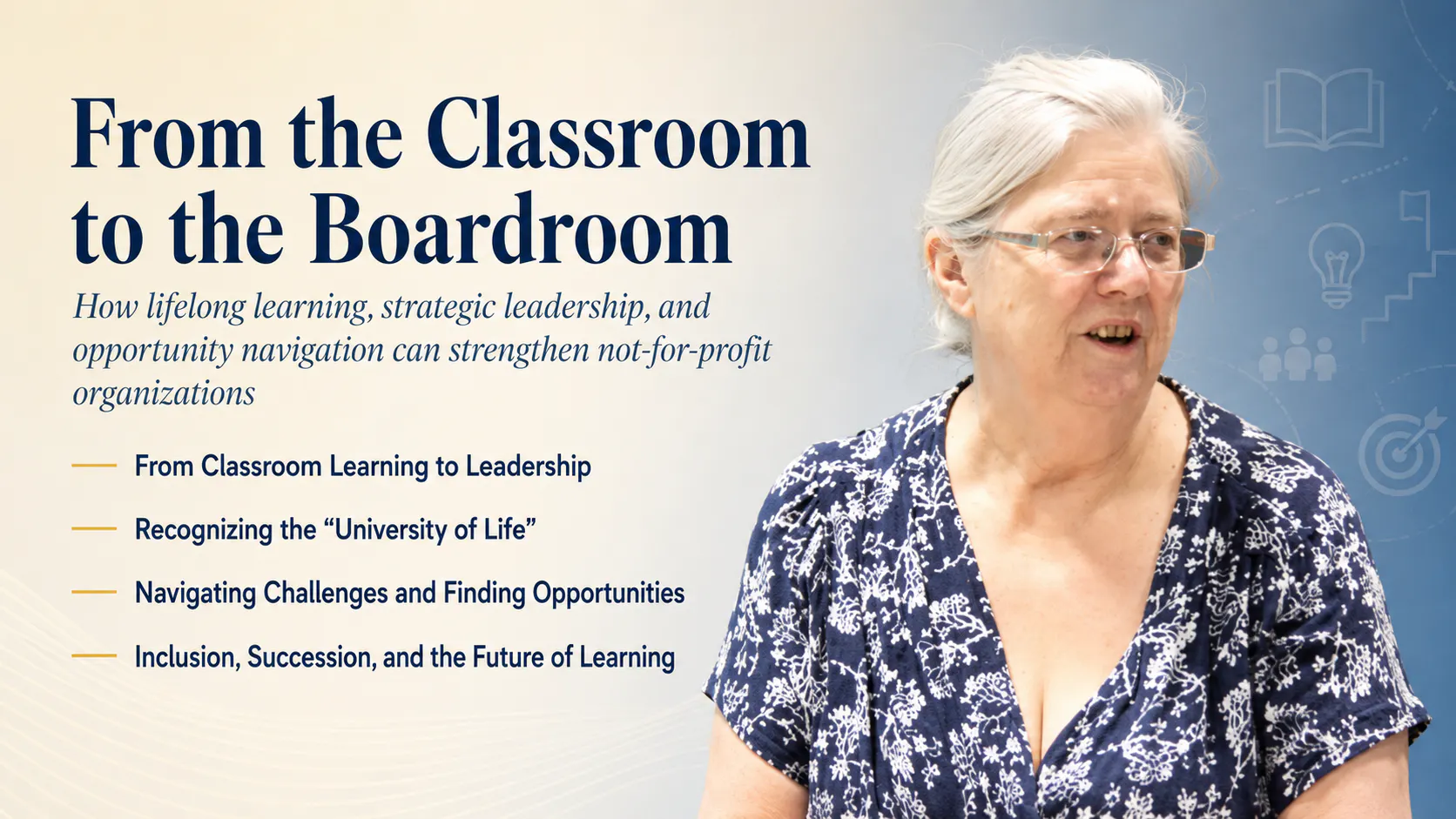 From the Classroom to the Boardroom | In this episode of The Nonprofit Exchange, I had the pleasure of speaking with Christine Lester, a lifelong learning and organizational development leader. Our conversation, titled "From the Classroom to the Boardroom," explored the unique journey Christine has taken from teaching young people to leading nonprofit organizations. Christine shared her insights on the importance of recognizing untapped talent within nonprofits and the challenges these organizations face, particularly in securing funding. She emphasized the need for leaders to develop softer skills, such as inclusivity and accessibility, which are often overlooked in traditional leadership training. We discussed her role as the founder of the Minister Development Center and her work with West Midlands Tomorrow, where she focuses on creating inclusive leadership and fostering community impact. Christine described herself as a "knowledge altruist," committed to sharing her expertise and helping others find their pathways to success. Throughout our conversation, Christine highlighted the significance of recognizing prior learning and experience, especially for young people entering the workforce. She passionately advocated for a more inclusive approach to education and employment, urging leaders to uncover hidden talents and capabilities in their teams. As we wrapped up, Christine expressed her hope for the future of nonprofit leadership, noting that the passion and tenacity of nonprofit leaders often surpass that of their corporate counterparts. Her insights serve as a powerful reminder that leadership is about creating systems and relationships that enable collective success. Join us for this enlightening discussion that encourages nonprofit leaders to stay open to opportunities and leverage the knowledge present in their communities for lasting impact. Learn more about your ad choices. Visit megaphone.fm/adchoices | 23m 55s | ||||||
Want analysis for the episodes below?Free for Pro Submit a request, we'll have your selected episodes analyzed within an hour. Free, at no cost to you, for Pro users. | |||||||||
| 8/11/26 | 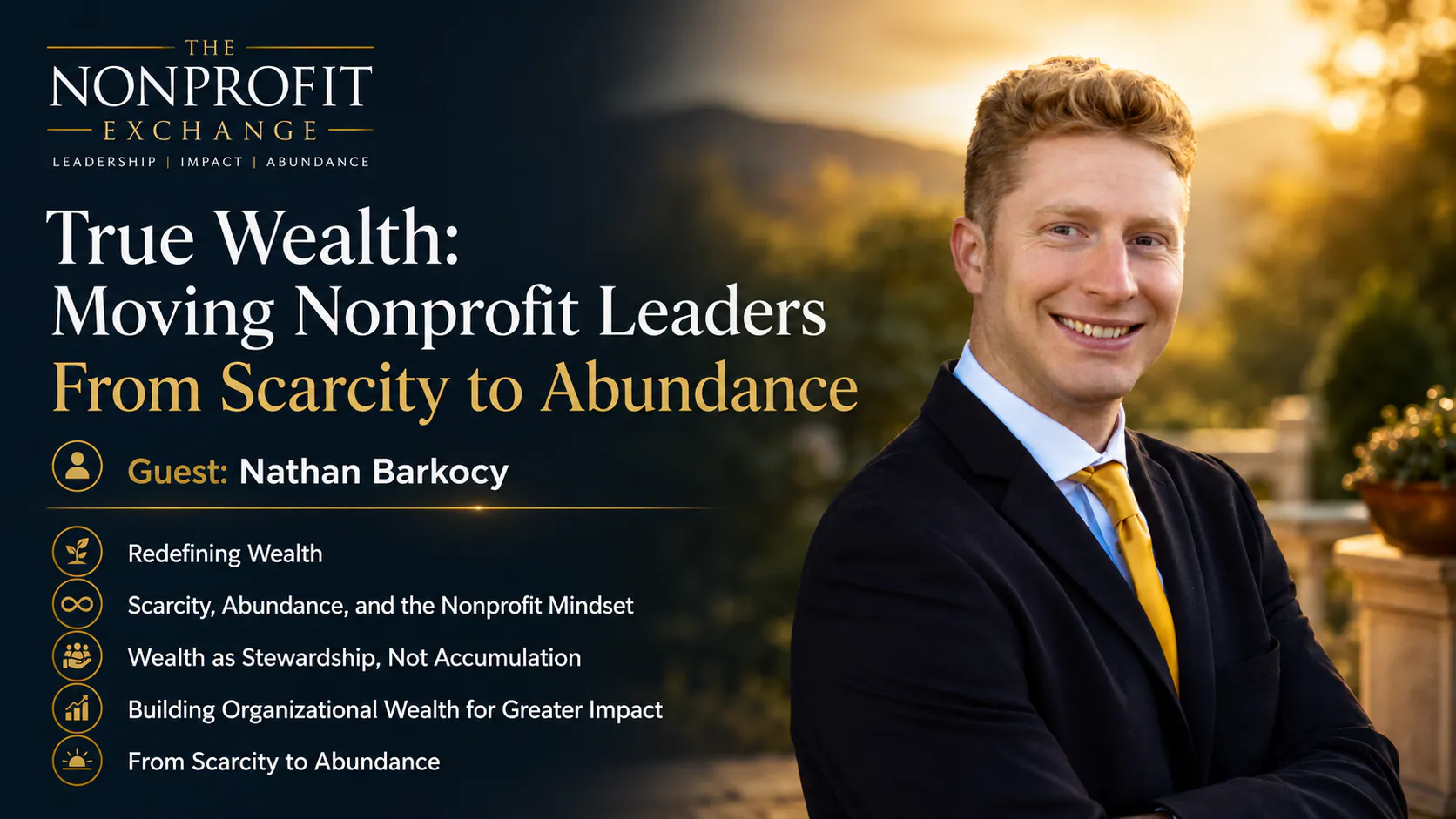 True Wealth: Moving Nonprofit Leaders From Scarcity to Abundance | What if nonprofit leaders stopped seeing wealth as something separate from mission and began viewing it as the capacity to create greater impact? In this episode of The Nonprofit Exchange, Hugh Ballou talks with Nathan Barkocy about moving from scarcity thinking to an abundance mindset grounded in stewardship, time, relationships, faith, and sustainable impact. Episode Summary Nonprofit leaders talk often about generosity, sacrifice, stewardship, and service, yet the word wealth can still feel uncomfortable in mission-driven organizations. Nathan Barkocy challenges that tension by redefining wealth as something much larger than financial accumulation. In his view, true wealth includes money, but it also includes ownership of time, meaningful relationships, purpose, faith, health, resilience, and the ability to multiply positive impact for others. Nathan's perspective was shaped by a life-changing experience. At age 16, while a nationally ranked competitive cyclist with ambitions of reaching the Tour de France and the Olympics, he was struck by a car traveling about 60 miles per hour. He survived, spent two weeks in a coma, and awoke paralyzed. Recovery required him to relearn how to walk, talk, and eat. That experience reshaped his understanding of what is truly valuable and led him to live by the conviction that tomorrow is never promised. For Nathan, time became the most limited and precious asset because once it is spent, it cannot be recovered. That insight became foundational to his philosophy of True Wealth. Nathan explains that money matters because it provides capacity: the capacity to build, to give, to serve, and to expand impact. But money is not the final measure. True wealth is revealed in what a person or organization is able to multiply for others. The conversation turns directly to the nonprofit sector and the persistent scarcity mindset that can limit leaders and organizations. Nonprofits often operate from assumptions such as "we can't afford it," "there isn't enough," or "we have to do everything ourselves." Nathan argues that leaders should instead begin with a different question: How much impact do you want to make? He points to the abundance of capital and opportunity already present in the marketplace and encourages nonprofit leaders to recognize that many people with resources are actively looking for meaningful ways to create social impact. Hugh and Nathan also explore wealth as stewardship rather than accumulation. Nathan distinguishes among old wealth, new wealth, and true wealth. Old wealth emphasizes long-term accumulation and preservation. New wealth often reflects entrepreneurial speed, visibility, and lifestyle. True wealth, as Nathan describes it, integrates the useful aspects of both while focusing on ownership of time, multiple streams of income, personal well-being, and impact. For nonprofit leaders, that means treating money as fuel for the mission rather than as something to fear or avoid. A major part of the conversation centers on relationships. Nathan emphasizes the "power of association" and the importance of intentionally surrounding yourself with people who can expand your thinking, open doors, and help you grow. He credits his relationship with Sharon Lechter, co-author of Rich Dad Poor Dad and his co-author on Old Wealth. New Wealth. True Wealth., as an example of how mentorship and association can transform opportunity. His father's advice captures the idea simply: "Show me your friends and I'll show you your future." For nonprofits, this relational wealth has practical consequences. Strong relationships with donors, investors, community leaders, mentors, and other nonprofit professionals can expand both funding and influence. Nathan describes the nonprofit model as a potential win-win-win: when organizations create value for others, donors and partners can participate in that impact, and the broader community benefits. Faith is another essential part of Nathan's understanding of abundance. His encounter with death deepened his gratitude for each day and reinforced the importance of using time intentionally. He describes every day as "an abundance of opportunity" and connects true wealth with creating positive relationships and building God's kingdom through meaningful impact. Nathan closes with practical advice for leaders who recognize that they have been operating from scarcity: get into the right rooms. Surround yourself with people who are where you want to be, learn from people who have created the kind of impact you seek, and stop allowing limited beliefs to determine the size of your mission. The amount of impact a nonprofit can create, he argues, is deeply connected to the abundance mindset of its leaders. · True wealth includes money, but it also includes time, purpose, faith, health, relationships, resilience, and the ability to create impact. · Time is a finite asset. Nonprofit leaders should audit how they spend it and whether those choices move the mission forward. · Scarcity thinking can limit an organization's impact long before actual resources do. · Money is not the mission, but it is fuel for the mission. · Wealth is strongest when it is stewarded and multiplied for others rather than merely accumulated. · Relationships are a form of capital. The people around a leader can expand opportunity, learning, funding, and impact. · An abundance mindset begins by recognizing that there are people, resources, and opportunities available to support meaningful work. · Leaders should intentionally place themselves in rooms with people who challenge and expand their thinking. “Tomorrow is never promised. Make the most of today.” “True wealth is measured in what you multiply for others.” “Every day is an abundance of opportunity.” “Show me your friends and I'll show you your future.” Nathan Barkocy is an entrepreneur, keynote speaker, mentor, and advocate for a broader definition of wealth. After surviving a near-fatal accident as a teenager, he rebuilt his health, faith, and life and developed a philosophy centered on ownership of time, purpose, relationships, generosity, and sustainable impact. He is a co-author of Old Wealth. New Wealth. True Wealth. with Sharon Lechter and leads the True Wealth Community for proactive and aspiring entrepreneurs. Nathan Barkocy: https://nathanbarkocy.com Key TakeawaysMemorable Ideas from the ConversationAbout Nathan BarkocyLearn More Learn more about your ad choices. Visit megaphone.fm/adchoices | 25m 40s | ||||||
| 8/4/26 |  The First 90 Days of Your Leadership Legacy | A leadership title may assign responsibility, but it does not automatically earn trust. In this episode of The Nonprofit Exchange, Hugh Ballou talks with Neill Marshall and Kurt Mosley of Health Search Partners about why the first 90 days of a new leadership role can shape an executive’s long-term credibility and legacy. Drawing from decades of executive search experience and hundreds of senior-level placements, Neill and Kurt explain the difference between assigned authority and earned authority. Assigned authority comes with the title. Earned authority develops through consistent behavior, humility, competence, listening, visibility, and follow-through. The conversation explores why leaders should move with urgency without becoming reckless. New executives often feel pressured to introduce strategic plans, restructure teams, or demonstrate immediate results. However, the most effective leaders take time to understand the organization, its culture, its people, and the problems employees experience every day. Through practical stories from healthcare leadership, Neill and Kurt illustrate the power of visible symbolic actions, honest communication, personal accessibility, and listening throughout the organization—not only to board members and senior executives. They also discuss why leaders must ensure that their actions match their words, acknowledge mistakes openly, and avoid relying on information from the same small group of people. Listeners will learn how to recognize whether trust is developing, when an organization is ready for change, and why moving too quickly can leave a leader isolated. The episode also offers valuable guidance for nonprofit boards and search committees seeking leaders who can do more than present strong credentials—they must be able to build relationships, understand culture, and earn the commitment of the people they lead. The central lesson is clear: assigned authority may open the door, but earned authority is built through listening, consistent behavior, meaningful early actions, and promises kept. Why the first 90 days matter Assigned authority versus earned authority How to be quick without hurrying Listening before leading change Why visible behavior matters more than announcements Building trust before pursuing performance The importance of transparency and admitting mistakes Warning signs that a new leader is moving too fast What boards and search committees should consider beyond a résumé Learn more about Neill Marshall, Kurt Mosley, and Health Search Partners at https://healthsearchpartners.com Learn more about your ad choices. Visit megaphone.fm/adchoices | 26m 56s | ||||||
| 7/28/26 |  The Art of Asking: Strategies for Successful Annual Campaigns | In this special live-audience episode of The Nonprofit Exchange, Hugh Ballou welcomes longtime fundraising professional Bob Hopkins for a practical conversation about annual campaigns, donor relationships, and the art of asking for support. Drawing on more than four decades of experience in philanthropy, Bob explains why individual donors remain essential to nonprofit sustainability. His central principle is simple: people give to people. Successful fundraising begins long before the request is made, through genuine relationships, careful listening, consistent communication, and a clear understanding of what matters to each potential supporter. Bob defines an annual campaign as an organized, multi-month process rather than a single event or one-time appeal. He describes a typical fall sequence: introduce the campaign in September, make the formal request in October, follow up and collect gifts in November, and celebrate and thank supporters in December. The purpose is to build predictable support for the coming year and establish an annual rhythm that donors come to recognize. The conversation also addresses the importance of preparing a focused contact list, maintaining a clean and current database, involving board members and volunteers, and communicating the results donors can help achieve. Bob emphasizes that organizations do not need thousands of names to begin. A smaller list of people with authentic relationships can be more valuable than a large list of disconnected contacts. Throughout the episode, Bob encourages nonprofit leaders to listen more than they speak, learn about a donor's interests, and connect the mission to those interests before making an invitation. He also reminds leaders that fundraising should never be treated as the work of one person. Strong annual campaigns engage a team of people who can reach out through their own relationships. The episode offers an accessible starting point for nonprofit executives, board members, development professionals, and emerging leaders who want to replace reactive fundraising with a thoughtful, relational, and repeatable annual campaign. · People give to people, so trust and relationship come before the ask. · An annual campaign is a planned process, not a single event or email. · A smaller list of genuine relationships can be more effective than a large, impersonal database. · Listening helps leaders understand what potential donors care about and how the mission connects with their values. · Boards and volunteers should participate in fundraising through their own relationships. · Consistent communication, follow-up, gratitude, and celebration are essential parts of the campaign. · Annual campaigns help organizations build more predictable support for the year ahead. “People give to people.” Key TakeawaysClosing Principle Learn more about your ad choices. Visit megaphone.fm/adchoices | 24m 02s | ||||||
| 7/14/26 |  Workforce Development Is a Team Sport | In this episode of The Nonprofit Exchange, Hugh Ballou speaks with Van Ton-Quinlivan about why workforce development must be understood as a collaborative community effort, not the responsibility of any single organization. Van explains that healthcare workforce development offers a powerful model for nonprofit leaders because the same principles apply across many fields: people need trusted guides, clear pathways, practical training, and community encouragement to move toward meaningful work. Van shares her own story of coming to the United States from Vietnam as a child and how access to education helped her family rebuild. That experience shaped her lifelong commitment to opening doors for others. Her work today focuses on helping people gain the credentials and confidence needed to enter healthcare careers, especially in allied health roles that are essential to community well-being. A central theme of the conversation is the “three-legged stool” of workforce development: employers, educators, and community organizations. Employers define the skills needed and offer the jobs. Educators help close the gap between current ability and workforce readiness. Nonprofits and community organizations serve as trusted connectors who invite people into new possibilities, help them understand available pathways, and support them as they take the next step. The conversation also highlights the dignity of opportunity. Nonprofits are not called simply to rescue people, but to help them recognize their gifts, build confidence, and see a future they may not yet imagine for themselves. Van notes that many people in every community have untapped potential but need encouragement, information, and access to the right pathway. Hugh and Van also explore inclusion, accessibility, and the importance of recognizing talent among people who are often overlooked, including individuals with disabilities, those with lived experience, adults returning to work, and young people seeking meaningful career exposure. Van points out that some career pathways, such as peer support roles, actually depend on lived experience as a qualification. The episode closes with a practical challenge for nonprofit leaders: identify one action this week that can help someone see a future in healthcare, in your organization, or in another meaningful career path. Workforce development is not only about filling jobs; it is about changing the trajectory of lives by building pathways of trust, dignity, opportunity, and collaboration. More information at https://futurohealth.org/ Learn more about your ad choices. Visit megaphone.fm/adchoices | 26m 48s | ||||||
| 7/7/26 |  What’s Possible in the Peripheral | In this episode of The Nonprofit Exchange, Hugh Ballou talks with Ryan Dewey Smith, Founding Executive Chairman and CEO of Inperium, about how mission-driven organizations can scale without losing the mission, identity, culture, and local trust that made their work effective in the first place. Ryan reframes growth not as absorption or control, but as a disciplined affiliation model that allows nonprofit organizations to remain locally rooted while gaining the strength of shared infrastructure, operational systems, capital access, and leadership capacity. Ryan explains that the work happening around the mission--finance, accounting, legal, insurance, technology, cybersecurity, data, facilities, fleet, and workforce systems--often determines whether the mission can continue. His central message is clear: no money, no mission; no mission, no money. Nonprofit leaders must treat financial stewardship, operating discipline, and collaboration as essential expressions of mission rather than distractions from it. The conversation explores why partnerships can be stronger than standalone operations, how leaders can reduce administrative burden, why culture can improve through thoughtful change, and how organizations can build sustainable models that protect mission while expanding impact. Ryan also challenges leaders to embrace entrepreneurial thinking on the business side of service, not only in the programs they deliver. Learn more about your ad choices. Visit megaphone.fm/adchoices | 25m 30s | ||||||
| 6/23/26 |  Two Seconds to Trust: Brain Science for Nonprofit Communicators | In this episode of The Nonprofit Exchange, Hugh Ballou talks with Sally Mildren, CEO and Chief Strategist of CommonWell Marketing, about why even good missions often get ignored in a noisy, overloaded world. Sally explains that the problem is usually not the mission itself, but the lack of emotional connection, clarity, and recognition in the message. Drawing on brain science, marketing strategy, and practical nonprofit experience, Sally shows how people make quick subconscious decisions about whether a message is relevant, trustworthy, and meant for them. She challenges nonprofit leaders to stop overwhelming people with every program, campaign, and call to action, and instead communicate with one audience, one clear message, and one meaningful emotional connection at a time. The conversation explores the difference between representation and recognition, the importance of simplicity, and the “two-second test” every website, social post, email, appeal, and face-to-face message must pass. For nonprofit leaders, the message is clear: communication is not just information delivery; it is an act of leadership that builds trust, belonging, and action. Sally Mildren is the CEO and Chief Strategist of CommonWell Marketing, a strategy-driven marketing firm serving nonprofits, rural health organizations, and mission-driven brands. Her work helps leaders connect strategy, storytelling, brand clarity, customer experience, and sustainable growth so their organizations can communicate with greater relevance and impact. Sally is also the host of the Leadership Cafe podcast, where marketing leaders, nonprofit professionals, and small teams gather for practical insights and candid conversations about leading with confidence and creating real impact. Key Themes in This Episode Why good missions still get ignored when people do not feel personally connected to the message. How the brain filters information quickly and often subconsciously before people decide whether to pay attention. Why nonprofit messaging often becomes too organization-centered, focusing on programs, systems, awards, and wins instead of the audience’s needs and identity. The difference between representation and recognition, and why people need to see themselves in the words, images, tone, and focus of the message. Why simplicity is one of the hardest and most important disciplines in nonprofit communication. How too many calls to action create confusion, fatigue, and inaction. Why emotion, surprise, and relevance are essential for earning attention and trust. Practical Takeaways for Nonprofit Leaders Start with the audience, not the organization. Ask, “Who is this for?” before creating any message. Speak to one person, one audience group, and one immediate need instead of trying to reach everyone at once. Reduce the number of words, images, and calls to action so the message can be processed quickly. Use images and stories that help the right person recognize themselves in the message. Watch engagement, traffic, bounce rates, conversions, and donation response as signals that your message is either connecting or missing the mark. Avoid panic messaging during financial uncertainty. Be intentional about what you need, who is most likely to engage, and what message will matter to them. Remember that a confused mind says no. Clarity builds trust and trust opens the door to action. Memorable Insights People often decide within seconds whether a message is for them or not. Recognition is more powerful than broad representation because it helps a specific person feel seen and understood. More content does not necessarily create more attention; it often creates more noise. The pathway to attention usually runs through emotion. Before pressing send, nonprofit leaders should ask: “Who is this for?” Learn more about your ad choices. Visit megaphone.fm/adchoices | 26m 42s | ||||||
| 6/16/26 | Ancient Wisdom for Modern Mission: What The Odyssey Teaches Nonprofit Leaders About Home, Resilience, and Renewal | In this inspiring episode of The Nonprofit Exchange, Hugh Ballou welcomes Phil Cousineau, author of The Wisdom of the Odyssey: Twenty-Four Life Lessons from Homer’s Epic, for a rich conversation about ancient wisdom and modern leadership. Phil explores why Homer’s Odyssey still speaks powerfully to leaders today, especially those serving through nonprofit work. He describes myth not as an old story locked in the past, but as a sacred story that continues to reveal how we live, lead, suffer, heal, remember, and return home. Through the journey of Odysseus, the devotion of Penelope, the growth of Telemachus, and the wisdom of mentorship, Phil draws out lessons on endurance, responsibility, hospitality, trust, healing, and the deeper meaning of service. The conversation connects the themes of The Odyssey directly to nonprofit leadership: staying rooted in mission, remembering the original “why,” creating places of welcome for the wounded or forgotten, and leading with courage through uncertainty, scarcity, and conflict. Phil also highlights the Greek concept of xenia, or sacred hospitality, as a model for building trust, listening to people’s stories, and creating communities where people feel seen and valued. At the heart of the episode is the question every leader eventually faces: How do we keep going when we feel far from home? Phil’s answer is simple and profound: follow the love. Remember what called you into the work, what contribution you hoped to make, and what shared story can bring people together again. This episode invites nonprofit leaders to see their own work as an odyssey through storms, temptation, loss, discovery, responsibility, and renewal—and to recognize that wisdom is often formed along the journey itself. Learn more about your ad choices. Visit megaphone.fm/adchoices | 52m 42s | ||||||
| 6/9/26 |  How to Fundraise for Non-Human Causes Without Burning Out! | In this episode of the Nonprofit Exchange, we dive into the unique challenges of fundraising for non-human causes, such as animal welfare and environmental conservation. Our guest, Catherine Lacefield, founder of Just Because Consulting, brings over 20 years of experience in the nonprofit sector. She shares her passion for fundraising and emphasizes the importance of integrating fundraising into the daily mindset of nonprofit staff. Catherine discusses the perception that fundraising is a daunting task, often leading to burnout among nonprofit leaders. She highlights the need for organizations to shift their focus from inward tasks to building relationships with their communities. By inviting supporters to engage with their missions, nonprofits can create a more sustainable fundraising environment. We explore the concept of stewardship, which goes beyond mere recognition of donations. Catherine illustrates how building genuine relationships with donors can lead to increased support and engagement. She also addresses the common pitfalls in nonprofit communication, stressing the importance of sharing impactful stories rather than solely focusing on fundraising asks. Throughout the conversation, Catherine encourages nonprofits to make fundraising fun and accessible, sharing creative strategies to engage potential donors. She emphasizes that fundraising should be viewed as an invitation for people to invest in the causes they care about, rather than a simple request for money. In closing, Catherine leaves us with a powerful reminder: by shifting our perspective on fundraising, we can transform it into an enjoyable and fulfilling process that fosters community and support for our missions. More information at - https://www.justbecause.consulting Learn more about your ad choices. Visit megaphone.fm/adchoices | 25m 37s | ||||||
| 6/2/26 |  Say It Skillfully: Communication That Strengthens Missions and the People Behind Them | In this episode of The Nonprofit Exchange, Hugh Ballou welcomes Molly Tschang, founder of Say It Skillfully, for a practical conversation on communication as one of the most essential leadership skills in nonprofit life. Molly emphasizes that communication is not simply about what leaders say, but about what people actually hear, understand, and are able to act on. Molly shares that many leadership challenges are communication issues in disguise. Drawing from her work with senior leaders, teams, and organizations navigating complex change, she explains that effective communication is a “team sport” because every person in an organization has a responsibility to speak up in service of the greater good. When people hold back out of fear of being wrong, offending others, or not fitting in, organizations lose access to the full wisdom and contribution of their teams. The conversation explores how nonprofit leaders can create environments where people feel valued, heard, and safe enough to contribute honestly. Molly offers practical guidance on building “accurate shared reality,” inviting different points of view, responding well to difficult feedback, and normalizing the truth that all of us are sometimes part of the communication problem. That awareness, she says, gives leaders and teams the opportunity to become part of the solution. Hugh and Molly also discuss the power of nonverbal communication, intentional listening, and the importance of showing up with the right energy before a single word is spoken. Molly introduces her simple Me, You, We framework as a tool for preparing conversations with clarity, empathy, and purpose. She encourages leaders to speak with compassion and confidence, not to prove themselves right, but to serve the mission, the team, and the greater good. This episode is especially valuable for nonprofit executives, board members, staff leaders, and volunteers who want to strengthen trust, improve collaboration, and help people bring their full gifts to the mission. More at - https://www.sayitskillfully.com Learn more about your ad choices. Visit megaphone.fm/adchoices | 28m 19s | ||||||
| 5/26/26 |  When You Think of Trash, Think of Long Way Home | In this episode of The Nonprofit Exchange, Hugh Ballou interviews Matthew Paneitz, founder and executive director of Long Way Home, about how discarded materials can become the foundation for education, dignity, and community transformation. Matthew shares the story of founding Long Way Home in Guatemala after serving in the Peace Corps and seeing both the depth of community need and the abundance of overlooked local resources. What began with building a city park grew into a larger mission: transforming trash into useful infrastructure while helping communities solve real problems with the resources already around them. The conversation explores the development of Hero School, a project-based educational model where students learn by addressing practical community needs such as stoves, water tanks, compost latrines, retaining walls, and sustainable buildings. Matthew explains how education becomes more meaningful when students connect classroom learning with real-life problem solving. Hugh and Matthew also discuss community ownership, local leadership, green building, resilience, and the challenge of scaling impact without losing the soul of the work. Matthew emphasizes that lasting transformation comes through listening, patience, cultural understanding, and building with the community rather than simply helping from the outside. The episode invites nonprofit leaders to rethink waste, poverty, education, and leadership—and to see possibility where others see only what has been discarded. Learn more about your ad choices. Visit megaphone.fm/adchoices | 26m 22s | ||||||
| 5/19/26 |  Content Beyond Buy-In: Getting Commitment to Change | In this episode of the Nonprofit Exchange, I had the pleasure of speaking with Jeff Weatherholt, a change communication and leadership advisor. We delved into the critical topic of moving beyond mere buy-in to foster genuine commitment to change within organizations. Jeff highlighted the distinction between buy-in, which is often transactional and one-sided, and commitment, which involves individuals finding their own reasons to embrace change. We discussed the alarming statistic that 88% of organizational changes fail to produce lasting results, emphasizing that this is a widespread issue, not just a personal failure of individual leaders. Jeff pointed out that many leaders tend to over-focus on strategy while neglecting the human side of change, which can lead to resistance. He urged us to reconsider the term "resistance," suggesting that it often oversimplifies the complex feelings individuals have about change. Communication emerged as a central theme in our conversation. Jeff stressed that plans alone do not change people; effective communication does. He encouraged leaders to engage in meaningful conversations that allow for two-way dialogue, rather than simply announcing changes. By doing so, leaders can better understand the motivations and concerns of their teams, ultimately leading to more successful change initiatives. We also explored the importance of vulnerability in leadership and how it can foster trust and openness. Jeff shared practical strategies for leaders to prepare for difficult conversations, emphasizing the need to listen actively and reflect back what they hear. As we wrapped up, Jeff encouraged nonprofit leaders to reach out to those they struggle to engage, as these conversations can yield valuable insights. He reminded us that effective engagement is a skill that can be developed, and that the way we communicate about change truly matters. Learn more about your ad choices. Visit megaphone.fm/adchoices | 26m 59s | ||||||
| 5/12/26 |  Storytelling for Yourself and Your Community | In this episode of The Nonprofit Exchange, I had the pleasure of speaking with Patton Dodd, an author and communications leader, about the profound impact of storytelling in our personal lives and communities. We explored how storytelling goes beyond mere communication tactics; it shapes our identities and influences our understanding of ourselves and the world around us. Patton shared insights from his role as the Executive Director of Storytelling and Communications at the H.D. Black Foundation in San Antonio, where he uses storytelling as a strategic tool to address issues like poverty and economic segregation. He emphasized that everyone is a storyteller, whether through spoken words, writing, or even internal narratives. We discussed common mistakes leaders make when telling stories, such as rushing to the conclusion without building tension and failing to engage in the process of curiosity and listening. Patton highlighted the importance of gathering diverse voices and perspectives to enrich our narratives, as well as the need for vulnerability in leadership to foster trust and openness. Additionally, we touched on Patton's memoir, "The Father You Get and The Ones You Make, Believe In, and Become," which delves into his personal journey of fatherhood and the complexities of familial relationships. He also introduced his initiative, Know Your Neighbor, which aims to bridge divides in San Antonio through shared storytelling experiences. As we wrapped up, I encouraged our listeners to reflect on their own stories and consider how they might re-narrate them for a more compassionate future. This conversation was a rich exploration of how stories can connect us, challenge our perceptions, and ultimately drive social change. For more insights and resources, you can find Patton at PattonDodd.com and learn about his work at KnowYourNeighbor.com. Thank you for joining us on this journey of storytelling and community building! Learn more about your ad choices. Visit megaphone.fm/adchoices | 26m 49s | ||||||
| 5/5/26 |  Financial Clarity: How to Outsmart Your Fear and Redesign Your Future | In this episode of The Nonprofit Exchange, I had the pleasure of speaking with Becca Pierce, an MBA and president of Xtend Coaching and Consulting. With over a decade of experience as an executive coach, Becca brings a transformational perspective on financial clarity and the emotional barriers that often accompany it. We delved into the pervasive issue of financial fear, which she identifies as a significant barrier to creativity and decision-making for leaders in both nonprofit and corporate sectors. Becca emphasized that this fear often stems from a scarcity mindset, particularly prevalent in nonprofit organizations, and can paralyze leaders from exploring new possibilities. Throughout our conversation, Becca shared practical strategies for overcoming this fear, including the importance of understanding one's financial situation through simple math—knowing how much you earn, spend, and need. She highlighted the necessity of having a financial plan, which serves as a roadmap for sustainable growth and allows leaders to make informed decisions without being overwhelmed by anxiety. We also discussed the critical role of surrounding oneself with experts, such as financial planners and treasurers, to help interpret numbers and guide decision-making. Becca stressed that leadership is about creating space for others to contribute, rather than trying to manage every detail personally. In addition to financial clarity, we explored the emotional aspects of leadership, including the need to set boundaries and the importance of self-care to prevent burnout. Becca shared her personal journey, including her experience with a brain tumor, which led her to redefine her understanding of success and the importance of leading from a place of wholeness rather than depletion. Becca's new book, "You Don't Have to Achieve to Be Loved," encapsulates her philosophy that self-worth is not tied to achievement. She encourages leaders to embrace their passions and design a future that aligns with their values. As we wrapped up, Becca offered valuable insights on time management, emphasizing that time is our only non-renewable resource. She reminded us that we don't need to chase after financial success to find fulfillment in life. This episode is a treasure trove of wisdom for anyone looking to transform their relationship with money, leadership, and personal well-being. I encourage you to listen, reflect, and consider how you can apply Becca's insights to your own journey. Learn more about your ad choices. Visit megaphone.fm/adchoices | 25m 52s | ||||||
| 4/28/26 |  Your Board – Your Singular Strategic Advantage | In this episode of The Non-Profit Exchange, I had the pleasure of speaking with Dr. Deb McFarland-Enright, a nationally recognized expert in nonprofit governance and board development. Our conversation centered around the critical role that boards of directors play in nonprofit organizations and how they can be transformed from passive oversight bodies into powerful strategic assets. Dr. Deb emphasized that each board seat is a priceless asset, representing an opportunity to make a meaningful impact in various areas, from social justice to community support. However, many nonprofits fail to leverage this potential because they view boards as a necessary evil rather than as partners in their mission. We discussed the importance of recruiting board members with purpose, aligning their expertise with the organization's strategic plan, and establishing clear expectations for their roles. One key takeaway was the need for a shift in mindset—from merely filling seats to recognizing the strategic advantage that a well-composed board can provide. Dr. Deb highlighted the importance of accountability and engagement, suggesting that boards should be held to high standards and that members should be actively involved in the organization's work. We also touched on the significance of a living strategic plan, which serves as a guiding document for board activities and decision-making. Dr. Deb shared insights on how to create a culture of relationships within the board, emphasizing the need for orientation and mentorship for new members. As we wrapped up, Dr. Deb announced her upcoming book, "Appropriately Bored to Death," which aims to provide practical guidance for transforming nonprofit boards into strategic catalysts for change. This episode is packed with valuable insights for nonprofit leaders looking to enhance their board's effectiveness and drive their mission forward. I encourage you to visit Dr. Deb's website, themcfarlandgroup.com, for more resources and to stay tuned for her book release. Thank you for joining us on this enlightening journey into nonprofit governance! More information at https://www.themacfarlangroup.com Learn more about your ad choices. Visit megaphone.fm/adchoices | 27m 56s | ||||||
| 4/21/26 |  Sustained Momentum Begins With A Simple Equation – Master It! | In this episode of The Nonprofit Exchange, I had the pleasure of speaking with Chip Higgins, a business strategist and performance coach. We delved into the concept of sustained momentum, which Chip describes through a simple yet powerful equation: mass times velocity. He emphasizes that understanding this equation can help nonprofit leaders create clarity, discipline, and effective systems to drive their organizations forward. Chip shared insights from his book, "The Physics Way: Powering Your Small Business to Maximum Momentum," where he applies principles of physics to the world of business and nonprofits. He highlighted the importance of having clear goals and a well-articulated mission, as these elements provide the necessary direction and energy for organizations to thrive. We discussed how clarity can prevent mission creep and ensure that everyone involved is aligned with the organization's objectives. Throughout our conversation, Chip pointed out common barriers to momentum, particularly in the nonprofit sector, such as leadership transitions and the challenges of maintaining energy and focus over time. He stressed the significance of consistency and discipline, advocating for a steady, intentional approach to growth rather than seeking rapid, unsustainable success. For those interested in exploring these concepts further, Chip offers a free chapter of his book and a diagnostic quiz on his website, chiphiggins.com. This episode is packed with valuable insights for nonprofit leaders looking to enhance their impact and drive sustained momentum in their organizations. More about Chip Higgins at - https://chiphiggins.com Learn more about your ad choices. Visit megaphone.fm/adchoices | 28m 39s | ||||||
Showing 25 of 506
Pitch Fit is a Pro feature
See how bookable this show is for guests, which brands already advertise, the per-episode ad value, and the best-fit guest and sponsor profile. The numbers are blurred on the free plan.
How readily this show books outside guests like you.
How proven this show is for host-read sponsorships.
For Guests
ProFor Advertisers
ProUpgrade to Pro to unlock guest cadence, sponsor categories, fit scores, and per-episode ad value for this show.
Distribution & Reach
About the show, platforms, and key insights.
Distribution & Reach
About the show, platforms, and key insights.
Hugh Ballou is an independent podcast creator known for his expertise in nonprofit leadership and organizational development. He combines his experience as a conductor and a leadership consultant to provide valuable insights tailored for nonprofit professionals. The Nonprofit Exchange: Leadership Tools & Strategies is distinctive in its focus on practical leadership tools and strategies specifically for nonprofit organizations. Covering topics such as governance, fundraising, and community engagement, the podcast features interviews with industry leaders and offers actionable advice in a conversational format, making complex ideas accessible. Listeners, primarily nonprofit leaders, board members, and donors, tune in to gain practical guidance that can enhance their impact within their organizations. The podcast delivers valuable content that fosters professional growth, strategic thinking, and a deeper understanding of the nonprofit sector's unique challenges.
By the numbers
- Total followers: 531
- Total plays: 27K
- Total reviews: 16
Platforms
TuneIn
- Followers: 15
Castbox
- Followers: 131
- Plays: 3.9K
- Reviews: 1
YouTube
- Subscribers: 351
- Views: 24K
- Videos: 582
Podcast App
- Followers: 15
- Reviews: 15
Podcast Republic
- Followers: 19
Audience
adults, seniors
Key insights
What the show covers
- tools for nonprofit leaders
- strategies for board members
- insights for donors
- community engagement techniques
Audience interests
- nonprofit leadership strategies
- board member engagement
- donor relations improvement
- spirituality in nonprofit work
Platform reach
- available on major podcast platforms
- targeted at nonprofit community
- engages diverse audience
- no specific platforms detected
Publishing consistency
- 488 episodes produced
- active for 11 years
- weekly or more episodes
- consistent content delivery
Chart history for The Nonprofit Exchange: Leadership Tools & Strategies
Peaked at #18 in Canada, currently #18 in Canada.
| Market | Genre | Peak | Current | Trend |
|---|---|---|---|---|
| Canada | — | #18 | #18 | — |
| TR | — | #57 | #57 | — |
| AE | — | #98 | #98 | — |
| United Kingdom | — | #147 | #147 | — |
| BE | — | #170 | #170 | — |
| South Africa | — | #189 | #189 | — |
Chart Positions
6 placements across 6 markets.
Chart Positions
6 placements across 6 markets.