Insights from recent episode analysis
Audience Interest
Podcast Focus
Publishing Consistency
Platform Reach
Insights are generated by CastFox AI using publicly available data, episode content, and proprietary models.
Most discussed topics
Brands & references
Total monthly reach
Estimated from 9 chart positions in 9 markets.
By chart position
- 🇺🇸US · Spirituality#1085K to 30K
- 🇯🇵JP · Spirituality#6210K to 30K
- 🇳🇱NL · Spirituality#1241K to 10K
- 🇿🇦ZA · Spirituality#1430K to 100K
- 🇹🇭TH · Spirituality#4210K to 30K
- Per-Episode Audience
Est. listeners per new episode within ~30 days
19K to 68K🎙 Daily cadence·825 episodes·Last published today - Monthly Reach
Unique listeners across all episodes (30 days)
63K to 226K🇿🇦44%🇺🇸13%🇯🇵13%+6 more - Active Followers
Loyal subscribers who consistently listen
25K to 90K
Market Insights
Platform Distribution
Reach across major podcast platforms, updated hourly
Total Followers
—
Total Plays
—
Total Reviews
—
* Data sourced directly from platform APIs and aggregated hourly across all major podcast directories.
On the show
From 28 epsHost
Recent guests
Recent episodes
Bible Magick with Robert Peter Part 2
Jun 24, 2026
1h 21m 03s
The Real Black Mirror II | Optics, Oracles & the Nervous System w/ Kaiva Rose & The Occult Rejects
Jun 23, 2026
1h 49m 08s
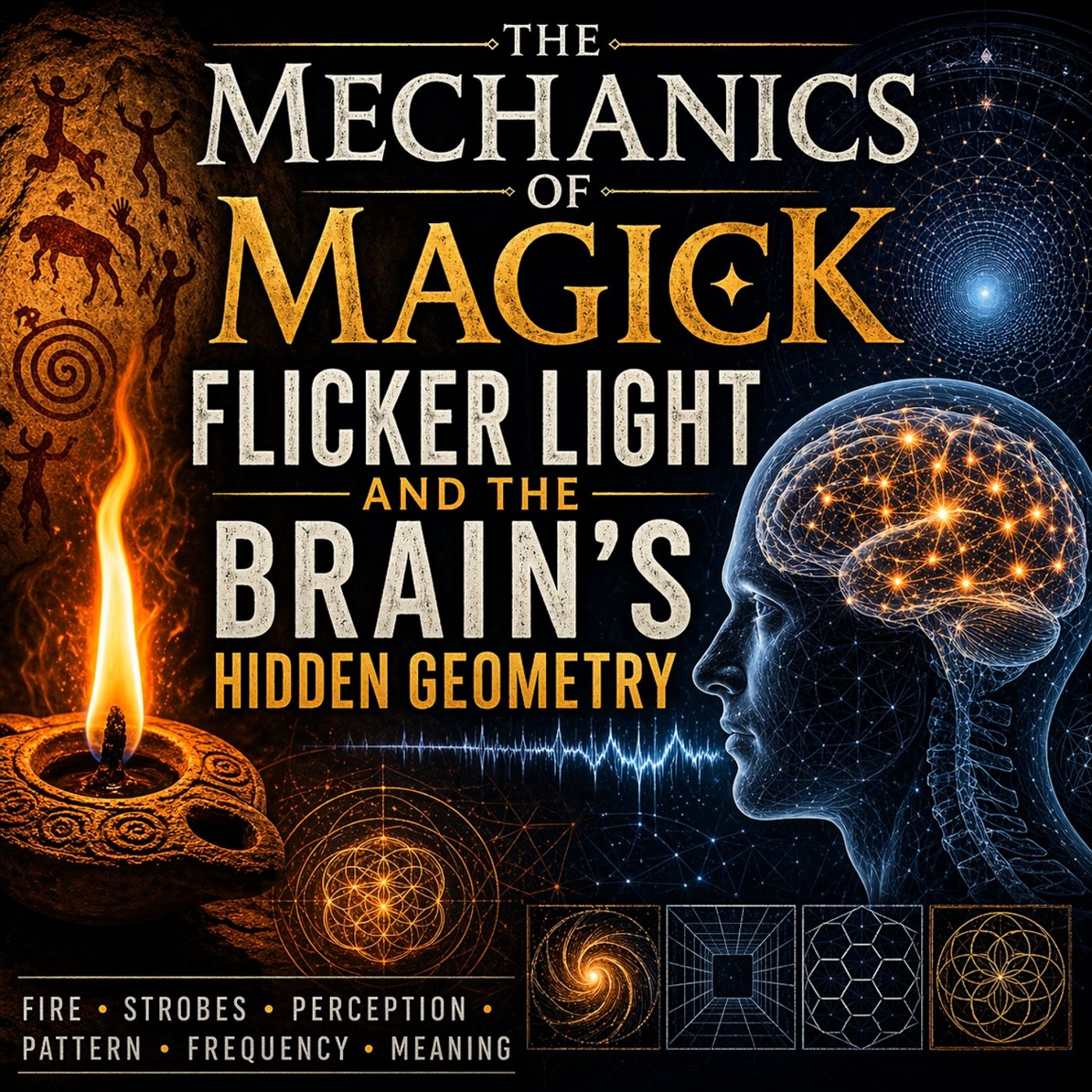
The Mechanics of Magick Drumming, Trance, and the Brain Part 1
Jun 22, 2026
1h 16m 16s
Lifting the Lamp: Angelic Magick, Thelema, and the Heavenly Voices of Frater Eleftheria
Jun 21, 2026
1h 36m 25s
The Rune That Looks Back: David Linder and the Greater Mysteries of Rune Magic
Jun 20, 2026
1h 11m 11s
Social Links & Contact
Official channels & resources
Official Website
Login
RSS Feed
Login
| Date | Episode | Topics | Guests | Brands | Places | Keywords | Sponsor | Length | |
|---|---|---|---|---|---|---|---|---|---|
| 6/24/26 | ![]() Bible Magick with Robert Peter Part 2 | If you enjoy this episode, we’re sure you will enjoy more content like this on The Occult Rejects. In fact, we have curated playlists on occult topics like grimoires, esoteric concepts and phenomena, occult history, analyzing true crime and cults with an occult lens, Para politics, and occultism in music. Whether you enjoy consuming your content visually or via audio, we’ve got you covered - and it will always be provided free of charge. So, if you enjoy what we do and want to support our work of providing accessible, free content on various platforms, please consider making a donation to the links provided below. Thank you and enjoy the episode!Links For The Occult Rejectshttps://linktr.ee/theoccultrejectsOccult Research Institutehttps://www.occultresearchinstitute.org/Substackhttps://substack.com/@theoccultrejects?r=7auau0&utm_campaign=profile&utm_medium=profile-pageCash Apphttps://cash.app/$theoccultrejectsVenmo@TheOccultRejectsBuy Me A Coffeebuymeacoffee.com/TheOccultRejectsPatreonhttps://www.patreon.com/TheOccultRejectsAlso want to remind people about the website, if you're into reading we have tons of information by multiple contributors, and we got t-shirts up on the site if you're interested. Fun fact, the art is all based on the eyeball. A | 1h 21m 03s | ||||||
| 6/23/26 | ![]() The Real Black Mirror II | Optics, Oracles & the Nervous System w/ Kaiva Rose & The Occult Rejects | Links For The Occult Rejectshttps://linktr.ee/theoccultrejectsOccult Research Institutehttps://www.occultresearchinstitute.org/Substackhttps://substack.com/@theoccultrejects?r=7auau0&utm_campaign=profile&utm_medium=profile-pageCash Apphttps://cash.app/$theoccultrejectsVenmo@TheOccultRejectsBuy Me A Coffeebuymeacoffee.com/TheOccultRejectsPatreonhttps://www.patreon.com/TheOccultRejectsAlso want to remind people about the website, if you're into reading we have tons of information by multiple contributors, and we got t-shirts up on the site if you're interested. Fun fact, the art is all based on the eyeball. A | 1h 49m 08s | ||||||
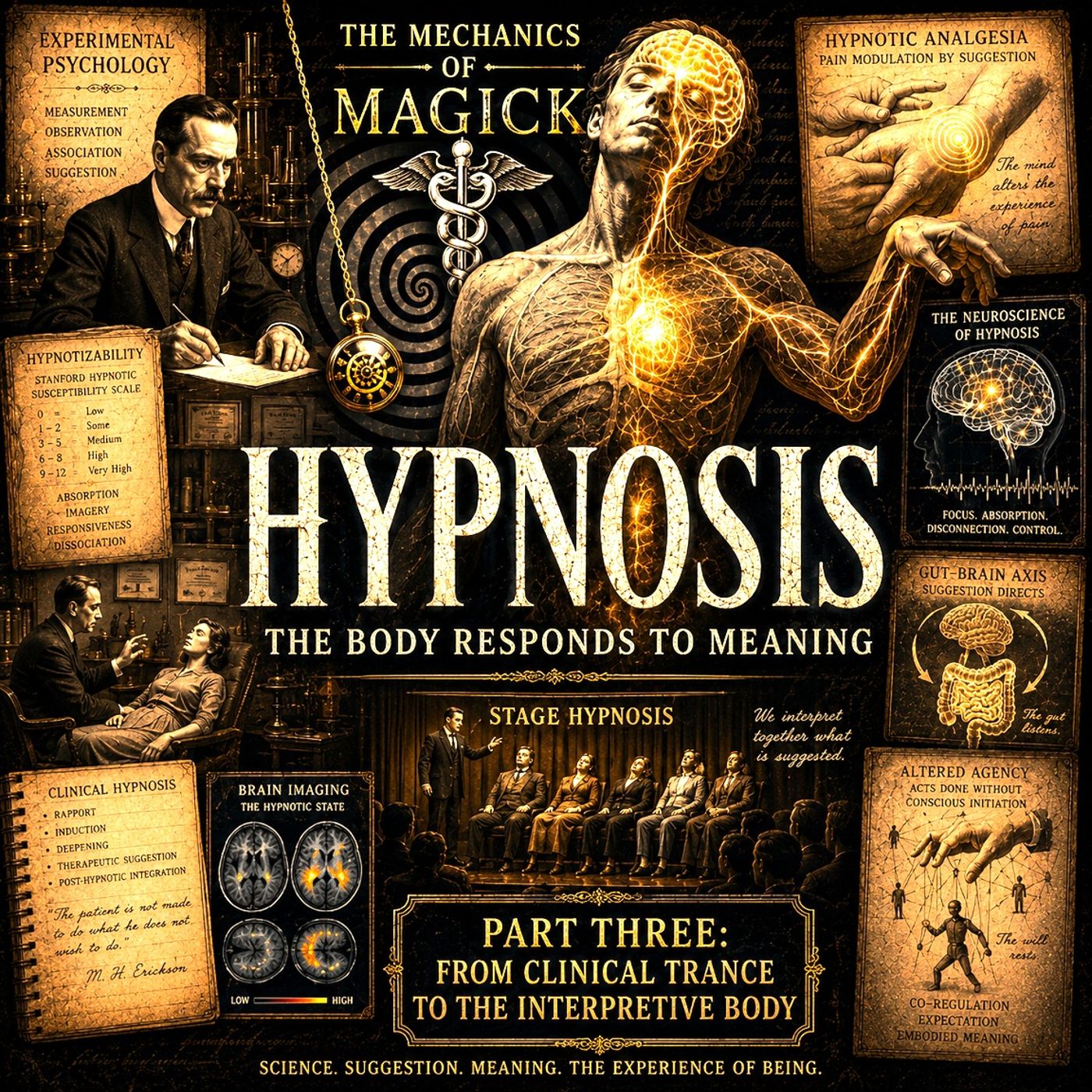
| 6/22/26 | ![]() The Mechanics of Magick Drumming, Trance, and the Brain Part 1 | Links For The Occult Rejectshttps://linktr.ee/theoccultrejectsOccult Research Institutehttps://www.occultresearchinstitute.org/Substackhttps://substack.com/@theoccultrejects?r=7auau0&utm_campaign=profile&utm_medium=profile-pageCash Apphttps://cash.app/$theoccultrejectsVenmo@TheOccultRejectsBuy Me A Coffeebuymeacoffee.com/TheOccultRejectsPatreonhttps://www.patreon.com/TheOccultRejectsPart 1 focuses on the drum as an ancient technology of altered consciousness. The argument is not that every beat causes trance, or that neuroscience has proven spirits. The stronger argument is that rhythm enters the human organism through hearing, motor prediction, breath, movement, attention, emotion, expectation, culture, and social synchrony. The drum becomes powerful when sound, body, group, ritual frame, and meaning converge. These sources support the archaeology, neuroscience, EEG research, shamanic studies, possession studies, Indigenous and culturally specific drum traditions, ritual theory, placebo and meaning-response research, ceremonial magic, and modern witchcraft material used in the episode.Core Academic and Scientific SourcesHuels, Emma R., Hyoungkyu Kim, UnCheol Lee, Tirsa Bel-Bahar, Ana V. Colmenero, Alexandra Nelson, Stefanie Blain-Moraes, George A. Mashour, and Richard E. Harris. “Neural Correlates of the Shamanic State of Consciousness.” Frontiers in Human Neuroscience 15 (2021): 610466.Gordon, Yoel, Golan Karvat, Noa Dagan, and Ayelet N. Landau. “Neural Tracking at Theta Predicts Drumming-Induced Altered States of Consciousness.” Scientific Reports 16, no. 1 (2026): Article 10204.Aparicio-Terrés, R., et al. “The Neurobiology of Altered States of Consciousness Induced by Drumming and Other Rhythmic Sound Patterns.” Annals of the New York Academy of Sciences, 2025.Neher, Andrew. “Auditory Driving Observed with Scalp Electrodes in Normal Subjects.” Electroencephalography and Clinical Neurophysiology 13 (1961): 449–451.Neher, Andrew. “A Physiological Explanation of Unusual Behavior in Ceremonies Involving Drums.” Human Biology 34, no. 2 (1962): 151–160.Maurer, R., V. K. Kumar, L. Woodside, and R. J. Pekala. “Phenomenological Experience in Response to Monotonous Drumming and Hypnotizability.” American Journal of Clinical Hypnosis 40, no. 2 (1997): 130–145. Use for monotonous drumming, subjective altered experience, imagery, absorption, and hypnotizability.Maxfield, Melinda C. “Effects of Rhythmic Drumming on EEG and Subjective Experience.” PhD diss., Institute of Transpersonal Psychology, 1990. Use as older supporting context on drumming, EEG, imagery, body-image changes, and subjective altered experience. Do not make this the main scientific proof; use it as background.Nozaradan, Sylvie, Isabelle Peretz, and André Mouraux. “Tagging the Neuronal Entrainment to Beat and Meter.” The Journal of Neuroscience 31, no. 28 (2011): 10234–10240. Use for EEG evidence that the brain can track beat and meter. This supports the claim that the brain does not merely hear rhythm as background sound; it can represent rhythmic structure in measurable ways.Nozaradan, Sylvie. “Exploring How Musical Rhythm Entrains Brain Activity with Electroencephalogram Frequency-Tagging.” Philosophical Transactions of the Royal Society B 369, no. 1658 (2014). Use as broader rhythm/EEG entrainment support. This helps explain frequency-tagging, beat tracking, meter, neural entrainment, and the measurable relationship between rhythmic structure and brain activity.Thaut, Michael H., Gerald C. McIntosh, and Volker Hoemberg. “Neurobiological Foundations of Neurologic Music Therapy: Rhythmic Entrainment and the Motor System.” Frontiers in Psychology 5 (2015). Use for rhythm as motor-system timing information. This supports the claim that a beat can become bodily instruction, not just sound for the ear. Especially useful when discussing rhythmic auditory stimulation, motor planning, gait, entrainment, and the auditory-motor bridge.Ross, Jessica M., John R. Iversen, and Ramesh Balasubramaniam. “Time Perception for Musical Rhythms: Sensorimotor Perspectives on Entrainment, Simulation, and Prediction.” 2022. Use for rhythm, timing, prediction, sensorimotor entrainment, and the way musical rhythm interacts with time perception.Hove, Michael J., and Jane L. Risen. “It’s All in the Timing: Interpersonal Synchrony Increases Affiliation.” Social Cognition 27, no. 6 (2009): 949–960. Use for synchrony and social bonding. This helps support the group-body argument: moving or acting in time with others can increase affiliation.Wiltermuth, Scott S., and Chip Heath. “Synchrony and Cooperation.” Psychological Science 20, no. 1 (2009): 1–5. Use for the claim that synchronized movement can increase cooperation and attachment among participants.Tarr, Bronwyn, Jacques Launay, and Robin I. M. Dunbar. “Music and Social Bonding: ‘Self-Other’ Merging and Neurohormonal Mechanisms.” Frontiers in Psychology 5 (2014): 1096. Use for music, synchrony, bonding, endorphin/social mechanisms, and why group rhythm can feel like more than private listening.Fancourt, Daisy, Rosie Perkins, Sara Ascenso, Louise Atkins, Fatima Kilfeather, and Aaron Williamon. “Effects of Group Drumming Interventions on Anxiety, Depression, Social Resilience and Inflammatory Immune Response among Mental Health Service Users.” PLOS ONE 11, no. 3 (2016): e0151136. Use for modern group-drumming research showing psychological and physiological effects, including anxiety, depression, social resilience, wellbeing, and inflammatory immune response. Use carefully: this does not make group drumming a cure-all. It supports the more grounded claim that embodied rhythm and group participation can affect mood, social connection, and body chemistry.Bittman, Barry B., et al. “Composite Effects of Group Drumming Music Therapy on Modulation of Neuroendocrine-Immune Parameters in Normal Subjects.” Alternative Therapies in Health and Medicine 7, no. 1 (2001): 38–47. Use as older supporting material on group drumming and neuroendocrine-immune measures. Keep secondary. Fancourt is cleaner for the main script body.Archaeology and Deep History of DrumsLawergren, Bo. “Neolithic Drums in China.” In Music Archaeology in China. 2006. Use for clay drums in Neolithic China and the deep-history claim that drums are not just poetic symbols of antiquity. They appear in the archaeological record as instruments tied to early sound-making, ceremony, and social order.Both, Arnd Adje. “Music Archaeology: Some Methodological and Theoretical Considerations.” Use as general support for why ancient instruments should be treated as ritual and social evidence, not merely decorative objects.Anthropology, Ethnomusicology, Ritual, and TranceRouget, Gilbert. Music and Trance: A Theory of the Relations Between Music and Possession. Translated by Brunhilde Biebuyck. Chicago: University of Chicago Press, 1985. Essential source. Use for the caution that music does not mechanically or universally cause trance. Rouget helps keep the argument academically serious by emphasizing culture, ritual frame, meaning, and expectation.Becker, Judith. Deep Listeners: Music, Emotion, and Trancing. Bloomington: Indiana University Press, 2004. Use for music-linked trancing, emotional absorption, religious experience, and culturally trained ways of listening. This supports the “hearing versus entering” distinction.McNeill, William H. Keeping Together in Time: Dance and Drill in Human History. Cambridge, MA: Harvard University Press, 1995. Use for marching, dance, drill, muscular bonding, synchronized movement, and rhythm as social glue. This is useful both for Part 1’s group-body material and Part 2’s war-drum material.Eliade, Mircea. Shamanism: Archaic Techniques of Ecstasy. Princeton: Princeton University Press, 1964. Use carefully. Eliade’s phrase “archaic techniques of ecstasy” is powerful, but the episode should also note that later scholarship criticizes his tendency to universalize shamanism.Winkelman, Michael. Shamanism: A Biopsychosocial Paradigm of Consciousness and Healing. 2nd ed. Santa Barbara, CA: Praeger, 2010. Use for shamanism as a ritual technology involving altered consciousness, healing, social integration, symbolism, and body-brain processes.Winkelman, Michael. “Shamanism and Psychedelics: A Biogenetic Structuralist Paradigm of Ecopsychology.” European Journal of Ecopsychology 4 (2013): 90–115. Use as supplemental background on shamanism, altered consciousness, and comparative models of trance and visionary states.Kontouli, Athanasia, Michael J. Hove, Alexandre Lehmann, Peter Vuust, and Peter E. Keller. “The Rhythms of Trance: Cultural Phenomenology and Neural Mechanisms of Music-Induced Lewis-Williams, David. The Mind in the Cave: Consciousness and the Origins of Art. London: Thames & Hudson, 2002. Use cautiously for altered states, entoptic imagery, ritual vision, and the relationship between neuropsychology and symbolic culture.Non-Ordinary States of Consciousness.” Neuroscience & Biobehavioral Reviews, 2026. Use for the bridge between cultural phenomenology and neuroscience. This supports the point that music-induced trance is not only acoustics; it involves body, training, expectation, culture, environment, and interpretation.Tart, Charles T., ed. Altered States of Consciousness. New York: Wiley, 1969. Use as classic altered-state background.Hultkrantz, Åke. “The Drum in Shamanism.” Use for classic comparative material on the shamanic drum, especially Arctic, SiberiAlso want to remind people about the website, if you're into reading we have tons of information by multiple contributors, and we got t-shirts up on the site if you're interested. Fun fact, the art is all based on the eyeball. A | 1h 16m 16s | ||||||
| 6/21/26 | ![]() Lifting the Lamp: Angelic Magick, Thelema, and the Heavenly Voices of Frater Eleftheria | Also want to remind people about the website, if you're into reading we have tons of information by multiple contributors, and we got t-shirts up on the site if you're interested. Fun fact, the art is all based on the eyeball. A | 1h 36m 25s | ||||||
| 6/20/26 | ![]() The Rune That Looks Back: David Linder and the Greater Mysteries of Rune Magic | If you enjoy this episode, we’re sure you will enjoy more content like this on The Occult Rejects. In fact, we have curated playlists on occult topics like grimoires, esoteric concepts and phenomena, occult history, analyzing true crime and cults with an occult lens, Para politics, and occultism in music. Whether you enjoy consuming your content visually or via audio, we’ve got you covered - and it will always be provided free of charge. So, if you enjoy what we do and want to support our work of providing accessible, free content on various platforms, please consider making a donation to the links provided below. Thank you and enjoy the episode!Links For The Occult Rejectshttps://linktr.ee/theoccultrejectsOccult Research Institutehttps://www.occultresearchinstitute.org/Substackhttps://substack.com/@theoccultrejects?r=7auau0&utm_campaign=profile&utm_medium=profile-pageCash Apphttps://cash.app/$theoccultrejectsVenmo@TheOccultRejectsBuy Me A Coffeebuymeacoffee.com/TheOccultRejectsPatreonhttps://www.patreon.com/TheOccultRejectsAlso want to remind people about the website, if you're into reading we have tons of information by multiple contributors, and we got t-shirts up on the site if you're interested. Fun fact, the art is all based on the eyeball. A | 1h 11m 11s | ||||||
| 6/19/26 | ![]() Male Lunar Gods: The Forgotten Moon Kings | If you enjoy this episode, we’re sure you will enjoy more content like this on The Occult Rejects. In fact, we have curated playlists on occult topics like grimoires, esoteric concepts and phenomena, occult history, analyzing true crime and cults with an occult lens, Para politics, and occultism in music. Whether you enjoy consuming your content visually or via audio, we’ve got you covered - and it will always be provided free of charge. So, if you enjoy what we do and want to support our work of providing accessible, free content on various platforms, please consider making a donation to the links provided below. Thank you and enjoy the episode!Links For The Occult Rejectshttps://linktr.ee/theoccultrejectsOccult Research Institutehttps://www.occultresearchinstitute.org/Cash Apphttps://cash.app/$theoccultrejectsVenmo@TheOccultRejectsBuy Me A Coffeebuymeacoffee.com/TheOccultRejectsPatreonhttps://www.patreon.com/TheOccultRejectsCore historical / comparative sourcesEncyclopaedia Britannica. “moon worship.” Good for the broad comparative frame: lunar symbolism, death-rebirth, hunting vs. agrarian patterns, and why the moon is sometimes male and sometimes female.Encyclopaedia Britannica. “The moon,” in Nature Worship: Celestial Phenomena as Objects of Worship or Veneration. Good for lunar phases, magical timing, menstruation/tides, dangerous dark days, eclipse anxiety, and symbolic variation.Encyclopaedia Britannica. “Celestial phenomena as objects of worship or veneration,” in Nature Worship. Useful for the broader claim that many hunting and gathering societies, and some pastoral and royal cultures, conceived the moon as male.MesopotamiaOracc / Ancient Mesopotamian Gods and Goddesses. “Nanna-Suen.” Best core reference for the identity, names, and cultic status of the Mesopotamian moon god.Encyclopaedia Britannica. “Sin.” Best quick reference for Nanna/Sin as moon god, his bull symbolism, Ur, fertility functions, and Nabonidus.Encyclopaedia Britannica. “Enheduanna.” Useful if you want to reference the priestly/literary world attached to the cult of Nanna at Ur.EgyptEncyclopaedia Britannica. “Khonsu.” Strong for Khonsu as youth, moon god, Pyramid Text background, and Karnak.Encyclopaedia Britannica. “Thoth.” Strong for Thoth as moon god of reckoning, learning, writing, and later Hermetic importance.The Metropolitan Museum of Art. Collections and bulletin material on Iah / Osiris-Iah and Egyptian lunar symbolism. Best for the more specialized lunar material beyond Khonsu and Thoth.Levant / Anatolia / Near EastEncyclopaedia Britannica. “Yarikh.” Best starting point for the Ugaritic / West Semitic moon god and the Nikkal marriage material.Encyclopaedia Britannica. “Kushukh.” Best for the Hurrian moon god, oath function, iconography, and Hittite adoption.Encyclopaedia Britannica. “Religions of the Hittites, Hattians, and Hurrians,” in Anatolian religion. Best broad source for Arma and the Hittite/Luwian/Hurrian lunar world.Encyclopaedia Britannica. “Men.” Best source for the later Anatolian moon god, iconography, and possible tie to Mao.ArabiaEncyclopaedia Britannica. “Arabian religion.” Good for the broad astral background of pre-Islamic Arabian religion.Encyclopaedia Britannica. “Pre-Islamic deities,” in Arabian religion. Essential for Wadd, ʿAmm, Ḥawl, and for correcting outdated claims about Almaqah and Syn.India and IranEncyclopaedia Britannica. “navagraha.” Good for Chandra/Soma in astrology and lived Hindu cosmology.Encyclopaedia Britannica. “nakshatra.” Best for lunar mansions, lunar months, and Chandra’s mythic/calendar role.Encyclopaedia Britannica. “soma.” Essential for Soma as sacred drink and later lunar identification.Encyclopaedia Iranica. “Māh Yašt.” Best specialist source for the Iranian moon, lunar phases, and the “seed of the Bull” symbolism.Northern / Eastern EuropeBritannica Kids / Students. “Sól and Máni.” Good clean source for the Norse sibling pair and the male moon.Encyclopaedia Britannica. “Mēness.” Best source for the Baltic moon god, renewal, prayer, and agricultural strength.Encyclopaedia Britannica. “Slavic religion: Folk conceptions.” Essential for the masculine Slavic moon, kinship language, and lunar veneration.JapanEncyclopaedia Britannica. “Tsukiyomi.” Best short source for Tsukuyomi as moon god.Encyclopaedia Britannica. “Izanagi.” Useful for the birth of Tsukuyomi from purification and the Shintō context.Encyclopaedia Britannica. “Ukemochi no Kami.” Best source for the separation myth involving Tsukuyomi and Amaterasu.Indigenous / circumpolar traditionsEncyclopaedia Britannica. “Oral literatures,” in Mythologies of the Indigenous Peoples of the Americas. Best broad source for the Arctic male moon pursuing his sister the sun.Encyclopedia.com. “Igaluk.” Useful specialist entry for the Inuit moon god story.MesoamericaEncyclopaedia Britannica. “Aztec religion.” Best for the Teotihuacán fire myth and Tecciztécatl becoming the moon.Susan Milbrath. “The Moon in Meso-America.” Oxford Research Encyclopedia of Planetary Science (2020). Best specialist source for masculine moon material in Central Mexico and broader lunar roles in Mesoamerica.Qabalah / Jewish mysticism / occult sourcesHistorical Jewish mysticismEncyclopaedia Britannica. “sefirot.” Best concise source for the sefirot, including Yesod as “foundation.”Encyclopaedia Britannica. “Jewish mysticism,” in Judaism. Good for the broader Kabbalistic context.My Jewish Learning. “What Are the Sefirot?” Good readable support source for explaining sefirot on air.Western esoteric / occult QabalahDion Fortune. The Mystical Qabalah. Weiser, 2000. Strongest single occult source for Yesod as astral foundation, imaginal reservoir, and “treasure house of images” current.Aleister Crowley. 777 and Other Qabalistic Writings of Aleister Crowley. Weiser, 1986. Best for formal occult correspondences, including the Yesod-Moon scheme.Aleister Crowley. Magick Without Tears. New Falcon, 1991. Useful for Crowley’s practical Qabalistic framing.Lon Milo DuQuette. The Chicken Qabalah of Rabbi Lamed Ben Clifford. Weiser, 2001. Good modern, readable summary of Yesod in Western occult terms.Israel Regardie. The Tree of Life: A Study in Magic. Weiser, 1972. Strong for Golden Dawn style Yesod/astral-plane framing.Gareth Knight. A Practical Guide to Qabalistic Symbolism. Weiser, 2001. Very useful for Yesod symbolism and the broader Tree of Life structure.Science / symbolism supportNASA Science. “Moon Phases.” Best source for the simple but important physical point that moonlight is reflected sunlight.NASA Science. “Eclipses.” Useful if you want a clean science-side reference when talking about eclipses before contrasting that with mythic fear and ritual response.Also want to remind people about the website, if you're into reading we have tons of information by multiple contributors, and we got t-shirts up on the site if you're interested. Fun fact, the art is all based on the eyeball. A | 1h 13m 05s | ||||||
| 6/18/26 | ![]() The Sovereign Magician | Self-Initiation in the Age of AI & Psyops w/ Nick of The Occult Rejects | If you enjoy this episode, we’re sure you will enjoy more content like this on The Occult Rejects. In fact, we have curated playlists on occult topics like grimoires, esoteric concepts and phenomena, occult history, analyzing true crime and cults with an occult lens, Para politics, and occultism in music. Whether you enjoy consuming your content visually or via audio, we’ve got you covered - and it will always be provided free of charge. So, if you enjoy what we do and want to support our work of providing accessible, free content on various platforms, please consider making a donation to the links provided below. Thank you and enjoy the episode!Links For The Occult Rejectshttps://linktr.ee/theoccultrejectsOccult Research Institutehttps://www.occultresearchinstitute.org/Substackhttps://substack.com/@theoccultrejects?r=7auau0&utm_campaign=profile&utm_medium=profile-pageCash Apphttps://cash.app/$theoccultrejectsVenmo@TheOccultRejectsBuy Me A Coffeebuymeacoffee.com/TheOccultRejectsPatreonhttps://www.patreon.com/TheOccultRejectsAlso want to remind people about the website, if you're into reading we have tons of information by multiple contributors, and we got t-shirts up on the site if you're interested. Fun fact, the art is all based on the eyeball. A | 2h 34m 09s | ||||||
| 6/17/26 | ![]() Bible Magick with Robert Peter Part 1 | If you enjoy this episode, we’re sure you will enjoy more content like this on The Occult Rejects. In fact, we have curated playlists on occult topics like grimoires, esoteric concepts and phenomena, occult history, analyzing true crime and cults with an occult lens, Para politics, and occultism in music. Whether you enjoy consuming your content visually or via audio, we’ve got you covered - and it will always be provided free of charge. So, if you enjoy what we do and want to support our work of providing accessible, free content on various platforms, please consider making a donation to the links provided below. Thank you and enjoy the episode!Links For The Occult Rejectshttps://linktr.ee/theoccultrejectsOccult Research Institutehttps://www.occultresearchinstitute.org/Cash Apphttps://cash.app/$theoccultrejectsVenmo@TheOccultRejectsBuy Me A Coffeebuymeacoffee.com/TheOccultRejectsPatreonhttps://www.patreon.com/TheOccultRejectsAlso want to remind people about the website, if you're into reading we have tons of information by multiple contributors, and we got t-shirts up on the site if you're interested. Fun fact, the art is all based on the eyeball. A | 1h 16m 31s | ||||||
| 6/16/26 | ![]() WHAT IF?! episode #1 with Sanhre | Links For The Occult Rejectshttps://linktr.ee/theoccultrejectsOccult Research Institutehttps://www.occultresearchinstitute.org/Substackhttps://substack.com/@theoccultrejects?r=7auau0&utm_campaign=profile&utm_medium=profile-pageCash Apphttps://cash.app/$theoccultrejectsVenmo@TheOccultRejectsBuy Me A Coffeebuymeacoffee.com/TheOccultRejectsPatreonhttps://www.patreon.com/TheOccultRejectsAlso want to remind people about the website, if you're into reading we have tons of information by multiple contributors, and we got t-shirts up on the site if you're interested. Fun fact, the art is all based on the eyeball. A | 54m 33s | ||||||
| 6/15/26 | ![]() The Mechanics of Magick: Meditation and the Ritual Engineering of the Self | If you enjoy this episode, we’re sure you will enjoy more content like this on The Occult Rejects. In fact, we have curated playlists on occult topics like grimoires, esoteric concepts and phenomena, occult history, analyzing true crime and cults with an occult lens, Para politics, and occultism in music. Whether you enjoy consuming your content visually or via audio, we’ve got you covered - and it will always be provided free of charge. So, if you enjoy what we do and want to support our work of providing accessible, free content on various platforms, please consider making a donation to the links provided below. Thank you and enjoy the episode!Links For The Occult Rejectshttps://linktr.ee/theoccultrejectsOccult Research Institutehttps://www.occultresearchinstitute.org/Substackhttps://substack.com/@theoccultrejects?r=7auau0&utm_campaign=profile&utm_medium=profile-pageCash Apphttps://cash.app/$theoccultrejectsVenmo@TheOccultRejectsBuy Me A Coffeebuymeacoffee.com/TheOccultRejectsPatreonhttps://www.patreon.com/TheOccultRejectsBiblioBernardi, Luciano, Peter Sleight, Gabriele Bandinelli, Simone Cencetti, Luciano Fattorini, Johanna Wdowczyc-Szulc, and Alfonso Lagi. “Effect of Rosary Prayer and Yoga Mantras on Autonomic Cardiovascular Rhythms: Comparative Study.” BMJ 323, no. 7327 (2001): 1446–1449.Benson, Herbert, John W. Lehmann, Mark S. Malhotra, Ralph F. Goldman, Jeffrey Hopkins, and Mark D. Epstein. “Body Temperature Changes During the Practice of g Tum-mo Yoga.” Nature 295 (1982): 234–236.Benson, Herbert, Mark S. Malhotra, Ralph F. Goldman, Gregory D. Jacobs, and Jeffrey Hopkins. “Three Case Reports of the Metabolic and Electroencephalographic Changes During Advanced Buddhist Meditation Techniques.” Behavioral Medicine 16, no. 2 (1990): 90–95.Bremer, Brandon, Lorenzo Wu, Zoran Josipovic, and colleagues. “Mindfulness Meditation Increases Default Mode, Salience, and Central Executive Network Connectivity.” Scientific Reports 12 (2022).Brewer, Judson A., Patrick D. Worhunsky, Jeremy R. Gray, Yi-Yuan Tang, Jochen Weber, and Hedy Kober. “Meditation Experience Is Associated with Differences in Default Mode Network Activity and Connectivity.” Proceedings of the National Academy of Sciences 108, no. 50 (2011): 20254–20259.Britton, Willoughby B. and colleagues. Research associated with the “Varieties of Contemplative Experience” project on meditation-related challenges, adverse effects, and safety considerations in contemplative practice.Crowley, Aleister. Liber E vel Exercitiorum sub figura IX. In the A∴A∴ training corpus. Relevant sections include asana, pranayama, and dharana as foundational magical exercises.Dennison, Paul. “Insights From an EEG Study of Buddhist Jhāna Meditation.” Frontiers in Human Neuroscience 13 (2019).Fialoke, Shantala, Helen Weng, and colleagues. “Functional Connectivity Changes in Meditators and Novices During Yoga Nidra Practice.” Scientific Reports 14 (2024).Fox, Kieran C. R., Savannah Nijeboer, Matthew L. Dixon, James L. Floman, Melissa Ellamil, Samuel P. Rumak, Peter Sedlmeier, and Kalina Christoff. “Is Meditation Associated with Altered Brain Structure? A Systematic Review and Meta-analysis of Morphometric Neuroimaging in Meditation Practitioners.” Neuroscience & Biobehavioral Reviews 43 (2014): 48–73.Hölzel, Britta K., James Carmody, Mark Vangel, Christina Congleton, Sita M. Yerramsetti, Tim Gard, and Sara W. Lazar. “Mindfulness Practice Leads to Increases in Regional Brain Gray Matter Density.” Psychiatry Research: Neuroimaging 191, no. 1 (2011): 36–43.Kozhevnikov, Maria, Olesya Louchakova, Zoran Josipovic, and Michael A. Motes. “The Enhancement of Visuospatial Processing Efficiency Through Buddhist Deity Meditation.” Psychological Science 20, no. 5 (2009): 645–653.Kozhevnikov, Maria, John A. Elliott, Jennifer Shephard, and Klaus Gramann. “Neurocognitive and Somatic Components of Temperature Increases During g-Tummo Meditation: Legend and Reality.” PLOS ONE 8, no. 3 (2013): e58244.Laukkonen, Ruben E., and Heleen A. Slagter. “From Many to (N)one: Meditation and the Plasticity of the Predictive Mind.” Neuroscience & Biobehavioral Reviews 128 (2021): 199–217.Lomas, Tim, Juan Carlos Ivtzan, and Itai K. Fu. “A Systematic Review of the Neurophysiology of Mindfulness on EEG Oscillations.” Neuroscience & Biobehavioral Reviews 57 (2015): 401–410.Lott, James P., Richard J. Davidson, John D. Dunne, Thupten Jinpa, Antoine Lutz, and colleagues. “No Detectable Electroencephalographic Activity After Clinical Declaration of Death Among Tibetan Buddhist Meditators in Apparent Tukdam.” Frontiers in Psychology 11 (2021): 599190.Lutz, Antoine, Lawrence L. Greischar, Nancy B. Rawlings, Matthieu Ricard, and Richard J. Davidson. “Long-term Meditators Self-induce High-amplitude Gamma Synchrony During Mental Practice.” Proceedings of the National Academy of Sciences 101, no. 46 (2004): 16369–16373.Lutz, Antoine, Julie Brefczynski-Lewis, Tom Johnstone, and Richard J. Davidson. “Regulation of the Neural Circuitry of Emotion by Compassion Meditation: Effects of Meditative Expertise.” PLoS ONE 3, no. 3 (2008): e1897.Matko, Karin, Peter Sedlmeier, and colleagues. “Adverse Effects of Meditation and Mindfulness in Clinical Practice.” 2025.Patanjali. Yoga Sutras. Especially Book III, traditionally describing dharana, dhyana, and samadhi.Riegner, Gretchen, Fadel Zeidan, and colleagues. “Disentangling Self from Pain: Mindfulness Meditation-Induced Pain Relief Is Driven by Thalamic-Default Mode Network Decoupling.” Pain 164, no. 2 (2023): 280–291.Tang, Yi-Yuan, Britta K. Hölzel, and Michael I. Posner. “The Neuroscience of Mindfulness Meditation.” Nature Reviews Neuroscience 16 (2015): 213–225.Vago, David R., and David A. Silbersweig. “Self-awareness, Self-regulation, and Self-transcendence: A Framework for Understanding the Neurobiological Mechanisms of Mindfulness.” Frontiers in Human Neuroscience 6 (2012): 296.Zeidan, Fadel, and colleagues. Research on mindfulness meditation, pain modulation, attention, and the neural mechanisms of pain relief.Slagter, Heleen A., Antoine Lutz, Lawrence L. Greischar, Andrew D. Francis, Sander Nieuwenhuis, James M. Davis, and Richard J. Davidson. “Mental Training Affects Distribution of Limited Brain Resources.” PLOS Biology 5, no. 6 (2007): e138. Use for: Attentional blink, limited attention, and meditation changing how the brain allocates resources.Hölzel, Britta K., James Carmody, Mark Vangel, Christina Congleton, Sita M. Yerramsetti, Tim Gard, and Sara W. Lazar. “Mindfulness Practice Leads to Increases in Regional Brain Gray Matter Density.” Psychiatry Research: Neuroimaging 191, no. 1 (2011): 36–43. Use for: Neuroplasticity, repeated practice leaving measurable marks on the brain, and the “practice writes itself into the practitioner” idea.Laukkonen, Ruben E., and Heleen A. Slagter. “From Many to (N)one: Meditation and the Plasticity of the Predictive Mind.” Neuroscience & Biobehavioral Reviews 128 (2021): 199–217. Use for: Predictive processing, the brain as a prediction machine, meditation loosening automatic models, and the “veil” argument.Lutz, Antoine, Julie Brefczynski-Lewis, Tom Johnstone, and Richard J. Davidson. “Regulation of the Neural Circuitry of Emotion by Compassion Meditation: Effects of Meditative Expertise.” PLOS ONE 3, no. 3 (2008): e1897. Use for: Compassion meditation, loving-kindness, emotional circuitry, and training compassion as a repeatable state rather than just a moral idea.Kok, Bethany E., Kimberly A. Coffey, Michael A. Cohn, Lahnna I. Catalino, Tanya Vacharkulksemsuk, Sara B. Algoe, Marc A. Brantley, and Barbara L. Fredrickson. “How Positive Emotions Build Physical Health: Perceived Positive Social Connections Account for the Upward Spiral Between Positive Emotions and Vagal Tone.” Psychological Science 24, no. 7 (2013): 1123–1132. Use for: Loving-kindness, social connection, vagal tone, and the cautious “social nervous system” bridge.Black, David S., and George M. Slavich. “Mindfulness Meditation and the Immune System: A Systematic Review of Randomized Controlled Trials.” Annals of the New York Academy of Sciences 1373, no. 1 (2016): 13–24. Use for: Immune-system caution, inflammation markers, cell-mediated immunity, biological aging, and why this material should be framed as tentative rather than miracle healing.Burić, Ivana, Miguel Farias, Jonathan Jong, Christopher Mee, and Inti A. Brazil. “What Is the Molecular Signature of Mind–Body Interventions? A Systematic Review of Gene Expression Changes Induced by Meditation and Related Practices.” Frontiers in Immunology 8 (2017): 670. Use for: Stress biology, inflammatory gene expression, NF-kB-related language, and the cautious claim that mind-body practices may affect biology below ordinary mood.Also want to remind people about the website, if you're into reading we have tons of information by multiple contributors, and we got t-shirts up on the site if you're interested. Fun fact, the art is all based on the eyeball. A | 1h 28m 37s | ||||||
Want analysis for the episodes below?Free for Pro Submit a request, we'll have your selected episodes analyzed within an hour. Free, at no cost to you, for Pro users. | |||||||||
| 6/14/26 | ![]() The Occult Rejects with Dr. Justin Sledge from ESOTERICA | Links For The Occult Rejectshttps://linktr.ee/theoccultrejectsOccult Research Institutehttps://www.occultresearchinstitute.org/Substackhttps://substack.com/@theoccultrejects?r=7auau0&utm_campaign=profile&utm_medium=profile-pageCash Apphttps://cash.app/$theoccultrejectsVenmo@TheOccultRejectsBuy Me A Coffeebuymeacoffee.com/TheOccultRejectsPatreonhttps://www.patreon.com/TheOccultRejectsAlso want to remind people about the website, if you're into reading we have tons of information by multiple contributors, and we got t-shirts up on the site if you're interested. Fun fact, the art is all based on the eyeball. A | 1h 46m 08s | ||||||
| 6/13/26 | ![]() Walking Into the Haunted: Investigations with Gina Black and Eddie from Paranormal 54 | If you enjoy this episode, we’re sure you will enjoy more content like this on The Occult Rejects. In fact, we have curated playlists on occult topics like grimoires, esoteric concepts and phenomena, occult history, analyzing true crime and cults with an occult lens, Para politics, and occultism in music. Whether you enjoy consuming your content visually or via audio, we’ve got you covered - and it will always be provided free of charge. So, if you enjoy what we do and want to support our work of providing accessible, free content on various platforms, please consider making a donation to the links provided below. Thank you and enjoy the episode!Links For The Occult Rejectshttps://linktr.ee/theoccultrejectsOccult Research Institutehttps://www.occultresearchinstitute.org/Substackhttps://substack.com/@theoccultrejects?r=7auau0&utm_campaign=profile&utm_medium=profile-pageCash Apphttps://cash.app/$theoccultrejectsVenmo@TheOccultRejectsBuy Me A Coffeebuymeacoffee.com/TheOccultRejectsPatreonhttps://www.patreon.com/TheOccultRejectsAlso want to remind people about the website, if you're into reading we have tons of information by multiple contributors, and we got t-shirts up on the site if you're interested. Fun fact, the art is all based on the eyeball. A | 1h 11m 46s | ||||||
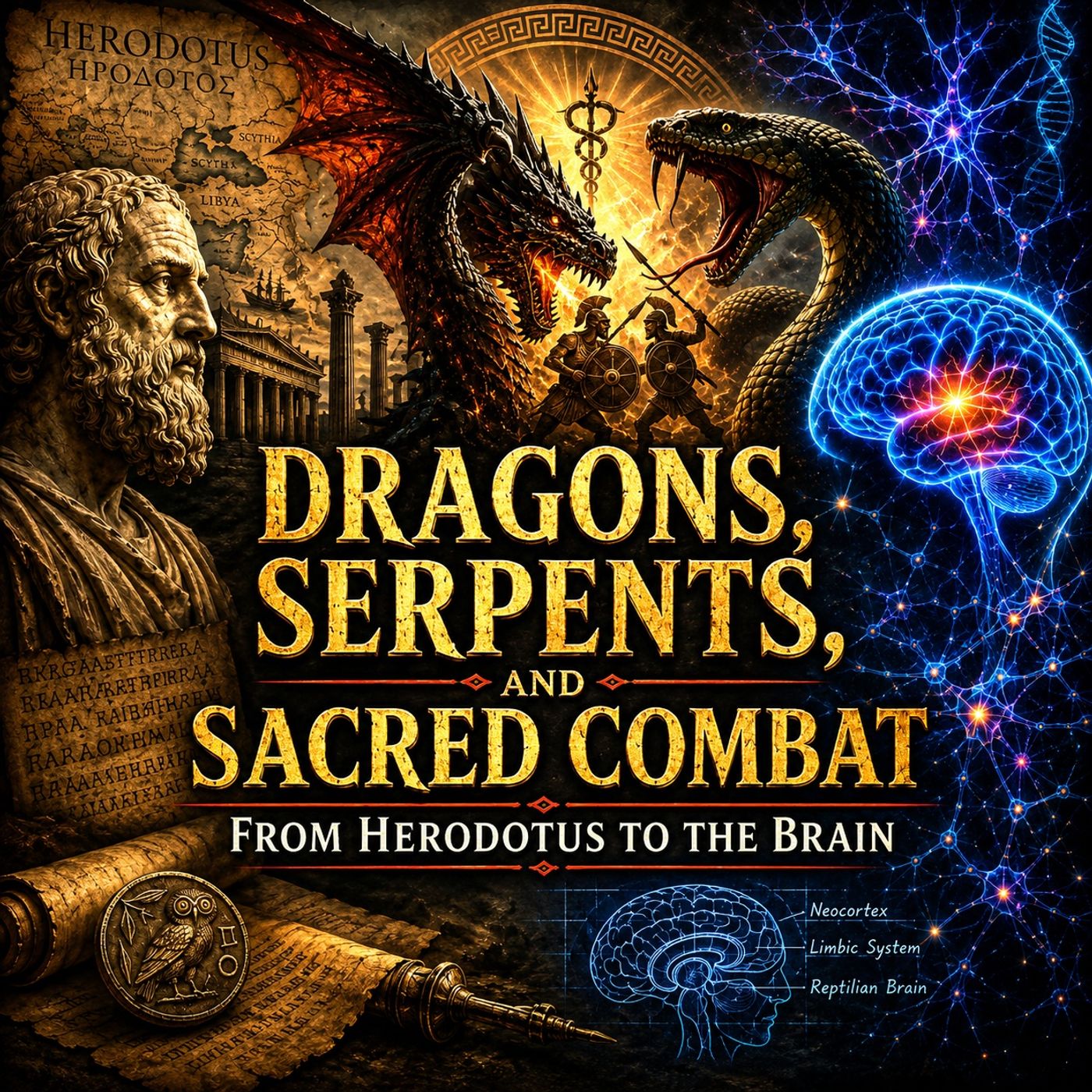
| 6/12/26 | ![]() Dragons, Serpents, & Sacred Combat- From Herodotus To The Brain✨ | dragonsserpents+5 | — | The Occult RejectsBritish Museum+3 | — | dragonsserpents+5 | — | 1h 05m 18s | |
| 6/10/26 | ![]() Dr. Mark Sedgwick on Traditionalism, Sufism, and Esotericism✨ | TraditionalismSufism+3 | Dr. Mark Sedgwick | The Occult RejectsOccult Research Institute+5 | — | TraditionalismSufism+4 | — | 1h 07m 43s | |
| 6/9/26 | ![]() The Occult Rejects (Almost Whole Crew) on Divulgence LIVE✨ | occult topicsesoteric concepts+5 | — | The Occult RejectsOccult Research Institute+5 | — | occultgrimoires+5 | — | 2h 09m 06s | |
| 6/8/26 | ![]() The Mechanics of Magick Dark Rooms, Float Tanks, Initiation, and the Brain That Sees Without Light Part 2✨ | magickfloat tanks+4 | — | The Rites of PassageBetwixt and Between: The Liminal Period in Rites of Passage | — | magickfloat tanks+5 | — | 1h 06m 53s | |
| 6/7/26 | ![]() The Occult Mechanics of Psychic Reading with Raya Thorne✨ | psychic readingoccult mechanics+3 | Raya Thorne | The Occult RejectsOccult Research Institute+5 | www.rayathorne.comhttps://www.youtube.com/@rayathorne+1 | psychic readingoccult+3 | — | 1h 39m 15s | |
| 6/6/26 | ![]() Demonology as Devourment Without a Devourer with Oren Ben Yosef✨ | demonologyoccultism+4 | Oren Ben Yosef | The Occult RejectsOccult Research Institute+5 | — | demonologyoccult+5 | — | 1h 47m 29s | |
| 6/5/26 | ![]() The Ritual Before the Religion- Baptism✨ | baptismrituals+3 | — | The Occult RejectsOccult Research Institute+9 | — | baptismritual+6 | — | 1h 05m 54s | |
| 6/4/26 | ![]() Tucker Carlson’s “Deals with Demons” Episode | Live Reaction w/ The Occult Rejects Part 2✨ | occult topicsesoteric concepts+5 | — | The Occult RejectsOccult Research Institute+5 | — | Tucker Carlsondemons+6 | — | 1h 17m 53s | |
| 6/4/26 | ![]() Tucker Carlson’s “Deals with Demons” Episode | Live Reaction w/ The Occult Rejects Part 1✨ | occult topicsesoteric concepts+5 | — | The Occult RejectsOccult Research Institute+5 | — | Tucker Carlsondemons+6 | — | 1h 39m 57s | |
| 6/3/26 | ![]() The Qlippoth with Frater RC Part 2✨ | Qlippothoccultism+4 | Frater RC | The Occult RejectsOccult Research Institute | — | Qlippothoccult+5 | — | 1h 19m 22s | |
| 6/3/26 | ![]() The Qlippoth with Frater RC Part 1 | If you enjoy this episode, we’re sure you will enjoy more content like this on The Occult Rejects. In fact, we have curated playlists on occult topics like grimoires, esoteric concepts and phenomena, occult history, analyzing true crime and cults with an occult lens, Para politics, and occultism in music. Whether you enjoy consuming your content visually or via audio, we’ve got you covered - and it will always be provided free of charge. So, if you enjoy what we do and want to support our work of providing accessible, free content on various platforms, please consider making a donation to the links provided below. Thank you and enjoy the episode!Links For The Occult Rejectshttps://linktr.ee/theoccultrejectsOccult Research Institutehttps://www.occultresearchinstitute.org/Cash Apphttps://cash.app/$theoccultrejectsVenmo@TheOccultRejectsBuy Me A Coffeebuymeacoffee.com/TheOccultRejectsPatreonhttps://www.patreon.com/TheOccultRejectsAlso want to remind people about the website, if you're into reading we have tons of information by multiple contributors, and we got t-shirts up on the site if you're interested. Fun fact, the art is all based on the eyeball. A | 1h 13m 57s | ||||||
| 6/2/26 | ![]() Christian Architecture As Ritual Technology Part 3- Hidden Rooms, Holy Water, & The Dead | If you enjoy this episode, we’re sure you will enjoy more content like this on The Occult Rejects. In fact, we have curated playlists on occult topics like grimoires, esoteric concepts and phenomena, occult history, analyzing true crime and cults with an occult lens, Para politics, and occultism in music. Whether you enjoy consuming your content visually or via audio, we’ve got you covered - and it will always be provided free of charge. So, if you enjoy what we do and want to support our work of providing accessible, free content on various platforms, please consider making a donation to the links provided below. Thank you and enjoy the episode!Links For The Occult Rejectshttps://linktr.ee/theoccultrejectsOccult Research Institutehttps://www.occultresearchinstitute.org/Substackhttps://substack.com/@theoccultrejects?r=7auau0&utm_campaign=profile&utm_medium=profile-pageCash Apphttps://cash.app/$theoccultrejectsVenmo@TheOccultRejectsBuy Me A Coffeebuymeacoffee.com/TheOccultRejectsPatreonhttps://www.patreon.com/TheOccultRejectsBIBLIOGRAPHYHidden Rooms, Holy Water, and the DeadWhite, L. Michael. The Social Origins of Christian Architecture, Volume I: Building God’s House in the Roman World: Architectural Adaptation Among Pagans, Jews, and Christians. Trinity Press International, 1996. Key use: Essential source for early Christian architectural adaptation, especially the shift from domestic and semi-domestic gathering spaces toward more specialized Christian buildings. White’s work is useful for showing that early Christian architecture develops inside a broader Roman social and architectural world, not in isolation.White, L. Michael. The Social Origins of Christian Architecture, Volume II: Texts and Monuments for the Christian Domus Ecclesiae in Its Environment. Trinity Press International, 1997. Key use: Companion volume for the textual and archaeological evidence behind the domus ecclesiae, early meeting spaces, and the built environment of pre-Constantinian Christianity.Yale University Art Gallery. “Christian Building.” Dura-Europos: Excavating Antiquity. Key use: Strong anchor for the Dura-Europos Christian building and its wall paintings. Yale notes that the Christian paintings were uncovered in 1932 and that Clark Hopkins described the murals as preserved from more than three-quarters of a century before Constantine recognized Christianity in 312.Yale News. “House Call: A New Study Rethinks Early Christian Landmark.” 2024. Key use: Useful cautionary source for not oversimplifying Dura-Europos as merely a domestic “house church.” The report highlights recent scholarship reexamining how domestic the Dura Christian building really was and why its architectural classification needs care.Smarthistory. “Dura-Europos.” Key use: Accessible overview of Dura-Europos as a multicultural Roman frontier site, including the adapted Christian building used as a meeting place and baptistery in the first half of the third century.Peppard, Michael. The World’s Oldest Church: Bible, Art, and Ritual at Dura-Europos, Syria. Yale University Press, 2016. Key use: Major source for the Dura-Europos Christian building, its baptistery, biblical imagery, ritual use, and the danger of reading the site too simply through later church categories.Snyder, Graydon F. Ante Pacem: Archaeological Evidence of Church Life Before Constantine. Mercer University Press, revised edition, 2003. Key use: Important archaeological source for Christian life before Constantine, especially material evidence for worship, burial, symbols, and everyday Christian practice before public imperial privilege. Mercer University Press identifies the book as focused on archaeological evidence of church life before Constantine.Jensen, Robin M. Baptismal Imagery in Early Christianity: Ritual, Visual, and Theological Dimensions. Baker Academic, 2012. Key use: Core source for baptismal images, ritual meaning, water, initiation, death and rebirth, and the way visual programs frame baptismal practice.Jensen, Robin M. Understanding Early Christian Art. Routledge, 2000. Key use: Early Christian visual culture, catacomb imagery, baptismal scenes, Good Shepherd imagery, Jonah, Daniel, Lazarus, and the visual language of salvation and resurrection.Ferguson, Everett. Baptism in the Early Church: History, Theology, and Liturgy in the First Five Centuries. Eerdmans, 2009. Key use: Major historical and theological source for baptismal practice, initiation, immersion, anointing, catechesis, and the development of baptismal rites.Johnson, Maxwell E. The Rites of Christian Initiation: Their Evolution and Interpretation. Liturgical Press. Key use: Development of initiation rites, catechumenate, baptism, post-baptismal rites, and how Christian initiation becomes structured over time.Spinks, Bryan D. Early and Medieval Rituals and Theologies of Baptism: From the New Testament to the Council of Trent. Ashgate, 2006. Key use: Long-range ritual and theological development of baptism, useful for tracking how early baptismal space later becomes more formalized.Britannica. “Catacomb.” Key use: Baseline definition of catacombs as subterranean cemeteries composed of galleries or passages with recesses for tombs; useful for correcting the popular misconception that catacombs were primarily secret churches rather than burial landscapes.Stevenson, James. The Catacombs: Rediscovered Monuments of Early Christianity. Thames & Hudson, 1978. Key use: Classic overview of Roman catacombs, burial architecture, inscriptions, symbols, and early Christian memory.Rutgers, Leonard V. Subterranean Rome: In Search of the Roots of Christianity in the Catacombs of the Eternal City. Peeters, 2000. Key use: Catacombs as archaeological and social evidence, including burial practice, community identity, and the relationship between Jews, Christians, and Roman funerary culture.Fiocchi Nicolai, Vincenzo, Fabrizio Bisconti, and Danilo Mazzoleni. The Christian Catacombs of Rome: History, Decoration, Inscriptions. Schnell & Steiner, 2002. Key use: Detailed treatment of catacomb history, inscriptions, burial spaces, and visual programs.Brown, Peter. The Cult of the Saints: Its Rise and Function in Latin Christianity. University of Chicago Press, enlarged edition. Key use: Essential source for the holy dead, saint veneration, relics, tombs, pilgrimage, and the way corporeal remains became central to Christian religious life. The University of Chicago Press describes Brown’s work as exploring how worship of saints and their corporeal remains became central to religious life in Western Europe.Brown, Peter. The Body and Society: Men, Women, and Sexual Renunciation in Early Christianity. Columbia University Press, 1988. Key use: Christian body theology, asceticism, holiness, discipline, and why the body is so central to late antique Christian imagination.Yasin, Ann Marie. Saints and Church Spaces in the Late Antique Mediterranean: Architecture, Cult, and Community. Cambridge University Press, 2009. Key use: Churches, saints, relics, cult practice, community identity, and how sacred spaces are organized around holy bodies and memory.Grabar, André. Martyrium: Recherches sur le culte des reliques et l’art chrétien antique. Key use: Classic work on martyr shrines, relic cult, and the relationship between architecture, art, and the holy dead.van Gennep, Arnold. The Rites of Passage. Key use: Separation, liminality, and incorporation. Crucial for baptism, catechumenate, thresholds, initiation, and the movement from outsider to insider.Turner, Victor. The Ritual Process: Structure and Anti-Structure. Key use: Liminality, threshold states, ritual transition, and communitas. Useful for baptism, catacomb descent, martyr devotion, and controlled access.Kilde, Jeanne Halgren. Sacred Power, Sacred Space: An Introduction to Christian Architecture and Worship. Oxford University Press, 2008. Key use: Christian buildings as arrangements of power, worship, divine presence, and embodied access. Useful for thresholds, sanctuary divisions, nave, altar, and congregation.Kieckhefer, Richard. Theology in Stone: Church Architecture from Byzantium to Berkeley. Oxford University Press, 2004. Key use: Church architecture as theology made spatial. Useful for altar, pulpit, nave, threshold, symbolic layout, and worship practice.Krautheimer, Richard. Early Christian and Byzantine Architecture. Yale University Press / Pelican History of Art. Key use: Classic architectural history for early Christian and Byzantine buildings, including the shift from pre-Constantinian spaces to basilicas, baptisteries, martyr shrines, and later monumental forms.Mathews, Thomas F. The Clash of Gods: A Reinterpretation of Early Christian Art. Princeton University Press, 1993. Key use: Early Christian imagery, visual conflict, ritual meaning, and the development of Christian art within the Roman world.Elsner, Jaś. Imperial Rome and Christian Triumph: The Art of the Roman Empire AD 100–450. Oxford University Press, 1998. Key use: Roman visual culture, Christian adaptation, imperial imagery, and the shift into Christian public art and architecture.MacMullen, Ramsay. Christianizing the Roman Empire: A.D. 100–400. Yale University Press, 1984. Key use: Social and historical context for Christian expansion before and after Constantine, useful for understanding how Christian space changes as Christianity grows.Mango, Cyril. Byzantine Architecture. Key use: LonAlso want to remind people about the website, if you're into reading we have tons of information by multiple contributors, and we got t-shirts up on the site if you're interested. Fun fact, the art is all based on the eyeball. A | 56m 24s | ||||||
| 6/1/26 | ![]() The Mechanics of Magick: Dark Rooms, Float Tanks, Initiation, and the Brain That Sees Without Light Part 1 | Links For The Occult Rejectshttps://linktr.ee/theoccultrejectsOccult Research Institutehttps://www.occultresearchinstitute.org/Substackhttps://substack.com/@theoccultrejects?r=7auau0&utm_campaign=profile&utm_medium=profile-pageCash Apphttps://cash.app/$theoccultrejectsVenmo@TheOccultRejectsBuy Me A Coffeebuymeacoffee.com/TheOccultRejectsPatreonhttps://www.patreon.com/TheOccultRejectsPart 1: The Road of RhythmPart 1 focuses on the drum as an ancient technology of altered consciousness. The argument is not that every beat causes trance, or that neuroscience has proven spirits. The stronger argument is that rhythm enters the human organism through hearing, motor prediction, breath, movement, attention, emotion, expectation, culture, and social synchrony. The drum becomes powerful when sound, body, group, ritual frame, and meaning converge. These sources support the archaeology, neuroscience, EEG research, shamanic studies, possession studies, Indigenous and culturally specific drum traditions, ritual theory, placebo and meaning-response research, ceremonial magic, and modern witchcraft material used in the episode.Core Academic and Scientific SourcesHuels, Emma R., Hyoungkyu Kim, UnCheol Lee, Tirsa Bel-Bahar, Ana V. Colmenero, Alexandra Nelson, Stefanie Blain-Moraes, George A. Mashour, and Richard E. Harris. “Neural Correlates of the Shamanic State of Consciousness.” Frontiers in Human Neuroscience 15 (2021): 610466. Use for the strongest modern EEG anchor. This study used high-density EEG with shamanic practitioners and controls during rest, shamanic drumming, and classical music listening. It assessed altered-state reports alongside brain measures such as power, connectivity, signal diversity, and criticality. Use carefully: the study does not prove spirits or show that drumming mechanically causes trance in everyone. It supports the more careful claim that trained practitioners entering shamanic states with drumming show measurable brain-state differences.Gordon, Yoel, Golan Karvat, Noa Dagan, and Ayelet N. Landau. “Neural Tracking at Theta Predicts Drumming-Induced Altered States of Consciousness.” Scientific Reports 16, no. 1 (2026): Article 10204. Use for the strongest updated drumming/theta/neural-tracking source. This study tested drumming at theta, delta, and alpha-rate rhythms while recording EEG, and found that stronger rhythmic neural tracking at theta was linked to stronger altered-experience reports. Use carefully: this does not mean theta equals the spirit world or that one frequency opens a portal. The serious point is that altered experience may depend partly on how strongly the nervous system tracks rhythmic stimulation.Aparicio-Terrés, R., et al. “The Neurobiology of Altered States of Consciousness Induced by Drumming and Other Rhythmic Sound Patterns.” Annals of the New York Academy of Sciences, 2025. Use for the newer review literature showing that rhythmic sound is now a serious altered-consciousness research topic. This supports the opening claim that modern academia is examining drumming, rhythmic sound, absorption, relaxation, cognition, and neural activity without reducing the subject to one simple “trance frequency.” The review is especially useful for framing the field as promising but still complex.Neher, Andrew. “Auditory Driving Observed with Scalp Electrodes in Normal Subjects.” Electroencephalography and Clinical Neurophysiology 13 (1961): 449–451. Use for the historical bridge between repetitive sound, EEG, auditory driving, and early scientific interest in rhythmic stimulation.Neher, Andrew. “A Physiological Explanation of Unusual Behavior in Ceremonies Involving Drums.” Human Biology 34, no. 2 (1962): 151–160. Use carefully. This is useful as an early attempt to connect ceremonial drumming and physiology, but it should be balanced with Rouget because the “drum simply causes trance” argument is too mechanical.Maurer, R., V. K. Kumar, L. Woodside, and R. J. Pekala. “Phenomenological Experience in Response to Monotonous Drumming and Hypnotizability.” American Journal of Clinical Hypnosis 40, no. 2 (1997): 130–145. Use for monotonous drumming, subjective altered experience, imagery, absorption, and hypnotizability.Maxfield, Melinda C. “Effects of Rhythmic Drumming on EEG and Subjective Experience.” PhD diss., Institute of Transpersonal Psychology, 1990. Use as older supporting context on drumming, EEG, imagery, body-image changes, and subjective altered experience. Do not make this the main scientific proof; use it as background.Nozaradan, Sylvie, Isabelle Peretz, and André Mouraux. “Tagging the Neuronal Entrainment to Beat and Meter.” The Journal of Neuroscience 31, no. 28 (2011): 10234–10240. Use for EEG evidence that the brain can track beat and meter. This supports the claim that the brain does not merely hear rhythm as background sound; it can represent rhythmic structure in measurable ways.Nozaradan, Sylvie. “Exploring How Musical Rhythm Entrains Brain Activity with Electroencephalogram Frequency-Tagging.” Philosophical Transactions of the Royal Society B 369, no. 1658 (2014). Use as broader rhythm/EEG entrainment support. This helps explain frequency-tagging, beat tracking, meter, neural entrainment, and the measurable relationship between rhythmic structure and brain activity.Thaut, Michael H., Gerald C. McIntosh, and Volker Hoemberg. “Neurobiological Foundations of Neurologic Music Therapy: Rhythmic Entrainment and the Motor System.” Frontiers in Psychology 5 (2015). Use for rhythm as motor-system timing information. This supports the claim that a beat can become bodily instruction, not just sound for the ear. Especially useful when discussing rhythmic auditory stimulation, motor planning, gait, entrainment, and the auditory-motor bridge.Ross, Jessica M., John R. Iversen, and Ramesh Balasubramaniam. “Time Perception for Musical Rhythms: Sensorimotor Perspectives on Entrainment, Simulation, and Prediction.” 2022. Use for rhythm, timing, prediction, sensorimotor entrainment, and the way musical rhythm interacts with time perception.Hove, Michael J., and Jane L. Risen. “It’s All in the Timing: Interpersonal Synchrony Increases Affiliation.” Social Cognition 27, no. 6 (2009): 949–960. Use for synchrony and social bonding. This helps support the group-body argument: moving or acting in time with others can increase affiliation.Wiltermuth, Scott S., and Chip Heath. “Synchrony and Cooperation.” Psychological Science 20, no. 1 (2009): 1–5. Use for the claim that synchronized movement can increase cooperation and attachment among participants.Tarr, Bronwyn, Jacques Launay, and Robin I. M. Dunbar. “Music and Social Bonding: ‘Self-Other’ Merging and Neurohormonal Mechanisms.” Frontiers in Psychology 5 (2014): 1096. Use for music, synchrony, bonding, endorphin/social mechanisms, and why group rhythm can feel like more than private listening.Fancourt, Daisy, Rosie Perkins, Sara Ascenso, Louise Atkins, Fatima Kilfeather, and Aaron Williamon. “Effects of Group Drumming Interventions on Anxiety, Depression, Social Resilience and Inflammatory Immune Response among Mental Health Service Users.” PLOS ONE 11, no. 3 (2016): e0151136. Use for modern group-drumming research showing psychological and physiological effects, including anxiety, depression, social resilience, wellbeing, and inflammatory immune response. Use carefully: this does not make group drumming a cure-all. It supports the more grounded claim that embodied rhythm and group participation can affect mood, social connection, and body chemistry.Bittman, Barry B., et al. “Composite Effects of Group Drumming Music Therapy on Modulation of Neuroendocrine-Immune Parameters in Normal Subjects.” Alternative Therapies in Health and Medicine 7, no. 1 (2001): 38–47. Use as older supporting material on group drumming and neuroendocrine-immune measures. Keep secondary. Fancourt is cleaner for the main script body.Archaeology and Deep History of DrumsLawergren, Bo. “Neolithic Drums in China.” In Music Archaeology in China. 2006. Use for clay drums in Neolithic China and the deep-history claim that drums are not just poetic symbols of antiquity. They appear in the archaeological record as instruments tied to early sound-making, ceremony, and social order.Both, Arnd Adje. “Music Archaeology: Some Methodological and Theoretical Considerations.” Use as general support for why ancient instruments should be treated as ritual and social evidence, not merely decorative objects.Anthropology, Ethnomusicology, Ritual, and TranceRouget, Gilbert. Music and Trance: A Theory of the Relations Between Music and Possession. Translated by Brunhilde Biebuyck. Chicago: University of Chicago Press, 1985. Essential source. Use for the caution that music does not mechanically or universally cause trance. Rouget helps keep the argument academically serious by emphasizing culture, ritual frame, meaning, and expectation.Becker, Judith. Deep Listeners: MAlso want to remind people about the website, if you're into reading we have tons of information by multiple contributors, and we got t-shirts up on the site if you're interested. Fun fact, the art is all based on the eyeball. A | 1h 11m 29s | ||||||
Showing 25 of 887
Sponsor Intelligence
Sign in to see which brands sponsor this podcast, their ad offers, and promo codes.
Chart Positions
9 placements across 9 markets.
Chart Positions
9 placements across 9 markets.