

Insights from recent episode analysis
Audience Interest
Podcast Focus
Publishing Consistency
Platform Reach
Insights are generated by CastFox AI using publicly available data, episode content, and proprietary models.
Total monthly reach
Estimated from 2 chart positions in 2 markets.
By chart position
- 🇨🇦CA · News Commentary#1985K to 30K
- 🇸🇦SA · News Commentary#117500 to 3K
- Per-Episode Audience
Est. listeners per new episode within ~30 days
1.6K to 9.9K🎙 Daily cadence·111 episodes·Last published 1w ago - Monthly Reach
Unique listeners across all episodes (30 days)
5.5K to 33K🇨🇦91%🇸🇦9% - Active Followers
Loyal subscribers who consistently listen
2.2K to 13K
Market Insights
Platform Distribution
Reach across major podcast platforms, updated hourly
Total Followers
—
Total Plays
—
Total Reviews
—
* Data sourced directly from platform APIs and aggregated hourly across all major podcast directories.
On the show
Recent episodes
The Difficult Years: Eritrea and the Great War (1914–1922)
May 10, 2026
Unknown duration
From Warriors to Urban Dwellers
May 3, 2026
Unknown duration
Hade Zanta – The Conscript Rewriting the Foundations of African Literature Episode 3
Apr 26, 2026
Unknown duration
Hade Zanta – The Conscript Rewriting the Foundations of African Literature Episode 2
Apr 19, 2026
Unknown duration
Hade Zanta – The Conscript: Rewriting the Foundations of African Literature
Apr 12, 2026
Unknown duration
Social Links & Contact
Official channels & resources
Official Website
Login
RSS Feed
Login
| Date | Episode | Description | Length | ||||||
|---|---|---|---|---|---|---|---|---|---|
| 5/10/26 | 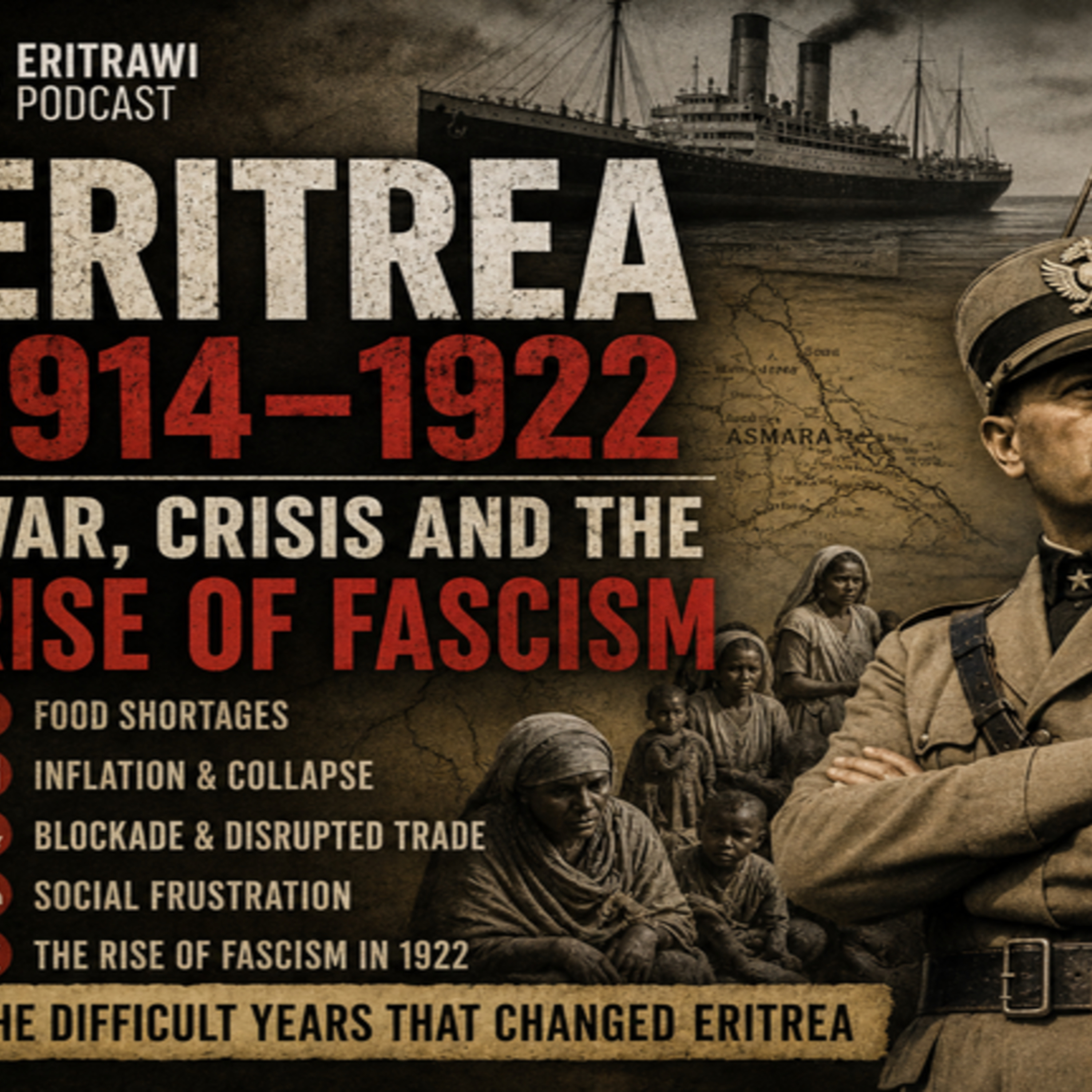 The Difficult Years: Eritrea and the Great War (1914–1922) | This episode of the Eritrawi Podcast explores the profound socioeconomic transformation of Eritrea during and after the First World War between 1914 and 1922. Although far from the European frontlines, Eritrea was deeply affected by the war as Italy extracted livestock, labor, and resources for its colonial campaigns in Libya. The episode examines the devastating impact of wartime requisitions, inflation, food shortages, disrupted trade routes caused by the British naval blockade, and the collapse of local agriculture during years of drought and locust invasions.It also explores how certain wartime industries such as hides, salt, and potassium generated immense profits for a small group of merchants while much of the population endured severe hardship. As the postwar recession of 1920–1921 struck Eritrea, bankruptcies, unemployment, and social frustration intensified among Italian settlers. The episode traces how these crises contributed to the rapid rise of fascism in Eritrea and the formation of the Fascio d’Eritrea in 1922.Drawing from historical research and archival material, this episode examines how war, economic collapse, colonial extraction, and political radicalization reshaped Eritrean society during one of the most turbulent periods of the colonial era.#Eritrea #WW1 #WorldWar1 #ItalianColonialism #Asmara #Massawa #EritrawiPodcast #AfricanHistory #ColonialHistory #Fascism #HornOfAfrica #RedSeaHistory #ItalianEritrea #HistoryPodcast #EastAfrica #Colonialism #EritreanHistory #HistoricalResearch #AfricaHistory #LibyaCampaign | — | ||||||
| 5/3/26 | 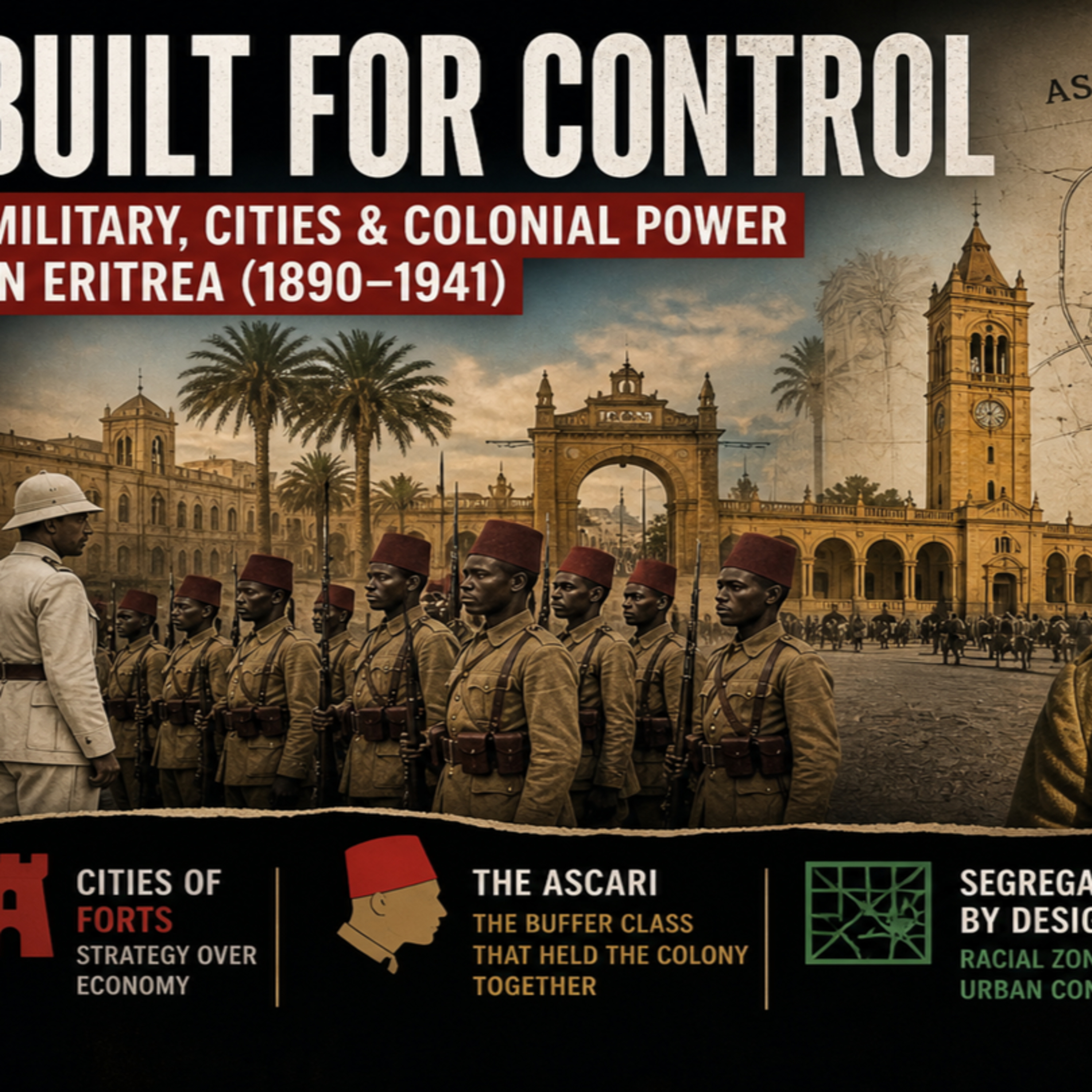 From Warriors to Urban Dwellers | This episode of the Eritrawi Podcast examines how Italian colonial rule reshaped Eritrea through military-driven urban planning between 1890 and 1941. Cities were not built for organic growth, but for control, designed around fortifications, surveillance, and strategic dominance.At the center of this system were the askaris, indigenous soldiers positioned as a buffer class between a small European elite and the wider colonized population. Through spatial segregation, racial zoning, and controlled urban design, colonial authorities transformed Eritrea into a laboratory of social engineering.This episode explores how power was embedded into the physical structure of cities, how loyalty was manufactured through military and economic incentives, and how these systems contributed to the long-term formation of Eritrean identity.Uoldelul Chelati Dirar'sFrom Warriors to Urban DwellersAscari and the Military Factor in the UrbanDevelopment of Colonial Eritrea#Eritrea #Asmara #AfricanHistory #Colonialism #ItalianColonialism #Askari #EastAfrica #UrbanHistory #DecolonizeHistory #HornOfAfrica #EritreanHistory #HistoryPodcast #HiddenHistory #AfricanStudies #ColonialArchitecture #ModernHistory | — | ||||||
| 4/26/26 |  Hade Zanta – The Conscript Rewriting the Foundations of African Literature Episode 3 | Hade Zanta – The Conscript Rewriting the Foundations of African Literature Episode 3This episode of the Eritrawi Podcast In this final episode of Hade Zanta – The Conscript, the story follows Tuquabo as he returns home after surviving the brutality of colonial war.But return does not mean restoration.The village he longed for is no longer the one he left. His mother is gone. The rhythms of daily life continue, but he cannot re-enter them as he once did. The war does not end at the battlefield—it persists in the body, in memory, and in the subtle fractures between people.This episode explores the quiet aftermath of conflict: the invisible distance between survivor and community, the failure of reintegration, and the way trauma embeds itself into ordinary life. What appears as normality is, in fact, a system quietly altered.Through Tuquabo’s experience, the narrative expands the definition of loss. The true casualties of colonialism are not only counted in deaths, but in disrupted families, altered identities, and the generational transmission of psychological fracture.This is not a story of return.This is a story of what remains.#Eritrea #HadeZanta #TheConscript #AfricanHistory #Colonialism #PostColonial #EritreanHistory #HistoricalNarratives #DecolonizeHistory #Podcast #Storytelling | — | ||||||
| 4/19/26 |  Hade Zanta – The Conscript Rewriting the Foundations of African Literature Episode 2 | Hade Zanta – The Conscript Rewriting the Foundations of African Literature Episode 2This episode of the Eritrawi Podcast follows Tuquabo, an Eritrean ascari navigating the psychological reality of colonial warfare. Forced into a system built on control, violence, and obedience, he begins to confront a deeper conflict not on the battlefield but within himself.As the campaign intensifies, Tuquabo recognizes the humanity of the men he is ordered to fight while losing faith in the authority that commands him. In a harsh desert environment where survival is uncertain, the real struggle becomes internal holding onto identity, memory, and moral clarity under relentless pressure.This episode explores how power operates not only through force but through control of perception and how resistance can exist silently in thought, in memory, and in small acts of humanity that refuse to disappear.#EritrawiPodcast #Eritrea #HornOfAfrica #AfricanHistory #ColonialHistory #DecolonizeHistory #HiddenHistory #Ascari #ItalianColonialism #LibyaHistory #NorthAfrica #EastAfrica #AfricanStories #UntoldHistory #HistoricalNarrative #WarAndMemory #PsychologyOfWar #HumanityInWar #Resistance #MentalResilience #Identity #OralTradition #AfricanLiterature #TheConscript #GhebreyesusHailu | — | ||||||
| 4/12/26 | 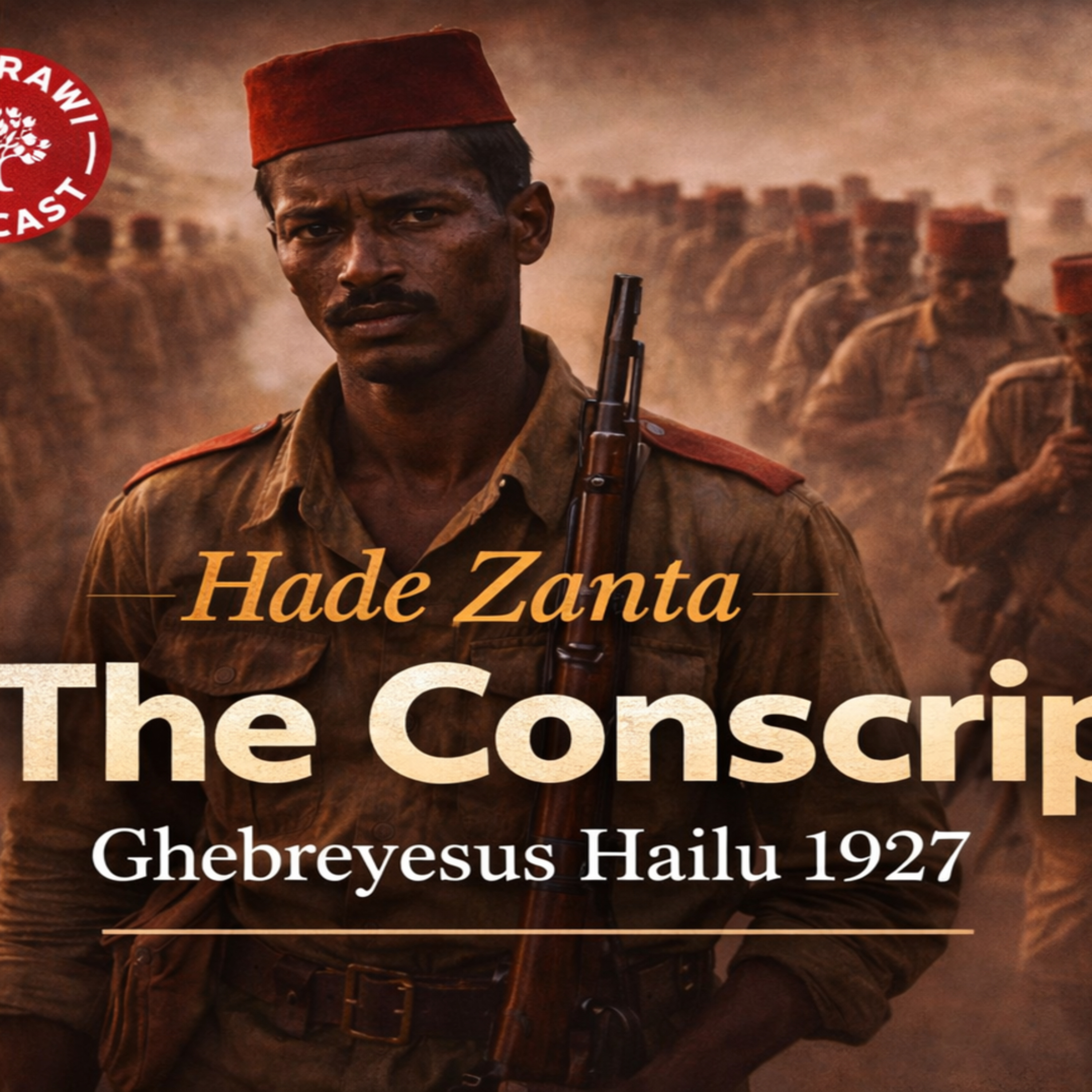 Hade Zanta – The Conscript: Rewriting the Foundations of African Literature | This episode of the Eritrawi Podcast begins a three part series on one of the earliest and most overlooked works of African literature, Hade Zanta The Conscript, written in 1927 by Ghebreyesus Hailu in Tigrinya and later translated into English.Predating and challenging the commonly accepted timeline of African literature, this novel was long overlooked by Western academia. It follows an Eritrean ascari forced to fight for the Italian colonial army in Libya, not just as a victim of empire, but as someone made to function within it.This episode examines how Hailu exposes the deeper logic of colonialism, a system that does not only dominate from the outside, but reshapes the inner world of the oppressed, turning survival into complicity.Blending modernist prose with traditional oral poetry, The Conscript breaks away from linear Western storytelling, creating a recursive, layered narrative rooted in African verbal traditions. The result is not just a story, but a structural critique, a novel that rewires the form itself to reveal the mechanics of power.This is not simply forgotten literature.This is early African intellectual resistance.#Eritrea #AfricanLiterature #TheConscript #HadeZanta #DecolonizeKnowledge #History #Podcast #EritrawiPodcast #Colonialism #AfricanHistory | — | ||||||
| 4/5/26 |  Amelia Earhart’s Red Sea Transit: Massawa to Assab (1937 World Flight) | In 1937, Amelia Earhart attempted one of the most ambitious journeys in aviation history, a flight around the world along the equator.This episode of Eritrawi Podcast follows a rarely discussed segment of that journey: her transit along the Red Sea coast, from Massawa to Assab in Eritrea. Drawing on archival records from Purdue University, historical flight itineraries, and press bulletins, we reconstruct the route, the conditions, and the technical realities faced by Earhart and her navigator Fred Noonan.Beyond the headlines, this is a story of navigation under pressure, fuel management across remote regions, and the global network of colonial-era airfields that made such a journey possible. This is not just the story of a disappearance.It’s the story of the journey that led there.#AmeliaEarhart #AviationHistory #Eritrea #RedSea #WW2History #History #AfricaHistory #FlightHistory | — | ||||||
| 3/29/26 | 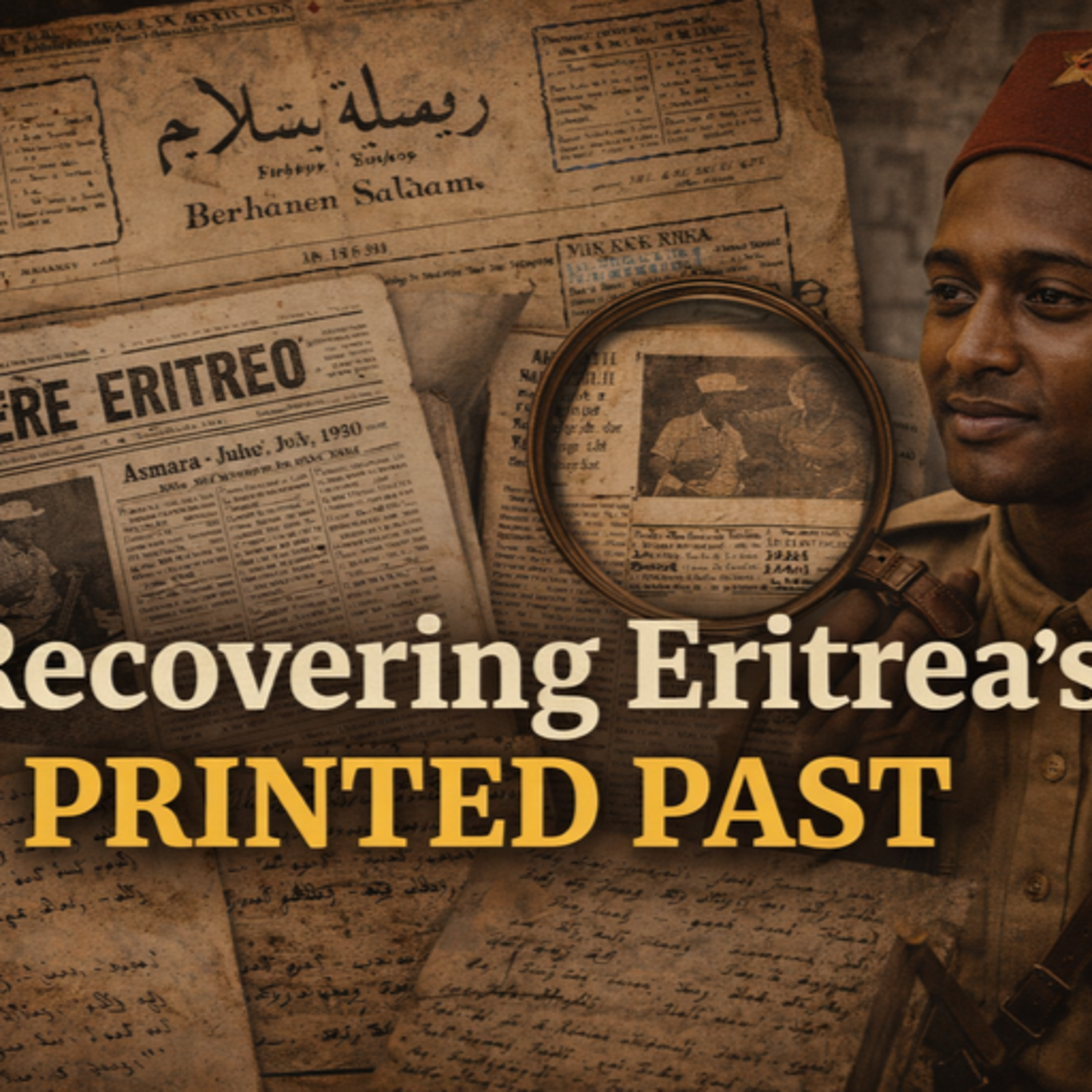 Recovering Eritrea’s Lost Printed Past | This episode on Eritrawi Podcast explores the evolution of literacy and print culture in Eritrea through the lens of early printed materials, private letters, and recent preservation efforts.Drawing on the work of historian Dr. Massimo Zaccaria and the Research and Documentation Center in Asmara, we examine a major digitization project that documented over 750 local titles printed between 1867 and 1941. Using a self-reliant, low-tech approach, this initiative demonstrates how cultural heritage can be preserved without dependence on external funding.The episode also traces a critical shift in written culture during the early 20th century. Military service in Libya exposed Eritrean askaris to new forms of communication, accelerating the use of private letters and photography. For the first time, individuals from subordinate social groups began documenting personal experiences in their own voices.These letters and printed materials mark a transition away from purely religious and administrative texts toward a more personal, lived archive one that allows us to reconstruct everyday life, emotion, and social dynamics in colonial Eritrea.Together, these sources reveal how fragile documents, often produced on cheap materials and nearly lost to time, have become essential tools for understanding the social and cultural history of Eritrea | — | ||||||
| 3/22/26 | 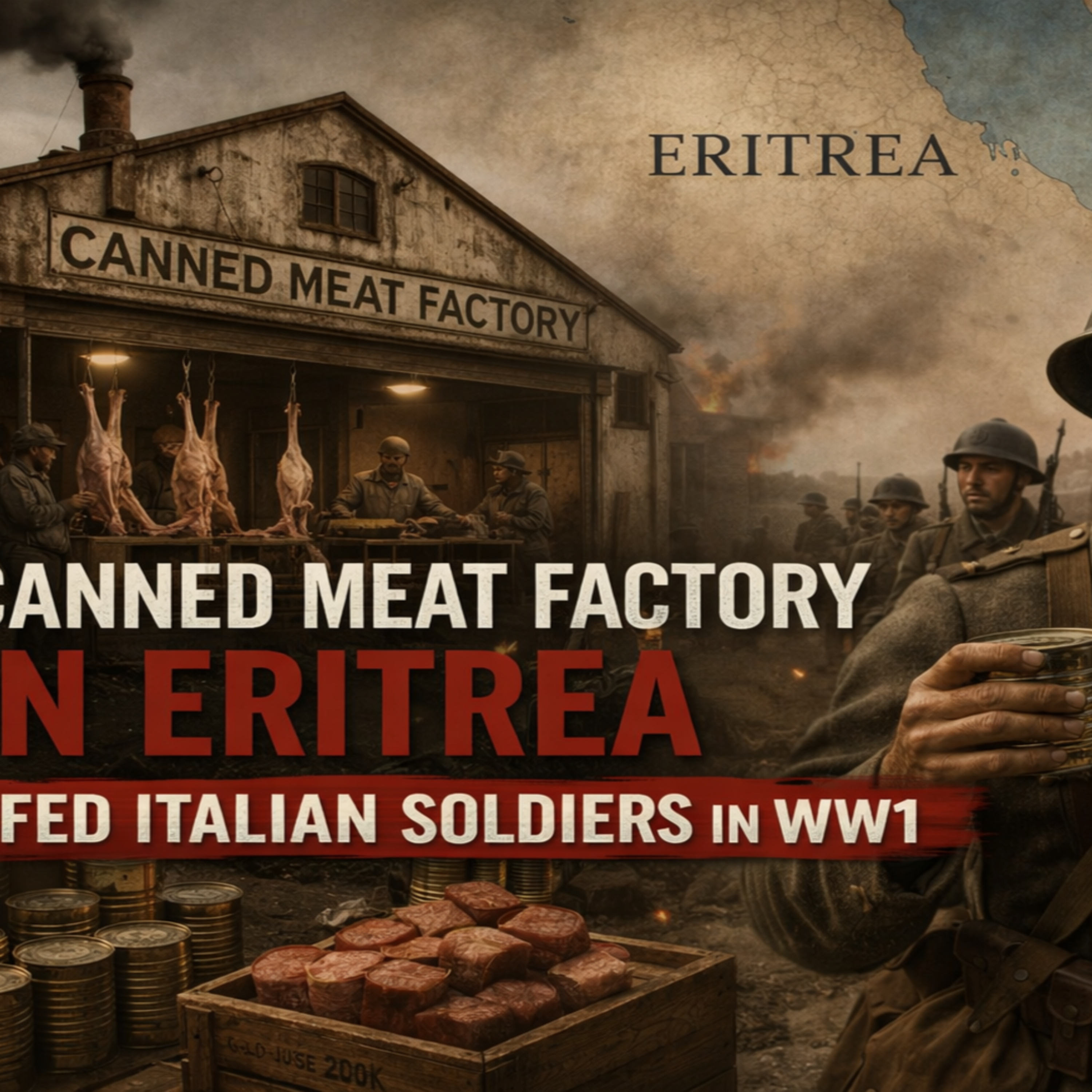 The Canned Meat Factory in Eritrea That Fed Italian Soldiers in WW1 | This Episode on Eritrawi PodcastDuring World War I, far from the battlefields of Europe, a factory in Eritrea was feeding an empire.In Asmara, a canned meat operation became a critical supply hub for Italian soldiers, processing livestock and sustaining military logistics across the region.On paper, it was efficient. Industrial. Controlled.But on the ground, a different story was unfolding.Livestock numbers declined. Local systems were strained. And the relationship between the population and the colonial administration began to fracture.What appeared to be a modern supply chain was, in reality, deeply fragile.This episode uncovers the story of the canned meat factory in Eritrea during WW1 and what it reveals about colonial systems, hidden costs, and the dangers of building economies on assumptions that ignore local realities.Because when those assumptions collapse, the consequences ripple far beyond a single factory.#Eritrea #WW1 #History #AfricanHistory #ColonialHistory #SupplyChain #Asmara #MilitaryHistory #HiddenHistory | — | ||||||
| 3/15/26 | 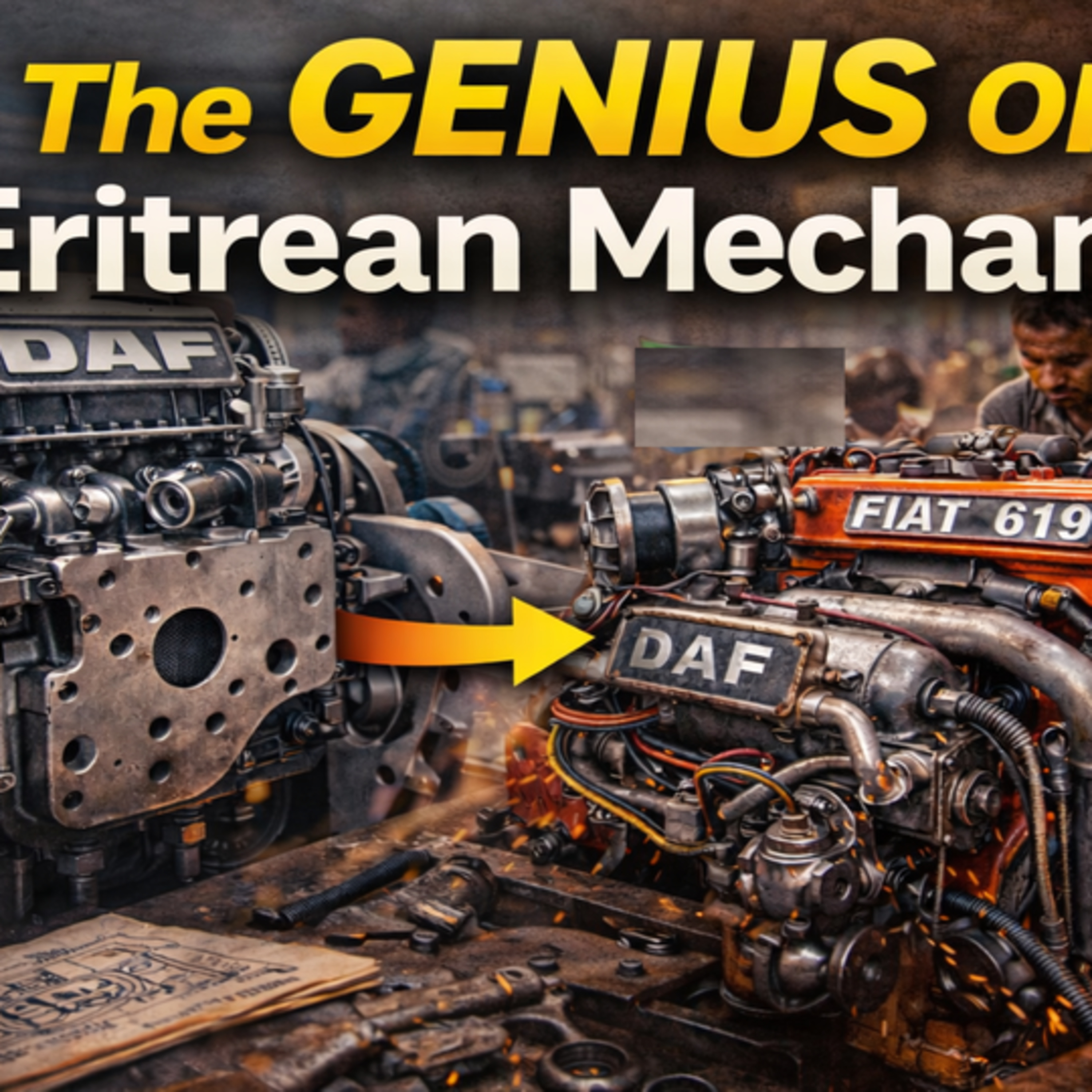 How Eritrean Mechanics Mastered the Machine |The Engineering Genius of Eritreans | This episode on Eritrawi PodcastIn the early 20th century, automobiles arrived in Eritrea as foreign machines, designed in Europe and built for completely different roads and conditions.But in Eritrea, something remarkable happened.Eritrean mechanics did not simply repair these vehicles.They reinvented them.Inside small garages in Asmara and across the country, Eritrean mechanics learned to:• Retune complex diesel injection pumps without factory specifications• Rebuild shock absorbers by heat-treating fatigued springs• Fabricate custom steel adapter plates by hand• Reroute cooling systems and redesign engine layouts• Install completely different engines into foreign vehiclesA DAF bus might run on a Fiat 619 engine.A broken truck might leave the garage stronger than when it arrived.Without spare parts, manuals, or formal engineering training, Eritrean mechanics transformed imported machines into hybrid creations of local ingenuity.By the 1950s and 1960s, Eritrean mechanics became the most respected transport engineers in the Horn of Africa.Trucks from Sudan and across the region were routinely brought to Eritrea for repair.The automobile in Eritrea ceased to be a European machine.It became something new.A living composite of Eritrean ingenuity.#Eritrea#AfricanHistory#MechanicalEngineering#Asmara#HornOfAfrica#AutomotiveHistory#EngineeringGenius#HistoryDocumentary#Innovation#IndustrialHistory | — | ||||||
| 3/8/26 | 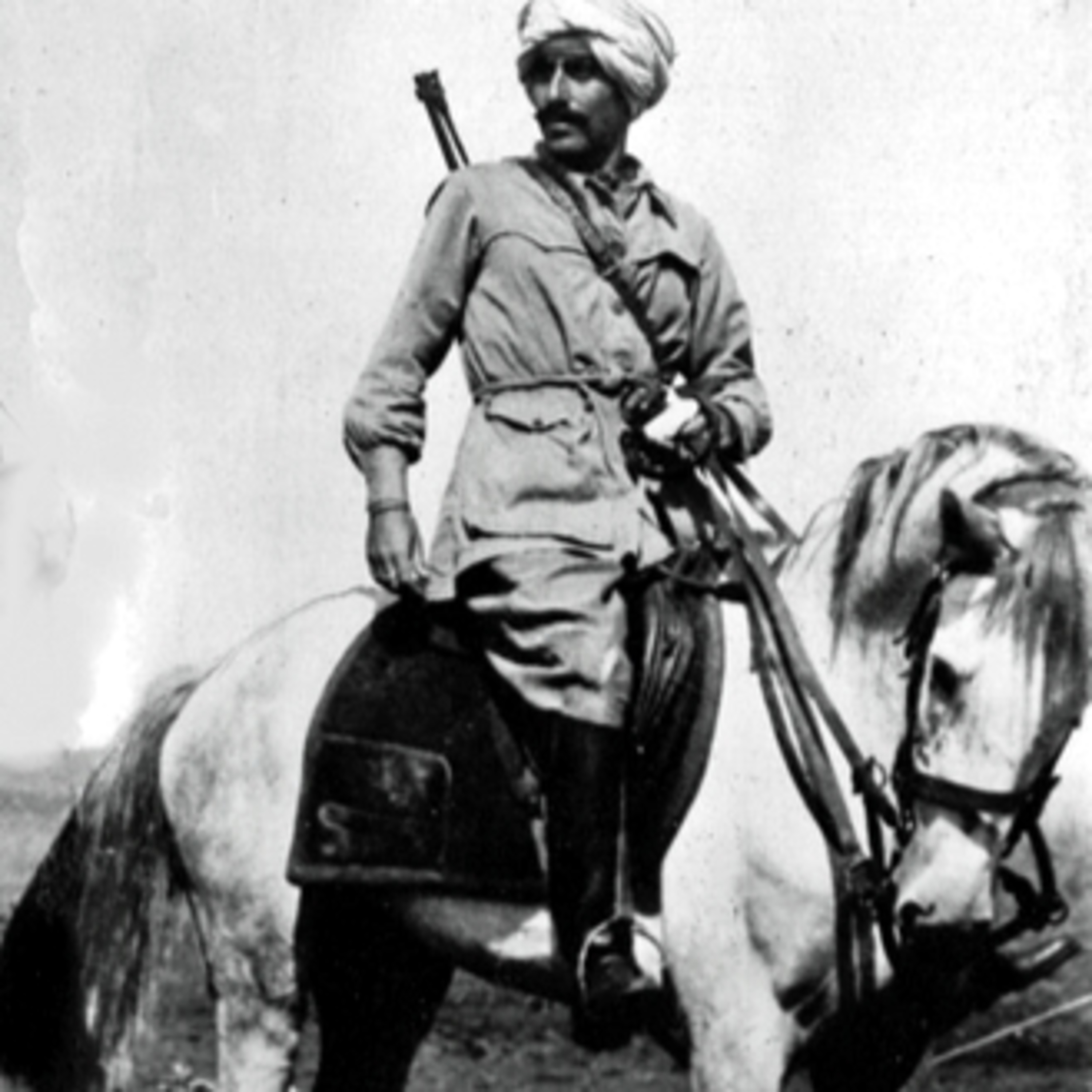 The Eritrean Cavalry Who Fought Tanks: Amedeo Guillet’s Guerrilla War in Eritrea | This episode of Eritrawi Podcast : In 1941, during the collapse of Italian East Africa, one of the most extraordinary and little known campaigns of World War II unfolded in Eritrea.Led by cavalry officer Amedeo Guillet, a force of Eritrean soldiers and mounted fighters launched a desperate resistance against advancing Allied forces.Outnumbered and facing modern mechanized armies, they fought with horses, rifles, grenades, and raw courage.The campaign began with one of the most dramatic clashes of the war a cavalry charge against British armored units. What followed was even more remarkable.For eight months, Guillet and his Eritrean fighters disappeared into the mountains and deserts of Eritrea, waging a relentless guerrilla war:• attacking Allied patrols• destroying bridges and supply lines• ambushing convoys• holding up British logistics through the mountain roadsTheir resistance forced Allied forces to divert resources across the region.Meanwhile in Massawa, the collapse of the Italian colonial administration led to dramatic scenes, including massive explosions as ammunition depots detonated under the extreme Red Sea heat.This episode explores the forgotten story of the Eritrean fighters who carried the war on horseback against tanks and modern armies a chapter of World War II that remains largely unknown outside specialist history.A story of courage, tragedy, and the brutal transformation of warfare from cavalry to mechanized armies.#Eritrea#WorldWar2#WW2History#AfricanHistory#MilitaryHistory#EastAfricaCampaign#HistoryDocumentary#ForgottenHistory#RedSeaHistory | — | ||||||
Want analysis for the episodes below?Free for Pro Submit a request, we'll have your selected episodes analyzed within an hour. Free, at no cost to you, for Pro users. | |||||||||
| 3/1/26 | 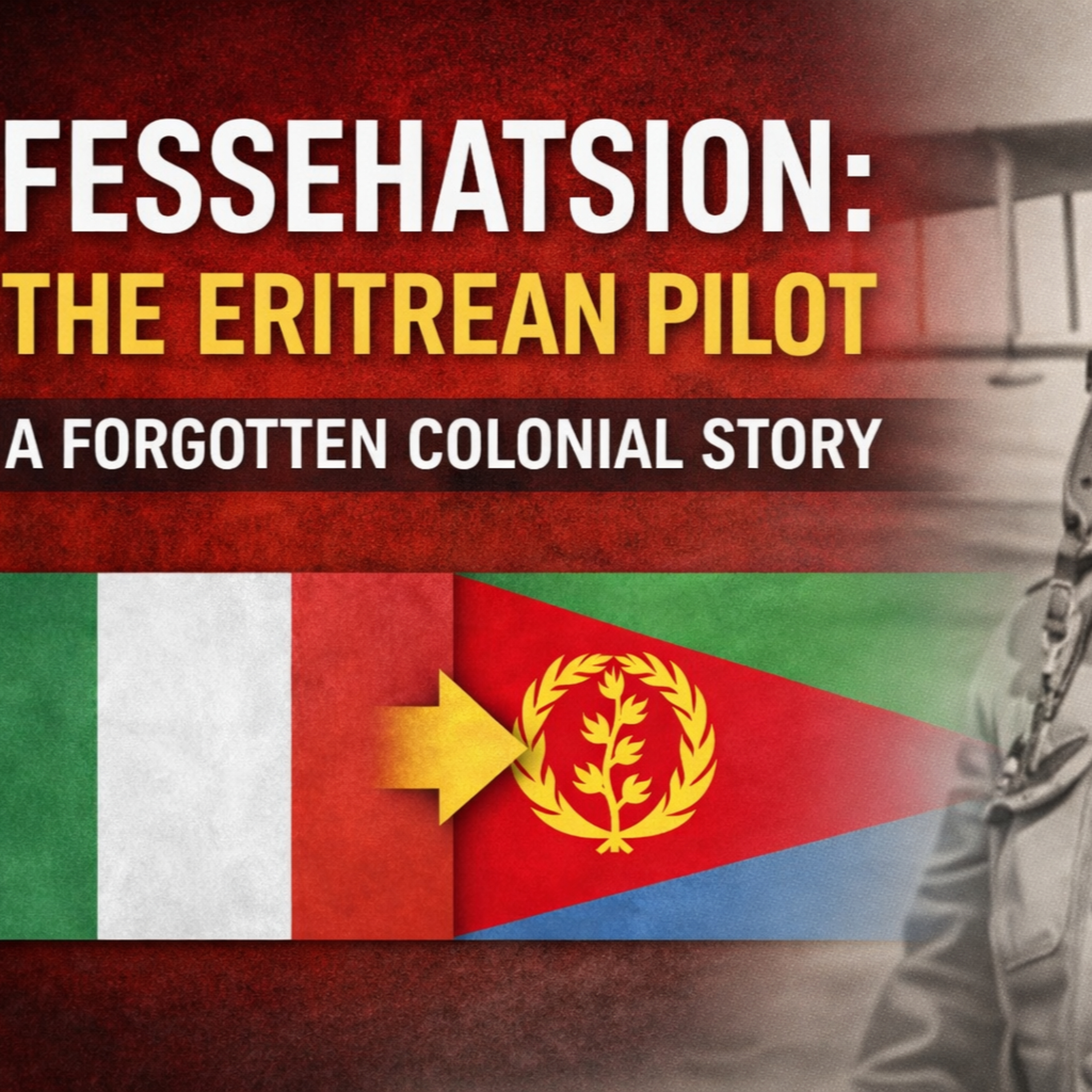 Fessehatsion: The Eritrean Pilot — A Forgotten Colonial Story | This episode of Eritrawi Podcast uncovers the extraordinary and nearly forgotten story of Fessehatsion Beyene, an Eritrean pilot whose life collided with Fascist Italy, colonial Somalia, and the racial laws of the 1930s.Through archival records, military files, and official decrees, we trace his journey from decorated colonial soldier to political liability and the legal battle over his son, Claudio Ricucci.At the center of this story is a brutal paradox: a Black officer who served the regime, yet was denied paternal authority over his own child because of race. The very documents meant to suppress his rights are the only reason we know his name today.This is a story about empire, identity, loyalty, exile and the human cost of racial hierarchy.History tried to file him away. The archive refused. | — | ||||||
| 2/22/26 |  Woldeslassie (Domenico Mondelli): The First Black Pilot Who Defied Fascism | Domenico Mondelli was born Wolde Selassie in Eritrea.He would go on to become the first Black pilot in Italian military history and later, an Army Corps General.Serving in the Regio Esercito during World War I, Mondelli distinguished himself as a reconnaissance pilot and assault troop commander, earning multiple medals for valor. He crossed no man’s land under artillery fire. He flew missions over the Alps. He led men in brutal trench combat.But merit alone was not enough.Under the Fascist regime of Benito Mussolini, Mondelli’s career stalled not because of incompetence, but because of race and politics. A high-ranking Freemason in a regime that criminalized the order, and a Black officer rising inside a racially stratified military system, he became an uncomfortable contradiction within Fascist Italy.After the fall of Fascism, his standing was restored. In the Italian Republic, he ultimately achieved the rank of Army Corps General.This episode explores:• The first Black aviators in military history• Race, ideology, and power under Fascism• Freemasonry and political suspicion in Mussolini’s Italy• The restoration of a reputation once deliberately suppressedMondelli’s story is not just about aviation.It is about merit confronting ideology.It is about dignity surviving political regimes.History remembers dictators loudly.It remembers men like Mondelli quietly. | — | ||||||
| 2/15/26 |  The Eritrean Who Outsmarted Empire, Pearls, Aviation & Erasure | Before oil. Before global tech supply chains. There was pearls — a commodity that shaped empires, trade networks, and individual destinies.In this episode, we uncover the story of Al Nahari, an Eritrean pearl merchant from Massawa who wasn’t just successful, he was a global strategist long before “globalization” had a name. Traveling to Paris in 1924, investing in early aviation like Air Orient (a precursor to Air France), navigating colonial taxation, and moving capital through Aden to evade predatory levies, Al Nahari operated with agency and vision.But his success collided with world events: the Great Depression crushed luxury markets, the advent of cultured pearls from Japan obliterated natural pearl prices (from £2,000,000 to £62,000), and WWII forced European governments to seize and absorb private assets. As if that weren’t enough, later colonial-era fiction recast him as a stereotype in Secrets of the Red Sea, erasing his brilliance from the narrative.This episode is about globalization from below, how local actors shaped global markets, and why Eritreans must tell their own stories as history continues to be told by others.Eritrean history, Red Sea, pearl trade, Al Nahari, colonial history, globalization, pearl economy, Air Orient, Air France precursor, cultured pearls, Great Depression, UAE pearling industry, narrative reclamation, hidden history, African global actorsSources & Further ReadingThe Pearl of the Red Sea — Red Sea Beaconhttps://redseabeacon.com/the-pearl-of-the-red-sea/Aqil K., Pearl Industry in the UAE Region (1869–1938): Its Construction, Reproduction and Decline — Academia.eduhttps://www.academia.edu/37377642/Aqil_K_2018_PEARL_INDUSTRY_IN_THE_UAE_REGION_IN_1869_1938_ITS_CONSTRUCTION_REPRODUCTION_AND_DECLINESecrets of the Red Sea — Archive.org (fictionalized portrayal)https://archive.org/details/secretsofredsea0000henr/page/4/mode/2up | — | ||||||
| 2/8/26 | 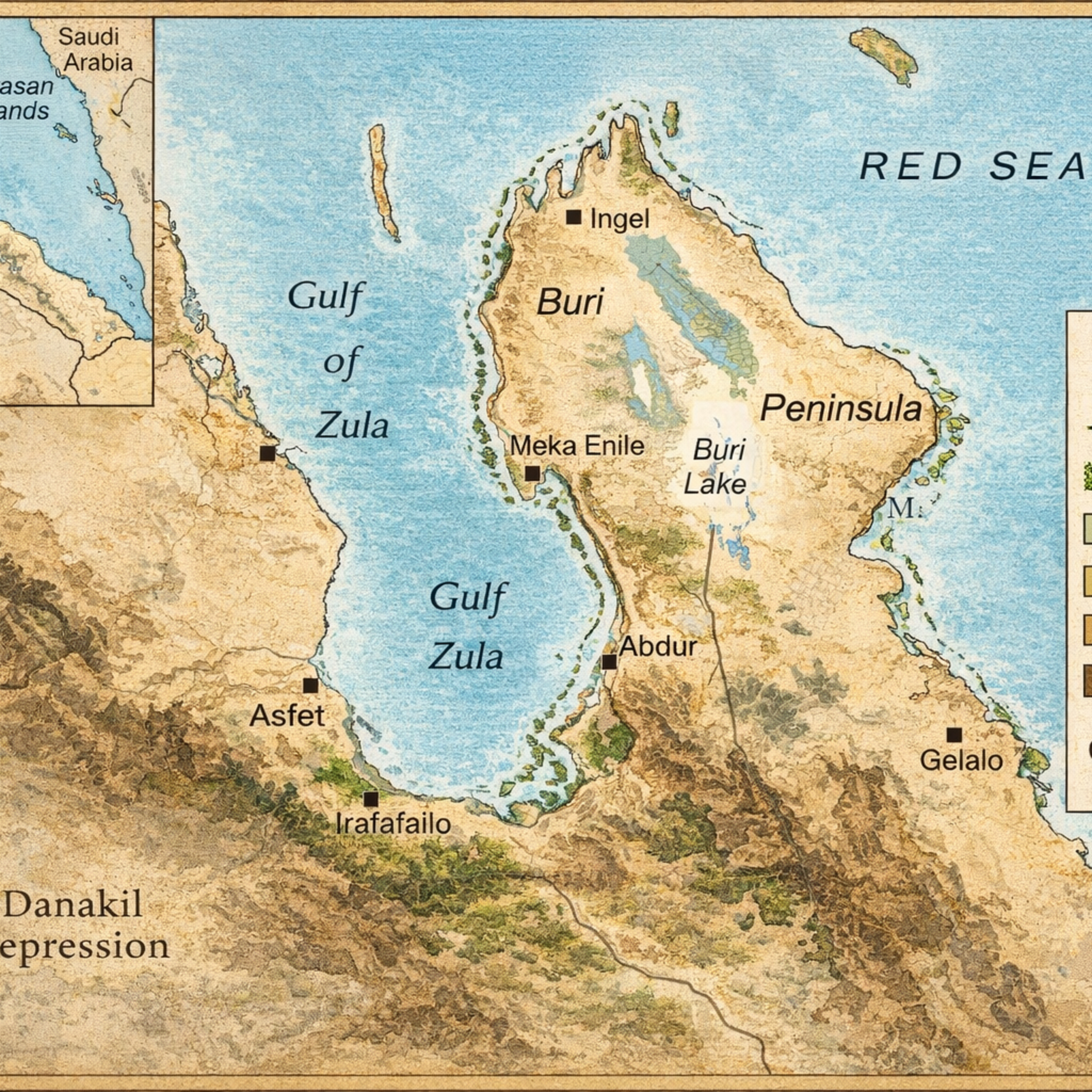 Eritrea’s Red Sea Coast and the Real Story of Human Dispersal | How did we truly conquer the Earth? 🌍For decades, the "Out of Africa" story seemed simple: a single group of early humans left East Africa and populated the globe. But new evidence is shattering that timeline. From mysterious stone tools in the Arabian desert to 100,000-year-old teeth found in Chinese caves, the real story of our ancestors is far more complex—and far more cinematic—than we ever imagined.In this episode, we dive deep into the Upper Pleistocene to explore the "lost" migrations of Homo sapiens. We break down the fierce debate between the Northern Route through the Sinai Peninsula and the Southern Route across the Red Sea.In this episode, we’re uncovering:The "African Eve" Mystery: Did we descend from a single population or multiple "lost" groups?The Ghost Migrations: Why some scientists believe we reached Australia and Asia much earlier than the history books claim.The Asfet Evidence: How a surface assemblage on the Eritrean coast provides the "smoking gun" for coastal migration.The Gulf Oasis: How a lush, hidden paradise in the Persian Gulf may have been the secret "launchpad" for the colonization of Eurasia.Are we the descendants of one rapid "coastal sprint," or are we the product of multiple waves of explorers who braved changing climates and rising seas? Join us as we redraw the map of human history.Featured Research & SourcesThis episode is based on the groundbreaking work of Professor Amanuel Beyin.Primary Source: “A surface Middle Stone Age assemblage from the Red Sea coast of Eritrea: Implications for Upper Pleistocene human dispersals out of Africa” by Amanuel Beyin (Quaternary International, 2013).Significance: Professor Beyin’s research into the Asfet site on the Eritrean Red Sea coast offers critical archaeological evidence of early human adaptation to coastal environments, supporting the theory of a "Southern Route" dispersal via the Bab al Mandab strait.#HumanEvolution #Archaeology #AmanuelBeyin #HistoryPodcast #OutOfAfrica #AncientHumans #Eritrea #RedSeaHistory #FYP | — | ||||||
| 2/1/26 | 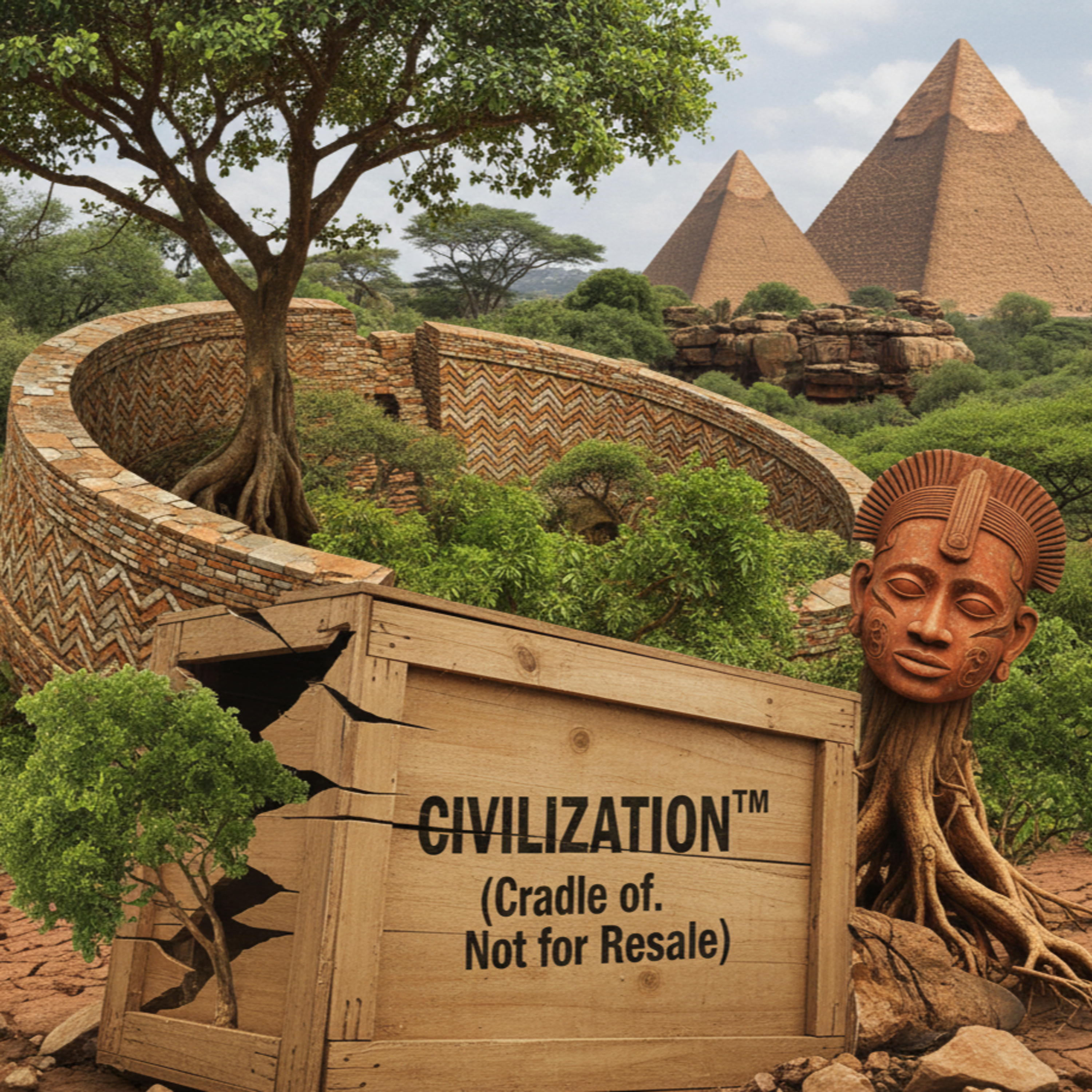 Redefining the Roots of Northern Horn of Africa Civilization | For decades, the civilization of the Northern Horn of Africa has been explained through an external lens, attributed to South Arabian immigrants rather than to indigenous African societies. This interpretation did not emerge from evidence alone, but from long-standing Euro-centric assumptions that struggled to recognize African authorship and innovation.This episode challenges that narrative using linguistic and epigraphic evidence. Ancient inscriptions from the Northern Horn show clear, independent developments, such as vocalization systems, structural grammatical changes, and long-form administrative and legal writing that are absent in South Arabian counterparts. These features point to local innovation rather than cultural borrowing.The episode also revisits the Queen of Sheba tradition, questioning why her kingdom is reflexively placed in Arabia when African geography, archaeology, and material culture fit the evidence equally, if not more convincingly. Rather than a one-way story of diffusion, the Red Sea emerges as a shared cultural space in which influence may have flowed eastward from Africa to Arabia.By foregrounding material evidence over inherited assumptions, this episode reclaims the indigenous roots of Northern Horn of Africa history and restores creative ownership to the people who built its civilizations.References to some work belowREFLECTIONS ON THE ORIGINS OF THE ETHIOPIAN CIVILIZATION by Ephraim Isaac | — | ||||||
| 1/25/26 | 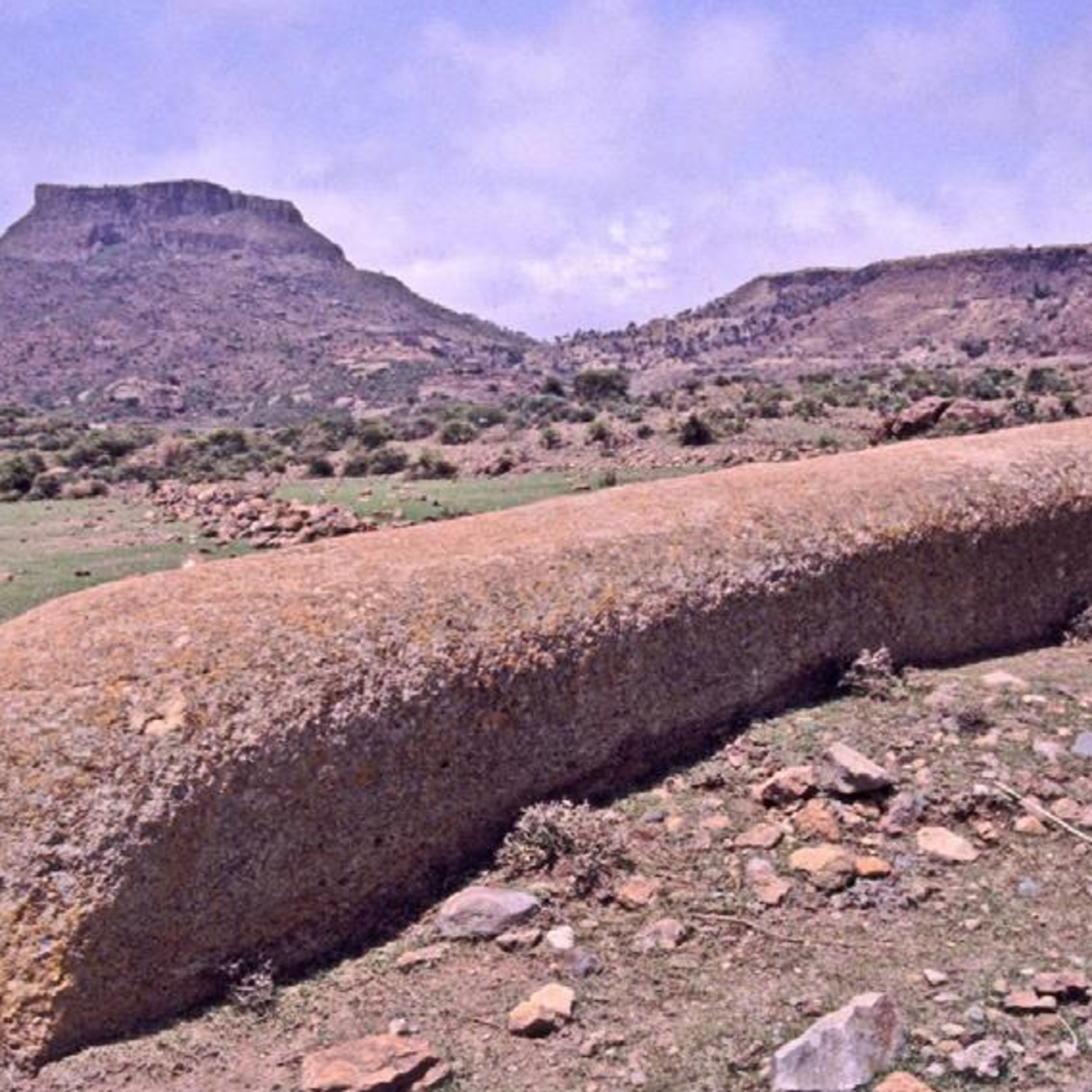 The Sabean Man’s Burden | The Sabean Man’s Burden, for centuries, Eritrea’s ancient history was explained through an outsider’s lens attributed to South Arabian or Sabean immigrants rather than to indigenous African societies. This narrative, rooted in colonial era Orientalist thinking, portrayed local populations as passive recipients of foreign civilization and was later reused to serve modern political and nationalist agendas.This episode challenges that framework using archaeological evidence.Drawing on recent research from the Greater Asmara region and the Kes-ke-se Valley, we examine material evidence of advanced, indigenous urban societies dating back to at least 800 BCE, associated with the Ona culture long before the rise of the Aksumite Empire. Ceramics, lithic industries, settlement patterns, and architectural remains point to locally developed complexity, not imported civilization.By confronting long-standing assumptions with stratigraphic data and material culture, this episode shows how archaeology can dismantle colonial myths and restore an African centered understanding of Eritrea’s deep past one grounded in evidence, not ideology.Source: Daniel Habiemichael: The Sabean Man's Burden:"Questioninug Historical Paradigm with New Archaeological Findings at Keskese Valley | — | ||||||
| 12/3/25 | 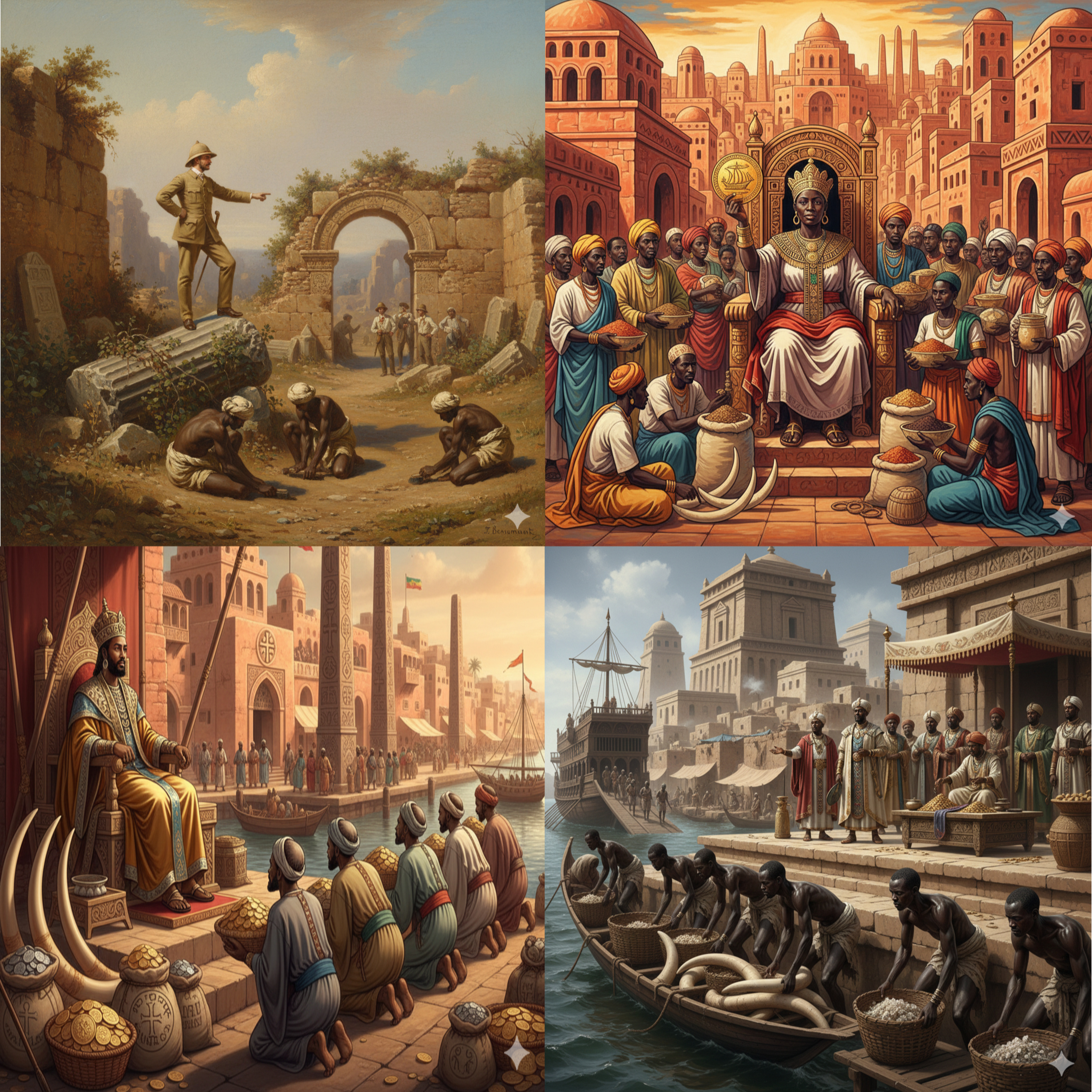 Adulis, Conclusion, Chapter 7 | Adulis, Conclusion, Chapter 7.The political economy of the ancient port city of Adulis in the Northern Horn of Africa during the Classical Age (1000 BCE–700 CE). The author argues against the prevailing Aksumite model, which asserts that Aksum dominated the regional world economy, instead proposing the Adulis model, which positions Adulis as an autonomous center within a network of power dynamics. The research supports this new model by analyzing extensive material data, including the hierarchical built forms at Adulis, the concentration of ancient coins suggesting Adulis was a tribute collector, and its strategic role in war elephant production and the aromatics trade. Furthermore, the work aligns with Du Bois’s observations, seeking to correct colonial distortions in scholarship and introduce new methodologies, such as integrating GIS, 3D modeling, and oral traditions to reinterpret the region's history. The dissertation ultimately provides significant new data and theoretical contributions toward understanding this critical region.Referenceshttps://www.adulites.com/https://scholarworks.umass.edu/entities/publication/6c43531e-c4e4-49d3-9a9b-ed7063f13765#ForYou #Ad #Eritrea #AfricanHistory #AncientAfrica #EsatAfrica #hornofafrica | — | ||||||
| 12/2/25 | 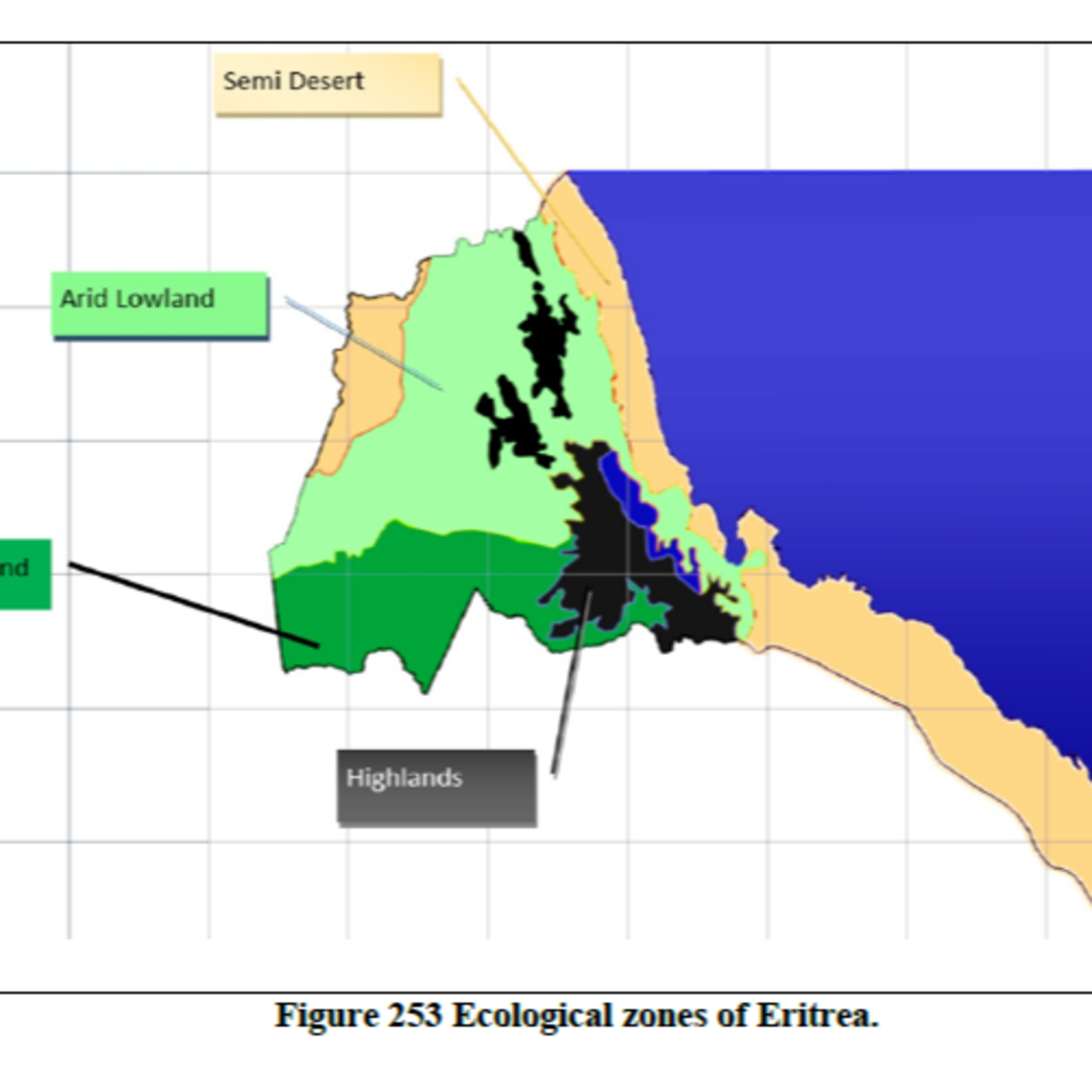 Aromatic Trade At Adulis Chapter 6 | Aromatic Trade At Adulis Chapter 6Adulis, the ancient Red Sea trade in aromatics, focusing specifically on the highly valued resins frankincense and myrrh, which were considered necessities for religious and medicinal practices in antiquity. The chapter concentrates on the pivotal role of Adulis and its connection to the ancient trade partner of Egypt, the legendary land of Punt. Utilizing a combination of archaeological, botanical, and textual evidence, the analysis refutes earlier suggestions and argues that Punt was most likely located along the East Sudan and Eritrean coast. The author also addresses the historical debate regarding the route of this exchange, providing strong textual evidence and nautical analysis to support the use of the Red Sea route over the Nile. Furthermore, the source incorporates modern ecological data and historical Eritrean export figures to demonstrate the significant anthropogenic decline of the Boswellia papyrifera species over the last century.Referenceshttps://www.adulites.com/https://scholarworks.umass.edu/entities/publication/6c43531e-c4e4-49d3-9a9b-ed7063f13765#ForYou #Ad #Eritrea #AfricanHistory #AncientAfrica #EsatAfrica #hornofafrica | — | ||||||
| 12/1/25 |  Production Of War Elephants at Adulis Chapter 5 | Production Of War Elephants at Adulis Chapter 5: Adulis was the primary center for the production of African war elephants (Laxodonata cyclotis) used by major polities during the classical era. The analysis first details how these highly intelligent, non-domesticated animals required a resource-intensive, cooperative process involving specialized mahouts, making capture and training more practical than breeding. Supporting this central assertion, the text examines newly developed taxonomic analysis identifying the specific forest elephant species utilized in combat, which was once abundant in the Adulis region. Further archaeological and material evidence—including ivory artifacts, elephant-skin-wrapped mummies, and protective graduated masonry architecture—is presented to confirm the physical presence and extensive use of these animals at the site. This perspective is reinforced by textual sources, such as the Monumentum Adulitanum, which document the Ptolemies’ reliance on Adulis for their military elephant supply and logistics. Finally, the source places this production within the broader context of the regional political economy, exploring the elephant’s heroic symbolic importance in local origin myths and its strategic role in historical battles like Raphia.Referenceshttps://www.adulites.com/https://scholarworks.umass.edu/entities/publication/6c43531e-c4e4-49d3-9a9b-ed7063f13765#ForYou #Ad #Eritrea #AfricanHistory #AncientAfrica #EsatAfrica #hornofafrica | — | ||||||
| 11/30/25 | 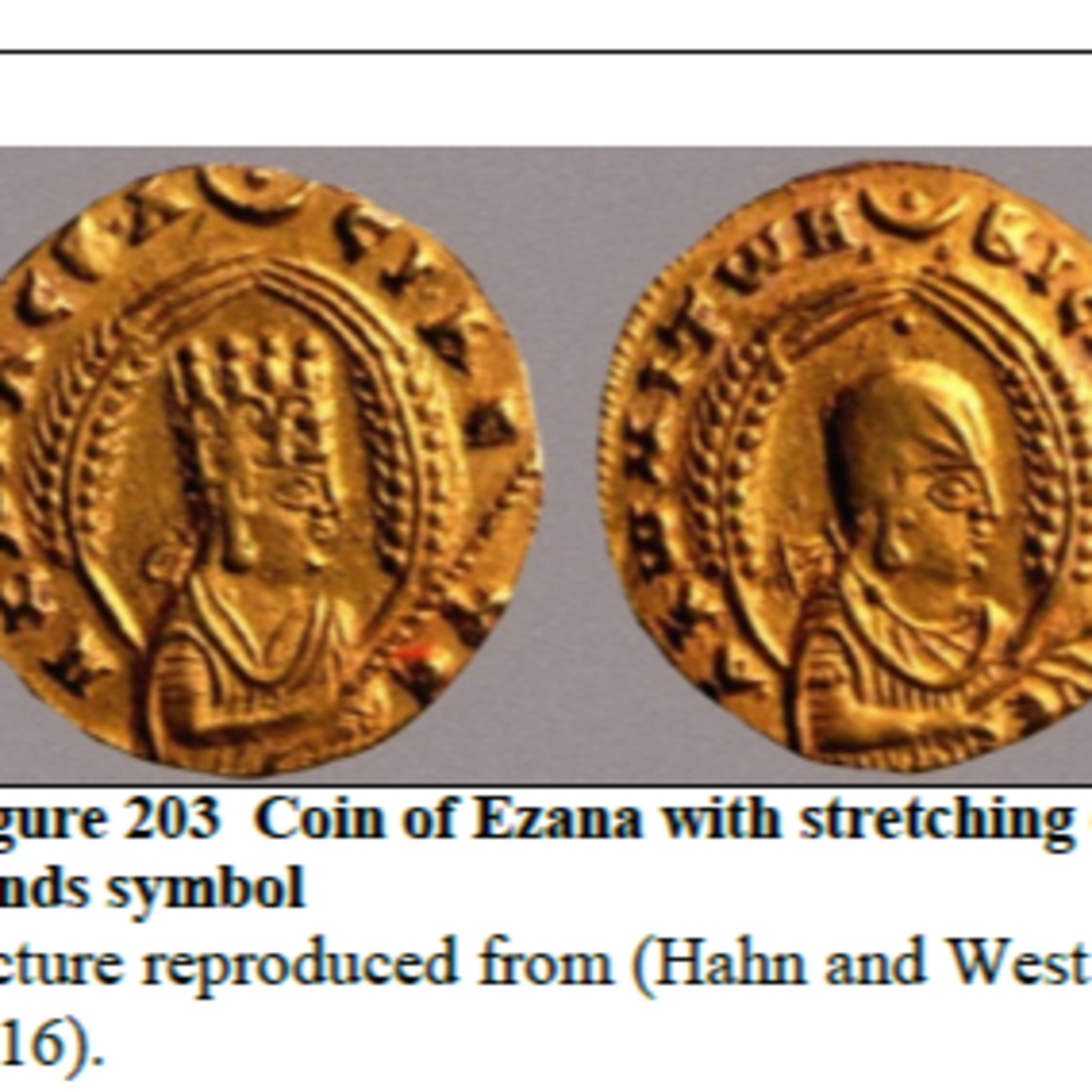 Assessing Critical Artifacts at Adulis Chapter 4 | Assessing Critical Artifacts at Adulis Chapter 4 examines critical archaeological artifacts from the site of Adulis to challenge the assumption that the city was merely a port dominated by Aksum, arguing instead that Adulis was a central power in the ancient world economy. The analysis focuses on three key data sets that support this thesis, beginning with the circulation patterns of coinage, where the discovery of roughly 70% of all known Northern Horn of Africa (NHA) currency at Adulis suggests the city was the region's primary economic engine. Furthermore, the Throne of Adulis (MA-II) is discussed as a unique and technologically sophisticated symbol of political authority, which historical accounts confirm was the central location for executing regional criminals, indicating broad judicial control. Finally, the presence of high-ranking Christian officials, including Bishop Moses of Adulis, who reportedly characterized the Aksumite king as a minor ruler, reinforces the conclusion that Adulis functioned as the dominant political and economic center in the NHA.Referenceshttps://www.adulites.com/https://scholarworks.umass.edu/entities/publication/6c43531e-c4e4-49d3-9a9b-ed7063f13765#ForYou #Ad #Eritrea #AfricanHistory #AncientAfrica #EsatAfrica #hornofafrica | — | ||||||
| 11/28/25 | 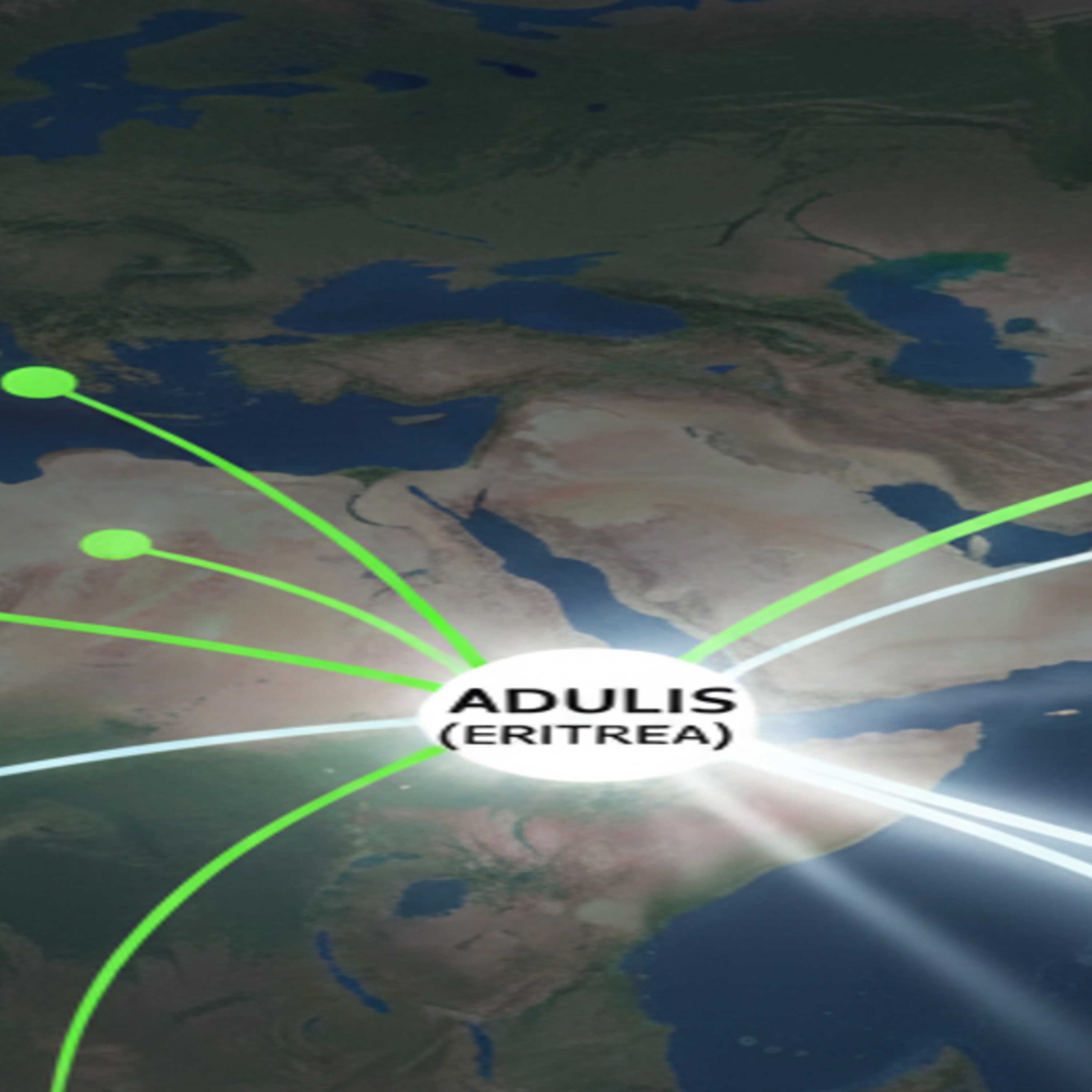 Energetics Study At Adulis Chapter 3 | Energetics Study At Adulis Chapter 3:A study aimed at determining whether the ancient city of Adulis functioned as an independent economic center or merely a periphery of the Aksumite world. The methodology relies heavily on energetics studies, which quantify the labor time (Person-Days) invested in construction to deduce household wealth and social stratification. Researchers utilized advanced Computer-Aided Design (CAD) software to calculate the complex volumetric data of thirty-nine structures built using the site’s unique Graduated Masonry technique, which employed three distinct wall grades (A, B, and C) to communicate status. The analysis confirms a sharp difference in effort between large public structures (temples and the Court House) and private residences, reflecting mandatory community labor obligations. Ultimately, the data demonstrates a continuous, multi-tiered hierarchy of wealth spanning elite, middle, and lower classes, leading to the conclusion that Adulis was a significant center rather than a mere outpost.Referenceshttps://www.adulites.com/https://scholarworks.umass.edu/entities/publication/6c43531e-c4e4-49d3-9a9b-ed7063f13765#ForYou #Ad #Eritrea #AfricanHistory #AncientAfrica #EsatAfrica #hornofafrica | — | ||||||
| 11/26/25 | 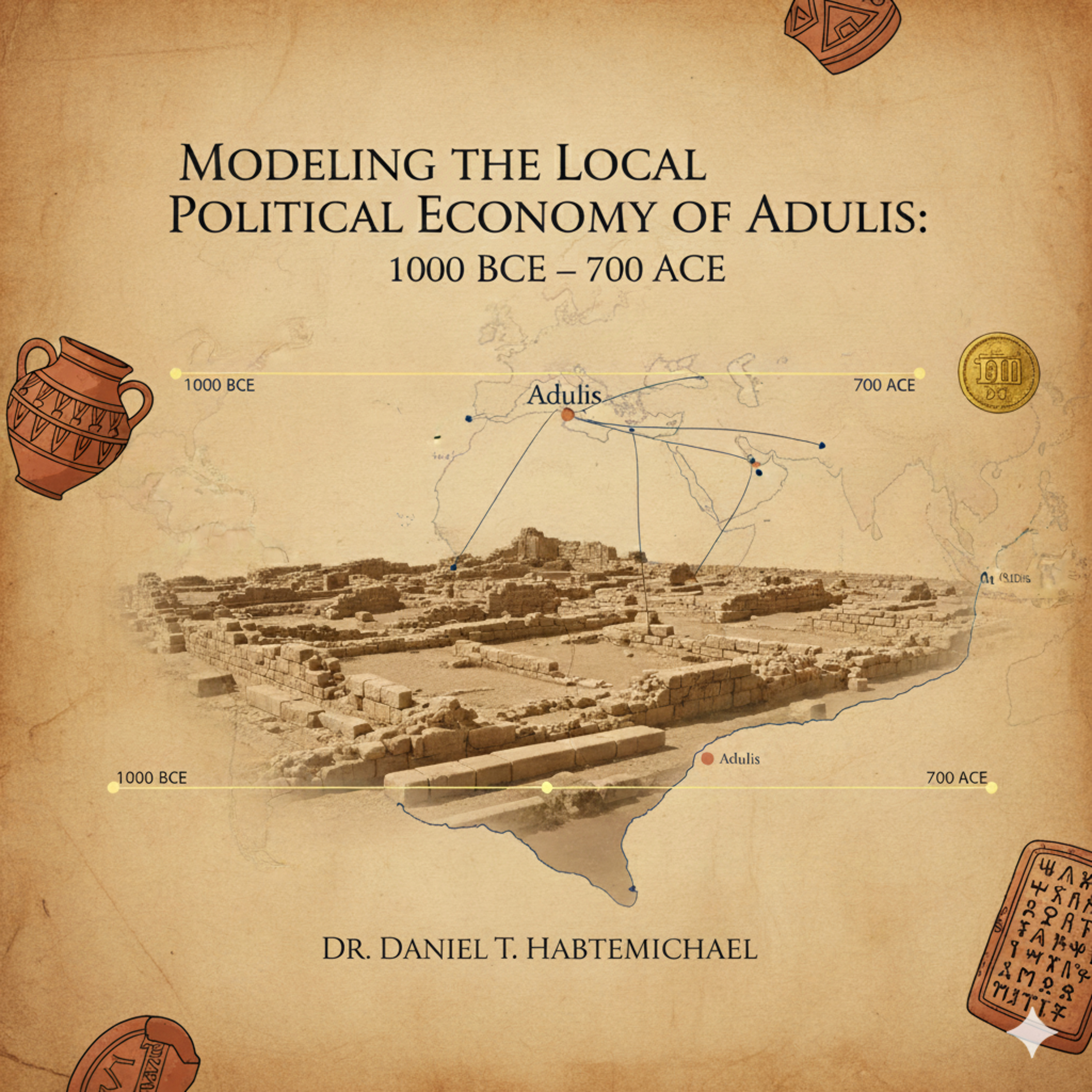 Adulis: Literature Review and Theoretical Background Chapter 2 | Adulis: Literature Review and Theoretical Background Chapter 2: is from a doctoral dissertation analyzing the political economy of the ancient Red Sea port city of Adulis in the Northern Horn of Africa between 1000 BCE and 700 ACE. The research directly challenges the conventional interpretation that Adulis functioned simply as a periphery or trading post for the Aksumite empire, arguing instead that Adulis was a wealthy, independent center within its own right. To support this claim, the author uses anthropological archaeology, employing energetics analysis of architecture (labor and time costs calculated from 3D models of built forms) to assess the city's internal wealth and social stratification. Findings suggest that Adulis’s significant position in antiquity was founded on its strategic location and its established role in crucial interregional trades, notably the exchange of aromatics and war elephants. The methodology combines archaeological fieldwork with textual data and ethnohistory to build a robust case study that refutes traditional center-periphery models. Ultimately, the dissertation seeks to advance the study of African history by focusing on local complexities of power and economic units, aligning with the perspective that W.E.B. Du Bois advocated for the study of long-term Afro-European relations and mutual respect.Referenceshttps://www.adulites.com/https://scholarworks.umass.edu/entities/publication/6c43531e-c4e4-49d3-9a9b-ed7063f13765#ForYou #Ad #Eritrea #AfricanHistory #AncientAfrica #EsatAfrica #hornofafrica | — | ||||||
| 11/24/25 | 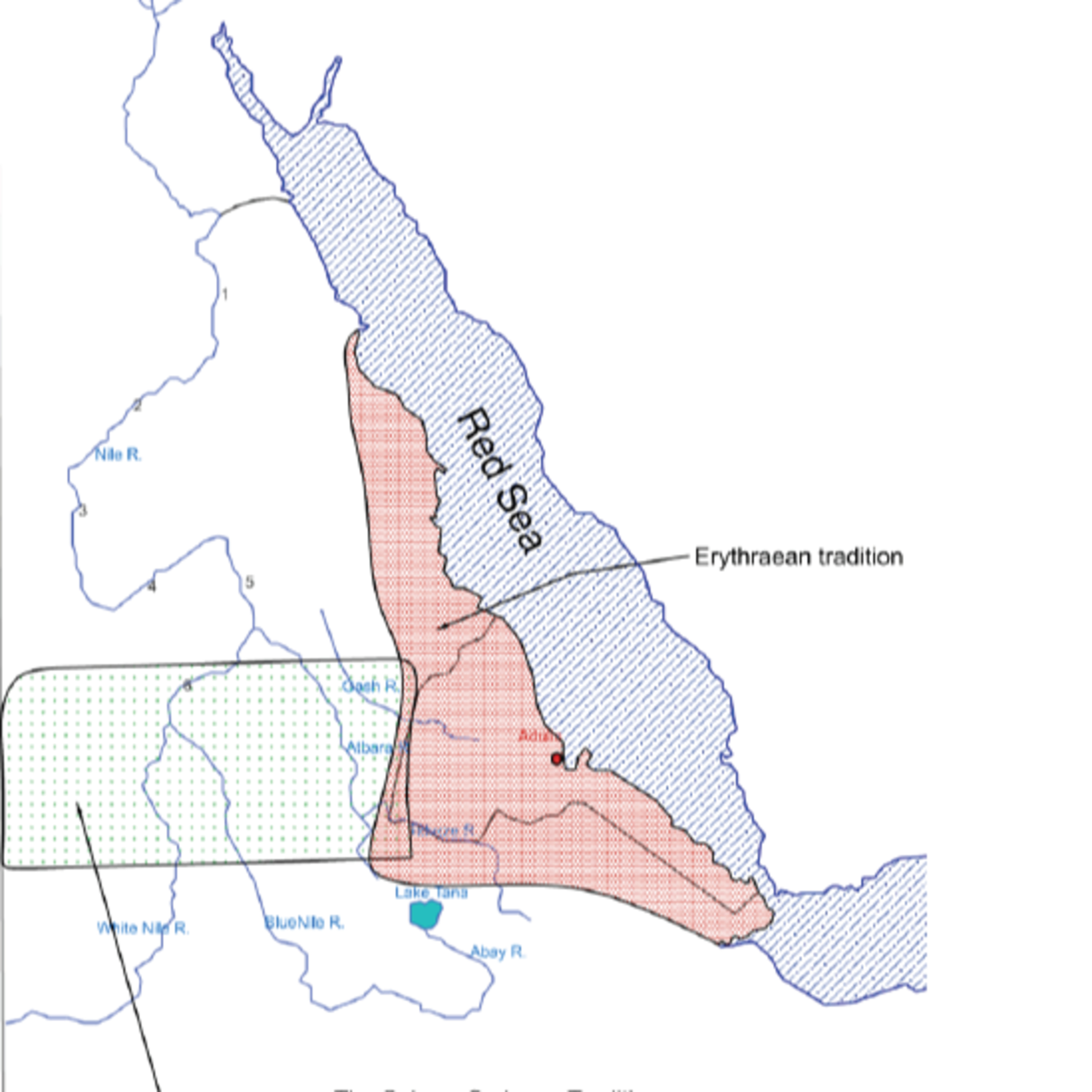 Adulis: Modeling a Classical African Political Economy Chapter 1 | Adulis: Modeling a Classical African Political Economy Chapter 1 Adulis: Modeling a Classical African Political Economy is from a 2019 doctoral dissertation by Daniel T. Habtemichael focused on modeling the local political economy of the ancient port city of Adulis in the Northern Horn of Africa between 1000 BCE and 700 ACE. The core research objective is to challenge the traditional view that Adulis was merely a periphery of the Aksumite world by proposing and testing an alternative hypothesis that Adulis was an independent political and economic center. The author uses energetics analysis of Adulis's built forms and artifacts, combined with textual and ethnohistorical evidence, to assess household wealth and the city's role in interregional trade networks, specifically those involving aromatics and war elephants. Ultimately, the dissertation aims to advance the understanding of African history on its own terms, aligning with the perspective of scholars like W.E.B. Du Bois, by thoroughly examining Adulis's complex social organization and strategic position in the Red Sea and Mediterranean trade spheres.References https://www.adulites.com/https://scholarworks.umass.edu/entities/publication/6c43531e-c4e4-49d3-9a9b-ed7063f13765 | — | ||||||
| 11/23/25 | 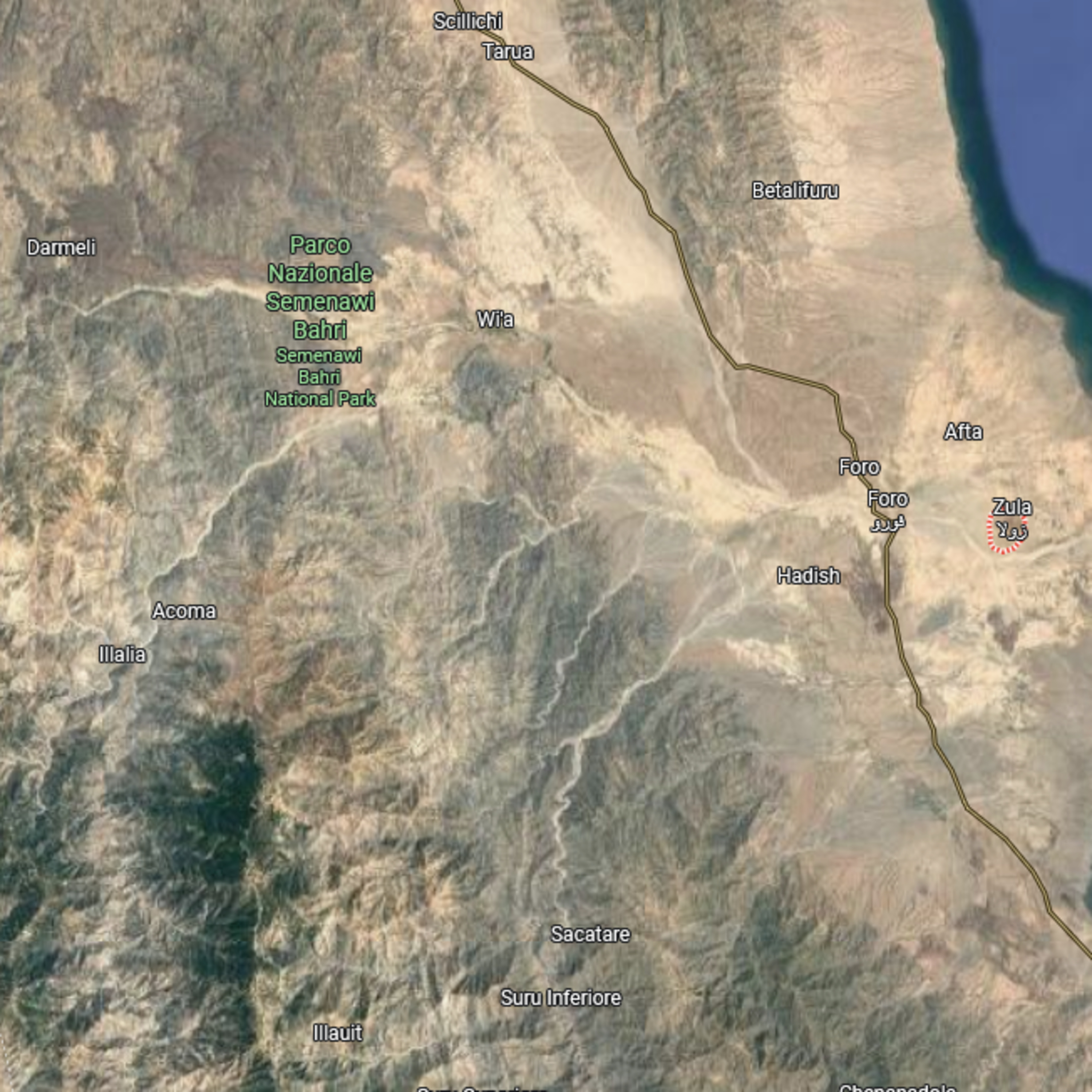 Adulis: A Center of Ancient African Political Economy | Adulis: A Center of Ancient African Political EconomyComing soon: a multi-episode journey into one of Africa’s most influential but least understood ancient cities. Adulis, long dismissed as a minor Red Sea port, is revealed through new archaeological research to have been a thriving political and economic powerhouse.Across this series, we unpack the groundbreaking findings of Dr Daniel T. Habtemichael’s 2019 dissertation, exploring how Adulis commanded interregional aromatics trade, exported war elephants, and connected the Mediterranean and Indian Ocean worlds. Through 3D reconstructions, artifact analysis, and conversations with leading scholars, we re-examine the Northern Horn of Africa at the height of the Classical Age.This podcast challenges old narratives and embraces the call of W.E.B. Du Bois and others to study African history on its own terms. Prepare to discover a complex, vibrant, and globally connected Africa that history textbooks rarely show.Adulis wasn’t peripheral. It was pivotal.And this series will tell its story. | — | ||||||
| 11/19/25 | 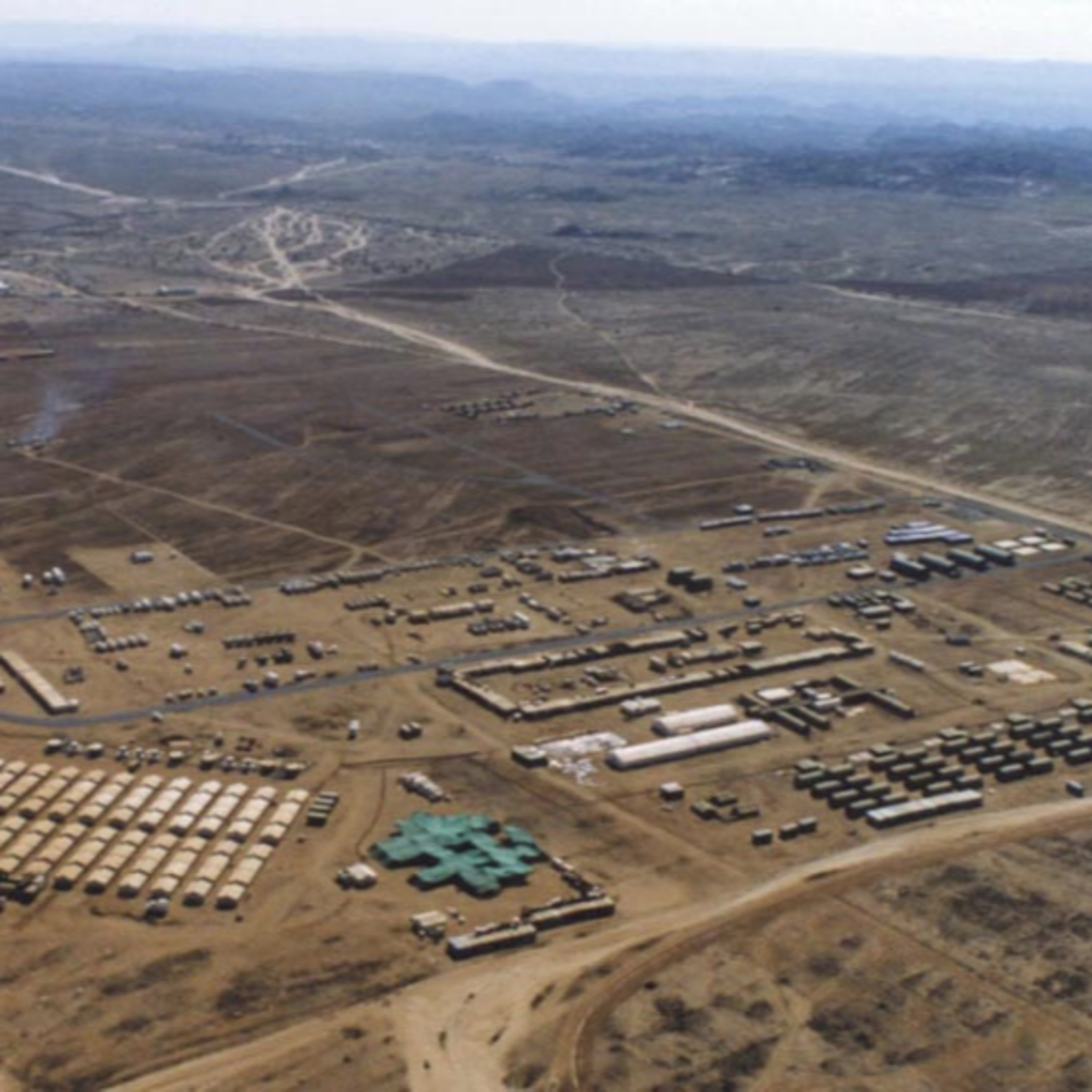 Eritrea, Gura Company Town A Wartime Social Experiment | Eritrea, Gura Company Town: The Social History of a Wartime Planning Experiment, "focusing on the social history and planning of a company town named Gura in Eritrea, East Africa, during World War II. It examines the social dynamics, culture, and various forms of security and insecurity experienced by the American, Italian, and native employees of the Farwest Aircraft Company at this remote location. Details everything from the differential wage scale of employees to the formation of social cliques and associations within the isolated community, understanding how isolated men establish a social balance in a foreign environment while confronting issues of caste, class, and paternalism by contract. | — | ||||||
Showing 25 of 37
Sponsor Intelligence
Sign in to see which brands sponsor this podcast, their ad offers, and promo codes.
Chart Positions
2 placements across 2 markets.
Chart Positions
2 placements across 2 markets.