

Insights from recent episode analysis
Audience Interest
Podcast Focus
Publishing Consistency
Platform Reach
Insights are generated by CastFox AI using publicly available data, episode content, and proprietary models.
Total monthly reach
Estimated from 3 chart positions in 3 markets.
By chart position
- 🇦🇺AU · Government#7530K to 100K
- 🇫🇷FR · Government#1781K to 10K
- 🇪🇸ES · Government#1941K to 10K
- Per-Episode Audience
Est. listeners per new episode within ~30 days
22K to 84K🎙 Weekly cadence·22 episodes·Last published 4mo ago - Monthly Reach
Unique listeners across all episodes (30 days)
32K to 120K🇦🇺83%🇫🇷8%🇪🇸8% - Active Followers
Loyal subscribers who consistently listen
9.6K to 36K
Market Insights
Platform Distribution
Reach across major podcast platforms, updated hourly
Total Followers
—
Total Plays
—
Total Reviews
—
* Data sourced directly from platform APIs and aggregated hourly across all major podcast directories.
On the show
Recent episodes
We've cut the workweek before – what history says about 4-day week
Jan 14, 2026
Unknown duration
Institutions fuel prosperity, make them inclusive and capable
Oct 16, 2024
Unknown duration
Too risk averse, too path dependent – redesign governance systems to face shocks
Sep 18, 2024
Unknown duration
Infantilized and unequal – the public sector is struggling when it’s needed the most
Aug 13, 2024
Unknown duration
Social media and trust in science – “it’s complicated”
Jul 16, 2024
Unknown duration
Social Links & Contact
Official channels & resources
Official Website
Login
RSS Feed
Login
| Date | Episode | Description | Length | ||||||
|---|---|---|---|---|---|---|---|---|---|
| 1/14/26 |  We've cut the workweek before – what history says about 4-day week | Juliet Schor, professor at Boston College, bestselling author and global advocate for worktime redesign, returns to the podcast following the 2023 episode. She now brings new insights from expanded large-scale trials in reducing the workweek from five to four days, with no pay cuts. Since we last spoke, these trials have grown significantly in both scale and scope, covering more than 245 organisations across 11 countries. The findings show remarkable consistency: around 90% of participating companies remain on the four-day week after one year, with employees reporting improvements across 20 well-being indicators and employers seeing no loss in productivity. While the four-day workweek may feel novel, it is not the first time working hours have been reduced. The shift from six to five days in the 1920s offers a clear historical precedent and important lessons for today. The four-day movement is now attracting a broad coalition, from governments and unions to environmental organisations, women’s groups and disability advocates, each seeing tangible benefits in shorter workweeks. Yet the at-scale adoption of the four-day week is bound to have ripple effects across other sectors, including education, the care economy, social protection and the environment – effects that remain to be fully understood. Are we ready for those? Find out more in her conversation with UNESCO’s Iulia Sevciuc.The facts, ideas and opinions expressed in these podcasts are those of the authors; they are not necessarily those of UNESCO or any of its partners and stakeholders and do not commit nor imply any responsibility thereof. The designations employed and the presentation of material throughout these episodes do not imply the expression of any opinion whatsoever on the part of UNESCO concerning the legal status of any country, territory, city or area or of its authorities, or concerning the delimitation of its frontiers or boundaries.Hosted on Ausha. See ausha.co/privacy-policy for more information. | — | ||||||
| 10/16/24 |  Institutions fuel prosperity, make them inclusive and capable | Daron Acemoglu, the newly minted Nobel prize laureate in Economics and distinguished Institute Professor at the Massachusetts Institute of Technology (MIT), debunks for us some long-standing assumptions about technology, productivity, and shared prosperity. Benefits do not automatically tickle down from industry to workers. Distributive gains take inclusive institutions and a calibrated approach that creates greater competition, changes the norms in the industry, and deals specifically with market failures via a host of incentives, subsidies, taxes, and regulations. In the case of the tech industry, that starts with a vision that is pro-worker and pro-democratic – the opposite of what Acemoglu characterizes as the current Silicon Valley equilibrium. Finally, we are asked to think very critically about some of the trending policy solutions. Universal basic income is not the silver bullet some see it to be. Data value and its distribution, on the other hand, deserve great attention. Data is going to be as important as land is to production. How do we treat it as such? Find answers in his discussion with Gabriela Ramos, UNESCO’s Assistant Director-General for Social and Human Sciences.Hosted on Ausha. See ausha.co/privacy-policy for more information. | — | ||||||
| 9/18/24 |  Too risk averse, too path dependent – redesign governance systems to face shocks | Mark Esposito, Professor at Hult International Business School and Adjunct Professor of Public Policy at Georgetown University, joins us today to discuss crisis and resilience. He dissects the concrete markers of a resilient system and discusses what helps it withstand (and possibly thrive in) turmoil. The number of shocks will only increase, hence it is high time to in-build agility and implicit fragility into our systems. When it comes to governance and decision-making, there is a lot of destigmatization that needs to be done on the concept of failure. In crisis, the speed of response and pivoting may be more critical than accuracy. Yet we’re bound by institutional legacies that have not been stress-tested for the mega challenges of today and operate under the assumption that decision-making must be successful 100 percent. How to regroup? Follow his discussion with UNESCO's Iulia Sevciuc for solutions.Hosted on Ausha. See ausha.co/privacy-policy for more information. | — | ||||||
| 8/13/24 |  Infantilized and unequal – the public sector is struggling when it’s needed the most | Charles Landry, author and president of the Creative Bureaucracy Festival, talks to us about how the public sector has been weakened from within through consistent reduction in its capacities and expertise. Cuts in analytical, foresight and strategic entities have not gone unfelt in crises. Under pressure to deliver, the public sector has been increasingly reaching to the market and outsourcing work. Spending and over-reliance on external consultants have, expectedly, mounted. Equally important is that such a trend has infantalized the public sector and put it on an unequal footing – through imbalanced access to intellectual resources and investments – with external consultants. Are there ways out ? Find out in his discussion with UNESCO 's Iulia Sevciuc.Hosted on Ausha. See ausha.co/privacy-policy for more information. | — | ||||||
| 7/16/24 | 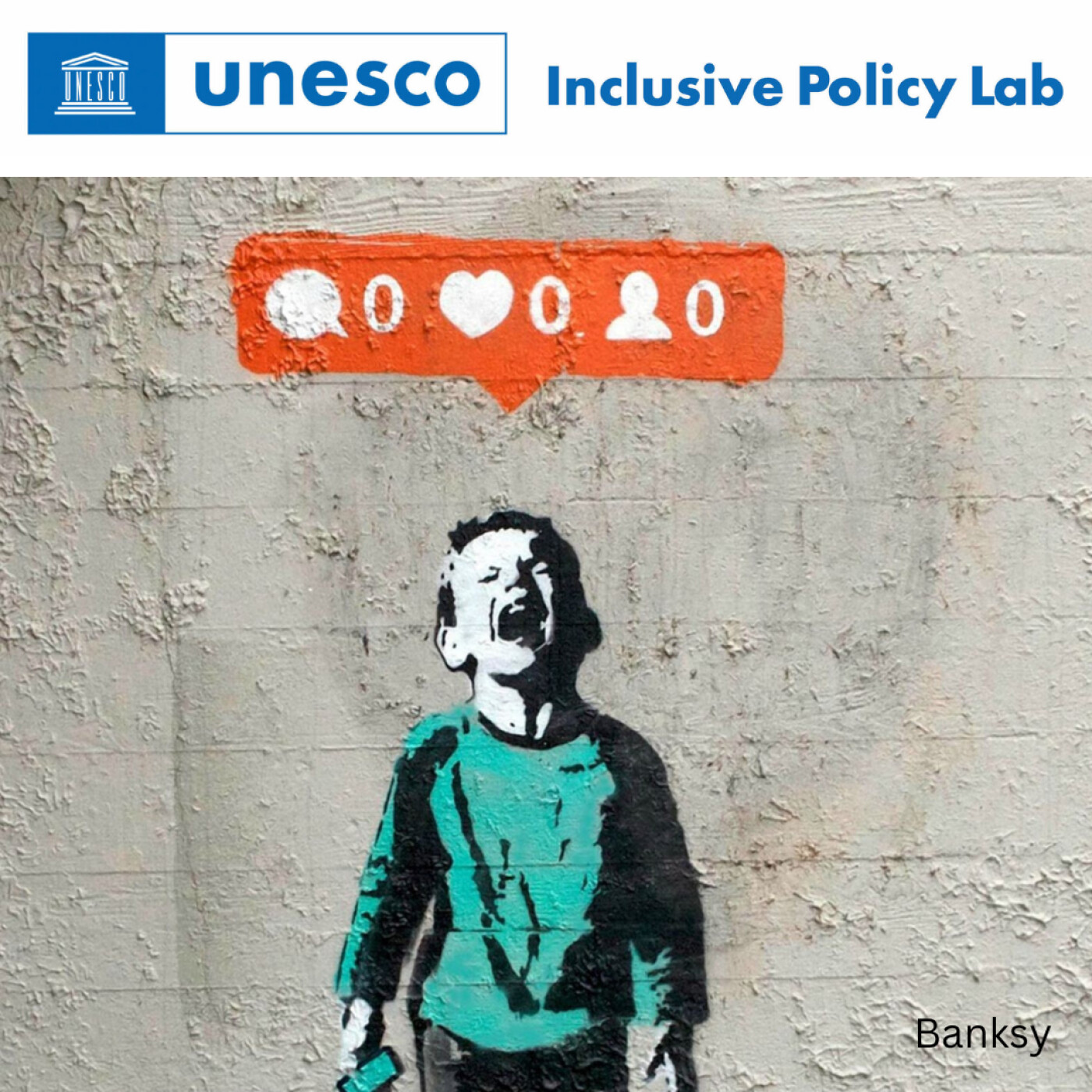 Social media and trust in science – “it’s complicated” | Much guilt for the erosion of public trust in science is laid at the feet of social media. Does data support such fears? Homero Gil de Zuñiga Navajas and Brigitte Huber conducted a 20-country study that looked into this relationship and they say… “it’s complicated”. Social media news use is positively related to trust in science, yet worries about echo chambers and polarization are real. They also say that there is little fake news on social media, but it’s the concentration and effects that are concerning. The majority of fake news hits a small group of people, who are dragged into rabbit holes by algorithms and their own curation of content. But look on the bright side. There is room for everything on social media. Scientists and policy makers need to discern paths to positive outcomes. From using micro-targeting, to banking on users' need for cognition, to tailoring campaigns to personality traits – social media has “tricks”. Are we ready to employ them? Find out in their discussion with UNESCO’s Iulia Sevciuc .Hosted on Ausha. See ausha.co/privacy-policy for more information. | — | ||||||
| 6/12/24 |  There is no refuge in the lab, science needs to reach out | Sudip Parikh, CEO of the American Association for the Advancement of Science and Executive Publisher of the Science journals, talks to us about major trends in science and how they affect us all. He begins by saying that populism and polarisation are taking hold of science. Belonging to a group – be it political, faith-based or any other – becomes more important than the truth and scientific fact. Taking refuge in the laboratory and its rationality is no longer an option. Science needs to tailor its communication to the publics and, importantly, to step up its engagement with policy. That is not a zero-cost shift. Concrete incentives are needed not only to trigger the right reforms in our traditional structures of science and government, but also to counteract current incentives for active disinformation. And, more than ever, social sciences need to help us navigate the trends and understand the experiments run on global populations in real time. How all this is to be achieved? Find out in his discussion with Gabriela Ramos, UNESCO’s Assistant Director-General for Social and Human Sciences.Hosted on Ausha. See ausha.co/privacy-policy for more information. | — | ||||||
| 5/20/24 | 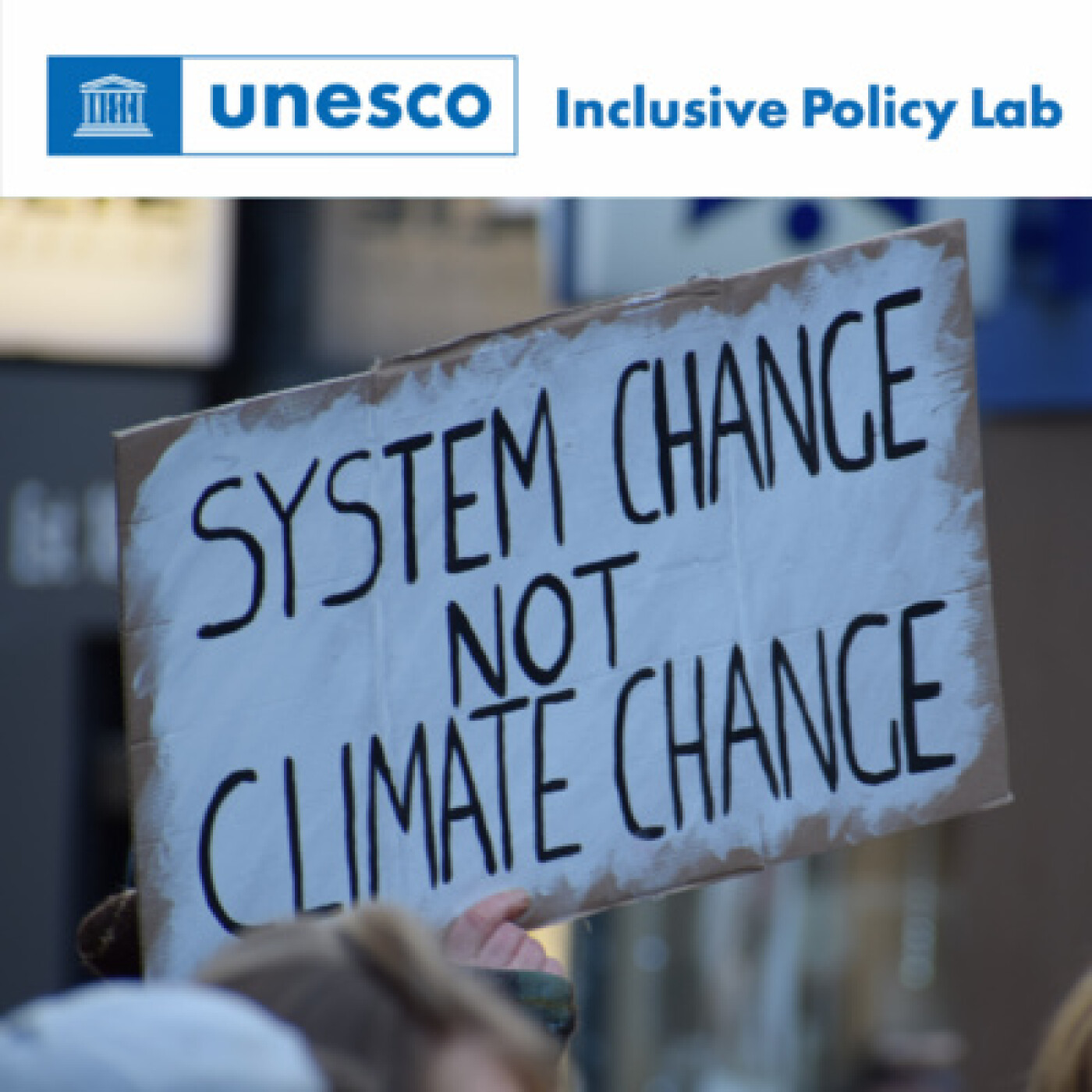 Stand on the shoulders of giants, take the next leap on climate | Mark Howden, a Vice Chair of the Intergovernmental Panel on Climate Change (IPCC) and co-recipient of the 2007 Nobel Peace Prize, talks about trust in climate science. How vital is this trust for our collective policies and climate trajectory? Why have we ended up polarizing and politicising climate science to such levels? Can we de-escalate? Mark has answers. Listen closely to his discussion with UNESCO’s Iulia Sevciuc on these and so much more.Hosted on Ausha. See ausha.co/privacy-policy for more information. | — | ||||||
| 5/15/24 | 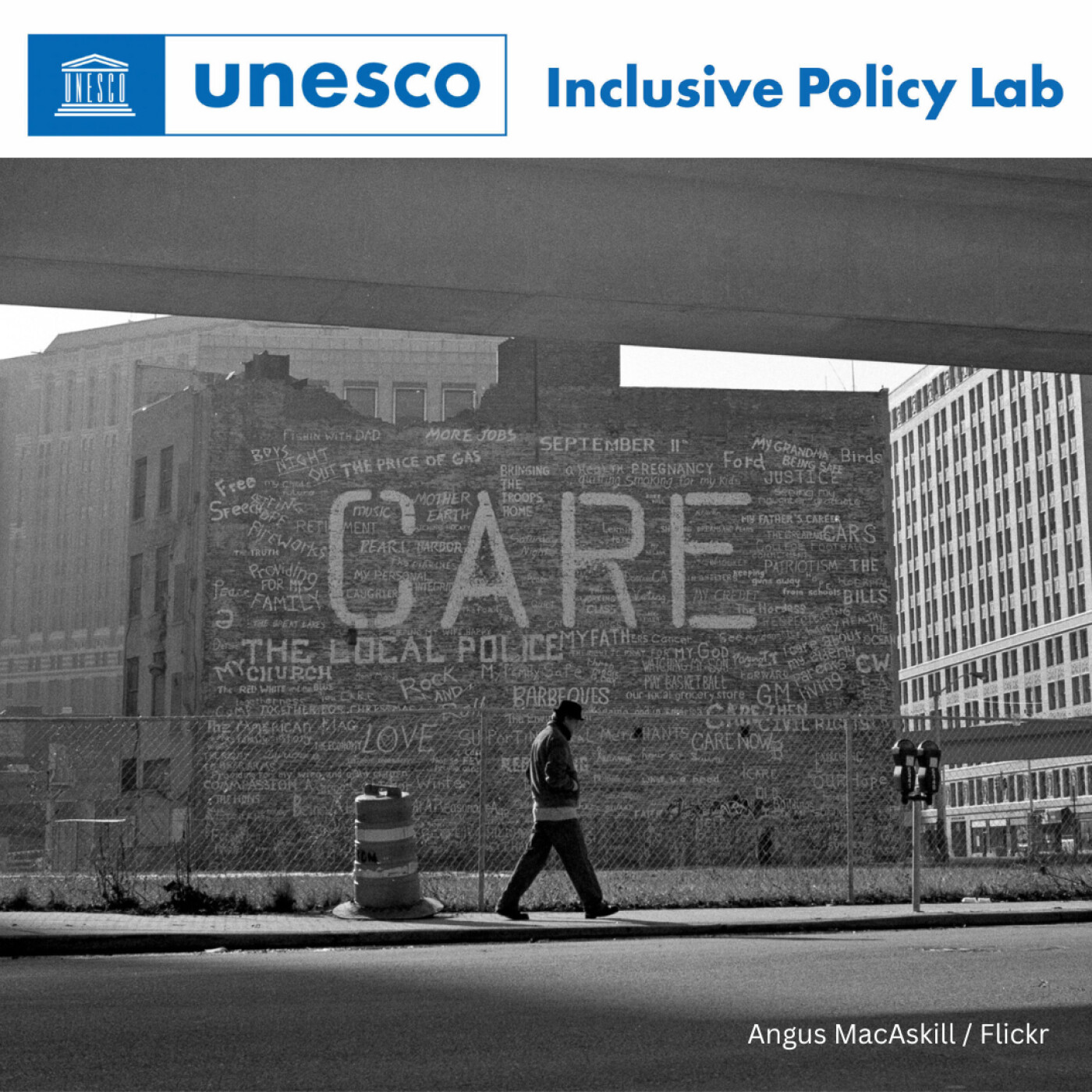 Recast your economic rulebook, deliver for people | Dani Rodrik, Professor at Harvard Kennedy School and the visionary who predicted the risks of unfettered globalisation, tells us how we need to collectively change course. The old narratives and policies have not aligned with the expectation that all boats would be lifted. New solutions are needed to shore up the middle class and deliver on the promise of shared prosperity. He says that the services sector is the policy answer. It is the rising source of good, green, human, local, gender-beneficial jobs in both advanced and developing economies. Finally, he flags that specific policies need specific knowledge. Yet much of the knowledge we’ve invested in caters to the needs of the richer countries and may skew the decisions in the rest. What is to be done? Find the answers in his discussion with Gabriela Ramos, UNESCO’s Assistant Director-General for Social and Human Sciences. Hosted on Ausha. See ausha.co/privacy-policy for more information. | — | ||||||
| 12/20/23 | 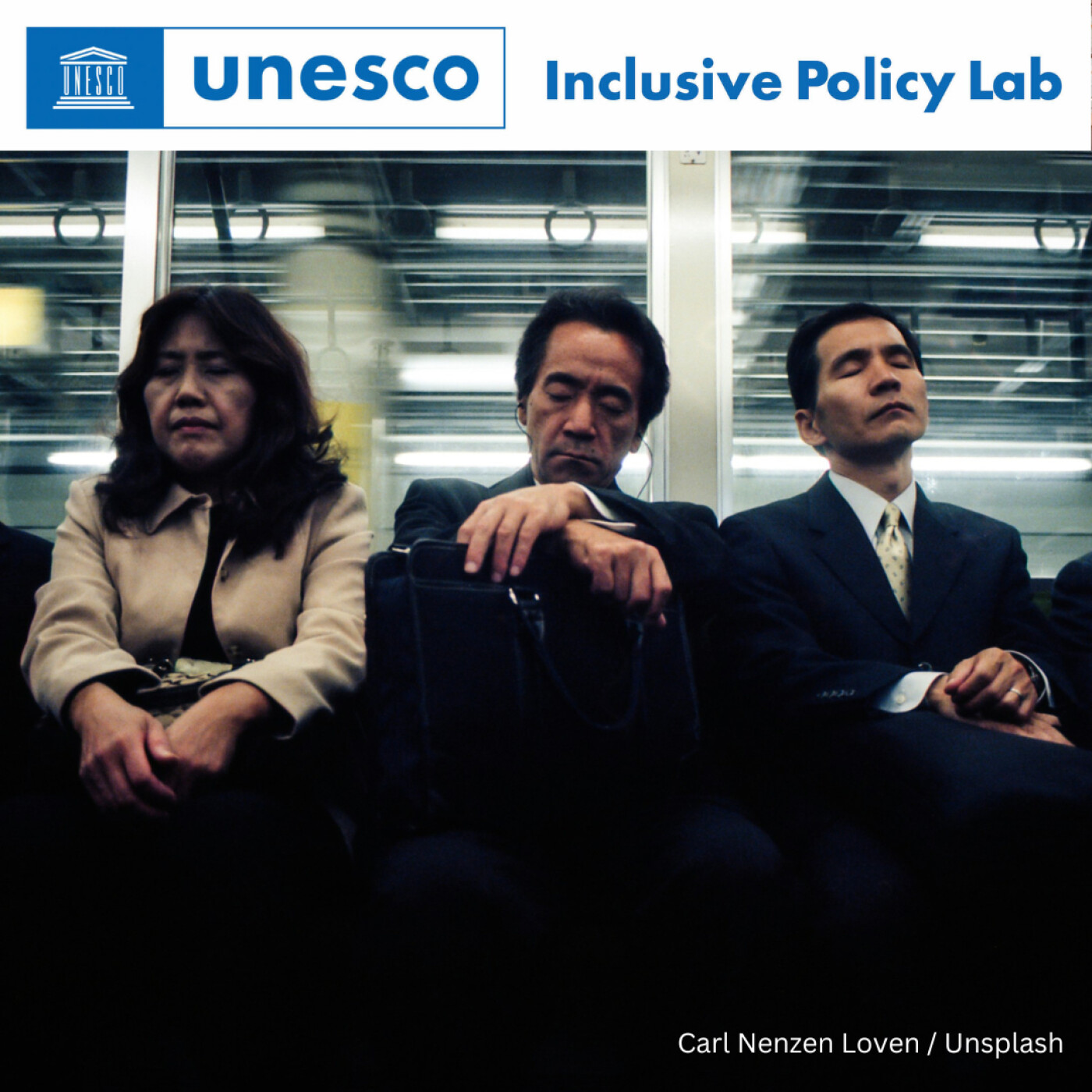 Is the 4-day workweek the solution we've been looking for? | Juliet Schor, Sociology Professor at Boston College and a bestselling author, says the traditional approaches to work need redesigning. The case she makes is for a reduction of the workweek from five to four days with no pay cut. Juliet has been trialling it around the world – including Australia, Brazil, Canada, South Africa, the UK and the US – and brings concrete data on its benefits for both the employees and the companies. Employees report less stress, lower burnout rates, improved physical and mental health, and greater job satisfaction. As for the companies, productivity and profitability go up, turnover and absenteeism go down, and talent and applicant attraction improve. While positive, these results come from trials that have been, so far, concentrated in certain industries and set-ups. To scale up and reap the full benefits of a 4-day week, companies and governments need to embrace broader measures – e.g., internal reorganisation of processes, work redesign, incentives and possible subsidies to stimulate uptake across industries and countries. How do we make it happen? Find answers in her discussion with UNESCO 's Iulia Sevciuc.Hosted on Ausha. See ausha.co/privacy-policy for more information. | — | ||||||
| 10/30/23 |  We live in times of abundance, yet our incapacity to govern it is tearing societies apart | Manuel Muñiz, the Provost of IE University in Madrid and the former Spanish Vice-Minister of Foreign Affairs, talks to us about the massive shifts our societies, economies and systems of governance are undergoing. The changes may be not as visual – no one is tearing down a wall – but they are as significant as what has happened at the end of the Cold War with the undoing of the international order, fracturing of the social contract, and the hollowing of the middle class leading to the hollowing of the middle of the political spectrum. What is peculiar is that is not a problem of scarcity but a product of the incapacity to manage and govern abundance well. What are the solutions? He says we need to embrace complexity, with governments needing to take the space and the opportunity to reshape the welfare state, the redistributive mechanisms, the taxation, the competitions and the antitrust policies. Joined-up reforms are needed on all fronts. Follow his discussion with Gabriela Ramos, UNESCO’s Assistant Director-General for Social and Human Sciences, for details on how that is to be done.Hosted on Ausha. See ausha.co/privacy-policy for more information. | — | ||||||
Want analysis for the episodes below?Free for Pro Submit a request, we'll have your selected episodes analyzed within an hour. Free, at no cost to you, for Pro users. | |||||||||
| 9/13/23 |  Data value: to share, or not to share | Diane Coyle, Professor of Public Policy at the University of Cambridge and Director of the Productivity Institute, talks to us about data value. She explains how good (or bad) we are at capturing such value and why we need to start distributing it amongst all actors involved in its co-creation. Diane tackles the key issue of whether/what share of that monetary and non-monetary value should flow back to both governments and individuals. Listen closely to her discussion with UNESCO’s Iulia Sevciuc on all this.Hosted on Ausha. See ausha.co/privacy-policy for more information. | — | ||||||
| 8/14/23 |  Social safety nets catch us in crisis, invest in those | Nadia Calviño, Vice-President and Minister for Economy and Digitalization of Spain, talks to us about inequalities, and how our exit from the current crises is through closing the most gaping divides. She says there are solutions, with Spain’s minimum subsistence income being an example of such. She also warns that it is not only the physical world we must be paying close attention to. If unchecked, the fast-emerging economies of data and AI can give rise to new, digital haves and have-nots. We should strive for a humanistic digitalization. How to bring all these about? Find the answers in her discussion with Gabriela Ramos, UNESCO’s Assistant Director-General for Social and Human Sciences. Hosted on Ausha. See ausha.co/privacy-policy for more information. | — | ||||||
| 7/6/23 |  We embraced dysfunctional growth, change course | Mariana Mazzucato, professor at University College London and a bestselling author, explains how the current systems are geared towards the pursuit of dysfunctional – i.e., financialised, consumption-led, climate-damaging – growth. They are also designed to fail, operating in a fixing and reactive rather than proactive mode. The present crises are clear lessons for all. The direction has to change and the systems require re-shaping to fit that purpose. Mazzucato does not stop at diagnosing problems. She explains that there are concrete levers to be employed in this shift. First, public procurement is a powerful instrument at the disposal of governments – big and small – that needs to become outcome-oriented to deliver against common needs, such as the green transition or zeroing the digital divide. Second, investments have to be structured around real collective intelligence and reward sharing, rather than extractive relationships between the parties that have been witnessed throughout the COVID-19 crisis and beyond. Third, a common good and portfolio mindset is required on the public investment side so that access and rewards are shared as equitably as the risks have been taken. Listen to Mazzucato as she addresses the UNESCO MOST Forum and details these solutions.Hosted on Ausha. See ausha.co/privacy-policy for more information. | — | ||||||
| 6/14/23 |  Recalibrate - our policies were too heavy on efficiency, too light on equity | Douglas Elmendorf, Dean of Harvard Kennedy School, tells us what it would take to reset equitably after COVID-19, how herd thinking (amongst experts and beyond) hurts us and why trust in science is to be restored if the intent is to move ahead smartly. He says that we’ve been focusing too much on efficiency and not enough on equity. That has to change. But how? Listen to his discussion with Gabriela Ramos, UNESCO’s Assistant Director General for Social and Human Sciences.Hosted on Ausha. See ausha.co/privacy-policy for more information. | — | ||||||
| 6/3/23 |  Polarisation kidnapped science, the price is paid by all | Peter Gluckman, the President of the International Science Council and the former Chief Science Advisor to the Prime Minister of New Zealand, came on to discuss how polarisation has infiltrated science and is tearing up the public trust in it. He says that the acceptance (or rejection) of scientific conclusions has become an ideological badge of identity. Social media only adds to it, overloading the public with (mis)information we are not yet equipped to navigate. There are many solutions, but underneath it all is the fundamental task of restoring civil discourse. We need to be able to talk – in agreement or disagreement – again. Can we do that? Find out in his discussion with Gabriela Ramos, UNESCO’s Assistant Director-General for Social and Human Sciences. Hosted on Ausha. See ausha.co/privacy-policy for more information. | — | ||||||
| 5/18/23 |  From ivory towers to glass houses, science is transforming | Gloria Origgi, Director of Research at the CNRS in Paris, tells us that science is power and public trust in it is key. There is no hiding – science is now part of participatory democracy and requires changing from within towards new forms of legitimation (beyond the ivory tower of a community of peers) and inclusion of the public. Critically, she says people need hands-on help to navigate the world of experts and expertise, to understand who is the real deal and who manufactures misinformation, and to ultimately decide who to put their trust in. Follow closely her discussion with UNESCO’s Iulia Sevciuc on these and so much more.Hosted on Ausha. See ausha.co/privacy-policy for more information. | — | ||||||
| 2/8/23 |  From reactive to proactive: Shaping AI for a just future | Vilas Dhar, president of the Patrick McGovern Foundation and a leading voice on global AI policy, discusses how rapid and profound technological advancements, particularly in artificial intelligence, are reshaping society at an unprecedented pace. He highlights the need to move from reactive to anticipatory policy approaches, focusing on equity, dignity, and inclusivity. Dhar stresses the risks posed by AI, including its potential misuse and the dangers of concentrated power in homogeneous decision-making circles. He calls for embedding ethics into technology design and fostering participatory governance, while also emphasizing the importance of broad digital literacy so that all stakeholders can actively shape the future of technology. He also argues for public investment in technology development to create inclusive outcomes. At the heart of the discussion is a call for a moral economy that prioritizes human agency, rights, and shared prosperity, ensuring that technological progress aligns with human values. This requires a rejection of simplistic narratives and a deeper understanding of the complex implications of AI.How can these goals be achieved? Find out in his conversation with Gabriela Ramos, UNESCO’s Assistant Director-General for Social and Human Sciences.Hosted on Ausha. See ausha.co/privacy-policy for more information. | — | ||||||
| 5/10/22 |  Universal Basic Services vs. Universal Basic Income - let's talk | This podcast is on Universal Basic Services (UBS). The experts are Anna Coote of the New Economics Foundation and Maeve Cohen of the Social Guarantee Network. The host is UNESCO’s Iulia Sevciuc.Thread 1 untangles the agenda of UBS, going into the:- Premises – what is the core of UBS and how it should be approached as a framework rather than a stand-alone policy?- Targets – why are equity, sustainability and gender so tightly linked to UBS and how would UBS deliver against such objectives?Thread 2 talks UBS vs UBI, discussing the:- Framing – why is the debate being framed as UBI vs UBS and how deep does the competition run within the fiscal space and beyond?- Now and later – could UBI, as a single policy with immediate turnaround effects, be the solution for the urgency of the current crises and UBS, and as a complex suite of policies with results in the medium- to long-term, be the solution for later?- Contexts – could UBS be more fit for countries with a stronger baseline of (state/collectively provided) services, while UBI could be more appropriate for countries without this baseline?- Politics of policy-making – what are the chances of UBI “winning” through support from across the political spectrum and UBS facing pushback due to the perception of increased government intervention?Thread 3 is about knowledge and policy. It speaks to:- Knowledge producers – where are the gaps in data and evidence on UBS?- Policymakers – what are the key messages on UBS that deserve greater attention?Hosted on Ausha. See ausha.co/privacy-policy for more information. | — | ||||||
| 4/14/22 |  We politicised science and scientised politics – is that a problem? | Gil Eyal, Professor of Sociology at Columbia University, talks to us about trust in science, trust in expertise, and the slow demise of such. He explains that not all science is equal and neither is public trust in it. Regulatory science is what underpins policy and collective decision-making, yet this is exactly what the public mistrusts the most. Why? It has a lot to do with the distributional effects of regulatory science (as often, there are winners and losers), the politicization of science, and the scientization of politics. Listen closely to his discussion with UNESCO’s Iulia Sevciuc about all this.Hosted on Ausha. See ausha.co/privacy-policy for more information. | — | ||||||
| 3/14/22 |  Our relations around data are broken - why and how to fix them | Our thinking on the true value of data is not where it should be this far into the game. Maria Savona looks with us into the economic and social aspects of the equation, saying that all should be captured when it comes to data. Value concentration is a concern and redistribution should be on our collective mind. There are policy attempts to do so – listen closely for hands-on details – but much work remains to be done. There is a need to reimagine the relationship between individuals as data generators and data gatherers, from large platforms to public administration. Such a “contract” requires much (much) better data literacy on the side of the individuals and a deep commitment to redressing imbalances on the side of the policy makers. Last but not least, the discussion goes into COVID-19. This crisis forced us to talk about data in the context of emergency – an opportunity to understand data value but also a (hard) lesson on the role of trustworthiness and individual rights in such set ups. What comes next? Find out in her discussion with UNESCO’s Iulia Sevciuc. Hosted on Ausha. See ausha.co/privacy-policy for more information. | — | ||||||
| 11/4/21 |  India's quest for basic income | This is a 3-part podcast on India’s quest for basic income. It discusses the basic income pilots that have been run so far and, importantly, asks what they tell about the potential of such schemes in India and perhaps in other developing countries.The expert is Sarath Davala, Chair of the Basic Income Earth Network (BIEN), and co-founder for India Network for Basic Income. He served as the research director for the Madhya Pradesh basic income pilot.The host is UNESCO’s Iulia Sevciuc.PART 1: TrialsThis part is concerned with concrete basic income pilots coming from India. It goes deeper into the Madhya Pradesh trial, covering the design features, results, and interaction with the existing social protection system.PART 2: Scale upThis part goes beyond individual pilots to bigger questions on the future of basic income. It discusses the paths to basic income’s scale up in India, potential in other developing countries, and use in development and crisis contexts.PART 3: Knowledge and policyThis final part talks to knowledge and policy actors about data gaps and, importantly, messages that need amplification in policy debates on basic incomeHosted on Ausha. See ausha.co/privacy-policy for more information. | — | ||||||
| 9/8/21 |  Data is an instrument – are we using it right? | This is a 3-part podcast concerned with data and knowledge-based decision-making.The guest is World Bank’s Arianna Legovini. Her expertise – critical to this discussion – is in improving the impact of research on development practice and policy.The hosts are UNESCO’s John Crowley and Iulia Sevciuc.PART 1: Data and governanceData is an instrument in and of governance. As any tool, data is as good as those handling (in this case, reading) it. So how good are we? Part 1 goes into new data landscape, the new skills it demands of us, and the public sector’s capacity to steer it all.PART 2: Data and COVID-19This second part is about data in crisis. It looks into how the pandemic changed the world of data and how it transformed the ways in which we use data for decision-making – in emergency contexts and beyond.PART 3: PointersPart 3 looks into data as an area of knowledge and an area of policy action. It addresses research communities to point out what knowledge gaps need closing and it talks to policymakers about emerging ideas/practices on data that deserve a closer look.Hosted on Ausha. See ausha.co/privacy-policy for more information. | — | ||||||
| 6/29/21 |  Partner on data, make it work for good | This is a 3-part podcast on new data and, particularly, if and how the private and the public sectors should be working together to advance its use for public good.The expert is World Bank’s Holly Krambeck. She founded the Development Data Partnership – a coalition between international organizations and the private sector to further responsible use of third-party data in international development.The hosts are UNESCO’s John Crowley and Iulia Sevciuc.PART 1: Worries and prioritiesThis part diagnoses key barriers to using new data in policy and governance. It also debates who are the winners and the losers in a system where the demand, from the public sector and beyond, for new data is so high yet the supply is limited to a handful of private companies.PART 2: Solutions – big and smallThis is a deep look into the big picture changes (regulations and systems) and operational solutions (nascent and in-testing) that hold the promise of boosting use of new data in our collective decision making. Concrete models are provided.PART 3: PointersThe last part flags key knowledge gaps the researchers need to close and lessons learned policy makers need to hear so as to move the needle towards more effective use of data for and in public good.Hosted on Ausha. See ausha.co/privacy-policy for more information. | — | ||||||
| 5/25/21 |  Treat data like you treat infants – signals and empathy are key | This is a 2-part podcast on data culture – how the private sector built such from within and if/how the public sector should follow.The guest today is James Ingram, CEO of Splashlight and Telmar, and co-founder of LiiV. His business is rooted in data and his expertise lies in the ways data fuels growth. He is also invested, intellectually and philanthropically, in advancing the field of digital anthropology.The host is John Crowley, UNESCO’s Chief of Research, Policy and Foresight.PART 1: Data cultureThe private sector has seen massive investments in their new data capacity, labelling data as assets and building data culture within companies to amplify its power. Other sectors lag behind. This part looks into:· Data culture – why it matters and what is there to learn from the private sector;· Frontiers of data – how the data agnostic to people is old news and how we should focus on data about people (i.e., understand the why and the how on top of the what);· Empathy in data – how societies are to be treated like infants in neonatal care, with governments reading the data for signals of distress and rooting it all in empathy; and· Digital lives – why understanding citizens’ digital lives is as big of a key to governance as understanding their physical ones.PART 2: Data and actionThe key concern of the UNESCO Inclusive Policy Lab is distilling recommendations and pointing to action that needs to be taken. This part talks:· Knowledge gaps – what we know and what we lack in knowledge on data;· Policy use – what deserves increased attention in decision making on data and how the public sector should be building data cultures from within; and· Private sector – how business should be working with the worlds of knowledge and public policy to advance the ways we engage with data and use it for common good.Hosted on Ausha. See ausha.co/privacy-policy for more information. | — | ||||||
| 5/11/21 |  Data equity – there is no hiding | This is a 3-part podcast on Data for Good. It debates new data landscapes, power dynamics in data, inequities, and concrete solutions to redress some of them.The expert today is Gry Hasselbalch. Her expertise is in data equity, and power in data. She served as a member of the European Commission’s High-Level Expert Group on AI, and a member of the Danish government’s first Data Ethics Expert Group.The hosts are UNESCO’s John Crowley and Iulia Sevciuc.Part 1: Power in and of dataThe new data systems we witness forming follow, unsurprisingly, the existing power dynamics. They drive current inequities even further. They also give rise to new groups of haves and have nots. This part discusses it all – power, commons, (re)distribution, privacy divide and so much more. (Pay attention to the bit on data reporting as a hands-on response to some of the concerns.)Part 2: Data and governanceThe COVID-19 crisis did not create (but it did expose) limitations in capacities and regulations of the new data systems. This part talks about how the governments need to master the balancing act of being permissive enough for data to thrive while providing a guarantee against misuse. It also debates the capacities the governments need to not only regulate, but effectively bank on new data in the very act of governance.Part 3: Data and policyThis part focuses on data as both an area of knowledge and of policy action. We need more data on data (i.e., what are the knowledge gaps), and we discuss what areas require increased policy attention (i.e., what needs to be done fast as to prevent the skewing of the new data systems).Hosted on Ausha. See ausha.co/privacy-policy for more information. | — | ||||||
Showing 25 of 38
Sponsor Intelligence
Sign in to see which brands sponsor this podcast, their ad offers, and promo codes.
Chart Positions
3 placements across 3 markets.
Chart Positions
3 placements across 3 markets.