

Insights from recent episode analysis
Audience Interest
Podcast Focus
Publishing Consistency
Platform Reach
Insights are generated by CastFox AI using publicly available data, episode content, and proprietary models.
Most discussed topics
Brands & references
Est. Listeners
Insufficient chart data. Estimates will improve as the show charts.
- Per-Episode Audience
Est. listeners per new episode within ~30 days
N/A🎙 Daily cadence·67 episodes·Last published today - Monthly Reach
Unique listeners across all episodes (30 days)
N/A - Active Followers
Loyal subscribers who consistently listen
N/A
Market Insights
Platform Distribution
Reach across major podcast platforms, updated hourly
Total Followers
—
Total Plays
—
Total Reviews
—
* Data sourced directly from platform APIs and aggregated hourly across all major podcast directories.
On the show
From 15 epsHosts
Recent guests
Recent episodes
Escape Rooms and Problem Solving (AfterMaths)
Jun 26, 2026
Unknown duration
What We Can Learn from This Year’s Maths SATs?
Jun 18, 2026
Unknown duration
Florence Nightingale: The Lady with the Graph
Jun 5, 2026
22m 46s
Why Problem Solving Needs to be Taught - AfterMaths
May 22, 2026
33m 46s
Building Maths Confidence with National Numeracy
May 19, 2026
44m 04s
Social Links & Contact
Official channels & resources
Official Website
Login
RSS Feed
Login
| Date | Episode | Topics | Guests | Brands | Places | Keywords | Sponsor | Length | |
|---|---|---|---|---|---|---|---|---|---|
| 6/26/26 |  Escape Rooms and Problem Solving (AfterMaths) | In this episode of The Primary Maths Podcast, Jon and Becky reflect on the realities of summer term: heatwaves, report writing, and the heroic act of trying to teach when everyone is melting.They then turn to problem solving in primary maths, asking whether it should really be saved for the end of the year, or whether pupils need regular, explicit teaching of the skills that help them tackle unfamiliar problems with confidence.Jon and Becky discuss six key problem-solving strategies:Spotting patterns Working systematically Using models Trialling and improving Changing the process Making connectionsThey also answer a listener question from Priya, a maths lead in Coventry, about what to do when colleagues feel pupils are not fluent enough to access problem solving.Finally, in Maths of Life, Jon shares a short history of escape rooms and makes the case that they are a brilliant real-world example of problem solving in action.Useful linksTwinkl Problem Solving Resources: https://www.twinkl.co.uk/r/8arfiPlanIt Maths: https://www.twinkl.co.uk/r/wke0fGet in touchWe’d love to hear your thoughts, questions and ideas for future episodes. You can email the show at:primarymathspodcast@twinkl.co.uk | — | ||||||
| 6/18/26 |  What We Can Learn from This Year’s Maths SATs? | In this aftermaths episode of The Primary Maths Podcast, Jon and Becky take a look back at this year’s KS2 maths SATs papers and ask what teachers and maths leads might learn from them.They discuss why the tests should be seen as end-of-key-stage assessments rather than simply Year 6 tests, explore the balance of content across the papers, and reflect on the importance of flexible mathematical thinking. From percentage questions that can be solved in several ways to the role of conceptual understanding in arithmetic, they consider how we can help children move beyond simply following procedures.There is also time for Becky’s Maths of Life, where family rounders, mini golf and sporting fairness lead to a chat about the maths hidden in everyday games. Finally, Jon shares a recent meta-analysis on collaborative learning and mathematical creative reasoning, exploring why high-quality tasks, structured discussion and non-routine problem solving can make such a difference.A lively episode covering SATs, shape, strategy, sport, collaboration and, naturally, the enduring power of a hash brown. | — | ||||||
| 6/5/26 |  Florence Nightingale: The Lady with the Graph✨ | mathematicsstatistics+4 | Becky | Science MuseumNational Army Museum | HampshireScutari+1 | Florence Nightingalemathematics+5 | — | 22m 46s | |
| 5/22/26 |  Why Problem Solving Needs to be Taught - AfterMaths✨ | problem solvingprimary maths+4 | Becky | — | — | primary educationmaths teaching+4 | — | 33m 46s | |
| 5/19/26 |  Building Maths Confidence with National Numeracy✨ | maths confidencefamily engagement+4 | Paul MilnerJulie Pompa | National Numeracy | — | numeracymaths education+5 | — | 44m 04s | |
| 5/15/26 |  Why Doodling Belongs in Maths Lessons - AfterMaths✨ | doodling in mathsSATs preparation+4 | Becky | King Power Stadium | — | doodlingSATs+3 | — | 37m 42s | |
| 5/8/26 |  Time Zones, Test Week and Teaching with Representations - AfterMaths✨ | Key Stage 2 SATsmathematics education+4 | Becky | EEFUCL | Washington StateLondon+4 | SATsmathematics+5 | — | 41m 25s | |
| 5/5/26 |  Why Active Primary Maths Lessons Work✨ | active learningprimary maths+3 | Bryn LlewellynPaula Manser+1 | Birkby Infant and Nursery SchoolMove and Learn | — | active learningprimary maths+3 | — | 38m 21s | |
| 5/1/26 |  Attainment Grouping vs Setting in Primary Maths - AfterMaths Episode✨ | attainment groupingsetting+5 | Ash Morris | Education Endowment FoundationUCL Institute of Education+2 | — | attainment groupingsetting+8 | — | 32m 56s | |
| 4/28/26 | 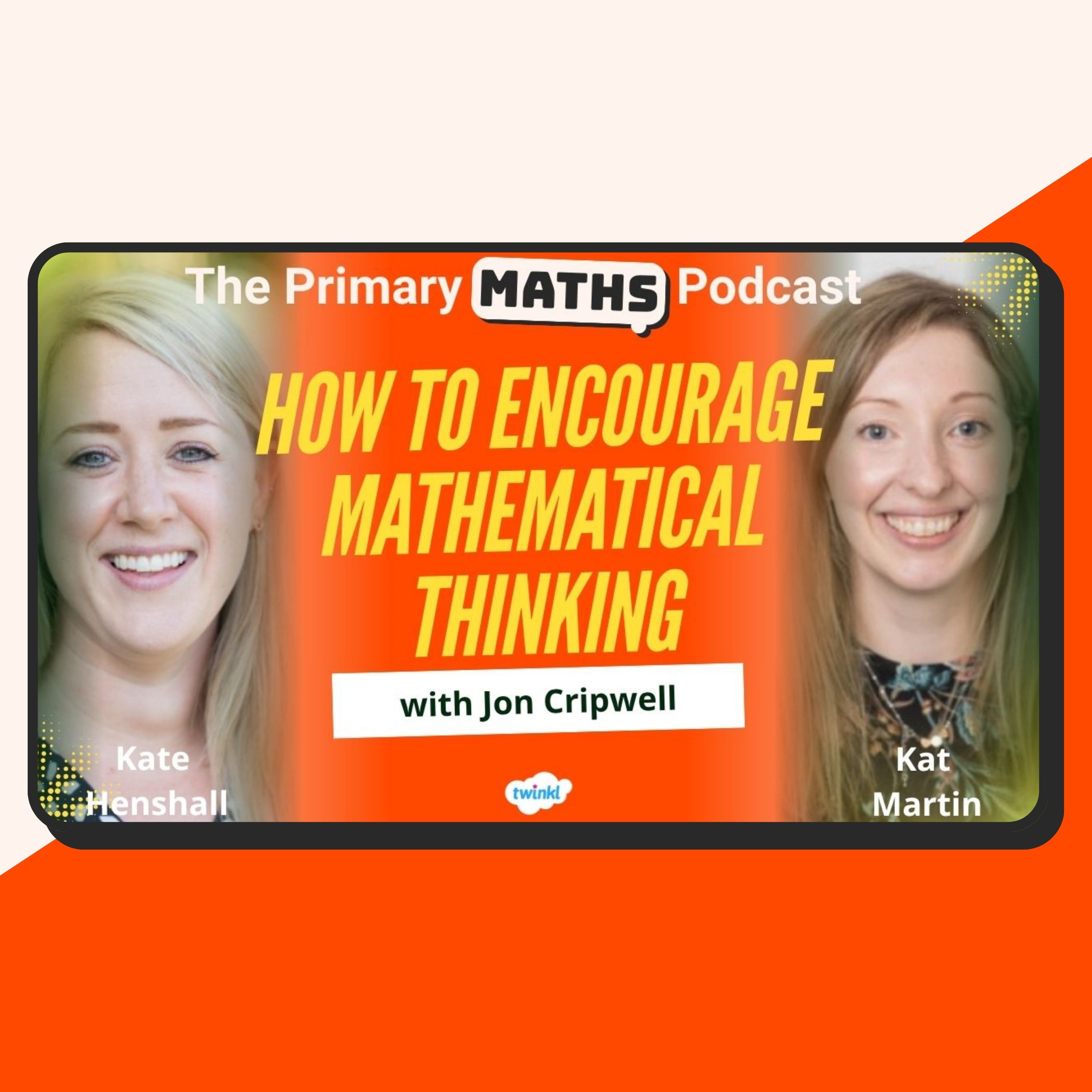 How to Encourage Mathematical Thinking In Primary Maths Lessons✨ | mathematical thinkinglesson design+5 | Kate HenshallKat Martin | Rethink Maths | — | mathematicseducation+6 | — | 57m 24s | |
Want analysis for the episodes below?Free for Pro Submit a request, we'll have your selected episodes analyzed within an hour. Free, at no cost to you, for Pro users. | |||||||||
| 4/24/26 |  AfterMaths: How To Teach Primary Maths Problem Solving✨ | primary mathsproblem solving+5 | Becky | — | — | problem solvingprimary maths+5 | — | 35m 10s | |
| 4/21/26 | 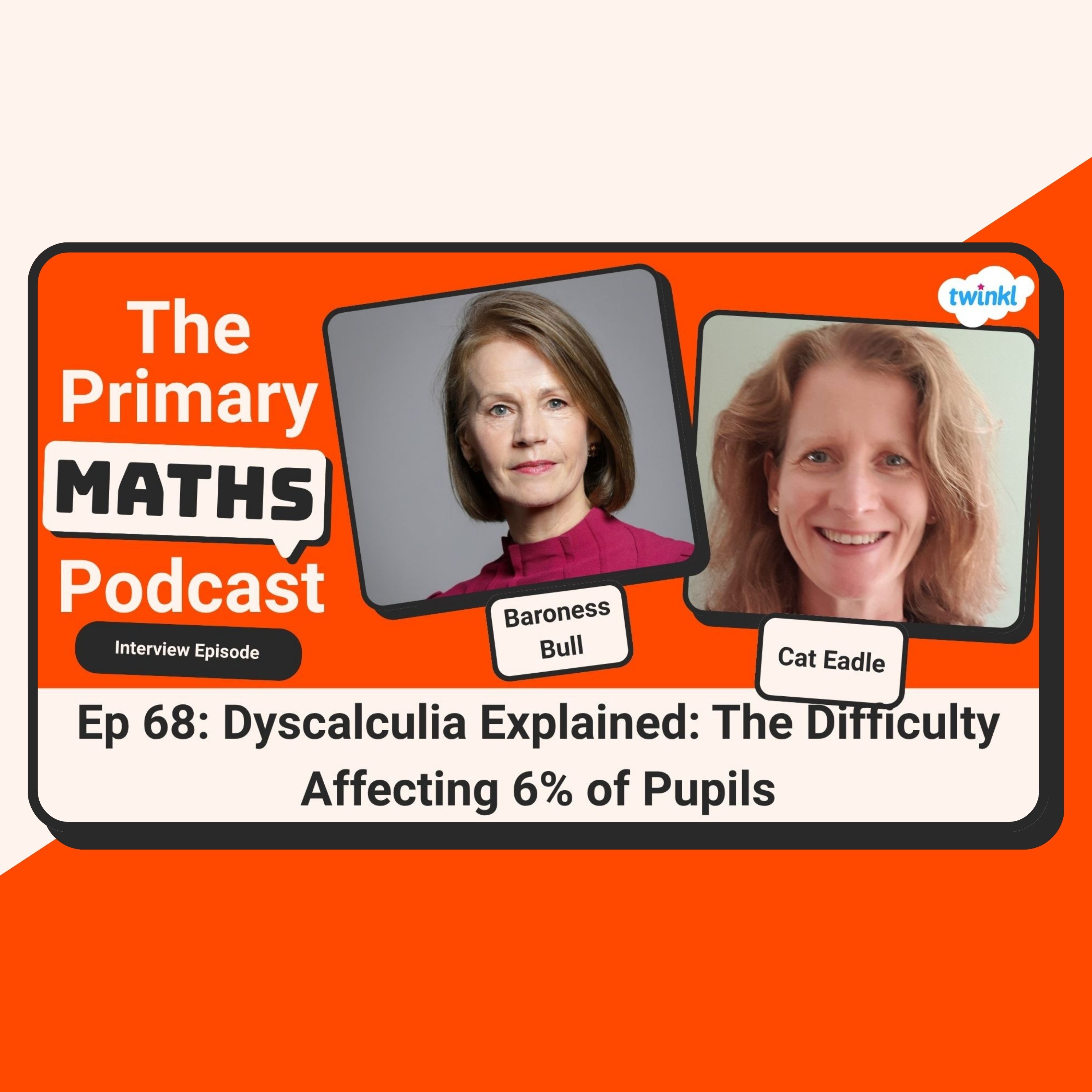 Dyscalculia Explained: The Difficulty Affecting 6% of Pupils✨ | dyscalculiamaths education+4 | Cat EadleBaroness Deborah Bull | The Dyscalculia Network | — | dyscalculiamath education+5 | — | 56m 09s | |
| 4/17/26 |  AfterMaths: From Apollo to Artemis - The Maths Behind Space Travel✨ | mathematics in space travelApollo missions+5 | Becky | ApolloArtemis | — | space travelmathematics+6 | — | 27m 35s | |
| 4/14/26 |  Financial Literacy, Inequality and the Role of Parents - With Dr Paula Fieldhouse✨ | financial literacyparental engagement+4 | Dr Paula Fieldhouse | Learning with Parents | — | financial literacyparental engagement+5 | — | 49m 03s | |
| 4/10/26 |  AfterMaths: Kaprekar’s Constant, Odd Numbers and Everyday Problem Solving✨ | Kaprekar's constanteveryday problem solving+3 | Becky | Kaprekar’s Constant | Norse | Kaprekar's constantodd numbers+3 | — | 24m 31s | |
| 4/3/26 |  AfterMaths - The Easter Special: Eggs, Estimates and Everyday Maths✨ | Eastermathematics+4 | Becky | Easter eggshot cross buns | UK | Eastermaths+5 | — | 26m 43s | |
| 3/27/26 |  AfterMaths: From Capybara Escapes to The MTC: Real World Maths✨ | multiplicationtimes tables+5 | Professor Lucy Cragg | Teacher Tapp | — | multiplicationtimes tables+6 | — | 35m 13s | |
| 3/24/26 |  What Cognitive Science Tells Us About Learning Times Tables - with Professor Lucy Cragg | In this episode of The Primary Maths Podcast, Jon speaks with Lucy Cragg, Professor of Developmental Psychology at the University of Nottingham, about what cognitive science reveals about how children learn multiplication facts.Lucy’s research explores executive function skills such as working memory, inhibitory control and cognitive flexibility, and how these shape children’s mathematical learning. The conversation dives into how multiplication facts are stored and retrieved, why certain errors (like 6 × 7 = 42) are so common, and what this tells us about the structure of memory.Together, Jon and Lucy explore the distinction between fluency and understanding. While more pupils are improving their scores on England’s Multiplication Tables Check, Lucy explains why improved recall does not automatically translate into stronger applied mathematical reasoning. Drawing on findings from the ESRC-funded SUM Project, she discusses how children can improve fact recall without a corresponding gain in multiplicative understanding.The episode also tackles maths anxiety, the impact of timed practice, and why speed may matter for testing but not necessarily for learning. Lucy shares practical insights for teachers, including the benefits of varied practice, careful use of multiple-choice formats, and ensuring that multiplication facts are connected to meaningful mathematical structures rather than learned in isolation.This is a thoughtful and research-informed conversation for teachers and leaders who want to understand not just how to help children remember their times tables, but how to help them truly understand multiplication.SUM Project website:https://www.sumproject.org.uk/Further reading and related articles:Nine-year-olds in England sit a timed multiplication test – but using times tables is about more than quick recall:https://theconversation.com/nine-year-olds-in-england-sit-timed-multiplication-test-but-using-times-tables-is-about-more-than-quick-recall-258320Learning, using and applying multiplication facts – insights from research:https://my.chartered.college/impact_article/learning-using-and-applying-multiplication-facts-insights-from-research/Connect with Lucy Cragg on LinkedIn:https://www.linkedin.com/in/lucy-cragg-b22b0a386/Contact Lucy via email:lucy.cragg@nottingham.ac.ukConnect with Jon Cripwell on LinkedIn:https://www.linkedin.com/in/joncripwell/Subscribe to Jon’s Substack, The Primary Maths Podcast:https://theprimarymathspodcast.substack.com/About Professor Lucy CraggProfessor Lucy Cragg is a developmental psychologist based in the School of Psychology at the University of Nottingham. Her research focuses on the development of executive function skills in children and the role these skills play in learning mathematics.She led a recent ESRC-funded project investigating the cognitive factors involved in multiplication fact learning, examining both multiplication fact retrieval and its contribution to broader multiplicative understanding. Her work bridges cognitive science and classroom practice, helping educators better understand how memory, attention and inhibition influence mathematical learning.She is passionate about making research accessible to teachers and welcomes contact from practitioners interested in applying cognitive science insights in the classroom.The PodcastThe Primary Maths Podcast is for teachers and leaders who believe primary maths can be thoughtful, ambitious and inclusive. Hosted by Jon Cripwell, the show explores lesson design, mathematical habits, maths anxiety, problem solving, curriculum thinking and the research that shapes great teaching. | — | ||||||
| 3/17/26 |  Helping Every Child Feel Like a Mathematician - with Tom Oakley | In this episode of The Primary Maths Podcast, Jon Cripwell speaks with Tom Oakley about one of the most important — and often overlooked — aspects of mathematics education: belonging.Why do some pupils decide that maths “isn’t for them”? Why do confident learners sometimes disengage from mathematics? And what can teachers do to help every child feel like they belong in the maths classroom?Tom draws on research around motivation, self-perception and classroom culture to explore how children develop their identity as mathematicians. The conversation looks at how pupils’ beliefs about themselves are shaped over time through small classroom experiences — and how teachers can design lessons that help pupils feel successful, valued and able to contribute.The discussion also explores the difference between behavioural engagement and cognitive engagement, why success and motivation reinforce each other, and how carefully designed routines and questioning can help pupils build confidence in mathematics.Along the way, Tom shares practical strategies teachers can use straight away, including partner discussion routines, improving the use of mini whiteboards, and structuring lessons so that pupils experience meaningful success before encountering challenge.If you want to create maths lessons where every child feels like they matter — and where thinking is valued as much as answers — this episode is packed with ideas you can take straight back to the classroom.About Tom OakleyTom Oakley is a Deputy Headteacher at a primary school in Suffolk, England. Previously, Tom worked as a lead teacher for mathematics in south-west London and later as a Local Authority Maths Adviser in Cambridge for six years. In between those roles, Tom taught at an international school on Koh Samui in Thailand. Since 2010, Tom has supported colleagues’ professional learning in a range of roles and settings. He is an enthusiastic reader of education blogs and an occasional writer, with particular interests in professional development, primary mathematics and curriculum design.Links and ResourcesFollow Tom Oakley on LinkedInhttps://www.linkedin.com/in/tom-e-oakley/Follow Jon Cripwell on LinkedIn https://www.linkedin.com/in/joncripwell/Subscribe to The Primary Maths Podcast Substack https://primarymathspodcast.substack.com/Contact the podcast primarymathspodcast@twinkl.co.ukExplore Twinkl’s maths resources https://www.twinkl.co.uk/resources/ks2-mathsSubscribe to the PodcastIf you enjoyed this episode, make sure you follow or subscribe to The Primary Maths Podcast so you never miss an interview or Aftermaths episode.New episodes are released every week, featuring conversations with researchers, teachers and school leaders about what really works in primary mathematics. | — | ||||||
| 3/13/26 |  AfterMaths: When Children Decide They’re “Not a Maths Person” | Episode 60 of The Primary Maths Podcast is an Aftermaths episode where Jon Cripwell and Becky Brown reflect on mathematical thinking in the classroom, the hidden cost of passive maths, and why pupils’ mathematical identity matters as much as their test scores.The episode begins with a lighter moment as Jon points out that it is Friday the 13th again, one of three Friday the 13ths in 2026, the maximum possible in a single year. The conversation then moves to this week’s interview episode with secondary maths teacher Will McLoughlin, which explored direct instruction, conceptual understanding and mathematical thinking.Jon reflects on a moment from a recent school visit where a Year 5 pupil casually said, “I’m not really a maths person.” That comment becomes the starting point for the main discussion: what passive maths can cost learners over time. When pupils spend too much time watching maths rather than doing maths, they may complete work and pass tests, but gradually lose confidence, identity and a sense of belonging in mathematics. The challenge for teachers is that these losses are often invisible in data. Schools can measure answers on a page, but it is much harder to measure what pupils have quietly stopped believing about themselves as mathematicians.Jon and Becky discuss how lesson design and task choice can make a difference. Starting lessons with accessible entry points, encouraging pupils to explain their thinking, and creating collaborative mathematical environments can all help build confidence and participation. While accountability measures such as the KS2 SATs arithmetic paper or the Year 4 Multiplication Tables Check prioritise speed and procedural accuracy, great maths teaching also develops curiosity, reasoning and identity as a mathematician.The episode also includes Becky’s History of Maths segment in honour of Pi Day on 14 March. Becky explains the origins of the number π, how ancient Babylonians and Egyptians approximated it thousands of years ago, and how Archimedes later developed more precise methods for calculating it. The Greek letter π was first used to represent the number by Welsh mathematician William Jones in the early eighteenth century. Becky also explores some fun facts about π, including the world record for memorising its digits.Jon highlights that even though π is not formally taught in the primary curriculum, sharing mathematical curiosities like this can help create a sense of wonder and show pupils that mathematics extends far beyond the classroom.Towards the end of the episode Jon announces that Twinkl’s PlanIt Maths scheme of work is being completely refreshed, with every lesson rewritten to reflect current research and pedagogy. The new scheme builds problem solving, scaffolding and greater depth thinking throughout lessons rather than adding them as optional extras. A free taster pack is now available for teachers who would like to explore the new materials.If you enjoy the podcast, remember to subscribe so you never miss an episode. Jon also invites listeners to continue the discussion on LinkedIn and through the podcast Substack.Links mentioned in this episodeListen to the previous interview episode with Will McLoughlin (Episode 59)https://primarymathspodcast.substack.com/Download the free PlanIt Maths taster packhttps://www.twinkl.co.uk/resource/free-planit-maths-taster-pack-t-m-1691485779Follow Jon Cripwell on LinkedInhttps://www.linkedin.com/in/joncripwellSubscribe to The Primary Maths Podcast Substackhttps://primarymathspodcast.substack.com/Contact the showprimarymathspodcast@twinkl.co.uk | — | ||||||
| 3/10/26 | 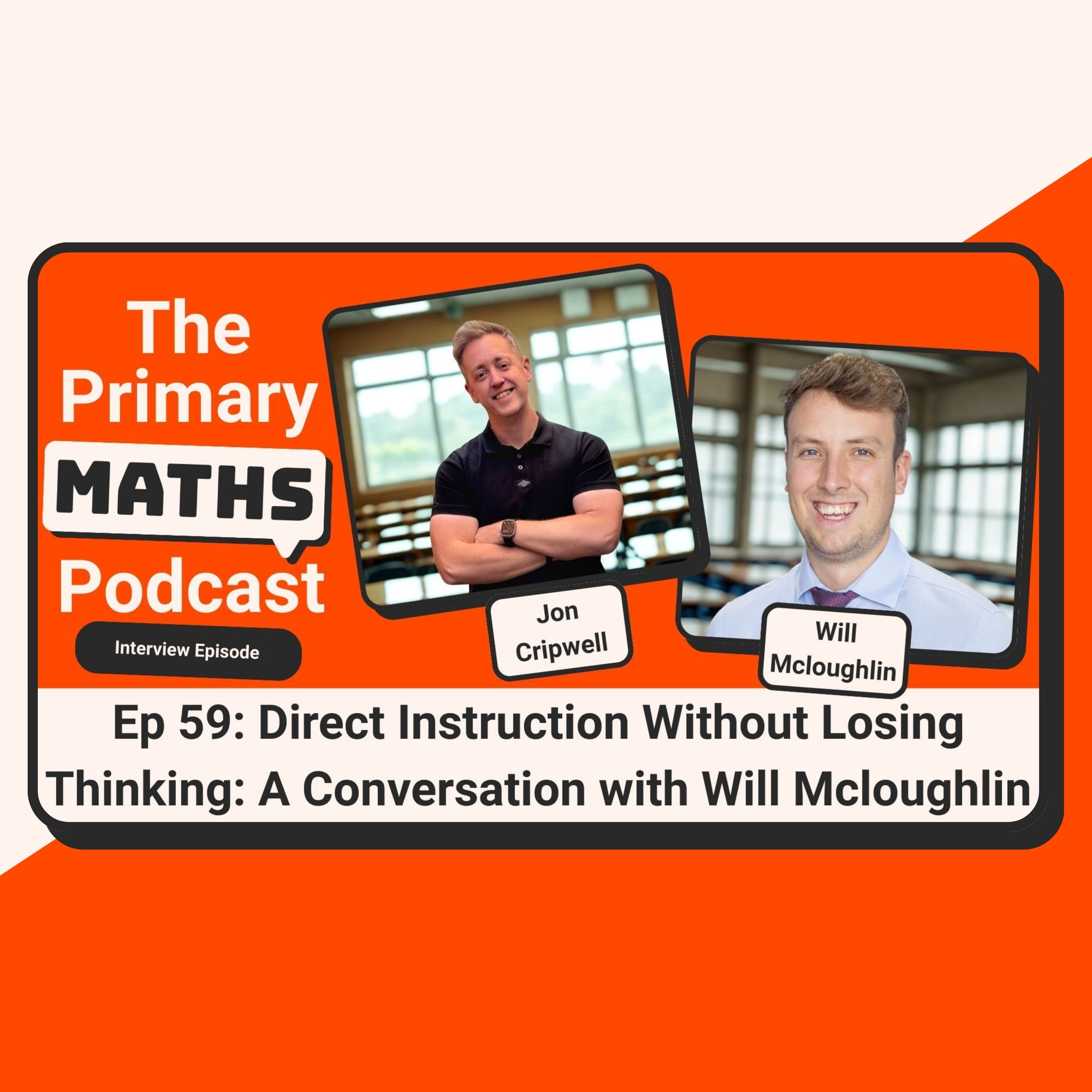 Direct Instruction Without Losing Thinking: A Conversation With Will Mcloughlin | In this international episode of The Primary Maths Podcast, Jon is joined by Will McLoughlin, a maths teacher based in Abu Dhabi, founder of AddvanceMaths.com and current Education Doctorate student researching conceptual understanding, animated instruction and cognitive science.The conversation explores what direct instruction or explicit instruction actually means in practice — and what it doesn’t.Will shares how his thinking has evolved over time, from procedural teaching to a more deliberate, structured approach rooted in clarity, retrieval practice and independent practice. Together, Jon and Will unpack:What “I do, we do, you do” should look like in a maths classroomThe difference between procedural fluency and conceptual understanding — and why they’re not oppositesWhy silent, focused independent practice matters (especially in a world of constant distraction)Retrieval practice as more than memory — including its role in deepening understandingThe importance of modelling with clarity and purposeHow atomising explanations can strengthen mathematical sense-makingThey also explore where direct instruction can go wrong — when it becomes performative, overly procedural or passive — and how dialogue, questioning and attention to structure keep pupils doing maths, not just watching it.This is a thoughtful and balanced conversation for teachers and leaders reflecting on lesson design, cognitive science and mathematical thinking.About the GuestWill McLoughlin is a secondary maths teacher in Abu Dhabi and the developer of AddvanceMaths.com. He is currently studying for an Education Doctorate, with research interests including conceptual understanding, animated instruction and cognitive science.Connect with Will:LinkedIn: https://www.linkedin.com/in/will-mcloughlin-a2898ab6/ Twitter/X: https://x.com/MrMac_Math YouTube (Mathematical Pedagogy Videos): https://youtube.com/playlist?list=PLCG7Y8fJFRr-1tfgc6g0HXkoumj41wQUN&si=ay8kO2H2rQc-nPXF Favourite research on conceptual understanding: https://addvancemaths.com/conceptual-research/Stay ConnectedIf you enjoyed this episode, please consider leaving a quick review or sharing it with a colleague — it really helps the podcast reach more teachers.Email: primarymathspodcast@gmail.com LinkedIn (Jon Cripwell): https://www.linkedin.com/in/jon-cripwell/ Substack: https://primarymathspodcast.substack.comBecky and Jon will be back on Friday with an Aftermaths episode, reflecting further on direct instruction, retrieval and what this means for primary classrooms.Thanks for listening — and as ever, keep doing the maths. | — | ||||||
| 3/6/26 |  AfterMaths: Bean 13, Algebra, And a Little Maths Magic | In this Aftermaths episode of The Primary Maths Podcast, Jon Cripwell and Becky Brown reflect on the week’s conversation about using storybooks in mathematics and share a range of classroom ideas sparked by World Book Day.The episode begins with Jon and Becky recounting their first in-person meeting as colleagues after a slightly confusing start involving two similarly named hotels in Southampton. From there, the discussion turns to the power of storybooks in maths lessons following Tuesday’s interview with Hannah Allison. Jon and Becky explore how narrative can support mathematical thinking and engagement, helping pupils notice patterns, make connections and develop curiosity about number.Becky shares one of her favourite mathematical picture books, Bean 13 by Matthew McKelligott, a story that provides a brilliant context for exploring factors, sharing and prime numbers. The conversation highlights how storybooks can offer low-threshold, high-ceiling entry points into mathematical ideas and why picture books can be just as powerful with older primary pupils as they are in the early years.Jon also reflects on recent work with teachers and raises an important professional discussion about the role of schemes of work. Schemes can be incredibly helpful in planning progression, representations and tasks, but they should be treated as a resource rather than a script. The conversation explores how teachers can adapt schemes thoughtfully to meet the needs of the pupils in front of them while still benefiting from the structure they provide.In Becky’s Etymathsology segment, the pair explore the origins of the word algebra. The term traces back to the Arabic word al-jabr, meaning restoration or reunion, and was used by the ninth-century mathematician Al-Khwarizmi in his work on solving equations. The discussion also challenges the common misconception that algebra only begins in secondary school, highlighting how children begin working algebraically from the earliest years through missing number problems and generalisations.The episode finishes with a piece of mathematical magic: the classic 1089 number trick. Jon walks Becky through a short sequence of calculations using a three-digit number, which always results in the number 1089. Listeners are invited to try the trick themselves and think about how algebra might help explain why it works.If you enjoyed the episode, please consider leaving a rating or review to help other teachers discover the podcast. We also love hearing from listeners.You can send questions, ideas or favourite maths storybooks to primarymathspodcast@twinkl.co.ukSubscribe to the podcast newsletter on Substack: https://primarymathspodcast.substack.comConnect with Jon on LinkedIn: https://www.linkedin.com/in/joncripwell/ | — | ||||||
| 3/3/26 | 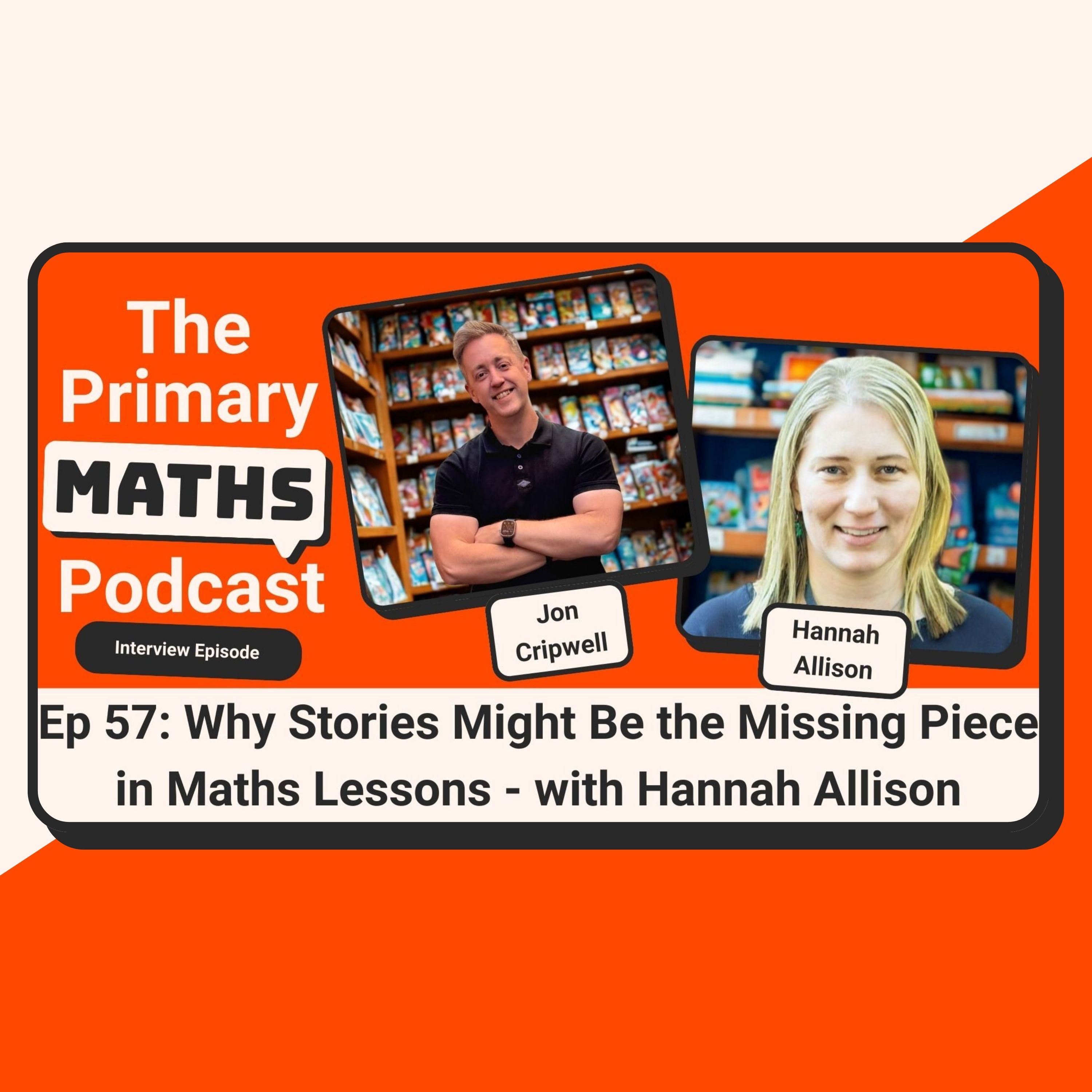 Why Stories Might Be The Missing Piece In Maths Lessons - with Hannah Allison | What happens when maths lessons start with a story rather than a method?In this episode of The Primary Maths Podcast, Jon Cripwell is joined by Hannah Allison from Maths Outside the Box to explore the role of stories in primary maths teaching. Drawing on her background in the arts and her experience as a maths leader, Hannah explains how narrative, character and context can help pupils engage more deeply with mathematical ideas.Together, Jon and Hannah discuss what maths through stories actually looks like in practice, and how storybooks can be used as a meaningful starting point, a way to deepen understanding, or a reflective consolidation lesson rather than a bolt-on activity. They explore the difference between maths picture books and true maths storybooks, and why that distinction matters for learning.The conversation also looks at engagement beyond entertainment, including how stories support talk, oracy and mathematical sense-making, particularly for pupils who feel anxious or disconnected from maths. Hannah shares practical classroom examples, including how storybooks can create low-threshold, high-ceiling tasks that invite curiosity, discussion and sustained thinking.Jon and Hannah also grapple with real-world constraints such as time, workload and schemes of work, discussing how story-based maths can sit alongside structured programmes without becoming an additional burden for teachers.This episode is a thoughtful exploration of how stories can help move maths lessons from something pupils watch to something they actively do.Guest BioHannah Allison is a primary school teacher and Maths Lead, who founded Maths Outside The Box in 2024 to support other leaders who wanted to find creativity in their Maths delivery. Since launching as a resource-based platform specialising in teaching Maths through stories, she now delivers CPD & INSET sessions in teaching Maths through stories, cross-curricular Maths planning and financial education both online and in-person. Her mission is to engage more children in the subject through creative and exciting lessons, connection to 'real-life' maths and through a problem-solving approach.Linkswebsite: MathsOutsidetheBox.comemail: Hannah@mathsoutsidethebox.cominstagram, tiktok and facebook: @mathsoutsidethebox | — | ||||||
| 2/27/26 |  AfterMaths: Manipulatives Can't Think (But Teachers Can!) | Episode 56 of The Primary Maths Podcast focuses on manipulatives in primary maths and asks a simple but important question: do manipulatives automatically lead to mathematical thinking? Jon and Becky reflect on a recent lesson about commutativity where children were building arrays with cubes but describing the task as “making it with cubes” rather than explaining the structure behind three multiplied by four being equal to four multiplied by three. This opens up a wider discussion about the CPA approach, the difference between doing and thinking, and the importance of questioning to help children notice mathematical structure rather than follow procedures.The episode includes a listener question from Priya, a maths lead who has invested in new manipulatives but is finding that they are sitting unused or being used without clear purpose. Jon and Becky discuss how CPD can help teachers understand what each manipulative is designed to reveal, including the difference between base ten equipment and Cuisenaire rods, and how to move beyond a tick-box approach to concrete resources.In Maths of Life, Becky explores the mathematics behind Lego, including the 0.002mm manufacturing tolerance of each brick, the 3,700 different brick shapes, the 915,103,765 possible combinations of six identical 2x4 bricks, and the approximate 1:40 scale of Lego minifigures. The conversation highlights how building blocks can be used to explore arrays, ratios, scale and structure in the classroom.Jon also shares a research summary on maths anxiety among UK primary teachers, based on a recent cross-national study highlighted by Dr Thomas Hunt. While overall levels of maths anxiety are relatively low, UK generalist primary teachers report higher anxiety about maths and teaching maths than colleagues in some other countries, raising important questions about confidence and professional development.The episode concludes with a short maths magic segment that demonstrates how algebraic structure sits behind a simple number trick and how manipulatives can be used to make that structure visible.Jon also references his new Substack article responding to the Education White Paper and its implications for SEND and early numeracy, which you can read here: https://substack.com/@joncripwell.You can join the ongoing discussion on LinkedIn at https://www.linkedin.com/in/joncripwell/.-Next week features an interview with Hannah Allison on Storybook Maths, followed by an Aftermaths episode exploring whether teaching structures genuinely support professional judgement or risk becoming scripts. | — | ||||||
| 2/24/26 | 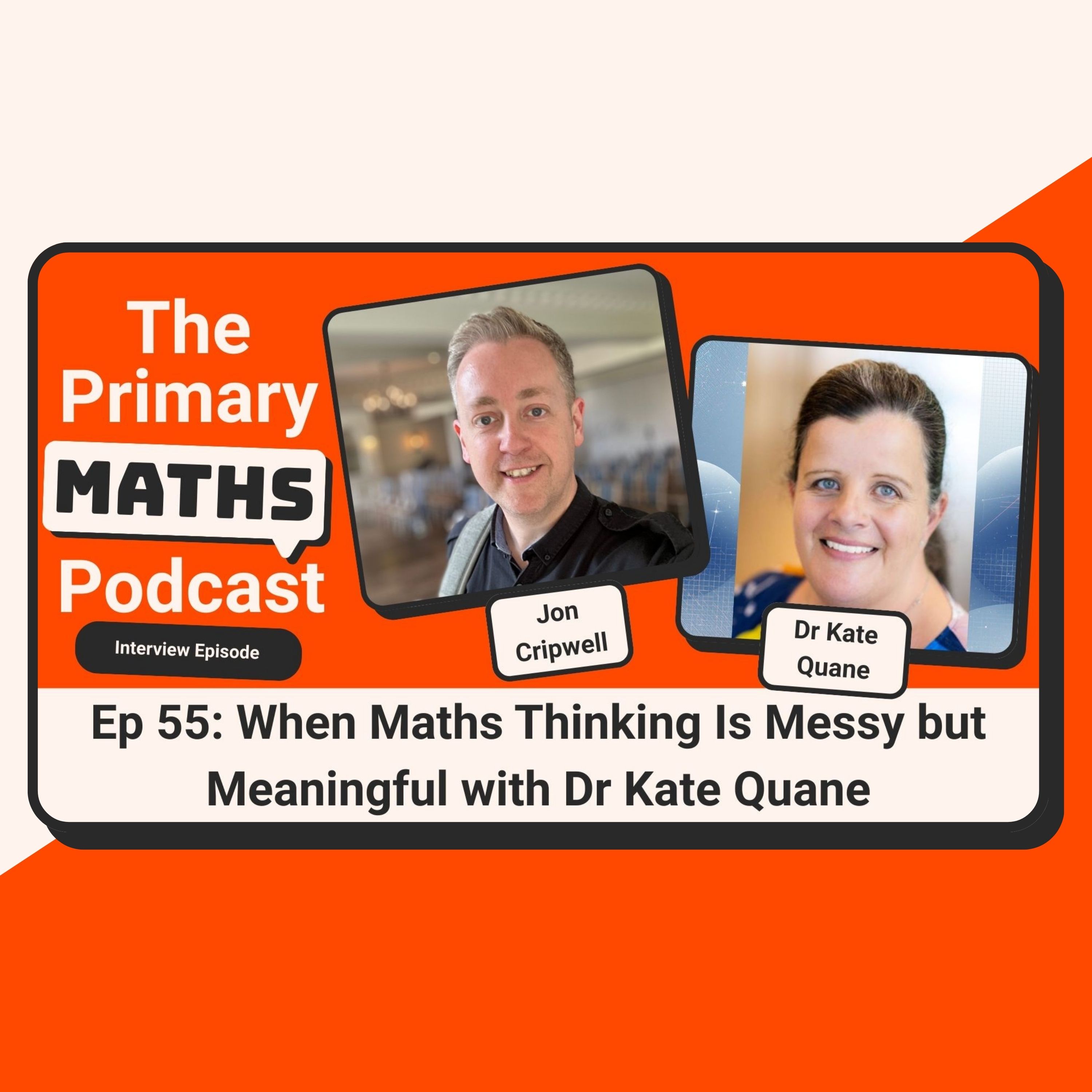 When Maths Thinking is Messy but Meaningful - with Dr Kate Quane | In this episode of The Primary Maths Podcast, Jon Cripwell is joined by Dr Kate Quade for a thoughtful conversation about language, learning and mathematical thinking.Language sits at the heart of mathematics, but the way pupils talk about maths often remains unnoticed or is tidied up too quickly. Together, Jon and Kate explore why mathematical thinking so often stays invisible, and how children communicate their ideas in many ways beyond written answers.A central focus of the episode is the idea of “porridge words”. These are the imprecise, catch all or emerging terms children use when they are still forming their understanding. Kate explains where the concept comes from, how it connects to Edward de Bono’s work on thinking, and why these words are not a problem to fix but evidence of thinking in motion.The conversation explores how pupils use language, gesture, drawings, manipulatives and symbols to express mathematical ideas, and why privileging only written or verbal explanations can limit what teachers notice. Kate shares insights from her research and teaching experience, including why rushing to correct vocabulary can shut down thinking, and how deeply listening to pupils helps teachers make better formative assessment decisions.Jon and Kate also discuss the balance between valuing emerging language and moving pupils towards accurate mathematical terminology. They consider the importance of consistency, the risks of children disengaging when language is unclear, and how teachers can introduce precise vocabulary without undermining confidence or curiosity.This episode is a reminder that mathematical thinking often sounds messy before it becomes precise, and that noticing how children talk about maths can tell us far more than whether an answer is right or wrong.If you enjoyed this conversation, join Jon and Becky for the Aftermaths episode, where they reflect on the key ideas and classroom implications. You can also get in touch with the show at primarymathspodcast@twinkl.co.ukGuest bioDr Kate Quade is a Senior Lecturer in Mathematics Education and Program Director for the Master of Teaching (Primary) at the University of Adelaide. She is a former primary teacher and maths leader, with experience as a curriculum advisor, textbook contributor and coordinator of the Questacon Maths Centre. Kate’s research focuses on mathematical thinking, language and inclusion, particularly how children make their thinking visible through talk, drawing, gesture and other multimodal forms. Her recent work on porridge words explores how imprecise or everyday language can act as a cognitive tool that supports reasoning and sense making in primary maths classrooms.You can connect with Kate on LinkedIn at https://www.linkedin.com/in/kate-quane-7084b797/, on Bluesky at @kateqmaths.bsky.social, or by email at kate.quane@adelaide.edu.au | — | ||||||
Showing 25 of 79
Pitch Fit is a Pro feature
See how bookable this show is for guests, which brands already advertise, the per-episode ad value, and the best-fit guest and sponsor profile. The numbers are blurred on the free plan.
How readily this show books outside guests like you.
How proven this show is for host-read sponsorships.
For Guests
ProFor Advertisers
ProUpgrade to Pro to unlock guest cadence, sponsor categories, fit scores, and per-episode ad value for this show.