

The Principles of War - Lessons from Military History on Strategy, Tactics, Doctrine and Leadership.
by James Eling
Is this your podcast?Insights from recent episode analysis
Audience Interest
Podcast Focus
Publishing Consistency
Platform Reach
Insights are generated by CastFox AI using publicly available data, episode content, and proprietary models.
Most discussed topics
Brands & references
Total monthly reach
Estimated from 5 chart positions in 5 markets.
By chart position
- 🇦🇺AU · History#1805K to 30K
- 🇧🇷BR · History#1141K to 10K
- 🇮🇩ID · History#2410K to 30K
- 🇨🇱CL · History#138500 to 3K
- 🇭🇰HK · History#168500 to 3K
- Per-Episode Audience
Est. listeners per new episode within ~30 days
8.5K to 38K🎙 ~2x weekly·204 episodes·Last published 6d ago - Monthly Reach
Unique listeners across all episodes (30 days)
17K to 76K🇦🇺39%🇮🇩39%🇧🇷13%+2 more - Active Followers
Loyal subscribers who consistently listen
6.8K to 30K
Market Insights
Platform Distribution
Reach across major podcast platforms, updated hourly
Total Followers
—
Total Plays
—
Total Reviews
—
* Data sourced directly from platform APIs and aggregated hourly across all major podcast directories.
On the show
From 13 epsHost
Recent guests
Recent episodes
151 - How Sea Control doomed the 17th Army to Starvation on Guadalcanal: The failure of the Tokyo Express
Jun 19, 2026
Unknown duration
150 - What new tactics did Carlson's Raiders use to hunt Shoji's Regiment during the Long Patrol on Guadalcanal?
May 24, 2026
1h 00m 10s
How do you defend an island nation when 40% of your trade flows through contested waters?
May 13, 2026
1h 22m 15s
Strategic Context for Australia's WW2 mobilisation
May 10, 2026
1h 22m 15s
Australia's Road to War - 1936 to 1941 - Dr Peter Layton
Apr 27, 2026
1h 25m 08s
Social Links & Contact
Official channels & resources
Official Website
Login
RSS Feed
Login
| Date | Episode | Topics | Guests | Brands | Places | Keywords | Sponsor | Length | |
|---|---|---|---|---|---|---|---|---|---|
| 6/19/26 |  151 - How Sea Control doomed the 17th Army to Starvation on Guadalcanal: The failure of the Tokyo Express | The Naval Battle of Guadalcanal cost the US Navy two rear admirals and six warships — yet it stopped 11 Japanese transports carrying 10,000 troops and the supplies needed to take Henderson Field. We discuss the critical 12–15 November 1942 engagements where Rear Admiral Daniel Callaghan's cruisers intercepted a battleship bombardment force, and Willis Lee's radar-directed gunnery from USS Washington sank the Kirishima in the war's only battleship-versus-battleship duel in the Pacific. Key learnings: • Why Henderson Field functioned as the decisive terrain controlling both sides' ability to resupply by day or by night • How only 2,000 Japanese troops landed from the convoy — most without weapons or ammunition • What the Fifth Battle of the Matanikau plan revealed about American intelligence failures on Japanese defensive positions Dave Holland is an ex-Marine and was posted to Guadalcanal with the Australian Federal Police. He regularly leads battlefield study tours through the area. He is a world-leading expert on the battles of Guadalcanal and author of Guadalcanal's Longest Fight - The Pivotal Battles of the Matanikau Front. Full show notes and transcript: https://theprinciplesofwar.com/ Support the podcast: https://www.patreon.com/principlesofwar More episodes: https://theprinciplesofwar.com/ Follow on X: https://x.com/surprisepodcast Subscribe for more Professional Military Education content. | — | ||||||
| 5/24/26 |  150 - What new tactics did Carlson's Raiders use to hunt Shoji's Regiment during the Long Patrol on Guadalcanal?✨ | military tacticsGuadalcanal+4 | Dave Holland | Guadalcanal's Longest Fight - The Pivotal Battles of the Matanikau Front | GuadalcanalHenderson Field+1 | Carlson's RaidersGuadalcanal+5 | — | 1h 00m 10s | |
| 5/13/26 |  How do you defend an island nation when 40% of your trade flows through contested waters?✨ | maritime strategyIndo-Pacific+4 | Mark Bailey | Royal Australian Artillery Historical Company | South China SeaTaiwan+4 | tradeSouth China Sea+7 | — | 1h 22m 15s | |
| 5/10/26 |  Strategic Context for Australia's WW2 mobilisation✨ | World War IImilitary strategy+4 | Dr. Mark BaileyMajor General Jason Blake+1 | Royal Australian Artillery Historical Company | AustraliaPort Stephens | AustraliaWorld War II+7 | — | 1h 22m 15s | |
| 4/27/26 |  Australia's Road to War - 1936 to 1941 - Dr Peter Layton✨ | Australia's defense strategyWorld War II+3 | Dr Peter Layton | Royal Australian Artillery Historical Company | — | defense strategymunitions+3 | — | 1h 25m 08s | |
| 4/26/26 |  149 - Why did the Marines stop 1,000 yards short of victory at 4th Matanikau - Guadalcanal✨ | Guadalcanalmilitary strategy+3 | Dave Holland | Australian Federal PoliceGuadalcanal's Longest Fight - The Pivotal Battles of the Matanikau Front | Guadalcanal | GuadalcanalMarines+5 | — | 34m 43s | |
| 4/5/26 |  148 - The Battle of Henderson Field - Guadalcanal 1942✨ | Battle of Henderson FieldGuadalcanal campaign+4 | — | 164thNorth Dakota National Guard | GuadalcanalHenderson Field | Henderson FieldGuadalcanal+6 | — | 55m 52s | |
| 3/29/26 |  147 - The Japanese tank attack in the Battle of Henderson Field - Guadalcanal✨ | Japanese military strategyBattle of Guadalcanal+4 | Dave Holland | Guadalcanal's Longest Fight - The Pivotal Battles of the Matanikau Front | Guadalcanal | GuadalcanalHenderson Field+6 | — | 41m 01s | |
| 3/22/26 |  146 - Halsey's question for Vandegrift about Henderson Field's defence that influenced Pacific Strategy.✨ | defensive planningoffensive planning+5 | — | IJAUSMC | GuadalcanalHenderson Field+1 | HalseyVandegrift+7 | — | 41m 14s | |
| 3/15/26 |  145 - 973 rounds in 83 minutes. The Battleship Bombardment of Henderson Field✨ | military strategynaval warfare+4 | Dave Holland | Australian Federal PoliceIJN+5 | GuadalcanalMaruyama Trail | Henderson Fieldnaval gunfire+7 | — | 45m 18s | |
Want analysis for the episodes below?Free for Pro Submit a request, we'll have your selected episodes analyzed within an hour. Free, at no cost to you, for Pro users. | |||||||||
| 3/8/26 |  144 - Situational Awareness and the fight for Guadalcanal's Key Terrain - 3rd Battle of the Matanikau✨ | military strategytactics+5 | Dave Holland | USMCIJA | Matanikau RiverGuadalcanal+2 | Matanikau River3rd Battle of the Matanikau+8 | — | 33m 20s | |
| 2/15/26 |  143 - Inside the Japanese OODA loop on Guadalcanal - Vandegrift and 3rd Matanikau✨ | Guadalcanalmilitary strategy+3 | Dave Holland | Guadalcanal's Longest Fight - The Pivotal Battles of the Matanikau Front | Matanikau RiverGuadalcanal+1 | GuadalcanalMatanikau River+6 | — | 41m 42s | |
| 2/1/26 |  Puller, Munro, and Monssen - the daring resuce of 1/7 Marines - 2nd Battle of the Matanikau Part II✨ | Guadalcanalmilitary strategy+5 | Dave Holland | — | Guadalcanal | Matanikau Riverrescue mission+5 | — | 28m 54s | |
| 11/28/25 |  141 - Chesty Puller, 1/7 Marines and 2nd Matanikau, Guadalcanal✨ | Guadalcanal campaignMarine Corps strategy+4 | Dave Holland | USS Wasp1st Marine Division+2 | GuadalcanalHenderson Field+1 | Chesty PullerGuadalcanal+7 | — | 34m 24s | |
| 11/13/25 | 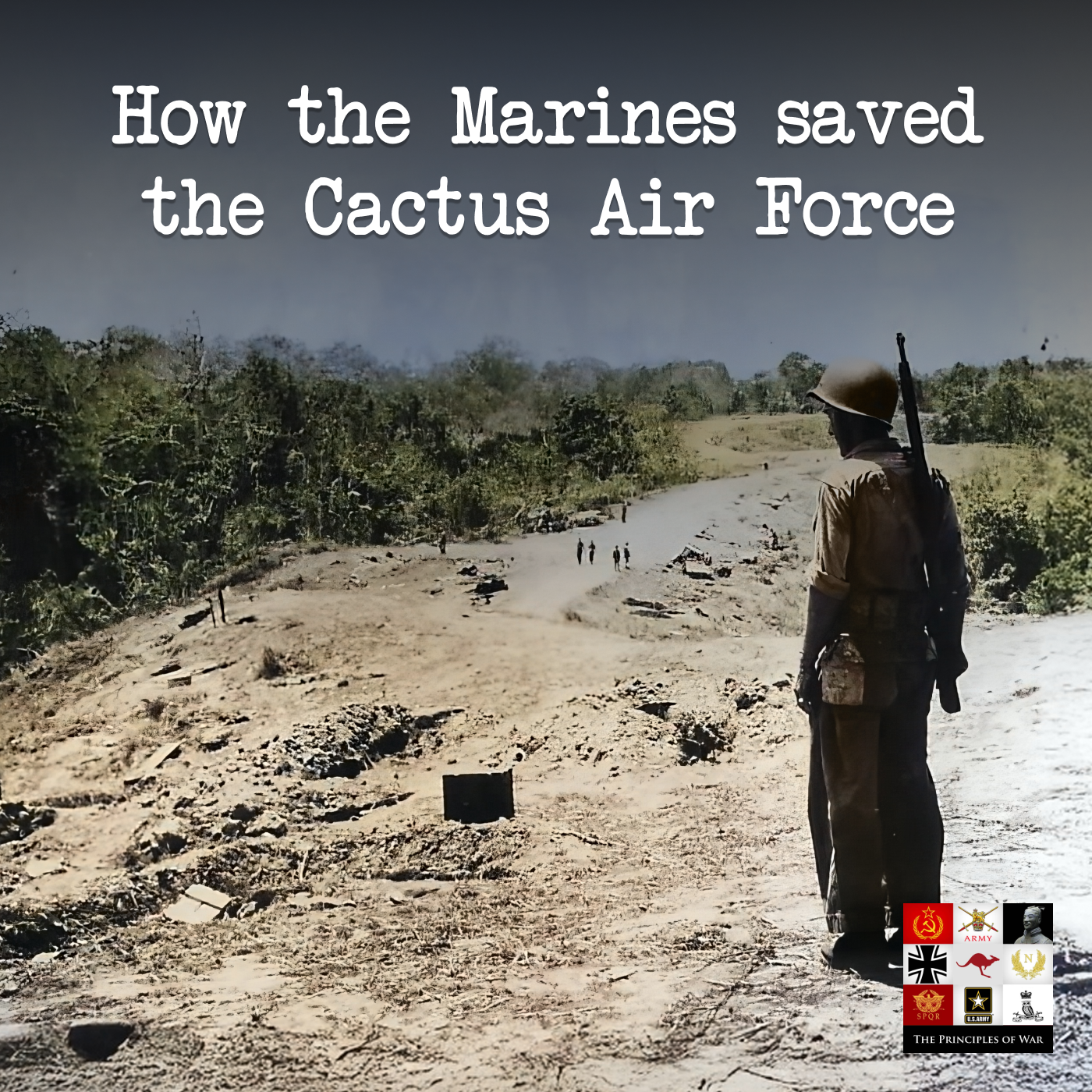 140 - Battle of Edson's Ridge: How the Marines saved the Cactus Air Force | This is the sixth episode of our Guadalcanal series with historian and author Dave Holland. This episodes discusses: How close did Japanese forces come to capturing Henderson Field in September 1942? Why was Edson's Ridge the key terrain for defending Guadalcanal's airfield? How did pre-registered artillery fire shape the outcome on Edson's Ridge? What command decisions did Edson make when his defensive plan began to unravel? How did the Marines adapt to Japanese infiltration tactics during the night attacks? In what ways did Edson's Ridge save the Cactus Air Force? Why did Kawaguchi underestimate the Marines defending Henderson Field? What leadership failures forced the September purge of underperforming Marine officers? How did logistics and fatigue shape the Marines' combat effectiveness on the ridge? What lessons from Edson's Ridge matter for modern all-arms defensive planning? Dave is an ex-Marine and was posted to Guadalcananal with the Australian Federal Police. He regularly leads battlefield study tours through the area. He is a world-leading expert on the battles of Guadalcanal and author of Guadalcanal's Longest Fight - The Pivotal Battles of the Matanikau Front. Check out the show notes for this episode. https://www.patreon.com/cw/principlesofwar - if you've learnt something from this episode and you can afford it, please support the podcast at Patreon. | — | ||||||
| 11/1/25 | 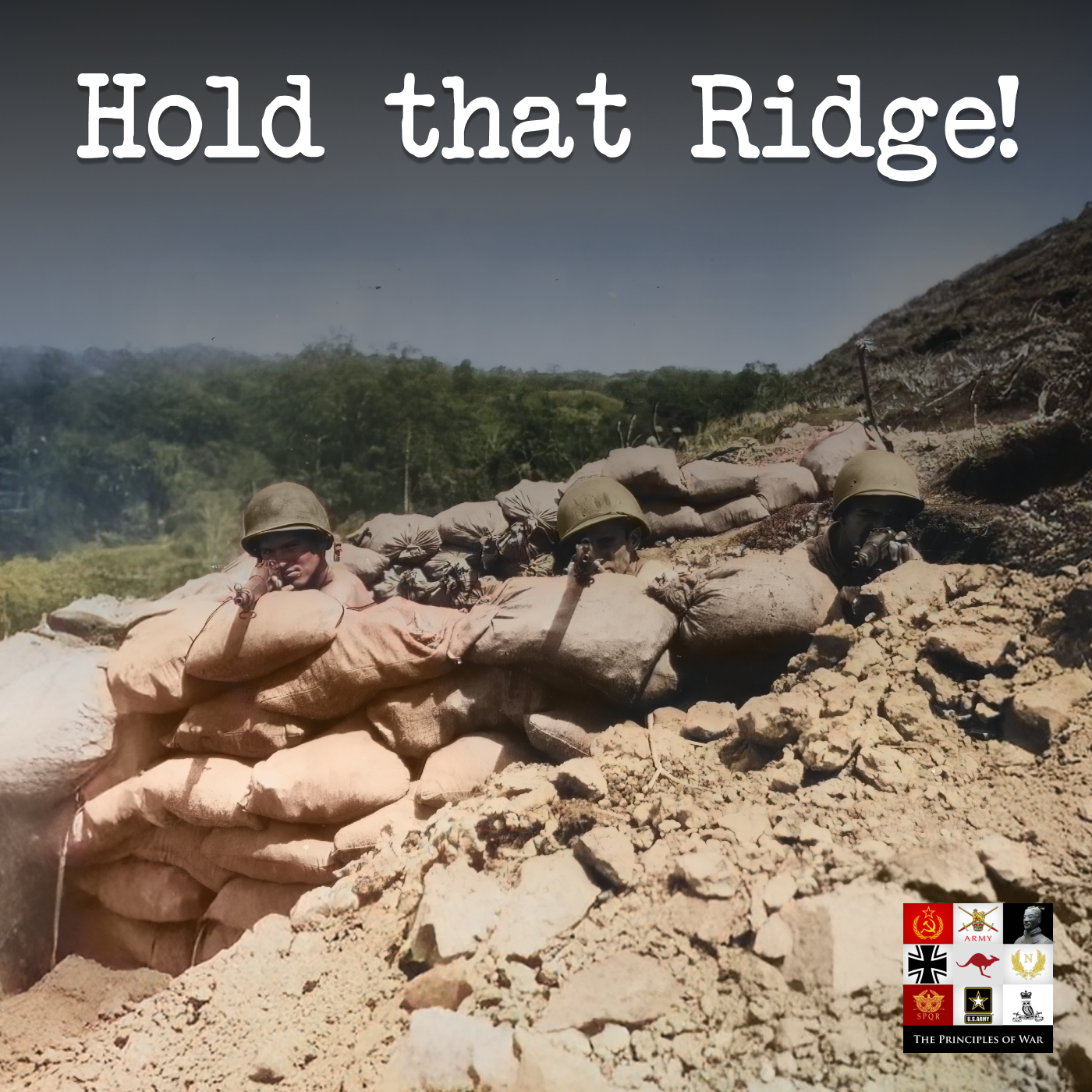 139 - Guadalcanal - Edson and the defence of Bloody Ridge | This is the fifth episode of our Guadalcanal series with historian and author Dave Holland. This episodes discusses: Why was Henderson Field the single piece of decisive terrain on Guadalcanal? How did Edson know the main Japanese attack would come over the ridge, not the beach? What went wrong in Kawaguchi's three-pronged night attack on the Marine perimeter? How did fragile Guadalcanal logistics shape the tempo in September 1942? What made Edson's Ridge a natural avenue of approach to the airfield? How did the Tanambogo/Gavutu raider actions tip the Marines to Japanese intentions? What do Edson vs. Kawaguchi show about combat leadership in jungle/littoral fights? How did malaria, dysentery, and hunger blunt Marine combat power before the battle? Why did Vandegrift accept a thin, incomplete perimeter around Henderson Field? How did daily Japanese air raids limit Marine prep of the ridge before 12–14 Sept 1942? Dave is an ex-Marine and was posted to Guadalcananal with the Australian Federal Police. He regularly leads battlefield study tours through the area. He is a world-leading expert on the battles of Guadalcanal and author of Guadalcanal's Longest Fight - The Pivotal Battles of the Matanikau Front. Check out the show notes for this episode. | — | ||||||
| 10/9/25 | 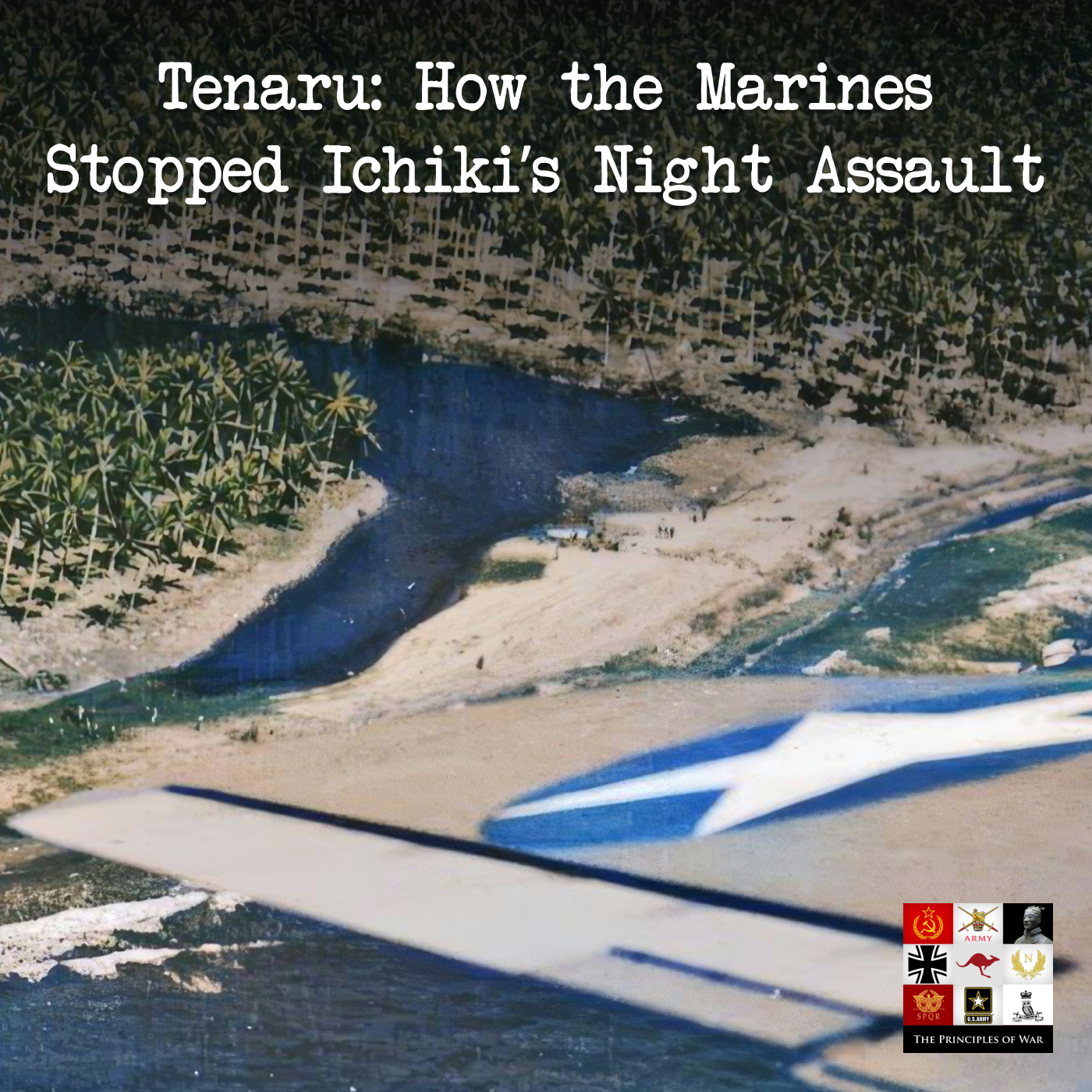 138 - Guadalcanal - Battle of the Tenaru: How the Marines stopped Ichiki's night assault on the Alligator Creek | This is the fourth episode of our Guadalcanal series with historian and author Dave Holland. This episodes discusses: How did the Marines employ the 37 mm gun firing canister at Alligator Creek? Why did Colonel Ichiki attack without heavy weapons— trading firepower for speed and what was the cost? What are the myths about scout Jacob Vouza? How did barbed wire obstacles and coconut-log bunkers employed for to create an engagement zone? How did pre-registered fires shape the Battle of Tenaru? What early warnings did coastwatchers and patrols provide before the assault? How did Marine tanks at dawn finish the fight across the sandbar? What role did the Cactus Air Force play in the Battle of Tenaru? Was Ichiki killed in action or by seppuku—what's the best evidence? What operational lessons from Tenaru guided both sides at Henderson Field? Dave is an ex-Marine and was posted to Guadalcananal with the Australian Federal Police. He regularly leads battlefield study tours through the area. He is a world-leading expert on the battles of Guadalcanal and author of Guadalcanal's Longest Fight - The Pivotal Battles of the Matanikau Front. Check out the show notes for this episode. | — | ||||||
| 9/23/25 | 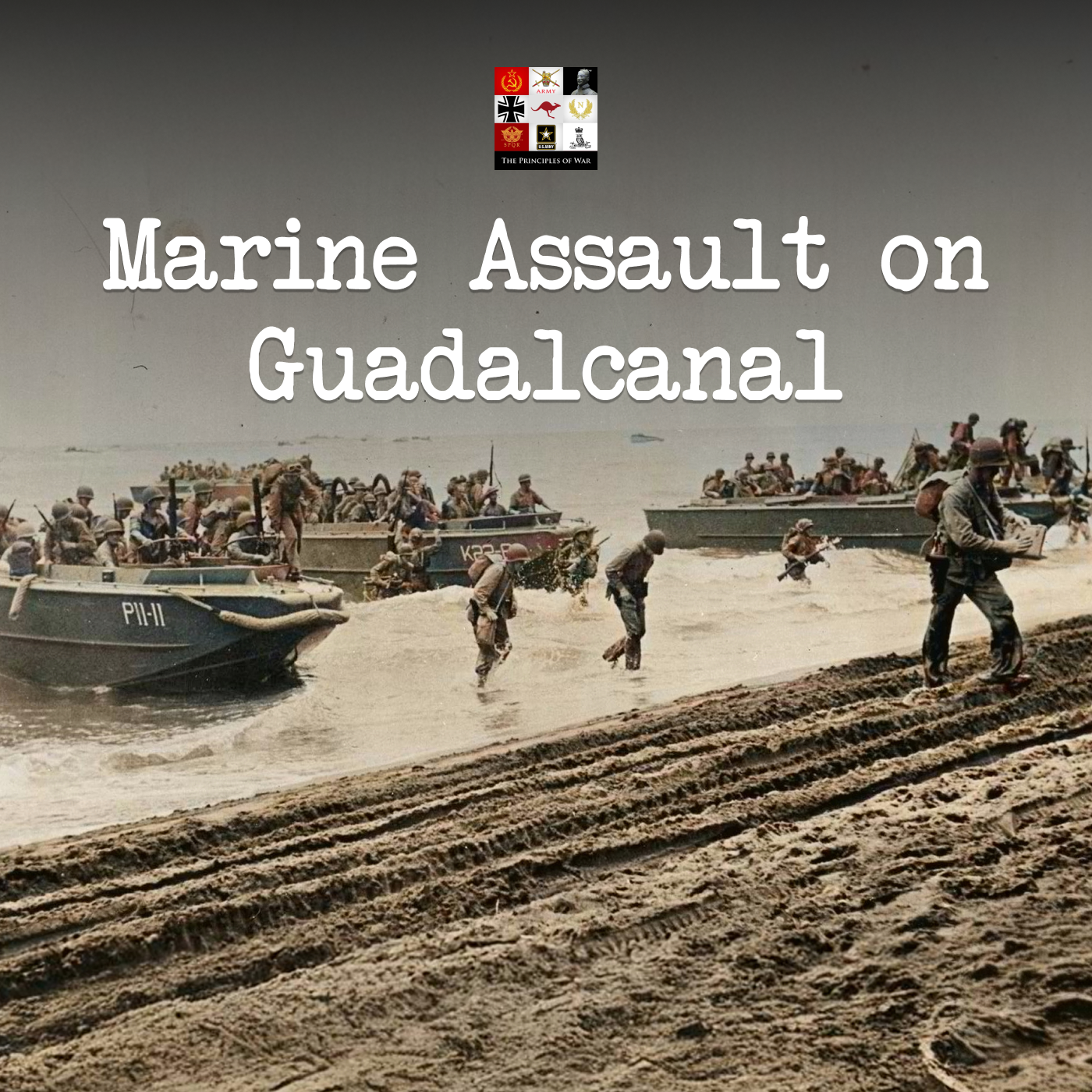 137 - The Marines' Assault on Guadalcanal | This is the third episode of our Guadalcanal series with historian and author Dave Holland. This episodes discusses: How the Marines seized conducted the landing and seized Guadalcanal's decisive terrain. Red Beach landing bypasses IJA fortifications at Lunga Point. Vandegrift prioritizes tight perimeter, airfield defense. Carriers withdraw; logistics halved, myths debunked. Japanese forces surprised and how they reacted. Combined arms landings: infantry, artillery, engineers. What really happened with the Goettge Patrol? Logistics speed amphibious resupply. Amtracs and beachmasters enable rapid combat buildup. Modern littoral operations: enduring risk management lessons. Dave is an ex-Marine and was posted to Guadalcananal with the Australian Federal Police. He regularly leads battlefield study tours through the area. He is a world-leading expert on the battles of Guadalcanal and author of Guadalcanal's Longest Fight - The Pivotal Battles of the Matanikau Front. Check out the show notes for this episode. | — | ||||||
| 9/15/25 | 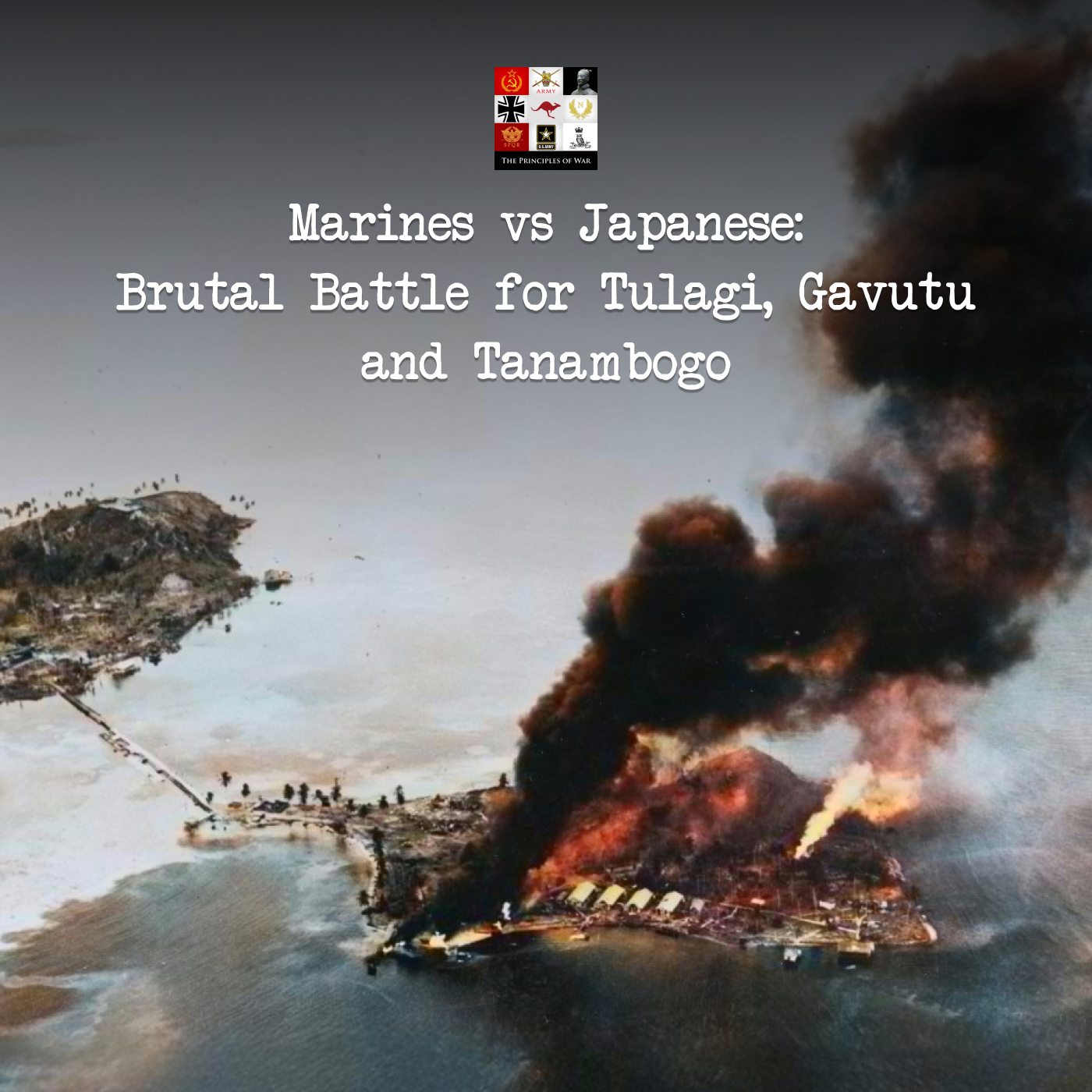 136 - Marines vs Japanese: Brutal Battles for Tulagi, Gavutu and Tanambogo | This is the second episode of our Guadalcanal series with historian and author Dave Holland. Shoestring invasion planning Koro rehearsals fiasco Risking the aircraft carriers vs time to unload the convoy Crutchley's covering cruisers Rupertus leads Tulagi Blue Beach landing Fighting at "the Cut" Improvised cave tactics Gavutu–Tanambogo battles Tanks combat Dave is an ex-Marine and was posted to Guadalcananal with the Australian Federal Police. He regularly leads battlefield study tours through the area. He is a world-leading expert on the battles of Guadalcanal and author of Guadalcanal's Longest Fight - The Pivotal Battles of the Matanikau Front. Check out the show notes for this episode. | — | ||||||
| 8/31/25 | 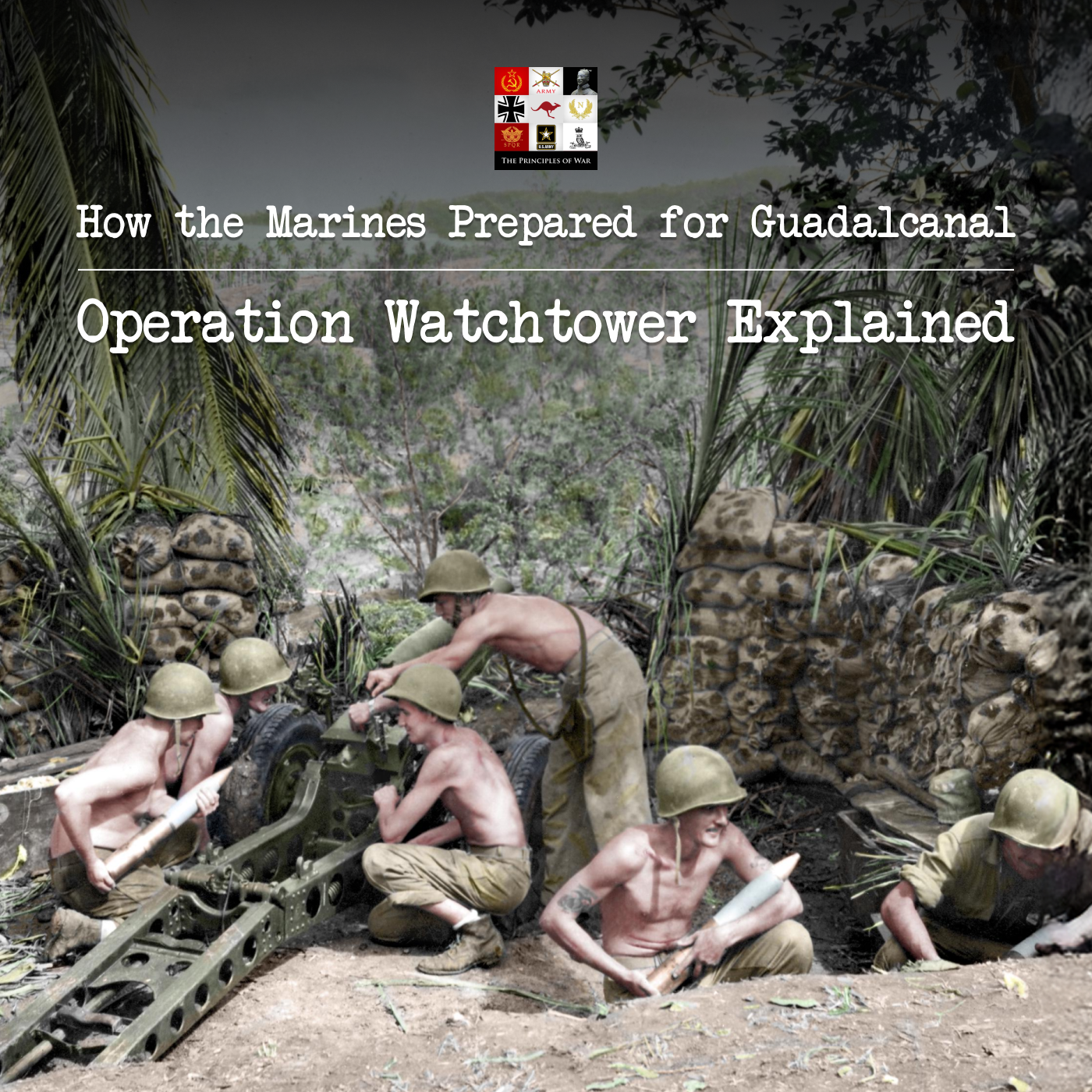 135 - How the Marines Prepared for Guadalcanal | Operation Watchtower Explained | This is the first in a major series of podcasts looking at the Battles of Guadalcanal. This is an interview with Dave Holland. This episode looks at: Guadalcanal's strategic significance Terrain and Climate of Guadalcanal Development of Marine Amphibious Doctrine Combat experience within the 1st Marine Division Strength and structure of a Marine Division US intelligence preparation before the landings Japanese intelligence and intentions US decision to land on Guadalcanal and Tulagi Operation Shoestring Dave is an ex-Marine and was posted to Guadalcananal with the Australian Federal Police. He regularly leads battlefield study tours through the area. He is a world-leading expert on the battles of Guadalcanal and author of Guadalcanal's Longest Fight - The Pivotal Battles of the Matanikau Front. | — | ||||||
| 8/7/25 | 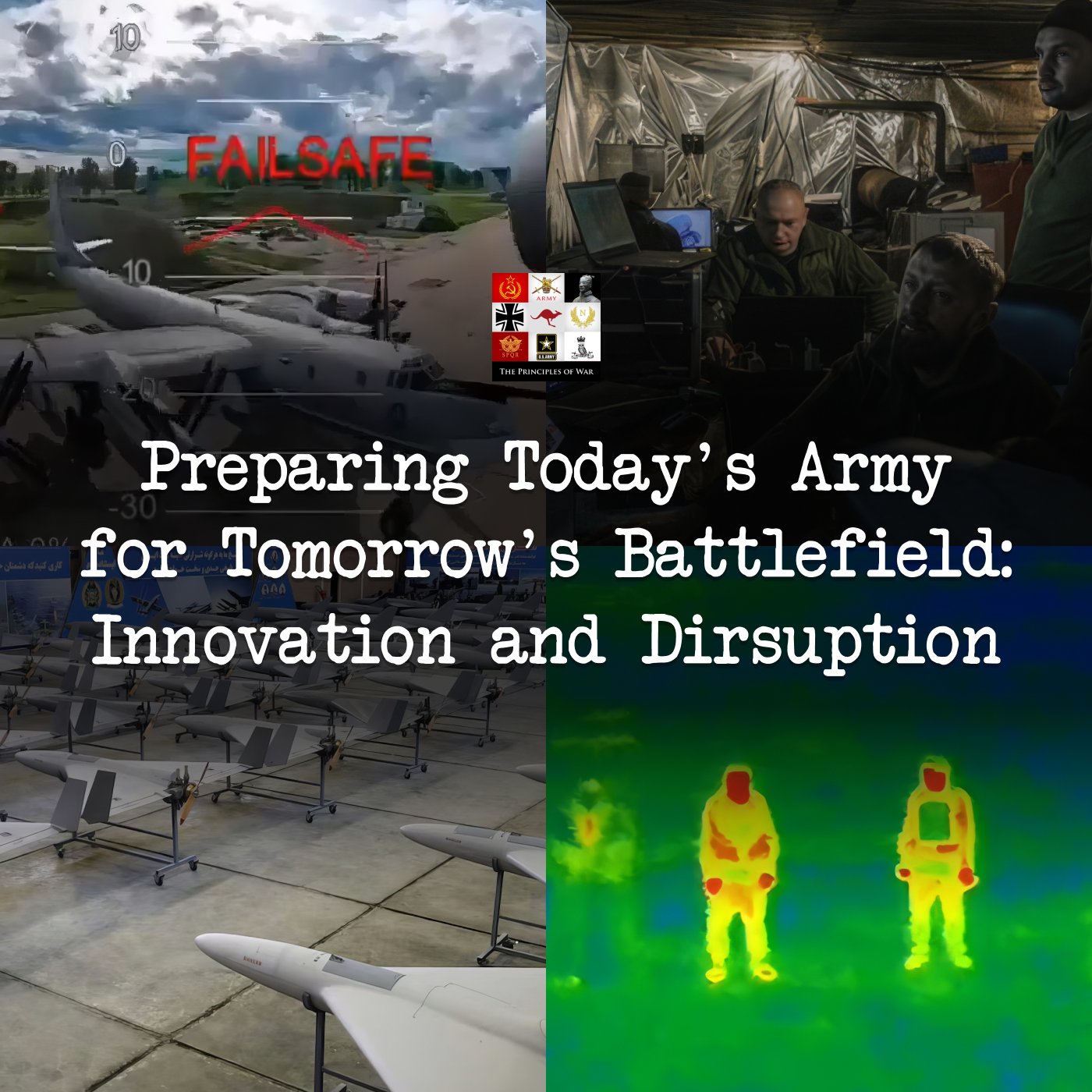 134 - Preparing Today's Armies for Tomorrow's Wars: Battlefield Innovation and Disruption | This is the final episode of three in our series from our interview with Retired Colonel John Antal discussing his research into contemporary combat and how technology is changing the modern battlefield. John makes a series of great points during the interview: Modern War Is Fought in a Transparent Battlespace Visibility through drones, sensors, and AI means traditional massing of forces is now lethal. You must deceive and disrupt enemy sensors or be destroyed. Masking Should Be a Principle of War Masking = multi-domain deception to confuse enemy ISR. Use decoys, optical/thermal camouflage, and emission control—make the enemy see what you want them to see. Camouflage and Concealment Are Critically Neglected Western armies (incl. U.S. and Australian) have virtually no meaningful camouflage training. Without drones for perspective or thermal checks, soldiers can't learn what the enemy sees. Command Posts Are Death Traps Tents and Winnebago-style mobile HQs are vulnerable to drone and artillery strikes. Forces must restructure command posts: smaller, distributed, better masked, and mobile. Infiltration Is the Primary Tactic of Modern War Seen in Nagorno-Karabakh, Ukraine, and Gaza, infiltration bypasses strongpoints and succeeds in high-transparency environments where massing is suicidal. Mobile Phones Kill Units Civilian phones constantly emit signals. Unless militaries ban personal devices or deploy secure comms, they invite precision targeting. Drones Are the Machine Guns of the 21st Century Drones must be ubiquitous, especially at the squad level. But to manage this, armies need a dedicated drone corps—trained, maintained, and operationalised like any combat arm. Resilience Beats Exquisite Systems Over-reliance on billion-dollar platforms (e.g., B-2s, F-35s) is a strategic risk. Operation Spiderweb Cheap drones can destroy exquisite systems. Forces must be able to take hits and continue fighting. Training Is Outdated and Unrealistic Many exercises simulate conventional war (e.g., Desert Storm) rather than dispersed, dark, denied environments. We fall to the level of our training—not rise to our expectations. Leaders Must Prepare for First Strike and Distributed Ops The enemy will hit first. Western forces must train to disperse, operate without emissions, reassemble fast, and strike with real-time decision-making. The key: agility, initiative, and survivability. Check out the show notes for all of the information that we cover in this episode as well as the images and other details that didn't make it into the podcast. | — | ||||||
| 7/28/25 | 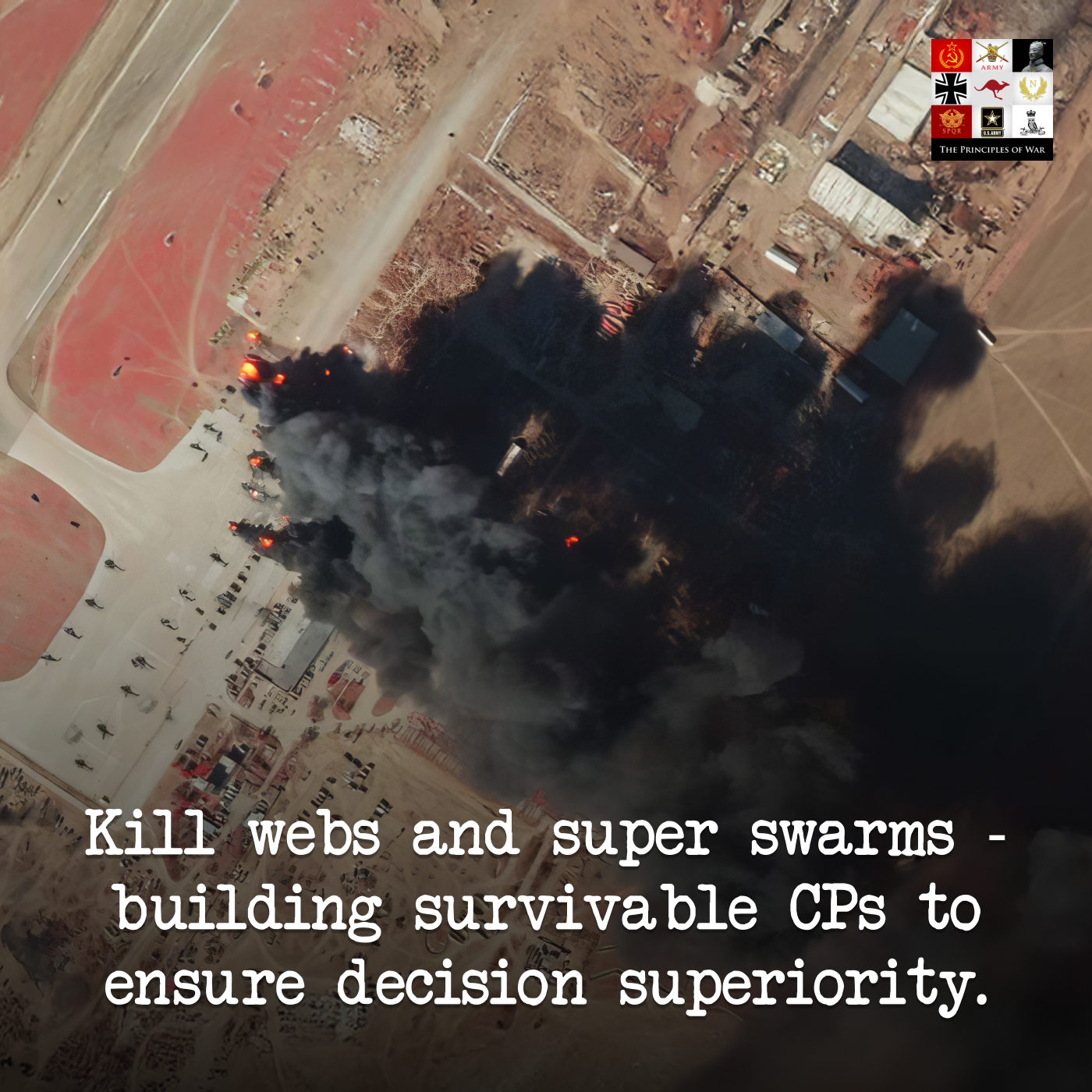 133 - Kill webs and super swarms - building survivable CPs for decision superiority | This is the second episode of our interview with Retired Colonel John Antal discussing his research into contemporary combat and how technology is changing the modern battlefield. We discuss the lessons learnt from 2nd Nagorno-Karabakh, Ukraine and recent Israeli battles and how technology is changing the modern battlefield. Check out the show notes for all of the information that we cover in this episode as well as the images and other details that didn't make it into the podcast. | — | ||||||
| 7/13/25 | 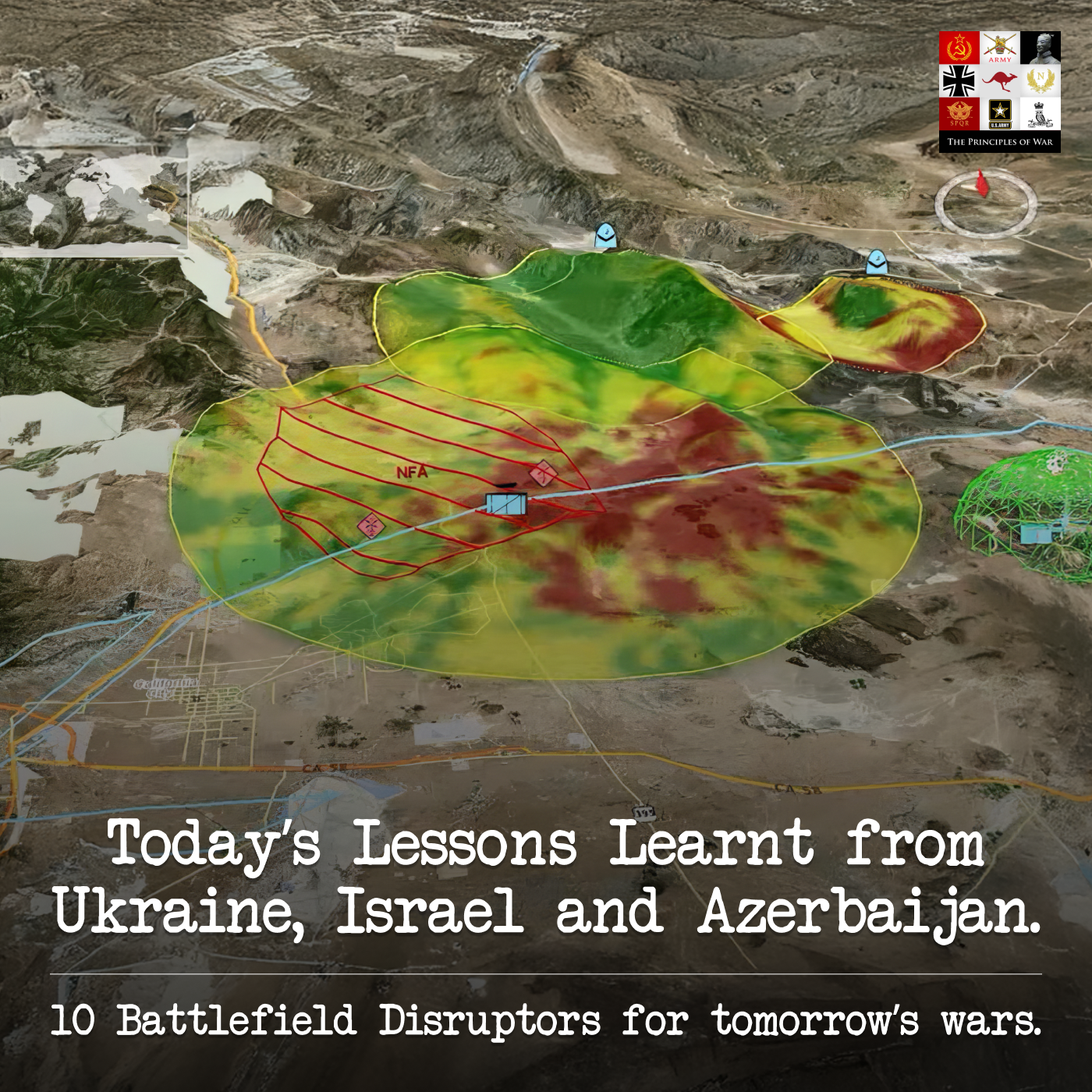 132 - Ten Battlefield Disruptors for Tomorrow's Wars | How is the modern battlefield changing? What role is technology like Artificial Intelligence, drones, precision strike and electronic warfare changing command and control, ISR and combined arms? This is the first of 3 episodes with retired Colonel John Antal, who has studied 2nd Nagorno-Karabakh, recent Israeli battles and the war in Ukraine. Check out the show notes for all of the information that we cover in this episode as well as the images and other details that didn't make it into the podcast. | — | ||||||
| 6/14/25 | 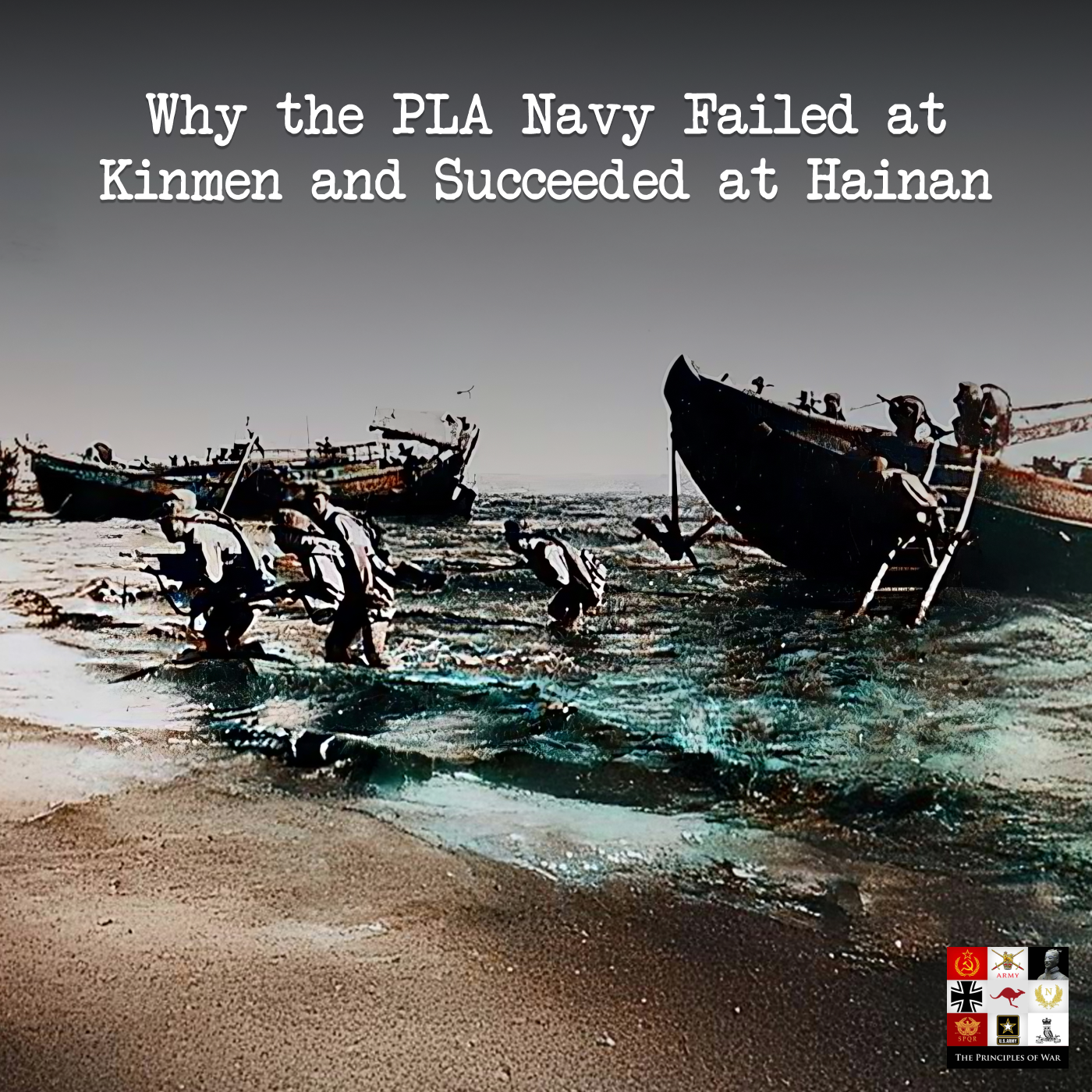 131 - Amphibious Ambitions and Island Defeats - How Kinman and Hainan shaped China's Navy | This is the second of a two-part series looking at the origin story of the PLA Navy. This episode looks at the crucial Kinmen and Hainan Islands campaigns. This is an interview with Dr Toshi Yoshihara, an expert in the history of China's Navy. How was each campaign planned and executed? What were the results for the Chinese Navy? What did the PLA Navy learn from these campaigns? How have these early littoral manoeuvre campaigns shaped the PLA today? We discuss the roles of Mao Zedong, Lin Biao, Xiao Jinguang, in these early important battles for China. Check out the show notes for all of the information that we cover in this episode as well as the images and other details that didn't make it into the podcast. | — | ||||||
| 6/5/25 | 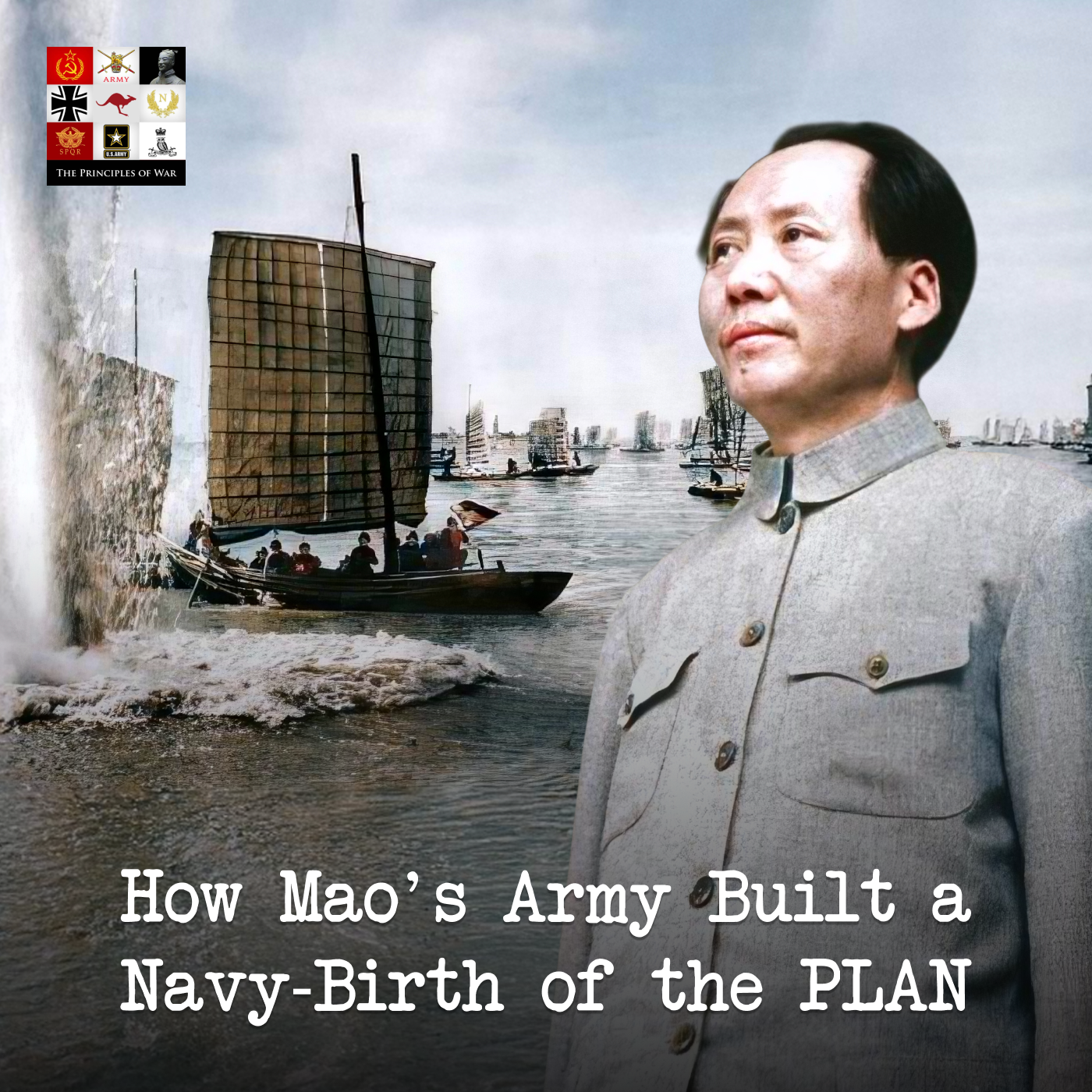 130 - From River Crossings to Amphibious Operations - How the PLA Built a Navy from scratch and learned littoral manoeuvre | No description provided. | — | ||||||
Showing 25 of 210
Sponsor Intelligence
Sign in to see which brands sponsor this podcast, their ad offers, and promo codes.
Chart Positions
5 placements across 5 markets.
Chart Positions
5 placements across 5 markets.