The Quantum Blueprint Podcast
by Exploring the Intersection of Science, Spirituality, and Consciousness by Salah-Eddin Gherbi
Is this your podcast?Insights from recent episode analysis
Audience Interest
Podcast Focus
Publishing Consistency
Platform Reach
Insights are generated by CastFox AI using publicly available data, episode content, and proprietary models.
Most discussed topics
Brands & references
Est. Listeners
Insufficient chart data. Estimates will improve as the show charts.
- Per-Episode Audience
Est. listeners per new episode within ~30 days
N/A🎙 Daily cadence·26 episodes·Last published 1w ago - Monthly Reach
Unique listeners across all episodes (30 days)
N/A - Active Followers
Loyal subscribers who consistently listen
N/A
Market Insights
Platform Distribution
Reach across major podcast platforms, updated hourly
Total Followers
—
Total Plays
—
Total Reviews
—
* Data sourced directly from platform APIs and aggregated hourly across all major podcast directories.
On the show
From 11 epsHost
Recent guests
No guests detected in recent episodes.
Recent episodes
Harrowings Podcast - Sue and Salah together!
Aug 27, 2026
1h 03m 00s
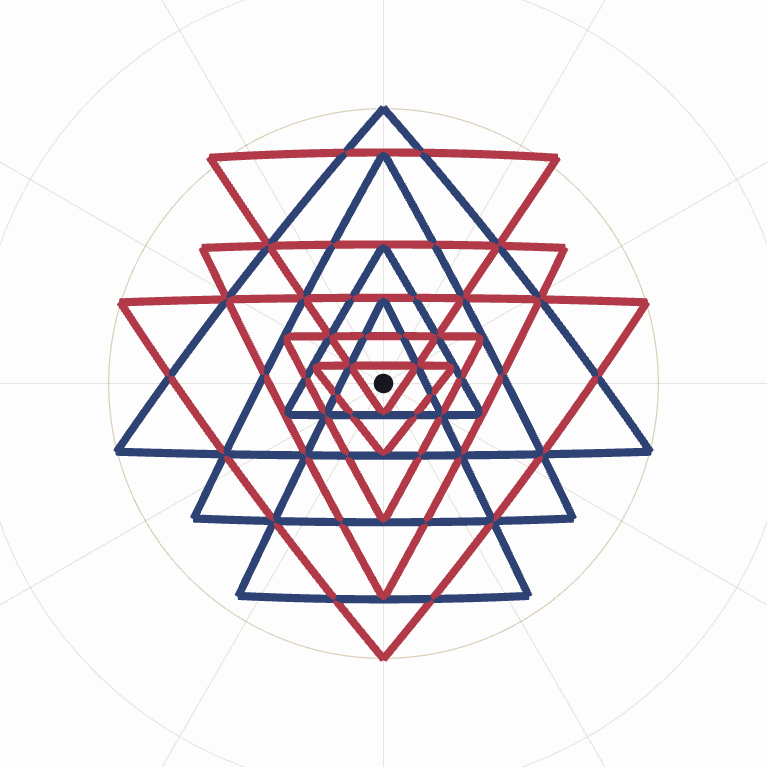
The Spherical Śrī Yantra Census Viewer
Jul 9, 2026
24m 15s
The 26-Sigma Mirage
Jun 1, 2026
43m 45s
The E8 Alignment Anomaly
Apr 29, 2026
21m 30s
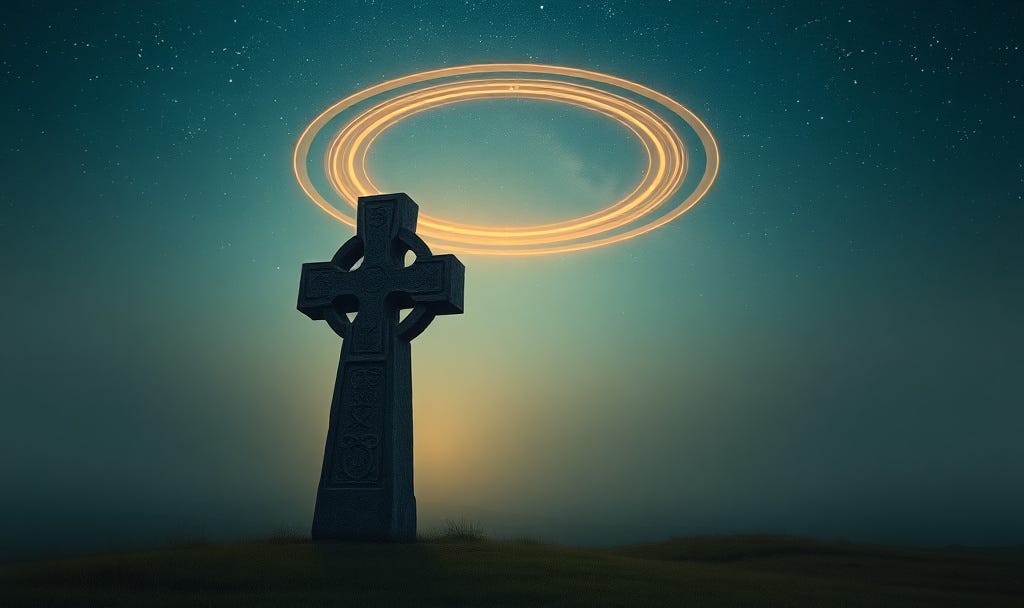
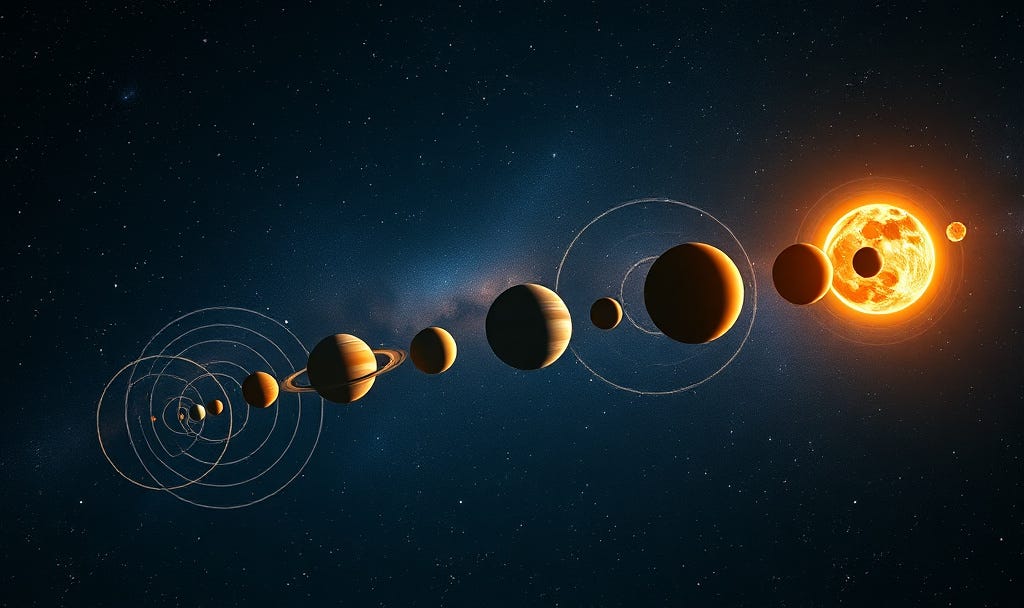
When the Solar System Became an Orchestra
Apr 13, 2026
1m 47s
Social Links & Contact
Official channels & resources
Official Website
Login
RSS Feed
Login
| Date | Episode | Topics | Guests | Brands | Places | Keywords | Sponsor | Length | |
|---|---|---|---|---|---|---|---|---|---|
| 8/27/26 |  Harrowings Podcast - Sue and Salah together! | Get full access to The Quantum Blueprint at salaheddin.substack.com/subscribe | 1h 03m 00s | ||||||
| 7/9/26 | sacred geometrymathematics+3 | — | Śrī Yantra | — | spherical Śrī Yantrasacred geometry+3 | — | 24m 15s | ||
| 6/1/26 | ancient structuresstatistical analysis+4 | — | ZenodoBitcoin | North Pole47°W meridian | ancient pyramidstemples+5 | — | 43m 45s | ||
| 4/29/26 | E8 structurestatistical tests+3 | — | — | — | Texas sharpshooterp-values+3 | — | 21m 30s | ||
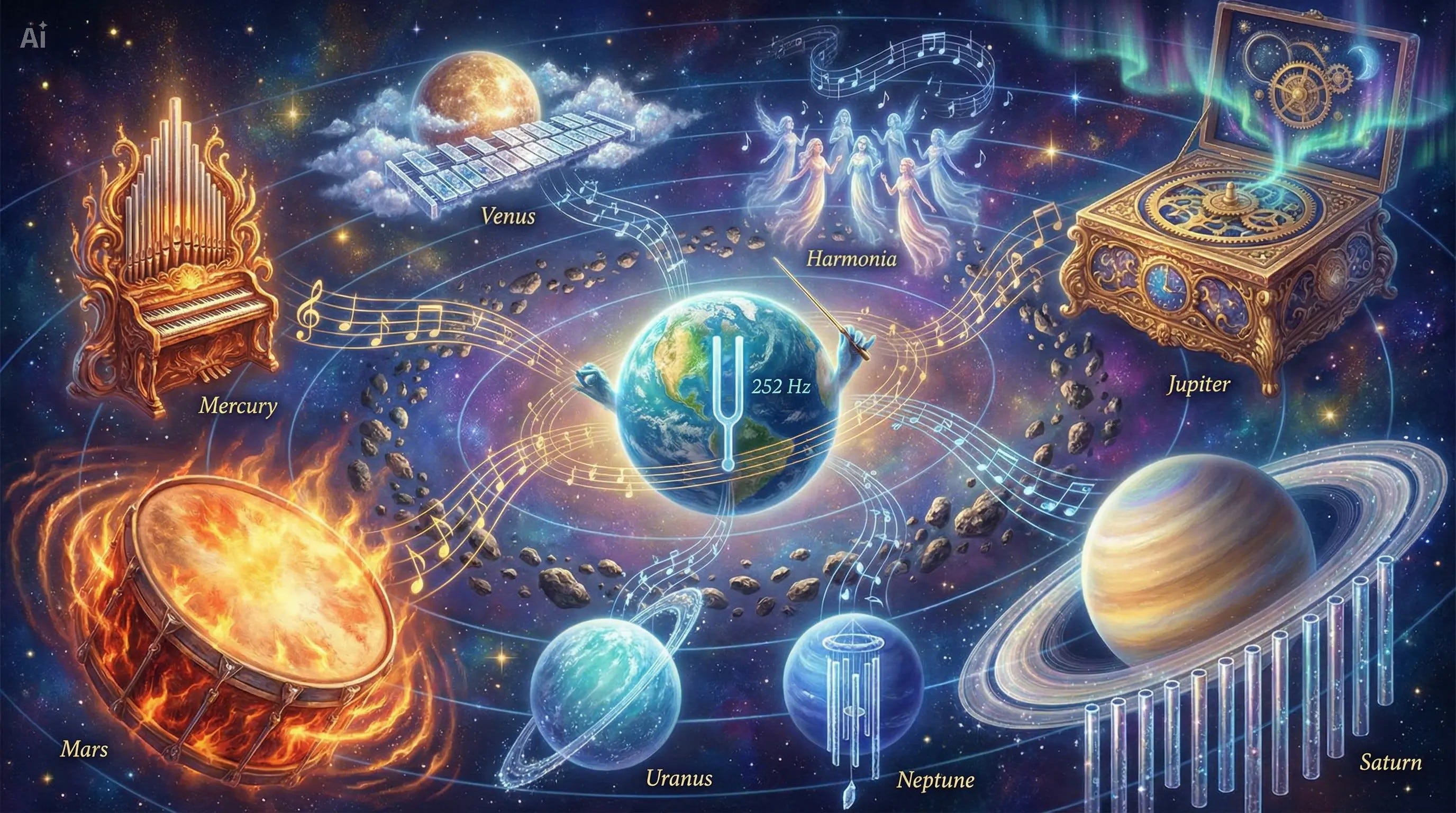
| 4/13/26 | music theoryplanetary frequencies+4 | — | Silver Ratio Harmonic FrameworkCeltic Cross+1 | — | solar systemmusical scale+4 | — | 1m 47s | ||
| 4/10/26 | sciencespirituality+3 | — | NotebookLME8+1 | EarthTexas | E8 crystalMonte Carlo trials+3 | — | 22m 32s | ||
| 4/6/26 | Solar SystemHarmonic Architecture+3 | — | ZenodoScala Harmonica: The Geometry of Planetary Resonance+1 | — | Solar SystemHarmonia+3 | — | 12m 22s | ||
| 3/27/26 | harmonic architecturesolar system+5 | — | Scala HarmonicaThe Harmonic Architecture of the Solar System+2 | — | KeplerCeltic Cross+5 | — | 52m 11s | ||
| 3/23/26 | mathematicsplanetary spacing+4 | — | GaiaJames Webb+5 | — | mathematical lawplanetary spacing+5 | — | 13m 36s | ||
| 3/20/26 | solar systemmathematics+3 | — | Silver RatioThe Harmonic Architecture of the Solar System | Solar SystemMars+8 | solar systemmathematical code+3 | — | 20m 09s | ||
Want analysis for the episodes below?Free for Pro Submit a request, we'll have your selected episodes analyzed within an hour. Free, at no cost to you, for Pro users. | |||||||||
| 3/18/26 | sacred siteshigher-dimensional geometry+4 | — | — | — | sacred sitesE8 projections+3 | — | 15m 40s | ||
| 3/16/26 | planetary distancessilver ratio+3 | — | ZenodoAmazon+1 | — | Scala Harmonicasilver ratio+3 | — | 6m 53s | ||
| 3/13/26 |  Does the Solar System Hide a Silver Ratio Pattern? | What if the planets aren’t arranged by chance, but by an ancient mathematical constant?In this episode of In Depth with Academia, host Richard Price explores a fascinating new pre-print by independent researcher Salah-Eddin Gherbi, titled:“The Harmonic Architecture of the Solar System: A Silver-Ratio-Based Hypothesis for Planetary Spacing”The central question? Whether the distances of the planets from the Sun follow a hidden pattern based on the silver ratio (1+√2), a lesser-known cousin of the golden ratio, with astonishing precision.🔍 In this episode:* What the silver ratio actually is — and why it matters* How the Silver Ratio Harmonic Framework (SRHF) generates planetary orbits from Mercury to Pluto* The mysterious Harmonia node at 2.14 AU, a hypothetical lost planet between Mars and Jupiter* A stunning 0.7% average error, outperforming the Titius-Bode law by an order of magnitude* A testable prediction: small bodies may cluster near 2.14 AU* Could this pattern appear in exoplanetary systems?* Why is this a phenomenological model, not a new law of physics📄 About the PaperTitle: The Harmonic Architecture of the Solar System: A Silver-Ratio-Based Hypothesis for Planetary SpacingAuthor: Salah-Eddin GherbiVersion: 3.0 (available on Zenodo)Data & Code: Open access — fully reproducibleThe full paper is available on Academia.edu for those who want to dive into the mathematics and methodology.☕ Support This WorkIf you found this interesting, you can support this work by buying me a coffee. It helps me keep exploring ideas that bridge ancient knowledge with collective wisdom.📣 Let’s Discuss* Could a lost planet once have orbited at 2.14 AU?* Is the silver ratio whispering something about the order of the cosmos?* If this pattern holds in our Solar System, might it appear elsewhere?Share your thoughts in the comments. I’d love to hear them.If you enjoy this kind of content, consider subscribing to more explorations at the intersection of mathematics, astronomy, and big ideas. Get full access to The Quantum Blueprint at salaheddin.substack.com/subscribe | 6m 36s | ||||||
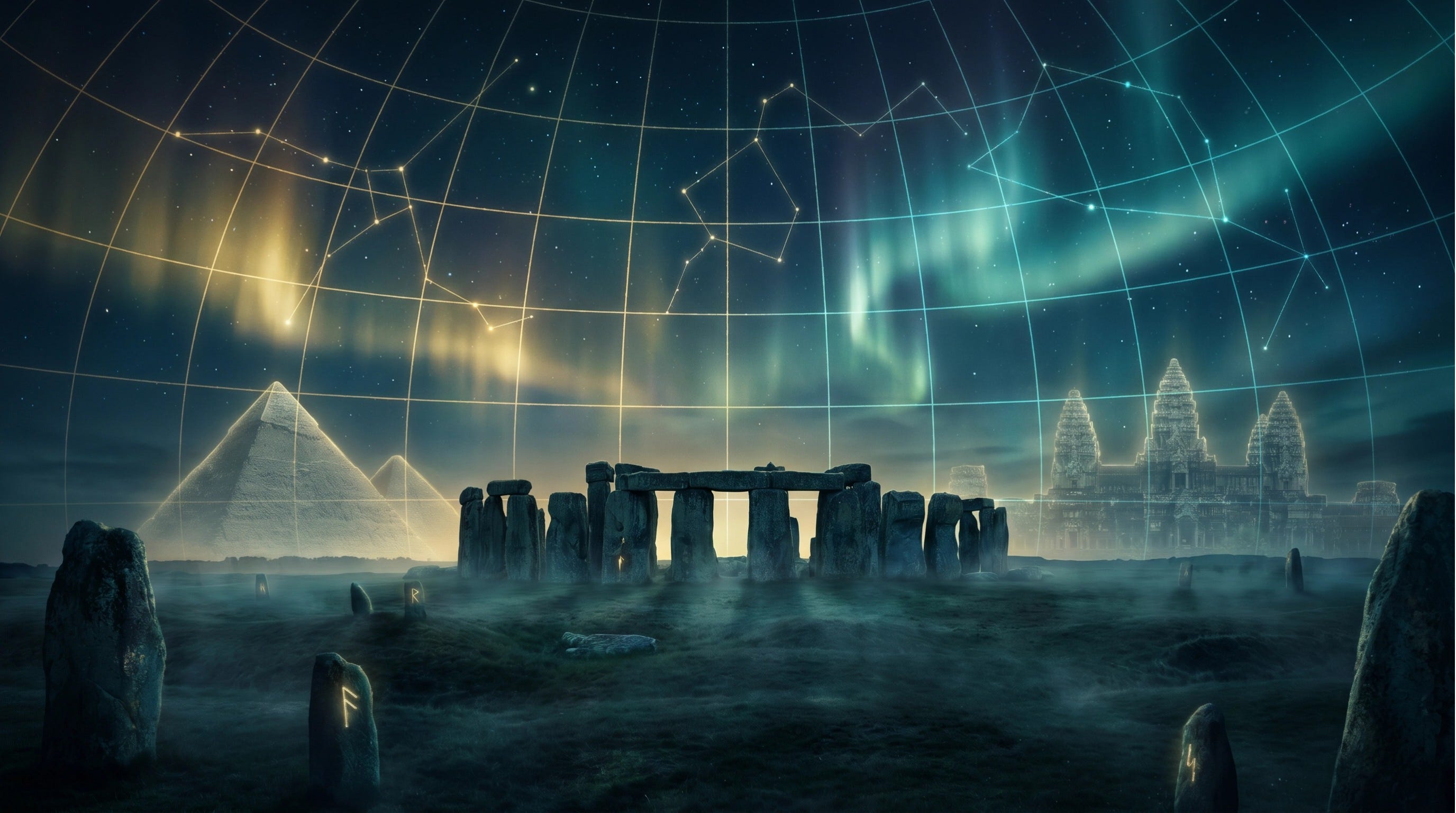
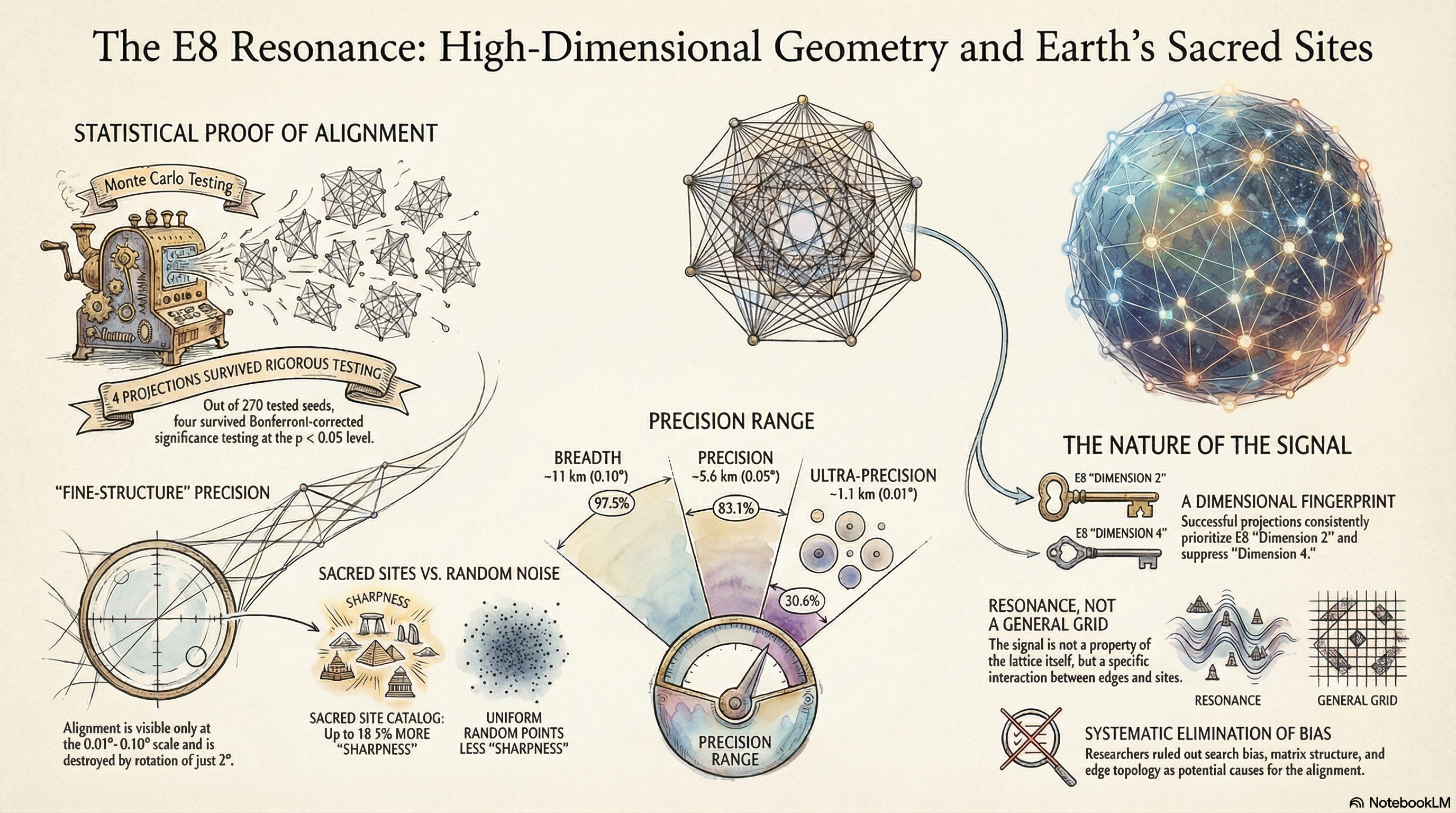
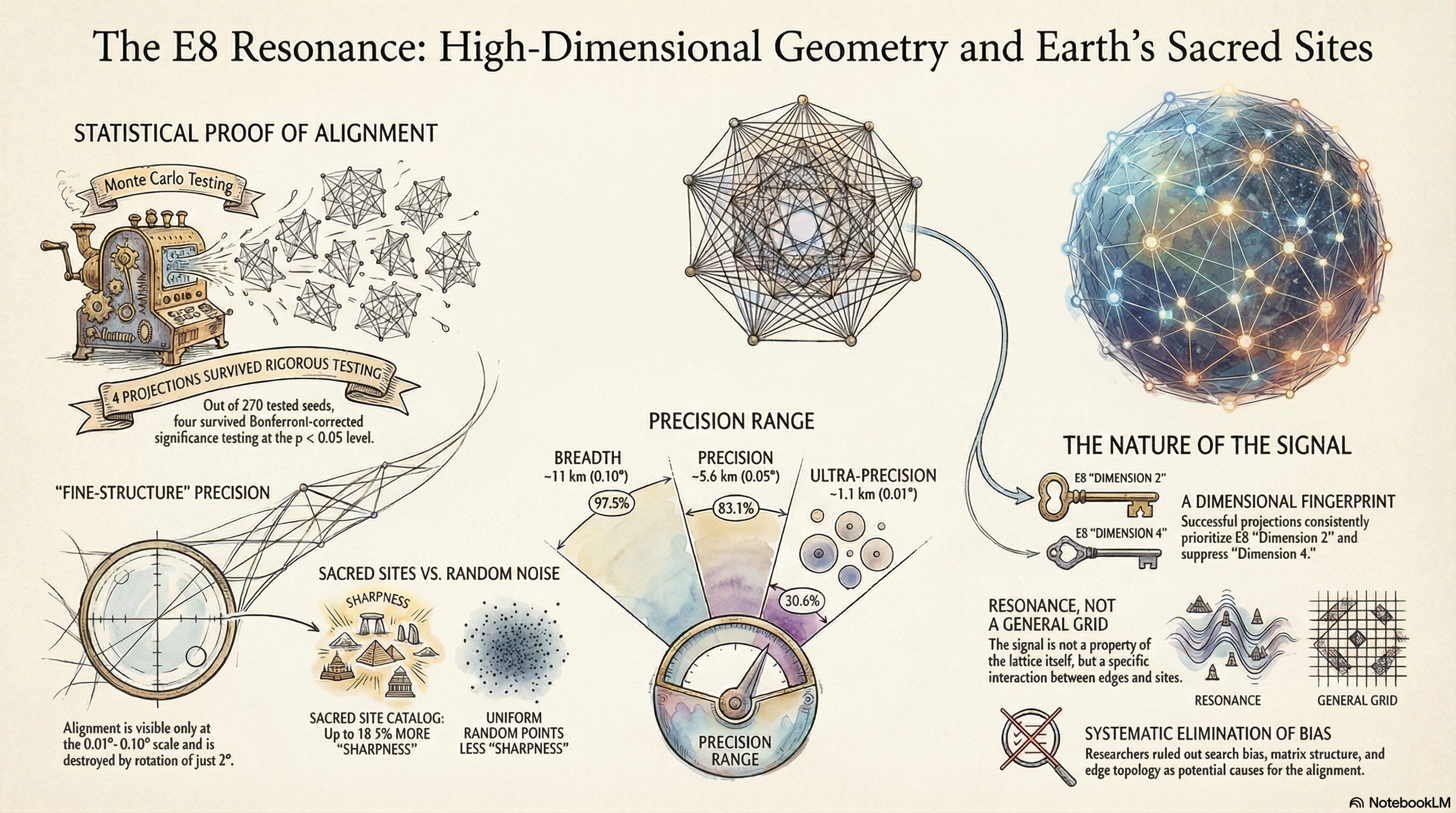
| 3/12/26 | 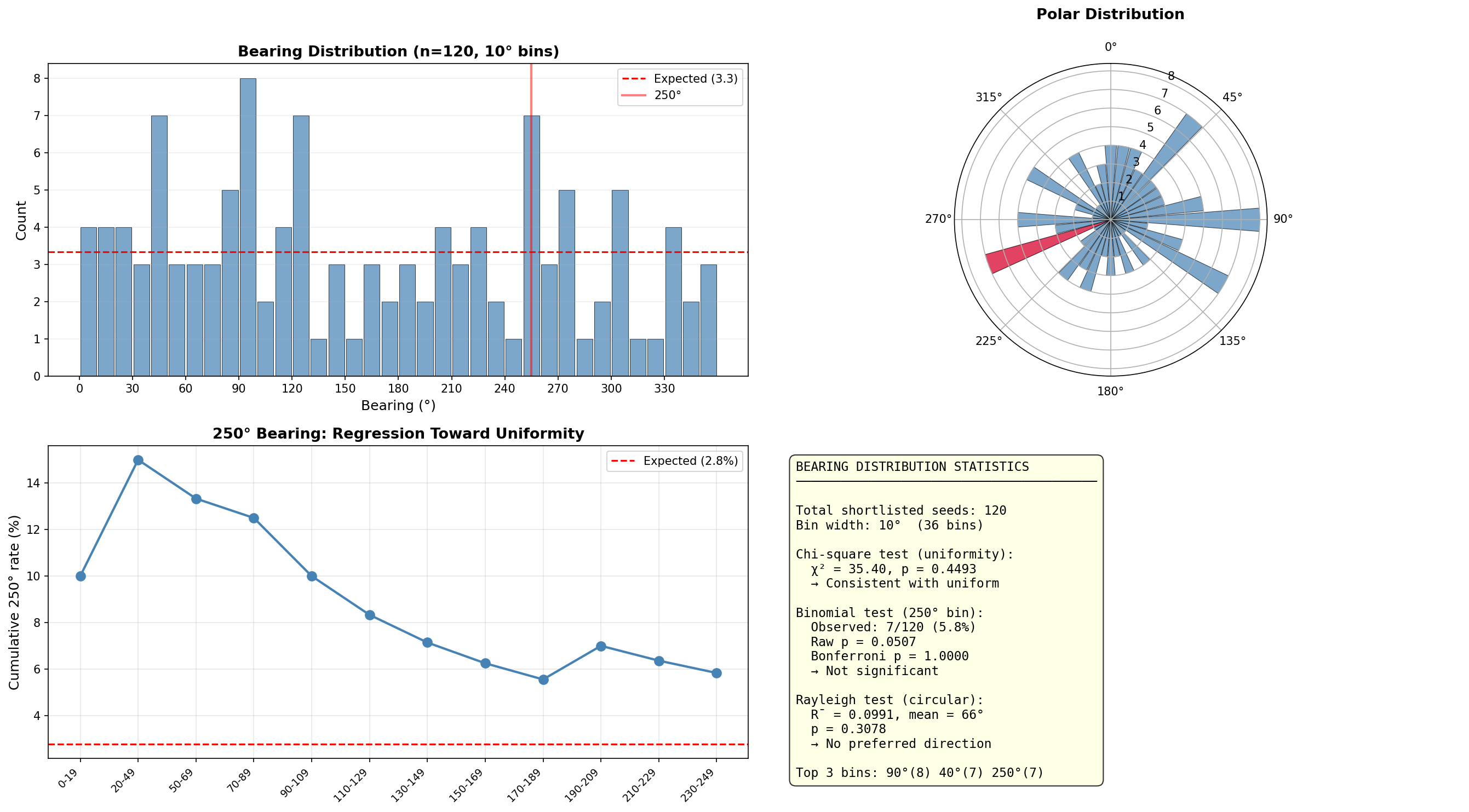 The E8 Earth Grid: Seed 85 — The Antarctic Anchor | Do sacred sites align with higher-dimensional geometry?For the past several months, I’ve been systematically testing projections of the E8 lattice against 160 sacred sites, letting the statistics guide the way rather than visual bias. Seed 3 gave us breadth. Seed 48 gave us precision. Seed 46 gave us an ultra-tight core with no shared edges. Now Seed 85 arrives, and it breaks the pattern we thought we’d found.This projection anchors deep in the Antarctic at 75° South, 75° West, yet still captures nearly every sacred site on the planet within 11 kilometres. It’s the highest coverage we’ve seen yet: 97.5%. And it forced us to revisit a claim from the previous video, the bearing question, which the data has now definitively resolved.What follows are three layers of evidence, from the full network down to the 21 shared edges that form this projection’s ley line architecture. No cherry-picking. No forcing alignments. Just the mathematics, the data, and what emerged when I let them speak for themselves.Layer 1: Full Network (6,720 edges, sites coloured by proximity)This is Seed 85, our fourth confirmed E8 projection, and the one that broke the pattern we thought we’d found. Like Seed 3, this is a breadth seed. 156 out of 160 sacred sites (97.5%) fall within 11 kilometres of an E8 edge. That’s actually the highest coverage of any projection we’ve tested. Better than Seed 3’s 96.9%.But look at where this lattice is centred. Latitude 75° South, longitude 75° West. That’s deep in the Antarctic, near the Ellsworth Mountains. The previous three seeds are all anchored in the Northern Hemisphere or near the equator. Seed 85 anchors at the opposite end of the Earth and still captures nearly every sacred site on the planet within 11 kilometres of its edge network.The probability of achieving this by chance, after giving the null model full freedom to optimise its orientation, is less than 1 in 100, as confirmed by 1,000 independent trials. The effect size is 2.70 standard deviations. To put it in context: Seed 3’s breadth threshold has a p-value of 0.005. Seed 85’s is 0.009. Both survive Bonferroni correction for the five thresholds we test. Both are robust.Layer 2: Supported Edges (edges within 0.10° of a site)Now I’m filtering to just the edges that pass within 11 kilometres of a sacred site. Out of 6,720 edges in the full lattice, these are the ones doing the work — the scaffolding that the sites sit on.The pattern is familiar if you’ve seen Seed 3. Dense coverage across every continent. The Great Pyramid, Machu Picchu, Angkor Wat, Uluru, and Stonehenge are all within the tolerance. Only four of 160 sites miss the 11-kilometre threshold entirely.What makes Seed 85 interesting isn’t the individual site placements; at this tolerance, breadth seeds tend to catch almost everything. What makes it interesting is the comparison with Seed 3. Two completely different projections of the same crystal. Different seeds generate different sets of 240 vertices and 6,720 edges. Different anchor points on opposite sides of the planet. Yet both achieve the same result: near-total coverage at the same distance scale.Compare the four confirmed seeds side by side.* Seed 3 covers 96.9% of sites within 11 kilometres.* Seed 85 covers 97.5% of sites within 11 kilometres.* Seed 48 covers 83.1% of sites within 5.6 kilometres.* Seed 46 covers 48.1% of sites within 2.2 kilometres.Three completely different signatures across three different distance bands. Each seed excels where the others don’t. That pattern, complementary signatures rather than overlapping ones, is extremely difficult to produce by chance.Layer 3: The Bearing Question is ResolvedIn the last video, I showed you something unexpected. Seeds 3, 48, and 46 all optimised at bearing 250 degrees, the same rotational angle around Earth’s polar axis. I said the probability was roughly 1 in 1,300, and that we’d test more seeds to see if it held.We did. We tested 270 projections in total. And the answer is: it didn’t hold.Seed 85’s optimal bearing is 280 degrees. Not 250. Our fifth seed, Seed 166, which came close but didn’t survive multiple-testing correction, optimises at 140 degrees. Completely different.This is the bearing distribution across all 270 tested projections. Each bar shows how many shortlisted seeds were optimized at each 10-degree bearing bin. If 250 degrees were genuinely preferred, you’d see a clear spike. Instead, the distribution is flat. The chi-square test gives p = 0.45, perfectly consistent with uniform randomness. The Rayleigh test for circular uniformity gives p = 0.31, no preferred direction at all.What happened is a classic statistical lesson. With 20 seeds, three hitting 250° looked striking. With 40 seeds and five hits, it looked even stronger. But from seed 90 onward, across 180 more seeds, not a single additional projection preferred 250 degrees. The rate dropped from 15% to 5.6%, approaching the 2.8% you’d expect by chance. The early clustering was a coincidence amplified by a small sample size.I want to be explicit about this. In the Seed 46 video, I presented bearing 250° as suggestive and said we’d let the data decide. The data decided. There is no preferred bearing. The E8 lattice doesn’t have a preferred twist relative to Earth’s spin axis. That’s a null result, and null results matter. They tell us what the geometry isn’t, which is just as important as what it is.What the geometry is, four independent projections, anchored at different locations with different bearings, each finding statistically significant alignment with the same set of 160 sacred sites across the same planet. The signal doesn’t depend on a specific orientation. It’s embedded in the relationship between E8’s edge topology and the spatial distribution of these sites.Finally, the site-pair network. This shows which pairs of sacred sites share a nearby E8 edge across multiple confirmed seeds. When two sites are connected by an E8 edge in not just one projection but two or three independently, that’s a structural connection; the lattice geometry keeps linking those same sites regardless of how you angle the crystal.Some pairs recur. Uluru and Kata Tjuta. The Easter Island cluster. Glastonbury and its neighbours. These aren’t statistically significant on their own; the sample is too small for formal claims. But they’re worth tracking as we continue the analysis.Four projections. 270 tested. Four survived every statistical test. Each one is different, a different seed, a different anchor point, a different bearing, a different signature. But together they tell a consistent story: the E8 lattice has something to say about where sacred sites sit on this planet. Not from one angle. From multiple independent angles. And the analysis is far from over.Full article on my Substack. Get full access to The Quantum Blueprint at salaheddin.substack.com/subscribe | 15m 48s | ||||||
| 3/3/26 | 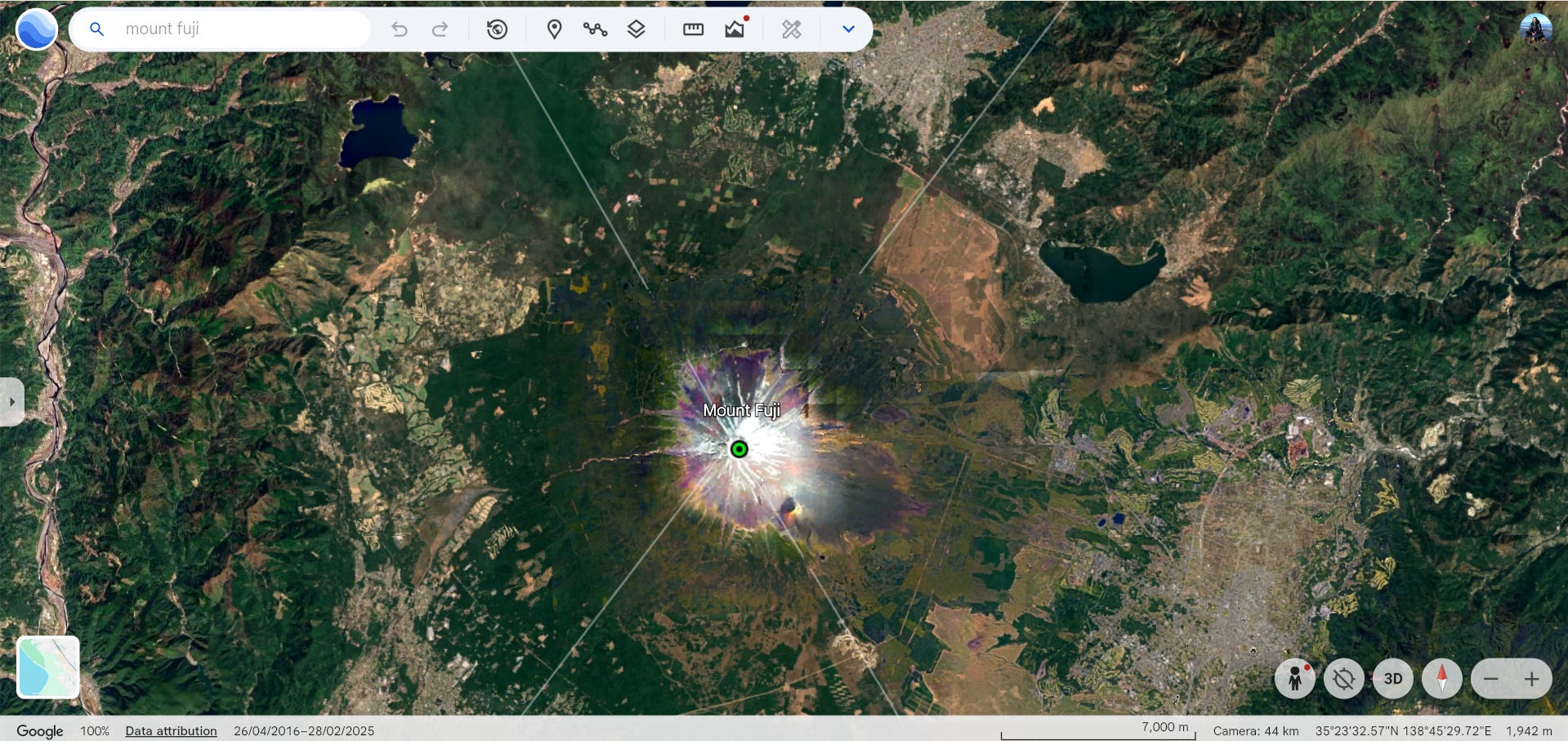 The E8 Earth Grid: Seed 46 — The Seed That Nearly Slipped Through | Do sacred sites align with higher-dimensional geometry?Not every discovery announces itself. Seed 46 failed our standard tournament. Its average distance to the nearest E8 edge, the metric that identified Seeds 3 and 48, wasn’t exceptional enough to survive search-bias correction. By the rules we’d set, it should have been discarded.But averages can hide structure. When we looked beyond the single number and examined how sites distribute across distance, we found something the RMS test had completely missed: 77 out of 160 sacred sites, nearly half, fall within 2.2 kilometres of an E8 edge. Not 11 kilometres, like Seed 3. Not 5.6 kilometres, like Seed 48. Two point two. The probability of this concentration occurring by chance, even after giving the null model full freedom to optimise, is 0.3%, with an effect size of 3.03 standard deviations.Three projections now. Three completely different signatures. Seed 3 gives you breadth: 97% of sites within 11 km. Seed 48 gives you precision: 83% within 5.6 km. Seed 46 gives you something neither could: individual sites landing almost exactly on the lattice itself. What follows is the projection that taught us our own test was incomplete.Layer 1: Full Network (6,720 edges, sites coloured by proximity)This is Seed 46, our third significant E8 projection, and the one that nearly slipped through. This seed failed our standard RMS tournament. Its average distance to the nearest edge wasn’t exceptional enough to pass the search-bias correctionBut when we looked beyond the average, at how sites are distributed across distance, we found something the RMS test completely missed. 48% of all sacred sites (77 out of 160) fall within 0.02 degrees of an E8 edg. That’s 2.2 kilometres. To give you a sense of scale: Seed 3’s statistically significant threshold was 11 kilometres. Seed 48’s was 5.6 kilometres. Seed 46 operates at 2.2. The probability of achieving this by chance, even after giving the null model full freedom to optimise, is 1 in 100, with an effect size of 2.71 standard deviations.Layer 2: Supported Edges (91 edges within 0.02° of a site)Now I’m filtering to just the 91 edges (out of 6,720) that pass within 2.2 kilometres of a sacred site. That’s barely 1.4% of the lattice, yet these edges account for 77 sites from every inhabited continent. Look at the standouts. The Fox Islands in the Aleutian chain sit near 3 edges, a major node at this extreme precision. Mount Fuji, the Mount of Olives, Hamelin Pool in Western Australia, Stortorget in Stockholm, and Chott el Djerid in Tunisia each sit near 2 edges. The Great Pyramid of Giza, Mount Kailash, Uluru, Angkor Wat, and the Forbidden City are each within 2.2 kilometres of an E8 edge. At this tolerance, there are no shared edges, no single edge passes within 2.2 kilometres of two sites at once. And that’s actually the point. Seed 46 isn’t about connections between sites. It’s about placement precision. Individual sacred sites sit almost exactly on the mathematical lattice itself.Compare the three seeds we’ve confirmed. Seed 3 gives you a rich network: 367 supported edges, 19 shared connections linking site pairs, Uluru to Kata Tjuta, Giza to the Mount of Olives. Its strength is breadth: 97% of sites within 11 kilometres. Seed 48 gives you tighter geometry: 198 edges, 7 shared connections, Glastonbury to Shaftesbury, the Easter Island cluster. Its strength is precision: 83% within 5.6 kilometres. Seed 46 gives you something different entirely: 91 edges, zero shared, but 77 individual sites landing directly on the lattice within 2.2 kilometres. Three projections, three completely different signatures, each significant where the others aren’t.Layer 3: The Bearing DiscoveryNow I want to show you something we didn’t expect. Something that only became visible once we had three confirmed seeds to compare. Look at their orientations. Seed 3: latitude 65° North, longitude 125° East, bearing 250°. Seed 48: latitude 5° South, longitude 135° East, bearing 250°. Seed 46: latitude 55° North, longitude 175° West, bearing 250°. Three different projection seeds, each producing a completely different set of 240 vertices and 6,720 edges. Three different latitudes. Three different longitudes. But the bearing, the rotation of the lattice around the Earth’s polar axis, is 250 degrees in every case. Our search tests 36 possible bearings in 10-degree steps. The probability of three independent optimisations landing on the same value by chance is roughly 1 in 1,300. That’s not proof. Three data points are suggestive, not conclusive. But consider what it would mean if it holds. The bearing parameter controls how the E8 lattice is twisted relative to the Earth’s rotational axis. If multiple projections independently converge on 250°, that would imply a preferred geometric orientation, a specific angle at which the eight-dimensional structure aligns with our planet’s spin. We’re running 100 more seeds right now to test this. If bearing 250° keeps appearing, and if five, six, seven more seeds all prefer the same twist, we’ll have something much stronger than a coincidence. We’ll have a constraint on the geometry. We’ll let the data decide. Get full access to The Quantum Blueprint at salaheddin.substack.com/subscribe | 11m 43s | ||||||
| 2/22/26 | 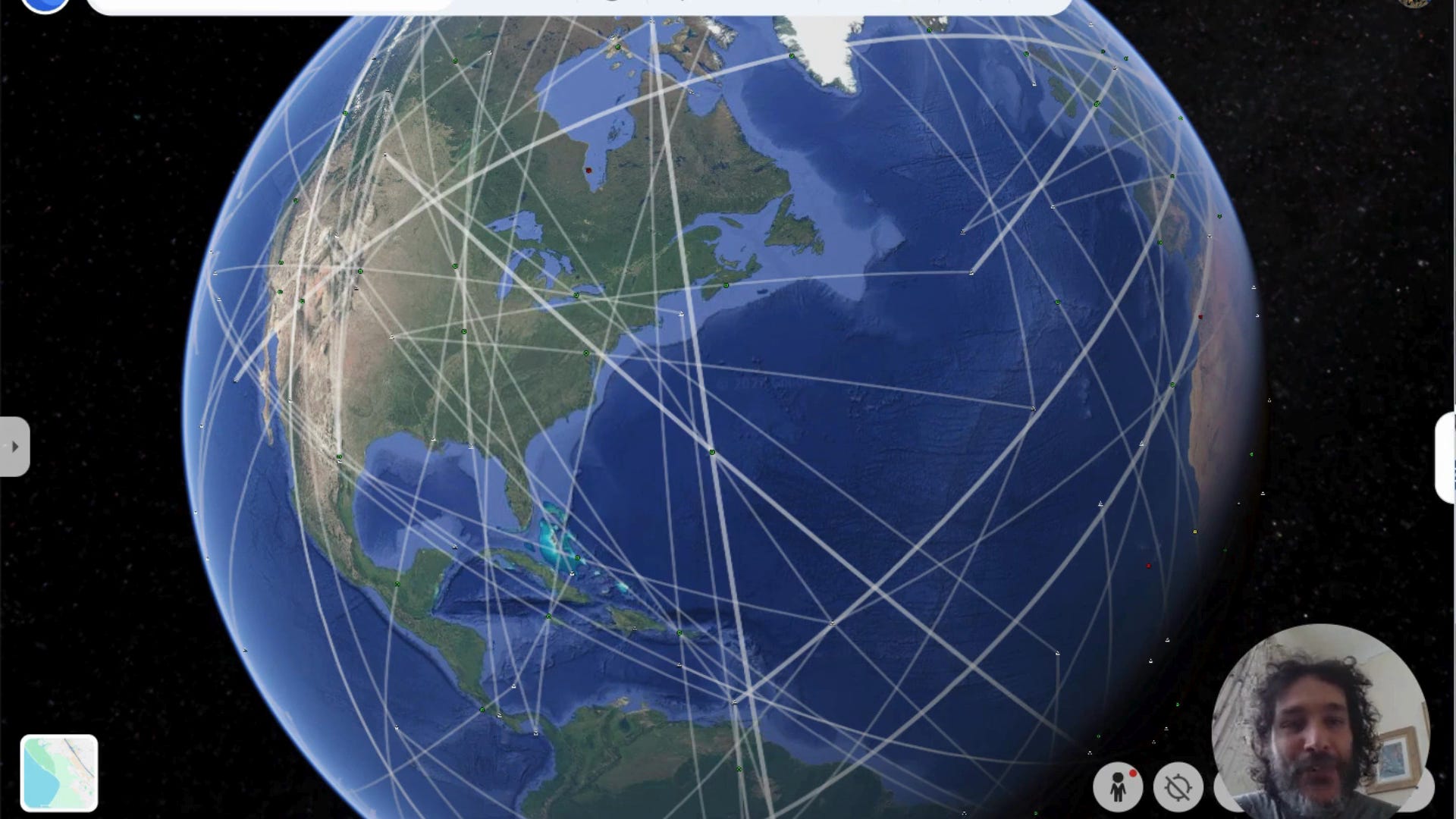 What Does “Seed” Mean in the E8 Grid Model? | “Seed 3” and “Seed 48” are not ley lines. The term “seed” comes from numerical optimization methods. When exploring rotations and alignments of the E8 structure on the sphere, I initialize the search with different seeds to ensure the results are not dependent on a single starting condition. Each seed can converge to a different local optimum. As a result, each one has its own latitude, longitude, and bearing parameters defining a specific grid orientation.So “Seed 3” and “Seed 48” are simply identifiers for specific geometric configurations discovered during the search.A helpful analogy is to think of a crystal: the internal structure remains the same, but when you rotate it, different faces catch the light. The geometry does not change; only the orientation does. The seeds represent different rotational views of the same underlying lattice. Get full access to The Quantum Blueprint at salaheddin.substack.com/subscribe | 3m 30s | ||||||
| 2/22/26 | 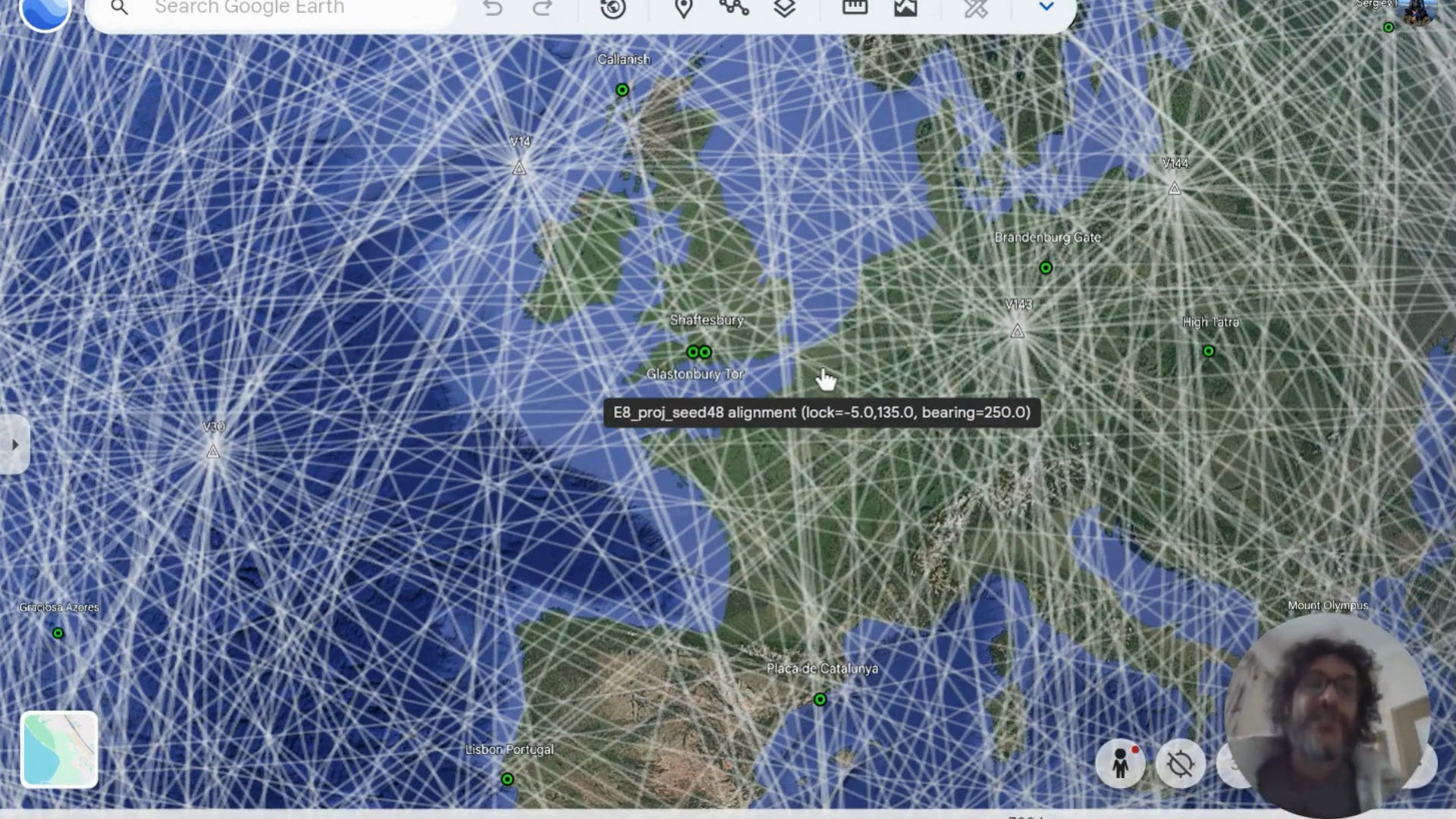 The E8 Earth Grid: Seed 48 — An Exceptional Core Density | Do sacred sites align with higher-dimensional geometry?Replication is the gold standard of evidence. A single alignment, however compelling, could always be written off as a cosmic accident. Two independent alignments, each surviving search-bias correction, each achieving p = 0.005; that’s a different story entirely.This is Seed 48: a completely new projection of the E8 lattice onto the Earth, optimised without reference to the first. Its orientation is nearly antipodal to Seed 3: 5° South, 135° East, rather than 65° North, 125° East. Its statistical strength lies in precision rather than coverage. And its edges connect sites that Seed 3 never touched.What follows are three layers of evidence from this second projection. The mathematics remains the same. The data remains the same. Only the geometry has changed, and yet the alignment persists.Layer 1: Full Network (6,720 edges, all sites coloured by proximity) This is our second significant E8 projection, Seed 48, a completely different way of folding the same eight-dimensional lattice onto the Earth. Where Seed 3 was oriented at 65° North, 125° East, this one locks at 5° South, 135° East; nearly antipodal. Yet it produces its own statistically significant alignment. You’re looking at all 6,720 E8 edges with the 160 sacred sites coloured by proximity: green within 5.5 kilometres, yellow up to 17 kilometres, red beyond. 83% of all sites, 133 out of 160, fall within just 0.05 degrees, about 5.6 kilometres, of an E8 edge. That means, if you randomly rotated this grid 200 times and optimised each one, only about 5 of those 200 trials would match what you see here. That fraction is significant at p = 0.005; only 1 in 200 search-optimised random trials could match it. What’s remarkable is that this is a tighter threshold than Seed 3. Seed 3’s strength was breadth, 97% of sites within 11 kilometres. Seed 48’s strength is density, packing more sites into the ultra-close core. Layer 2: Supported Edges (198 edges within 0.05° of at least one site) Now I’m filtering to show only the 198 edges that pass within 5.6 kilometres of a site. That’s just 3% of the full lattice, yet these edges account for 133 sacred sites. Notice the distribution of connectivity: Golden Hinde in British Columbia and Cerro de la Silla in Mexico each sit near 6 edges; they’re major nodes in this projection. Mount Damavand in Iran and St. Helena Island in the South Atlantic each have 5 edges. Compare this with Seed 3, where Mecca and Isangila Falls were the top nodes. Different projections, different hubs, but the same underlying mathematical structure that produces the alignment. Layer 3: Shared Edges — the Ley Lines (7 edges connecting 2+ sites) These seven edges are the connections that matter most; each one passes within 5.6 kilometres of two or more sacred sites at the same time. Some of these pairings echo across both projections. The Easter Island cluster, Easter Island, Rano Aroi, and Rano Koi share an edge here, just as they did in Seed 3. In both cases, the edge passes within 12 kilometres of all three sites. Bermuda’s two sites, St. George’s Island and Somerset Island, also share edges in both projections. But Seed 48 reveals new connections that Seed 3 didn’t show. Glastonbury Tor and Shaftesbury in southern England share an edge at just 17 kilometres from both sites. Takht-e Soleiman, an ancient Zoroastrian fire temple in Iran, appears on two separate shared edges: one connecting it to Barcelona’s Plaça de Catalunya, the other to Pico de Teide in the Canary Islands. These aren’t connections we went searching for. They emerge from a single mathematical optimisation across all 160 sites. Two independent projections of the same eight-dimensional lattice, both statistically significant, both producing distinct networks of edges, with some connections appearing in both.To put this in perspective: we’ve now tested 50 different E8 projections. Only two survive the full search-bias correction: Seed 3 and Seed 48. They have completely different orientations, different hub sites, and their statistical signals come from different parts of the distance distribution. Seed 3 excels at coverage, nearly every site within 11 kilometres. Seed 48 excels at precision, with more sites within 5.6 kilometres. Both achieve what random chance cannot, and together they suggest that the relationship between E8 geometry and sacred site placement is not a single coincidence but a structural property of the lattice itself.The Most Compelling DiscoveriesWhen we filter the full network down to only the edges that connect multiple sites simultaneously, 7 edges remain out of the original 198. These are the most meaningful edges, the ley lines, if you will, the backbone of this second independent system. They reveal several extraordinary patterns, some echoing Seed 3 and others entirely new:1. The Easter Island Trinity (Revisited)Once again, the three sites of Easter Island, Easter Island itself, Rano Aroi, and Rano Koi, are connected by a single E8 edge, with distances as close as 11.7 km. This is the only edge in Seed 48 that connects three sites simultaneously. Remarkably, this same cluster appeared in Seed 3, where two separate edges connected the trinity. Here, a single edge does the work, passing within 11.7–11.9 km of all three sites. The fact that the same geographic cluster registers as a nodal point in two independent projections, at different orientations, thresholds, and edge configurations, is statistically striking.[SHARED ANALYSIS] site-pair [’Easter Island’, ‘Rano Aroi’, ‘Rano Koi’] -> 1 edge(s) edge V178-V188 supports [’Easter Island’, ‘Rano Aroi’, ‘Rano Koi’] Rano Aroi 11.7 km | Easter Island: 11.8 km | Rano Koi: 11.9 km2. The Bermuda Convergence (Now with Deeper Connections)Somerset Island, Bermuda, and St. George’s Island, Bermuda, are connected by two separate E8 edges in Seed 48. While Seed 3 showed six edges converging on this island pair, Seed 48 reveals that even at a completely different orientation, nearly antipodal to the first, Bermuda remains a locus of geometric convergence. The two edges here pass at 70.9 km and 74.9 km from both sites, respectively, not as tight as Seed 3’s 7.4 km, but still remarkable that the same small island pair registers as a multi-edge node in two independent optimisations.[SHARED ANALYSIS] site-pair [’Somerset Island Bermuda’, ‘St. George’s Island Bermuda’] -> 2 edge(s) edge V17-V166: 74.9 km from both sites edge V120-V184: 70.9 km from both sites3. Takht-e Soleiman: The Persian NexusTakht-e Soleiman, the ancient Zoroastrian fire temple in Iran, emerges as the most connected site in the shared-edge network. It appears on two separate shared edges: one connecting it to Barcelona’s Plaça de Catalunya, another linking it to Pico de Teide in the Canary Islands. With 4 edges total in the full network (tied for fifth overall), and two of those being multi-site connections, Takht-e Soleiman is clearly a major hub in this projection, a role it did not play in Seed 3.[SHARED ANALYSIS] site-pair [’Placa de Catalunya’, ‘Takht-e Soleiman’] -> 1 edge(s) edge V67-V193: Takht-e Soleiman: 9.4 km | Placa de Catalunya: 77.2 km [SHARED ANALYSIS] site-pair [’Pico de Teide’, ‘Takht-e Soleiman’] -> 1 edge(s) edge V181-V183: Takht-e Soleiman: 12.2 km | Pico de Teide: 103.7 km4. Glastonbury–Shaftesbury: England’s Sacred PairGlastonbury Tor and Shaftesbury — two sites steeped in English legend and pilgrimage — share an edge in Seed 48 at just 16.7–17.3 km from the line. This connection did not appear in Seed 3, where Glastonbury was instead linked to Callanish. Seed 48 reveals a different English ley, one that aligns more closely with the southern English landscape.[SHARED ANALYSIS] site-pair [’Glastonbury Tor’, ‘Shaftesbury’] -> 1 edge(s) edge V133-V143: Shaftesbury: 16.7 km | Glastonbury Tor: 17.3 km5. Kachina Peaks to Nuuk: An Unlikely PairOne of the more unexpected connections links the Kachina Peaks Wilderness in Arizona with Nuuk, Greenland. These sites, separated by culture, climate, and continent, nonetheless fall on the same E8 edge, with Kachina Peaks just 22.8 km from one endpoint.[SHARED ANALYSIS] site-pair ['Kachina Peaks Wilderness', 'Nuuk Greenland'] → 1 edge(s) edge V56-V140: Kachina Peaks Wilderness: 22.8 km | Nuuk Greenland: 111.5 km6. The Hub Sites: North America Takes the LeadWhile Seed 3’s top hubs were Mecca and Isangila Falls, Seed 48 gives us an entirely different set of major nodes:* Golden Hinde (British Columbia) and Cerro de la Silla (Mexico): 6 edges each, the most connected sites in this projection.* Mount Damavand (Iran) and St. Helena Island (South Atlantic): 5 edges each* Takht-e Soleiman (Iran) and Marco Zero Recife (Brazil): 4 edges eachNorth America, largely peripheral in Seed 3’s hub structure, moves to the center in Seed 48. The geometry has shifted, but the principle remains: certain places are simply more connected than others.7. The SevenThese patterns emerge from just 7 edges, the ones that support multiple sites. The rest (191 edges) support only one site each. This small set of multi-site edges forms a meaningful network of ley lines unique to Seed 48.[SUPPORTED EDGES] support multiplicity histogram: 1 site(s): 191 edges 2 site(s): 6 edges 3 site(s): 1 edge [SHARED ANALYSIS] edges with support >= 2: 7What This MeansSeed 48’s shared edges tell a different story than Seed 3’s. The Easter Island trinity appears in both, a point of convergence between the two projections. Bermuda appears in both, though with fewer edges here. But new connections emerge: Takht-e Soleiman as a Persian hub linking to Spain and the Canaries; Glastonbury paired with Shaftesbury rather than Callanish; North American sites rising to prominence.Two independent projections. Two distinct networks of edges. And yet both statistically significant, both anchored by the same eight-dimensional lattice, both yielding patterns that random chance cannot explain.The Statistical Test: Can Random Chance Beat This?These visual patterns are compelling, but the real test is statistical. Below are the results after 200 null search trials:## Configuration - **Shape:** E8_seed48 - **Edges:** e8 | 6720 edges - **Backend (coarse):** EdgeScorer(Nv=240, E=6720, topk=20, backend=C/OpenMP, threads=4) - **Backend (refine):** EdgeScorer(Nv=240, E=6720, topk=20, backend=C/OpenMP, threads=4) - **Sites:** Loaded 160 sites, shape E8_proj_seed48 - **Null mode:** search, trials: 200 - **Quantile thresholds:** [0.02, 0.05, 0.1, 0.2, 0.3] ## Real Search Results Running real best-of-search... **REAL search:** (-5.0, 135.0, 250.0) = 0.047310° [30.3s] - **[REAL] RMS = 0.047310°** - **[REAL] Orientation:** (-5.0, 135.0, 250.0) - **[REAL] Distance percentiles:** min=0.0000° p25=0.0103° median=0.0232° p75=0.0414° max=0.1528° - **[REAL] Sites within 0.02°:** 44.4% (71/160) - **[REAL] Sites within 0.05°:** 83.1% (133/160) - **[REAL] Sites within 0.10°:** 91.9% (147/160) - **[REAL] Sites within 0.20°:** 100.0% (160/160) - **[REAL] Sites within 0.30°:** 100.0% (160/160) ## Null Trials Progress Running 200 null trials... ``` 10/200 | rms=0.0511 | ETA 95.1m 20/200 | rms=0.0486 | ETA 89.5m 30/200 | rms=0.0516 | ETA 84.5m 40/200 | rms=0.0494 | ETA 79.7m 50/200 | rms=0.0510 | ETA 74.8m 60/200 | rms=0.0508 | ETA 69.8m 70/200 | rms=0.0505 | ETA 64.8m 80/200 | rms=0.0505 | ETA 59.8m 90/200 | rms=0.0521 | ETA 54.8m 100/200 | rms=0.0506 | ETA 49.8m 110/200 | rms=0.0480 | ETA 44.9m 120/200 | rms=0.0491 | ETA 39.9m 130/200 | rms=0.0507 | ETA 34.9m 140/200 | rms=0.0517 | ETA 29.9m 150/200 | rms=0.0520 | ETA 24.9m 160/200 | rms=0.0472 | ETA 20.0m 170/200 | rms=0.0476 | ETA 15.0m 180/200 | rms=0.0515 | ETA 10.0m 190/200 | rms=0.0513 | ETA 5.0m 200/200 | rms=0.0519 | ETA 0.0m ``` ## Results (search null, 200 trials) ### 1. RMS Test Cross-validates with tournament: - **Real:** 0.047310° - **Null:** 0.050328° ± 0.001416° - **p = 0.049751** (k=9/200), z = -2.13, d = 2.13 ### 2. Mean-Squared-Distance Test Core-weighted: - **Real:** 0.00223821 - **Null:** 0.00253489 ± 0.00014101 - **p = 0.049751** (k=9/200), d = 2.10 ### 3. Quantile Fraction Tests Primary diagnostic: | Threshold | Real | Null | Lift | d | p-value | |-----------|---------|--------------|---------|--------|---------| | ≤0.02° | 44.4% | 38.4% ± 3.6% | +5.9% | +1.64 | 0.0647* | | ≤0.05° | **83.1%** | 72.6% ± 3.0% | **+10.6%** | **+3.52** | **0.0050***** | | ≤0.10° | 91.9% | 94.2% ± 1.3% | -2.3% | -1.80 | 0.9751 | | ≤0.20° | 100.0% | 99.9% ± 0.3% | +0.1% | +0.47 | 0.8060 | | ≤0.30° | 100.0% | 100.0% ± 0.0%| +0.0% | N/A | 1.0000 | ### 4. Headline Core Score (≤0.02°) - **Real:** 44.4% of sites within 0.02° - **Null:** 38.4% ± 3.6% - **Lift:** +5.9 percentage points - **d = +1.64** (large), **p = 0.064677** - → Marginal signalA note on the null trials: each of the 200 runs performs its own optimisation across thousands of orientations, a vast parameter space. At the 0.05° threshold, just 5.6 kilometres, only 1 in 200 random trials matched the 83.1% site density achieved by Seed 48 (p=0.005). More trials would only tighten the confidence interval, not change the conclusion.Computed with Python and C/OpenMP. All code, data, and results are cryptographically timestamped.The Quantum Blueprint is a reader-supported publication. To receive new posts and support my work, consider becoming a free or paid subscriber. Get full access to The Quantum Blueprint at salaheddin.substack.com/subscribe | 12m 37s | ||||||
| 2/20/26 | 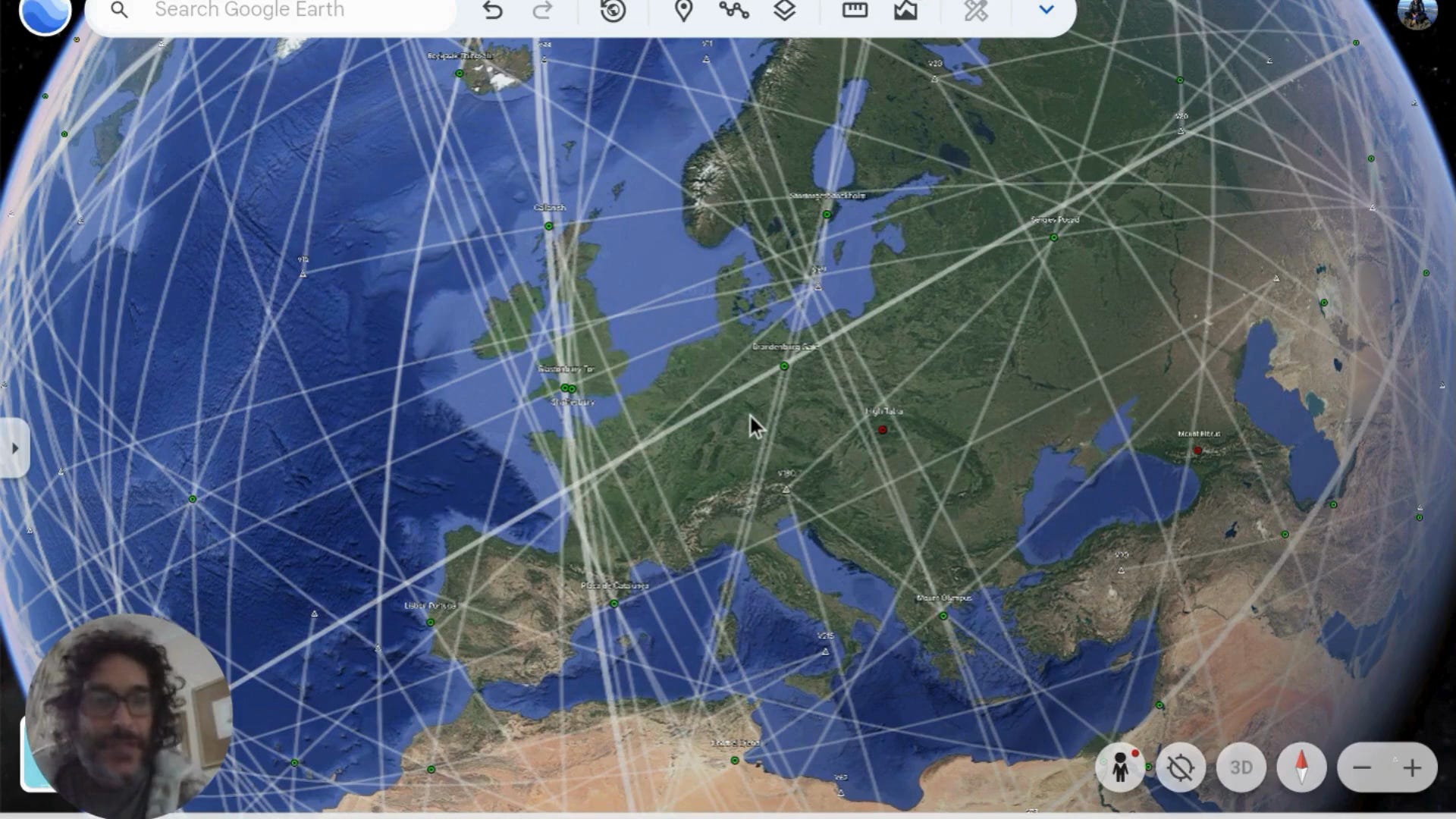 The E8 Earth Grid: Eight-Dimensional Geometry and Planetary Sacred Sites | Layer 1: Full Network (367 edges)What you're seeing here is the E8 lattice, a structure from eight-dimensional mathematics, projected onto the Earth's surface at its statistically optimal orientation. Out of 6,720 possible edges, 367 pass within 11 kilometres of at least one sacred or energetically significant site. That's not cherry-picked; the tolerance of 0.10 degrees, or about 11 kilometres, is the threshold at which our alignment test returned a p-value of 0.005. In practical terms, if you randomly rotated this grid a thousand times and optimised each one, only about 5 of those thousand trials would match what you see here. In total, 155 of our 160 sites, nearly 97 percent, fall within this distance of an E8 edge.Layer 2: Shared Edges (19 edges)Now I'm filtering down to only the edges that connect two or more sites simultaneously. These 19 edges are the most compelling features; They're the ley lines, if you will. Notice the patterns: three separate edges link Uluru and Kata Tjuta in central Australia. The Easter Island cluster, Easter Island, Rano Aroi, and Rano Koi, shares edges from a single E8 vertex. Glastonbury Tor and Callanish in the British Isles sit on the same edge. The Great Pyramid of Giza and the Mount of Olives in Jerusalem also share an edge, with the Giza endpoint just 9 kilometres away. These aren't coincidences we cherry-picked; they emerged from a single mathematical optimisation across all 160 sites at once.Layer 3: The 5 OutliersFor full transparency: 5 of the 160 sites fall outside our 11-kilometre threshold when compared against all 6,720 edges of the E8 lattice. They are High Tatra in Slovakia at 11.7 kilometres, Niagara Falls at 11.7 kilometres, Mount Elbrus in the Caucasus at 12.2 kilometres, Prydz Bay in Antarctica at 13.3 kilometres, and Terreiro de Jesus in Brazil, the furthest, at 15.1 kilometres from its nearest E8 edge. To put that in perspective, that's roughly the distance of a short drive. These 5 outliers are scattered across different continents with no shared pattern, which is exactly what you'd expect from a genuine geometric fit with a small number of random misses, rather than a systematic failure. Get full access to The Quantum Blueprint at salaheddin.substack.com/subscribe | 21m 22s | ||||||
| 9/13/25 | 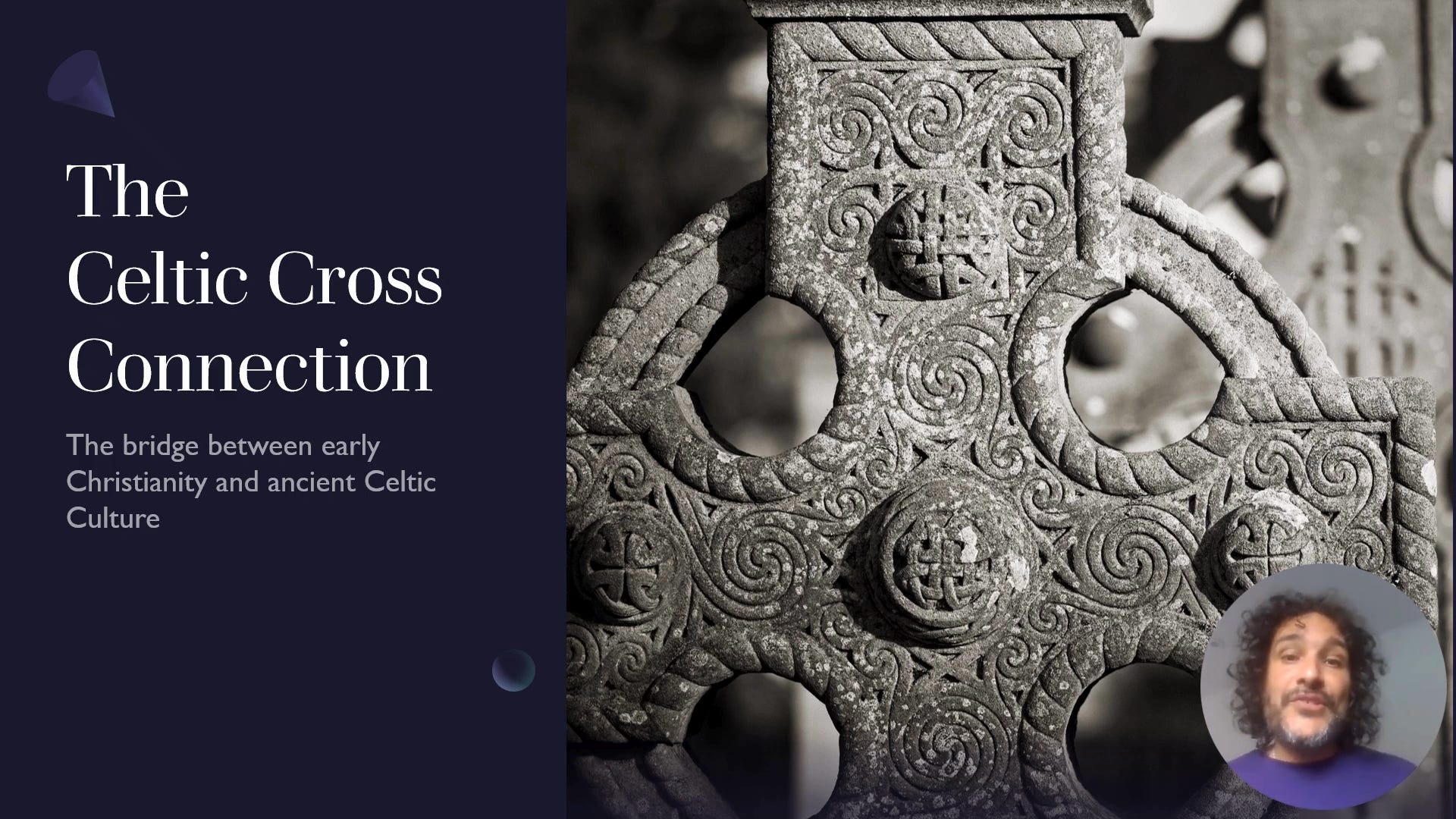 Rosslyn Chapel and the Celtic Cross: The Pattern Remembers You | We now cross a threshold — from sacred architecture to sacred symbol, moving from Glastonbury into the broader mystery of the Celtic Cross.This iconic form exceeds being merely a religious emblem. Its circle and cross, spirals, and proportions all speak the language of sacred geometry. The Celtic Cross is not only a symbol of faith but also a map of the ether, a diagram illustrating how light, form, and earth energies intersect. Carved in stone, it preserves an ancient wisdom that remains alive.Celtic Cross-Slabs: The Geometry of EtherOn the ninth-century Dunblane cross-slab, we find four corner circles, like elemental conductors, balancing forces across the design. Serpents carved into the cross lines reveal more than decoration; they embody a memory of earth energy currents. Spirals at the arms whisper of ether.This suggests a profound Celtic and Pictish understanding of energy flow — what we might now refer to as elemental vortices. Conversely, on the reverse of the slab, a five-circle pattern echoes the zodiac arrangement seen in St. Mary’s Chapel at Glastonbury. There were no coincidences of artistry but a display of continuity of esoteric knowledge across centuries and cultures.Echoes of the Heavens: The Rosemarkie StoneThe Rosemarkie Stone bears the same signature. Its reverse features small circles at the corners of a square, serving as placeholders for zodiac signs. This mirrors the sacred celestial geometry we encountered at Glastonbury.When aligned with the Rose Pattern and the Lamb of God at St. Mary’s, this Celtic slab becomes more than a relic; it acts as a resonant bridge linking Christian symbolism with a precise geometric code — one that unites heaven and earth.The Light Circle and the Place of IlluminationA larger circle on the stone reveals itself as the Light Circle — a scaled-down version of the Wattle Church Circle, reduced by one over the square root of two. This scaling produces 18.67 feet — invoking the harmonic of light’s speed and, in Hebrew gematria, Makom, meaning “Place,” the Place of Divine Presence.This is the Place of Illumination — where light converges with geometry, and divine presence touches the material world.The Sacred Geometry of the Celtic CrossThe Celtic Cross demonstrates precise ratios of √2 — each circle and layer building into harmony. This isn’t mere guesswork; it’s deliberate design. From these proportions emerges the Solar Wheel — two concentric circles, one holding the octagon, the other the four smaller circles. Everything is balanced, everything is in its place.The Rose Pattern and the Early ChurchThis geometry extends into early Christian tradition itself. The Rose Pattern shows how the Celtic Cross’s geometry fits seamlessly into the Wattle Church Circle and its square foundation.What we see is not a clash between pagan and Christian worlds but a synthesis — older wisdom woven into Christian mystical architecture.The Rosslyn ConnectionAnd so, we arrive at the final gateway: Rosslyn Chapel — a living vault of sacred geometry where Glastonbury, the New Jerusalem, and the Grail converge. Rosslyn is not just a building; it is a resonant temple, encoding the same divine pattern traced since Genesis.The chapel shares its geometry with St. Mary’s at Glastonbury — both are anchored in the Sumerian cubit, which is 1.65 feet. Rosslyn’s interior divides into 28 cells of 9.9 feet, mirroring the 28 Hebrew letters of Genesis 1:1. Number, proportion, and scripture intertwine in stone.Rosslyn also contains Solomon’s Temple within its form. Its dimensions, scaled precisely, reveal deliberate codes embedded in its elevation. Modern scans confirm what ancient builders knew: it was a temple constructed to a cosmic ratio.Hanging from the chapel’s ceiling is the pendant keystone — aligning with the Wattle Church Circle. Heaven and earth join; the Rose Pattern at the center intersects with Solomon’s Temple plan, the Sinclair shield, and the New Jerusalem diagram.At Rosslyn’s core lies Triangle 73, the triangular number of Genesis, encoding the gematria of “Lord Jesus Christ.” The Lamb is placed at the centre, elevated by 9.9 feet, with its apex pointing east — the rising sun, symbolising resurrection light. Its centre aligns with the 13th star number, long associated with transformation. The central point, 1201, encodes Adam and the Last Adam: Immanuel, God with us.Here, geometry becomes theology. Architecture becomes prophecy. Humanity is revealed as part of the divine design.✨ To accompany this article, you can also watch the recorded talk, which takes you visually through the Celtic Cross, Rosslyn Chapel, and the hidden geometry of the Rose Pattern — showing how ancient symbols, sacred architecture, and gematria converge into a living revelation of the New Jerusalem.Conclusion: The Pattern Remembers YouWe have spiralled through alphabets, temples, numbers, and stars. But ultimately, this story isn’t just about geometry; it’s about remembrance.The patterns seen in Genesis, Glastonbury, and Rosslyn are not mere echoes but invitations to remember the sacred in space, in time, and within oneself.Because the actual temple isn’t only made of stone, it is made of soul. Each of us carries the resonance, the divine proportion, within.Perhaps prophecy isn’t about predicting the future but awakening to the design already written in us.From Aleph to Light, from Stonehenge to Rosslyn, from Adam to Immanuel… the code is not lost.The pattern remembers you.So, the question is not “What is the blueprint?” but “How will you walk it?”First part of the Glastonbury Talk:Second part of the Glastonbury Talk:Third part of the Glastonbury Talk:The Quantum Blueprint is a reader-supported publication. To receive new posts and support my work, consider becoming a free or paid subscriber. Get full access to The Quantum Blueprint at salaheddin.substack.com/subscribe | 16m 16s | ||||||
| 9/4/25 | 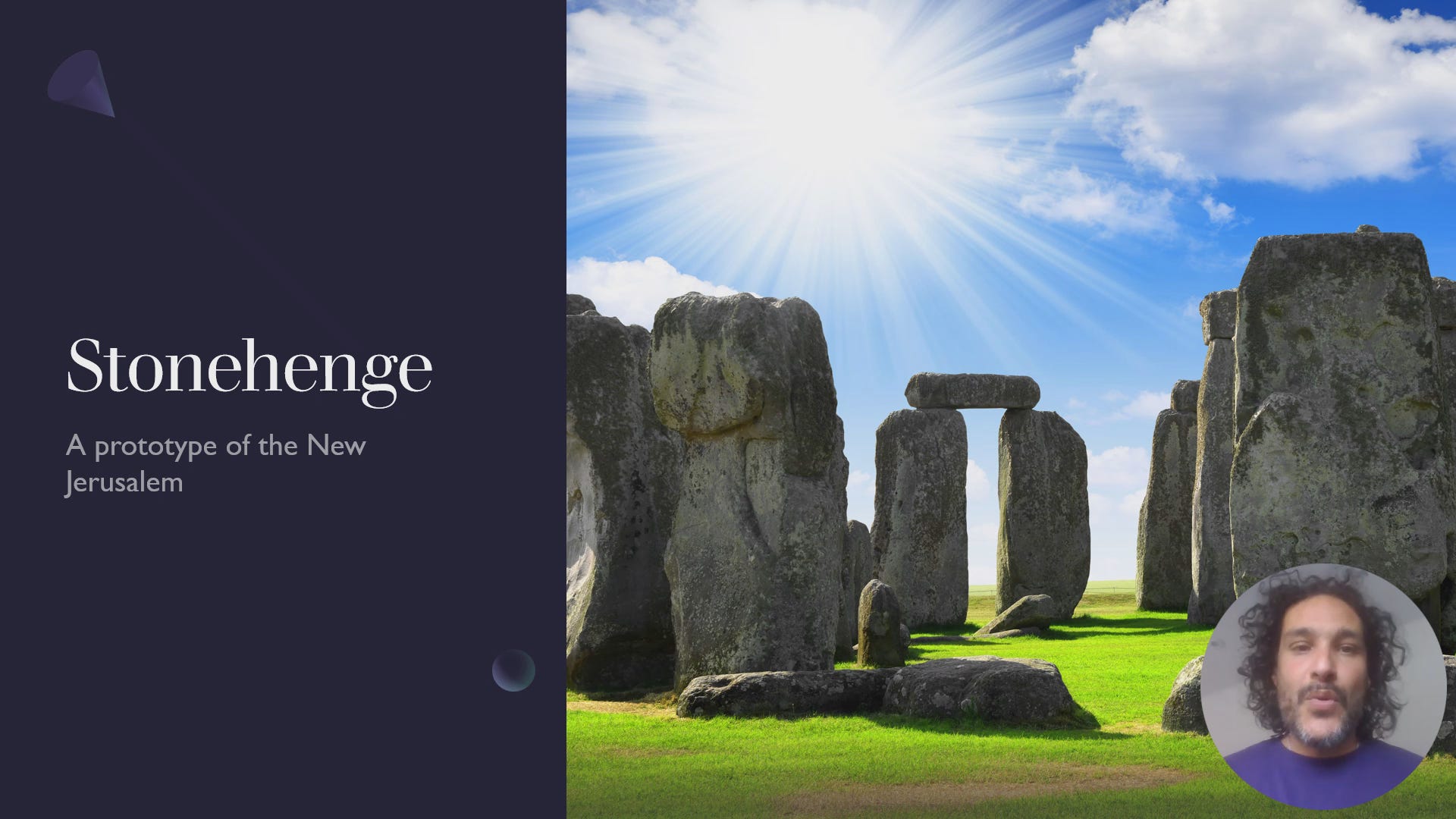 The Geometry of Prophecy | Stonehenge is more than a megalithic monument. It is a prototype; a harmonic echo of the New Jerusalem diagram carved into the Earth itself. What looks like a ring of stones is, in truth, a cosmic blueprint set into the land, a memory of heaven inscribed in stone.Stonehenge and Glastonbury — aligned by the blueprint of heavenStonehenge and St. Mary’s Chapel, though separated by millennia, are aligned by a standard design. Both are grounded in the sacred proportions of the New Jerusalem. This is not mere imitation, but a transmission of the same celestial code across time.A primary ley line links the two: passing directly through the center of the Stone Circle and through the heart of the Wattle Church at Glastonbury Abbey. Such precision cannot be dismissed as a coincidence. It suggests a deliberate, energetic alignment — a line of memory binding place, time, and purpose.Reconstitution of the Lost PatternWe are witnessing the reemergence of a long-lost design: a sacred template that once wove Earth and Sky together. Echoes of this pattern can be found in unexpected places. The Lady Chapel floor at Wells Cathedral, for instance, sparked a memory of this greater geometry.Some traditions even hold that St. Mary’s Chapel at Glastonbury once bore a zodiac floor, laid directly over the circle of the Wattle Church. If true, the earliest Christian altar in Britain stood at the very center of a cosmic diagram, marrying the stars of heaven to the soil beneath our feet.At Wells, the octagonal layout with its central square was surrounded by zodiac symbols. Its floor contained 144 tiles, which, when grouped, reveal an 8×8 grid of 64 squares. The ratio between that square and the Wattle Church circle is 6.6; a number that recurs in sacred proportion. Geometry was connecting holy places across centuries.Temple of Time — Geometry of the 5,184-Year PrecessionWithin these structures, circle and square come together in profound ways. A four-foot circle inscribed within the Wattle Circle reflects the zodiac’s celestial dance. Here appears the number 5,184; seventy-two squared, which resonates through sacred geometry, the slope of the Great Pyramid, and the great precessional cycle of the heavens.This is cosmic knowledge, anchored in form.The Fifth Element in Stone and NumberThe geometry also reveals the hidden presence of the pentagon, the rose, and the number five; the ether, the fifth element. Drawn upon the sacred measurements of the Wattle Church, a pentagonal rose appears, its circles echoing the building’s very dimensions.At the heart lies the rose pattern and the dodecahedron; symbols of divine proportion unfolding into matter. This is nothing less than the blueprint of life, encoded in number and stone.The Prophecy of Melkin — Locating Joseph’s GraveAncient tradition holds that Joseph of Arimathea was buried near the southern angle of the oratory. The medieval prophecy of Melkin speaks in geometric riddles: a forked line, a spring, a southern corner. These are not vague images, but precise references to ley crossings and hidden coordinates.When sacred numbers are applied, such as 5 for the pentagon, 8 for the octagon, and 13 for Joseph and his companions, a map begins to emerge. Geometry becomes the key to prophecy.The Golden Spiral to Joseph’s GraveA golden rectangle with a long side of 132 feet (five times the diameter of the Wattle Circle, which is 26.4 feet) generates a spiral of 316.8 feet; the exact gematria value of Lord Jesus Christ in Greek.Where does this spiral begin? At a singularity, defined by the crossing of golden diagonals and traced by six arcs, the number of creation. And that singularity aligns with the southern angle of St. Mary’s Chapel: precisely the place described in Melkin’s prophecy.This is Genesis code, gematria, and geometry converging upon a single point: the unveiling of the New Jerusalem.Solstice Alignments, Hebrew Letters, and the Hidden GraveOne last clue completes the pattern. From the Wattle Circle’s center, the angle to the proposed grave is 74°, a number heavy with meaning. Seventy-four is the ordinal value of “Jesus.” It is the gematria of Yasad (“Founded”). It marks the 86th digit of Pi, the value of Elohim.Here again, Genesis, Jesus, and the New Jerusalem converge in stone and number.It may be that after the fire of 1184, when the chapel was rebuilt, the altar was shifted eastward in accordance with church custom. In that act, the focus may have been moved away from the original and more potent center; the true heart of the oratory. That center lies closer to the southern corner of the Lady Chapel, not far from St. Joseph’s Well.If one were to follow the whispers of the land, or the spirits that still linger, this is where the search would begin.✨ To accompany this article, watch the recorded talk, which visually guides you through Stonehenge, Glastonbury, and the prophecy of Melkin, showing how number, geometry, and tradition converge into a living blueprint of the New Jerusalem.First part of the Glastonbury Talk:Second part of the Glastonbury Talk:The Quantum Blueprint is a reader-supported publication. To receive new posts and support my work, consider becoming a free or paid subscriber. Get full access to The Quantum Blueprint at salaheddin.substack.com/subscribe | 12m 16s | ||||||
| 8/29/25 |  The New Jerusalem Blueprint at Glastonbury | There is a geometry that runs like a hidden thread through scripture, sacred architecture, and the land itself. Known as the New Jerusalem Diagram, it is more than a symbol; it is a blueprint of creation. Its design appears in many sacred sites, such as the Great Pyramid, Stonehenge, the Lady Chapel at Glastonbury Abbey, Rosslyn Chapel and many more.Cosmic Geometry in StoneThe diagram is founded on cosmic proportions: the golden mean, π, and the 7:11 ratio. Its circle, when scaled to Earth, measures 31,680 miles; the gematria value of Lord Jesus Christ (3168).The Great Pyramid reflects the same plan: its base aligned to Earth’s diameter, its height equal to the distance from Earth’s center to the Moon. Architecture and astronomy converge in harmony.Genesis as a BlueprintEven the opening words of Genesis conceal this pattern. Numbers such as 6, 22, and 28 encode the order of creation: six, the first perfect number; twenty-two, the letters of the Hebrew alphabet; twenty-eight, the letters in the verse.These values are not arbitrary. Twenty-two divided by seven approximates pi, while twelve circles of six reveal the number seventy-two — the years it takes for the heavens to move by one degree of precession. Scripture, number, and geometry together form a blueprint of ether, the breath of creation itself.The Old Church of GlastonburyThis cosmic pattern comes to earth most clearly in Glastonbury. The earliest Christian sanctuary here, the Vetusta Ecclesia or Old Church, began as a simple wattle oratory around 37 A.D. By the 7th century, it had been encased in lead, its sanctity so revered that William of Malmesbury called it “the most holy, famous, and revered sanctuary in England.”Tradition links the church to Joseph of Arimathea, and a lost medieval plaque recorded both his coming and its dimensions: 60 by 26 feet. The architect Frederick Bligh Bond believed its plan reflected the zodiac, while John Michell later proposed an octagonal scheme, integrating the Old Church and Lady Chapel in sacred proportion.The Lady Chapel and the New JerusalemThe Lady Chapel embodies the same cosmic code. Its dimensions, 39.6 by 68.6 feet, form a one-to-root-three rectangle. Its perimeter measures 316.8 feet, echoing the name of Christ once again. Within this frame lies the Vesica Piscis, the womb of creation, and Hebrew letter codes that sum to 1236, the Greek gematria of “God with us” (Μεθ' ἡμῶν Θεός).Beneath it rests the Wattle Church of Joseph, built on a 39.6-foot square; exactly one hundredth of Earth’s radius. Its circle reflects the great precessional cycle of the heavens. This was no mere hut: it was a microcosm of the cosmos, a meeting place of heaven and earth.The Sacred CubitEven its numbers resolve into unity through the cubit, which is approximately 1.65 feet. Every measure of the chapel becomes whole: 8, 16, 24 cubits. Its perimeter, 192 cubits, encodes the name of Christ again.The exact number appears in Solomon’s Temple, showing that this sacred measure united Hebrew and Christian traditions in a single architectural code.A Living BlueprintAcross centuries and civilizations, the exact geometry recurs: the New Jerusalem Diagram, a design where scripture, number, and proportion converge. In Glastonbury, this blueprint was laid in wattle and wood, stone and lead, and was preserved through time as a living temple of cosmic harmony.The New Jerusalem is not only a vision of a heavenly city. It is a pattern inscribed in the world itself: a geometry of heaven and earth, number and spirit, hidden in plain sight and waiting to be remembered.✨ In Glastonbury’s stones, the Word becomes form. The geometry of heaven is laid upon the earth. And the memory of New Jerusalem stirs once more.To see these patterns, proportions, and sacred connections come alive, watch the accompanying video. It visually guides you through the New Jerusalem Diagram, St. Mary’s Chapel, and the hidden geometries that weave scripture, number, and sacred space into one living blueprint.First part of the Glastonbury Talk:If this content resonates with you, a paid subscription enables you to support this ongoing journey while staying connected to new insights as they emerge.Visit my bookstore to explore my books, now available in both paperback and eBook formats. Whether you’re discovering them for the first time or returning to their pages, you can enjoy the journey anytime, anywhere—on your favourite device or in print.The Quantum Blueprint is a reader-supported publication. To receive new posts and support my work, consider becoming a free or paid subscriber. Get full access to The Quantum Blueprint at salaheddin.substack.com/subscribe | 24m 10s | ||||||
| 8/25/25 | 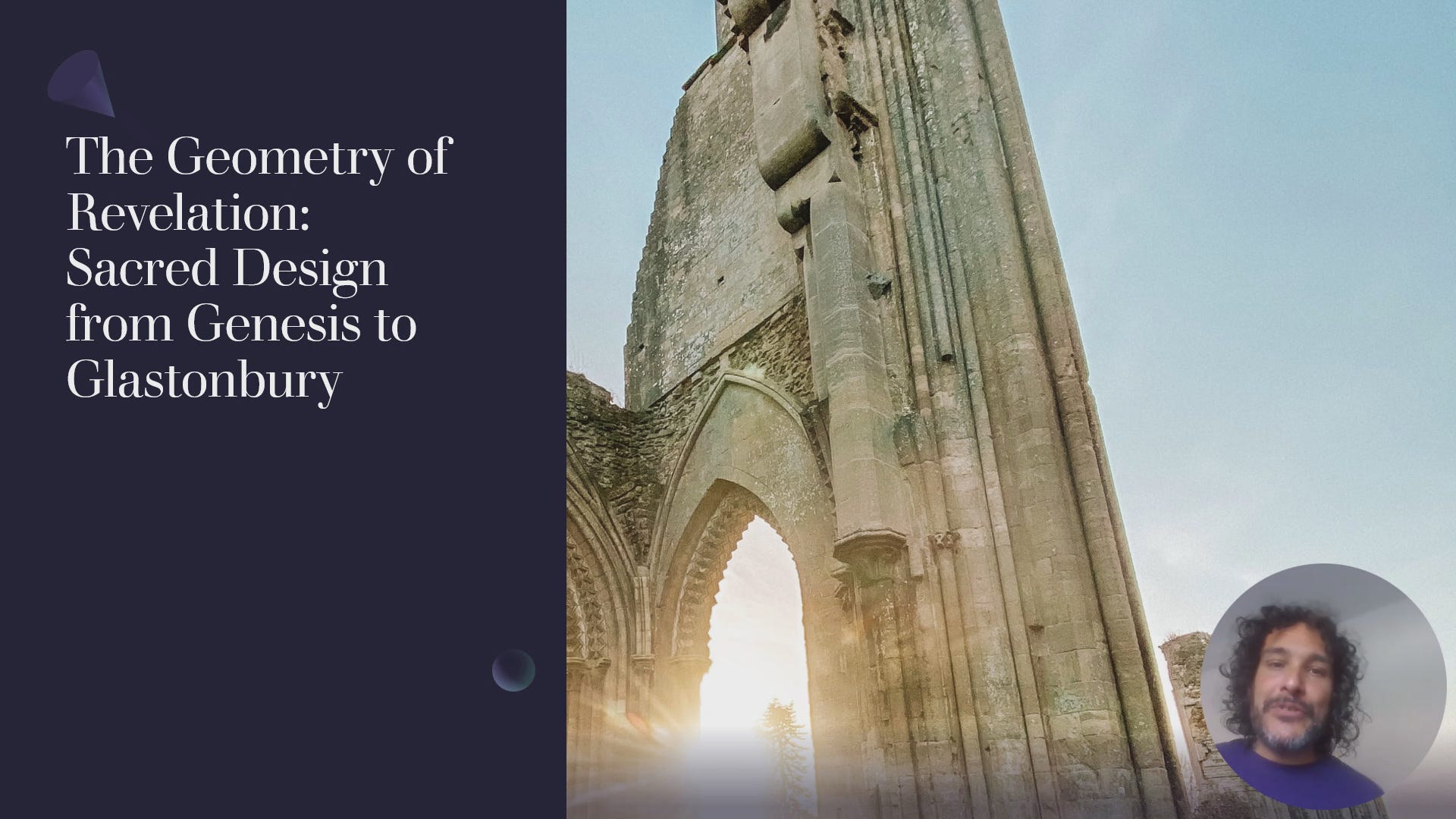 The Genesis Code: Is This the Universe's Source Code? | I’m so excited to share something special with you all today. Recently, I gave a live talk on this material, but while we wait for the official recording from the organisers, I wanted to give you, my subscribers, a first look.So, I’ve put together a video presentation for you from my home studio, walking through the first part of this journey. It’s a condensed, intimate tour of the concepts, straight from my desk to yours.We think we know the story of Genesis. A seven-day creation. A garden. A serpent.But what if the opening lines of the Bible are not just a story, but a cosmic architectural plan? A precise, mathematical, and vibrational blueprint for reality itself, encoded in the very fabric of its first words?This is the journey we began in the first part of my talk, "The Geometry of Revelation: Sacred Design from Genesis to Glastonbury." It’s a spiral path through ancient languages, sacred geometry, and hidden patterns that link the divine to the physical—from the letters of Hebrew to the structure of light.Forget straight lines. We’re diving into the spiral.It Begins With a LetterOur map starts not with a word, but with a single character: Aleph (א).In Hebrew, letters are not mere symbols. They are living codes, cosmic architecture with numerical value, sound, and shape. Aleph, the first letter, means "unity." But its construction reveals a deeper secret: it’s built from two Yods (י) and a Vav (ו). Their combined numerical value? 26.The exact value of the divine name, Yahweh (יהוה). This is a multidimensional language where every stroke carries the vibration of creation.The Fire at the Heart of CreationNext, we meet Shin (ש), the letter of fire and spirit, with a value of 300. Its inner structure of three Vavs sums to 18; the value of Chayim, "Life."Together, Aleph and Shin form the word Esh (אש): Fire.This is the primal fire that ignites the cosmos, as described in Genesis. And it’s hidden at the very heart of the Bible’s first word, Bereisheit ("In the beginning"). The word Eish (fire) is literally embedded within it. This is not poetry. It’s engineering.The Number 13: The Universe’s Key SignatureAs we peel back the layers, a number appears again and again, a constant hum beneath the surface: 13.* Aleph embodies the balance of love (Ahava = 13) and unity (Echad = 13).* It appears in nature’s most fundamental pattern, the Fibonacci sequence (1, 1, 2, 3, 5, 8, 13…).* This number becomes a guiding star, pointing us toward a deeper architecture.Genesis 1:1: A Temple of Numbers and LightThe first verse of Genesis is a perfect mathematical structure. It contains 7 words and 28 letters; a triangular number. Its total gematria value is 2701.This number forms a vast triangle, the Genesis 1:1 Triangle, which itself divides into a perfect geometric duality:* An outer shell of 666 (the physical world).* An inner core of 703 (divine wisdom).At the very center of this structure, the mathematics reveals the divine couple, Adam (45) and the presence of Yahweh (26), encoded in the prime numbers 1201 and 197. This isn't a metaphor; it's a temple built of numbers.The Master Key: 37The bridge between the physical and the spiritual is the number 37. It is the constant that unlocks the geometry:* 73 x 37 = 2701 (the value of Genesis 1:1).* Both 37 and 73 are tied to Chokmah—Wisdom.This number is a gateway.The Jesus Code: Woven Into the Fabric of CreationAnd through this gateway, we find something astonishing woven directly into the mathematical heart of Genesis.From the central point of the Genesis triangle, a perfect symmetry unfolds. Mathematics reveals the number 888, the precise gematria value of the Greek name for Jesus (Iesous).Even more profoundly, the structure yields 3368; the value of Kyrios Iesous Christos: Lord Jesus Christ.This is not a later addition or an interpretation. It is encoded in the foundational architecture of Scripture, a harmonic resonance of the Name that was present from the very beginning, spoken into the fabric of creation itself.We concluded this section of the talk by connecting this code to the Fine-Structure Constant (~1/137), a fundamental physical constant that governs the interaction between light and matter. The number 137 is also the gematria of Kabbalah (to receive).The message is staggering: Physics and faith converge.Light and Logos are one.The blueprint is real. And this is only the beginning.Watch the video presentation to see these codes and geometries come to life in stunning visual detail. The patterns are everywhere; once you know how to look. Get full access to The Quantum Blueprint at salaheddin.substack.com/subscribe | 21m 02s | ||||||
| 7/25/25 |  Live with Salah-Eddin Gherbi | Get full access to The Quantum Blueprint at salaheddin.substack.com/subscribe | 8m 25s | ||||||
| 7/19/25 | 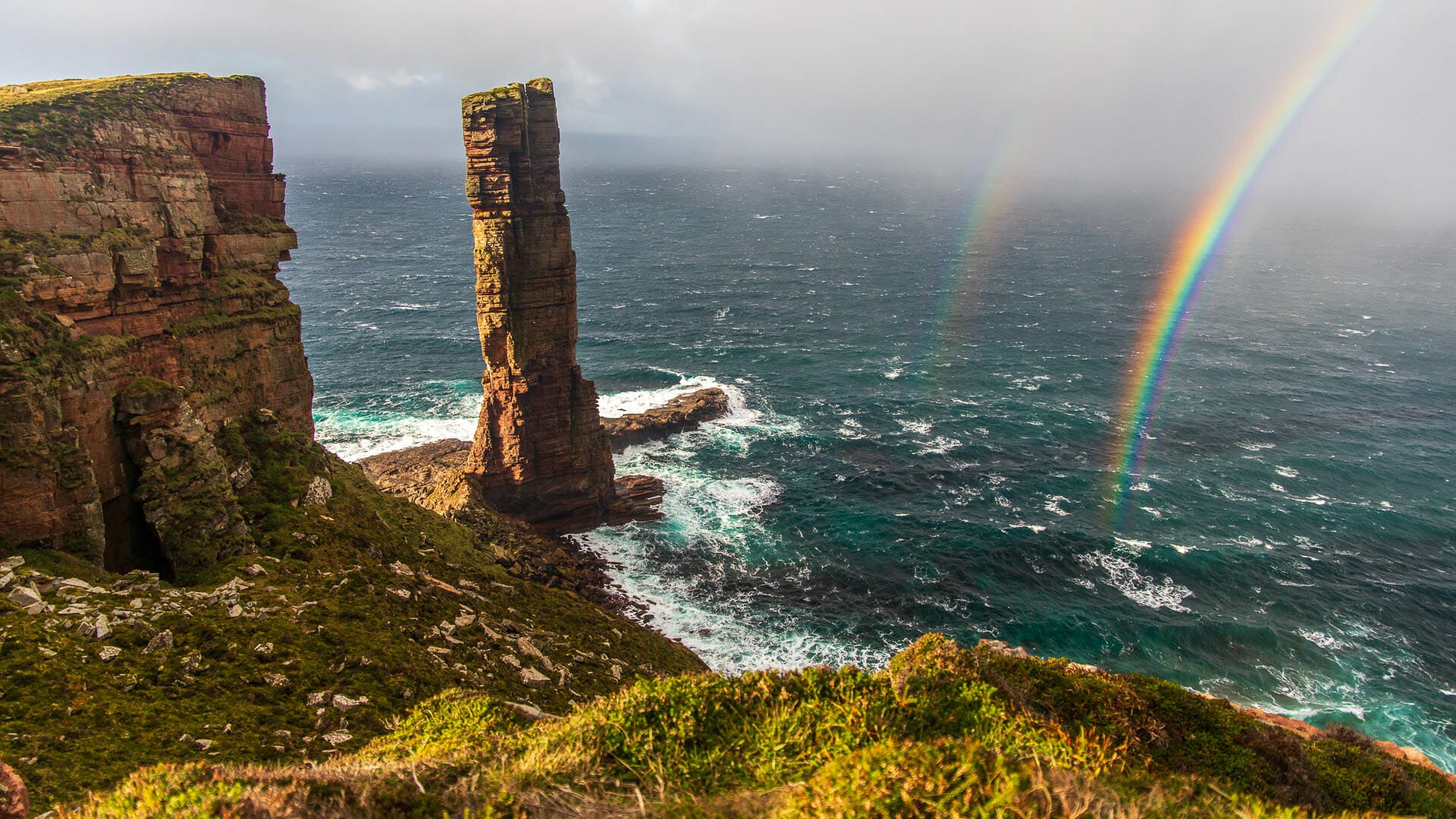 The Old Man of Hoy: Neolithic Monument, Celestial Alignment & Ancient Mysteries | Was a monument to Orion carved into the cliffs of Orkney 6,000 years ago?In Part 1 “The Sword of Orion and the Stones of Orkney: A Celestial Code in the Earth”, we proposed that the central monuments of Neolithic Orkney —the Stones of Stenness, the Ring of Brodgar, and the Bookan Chambered Cairn — may have been laid out in a deliberate pattern that reflects the celestial Belt of Orion. Now, we turn to another towering mystery off the western coast of Hoy: the sea stack known as the Old Man of Hoy.Today, this striking pillar of red sandstone stands over 137 meters tall and is often assumed to be a recent geological feature. But could it conceal a deeper human story?Using Stellarium, a free astronomical simulation tool, we recreated the sky over Orkney on the night of the midwinter solstice sunset in 3935 BC, a date likely significant to the flourishing of Neolithic culture in the region. From the location of the Ring of Brodgar, we drew a line pointing southwest at an azimuth of 222°, a direction that passes through Hoy and remarkably terminates at the base of the Old Man of Hoy.Projecting this same azimuth into the ancient sky reveals that it pointed directly at Alnilam, the central and brightest star in Orion’s Belt. Alnilam, a blue-white supergiant located 1,300 light-years away, would have been resplendent in the southern winter sky. At the moment, it was descending and setting at azimuth 222° on that solstice night, suggesting intentionality: the Ring of Brodgar may have been aligned not only to the terrestrial landscape but also to this luminous celestial feature.Could the Old Man of Hoy have been shaped, at least in part, by human hands? Its striking verticality, isolated presence, and precise placement on a celestial alignment line raise the possibility. We must not underestimate the architectural ambition of the Neolithic world. If engineers could design Maeshowe to catch the solstice sun within a narrow corridor of stone, why could they not similarly align Brodgar and Hoy, this time pointing not toward the Sun, but toward the stars?Did the Old Man of Hoy emerge from the wild basalt cliffs, later touched gently by human hands to smooth and sanctify it? Or was it born in deliberate grandeur—a sculpture carved to last forever in stone? More than rock, the Old Man towers alone and silent above the restless Monster Sea, its weathered, human-like face gazing down like an ancient sentinel from a forgotten world. Its shape feels almost uncanny—less a product of chance and more a story waiting patiently to be told. Is it the memory of those original men who marked the sky upon the earth? Maybe the Old Man himself is both a gift of nature and a quiet commemoration—a carved tribute to a world now long vanished, standing sentinel at the edge of the world through the years.In ancient traditions, the sword rarely stands alone as a weapon; it symbolizes truth, revelation, and divine order, all themes that architects and cosmologists echo in the architecture and cosmology of Neolithic ceremonial sites. Orion’s sword, descending from the Belt, cuts through the heavens. On Earth, its alignment stretches across Orkney, from Brodgar to Hoy.Perhaps the builders of these sites viewed Orion not just as a constellation, but as a celestial code — a figure descending into time, inscribed into the land itself.All of my work is freely shared from the heart, guided by a deep commitment to truth, insight, and inspiration. If you’ve found value in what I create and feel called to support this ongoing journey, consider becoming a paid subscriber. Your support helps sustain the time, energy, and dedication it takes to keep this work alive and thriving. Every contribution makes a difference. Thank you for walking this path with me.The Quantum Blueprint is a reader-supported publication. To receive new posts and support my work, consider becoming a free or paid subscriber. Get full access to The Quantum Blueprint at salaheddin.substack.com/subscribe | 9m 04s | ||||||
| 4/11/25 | 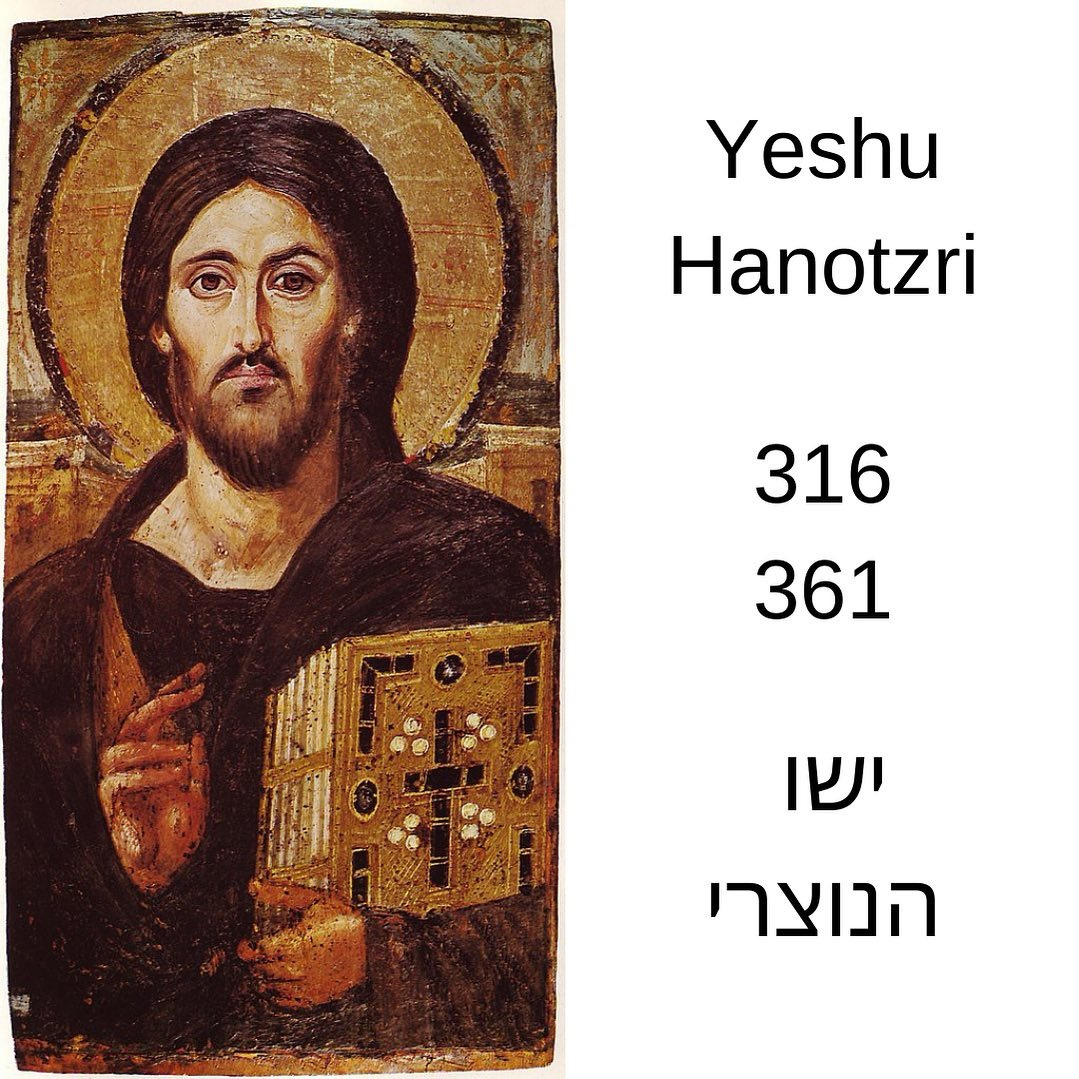 YESHU — The Divine Code of the Messiah | “In the beginning was the Word, and the Word was with God, and the Word was God.” – John 1:1In the hidden architecture of language and number lies a name — Yeshu (ישו) — holding the essence of divinity embodied within it. More than a transliteration, more than a name, it is a portal of sacred geometry, gematria, and consciousness.1. The Name Yeshu: A Trinity Within Three LettersThe Hebrew name ישו (Yeshu), often seen as a shortened form of Yehoshua or Yeshua, holds a triadic power — three letters, three aspects of the Divine:* י (Yod) – A point of infinite potential. The Father, the beginning of all creation.* ש (Shin) – Fire, transformation, and spirit. The Holy Spirit, the breath of divine movement.* ו (Vav) – A hook, a bridge. The Son, the embodiment of heaven on Earth — the connector.These three letters mirror the mystical concept of the Trinity: a unified divinity in three expressions, encoded not through dogma but through Hebrew letters themselves.2. Gematria: The Divine Mathematics of YeshuIn standard gematria (Hebrew alphanumeric coding):* י (Yod) = 10* ש (Shin) = 300* ו (Vav) = 6Total: 316But here's the mystery: subtract 2, the value of the Hebrew letter ב (Beth) — the first letter of the Torah, from Genesis 1:1 (Bereshit) — and you get:316 - 2 = 314 → The value of Pi (π)Pi: the transcendental ratio of the circle, the symbol of eternal unity.Beth (ב): the mouth, the beginning, the vessel of the Word.This reveals a subtle truth:Yeshu = The Voice of the Father + the Circle of EternityYeshu = 314 (Pi) + 2 (Beth) — a perfect synthesis of divine speech forming the eternal spiral.3. The Divine Human: שיאה = 316The Hebrew word שיאה, meaning “the man”, also equals 316 in gematria:* ש (Shin) = 300* י (Yod) = 10* א (Aleph) = 1* ה (Heh) = 5Total: 316The numerical symmetry suggests:The Man is Yeshu. Yeshu is the Divine Man.This isn’t just a metaphor — it’s a mathematical reflection. Yeshu embodies the archetypal Adam Kadmon, the divine blueprint of humanity.4. Yeshu Hanotzri: Jesus of NazarethThe full Hebrew phrase:ישו הנוצרי (Yeshu Hanotzri) — “Jesus of Nazareth”ישו (Yeshu) = 316הנוצרי (Hanotzri) = 361Total: 677Now comes the astonishing link…5. Greek Ordinal Prime Code: Ιησους ΧριστοςIn Greek, Jesus Christ is:Ιησους Χριστος (Iēsous Christos)By assigning ordinal prime values (matching each Greek letter to its ordinal position and corresponding prime number), we get:23, 17, 61, 47, 71, 61, 79, 59, 23, 61, 67, 47, 61Total = 677The exact same value as ישו הנוצרי (Yeshu Hanotzri).This is not a coincidence. This is divine mirror symmetry between Hebrew and Greek — between East and West, between ancient languages encoding the same Messiah, Word, and Logos.6. Beyond Language: The Geometry of Christ ConsciousnessThrough the number 677, the triadic structure of Yeshu, and the spiral of Pi, the human is revealed to be more than flesh—a bridge of divine essence. This bridge is what the letter Vav (ו) symbolizes, and it lies at the heart of the name.The ancient icon of Christ Pantocrator, one of the earliest known, often shows two facial expressions: stern and divine, the other tender and human. It is the visual confirmation of this dual nature: fully God, fully man — the synthesis expressed mathematically in the language of the heavens.This deep numeric harmony across languages and traditions whispers an eternal truth:Yeshu is not just a name. It is the Word. The Voice. The Circle. The Man.To study this is to study the divine architecture encoded in language, number, and form — and to glimpse, even briefly, the perfect geometry of Christ Consciousness within us all.The Quantum Blueprint is a reader-supported publication. To receive new posts and support my work, consider becoming a free or paid subscriber. Get full access to The Quantum Blueprint at salaheddin.substack.com/subscribe | 5m 35s | ||||||
Showing 25 of 30
Pitch Fit is a Pro feature
See how bookable this show is for guests, which brands already advertise, the per-episode ad value, and the best-fit guest and sponsor profile. The numbers are blurred on the free plan.
How readily this show books outside guests like you.
How proven this show is for host-read sponsorships.
For Guests
ProFor Advertisers
ProUpgrade to Pro to unlock guest cadence, sponsor categories, fit scores, and per-episode ad value for this show.