The Retirement and IRA Show
by Jim Saulnier, CFP® & Chris Stein, CFP®
Is this your podcast?On the show
From 39 epsHosts
Recent guests
Recent episodes
COBRA, Social Security, Pension Deferral, Annuities: Q&A #2642
Oct 17, 2026
1h 41m 35s
Stretch IRA Eligibility: EDU #2641
Oct 14, 2026
1h 13m 14s
Social Security, Milestone Ages, HSAs, Roth Withdrawals, Annuity Providers: Q&A #2641
Oct 10, 2026
1h 33m 05s
Single Life Pension Tradeoffs: EDU #2640
Oct 7, 2026
1h 15m 26s
HSA Catch-up PSA, Social Security, IRMAA, Roth Conversion, Annuity Timing: QA #2640
Oct 3, 2026
1h 31m 07s
Insights from recent episode analysis
Audience Interest
Podcast Focus
Publishing Consistency
Platform Reach
Insights are generated by CastFox AI using publicly available data, episode content, and proprietary models.
Most discussed topics
Brands & references
Total monthly reach
Blended from 1 signal.
Built from
By chart position
- 🇺🇸United States · InvestingHOME#5723K to 144K
- 🇭🇰HK · Investing#11929 to 182
- Per-Episode Audience
Est. listeners per new episode within ~30 days
23K to 144K🎙 Daily cadence·100 episodes·Last published 2d ago - Monthly Reach
Unique listeners across all episodes (30 days)
77K to 481K🇺🇸100% - Active Followers
Loyal subscribers who consistently listen
31K to 192K
Market Insights
Platform Distribution
Reach across major podcast platforms, updated hourly
Total Followers
—
Total Plays
—
Total Reviews
—
* Data sourced directly from platform APIs and aggregated hourly across all major podcast directories.
Social Links & Contact
Official channels & resources
Official Website
Login
RSS Feed
Login
| Date | Episode | Topics | Guests | Brands | Places | Keywords | Sponsor | Length | |
|---|---|---|---|---|---|---|---|---|---|
| 10/17/26 |  COBRA, Social Security, Pension Deferral, Annuities: Q&A #2642 | Jim and Chris are joined by Tom Stivers for a couple questions on COBRA coverage for a younger spouse and Social Security survivor benefits and the RIB-LIM rule. Jim and Chris continue on without “Grasshopper” for a listener PSA following up on the Chip and Dale/Chippendale banter from a previous episode and questions on pension deferral past RMD age, insurer service after inheriting a 403(b), single premium deferred annuities (SPDAs), and the timing of annuity purchases as financial understanding declines with age. (16:15) George follows up on a recent episode’s COBRA discussion, noting that a non-Medicare spouse is limited to 18 months of coverage when the qualifying event is retirement at 64.5. (26:45) A listener asks for an explanation of the Retirement Insurance Benefit Limit (RIB-LIM) and wonders whether, after both spouses claimed at 62, a surviving spouse would receive the higher earner’s monthly benefit or something more. (40:30) The guys receive a PSA following up on the Chip and Dale/Chippendale banter from a previous episode, explaining the history of the names and which came first. (44:45) A pension recipient wonders whether a pension office is correct that the deferred portion of a pension held in a 401(a) can stay deferred past age 73 while RMDs begin, as a way to remain in the 24% tax bracket. (57:45) Jim and Chris revisit an earlier question about a delayed 403(b) inheritance, as the follow-up asks why anyone would buy an annuity from an insurer that struggled to process a simple inheritance. (1:13:30) Georgette wants to know whether a five-year, 4.4% single premium deferred annuity (SPDA) purchased with funds from an IRA was a good move and what to consider when it matures. (1:26:15) A longtime DIYer asks whether waiting until a Minimum Dignity Floor shortage arrives to buy an annuity conflicts with the goal of the younger self protecting the older self. The post COBRA, Social Security, Pension Deferral, Annuities: Q&A #2642 appeared first on The Retirement and IRA Show. | 1h 41m 35s | ||||||
| 10/14/26 | 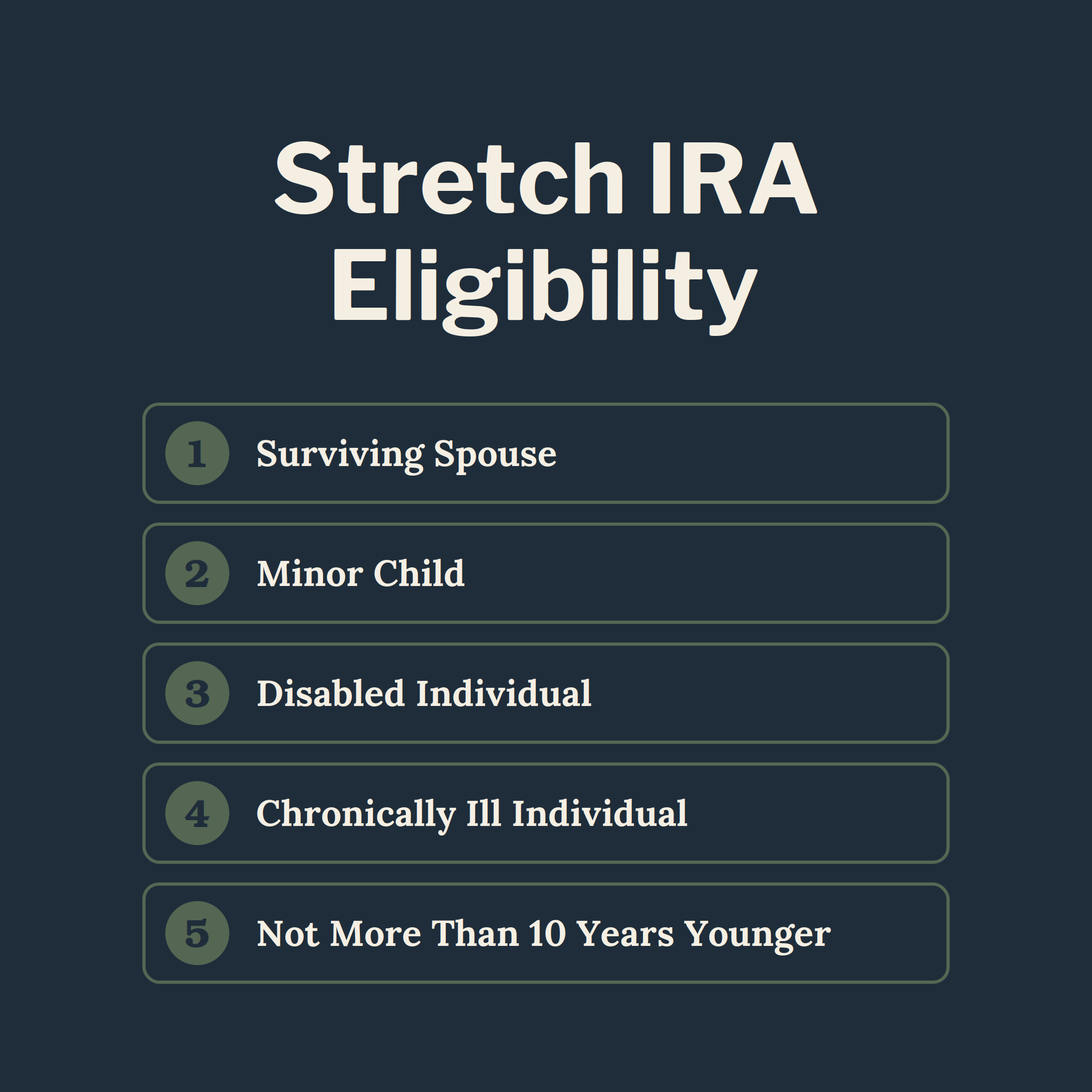 Stretch IRA Eligibility: EDU #2641 | If you would prefer to skip Jim and Chris chatting about fall weather in Colorado and Ohio, Jim’s upcoming trip to Nashville, and country music, you can skip to (11:30). Chris’s Summary Jim and I look at stretch IRA eligibility after the SECURE Act and who now qualifies as an eligible designated beneficiary. We start with why naming a beneficiary matters, then trace how the stretch was assembled from the Keogh Act, TEFRA, and IRS regulations before SECURE curtailed it. From there, we define the five categories still allowed to stretch, how the date of death determines eligibility, and how IRAs and employer plans treat disability and chronic illness certification differently. Jim’s “Pithy” Summary Chris and I take a deeper dive into eligible designated beneficiaries, something that seems benign but isn’t as straightforward as it sounds. What a lot of people don’t realize is that Congress never created the stretch IRA. It was stitched together like Frankenstein from two different acts and separate IRS regulations, and it got so ingrained that it took a specific act of Congress to greatly curtail it. Under the old rules, if a 1-year-old inherited an IRA, it could stay open for 80-plus years. But Congress wanted to get money out of IRAs sooner rather than later for the tax revenue so the rules changed. Think of the Black Knight from Monty Python, gravely injured but still doing its best to carry on. Congress wounded the stretch IRA, but they didn’t kill it. What survived is the eligible designated beneficiary, or eligible humans, and there are 5 categories still allowed to stretch. Some we go through wicked quick. Others send us down little rabbit holes. We dig into stretch IRA eligibility questions like does the IRS accept common-law marriage? Do stepchildren and foster children count as a minor child? And why can one day before an 18th birthday change how disability is defined? Then there’s the question of how a beneficiary proves they’re disabled or chronically ill. The IRS waived some of the certification requirements, but it didn’t treat IRAs and employer plans the same way. I don’t get why that is, but I share Ed Slott’s theory on it. The post Stretch IRA Eligibility: EDU #2641 appeared first on The Retirement and IRA Show. | 1h 13m 14s | ||||||
| 10/10/26 | 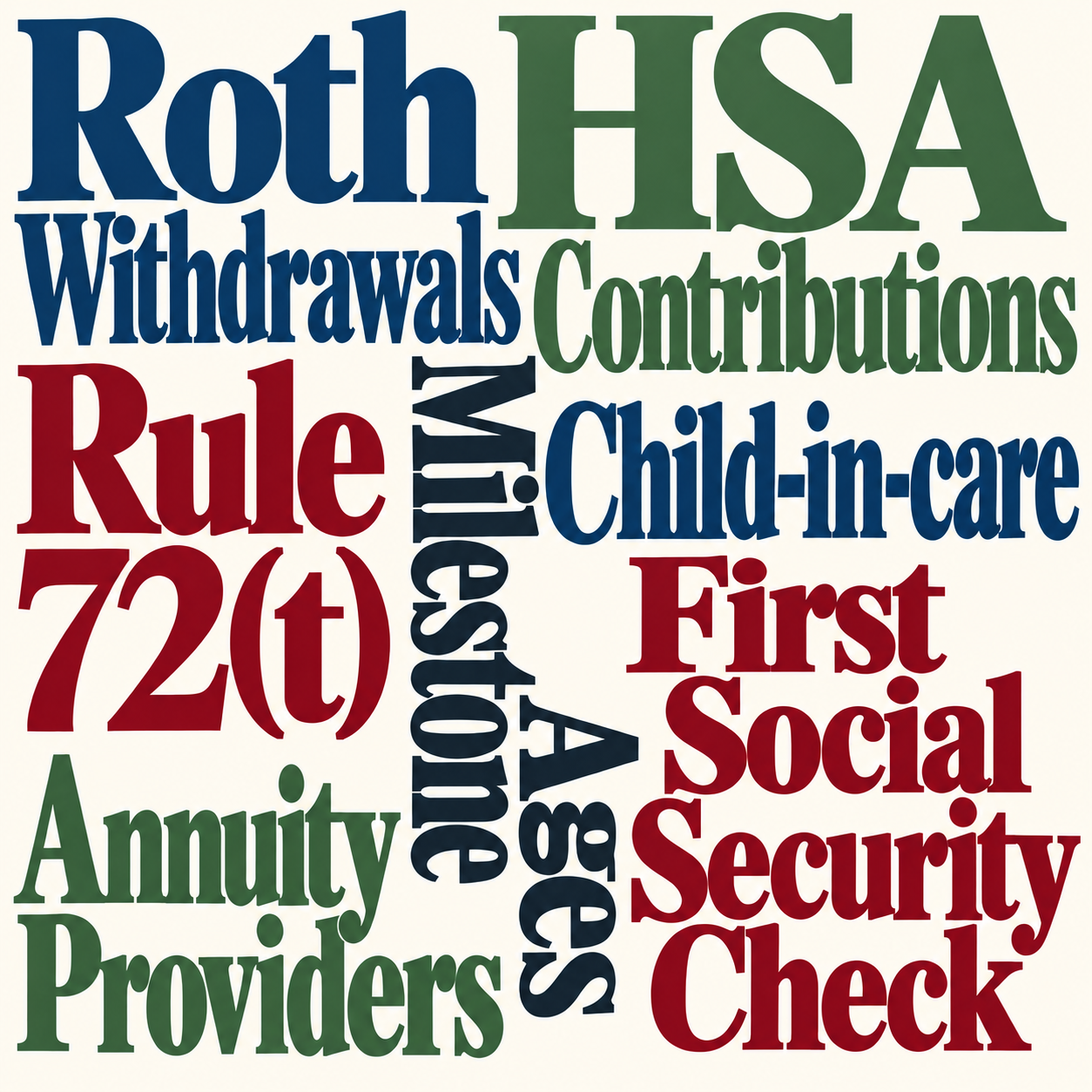 Social Security, Milestone Ages, HSAs, Roth Withdrawals, Annuity Providers: Q&A #2641 | Jim and Chris discuss listener emails on Social Security first check timing at age 70 and child-in-care spousal benefits, additional milestone ages and HSA contribution PSAs, Roth withdrawals under the Rule of 55, and finding annuity providers with good customer service. (11:30) A listener asks whether Social Security benefits started in the month of a 70th birthday should arrive the following month, or only after the first full month at age 70, as the Social Security Administration explained. (19:45) The guys field a question on whether a spouse can collect a child-in-care spousal benefit for caring for a stepson who became disabled at 21 and receives Supplemental Security Income. (27:30) Jim and Chris share a PSA that 120 is a milestone age worth noting, since that is when the life expectancy factor used for most RMDs stops decreasing each year. (34:30) Georgette notes that each spouse’s $1,000 HSA catch-up contribution must go into their own HSA and wonders whether Roth withdrawals of growth qualify under the Rule of 55 or must wait until 59½. (43:15) The guys share another PSA pointing out that Rule 72(t), which allows penalty-free IRA withdrawals before 59½, is another milestone worth adding to the recent Retirement Milestone Ages episode. (49:15) A fellow CFP® clarifies that Medicare enrollment, not age, ends HSA contribution eligibility, so someone working past 65 without Medicare can keep contributing, including the $1,000. catch-up. (58:15) Jim and Chris address whether any annuity providers offer solid customer service. The post Social Security, Milestone Ages, HSAs, Roth Withdrawals, Annuity Providers: Q&A #2641 appeared first on The Retirement and IRA Show. | 1h 33m 05s | ||||||
| 10/7/26 |  Single Life Pension Tradeoffs: EDU #2640 | Chris’s Summary: With Jim traveling, I’m joined by the newest member of the Jim Saulnier & Associates team, Tom Stivers, to review an email from a listener couple who both chose a single life pension, with term life insurance on the higher earner. Their situation raises concerns about Social Security claiming ages, their Minimum Dignity Floor catching up to income if their pensions lack a cost-of-living adjustment, health insurance before Medicare, Roth conversions, and a potential need for a long-term care plan. Jim’s “Pithy” Summary: While I’m traveling, Chris brings in Tom Stivers, a newer member of our team, to work through a longer listener email that doesn’t fit a Q&A show. George and Georgette both took their state education pensions without a survivor benefit. George has the bigger pension, so he bought a term life policy to age 78 to help replace his income if he dies first. Chris admits the hair went up on the back of his neck the moment he saw a single life pension, and it went up again at the word “term”. Tom zeroes in on that word too, because almost none of us know the date we’re going to die. But the rest of the email does change the picture. They believe they might be unicorns, and with $191,000 of secure income once George claims Social Security at 70, against $110,000 of spending, you can see why. Chris pictures it as a race: income starts way out ahead, but spending keeps slowly catching up, and their pensions likely have no automatic cost of living adjustment. Tom also spots a sneaky line about Georgette’s health insurance before Medicare. George thinks Roth conversions matter for taxes and IRMAA. Georgette isn’t worried and doesn’t want to pay the taxes now. And when Chris asks whether conversions should stop once Social Security starts, Tom answers with a question: what’s your 2-1-0 Tax Ordering Number? And then there’s what the email never mentions: a long-term care plan. Chris explains why their savings may not stretch as far as it sounds if one of them needs care, and why secure income that continues for the survivor can matter. He points out people can obsess over decisions that barely move the needle while missing the ones that do. The post Single Life Pension Tradeoffs: EDU #2640 appeared first on The Retirement and IRA Show. | 1h 15m 26s | ||||||
| 10/3/26 |  HSA Catch-up PSA, Social Security, IRMAA, Roth Conversion, Annuity Timing: QA #2640 | Jim and Chris discuss listener emails, beginning with a listener PSA on HSA catch-up contributions at age 55, then cover Social Security spousal benefits when claiming before full retirement age, paying IRMAA with HSA funds and the SSA-44 form for IRMAA appeals, whether a Roth conversion counts as a 60-day rollover, and annuity timing as interest rates fall. (6:45) A listener shares a PSA noting that HSA holders age 55 and older can contribute an extra $1,000 per year until they reach Medicare age, and a spouse can do the same in their own HSA. (22:00) The guys get a question on whether claiming Social Security at 65 still allows a spousal benefit of half their spouse’s higher benefit, or whether that requires waiting until full retirement age. (27:15) Georgette asks whether IRMAA surcharges can be paid with HSA funds, following a prior episode’s mention that Medicare Part B and D premiums qualify. (32:30) A listener seeking IRMAA relief after a spouse’s retirement payout wants to know which year belongs in section 2 of the SSA-44 form. (45:00) Jim and Chris are asked whether a Roth conversion is treated as a 60-day rollover subject to the once-per-365-days limit. (1:05:45) A listener who has attended several annuity sales presentations wonders why Jim doesn’t buy his planned annuity now and turn on the income later if payout rates are likely to keep dropping. The post HSA Catch-up PSA, Social Security, IRMAA, Roth Conversion, Annuity Timing: QA #2640 appeared first on The Retirement and IRA Show. | 1h 31m 07s | ||||||
| 9/30/26 | 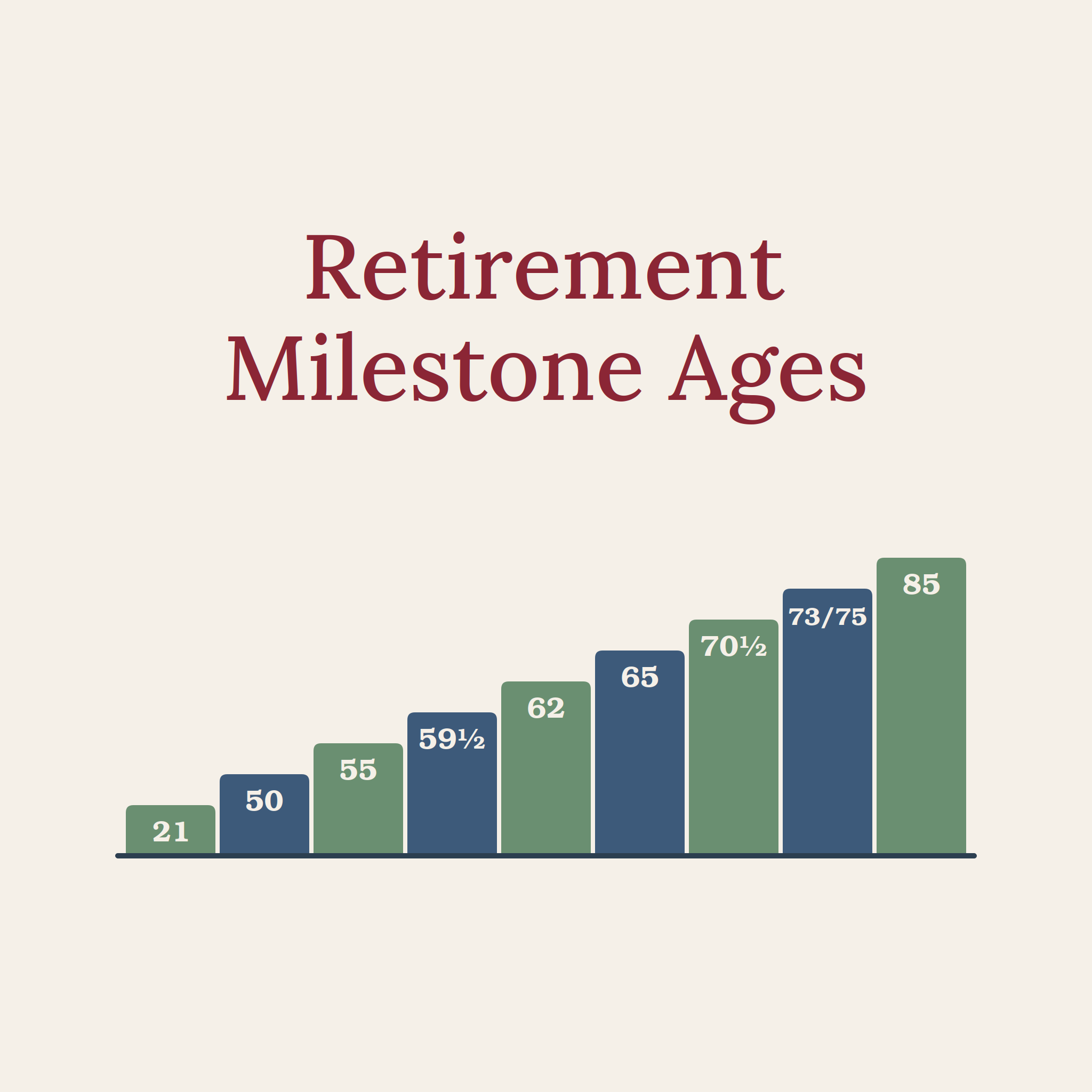 Retirement Milestone Ages: EDU #2639 | If you would prefer not to learn about Jim’s upcoming drive to Ohio and the family change of plans also sending him to Massachusetts, you can skip to (10:00). Chris’s Summary Jim and I walk through retirement milestone ages, from age 21, when a minor child beneficiary’s stretch gives way to the 10-year rule, through catch-up contributions, penalty-free withdrawal ages, Social Security survivor and retirement claiming ages, the IRMAA lookback at 63, Medicare at 65, QCDs at 70½, and RMDs at 73 or 75. We also cover an obscure age 75 RMD rule for pre-1987 403(b) contributions and the age 85 limit for starting a QLAC. Jim’s “Pithy” Summary Chris and I work through a list of retirement milestone ages I’ve been holding onto for a while, and the first stop, age 21, is a deep one. Folks, the stretch IRA is the Black Knight from Monty Python and the Holy Grail. It’s gravely wounded, but it’s not gone. A minor child of the deceased IRA owner, an eligible designated beneficiary, or as I call it, an eligible human, can still stretch until 21. Then the 10-year rule applies, and Chris and I guessed wrong on what happens next. I checked with the Ed Slott Group, and the answer comes down to one phrase: at least as rapidly. Then we hit catch-up contributions at 50, including a new Roth rule this year that some listeners call a loophole. I don’t. We cover the carve-out that lets public safety employees skip the 10% early withdrawal penalty at 50, and the rule of 55, including a strategy the IRS has implicitly blessed. And then there’s the super catch-up. Folks, I have no idea what Congress was thinking. An extra $3,250 a year in your 60s is not going to fix anybody’s retirement. Let people in their 20s and 30s put more in, where it can compound. Chris brings in the Social Security and IRMAA ages, including a disabled surviving spouse rule that taught both of us something new. At 70½, QCDs can help at the margins when a big RMD threatens an IRMAA tier. I make Chris guess an obscure age 75 rule tied to 403s, and he earns a B+. Then he pulls out one I totally missed at 85: QLACs. I give Treasury credit here, not Congress, and I explain why we’re a little softer on QLACs than on other deferred income annuities. The post Retirement Milestone Ages: EDU #2639 appeared first on The Retirement and IRA Show. | 1h 40m 52s | ||||||
| 9/26/26 |  Social Security, IRMAA, Annuity Purchase, MDF Calculations: Q&A #2639 | Jim and Chris discuss listener emails on the best month to claim Social Security, IRMAA strategy for married couples, Social Security ex-spouse benefits, inflation and annuity purchase decisions for a Minimum Dignity Floor shortfall, and Minimum Dignity Floor tax calculations. (9:30) A listener asks whether there is a best month to apply for Social Security benefits before age 70, given how often benefits are calculated. (20:00) George wants to know whether the SSA-44 IRMAA strategy applies to married couples filing jointly, and whether a spouse delaying retirement until mid-January would allow a large Roth conversion that year without that conversion triggering IRMAA later. (29:30) The guys are asked to clarify ex-spouse benefit figures a Social Security agent gave a listener’s sister-in-law, including whether she can claim spousal benefits without starting her own and whether the numbers indicate she was the higher earner. (47:30) Jim and Chris field a question on how to account for future inflation when making an annuity purchase to cover a Minimum Dignity Floor shortfall. (1:10:30) A final email wonders why the Minimum Dignity Floor calculation doesn’t simply account for the taxes owed on that income separate from Fun Number spending. The post Social Security, IRMAA, Annuity Purchase, MDF Calculations: Q&A #2639 appeared first on The Retirement and IRA Show. | 1h 28m 01s | ||||||
| 9/23/26 |  Longevity Risk Beyond Money: EDU # 2638 | Chris’s Summary Jim and I use a Life Annuity Specialist article on pension risk transfer mortality models to examine longevity risk for individual retirees. These models weigh sub-ZIP codes, income, and over 200 socioeconomic factors, suggesting some retirees may live more than 10 years past age-65 life expectancy. We discuss why a household is a risk pool of one, why projections should reach well into the 90s, and why advocacy matters as the tax planning window closes. Jim’s “Pithy” Summary Chris and I dig into an article from Life Annuity Specialist, and no, this is not an annuity discussion. It covers a new approach to mortality tables that a consulting firm built to help insurers price pension risk transfers, and I’m not a fan of those, as you know. What amazed me was how granular it gets: sub-ZIP codes, pension size, blue-collar versus white-collar, and a model trained on millions of life years of data. Here’s the thing, folks. The subset of the population this model says will live longer is pretty much those of you listening to this podcast. You VGers, you do-it-yourselfers, you’re more likely to have taken care of your health and followed what Dr. Phillip Snider shares about healthspan, not just lifespan. These risk tables let insurance companies handle that uncertainty because they’re spreading it across thousands of people, so no single long life throws them off. You don’t get that luxury. You’re a risk pool of one, a zebra on the Serengeti trying to survive outside the herd. You can pool longevity and cash flow through an annuity if you want, but you cannot pool your cognitive ability or your ability to avoid fraud. Whether or not you ever buy a lifetime stream of guaranteed income to protect your Minimum Dignity Floor, that’s up to you. What we talk about in this episode is longevity risk that goes beyond outliving your money. Who is going to advocate for you at 85, 90, 95? Who updates your power of attorney, checks your beneficiaries, and looks out for the surviving spouse who was never into this stuff? As the tax planning window closes, the need for advocacy grows, and many of you are going to live a lot longer than you think. The post Longevity Risk Beyond Money: EDU # 2638 appeared first on The Retirement and IRA Show. | 1h 07m 47s | ||||||
| 9/19/26 |  Social Security, TIPS Ladder, Investment Positioning, Buffered ETFs: Q&A #2638 | Chris and Jacob discuss listener emails on Social Security survivor benefits, a TIPS ladder paired with a QLAC, investment positioning across taxable, tax deferred, and tax-free accounts, and buffered ETFs for sequence of returns risk. (12:30) A listener whose spouse recently died asks whether they can claim child in care survivor benefits now while caring for their young daughter, and whether claiming now would affect their own survivor benefit at full retirement age. (25:00) George asks for feedback on a TIPS ladder that runs only to age 79, with an extra amount set aside at 75 to buy a QLAC that begins paying at 80 and covers the Minimum Dignity Floor from there. (48:15) The guys take a question on how to position a $2.8 million portfolio split evenly between taxable, tax deferred, and tax free accounts when funding spending and weighing tax implications. (1:05:15) Chris and Jacob respond to a question about using buffered ETFs to help manage sequence of returns risk. The post Social Security, TIPS Ladder, Investment Positioning, Buffered ETFs: Q&A #2638 appeared first on The Retirement and IRA Show. | 1h 24m 40s | ||||||
| 9/16/26 |  Power of Attorney Mistakes: EDU #2637 | Chris’s Summary Jim and I discuss five common power of attorney mistakes flagged in an estate planning attorney’s article, along with points from Peter Scott. We cover naming an alternative agent, the friction a springing agency can create, gifting authority that is either absent or overly broad, notifying old agents and financial institutions after a change, and the boilerplate real estate language that title companies may refuse to accept. Jim’s “Pithy” Summary Chris and I go through an article timestamped December 2022, one of the 72 sitting in my iPad folder, where an estate planning attorney lists her five biggest mistakes to avoid with a financial power of attorney. I’m not an attorney, nor do I play one on TV, but I’ve been in this industry 27 going on 28 years and we deal with these forms quite often. I read her five, opine on them, and Chris weighs in after each. I also bring in Peter Scott, who shared with us on this show before he retired, because Pete flagged two of these as the big ones. Her list covers backup agents, springing powers, gifting authority, changing agents, and real estate. I used to be a fan of springing powers. I’m not anymore, and it was Pete who turned me around on it. I had never thought of it that way before. Gifting is the one I think gets overlooked most, and I use my own mother’s document to explain why, because what wasn’t in hers had me beside myself. It involved my sister, my niece and nephew, and a lot of college tuition. Chris adds that locking a document down too tightly can backfire just as badly, and suggests what to do with wishes that don’t fit into legal language. We also get into why banks and financial institutions often refuse older forms, the Colorado law Pete said he could fly a 747 through, and two clients whose documents came from the exact same software, where one attorney took the time to do the job and the other just clicked print. Pete’s warning on real estate was about boilerplate language, and Chris explains why the address you use every day may not be the one that matters. The post Power of Attorney Mistakes: EDU #2637 appeared first on The Retirement and IRA Show. | 1h 06m 19s | ||||||
Want analysis for the episodes below?Free for Pro Submit a request, we'll have your selected episodes analyzed within an hour. Free, at no cost to you, for Pro users. | |||||||||
| 9/12/26 |  Heart Screening, Healthy Aging in Retirement: Q&A #2637 | Jim and Chris are again joined by Dr. Phillip Snider. They discuss listener emails on coronary artery calcium scoring, followed by a broader conversation on healthy aging. Dr. Snider revisits the five tests he recommended in a previous episode, explains what the calcium score ranges mean, and covers how to get the tests done. He then turns to the dietary patterns linked to a longer, healthier life and closes with where the evidence actually stands on the common supplements vitamin D, vitamin E, CoQ10, and beta-carotene. (11:30) George shares that after requesting the five tests Dr. Snider recommended, his coronary artery calcium score came back high despite other excellent health markers, and he and his physician are now building a treatment plan. (29:00) A listener who is a retired emergency physician offers a different view on the calcium score, arguing that testing asymptomatic people carries risks of its own. The post Heart Screening, Healthy Aging in Retirement: Q&A #2637 appeared first on The Retirement and IRA Show. | 1h 20m 11s | ||||||
| 9/9/26 | DIY retirement plantax planning+3 | — | — | — | retirement planspending needs+3 | — | 1h 34m 14s | ||
| 9/5/26 | IRMAA bracketsSocial Security+4 | — | — | — | IRMAASocial Security claiming+5 | — | 1h 25m 38s | ||
| 9/2/26 | Investment PositioningQuicken tools+3 | Jacob | — | — | Investment PositioningQuicken+3 | — | 1h 30m 21s | ||
| 8/29/26 | Social Securityhome purchase+4 | — | — | — | Social Securitysurvivor benefits+5 | — | 1h 31m 06s | ||
| 8/26/26 | retirement savingsspending+4 | — | — | — | retirementFun Number+4 | — | 56m 26s | ||
| 8/22/26 | Social Security timingearly withdrawals+5 | — | Roth 457(b)SPIAs+2 | — | Social Securityearly withdrawals+5 | — | 1h 17m 34s | ||
| 8/19/26 | healthspanlifespan+3 | Dr. Philip Snyder | — | — | health-adjusted life expectancyretirement+5 | — | 1h 05m 19s | ||
| 8/15/26 | Social SecurityIRMAA+4 | — | Social Security Fairness ActIRMAA+5 | — | Social Security Fairness ActIRMAA+5 | — | 1h 20m 41s | ||
| 8/12/26 | investment positioningasset placement+4 | Jacob Vonloh | — | — | investment positioningretirement+6 | — | 1h 17m 19s | ||
| 8/8/26 | Spousal BenefitsHSA Tax Strategies+3 | — | FidelitySchwab+1 | — | spousal benefitsHSA tax strategies+3 | — | 1h 22m 00s | ||
| 8/5/26 |  Investment Positioning Explained: EDU #2631 | If you’d like to skip past Jim, Chris, and Jacob’s opening chat about Jacob relocating to Iowa, Jim’s hiking plans, weather, office dog Apollo, and generational pop culture gaps, skip ahead to (10:00). Chris’s Summary Jim and I continue our discussion on the Fun Number, joined this time by Jacob as we turn to investment positioning of those pieces. Jacob walks through tracking positions without professional software, using individual fund assignments, spreadsheets, and a two-credit-card approach, plus the liquidity account and fall tax planning. We then cover delay period and post-delay Minimum Dignity Floor investment options, moving from full principal protection in the near term to a lesser degree of it further out. Jim’s “Pithy” Summary Chris and I pick back up on the Fun Number series, this time bringing Jacob on to tackle investment positioning, the piece everybody asks about once they’ve done the math from the first two episodes. Jacob spent years helping me build this from scratch, back when we tracked everything by hand before we ever had access to professional-grade tracking software, and he shares some of the tools do-it-yourselfers can use to keep track of their own toy box of positions without that kind of software. We also dig into the liquidity account, the piece that quietly connects your positions to your actual spending. Jacob’s two-credit-card idea for separating Minimum Dignity Floor from fun spending ties directly into it, and I explain why we do our tax planning once a year, in the fall, rather than guessing all year long. There’s a reason we’d rather convert to a Roth than take a straight withdrawal when refilling that account, and it comes down to what happens if your plans change. Once Jacob turns to investment options for the delay period and post-delay portions of your essential spending needs, we get into how the degree of principal protection shifts depending on how far out that money is needed, from fully protected in the near term to something with a little more market exposure further down the road. This is the heart of what I call the See-Through Portfolio, the whole reason we break things out this way instead of running one big portfolio, and there’s a real difference in how we treat money a couple of years away versus a decade out. The post Investment Positioning Explained: EDU #2631 appeared first on The Retirement and IRA Show. | 1h 21m 20s | ||||||
| 8/1/26 | Social Security, Estate Planning, Annuity Safety: Q&A #2631 | Jim and Chris discuss listener emails on Social Security survivor benefits after the GPO repeal, estate planning for minor children, and annuity safety. (10:00) A listener asks whether the repeal of GPO permits the survivor in a mixed Social Security and non-covered pension couple to keep both Social Security benefits rather than only the higher benefit, and where this rule appears in the POMS. (37:00) The guys review whether a revocable living trust should remain the contingent beneficiary of retirement accounts while the couple’s children are minors, despite the potential for higher taxes, and what alternatives or overlooked issues may apply. (1:16:15) Jim and Chris address whether someone considering a $500,000 single premium immediate annuity (SPIA) should split the purchase between two insurers to reduce insolvency and state guaranty association risk. The post Social Security, Estate Planning, Annuity Safety: Q&A #2631 appeared first on The Retirement and IRA Show. | 1h 30m 02s | ||||||
| 7/29/26 | Covering Retirement Income Gaps: EDU #2630 | Chris’s Summary Jim and I continue our discussion on the Fun Number, this time tackling what comes out first and how we plan for covering retirement income gaps. We look at funding both the delay period and post-delay period, including how a SPIA quote helps determine how much to set aside today to close a future gap. We also address aging and long-term care, and the smaller, less common carve-out for a guaranteed inheritance tied to a special needs dependent. Jim’s “Pithy” Summary Chris and I pick up the Fun Number conversation right where we left off, and this time we’re finally cracking open the toy box to show you what has to come out before anything gets set aside for fun. I still say it best with the seesaw: younger you on one side, older you on the other, and every dollar you carve out first is a promise you’re making across that fulcrum. We walk through the delay period, those years before your Social Security or pension is fully turned on, and why we don’t discount those dollars down the way you might expect. Then Chris shifts to the post-delay period, pulling a real annuity quote to price out a future income gap and translating that future need into a present-day number using our See Through Portfolio thinking, so you can actually see which assets are spoken for and which ones aren’t. We talk through how to close retirement income gaps step by step, and I even work in my usual gripe about the crystal ball nobody’s built yet. From there we get into the harder, more emotional carve-outs, the ones tied to aging, long-term care, and in some cases a guaranteed inheritance, before circling back to what’s actually left over for you to enjoy. There’s a reason people tend to want to spend now rather than reserve for later, and we talk about why that instinct is so hard to fight. Next week Jacob joins us to talk through how we actually invest each of these positions, so consider this the setup for that conversation. The post Covering Retirement Income Gaps: EDU #2630 appeared first on The Retirement and IRA Show. | 1h 33m 52s | ||||||
| 7/25/26 | Social Security, Roth 401k, HSA Reimbursement, Pension Options, Trust Planning: Q&A #2630 | Jim and Chris discuss listener emails on Social Security survivor benefit strategies, a Roth 401(k) catch-up rule loophole, HSA reimbursement for Medicare premiums, pension options including a lump sum rollover, and trust titling versus individual beneficiaries. (13:00) — George asks whether his brother can claim his own Social Security benefit at 62 and switch to the higher survivor benefit at full retirement age. (22:45) — A listener asks whether starting a new job in 2026 could exempt him from the new mandatory Roth 401(k) catch-up rule. (28:45) — The guys field a question about using HSA funds to reimburse Medicare Part A premiums paid for a spouse before age 65. (40:00) — Jim and Chris review a listener’s decision to take a pension lump sum and roll it into an IRA over the annuity options. (1:13:00) — Georgette asks which accounts should be retitled into her trust versus left as individual beneficiary designations. The post Social Security, Roth 401k, HSA Reimbursement, Pension Options, Trust Planning: Q&A #2630 appeared first on The Retirement and IRA Show. | 1h 26m 19s | ||||||
| 7/18/26 | Social SecurityPension RMDs+5 | — | PROMISE Act | — | Social SecurityPension RMD+5 | — | 1h 28m 05s | ||
| 7/15/26 | beneficiary disputestax laws+4 | — | Montana Supreme Court | — | beneficiary disputestax laws+4 | — | 1h 01m 11s | ||
| 7/11/26 | healthspanretirement planning+5 | Dr. Phillip Snider | CDC | — | healthspanretirement planning+6 | — | 1h 07m 04s | ||
| 7/8/26 | retirement planningessential expenses+3 | — | — | — | retirementfunding expenses+3 | — | 1h 12m 26s | ||
| 7/4/26 | Social Security403b+4 | — | — | — | Social Security403b+6 | — | 1h 14m 16s | ||
| 7/1/26 | jointly owned annuitiesannuity insurer failures+5 | — | — | — | joint annuityannuity insurer+5 | — | 1h 12m 26s | ||
| 6/27/26 | Social SecuritySPIA+3 | — | QLACSPIA+2 | — | Social SecuritySPIA+3 | — | 1h 36m 43s | ||
| 6/24/26 | annuity collapseinsurance+3 | — | annuityPHL Variable Insurance Company | state | annuityinsurance company+5 | — | 1h 11m 50s | ||
| 6/20/26 | Social Securityannuities+3 | — | Social Securityannuity+4 | — | Social Securityannuities+5 | — | 1h 42m 07s | ||
| 6/17/26 | Forced Annuitizationnon-qualified variable annuity+3 | — | insurance company | — | Forced Annuitizationnon-qualified variable annuity+3 | — | 1h 06m 18s | ||
| 6/10/26 | annuity basicsforced annuitization+4 | — | variable annuity | — | annuityforced annuitization+6 | — | 1h 09m 14s | ||
| 6/6/26 | Social SecurityRule of 55+4 | — | — | — | Social SecurityRule of 55+6 | — | 1h 25m 47s | ||
| 6/3/26 | annuitiesinsurance contracts+3 | — | Old Age Dependency in the United States | — | annuitiesretirement+3 | — | 1h 38m 53s | ||
| 5/30/26 | Social SecurityAnnuity RMDs+3 | — | 401(k) | — | Social SecurityAnnuity RMDs+6 | — | 1h 17m 10s | ||
| 5/27/26 | income annuitiesretirement planning+5 | — | Fidelity ViewpointsNational Annuity Awareness Month | — | income annuitiesretirement+6 | — | 1h 30m 16s | ||
| 5/23/26 | Social Securitywithdrawal strategy+4 | — | Fidelity | — | Social Security spousal benefitsportfolio withdrawal strategy+3 | — | 1h 35m 20s | ||
| 5/20/26 | retirement strategyinvestment transition+3 | chemical engineer | Vanguard | — | retirementTIPS+5 | — | 1h 20m 02s | ||
| 5/16/26 | IRMAASocial Security+5 | — | Social Security Administration | — | IRMAASocial Security+7 | — | 1h 31m 06s | ||
| 5/13/26 | healthy retirementhealth span+3 | Dr. Philip Snyder | — | — | retirementhealth span+3 | — | 57m 09s | ||
| 5/9/26 | IRMAASocial Security+4 | — | — | — | IRMAASocial Security+6 | — | 1h 16m 12s | ||
| 5/6/26 | Safe Withdrawal Rateretirement planning+3 | — | — | — | Safe Withdrawal RateBill Bengen+3 | — | 1h 21m 46s | ||
| 5/2/26 | Social SecurityIRMAA+3 | — | Social Security Administration | — | Social SecurityIRMAA+3 | — | 1h 25m 15s | ||
| 4/29/26 | Retirement Spending PhasesSocial Security+3 | — | New York Times | — | RetirementSpending Phases+5 | — | 1h 44m 28s | ||
| 4/25/26 | Social Securitywash sales+4 | Jake Turner | The Retirement and IRA Show | — | Social Security spousal benefitswash sales+5 | — | 1h 10m 38s | ||
| 4/22/26 | retirement spending plansdecumulation+3 | — | New York TimesYou Saved and Saved for Retirement. Now You Need a Plan to Cash Out | — | retirementspending plans+4 | — | 1h 10m 12s | ||
| 4/18/26 | Social SecurityERISA+5 | — | Retirement Answer Man | — | Social SecurityERISA+5 | — | 1h 07m 15s | ||
| 4/15/26 | tax rulescharitable deductions+3 | Jake | Form 8283IRS | — | tax rulescharitable deduction+5 | — | 1h 23m 10s | ||
| 4/11/26 | Social Securityinheritance planning+3 | — | CSUSSA | — | Social Security claiming strategiesinheritance strategy+3 | — | 1h 24m 36s | ||
| 4/8/26 | retirement planningfinancial regrets+4 | — | — | — | retirementpension+6 | — | 1h 29m 03s | ||


Showing 54 of 100
Pitch Fit is a Pro feature
See how bookable this show is for guests, which brands already advertise, the per-episode ad value, and the best-fit guest and sponsor profile. The numbers are blurred on the free plan.
How readily this show books outside guests like you.
How proven this show is for host-read sponsorships.
For Guests
ProFor Advertisers
ProUpgrade to Pro to unlock guest cadence, sponsor categories, fit scores, and per-episode ad value for this show.
Similar Audience Demographics
Podcasts that attract a similar listener profile

Retirement Planning Education, with Andy Panko
Andy Panko

Big Picture Retirement®
Devin Carroll, CFP® & John Ross, JD

Retirement Answer Man
Roger Whitney, CFP®, CIMA®, RMA, CPWA®

Retirement Starts Today
Benjamin Brandt CFP®, RICP®

Sound Retirement Radio
Jason Parker

Stay Wealthy Retirement Podcast
Taylor Schulte, CFP®

Your Money, Your Wealth
Your Money, Your Wealth
Chart history for The Retirement and IRA Show
Peaked at #57 in United States, currently #57 in United States.
| Market | Genre | Peak | Current | Trend |
|---|---|---|---|---|
| United States | — | #57 | #57 | — |
| HK | — | #119 | #119 | — |
Chart Positions
2 placements across 2 markets.
Chart Positions
2 placements across 2 markets.