
The Road to Accountable AI
by Kevin Werbach
Is this your podcast?Insights from recent episode analysis
Audience Interest
Podcast Focus
Publishing Consistency
Platform Reach
Insights are generated by CastFox AI using publicly available data, episode content, and proprietary models.
Most discussed topics
Brands & references
Total monthly reach
Estimated from 1 chart position in 1 market.
By chart position
- 🇭🇺HU · Technology#140500 to 3K
- Per-Episode Audience
Est. listeners per new episode within ~30 days
150 to 900🎙 Daily cadence·64 episodes·Last published 2mo ago - Monthly Reach
Unique listeners across all episodes (30 days)
500 to 3K🇭🇺100% - Active Followers
Loyal subscribers who consistently listen
150 to 90041 real followers tracked across platforms
Market Insights
Platform Distribution
Reach across major podcast platforms, updated hourly
Total Followers
—
Total Plays
—
Total Reviews
—
* Data sourced directly from platform APIs and aggregated hourly across all major podcast directories.
On the show
From 18 epsHost
Recent guests
Recent episodes
Harish Peri (Okta): When the Thing Accessing Your Systems Has a Brain
Jun 25, 2026
33m 22s
Logan Kelly (Waxell): The Accidental Agent Governance Company
Jun 18, 2026
33m 22s
Nadav Cornberg (Eve Security): Interrogating Agents Before They Act
Jun 11, 2026
32m 38s
Venkat Siva (Compfly): Governing Agents at the Execution Boundary
Jun 4, 2026
33m 13s
Munmun De Choudhury (Georgia Tech): Conversational AI and Mental Health
May 28, 2026
31m 46s
Social Links & Contact
Official channels & resources
Official Website
Login
RSS Feed
Login
| Date | Episode | Topics | Guests | Brands | Places | Keywords | Sponsor | Length | |
|---|---|---|---|---|---|---|---|---|---|
| 6/25/26 | AI governancecybersecurity+3 | Harish Peri | Okta | — | AI agentssecurity threats+3 | — | 33m 22s | ||
| 6/18/26 | AI governanceautonomous agents+3 | Logan Kelly | WaxellCallSine | — | AI governanceautonomous agents+3 | — | 33m 22s | ||
| 6/11/26 | agentic AIAI security+3 | Nadav Cornberg | Eve Security | — | AI securityruntime enforcement+3 | — | 32m 38s | ||
| 6/4/26 | governance of autonomous agentsMLOps+4 | Venkat Siva | CompFly AIRivian | — | autonomous agentsgovernance+5 | — | 33m 13s | ||
| 5/28/26 | Conversational AIMental Health+3 | Munmun De Choudhury | Georgia Tech | — | Conversational AIMental Health+3 | — | 31m 46s | ||
| 5/21/26 | AI governancecybersecurity+3 | Emre Kazim | Holistic AIUniversity College London+1 | — | AI governancecybersecurity+3 | — | 32m 46s | ||
| 5/21/26 |  Emre Kazim (Holistic AI): Why AI Governance is Like Cybersecurity | Holistic AI was one of the first companies built specifically to govern, audit, and red team AI systems. As co-founder and co-CEO Emre Kazim explains, its original thesis was that AI governance would mirror data governance: a compliance-driven regime. He now believes the better analogy is cybersecurity: a more technical, incident-driven discipline where best practices emerge from real-world events and propagate across industry, rather than descending from abstract regulatory frameworks. Kazim argues this shift has significant implications for who owns AI governance inside enterprises, what skills they need, and why documentation-and-reporting vendors are unlikely to capture the core of the market. Kazim also makes the case that human-in-the-loop oversight, long treated as the default answer to AI risk, has become untenable as systems grow more dynamic and agentic. He distinguishes between two enterprise adoption patterns: a democratic model in which every employee has a copilot, and a vanguard model in which a small number of mission-critical agentic systems drive most of the value and demand most of the governance attention. Finally, he argues that meaningful research capacity will be the price of entry for AI governance firms going forward. Dr. Emre Kazim is the co-founder and co-CEO of Holistic AI, an AI governance platform company spun out of University College London in 2020. He previously served as a Research Fellow in UCL's Department of Computer Science. Kazim has published more than 50 peer-reviewed articles on AI ethics and governance, serves as a member of the OECD's Network of Experts on AI, and is involved with the NIST AI Safety Institute. Transcript Towards Algorithm Auditing (Royal Society Open Science, 2024) What is AI Governance? (Holistic Blog, February 2026) | — | ||||||
| 5/14/26 | responsible AIAI governance+4 | Rumman Chowdhury | Humane Intelligence PBCMIT | — | AI standardsgovernance bodies+4 | — | 35m 34s | ||
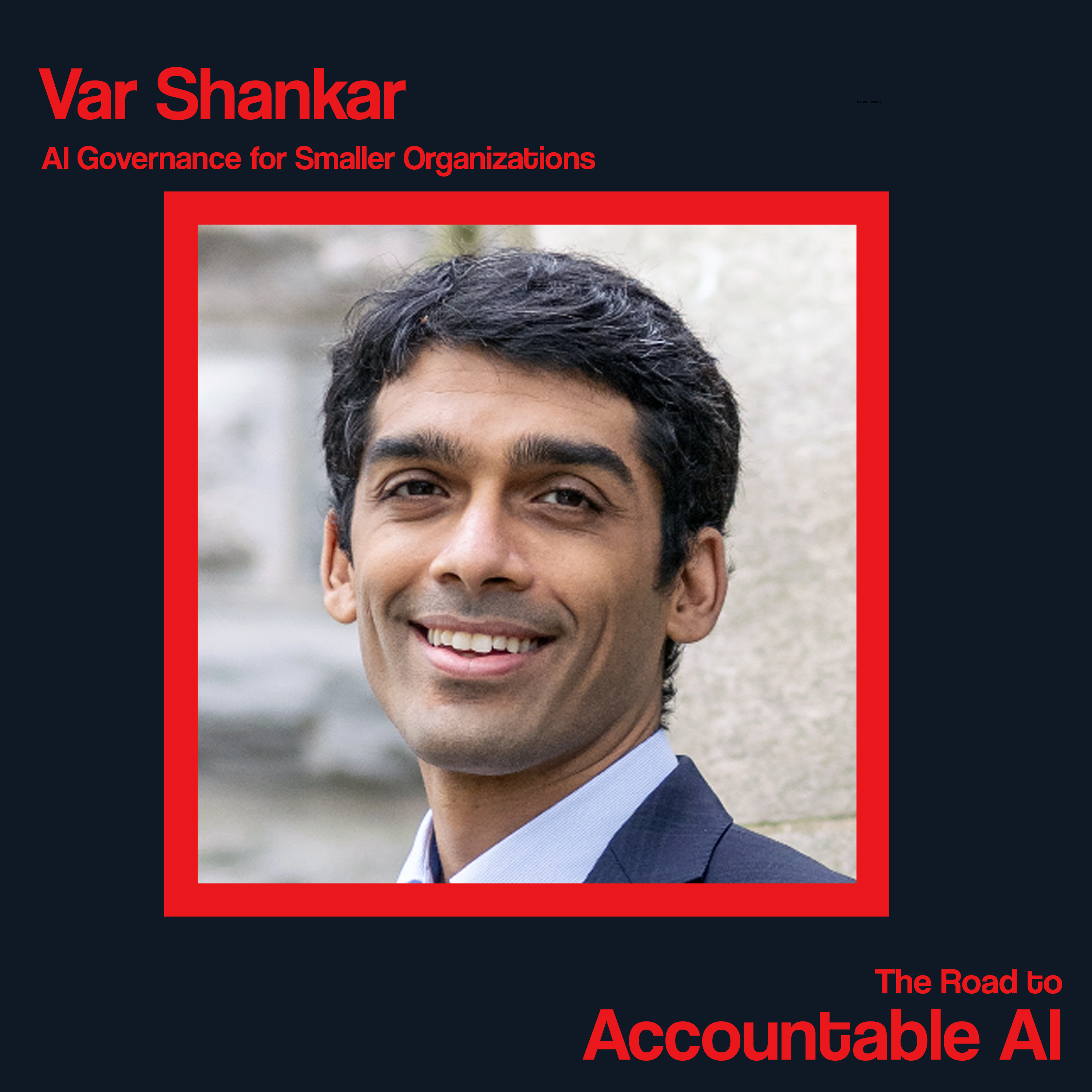
| 5/7/26 | AI governancesmall organizations+3 | Var Shankar | Council on AI Governance | — | AI governancesmall organizations+4 | — | 29m 03s | ||
| 4/30/26 | AI governancecorporate strategy+3 | Katie Fowler | Thomson Reuters FoundationEU AI Act+1 | — | AI governancecorporate AI strategy+3 | — | 37m 40s | ||
Want analysis for the episodes below?Free for Pro Submit a request, we'll have your selected episodes analyzed within an hour. Free, at no cost to you, for Pro users. | |||||||||
| 4/23/26 | deepfakesdigital trust+3 | Henry Ajder | Latent Space Advisory | — | deepfakesdigital trust+5 | — | 38m 45s | ||
| 4/16/26 | AI insurancerisk management+4 | Phil Dawson | Armilla AI | — | AI risksinsurance+5 | — | 30m 12s | ||
| 4/9/26 | AI governancerisk management+4 | Walter Haydock | StackAwareNIST+4 | — | AI governanceISO 42001+6 | — | 32m 49s | ||
| 4/2/26 | AI risk managemententerprise governance+4 | Richa Kaul | ComplyanceContractPodAi+4 | — | AI riskenterprise governance+5 | — | 33m 00s | ||
| 3/26/26 | military AIautonomous weapons+4 | Michael Horowitz | University of PennsylvaniaU.S. Department of Defense+2 | U.S. | AI in militaryautonomous systems+6 | — | 33m 45s | ||
| 3/19/26 | sovereign AIAI accountability+4 | Tanvi Singh | Ekta Inc.UBS+6 | — | sovereign AIaccountability+5 | — | 33m 09s | ||
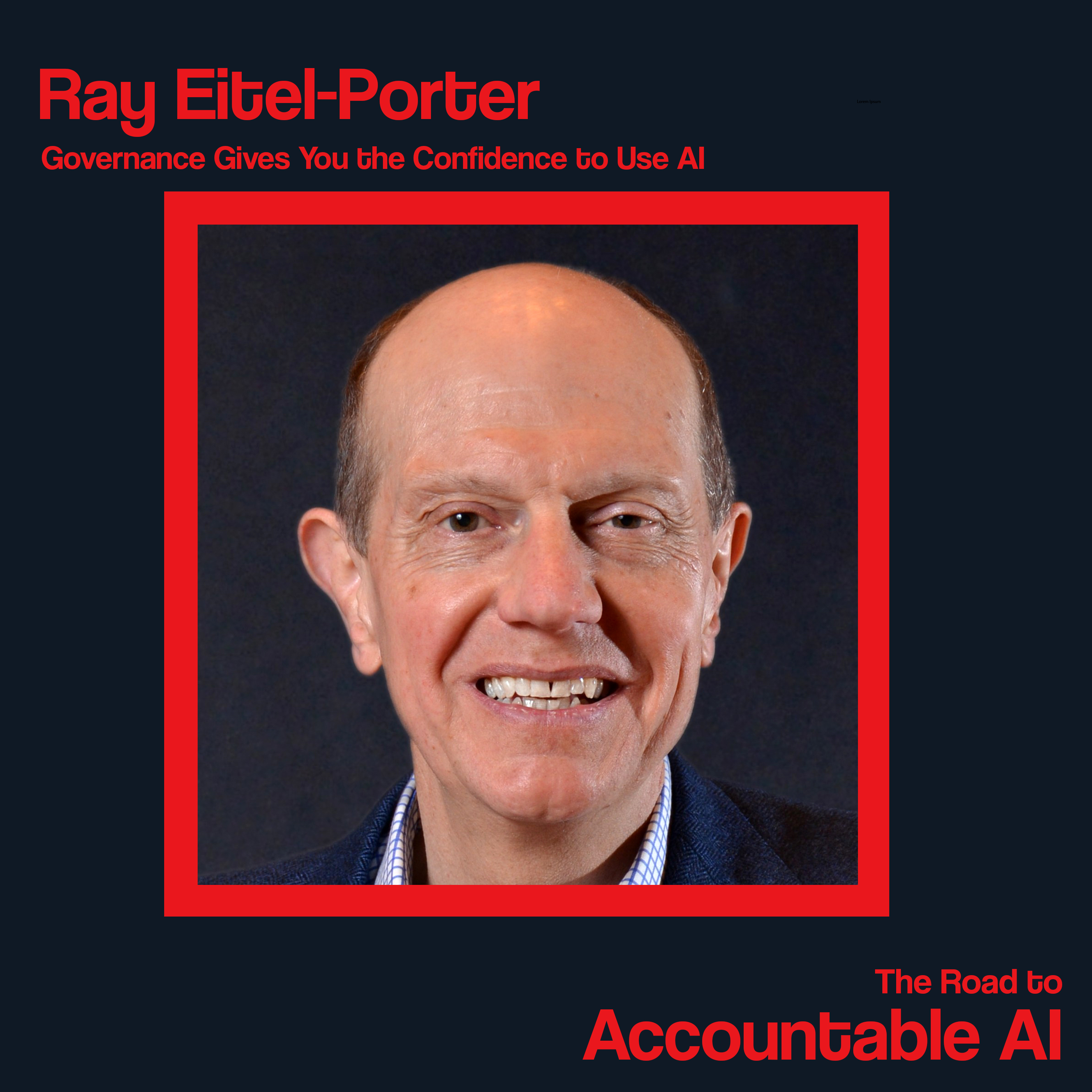
| 3/12/26 | AI governanceresponsible AI+4 | Ray Eitel-Porter | AccentureEU AI Act+4 | — | AI principlesbusiness processes+6 | — | 32m 59s | ||
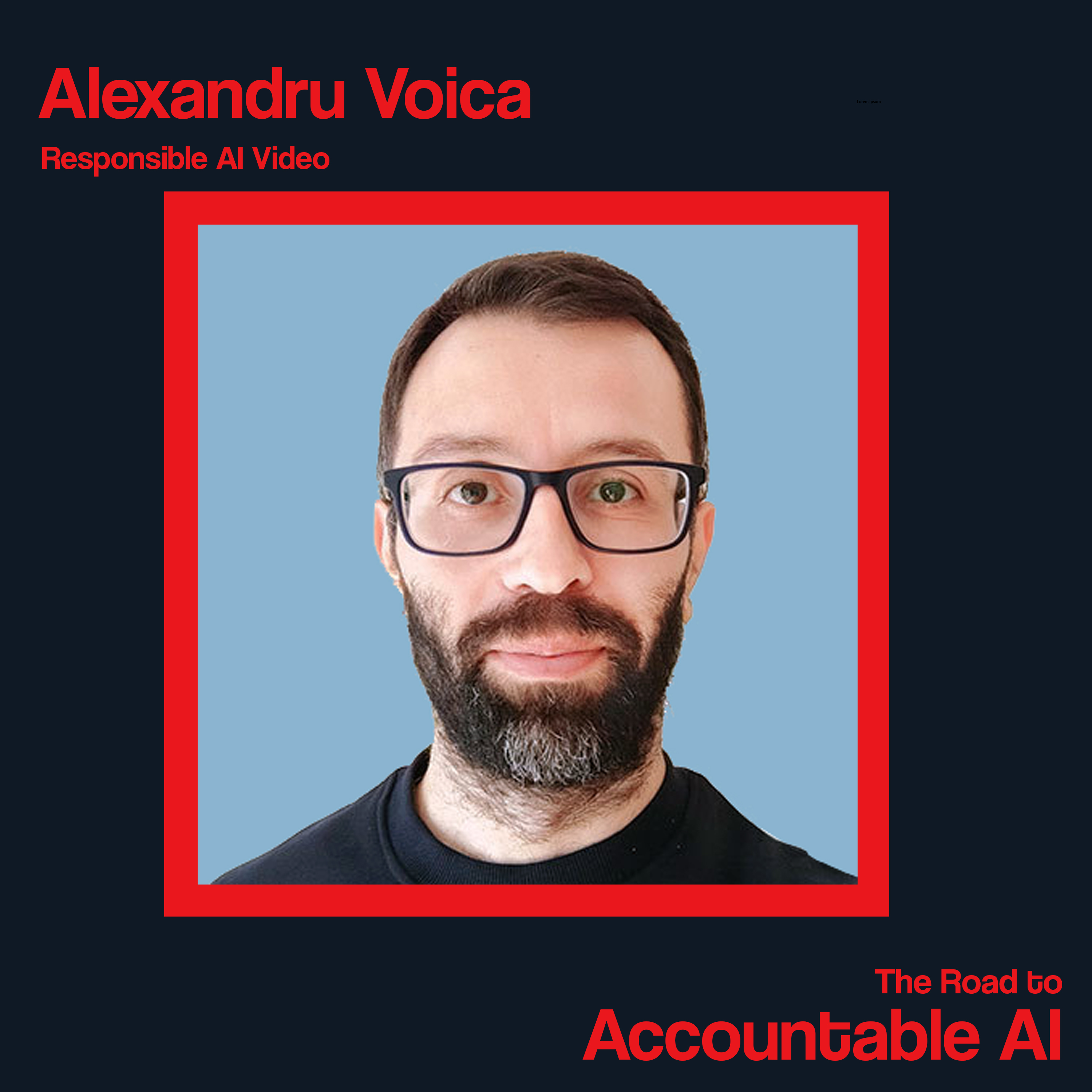
| 12/18/25 | Responsible AITrust and Safety+4 | Alexandru Voica | SynthesiaNIST+4 | Romania | AI video platformtrust and safety+4 | — | 38m 23s | ||
| 12/11/25 | online fraudgenerative AI+4 | Blake Hall | ID.me | — | online fraudgenerative AI+5 | — | 33m 54s | ||
| 12/4/25 | 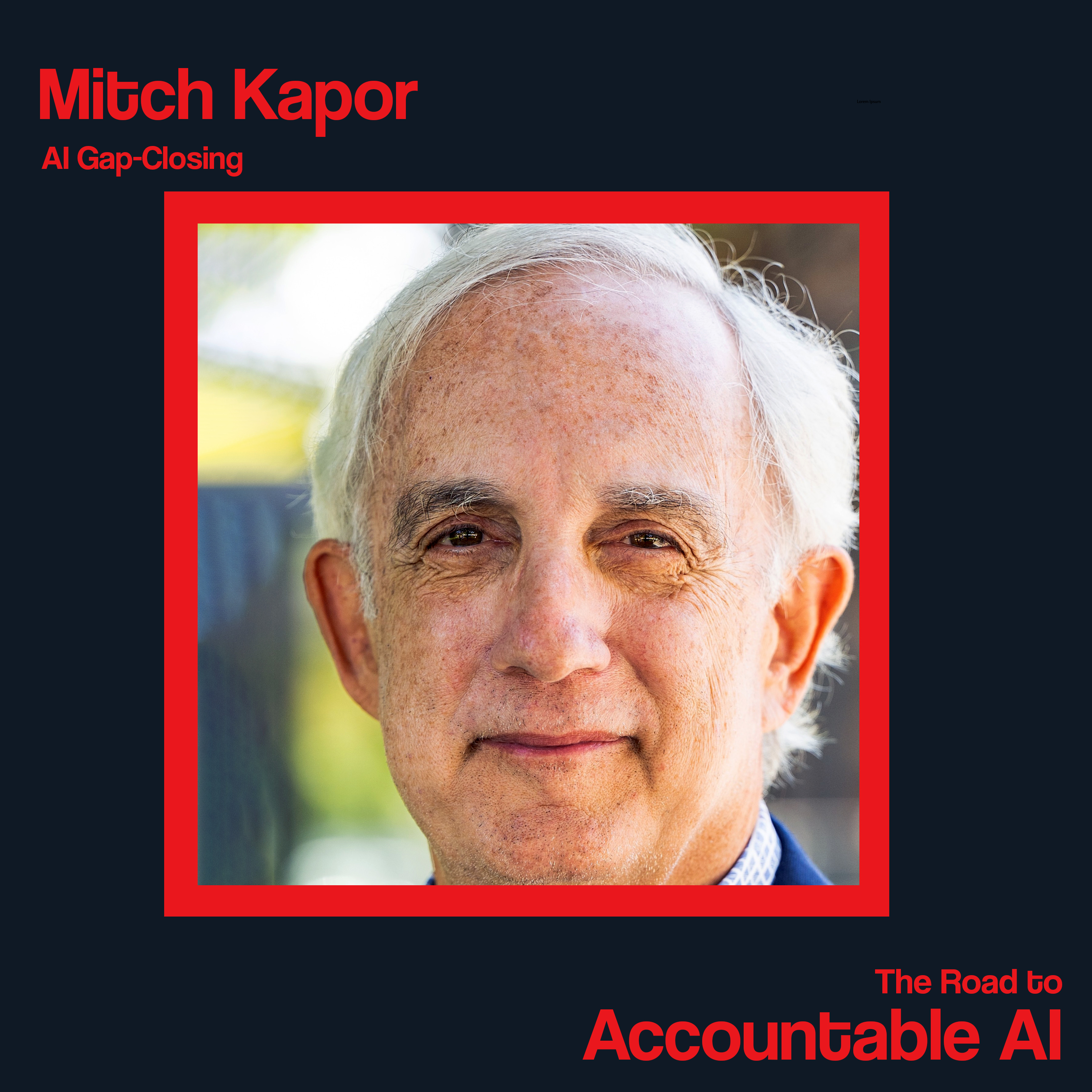 Mitch Kapor: AI Gap-Closing | Legendary entrepreneur and investor Mitch Kapor draws on his decades of experience to argue that while AI represents a massive wave of disruptive innovation, it also represents an opportunity to avoid mistakes made with social media and the early internet. In this episode, he contends that technologists tend toward over-optimism about technology solving human problems while underestimating downsides. Self-regulation by large AI companies like OpenAI and Anthropic is likely to fail, he suggests, because incentives to aggregate power and wealth are too strong, requiring external pressure and oversight. Kapor explains that his responsible investing approach at his venture capital firm, Kapor Capital, focuses on gap-closing rather than diversity for its own sake, funding startups that address structural inequalities in access, opportunity, or outcomes, regardless of founder demographics. He discusses the Humanity AI initiative and argues that philanthropy needs to develop AI literacy and technical capacity, with some foundations hiring chief technology officers to effectively engage with these issues. He believes targeted interventions can create meaningful change without matching the massive investments of the major AI labs. Kapor expresses hope that a younger generation of leaders in tech and philanthropy can step up to make positive differences, emphasizing that his generation should empower them rather than occupying seats at the table. Mitch Kapor is a pioneering technology entrepreneur, investor, and philanthropist who founded Lotus Development Corporation and created Lotus 1-2-3, the breakthrough spreadsheet software that helped establish the PC software industry in the 1980s. He co-founded the Electronic Frontier Foundation to advocate for digital rights and civil liberties, and later established Kapor Capital with his wife Freada Kapor Klein to invest in startups that close gaps of access, opportunity, and outcome for underrepresented communities. Kapor recently completed a masters degree at the MIT Sloan School focused on gap-closing investing, returning to finish what he started 45 years earlier when he left MIT to pursue his career in Silicon Valley. He serves on the steering committee of Humanity AI, a $500 million initiative to ensure AI benefits society broadly. | — | ||||||
| 11/20/25 | 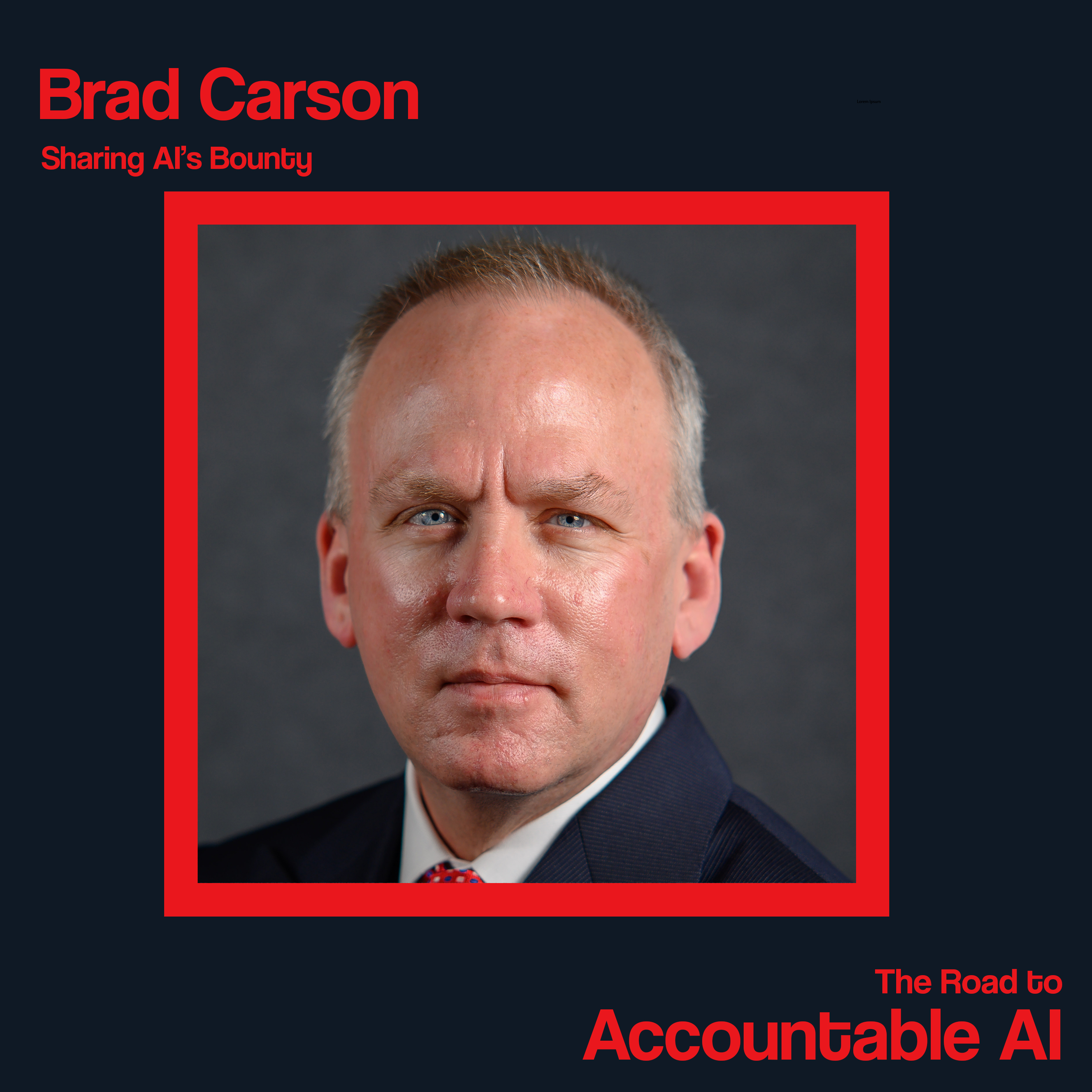 Brad Carson: Sharing AI's Bounty | Former Congressman and Pentagon official Brad Carson discusses his organization, Americans for Responsible Innovation (ARI), which seeks to bridge the gap between immediate AI harms like and catastrophic safety risks, while bringing deep Capitol Hill expertise to the AI conversation . He argues that unlike previous innovations such as electricity or the automobile, AI has been deeply unpopular with the public from the start, creating a rare bipartisan alignment among those skeptical of its power and impacts. This creates openings for productive discussions about AI policy. Drawing on his military experience, Carson suggests that while AI will shorten the kill chain, it won't fundamentally change the human nature of warfare, and he warns against the US military's tendency to seek technical solutions to human problems . The conversation covers current policy debates, highlighting the necessity of regulating the design of models rather than just their deployment, and the importance of export controls to maintain the West's advantage in compute . Ultimately, Carson emphasizes that for AI to succeed politically, the "bounty" of this technology must be shared broadly to avoid tearing apart the social fabric Brad Carson is the founder and president of Americans for Responsible Innovation (ARI), an organization dedicated to lobbying for policy that ensures artificial intelligence benefits the public interest. A former Rhodes Scholar, Carson has had a diverse career in public service, having served as a U.S. Congressman from Oklahoma, the Undersecretary of the Army, and the acting Undersecretary of Defense for Personnel and Readiness . He also served as a university president and deployed to Iraq in 2008 . Transcript Former TU President Brad Carson Pushes for Strong AI Guardrails | — | ||||||
| 11/13/25 |  Oliver Patel: Sharing Frameworks for AI Governance | Oliver Patel has built a sizeable online following for his social media posts and Substack about enterprise AI governance, using clever acronyms and visual frameworks to distill down insights based on his experience at AstraZeneca, a major global pharmaceutical company. In this episode, he details his career journey from academic theory to government policy and now practical application, and offers insights for those new to the field. He argues that effective enterprise AI governance requires being pragmatic and picking your battles, since the role isn't to stop AI adoption but to enable organizations to adopt it safely and responsibly at speed and scale. He notes that core pillars of modern AI governance, such as AI literacy, risk classification, and maintaining an AI inventory, are incorporated into the EU AI Act and thus essential for compliance. Looking forward, Patel identifies AI democratization—how to govern AI when everyone in the workforce can use and build it—as the biggest hurdle, and offers thougths about how enteprises can respond. Oliver Patel is the Head of Enterprise AI Governance at AstraZeneca. Before moving into the corporate sector, he worked for the UK government as Head of Inbound Data Flows, where he focused on data policy and international data transfers, and was a researcher at University College London. He serves as an IAPP Faculty Member and a member of the OECD's Expert Group on AI Risk. His forthcoming book, Fundamentals of AI Governance, will be released in early 2026. Transcript Enterprise AI Governance Substack Top 10 Challenges for AI Governance Leaders in 2025 (Part 1) Fundamentals of AI Governance book page | — | ||||||
| 11/6/25 |  Ravit Dotan: Rethinking AI Ethics | Ravit Dotan argues that the primary barrier to accountable AI is not a lack of ethical clarity, but organizational roadblocks. While companies often understand what they should do, the real challenge is organizational dynamics that prevent execution—AI ethics has been shunted into separate teams lacking power and resources, with incentive structures that discourage engineers from raising concerns. Drawing on work with organizational psychologists, she emphasizes that frameworks prescribe what systems companies should have but ignore how to navigate organizational realities. The key insight: responsible AI can't be a separate compliance exercise but must be embedded organically into how people work. Ravit discusses a recent shift in her orientation from focusing solely on governance frameworks to teaching people how to use AI thoughtfully. She critiques "take-out mode" where users passively order finished outputs, which undermines skills and critical review. The solution isn't just better governance, but teaching workers how to incorporate responsible AI practices into their actual workflows. Dr. Ravit Dotan is the founder and CEO of TechBetter, an AI ethics consulting firm, and Director of the Collaborative AI Responsibility (CAIR) Lab at the University of Pittsburgh. She holds a Ph.D. in Philosophy from UC Berkeley and has been named one of the "100 Brilliant Women in AI Ethics" (2023), and was a finalist for "Responsible AI Leader of the Year" (2025). Since 2021, she has consulted with tech companies, investors, and local governments on responsible AI. Her recent work emphasizes teaching people to use AI thoughtfully while maintaining their agency and skills. Her work has been featured in The New York Times, CNBC, Financial Times, and TechCrunch. Transcript My New Path in AI Ethics (October 2025) The Values Encoded in Machine Learning Research (FAccT 2022 Distinguished Paper Award) - Responsible AI Maturity Framework | — | ||||||
| 10/30/25 | 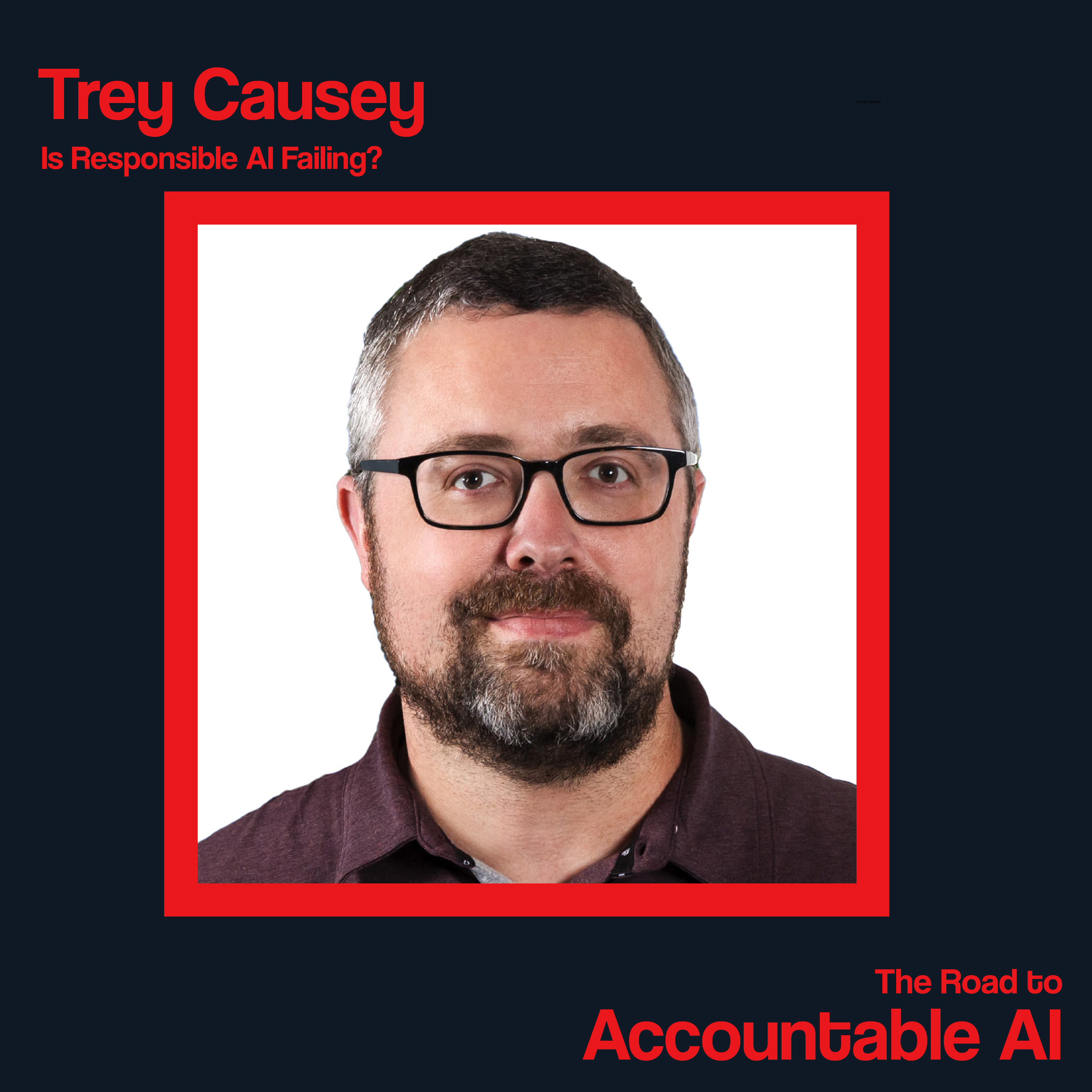 Trey Causey: Is Responsible AI Failing? | Kevin Werbach speaks with Trey Causey about the precarious state of the responsible AI (RAI) field. Causey argues that while the mission is critical, the current organizational structures for many RAI teams are struggling. He highlights a fundamental conflict between business objectives and governance intentions, compounded by the fact that RAI teams' successes (preventing harm) are often invisible, while their failures are highly visible. Causey makes the case that for RAI teams to be effective, they must possess deep technical competence to build solutions and gain credibility with engineering teams. He also explores the idea of "epistemic overreach," where RAI groups have been tasked with an impossibly broad mandate they lack the product-market fit to fulfill. Drawing on his experience in the highly regulated employment sector at Indeed, he details the rigorous, science-based approach his team took to defining and measuring bias, emphasizing the need to move beyond simple heuristics and partner with legal and product teams before analysis even begins. Trey Causey is a data scientist who most recently served as the Head of Responsible AI for Indeed. His background is in computational sociology, where he used natural language processing to answer social questions. Transcript Responsible Ai Is Dying. Long Live Responsible AI | — | ||||||
| 10/23/25 |  Caroline Louveaux: Trust is Mission Critical | Kevin Werbach speaks with Caroline Louveaux, Chief Privacy, AI, and Data Responsibility Officer at Mastercard, about what it means to make trust mission critical in the age of artificial intelligence. Caroline shares how Mastercard built its AI governance program long before the current AI boom, grounding it in the company's Data and Technology Responsibility Principles". She explains how privacy-by-design practices evolved into a single global AI governance framework aligned with the EU AI Act, NIST AI Risk Management, and standards. The conversation explores how Mastercard balances innovation speed with risk management, automates low-risk assessments, and maintains executive oversight through its AI Governance Council. Caroline also discusses the company's work on agentic commerce, where autonomous AI agents can initiate payments, and why trust, certification, and transparency are essential for such systems to succeed. Caroline unpacks what it takes for a global organization to innovate responsibly — from cross-functional governance and "tone from the top," to partnerships like the Data & Trust Alliance and efforts to harmonize global standards. Caroline emphasizes that responsible AI is a shared responsibility and that companies that can "innovate fast, at scale, but also do so responsibly" will be the ones that thrive. Caroline Louveaux leads Mastercard's global privacy and data responsibility strategy. She has been instrumental in building Mastercard's AI governance framework and shaping global policy discussions on data and technology. She serves on the board of the International Association of Privacy Professionals (IAPP), the WEF Task Force on Data Intermediaries, the ENISA Working Group on AI Cybersecurity, and the IEEE AI Systems Risk and Impact Executive Committee, among other activities. Transcript How Mastercard Uses AI Strategically: A Case Study (Forbes 2024) Lessons From a Pioneer: Mastercard's Experience of AI Governance (IMD, 2023) As AI Agents Gain Autonomy, Trust Becomes the New Currency. Mastercard Wants to Power Both. (Business Insider, July 2025) | — | ||||||





Showing 25 of 73
Pitch Fit is a Pro feature
See how bookable this show is for guests, which brands already advertise, the per-episode ad value, and the best-fit guest and sponsor profile. The numbers are blurred on the free plan.
How readily this show books outside guests like you.
How proven this show is for host-read sponsorships.
For Guests
ProFor Advertisers
ProUpgrade to Pro to unlock guest cadence, sponsor categories, fit scores, and per-episode ad value for this show.
Similar Audience Demographics
Podcasts that attract a similar listener profile





Distribution & Reach
About the show, platforms, and key insights.
Distribution & Reach
About the show, platforms, and key insights.
Chart history for The Road to Accountable AI
Peaked at #140 in HU, currently #140 in HU.
| Market | Genre | Peak | Current | Trend |
|---|---|---|---|---|
| HU | — | #140 | #140 | — |
Chart Positions
1 placement across 1 market.
Chart Positions
1 placement across 1 market.