

Insights from recent episode analysis
Audience Interest
Podcast Focus
Publishing Consistency
Platform Reach
Insights are generated by CastFox AI using publicly available data, episode content, and proprietary models.
Most discussed topics
Brands & references
Total monthly reach
Estimated from 1 chart position in 1 market.
By chart position
- 🇺🇸US · Courses#8030K to 100K
- Per-Episode Audience
Est. listeners per new episode within ~30 days
15K to 50K🎙 Weekly cadence·174 episodes·Last published 1mo ago - Monthly Reach
Unique listeners across all episodes (30 days)
30K to 100K🇺🇸100% - Active Followers
Loyal subscribers who consistently listen
9K to 30K
Market Insights
Platform Distribution
Reach across major podcast platforms, updated hourly
Total Followers
—
Total Plays
—
Total Reviews
—
* Data sourced directly from platform APIs and aggregated hourly across all major podcast directories.
On the show
From 11 epsHost
Recent guests
Recent episodes
Reforming Police Training to Save Lives | With Use of Force Expert Chris Butler
May 8, 2026
57m 54s
Search Incident to Arrest 3-5-2026
Mar 6, 2026
57m 48s
Drone as First Responder Program with Flock Safety
Feb 23, 2026
1h 57m 59s
Search & Seizure Show Volume 011
Nov 12, 2025
1h 08m 35s
Community Caretaking with John Wiehn
Aug 31, 2025
1h 11m 12s
Social Links & Contact
Official channels & resources
Official Website
Login
RSS Feed
Login
| Date | Episode | Topics | Guests | Brands | Places | Keywords | Sponsor | Length | |
|---|---|---|---|---|---|---|---|---|---|
| 5/8/26 |  Reforming Police Training to Save Lives | With Use of Force Expert Chris Butler✨ | police traininguse of force+3 | Chris Butler | Calgary Police ServiceRaptor Protection and Safety Services | — | police traininguse of force+5 | — | 57m 54s | |
| 3/6/26 |  Search Incident to Arrest 3-5-2026✨ | Search Incident to ArrestFourth Amendment+4 | — | — | — | Search Incident to ArrestChimel rule+6 | — | 57m 48s | |
| 2/23/26 |  Drone as First Responder Program with Flock Safety✨ | drone technologylaw enforcement+3 | — | Blue to Gold Law Enforcement Training | — | drone as first responderlaw enforcement+3 | Flock Safety | 1h 57m 59s | |
| 11/12/25 |  Search & Seizure Show Volume 011✨ | search and seizurelive Q&A+3 | — | Search & Seizure ShowBlue to Gold | — | search and seizurelegal advice+3 | — | 1h 08m 35s | |
| 8/31/25 |  Community Caretaking with John Wiehn✨ | Community CaretakingLaw Enforcement Training+2 | John Wiehn | Blue to Gold TrainingFacebook+3 | — | Community CaretakingLaw Enforcement+3 | — | 1h 11m 12s | |
| 8/30/25 |  All About Trespassing with Anthony Bandiero✨ | trespassinglaw enforcement+3 | — | Blue to Gold TrainingFacebook+3 | — | trespassinglaw enforcement training+3 | — | 55m 45s | |
| 8/29/25 |  CIs and Search Warrants with John Wiehn✨ | search warrantslaw enforcement+3 | John Wiehn | Blue to Gold TrainingFacebook+3 | — | search warrantsconfidential informants+3 | — | 46m 35s | |
| 8/28/25 |  All About Abandonment with Zach Miller✨ | abandonmentlaw enforcement training+3 | Zach Miller | Blue to Gold TrainingFacebook+3 | — | abandonmentlaw enforcement+4 | — | 49m 48s | |
| 8/27/25 |  Miranda and Beyond with Zach Miller✨ | law enforcement traininglegal education+3 | Zach Miller | Blue to Gold TrainingFacebook+3 | — | Miranda rightslaw enforcement+5 | — | 52m 59s | |
| 8/26/25 |  Cat Out of the Bag Searches with Anthony Bandiero✨ | law enforcement traininglegal education+3 | — | Blue to Gold TrainingFacebook+3 | — | search and seizurelaw enforcement+3 | — | 1h 01m 05s | |
Want analysis for the episodes below?Free for Pro Submit a request, we'll have your selected episodes analyzed within an hour. Free, at no cost to you, for Pro users. | |||||||||
| 8/25/25 | 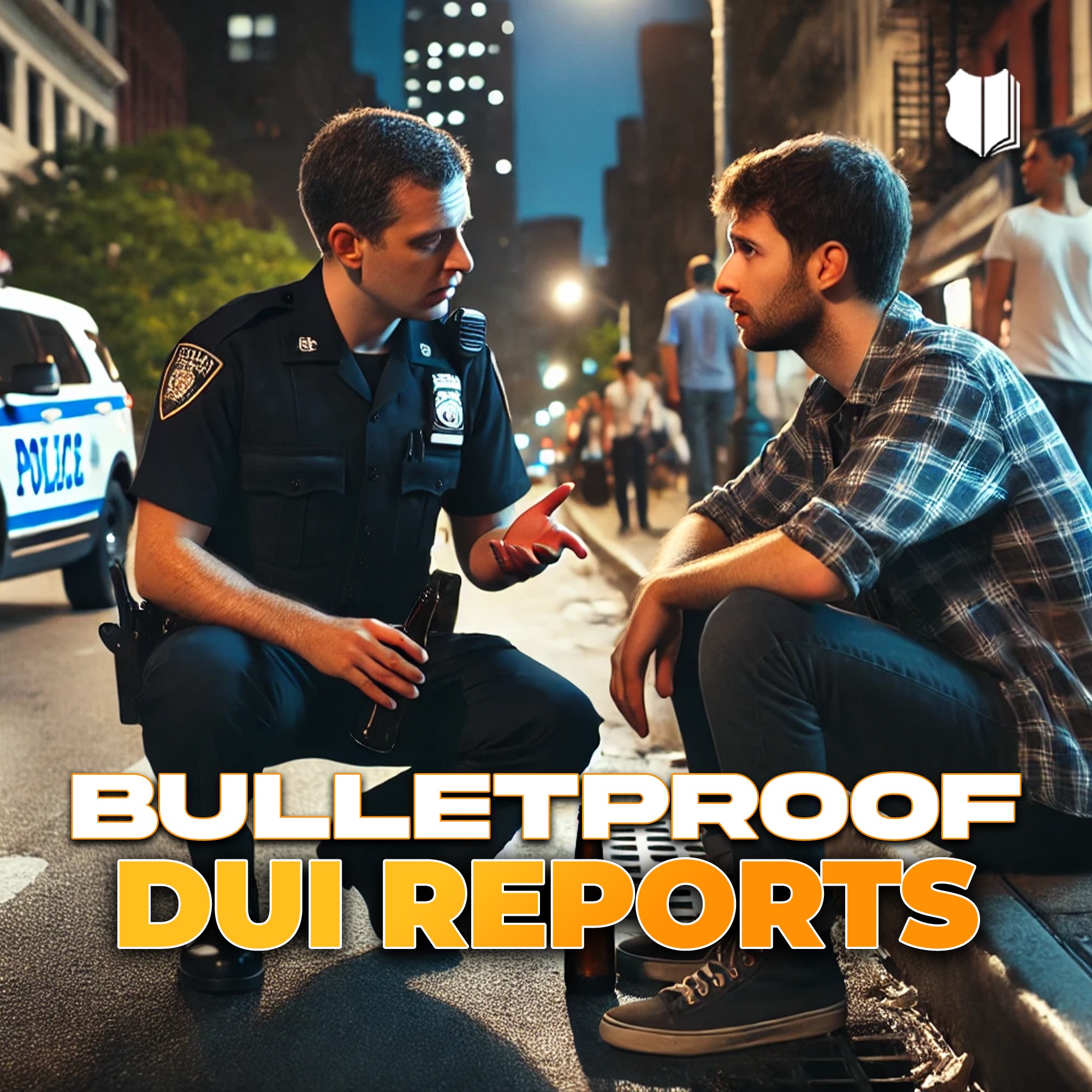 Bulletproof DUI Reports with Anthony Bandiero✨ | DUI ReportsLaw Enforcement Training+3 | — | Blue to Gold TrainingFacebook+3 | — | DUILaw Enforcement+3 | — | 1h 08m 19s | |
| 8/9/24 |  Search & Seizure Show Volume 010 | Have a search and seizure question in mind? Submit them for instructors to answer or join the next Search & Seizure show and get your questions answered LIVE ON AIR. 🚨 https://www.bluetogold.com/show https://bluetogold.com/trainings/?attendance=webinar | 40m 45s | ||||||
| 8/7/24 |  Search & Seizure Show Volume 009 | Have a search and seizure question in mind? Submit them for instructors to answer or join the next Search & Seizure show and get your questions answered LIVE ON AIR. 🚨 https://www.bluetogold.com/show https://bluetogold.com/trainings/?attendance=webinar | 1h 01m 11s | ||||||
| 8/6/24 |  Search & Seizure Show Volume 008 | Search & Seizure Show | Volume VIII | July 09, 2024 Have a search and seizure question in mind? Submit them for instructors to answer or join the next Search & Seizure show and get your questions answered LIVE ON AIR. 🚨 https://www.bluetogold.com/show https://bluetogold.com/trainings/?attendance=webinar | 49m 59s | ||||||
| 8/5/24 |  Search & Seizure Show Volume 007 | Search & Seizure Show | Volume VII | June 19, 2024 Have a search and seizure question in mind? Submit them for instructors to answer or join the next Search & Seizure show and get your questions answered LIVE ON AIR. 🚨 https://www.bluetogold.com/show https://bluetogold.com/trainings/?attendance=webinar | 1h 02m 55s | ||||||
| 1/24/22 |  If a suspect invokes Miranda can a different agency interview them on a different crime?1 | The following is a computer-generated transcription, some grammar and spelling errors may be inherent Hey guys, it's Anthony here, bringing in a roadside chat from the road. Actually, I'm in Joplin, Missouri this weekend. It's actually really nice to be out here. And it's a beautiful place. So this question comes from an officer in Alabama. And he says, Can a subject be interviewed after invoking Miranda, on a separate case, by a different agency. And so the kind of the backstory is a suspect was arrested by a neighboring department. They went into interview him, but he said he wants to have an attorney. Now, this officer wants to read, you know, give him Miranda again, and interview him on a different case.And here's the answer, the answer is that according to the US Supreme Court, this guy is off limits for any interview, regarding anti any crime for 14 days, post Miranda custody, alright. So this rule makes a little bit difficult for cops to get to interview people after they invoke the right to counsel. So there's a couple things going on. Number one is this 14 day rule, the 14 day rule comes from a US supreme court called Chester, where they made a bright line rule normally Supreme Court that doesn't make bright line rules, but here they did. So it's a bright line rule that if the guy invokes the right to counsel, he's off limits for 14 days, post Miranda custody, what does that mean? Post Miranda custody? Well, being in Miranda custody is a totality of circumstances tests that ask whether or not a reasonable person would believe custodial, like arrest exists. And the cops are asking questions, which are likely to elicit an incriminating response. So that's kind of like your arrests, you know, during the booking process, and so forth. But when does a person leave Miranda like custody? Well, if they're released from jail, certainly, that is easy. If they're put into general population, we don't have a lot of court cases on this. But if they're put into general population with other inmates, and they're going to be held for a while, this is not like a holding cell. But this is like their new home until they get bail money, or maybe they're just waiting trial, there's the best argument is that they are not in arrest, like custody at that point, because jail is now their home, we certainly know that. That prison is the person's home, and a person is not in Miranda custody, while they're serving a sentence in prison, it's less clear in jail, but I think the best advice I have for you is that, you know, let the person you know, if he's in general population, you know, let him have his 14 days, and then re mirandize him and see if he will talk now you don't need to talk to an attorney if you're talking about a different crime. But if you're talking about the same crime or any criminal act, you know, any crimes that can be related to that one he's been held on, he's off limits, period, basically, until he talks unless you have his attorney present, and the PERT and the attorney signs off on it. This rule sometimes has consequences that are not really logical like so for example, the cop here wants to talk to a guy about a different crime different agency. But yet, he's off limits for 14 days. ,,When it comes to law enforcement training, we are the gold standard, visit blue to gold.com or call 888-579-7796 to learn more about our training books and free webinars Also don't forget to like, subscribe and share this channel | 5m 31s | ||||||
| 1/24/22 |  What is an Automatic Pat Down? | The following is a computer-generated transcription, some grammar and spelling errors may be inherent Hey guys, it's Anthony Bandiero Here, attorney, Senior Legal instructor at Blue to Gold. Okay, so been really busy. I'm going to be putting out more of these videos as as we go forward here. But I'm outside of Cleveland, Ohio delivering our advanced search and seizure classes. And hopefully you've attended one of our classes. If not, please sign up online. Also, we traveled the country. Today's question comes from an officer in New York. And he was reading my book, the search and seizure Survival Guide. And he said, Hey, you know, you mentioned an automatic pat down in your book, what is an automatic pat down, you know, and just kind of give you some more context, and he wanted more context to understand what I was talking about. First of all, I'm glad he reached out because I don't normally use the word automatic anything. When it comes to the Fourth Amendment. There really are no automatics. I mean, everything is based on something else, like a search incident to arrest. Okay, it's automatic, right? I mean, you get to search somebody's incident to arrest, but it's not automatic in the sense that you have to have a lawful arrest. If you don't have a lawful arrest, then the search would be invalid to be for the poisonous tree. But what I mean by automatic pat downs is that when you're dealing with violent people who are suspected of violence, and that crime is is suspected of being involved with a weapon, then pat them down. Right? That's an automatic pat down. So violence plus weapon I mean, this is when you think about it, it's like okay, Anthony, that makes that makes sense. Obviously, I'm going to pat down somebody who I believe is violent and also has a weapon. And the reason why I call it automatic is because it instantly satisfies Terry, right? Terry versus Ohio has two requirements you know for pat downs right? It says that the person is considered armed and dangerous. Well, if they're if you believe that they could have a weapon, there's the arm check and dangerous if you believe that they've committed violence against somebody else, and they have a valid temperament Right? Or some other factors that believe that they could engage in a violent act on you well, there's the dangerousness equals pat down. So when you serve out these guys, you're gonna you're gonna pat them down, you're still going to articulate it, you're not going to use the phrase you know, I then conducted an automatic pat down in your report Don't say stuff like that the court will push back on you and say look, you know, what do you mean by automatic right? Say that I conducted a pat down because the person was believed to be involved in a violent crime such as you know, sexual assault and the report to be abused the weapon I you know, ie a knife gun, you know, some kind of striking device, you know, and so forth. So, that's what I mean. Alright, so there you go. Keep the questions coming hopefully adds a little more context to my viewer in New York, or my reader in New York and also some other cops guys, keep these questions coming. Please hit the Like button. let YouTube know if you find these videos, valuable. Comment. Any comments are great, you know, feedback for me and for the rest of the viewers. And finally, stay safe out there and keep up the good work. Thank you.When it comes to law enforcement training, we are the gold standard, visit blue to gold.com or call 888-579-7796 to learn more about our training books and free webinars. Also, don't forget to like, subscribe and share this channel. | 3m 50s | ||||||
| 1/24/22 |  What are the guidelines for conducting protective sweeps at murder scenes? | The following is a computer-generated transcription, some grammar and spelling errors may be inherent Alright, hey guys, it's Anthony Bandiero Here, attorney, Senior Legal instructor for Blue to Gold law enforcement training, bring it to the roadside chat from Joplin, Missouri. Got a question from an officer in Florida. He basically wants me to clarify protective sweeps and murder scenes. Okay, so the officer says, you know, he was watching one of my videos regarding protective sweeps, I mentioned the case called Mincy versus Arizona. And I'll explain in a second, where I talked about there's, you know, the Supreme Court ruled that there is no murder scene exception to the search warrant requirement. Okay. And then, you know, so he's talking about look, you know, however, if response reporting shooting in a driveway of a residence, wouldn't we have exigent circumstances, to conduct a warrantless sweep of the residence for possibly other injured parties to see if the perpetrator is still on scene, you know, and so forth. Right. Also, the officer says, you know, we also, you know, follow the trajectory of the bullet to see if other people been injured, you know, across the street, maybe in the back, you know, the other houses on the other street and so forth. And, and to make sure that nobody was hit similar to a public safety statement, you know, hey, where did you shoot? How many rounds? Did you fire? That type of thing? I'm looking at my computer, by the way. So any clarification would help? Look, let's let's do this. This is, uh, this is great. This is a great question. It's a great follow up question. Let's make sure that if there's some confusion about what I'm saying, you're like, man, you know, that doesn't really sound right. You know, please, I want you to reach out to me, because in my brain, it all makes sense. But when I make these quick videos on the road, I could say something that may not be. I mean, it makes sense. So let's first talk about Mincy versus Arizona. Look, the general rule there is that once police secure the scene, and they're looking for other victims, and they don't find anybody looking for that perpetrator, that you can't, you can't just stay in people's homes, process a crime scene, you know, and then use that evidence against somebody who has a privacy interest in the home. And in the Mincy case, the cops are actually in the house for four days, four days processing that crime scene, and no warrant and no consent. So that's the problem. All right. And they, you know, they recover, like almost 300 pieces of evidence, and so all that was suppressed. And that's not the way we do it. So instead, when we have a crime scene, we go to a murder scene, right, like a shooting and so forth. What we're gonna do is we're gonna arrive on scene, and we're going to, you know, potentially enter the home if you believe that more victims, or the perpetrator can be in the home. So what the officer is saying is absolutely correct, right. You know, that's what they're doing. And that is absolutely permissible. Mincy does not prevent that, because menses only about processing crime scenes. It's not about protective sweeps, that would fall under other court cases. Marilyn versus buoy US Supreme Court. I also think a case called Ryberg. Versus Huff would also kind of cover the public safety aspect. It's it's not directly on point, but it does talk about how when officers, you know, reasonably believe that they're about to be attacked, you know, they can enter homes and so forth. And I think that would apply for potential perpetrators. But look, the vast majority of courts, if not all, courts, are going to let cops go in there and look for perpetrators and more victims... | 5m 39s | ||||||
| 1/24/22 |  Can police officers detain a suspect despite victim not wanting to press charges? | The following is a computer-generated transcription, some grammar and spelling errors may be inherent Hey guys, Anthony Bandiero Here attorney, Senior Legal instructor for Blue to gold law enforcement training, bringing to the roadside chat from Joplin, Missouri. What a great place, by the way, my first time here, and it won't be my last. All right. So I have a question for Nasir. He actually doesn't say what state he's from. And his email addresses personal email address, but that's okay. And he wants clarification on detaining someone who committed a crime. But the victim doesn't want to press any charges. And then they want to know about, you know, can we still detain him, identify him, try to find out what his story is, and so forth. So this situation is this, they responded to a suspicious person called, of unknown subject, knocking on a door that doesn't belong there. As he left, he broke a vase that was on the patio, you know, that can just imagine this guy just like, something's wrong with him. He just like, smacks his face and it just breaks, right? They can they contacted the homeowner, right? And she says, Look, I don't want anything done, right? I'm not going to be a victim here, and just let it go. I want nothing to do with it. So they then leave? Well, they then see him walking down the street. And they considering a consensual contact. You know, since the victim doesn't want anything done, but the officer is asking, you know, let's say he doesn't want to engage in a consensual contact, can we actually detain him? Right? And investigate? And here's my answer. I think the answer is no, I don't really have a case on this. I've never seen a case on this. But I think jelly answer's no. Because look, if you look at the tensions, what are they for, they're supposed to be for conforming or dispelling whether criminal activity is afoot, right? criminal activities ongoing. So we basically have no victim no crime. That's kind of the way I'm looking at this right? You have a person who's saying, I don't want to make this a criminal issue, right? This is gonna be a wash for me. So you don't have that? You. You also don't have. And again, I'm spitballing here because there could be a case out there that that says, yeah, actually, we can still contact him and so forth. I'll tell you one of potential what I think we could do but wait for it. And then also, we don't have probable cause, either, because we have no, you know, we don't have enough evidence, because we have no victim that doesn't want to make this a crime. We don't have evidence that the person at this point has engaged as committed a crime, because again, you got this no victim, no crime kind of idea. So I would say no, I would not detain this person; if they don't want to talk, they can keep on walking. Here's the caveat. If the officer has facts or circumstances that lead him or her to reasonably believe that this person will commit a future crime, right, that this person, you know, maybe we saw him going up to other people's houses and knocking on the door. I'm definitely good on that point. I'm definitely good with a detention at that point. Because it looks like he's going from house to house and he could be breaking more stuff in plus, what is he really up to? ... | 4m 46s | ||||||
| 1/24/22 |  Can police officers automatically pat down gang members? | The following is a computer-generated transcription, some grammar and spelling errors may be inherent Hey guys, Anthony Bandiero Here attorney, Senior Legal instructor bringing a roadside chat from an officer in Texas. Now, this officer says, you know, ask basically can we automatically pat down suspected gang members? Right? And to give you a little context here, the officer is talking about, you know, attending some outlaw motorcycle gang training, and, you know, get a lot of bad deals in the area. And then instructors basically saying, hey, look, if you are dealing with a one percenter, right? Michigan versus long, which is a US Supreme Court case, about first can vehicles allows you to essentially, you know, conducted frisk of that motorcycle for for weapons. The officer will first ask, though, this is what they teach, they'll ask for consent to search the motorcycle, if they say no, then they get them off the bike. And they search it anyway. Because of their because they're, it's known that gang members can easily access the saddlebag these game members can access to settle back and potentially grab a weapon. Now, the question is, is does Michigan versus long really hold that that suspect a gang members, you know, essentially can be automatically patted down just with that fact alone. And certainly, Michigan versus long doesn't it's not that fact pattern that's that case involved a drunk driver who crashed into a ditch and the officer saw him trying to go back to the car, it was a knife in the in the mat pocket in the door, if the door is open, you got you know, long back and another partner looked for sees the knife and look for more weapons in the immediate area, and found narcotics in the center console and the Supreme Court upheld it because the logic was, hey, look, he was trying to go back to the vehicle. It's, you know, it's a fluid situation, he's intoxicated, there was only one weapon in there, that could potentially be another weapon in there. And that frisk of the vehicles upheld, but it certainly didn't talk about anything about gang members. Now. All I can tell you is what I teach, right? I don't teach automatics like, you know, automatic searches, you know, for my cops. There's really no automatics out there. There's no free lunch when it comes to the Fourth Amendment, you're going to have to work for it a little bit, you're gonna have to go to court and explain that simply having a 1% patch. You know, that's one factor. It's a very important factor and, and but what else do you got there? I mean, you know, we're gonna have to have something more. And usually there's going to be so that's the good news. Here are some cases that kind of, you know, illustrate what I'm talking about, right. Here's a case out of Kansas, a case called State vs. Goldston. 2009. Now it says here at the time that the officer conducted the pat-down, he knew the following facts about the suspect. He was in a database as a documented gang member. He was with a known gang member who was on supervised release from prison and had been involved in prior stop involving drugs within the last two weeks. He had just come from a city known for drug activity, and were several arrests and or area of town. Actually, I think, I'm sorry, it's not a city. It was a gas station. He just came from a gas station where several rest of them made recently for drug activities and so forth. The officer also articulated he knew that drug dealers that involved in gangs often had weapons to protect the drugs and the money. Right. They're self help, right? They're like their own little police department. And considering all these facts, the court upheld, but do you see what's going on there? It's not just saying Your Honor. The person is a one percenter therefore, I conducted a vehicle suite, you know, or pat down. We need something more than that in mind book, but you're gonna have it usually... | 6m 45s | ||||||
| 1/24/22 |  Can in custody suspect give consent to search without Miranda? | The following is a computer-generated transcription, some grammar and spelling errors may be inherent Hey guys, Anthony Bandiero Here attorney, Senior Legal instructor letter roadside chat. And our question comes an officer from Texas. Can a person in police custody provide consent to search without violating Miranda?The answer is yes. Here's why. Miranda only applies for the three conditions. The person is in arrest like custody. One. Number two, the officer is asking questions, which is foreseeable that they would that the answers would incriminate the person? Right? To the right. And number three, we're talking to a known officer that the suspect knows he's talking to a police officer versus an undercover agent. Well, we're missing something here. If Okay, we have in custody arrest like casies Actually backup I didn't, I didn't tell you the fact pattern. So I let me let me tell you with an officer stops a suspicious male in a parking lot, who was stumbling all over the place appearing heavily intoxicated, they meet the criteria for a public intoxication arrest. So the male was placed in handcuffs. And in the patrol vehicle, I've removed from his pockets, right for his consent, so forth. You know, this is just a, again, a public intoxication almost like for, we're almost like community caretaking, we're trying to help this person, you know, not get hit by a car and so forth. The officer then asked for consent to search those items. Now. I understand. And he and the cop understands, too, that this is probably gonna be justified under a search incident to arrest. But the officer wants to go beyond this. You know, he did ask this person for consent without reading memoranda. And he's under arrest in the back of a police car. Is that consent valid? I mean, there's the fact that he does not have Miranda invalidated. And the answer is no. Because consent is not something likely to incriminate himself. You're not it's not an interrogation. Asking a person Hey, wait, can I can I search your car? Can I search your backpack, even though they're under arrest, and you have no right to search those things, is not incriminating. It's not interrogation. That's why Miranda is not required. Further, there was a US Supreme Court case on this issue. It's called us vs. Watson like 1976. Were the awkward the suspect was in the back of police car in handcuffs under arrest, that he had nothing to do with it. He was not arrested from his vehicle. He was arrested from a restaurant. And the police asked for consent to search his vehicle. And he said yes. And based off Italian circumstances the court upheld and even though no Miranda was provided. Now sometimes giving Miranda will help, you know, just kind of show that he has rights and it's less coalhurst coercive, but the point is is not required. And that and that is why all right. All right. Keep the questions coming. I love them and hopefully you're enjoying this channel too. We're getting more people you know, you know this thing is it's one of those things where you build up an audience and it starts off slow for every subscriber you work really hard for but then start exponentially starts building up people start sharing them and you hit the subscribe button guy and hit the like button. If you liked what I'm doing here. Thank you, right. I appreciate it. Alright guys, see you next time. | 3m 31s | ||||||
| 1/24/22 |  Can an officer reach into a home and pull out a suspect? | The following is a computer-generated transcription, some grammar and spelling errors may be inherentHey guys, it's Anthony Bandiero Here attorney and senior legal instructor for blue to gold law enforcement training. Bring another roadside chat. This one comes from an officer in California. One of my favorite agencies actually, he's a chippy. And I love it I love Calvin hire patrols is a very fine organization in my book. But on topic here, the officer says basically, can an officer reach in slightly into a person's home to pull them out and arrest them? If they have probable cause, but no arrest warrant, right? So let's go over the fact pattern here. So an officer has probable cause, and the person opens up the door, they're talking to the officer, and the suspect is just you know, just an inch inside his house. Right? He's right next to the threshold, essentially, would it be a constitutional violation to reach in there and actually pull this guy out? With just the probable cause alone? No consent, no agency, no arrest warrant? Well, to answer that question, let's go over a few cases. Number one is, we do know that the threshold of a house is the bright line rule of where a person can be arrested. Under Supreme Court precedents, this case is called us versus Santana. And Santana was standing in our doorway when she was placed under arrest. And she ran to her house, the cops filed, they arrested her, you know, evidence was found, during the arrest in the Supreme Court basically held that that is the point of the demarcation line. So one foot forward, Santana's on our porch, one foot back, she's inside the house. So if you're in the doorframe, which is called the threshold, then the person can be arrested under the Fourth Amendment. Now, we don't have any cases from the US Supreme Court about pulling people out of their home. But we do have some cases about related issues involving the home. And I think it's very clear to me at least that the US Supreme Court would not uphold any intrusion into the home to pull somebody out to arrest them unless you had an arrest warrant exigency, or you know, their consent, right? Hey, come on out, you know, when you come out, right. So to support this position, let me read you a case from the 11th circuit. I actually, I'm just trying to actually find an I apologize, but I just realized that I have the citation, but not the name of the case, I'll give you a citation. It is a four a three, f dot 3d 1231. It's the 11th circuit 2007. So basically, what the court has said here is that there was an officer standing on the porch. And he reached into the suspects residence and pulled him out of the door and arrested him. Now, the suspects say that he was behind the threshold of the door completely in his residence. And the court found that going into his home and pulling them out violate the Fourth Amendment, because he didn't have a warrant, consent or Asian circumstances. And they also cite a US Supreme Court case called Kylo. Kylo is a case involving heat imaging using a heat thermal imaging on a home, and they found that that violated the Fourth Amendment. And they found in that court, they said that the bottom line is that unless a warrant is obtained or agency and so forth, any physical invasion of the structures of the home by even a fraction of an inch is too much. And that's what I teach my classes. So some cops have Anthony. What if his hand is on the threshold? Can I grab his hand and pull him out? And I say, I don't know because I've never seen a case like that. However, I will tell you that I would never do it. It's just not in the spirit of Santana. Right? I mean, I say never do it. If I if it was a really serious case, I probably would have exigency, but it's not in the spirit of Santana, to me spent 10 Santana was like the person was, you know, kind of in their doorway, kind of like leaning on the doorframe... | 5m 40s | ||||||
| 1/24/22 |  Can an officer run a driver for warrants after suspicion has been dispelled? | The following is a computer-generated transcription, some grammar and spelling errors may be inherentHey guys, Anthony Bandiero Here, attorney, Senior Legal instructor for Blue to Gold get a roadside chat question from a cop in, in Texas. And basically the COP is asking, Hey, if my reasonable suspicion has been dispelled, can I still run the person for once before I let them go? And here's kind of like a fact pattern. So the officer conducts a reasonable suspicion stop on a motor vehicle, because the insurance is unconfirmed. Okay, so far, so good. Right? The driver presents the insurance at the window. So the driver presents insurance? And is the tropics is the traffic stop over? Is the officer still allowed to conduct a warrant check, and so forth? In check their license? Well, okay. So here's the question for the court. If the reasonable suspicion is over, if that piece of paper is enough documentation for you to believe that the person has insurance, and, you know, if they have insurance, and then it's over, the running of warrants check, or checking their license is not related to the reasonable suspicion. And that's the problem here. Now, if the officer says, Hey, look at my training experience, you know, if it comes back with no insurance, our, you know, our databases are in sync, insurance talks to the insurance companies, there's there still may be a problem with the insurance, maybe we can start doing some more investigation. But if this is a reasonable suspicion stop, you don't get the latitude that you normally get with probable cause stops, see with a probable cause, stop for speeding lane change, and so forth. You get to do those things reason related to conduct that investigation, like running people for wants, and so forth. But with Terry stops, they're much more, much more narrow. And that's the problem here. There is a case and I forget the name, if you ask me for it, I'll throw it into the comments. But there is a case out of Nevada, really about this issue. The the officer believed that a suspect was underage violating curfew, stopped out with him, asked for his ID. And he provided a California ID that showed that he was an adult. But instead of letting him go, the officer random for once came back with a warrant found the gun in a backpack. And the court found that that was unlawful over the tension. And I have to agree. Because if the person provides you an ID that looks legitimate, it is valid, it is not expired, it doesn't look fake, it has the hologram, the picture doesn't look wonky, like it's you know, a, you know, you know, homemade and so forth. Right, then the warrants, check has nothing to do with the crime at issue. You did not stop him because you believed he's wanted. You stop them because you believe that he was underage. And he proved that he was over age, you know, to a fair, you know, I mean, nothing's perfect. They also said, Well, I want to just make sure because a lot of IDs are fake. Well, you're gonna have to something more than that. Just begin making that assumption. I mean, does the Id look fake at all to you? Is he acting, you know, does it look like him in the picture? And that's the kind of the idea here. So that's the case, I have the backup. What I'm saying here, you certainly there's a case out of Illinois where the officer stopped, the person thought there was a registration violation, determine that there wasn't. And before releasing them simply asked him, Hey, can I see your license before you leave? And the person says, Why don't I don't have a license?... | 5m 02s | ||||||
| 1/24/22 |  Can a cop conduct a protective sweep at murder scenes? | The following is a computer-generated transcription, some grammar and spelling errors may be inherentHey guys, Anthony Bandiero Here attorney, Senior Legal instructor for blue to gold law enforcement training.Now the roadside chat from an officer question comes from an officer in Florida. And basically I think comes down says, Can you clarify protective sweeps at murder scenes? All right. Here's what my officer says. I watched a, you know your video regarding protective sweeps where you referenced a case called Mincy versus Arizona a 1978. Case. I'll give you a little background in a second, where there is no murder scene exception, you know, under the Fourth Amendment, so if respond to report, it's shooting in a driveway of a residence, wouldn't we have exigent circumstances to conduct a warrantless sweep of the residence for possibly other injured parties or to see if the perpetrator was still on scene? In similar fashion, we typically follow the path of the bullet trajectory to ensure no one else was hit, similar to a public safety statement type of issue, right? How many shots did you fire, what direction and so forth? Alright. So in order to understand where my officers coming from, we got to understand what I said before. So under that Minsi case, your police are not allowed to search a to basically process a crime scene in Mincy. Very unfortunately, an officer got killed during an undercover operation. The officers then you know, came in, you know, they rested man. So he actually got shot as well, but he survived. The officers then spent four days processing the crime scene. without consent, right. mincey was not asked, nor did he give his consent, and the officers did not get a warrant. Now, the Supreme Court suppressed a lot of the evidence that was obtained during that search of his of menses residence. Why? Because the Supreme Court said, Look, we understand that this is a serious crime, it's a murder of a police officer. However, there is no murder scene exception, you don't you don't get around the Fourth Amendment warm requirements simply because you have a murder or a very serious crime. Okay. Now, with that in mind, that does not apply to what the officer is talking about here, these protector sweeps, there's totally different Minsi is about one thing, it's about processing crime scenes, it's about the luminol. It's about the strings in this the sticks through the holes to see trajectories, it's about blood splatter, you know, analysis and see, basically, it's about CSI coming in on the scene, and getting trace evidence and stuff. It has nothing to do with two things. Number one, as partner here, number one is any kind of plain view evidence. See if the officers sweep up, you know, let's do a protective sweep of the murder scene to make sure there are no victims, and then they see a gun in plain view, they can absolutely if they want seize that gun under plain view that that guns coming in, they can seize a knife with blood on it. Now many cops are just gonna leave it there. And let's see OSI do that, or the tech does and so forth. And that's fine, too. But the point is, it has nothing to do with these plain view seizures as long as the cops were lawfully present, which brings me to my next point, the protective sweeps Mincy does not prohibit protect sweeps when you reasonably believe more victims or the perpetrator could be inside the house. Therefore, if officers arrive at a crime scene where there is a shooting, and they reasonably believe, and I think most of the time, they are going to believe this that the location of the shooting and where the that the suspect could have retreated into the home. And he could still be in there. But you know, cops can go in there and sweep it and to take him into custody or you know, to detain him and so forth... | 6m 53s | ||||||
| 1/24/22 |  Can police force a GSR test on someone who doesn't want their hand swabbed? | Hey guys, it's Anthony Bandiero Here, attorney and senior legal instructor for blue to gold Law enforcement and training during the roadside chat. All right, this question where's this officer read me see if it says it actually doesn't say because it came from a personal email, but no problem. Alright, this officer asks, Can police force a GSR test on someone who doesn't want their hat or their hand swapped. And a GSR test for the non-police watchers here is a gunshot residue test. So basically, you know, the Q tip type stuff to see if there's gunshot residue on their hand, which would indicate that they're the ones that fired the firearm? And the answer is yes. And here's why. So first of all, I want to kind of bring my book into the mix here. The search and seizures valve guide, best selling search and seizure book in America. Please check it out. It's on Amazon. It's also on our website bluetogold.com , just click on store and you'll see all the products that we have for you folks that do your job constitutionally. And the it's not directly on the GSR, but it is under a topic called fingernail scrapes. But it's the same kind of constitutional principle. And this issue actually went to the US Supreme Court in 1973. So it happened is a guy named I think his name was cup. But he went into to have an interview with police about the death of his wife. Now the police suspected that he was the perpetrator, he actually killed his wife. And he was saying no, was it me, you know, this is what happened. And so somebody else did it and so forth. Well, while talking to him, he you know, he made some emissions they had they actually had probable cause for him. And they looked at his fingernails, and they saw that there was debris, right blood and skin tissue, maybe even some material fabric material under his fingernails. And the wife was strangled, and so forth. And they then forced him, they forced the scrape of his fingernails, and they sent it to the lab. And that material under his fingernails was from her dress. And it was like DNA, if I got my facts straight. It's been a while since I've read the case. But the point was, was that evidence was used to convict him. Now the husband went to the US Supreme Court and said, Hey, that was an intrusion that you didn't have a warrant, and so forth. And the Supreme Court upheld it. Right, that this was, you know, basically, you know, where there was probable cause. It was they considered a limited intrusion. Right? It's not that intrusive. It's not like a cavity search, right? It's not that intrusive. And it was readily destructible. Right? The destructibility of it. So there is that that agency that kind of exists as well. So if he's not complying, if he's not, you know, cooperating and you know, he's holding his hands and so forth. Can you do a forced GSR swap? I would say the answer is yes. Especially if he's not being cooperative, because what is he going to try to do? While you're, if you're going to go the warrant route, if he's being non-compliant,.. | 4m 19s | ||||||
Showing 25 of 175
Pitch Fit is a Pro feature
See how bookable this show is for guests, which brands already advertise, the per-episode ad value, and the best-fit guest and sponsor profile. The numbers are blurred on the free plan.
How readily this show books outside guests like you.
How proven this show is for host-read sponsorships.
For Guests
ProFor Advertisers
ProUpgrade to Pro to unlock guest cadence, sponsor categories, fit scores, and per-episode ad value for this show.
Chart Positions
1 placement across 1 market.
Chart Positions
1 placement across 1 market.