.png)
The smarter E Podcast
by The smarter E
Is this your podcast?Insights from recent episode analysis
Audience Interest
Podcast Focus
Publishing Consistency
Platform Reach
Insights are generated by CastFox AI using publicly available data, episode content, and proprietary models.
Most discussed topics
Brands & references
Total monthly reach
Estimated from 1 chart position in 1 market.
By chart position
- 🇦🇹AT · Technology#101500 to 3K
- Per-Episode Audience
Est. listeners per new episode within ~30 days
250 to 1.5K🎙 ~2x weekly·253 episodes·Last published today - Monthly Reach
Unique listeners across all episodes (30 days)
500 to 3K🇦🇹100% - Active Followers
Loyal subscribers who consistently listen
150 to 900
Market Insights
Platform Distribution
Reach across major podcast platforms, updated hourly
Total Followers
—
Total Plays
—
Total Reviews
—
* Data sourced directly from platform APIs and aggregated hourly across all major podcast directories.
On the show
From 16 epsHost
Recent guests
Recent episodes
Update on global solar and inside “24/7 renewable Germany” – with Charlotte Senkpiel & Sonia Dunlop
Sep 3, 2026
Unknown duration
Why modelling the energy transition matters – with Jarand Rystad
Aug 20, 2026
Unknown duration
Effective responses to power markets in flux – with Edurne Zoco and Barbara Rubim
Aug 6, 2026
Unknown duration
How U.S. innovators are reshaping solar – with Howard Wenger and Aaron Thurlow
Jul 23, 2026
Unknown duration
What EV acceleration means for the grid – with Thomas Raffeiner and Petrouschka Werther
Jul 9, 2026
30m 58s
Social Links & Contact
Official channels & resources
Official Website
Login
RSS Feed
Login
| Date | Episode | Topics | Guests | Brands | Places | Keywords | Sponsor | Length | |
|---|---|---|---|---|---|---|---|---|---|
| 9/3/26 | 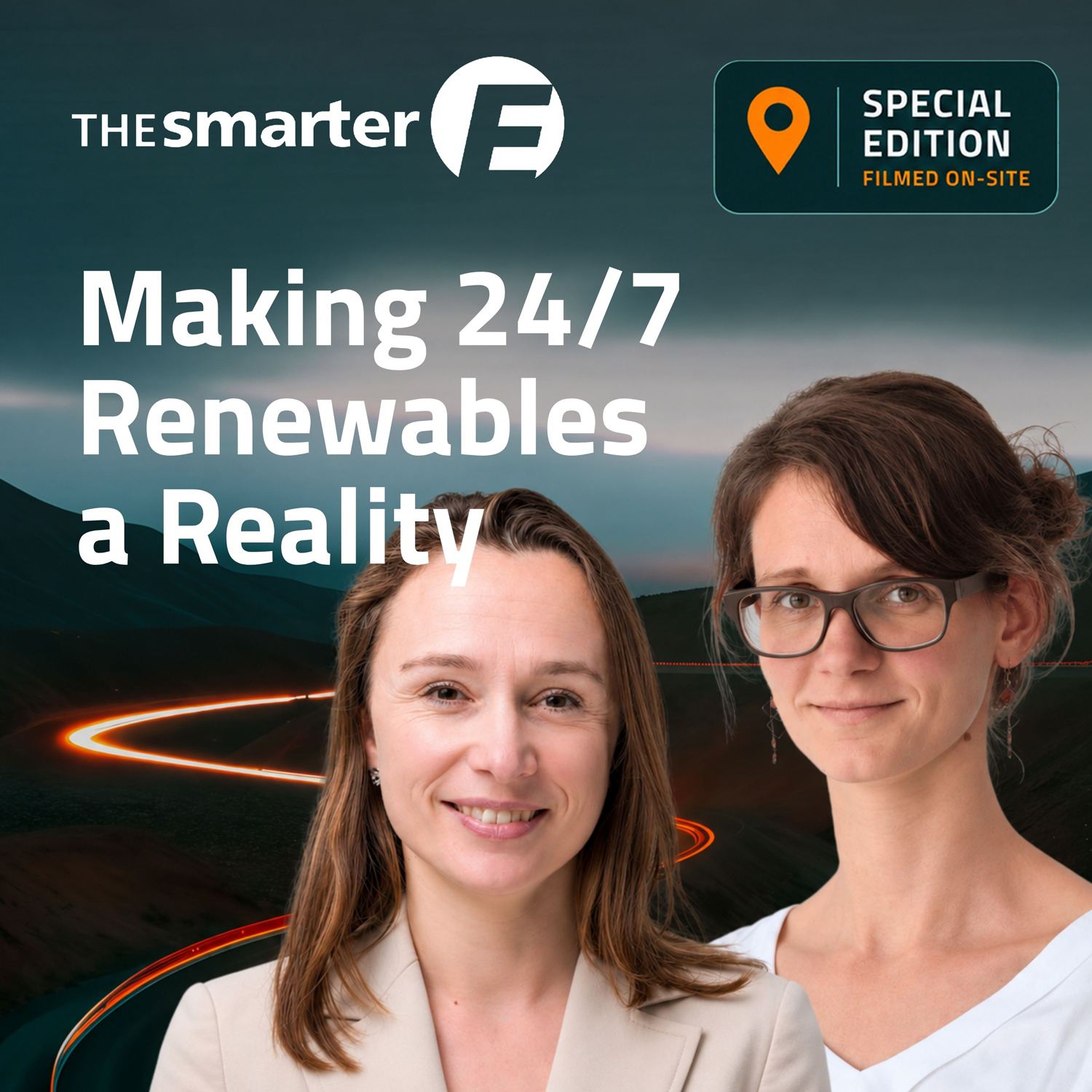 Update on global solar and inside “24/7 renewable Germany” – with Charlotte Senkpiel & Sonia Dunlop | The Dunkelflaute has become one of the most persistent arguments against a fully renewable energy system. When the sun isn’t shining and the wind isn’t blowing, where is our energy supposed to come from? Detailed new modeling from Germany’s Fraunhofer ISE suggests these “dark doldrums” are a challenge – but should not be enough to halt the energy transition. The bigger challenge to be overcome is how the flexibility needed to manage low-renewable energy periods can be embedded into the country’s energy system. Recorded at The smarter E Europe 2026 in Munich, host Jonathan Gifford speaks with Fraunhofer ISE senior scientist Charlotte Senkpiel about what it would take for Germany to reach climate neutrality with wind and solar at the heart of its energy system. And the result is not only good for the climate, it’s economically viable. The outcome of the Fraunhofer ISE study goes well beyond simply building more renewables. Batteries, electric vehicles, flexible demand, strengthened and smarter grids, international interconnectors, and dispatchable backup all have roles to play – while electrification dramatically reduces Germany’s dependence on fossil-fuel imports. And when prolonged periods of low wind and solar do arrive? The modeling shows how batteries, demand flexibility, electricity imports, and a limited use of hydrogen or synthetic-fuelled generation can work together to keep the system running. In the second part of the podcast, Global Solar Council CEO Sonia Dunlop joins the episode to discuss the push to unlock agrivoltaics and rooftop solar worldwide – and why she believes a near-term slowdown in global PV deployment doesn’t change solar’s mid-term trajectory. What the episode crystallizes: a 24/7 renewable energy system is about building an energy system flexible enough to handle the variability of wind and solar, and how it’s cheaper to do so. ✉️ Questions, comments or suggestions? Reach us at [email protected] | — | ||||||
| 8/20/26 | 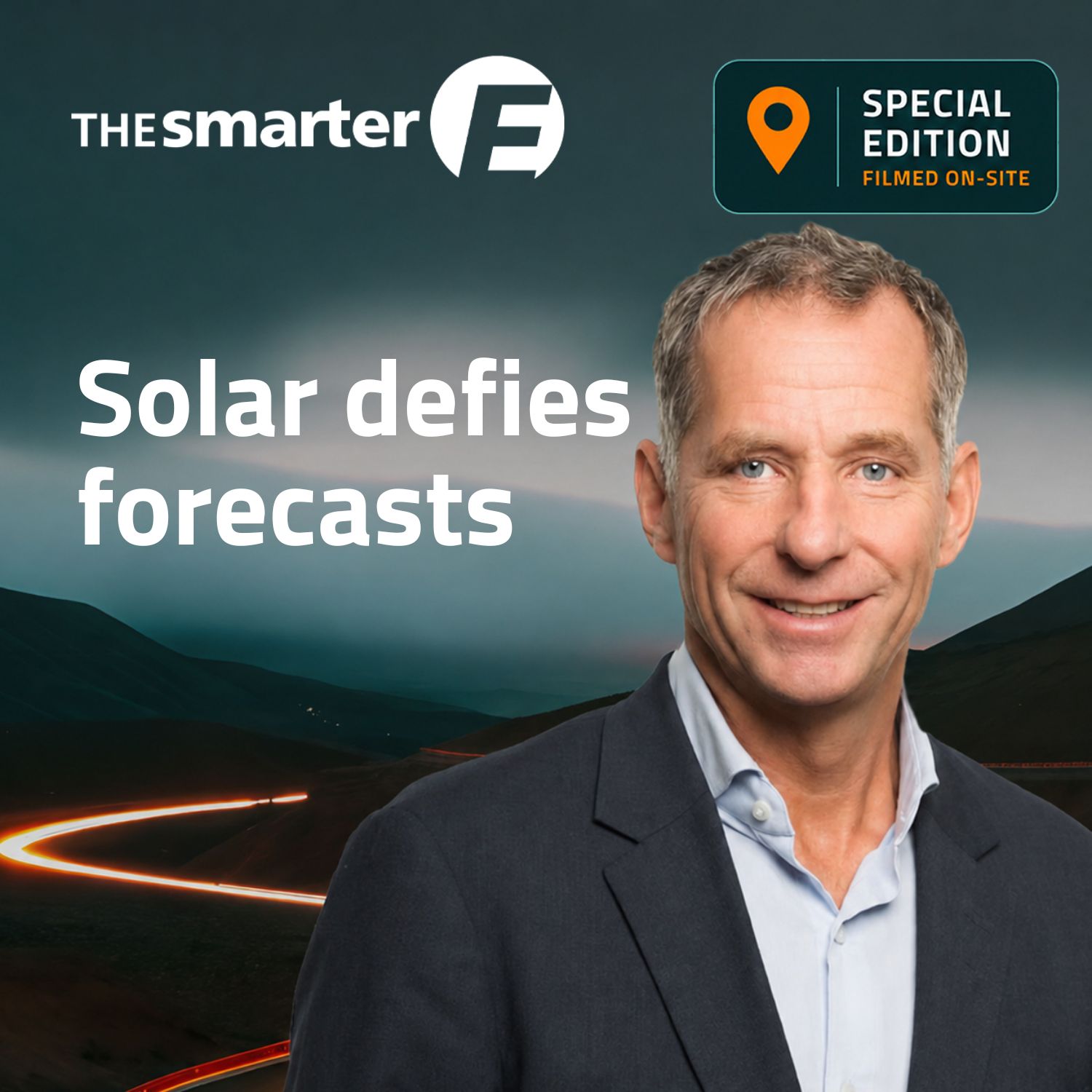 Why modelling the energy transition matters – with Jarand Rystad | Despite claims that the energy transition is losing momentum, solar and battery deployment continues to run ahead of forecasts – profoundly impacting electricity markets and the wider global energy system. Recorded at The smarter E Europe 2026 in Munich, host Jonathan Gifford is joined by Jarand Rystad, founder and CEO of energy analysts Rystad Energy, to examine where the transition stands today. Rystad explains why solar has consistently outpaced forecasts and how mass production, aggressive cost reduction, and rapid battery-technology deployment are driving continued expansion. But alongside the upside, the conversation turns to one of solar's biggest challenges: falling capture prices as abundant midday PV generation pushes down the value of electricity during daylight hours. Rystad argues that accelerating battery deployment is helping to address this imbalance, shifting excess generation, and ultimately making space for even more renewables. The conversation also explores how storage business models are evolving, the prospects for European solar manufacturing and next-generation perovskite technologies, and whether energy-security concerns could further accelerate the electrification of transportation. Together, these trends point to solar and batteries increasingly working in tandem to create a cheaper, flexible, and electrified energy system. ✉️ Questions or feedback? Write to us at [email protected] | — | ||||||
| 8/6/26 |  Effective responses to power markets in flux – with Edurne Zoco and Barbara Rubim | An increasing number of solar marketplaces have entered a new phase – one where achieving strong, ongoing installation rates depends heavily on system flexibility. Recorded live at The smarter E Europe 2026 in Munich, this episode of pod brings together two conversations that examine how solar marketplaces are changing in the face of this new reality, which includes falling capture prices and the rapid rise of battery energy storage. Host Jonathan Gifford is first joined by Edurne Zoco, Executive Director of Clean Technologies and Supply Chain at S&P Global, for a wide-ranging look at the major trends in global solar in 2026. Zoco explains why a temporary slowdown in installations masks a future continued growth trajectory, how batteries are becoming indispensable as solar penetration increases, and why the distributed market segment is gaining momentum across Europe. The episode then shifts to Brazil with Barbara Rubim, recently elected President of AB Solar, who outlines the obstacles facing what was one of the world's fastest-growing solar markets. Rubin reflects on Brazil's rapid expansion to nearly 70 GW of installed capacity, the growing impact of renewable-energy curtailment, and the pivotal role that the country's first large-scale storage auctions could play in unlocking the next wave of development. Taken together, these conversations reveal the urgency of a shift towards energy storage, and how smarter market design and technologies will allow that storage to deliver greater value and flexibility across electricity networks. ✉️ Questions or feedback? Write to us at [email protected] | — | ||||||
| 7/23/26 |  How U.S. innovators are reshaping solar – with Howard Wenger and Aaron Thurlow | Innovation in solar business models and technology is front-and-center on this episode of The smarter E Podcast. Featuring two leaders from the U.S. solar industry, it explores how innovation across the solar value chain is taking the global energy transition in new directions. Recorded live at The smarter E Europe 2026 in Munich, host Jonathan Gifford speaks with two executives from companies that represent very different stages of the industry's evolution: one scaling and redefining an established global business, the other pushing a new generation of solar technology toward commercial reality. First, Howard Wenger, President of Nextpower, discusses the company's rapid transformation from a solar tracker specialist into a provider of integrated utility-scale solar and energy storage platforms. Following a series of strategic acquisitions – most recently the German mounting system manufacturer Zimmermann and battery storage integrator Prevalon – Wenger explains why combining hardware, software, and storage is becoming essential for utility-scale renewable energy. He also shares insights into Europe's growing importance for the company, the role of battery storage in addressing negative electricity prices and data centre demand, and why customer-focused innovation remains central to Nextpower's expansion strategy. The conversation then turns to the future of photovoltaic cell-and-module technology with Aaron Thurlow, Chief Commercial Officer at Caelux. Thurlow explains how the company's perovskite-on-glass approach could accelerate commercial adoption by augmenting existing silicon module production lines rather than replacing them. He discusses the pathway from pilot production to scale manufacturing, the potential for significant efficiency gains, and why perovskites could unlock new opportunities not only for terrestrial solar but also for space applications. The discussion also tackles one of PV-perovskite technology’s biggest questions: long-term durability and why confidence is growing and commercial-scale deployment drawing closer. Together, these conversations highlight an industry advancing on multiple fronts and developing the technologies that could define the next generation of highly-productive photovoltaics. ✉️ Questions or feedback? Write us at [email protected] | — | ||||||
| 7/9/26 | electric vehiclesenergy security+3 | Thomas RaffeinerPetrouschka Werther | The Mobility HouseDutch Ministry of Infrastructure and Water Management | EuropeMunich | EV accelerationenergy solutions+6 | — | 30m 58s | ||
| 7/2/26 | renewable energyenergy transition+4 | Tim MeyerMarkus Elsässer | The smarter E | GermanyMunich | renewable energyGermany+6 | — | 31m 50s | ||
| 6/25/26 | perovskite technologysolar efficiency+3 | Rutger SchlatmannAngelika Harter | Helmholtz Zentrum Berlin | Berlin | perovskitestandem solar cells+3 | — | 34m 29s | ||
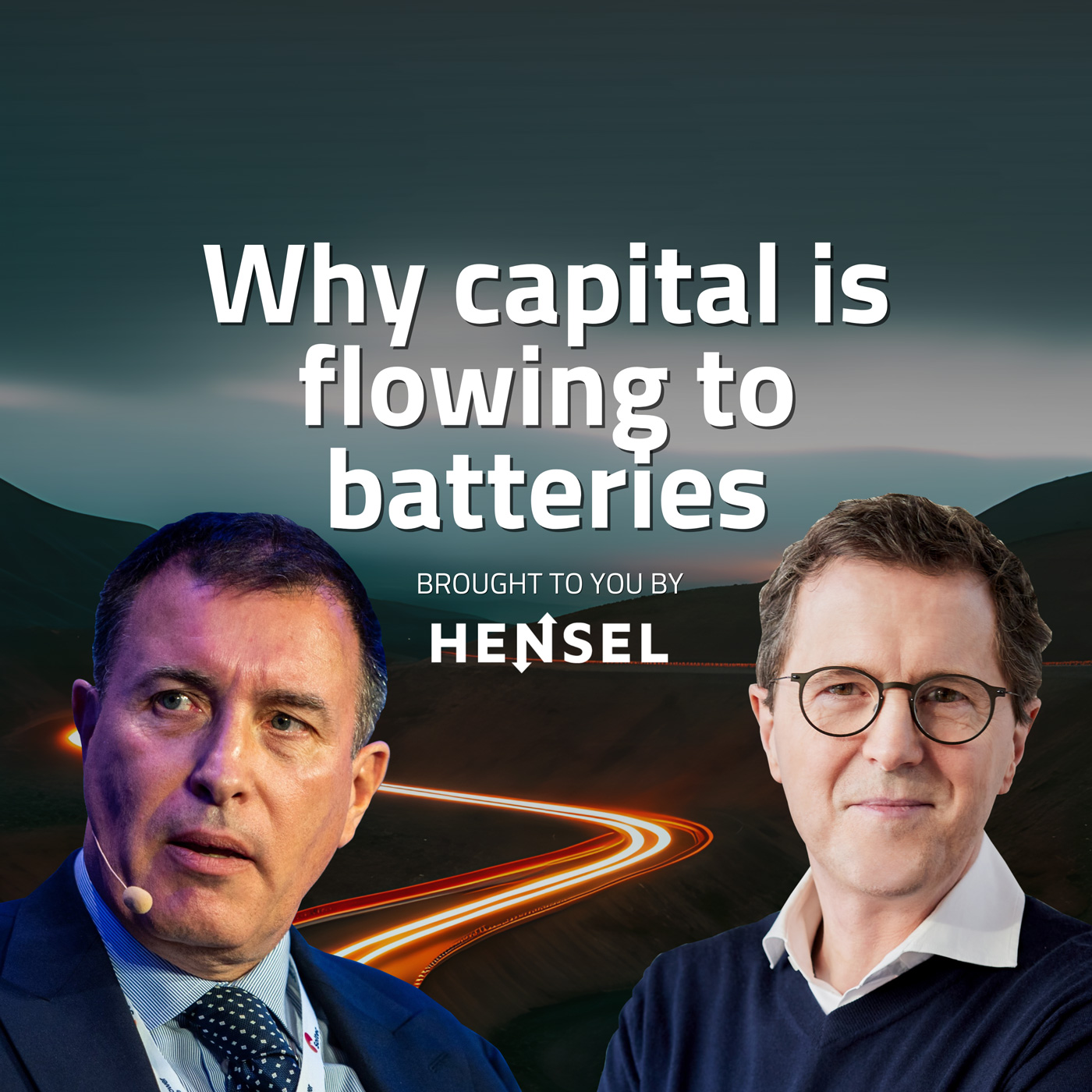
| 6/11/26 | batterieselectric mobility+4 | Laurent SegalenStefan Müller | Redefining EnergyENERPARC | GermanyEurope | batterieselectric vehicles+5 | — | 37m 38s | ||
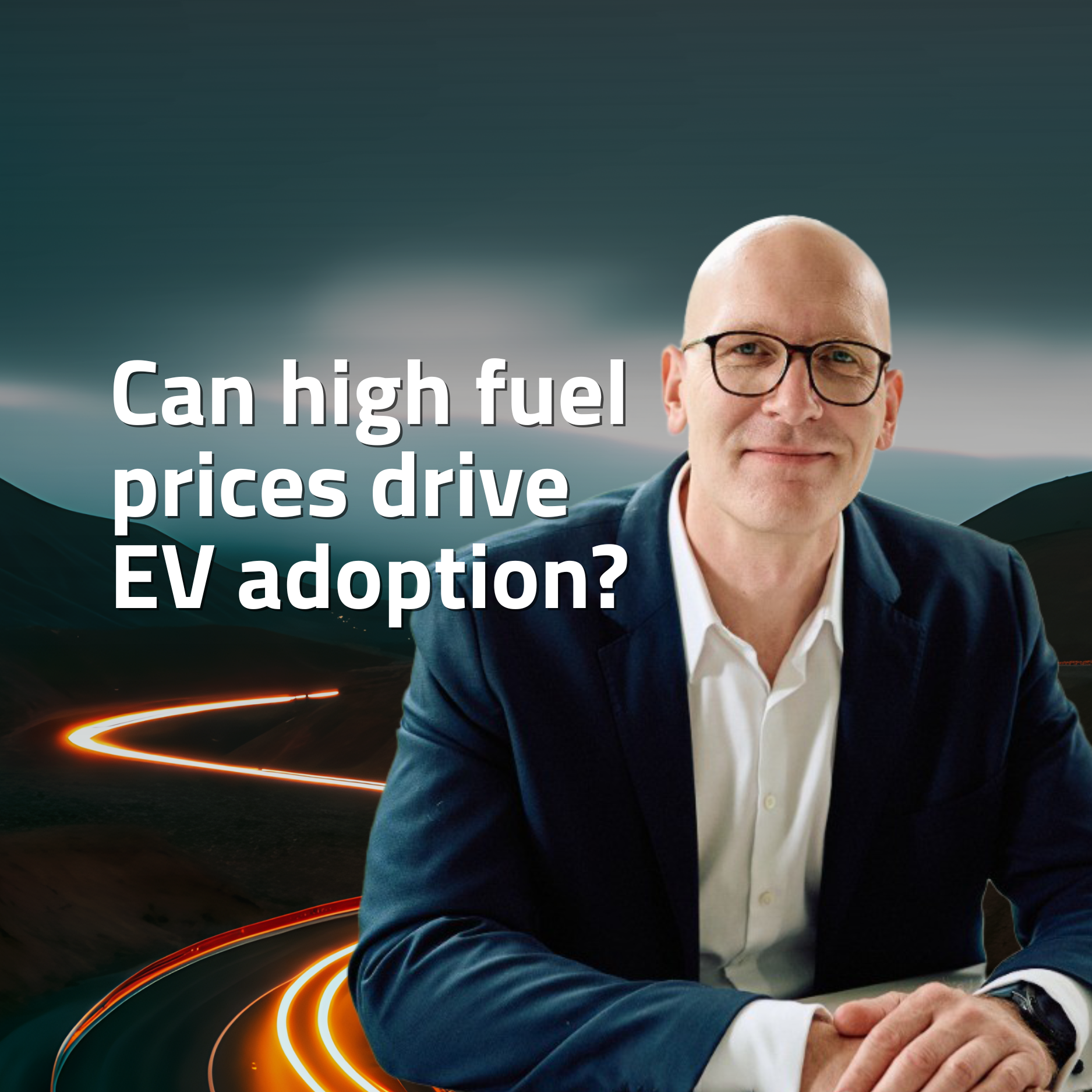
| 5/28/26 | eMobilitylogistics industry+5 | Marcel Rümenapf | Siemens | EuropeBerlin | fuel costseMobility+5 | — | 33m 01s | ||
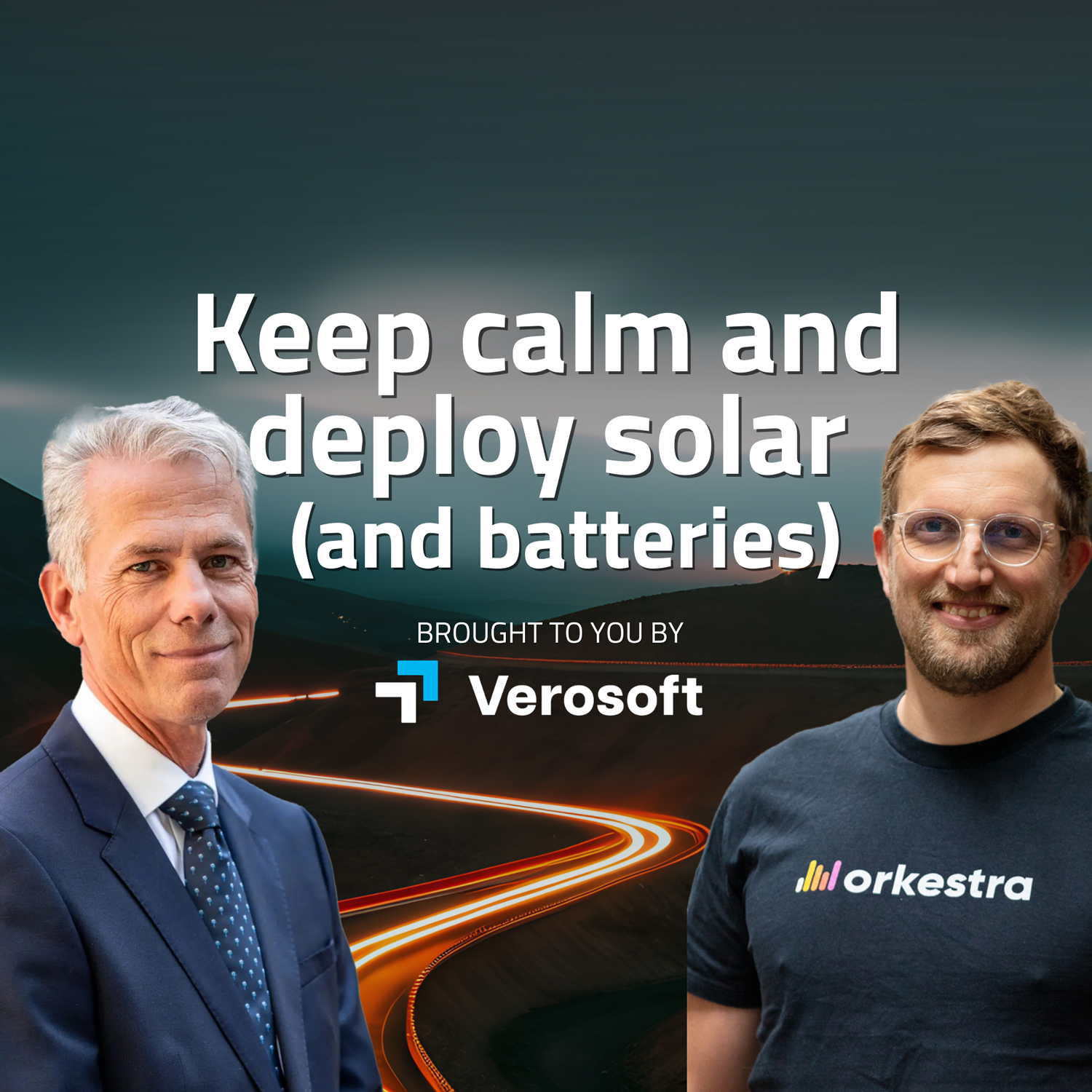
| 5/14/26 | solar energyclean energy transition+4 | Jenny ChaseQurrent+2 | BloombergNEFQurrent+2 | Brussels | solar startupsbattery revenue cannibalization+5 | — | 36m 09s | ||
Want analysis for the episodes below?Free for Pro Submit a request, we'll have your selected episodes analyzed within an hour. Free, at no cost to you, for Pro users. | |||||||||
| 4/30/26 | solar energybatteries+5 | James AllstonMarko Topič | Orkestra EnergyUniversity of Ljubljana | United KingdomGermany+1 | solar technologyenergy crisis+5 | — | 47m 08s | ||
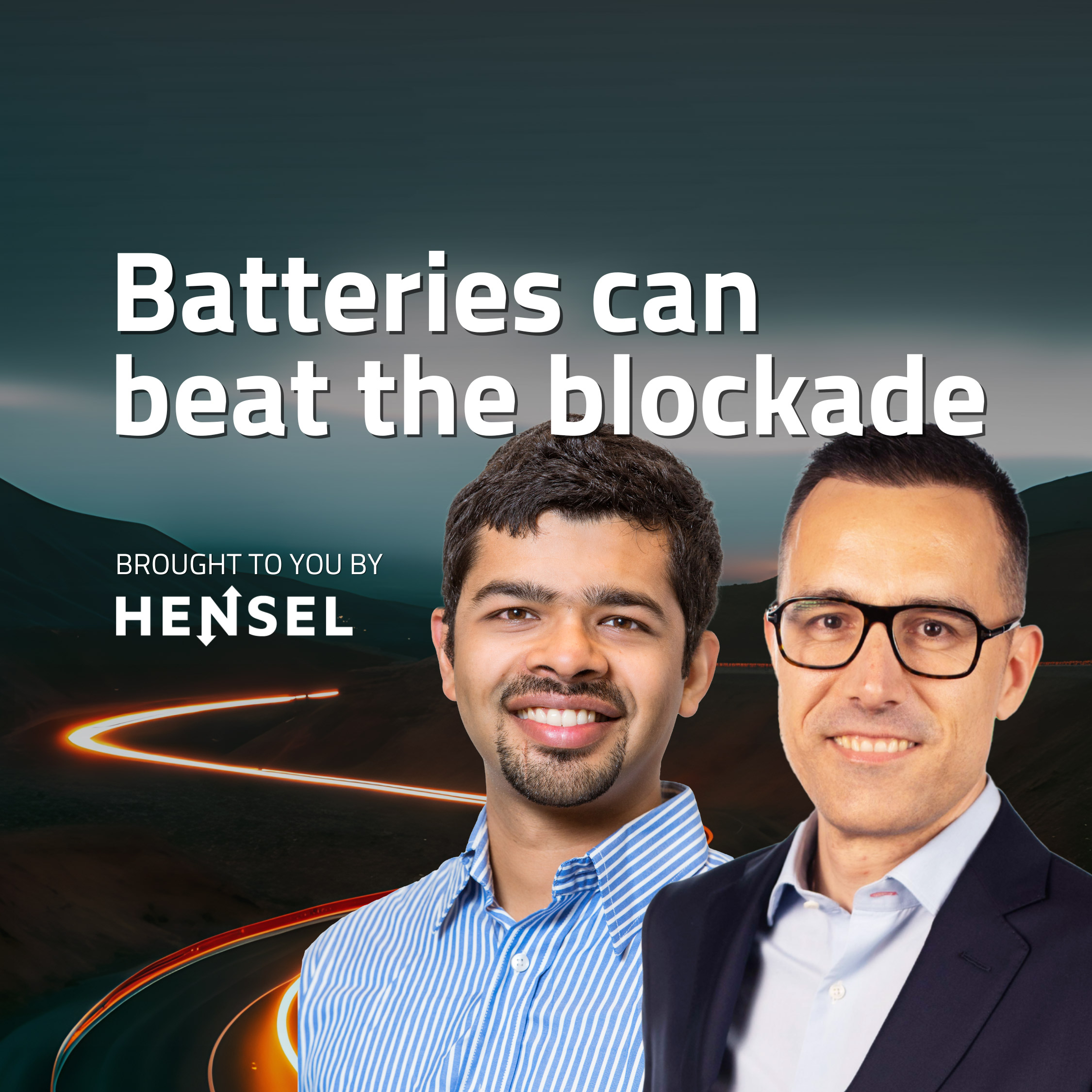
| 4/16/26 | energy securityelectric vehicles+4 | Gautham RamRuben Valiente | TU DelftMaxxen Energy | Frankfurt | energy securityelectric vehicles+6 | — | 45m 57s | ||
| 4/2/26 | energy securitysolar power+4 | Timothy ShenDr. Rethabile Melamu | Wood MackenzieSouth African Photovoltaic Industry Association | — | solar energyenergy transition+4 | — | 37m 07s | ||
| 3/19/26 | energy transitiondigital technologies+5 | Simon EvansAkshat Rathi | ArupBloomberg | — | digitalizationenergy crisis+5 | — | 57m 10s | ||
| 3/5/26 | solar modulesdurability+4 | Chiara BarettaSteven Xuereb | TOPCon technologyPOE+2 | — | solar modulesdefect rate+4 | — | 46m 32s | ||
| 2/19/26 | battery capacityenergy storage+4 | Carolina CruzPete Tillotson | The smarter ELithium-ion | Dunkelflaute | battery capacityenergy storage+4 | — | 44m 31s | ||
| 2/5/26 | bidirectional EV chargingenergy systems+4 | Adriana FrickeRobin Berg | HubjectWe Drive Solar | EuropeNetherlands | Vehicle-to-GridV2G+6 | — | 38m 03s | ||
| 1/22/26 | solar PV pricingsupply chain dynamics+3 | Alex BarrowsMolly Morgan+1 | CRUGlobal Solar Council | — | solar PVpricing reset+5 | — | 58m 10s | ||
| 1/8/26 | energy transitionbattery energy storage+3 | Anna Darmani | Wood Mackenzie | Europe | BESSenergy storage+5 | — | 44m 36s | ||
| 12/11/25 | smart home energy managementenergy transition+3 | Irene Guerra GilMark Bruno | gridXCUBE Competition+1 | — | smart homeenergy management+5 | — | 46m 05s | ||
| 11/27/25 | .png) What’s next in PV cell and module tech – with Renate Egan | UNSW has played an outsized role in the development of crystalline-silicon solar technology and the modern solar industry. Through its leadership of the Australian Centre for Advanced Photovoltaics (ACAP), it continues to help shape the future of solar innovation. ACAP brings together leading Australian solar research programs, works across the entire solar value chain, and collaborates closely with major global manufacturers – including industry giants in China. In this episode, UNSW researcher and ACAP Executive Director Professor Renate Egan joins host Jonathan Gifford to share the latest developments in solar research and discuss how technology will continue driving the PV industry in 2026. Follow The smarter E podcast for more global insights into the clean energy transition – and don’t forget to rate and review if you enjoy the show! | — | ||||||
| 11/13/25 | _(1).png) China’s massive solar market in transition – with Frank Haugwitz | Where China goes, so goes the global energy transition. With its dominance across solar and energy storage supply chains, China’s every policy shift ripples through global clean tech markets. In 2025, that landscape is shifting fast: after nearly 200 GW of new solar capacity added early in the year, installations have slowed as the industry adapts to new policies. Meanwhile, manufacturers are facing overcapacity and hunting for new export markets. Frank Haugwitz, Senior Analyst at cleantech advisory Apricum, joins host Jonathan Gifford to break down the latest trends – and what to expect from China’s renewable energy industry through the end of the decade. Follow The smarter E podcast for more global insights into the clean energy transition – and don’t forget to rate and review if you enjoy the show! | — | ||||||
| 11/6/25 | .jpg) #TSEP 242 Start-Ups as Drivers of Innovation and Change to Expand and Optimise the Grid | Today, we dive into one of the most exciting areas of the energy transition: the expansion and optimisation of our power grids and the role that startups play in this. There's no question that the big players in the energy industry are important. But more and more often, it's the young, courageous companies that are driving change in the system with fresh ideas, new technologies, and unusual business models. However they need tackle quite a few hurdles on their way. How do start-ups manage to assert themselves in a highly regulated and technically demanding industry? How do they work with grid operators, municipal utilities, or energy suppliers, and where do they encounter resistance? We talk about this with Johan Söderbom, Thematic Leader for Smart Grids and Energy Storage at EIT InnoEnergy. About Johan Söderbom Between 1995 and 2014, Johan worked at the northern European Utility Vattenfall AB in various positions in R&D. From 2014 to 2019, Johan was heading a section at RISE (Research Institutes of Sweden) responsible for electrical and optical measurement technology, and he now holds the position of thematic leader for Smart Grids and Energy Storage at EIT InnoEnergy. About INNOENERGY InnoEnergy is industrialising clean tech innovation to enable and grow a global net-zero economy. Active in Europe and the US, the company invests in early-stage start-ups and in the current and future workforce, building resilient clean-tech value chains that drive sustainable economic growth. Through its ecosystem – with 1,400 partners including 39 shareholders spanning industry, finance, public policy, and academia – the company scales the energy transition at speed. Since 2010, InnoEnergy has supported 540+ companies, helping 4 of them grow into industrial unicorns. These companies have raised more than €34 billion to date, created over 47,000 jobs, and are on track to generate €110 billion in revenue and reduce 2.3 gigatons of CO2e by 2030. Currently, InnoEnergy is invested in 160+ start-ups and scale-ups. In support of the EU’s climate and industrial goals, InnoEnergy leads industrial alliances in batteries and solar, and accelerates the uptake of green hydrogen. Pinpointing market gaps, InnoEnergy launches new industrial champions in sectors including batteries, steel, and fertilisers. InnoEnergy was established in 2010 by the European Institute of Innovation and Technology (EIT), a body of the European Union, as one of its first Knowledge and Innovation Communities (KIC). In 2025, the EIT and InnoEnergy entered into a new partnership, continuing their collaboration on specific projects. | — | ||||||
| 10/30/25 | 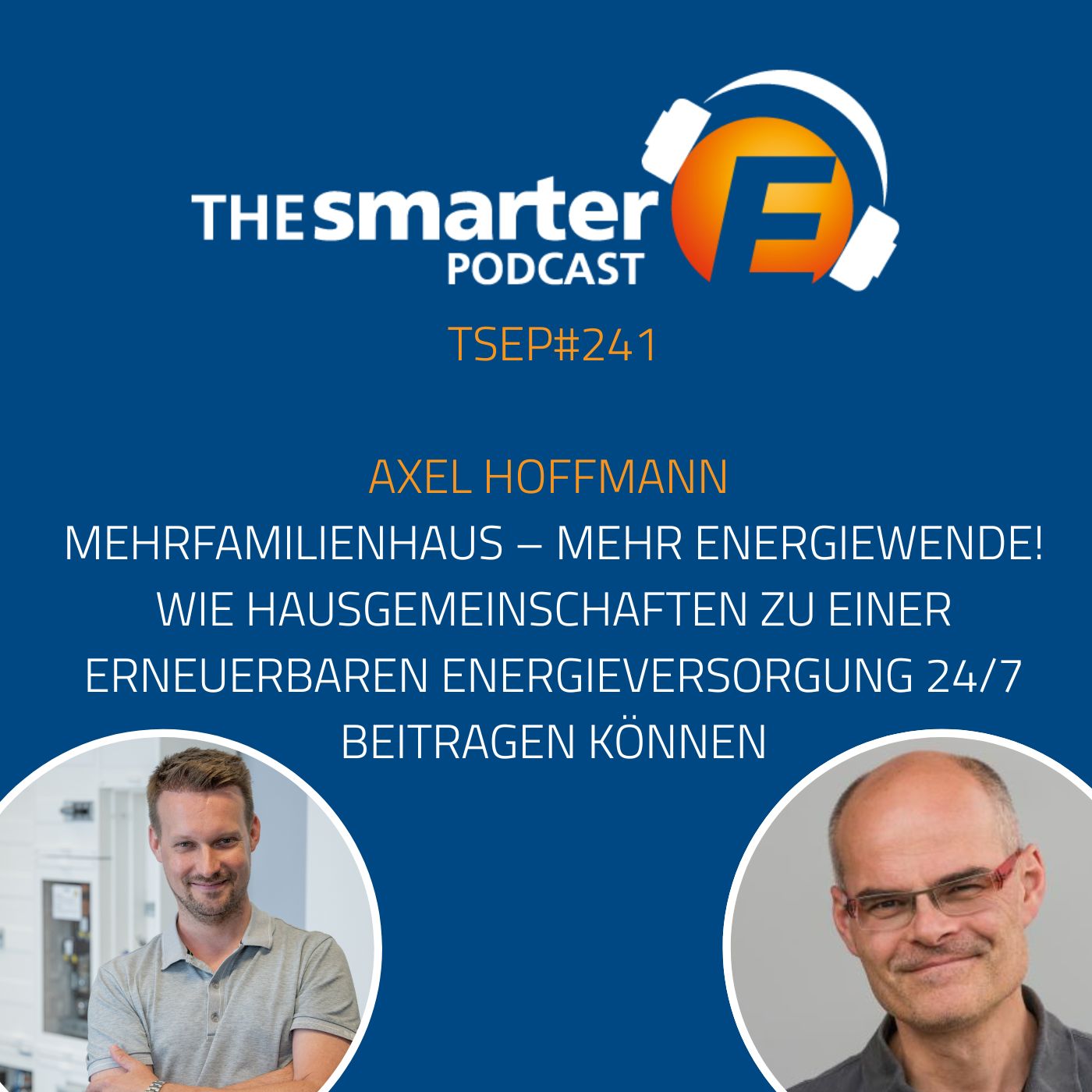 #TSEP 241 Mehrfamilienhaus – Mehr Energiewende! Wie Hausgemeinschaften zu einer erneuerbaren Energieversorgung 24/7 beitragen können | In Deutschland leben über 60 Prozent der Bevölkerung in Mehrfamilienhäusern, so viele wie in kaum einem anderen EU-Land. Rund 3,3 Millionen Mehrfamilienhäuser gibt es hierzulande. Gleichzeitig entfällt rund ein Viertel des gesamten Endenergieverbrauchs in Deutschland auf private Haushalte, 2022 waren es etwa 630 TWh. Das Potenzial von Mehrfamilienhäusern und ihren Bewohnern, einen entscheidenden Beitrag zum Gelingen der Energiewende zu leisten, ist groß. Wie lässt sich dieses Potenzial nutzen? Darüber sprechen wir mit Axel Hoffmann, Marktmanager bei der Haager Vertriebsgesellschaft. Über Axel Hoffmann Axel Hoffmann ist seit 2018 Marktmanager bei der Hager Vertriebsgesellschaft mbH & Co. KG in Blieskastel. Nach dem Wirtschaftsingenieurstudium an der HTW Saar schloss er 2022 den Masterstudiengang Energiemanagement an der Universität Koblenz-Landau ab. Bei Hager ist er Ansprechpartner für Netzbetreiber und Experte für Mieterstrom, Wandleranlagen und die Stromversorgung im Außenbereich. Zudem ist er aktiv an Forschungsprojekten zur Umsetzung von § 14a sowie an Smart-Grid-Anwendungen beteiligt. Über Hager Als inhabergeführtes Familienunternehmen begleitet Hager Projekte vom Schalterkonzept über Energiemanagement- und Raumanschlusssysteme sowie Smart-Home-Lösungen bis hin zur Türkommunikation. Die Unternehmensgeschichte von Hager begann vor 70 Jahren mit innovativen Schaltschränken, die heute immer mehr zu Herz und Hirn von Gebäuden avancieren. Hager denkt Energieverbrauch und -produktion ganzheitlich und bietet sämtliche Komponenten, die es dafür braucht. | — | ||||||
| 10/23/25 | 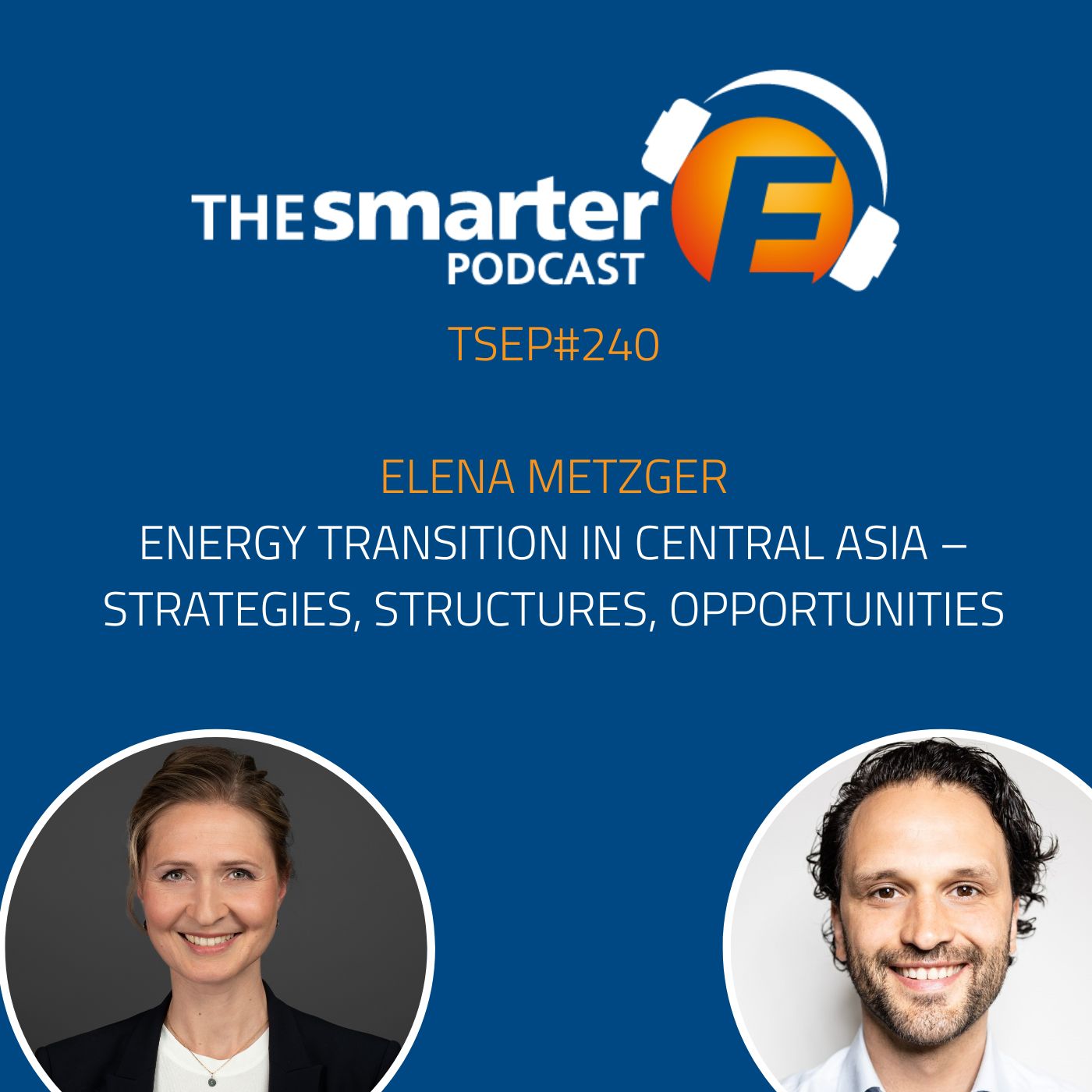 #TSEP 240 Energy Transition in Central Asia – Strategies, Structures, Opportunities | Today, we're examining a region that's rarely in the spotlight in the international energy debate, yet has enormous potential: Central Asia. Specifically five countries characterised by a long tradition of fossil fuels, but also by an abundance of sun, wind, and water: Kazakhstan, Uzbekistan, Kyrgyzstan, Tajikistan, and Turkmenistan. Are these countries already tapping into their potential for a sustainable energy future? We’ll get up to speed in regards to their political strategies and investment programs driving the transformation. What are the biggest hurdles in terms of regulation, financing, and infrastructure? How important are international partnerships in making this region a key player in the global energy transition? We talk about this with Elena Metzger. About Elena Metzger Elena Metzger leads the German Energy Dialogues with Kazakhstan and Uzbekistan on behalf of the Federal Ministry for Economic Affairs and Energy (BMWE). She has been the driving force to shape the Energy Dialogues into a key platform for political and technical exchange on energy efficiency, industrial decarbonization, renewable energies, and green hydrogen. She is also team leader for Central Asia, Türkiye, and the South Caucasus in the International Cooperation Department at the German Energy Agency (dena). About the bilateral Energy Partnership Central Asia With regard to cooperating in the field of energy policy, achieving international climate goals and making climate neutrality a reality by 2045, the German Government’s bilateral Energy Partnerships (EPs) have become one of its most important international energy and climate policy instruments. The growing network strengthens political dialogue on climate protection and energy system transformation between Germany and partner countries worldwide. The declared aim of this cooperation is to shape a successful global energy transition that combines security of supply, decarbonisation of industry and foreign trade promotion with effective climate protection. Today's episode is supported by Weidmüller, a specialist in electrification, automation, digitalisation, electrical connectivity and renewable energies. The family-owned company celebrates its 175th anniversary this year and is a true solar pioneer, boasting over 20 years of experience in PV. With more than 80 locations worldwide, Weidmüller markets combiner boxes, communication infrastructure and installation accessories for utility-scale and rooftop systems. | — | ||||||
.jpg)

.jpg)
.jpg)

.png)
.png)
Showing 25 of 264
Pitch Fit is a Pro feature
See how bookable this show is for guests, which brands already advertise, the per-episode ad value, and the best-fit guest and sponsor profile. The numbers are blurred on the free plan.
How readily this show books outside guests like you.
How proven this show is for host-read sponsorships.
For Guests
ProFor Advertisers
ProUpgrade to Pro to unlock guest cadence, sponsor categories, fit scores, and per-episode ad value for this show.
Chart history for The smarter E Podcast
Peaked at #101 in AT, currently #101 in AT.
| Market | Genre | Peak | Current | Trend |
|---|---|---|---|---|
| AT | — | #101 | #101 | — |
Chart Positions
1 placement across 1 market.
Chart Positions
1 placement across 1 market.