
Insights from recent episode analysis
Audience Interest
Podcast Focus
Publishing Consistency
Platform Reach
Insights are generated by CastFox AI using publicly available data, episode content, and proprietary models.
Total monthly reach
Estimated from 5 chart positions in 5 markets.
By chart position
- 🇦🇪AE · Places & Travel#2210K to 30K
- 🇮🇱IL · Places & Travel#2910K to 30K
- 🇭🇺HU · Places & Travel#593K to 10K
- 🇮🇩ID · Places & Travel#102500 to 3K
- 🇸🇦SA · Places & Travel#113500 to 3K
- Per-Episode Audience
Est. listeners per new episode within ~30 days
12K to 38K🎙 Weekly cadence·42 episodes·Last published 2d ago - Monthly Reach
Unique listeners across all episodes (30 days)
24K to 76K🇦🇪39%🇮🇱39%🇭🇺13%+2 more - Active Followers
Loyal subscribers who consistently listen
7.2K to 23K
Market Insights
Platform Distribution
Reach across major podcast platforms, updated hourly
Total Followers
—
Total Plays
—
Total Reviews
—
* Data sourced directly from platform APIs and aggregated hourly across all major podcast directories.
On the show
Recent episodes
Eminent Plebs: The Story of Sri Lanka’s Rats, Shrews, Mice, Gerbils & Squirrels. A Ceylon Press Island Story
May 11, 2026
29m 42s
Guardians: Finding The Mongooses of Sri Lanka. A Ceylon Press Island Story
May 11, 2026
11m 26s
Inscrutable Angels: The Story of Sri Lanka’s Unnoticed Skinks. A Ceylon Press Island Story
May 11, 2026
32m 07s
The Great Dynasty: The Story Of The Kings Who Made Sri Lanka. A Ceylon Press Complete Audio Book
May 11, 2026
2h 04m 10s
A Royal Ruination: The Ceylon Press History Of Sri Lanka 18
May 11, 2026
31m 13s
Social Links & Contact
Official channels & resources
Official Website
Login
RSS Feed
Login
| Date | Episode | Description | Length | ||||||
|---|---|---|---|---|---|---|---|---|---|
| 5/11/26 | 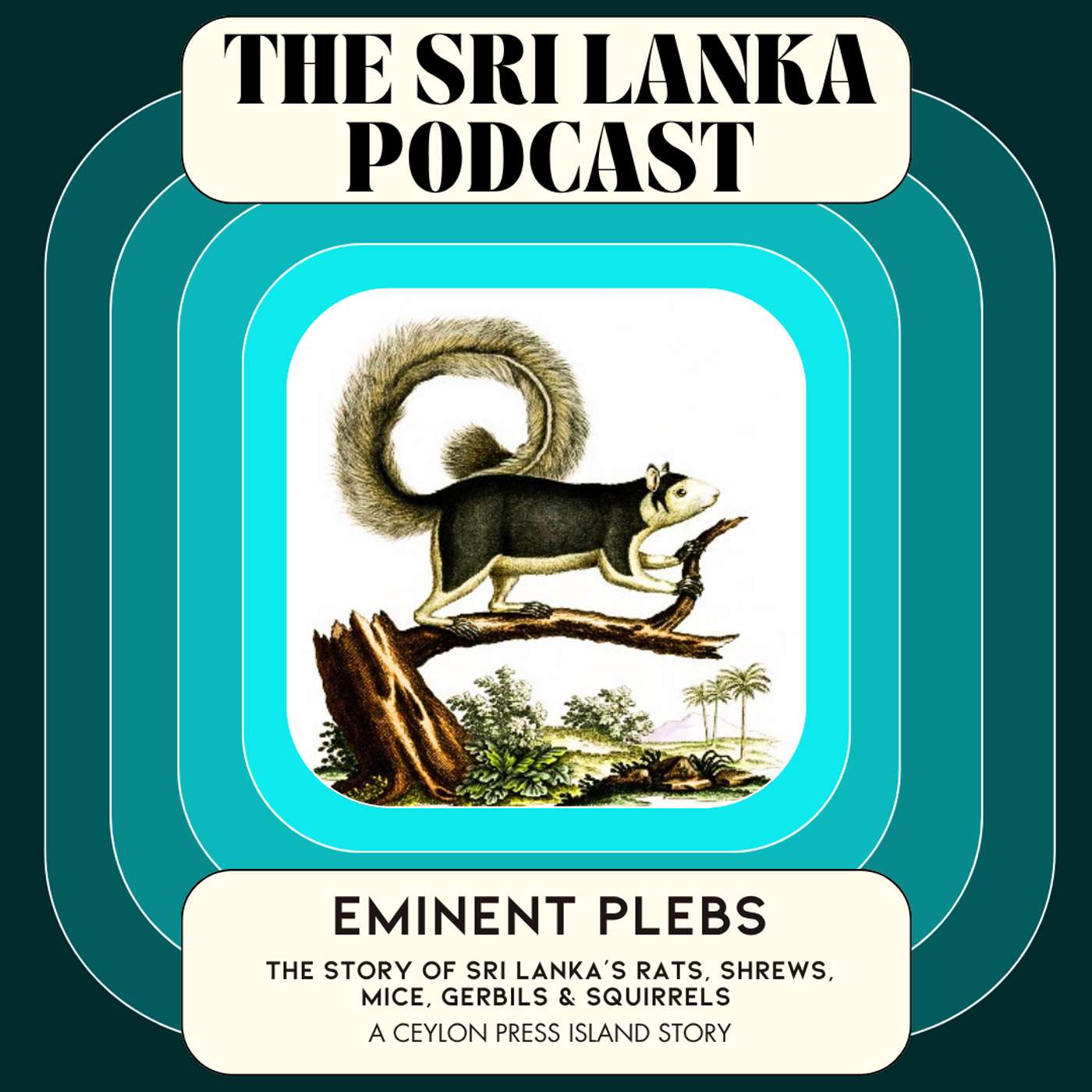 Eminent Plebs: The Story of Sri Lanka’s Rats, Shrews, Mice, Gerbils & Squirrels. A Ceylon Press Island Story | Sri Lanka, like ancient Rome, has strict - albeit invisible - notions of caste and class. And class, not being exclusively human, is no less apparent within its smaller mammalian world – its rodents, and rodent-like cousins: its rats, shrews, mice, and squirrels. If the island’s tiny and elite mammalian senatorial class is represented by its elephants and leopards, its more capacious equestrian class comprises its monkeys, lorises, bears, mongooses, buffalo, anteaters, otters, jackals, hares, deer, civets, and wild cats. Which, of course, leaves the plebs. Bottom of the pyramid, they may have been, but the Roman pleb took nothing lying down. Famed for their resistance, resilience, and passion, they lived their lives with little submission or demureness. They were eminent, not intimidated. As are Sri Lanka’s rodents, whose existence is anything but deferential or docile. And numbering over 30, they make up not just over a quarter of the island’s land-living mammal species, but also 50% of its endemic species. To know them is to understand a key part of what really makes Sri Lanka Sri Lankan. Naturally, plebs had a firm pecking order all of their own and at its apex stood the Tribunes of the plebs – the People’s Tribune, which in a mammalian context can only mean the rats. Like tribunes, rats are the busy, brisk, no-nonsense influencers of what really happens or doesn’t, and they abound in Sri Lanka. Their collective poor reputation and cordial hosting of many especially nasty diseases mark them out as a mammal best enjoyed from a distance. However, as Jo Nesbo observed, "a rat is neither good nor evil. It does what a rat has to do." Two of the island’s ten rat species are endemic. Thirty centimetres in length, nose to tail, with steel grey fur and white undersides, the Ohiya Rat is named after a small village of barely 700 souls near Badulla. It lives quietly in forests and has gradually become scarcer, as biologists have counted. Its only other endemic cousin, the Nilgiri Rat, is no less endangered and is today found only in restricted highland locations such as the Knuckles, Horton Plains, and Nuwara Eliya. Little more than thirty-nine centimetres in length, nose to tail, its fur tends to be slightly redder than the typical grey of many of its relatives. Its name – Nillu, which means cease/settle/ stay/stand/stop - gives something of a clue about its willingness to get out and about. To these two are joined an embarrassment of other rat species, many common throughout the world, others restricted to South and Southeast Asia, and all much more successful in establishing an enduring dominance. These include the massive Greater Bandicoot Rat and its slightly smaller cousin, the Lesser Bandicoot Rat. Measuring almost sixty centimetres in length, nose to tail, the Greater Bandicoot Rat is known in Sri Lanka as the Pig Rat. Aggressive, highly fertile, widespread, happy to eat practically anything and an enthusiastic carrier of many diseases, it is not the sort of creature to closely befriend. A marginally smaller giant of the rat world is the Lesser Bandicoot Rat, coming in at 40 centimetres in length, nose to tail. It is found in significant numbers throughout India and Sri Lanka, and its fondness for burrowing in farmland and gardens has earned it a reputation for destruction. It can be aggressive and is a reliable host to a range of nasty diseases, including plague, typhus, leptospirosis, and salmonellosis. The Black Rat, or Rattus rattus, lives in all parts of Sri Lanka and occurs in at least five distinct subspecies: the Common House Rat, the Egyptian House Rat, the Indian House Rat, the Common Ceylon House Rat, and the Ceylon Highland Rat. None is much longer than thirty-three centimetres nose to tail, and despite their reputation for being black, they also sport the occasional lighter brown fur. They are phenomenally successful, with almost every country in the world calling them home, including Sri Lanka. They are also disconcertingly resilient transmitters of many diseases, with their blood serving as a habitat for large numbers of infectious bacteria, including those that cause the bubonic plague. Three other rats are restricted to South Asia: Blanford's Rat, the Indian Bush Rat, and the Indian Soft-Furred Rat. Indeed, Blanford's Rat, also known as the White-Tailed Wood Rat, is found in impressive numbers throughout India, Sri Lanka, and Bangladesh. Measuring thirty-five centimetres in length, nose to tail, it has the classic grey fur of the kind of rat that scares most people. The Indian Bush Rat is also found widely across India and Sri Lanka. It even boasts a tiny pocket-sized colony in Iran. At twenty-five centimetres in length, nose to tail, it is smaller than many other rats. It has rather beautiful fur that is speckled yellow, black, and reddish, as if it had wandered out of a hair salon, unable to make up its mind about which exact hair dye to ask for, opting instead for a splash of everything. The ultimate C List celebrity, the beautiful Indian Soft Furred Rat, is more than happy to make its home at any altitude and almost any place from India, Nepal, and Pakistan to Sri Lanka. So ubiquitous and successful is it that it is listed as being of no concern whatsoever on the registers of environmentalists troubled by species decline. Barely 30 centimetres nose to tail, it has brown to yellow fur on its back and white across its tummy. The devil of the rat world is undoubtedly the Brown Rat, which boasts a wide range of alternative names all associated either with Lucifer, Satan, Abaddon, Beelzebub, or streets, sewers, or wharves. Immortalised by Dickens, it has been studied and domesticated more than most mammals and inhabits almost every continent of the world, not least Sri Lanka. It is large – over 50 centimetres nose to tail. It is happy to consume nearly anything, is highly social, produces up to 5 litters a year, and, according to more informed scientists, is capable of experiencing positive emotions. A final rat, Tatera Sinhaleya, known only from fossil records, bade farewell to the island many thousands of years ago. If rats are the tribunes of the mammalian world, then mice are certainly its aediles, a post in the Roman Republic reserved for men responsible for the upkeep of the city, and so, by nature, meticulous, attentive, persistent. Just like Sri Lanka’s seven mouse species, nearly half of which are also endemic. The ultra-rare Sri Lankan Spiny Mouse leads these native, endemic, and patriotic rodents. It is now so endangered that it can be seen in only very few locations. A mere maximum of 18 centimetres in length, from nose to tail, its reddish grey back and sides morph into white underparts, with huge, gorgeous, smooth, scooped-out ears that stand like parasols above large dark eyes. It is a mouse to fall in love with. The similar, and somewhat confusingly named, Mayor’s Spiny Mouse also inhabits the smaller end of the mouse spectrum and comes in two (still quite widespread) variants – Mus Mayori Mayori, which inhabit the hill country; and Mus Mayori Pococki, which prefers the low wetlands. Telling them apart is almost impossible; both are covered with reddish-grey fur and exhibit relatively small ears. Seeing them is also a challenge, for they are both nocturnal creatures. One of their more interesting (albeit worrying) points of mouse difference is their capacity to carry quite so many other creatures: from mites, ticks, and sucking lice to small scorpions. The last of the endemic mice is the Ceylon Highland Long-Tailed Tree Mouse. Discovered in 1929 by t... | 29m 42s | ||||||
| 5/11/26 | 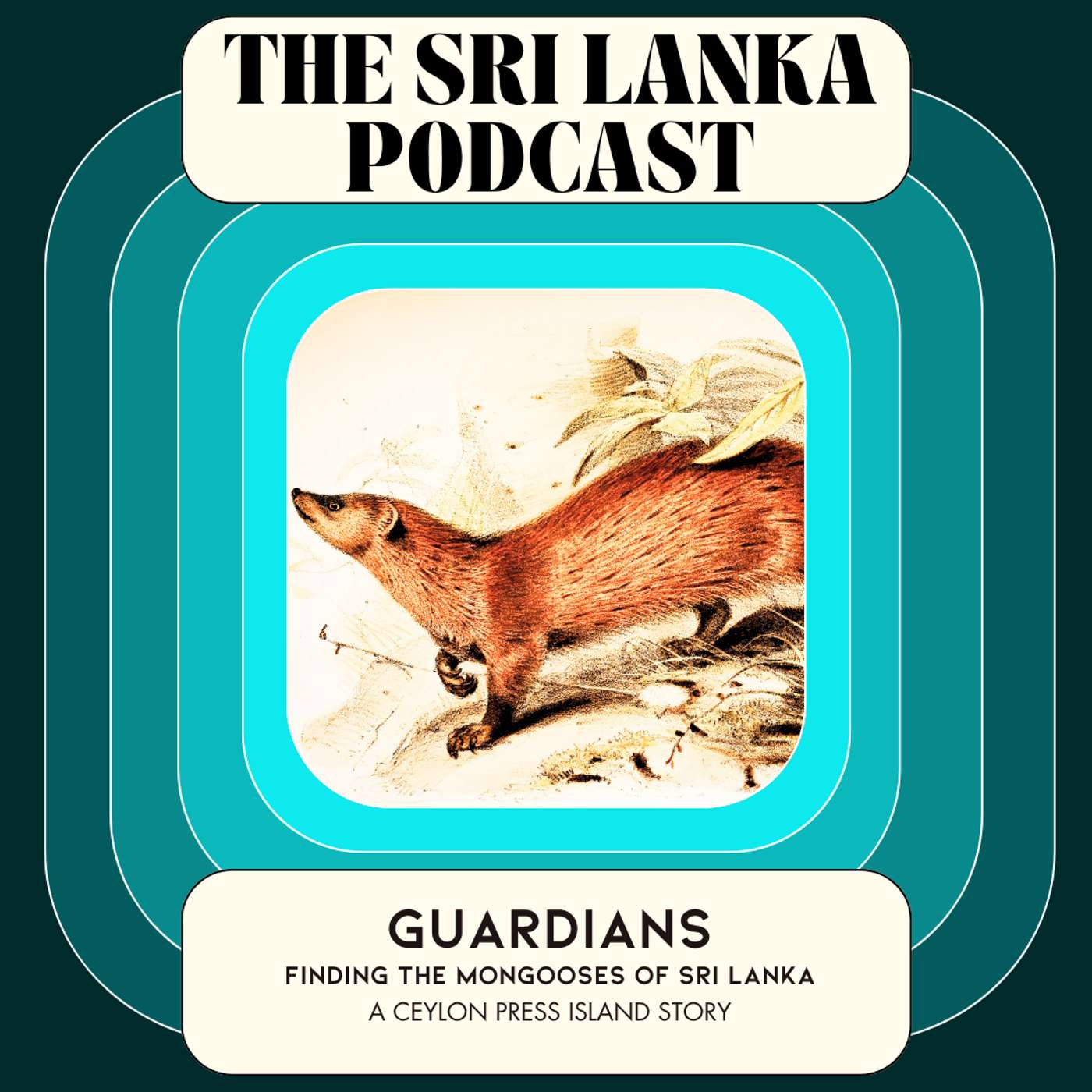 Guardians: Finding The Mongooses of Sri Lanka. A Ceylon Press Island Story | Looking at animals from a purely Kandyan perspective, in the beginning were not early life form sponges, or even aardvarks – but mongooses. For it was, according to the best of legends, mongooses who were responsible for Kandy being built where it was. The city’s earliest history is an impossible mosaic of hearsay, myth, the odd inscription, and later recollections. First founded as an offshoot of the Kurunegala kingdom sometime after 1357, it lapsed into impenetrable obscurity until Vikramabāhu, a rebellious cousin of the Kotte kings, remade it as his petite capital. But by the time his grandson, Karalliyadde Banḍāra, came to take over in 1551, the wafer-thin royal line had all but petered out in a poorly judged wave of conversions to Catholicism and acquiescence to the invading Portuguese. It was the rise of a patriotic nobleman noted for his machismo, Vimaladharmasuriya, who relaunched the kingdom in 1592 with sufficient vigour to ensure it lasted as an independent state for 223 years. The king, casting around for the best spot on which to rebuild his capital, has his attention drawn to the threshing ground that overlooks a large paddy field – now the Sea of Milk or Kandy Lake. The threshing ground, his astrologers advised him, was lucky. Safe even - for it was frequented by a white mongoose, a beast that, as everyone knew, was more effective in keeping a house free of rats, mice, snakes, and scorpions than any cat. And so, all around what is today known as the Maha Maluva, the city grew, as serpentine in shape and arrangement as any of the snakes hunted by the king’s favoured mongooses. In fact, the particular mongoose the king was drawn to was more grey than white – being the Common Ceylon Grey Mongoose, or, given its non-endemic status, the Indian Grey Mongoose, as it is also known. It is the smallest of the seven mongoose species or subspecies found on the island. The creature was, wrote Rynard Kipling in 1894, “rather like a little cat in his fur and his tail, but quite like a weasel in his head and habits. His eyes and the end of his restless nose were pink; he could scratch himself anywhere he pleased, with any leg, front or back, that he chose to use; he could fluff up his tail till it looked like a bottle-brush, and his war-cry, as he scuttled through the long grass, was: 'Rikk-tikk-tikki-tikki-tchk!”. Kipling’s famous mongoose demonstrated all the attributes of a perfect mongoose. Despite being somewhat shy around people, it is fearless of snakes; its kill strategy focuses on tiring the snake by tempting it to make bites it can easily avoid. Its thick, grizzled, iron-grey fur and neuro-transmitting receptors leave it immune to snake venom, and for anyone living up-country in Sri Lanka, it is a fine companion to have around. Herpestes Edwardsii, as the beast is formally known, is little more than 32 inches nose to tail. It lives right across the island, often in pairs, eating fruit, roots, and small animals. It lives for around seven years, breeding twice yearly and producing up to four cubs, who pop out of eggs, like all mongoose babies. Its fur, stiffer than that of other mongooses, is more interesting than the word grey implies, as each hair is ringed with creamy white and black markings that make even stationary beasts look as if they are running with blurred go-faster stripes streaking their whole body all the way down to a long bouffant tail. There are, in fact, five subspecies of grey mongoose living in India and other parts of South Asia; and whilst Herpestes Edwardsii is the one most seen in Sri Lanka, a second variant, Urva Edwardsii Lanka, has been identified as sufficiently different as to merit its classification as a subspecies unique to the island. Whilst its more Indian cousin lives almost anywhere, the Sri Lankan variant has a marked preference for habitats at 2000 meters or more. It avoids built-up areas in favour of jungle, shrublands and riverbanks. For a time, it also excited scientists with its superior olfactory capabilities, even to the extent of being trialled to detect narcotic drugs in police raids. Telling the two apart by looks, however, is a challenge even committed mongoose scientists baulk at. So imagine their consternation at having to tell apart the three variants of the Brown Mongoose, two of whom are only to be found on the island. Like Goldilocks with the Three Bears, they have their work cut out. At around 30 to 34 inches nose to tail, the Ceylon Brown Mongoose (Herpestes Fuscus Maccarthiae), the only one common to both Sri Lanka and India, is marginally larger than either the Highland Ceylon Brown Mongoose (Herpestes Fuscus Flavidents) or the Western Ceylon Brown Mongoose (Herpestes Fuscus Rubidior). But there the more apparent differences end. All three species have dark brown fur, black legs, and long black, enviably tufted tails. All three are sights of simple, breathtaking beauty. But seeing them is a challenge, for they are introverted beasts, with a marked preference for deeper cover, dark forests, and, like Greta Garbo, a preference for being left alone. Identification is much easier in the case of the island’s next mongoose, the Ceylon Ruddy Mongoose (Herpestes Smithi Zeylanicus). Its grey-brown fur is decidedly reddish in tone, and it has a tail that curves sharply upwards at its tasselled tip, where the fur turns to a deep, even brown. Like all mongooses of any variety, it feeds day and night on anything smaller that moves – and often on larger creatures too – like land monitors. Its closest relative is found in India, Herpestes smithii, named for the Victorian zoologist, John Grey, in 1837, with the Sri Lankan variant only being separated in 1852 by another zoologist, Oldfield Thomas. Although happily widespread, it is pathologically shy, hiding out in the forests and paddy fields, and, under normal circumstances, has a relatively short life. That said, although it rarely lives more than seven or eight years, a Mr W. W. Phillips from Namunukula in Sri Lanka wrote to inform the Bombay Natural History Society (in those halcyon, fallible days when science was a passion shared equally with amateurs) that “the mongoose in question died on the September 8, 1955, aged approximately 17 years and it months. It ate quite well right up to the last day and died peacefully during the night, apparently of old age and /or heart failure.” The last of the island’s mongoose, the Striped-necked Mongoose, is the Versace of the mongoose world, for it has been given an outfit by its Maker that marks it out as one of the island’s most striking and fetching mammals. A dark grey head morphs to reddish brown and grey on its neck- before blooming into a heady, grizzled covering of bouffant fur that gets redder and longer the further down the body it goes. A pink nose, black legs and a reddish tail that ends in a curved tuft of black hair make up the rest of this most alluring of beasts. Widespread across Sri Lanka and southern India, it has a sturdy frame and often measures over 35 inches nose to tail, making it the largest mongoose on the island. Its proclivity for calling forests its home can make sighting it a challenge, but it is a sight well worth the effort. Although all mongooses are famous for their snake-killing instincts, they have a curiously moral side too, endearing and magnetic in a world besotted by luxury. In amongst the byzantine reaches of tantric Buddhism, one particular semi-deified Buddhist luminary, Ratnasambhava, is to be seen holding – or perhaps squeezing a mongoose. The animal is preoccupied with vomiting up jewels of every kind, in an attempt ... | 11m 26s | ||||||
| 5/11/26 | 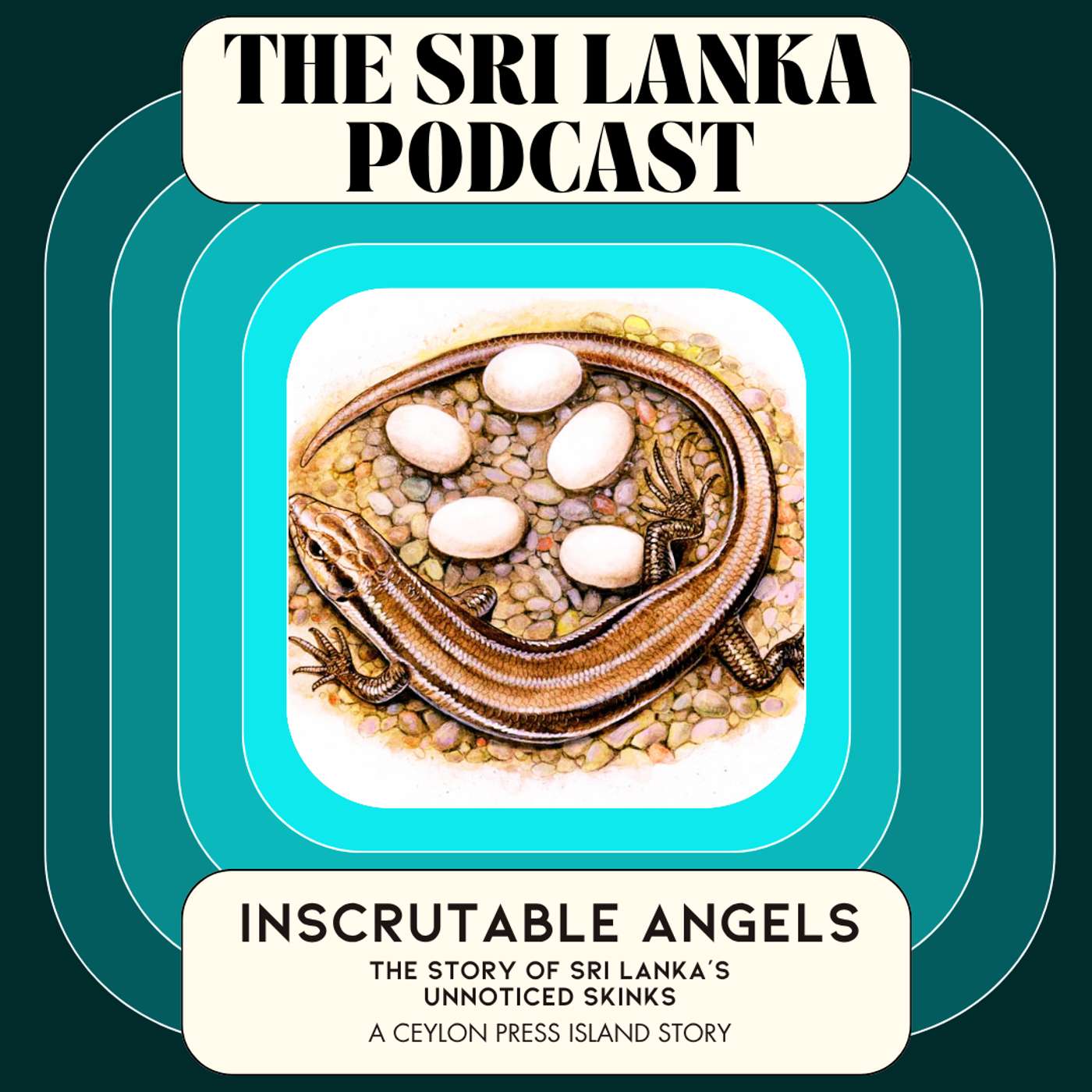 Inscrutable Angels: The Story of Sri Lanka’s Unnoticed Skinks. A Ceylon Press Island Story | Einstein – or perhaps it was Sun Tzu – argued that the subtle is as subtle does. If they are correct, then the very existence of this podcast threatens the salient virtue of Sri Lanka’s most elusive animals with a terrible undoing. But it’s a risk worth taking. Big, bold, and marvellous though so much of what is immediately encountered in Sri Lanka, more wonderful even than all you might ever encounter here, is everything that at first sight looks most ordinary. Running alongside its elephants (the biggest in Aisa); its literature (Booker-winning); its literary (stratospheric); its politicians (megaphone-loving); its recorded history (2,500 years and counting); its leopards (larger than most); its spices (flawless), is a rare penchant for subtlety, the one virtue that – of course - dare not speak its name. Such reticence is remarkable. Alarming, pleasing, it is also, as the Apostle Paul might have said, something that "passeth all understanding, an innate national delicacy wrenched from centuries of struggle, sympathy, fatalism, and plenty. Wherever you look, you are likely to find a trove of detectably undetectable meanings which, however good or grim, are always so engrossing as to ensure that you need never run the risk of living a life so unexamined as to be barely worth living at all. And so it is with skinks. They are the most model of model metaphors for the country; symbols for a nuanced elusiveness that is much more inspiring than anything instantly evident. So small as to be ignored; so little studied as to be mysterious; so numerous as to be everywhere, they live a life somewhere between heaven and hell, like semi-fallen angels, perfect for always being not what they seem. If that is, they are ever noticed at all. For Sri Lanka’s skinks have a degree of subtleness that propels that immaterial attribute into the outer galaxy. Like the Mermaid in far-off Zennor, the island’s skinks live in plain sight, far beneath the radar. Never has there been a more perfect creature to win lasting acclaim as the country’s national animal than this, though the awarding of such an honour would, of course, destroy the very reason why skinks should be chosen to win it at all. Despite owning 1700 different species around the world, skinks are almost as obscure as sea potatoes. More snake-like than lizards, but with legs that no snake owns, with the face of tiny dragons, the agility of squirrels, and the impish intelligence of chameleons, they live all around us, minuscule glittering version of Rudolph Vanentino: sleek, elegant, nimble, and stylish. They can be seen in trees, rocks, grassland, buildings, jungles, scrub, and on the coast. The very antithesis of McDonald’s and every other soulless global brand, of the 31 skinks that call Sri Lanka home, a colossal 85% are to be seen nowhere else but here. But a word of warning – for the claim that the island is home to 31 different skink species is to court controversy. Modern science has done its level best to make skink counting almost impossible, given scientists' proclivity for reclassifying anything that ever once moved. Many claim there are 34 skinks here; others, far fewer. It all depends on which monograph or piece of field research can be said to have preceded all others. To make skink appreciation still more impenetrable, scientists have given these petite beasts the most wearisome of Latin names. It is as if some gargantuan global conspiracy born in the Ark itself has plotted to keep skinks out of sight and out of mind. This modest study of island skinks, elaborated here, seeks to repair some of the damage. Indeed, some skinks do their utmost best to present a rather grungy face to the world, eager to extend and protect their social isolation. The Toeless Snake Skink is an excellent example of this. Despite being well distributed across Sri Lanka, especially in the high forested parts of Kandy, its rather drab black-bronze countenance and complete absence of legs ensure that it is forever overlooked. Taylor's Lanka Skink is no better. Tiny – 43 mm in length and a little more – is endemic and commonplace in areas such as Sinharaja, the Knuckles, Gampola, and Hantana; it is dull bronze with the merest hint of a 5 o’clock shadow down its length. It was named after an obscure Missouri zoologist, Edward Taylor, an honour it shares with nine other reptiles, eleven reptile subspecies, eight amphibians, and a milk snake once rumoured to suck cow’s udders. Other island skinks, though, are more evidently in the catwalk category. The Common Dotted Garden Skink, happily widespread across Sri Lanka and the Indian subcontinent - even into Vietnam - proves that being common is no deterrent to being quite simply stunning. With its carrot-coloured tail and golden bronze body, it looks as if it has strolled out from the showrooms of Cartier or Bulgari. Indeed, any celebrity empathic enough to adopt one as a pet would have little compunction in not also taking it as a Plus-One to one of the better launch parties to which they are invited. Its striking appearance makes it relatively easy to spot, as does its uncommon size – varying from a tiny 34mm to a titanic 148mm. Beddome's Skink is another knockout. One of the nicer, albeit unintended, consequences of Richard Beddome setting off for Madras in 1848 to join the East India Company was his discovery of many new species. He was to give his name to a bat, three lizards, a gecko, two skinks, five snakes, a toad, four frogs, five plants, two slugs and a blind worm before retiring to Wandsworth over forty years after he had first made his dreamy adolescent way out east. His collections can still be seen in museums in London, Calcutta and Scotland, the legacy of an admirable naturalist hiding under the cover of an army officer. One of his skinks, Beddome's Skink, is still most easily found right across India and Sri Lanka, a modest 55mm in size and joyfully untroubled by the excesses of the modern world. It has four legs, each with four toes. With the Breton stripe French naval uniform, popularised by Coco Chanel as its distinctive markings, it is well placed at the high-fashion end of skinkdom. And here it can keep company with Dussumier's Litter Skink. Named for a 19th-century French zoologist, better known for his work on herrings, Jean-Jacques Dussumier’s skink, sometimes called the Litter Skink, is found not just in Sri Lanka but across southern India too, where it lives in most forest habitats below 500 metres. Somewhat solitary and unapologetically territorial, it is a thriving beast of no genuine conservation concern. About 50mm in length, it comes with the most fashionable of appearances. A tapering dark black stipe edges the sides of its body, which is otherwise a speckled bronze, and its tails fade from this into a brilliant tangerine. Another proven pin-up is Haly's Tree Skink. First discovered in Sri Lanka back in 1887 by an intrepid zoological double act, Haly & Nevill, Haly's Tree Skink later became embroiled in impassioned taxological arguments sparked by sightings of what was thought to be endemic to the island but later found in various parts of India. For decades, the argument went back and forth: it was endemic. No, it wasn’t. Currently, the consensus seems to be that it is – the Sri Lankan variant being sufficiently different to its Indian cousin as to be considered a separate species. But the debate, rather like a grumpy politician in opposition, is bound to explode again, fed by thirsty new findings. Bearing four feet and four toes on each limb, at a colossal 80mm, i... | 32m 07s | ||||||
| 5/11/26 |  The Great Dynasty: The Story Of The Kings Who Made Sri Lanka. A Ceylon Press Complete Audio Book | Sri Lanka’s first recorded monarch founded a dynasty that would last over 600 years. Expelled from either Bengal or Gujarat (scholars argue, as scholars do) by his father, Prince Vijaya, the founding father of an eponymous royal family, arrived on the island in 543 BCE, his landing kicking off recorded Singhala history, despite the first 100 years being anything but plain sailing. Occasional bouts of regicide, lassitude, rebellion and navel gazing aside, the dynasty was as textbook perfect as it could reasonably be expected to be, and Prince Vijaya’s thirty-six successors did all that was necessary to embed, improve, and make dominant the tiny state they had first instituted in the northwest of the land. Not one to sit upon their laurels, and with a flair for marketing well ahead of their time, the Vijayans relaunched their realm barely a quarter of the way through their term, branding it as the kingdom of Anduraupura. They ruled it, according to the later Stone Book or Galpota Inscription, as human divinities, with an almost-but-not-quite-divine authority, the result of personal merit earned by their unusual, holistically philosophical approach to life and governance. Their capital city would become one of the planet’s longest continuously inhabited cities, enriched by cutting-edge industry, resources, structures, administrators, soldiers, and all the other disciplines critical to a prosperous ancient kingdom. Expanding with elastic ease, their kingdom soon grew far beyond the Rajarata, or traditional royal lands, to encompass most, if not all, of the island. To the east and south lay Ruhunurata, or Ruhana, a linked but junior principality founded around 200 BCE by Prince Mahanaga, brother to Devanampiya Tissa, the 7th or 8th monarch of the dynasty, and great-great-great-great-great nephew of Prince Vijaya himself. To the west lay the third, much smaller principality of Mayarata, another linked family fiefdom, said to have been founded in the fourth century BCE by Prince Vijaya’s nephew, Panduwasdev, the dynasty’s third monarch. Like light bulbs experiencing the almost reassuringly familiar power cuts and surges of the current Ceylon Electricity Board, a state company forever preoccupied by internal disputes, both principalities rose, fell and rose again, depending on quite how strong the Anduraupuran king was at any one time. All this was, of course, good wholesome leadership – but it was hardly groundbreaking. Seen from the perspective of the Shang, Hittites, Achaemenids, Ptolemaics, the Punts, Medians, Seleucids, Mauryas, and other numerous successful ancient dynasties, there was little to differentiate the Vijayans from the usual preoccupations with sound hegemonic hereditary rule. It was only halfway through the span of the Vijayan rule that, in welcoming to the island, Mahinda, the Buddhist son of the Indian Emperor Ashoka, they did something that changed everything. In this, their simple act of hospitality, they were to remodel their kingdom to be so profoundly different to any other, anywhere, as to endow it with an authority and energy so inimitable that, even today, it is protected and characterised by that misty encounter of 247 BCE. Not only did the Vijayans welcome the young royal missionary, but they also took him, with fervent haste, into their hearts, and with it, his evangelising philosophy of Buddhism. Like all Buddhists, Mahinda did not acknowledge a supreme god, and, despite later shorthand references to Buddhism as a religion, it is more appropriately described as a philosophy. In welcoming Mahinda, the Vijayans crossed the line from standard overlords to philosopher monarchs, governed by a formidable moral code and a preoccupation with achieving a state of transcendent bliss and well-being. If being an island was the first and foremost explanation for why Sri Lanka became Sri Lanka, Buddhism is, of course, its second explanation. And a much more impressive one too, for it was a deliberate act – one that no less comprehensively than geography was to profoundly colour the country as if it had been dyed in Tyrian purple itself, that ancient and legendary dye, reserved by threat of death, for the clothes of the Roman emperors or the sails of Queen Cleopatra’s royal barge. Of course, not every king or subsequent island ruler made the moral imperatives of Buddhism their magnetic north. However, most tried to, and all were ultimately judged against its teachings as they are still today by ordinary citizens in towns and villages across the land. For however ordinary Sri Lankans are, they are also unexpectedly religiously minded. Religion today, to the astonishment of many observers, is holding its own. Right across the world, experts and pollsters have had to rethink their view of what would befall religion as countries modernised. Atheists, agnostics and all who are religiously unaffiliated account for a shrinking 16% of the global population, even if the balance of believers has a whiff of the secular in their spiritualism. But as the West has become more secular, the rest have become less so - with God ever more likely to be best seen by Muslims or Hindus, but not Christians. Nor Buddhists, for Lord Buddha’s followers make up a shrinking 7% of the world’s population. But not in Sri Lanka, where Buddhism is estimated to hold its own at around 70% of the island’s population. Hardly surprising, then, that in repeated world polls, Sri Lanka is almost always to be found amongst the top five most religiously minded countries. Once, most of Asia was Buddhist - but such countries are now a rarity as alternative religions, politics, and secularism have shrunk their reach. Yet in Sri Lanka, Buddhism remains an indisputable force, supported by over 6,000 monasteries, 30,000 monks, and its own government ministry. Other gods retain a modest purchase. Christianity probably arrived sometime after Thomas the Apostle's visit to Kerala in 52 CE, though it wasn't until the Portuguese arrived in 1505 that things really got going. Even so, just 7% of today’s population is Christian, less than the nearly 10% who practise Islam following the arrival of Arab traders in the seventh century CE, or the 13% practising Hinduism, here since even before the Chola invasion of the tenth century CE. Buddhism and Sri Lanka are almost synonymous. It is impossible to understand one without comprehending the other. The Buddhist mindset – that life is one of suffering, only alleviated by enlightenment through meditation, spiritual work and doing good – is stitched invisibly into every fibre of island life. From its earliest beginnings, it has shaped the country’s language and culture, morality, education, politics, family, finance, prosperity, health, work, and its approach to the environment. Presidents, for example, may win elections. Still, they are not taken seriously until they have received the blessings of the Chief Prelates of the Malwathu and Asgiri chapters, the two most critical Buddhist orders in the land. Indeed, so great is the continual rush of ambitious politicians to the doors of both prelates that a traffic-light system might usefully be considered to ease bottlenecks. Although Buddhism sets out to help its followers get rid of suffering and achieve enlightenment, it cannot be said that paradise beckons with a visa stamp on arrival at Colombo’s Bandaranaike Airport. Even so, despite invasion, colonisation, civil war, corruption, climate change, and ba... | 2h 04m 10s | ||||||
| 5/11/26 |  A Royal Ruination: The Ceylon Press History Of Sri Lanka 18 | For almost a third of the 236 years during which the Moriyan kings ruled over Sri Lanka, stability of a kind had been enjoyed. Sure, it had come at the cost of patricide, familicide, and the kowtowing to a global superpower – but 4 kings over a near 70-year period, averaging between them about 18 years apiece, was consistency of a kind. What followed, however, was a sort of royal trench warfare in which around 20 successive kings chalked up an average reign of little more than 8 years apiece, with many falling far, far short of even that. Even to name the period as one of Moriyan hegemony is a rag-tag of a claim for many of the years that followed Kumara Dhatusena’s death in 524 CE, the Moriyan dynasty says itself fighting for power with the previous royal dynasty that they thought they had succeeded – the Lambakanna. Intermarriage made things yet more complicated, and trying to nail down any part of this period by bloodline alone is a task as thankless as guarding an empty room - and almost as pointless. But whoever was king, the wonder of this period is that they collectively managed to hang on for as long as they did, for their patent capabilities evidenced lives lived well beyond their real expiration dates.New money, old suspicions, religious strife, Persian mercenaries, joined in time by Tamil ones and the grim genie of regicide, now well out of the bottle – all conspired to make the next 167 years look like a battlefield over which no one could claim victory. The years that lay ahead divided into some 4 phases. The first, rapid and remorseless, lasted just 3 years, from 524 to 526 CE, and saw all 3 kings who reigned during that time murdered. A corrective time of stillness came to replace this moment of national trauma. For over 80 years, from 526 to 614 CE, 7 kings reigned, only two of whom were murdered. A killing carousel followed this for 598 to 640 CE, over 42 years, 5 kings reigned, four of whom were murdered, and one of whom won and lost his crown three times before he was murdered. The last phase was a chaotic coda. Over its 41-year stretch 5 kings were to rule as the country plunged further into civil war, a war which claimed the final king as its last murder trophy.As the corpse of the king Kumara Dhatusena smouldered on its poetic bonfire, a fate the grieving king himself had brought on when he flung himself onto the funeral pyre of his great friend, the poet Kalidasa, he may have falsely hoped that, in the poet’s words. “Yesterday is but a dreamAnd tomorrow is only a vision;And today, well-lived, makesYesterday, a dream of happinessAnd every tomorrow is a vision of hope.Look well therefore to this day;Such is the salutation to the ever-new dawn! But it was no new dawn that saw in his successors' reign. The immolated king was succeeded by his son Kittisena in 424, whose nine-month reign ended with brutal brevity when his uncle wielded the knife and took the throne as Siva II. Silva was not a lucky name – the previous Silva, a lover of Queen Anula, had managed only one year before being poisoned, and this second Silva fared no better, being killed by Upatissa II, the brother-in-law of the late king Moggallana. Siva didn’t even manage to last a month, his uncertain path to Nirvana happening just 25 days into his reign in 525 CE.Upatissa too was an unlucky name: the first Upatissa had reigned for only a year back in 505 BCE, and this second one lasted just twenty-two months until 526 CE. Although Upatissa had Moriyan blood, it is thought that he had yet more Lambakarna blood flowing through his veins, and the remnants of this last dynasty may well have supported his grab for power, which the Moriyans had succeeded in. Whatever the truth of the matter, Upatissa was not the horse to back. Described in the ancient chronicles as “old and blind,” he had little energy to devote to his new job. From the beginning, he seemed fully occupied trying to appease a rival nobleman, Silakala Ambosamanera. Silakala was the self-same ex-monk who had brought the Kesha Dhatu Hair Relic of Lord Buddha to King Moggallana. Despite his Lambakarna blood, Moggallana had promoted him to become his sword bearer. Upatissa even gave his daughter in marriage to his rival in the hope of keeping the peace, but the gesture failed. Silakala fled south, raised an army and marched back to Anuradhapura. The city lay under the protection of Upatissa's own son, Giri Kasyapa. Still, the young prince, realising that the forces surrounding him were unstoppable, fled at night, taking with him his elderly parents and the royal regalia. But in this, he failed too and took his own life before being captured, his death apparently soon followed by his father’s, though whether from shock or assassination is impossible now to tell.After a surplus of bloodshed, an incipient civil war, evidently and always only just slightly below the surface, the shattered nation would have pulled Silakala Ambasamanera’s 13-year reign deep into their weary hearts in 526 CE. Having managed the career move from monk to warrior earlier with such success, Silakala proved himself something of a shoo-in for king.He delegated much to his sons, pushing the two oldest out of the capital and far from its many attendant temptations, with one, Dathappabhuti, sent to administer the south, and the oldest, Moggallana, sent off to manage the east of the country.Secure in his capital, Silakala Ambasamanera busied himself, irritating his monks – or at least some of them. For this king, unlike the last few, was more inclined towards Mahayana Buddhism, a preference that did not go down well with the majority Theravada Buddhist establishment.Matters came to a head when a young merchant arrived unexpectedly at court, carrying with him the Lotus Sutra, a document held in the highest esteem by Mahayana Buddhists. Its two main teachings were seen as borderline blasphemous by the Theravadans, for they stated that all Buddhist practices offer ways of reaching Buddhahood, and that the Lord Buddha himself did not pass into final Nirvana but was still alive and actively teaching. The king, said one monk, witheringly, had so little understanding of real doctrine that he was like a "firefly who thinks it is the sun." Nevertheless, the firefly arranged for the sutra to be housed in Jetavanaramaya itself, with an annual festival held to honour it.The king’s deft hand at government got weaker as he got older. He found himself facing so great a rebellion in the southern province of Ruhuna that he lost control of the region altogether to a Moriyan nobleman called Mahanaga, a man who would, in another twist between the Lambakanna and Moriyan clans, in time become king himself.Despite these later cheerless clouds, the king still managed to die a natural death in 531 CE. After a brief skirmish among his sons, Upatissa, Dathappabhuti, and Moggallana, he was succeeded by Dathappabhuti – but not for long. Dathappabhuti had eased his way to the succession by killing his brother Upatissa, but he also fatally neglected to kill his older brother, Moggallana.Inevitably, Moggallana assembled an army and headed off to war. The ancient chronicles say that the two brothers decided on the unusual practice of single combat to determine who would win the day. During the ensuing duel, Dathappabhuti’s elephant was wounded, and the six-month king, seeing that his time was up, put himself to the sword. The war of the three brothers was over, and once again the country settled into a period of stability – for Moggallana II was to rule for 20 years, from 531 to 551 CE.Although the new king soon gave up on the possibility of winning back Ruhuna, he concentrated his efforts on taking good care of what he actually possessed. The consequences of this decision have since led to his gain... | 31m 13s | ||||||
| 5/11/26 |  Wicked, Nefarious, Iniquitous: Sri Lanka’s Most Notorious Kings & Queens. A Ceylon Press Complete Audio Book | The awful thing about wickedness is just how interesting it is. Kind and benevolent rulers; admirable warrior kings; even the fumbling but kindly nice ones who build hospitals and live blameless lives – they all pale into guilt-wrenching insignificance when set before a list saturated by the sinful, iniquitous, and depraved. And in this respect, Sri Lanka is spoilt for choice, simply by virtue of its statistics. Around 200 kings, with the odd queen, ruled the island from its first recorded beginnings in 543 BCE to its last king, who was packed off into exile by the invading British in 1815. From island-wide kingdoms to ones circumscribed by covetous foreign occupiers, the 2358 years of royal rule the country enjoyed were a considerably different experience. It was just as Longfellow had once said of a little girl: “When she was good, she was very, very good/ But when she was bad, she was horrid.” The country’s monarchs averaged little over 11 years a reign, but with massive variances. Most lapped up a rule of just a few years; sometimes, only a few hours. A happy few enjoyed reigns that must have seemed an eternity to their fortitudinous subjects. But if the ancient chronicles are to be believed, almost half of them died well ahead of their divinely allocated time – at the hands of their own successors, often sons, sometimes brothers, uncles or even wives or occasionally an invading Indian emperor or edgy Tamil warlord. No studies have been conducted to precisely identify which country can claim to be the most regicidal. Still, in any future list, only a fool would put money on Sri Lanka not scoring somewhere around the top 5. From this long, bloody start, regicide took a modest back seat during the rule of the Dutch and the British. But things picked up after independence in 1948. Assassination, often but not always fostered by civil war, promoted the killing of a sitting president, a prime minister, and a leading presidential candidate, Vijaya Kumaratunga, whilst another almost killed his own wife, the then president, Chandrika Kumaratunga, in 1999. It was but one of many other fortunately failed attempts at regicide that the independent republic had to face, a trait that reduced, at times, its own leaders to accusing one another of hatching yet more malodorously mortal plots. But selecting just 6 of the country’s most egregious baddies – barely 7% of the total of potential scoundrels - is as tricky as deciding which chocolate to take from an Anton Berg’s Heart Box. The box has an impossibly delicious mix of pralines, marzipan, nougat, soft caramel, coconut, sea salt, orange, Chocolate Liqueur, Nut Truffle, hazelnut, cherry, and apricot. To make it to this list, a Sri Lankan monarch had to be very bad indeed, a real and indisputable villein. The list begins, quite neatly, with the county’s first recorded king. Embodying a prescient creation myth, which, like many of their type, mixes horror and achievement in equal measure, as with going into labour, Prince Vijaya fits the bill perfectly. As Romulus and Remus had earlier demonstrated in faraway Rome, being a founding father often necessitated random acts of abomination and cruelty. And so it was with Prince Vijaya. Even his father heartily disapproved of him. Coming from a royal Indian family said to have been descended from lions, psychologists might argue that the prince never had a chance. Violence was in his nature. But the Mahavamsa, the great ancient Chronicle of Sri Lanka that is rarely modest in praising anything remotely proto nationalistic, pulls no punches when it comes to its paterfamilias. Given its mission (“compiled for the serene joy and emotion of the pious,”) the Mahavamsa had little other choice but to call a spade a spade. “Vijaya,” it begins, as it meant to go on, “was of evil conduct and his followers were even (like himself), and they did many intolerable deeds of violence. Angered by this, the people brought the matter to the king; the king, speaking persuasively to them, severely blamed his son. But all fell out again as before, the second and yet the third time; and the angered people said to the king: `Kill thy son.’” For the king, this helpful request enabled him to kill two birds with a single stone. He chose to rid himself of not just his own son, but of most of his kingdom’s rogues, whilst demonstrating, like the consummate politician he was, blameless clemency. The Mahavaṃsa records how “then did the king cause Vijaya and his followers, seven hundred men, to be shaven over half the head and put them on a ship and sent them forth upon the sea, and their wives and children also.” The problem was exported. The prince sailed away from India and “landed in Lanka, in the region called Tambapanni on the day that the Tathagata lay down between the two twinlike sala-trees to pass into nibbana.” This time, reference (“Tathagata”) to Lord Buddha notwithstanding, the renegade prince wasted little time in smiting most of those whom he first came across. His ruthlessness and expedient mindset can be seen at work in his marriage to Kuveni, a tribal princess, who was herself no stranger to brutality. Piecing together what actually happened on his arrival is all but impossible. Still, from the extravagantly violent tales told in the Mahavamsa, the vagabond prince likely found no empty island – but rather one already well stocked with people who had ordered themselves in tribes, perhaps even miniature kingdoms. To carve out his own domain necessitated fighting, and in this, a marital alliance with a local princess who could help him in the fight was invaluable. In piecing together the ghostly DNA of Sri Lanka’s pre-Vijayan native kingdoms, historians have had to turn to local folklore, Indian epic poems like the Ramayana, and the Mahavaṃsa itself. Still, the picture they present is blurred and fantastical. There was the Ramayana, a half-human tribe founded by the ten-headed demon King Ravana, whose followers have gone down in history as a terrifying lot given to cannibalism. A further tribe, the serpent-like Naga, may exist only in myth, despite references to Lord Buddha arriving among them to settle disputes. The Nittaewo, dark skinned, tiny, and understandably defensive, are a possible third tribal strand, their last members possibly smoked to death. On marginally surer ground are the Yaksha, described by the Dipavaṃsa, the oldest of the island’s three ancient chronicles and which, with support from the later Mahavaṃsa, could have given rise to the Vedda. Archaeogeneticists believe the Vedda are descendants of the original Mesolithic settlers who migrated from India 40,000 years ago. Scattered communities still exist today, an ever more ghostly presence on the island, their bloodlines dissipated by intermarriage. They worship a range of ancient folk deities, as well as mainstream Hindu gods such as Murugan. Ancestor worship and the cult of the dead mark out many of their still-living practices. This was Kuveni’s tribe, and they seemed to live in scattered communities of kingdoms in various parts of the island. Overcoming her first instinct to kill him, Kuveni instead married him, and on their wedding day, she helped hatch a plot to kill her own clansmen. They married in a wave of blood. If this was a most Lady Macbeth-like way to ensure freedom and foreclose on reprisals, it was no less monstrous of Viyaja, who more than fulfilled his homicidal role in eliminating all nearby native chieftains. The Mahavaṃsa describes how “he listened to her and did even (as she said) he... | 48m 27s | ||||||
| 5/11/26 |  Gods & Ghosts: A Tour of Secret Trincomalee. A Ceylon Press Island Story | Gods, Ghosts & and the faintest haunting of historical whispers of what was and - just about - still is, is the subject of this podcast, which delves beneath Trincomalee on Sri Lanka’s eastern seaboard. Haunted might be too strong a word for Trincomalee – but by any measure, the town, like the country, has more than its fair share of ghosts. And plenty of gods as well: all of them centre stage; stage left, stage right. Indeed, rarely, if ever, off stage. Not least Buddhism itself, the foremost and complex creed, is little different now from when it first arrived on the island in 236 BCE. From the ten-headed demon king Ravana of Lanka to the country’s founding father, a terrorising prince descended from lions, the island’s earliest creation myths feature a multitude of alarming divinities. Set beside them, the animist and ancestral spirits of the island’s original inhabitants, the Vedda, feature with almost kindly comfort. Kindness might be said to have been in short supply with much of what followed: the demanding Catholic dogmas of the early Portuguese invaders, the innumerable Hindu gods of the Tamils, the strict protestant god of the Dutch, and his Anglican iteration; the rigorous god of Islam, albeit with a more forgiving spirit among the Malay moors. And all are present in distant Trincomalee. But for a place so abundantly represented on any map, Trincomalee itself remains oddly invisible. It is not what it seems, a small town of passing consequence. Like a true aristocrat, it wears its reputation with uttermost modesty, restrained as a crown of sapphires under a hoodie. The great eastern port of the ancient kings, a later key link in the chain of European wars fought from 1652 to the downfall of Napoleon that turned South Asia British, it holds its history with absolute discretion, noticeable only if you look amongst its graves and within some of its almost vanished communities; in the scared walls of temples and buildings linked to the passage of its many gods, its forgotten kings and even great artists – all symbolised by the rare birds that flock to an overlooked lagoons north of the town. Whilst Sri Lankans and tourists alike cluster around the south coast, and a few choice parts of the centre of the island, barely any make it to this part of the east coast. Once part of the Rajarata, the homeland of the first island kings, Trincomalee and the east slowly became ever more isolated as the island’s development surged along the western seaboard, in the hill country, and in the far south. The modern world pushed it even further to a back seat - thirty years of civil war, a tsunami, and the troubled new decades of the twenty first century, years marked so extravagantly by the fact that it was an island off the town that was selected as one of the only remote safe spots to house a prime minster, toppled by the 2022 Aragalaya that saw so much old government swept aside. Two main roads lead into the town – the A12 from Anuradhapura and the A6 from Dambulla, both skirting a large wildlife park - whilst a third, the A15, leads towards the coastal villages of the south. None brings with them that dawning sense of bleak certainty that you are approaching an urban centre. There are no outlying suburbs or factory sites to speak of. Optimistic half-built retail outlets, busted petrol stations, billboards proclaiming glittering but affordable developments of villas and family homes: all are missing. A beautiful, sparse, and dry landscape borders the roads, ceding very occasionally to almost green forests. A most twenty-first-century silence grows as you cut through the countryside, arriving, almost without notice, at Trincomalee itself. And almost immediately, you find yourself driving along an esplanade, the sea on one side and a graveyard of miniature and broken architectural wonders on the other. Within it, most unexpectedly lies a monument connected to the world’s greatest novelist: Jane Austen, for the cemetery contains the grave of her favourite brother, Charles Austen - her “own particular little brother,” and the model for the manly and caring character of William Price in Mansfield Park.Etched indelibly across a wide rectangle of granite read the words “Sacred to the memory of His Excellency C.J. Austen, Esq., Champion of the Most Honourable Military Order of the Bath, Rear Admiral of the Red and Commander-in-Chief of Her Majesty’s Naval Forces on the East India and China Station, Rear Admiral Charles Austen CB. Died off Prome, while in command of the Naval Expedition on the river Irrawaddy against the Burmese Forces, aged 73 years.” Outliving his more famous sister by decades, Charles was an euthanistic reader of novels – especially hers; and it is perhaps no little accident that the brother of so great a writer should lie in gentle comfort here on an island whose contemporary writers have so recently burst like firecrackers over world fiction – from Sri Lanka itself of course, but also from Canada, Australia, the UK, the US or New Zealand, part of a raw diaspora created by civil war and corruption. Their fiction has become an unexpected global embassy, bringing humour, a unique sensibility and a sharp, ironic eye to the themes that preoccupy every great novel - from war, sex, fashion, addiction and love to loss, pets, the jungle, fame, fortune, and bankruptcy. And, of course, family; for in Sri Lanka, as almost nowhere else, the family really does come - inconveniently, beautifully, reassuringly, alarmingly - first. Family was close to Charles Austen’s heart far beyond his famous sister, for he created a scandal back home with his serial marriage to two sisters. But this failed to detract from his lasting memory, and he is remembered by one of his subordinates as stoic and dutiful to the end. “Our good admiral won the hearts of all by his gentleness and kindness while he was struggling with disease and endeavouring to do his duty as Commander-in-Chief of the British naval forces in these waters. His death was a great grief to the whole fleet. I know that I cried bitterly when I found he was dead.” All around his grave are earlier and later graves, mostly of British colonists, military officers and engineers who staffed this most distant part of the empire. Out of tombs and obelisks, which enhance the weathered details of Georgian architecture, grow trees and shrubs. Buffalo graze amidst them. “Home at last, thy labours done, “reads the tomb of Charles Frank Miller, who died aged 235 in 1899, “safe and blessed the victory won…angels now have welcomed thee.” It is rumoured that occasionally a few dedicated members of the Jane Austen society fly out to tend Charles Austen’s grave; but come more often they must, for within the next few decades the graveyard will be all but obliterated by weather and neglect, like the vanished church of St Stephen’s that once oversaw it all. In the placid residential suburbs north of the graveyard lives another fast-disappearing record of the island’s colonial times – this one linked to the Portuguese, who first came to the island in 1505. For here, around the self-contained streets of Palayittu live the last descendants of the island’s Burgher community – descendants of Portuguese and sometimes Dutch men and local women who still speak a remarkabl... | 31m 21s | ||||||
| 5/11/26 |  Perdition: The Ceylon Press History Of Sri Lanka 17 | As Moggallana returned to his capital in Anuradhapura and seemed, on the face of it, to be restoring life to whatever had passed for normal before his brother Kassapa had murdered their father, it might have been hoped that national life would steady. But steadiness was not what lay ahead for either Sri Lanka or the rest of the Moriyan kings still to come. By the end of Moggallana’s reign, it would look as if an infernal inheritance had instead settled across the land. For Moggallana’s route to power lay through the implacable and rough power politics of the Indian Ocean Trading Zone. It was not just the turncoat General Migara who had propelled him to power, but a mercenary army, the clutches of which would enfold the entire kingdom to a greater or lesser extent until the very end of the Moriyan dynasty itself. The old story told of these times is of a Tamil mercenary army coming to Moggallana’s aid and then departing again, job done. But remarkable research by a new generation of historians, most notably Ranjan Mendis, has shown that this is far from the truth. The real story begins in Persia, 3800 kilometres away - and with the ambitions of the Persian king of kings, Khosrow I ("the Immortal Soul"), to expand his empire in all directions and drive a cleaver through the Byzantine Roman end of the Maritime Silk Road trading empire, which the Emperors of Constantinople managed through their Ethiopian and Yemeni allies. Shutting off the Romans from any meaningful access to India and Sri Lanka via the Red Sea would hand Khosrow the world's most lucrative commercial monopoly. It was superpower politics, an ancient world version of it, just as life-changing as that witnessed today between America, Russia, China, and India. Khosrow’s first step was to capture Yemen, which had earlier fallen to the Ethiopians on the request of the Constantinople Emperor Justinian to, as Procopius of Caesarea put it, “ sever Persians’ maritime links with India.” But securing the Maritime Indian Ocean trading route even further east than Yemen was an irresistible cherry in Persian ambitions. It would place it well beyond the reach of the Roman emperors once and for all. Plots were hatched. Messages were passed to Moggallana, who was then in long-term exile somewhere in South India, with the help of General Migara, a clandestine network of Persian Christian merchants living in Anuradhapura. By letter, and possibly even by his presence before the Persian king, Moggallana wove his way into the plan to ensure Sri Lanka became a safe house for Persian trade. He, as the new ruler, would be its guarantor – a Trojan horse as much as a replacement king. A fleet of Persian ships carrying an elite Savaran cavalry contingent sailed to Sri Lanka, perhaps even under the direct command of Moggallana himself. They may have even taken with them the terrible new weapon used by the Persians just a few years earlier against Constantinople – petroleum and naphtha. They landed somewhere on the western seaboard of the island – possibly Chilaw- before marching inland to Kurunegala, so smartly circumnavigating both Anuradhapura and Sigiriya and catching both power centres off balance. Mistaking to the last that the presence of General Migara by his side meant that he was covered, Kashyapa opted for suicide rather than capture when the general flipped his forces. Writing a few centuries later, the historian Al-Tabari notes of the moment: “the king sent one of his commanders with a numerous army against Serendib, the land of precious stones, in the land of India. The commander attacked the king, killed him, and seized control of it, sending back from here to Kisa abundant wealth and many jewels.” Clearly, the Persians wasted no time in ransacking the sensational riches of Sigiriya. Later Persian commentators record that the flow of bounty never really ceased. It continued for years to come and, in addition to items such as horses, jewels, and natural resources, elephants, teak, and pearl divers. It was less the gifts of one grateful king to another, and more tribute paid by a vassal to his master. Unlike Kashyapa, who referred to himself as Maharaja or Great King, the inscriptions so far discovered for his brother Moggallana, and even Moggallana’s heir, merely refer to them as Rajas. Raja is most certainly a title used by lesser kings – kings beholden to other kings, not least Persian kings of kings. Studies of ancient texts by Professor Paranavitana suggest that the Anuradhapuran monks welcomed him as an imperial representative of the Persian king, not as a Sri Lankan king in his own right. Little good it did them, for the new king sided with the new money and the newer version of religion in the old city and did nothing to stop his merchants from unleashing so unremittingly barbaric a bout of bloodshed against often quite blameless people that the new king gained another title: “Rakshasa” – monster. Persian imports flooded into the country – there is even evidence of Persian wine jars found in small villages near Dambulla, not known then, or now, for its predilection for fine wines. Excavations dating back to these times have revealed an abundance of Persian coinage and a Persian Nestorian cross, whilst testifying to the presence of scores of Persian ships docking in Sri Lankan ports. But of Roman artefacts found in plenty before this time, archaeologists today have unearthed nothing dating to this transformative period before the country pivoted towards Persia. Moggallana is also known to have invested in a new navy to patrol the sea coasts, possibly tasked with deterring Roman ships, including those sent by Roman allies. Sri Lankan embassies sent to the Chinese emperor, representative at the time of Dhatusena and Kasyapa, abruptly ended and recommenced only in the 7th century as the Moriyan dynasty neared its end, a time that coincided with the collapse of the Persian empire itself when the king of kings fell to the Arab Caliphate in 654 CE. Little is known of how Moggallana's reign went following the coup that brought him to power. He is presented in history books on the island today as a strong, capable, and respected king who busied himself with monastery and temple improvements – and not as a Persian vassal. His monster status is also conveniently overlooked. The reality must have been much more complicated and nuanced. Keeping the Persian paymasters happy would have been a most consuming task – ensuring they reaped the commercial rewards that brought them to him in the first place, and keeping them in check as best he could, despite their random attacks on his subjects. No less all-consuming would have been simply maintaining the balance of power in Anuradhapura among competing versions of Buddhism, insurgent Christians, Theravada Buddhists, and merchants merely out to make lots of money. Moggallana would certainly have welcomed a wonderful piece of serendipity when the Kesha Dhatu, the Hair Relic of Lord Buddha, found its way into his kingdom, brought there by a monk he had befriended whilst in exile in India – Silakala Ambasamanera, a Lambakarna ally. The relic was given the grandest of all receptions, carried in a great procession and enshrined in a crystal box placed in a specially built temple. Silakala was said to have been appointed its guardian, a task he took so seriously that he forsook his monkish status and became the king's sword-bearer (Asiggahasilakala) instead. This change of career would haunt the Moriyan kings, for Silakala Ambasamanera proved so adept at warfare that he would later seize the throne for himself. Moggallana was succeeded in 515 by his son Kumara Dhatusena. It was a shockingly aimable succession. The new king described himself in the only inscriptio... | 15m 02s | ||||||
| 5/11/26 |  Oedipus Lanka: The Ceylon Press History Of Sri Lanka 16 | Given such flawed beginnings, it is surprising that Kashyapa, father-killer that he was, enjoyed a reign that lasted as long as it did – from 473 to 495 CE. Having completed the bizarre brickwork that turned his father into a building by walling him up, Kashyapa’s reaction to the patricide that had left him reviled by subjects and priests alike was not dissimilar to that of the Roman Emperor Tiberius, who forsook his capital for a palace of pleasure he built on Capri. Similar – but not equal, for the new seat of government he built at Sigiriya was in every way grander, more beautiful, and more advanced than was Tiberius’ Villa Jovis.The move was no mere residential relocation. It was not just a new palace that Kashyapa built, but a new seat of government. In this, he acted far more like Akhenaten, the heretical Egyptian pharaoh of the 18th Dynasty, who moved his capital from Thebes to the purpose-built city of Akhenaten – or Amarna. The pharaoh was to die with suspicious normality, and his son, Tutankhamun, wasted little time in swiftly moving the capital back to Thebes, a pattern that was to haunt both Kashyapa and his sibling successor, Moggallana.Hints of the long-lost forces that impelled and inspired such actions are now almost entirely lost. Although Kashyapa gained his crown by the simple expedient of murdering his father, Dhatusena, it is more than likely that he was largely put up to it by his brother-in-law, the General Migara. Migara had been instrumental in placing Dhatusena on the throne decades earlier but had fallen out badly with his father-in-law when the king murdered the general’s wife, who, as was the way with things then, was also the king’s sister. Sri Lankan politics, then, as now, is rarely straightforward, but this moment of homespun realpolitik set such new standards for utter complexity that they are still to be bettered today. Undoubtedly, these family squabbles would have fed off all that was going on in the kingdom at the time. And there was a lot else going on. Under Dhatusena, Anduraupura had been turned on its head, the once inward-looking city now humming with foreigners, most of whom had come to either trade or convert. Arabs, Jews, Europeans, and Indians are just some of the groups known to have taken exuberant root in the city, as it opened itself up once more to the bountiful trade and money brought to Sri Lanka by the Maritime Silk Road – that vast maritime network of the ancient world that linked East Africa, Arabia, India, and China to Europe. The kingdom was enjoying a moment of money-spinning madness, with riches pouring into the land as never before, transforming life much as the railroads did in 19th-century America. With trade came new forms of religion – Christianity, for example, and – much more threateningly – alternative schools of Buddhism that Sri Lanka’s overwhelmingly and all-powerful Theravada Buddhists saw as blatantly heretical. Conversions this way or that, as well as making and spending money, were the new order of play. General Migara is thought to have leveraged these nascent forces to empower himself, but his alliance with Kashyapa came under pressure. The new king did not see himself as the leader of a Liberation revolution, however much he tolerated it for its money-making powers. Kashyapa’s preference was for crafting a much more traditional and politically useful personal reputation – as a Buddhist God-king. An intriguing hint of this artful propaganda was discovered in a contemporary rock inscription in the monastery of Thimbiriwewa. The inscription noted a donation given “in the tenth year of the raising of the umbrella of dominion by the Great King Kashyapa, the Lord of Alaka.” Alaka is a reference to the God Kuvera, the legendary ruler of mythical Lanka. Traditional Buddhists were familiar with this blending of god with king, a fusion that did much to legitimise government. If kings were gods, or as good as, what right did any subject, might or meagre, have to obstruct them? It was not in Kashyapa’s interests to do anything to imperil the traditional way in which his people regard kingship. Indeed, he is known to come very actively to the assistance of Theravada Buddhists when General Migara sought to emasculate them by favouring rival Buddhist schools whose attitudes to kingship were perhaps a little looser.But Kashyapa’s predilection for the expediencies of traditional religion was not always returned by grateful monks, many of whom, thinking it unsuitable for a king to have killed his own father, viewed him as well beyond the pale. One monastery is even known to have refused his offer of donations, branding him a father-killer. With his old capital, Anduraupura, a seething pit of viperous power politics, and religion itself too often an uncertain alley, what better plan than to start anew at Sigiriya. Of money, there was no shortage, so building a better future elsewhere was well within his powers. But did he? Kashyapa's reign lasted little more than 20 years, and it is a mathematical impossibility that in so short a time, so celebrated a place as Sigiriya could ever have been started, let alone finished. Indeed, it is unlikely that the previous king, Dhatusena, even established the city fortress. Modern historians are instead converging on the view that the site was begun much earlier, in 341 CE, by the Lambakanna king, Buddhadasa, a ruler so beloved that the Mahavamsa Chronicle has him down as a "Mind of Virtue and an Ocean of Gems".Archaeologists have discovered building periods in and around the site that point to earlier dates, though they have also noted how, over the Kashyapa years, the plans become monumentally more ambitious. Until more research is done, hunches, probabilities, and guesswork are the ephemeral friends of choice for concluding that Kashyapa, in moving to Sigiriya, relocated to an existing site and then set about radically improving it, not unlike Louis XIV at Versailles.But such caveats aside, Kashyapa’s Sigiriya was nevertheless one of the greatest wonders of Ancient Asia. It set imposing new standards for urban planning, the royal bastion surrounded by an elaborately laid out outer city, with a final circle of three types of gardens around it: water, terraced, and boulder gardens - 3 km in length and nearly 1 km in width, flanking its famous rock citadel. Ponds, pavilions, fountains and cut pools made up the water gardens. More naturalistic gardens were created around massive boulders, mimicking an artless park with long, winding pathways to saunter down. Brick staircases and limestone steps led up to more formal terraced gardens.Across it all stretched double moats and triple ramparts, defendable gateways, and steps in perfect geometric symmetry, locking all the elements of the fortress city together with mathematical precision and elegance and pierced by the massive sentinel sculpture of a crouching lion. The beast guards the staircase to the ancient palace six hundred feet above, though all that remains now are the two animal paws, rediscovered in excavations in 1898. Built with bricks and limestone, the lion’s full height was 45 feet. The whole site was fuelled by a remarkable hydraulic irrigation system - the child of the most advanced water technology in the then-known world Rock-cut horizontal and vertical drains, underground terracotta pipes, tanks, ponds, interconnected conduits, cisterns, moats, and waterways channelled surface water to stop erosion and tapped other water sources to deliver water to the huge ornamental gardens, the city and palace - and harness it to help cool the microclimate of the royal residences.The consequences of the state’s remarkable achievements in water technology had given rise to similar attainments in many, many other quarters – all of which came to bear down w... | 17m 22s | ||||||
| 5/11/26 |  A Little Bit of Expert: The Jungle Diaries, Sri Lanka. A Ceylon Press Grid Memoir | There is the BBC of course. CNN. Reuters. The New York Times. All News, if you will. And then there is real news. Recently, I have taken to walking the dogs up Singing Civet Hill, down the Coconut Gove, through the jungle path and out onto the newly planted Chocolate Walk that links back to the Spice Garden and the estate entrance.As subjects go, dog walking routes are way up there - with global warming, or the Oscars, choices of totemic influence, able to steer the whole day this way or that. And where the day goes, the week, the year, the millennia follows.Bertie is still gated so cries in the office or has a private garden-only walk with Ranjan. I take the other four into great, occasionally tamed, wilderness. There are wild boar prints to smell, the track of a mouse deer, porcupine a plenty, wild dogs, and of course, monkeys. For Archie, Bianca, Coco and Nestor, the stroll is akin to entering naked into a cream cake shop and letting rip. A golden sun filters through jungle trees. Dry leaves shift underfoot. A vast blue sky implies itself from above. Apart from the excited sniffs and scratches of the dogs in their virtual cream cake shop, it is silent. Meditation silent. Soul silent. The sort of silence impossible to image within a yard of asphalt.Even so, there are traces of human activities. In this case, young Mr Goonetilleke’s attempt to keep wild animals off his plants. Thin strips of steel wire had been stretched on boundaries and anchored to electrical forces so strong as to give me a nasty jolt when I walked in to one. It certainly deterred me. But not the animals, who hopped across, or simply waited for a coconut leaf to fall on the wire and short it.Occasionally Mr Goonetilleke attempted to revise his technical masterpiece, but in the end, he refocused his ubiquitous expertise into solving other problems, leaving him, and us, a little wiser than before about the uses of electricity. Experts, like love bombs, are everywhere on this island. It is one of its principal human features; one of Sri Lanka’s many little bits of lovely. Not for these shores, the remote and gifted expert, given to Deus ex Machina pronouncements, rare as Burmese rubies, on what should be done in this instance, or that case.No. In Sri Lanka, the expert is there right next to you, just like Mr Goonetilleke, ready to intervene. On the train, in the street, at the doctor’s waiting room, his expertise in whatever the matter in hand, worn since birth, and so much a part of his physiology that you might as well try to sever an arm or ear, as to sever this part too.The journey to this remarkable state of national know-how has been long and meandering, journeying past centuries of want, and decades of central bureaucratic incompetence, enlivened with parrots like flashes of glittering arrogance. From banking, electricity, and tea, to fish, drugs, cement, and chickens, state owned industries remain wedded to The Frank Sinatra Dictum:– “I've lived a life that's full / I've travelled each and every highway / And more, much more / I did it, I did it my way.” Whisper if you will that they are largely technically insolvent or as dated as dinosaur in a poodle parlour – it is to no avail. Their expert song sounds on. And on. The elites rule. Their way, or no way.Sometimes – not often – it all breaks down. The Civil War, JVP Uprisings, Hartal, Aragalaya. People get fed up with experts. And all hell breaks loose. But Sri Lankan society is nothing if not civil, and in between these moments of madness a kind of gorgeous mannered existence runs along paddy tracks from village to village. The Emperor has no clothes? Of course he hasn’t. He’s so naked you can count the mosquito bites on his buttocks. But such a lovely hat. And the scarf he is imaging he is wearing. That too is beautiful, offsetting the make-believe sarong, just so.As the experts busy themselves choosing their special clothes for the day and getting ready to advise those few people they have time to see, the rest of society just get on with it. Everyone is an expert in almost everything. They have to be, or life would simply stop in its tracks like a perfumer with a pegged nose. Expertise is not something you can outsource. To make the right choice you have to know so much as to leave you cleaving to the wings of a rocket as it does it 360 orbit of any problem or issue.“Generator blown,” observed Kasum, the chef. “I’ll fix it.” I begged him not to. But he did it anyway. And it sort of worked.Its mildly terrifying, marginally irritating and wholly discombobulating when suddenly you need to be the expert. And nowhere is this more true than in matters of health.Soft westerner as I am, I’m accustomed to seeing a general practitioner for anything from a head bump to a throat sniffle. With celestial expertise, the GP will point me the right way – this specialist or that; this test or that; this hospital or that. But not here. Not in the jungle country of Galagedera. Or even on the temple lined roads of Kandy. Nor even on the boulevards of Colombo.No. If you’re sick, you must work out why. Nose problem? ENT perhaps? Unless is it from a fever. Or an intolerance of sapu pollen. Stiff leg? Muscle probably. Or it is bone? Or perhaps it’s the blood. God knows. But you too also need to know – and with sufficient certainty to enter confidently into the fun fair that is the health system (s).Across the island four health sectors entertain their customers like octopi at an orgy. There is the traditional state medicine sector, all hospitals, qualifications, doctors, nurses, ministries, pill, and potion factories. And the private traditional medical sector, dominated by who so ever occupies the space.Set against both is the western medical state sector – no less populated by its own hospitals, practices, qualifications, experts, and medicines. Facing this is the private sector - a handful of plush hospitals, expert doctors, reception desks with beautiful flowers dying in large vases, waiting rooms of Nordic furniture rearranged ever so slightly cocktail style.For anyone to get anywhere in the western medical sector you need to play in both sectors. Despite the brain drain, COVID and the Aragalaya, the island has a notable universal free health care system but there are long waiting lists for specialized procedures. Private care is a necessity most people try to budget for.Unlike my hounds, my own ability to sniff, smell and interact with full olfactory fervour, had over the months, diminished to a barely useable half a nostril.Like Simon of Cyrene I carried my little adenoidal cross until oxygen deprivation set in. Anything to avoid the experts. But eventually, the unflusterable Machan drove me to Asiri Hospital, a place of such reassuring modernity as to make you welcome illness. Yet I make it sound simple. To get even this far I had first had to enter into the rum liturgy of DOC990, an online doctor booking service. To book the right doctor you must first self-diagnose, just like an expert. ENT? Why not. But of the scores of ENT doctors – the same names appearing on multiple hospital site appointment boards - which was the best? Google is coy on the matter. So, I picked the one with the most scholarly articles to his name. The learned doctor was late. One hour passed. Two hours trembled on the edge. This is the thing about experts. To be late is to expert. To be very late is to be a doyen of professional authority. For each 30 minutes of his appointment diary, he had prebooked in 4 patients. And there we sat, pathetically forbearing, eager for news of the great man.But of news, there was none. Even the grea... | 13m 53s | ||||||
Want analysis for the episodes below?Free for Pro Submit a request, we'll have your selected episodes analyzed within an hour. Free, at no cost to you, for Pro users. | |||||||||
| 5/11/26 |  The Mermaid That Wasn’t: At Sea with Sri Lanka's Mammals. A Ceylon Press Island Story | Europeans first encountered mermaids in Sri Lanka 500 years ago. Just a few decades after arriving, the Portuguese, under the command of Constantino of Braganza, a cousin of the King of Portugal, tiring of the relatively successful raids upon his fleet by the Kings of Jaffna, decided war was the best way forward. His expedition, in November 1560, resulted in the capture of Mannar Island. Inevitably, many in his army were terribly injured, and under the naval doctor, Dimas Bosque, a beach hospital was erected. Bosque, described as "a very cultured man, well known for his veracity, and quite sagacious in the treatment of illnesses,” took up the story in a letter later discovered in the Jesuit library in France. “One day, a crowd of fishermen came to the Father, requesting him, with loud shouting in their own language, to go to their boats and look at some fish they had caught. They said that while they were fishing, they had, by a stupendous miracle of nature, either by luck or that the marvellous works of God the Almighty might be spoken of, caught in their nets nine female fishes and seven males, which, because they resembled human beings, the natives themselves called "sea men" and "sea women". "Struck by the novelty, as was natural, we went to the boats. The fishermen who had remained there had already taken the fish out of the boats and laid them on the shore. When I saw them and contemplated how greatly they resembled human beings, I could scarcely breathe. In wonderment, I could hardly turn my eyes away from their admirable bodies. What I saw then with my own eyes I would never have believed if someone else had told me. I kept staring at these fish with their marvellous resemblance to human beings. Such a work of nature seemed hardly believable even while I was looking at it with my own eyes. Nevertheless, helped by Christian philosophy, I referred the extraordinary shape of the fish before me to God, the maker of all things, to whom nothing is difficult to make, let alone impossible. I considered it worthwhile to inspect each particular member, so that, after examining the anatomy of each part, I would clearly understand the similitude of the whole body with that of a human being. Externally, the resemblance was very great.” What Bosque had actually discovered was not mermaids but dugongs. He was by no means the first to confuse the two. Christopher Columbus himself had come across them a few years earlier, noting in his diary - “the day before, when the Admiral was going to the Rio del Oro, he said he saw three mermaids who came quite high out of the water but were not as pretty as they are depicted, for somehow in the face they look like men.” Hundreds of years of brutal hunting have since driven this most marvellous of all the island’s sea mammals to the brink of extinction. But a gentler creature would be hard to find. Growing to around eleven feet in length, with poor eyesight but a good sense of smell, they propel themselves forward by flippers and tail, and although they can live up to seventy years, longevity is now but a dugong dream. Widespread legal protection has not stopped them from being hunted, whilst habitat pollution and degradation have also decimated their numbers. In Sri Lanka, their meat was highly sought and considered to have medicinal and aphrodisiac properties; diaries note that, as recently as the 1950s, over 150 slaughtered animals were offered for sale annually in Mannar alone. Their cautious reproductive habits do not much help them either, with males taking sometimes as many as eighteen years to reach sexual maturity. The impressive Dugong and Seagrass Conservation Project reports depressingly that “large herds of dugongs were reported to have occurred in the Palk Strait between India and Sri Lanka in the early 1900s; however, none were sighted during aerial surveys conducted of Palk Bay and the waters off western Sri Lanka in the 1980s, and their current status and distribution are unknown.” Even so, there have been uncorroborated reports of more recent sightings, including one in 2017 in Puttalam Lagoon, where some say they still live, grazing on seagrass meadows in shallow bays and mangroves. But out beyond these sheltered shores, in deeper waters, Sri Lanka’s other sea mammals are faring better, and the country is one of the best places in Asia to sort them – especially in Mirissa, from November to April; off Trincomalee, from May to September; or Kalpitiya, from December to March. Three capacious seas splash against Sri Lanka’s beaches – from the east, the Bay of Bengal; from the west, the Laccadive Sea; and from the south, the Indian Ocean. Purists clamour for a fourth – the shallow Palk Straits that link the north of the island to the south of India. Either way, the country is blessed to be so centrally located to a great mix of oceans. Like a roundabout amidst a myriad of roads, its shores are a nursery, school, home, and larder for a plenitude of marine creatures, not least its mammals. Whale watching, with abundant side helpings of dolphin and the odd bit of porpoise watching, is propelling a whole new branch of environmental tourism. Scientists estimate that across the 90 species of whales found today, there are about 1.5 million creatures, many of which are centred around specific oceans. Sri Lanka boasts 12 of these massive saltwater residents, including the most magnificent of whales – the Blue Whale, one of the country’s two most commonly encountered sea beasts. Measuring up to one hundred feet, there is nothing that still lives on our harried planet quite so large or inspiring as the Blue Whale. From Moby-Dick and the prophet Jonah to Aristotle and Kipling, they have become creatures whose literary heritage is almost as impressive as their mythological one. They sing, live blamelessly on krill, and press on through the ups and downs of life for up to ninety years. The males sport a 3 metre penis, the largest of any species still alive. They are truly one of our planet’s greatest wonders, yet have been hunted to the brink of extinction, their numbers falling from around 140,000 in 1926 to some 25,000 in 2018. Today, they also face grave threats from ship collisions and rising noise pollution. They take about 10 years to reach sexual maturity and produce calves every 2 to 3 years – a low, slow reproductive process that further strains their global numbers. The only area of the world they seem to avoid is the Arctic. Remarkably, the blue whales found off Sri Lanka’s beaches are permanent residents, their otherwise migratory inclinations negated by the sheer magnetic nutrient wealth of the country’s waters, fed by run off and monsoon rain and captured by an ocean shelf that is perfectly constituted to maximise the availability and accessibility of food. The Sperm whale, Or Cachalot Whale, is the other whale often seen here. Massive, migratory, equipped with the largest brain of any living creature, and able to live up to seventy years, the Sperm Whale is everything that a well-bred species of whale aims to be. It abounds in superlatives: a four-chambered stomach, the longest intestinal system of any creature in the world; capable of emitting a sound louder than any other living beast, and happiest swimming in ice-free waters over 1,000 metres deep. Hunted by commercial whalers for hundreds of years, their numbers were pushed to the point of extreme vulnerability, but have since started to recover – slowly. They are one of the most sighted whales off Sri Lanka’s shores, tempted by warm and plentiful seas to group together and mate, forming super pods of sometimes a hundred b... | 25m 52s | ||||||
| 5/11/26 |  My Missing Sapphire Tiara: The Jungle Diaries, Sri Lanka. A Ceylon Press Off Grid Memoir | It was Mr Wijeratne from the Water Board who brought the missing tiara to mind when he called on us this morning, his beaming presence foretelling progress in our fixed line water connection.He is a generous, positive fellow, little given to jewellery – except for this fingers. These more than make up for any deficit. They carry a rich selection of rings, the most impressive the size of a small calculator, its flat square surface a golden field on which are displayed, in neat rows, nine precious and semi-precious stones.As he waved his arms about, explaining what pipe would go where and how our deep well water provision would now be enriched by his fixed line water, the sun glinted on his fingers, and the trickle of gloom that I had started to feel at my total lack of commitment to personal jewellery, become a flood.Some people are born with voices that will carry them deep into the world of opera, or a figure on which rags or rich silk outfits can be placed with equal grace. Others are born with no instinct for jewels. I have just sufficient levels of self-awareness to know that toe or finger rings, and necklaces do little for my truculent beauty. But I also know, albeit from school, that tiaras can improve me. Whether it was a tiara or a small gold crown much garnished with glass rubies, I cannot now remember. But it did the trick. My blonde hair appeared more golden, my complexion a more prosperous pink, my head longer - as if the brain beneath my temples had given an atypical opportunity to just smile, and be blessed, and take time off from thinking. Sadly the tiara disappeared once the play we were performing came to an end. I sensed later that earrings would have also done well on me; sapphire or gold nuggets, giving my overlooked lobes something special to hug. This emotional deficit does not stop me appreciating jewellery on others, through here in the jungle, Mr Wijeratne excepted, it is a rare sight. But when it does appear, it makes the sort of glorious waves that Moses must have done as he trekked down from the mountain waving his tablets. Not long ago five ladies from St Petersburg came to stay. They dressed in a rich selection of gemstones for dinner, including two hair ornaments that may or may not have been tiaras; or State Crowns. Often pearls, rings, and earrings catch the gentle candlelight over dinner, but rarely do they offer the sort of overwhelming light force that you might encounter at a coronation, in Hi! Magazine, the Tatler Diary, or on meeting Luke Skywalker’s Cloud City lightsaberWhich is a shame, especially here, for Sri Lanka is practically the home of gemstones. If biblical rumours of King Solomon’s wooing of the Queen of Sheba with gifts of priceless Sri Lankan gems, are to be believed, the country’s gem mines can be back dated to 900 BCE. "The king of Ceylon,” wrote Marco Polo in the 13th century, has “the grandest ruby that was ever seen, a span in length, the thickness of a man's arm; brilliant beyond description, and without a single flaw. Its worth cannot be estimated in money”. Thanks to the extreme old age of its rocks, Sri Lanka’s gems are so numerous as to just wash out onto flood plains, and into rivers and streams. Twenty five percent of its land is gem-bearing, especially around Ratnapura and Elahera. From here come the 75 semi or precious gems that call this island home: rubies, sapphires, spinels, amethysts, sapphires, garnets, rose quartz, aquamarines, tourmalines, agates, cymophanes, topazes, citrines, alexandrites, zircons, and moonstones. And it was from Ratnapura over the past several years that sapphires the size of supermarket baskets have been found. So great is the affinity between Sri Lanka and its sapphires that the nation might legitimately put in for a name change to be better called Sri Sapphire. They account for 85% of the precious stones mined here – but the colour variant that gets the most acclaim is the Ceylon Blue Sapphire, the blue of cornflowers, clear skies, and inestimable, sophisticated material contentment. Selling for $5,000 - 8,000 per carat, they are as much statements of investment as they are items of adornment: “A kiss on the hand may feel very, very good,” noted Anita Loos, “but a diamond and sapphire bracelet lasts forever”. And so they do. Since Ptolemy noted their glittering existence here, they are much favoured for crowns, thrones, diadems, as well as jewellery for First Nights, hotel dinners and cocktail parties. Sri Lanka’s sapphires have given museums and auction houses jewels of such arresting quality as to gain themselves names and identities in the own right Diana, Princess of Wales’s engagement ring, a mere 12-carats of Sri Lankan sapphire, rocketed into the homes of anyone with a television set when the then Prince of Wales declared his love (“whatever that is”) for her in 1981. But the lead Windsor in House of Windsor can easily eclipse this. The Suart Sapphire, said to be Sri Lankan, sits atop the very crown still worn by the British monarch, and is probably the world’s most visible sapphire. Excepting, that is The Heart of the Ocean, In a perfect example of nature obediently following Hollywood, the so-called Heart of the Ocean jewel in the film “Titanic,” was posthumously created following the film’s success as a 170-carat Ceylon blue sapphire. The sapphire replaced the inexpensive blue quartz flung by Kate Winslet into the icy ocean. It was worn in 1998 by Celine Dion when she sang “My Heart Will Go On” at the Oscars and was auctioned for over $2 million at a charity ball though more affordable copies of the necklace can be bought on eBay.For art lovers there is the Fitzwilliam’s Aphrodite Sapphire. For the religious minded, the 9th century Talisman of Charlemagne. Both Sri Lankan. Many have found their way into other museums, to be gazed at but never again worn, like the 423-carat Logan Sapphire, the 287-carat Star of Artaban, The Bismark Sapphire (the ultimate honeymoon gift), or the 182-carat Star of Bombay, worn by “America’s sweetheart,” Mary Pickford. All four now live in the Smithsonian Museum in Washington, D.C. Two other world -class island sapphires shine brightly in the American Museum of Natural History - the 563.35-carat almost flawless Star of India, and the 116.75-carat Midnight Star Sapphire.Russians, slipping through the Kremlin’s Borovitsky Gate to the State Diamond Collection, can feast on the Empress Maria's Sapphire. Despite its massive size (260.37 carats), it is surrounded by such an orgy of other rare gems, insignia, and crown jewels that it is practically invisible.But many of the best have simply vanished – on the auction block one moment, then lost to public delight the next. The Blue Belle Of Asia, sold in 2014 for $17.29 million is one never again sighted. So too the 600-carat Blue Giant Of The Orient, last spotted in Geneva in 2004.The first of the really colossal sapphires only appeared as recently as 1998 when the 856-carat Pride of Sri Lanka was pulled from mines of Marapanna, a few kilometres from Rathnapura. In a year overshadowed by the violent excesses of the civil war, its discovery, along with the country’s cricket team’s victory in the test match against England, was one of the country’s few bright moments.Barely a decade later, in 2015, came The Star of Adam. At 1,444-carats, it rather brutally eclipsed the Pride of Sri Lanka. And if this was not sufficient, it also displayed a distinct 6-rayed star, an effect known amongst jewellers as “asterism.” This produces an internal reflection effect, similar to ha... | 11m 53s | ||||||
| 5/11/26 |  Sigiriya: The Party That Lasted for 22 Years. A Ceylon Press Island Story | Now regarded as little more than ruins atop a rock that offers a magnificent view, Sigiriya is undoubtedly one of ancient Asia’s Seven Great Wonders, albeit one that wears its wonders with clandestine dignity. Its moment of destruction coincides most neatly with the date most historians give for the end of the ancient world itself – 500 CE. Just 5 years beforehand, the ancient world itself had come crashing to a bloody end around the base of this 1000-foot mountain in central Sri Lanka in 495 CE. With it ended one of the most notorious parties the world had yet enjoyed, one that, at 22 years, totally outlasted even Cleopatra’s Feast. The party was Gatsbyesque in its exuberant excess. More opulent than the Rothschilds’ surrealist ball of 1972; more majestic than the Shah of Iran’s 2,500-year dynastic celebrations the year before, this party, like the ancient world itself, raced to its corporeal end with all the aplomb of the last serving of the previous martini on board the Titanic. Of course, 500 CE is little more than a marker, a slender signal, a humble and iconic rounded-up figure that has been invented by historians eager to bring closure to the world of the Romans and Greeks, the Pharaohs, Assyrians, Hittites, Persians, or Han. But the date has stuck. Thereafter follows the medieval age, the early modern age. And the later early modern age; even the later modern age, and our own post-modern age, an age shorn of parties, or glamour, decadent or otherwise. Sri Lanka’s 22-year end-of-history party followed exactly the dates of the reign of one of its most outrageous kings, an equatorial Nero with mesmeric hints, like the best of expensive wines, of other things - Vlad the Impaler; Nebuchadnezzar, Louis XIV. In joy, as Mark Twain observed, is sorrow, and Kashyapa, king, party giver, gourmand, and libertine, knew that his moment of doom was due to come sooner rather than later. Gazing across the plains from his high fortress walls in Sigiriya, he would have been presciently aware that his brother would eventually arrive to stop all the fun. And so he did. Commanding a specially recruited mercenary army from nearby India, Moggallana had come to take back what he considered his by right – the throne. The legitimate son of Dhatusena, one of the country’s most fabulous kings, as his heir, Moggallana would have looked forward to a reign of plenty after his father had chased the occupying Dravidian Tamils from the kingdom, and rebuilt the country, tank by tank, temple by temple. It was years of milk and honey (or Kittel) he had in mind – not penurious exile. But it was not to be. His half-brother, Kashyapa, played family politics with the skill of a card shark. He outmanoeuvred his brother and, with the army commander's help, deposed his father, Dhatusena. Had things ended there, we may never have heard of Kashyapa. He would just have been yet another one of the island’s numerous coup d'état kings. But with Oedipian or Macbethian instincts, Kashyapa went further. Much further. He began by entombing his father alive in his palace walls. For so distinguished a king, to be reduced to mere bricks and mortar was a shocking way to end a reign. And, to escape the widespread disapprobation this would have created, Kashyapa abandoned his capital of Anuradhapura in much the same way as Tiberius had abandoned Rome for Capri, and headed for Sigiriya. It's like, anywhere in Asia, was probably not seen again until the Kangxi Emperor built the Gardens of Perfect Brightness in the Old Summer Palace, outside Peking, some twelve hundred years later, in 1707. A capital for just one reign, Sigiriya was a cross between the Tivoli, Akhenaten’s Amarna, and the Brighton Pavilion. It enjoyed every last innovation and refinement available – and there were many. The fortress itself sits atop a massive lump of granite - a hardened, much reduced magma plug – all that is left of an extinct volcano. Lost in forests, inhabited by hermit monks between the third century BCE and the first century CE, it was exposed by colossal landslides and then selected by Kashyapa as the location of a new fortress-capital in 477 CE. Much of it is hard to identify today but, in its day, it set new standards for urban planning, the royal bastion surrounded by an elaborately laid out outer city, with a final circle of three types of gardens around it: water, terraced, and boulder gardens - 3 km in length and nearly 1 km in width, flanking its famous rock citadel. Ponds, pavilions, fountains and cut pools made up the water gardens. More naturalistic gardens were created around massive boulders, creating an artless park with long, winding pathways to saunter down. Brick staircases and limestone steps led up to more formal terraced gardens. Across it all stretch double moats and triple ramparts, defendable gateways, and steps in perfect geometric symmetry, locking all the elements of the fortress city together with mathematical precision and elegance and pierced by the massive sentinel sculpture of a crouching lion. The beast guards the staircase to the ancient palace six hundred feet above, though all that remains now are the two animal paws, rediscovered in excavations in 1898. Built with bricks and limestone, the lion’s full height was 45 feet. The rest of the creature lies in dust around the site, but even so, it gave its name to the place: “Sigiriya,” the Singhalese for “Lion’s Rock.” It is as if the walls of heaven itself defend it. When Kashyapa died, having wisely chosen to drive a sword through his own body rather than be captured alive, the city sank into a desolate retreat for a handful of monks getting so overgrown by jungle through the passing centuries that its rediscovery in 1831 by Major Jonathan Forbes of the 78th (Highlanders) Regiment of Foot was the sensation of the year. Forbes was no ordinary officer. His book, Eleven Years in Ceylon, published in 1840, is regarded as a masterpiece. He himself was so obsessed with rumours of Sigiriya that he dedicated himself to detection, writing later: “From the spot where we halted, I could distinguish massive stone walls appearing through the trees near the base of the rock, and now felt convinced that this was the very place I was anxious to discover.” Decades after the publication of Forbes’ book, the complete glory that underpinned Sigiriya was gradually revealed. Central to it all was its reliance on the world's most advanced water technology to power its fountains, lakes, wells, streams, and waterfalls. Rock-cut horizontal and vertical drains, underground terracotta pipes, tanks, ponds, interconnected conduits, cisterns, moats, and waterways channelled surface water to stop erosion. They tapped other water sources to deliver water to the huge ornamental gardens, the city and palace - and harness it to help cool the microclimate of the royal residences. Exhibited here in Sigiriya are the most significant advances the country has made in developing technology and practices to harness the water that powers the state itself. Climbing to the top will not reveal them; indeed, most of it is still lost underground or in the forest. But it is there – traces of it, evident to the trained eye. “There will,” stated Stephen King deferentially, “be water if God wills it.” But as any ancient Sri Lankan would have told him, this is only half the truth of the matter. Water, uncollected, undistributed, unpurified, is all but useless, however much ... | 30m 13s | ||||||
| 5/11/26 |  Shangri-la: The Primates of Sri Lanka. A Ceylon Press Island Story | Nearly seven million monkeys leap about Sri Lanka’s trees, the vast majority of them Toque Macaques. To these can be added a handful of lorises, their ancient and more wet-nosed primate relatives. These much-overlooked mammals of beguiling rarity and beauty have a talent for invisibility that outstrips even that of Tolkien’s Frodo when wearing The Ring, their visibility not aided by the serious existential threat they face, with numbers of the combined loris species barely rising much above 100,000. With over a third of the country still covered by forests and over 800 trees and shrubs to choose from, the island is a tree hugger’s Shangri-la, and on first sight, it would seem quite logical to assume that Sri Lanka was overrun with monkeys of many species. But in fact, the reverse is true. Quality trumps quantity. Just three variants are found on the island: The Hanuman Langur, the Purple-Faced Langur, and the Toque Macaque. The Hanuman Langur The Hanuman langur, also called the Tufted Grey langur, is one of three Semnopithecus priam variants, all of which are found in India. Still, only Semnopithecus priam thersites lives in Sri Lanka. Various theories – conflicting, convoluted and essentially unprovable – have been put forward to account for why the Sri Lankan subspecies, thersites, differs from those found in India. However, the differences would tax Sir Arthur Conan Doyle's deductive powers. Even so, patriotic toxicologists are pressing the case for the Sri Lankan variant to be declared a separate endemic species in its own right. As the debate on this rumbles on, the langur in question gets on with its life blamelessly – and relatively unthreatened by the millstones of modern life. It was named rather eccentrically after Thersites, a bow-legged antihero from Homer’s Trojan Wars, who Plato later promoted as the man best suited for the afterlife. This was a doubtful honour to bestow on one of Sri Lanka’s elite mammals. Up to 60 inches long head to tail, with a weight that can hit close to 15 kilos, its black face is framed by a wispy white beard that runs from forehead to chin. It is a light grey in colour and lives as readily in dry forests as in urban areas – showing a strong preference for ancient cultural sites, as evidenced by its dwellings in places such as Polonnaruwa, Dambulla, Anuradhapura, and Sigiriya. Once settled, they tend to stay put, having little of the gypsy tendency within them. Eagerly vegetarian, they live in troops of up to 50 members, the larger ones being curiously non-sexist, with leadership shared by a male-female pair. Langur monkeys come with all the complexities of a relatively capacious family – and they live in groups within which strict social hierarchies are observed. Quite how many species belong to the Langur family is a modestly debated subject amongst mammalian taxonomists, but at the last count there were eight. Or seven, depending, stretching from the Himalayas to Sri Lanka. The Purple-Faced LangurThe Hanuman langur shares the closest of all possible evolutionary relationships with the island’s second monkey species, the purple-faced langur, so much so, in fact, that they have even been known to mate. This is the rarer of the island’s two langur species, its endemic status free of any debate or argument. It lives mainly in dense forests but is now threatened by habitat loss, which has noticeably reduced its numbers. Vegetarian, with a tendency to eat leaves rather than other foods, it is shy and slightly smaller than the Hanuman langur. Still, it can be told apart by its darker colouring, the black-brown fur of its body contrasting with the mop of wispy white fur that surrounds its face and sits atop its head. Despite, or perhaps because of being one step away from being critically endangered, the purple-faced langur has settled into its different island environments like a hand in a glove and evolved into a variety of subspecies. The Southern lowland wet zone purple-faced langur stands out for its more varied markings – a black upper torso and lavish white whiskers. Occasionally, all-white versions are spotted. The Western purple-faced langur - also confusingly named the north lowland wet zone purple-faced langur is the smallest of the lot, its fur a dark greyish brown. The Dryzone purple-faced langur, in contrast, is the largest version - with arresting white cheeks and an exceptionally long tail. The Montane purple-faced langur, sometimes called the Bear Monkey, comes with extra shaggy fur, all the better to keep it warm on the higher mountains on which it prefers to live. Excited taxologists from Jaffna have also called for the recognition of a fifth subspecies - vetulus harti. Although there are no reliable recorded sightings of it as a living mammal, its pelts have been found around Jaffna and Vavuniya – strikingly yellow gold. The Toque Macaque The island’s third monkey species – the Toque Macaque is to be found almost everywhere, living its best life, undeterred by much of what growing urbanisation can throw at it. Their appearance is one of the most remarkable things about them. With white undersides, golden brown fur on their backs and a car crash of an almost orange coiffure, they look as if they have got lost in a cheap tanning salon or a Trump rally. Pink faces peer out below recherché hairstyles, giving substance to their name - “toque,” the brimless cap that is their bob. They can weigh up to 12 pounds and have a head-to-tail length of almost a metre. Whilst they have been known to live for thirty-five years, most die within five, victims of infant mortality or fights within troops for dominance. They are accomplished scavengers; their vegetarian fancies are best satisfied on fruit. Their capacious cheek pouches are specially adapted to store food for later consumption, a technical refinement that helps them steal, store, and run with their pilfered bounty. As dexterous at leaping through trees as at capering across the ground, or even swimming, they move in self-protective groups and sleep huddled together every night in a different place, like chastened celebrities or terrorists. They are easy to spot because they are active during daylight hours, appearing in groups of 20, led by an alpha male, with half the group composed of infants or juveniles. Young adult males wisely leave the group upon attaining maturity, for fear of being chased out. But they also have a reputation for being very matey with other species – the family dog, for example. And they talk to one another. Naturalists have recorded over thirty different sounds, each conveying a particular meaning. Common though they are, they have not prevented them from evolving into three separate endemic variants, their differences indistinct to all but mothers and fond scientists best able to decipher the marginal differences presented in the patterns and colours on their heads. The Pale-Fronted or Dusky Toque Macaque sticks to the wet zones in the southwest. The Common Toque Macaque favours the dry-zone areas of the north and east. The Highland Toque Macaque favours the hilly centre of the island. The Loris Whilst only the most luckless ... | 18m 46s | ||||||
| 5/11/26 |  Ordered Disorder: The Story of Sri Lanka’s Bats. A Ceylon Press Island Story | Cryptology, fractals, even Einstein’s Theory of Relativity – they all pale into bashful insignificance when compared to bat taxology. Between the kingdom within which a bat might exist, and the species to which it is classed as belonging, there are at least eight levels of mind-numbing grouping that bat scientists, or chiropterologists as they prefer to be called, pin their descriptions to. Unwilling to rest there, many then spend entire careers reordering the species, family and even the genus of these miniature mammals. The more daring go much further and bestow new subspecies divisions with all the generosity of a pool's winner. The net result is that this most tiny of all mammals has had - and continues to endure - more name changes than even the hapless city of Plovdiv in Bulgaria. This blameless city of some 350,000 souls, famous for its icon painting, has endured 11 name changes so far. Somewhat coincidentally, it is also renowned for its bats, which host over 20 species and regularly host Bat Nights to introduce its avian mammals to its two-legged ones. Short of dusting the animals with poisonous radioactive dust and equipping them with a miniature Kalashnikov, there is little else science can really do to make them more unapproachable, which is a terrible shame because bats – like lichen, coral, or bees - are among the world’s best indicator species, those that tell you relatively how healthy or not the environment really is. Chiropterologists aside, we ought to pay attention to what is going on in the bat world, for if what bats have to say is anything to go by, then we are in trouble. All around the world, bats are in decline. Facing a tsunami of pollution, habitat loss, climate change, and aggressive new farming techniques, bat numbers worldwide have plummeted, and the continued existence of almost one-third of their species is threatened. It is ironic that, in the face of such a burgeoning catastrophe, the number of identifiable bat species continues to grow – it is now over 1500. The counting of bat species in Sri Lanka is an art still much in the making, but all the signs are that, notwithstanding the overall decline in numbers, the country bats way above its weight. Though occupying barely 1% of the world's total landmass, Sri Lanka hosts well over 2% of the world's recognised bat species. Scientists are, of course, minded to disagree with one another most of the time; indeed, put just one Chiropterologist in a room by himself and you will foster dissent. This is especially true when it comes to nailing down the number of bat species that exist here. It was thought to be 28. Then 29. Several new bats were discovered. Older bats were reclassified. Today, the number appears to be 37, though like adolescents with mood swings, this can change in an instant and often does. But whatever family, genus, species, or subspecies they belong to, they all share certain bat-like traits. They all fly, for example. Bats are, of course, the only mammals able to truly fly, angels excepted and are famous for roosting upside down from their feet, viewing the world like happy drunks, a propensity made worse by their inferior vision. They all enjoy ultrasonic sound, and with this gift of supercharged hearing, they navigate the world with expert dexterity. Most live in large colonies and are much given to hibernation, a habit that accounts for their exceptionally long lifespan; one bat was recorded as living 41 years. Less happily, many are enthusiastic carriers of disease, especially those best able to leap from animals to humans. XSThe Extra Small BatsSri Lanka’s bats can best be divided into eight broad categories, the first of which are the tiny bats, the ones so extraordinarily petite that their bodies barely measure 2 to 3 centimetres. There are three bats in the XS range, the smallest being the Indian Pygmy Pipistrelle Bat, whose Latin name (mimus mimus) is all the guidance you really need to know relatively how tiny it is. Next up in size is the Painted Bat, sometimes known as the butterfly bat. Small though it is, the creature is also dazzlingly beautiful, with thick, bright orange fur all over, its wings decorated with black pyramids inset on orange lines, like stained-glass windows. Decidedly less glamorous is the rust brown Pungent Pipistrelle, common in SE Asia but rarely found in Sri Lanka. The more exacting scientists have long ago declared its few sightings here to have been avoidable mistakes. The third XS bat, Hardwicke's Forest Bat, is one of those wretched beasts whose existence has been especially tortured by name changes and reclassifications. The most recent occurrence was in 2018, when it was dragged out of one species and reallocated to another under the name The Malpas Bat. Unlike most other bats, Hardwicke's Forest Bat is something of a loner. It was named after the East India Company soldier, Major-General Thomas Hardwicke, a man as much noted for his love of natural history as for his determination to defeat Tipu Sultan in battles across India. Like many East India men, Hardwicke had a complicated domestic life, leaving behind five illegitimate children and two other daughters born to his Indian mistress. SBats of Small SizeEight bats populate Sri Lanka’s Small Bat category, their sizes averaging around 4 centimetres, with upper ranges for some of up to 6 centimetres. The Indian Pipistrelle stands out, despite its size, for its rampant fertility. Most bats give birth once a year – usually to a single pup. The Indian Pipistrelle, however, does this three times a year. Dull orange with a worrying tendency to beige, the Fulvus Roundleaf Bat follows bat reproductive norms more exactly, breeding in November, to produce a single pup who will take well over a year to gain sexual maturity. Little is known about the third XS bat, the Sri Lankan Leaf-Nosed Bat, as it was only identified as a new endemic species in 2025, its existence until then having been clumsily muddled up with other cousins and near cousins. Its tell-tale giveaways were its extra board nose, unusual ear shape, and a marginally different set of tiny head bones. The same sorry fate was to befall the Dekhan Leaf-Nosed Bat, which, until 2025, had been horribly confused with several other species to which it only had a nodding acquaintanceship. It is considered critically endangered, and most scientists believe it doesn’t actually exist in Sri Lanka at all. Most, that is, but not quite all. Such rarity does not haunt Schneider’s Leaf-nosed Bat, which lives in colonies of around 1000 mates in caves across Sri Lanka. The Rufous Horseshoe Bat, beautifully orange though it is, remains one to be avoided, being responsible for the 2002–2004 SARS outbreak. Van Hasselt’s Mouse-Eared Bat was named for the great biologist Johan Conrad van Hasselt, whose wretched reputation was such that almost everyone who joined him for expeditions into the unknown died or returned with a terminal illness, himself included. His little bat is unusual for its fondness for living alone near water. More social is Cantor's Leaf-Nosed Bat, named for a Danish zoologist more famous for having nailed the taxonomic complexities of Siamese fighting fish. MBats of Medium SizeFour baths fill the medium-size bat category, though medium means little more than between 5 and 5.5 centimetres body length at most. Of the four, the stand-out star is the Sri Lankan Woolly Bat, firs... | 19m 29s | ||||||
| 5/11/26 |  Chinta: The Jungle Diaries, Sri Lanka. A Ceylon Press Off Grid Memoir | Today is the saddest of days, for Chinta has died. The inexorable world will not stop its spin around the sun, nor Sri Lanka pause to knows this. Even in our little town of Galagedera the news will affect just a few. But here on the estate, we all stop, deeply shocked, barely knowing how to react, or what to do next.Chinta had been away from work for a day, complaining of being a little tired and dizzy, a state that was too easily put down to the occasional colds that come at this monsoon time of the year. It little warned us that this was a far more significant symptom. But whatever the cause of her death, it is her life that I – and everyone else here – stops to really give thanks for. As ever, I am at a loss to know exactly who to thank for it, but whoever it was who put her together – thank you. Her life so effortlessly and so gladly enriched mine, and all of us here at The Flame Tree Estate & Hotel. Barely could Chinta look at someone else without smiling, the hint of a giggle almost always present on her lips. It started my day, waking up, collecting the dogs for a walk, and coming across her, already at her tasks of getting the hotel ready for the day. To be that positive and with such grace every day takes a very special talent for - and love of - life. She had worked here for years, following in her mother’s, Anulawathi’s, footsteps. Anulawathi was one of the people we sort of inherited when we arrived, the rubber tapper of the estate trees, daily emptying the white latex from their coconut shells into a bucket that would be taken to the ancient 1940s rubber rollers (imported from Wolverhampton, and still running strong today) to be processed. At first Chinta worked on the estate, helping tame the jungle into more pliable plantations for pepper and spices. When we opened the hotel, she moved across as a housekeeper, keeping the rooms and public spaces clean and orderly. This task is always herculean - even when the hotel is closed, so great is the presage of nature in the jungle, the leaves, insects, pollen, and occasional over curious wild squirrels, birds monkeys. To leave things for just 24 hours is to court the censure of all right minded Little Miss Tidys. Chinta could manage the unexpected as well as the predicable, and with equal calm - whether it was feeding six tiny puppies every three hours with a teat, cooking her in-demand village dishes for staff lunches or helping keep at bay the occasional massive swarms of day flies that can suddenly arrive on the back of a jungle monsoon.I sometimes play the game of “if X was an animal, what animal would they be?” And for Chinta it would have to be the loris.There are a variety of lorises to choose from. There is the Northern Ceylon Slender Loris, discovered as recently as 1932 in the Gammaduwa region of the Knuckles Range, with its very distinctive facial stripe. Just five years later yet another sub species was discovered, this time on Horton Plains - the Ceylon Mountain Slender Loris, in 1937 and barely seen since. The sweetest sounding is the Highland Ceylon Slender Loris, whose Tamil name - kada papa – means "baby of the forest". Unlike its closest cousin the Loris Llydekkerianus Uva, its fur is redder in colour.But for Chinta, the loris I have in mind is the beautiful Sri Lankan Red Slender Loris, slim, graceful, and modest as she ever was. This loris is also the country’s most celebrated loris species, not least because it is just one of 24 endemic mammal species on the island. It is a tiny, tree-living creature with heart-stoppingly adorable panda eyes. Like all lorises, it is a creature of the night, so unless you are a lucky insomniac you are unlikely to see them. Its custom with its offspring (one that I am sure Chinta differed from) is to coat them in allergenic saliva, a toxin that repels predators - though Chinta was ever proud and protective of her two sons. Her commute was the sort of walk to work that most people can but dream about. Chinta lived in one of the tiny hamlets that abut the estate, and from her home, overlooking paddy and a small river at the northern edge of the land, she would walk along a tiny narrow jungle track, its faint route scoured only by the daily tread of her feet. She would have known every tree and bush, each creeper and family of monkeys that ran along her route. I am sure that they would have given her as much joy as I get along my daily walk, albeit one at the end of five taut and tangled miniature schnauzer leads. I have never seen a loris on the estate but, at 1,000 feet, and given over to jungle and rich plantation, this is just the sort of place that lorises favour, sleeping in leaf covered tree holes by day and climbing through tree tops by night to gather the fruits, berries, leaves on which the feast.Gratefully, we busy ourselves with the practical things, not least Angelo, the general manager, helping the family with the awesome and demanding requirements of a traditional funeral and alms giving. This typically lasts for a week, during which time friends, family, neighbours, colleagues, and anyone associated with them will drop by the house to pay their respects and enjoy a cup of tea, cake, and biscuits. With hindsight, it is remarkable (though at the time it seems merely normal) just how everyone who can help, does so, in small practical ways. Rarely does anyone ever die privately in Sri Lanka. The country, especially in its more traditional country villages like the ones around us, still enjoys an extraordinary degree of community. This can cut differently, but at a time like this, seems to cut in an agile and nourishing fashion.Briefly, I pause the day to day, and all the practical considerations that have suddenly become relevant, just to write this. To say thank you to whichever Gods there are for the life of Chinta. | 8m 28s | ||||||
| 5/11/26 |  Politics – and The Art of Family: The Jungle Diaries, Sri Lanka. A Ceylon Press Off Grid Memoir | “Spaghetti,” barked a planter friend, describing Sri Lankan politics. “Noodles. A ball of coir, all entangled. A roll of barbed wire. “ He was on roll himself here. “Pepper vine, “ he finally ventured: “all entangled but makes you sneeze too.”Politics was front of mind today. The country was having a major sneezing fit. Yesterday, London’s Channel 4 Dispatches broadcast a programme that alleged links between Muslim extremists and public figures close to two previous presidents. It also outlined an alleged plot to make a past presidential electoral victory a little more of a certain bet for one of them.The consequent debate, and many calls to action begs the question: how do you understand island politics? Was there, I wondered, a simple exemplar, a symbol that, once grasped, unlocked the complexity of power to reval its real nature. For although I can see the obvious allergic associations in the noodles or spaghetti, neither quite captured the technicolour intricacy of Sri Lanka politics.The inevitable post Perehera rains have descended with loving vengeance and the entire estate is vibrating softly with the sound of persistent warm dewy raindrops falling from like manna from heaven. It is comfort food season; spaghetti all the more inviting. But dodging the downpour as I ran into my office, a much more satisfying symbol suddenly filled my eyes - albeit so obscure as to defy every reasonable guess.Yes.An embroidered tapestry from Vietnam. That is what I saw. It hangs at the very back of my office, ten feet long and four feet wide. It is one of three I bought back in 2006 in Saigon, and dates back just 60 or 70 years before this.It is made piecemeal style – (and with an unintended ironic nod to the once great enemy) like those famous patchwork quilts beloved of America’s early colonial settlers. Famously, the women of whole villages would sit together to sew the sort of bedcovers now beloved of Sotheby’s, Christies, and the American Museum of Folk Art. But is it art?The more I looked at the tapestry, the more I wondered. Art or Craft? Politics in Sri Lanka, or merely a nice tapestry? Oxford, that doyen of definitions, describes art as “the expression or application of human creative skill and imagination, typically in a visual form such as painting or sculpture, producing works to be appreciated primarily for their beauty or emotional power.” Whilst there is no debating which side of the divide a Goya painting might fall, a dinner plate is moot, though Picasso made such items. And a Qing Dynasty Porcelain plate recently sold for $84 million. So was this tapestry art or craft?At least 8 types of pre-made fabrics have been incorporated in this Vietnamese tapestry. Mostly rectangular, some squared. Some premade, all or mostly probably not made by the maker of this particular tapestry. So where is the art in it? The shapes are coloured red, yellow, golden, orange, and shot through with abstracted designs in black, blue, green, pink, and white. Glimpses of extravagant flowers share space with intricate geometric patterns. It sounds as if it cannot do anything other than offend the eye – yet it does quite the opposite. It glows like a golden fresco in a dark cave, a coherent whole made out of utterly dissimilar elements. And although it comes from Vietnam, it hails from a part of country that defies all borders: the Central Highlands. These mountain plateaus run from Vietnam into Loas and Cambodia. Their inhabitants – some 3 million – are ethnically different to the rest of Vietnam. Composed of 30 separate tribes - collectively called Montagnards – the language they speak have little in common with Vietnamese, still less with one another. And since records began in the 1st century BCE, they have largely resisted all attempts by any central government to dominate them.The tapestry they made all those decades ago, and that I bought more recently was created to keep you warm, not to decorate a room. Yet the scraps of cloth that make it up have been assembled with apparent logical order. It is functional – and still displays both beauty and emotional power, as might any original abstract painting do. It is art concealed as craft. And there is the node with island politics: the splice point, cross point, connection socket, point of engagement. For politics here is an art concealed – in history, and family. The Oxford Dictionary is less helpful in defining politics than art. It describes politics as “the activities associated with the governance of a country or area, especially the debate between parties having power.” But in Sri Lanka politics is but family concealed by the loosest of all sarongs. Parties run a poor second.Since Independence the country’s main parties have been more than family-friendly: the Senanayake–Kotelawalas; the Bandaranaikes; the Wijewardene-Jayewardenes; and more recently, the Premadasas and Rajapaksas. Amongst the high positions of government, the president, prime minister and cabinet of ministers, daughters have succeeded mothers, brothers handed on to bothers; cousins to cousins. There is nothing spaghetti like about it: it is all as clearly laid out as any piece of tapestry from the Central Highlands of Vietnam, the art of ancestry, honed by generations that frames both power and government .The oldest party, the UNP was the home of the Senanayake–Kotelawala and the Jayewardenes, and is still led by a relative of both, the current president, Ranil Wickremesinghe. It splintered in 2020 to form the SJB around Sajith Premadasa, himself son of a previous president. Its great rival, the SLFP was dominated by the Bandaranaikes until the Rajapaksas were elected to run it. When they themselves were defeated, the Rajapaksas left to remodel a smaller party, the SLPP into a born again SLFP. The 2022 Aragalaya protests that toppled the SLPP government and drove some 40 Rajapaksas family members out of office left many of the SLPP supporting the current UNP president, Ranil Wickremesinghe, along with sizable numbers of SJB and SLFP parliamentarians.It is a fecund petrie-dish into which Channel 4 Dispatches have dropped their latest documentary, pursuing, to paraphrase the SLPP’s Namal Rajapaksa, a vendetta against his family – or igniting, according to leaders in other parties, the need for an international commission of investigation. The 2022 Aragalaya protests that toppled the Rajapaksa government also broke normal party politics. Political definitions have blurred. In family walauwas party leaders are cautiously positioning themselves for the 2024 presidential election, parties without leaders who can credibly win the election or leaders without parties who might. I gaze at my glowing Montagnard tapestry art, its blocks of colour and design artfully united into a single holistic cloth painting, seeing these families - grand as any ancient aristocratic dynasty from the west - through party political sunglasses. Like the Montagnards, they sit outside the everyday and break down into quite separate tribes too, each painting with a broad brush and considerable artistic licence. Whatever the lens, the real landscape looks very much the same as ever it did despite the filter. But the question each family behind every political party now faces is that posed by a much more questioning electorate: can they still see the big picture or not? My tapestry may be art disguised as craft; and in its carefully placed blocks of apparently random fabric offer a helpful metaphor to understand island politics in terms of family units. | 9m 47s | ||||||
| 5/11/26 |  Home, Sweet Home: The Ceylon Press History Of Sri Lanka 15 | That so disappointing a dynasty was about to take office was in no way apparent at its beginnings. Indeed, the very opposite political calculation was what most wise onlookers might have offered for the early 450s saw Sri Lanka in turmoil – but with the cavalry just around the corner. The grand Kingdom of Anuradhapura had fallen to Pandian Tamils. The venerated old ruling Lankbranaka dynasty had obliterated itself with one palace coup too far. Only with some certainty did the smaller principality of Ruhuna hold out in the far south, forever the redoubt of Sinhala Buddhism. And it was from here that a new royal line emerged to take back the Anuradhapura Kingdom – under the leadership of Dhatusena, from a family called Moriya. The origins of this dynasty are at best obscure. Indian Buddhist texts describe them as an Ashokan caste responsible for the royal peacocks – one linked to the Shakyas, the tribe to which Buddha himself belonged. If so, then they travelled a long way to get to the island they would come to rule - for the Shakyaas date back to the north Indian iron age, rulers of an oligarchic state based somewhere in Northern India or Nepal. Shakya princes are known to have accompanied the sapling of the Sri Maha Bodhi to Sri Lanka in 288 BCE, and so it is possible that the Moriya clan arrived in Sri Lanka in this way. They even intermarried with the Lambakarnas, for the Cuḷavamsa, one of the ancient chronicles of Sri Lanka, states that Dhatusena was royal, but one whose ancestors had fled Anuradhapura around 155 AD. His bloodline may even have been enlivened by a more recent link to King Mahanama, whose death in Anuradhapura in 432 CE ushered in the last fractional moments of Lambakarna rule before the Tamil Pandians swept aside the dynasty. It was a fatal mingling of clan blood that would, in time, come to dominate Moriyan rule as the two dynasties fought each other for power like cats in a bag. Dhatusena was clearly the kind of patriot for whom enough was enough. He wasted little time in making a name for himself with the Pandyan kings as the sort of rebel who was better off dead. Pandyan searches for him failed when, with the help of an obliging Buddhist uncle, he himself became a monk to better his cover – a cover he soon broke by organising guerrilla raids on the Pandyan kings from Ruhuna. The raids emboldened him to formally claim the throne of Anuradhapura - even though it resisted his physical control. But with every successive Yala and Maha season, his military incursions cut ever deeper into the territory of his northern interlopers – and with ever greater gravity, as the bodies of two slain Pandian kings, Tiritara and Datiya, testify in 456 CE. His successes owed themselves in part to the military talents of his Machiavellian general and son-in-law, Migara – a man who would take for himself in the years to come, the title of kingmaker. By 459 CE, the last Pandian king, Peetiya, had been killed, and it must have been with some considerable joy that Dhatusena rode into Anuradhapura to have himself crowned as king. Dhatusena settled down immediately to doing what all strong kings were wont to do. He built. Perhaps his most memorable commission was the Avukana Buddha, making a gesture of blessing. This statue, soaring fourteen metres in height, goes almost unnoticed today, lost in the jungle many miles north of Dambulla. Lost too is the name of its sculpturer - but the way in which his delicate pleated clothing clings with astonishing realism to his body indicates that the artist was familiar with two key regional art movements - the naturalistic Hellenistic Gandhara school, and the more sensuous Amaravati school. Pious to a fault, Dhatusena also had some twenty other temples created. But his religious patronage was, for a kingdom almost wholly dominated by the more austere form of Buddhism - Theravada - unusually multifaceted. Indeed, under Dhatusena and his son Kashyapa, the island was to settle down for a brief but almost unrivalled moment of iridescent liberalism. Theravists - with their greater focus on the original teachings of Lord Buddha - regarded other versions of the religion, notably Mahayana, Vajrayana, and a related faction that formed around the Abhayagiri Monastery, as borderline heretical. Even so, the new king gave them patronage in the form of gifts, relics, and building commissions. His open-mindedness must have sparked a serious scandal among Theravadans, especially when, having rebuilt a monastery at the iconic site of Mihintale, he gave it not to Theravadans, nor even to Mahayana Buddhists, but to the Dhammaruchika sect, an offshoot of the Abhayagiri. The monastery – the Kaludiya Pokuna – is worth a visit, tucked into rocks with a vast 200-long pond whose now-utterly-peaceful nature belies the uproar that would have attended its inauguration. But the forward-looking king went much further, commissioning new shrines and decorated statues that were almost antithetical to Theravada Buddhism, even right next to the branches of the sacred Bodhi tree itself in Anuradhapura. Some of the king’s newly commissioned embellishments cleverly implied a more absolute and direct linkage to the crown itself. One statue was of the Maitreya bodhisattva, believed to be the future Buddha destined to return to earth to preach the law anew to a people that had forgotten it - a fitting symbol of his own new rule. Around this statue was set the royal regalia itself, protected by a royal bodyguard. More practically, Dhatusena set about rebuilding the kingdom’s crumbling infrastructure. He encouraged, cajoled, and persuaded many of the people displaced by the Pandyan invasion to return to repopulate the abandoned regions in Anuradhapura from their refuge in Ruhuna. And he secured his kingdom’s food supply, repairing water infrastructure and buildings, and constructing at least twenty-six new tanks, half of them so vast and robustly made that they are still in working order today. A good example is the Maeliya Wewa tank, just north of Kurunegala. One of a series of smaller cascade tanks, it still provides harvested rainwater to 202 farmers across 155 acres. Another tank, near Mannar, was described by Sir James Emerson Tennent in 1860 as a “stupendous work,” and so it is – with an embankment of seven kilometres and a capacity today of carrying thirty-nine million cubic metres of water within its 4550-hectare bowl. But perhaps the greatest of all his works was the double reservoir complex, Kala Wewa and Balalu Wewa, close to the Avukana Buddha statue. Together, these tanks store 123 million cubic meters of water; their central slice feeds into an eighty-seven-kilometre canal that descends in perfect meters to deliver its water to Anuradhapura, whilst feeding thousands of acres of paddy land on its way. Under the firm hand of the new government, trade resumed with feverish intensity. It had much to put right – decades of neglect, isolation, devaluation, and the sort of lawlessness most detested by gainfully employed merchants. This king started from the top. At least one embassy is known to have been dispatched by Dhatusena to China, the trading powerhouse of Asia; undoubtedly, others were sent elsewhere. The king’s contemporary, Cosmas Indicopleustes, the merchant monk who sailed to India from Egypt, wrote of Sri Lanka at the time: “from the whole of India, Persia and Ethiopia, the island, acting as an intermediary, welcomes many ships and likewise despatches them….it gets the proceeds of each of the afore mentioned markets and passes them onto the people of the interior and at the same time exports its own native products to each of these markets.” With trade came a quickening wave of new ideas, languages, customs, and people – not least Jews, Ind... | 16m 22s | ||||||
| 5/11/26 |  The Lion’s Paws: The Ceylon Press History Of Sri Lanka 14 | To Tanzania goes the mane. Sri Lanka excepted, the land boasts more lions than any other country. Admittedly, Sri Lanka’s capacious pride of lions is a depiction rather than a collection of living, breathing, roaring specimens – but right across the island, lions dominate the scene with a flamboyance that had much to teach the muted heraldic beasts on such other national flags as Spain or Paraguay. Fluttering with pride across a million or more flagpoles from banks to private houses, government buildings to temples, lions have also given their name to any number of other things - from Lion tea to Lion larger, from Mount Lavinia’s Lion Pub to Galagedera Royal Lion Hotel, from soaps, cars, jewellers, insurance sales forces and even pop groups down south in Henakaduwa. Statues of the beast also found their way into early temples, palaces, and monasteries - unfloutable sentinels of the great buildings of the state. But quite how lions got here is a matter of simmering altercation amongst vexillologists. Some point the finger at Prince Vijaya, others at King Dutugemunu, and still others at King Nissan Kamalla. But whatever the truth of the matter, there is more to the lion than just flags or brand names. That lions should assume so central a role is a victory of sorts for Panthera Leo Sinhaleyus, a subspecies of the lion unique to Sri Lanka, which became extinct in 37,000 BCE – about the same time as the island’s famous Stone Age Balangoda Man walked his own last steps. Its discovery only came to light in 1936, when the archaeologist P.E.P. Deraniyagala uncovered two fossilised teeth in Kuruwita, near Ratnapura. With the passion of a forensic detective, the archaeologist studied his modest clutch of exhumed teeth. One was so damaged as to be of little use in identifying anything, but the other, a left molar, presented such a distinctive structure as to not just twin it with lions but also set it apart from all known lion species. The discovery was later validated by a further breakthrough in 1962, when a complete right-limb middle phalanx of the same species was found. From these fragile artefacts, a lost subspecies was uncovered, its size indicating that the beast was a lion much larger than the present Indian lion. Back in 37,000 BCE, Sri Lanka was a very different place from what it would become, an island of open grasslands – a habitat perfect for lions, and big ones at that. But over time, as the monsoon rain fuelled the proliferation of trees, its habitat became ever more restricted and at some point, the creature just died out. Today, the Sri Lankan lion’s paramount historical descendant sits at the feet of what islanders call the eighth wonder of the ancient world - Sigiriya Rock. This massive lump of granite - a hardened, much-reduced magma plug – is all that is left of an extinct volcano. Lost in forests, inhabited by hermit monks between the third century BCE and the first century CE, it was exposed by colossal landslides and then selected by King Kashyapa I (or his father) as the location of a new fortress capital in 477 CE.Guarding the staircase to an ancient fortress, six hundred feet above, are the two immense animal paws, rediscovered during excavations in 1898, all that remains of a crouching sphinx-like lion that guarded the palace entrance. Built with bricks and limestone, the lion’s full height was 45 feet. The rest of the creature lies in dust around the site, but even so, it gave its name to the place: “Sigiriya,” the Sinhala for “Lion’s Rock.” Gazing at it, the most irresistible connection is, of course, to the legendary Egyptian pharaoh, Rameses II, recalled by Shelley in his poem Ozymandias:I met a traveller from an antique land,Who said—“Two vast and trunkless legs of stoneStand in the desert. . . . Near them, on the sand,Half sunk a shattered visage lies, whose frown,And wrinkled lip, and sneer of cold command,Tell that its sculptor well those passions readWhich yet survive, stamped on these lifeless things,The hand that mocked them, and the heart that fed;And on the pedestal, these words appear:My name is Ozymandias, King of Kings;Look on my Works, ye Mighty, and despair!Nothing beside remains. Round the decayOf that colossal Wreck, boundless and bareThe lone and level sands stretch far away.”Sigiriya, like the palace of the King of Kings, is as much a ruin as the lion paws that yet defend it. Each mitten is a sorrowful remnant exemplifying the accepted and formidable face of authority and statehood. From King Pandu Kabhaya founding Anuradhapura around 437 BCE, thereby marking the tangible beginnings of the Sri Lankan island state, to the inheritance enjoyed by the first Moriyan king, Dhatusena, in 463 CE, 900 years of solid national building had been achieved. Over those many centuries, an entire kingdom and culture had been consolidated, and an ancient state had thrived. Under, first, the Vijayan, and then the Lankbranaka, dynasties, a one-state government came to dominate the entire island, its grand writ running through countless villages from north to south, east to west, by means of the intricate bureaucratic, legal, and administrative structures that ordered its religion, water resources, taxation, and trade. At every stage, this sophisticated ordering of society was reinforced by caste demarcations that arose at least as early as 543 BCE with the arrival of the founding father, Prince Vijaya. With him came a variety of castes, most notably the Govigama – the landowners. A complex and hereditary feudal system soon developed from this, its voluminous obligations derived from work ordered by the king – the Rajakariya - for an astonishingly comprehensive set of occupations from toddy tapping to coconut growing, hair cutting to fishing. The state's managed bureaucracy had hierarchies so finely tuned that they even trickled down to village officials tasked with managing sluice gates and tanks. The arrival of Buddhism in the 3rd century BCE fortified and compounded these meticulous arrangements.That the state was strong – able to endure even the suicidal excesses of some of its kings, to shrug off occasional invasions, civil wars, and droughts – was in large part due to the enduring capabilities of the social order that underwrote the kingdom. This institutionalised aptitude allowed the nation to function when even, at times, the government itself did not. Even - all too often - when the island’s very social order was manifestly unfair and destructive, it remained a firm and formative force. “Sure,” cried John Steinbeck’s tenant farmer, “but it’s our land…We were born on it, and we got killed on it, died on it. Even if it’s no good, it’s still ours.” Sri Lanka’s lion - most memorably exemplified by that built by the early Moriyan kings at Sigiriya - is an apt symbol of this decisive national trait, one so critical that it helps explain another key reason for what makes Sri Lanka Sri Lankan: not just Buddhism, nor its early radical water technology, or even its singular island status – but its ability to, as Winston Churchill put it, “keep buggering on.” For the lion, grand and majestic though it is, is first and foremost resistant. Nothing defeats it.Never before the Moriyan kings had taken the throne had buggering on been such an imperative national trait. As the twenty-five monarchs of this third dynasty vacillated through their (usually brief) reigns, the state’s rulers became increasingly dependent on mercenaries to maintain control. The dynasty’s third king, Moggallana, made this something of a sine qua non when he overthrew his half-brother, King Kashyapa, with the help of mercenaries. He was not the first Anduraupuran king to do this: Ilanaga in 33 CE and Abhayanaga in 231 CE had done much the same. But in the M... | 17m 24s | ||||||
| 5/11/26 |  Bejewelled: Sri Lanka’s Greatest Sapphires. A Ceylon Press Island Story | Whilst not everyone has access to a family tiara, you don’t need to be an oligarch, still less a duke, to notice if one’s tiara needs an upgrade. The crown upgrade is very straightforward. Get a sapphire. There is nothing a sapphire cannot put right - for no stone sits more sumptuously on head, hand, or breast than the sapphire. The Sri Lankan sapphire, to be exact. Quite apart from the orgone light that illuminates its wearers, it is, if some sapphire traders are to be believed, a not inconsequential medical aid. Claims that it helps combat cataracts, inflammations, hair loss, skin diseases, nerve pain, rheumatism, and colic – to name but a few – are widespread, albeit untested. Buddhists have long since taken this positive attitude to the stone one big step further, believing that sapphire accelerates spiritual enlightenment. Ellen Conroy, in her seminal 1921 book “The Symbolism of Colour”, quoted Buddhist texts that claimed the jewel produced peace of mind and equanimity: “it chases out evil thoughts by establishing healthy circulation. It opens barred doors to the spirit. It produces a desire for prayer. It brings peace, but he who would wear it must lead a pure and holy life.” Like the claim for curing cataracts, inflammations, hair loss, skin diseases, nerve pain, rheumatism, and colic, this claim, winsome though it is, is also untested. It is, say some Buddhists, nothing less than the transformative third eye – the one that symbolises clarity and insight, so enabling you to see beyond plain earthly things. Less happily, the Chinese, traders with the island since ancient times, believed that sapphires were the congealed tears of Buddha - though this was not how Cleopatra was reputed to see the stone, using it with lavish application ground up in her eye shadow. Clearly, though, the affinity between Sri Lanka and its sapphires is deep and well beyond most measures of what is ancient. Gem mining here reaches back to at least the second century BCE, with the mention of a gem mine in The Mahavamsa, one of the island’s most ancient chronicles. However, if biblical rumours of King Solomon’s wooing of the Queen of Sheba with gifts of priceless Sri Lankan gems are to be believed, the country’s mines can be dated back at least another 700 years. 25% of its total land area is gem-bearing, mostly around Ratnapura and, to a lesser extent, Elahera. Thanks to the extreme age of its rocks (90% are between 500 and 2.5 million years old), Sri Lanka’s gems are so numerous that they often wash out onto floodplains and into rivers and streams. Its waterfalls would make Cartier wince. Indeed, the mining of alluvial deposits by simple water-winnowing river mining was for long the classic technique used to find gemstones. Nowadays, brutalist earthmovers excavate the topsoil; though tunnel mining is mildly kinder to the environment, with pits 5 to 500 feet deep dug and tunnels excavated horizontally from them. Sales of Sri Lanka’s gems boomed from a trifling $40 million in 1980 to over $473 million in 2022, a phenomenal acceleration promoted by two bouts of unusually effective government intervention: the establishment of the State Gem Corporation in 1971 and the 1993 Gem and Jewellery Authority Act. With these moves, the government centralised and professionalised the issuance of gem-mining licenses and the leasing of government land for mining. They extended control over sales and exports and made it mandatory that gems discovered in mines be presented at public auctions, with the government receiving a 2.5% share of sales. The industry’s value chain is almost as long as a piece of thread. Gem miners sell their stones to dealers, who sell to other dealers, who sell the rough rocks to cutter-polishers. Historically, these have usually been Ceylon Moors, descendants of Arab traders. The stones are then sold on to wholesalers and then retailers. And then to auctioneers, who often resell the rocks back to other consumers, or to retailers who resell them to new consumers. And so on, down all the ages of recorded time. But of all its many types of Sri Lankan gems, mined in apparent inexhaustible plenty, it is sapphires that anyone with the merest hint of glitter associates with the country. Eighty-five per cent of the precious stones mined on the island are sapphires. Blue as the morning, the ocean, the sky, sapphire, is most commonly red, purple, pink, gold, and lavender – the colour variety depending on the stone’s chemical composition. Its green sapphires are addictively distinctive, but the island also excels at producing Hot Pink Sapphires. This yellow sapphire is apparently a good deterrent against witchcraft, as well as orange and white ones. And it is famous for a variant known as a padparadscha sapphire – from Padmaraga - a pink-orange stone, as converted as the grail or meaning of life. But despite all this, the colour that gets the most acclaim is – of course - the Blue Sapphire, the blue of inestimable, sophisticated material contentment. Selling for $5,000 - 8,000 per carat, blue sapphires are as much statements of investment as they are items of adornment: “A kiss on the hand may feel very, very good,” noted Anita Loos, “but a diamond and sapphire bracelet lasts forever”. Long before Loos got round to writing “Gentlemen Prefer Blondes,” the country’s sapphires were the go-to gem for crowns, thrones, diadems, and later, accessories for First Nights and cocktail parties – and just to feeling special curled up in front of the television with a hot chocolate and a sapphire ring. Harly surprising then that over the centuries, eighteen of the island’s sapphires have won for themselves an ineradicable place in the hearts of collectors, connoisseurs, aficionados, enthusiasts, and experts. And, of course, auctioneers. Despite being made to be worn, flaunted, and noticed, all but two of the country’s most famous sapphires are either trapped in museums or lost to the public eye. One of the two you can see still worn is the Stuart Sapphire, last sported by Charles III at his coronation in Westminster Abbey on the 6th of May 2023. Arguments – all but improvable – rage gently over this 104-carat stone that sits, God, at the top of the British crown, surrounded by supplicant diamonds. Is it from Sri Lanka, Afghanistan, India, or Burma? Most experts reckon it is from Sri Lanka, but its provenance is obscure, and it can only be reliably dated to Charles II and his brother, the hapless exile, James II. Less controversial is the only other famous island sapphire still worn in public today - the Princess of Wales’s Engagement Ring. Compared to the other notable sapphires given by Sri Lanka to the world, Princess Diana’s Engagement Ring, now worn by the current Princess of Wales, Catherine, is best described as small but perfectly formed. A mere twelve carats, this oval ring rocketed into the homes of anyone with a television set when the then Prince of Wales declared his love (“whatever that is”) for his future wife, Lady Diana Spencer, in 1981. Her elder son later inherited it and, at some point between 2010 and 2011, resized it to fit the finger of his own fiancée, Kate Middleton, a brilliant blue reminder of Sri Lanka in any of the millions of photographs published of her around the world every week. But... | 30m 11s | ||||||
| 5/11/26 |  Hidden Trails: A Ramble Into Sri Lankan Village Life. A Ceylon Press Island Story | Sacred temples, royal palaces, leopards, tea tasting, ancient frescos, sandy beaches, gourmet curries, tamarind martinis, whale watching, trekking, turtle fostering – these are the things that most visitors to Sri Lanka typically get up to. And they are lovely: very lovely. Well worth doing. But there’s more. Much more. “God saw everything that he had made, and indeed, it was perfect,” noted Moses with satisfaction in Genesis, and he must surely have had Sri Lanka in mind. Because what is special – most beautiful of all – is its ordinary life. The life you notice while driving its roads or walking its streets. And it is all that enables this life that is the subject of this little, most local of tours, a tuk tuk drive from Sri Lanka’s jungle retreat, The Flame Tree Estate & Hotel. This journey will take you behind the door of what makes Sri Lanka Sri Lanka – those aspects of life that matter most to most people: god, food, water, culture, education, crafts, and local lords. These are the things that motor this little Sri Lankan community, perched in the jungle and paddy on the edge of the highlands, as it does most others. As Bad Bunny, the rapper, said, “Simple goes a long way.” Especially here, far from the busy world. History has the hardest of times being heard in a tropical climate, which is no respecter of artefacts. Much has been lost. The haunting story of Dingiri Menika in Galagedera exemplifies this—the fate of this renowned local beauty is intertwined with that of Kandy’s last king. Selected to stimulate the moribund fertility of the last King of Kandy, Queen Dingiri Menika was kidnapped by his soldiers, garlanded with jasmine, and carried on elephants, drummers, and banner-bearers to a stake atop Bahirawa Kanda, or Gnome Mountain, now home to one of the tallest statues of Lord Buddha. Bound to a stake, she was meant to be a human sacrifice, though quite why anyone thought a feast such as this might make the despondent queen procreate is a mystery. Fortunately, the king’s elephant keeper got to Dingiri Menika first, rescued her, married her, in fact, and set up home with her in Welligalle Maya, in Cross Street, close to Kandy Super Phone, Ltd, a present-day mobile phone supplier. But although the king chose to terminate all future human sacrifice, his late-burgeoning liberal values were not destined to bring him any greater luck. Within a few years, he had been exiled to India, along with at least two of his four wives, the third of whom was to use her exile for bankrupting shopping sprees. Traces of the king remain in the museum in Kandy, but of the Galagedera home that housed his beautiful would-be sacrifice, there is none. Yet the world she inhabited is not yet gone, and this tour will try to pick out which aspects of it still live on. We will visit Mrs Liyange and the tiny preschool class of tiny singing children at the ancient monastic school of Galayawe Sri Suvi Suddharamaya. And Manju and his family beside their paddy fields and figure out all that happens to our sticky rice pudding before it gets to be anything of the sort. We will finger inscriptions so ancient they predate recorded Sri Lankan history with a script that fell out of use nearly two thousand years ago, when we call in on Gunadaha Rajamaha. This cave altar was the refuge of a king who symbolised the enduring and unique culture of the Sinhala nation that is Sri Lanka today, and who rescued the young Anuradhapura Kingdom. En route is a handloom workshop and a woodcarver, part of a great artistic tradition for which the Kandyan kingdom is famed. And an abandoned manor house dating back to the first years of British occupation. 2THE KING’S HIDING PLACE Hidden down tiny roads very close to the hotel is the ancient cave temple of Gunadaha Rajamaha, its lofty views and deep forest hinterland once home to one of Sri Lanka's most unlucky kings. Valagamba became King of Anuradhapura in 103 BCE, but had first to kill Kammaharattaka, his sibling’s murderer and chief general, before gaining what he regarded as his birthright - the crown. This he did, but little good came of it. Decades earlier, royal misrule had set the grand old kingdom of Anuradhapura on a path to utter disaster. Within months of taking power, a rebellion broke out in Rohana due to a devastating drought. The kingdom’s preeminent port, Mantota, across the Mannar Strait, fell to Dravidian Tamil invaders. And at a battle at Kolambalaka, the hapless King Valagamba was defeated, racing from the battlefield in a chariot lightened by the (accidental?) exit of his wife, Queen Somadevi. The king went into continual hiding - including here in Galagedera as he sought to build a guerrilla resistance to the invaders. His kingdom was now ruled by a series of Tamil kings who, between 103 BCE and 89 BCE, were either to murder one another or fall victim to the guerrilla campaign that now became ex-king Valagamba’s passion and priority. For 10 years of war, regicide, and rebellion cripped the land. The first three Tamil kings murdered one another, and Valagamba’s successful guerrilla campaign killed the final two. By 89 BCE, he had recaptured the throne/. He was to rule for a further 12 years, but his religious preoccupations, perhaps magnified by his long periods of hiding out in temple caves, set in motion the island’s first Buddhist schism. Over the following hundreds of years, the ancient little temple carried on; its caves gathering statues; its forest getting ever denser; and the walls of the rock within which it hides being chiselled with medieval drains to fend off the monsoon. Today it remains a place for solitude and prayer; a moment of stillness to carry with you, the lintel above the cave itself inscribed with a pre-Singhalese script – Brahmi, an alphabet that dates back to the 6th BCE in India. 3TEMPLE, SCHOOL, MUSEUM, PEACE A temple of a quite different sort is next on the tour. There is no agreed word to describe a hunger for temples, but any such human condition is most easily put to rest in Sri Lanka, the island that averages a temple or kovil every three miles or so. Ancient, famous, revered, enormous, historic, picking out just one to especially favour is no easy task. But the one I would pick out, for its abiding spirit of serenity, its simple good work, its connection to its community, and its halcyon calm, is Galayawe Sri Suvi Suddharamaya. Found off a tiny back road just a few kilometres from The Flame Tree Estate and Hotel, the temple is around 400 years old, dating back to King Rajasinha II, the collapse of the Portuguese occupation of the island, and the arrival of the Dutch. Within its grounds lie a lovely elongated mini stupa, over 100 years old; a dormitory for its monks; ponds of koi carp, a range of Buddhist alters; a Museum; public rooms for workshops and eating; a medical facility; and the ancient temple itself. It is overseen by Udawela Nanda Thero, whose kind and thoughtful character is almost all the argument you need to believe in the goodness of God. Half a century old, his family have presided over the temple since its earliest beginnings. Someone once said that anyone who loves books, dogs, and trees cannot be faulted for their essential goodness. And so it is here. Udawela Nanda Thero goes about his daily work, followed by his three adoring dogs, who ta... | 31m 31s | ||||||
| 5/11/26 |  In Search Of The Devil Bird: Encounters with Sri Lanka’s Owls. A Ceylon Press Island Story | Once upon a time, uncountable centuries ago, a woman sat down to enjoy a curry supper with her husband. With hindsight, she ought to have been more alert: after all, her husband making dinner was no usual thing. But then, nor was the curry, for nestling amongst the spices and vegetables she discovered a tiny finger. All that was left of her infant son. Suspicion, jealousy, alcohol and an excess of testosterone were just some of the other apparent ingredients found in that fateful dinner. A husband deeply suspicious of his wife’s fidelity; his acid distrust of his young son’s real paternity – it all came together in a grisly act of filicide. Murdering his uncertain heir, the man cooked and served up his tiny body to his wife. Although murdering one’s child is relatively common (in America, for example, there are some 2000 cases per year), combining the appalling deed with fine dining is so rare as to be almost unparalleled. Yet, according to one of Sri Lanka's most dogged folk myths, this is precisely what occurred in that jungle one terrible night. Unhinged by grief, the mother fled screaming into the forest, where the gods, exhibiting that kind of double-edged kindness that all ancient gods seem to excel at. They turned her into a bird – the ulama, or devil bird, or, to be still more exact, what is thought to be the Sri Lankan Spot-bellied Eagle Owl. In his book “Seeing Ceylon,” published in 1965, the remarkable Renaissance Burger, R. L. Brohier, surveyor, historian and the driving force behind the Gal Oya Reservoir, the island’s largest water tank, famously described the “clucking strangling sobs” the bird makes - “a scream which froze the blood”, “a series of dreadful shrieks as if coming from a soul in great agony of torment.” For so ghoulish and intemperate a description, this one has the rare advantage of being accurate. The owl’s call really does sound as if a small infant is being murdered, or his mother is wailing with inconsolable wretchedness. Long after the owl has flown away, the sound stays with you, not unlike a spicy meal itself or as if Beethoven’s Fifth had become entangled with Heavy Metal and once heard, never forgotten. The owl itself is enormous – the sixth largest in the world, with a wingspan approaching six feet. Despite this, it is rarely seen, being not only almost wholly nocturnal but also sticking to the most impenetrable parts of extensive forests. Spotted in such places as Yala, Wilpattu, and Sinharaja, it has also been seen and – of course – heard in Kurunegala, Kandy, and Galagedera, with one dropping in with alarming mateyness several nights a year at The Flame Tree Estate & Hotel. Its visual coyness is a great pity for the bird, which is something of a looker, resembling a ghostly and very aristocratic dowager, given to looking at the world with quizzical mistrust, its ashy white feathers picked out with dark highlights like the ermine Robe of State worn by British monarchs at their coronation. What betters any monarch is in its gorgeous horizontal ear tufts, which can be around 3 inches in length, making the bird’s head appear as if it has a pair of assistant wings of its own, a living, breathing Douglas DC-4. Zealous vegetarians they are not, their diet consisting of meat, more meat, and then still more, in all shapes and sizes – from tiny cowering rodents to recorded feasts involving civets, jackets, deer, and even monkeys. They pass their carnivorous inclinations onto their young from the start, raising them on meat before taking them off for short hunting trips to learn the juicy arts of entrapment. Thankfully, civilisation’s perpetual intrusions have had little impact on their status, and they are widely recorded by numerate ornithologists – this even though mating pairs tend to lay but a single egg a year. Sri Lanka marks the southernmost limit of their territory, which extends north to the Himalayas and east to Vietnam, making it, if not endemic to the island, then at least fully paid-up residents. Even so, they stand as something of a standard-bearer for the island’s owls in general, not just for their audacious glamour and history, but also that something quite so vast should live with such surreptitious ease in the modern world. In this, they are not alone. Almost 500 bird species have been recorded on the island, although arguments rage over how many are endemic to Sri Lanka. Experts argue that only somewhere between 34 and 23 are truly endemic – a mere 5 or 6 per cent of the avian population. To put this in context, the authoritative International Ornithologists' Union classes 255 birds worldwide as owls of one kind or another. Looked at from this perspective, Sri Lanka is something of a high achiever - a country that has 0.01% of the world’s land mass hosts 0.8% of its endemic owl species. Altogether, the island is home to 12 owl species, nine of which are resident in other Asian countries, particularly around the Indian subcontinent, and one is a tourist. Of these nine, the Brown Wood Owl most resembles its ulama peer, being almost as large and with a cry that – if not murderous – is loud and distinctive, somewhere between a bark and a scream, the exact sound being subtly different according to their passing nationality. Found in India, Bangladesh, Indonesia, Taiwan, and southern China, as well as Sri Lanka, their calls vary from soft and low in India to decidedly more forceful in Indonesia. Like the Devil Bird, it seems untroubled by the bellicose excesses of human impositions, being categorised as a species under no significant existential threat – though it likes to hide in deep forest, making its public appearances at night. Its plumage, brown on top but with wavy brown-white streaks on its belly, is no less lovely for coming from the Marks and Spencer’s end of feather fashion. Just as brown as the Brown Wood Owl is the Brown Fish Owl, a species common throughout south and southeast Asia but which has inspired a healthy range of subspecies, the Sri Lankan version of which teeters on the giddy, celebrated edge of endemism. It is smaller and darker than its other fish owl cousins, about two feet in length and with an unremarkable white-brown plumage, not unlike a much-loved duffle coat. Its fondness for fish means it is most easily spotted around coastlines, lakes, and rivers, but it is also regularly reported in the deeper jungle. It found its way into western taxonomy through a drawing made by a Dutch colonist on the island, which was included in 1776 in an illustrated zoology book by Peter Brown, a London-based Danish conchologist and friend of Captain Cook’s great botanist, Joseph Banks. The picture’s inclusion in a book published by a professor in Göttingen some decades later pushed the little owl into the European mainstream, where Linnaeus himself seized on it for his groundbreaking “Systema Naturae,” the birthplace of modern scientific classification systems. Like the Brown Fish Owl, the Sri Lankan bay owl is another owl that teeters on the festive cusp of endemism. There are only two variants of this species recognised globally: one from India’s Western Ghats and the other from Sri Lanka. Whilst scientists continue to argue about whether or not the Sri Lankan variant should be promoted into a recognized and distinctive separate species or not, the bird itself goes about its life with relative happiness, slightly but not too disastrously threatened by habitat loss, its democratic liking for homes as varied as cloud a tropical jungle and open grasslands, ens... | 21m 23s | ||||||
| 5/11/26 |  Rambling in the Outer Gardens: A Walk at Sri Lanka’s Flame Tree Estate & Hotel. A Ceylon Press Island Story | Walk with me in the sprawling plantation gardens that disappear off into the jungle around Sri Lanka’s Flame Tree Estate & Hotel. This longer of the two walks, which we call THE ESTATE WALK, starts at THE PODI PATH just outside the front porch that leads into the hotel. A traditional kitchen constructed of mud and bamboo once stood on this path, managed by Podemenike, whose life roughly and remarkably followed that of independent Sri Lanka. Around 1950, she began work on the estate as a lady’s maid. It was just a few years after independence, and she stayed on to help protect the estate once the family fled after the 1987 JVP Uprising. This violent Marxist-Leninist insurrection almost toppled the then government of President Premadasa. For over two years, a state of near anarchy dominated life, with militant riots, mass executions, and assassinations affecting most areas of the island. Pro and anti-government militias added to the battle, the casualties of which, Human Rights Watch eventually estimated at 35,000 – a figure no sides yet agree on. It wasn’t the first such uprising. In 1971, a similar insurrection occurred, this time against the Bandaranaike government, though its fatalities were considered lower. But the 1987 rebellion was the first truly island-wide event to profoundly affect the estate, leading to its abandonment by all except Podemenike and two elderly croppers, who were understandably fond of arrack. It was a terrible time for the country, and although Podemenike’s kitchen has long since gone, as you walk down this little path, you may, at least in your imagination, still catch the smell of real village cooking - warm spices and buttery rice. THE PODI PATH cuts through a pepper plantation, arriving soon at a flight of steps on the left just before THE SPICE KITCHEN. Herein lies the entrance to THE KITCHEN GARDEN, with two special trees coming into touch on the right. The first of these is a Cannonball Tree or Sal Tree. This is a mighty and magnificent wonder, with pink, white architectural flowers like half-open lids that give off one of the most perfumed and refined scents you are ever likely to encounter on this good earth. It grows to over one hundred feet, and the flowers eventually turn into seeds the size of cannonballs that hang off the main stems of the tree like a wayward artillery store. The tree comes from South America and is the source of adamantly held confusions. Buddhists believe that Lord Buddha was born in a garden of sal trees in Lumbini in distant Nepal. But the Cannonball or Sal tree, which grows in Sri Lanka, only arrived in South Asia in the 1880s. The first one to have a detailed record is the one in the Peradeniya Botanical Gardens, planted on the 14th of April 1901 by George V and his wife, Queen Mary. Given the extreme botanical spectacle that this tree is, it is no surprise that it has come to be conflated with the sal Lord Buddha would have known – Shorea robusta, a smaller tree with little flowers and no fragrance. I hesitate to boast and brag, but the inevitable conclusion from comparing our Cannonball Tree with King George’s is that ours, being much larger, must predate 1901. Beside it is what looks like a Breadfruit tree. Or possibly a jacktree? Actually, it is both – a rare hybridising that occurred entirely naturally between these related species. The relationship coach, Laura Doyle, famed, at least in California, for her trademarked “Six Intimacy Skills,” remarked that “Only God is perfect. For the rest of us, there are apologies.” And so it is for our Kitchen Garden. Invaded nightly by hungry porcupines; several times by a small herd of 20 wild boar, and often at the mercy of deer, squirrels, and monkeys, it is a wonder it ever produces any herbs or vegetables. Even so, we limp on, brave as Obi-Wan Kenobi, planting organic wonders that will flourish all the better once we finally get around to fencing in the entire acre. The happier plants grow in a large greenhouse, mostly soft vegetables and herbs. The area is surrounded by shade nurseries, home to hundreds of hand-reared trees, destined for timber plantations or our rare trees arboretum. Returning to the steps up which you first came to enter the kitchen garden, you then pass, on your left, THE SPICE KITCHEN. This modest building was made in the traditional way as a Pandemic project in 2021 by our whole team, using bamboo, mud, and leftovers. It is the place for staff teas and lunches, as well as a creche. Part of the building is used to process latex, the raw white juice extracted from the estate rubber trees, which is then half-dried and rolled on machinery made in Wolverhampton in the 1940s. At the building’s end is another flight of steps, this one leading up into THE HOCKIN SPICE GARDEN. The path through the spice garden is circular, eventually returning you to this point. And now you are in the Estate’s private spice garden, planted with cinnamon, vanilla, pepper, cloves, turmeric, and ginger and named for two sassy polyamorous Methodist family cousins who lived, ménage à trois, with a German POW on their remote Cornish farm for 50 years. Their three graves, side by side, overlook the sea near Morwenstow. The only graves here, however, are those of the three estate elephants, their limitless night songs still heard in the hearts of those best able to join in the occasional elephant Séance. The vanilla vines we grow in THE HOCKIN’S SPICE GARADEN are descendants of the 19th-century plants the British brought to the island, hoping to eclipse the commercial success the plant enjoyed in Madagascar. But it was not to be. Fastidious, fussy, and economical, it never amounted to much even though vanilla experts commend the unusual taste that Sri Lankan vanilla has evolved to produce - “a more complex flavour profile with delicate sweetness, subtle floral notes, and hints of cherry and caramel,” or so they say. Hand pollinated with the sort of brushes favoured by watercolourists of the more exquisite schools, it is nevertheless a bit of a hidden gem – and one that offers plenty of opportunities to practice patience. The cloves, cinnamon, and pepper planted alongside it are far more robust and withstand any amount of animal attack. But the turmeric and ginger tubers have to be husbanded carefully, for they offer wild boar treats of almost libidinous pleasure and excess. Getting back to the main path from its entrance point, THE PODI PATH then leads through a large plantation of pepper vines, growing gleefully up glericidia poles. Gliricidia is the perfect plant for this, being fast-growing and erect, and pumping the surrounding soil with lots of nitrogen. It is also much used as a living fence. The path moves on through jackfruit and clove trees and past THE ELEPHANT’S GRAVEYARD. Marked by Ceylon Oak or Koan Tree, the estate’s three elephants lie beneath it. The last elephant died in 1977, a few years after standing very firmly on her mahout. The plant itself is sis even longer living, and this one is about 130 years old. All around it are more Jackfruit trees, some wild with smaller leaves and others more domesticated with larger crinkled leaves and more abunda... | 19m 54s | ||||||
| 5/11/26 |  Ambling in the Inner Gardens: A Walk at Sri Lanka’s Flame Tree Estate & Hotel. A Ceylon Press Island Story | “Once, when I was young and true,” wrote Dorothy Parker in 1926, “Someone left me sad; Broke my brittle heart in two; And that is very bad.” Fortunately, an early broken heart was not to be my fate. Gardens were. Plants. And especially trees. For it was gardens, not love, that occupied my childish imaginings. Gardens, I concluded, were all variants of a single standard – the best example to be found amidst the faultless flower beds of the governor’s house, in Madras, the Raj Bhavan. This was a proper garden. Built in the 1670s, its regimented perfection even extended into a deer park, whose trees were as disciplined as they were well-mannered. Of course, it helped that armies of gardeners tended them, but of these unsung heroes, little was ever said. Later, when I saw Versailles, it all came together. Gardens were actually houses, albeit with green bits. Over the years, I tested this theory: in window baskets overlooking Scotch House Corner, on Bayswater balconies, Welsh seaside cottages, and Oxfordshire villages. It seemed to hold. Until, that is, we set about gardening in the jungle. We had bought, incautiously and without any help whatsoever, a 25-acre Plantation north of Kandy in central Sri Lanka. It had been abandoned during the JVP uprisings. It's 1,000 high rocky hills stalled a Dutch army in 1765, and until the civil war, the estate stretched over 100 acres with three working elephants. When the estate agent had closed the deal, the estate had been reduced to 25 acres and a bewildering number of buildings, all of them as unstable as a Sunday morning drunk. Trees grew in rooms; animals lived on shelves. And rapidly, I realised that the real world was precisely like my childhood definition of a garden, only the other way around. Limitless green forest with the odd house attached – and forever fighting an unsuccessful campaign to keep nature at bay. Earth Org, the environmental news website, agrees, stating that despite the interminable assaults made upon it, nature is still the boss. Just 20% of Earth's land surface is either urban or farmed. So our jungle gardening is undertaken modestly, with the lightest of hearts, the boundary between wild and tamed conveniently blurred so that excesses on either side are easily tolerated. It’s a green version of the balance of power and an opportunity to see Nudge Theory in practice. Even so, this estate, having been abandoned for twenty years before we bought it, had sided a little too firmly with the jungle. The balance of power was extravagantly unbalanced. The estate road was undrivable; the plantations had become savage forests, and trees grew in its courtyards and buildings, guests occupying superior VIP suites. Pushing these boundaries back was like sailing down the Nile: a slow voyage, with plenty of opportunities to become distracted by everything that happens when you blink. But slowly, slowly, our gardening team reclaimed parts of the interior and created four different walks to take you around most of it. Some areas remain wild, unvisited for a decade at least, cherished no-go zones left to shy lorises and civets. Of these four walks, the gentlest of perambulations is The Home Garden Walk. This stroll begins just outside the main hotel office and porch, with both buildings shaded by THE PARROT DAKOTA, a tree named after New York’s towering Dakota Apartments. This Sri Lankan Dakota version is no less a Renaissance creation – a Java Cassia, or to give it its common name, The Pink Shower Tree. Flowering with puffs of Barbie pink clouds in April and May, it fruits and sheds its leaves in December. Our specimen is over 120 years old; its hollows and defensive height make it our leading parrot apartment block. Amongst its many tenants are rose-ringed, plum-headed and Layard’s parakeets – three of the world’s 353 parrot species. Layard’s parakeet is easy to spot, as it has a long, light-blue tail, a grey head, and a fondness for sudden, prolonged screeching. The green-all-over rose-ringed parakeet is a giveaway too - with a bright red beak and the slimmest of head rings. But the most striking is the male plum-headed parakeet. He is a stunner, his proud red head offset with purple and blue feathers. He would turn heads in any nightclub. Two other parrot species live on the island but have yet to be spotted here: The Alexandrine parakeet is similar to the rose-ringed parakeet – only much larger. It’s a bit of a city dweller. The other, the sparrow-small, endemic Sri Lankan hanging parrot or lorikeet is a rare creature: a twitcher’s crowning glory. All these birds can be found in G. M. Henry’s celebrated 1958 Guide to The Birds of Ceylon, which sits in the hotel library, together with some of his original watercolours. Henry was one of the last great ornithologists – the sort you would fight to sit next to at dinner. A discoverer as much as a describer of species, he wrote extensively about the island’s wildlife. Born on a tea estate in Sri Lanka in 1891, his bird guide is remarkable not only for its comprehensiveness but also for its entertainment. His descriptions are unforgettable and funny; of the lorikeet, he remarks, the bird is not simply another parrot but a convivial and restless one with highly ridiculous breeding habits. Reading his identifiers, you almost feel you have met the bird concerned at a party, conference, dentist’s waiting room or orgy. Close to our blushing Cassia is KASHYAPA’S CORNER, a small garden of Frangipani trees, named for the anonymous 5th-century mistress of Kashyapa, the king who built the Sigiriya pleasure palace, where he partied for 22 years before being murdered. Its frescoes show her holding the wickedly fragrant frangipani flowers – wicked, because, despite lacking nectar, their dreamy scent tricks moths into pollinating them. Arguments rage gently over whether there are 20 or 100 species of the tree, but none of this matters in Sri Lanka, where temple-goers have so eagerly adopted the plant that it is called the "Araliya" or "Temple Flower Tree". South American by origin, it spread around the world on the backs of gardening missionaries. However, this does nothing to explain how its flowers came to be depicted over 1500 years ago in Sigiriya. A small tree, rarely more than 20 feet high, it flowers in shades of red and yellow, white, and peach; and even when bare, it is as close to an architectural marvel as any tree can get. Stretching out beyond KASHYAPA’S CORNER is a croquet lawn, instead unwisely planted with Australian grass for its smoother velvety feel, but continually under siege by the more rampant and feisty Malaysian grass, which possesses the invasive qualities of pirates. A much-sheared golden dewdrop hedge surrounds it; the plant is liberally tolerant of the hardest pruning and has become something of a poster girl for tropical topiarists. Growing through them are a few dozen stately Queen Palms. We call them DONA CATHERINA’S PALMS, after the island’s most beguiling queen, Kusumasana Devi. Three times tempestuous queen of Kandy (1581 to 1613), Dona Catherina died of grief, outwardly Buddhist, inwardly Catholic. It was her bad luck to be caught up in the wars between the Portuguese and the kings of Kotte and Kandy, and as the last descendant of the original Kandyan kings, she was a... | 22m 46s | ||||||
| 5/11/26 |  Inside Kandy: A Guide for Curious Visitors to Sri Lanka. A Ceylon Press Complete Audio Book | Proper guidebooks to Kandy lay out, in fine anatomical detail, the history, economy, and topography of the place, its sites and services listed in a proper, functioning order. Sadly, this book does not do that. It is an improper guide, the documentation of a personal quest (sometimes a struggle) to understand a little of what really makes Kandy, Kandy; what is most especially worth seeing; and why. Kandy’s inimitable reputation belies the fact that the city is barely 500 years old, an adolescent in Sri Lankan terms, given that the country’s recorded history goes back with stylish ease for at least 2,500 years. Not that anyone dares tell Kandyites this particular fact. Kandy regards itself – and to be fair, is remarkably considered by much of the rest of the country – as Sri Lanka’s authentic and genuine soul. It's heart. This characteristic is not something acquired merely because it houses the island’s most precious possession – the tooth of Lord Buddha. It is also due to the city’s record of withstanding wave after wave of colonial invasions. Kandy was the last island kingdom to fall to foreigners. By the time of its formal capture, in 1815, it had already resisted and survived over 300 years of colonial rule that had engulfed the rest of the island. For over 3 centuries, the kingdom held firm. In doing so, it was able to foster, protect, and develop the distinctive Singhala culture that had once permeated the entire island. It kept the light burning. But it was ever a culture under threat. From the arrival of the first European soldiers, administrators, priests, businessmen and planters in 1505, the country’s priorities changed radically. Everything became secondary to making money – first from cinnamon and other spices; then from coffee and tea. No one has yet attempted to put a value on the goods the colonists shipped from the island. Still, given that 90% of the world’s cinnamon came from here, it is impossible to escape the conclusion that the money Sri Lanka generated for its occupiers was significant. Very big. And, the author of a recent book on crooks and thieves remarked: “all money corrupts, and big money corrupts bigly.” As the rest of the country was turned into a cinnamon-producing farm, Kandy stood out as a Sinhalese citadel, offering shelter to the rest of the country for all but the 133 years it was occupied by the British. This, more than anything else, is what makes Kandy so very important across the island. In a multicultural country still working on how best to present itself, this particular legacy is enduringly essential. It is, all the same, a city that demands your full attention, if you are ever to get beneath its interminable congestion; edifices inspired by recent Soviet style planning decisions; and traffic plans that donkeys could better. As stressed pedestrians pirouette on impossibly narrow pavements, cars hoot past on wide roads, once shaded by mara trees – before health and safety got to work. If ever there is a city weeping for love and attention, for common sense and courteous urban planning, it is Kandy. It is a city that has fallen victim to the grim concerns of business, bureaucrats, traffic warlords, and the unfulfilled promises of passing politicians. Nor is it a mecca for hardened shoppers. This most addictive of modern hobbies may have replaced religion in most other countries, but here, in this most religious of cities, it takes a back seat. Niche boutiques are few, though there is no shortage of shops stocked with the essentials. An old bazaar, the Kandy Bazaar, sells everything from bananas to bags, batiks to bangles. Kandy City Centre, a ten-storey mall in the city centre built in an almost inoffensive architectural style, offers a more sophisticated range of items. Bucking the trend is Waruna’s Antique Shop, a cavernous Aladdin’s Cave of marvellous discoveries, its shelves and drawers stuffed with ancient flags, wood carvings, paintings, jewellery, and curios. And then there is the very Sri Lankan approach to specialised products. Every so often, as you travel the island, you hit upon a village dedicated to the obsessive production of just one item. There is one that only does large ceramic pots. Another is lined with cane weavers. One, more perilously, is devoted to the creation of fireworks. Down south is one for moonstones; another for masks. And in Pilimathalawa, next to Kandy, is one dedicated to brass and copper. The ribbon village of shops and workshops keeps alive an expertise that dates back to the kings of Kandy, for whom they turned out bowls, ornaments, religious objects, and body decorations. Three hundred years later, the craftsman remains, melting and moulding, designing and decorating, stamping and sealing, engraving and polishing. A surer path to satisfaction is to park your purse and your cravings for new clothes, shoes, phone accessories, or mass-manufactured ornaments, and head for Kandy’s Royal Bar & Hotel. This old walawwa is typical of many of the buildings that haunt the city’s tiny, crowded streets, betraying, with hints of bashful sorrow, the remaining traces of striking 17th-, 18th-, and 19th-century vernacular architecture. Walauwas – or mansions are they are called in the West – abound in the city, as Kandyan nobles set up their family residences as close to the royal palace as possible. Proximity is power - but after the king was deposed, this particular force lost its draw, and their city address became of diminishing importance. The city’s greatest walauwe is now The Queen’s Hotel. It was first turned into a mansion for the British Governors, before becoming the hotel equivalent of an ageing maiden aunt, chasing an elusive restoration as an improvised Jane Austen bride might a suitor. It’s an unequalled site, on a corner overlooking both the temple, the lake, and the palace, that makes you want to go round and round the block to take it all in properly. Many other such buildings hide down other city streets, balconies and verandas, screened windows, and opaque courtyards, squirrelled away secretly behind shop hoardings that have yet to be bettered anywhere on the island for their chronic ugliness. Kandy is nothing if not the most secretive of cities. Its wonders reveal themselves best to those who look most. “Secrets,” noted James Joyce, “silent, stony sit in the dark palaces of both our hearts: secrets weary of their tyranny: tyrants willing to be dethroned.” But Kandy’s many secrets, held by old families in lofty mansions high above the city, in the unspoken concerns of the people who walk its streets, may be weary now – but they are most unwilling ever to be dethroned. Like threads you pick at, they unwind from way, way back - to explain almost everything. Here, history is not dead; not even sleeping or dazed. It is instead ever on the lookout. Before you even get to the city’s colonial tribulations, still less its modern-day ones, its deeper history is a still more byzantine tale of competing plot lines in which kings, caste, money, and religion, complete with such complexity as to make the Human Genome Project look like a walk in the park. Its first line of kings from the Siri Sanga Bo family wrested the kingdom’s independence from an older Sri Lankan kingdom. But beset by forcible catholic conversions, fever, and internal strife, they petered out, exhausted and baffled, in 1609, barely a hundred years later. Its subsequent kings, the Dinajara, descended from an aristocratic hill-country family. Du... | 1h 09m 18s | ||||||
Showing 25 of 87
Sponsor Intelligence
Sign in to see which brands sponsor this podcast, their ad offers, and promo codes.
Chart Positions
5 placements across 5 markets.
Chart Positions
5 placements across 5 markets.