The Stack Overflow Podcast
by The Stack Overflow Podcast
Is this your podcast?On the show
From 43 epsHosts
Recent guests
Recent episodes
AI says you’re right, formal methods say you’re wrong
Oct 16, 2026
28m 48s
Keep calm and call clone with Rust
Oct 13, 2026
43m 42s
Taking a look under your agent’s hood
Oct 9, 2026
33m 24s
Tales from the 2026 Developer Survey results
Oct 6, 2026
32m 56s
Constraints that make developers faster
Oct 2, 2026
28m 13s
Insights from recent episode analysis
Audience Interest
Podcast Focus
Publishing Consistency
Platform Reach
Insights are generated by CastFox AI using publicly available data, episode content, and proprietary models.
Most discussed topics
Brands & references
Total monthly reach
Based on the show's feed history.
Built from
By chart position
- 🇦🇷AR · Technology#463.3K to 40K
- 🇨🇦Canada · Technology#1073.1K to 38K
- 🇬🇧United Kingdom · Technology#1323.1K to 37K
- 🇰🇪KE · Technology#291.9K to 23K
- 🇮🇳India · Technology#1531.6K to 19K
- Per-Episode Audience
Est. listeners per new episode within ~30 days
16K to 196K🎙 ~2x weekly·978 episodes·Last published 3d ago - Monthly Reach
Unique listeners across all episodes (30 days)
32K to 392K🇺🇸71%🇦🇷6%🇨🇦5%+8 more - Active Followers
Loyal subscribers who consistently listen
18K to 216K
Market Insights
Platform Distribution
Reach across major podcast platforms, updated hourly
Total Followers
—
Total Plays
—
Total Reviews
—
* Data sourced directly from platform APIs and aggregated hourly across all major podcast directories.
Social Links & Contact
Official channels & resources
Official Website
Login
RSS Feed
Login
| Date | Episode | Topics | Guests | Brands | Places | Keywords | Sponsor | Length | |
|---|---|---|---|---|---|---|---|---|---|
| 10/16/26 | AI says you’re right, formal methods say you’re wrong | Ryan is joined by Gabriela Moreira, CEO at Quint, about why formal specification languages like TLA+ are essential for catching system design flaws before writing code, how Quint brings developer-friendly syntax and executability to formal methods, and the ways trace validation and model-based testing can verify AI-generated code against real-world production data.Episode notes:Quint is an open-source, executable specification language and toolchain based on TLA+ that enables engineers to model, simulate, and verify system behaviors using an intuitive, programmer-friendly syntax.Connect with Gabriela on LinkedIn and X.Congrats to Populist badge winner Alex K. for winning the badge on their answer to SQL Server: Select Top 0?.See Privacy Policy at https://art19.com/privacy and California Privacy Notice at https://art19.com/privacy#do-not-sell-my-info. | 28m 48s | ||||||
| 10/13/26 | Keep calm and call clone with Rust | Ryan sits down with Josh Triplett, member of the Rust Leadership Team at the Rust Project, to chat about how the borrow checker delivers compile-time memory safety without garbage collection overhead, why Rust consistently ranks as developers' most loved language by providing psychological safety for complex systems, and how strict compiler constraints make Rust an ideal target for AI coding agents.Episode notes:Rust is an open-source systems programming language focused on performance, type safety, and compile-time memory safety without the runtime overhead of garbage collection.Connect with Josh on his website, on LinkedIn, or chat with him on the Rust Zulip.Congrats to Great Answer badge winner Germa Vinsmoke for winning the badge on their answer to Can I access variables from another file?.See Privacy Policy at https://art19.com/privacy and California Privacy Notice at https://art19.com/privacy#do-not-sell-my-info. | 43m 42s | ||||||
| 10/9/26 | Taking a look under your agent’s hood | Ryan is joined by Yanbing Li, Chief Product Officer at Datadog, to talk about applying observability to non-deterministic AI agents, blurring the boundaries between software development and production workflows, and navigating emerging challenges in AI security and tokenomics.Episode notes: Datadog is an observability and security platform for cloud applications, providing real-time monitoring for infrastructure, distributed systems, and AI agent behavior. Connect with Yanbing on LinkedIn and learn more on the Datadog website. Congrats to Great Answer badge winner insertusernamehere for winning the badge on their answer to How can I get a character array from a string?.See Privacy Policy at https://art19.com/privacy and California Privacy Notice at https://art19.com/privacy#do-not-sell-my-info. | 33m 24s | ||||||
| 10/6/26 | Tales from the 2026 Developer Survey results | Ryan chats with Erin Yepis, Senior Analyst at Stack Overflow, about the results from this year’s Annual Developer Survey, including the overwhelming daily usage of AI coding assistants despite lingering developer trust issues, the critical role of well-organized documentation in providing verifiable context to mitigate AI hallucinations, and the evolving ways developers are shifting away from active community posting in favor of passive knowledge consumption.Episode notes:Check out the full 2026 Developer Survey results.Connect with Erin on LinkedIn and read her past articles on the Stack Overflow blog.Congrats to Stellar Question badge winner Franck Freiburger for winning the badge on their question Biggest integer that can be stored in a double.See Privacy Policy at https://art19.com/privacy and California Privacy Notice at https://art19.com/privacy#do-not-sell-my-info. | 32m 56s | ||||||
| 10/2/26 | Constraints that make developers faster | Ryan chats with Julien Verlaguet, CEO at Skip Labs, about finding the balance between human tolerance and tooling constraints, the spectrum of typed programming languages, and building cost-effective tooling for AI agents.Episode notes: Skip Labs develops a programming language designed for reactive programming alongside specialized constraint-based tooling for AI agents. Connect with Julien Verlaguet on LinkedIn. Congrats to Populist badge winner s0nix for winning the badge on their answer to Git through Visual Studio Code is unusably slow.See Privacy Policy at https://art19.com/privacy and California Privacy Notice at https://art19.com/privacy#do-not-sell-my-info. | 28m 13s | ||||||
| 9/29/26 | Your phone is AI’s newest hardware | Ryan sits down with Div Garg, CEO at AGI Inc., to talk about running AI agents entirely on mobile devices, optimizing models for edge computing chips, and building safety mechanisms into autonomous app interactions. Episode notes:AGI Inc. is a research lab building the world's best on-device models that allow AI to autonomously interact with millions of third-party mobile applications.Connect with Div on LinkedIn and check out AGI on X.Congrats to Great Question badge winner Nathan Fellman for winning the badge on their question How does reverse debugging work?.See Privacy Policy at https://art19.com/privacy and California Privacy Notice at https://art19.com/privacy#do-not-sell-my-info. | 27m 01s | ||||||
| 9/25/26 | Professional skepticism is a dev’s best skill | Ryan chats with David Burns, Head of Developer Advocacy and Open Source at BrowserStack, about the value of professional skepticism in an AI-driven world, applying test-driven development to agentic engineering, and why fixing flaky tests comes down to managing application state.Episode notes:BrowserStack is a software testing platform where David heads up developer advocacy and the open source office. Connect with David Burns on LinkedIn to check out his podcast, BrowserStack Talks. Congrats to Populist badge winner brentvatne for winning the badge on their answer to Read app.json (or exp.json) programmatically.See Privacy Policy at https://art19.com/privacy and California Privacy Notice at https://art19.com/privacy#do-not-sell-my-info. | 28m 36s | ||||||
| 9/23/26 | 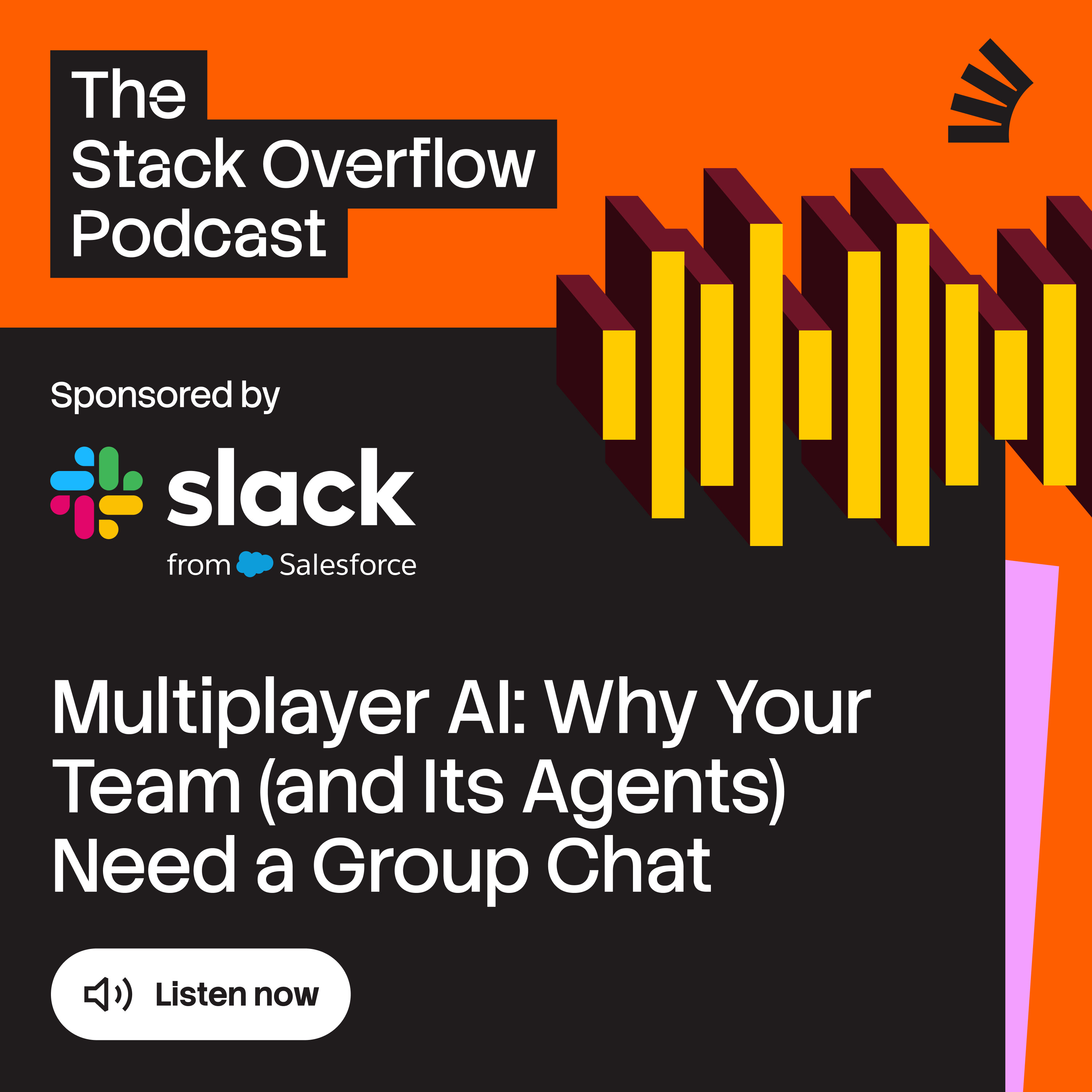 Multiplayer AI: Why your team (and its agents) need a group chat | SPONSORED BY SLACK BY SALESFORCEIn this episode, Ryan chats with the GM of Slack, Rob Seaman, about how their new Code Channels feature is bringing multiplayer AI to your team chats. They discuss how most interactions with coding agents become siloed context, why a party chat with devs and agents flattens writing code and code review into a single step, and why a Slack channel might be a better dev environment than a terminal. Episode notes:Check out the article Rob mentioned: Learning on the shop floor. If you want to code multiplayer, check out Code Channels.Connect with Rob by email at [email protected], on LinkedIn, or Twitter. Congrats to Populist badge winner petro.sidlovskyy for dropping a great answer on What's the best way to ensure a base class's static constructor is called?.See Privacy Policy at https://art19.com/privacy and California Privacy Notice at https://art19.com/privacy#do-not-sell-my-info. | 30m 22s | ||||||
| 9/22/26 | Haters think AI agents can't write GPU code? This'll ROCm | Ryan chats with Anush Elangovan, VP of Software at AMD, about ROCm's open-source unified toolchain for GPUs, how agentic AI is drastically lowering the barrier to entry for low-level hardware programming, and the rapid convergence of software and hardware development timelines.Episode notes: ROCm is AMD's unified, open-source software layer and toolchain that allows developers to program on AMD's hardware accelerators. Connect with Anush on X. Congrats to Populist badge winner Blitz for winning the badge on their answer to Is there a way to view your apps dot entitlements file from your app’s IPA archive?. See Privacy Policy at https://art19.com/privacy and California Privacy Notice at https://art19.com/privacy#do-not-sell-my-info. | 26m 47s | ||||||
| 9/18/26 | The AI magic words | Ryan sits down with Tim O'Reilly, founder and CEO at O'Reilly Media, to talk about the role of books as user interfaces to knowledge, the power of "magic words" to extract better outputs from AI, and why human taste is becoming highly valuable as knowledge becomes a commodity. Episode notes: O'Reilly Media is a technology transfer company that leverages books, online learning platforms, and their new O'Reilly Expert Intelligence tool to shape both human and agentic learning.Connect with Tim on X and read his Substacks, Conversations with AI and Asimov's Addendum.See Privacy Policy at https://art19.com/privacy and California Privacy Notice at https://art19.com/privacy#do-not-sell-my-info. | 24m 22s | ||||||
Want analysis for the episodes below?Free for Pro Submit a request, we'll have your selected episodes analyzed within an hour. Free, at no cost to you, for Pro users. | |||||||||
| 9/15/26 | AI, JD, and other letters of the law | Ryan chats with Kevin Frazier, director of the AI Innovation and Law program at the University of Texas School of Law, about the legal and social impacts of data centers, the realities of workforce disruption, and regulating AI for child safety using existing consumer protection laws.Episode notes:The AI Innovation and Law program at the University of Texas School of Law explores the complex legal and policy questions surrounding artificial intelligence, which Kevin also covers on his own podcast, Scaling Laws.This episode was recorded at the Ai4 conference. Listen to our other Ai4 conversation with Paypal’s Srini Venkatesan and Zscaler’s Sam Curry. Connect with Kevin on LinkedIn and X.See Privacy Policy at https://art19.com/privacy and California Privacy Notice at https://art19.com/privacy#do-not-sell-my-info. | 38m 27s | ||||||
| 9/11/26 | AIcybersecurity+4 | Sam Curry | Zscaler | — | AI cybersecurityhuman intelligence+5 | — | 27m 33s | ||
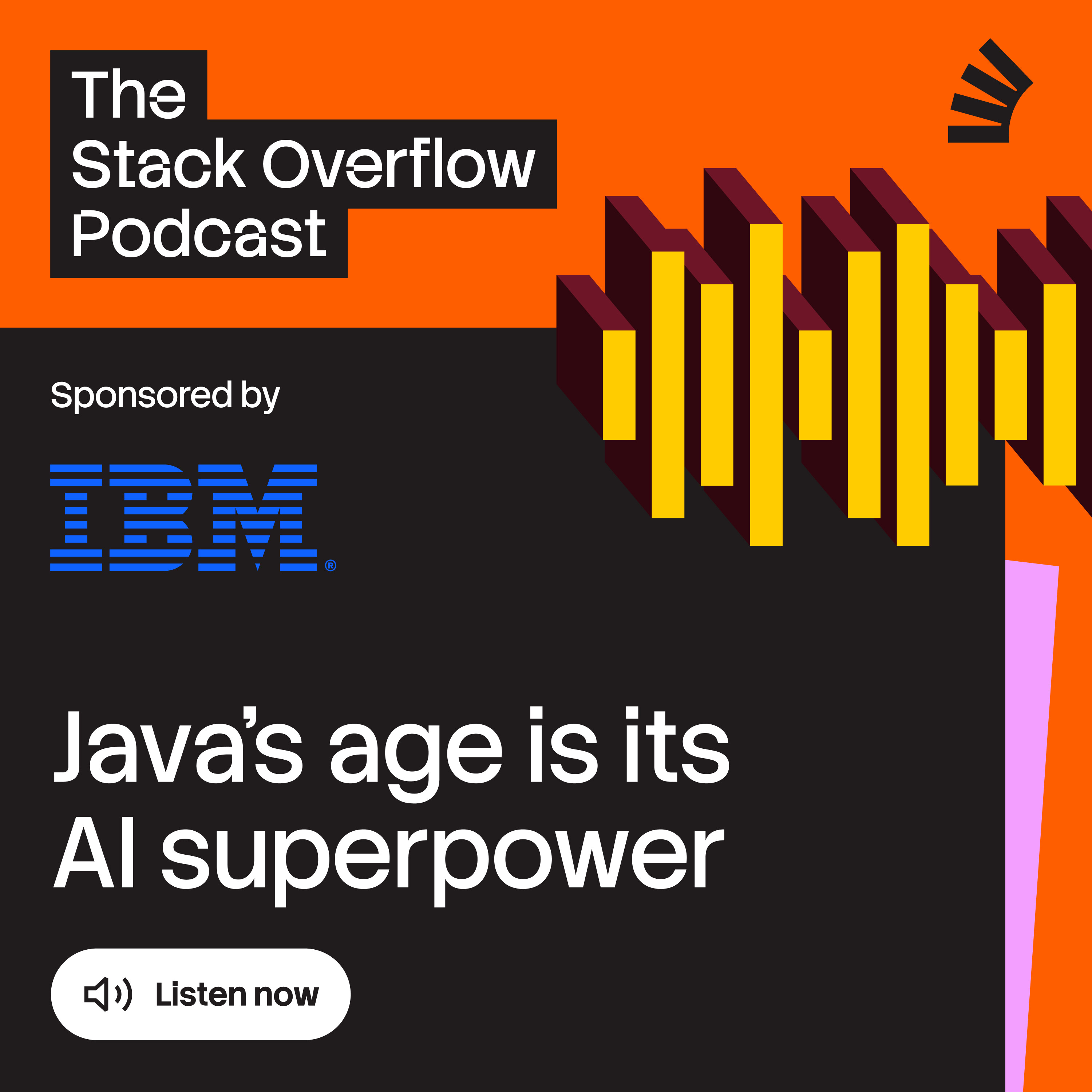
| 9/9/26 | JavaAI+4 | Markus Eisele | Bobffmpeg | — | JavaAI superpower+5 | IBM | 35m 39s | ||
| 9/8/26 | AIfinance+3 | Srini Venkatesan | PaypalAnaconda | — | AIPaypal+3 | — | 28m 56s | ||
| 9/4/26 | AIcoding agent+3 | Greg Jennings | Anaconda | — | AI coding agentsecure software+4 | — | 32m 25s | ||
| 9/1/26 | Java programmingsoftware development+3 | Tim Lindholm | JavaWindows NT+3 | — | JavaTim Lindholm+5 | — | 30m 01s | ||
| 8/28/26 | AI correctnessLean language+3 | Leo de Moura | LeanAWS | — | AILean language+4 | — | 25m 22s | ||
| 8/25/26 | AIpersonalization+4 | Praveen Bodigutla | LinkedInGraphRAG | — | cognitive memorypersonalization+5 | — | 32m 40s | ||
| 8/21/26 | agentic developmentsoftware development+4 | Andi Gutmans | GooglePHP+1 | — | agentic developmentPHP+5 | — | 25m 47s | ||
| 8/21/26 | CAPTCHAweb technology+3 | — | — | — | CAPTCHAbots+3 | — | 32m 59s | ||
| 8/18/26 | SDLCQA engineering+3 | Suneet Malhotra | Motorola SolutionsCross-Layer Observability for LLM-Assisted Test Automation: A Reference Architecture+1 | — | SDLCQA engineering+4 | — | 28m 55s | ||
| 8/14/26 | Solving integration woes with a hackathon | Ryan welcomes Meryll Blanchet, Director of Engineering for Adobe Brand Visibility, to chat about Adobe’s recent acquisition of Semrush, how Adobe Brand Visibility was born from Semrush’s AI visibility product and Adobe’s LLM Optimizer, and how Adobe used a three-day internal hackathon instead of a large-scale infrastructure integration to quickly deliver value to customers. Episode notes: Adobe Brand Visibility is a GEO software that helps companies improve their AI visibility, citations, and share of voice. You can preview the new product here.Connect with Meryll on LinkedIn. Congratulations to user patti_jane, who won a Stellar Question badge for asking Setting PATH environment variable in macOS permanently.See Privacy Policy at https://art19.com/privacy and California Privacy Notice at https://art19.com/privacy#do-not-sell-my-info. | 28m 15s | ||||||
| 8/11/26 | Your tokenmaxxing is not valuemaxxing | Ryan is joined by Coder’s Rob Whiteley to chat about why tokenmaxxing isn’t proving real value and just triggering Goodhart’s Law, how release speed and PR merges can help you measure agentic outcomes with or without a human-in-the-loop, and what the democratization of skills means for junior developers and the talent pipeline. Episode notes:Coder is a self-hosted platform that lets you securely run cloud development environments and AI coding agents on your own internal infrastructure. Connect with Rob on LinkedIn.Today’s shoutout goes to an Unsung Hero badge winner, user Red.Wave!See Privacy Policy at https://art19.com/privacy and California Privacy Notice at https://art19.com/privacy#do-not-sell-my-info. | 29m 52s | ||||||
| 8/7/26 | How to be fearlessly AI native | Ryan welcomes McLaren Stanley, Senior Principal Engineer for Amazon Stores, to discuss what it actually takes to make teams AI native, why agentic engineering is shifting code bottlenecks downstream to testing and deployment, and why robust validation is essential to build trust and enable “fearless commits.”Episode notes:You can learn more about how Amazon’s frontier teams became AI native on the AWS blog. Connect with McLaren on LinkedIn.Congrats to user o11c for winning a Populist badge for answering Pythonic way to count the number of trailing zeros in base 2. See Privacy Policy at https://art19.com/privacy and California Privacy Notice at https://art19.com/privacy#do-not-sell-my-info. | 40m 05s | ||||||
| 8/4/26 | Your MVP doesn’t need a Kubernetes cluster | Ryan welcomes Anurag Goel, CEO and co-founder of Render, to discuss why most startups shouldn’t start by managing their Kubernetes and cloud infrastructure. They discuss how frustration with spinning up nodes at Stripes led him to build a company, a future where your application itself may allocate its own compute, and why DevOps jobs aren’t going anywhere. Episode notesRender calls itself the cloud for builders, intuitive infrastructure for scale. Connect with Anurag at [email protected]. Congrats to Populist badge winner Hovercraft Full Of Eels for bringing the knowledge to How can I disable System.out for speed in Java.See Privacy Policy at https://art19.com/privacy and California Privacy Notice at https://art19.com/privacy#do-not-sell-my-info. | 31m 15s | ||||||
| 7/21/26 | full-stack developmententerprise software+3 | Umesh Unnikrishnan | Snowflake | — | full-stackdevelopment+5 | — | 25m 59s | ||
| 7/17/26 | developer advocacyagentic coding+4 | Cassidy Williams | GitHub CopilotGitHub Copilot app+2 | — | developer advocacyagentic coding+5 | — | 28m 05s | ||
| 7/14/26 | AI responsibilityhuman/AI workflow+3 | Sarah Bird | MicrosoftNIST | — | AIresponsibility+5 | — | 28m 57s | ||
| 7/10/26 | AI agentsenterprise technology+4 | Jay Parikh | MicrosoftGitHub+1 | — | AIMicrosoft+5 | — | 31m 05s | ||
| 7/8/26 | infrastructure-as-codeAI+3 | Rosemary Wang | Bob | — | infrastructure as codeAI deployment+3 | IBM | 30m 22s | ||
| 7/7/26 | AItechnology+3 | Saahil Jain | You.com | — | agent orchestrationAI models+3 | — | 31m 20s | ||
| 7/3/26 | AI applicationsevaluation metrics+3 | Benny Chen | Fireworks AI | — | AIevaluation+3 | — | 25m 36s | ||
| 7/2/26 | AI codingengineering frameworks+3 | Vivek Raghunathan | SnowflakeSnowflake Summit | — | AI design patternscoding agents+3 | — | 22m 53s | ||
| 6/30/26 | intent predictionbehavior forecasting+3 | Frank Portman | Yobifportman.com+2 | — | intent predictionLLM+5 | — | 29m 58s | ||
| 6/26/26 | AI coding agentsproduction failures+3 | Anish Agarwal | Traversal | — | AIproduction failures+3 | — | 30m 58s | ||
| 6/12/26 | AI in developmentdeveloper tools+3 | Trisha Gee | JavaVS Code+1 | — | AIIDEs+3 | — | 34m 08s | ||
| 6/11/26 | AI in software developmentengineering leadership+3 | Eric Anderson | Claude CodeIntuit | — | AIengineering leadership+5 | — | 33m 41s | ||
| 6/9/26 | AI agentsdatabases+4 | Bryan Clark | LakebasePostgres+2 | — | AI agentsPostgres+5 | — | 35m 23s | ||
| 6/5/26 | OWASP Top 10software supply chain+3 | Tanya Janca | OWASPDevSec Station | — | OWASPTop 10+5 | — | 34m 03s | ||
| 6/2/26 | AI developmentinternational business+3 | Songyee Yoon | Principal Venture PartnersSubstack | US | AIventure capital+3 | — | 26m 09s | ||
| 5/29/26 | AI governancedata orchestration+3 | Florian DouetteauNancy Wang | Dataiku1Password | — | AIdata governance+5 | — | 30m 51s | ||
| 5/26/26 | AI in productionobservability+3 | Peter Salanki | CoreWeave | — | AIproduction+4 | — | 27m 25s | ||
| 5/22/26 | AI infrastructurestorage bottlenecks+3 | Garima KapoorAnand Babu Periasamy | MinIONVIDIA | — | AIstorage+6 | — | 29m 53s | ||
| 5/20/26 | chat applicationsenterprise communication+3 | Jaime DeLanghe | SalesforceStack Overflow+1 | — | Slackagents+4 | Slack | 29m 29s | ||
| 5/19/26 | cybersecurityphishing attacks+4 | Adam Meyers | CrowdstrikeHumanX | — | cybersecurityphishing+5 | — | 29m 53s | ||
| 5/8/26 | AIsilicon strategy+4 | Mark Papermaster | AMDAMD Advanced Insights+2 | — | AIAMD+6 | — | 32m 11s | ||
| 5/5/26 | semantic searchvector databases+5 | Bryan O’Grady | QdrantLucene | — | semantic searchvector databases+5 | — | 28m 42s | ||
| 5/1/26 | JavaScriptdate handling+3 | Jason Williams | Rust-based JavaScript engine BoaMoment.js+5 | — | JavaScriptTemporal+5 | — | 35m 38s | ||
| 4/28/26 | AILLMs+4 | Harsha Chintalapani | CollateOpen Metadata | — | AILLMs+5 | — | 31m 34s | ||
| 4/24/26 | open sourcedocumentaries+4 | Emma TraceyJosiah Mcgarvie | Cult.RepoYouTube+1 | — | open sourcedocumentaries+5 | — | 25m 33s | ||
| 4/22/26 | AI agentsengineering challenges+3 | Chase RoossinSteven Kulesza | — | — | AI agentsengineering+3 | Intuit | 27m 52s | ||
| 4/21/26 | developer communitiesprogramming+3 | Mike Swift | Major League HackingDEV | — | developer communitiesMajor League Hacking+3 | — | 30m 23s | ||
| 4/17/26 | digital sovereigntysovereign AI+3 | Stephen Watt | KubernetesPyTorch Stack+2 | — | digital sovereigntysovereign AI+3 | — | 33m 56s | ||
| 4/14/26 | VC fundingcommunity support+4 | Zhen Lu | RunPodStack Overflow | — | VC fundingcommunity funding+5 | — | 33m 21s | ||
| 4/10/26 | AI implementationgovernance+3 | Hema Raghavan | Kumo.ai | — | AI strategiespipeline sprawl+3 | — | 31m 34s | ||
| 4/7/26 | C++programming+3 | Bjarne Stroustrup | ColumbiaStandard C++ Foundation | — | C++Bjarne Stroustrup+4 | — | 33m 05s | ||
| 4/3/26 | calm computingdata ownership+3 | Galen Wolfe-Pauly | UrbitStack Overflow | — | calm computingdata ownership+5 | TlonSTACK | 28m 52s | ||
| 3/31/26 | software developmentcode testing+3 | Fitz Nowlan | SmartBear | — | code testingsoftware development+3 | — | 30m 18s | ||
Showing 58 of 978
Pitch Fit is a Pro feature
See how bookable this show is for guests, which brands already advertise, the per-episode ad value, and the best-fit guest and sponsor profile. The numbers are blurred on the free plan.
How readily this show books outside guests like you.
How proven this show is for host-read sponsorships.
For Guests
ProFor Advertisers
ProUpgrade to Pro to unlock guest cadence, sponsor categories, fit scores, and per-episode ad value for this show.
Similar Audience Demographics
Podcasts that attract a similar listener profile

Software Engineering Daily
Software Engineering Daily

Software Engineering Radio - the podcast for professional software developers
[email protected] (SE-Radio Team)

Syntax - Tasty Web Development Treats
Wes Bos & Scott Tolinski - Full Stack JavaScript Web Developers

Thoughtworks Technology Podcast
Thoughtworks

The Pragmatic Engineer
Gergely Orosz

Soft Skills Engineering
Jamison Dance and Dave Smith

Talk Python To Me
Michael Kennedy
Chart history for The Stack Overflow Podcast
Peaked at #29 in KE, currently #29 in KE.
| Market | Genre | Peak | Current | Trend |
|---|---|---|---|---|
| KE | — | #29 | #29 | — |
| AR | — | #46 | #46 | — |
| MY | — | #70 | #70 | — |
| HU | — | #88 | #88 | — |
| HK | — | #105 | #105 | — |
| Canada | — | #107 | #107 | — |
| VN | — | #119 | #119 | — |
| NG | — | #119 | #119 | — |
| United Kingdom | — | #132 | #132 | — |
| GR | — | #140 | #140 | — |
| RO | — | #144 | #144 | — |
| CL | — | #144 | #144 | — |
| India | — | #153 | #153 | — |
| PH | — | #154 | #154 | — |
| AT | — | #161 | #161 | — |
| South Africa | — | #161 | #161 | — |
| SG | — | #186 | #186 | — |
| Finland | — | #192 | #192 | — |
Chart Positions
18 placements across 18 markets.
Chart Positions
18 placements across 18 markets.