The Steady State Sentinel
by The Steady State
Is this your podcast?Insights from recent episode analysis
Audience Interest
Podcast Focus
Publishing Consistency
Platform Reach
Insights are generated by CastFox AI using publicly available data, episode content, and proprietary models.
Most discussed topics
Brands & references
Total monthly reach
Estimated from 19 chart positions in 19 markets.
By chart position
- 🇺🇸US · Government#5930K to 100K
- 🇬🇧GB · Government#6830K to 100K
- 🇨🇦CA · Government#8130K to 100K
- 🇦🇺AU · Government#1445K to 30K
- 🇫🇷FR · Government#1111K to 10K
- Per-Episode Audience
Est. listeners per new episode within ~30 days
112K to 380K🎙 ~2x weekly·22 episodes·Last published 1w ago - Monthly Reach
Unique listeners across all episodes (30 days)
223K to 760K🇺🇸13%🇬🇧13%🇨🇦13%+16 more - Active Followers
Loyal subscribers who consistently listen
67K to 228K
Market Insights
Platform Distribution
Reach across major podcast platforms, updated hourly
Total Followers
—
Total Plays
—
Total Reviews
—
* Data sourced directly from platform APIs and aggregated hourly across all major podcast directories.
On the show
From 24 epsHosts
Recent guests
Recent episodes
The Autocrats' Worst Enemy: Why Despots Fear Mayors
Aug 25, 2026
34m 27s
Cornucopia of Vectors of Theft: How China Is Stealing America's Economic Future
Aug 18, 2026
48m 52s
The Intelligence You Don't See: A Career Analyst Warns about Systemic Weaponization of the Intelligence Community
Aug 11, 2026
45m 33s
The Iran You Don't See: The Regime, the People, and What America Gets Wrong
Aug 4, 2026
48m 40s
America's Nuclear Guardians: A Conversation on Security, Espionage, and Speaking Truth to Power
Jul 28, 2026
40m 24s
Social Links & Contact
Official channels & resources
Official Website
Login
RSS Feed
Login
| Date | Episode | Topics | Guests | Brands | Places | Keywords | Sponsor | Length | |
|---|---|---|---|---|---|---|---|---|---|
| 8/25/26 |  The Autocrats' Worst Enemy: Why Despots Fear Mayors | A former U.S. Ambassador and Los Angeles Deputy Mayor on why local leaders are democracy's front line, how cities can resist authoritarianism, and what you can do to help.Host Lauren Anderson sits down with Ambassador Nina Hachigian, founder and CEO of the Alliance for Local Leaders International, a nonprofit dedicated to supporting and connecting mayors and governors globally to solve shared challenges. Drawing from her recent Foreign Affairs article, "The Autocrats' Worst Enemy," Hachigian explains why mayors are the most trusted level of government (70% trust, held for decades) and how in autocracies around the world, they have served on the front lines to protect democratic freedoms.She shares harrowing examples: the mayor of Gdańsk assassinated for his support of LGBTQ rights; the mayor of Caracas jailed for leading protests; and Istanbul's mayor thrown in jail and facing 2,000 years of sham charges. She discusses how the current US administration is using classic authoritarian tactics including weaponizing federal funding against states and cities that didn't support the president’s election.She offers hope through local innovation (participatory budgeting) and civic engagement–volunteering, connecting and communicating with local representatives, and the simple act of getting to know your neighbors. Her message: "Mayors are the canaries in the coal mine," when assessing the health of our democracy. And local democracy is where renewal begins.Episode Transcript | 34m 27s | ||||||
| 8/18/26 |  Cornucopia of Vectors of Theft: How China Is Stealing America's Economic Future | A former CIA officer on China’s espionage successes, America’s IP losses, and the growing threat to the U.S. economy.Host John Sipher sits down with his former CIA colleague Glenn Chafetz, now Director of the 2430 Group, a nonprofit focused on state-sponsored espionage against the economy. Chafetz explains how technology has transformed espionage — from the days of clandestine meetings in parking garages where “if you didn’t get caught red-handed, you didn’t get caught” to a world where "commercial surveillance far outstrips government surveillance" and the changes the technological expansion required of the CIA.He describes China's coordinated, party-state, intentional, and purposeful effort to steal American intellectual property (IP) calling China’s intelligence service "the single most successful intelligence organization in the history of the planet." He argues that American companies are losing the IP war because their focus on quarterly profits prevents them from calculating the significant long-term cost of stolen technology and making needed investments in counterintelligence efforts that would protect their IP.He warns that China's informal network of autocracies — Russia, Iran, North Korea — functions as a modern "Axis of Evil," and that the U.S. is destroying its own alliance network at the worst possible time. He closes with advice for companies: You have to become sufficiently expert in economic espionage, counter-espionage, counterintelligence, because if you don't, your competitors will.Guest info: Glenn Chafetz is the Director of the 2430 Group, a nonprofit providing research and advice on state-sponsored espionage efforts against the US economy, and publisher of the tRed Report, the organization’s recurring intelligence/geopolitical brief . He served at the State Department and the Arms Control and Disarmament Agency before spending much of his 30 year government career at the CIA which included three tours as Chief of Station.. He became the first person to oversee the Agency’s program of espionage tradecraft in the age of technological expansion.View Episode Transcript | 48m 52s | ||||||
| 8/11/26 | 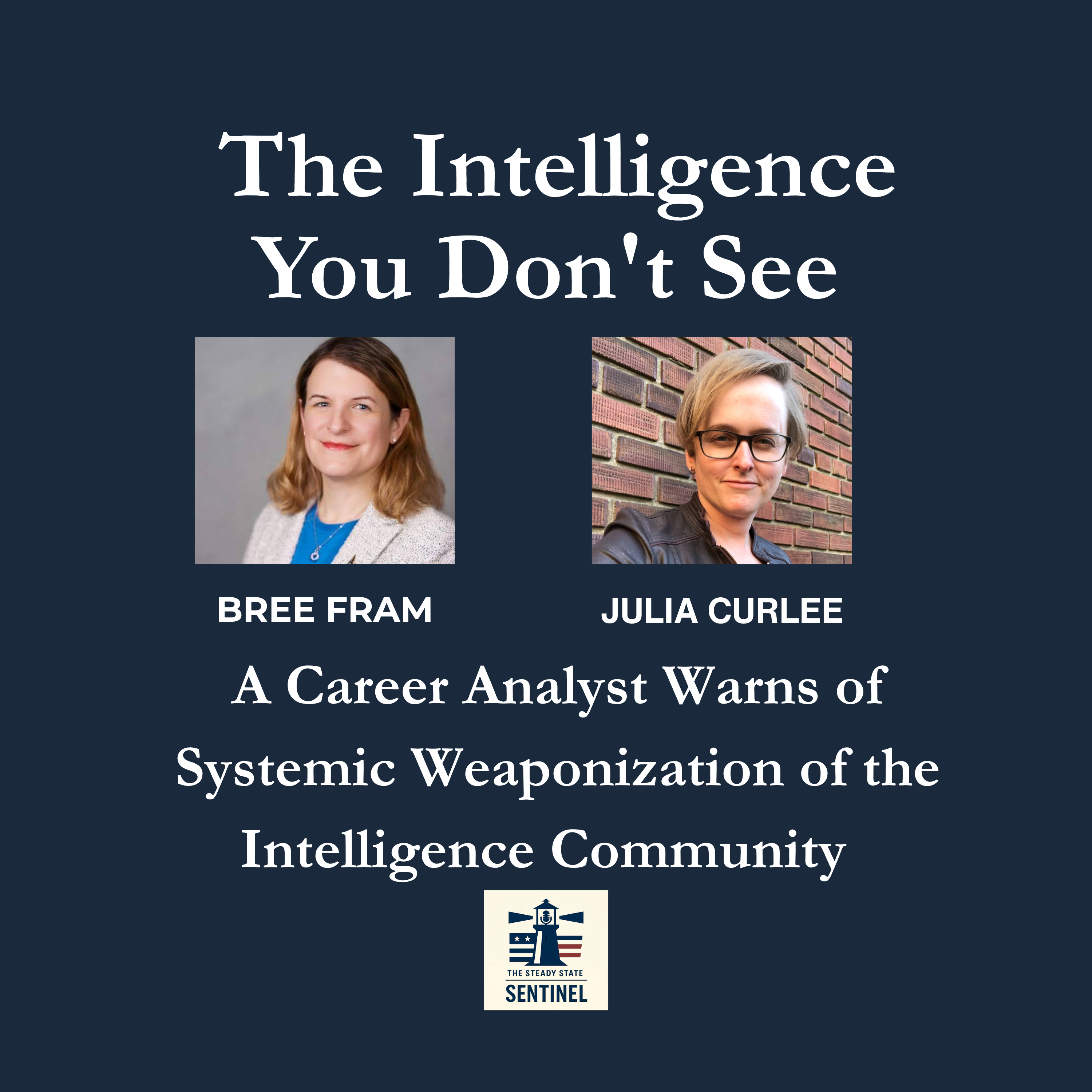 The Intelligence You Don't See: A Career Analyst Warns about Systemic Weaponization of the Intelligence Community | A former CIA analyst and NSC director on the weaponization of the DNI, the decapitation of the NSC, and why dissent is no longer tolerated.Host Bree Fram, a retired Space Force colonel, sits down with Julia Curlee, a former CIA analyst with 25 years of experience who served as an National Security Council (NSC) director in the Biden and second Trump White Houses and as a presidential daily intelligence briefer to Vice President Pence. Curlee explains how intelligence was designed to work — raw reports transformed into context-rich analysis to help policymakers make informed decisions — and how that system has been systematically dismantled. She describes the Office of the Director of National Intelligence (ODNI) as a "loaded gun waiting on the table" that has been weaponized under Tulsi Gabbard and Bill Pulte, and warns that the NSC's coordination function has been "decapitated," leading to catastrophic planning failures in the run-up to the Iran war. She reveals how the head of the National Intelligence CounciL (NIC) was fired for delivering an assessment that didn't align with Stephen Miller's desired narrative, and how this has taught analysts that "any form of dissent" will be held against them. She closes with a sobering assessment: the Iran war is a strategic blunder that rivals Iraq, the U.S. has no good way out, and it will take decades to rebuild the trust that has been destroyed with allies and partners.Guest info: Julia Curlee is a former CIA analyst with 25 years of experience in national security. She served as an NSC Director in the Biden and second Trump White Houses and as a presidential daily intelligence briefer to the Vice President. She completed multiple tours in the Middle East and South Asia and served in the CIA's China Mission Center. She holds master's degrees from the National War College and American University and is currently a public service fellow at Lawfare.Episode Transcript | 45m 33s | ||||||
| 8/4/26 | 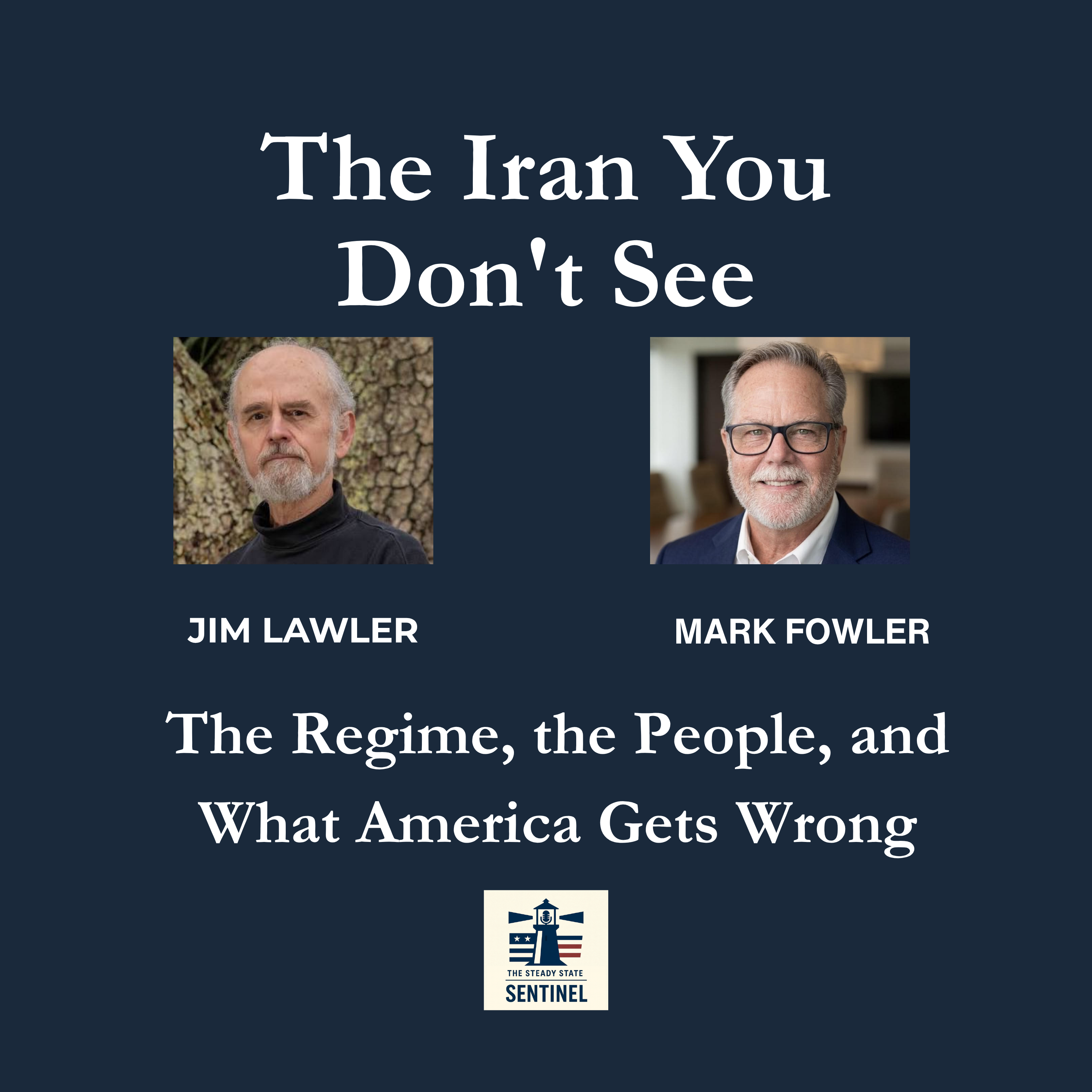 The Iran You Don't See: The Regime, the People, and What America Gets Wrong | A 22-year veteran of the CIA and Iran specialist on why the regime survives, the MOU disaster, the lessons of Iraq, and the history and humanity of Iranians.Host Jim Lawler sits down with his former CIA colleague Mark Fowler, a decorated case officer and one of the most experienced Iran operations officers of his generation. Fowler explains what makes Iran such a uniquely demanding target — not because Iranians are hard to recruit, but because the U.S. has no presence inside the country. He shares why the regime has survived for 45 years: improving education and infrastructure, using the internet as a safety valve, and brutally crushing protest leadership. He reflects on the lessons of the Iraq Weapons of mass destruction (WMD) failure, warning against mirror imaging. He offers a devastating critique of the Iran Memorandum of Understanding (MOU), calling it a "disaster" that gave Iran everything and "guarantees we'll be back." He discusses the complex internal rivalries between the Ministry of Intelligence and Security (MOIS) and Islamic Revolutionary Guard Corps (IRGC,) the danger of hitting civilian targets, and why any resolution will require the administration to "drink the poison" of a bad deal. He closes with what Americans get wrong about Iran: that most Iranians simply want to live their lives, raise their families, and see their country live up to its potential.Mark Fowler is a decorated CIA case officer who served the Agency for 22 years, including as the number- two position on Iran operations. He is a Farsi-speaking Middle East specialist and a veteran of the U.S. war on terror. He served as the Directorate of Operations senior representative to the WMD commission following the Iraq WMD failure. He is the author of the soon-to-be published novel A Prince of Mirrors: A CIA Odyssey of Trust and Betrayal, and writes a Substack column.Episode Transcript | 48m 40s | ||||||
| 7/28/26 | 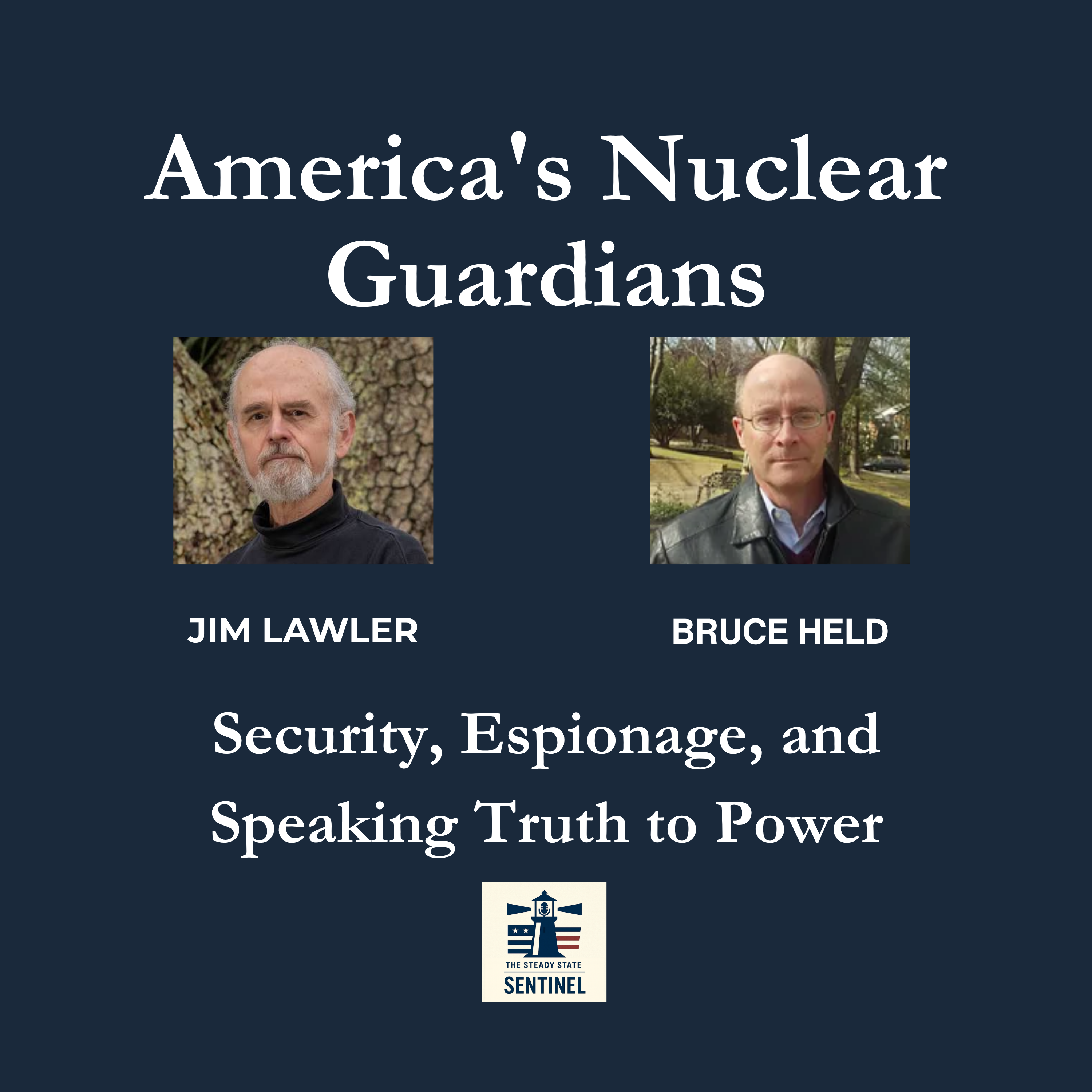 America's Nuclear Guardians: A Conversation on Security, Espionage, and Speaking Truth to Power | A former acting Under Secretary for Nuclear Security on the damage being done to the Department of Energy’s (DOE) Office of Intelligence and Counterintelligence, and why he "never bets against America."Host Jim Lawler sits down with his former CIA colleague Bruce Held, who served as Chief of Station on three continents, Special Assistant to two National Security Council principals, Director of DOE's Office of Intelligence and Counterintelligence, and ultimately acting Under Secretary for Nuclear Security.Held describes DOE’s Office of Intelligence and Counterintelligence unique mission — leveraging the thousands of top-secret cleared scientists at the national labs to understand foreign nuclear programs and prevent technological surprise. Held describes the brutal budget battles with the Pentagon over funding America's neglected nuclear deterrent, and the ultimate resolution in which participants prioritized national security above parochial interests. He warns that the current administration's cuts and restructuring at the National Nuclear Security Administration (NNSA) and DOE will take a decade to rebuild, creating a dangerous window of vulnerability. He discusses the counterintelligence threat from Russia and China, the importance of proactive engagement over bureaucratic secrecy, and why the American people should be asking hard questions about DOGE's access to personnel data.Guest info: Bruce Held is a former Senior CIA clandestine Case Officer who served as Chief of Stationon three continents and special assistant to two National Security Council principals. He was Director of DOE's Office of Intelligence and Counterintelligence and later served as acting Under Secretary for Nuclear Security at the National Nuclear Security Administration. He is the author of several books on espionage history, including A Spy's Guide to Santa Fe and Albuquerque and The Spy's Guide to the Kennedy Assassination, as well as a Substack column, The Spy's Guide to American History. He also writes spy fiction, including The Intimate Spy.Episode Transcript | 40m 24s | ||||||
| 7/21/26 | military inclusiongender equality+4 | Jessica Ruttenber | Department of DefenseAir Force+2 | — | militaryinclusion+6 | — | 49m 16s | ||
| 7/14/26 | espionageintelligence+4 | Jim Lawler | CIAA.Q. Khan | — | CIArecruiter+6 | — | 52m 20s | ||
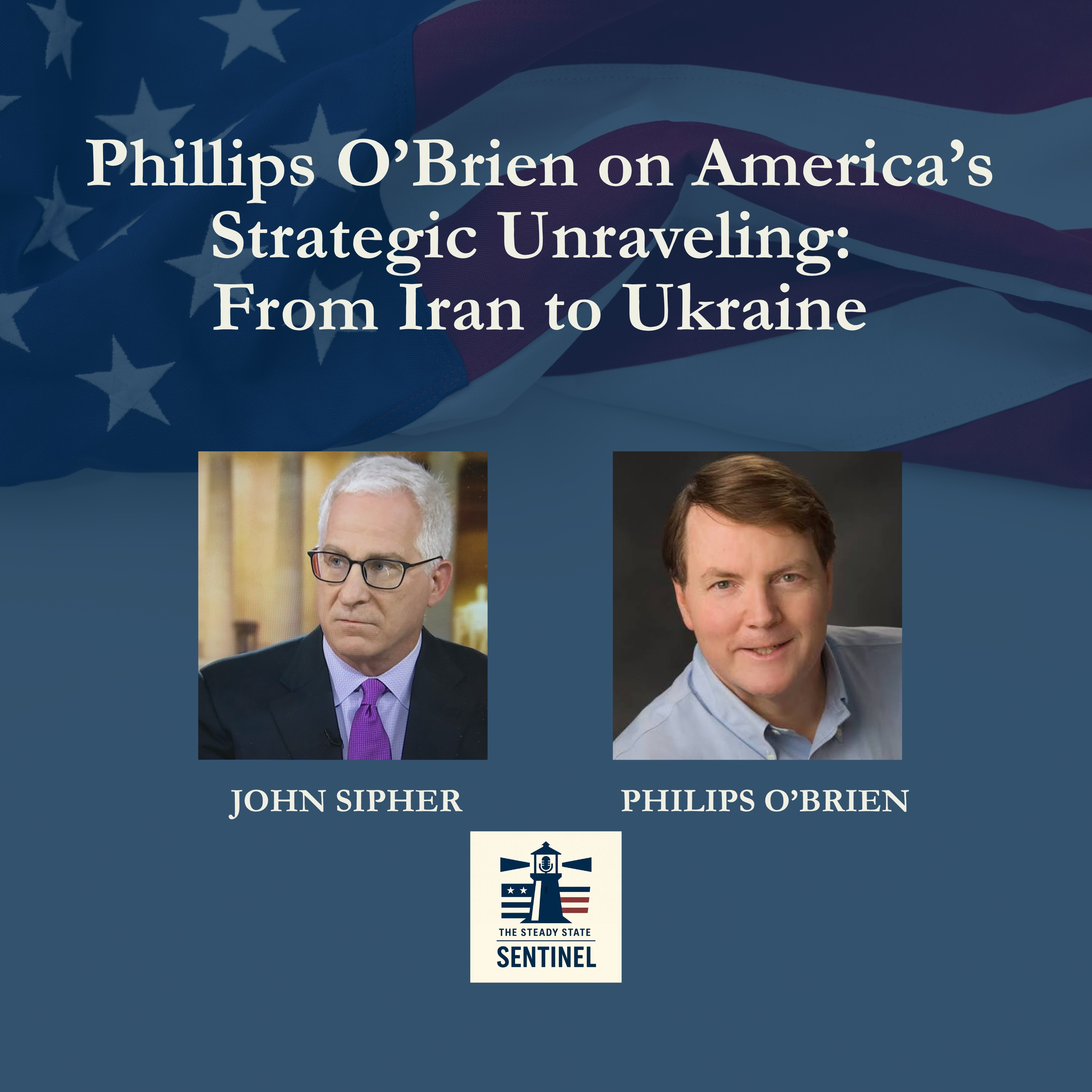
| 7/7/26 | American strategymilitary history+5 | Phillips O'Brien | University of St. Andrews | IranUkraine+3 | military strategyIran+7 | — | 45m 36s | ||
| 6/30/26 | public servicelaw enforcement+4 | Lauren C. Anderson | FBI | Central African country of Gabon | FBIpublic servant+6 | — | 49m 02s | ||
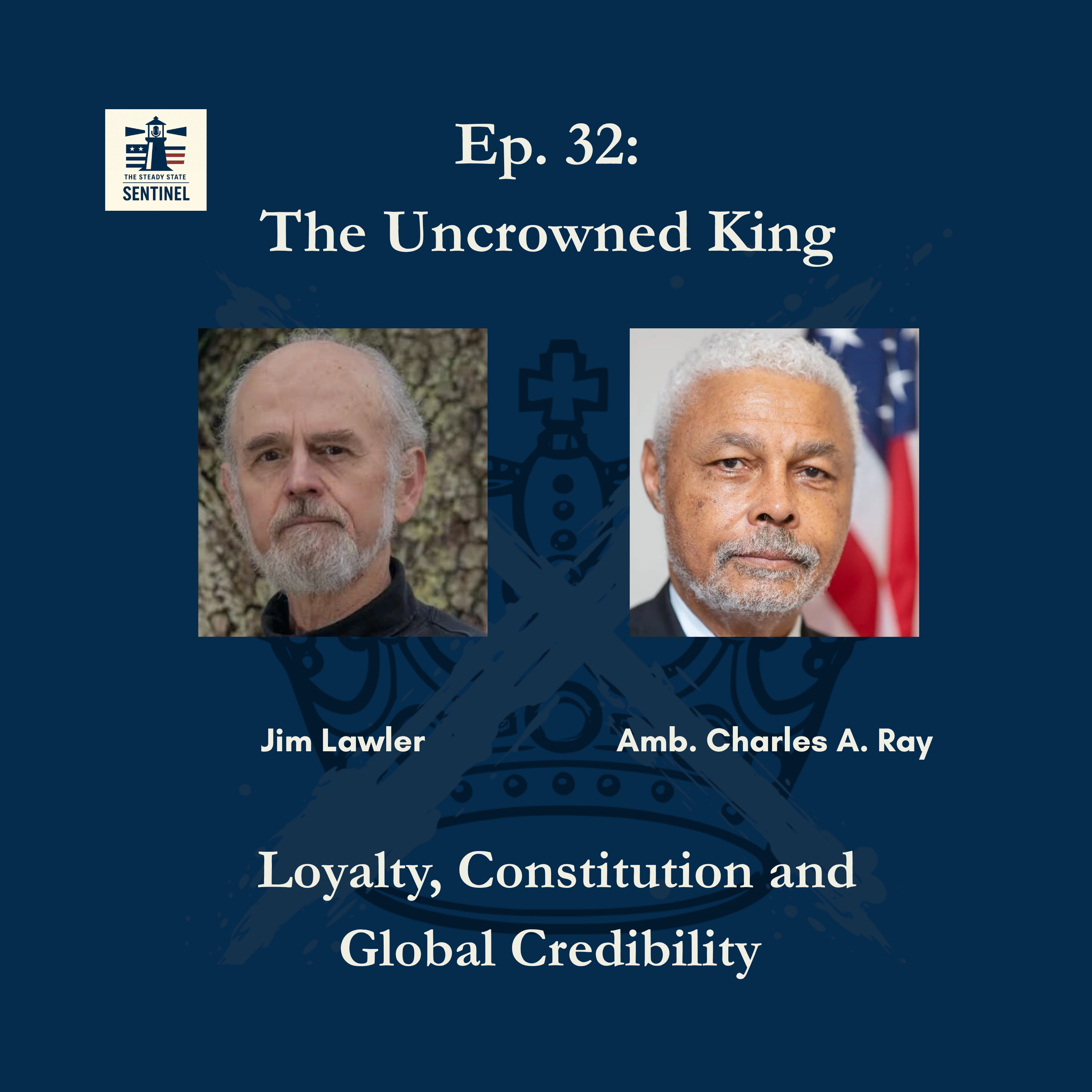
| 6/23/26 | authoritarianismpolitical loyalty+4 | Charles A. Ray | 1776 Fund | CambodiaZimbabwe+3 | authoritarian turnpolitical loyalty+8 | — | 43m 02s | ||
| 6/16/26 | federal prosecutionjustice+4 | Ken Wainstein | U.S. attorneyDepartment of Homeland Security | Southern District of New YorkWashington, D.C.+2 | federal prosecutorjustice+6 | — | 51m 01s | ||
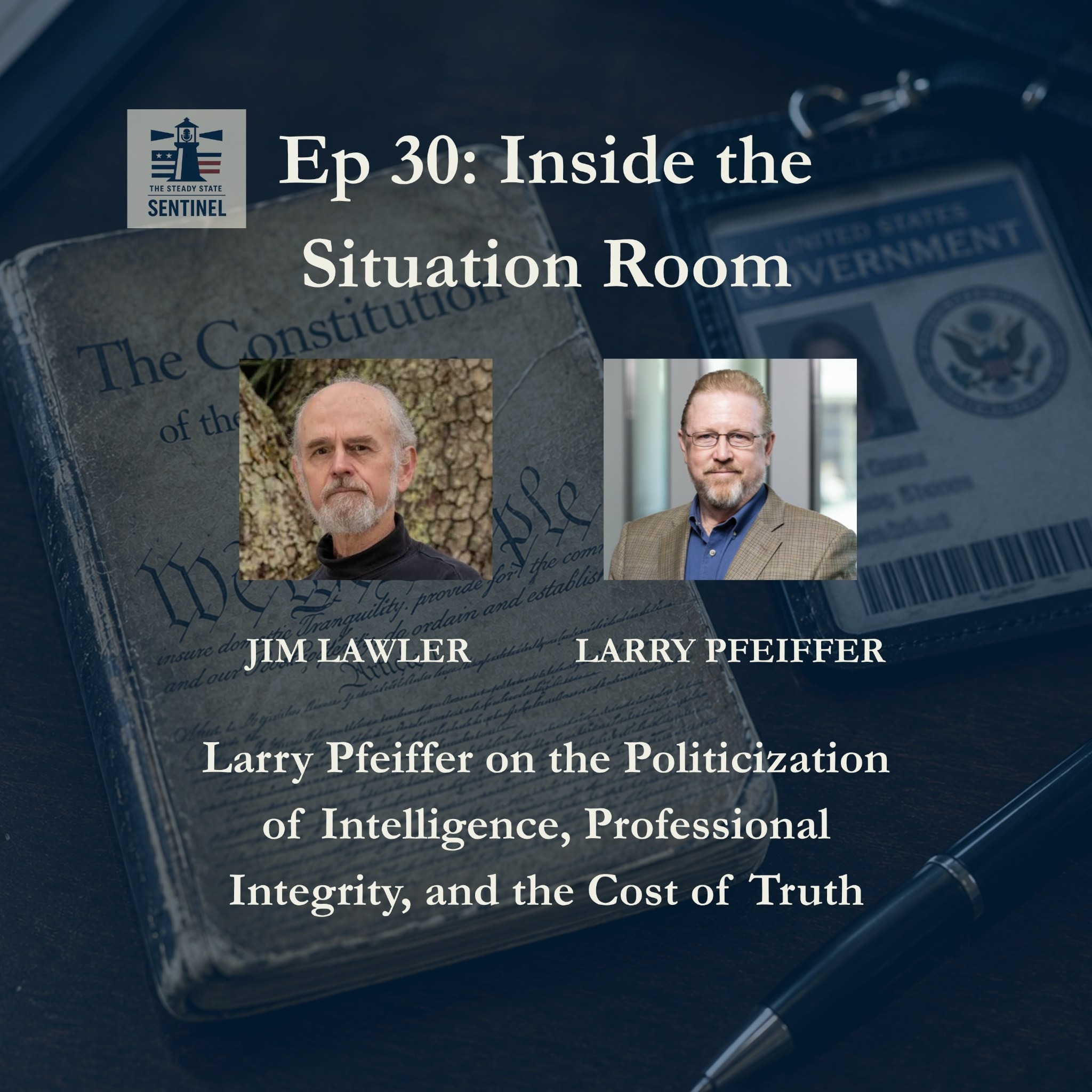
| 6/9/26 | politicization of intelligencenational security+3 | Larry Pfeiffer | CIANSA+3 | — | CIAintelligence+5 | — | 37m 26s | ||
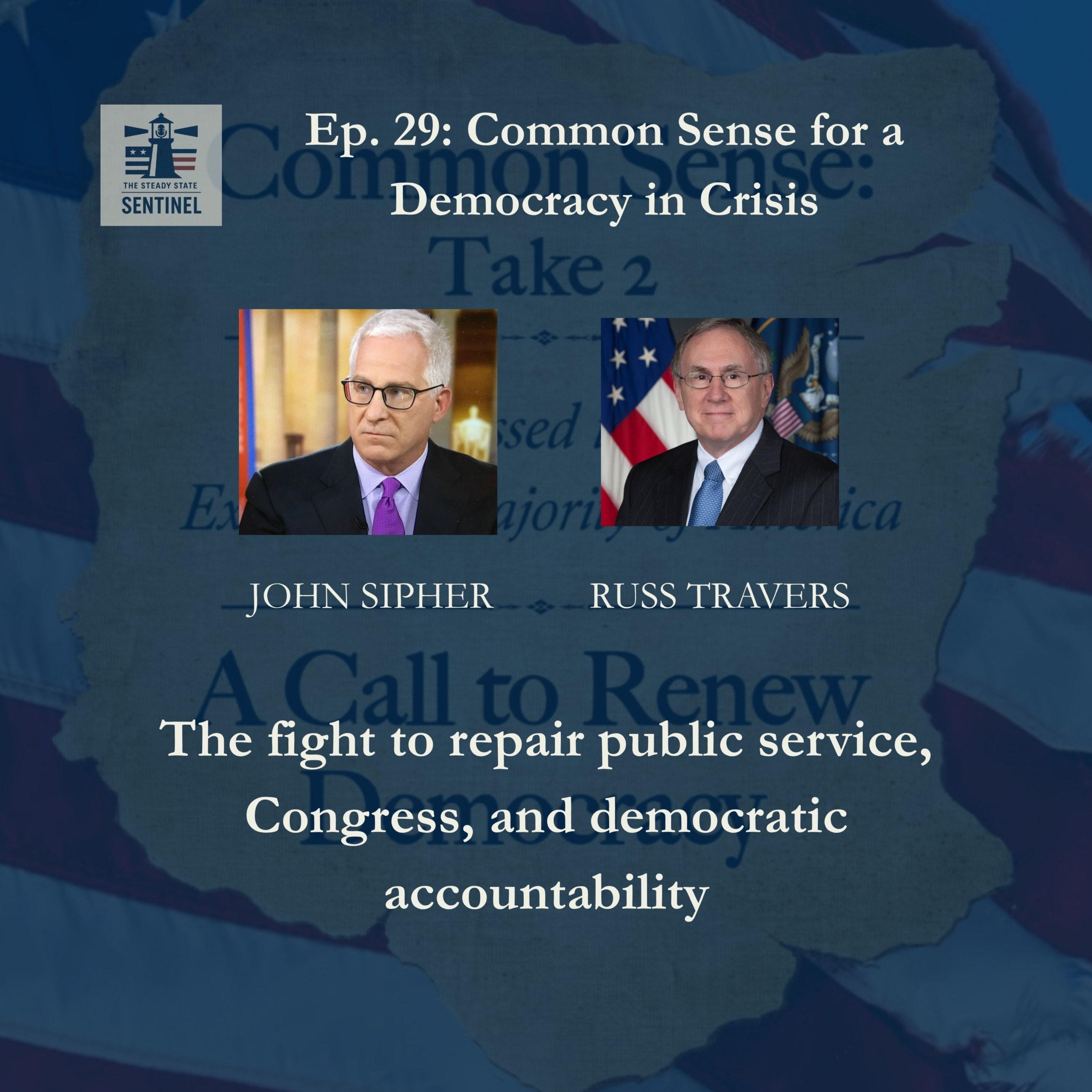
| 6/2/26 | democracynational security+4 | Russ Travers | Defense Intelligence AgencyJoint Staff+3 | — | democracynational security+7 | — | 39m 14s | ||
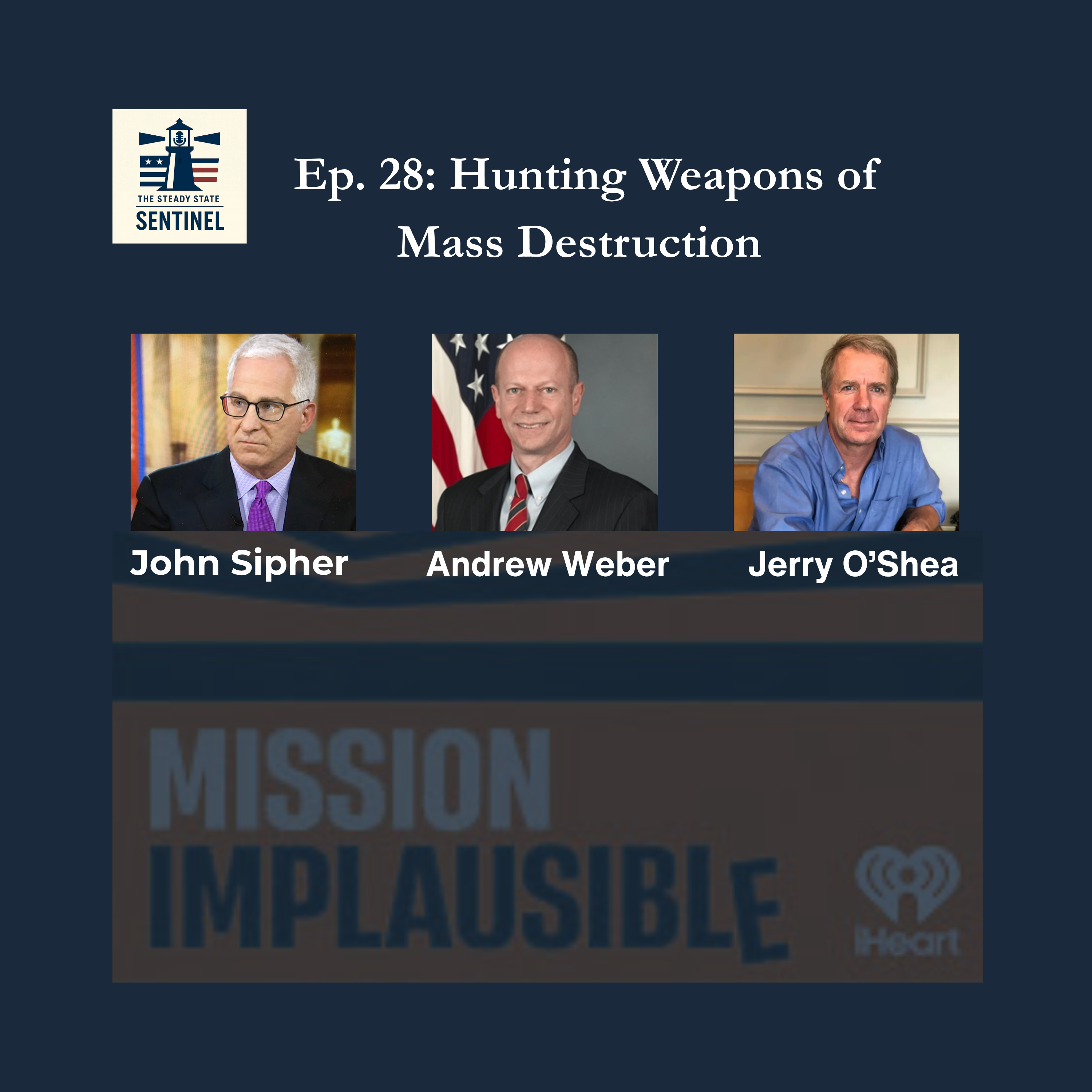
| 5/30/26 | national securityweapons of mass destruction+4 | Andrew “Andy” Weber | CIADepartment of Defense+2 | KazakhstanGeorgia+1 | weapons of mass destructionbiological warfare+5 | — | 58m 12s | ||
| 5/26/26 | authoritarianismself-censorship+5 | Stefan HankinJoel Anderson | Lincoln Park StrategiesThe Ringer+1 | — | authoritarianismself-censorship+7 | — | 41m 06s | ||
| 5/19/26 | press freedomFirst Amendment+4 | Bob Drogin | LA TimesNPR+3 | — | Trumppress attacks+8 | — | 31m 36s | ||
| 5/12/26 | FISAsurveillance authorities+4 | Jim Petrila | Central Intelligence AgencyNational Security Agency+2 | — | FISASection 702+6 | — | 43m 04s | ||
| 5/5/26 | American diplomacyForeign Service+4 | Eric Rubin | American Foreign Service AssociationHeritage Foundation | IranUnited States | diplomacyForeign Service+5 | — | 43m 00s | ||
| 4/28/26 | whistleblowersgovernment transparency+5 | Mark Zaid | CIAFBI+2 | United States | whistleblowergovernment accountability+5 | — | 40m 39s | ||
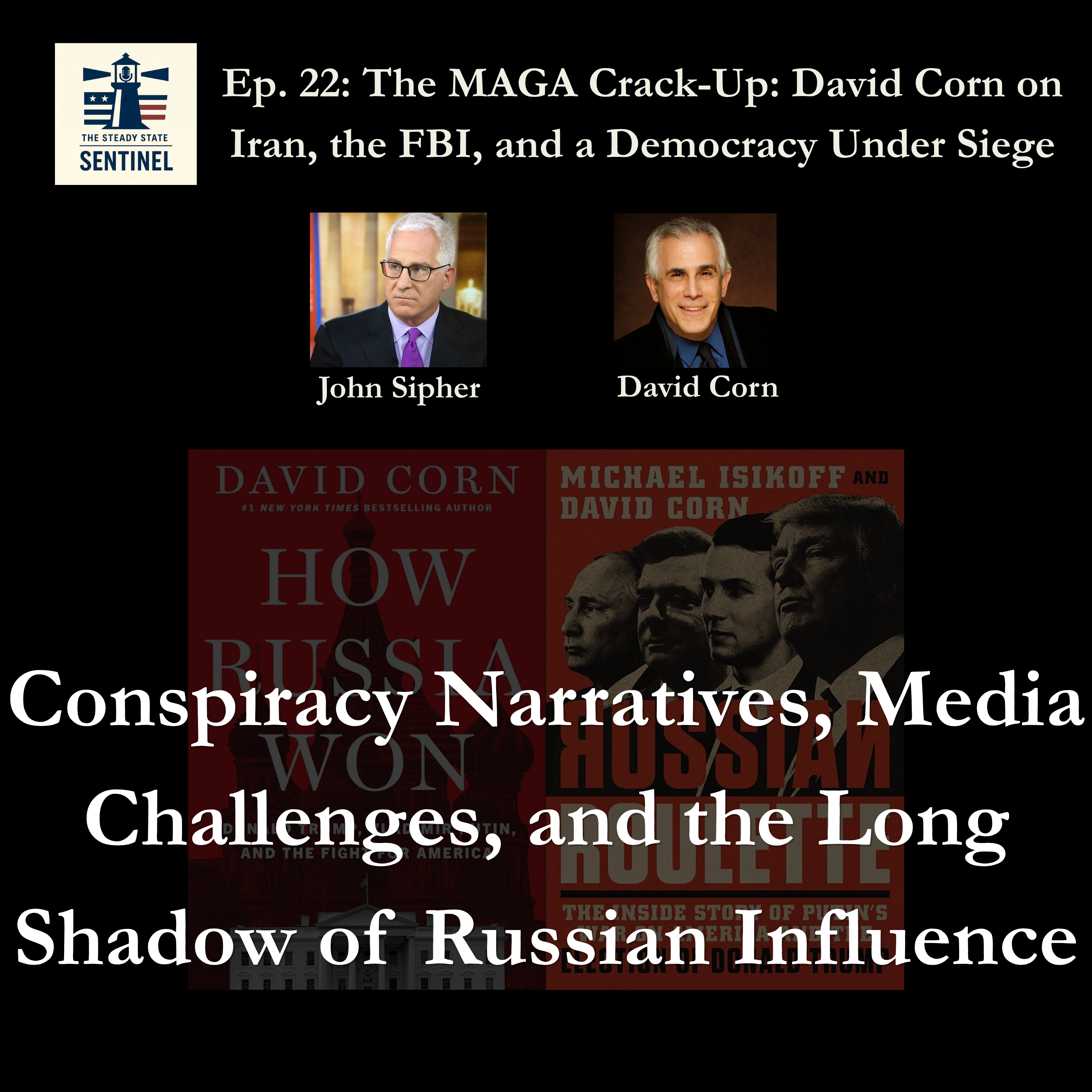
| 4/21/26 | MAGA worldIran war+5 | David Corn | Mother JonesHHS+3 | — | MAGAIran+5 | — | 47m 54s | ||
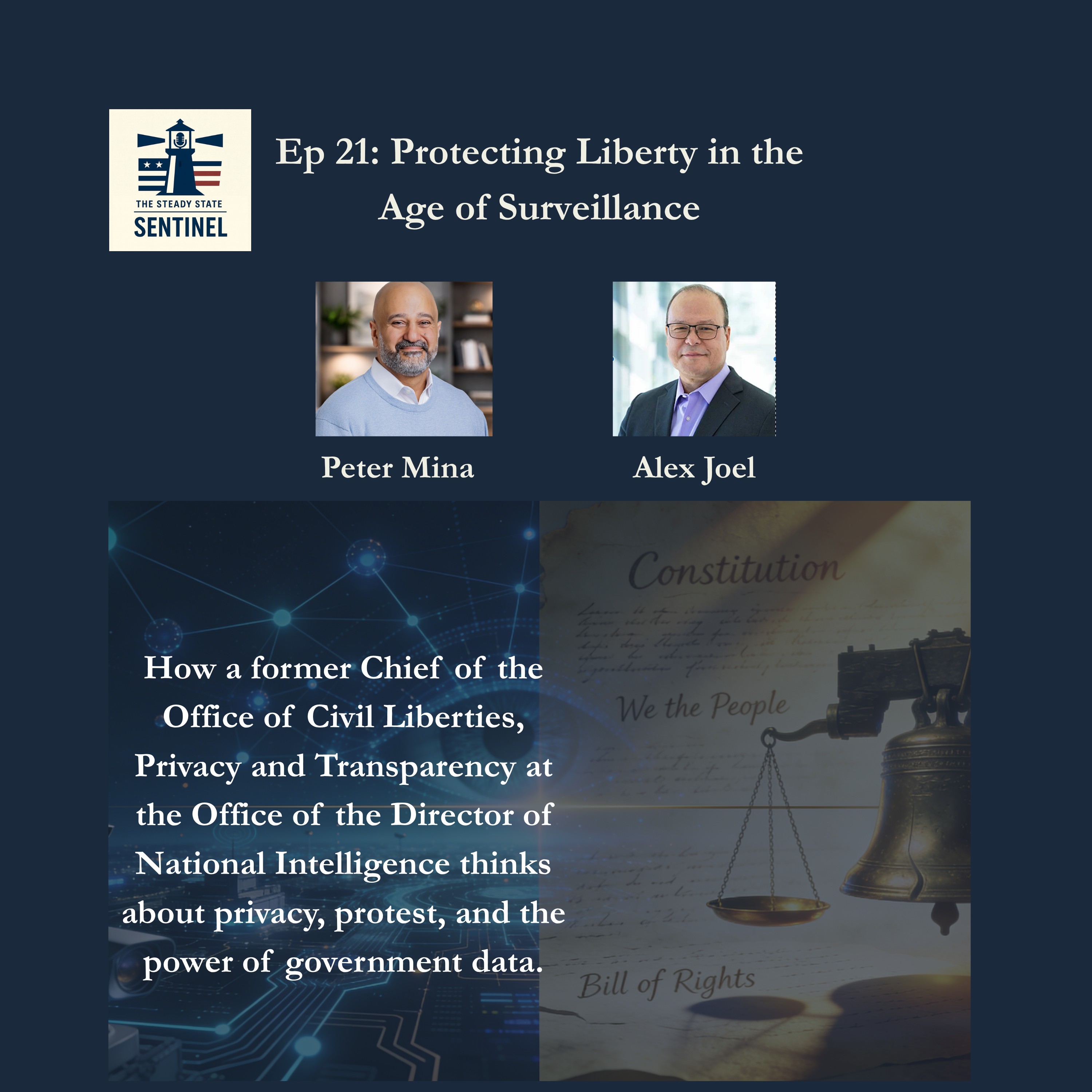
| 4/14/26 | privacygovernment surveillance+4 | Alex Joel | American UniversityOffice of the Director of National Intelligence+1 | — | privacysurveillance+5 | — | 33m 40s | ||
| 4/7/26 | U.S. foreign policysoft power+4 | Tom Shannon | FBIState Department+2 | United StatesBrazil | counterrevolutiondiplomacy+7 | — | 45m 32s | ||
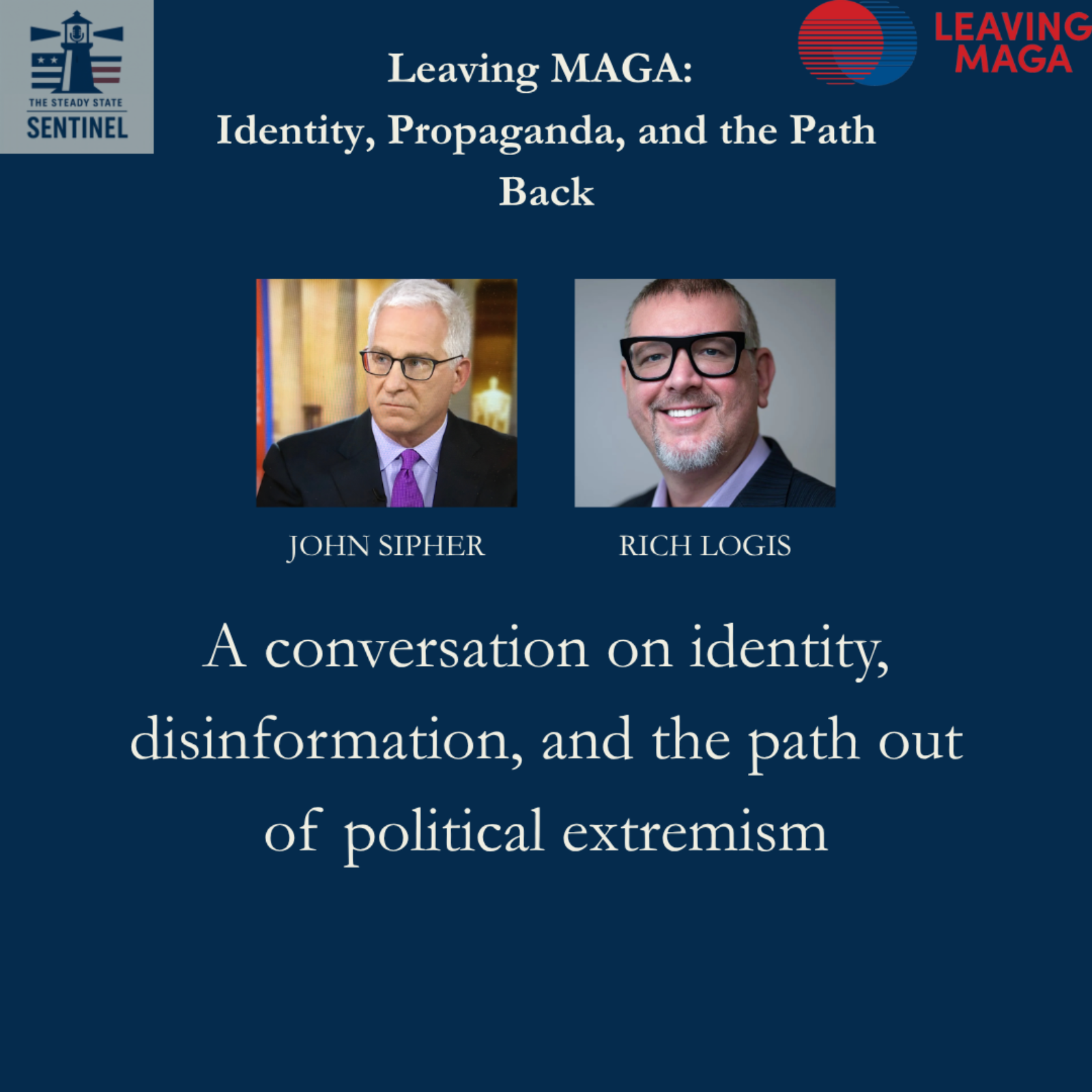
| 3/31/26 | identitydisinformation+3 | Rich Logis | Leaving MAGA | — | MAGAdisinformation+3 | — | 36m 01s | ||
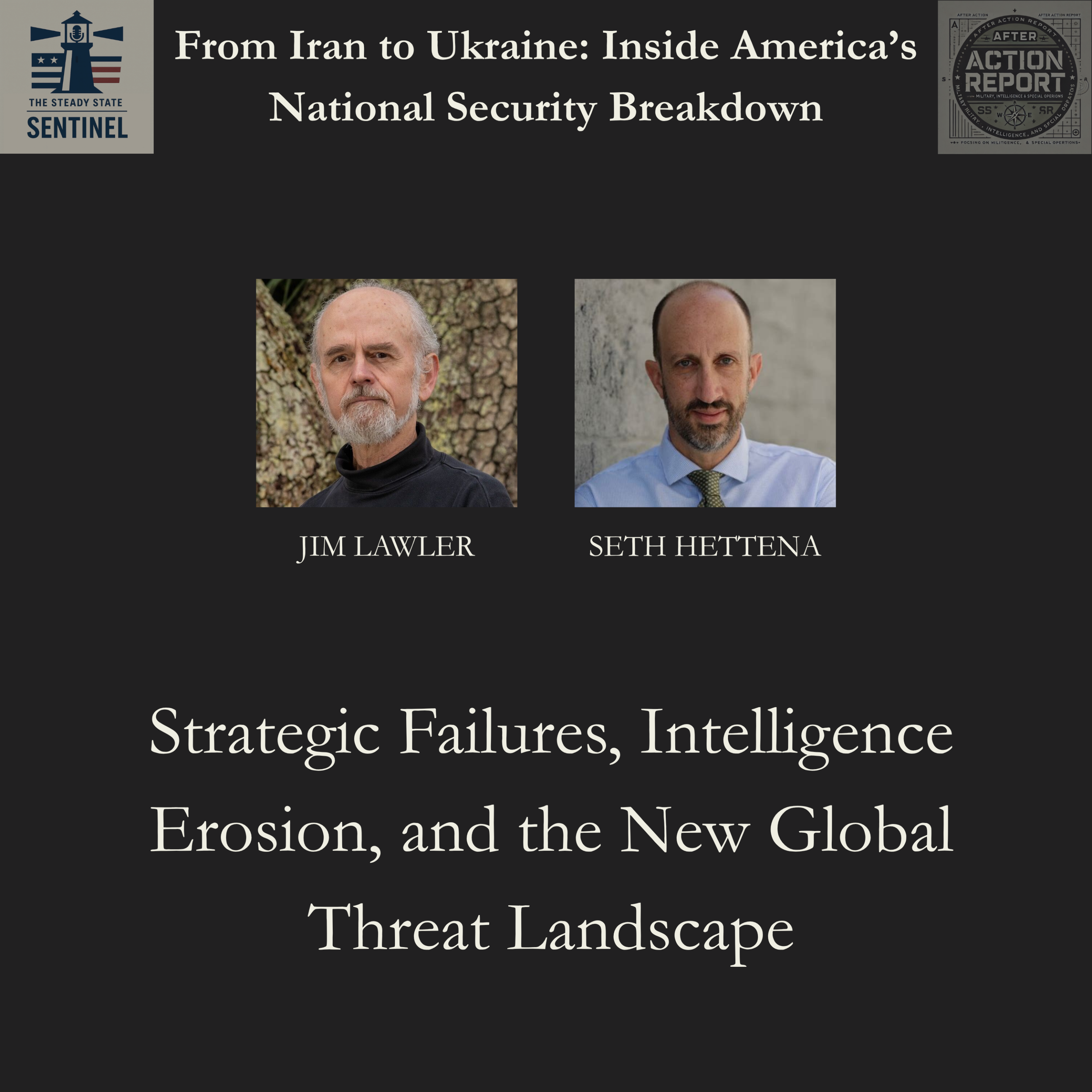
| 3/24/26 | national securityintelligence+4 | Seth Hettena | U.S.The IceMan | IranUkraine | national securityIran+5 | — | 33m 02s | ||
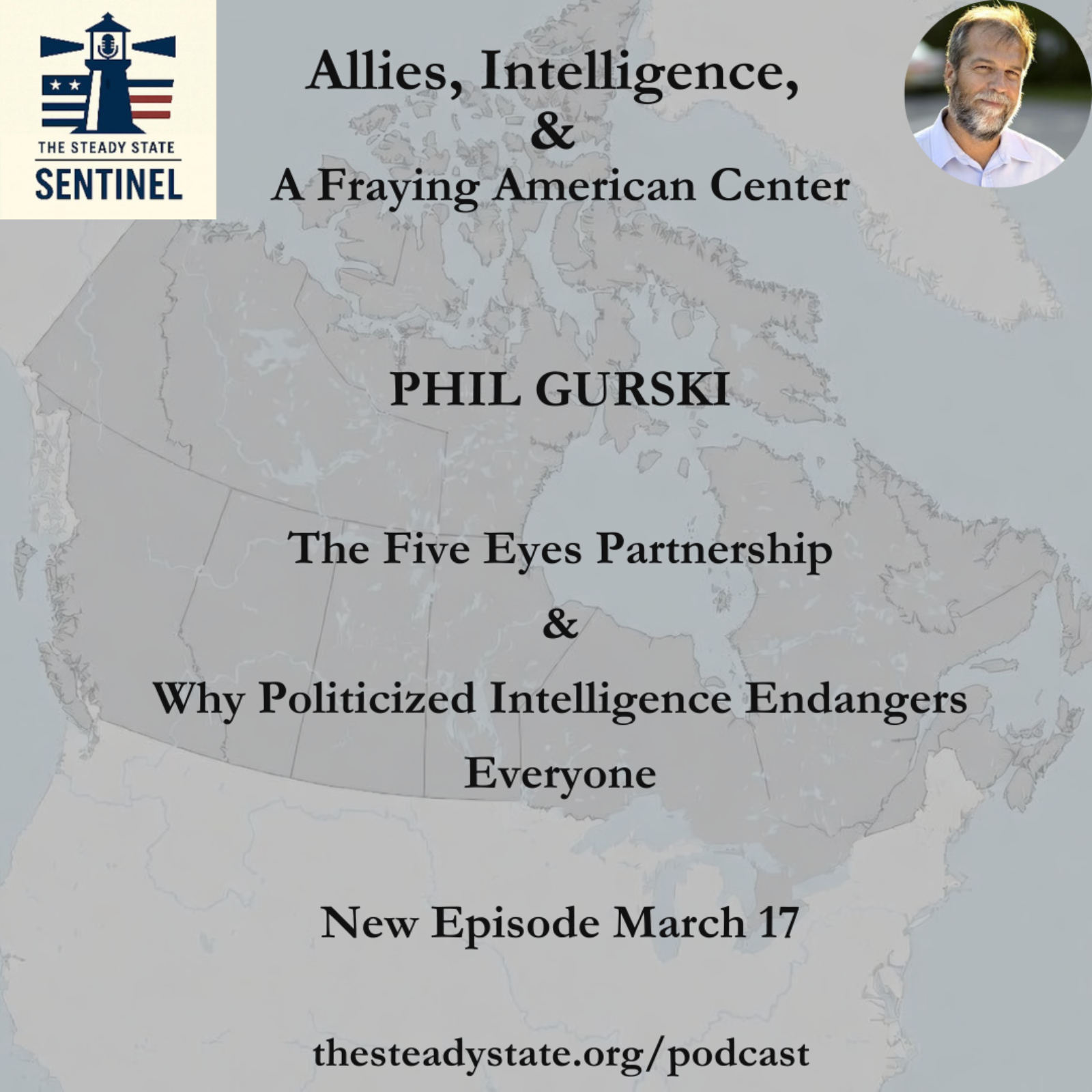
| 3/17/26 | intelligence partnershipsFive Eyes+4 | Phil Gurski | FBICIA+3 | CanadaUnited States | Five EyesFBI+6 | — | 43m 55s | ||










Showing 25 of 43
Pitch Fit is a Pro feature
See how bookable this show is for guests, which brands already advertise, the per-episode ad value, and the best-fit guest and sponsor profile. The numbers are blurred on the free plan.
How readily this show books outside guests like you.
How proven this show is for host-read sponsorships.
For Guests
ProFor Advertisers
ProUpgrade to Pro to unlock guest cadence, sponsor categories, fit scores, and per-episode ad value for this show.
Chart history for The Steady State Sentinel
Peaked at #10 in Ireland, top 10 in 1 of 19 tracked markets, currently #10 in Ireland.
| Market | Genre | Peak | Current | Trend |
|---|---|---|---|---|
| Ireland | — | #10 | #10 | — |
| Finland | — | #11 | #11 | — |
| PT | — | #25 | #25 | — |
| BE | — | #27 | #27 | — |
| AT | — | #33 | #33 | — |
| Norway | — | #37 | #37 | — |
| New Zealand | — | #48 | #48 | — |
| Denmark | — | #54 | #54 | — |
| United States | — | #59 | #59 | — |
| PL | — | #64 | #64 | — |
| CH | — | #66 | #66 | — |
| United Kingdom | — | #68 | #68 | — |
| Canada | — | #81 | #81 | — |
| PE | — | #87 | #87 | — |
| GR | — | #88 | #88 | — |
| France | — | #111 | #111 | — |
| Italy | — | #133 | #133 | — |
| Sweden | — | #134 | #134 | — |
| Australia | — | #144 | #144 | — |
Chart Positions
19 placements across 19 markets.
Chart Positions
19 placements across 19 markets.