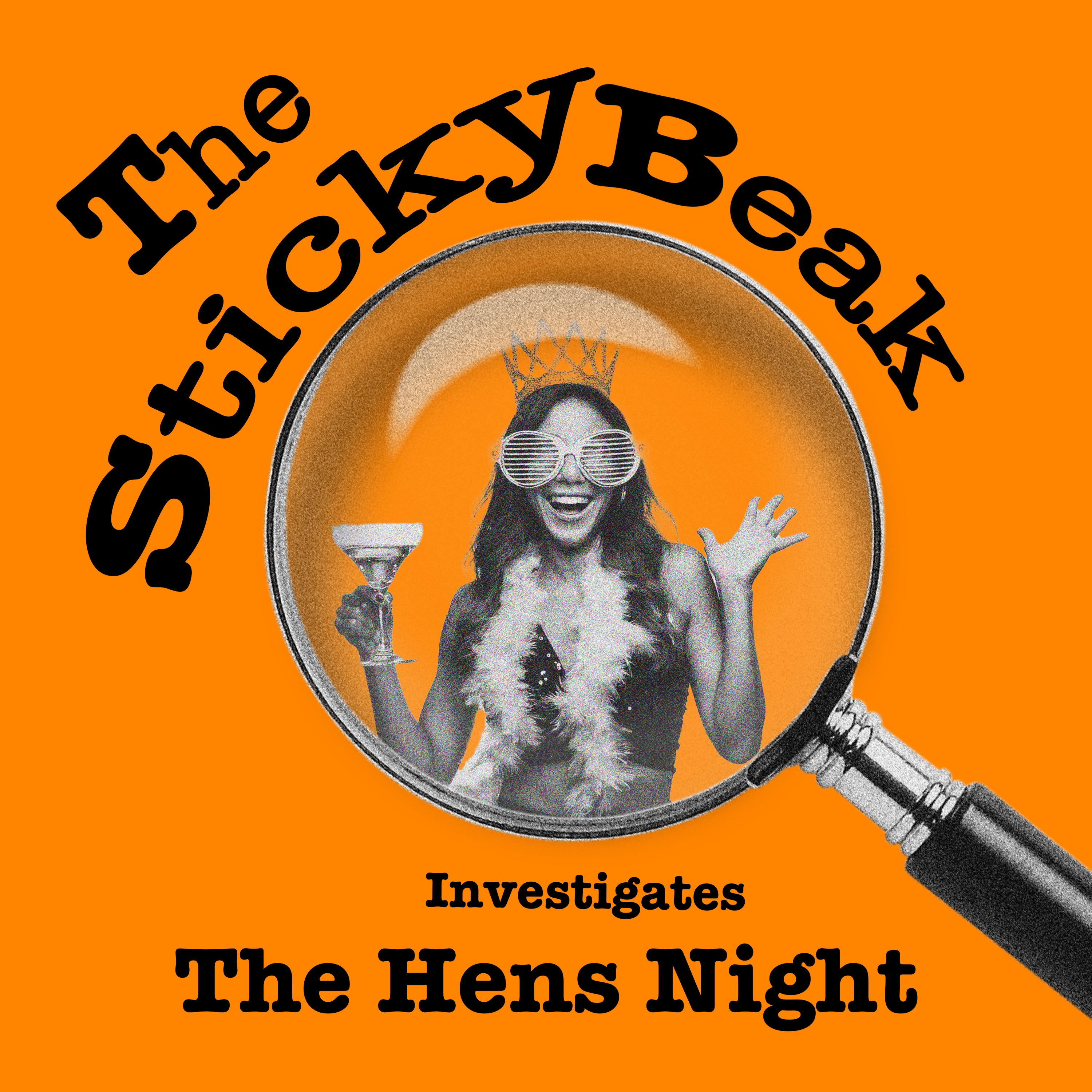
What REALLY Happens on Hens Nights (And Where It All Started)
From The StickyBeak by Monika O'Hanlon
June 9, 2026 · 11 min · Season 2 · Episode 125
About this episode
This episode explores the historical and cultural evolution of hens nights, from ancient rituals to modern celebrations.
Before the sashes, strippers, and wild party antics, hens nights had deep cultural and historical roots. In this episode of The StickyBeak , Monika O’Hanlon explores the fascinating history of hens nights — from ancient Greek rituals and goddess worship to today’s modern bachelorette parties. Discover how pre-wedding traditions have evolved across cultures, including sacred dances, symbolic hair offerings, and community celebrations leading up to marriage. We dive into how hens nights became what they are today — from meaningful rituals to karaoke-fuelled chaos. This episode also explores feminist perspectives on hens parties, the rise of alternative and inclusive celebrations, and how queer communities are redefining what a hens night can look like in 2026. If you’ve ever wondered where hens nights came from, how they changed over time, or what they say about modern relationships and identity, this episode is for you. Heartfelt, funny, and occasionally a little bit cheeky (yes, there are penis-shaped props involved). This episode was brought to you by Tüt , toilet lid stickers to zhuzh up your toot. Because every throne needs a crown. https://www.etsy.com/shop/tutdeco/ 🎉 Big…
People in this episode
Host: Monika O’Hanlon
Topics covered
- hens nights
- cultural history
- bachelorette parties
- feminist perspectives
- queer communities
- pre-wedding traditions
Keywords
- hens nights
- bachelorette parties
- cultural history
- feminism
- queer celebrations
- pre-wedding traditions
- ancient rituals
Sponsors
Tüt
More episodes of The StickyBeak
- Drag Kings: The Forgotten History of Drag’s Most Overlooked Performers · June 2, 2026 · 29 min
- The Guillotine: The Shocking History of the World’s Deadliest Execution Machine · May 27, 2026 · 11 min
- Pet Psychics: Can They Really Read Your Pet’s Mind? · May 19, 2026 · 34 min
- BBW in the Adult Industry: The Truth No One Tells You · May 12, 2026 · 1h 17m
- I Train Animals for Movies — Secrets from Behind the Scenes · May 5, 2026 · 57 min
- Beyond Coffins and Cremation: Human Composting, Cryonics & Radical Memorials · April 28, 2026 · 40 min
Explore listener stats, chart rankings, contacts and more on the The StickyBeak podcast page.