
Insights from recent episode analysis
Audience Interest
Podcast Focus
Publishing Consistency
Platform Reach
Insights are generated by CastFox AI using publicly available data, episode content, and proprietary models.
Est. Listeners
Based on iTunes & Spotify (publisher stats).
- Per-Episode Audience
Est. listeners per new episode within ~30 days
1 - 1,000 - Monthly Reach
Unique listeners across all episodes (30 days)
1 - 5,000 - Active Followers
Loyal subscribers who consistently listen
1 - 500
Market Insights
Platform Distribution
Reach across major podcast platforms, updated hourly
Total Followers
—
Total Plays
—
Total Reviews
—
* Data sourced directly from platform APIs and aggregated hourly across all major podcast directories.
On the show
Recent episodes
Kumbh Mela with Vaishnavi Laddha
May 4, 2026
Unknown duration
Singapore with Tat Haur Lee
Mar 26, 2026
Unknown duration
Global Cities with David Gianotten
Feb 27, 2026
Unknown duration
Cities as Provocation with Paul van Herk
Dec 11, 2025
Unknown duration
Tarntanya/Adelaide with Ian McDougall
Oct 30, 2025
Unknown duration
Social Links & Contact
Official channels & resources
Official Website
Login
RSS Feed
Login
| Date | Episode | Description | Length | ||||||
|---|---|---|---|---|---|---|---|---|---|
| 5/4/26 | 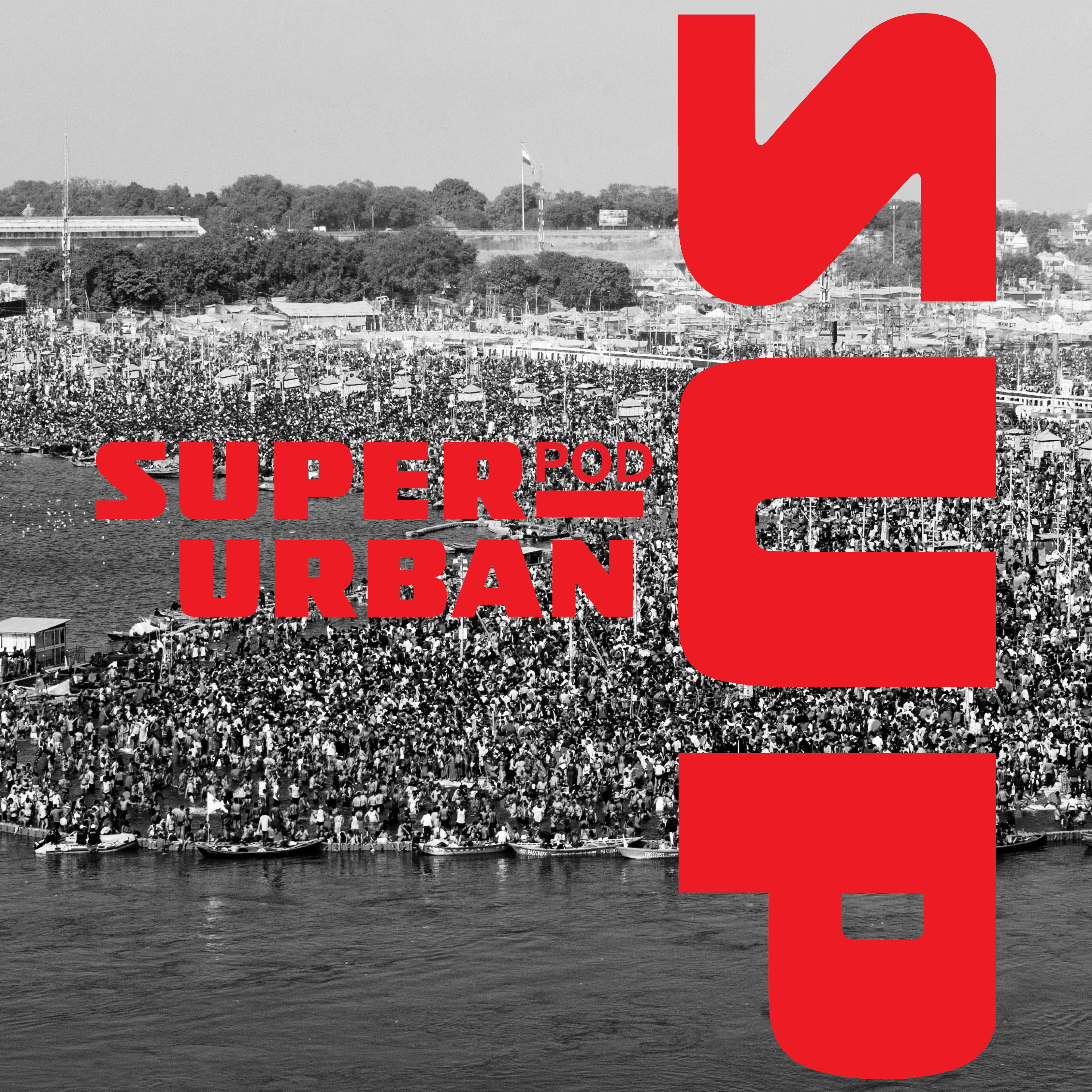 Kumbh Mela with Vaishnavi Laddha Kumbh Mela with Vaishnavi Laddha | In this episode, we speak with Vaishnavi Laddha about the Kumbh Mela—the world's largest experiment in ephemeral urbanism. Occurring every 12 years, it is a religious pilgrimage that manifests as a mega 'pop-up' city on the floodplains of India's sacred rivers, driven by religious mythology and collective devotion. With over 80 million visitors, the city emerges across 30 square kilometres of sandbanks, equipped with housing, temples, clinics, electricity, sanitation, and even governance structures—and then vanishes, leaving almost no trace. What does this extraordinary event reveal about the nature of cities? The Kumbh Mela challenges many of our assumptions about permanence, infrastructure, and planning. It is a city that is simultaneously ancient in its origins and radically temporary in its form—a place where millions of people live, worship, and move through space with remarkable efficiency, despite the scale and intensity of the gathering.Vaishnavi Laddha is an urban designer and graduate of the Master of Urban Design program at RMIT, currently working as a Junior Urban Designer at Dewan Architects and Engineers in Dubai. Her research brings a rigorous design lens to the question of ephemeral urbanism—and invites us to consider what lessons the Kumbh Mela might hold for the way we plan, design, and inhabit permanent cities. | — | ||||||
| 3/26/26 | 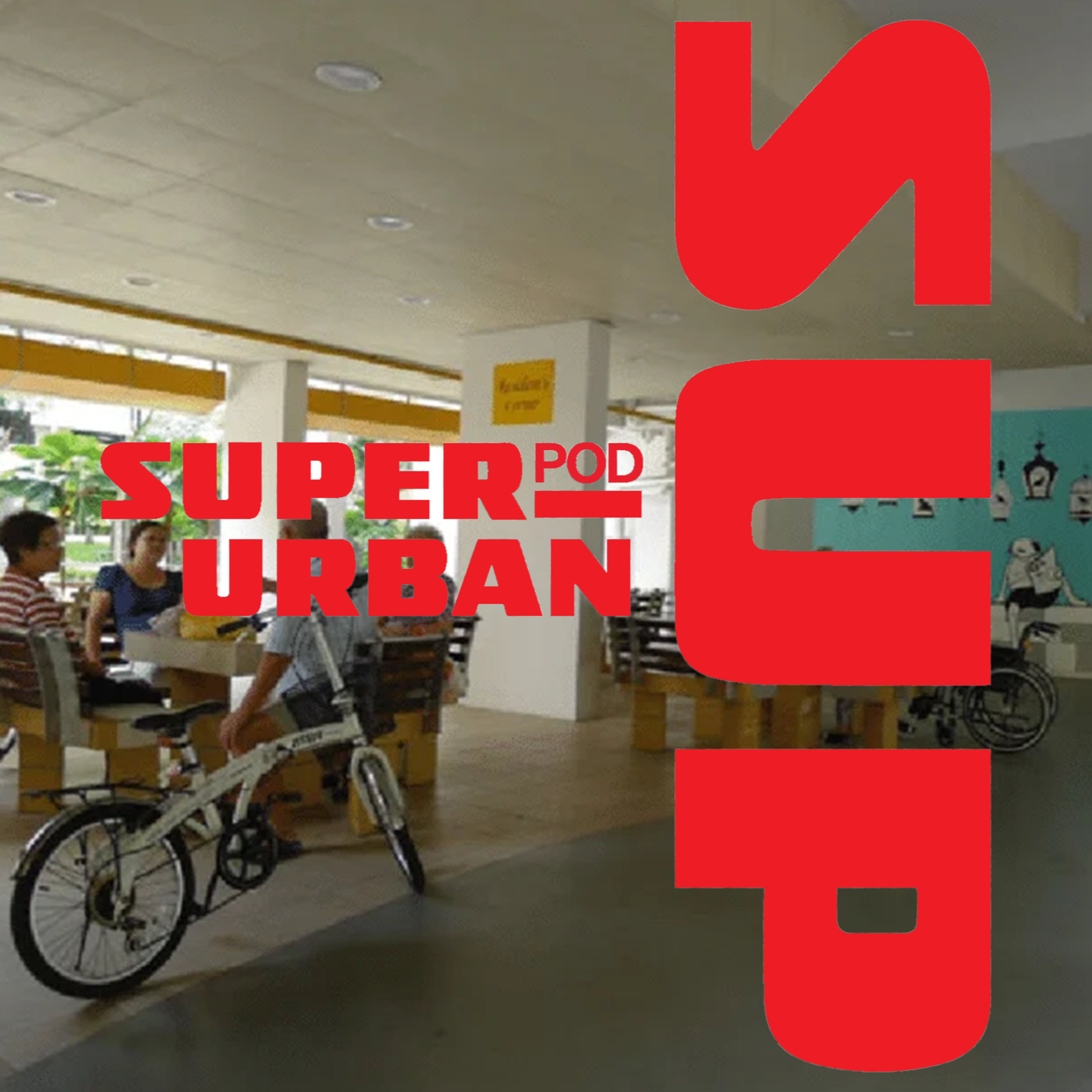 Singapore with Tat Haur Lee Singapore with Tat Haur Lee | In this episode, we turn our attention to Singapore—a city often described through the language of efficiency, optimisation, and control. A compact island state at the crossroads of trade routes and cultures, Singapore is frequently held up as a model of urban governance: clean, dense, green, orderly, and relentlessly planned. Yet beneath this carefully calibrated surface lies a far more intricate everyday urbanism. Corridors become living rooms. Void decks host weddings and wakes. Kopitiams anchor daily rituals across generations. In a city where nearly 80 percent of residents live in public housing, the spaces between buildings carry as much meaning as the buildings themselves. We are joined by Tat Haur Lee to explore how this officially ordered city is also a deeply improvised one—shaped as much by the habits, adaptations, and social life of its residents as by the master plans of its planners. The conversation explores what Singapore reveals about the limits and possibilities of top-down urban design, and what it means to build social cohesion through architecture and public space. Singapore is a city that has engineered much of its own reality—and yet the most compelling aspects of its urbanism are often those that exceed or escape the plan entirely. Check out the references from this episode. | — | ||||||
| 2/27/26 |  Global Cities with David Gianotten Global Cities with David Gianotten | In this episode, we speak with David Gianotten—Managing Partner-Architect of OMA, one of the world's most influential architecture and urbanism practices. OMA operates with a belief that going 'beyond the brief' is not optional but a fundamental responsibility: the role of the designer is to think beyond the immediate solution and shape trajectory, consequence, and meaning across time. Together, we look at a range of David's projects that demonstrate this philosophy in practice—including Potato Head Studios in Bali, the White Cube project in the Democratic Republic of Congo, and the WA Museum Boola Bardip in Perth. Each project engages with a specific cultural and urban context while asking broader questions about what architecture can and should do in the world. The conversation explores what it means to practise architecture at a global scale without losing site specificity, and how OMA's visionary and optimistic design ethics continue to push the field forward. What does responsible global practice look like when culture, politics, and place are always at stake? And how do you design for trajectory when the future is perpetually uncertain? Check out the references from this episode. | — | ||||||
| 12/11/25 |  Cities as Provocation with Paul van Herk Cities as Provocation with Paul van Herk | In this episode, we speak with Paul van Herk—architect, urbanist, and lecturer at RMIT—about his particular mix of humour and frustration towards our cities, with a focus on Melbourne and its numerous failed urban ventures, including the long-troubled Fisherman's Bend precinct. Paul has recently completed his PhD titled 'Urban Myths: Counterfactuals for Articulating Political Dissonance,' and his work functions as a kind of mythbuster and provocateur towards the forces that make cities—or rather, prevent their making. Paul's research and design projects produce cut-through cultural and political insights, directing public discourse and opening new spatial opportunities for complex urban sites. He applies knowledge drawn from extensive international experience—including roles at McBride Charles Ryan, MVRDV, and Snøhetta, a Research Fellowship at Strelka Institute, and co-founding EXCX, a collaborative practice designing playful public installations for government authorities seeking to reactivate public spaces post-pandemic. The voice of Paul's provocation is a spicy mix of hilarious and exasperated—but always hopeful, and well-armed for the often absurd situations that define modern city-making. This conversation is for anyone who has ever wondered why cities so frequently fail to live up to their own ambitions, and what it might look like to design—and advocate—differently. Check out the references from this episode. | — | ||||||
| 10/30/25 |  Tarntanya/Adelaide with Ian McDougall Tarntanya/Adelaide with Ian McDougall | In this episode, we focus on Adelaide—a city of clarity. Streets framed by gardens. Squares laid out with foresight. A river threading quietly through civic life. Unlike other Australian settlements born from convicts or ports, Adelaide was conceived as a civic experiment: a city designed to reflect ideals, not just occupation. Colonel William Light imagined a place that was orderly, hygienic, and morally structured, yet flexible enough to grow with its people. Families of Scots, Cornish, and German Lutherans brought non-conformist values—a commitment to education, hard work, and collaborative progress—embedding these ideals into the city's very fabric. In this episode, we speak with Ian McDougall, a founding director of ARM Architecture whose practice spans nearly 40 years from design to education to advocacy. Ian is an Adjunct Professor at RMIT University and a Professor of Architecture and Urban Design at the University of Adelaide. The conversation explores what Adelaide's distinctive origins and physical clarity reveal about the relationship between urban form and civic values—and what lessons this carefully planned city might offer to the more chaotic and contested cities of today. Adelaide's story is one of intentional design meeting lived reality, a case study in how idealism shapes—and is in turn reshaped by—the city it produces. Check out the references from this episode. | — | ||||||
| 10/3/25 |  Gadigal Country/Sydney with Elizabeth Farrelly Gadigal Country/Sydney with Elizabeth Farrelly | In this episode, we focus on Sydney—the metropolis on the edge of the Pacific. When we mention Sydney, we can't escape the picturesque: the glint of the harbour and the coast, the neighbourhoods of Potts Point, Surry Hills, and Elizabeth Bay, Utzon's spellbinding Opera House crowning the foreshore like a sculpture of civic ambition, or Harry Seidler's Australia Square and MLC Centre. And now, Barangaroo. But beneath this lineage lies a city of stark contradictions—dense yet dispersed, prosperous yet precarious, plannedyet chaotic. We are joined by Elizabeth Farrelly—a leading writer, novelist, former architect, radio presenter for The Sydneyist, and founder and CEO of The Better Cities Initiative. She undertook a PhD in urbanism and is a columnist for Architecture AU. Together, we ask: from colonial foundations to climate pressures, from housing and affordability crises to cultural tensions—what kind of city is Sydney really? And more importantly, what kind of city does it want to become? The conversation explores Sydney as a place perpetually caught between its natural endowments and its urban failures, between global ambition and local dysfunction. It is a city that has long relied on its setting to carry its identity—and yet that setting increasingly demands a reckoning with the pressures of growth, inequality, and environmental vulnerability. Check out the references from this episode. | — | ||||||
| 8/8/25 |  Hong Kong with Betty Ng Hong Kong with Betty Ng | Hong Kong is a city drawn in section—stacked, stepped, suspended. A culture of building that has learned to fold terrain and threshold into one continuous surface. Architecture here is not a discrete object but a system of adjacencies: markets pressed beneath housing blocks, temples nested into retaining walls, gardens hovering above malls. It is a vertical choreography, where the street has been lifted, buried, replicated, and rerouted. Its history plays out as a sequence of layers and ruptured chronologies—a British colonial outpost and financial port city whose civic and spatial rituals persist through abrupt political and material shifts. In this episode, we speak with Betty Ng—an architect who studied at both Harvard and Cornell, worked at renowned firms including OMA and Herzog & de Meuron, and is the founder of COLLECTIVE, an international practice with offices in London, Madrid, and Hong Kong. The conversation explores how architecture can operate as cultural infrastructure, supporting fragile economies, public life, and creative expression in a city of extraordinary density and nuance. Situated on the southern rim of the Pearl River Delta—one of the most intensely urbanised geographies on earth—Hong Kong remains an anomaly. Its design culture resists the smoothness of the region's emerging megacities; it is textured, improvised, and deeply local even as it performs on a global stage. Yet this unique urban literacy is now under pressure from the slow erasure of civic space, the standardisation of planning codes, and the soft violence of homogenised aesthetics. Is there still a culture capable of inhabiting theslippages—between east and west, past and future, resistance and assimilation? Check out the references from this episode. | — | ||||||
| 7/17/25 | 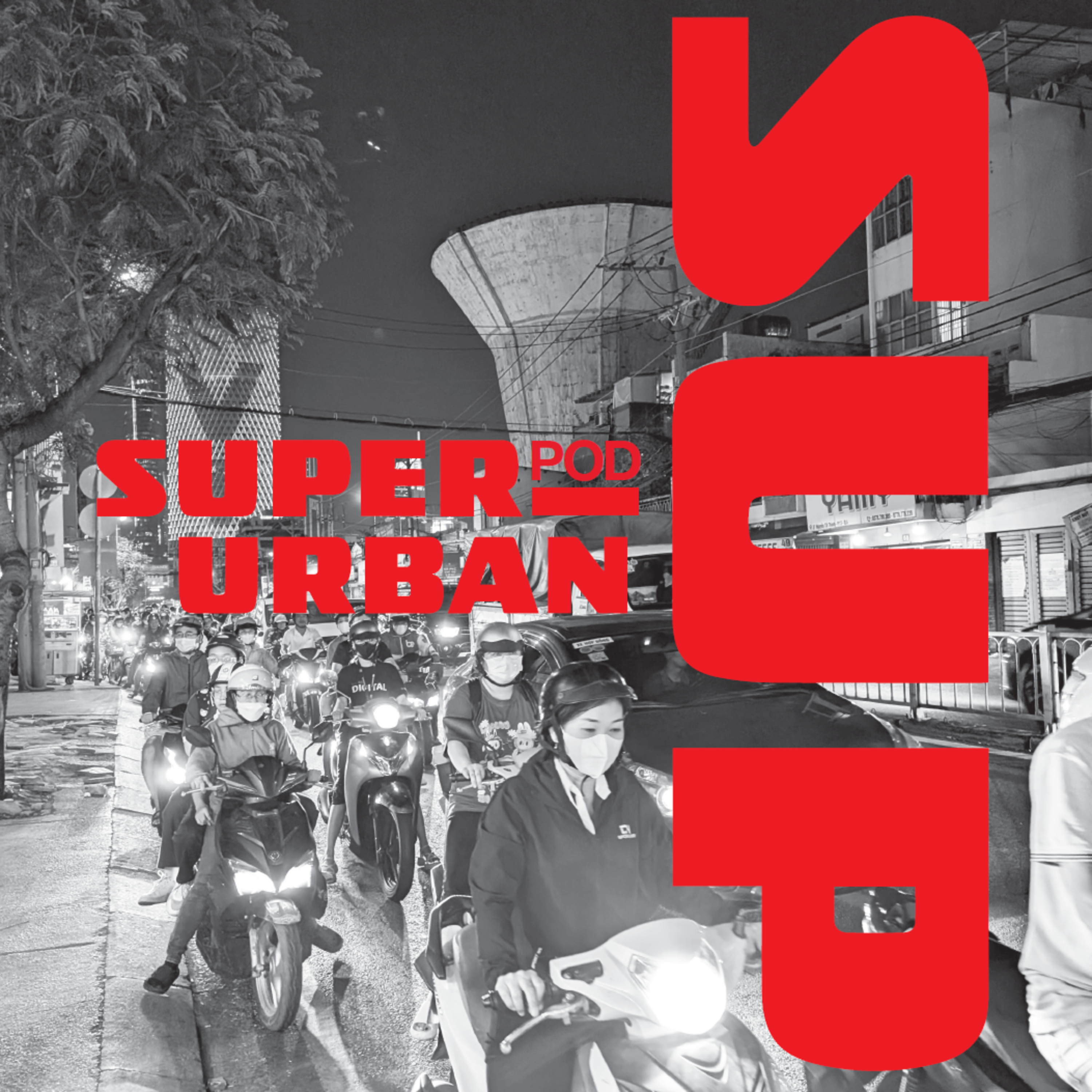 Ho Chi Minh with Tu Truong and Triet Le Ho Chi Minh with Tu Truong and Triet Le | Saigon, or Ho Chi Minh City, is a metropolis of intense fascination. A city of close to 10 millionpeople, it has experienced explosive growth in the 21st century after emerging from a turbulent 20th century—under French colonial occupation as Indochina until 1954, and reunited with North Vietnam in 1975, when it was almost instantly renamed. Today it is a city with a famously intense street life, incredibly fine-grained density, and an increasingly favoured destination for international tourism and foreignbusiness investment. The city continues to undergo rapid transformation, with anew underground metro line and plans for a newairport, sea port, and several additional metro lines. In this episode, we are joined by two HCMC locals currently based in Melbourne. Tu Truong is an architect and urban designer, trained at the University of Architecture in Ho Chi Minh City, who has worked at the HCMC urban planning department and is currently researching the wet markets of Vietnam—visiting Australia for thefirst time as part of that research. Triet Le is an architect and director of the Vietnam-based practice 6A. He grew up in Saigon, completed his architectural education in Oregon, and now resides in Melbourne while carrying out PhD study and continuing to build works in hishome city. The episode draws on the book Supertight by Graham Crist and John Doyle, which took Ho Chi Minh City as a key subject—fascinated by the intimacy and looseness of its urban environment. Together, the conversation explores what makes this city so compelling: its layered colonial history, the fine-grained texture of its streets, and the ongoing tension between rapid modernisation and the enduring vitality of everyday urban life. Check out the references from this episode. | — | ||||||
| 7/9/25 | 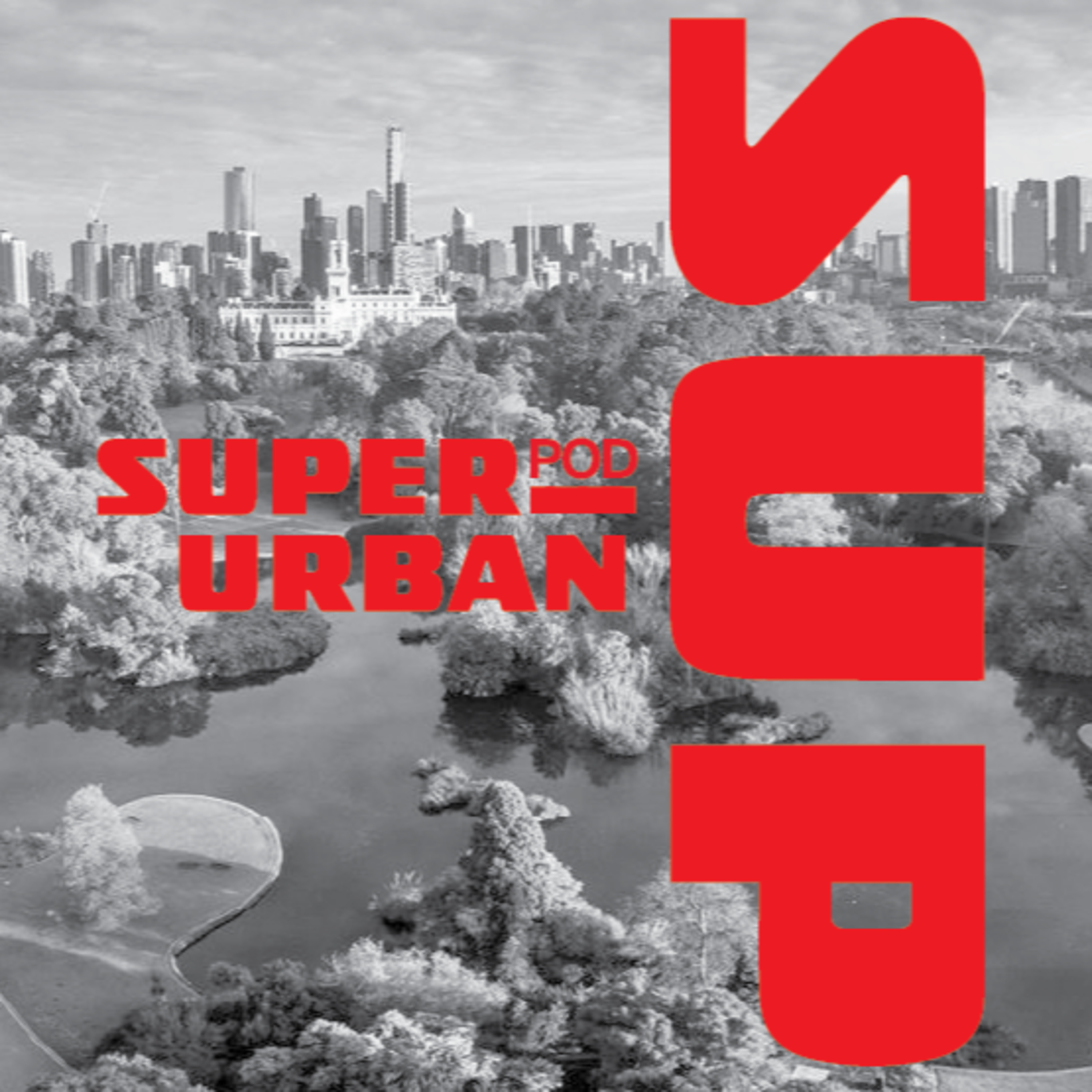 Naarm/Melbourne with Gary Presland Naarm/Melbourne with Gary Presland | As we walk around the built-up cities of today, it is easy to forget that nature laid the groundworklong before the first brick was laid. Ancient volcanic eruptions shaped the land and waterways we now build around, and these deep-time forces still influence where we place our cities—and how they grow. In this episode, we dive into the deep history of Melbourne—also known as Naarm—with Dr Gary Presland,who quite literally wrote the book on the subject: The Place for a Village: How Nature Has Shaped the City of Melbourne. Long before skyscrapers and laneways, this was Kulin Nation land—home to the Boon Wurrungand Woi Wurrung peoples, who cared for its rivers, grasslands, and volcanic plains for tens of thousands of years. The city as we know it was laid out in a grid beside the Birrarung—whatmany know as the Yarra River. Dr Presland is a non-Indigenous Melbourne-based writer and historian who studied history at La Trobe University and archaeology at the University of London, with major research interests in the Aboriginal and natural history of the Melbourne region. In an era of climate crisis, we are waking up to just how powerful the relationship between nature and city still is. As natural environments become increasingly altered—sometimes beyond recognition—nature continues to exert apowerful influence on the shape and size of cities. This conversation invites us to remember the deep-time forces beneath our feet, and to consider what a more ecologically attuned urbanism might look like. Check out the references from this episode. | — | ||||||
| 7/3/25 | 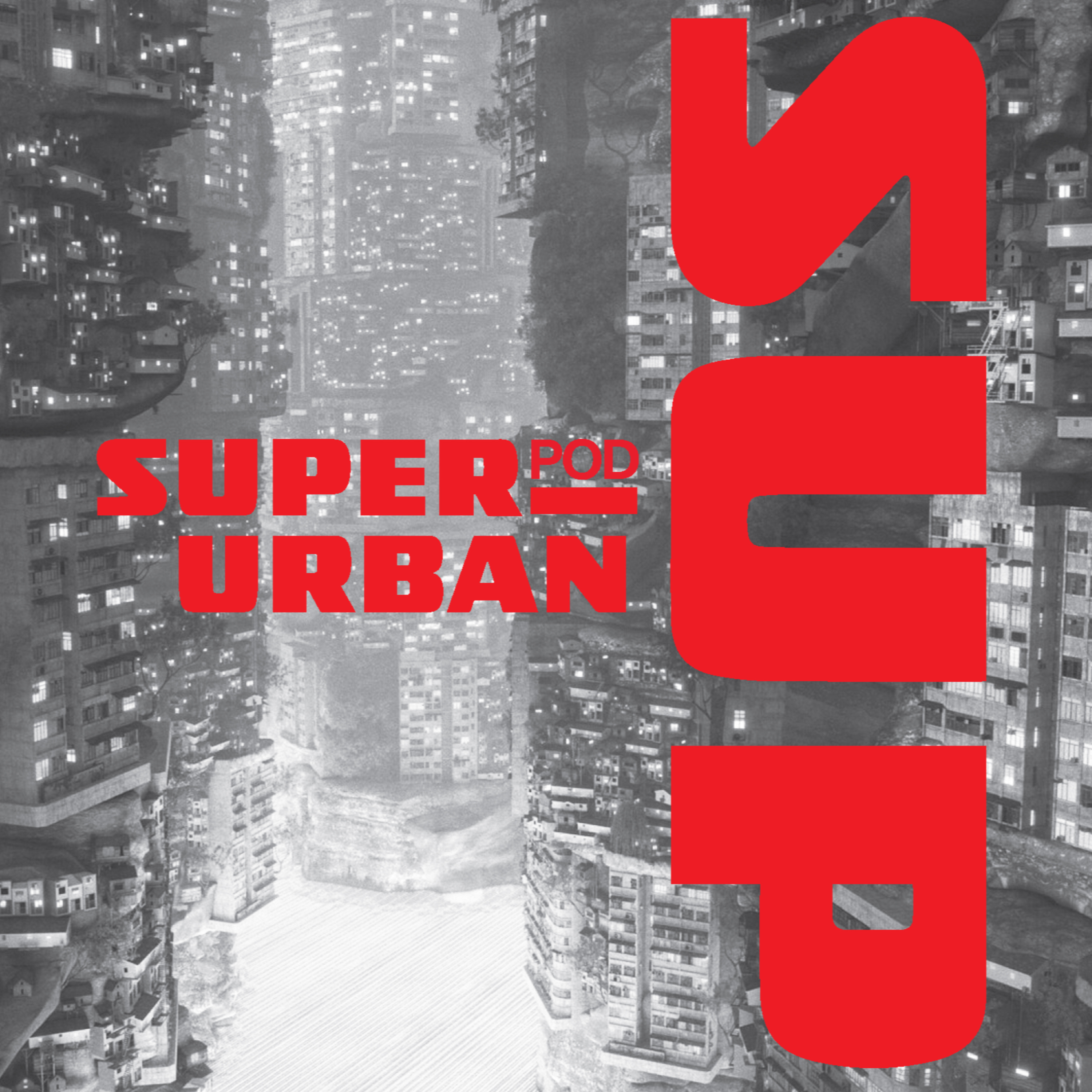 Planetary Cities with Liam Young Planetary Cities with Liam Young | We are living through a polycrisis—a moment where cascading ecological, technological, social, political, and economic pressuresare reshaping the world in real time. Complexity is not an anomaly of our time, but its default setting. The challenge is not merely to decode it, but to engage with its temporalities, influence its exchanges, and anticipate reactions before they spiral beyond control. The future is not something you stumble into—it is a continuous act, the unravelling of hacks that are coded,crafted, and built in the friction of the present. To lead us through this domain, we are joined by Liam Young—an Australian architect and designer, filmmaker, director, BAFTA-nominated producer, and visionary storyteller whose workexplores the intersection of architecture, technology, and the future city. He is the co-founder of the think tank Tomorrow's Thoughts Today and the nomadic research studio Unknown Fields Division. His film work is grounded in academic research at institutions including Princeton, MIT, and Cambridge, and he now leads the Master's program in Fiction and Entertainment at SCI-Arc in Los Angeles. We are interested in the agency of critical design practice—the tools, stories, and strategies weneed to move from paralysis to possibility. This is not about imagining perfect futures or fearing catastrophic ones. It is about a grounded optimism. To speculate today is not an escape—it is a responsibility. Liam guides us throughthis domain with reference to his expansive body of work, including his book Planet City, which imagines a speculative city designed to house the entire population of the Earth. Check out the references from this episode. | — | ||||||
Want analysis for the episodes below?Free for Pro Submit a request, we'll have your selected episodes analyzed within an hour. Free, at no cost to you, for Pro users. | |||||||||
| 6/23/25 | 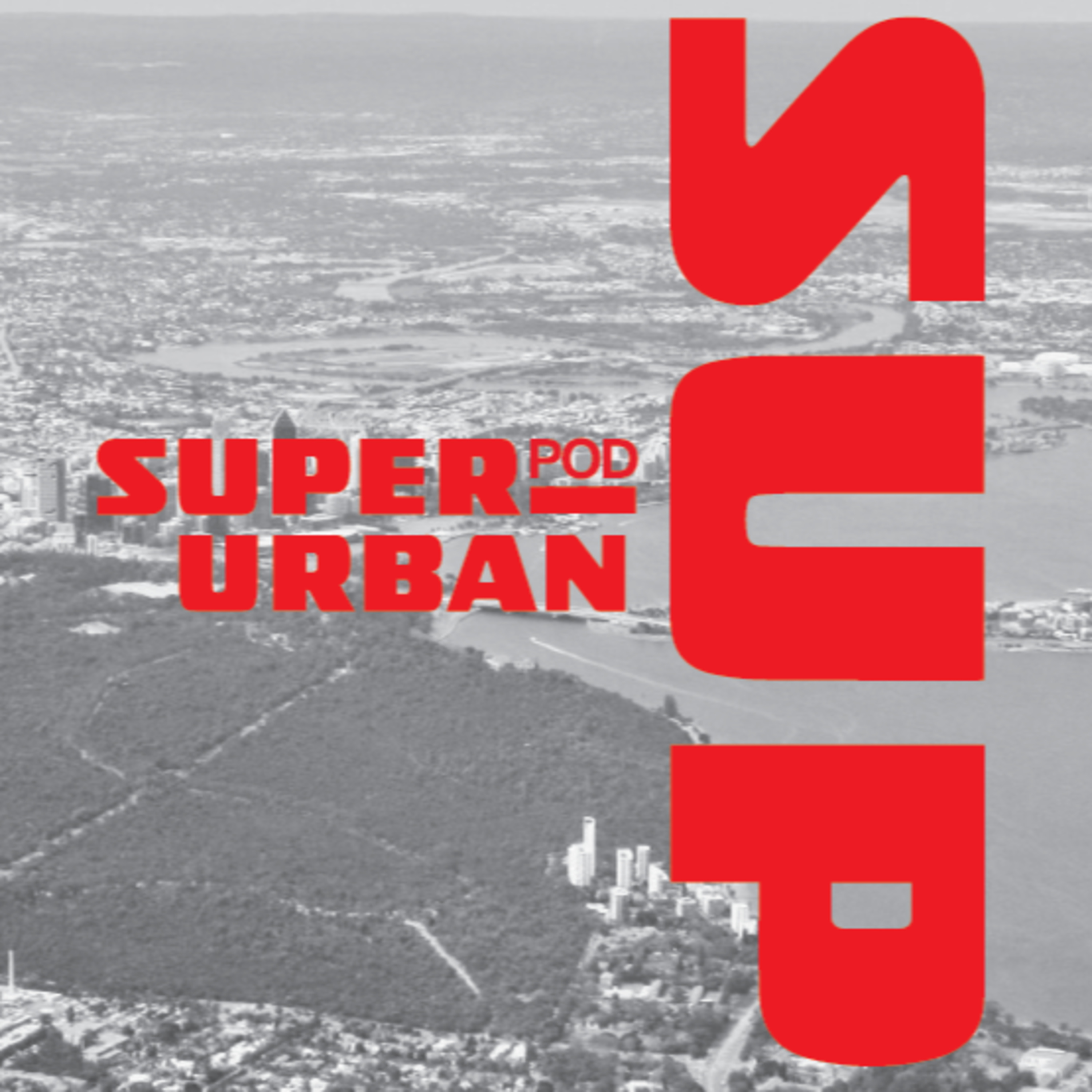 Boorloo/Perth with Emma Jackson Boorloo/Perth with Emma Jackson | Perth, the capital of Western Australia, is the most geographically isolated capital city on earth, sitting on the time zone sharedby two thirds of the world's population. It is one of the largest and least dense metropolisesanywhere—closer to the urban populations of Indonesia and Malaysia than to the Eastern Australian cities of Sydney and Melbourne. A paradoxical city, it is both bigger and smaller than it seems. Perth named itself the City of Light after it turned on its lights for astronaut John Glenn in 1962, and its connection to NASA continued when the Skylab space station crash-landed east of Perth in 1979. In this episode, we are joined by Emma Jackson—an architect turned tapestry designer who studied in Western Australia and has spent years as a colleague at RMIT, where she carried out a series of projects under the title 'The Strange,' exploring the world of Western Australia's mining town urbanism and vast landscapes. Herfascination with geology has led her to design tapestries and textiles drawn from geological formations, and as a once-local and partial outsider to Perth, she brings a unique lens to the city. Literary depictions of Perth—including Christos Tsiolkas's writing—frame it as a fragile, almostartificial place, where ancient landscapes and Indigenous histories challenge the city's sense of control and future ambitions. The ancient sand seeps through every crack, and the vast, unfathomable sky dwarfs human ambition. Emma explores how the natural environment strongly influences Perth's mining landscapes, geology, and urbanism—and what it means to build a city at the edge of the world. Check out the references from this episode. | — | ||||||
| 6/4/25 |  Planetary Cities with Indy Johar Planetary Cities with Indy Johar | Ask a physicist, and they'll tell you: the universe is mostly made of something we can't see.Ordinary matter makes up less than 5% of reality. The rest is dark matter—unseen forces shaping galaxies, bending space, governing possibility.Now shift that lens to the city. What if the urban realm is also shaped by its own dark matter? Not cosmic, but economic, legal, and institutional—invisible forces that script the city before a single brick is laid. In this episode, we speak with Indy Johar—architect, systems thinker, and founder of Dark Matter Labs. A pioneer in reimaginingthe civic 'firmware' that underpins our lives, Indy works at the intersection of design, economics, and institutional reform. From co-founding Architecture00 to initiating open-sourceplatforms like WikiHouse and OpenDesk, his practice pushes architecture beyond the physical into the realm of civic and economic code. Together, we explore what it means to design new agents, new institutions, and new counter-infrastructures for a regenerative future. To face today's challenges—extractive geopolitics, corporate colonialism, economic weaponisation—we may need to move beyond the object andthink at the scale of infrastructures, institutions, and planetary systems. What happens when we try to make those forces visible? What if architecture wasn't just about buildings, but about redesigning the systems beneath them? Check out the references from this episode. | — | ||||||
| 5/20/25 |  Cities as Multiples and Endless Cities Cities as Multiples and Endless Cities | In this episode, we explore architectures at the scale of the metropolis, where form resistsboundaries and systems redefine the city itself. At a moment when cities no longer exist as discrete, contained spaces, we interrogate the infrastructure and architecture that shape them—and, in turn, shape our behaviour within them. Historically, cities were imagined as fixed and bounded: centres of power and culture surrounded by expanding edges. Today, however, cities unfold as ongoing processes—continuous operations that extend far beyondtheir traditional cores. From Canberra's radial roads to Los Angeles's sprawling freeways; from London's Metroland to the architectural experiments of Chandigarh and Brasília; from São Paulo through Cairo to Beijing—we witness urbanisation as a vast and ever-evolving network, one that resists being fixed in either time or space. Drawing on visionary architects and urban theorists such as Romaldo Giurgola, Gordon Cullen, and Leon Krier, aswell as Cedric Price's radical proposals for flexible urbanism, the episode traces the logic of expansion from car-dominated suburbs to the rise of the shopping mall as an urban node. What happens when the city loses its centre? When nodes rather than traditional hubs become the essential units of urban life? We step into the networked, fluid, and plural landscapes of endless cities and the city as multiples—where urban form is no longer aboutfixed locations, but about the operations that produce them. Check out the references from this episode. | — | ||||||
| 5/15/25 |  Cities as Fragmented and Divided Cities as Fragmented and Divided | This episode discusses cities as being fragmented and divided—stressed and dystopian urban environments, places rendered irreconcilable by ideology, religion, or ethnicity. His discussion is highly charged, employing terms such as ghetto, apartheid, and redlining. It conjures an urban image shaped not only by walls and barbed wire fences, but also by invisible virtual or administrative borders. Names like Berlin, Belfast, Soweto, Harlem, Jim Crow, and Gaza evoke powerful images of conflict and separation in the urban realm. This is contrasted with cities separated from their surroundings by protective walls, or with twin cities united—such as Budapest or Minneapolis–St Paul—and the tendency ofmetropolises to absorb and connect villages, with London and Tokyo as prime examples. We must also acknowledge that this conversation takes place on a city grid built upon unceded land, shaped by the displacement of its original custodians. Australian cities once operated under formal apartheid systems—for example,Perth's CBD exclusion zone forAboriginal people, which existed until 1954, and 'Boundary Streets' that demarcated Indigenous from non-Indigenous areas. Hamann also speaks of both vertical and horizontal urban divisions: the stratification within a tower's section—where height corresponds to class—and the horizontalfragmentation caused by urban infrastructure such as freeways. What is often most striking is the capacity of a city's inhabitants to ignore, or be wilfully blind to, such stark divisions. These borders, though extreme, are frequently invisible. Check out the references from this episode. | — | ||||||
| 5/5/25 |  Cities as Theatre Cities as Theatre | In this episode, we think of cities as the setting or backdrop to drama and events—ideas connected to Bertolt Brecht's development of Epic Theatre in the 1920s, Henri Lefebvre'sfocus on everyday urban life, and the explicitly theatrical architecture of Edmond and Corrigan. Designers of cities have been consciously creating the elements of theatrical urban life throughout history, and Conrad Hamann explores how quickly cinema took on the task of depicting the city, treating it as a main character—from Dziga Vertov's Man with a Movie Camera (1929) to countless films that followed. Conrad also speaks to the theatrical elements that have persisted in city design: the composedstreet, the city logo or icon, campus groupings, and triumphal arches—each functioning as a venue for the instant theatre of life. 21st-century cities are now seen through Google Earth by more people than any other means, and evenseeing cities from the air for the first time transformed the scale of urban drama. Yet the small theatrical moment of an encounter on a street corner persists. What does a theatrical reading of cities mean for us today? This episode invites us to consider thecity not just as infrastructure or economy, but as stage—a place where architecture, movement, and everyday encounter combine to produce the ongoing performance of urban life. Check out the references from this episode. | — | ||||||
Showing 15 of 15
Sponsor Intelligence
Sign in to see which brands sponsor this podcast, their ad offers, and promo codes.
Chart Positions
6 placements across 6 markets.
Chart Positions
6 placements across 6 markets.