
Insights from recent episode analysis
Audience Interest
Podcast Focus
Publishing Consistency
Platform Reach
Insights are generated by CastFox AI using publicly available data, episode content, and proprietary models.
Total monthly reach
Estimated from 1 chart position in 1 market.
By chart position
- 🇨🇿CZ · Design#603K to 10K
- Per-Episode Audience
Est. listeners per new episode within ~30 days
900 to 3K🎙 Daily cadence·72 episodes·Last published 6d ago - Monthly Reach
Unique listeners across all episodes (30 days)
3K to 10K🇨🇿100% - Active Followers
Loyal subscribers who consistently listen
1.2K to 4K
Market Insights
Platform Distribution
Reach across major podcast platforms, updated hourly
Total Followers
—
Total Plays
—
Total Reviews
—
* Data sourced directly from platform APIs and aggregated hourly across all major podcast directories.
On the show
Recent episodes
80: Below the Threshold of Notice
Jun 18, 2026
26m 47s
79: Good Enough For Who, Exactly?
Jun 11, 2026
20m 56s
The Mediocrity Flood
Jun 4, 2026
23m 05s
77: The System You've Been Building
May 28, 2026
19m 42s
76: You Can't Read the Label From Inside the Jar
May 21, 2026
24m 59s
Social Links & Contact
Official channels & resources
Official Website
Login
RSS Feed
Login
| Date | Episode | Description | Length | ||||||
|---|---|---|---|---|---|---|---|---|---|
| 6/18/26 |  80: Below the Threshold of Notice | Below the Threshold of Notice Every creative podcast right now has an episode about burnout. How to recover from it. Signs and symptoms to watch for. Self-care practices to prevent it. This isn't that. This episode is about something more specific and considerably less discussed: what sustained depletion does to your judgment. Not your energy. Not your motivation. Your judgment - the capacity that makes serious craft work possible in the first place. Because that's where the real cost lives, and most makers don't see it until they're already well inside it. This is the depletion that doesn't look like collapse. The studio light is on, the work is getting done, and from the outside everything looks fine. What's quietly eroding is the evaluative capacity - the internal eye that sees the gap between what was intended and what was produced. Using a weight-gain analogy to explain how standard drift actually works, research on decision fatigue, creative judgment under depletion, and moral licensing, and several honest personal accounts of holding a standard when the environment made it easier not to - this episode examines the specific kind of exhaustion that comes from caring about craft in a space that doesn't always reward it. It also takes on something rarely discussed directly: the difference between shame imposed by others and the internal "craft conscience" that tells you when you know better and didn't act on it - and why eliminating that signal entirely costs more than it protects. The VirginiaLeighStudio Home page: https://www.virginialeighstudio.com The Fabric & Fiber Studio: https://www.virginialeighstudio.com/thestudio Chapters 00:00 - This Isn't the Burnout Episode You're Expecting 02:30 - The Depletion Nobody Is Talking About 04:01 - What Living in This Environment Every Day Actually Does 04:51 - The Weight Gain Analogy: How Standard Drift Actually Works 07:11 - What This Looks Like for Fabric and Fiber Makers Specifically 08:25 - The Research: Decision Fatigue and Why Depletion Lowers the Bar 10:05 - Creative Judgment Under Depletion: What Goes First 11:03 - Moral Licensing: Why "Just This Once" Feels Earned 12:16 - The Specific Load of Holding a Standard Nobody Else Is Holding 13:41 - A Personal Account: The Dress, the Shortcut, and the Lesson That Stuck 16:35 - When You're Not the Decision Maker: Contract Work and Institutional Settings 18:38 - The Craft Conscience: Why the Internal Signal Matters 22:33 - Protecting the Capacity That Makes the Work Possible Connect with Virginia: Website = https://www.virginialeighstudio.com Instagram = https://www.instagram.com/virginialeighstudio/ Facebook = https://www.facebook.com/virginialeighstudio | 26m 47s | ||||||
| 6/11/26 |  79: Good Enough For Who, Exactly? | Good Enough For Who, Exactly? There is a pressure that serious makers face that almost nobody names directly. Not the pressure to produce more or move faster - that one gets plenty of attention. The pressure to care less. To stop working so hard on something the market doesn't always reward and the people around you don't always recognize. The pressure, delivered with genuine affection by people who mean well, to lower the bar. This episode is about that pressure. Where it comes from, what it actually costs, and what the makers who resist it do differently. It starts with something worth understanding clearly: two genuinely valid orientations toward craft exist simultaneously in the making world right now and they pull in opposite directions. One says accessibility and welcome are how a craft tradition stays alive. The other says standards, honest feedback, and rigorous work are how a craft tradition stays alive. Both are true. And the tension between them is real and makers feel it every single day. What this episode examines is what happens when a serious maker loses their footing in that tension - when good enough becomes the default through the slow accumulation of small permissions, when the deep work muscle quietly atrophies through neglect, and when the standard starts drifting without anyone making a deliberate decision to let it go. It also covers the practical reality of two different markets operating simultaneously in the fabric and fiber space, what clarity about which market you're actually in makes possible, and why the people you stay close to matter more than almost anything else in this conversation. The VirginiaLeighStudio Home page: https://www.virginialeighstudio.com The Fabric & Fiber Studio: https://www.virginialeighstudio.com/thestudio Chapters 00:00 - The Pressure to Care Less 02:41 - Two Orientations, Both True, Pulling in Opposite Directions 03:57 - How Standards Actually Drift 05:55 - The Deep Work Muscle: What Atrophies When You Stop Reaching 07:11 - Where the Pressure to Lower the Bar Actually Comes From 08:20 - When Support Holds the Standard vs. When It Lowers It 09:35 - The Environment Callback: Episode 75 Applied to Standards 10:17 - Find the People Who Get It 11:40 - Two Markets Operating Simultaneously 13:40 – Knowing Which Market You’re In 15:22 - Both-And Thinking Applied: Same Maker, Different Venues 17:17 - The Standard Is Yours - Hold It and Build On It Connect with Virginia: Website = https://www.virginialeighstudio.com Instagram = https://www.instagram.com/virginialeighstudio/ Facebook = https://www.facebook.com/virginialeighstudio | 20m 56s | ||||||
| 6/4/26 |  The Mediocrity Flood | The Mediocrity Flood The barrier to publishing content online is effectively zero. Anyone with a phone and something to show can post a tutorial, a technique demonstration, a shortcut, a workaround. And the platform that distributes that content does not evaluate whether it's correct. It evaluates whether people watch it, share it, and come back for more. The result is what this episode calls the mediocrity flood - not a flood of bad content exactly, but a flood of confident content that ranges from genuinely excellent to completely wrong, with very little visible signal to tell you which is which from the outside. Same production quality. Same assured delivery. Same comment section full of people saying this is exactly what I needed. A serious maker trying to develop real skill in this environment is not just looking for good information. They are looking for good information in a space where the good and the bad look nearly identical until you already know enough to tell them apart. This episode digs into the research that explains exactly why this happens - including why the most confident voices online are often the least qualified, and why the people who actually know what they're talking about tend to be the quietest. It covers what short form content structurally cannot teach you, what the practical damage looks like in a real working environment, and four specific things a serious maker can do right now to develop the critical eye this environment requires. The VirginiaLeighStudio Home page: https://www.virginialeighstudio.com The Fabric & Fiber Studio: https://www.virginialeighstudio.com/thestudio Chapters 00:00 - The Environment Is Louder and More Confidently Wrong Than Ever 02:34 - The Mediocrity Flood: What It Actually Is 04:48 - The Research That Explains Why It Works This Way 05:21 - Dunning-Kruger: Why the Least Qualified Are Often the Loudest 06:49 - How This Plays Out in the Sewing and Textile Space 08:47 - What Short Form Content Can and Cannot Teach You 09:25 - The Why Underneath the Technique Is Where Mastery Lives 11:00 - Real Examples: What the Video Doesn't Show You 13:30 - What This Looks Like in a Real Working Environment 15:14 - Four Things That Actually Help: Building the Critical Eye 19:25 - The Mediocrity Flood Is Loud and It's Staying Loud 21:15 - You Become Harder to Mislead Every Time You Apply It Connect with Virginia: Website = https://www.virginialeighstudio.com Instagram = https://www.instagram.com/virginialeighstudio/ Facebook = https://www.facebook.com/virginialeighstudio | 23m 05s | ||||||
| 5/28/26 |  77: The System You've Been Building | The System You’ve Been Building Ten weeks. Ten principles. And if you've been with this series from the beginning, you've done something more significant than listen to ten podcast episodes. Whether you realized it or not, you've been working through a framework - a real one, with structure underneath it that was never named explicitly at any point along the way. This episode names that structure for the first time. The ten principles are not a list. They never were. There are three layers underneath them - self-knowledge, thinking, and action and environment - with one principle running underneath all three as an amplifier. Seeing that architecture changes how useful the whole thing is. It turns ten separate ideas into one framework you can actually use to figure out where you're stuck and what to do about it. This is the series finale for the Ten Principles for a Stronger Creative Practice. It covers what the system produces when all three layers are working together, what specifically breaks down when pieces are missing and what each gap actually looks like in practice, and what this ten-week series was actually asking of the makers who stayed with it. Not a recap. Something more useful than that. The Ten Principles for a Stronger Creative Practice download includes structured exercises for all ten principles, designed to be worked in sequence. Link to The 10 Principles: http://www.virginialeighstudio.com/learn. The VirginiaLeighStudio Home page: https://www.virginialeighstudio.com The Fabric & Fiber Studio: https://www.virginialeighstudio.com/thestudio Chapters 00:00 - Not a List - A System 02:20 - How the Framework Actually Emerged 03:21 - Layer One: Self-Knowledge - Principles 1, 2 & 3 05:14 - Layer Two: Thinking - Principles 4, 5 & 6 06:28 - Layer Three: Action and Environment - Principles 7, 8 & 9 07:46 - Principle Ten: The Amplifier Underneath All Three Layers 08:56 - What the System Produces When All Three Layers Are Working 11:31 - When Pieces Are Missing: Values Clarity Without Examined Beliefs 12:12 - When Pieces Are Missing: Consistent Steps in a Low-Level Environment 13:43 - When Pieces Are Missing: Better Thinking Without Action 15:22 - What This Series Was Actually About 18:21 - Find the Gap and Address It Connect with Virginia: Website = https://www.virginialeighstudio.com Instagram = https://www.instagram.com/virginialeighstudio/ Facebook = https://www.facebook.com/virginialeighstudio | 19m 42s | ||||||
| 5/21/26 |  76: You Can't Read the Label From Inside the Jar | You Can’t Read the Label From Inside the Jar There is a particular kind of pride that runs through creative communities. Not arrogance - more like a value system. The serious maker figures things out independently. Earns the knowledge through struggle rather than asking someone to hand them an answer. And that instinct is worth something, up to a point. Past that point it becomes a trap - one that keeps capable makers working alone on problems that someone with relevant experience could help them navigate in a fraction of the time. This is the tenth and final principle in an ongoing series on building a stronger creative practice. And it's last not because it's the most important but because it's the one that amplifies all the others. Every principle in this series - knowing your values, questioning your assumptions, owning your choices, working through your beliefs, reading your struggles, thinking in both-and, taking small steps, releasing imperfect work, choosing your environment deliberately - all of it is harder to do with full accuracy when you're doing it entirely alone. Because you can't see your own blind spots. You can't read your own label. You can't see the full shape of the forest from inside it. Drawing on research into the advice premium and the psychology of proximity and perspective - and grounded in personal accounts ranging from hiring a coach in 2019 to three distinct experiences of asking the right person at a single art show last weekend - this episode examines what specifically gets in the way of asking for help, why the source of help matters as much as the advice itself, and what the right mentor or guide provides that goes far beyond pointing forward. The Ten Principles for a Stronger Creative Practice download includes the structured exercise for this principle and all nine before it. Link to The 10 Principles: http://www.virginialeighstudio.com/learn. The VirginiaLeighStudio Home page: https://www.virginialeighstudio.com Chapters 00:00 - The Tenth Principle Makes All the Others Work Better 02:35 - The Pride That Becomes a Trap 03:46 - Help vs. Doing It for You: An Important Distinction 05:31 - You Can't Read the Label From Inside the Jar 07:06 - The Forest Analogy: What Outside Perspective Actually Sees 08:30 - This Is a Structural Problem, Not a Personal Failing 09:07 - A Personal Account: What the Coach in 2019 Actually Provided 10:40 - The Advice Premium: Why We Undervalue Outside Perspective 1:51 - Three Things That Get in the Way: Pride, Fear, Imposter Syndrome 15:13 - The Right Help From the Right Person: Why Source Matters 16:39 - Masterminds, Art Shows, and What Asking Actually Produces 19:00 - The Mentor as Historian: The Function Nobody Talks About Connect with Virginia: Website = https://www.virginialeighstudio.com Instagram = https://www.instagram.com/virginialeighstudio/ Facebook = https://www.facebook.com/virginialeighstudio | 24m 59s | ||||||
| 5/14/26 |  75: Who You're Around Is What You Think Is Normal | Who You're Around Is What You Think Is Normal The people you're consistently around are doing something to your work right now. Not dramatically. Quietly. They're setting your baseline for what good looks like, what's possible, and - this is the part that doesn't get said enough - what's acceptable. And most makers have never deliberately chosen that environment. They've just accumulated it through convenience and availability and ended up wherever was easiest to access. The default environment in most areas of making is not neutral. In sewing, patternmaking, and textile work broadly, there is a significant amount of advice circulating freely that is simply wrong - techniques passed on by people who have never seriously studied the craft, standards of fit and construction so low that most people don't recognize them as low anymore because they've never seen anything better. When that becomes the norm, the environment is actively lowering your standard. And if that's the environment you're primarily in, it's lowering yours too - without you necessarily realizing it's happening. This is episode nine in an ongoing series on building a stronger creative practice. Drawing on research into Vygotsky's zone of proximal development and peer effects in skill development, and grounded in a frank examination of the difference between seeking out better environments for inspiration versus information, this episode makes the case that deliberately choosing your environment is not about personal ambition. It's about protecting your own standards from a default that is working against them. The Ten Principles for a Stronger Creative Practice download includes the structured exercise for this principle. Link to The 10 Principles: http://www.virginialeighstudio.com/learn. The VirginiaLeighStudio Home page: https://www.virginialeighstudio.com Chapters 00:00 - Your Environment Is Setting Your Baseline Right Now 02:39 - If You're the Smartest Person in the Room 03:23 - Comfort and Competence Feel Like Progress - They're Often Not 04:48 - How Environments Set the Baseline: The Mechanism 05:38 - Vygotsky's Zone of Proximal Development 06:40 - Peer Effects: The Standard Pulls You Up or Pulls You Down 07:55 - Inspiration vs. Information: The Distinction That Matters 09:25 - What Information Actually Looks Like in Practice 10:02 - The Cottonwood Arts Festival and Why I Force Myself to Ask 12:14 - Choosing Your Environment Deliberately vs. Accumulating It by Default 12:40 - The Default Environment Is Actively Mediocre 14:43 - Why the People You Learn From Matter As Much As What They Teach Connect with Virginia: Website = https://www.virginialeighstudio.com Instagram = https://www.instagram.com/virginialeighstudio/ Facebook = https://www.facebook.com/virginialeighstudio | 19m 18s | ||||||
| 5/7/26 |  74: Perfectionism Is Rarely About Standards | Perfectionism Is Rarely About Standards Most makers who struggle with finishing and releasing their work will tell you it's because they have high standards. And that's probably true - the standards are real. But here's what doesn't get said often enough: the perfectionism isn't actually serving those standards. It's working against them. Which means something else is going on underneath all that refining and adjusting and not-quite-finishing. This is episode eight in an ongoing series on building a stronger creative practice - and it's the direct companion to episode 73. Last week was about scale: the goal feels too big and nothing gets started. This week is about standards: the work doesn't feel good enough and nothing gets finished or released. Two different problems with remarkably similar answers underneath them. What perfectionism is actually doing - most of the time, for most makers - is protecting them from the vulnerability of releasing something real into the world where it can be judged. An unfinished piece can't fail. A piece still being refined is still potentially perfect. The moment you call it done, that protection disappears. Drawing on research into evaluation apprehension and Adam Grant's work on creative volume and quality - and grounded in honest personal accounts of imperfect iteration across surface pattern design, garment construction, mixed media textile art, and the business of teaching - this episode makes the case that releasing imperfect work is not a compromise of your standards. It is the only mechanism through which your standards actually improve. You cannot improve what doesn't exist. Link to The 10 Principles: http://www.virginialeighstudio.com/learn. The VirginiaLeighStudio Home page: https://www.virginialeighstudio.com Chapters 00:00 - It Claims to Be About Standards 02:29 - Why "Done Is Better Than Perfect" Doesn't Actually Fix the Problem 03:39 - The Companion to Episode 73: Scale vs. Standards 04:11 - What Perfectionism Is Actually Protecting 05:11 - The Piece That's Still Potentially Perfect 06:26 - Evaluation Apprehension: The Fear of Being Judged 07:06 - You Can't Improve What Doesn't Exist: The Iteration Argument 09:15 - Adam Grant, Picasso, and the Volume Principle 11:36 - Jon Acuff: Brave Enough to Be Bad at Something New 12:05 - The Honest Version: Imperfect Iteration Across Studio and Business 16:31 - Start. Release. Learn. Improve. In That Order. 18:48 - Close: The Judgment Was Never as Bad as the Cost of Waiting Connect with Virginia: Website = https://www.virginialeighstudio.com Instagram = https://www.instagram.com/virginialeighstudio/ Facebook = https://www.facebook.com/virginialeighstudio | 20m 16s | ||||||
| 4/30/26 |  73: You Don't Have To See The Whole Path | You Don’t Have to See the Whole Path You can know your values, question your definition of success, own your choices, work through your beliefs - and still not move. Still not build anything. Still end up in exactly the same place a year from now. The reason is almost always the same: the gap between knowing and doing. And this episode is about what actually closes it. This is episode seven in an ongoing series on building a stronger creative practice - and it's the one that makes everything else operational. Principle seven is small steps and consistent action. Not as a motivational concept but as a practical mechanism. The paralysis that comes from looking at a large goal isn't laziness or lack of commitment. It's what happens when your brain tries to solve the entire problem at once. This episode looks at why capable makers who know this principle still freeze up - and what specifically changes when they start moving. Drawing on research into implementation intentions, Karl Weick's small wins theory, and BJ Fogg's work on tiny habits - and grounded in a personal account of building an online business from scratch during COVID with no clear path and no complete plan - this episode makes the case that the path reveals itself through movement in a way it never can through planning. You don't need to see the whole path. You need to see a next step. Any one that moves in the right direction. The Ten Principles for a Stronger Creative Practice download includes the structured exercise for this principle and all previous ones. Link to The 10 Principles: http://www.virginialeighstudio.com/learn. The VirginiaLeighStudio Home page: https://www.virginialeighstudio.com Chapters 00:00 - You Can Know Everything and Still Not Move 02:31 - The Lao Tzu Problem: Knowing the Step Doesn't Tell You Which Step 04:05 - You're Not Supposed to See the Whole Path 04:40 - The 30,000 Foot View: A Lesson From the Garment Industry 06:33 - The GPS Principle: You Have to Be Moving First 08:03 - Implementation Intentions: Why Specificity Closes the Gap 09:02 - Why Small Steps Don't Feel Like Enough 11:30 - BJ Fogg and Karl Weick: The Science Behind Small Wins 13:45 - A Personal Account: Building Something With No Clear Path 15:53 - Any Step Forward Beats Standing Still 17:50 - Why This Principle Is Seventh Not First 19:31 - One Specific Thing You Can Do Today Connect with Virginia: Website = https://www.virginialeighstudio.com Instagram = https://www.instagram.com/virginialeighstudio/ Facebook = https://www.facebook.com/virginialeighstudio | 23m 06s | ||||||
| 4/23/26 |  72: The Third Option You Filtered Out | The Third Option You Filtered Out Most creative makers default to either-or thinking without realizing they're doing it. Artist or business owner. Technically skilled or artistically expressive. Creative fulfillment or financial stability. These feel like real trade-offs that have to be made. But most of the time they're not real trade-offs at all. They're manufactured constraints - binary frames applied to situations that were actually more complex, filtering out a whole category of possible solutions before anyone even started looking for them. This is episode six in an ongoing series on building a stronger creative practice. It opens with a story from a graduate statistics class that turned out to contain the most useful lesson about thinking that thirty years in the garment industry never taught - and it's not about statistics. Three groups, same data, three completely contradictory conclusions, all manufactured by selectively ignoring evidence that complicated the story each group was trying to prove. Most problems aren't either-or. They're insufficient data, or both factors matter, or it depends on context. Forcing either-or thinking onto them doesn't resolve the complexity. It hides it. Drawing on research into dialectical thinking and integrative complexity - and connecting directly to the confirmation bias discussion from episode 70 - this episode examines why either-or thinking is so persistent, what it costs creative makers specifically, and what becomes available when you replace "which should I choose" with "how could both be true." The Ten Principles for a Stronger Creative Practice download includes the structured exercise for this principle alongside episodes 67 through 71. The Fabric & Fiber Studio: https://members.virginialeighstudio.com/thestudio Link to The 10 Principles: http://www.virginialeighstudio.com/learn. The VirginiaLeighStudio Home page: https://www.virginialeighstudio.com Chapters 00:00 - The Thinking Habit Behind Most Misalignment 02:30 - The Korzybski Quote: Either-Or Thinking Saves Us From Thinking 03:50 - Manufactured Constraints and the Confirmation Bias Connection 05:43 - The Statistics Class: Same Data, Three Contradictory Conclusions 08:00 - The Professor's Verdict and the Real Lesson 10:30 - Why Either-Or Thinking Is So Persistent and So Seductive 12:30 - Dialectical Thinking and Integrative Complexity: What the Research Shows 14:30 - How Either-Or Thinking Limits the Work Itself, Not Just the Decisions 16:00 - The Both-And Question: From "Which" to "How" 17:00 - Both-And Applied: Real Examples for Textile and Fiber Makers 19:18 - A Personal Both-And: Financial Responsibility and Creative Alignment 21:13 - The Frame You've Been Living Inside Connect with Virginia: Website = https://www.virginialeighstudio.com Instagram = https://www.instagram.com/virginialeighstudio/ Facebook = https://www.facebook.com/virginialeighstudio | 24m 44s | ||||||
| 4/16/26 |  71: The Difference Between Hard and Wrong | The Difference Between Hard and Wrong Every creative maker struggles. That's not the interesting question. The interesting question is what a particular struggle is actually trying to tell you. Most makers respond to persistent struggle the same way - by turning inward. Not trying hard enough. Not skilled enough yet. Need to push through. And that response is sometimes exactly right. But sometimes it's exactly wrong. Because there are two fundamentally different kinds of struggle, and treating them the same way means misreading one of them entirely - and working harder at something that isn't asking for more effort. It's asking for more honesty. This is episode five in an ongoing series on building a stronger creative practice. Drawing on research into person-environment fit and grounded in a frank personal account of what sustained misalignment actually costs in real physical and professional terms, this episode makes a distinction that most makers have never had clear language for: the difference between struggle that is hard and struggle that is wrong. Hard struggle asks for more effort, more patience, more time. Wrong struggle asks you to stop and pay attention to whether the direction itself is the problem. Knowing which one you're dealing with changes everything about what you do next. The Ten Principles for a Stronger Creative Practice download includes the structured exercise for this principle The Fabric & Fiber Studio: https://members.virginialeighstudio.com/thestudio Link to The 10 Principles: http://www.virginialeighstudio.com/learn. The VirginiaLeighStudio Home page: https://www.virginialeighstudio.com Chapters 00:00 - Two Kinds of Struggle, One Wrong Response 02:34 - The Default Interpretation of Struggle and Why It Fails 04:17 - Hard Struggle vs. Wrong Struggle: The Distinction That Changes Everything 06:54 - Growth Struggle vs. Misalignment Struggle: What Each One Feels Like 08:15 - Why Misalignment Struggle Gets Misread as Personal Failure 09:30 - Mark McGuinness: When Your Strengths Don't Match Your Context 11:30 - Person-Environment Fit: What the Research Actually Shows 13:00 - A Personal Account: Good Job on Paper, Miserable in Reality 15:40 - The Connection to Values, Success, and Belief 17:45 - The Questions Worth Bringing to Persistent Struggle 19:22 - Hard Asks for Effort. Wrong Asks for Honesty. Connect with Virginia: Website = https://www.virginialeighstudio.com Instagram = https://www.instagram.com/virginialeighstudio/ Facebook = https://www.facebook.com/virginialeighstudio | 21m 41s | ||||||
Want analysis for the episodes below?Free for Pro Submit a request, we'll have your selected episodes analyzed within an hour. Free, at no cost to you, for Pro users. | |||||||||
| 4/9/26 |  70: You're Going To Be Right Either Way | You’re Going To Be Right Either Way Henry Ford said it a long time ago and most people nod at it and move on. "Whether you think you can or think you can't, you're right." It sounds like a motivational poster. It's actually a description of a mechanism - one that is operating in your work right now, shaping what you attempt, what you notice, and what you find. Whether you're aware of it or not. This is episode four in an ongoing series on building a stronger creative practice. And this principle sits underneath everything the series has covered so far. Because what you believe is possible for you functions as a filter - and that filter determines where you direct your attention, what evidence you find, and what you ultimately do. Desire without belief doesn't produce failure. It produces something more insidious: sabotaged effort that looks like lack of discipline from the outside and feels like bad circumstances from the inside. Drawing on research into confirmation bias, the Pygmalion effect, and Carol Dweck's work on fixed versus growth mindsets - and grounded in a frank personal account of a limiting belief that turned out to be an artifact of timing rather than actual limitation - this episode examines where limiting beliefs come from, why they feel like self-knowledge, and what it actually takes to test whether they're based on evidence or assumption. The Ten Principles for a Stronger Creative Practice download includes the structured exercise for this principle alongside episodes 67, 68, and 69. It’s free. Link to The 10 Principles: http://www.virginialeighstudio.com/learn. The VirginiaLeighStudio Home page: https://www.virginialeighstudio.com Chapters 00:00 - The Filter You May Have Never Examined 02:43 - The Henry Ford Quote Is Not a Pep Talk 04:27 - How Belief Functions as a Loop: Same Skill, Different Filter 06:20 - Desire Without Belief: Why Wanting Something Isn't Enough 08:03 - What Sabotaged Effort Actually Looks Like From the Inside 09:00 - The Pygmalion Effect: How Expectations Shape Performance 12:00 - Confirmation Bias and the Reticular Activating System 15:00 - Where Limiting Beliefs Come From and Why They Feel Like Facts 17:37 - A Personal Account: The Belief That Turned Out to Be Wrong 20:27 - The Four Principles as a System 22:32 - One Belief Worth Testing This Week The 10 Principles for a Stronger Creative Practice Get them HERE The Fabric & Fiber Studio: https://members.virginialeighstudio.com/thestudio Connect with Virginia: Website = https://www.virginialeighstudio.com Instagram = https://www.instagram.com/virginialeighstudio/ Facebook = https://www.facebook.com/virginialeighstudio | 24m 57s | ||||||
| 4/2/26 |  "I Can't" Is Usually a Lie | I Can’t Is Usually a Lie Every maker has two lists. The list of things they're working on - and the other one. The things they haven't started, haven't finished, keep meaning to get to when the time is right. And next to every item on that second list, there is a reason. Not enough time. Not enough money. Not enough skill yet. Not quite ready. Some of those reasons are legitimate. Real constraints that deserve to be taken seriously and worked around thoughtfully. But some of them are stories - carefully constructed, internally consistent, completely convincing stories that feel exactly like facts from the inside. And unless you have a way to test which is which, you'll treat them all the same. Which means the stories get the same deference as the facts. And nothing moves. This is the third episode in the Ten Principles for a Stronger Creative Practice series, and it introduces a simple reframe test that will tell you - fairly quickly and fairly uncomfortably - whether what you're calling a reason actually is one. We also dig into why capable makers resist owning their choices, how excuse-making hardens into identity over time, and what it actually looks like to sit with the discomfort the test produces rather than argue with it. The Ten Principles for a Stronger Creative Practice download includes the structured exercise for this principle alongside the first two - designed to be worked in sequence. Link to The 10 Principles: http://www.virginialeighstudio.com/learn. The VirginiaLeighStudio Home page: https://www.virginialeighstudio.com Chapters 00:00 - The Stories We Tell Ourselves About Why We Can't 02:38 - Every Maker Has a Second List 05:15 - The Series So Far: Three Layers of the Same Honest Work 05:46 - The Word "Can't" and What It's Actually Doing 06:51 - The Reframe Test: Replace "Can't" With "Choose Not To" 08:53 - The Discomfort Is the Data 09:07 - Walking Through the Test: Real Examples 13:00 - Why Owning a Choice Is Harder Than Reporting a Constraint 16:30 - How Excuse-Making Becomes Identity: Learned Helplessness 19:30 - When the Resistance to the Reframe Is the Most Important Information 22:24 - Real Constraints vs. Stories: How to Tell the Difference 24:37 – Pulling the Three Principles Together The 10 Principles for a Stronger Creative Practice Get them HERE The Fabric & Fiber Studio: https://members.virginialeighstudio.com/thestudio Connect with Virginia: Website = https://www.virginialeighstudio.com Instagram = https://www.instagram.com/virginialeighstudio/ Facebook = https://www.facebook.com/virginialeighstudio | 28m 49s | ||||||
| 3/26/26 |  68: Whose Definition of Success Are You Chasing? | Whose Definition of Success Are You Chasing? Most people can tell you what success means to them without hesitating. But ask where that definition came from - when they formed it, under what circumstances, and whether it still holds up against who they actually are now - and the answer gets much harder. Because most makers are working from a definition of success they absorbed rather than consciously chose. From family. From culture. From an industry or peer group at a formative moment. And that inherited picture has been running quietly in the background ever since, directing decisions, generating guilt when you fall short of it, and producing a hollow feeling even when you reach it. This episode is the direct follow-on from last week's conversation about knowing what you actually value. Because knowing your values is only half the work. The other half is making sure the version of success you're building toward is genuinely built on those values - and not on an outdated assumption you've never stopped to examine. Drawing on research into goal self-concordance and the psychology of identity, this episode examines why inherited definitions of success are so difficult to question, what it costs to keep executing toward one that was never really yours, and what it actually looks like to build a definition that holds up against your current reality. If you've ever worked hard toward something and felt nothing when you got there, or wondered why progress doesn't feel like progress, this episode is probably going to show you exactly why. The Ten Principles for a Stronger Creative Practice download walks through the structured values and success definition work that goes alongside this episode and last week's. It's free. Link to The 10 Principles: http://www.virginialeighstudio.com/learn. The VirginiaLeighStudio Home page: https://www.virginialeighstudio.com Chapters 00:00 - Where Did Your Definition of Success Come From? 02:39 - The Einstein Starting Point: When Your Thinking Needs to Change 03:49 - Absorbed vs. Chosen: Why Most Definitions Were Never Really Yours 05:27 - Why This Matters Especially for Working Makers 06:27 - What Absorbed Definitions Actually Look Like in Practice 08:01 - Goal Self-Concordance: What the Research Says About Satisfaction and Success 09:17 - The Connection Between Values and Your Definition of Success 10:08 - A Personal Account: Executing Perfectly Toward the Wrong Definition 14:58 - Why Questioning Your Definition Feels Like Questioning Your Identity 16:09 - The Social Validation Problem: Why We Drift Back to Familiar Territory 17:16 - Your Definition of Success Should Be a Living Thing 21:05 - The Question Worth Carrying This Week The 10 Principles for a Stronger Creative Practice Get them HERE The Fabric & Fiber Studio: https://members.virginialeighstudio.com/thestudio Connect with Virginia: Website = https://www.virginialeighstudio.com Instagram = https://www.instagram.com/virginialeighstudio/ Facebook = https://www.facebook.com/virginialeighstudio | 23m 23s | ||||||
| 3/19/26 | 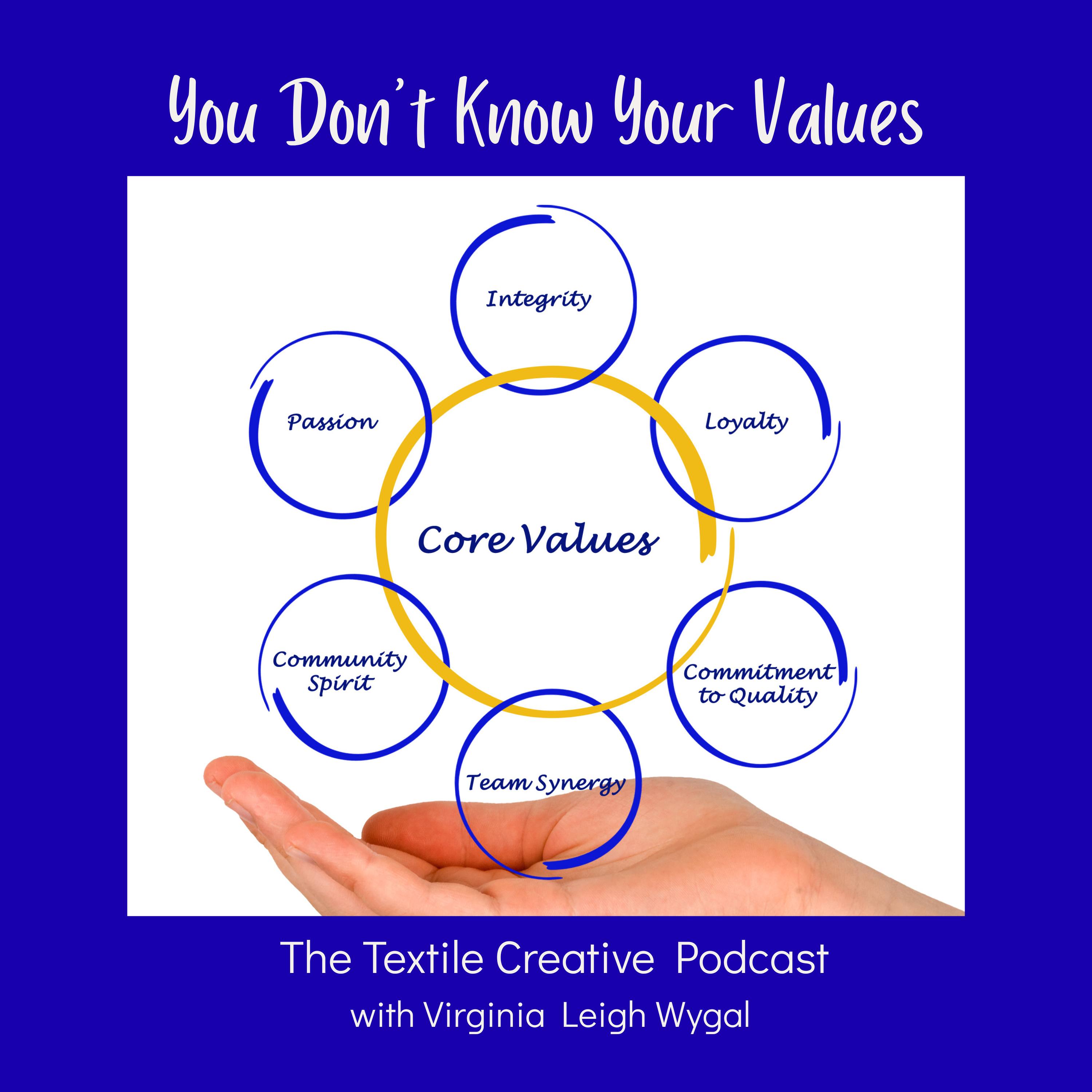 67: You Don't Know Your Values | You Don’t Know Your Values Most makers can tell you what they value in about thirty seconds. Creativity. Freedom. Authenticity. The work itself. The answer comes quickly and it sounds right. But values aren't what you say when someone asks. Values are what your decisions reveal over time. And those two lists are frequently, uncomfortably, not the same. This episode interrogates one of the most repeated and least useful phrases in creative culture - "do what you love" - and examines why it fails the makers who take it seriously. Drawing on research into intrinsic versus extrinsic motivation and the psychology of burnout, and grounded in a frank account of what sustained values misalignment actually costs in real physical and professional terms, this episode makes the case that knowing what you actually value is not a feel-good exercise. It is the most practical decision-making tool a working maker can have. If you've ever wondered why the work feels hollow even when it's going well, why your body of work feels scattered, or why you keep making decisions that look reasonable on paper but move you in the wrong direction - this episode is probably going to show you exactly why. The 10 Principles for a Stronger Creative Practice download includes a real values clarification exercise - not a vision board, a genuine examination. Link to The 10 Principles: http://www.virginialeighstudio.com/learn. The VirginiaLeighStudio Home page: https://www.virginialeighstudio.com Chapters 00:00 - Does What You Say You Value Match Your Decisions? 02:44 - Why "Do What You Love" Is Oversimplified and Occasionally Dangerous 04:25 - What This Principle Actually Is - And What It Is Not 05:52 - Performed Values vs. Actual Values: The Distinction That Changes Everything 08:03 - Intrinsic vs. Extrinsic Values: What the Research Says About Burnout 09:36 - The Question Worth Carrying: What Do Your Decisions Reveal? 10:12 - What Values Misalignment Actually Costs: A Personal Account 14:28 - Values Clarity as a Practical Decision-Making Tool 16:32 - Strategic Misalignment vs. Permanent Wrong Turns 18:27 - The Real Problem With "Do What You Love" 20:30 - The Two Lists Every Maker Should Compare The 10 Principles for a Stronger Creative Practice Get them HERE The Fabric & Fiber Studio: https://members.virginialeighstudio.com/thestudio Connect with Virginia: Website = https://www.virginialeighstudio.com Instagram = https://www.instagram.com/virginialeighstudio/ Facebook = https://www.facebook.com/virginialeighstudio | 22m 41s | ||||||
| 3/12/26 |  Success is a Decision, and Your Making it Right Now Whether You Know It or Not | Success is a Decision, and you’re making it right now whether you know it or not Most makers think of success as something that arrives eventually - after enough time, enough skill, enough completed work. It's always just ahead. Always dependent on the next level of competence or the next external confirmation. And that framing, however familiar it feels, is exactly what keeps capable makers stuck. This episode reframes success entirely. Not as an outcome you're building toward, but as a pattern of decisions you're either making right now or you're not. Small ones. Daily ones. The kind that don't feel significant in the moment but that determine, completely, where your work ends up. Drawing on research into decision fatigue, ambiguity tolerance, and the psychology of small wins, this episode examines why capable makers stall, what avoidance actually looks like in the studio, and how deliberate daily decisions accumulate into a real body of work over time. If you've ever felt like you're doing everything right and still not moving forward - this episode is probably going to show you exactly why. And it's not the answer you're expecting. The waitlist for the Fabric and Fiber Studio is open. Link below. The VirginiaLeighStudio Home page: https://www.virginialeighstudio.com Chapters 00:00 - Is Success Something You're Moving Toward? 03:19 - Reframing Success: Outcome vs. Pattern of Decisions 07:00 - The Decisions That Actually Build a Body of Work 08:56 - Decision Fatigue: Why Deferring Small Choices Costs More Than Making Them 10:07 - Indecision Is a Decision 10:59 - Why Capable Makers Stall 11:45 - Ambiguity Tolerance: The Real Difference Between Moving Forward and Staying Put 13:26 - What Avoidance Sounds Like in the Studio 15:23 - How Decisions Accumulate: From the Garment Industry to Your Studio 18:03 - Small Wins: The Mechanics of Real Progress 20:26 - Landing the Plane: Orientation Over Outcome 22:06 - The Fabric and Fiber Studio Waitlist The Fabric & Fiber Studio: https://members.virginialeighstudio.com/thestudio Connect with Virginia: Website = https://www.virginialeighstudio.com Instagram = https://www.instagram.com/virginialeighstudio/ Facebook = https://www.facebook.com/virginialeighstudio | 24m 45s | ||||||
| 3/5/26 |  The Question That Moves Creative Work Forward | The Question That Moves Creative Work Forward At some point in a serious creative life, the questions begin to change. They’re no longer about learning techniques or mastering tools. Instead, they start sounding like this: Why am I not producing the body of work I keep saying I want to create? Why do I keep circling ideas without actually moving forward? In this episode of The Textile Creative Podcast, Virginia explores the deeper moment when capable makers realize their skills are improving—but their work isn’t accumulating the way they imagined. Drawing on insights from psychology and creative practice, Virginia explains why certain questions quietly trap us in explanation and rumination, while others open the door to forward motion. When we ask why haven’t I done this yet?, the brain often searches for reasons and narratives. But when we ask how can I move this forward?, the brain begins looking for systems, actions, and structures that make consistent work possible. This episode explores the subtle but powerful shift between explanation and execution—and how changing the question you ask yourself can begin closing the gap between the maker you imagine becoming and the work you are actually producing. The VirginiaLeighStudio Home page: https://www.virginialeighstudio.com Chapters 00:00 The Questions Creative Makers Eventually Ask 00:50 When Creative Frustration Becomes a Bigger Question 01:33 Why Your Work Isn’t Moving Forward (Even When You’re Busy) 02:04 The Problem With Asking “Why Haven’t I Done This Yet?” 02:34 Questions That Keep Creatives Stuck vs. Questions That Move Work Forward 04:43 The Hidden Stall That Happens to Capable Makers 06:16 How the Brain Treats Questions as Instructions 07:10 Rumination: Why Overthinking Stops Creative Progress 08:54 The “Cognitive Miser” Brain and Easy Explanations 10:03 The Power of Asking “How Can I Move This Forward?” 11:27 The Questions Productive Creatives Ask Themselves 12:36 Closing the Execution Gap in Creative Work Connect with Virginia: Website = https://www.virginialeighstudio.com Instagram = https://www.instagram.com/virginialeighstudio/ Facebook = https://www.facebook.com/virginialeighstudio | 16m 09s | ||||||
| 2/26/26 |  64: Multi-Passionate or Just Unfinished? Here's How to Tell. | Multi-Passionate or Just Unfinished? Here’s How You Tell Are you truly multi-passionate… or just stuck in a cycle of unfinished starts? In this episode, Virginia clears up the messy conversation around “multi-passionate” and draws a clean line between creative range and creative avoidance—without shaming either one. You’ll hear the five “grown-up” clues that you might actually be multi-passionate, plus a blunt-but-helpful diagnostic: do your many interests produce more skill, more finished work, and more clarity… or more clutter, more spinning, and more half-starts? Then Virginia lays out a serious-maker framework for holding multiple creative lanes without chaos: choose a primary lane for a season, allow one secondary lane that supports it, create a parking lot for everything else, finish more than you start, and build skill on purpose. Because the goal isn’t to do everything. The goal is to become capable—on purpose. The VirginiaLeighStudio Home page: https://www.virginialeighstudio.com Chapters 00:00 — Multi-Passionate… or Scattered? The Real Question 03:29 — Why “Too Many Interests” Isn’t the Problem 05:23 — The 5 Clues of a True Multi-Passionate Maker 10:55 — Multi-Passionate vs Uncommitted: A Clean Diagnostic 12:30 — Rule 1: Pick a Primary Lane (For a Season) 13:23 — Rule 2: One Secondary Lane (Pressure Valve, Not Detour) 14:47 — Rule 3: The Parking Lot System (So Ideas Don’t Run You) 16:03 — Rule 4: Finish More Than You Start (Close Loops) 16:47 — Rule 5: Build Skill on Purpose (Not Just Experiences) 18:03 — What This Looks Like in Real Studio Life 19:15 — Structure Creates Freedom Connect with Virginia: Website = https://www.virginialeighstudio.com Instagram = https://www.instagram.com/virginialeighstudio/ Facebook = https://www.facebook.com/virginialeighstudio | 21m 34s | ||||||
| 2/19/26 |  63: The Gap Between Vision & Execution | The Gap Between Vision and Execution Every serious maker reaches a moment when their ideas become sharper than their hands. You can see what the work should be — the line, the balance, the finish — but when you try to execute it, the result falls short of your vision. That disconnect can feel personal, frustrating, and quietly destabilizing. In this episode of The Textile Creative, Virginia names that experience clearly: the gap — the distance between what you can envision and what you can reliably make. This is not impostor syndrome, a confidence problem, or a lack of commitment. It’s a predictable phase of skill development that appears when perception advances faster than execution. You’ll learn why the gap feels so uncomfortable, why common advice actually widens it, and what actually closes it: targeted skill development, informed decision-making, and sustained engagement with the same problems over time. This episode is not about inspiration or reassurance. It’s about building capability — quietly, deliberately, and through staying with the work long enough for judgment to form. The VirginiaLeighStudio Home page: https://www.virginialeighstudio.com Chapters 00:00 The Gap Between Vision and Execution 00:54 What the Gap Actually Is 03:45 When Seeing Improves Before Doing 06:23 Why the Gap Feels So Personal 07:25 How Makers Stall Inside the Gap 09:37 Why Discomfort Is the Price of Judgment 10:06 Why Common Advice Fails at This Stage 13:26 Targeted Skill: Practicing the Actual Limitation 15:46 Informed Decisions and Earned Judgment 17:28 Smarter Practice and Staying With the Problem 19:51 Capability Over Inspiration Connect with Virginia: Website = https://www.virginialeighstudio.com Instagram = https://www.instagram.com/virginialeighstudio/ Facebook = https://www.facebook.com/virginialeighstudio | 24m 28s | ||||||
| 2/12/26 |  62: The Entry Cost of Making (and 3 Doorways Back In) | The Entry Cost of Making (and 3 Doorways Back In) Starting is rarely about time. It’s about cost. The invisible cost of choosing, setting up, risking, remembering where you left off. The cost of facing standards you care about. The cost of entering work that matters to you. In this episode, Virginia names what most serious makers experience but rarely articulate: the hesitation at the threshold. That moment when you want to work — and still don’t begin. Rather than offering motivation or productivity advice, she breaks down the real mechanics behind creative stall points — what she calls entry cost — and explains why the brain resists uncertain beginnings even when the desire to make is strong. From the hovering behavior in the studio to the pressure of high standards, this episode explores: • Why ambiguity drains energy • Why physical overhead amplifies avoidance • Why taste and skill can raise the emotional stakes • And how reliable entry structures change everything You’ll walk away with three practical studio doorways that reduce friction, restore contact, and make starting repeatable — without waiting for inspiration. Because exceptional work doesn’t begin with hype. It begins with crossing the threshold. The VirginiaLeighStudio Home page: https://www.virginialeighstudio.com Chapters 00:00 Entry Cost: Why You Can’t Start (Even When You Want To) 01:59 The Black Linen Jacket: A Real Studio Avoidance Loop 04:21 What “Entry Cost” Actually Includes (and Why It Feels Expensive) 08:34 Block #1: The Unclear First Step (“Where Do I Even Begin?”) 10:41 Block #2: Setup + Cleanup Dread (“It’s a Whole Production”) 12:48 Block #3: Standards + Fear (“If I Can’t Do It Well…”) 14:58 Doorway #1: The 10-Minute Re-entry (No Decisions) 16:20 Doorway #2: The Next Physical Step Rule (No Planning) 17:41 Doorway #3: The Closed Loop (Proof + Clean Stopping Points) 20:08 Serious Maker Standard + Diagnostic Questions (Build Internal Motivation) Connect with Virginia: Website = https://www.virginialeighstudio.com Instagram = https://www.instagram.com/virginialeighstudio/ Facebook = https://www.facebook.com/virginialeighstudio | 25m 56s | ||||||
| 2/5/26 |  61: The Minimum Necessary to Be Found | The Minimum Necessary to Be Found If you’re a fabric creative who loves making… but feels completely drained by the idea of “having an online presence,” this episode is for you. So many makers want their work to matter beyond the sewing room—but the internet can feel like a noisy stage you never asked to step onto. The pressure to post constantly, keep up with trends, or turn into a content machine can make visibility feel exhausting, inauthentic, and overwhelming. In this episode, Virginia offers a calmer, more sustainable way to think about being online: not as performance, not as hustle—but simply as being findable. You’ll learn what it really means to give your work a small “front door,” why you don’t need to be everywhere, and how the minimum necessary presence can still create real connection and trust. If you’ve been treating visibility like a burden… this conversation might feel like an exhale—and a practical way forward. The VirginiaLeighStudio Home page: https://www.virginialeighstudio.com Chapters 00:00 — Online Presence Anxiety for Fabric Creatives 01:08 — You Don’t Need to Be an Influencer to Share Your Work 03:34 — What “Online Presence” Really Means (Not Marketing Pressure) 04:14 — Visibility for Makers: Being Findable Without Ego 05:33 — Simple Creative Business Visibility (Porch Light Approach) 05:50 — Why You Don’t Need Instagram, Pinterest, and Everything Else 06:29 — Content Creation Burnout and the Myth of Posting Daily 07:39 — Consistent Sharing for Small Creative Businesses 09:21 — Minimum Online Presence Framework: Home Base + Window + Rhythm 10:04 — Home Base Ideas: Website, Etsy, Kajabi, Portfolio 10:29 — Choose One Platform to Start (Instagram, Pinterest, Newsletter) 12:12 — What to Post as a Maker: Work, Process, or Personal Note Join “The Maker’s Path” Membership: https://www.virginialeighstudio.com/themakerspath Connect with Virginia: Website = https://www.virginialeighstudio.com Instagram = https://www.instagram.com/virginialeighstudio/ Facebook = https://www.facebook.com/virginialeighstudio | 17m 02s | ||||||
| 1/29/26 |  60: Creativity as a First Aid Kit | Creativity as a First Aid Kit Most people think of creativity as something extra — a luxury you get to after everything else is handled. But what if that’s backwards? What if sewing and making with fabric aren’t optional at all… but one of the quiet ways we regulate, steady ourselves, and come back into our own lives? In this episode, I’m exploring the idea of a creative first aid kit — not as a dramatic cure-all, but as something deeply practical. The simple act of stitching, pressing, cutting, or handling cloth can do something your nervous system understands before your mind even catches up. We’ll talk about why we’re all born creative, why that instinct gets crowded out in adulthood, and how fabric work becomes a powerful form of everyday restoration — a return to rhythm, competence, and calm when life feels frayed around the edges. The VirginiaLeighStudio Home page: https://www.virginialeighstudio.com Chapters 00:00 — Creativity Isn't Optional 04:06 — Creativity as Everyday First Aid 05:41 — Why Sewing Regulates the Nervous System 06:47 — We Were Born Creative (Then It Got Crowded Out) 08:47 — Why Creativity Never Stops Matter¬ing 10:18 — The Brain Under Stress — And How Making Interrupts It 12:20 — Presence, Rhythm, and the Power of Handwork 13:02 — The Quiet Injuries Creativity Helps With 16:19 — “Just a Hobby” Might Be Keeping You Well 17:53 — What a Creative First Aid Kit Actually Looks Like 20:27 — Creative Work vs. Distraction 21:46 — The Door Back Into Yourself Through Fabric 22:45 — Questions to Notice (Not Fix) 25:07 — What Sewing Restores — A Closing Reminder Join “The Maker’s Path” Membership: https://www.virginialeighstudio.com/themakerspath Connect with Virginia: Website = https://www.virginialeighstudio.com Instagram = https://www.instagram.com/virginialeighstudio/ Facebook = https://www.facebook.com/virginialeighstudio | 27m 15s | ||||||
| 1/22/26 |  59: Embodied Learning Through Cloth | Embodied Learning Through Cloth At some point in your fabric journey, the questions change. Not because you’ve mastered everything — but because something else has taken root. In this episode of The Textile Creative, we explore the subtle shift that happens after years of making: when your hands begin to lead before your mind asks for confirmation. When you stop checking for permission. When “doing it right” matters less than responding well. This conversation isn’t about expertise or arriving at a finish line. It’s about how judgment develops through repetition. How confidence returns through contact. And how working with fabric teaches us to listen — not just think — our way forward. You’ll hear reflections on beginner questions, intermediate pressure, and the moment when responsibility replaces permission. We talk about how fabric reveals embodied learning — knowledge that lives in the body — and why fewer questions doesn’t mean less care, but deeper relationship. The VirginiaLeighStudio Home page: https://www.virginialeighstudio.com Chapters 00:00 — When the Questions Stop Forming 02:59 — How Questions Help Us Find Our Place 04:10 — When Caring Gets Heavy 05:28 — Judgment Quietly Takes Over 06:30 — From Permission to Responsibility 09:23 — When ‘The Right Way’ Depends on Context 10:58 — Letting Go of Needing the Ending First 12:24 — What Replaces the Questions 14:50 — Letting the Work Rest and Respond 15:33 — Why This Shift Makes the Work Sustainable 17:44 — Embodied Learning: Knowing Through the Hands 18:51 — This Isn’t a Finish Line Join “The Maker’s Path” Membership: https://www.virginialeighstudio.com/themakerspath Connect with Virginia: Website = https://www.virginialeighstudio.com Instagram = https://www.instagram.com/virginialeighstudio/ Facebook = https://www.facebook.com/virginialeighstudio | 21m 47s | ||||||
| 1/15/26 |  58: What I Notice When the Routine Breaks | What I Notice When the Routine Breaks When routine breaks, it rarely announces itself as a problem. It shows up quietly — in hesitation, in second-guessing, in that subtle feeling of being a little out of sync with your own work. And just as quietly, when you return — really return — something else comes back online. In this episode, Virginia reflects on what happens when creative rhythm loosens and how confidence is often restored not through planning or reassurance, but through contact with the work itself. From rebuilding the very beginning of a sewing curriculum to watching new learners discover skill in motion, this conversation explores how making, teaching, and returning to the table recalibrate creative direction and ambition. This is an episode about re-entry — and why being back inside the work matters more than we sometimes realize. The VirginiaLeighStudio Home page: https://www.virginialeighstudio.com Chapters 00:00 — When routine quietly breaks 02:52 — Confidence and repetition 04:05 — Rebuilding the beginning 06:04 — Being “back” in the work 07:19 — Clarity through proximity 08:40 — Learning, gratitude, and mastery 09:15 — Friction as information 11:44 — Ambition, restored Join “The Maker’s Path” Membership: https://www.virginialeighstudio.com/themakerspath Connect with Virginia: Website = https://www.virginialeighstudio.com Instagram = https://www.instagram.com/virginialeighstudio/ Facebook = https://www.facebook.com/virginialeighstudio | 14m 51s | ||||||
| 1/8/26 |  57: The Myth of Balance | The Myth of Balance: What Makers Actually Need Is Harmony Every January, we’re told to find balance — in our schedules, our energy, our creativity. But creative life rarely cooperates with even distribution. Some seasons pull harder. Some ideas arrive heavier. And forcing everything into neat proportions can quietly drain the work of its vitality. In this episode, we explore a different way of thinking: harmony — not as a feeling, but as a skilled, responsive way of working. Through material examples, lived experience, and close attention to how creative demands actually behave, this conversation reframes ambition, effort, and sustainability for makers who want to stay engaged without burning out. The VirginiaLeighStudio Home page: https://www.virginialeighstudio.com Chapters: 00:00 — When balance becomes a New Year reflex 02:00 — Why balance fails creative work 06:48 — Asking a different question 07:00 — Harmony as a skilled way of working 10:04 — When balance would have failed 12:00 — Ambition, reframed 14:00 — Better listening Join “The Maker’s Path” Membership: https://www.virginialeighstudio.com/themakerspath Connect with Virginia: Website = https://www.virginialeighstudio.com Instagram = https://www.instagram.com/virginialeighstudio/ Facebook = https://www.facebook.com/virginialeighstudio | 15m 16s | ||||||
| 1/1/26 |  56: Listening To Your Work | Listening to Your Work Letting Your Creative Direction Emerge In this episode of The Textile Creative Podcast, Virginia reflects on what it means to truly listen to your creative work — not to plan it, fix it, or optimize it, but to notice what it’s already telling you. Rather than jumping into goals or resolutions, this episode invites you to slow down and pay attention to the patterns, materials, and instincts that have been quietly guiding your work all along. This is the final episode in the planning series, and instead of asking “What should I do next?”, Virginia invites you to ask a different question: What keeps calling me back? Through reflections on repetition, attraction, and creative curiosity, this episode reframes direction as something that emerges through attention — not pressure. You’ll hear about the difference between accumulating and curating, how creative work communicates through repetition, and why staying with something long enough often teaches us more than chasing the next idea. This episode is a gentle invitation to enter the new year with curiosity instead of urgency, and to trust what your creative practice is already showing you. The VirginiaLeighStudio Home page: https://www.virginialeighstudio.com 00:00 – Welcome & Setting the Tone A quiet opening to the new year and the close of the planning series. This episode is about noticing, not deciding. 00:54 – Listening Instead of Planning Why this episode isn’t about goals, productivity, or reinvention — but about paying attention to what’s already there. 01:10 – Your Work Is Already Talking to You How your habits, materials, and repeated interests leave clues about where your creativity wants to go. 04:11 – Repetition as Information The difference between collecting and returning. Why what you keep coming back to matters more than what you intend to do. 07:38 – From Accumulating to Curating Shifting from “more” to “more meaningful.” How clarity comes from noticing what wants to stay. 10:02 – Choosing Attention Over Decisions Why you don’t need to commit or decide yet — just notice what keeps asking for your attention. 11:32 – A Gentle Invitation Forward Letting curiosity lead. Allowing direction to emerge without pressure. Trusting what’s already alive in your work. 12:02 – Closing Reflection An invitation to enter the new year with openness, patience, and trust in your creative instincts. Key Takeaway You don’t need a new plan yet. You just need to notice what’s already calling you. Join “The Maker’s Path” Membership: https://www.virginialeighstudio.com/themakerspath Connect with Virginia: Website = https://www.virginialeighstudio.com Instagram = https://www.instagram.com/virginialeighstudio/ Facebook = https://www.facebook.com/virginialeighstudio | 14m 22s | ||||||
Showing 25 of 81
Pitch Fit is a Pro feature
See how bookable this show is for guests, which brands already advertise, the per-episode ad value, and the best-fit guest and sponsor profile. The numbers are blurred on the free plan.
How readily this show books outside guests like you.
How proven this show is for host-read sponsorships.
For Guests
ProFor Advertisers
ProUpgrade to Pro to unlock guest cadence, sponsor categories, fit scores, and per-episode ad value for this show.
Chart Positions
1 placement across 1 market.
Chart Positions
1 placement across 1 market.