
Insights from recent episode analysis
Audience Interest
Podcast Focus
Publishing Consistency
Platform Reach
Insights are generated by CastFox AI using publicly available data, episode content, and proprietary models.
Most discussed topics
Brands & references
Total monthly reach
Estimated from 9 chart positions in 9 markets.
By chart position
- 🇩🇪DE · Nature#1695K to 30K
- 🇮🇳IN · Nature#1791K to 10K
- 🇻🇳VN · Nature#5100K to 300K
- 🇫🇮FI · Nature#4610K to 30K
- 🇸🇬SG · Nature#883K to 10K
- Per-Episode Audience
Est. listeners per new episode within ~30 days
38K to 122K🎙 Daily cadence·166 episodes·Last published 2mo ago - Monthly Reach
Unique listeners across all episodes (30 days)
126K to 406K🇻🇳74%🇩🇪7%🇫🇮7%+6 more - Active Followers
Loyal subscribers who consistently listen
50K to 162K
Market Insights
Platform Distribution
Reach across major podcast platforms, updated hourly
Total Followers
—
Total Plays
—
Total Reviews
—
* Data sourced directly from platform APIs and aggregated hourly across all major podcast directories.
On the show
From 1 epsHost
Recent guests
Recent episodes
S4|EP 26 ~ Storytelling for Conservation: Heather Ripley on PR, Fundraising & Scaling Wildlife Impact
Apr 19, 2026
26m 59s
S4|EP25 ~ Ecology Explained: Devica Ranade on Bridging Science, Communication, and Conservation
Apr 13, 2026
24m 08s
S4|EP25 - Discovering New Species in the Western Ghats | Herpetology with Abinesh Anbazhagan
Apr 5, 2026
30m 37s
S4|EP24 - Why Wildlife Education Matters: Teaching Conservation to Children | Soma Mandal
Mar 28, 2026
24m 21s
S4|EP23 - Orangutan Conservation and the Fight to Save Southeast Asia’s Rainforests | Leif Cocks
Mar 20, 2026
23m 06s
Social Links & Contact
Official channels & resources
Official Website
Login
RSS Feed
Login
| Date | Episode | Topics | Guests | Brands | Places | Keywords | Sponsor | Length | |
|---|---|---|---|---|---|---|---|---|---|
| 4/19/26 |  S4|EP 26 ~ Storytelling for Conservation: Heather Ripley on PR, Fundraising & Scaling Wildlife Impact✨ | storytellingconservation+4 | Heather Ripley | Orange OrchardRipley PR+2 | — | storytellingconservation+7 | — | 26m 59s | |
| 4/13/26 |  S4|EP25 ~ Ecology Explained: Devica Ranade on Bridging Science, Communication, and Conservation | In this episode of the Think Wildlife Podcast, we sit down with Devica Ranade, founder of Ecology Explained, to explore the critical role of science communication in bridging the gap between ecological research and public understanding. Trained as a behavioral ecologist with extensive field experience—from studying tadpole foraging behavior in India to giraffe social dynamics and meerkat systems in South Africa—Devica brings a rare combination of scientific depth and communication clarity to the conservation space.We dive into her journey from a curious teenager discovering birds in Amboli to pursuing a PhD at the Centre for Ecological Sciences, IISc, where she studied female-female competition in peninsular rock agamas. The conversation then shifts to a pivotal realization during her academic career: that much of the exciting and impactful work being done in ecology remains inaccessible to the broader public. This insight led to the creation of Ecology Explained, a platform dedicated to simplifying complex ecological research into engaging, digestible formats for diverse audiences.Devica shares how Ecology Explained has evolved over time—from long-form videos to social media carousels and short-form reels—driven both by changing audience preferences and platform algorithms. We discuss the realities of science communication today, including the challenges of audience retention, algorithm dependency, and the persistent lack of funding in the field. Despite these constraints, her work has had tangible impact, inspiring students to pursue ecology and even shaping academic projects and career paths.The episode also explores her role at the Nature Conservation Foundation, where she works on education and public engagement, connecting people—from school students to researchers—with nature through workshops, resources, and experiential learning. We unpack systemic gaps in environmental education in India, including the lack of trained educators and the limitations of passive, classroom-based learning. Devika makes a compelling case for activity-based, immersive nature education as a prerequisite for meaningful conservation action.Finally, we discuss the role of AI and technology in shaping how people engage with nature—its potential as a powerful tool for learning and identification, but also the risks of misinformation and increasing disconnection from the natural world. This episode is a must-watch for anyone interested in conservation, science communication, ecology careers, and the future of environmental education in a rapidly changing world. Get full access to The Think Wildlife Podcast at anishbanerjee.substack.com/subscribe | 24m 08s | ||||||
| 4/5/26 |  S4|EP25 - Discovering New Species in the Western Ghats | Herpetology with Abinesh Anbazhagan | The Western Ghats of India are one of the world’s most important biodiversity hotspots, home to thousands of endemic species and remarkable ecological diversity. In this episode of the Think Wildlife Podcast, we speak with Abinesh Anbazhagan, a PhD scholar at Pondicherry University whose research explores herpetology, biodiversity discovery, and the growing role of technology in wildlife conservation.Abinesh’s work focuses on documenting biodiversity in the Nilgiris landscape, a region that forms a crucial part of the Western Ghats ecosystem. Over more than a decade of research, his work has contributed to large-scale biodiversity indexing projects that have documented thousands of terrestrial species in the region. These efforts are critical for understanding the distribution of species and identifying areas that require urgent conservation attention.One of the most exciting aspects of Abinesh’s research is the discovery and description of new species. Recent work has resulted in the identification of previously unknown species of arthropods and fireflies, as well as the rediscovery of species believed to be lost or extremely rare. Discoveries like these highlight how much remains unknown about biodiversity in even well-known landscapes such as the Western Ghats.The episode also explores Abinesh’s research on reptile ecology, including geckos, snakes, and tarantulas, and his current PhD research focusing on pit viper ecology in island ecosystems. Understanding the ecology and distribution of these species is vital for conservation, particularly because many reptiles and amphibians are highly sensitive to environmental change and habitat disturbance.A major theme of the conversation is the increasing role of technology in modern wildlife research. From camera trapping and telemetry to GIS modeling, machine learning, and molecular genetics, technological tools are transforming the way scientists monitor species and ecosystems. Abinesh explains how tools such as DNA barcoding, phylogenetic analysis, and satellite-based spatial data are helping researchers identify species, map habitats, and detect emerging conservation threats.The discussion also highlights the importance of traditional ecological knowledge and community participation in conservation. Indigenous communities and local forest watchers often possess deep knowledge of species behavior, habitats, and seasonal patterns. Integrating this knowledge with scientific research can significantly improve conservation outcomes and strengthen long-term ecosystem stewardship.Abinesh also discusses the key threats facing biodiversity in the Nilgiris region, including deforestation, invasive species, habitat encroachment, pesticide pollution, and artificial light at night. These pressures can have serious consequences for endemic species, particularly reptiles and amphibians that rely on specific temperature ranges and microhabitats for survival.Climate change presents another major challenge for wildlife in mountainous ecosystems like the Western Ghats. Many species are adapted to narrow climatic conditions and may be forced to shift their ranges to higher elevations as temperatures rise. For species already restricted to mountain peaks or isolated habitats, this could lead to local extinctions.This episode provides a fascinating look at the intersection of taxonomy, technology, and conservation science in one of the most biologically rich regions of the world. From rediscovering species thought to be extinct to exploring how artificial intelligence can transform wildlife monitoring, the conversation highlights the importance of continued research and collaboration in protecting biodiversity.Subscribe to the Think Wildlife Podcast for more conversations with scientists, conservationists, and wildlife researchers working to protect biodiversity around the world.#WesternGhats #Herpetology #SpeciesDiscovery #BiodiversityResearch #WildlifeScience #SnakeEcology #ReptileResearch #ConservationScience #WildlifePodcast #ThinkWildlife Get full access to The Think Wildlife Podcast at anishbanerjee.substack.com/subscribe | 30m 37s | ||||||
| 3/28/26 |  S4|EP24 - Why Wildlife Education Matters: Teaching Conservation to Children | Soma Mandal | Conservation begins with awareness, and one of the most powerful ways to protect biodiversity is by inspiring the next generation to care about nature. In this episode of the Think Wildlife Podcast, we speak with Soma Mandal, a conservation educator working on wildlife outreach programs focused on children and young students. The conversation explores how early exposure to wildlife and environmental education can shape attitudes toward conservation and inspire lifelong stewardship of the natural world.Soma shares how her interest in biodiversity conservation developed during her studies in environmental science and how field visits to wildlife habitats and conservation areas strengthened her commitment to protecting nature. These early experiences helped her understand the ecological importance of species and ecosystems, as well as the growing threats posed by human activities such as habitat loss and environmental degradation.A key theme of this episode is the importance of introducing children to wildlife and nature at a young age. Soma explains that early exposure to nature can transform children from passive observers into active participants in conservation. When young people develop empathy for wildlife and understand environmental challenges early in life, they are more likely to become advocates for biodiversity and sustainable living as adults.The discussion also focuses on the role of parents and schools in nurturing curiosity about the natural world. Simple activities such as nature walks, birdwatching, eco-art projects, school gardening, and student-led conservation campaigns can help children build a meaningful connection with nature while learning about ecosystems and biodiversity. These hands-on experiences encourage creativity, critical thinking, and environmental responsibility.Another important topic explored in the conversation is how wildlife education can help overcome fear and misconceptions about animals. Many children grow up fearing wildlife such as snakes, insects, or other animals due to outdated beliefs or lack of exposure. Soma explains how educators can replace fear with curiosity by providing accurate information, storytelling, documentaries, and safe observational experiences that reveal the ecological roles of these species.The episode also highlights the cultural connections between nature and society. In many parts of the world, especially in India, traditional stories, festivals, and folklore are deeply linked to animals, forests, and ecosystems. Wildlife education can help children rediscover these connections and understand how cultural heritage often reflects long-standing ecological knowledge and respect for nature.In a rapidly urbanizing world where children spend less time outdoors, reconnecting young people with nature is becoming increasingly important. Soma discusses how schools can integrate outdoor learning, field trips, school gardens, and nature clubs into daily education to help students develop observation skills, curiosity, and a deeper appreciation for biodiversity.Ultimately, the episode emphasizes that conservation is not just about protecting wildlife—it is about protecting the future of human societies as well. By nurturing environmental awareness, empathy, and responsibility in children today, educators and communities can help build a generation capable of addressing the environmental challenges of tomorrow.Subscribe to the Think Wildlife Podcast for more conversations with conservationists, scientists, and educators working to protect biodiversity and inspire the next generation of environmental leaders.#WildlifeEducation #EnvironmentalEducation #BiodiversityConservation #NatureEducation #ConservationAwareness #WildlifeConservation #EcoEducation #TeachingNature #EnvironmentalAwareness #ThinkWildlife Get full access to The Think Wildlife Podcast at anishbanerjee.substack.com/subscribe | 24m 21s | ||||||
| 3/20/26 |  S4|EP23 - Orangutan Conservation and the Fight to Save Southeast Asia’s Rainforests | Leif Cocks | Southeast Asia’s rainforests are among the most biologically rich ecosystems on Earth, yet they are disappearing at an alarming rate. In this episode of the Think Wildlife Podcast, we speak with Leif Cocks, founder of The Orangutan Project, about the urgent challenge of protecting the last remaining rainforests of Indonesia and Malaysia and the wildlife that depends on them.Orangutans are one of the most intelligent and self-aware species on the planet, but their survival is tightly linked to the fate of Southeast Asia’s forests. In this conversation, Leif explains why orangutans struggle to survive in captivity and why protecting wild rainforest ecosystems is the only long-term solution for their conservation. Research has shown that orangutans often live shorter lives in captivity than they do in the wild, highlighting the importance of protecting their natural habitats and supporting rehabilitation and reintroduction programs.The episode explores how The Orangutan Project works to rescue, rehabilitate, and release displaced orangutans while simultaneously focusing on the bigger picture: safeguarding large, intact rainforest ecosystems. Every individual orangutan rescued represents not only an animal in need but also a crucial genetic resource for a critically endangered species whose survival depends on protecting remaining populations.Beyond orangutans, the conversation expands to the wider conservation landscape of Southeast Asia. Leif discusses the plight of Sumatran tigers, Asian elephants, and other threatened species that share the same rainforest ecosystems. With fewer than 300 Sumatran tigers remaining, fragmented populations and habitat loss have made long-term survival increasingly difficult. Conservation efforts now require innovative strategies such as metapopulation management, where individuals are carefully moved between isolated populations to maintain genetic diversity.The discussion also examines the major threats facing wildlife across Indonesia and Malaysia. These include deforestation for agriculture, illegal wildlife trade, poaching, and human-wildlife conflict. In many cases, the destruction of rainforest habitats forces animals into farmland and villages, creating conflict with local communities and leading to further wildlife losses.Leif also highlights the importance of protecting large rainforest landscapes, particularly lowland riverine forests, which support some of the highest biodiversity in Southeast Asia. Conservation programs supported by The Orangutan Project focus on securing these ecosystems through habitat protection, ranger patrols, wildlife monitoring, community engagement, and reforestation initiatives.A key theme of the episode is that successful conservation must include people. Initiatives such as the Forests for People program work with local communities to support education, sustainable livelihoods, and improved food security while ensuring forests remain intact for wildlife and future generations.This episode provides a deep dive into the realities of conservation in Southeast Asia—from orangutan rescue and rehabilitation to the protection of entire rainforest ecosystems that support elephants, tigers, and countless other species. It is a powerful reminder that saving wildlife ultimately depends on protecting the landscapes they call home. Leif is also the founder of The International Tiger Project and The International Elephant Project.Subscribe to the Think Wildlife Podcast for more conversations with leading conservationists, scientists, and wildlife practitioners working to protect biodiversity around the world.#Orangutans #RainforestConservation #OrangutanProject #SumatranTiger #AsianElephants #WildlifeConservation #Biodiversity #Deforestation #ConservationPodcast #ThinkWildlife Get full access to The Think Wildlife Podcast at anishbanerjee.substack.com/subscribe | 23m 06s | ||||||
| 3/12/26 | 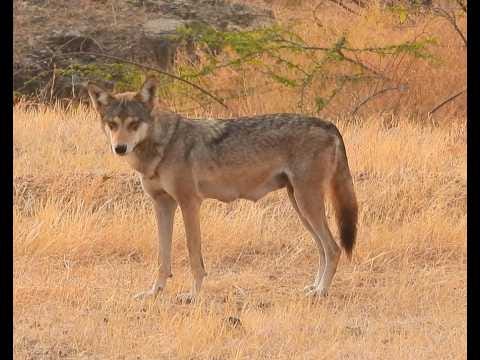 S4|EP22 -Are Indian Wolves the Oldest Wolf Lineage? Wolf Genetics with Omar Khayam | The Indian wolf is one of South Asia’s most misunderstood predators and one of the least studied carnivores in the region. In this episode of the Think Wildlife Podcast, we speak with Omar Khayam, a conservation researcher working on wolf genetics and carnivore ecology in Pakistan. The conversation explores new research suggesting that Indian wolves may represent one of the most ancient lineages of the grey wolf and how ongoing fieldwork in Pakistan is helping scientists understand the evolutionary history and distribution of wolves across the region.Omar discusses how genetic research has revealed that wolves in South Asia may belong to a unique evolutionary lineage distinct from other grey wolves found across the Northern Hemisphere. Studies analyzing mitochondrial and genomic DNA suggest that Indian wolves could represent one of the most basal branches of the grey wolf family tree, meaning their lineage may predate many other wolf populations around the world. This discovery has important implications for understanding wolf evolution and for designing effective conservation strategies for wolves across South Asia.The episode also explores how researchers are collecting genetic samples and conducting field surveys to identify the geographic boundaries between different wolf lineages across Pakistan. In some regions of the country, wolves appear to contain mixed ancestry, with genetic signatures from both Indian wolves and wolves belonging to the broader Holarctic lineage found across Eurasia and North America. Understanding these boundaries is essential for mapping wolf populations and identifying priority areas for conservation.Beyond genetics, the conversation examines the growing challenge of human-wolf conflict. In many parts of Pakistan, local communities depend heavily on livestock for their livelihoods, and wolves frequently prey on goats and sheep. These losses can represent a significant economic burden for rural families, creating tensions between conservation goals and local livelihoods. Omar discusses potential solutions such as livestock compensation programs, community insurance schemes, and improved monitoring systems that could help reduce conflict and support coexistence between people and predators.Another major threat facing wolves in Pakistan is poaching and illegal capture, particularly the removal of wolf pups from dens. In some cases, pups are taken from the wild and sold for breeding with domestic dogs or used for hunting purposes. These practices can significantly affect wolf populations by reducing reproductive success and disrupting natural pack structures.The discussion also highlights the broader conservation challenges facing wolf habitats. Much like in India, grassland ecosystems in Pakistan are often converted into agriculture or industrial development, leading to habitat loss and fragmentation. Protecting remaining grasslands and securing core populations within national parks will be critical for the long-term survival of wolves in the region.Omar also shares insights from his fieldwork, including camera-trapping projects and wildlife surveys aimed at documenting species across Pakistan. These efforts are helping build important datasets on wildlife presence and behavior in a region that remains relatively understudied in global conservation research.This episode offers a fascinating look into wolf conservation in South Asia, combining cutting-edge genetic research with real-world conservation challenges on the ground. It highlights the importance of scientific research, community engagement, and habitat protection in securing the future of wolves and other carnivores across the region.Subscribe to the Think Wildlife Podcast for more conversations with conservation scientists, researchers, and wildlife practitioners working to protect biodiversity around the world.#IndianWolf #WolfConservation #CarnivoreEcology #HumanWildlifeConflict #WildCanids #GrasslandConservation #WildlifeResearch #BiodiversityConservation #WildlifePodcast #ThinkWildlife Get full access to The Think Wildlife Podcast at anishbanerjee.substack.com/subscribe | 24m 01s | ||||||
| 3/7/26 | 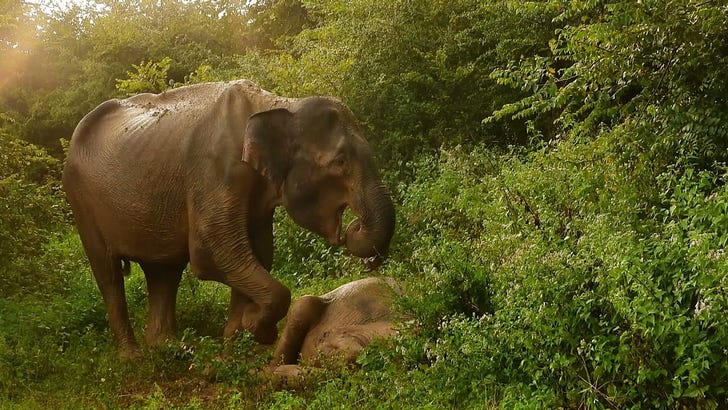 S4|EP21 - Asian Elephant Conservation: DNA Census, Rescues & Human-Elephant Conflict | Nikki Sharp | Asian elephants are among the most endangered large mammals on Earth, with only 35,000–40,000 individuals remaining across their entire range. In this episode of the Think Wildlife Podcast, we speak with Nikki Sharp, Executive Director of Wildlife SOS USA, about the urgent challenges facing Asian elephants across South and Southeast Asia and the conservation efforts working to secure their future. Wildlife SOS is one of the leading organizations working on elephant rescue and rehabilitation in India, having helped rescue more than 50 elephants from circuses, captivity, and conflict situations. In this conversation, Nikki shares powerful stories from these rescues, including the remarkable recovery of elephants like Suzy, a blind circus elephant who found a second life in sanctuary, and Bani, a young elephant injured by a train who regained mobility through intensive veterinary care and rehabilitation. The episode also explores the broader conservation status of Asian elephants, a species that has lost nearly 97% of its historical population and whose remaining numbers are heavily concentrated in India and Sri Lanka. Nikki explains why Asian elephants often receive less global attention than African elephants despite their precarious conservation status and discusses how conservation awareness and advocacy can help change this imbalance. A major focus of the discussion is the recent DNA-based elephant census conducted in India, one of the most ambitious wildlife population studies ever undertaken. Researchers walked hundreds of thousands of kilometers across elephant habitats and collected thousands of dung samples to extract DNA and identify individual elephants. This genetic method allows scientists to estimate population sizes more accurately than traditional head-count surveys and represents a major advancement in wildlife monitoring and conservation science. Beyond population monitoring, the conversation also examines the biggest threats facing Asian elephants today, including habitat loss, fragmentation of migration routes, and escalating human-elephant conflict. As landscapes change due to agriculture, mining, and infrastructure development, elephants are increasingly forced into contact with people, leading to crop loss, property damage, and sometimes tragic outcomes for both humans and elephants.Nikki highlights how community-based conservation initiatives are helping reduce these conflicts. Programs such as early warning systems, community engagement, and conflict mitigation teams are helping villages coexist with elephants while protecting both livelihoods and wildlife. These approaches demonstrate how conservation solutions must integrate ecological science, local knowledge, and community participation.This episode provides a deep dive into the science, policy, and human stories behind elephant conservation—from cutting-edge genetic census techniques to on-the-ground rescue work and community conservation strategies. Whether you are interested in wildlife conservation, Asian elephants, biodiversity policy, or human-wildlife conflict, this conversation offers valuable insights into one of the most important conservation challenges of our time.Subscribe to the Think Wildlife Podcast for more conversations with leading conservationists, scientists, and wildlife practitioners working to protect biodiversity around the world.#AsianElephants #ElephantConservation #WildlifeSOS #HumanElephantConflict #WildlifeRescue #ElephantCensus #DNAWildlifeResearch #BiodiversityConservation #WildlifePodcast #ThinkWildlife Get full access to The Think Wildlife Podcast at anishbanerjee.substack.com/subscribe | 29m 33s | ||||||
| 2/26/26 | 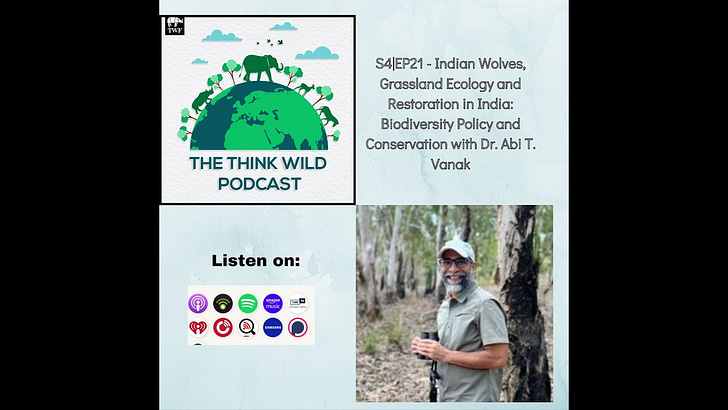 S4|EP21 - Indian Wolves, Grassland Ecology and Restoration in India: Biodiversity Policy and Conservation with Dr. Abi T. Vanak | India’s grasslands and savannas are among the most overlooked and misrepresented ecosystems in the country. Frequently labelled as “wastelands,” these open natural ecosystems have been systematically excluded from biodiversity policy, targeted for tree plantations, infrastructure, and renewable energy projects, and widely misunderstood in both public and scientific discourse. Yet grassland ecosystems support exceptional grassland biodiversity, sustain millions of pastoral livelihoods, and play a critical role in Indian biodiversity and long-term biodiversity conservation.In this episode of The Think Wildlife Podcast, Anish Banerjee speaks with Dr. Abi T. Vanak, conservation scientist and Director of the Centre for Policy Design at the Ashoka Trust for Research in Ecology and the Environment (ATREE). Dr. Vanak’s work focuses on grassland ecology, grassland biodiversity conservation, ecological restoration, and the science–policy interface shaping land-use decisions across India.The conversation examines what grasslands and other open natural ecosystems truly are, and how grassland ecology differs fundamentally from forest systems. Dr. Vanak explains how colonial-era land classifications and post-independence governance frameworks led to grasslands being misidentified as degraded forests or wastelands, a misconception that continues to influence grassland conservation, compensatory afforestation, and land-use planning today.We discuss how this misclassification has had severe consequences for grassland biodiversity, particularly for species such as the Indian wolf, blackbuck, Great Indian Bustard, and lesser florican. Despite receiving high levels of legal protection, these species continue to decline because their grassland habitats fall largely outside protected areas and mainstream biodiversity conservation frameworks.The episode also explores the ecological and economic importance of pastoralism, the contribution of extensive livestock systems to Indian biodiversity, and the deep connections between pastoral livelihoods, grassland biodiversity conservation, and resilient landscapes. Dr. Vanak shares insights from grassland restoration projects across India, demonstrating how science-based grassland restoration can improve soil carbon, water availability, and biodiversity outcomes, often more effectively than tree-based approaches.We also examine the expansion of renewable energy infrastructure, particularly solar and wind projects, and how poorly planned siting can fragment grassland ecosystems and undermine biodiversity conservation goals. The discussion extends to mesocarnivore ecology, the impacts of free-ranging dogs on wildlife, disease and hybridization risks for Indian wolves, and the broader challenge of conserving biodiversity in human-dominated landscapes.Throughout the episode, Dr. Vanak argues for a shift away from forest-centric conservation towards landscape-level, community-led approaches that recognize grasslands as vital ecosystems. This conversation highlights why grassland conservation, grassland restoration, and evidence-based biodiversity policy are essential for safeguarding Indian biodiversity in the coming decades.#grassland #grasslandconservation #grasslandbiodiversity #grasslandbiodiversityconservation #grasslandrestoration #biodiversityconservation #biodiversity #biodiversitypolicy #grasslandecology #indianbiodiversity Get full access to The Think Wildlife Podcast at anishbanerjee.substack.com/subscribe | 48m 32s | ||||||
| 2/20/26 | ![S4]EP20 - Why Islands Are Biodiversity Hotspots with David Will from Island Conservation episode artwork](https://substackcdn.com/feed/podcast/1189522/post/183634886/174c7d5c3c073d4856aa75290ef4e721.jpg) S4]EP20 - Why Islands Are Biodiversity Hotspots with David Will from Island Conservation | In this wide-ranging episode of The Think Wildlife Podcast, host Anish Banerjee is joined by David Will from Island Conservation to explore why islands sit at the heart of the global biodiversity crisis—and why they also represent one of conservation’s greatest sources of hope.Islands occupy a unique place in Earth’s ecological history. Despite covering a tiny fraction of the planet’s land area, they support a disproportionate share of global biodiversity, harbouring countless endemic species found nowhere else. David explains why island biodiversity hotspots are so extraordinary, but also why island wildlife is exceptionally vulnerable. Small land area, isolation, and simplified food webs mean that disturbances—especially invasive species and climate change—can trigger rapid ecological collapse. As a result, islands have experienced some of the highest extinction rates on Earth, making island biodiversity conservation one of the most urgent challenges in modern conservation.The conversation delves into the science and practice of island conservation, with a focus on restoring vulnerable ecosystems by removing invasive species such as rats, cats, and pigs. These introduced animals have driven widespread extinctions of seabirds, reptiles, and plants, fundamentally altering island ecology. David describes how removing invasive species can unlock extraordinary recovery, allowing native species to rebound within years and restoring ecological processes that had been suppressed for centuries.A central theme of the episode is the powerful connection between land and sea. David explains how island ecology cannot be understood in isolation from surrounding marine systems. Seabirds, once restored, transport nutrients from ocean to land, enriching forests and coastal soils, while also boosting coral reef health and fish biomass offshore. These cascading benefits highlight how island biodiversity conservation supports both terrestrial and marine ecosystems, strengthening climate resilience and food security for island communities.Climate change looms large throughout the discussion. Rising sea levels, marine heatwaves, stronger storms, and shifting temperature regimes disproportionately affect islands, making them frontline indicators of global environmental change. David reflects on why climate change amplifies existing threats, and how biodiversity management on islands must integrate adaptation, biosecurity, and long-term monitoring to remain effective in an uncertain future.The episode also explores innovation in conservation, from drones and environmental DNA to cutting-edge genetic tools aimed at controlling invasive species more humanely and safely. These technologies are expanding what is possible for island conservation at scale, offering new pathways to protect some of the world’s most fragile biodiversity hotspots.This conversation offers a compelling vision for the future of island conservation—one grounded in science, community leadership, and optimism. It is essential listening for anyone interested in island biodiversity, island wildlife, vulnerable ecosystems, climate change, and the role islands play in the global biodiversity conservation agenda.#Islandbiodiversity #islandconservation #islandbiodiversityconservation #islandwildlife #islandecology #biodiversity #biodiversityconservation #biodiversityhotspot #biodiversitymanagement #islandbiodiversityhotspot #vulnerableecosystems #climatechange Get full access to The Think Wildlife Podcast at anishbanerjee.substack.com/subscribe | 31m 01s | ||||||
| 2/13/26 |  S4|EP18 - Saving East Kolkata's Urban Wetlands and Avifaunal Diversity with Nibedita Chakraborty | In this deeply informative episode of The Think Wildlife Podcast, host Anish Banerjee is joined by Nibedita Chakraborty, a wildlife and biodiversity researcher whose work focuses on wetlands, urbanization, and citizen science. The conversation centres on the East Kolkata Wetlands, one of India’s most important urban wetlands, and uses this globally significant landscape to explore broader questions of wetland conservation, urban biodiversity, and climate change.The East Kolkata Wetlands represent a rare example of an urban wetland system that continues to deliver critical ecological, social, and economic services despite intense development pressure. Spanning over 12,500 hectares, these wetlands function as a natural wastewater treatment system, support fisheries and agriculture, reduce flood risk, and sustain exceptional wetland biodiversity. Nibedita explains why this mosaic of sewage-fed fish ponds, croplands, and open water bodies is recognised as a Ramsar site of international importance, and why its survival is inseparable from the future of urban conservation in India.A major focus of the episode is avifaunal diversity and how bird communities respond to rapid urbanization. Drawing on extensive field surveys, Nibedita describes how different bird groups use core wetlands, transitional zones, and urban sprawls in distinct ways. As urban expansion accelerates, foraging grounds shrink, water quality declines due to wetland pollution, and migratory birds are increasingly absent from areas where they were once abundant. These changes offer powerful indicators of ecosystem stress and reveal how urban wetland biodiversity is being reshaped in real time.The discussion also highlights the role of climate change in amplifying existing threats to wetlands. Altered rainfall patterns, rising temperatures, and increased eutrophication interact with urban pressures to further destabilize wetland ecosystems. Nibedita explains how long-term monitoring of wetlands and birds is essential to understanding these combined impacts and designing effective urban wetland conservation strategies that can withstand future climatic uncertainty.Citizen science emerges as a central theme in the conversation. Platforms such as eBird and iNaturalist have become invaluable tools for tracking wetland biodiversity, supporting birding communities, and generating data at spatial and temporal scales that traditional research alone cannot achieve. By involving local communities, birders, and residents, citizen science strengthens urban wetland biodiversity conservation while fostering a sense of ownership and responsibility for these ecosystems.This episode offers a compelling case for why wetlands must be central to discussions on urban biodiversity, climate change, and sustainable city planning. It is essential listening for anyone interested in wetlands, wetland conservation, urban wetlands, avifaunal diversity, birding, and the future of urban conservation in a rapidly urbanizing world.#wetlands #wetlandconservation #wetlandbiodiversity #urbanbiodiversity #urbanconservation #urbanwetlands #urbanwetlandconservation #urbandwetlandbiodiversity #urbanwetlandbiodiversityconservation #climatechange #avifaunaldiversity #birding #wetlandpollution Get full access to The Think Wildlife Podcast at anishbanerjee.substack.com/subscribe | 32m 48s | ||||||
Want analysis for the episodes below?Free for Pro Submit a request, we'll have your selected episodes analyzed within an hour. Free, at no cost to you, for Pro users. | |||||||||
| 2/6/26 |  S4|EP17 - Conserving Nepal's Biodiversity Hotspots with the Nature Conservation and Study Centre | In this episode of The Think Wildlife Podcast, host Anish Banerjee is joined by Nishan Limbu, Tujin Rai, and Nischal Kunwar from the Nature Conservation and Study Centre for a wide-ranging conversation on youth-led wildlife conservation and biodiversity research in Nepal’s Himalayan landscapes.Rather than focusing on a single species, this episode explores how grassroots conservation initiatives in Nepal are addressing the needs of multiple threatened taxa, including the Asiatic Black Bear, pangolins, small carnivores, pollinators, turtles, and forest-dependent mammals. Together, these species represent the ecological complexity of Nepal’s biodiversity hotspot, where conservation challenges are deeply intertwined with community livelihoods, land-use change, and human–wildlife interactions.A major part of the discussion centres on the Asiatic Black Bear, a wide-ranging species increasingly coming into conflict with people in Nepal’s mid-hills and forested regions. The guests describe how bear conservation efforts combine camera trapping, rapid biodiversity assessments, and community interviews to identify key habitats and conflict zones. These methods are part of a broader conservation research framework that prioritizes coexistence and evidence-based wildlife conservation rather than enforcement-only approaches.The conversation then expands to other species under threat. Pangolins emerge as one of the most elusive and heavily trafficked mammals in the region, requiring both biodiversity research and strong community engagement to improve detection and protection. Small carnivores and lesser-known mammals are discussed as overlooked components of biodiversity conservation, despite their critical ecological roles. The episode also highlights pollinator conservation through citizen-science initiatives, demonstrating how biodiversity research can be democratized and scaled through local participation.Across all these projects, the Nature Conservation and Study Centre’s approach emphasizes capacity building, youth leadership, and community ownership. By training community forest user groups to deploy camera traps, monitor wildlife, and interpret results, the organization is helping shift conservation from externally driven projects to locally sustained action. This model strengthens biodiversity conservation outcomes while fostering long-term stewardship in Nepal’s rural landscapes.The guests also reflect candidly on the challenges faced by early-career conservationists, including limited funding, lack of training opportunities, and resistance from communities affected by human–wildlife conflict. Yet the episode remains hopeful, showing how collaboration, persistence, and grounded conservation research can generate meaningful change.This episode is essential listening for anyone interested in bear conservation, Asiatic Black Bears, pangolins, wildlife conservation, biodiversity research, and the future of youth-led conservation in Nepal and the Himalayas. It offers a holistic view of how protecting biodiversity requires working across species, ecosystems, and communities simultaneously.#bear #bearconservation #AsiaticBlackBear #conservation #wildlifeconservation #biodiversityhotspot #conservationresearch #biodiversityresearch #biodiversityconservation #biodiversity #communitybasedconservation #communityconservation Get full access to The Think Wildlife Podcast at anishbanerjee.substack.com/subscribe | 30m 57s | ||||||
| 1/29/26 |  S4|EP14 - Balancing Development and Snow Leopard Conservation in Pakistan's Mountain Ecosystems with Hamza Butt | In this in-depth episode of The Think Wildlife Podcast, host Anish Banerjee speaks with Hamza Butt, about one of the most urgent yet under-discussed challenges facing conservation today: how to reconcile development with the protection of fragile mountain ecosystems.Hamza’s work sits at the intersection of sustainable linear infrastructure, biodiversity conservation, and climate policy. Drawing on his experience in Pakistan and across the Hindu Kush Himalaya, he explains how roads, railways, pipelines, and other forms of linear infrastructure can fragment habitats, disrupt ecological connectivity, and intensify human-wildlife conflict. For wide-ranging species like the snow leopard, even a single road can sever movement routes across vast mountain landscapes, increasing mortality risks and altering behaviour in ways that cascade across entire ecosystems.The conversation delves deeply into snow leopard conservation and the realities facing mountain biodiversity in Pakistan. With fewer than 200 snow leopards estimated to remain in the country, pressures from climate change, infrastructure expansion, and habitat loss are converging at unprecedented speed. Hamza describes how shrinking prey bases and degraded habitats push snow leopards closer to human settlements, leading to retaliatory killings and escalating conflict. These dynamics make snow leopard conservation inseparable from broader questions of mountain ecology, livelihoods, and equitable development.A central theme of the episode is how sustainable linear infrastructure can be planned differently. Hamza outlines how evidence-based decision-making, robust environmental impact assessments, and the mitigation hierarchy can help avoid, reduce, and offset ecological damage. From wildlife crossings and noise reduction to strategic route planning, he explains how infrastructure can coexist with mountain biodiversity conservation when guided by data rather than box-ticking exercises.Listeners will also gain insight into global policy processes, including how international guidance on infrastructure and biodiversity is translated into national action. Hamza reflects on the challenges of working in data-poor regions, the risks of poorly designed EIAs, and the importance of aligning climate change responses with biodiversity conservation goals. Throughout the episode, mountain conservation emerges not as a niche concern, but as a frontline issue for sustainable development in a warming world.This episode is essential listening for anyone interested in snow leopard conservation, sustainable linear infrastructure, mountain biodiversity, human wildlife conflict, and the future of biodiversity conservation in high-altitude ecosystems under climate change pressure.#sustainablelinearinfrastructure #linearinfrastructure #snowleopard #snowleopardconservation #mountainbiodiversity #mountainconservation #mountainbiodiversityconservation #humanwildlifeconflict #climatechange #biodiversityconservation #mountainecology Get full access to The Think Wildlife Podcast at anishbanerjee.substack.com/subscribe | 26m 21s | ||||||
| 1/23/26 | 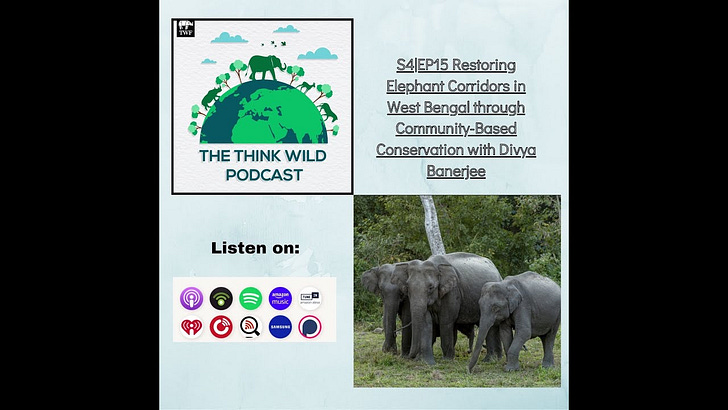 S4|EP15 Restoring Elephant Corridors in West Bengal through Community-Based Conservation with Divya Banerjee | In this episode of The Think Wildlife Podcast, host Anish Banerjee is joined by Divya Banerjee, founder of Uttarayan Wildlife, for a deeply grounded conversation on elephants, people, and landscapes in eastern India. Drawing on years of frontline conservation experience, Divya shares how elephant conservation in human-dominated regions is inseparable from social justice, livelihoods, and long-term ecosystem recovery.The episode focuses on Asiatic elephants and the rapidly disappearing elephant corridors of southern West Bengal. These corridors once enabled seasonal movement between forests across Jharkhand, Odisha, and Bengal, but today they are heavily fragmented by deforestation, monocropping, and infrastructure expansion. As these wildlife corridors collapse, conflict escalates, placing immense pressure on both elephants and marginal farming communities. Divya explains why elephant corridor conservation is not simply about protecting space, but about restoring ecological functionality across entire landscapes.A major theme of the conversation is ecosystem degradation and its cascading effects. Loss of forest cover, depletion of topsoil, water scarcity, and chemical-intensive agriculture have transformed once-diverse habitats into arid, unproductive land. Divya outlines how ecosystem restoration begins from the ground up, starting with soil regeneration, water retention, and the reintroduction of native plant species. These efforts are critical not only for Asiatic Elephant conservation but also for rebuilding biodiversity and ecological resilience.The episode offers a rare, practical look at community-based conservation in action. Divya describes how local farmers are central to every stage of the work, from nursery management and plantation maintenance to alternative livelihoods such as vermicomposting and beekeeping. These initiatives strengthen local economies while supporting biodiversity conservation and biodiversity management, demonstrating that wildlife conservation is most effective when communities are genuine partners rather than passive stakeholders.This conversation highlights the realities of conserving elephants outside protected areas, the challenges of restoring wildlife corridors in working landscapes, and the long-term commitment required to reverse ecosystem degradation. It is essential listening for anyone interested in elephant conservation, biodiversity conservation, ecosystem restoration, and people-centred approaches to conservation in India.#elephants #elephantcorridor #elephantcorridorconservation #elephantconservation #Asiaticelephants #asiaticelephantconservation #wildlifecorridor #wildlifeconservation #biodiversityconservation #biodiversitymanagement #biodiversity #ecosystemdegradation #ecosystemrestoration #communitybasedconservation Get full access to The Think Wildlife Podcast at anishbanerjee.substack.com/subscribe | 27m 41s | ||||||
| 1/16/26 | 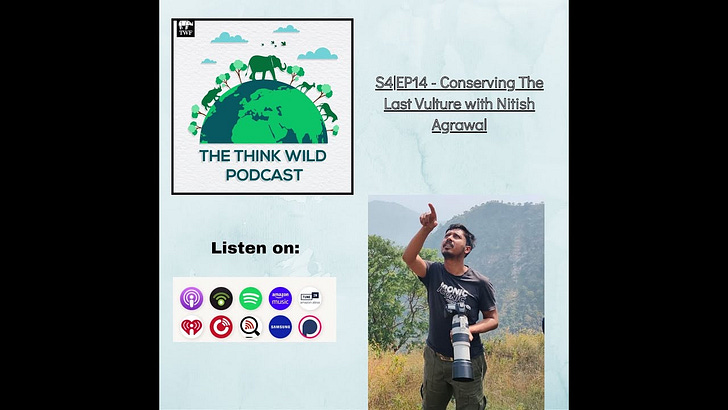 S4|EP14 - Conserving The Last Vulture with Nitish Agrawal | In this thought-provoking episode of The Think Wildlife Podcast, host Anish Banerjee is joined by Nitish Agrawal, founder of The Last Vulture, to unpack one of the most urgent yet overlooked stories in Indian biodiversity: the vulture crisis and its far-reaching ecological and public health consequences.Vultures are keystone species and irreplaceable scavengers, playing a critical role in maintaining ecosystem balance by rapidly removing animal carcasses from the landscape. Nitish explains how the catastrophic collapse of vulture populations across India triggered an ecological crisis with cascading impacts on public health, feral dog populations, disease transmission, and rural livelihoods. Once abundant across biodiversity hotspots of the subcontinent, vultures have declined by over 95 percent in many regions, making the vulture crisis one of the fastest population crashes of any bird group in history.The conversation explores vulture conservation not only as a species-focused intervention, but as a lens to understand biodiversity management and systemic failure. Nitish highlights how pharmaceutical contamination, policy blind spots, and lack of public awareness accelerated this biodiversity crisis, while also reflecting on why vultures suffer from a severe cultural stigma despite their ecological importance. Through the idea of “vulture culture,” he argues that conservation success depends on reshaping how society perceives scavengers, death, and ecosystem services.A major focus of the episode is vulture rewilding and rethinking rewilding more broadly in human-dominated landscapes. Nitish discusses how and community-based conservation are essential for restoring vulture populations, particularly around carcass availability, safe food zones, and coexistence with pastoral communities. These efforts demonstrate how biodiversity conservation can succeed when local people are active partners rather than passive stakeholders.The episode also delves into innovative approaches linking conservation with livelihoods, including safaris, walking safaris, and low-impact conservation tourism. Nitish explains how sustainable tourism, biodiversity tourism, and ethical wildlife experiences can create economic incentives for protecting threatened species while deepening public engagement with Indian biodiversity. Rather than spectacle-driven wildlife tourism, these models emphasize learning, interpretation, and long-term stewardship.This conversation offers a powerful reminder that saving vultures is about far more than birds alone. It is about restoring ecological function, safeguarding public health, addressing the biodiversity crisis, and reimagining how conservation, culture, and communities intersect in modern India. Essential listening for anyone interested in vulture conservation, rewilding, biodiversity hotspots, and the future of conservation tourism in India.#vulture #vultureconservation #vultureculture #keystonespecies #scavenger #ecologicalcrisis #publichealth #vulturecrisis #vulturerewilding #rewilding #communityconservation #communitybasedconservation #biodiversitycrisis #biodiversity #biodiversityconservation #biodiversityhotspot #biodiversitymanagement #Indianbiodiversity #safaris #walkingsafaris #sustainabletourism #conservationtourism #biodiversitytourism Get full access to The Think Wildlife Podcast at anishbanerjee.substack.com/subscribe | 22m 43s | ||||||
| 1/7/26 | 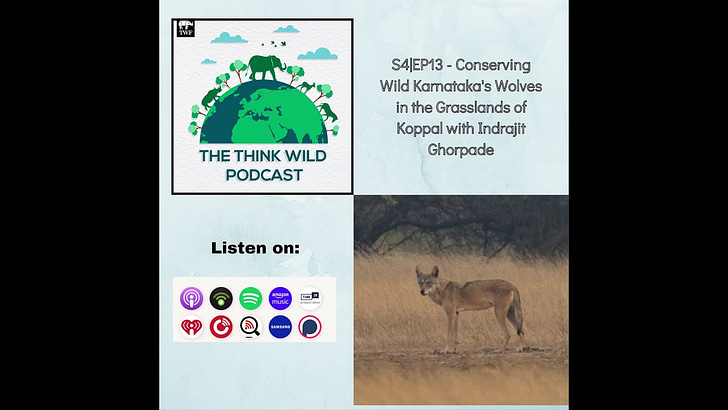 S4|EP13 - Conserving Wild Karnataka's Wolves in the Grasslands of Koppal | In this compelling episode of The Think Wildlife Podcast, host Anish Banerjee speaks with Indrajit Ghorpade, founder of the Deccan Conservation Foundation, about wolf conservation in the Koppal District of Karnataka and the overlooked biodiversity of the Deccan Plateau. The conversation offers a rare, ground-level perspective on the Indian wolf and the urgent need to rethink how India approaches grassland conservation and biodiversity management outside forested landscapes.Koppal District, located in the Deccan Plateau, represents one of the last strongholds of the Indian wolf, a subspecies of the gray wolf uniquely adapted to India’s arid and semi-arid grasslands. Often misunderstood and neglected, the Indian wolf has survived for centuries in human-dominated landscapes shaped by pastoralism and dryland agriculture. Indrajit explains how wolf conservation in this region is inseparable from protecting grassland ecosystems that are routinely misclassified as wastelands, despite supporting exceptional grassland biodiversity.The episode explores the ecological importance of open grasslands for species such as wolves, blackbucks, foxes, hyenas, and ground-nesting birds, and why the loss of these habitats has driven widespread declines across Indian biodiversity. Indrajit reflects on how tiger-centric conservation narratives have overshadowed species like the Indian wolf, leading to gaps in policy, funding, and public awareness. Through years of fieldwork, research, and advocacy, his work has helped establish India’s second wolf sanctuary at Bankapur, demonstrating that targeted protection can make a measurable difference even in fragmented landscapes.A key theme of the discussion is coexistence. Wolves in Koppal largely survive outside protected areas, navigating livestock grazing, agriculture, roads, and renewable energy infrastructure. Indrajit unpacks the realities of human–wolf interactions, the role of free-ranging dogs, hybridization concerns, and the importance of education in reducing conflict. Rather than portraying wolves as threats, the episode reframes them as keystone predators essential for regulating ecosystems and sustaining long-term biodiversity conservation.Listeners will gain insight into why grassland conservation is central to the future of Karnataka biodiversity and the biodiversity of India more broadly. From blackbucks roaming open plains to wolves using rocky outcrops as breeding refuges, the episode highlights how wild Karnataka extends far beyond forests and protected reserves. This conversation is essential listening for anyone interested in wolf conservation, Indian wolf conservation, gray wolf conservation, grassland biodiversity, and the future of biodiversity management in India’s most neglected ecosystems.#wolf #wolfconservation #IndianWolf #Indianwolfconservation #graywolf #graywolfconservation #grassland #grasslandconservation #biodiversityconservation #biodiversitymanagement #Indianbiodiversity #grasslandbiodiversity #blackbucks #wildKarnataka #Karnatakabiodiversity #biodiversityofKarnataka #biodiversityofIndia Get full access to The Think Wildlife Podcast at anishbanerjee.substack.com/subscribe | 55m 57s | ||||||
| 12/27/25 |  S3|EP12 ~ Restoring India’s Oceans through Artificial Reefs for Marine Biodiversity Conservation with Oishinee Chakraborty | India’s coastal waters hold immense promise—and growing peril. In this episode of the Think Wildlife Podcast, host Anish Banerjee speaks with Oishinee Chakraborty from the Kuddle Life Foundation, a young organization redefining marine conservation in Pondicherry through science, community collaboration, and artificial reefs.Oishinee introduces listeners to the Foundation’s origins—founded in 2020 by Punit Dhandhania and Hans Dhandhania, who transformed a small circle of ocean enthusiasts into a leading grassroots force for marine ecology and biodiversity conservation. With limited institutions working on ocean protection in southern India, Kuddle Life fills a critical gap by creating local, science-driven projects that link marine ecosystems, coastal livelihoods, and sustainable development.At the heart of their work lies the artificial reef program—a groundbreaking effort to restore degraded marine ecosystems and revive marine biodiversity. Oishinee explains that space is the ocean’s most limiting factor, and artificial reefs—built using eco-friendly materials like concrete and steel—mimic the natural hard surfaces that corals, sponges, and fish larvae need to attach, grow, and form thriving underwater communities. These structures replicate some functions of natural coral reefs, acting as catalysts for marine biodiversity management and ecosystem recovery.The process of building an artificial reef begins with community engagement. Fisherfolk are invited to share local ecological knowledge and help identify suitable sites for reef deployment. Scientists then assess seabed topography, water quality, and existing biodiversity before designing reef modules—each over 500 kg and a meter tall. Local divers and fishermen help deploy the structures less than five kilometers offshore, making the effort both participatory and empowering.Monitoring continues for years, as reefs mature and attract a diversity of marine wildlife. In Pondicherry, Kuddle Life has recorded remarkable results: a 20% rise in dissolved oxygen, increased chlorophyll levels, and nearly a fourfold growth in fish abundance. For local fishers, incomes have doubled—from ₹5,000 to ₹10,000 per day—while fuel costs have halved because fishing now occurs closer to shore. These outcomes highlight how marine biodiversity conservation can drive both ecological and economic resilience.Globally, artificial reefs have become vital tools for restoring marine ecosystems damaged by climate change, overfishing, and pollution. Yet, as Oishinee reminds us, nothing can replace natural coral reefs. Artificial structures can only supplement lost habitat, not substitute for nature’s complexity. Still, by reviving degraded areas and promoting sustainable fishing, these reefs help maintain ocean productivity in a warming world.Beyond reef restoration, the Kuddle Life Foundation runs educational and research programs across India. Through marine litter surveys, bycatch reduction initiatives, dive training, and youth internships, the foundation is building a generation of ocean stewards. Its unique for-profit dive center reinvests earnings into conservation, while volunteers support marine ecology projects both underwater and onshore—from data analysis to biodiversity monitoring.Oishinee also discusses the challenges of sustaining NGO work in India—funding barriers, bureaucratic delays, and the slow pace of conservation impact. Yet, she finds hope in the growing public interest in marine biodiversity, particularly when students and non-biologists approach her asking how they can help. That curiosity, she believes, is the first step toward lasting ocean change.This episode reveals how grassroots innovation, science, and compassion are reshaping marine biodiversity hotspots along India’s coast—proving that ocean recovery begins not just beneath the waves, but within communities themselves.#artificialreefs #marineecology #marineecosystems #marinebiodiversity #marineconservation #marinewildlife #marinebiodiversityhotspot #marinebiodiversityconservation #biodiversityconservation #biodiversity #biodiversitymanagementAbout the HostAnish Banerjee is an early career ecologist, with a MSc in Ecology, Evolution and Conservation from Imperial College London. He is the founder of Think Wildlife Foundation and a biodiversity policy analyst at Legal Atlas. He is also the author of the following field guides:Field Guide to the Common Wildlife of India: https://amzn.in/d/2TnNvSEField Guide to the Mammals of Singapore: https://amzn.in/d/gcbq8VG Get full access to The Think Wildlife Podcast at anishbanerjee.substack.com/subscribe | 19m 16s | ||||||
| 12/19/25 |  S3|EP11 ~ Guardians of Nepal’s Wildlife: Tackling Poaching, Human-Wildlife Conflict, Orchid Conservation and Community Engagement with Greenhood Nepal | Nepal is home to some of the world’s most iconic wildlife — from tigers, rhinos, and elephants to lesser-known species like pangolins and medicinal orchids. Yet behind its breathtaking biodiversity lies a complex struggle against wildlife poaching, illegal wildlife trade, and habitat loss. In this episode of the Think Wildlife Podcast, we speak with Kumar Paudel, founder and director of Greenhood Nepal, one of the nation’s leading conservation organizations working to combat wildlife crime and promote community conservation across the Himalayas.Kumar shares his inspiring journey from a childhood in the mountains of Nepal to leading national efforts in biodiversity conservation. Through his work with Greenhood Nepal, he has helped transform the country’s conservation landscape — from early advocacy against poaching and corruption to the establishment of community-based monitoring networks and policy reform. The conversation delves into the evolution of Nepal’s conservation success. Kumar discusses how community intelligence and local anti-poaching networks have become vital in protecting wildlife across national parks and buffer zones. Yet, he warns that while attention often centers on charismatic megafauna like tigers and rhinos, smaller and lesser-known species such as pangolins, tortoises, and orchids face rising threats from illegal wildlife trade and unsustainable harvesting.Greenhood Nepal’s work along the China–Nepal border provides critical insights into cross-border wildlife trade networks, revealing the motivations behind trafficking and empowering enforcement agencies through training, data sharing, and behavioral change campaigns. Kumar also highlights their pioneering research on orchid conservation, mapping over 500 native species — including more than 100 medicinally important orchids — and developing sustainable management plans that align with CITES compliance.The discussion also explores pangolin conservation, where Greenhood has led community outreach, identified priority habitats, and hosted Nepal’s first Pangolin Conservation Roundtable, catalyzing national policy action. Kumar explains how the team’s on-ground efforts — from habitat restoration to education and enforcement — have shaped the future of biodiversity management in Nepal.Beyond enforcement, Kumar reflects on the importance of compassion and understanding. His most memorable conservation experience came from visiting prisons and speaking with wildlife offenders, gaining firsthand insights into the socio-economic pressures that drive poaching and wildlife trade. His reflections underscore that sustainable conservation depends on addressing poverty, awareness, and opportunity — not just punishment.We also revisit Nepal’s remarkable success in tiger conservation, where populations have nearly tripled between 2010 and 2022, and discuss emerging challenges such as human–wildlife conflict. As Nepal continues to balance conservation and development, Kumar calls for stronger investment in coexistence strategies, habitat restoration, and community-led solutions.This episode offers an in-depth look at the intertwined issues of wildlife crime, community conservation, and biodiversity preservation in one of the world’s richest ecological regions. Tune in to learn how Nepal’s story of resilience, innovation, and collaboration continues to inspire the global conservation movement.About the HostAnish Banerjee is an early career ecologist, with a MSc in Ecology, Evolution and Conservation from Imperial College London. He is the founder of Think Wildlife Foundation and a biodiversity policy analyst at Legal Atlas. He is also the author of the following field guides:Field Guide to the Common Wildlife of India: https://amzn.in/d/2TnNvSEField Guide to the Mammals of Singapore: https://amzn.in/d/gcbq8VG#Nepal #tigers #elephants #rhino #wildlife #wildlifeconservation #wildlifecrime #poaching #wildlifepoaching #hunting #wildlifetrade #illegalwildlifetrade #conservation #biodiversity #biodiversityofNepal #biodiversityconservation #biodiversitymanagement #orchids #orchidconservation #pangolins #communityconservation #communityengagement5 Get full access to The Think Wildlife Podcast at anishbanerjee.substack.com/subscribe | 24m 23s | ||||||
| 12/13/25 |  S3|EP10 ~ Can Biodiversity Credits Build a Nature-Positive Future? | Dr. Samuel Sinclair, Co-Founder, Biodiversify | As the global biodiversity crisis intensifies, the race is on to design financial systems that protect nature rather than destroy it. In this episode of the Think Wildlife Podcast, Dr. Samuel Sinclair, co-founder of Biodiversify, unpacks the evolution of biodiversity credits, the limitations of the current biodiversity credit market, and the urgent need for credible biodiversity conservation finance. Based in the UK, Biodiversify works with global corporations, governments, and NGOs to make businesses truly nature positive—moving beyond carbon neutrality to measurable biodiversity net gain.Dr. Sinclair traces his path from fieldwork in Tanzania and anti-poaching initiatives with the African Wildlife Foundation to pioneering frameworks that help major brands like Kering, Primark, Tetra Pak, and Amazon integrate biodiversity management into corporate strategy. He explains why biodiversity credits have not scaled like carbon credits, emphasizing the lack of standardized metrics, corporate incentives, and clear biodiversity credit standards. For credits to be effective, he argues, they must directly address business risks—such as threats to commodity supply chains—and become tied to real ecological outcomes.The discussion delves into the emerging biodiversity finance landscape: from the EU Corporate Sustainability Reporting Directive (CSRD) and Taskforce on Nature-Related Financial Disclosures (TNFD) to Science-Based Targets for Nature (SBTN). These frameworks are transforming how companies assess, report, and invest in biodiversity. Sinclair explains how Biodiversify helps clients navigate these systems, ensuring their corporate biodiversity credits and biodiversity net gain commitments align with global best practices.We explore the critical difference between nature credits and carbon credits, why biodiversity cannot be reduced to a single global metric, and how new biodiversity credit regulations could create markets that reward genuine ecological restoration. Sinclair also reflects on his field experiences across Africa, where conservation taught him that protecting ecosystems is as much about people as wildlife.This episode is a must-listen for conservation professionals, sustainability officers, and anyone curious about investing in biodiversity as the next frontier in environmental finance. Learn how corporate action, regulatory innovation, and on-the-ground conservation can merge to halt biodiversity loss and deliver a nature-positive future.About the HostAnish Banerjee is an early career ecologist, with a MSc in Ecology, Evolution and Conservation from Imperial College London. He is the founder of Think Wildlife Foundation and a biodiversity policy analyst at Legal Atlas. He is also the author of the following field guides:Field Guide to the Common Wildlife of India: https://amzn.in/d/2TnNvSEField Guide to the Mammals of Singapore: https://amzn.in/d/gcbq8VG#biodiversity #biodiversitycredits #biodiversitycreditmarket #biodiversityconservation #biodiversitymanagement #biodiversitypreservation #biodiversityhotspot #biodiversitynetgain #naturepositive #biodiversitycrisis #biodiversitymarkets #biodiversityfinance #investinginbiodiversity #biodiversityconservationfinance #biodiversitycreditstandards #corporatebiodiversitycredits #biodiversitycreditregulations #differencebetweennaturecreditsandcarboncredits Get full access to The Think Wildlife Podcast at anishbanerjee.substack.com/subscribe | 33m 06s | ||||||
| 12/6/25 |  S3|EP9 ~From Near Extinction to Recovery: How Arctic Foxes Were Saved in Svalbard | Nina Elisabeth Eide | In this episode of the Think Wildlife Podcast, we travel to the frozen frontiers of the Arctic to uncover one of conservation’s most inspiring success stories — the revival of the Arctic fox in Svalbard and Fennoscandia. Host Anish Banerjee is joined by Nina Elisabeth Eide from the Norwegian Institute for Nature Research (NINA), who shares her remarkable two-decade journey studying and protecting wild canids in one of the world’s harshest environments.Once reduced to barely 40–60 individuals, the Arctic fox population in Scandinavia teetered on the edge of extinction due to overhunting, climate change, and competition with red foxes. Through dedicated efforts in wild canid conservation, the population has rebounded more than tenfold to nearly 600 foxes — a triumph made possible by scientific research, adaptive management, and international cooperation.Nina describes how her PhD work in Svalbard explored the ecology and spatial behaviour of Arctic foxes, revealing how these resilient predators adapt to shifting prey availability across coastal and inland tundra. She explains their extraordinary biological adaptations — from thick fur and fat reserves to metabolic slowdown — that allow them to endure months of Arctic winter without freezing even at –40°C.The discussion delves deep into the innovative conservation measures behind the Arctic fox’s recovery:Supplemental feeding stations strategically placed near den sites to enhance pup survival and reproduction.Red fox control programmes that limit competition in critical Arctic habitats.A successful captive-breeding and reintroduction programme, which has released over 460 foxes into the wild, boosting eight distinct sub-populations across Norway, Sweden, and Finland.Long-term genetic monitoring, collecting nearly 800 DNA samples annually to track individuals, maintain genetic diversity, and assess the success of reintroduced foxes.Beyond the science, Nina reflects on the emotional highs of conservation — from the joy of releasing foxes into the wild to the collective sense of achievement when a once-critically endangered species begins to recover. Yet, she warns that ongoing threats like climate change, habitat fragmentation, and red fox expansion still pose challenges to the long-term survival of Arctic biodiversity.This episode offers a rare glimpse into the perseverance and ingenuity that define modern wildlife conservation. It highlights how collaboration between scientists, governments, and local communities can restore fragile ecosystems and preserve the delicate balance of Arctic biodiversity.Join us to learn about the ecology, behaviour, and conservation of one of the Arctic’s most charismatic species — and what its recovery means for the broader effort to safeguard biodiversity hotspots under a changing climate.Whether you are a wildlife enthusiast, conservation biologist, or simply someone inspired by stories of nature’s resilience, this conversation captures the essence of why protecting wild canids like the Arctic fox is vital for the future of our planet’s biodiversity and nature.About the HostAnish Banerjee is an early career ecologist, with a MSc in Ecology, Evolution and Conservation from Imperial College London. He is the founder of Think Wildlife Foundation and a biodiversity policy analyst at Legal Atlas. He is also the author of the following field guides:Field Guide to the Common Wildlife of India: https://amzn.in/d/2TnNvSEField Guide to the Mammals of Singapore: https://amzn.in/d/gcbq8VG#ThinkWildlifePodcast #ArcticFoxes #WildCanids #FoxConservation #WildCanidConservation #SvalbardBiodiversity #ArcticBiodiversity #ArcticBiodiversityConservation #Biodiversity #BiodiversityConservation #BiodiversityHotspot #Ecology #Wildlife #Nature Get full access to The Think Wildlife Podcast at anishbanerjee.substack.com/subscribe | 14m 45s | ||||||
| 11/28/25 |  S3|EP8 ~Rewilding the Beisa Oryx: How Community Conservation is Reviving Africa’s Lost Antelopes | The African savannas once echoed with herds of graceful antelopes—species perfectly adapted to life in some of the harshest landscapes on Earth. Among them, the Beisa oryx stands out as a symbol of resilience, yet today it faces growing threats from habitat loss, poaching, and human expansion. In this episode of the Think Wildlife Podcast, we explore the inspiring story of oryx conservation and rewilding efforts that are giving this striking desert antelope a second chance. Joining us on this episode is the Save Beissa Oryx Community Trust.Our guest shares insights into the ongoing work to restore beisa oryx populations across East Africa, particularly in Kenya, Ethiopia, and northern Tanzania, where community-led initiatives are transforming degraded landscapes into thriving habitats. Once driven to near-extinction in many parts of its range, the beisa oryx is now a beacon of what community conservation and science-based rewilding can achieve when local people, governments, and conservation organizations work together.The discussion delves into how rewilding oryxs serves as a powerful tool for biodiversity conservation, helping to restore the ecological balance of savanna ecosystems. By reintroducing oryxes into protected landscapes, conservationists are not only reviving a species but also revitalizing entire food webs that depend on large herbivores. The Beisa oryx, with its striking black-and-white facial markings and long, straight horns, plays a key role in shaping grassland dynamics, dispersing seeds, and maintaining healthy vegetation.Listeners will also learn how community conservation models are making this success possible. From the conservancies of northern Kenya to collaborative management zones across the Horn of Africa, local communities are leading the charge—monitoring wildlife, reducing poaching, and promoting coexistence with antelopes and other large mammals. By linking livelihood benefits to conservation outcomes, these programs are redefining what it means to protect wildlife in the 21st century.The episode also explores how rewilding efforts for the beisa oryx tie into larger continental and global biodiversity goals. As African nations implement ecosystem restoration targets under the UN Decade on Ecosystem Restoration, projects like oryx rewilding highlight the power of combining indigenous knowledge, modern ecological science, and grassroots participation. Beyond simply bringing back a species, rewilding aims to rebuild functional ecosystems where antelope species like the oryx can once again roam freely across their historical range.In this thought-provoking conversation, we discuss the challenges ahead: securing enough land for expanding populations, mitigating conflicts with livestock herders, and addressing the pressures of climate change. Yet, amid these challenges lies hope—the sight of newly reintroduced beisa oryxes galloping across restored savannas is proof that conservation can turn back the clock of extinction.Ultimately, this episode is a celebration of resilience—of the oryx, of the communities that protect it, and of the collective belief that conservation is not just about saving wildlife, but about sustaining the ecosystems and cultures that depend on them.Join us as we journey into the heart of oryx conservation, learning how science, storytelling, and community action are uniting to rewild Africa’s landscapes. Discover how each reintroduced antelope represents a step toward restoring the continent’s wild beauty—and a vision of coexistence where people and wildlife thrive together.About the HostAnish Banerjee is an early career ecologist, with a MSc in Ecology, Evolution and Conservation from Imperial College London. He is the founder of Think Wildlife Foundation and a biodiversity policy analyst at Legal Atlas. He is also the author of the following field guides:Field Guide to the Common Wildlife of India: https://amzn.in/d/2TnNvSEField Guide to the Mammals of Singapore: https://amzn.in/d/gcbq8VG#antelope #oryx #oryxconservation #rewilding #rewildingoryxs #beisaoryx #beisaoryxrewilding #beisaoryxconservation #communityconservation #biodiversityconservation #conservation #wildlifeconservation #africanwildlife #ecosystemrestoration #rewildingafrica Get full access to The Think Wildlife Podcast at anishbanerjee.substack.com/subscribe | 49m 55s | ||||||
| 11/21/25 |  S3|EP7 ~Hidden Primates of Bengaluru: Conserving Urban Slender Loris with Dr. Kaberi Kar Gupta | In this episode of the Think Wildlife Podcast, we explore one of India’s most unique and little-known primates — the slender loris, a small nocturnal primate that thrives in the tree canopies of southern India and Sri Lanka. Joining us is Professor Kaberi Kar Gupta, visiting scientist at the Indian Institute of Science and founder of the Urban Slender Loris Project, who shares her decades-long journey from studying forest ecology to pioneering urban ecology and urban wildlife conservation in Bengaluru.Professor Gupta recounts her early fascination with nature, from growing up in the green outskirts of Kolkata to working in the forests of Tamil Nadu. Her research on primate ecology began in the forests of Kalakad–Mundanthurai Tiger Reserve, where she studied slender loris behavior, home ranges, and mating systems, uncovering intricate details about their ecology and survival strategies. Over time, she turned her attention to how these primates adapt to city environments — leading to the creation of the Urban Slender Loris Project in Bengaluru, a groundbreaking citizen science initiative that brings together researchers, local communities, and volunteers to monitor and conserve these elusive nocturnal primates.The discussion dives into the urgent need for urban biodiversity conservation and biodiversity management in rapidly growing cities. Professor Gupta highlights how urban green spaces — once thriving with life — are vanishing under expanding infrastructure. Through the project, community members were trained to conduct night surveys, map loris habitats, and identify key trees and corridors that sustain these animals. Their collective effort revealed both the resilience of urban biodiversity and the fragility of these ecosystems under urban expansion.We also discuss the results of a recent study on public attitudes towards slender lorises in Bengaluru. The findings show that while urban residents often appreciate local wildlife, awareness about species like the slender loris remains limited. Cultural myths, once linked to black magic, are fading, but habitat destruction and lack of awareness continue to pose serious threats.Professor Gupta’s reflections go beyond the science — touching on her personal experiences in wild Karnataka, encounters with wildlife traders during early conservation work, and moments of awe witnessing tigers and lorises in their natural habitats. Her message is clear: connecting people to nature within cities is essential for the future of conservation. As more people become urban dwellers, initiatives like the Urban Slender Loris Project show how science, community participation, and empathy for wildlife can coexist in even the most crowded environments.Whether you’re a student of urban biology, a wildlife enthusiast, or a conservationist, this conversation offers a profound look into how small nocturnal primates like the slender loris can inspire a new model of biodiversity preservation in the heart of India’s tech capital.Tune in to discover the story of the slender loris — the hidden primate of Bengaluru — and how local communities are shaping the future of urban wildlife conservation.About the HostAnish Banerjee is an early career ecologist, with a MSc in Ecology, Evolution and Conservation from Imperial College London. He is the founder of Think Wildlife Foundation and a biodiversity policy analyst at Legal Atlas. He is also the author of the following field guides:Field Guide to the Common Wildlife of India: https://amzn.in/d/2TnNvSEField Guide to the Mammals of Singapore: https://amzn.in/d/gcbq8VG#urbanecology #urbanbiology #urbanbiodiversity #urbanwildlife #urbanwildlifeconservation #urbanbiodiversityconservation #biodiversity #biodiversityconservation #biodiversitymanagement #biodiversitypreservation #slenderloris #loris #slenderlorisconservation #slenderlorisecology #primateecology #primates #primateconservation #wildkarnataka #conservation Get full access to The Think Wildlife Podcast at anishbanerjee.substack.com/subscribe | 29m 39s | ||||||
| 11/14/25 |  S3|EP6 ~ Project Red Panda and Community Conservation in the Eastern Himalayas with Aamer Khan Sohel | High in the misty forests of North Bengal and Northeast India, a quiet conservation movement is unfolding around one of the world’s most charismatic yet misunderstood mammals — the red panda. In this episode of the Think Wildlife Podcast, host Anish Banerjee speaks with young conservationist Aamir Khan Sohel, whose pioneering work bridges red panda conservation breeding, community-led conservation, and the power of science communication through his initiative, Translating Conservation.Aamir’s journey began unconventionally — from engineering to ecology — driven by a desire to use technology to aid conservation. He recounts how he was drawn to the red panda, a species native to the Eastern Himalayas and an important indicator of ecosystem health. Through his project in Darjeeling, he studies red panda behavior, welfare, and reintroduction success within India’s first red panda conservation breeding program, initiated at the Darjeeling Zoo in collaboration with the Government of India and international partners.The episode delves into the fascinating world of red panda conservation breeding — how scientists train captive individuals to survive in the wild, teaching them essential behaviors like foraging and predator avoidance before their release into protected areas such as Singalila and Neora Valley National Parks. Aamir explains the scientific and logistical hurdles in bridging captive and wild populations, the reasons behind long gaps between reintroductions, and how welfare-based behavioral studies are improving the outcomes of conservation breeding programs.Beyond the lab and breeding centers, the conversation explores the human dimensions of biodiversity conservation. Aamir’s community-led conservation model empowers local residents to become long-term wildlife monitors by combining traditional knowledge with scientific training. These community guardians help track red panda populations across the mountainous terrain, offering valuable insights into how climate change, tourism, and habitat degradation affect this elusive species and the broader Himalayan biodiversity hotspot.He highlights the major threats facing red pandas — including biodiversity loss, habitat fragmentation, bamboo depletion, and the growing menace of feral dogs in high-altitude forests. Climate warming is altering microhabitats and pushing red pandas higher up the mountains, making long-term monitoring even more essential for conservation success.Aamir also introduces Translating Conservation, his innovative science outreach platform that breaks down complex ecological research into accessible content — from simplified articles to comics and animations — ensuring conservation knowledge reaches local communities and the general public. For Aamir, translating conservation is not just about communication but about inclusion — enabling everyone to participate in protecting India’s rich biodiversity.From funding challenges to field hardships, his story reflects the persistence and creativity required to conserve one of the most threatened species of the Himalayas. His upcoming research, supported by the University of Adelaide, aims to expand this model of collaborative, community-based conservation across North Bengal and the broader Northeast India landscape.This episode offers a heartfelt and deeply insightful look at how science, empathy, and local stewardship come together to safeguard the red panda — a symbol of balance in fragile mountain ecosystems.About the HostAnish Banerjee is an early career ecologist, with a MSc in Ecology, Evolution and Conservation from Imperial College London. He is the founder of Think Wildlife Foundation and a biodiversity policy analyst at Legal Atlas. He is also the author of the following field guides:Field Guide to the Common Wildlife of India: https://amzn.in/d/2TnNvSEField Guide to the Mammals of Singapore: https://amzn.in/d/gcbq8VG#redpanda #redpandaconservation #redpandaconservationbreeding #northbengal #northeastindia #translatingconservation #biodiversity #biodiversityconservation #biodiversityhotspot #biodiversityloss Get full access to The Think Wildlife Podcast at anishbanerjee.substack.com/subscribe | 19m 43s | ||||||
| 11/10/25 |  S3|EP5 ~ Inspiring the Next Generation: EcoInspire’s Mission to Bring Wildlife Conservation to Classrooms with Ishan Shanavas | In this episode of the Think Wildlife Podcast, we speak with Ishan Shanavas — a nature photographer, author, and founder of EcoInspire, an environmental education initiative that has already reached over 20,000 students across 70 schools in five Indian states. Through engaging storytelling, dynamic school sessions, and vivid wildlife photography, Ishan is helping shape how young people understand and appreciate biodiversity and the natural world.Growing up on road trips through the Bandipur Tiger Reserve and studying at a school nestled in the forests of Andhra Pradesh, Ishan’s early experiences surrounded by wildlife sparked his lifelong passion for conservation. His bestselling book The Lighter Wilder Things became the foundation for Mission EcoInspire, a project dedicated to promoting biodiversity conservation and environmental awareness among students. Realizing that online conservation messages often remain confined to a small, like-minded audience, Ishan set out to bring these conversations directly into classrooms. His approach emphasizes the need for early biodiversity education and environmental education as essential tools to nurture empathy, understanding, and curiosity about wildlife and ecosystems.In the episode, Ishan discusses the origins of his conservation journey and the goals of EcoInspire. He reflects on the power of face-to-face interaction in conservation outreach and conservation education, sharing how simple, accessible communication can inspire students to take interest in biodiversity management and wildlife conservation. He explains how schools across cities like Bangalore, Mysore, Trivandrum, Chennai, Hyderabad, and Gulbarga have welcomed his sessions, with both teachers and students showing overwhelming enthusiasm. The program’s success demonstrates that hands-on environmental engagement remains one of the most effective ways to build lasting connections with nature.Ishan also explores the role of social media in spreading environmental awareness. He highlights how platforms can amplify meaningful conservation stories when used responsibly, but also cautions against misinformation and sensationalism. He shares valuable advice for conservationists aiming to improve their communication — simplifying complex topics, avoiding technical jargon, and using creativity, humor, and visual storytelling to reach wider audiences. He mentions innovative communicators like Rohan Chakravarti (Green Humor) and the Dhole Project in Kerala, both of whom effectively use art and media to connect people with Indian biodiversity.The discussion underscores that conservation is not just about protecting species but about building emotional and cultural bridges between people and nature. Ishan’s message is clear: the success of wildlife conservation and biodiversity management depends on reaching beyond scientific circles and inspiring collective action. Through EcoInspire, he is demonstrating how passionate individuals can make conservation accessible, engaging, and relevant to younger generations.By sharing his journey, Ishan shows that the heart of biodiversity conservation lies in empathy, education, and communication. Whether through a classroom presentation, a book, or a digital post, his work reminds us that protecting India’s natural heritage requires inspiring the minds and hearts of those who will shape its future.Tune in to learn how one individual’s commitment to conservation outreach and environmental education is inspiring thousands of young Indians to rediscover their connection with wildlife and work toward a sustainable future.About the HostAnish Banerjee is an early career ecologist, with a MSc in Ecology, Evolution and Conservation from Imperial College London. He is the founder of Think Wildlife Foundation and a biodiversity policy analyst at Legal Atlas. He is also the author of the following field guides:Field Guide to the Common Wildlife of India: https://amzn.in/d/2TnNvSEField Guide to the Mammals of Singapore: https://amzn.in/d/gcbq8VG Get full access to The Think Wildlife Podcast at anishbanerjee.substack.com/subscribe | 17m 04s | ||||||
| 10/31/25 |  S3|EP4 ~ The Bitter Truth Behind Coffee: Deforestation, Human Rights, and Biodiversity Loss with CoffeeWatch | In this episode of the Think Wildlife Podcast, we are joined by Etelle Higonnet, founder of Coffee Watch, a nonprofit watchdog organization dedicated to the proposition that we should make the world a better place with each cup of coffee. We uncover the hidden environmental and social costs of the global coffee industry — from deforestation and ecosystem degradation to human rights violations in coffee plantations in tropical landscapes around the world, with a focus on the Western Ghats biodiversity hotspot!Once covered in dense tropical forests, the Western Ghats are now dominated by sprawling coffee plantations and monoculture plantations that have drastically altered the landscape. Our guest explores how the expansion of coffee production — driven by global demand — has replaced rich forest ecosystems with uniform monocultures, stripping away the region’s ecological resilience. The shift from traditional shade-grown systems to sun-grown monocultures has disrupted soil health, eliminated natural canopy cover, and endangered pollinators, birds, and mammals that once thrived in these biodiversity-rich ecosystems.We dive deep into the link between coffee plantations and human–elephant conflict. As forest corridors shrink and elephants lose access to their migratory routes, they are forced into human settlements, resulting in tragic encounters that claim both human and animal lives. These conflicts reveal how unsustainable land use, habitat fragmentation, and poor biodiversity management intensify tensions between people and wildlife across the Western Ghats.The conversation also exposes the human dimension of the coffee industry — from exploitative labor practices to widespread human rights abuses. Behind the global demand for coffee lies a system where workers, many from marginalized communities, face poor wages, long working hours, and limited access to healthcare and education. These persistent human rights violations highlight how plantation economies, often celebrated for sustainability branding, continue to mask deep social inequities.Despite these challenges, the episode highlights pathways toward hope and reform through agroforestry and sustainable farming models. Traditional shade-grown coffee — where native trees coexist with coffee shrubs — demonstrates that economic production and biodiversity preservation can go hand in hand. Agroforestry practices support soil fertility, regulate microclimates, and restore ecological corridors, offering a viable alternative to monoculture plantations. They also provide co-benefits for farmers by diversifying income sources and improving resilience to climate change.Our guest calls for systemic change within global coffee supply chains — emphasizing ethical sourcing, fair trade, and transparency from farm to consumer. Protecting the biodiversity of the Western Ghats requires not only reforesting degraded lands but also addressing the social injustices embedded within plantation economies. Sustainable solutions must integrate ecological restoration with social equity, ensuring that conservation uplifts both people and nature.This episode challenges listeners to look beyond the aroma of their morning brew and consider its true cost. It’s a deep dive into how the pursuit of profit in the coffee industry has reshaped tropical forests, threatened biodiversity, and violated human rights, and how agroforestry and community-driven conservation can chart a more ethical, sustainable future for both the planet and its people.About the HostAnish Banerjee is an early career ecologist, with a MSc in Ecology, Evolution and Conservation from Imperial College London. He is the founder of Think Wildlife Foundation and a biodiversity policy analyst at Legal Atlas. He is also the author of the following field guides:Field Guide to the Common Wildlife of India: https://amzn.in/d/2TnNvSEField Guide to the Mammals of Singapore: https://amzn.in/d/gcbq8VG#coffee #coffeeplantations #monocultures #monocultureplantations #agroforestry #humanrights #humanrightsviolations #humanrightabuses #humanelephantconflict #deforestation #tropicalforests #westernghats #biodiversityhotspots #biodiversity #biodiversityconservation #biodiversitymanagement #biodiversitypreservation #ecosystemdegradation Get full access to The Think Wildlife Podcast at anishbanerjee.substack.com/subscribe | 31m 14s | ||||||
| 10/24/25 |  S4|EP3 ~ Captive Elephants of Asia: The Hidden Crisis Behind Elephant Conservation with Larry Laverty | Across Asia, nearly one in three elephants lives in captivity—used in temples, tourism, logging, and religious festivals. In this powerful episode of the Think Wildlife Podcast, Canadian photographer and elephant conservation advocate Larry Laverty joins host Anish Banerjee to shed light on the suffering of captive elephants and the urgent need for elephant conservation across both Asia and Africa.Larry Laverty’s remarkable journey began with his first book Power and Majesty, which documented the African elephant and exposed the brutal realities of the ivory trade and wildlife crime driving their decline. Traveling across ten African countries, he captured the spirit of wild elephants and the people striving to protect them. His second book, The Majestic Humanity and the Asian Elephant, turns the lens toward Asian elephants, revealing how centuries of human use—from temple elephants to those exploited in logging and tourism—have shaped their tragic fate.In this conversation, Larry explains how his camera became a tool of empathy and activism. Through conservation photography, he documents not just the beauty but the suffering of elephants—images that demand global attention to animal welfare, animal rights, and the moral questions surrounding captive elephants. He recalls heartbreaking encounters, including a baby elephant orphaned during illegal logging, and discusses the cruel realities behind elephant rides and festival processions.The discussion also highlights promising alternatives like robotic elephants being introduced in India’s temples, offering a humane replacement for live elephants used in ceremonies. Larry shares how he personally contributed funds for one such robotic elephant, symbolizing a new era of compassionate conservation that honors culture without perpetuating animal abuses.The episode explores deeper cultural, ecological, and ethical contrasts between African and Asian elephant conservation. While African elephants remain largely wild, human-elephant relationships in Asia stretch back nearly 5,000 years, complicating efforts to end captivity. Larry emphasizes that saving elephants means reimagining this bond—through education, empathy, and stronger laws against illegal wildlife trade, ivory trafficking, and elephant poaching.He also discusses the potential for rewilding captive elephants, citing encouraging examples from Laos where rescued elephants are gradually returned to the wild. Yet, he warns that without stronger land protection and political will, true freedom for these elephants remains a distant dream.This episode is a tribute to elephants—creatures of immense intelligence and empathy—and to those fighting to protect them. It’s also a call to listeners to act: avoid elephant rides, support ethical sanctuaries, advocate for animal welfare laws, and amplify the voices working to end exploitation.Larry Laverty’s words remind us that elephant conservation is more than protecting a species—it’s about redefining humanity’s relationship with nature. By choosing empathy over entertainment and awareness over ignorance, we can help ensure that elephants, whether African or Asian, live the lives they were meant to—wild and free.Watch now to explore the untold stories behind captive elephants, the courage of photographers on the frontlines of conservation, and the hope that drives global efforts to protect these majestic beings.About the HostAnish Banerjee is an early career ecologist, with a MSc in Ecology, Evolution and Conservation from Imperial College London. He is the founder of Think Wildlife Foundation and a biodiversity policy analyst at Legal Atlas. He is also the author of the following field guides:Field Guide to the Common Wildlife of India: https://amzn.in/d/2TnNvSEField Guide to the Mammals of Singapore: https://amzn.in/d/gcbq8VG#elephant #elephants #elephantconservation #africanelephant #africanelephantconservation #asianelephants #asianelephantconservation #captiveelephants #templeelephants #animalabuses #animalrights #animalwelfare #ivorytrade #illegalwildlifetrade #wildlifecrime #elephantpoaching #wildlifeconservation #conservation #biodiversity Get full access to The Think Wildlife Podcast at anishbanerjee.substack.com/subscribe | 39m 57s | ||||||
Showing 25 of 167
Pitch Fit is a Pro feature
See how bookable this show is for guests, which brands already advertise, the per-episode ad value, and the best-fit guest and sponsor profile. The numbers are blurred on the free plan.
How readily this show books outside guests like you.
How proven this show is for host-read sponsorships.
For Guests
ProFor Advertisers
ProUpgrade to Pro to unlock guest cadence, sponsor categories, fit scores, and per-episode ad value for this show.
Chart Positions
10 placements across 9 markets.
Chart Positions
10 placements across 9 markets.