Insights from recent episode analysis
Audience Interest
Podcast Focus
Publishing Consistency
Platform Reach
Insights are generated by CastFox AI using publicly available data, episode content, and proprietary models.
Most discussed topics
Brands & references
Total monthly reach
Estimated from 23 chart positions in 23 markets.
By chart position
- 🇦🇺AU · Christianity#1155K to 30K
- 🇨🇦CA · Christianity#1295K to 30K
- 🇩🇪DE · Christianity#1615K to 30K
- 🇺🇸US · Christianity#1975K to 30K
- 🇮🇳IN · Christianity#9710K to 30K
- Per-Episode Audience
Est. listeners per new episode within ~30 days
25K to 111K🎙 Daily cadence·1,000 episodes·Last published today - Monthly Reach
Unique listeners across all episodes (30 days)
84K to 371K🇮🇸27%🇦🇺8%🇨🇦8%+20 more - Active Followers
Loyal subscribers who consistently listen
33K to 148K
Market Insights
Platform Distribution
Reach across major podcast platforms, updated hourly
Total Followers
—
Total Plays
—
Total Reviews
—
* Data sourced directly from platform APIs and aggregated hourly across all major podcast directories.
On the show
From 19 epsHosts
Not detected.
Recent guests
Recent episodes
Nagasaki Prays, Hiroshima Rages: God's Providence and Narratives of Suffering – Prof. James Nolan
Jun 12, 2026
Unknown duration
What is Catholic Social Teaching? – Fr. Brad Elliott, O.P.
Jun 11, 2026
Unknown duration
Mercy and Justice in Political Life: Augustine, Seneca, and Nussbaum – Prof. Sarah Byers
Jun 10, 2026
Unknown duration
The University and the Search for Wisdom in the Middle Ages – Dr. Brian FitzGerald
Jun 9, 2026
Unknown duration
The Good Citizen: Lessons from Tocqueville on Democratic Citizenship in the 21st Century – Prof. Raymond Hain
Jun 8, 2026
Unknown duration
Social Links & Contact
Official channels & resources
Official Website
Login
RSS Feed
Login
| Date | Episode | Topics | Guests | Brands | Places | Keywords | Sponsor | Length | |
|---|---|---|---|---|---|---|---|---|---|
| 6/12/26 | ![]() Nagasaki Prays, Hiroshima Rages: God's Providence and Narratives of Suffering – Prof. James Nolan | Prof. James Nolan argues that Nagasaki’s prayerful response to the atomic bomb can only be understood through the city’s long Christian history, especially the witness of the hidden Christians and Takashi Nagai.This lecture was given on January 29th, 2026, at Florida State University.To make a gift this June, visit https://truth.thomisticinstitute.org/pod.About the Speaker:Professor James L. Nolan, Jr. is the Washington Gladden 1859 Professor of Sociology at Williams College, where he has been teaching since 1996. Professor Nolan’s teaching and research interests fall within the general areas of law and society, culture, technology and social change, and historical comparative sociology. His most recent book, Atomic Doctors: Conscience and Complicity at the Dawn of the Nuclear Age, was published with Harvard University Press in 2020. His previous books include What They Saw in America: Alexis de Tocqueville, Max Weber, G.K. Chesterton, and Sayyid Qutb (2016); Legal Accents, Legal Borrowing: The International Problem-Solving Court Movement (2009); Reinventing Justice: The American Drug Court Movement (2001); and The Therapeutic State: Justifying Government at Century’s End (1998). He is the recipient of several grants and awards including National Endowment for the Humanities fellowships and a Fulbright scholarship. He has held visiting fellowships at Oxford University, Loughborough University, the University of Notre Dame, Catholic University of America, and Nagasaki Junshin Catholic University.Keywords: Atomic Bomb, Christian History, Forgiveness, Hidden Christians, Hiroshima, Nagasaki, Providence, Suffering, Takashi Nagai, Urakami Cathedral | — | ||||||
| 6/11/26 | ![]() What is Catholic Social Teaching? – Fr. Brad Elliott, O.P. | Fr. Brad Elliott argues that it is really a theological vision of the human person as a social being ordered to God through family, polity, and Church, showing how the common good, friendship, and the distinct missions of these three societies shape both public life and spiritual life.This lecture was given on January 23rd, 2026, at Vanderbilt University.To make a gift this June, visit https://truth.thomisticinstitute.org/pod.About the Speaker:Fr. Brad Elliott was raised in Dayton Ohio and studied Jazz percussion at the University of Cincinnati College Conservatory of Music. After being raised as a Missouri Synod Lutheran he entered the Catholic Church in 2002.After moving to California, Fr. Brad became an active, performing musician, with a reputation as a highly sought after drummer on the international scene. Working in Los Angeles, CA, he performed and recorded various styles of modern music from Rock to jazz and big band. During his time in Los Angeles he performed and toured extensively with artists such as Annie Stela and Brie Larson.After ten years as a professional drum set player and feeling a call to commit himself entirely to Jesus Christ, Fr. Brad chose to leave the music industry and become a Dominican friar within Western Dominican Province. After completing theological studies, he was ordained to the priesthood of Jesus Christ on June, 22nd 2018 at St. Dominic’s Church in San Francisco, CA.In 2014 Fr. Brad received an MA in philosophy from the Dominican School of Philosophy and Theology in Berkeley CA. In 2021 he received a Licentiate in Sacred Theology from the Pontifical Faculty of the Immaculate Conception in Washington DC. In 2025 he completed a Doctorate in Sacred Theology at the Catholic University of America in Washington DC focusing on the role of human craft and participatory governance in the social doctrine of the Church. He is currently a professor of Moral Theology at the Dominican School of Philosophy and Theology in Berkeley, California. He authored the book The Shape of the Artistic Mind published by Pontifex University Press in 2023.Keywords: Catholic Social Teaching, Common Good, Church, Family, Friendship, Holiness, Polity, Rerum Novarum, Society, Subsidiarity | — | ||||||
| 6/10/26 | ![]() Mercy and Justice in Political Life: Augustine, Seneca, and Nussbaum – Prof. Sarah Byers | This lecture was given on January 23rd, 2026, at University of Toronto.To make a gift this June, visit https://truth.thomisticinstitute.org/pod.About the Speaker:Sarah Byers is Associate Professor of Philosophy at Boston College. Her interests include St. Augustine, Hellenistic philosophy, and the history of ancient and medieval ethics and metaphysics. She is responsible for many publications, including Perception, Sensibility, and Moral Motivation in Augustine: A Stoic-Platonic Synthesis, a book that argues that Augustine assimilated the Stoic theory of perception into his philosophy.Keywords: Augustine, Compassion, Justice, Mercy, Martha Nussbaum, Neoplatonism, Political Life, Seneca, Stoicism, Virtue Ethics | — | ||||||
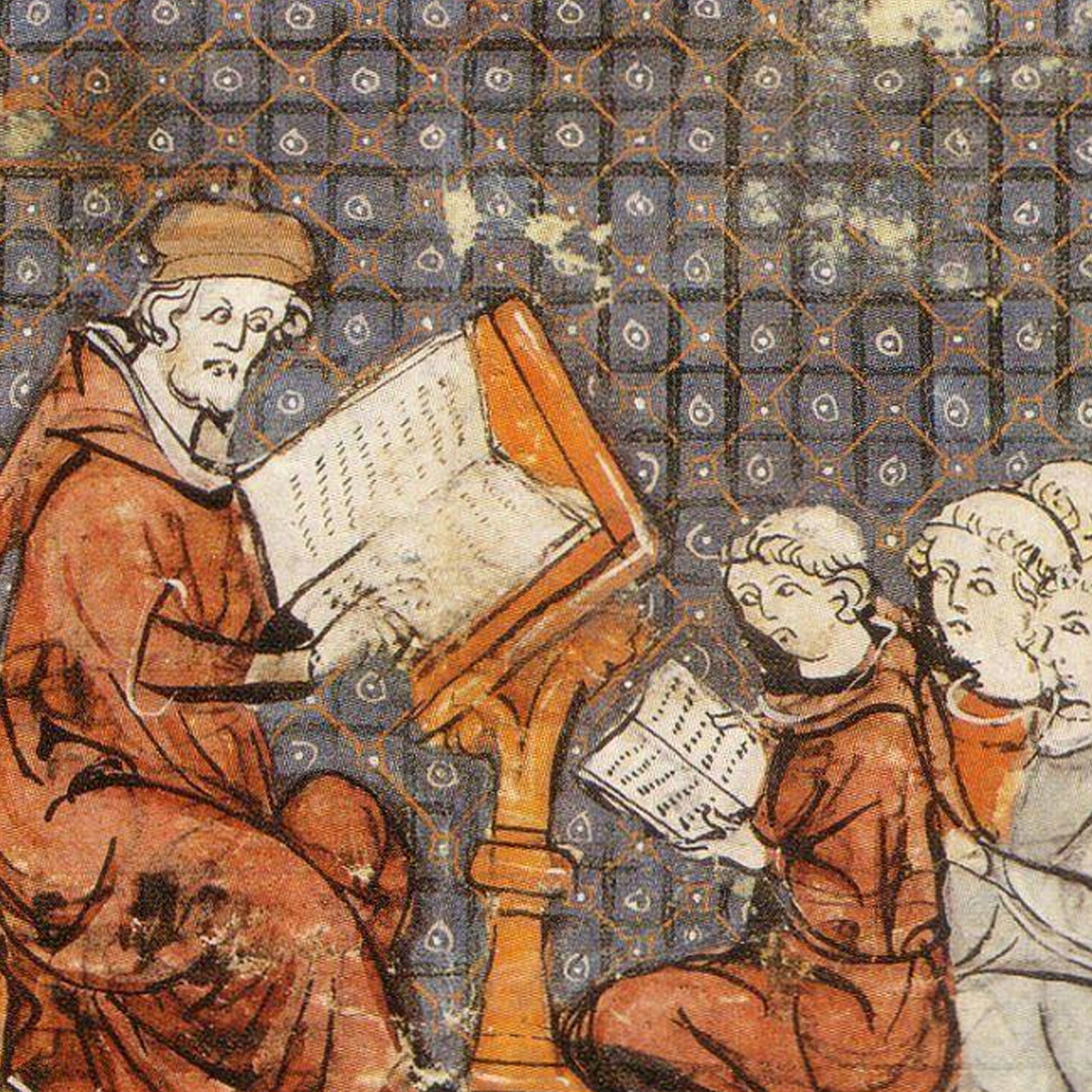
| 6/9/26 | ![]() The University and the Search for Wisdom in the Middle Ages – Dr. Brian FitzGerald | Dr. Brian FitzGerald explores how the first universities emerged from cathedral schools and monastic learning, and why they were built not just to transmit information, but to cultivate wisdom, practical judgment, and a love of learning. This lecture was given on January 15th, 2026, at Dartmouth College.To make a gift this June, visit https://truth.thomisticinstitute.org/pod.About the Speakers:Brian FitzGerald is Lecturer on Medieval Studies and the Study of Religion at Harvard University. A scholar of medieval history, his research focuses on the intellectual and religious culture of Europe from the twelfth to the fourteenth century. His first book, Inspiration and Authority in the Middle Ages: Prophets and their Critics from Scholasticism to Humanism (Oxford University Press, 2017) examined how medieval intellectuals in France, England, and Italy sought to understand and resolve competing claims of divine inspiration or prophecy. His other interests include medieval historical consciousness, the history of education, and relations between eastern and western Christianity. Before coming to Harvard, he taught in the Humanities program and served as Academic Dean at Magdalen College of the Liberal Arts.Keywords: Cathedral Schools, Collegiate Principle, Disputation, Liberal Arts, Medieval University, Practical Wisdom, Scholasticism, Thomas Aquinas, University Of Paris, Wisdom | — | ||||||
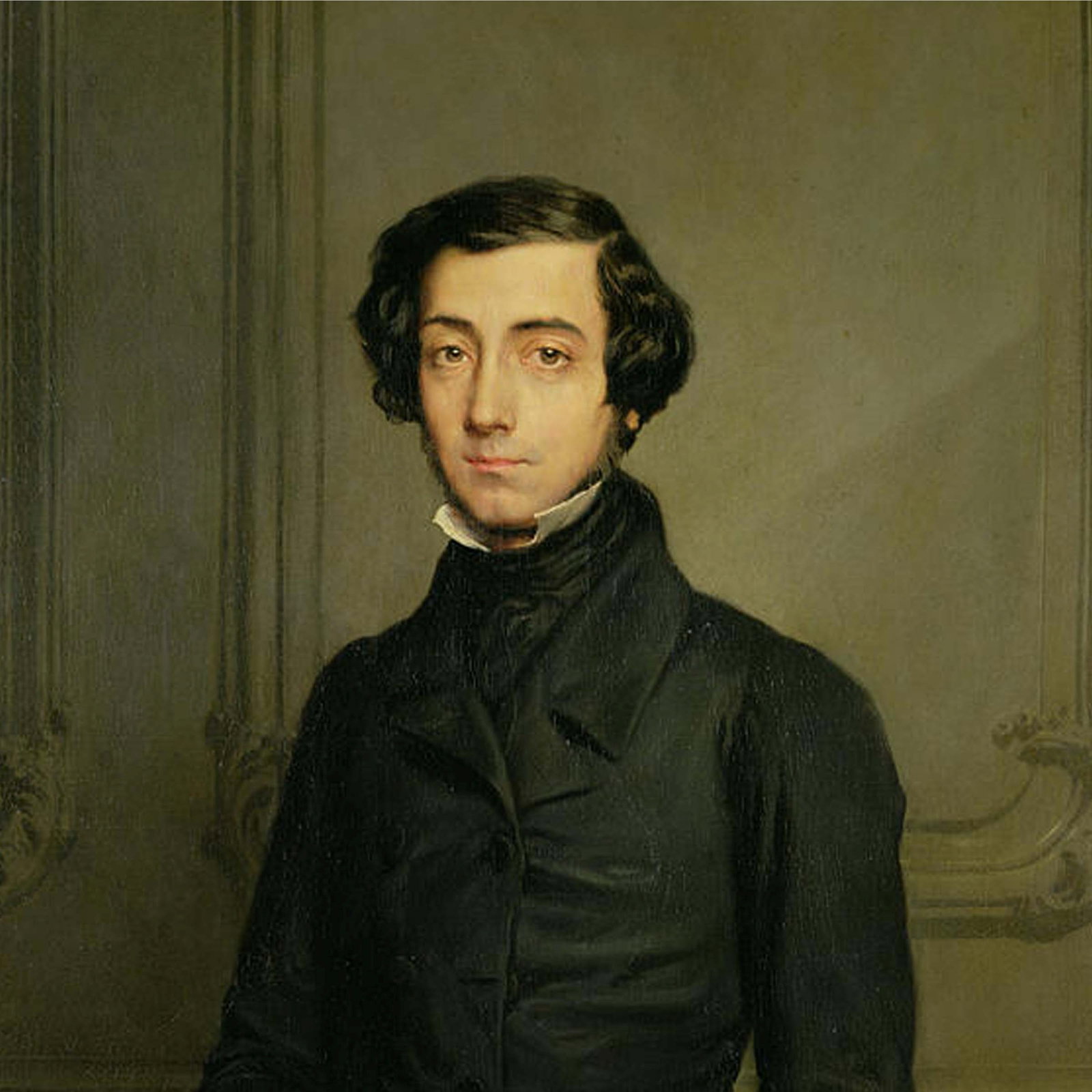
| 6/8/26 | ![]() The Good Citizen: Lessons from Tocqueville on Democratic Citizenship in the 21st Century – Prof. Raymond Hain | Prof. Raymond Hain argues that Tocqueville’s insights show democratic citizenship depends on stable attachments, shared social life across class lines, and a willingness to let citizens practice freedom through responsibility.This lecture was given on December 4th, 2025, at University of Tulsa.To make a gift this June, visit https://truth.thomisticinstitute.org/pod.About the Speakers:Raymond Hain is Associate Professor of Philosophy and Associate Director of the Humanities Program at Providence College in Providence, RI. Educated at Christendom College, the University of Notre Dame, and the University of Oxford, he is the founder of the PC Humanities Forum and Humanities Reading Seminars and is responsible for the strategic development of the Humanities Program into a vibrant, world class center of teaching, research, and cultural life dedicated to the Catholic Intellectual Tradition. His scholarly interests include the history of ethics (especially St. Thomas Aquinas), applied ethics (especially medical ethics and the ethics of architecture), Alexis de Tocqueville, and philosophy and literature (especially Catholic aesthetics). His work has been supported by the National Endowment for the Humanities, the Templeton Foundation, the Gladys Krieble Delmas Foundation, and the Charles Koch Foundation. His essays have appeared in various journals and collections including The Thomist, International Journal of Applied Philosophy, and The Anthem Companion to Tocqueville. He is the editor of Beyond the Self: Virtue Ethics and the Problem of Culture and is currently working on a monograph titled The Lover and the Prophet: An Essay in Catholic Aesthetics. He joined Providence College in 2011 and lives just across the street with his wife Dominique and their five children.Keywords: Citizenship, Democracy in America, Democratic Citizenship, Family Formation, Religion, Robert Putnam, Tocqueville, Subsidiarity, Stability, Strong Gods | — | ||||||
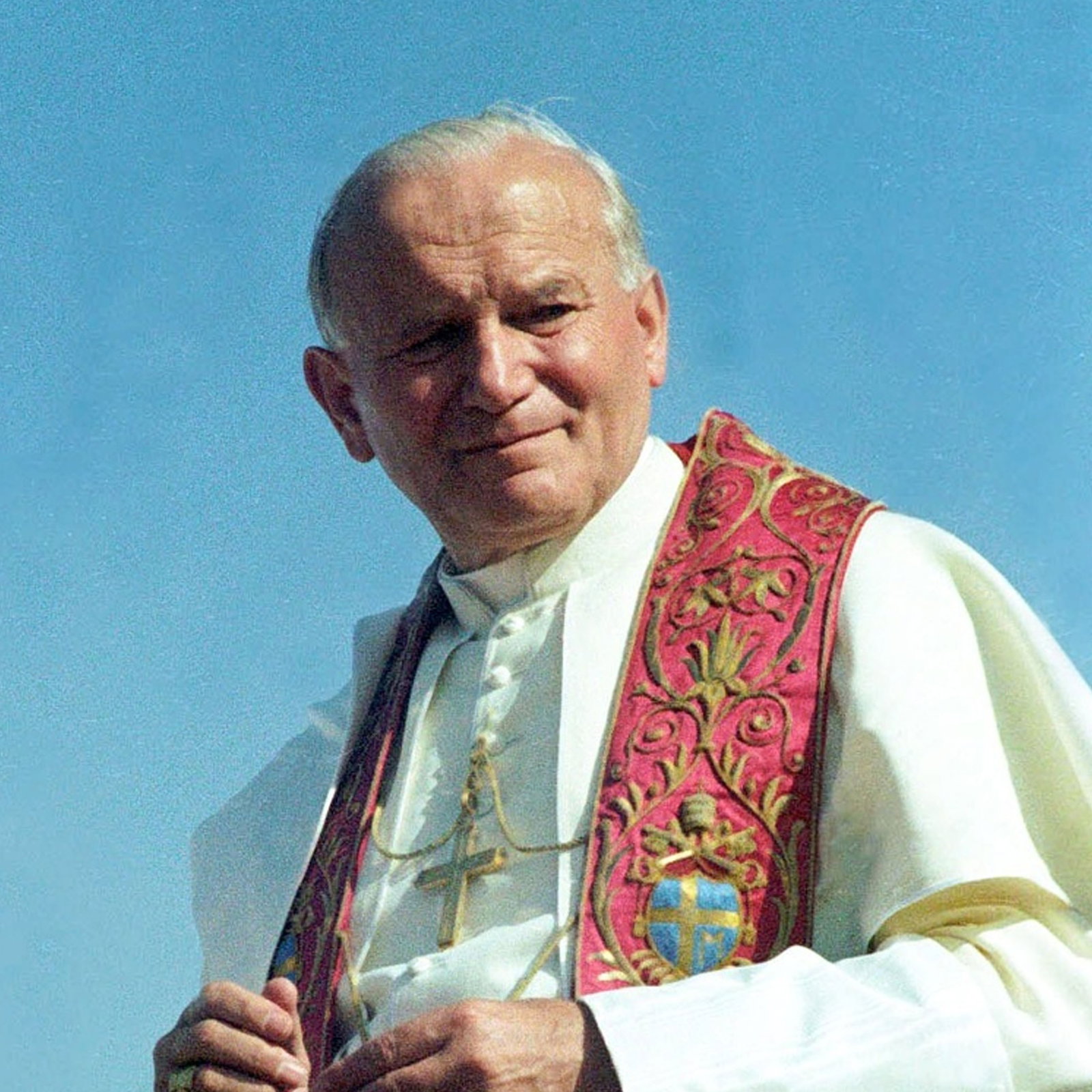
| 6/5/26 | ![]() How John Paul II Used the Saints Against the Communists in Poland – Prof. James Felak | Prof. James Felak shows how John Paul II used the saints in his pilgrimages to communist Poland to challenge atheistic rule, strengthen Catholic identity, and encourage resistance and hope.This lecture was given on October 31st, 2025, at St. Albert's Priory.To make a gift this June, visit https://truth.thomisticinstitute.org/pod.About the Speakers:James Felak is a Professor of History and current holder of the Newman Center Term Professorship in Catholic Christianity at the University of Washington. He specializes in Catholicism in East Central Europe and has authored two books on Catholic politics in Slovakia, and a book on Pope John Paul II and his visits to his native Poland during and after Communist rule there. This latter work is based on hundreds of pages of papal speeches and sermons, and the records of the Communist government and secret police as they monitored the Pope during his visits. Besides courses on modern Europe, Felak teaches “The History of Christianity” and “Catholic Classics in Historical Context.” The latter course covers the major Catholic writers and thinkers from St. Augustine and St. Benedict through G. K. Chesterton and Flannery O’Connor. Felak is from southwestern Pennsylvania, received his doctorate from Indiana University, and has resided in Seattle since 1989.Keywords: Catholic Identity, Communion Of Saints, Communist Poland, John Paul II, Maximilian Kolbe, Polish History, Saint Stanislaus, Saint Wojciech, Sacred Space, Solidarity Movement | — | ||||||
| 6/4/26 | ![]() Musical Dependence: What's Behind It and How We Can Move Beyond It – Sr. Anna Wray, O.P. | Sr. Anna Wray argues that many people are caught in a “musical dependence” that uses music to make ordinary life merely tolerable, a mere toleration which can transformed into true enjoyment by means of asceticism and an education in genuine enjoyment.This lecture was given on November 12th, 2025, at Catholic University of America.To make a gift this June, visit https://truth.thomisticinstitute.org/pod.About the Speaker:Sister Anna Wray is a native of Connecticut and a member of the Dominican Sisters of Saint Cecilia of Nashville, TN. Sister received her PhD in philosophy from The Catholic University of America, having written her dissertation on Aristotle’s account of the activity of contemplation. Sister is an assistant professor on the faculty of CUA's School of Philosophy in Washington, DC, where she regularly teaches courses in rhetoric, philosophy of religion, and philosophical psychology. She is also an adjunct professor for Aquinas College, where she teaches metaphysics and epistemology to her sisters in formation. Her research and conversational interests include imagination and attention in human agency and speech, the effects of technology on human agency, and form as function and unifying activity.Keywords: Asceticism, Aristotle, Delight, Entelechaic Activity, Liturgy, Music, Musical Dependence, Silence, Thomistic Anthropology, Worship | — | ||||||
| 6/3/26 | ![]() Silence, Contemplation, and Non-Being – Fr. Ephrem Reese O.P. | Fr. Ephrem Reese argues that silence is not mere absence but a fertile, hidden potency through which contemplation, devotion, and the word of God can come to life.This lecture was given on November 8th, 2025, at Dominican House of Studies.To make a gift this June, visit https://truth.thomisticinstitute.org/pod.About the Speakers:Fr. Ephrem Reese was born in Harrisburg, PA, and has family in Philadelphia, New Jersey and California. He received a BA from St John’s College in Annapolis, MD in 2010, and was confirmed in the Catholic Church at that year’s Easter Vigil. He lived for a year in DC, a few blocks from the Dominican House of Studies, and attended the nearby parish, St Anthony of Padua. While in DC, he was an intern for Pax Christi USA, promoting Just War teaching. “Dominican life has finally given me a picture of what it means for my own soul to be saved. This is a joy worth preaching: loving Jesus Christ, united with the Brethren in one heart and mind.”Keywords: Contemplation, Devotion, Grace, Hiddenness, Non-Being, Prayer, Silence, Thomism, Womb, Word Of God | — | ||||||
| 6/2/26 | ![]() Boredom: The Threshold of Great Deeds – Fr. Ephrem Reese O.P. | Fr. Ephrem Reese argues that boredom can be read both as a modern opening onto time and wonder and, more importantly, as a spiritual problem that must be disciplined by the virtues.This lecture was given on November 7th, 2025, at Dominican House of Studies.To make a gift this June, visit https://truth.thomisticinstitute.org/pod.About the Speaker:Fr. Ephrem Reese was born in Harrisburg, PA, and has family in Philadelphia, New Jersey and California. He received a BA from St John’s College in Annapolis, MD in 2010, and was confirmed in the Catholic Church at that year’s Easter Vigil. He lived for a year in DC, a few blocks from the Dominican House of Studies, and attended the nearby parish, St Anthony of Padua. While in DC, he was an intern for Pax Christi USA, promoting Just War teaching. “Dominican life has finally given me a picture of what it means for my own soul to be saved. This is a joy worth preaching: loving Jesus Christ, united with the Brethren in one heart and mind.”Keywords: Acedia, Boredom, Charity, Curiosity, Heidegger, Hope, Magnanimity, Prudence, Romans 12, Walter Benjamin | — | ||||||
| 6/1/26 | ![]() Why We Need or Don't Need Utopias – Dr. Jan Bentz | Dr. Jan Bentz argues that utopias are dangerous because they promise a perfected society by denying human fallenness, replacing Christian hope and grace with man-made salvation, and turning politics into a counterfeit religion.This lecture was given on November 1st, 2025, at Thomistic Institute in Limerick.To make a gift this June, visit https://truth.thomisticinstitute.org/pod.About the Speakers:Dr. Jan C. Bentz was born and raised in Germany and graduated high school in St Louis, Missouri, where he attended as a foreign exchange student. Dr Bentz holds a doctorate in Philosophy from the Roman Athenaeum Regina Apostolorum, a Masters in Sacred Art, Architecture, and Liturgy and a Masters in Church, Ecumenism, and Religious Studies. His dissertation was published in German on Gustav Siewerth (1903-1963) and his work on Thomas Aquinas and G.W.F. Hegel. His fields of expertise include Metaphysics, History of Philosophy, Medieval Philosophy, Thomism, and Philosophy of Art. Dr Bentz lectures at Blackfriars’ Studium on History of Modern and Contemporary Philosophy, Aesthetics, and Philosophy of History. He taught Philosophy of Art (Aesthetics) for The Catholic University of America, Rome Campus, History of Medieval Philosophy at Christendom College, Rome Campus, and Apologetics for IES Study Abroad also in Rome. His journalistic career included the production of weekly TV coverage in German and English for EWTN Global; interviews and commentary for Catholic News Agency, Inside the Vatican; and for The Catholic Herald in English and Jüdische Rundschau in German. His current format is called Reality Check, a series of video interviews also published on YouTube with the European Conservative.Keywords: Equality, Eschatology, Grace, Human nature, Joachim of Fiore, Marx, Politics, Religion, Technology, Utopia | — | ||||||
Want analysis for the episodes below?Free for Pro Submit a request, we'll have your selected episodes analyzed within an hour. Free, at no cost to you, for Pro users. | |||||||||
| 5/29/26 | ![]() Catholic Social Teaching – Prof. James Felak | Professor James Felak argues that Catholic social teaching presents a holistic vision of the human person and society, insisting that rights and duties belong together, the market must serve the common good, and neither socialism nor unchecked capitalism can satisfy human dignity.This lecture was given on November 1st, 2025, at St. Albert's Priory.For more information on upcoming events, visit us at thomisticinstitute.org/upcoming-events.About the Speakers:James Felak is a Professor of History and current holder of the Newman Center Term Professorship in Catholic Christianity at the University of Washington. He specializes in Catholicism in East Central Europe and has authored two books on Catholic politics in Slovakia, and a book on Pope John Paul II and his visits to his native Poland during and after Communist rule there. This latter work is based on hundreds of pages of papal speeches and sermons, and the records of the Communist government and secret police as they monitored the Pope during his visits. Besides courses on modern Europe, Felak teaches “The History of Christianity” and “Catholic Classics in Historical Context.” The latter course covers the major Catholic writers and thinkers from St. Augustine and St. Benedict through G. K. Chesterton and Flannery O’Connor. Felak is from southwestern Pennsylvania, received his doctorate from Indiana University, and has resided in Seattle since 1989.Keywords: Capitalism, Common good, Culture, Duties, Human dignity, John Paul II, Market, Property, Rights, Subsidiarity | — | ||||||
| 5/28/26 | ![]() Astonished at the World: G. K. Chesterton's Philosophy of Wonder – Joe Grabowski | Joe Grabowski presents Chesterton’s philosophy as a disciplined recovery of wonder, arguing that reality is not exhausted by habit, utility, or material explanation but should be seen with childlike astonishment and gratitude.This lecture was given on March 30th, 2026, at the University of Kansas.For more information on upcoming events, visit us at thomisticinstitute.org/upcoming-events.About the Speakers:Joe Grabowski is the Vice-President of Evangelization for the Society of Gilbert Keith Chesterton. He formerly served as executive director for the International Organization for the Family and the World Congress of Families.Joe has a B.A. in philosophy from Saint Charles Borromeo Seminary, Overbrook, and an M.A. in English from Marquette University. Joe’s byline, writing on the subjects of traditional marriage and the family, as well as on Catholic Social Teaching and the legacies of Chesterton and Belloc, has appeared in The Catholic Herald, Our Sunday Visitor, The Stream, Gilbert Magazine, Ethika Politika, The Distributist Review, and elsewhere. He has been interviewed in local and national media as an expert on marriage and family public policy and on G.K. Chesterton and Distributism. He serves on the Board of Advisors of the American Solidarity Party.Joe lives outside Philadelphia, an avid book collector (and occasional reader) and weekly pub quiz enthusiast.Keywords: Astonishment, Beauty, Chesterton, Conversion, Gratitude, Imagination, Meaning, Wonder, World, Youth | — | ||||||
| 5/27/26 | ![]() Receiving a Share of God's Kingdom: Vocation and Christian Life according to St. Paul – Fr. Jordan Schmidt, O.P. | Fr. Jordan Schmidt says that vocation is a grace-filled cooperation with God’s kingdom, where renewed discernment helps us choose our way of life and embrace suffering with Christ for the salvation of ourselves and others.This lecture was given on March 28th, 2026, at Dominican House of Studies.For more information on upcoming events, visit us at thomisticinstitute.org/upcoming-events.About the Speakers:Fr. Jordan Schmidt graduated with a BA in English and Philosophy from St. John’s University in Collegeville, MN in 2002. He entered the Order of Preachers in 2005 and after completing his theological studies (STL and Mdiv), he was ordained a priest in 2012. Fr. Jordan initially served as associate pastor of St Mary’s parish in New Haven, CT, and subsequently returned to the Dominican House of Studies in Washington, DC to pursue doctoral studies at CUA, ultimately earning his PhD in biblical studies in 2018. He is currently an assistant professor of Sacred Scripture at the PFIC where he teaches various Old Testament courses, including survey courses on the Pentateuch, Prophets, and Wisdom literature as well as seminar courses on biblical inspiration, eschatology and apocalyptic literature, theological history, and creation theology.Keywords: Adoption, Body of Christ, Discernment, Grace, Kingdom of God, Renewal, Suffering, Wisdom | — | ||||||
| 5/26/26 | ![]() Principles of Discernment – Fr. Gregory Pine, O.P. | Fr. Gregory Pine teaches that discernment is less about forcing certainty and more about entering the way Christ reveals himself: gradually, trustingly, and through prayerful relationship.This lecture was given on March 28th, 2026, at Dominican House of Studies.For more information on upcoming events, visit us at thomisticinstitute.org/upcoming-events.About the Speakers:Fr. Gregory Pine, O.P., is an instructor of dogmatic and moral theology at the Dominican House of Studies and the Assistant Director of the Thomistic Institute. He holds a doctorate from the University of Fribourg (Switzerland). He is the author of Prudence: Choose Confidently, Live Boldly and Your Eucharistic Identity: A Sacramental Guide to the Fullness of Life, and is co-author of Credo: An RCIA Program and Marian Consecration with Aquinas. His writing also appears in Aleteia, Magnificat, and Ascension’s Catholic Classics series. In addition to the TI podcast, he regularly contributes to the podcasts Godsplaining and Pints with Aquinas, and Catholic Classics. Keywords: Apostolic friendship, Christ, Discernment, Grace, Parables, Prayer, Providence, Trust, Transformation, Vocation | — | ||||||
| 5/25/26 | ![]() Attainment of Happiness – Fr. Gregory Pine, O.P. | This lecture was given on March 28th, 2026, at Dominican House of Studies.For more information on upcoming events, visit us at thomisticinstitute.org/upcoming-events.About the Speakers:Fr. Gregory Pine, O.P., is an instructor of dogmatic and moral theology at the Dominican House of Studies and the Assistant Director of the Thomistic Institute. He holds a doctorate from the University of Fribourg (Switzerland). He is the author of Prudence: Choose Confidently, Live Boldly and Your Eucharistic Identity: A Sacramental Guide to the Fullness of Life, and is co-author of Credo: An RCIA Program and Marian Consecration with Aquinas. His writing also appears in Aleteia, Magnificat, and Ascension’s Catholic Classics series. In addition to the TI podcast, he regularly contributes to the podcasts Godsplaining and Pints with Aquinas, and Catholic Classics. Keywords: Grace, Happiness, Hierarchy, Holiness, Providence, Parables, Sower, Spiritual Life, Sacraments, Trust | — | ||||||
| 5/22/26 | ![]() Life to the Full: Are You Surviving or Thriving? – Sr. Mary Madeline Todd, O.P. | Sr. Mary Madeline Todd argues that Christ calls us not merely to survive but to thrive, and that “life to the full” comes through meaning, suffering united to love, disciplined commitment, wonder, prayer, and sacramental life.This lecture was given on March 27th, 2026, at University of South Alabama.For more information on upcoming events, visit us at thomisticinstitute.org/upcoming-events.About the Speakers:Sister Mary Madeline Todd, O.P., a Dominican Sister of the Congregation of Saint Cecilia, has spent over three decades joyfully living consecrated life and sharing the teaching ministry of Christ. After completing a master’s degree in English at the University of Memphis and in theology at Franciscan University of Steubenville, Sister was blessed to study in Rome, earning her doctorate in Sacred Theology at the Pontifical University of St. Thomas Aquinas. Sister Mary Madeline speaks and writes on spiritual and moral theology. She currently teaches theology at Aquinas College in Nashville, where she finds joy in helping the next generation discover the liberating freedom of who they are in Christ.Keywords: Acedia, Beauty, Boredom, Eucharist, Fatigue, Fullness of Life, Meaning, Prayer, Suffering, Wonder | — | ||||||
| 5/21/26 | ![]() Science, Reason... and Beyond – Prof. Alexander Pruss | Prof. Alexander Pruss argues that science is powerful but limited, because it depends on presuppositions about logic, rationality, uniformity of nature, and value judgments that science itself cannot justify, and because human fulfillment ultimately points beyond reason to faith in an infinite being.This lecture was given on April 14th, 2026, at Florida State University.For more information on upcoming events, visit us at thomisticinstitute.org/upcoming-events.About the Speakers:Alexander Pruss is professor of philosophy at Baylor University. He has two PhDs, one in mathematics and one in philosophy, and does research in metaphysics, philosophy of religion, ethics, epistemology, philosophy of science and philosophy of mathematics. Much of his work is centered on showing how pretty much everything in reality points to the existence of God. His books include The Principle of Sufficient Reason, Infinity, Paradox, and Causation, and One Body: An Essay in Christian Sexual Ethics. In his spare time, Pruss engages in a variety of hobbies including electronics, software development, and indoor rock climbing where he recently got two Guinness World Records.Keywords: Aristotle, Faith, Happiness, Human Nature, Infinity, Logic, Rationality, Science, Uniformity of Nature, Ultimate Origins | — | ||||||
| 5/20/26 | ![]() Aquinas and Catholic Theology – Prof. Gaven Kerr | Prof. Gaven Kerr argues that Aquinas is central to Catholic theology because Thomas provides the systematic, deductive, and scripturally grounded framework needed to articulate doctrine about God, Trinity, and salvation.This lecture was given on March 26th, 2026, at Maynooth University.For more information on upcoming events, visit us at thomisticinstitute.org/upcoming-events.About the Speakers:Gaven Kerr is a married father of three and a third order Dominican. He has degrees in scholastic philosophy and philosophy from Queen’s University Belfast: BA, MPhil, and PhD. His doctoral research was on the thought of Thomas Aquinas and Immanuel Kant. Gaven’s research focuses on the thought of St Thomas Aquinas and his connection with other important thinkers in the history of philosophy and theology. He has published articles in the Thomist, the American Catholic Philosophical Quarterly, International Philosophical Quarterly, Journal of Philosophical Research, Yearbook of the Irish Philosophical Society. Gaven has two books with Oxford University Press. The first was published in 2015, Aquinas’s Way to God, and it dealt with Aquinas’s proof of God in the De Ente et Essentia. His second book which is due out later this year is on Aquinas and the metaphysics of creation. Gaven has taught philosophy at Queen’s University Belfast, St. Malachy’s Seminary Belfast, and Maynooth University. He has taught at Mary Immaculate College Limerick. He currently teaches philosophy at St. Patrick’s College, Maynooth.Keywords: Aquinas, Catholic Theology, Divine Simplicity, Dogmatic Theology, Fides et Ratio, Scriptural Interpretation, Sacramental Causality, Trinity, Theology as Science, Thomism | — | ||||||
| 5/19/26 | ![]() Diagnosing Dignity in the Era of AI – Prof. Paul Scherz | Prof. Paul Scherz argues that AI-driven precision medicine and genetic risk prediction can undermine human dignity by turning health into an endless management of risk, increasing anxiety, weakening prudence, and subordinating both patients and clinicians to institutional control.This lecture was given on March 26th, 2026, at New York University.For more information on upcoming events, visit us at thomisticinstitute.org/upcoming-events.About the Speakers:Paul Scherz is the Our Lady of Guadalupe Professor of Theology. His work examines the intersection of theology, science, medicine, and technology. His interests in ethics center on the role of virtue ethics, especially Stoic virtue ethics, in moral theology. He has published articles on many topics in bioethics, such as human enhancement, genetic technology, and end of life ethics. His books analyze issues like the moral formation of scientists, the role of risk in contemporary practical reason, the ethics of precision medicine, and the ethics of artificial intelligence.He began his career in science with a BA in molecular and cell biology from UC Berkeley (2001), a PhD in genetics from Harvard (2005), and a postdoctoral fellowship at UCSF. He then received an MTS and a PhD in moral theology from the University of Notre Dame (2010, 2014). His previous teaching positions were at the Catholic University of America and the University of Virginia. He is currently working on projects on the ethics of artificial intelligence and the historical influence of Stoicism on moral theology.Keywords: AI, Automation Bias, Clinical Judgment, Dignity, Explainable AI, Genetic Risk, Precision Medicine, Prudence, Risk Reduction, Surveillance Capitalism | — | ||||||
| 5/18/26 | ![]() The Idea of a University – Prof. Raymond Hain | Prof. Raymond Hain presents John Henry Newman’s Idea of a University as a powerful defense of liberal education, arguing that a university should include theology because all knowledge forms one interconnected whole, yet also insisting that intellectual excellence is not the same as moral holiness.This lecture was given on March 26th, 2026, at University of Alabama.For more information on upcoming events, visit us at thomisticinstitute.org/upcoming-events.About the Speakers:Raymond Hain is Associate Professor of Philosophy and Associate Director of the Humanities Program at Providence College in Providence, RI. Educated at Christendom College, the University of Notre Dame, and the University of Oxford, he is the founder of the PC Humanities Forum and Humanities Reading Seminars and is responsible for the strategic development of the Humanities Program into a vibrant, world class center of teaching, research, and cultural life dedicated to the Catholic Intellectual Tradition. His scholarly interests include the history of ethics (especially St. Thomas Aquinas), applied ethics (especially medical ethics and the ethics of architecture), Alexis de Tocqueville, and philosophy and literature (especially Catholic aesthetics). His work has been supported by the National Endowment for the Humanities, the Templeton Foundation, the Gladys Krieble Delmas Foundation, and the Charles Koch Foundation. His essays have appeared in various journals and collections including The Thomist, International Journal of Applied Philosophy, and The Anthem Companion to Tocqueville. He is the editor of Beyond the Self: Virtue Ethics and the Problem of Culture and is currently working on a monograph titled The Lover and the Prophet: An Essay in Catholic Aesthetics. He joined Providence College in 2011 and lives just across the street with his wife Dominique and their five children.Keywords: Education, Intellectual Formation, John Henry Newman, Knowledge, Liberal Education, St. Philip Neri, Theology, Theology in the Curriculum, University, Virtue, Whole of Knowledge | — | ||||||
| 5/15/26 | ![]() Does Vatican II Permit a Hermeneutic of Rupture? – Prof. Christopher Malloy | Prof. Christopher Malloy argues that Vatican II does not permit a hermeneutic of rupture but demands one of continuity and reform, as Benedict XVI taught, rejecting both progressive over-spiritualization and traditionalist rejection of post-conciliar developments.This lecture was given on March 24th, 2026, at Franciscan University of Steubenville.For more information on upcoming events, visit us at thomisticinstitute.org/upcoming-events.About the Speakers:Christopher J. Malloy is married to Flory with whom he has seven children. He earned his B.A. in Theology (second major in Philosophy) from the University of Notre Dame in 1992. He earned his Ph.D. in Systematic Theology (minor in Philosophy) from The Catholic University of America in 2001. Since then he has taught at The University of Dallas, where he currently serves as Professor and Chair of Theology. He has published three books: Engrafted into Christ: A Critique of the Joint Declaration [on Justification], Aquinas on Beatific Charity and the Problem of Love, and False Mercy: Recent Heresies Distorting Catholic Truth. He has published numerous blind peer-reviewed articles for journals such as The Thomist, Nova et Vetera, Freiburger Zeitschrift für Philosophie und Theologie, Josephinum, Angelicum, etc. He loves academia, especially publishing and teaching systematic theology, but he has always been fired up to give popular presentations highlighting the intelligibility and beauty of the Catholic faith, since that was the reason he got into Theology in the first place. Keywords: Benedict XVI, Continuity, Dei Verbum, Dignitatis Humanae, Hermeneutic of Rupture, Inerrancy, Lumen Gentium, Religious Freedom, Vatican II Reception | — | ||||||
| 5/14/26 | ![]() Like Soul to Body?: The Church's Developing Understanding of Her Relation to the State – Fr. Brad Elliott, O.P. | Fr. Brad Elliott traces the Church's evolving use of the soul-body metaphor for her relation to the state, purifying it in modern social teaching to affirm the Church as a distinct perfect society ordered to supernatural ends while leavening the temporal order.This lecture was given on March 24th, 2026, at Cornell University.For more information on upcoming events, visit us at thomisticinstitute.org/upcoming-events.About the Speakers:Fr. Brad Elliott was raised in Dayton Ohio and studied Jazz percussion at the University of Cincinnati College Conservatory of Music. After being raised as a Missouri Synod Lutheran he entered the Catholic Church in 2002.After moving to California, Fr. Brad became an active, performing musician, with a reputation as a highly sought after drummer on the international scene. Working in Los Angeles, CA, he performed and recorded various styles of modern music from Rock to jazz and big band. During his time in Los Angeles he performed and toured extensively with artists such as Annie Stela and Brie Larson.After ten years as a professional drum set player and feeling a call to commit himself entirely to Jesus Christ, Fr. Brad chose to leave the music industry and become a Dominican friar within Western Dominican Province. After completing theological studies, he was ordained to the priesthood of Jesus Christ on June, 22nd 2018 at St. Dominic’s Church in San Francisco, CA.In 2014 Fr. Brad received an MA in philosophy from the Dominican School of Philosophy and Theology in Berkeley CA. In 2021 he received a Licentiate in Sacred Theology from the Pontifical Faculty of the Immaculate Conception in Washington DC. In 2025 he completed a Doctorate in Sacred Theology at the Catholic University of America in Washington DC focusing on the role of human craft and participatory governance in the social doctrine of the Church. He is currently a professor of Moral Theology at the Dominican School of Philosophy and Theology in Berkeley, California. He authored the book The Shape of the Artistic Mind published by Pontifex University Press in 2023.Keywords: Bellarmine, Catholic Social Teaching, Common Good, Giles of Rome, Leo XIII, Perfect Society, Pius XI, Societas Perfecta, Soul-Body Metaphor, Two Swords | — | ||||||
| 5/13/26 | ![]() Foreigners’ Views on American Secularism: Alexis de Tocqueville, Max Weber, and G.K. Chesterton – Prof. James Nolan | Prof. James Nolan argues that Tocqueville, Weber, and Chesterton offer contrasting foreign views on American secularism, with Tocqueville and Chesterton seeing religion as essential to democracy and predicting its persistence, while Weber views Protestantism as inevitably fueling disenchantment.This lecture was given on March 23rd, 2026, at New York University.For more information on upcoming events, visit us at thomisticinstitute.org/upcoming-events.About the Speakers:Professor James L. Nolan, Jr. is the Washington Gladden 1859 Professor of Sociology at Williams College, where he has been teaching since 1996. Professor Nolan’s teaching and research interests fall within the general areas of law and society, culture, technology and social change, and historical comparative sociology. His most recent book, Atomic Doctors: Conscience and Complicity at the Dawn of the Nuclear Age, was published with Harvard University Press in 2020. His previous books include What They Saw in America: Alexis de Tocqueville, Max Weber, G.K. Chesterton, and Sayyid Qutb (2016); Legal Accents, Legal Borrowing: The International Problem-Solving Court Movement (2009); Reinventing Justice: The American Drug Court Movement (2001); and The Therapeutic State: Justifying Government at Century’s End (1998). He is the recipient of several grants and awards including National Endowment for the Humanities fellowships and a Fulbright scholarship. He has held visiting fellowships at Oxford University, Loughborough University, the University of Notre Dame, Catholic University of America, and Nagasaki Junshin Catholic University.Keywords: American Democracy, Chesterton, Disenchantment, Iron Cage, Protestant Ethic, Religion, Secularization, Second Great Awakening, Tocqueville, Weber | — | ||||||
| 5/12/26 | ![]() The Catholic Imagination of Oscar Wilde – Prof. Guiseppe Pezzini | Prof. Giuseppe Pezzini argues that Oscar Wilde's aestheticism and life journey reveal a Catholic imagination, where art confronts suffering and beauty leads to embracing the full reality of pain, culminating in his final reconciliation with faith.This lecture was given on March 23rd, 2026, at University of Galway.For more information on upcoming events, visit us at thomisticinstitute.org/upcoming-events.About the Speakers:Prof. Guiseppe Pezzini is an Associate Professor of Latin Language and Literature at Corpus Christi College, Oxford, specializing in Early Latin (3rd–1st c. BC). A linguist and philologist by training, he explores the period's crucial role in shaping Roman-Greek cultural identity, applying expertise in ancient metre, textual criticism, and digital humanities to his research.His career has included teaching at the University of St Andrews and research fellowships at Magdalen College Oxford and the Institute for Advanced Study in Princeton. He studied at the Scuola Normale Superiore in Pisa and earned his D.Phil. from the University of Oxford. From 2010 to 2013, he also served as an Assistant Editor for the Oxford Dictionary of Medieval Latin.Professor Pezzini's interests extend to the classical ancestry of modern English literature. This is seen in his forthcoming monograph, Tolkien and the Mystery of Literary Creation (Cambridge University Press 2025). Other recent and forthcoming books include volumes on Early Latin (Cambridge 2023), Roman Cultural History (Oxford 2025), and an edition and commentary on Terence's Heauton Timorumenos (forthcoming in the Cambridge ‘Orange Series’).Keywords: Aestheticism, Beauty, Conversion, De Profundis, Dorian Gray, Suffering, Happy Prince, Prison, Prophecy, Wounded Humanity | — | ||||||
| 5/11/26 | ![]() Catholic Social Teaching: Highlights from the Popes – Prof. James Felak | Prof. James Felak traces Catholic social teaching from Leo XIII to Francis, showing how the popes defend human dignity, a just wage, solidarity with the poor, subsidiarity, and the balance between rights and duties against both unchecked capitalism and collectivist ideologies.This lecture was given on March 5th, 2026, at University of Washington.For more information on upcoming events, visit us at thomisticinstitute.org/upcoming-events.About the Speakers:James Felak is a Professor of History and current holder of the Newman Center Term Professorship in Catholic Christianity at the University of Washington. He specializes in Catholicism in East Central Europe and has authored two books on Catholic politics in Slovakia, and a book on Pope John Paul II and his visits to his native Poland during and after Communist rule there. This latter work is based on hundreds of pages of papal speeches and sermons, and the records of the Communist government and secret police as they monitored the Pope during his visits. Besides courses on modern Europe, Felak teaches “The History of Christianity” and “Catholic Classics in Historical Context.” The latter course covers the major Catholic writers and thinkers from St. Augustine and St. Benedict through G. K. Chesterton and Flannery O’Connor. Felak is from southwestern Pennsylvania, received his doctorate from Indiana University, and has resided in Seattle since 1989.Keywords: Catholic Social Teaching, Common Good, Human Dignity, John Paul II, Just Wage, Leo XIII, Rights And Duties, Solidarity, Subsidiarity, Workers | — | ||||||
Showing 25 of 1200
Sponsor Intelligence
Sign in to see which brands sponsor this podcast, their ad offers, and promo codes.
Chart Positions
30 placements across 23 markets.
Chart Positions
30 placements across 23 markets.