The Transatlantic
by Commission on Security and Cooperation in Europe
Is this your podcast?Insights from recent episode analysis
Audience Interest
Podcast Focus
Publishing Consistency
Platform Reach
Insights are generated by CastFox AI using publicly available data, episode content, and proprietary models.
Most discussed topics
Brands & references
Total monthly reach
Estimated from 2 chart positions in 2 markets.
By chart position
- 🇧🇷BR · Government#1461K to 10K
- 🇷🇴RO · Government#3210K to 30K
- Per-Episode Audience
Est. listeners per new episode within ~30 days
5.5K to 20K🎙 ~2x weekly·34 episodes·Last published 2mo ago - Monthly Reach
Unique listeners across all episodes (30 days)
11K to 40K🇷🇴75%🇧🇷25% - Active Followers
Loyal subscribers who consistently listen
3.3K to 12K
Market Insights
Platform Distribution
Reach across major podcast platforms, updated hourly
Total Followers
—
Total Plays
—
Total Reviews
—
* Data sourced directly from platform APIs and aggregated hourly across all major podcast directories.
On the show
From 12 epsHosts
Recent guests
Recent episodes
Telling Ukraine's Story and Supporting Ukrainians Four Years After Russia's Full-Scale Invasion
Jun 16, 2026
1h 18m 15s
Coming of Age in 1968: Youth Music, Politics, and Protest Behind the Iron Curtain
May 19, 2026
37m 33s
The Dissident Playbook: Soviet Lessons for Putin's Russia
Apr 28, 2026
45m 16s
Should free speech be absolute?
Apr 7, 2026
38m 42s
Religious Freedom as the Tip of the Spear of Comprehensive Security
Mar 24, 2026
39m 01s
Social Links & Contact
Official channels & resources
Official Website
Login
RSS Feed
Login
| Date | Episode | Topics | Guests | Brands | Places | Keywords | Sponsor | Length | |
|---|---|---|---|---|---|---|---|---|---|
| 6/16/26 | humanitarian aidUkraine+3 | Nate Mook | World Central KitchenAll Hands & Hearts+3 | — | Ukrainehumanitarian aid+5 | — | 1h 18m 15s | ||
| 5/19/26 | 1968 protestsEastern Europe+4 | Adrian Matus | European University InstituteUniversité Sorbonne Paris IV+4 | HungaryRomania+1 | 1968protest+7 | — | 37m 33s | ||
| 4/28/26 | Soviet Unionhuman rights+4 | Benjamin Nathans | University of PennsylvaniaNew York Review of Books+3 | — | Soviet Unionhuman rights+5 | — | 45m 16s | ||
| 4/7/26 | free speechglobal expression+4 | Sarah McLaughlin | Foundation for Individual Rights and ExpressionForeign Policy+3 | — | free speechcensorship+4 | — | 38m 42s | ||
| 3/24/26 | religious freedomhuman rights+4 | Sam Brownback | International Religious Freedom SummitNational Committee for Religious Freedom+3 | RussiaUkraine+1 | religious freedomhuman rights+6 | — | 39m 01s | ||
| 3/10/26 | journalismexile+5 | Nastassia Rouda | Nasha Niva | BelarusVilnius | Nasha NivaBelarus+5 | — | 41m 19s | ||
| 2/24/26 | UkraineAmerican opinions+5 | Georgiy Kent | Helsinki CommissionAspen Strategy Group+4 | United StatesOregon+1 | Ukrainebiking+7 | — | 35m 04s | ||
| 2/10/26 | national identityUnited States+5 | Colin Woodard | New York TimesPolk Award+3 | — | national identityColin Woodard+5 | — | 44m 11s | ||
| 1/13/26 | Russiashadow war+4 | Benjamin Schmitt | University of PennsylvaniaPerry World House+1 | UkraineChile+2 | Russiashadow war+5 | — | 44m 44s | ||
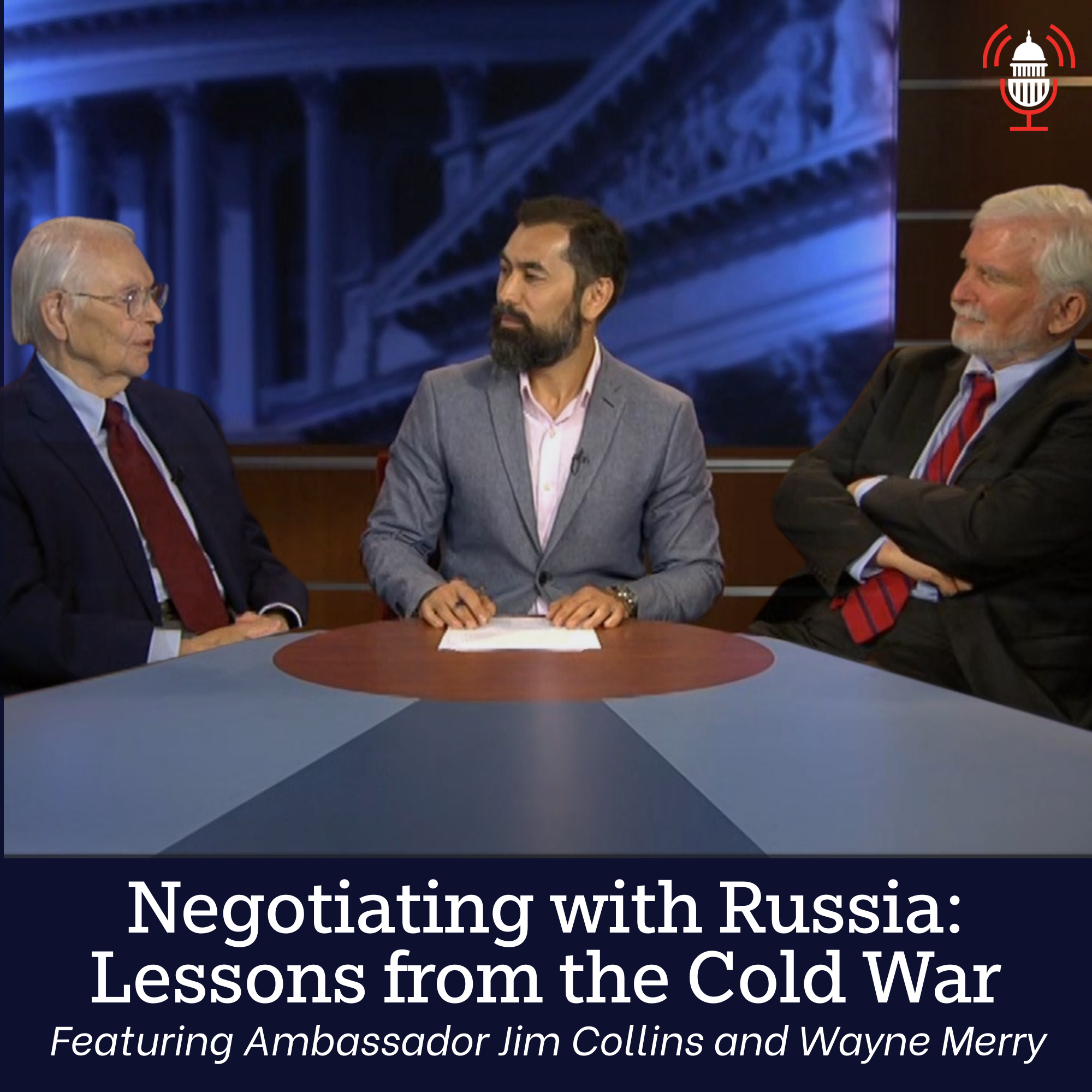
| 12/9/25 | negotiationRussia+4 | James CollinsWayne Merry | Commission on Security and Cooperation in EuropeCarnegie Endowment+1 | RussiaUnited States+1 | Russianegotiation+5 | — | 48m 19s | ||
Want analysis for the episodes below?Free for Pro Submit a request, we'll have your selected episodes analyzed within an hour. Free, at no cost to you, for Pro users. | |||||||||
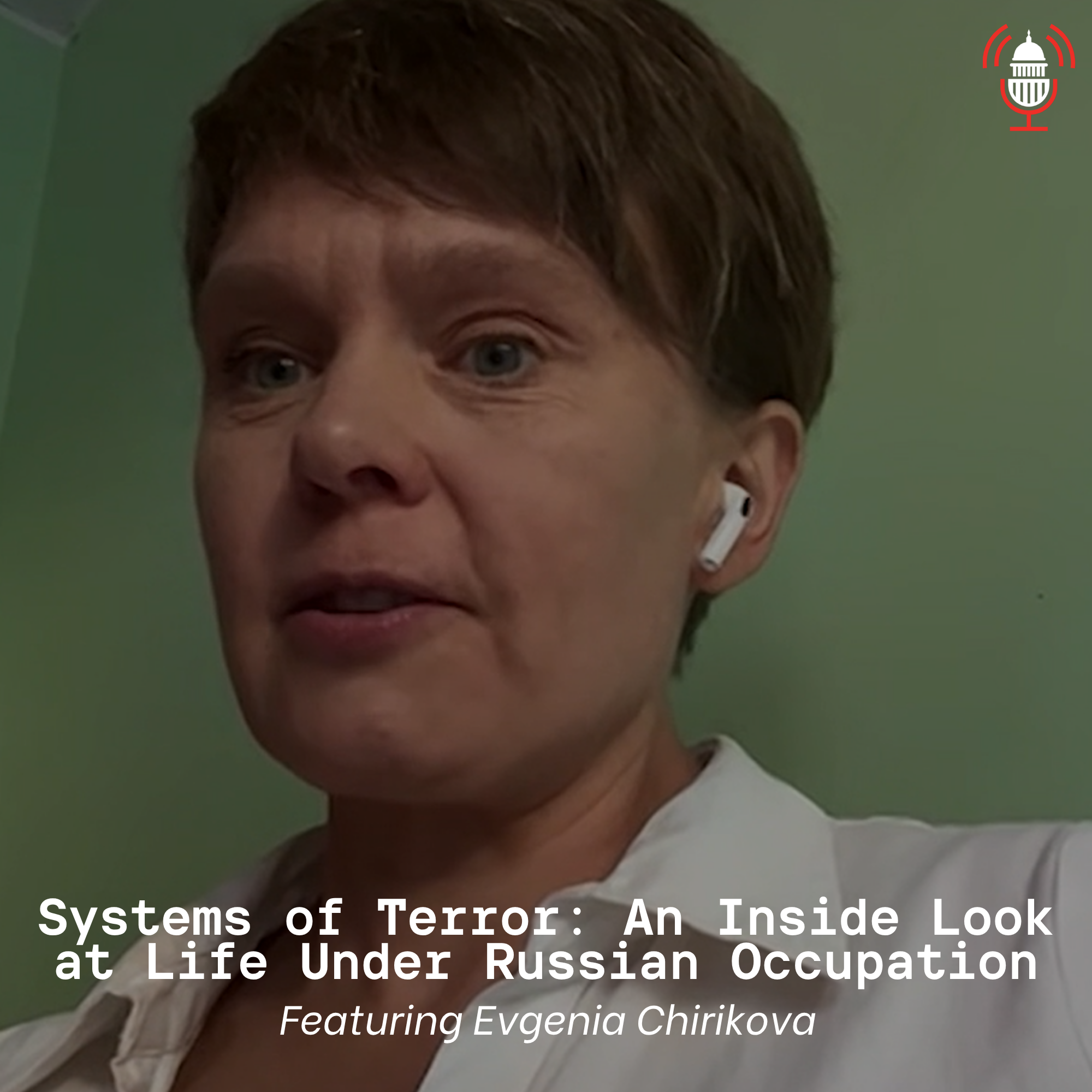
| 11/18/25 | Russian occupationhuman rights+4 | Evgenia Chirikova | Support Net | UkraineRussia+1 | Russian occupationUkrainian civilians+6 | — | 51m 07s | ||
| 9/30/25 | freedomsecurity+3 | — | Helsinki Commission | United StatesEurope+1 | Helsinki Commissionfreedom+4 | — | 0m 34s | ||
| 11/3/22 |  Russia Hates the Truth | Transgender journalist Sarah Ashton-Cirillo, a U.S. citizen, joins host Alex Tiersky to describe her journey, first to Ukraine as a war correspondent, then her decision to enlist in the Ukrainian Armed Forces as a combat medic on the front lines, as well as becoming a high-value target for Russian propaganda, and the importance of pursuing the truth against a regime that thrives on lies. | — | ||||||
| 10/17/22 |  On the Precipice | The OSCE has been central to diplomatic efforts around Russia's war against Ukraine. In this episode, Ambassador Michael Carpenter, U.S. Permanent Representative to the OSCE, discusses the ultimately unsuccessful diplomatic efforts to forestall Russia's full-scale invasion; the role of the OSCE in ensuring accountability for war crimes and atrocities; and the need to ensure Ukraine's victory and Russia's defeat. | — | ||||||
| 9/9/22 |  Brothers in Arms | Since February 2022, thousands of non-Ukrainians have signed up to help defend Ukraine from Russian aggression. In this episode, two former members of the U.S. military—former U.S. Army Staff Sergeant James Vasquez and retired U.S. Marine Corps Lt. Col. Rip Rawlings—discuss their own efforts, one fighting on the ground, and the other mobilizing and coordinating support to the Ukrainian armed forces through his foundation. | — | ||||||
| 7/6/22 |  Russia's Arsenal of Aggression | One particularly insidious tool in Russia's arsenal of aggression is the Kremlin's use of mercenaries, in particular against Ukraine. In this episode, experts Candace Rondeaux and Col. Chris Mayer (Ret.) discuss how Russia draws on mercenary networks such the Wagner Group, which has been linked to human rights and other atrocities including the horrific massacre at Bucha. | — | ||||||
| 4/20/22 |  Nobody Cheers for Goliath: How Ukraine Is Winning the Information War Against Russia | The physical battle of tanks and bombs or territory gained and lost is only one terrible part of Russian dictator Vladimir Putin's war against the people of Ukraine. The unprovoked war is also taking place in the media, on computer keyboards, and in the hearts and mind of people in Ukraine, in Russia, and worldwide. Just as Ukraine has won important battlefield successes in the face of what appeared to be an overwhelming Russian force, Ukraine has also waged a highly sophisticated public diplomacy campaign to counter what many thought was a Russian strength. Dr. Nicholas J. Cull, a pioneering scholar and educator in the field of public diplomacy and mass communication in foreign policy, joins Helsinki on the Hill to examine the fight over narratives around Russia's unprovoked war against Ukraine, how it shapes how different audiences understand the war, and the ultimate real-world impact of information warfare. | — | ||||||
| 12/14/21 |  Conflict Is Not Gender Neutral | When the UN Security Council Resolution 1325 on Women, Peace, and Security was adopted in 2000, it marked the first time that the UN Security Council acknowledged the vital role of women in the prevention and resolution of conflicts. Two decades later, meaningful progress has been made in advancing the equal participation and full involvement of women in peace and security-related efforts, but substantial challenges remain. In this episode, two senior active duty female military officers—Colonel Katherine Lee of the New Zealand Defence Force and Lieutenant Colonel Diana Morais of the Portuguese Ministry of National Defense—describe why integrating the perspective of women is essential to sustainable peace and security efforts, including those undertaken by the OSCE and its participating States. | — | ||||||
| 11/10/21 |  Contending with China | The Chinese Communist Party poses major challenges to the transatlantic community's ideals of governance and human rights. In this episode, Didi Kirsten Tatlow, contributing author of the Atlantic Council report "The China Plan," discusses the Chinese Communist Party's oppression of its citizens, illustrates how that repression extends to the international system, and offers recommendations on how the transatlantic community, including OSCE participating States, can best unify to respond. | — | ||||||
| 8/27/21 |  Russian Intention, Russian Aggression | From September 10 – 16, ZAPAD 2021—a major Russian military exercise that includes thousands of troops—will take place in and around Belarus. The exercise follows months of reports that the Russian military has been involved in actions that potentially could spark a major and violent confrontation between Russia and other countries, including a March deployment by Moscow of some 100,000 new troops in and around Ukraine and a June incident in the Black Sea in which Russian forces seemingly faced off against the British destroyer HMS Defender. In this episode, Lt. General Ben Hodges (Ret.) analyzes whether these developments represent a major escalation and imminent conflict with Russia; whether they are part of a deliberate, coordinated strategy by the Kremlin; and what, if any, guardrails could prevent Russian aggression against its neighbors or a direct conflict with NATO. | — | ||||||
| 7/23/21 |  Toward a Sustainable, Enduring, Democratic Peace | The work of the Helsinki Commission aligns closely with that of the Organization for Security and Cooperation in Europe (OSCE), the world's largest regional security organization. The United States supports the work of the OSCE through not only the Helsinki Commission, but also through funding—generally contribution between 11 and 14 percent of the OSCE's operating costs—and through the deployment of individuals who carry out the activities of the OSCE across its vast geographic expanse, who do the day-to-day work of trying to make the principles on which the OSCE is based into a reality on the ground. In this episode, Kavya Rajan, Director of Human Rights and Communities at the OSCE Mission in Kosovo, and Kelsey Harris-Smith, Political-Military Officer in the Conflict Prevention and Resolution Program at the OSCE Mission to Moldova, describe how the work they and other Americans—as well as staff from other OSCE participating States—do contributes to a sustainable, enduring, democratic peace in the OSCE region. | — | ||||||
| 6/16/21 |  Agents of the Future | The creation of the Moscow Helsinki Group was announced on May 12, 1976, a day that Helsinki Commission Chair Sen. Ben Cardin has called, "One of the major events in the struggle for human rights around the globe." The 11 founding members, including legends of the human rights movement like Yuri Orlov and Lyudmila Alexeyeva, came together as what was formally named the Public Group to Assist in the Implementation of the Helsinki Final Act in the USSR. Their mission was to monitor the Soviet government's implementation of the human rights provisions of the historic 1975 Helsinki Accords. In this episode, Dmitri Makarov, co-chair of the Moscow Helsinki Group, and historian Sarah B. Snyder discuss the history and impact of the Helsinki monitors, as well as the important work the Moscow Helsinki Group continues to do today. | — | ||||||
| 4/9/21 |  Damocles' Sword | The upcoming Tokyo Olympics, slated to take place late July after a one-year postponement, will be the first international athletic event since the passage of the Rodchenkov Anti-Doping Act (RADA) in December 2020, which established criminal penalties on individuals involved in doping fraud conspiracies affecting major international competition. The law, named after Russian doping whistleblower Dr. Grigory Rodchenkov, empowers the U.S. Department of Justice for the first time to investigate and prosecute these rogue agents who engage in doping fraud, provide restitution to victims, and protect whistleblowers from retaliation. In his first public interview since RADA became law, Dr. Rodchenkov speaks about the impact of the legislation that bears his name, as well as the blatant corruption that exists in the world of international sport, the vital role of whistleblowers, and more. He is joined by Helsinki Commission policy advisor Paul Massaro, who sheds light on the game-changing new tools created by the legislation and its importance to the U.S. fight against corruption worldwide. | — | ||||||
| 12/1/20 |  Massive, Systematic, Proven beyond Doubt | President Alexander Lukashenko has been in power in Belarus since 1994. In the run-up to elections in the summer of 2020, the Lukashenko regime sought to eliminate political competition to through disqualification, intimidation, and imprisonment. Election Day proper featured widespread allegations of fraud. Many countries, including the United States, rejected the election's outcome as illegitimate and refused to recognize Lukashenko as the legitimate leader of Belarus. The months since the election have seen an unrelenting crackdown by Belarusian authorities on peaceful protests, civil society, and the media. As a participating State in the OSCE, Belarus is party to a number of commitments on human rights and fundamental freedoms, such as the right to free and fair elections and the right to peaceful assembly. In response to the apparent violation of these rights, 17 other OSCE states invoked one of the key human rights tools at their disposal: the Moscow Mechanism, a procedure that allows for the establishment of a short-term fact-finding mission tasked with producing a report on a specific human rights concern and recommendations on how to resolve it. In this episode, Professor Wolfgang Benedek, the rapporteur appointed to investigate the crisis in Belarus, discusses his findings that human rights abuses are "massive and systematic, and proven beyond doubt" and his recommendations to address the violations. | — | ||||||
| 10/14/20 |  Welcome to Observe | Election observation is a core element of the OSCE's efforts to promote human rights, democracy, and the rule of law. Every OSCE participating States—including the United States—pledges to invite foreign observers to observe its elections. The United States plays an active role in OSCE election observation missions, both by providing observers for foreign elections as well as by inviting the OSCE to observe every general and midterm election since 2002. Ahead of the 2020 presidential election, veteran election observer Orest Deychakiwsky, former director of the OSCE's Office of Democratic Institutions and Human Rights and current OSCE PA member Michael Link, and Deputy Secretary of the State of Connecticut Scott Bates share insights on the origins and value of OSCE election observation, along with the process of election observation from the OSCE and state perspective. | — | ||||||


Showing 25 of 36
Pitch Fit is a Pro feature
See how bookable this show is for guests, which brands already advertise, the per-episode ad value, and the best-fit guest and sponsor profile. The numbers are blurred on the free plan.
How readily this show books outside guests like you.
How proven this show is for host-read sponsorships.
For Guests
ProFor Advertisers
ProUpgrade to Pro to unlock guest cadence, sponsor categories, fit scores, and per-episode ad value for this show.
Chart history for The Transatlantic
Peaked at #32 in RO, currently #32 in RO.
| Market | Genre | Peak | Current | Trend |
|---|---|---|---|---|
| RO | — | #32 | #32 | — |
| Brazil | — | #146 | #146 | — |
Chart Positions
2 placements across 2 markets.
Chart Positions
2 placements across 2 markets.