
The Transfer Files: Inside the World of Federal Innovation
by Federal Laboratory Consortium
Insights from recent episode analysis
Audience Interest
Podcast Focus
Publishing Consistency
Platform Reach
Insights are generated by CastFox AI using publicly available data, episode content, and proprietary models.
Est. Listeners
Based on iTunes & Spotify (publisher stats).
- Per-Episode Audience
Est. listeners per new episode within ~30 days
10,001 - 25,000 - Monthly Reach
Unique listeners across all episodes (30 days)
25,001 - 75,000 - Active Followers
Loyal subscribers who consistently listen
5,001 - 15,000
Market Insights
Platform Distribution
Reach across major podcast platforms, updated hourly
Total Followers
—
Total Plays
—
Total Reviews
—
* Data sourced directly from platform APIs and aggregated hourly across all major podcast directories.
On the show
Recent episodes
Angela Lewis: What It Takes to Lead a High-Impact Federal Lab
Apr 28, 2026
35m 59s
Andy Myers: Why PRO™ Matters for Federal Tech Transfer Professionals
Apr 14, 2026
29m 28s
Ernesto Chanona: What Tech Transfer Can Learn from Business Development
Mar 18, 2026
45m 32s
Powering Partnerships: IEEE and the Future of Tech Transfer
Mar 4, 2026
54m 05s
What’s Ahead for Federal Tech Transfer in 2026
Feb 3, 2026
13m 52s
Social Links & Contact
Official channels & resources
Official Website
Login
RSS Feed
Login
| Date | Episode | Description | Length | ||||||
|---|---|---|---|---|---|---|---|---|---|
| 4/28/26 | 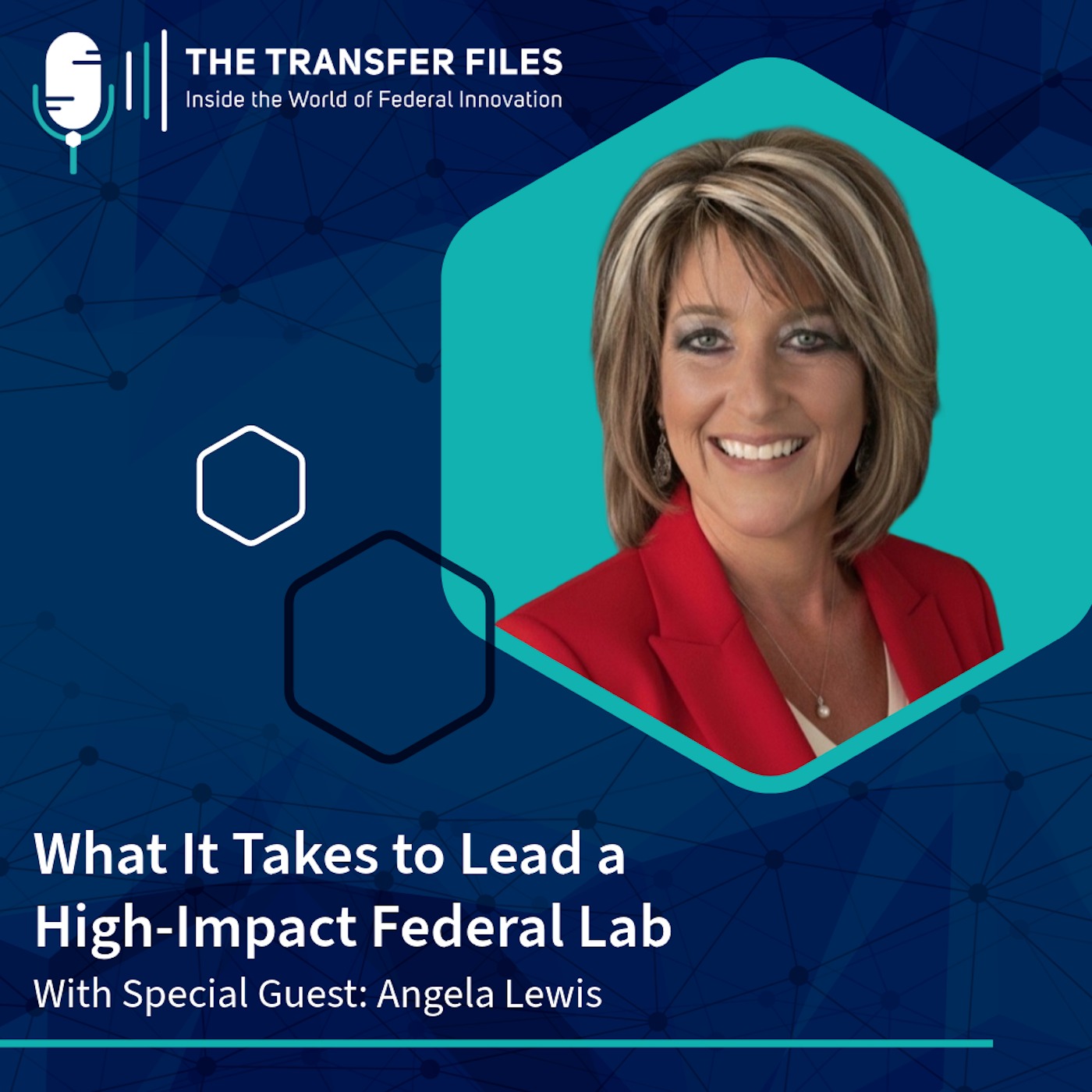 Angela Lewis: What It Takes to Lead a High-Impact Federal Lab Angela Lewis: What It Takes to Lead a High-Impact Federal Lab | Federal laboratories play a critical role in moving ideas from research into real-world use, but that work depends on more than technical expertise. It takes leadership, strong partnerships, and a clear understanding of how innovation supports the mission. At Naval Surface Warfare Center Crane Division, that mission is centered on delivering capability to the warfighter, and technology transfer has become an important part of how that work gets done.Dr. Angela Lewis, Technical Director at NSWC Crane and the 2025 FLC Lab Director of the Year, brings more than three decades of experience across operations, strategy, and leadership. She has helped shape how one of the Navy’s most mission-critical labs approaches innovation, builds external partnerships, and connects research with outcomes that support national security. She was also featured in last year’s Lab Directors Forum at the FLC National Meeting, where she shared perspective on leading in complex environments and using technology transfer as a strategic tool.This conversation follows Dr. Lewis’ career journey, including how her understanding of technology transfer evolved and why culture matters so much when building a strong innovation ecosystem. She also shares practical lessons for other federal labs, from engaging leadership to creating the structures, incentives, and partnerships that help technology transfer move from good ideas to measurable mission impact.In This Episode:[02:16] Dr. Angela Lewis shares how she first came to Crane as a high school intern, knowing very little about the organization but recognizing it as a place that offered strong career opportunities in her community.[03:10] Her career path at Crane has included continuing education, leadership development, and opportunities to grow while staying connected to the daily mission of supporting warfighters.[06:09] Technology transfer helps Crane build the right team for each phase of a project, from academic research to small business prototyping to large defense partners capable of fielding solutions at scale.[07:07] Dr. Lewis explains that her view of technology transfer changed while serving as chief of staff and hearing Crane’s T2 director explain the range of mechanisms available for working with outside partners.[09:14] Because Crane operates much like a zero-profit business, the organization has to deliver on cost, quality, and schedule in order to maintain demand from program offices.[12:01] Dr. Lewis frames technology transfer as part of being a good steward of taxpayer-funded intellectual property and making sure federally developed ideas have a path to broader impact.[15:17] Crane’s innovation ecosystem includes research and education partnerships across 39 states, 60 universities, and more than 168 industry partners.[16:03] Dr. Lewis says technology transfer could not remain the responsibility of one office if Crane wanted it to become part of the organization’s DNA.[18:50] Building a true innovation ecosystem requires more than a list of contacts; Dr. Lewis describes it as an active process of seeking out the right partners and maintaining meaningful engagement.[20:10] Crane deepens outside relationships through efforts like the Distinguished Lecture Series, temporary faculty programs, and collaborative joint research projects.[21:03] The Indiana Research Consortium shows how shared vision and active collaboration can make a multi-party CRADA work at scale.[22:37] The consortium’s turning point came in 2024, when Purdue University, Indiana University, and Notre Dame signed a Memorandum of Understanding to create a formal structure around shared defense technology priorities.[24:53] By its third event in 2024, Silent Swarm had grown from 17 participating technologies to more than 50, creating a larger venue for industry, academia, and government labs to collaborate.[26:34] Silent Swarm brings together realistic environments, platforms, data collection, government subject matter experts, and operators who can evaluate technologies in a warfighting context.[27:35] Dr. Lewis says metrics matter, but the real measure of technology transfer success is whether partnerships are aligned with the Navy’s most pressing mission needs.[29:26] Strong technology transfer culture depends on leadership behavior, especially making T2 visible, measured, and clearly tied to the organization’s priorities.[30:05] During annual strategic alignment discussions, Crane’s leadership team reviews technology transfer and partnership activities alongside budgets, workload, and project planning.[32:09] For technology transfer professionals, Dr. Lewis’ practical advice is to use the Federal Laboratory Consortium network and learn from peers rather than trying to build programs alone.Resources: The Transfer Files - Federal Labs ConsortiumFLC Learning CenterDr. Angela Lewis - Federal Labs ConsortiumDr. Angela Lewis - Naval Sea Systems CommandNSWC Crane Announces Its First Female Technical DirectorDr. Angela Lewis - LinkedIn | 35m 59s | ||||||
| 4/14/26 | 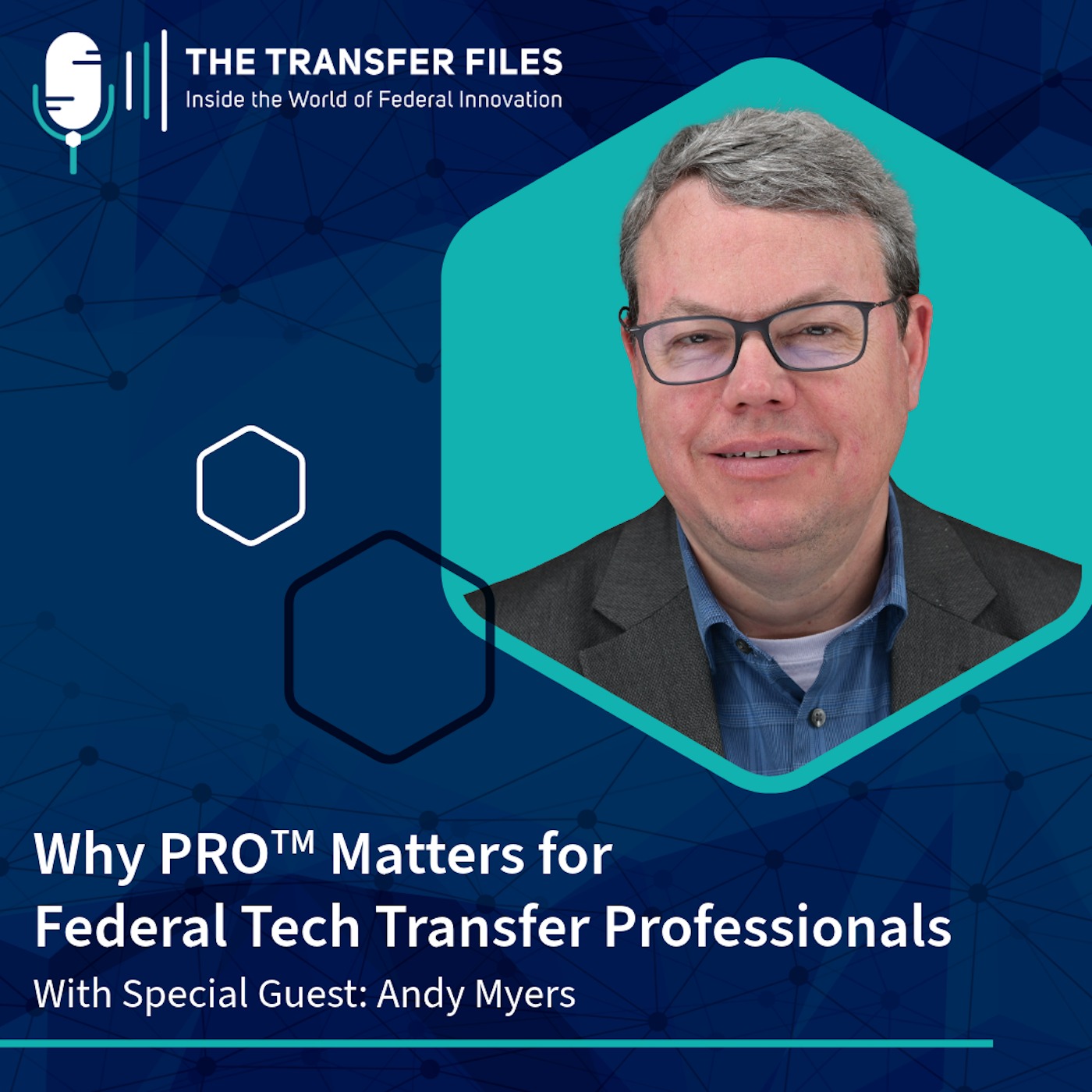 Andy Myers: Why PRO™ Matters for Federal Tech Transfer Professionals Andy Myers: Why PRO™ Matters for Federal Tech Transfer Professionals | Turning research into something people can actually use sounds straightforward, but in the federal world, it’s anything but. It takes people who can move between science, business, and policy, people who know how to translate complex ideas, build the right partnerships, and guide innovations out of the lab and into the real world. That “in-between space” is where a lot of the real work happens, and it’s where this conversation begins.My guest today is Andy Myers, who leads technology transfer activities at the Kansas City National Security Campus. His career spans small business research, academia, and nearly a decade in federal tech transfer, and it all traces back to a simple but important skill of learning how to explain science to people who aren’t scientists. We talk about how that ability shaped his path, what his day-to-day work actually looks like, and how his role within a Department of Energy national security environment brings a different perspective, especially with its focus on manufacturing and moving technologies closer to real-world use.We also dig into something new that’s taking shape across the field. The Federal Laboratory Consortium is rolling out a verification for Professional Registered ORTAs, or PROs, and Andy walks through what it is and why it matters. In a space where most professionals don’t follow a traditional path, the goal is to create more consistency with shared standards, clearer expectations, and a sense of progression that helps both individuals and the broader tech transfer community move forward with a little more direction.In This Episode:[02:21] Andy shares how his career began in chemistry and gradually shifted toward communication and tech transfer[03:08] The importance of explaining science to non-scientists and operating in that “in-between” space[03:47] What technology transfer really involves, from commercialization to legal and business considerations[04:33] Moving from small business research into academia and eventually federal tech transfer[05:18] A look at Andy’s role leading tech transfer at the Kansas City National Security Campus[06:12] How DOE labs operate under a government-owned, contractor-operated model[06:58] The unique national security mission tied to the campus and its broader ecosystem[07:34] Why the campus focuses more on production and manufacturing than pure research[08:13] How their work brings technologies closer to real-world commercial applications[08:49] Examples of tech transfer areas including additive manufacturing, electronics, and cybersecurity[10:07] The challenge of entering a field with no clear or traditional career path[11:12] Why shared standards and a common language matter across federal tech transfer[12:27] Introducing the PRO designation and how it fits into the broader professional landscape[13:43] How PRO compares to other certifications and why the federal space needs its own[14:58] What PRO (Professional Registered ORTA) actually represents for practitioners[16:06] The balance between experience, training, and community involvement in earning the designation[17:14] Why PRO is designed to be meaningful but not overly burdensome to achieve[18:08] How the designation builds trust with partners and external stakeholders[19:13] Walking through the application process and key requirements[20:07] Timeline expectations and how applications will be reviewed[21:02] Why ongoing learning and participation in the community are part of the criteria[21:47] How PRO could have accelerated Andy’s own professional development[22:33] The value of having a clearer roadmap instead of learning through trial and error[23:12] Advice for experienced professionals considering applying for PRO[24:02] The shift from learner to mentor and how PRO supports that transition[25:08] The growing importance of federal tech transfer in national competitiveness[26:04] Real-world examples of tech transfer success, from airport scanners to everyday tech[27:02] Reflecting on the broader impact of federal innovation and why the work mattersResources: The Transfer Files: Inside the World of Federal InnovationAndy Myers - FLCAndrew Myers - LinkedInKansas City National Security CampusPRO (Professional Registered ORTAs) | 29m 28s | ||||||
| 3/18/26 | 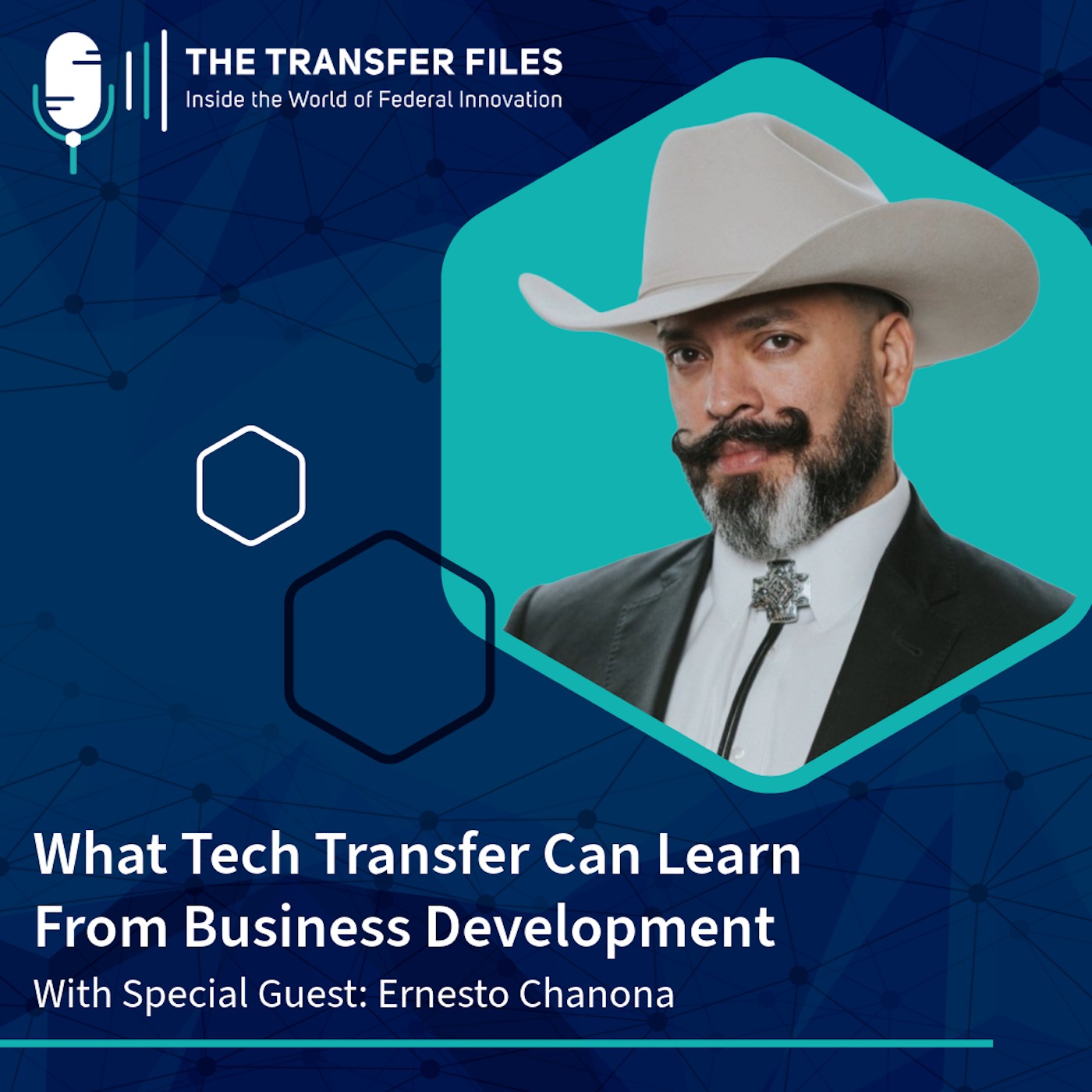 Ernesto Chanona: What Tech Transfer Can Learn from Business Development Ernesto Chanona: What Tech Transfer Can Learn from Business Development | Strong science doesn't automatically lead to commercial success. There's a gap between breakthrough research and real-world impact that trips up even the most promising technologies. Business development or the art of building relationships, positioning innovations, and navigating markets is where many tech transfer offices find themselves stretched thin or stuck.My guest Ernesto Chanona the CEO of American Business Development knows both sides of this world. He earned his PhD in pharmacology and did postdoctoral work at the National Cancer Institute developing immunotherapies. But instead of continuing down the traditional academic track, he made a sharp turn into business development at Maryland's Department of Commerce, helping life science companies expand internationally. Years later, he founded American Business Development to work with tech transfer offices, startups, and foreign companies trying to break into the U.S. market.In this conversation, he walks through what business development actually looks like in life sciences including equal parts sales, technical expertise, and strategic consulting. We talk about the bandwidth crunch hitting tech transfer offices, building frameworks that scale, and why he insists the best marketed technology usually wins over the best science. He shares hard-won lessons about pitching investors, navigating the fragmented U.S. healthcare system, and why his best advice is deceptively simple: ask for help. People in this field genuinely want technologies to succeed, and trying to figure it all out alone is where most innovators get stuck.In This Episode:[02:08] Ernesto's unconventional path from pharmacology PhD to business development.[06:58] Defining what a business developer does in life sciences—more than just sales.[07:49] The three pillars: salesperson, subject matter expert, and consultant.[11:20] Why business developers hold critical relationships that can't easily be replaced.[13:45] The underappreciated role of federal labs in the innovation ecosystem.[17:04] Where tech transfer offices struggle most with business development.[19:00] Bandwidth challenges and why being short-staffed creates the biggest gaps.[20:00] First steps when evaluating whether a technology needs partners or better positioning.[21:13] Building scalable BD frameworks—internal operations and external consistency.[22:53] What separates commercially ready technologies from those needing development.[23:44] The role of luck and market validation in commercial readiness.[24:46] Deploying demo units to universities for voice-of-customer feedback.[26:03] Balancing high-risk innovations with near-market technologies.[28:20] The biggest mistakes organizations make when pitching to investors.[28:51] Why the size of your ask matters more than you think.[30:12] The importance of detailed, well-researched outbound messaging.[33:08] ABD Capital Connect event during J.P. Morgan Healthcare Week.[35:02] International expansion challenges and competition from China.[36:28] Why the fragmented U.S. healthcare system confuses foreign companies.[38:18] The problem with one-person in-country hires versus team-based approaches.[39:40] Why the best marketed technology wins, not just the best science.[42:01] Final advice: It takes a village, so leverage your network and ask for help.[43:06] How willing people are to help when you're motivated to bring something to market.Resources: The Transfer Files Podcast - FLCAmerican Business Developmenternesto@americanbizdev.comErnesto Chanona - LinkedInErnesto Chanona - Johns HopkinsABD Capital Connect | 45m 32s | ||||||
| 3/4/26 |  Powering Partnerships: IEEE and the Future of Tech Transfer Powering Partnerships: IEEE and the Future of Tech Transfer | Welcome back, everyone and welcome to Season 3 of the Transfer Files! We are so glad you're here, and we're kicking things off with a conversation that gets at the connective tissue of innovation, the organizations that help move ideas out of the lab and into the world. Today we're joined by Joanne Wong and Cassandra Carothers, two guests from IEEE, the world's largest technical professional organization dedicated to advancing technology for humanity. Joanne is an engineer by training with a career spanning IBM, HP, SAP, and Cisco, who later founded her own startup and found her way into venture capital and now volunteers with IEEE Entrepreneurship. Cassandra brings a global perspective, having started her career advising C-suite executives in Asia before moving into early stage deep tech investing and founding Departure Capital, a firm focused on frontier tech for existential resilience. Together they've been building something really exciting within the IEEE ecosystem that we'll get into today.If you work anywhere near research, standards, startups, or industry partnerships, chances are you've touched IEEE in some way whether through their publications, conferences, standards development, or their growing work in entrepreneurship and technology commercialization. That reach is exactly why this conversation matters so much for the federal tech transfer community. We talk a lot about moving inventions to market, but standards, industry alignment, and global technical networks are often the difference between a promising prototype and a technology that actually scales. So today we're digging into how IEEE connects researchers with industry, where standards intersect with commercialization, and what opportunities exist for federal labs and tech transfer offices to plug into that ecosystem. We also have an important update from the broader FLC community. Our Executive Director Paul Zielinski recently announced that he'll be retiring. His leadership has shaped not just the FLC, but the federal tech transfer ecosystem more broadly including expanding programs, strengthening interagency collaboration, and helping position tech transfer as a core part of the federal innovation mission. Paul is here to reflect on that journey, talk about what's changed in the field, and what he sees ahead for our community. In This Episode:[02:18] Joanne shares her background as an engineer, moving from IBM and major tech firms to founding her own startup.[02:54] Joanne describes how she fell into venture capital and connected with REDD's Capital out of California.[03:11] She introduces her volunteer role with IEEE Entrepreneurship and gives an overview of the organization.[03:55] Cassandra takes over and walks through her global career path from Hong Kong consulting to US-based venture capital.[05:33] Cassandra introduces Departure Capital and her focus on frontier tech for existential resilience.[06:02] The conversation turns to why they launched the Hard Tech Venture Summit and what "hardware is hard" really means.[07:22] Discussion of Moore's Law limitations and why innovation must return to hardware fundamentals to support AI growth.[08:47] The case that the world's biggest problems are physical, requiring atoms not just bits.[09:14] The roots of venture capital and the US government's early role as the first tech investor are explored.[10:28] Why manufacturing is a critical and often overlooked piece of the hard tech startup puzzle.[11:10] Where hardware founders most commonly get stuck between the lab and the market.[12:00] The challenges of team building, go-to-market strategy, and moving from prototype to mass manufacturing.[12:48] Funding gaps, regulatory hurdles, and the stigma around investing in hardware-heavy startups.[14:30] Stakeholder misalignment explored with manufacturers, engineers, investors, and regulators all optimizing for different things.[15:44] The origin story of the Hard Tech Venture Summit and its inaugural event in San Francisco.[16:30] Why startups and investors are regional and why that drove the decision to host multiple summits.[17:22] How the summits are volunteer-driven through IEEE and interest in expanding to Latin America, Europe, and Asia-Pacific.[18:52] What makes the Hard Tech Venture Summit different from a typical startup conference or demo day?[20:09] How attendees are hand-selected and vetted to ensure genuine hardware focus with no deep tech tourists.[21:35] The roundtable format explained with small curated groups designed for real conversation, not pitching.[22:02] How the safe, judgment-free environment encourages honest feedback between founders, investors, and ecosystem partners.[23:29] Day two of the summit is a half-day manufacturing workshop designed for early stage founders.[24:13] How mentors help founders understand manufacturing contracts, yields, and timelines in a personalized setting.[25:59] Future goals around tracking data, capital mobilization, and measuring real outcomes from the events.[27:00] Where federal labs and the FLC fit into the hard tech ecosystem and how they can get involved.[29:14] How people from federal labs can find and connect with the Hard Tech Venture Summits.[30:23] Hopes for a joint partnership between IEEE Entrepreneurship and FLC and spreading the word to 500,000 IEEE members.[31:43] Three to five year vision includes concrete metrics, capital mobilized, and building a true sense of community and continuity.[34:08] FLC Executive Director Paul Zielinski has announced his retirement.[35:05] Paul reflects on how difficult it was to walk away from something he's been passionate about for decades.[36:24] Paul is most proud of the sense of community that the FLC has built over the years.[37:42] Why modernization was a priority from launching the podcast to redesigning FLC Business and embracing digital tools.[38:20] How COVID unexpectedly accelerated digital transformation at FLC while reinforcing the value of in-person connection.[39:04] The focus on professional development, learning tracks, and positioning tech transfer as a respected profession.[40:43] The mentorship program, online learning, and a teaser about an upcoming announcement to raise the prestige of the profession.[42:02] How the FLC has evolved and grown its facilitate pillar and moving from administration to action.[44:06] How Paul has seen the role of federal labs in the innovation ecosystem evolve over his 30-plus year career.[45:04] The parallel growth of environmental law and tech transfer law in the 1980s and how that shaped his career.[46:09] Looking ahead to AI, quantum science, and how FLC platforms are beginning to adopt AI tools.[46:44] What qualities Paul hopes to see in his successor including passion, advocacy, vision, and the ability to listen and act.[49:25] Reflections on serving at the White House level and across multiple agencies throughout his career.[50:03] Paul shares his retirement plans and his hope to stay connected to the tech transfer world and see the many friends he's made along the way.Resources: Federal Labs IEEEIEEE EntrepreneurshipHard Tech Venture SummitsJoanne Wong - LinkedInjoanne.wong@ieee.orgREDDS CapitalCassandra Carothers - LinkedIncassandra@departure.vccassandra@ieee.orgDeparture Capital - LinkedInPaul Zielinski - LinkedIn | 54m 05s | ||||||
| 2/3/26 | What’s Ahead for Federal Tech Transfer in 2026 | Happy New Year and welcome back! While the podcast is between seasons, we’re continuing to bring you brief FLC updates so you can stay connected to what’s happening now and what’s coming next across the Federal Laboratory Consortium. These short check-ins will drop every two weeks until the show returns with full-length episodes when Season 3 launches in March.For this update, I’m joined by Paul Zielinski, Executive Director of the FLC. Paul walks through what 2026 is shaping up to look like, including plans for the upcoming National Meeting, leadership elections, and several new tools and resources in development. We also touch on how AI is showing up more frequently in tech transfer work and what the FLC is doing to modernize its support for the community.In This Episode:[00:02] We’re kicking off with a quick FLC update. [00:46] Paul Zielinski joins me to talk about what’s ahead for the Federal Laboratory Consortium in 2026.[01:34] Paul shares the latest on the federal budget outlook and why it supports plans for an in-person National Meeting.[02:01] We confirm the National Meeting is planned for May 12–14 in Seattle and why that matters for the community.[02:32] Paul explains how the National Meeting serves as both the FLC’s business meeting and a major networking opportunity.[03:15] We discuss awards, sessions, and how funding disruptions affected submissions this year.[03:33] Paul outlines the upcoming elections, including board and regional leadership positions.[04:25] He talks about the importance of volunteer leadership and ways members can get involved at different levels.[05:39] We reflect on how interest in AI has grown rapidly within tech transfer offices over the past two years.[06:03] Paul previews modernization efforts, including website improvements and member input opportunities.[06:54] He shares updates on the Green Book, including the new online version and plans for print.[07:42] Paul introduces plans for an interactive Green Book app designed to stay continuously up to date.[08:25] We discuss the upcoming T2 Mechanisms Matrix and how a guided, bot-based tool could help users choose agreements.[09:39] Paul explains why the FLC is beginning work on a new three-year strategic plan.[10:19] We talk about how member surveys and feedback directly shape FLC priorities and tools.[12:06] Paul highlights existing and upcoming AI tools and what may return in the year ahead.[12:36] We wrap up with a look forward to Seattle and continued updates over the coming months.Resources: The Transfer Files2026 FLC National MeetingPaul Zielinski - LinkedInPaul Zielinski: The Federal Budget and Its Impact on Research and Tech Transfer | 13m 52s | ||||||
| 12/9/25 |  Season Recap: The Mission, the Matchmaking, and the Impact of Federal Innovation Season Recap: The Mission, the Matchmaking, and the Impact of Federal Innovation | As we reach the end of the year and settle into the holiday season it feels right to look back and reflect. This podcast has grown so much over its first two seasons. I hope that means you are enjoying these conversations and sharing them with friends and colleagues and planning to come back next season for more.Today, we’re revisiting the voices that shaped our year. We kick things off with Katharine Ku, the former Executive Director of Stanford’s Office of Technology Licensing, followed by Representative Bill Foster, who offers a unique perspective as both a scientist and a Congressman. We’ll also hear from Phil Weilerstein, founder of VentureWell, on his work with emerging innovators.Later, we look at the ecosystem as a whole with Gabe Mounce from the Air Force Research Laboratory, Brian Darmody from the Association of University Research Parks, and TEDCO’s Stephen Auvil. Together, these guests remind us what it really takes to move ideas into the world, and why people remain at the heart of innovation.In This Episode:[01:46] In honor of the end of the year we are reflecting as we look back at conversations from this past year with ecosystem builders, licensing matchmakers, leaders, and others who helped shape the season.[05:12] Katharine Ku enters with a story about the early skepticism surrounding Google’s search technology and the quiet confidence that guided Stanford’s licensing approach.[08:04] Representative Bill Foster shifts the narrative toward the intersection of science and entrepreneurship and how lab resources can spark unexpected commercial breakthroughs.[11:15] Phil Weilerstein reframes the challenges innovators face by showing how mindset change often matters more than technical ability when pursuing commercialization.[14:31] Brian Darmody illustrates how research parks and innovation districts formed as universities recognized the need to support startups and attract industry talent.[16:49] Stephen Auvil offers a pointed reminder that trust and human relationships often determine whether a promising technology finds the right problem to solve.[20:07] The discussion turns to the operational side of the ecosystem as Paul Zielinski outlines how shutdowns and shifting timelines affect awards meetings and national planning.[23:03] The upcoming national meeting and the real world constraints that shape participation including travel limits, continuing resolutions and agency approvals.[27:08] A revealing moment surfaces as new learning tools and structured pathways highlight how education and trust continue to strengthen lab to market work.[30:34] The season begins its close with a look ahead to March and the steady momentum of the community even during quieter holiday periods.Resources: The Transfer FilesKathryn Ku - Wilson SonsiniLessons From a Tech Transfer Trailblazer With Katharine KuPhil Weilerstein - LinkedInPhil Weilerstein: Building the Next Generation of Science-Driven EntrepreneursGabe Mounce - LinkedInGabe Mounce: Powering the Space Valley Through Federal Tech TransferBrian Darmody - LinkedInBrian Darmody: How Research Parks Fuel Innovation EcosystemsStephen Auvil - LinkedInStephen Auvil: Advancing Innovation Between Labs and StartupsPaul Zielinski - LinkedInPaul Zielinski: The Federal Budget and Its Impact on Research and Tech Transfer | 32m 53s | ||||||
| 11/25/25 |  Ben Solomon: How FedTech Builds Startups From Federal Lab Inventions Ben Solomon: How FedTech Builds Startups From Federal Lab Inventions | There’s something exciting happening right now in the world of federal innovation, and it feels like the momentum is building faster than ever. When research inside government labs actually finds its way into the hands of entrepreneurs who know how to run with it, that’s where real impact shows up. And that’s the story we’re digging into today, how ideas turn into companies, and how communities working together can make that leap possible.My guest today is Ben Solomon, the founder and CEO of FedTech. Ben started out as a business-minded student who wanted to be close to technology but wasn’t a scientist himself, and that curiosity ended up shaping an entire ecosystem. After going through the NSF I-Corps program, he realized just how big the gap was between government-funded research and private-sector opportunities, and he built FedTech as a bridge. Ten years later, they’ve helped more than a thousand startups, spun out over 200 companies from federal inventions, and supported founders who have raised billions to bring new solutions to life.In our conversation, Ben talks about what it actually takes to move a technology from the lab bench into the real world, what separates successful entrepreneurial teams from the ones that stall, and why flexibility, persistence, and community matter more than any single breakthrough. He also shares where he sees tech transfer headed next—simpler licensing, more accessible collaboration, better funding for commercialization, and a stronger pipeline of talent coming into the field. It’s a generous, grounded look behind the scenes at how innovation really gets built.In This Episode:[00:02] The power of community at FedTech and how collaboration creates value.[00:41] How Ben’s path into entrepreneurship began through the NSF I-Corps program.[01:20] Ben describes discovering the gap between federal research and commercialization.[02:40] He shares lessons from launching an early robotics startup and what it taught him.[04:28] Ben explains why customer discovery and market validation drive every FedTech program.[05:53] The conversation turns to the importance of iteration and learning quickly from failure.[06:07] Ben defines what FedTech is and its role as a bridge between federal R&D and entrepreneurs.[06:51] We hear how FedTech’s startup studio forms teams around federal inventions.[07:40] Ben highlights success stories, including Canopy Aerospace’s acquisition of a NASA spinoff.[08:54] Discussion of accelerators and researcher training that support companies new to government work.[12:15] We learn about the common challenges startups face moving technology into a product.[14:36] Ben identifies the traits that predict founder success: flexibility, grit, and resourcefulness.[17:38] The rise of AI emerges as a major area of momentum across federal labs and industry.[19:04] Ben looks ahead at the future of tech transfer and reducing barriers for entrepreneurs.[21:22] He emphasizes the need for funding dedicated specifically to commercialization.[22:38] Ben offers advice for tech transfer professionals, entrepreneurs, and students entering the field.[24:34] We explore FedTech’s upcoming programs and international expansion initiatives.[26:07] Closing reflections and appreciation for the FLC community and collaborative mission.Resources: FedTechBen Solomon - LinkedIn | 26m 50s | ||||||
| 11/11/25 |  How the Catalyst Coaching Program Helps Researchers Turn Innovations into Impact How the Catalyst Coaching Program Helps Researchers Turn Innovations into Impact | Researchers are advancing extraordinary science inside our federal labs, but translating that expertise into language the private sector can immediately understand is its own skillset. Oak Ridge National Laboratory decided to tackle that challenge head on. The result is the Catalyst Coaching Program, a high-impact initiative that helps early and mid-career researchers sharpen their message, clarify the value of their work, and engage industry partners with greater confidence and purpose.In this episode, we take a look inside Catalyst with the people who built it. Jennifer Caldwell, Director of Technology Transfer at ORNL, shares why the lab needed a new model for communication and collaboration. Susan Ochs, ORNL’s Engagements Program Manager with decades of experience across the DOE system, explains how the program evolved from earlier outreach efforts and why it’s resonating with researchers. Along with Dr. Angelique Adams, CEO of Angelique Adams Media Solutions and Director of the Leadership in Engineering and Entrepreneurship Program at the University of Tennessee, talks about the communication framework she developed to help scientists present their technologies in a way that lands with industry decision makers.We break down the shift from the original Safari program to Catalyst, the one-on-one coaching that transforms how researchers talk about their work, and the real-world outcomes that follow, including stronger pitches, new partnerships, successful TCF awards, and industry engagement that begins long before licensing discussions start. You’ll also hear how Catalyst is helping ORNL researchers move faster, connect more effectively, and bring their innovations into the marketplace with clarity and impact.In This Episode:[03:00] Jen explains how the earlier Safari program began as a way to break down barriers between ORNL and industry.[03:31] ORNL shifts toward concierge-style engagement to create stronger private-sector connections.[04:33] The team discusses why Safari was vital for showcasing ORNL’s breadth of innovation.[05:13] Safari receives national recognition and becomes a catalyst for modernizing ORNL’s outreach.[06:18] Susan highlights why long-term relationships are central to tech transfer success.[07:14] Safari entrepreneurs return as mentors for Energy I-Corps applicants, showing the program’s ripple effect.[08:03] COVID forces ORNL to rethink its engagement strategy and accelerate virtual communication tools.[09:01] ORNL collaborates with Angelique to redesign the program around concise, industry-ready messaging.[10:13] Catalyst launches with strong DOE support and earns internal recognition for its early success.[11:11] Susan shares why ORNL’s early attempts at virtual engagement didn’t work and what needed to change.[12:05] The team explains what makes Catalyst different from traditional communication training.[13:18] Catalyst helps identify researchers who are ready to move their work toward commercialization.[14:27] Small cohorts ensure each participant receives customized, high-touch coaching.[15:26] How personalized coaching builds confidence and sparks clarity in researchers’ presentations.[16:16] Why humility and a beginner’s mindset support real transformation.[16:51] Catalyst skills begin translating into measurable commercialization outcomes.[17:11] ORNL sees long-term impacts through stronger licensing, partnerships, and DOE program engagement.[18:45] The curriculum that helps researchers shift from technical to industry-focused communication.[19:22] Researchers learn how decision makers think, assess risk, and evaluate potential collaborations.[20:22] Angelique explains why her industry background builds trust and credibility with participants.[21:51] A high-stakes capstone event ensures researchers apply what they learn in real conversations.[22:53] The program teaches researchers to transform traditional presentations into clear, concise pitches.[23:16] Researchers develop both conversational and slide-driven formats to use across settings.[24:05] Catalyst helps researchers direct industry interest to ORNL’s partnerships and licensing teams.[25:10] Participants begin applying Catalyst skills to internal leadership situations as well.[26:00] ORNL integrates commercialization managers to provide cross-functional perspective.[27:21] One-on-one coaching becomes the turning point for overcoming fear and refining delivery.[28:36] Angelique shares where listeners can access her 15-point communication checklist.[29:02] The discussion turns to audience awareness and reducing jargon for non-experts.[30:36] Angelique explains how analogies help researchers translate complex science simply.[31:14] Michelle Kidder’s journey showcases how communication skills led to licensing and major TCF wins.[32:38] A radiopharmaceutical team uses Catalyst tools to build partnerships and launch a major workshop.[33:48] Quantum researchers transform their messaging and influence statewide investment discussions.[35:28] Catalyst skills continue delivering long-term value across research programs.[36:03] The program strengthens pipelines into TCF, vouchers, and DOE’s I-Corps program.[37:55] Catalyst becomes part of a larger DOE commercialization arc that amplifies impact.[38:53] The alignment between Catalyst and DOE funding programs becomes clear.[39:10] The guests look ahead to the next Catalyst cohort and what’s planned for FY26.[40:49] The new monthly FLC Update segment with Executive Director Paul Zelinsky.[41:53] Paul explains how the lapse in appropriations is affecting federal agencies and confirms FLC remains operational.[42:38] The mixed agency operating status, carryover funds, and essential services during the lapse.[43:27] He clarifies FLC’s communication boundaries with Congress and highlights the release of the FLC Annual Report.[44:56] Significant leadership turnover across agencies and why broad distribution of the report matters.[46:09] Upcoming deadlines, key events, and preparations for the national meeting.Resources: Oak Ridge National LaboratoryJennifer Caldwell - ORNLJennifer Caldwell - LinkedInSusan Ochs - ORNLDr. Angelique AdamsDr. Angelique Adams - LinkedIn | 56m 42s | ||||||
| 10/28/25 | Darryl Thomas: How APEX Accelerators Empower Small Businesses in Government Contracting | It’s easy to assume government contracts are only for the big players. But in reality, small and mid-sized businesses are often the engine behind federal innovation. The challenge is knowing where to begin, even if it feels like a maze of rules, acronyms, and red tape. That’s where APEX Accelerators come in. They help businesses get certified, spot the right opportunities, write stronger proposals, and manage contracts without losing momentum. In short, they make the path to government work far more accessible.My guest today is Darryl Thomas, Executive Director of NAPEX, the National APEX Accelerator Alliance. He leads a nationwide network of more than 90 accelerators that help businesses of all sizes build the confidence and know-how to succeed with the federal government. Darryl shares how these programs boost local economies, open doors for entrepreneurs, and strengthen our broader innovation ecosystem.We also dig into NAPEX’s new partnership with the Federal Laboratory Consortium (FLC) with a collaboration focused on connecting more businesses with federal technologies and resources to help them grow. Together, NAPEX and FLC are turning innovation into impact and making sure more American companies have a seat at the table.In This Episode:[00:54] Darryl explains what APEX Accelerators are and how they help companies navigate certifications, proposals, and compliance.[01:23] We learn how these programs strengthen local economies and the national innovation ecosystem.[02:02] Darryl shares how his career began in auditing and business development before moving into small business support.[03:51] The Illinois P-TECH program transitions into what is now the APEX Accelerator network under the Department of Defense.[04:09] Darryl walks through the federal realignment that placed APEX within the Office of Small Business Programs.[05:05] He reflects on leading the program at the state level and how that experience prepared him to serve nationally.[06:25] Darryl talks about scaling collaboration and training for advisors across all APEX programs.[07:45] The conversation turns to how APEX leverages expertise to support accelerators facing challenges.[08:36] Darryl explains why federal contracts are a massive, often untapped market for small businesses.[09:14] We hear how APEX advisors use real-world procurement experience to help companies avoid pitfalls.[10:05] Darryl highlights National APEX Day and how events connect entrepreneurs with real assistance.[11:11] Discussion of how APEX coaches companies to develop government-focused marketing strategies.[12:17] How APEX provides access to expensive market research tools at no cost to clients.[13:39] Step-by-step, Darryl outlines how APEX supports businesses through registration, bidding, and contract performance.[15:57] Darryl discusses how any business, even startups, can begin conversations with an APEX Accelerator.[17:04] The role of capability statements and when businesses may need prior performance.[18:43] Darryl shares examples of retired military members and new entrepreneurs who needed guidance after receiving contracts.[20:04] The importance of cash flow and client diversity when contracting with the government.[21:23] We hear success stories that show persistence pays off, including a business that grew from homelessness to millions.[22:27] A woman-owned business learns the difference between calling itself “certified” and being officially certified.[23:14] The company goes on to become a $20 million success story after working with APEX.[24:00] We discuss the new strategic partnership between NAPEX and the Federal Laboratory Consortium.[25:15] Darryl explains how this collaboration will help grow the defense industrial base and foster innovation.[26:26] How FLC technologies can bolster contractor competitiveness and align with APEX’s mission to educate, facilitate, and promote.[27:41] Darryl shares how NAPEX recognizes FLC as a strategic partner and integrates their resources across accelerators.[28:31] The shared mission and the “tech transfer is a contact sport” mindset.[29:43] APEX aims to help businesses not just compete for contracts but thrive in them.[30:18] How APEX now helps strengthen the defense industrial base through innovation and cybersecurity.[31:37] Discussion of building resilient supply chains and accelerating technology transfer to the warfighter.[32:31] Darryl describes how APEX reduces government risk by preparing companies to perform and comply.[33:28] He highlights the importance of solid accounting and audit readiness for federal contractors.[34:39] The structure of NAPEX and how it unites 90 accelerators nationwide.[35:45] APEX now includes over 650 trained staff supporting businesses across 300 offices.Resources: National APEX Accelerator AllianceDarryl Thomas - LinkedIn | 37m 35s | ||||||
| 10/14/25 |  Michael Hall: The Economics of Federal Tech Transfer Michael Hall: The Economics of Federal Tech Transfer | Behind every chart and statistic about federal technology transfer is a story about people turning ideas into progress. Economist Michael Hall, from the Technology Partnerships Office at the National Institute of Standards and Technology (NIST), joins us to talk about how numbers reveal the real-world value of science. He traces his path from an early fascination with how innovation drives economies to his current role helping agencies make sense of the data that shape national policy and investment.Michael describes how federal technology transfer links research to real-world applications across agencies like HHS and DOE, creating jobs, building industries, and fueling measurable growth. It’s the kind of behind-the-scenes work that shows how science quietly powers everyday life.We also discuss the challenges of collecting and standardizing data across diverse organizations and how his team improved NIST’s reporting system, moving from years of backlog to an efficient, parallel process that keeps federal tech transfer reporting current.With energy and candor, Michael offers a rare look at how economists support innovation from within the federal system. His reflections remind us that behind every dataset are the scientists, entrepreneurs, and policy leaders whose work fuels America’s innovation economy.(This interview was recorded in May 2024, so some details may be outdated.)In This Episode:[01:08] How technological advancement helps federal agencies address national challenges.[02:51] Michael’s path from academia to NIST and how economic development connects to tech transfer.[03:47] Overview of the federal government’s $200 billion annual R&D investment and its link to innovation.[04:20] What technology transfer means and why reporting to Congress and the White House matters.[05:07] Examples of interagency collaboration and data-driven questions NIST helps answer.[06:09] The goal of facilitating understanding across agencies to strengthen their own processes.[07:00] How surveys and comparative data inform decision-making at federal laboratories.[08:20] Using NIST’s internal datasets to assess licensing success rates and patent activity.[09:11] Challenges of managing large, diverse, and often incomplete datasets.[10:32] Why data-sharing limits exist in government and how relationships help bridge those gaps.[11:49] The analogy of analyzing team results without individual player stats—useful but imperfect.[12:59] Developing proof-of-concept analyses to guide other agencies despite limited visibility.[13:54] How Michael streamlined years of backlogged reports through process redesign.[15:33] Implementing data timestamping and parallel workflows to prevent future delays.[16:19] Coordinating agency review through OMB and overcoming logistical bottlenecks.[17:27] The long, coffee-fueled effort to modernize NIST’s annual reporting system.[18:20] The balance between routine reporting and the more engaging, problem-solving side of the job.[18:42] Encouraging agencies to reach out with data and questions for collaborative insight.[20:02] Curiosity, service, and the shared goal of advancing federal innovation.Resources: Michael Hall (NIST) | 21m 25s | ||||||
Want analysis for the episodes below?Free for Pro Submit a request, we'll have your selected episodes analyzed within an hour. Free, at no cost to you, for Pro users. | |||||||||
| 9/30/25 | Paul Zielinski: The Federal Budget and Its Impact on Research and Tech Transfer | When budget deadlines roll around, most of what we hear is the news out of Washington. But if you’re in a federal lab or working with one, the effects show up in very real ways. Projects can stall, collaborations hang in the balance, and sometimes research just stops until things get sorted out. My guest today is Paul Zielinski, Executive Director of the Federal Laboratory Consortium. Paul knows the ins and outs of the budget process, and he’s great at cutting through the jargon. He explains what discretionary and non-discretionary spending actually mean, why deficits keep coming up year after year, and how labs adjust when Congress doesn’t pass a budget on time. He also shares what he’s seen from past shutdowns, the ripple effects on joint research, and the kinds of planning labs and their partners need to do to stay on track.We cover a lot of ground, but the big takeaway is that even with uncertainty, there are ways to prepare and keep partnerships steady. Communication makes a difference, planning matters, and the work of research doesn’t just disappear because of politics. If you’re part of this ecosystem, or curious about how federal innovation weathers the uncertainty, you’ll come away with a clearer picture of what’s at stake and what helps labs push through.In This Episode:[02:16] Paul breaks down how the government generates revenue, highlighting income taxes, Social Security contributions, and corporate taxes as key sources.[03:25] He distinguishes between non-discretionary spending, which includes programs like Social Security and Medicare, and discretionary spending, which is debated annually by Congress.[04:20] Paul details the $1.9 trillion deficit for 2024 and notes that cutting all discretionary spending would still not eliminate it.[06:40] The discussion turns to the yearly budget cycle, including how agencies develop budgets, OMB reviews them, and Congress sets targets.[09:15] Paul describes how appropriations committees are supposed to pass budgets by October 1, but this rarely happens in practice.[10:17] He explains omnibus bills, which combine all appropriations into a single package, and why some in Congress resist them.[12:21] Paul outlines what happens when appropriations expire at midnight on September 30, leaving agencies unable to spend funds.[13:06] He recalls that the last time a budget was passed on time was in 1996, emphasizing how rare timely agreements have become.[14:08] The conversation covers continuing resolutions, or CRs, which allow government operations to continue at prior funding levels with or without added conditions.[15:31] Paul notes that CRs come with restrictions, including prohibitions on starting or ending programs and requirements to spread spending evenly over months.[17:04] He discusses how continuing resolutions and lapses affect federal labs, with licensing agreements less disrupted but joint research and CRADAs often delayed.[18:21] Paul explains that in a full shutdown, most research stops while only critical services like law enforcement and security continue.[19:28] The episode looks at the varying length of past shutdowns, from just a day or two to the 36-day lapse during the Trump administration.[21:13] Paul notes that grants and small business innovation awards may continue or pause depending on agency decisions and the specific agreements in place.[22:02] He emphasizes the importance of contingency planning and open communication between agencies and their partners during uncertain times.[23:16] Paul reassures listeners that while research funding is a small slice of the budget, it generally survives periods of political gridlock.[24:32] He reflects that shutdowns and continuing resolutions have happened many times before, and while disruptive, the government always reaches a resolution.[25:04] Paul reminds federal employees that they are guaranteed back pay after shutdowns, though contractors face a greater risk of lost income.[25:42] The conversation closes with thoughts on breaking stalemates and a pointer to additional resources, including Paul’s webinar on the federal budget process.Resources: The Transfer Files: Inside the World of Federal InnovationPaul Zielinski - LinkedInAn Overview of the Federal Budget Process (for non-budget professionals)Federal Lab ConsortiumThe Birth of Federal Tech Transfer with Special Guest: Paul Zielinski | 27m 38s | ||||||
| 9/16/25 |  Chris Campbell: Why Tech Transfer Matters for Startups and Small Businesses Chris Campbell: Why Tech Transfer Matters for Startups and Small Businesses | Sometimes the best conversations are worth hearing again. Today we’re revisiting a Season 1 episode recorded in April 2024 with Chris Campbell, founder and CEO of Simpli-Fi Automation, an electronic systems engineering solutions company.Chris didn’t follow a straight path into this work. He started out in electrical systems and spent years building automation solutions before COVID forced him to rethink everything. That pivot, along with support from Brown Venture Group, introduced him to NASA’s Tech Transfer Program and opened his eyes to technologies sitting on the shelf that small businesses like his could bring to life.In this episode, Chris talks honestly about what that journey has looked like including the risks, the learning curve, and the lifeline tech transfer can provide for entrepreneurs. He shares how ecosystems make the difference in helping minority-owned businesses access federal resources, why awareness is still so low, and how his own company went from early prototypes to scaled manufacturing and clinical trials.In This Episode:[01:11] Chris explains why tech transfer matters to startups and how it can be a lifeline for innovation.[01:44] He shares his background in electrical systems and how he spent two decades in building automation.[02:52] Chris describes the company’s pivot during COVID and how Brown Venture Group connected him to NASA.[04:08] He recalls discovering the NASA Tech Transfer Program and being overwhelmed by the technologies available.[04:44] The “electronic nose” stands out as a technology that could transform patient care.[06:17] Chris talks about the limits of his engineering team and the need for chemistry expertise.[07:54] He stresses the importance of ecosystems in giving small businesses confidence to take risks.[09:16] Ecosystems provide relationships and connections that minority entrepreneurs often lack.[10:29] Chris reflects on the steep learning curve of working with federal tech transfer offices.[11:36] He describes using a one-year research license to acclimate and prototype with NASA.[12:08] The discussion turns to technology readiness levels and the long runway to viable products.[13:18] Funding challenges surface, especially when friends and family rounds aren’t possible.[15:03] Chris explains how Brown Venture Group de-risks investments by backing companies licensing federal tech.[16:09] He shares how the USPTO Pro Bono Program helped him file his first patent without major costs.[17:29] Minority entrepreneurs face unique barriers when family capital isn’t available, making support essential.[18:11] Chris updates on his company’s progress — moving from development into scaled production.[19:22] He highlights clinical trials underway with Cleveland Clinic and early tests conducted on cows.[20:07] A partnership with Australian company Accent accelerates development by sharing data and expertise.[21:28] Collaborating with Accent cuts 18 months off Simpli-Fi’s development timeline.[22:55] Chris explains how building U.S. manufacturing capacity supports not only his company but others in the ecosystem.[23:42] He acknowledges the long road ahead, framing the effort as a ten-year project.[24:27] Relationships, networks, and partners are what make the impossible feel achievable.[26:07] Chris describes the struggle of finding ecosystem support when it wasn’t obvious where to turn.[27:10] The complexity of building sensors highlights why specialized partners are vital.[28:21] Ecosystems introduce companies to the right partners for scaling and manufacturing.[29:05] Sometimes building your own ecosystem is necessary when none exists.[30:24] Chris points out how silos in federal agencies create missed opportunities for collaboration.[31:56] He calls for more outreach to entrepreneurs, noting fewer than 1% know about tech transfer.[33:17] Awareness and relationship-building are key to speeding up the process.[33:49] Chris compares FLC Business to a “dating app” for connecting entrepreneurs with federal labs.[34:41] He emphasizes the staggering lost economic impact if minority communities lack access to capital.[36:00] Pilot programs like FedTech are helping introduce small businesses to tech transfer opportunities.[37:10] Chris explains the pull method of starting with buyers and then connecting them to entrepreneurs.[38:18] Four minority businesses license technologies in the first pilot program with a major medical device company.[39:03] De-risking works for both entrepreneurs and tech transfer offices when buyers are part of the process.Resources: The Transfer Files: Inside the World of Federal InnovationChristopher Campbell - LinkedInSimpli-Fi AutomationBrown Venture GroupFLC Business | 41m 42s | ||||||
| 9/2/25 |  David Zimmerman: Building Partnerships to Power Fusion and Beyond David Zimmerman: Building Partnerships to Power Fusion and Beyond | Fusion energy is one of those ideas that always felt just out of reach. For decades, researchers have been chasing it. Breakthroughs are happening faster, startups are springing up, and suddenly the private sector is putting real money on the table. In the middle of all this excitement is the Princeton Plasma Physics Lab, better known as PPPL. That’s where my guest today, David Zimmerman, is helping build partnerships that connect decades of federal research with the momentum of today’s energy market.David’s path to this role wasn’t exactly straightforward. He started out as a scientist, got frustrated watching great ideas stall out in the lab, and left to join the startup world. He then shifted into patent law, advising inventors and companies on how to protect and commercialize their ideas. Now, as Strategic Partnerships Officer at PPPL, he brings all those experiences together with science, entrepreneurship, and law to help researchers and companies work side by side.Today, David shares what’s happening inside PPPL and where the lab is headed next. We talk about the rapid growth of fusion startups, new facilities like the Quantum Diamond Lab, and a bold effort called Plasma Forge that was created with support from the state of New Jersey to move technologies out of the lab and into industry. He also talks about the broader ecosystem, from New Jersey’s growing role in fusion to the partnerships that are forming across the Northeast.We wrap up with David’s perspective on the Federal Laboratory Consortium, or FLC, where he was just elected incoming Northeast Regional Coordinator. He explains why regional collaboration matters, how labs can work across agency boundaries, and why PPPL is actively looking for new partners in areas far beyond energy. It’s a look at the people, policies, and partnerships shaping the future of tech transfer.In This Episode:[01:06] David’s background spans research, startups, patent law, and tech transfer at a Department of Energy lab.[02:00] We learn why he left academia for startups, then shifted into patents and law to better connect science with real-world impact.[04:55] Returning to academia, David joined university tech transfer offices before moving to PPPL, where he now leads partnerships.[06:17] PPPL has a 70-year history in fusion research and is expanding into public–private partnerships to move technologies forward.[07:51] Fusion energy is inherently cleaner than fission, but very hard to achieve. Recent years have brought major breakthroughs and private capital.[10:40] PPPL is diversifying into AI, microelectronics, quantum devices, and industrial decarbonization alongside its fusion mission.[12:52] Massachusetts is a leader in fusion with Commonwealth Fusion Systems; New Jersey is also positioning itself with startups like Thea Energy.[14:11] David describes working with the state of New Jersey on feasibility studies to build a commercial entity next to the lab.[14:58] Plasma Forge was launched with state and private support, creating a new hub for moving PPPL technologies into industry.[16:30] The first partnerships are underway, and the lab hosted a fusion supply chain conference to connect industry and government.[19:50] David explains how these efforts support both economic growth for the state and the lab’s mission to commercialize science.[20:09] David talks about technology and trade secrets. This includes challenges for an open science lab to do the best science.[21:30] We learn about the Quantum Diamond Lab, and how David likes being the tour guide and talking about the laboratory.[22:48] What people should know about the Princeton Plasma Physics Lab. Plasma technologies are used in a wide variety of fields around the world.[23:45] Plasma science has wide applications beyond fusion, including microchip manufacturing and satellite propulsion.[24:36] PPPL is “open for business” and eager to partner with companies interested in plasma-based technologies.[25:38] He discusses his election as incoming Northeast Regional Coordinator for the Federal Lab Consortium, stressing regional collaboration.[30:25] The challenge is breaking down agency silos so that industry partners can access solutions more easily.[31:49] David closes with an invitation for Northeast colleagues to connect with him and the FLC to strengthen regional ecosystems.Resources: David Zimmerman - Princeton Plasma Physics LaboratoryDavid Zimmerman - LinkedInPlasma ForgeVirtual Tour: Quantum Diamond LabFederal Lab Consortium | 32m 55s | ||||||
| 8/19/25 | The Birth of Federal Tech Transfer with Special Guest: Paul Zielinski | When we first launched The Transfer Files, our very first guest was someone who has shaped and lived the history of federal tech transfer, Paul Zielinski, Executive Director of the Federal Laboratory Consortium for Technology Transfer, or the FLC. Today, we’re revisiting that conversation, where Paul shares the fascinating story of how federal technology transfer took root, how the FLC came to be, and why this work matters to our economy, our scientific leadership, and the public good. Drawing on decades of experience as a scientist, engineer, and leader, Paul brings a deep perspective on the people, policies, and partnerships that have defined this field.When we originally recorded this episode, the FLC was celebrating its 50th anniversary, an impressive milestone, yet still relatively young in the broader sweep of science and innovation. Since then, I’ve often thought back to this discussion during later interviews, especially as I’ve seen how far federal tech transfer has come in just a few decades. It’s a story of steady growth and adaptation.From its early days as a loose network of defense labs working together, to the passage of landmark legislation in the 1980s that gave federal labs the authority and responsibility to move their discoveries into the hands of companies and communities.In our conversation, Paul takes us through these key moments: the 1945 Science, the Endless Frontier report that first envisioned a postwar role for federal research; the grassroots formation of the Defense Laboratory Consortium; and the pivotal Stevenson-Wydler, Bayh-Dole, and Federal Technology Transfer Acts that formalized tech transfer as part of every federal scientist’s mission. He also explains how the FLC evolved into a cross-agency community, supporting partnerships, cooperative agreements, and intellectual property management. All aimed at ensuring that innovations don’t just stay on the lab bench, but make their way into the marketplace where they can benefit taxpayers.We also talk about how the FLC’s mission has expanded in recent years, from strategic realignment to new events, showcases, and tools designed to connect labs with industry. Paul reflects on the balance between virtual engagement, which grew during COVID-19, and the personal connections that remain the heartbeat of this work. And he shares what motivates him after years in this field: the satisfaction of seeing a product in the real world and knowing exactly which lab it came from. This is a conversation about history, impact, and the shared drive to turn research into results.In This Episode:[01:50] It's been 50 years since the FLC was formed in 1974. In 1945, Vannevar Bush sent Science The Endless Frontier to President Truman.[02:20] This letter lays out how the laboratory infrastructure that won the war should be converted over to win the peace. It envisioned technology transfer, advancing science, and bringing new technology to the marketplace.[03:36] Technology transfer is about completing the mission after the research.[04:14] The Department of Defense formed the Defense Laboratory Consortium. It was a group of people with a similar mission.[05:14] In 1974, the Department of Defense invited all the other agencies in and the FLC was formed.[06:21] The Stevenson-Wydler Technology Innovation Act, the Bayh-Dole Act, and the Federal Technology Transfer Act changed and defined what we call tech transfer today. The first one was making tech transfer a mission for the laboratories.[07:45] The Bayh-Dole Act formalizes the authorization for laboratories to manage their intellectual property. They can get patents and trademarks and license products.[08:45] FTA helps set up public private partnerships or cooperative research and development agreements.[09:49] The FLC Awards program recognizes excellence in the field. It also helps motivate people. If you want excellence and an ecosystem for tech transfer to grow, it needs to be recognized.[11:08] One of the most prestigious awards is the Harold Metcalf Award. He put his own career on the line to get the consortium finally put into law.[11:41] This is the FLC's 50th golden anniversary year. The national meeting is going to be in Dallas, Texas this year. They're also going to focus on where they've been and where they are going.[12:58] Paul is a problem solver. He began his career in the army with a biology degree. He then worked in nuclear waste cleanup. The technology didn't exist and they had to create it. This problem solving was how he became involved in tech transfer.[15:13] This path also led him to solving problems at the EPA and at the National Institute of Standards and Technology which all led to tech transfer.[16:26] Some of the FLC's major accomplishments of the past decade include the growth. In 2020, the FLC board was realigned. They put promote, educate, and facilitate in the bylaws.[17:25] Goals for the FLC in the next 5 to 10 years include expanding what they've already been doing. They are increasing tools and services, and having companies do reverse pitches to know what they are looking for.[18:32] A lot of challenges stemmed from COVID. The technology and ability for people to work from home has really changed the world. The downside is losing that personal touch.[20:26] The virtual world does offer a lower bar to entry.[20:52] The cross agency community is the strength and the greatest part of the FLC.Resources: Paul Zielinski LinkedInFederal Laboratory ConsortiumScience The Endless FrontierStevenson-Wydler Technology Innovation ActBayh-Dole ActFederal Technology Transfer ActThe FLC Harold Metcalf Service Award | 22m 50s | ||||||
| 8/5/25 |  Richard Amato and Jay Fraser: How the Austin Technology Incubator Helps Deep Tech Startups Succeed Richard Amato and Jay Fraser: How the Austin Technology Incubator Helps Deep Tech Startups Succeed | What kind of person decides to license bleeding-edge battery technology from a national lab and try to bring it to market with no funding and no guarantees? According to Jay Fraser, you might need a little bit of crazy and a lot of persistence.In this special episode of The Transfer Files, we revisit one of our favorite conversations exploring how deep tech innovation finds its way into the world. I’m joined by Richard Amato, Executive Director of the Austin Technology Incubator (ATI), the country’s longest-running university-affiliated business incubator. And Jay Fraser, President and CEO of New Dominion Enterprises, a startup navigating the complex world of federal tech commercialization.Richard shares how ATI has evolved over the decades to focus on high-stakes, high-impact technology, including clean energy, semiconductors, and medical devices. He highlights the power of tailored mentorship through ATI’s Texas Venture Mentor Service and what it really takes to support deep tech founders for the long haul.Jay brings his lived experience to the table, sharing candid lessons from the frontlines of working with Idaho National Lab, building a startup around electrolyte technology, and learning how to translate groundbreaking science into something the market can understand and eventually adopt. His journey shines a light on the psychological and strategic challenges that entrepreneurs face, and the crucial role incubators like ATI can play in helping them navigate the “valley of death.”This is a story about relationships, resilience, and redefining what it means to bring federal innovation to life.In This Episode:[03:09] ATI was launched 35 years ago. We discuss how it's changed and evolved over the years. In 2001, the clean energy incubator was launched.[04:44] They've also launched a healthcare incubator and microelectronics incubator. [05:06] There's now a focus on R&D and technology.[05:42] Deep tech is often hardware-based and comes out of a lab. It's also something that will take longer to get to market.[07:32] We learn about TXVMS.[08:53] New Dominion was started because Jay's previous company had a relationship with Idaho National Laboratory under a defense contract.[10:02] Relationships are everything in technology transfer.[12:21] It's challenging for small companies to license when working with federal laboratories[17:23] We go over the multiple challenges of commercialization.[19:26] Deeptech has a heavy high capital cost and a long time to market.[21:18] The importance of understanding the motivation of the scientist in the first place.[22:54] Richard talks about dealing with younger entrepreneurs. The age doesn't matter, but coachability does.[26:34] With an incubator, it's the job to de-risk and get to market as soon as possible. This often leads to working with brutal honesty.[28:36] Richard has been on both sides and sometimes the most important part is the psychological piece.Resources: Richard AmatoRichard Amato Clean TXRichard Amato ATIJay Fraser LinkedInNew Dominion Enterprises, INCTexas Venture Mentoring Service TEXVMS | 32m 10s | ||||||
| 7/22/25 |  Gabe Mounce: Powering the Space Valley Through Federal Tech Transfer Gabe Mounce: Powering the Space Valley Through Federal Tech Transfer | What started as a push to transfer technology from the lab to the private sector has sparked something bigger. Something my guest calls “Space Valley.” Stretching from Colorado Springs to El Paso, this unexpected corridor of space innovation is emerging as a powerful byproduct of the Air Force Research Laboratory’s tech engagement efforts in New Mexico.In this episode I’m excited to speak with Gabe Mounce, the Director of Tech Engagement at the Air Force Research Laboratory or AFRL. We’ll explore topics like how public-private partnerships are reshaping the landscape of space innovation. We’ll learn how collaborations with incubators, accelerators, and universities are moving technology forward, and building up entire regional economies through innovation. From a solar array that now powers commercial satellites to an algorithm originally designed to predict health data that’s now monitoring satellite health, the stories in this episode are a compelling glimpse into the future of federal innovation, and the people helping bring it to life.In This Episode:[02:06] Gabe has been a career Air Force person. About 15 years ago he transferred into a civilian capacity at the Air Force Research Lab in New Mexico. They work on deploying satellite systems into space and directing energy like lasers.[03:36] Around 2016, he was invited to join the tech transfer team.[05:01] A lot of the work they do revolves around the science of real systems to increase spacecraft survivability and resilience in space.[06:08] They were also pioneering the size of objects to put in space and advanced precision navigation and GPS.[07:07] They transfer technology out of the lab and commercialize it by licensing the IP such as advanced solar cell technology. The commercial spacecraft sector has been growing.[09:00] They call this growing commercialization tech transfer and transition or T3.[10:40] Private sector companies like SpaceX we're just starting to showcase their work in 2017. A lot of companies who are now getting into the launch game are reusing their vehicles.[12:26] The federal government has always been the biggest underwriter of the space sector. New commercial innovation is now bringing down cost.[14:12] The distinction between the US Space Force and NASA.[16:18] NASA has pushed the boundaries of space exploration, while the space force is focused on enabling the DoD and its defense mission.[18:57] The assets and elements in Albuquerque and New Mexico that enable the regional ecosystem. They have strong motivation to take their expertise and get it into commercial endeavors.[19:45] The Air Force utilizes the partnership intermediary agreement. They do a lot of work with New Mexico Tech.[24:02] We learn about accelerators and collaboration to engage with the public. These programs are centered on ways to increase industrial based capacity and work with the federal government.[25:26] The Rio Grande corridor and all of the investment by the government has a positive effect on the local economy.[27:51] Gabe shares the "Space Valley" branding and how it's reached critical mass.[29:18] We learn about a couple of success stories. Including one in solar cell technology. [32:37] How a private sector company discovered how to predict satellite failure during a Hyperspace Challenge.[38:40] Gabe was recently elected to be the FLC's Regional Coordinator. He sees a lot of value in enabling the federal lab elements to work together with the other programs.[44:02] How startup companies can gain the expertise of the lab employees.Resources: Gabe Mounce - LinkedInGabe@AFRLNewMexico.comGabe Mounce - New Mexico State UniversityAir Force Research LaboratorySpaceWERXSpace is No Longer Just for Rocket Scientists and Engineers | 48m 59s | ||||||
| 7/8/25 |  Stephen Crutchfield: Commercializing Navy Research Through Strategic Matchmaking Stephen Crutchfield: Commercializing Navy Research Through Strategic Matchmaking | Sometimes a career takes shape in unexpected ways. For Stephen Crutchfield, it began with a background in film and a job making videos for the Navy. That role introduced him to the world of federal tech transfer, an area he hadn’t even heard of at the time and ultimately led to his current position as Deputy of the Technology Transfer Office at NIWC Pacific.In this episode, Stephen talks about how his start in marketing shaped the way he approaches tech transfer today. He shares how that experience still influences how he thinks about licensing, research agreements, and collaboration. We also get into the bigger picture of how tech transfer supports national security, why commercialization can be complicated in a working capital fund model, and what it really takes to connect the right people at the right time.You’ll also hear success stories that range from software-defined radios and tactical communications to Wi-Fi antennas and even a brain supplement inspired by dolphin research. Steen’s insight offers a behind-the-scenes look at how innovation moves from lab to real-world impact and why staying connected, curious, and collaborative makes all the difference.Disclaimer: The views expressed in this podcast are those of the individual speaker and do not necessarily reflect the official policy or position of Naval Information Warfare Center Pacific, the U.S. Government, or any affiliated organizations.In This Episode:[01:42] Stephen was a film student getting his master's degree at San Diego State University. He saw a job posting for making videos for the Navy. This job was exclusively doing videos for the tech transfer office.[02:56] He worked there with a focus on marketing.[06:10] From 2008 to 2015, the emphasis on marketing had increased. [10:11] He is currently the technology transfer office deputy and negotiates agreements.[13:11] DoD is often the end customer with tech transfer.[18:03] Addressing commercialization challenges.[19:36] Part of the challenge is just knowing all of the products that are being worked on and connecting the right people.[21:57] Defense contractors have independent research and development funds that can be used for any R&D purpose that aligns with the mission.[27:13] An example of having the solutions and bringing technologies in to test and see if they do what they're supposed to do. [28:57] Matchmaking and getting the players involved. Empowering people and letting them know that these federal tools exist.[30:41] Stephen shares some success stories involving waveforms and radio. [32:57] Another example using software that was able to control robot systems. [38:54] There are always unexpected and surprising success stories and technologies.[39:38] Broad challenges and things that give him hope are an increase in partnering with the community. Matchmaking continues to be a challenge. Resources: Stephen Crutchfield - LinkedInTech From Sea to Space: Inside T2 at the Navy With Paige GeorgeTechLinkTechnology Transfer Office at NIWC Pacific | 46m 54s | ||||||
| 6/24/25 |  Stephen Auvil: Advancing Innovation Between Labs and Startups Stephen Auvil: Advancing Innovation Between Labs and Startups | What would happen if federal labs started driving regional economies, not just research papers? That's exactly what today's guest, Stephen Auvil, is exploring every day at TEDCO, where he serves as Chief Federal Engagement Officer. Stephen’s had quite the journey, spending years figuring out how scientific discoveries can actually make their way out of labs and into the market. He shares some fascinating stories and practical insights on how it all works behind the scenes.Stephen’s path began when an MBA class unexpectedly ignited his interest in combining science and business, shaping a career that took him from Johns Hopkins to UMBC, and eventually TEDCO. He's always been deeply curious, drawn toward opportunities to turn innovation into something tangible whether it's startups solving real-world problems, or groundbreaking medical treatments that change lives. In our conversation, Stephen highlights the human side of technology transfer, from building trust to creating meaningful incentives for researchers to take risks.We also dive into the tougher side of tech transfer: navigating the conservative cultures at federal labs and overcoming hurdles that keep great ideas from reaching their potential. Stephen talks openly about how initiatives like DefTech and the Maryland Innovation Initiative are tackling these challenges head-on. Plus, he gives down-to-earth advice for small businesses interested in partnering with federal labs, reminding us all that sometimes the biggest breakthroughs start with a simple conversation.In This Episode:[01:49] In college, Stephen had the chance to do an opportunity analysis for the federal labs when he was in an MBA program. Then they worked on business plans. Combining business and science peaked his interest.[03:09] In 1993, he started working at the Office of Technology Licensing at Johns Hopkins.[04:23] He was also really interested in startups and spin-off companies. At TEDCO, he has the opportunity to work with multiple universities.[08:38] As The Engagement Officer, he focuses on federal lab transfer and looking at federal grants.[10:48] The idea of having dual missions for Federal Labs and getting Innovations into the commercial sector.[12:33] How the culture has evolved since he started working with Federal Labs. [14:28] Commercialization helps the technology that these people develop help people. There is satisfaction in helping patients with what you develop in the lab.[15:10] Supporting tech transfer in Maryland. They've had a lot of interesting companies and technology that has spun off.[17:34] Commercialization challenges and opportunities and how they differ between university tech transfer and federal labs.[18:28] He'd like to see federal labs take more risk.[21:28] Trends in federal tech transfer and how it's shaping the future.[25:05] There are little things inventors can do to help create impact and commercialize things that will help people.[26:07] The challenge of matching the Innovation with the problem that it's going to solve.[28:40] Upcoming TEDCO initiatives including DefTech and grants. Resources: Stephen Auvil - TEDCOStephen Auvil - LinkedInKathleen Otto-Rosenblum: Connecting Bioscience Innovation to Industry in North TexasLessons From a Tech Transfer Trailblazer With Katharine Ku | 33m 20s | ||||||
| 6/10/25 |  Phil Weilerstein: Building the Next Generation of Science-Driven Entrepreneurs Phil Weilerstein: Building the Next Generation of Science-Driven Entrepreneurs | How do you take a spark of scientific curiosity and turn it into something people can actually use? In this episode, Phil Weilerstein pulls back the curtain on nearly thirty years of guiding student inventors, faculty change-makers, and early-stage startups through the messy journey from lab bench to marketplace. As the founder and CEO of VentureWell, he’s made it his mission to tear down the walls that too often trap great ideas in academic journals.Phil gets candid about the real challenges innovators face everything from assembling the right team to recognizing when a pivot is overdue. It’s not enough to have brilliant technology; you have to learn to tell its story in plain English, too. Along the way, he shares inspiring success stories, from a team that turned fungus into fire-resistant packaging to another group whose imaging tools help surgeons clear cancer more effectively. You’ll also hear how hands-on programs like I-Corps and Flip Space are opening doors to federal lab inventions that might otherwise stay hidden.By the end of our chat, you’ll understand why a thriving innovation ecosystem depends on collaboration and strong support to help the best ideas truly flourish. Whether you’re mentoring someone just starting out or you’re the one with an inspiring idea, Phil’s down-to-earth insights and decades of experience offer a clear roadmap for making science-driven entrepreneurship more inclusive, effective, and ultimately, more impactful.In This Episode:[01:55] Phil has been leading VentureWell since 1996. It all began with an idea to create pathways and educational experiences for people interested in innovation and entrepreneurship.[03:35] The vision was to create a national organization that would encourage and promote higher education and research institutions in creating these pathways.[04:12] He's a strong believer in experiential education.[05:01] They've now worked with hundreds of institutions and thousands of innovators in partnership with higher education, philanthropy, and federal agencies.[06:17] They help with all of the steps to take an idea from the lab to commercialization. They are eliminating the hurdles that many startup innovators have had to go through.[07:36] Every scientist who wants to get involved in innovation should be literate in the tools of business.[08:42] Entrepreneurs need to figure out what they don't know, including what others may think of their idea.[11:23] I-Corps is an entrepreneurial training program that facilitates the transformation of invention to impact.[14:04] Startups they've supported have raised over 6 billion dollars in funding.[18:47] They've had high levels of success getting into business and with 5-year survival rates of startups.[20:56] They try to create welcoming environments where people feel like they belong as opposed to reinforcing barriers.[24:21] Phil talks about the FLIPspace program.[26:34] We learn about recent success stories from new diagnostic imaging to detect cancer cells and working with fungus for broad uses. [29:36] Exciting emerging trends include reducing the innovation cycle in multiple areas. [34:35] Invention is one of the underlying values that makes the US different. Embracing inventions to improve prosperity is going to grow.[35:54] Advice includes getting started. You'll discover what you need to know by starting. Resources: Phil Weilerstein - VentureWellPhil Weilerstein - LinkedInVentureWellI-CorpsFLIPspace | 38m 01s | ||||||
| 5/27/25 |  Kathleen Otto-Rosenblum: Connecting Bioscience Innovation to Industry in North Texas Kathleen Otto-Rosenblum: Connecting Bioscience Innovation to Industry in North Texas | What happens when a seasoned bioscience leader moves to a new region and starts stitching together an entire innovation ecosystem from scratch? In this episode, we get an inside look at how Kathleen Otto-Rosenblum, CEO of BioNTX is driving collaboration and growth in the North Texas life sciences community. With years of experience building biotech networks on the East Coast, Kathleen brings both strategic vision and grassroots energy to her work connecting startups, scientists, and federal labs.Under her leadership, BioNTX has become a critical force in supporting early-stage bioscience companies with commercialization pathways, investor access, and strategic partnerships. She’s especially passionate about what she calls the “connective tissue” or the trusted relationships that move science from bench to bedside. Kathleen also shares how their growing collaboration with the Federal Laboratory Consortium is opening up new opportunities for innovation, including ways to shine a light on underutilized federal research and rebuild trust in government-funded science.Kathleen walks us through what it takes to build a thriving biotech hub, why regulatory planning can’t be an afterthought, and how the iC³: Innovation = Capital x Collaboration x Commercialization is becoming a magnet for regional and national stakeholders. Whether you’re a scientist, entrepreneur, or tech transfer professional, this conversation is full of practical insights and inspiring examples of how connection fuels innovation.In This Episode:[02:25] After spending her career on the East Coast, she moved to Texas during COVID. She's now been at BioNTX for four years, and it's been a pleasure.[03:11] BioNTX is the leading advocate for biosciences and healthcare innovation relating to economic development in Texas.[04:06] The network and ecosystem depends on the university level. [05:00] The biggest challenge facing early stage bioscience and healthcare companies today is funding.[06:02] Strong partnerships are needed to get the science to the patients. BioNTX has recently partnered with the FLC. They look forward to strengthening the pipeline between federally funded R&D to industry application.[07:08] Serial entrepreneurs are looking for opportunities to take science out into the world.[07:49] Kathleen shares information about the iC3.[09:46] They want to focus on the cutting edge technology available at the FLC for early stage startups along with opportunities for licensing, collaborative R&D, joint ventures, and networking.[11:40] Obstacles are funding and learning how to move from proof of concept to market ready. Scaling can also be challenging. [13:01] BioNTX helps provide industry networks, partnerships, funding opportunities, and regulatory help.[14:30] We learn about a success story involving an international partnership with Belgium and improving logistics to transport medicines and bioscience materials. [18:04] Texas is becoming a national leader in biotech and life sciences.[19:31] AI and using it throughout the industry is going to be the thread through the entire summit.[21:45] Entrepreneurs who are trying to bring Innovations to Market should build a network with experts and funding partners. Join an organization like BioNTX to get connected to a community.Resources: Kathleen Otto-Rosenblum - BioNTXKathleen Otto-Rosenblum - LinkedIn2025 iC3 Summit | 24m 40s | ||||||
| 5/14/25 |  Brian Darmody: How Research Parks Fuel Innovation Ecosystems Brian Darmody: How Research Parks Fuel Innovation Ecosystems | When we think about innovation, it’s easy to focus on the breakthrough ideas or the cutting-edge technologies, but often, it’s the physical spaces and partnerships behind the scenes that make those breakthroughs possible. Research parks are one of the most powerful and often overlooked tools driving innovation, economic growth, and collaboration in communities across the country.In this episode, I’m joined by Brian Darmody, Chief Strategy Officer of the Association of University Research Parks, also known as AURP. Brian brings decades of experience at the intersection of higher education, government, and entrepreneurship. He shares how research parks serve as dynamic hubs that connect universities, federal labs, startups, and industry partners. These spaces do more than house offices. They foster ecosystems where ideas can grow into real-world solutions and talent can stay rooted in the regions that need it most.We talk about the origins of research parks, how they’ve evolved into full-scale innovation districts, and why they’re more relevant than ever. Whether you’re part of a tech transfer office, work in economic development, or just want a better understanding of how place-based innovation really works, this is a conversation that connects the dots in a way few others can.In This Episode:[01:39] Brian shares how he got into this field.[02:48] The Bayh-Dole Act passed in 1980. As an entrepreneurial oriented lawyer he wanted to start a tech transfer office.[05:50] We learn how Brian was introduced to the Association of University Research Parks.[06:09] AURP was formed in 1986. It was started by Stanford University which is the world's first research park.[10:30] Research parks that have had a major impact on commercialization and economic growth like Stanford and Research Triangle.[13:26] Things you can do to make your ecosystem more fertile if you're not in a hub like Silicon Valley.[15:26] Trends and how universities and research institutions are supporting startups and tech commercialization.[17:27] Biggest challenges facing innovation districts today include real estate issues.[19:47] How Federal Labs can engage with these innovation hubs to help maximize impact. Every federal lab should have a plan to develop partnerships outside the gate.[22:53] A lot of work at research parks needs to be done in person, because you need equipment. A lot of the work is collaborative.[24:17] Brian feels that these research labs are only going to grow. There will be a blurring of where the research park and the campus is.[25:26] Advice includes thinking outside the box!Resources: AURP Leadership - Brian DarmodyBrian Darmody - LinkedInLessons From a Tech Transfer Trailblazer With Katharine Ku | 28m 01s | ||||||
| 4/29/25 |  David Kistin: New Mexico’s Innovation Ecosystem and Tech Transfer Mentorships David Kistin: New Mexico’s Innovation Ecosystem and Tech Transfer Mentorships | When you think about thriving innovation ecosystems, New Mexico might not be the first place that comes to mind. But as today’s guest explains, it is home to an incredibly vibrant network of entrepreneurs, investors, universities, and national laboratories working together to turn ideas into real-world impact.Today I’m joined by David Kistin, Senior Manager of Technology and Economic Development at Sandia National Laboratories, part of the Department of Energy’s National Nuclear Security Administration. David also serves as Vice Chair of the Federal Laboratory Consortium’s Executive Board. I caught up with him during the 2025 AUTM Annual Meeting outside Washington, DC, where we talked about how Sandia and Los Alamos labs are fueling innovation, supporting startups, and building new opportunities through initiatives like the Sandia Science and Technology Park.David also shared why mentorship is such a personal passion for him and how the FLC’s mentorship program is helping to strengthen the next generation of tech transfer professionals. Whether you are new to tech transfer or looking to expand your network, David’s insights offer valuable perspective on building a stronger, more connected innovation community.In This Episode:[02:01] David is part of the Integrated Partnerships Organization at Sandia. His focus is on economic development and leveraging innovation and IP at the labs for New Mexico.[02:30] The Sandia Science and Tech Park just celebrated its 25th year and so this is a tech park that's adjacent to the Sandia National Laboratories in Albuquerque.[03:36] The labs in New Mexico go back 75 years. They have incredible universities and amazing researchers.[04:30] Some of the broad technologies they work on include providing no cost technical assistance to businesses and helping companies get there technology to the marketplace.[05:51] We learn about Quantum New Mexico.[06:37] David shares how he got involved in tech transfer when he was working in economic development.[07:36] We learn about the FLC mentorship program.[08:53] Surprises include the need to keep licensing agreements broad. [10:15] Reach out if there's something you're interested in or want to build your network.Resources: David Kistin - LinkedInSandia Science & Technology ParkFederal Laboratory Consortium Mentorship Program | 12m 00s | ||||||
| 4/15/25 |  Rep. Bill Foster: From Lab to Legislature on Science, Innovation, and Policy Rep. Bill Foster: From Lab to Legislature on Science, Innovation, and Policy | The work being done at our federal laboratories is extremely important. These are the sites where new ideas emerge, where scientists solve problems long before technology is ready for market, and where innovation frequently begins quietly behind the scenes. In this episode, I'm joined by Congressman Bill Foster, the only PhD physicist sitting in the United States House of Representatives.Bill worked as a scientist at Fermilab for decades before entering politics, where he helped discover the top quark, the heaviest known subatomic particle. He also co-founded a theater lighting company with his brother at just 19 years old, a company that went on to supply the majority of theater lighting equipment in the United States. That unique blend of scientific discovery and entrepreneurial grit gives Bill a rare and valuable perspective on why technology transfer and federal innovation matter so much.In this conversation, Bill shares why federal labs are critical to both U.S. competitiveness and the future of science-driven business. We talk about the essential role of tech transfer programs, how access to advice and resources can make or break a startup, and why collaboration between labs, industry, and policymakers is more important than ever. If you care about turning big ideas into real-world impact, this is a conversation you will not want to miss.In This Episode:[02:08] At Fermilab, Congressman Foster helped discover the top quark, the heaviest known form of matter, a single subatomic particle that weighs more than an atom of gold and helped build giant particle accelerators.[03:01] After his scientific career, he's proud to represent science and the labs in Congress.[04:03] He also started a business with his brother and many of their resources were from the lab at the University where he worked.[05:30] The business now has 1500 employees and makes $450 million a year. On the 50th Anniversary, they transferred to an employee stock ownership plan and now the business is 100% owned by the employees who built it.[06:14] Having access to labs is a healthy part of science and business.[07:39] FLC also celebrated 50 years of existence last year.[08:44] When technology is moving rapidly, that's the time you can find an unexplored niche.[09:15] An important role of the labs is to work on technologies before they're ready for commercialization.[10:44] Having a team of scientists at a National Lab gives you a leg up when it's time to decide policy.[11:22] Labs provide industrial cooperation and coordination. [14:19] With his experience on the Financial Services Committee and the R&D Caucus, Congressman Foster talks about public private partnerships and economic growth.[16:29] One of the biggest challenges is doing something reasonable with international collaboration.[19:01] Congressman Foster shares why he left physics and got into politics, because he wants to right wrongs and make a difference.[20:24] We learn about his past coding experience and his nickname of Damn Fast Foster.[21:29] AI agents will be the equivalent of having really good workers.[22:45] If you want to influence Congress, make an appointment with your representative in your home state.Resources: Congressman Bill FosterCongressman Bill Foster - XCongressman Bill Foster - FacebookCongressman Bill Foster - InstagramFermilab | 25m 37s | ||||||
| 4/1/25 |  Tips for Hiring and Getting Hired From a Tech Transfer Recruiter with Glen Gardner Tips for Hiring and Getting Hired From a Tech Transfer Recruiter with Glen Gardner | Most people have never heard of tech transfer recruiting—but it’s one of the most specialized and impactful niches in the world of innovation. Behind every great lab-to-market success story, there’s often a recruiter who knows how to spot talent with just the right mix of scientific know-how, business savvy, and the X-factor that doesn’t show up on paper. In this episode, I talk with Glen Gardner, one of the only recruiters in the world who focuses exclusively on tech transfer, licensing, IP, and innovation leadership.Glen has been in the game for over 20 years, and he’s built deep relationships across federal labs and universities. He shares how he got his start recruiting for Oak Ridge National Lab, what hiring managers are really looking for today, and why the expectations for candidates have shifted so dramatically. We also dig into the tension between wanting someone who can “hit the ground running” versus making space for newcomers to grow into roles. Glen offers a behind-the-scenes look at what separates good teams from great ones and how culture, leadership, and mentorship all play a part.If you’re navigating your next move in tech transfer—or trying to build a team that can do more than just manage IP—this conversation will give you real insight into what works, what’s changing, and why Glen believes that cross-pollination between academia, industry, and federal labs is the key to the future of innovation.In This Episode:[01:41] We learn how Glen got into the tech transfer space. He started out as an IT recruiter and was asked to find someone to help commercialize intellectual property. [02:42] Glen shares his inspiration for Gardner Innovation Search Partners.[04:03] His firm specializes in talent acquisition for tech transfer, IP, licensing, and innovation leadership. Recruits need a background in all of this plus possible specialization in specific desired areas. [05:25] The landscape of hiring in tech transfer has become more narrow as it has progressed. There's only about 10,000 people in the world who do this.[07:35] People who can hit the ground running and have cradle-to-grave experience are highly desired.[09:09] The importance of cross-pollinating in the federal lab community and adding diversity of thought.[10:02] The importance of having a network in tech transfer. Attend conferences and meet with people.[11:07] AUTM has a mentoring program that can help junior people. The FLC also has a pilot mentoring program.[11:59] What separates a good leader from an average leader?[13:44] Specialized recruiters know the backstory of candidates.[15:50] There's a need for more people in tech transfer. [16:31] We talk about incorporating AI into the process. It's a work in progress.[18:39] Get involved in the FLC. Use the app and meet people. Network and reach across the aisle. Volunteer and get on committees.Resources: Gardner Innovation Search PartnersGlen Gardner - LinkedInFLC Learning CenterLeading with Vision: Dr. John Kaplan on Growing the VA’s T2 Program | 22m 48s | ||||||
| 3/18/25 | 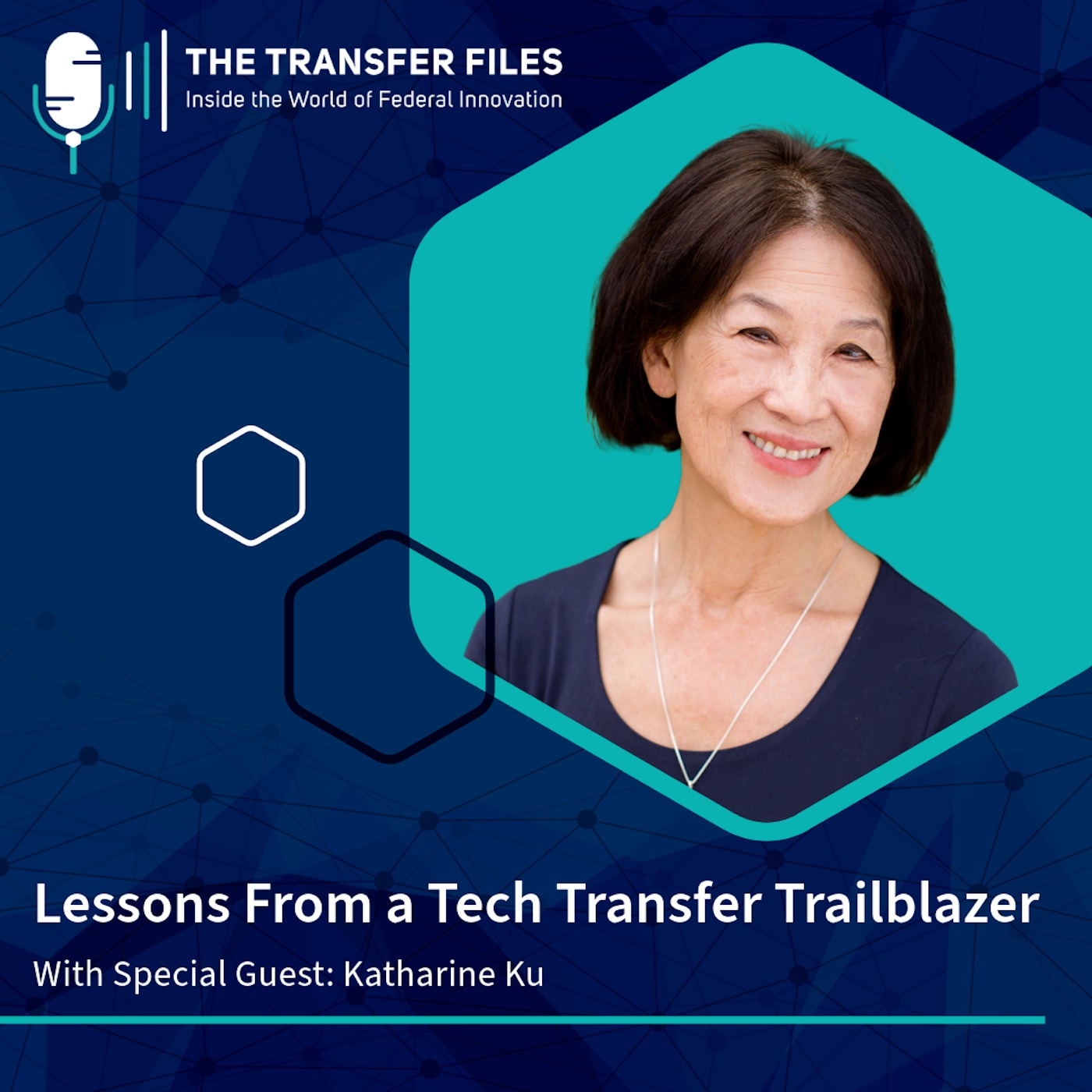 Lessons From a Tech Transfer Trailblazer With Katharine Ku Lessons From a Tech Transfer Trailblazer With Katharine Ku | The next world-changing innovation could be sitting in a university lab right now. How can it be brought to market? The answer is tech transfer bridging the gap between groundbreaking research and real-world impact. No one understands this process better than Katharine Ku. For nearly three decades, she led Stanford University’s Office of Technology Licensing, helping bring hundreds of technologies to market, including the early search engine that became Google. Now, as chief licensing advisor at Wilson Sonsini Goodrich & Rosati, she works with startups to help them navigate the challenges of licensing technology from universities. In this episode, I sit down with Katharine to talk about how she built Stanford’s tech licensing office into one of the most successful in the country, her philosophy on taking chances when it comes to licensing, and the biggest challenges tech transfer offices face today. Katharine shares the story behind the Nine Points to Consider in Licensing University Technology, which is a framework she helped create that guides universities in making licensing decisions to benefit both researchers and the public. She also reflects on how the role of tech transfer offices has expanded beyond just licensing. More and more, they’re being asked to support entrepreneurship, provide funding, and help build startup ecosystems. She talks about how universities are trying to balance these responsibilities while still keeping their core mission in focus. Whether you're an entrepreneur, researcher, or just curious about how university research turns into real-world products, this conversation is full of insights you won’t want to miss.In This Episode:[01:52] During Katharine's early career, she was a serial job changer. She noticed a posting at Stanford for a patent engineer. She thought she might give it a shot, since she had a patent at Monsanto and she was also an engineer.[02:54] This was at the end of 1979. She was involved in the tech transfer profession in the very early years.[03:21] She became president of AUTM in 1988.[04:10] She led the Stanford Office of Technology for 27 years. [05:31] Stanford was always very entrepreneurial and supportive of the faculty.[06:15] They've always believed in marketing and the philosophy of taking chances. The goal was to move the research results into the private sector in order to help the public.[07:56] With the cradle-to-grave model you have to know everything along the path of innovation.[08:15] The vision for the Stanford office was to do as many licenses as possible.[09:20] Google came out of Stanford. [11:26] Katharine talks about the Nine Points to Consider in Licensing University Technology. [13:54] The first point had to do with retaining the right for people at our university and other universities to practice any invention a university would file on.[15:29] This was an example of a university's understanding of the broader mission of tech transfer.[16:07] Challenges include having to do more and more. They have more responsibility to create an entrepreneurial ecosystem.[18:28] Advice for bridging the gap between universities and industry.[19:57] Katharine talks about her role at Wilson Sonsini Goodrich & Rosati.[21:25] Advice includes being at the intersection of technology, science, business, and law, as well as university, industry, and government, making it a very exciting field. There's endless things to learn. Stay curious!Resources: Katharine Ku - Wilson Sonsini Goodrich & RosatiKatharine Ku - LinkedInOffice of Technology LicensingNine Points to Consider in Licensing University TechnologyAUTM 2025 Annual Meeting | 23m 29s | ||||||
Showing 25 of 42
Sponsor Intelligence
Sign in to see which brands sponsor this podcast, their ad offers, and promo codes.
Chart Positions
1 placement across 1 market.
Chart Positions
1 placement across 1 market.