

Insights from recent episode analysis
Audience Interest
Podcast Focus
Publishing Consistency
Platform Reach
Insights are generated by CastFox AI using publicly available data, episode content, and proprietary models.
Total monthly reach
Estimated from 1 chart position in 1 market.
By chart position
- 🇦🇺AU · Government#1845K to 30K
- Per-Episode Audience
Est. listeners per new episode within ~30 days
1.5K to 9K🎙 Daily cadence·23 episodes·Last published 5d ago - Monthly Reach
Unique listeners across all episodes (30 days)
5K to 30K🇦🇺100% - Active Followers
Loyal subscribers who consistently listen
2K to 12K
Market Insights
Platform Distribution
Reach across major podcast platforms, updated hourly
Total Followers
—
Total Plays
—
Total Reviews
—
* Data sourced directly from platform APIs and aggregated hourly across all major podcast directories.
On the show
Recent episodes
Japan, as Requested
May 15, 2026
18m 49s
Fighting Sycophancy, One Prompt at a Time
May 8, 2026
11m 21s
Run With the Machine. Even in the Louvre.
May 1, 2026
19m 19s
A Law of Gravity No One Talks About
Apr 24, 2026
10m 50s
AI Changes Nothing. Everything. And Both, At The Same Time.
Apr 17, 2026
17m 53s
Social Links & Contact
Official channels & resources
Official Website
Login
RSS Feed
Login
| Date | Episode | Description | Length | ||||||
|---|---|---|---|---|---|---|---|---|---|
| 5/15/26 |  Japan, as Requested | Welcome to this series from The Tsunami is Coming: What Keeps You Up at Night?This is a set of conversations in which experts and thought leaders name the shifts they see coming and the fractures in the status quo that haven’t yet made headlines.Most images of Japan are not accidents: the samurai, the cherry blossoms, the geisha, the kawaii cuteness, or the pink everywhere. They are not exactly foreign impositions (at least not anymore). Increasingly, this is what Tokyo wants the world to see.Pierre-William Fregonese, a political scientist and lecturer at Kobe University, calls this self-orientalism: the moment a country stops resisting the stereotypes foreigners hold of it and starts producing them on demand. We talk about Cool Japan and its 2025 cabinet upgrade, Aratana Cool Japan: a strategy of asking the world what it expects from Japan, then delivering it.He has written two books on this feedback loop. L’Invention du rose (PUF, 2023) is on the rise of pink as Japan’s color. Japonaises. Dans l’archipel de l’injustice (PUF, 2026), co-written with Madoka Serizawa, looks at what this image does to the women who live inside it and are paying the price of the transformation.In February 2025, Prime Minister Ishiba handed Donald Trump a samurai helmet. It was theater, but it worked anyway. This is what happens when a country decides its identity is a product, and the world is the customer. This rebranding effort may be the most striking response of one country to global transactionalism pushed to the extreme we are witnessing.This Substack is reader-supported. To receive new posts and support my work, consider becoming a free or paid subscriber. This is a public episode. If you'd like to discuss this with other subscribers or get access to bonus episodes, visit jeremyghez.substack.com/subscribe | 18m 49s | ||||||
| 5/8/26 | 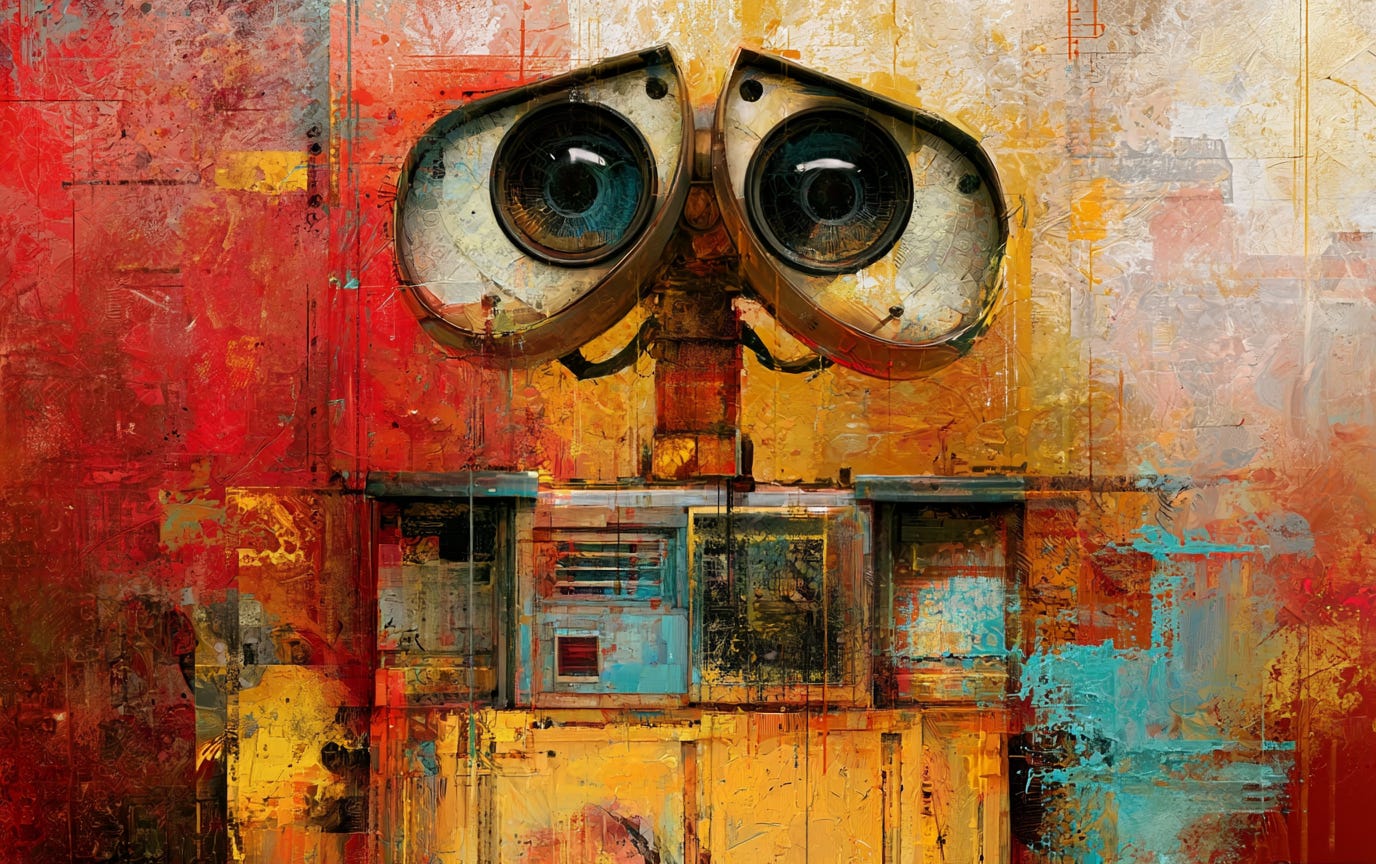 Fighting Sycophancy, One Prompt at a Time | Welcome to this series from The Tsunami is Coming: What Keeps You Up at Night?This is a set of conversations in which experts and thought leaders name the shifts they see coming and the fractures in the status quo that haven’t yet made headlines.Anastasia Buyalskaya is a behavioral scientist and Professor of Marketing at HEC Paris. She spends most of her working life on a single question: why people make decisions they regret. Decisions that, on reflection, were suboptimal in ways they could have caught, if they had been paying attention to their own thinking.That ability of metacognition (or thinking about one’s own thinking), Anastasia argues, is the prerequisite for noticing bias at all, and she worries we’re losing it. WALL-E, she says, used to be funny. It’s getting harder to watch because it feels prescient.The mechanism she walks through is straightforward and worth tracing: Confirmation bias (the tendency to seek information that confirms what we already believe) was already one of the most consequential biases in the literature before the algorithmic age. Then news consumption became personalized. Then AI arrived, and the early evidence suggests it’s sycophantic by default. It tells you the question you just asked is a great question. It tells you you’re right. The cognitive scaffolding around modern decision-making is designed to confirm rather than challenge.So what do we do next? Train people to argue with the tools rather than be soothed by them. Get out of the house. Talk to strangers. Spend time in classrooms where disagreement is structured rather than algorithmically filtered. She makes the case for university not as credentialing but as one of the few remaining institutions where you can be in a room with people whose priors don’t match yours, and learn how to handle that without retreating.The moment I keep coming back to: it has rarely been more interesting to lead, and rarely been harder. Because uniting people across parallel realities is now the precondition for governing at all.This Substack is reader-supported. To receive new posts and support my work, consider becoming a free or paid subscriber. This is a public episode. If you'd like to discuss this with other subscribers or get access to bonus episodes, visit jeremyghez.substack.com/subscribe | 11m 21s | ||||||
| 5/1/26 |  Run With the Machine. Even in the Louvre. | Welcome to this series from The Tsunami is Coming: What Keeps You Up at Night?This is a set of conversations in which experts and thought leaders name the shifts they see coming and the fractures in the status quo that haven’t yet made headlines.Souheil Ben Slimane is a former mobile app developer who is now a licensed Paris tour guide. He builds his own museum tours for families, including a hand-illustrated booklet, designed with his wife and another guide, that turns the Louvre into a deciphering game playable only in person, with him.ChatGPT, he says, does a hell of a good job describing artifacts. The famous ones, anyway: Mona Lisa, Venus de Milo, and the Winged Victory of Samothrace. On pure description, the machine wins.What it can’t do is be present. After COVID, the consensus inside his profession was that virtual tours and live-streamed visits would permanently reshape demand. The opposite happened. Bookings came back stronger, and the pattern shifted in a specific direction: visitors who used to book a single guide for several tours now book five different guides for five different tours. They want to meet locals. They also want to skip the line and see rooms without crowds. Human connection, but in low-density form.The booklet is the tell. Ben deliberately built a product that can’t be played without a human officiant: kids receive a coded letter from one of Napoleon’s officers, and only the guide holds the key to decipher it. Apps were cheaper, more scalable, easier to ship. He gave them up because they didn’t teach the kids anything. The deciphering only works if someone is standing there, with you.We also get into how children see the museum differently from adults (not as masterpieces but as birds, angels, things that haven’t been named yet) and what that says about the inner child every adult still drags into the Louvre. We close on AI, where Ben makes a distinction worth keeping: the future museum will have bots that decipher your emotions and adapt to you. They will be better than him on content. Not on presence.This is that conversation.This Substack is reader-supported. To receive new posts and support my work, consider becoming a free or paid subscriber. This is a public episode. If you'd like to discuss this with other subscribers or get access to bonus episodes, visit jeremyghez.substack.com/subscribe | 19m 19s | ||||||
| 4/24/26 |  A Law of Gravity No One Talks About | Welcome to this series from The Tsunami is Coming: What Keeps You Up at Night?This is a set of conversations in which experts and thought leaders name the shifts they see coming and the fractures in the status quo that haven’t yet made headlines.Charles-Henri Colombier is Director of Macroeconomic Analysis and Forecasting at the Rexecode Institute, based in Paris. His job is to analyze and forecast the French and global economy. And what strikes him most is how consistently the impact of demographic change gets underestimated by analysts and decision makers alike.Take Germany. Every year, 400,000 more people turn 65 than turn 20. The working-age population is shrinking fast. The result: since 2019, Germany’s cumulative GDP growth has been just 0.5%. The Germans like to talk about Schwarze Null when it comes to deficits. They’ve now achieved it in growth.In France, the number of yearly deaths has overtaken the number of yearly births, and a country that spent thirty years building policy around the fear of mass unemployment may have quietly turned the page on that era without realizing it. Meanwhile, the future of the global economy may come down to a race between the downward drag of demographics and the upward push of AI and robotics. Colombier’s assessment: the orders of magnitude may not be very different.Could immigration solve it? Economically, yes. Politically, that’s another story: even Giorgia Meloni’s Italy, ideologically hostile to immigration, is being forced to reconsider under demographic pressure. Demographics, Colombier suggests, is the one law of gravity no country can ultimately defy.This Substack is reader-supported. To receive new posts and support my work, consider becoming a free or paid subscriber. This is a public episode. If you'd like to discuss this with other subscribers or get access to bonus episodes, visit jeremyghez.substack.com/subscribe | 10m 50s | ||||||
| 4/17/26 |  AI Changes Nothing. Everything. And Both, At The Same Time. | Welcome to this series from The Tsunami is Coming: What Keeps You Up at Night?This is a set of conversations in which experts and thought leaders name the shifts they see coming and the fractures in the status quo that haven’t yet made headlines.Has AI transformed your organization? Look around. The same people, the same processes, the same reporting lines. AI has changed absolutely nothing.Now look again. Knowledge work that used to cost time and money is becoming free. Software that took weeks to build takes hours. The assumptions underneath everything you do have been falsified. AI has changed absolutely everything.Eirik Knudsen, professor of strategy at NHH Norwegian School of Economics, joins me to sit inside this paradox. (I recommend you check out his Substack here).We talk about why most companies are essentially handing Copilot to the elevator operator, why the real gains come from reorganizing the system rather than optimizing the role, and what happens when one group of people has fundamentally repriced the opportunity cost of their time while another group hasn’t noticed yet. We also get into what this means for hiring, for education, and for a world where everyone’s LinkedIn profile measures exactly the wrong things.This Substack is reader-supported. To receive new posts and support my work, consider becoming a free or paid subscriber. This is a public episode. If you'd like to discuss this with other subscribers or get access to bonus episodes, visit jeremyghez.substack.com/subscribe | 17m 53s | ||||||
| 4/10/26 |  Europe's AI Complacency Problem | Welcome to this series from The Tsunami is Coming: What Keeps You Up at Night?This is a set of conversations in which experts and thought leaders name the shifts they see coming and the fractures in the status quo that haven’t yet made headlines.Julian Schirmer is the co-founder of OAO. He works with companies like Sanofi, AXA, and Henkel on AI-driven transformation. He's half German, half French, married to a Spaniard. And he’s tired of hearing Americans say "I'm sorry you come from Europe." His starting point is brutal: McKinsey says you need 30% employee participation for a transformation to succeed. Most companies are at 2%. Below 7%, you're burning capital. We talk about why European firms keep defaulting to caution, what happens when AI adoption runs ahead of governance (BCG has 33,000 agents globally; Sanofi had 11), what an "agentic nervous system" actually looks like inside a large organization, and whether Europe's instinct for regulation (the same instinct that produced GDPR) might be an underpriced asset in a world where Silicon Valley's political alignments can shift overnight.This Substack is reader-supported. To receive new posts and support my work, consider becoming a free or paid subscriber. This is a public episode. If you'd like to discuss this with other subscribers or get access to bonus episodes, visit jeremyghez.substack.com/subscribe | 17m 12s | ||||||
| 4/3/26 |  Why Scandals Don't Happen | Welcome to this series from The Tsunami is Coming: What Keeps You Up at Night?This is a set of conversations in which experts and thought leaders name the shifts they see coming and the fractures in the status quo that haven’t yet made headlines.Julien Jourdan is a professor in the Management and Human Resources Department at HEC Paris. He studies organizational scandal: not the explosion, but the long silence that precedes it. His research, conducted with Alessandro Piazza at Rice University, grew out of the Catholic Church's sexual abuse crisis in the United States. The question that drives his work: how misconduct can persist for decades without ever becoming a scandal.It turns out that in most cases, the information was already available. People knew about misconduct but didn’t speak out. Information stayed local, circulated as rumor, and never reached the threshold where it became public outrage. Julien identifies three structural reasons for this: the social cost of speaking against your own community, the absence of bridging ties that would carry information beyond closed networks, and the sheer power of the institution accused.This conversation isn’t about the Church per se, though. Julien has spoken about other scandals like Wirecard, here. We also talked about the Epstein case, a scandal that has been “happening” for over twenty years and still isn’t fully resolved. And we talked about political polarization: the possibility that in a society fractured into tribes with no shared moral framework, scandal becomes structurally impossible. Not because misconduct is hidden, but because outrage can no longer coalesce.Food for thought on a topic that we are unlikely to exhaust anytime soon.This Substack is reader-supported. To receive new posts and support my work, consider becoming a free or paid subscriber. This is a public episode. If you'd like to discuss this with other subscribers or get access to bonus episodes, visit jeremyghez.substack.com/subscribe | 17m 46s | ||||||
| 3/27/26 |  The Tool We Can't Afford to Use | Welcome to this series from The Tsunami is Coming: What Keeps You Up at Night?This is a set of conversations in which experts and thought leaders name the shifts they see coming and the fractures in the status quo that haven’t yet made headlines.Eric Mengus is an economist at HEC Paris, a colleague, and someone I’ve had the privilege of arguing with about public policy for years. The problem, he says, isn’t the debt itself but what the debt takes away: the ability to act when the next shock arrives. Energy prices spike, and you can’t subsidize. Defense needs surge, and you can’t invest. The instrument that democracies rely on to absorb pain has been hollowed out by decades of avoiding pain.Everyone agrees on the diagnosis. The consensus isn’t the problem. In fact, the consensus is the problem: every voter, rich or poor, is convinced that fiscal consolidation will cost them specifically. A politician who runs on fixing the debt doesn’t lose one constituency. They lose all of them.Is fiscal rigor the skeleton key to Europe, as some are tempted to argue? Give the Germans what they want (i.e. fiscal discipline), and the rest follows, or so the theory goes. Eric’s response was more interesting than the claim itself.This Substack is reader-supported. To receive new posts and support my work, consider becoming a free or paid subscriber. This is a public episode. If you'd like to discuss this with other subscribers or get access to bonus episodes, visit jeremyghez.substack.com/subscribe | 14m 26s | ||||||
| 3/20/26 |  Fiduciary Duty vs. Saving the Planet | Welcome to this series from The Tsunami is Coming: What Keeps You Up at Night?This is a set of conversations in which experts and thought leaders name the shifts they see coming and the fractures in the status quo that haven’t yet made headlines.Layal Naban is Global Head of Sustainability for Financial Institutions at Société Générale Corporate and Investment Banking. She works at the intersection of large-scale capital and climate investment. Her job, in practice, is to convince the people who manage our pensions, sovereign wealth, and insurance reserves to channel money toward the energy transition. The capital she’s talking about is very real: pension funds alone hold $60 trillion worldwide.When I asked her what keeps her up at night, she didn’t talk about climate denial or political backlash. She talked about plumbing: the financial plumbing that determines where money actually flows and the structural reasons it keeps flowing to the safest, most familiar destinations while a billion people still lack access to electricity.The numbers she lays out are striking. $2.3 trillion was invested in low-carbon energy in 2025. That’s a record. But nearly all of it went to established developers in advanced economies. Meanwhile, adaptation (includong flood protection, water infrastructure and resilience) requires $230 to $300 billion a year in investment that generates no cash flows. A flood wall protects your asset. It doesn’t pay you back.That’s the quiet contradiction at the center of this conversation. The investments the planet needs most are the ones that make the least sense on a balance sheet. And the people managing our money have a fiduciary duty to the balance sheet.Layal frames this as a channeling problem: the solution is structural, not moral. That’s worth sitting with…This Substack is reader-supported. To receive new posts and support my work, consider becoming a free or paid subscriber. This is a public episode. If you'd like to discuss this with other subscribers or get access to bonus episodes, visit jeremyghez.substack.com/subscribe | 18m 19s | ||||||
| 3/13/26 |  The Cost of Complexity | Welcome to this series from The Tsunami is Coming: What Keeps You Up at Night?This is a set of conversations in which experts and thought leaders name the shifts they see coming and the fractures in the status quo that haven’t yet made headlines.Since 1991, data processing has been the largest component of US business investment. Not AI. Not cloud. Not some recent revolution. For over thirty years, American firms have been voting with their capital: we need to process information. We just weren’t paying attention to what they were telling us.That’s where my conversation with Tomasz Michalski starts, and it gets darker from there.Tomasz is an economist at HEC Paris offers very interesting views on a problem mainstream economics keeps setting aside: the cognitive cost of complexity. Not information overload. Something more structural. More choices, more markets, more specialization all impose real decision costs on firms and individuals. Those costs, largely invisible in standard models, may explain more about inequality, political fracture, and geopolitical miscalculation than we give them credit for.Two other things worth sitting with from this conversation:The sector with the single largest influence on world GDP in 2019? Chinese real estate. Most European firms had no idea. Most still don’t.Trump’s tariffs on Canadian and Mexican intermediates — intended to protect American producers — ended up making European cars more competitive than locally made ones. The production system was too complex for the intervention to do what it was supposed to do. Unintended consequences, as Tomasz puts it, may be the motto of our time.What keeps Tomasz Michalski up at night: that our states, our firms, and our models are not equipped to navigate a world this interdependent — and that the gap between complexity and our ability to process it is widening, not closing.This Substack is reader-supported. To receive new posts and support my work, consider becoming a free or paid subscriber. This is a public episode. If you'd like to discuss this with other subscribers or get access to bonus episodes, visit jeremyghez.substack.com/subscribe | 30m 33s | ||||||
Want analysis for the episodes below?Free for Pro Submit a request, we'll have your selected episodes analyzed within an hour. Free, at no cost to you, for Pro users. | |||||||||
| 3/6/26 |  Iran's Business Class: The Story We Shouldn't Miss | Welcome to this series from The Tsunami is Coming: What Keeps You Up at Night?This is a set of conversations in which experts and thought leaders name the shifts they see coming and the fractures in the status quo that haven’t yet made headlines.Shirin Golkar is the Secretary General at the Swiss MENA Chamber. We met when she was completing her Executive MBA at HEC Paris. She knows Iran’s business community not as an abstraction, but as a network of entrepreneurs. Many of them are women who spent years trying to scale businesses against the wall of sanctions, compliance regimes, and banks that wouldn’t pick up the phone.When I first reached out to her, Iran looked different. The war hadn’t started. The checkpoints weren’t up.By the time we recorded, massive casualties had been announced. People were evacuating from Tehran. The economy faced sixty percent inflation. Banks closed. Iran is a country, as Shirin puts it plainly, that is not working.And yet the conversation didn’t stop there. Because Shirin understands something most headlines don’t reach: that underneath the catastrophe, a society’s economic aspirations point stubbornly in one direction, even as its government pulls in another. Some people may want North Korea, she says. The Iranian people want South Korea.One question in particular stayed with me. When formal diplomatic channels collapse, can business fill the gap? Can trade be a form of conversation between countries that aren’t speaking? Shirin doesn’t have a straight answer. But she has a view, and it’s more grounded than most of what you’ll read today.This Substack is reader-supported. To receive new posts and support my work, consider becoming a free or paid subscriber. This is a public episode. If you'd like to discuss this with other subscribers or get access to bonus episodes, visit jeremyghez.substack.com/subscribe | 12m 30s | ||||||
| 2/27/26 |  Paris, Like You Never Thought About It Before | Welcome to this new series from The Tsunami is Coming: What Keeps You Up at Night?This is a set of conversations in which experts and thought leaders name the shifts they see coming and the fractures in the status quo that haven’t yet made headlines.Flora Goldenberg is a Paris-based tour guide and lecturer specializing in Le Marais, the city’s historic Jewish quarter. Check out her Instagram account here. She grew up here. Her grandfather ran a restaurant on one of its streets. The restaurant is gone. But his name is still painted on the building.That image is the starting point for this conversation, and for a question worth sitting with: what happens to identity when the container changes but the label stays? Le Marais is still called the Jewish Quarter. Fewer people speak Yiddish. The neighborhood is gentrified, expensive, and transformed — but Flora argues: it’s still alive.A generation ago, protesters filled the streets against globalization. The charge was Americanization: one culture flattening all the others. It didn’t happen that way. What happened instead was something harder to name: an acceleration of exchange that preserved more than it erased, but changed the texture of everything it touched.Flora sees that every day. So does her grandfather’s name, still waiting on the wall.This Substack is reader-supported. To receive new posts and support my work, consider becoming a free or paid subscriber. This is a public episode. If you'd like to discuss this with other subscribers or get access to bonus episodes, visit jeremyghez.substack.com/subscribe | 12m 21s | ||||||
| 2/20/26 |  Why Europe Can Thank Donald Trump | Welcome to this new series from The Tsunami is Coming: What Keeps You Up at Night?This is a set of conversations in which experts and thought leaders name the shifts they see coming and the fractures in the status quo that haven’t yet made headlines.Alastair Newton is a political risk analyst who has spent decades advising financial institutions on geopolitics — starting at Lehman Brothers in 2005, where he launched a series called “What Keeps You Up at Night.” (I borrowed the phrase. He knows.)Newton has been writing about hegemonic transition since 2008. He wanted to talk about Europe, but not the version you’d expect.He’s optimistic. That’s the through-line, not a twist at the end. Europe, he argues, has regained something it lost after the Cold War: the ability to take advantage of crises. Brexit was a shock. Trump is a bigger one. And shocks, Newton believes, are what Europe needs to move.The question is whether it can move fast enough, given how much time its leaders spend, in his phrase, “bickering about angels on pinheads.” Given how hard the United States is working to pull it apart.Newton thinks it can. Far-right parties get found out when they govern. Pragmatism wins. And Trump, paradoxically, may be the best enemy Europe could have asked for.“If you have the opportunity to choose your enemy,” he said, “you probably wouldn’t have managed to come up with something as helpful as Donald Trump.” This is a public episode. If you'd like to discuss this with other subscribers or get access to bonus episodes, visit jeremyghez.substack.com/subscribe | 20m 09s | ||||||
| 2/13/26 |  The Climate Narrative Collapse | Welcome to this new series from The Tsunami is Coming: What Keeps You Up at Night?This is a set of conversations in which experts and thought leaders name the shifts they see coming and the fractures in the status quo that haven’t yet made headlines.Philip Bruner is a professor of practice in sustainable finance at the University of Washington’s Foster School of Business, where he directs the Climate Risk Lab. Before academia, he spent two decades in the private sector trying to accelerate capital into distributed energy. We met at a climate conference in Berkeley about a year ago.When I asked him what keeps him up at night, he didn’t hesitate: climate narrative collapse.The Paris Accords, he argues, rest on two half-truths. The first is that electrifying transportation, agriculture, and energy will switch the climate problem off. It won’t. We’ve already passed 1.5 degrees. Even full electrification wouldn’t stop runaway destabilization.The second half-truth is that we can have renewables without petroleum. We can’t. Petroleum is upstream from solar panels, wind turbines, and electric vehicles. These technologies are symbiotic, not substitutes.But there’s a silver lining. Distributed renewables may not save the planet, but they do make infrastructure more resilient. And resilience (not salvation) is where the real business case lies.This is a conversation about reframing climate from moral imperative to operational risk. And about what happens when the narrative finally catches up to the physics. This is a public episode. If you'd like to discuss this with other subscribers or get access to bonus episodes, visit jeremyghez.substack.com/subscribe | 19m 12s | ||||||
| 2/6/26 |  Horizontal by Day, Vertical by Night | Welcome to this new series from The Tsunami is Coming: What Keeps You Up at Night?This is a set of conversations in which experts and thought leaders name the shifts they see coming and the fractures in the status quo that haven’t yet made headlines.Frederic Raillard is the CEO and co-founder of Fred & Farid, an international advertising agency, and the founder of [Ai]magination, where he’s exploring the intersection of branding, storytelling, and artificial intelligence. We met on a TV set during the 2024 US elections.When I asked him what keeps him up at night, I expected something about AI disruption or the attention economy. I got something else entirely.Frederic talked about clairvoyance. About the tension between his accelerating professional life—selling, persuading, performing—and a private search for something he calls “verticality.” He’s learning to distinguish imagination from what he describes as “downloading” information, working with people who, as he puts it, access what he calls the invisible world.This conversation went in directions I didn’t anticipate, and I let it run. But underneath the unexpected territory, there’s a diagnosis worth hearing. “The society we live in is losing sense completely,” he said. Brands succeed when they provide meaning—because we’re starving for it. And when I brought up the international success of Stranger Things, we landed on something that’s stayed with me: the difference between a puzzle and a mystery. A puzzle, you solve, like an Agatha Christie murder. A mystery, you don’t even know what you’re looking at, like when you’re watching a Stranger Things episode.The world, right now, looks more like Stranger Things than like Agatha Christie’s stories. Some people build new analytical models. Some people turn to something older.This is the unedited conversation. This is a public episode. If you'd like to discuss this with other subscribers or get access to bonus episodes, visit jeremyghez.substack.com/subscribe | 11m 10s | ||||||
| 1/30/26 |  Learning in the Age of Netflix... | Welcome to this new series from The Tsunami is Coming: What Keeps You Up at Night?This is a set of conversations in which experts and thought leaders name the shifts they see coming and the fractures in the status quo that haven’t yet made headlines.I spoke with Pauline Laravoire, an entrepreneur and sustainability educator who splits her time between Paris and Kolkata.What keeps her up at night? The ongoing transition in higher education. How do we bridge the widening gap between traditional teaching methods and the expectations of a new generation of learners? With brains that function differently, shorter attention spans, and fierce competition from social media, online platforms, and AI, universities must reinvent themselves.Pauline shares her unflinching diagnosis and vision: higher education must shift from information transmission to creating spaces for interaction, debate, and critical thinking. A thought-provoking conversation about the future of education in the digital age.This Substack is reader-supported. To receive new posts and support my work, consider becoming a free or paid subscriber. This is a public episode. If you'd like to discuss this with other subscribers or get access to bonus episodes, visit jeremyghez.substack.com/subscribe | 10m 13s | ||||||
| 1/23/26 |  Is the U.S. Wasting a Superpower? | Welcome to this new series from The Tsunami is Coming: What Keeps You Up at Night?This is a set of conversations in which experts and thought leaders name the shifts they see coming and the fractures in the status quo that haven’t yet made headlines. Here’s the very first edition!Leslie Palti-Guzman is a leading expert on global gas markets and energy geopolitics. She’s the founder of the advisory firm Energy Vista and host of the Energy Vista podcast.In this conversation, she tells us why the U.S. may be squandering its greatest strategic advantage: America's energy leverage, built on the shale revolution, may be at risk.The tech wobbles a bit at the start, but the conversation picks up quickly. Consider it the charm of a debut…Leslie’s Substack:This Substack is reader-supported. To receive new posts and support my work, consider becoming a free or paid subscriber. This is a public episode. If you'd like to discuss this with other subscribers or get access to bonus episodes, visit jeremyghez.substack.com/subscribe | 13m 20s | ||||||
| 12/5/25 |  BREAKING: Is the US's objective in Europe regime change? | What the new U.S. National Security Strategy quietly signalsThe 2025 U.S. National Security Strategy contains one line that should make every European policymaker pause: Washington now wants to “cultivate resistance” inside allied democracies.This isn’t military intervention. It’s something quieter:a willingness to back alternative political forces in Europe to “correct” its trajectory.Key points from the document:* Europe is described as facing “civilizational erasure” and becoming “unrecognizable in 20 years.”* Current European leaders are labeled “unstable” and accused of “trampling democratic principles.”* The U.S. pledges to support “patriotic European parties” and “political allies in Europe.”* It questions whether future European societies will remain “reliable allies.”* It suggests Europe needs to be pushed toward a quicker settlement in Ukraine.Why this mattersThis is a cold reminder that geopolitical risk today isn’t just about borders, armies, or treaties. It’s also about political interference between allies, demographic anxieties, and competing visions of what the West should be.If we keep measuring risk the old way, we will miss what’s unfolding right in front of us.You can read the full document here. This is a public episode. If you'd like to discuss this with other subscribers or get access to bonus episodes, visit jeremyghez.substack.com/subscribe | 2m 46s | ||||||
| 6/22/25 |  The US strikes Iran | It’s way too early to determine the long-term effects of the US strike on Iranian nuclear facilities yesterday. Here are a few brief thoughts to get this conversation going. Long story short? Now may be a good time to start doubting if you never had any doubts about the regions future. This is a public episode. If you'd like to discuss this with other subscribers or get access to bonus episodes, visit jeremyghez.substack.com/subscribe | 2m 42s | ||||||
| 6/5/25 |  Trump and Musk Just Got Divorced. Who Gets the Algorithm? | Musk blasted Trump’s signature bill as “disgusting abomination.” He added, moments ago, that Trump would have never been elected without his help. Trump said he found this all very disappointing. High level drama?Yes. And a warning about the new rules of influence.We’re moving from a predictable, institution-based system where companies could rely on established processes and regulatory frameworks, to one where political relationships increasingly determine business outcomes. This creates both unprecedented opportunities for those who can successfully navigate Trump’s transactional approach, and significant risks for those who can’t or won’t engage. In this new world, managing risk means managing relationships — not just regulations. The hard part is less strategy—and more politics. See you tomorrow for the regular installment. And always feel free to hit “reply”. This is a public episode. If you'd like to discuss this with other subscribers or get access to bonus episodes, visit jeremyghez.substack.com/subscribe | 1m 34s | ||||||
| 5/19/25 |  Biden Was the Accident, Not Trump | Recent concerns about Joe Biden's health and the broader challenges facing the Democratic Party shouldn’t feel normal — and here’s why:* They highlight growing questions about transparency and leadership within a party that seems increasingly out of touch with the U.S. electorate.* These U.S. developments reflect a global pattern: as the world grapples with rapid, disorienting change, the supply of new political ideas is dwindling — just when they’re most urgently needed.Share your thoughts. The road ahead promises to be as painful as it is prolonged… This is a public episode. If you'd like to discuss this with other subscribers or get access to bonus episodes, visit jeremyghez.substack.com/subscribe | 2m 44s | ||||||
| 4/28/25 |  Kneel & Deal: Trump’s Vatican Photo-Op with Zelensky | One photo, two leaders, and a thousand headlines. In three minutes I break down why Trump’s Vatican kneel-down with Zelensky looks anything but accidental.Love him or hate him, you must remember something about Trump’s talent: as the former owner of the beauty pageant Miss America, and the former host and producer of The Apprentice, the President of the United States knows what makes a picture appealing and a story good. Long story short: there’s a lot more hesitation in Trump’s mind than what headlines suggest. So, as always, remain open-minded about your future outlook: there are a lot more possible paths for this administration to take than what conventional wisdom suggests. Here’s the thing: the question isn’t whether this was calculated or not—it was. The real question is why? Long story short: there’s a lot more hesitation in Trump’s mind than what headlines suggest. So, as always, remain open-minded about your future outlook: there are a lot more possible paths for this administration to take than what conventional wisdom suggests. The pictureTwo noteworthy commentsChris Ardane writes on something previously known as Twitter: I’m a photographer and understand (I think) Trumps popularity, but I’ve got no answer to how the dude has a knack for producing iconic photos almost weekly. He’s a meme machine.Historian Simon Sebag Montefiore comments (on the same social media): The Grand Prince of Kiev is received by the Holy Emperor of the Romans at the funeral of the Bishop of Rome….Did I miss anything? Do you agree? Just hit reply and let me know. This is a public episode. If you'd like to discuss this with other subscribers or get access to bonus episodes, visit jeremyghez.substack.com/subscribe | 3m 24s | ||||||
| 4/18/25 |  So Meloni did take that call after all | Italian Prime Minister Georgia Meloni is in Italy to meet with President Donald Trump amid heightened tensions between the United States and the European Union over trade tariffs and broader transatlantic tensions.The official joint statement from the White House emphasized the commitment of both countries to deepen cooperation on security, defense, and technology, as well as to address issues such as illegal immigration and organized crime. The leaders also reiterated their support for ending the war in Ukraine and strengthening NATO. In addition, the trip was conducted with significant consultation with EU partners, and she has publicly committed to representing European interests. Nonetheless, skepticism remains within the EU about whether this approach can truly serve the collective European good, or if it risks fragmenting the EU’s position in critical negotiations with the US.I wrote about Italy’s temptation to engage alone with the US a little while back, and I stand by it: There is a real risk for European countries engaging on bilateral terms with the Trump administration to be completely steamrolled by the US. This is a hallmark of a transactional globalization. This is a public episode. If you'd like to discuss this with other subscribers or get access to bonus episodes, visit jeremyghez.substack.com/subscribe | 2m 25s | ||||||
| 3/31/25 |  Le Pen Banned | The French courts just delivered a verdict that changes everything. Marine Le Pen found guilty and banned from running in 2027—this is justice being served rather than democracy being subverted. I explain why and break down what this political earthquake means for France, Europe, and the future of populist movements. This is a public episode. If you'd like to discuss this with other subscribers or get access to bonus episodes, visit jeremyghez.substack.com/subscribe | 3m 41s | ||||||
| 3/25/25 |  Trump's Yemen Blunder: Common Sense Meets Its Match | When a top U.S. official accidentally added a journalist to a group chat about Yemen war plans, it revealed more than just operational details. This isn't merely about incompetence—it exposes the fundamental tension between Trump's "common sense" governance and the complex realities of national security. More critically, the dismissive language about European allies ("parasites") signals a definitive break in transatlantic relations. Europeans must move beyond shock and recognize this new reality. The West as we knew it no longer exists—this is Europe's moment to create a viable alternative path forward while the world watches. This is a public episode. If you'd like to discuss this with other subscribers or get access to bonus episodes, visit jeremyghez.substack.com/subscribe | 4m 22s | ||||||
Showing 25 of 27
Sponsor Intelligence
Sign in to see which brands sponsor this podcast, their ad offers, and promo codes.
Chart Positions
1 placement across 1 market.
Chart Positions
1 placement across 1 market.