The TWIML AI Podcast (formerly This Week in Machine Learning & Artificial Intelligence)
by Sam Charrington
Is this your podcast?On the show
From 20 epsHost
Recent guests
Recent episodes
Your Ranking Model Is Optimizing the Wrong Thing with Zoe Weil - #780
Oct 15, 2026
52m 44s
Why Jev Is Changing How We Build With AI with Diogo Almeida - #779
Oct 6, 2026
1h 30m 09s
From Math Olympiads to Navier-Stokes: How Fast Is AI Progressing? with Greg Burnham - #778
Sep 29, 2026
1h 07m 48s
From Voice Agents to AI Avatars with Alexander Smola - #777
Sep 17, 2026
1h 04m 58s
Do AI Tokenomics Matter More Than Model Benchmarks? with Chris Potts - #776
Sep 9, 2026
59m 29s
Insights from recent episode analysis
Audience Interest
Podcast Focus
Publishing Consistency
Platform Reach
Insights are generated by CastFox AI using publicly available data, episode content, and proprietary models.
Most discussed topics
Brands & references
Total monthly reach
Based on 1 signal.
Built from
By chart position
- 🇺🇸United States · TechnologyHOME#10814K to 74K
- 🇮🇳India · Technology#562.5K to 13K
- 🇬🇧United Kingdom · Technology#1001.2K to 6.1K
- 🇳🇱Netherlands · Technology#51880 to 4.7K
- 🇫🇷France · Technology#94650 to 3.4K
- Per-Episode Audience
Est. listeners per new episode within ~30 days
21K to 110K🎙 ~2x weekly·793 episodes·Last published 4d ago - Monthly Reach
Unique listeners across all episodes (30 days)
42K to 221K🇺🇸67%🇮🇳12%🇬🇧6%+5 more - Active Followers
Loyal subscribers who consistently listen
23K to 121K
Market Insights
Platform Distribution
Reach across major podcast platforms, updated hourly
Total Followers
—
Total Plays
—
Total Reviews
—
* Data sourced directly from platform APIs and aggregated hourly across all major podcast directories.
Social Links & Contact
Official channels & resources
Official Website
Login
RSS Feed
Login
| Date | Episode | Topics | Guests | Brands | Places | Keywords | Sponsor | Length | |
|---|---|---|---|---|---|---|---|---|---|
| 10/15/26 |  Your Ranking Model Is Optimizing the Wrong Thing with Zoe Weil - #780 | In this episode, Zoe Weil, co-founder and CEO of Sequen, joins us to discuss how ranking systems can use live behavioral signals to optimize for purchases rather than clicks or search relevance alone. Zoe explains why approaches developed at data-rich social platforms don’t necessarily translate to retailers and how Sequen uses scroll speed, hover duration, and other in-session interactions to infer shopper intent without relying on user identity. We explore the company’s large event models and its architecture of specialized models that transform streaming events into features for downstream rankers. Zoe describes the infrastructure required to serve dynamic rankings within milliseconds, why the team chose Rust for its backend, and how evaluation harnesses connect model improvements to business outcomes. We also discuss the tradeoffs between advertising and organic revenue, continuous model improvement, and the boundary between useful personalization and surveillance. 🗒️ Full show notes: https://twimlai.com/go/780. | 52m 44s | ||||||
| 10/6/26 |  Why Jev Is Changing How We Build With AI with Diogo Almeida - #779 | In this episode, Diogo Almeida, co-founder and CEO of TypeSafe, joins us to discuss Jev, TypeSafe’s recently released model for bringing fast, reliable intelligence directly into software. We explore the idea of “machine-native intelligence” and why Diogo believes models optimized for generating text are poorly suited to many of the decisions required for real-world automation. He explains how Jev differs from traditional classifiers and LLM-based approaches, the role of reinforcement learning from calibrated decisions (RLCD), and why calibration and reliability are central to making AI useful as a software primitive. We also discuss the relationship between models and code, why Diogo believes AI systems should become more engineered rather than relying on a single model to do everything, and how Jev-like models could reshape agents, tool use, and the architecture of AI-powered software. 🗒️ Full show notes: https://twimlai.com/go/779. | 1h 30m 09s | ||||||
| 9/29/26 | 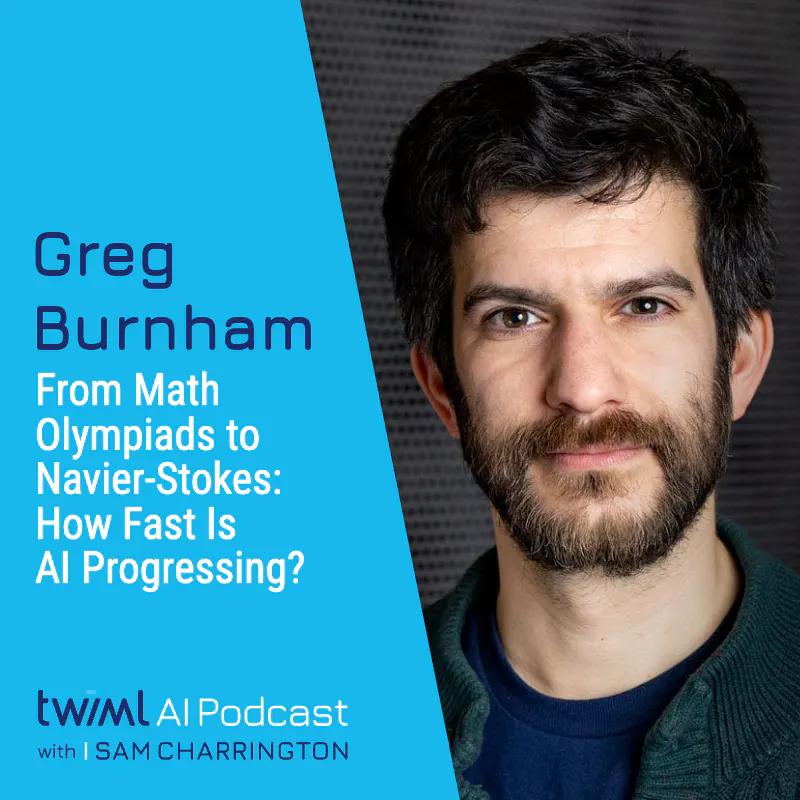 From Math Olympiads to Navier-Stokes: How Fast Is AI Progressing? with Greg Burnham - #778 | AI systems have gone from struggling with grade-school math to helping solve research problems that have resisted mathematicians for decades, including Navier-Stokes. In this episode, Greg Burnham, who leads AI capabilities research at Epoch AI, joins us to examine what that progress says about where AI is going. We look at how these systems are solving hard math problems, how much they rely on persistence and prior human work, and whether they are starting to produce genuinely new ideas. We also discuss how to measure progress as traditional benchmarks become less useful, why capability gains appear surprisingly steady across model generations, and where models still struggle with open-ended work, learning from experience, and identifying promising new research directions. 🗒️ Full show notes: https://twimlai.com/go/778. | 1h 07m 48s | ||||||
| 9/17/26 | 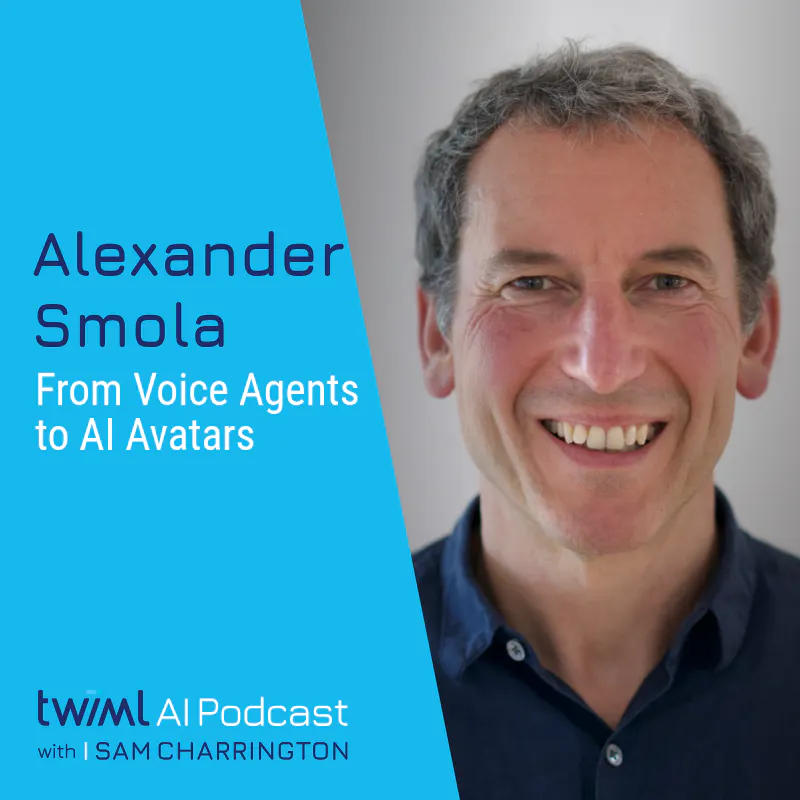 From Voice Agents to AI Avatars with Alexander Smola - #777 | Voice AI has gotten remarkably good, but natural conversation remains a high bar. Small delays, awkward interruptions, or the wrong tone can quickly break the illusion—and adding vision and visual presence only raises the stakes. In this episode, Alex Smola, co-founder and CEO of Boson AI, explores the path from today’s voice agents to audiovisual agents and AI avatars. We discuss the technical tradeoffs behind real-time voice, including audio tokenization, latency, model size, and inference cost, as well as what changes when these systems can both see and be seen. We also explore the role of emotional intelligence in AI, how agents can learn from human interactions, and what it will take to move beyond impressive demos toward interactions that actually feel natural. 🗒️ Full show notes: https://twimlai.com/go/777. | 1h 04m 58s | ||||||
| 9/9/26 |  Do AI Tokenomics Matter More Than Model Benchmarks? with Chris Potts - #776 | As reasoning models consume more tokens and AI systems become more expensive to run, understanding what those tokens actually buy is becoming increasingly important. In this episode, Stanford professor and Big Spin co-founder Chris Potts joins us to discuss AI tokenomics and his research into “tokenflation”—the possibility that token usage is growing faster than the measurable value those tokens produce. We explore how to measure the return on AI spending, why benchmarks alone provide an incomplete picture of model progress, and what inference-time scaling means for the economics of increasingly capable models. Chris also explains why expert AI users tend to get better results by challenging and iterating with models, how AI fluency affects outcomes, and why more efficient architectures could change the underlying economics. We also discuss DSPy, interpretability, the limits of today’s transformer architectures, and where Chris sees opportunities for more fundamental innovation in AI. 🗒️ Full show notes: https://twimlai.com/go/776. | 59m 29s | ||||||
| 9/1/26 | world modelsspatial AI+5 | Justin Johnson | Marble systemWorld Labs | — | world modelsspatial AI+5 | — | 1h 06m 02s | ||
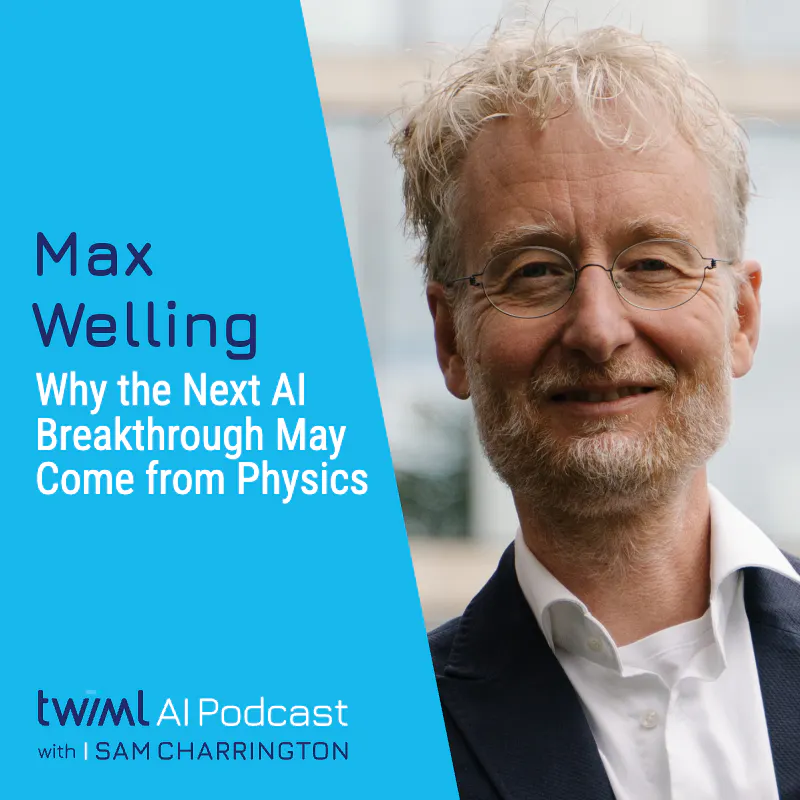
| 8/26/26 | AI breakthroughsphysics in AI+3 | Max Welling | CuspAIUniversity of Amsterdam | — | AIphysics+5 | — | 58m 05s | ||
| 8/12/26 | image generationtext-to-image models+3 | Fatih Porikli | Qualcomm | — | image generationtext-to-image+6 | — | 56m 47s | ||
| 7/27/26 | AI modelstraining datasets+4 | Damian Borth | University of St. Gallen | — | AImachine learning+5 | — | 47m 00s | ||
| 7/8/26 | AIolfactory intelligence+4 | Alex Wiltschko | Osmo | — | AIsmell+5 | — | 59m 55s | ||
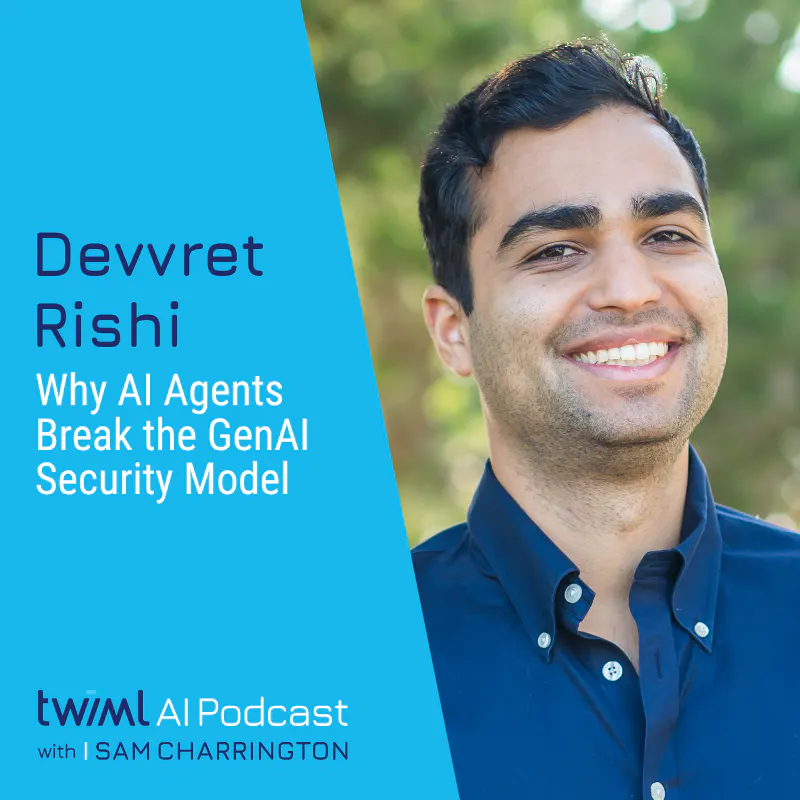
| 6/16/26 | AI agentsGenAI security+4 | Dev Rishi | Rubrik | — | AI agentsGenAI+5 | — | 56m 18s | ||
| 6/9/26 | retrieval-augmented generationAI in tax law+4 | Alex Bowcut | SphereTRAM (Tax Review and Assessment Model) | — | retrieval-augmented generationAI+5 | — | 51m 32s | ||
| 5/21/26 | AI for sciencerelational deep learning+4 | Jure Leskovec | AI Virtual CellESM+8 | — | relational deep learningenterprise data+5 | — | 1h 06m 23s | ||
| 5/7/26 | LLM systemsobservability+4 | Scott Clark | Distributional | — | LLMobservability+5 | — | 53m 19s | ||
| 4/30/26 | AI inference systemsGPU programming+4 | Philip Kiely | vLLMSGLang+2 | — | inference engineeringGPU programming+5 | — | 54m 51s | ||
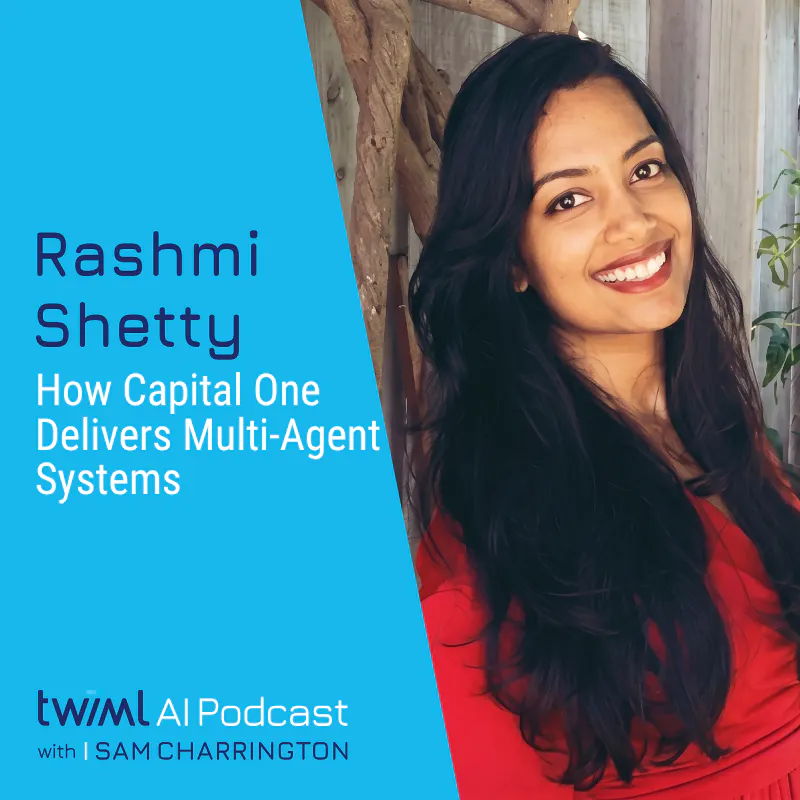
| 4/16/26 | multi-agent systemsgenerative AI+4 | Rashmi Shetty | Chat ConciergeCapital One | — | multi-agent systemsgenerative AI+6 | — | 54m 18s | ||
| 3/26/26 | diffusion language modelstext generation+4 | Stefano Ermon | Mercury 2Stanford University+1 | — | diffusion modelslanguage models+5 | — | 1h 03m 18s | ||
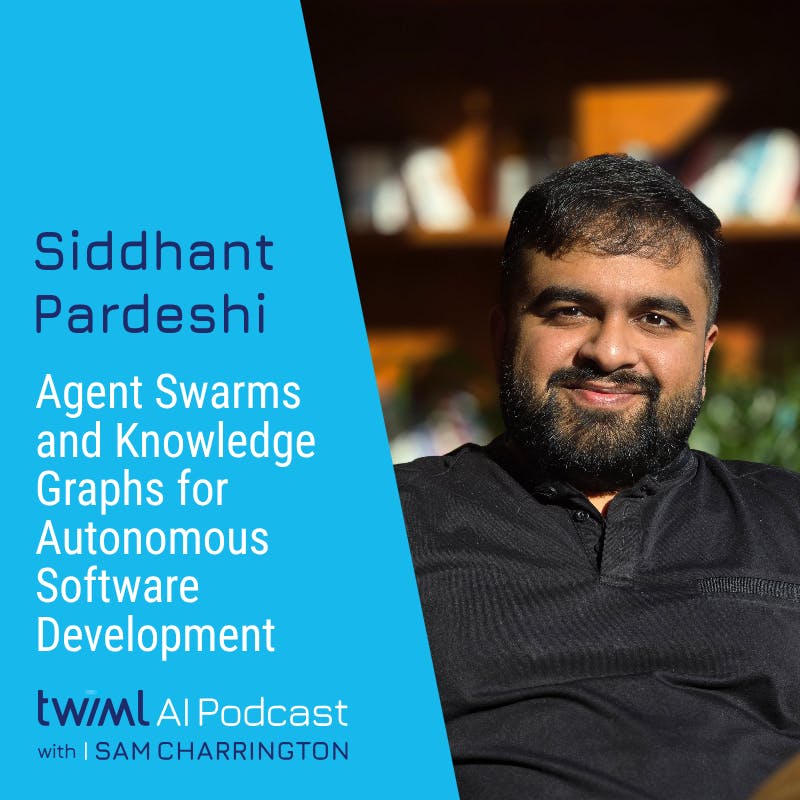
| 3/10/26 | autonomous software developmentAI-assisted coding+4 | Siddhant Pardeshi | Blitzy | — | autonomous systemsAI agents+5 | — | 1h 16m 14s | ||
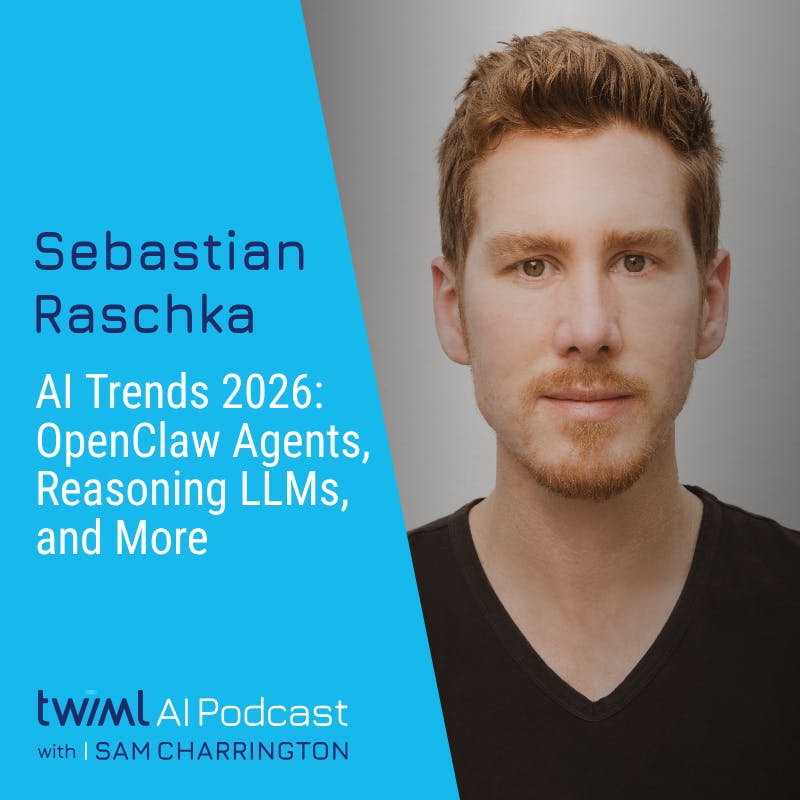
| 2/26/26 | AI trendsLLM landscape+4 | Sebastian Raschka | Build A Reasoning Model (From Scratch) | — | LLMreasoning+6 | — | 1h 18m 55s | ||
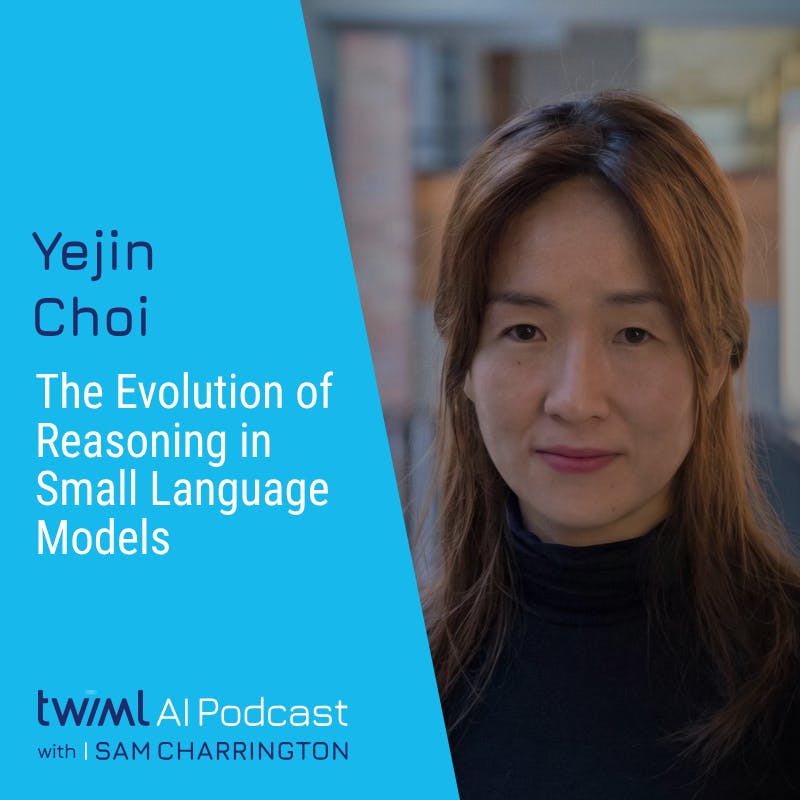
| 1/29/26 | small language modelsreasoning capabilities+4 | Yejin Choi | Stanford UniversityInstitute for Human-Centered AI+1 | — | language modelsreasoning+5 | — | 1h 06m 21s | ||
| 1/8/26 | roboticsautonomous robots+4 | Nikita Rudin | Flexion Robotics | — | roboticsautonomous robots+4 | — | 1h 06m 37s | ||
| 12/17/25 | agentic AIpre-training+5 | Aakanksha Chowdhery | PaLMGemini+2 | — | agentic AIpre-training+5 | — | 52m 54s | ||
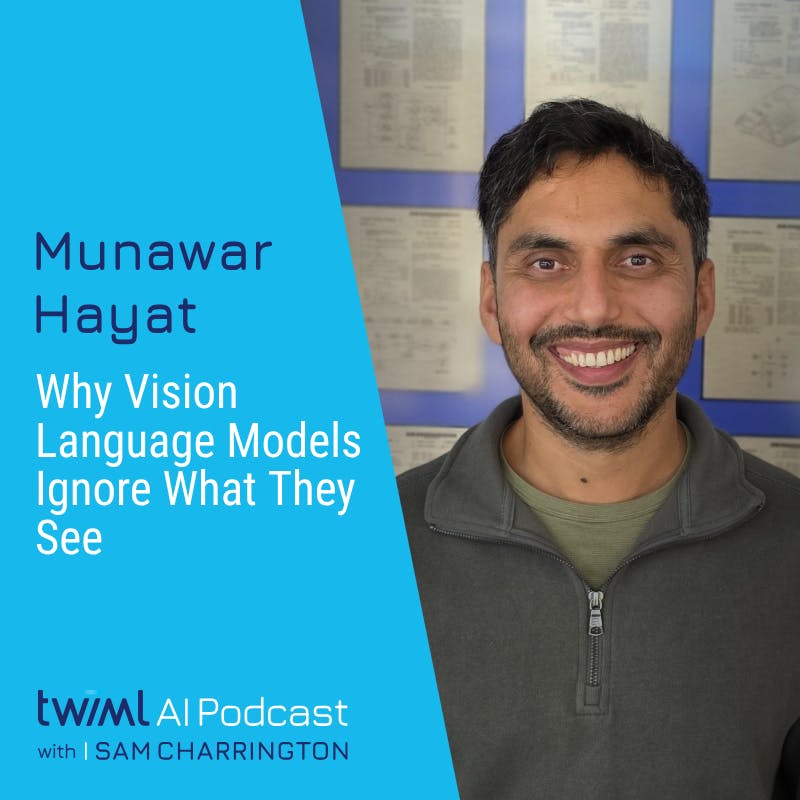
| 12/9/25 | Vision-Language Modelsmultimodal AI+4 | Munawar Hayat | Qualcomm AI Research | — | Vision-Language Modelsobject hallucination+4 | — | 57m 40s | ||
| 12/2/25 | AI inferenceheterogeneous compute+3 | Zain Asgar | Gimlet Labs | — | AI workloadsGPUs+3 | — | 48m 44s | ||
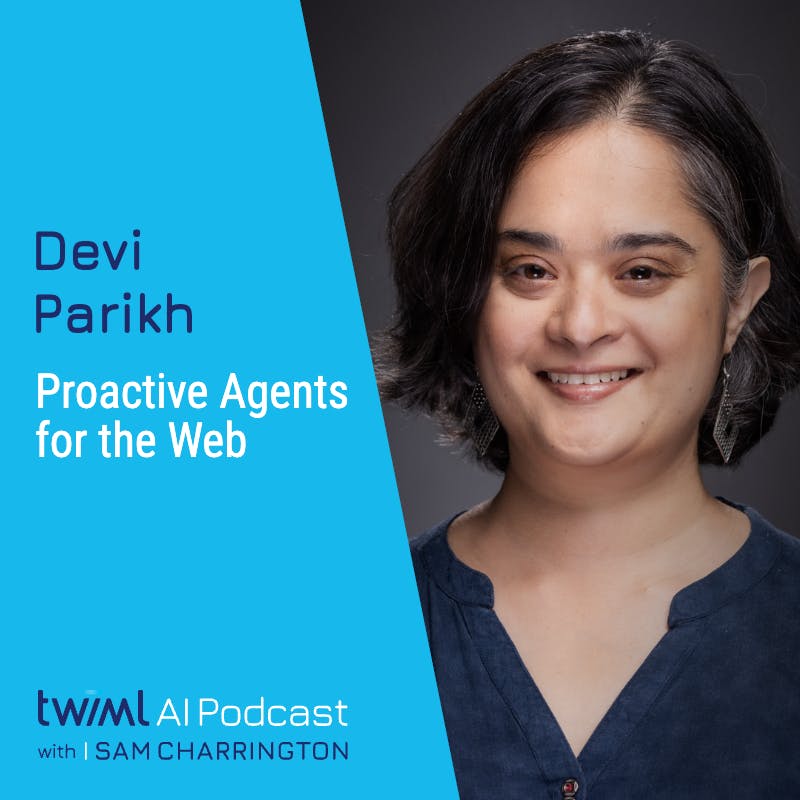
| 11/19/25 | proactive agentsweb interaction+4 | Devi Parikh | Yutori | — | proactive agentsbrowser use models+4 | — | 56m 04s | ||











Showing 25 of 793
Pitch Fit is a Pro feature
See how bookable this show is for guests, which brands already advertise, the per-episode ad value, and the best-fit guest and sponsor profile. The numbers are blurred on the free plan.
How readily this show books outside guests like you.
How proven this show is for host-read sponsorships.
For Guests
ProFor Advertisers
ProUpgrade to Pro to unlock guest cadence, sponsor categories, fit scores, and per-episode ad value for this show.
Similar Audience Demographics
Podcasts that attract a similar listener profile


Chart history for The TWIML AI Podcast (formerly This Week in Machine Learning & Artificial Intelligence)
Peaked at #51 in Netherlands, currently #51 in Netherlands.
| Market | Genre | Peak | Current | Trend |
|---|---|---|---|---|
| Netherlands | — | #51 | #51 | — |
| India | — | #56 | #56 | — |
| South Korea | — | #85 | #85 | — |
| France | — | #94 | #94 | — |
| HU | — | #96 | #96 | — |
| PL | — | #98 | #98 | — |
| United Kingdom | — | #100 | #100 | — |
| United States | — | #108 | #108 | — |
| CL | — | #112 | #112 | — |
| TH | — | #113 | #113 | — |
| Norway | — | #115 | #115 | — |
| SG | — | #119 | #119 | — |
| Germany | — | #122 | #122 | — |
| IL | — | #123 | #123 | — |
| VN | — | #143 | #143 | — |
| HK | — | #144 | #144 | — |
| Ireland | — | #157 | #157 | — |
| MY | — | #190 | #190 | — |
| TW | — | #195 | #195 | — |
Chart Positions
19 placements across 19 markets.
Chart Positions
19 placements across 19 markets.