

Insights from recent episode analysis
Audience Interest
Podcast Focus
Publishing Consistency
Platform Reach
Insights are generated by CastFox AI using publicly available data, episode content, and proprietary models.
Most discussed topics
Brands & references
Est. Listeners
Insufficient chart data. Estimates will improve as the show charts.
- Per-Episode Audience
Est. listeners per new episode within ~30 days
N/A🎙 Daily cadence·225 episodes·Last published 5d ago - Monthly Reach
Unique listeners across all episodes (30 days)
N/A - Active Followers
Loyal subscribers who consistently listen
N/A
Market Insights
Platform Distribution
Reach across major podcast platforms, updated hourly
Total Followers
—
Total Plays
—
Total Reviews
—
* Data sourced directly from platform APIs and aggregated hourly across all major podcast directories.
On the show
From 15 epsHost
Recent guests
Recent episodes
What Happens After You Sell the $100 Million Company You Built?
Jun 25, 2026
36m 45s
Sexual Empowerment in Midlife
Jun 18, 2026
46m 15s
Laura LeBleu Lit Her AARP Card on Fire
Jun 11, 2026
31m 06s
How to Find Your Creative Soulmate
Jun 4, 2026
48m 41s
This Is Not As Scary As Cancer
May 28, 2026
51m 59s
Social Links & Contact
Official channels & resources
Official Website
Login
RSS Feed
Login
| Date | Episode | Topics | Guests | Brands | Places | Keywords | Sponsor | Length | |
|---|---|---|---|---|---|---|---|---|---|
| 6/25/26 | 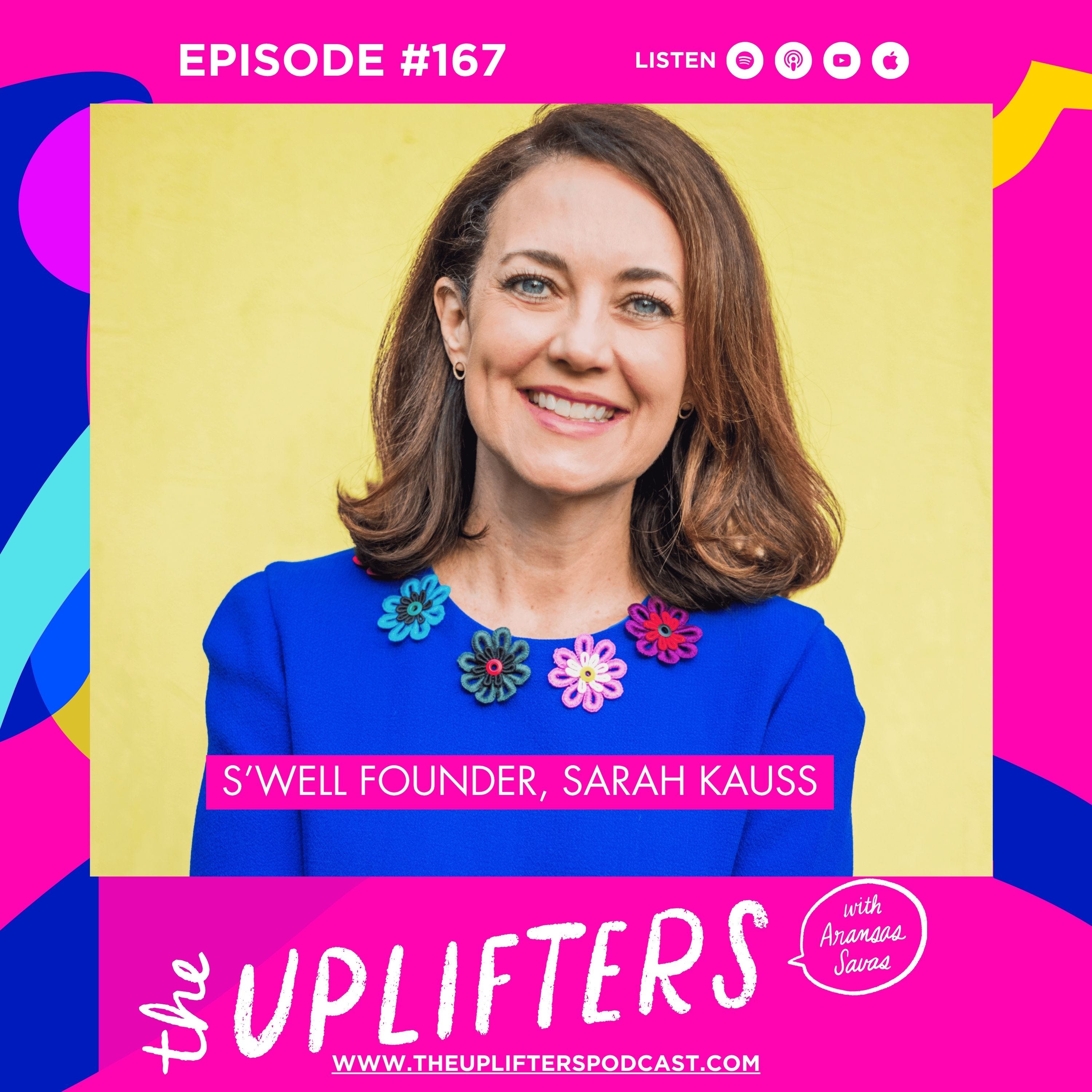 What Happens After You Sell the $100 Million Company You Built? | Sarah Kauss bootstrapped S'well with $30,000 of her own savings and built it into a $100 million company, one of the most recognizable consumer brands of the last decade. But this conversation isn't about how she built it. It's about what happened after she let it go, and what that taught her about identity, success, and legacy.In this episode, Sarah and Aransas talk about what it is like to step away from a company you spent years building. They get into the loneliness of being a founder who is learning and leading at the same time, why Sarah said yes to nearly everything for the first few years after her exit, and how she eventually built what she now calls her "portfolio life." This is a conversation for any woman in midlife who has wondered who she is when the thing she built no longer needs her, and the founders who want to build with a dream of selling their company someday.What You'll Learn:Building a company without a master plan — How Sarah grew S'well from one founder with $30,000 to a $100 million brand without ever mapping out an exit.Letting go of a founder identity in midlife — What it felt like when S'well removed her photo from the website, and why that hit harder than she expected.The hidden risk of overcorrecting after a big change — Why Sarah said yes to nearly every board seat offered to her, and what it took to start saying no.How to build a company someone wants to buy — Her advice for founders building toward an exit in their first five years.Defending your brand against copycats — What S'well learned when bigger, better-funded companies started copying the product.Building a portfolio career after 40 — How she moved from founder to investor, advisor, and board member.The midlife shift from founder to mentor role Key Timestamps: 0:00 — Introduction and sponsor read [~3:23] — Sarah's S'well origin story and the bootstrapped early years [~6:55] — Building a "portfolio life" instead of pouring into one thing [~11:01] — Learning to share the vision and bring in a team [~17:02] — Community Q&A: building a company someone wants to buy [~20:01] — Defending S'well against copycats and protecting IP [~23:02] — Sending S'well "off to college" and the mourning period after an exit [~28:47] — What scares Sarah now, and her advice for the next generation [~32:27] — Sarah nominates the next Uplifter Key Takeaways:For midlife founders building toward an exit: You don't need every part of the business polished. Show what's working and where there's room to grow, not that you've already maximized everything.For women over 40 redefining identity after a major career change: Not knowing what to say about yourself at a reunion or a party is normal, and it passes.For women building a second act: A portfolio of smaller, meaningful commitments can bring more fulfillment than pouring everything into one thing, even if it looks less impressive on paper.Featured Quote: "I finally realize at this age I actually know a lot of stuff." — Sarah KaussResources and Links:Sarah Kauss's website and office hours: sarahkauss.comEpisode sponsor, Join The Tryb: jointhetryb.com, code UPLIFTER20About Sarah Kauss: Sarah Kauss (50) is Managing Partner at Avignon Partners, where she is an investor and advisor to brands in retail, tech, and wellness. As the founder and former CEO of S’well, Sarah is a consumer products leader with a track record of launching companies, building multi-million dollar brands, and assembling high-performance senior leadership teams. She is a product design expert with deep experience developing and implementing successful exit strategies. Sarah held the position of CEO of S’well for ten years, bootstrapping the company with $30k of her savings to reach over $100M in annual revenue. During this time, Sarah created a new category and well-loved brand that helped displace more than four billion single-use plastic bottles and was named by Architectural Digest as one of the 25 designs that helped shape the world. Sarah sold S’well in 2022. Prior to S’well, Sarah was a real estate developer leading large international collaborations and partnerships, and a consultant working across a range of industries. Sarah started her career with EY as a Certified Public Accountant, working in both tax consulting and the auditing function. She provided professional services to public and privately held companies in the technology, healthcare, consumer products, and media sectors. Sarah has been recognized as a Fortune “40 Under 40” honoree and awarded the Harvard Business School Entrepreneurship Award. Under Sarah’s leadership, S’well was named the #1 Fastest-Growing, women-led company by the Women Presidents’ Organization, was honored with the Brand Design award by Inc. magazine, and placement on the Inc. 5000 List (top 100) of fastest-growing, privately-held companies. She is a member of the 2018 Class of Henry Crown Fellows and the 2020 Class of Braddock Scholars within the Aspen Global Leadership Network at the Aspen Institute. She earned a BS in accounting from the University of Colorado, Boulder, and an MBA from Harvard Business School. About Your Host: Aransas Savas is a wellbeing and leadership coach specializing in helping women over 40 navigate midlife transitions, career changes, and second-act reinvention. With 20+ years of behavioral research experience partnering with companies like Disney, Weight Watchers, and Best Buy, she hosts The Uplifters Podcast, featuring women doing big, brave work in the second half of their lives. Aransas brings both research rigor and personal experience to conversations about courage capital, midlife reinvention, and building meaningful second acts.Connect with Aransas:Instagram: @aransas_savasPodcast Instagram: @the_uplifters_podcastTikTok: @theuplifterspodcastFacebook: Aransas SavasWebsite: theuplifterspodcast.comYouTube: @theuplifterspodcastLinkedIn: Aransas SavasKeywords: women over 40, midlife reinvention, second act career women, life after selling your business, midlife identity shift, women founders over 40, career change after 40, redefining success in midlife, portfolio career women, midlife transition women, women entrepreneurs midlife, second half of life women, building confidence after 40, midlife career pivot, women over 40 success stories Get full access to The Uplifters at www.theuplifterspodcast.com/subscribe | 36m 45s | ||||||
| 6/18/26 | 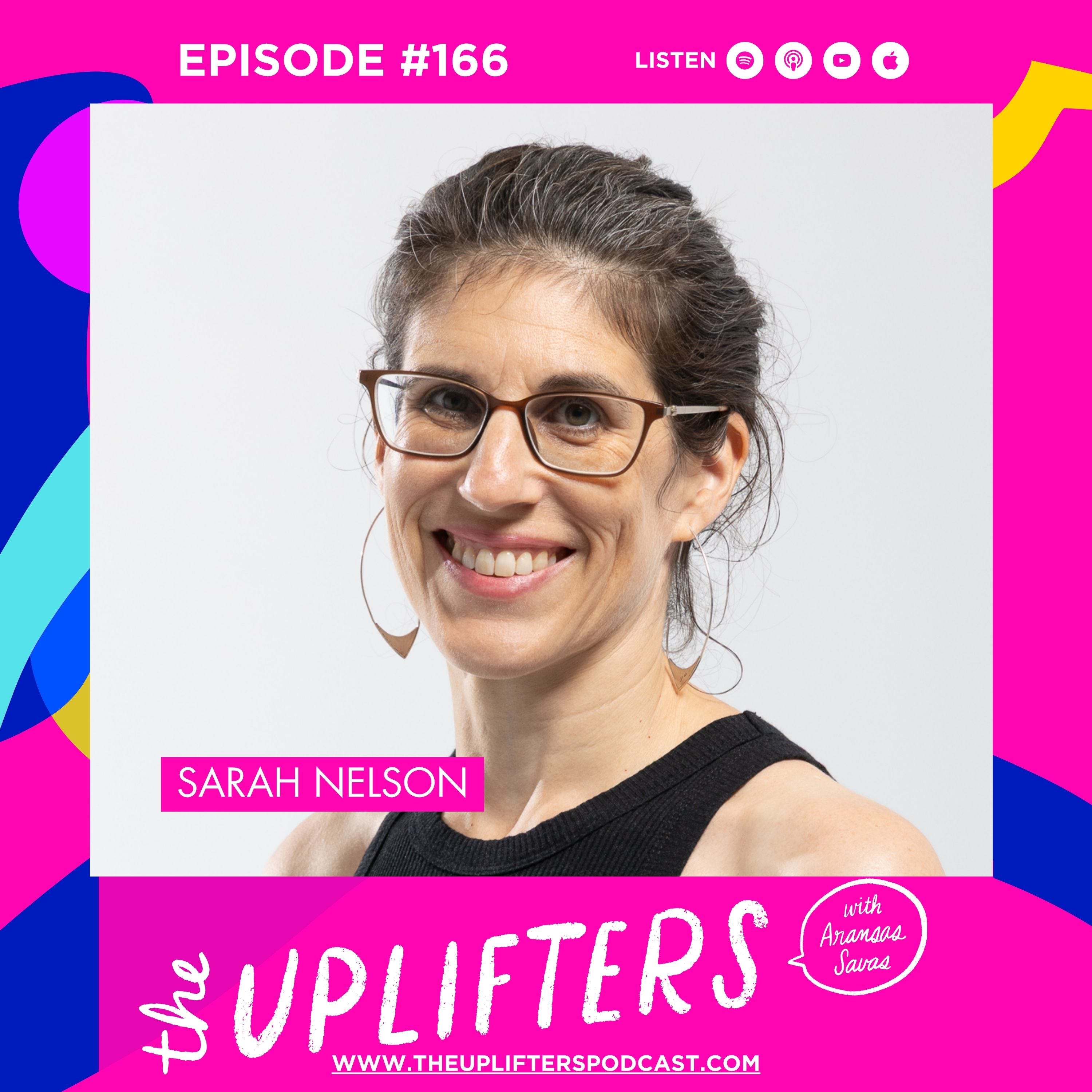 Sexual Empowerment in Midlife | Can getting in touch with your sexuality change everything else about your life? Sarah Nelson thought she had it all figured out. Good marriage, two kids, a high-powered nonprofit career. But underneath it, she'd spent decades editing herself into the good girl she was taught to be, especially when it came to sex. This conversation about women over 40 and midlife reinvention traces what happened when Sarah finally got honest with herself, and how that honesty led to separating from her husband, entering an open relationship, and becoming a sex and relationship coach.Featured Quote: "When you are honest with yourself, you actually make the other person happier." — Sarah NelsonResources and Links:Sarah's coaching website: sarahnelsoncoach.comSarah's Substack: sarahnelsoncoach.substack.comAbout Sarah Nelson: Sarah Nelson is a sex writer and relationship coach trained in the Somatica method of sex and relationship coaching, as well as positive intelligence. After two decades in a marriage built on a good girl narrative, she began a journey of sexual reintegration that led her to interview 50 women about reclaiming their sexuality in midlife. She now coaches women and men toward sexual wholeness, confidence, and self-honesty.About Your Host: Aransas Savas is a wellbeing and leadership coach specializing in helping women over 40 navigate midlife transitions, career changes, and second-act reinvention. With 20+ years of behavioral research experience partnering with companies like Disney, Weight Watchers, and Best Buy, she hosts The Uplifters Podcast, featuring women doing transformative work in the second half of their lives. Aransas brings both research rigor and personal experience to conversations about courage capital, midlife transformation, and building meaningful second acts.Connect with Aransas:Instagram: @aransas_savasPodcast Instagram: @the_uplifters_podcastTikTok: @theuplifterspodcastFacebook: Aransas SavasWebsite: theuplifterspodcast.comYouTube: @theuplifterspodcastLinkedIn: Aransas SavasKeywords: perimenopause career change, women over 40, midlife reinvention, menopause second act, starting over at 40, women changing careers 40s, midlife transition women, second half of life, courage capital, midlife transformation, women entrepreneurs over 40, midlife purpose women, second act career women, women 40s new career, building confidence after 40, midlife dreams women, women over 40 setting boundaries, perimenopause confidence building, midlife self-acceptance, women's sexuality after 40 Get full access to The Uplifters at www.theuplifterspodcast.com/subscribe | 46m 15s | ||||||
| 6/11/26 | 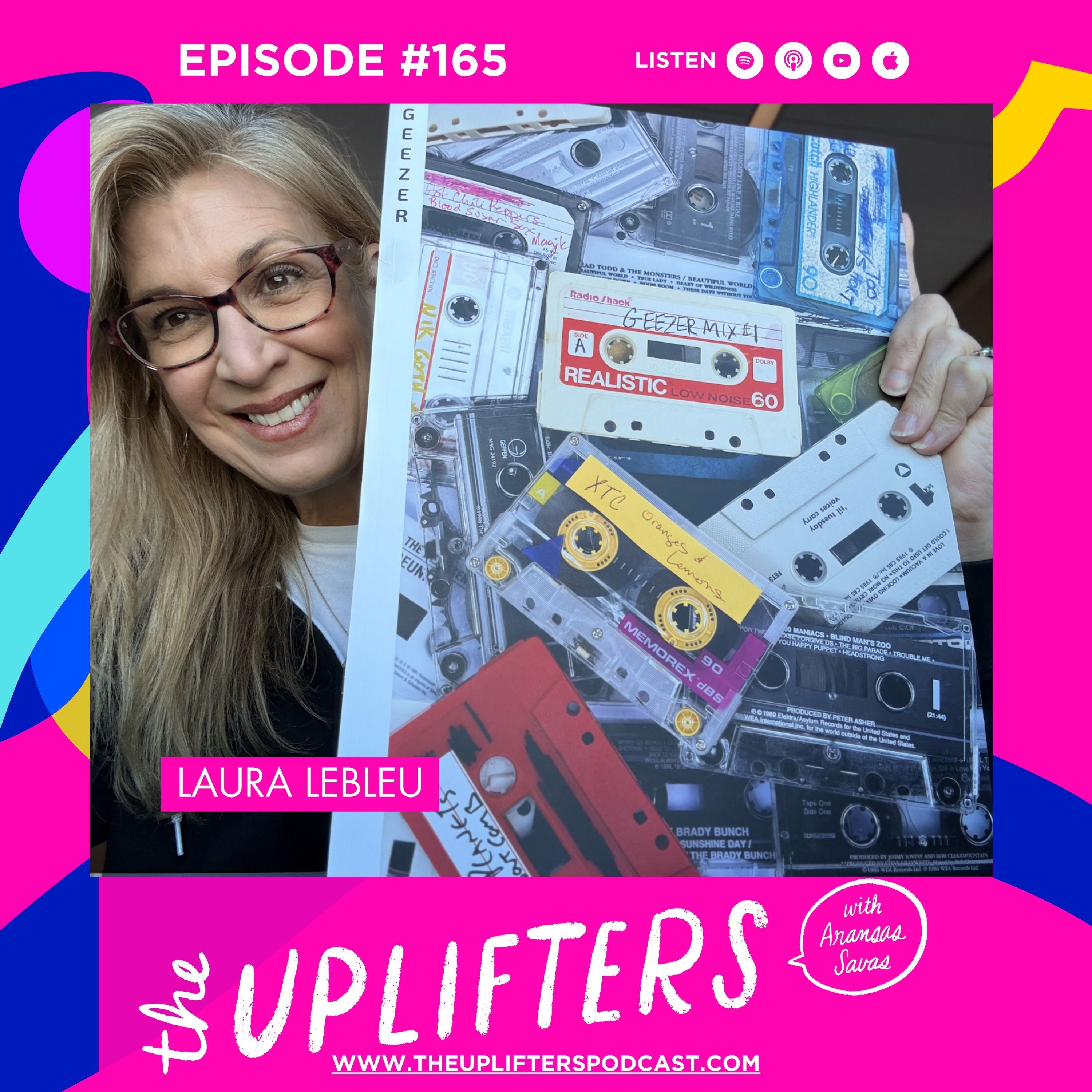 Laura LeBleu Lit Her AARP Card on Fire✨ | midlife reinventioncreative confidence+4 | Laura LeBleu | Geezer MagazineAARP | — | midlife magazinecreative business+6 | — | 31m 06s | |
| 6/4/26 |  How to Find Your Creative Soulmate✨ | creativitycollaboration+4 | Sofia KavlinBonnie Blue Edwards | The New York TimesNBC News+1 | Washington Square ParkAustin+2 | creative soulmatecollaboration+5 | — | 48m 41s | |
| 5/28/26 |  This Is Not As Scary As Cancer✨ | cancer diagnosismidlife reinvention+3 | Jacquelyn Fletcher JohnsonChristy Kercheville | Heartwood Leadership Institute | — | cancermidlife+3 | — | 51m 59s | |
| 5/21/26 |  When Women Get Sick✨ | menopausefinancial health+3 | Dr. Kim Derezil | Menopause Tax | — | menopausefinancial planning+3 | — | 48m 15s | |
| 5/14/26 |  The Menopause Tax✨ | menopausefinancial health+3 | Dr. Kim Derezil | — | — | menopause taxcareer costs+3 | — | 43m 29s | |
| 5/7/26 |  Motherhood in Midlife✨ | motherhoodmidlife+3 | Ruthie AckermanKatie Horwitch+2 | Ignite Writers CollectiveThe Mother Code+2 | — | midlife womenMother's Day+4 | — | 33m 05s | |
| 4/30/26 |  Women Are Better Than Men at Investing — So Why Aren’t We Doing It?✨ | women and investingmidlife transitions+3 | Katie CellaLorine Pendleton+1 | Marie Claire | New York City | investingwomen over 40+5 | — | 33m 45s | |
| 4/23/26 |  Discovering You're Neurodivergent at 40✨ | neurodivergenceprosopagnosia+3 | Sadie Dingfelder | Washington PostAmerican Psychological Association+1 | — | neurodivergentface blindness+3 | — | 51m 23s | |
Want analysis for the episodes below?Free for Pro Submit a request, we'll have your selected episodes analyzed within an hour. Free, at no cost to you, for Pro users. | |||||||||
| 4/16/26 |  What a Near-Cult Experience Taught One Woman About Identity, Leadership, and Midlife Freedom✨ | midlife reinventionidentity+4 | Blair Glaser | Siddha YogaThis Incredible Longing | — | midlifeidentity+5 | — | 40m 56s | |
| 4/9/26 | 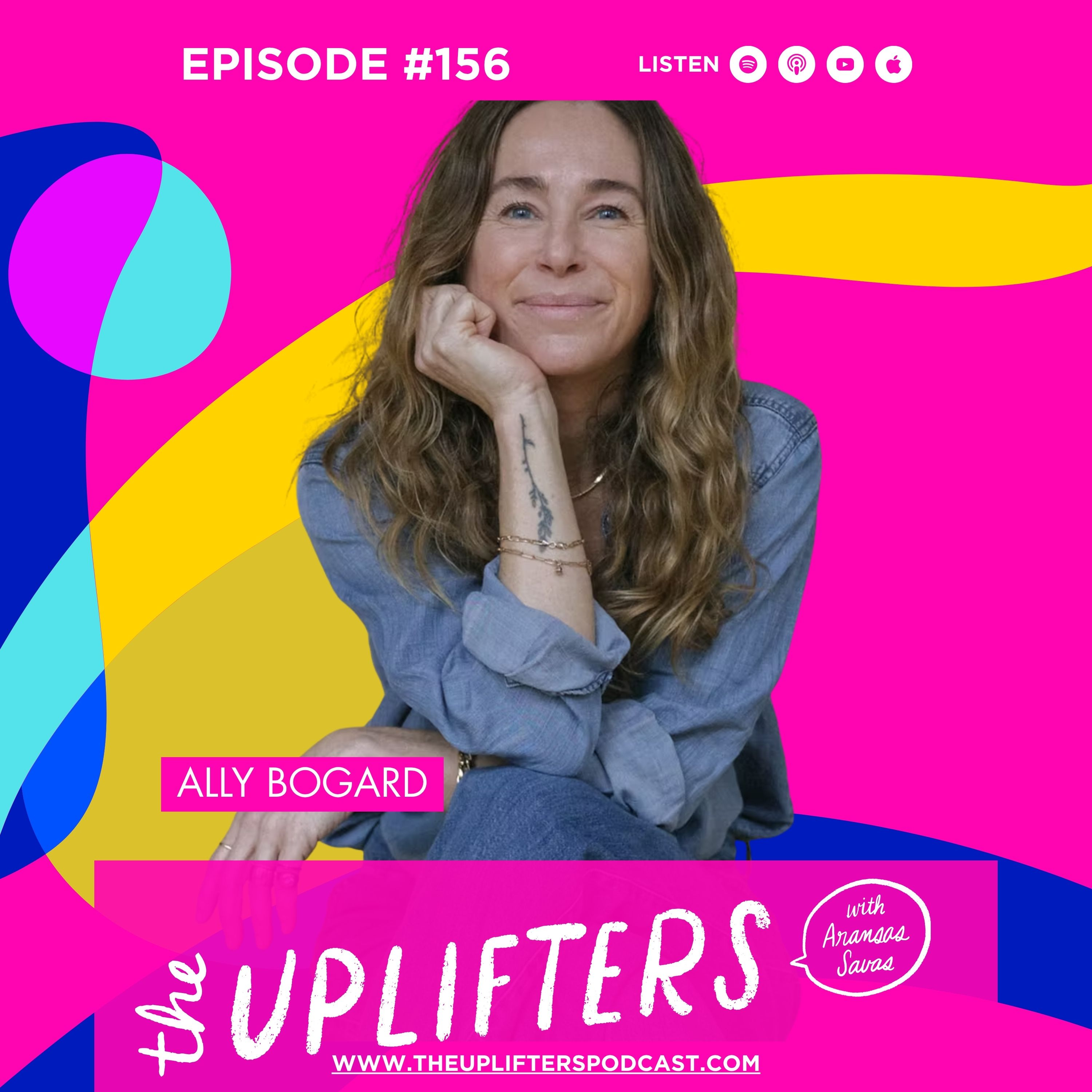 How to Stop Avoiding Your Life✨ | midlife transitionprocrastination+3 | Ally Bogard | — | — | avoidanceprocrastination+6 | — | 49m 29s | |
| 4/2/26 | 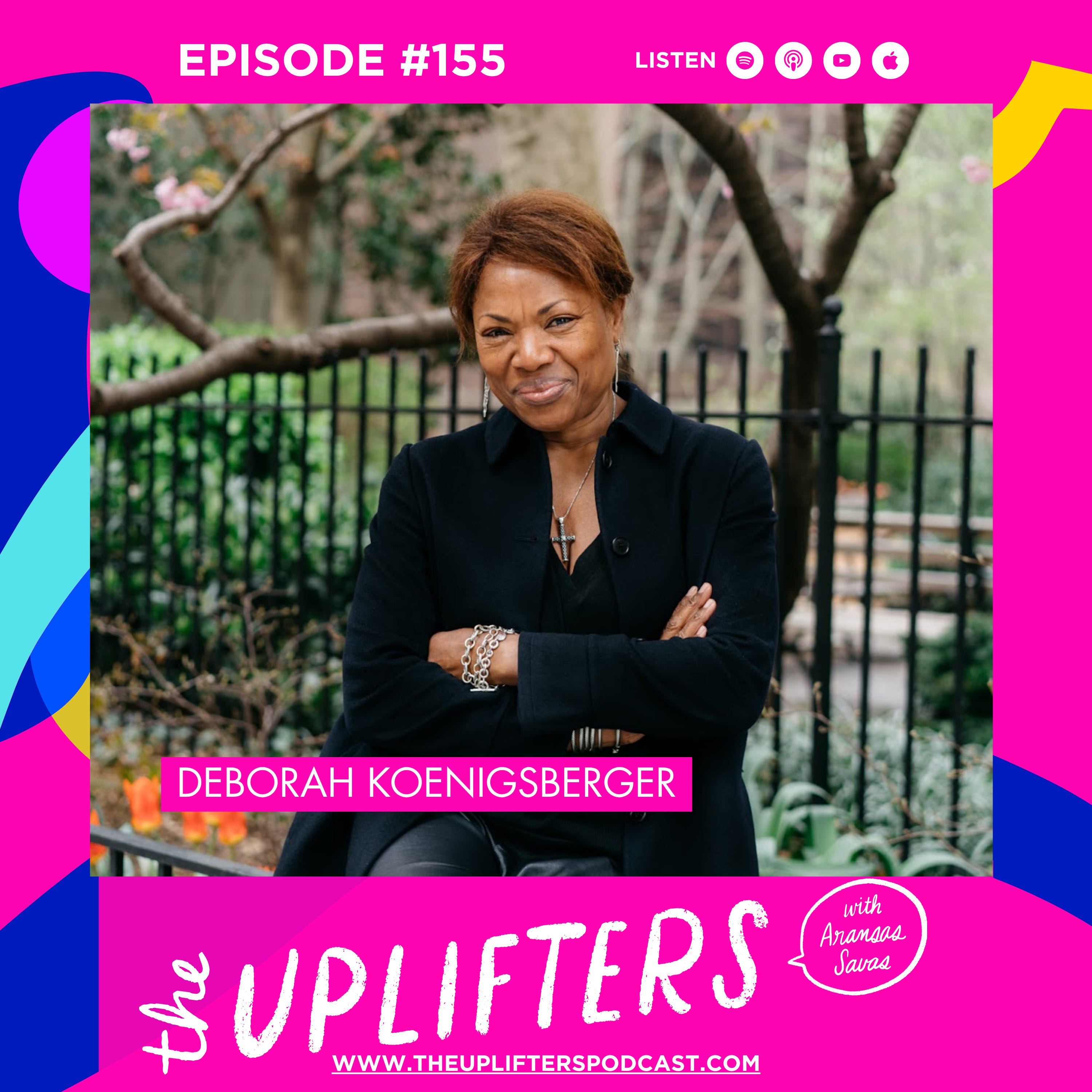 The Knot Principle✨ | women in midlifesocial impact+3 | Deborah Koenigsberger | Hearts of GoldTake the Time Out | New York CityMadison Square Park | midlife womenHearts of Gold+3 | — | 37m 21s | |
| 3/26/26 | 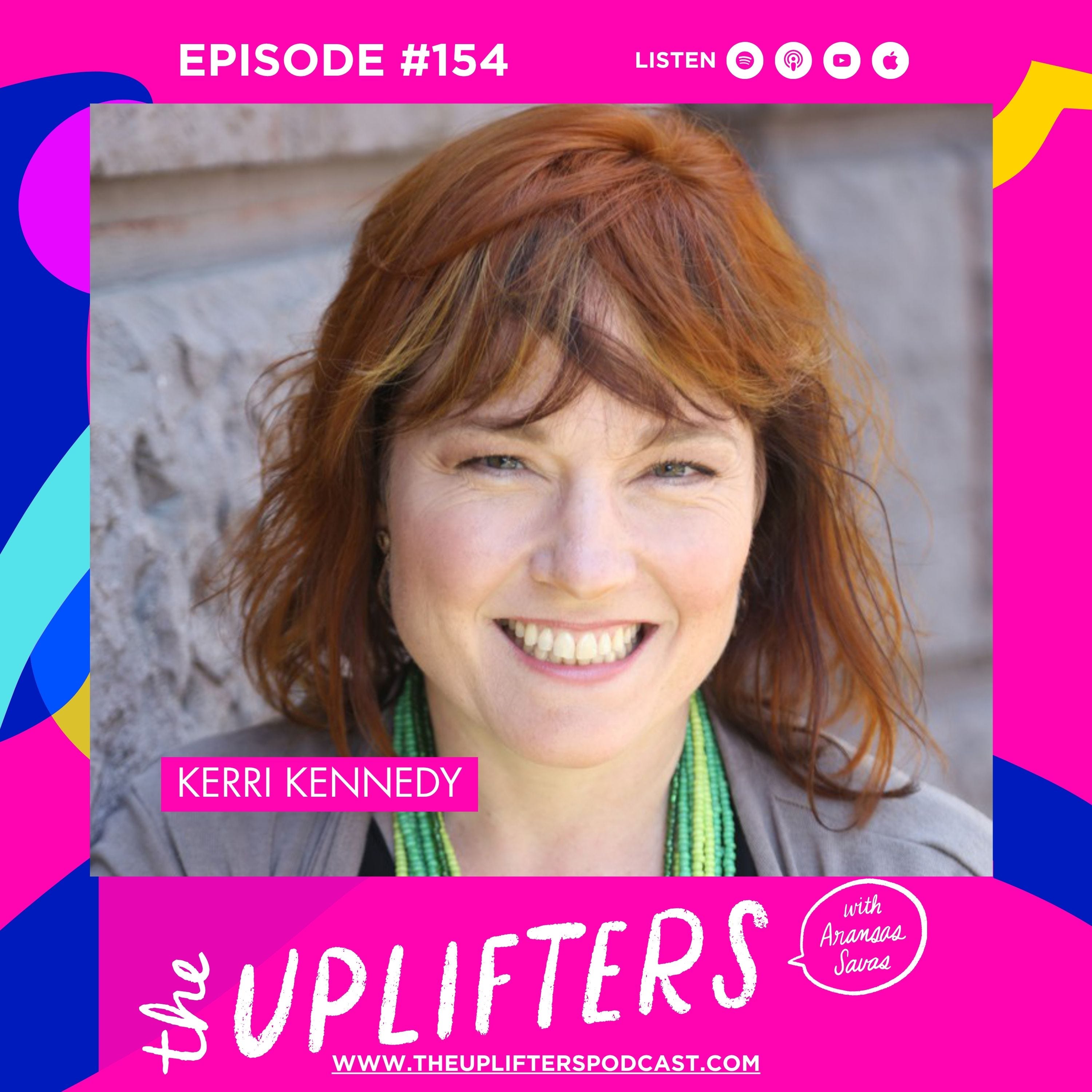 A Global Peace Leader on Turning Fear Into Action When Democracy Feels Fragile✨ | civic actionmidlife women+4 | Kerri Kennedy | ICE | AfghanistanNew Jersey | civic actionmidlife+5 | — | 53m 45s | |
| 3/19/26 | 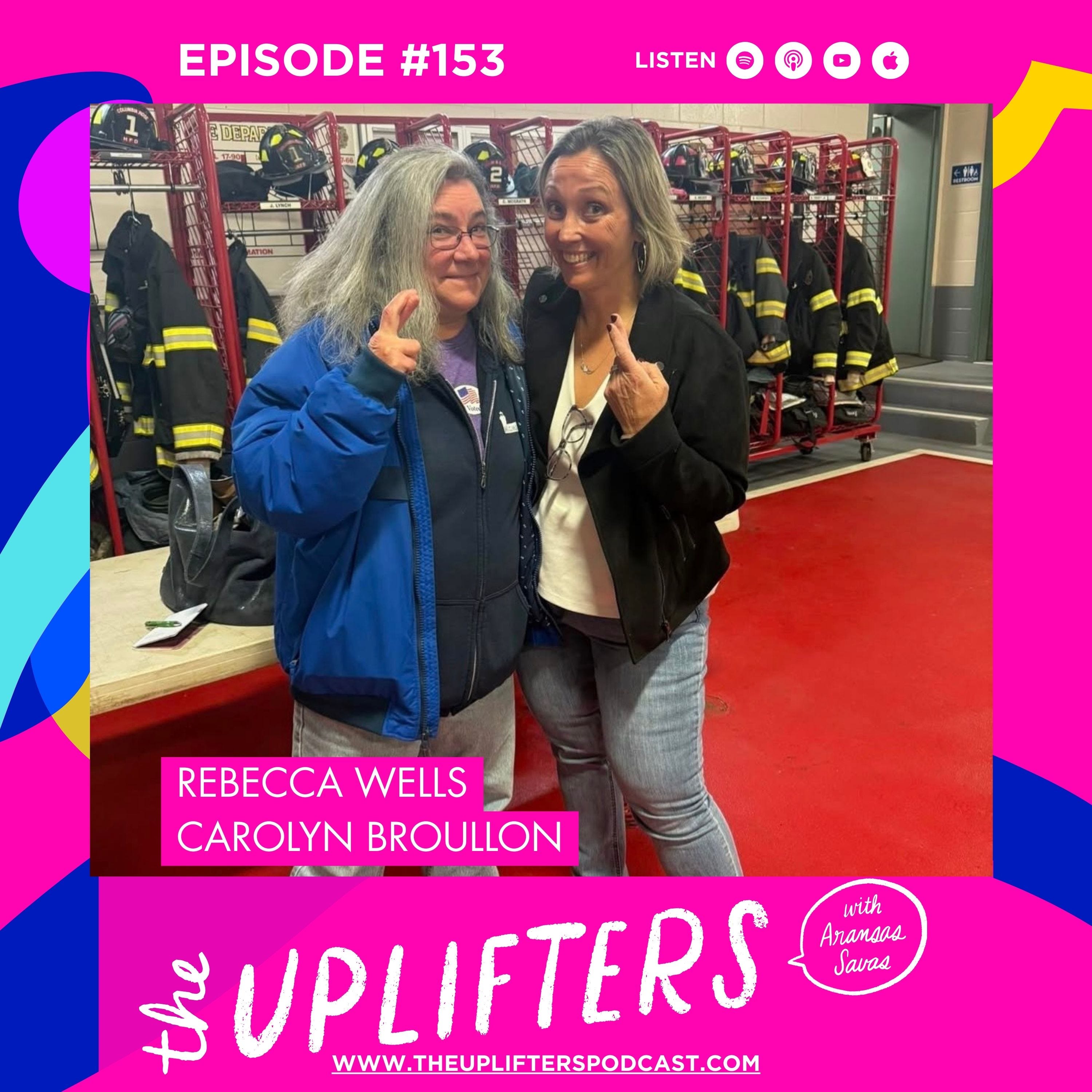 Midlife Women Shaping Local Politics✨ | midlife womenlocal politics+3 | Rebecca WellsCarolyn Broullon | — | Highlands, New Jersey | midlife womenpolitics+5 | — | 35m 04s | |
| 3/12/26 |  How To Build Community✨ | community buildingmidlife reinvention+3 | Corinne van der BorchEdwina White | I Got You | — | communitymidlife+3 | — | 41m 58s | |
| 3/5/26 |  Finding Love After 40 — And the Fourth Date Rule✨ | midlife datingonline dating+3 | Alyssa Dineen | — | — | midlife datingdating coach+3 | — | 44m 35s | |
| 2/26/26 | 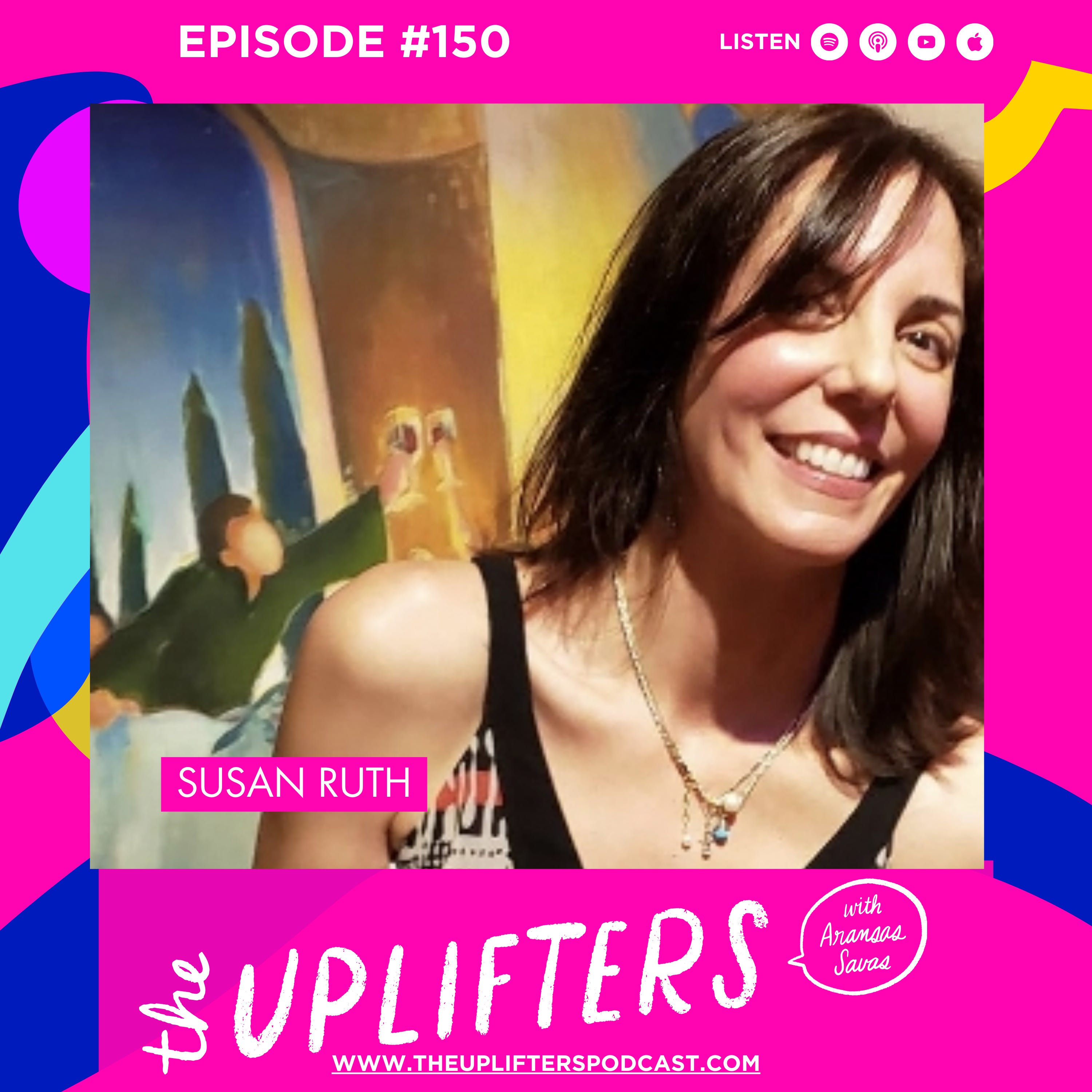 Staying Human in the Age of AI | Susan Ruth: Filmmaker and Podcaster on Human Connection — Staying Fully Human at Midlife and BeyondWhat does it mean to stay human — really, vulnerably human — when AI, algorithms, and an endless scroll are designed to do our connecting for us? Episode 150 of The Uplifters features Susan Ruth, a filmmaker, songwriter, painter, and host of the nearly 500-episode Hey Human Podcast, in a conversation about the most courageous thing women over 40 can do right now: choose presence. For women navigating midlife reinvention, menopause life changes, and the kind of perimenopause-era identity shifts that make you question everything, Susan's story is a powerful reminder that human-to-human sameness is still our most radical resource.In this episode, you'll learn why starting over at 40 or 50 often begins not with a plan but with a single act of connection — and how midlife women are uniquely positioned to lead that charge. Susan's journey from despair in a grocery store parking lot to nearly 500 conversations about what makes us human is a masterclass in turning pain into purpose, staying brave when it would be easier to go numb, and building a second act that refuses to look away.What You'll Learn:How to stay connected in midlifeWhy perimenopause and midlife reinvention are uniquely vulnerable to digital sedation — and how to resist itHow women over 40 can build courage capital through creative expression and community rather than isolationThe midlife mindset shift from consuming to making — and why it changes everythingWhy starting over at 40+ often begins with one small human moment, not a master planHow women in their second half of life can use proximity and presence as antidotes to despair — and fuel for meaningful changeKey Timestamps:0:00 — Introduction and 150-episode celebration~3:00 — The grocery store moment that launched Hey Human Podcast~8:30 — On seeing sameness before difference: "Evening, sister"~13:30 — Nearly 500 episodes and what they've taught her about humans~16:45 — On knowing who you are and why it protects you from the machine~18:30 — The TikTok spiral: recognizing the sedative for what it is~20:30 — Midlife fatalism vs. radical presence~23:00 — Art as defiance: making things when the world gets heavy~26:00 — Starting in your own backyard~32:30 — Nominating Julia CricoKey Takeaways:For women over 40 navigating loneliness: Human connection is still your most renewable resource — and it often starts with showing up for one person close to home.For midlife women in perimenopause or transition: When everything feels out of control, making something — anything — is an act of agency and defiance.For second-act career changers and midlife entrepreneurs: You don't need expertise to start. Susan knew nothing about podcasting. She just knew she couldn't stop asking her question. Nearly 500 episodes later, she's glad she began."Joy is a form of rebellion. Do not be afraid of your own happiness. Be joyful — that's the gift you give to the world."— Susan RuthResources & Links:Susan Ruth on all platforms: @susanruthism (Instagram, TikTok, Facebook, YouTube)Susan's music: Search "Susan Ruth" on Apple Music and all major streaming platformsHey Human Podcast: Available wherever you get podcastsRelated episodes: Susan McPherson (Ep. 85) | Mara Richards Bim (Ep. 31)About Susan Ruth:Susan Ruth is a filmmaker, songwriter, visual artist, and podcaster based in Los Angeles. She is the creator and host of Hey Human Podcast, a nearly 500-episode exploration of what makes us human — and what keeps us from fully becoming so. A fierce advocate for independent art and live performance, Susan has spent her career making work that insists on human connection as an act of both courage and rebellion. Find her @susanruthism across all platforms.About Your Host:Aransas Savas is a wellbeing and leadership coach specializing in helping women over 40 navigate midlife transitions, career changes, and second-act reinvention. With 20+ years of behavioral research experience partnering with companies like Disney, Weight Watchers, and Best Buy, she hosts The Uplifters Podcast, featuring women doing transformative work in the second half of their lives. Aransas brings both research rigor and personal experience to conversations about courage capital, midlife transformation, and building meaningful second acts.Connect with Aransas:Instagram: @aransas_savas | @the_uplifters_podcastTikTok: @theuplifterspodcastWebsite: theuplifterspodcast.comYouTube: @theuplifterspodcastLinkedIn: Aransas SavasFacebook: Aransas Savas | Substack: theuplifterspodcast.comKeywords:perimenopause career change, women over 40, midlife reinvention, menopause second act, starting over at 40, women changing careers 40s, midlife transition women, second half of life, courage capital, midlife transformation, women entrepreneurs over 40, perimenopause motivation, midlife purpose women, second act career women, midlife dreams women, perimenopause fresh start, human connection midlife, midlife loneliness women, women over 40 success stories, midlife glow up, 40+ women entrepreneurs, midlife awakening women, inspiring women over 40, growth mindset women over 40, AI and human connection, staying human midlife Get full access to The Uplifters at www.theuplifterspodcast.com/subscribe | 37m 27s | ||||||
| 2/19/26 |  Saying Yes to Yourself in Midlife | Picture a 200-year-old barn on a New England flower farm, the kind of place where the air smells like hydrangeas and history, and the stone fence bring you back to that Robert Frost poem you memorized in high school. Now picture the woman who built that life — not inherited it, not stumbled into it — but willed it into existence through decades of patient dreaming and one very courageous conversation.That woman is Wendy Harrop, and the moment I walked into her world at The Phineas Wright House in Massachusetts, I understood immediately why every woman who visits leaves changed. There’s something about being in a space that someone created entirely by saying yes to herself, and only herself, that gives you permission to wonder: what would I build if I stopped waiting for someone to hand me the key?Wendy grew up in California, but her heart always belonged to New England. Her mother is from Massachusetts, and childhood visits planted a seed that took decades to bloom. She packed for a cross-country move three times as an adult — twice unpacking still in California, once living in a neighbor’s guest room for two years with all her furniture in storage — and even then, she’ll tell you she was living a dreamy life.But living the life she had wasn’t the same as having the life she wanted. For twenty years, Wendy had been building her world around the hope that the right person, her husband, an investor, someone, would finally see how great she was and hand her the life she deserved. Then in January 2020, a coach said to her, “No one is sitting around thinking of ways to make your life better. You write your own permission slip.” And Wendy thought: oh. OH. If I’m her... I’m done waiting.She’d been a wedding planner for thirty years, an entrepreneur surrounded by people with corporate jobs who made her feel like she was doing it wrong. She’d been what she calls “high-functioning codependent,” setting herself on fire so everyone else could be warm. She’d been waiting for her husband to say yes to her dreams. And then a coach in a room full of women asked her a question she wasn’t expecting: “If you were in full freedom, would you be with him?” She didn’t even know that was an option.Nine months she sat in the question of her marriage. And then she had the most courageous conversation of her life. Twenty-two years of marriage ended with a fifteen-second outburst and then a very practical discussion about finances. “My courage set both of us free,” she says. And she means it: her ex is happy. Sometimes when we say yes to ourselves, we give others permission to finally do the same.This full-body yes changed everything for Wendy. But saying yes is where a lot of us get stuck, because even if the yes feels easy, the how often feels terrifying. So in this episode, we dig into what it actually takes to give yourself permission before you have all the answers, how Wendy maintained her courage when everything was uncertain, and the morning practice that became the through-line of her YES life.Here’s what we know about midlife women and transformation: the belief that we can change, what researchers call self-efficacy, is one of the strongest predictors of whether we actually will. External validation (like Wendy’s friend saying “she’s living the dream and she knows it”) doesn’t just feel good; it literally rewires how we perceive our own capability. And the women who make the biggest leaps in midlife often describe a similar pattern: a moment when they stopped outsourcing permission and claimed it for themselves. The research calls it agency. Wendy calls it writing your own permission slip. Either way, it changes everything.Listen to this episode if...You’ve been waiting for someone else to give you permission to change your life — a partner, a boss, a bank account, a sign from the universe.You’re in a relationship (or a job, or a town, or a version of yourself) that looks fine from the outside but feels more like tolerating rather than living.You’ve been telling yourself you can’t make a move until you know exactly how it’s all going to work out.3 Ways Wendy Shows Us How to Build Our Courage Capital:She practices waiting as an active, creative choice. Wendy waited twenty-four Mother’s Days to become a mom, three cross-country attempts to reach New England, and two decades in a marriage before the courageous conversation to end it. But she wasn’t miserable in the middle. She was enjoying the present while keeping her dreams alive.She claims agency as a radical, learnable act. Writing your own permission slip isn’t a one-time event; it’s a practice of recognizing that no one is coming to hand you the life you want.She has courageous conversations before she has all the answers. Wendy ended her marriage before she knew exactly how she was going to make it work. She didn’t have a plan. She had a morning practice, a community of wise women, and the conviction that her yes would unlock the how. (And it did — for both of them.)Lift Her UpExplore Wendy’s world at phineaswrighthouse.com — from solo retreats in her 200-year-old barn to culinary trips in France for women ready to say yes to their next chapter. You can also listen to her podcast, Say Yes to Yourself!, wherever you get your podcasts, and find her on Instagram at @phineaswrighthouse.If you loved this story...For more stories of women who rewrote their own permission slips, explore: Susannah Ludwig’s episode (Academy Award-nominated producer turned life coach), Candy Motzek’s episode (recovering corporate executive turned women’s business coach), and Aditi Sethi’s episode (physician and end-of-life doula on living fully present).If this episode moved you, share it with someone you love. Share it with a woman who might be ready for a little loving nudge to say yes to herself. Get full access to The Uplifters at www.theuplifterspodcast.com/subscribe | 50m 49s | ||||||
| 2/12/26 |  Midlife Private Parts: A Love Note to Female Friendship in Our 50s | Dina Aronson and Dina Alvarez: Creating Midlife Private Parts - An Anthology for Women over 40What happens when two women meet in their fifties and decide that the stories being told about midlife women are incomplete? Dina Aronson, a former attorney turned pro-age advocate and writer, and Dina Alvarez, a freelance writer and co-founder of SomosPadres, created Midlife Private Parts: Revealing Essays That Will Change The Way You Think About Age—an anthology that's reshaping how we talk about midlife transformation, menopause, aging, and what's possible after 40. These two powerhouse editors met through a serendipitous "midlife blind date" and built a creative partnership that's now giving voice to diverse women's experiences of stepping into the 40+ zone and reimagining what comes next. In this episode, we explore how they transformed a cultural need into a community, what it takes to build something meaningful during midlife reinvention, the courage required to pursue big dreams despite feeling unprepared, and why midlife friendships become the foundation for our most important work. If you've ever wondered whether it's too late to start something new, or felt unseen by the narratives being told about your age, this conversation is for you. This is a story about women over 40 reclaiming their narratives, building courage capital together, and refusing to settle for the limited stories culture offers them.What You'll LearnThe power of midlife friendships and creative collaboration — Understand why these years are uniquely positioned for deep partnership and meaningful work alongside other womenHow midlife women are leading cultural conversations about aging — Discover what it takes to publish an anthology that centers diverse women's voices and challenges narrow narratives about the second half of lifeMenopause, mortality, and the stories we're not telling — Explore taboo midlife topics (menopause, death, sexuality, aging) and why representation matters for women navigating these transitionsBuilding courage capital through community — Learn why readiness is not an individual practice but a community effort, and how to identify your allies and amplifiers in midlifeStarting a meaningful project when you don't feel qualified — Understand how decades of lived experience qualify you to do bold creative work, even without traditional credentialsWhat midlife women uniquely offer the world — Recognize the pattern recognition, wisdom, and crystallized intelligence that make midlife the ideal time for innovation and creative endeavorsKey Timestamps0:00 - Introduction and Aransas's connection to Midlife Private Parts3:45 - Meeting Dina Aronson and Dina Alvarez, editors of the anthology5:15 - How the book came to life and what makes it special7:00 - The themes within the anthology: vulnerability, community, and sisterhood10:30 - What topics feel most taboo? Death, menopause, and pleasure14:30 - Why representation and seeing ourselves matters16:45 - The serendipitous "midlife blind date" that started it all18:00 - How two women met post-50 and built a creative partnership20:30 - Adult friendship in midlife and why it matters for mental and physical health23:00 - Overcoming the "am I ready?" question and imposter syndrome29:30 - Dina Aronson's journey from attorney to writer (saying "I am a writer")32:45 - Dina Alvarez on readiness and community: building your support system first35:00 - What resources you've built throughout your life that are ready to use36:45 - Priority practices for body, mind, and spirit at midlife38:15 - What's next? Dina Alvarez embracing public speaking and interviews39:30 - Dina Aronson's dream: turning essays into a Hulu anthology series41:00 - Nominations: Susan Koff (Uncommon Threads) and Jessica Fine (Breathtaking)44:30 - Where to find Dina Aronson and Dina Alvarez and the bookKey TakeawaysFor midlife women seeking career reinvention: Identity precedes action. You don't need perfect credentials or previous experience to pursue something new in midlife. Decades of lived experience and pattern recognition are qualifications in themselves. Say "I am" before you feel completely ready.For women over 40 navigating major life transitions: Readiness is not an individual practice—it's a community effort. Build your support system first, then take the leap with people who believe in you. Your friends become your collaborators, and your collaborators become your deepest friendships.For women seeking representation and visibility: The stories we tell shape what feels possible. When culture stops telling our stories, we lose evidence of what's achievable. Create the representation you need to see. Share your story so other women know they're not alone and understand what's possible for them.For anyone feeling like they don't belong: Every major accomplishment in your life started with saying yes despite doubt. Short-term awkwardness is always worth enduring to avoid long-term regret. The worst thing that happens is you learn something and move forward."There's really no such thing as a midlife beginner, because you do bring all of those sort of layers of experience like becoming like this jumping off platform so that you're never starting from zero or scratch." — Dina AronsonResources & LinksMidlife Private Parts: Revealing Essays That Will Change The Way You Think About Age — MidlifePrivateParts.comDina Aronson's Patina Newsletter — Patina with Dina Aronson on SubstackDina Aronson on Instagram — @patina_lifeDina Aronson on LinkedIn — Dina AronsonDina Alvarez's A Few Good Things — SubstackThe Uplifters Podcast — theuplifterspodcast.comAbout Dina AronsonDina Aronson is a writer, editor, and pro-age advocate passionate about reframing how culture talks about aging and midlife women. A former attorney who spent years in legal practice and law firm management, she pivoted careers at 51 to pursue writing and advocacy work. She founded the Patina blog, now a popular Substack newsletter, where she explores aging through an honest, curious midlife lens. As co-editor of Midlife Private Parts: Revealing Essays That Will Change The Way You Think About Age, Dina is leading important conversations about what it means to age authentically in a youth-obsessed culture. She serves on the Governing Board of America Needs You and the Influencer Council of Uncommon Threads. She lives between New York City and Miami with her husband.About Dina AlvarezDina Alvarez is a writer, editor, and community builder who has spent her career amplifying underrepresented voices. She began as a freelance writer covering education and lifestyle topics for publications like Big Apple Parents, then co-founded SomosPadres, the first bilingual parenting publication for Hispanic families in New York City. Her transition into micro-blogging about midlife women led her to co-create Midlife Private Parts, an anthology that gives voice to diverse stories about stepping into the 40+ zone and navigating midlife transformation. Dina is dedicated to connecting women across generations and creating opportunities for midlife women to share their stories and build community. She is the mother of two adult sons and lives in New York City with her husband.About Your HostAransas Savas is a wellbeing and leadership coach specializing in helping women over 40 navigate midlife transitions, career changes, and second-act reinvention. With 20+ years of behavioral research experience partnering with companies like Disney, Weight Watchers, and Best Buy, she hosts The Uplifters Podcast, featuring women doing transformative work in the second half of their lives. Aransas brings both research rigor and personal experience to conversations about courage capital, midlife transformation, and building meaningful second acts. Connect with Aransas:Instagram: @aransas_savasPodcast Instagram: @the_uplifters_podcastTikTok: @theuplifterspodcastFacebook: Aransas SavasWebsite: theuplifterspodcast.comYouTube: @theuplifterspodcastLinkedIn: Aransas SavasKeywordsperimenopause career change, women over 40, midlife reinvention, menopause second act, starting over at 40, women changing careers 40s, midlife transition women, second half of life, courage capital, midlife transformation, women entrepreneurs over 40, midlife women aging, female creativity midlife, women 40s new career Get full access to The Uplifters at www.theuplifterspodcast.com/subscribe | 47m 56s | ||||||
| 2/5/26 | 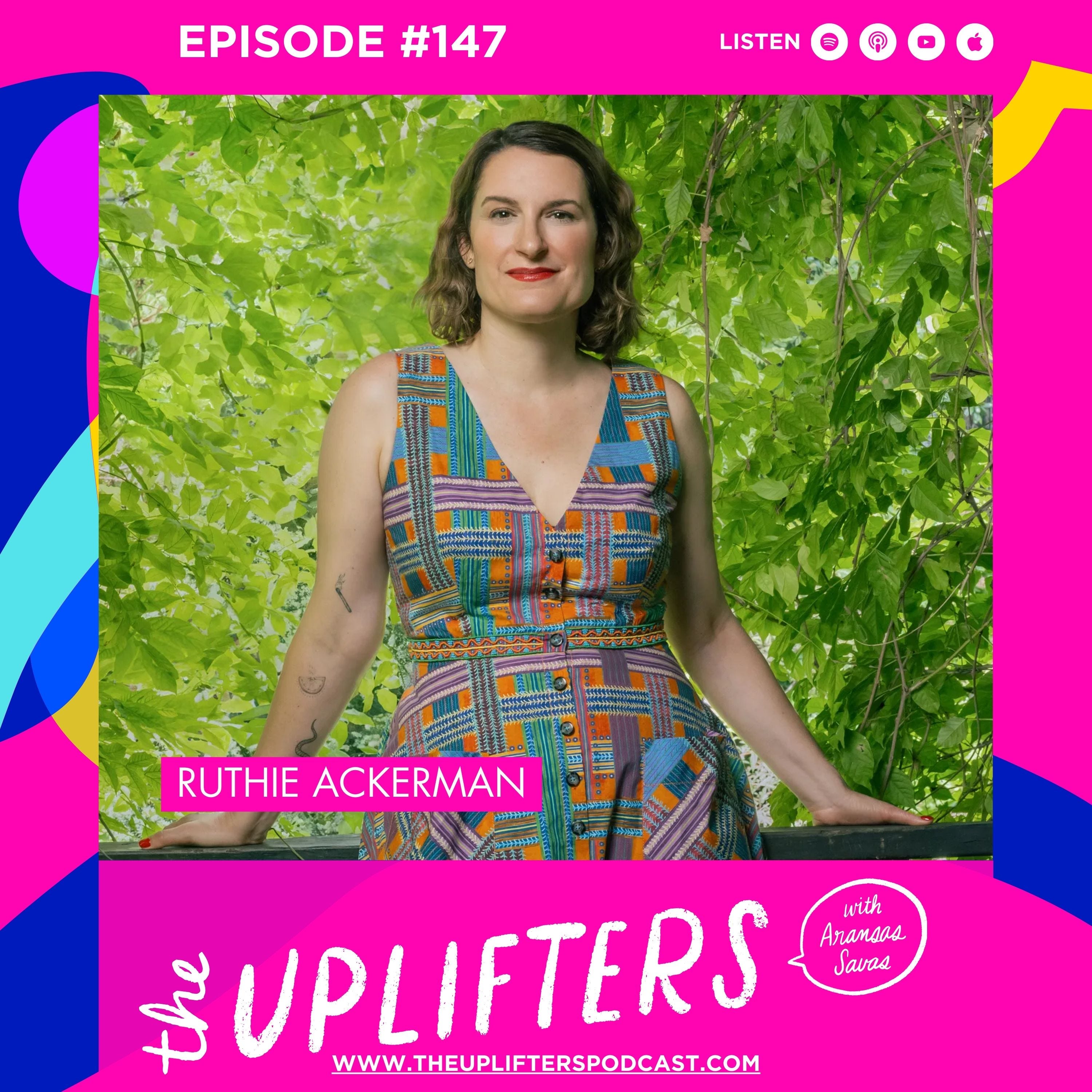 Rewriting the Mother Code at 43 | Discover how award-winning journalist Ruthie Ackerman challenged every motherhood myth and became a first-time mother at 43 in this powerful episode about midlife reinvention and career change. In this conversation, we explore Ruthie's journey from believing she inherited a "flaw" that made her unsuitable for motherhood to writing the critically acclaimed memoir "The Mother Code." Learn how she navigated perimenopause career change, questioned limiting beliefs, and discovered alternative models of motherhood that allowed her to pursue both creative work and caregiving.If you're a midlife woman wondering whether it's too late to start over during menopause, change careers, or pursue your creative dreams, this episode offers proof that life after 40 can include profound transformation. Ruthie shares practical strategies for building courage capital through writing, scheduling your brave work, and learning to receive support—essential wisdom for any woman pursuing midlife dreams.What You'll Learn:How to change careers after 40 with authenticity — Ruthie's path from journalism to memoir writing and book coachingStarting over during menopause with creative courage — Becoming a first-time mother at 43 and pursuing writing simultaneouslyBuilding confidence after 40 as a creative professional — Practical strategies for scheduling your brave workPerimenopause motivation for women writers — Turning down the volume on your inner critic while creatingWomen over 40 rewriting their stories — Questioning inherited beliefs and family narrativesMidlife transformation through authentic storytelling — How memoir writing became Ruthie's path to courageSecond act career success stories — From published journalist to acclaimed memoirist and book coachKey Timestamps:0:00 - Introduction4:00 - The family narrative that shaped Ruthie's entire life9:00 - Discovering alternative models of "outlaw motherhood"17:00 - The courage to write when your inner critic screams24:30 - Over-functioning and learning to receive support31:00 - Her first book deal fell through, then Random House said yes (after 37 rejections)37:00 - Uplifting other uplifters: Sloane Davidson nominationKey Takeaways:For midlife career changers: Success isn't about being fearless—it's about doing the work scared and showing up consistently with a calendar block that says your work mattersFor women over 40 seeking purpose: Question the stories you've inherited. Sometimes our most limiting beliefs are just narratives waiting to be investigated with a journalist's curiosityFor perimenopause creatives: You don't need to silence your inner critic, just actively choose not to listen while you create your most authentic workFeatured Quote:"The only thing I could think is that continuing to write is the most worthy, courageous thing that I could do." — Ruthie AckermanResources & Links:Ruthie's memoir: "The Mother Code: My Story of Love, Loss, and the Myths That Shape Us"Instagram: @ruackermanLinkedIn: linkedin.com/in/ruthieackermanThe Ignite Writers Collective (Ruthie's book coaching practice)Ruthie's Substack: "The Spark" (monthly recommendations, craft lessons, and writer spotlights)About Ruthie Ackerman:Award-winning author Ruthie Ackerman's writing has appeared in Vogue, Glamour, O Magazine, The New York Times, The Atlantic, and more. Her Modern Love essay for the New York Times became the launching point for her memoir, "The Mother Code: My Story of Love, Loss, and the Myths That Shape Us." Ruthie launched The Ignite Writers Collective in 2019 and has since become an in-demand book coach and developmental editor helping women over 40 tell their most authentic stories. A Peabody Award-winning former producer for The Colbert Report and Columbia Journalism School alumna, she became a first-time mother at 43, proving it's never too late for a second act career transformation. She lives in Brooklyn with her family.About Your Host:Aransas Savas is a wellbeing and leadership coach specializing in helping women over 40 navigate midlife transitions, career changes, and second-act reinvention. With 20+ years of behavioral research experience partnering with companies like Disney, Weight Watchers, and Best Buy, she hosts The Uplifters Podcast, featuring women doing transformative work in the second half of their lives. Aransas brings both research rigor and personal experience to conversations about courage capital, midlife transformation, and building meaningful second acts.Connect with Aransas:Instagram: @aransas_savasPodcast Instagram: @the_uplifters_podcastTikTok: @theuplifterspodcastFacebook: Aransas SavasWebsite: theuplifterspodcast.comYouTube: @theuplifterspodcastLinkedIn: Aransas SavasKeywords:perimenopause career change, women over 40, midlife reinvention, menopause second act, starting over at 40, women changing careers 40s, midlife transition women, second half of life, courage capital, midlife transformation, women writers over 40, creative careers midlife, perimenopause motivation, writing during midlife, midlife purpose women, second act career women, women 40s new career, building confidence after 40, midlife motherhood, perimenopause fresh start, memoir writing midlife, challenging limiting beliefs, alternative motherhood models, late bloomer success stories Get full access to The Uplifters at www.theuplifterspodcast.com/subscribe | 42m 31s | ||||||
| 1/29/26 |  Is It Burnout, Postpartum, or Perimenopause? | After two decades climbing the corporate ladder in finance, Karissa Pfeffer hit what she thought was burnout. As a working mom navigating the pandemic, she blamed her exhaustion, anxiety, and brain fog on postpartum recovery and work stress. But at 41, she discovered the real culprit: perimenopause. This revelation transformed her understanding of what women over 40 experience in the workplace—and why 13% of women leave their careers due to unmanaged menopause symptoms.In this episode, Karissa shares her journey from high-achieving corporate executive to certified health coach and founder of Perimenopause Power. She reveals why midlife career changes often happen when women are struggling with undiagnosed hormonal shifts, how nervous system regulation is the missing piece in perimenopause management, and what companies must do to stop losing their most experienced female employees. If you're a woman over 40 wondering why you feel "off," or if you're an employer watching talented women walk away, this conversation will change everything you thought you knew about midlife transition and workplace wellbeing.What You'll Learn:How to recognize perimenopause symptoms in women over 40 — Why fatigue, anxiety, and brain fog aren't "just stress" and can start as early as 35Why nervous system regulation matters more than diet for perimenopause — The cortisol connection between stress, hormones, and that stubborn midlife weight gainHow women over 40 can reclaim energy during perimenopause — Simple daily practices that actually move the needle without adding more to your plateWhy 13% of women leave careers due to menopause symptoms — The shocking workplace cost of unaddressed perimenopause (and how to prevent it)What companies should do to support women in perimenopause — Practical policies that save money while keeping talented employees thrivingHow to make midlife career transitions with hormonal shifts — Why understanding your body changes everything about navigating work and life after 40Starting over at 40 as an entrepreneur with perimenopause — How Karissa built a thriving business while managing symptoms and redefining successKey Timestamps:0:00 - Introduction3:30 - The moment Karissa realized it wasn't burnout—it was perimenopause8:00 - Why symptoms can start at 35 and last for years before diagnosis13:00 - The breaking point: taking a company buyout at 4118:30 - Why nervous system regulation matters more than most people realize24:00 - The cortisol-perimenopause connection and midlife weight gain29:00 - Five-minute practices that actually reduce symptoms35:00 - Why 13% of women leave careers due to perimenopause40:00 - What companies must do to support women in this transition45:00 - Setting boundaries in your 40s and saying no without guilt50:00 - Redefining success: making less money but being happierKey Takeaways:For women over 40 experiencing unexplained symptoms: Perimenopause can start as early as 35. If you're exhausted, anxious, or dealing with brain fog that you're attributing to "just stress," get your hormones checked—and remember that nervous system regulation is just as important as diet and exercise.For midlife women considering career changes: Before you assume you're burnt out or failing, rule out perimenopause. Understanding what's happening in your body changes everything about how you manage your energy and make career decisions.For employers of women over 40: The cost of losing experienced female employees to unmanaged perimenopause is astronomical—$650K to $1.2 million for even small companies. Simple accommodations like flexible work policies, education, and support can save money while keeping top talent.Featured Quote:"I'm not crazy. My hormones are." — Karissa PfefferResources & Links:Karissa's Coaching Collective: Affordable group coaching for women navigating perimenopause www.perimenopause-power.com/collectiveConnect with Karissa: Instagram: @perimenopause-power; https://www.linkedin.com/in/karissa-pfeffer/ Related Uplifters Episodes:Shannon Russell: Second Act Career SuccessMelanie Cohen: Design Your Healthy Life StrategyLisa Crozier: Sobriety and Purpose After 40Jennifer Maanavi: Building Physique 57 in MidlifeAbout Karissa Pfeffer:Karissa Pfeffer is a certified health coach and founder of Perimenopause Power, dedicated to helping women over 40 understand what's happening in their bodies during perimenopause so they don't have to leave their careers. After spending over a decade in corporate finance and data analytics, Karissa experienced firsthand the devastating impact of undiagnosed perimenopause—the exhaustion, anxiety, and brain fog that she initially attributed to postpartum recovery and work stress. At 41, she took a company buyout hoping for relief, only to discover her symptoms were hormonal.Now, Karissa works with individual women through coaching and with corporations to provide education and policy changes that keep talented midlife women thriving in the workplace. Her mission is rooted in a powerful statistic: 13% of women leave their careers because of unaddressed menopause symptoms. Through Perimenopause Power, she's determined to change that number by empowering women with knowledge, practical tools, and community support. Her approach emphasizes nervous system regulation, sustainable habits, and self-compassion—helping women reclaim their energy, confidence, and careers during this often-misunderstood life transition.About Your Host:Aransas Savas is a wellbeing and leadership coach specializing in helping women over 40 navigate midlife transitions, career changes, and second-act reinvention. With 20+ years of behavioral research experience partnering with companies like Disney, Weight Watchers, and Best Buy, she hosts The Uplifters Podcast, featuring women doing transformative work in the second half of their lives. Aransas brings both research rigor and personal experience to conversations about courage capital, midlife transformation, and building meaningful second acts. She understands the unique challenges of perimenopause and career, having navigated her own midlife reinvention while supporting thousands of women through theirs.Connect with Aransas:Instagram: @aransas_savasPodcast Instagram: @the_uplifters_podcastTikTok: @theuplifterspodcastFacebook: Aransas SavasWebsite: theuplifterspodcast.comYouTube: @theuplifterspodcastLinkedIn: Aransas SavasKeywords:perimenopause career change, women over 40, midlife reinvention, menopause second act, starting over at 40, women changing careers 40s, midlife transition women, second half of life, courage capital, midlife transformation, perimenopause symptoms women, menopause workplace support, perimenopause burnout, hormones and career, nervous system regulation perimenopause, cortisol midlife women, perimenopause weight gain, women 40s health, midlife health women, perimenopause entrepreneur, starting business during menopause, midlife career pivot, corporate women perimenopause, workplace menopause policy, women leaving careers menopause, perimenopause anxiety relief, midlife energy women, hormone balance over 40, perimenopause motivation Get full access to The Uplifters at www.theuplifterspodcast.com/subscribe | 49m 36s | ||||||
| 1/22/26 | 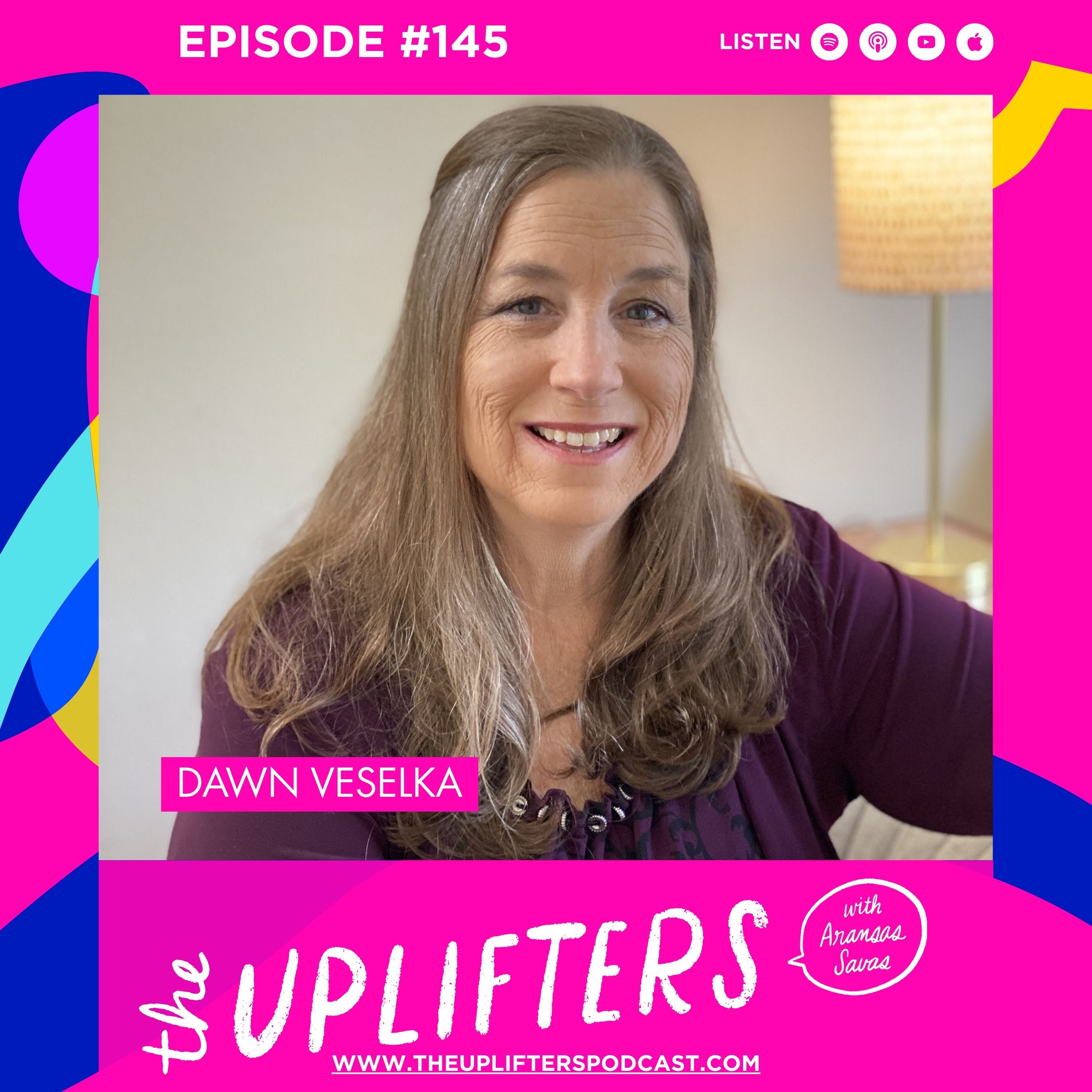 Starting a Nonprofit After 40 | If you’ve ever wondered, “Is it too late for me to...” the answer’s NO and The Uplifters are about to show you why. This space is for purpose-driven women who want to do big, brave things in the second half of their lives. I’m your host, Aransas Savas, and I’ve spent the last 20 years at the intersection of behavior change research and coaching.This month for the new year, we're exploring new beginnings with award-winning author Sahar Delijani, perimenopause expert Karissa Pfeffer, comedian-filmmaker Mandy Fabian, and today, Dawn Veselka, who co-founded Cards2Warriors. Welcome to the Uplifters!Listen to this episode if...* You’ve been wanting to start something meaningful but have no idea where to begin* You’re navigating chronic illness (yours or a loved one’s) and feeling invisible* You’ve been telling yourself you need all the answers before you can take the first step* You’re a caregiver who never gets asked “how are YOU doing?”* You’re wondering if it’s too late to build something new in midlifeIs there any better feeling than receiving hand-written love notes in the mail? Today’s guest, Dawn Veselka, built an entire movement around this moment. For 15 years, she’s watched her daughter Sadie navigate chronic illness and rare disease. Somewhere in that long journey of appointments and advocacy, Dawn discovered that most patients, families, and caregivers don’t only need a medical breakthrough, they also need to know someone sees them.Dawn’s StoryDawn didn’t set out to build a nonprofit. She was a radiation therapist treating cancer patients, raising a daughter with complex medical needs, living a full life that already demanded a lot from her. But being the parent of a child with chronic illness, taught her things about isolation that most people never have to understand.Sadie’s diagnosis took years to piece together. Even now, Dawn describes her daughter as having a “mix of diseases” that doesn’t fit neatly into any single category. That’s the reality for so many people living with rare diseases (there are 7,000 of them, and 95% have zero treatment options). These patients and families are navigating without a map, often without a community, frequently without anyone who truly understands.Dawn spent decades in healthcare, but starting Cards2Warriors required an entirely different skill set. She grew up in the generation where typing class was the closest thing to technology training. Now she needed to build databases, manage logistics, create tech systems secure enough to protect patient information. “When you need $30,000 to build your tech to send cards, it doesn’t compute,” she laughs. “But we finally got everything in place.”Like so many of us in midlife, who are translating our experiences into new impactful chapters, Dawn had to own not knowing. No tech background. No nonprofit experience. No clue how to fundraise at scale. Just a clear vision that people battling chronic illness deserved to feel seen, and the willingness to figure out the rest as she went. And recent neuroscientific research teaches us that our midlife brains are uniquely positioned for this kind of work. After decades of pattern recognition and problem-solving across multiple domains (career, caregiving, navigating complex systems), we’re extraordinarily well-equipped to see connections others miss and build solutions that actually work. The challenge isn’t capability. It’s overcoming the belief that major career shifts or new ventures require starting from scratch when, in fact, we’re bringing irreplaceable expertise to the table.Today, Cards2Warriors operates with a simple but powerful model: anyone can sign up to receive cards, anyone can join their card crew to write them, and they don’t require proof of diagnosis or limit support to specific diseases. They’ve built a community of warriors supporting warriors, high school students learning how to talk to people with chronic illness, and volunteers creating tangible reminders of hope. Dawn’s goal is to send 100,000 cards, and she’s well over halfway. The stories that fuel her work are profoundly moving, so grab your tissues for this episode. Her Courage PracticeTethering to Purpose Through StoryDawn’s courage practice isn’t a morning routine or meditation ritual. It’s tethering herself to the pain, both her own and the pain of the people they serve. When the tech fails or the funding falls through or she’s staring at another problem she doesn’t know how to solve, she goes back to the stories.She thinks about the patients. She thinks about caregivers who burst into tears because someone finally acknowledged their invisible work. She thinks about her own daughter Sadie, and all those years of navigating illness without a roadmap.This isn’t about toxic positivity. It’s about remembering why the work matters when everything in her wants to give up. As the stories keep multiplying, her sense of commitment does too. So when Dawn needs courage, she doesn’t have to manufacture it from thin air. She just remembers the last person who wrote to say “that card saved me today,” and she keeps going.Lift Her UpSupport Cards2Warriors by donating $5 to sponsor two cards at cards2warriors.org, or via Venmo at @Cards-to-Warriors or Zelle at hi@cards2warriors.org.If you loved this story...Explore our conversations with other women who turned personal challenges into community solutions:Angela Wilson’s episode about sending her own version of “happy mail” to honor her late mother, Amy Cohen’s episode about co-founding Families for Safe Streets after losing her son, Janelle Hill’s episode about founding Refuge Mental Health Services as a sexual abuse survivor, and Rebecca Soffer’s episode about creating Modern Loss after losing both parents early in life.Let’s chat about itWhat is the most meaningful piece of handwritten mail that you’ve received? Share in the comments. Get full access to The Uplifters at www.theuplifterspodcast.com/subscribe | 38m 50s | ||||||
| 1/15/26 |  Creative Courage at Any Age | If you’ve ever wondered, “Is it too late for me to...” the answer’s NO and The Uplifters are about to show you why. This space is for purpose-driven women who want to do big, brave things in the second half of their lives. I’m your host, Aransas Savas, and I’ve spent the last 20 years at the intersection of behavior change research and coaching.This month for the new year, we're exploring new beginnings with award-winning author Sahar Delijani, Dawn Veselka who co-founded Cards2Warriors (sending over 48,000 cards of hope to people battling chronic illness), perimenopause expert Karissa Pfeffer, and today, comedian-filmmaker Mandy Fabian. Listen to this episode if...* You’ve been putting off a creative project because you don’t feel ready yet* You’re expanding into something new and feeling simultaneously excited and terrified* You need permission to acknowledge your fears without letting them stop you* You’re tired of feeling like you should have it all figured out before you begin* You want to understand how successful creators avoid self-doubt (spoiler: they don’t)I always thought (hoped) the Giant Iceberg of Creative Fear would get smaller over time. Turns out that’s not the case. If anything, it gets bigger.Because the more we create, the more we know what can go wrong. The more we put ourselves out there, the more aware we become of all the ways we might fail. The more we risk, the more we have to lose. It’s like Mandy Fabian says in today’s conversation: “When you start to expand, it can feel like you’re smaller because the space around you gets bigger to make space for everything that you’ve got to give.”Mandy has been making the choice to step into the bigger space over and over again throughout her creative life. As a comedian, filmmaker, and singer-songwriter, she’s built a career on saying yes to projects that scare her, projects where she’s not entirely sure she knows what she’s doing.Her latest film, Just Plus None (streaming now on Apple TV and Amazon Prime), is a romantic comedy with a twist: the protagonist doesn’t end up with anyone. Instead, she ends up with herself. It’s a film about a woman who’s messy and flawed and doesn’t know how to be a maid of honor, who has loud, unashamed sexual desires, who makes mistakes and learns to love herself where she is. It’s the kind of film that challenges what we think women in rom-coms should be like (and what we think our own journeys toward self-acceptance should look like).Creating it required Mandy to wrestle with the same noisy fears we all do, but courage alone doesn't write the script, find the funding, or push through the three weeks of intense therapy required at the start of the project. So in this episode, we talk about her actual practices for managing fear, the specific ways she processes doubt, and how she's learned to hear limiting beliefs differently (not as truth, but as challenges that prove she needs to be in the room).Her Courage PracticeMandy has developed what might be my favorite courage practice I’ve heard on this show: the therapeutic tantrum.Here’s how it works: When fear and doubt and anxiety are overwhelming, she doesn’t try to positive-think her way through it. Instead, she gives herself permission to throw a full-blown tantrum, either on a friend’s voicemail (with permission to delete without listening) or in her journal or just out loud to herself.She lets herself be “the most scaredy cat, petty, mean-spirited towards myself and anybody else.” She argues for all her limitations. She whines and stomps her feet and declares how unfair everything is and how nobody ever helps her and how she’s going to fail and everyone will laugh.And then she lets it pass.“I let that do for as long as I have to, so that it has its moment,” she explains. “And usually then I go, okay, that’s that. Now let’s work on the other part of it.”What Mandy understands is something most of us resist: those feelings need to be expressed, not suppressed. When we try to bypass them or pretend they don’t exist, they don’t go away. They just turn into a toxic filter that colors everything we see. But when we give them a neutral space to exist, acknowledge them fully, and let them run their course, they lose their power.It’s like she’s created a wind phone for her fears ((H/T Lia Buffa De Feo ), a safe place to release them so they don’t poison her creative process. And then, once the tantrum has run its course, she can ask a different question: “Okay, fun. Would you like to have a word? What would you like to see happen today?”Editor’s note: Sahar Delijani described a very similar practice on last week’s episode, in case you need more evidence in order to let those cranky, negative feelings rip.3 More Ways Mandy Fabian Shows Us How to Build Our Courage Capital:* She moves forward before she feels ready — Mandy admits she often starts projects because she’s “too stupid to believe it could ever go wrong,” driven by dreams rather than detailed plans. But once reality sets in and fear shows up, she doesn’t quit. She just acknowledges that bravery now means something different. It means continuing even after you know how hard it’s going to be. (This is the real courage, by the way: not the ignorant bliss of starting, but the clear-eyed determination to keep going.)* She keeps “we could” possibilities alive — When Mandy and her husband realized they could move to Paris (even though they weren’t going to), it reminded her that she was free to choose her path, and that those little desires probably held clues to what she was craving in her current reality.* She anchors in present-moment acceptance — “The point is to have you right here accepting what is,” Mandy says about why she practices presence. “That’s where you’re at your best self.” Rather than ruminating on past mistakes or catastrophizing about future failures, she brings herself back to now: What can I do today? What small step can I take? What would make this moment easier? It’s a practice that cuts through the overwhelm and reconnects her to her power.Lift Her UpWatch Mandy’s film Just Plus None on Amazon Prime and Apple TV. If it resonates with you (and I think it will), take two minutes to rate and review it. This is how films by independent female creators find their audiences. Your review could be exactly what another viewer needs to discover this gem.If you loved this story...Start with Kara Cutruzzula’s episode about building a multifaceted creative career, then explore conversations with other women who’ve chosen creative courage: Caroline Scruggs on leaving the music industry to create freedom, Cleyvis Natera on leaving corporate to write full-time, and Julie Hartigan on pivoting from engineering to becoming a chef. Get full access to The Uplifters at www.theuplifterspodcast.com/subscribe | 45m 32s | ||||||
| 1/8/26 |  #143: What Life-and-Death Courage Teaches Us About Daily Bravery in Midlife | If you’ve ever wondered, “Is it too late for me to...” the answer’s NO—and The Uplifters are about to show you why. This space is for purpose-driven women who want to do big, brave things in the second half of their lives. I’m your host, Aransas Savas, and I’ve spent the last 20 years at the intersection of behavior change research and coaching.This month for the new year, we're exploring new beginnings with award-winning author Sahar Delijani, Dawn Veselka who co-founded Cards2Warriors (sending over 48,000 cards of hope to people battling chronic illness), perimenopause expert Karissa Pfeffer, and comedian-filmmaker Mandy Fabian. Welcome to the Uplifters!Listen to this episode if...* You’re carrying stories that feel too big, too painful, or too important to keep inside* You’ve felt paralyzed by the question “who am I to write this/say this/share this?”* You’re looking for courage to do something big and brave this yearMost of us will never face the kind of capital C Courage that Sahar Delijani writes about, even though lately it doesn’t feel far off. The kind where speaking your beliefs can cost you your freedom, your family, your life. I’ve spent years studying courage, coaching women through their biggest transitions, and interviewing hundreds of people doing brave things. But this conversation taught me so much about the ways great big acts of courage inform the little daily ones, and vice-versa.Sahar writes about people who faced imprisonment, execution, and systematic persecution. But telling their stories? That took a different kind of courage entirely. The daily kind. The kind that shows up when you’re sitting at your laptop, terrified, wondering who gave you permission to tell these stories. The kind that requires you to keep going when every voice in your head says you’re not ready, you’re betraying secrets, you don’t have the right.That’s the courage most of us actually need to learn: how to do the thing we feel called to do even when we’re scared, how to tell the truth even when we were taught to keep it hidden, how to take up space with our voices, our stories, our work, especially in midlife when so much of the world tells us our time has passed.So when Sahar Delijani, whose debut novel Children of the Jacaranda Tree has been translated into 32 languages and published in more than 75 countries, agreed to talk with me, I wanted to understand: How does witnessing extraordinary Courage inform the ordinary courage we need every day? How do you build the stamina to keep doing brave things when the work requires revisiting trauma again and again? And what can those of us doing “smaller” brave things (career changes, creative pursuits, truth-telling in our own lives) learn from someone who’s documenting capital-C Courage?Turns out: everything.Her StorySahar grew up in the aftermath of the 1979 Iranian revolution, in the shadow of her family’s activism and imprisonment. Her parents were among thousands arrested in 1983 for their political beliefs. Her mother was pregnant at the time. Sahar was born in Evin prison, Tehran’s notorious political prison, and spent her first month there before her grandparents raised her alongside her brother and cousin (also born in prison).The 1988 mass executions took her uncle’s life while her parents, fortunately, had already been released. But the trauma didn’t end when her parents came home. It lived in the silence, in the things they couldn’t talk about, in the ways their imprisonment shaped every aspect of their lives even after their release.For years, Sahar didn’t talk about any of it either. Moving to California at age 12 meant geographic distance from Iran, but it also meant the stories stayed locked away. It wasn’t until she decided to write Children of the Jacaranda Tree that she began to unlock those stories, not just for herself, but for others who lived through similar experiences around the world.The book chronicles the lives of families affected by political imprisonment in Iran, weaving together stories of life inside prison walls and the ripple effects on everyone outside them. It follows children born into this tragedy, including those born in prison like Sahar, as they grow up and decide what to do with the legacy of their parents’ courage and sacrifice. Writing it meant breaking decades of silence, meant asking her parents to revisit their most painful memories, and making private family trauma public.In this episode, we talk about what it takes to keep going when your work requires you to revisit the hardest parts of your life again and again, how she rebuilds her courage between projects, how she processes the weight of speaking for others, how she maintains boundaries while staying open to her own feelings, and how she remembers why these stories matter when the cost of telling them feels too high.5 Ways Sahar Delijani Shows Us How to Build Our Courage Capital:* She reconnects to purpose when doubt creeps in. When Sahar questions whether she has the right to tell these stories, she comes back to a simple truth: these stories need to be told, and she’s the one with the passion, knowledge, and proximity to tell them. That clarity of knowing why the work matters beyond her own fear keeps her moving forward. (You can do this too: write down why your brave thing matters. Keep that visible. Come back to it when you forget.)* She builds community to sustain the hard work. Sahar doesn’t try to write about trauma in isolation. She surrounds herself with friends, family, and fellow artists who understand what she’s carrying. They give her energy when her own runs low, remind her why the work matters, and help her process the weight of it all. (Your turn: identify 2-3 people who can hold space for your brave work. Tell them what you’re doing and ask them to check in with you.)* She gives herself permission to feel everything. Rather than pushing through difficult emotions to stay “productive,” Sahar lets herself feel desperate, tired, lazy, or whatever shows up. She trusts that living through feelings honestly is how they move through and make space for the next thing. (Try this: when hard feelings come up, ask yourself “what am I really feeling right now?” and let yourself have that feeling without judgment.)* She takes breaks without guilt. Between writing projects, Sahar steps away from the work entirely. She reads, cooks, travels, swims, spends time with loved ones, all without beating herself up for not being “productive.” She’s learned that rest isn’t procrastination; it’s how we build the reserves to do the next hard thing. (What would it look like for you to schedule guilt-free breaks into your brave work?)* She reframes whose story this is. When the weight of speaking for others felt too heavy, Sahar shifted perspective: yes, these are her family’s stories, but she’s the medium connecting them to people who need to hear them. She’s not the hero or the villain of this story, but the translator, the bridge, the person willing to do the hard work of making private pain into public wisdom. (Where can you reframe your role from “I must get this perfect” to “I’m here to connect and translate”?)Lift Her UpSahar’s second novel, For Every Person You Kill, arrives in spring 2027. In the meantime, pick up Children of the Jacaranda Tree wherever books are sold—it’s one of those rare books you’ll want to reread immediately just to savor the language and sit with the characters a little longer.If you loved this story...Did you know that every woman on the Uplifters podcast is nominated by someone she inspires? This means you and I get to chat with the most inspiring women -- the ones who inspire the women who inspire us!Our current thread:Susan Jaramillo→Kate Tellers from The Moth→Cleyvis Natera→ Deesha Philyaw → Mo Browne – Djeli Said → Hala Alyan → Sahar Delijani who nominates Yeldā Ali as her Uplifter: “Artist, activist, innovator, community organizer, Yeldā is a true uplifter!”Let’s Chat!What story have you been afraid to tell? What would it take to start telling it this week, even just to yourself, even just in a journal? Share in the comments, your courage might be exactly what another person needs to hear. Get full access to The Uplifters at www.theuplifterspodcast.com/subscribe | 38m 16s | ||||||
Showing 25 of 192
Pitch Fit is a Pro feature
See how bookable this show is for guests, which brands already advertise, the per-episode ad value, and the best-fit guest and sponsor profile. The numbers are blurred on the free plan.
How readily this show books outside guests like you.
How proven this show is for host-read sponsorships.
For Guests
ProFor Advertisers
ProUpgrade to Pro to unlock guest cadence, sponsor categories, fit scores, and per-episode ad value for this show.