
Insights from recent episode analysis
Audience Interest
Podcast Focus
Publishing Consistency
Platform Reach
Insights are generated by CastFox AI using publicly available data, episode content, and proprietary models.
Total monthly reach
Estimated from 3 chart positions in 3 markets.
By chart position
- 🇧🇷BR · Visual Arts#1161K to 10K
- 🇳🇿NZ · Visual Arts#2100K to 300K
- 🇹🇷TR · Visual Arts#124500 to 3K
- Per-Episode Audience
Est. listeners per new episode within ~30 days
51K to 157K🎙 Weekly cadence·55 episodes·Last published 4w ago - Monthly Reach
Unique listeners across all episodes (30 days)
102K to 313K🇳🇿96%🇧🇷3%🇹🇷1% - Active Followers
Loyal subscribers who consistently listen
56K to 172K
Market Insights
Platform Distribution
Reach across major podcast platforms, updated hourly
Total Followers
—
Total Plays
—
Total Reviews
—
* Data sourced directly from platform APIs and aggregated hourly across all major podcast directories.
On the show
Recent episodes
The Commodity Layer is Eating Our Art Jobs
Apr 17, 2026
1h 12m 56s
E54: Leave Your Artistic Baggage Behind in 2026
Jan 1, 2026
1h 02m 13s
E53: The Identity Trap - Why Moebius Had to Kill Jean Giraud
Oct 19, 2025
53m 12s
E52: The Truth About Art Industry Deadlines
Sep 8, 2025
1h 23m 35s
E51: The 3 Elements Your Art Style Needs
Jul 29, 2025
54m 57s
Social Links & Contact
Official channels & resources
Official Website
Login
RSS Feed
Login
| Date | Episode | Description | Length | ||||||
|---|---|---|---|---|---|---|---|---|---|
| 4/17/26 | The Commodity Layer is Eating Our Art Jobs | Check out my Free Brainstorming Workshop: https://mightyartisan.com/worldbuilding Learn to silence your inner critic. Ignite creative ideas. And watch a live demo of these techniques in action.What is your value as an artist? Your work is both worth zero AND worth infinity at the same time, and understanding this paradox is critical for surviving the commodity layer that reshapes creative industries with every technological revolution.This episode introduces the concept of the commodity layer and explains why so many artists get pushed into work that becomes obsolete. The commodity layer is the interchangeable portion of art that gets produced at scale - illustrations for soap commercials during the golden age, NPC designs in video games today, junior illustration work being eaten by AI right now. Careers built on this layer can work for years until technology moves the commodity forward, leaving those artists with highly skilled work that suddenly has no market.Drawing on historical examples from the golden age of illustration, the photography revolution, the airbrush and marker era, and the rise of Silicon Graphics workstations in the 90s, this episode shows how every technological shift has relocated the commodity layer and which artists thrived versus which got left behind.The discussion covers three main concepts: what the commodity layer actually is and how it works economically, why educational systems and production jobs push artists into it despite the risks, and how to rise above it through artistic authorship and building a unique skill stack. The goal is not to avoid the commodity layer entirely, since there is real money and experience available there, but to never get stuck in it.TIMESTAMPS:00:00 Intro01:22 Welcome02:38 Preface07:37 What Is The Commodity Layer?25:53 Why Artists Get Stuck In The Trap44:56 Rising Above Through Authorship58:26 The Analytical Takeaway1:02:15 The Simple Takeaway1:02:27 The Practical Takeaway1:07:47 The Philosophical TakeawayPEOPLE MENTIONED: Pablo Picasso Alphonse Mucha Norman Rockwell JC Leyendecker Howard PyleThe Visual Scholar Podcast is designed to help you demystify the world of Art, Productivity, and Creativity. So you can get better faster, and enjoy your Art Journey.We discuss Drawing, Painting, Illustration and Entertainment Design. Along with Productivity and Career Advice.You Can Find The Visual Scholar Podcast In These Places:Apple: https://podcasts.apple.com/us/podcast/the-visual-scholar/id1678505411Spotify: open.spotify.com/show/6VbdwbiZqy8nqb90ruKQCX?si=21b9c1d02c85419fYouTube: https://www.youtube.com/@MightyArtisanShow Homepage: https://visualscholar.mightyartisan.comWhere To Find More About Tim Mcburnie:Learn Drawing and Illustration at The Drawing Codex: www.thedrawingcodex.comTake Your Career and Productivity To The Next Level: www.mightyartisan.comThe Drawing Codex Youtube Channel: https://www.youtube.com/@TheDrawingCodexMighty Artisan Youtube Channel: https://www.youtube.com/@MightyArtisanPortfolio: www.timmcburnie.com www.artstation.com/tim-mcburnie www.instagram.com/timmcburnie x.com/timmcburnie | 1h 12m 56s | ||||||
| 1/1/26 | E54: Leave Your Artistic Baggage Behind in 2026 | Check out my Free Brainstorming Workshop: https://mightyartisan.com/worldbuilding Learn to silence your inner critic. Ignite creative ideas. And watch a live demo of these techniques in action. Are you dragging around old projects, outdated goals, and beliefs about success that are actually holding you back? Most artists are trapped by invisible baggage they don't even recognize. In this episode, we explore "artistic bankruptcy" - the practice of consciously releasing everything that no longer serves your creative journey. From obvious goals you know you should abandon to deep-seated beliefs about what makes a "real artist," we uncover the hidden forces driving your decisions. We dive deep into the Identity Trap - how your sense of who you are as an artist can either propel you forward or keep you stuck on a treadmill going nowhere. Through real examples and a practical 4-pillar framework, you'll learn to identify the artistic baggage weighing you down. TIMESTAMPS: 00:00 Intro 04:20 Welcome 05:32 Declaring Artistic Bankruptcy 10:45 What is Artistic Baggage? 27:01 The Identity Trap 42:32 The 4 Pillars Framework 53:14 The Analytical Takeaway 54:32 The Simple Takeaway 54:41 The Practical Takeaway 55:47 The Philosophical Takeaway 1:00:56 Outro TOOLS FOR TODAY: - Journaling / note-taking app or paper - The 4 Pillars Framework (Obvious Ideas, Non-Obvious Ideas, Projects & Tools, Plans) BOOKS/RESOURCES MENTIONED: PEOPLE MENTIONED: - Picasso (discussed in context of style development) --- The Visual Scholar Podcast is designed to help you demystify the world of Art, Productivity, and Creativity. So you can get better faster, and enjoy your Art Journey. We discuss Drawing, Painting, Illustration and Entertainment Design. Along with Productivity and Career Advice. You Can Find The Visual Scholar Podcast In These Places: Apple: https://podcasts.apple.com/us/podcast/the-visual-scholar/id1678505411 Spotify: open.spotify.com/show/6VbdwbiZqy8nqb90ruKQCX?si=21b9c1d02c85419f YouTube: https://www.youtube.com/@MightyArtisan Show Homepage: https://visualscholar.mightyartisan.com Where To Find More About Tim Mcburnie: Learn Drawing and Illustration at The Drawing Codex: www.thedrawingcodex.com Take Your Career and Productivity To The Next Level: www.mightyartisan.com The Drawing Codex Youtube Channel: https://www.youtube.com/@TheDrawingCodex Mighty Artisan Youtube Channel: https://www.youtube.com/@MightyArtisan Portfolio: www.timmcburnie.com www.artstation.com/tim-mcburnie www.instagram.com/timmcburnie x.com/timmcburnie | 1h 02m 13s | ||||||
| 10/19/25 |  E53: The Identity Trap - Why Moebius Had to Kill Jean Giraud | Check out my Free Brainstorming Workshop: https://mightyartisan.com/worldbuilding Learn to silence your inner critic. Ignite creative ideas. And watch a live demo of these techniques in action."Artists must smash down the systems that domesticate the mind" - Moebius This is a great quote from the great Jean Giruad (aka Moebius)What else can we learn from the master?--- The artist identity trap reveals why professional artists with exceptional craft freeze on personal projects while indie creators with rougher skills confidently produce their own work. This paradox isn't about ability—it's about invisible permission systems created by artistic identity.Jean Giraud's transformation into Moebius demonstrates this profoundly. By becoming Moebius, he created psychological space to revolutionize visual storytelling, influencing Hollywood and Japanese manga for decades.Different artistic communities construct incompatible value hierarchies. Comic artists derive status from unique style. Concept artists suppress personal style for versatility and credits. Indie creators measure worth through pure expression. Moving between these paradigms feels like betraying core aspects of yourself.The freelance mindset that enables shaping others' visions conflicts with personal creation. Professional training rewires how you evaluate your own ideas, creating paralysis where skill exists but internal authorization does not. Moebius wasn't just branding—it was psychological liberation. Authors adopt pen names when switching genres. Actors use stage names separating personal from public persona. The early internet's universal alias culture created remarkable creative freedom. As professional identity became necessary for freelance careers, creative freedom potentially suffered.---00:00 - Intro01:09 - Welcome to Visual Scholar01:31 - The Journey Of Jean Giraud05:42 - The Identity Trap13:02 - Status Games25:39 - Becoming Who You NEED To Be39:59 - Analytical Takeaway42:06 - Simple Takeaway42:23 - Practical Takeaway48:14 - Philosophical Takeaway51:43 - OutroTOOLS FOR TODAY: - Identity mapping exercise - Permission system analysis - Alias brainstorming techniquesBOOKS/RESOURCES MENTIONED: - Works of Moebius/Jean Giraud - Blueberry comic series - Early internet creative communitiesPEOPLE MENTIONED: - Jean Giraud/Moebius - Various unnamed indie and professional artists---The Visual Scholar Podcast is designed to help you demystify the world of Art, Productivity, and Creativity. So you can get better faster, and enjoy your Art Journey.We discuss Drawing, Painting, Illustration and Entertainment Design. Along with Productivity and Career Advice.You Can Find The Visual Scholar Podcast In These Places:Apple: https://podcasts.apple.com/us/podcast/the-visual-scholar/id1678505411Spotify: open.spotify.com/show/6VbdwbiZqy8nqb90ruKQCX?si=21b9c1d02c85419fYouTube: https://www.youtube.com/@MightyArtisanShow Homepage:https://visualscholar.mightyartisan.comWhere To Find More About Tim Mcburnie:Learn Drawing and Illustration at The Drawing Codex:www.thedrawingcodex.comTake Your Career and Productivity To The Next Level:www.mightyartisan.comThe Drawing Codex Youtube Channel:https://www.youtube.com/@TheDrawingCodexMighty Artisan Youtube Channel:https://www.youtube.com/@MightyArtisanPortfolio: www.timmcburnie.comwww.artstation.com/tim-mcburniewww.instagram.com/timmcburniex.com/timmcburnie | 53m 12s | ||||||
| 9/8/25 |  E52: The Truth About Art Industry Deadlines | Check out my Free Brainstorming Workshop: https://mightyartisan.com/worldbuilding Learn to silence your inner critic. Ignite creative ideas. And watch a live demo of these techniques in action.Artists have this love-hate relationship with deadlines - they stress us out and make us compromise our work, but they also force us to finish things and can actually unlock creative flow.Professional artist deadline anxiety emerges from job descriptions mentioning tight deadlines and high-pressure environments. Most artists worry whether they need to compete purely on speed, creating fear that everyone expects perfection immediately or they won't get employed. This relationship with deadlines becomes particularly challenging in concept art and commercial illustration where strict deadlines are common.This episode explores three key aspects of professional deadlines: why reliability and speed matter as much as quality in professional art careers, the reality of professional environments including crunch culture context and what employers actually expect from new artists, and practical strategies for building speed and meeting industry-specific deadline requirements systematically.The discussion covers how speed functions as a learnable skill rather than inherent talent, why the intersection of quality and speed creates competitive advantages, and frameworks for researching and practicing industry-specific time expectations. Key elements include understanding the speed-quality-cost relationship, building deadline confidence through systematic practice, and recognizing deadlines as completion enablers rather than creativity destroyers.CHAPTERS:00:00 Intro01:44 Welcome03:00 The Professional Artist Anxiety08:38 Why Deadlines Matter in Professional Art23:02 The Reality of Professional Environments 44:28 How to Build Speed and Meet Professional Deadlines01:03:24 The Analytical Takeaway01:07:16 The Simple Takeaway01:07:44 The Practical Takeaway01:15:11 The Philosophical Takeaway01:20:31 OutroThe Visual Scholar Podcast is designed to help you demystify the world of Art, Productivity, and Creativity. So you can get better faster, and enjoy your Art Journey.We discuss Drawing, Painting, Illustration and Entertainment Design. Along with Productivity and Career Advice.You Can Find The Visual Scholar Podcast In These Places:Apple: https://podcasts.apple.com/us/podcast/the-visual-scholar/id1678505411Spotify: open.spotify.com/show/6VbdwbiZqy8nqb90ruKQCX?si=21b9c1d02c85419fYouTube: https://www.youtube.com/@Tim-McburnieShow Homepage:www.thedrawingcodex.com/podcasts/the-visual-scholarWhere To Find More About Tim Mcburnie:Learn Drawing and Illustration at The Drawing Codex:www.thedrawingcodex.comArt Community:www.mightyartisan.comThe Drawing Codex Youtube Channel:https://www.youtube.com/@TheDrawingCodexPortfolio: www.timmcburnie.comwww.artstation.com/tim-mcburniewww.instagram.com/timmcburniex.com/timmcburnie | 1h 23m 35s | ||||||
| 7/29/25 |  E51: The 3 Elements Your Art Style Needs | Check out my Free Brainstorming Workshop: https://mightyartisan.com/worldbuilding Learn to silence your inner critic. Ignite creative ideas. And watch a live demo of these techniques in action.---This is The Fifty First Episode of the Visual Scholar Podcast - With Tim Mcburnie.What if style isn't something you choose, but something that emerges from three specific elements working in the right sequence?Below is in Automagically generated summary so you can check out the content and also to help with search functionality!---This episode breaks down the three fundamental elements that determine every artist's style and explores why most artists approach style development in the wrong sequence. Rather than treating style as something you pick from a menu, the discussion examines how style emerges from the intersection of aesthetic DNA, process choices, and functional constraints. The episode explores how visual aesthetics come from early influences and mental landscapes that artists uncover rather than choose, drawing examples from childhood inspirations and the concept of investigating the influences of your influences. It examines how process - from tools and techniques to thinking patterns - directly shapes the surface appearance of work, using examples from comic book penciling techniques to concept art workflows. The final element addresses how functionality and production constraints actually drive many stylistic choices, from publishing schedules affecting comic book aesthetics to career requirements shaping artistic approaches.—CHAPTERS:00:00 Intro01:10 Welcome02:26 Artists Think Style Is a Choice…07:05 Aesthetic - Your Visual DNA18:57 Process - How You Actually Make Art26:35 Functionality - Purpose Drives Style41:20 The Analytical Takeaway43:59 The Simple Takeaway44:12 The Practical Takeaway48:16 The Philosophical Takeaway53:15 Outro—---The Visual Scholar Podcast is designed to help you demystify the world of Art, Productivity, and Creativity. So you can get better faster, and enjoy your Art Journey.We discuss Drawing, Painting, Illustration and Entertainment Design. Along with Productivity and Career Advice.You Can Find The Visual Scholar Podcast In These Places:Apple: https://podcasts.apple.com/us/podcast/the-visual-scholar/id1678505411Spotify: open.spotify.com/show/6VbdwbiZqy8nqb90ruKQCX?si=21b9c1d02c85419fYouTube: https://www.youtube.com/@MightyArtisanShow Homepage:https://visualscholar.mightyartisan.comWhere To Find More About Tim Mcburnie:Learn Drawing and Illustration at The Drawing Codex:www.thedrawingcodex.comTake Your Career and Productivity To The Next Level:www.mightyartisan.comThe Drawing Codex Youtube Channel:https://www.youtube.com/@TheDrawingCodexMighty Artisan Youtube Channel:https://www.youtube.com/@MightyArtisanPortfolio: www.timmcburnie.comwww.artstation.com/tim-mcburniewww.instagram.com/timmcburniex.com/timmcburnie | 54m 57s | ||||||
| 7/14/25 | 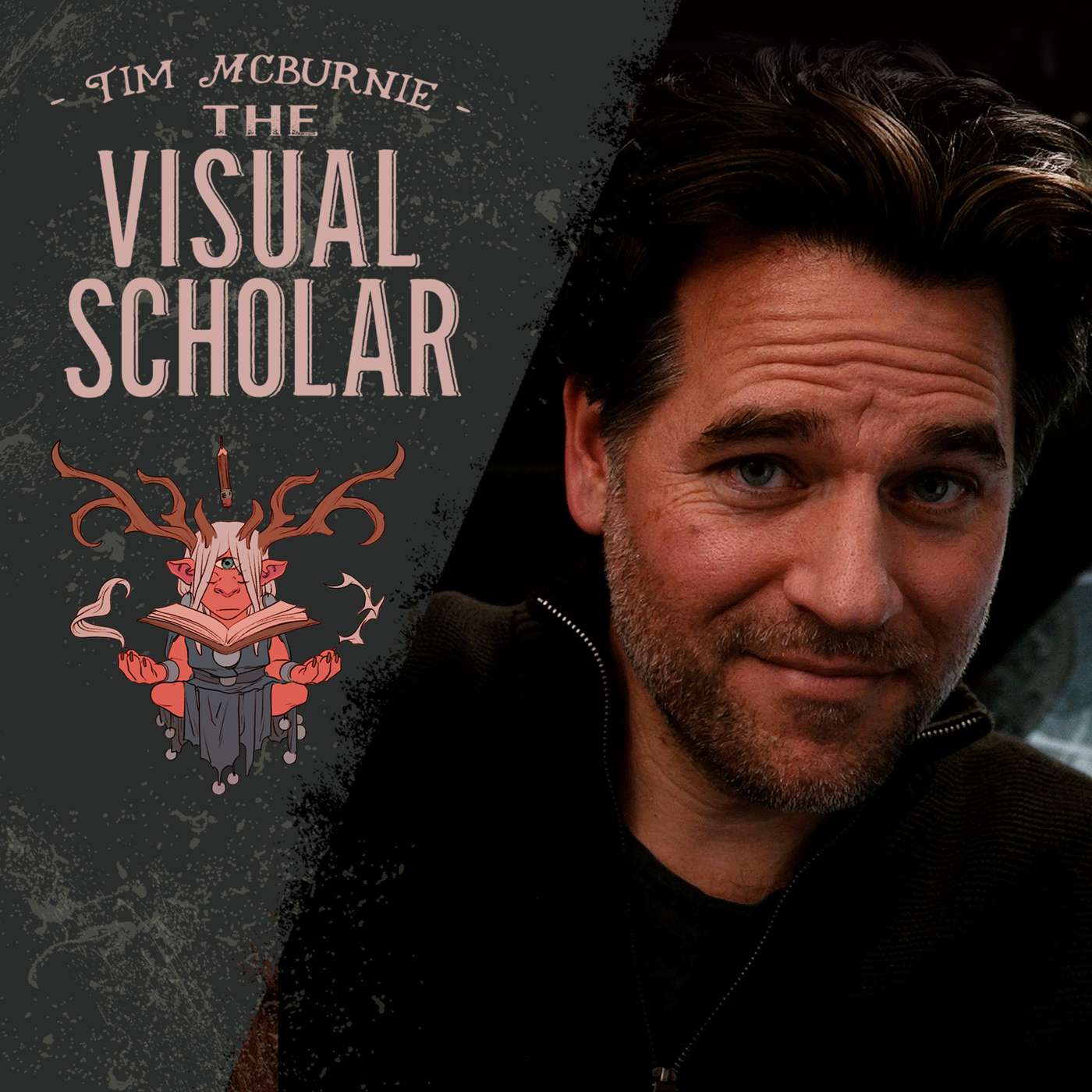 E50: The Hidden Power of Artistic Intent | Check out my Free Brainstorming Workshop: https://mightyartisan.com/worldbuilding Learn to silence your inner critic. Ignite creative ideas. And watch a live demo of these techniques in action. --- This is The Fiftieth Episode of the Visual Scholar Podcast - With Tim Mcburnie. Most artists think intent is fine art pretension, but it's actually the secret that transforms technically skilled work into art that connects. Below is in Automagically generated summary so you can check out the content and also to help with search functionality! --- Let’s explore why artistic intent - often dismissed as "fine art nonsense" by commercial and entertainment artists - is actually the missing element that transforms technical skill into impactful work. The episode examines how the divide between fine art and commercial art education leaves technically proficient artists stuck in the "execution trap," where they can render beautifully but struggle to create work with purpose and direction. The discussion covers the practical reality that most entertainment artists are trained to execute someone else's vision, never learning to be the author of their own work. Tim breaks down how intent functions as both creative direction and decision-making filter, turning random technical ability into purposeful communication. The episode provides concrete methods for setting and using intent in daily art practice, from individual drawing sessions to larger personal projects. Rather than academic theory, this episode focuses on intent as a practical tool for working artists who want their technically solid work to create genuine connection with viewers. Tim argues that intent is what separates craft from art, and explores why many skilled artists unconsciously avoid developing this crucial element of their creative practice. — Chapters CHAPTERS: 00:00:00 Intro 00:01:05 Welcome 00:02:22 When Technical Skill Isn't Enough 00:09:07 The Intent Divide: Why We Avoid What We Need Most 00:24:57 Intent Creates Direction: From Technician to Author 00:42:54 Practical Intent: How to Actually Use This 00:52:02 The Analytical Takeaway 00:54:44 The Simple Takeaway 00:55:03 The Practical Takeaway 00:58:15 The Philosophical Takeaway 01:07:51 Out — --- The Visual Scholar Podcast is designed to help you demystify the world of Art, Productivity, and Creativity. So you can get better faster, and enjoy your Art Journey. We discuss Drawing, Painting, Illustration and Entertainment Design. Along with Productivity and Career Advice. You Can Find The Visual Scholar Podcast In These Places: Apple: https://podcasts.apple.com/us/podcast/the-visual-scholar/id1678505411 Spotify: open.spotify.com/show/6VbdwbiZqy8nqb90ruKQCX?si=21b9c1d02c85419f YouTube: https://www.youtube.com/@MightyArtisan Show Homepage: https://visualscholar.mightyartisan.com Where To Find More About Tim Mcburnie: Learn Drawing and Illustration at The Drawing Codex: www.thedrawingcodex.com Take Your Career and Productivity To The Next Level: www.mightyartisan.com The Drawing Codex Youtube Channel: https://www.youtube.com/@TheDrawingCodex Mighty Artisan Youtube Channel: https://www.youtube.com/@MightyArtisan Portfolio: www.timmcburnie.com www.artstation.com/tim-mcburnie www.instagram.com/timmcburnie x.com/timmcburnie | 1h 08m 52s | ||||||
| 7/1/25 | 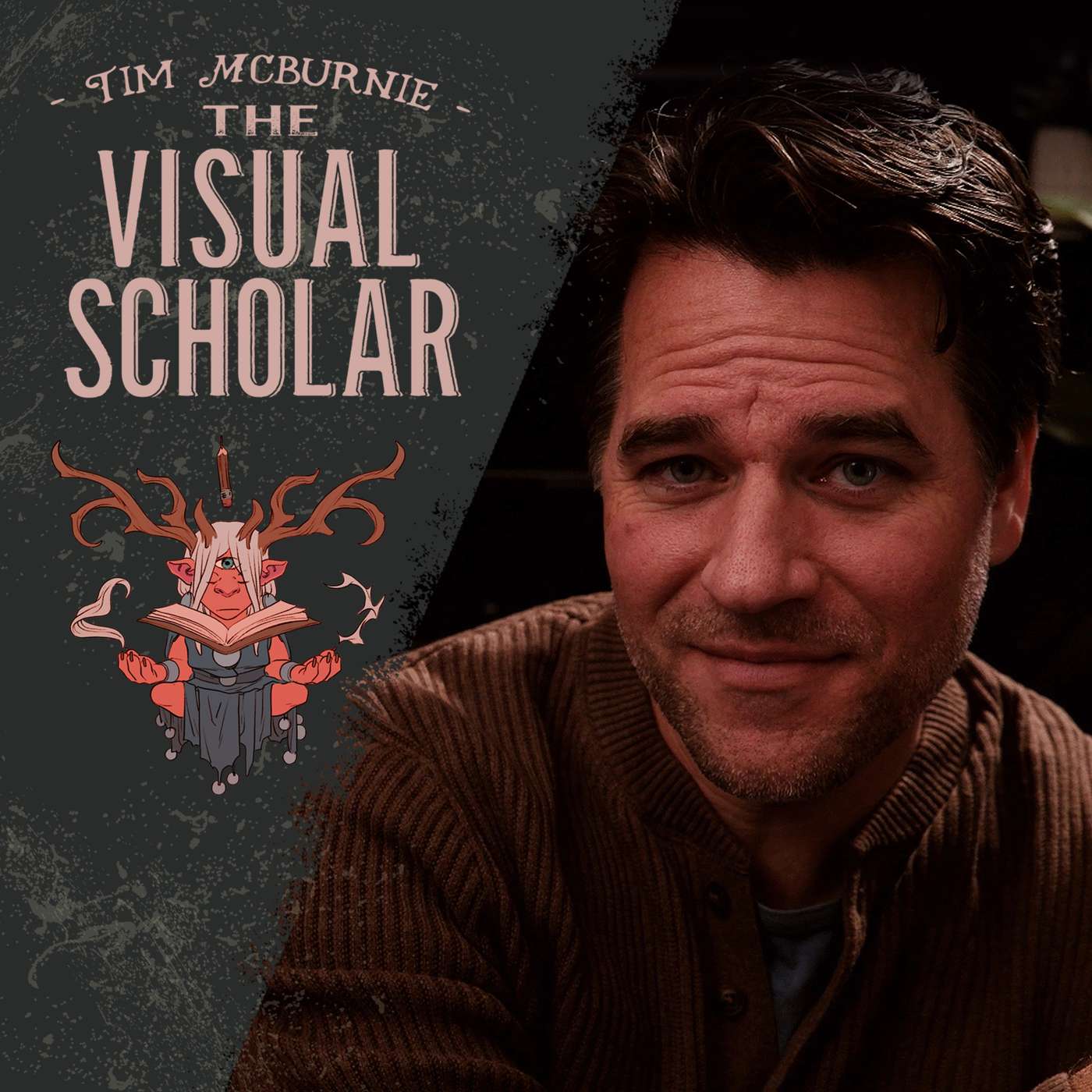 E49: Artists! Chip Away At Something Great | Check out my Free Brainstorming Workshop: https://mightyartisan.com/worldbuilding Learn to silence your inner critic. Ignite creative ideas. And watch a live demo of these techniques in action. --- This is The Forty Ninth Episode of the Visual Scholar Podcast - With Tim Mcburnie. What if you could create your masterpiece by working just 15 minutes at a time? Below is in Automagically generated summary so you can check out the content and also to help with search functionality! --- This episode challenges the belief that meaningful artistic work requires long, uninterrupted sessions of 6+ hours. The discussion explores how artists can create significant projects by chipping away in 15-minute increments, and why this approach often produces better results than waiting for perfect conditions. The episode examines the relationship between flow states and shorter work sprints, drawing parallels to athletic performance where focus can be achieved despite distractions. It breaks down the practical advantages of building a "chipping away" muscle, including staying warmed up creatively, reducing friction to starting work, and replacing passive screen time with active creation. The core argument centers on the principle that all great works are completed through accumulated small efforts, and that learning to manage projects in small chunks prepares artists for larger opportunities when they arise. — CHAPTERS: 00:00:00 Intro 00:01:10 Welcome 00:02:27 Why We Think We Need 6-Hour Sessions 00:06:45 Flow, Focus, and Small Chunks of Time 00:18:13 The Advantages of Building the Chipping Away Muscle 00:31:19 Making Art More Fun 00:35:24 Big Things Are Always Finished by Small Efforts 00:48:29 The Analytical Takeaway 00:52:34 The Simple Takeaway 00:53:00 The Practical Takeaway 00:57:10 The Philosophical Takeaway 01:00:36 Out — --- The Visual Scholar Podcast is designed to help you demystify the world of Art, Productivity, and Creativity. So you can get better faster, and enjoy your Art Journey. We discuss Drawing, Painting, Illustration and Entertainment Design. Along with Productivity and Career Advice. You Can Find The Visual Scholar Podcast In These Places: Apple: https://podcasts.apple.com/us/podcast/the-visual-scholar/id1678505411 Spotify: open.spotify.com/show/6VbdwbiZqy8nqb90ruKQCX?si=21b9c1d02c85419f YouTube: https://www.youtube.com/@MightyArtisan Show Homepage: https://visualscholar.mightyartisan.com Where To Find More About Tim Mcburnie: Learn Drawing and Illustration at The Drawing Codex: www.thedrawingcodex.com Take Your Career and Productivity To The Next Level: www.mightyartisan.com The Drawing Codex Youtube Channel: https://www.youtube.com/@TheDrawingCodex Mighty Artisan Youtube Channel: https://www.youtube.com/@MightyArtisan Portfolio: www.timmcburnie.com www.artstation.com/tim-mcburnie www.instagram.com/timmcburnie x.com/timmcburnie | 1h 03m 00s | ||||||
| 6/20/25 | 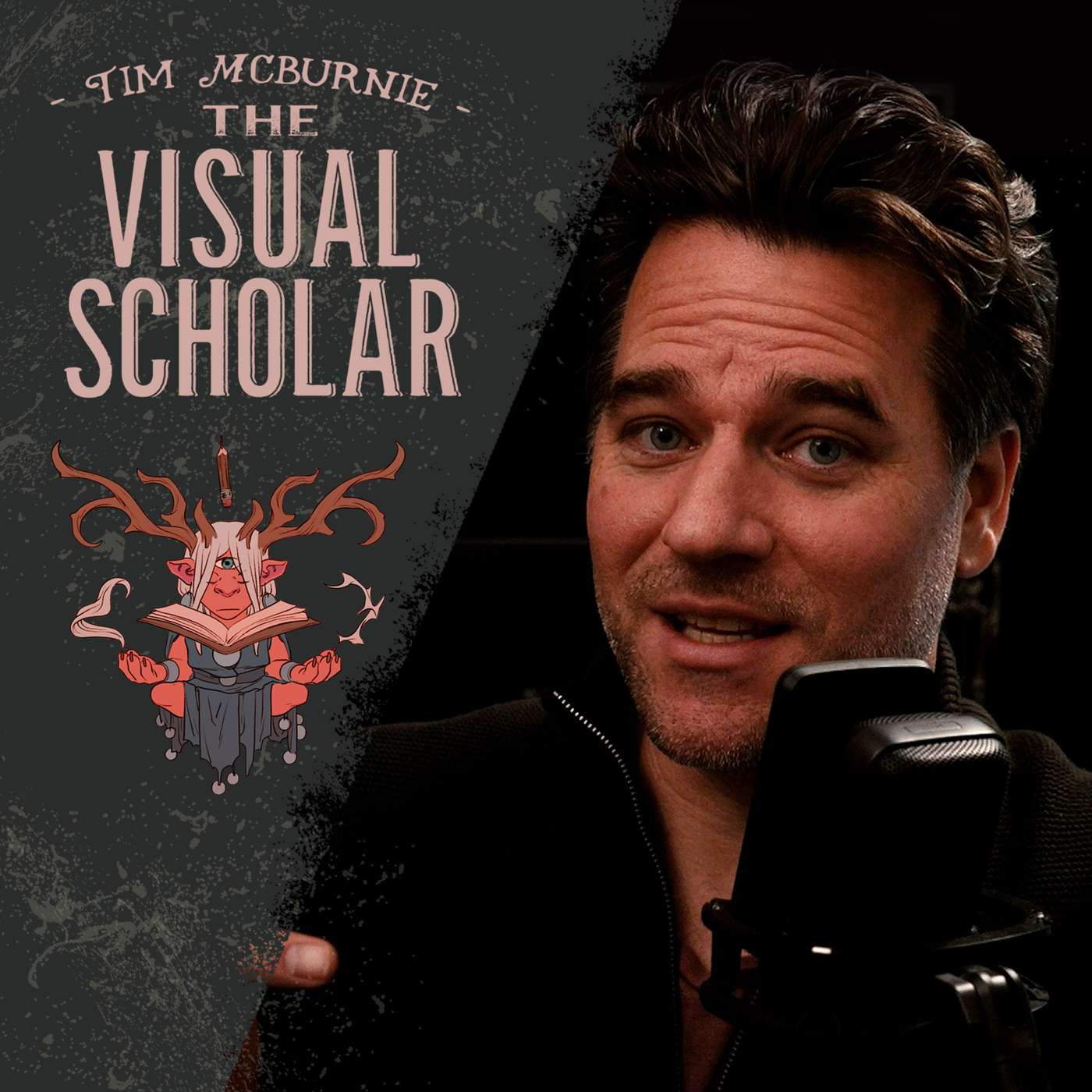 E48: Too Many Good Ideas Can Kill Your Art Project | Check out my Free Brainstorming Workshop: https://mightyartisan.com/worldbuilding Learn to silence your inner critic. Ignite creative ideas. And watch a live demo of these techniques in action. --- This is The Forty Eighth Episode of the Visual Scholar Podcast - With Tim Mcburnie. What if having a million amazing ideas for your project is actually the thing that's killing it? Below is in Automagically generated summary so you can check out the content and also to help with search functionality! --- This episode challenges the common artistic impulse to create elaborate worlds filled with countless creatures, characters, and concepts. The discussion examines why having "a million monsters" often creates noise rather than signal, and explores how constraint and focus can lead to more impactful creative projects. The episode draws from the tension between Stan Lee and Jack Kirby in Marvel Comics history to illustrate the difference between creative execution and editorial vision. It explores how the elevator pitch mentality from Hollywood applies to personal artistic projects, using Star Wars as an example of how one clear core idea can anchor an entire universe. The argument centers on the principle that artistic projects need a single, easily communicable hook that people can understand and share, rather than an overwhelming collection of interesting elements. — Chapters CHAPTERS: 00:00 Intro 01:06 Welcome 02:23 The Million Monster Problem 06:11 Why Clear Signal Beats Creative Chaos 16:29 The Stan Lee vs Jack Kirby Lesson 28:52 Pick One Idea and Go Deeper 35:40 The Analytical Takeaway 37:41 The Simple Takeaway 37:48 The Practical Takeaway 40:39 The Philosophical Takeaway 44:11 Outro — --- The Visual Scholar Podcast is designed to help you demystify the world of Art, Productivity, and Creativity. So you can get better faster, and enjoy your Art Journey. We discuss Drawing, Painting, Illustration and Entertainment Design. Along with Productivity and Career Advice. You Can Find The Visual Scholar Podcast In These Places: Apple: https://podcasts.apple.com/us/podcast/the-visual-scholar/id1678505411 Spotify: open.spotify.com/show/6VbdwbiZqy8nqb90ruKQCX?si=21b9c1d02c85419f YouTube: https://www.youtube.com/@MightyArtisan Show Homepage: https://visualscholar.mightyartisan.com Where To Find More About Tim Mcburnie: Learn Drawing and Illustration at The Drawing Codex: www.thedrawingcodex.com Take Your Career and Productivity To The Next Level: www.mightyartisan.com The Drawing Codex Youtube Channel: https://www.youtube.com/@TheDrawingCodex Mighty Artisan Youtube Channel: https://www.youtube.com/@MightyArtisan Portfolio: www.timmcburnie.com www.artstation.com/tim-mcburnie www.instagram.com/timmcburnie x.com/timmcburnie | 45m 37s | ||||||
| 6/11/25 | 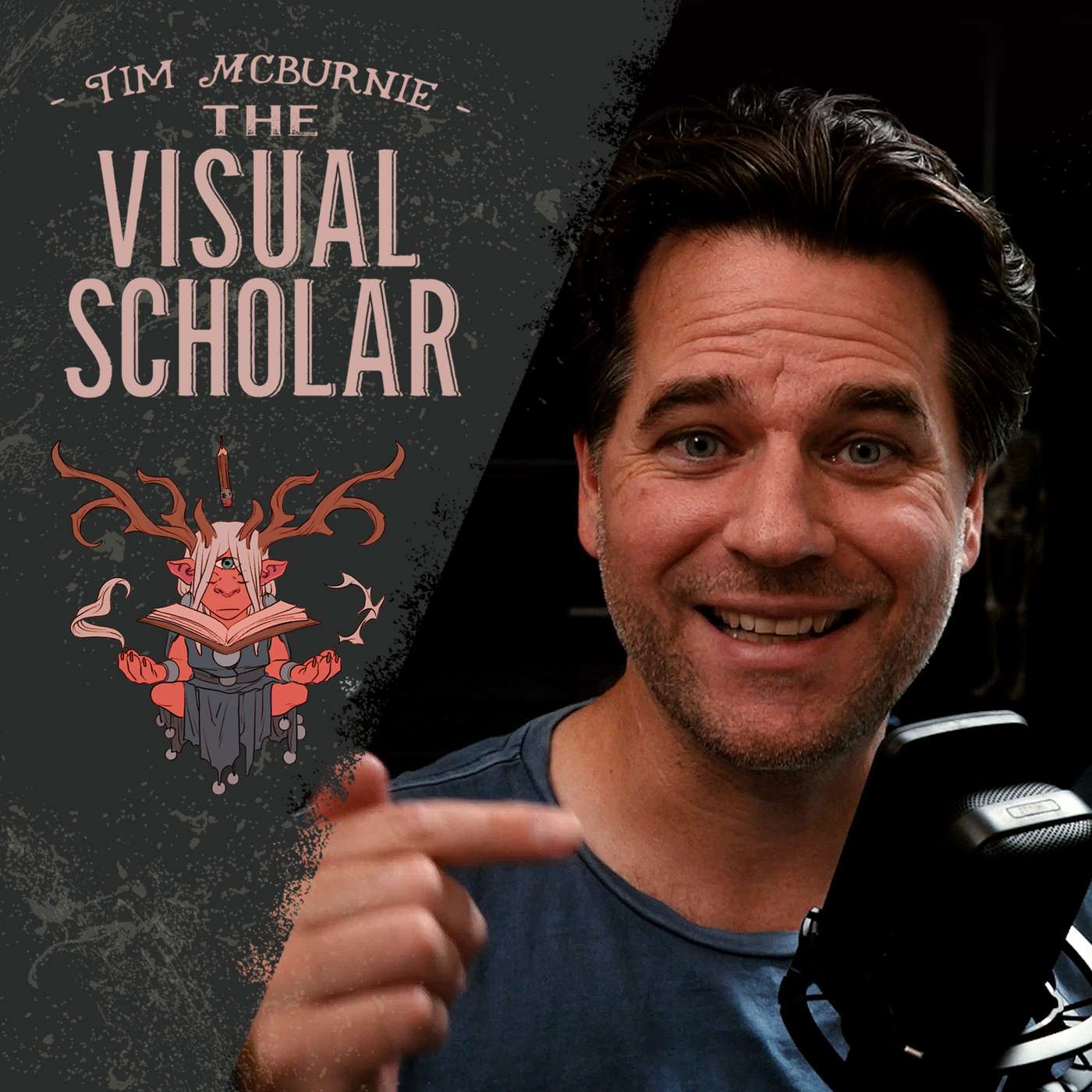 E47: You Need Your Own Worldbuilding Process | Check out my Free Brainstorming Workshop: https://mightyartisan.com/worldbuilding Learn to silence your inner critic. Ignite creative ideas. And watch a live demo of these techniques in action. --- This is The Forty Seventh Episode of the Visual Scholar Podcast - With Tim Mcburnie. Ever feel like you're doing creativity "wrong" because your process doesn't match what the experts recommend? Lets talk about developing your own Worldbuilding Process... Below is in Automagically generated summary so you can check out the content and also to help with search functionality! --- In this episode, I dive deep into finding your unique creative process for world-building and storytelling. As someone who's been a professional artist for over 20 years, I've learned that while there's plenty of advice out there on "the right way" to create, what truly matters is discovering YOUR way. I explore how different creators approach their work - from visual directors like James Cameron who start with powerful images (like the T-800 emerging from flames in a fever dream), to writers who begin with character perspectives, to interactive designers who focus on player experiences. What I've discovered through my own journey is that creative processes are inherently messy and often illogical. When creating my fantasy comic, I struggled following traditional writing advice until I realized my process worked better starting with character visuals first, then developing stories around them. I also found that writing from each character's first-person perspective helped me understand their motivations and create authentic conflict. The key insight is that constraints and limitations often fuel creativity rather than hinder it - so don't be afraid to experiment with your own "weird" methods. Your unique creative approach isn't something you'll find in books; it's something you'll discover through practice, experimentation, and embracing your natural tendencies. — CHAPTERS: 00:00 Intro 01:12 Welcome 02:28 The Importance of YOUR Creative Process 03:31 How Are Great Things Made? 10:35 Creative Process Needs a Focus 14:31 Anchoring Your Ideas 19:06 The Journey of Discovering Your Process 27:33 Analytical Takeaway 29:18 Simple Takeaway 29:47 Practical Takeaway 31:44 Philosophical Takeaway 34:41 Out — --- The Visual Scholar Podcast is designed to help you demystify the world of Art, Productivity, and Creativity. So you can get better faster, and enjoy your Art Journey. We discuss Drawing, Painting, Illustration and Entertainment Design. Along with Productivity and Career Advice. You Can Find The Visual Scholar Podcast In These Places: Apple: https://podcasts.apple.com/us/podcast/the-visual-scholar/id1678505411 Spotify: open.spotify.com/show/6VbdwbiZqy8nqb90ruKQCX?si=21b9c1d02c85419f YouTube: https://www.youtube.com/@MightyArtisan Show Homepage: https://visualscholar.mightyartisan.com Where To Find More About Tim Mcburnie: Learn Drawing and Illustration at The Drawing Codex: www.thedrawingcodex.com Take Your Career and Productivity To The Next Level: www.mightyartisan.com The Drawing Codex Youtube Channel: https://www.youtube.com/@TheDrawingCodex Mighty Artisan Youtube Channel: https://www.youtube.com/@MightyArtisan Portfolio: www.timmcburnie.com www.artstation.com/tim-mcburnie www.instagram.com/timmcburnie x.com/timmcburnie | 35m 55s | ||||||
| 6/3/25 |  E46: Lore vs Story: Solving The Ancient Argument | Check out my Free Brainstorming Workshop: https://mightyartisan.com/worldbuilding Learn to silence your inner critic. Ignite creative ideas. And watch a live demo of these techniques in action. --- This is The Forty Sixth Episode of the Visual Scholar Podcast - With Tim Mcburnie. Are you focusing too much on Lore or too much on Story? Below is in Automagically generated summary so you can check out the content and also to help with search functionality! --- In this video, I break down one of the biggest challenges artists face when creating fantastical worlds: balancing lore-building with storytelling. After 20+ years as a professional artist, I've seen how easy it is to fall into either spending too much time developing intricate world details without purpose, or rushing into stories that lack depth and unique characteristics. The real magic happens when these two elements work together harmoniously. I explore how effective lore provides coherency and limitations that actually enhance dramatic tension rather than restrict it. Whether it's how the Force works in Star Wars or magic functions in Harry Potter, these rules become essential plot points that drive character development and narrative arcs. The best creative works use their unique world elements to create situations that couldn't exist any other way. When developing your own artistic projects, focus on creating environments, creatures, and systems that naturally generate dramatic tension and compelling character interactions. This approach will take your world-building to another level, making your stories resonate with audiences on a deeper level. — CHAPTERS: 00:00 Intro 01:35 Welcome 02:51 Preface 04:55 Why Is This An Important Discussion To Have? 10:29 What is "Lore" 17:43 What is 'Story' 22:58 The Power of Combining Lore and Story 28:11 The Analytical Takeaway 30:14 The Simple Takeaway 30:51 The Practical Takeaway 33:43 The Philosophical Takeaway 36:12 Out — --- The Visual Scholar Podcast is designed to help you demystify the world of Art, Productivity, and Creativity. So you can get better faster, and enjoy your Art Journey. We discuss Drawing, Painting, Illustration and Entertainment Design. Along with Productivity and Career Advice. You Can Find The Visual Scholar Podcast In These Places: Apple: https://podcasts.apple.com/us/podcast/the-visual-scholar/id1678505411 Spotify: open.spotify.com/show/6VbdwbiZqy8nqb90ruKQCX?si=21b9c1d02c85419f YouTube: https://www.youtube.com/@MightyArtisan Show Homepage: https://visualscholar.mightyartisan.com Where To Find More About Tim Mcburnie: Learn Drawing and Illustration at The Drawing Codex: www.thedrawingcodex.com Take Your Career and Productivity To The Next Level: www.mightyartisan.com The Drawing Codex Youtube Channel: https://www.youtube.com/@TheDrawingCodex Mighty Artisan Youtube Channel: https://www.youtube.com/@MightyArtisan Portfolio: www.timmcburnie.com www.artstation.com/tim-mcburnie www.instagram.com/timmcburnie x.com/timmcburnie | 37m 05s | ||||||
Want analysis for the episodes below?Free for Pro Submit a request, we'll have your selected episodes analyzed within an hour. Free, at no cost to you, for Pro users. | |||||||||
| 5/27/25 |  E45: Artists! Here's Why Learning Worldbuilding Is Vital | Check out my Free Brainstorming Workshop: https://mightyartisan.com/worldbuilding Learn to silence your inner critic. Ignite creative ideas. And watch a live demo of these techniques in action. --- This is The Forty Fifth Episode of the Visual Scholar Podcast - With Tim Mcburnie. Lets talk about the power of worldbuilding for artists. Below is in Automagically generated summary so you can check out the content and also to help with search functionality! --- In this video, I explore the often overlooked value of world building as a fundamental creative muscle for artists of all types - not just storytellers. I explain how developing world building skills adds depth, nuance, and authenticity to your art that technical craft alone cannot achieve. When we understand the "why" behind what we're creating—whether it's who our characters are, where they come from, or how the environments we draw were built—our art becomes more compelling and relatable, even at the sketch stage. I break down three key benefits of strengthening your world building abilities: it solves the "what do I draw" problem by giving you direction and purpose; it helps you create more unique, nuanced ideas by encouraging deeper exploration; and it helps you connect with your audience by providing context they can relate to. Just like actors need authentic costumes and sets to embody characters convincingly, artists need to understand the worlds they're depicting to make them feel real. The more you understand your world's details, the easier it becomes to communicate unspoken elements through your art in a way that resonates with viewers. — CHAPTERS: 00:00 Intro 01:01 Welcome 02:17 The Importance of Worldbuilding 05:10 How Can Worldbuilding Help Artists? 12:49 Creating More Unique Ideas 23:49 Worldbuilding and Story 33:17 The Analytical Takeaway 34:29 The Simple Takeaway 35:00 The Practical Takeaway 40:11 The Philosophical Takeaway 41:18 Out — --- The Visual Scholar Podcast is designed to help you demystify the world of Art, Productivity, and Creativity. So you can get better faster, and enjoy your Art Journey. We discuss Drawing, Painting, Illustration and Entertainment Design. Along with Productivity and Career Advice. You Can Find The Visual Scholar Podcast In These Places: Apple: https://podcasts.apple.com/us/podcast/the-visual-scholar/id1678505411 Spotify: open.spotify.com/show/6VbdwbiZqy8nqb90ruKQCX?si=21b9c1d02c85419f YouTube: https://www.youtube.com/@MightyArtisan Show Homepage: https://visualscholar.mightyartisan.com Where To Find More About Tim Mcburnie: Learn Drawing and Illustration at The Drawing Codex: www.thedrawingcodex.com Take Your Career and Productivity To The Next Level: www.mightyartisan.com The Drawing Codex Youtube Channel: https://www.youtube.com/@TheDrawingCodex Mighty Artisan Youtube Channel: https://www.youtube.com/@MightyArtisan Portfolio: www.timmcburnie.com www.artstation.com/tim-mcburnie www.instagram.com/timmcburnie x.com/timmcburnie | 42m 08s | ||||||
| 5/12/25 |  E44: Creating Artistic Presence (Avoid These Traps) | Check out my Free Brainstorming Workshop: https://mightyartisan.com/worldbuilding Learn to silence your inner critic. Ignite creative ideas. And watch a live demo of these techniques in action. --- This is The Forty Forth Episode of the Visual Scholar Podcast - With Tim Mcburnie. Artists who build successful careers aren't just talented - they've developed a clear, consistent presence that makes their work instantly recognizable. Below is in Automagically generated summary so you can check out the content and also to help with search functionality! --- Description In this episode, I explore the concept of "presence" - how successful artists develop a recognizable identity that makes their work instantly identifiable and shareable. While artists naturally love experimenting with different styles and mediums, building a successful career often means finding your unique signal and consistently amplifying it over time. Creating presence means developing a clear artistic "character" that people can easily describe to others - "this artist does this type of work and is known for this specific thing." It's about making yourself easily recognizable and understood in a crowded marketplace. This doesn't mean you can't evolve, but the consistency helps people connect with your work more deeply and remember you. I share my own journey of flip-flopping between styles and how my career gained momentum when I finally committed to a consistent direction. Building presence is a long game - it might take 3-7 years to see significant results - but the payoff is that your career starts rolling downhill like a snowball rather than feeling like you're pushing a boulder uphill. Successful presence comes from clarity and strategic repetition, making it easier for people to discover, connect with, and share your work. — 00:00 Intro 02:11 Welcome 03:27 Presence & Impact Framework Recap 15:03 Why We Avoid Building A Presence 23:31 What Does A Successful Presence Mean? 39:03 Play The Long Game: Presence Takes Time 52:12 The Analtical Takeaway 53:33 The Simple Takeaway 53:57 The Practical Takeaway 55:17 The Philosophical Takeaway 59:12 Out — --- The Visual Scholar Podcast is designed to help you demystify the world of Art, Productivity, and Creativity. So you can get better faster, and enjoy your Art Journey. We discuss Drawing, Painting, Illustration and Entertainment Design. Along with Productivity and Career Advice. You Can Find The Visual Scholar Podcast In These Places: Apple: https://podcasts.apple.com/us/podcast/the-visual-scholar/id1678505411 Spotify: open.spotify.com/show/6VbdwbiZqy8nqb90ruKQCX?si=21b9c1d02c85419f YouTube: https://www.youtube.com/@MightyArtisan Show Homepage: https://visualscholar.mightyartisan.com Where To Find More About Tim Mcburnie: Learn Drawing and Illustration at The Drawing Codex: www.thedrawingcodex.com Take Your Career and Productivity To The Next Level: www.mightyartisan.com The Drawing Codex Youtube Channel: https://www.youtube.com/@TheDrawingCodex Mighty Artisan Youtube Channel: https://www.youtube.com/@MightyArtisan Portfolio: www.timmcburnie.com www.artstation.com/tim-mcburnie www.instagram.com/timmcburnie x.com/timmcburnie | 1h 00m 33s | ||||||
| 4/12/25 |  E43: How To Turn Up Your Visual Volume | Check out my Free Brainstorming Workshop: https://mightyartisan.com/worldbuilding Learn to silence your inner critic. Ignite creative ideas. And watch a live demo of these techniques in action. --- This is The Forty Third Episode of the Visual Scholar Podcast - With Tim Mcburnie. In a world where everyone's employing every attention-grabbing trick imaginable, your artistic success doesn't come from adding more techniques—it comes from having the clarity and courage to focus only on those that truly amplify your authentic voice. Below is in Automagically generated summary so you can check out the content and also to help with search functionality! --- In this episode of The Visual Scholar, I dive deep into how artists can amplify their unique style and message in today's oversaturated attention economy. I explore three distinct categories of attention-grabbing techniques: biological markers (like bright colors and contrast that appeal to our primal instincts), illustration theory (composition principles developed over centuries), and narrative structures (story elements that naturally hook viewers). The key insight isn't adding more techniques, but rather identifying which specific approaches genuinely amplify your authentic message while having the courage to remove those that don't serve your artistic voice – even if they're objectively "good" techniques. I share my own journey of realizing that fan art, dynamic superhero poses, and hyper-detailed rendering weren't authentic to my artistic voice, despite being pushed as "essential" in the comic book world. What worked better for me was focusing on storytelling, creating detailed scenes with multiple characters, and building fantastical worlds. This clarity allowed me to stop spinning my wheels on skills that weren't serving my vision and instead develop the specific techniques that amplified my unique artistic voice. When you align your genuine interests with your creative output and find people who resonate with that authentic voice, everything becomes more enjoyable and success snowballs rather than feeling like an uphill battle. — 00:00 Intro 02:11 Welcome 03:26 Preface 10:48 The Different Categories of Impact and Attention 33:19 Which Methods Should YOU Use? 37:35 Focusing... And Giving Up On Stuff That Works 44:21 The Analytical 46:17 The Simple Takeaway 46:34 The Practical Takeaway 48:34 The Philosophical Takeaway 52:45 Out — --- The Visual Scholar Podcast is designed to help you demystify the world of Art, Productivity, and Creativity. So you can get better faster, and enjoy your Art Journey. We discuss Drawing, Painting, Illustration and Entertainment Design. Along with Productivity and Career Advice. You Can Find The Visual Scholar Podcast In These Places: Apple: https://podcasts.apple.com/us/podcast/the-visual-scholar/id1678505411 Spotify: open.spotify.com/show/6VbdwbiZqy8nqb90ruKQCX?si=21b9c1d02c85419f YouTube: https://www.youtube.com/@MightyArtisan Show Homepage: https://visualscholar.mightyartisan.com Where To Find More About Tim Mcburnie: Learn Drawing and Illustration at The Drawing Codex: www.thedrawingcodex.com Take Your Career and Productivity To The Next Level: www.mightyartisan.com The Drawing Codex Youtube Channel: https://www.youtube.com/@TheDrawingCodex Mighty Artisan Youtube Channel: https://www.youtube.com/@MightyArtisan Portfolio: www.timmcburnie.com www.artstation.com/tim-mcburnie www.instagram.com/timmcburnie x.com/timmcburnie | 53m 35s | ||||||
| 3/13/25 |  E42: Clarify Your Artistic Signal | Check out my Free Brainstorming Workshop: https://mightyartisan.com/worldbuilding Learn to silence your inner critic. Ignite creative ideas. And watch a live demo of these techniques in action. --- This is The Forty Second Episode of the Visual Scholar Podcast - With Tim Mcburnie. Let's talk about finding your artistic signal - developing a unique voice in a world that pushes conformity. This expands upon a video I did over at The Drawing Codex channel: https://www.youtube.com/watch?v=cYGJuvl4bOk Below is in Automagically generated summary so you can check out the content and also to help with search functionality! --- In this episode, I explore why artists often get trapped making art for others rather than developing their own authentic style. Using a sound metaphor, I explain how finding your "signal" (your unique artistic voice) should come before amplifying it with "volume" (technical skills and attention-grabbing techniques). I discuss how our educational systems and industry structures often prioritize making artists fit into production pipelines rather than helping them discover what makes them unique. From early illustration jobs to modern concept art workflows, we've been trained to sublimate our personal style to serve commercial needs. This training creates formulaic approaches that, ironically, are now being replicated by AI systems. The greatest value you can offer as an artist is something that can't be replicated - your unique perspective and voice. While technical skills matter, they should amplify your message rather than replace it. When you examine artists with enduring careers, you'll notice they developed a clear signal first, then found ways to amplify it appropriately for their audience. Finding your signal isn't about verbal articulation - it's about discovering something ephemeral that comes through in your work. It requires stepping back from seeking approval and instead focusing on what genuinely interests you. This might mean temporarily turning down the "volume" on technical impressiveness to better hear your authentic voice. I see this becoming increasingly important in our AI-driven future. While algorithms can replicate formulaic approaches to art, they struggle with authentic perspective and non-verbal expression. Your unique viewpoint - something machines can't replicate because they operate within the constraints of language - will become your greatest asset. This journey isn't straightforward - the search itself shapes your voice. The challenges you overcome while discovering your signal become part of what makes your perspective valuable. Rather than seeking shortcuts, embrace this process of discovery as part of developing your authentic artistic voice. Remember: before worrying about making people look at your art, first determine what you want them to see. Your unique signal, consistently delivered over time, is what will ultimately create lasting connection with your audience. --- CHAPTERS: 00:00 Intro 01:31 Welcome 02:48 The Challenge Of Finding Your Style 07:39 The Value of Having a Point of View 20:15 What Is Your "Signal" 30:30 How To Find "Your" Signal 37:03 The Analytical Takeaway 41:52 The Simple Takeaway 42:12 The Practical Takeaway 46:31 The Philosophical Takeaway 48:03 Out! --- The Visual Scholar Podcast is designed to help you demystify the world of Art, Productivity, and Creativity. So you can get better faster, and enjoy your Art Journey. We discuss Drawing, Painting, Illustration and Entertainment Design. Along with Productivity and Career Advice. You Can Find The Visual Scholar Podcast In These Places: Apple: https://podcasts.apple.com/us/podcast/the-visual-scholar/id1678505411 Spotify: open.spotify.com/show/6VbdwbiZqy8nqb90ruKQCX?si=21b9c1d02c85419f YouTube: https://www.youtube.com/@MightyArtisan Show Homepage: https://visualscholar.mightyartisan.com Where To Find More About Tim Mcburnie: Learn Drawing and Illustration at The Drawing Codex: www.thedrawingcodex.com Take Your Career and Productivity To The Next Level: www.mightyartisan.com The Drawing Codex Youtube Channel: https://www.youtube.com/@TheDrawingCodex Mighty Artisan Youtube Channel: https://www.youtube.com/@MightyArtisan Portfolio: www.timmcburnie.com www.artstation.com/tim-mcburnie www.instagram.com/timmcburnie x.com/timmcburnie | 49m 57s | ||||||
| 2/17/25 |  E41: The Right Way To Make Your Art 'Better' | Check out my Free Brainstorming Workshop: https://mightyartisan.com/worldbuilding Learn to silence your inner critic. Ignite creative ideas. And watch a live demo of these techniques in action. --- This is The Forty First Episode of the Visual Scholar Podcast - With Tim Mcburnie. Let's talk about how to build your artistic voice while getting attention - a delicate balance between being unique and being noticed. This expands upon a video I did over at The Drawing Codex channel: https://www.youtube.com/watch?v=cYGJuvl4bOk Below is in Automagically generated summary so you can check out the content and also to help with search functionality! --- In this video, I use a sound and music metaphor to explore how artists can develop their work. I break this down into three key elements: signal, volume, and presence. Your signal is your unique artistic voice - what makes your work distinctly yours. While this signal might start quiet, it's crucial to identify and nurture it rather than immediately trying to amplify it. Volume represents how you amplify that signal using attention-getting tools. Just like with music, different styles need different levels of amplification. This could involve contrast, composition, color theory, or even elements like dramatic tension and storytelling. The key is finding the right volume that enhances your signal without drowning it out. I discuss how in today's AI-driven world, being unique is more valuable than ever. While AI can replicate trends and formulas for getting attention, it can't replicate a strong personal point of view. This makes developing your unique signal increasingly important. The final element, presence, is about consistency and building recognition over time. Many artists discover their unique combination of signal and volume but then abandon it, chasing trends or fighting boredom. Yet it's often this consistency that builds lasting impact. The real challenge is not just making noise in a world full of distractions, but turning up the volume on your own unique signal. While tools for getting attention are important - from composition to color theory to storytelling - they should amplify your voice rather than replace it. Remember: you don't need to scream to be heard. Sometimes a clear, consistent signal can cut through the noise more effectively than trying to be the loudest voice in the room. --- CHAPTERS: 00:00 Intro 00:55 Welcome 02:12 The Signal | Volume | Presence - Framework 18:30 The Traps: Why Having A Plan Here Is Important 26:19 The Value Of Style Going Forwards 32:11 The Analytical Takeaway 33:41 The Simple Takeaway 33:52 The Practical Takeaway 35:14 The Philosophical Takeaway 38:42 Out --- The Visual Scholar Podcast is designed to help you demystify the world of Art, Productivity, and Creativity. So you can get better faster, and enjoy your Art Journey. We discuss Drawing, Painting, Illustration and Entertainment Design. Along with Productivity and Career Advice. You Can Find The Visual Scholar Podcast In These Places: Apple: https://podcasts.apple.com/us/podcast/the-visual-scholar/id1678505411 Spotify: open.spotify.com/show/6VbdwbiZqy8nqb90ruKQCX?si=21b9c1d02c85419f YouTube: https://www.youtube.com/@MightyArtisan Show Homepage: https://visualscholar.mightyartisan.com Where To Find More About Tim Mcburnie: Learn Drawing and Illustration at The Drawing Codex: www.thedrawingcodex.com Take Your Career and Productivity To The Next Level: www.mightyartisan.com The Drawing Codex Youtube Channel: https://www.youtube.com/@TheDrawingCodex Mighty Artisan Youtube Channel: https://www.youtube.com/@MightyArtisan Portfolio: www.timmcburnie.com www.artstation.com/tim-mcburnie www.instagram.com/timmcburnie x.com/timmcburnie | 39m 54s | ||||||
| 11/21/24 |  E40: Character Development: Avoid The Concept Art Trap! | Check out my Free Brainstorming Workshop: https://mightyartisan.com/worldbuilding Learn to silence your inner critic. Ignite creative ideas. And watch a live demo of these techniques in action. --- This is The Fortieth Episode of the Visual Scholar Podcast - With Tim Mcburnie. Let's talk about the dangers of being one dimensional in your character design! Below is in Automagically generated summary so you can check out the content and also to help with search functionality! --- In this video, I delve into the complexities of character design, exploring the contrast between visual representation and character development through actions. As artists, we're often taught to make characters look like who they are, emphasizing clear, exaggerated visual cues. However, in writing, it's the actions a character takes that truly define them, sometimes conflicting with their outward appearance. I discuss how these differing approaches can clash and how understanding both the external and internal aspects of character can lead to more nuanced and compelling designs. By examining examples like Tyrion Lannister from "Game of Thrones," Darth Vader from "Star Wars," and Long John Silver from "Treasure Island," I highlight how characters with contrasting appearances and motivations captivate audiences. Whether you're designing your own characters or aiming to deepen your storytelling, this video offers insights into balancing clarity with complexity. Join me as I unpack these concepts to help you create characters that resonate on a deeper level with your audience. --- CHAPTERS: 00:00 Intro 01:39 Welcome 02:04 Are There Problems With General Character Design Advice? 06:04 Complexity and Duality of Great Characters 14:50 The Benefit of Being Basic... 20:23 The Dangers of Being a Cog in The Machine... 24:00 The Analytical Takeaway 27:05 The Simple Takeaway 27:19 The Practical Takeaway 31:20 The Philosophical Takeaway 35:11 Out... Plus The Mona Lisa --- The Visual Scholar Podcast is designed to help you demystify the world of Art, Productivity, and Creativity. So you can get better faster, and enjoy your Art Journey. We discuss Drawing, Painting, Illustration and Entertainment Design. Along with Productivity and Career Advice. You Can Find The Visual Scholar Podcast In These Places: Apple: https://podcasts.apple.com/us/podcast/the-visual-scholar/id1678505411 Spotify: open.spotify.com/show/6VbdwbiZqy8nqb90ruKQCX?si=21b9c1d02c85419f YouTube: https://www.youtube.com/@MightyArtisan Show Homepage: https://visualscholar.mightyartisan.com Where To Find More About Tim Mcburnie: Learn Drawing and Illustration at The Drawing Codex: www.thedrawingcodex.com Take Your Career and Productivity To The Next Level: www.mightyartisan.com The Drawing Codex Youtube Channel: https://www.youtube.com/@TheDrawingCodex Mighty Artisan Youtube Channel: https://www.youtube.com/@MightyArtisan Portfolio: www.timmcburnie.com www.artstation.com/tim-mcburnie www.instagram.com/timmcburnie x.com/timmcburnie | 37m 10s | ||||||
| 10/1/24 |  E39: Art Projects - The Mysterious Magic of Constraint | Check out my Free Brainstorming Workshop: https://mightyartisan.com/worldbuilding Learn to silence your inner critic. Ignite creative ideas. And watch a live demo of these techniques in action. --- This is The Thirty Ninth Episode of the Visual Scholar Podcast - With Tim Mcburnie. Let's talk about how creative restraint can actually help your art project! Below is in Automagically generated summary so you can check out the content and also to help with search functionality! --- Often, we think unlimited options and total creative freedom are what we need, but in reality, constraints and creative restrictions are essential. Without them, projects can lose focus and fail to materialize into something great. By imposing limitations on ourselves—like deadlines, budgets, or specific genres—we can spark our creativity and produce more interesting work. I discuss how starting with simple, even generic ideas can lead to unique and innovative outcomes. Working with others and adhering to briefs has often pushed me to develop better solutions than when I had complete freedom. Adding constraints helps define our projects and challenges us to think more deeply, turning vague concepts into tangible creations. I encourage you to consider how constraints have affected your own creative process. Reflect on times when you've felt inspired versus when you've faced a blank page with infinite possibilities. By embracing limitations, we can unlock our full creative potential and bring our ideas to life. --- CHAPTERS: 00:00 Intro 02:31 Welcome 04:55 The Problem With an Infinity of ideas 12:00 The Utility of Simple Ideas 18:54 How To Apply Constraints 24:56 The Analytical Takeaway 26:40 The Simple Takeaway 26:57 The Practical Takeaway 29:58 The Philosophical Takeaway 33:26 Out! --- The Visual Scholar Podcast is designed to help you demystify the world of Art, Productivity, and Creativity. So you can get better faster, and enjoy your Art Journey. We discuss Drawing, Painting, Illustration and Entertainment Design. Along with Productivity and Career Advice. You Can Find The Visual Scholar Podcast In These Places: Apple: https://podcasts.apple.com/us/podcast/the-visual-scholar/id1678505411 Spotify: open.spotify.com/show/6VbdwbiZqy8nqb90ruKQCX?si=21b9c1d02c85419f YouTube: https://www.youtube.com/@MightyArtisan Show Homepage: https://visualscholar.mightyartisan.com Where To Find More About Tim Mcburnie: Learn Drawing and Illustration at The Drawing Codex: www.thedrawingcodex.com Take Your Career and Productivity To The Next Level: www.mightyartisan.com The Drawing Codex Youtube Channel: https://www.youtube.com/@TheDrawingCodex Mighty Artisan Youtube Channel: https://www.youtube.com/@MightyArtisan Portfolio: www.timmcburnie.com www.artstation.com/tim-mcburnie www.instagram.com/timmcburnie x.com/timmcburnie | 35m 03s | ||||||
| 8/14/24 |  E38 Becoming a Pro Artist: How Long Does It Really Take? | Check out my Free Brainstorming Workshop: https://mightyartisan.com/worldbuilding Learn to silence your inner critic. Ignite creative ideas. And watch a live demo of these techniques in action. --- This is The Thirty Eighth Episode of the Visual Scholar Podcast - With Tim Mcburnie. Let's talk about how long it takes to reach the mythical 'pro' level of art. This concept is something many people ask me about. And it's one of those markers that many of us consider to be really important. But it's also a moving target, and is not always as significant as people make it out to be. So in this episode I am going to unpack some of the considerations around improving your art and getting to a good level of skill... and how long it takes. Below is in Automagically generated summary so you can check out the content and also to help with search functionality! --- --DURATION TO REACH PROFESSIONAL LEVEL IN ART PERSONAL EXPERIENCE: It took me about 10 years to reach a professional level, starting from high school. This journey included navigating through various educational paths and job experiences. GENERAL OBSERVATION: For students in structured educational settings, such as colleges, it generally takes about three to four years to build foundational skills, with additional time needed to refine skills to industry standards. --COMMON TRAPS IN LEARNING ART EARLY DISILLUSIONMENT: Many artists become discouraged by the slow visible progress and complex skill acquisition, which can extend the learning period. INCONSISTENCY: Fluctuations in learning intensity and focus can hinder steady progress. Artists often experience periods where skills seem to regress due to new challenges or advanced techniques. --PACING YOUR ARTISTIC DEVELOPMENT SETTING REALISTIC EXPECTATIONS: Understanding that becoming proficient takes years is crucial to maintaining motivation and persistence. CONSISTENT PRACTICE: Regular practice and application of skills are essential for continuous improvement and avoiding long stagnant periods. --SPEEDRUN STRATEGY FOR ARTISTIC DEVELOPMENT FOCUSED SKILL DEVELOPMENT: Concentrate on the specific skills that are directly relevant to your desired area of professional art. This approach minimizes wasted effort on unnecessary breadth. AVOIDING OVER-DIVERSIFICATION: While exploring different artistic styles and mediums can be enriching, it can also distract from developing the depth needed for professional work. --- CHAPTERS: 00:00 Intro 02:28 Welcome 02:50 Here's the Outline for this Episode! 06:34 How Long It Took Me To Get To A Professional Level 18:54 How Long It Can Take Students Now... 25:42 What Are The Traps That Cost You Time? 46:09 The Secrets To Pacing Yourself 56:29 The Speedrun Playbook... 1:05:20 The Analytical Takeaway 1:06:32 The Simple Takeaway 1:07:25 The Practical Takeaway 1:09:30 The Philosophical Takeaway 1:15:12 Out! --- The Visual Scholar Podcast is designed to help you demystify the world of Art, Productivity, and Creativity. So you can get better faster, and enjoy your Art Journey. We discuss Drawing, Painting, Illustration and Entertainment Design. Along with Productivity and Career Advice. You Can Find The Visual Scholar Podcast In These Places: Apple: https://podcasts.apple.com/us/podcast/the-visual-scholar/id1678505411 Spotify: open.spotify.com/show/6VbdwbiZqy8nqb90ruKQCX?si=21b9c1d02c85419f YouTube: https://www.youtube.com/@MightyArtisan Show Homepage: https://visualscholar.mightyartisan.com Where To Find More About Tim Mcburnie: Learn Drawing and Illustration at The Drawing Codex: www.thedrawingcodex.com Take Your Career and Productivity To The Next Level: www.mightyartisan.com The Drawing Codex Youtube Channel: https://www.youtube.com/@TheDrawingCodex Mighty Artisan Youtube Channel: https://www.youtube.com/@MightyArtisan Portfolio: www.timmcburnie.com www.artstation.com/tim-mcburnie www.instagram.com/timmcburnie x.com/timmcburnie | 1h 16m 22s | ||||||
| 7/11/24 |  E37: 3 Ways I Kicked Art Procrastination As A Pro | Check out my Free Brainstorming Workshop: https://mightyartisan.com/worldbuilding Learn to silence your inner critic. Ignite creative ideas. And watch a live demo of these techniques in action. --- This is The Thirty Seventh Episode of the Visual Scholar Podcast - With Tim Mcburnie. Let's talk overcoming procrastination as artists! I think there are a few things which are really unique and interesting about procrastination and how it relates to the creative process. Personally I dealt with a lot of procrastination issues early on in my career. Both while learning to draw as a self taught artists... and also when I started to work for other people and I had to deal with deadlines and expectations. Below is in Automagically generated summary so you can check out the content and also to help with search functionality! --- This episode of the Visual Scholar Podcast addresses the common challenge of procrastination among artists, a significant barrier to productivity and creative output. I explore the various dimensions of procrastination from psychological, philosophical, and practical perspectives. The discussion centers on my personal struggles with procrastination, insights into the complex nature of this issue, and strategies I found effective in overcoming it. I delve into the roots of procrastination, highlighting how cultural and educational systems shape our views on time management and productivity. The episode emphasizes the importance of developing good habits to enhance productivity and combat procrastination. I share three specific strategies that helped me personally to manage and eventually minimize my procrastination tendencies. Throughout, I stress the importance of understanding procrastination not just as a hindrance but as a complex phenomenon that can offer insights into one's creative process and mindset. The goal is to equip artists with the tools and understanding needed to address procrastination head-on, enhancing their ability to consistently create and meet their artistic goals. --- CHAPTERS: 00:00:00 Intro 00:02:16 Welcome 00:02:38 Why We Often View Procrastination From The Wrong Angle 00:08:20 What Even IS Procrastination... What Is Happening? 00:23:28 Figuring Out Your Success Metrics 00:38:42 Tactics For Epic long Term Procrastination 00:51:02 TakeAways 00:51:14 The Analytical Takeaway 00:55:14 The Simple Takeaway 00:55:59 The Practical Takeaway 00:59:54 The Philosophical Takeaway 01:02:41 Out! --- The Visual Scholar Podcast is designed to help you demystify the world of Art, Productivity, and Creativity. So you can get better faster, and enjoy your Art Journey. We discuss Drawing, Painting, Illustration and Entertainment Design. Along with Productivity and Career Advice. You Can Find The Visual Scholar Podcast In These Places: Apple: https://podcasts.apple.com/us/podcast/the-visual-scholar/id1678505411 Spotify: open.spotify.com/show/6VbdwbiZqy8nqb90ruKQCX?si=21b9c1d02c85419f YouTube: https://www.youtube.com/@MightyArtisan Show Homepage: https://visualscholar.mightyartisan.com Where To Find More About Tim Mcburnie: Learn Drawing and Illustration at The Drawing Codex: www.thedrawingcodex.com Take Your Career and Productivity To The Next Level: www.mightyartisan.com The Drawing Codex Youtube Channel: https://www.youtube.com/@TheDrawingCodex Mighty Artisan Youtube Channel: https://www.youtube.com/@MightyArtisan Portfolio: www.timmcburnie.com www.artstation.com/tim-mcburnie www.instagram.com/timmcburnie x.com/timmcburnie | 1h 04m 27s | ||||||
| 6/26/24 |  E36: Adobe is Legacy Software. What Does The Future Look Like? | Check out my Free Brainstorming Workshop: https://mightyartisan.com/worldbuilding Learn to silence your inner critic. Ignite creative ideas. And watch a live demo of these techniques in action. --- This is The Thirty Sixth Episode of the Visual Scholar Podcast - With Tim Mcburnie. Let's talk Adobe... There is a lot of drama and outrage aimed at Adobe. I normally stay away from this stuff on the Visual Scholar... But people often ask for my opinion as I do use Adobe products, and teach people how to use them. So this episode is dedicated to my thoughts on the future of Photoshop. But as you know if you have been following this show, it won't be simple, and I will weave in some more interesting topics. I want to walk though: 1 What we should expect from Software as artists 2 What can we learn by looking closer at Adobe Inc 3 What Ethics, Morality, Publicly traded companies... and AI say about the future of Customer/Product Symbiosis. So yeah... This is a long form essay. That no one really asked for. But if you want to rise above the noise and outrage FUD... strap in! CHAPTERS: 00:00:00 Intro 00:03:03 Welcome 00:03:28 What's My Take On This? 00:07:07 What Good Creative Software Needs To Be... The Dangers of Switching 00:08:45 That Time I Gave Up Photoshop For Corel Painter... 00:14:56 Reliability... 00:15:33 Learning & Community 00:16:55 Different Artists Need Different Features... Pro Vs The Rest 00:19:06 Professional Features (That Most People Don't Care About) 00:20:06 Production Integration 00:21:16 Chameleon: Photoshop Can Be Many Things 00:23:27 Extensibility 00:26:51 Real Professional Reliability 00:30:03 Speeed 00:32:03 TLDR: Bugs And Tech Hurdles Can Ruin Your Art Flow 00:33:11 What About Adobe As A Company (Evil INC) 00:33:50 The History... Aggressive Monopoly 00:35:22 Adobe The Dinosaur (Legacy Software and Legacy Attitude) 00:38:19 Adobe Is Struggling To Be A Modern SAAS Company 00:39:15 Publicly Traded Companies Can't Take Care Of Their Customers. 00:39:58 The Silicon Valley Hype Cycle 00:41:17 Symbiosis: How Good Software Is Made 00:43:24 The Protopian Ideal 00:44:58 Incentives: It's Not A Matter of Good Or Evil. 00:50:37 What Does The Future Of Software Look Like? 00:52:51 The Community Matters 00:53:58 The Photoshop Interface Built Adobe 00:55:06 Piracy Helped Build The Monopoly 00:56:00 No Free Version = No One Uses It... Or Cares. 00:58:57 Adobe In Trouble? 01:02:40 Has Adobe Forgotten How To Make And Promote Software? 01:03:32 The Street Price Of Creative Cloud 01:05:58 Adobe Actually Has A Great Deal... 01:09:10 The Traps Large Companies Fall Into 01:10:58 Business Models And Functionality Are Linked! 01:14:03 Photoshop IS Unique 01:17:34 The Real Issue? (AI) 01:19:25 The Hype Train 01:22:11 If AGI and Superintelligence Are Coming... Why Is Adobe Putting AI In Photoshop 01:24:51 The Double Speak Of Generative Imagery and LLMs 01:25:59 The Real Reason I Want OFF The Adobe Train Now 01:29:17 Takeaways! 01:30:14 The Analytical Takeaway 01:35:15 Marker 3 01:35:26 The practical Takeaway 01:37:27 The Philosophical Takeaway --------------------------------- --- The Visual Scholar Podcast is designed to help you demystify the world of Art, Productivity, and Creativity. So you can get better faster, and enjoy your Art Journey. We discuss Drawing, Painting, Illustration and Entertainment Design. Along with Productivity and Career Advice. You Can Find The Visual Scholar Podcast In These Places: Apple: https://podcasts.apple.com/us/podcast/the-visual-scholar/id1678505411 Spotify: open.spotify.com/show/6VbdwbiZqy8nqb90ruKQCX?si=21b9c1d02c85419f YouTube: https://www.youtube.com/@MightyArtisan Show Homepage: https://visualscholar.mightyartisan.com Where To Find More About Tim Mcburnie: Learn Drawing and Illustration at The Drawing Codex: www.thedrawingcodex.com Take Your Career and Productivity To The Next Level: www.mightyartisan.com The Drawing Codex Youtube Channel: https://www.youtube.com/@TheDrawingCodex Mighty Artisan Youtube Channel: https://www.youtube.com/@MightyArtisan Portfolio: www.timmcburnie.com www.artstation.com/tim-mcburnie www.instagram.com/timmcburnie x.com/timmcburnie | 1h 43m 46s | ||||||
| 6/8/24 |  E35: Can Hustle Help Your Art??? | Check out my Free Brainstorming Workshop: https://mightyartisan.com/worldbuilding Learn to silence your inner critic. Ignite creative ideas. And watch a live demo of these techniques in action. --- This is The Thirty Fifth Episode of the Visual Scholar Podcast - With Tim Mcburnie. Let's talk Hustle vs Hard Work. Should we Embrace the Grind? Or Avoid Burnout? How do these concepts help our creativity... and the final art we create. Below is in Automagically generated summary so you can check out the content and also to help with search functionality! --- ARTISTIC GRIND AND HUSTLE CULTURE The grind is often seen as part of being an artist, with intense work expected in jobs like VFX and game development. Companies exploit young artists' eagerness, leading to burnout. Freelance work isn't much easier, requiring constant hustling. PRESSURE IN EDUCATION Students face pressure to grind through exercises to reach a professional level, driven by the need for validation. HARD WORK AND CREATIVITY Hard work is necessary for success and creating great art. However, the grind can lead to early burnout and health issues. Many idols who worked excessively hard didn't live long. REALISTIC EXPECTATIONS It's crucial to set realistic expectations about the amount of work needed in the industry. Understanding the industry's demands helps artists prepare for their first jobs and enjoy the process. UNDERSTANDING HUSTLE CULTURE Hustle culture promotes constant work and minimal breaks, which can be harmful. While working hard is important, it's vital to maintain health and well-being. CREATIVE FLOW AND DEADLINES Deadlines help focus and push creativity, but excessive crunch can cause burnout. Recognize the difference between productive pressure and harmful overwork. DISENTANGLING WORK ETHIC AND HUSTLE Work ethic and hustle are different. Hard work and dedication don't necessarily mean constant grinding. Enjoying the process and building a healthy relationship with art is more sustainable. SOCIAL VALIDATION Artists often seek social validation through hard work and high-profile projects. Understanding your personal relationship with hard work and creativity helps manage stress and expectations. FINDING YOUR RHYTHM Everyone's work rhythm is different. Some thrive under pressure, while others prefer a more relaxed approach. Identify what works best for you and adapt accordingly. KEY TAKEAWAYS 1. Realistic Expectations: Understand the industry's demands and set realistic expectations for yourself. 2. Creative Flow: Use deadlines to focus, but avoid excessive crunch. 3. Healthy Relationship with Art: Build a positive relationship with your art, separating work ethic from the hustle mentality. 4. Personal Rhythm: Identify your preferred work rhythm and adapt your approach to suit it. --- --- The Visual Scholar Podcast is designed to help you demystify the world of Art, Productivity, and Creativity. So you can get better faster, and enjoy your Art Journey. We discuss Drawing, Painting, Illustration and Entertainment Design. Along with Productivity and Career Advice. You Can Find The Visual Scholar Podcast In These Places: Apple: https://podcasts.apple.com/us/podcast/the-visual-scholar/id1678505411 Spotify: open.spotify.com/show/6VbdwbiZqy8nqb90ruKQCX?si=21b9c1d02c85419f YouTube: https://www.youtube.com/@MightyArtisan Show Homepage: https://visualscholar.mightyartisan.com Where To Find More About Tim Mcburnie: Learn Drawing and Illustration at The Drawing Codex: www.thedrawingcodex.com Take Your Career and Productivity To The Next Level: www.mightyartisan.com The Drawing Codex Youtube Channel: https://www.youtube.com/@TheDrawingCodex Mighty Artisan Youtube Channel: https://www.youtube.com/@MightyArtisan Portfolio: www.timmcburnie.com www.artstation.com/tim-mcburnie www.instagram.com/timmcburnie x.com/timmcburnie | 54m 03s | ||||||
| 5/22/24 |  E34: Finding The Right Level Of Challenge For Your Art Is Key! | Check out my Free Brainstorming Workshop: https://mightyartisan.com/worldbuilding Learn to silence your inner critic. Ignite creative ideas. And watch a live demo of these techniques in action. --- This is The Thirty Fourth Episode of the Visual Scholar Podcast - With Tim Mcburnie. Let's talk about challenge. And more importantly how finding the right level of challenge for your art can be a major key to your overall improvement and happiness as an artist. Below is in Automagically generated summary so you can check out the content and also to help with search functionality! --- CHALLENGE IN ART Finding the right level of challenge in your art is crucial. It’s easy to either bite off more than you can chew or take it too easy, resulting in unproductive work or lifeless creations. IMPORTANCE OF PUSHING YOURSELF To progress, you need to stay at the edge of your comfort zone. This involves understanding three key things: The edge of your comfort zone. When you're well within your abilities. When you're biting off more than you can chew. ARTISTIC CHALLENGE ELEMENTS Consider the following elements: Knowledge of the Subject: Do you know what you’re drawing? Technical Skills: Do you know how to draw it? Medium: Are you familiar with the tools and materials you're using? PRACTICE AND GROWTH A lot of artistic improvement comes from practice. Art, like sports or dance, is a physical skill that improves with repetition. The right amount of challenge helps you focus and enter a flow state, enhancing creativity. FINDING THE BALANCE Too little challenge is boring; too much is overwhelming. Aim for a "Goldilocks" zone where the challenge is just right, typically around 4% beyond your current abilities. MANAGING CHALLENGE Break down your challenges: Focus on one element at a time (e.g., drawing a castle, mastering a medium). Combine new elements gradually. Use familiar subjects to explore new techniques. BEGINNERS AND SIMPLE IMAGES For beginners, start with the simplest images possible and gradually increase complexity. Build a small comfort zone and expand from there. Even simple images can teach you valuable skills. ADVANCING TECHNIQUE If you're more experienced, incrementally add new elements (e.g., incorporating technical objects into fantasy scenes). This helps bridge gaps in your skills without overwhelming you. CREATIVE URGES AND CAREER GROWTH Creativity thrives on a mix of comfort and challenge. Always having a bit of uncertainty keeps the process exciting. Your goal is constant self-improvement without burnout. CONCLUSION Understanding and managing the right level of challenge keeps you motivated and helps you improve. It’s about finding a balance where you can push your abilities without feeling overwhelmed. --- 00:00 Intro 02:25 Welcome 02:47 Comfort Vs Challenge Vs Flow 07:32 Why The Right Level Of Challenge Is Key 14:28 The Different Aspects Of Challenge 23:27 Figuring Out Where You Are Right Now 30:40 The Analytical TakeAway 32:34 The Simple TakeAway 32:57 The Practical TakeAway 35:58 The Philosophical TakeAway 39:08 Out! --- The Visual Scholar Podcast is designed to help you demystify the world of Art, Productivity, and Creativity. So you can get better faster, and enjoy your Art Journey. We discuss Drawing, Painting, Illustration and Entertainment Design. Along with Productivity and Career Advice. You Can Find The Visual Scholar Podcast In These Places: Apple: https://podcasts.apple.com/us/podcast/the-visual-scholar/id1678505411 Spotify: open.spotify.com/show/6VbdwbiZqy8nqb90ruKQCX?si=21b9c1d02c85419f YouTube: https://www.youtube.com/@MightyArtisan Show Homepage: https://visualscholar.mightyartisan.com Where To Find More About Tim Mcburnie: Learn Drawing and Illustration at The Drawing Codex: www.thedrawingcodex.com Take Your Career and Productivity To The Next Level: www.mightyartisan.com The Drawing Codex Youtube Channel: https://www.youtube.com/@TheDrawingCodex Mighty Artisan Youtube Channel: https://www.youtube.com/@MightyArtisan Portfolio: www.timmcburnie.com www.artstation.com/tim-mcburnie www.instagram.com/timmcburnie x.com/timmcburnie | 40m 38s | ||||||
| 4/26/24 |  E33: Without Tracking... Your Art Progress Does Not Exist. | Check out my Free Brainstorming Workshop: https://mightyartisan.com/worldbuilding Learn to silence your inner critic. Ignite creative ideas. And watch a live demo of these techniques in action. --- This is The Thirty Third Episode of the Visual Scholar Podcast - With Tim Mcburnie. Let's look at how Tracking relates to your artistic progress! (Yeah this can sound a bit analytical.... but trust me it's critical for overcoming many of the natural pitfalls we can fall into as aspiring artists!) Below is in Automagically generated summary so you can check out the content and also to help with search functionality! --- Artistic progress can often feel elusive, especially when you're just starting out or deeply immersed in your work. It's not uncommon to struggle with recognizing your own development, which can lead to frustration or even a loss of motivation. However, tracking your progress visually can significantly change this dynamic. This simple yet effective practice involves collecting images of your work over time. By creating a visual timeline, you can more clearly see improvements, changes in style, and the evolution of your skills. This isn't just about confirming that you're getting better; it's about understanding the nature of your growth and the specific areas you've improved in. For many, the benefits of this practice become particularly clear when comparing older works with more recent ones. This comparison can provide a tangible sense of advancement and can be particularly encouraging during periods of self-doubt or stagnation. Moreover, this visual record can serve as a valuable tool for reflection and learning, highlighting both strengths and areas for further development. By making this a regular practice, you establish a habit that not only motivates but also deeply informs your artistic journey. It serves as a personal archive that you can refer to, learn from, and draw inspiration from throughout your career. CHOOSE A STORAGE MEDIUM Decide where you will store your images. This could be a digital folder on your computer or cloud storage like Dropbox or Google Drive. The key is to choose a platform that you find easy to access and reliable. COLLECT REGULARLY Make it a habit to save images of your artwork regularly. This could be daily, weekly, or whenever you complete a piece. The important part is consistency. ORGANIZE BY DATE Arrange your images chronologically. This helps in easily seeing your progress over time. Most digital platforms automatically record the date an image is saved, which can help in organizing. HIGH-QUALITY IMAGES Ensure the images are of good quality. If you work digitally, save JPEGs or PNGs directly. For traditional media, take well-lit, high-resolution photographs of your work. CONSIDER PUBLIC SHARING For additional motivation and feedback, consider sharing your progress on social media platforms like Instagram, ArtStation, or a personal blog. This not only creates a backup of your work but also allows you to engage with a community that can provide support and constructive criticism. REVIEW REGULARLY Set a routine to review your collected images. This could be every few months or at least once a year. Use this time to reflect on your growth, identify trends in your work, and assess areas needing improvement. KEEP EVERYTHING Include both your successes and failures. Every piece of art, regardless of its quality, is a step in your development and provides valuable insights into your artistic process and growth. --- CHAPTERS: 00:00 Intro 02:22 Welcome! 02:43 Artists Are The Worst At Seeing Their Progress 06:39 What IS Tracking Art Progress? 19:30 So... How Do You Actually Track Your Art Progress? 28:57 How Do You Read The Tea Leaves... 44:26 The Analytical Takeaway 46:47 The Simple Takeaway 47:10 The Practical Takeaway 50:25 The Philosophical Takeaway 54:03 Out! --- The Visual Scholar Podcast is designed to help you demystify the world of Art, Productivity, and Creativity. So you can get better faster, and enjoy your Art Journey. We discuss Drawing, Painting, Illustration and Entertainment Design. Along with Productivity and Career Advice. You Can Find The Visual Scholar Podcast In These Places: Apple: https://podcasts.apple.com/us/podcast/the-visual-scholar/id1678505411 Spotify: open.spotify.com/show/6VbdwbiZqy8nqb90ruKQCX?si=21b9c1d02c85419f YouTube: https://www.youtube.com/@MightyArtisan Show Homepage: https://visualscholar.mightyartisan.com Where To Find More About Tim Mcburnie: Learn Drawing and Illustration at The Drawing Codex: www.thedrawingcodex.com Take Your Career and Productivity To The Next Level: www.mightyartisan.com The Drawing Codex Youtube Channel: https://www.youtube.com/@TheDrawingCodex Mighty Artisan Youtube Channel: https://www.youtube.com/@MightyArtisan Portfolio: www.timmcburnie.com www.artstation.com/tim-mcburnie www.instagram.com/timmcburnie x.com/timmcburnie | 54m 37s | ||||||
| 4/12/24 | E32: The Hidden Secrets Of Artistic Process | Check out my Free Brainstorming Workshop: https://mightyartisan.com/worldbuilding Learn to silence your inner critic. Ignite creative ideas. And watch a live demo of these techniques in action. --- This is The Thirty Second Episode of the Visual Scholar Podcast - With Tim Mcburnie. Let's look at how properly understanding the role of artistic process steps can lift your artistic game! Below is in Automagically generated summary so you can check out the content and also to help with search functionality! --- Defining Process: The process is the journey from an initial idea to the finished artwork. It involves three main phases: ideation, creation, and presentation. Each phase plays a crucial role in how the artwork is perceived and experienced by both the artist and the viewer. Ideation Process: This is where everything begins—with an idea. Transforming a vague thought into a tangible concept is the first step in the creative process. Creation Process: This is the actual making of the artwork, where ideas are turned into physical or digital forms. This phase is often messy and far from the polished look of the final product. Presentation Process: The final artwork is presented in a way that enhances its perceived value—through marketing, storytelling, and sophisticated presentation techniques. Artists often work in environments that contrast sharply with the beauty and cleanliness of galleries and final presentations. Studios are functional spaces where the messy reality of artistic creation unfolds. The process of creation is not just about using specific tools or techniques but understanding why and how different methods affect the finished product. For instance, comic book artists use line and color to create vibrant, clear images that print well, which is essential for the medium. Practical Takeaways: Understanding and refining your process can significantly enhance your art and enjoyment of creating. It's crucial to choose a process that not only achieves the desired artistic outcomes but also aligns with your personal preferences and the practical needs of your medium. Philosophical Takeaway: The magic of art often lies in its mystery. Just as people enjoy the illusion of a magic trick without seeing the hidden mechanisms, they appreciate art more when its creation seems effortless. However, for artists, embracing and understanding the process behind the scenes is what enables them to produce magic repeatedly. Conclusion: As we wrap up, remember that the process is integral to art. It's what you spend most of your time doing as an artist, and it's where the real joy and discovery happen. Whether you're a seasoned professional or just starting, focusing on process rather than just the final product can enrich your artistic practice. --- --- The Visual Scholar Podcast is designed to help you demystify the world of Art, Productivity, and Creativity. So you can get better faster, and enjoy your Art Journey. We discuss Drawing, Painting, Illustration and Entertainment Design. Along with Productivity and Career Advice. You Can Find The Visual Scholar Podcast In These Places: Apple: https://podcasts.apple.com/us/podcast/the-visual-scholar/id1678505411 Spotify: open.spotify.com/show/6VbdwbiZqy8nqb90ruKQCX?si=21b9c1d02c85419f YouTube: https://www.youtube.com/@MightyArtisan Show Homepage: https://visualscholar.mightyartisan.com Where To Find More About Tim Mcburnie: Learn Drawing and Illustration at The Drawing Codex: www.thedrawingcodex.com Take Your Career and Productivity To The Next Level: www.mightyartisan.com The Drawing Codex Youtube Channel: https://www.youtube.com/@TheDrawingCodex Mighty Artisan Youtube Channel: https://www.youtube.com/@MightyArtisan Portfolio: www.timmcburnie.com www.artstation.com/tim-mcburnie www.instagram.com/timmcburnie x.com/timmcburnie | 1h 05m 19s | ||||||
| 3/21/24 | E31: After A Break... How To Get Back Into The Swing Of Drawing. | Check out my Free Brainstorming Workshop: https://mightyartisan.com/worldbuilding Learn to silence your inner critic. Ignite creative ideas. And watch a live demo of these techniques in action. --- This is The Thirty First Episode of the Visual Scholar Podcast - With Tim Mcburnie. Let's look at some strategies for warming up after you have taken a break from drawing! Below is in Automagically generated summary so you can check out the content and also to help with search functionality! --- Facing difficulties in drawing after a break, regardless of its length, is a common issue for artists. It's essential to understand that the struggle usually stems from needing a warm-up phase to re-engage with the drawing process. This frustration, though often seeming monumental, can be mitigated through a straightforward approach that addresses both the physical and mental aspects of returning to art. In this episode, the focus is on three main strategies to ease back into drawing effectively. The first step involves immediate action: simply start drawing to break the ice. This act alone can help overcome the inertia and rekindle the connection with your art. The second strategy centers on reconnecting with your artistic identity by reviewing past works and reaffirming your journey and growth as an artist. This reflection helps align expectations and motivates you to move forward. Lastly, dedicating a focused session to drawing post-break, without the pressure of perfection, allows for a gradual return to your artistic flow. This structured approach aims to reduce the gap between expectation and reality, making the transition back into drawing less daunting and more productive. By acknowledging the natural ebb and flow of artistic proficiency and embracing a systematic method to re-engage with your work, overcoming the hurdles of returning to art after a break becomes a manageable part of the creative process. --- --- The Visual Scholar Podcast is designed to help you demystify the world of Art, Productivity, and Creativity. So you can get better faster, and enjoy your Art Journey. We discuss Drawing, Painting, Illustration and Entertainment Design. Along with Productivity and Career Advice. You Can Find The Visual Scholar Podcast In These Places: Apple: https://podcasts.apple.com/us/podcast/the-visual-scholar/id1678505411 Spotify: open.spotify.com/show/6VbdwbiZqy8nqb90ruKQCX?si=21b9c1d02c85419f YouTube: https://www.youtube.com/@MightyArtisan Show Homepage: https://visualscholar.mightyartisan.com Where To Find More About Tim Mcburnie: Learn Drawing and Illustration at The Drawing Codex: www.thedrawingcodex.com Take Your Career and Productivity To The Next Level: www.mightyartisan.com The Drawing Codex Youtube Channel: https://www.youtube.com/@TheDrawingCodex Mighty Artisan Youtube Channel: https://www.youtube.com/@MightyArtisan Portfolio: www.timmcburnie.com www.artstation.com/tim-mcburnie www.instagram.com/timmcburnie x.com/timmcburnie | 1h 01m 31s | ||||||
Showing 25 of 55
Sponsor Intelligence
Sign in to see which brands sponsor this podcast, their ad offers, and promo codes.
Chart Positions
4 placements across 3 markets.
Chart Positions
4 placements across 3 markets.