Insights from recent episode analysis
Audience Interest
Podcast Focus
Publishing Consistency
Platform Reach
Insights are generated by CastFox AI using publicly available data, episode content, and proprietary models.
Most discussed topics
Brands & references
Total monthly reach
Estimated from 4 chart positions in 4 markets.
By chart position
- 🇬🇧GB · How To#8530K to 100K
- 🇻🇳VN · How To#4910K to 30K
- 🇭🇰HK · How To#973K to 10K
- 🇨🇴CO · How To#159500 to 3K
- Per-Episode Audience
Est. listeners per new episode within ~30 days
22K to 72K🎙 ~2x weekly·154 episodes·Last published 4d ago - Monthly Reach
Unique listeners across all episodes (30 days)
44K to 143K🇬🇧70%🇻🇳21%🇭🇰7%+1 more - Active Followers
Loyal subscribers who consistently listen
17K to 57K
Market Insights
Platform Distribution
Reach across major podcast platforms, updated hourly
Total Followers
—
Total Plays
—
Total Reviews
—
* Data sourced directly from platform APIs and aggregated hourly across all major podcast directories.
On the show
From 14 epsHost
Recent guests
Recent episodes
What does good quality CPD look like?
Jun 22, 2026
Unknown duration
What is relationship-based parenting?
Jun 8, 2026
38m 41s
Early years leadership stories
Jun 1, 2026
42m 49s
Strengthening early childhood services: A case study from Maryland
May 25, 2026
Using the early years pupil premium to strengthen practice and equity
May 11, 2026
38m 12s
Social Links & Contact
Official channels & resources
Official Website
Login
RSS Feed
Login
| Date | Episode | Topics | Guests | Brands | Places | Keywords | Sponsor | Length | |
|---|---|---|---|---|---|---|---|---|---|
| 6/22/26 | ![]() What does good quality CPD look like? | Professional development is something every early childhood setting invests in, yet it does not always lead to meaningful or lasting change. Training sessions may be delivered, feedback forms may be completed, and educators may leave feeling inspired. But the more important question is what happens afterwards: does practice change in ways that benefit children? In this live podcast conversation and article, Dr Julian Grenier CBE reflects on what effective continuing professional development, or CPD, can look like in early childhood contexts. A central message is that high-quality professional development is not defined by a single event, but by how learning is sustained, supported and embedded over time. Read the article here: https://thevoiceofearlychildhood.com/what-does-good-quality-cpd-look-like/ This episode is in partnership with BookedIn BookedIn is a CPD booking platform that connects organisations with verified speakers, trainers and consultants – so you can find the right fit faster, based on your brief, audience and outcomes. You can discover, compare, and manage bookings in one place – designed to help you book with more clarity and confidence. Whether you're booking CPD or are a speaker yourself, they're opening early access soon, and if you want to be first to hear when it's live, join the waiting list today! To find out more and sign up to the wait list visit: https://waitlist.bookedin.online/ Listen to more: If you enjoyed this episode, you might also like: · Using the early years pupil premium to strengthen practice and equity, with Dr Julian Grenier - https://thevoiceofearlychildhood.com/using-the-early-years-pupil-premium-to-strengthen-practice-and-equity/ · Astrea Academy Trust Project - https://thevoiceofearlychildhood.com/projects/astrea-academy-trust-project/?playlist=56a5917&video=17c6a45 Get in touch and share your voice: Do you have thoughts, questions or feedback? Get in touch here! – https://thevoiceofearlychildhood.com/contact/ Episode break down: 00:00 – Live podcast recording at Nursery World in London 02:10 – What does good-quality CPD look like? 03:22 – Introducing Dr Julian Grenier and the focus on effective professional development 04:00 – Moving beyond "train and pray" approaches to CPD 05:28 – Why professional development needs to be sustained over time 06:45 – Taking years, not days: embedding change in practice 08:05 – Motivation, relevance and why change is difficult 09:28 – What handwashing in healthcare teaches us about sustaining change 10:55 – Supporting educators through feedback, modelling and removing barriers 12:05 – Everyday coaching moments as professional development 13:10 – Aligning CPD with children, families and community context 14:28 – Working with external consultants and speakers 15:55 – Choosing fewer priorities and embedding them well 17:05 – Balancing inspiration with sustained change 18:05 – Building explicit knowledge of practices, not just enthusiasm 19:20 – Bridging theory, research and practice 20:15 – What evidence-informed CPD looks like in early childhood 21:18 – Evaluating CPD beyond feedback forms 22:10 – Looking for change one month, three months and one year later 23:02 – Final advice: focus on a few things and do them well 23:30 – Closing reflections and thanks For more episodes and articles visit The Voice of Early Childhood website: https://www.thevoiceofearlychildhood.com | — | ||||||
| 6/8/26 | ![]() What is relationship-based parenting?✨ | relationship-based parentingemotional safety+3 | — | — | — | relationship-based parentingCore4Connectors+4 | BookedIn | 38m 41s | |
| 6/1/26 | ![]() Early years leadership stories✨ | leadershipearly childhood+3 | — | The Voice of Early ChildhoodThe Early Years Leadership Conference+1 | — | leadership storiesearly years+3 | — | 42m 49s | |
| 5/25/26 | ![]() Strengthening early childhood services: A case study from Maryland✨ | early childhood serviceschildcare access+3 | — | Maryland Family Network | — | early childhoodMaryland Family Network+4 | Male Childcare and Teaching Jobs | — | |
| 5/11/26 | ![]() Using the early years pupil premium to strengthen practice and equity✨ | early years pupil premiumequity in early childhood+5 | — | — | — | early yearspupil premium+6 | Education Endowment Foundation | 38m 12s | |
| 4/27/26 | ![]() What is sound-based emotional regulation?✨ | sound-based emotional regulationauditory experiences+3 | — | The Voice of Early Childhood | — | emotional regulationsound frequencies+3 | HushAway | 30m 12s | |
| 4/13/26 | ![]() Professional curiosity: Creating cultures of reflection, safety and growth✨ | professional curiosityearly childhood practice+4 | — | The Voice of Early Childhood | — | professional curiosityearly childhood+5 | — | 43m 44s | |
| 3/30/26 | ![]() Supporting children's language through shared stories and sustained dialogue✨ | language developmentstorytelling+3 | Fufy | TWiTCHSheffield Hallam University | — | TWiTCHlanguage support+3 | — | 25m 29s | |
| 3/16/26 | ![]() Unconditional positive regard in early childhood: What we can still learn from Carl Rogers and Mister Rogers?✨ | unconditional positive regardearly childhood education+3 | — | — | — | unconditional positive regardCarl Rogers+4 | BookedIn | 56m 47s | |
| 2/3/26 | ![]() How can we support children in the early years to flourish?✨ | early childhood educationflourishing in children+5 | — | The Voice of Early ChildhoodHow can we support children in the early years to flourish?+1 | — | early yearsflourishing+5 | BookedIn | 35m 51s | |
Want analysis for the episodes below?Free for Pro Submit a request, we'll have your selected episodes analyzed within an hour. Free, at no cost to you, for Pro users. | |||||||||
| 2/2/26 | ![]() A guide to potty training✨ | potty trainingtoilet learning+3 | — | The Voice of Early ChildhoodPotty Training Guide+2 | — | potty trainingtoilet learning+3 | BookedIn | 45m 51s | |
| 1/19/26 | ![]() Helicopter stories: Bringing every child's story to life✨ | storytellingchild development+3 | — | The Voice of Early Childhood | — | Helicopter Storiesstorytelling+3 | BookedIn | 34m 22s | |
| 1/5/26 | ![]() Stories that connect us: How books foster belonging in the early years✨ | storytellingearly childhood+3 | Laura Henry-Allain MBE | JoJo and Gran Gran | — | early childhoodstorytelling+3 | Ladybird Books | 43m 19s | |
| 12/15/25 | ![]() Ofsted's renewed early years inspection framework: What educators need to know✨ | early years inspectionOfsted framework+3 | Jayne Coward | Ofsted | — | Ofstedearly years+3 | — | 27m 19s | |
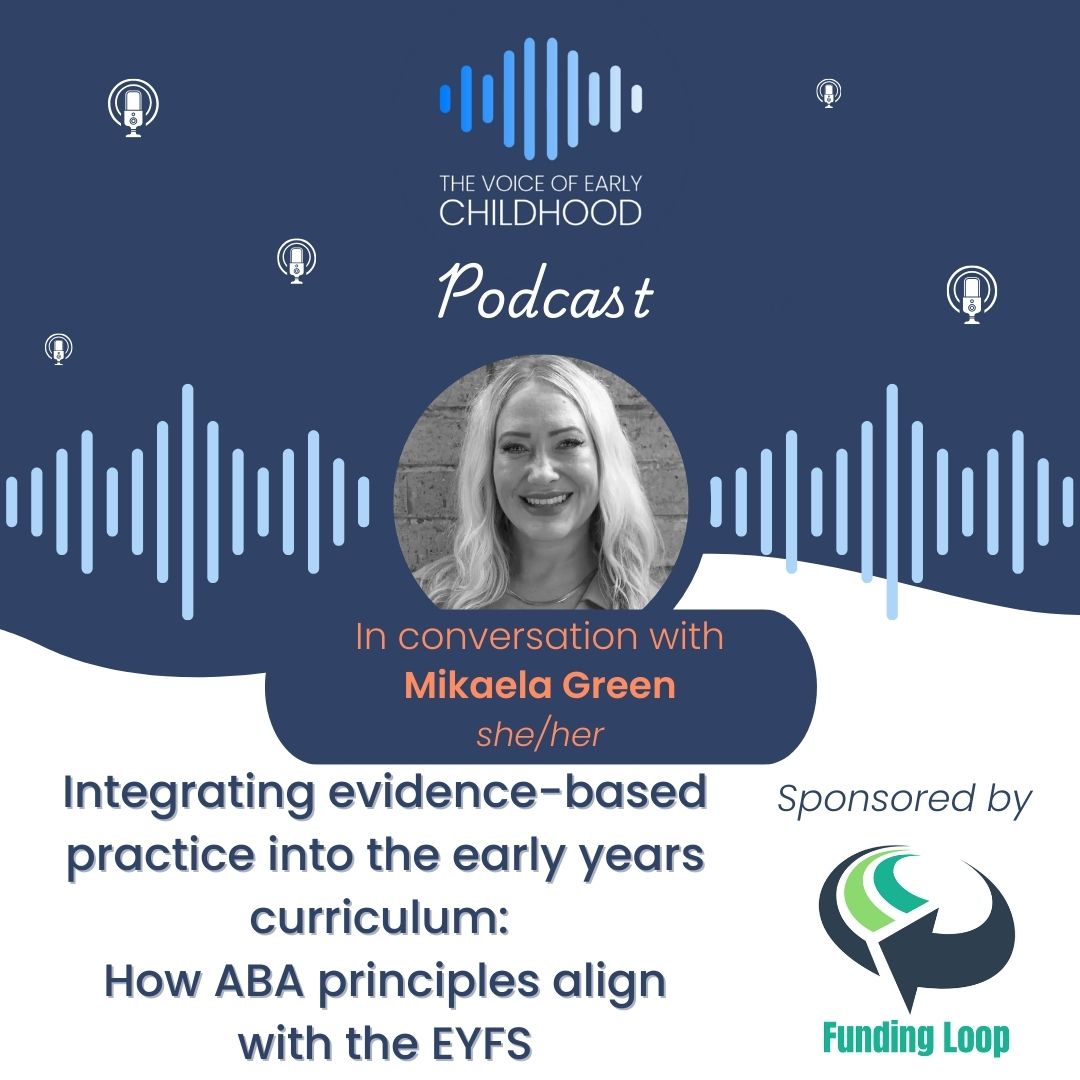
| 12/8/25 | ![]() Integrating evidence-based practice into the early years curriculum: How ABA principles align with EYFS✨ | Applied Behaviour AnalysisEYFS+3 | Mikaela Green | First Bridge SchoolFirst Bridge Education+1 | — | ABAEYFS+3 | Funding Loop | 58m 54s | |
| 12/1/25 | ![]() Exploring maths through ramp play with Young Minds Big Maths | In Young Minds Big Maths, university mathematicians and early years educators collaborate to explore mathematics. We discuss how the project led us to create a booklet to help educators discover maths through play in their settings. The booklet uses real-life examples of ramp play—something children love—to show how building and experimenting with ramps reveals rich mathematical ideas. Read the article here: https://thevoiceofearlychildhood.com/exploring-maths-through-ramp-play-with-young-minds-big-maths/ This episode is sponsored by Funding Loop Funding Loop automates the process for nurseries of collecting funding forms from parents and typing that information into council portals. Funding Loop is used by over 2000 nurseries including over 80% of the top 25 nursery chains in the UK including Busy Bees. To find out more visit: https://www.fundingloop.co.uk/home Our 2026 conference info & tickets: https://thevoiceofearlychildhood.com/early-years-conference-2026/ Listen to more: If you enjoyed this episode, you might also like: · Elevating children's thinking: Conceptual understanding through inquiry and play, by Sue Tee - https://thevoiceofearlychildhood.com/elevating-childrens-thinking-conceptual-understanding-through-inquiry-and-play/ · Promoting STEAM in early years: It's easier than you think! By Paula Walshe - https://thevoiceofearlychildhood.com/promoting-steam-in-early-years-its-easier-than-you-think/ · What's the problem with tuff tray maths? By Shardi Vaziri - https://thevoiceofearlychildhood.com/whats-the-problem-with-tuff-tray-maths/ Get in touch and share your voice: Do you have thoughts, questions or feedback? Get in touch here! – https://thevoiceofearlychildhood.com/contact/ Episode break down: Episode breakdown: 00:00 – Welcome & podcast intro 01:20 – Setting the scene: young minds, big maths through play 01:42 – Meet Rachel, Catherine and Sarah 02:24 – About the nursery schools and community context 02:51 – How the collaboration with a mathematician began 06:27 – Maths as the "dirtiest lens" in the EYFS 07:25 – Starting with patterns in nature and children's interest in circles 09:55 – Meeting the mathematicians & a new model of CPD 16:37 – Moving into ramp play as a focus for maths learning 17:11 – Ramp play across different settings 22:54 – The rich mathematics in ramp play (angles, variables, data) 26:55 – Children's own ways of measuring and defining 32:28 – Children's questions, language and ongoing learning for educators 35:14 – Being brave: advice for starting collaborations 40:34 – Three key ideas from the project 41:28 – Ramp play booklet 41:51 – Closing reflections & invitation to share your own maths-through-play stories For more episodes and articles visit The Voice of Early Childhood website: https://www.thevoiceofearlychildhood.com | — | ||||||
| 11/24/25 | ![]() Why play? - How to make play an essential part of early education | Play is not a luxury—it's a biological necessity. From early childhood through adulthood, play fuels cognitive growth, emotional resilience, social competence, and physical development. This article and podcast episode explore why play matters, how it shapes learning, and what educators and caregivers must consider to protect and promote it. Read the article here: https://thevoiceofearlychildhood.com/why-play-how-to-make-play-an-essential-part-of-early-education/ This episode is sponsored by Funding Loop Funding Loop automates the process for nurseries of collecting funding forms from parents and typing that information into council portals. Funding Loop is used by over 2000 nurseries including over 80% of the top 25 nursery chains in the UK including Busy Bees. To find out more visit: https://www.fundingloop.co.uk/home Our 2026 conference info & tickets: https://thevoiceofearlychildhood.com/early-years-conference-2026/ Listen to more: If you enjoyed this episode, you might also like: · Elevating children's thinking: Conceptual understanding through inquiry and play, by Sue Tee - https://thevoiceofearlychildhood.com/elevating-childrens-thinking-conceptual-understanding-through-inquiry-and-play/ · Advocacy, agency and rights in early childhood, by Dr Jo Albin-Clark and Dr Nathan Archer - https://thevoiceofearlychildhood.com/advocacy-agency-and-rights-in-early-childhood/ Get in touch and share your voice: Do you have thoughts, questions or feedback? Get in touch here! – https://thevoiceofearlychildhood.com/contact/ Episode break down: 00:00 – Welcome and episode introduction 01:36 – Framing the central question: why play? 02:37 – Play as nature's plan for learning and why sitting harms 04:11 – Parental pressure, misinformation and the 'earlier is better' myth 05:03 – A global pushdown of academics in early childhood (US and UK) 05:47 – Educators torn between child development knowledge and policy demands 06:29 – Policymakers' power and Alfie Kohn's analogy 08:22 – Losing play from five onwards and revisiting child development 09:41 – Free play as child-initiated, child-chosen learning 10:24 – Guided play and supporting self-regulation (the statues game) 11:17 – Joy, fun and intrinsic motivation in learning 11:45 – Outdoor, nature and cooperative play versus competition 13:37 – The brevity of childhood and 'what is the hurry?' 14:24 – Knowing when to step back in children's conflicts 15:49 – Understanding and valuing rough and tumble play 16:07 – Risky or adventurous play and learning to assess risk 17:39 – Reading cues for when to intervene in rough and tumble play 18:33 – Rethinking 'calm down' and supporting different arousal states 20:22 – Play as a way to express and process emotions 21:47 – Co-creating rules, personal space and managing movement and sound 23:16 – Developmental readiness for sitting still (around six) 24:10 – Unrealistic expectations of three-year-olds (sitting still and pencil grip) 24:47 – Behaviour as a response to developmental mismatch and lack of movement 25:22 – Fidgeting, movement and alternative ways of paying attention 27:11 – Children who 'don't know how to play' and aggressive play 28:54 – Modelling, scaffolding and gently redirecting play 29:36 – Using invitations and provocations to deepen play 31:55 – 'Play Matters' and reconnecting with theory, research and advocacy 33:32 – Remembering our own childhood joy as a guide for practice 35:35 – Big body play, physical health and strong bodies 36:27 – Integrating literacy and maths through active, playful experiences 37:04 – Multi-sensory, embodied learning and why it sticks 39:13 – Play as integrated, holistic learning across content areas 40:39 – Reflective questions for educators about honouring play 41:33 – Small steps for change and everyday acts of advocacy For more episodes and articles visit The Voice of Early Childhood website: https://www.thevoiceofearlychildhood.com | — | ||||||
| 11/17/25 | ![]() The importance of developing emotional intelligence in children's early years | Emotional intelligence refers to the ability to recognise, understand and manage one's own emotions whilst also being able to empathise with and respond appropriately to the emotions of others. This article and podcast episode delve into this subject to explore what we can do to support emotional intelligence in the earliest years. Read the article here: https://thevoiceofearlychildhood.com/the-importance-of-developing-emotional-intelligence-in-childrens-early-years/ This episode is in partnership with Male Childcare and Teaching Jobs. Male Childcare and Teaching Jobs advocate for greater male participation in education and caregiving roles, offering support and guidance to enhance gender inclusion in nurseries and schools. To find out more visit: https://malechildcareandteachingjobs.co.uk/ Listen to more: If you enjoyed this episode, you might also like to hear more at https://thevoiceofearlychildhood.com/articles/men-in-early-childhood/ Our 2026 conference info & tickets: https://thevoiceofearlychildhood.com/early-years-conference-2026/ Get in touch and share your voice: Do you have thoughts, questions or feedback? Get in touch here! – https://thevoiceofearlychildhood.com/contact/ Episode break down: 00:00 – Welcome! 02:00 – Karl's personal journey 10:00 – Why early years? 13:00 – Settling in as a natural process 16:00 – Meeting interests and needs 17:00 – Recognising children's emotions 19:00 – Following an approach or ethos 21:00 – Supporting parents as well as children 24:00 – Stories to support complex feelings 27:00 – Checking in on all children 28:00 – Children with special educational needs 31:00 – Adapting to individual needs 35:00 – Validating children's feelings For more episodes and articles visit The Voice of Early Childhood website: https://www.thevoiceofearlychildhood.com | — | ||||||
| 11/10/25 | ![]() Reframing early childhood: How language impacts our professional identity | There has never been a more urgent time to reflect on how we, as a profession, present ourselves to the world. The early childhood community is rich in knowledge, experience and deep commitment to children's learning and wellbeing. Yet, we continue to wrestle with misunderstanding, mistrust and misrepresentation—externally and, at times, internally. This podcast episode and article draw attention to the language we use in early childhood education—how it defines us, how it connects (or disconnects) us from the wider world, and how it influences perceptions of what we do. Language shapes reality. The words we choose matter. Read the article here: https://thevoiceofearlychildhood.com/reframing-early-childhood-how-language-impacts-our-professional-identity/ This episode is sponsored by Childcare Marketing: Our team of passionate childcare marketing and childcare professionals have the experience to take your childcare business and its online presence to the next level. Starting with a bespoke childcare website design, we then focus on strategic marketing activity aligned to your goals and objectives. Whether is revenue, recruitment or reputation, our goal is to help you grow and sustain your business. To find out more visit: childcaremarketing.co.uk Our 2026 conference info & tickets: https://thevoiceofearlychildhood.com/early-years-conference-2026/ Listen to more: If you enjoyed this episode, you might also like more from Jan: · What is an early years curriculum? - https://thevoiceofearlychildhood.com/what-is-an-early-years-curriculum/ · Data in early childhood - https://thevoiceofearlychildhood.com/data-in-early-childhood/ · It's not really about dinosaurs… - https://thevoiceofearlychildhood.com/early-years-curriculum/ Get in touch and share your voice: Do you have thoughts, questions or feedback? Get in touch here! – https://thevoiceofearlychildhood.com/contact/ Episode break down: 00:00 – Welcome and introduction03:30 – Why language matters in early childhood education06:25 – Who defines professional language?09:05 – Rethinking the word 'play'13:25 – Emotional attachment to terminology16:15 – Using the right language to elevate our practice19:15 – Building confidence to talk about curriculum and learning22:45 – Science, history, and geography in the early years27:05 – Breaking down the education–care divide30:15 – Recognising all roles in the profession32:35 – How do you value different voices in your setting or network?33:45 – Addressing disadvantage and the role of early education37:25 – A one-size-fits-all approach doesn't work41:35 – Recognising and responding to different forms of cultural capital44:45 – The importance of knowing children and families deeply47:05 – What do we mean by curriculum?49:35 – Using GLD data to ask better questions53:05 – Language, learning goals, and conversations with families55:15 – Rethinking 'academic' and 'intellectual'58:00 – Final reflections and key messages For more episodes and articles visit The Voice of Early Childhood website: https://www.thevoiceofearlychildhood.com | — | ||||||
| 11/3/25 | ![]() The Daycare Myth: Shifting the narrative on early childhood education | This article and podcast episode with Dr Dan Wuori, author of The Daycare Myth, challenge outdated perceptions of early childhood education, highlighting the need for policy reform, professional respect, and fair pay. Drawing on decades of experience, Dr Wuori calls for a reimagining of early learning as essential, complex, and deserving of greater societal value. Read the article here: https://thevoiceofearlychildhood.com/the-daycare-myth-shifting-the-narrative-on-early-childhood-education/ This episode is in partnership with Male Childcare and Teaching Jobs. Male Childcare and Teaching Jobs advocate for greater male participation in education and caregiving roles, offering support and guidance to enhance gender inclusion in nurseries and schools. To find out more visit: https://malechildcareandteachingjobs.co.uk/ Listen to more: If you enjoyed this episode, you might also like to hear more at https://thevoiceofearlychildhood.com/articles/men-in-early-childhood/ Our 2026 conference info & tickets: https://thevoiceofearlychildhood.com/early-years-conference-2026/ Get in touch and share your voice: Do you have thoughts, questions or feedback? Get in touch here! – https://thevoiceofearlychildhood.com/contact/ Episode break down: 00:00 – Welcome! 02:00 – The Daycare Myth 07:00 – How the profession is viewed 14:00 – A journey into the profession 21:45 – Encouraging more men into the profession 26:00 – Inconsistency for young children 29:00 – A stagnant level of men in early childhood 31:00 – The joy of working in early childhood 33:00 – We need to do a better job working with policy makers 35:00 – Further information For more episodes and articles visit The Voice of Early Childhood website: https://www.thevoiceofearlychildhood.com | — | ||||||
| 10/27/25 | ![]() The Best Start in Life strategy and what it means for the sector | The UK Government's Best Start in Life strategy, released in July 2025, sets out a cross-departmental vision to improve services for children and families in England. While it acknowledges the importance of early childhood, this article and podcast episode explores the significant gaps in funding, workforce support, and inclusion—raising critical questions about its implementation and long-term impact. Read the article here: https://thevoiceofearlychildhood.com/the-best-start-in-life-strategy-and-what-it-means-for-the-sector/ This episode is in partnership with Nursery Management Show: Nursery Management Show is the largest show dedicated to nursery management and leadership. Join us on the 28th November 2025 for one day of insightful content, discussion and networking for the early years sector, plus access to industry leaders, suppliers and providers. To find out more visit: https://nurserymanagementshow.co.uk/ Our 2026 conference info & tickets: https://thevoiceofearlychildhood.com/early-years-conference-2026/ Listen to more: If you enjoyed this episode, you might also like: · Should 4-year-olds really be expected to sit still? With Poppy LeMar - https://thevoiceofearlychildhood.com/should-4-year-olds-really-be-expected-to-sit-still/ · Elevating children's thinking: Conceptual understanding through inquiry and play with Sue Tee - https://thevoiceofearlychildhood.com/elevating-childrens-thinking-conceptual-understanding-through-inquiry-and-play/ Get in touch and share your voice: Do you have thoughts, questions or feedback? Get in touch here! – https://thevoiceofearlychildhood.com/contact/ Episode break down: 00:00 – Welcome! 02:00 – What is the Best Start in Life strategy? 04:15 – A critical eye on the strategy 06:00 – Funding and optional extras 08:00 – Funding in economically deprived areas 10:00 – Qualifications & a graduate workforce 15:00 – The experience based route to being qualified 16:00 – Family Hubs and community 18:30 – Support for children with SEND 20:00 – Ofsted inspections & inclusion 22:00 – Social enterprises & non for profit 27:00 – Government Policy at the Nursery Management Show 29:30 – School readiness within the strategy 34:00 – Further reading & information For more episodes and articles visit The Voice of Early Childhood website: https://www.thevoiceofearlychildhood.com | — | ||||||
| 10/20/25 | ![]() Nutritious mealtimes for under 5's | This article and podcast episode take a close look at some of the key questions around nutrition for under 5's; from what "free sugars" really are and why young children don't need much sugar, to how we can approach weaning confidently, prepare finger foods safely, and understand portion sizes in the early years. Read the article here: https://thevoiceofearlychildhood.com/nutritious-mealtimes-for-under-5s/ This episode is sponsored by Nursery Kitchen: Nursery Kitchen's Food Innovation Team creates exciting, nutritionally balanced meals using the best and freshest ingredients. With wholesome nursery menus filled with variety and global flavours, children are encouraged to be more adventurous with food. This approach supports the development of a varied palate and a lasting appreciation for healthy eating. Nursery Kitchen recognises that food education is just as important as the food itself. The team is committed to inspiring children to enjoy nutritious meals and to understand where their food comes from. To find out more visit: https://nurserykitchen.co.uk/ Early Years Foundation Stage Nutrition Guidance: https://assets.publishing.service.gov.uk/media/6839b752210698b3364e86fc/Early_years_foundation_stage_nutrition_guidance.pdf Our 2026 conference info & tickets: https://thevoiceofearlychildhood.com/early-years-conference-2026/ Listen to more: If you enjoyed this episode, you might also like: · From picky eating to positive mealtimes: Supporting varied eating habits – with Charlotte Goddard and Catherine Lippe: https://thevoiceofearlychildhood.com/from-picky-eating-to-positive-mealtimes-supporting-varied-eating-habits/ Get in touch and share your voice: Do you have thoughts, questions or feedback? Get in touch here! – https://thevoiceofearlychildhood.com/contact/ Episode break down: 00:00 – Introduction to Catherine and Nursery Kitchen 05:20 – How much sugar should under 5's be consuming? 13:00 – The weaning stage: Purees and blending foods 17:00 – Choking hazards and guidelines on this 22:00 – Portion sizes and food groups 29:00 – Lunchboxes and allergies 39:00 – Small pieces of foods 42:00 – Where to find out more For more episodes and articles visit The Voice of Early Childhood website: https://www.thevoiceofearlychildhood.com | — | ||||||
| 10/13/25 | ![]() The science of play: How shared activities transform family dynamics | New research reveals the profound impact of play on family bonding, language development, and emotional connection Kinder and the University of East London's Institute for the Science of Early Years released preliminary research exploring how play ignites language skills, builds emotional connection, and bridges family disconnect. Using wearable technology monitoring real-time responses during home play sessions, the study demonstrates that simple play moments spark joy, encourage language development, reduce stress, and nurture emotional wellbeing. Read the article here: https://thevoiceofearlychildhood.com/the-science-of-play-how-shared-activities-transform-family-dynamics/ This episode is sponsored by Kinder: To find out more visit: https://www.kinder.com/ The Kinder® brand was founded in 1968 and is inspired by bringing small but special moments to everyday life. Kinder creates innovative products made for sharing, family and togetherness across all ages. Kinder products include Kinder Surprise, Kinder Chocolate and Kinder Bueno. Our 2026 conference info & tickets: https://thevoiceofearlychildhood.com/early-years-conference-2026/ Listen to more: If you enjoyed this episode, you might also like: · It's time to rethink attention, by Professor Sam Wass and Dr Gemma Goldenberg: https://thevoiceofearlychildhood.com/its-time-to-rethink-attention/ Get in touch and share your voice: Do you have thoughts, questions or feedback? Get in touch here! – https://thevoiceofearlychildhood.com/contact/ Episode break down: 00:00 – Welcome & introduction 02:45 – Research on play in the home vs the lab 05:25 – Shared & non-functional play 09:30 – Synchrony & connectedness during play 15:00 – Shared rhythm & parent-child relationships 16:30 – Semantic interrelatedness 20:00 – Child initiated vs adult initiated play 23:30 – Does technology reduce shared play? 29:00 – The need for predictability & repetitive behaviours for babies 36:30 – Future research at Kinder 39:30 – Key takeaways For more episodes and articles visit The Voice of Early Childhood website: https://www.thevoiceofearlychildhood.com | — | ||||||
| 10/6/25 | ![]() A breath of fresh air: Reducing illness in early years settings by improving indoor air quality | Indoor air quality (IAQ) directly impacts child and staff health in early years settings and schools. This article and podcast episode explores why clean air matters, what we've learned from COVID-19, and three essential actions to reduce airborne disease transmission: monitor, filter, and ventilate. Read Anne Marie McConway's article here: https://thevoiceofearlychildhood.com/a-breath-of-fresh-air/ This episode is sponsored by Long Covid Kids Charity Long Covid Kids is a UK charity which represents and supports families, children, and young people living with Long Covid and related post-viral illnesses. Through awareness campaigns, research advocacy, and expert-by-experience guidance, the charity works to increase understanding, aid early diagnosis, and improve intervention responses. The volunteer team provides support, guidance, and signposting for affected families navigating the many challenges of paediatric Long Covid. To find out more visit: https://www.longcovidkids.org/ Download the free Clean Air Guide here: https://thevoiceofearlychildhood.com/a-breath-of-fresh-air/ Listen to more: If you enjoyed this episode, you might also like: Advocating for two-year-olds by Cassie Holland - https://thevoiceofearlychildhood.com/advocating-for-two-year-olds/ Advocacy, agency and rights in early childhood by Dr Jo Albin-Clark & Dr Nathan Archer Get in touch and share your voice: Do you have thoughts, questions or feedback? Get in touch here! – https://thevoiceofearlychildhood.com/contact/ Our 2026 conference info & tickets: https://thevoiceofearlychildhood.com/early-years-conference-2026/ Episode break down: 00:00 – Welcome & introductions 04:00 – Why does indoor air quality matter? 06:00 – Which diseases are airborne? 08:45 – Government guidelines 10:00 – Carbon dioxide monitors 16:00 – Long Covid infections increasing 21:00 – We can't eliminate all risk 25:00 – Do air filters work? 28:00 – There are solutions to cleaner air 29:00 – The 3 essential steps to take 33:30 – Getting the children involved 34:30 – A cultural shift towards clean air 35:30 – Health benefits of outdoor fresh air 38:00 – Lack of staff training 40:00 – Attendance crisis in settings & schools 42:00 – Clean air should not be a selling point 44:00 – Clean air initiatives in England 47:00 – Free Clean Air Guide For more episodes and articles visit The Voice of Early Childhood website: https://www.thevoiceofearlychildhood.com | — | ||||||
| 9/29/25 | ![]() Extremely early literacy | How early is too early for literacy? It is never too early! This article and podcast episode explore the significance of early literacy from the prenatal period onwards. Drawing on brain development research and practical strategies, it highlights the power of narration, modelling, and bonding through books—laying strong foundations for language and a lifelong love of reading. Read the article here: https://thevoiceofearlychildhood.com/extremely-early-literacy/ This episode is in partnership with Male Childcare and Teaching Jobs. Male Childcare and Teaching Jobs advocate for greater male participation in education and caregiving roles, offering support and guidance to enhance gender inclusion in nurseries and schools. To find out more visit: https://malechildcareandteachingjobs.co.uk/ Listen to more: If you enjoyed this episode, you might also like to hear more at https://thevoiceofearlychildhood.com/articles/men-in-early-childhood/ Our 2026 conference info & tickets: https://thevoiceofearlychildhood.com/early-years-conference-2026/ Get in touch and share your voice: Do you have thoughts, questions or feedback? Get in touch here! – https://thevoiceofearlychildhood.com/contact/ Episode break down: 00:00 – Welcome! 01:30 – New host introduction 04:00 – United for Literacy Initiative 05:00 – Dolly Parton's Imagination Library 08:45 – Prenatal early literacy 13:15 – The 30 million word gap 14:20 – Language immersion through narration 16:00 – You can never spoil a baby 17:10 – Book prescriptions by physicians 18:40 – Instilling a love for books early 20:00 – Books for babies 23:00 – Creating dedicated reading spaces 26:00 – Diversity & representation in books 30:00 – Screens vs physical books 35:45 – Presence & teachable moments 39:45 – Reading doesn't start at age 3+ 41:00 – PreemieWorld Foundation – supporting premature babies 43:00 – Future episodes For more episodes and articles visit The Voice of Early Childhood website: https://www.thevoiceofearlychildhood.com | — | ||||||
Showing 25 of 158
Pitch Fit is a Pro feature
See how bookable this show is for guests, which brands already advertise, the per-episode ad value, and the best-fit guest and sponsor profile. The numbers are blurred on the free plan.
How readily this show books outside guests like you.
How proven this show is for host-read sponsorships.
For Guests
ProFor Advertisers
ProUpgrade to Pro to unlock guest cadence, sponsor categories, fit scores, and per-episode ad value for this show.
Chart Positions
4 placements across 4 markets.
Chart Positions
4 placements across 4 markets.