
The Wall Street Skinny
by Kristen and Jen
Is this your podcast?Insights from recent episode analysis
Audience Interest
Podcast Focus
Publishing Consistency
Platform Reach
Insights are generated by CastFox AI using publicly available data, episode content, and proprietary models.
Most discussed topics
Brands & references
Total monthly reach
Estimated from 20 chart positions in 20 markets.
By chart position
- 🇬🇧GB · Investing#6030K to 100K
- 🇨🇦CA · Investing#8930K to 100K
- 🇺🇸US · Investing#1065K to 30K
- 🇮🇳IN · Investing#7910K to 30K
- 🇪🇸ES · Investing#1041K to 10K
- Per-Episode Audience
Est. listeners per new episode within ~30 days
35K to 125K🎙 Daily cadence·237 episodes·Last published 2w ago - Monthly Reach
Unique listeners across all episodes (30 days)
118K to 417K🇬🇧24%🇨🇦24%🇺🇸7%+17 more - Active Followers
Loyal subscribers who consistently listen
35K to 125K
Market Insights
Platform Distribution
Reach across major podcast platforms, updated hourly
Total Followers
—
Total Plays
—
Total Reviews
—
* Data sourced directly from platform APIs and aggregated hourly across all major podcast directories.
On the show
From 23 epsHosts
Recent guests
Recent episodes
Is a Private Credit scandal brewing behind the LA Lakers Sale?
Aug 19, 2026
36m 54s
OpenAI's Lawyer: How Big Tech is Winning the AI Race in the Courts
Aug 12, 2026
51m 10s
SpaceX: Revisiting the IPO and What Comes Next
Aug 5, 2026
29m 14s
The Biggest Hedge Fund Blow-Up of 2026 EXPLAINED: Situational Awareness
Jul 31, 2026
29m 56s
What Just Happened to AI Stocks??
Jul 30, 2026
1h 00m 01s
Social Links & Contact
Official channels & resources
Official Website
Login
RSS Feed
Login
| Date | Episode | Topics | Guests | Brands | Places | Keywords | Sponsor | Length | |
|---|---|---|---|---|---|---|---|---|---|
| 8/19/26 | 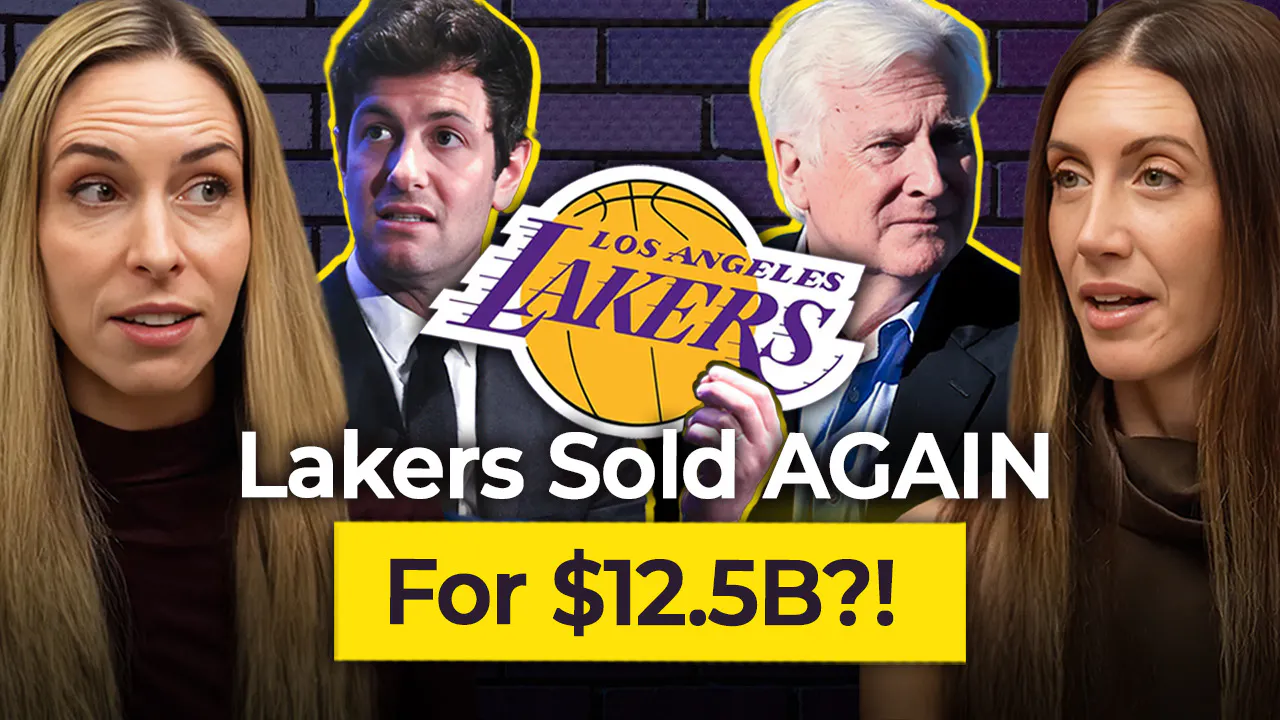 Is a Private Credit scandal brewing behind the LA Lakers Sale? | The LA Lakers --- a prestigious basketball franchise that didn't change hands for 46 years --- just sold twice in ten months, the second time for $2.5 billion more than the first. The seller is Mark Walter, CEO of Guggenheim, owner of the Dodgers and part of Chelsea FC, and the man whose laptop and phone the FBI seized off his private jet just as the Lakers deal was coming together. Since then, one of the insurance companies in his orbit has revised its reported related-party investments from $1.4 billion to $17 billion. Quite the rounding error. In this episode, we get into the questions everyone on the Street is suddenly asking. Why would anyone sell the crown jewel of American sports a year after fighting to buy it? What do a bunch of boring life insurance companies most people have never heard of have to do with the trophy assets of the billionaire class? Why do private equity and private credit firms keep buying insurers in the first place — and what happens to that entire model when the disclosures around "related parties" turn out to be, let's say, incomplete? And why did Josh Kushner and Bob Iger, who spent months chasing a Las Vegas expansion team, pivot to the Lakers over a single weekend? The bigger question hanging over all of it: this structure — asset managers selling their own loans to insurance companies they control — underpins a massive share of the boom in private credit. If regulators start pulling on this thread, how many other portfolios look like this one? By way of disclaimer, no charges have been filed and no wrongdoing has been established nor is implied here; our research merely summarizes reporting from Bloomberg, the FT, the WSJ, and the LA Times. | 36m 54s | ||||||
| 8/12/26 | 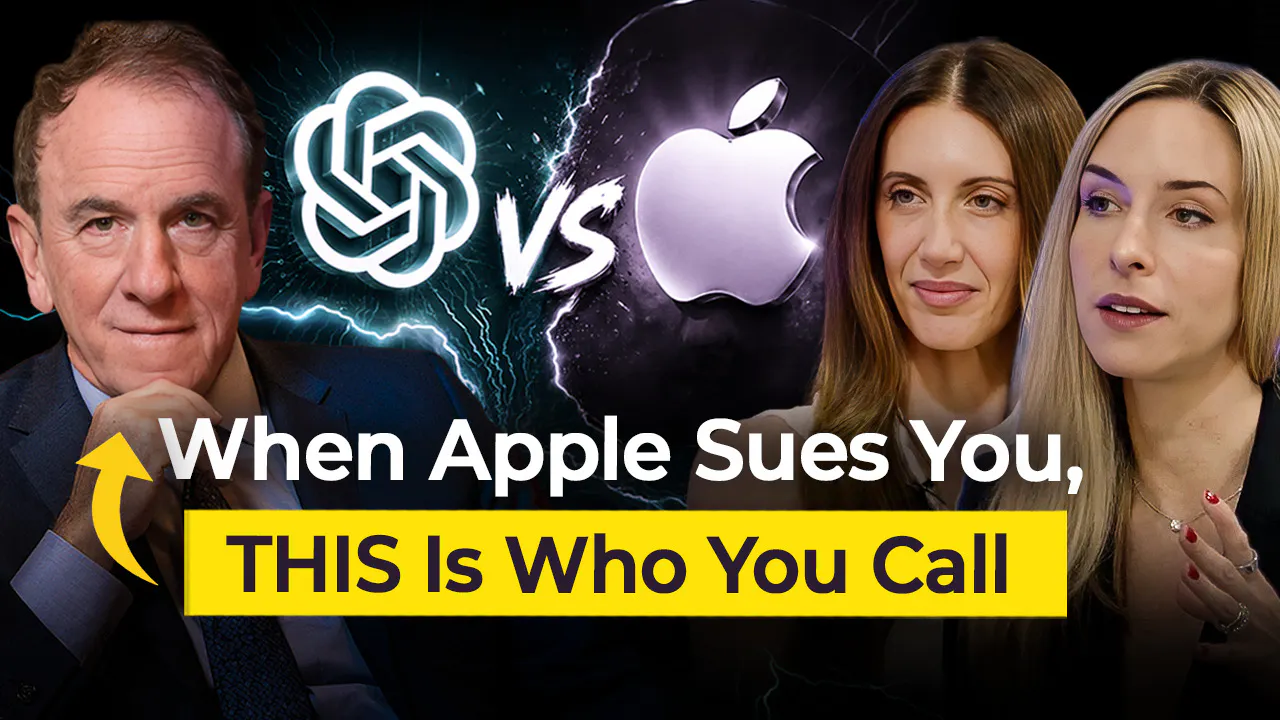 OpenAI's Lawyer: How Big Tech is Winning the AI Race in the Courts | We got to sit down with John Quinn — the "Quinn" of Quinn Emanuel — one of the most powerful litigators in the world, and the man whose firm is defending OpenAI right now. What does someone at the very top of the legal food chain see coming that the rest of us don't? And why does he think one of the oldest concepts in law is about to become the most valuable weapon in tech? Here's what pulled us down this rabbit hole. The most valuable companies on earth are pouring hundreds of billions into inventions almost none of them can legally protect. So how do you build a moat around something you're not allowed to own? Why are Apple and OpenAI trying to destroy each other in one courtroom and sitting on the same side in another? And what does any of this have to do with a viral park bench kiss that blew up one of the big law talent poaching deals? We get into all of it: why the patent wars fell by the wayside, what actually replaced them, and why every giant pay package in tech, finance, and now law is really a fight over the one thing no company can lock in a vault. Then John tells us where he thinks this is all headed — for the AI giants, for the lawyers, and for anyone thinking about the profession at all. | 51m 10s | ||||||
| 8/5/26 |  SpaceX: Revisiting the IPO and What Comes Next | After the largest IPO in history, only about 5% of SpaceX — roughly $83 billion of the $1.75 trillion — is actually free to trade. Insiders are locked up, the banks that underwrote the deal can't lend shares to short sellers, and index funds are being forced to buy as SpaceX joins the Nasdaq-100 and the Russel. In this episode, Jen and Kristen, both former Morgan Stanley investment bankers, break down how the IPO was engineered — and the question every SpaceX investor should be asking: what happens when all that locked-up stock can finally sell? First, we cover what is normal in an IPO so you can see what isn't. We cover price talk vs. the $135 take-it-or-leave-it pricing, the green shoe, perpetual futures, and the fast-track Nasdaq-100 inclusion pulling in billions of passive buying. We lay out the risks, meaning the the wall of supply coming. Unlike the standard 180-day lockup, SpaceX is staggering its release: the first ~$240-500+ billion of stock unlocks after the first earnings report around September, with more tranches every few weeks after that — over $1 trillion freely tradeable by December, on the way to a ~$2 trillion overhang once Elon Musk's one-year lockup rolls off. But we also lay out why the passive buying actually helps dampen that supply PLUS why many institutional investors are NOT bearish on the stock despite the insane valuation. | 29m 14s | ||||||
| 7/31/26 |  The Biggest Hedge Fund Blow-Up of 2026 EXPLAINED: Situational Awareness | What took Situational Awareness from a $45bn hedge fund down to a $10bn hedge fund in less than a month? Two years ago Leopold Aschenbrenner was a researcher at OpenAI who wrote a 165-page essay about superintelligence. Since then, he raised $225 million seed funding from Stripe co-founders, Jane Street, and GitHub's CEO, which he proceeded to turn into an AI hedge fund called Situational Awareness worth about $45bn as of the beginning of July. He did this with no prior trading experience, 4-5x leverage on a concentrated bet in AI names. By Thursday the fund was down to about $10 billion. Neither Millennium nor Jane Street were willing to step in to catch a falling knife. Ultimately Citadel stepped in to buy the flagging portfolio. Here is the crazy part though: Aschenbrenner wasn't wrong. He is reportedly still up around 80% on the year and "he only sold enough to cover his losses". But what caused a massive drop in the global markets was that a prime broker does not care what happens in 2030. And because half the market was crowded into the exact same names, his exit was everyone else's problem. SK Hynix and CoreWeave cratered. Korea's Kospi tripped circuit breakers. Over a million retail accounts got margin called. All of July's violence, the moves that had traders questioning their own sanity, was one book being taken apart in public. So the question this episode actually asks is whether this was one overlevered fund or the first crack in the AI trade itself. Because the market's answer this week was a shrug. Microsoft just posted the largest single-day market cap gain in history and credit spreads snapped back tighter, as if the whole thing was somebody else's accident. Kristen and Jen have both traded through cycles that ended this way, and they have seen exactly how comforting that shrug feels right before it stops being true. | 29m 56s | ||||||
| 7/30/26 |  What Just Happened to AI Stocks?? | *Note: This episode was recorded before news broke of Situational Awareness' unwind, which gives us much better insight into the pace and magnitude of the move in the Korean markets specifically.* Chips, China, and credit. The three forces tearing through the AI trade right now, and we called it last week. In this episode we break down why the bond market cracked first, what widening credit spreads on Nvidia, Meta, and Oracle are actually telling you about default risk, and why the Nasdaq is bleeding while the S&P barely flinches. We walk through Alphabet's first negative free cash flow after twenty years of printing money, the CapEx numbers that keep getting revised upward, and the moment the market stopped rewarding spending and started punishing it. If you have ever wondered how to read a credit spread, we show you the math live. Then we get into the China story that moved markets this week. CXMT went public in the largest mainland Chinese semiconductor IPO on record, oversubscribed 212 times, and the Korean stock exchange took the hit because the KOSPI is essentially a memory-chip index wearing a trench coat. We explain why memory matters in an AI data center, why Samsung, SK Hynix, and Micron controlling 90 percent of the market was the whole moat, and what reports of domestically produced DUV lithography machines would mean for US export controls. We also unpack Nvidia guaranteeing borrowing for a 10-gigawatt OpenAI data center in Ohio, and whether circular financing between chipmakers and model labs is clever structuring or an accounting Ouroboros. Finally, the philosophical hangover. We react to Elon Musk's Economist interview and his claim that money stops mattering within a decade, pressure-test his deflationary argument against MV equals PQ, and ask why every science fiction author who ever imagined artificial superintelligence wrote a horror story. Plus Anthropic's positioning ahead of a possible IPO, the distillation and copyright fight with publishers, the rare books being unbound and shredded to feed training data, and where value actually accrues if models commoditize. Energy and molecules, or something else entirely. Subscribe for weekly deep dives on AI infrastructure, credit markets, semiconductors, and the money moving underneath the entire AI build-out. | 1h 00m 01s | ||||||
| 7/24/26 | 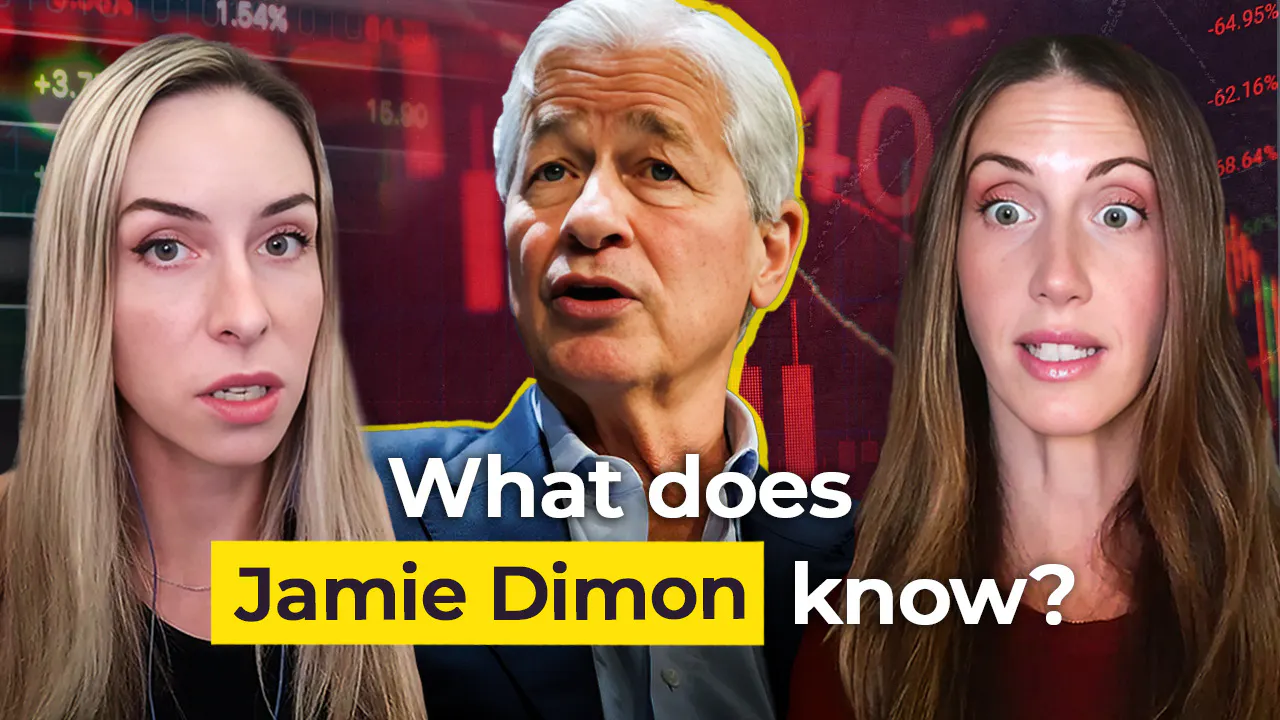 Why Jamie Dimon Won't Buy Stocks OR Bonds Right Now | Short interest in the S&P 500 is sitting near its highest level since 2010, Jamie Dimon says he won't touch US stocks or Treasuries at these prices, and SpaceX is the ninth-most-shorted stock in the market ahead of its very first earnings report. So this week we're asking: why is everyone so bearish when the market is up more than 15% from the March lows? What did Alphabet's first-ever negative free cash flow quarter reveal about the real cost of the AI buildout? And when the five biggest hyperscalers are planning to spend nearly as much as the US military in a single year, who's actually going to fund it — and at what price? That last question took us straight to the bond market, where things look even scarier. Why are Meta, Oracle, and SpaceX's 30-year bonds trading 40-60 basis points wider just weeks after issuance? Why have 30-year Treasury yields held above 5.00% for the longest stretch in two decades — and is 5.00% the new floor instead of the ceiling? With a Fed meeting days away and Chairman Warsh's hawkish instincts colliding with the biggest negative CPI print since 2020, we dig into what the rates market is telling us about risk premiums across every asset class... and whether anyone wants to own anything right now. | 16m 29s | ||||||
| 7/18/26 | trad wivescareer women+5 | — | Morgan StanleyBloomberg+1 | — | Yesteryeartrad wives+8 | — | 1h 14m 25s | ||
| 7/16/26 | AI ecosystemhyperscalers+4 | Ron Kelly | MetaGoogle+7 | LouisianaManhattan+1 | AIhyperscalers+7 | — | 47m 28s | ||
| 6/14/26 | investment bankingoffice politics+4 | — | Not Suitable for Work | — | Mindy KalingNot Suitable for Work+7 | — | 1h 12m 40s | ||
| 6/11/26 | equity raiseGoogle+4 | — | SpaceXGoogle+2 | — | Googleequity raise+5 | — | 23m 30s | ||
| 6/10/26 | financecreators+3 | Gustav Gyllenhammar | Spotify | — | Spotifycreators+5 | — | 41m 23s | ||
| 6/6/26 | market dynamicspassive index investing+3 | — | SpaceXAnthropic+5 | — | SpaceXIPO+3 | — | 31m 23s | ||
| 6/3/26 | Big Law compensationWall Street earnings+3 | — | Morgan StanleyDavis Polk+2 | — | Big LawWall Street+3 | — | 42m 12s | ||
| 5/27/26 | memoirWall Street+4 | — | Morgan StanleyStrangers | New York CityMassachusetts+1 | Belle BurdenStrangers+6 | — | 51m 34s | ||
| 5/26/26 | American consumerhousehold debt+3 | Keri Findley | Tacora CapitalFederal Reserve | — | household debtcredit card balances+3 | — | 40m 47s | ||
| 5/14/26 | hedge fundsmarket analysis+3 | Elizabeth Burton | Fortress | — | hedge fundmarket shock+3 | — | 55m 05s | ||
| 5/8/26 | GameStopeBay+4 | — | GameStopeBay+1 | — | GameStopeBay+5 | — | 24m 55s | ||
| 5/5/26 | GameStopeBay+4 | — | GameStopeBay+1 | — | GameStopeBay+5 | — | 17m 45s | ||
| 4/30/26 | Federal ReserveJerome Powell+4 | — | Fed | — | Federal ReserveJerome Powell+5 | — | 48m 51s | ||
| 4/25/26 | private creditfinancial markets+4 | Sujeet Indap | Financial TimesCaesars Palace+1 | — | private creditcredit crisis+5 | — | 46m 13s | ||
| 4/20/26 | distressed debt investingrestructuring+4 | — | $30 billion LBOCaesars Palace+1 | — | distressed debtbankruptcy+6 | — | 45m 30s | ||
| 4/16/26 | private equityprivate credit+3 | — | ApolloTPG+1 | — | private equityprivate credit+5 | — | 49m 38s | ||
| 4/11/26 | private equityinvesting+3 | Neha Champaneria Markle | Morgan StanleyMorgan Stanley Investment Management | — | private equityMorgan Stanley+3 | — | 1h 06m 13s | ||
| 4/1/26 | bondsUS Treasury auctions+3 | — | US TreasuryFortune Magazine | — | bondsUS Treasury+5 | — | 42m 35s | ||
| 3/28/26 | private creditinvestment vehicles+4 | — | ApolloMoody's+1 | — | private creditApollo+5 | — | 53m 29s | ||


Showing 25 of 258
Pitch Fit is a Pro feature
See how bookable this show is for guests, which brands already advertise, the per-episode ad value, and the best-fit guest and sponsor profile. The numbers are blurred on the free plan.
How readily this show books outside guests like you.
How proven this show is for host-read sponsorships.
For Guests
ProFor Advertisers
ProUpgrade to Pro to unlock guest cadence, sponsor categories, fit scores, and per-episode ad value for this show.
Similar Audience Demographics
Podcasts that attract a similar listener profile

Capital Allocators – Inside the Institutional Investment Industry
Ted Seides – Allocator and Asset Management Expert

The Credit Edge by Bloomberg Intelligence
Bloomberg

FICC Focus
Bloomberg Intelligence

The View From Apollo
Apollo Global Management

Invest Like the Best with Patrick O'Shaughnessy
Colossus | Investing & Business Podcasts
Dry Powder: The Private Equity Podcast
Hugh MacArthur, Bain & Company
The Memo by Howard Marks
Oaktree Capital Management
Chart history for The Wall Street Skinny
Peaked at #34 in AE, currently #34 in AE.
| Market | Genre | Peak | Current | Trend |
|---|---|---|---|---|
| AE | — | #34 | #34 | — |
| BE | — | #38 | #38 | — |
| Ireland | — | #45 | #45 | — |
| United Kingdom | — | #60 | #60 | — |
| PL | — | #61 | #61 | — |
| India | — | #79 | #79 | — |
| Canada | — | #89 | #89 | — |
| KE | — | #93 | #93 | — |
| Spain | — | #104 | #104 | — |
| United States | — | #106 | #106 | — |
| Norway | — | #124 | #124 | — |
| PT | — | #126 | #126 | — |
| New Zealand | — | #129 | #129 | — |
| BE | — | #129 | #129 | — |
| South Africa | — | #129 | #129 | — |
| TR | — | #134 | #134 | — |
| AE | — | #134 | #134 | — |
| HK | — | #137 | #137 | — |
| IS | — | #138 | #138 | — |
| Finland | — | #171 | #171 | — |
Chart Positions
24 placements across 20 markets.
Chart Positions
24 placements across 20 markets.