Insights from recent episode analysis
Audience Interest
Podcast Focus
Publishing Consistency
Platform Reach
Insights are generated by CastFox AI using publicly available data, episode content, and proprietary models.
Most discussed topics
Brands & references
Total monthly reach
Estimated from 1 chart position in 1 market.
By chart position
- 🇰🇷KR · Christianity#1821K to 10K
- Per-Episode Audience
Est. listeners per new episode within ~30 days
500 to 5K🎙 ~2x weekly·117 episodes·Last published 2d ago - Monthly Reach
Unique listeners across all episodes (30 days)
1K to 10K🇰🇷100% - Active Followers
Loyal subscribers who consistently listen
400 to 4K
Market Insights
Platform Distribution
Reach across major podcast platforms, updated hourly
Total Followers
—
Total Plays
—
Total Reviews
—
* Data sourced directly from platform APIs and aggregated hourly across all major podcast directories.
On the show
From 16 epsHosts
Recent guests
Recent episodes
Effectual Calling w/ Paul Woo | Redemption Accomplished and Applied (3)
Jun 22, 2026
54m 53s
A Salvation Accomplished w/ Michael McClenahan | Redemption Accomplished and Applied (2)
Jun 15, 2026
1h 18m 19s
Why John Murray Still Matters w/ Stafford Carson & Paul Woo | Redemption Accomplished and Applied (1)
Jun 8, 2026
54m 25s
On the Nature and Kingdom of God w/ Harrison Perkins
Jun 1, 2026
57m 29s
Apocalyptic Vision and Enduring Faith: The Book of Daniel w/ Iain Duguid (Pt. 2)
May 25, 2026
1h 15m 52s
Social Links & Contact
Official channels & resources
Official Website
Login
RSS Feed
Login
| Date | Episode | Topics | Guests | Brands | Places | Keywords | Sponsor | Length | |
|---|---|---|---|---|---|---|---|---|---|
| 6/22/26 | ![]() Effectual Calling w/ Paul Woo | Redemption Accomplished and Applied (3) | In this episode of our series on John Murray's Redemption Accomplished and Applied, Nate Shannon and Paul Woo explore the doctrine of effectual calling and its place in the application of redemption. What distinguishes the universal call of the gospel from God's effectual call to salvation? Why does Murray insist that calling is a sovereign act of God, and how does this preserve both the grace of God and the freedom of the believer? Along the way, the discussion touches on the order of salvation, union with Christ, the Father’s role in effectual calling, the relationship between calling and regeneration, and the biblical foundation for evangelism in Reformed theology. As Murray reminds us, the application of redemption begins with God's powerful summons, bringing sinners into fellowship with Christ and all the saving benefits found in him alone.If you enjoy this episode, you can access tons of content just like this at wm.wts.edu. If you would like to join us in our mission to train specialists in the bible to proclaim the whole counsel of God for Christ and his global church, visit wts.edu/donate. | 54m 53s | ||||||
| 6/15/26 | ![]() A Salvation Accomplished w/ Michael McClenahan | Redemption Accomplished and Applied (2) | What exactly did Christ accomplish in his life, death, and resurrection—and why does it matter for the Christian life today? In this episode, Nate Shannon is joined by Michael McClenahan to explore the theological foundation of John Murray's Redemption Accomplished and Applied, reflecting on the necessity, nature, and perfection of Christ's saving work. Along the way, they consider how a deeper understanding of the atonement leads not only to greater doctrinal clarity, but also to greater confidence in the love of God revealed in Christ. If you enjoy this episode, you can access tons of content just like this at wm.wts.edu. If you would like to join us in our mission to train specialists in the bible to proclaim the whole counsel of God for Christ and his global church, visit wts.edu/donate. Thanks for listening! | 1h 18m 19s | ||||||
| 6/8/26 | ![]() Why John Murray Still Matters w/ Stafford Carson & Paul Woo | Redemption Accomplished and Applied (1)✨ | Reformed theologyJohn Murray+3 | Dr. Stafford CarsonPaul Woo | Westminster SeminaryWestminster Media | — | John MurrayRedemption Accomplished and Applied+3 | — | 54m 25s | |
| 6/1/26 | ![]() On the Nature and Kingdom of God w/ Harrison Perkins✨ | church historyReformed theology+4 | Harrison Perkins | Westminster Media | — | James Usshertheological manuscripts+5 | — | 57m 29s | |
| 5/25/26 | ![]() Apocalyptic Vision and Enduring Faith: The Book of Daniel w/ Iain Duguid (Pt. 2)✨ | apocalyptic visionsfaith+3 | Iain Duguid | Westminster MediaThe Book of Daniel | — | Danielapocalyptic+3 | — | 1h 15m 52s | |
| 5/18/26 | ![]() Kingdoms Rise, God Reigns: The Book Daniel w/ Iain Duguid (Pt. 1)✨ | theologysuffering+4 | Ian Duguid | Book of Daniel | — | Danieltheology+5 | — | 1h 07m 18s | |
| 5/11/26 | ![]() Biblical Counseling in Latin America w/ Claudia Barerro✨ | biblical counselingevangelical faith+4 | Claudia Barrero | Westminster MediaBiblical Counseling+1 | ColombiaPeru | counselingevangelicalism+5 | — | 52m 02s | |
| 5/4/26 | ![]() The Council of Nicea & The Church Today w/ Randy Caldejo and Blake Franze✨ | Council of NicaeaNicene Creed+5 | Randy CaldejoBlake Franze | Nicene Creed | Istanbul | Council of NicaeaNicene Creed+6 | — | 49m 13s | |
| 4/27/26 | ![]() Our Hope is in Help w/ Pierce Hibbs✨ | autonomydependence on God+3 | Pierce Taylor Hibbs | Our Hope is in Help | — | autonomyhelp+4 | — | 54m 57s | |
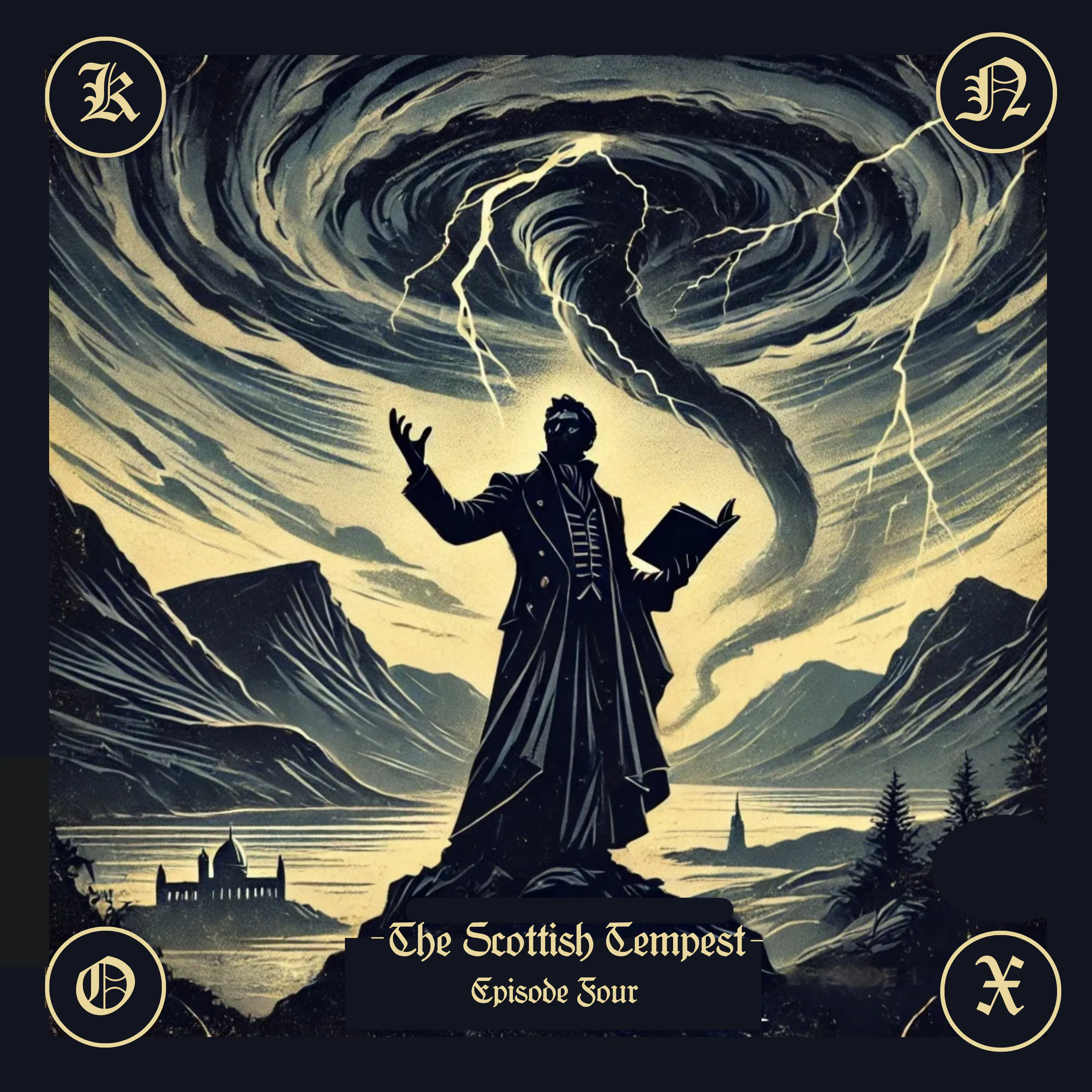
| 4/24/26 | ![]() The Scottish Tempest — Episode 4: Blood and Fire✨ | Marian persecutionJohn Knox+5 | — | Westminster Mediawts.edu | — | John KnoxMarian persecution+5 | — | 5h 36m 42s | |
Want analysis for the episodes below?Free for Pro Submit a request, we'll have your selected episodes analyzed within an hour. Free, at no cost to you, for Pro users. | |||||||||
| 4/20/26 | ![]() Irish Monasticism w/ Stafford Carson & Todd Rester✨ | Irish MonasticismChristianity+3 | Stafford CarsonTodd Rester | Westminster Mediawts.edu+1 | — | Irish MonasticismChristianity+3 | — | 46m 17s | |
| 4/13/26 | ![]() Prayer, Gratitude, and the Christian Life w/ Dr. Greg Parker Jr.✨ | theological educationneo-Calvinism+5 | Dr. Greg Parker Jr. | Kuyper ConferenceHerman Bavinck+5 | — | theologyprayer+6 | — | 52m 29s | |
| 4/6/26 | ![]() Confessional Theology and the Neo-Calvinist Vision w/ Dr. Gray Sutanto✨ | neo-Calvinismconfessional theology+5 | Dr. Gray Sutanto | Westminster Theological SeminaryRTS Washington, D.C.+1 | — | neo-Calvinismconfessional theology+6 | — | 32m 41s | |
| 3/30/26 | ![]() Has Science Made God Unnecessary? w/ Ransom Poythress✨ | Christian faithscience+5 | Ransom Poythress | Houghton UniversityWestminster Media+1 | — | scienceChristian faith+5 | — | 1h 03m 48s | |
| 3/23/26 | ![]() Song of Songs w/ Dr. Iain Duguid✨ | poetrytranslation+4 | Iain Duguid | Song of Songs | — | Song of SongsIain Duguid+6 | — | 58m 43s | |
| 3/16/26 | ![]() St. Patrick: Missionary to Ireland w/ Todd Rester✨ | St. Patrickmissionary work+4 | Todd Rester | Confession | IrelandRoman Britain | St. Patrickmissionary+8 | — | 47m 48s | |
| 3/9/26 | ![]() Digital Identity w/ Justin Poythress✨ | digital identityrelationships+3 | Justin Poythress | Westminster Mediawts.edu | — | digital identityrelationships+3 | — | 56m 37s | |
| 3/2/26 | ![]() Daily Grace and Deep Sorrow w/ Jeremy Schmucker✨ | sorrowtheological formation+5 | Jeremy Schmucker | The Daily Grace Co.Westminster | — | sorrowtheology+8 | — | 47m 55s | |
| 2/23/26 | ![]() Who Am I, Really? The Gospel and the Modern Self w/ Justin Poythress | In this episode, Nate Shannon interviews Rev. Dr. Justin Poythress about his forthcoming book Who Am I and What Am I Doing With My Life? The conversation explores the modern “identity crisis” often expressed in debates about sexuality and gender but argues that these are only surface manifestations of a much deeper question: what it means to be human. Poythress explains that contemporary culture’s emphasis on radical self-creation, amplified by social media, limitless vocational options, and hyper-individualism, has produced both unprecedented freedom and profound instability. When identity becomes something we must invent rather than receive, the result is anxiety, paralysis, and constant comparison. This pressure affects everyone, not just teenagers or those wrestling with gender questions; adults experience it through work, retirement, politics, and online self-presentation. The gospel, Poythress argues, reframes identity entirely. Rather than constructing ourselves from scratch, we discover that much of who we are is “given”, created by God and shaped in relationship to Him and others. Christianity does not suppress the human desire for growth and transformation but redirects it: true becoming happens through union with Christ, not self-invention. What modern self-help and identity movements seek, meaning, stability, and a better self, is fulfilled in conversion and sanctification. The Christian life therefore answers the identity crisis not by rejecting identity language, but by redeeming it, grounding our being and becoming in communion with God. | 50m 19s | ||||||
| 2/16/26 | ![]() The Shorter Catechism: A Tool for Theological Depth w/ Dr. S.A. Fix | In this episode of the Westminster Podcast, host Nate Shannon engages with Dr. S.A. Fix, an Old Testament scholar, to discuss the significance of John Thompson and his work on the Shorter Catechism. They explore the historical context of American Presbyterianism, the Adopting Act, and the impact of the Great Awakening on the church. Dr. Fix emphasizes the importance of confessionalism and the value of understanding theology as a means to glorify God and deepen one's faith. | 48m 19s | ||||||
| 2/9/26 | ![]() Seeing Christ in Lamentations w/ Jeremy Menicucci | In this episode of the Westminster Podcast, Nate Shannon is joined again by Jeremy Manacuchi for a searching exploration of the Book of Lamentations, one of Scripture’s most haunting and least-studied books. Beginning with the stark poetry of Jerusalem’s fall, they situate Lamentations within its historical context: the Babylonian siege, exile, and the covenantal judgment foretold in Deuteronomy. The discussion traces why the book is so emotionally and theologically difficult: its graphic imagery, its honest depiction of divine wrath, and its profound sense of abandonment, while also arguing for its enduring pastoral value. Far from being marginal, Lamentations confronts suffering head-on as the just response to sin, spoken from within the lived experience of God’s people. At the heart of the conversation is Lamentations 3, the structural and theological center of the book. Jeremy presents a compelling Christological reading in which “the man who has seen affliction” bears the full weight of God’s wrath, descends into the pit, and yet emerges with renewed hope grounded in the steadfast love of the Lord. Read as a carefully crafted whole, Lamentations moves from darkness to a single, blazing moment of hope, one that ultimately points beyond Jerusalem’s ruin to Christ himself. In that light, Lamentations is not merely a book of grief, but a profound witness to God’s covenant faithfulness, offering hope to sinners and sufferers alike through the one who was forsaken so that God might once again say to his people, “Do not fear.” | 1h 08m 19s | ||||||
| 2/2/26 | ![]() John Murray and the Westminster Tradition w/ Paul Woo | In this episode, Paul Woo recounts how his academic path converged with his personal theological journey. Though initially trained in seventeenth-century theology, his long-standing passion for Presbyterian history led him to accept an unexpected invitation to pursue doctoral research on John Murray. Murray’s influence, was first felt in reading Murray on Romans 6. Definitive sanctification gave him new categories for understanding the Christian struggle against sin as a battle fought from union with Christ, where Scripture’s imperatives rest on real spiritual power rather than desperation. That spiritual and theological foundation made the doctoral opportunity compelling. Surveying Murray’s lecture notes on the Westminster Standards revealed a meticulous historical theologian, overturning the common assumption that Murray was only a precise biblical exegete rather than a scholar deeply engaged with primary historical sources. Paul then outlines his emerging dissertation project, provisionally titled John Murray the Westminsterian, which will explore how Murray’s Scottish Presbyterian heritage and confessional commitments shaped his theology, and how in turn he helped shape Westminster Seminary and the Orthodox Presbyterian Church through his work on the denomination’s confession. The conversation widens to his recent research on Trinitarian doctrine at the Westminster Assembly, particularly debates over the Son’s aseity and Calvin’s doctrine of autotheos, showing how historical dogmatics and confessional theology intersect in his work. He also discusses his editorial research for P&R Publishing’s Warfield reprints, describing the painstaking but rewarding labor of tracing Warfield’s vast multilingual sources, and reflecting on how modern digital access has transformed historical scholarship. The episode closes with reflections on Murray’s enduring legacy as both scholar and pastor, his reputation for prayer and piety, and recommendations for readers approaching Murray for the first time (especially his sermons and Redemption Accomplished and Applied) as an entry point into a theology where rigorous exegesis, historical consciousness, and lived communion with Christ remain inseparable. If you enjoy this episode, you can access tons of content just like this at wm.wts.edu. If you would like to join us in our mission to train specialists in the bible to proclaim the whole counsel of God for Christ and his global church, visit wts.edu/donate. Thanks for listening! | 44m 03s | ||||||
| 1/26/26 | ![]() Scripture and Creed: How Mark's Gospel Leads Us to Nicaea w/ Dr. Brandon Crowe | In this episode of the Westminster Podcast, host Nate Shannon welcomes Dr. Brandon Crowe to discuss the relationship between Scripture and the Nicene Creed in the 1700th anniversary year of the Council of Nicaea. Drawing from his recent paper, Christology: Mark on the Road to Nicaea, Crowe explains how creeds arise from Scripture rather than being imposed upon it, functioning as faithful summaries and syntheses of the Bible’s teaching. He explores how extra-biblical theological language—such as homoousios and the doctrine of the Trinity—serves to clarify Scripture’s meaning when purely biblical phrasing proves vulnerable to misinterpretation. The conversation highlights the “hermeneutical spiral” between creed and Scripture: the creed guides faithful reading of the Bible, while Scripture remains the final authority that continually tests the creed. Crowe then turns to the Gospel of Mark to demonstrate how Nicene Christology emerges from the biblical text itself. Challenging historical-critical approaches that fragment the Gospel or diminish its theology, he argues for reading Mark as a coherent narrative shaped by Old Testament imagery. He outlines four key ways Mark presents Christ’s divine identity: the Father-Son relationship, theophanies, divine saving works, and divine claims made by Jesus. Particular attention is given to episodes such as Jesus walking on the water, interpreted as an Old Testament-shaped theophany revealing God’s presence in Christ. The episode concludes by emphasizing that classical creedal Christology does not restrict careful exegesis but provides theological guardrails that enable deeper, more faithful reading of Scripture. If you enjoy this episode, you can access tons of content just like this at wm.wts.edu. If you would like to join us in our mission to train specialists in the bible to proclaim the whole counsel of God for Christ and his global church, visit wts.edu/donate. Thanks for listening! | 39m 41s | ||||||
| 1/19/26 | ![]() Revelation, Illumination, and the Apostles’ Reading of the Old Testament w/ Augustus Lopes and Blake Franze | In this episode of the Westminster Podcast, Nate Shannon and Blake Franze welcome Dr. Augustus Nicodemus Lopez, Westminster alumnus, pastor, theologian, and former chancellor of Mackenzie University in São Paulo. Broadcasting from Istanbul during the Nicaea Conference, they reflect on Dr. Lopez’s lecture on Colossians and deep Christology before turning to his formative years at Westminster in the early 1990s. He recounts studying under Moses Silva, wrestling with liberal European scholarship during his doctoral work, and how faithful mentorship preserved his confidence in Scripture during a season of profound doubt. Dr. Lopez also discusses his dissertation on Paul’s use of the Old Testament, the distinction between revelation and illumination, and how Westminster’s rigorous training equipped him for preaching, scholarship, and academic leadership across the globe. The conversation then shifts to contemporary challenges facing the church, particularly the doctrine of the Holy Spirit and the theological tensions raised by the global Pentecostal movement. Dr. Lopez argues that questions of Spirit, revelation, and spiritual gifts represent the most pressing frontier for confessional orthodoxy today. He also shares his conviction about using social media as a mission field—reaching closed communities, discipling young believers, and providing pastoral presence throughout the week—while warning against the dangers of unaccountable online ministry. The episode concludes with his hope that Westminster will continue equipping leaders from the global South, extending confessional, pious, and academically excellent theological education to the worldwide church. If you enjoy this episode, you can access tons of content just like this at wm.wts.edu. If you would like to join us in our mission to train specialists in the bible to proclaim the whole counsel of God for Christ and his global church, visit wts.edu/donate. Thanks for listening! | 41m 29s | ||||||
| 1/12/26 | ![]() Hope in the Midst of Ruin: The Theology of Lamentations w/ Jeremy Menicucci | This week Nate Shannon speaks with Westminster doctoral student Jeremy Menicucci about his journey to Westminster, his pastoral background, and his doctoral research on the Book of Lamentations. They focus on Jeremy’s dissertation work on Hebrew poetry, focusing especially on deviations from unmarked word order in Lamentations. He explains how poetic structure, acrostic form, and word order function not merely as literary devices but as vehicles for theological meaning. Lamentations, he argues, is carefully structured as a chiasm with chapter 3 at its center—a chapter that uniquely holds out hope through a profound declaration of God’s sovereignty and a strikingly Christological portrait of “the man” who bears God’s wrath. The episode closes with a rich pastoral reflection on suffering, comfort, and the sovereignty of God, offering listeners guidance on how to read Lamentations faithfully and how its theology equips believers to grieve, hope, and minister wisely in the midst of profound loss. If you enjoy this episode, you can access tons of content just like this at wm.wts.edu. If you would like to join us in our mission to train specialists in the bible to proclaim the whole counsel of God for Christ and his global church, visit wts.edu/donate. Thanks for listening! | 1h 01m 12s | ||||||
Showing 25 of 129
Sponsor Intelligence
Sign in to see which brands sponsor this podcast, their ad offers, and promo codes.
Chart Positions
1 placement across 1 market.
Chart Positions
1 placement across 1 market.