Insights from recent episode analysis
Audience Interest
Podcast Focus
Publishing Consistency
Platform Reach
Insights are generated by CastFox AI using publicly available data, episode content, and proprietary models.
Most discussed topics
Brands & references
Est. Listeners
Insufficient chart data. Estimates will improve as the show charts.
- Per-Episode Audience
Est. listeners per new episode within ~30 days
N/A🎙 Weekly cadence·856 episodes·Last published 2w ago - Monthly Reach
Unique listeners across all episodes (30 days)
N/A - Active Followers
Loyal subscribers who consistently listen
N/A
Market Insights
Platform Distribution
Reach across major podcast platforms, updated hourly
Total Followers
—
Total Plays
—
Total Reviews
—
* Data sourced directly from platform APIs and aggregated hourly across all major podcast directories.
On the show
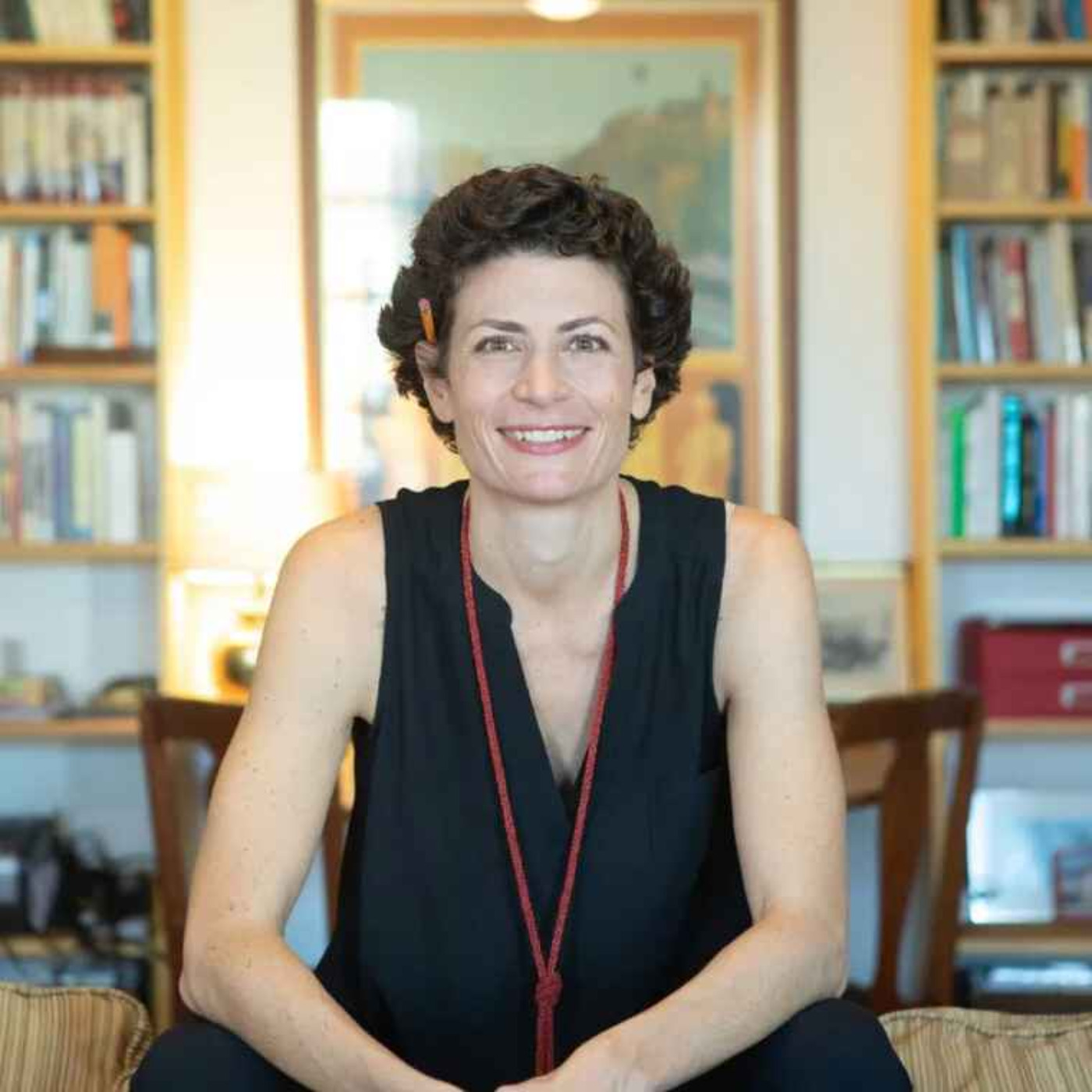
From 13 epsHost
Recent guests
Recent episodes
853: Kate Williams: CEO, 1% for the Planet
Jun 11, 2026
1h 20m 54s
852: Steven Pressfield, conversation 2: His new book, The Arcadian (and A Man at Arms)
May 29, 2026
58m 17s
851: J. Eric Oliver: How to Know Yourself
May 18, 2026
1h 09m 02s
850: AJ Harper, part 1: Write to change lives, including yours
Apr 24, 2026
1h 12m 00s
849: Josh Bandoch, part 3: How to Get What You Want: Mastering the Art and Science of Persuasion
Apr 22, 2026
48m 35s
Social Links & Contact
Official channels & resources
Official Website
Login
RSS Feed
Login
| Date | Episode | Topics | Guests | Brands | Places | Keywords | Sponsor | Length | |
|---|---|---|---|---|---|---|---|---|---|
| 6/11/26 | ![]() 853: Kate Williams: CEO, 1% for the Planet✨ | sustainabilityleadership+3 | Kate Williams | 1% for the Planet | — | 1% for the PlanetKate Williams+4 | — | 1h 20m 54s | |
| 5/29/26 | ![]() 852: Steven Pressfield, conversation 2: His new book, The Arcadian (and A Man at Arms)✨ | leadershipsustainability+3 | Steven Pressfield | The ArcadianA Man at Arms | — | Steven PressfieldThe Arcadian+5 | — | 58m 17s | |
| 5/18/26 | ![]() 851: J. Eric Oliver: How to Know Yourself✨ | leadershipsustainability+3 | J. Eric Oliver | University of ChicagoHow to Know Your Self | — | self-awarenessleadership+5 | — | 1h 09m 02s | |
| 4/24/26 | ![]() 850: AJ Harper, part 1: Write to change lives, including yours✨ | leadershipcommunication+3 | AJ Harper | Sustainability Simplified | — | leadershipcommunication+3 | — | 1h 12m 00s | |
| 4/22/26 | ![]() 849: Josh Bandoch, part 3: How to Get What You Want: Mastering the Art and Science of Persuasion✨ | persuasioninfluence+3 | Josh Bandoch | How to Get What You Want: Mastering the Art and Science of Persuasion | — | persuasioninfluence+5 | — | 48m 35s | |
| 4/13/26 | ![]() 848: Peter Simek, part 1: EarthX's CEO✨ | leadershipsustainability+3 | Peter Simek | EarthX | Manhattan | sustainabilityleadership+3 | — | 49m 57s | |
| 2/28/26 | ![]() 847: Tzeporah Berman: Ending Fossil Fuels by Treaty✨ | fossil fuelsclimate change+3 | Tzeporah Berman | Fossil Fuel Treaty InitiativeThis Crazy Time: Living Our Environmental Challenge+1 | — | fossil fuelsclimate change+5 | — | 47m 42s | |
| 2/17/26 | ![]() 846: Gail Eisnitz: The Inside Story of a Life Investigating Factory Farms✨ | animal rightsfactory farming+4 | Gail Eisnitz | The Humane Farming AssociationOut of Sight+1 | — | factory farmsslaughterhouses+5 | — | 1h 00m 13s | |
| 2/13/26 | ![]() 845: Sarah Goodyear and Doug Gordon: The War on Cars and Life After Cars✨ | automobile impacturban planning+3 | Sarah GoodyearDoug Gordon | The War on CarsCars ruin everything. That’s why we need Life After Cars | — | automobilesurban infrastructure+3 | — | 1h 26m 50s | |
| 1/13/26 | ![]() 844: Maya Lilly, part 1: Effective Storytelling and Producing The Years Project✨ | storytellingdocumentary+3 | Maya Lilly | The Years Project60 Minutes+2 | — | Maya LillyThe Years Project+3 | — | 1h 35m 59s | |
Want analysis for the episodes below?Free for Pro Submit a request, we'll have your selected episodes analyzed within an hour. Free, at no cost to you, for Pro users. | |||||||||
| 1/7/26 | ![]() 843: Judith Enck, part 2: The Problem with Plastic (the Book)✨ | plastic pollutionenvironmental health+3 | Judith Enck | The Problem with Plastic: How We Can Save Ourselves and Our Planet Before It’s Too Late | — | plasticpollution+5 | — | 28m 43s | |
| 12/26/25 | ![]() 842: Silvia Bellezza, part 1.5 and 2: When at first you don't succeed✨ | leadershipcommitment+3 | Silvia Bellezza | Columbia University | — | leadershipcommitment+4 | — | 39m 44s | |
| 11/3/25 | ![]() 841: Sandra Goldmark, part 1: Fixation: How to Have Stuff without Breaking the Planet✨ | repair culturesustainability+3 | Sandra Goldmark | BarnardColumbia Climate School+2 | — | repairsustainability+3 | — | 41m 57s | |
| 11/2/25 | ![]() 840: Dr. Leonardo Trasande, part 1: Sicker, Fatter, Poorer: The Urgent Threat of Hormone-Disrupting Chemicals to Our Health and Future ... and What We Can Do About It | I found Dr. Trasande quoted in a Washington Post article The health risks from plastics almost nobody knows about: Phthalates, chemicals found in plastics, are linked to an array of problems, especially in pregnancy. He said, "Endocrine-disrupting chemicals are one of the biggest global health threats of our time ... And 2 percent of us know about it---but 99 percent of us are affected by it.”The article said that he said that "at the population level, scientists can see telltale signs that those chemicals are undermining human health, adding to growing male infertility or growing cases of ADHD." This outcome suggests a violation of this nation being founded on protecting life, liberty, and property, and the consent of the governed. I also found from this video, Food Contaminants and Additives, that he reported his results thoroughly, taking care not to venture outside his research.I had to talk to him.We talked about his research, what brought him to a new field, now burgeoning, of learning about chemicals that disrupt our endocrine systems---that is, they mess with our hormones. You'll hear that he didn't intend to go into it. It was (tragically) growing in importance since our hormone systems are becoming increasingly disrupted, as are those of many species.I should be more accurate. They aren't passively being disrupted. Consumers are paying companies to produce chemicals that do it.It sounds slimy and scary. I'd rather it didn't happen, but since it does, I'd rather know than not know. I think you would too.Dr. Trasande's NYU faculty page Hosted on Acast. See acast.com/privacy for more information. | — | ||||||
| 10/7/25 | ![]() 839: Saabira Chaudhuri: Consumed: Throwaway Plastic Has Corrupted Us | Reading Saabira's New York Times piece Throwaway Plastic Has Corrupted Us told me she saw more about plastic and its effect on our culture than most. A quote from it: "The social costs of our addiction to disposable plastics are more subtle but significant. Cooking skills have declined. Sit-down family meals are less common. Fast fashion, enabled by synthetic plastic fibers, is encouraging compulsive consumption and waste."Her tenure at the Wall Street Journal told me she would communicate it effectively, pulling no punches. As much as I prefer not to link to social media, this video review by Chris van Tulleken, bestselling author of Ultra-Processed People, is about as positive a review as I've seen, all the more since he clarifies that he doesn't know her.So I invited her to talk about her book Consumed: How Big Brands Got Us Hooked on Plastic. It launches today (October 7) in the US, so I've only finished the beginning, but it delivers. In our conversation, she describes what to expect when you read it, plus her back story driving her to write it.Many reviews describe her humor. You'll hear that I held back from asking her about how she worked humor into the topic, since she's not a comedian so I wouldn't expect to perform unprepared, but no worry, she made me laugh unprompted and shared more humor from the book. Obviously it's a serious topic, and Saabira's work shows how much more serious than you probably thought, but being depressed doesn't help solve it.Saabira's home pageHer New York Times piece that brought me to her: Throwaway Plastic Has Corrupted UsHer book page for ConsumedThe video review we mention by Chris van Tulleken, bestselling author of Ultra-Processed People Hosted on Acast. See acast.com/privacy for more information. | — | ||||||
| 9/27/25 | ![]() 838: Zach Rabinor, part 2: What if your business and values clash? | Zach and I got so into our first conversation that we had to take a second one to get to the Spodek Method.Listen for yourself, but I hear Zach working with three motivations:His surfer, outdoors self wants to conserve, protect, and enjoy nature and enable others to do the same by experiencing it.His CEO self wants to deliver what his customers want, despite what they want including polluting and depleting---that is, hurting people and wildlife---beyond what nearly anyone who ever lived has. They don't know it and his company's current message implies that they're helping, not hurting.His leadership self wants to improve himself and his work, to resolve conflict, to explore his boundaries and his team's to see if they can change the world.This situation exists in nearly everyone I know: we love humanity and nature, we live in a culture that rewards the destruction of each, and we want to help resolve that conflict. The difference with Zach is not that the stakes are higher. It's that he is willing to share this internal conflict publicly, not to hide it or act like it isn't there. Only by examining one's blind spots and vulnerabilities can one grow in the areas we care about most. Zach is out on the forefront. Hosted on Acast. See acast.com/privacy for more information. | — | ||||||
| 9/26/25 | ![]() 837: Zach Rabinor, part 1: Getting serious about sustainable travel? | I met Zach at an event I spoke at sponsored by the Young Presidents Organization, whose members tend to be successful in business. The criteria to join require it. I knew the people would be friendly, but suspected they would pollute and deplete more than most without realizing it.Zach plays a leadership role in the local chapter and was one of the organizers for this event so we interacted more. He was open and sincere about learning about my work and sustainability leadership. As you'll hear, he runs a business that pollutes and depletes---that is, hurts people and wildlife---a lot. Like nearly all businesses that do, it portrays itself as clean and helping people stay clean while doing things that pollute and deplete.Not many people face their inner conflicts, let alone voice them publicly. I see no other way to resolve them. No one has solved the challenges Zach is choosing to face. I know they can be solved as does he, I suspect, but getting there will be hard. Restoring sustainability to his business, among the most polluting and depleting, will be hard, mostly people and cultural challenges, not technical or legislative.I see Zach as a potential pioneer. Let's see if we can help him achieve what few others are trying and most are just covering up. Hosted on Acast. See acast.com/privacy for more information. | — | ||||||
| 9/24/25 | ![]() 836 Dr. Robert Fullilove, part 5: Unsustainability is upstream of imperialism, colonialism, slavery, and racism | Since our fourth recording, Dr. Bob and I spoke at length about what's driving me and keeping me going beyond where nearly anyone else does on sustainability leadership. We cover in this recording most of that conversation, plus we go in other directions.He shares the commonalities of what he sees in me and my work with the people he's known and worked with who are also working or worked to change the world, including Martin Luther King, Stokely Carmichael, John Lewis, and his wife, Mindy Fullilove. In the process, I end up sharing parts of my upcoming book. His experience with them, as well as working with prisoners and his experience with psychology and social work, gave me space to open up about racism and my past.This episode felt personal to me. Normally I try to showcase the guest, but his experience and demeanor ended up mentoring me. I felt like I got more out of the conversation than he did, but he said he loved it.This episode differs from most on this podcast. I suspect you'll like its openness, previews of my next book, and his warmth. Hosted on Acast. See acast.com/privacy for more information. | — | ||||||
| 9/12/25 | ![]() 835: At last! I can access my roof to charge solar for the first time in 18 months. | This week, I charged my solar panel and battery on my roof for the first time for over 18 months. My building had to do maintenance during which no residents could access the roof. They told us the job would take 5 months, but it took over 18. They also didn't say exactly when it would start until one day I got an email that said I couldn't access the roof until they finished the job.What a relief! This episode shares some of my experiences. Some I liked, like that it helped me develop resilience, it saved me more money, it led to my food being fresher, and it led me to connect with people ranging from local residents to indigenous people around the world to people who lived without electrical power in the past, which is all your ancestors up to the most recent few. Hosted on Acast. See acast.com/privacy for more information. | — | ||||||
| 8/25/25 | ![]() 834: Do Americans Know How to Prepare Food From Scratch? | Late summer means produce at peak ripeness, especially peaches and heirloom tomatoes. Regular readers of my blog and subscribers to my newsletter have read of how my volunteering to bring overstock food from stores to places that give it to anyone for free has led to my getting for free amounts I can barely keep up eating that people turn down.This episode shares a saga of my confusion and exasperation at people throwing away and not accepting perfectly good food. I don't want to take it but the alternative is to throw it away.While it's tragic that poor people don't accept this bounty of nature and our broken food system, I'm concluding a bigger picture. I think a large fraction of Americans don't know what to do with fresh, unpackaged produce. They know how to eat apples and bananas. Even other fruit, let alone vegetables like zucchini or radishes, I think they don't know what to do with. I mean, you can pick up a tomato and eat it, and heirloom tomatoes have so much flavor, eating them is like eating gazpacho. Well, the flavor is subtle, so if you're used to doof like Doritos and Ben and Jerry's, you won't notice their nuance and complexity, but still, eating them takes no skill.A couple recent blog posts on the topic:When did you last prepare a full meal from scratch, not one packaged product?More fresh juicy local peaches and heirloom tomatoes than I can handle, saved from waste by rich and poor alike Hosted on Acast. See acast.com/privacy for more information. | — | ||||||
| 8/15/25 | ![]() 833: Aaron Blaise: A Master Disney Director and Animator on Self Expression, Leadership, and Nature | Aaron and I met after I got to see a screening of his recent short animated film Snow Bear. I knew about Aaron's achievements from participating in some of the biggest animated movies of all time. I expected to talk about art, creativity, and expression, topics I love. We did, after first hitting on leadership, especially empathy.He started by sharing his growth as an animator and director at Disney. Soon enough we dove into talking about the overlap between leadership and things he loved about his career: directing, teamwork, self-expression, and empathy. We talked about being generous, what it takes to get the best out of a team, and how it feels when you do. We distinguished leadership from authority and how many people confuse them.You'll hear we both enjoyed the richness and depth of our exploration of similar passions from different directions. Plus you'll hear the back story Snow Bear that gives it its richness and depth.Aaron's web page Hosted on Acast. See acast.com/privacy for more information. | — | ||||||
| 8/7/25 | ![]() 832: Robert Fullilove, part 4: Action in the Center of Civil Rights in the 1960s | Dr. Bob worked in the heart of the US Civil Rights movement in the 1960s. He shares stories of his interactions with Stokely Carmichael (later Kwame Ture), John Lewis, and more.In earlier conversations with him, I shared what brought me to him. I had been telling people who acted as if acting on sustainability was a burden. I pointed out that people who acted in the Civil Rights movement took greater risks and undertook more challenging work, risking jail, risking physical injury, going to jail, being beaten, and worse, compared to eating fresh, local fruits and vegetables. I continued that I bet they would consider those experiences high points in their lives, ones they wouldn't take back or trade for anything.Then I saw him speak on a panel and heard him describe his experiences. I invited him to the podcast and he shared some experiences relevant to acting on sustainability, as well as on education, leadership, and more.In this episode, he speaks in more detail, including about big challenges they faced: should they continue with nonviolence or adopt violence? He shares the emotional tenor of conversations of people living through history, not knowing answers.First, we talk about fishing, family, and disappearing nature. I'll cherish this conversation. I think you'll value it too. Hosted on Acast. See acast.com/privacy for more information. | — | ||||||
| 8/5/25 | ![]() 831: Glenn Hubbard: Dean of Columbia Business School on Adam Smith and Leadership | I can't help but call Glenn "Dean Hubbard" since I met him as a student at Columbia Business School. That was 2005, making him one of the guests I've known the longest.I invited him to the podcast after seeing a talk he gave on the 300th birthday of Adam Smith. My recent learning more about Smith and other Enlightenment thinkers led me to find relevance between their thinking about how to live together without hurting each other and how we handle polluting and depleting today. I knew Glenn studied Smith for longer and in more depth than I have so I invited him to share about Smith.We started with his background, having worked with the White House. He then shared about Smith, in particular not seeing just his economics in Wealth of Nations, also his philosophy in Theory of Moral Sentiments.I shared some of the views I've been developing, though not comprehensively. He responded, politely and informatively, considering my inexperience expressing my ideas. He pushed back and educated.I couldn't help also sharing how much I'd learned at business school that was relevant to sustainability and I found little elsewhere, especially the social and emotional skills of leadership. I couldn't help building up my alma mater and the value of leadership in the task of changing culture.Glenn's home page at Columbia Business School Hosted on Acast. See acast.com/privacy for more information. | — | ||||||
| 7/30/25 | ![]() 830: Jo Nemeth, part 2: Nature improves time with loved ones | We jumped in to talking about her Spodek Method commitment. She lives in a suburban area. There's a place near her that borders on bush, which I guess is Australian for undeveloped land. This spot with a bench designed for experiencing nature has been a short walk away from her for a long time, yet until now she never experienced it. Even this time, she put off acting on the commitment.Then she went. You'll hear what it did for her. I had to compare her description to what many people derive from big vacations to Hawaii or Bali, but she spent nothing, didn't have to plan, and didn't pollute or deplete.Her sharing about her experience recreating a wonderful past experience led to her sharing many unique challenges of living without money. Jo will lead you to think differently about your world and relationships to your loved ones and nature.Jo's home page, including her post on catatrophism we talked about Hosted on Acast. See acast.com/privacy for more information. | — | ||||||
| 7/23/25 | ![]() 829: Adam Galinsky, part 1: Do you love being inspired? He wrote the book on it. | Adam teaches leadership at Columbia Business School, where I learned there were classes in leadership, which changed the direction of my life. Regular listeners know I consider leadership the most important missing element in sustainability. To change the environmental effects we're barreling into, we have to change the causes, which are our behavior, which result from culture.Changing culture requires leadership, not just management. Effective leadership inspires. Adam's latest book is Inspire.You can imagine my enthusiasm to talk with a star professor at one of the world's top institutions (to which I'm deeply connected) teaching leadership on the topic of how to inspire and become an inspirational person and leader.We begin by talking about his background, how he began working in psychology, then moved to teaching at a business school, and the rewards he found there. Of all the departments and schools in a university, I believe business schools' leadership departments provide the most useful and effective tools and people to solve our environmental situation.In other words, if you are interested in solving our environmental problems, you can learn from Adam. We mostly talk about his book, Inspire, and how to put it into practice.Adam's home pageAdam's page at Columbia Business School Hosted on Acast. See acast.com/privacy for more information. | — | ||||||
Showing 25 of 861
Pitch Fit is a Pro feature
See how bookable this show is for guests, which brands already advertise, the per-episode ad value, and the best-fit guest and sponsor profile. The numbers are blurred on the free plan.
How readily this show books outside guests like you.
How proven this show is for host-read sponsorships.
For Guests
ProFor Advertisers
ProUpgrade to Pro to unlock guest cadence, sponsor categories, fit scores, and per-episode ad value for this show.