

Insights from recent episode analysis
Audience Interest
Podcast Focus
Publishing Consistency
Platform Reach
Insights are generated by CastFox AI using publicly available data, episode content, and proprietary models.
Most discussed topics
Brands & references
Total monthly reach
Estimated from 2 chart positions in 2 markets.
By chart position
- 🇫🇷FR · Social Sciences#1621K to 10K
- 🇳🇿NZ · Social Sciences#195500 to 3K
- Per-Episode Audience
Est. listeners per new episode within ~30 days
750 to 6.5K🎙 Weekly cadence·60 episodes·Last published 4mo ago - Monthly Reach
Unique listeners across all episodes (30 days)
1.5K to 13K🇫🇷77%🇳🇿23% - Active Followers
Loyal subscribers who consistently listen
450 to 3.9K
Market Insights
Platform Distribution
Reach across major podcast platforms, updated hourly
Total Followers
—
Total Plays
—
Total Reviews
—
* Data sourced directly from platform APIs and aggregated hourly across all major podcast directories.
On the show
From 10 epsHost
Recent guests
Recent episodes
Evolving Cooperative Systems: The Case of Housing and Homelessness
Feb 23, 2026
1h 21m 24s
Evolving Complex Systems in Seattle and Beyond, with Marina Alberti
Feb 23, 2026
1h 05m 29s
Evolution's Rainbow, Revisited: Sex, Gender, and Evolution
Nov 25, 2025
1h 02m 16s
The Evolution of Place: How Environments Shape Us
Oct 27, 2025
1h 24m 18s
Evolving Prosocial AI: A conversation with Peter Fenton and David Sloan Wilson
Oct 22, 2025
1h 04m 03s
Social Links & Contact
Official channels & resources
Official Website
Login
RSS Feed
Login
| Date | Episode | Topics | Guests | Brands | Places | Keywords | Sponsor | Length | |
|---|---|---|---|---|---|---|---|---|---|
| 2/23/26 |  Evolving Cooperative Systems: The Case of Housing and Homelessness✨ | homelessnessaffordable housing+2 | Rosanne Haggerty | Community SolutionsEvolving Cooperative Systems: The Case of Housing and Homelessness | America | wicked problemcommunity+2 | — | 1h 21m 24s | |
| 2/23/26 |  Evolving Complex Systems in Seattle and Beyond, with Marina Alberti✨ | complex systemsevolutionary science+3 | Marina Alberti | Cities that Think Like Planets: Complexity, Resilience, and Innovation in Hybrid Ecosystemsthe University of Washington+1 | Seattle | citiesSeattle+2 | — | 1h 05m 29s | |
| 11/25/25 | 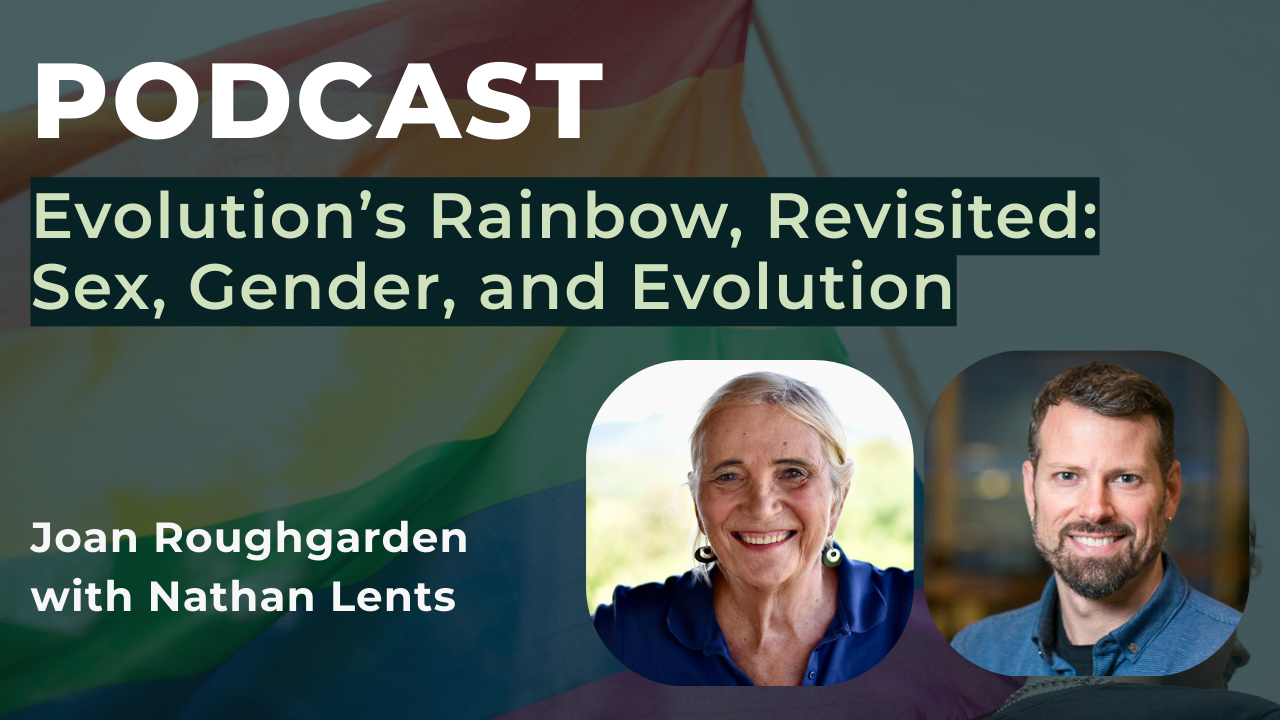 Evolution's Rainbow, Revisited: Sex, Gender, and Evolution✨ | sexgender+2 | Joan RoughgardenNathan Lents | This View of Life 'sEvolution's Rainbow, Revisited | — | evolutionary biologygender diversity+3 | — | 1h 02m 16s | |
| 10/27/25 | 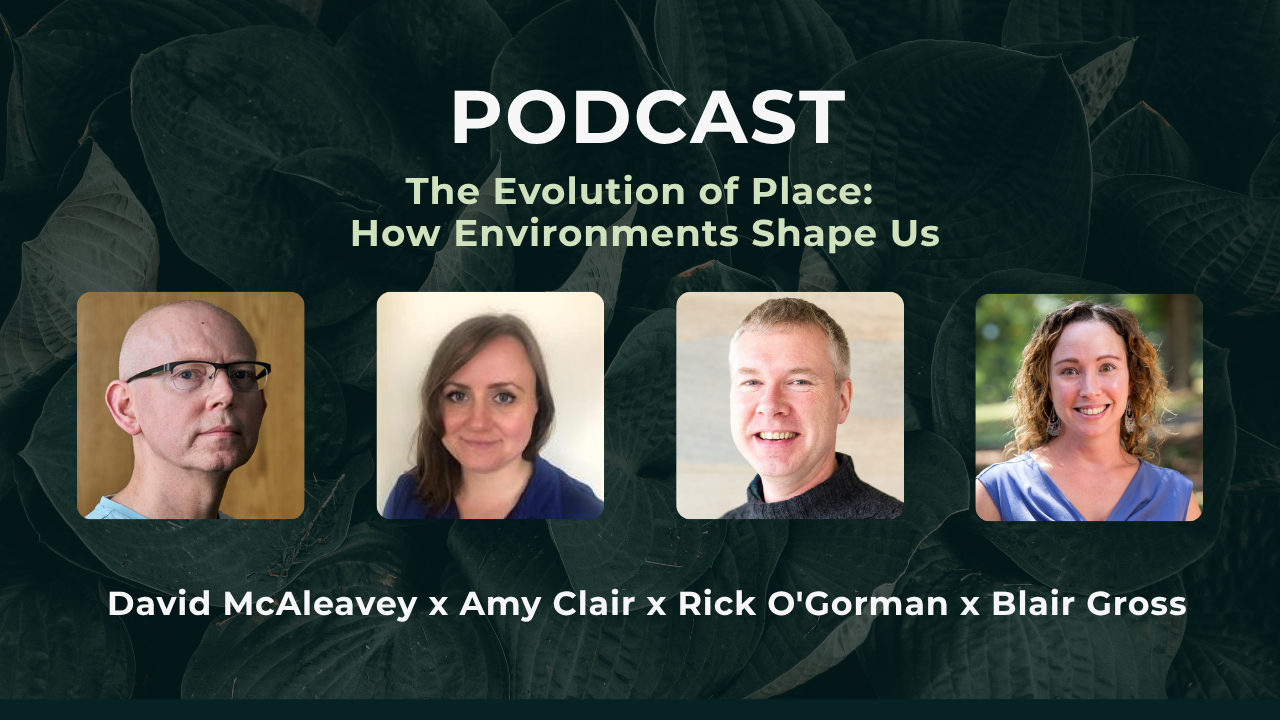 The Evolution of Place: How Environments Shape Us✨ | environmentstress+2 | David McAleaveyAmy Clair+2 | TVOLThe Evolution of Place: How Environments Shape Us. | — | neighborhoodGeneralized Unsafety Theory of Stress+1 | — | 1h 24m 18s | |
| 10/22/25 | 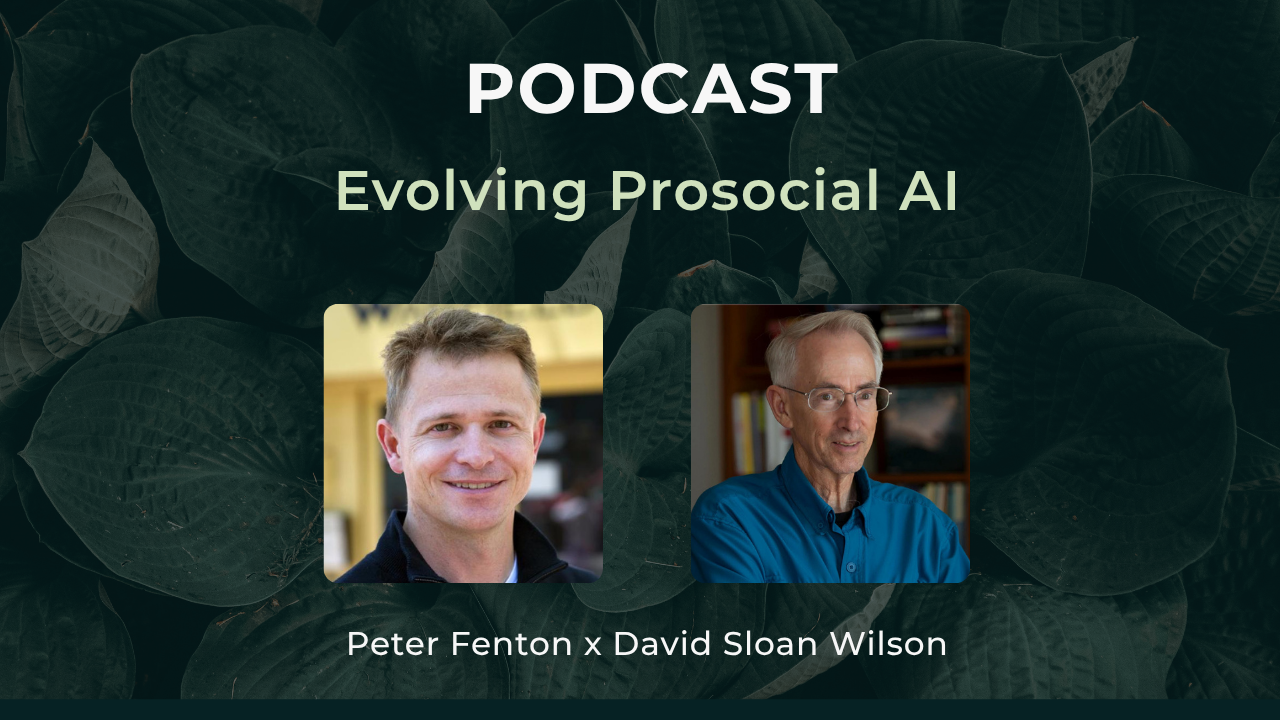 Evolving Prosocial AI: A conversation with Peter Fenton and David Sloan Wilson✨ | artificial intelligenceevolution+2 | Peter FentonDavid Sloan Wilson | Evolving Prosocial AI | — | AIevolutionary theory+2 | — | 1h 04m 03s | |
| 9/23/25 | 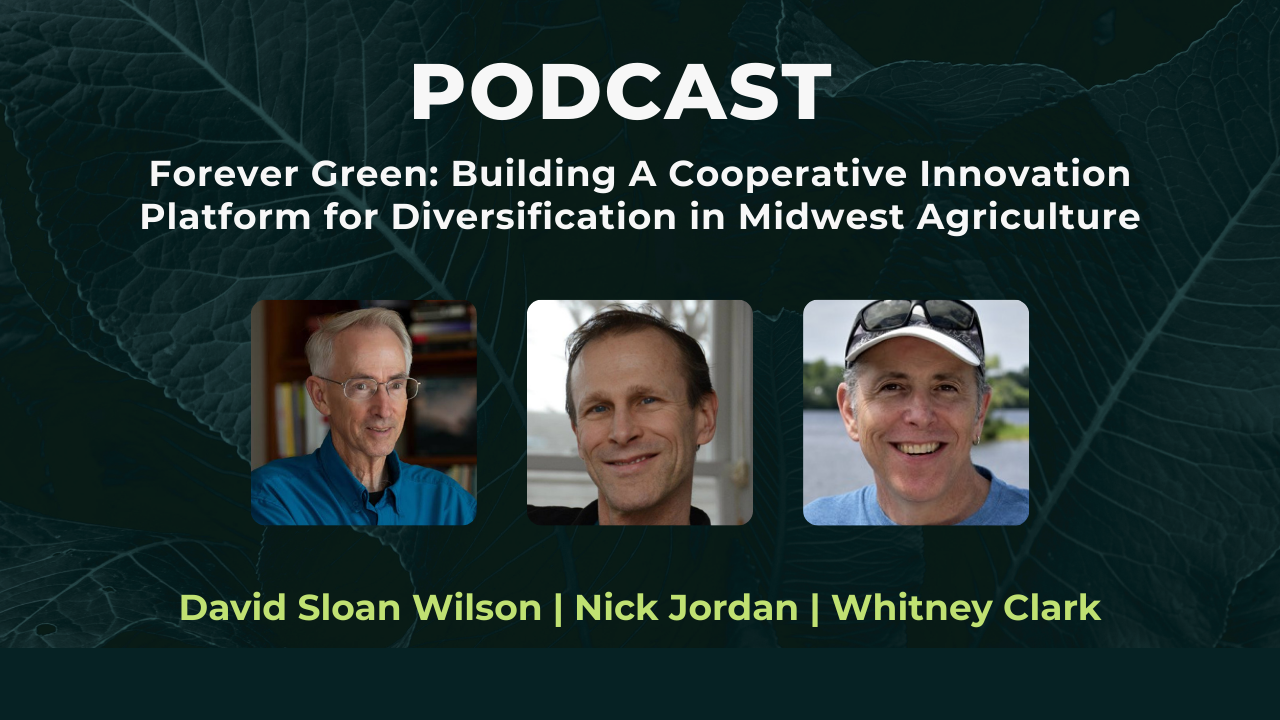 Forever Green: Building a cooperative innovation platform for diversification in Midwest agriculture with Nick Jordan & Whitney Clark✨ | regenerative agricultureMidwest agriculture+2 | Nick JordanWhitney Clark | Friends of the Mississippi Riverthe Forever Green Initiative+1 | Midwestthe Upper Midwest | Forever Green InitiativeFriends of the Mississippi River+1 | — | 1h 00m 36s | |
| 8/22/25 | 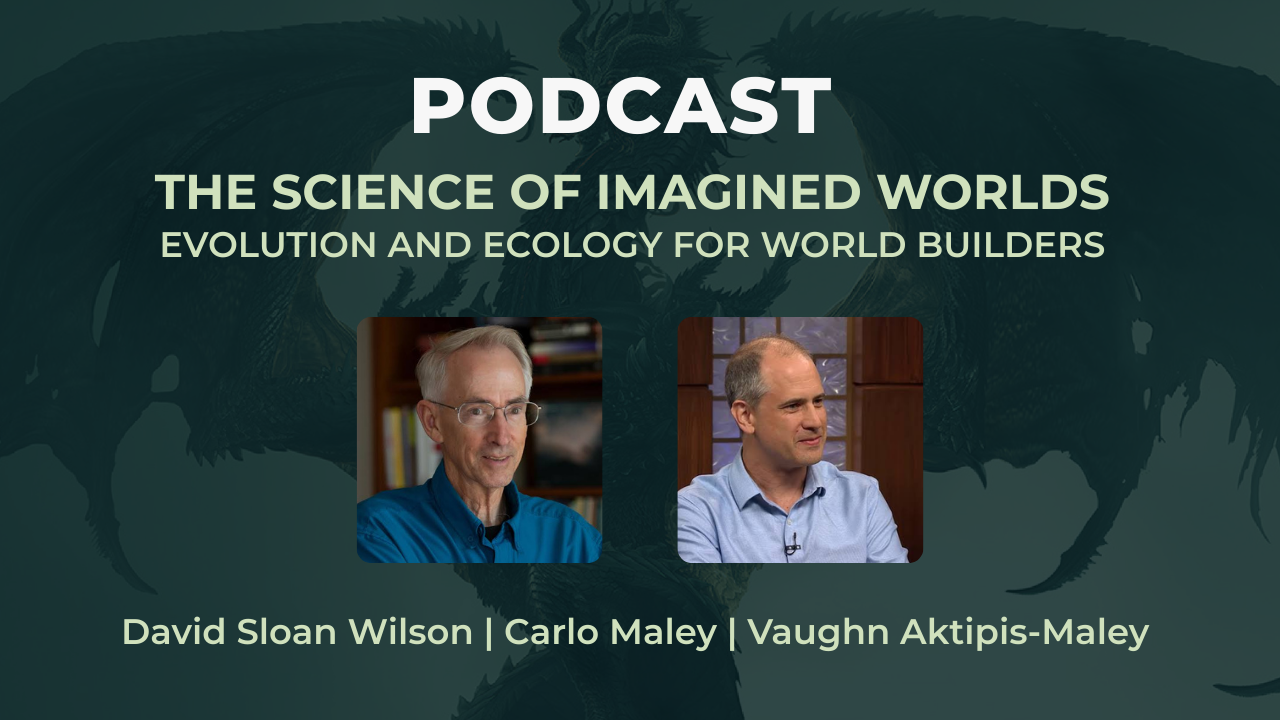 The Science of Imagined Worlds: Evolution and Ecology for World Builders - A conversation between Carlo Maley, Vaughn Aktipis-Maley & David Sloan Wilson✨ | evolutionary scienceworldbuilding+3 | Carlo MaleyVaughn Aktipis-Maley+1 | Evolution and Ecology for World BuildersThe Science of Imagined Worlds: Evolution and Ecology for World Builders | — | imagined worldsecology+2 | — | 1h 21m 21s | |
| 6/27/25 | 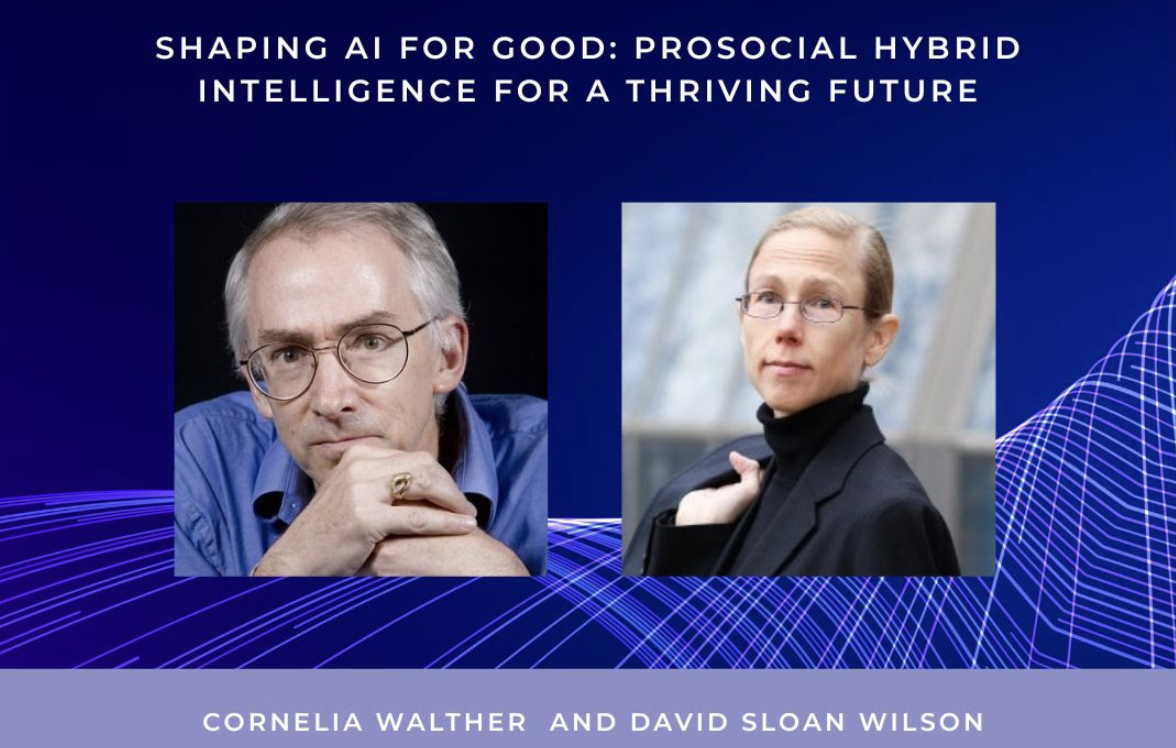 Shaping AI for Good: Prosocial Hybrid Intelligence for a Thriving Future - A conversation between Cornelia Walther and David Sloan Wilson✨ | AIProsocial AI+5 | Cornelia WaltherDavid Sloan Wilson | — | — | AI ethicstechnology for good+2 | — | 1h 18m 14s | |
| 6/2/25 | 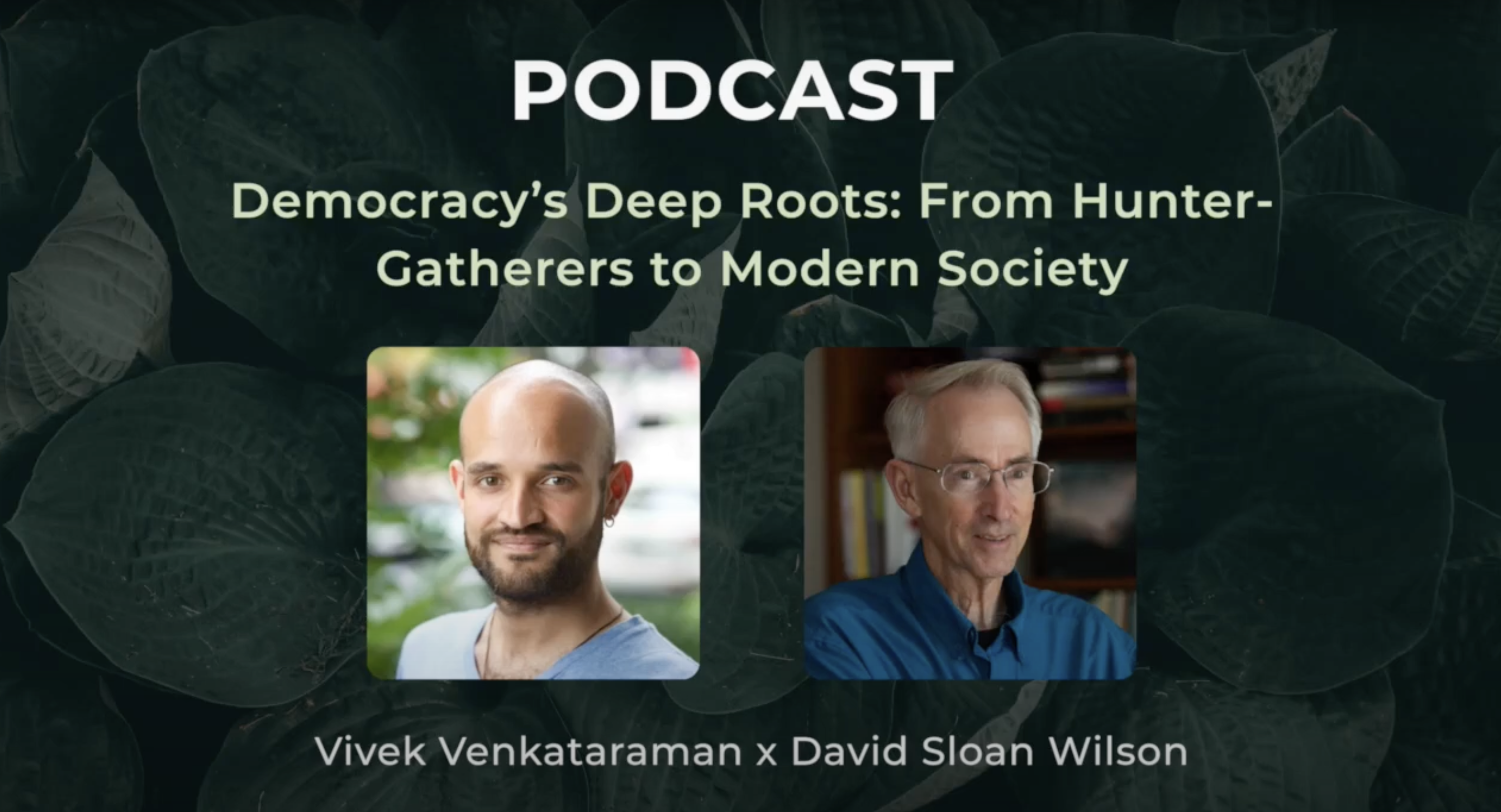 Democracy's Deep Roots: From Hunter-Gatherers to Modern Society -- A conversation between Vivek Venkataraman and David Sloan Wilson✨ | democracyevolution+4 | Vivek VenkataramanDavid Sloan Wilson | — | GreeceEurope | ancient GreeceEnlightenment Europe+2 | — | 1h 19m 12s | |
| 5/2/25 | 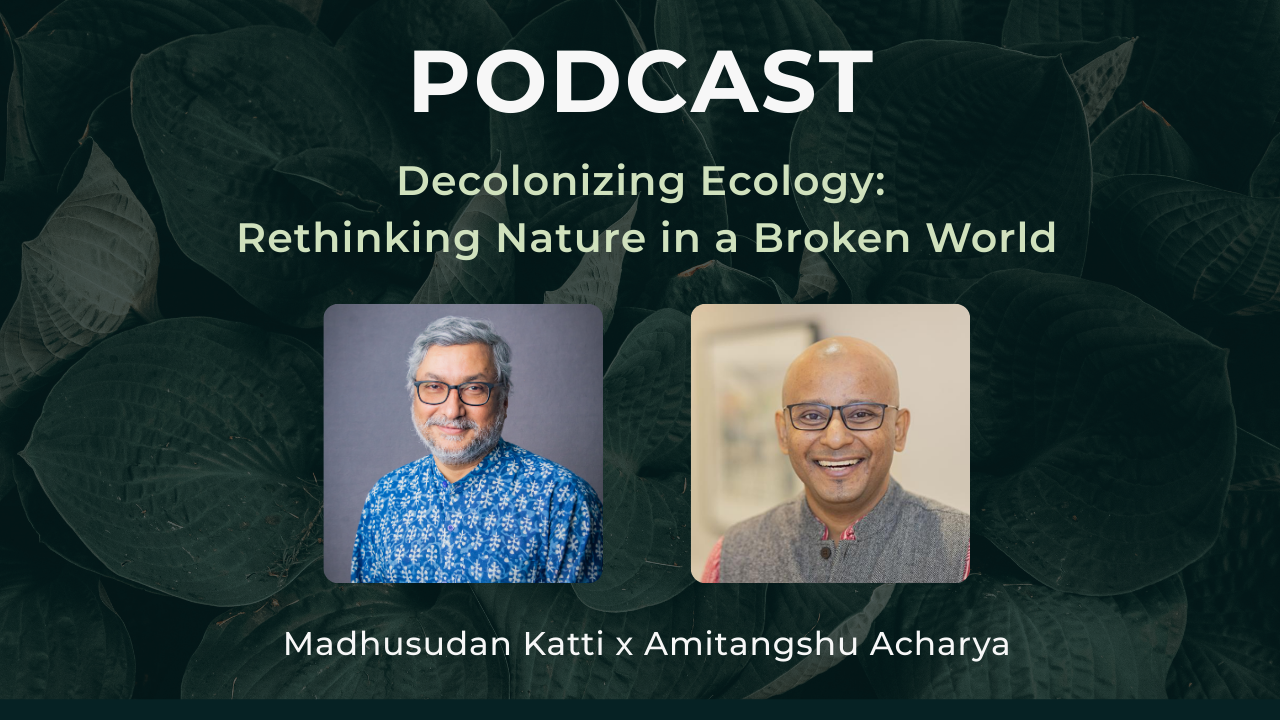 Decolonizing Ecology: Rethinking Nature in a Broken World✨ | decolonizationecology+3 | Amitangshu Acharya | Decolonizing Ecology: Rethinking Nature in a Broken WorldThis View of Life+1 | — | ecological knowledgecompassion+2 | — | 1h 19m 48s | |
Want analysis for the episodes below?Free for Pro Submit a request, we'll have your selected episodes analyzed within an hour. Free, at no cost to you, for Pro users. | |||||||||
| 4/1/25 | 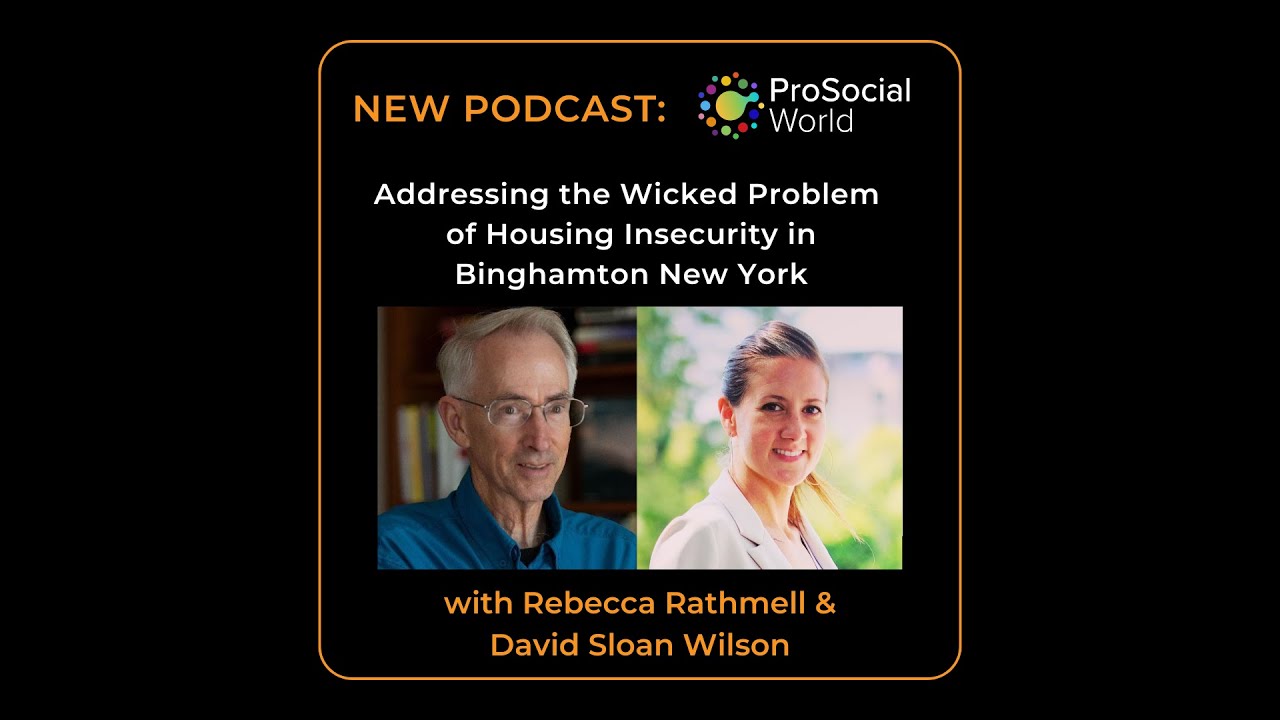 Addressing the Wicked Problem of Housing Insecurity in Binghamton New York with Rebecca Rathmell | Originally published on September 9, 2024 | — | ||||||
| 4/1/25 | 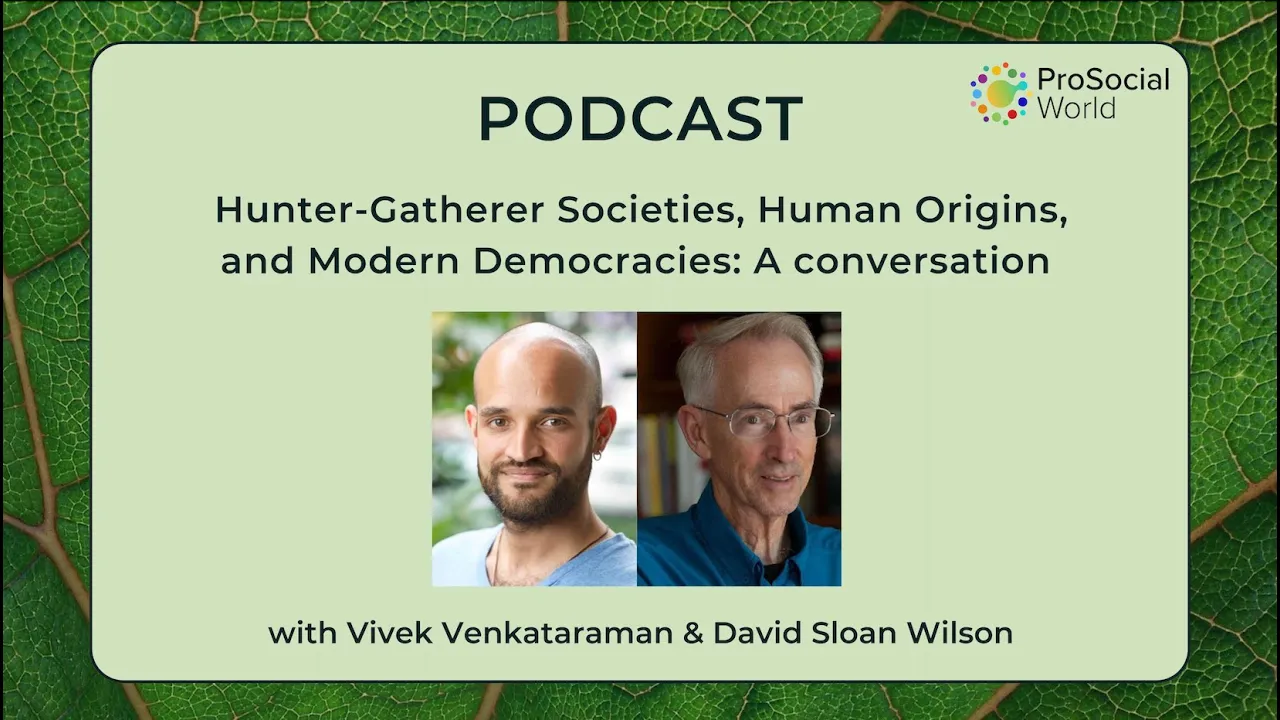 Hunter-Gatherer Societies, Human Origins, and Modern Democracies with Vivek Venkataraman (Part 2) | Hunter-gatherer societies are fascinating in their own right and--with appropriate caution--a major source of insight about our ancestral past, stretching back to our origin as a species. Remarkably, hunter-gatherer societies also have much to teach us about modern Democratic governance. Vivek Venkataraman is an idea guide to this subject, with a background in philosophy, primatology, and human evolutionary biology, along with direct experience living with and researching indigenous people in Malaysia. Originally published January 29, 2025. | — | ||||||
| 4/1/25 | 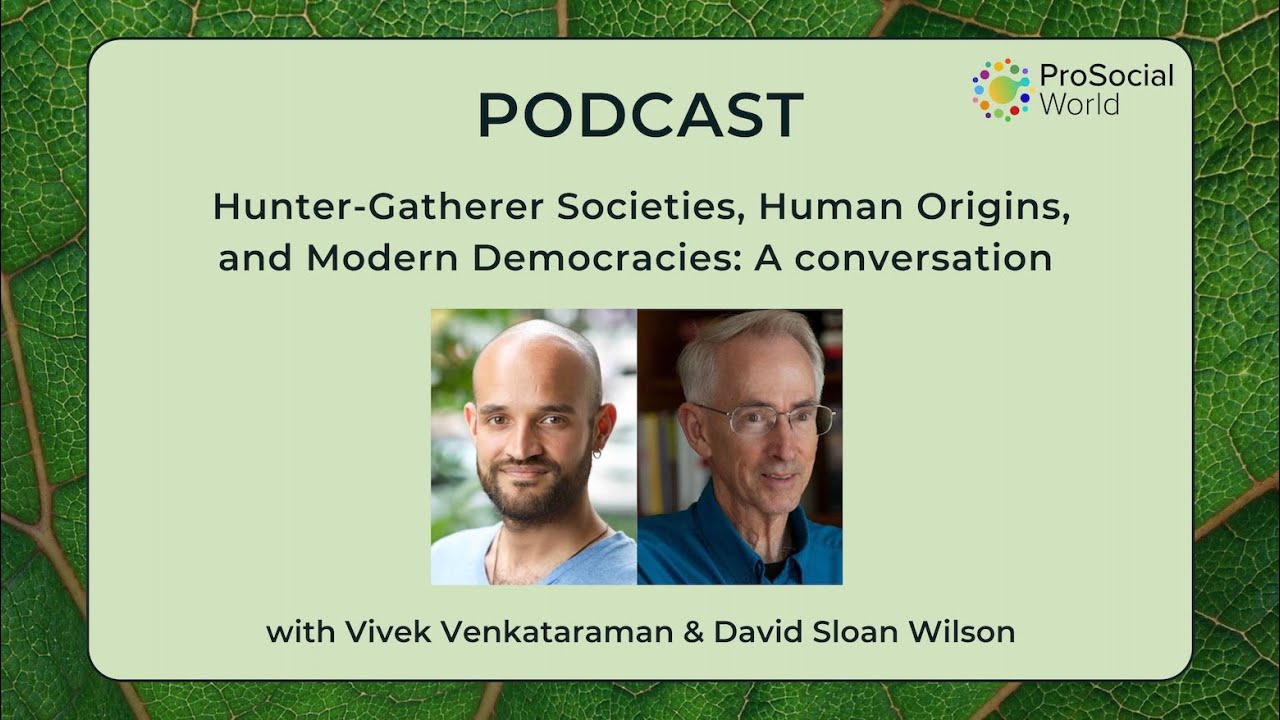 Hunter-Gatherer Societies, Human Origins, and Modern Democracies with Vivek Venkataraman (Part 1) | Originally published on January 8, 2025. Hunter-gatherer societies are fascinating in their own right and--with appropriate caution--a major source of insight about our ancestral past, stretching back to our origin as a species. Remarkably, hunter-gatherer societies also have much to teach us about modern Democratic governance. Vivek Venkataraman is an idea guide to this subject, with a background in philosophy, primatology, and human evolutionary biology, along with direct experience living with and researching indigenous people in Malaysia. Check out the resources, articles, and more mentioned in this conversation! 4:21 A Primate's Memoir: A Neuroscientist's Unconventional Life Among the Baboons By Robert M. Sapolsky ·2007 12:37 The Goodness Paradox The Strange Relationship Between Virtue and Violence in Human Evolution By Richard Wrangham · 2019 14:30 Hierarchy in the Forest The Evolution of Egalitarian Behavior By Christopher BOEHM · 2009 14:35 and 22:41 Moral Origins The Evolution of Virtue, Altruism, and Shame By Christopher Boehm · 2012 17:52 A Story of Us A New Look at Human Evolution By Lesley Newson, Peter J. Richerson · 2021 22:51 Morality from an Evolutionary Perspective with Simon Blackburn: https://www.prosocial.world/posts/morality-from-an-evolutionary-perspective-with-simon-blackburn 29:06 and 40:56 Man the Hunter Symposium 33:31 Eating Christmas in the Kalahari Richard Borshay Lee 37:23 Co-Residence Patterns in Hunter-Gatherer Societies Show Unique Human Social Structure Kim R. Hill , et al. 44:43 Variability in the organization and size of hunter-gatherer groups: Foragers do not live in small-scale societies 46:28 The Evolution of Subjective Commitment to Groups: A Tribal Instincts Hypothesis Peter J. Richerson and Robert Boyd, 2011 48:23 Human social organization during the Late Pleistocene: Beyond the nomadic-egalitarian model Manvir Singh and Luke Glowacki, 2022 50:20 The Dawn of Everything A New History of Humanity By David Graeber, David Wengrow · 2021 57:19 Society Against the State: Essays in Political Anthropology by Pierre Clastres, 1987 | — | ||||||
| 4/1/25 | 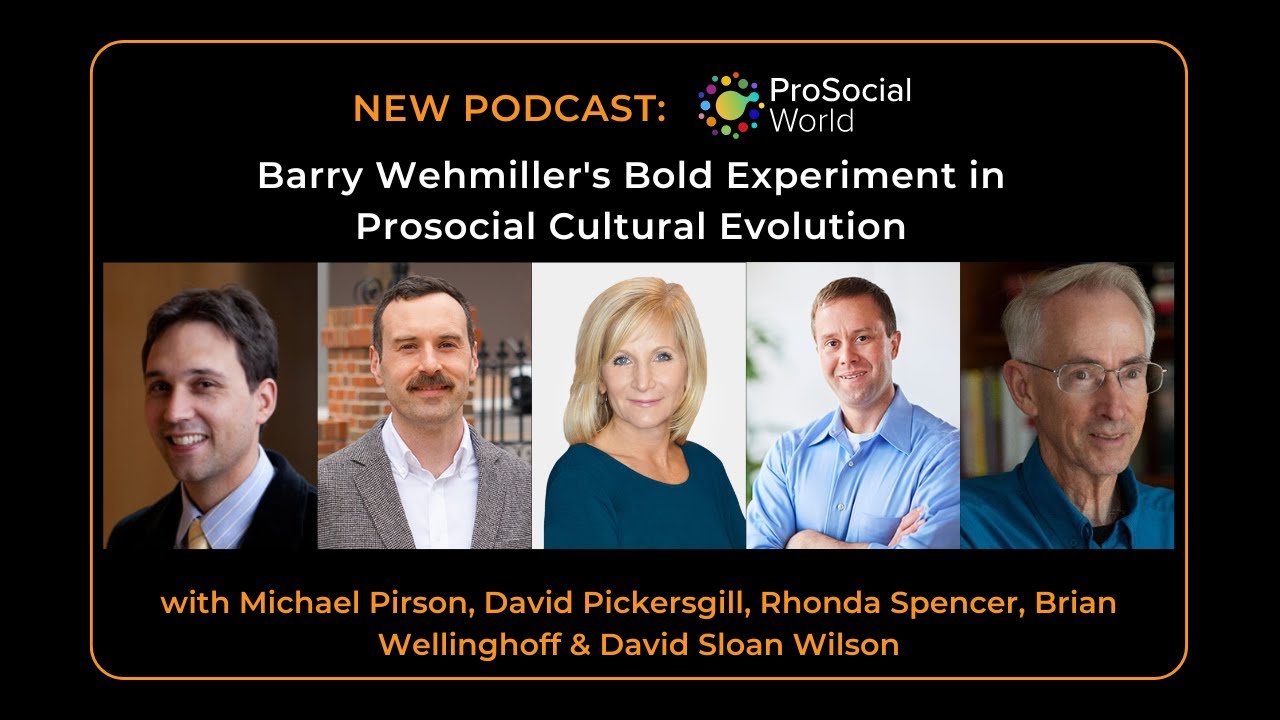 Barry-Wehmiller's Bold Experiment in Prosocial Cultural Evolution | Who is Barry-Wehmiller (BW)? Not a person, but a manufacturing corporation and star attraction of the Conscious Capitalism movement. If you are familiar with this movement, you might have read Everybody Matters: The Extraordinary Power of Caring for Your People Like Family, by CEO Bob Chapman and Raj Sisodia, co-founder of the Conscious Capitalism movement. Or perhaps a Harvard Business School case report titled Truly Human Leadership at Barry-Wehmiller. But BW deserves to become known far beyond its current circle of fame. Not only has it created an extraordinary culture of caring for itself, but it has replicated its culture in over 140 other companies that it has acquired--or rather adopted, to use its preferred word. Stated in scientific terms that can be understood beyond the business world, BW has conducted a bold experiment in prosocial cultural evolution and replicated it 140 times. An earlier podcast with Chapman and Sisodia views BW through a distinctively evolutionary lens. This podcast covers the same ground in more detail with three senior staff members—Rhonda Spencer, Brian Wellinghof, and David Pickersgill. We are also joined by Michael Pirson, James A.F. Stoner Chair for Global Sustainability at Fordham University's Gabelli School of Business, who works closely with BW staff to promote the relevance of BW throughout the business world. Originally published on September 16, 2024. https://www.prosocial.world/posts/barry-wehmillers-bold-experiment-in-prosocial-cultural-evolution | — | ||||||
| 4/1/25 |  Assessing the Complexity/Evolution Paradigm for Economics with Eric Beinhocker | The first book-length articulation of an economic paradigm based on complex systems science and evolutionary science was Eric Beinhocker's The Origin of Wealth, published in 2006. He is currently Professor of Public Policy Practice at Oxford's Blavatnik School of Government and Executive Director of INET Oxford. Eric joins me to assess progress during the last 18 years and prospects for the future. One of Eric's recent essays that we discuss is titled Toward a New Ontological Framework for the Economic Good. Originally published on August 7, 2024. https://www.prosocial.world/posts/assessing-the-complexity-evolution-paradigm-with-eric-beihocker | — | ||||||
| 4/1/25 |  A Theory of Everyone as a New Paradigm with Michael Muthukrishna and David Sloan Wilson | Michael Muthukrishna's new book A Theory of Everyone is the latest in a lineage of authors that include Peter Richerson and Robert Boyd (Culture and the Evolutionary Process, Not By Genes Alone) and Joseph Henrich (Secret of Our Success, WEIRDest People in the World). All of them illustrate what I call completing the Darwinian revolution in my own book This View of Life. In this podcast, Michael and I discuss the paradigmatic nature of generalized Darwinism and how it can improve our ability to accomplish positive change in the real world. Originally published on May 10, 2024. https://www.prosocial.world/posts/a-theory-of-everyone-as-a-new-paradigm-with-michael-muthukrishna | — | ||||||
| 4/1/25 |  Conscious Capitalism Viewed Through The Lens of a New Paradigm with Bob Chapman & Raj Sisodia | Conscious capitalism is well known as a business movement that goes against almost everything that is taught in business school. However, the same movement makes perfect sense when viewed through the lens of a new paradigm for economics and business based on a combination of complex systems science and evolutionary science. I discuss this paradigm shift with two leaders of the Conscious Capitalism movement Raj Sisodia and Bob Chapman. Originally published May 10, 2024. www.prosocial.world/posts/conscious-capitalism-viewed-through-the-lens-of-a-new-paradigm-with-raj-sisodia-and-bob-chapman | — | ||||||
| 4/1/25 |  Evolving Prosocial Cities, with Jonathan Rose | Few people know more about cities than Jonathan Rose, author of The Well-Tempered City: What Modern Science, Ancient Civilizations, and Human Nature Teach Us About the Future of Urban Life. Jonathan is a practitioner in addition to a scholar. His urban development company is at the forefront of "building wellbeing through communities of opportunity". In our conversation, we discuss how two bodies of knowledge that are new within the last 50 years--complex systems science and generalized Darwinism--can help to catalyze prosocial cultural evolution at the scale of whole cities. Originally published on August 10, 2024. https://www.prosocial.world/posts/evolving-prosocial-cities-with-jonathan-rose | — | ||||||
| 4/1/25 | 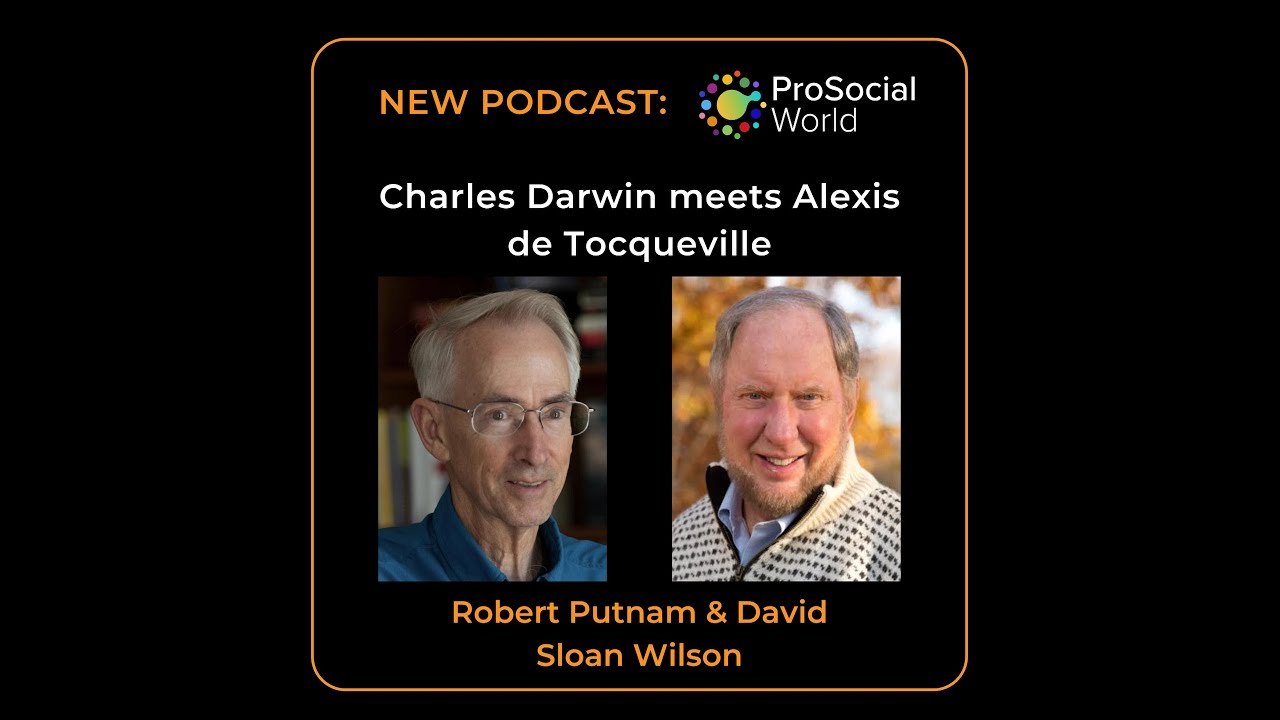 Updating Darwin and Tocqueville on Self Interest, Rightly Understood, with Robert Putnam | In 1831, two youths embarked upon voyages that would change the way that we view the world today. The first was Charles Darwin and the second was Alexis de Tocqueville. Both addressed the nature of competition, cooperation, and community in ways that are highly relevant to the social dilemmas facing us today. Join the legendary Robert Putnam and me as we update these pioneers on what Tocqueville called "self interest, rightly understood." Originally published May 20, 2024. https://www.prosocial.world/posts/updating-darwin-and-tocqueville-on-self-interest-rightly-understood-with-robert-putnam | — | ||||||
| 4/1/25 | 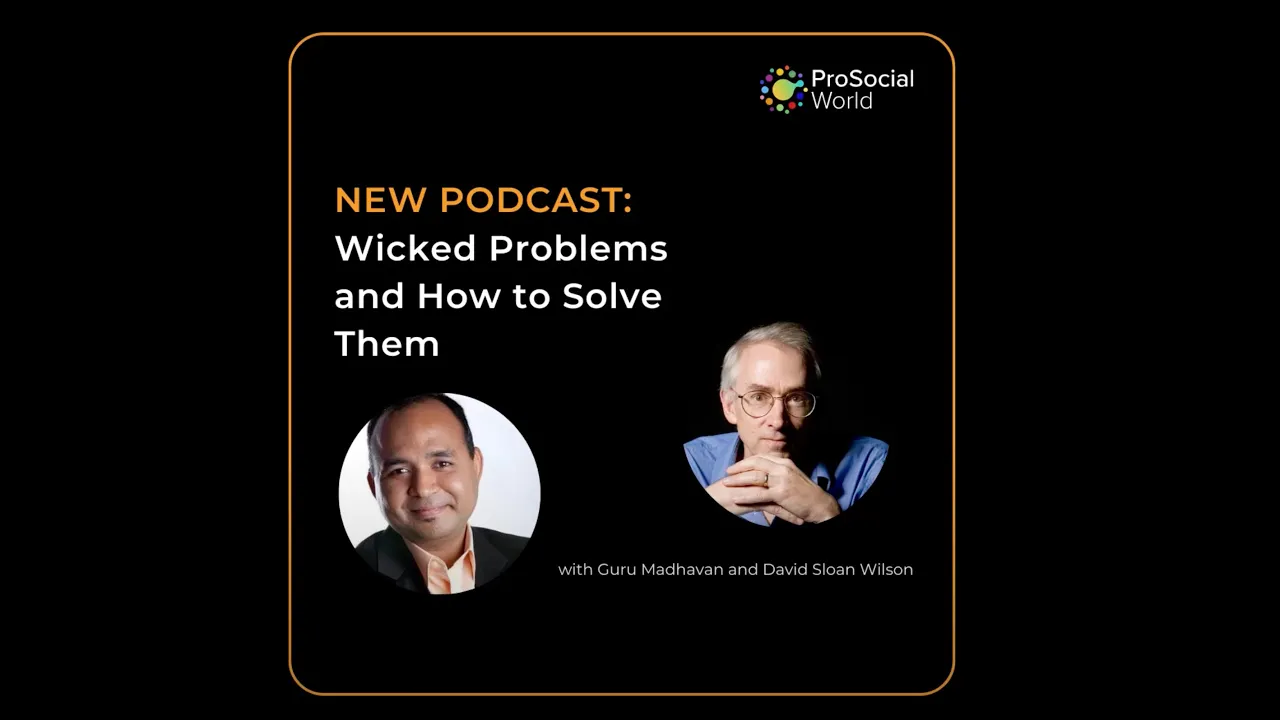 Wicked Problems and How To Solve Them with Guru Madhavan | Guru Madhavan is Norman R. Augustine Senior Scholar, Senior Director of Programs, and Director of the Forum on Complex Unifiable Systems (FOCUS) at the US National Academy of Engineering. His new book is on how to solve wicked problems anywhere, but it is also rooted in a particular place--Binghamton, New York--where Guru did his graduate training at Binghamton University and where we first met and started working with each other. Join me as we discuss the general nature of wicked problems and how Binghamton and Binghamton University can become a city and university that is adept at solving them. Links: Guru's first book: Applied Minds: How Engineers Think Guru's new book: Wicked Problems: How to Engineer a Better World My earlier print conversation with Guru: Systems Engineering as Cultural Group Selection My short essay with Guru titled Complex Maladaptive Systems Originally published on February 29, 2024 https://www.prosocial.world/posts/wicked-problems-and-how-to-solve-them | — | ||||||
| 4/1/25 | 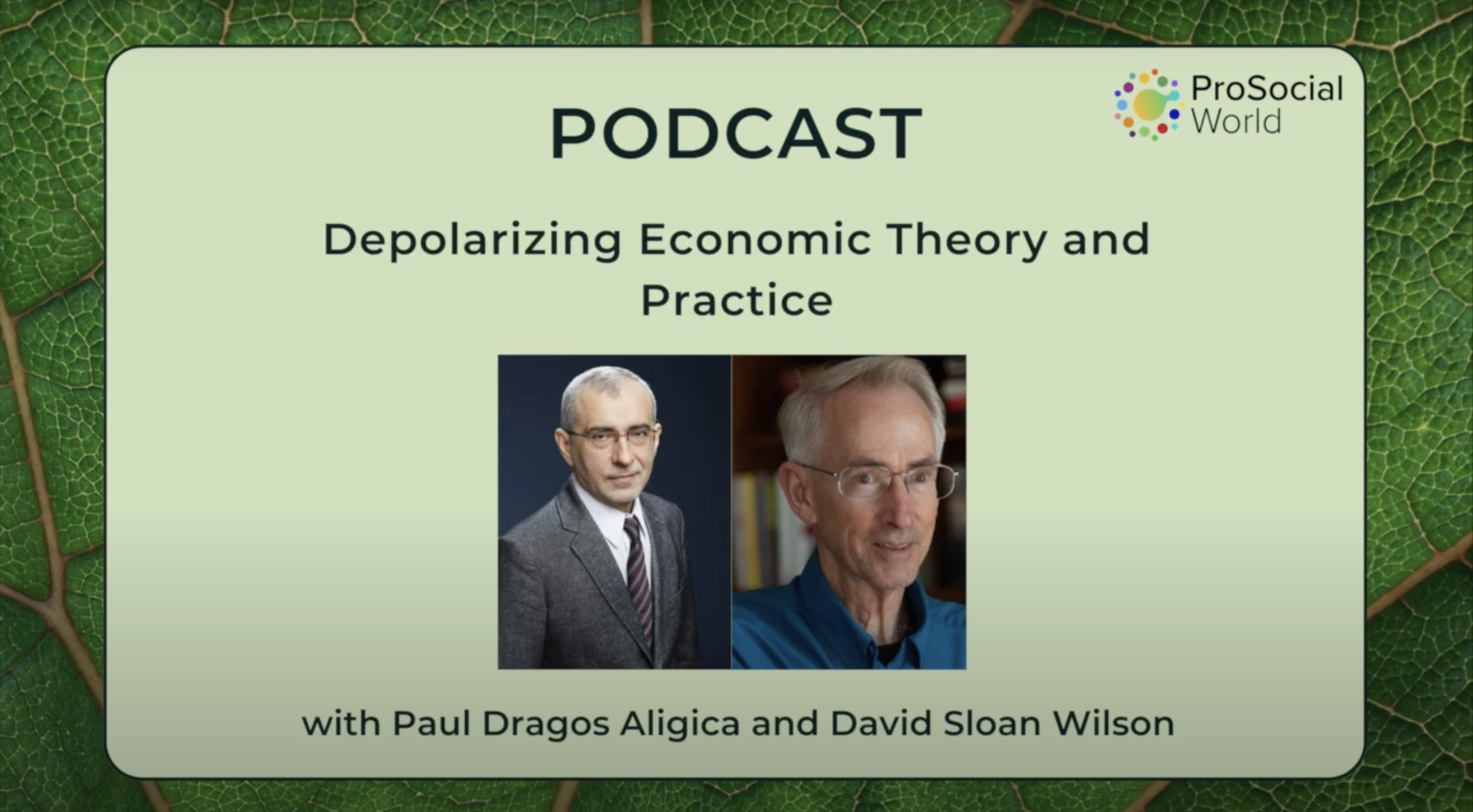 Depolarizing Economic Theory and Practice with Paul Dragos Aligica | In my writing on generalized Darwinism as a new paradigm for economics and public policy, I stress that it doesn't fall into any current ideological camp. It isn't left, right, or libertarian and draws upon the valid elements of all three. This conversation with the political economist and social philosopher Paul Dragos Aligica illustrates what I mean. Paul is KPMG Professor of Governance at the University of Bucharest and Senior Research Fellow in the F.A. Hayek Program for Advanced Study in Philosophy, Politics and Economics at George Mason University's Mercatus Center. Most people associate the Mercatus Center with free market fundamentalism--after all, mercatus is the latin word for market--but the real situation is far more complex and consilient with new paradigm thinking. My conversation with Paul therefore contributes to the depolarization of economic theory and practice--putting the ideas to work across all social contexts and scales. Originally released on February 21, 2025. https://www.prosocial.world/posts/depolarizing-economic-theory-and-practice-with-paul-dragos-aligica | — | ||||||
| 3/15/23 |  Anti-Trust From a Multilevel Evolutionary Perspective with Denise Hearn | Increasingly, policymakers, investors, and advocates recognize that the neoliberal theory of economic organization – laissez faire – is a failed experiment. However, certain areas of law – particularly antitrust law are still beholden to false econometric notions about how markets operate, which influences legal interpretation, case precedent, and ongoing debates about reviving antitrust's role in the political economy. Can Multilevel Cultural Evolution provide a new paradigm for anti-trust law, along with the rest of economics? Denise Hearn is a writer, advisor, and project catalyzer who works with investors, policymakers, and organizations who want to use their power to support a living and equitable future. Hearn serves as a Senior Fellow at the American Economic Liberties Project and co-lead of the Access to Markets initiative. Hearn also serves as Board Chair of The Predistribution Initiative which aims to improve investment structures and practices to address systemic risks like inequality, biodiversity loss, and climate change. Denise co-authored The Myth of Capitalism: Monopolies and the Death of Competition with Jonathan Tepper — named one of the Financial Times' Best Books of 2018. Her writing has been featured in publications such as The Financial Times, The Globe and Mail, Stanford Social Innovation Review, Responsible Investor, and The Washington Post. Hearn currently authors the Embodied Economics newsletter. David Sloan Wilson is one of the foremost evolutionary thinkers and gifted communicators about evolution to the general public. He is SUNY Distinguished Professor of Biology and Anthropology Emeritus at Binghamton University and President of the nonprofit organization Prosocial World, whose mission is "To consciously evolve a world that works for all." His most recent books are This View of Life: Completing the Darwinian Revolution, Prosocial: Using Evolutionary Science to Build Productive, Equitable, and Collaborative Groups (with Paul Atkins and Steven C. Hayes), and his first novel, Atlas Hugged: The Autobiography of John Galt III. | — | ||||||
| 10/20/22 |  What Happened to Selfish Genes? with J. Arvid Agren | J. Arvid Agren's book The Gene's Eye View of Evolution (Oxford University Press, 2021), is a highly praised scholarly account of the concept of selfish genes, which Richard Dawkins made hugely popular in 1976. Dawkins himself calls Agren's book "the most thorough reading of the relevant literature that I have ever encountered...he gets it right." But what does this mean? In this nearly two hour conversation, I take a deep dive with Agren into the history and current status of the selfish gene concept. You might be surprised by how much we agree upon and how much the concept of selfish genes has been scaled down, compared to its original pretensions. | — | ||||||
| 8/16/21 |  No Best Way, with Stephen Colarelli and Max Beilby | Max Beilby and Steve Colarelli discuss the application of evolutionary psychology to Human Resource Management. They cover Steve's academic career, and his books No Best Way: An Evolutionary Perspective on Human Resource Management and The Biological Foundations of Organizational Behavior (which Steve co-edited with his colleague Richard Arvey). They also explore the impacts of the coronavirus pandemic on the world of work. Stephen Colarelli is professor of psychology at Central Michigan University. His research is concerned with how evolutionary theory and evolutionary psychology can influence how we think about, conduct research on, and manage behavior in organizations. Max Beilby is a professional organizational psychologist as well as a member of the Human Behavior & Evolution Society and the Association for Business Psychology. Max has written extensively for This View of Life Magazine and is a member of TVOL's Business Action Group, which is focused on understanding and improving business from an evolutionary perspective. Anyone is free to join and take part of our networking events, discussions, and collaborative projects. | — | ||||||
| 10/12/20 |  Human Nature at Work, with Andrew O'Keeffe | TVOL guest host Max Beilby talks with Andrew O'Keeffe about his work helping leaders make better sense of the human dimension of their role, so that they can work with, rather than against, human nature. Max and Andrew also discuss the coronavirus pandemic, and its potential long-term impacts on working practices. Andrew O'Keeffe is director of Hardwired Humans, a consulting firm that helps organizations design their people strategies to fit human instincts. He is the author of Hardwired Humans and The Boss. Andrew's background is in senior HR roles with IBM , Cable & Wireless Optus and in professional services. He began his career in industrial relations in the mining and manufacturing industries. He holds a Bachelor of Economics from The University of Sydney. Andrew has a close connection with Dr Jane Goodall and the Jane Goodall Institute (JGI). When Andrew runs leadership programs at zoos, he does so in collaboration with JGI. And over the last decade when Jane Goodall has visited Australia, she and Andrew have joined forces to speak to business leaders about the importance of our social instincts (Dr Goodall talking about chimps, and Andrew talking about humans). --- Become a member of the TVOL1000 and join the Darwinian revolution Follow This View of Life on Twitter and Facebook Order the This View of Life book | — | ||||||
Showing 25 of 47
Pitch Fit is a Pro feature
See how bookable this show is for guests, which brands already advertise, the per-episode ad value, and the best-fit guest and sponsor profile. The numbers are blurred on the free plan.
How readily this show books outside guests like you.
How proven this show is for host-read sponsorships.
For Guests
ProFor Advertisers
ProUpgrade to Pro to unlock guest cadence, sponsor categories, fit scores, and per-episode ad value for this show.
Chart Positions
2 placements across 2 markets.
Chart Positions
2 placements across 2 markets.