
Thriving Leaders Podcast
The Thriving Leaders Podcast is hosted by Claire Gray, an Australian leadership and team facilitator, executive coach, keynote speaker and author. The podcast explores high-performing teams, psychological safety, account...
Insights from recent episode analysis
On the show
- Leo Bottary1 ep
- Chad Littlefield1 ep
- Dr Kaye Monk-Morgan1 ep
Also: Mariane Power, Claire de Carteret, Neal Schore, Dermot Crowley, Kristy Macfarlane, David Clutterbuck, Caroline Stokes
Audience Interest
Podcast Focus
Publishing Consistency
Insights are generated by CastFox AI using publicly available data, episode content, and proprietary models.
Most discussed topics
Brands & references
Total monthly reach
Based on the show's feed history.
Built from
By chart position
- 🇰🇪KE · Management#52.5K to 23K
- 🇬🇧United Kingdom · Management#102772 to 6.9K
- 🇧🇪BE · Management#19118 to 163
- Per-Episode Audience
Est. listeners per new episode within ~30 days
3.3K to 30K🎙 Weekly cadence·54 episodes·Last published 5d ago - Monthly Reach
Unique listeners across all episodes (30 days)
6.7K to 60K🇦🇺71%🇰🇪22%🇬🇧7% - Active Followers
Loyal subscribers who consistently listen
3.7K to 33K
Market Insights
Platform Distribution
Reach across major podcast platforms, updated hourly
Total Followers
—
Total Plays
—
Total Reviews
—
* Data sourced directly from platform APIs and aggregated hourly across all major podcast directories.
| Date | Episode | Topics | Guests | Brands | Places | Keywords | Sponsor | Length | |
|---|---|---|---|---|---|---|---|---|---|
| 10/19/26 |  Best Of | How to Keep Teams Aligned Under Pressure | How do you keep a team aligned when the plan keeps changing? In this Best Of episode of the Thriving Leaders Podcast, Matt Carroll joins me to share the behind-the-scenes challenge of getting more than 1,000 Australian athletes and officials to the Tokyo Olympics and home during the pandemic. An unexpected connection with the tuna industry became part of the solution. We explore flexible planning, shared purpose and the trust needed to keep teams working together under pressure. For anyone leading across teams or through uncertainty, this conversation offers a practical perspective on what it takes to stay connected when circumstances keep shifting. Listen and consider: does every part of your team know how much their contribution matters? | 6m 07s | ||||||
| 10/13/26 |  Why People Stay Silent at Work with Megan Reitz | The strategy meeting ends and everyone appears to agree. Then the real conversation begins elsewhere. I’ve seen this happen in leadership teams, and it leaves me wondering: what made it difficult to say those things in the room?I’m joined by Megan Reitz, Professor of Leadership and Dialogue at Hult International Business School and Associate Fellow at Saïd Business School, Oxford University. Megan’s work explores speaking up, listening and the role power plays in our conversations.We talk about what leaders might miss when a team appears aligned, how we respond when someone offers a different perspective, and why finding space for a meaningful conversation can be harder than it sounds.In this episode, we cover: – The meeting after the meeting– Why some voices are easier to hear than others– What helps people speak honestly– How our attention shapes a conversation– Why making space to think matters for leadersMegan gave me plenty to reflect on in my own work with teams. If you’ve ever left a meeting wondering whether everyone said what they really thought, I’d love you to listen.Subscribe for thoughtful conversations about leadership, thriving teams and the way we work together.Resources: Megan’s book Speak Out, Listen UpMegan Reitz's WebsiteMegan Reitz's LinkedIn ProfileThriving Teams by Claire Gray#leadership #psychologicalsafety #SpeakUpCulture | 56m 03s | ||||||
| 10/6/26 |  Best Of | Kindness and Accountability: Can Your Team Have Both? | Can you be kind to your people and still hold them accountable? In this Best Of episode, Jeremy and I explore a distinction that can change how we lead: the difference between being kind and being nice. We talk about the conversations leaders sometimes avoid, and what that means for trust, accountability and the way a team works together. Are you saying what your team needs to hear, or what feels easier to say? Watch this Best Of to hear Jeremy’s perspective. I’m Claire Gray, a leadership and team facilitator, executive coach and author of Thriving Leaders and Thriving Teams. Subscribe for practical conversations about leadership, team effectiveness and creating cultures where people can thrive. https://www.youtube.com/@thrivingculture#accountability #psychologicalsafety #ThrivingLeaders | 9m 00s | ||||||
| 9/28/26 |  Stop Picking Sides – Why Both/And Thinking Matters with Wendy Smith | When two priorities both matter, why do leaders feel such pressure to choose one? The day-to-day work needs attention, but so does the future. A team needs room to act, but it also needs direction. Wendy Smith has spent more than 25 years studying these recurring tensions. She joins me to explore why an either/or decision can feel so satisfying in the moment, yet leave leaders facing the same problem again. We look at what both/and thinking asks of us in practice, including the conversations that become possible when different teams see a challenge from different sides. Wendy brings examples from organisational change, strategy and AI, and challenges the idea that holding two priorities means settling for a halfway compromise. In this episode, we explore: Why old and new priorities continue to compete as organisations change The four common organisational paradoxes Wendy studies How to spot the either/or question hidden in a difficult decision Why both/and thinking asks for more than meeting in the middle How listening reveals what each side actually needs The tension between business as usual and future strategy What AI reveals about fear, emotion and human judgement How to separate competing demands before connecting them Why a shared goal matters across organisational divides How guardrails and measures help sustain two priorities What Wendy means by balancing rather than finding a fixed balance Wendy offers a practical starting point: name the tension, explore each side properly, then ask how you might accommodate both. It will not produce an easy answer to every decision. It can open up options that a quick choice would have kept out of view. If your team keeps circling the same choice, this conversation may help you ask a better question. Resources mentioned: Both/And Thinking by Wendy Smith and Maryanne Lewis Barry Johnson’s Polarity Map Explore more leadership and team conversations: https://www.youtube.com/@thrivingculture Subscribe for practical conversations about leading people and helping teams thrive. #Leadership #BothAndThinking #ThrivingTeams | 55m 08s | ||||||
| 9/21/26 |  Best Of | Is Your Team Talking Without Really Communicating? | What separates a meaningful team conversation from another meeting where people simply exchange information?In this Best Of episode of the Thriving Leaders Podcast, I revisit a standout moment from my conversation with Grant about the five skills behind better team conversations.We explore why the quality of a conversation matters more than the amount of talking taking place and how greater presence, listening, courage and intention can help teams move beyond transactional exchanges.You’ll hear us explore:Why more meetings do not necessarily lead to better communicationWhat prevents people from being fully presentThe skills that create greater depth and purpose in team conversationsSimple rituals that strengthen trust and connectionHow hybrid teams can bring more humanity into the way they workIf your team talks frequently but does not always reach the clarity, honesty or depth it needs, this Best Of episode offers a practical place to start.Subscribe for more standout insights from the Thriving Leaders Podcast and practical ideas for creating stronger leaders, healthier cultures and high-performing teams.Learn more about my work at Thriving Culture: https://thrivingculture.com.au#teamcommunication #leadership #highperformingteams | 9m 46s | ||||||
| 9/14/26 |  Why Strategy Fails (and How to Make It Real) with Alicia McKay | Why do so many strategies sound compelling in the boardroom but struggle to shape what people actually do?In this episode of the Thriving Leaders Podcast, I speak with Alicia McKay, an Aotearoa New Zealand-based writer, speaker and strategist who has spent 15 years advising leaders on strategy, change and leadership. She is also the author of From Strategy to Action, You Don’t Need an MBA and Local Legends.In this direct and thought-provoking conversation, Alicia and I challenge familiar assumptions about strategy, leadership and collaboration. We also examine what may be lost when judgement and decision-making are increasingly handed to automated systems.If you have ever watched a strong strategy lose momentum after the planning session, this conversation will give you a different way to understand why—and what you can do about it.In this episode, we cover:How strategy is different in local government and the public sector than in corporate organisationsWhy strategy often loses momentum after the planning processHow strategic thinking shows up in everyday leadershipWhat leaders may misunderstand about people and changeThe transition from subject-matter expert to strategic leaderWhat gets in the way of cross-functional collaborationHow organisational systems influence behaviourThe relationship between trust, agency and accountabilityWhat automation could mean for human judgementWatch the full episode to hear Alicia’s refreshingly direct perspective on what it really takes to turn strategy into action.About Alicia McKayAlicia McKay is a writer, speaker and strategist based in Aotearoa New Zealand. She works with executive and elected leaders to improve strategic thinking, decision-making and leadership in complex environments.Alicia is the author of:From Strategy to Action: A Guide to Getting Shit Done in the Public SectorYou Don’t Need an MBA: Leadership Lessons That Cut Through the CrapLocal Legends: How to Make a Difference in Local GovernmentResources and linksAlicia McKay’s websiteAbout Alicia McKayAlicia McKay’s booksYou Don’t Need an MBAFrom Strategy to ActionSubscribe to the Thriving Leaders Podcast for practical conversations about leadership, team performance and creating thriving workplace cultures. | 59m 25s | ||||||
| 9/7/26 | team dynamicspsychological safety+4 | Leo Bottary | PeernovationThriving Leaders+1 | — | asking for helpteamwork+5 | — | 8m 11s | ||
| 8/31/26 | meeting contributionleadership+3 | Chad Littlefield | We! Connect CardsWe and Me+2 | — | meetingsleadership+6 | — | 59m 34s | ||
| 8/24/26 | healthy conflictleadership+3 | Dr Kaye Monk-Morgan | Kansas Leadership CenterThriving Culture+2 | — | disagreementtrust+5 | — | 7m 12s | ||
| 8/17/26 | neurodiversityinclusive leadership+5 | Mariane Power | Master Your MagicJagged Brilliance | — | neurodivergentleadership+7 | — | 59m 30s | ||
Want analysis for the episodes below?Free for Pro Submit a request, we'll have your selected episodes analyzed within an hour. Free, at no cost to you, for Pro users. | |||||||||
| 8/10/26 | team trustworking styles+4 | Claire de Carteret | Gallup | — | team trustleadership+5 | — | 8m 17s | ||
| 8/3/26 | time managementleadership+3 | Neal Schore | The 25th Hour GroupTriton Digital+1 | — | time managementleadership+5 | — | 52m 56s | ||
| 7/27/26 | workplace urgencyproductivity+3 | Dermot Crowley | Adapt ProductivitySmart Work+3 | — | urgencyreactive work+3 | — | 8m 08s | ||
| 7/19/26 | inclusive leadershipteam performance+4 | Kristy Macfarlane | Diversity PartnersNAB | AustraliaUK | inclusive leadershipteam culture+6 | — | 53m 21s | ||
| 7/13/26 | leadershipdecision-making+3 | David Clutterbuck | Thriving Leaders Podcast | — | leadership teamsdecision-making+3 | — | 3m 45s | ||
| 7/6/26 | leadershipAI+4 | Caroline Stokes | Thinkers50Aftershock to 2030 | — | leadershipAI+6 | — | 54m 22s | ||
| 6/29/26 |  Best Of | Amy Edmondson on Trust vs Psychological Safety | One of the biggest misconceptions in leadership is that trust and psychological safety are the same thing. They're closely connected, but they're not interchangeable, and understanding the difference changes how you lead teams.In this Best Of conversation, I sit down with Amy Edmondson to unpack where trust and psychological safety overlap, where they differ, and why leaders need to pay attention to both.We also explore why people within the same team can have completely different experiences of psychological safety. Factors like tenure, status, previous workplaces, and individual experiences all shape whether someone feels comfortable speaking up, asking for help, or challenging an idea.If you've ever wondered why some people contribute freely while others stay silent, even in the same meeting, this conversation offers valuable insight into what's really happening beneath the surface.In this Best Of, we discuss:– Trust vs psychological safety– Why vulnerability matters– Why people stay silent– How leaders build psychological safety– Why team members experience safety differently– Creating environments where people speak upSubscribe for more conversations on leadership, thriving teams, psychological safety, accountability and workplace culture. | 6m 08s | ||||||
| 6/22/26 | 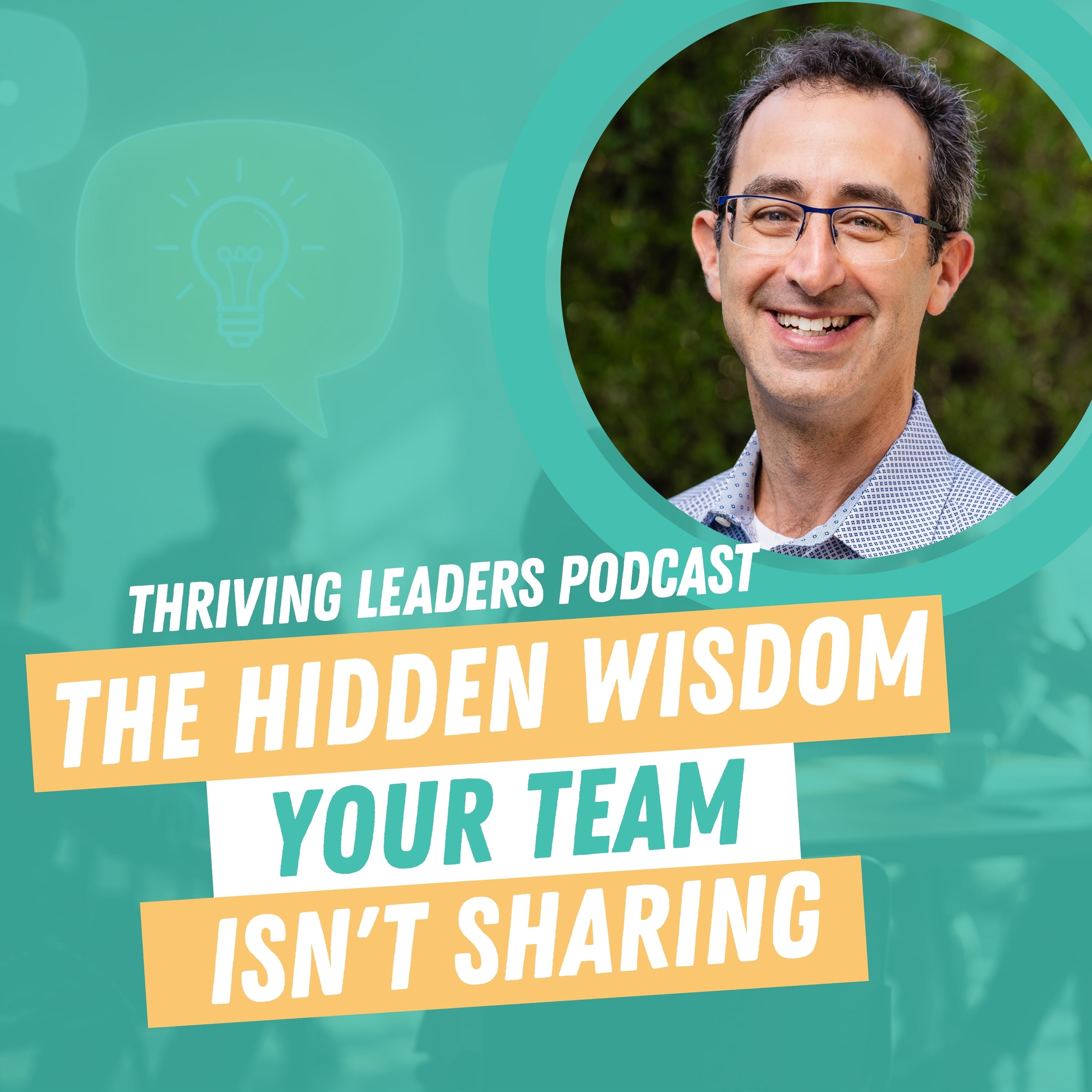 The Hidden Wisdom Your Team Isn't Sharing with Jeff Wetzler | What if the answers to some of your biggest leadership challenges are already sitting inside your team, but nobody is saying them out loud?In this episode, I sit down with Jeff Wetzler, founder of Ask Approach, co-founder of Transcend, former Chief Learning Officer at Teach For America, and author of Ask: Tap Into the Hidden Wisdom of People Around You for Unexpected Breakthroughs in Leadership and Life.The reality is that the people around us know things we don't. They have ideas, perspectives, concerns, and feedback that could help us make better decisions, avoid mistakes, and navigate challenges more effectively. Yet so often those insights never get shared.Jeff has spent decades helping leaders understand why this happens and, more importantly, what we can do about it. In this conversation, we explore why people hold back what they're really thinking, how authority changes conversations, and the practical habits leaders can develop to hear more of what matters.We also dive into curiosity, listening, psychological safety, feedback, and what Jeff calls "the unspokens" that exist in every team and organisation.In this episode, we cover:Why people hold back feedback, concerns, ideas, and perspectives from leadersThe hidden cost of the "unspokens" inside teams and organisationsHow power and authority make it harder for leaders to hear the truthThe four things leaders are least likely to hear from their peopleJeff's ASK Approach and the five practices that unlock collective intelligenceWhy curiosity is a choice, not a personality traitHow to create environments that feel safe enough for people to speak upThe difference between quality questions and the questions that shut down learningWhy most leaders think they're better listeners than they actually areHow to encourage more honest feedback, especially as you become more seniorThe role AI can play in helping leaders become more curious, reflective, and effectiveMany of the answers we are looking for already exist somewhere in the organisation. The challenge is that people don't always tell us what they know, what they're worried about, or what they're seeing.My favourite part was Jeff's perspective on curiosity. We often think of curiosity as something you either have or you don't. Jeff challenges that idea and offers a much more practical way of thinking about it.I also found myself reflecting on how easy it is, particularly when we're busy or under pressure, to move too quickly into problem-solving mode. Sometimes the most valuable thing we can do as leaders is pause long enough to ask another question.If you're leading a team and want to hear more of what people are really thinking, I think you'll get a lot from this conversation. | 52m 57s | ||||||
| 6/8/26 | 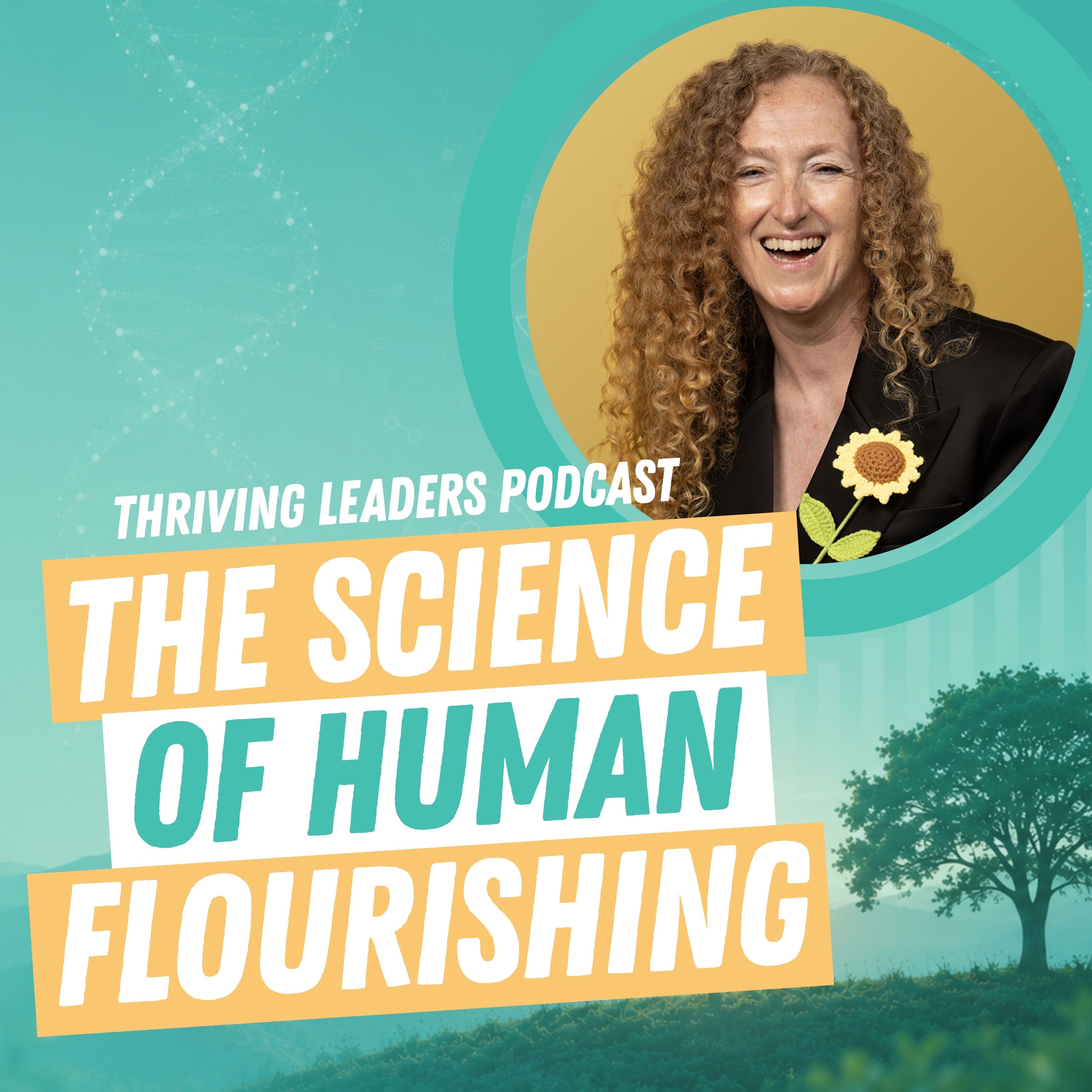 The Science of Human Flourishing with Sue Langley | The way we think becomes the way we lead.Our habits, emotions, assumptions, and internal stories shape how we show up every day, often without us even realising it. In this episode, Sue Langley explores the science behind human flourishing and why understanding ourselves may be one of the most important leadership capabilities of all.I’m joined by Sue Langley, one of Australia’s leading experts in positive psychology, emotional intelligence, and neuroscience. Sue is the founder and CEO of The Langley Group and has spent decades helping leaders, teams, and organisations apply the science of human flourishing in practical and meaningful ways. She’s known for translating complex research into tools leaders can actually use every day.This conversation is packed with practical insights, powerful stories, and simple shifts that can help us better understand our emotions, strengthen our relationships, and lead with greater awareness and intention.In this episode, we cover:Why habits are not just behavioural, but also emotional and cognitiveThe neuroscience behind thought patterns and emotional regulationHow leaders can strengthen emotional intelligence over timeWhy wellbeing directly impacts performance and decision-makingThe difference between powering through versus recognising emotional overloadWhy positive psychology is not about “being positive all the time”The role of psychological safety, empathy and emotional awareness in leadershipHow leaders can create healthier conversations and stronger relationships at work through active constructive respondingWhy accountability and wellbeing must coexist in thriving teamsThe importance of finding wellbeing strategies that genuinely work for youMy favourite part of this conversation was Sue's discussion about active constructive responding.The questions we ask matter.When we respond with curiosity instead of judgement, possibility instead of limitation, we create space for better thinking, stronger relationships, and better outcomes.What might change if, instead of asking why something won't work, we started asking what could make it possible?If there’s one idea from this conversation that stayed with you, share this episode with someone who’d appreciate it too.Until next time, keep leading with curiosity and heart. | 53m 39s | ||||||
| 5/25/26 | 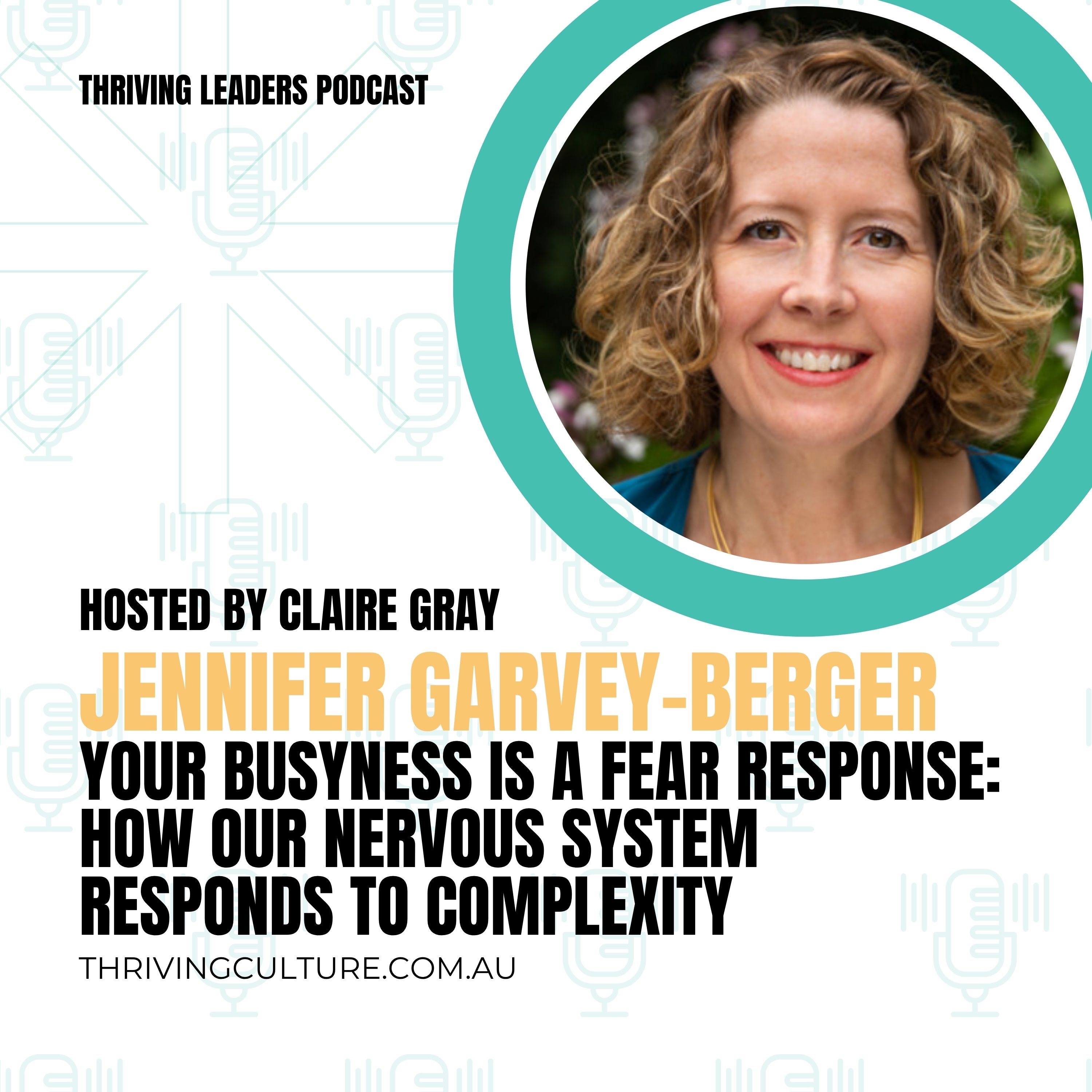 Your Busyness Is a Fear Response: How our Nervous System Responds to Complexity with Jennifer Garvey Berger | If you've been feeling stretched, reactive, or like you're constantly doing more without actually moving the needle, this episode is for you.I'm joined by Jennifer Garvey Berger, CEO and co-founder of Cultivating Leadership, Harvard-educated developmental psychologist, and one of the world's leading thinkers on adult development, complexity, and leadership. Jennifer is the author of four widely acclaimed books: Changing on the Job, Simple Habits for Complex Times, Unlocking Leadership Mind Traps, and Unleash Your Complexity Genius. I first came across her work through colleagues at Harvard Kennedy School, and I've been a fan ever since.This conversation goes deep on why complexity isn't just a business problem, it's a nervous system problem, and what leaders can actually do about it. We explore how polarity thinking reframes some of the most persistent tensions in organisations, why psychological safety isn't about comfort, and what it means to lead with embodied intelligence in a world where AI is changing everything. So many nuggests of gold in this episode.In this episode, we cover:Why complexity is experienced as a threat by the nervous system, and how that drives leaders and teams into reactive busyness instead of purposeful actionThe honest bind leaders are in right now: needing to project hope while being unable to guarantee anythingWhat it really means to lead from the body, not just the head, and why Jennifer shifted from being a sceptic to a convertThe power of polarity thinking: how holding two interdependent goods at once transforms cross-functional collaboration and team dynamicsWhy psychological safety is not about comfort, it's about the capacity to be in discomfort togetherHow AI is changing the way we connect (including why nervous systems can't co-regulate through a screen the way they can in person)What thriving teams actually have in common: genuine liking, not just functional respectI loved this conversation for so many reasons, but the thing that really resonated with me was Jennifer's reframe of busyness. When leaders and team members say 'I'm just so busy right now', she suggests what they're really saying is 'I'm afraid.' And busyness becomes the modern response to a frightening world.It connects to something I see constantly in my work: leaders who are doing a lot, but not necessarily doing the right things. Pushing harder on what no longer works. Jennifer's reminder that doubling down is often a fear response, not a strategy, is one I'll be taking into my work with teams.Teams thrive when leaders slow down enough to actually show up.If this conversation sparked something for you, share it with a leader in your world who's navigating complexity right now. And if you haven't already, follow the Thriving Leaders Podcast so you never miss an episode. | 52m 44s | ||||||
| 5/11/26 | 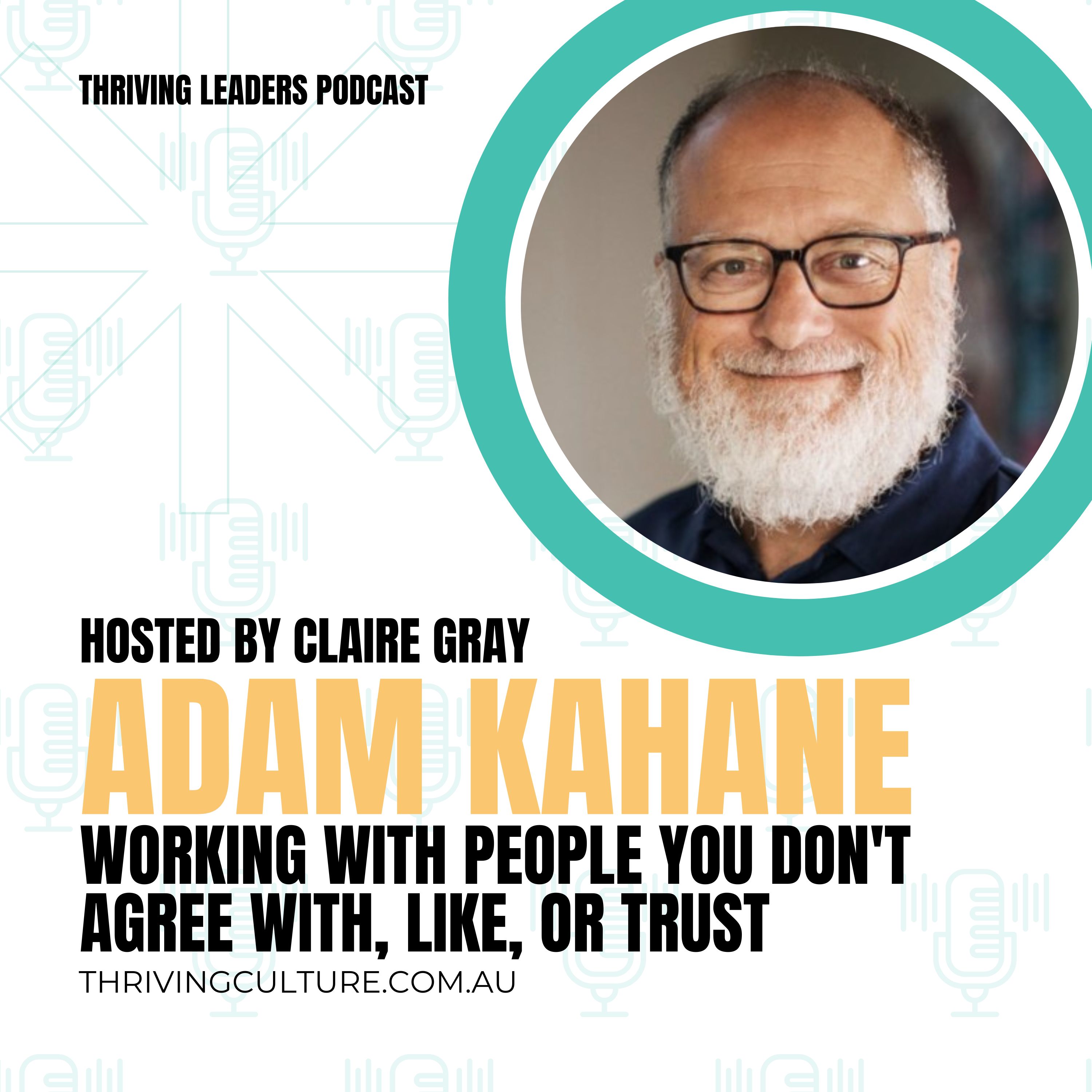 Working with People You Don't Agree With, Like, or Trust with Adam Kahane | Most of us know the feeling. There's someone at the table we don't agree with, don't particularly like, or don't quite trust, and the situation isn't going away. Whether it's a difficult peer, a misaligned executive, a stakeholder relationship that's gone a bit stale, or a cross-functional partnership that feels like it's going nowhere, the instinct is often the same: work around it, avoid it, or wait it out. And as Adam Kahane will tell you, that rarely works. Adam Kahane is founding partner of Reos Partners, a global organisation specialising in collaborative approaches to complex challenges. Over more than 35 years, he has worked in over 50 countries supporting governments, corporations, and civil society through some of the world's most difficult situations, from the democratic transition in post-apartheid South Africa to peace processes in Colombia. He is the author of six books, including the newly revised Collaborating with the Enemy: How to Work with People You Don't Agree with or Like or Trust (Second Edition, 2025), which carries a foreword from Nobel Peace Laureate Juan Manuel Santos. Nelson Mandela described his earlier work as addressing "the central challenge of our time: finding a way to work together to solve the problems we have created".In this conversation, Adam unpacks why working across difference is becoming harder just as it's becoming more essential, and what leaders can actually do about it. We explore his concept of "enemyfying", the limits of conventional collaboration, and why the real breakthrough in any difficult collaboration is rarely about changing the other person. In this episode, we cover: Why our capacity to work across difference is declining just as the need for it is increasing, and what's driving that gap What "enemyfying" actually means, why we all do it, and why it's such an unhelpful starting point for getting anything done The difference between conventional collaboration and stretch collaboration, and how to know which one your situation actually calls for Why telling people to "think of the whole" or "leave your interests at the door" is often unrealistic, and in many cases manipulative How complexity and conflict change the rules of collaboration entirely The four options we have in any difficult situation, and why collaboration is just one of them What Adam calls "The Click", the turning point moment that shifts a stuck group toward real progress The most practical thing you can do when you're tempted to keep telling someone they're wrong I loved Adam's framing that working with people we don't agree with, like, or trust is not a new idea at all. What's new is how much we've retreated from it, and how much the quality of our leadership, our teams, and our organisations depends on us getting better at it again. If this conversation resonated, share it with a leader or team navigating a difficult stakeholder relationship, a silo situation, or a collaboration that feels more stuck than it should be. | 54m 10s | ||||||
| 4/27/26 | 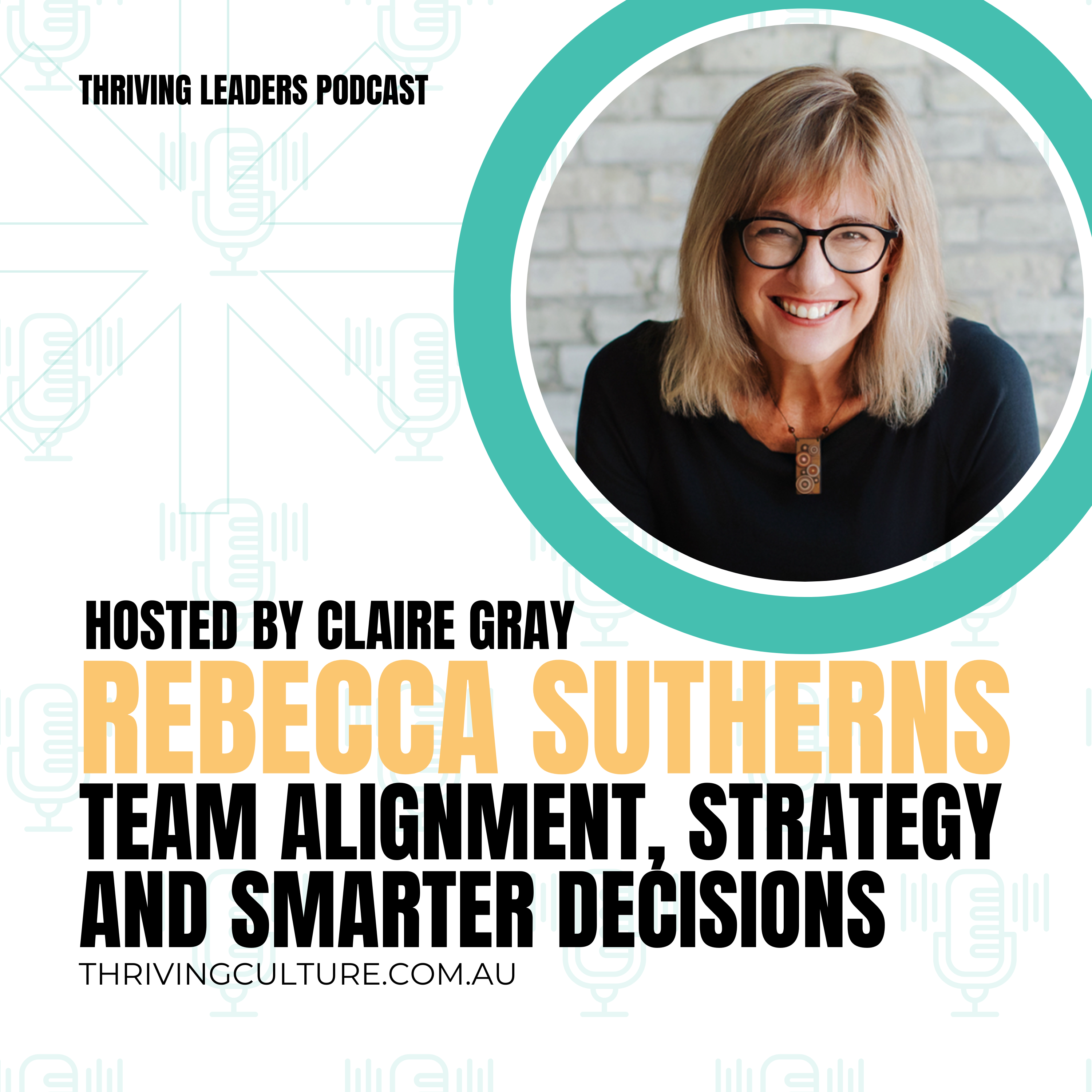 Rebecca Sutherns on Team Alignment, Strategy, and Smarter Decisions | What if your team is using the same words, but imagining completely different futures? This conversation is a powerful reminder that alignment is not about sameness, it is about helping people see clearly, think together, and move forward with intention.In this episode, I’m joined by Rebecca Sutherns, trusted advisor, bestselling author, master facilitator, certified coach, and someone I deeply admire for the way she helps people unlock courage, clarity and momentum. With more than 25 years of experience, Rebecca works with mission-driven organisations to help leaders reimagine what’s next and get aligned on what matters most.In our conversation, we explore what it really takes to get people “watching the same movie” in teams and organisations. Rebecca shares why strategy needs more imagination, why leaders need to get clearer about the problem they are actually solving, and why waiting for perfect information can become the very thing that keeps teams stuck.This is such an important conversation right now because so many leaders are navigating complexity, competing perspectives, and decision fatigue. Rebecca brings a grounded, practical lens to all of it, and I think you’ll walk away with fresh ways to lead better conversations and better decisions. Let’s dive in.In this episode, we cover: Why teams can use the same words but still be picturing completely different futuresHow to create a vivid shared vision, not just another polished vision statementWhy “what problem are we solving?” is one of the most important questions a leader can askHow to clarify decision-making criteria before people get attached to their preferred solutionWhy waiting for full information is often just a stall tactic in disguiseHow facilitation slows teams down at the beginning so they can move faster laterWhy thriving teams do not just predict the future, they help create itI loved this conversation because Rebecca puts language to something so many leaders experience but struggle to name. My favorite part was her reminder that alignment is not about making everyone the same, it is about making thinking visible so people can understand each other, challenge well, and move forward with intention.The future does not just happen to teams. The strongest teams help shape it. If this episode resonated with you, share it with a leader, facilitator or executive team who is working through complexity and trying to make better decisions together. | 52m 08s | ||||||
| 4/13/26 | 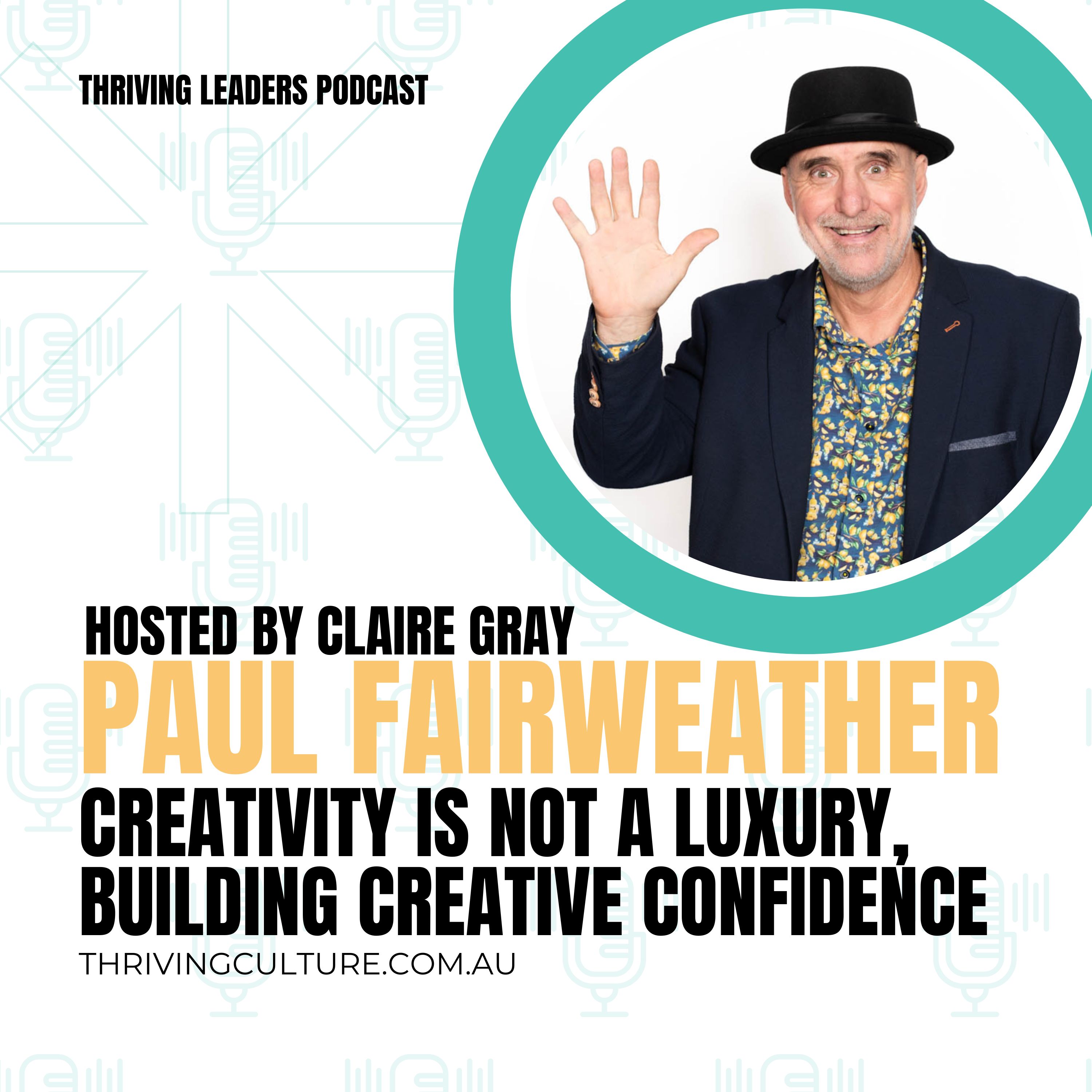 Creativity is Not a Luxury, Building Creative Confidence with Paul Fairweather | So many leaders are not short of ideas. What they are short of is space, confidence, and permission to bring those ideas to life. In fast-moving workplaces, creativity can feel like something we will get to later, but as Paul Fairweather reminds us in this conversation, later rarely comes.In this episode, I’m joined by Paul Fairweather, creative leadership speaker, workplace culture facilitator, former CEO of a 55-person architectural practice, award-winning architect, artist, and author of Bold, Brave, and A Bit Quirky. Paul helps leaders and teams reconnect with their creative confidence, not as a nice-to-have, but as a vital capability for problem-solving, connection, and innovation in a world increasingly shaped by AI.In our conversation, we explore what creativity really means, why so many capable people don’t see themselves as creative, and how leaders can create the conditions for more original thinking at work. We also unpack the tension between AI and human creativity, why uncertainty is part of the creative process, and what practical leaders can do to build more creative, thriving teams.This is such an important conversation right now, because in a world that is becoming faster, noisier, and more automated, the human skills of curiosity, creativity, courage, and connection matter more than ever.In this episode, we cover:Why creativity is often misunderstood, and why it is about far more than artHow Paul defines creativity as identifying potential or opportunity, then fostering its developmentWhat leaders can learn from staying longer in uncertainty, instead of rushing too quickly to clarityThe difference between using AI as a helpful tool, versus using it as a substitute for original thoughtWhy many adults have had their creative confidence diminished over time, and how to rebuild itHow simple, practical exercises can help teams think differently and unlock fresh ideasWhat thriving teams need in order to create, connect, and contribute more meaningfully togetherI loved Paul’s reminder that creativity is not just about ideas, it is also about the courage to do something with them. Thriving teams are not built by speed alone. They are built when leaders create enough safety, space, and confidence for people to think, experiment, and contribute in more meaningful ways.Creativity thrives when leaders make space for uncertainty, not just answers.If this episode resonated, share it with a leader, teammate, or creative thinker who needs a reminder that their ideas still matter.Until next time, keep leading with curiosity and heart. | 40m 16s | ||||||
| 3/30/26 | 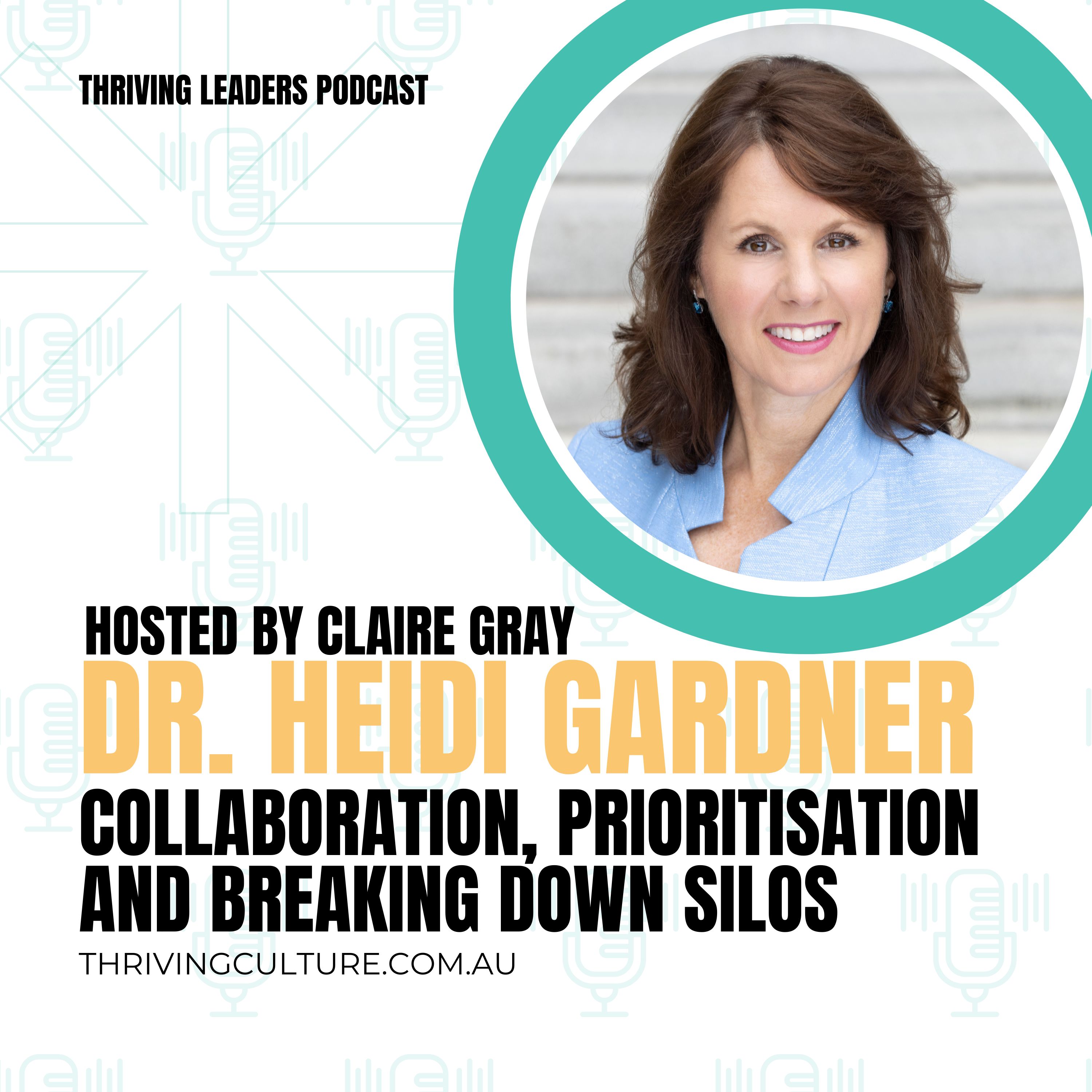 Collaboration, Prioritisation and Breaking Down Silos with Dr. Heidi Gardner | Many leaders know collaboration matters, but far fewer have figured out how to make it work across silos, competing priorities, and complex stakeholder relationships. In this episode, I’m joined by Dr. Heidi Gardner, Distinguished Fellow at Harvard Law School, former Harvard Business School professor, Thinkers50 ranked thought leader, and co-author of Smart Collaboration and Smarter Collaboration. In this conversation, we explore what smarter collaboration really looks like in today’s workplace, and why working across boundaries is both more necessary and more difficult than ever. Heidi shares practical insights on trust, healthy conflict, over-collaboration, stakeholder alignment, and the leadership behaviours that create the conditions for innovation and high performance. In this episode, we cover: Why hyper-specialisation makes collaboration harder, just as the problems leaders face become more complex and multidisciplinary The importance of starting with a shared goal and being clear on each person’s role How over-collaboration drains time, energy, and trust in the very idea of collaboration Why conflict is not the problem, but unmanaged conflict is The difference between competence trust and character trust, and why both matter How leaders can create space for challenge, curiosity, and better decision-making under pressure Navigating collaboration within your team and cross-functional collaboration Practical ways to align with stakeholders, navigate conflicting priorities, and communicate progress toward big goals I loved Heidi’s reminder that collaboration is not about involving everyone in everything. It is about being intentional, drawing on the right expertise at the right moment, and creating enough trust for people to challenge each other without tipping into relationship conflict. Which is especially important in the complex environments teams are operating in. Smarter collaboration is not more collaboration, it’s better collaboration. If this episode resonated, share it with a leader or team who are navigating silos, stakeholder tension, or the complexity of cross-functional work. Links: Smart CollaborationSmarter Collaboration Collaborating with GenAI: Lessons from Heineken’s Use of the “PowerBot”Using GenAI as a Collaborative Teammate | 51m 13s | ||||||
| 3/16/26 | 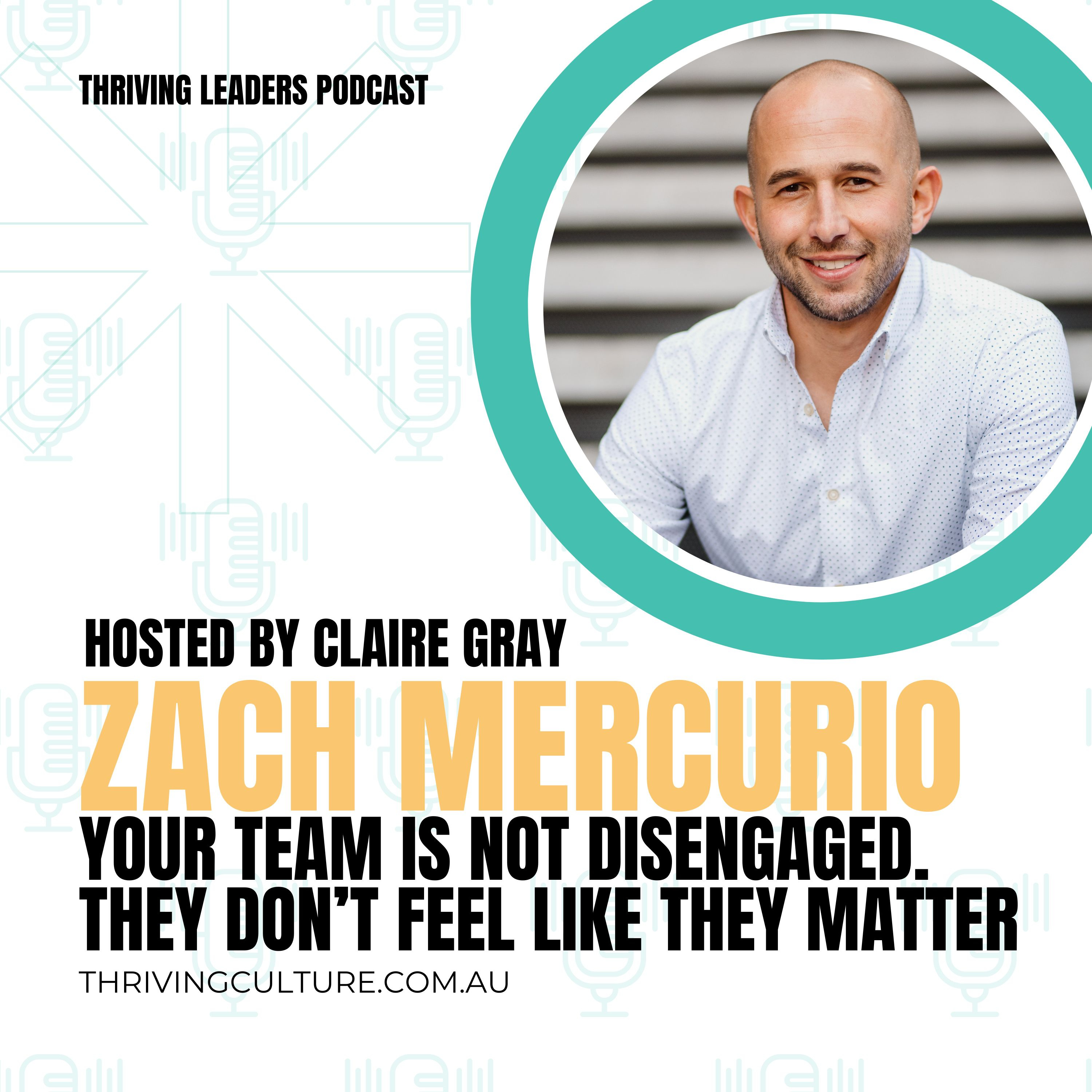 Your Team Is Not Disengaged. They Don’t Feel Like They Matter with Zach Mercurio | Many leaders are working hard to build cultures of trust, connection, and performance, yet people still leave work feeling unseen, overlooked, or undervalued. In this conversation, I sat down with Zach Mercurio, researcher, speaker, leadership development facilitator, and author of The Power of Mattering and The Invisible Leader, to explore why the need to matter is so fundamental to how we experience work and leadership. What I loved about this conversation is that Zach brings together deep research with practical leadership insight. We explore why mattering is more than belonging or inclusion, how meaningful work is shaped through everyday interactions, and why psychological safety may actually be mattering in disguise. This is such an important conversation for leaders who want to build thriving teams where people feel seen, heard, valued, and needed. In this episode, we cover: (00:00) – Introduction (00:46) – Introduction to Zach Mercurio (02:20) – Why mattering is a fundamental human need (03:05) – The research behind meaningful work (35:23) – Belonging vs inclusion vs mattering (37:08) – Why do perks not matter (37:33) – Mattering and psychological safety (39:05) – How leaders become a secure base (44:47) – Recognition vs affirmation (45:13) – How to help people see their unique contribution (53:04) – The one question leaders should ask their team (53:52) – Final Thoughts This is a refreshing reminder that people do not just want to belong, they want to know they are significant. They want to feel seen, heard, valued, and needed, and when that happens, it changes how they show up, how they contribute, and how safe they feel to learn, speak up, and grow. It also made me reflect on how easy it is for leaders to focus on structure, process, and performance, while overlooking the small daily moments that communicate care and value. This conversation is a reminder that thriving teams are built in those moments. When people feel that they matter, they act like they matter.If this episode resonated with you, share it with a leader who is trying to build a more human, grounded, and psychologically safe team. | 56m 27s | ||||||



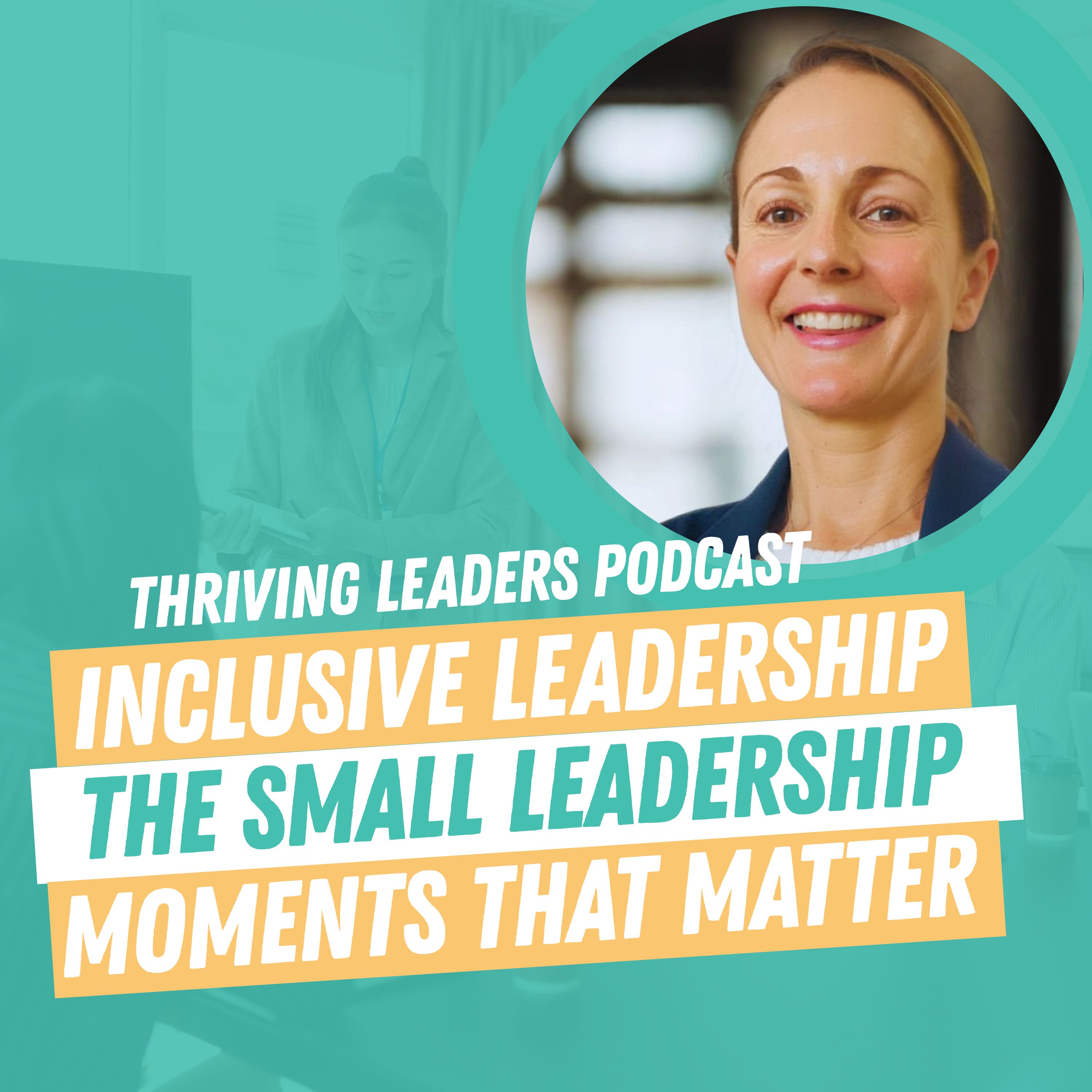


Showing 25 of 54
Pitch Fit is a Pro feature
See how bookable this show is for guests, which brands already advertise, the per-episode ad value, and the best-fit guest and sponsor profile. The numbers are blurred on the free plan.
How readily this show books outside guests like you.
How proven this show is for host-read sponsorships.
For Guests
ProFor Advertisers
ProUpgrade to Pro to unlock guest cadence, sponsor categories, fit scores, and per-episode ad value for this show.
Chart history for Thriving Leaders Podcast
Peaked at #5 in KE, top 10 in 1 of 4 tracked markets, currently #5 in KE.
| Market | Genre | Peak | Current | Trend |
|---|---|---|---|---|
| KE | — | #5 | #5 | — |
| KE | — | #82 | #82 | — |
| United Kingdom | — | #102 | #102 | — |
| BE | — | #191 | #191 | — |
Chart Positions
4 placements across 3 markets.
Chart Positions
4 placements across 3 markets.