

Time Machine Diaries: Ancient Civilizations & Future World Predictions.
by CNC Productions
Is this your podcast?Insights from recent episode analysis
Audience Interest
Podcast Focus
Publishing Consistency
Platform Reach
Insights are generated by CastFox AI using publicly available data, episode content, and proprietary models.
Total monthly reach
Estimated from 2 chart positions in 2 markets.
By chart position
- 🇦🇺AU · Science Fiction#1825K to 30K
- 🇮🇸IS · Science Fiction#623K to 10K
- Per-Episode Audience
Est. listeners per new episode within ~30 days
4K to 20K🎙 ~2x weekly·68 episodes·Last published 4d ago - Monthly Reach
Unique listeners across all episodes (30 days)
8K to 40K🇦🇺75%🇮🇸25% - Active Followers
Loyal subscribers who consistently listen
3.2K to 16K
Market Insights
Platform Distribution
Reach across major podcast platforms, updated hourly
Total Followers
—
Total Plays
—
Total Reviews
—
* Data sourced directly from platform APIs and aggregated hourly across all major podcast directories.
On the show
Recent episodes
Project Kronos: The Archaeologist the Earth Remembered
May 11, 2026
Unknown duration
Rome in Ashes
Apr 28, 2026
Unknown duration
Rome Pt. 2
Apr 24, 2026
Unknown duration
Rome Pt. 1
Apr 13, 2026
Unknown duration
The Great Turkish War (1683–1699)
Apr 6, 2026
Unknown duration
Social Links & Contact
Official channels & resources
Official Website
Login
RSS Feed
Login
| Date | Episode | Description | Length | ||||||
|---|---|---|---|---|---|---|---|---|---|
| 5/11/26 | 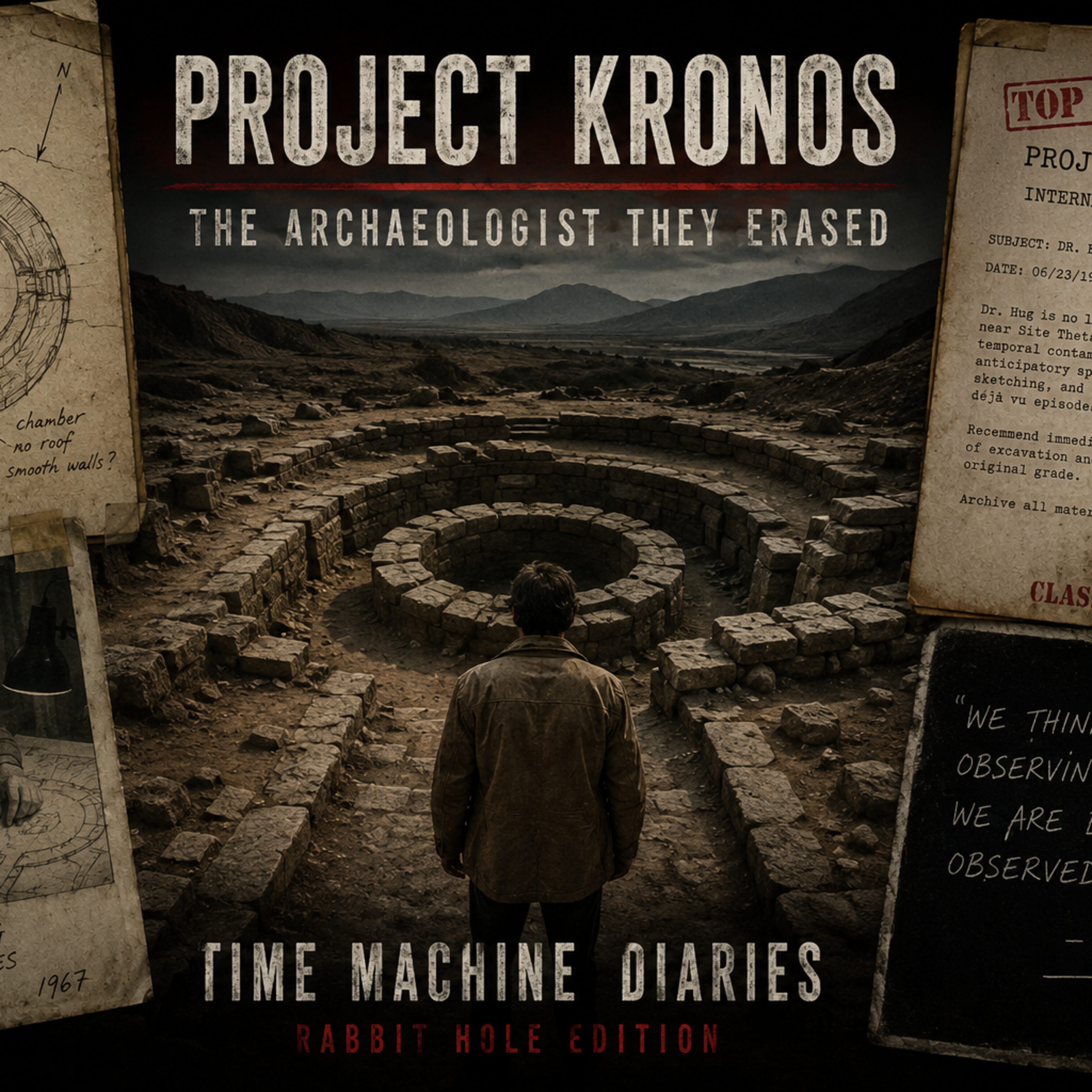 Project Kronos: The Archaeologist the Earth Remembered | A forgotten archaeologist. A classified project. A dig site that may have been buried twice.In this Rabbit Hole edition of Time Machine Diaries, we follow the speculative trail of Elon Hug and the alleged Project Kronos, an experiment built on a disturbing idea: that the earth does not just hold artifacts from the past, but records of it. As Hug’s field sketches begin matching buried structures before excavation, and reports emerge of a chamber that seemed to exist in two states at once, the focus shifts from the site to the man observing it.What happens when archaeology stops being about uncovering objects and starts feeling like listening to something that was never fully gone?This episode is presented as reconstructed lore in documentary tone, inviting you to sift through the fragments, question what you hear, and decide for yourself how deep this rabbit hole goes.Source: CIA FOIA Electronic Reading RoomDefense Advanced Research Projects Agency (DARPA)Especially early cognitive science, prediction modeling, and human systems research.National Security Agency – early signals intelligence archivingMassive data retention and analysis programs that mirror the “time archive” idea.U.S. Army – Stargate Project (Remote Viewing Program)Real attempts to use psychic perception for intelligence gathering.Office of Naval Research – cognitive and perception studies (1950s–70s) | — | ||||||
| 4/28/26 | 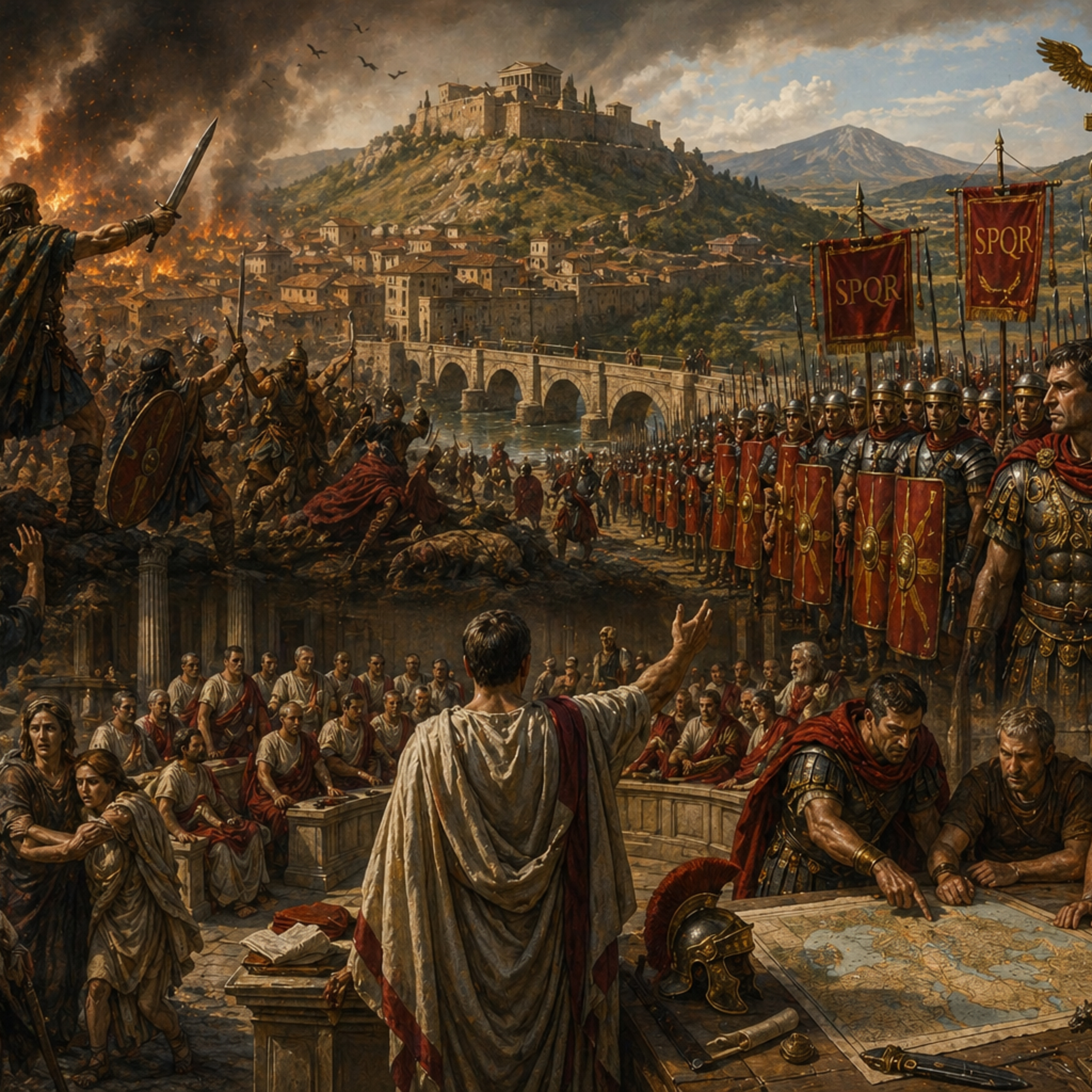 Rome in Ashes | In these two pivotal chapters, Rome endures the catastrophe that brands its psyche forever and then forges the system that makes its expansion unstoppable.Part V follows the march of Brennus and the Senones to the gates of Rome, the disastrous rout at the Allia River, the burning of the city, the desperate holdout on the Capitoline Hill, and the humiliating ransom that Romans will remember for centuries. This is the trauma that teaches Rome what it feels like to be erased.Part VI shows what Rome does with that trauma. In the aftermath, Rome does not simply rebuild. It redesigns how power works. Through the Latin War and decisive battles near Mount Vesuvius, Rome pioneers a revolutionary model of conquest: absorbing enemies as citizens, allies, and soldiers. Figures like Titus Manlius Torquatus and Publius Decius Mus embody the discipline and ritual sacrifice that define Roman military culture, while Rome quietly builds the political and logistical network that will allow it to dominate Italy.Ab Urbe Condita — LivyBooks 2–8 cover the early Republic, the sack by Brennus, Camillus, the Latin War, Manlius Torquatus, and Decius Mus.Roman Antiquities — Dionysius of HalicarnassusDetailed narrative of early Rome, Latin relations, institutions, and wars.Parallel Lives — PlutarchLife of Camillus is central to the fall of Veii and the Gallic sack tradition.The Geography — StraboContext for early Italy, Etruscans, and Gallic migrations.The Gallic War — Julius CaesarLater Roman attitudes toward Gauls that echo the trauma of 390 BC.Modern Scholarly Works (Critical for separating legend from history)The Beginnings of Rome — T. J. CornellThe most respected modern reconstruction of early Roman history.A Critical History of Early Rome — Gary ForsytheEvaluates what is likely historical versus later Roman mythmaking.Early Rome to 290 BC — Guy BradleyExcellent analysis of the Latin War, Samnite context, and Roman expansion mechanics.The Romans and Their World — Brian CampbellClear explanation of Roman military and political systems forming in this period.Rome and Italy — T. J. CornellDeep dive into Rome’s integration of Latium after the Latin War.Archaeology and Material EvidenceExcavations at Veii confirming prolonged siege layers and Roman takeover.Early fortification layers on the Capitoline Hill consistent with refuge narratives.Settlement patterns and Roman colonies across Latium dated to post-Latin War expansion.Road alignments in Latium showing early military connectivity.Academic Themes Supported by These SourcesThese sources collectively support:The historicity (with legendary overlay) of the Gallic sackCamillus and the fall of Veii as a real strategic turning pointThe Latin War as the birth of Rome’s integration modelThe cultural importance of Manlius Torquatus and Decius Mus in Roman identityRome’s transition from city-state to regional hegemon through system-building rather than simple conquest | — | ||||||
| 4/24/26 | Rome Pt. 2 | The Kings of Rome traces the shadowy, semi-legendary era when Rome was ruled not by senators or consuls, but by monarchs whose authority blended religion, warfare, and raw personal power. From Romulus to Lucius Tarquinius Superbus, this episode examines how seven rulers shaped the city’s earliest institutions: the Senate, the army, sacred rites, public works, and social hierarchy.Listeners follow the transformation of Rome from a hilltop settlement into a structured urban society influenced heavily by Etruria and the wider Italian world. The episode explores how kingship in Rome was not merely political but deeply religious, how engineering projects like the Cloaca Maxima and the Temple of Jupiter Optimus Maximus physically transformed the city, and how tyranny under the final king triggered a revolution that would permanently alter Roman political identity.This is the story of how the monarchy built Rome, and why Romans came to hate the very idea of kings.The Republic Under Fire opens in chaos. The kings are gone, but Rome’s enemies are not. Surrounded by hostile neighbors and torn by internal class conflict, the newborn Republic must prove it can survive without a monarch.The episode centers on early existential crises: the war against the Etruscan king Lars Porsena, the legendary stand of Horatius Cocles at the Pons Sublicius, and the growing struggle between patricians and plebeians that led to the first secession of the plebs.Rather than a tale of smooth transition, this part shows a Republic on the brink of collapse, militarily pressured, politically divided, and socially unstable. It explores how Rome’s early political innovations, including consuls, tribunes, and written law, were born not from philosophy but from emergency. Sources:Ab Urbe Condita by LivyRoman Antiquities by Dionysius of HalicarnassusParallel Lives by PlutarchModern ScholarshipThe Beginnings of Rome — T. J. CornellA Critical History of Early Rome — Gary ForsytheSPQR — Mary BeardThe Roman Republic — Michael Crawford | — | ||||||
| 4/13/26 |  Rome Pt. 1 | Before Rome ruled the world, it was a rumor. Before it was an empire, it was a fight between two starving boys who should have died in a river. This is the origin story stripped of the myth and rebuilt with what we actually know. This is tribal Italy, violence as identity, and the moment a city is born from murder. You are not hearing a legend. You are standing there watching it happen.Sources:Livy. The Early History of Rome. Translated by Aubrey de Sélincourt, Penguin Classics.Plutarch. The Rise and Fall of Athens and Rome. Penguin Classics.Cornell, T. J. The Beginnings of Rome. Routledge.Forsythe, Gary. A Critical History of Early Rome. University of California Press.Beard, Mary. SPQR A History of Ancient Rome. Liveright.Scullard, H. H. A History of the Roman World. Routledge.Audiobook:Beard, Mary. SPQR A History of Ancient Rome. Audible.Documentaries:Ancient Rome The Rise and Fall of an Empire. BBC.Rome Power and Glory. History Channel. | — | ||||||
| 4/6/26 | 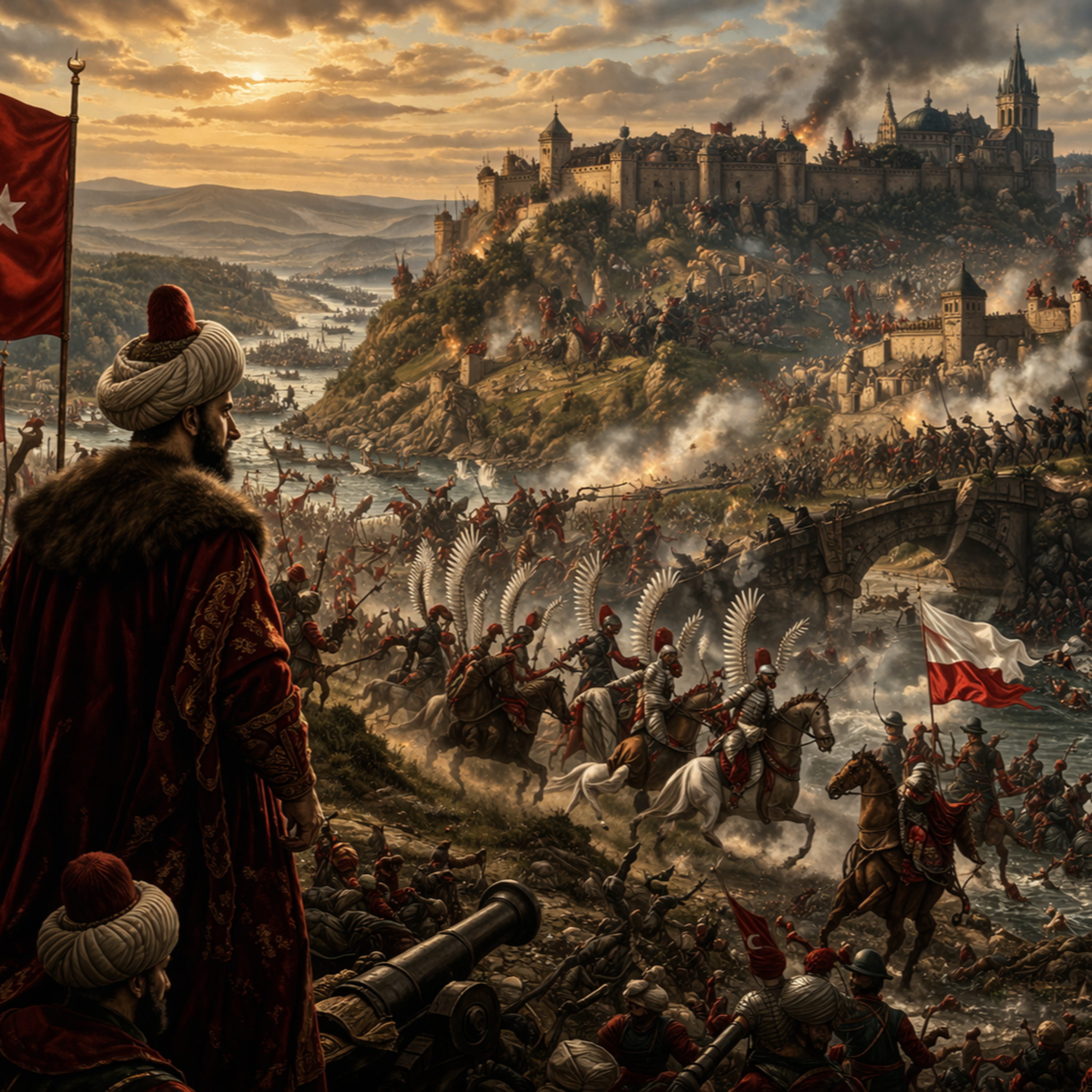 The Great Turkish War (1683–1699) | In 1683, the army of the Ottoman Empire stood outside the gates of Vienna, confident that Europe’s defensive line was about to break for good. What followed was not a single battle, but a sixteen-year reversal that reshaped the balance of power on the continent.This episode traces the full arc of the Great Turkish War, from Kara Mustafa Pasha’s siege of Vienna, to the brutal reconquest of Hungary and the fall of Buda, to the catastrophic Ottoman collapse at the Battle of Zenta, and finally the diplomatic shock of the Treaty of Karlowitz.Across these campaigns, the war did something more important than win territory. It changed psychology. For two centuries, Europe assumed Ottoman expansion was inevitable. After this war, that assumption died.Through cinematic scenes, first-person perspectives, and grounded historical narrative, this episode shows how a siege turned into a continental counteroffensive, and how an empire that had always advanced into Europe began, for the first time, to retreat.Core Scholarly WorksÁgoston, Gábor. The Last Muslim Conquest: The Ottoman Empire and Its Wars in Europe. Princeton University Press, 2021.Ágoston, Gábor. Guns for the Sultan: Military Power and the Weapons Industry in the Ottoman Empire. Cambridge University Press, 2005.Black, Jeremy. European Warfare, 1660–1815. Yale University Press, 1994.Hochedlinger, Michael. Austria’s Wars of Emergence, 1683–1797. Routledge, 2003.Ingrao, Charles. The Habsburg Monarchy, 1618–1815. Cambridge University Press, 2000.Murphey, Rhoads. Ottoman Warfare, 1500–1700. Rutgers University Press, 1999.Wheatcroft, Andrew. The Enemy at the Gate: Habsburgs, Ottomans, and the Battle for Europe. Basic Books, 2008.Perjés, Géza. The Siege of Vienna, 1683. Indiana University Press, 1979.Stoye, John. The Siege of Vienna. Pegasus Books, 2006.Kontler, László. A History of Hungary. Palgrave Macmillan, 2002.Sugar, Peter F. Southeastern Europe under Ottoman Rule, 1354–1804. University of Washington Press, 1977.Henderson, Nicholas. Prince Eugene of Savoy. Weidenfeld & Nicolson, 1964.McKay, Derek. Prince Eugene of Savoy. Thames & Hudson, 1977.Setton, Kenneth M. Venice, Austria, and the Turks in the Seventeenth Century. American Philosophical Society, 1991.Kann, Robert A. A History of the Habsburg Empire, 1526–1918. University of California Press, 1974.Sobieski, John III. Letters to Marie Casimire (correspondence during the Vienna campaign).Contemporary Habsburg military dispatches compiled in Austrian State Archives (Kriegsarchiv, Vienna).Ottoman chroniclers including Silahdar Fındıklılı Mehmed Ağa, Nusretnâme (accounts of late 17th-century campaigns).On Vienna (1683)On Buda and the Hungarian CampaignsOn Zenta and Eugene of SavoyOn the Treaty and AftermathPrimary / Contemporary Accounts | — | ||||||
| 3/23/26 | 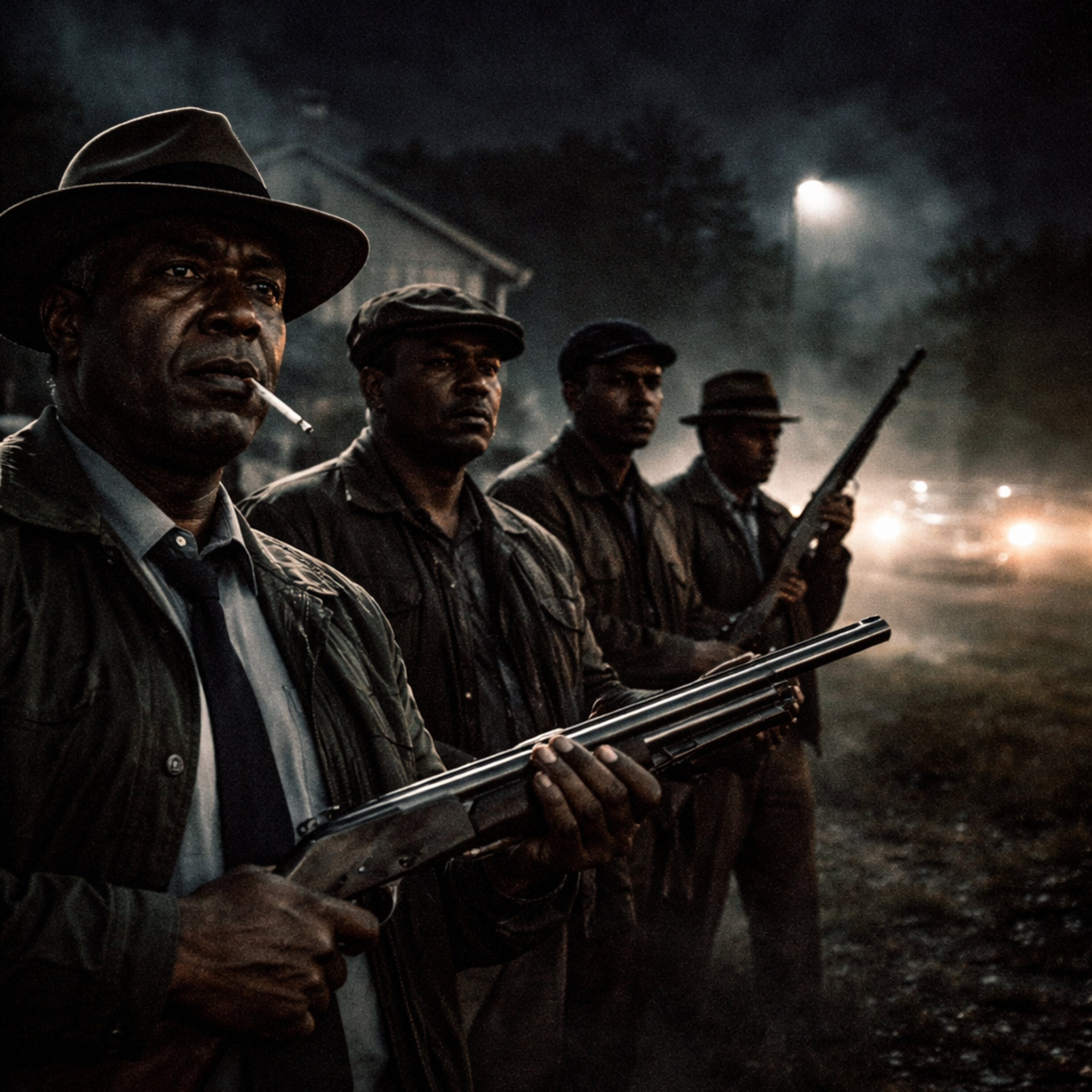 The Deacons for Defense | Everybody knows the images of the Civil Rights Movement. Peaceful marches. Fire hoses. People standing strong while being beaten. But that is only half the story. When the cameras went home and the streets went quiet, the danger did not stop. In places like Jonesboro and Bogalusa Louisiana, Black veterans organized into a group called the Deacons for Defense and Justice. Their mission was simple and deadly serious. Protect their people when no one else would. These were not radicals or criminals. These were disciplined men, many of them veterans of World War II and Korea, who used legal firearms to defend civil rights workers, families, and entire communities from Ku Klux Klan violence. This episode breaks open a part of history most people were never taught. The role of Earnest Thomas in forming the first chapter. The leadership of Frederick Douglass Kirkpatrick and Charles Sims in Bogalusa. The protection of activists like Robert Hicks whose life depended on men standing guard outside his home. This is the story of the night shift of the Civil Rights Movement. The part that made survival possible. Once you hear it, you will never look at this era the same way again. SourcesAisis, Gail M., and Stephen A. Sutherland. Armed Resistance in the Civil Rights Movement: The Deacons for Defense. University Press of Florida, 2016.Hill, Lance. The Deacons for Defense: Armed Resistance and the Civil Rights Movement. University of North Carolina Press, 2004.Hill, Lance. “The Deacons for Defense and Justice.” Journal of Southern History, vol. 66, no. 3, 2000, pp. 593–624.United States District Court. United States v. Original Knights of the Ku Klux Klan, 250 F. Supp. 330 (E.D. La. 1966).“Bogalusa Civil Rights Movement.” Civil Rights Digital Library, University of Georgia, crdl.usg.edu.Congress of Racial Equality (CORE). Records of the Civil Rights Movement, 1960s archival collections.Student Nonviolent Coordinating Committee (SNCC). SNCC Digital Gateway, snccdigital.org.“Freedom Summer Murders.” Federal Bureau of Investigation Records: The Vault, fbi.gov.Sutherland, Stephen A. “The Deacons for Defense and Justice.” Louisiana History, vol. 50, no. 3, 2009.Hill, Lance. Interview collection. Civil Rights Movement Veterans Oral History Project, Library of Congress.“Robert Hicks Papers.” Amistad Research Center, Tulane University.Documentary: Deacons for Defense. Directed by Bill Duke, Showtime Networks, 2003.Documentary: Freedom Summer. Directed by Stanley Nelson, American Experience PBS, 2014.Audiobook: Hill, Lance. The Deacons for Defense. Narrated academic editions and lecture recordings, University of North Carolina Press.The Music Case. “Royalty-Free Music for Podcasts and Sync Licensing.” TheMusicCase, https://www.themusicase.com/library/uses/podcast/. Accessed 23 Mar. 2026.Sync And Go. “Music Licensing for Creators: Film, TV, and Podcasts.” SyncAndGo, https://syncandgo.com/. Accessed 23 Mar. 2026. | — | ||||||
| 3/16/26 | 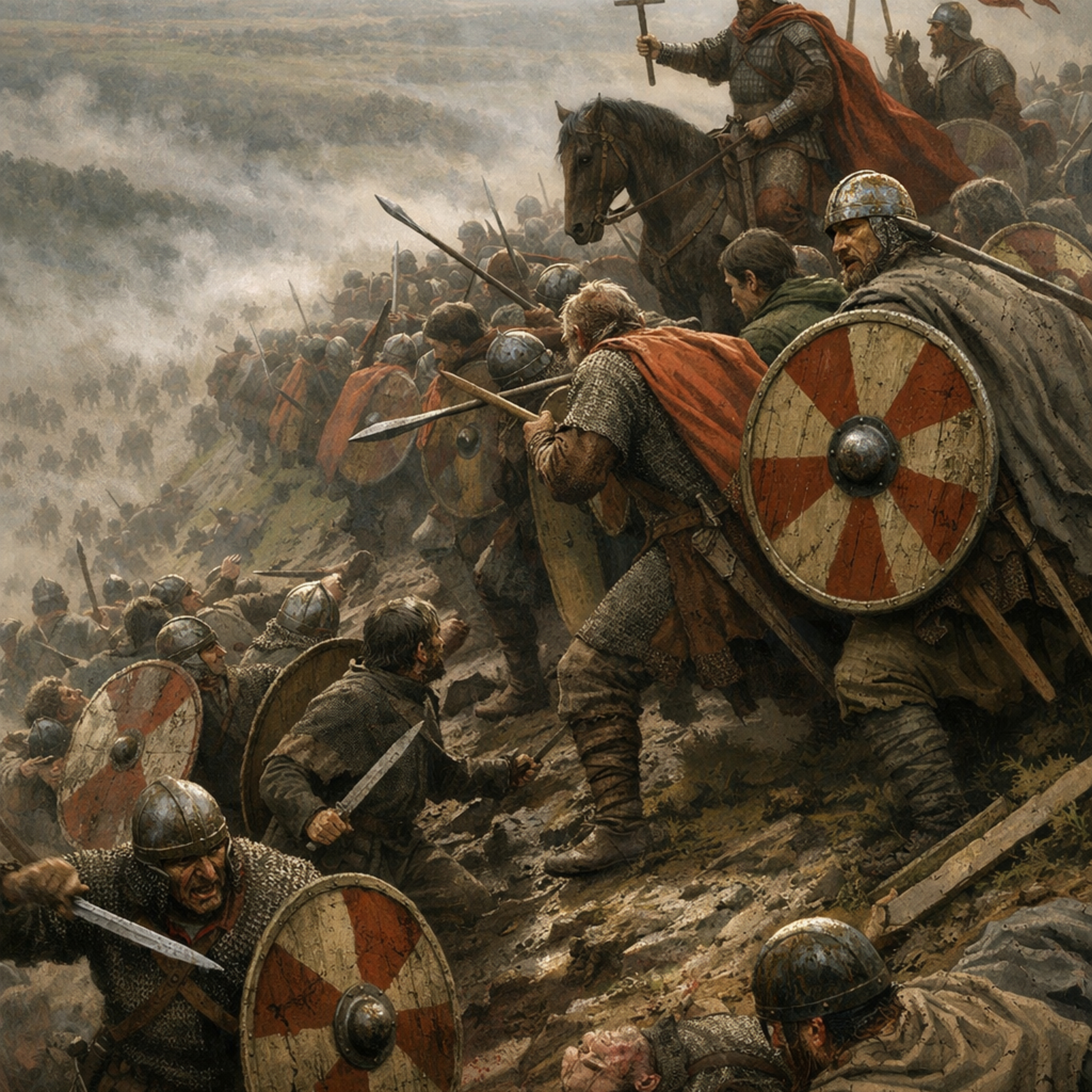 The Battle of Mount Badon | In the collapsing ruins of Roman Britain, when cities were emptying and the old world was dying, a battle was fought that may have saved an entire civilization. The Battle of Mount Badon stands at the edge of myth and history, where Roman discipline met Saxon fury on a hill somewhere in Britain around the year 500. Ancient sources speak of a slaughter so devastating that Saxon expansion stopped for an entire generation. Later legends would say a war leader named Arthur carried the cross of Christ into battle and cut down hundreds of enemies himself. But behind the legend is a darker and more complicated story of refugees, collapsing empires, tribal invasions, and desperate people fighting for survival in the shadow of the end of Rome. This episode dives deep into the chaos of post Roman Britain, the arrival of the Saxons, the mystery of Arthur, and the brutal reality of the battle that may have saved Britain from disappearing entirely.Gildas. The Ruin of Britain and Other Works. Translated by Michael Winterbottom, Phillimore, 1978.Nennius. Historia Brittonum. Edited and translated by John Morris, Phillimore, 1980.Bede. Ecclesiastical History of the English People. Translated by Leo Sherley Price, Penguin Classics.Higham, Nicholas. King Arthur: Myth Making and History. Routledge.Snyder, Christopher. The Britons. Wiley Blackwell.Wood, Michael. In Search of the Dark Ages. BBC Documentary.History Channel. Barbarians Rising. Documentary series.Miles Russell. Arthur and the Kings of Britain. Amberley Publishing. | — | ||||||
| 3/3/26 |  Native Wars Part 2 — When They Couldn’t Win, They Erased | When brute force didn’t work, Russia turned to erasure. This episode dives deep into the Koryak campaigns, the Aleut slave raids in Alaska, and the violent birth of cultural extermination as policy. We follow firsthand accounts of starvation, hostage taking, and the destruction of Indigenous lifeways across the Russian Far East. Then we trace the evolution of that violence, from open slaughter to identity theft: forced Orthodox conversions, renamed children, banned languages, and burned traditions. This isn’t just Russian history. This is an empire in practice, and it echoes across continents.Anderson, David G. Identity and Ecology in Arctic Siberia: The Number One Reindeer Brigade. Oxford University Press, 2000.Black, Lydia T. Russians in Alaska, 1732–1867. University of Alaska Press, 2004.Bolkhovitinov, Nikolai N. Russia and the United States: Diplomatic Relations to 1917. Translated by Elena Marakova, University of Hawaii Press, 1987.Chaussonnet, Valérie. Native Cultures of Alaska and Siberia: The Legacy of the Bering Strait Connection. Smithsonian Institution, 1995.Fisher, Raymond H. The Russian Fur Trade 1550–1700. University of California Press, 1943.Forsyth, James. A History of the Peoples of Siberia: Russia’s North Asian Colony 1581–1990. Cambridge University Press, 1992.Gibson, James R. Imperial Russia in Frontier America: The Changing Geography of Supply of Russian America, 1784–1867. Oxford University Press, 1976.Hawkes, David C. Ethnohistory in Alaska: A Regional Bibliography. University of Alaska Fairbanks, 1981.Human Rights and Equal Opportunity Commission (Australia). Bringing Them Home: Report of the National Inquiry into the Separation of Aboriginal and Torres Strait Islander Children from Their Families. 1997.Kan, Sergei. "History of Russian-Alutiiq Relations." Alaska Native Language Center, University of Alaska Fairbanks, 1980.Kerttula, Anna M. Antler on the Sea: The Yup’ik and Chukchi of the Russian Far East. Cornell University Press, 2000.Krupnik, Igor, and Ludmila Vakhtin. “Indigenous Peoples of the Russian North.” Cultural Survival Quarterly, vol. 15, no. 2, 1991, pp. 23–29.Leisy, Ernest J. “The Impact of the Russian Orthodox Mission on Alaskan Native Cultures.” Alaska Journal, vol. 15, no. 3, 1985, pp. 14–19.Pierce, Richard A. Russia’s American Colony. University of Wisconsin Press, 1973.Russian Academy of Sciences. The Peoples of Siberia. Edited by M. G. Levin and L. P. Potapov, University of Chicago Press, 1964.Truth and Reconciliation Commission of Canada. Final Report of the Truth and Reconciliation Commission of Canada. 2015.Vakhtin, Nikolai. "Native Peoples of the Russian Far North." Minority Rights Group International Report, 1992.Vakhtin, Nikolai. "Language Shift among the Siberian Peoples." Études/Inuit/Studies, vol. 19, no. 2, 1995, pp. 59–78.Veniaminov, Ioann. Notes on the Islands of the Unalashka District. Translated by Lydia T. Black and Richard A. Pierce, Limestone Press, 1984.Znamenski, Andrei A. Shamanism and Christianity: Native Encounters with Russian Orthodox Missions in Siberia and Alaska, 1820–1917. Greenwood Press, 1999. | — | ||||||
| 2/24/26 | 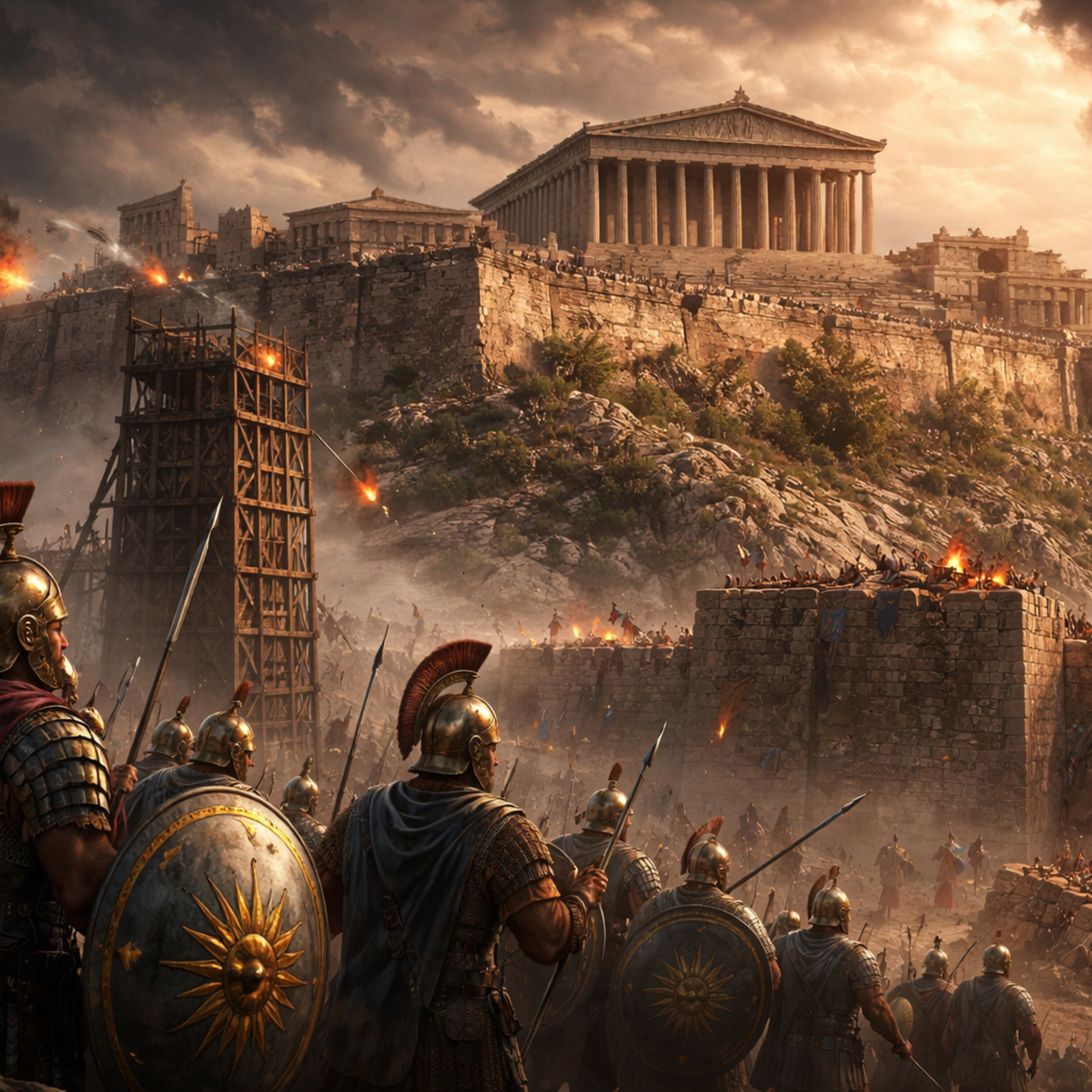 The Last War of Classical Greece | Sorry for The Delay, my wife had a Baby!!! A cinematic historical deep dive into the forgotten war that ended the age of classical Greece.This epic narrative explores the Cremonidean War (267–261 BCE), when Athens and Sparta made one final attempt to reclaim their independence from Macedonian rule. After the death of Alexander the Great, the world changed. Kings replaced citizens, empires replaced city-states, and the Greek world struggled to survive under foreign domination.Follow the full story from the rise of Macedonian power under Antigonus II Gonatas, to the desperate alliance between Athens, Sparta, and Ptolemaic Egypt, to the brutal siege of Athens and the collapse of the classical polis. This documentary reveals the strategy, politics, battles, starvation warfare, and psychological collapse that reshaped the ancient Mediterranean.This is not just a war story. It is the story of how the world of democracy and independent city-states came to an end. Shipley, Graham. The Greek World After Alexander 323–30 BC. Routledge, 2000. (Audiobook available via academic audio platforms)Green, Peter. Alexander to Actium: The Historical Evolution of the Hellenistic Age. University of California Press, 1990. Audiobook, University of California Press.Walbank, F. W. The Hellenistic World. Harvard University Press, 1981. Audiobook edition, Harvard University Press.Errington, R. Malcolm. A History of the Hellenistic World: 323–30 BC. Blackwell Publishing, 2008. Audiobook edition available.Waterfield, Robin. Dividing the Spoils: The War for Alexander the Great’s Empire. Oxford University Press, 2011. Audiobook edition.Boardman, John, et al. The Oxford History of Greece and the Hellenistic World. Oxford University Press, 2001.Pausanias. Description of Greece. Translated by W. H. S. Jones and H. A. Ormerod, Harvard University Press, 1918. (Primary source describing events and figures related to the period; audiobook versions available) | — | ||||||
| 7/14/25 | 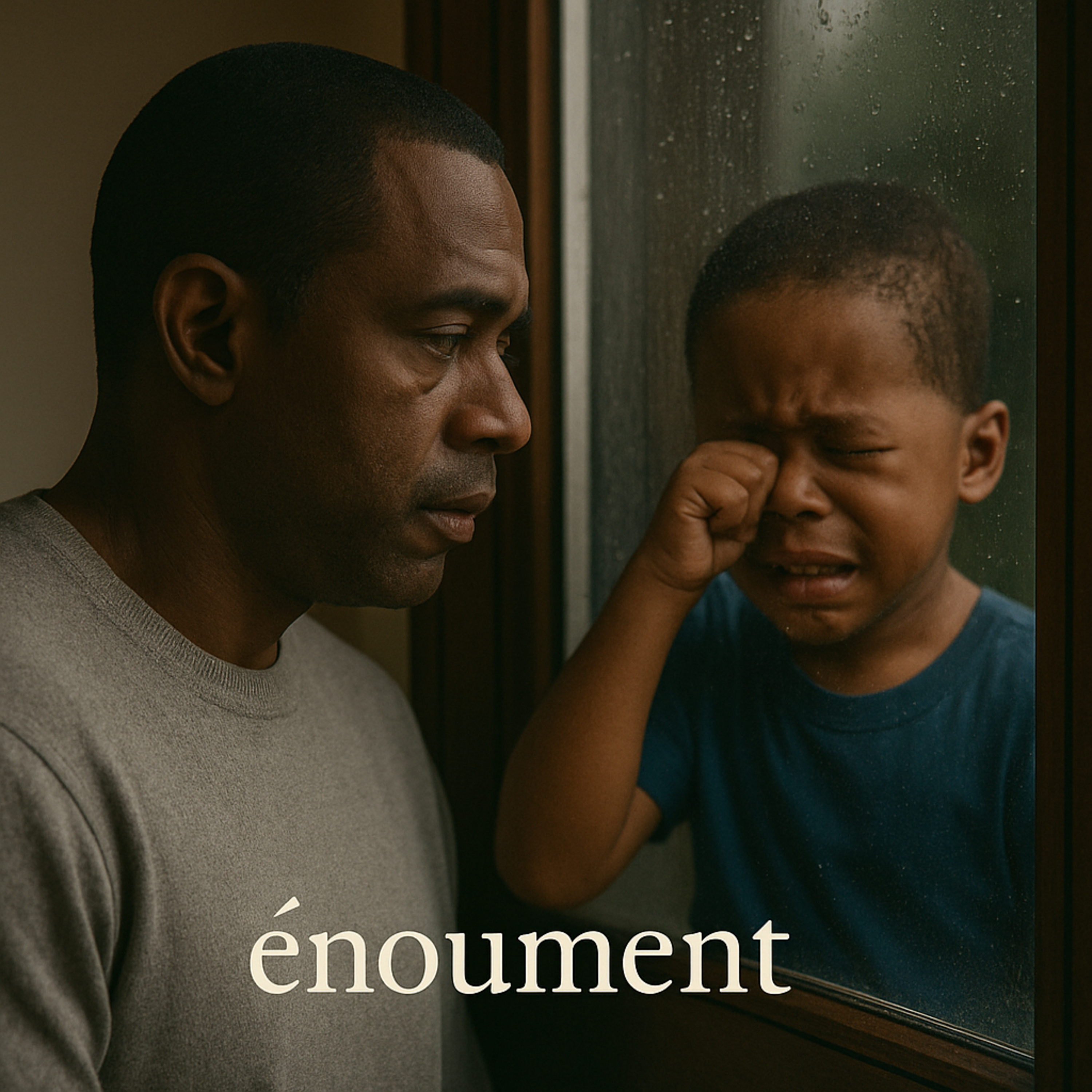 You’re Not Weird. You’re Just Human: Words for Feelings We Don’t Talk About. | Sometimes, a single word can feel like a lifeline.In this deeply personal episode of Time Machine Diaries, Cullen explores The Dictionary of Obscure Sorrows — a collection of made-up words for painfully real emotions we all experience but rarely name.From the shock of realizing strangers have full inner lives (sonder), to the bittersweet ache of surviving your old self (énouement), to the quiet chaos of eye contact (opia) — this episode dives into the hidden corners of being human.Cullen shares stories, real and imagined, drawn from listener messages, late-night thoughts, and everyday heartbreak.With shout-outs to his wife, his father-in-law, and all of you. This one’s for anyone who’s ever felt too much and didn’t know how to explain it.Stick around for a heartfelt closer and one last laugh that might just make you text this to a friend.Koenig, John. The Dictionary of Obscure Sorrows. Simon & Schuster, 2021.Koenig, John. “TED Talk: The Beautiful New Words We Need for Emotions We Feel—But Don’t Have Names For.” TED Talks, Nov. 2021. https://www.ted.com/talks/john_koenig_the_beautiful_new_words_we_need_for_emotions_we_feel_but_don_t_have_names_for“The Dictionary of Obscure Sorrows.” Official Website, www.dictionaryofobscuresorrows.com. Accessed July 2025.Koenig, John. Interview by Roman Mars. 99% Invisible, episode 470, Radiotopia, 2022. Podcast.Koenig, John. Interview by Debbie Millman. Design Matters, episode from Oct. 2021. Podcast. | — | ||||||
Want analysis for the episodes below?Free for Pro Submit a request, we'll have your selected episodes analyzed within an hour. Free, at no cost to you, for Pro users. | |||||||||
| 3/31/25 | 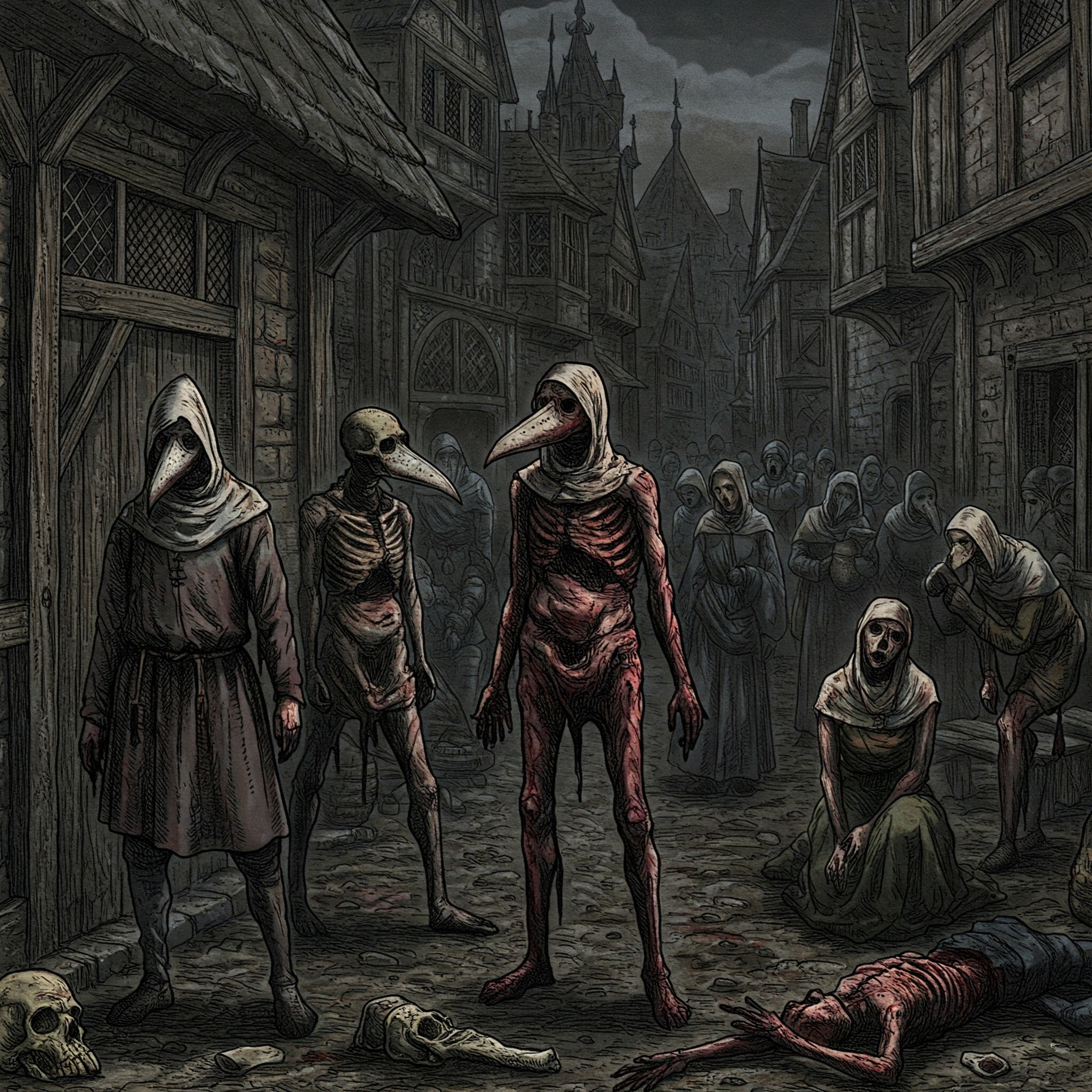 Unmasking the Black Death: Origins, Impact, and Modern Echoes | Support the Show at patreon.com/THO420Dive deep into the harrowing saga of the Black Death, the 14th-century pandemic that decimated Europe's population and reshaped the course of history. We'll explore its debated origins, from the steppes of Central Asia to the heart of Europe, and unravel the societal upheavals it triggered. Drawing parallels to contemporary global challenges, this episode offers a raw, unfiltered examination of how pandemics past and present expose the fragility of human societies.Sources:"The Black Death Source Pack" – Durham UniversityDescription: A comprehensive collection of primary sources and scholarly analyses detailing the Black Death's impact across Europe. Durham University"The Economic Impact of the Black Death" – Remi Jedwab, Noel D. Johnson, and Mark KoyamaDescription: An academic paper examining the profound economic consequences of the Black Death on European societies. The George Washington University"The Black Death and its Aftermath" – OriginsDescription: An article discussing the Black Death's historical context and its enduring effects on subsequent generations. "The Complete History of the Black Death" – Ole J. BenedictowDescription: A detailed historical account analyzing the spread and mortality of the Black Death between 1346 and 1353. OUP Academic+2OUP Academic+2u.demog.berkeley.edu+2"Four Black Deaths" – The American Historical ReviewDescription: A scholarly article exploring different interpretations and narratives surrounding the Black Death. "The Black Death: The Plague, 1331-1770" – University of IowaDescription: An online resource providing insights into the timeline and impact of the plague from the 14th to the 18th century. "The history of the plague and the research on the causative agent Yersinia pestis" – ScienceDirectDescription: A scientific article delving into the historical research and understanding of the plague's causative agent. "The Black Death: An Evolving Historiography with Interdisciplinary Fields of Discourse" – Academia.eduDescription: A paper discussing the evolving historiography of the Black Death and its interdisciplinary studies. hosted.lib.uiowa.edu+10The Sun+10Jerusalem Post+10"Black Death: Ancient DNA gives clues to bubonic plague's 'ground zero'" – Medical News TodayDescription: An article exploring recent genetic research into the origins of the Black Death. "Black Death: plague lurked for a century before pandemic" – The TimesDescription: A news piece discussing research suggesting that the plague was present in western Asia a century before it devastated Europe. | — | ||||||
| 3/24/25 | 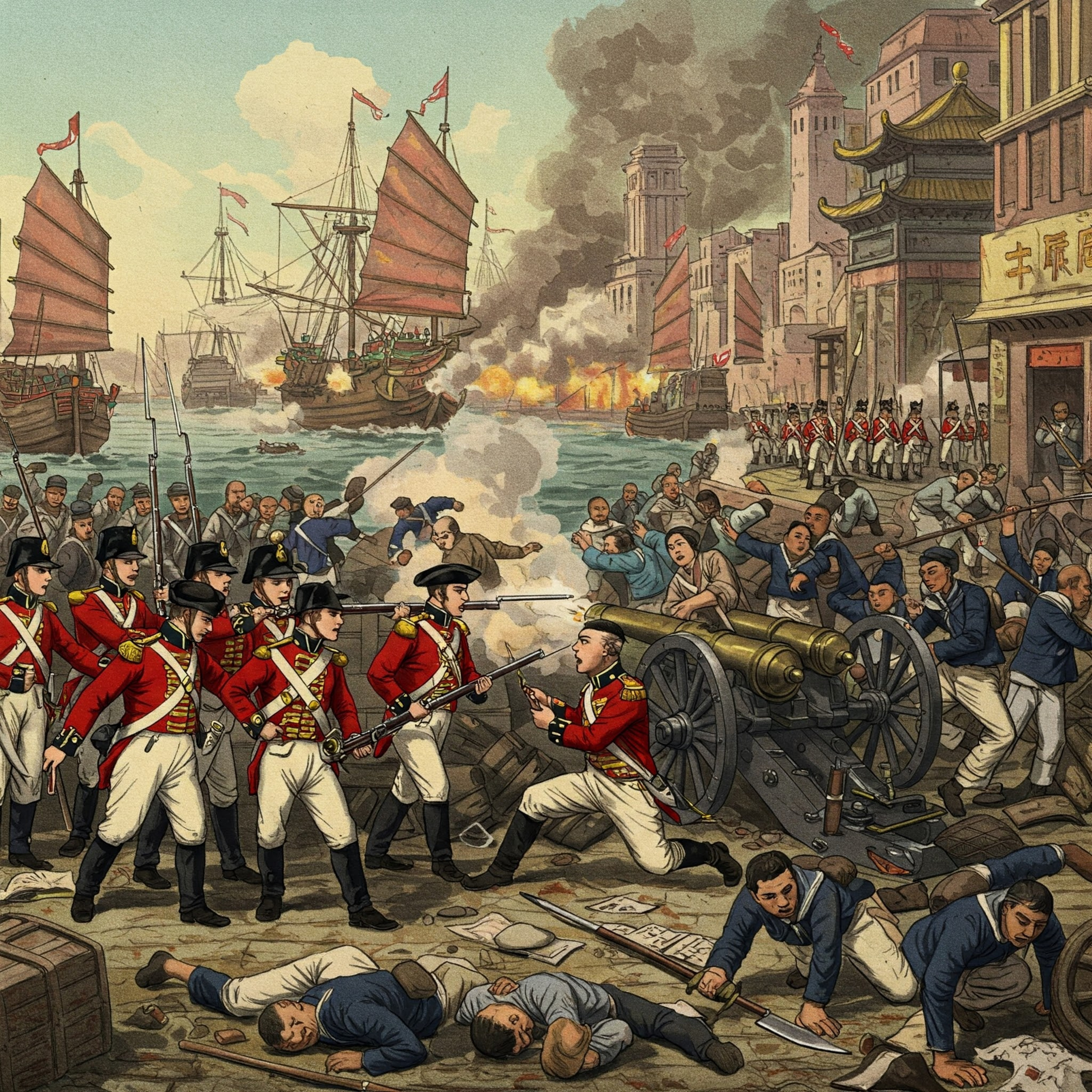 From Opium Wars to Fentanyl: A History of the War on Drugs | Support the show on Patreon https://www.patreon.com/THO420Join us as we embark on a journey through the complex and often tragic history of the War on Drugs. We'll trace its roots back to the Opium Wars of the 19th century, exploring how global power dynamics and racial biases have shaped drug policy and its devastating consequences. We'll examine the failed policies of prohibition, the rise of mass incarceration, and the ongoing struggles with addiction and overdose, particularly the current fentanyl crisis. This episode will delve into the human cost of the War on Drugs and explore potential paths towards a more just and effective approach to drug policy.CIA Involvement in Southeast Asian Drug Trafficking:"The Politics of Heroin: CIA Complicity in the Global Drug Trade" by Alfred W. McCoy. This book provides an in-depth analysis of the CIA's alleged involvement in the heroin trade during the Vietnam War era. amazon.com"Guns, Drugs, and the CIA" – A PBS Frontline investigation exploring the CIA's connections to drug trafficking. pbs.orgNixon Administration's War on Drugs and Its Racial Implications:"Nixon Adviser Admits War on Drugs Was Designed to Criminalize Black People" – An article discussing admissions by Nixon's aide about the true intentions behind the War on Drugs. eji.org+1cnn.com+1"Was Nixon's War on Drugs a Racially Motivated Crusade?" – A Vox article examining the racial motivations behind Nixon's policies. vox.comImpact of the War on Drugs on Mass Incarceration:"Race, Mass Incarceration, and the Disastrous War on Drugs" – An analysis by the Brennan Center for Justice on how drug policies have led to mass incarceration, particularly affecting Black communities. brennancenter.orgCIA and Drug Trafficking Allegations:"CIA Drug Trafficking Allegations" – A Wikipedia entry summarizing various accusations against the CIA regarding drug trafficking. en.wikipedia.orgEvolution of Drug Policies and Their Societal Impact:"The War on Drugs as Structural Racism" – A discussion by Penn LDI on how drug policies have perpetuated systemic racism. ldi.upenn.edu"Fifty Years Ago Today, President Nixon Declared the War on Drugs" – An article by the Vera Institute reflecting on the half-century mark of the War on Drugs and its consequences. vera.orgThe Opium Wars and Their Impact:"The Opium Wars: The Politics and Economics of Addiction" by W. Travis Hanes III and Frank Sanello. This book offers a detailed account of the two Opium Wars between Britain and China, exploring the political and economic ramifications of opium addiction. asiapacificcurriculum.caamazon.comhistory.state.gov"Opium Wars | Definition, Summary, Facts, & Causes" by Britannica. This article provides a concise overview of the Opium Wars, detailing the causes, key events, and outcomes of both conflicts. britannica.com"Reefer Madness" and Cannabis Hysteria:"Reefer Madness" by the Hash Marihuana & Hemp Museum. This resource delves into the series of anti-marijuana propaganda films and books released in the 1930s that fueled hysteria about cannabis. tobacco.stanford.eduhashmuseum.comgrav.com"Reefer Madness (1936) - Plot" by IMDb. This page provides a summary of the 1936 film "Reefer Madness," highlighting its portrayal of marijuana use leading to moral decay and criminal behavior. linwoodhouse.co.ukPrison Industrial Complex:Wikipedia: Prison–industrial complexThis Wikipedia article offers a comprehensive overview of the Prison Industrial Complex, detailing its history, development, and the socio-economic factors contributing to its growth. Tufts University: What is the Prison Industrial Complex?Hosted by Tufts University, this resource explains the overlapping interests of government and industry in using surveillance, policing, and imprisonment as solutions to economic, social, and political problems. Tufts Self-Serve BlogsTIME Magazine: The True History of America's Private Prison Industry. | — | ||||||
| 3/17/25 |  Times Edge: A Journey to 6025 A.D. | In 6025 AD, the world is a toxic wasteland. Join me as I navigate this treacherous future, uncovering the secrets of a poisoned planet and searching for hope amidst the ruins.patreon.com/THO420Sound Effect byYhomar Frhiss Cueva Oviedo fromPixabaySound Effect byBRVHRTZ fromPixabaySound Effect byHasin Amanda fromPixabaySound Effect byfreesound_community fromPixabayXDIXKCHXTSW1ARAV, 948OIWP7PUKYOOK1, VZI3OPUCUGSN54RK, GMNHV7RNEBBUCVZJ, Y7O9J7CWZBETRAEK | — | ||||||
| 3/10/25 |  (Womans History Month) Accused: Claudel's Art, Salem's Hysteria, and the Price of Being Different | They were separated by centuries, but united by a shared fate. This episode explores the lives of Camille Claudel, the brilliant sculptor silenced by a patriarchal society, and the women of Salem, accused and condemned in a frenzy of fear. We delve into the societal pressures that led to their persecution, examining how fear, misunderstanding, and the suppression of female expression can have devastating consequences. Join us as we uncover the echoes of Salem in Claudel's tragic story.https://arthive.com/publications/2878~Love_story_Auguste_Rodin_and_Camille_Claudel1. Alte Nationalgalerie, Berlin, GermanyExhibition: Camille Claudel and Bernhard Hoetger: Emancipation from RodinDates: June 6, 2025 – September 28, 2025Details: This exhibition brings together approximately 140 objects, including 67 artworks by Claudel and Hoetger, with numerous items on loan from international institutions. It explores the artists' development beyond the influence of Auguste Rodin. SMB.MUSEUM2. Musée Camille Claudel, Nogent-sur-Seine, FrancePermanent Collection: Dedicated to Claudel's life and work, this museum houses the largest collection of her sculptures, offering an in-depth look at her artistic journey.3. Musée Rodin, Paris, FrancePermanent Collection: The museum displays several of Claudel's significant works, highlighting her collaboration with Rodin and her individual artistic achievements. MUSEE-RODIN.FR4. Art Institute of Chicago, Illinois, USAExhibition: Camille ClaudelDates: March 14, 2024 – July 14, 2024ARTIC.EDU5. J. Paul Getty Museum, Los Angeles, California, USAExhibition: Camille ClaudelDates: April 16, 2024 – July 21, 2024https://www.jstor.org/stable/10.5699/modelangrevi.112.2.0362https://archive.org/details/camilleclaudelli0000ayrahttps://www.musee-rodin.fr/en/musee/collections/oeuvres/letter-auguste-rodin-camille-claudelWMBB0IZGFJXHK9DK, FLUXGQ8QGN9J3FK6, YJEUNBHLVXSS9KDKBooks & BiographiesAyral-Clause, Odile. Camille Claudel: A Life. (2002)One of the most in-depth biographies on Claudel, exploring her work, mental health, and tragic institutionalization.Rewald, Sabine. Camille Claudel and Rodin: Fateful Encounter. (2005)A detailed examination of Claudel’s relationship with Rodin and how it affected her career and legacy.Butler, Ruth. Hidden in the Shadow of the Master: The Model-Wives of Cézanne, Monet, and Rodin. (2008)Explores how female artists and muses were erased or diminished in favor of their male counterparts.Academic Papers & ArticlesSilverman, Debora. “Camille Claudel and the Iconography of Gender.” Art Journal (1992)Analyzes Claudel’s sculptures and how they challenged the gender norms of her time.Doherty, M. “Institutionalized Genius: The Tragedy of Camille Claudel.” Journal of the History of Psychiatry (2011)Examines how women labeled as “difficult” were institutionalized under dubious pretenses.Museum & Exhibition ResourcesMusée Camille Claudel (France)Official museum housing many of her surviving works. Their website provides digital archives, essays, and exhibition details.WebsiteMusée Rodin ArchivesHolds letters, sculptures, and primary documents related to Claudel’s time with Rodin.WebsiteRelevant Modern ParallelsThe #FreeBritney MovementExamines how legal guardianship laws continue to strip women of autonomy today. Articles from The New York Times and Rolling Stone offer a direct comparison to Camille’s institutionalization.“The Erasure of Women in Art History” – The Art NewspaperHighlights how female artists were dismissed, co-opted, or erased from art history, including Claudel.Podcasts & Documentaries"Camille Claudel: A Sculptor’s Madness?" – The Art History Babes Podcast"Rodin & Claudel: The Tragedy of a Sculptress" – BBC Documentary | — | ||||||
| 3/3/25 | 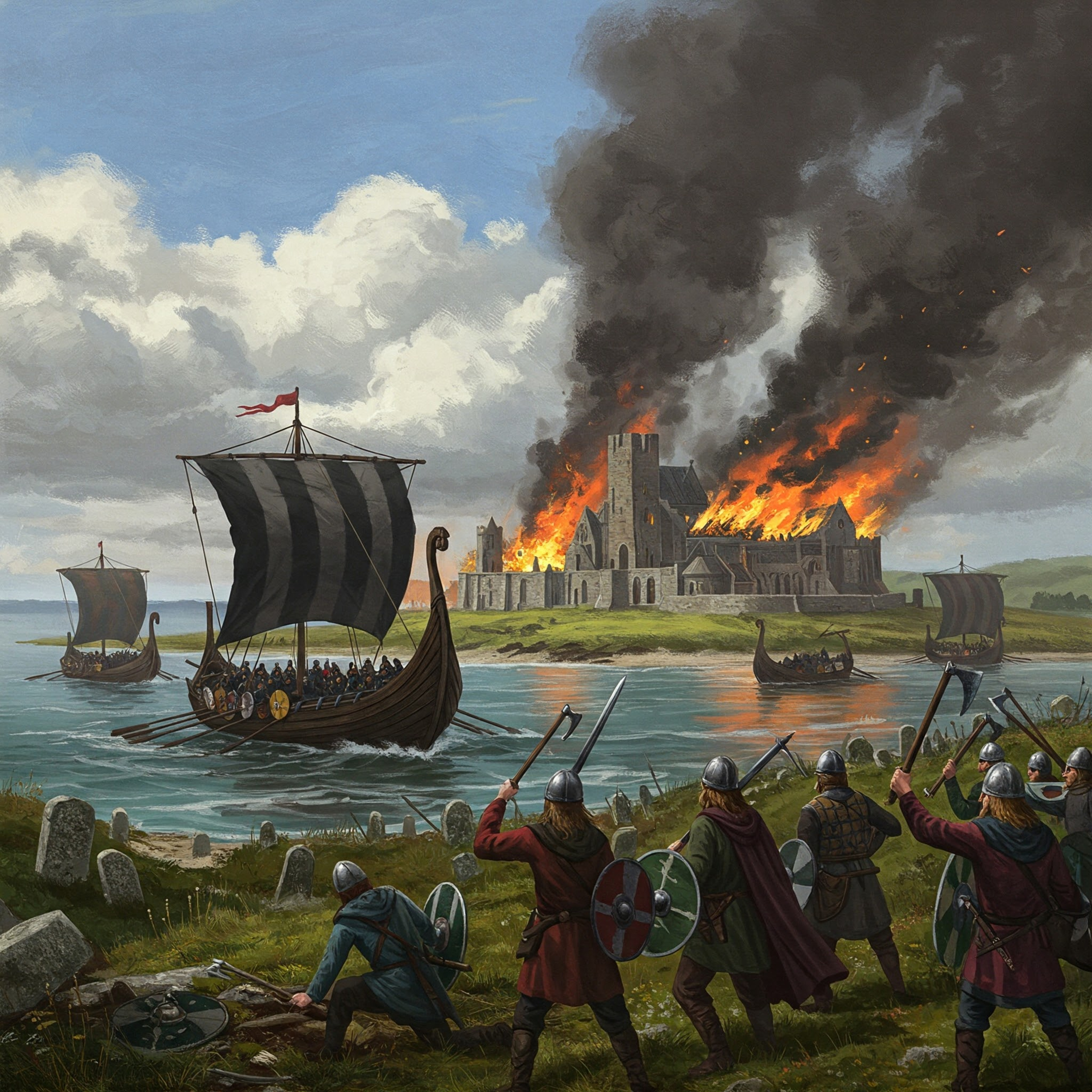 Vikings: Not the Badasses You Think They Were | Strap in as Cullen tears apart the bullshit myths about Vikings. Forget what you’ve seen on TV—these guys weren’t just horned-helmet-wearing, axe-swinging maniacs. In fact, they didn’t even wear those fucking helmets. We’re diving into who the Vikings really were: farmers, traders, and yeah, sometimes raiders, but definitely not the macho badasses today’s wannabe tough guys think they are. Plus, we’re unpacking how the Vikings ended up as poster boys for toxic masculinity and modern extremist bullshit. Oh, and we’ve got a wild tangent on the Varangian Guard—because Vikings working as Byzantine bodyguards? That’s some next-level history.The Viking World by Stefan Brink and Neil PriceComprehensive look at Viking society, culture, and their actual way of life—spoiler: no horned helmets.The Age of the Vikings by Anders WinrothBalances the badass reputation with the real-deal facts about Viking society, trade, and law.Vikings: A History by Robert FergusonDives deep into who the Vikings really were, and how they’ve been mythologized over time.The Varangian Guard: Vikings in the Byzantine Empire by John HaldonDetails the wild story of Vikings who became elite soldiers for the Byzantine emperors.The Real Valkyrie: The Hidden History of Viking Warrior Women by Nancy Marie BrownBreaks down the myths and truths about Viking women, especially the badass warrior women often overlooked in mainstream stories.Documentaries & Media:Vikings Unearthed (BBC & PBS NOVA)Uses satellite technology to uncover Viking settlements in unexpected places.Secrets of the Viking Sword (PBS NOVA)Explores the craftsmanship behind the legendary Ulfberht swords, separating fact from fiction.The Real Vikings (History Channel)Companion doc to the Vikings TV show, but with real historians debunking the show’s dramatizations.Articles & Online Resources:National Geographic: The Truth About VikingsDebunks popular myths like the horned helmets and “savage” stereotypes.History Extra (BBC): The Viking Myths You Thought Were TrueBusts myths about Viking life, including their hygiene, roles of women, and more.Smithsonian Magazine: Vikings Were More Than Just RaidersDetails how Vikings were traders, settlers, and political players—not just violent marauders.Ancient History Encyclopedia: The Varangian GuardGoes deep into the Viking elite soldiers who served in the Byzantine Empire, highlighting their complex identity beyond raiding.Special Topics (For Modern Comparisons):The Modern Viking Obsession:Vice: Why White Supremacists Love VikingsExplores how modern hate groups have hijacked Viking imagery for their own bullshit narratives.The Atlantic: The Misuse of Viking Symbols in Modern TimesLooks at how “Viking” identity has been distorted by toxic masculinity and extremist groups.Pop Culture Influence:The Guardian: How TV Turned Vikings Into HeroesDiscusses how shows like Vikings and The Last Kingdom shaped modern perceptions of Norse culture.YQPTHULOSFCQF98M, QKPU7NFCLTKJF1G6Music by ovana lane from Pixabay | — | ||||||
| 2/24/25 |  (Black History Month) The Jubalaires: Pioneers of Gospel Harmony | Step back in time with the Jubalaires, a legendary gospel quartet that brought joy and harmony to audiences worldwide. Their soulful voices and infectious energy created a unique sound that captivated hearts and inspired generations. This episode delves into the rich history of the Jubalaires, exploring their musical legacy and the impact they had on gospel music.EFUH5KKQTPPV8B0A, W2UMH3RKUJBD3ULX, 9S3C1CY7TCV20L8Jhttps://ia601405.us.archive.org/25/items/princess-nokia-1992-deluxe/1992%20Deluxe/05-Mine.mp3https://archive.org/details/lilnasxoldtownroadfeat.billyraycyrusmusicvideohttps://ia800900.us.archive.org/25/items/OGAPBANDOopsUpsideYourHead87ExtendedMix/%E2%80%A2%20GAP%20BAND%20-%20Oops%20upside%20your%20head%20%28%2787%20extended%20mix%29.mp3https://archive.org/search?query=marvin+gaye+got+to+give+it+up%22+audiohttps://ia803101.us.archive.org/5/items/78_gabriel-sound-your-trumpet_the-jubalaires-williams-newson_gbia0060962b/Gabriel%20Sound%20Your%20Trumpet%20-%20The%20Jubalaires.mp3https://ia801505.us.archive.org/5/items/78_get-lost_the-jubalaires-glover-mann_gbia0485364b/GET%20LOST%20-%20THE%20JUBALAIRES%20-%20Glover%20-%20Mann.mp3https://archive.org/details/the-jubalaires-noahWikipedia: The JubalairesThis comprehensive article covers the group's history, members, and musical style, highlighting their rhythmic, rhyming delivery as an early form of rap. EN.WIKIPEDIA.ORGRapzilla: "The Jubalaires Were Doing Gospel Rap Back in the 1940s"This article discusses how The Jubalaires' music, particularly their song "Noah," exemplified a proto-rap style long before hip-hop's emergence. RAPZILLA.COMMessy Nessy Chic: "This 1930s Quartet Didn't Know It, But They Were Rap's First Recorded Artists"This piece explores how The Jubalaires pioneered a style that predated modern rap, blending gospel themes with rhythmic vocal delivery. MESSYNESSYCHIC.COMMoss and Fog: "The Jubalaires Debuted the World's First 'Rap' Music Way Back in 1946"This article highlights The Jubalaires' groundbreaking performance of "Noah," showcasing their innovative approach to music that laid the groundwork for future genres. MOSSANDFOG.COMOpal Louis Nations: "The Jubalaires"This PDF provides an in-depth history of The Jubalaires, detailing their origins, musical journey, and contributions to gospel and popular music. OPALNATIONS.COMUGHA: "The Jubalaires"An extensive article prepared for the United in Harmony Association Hall of Fame Ceremony, offering insights into the group's formation, evolution, and legacy. UGHA.USERS5.50MEGS.COMYouTube: "The Jubalaires - Noah (First RAP Performance)"This video features The Jubalaires performing "Noah," often cited as one of the earliest examples of rap-like delivery in music. YOUTUBE.COM | — | ||||||
| 2/17/25 | 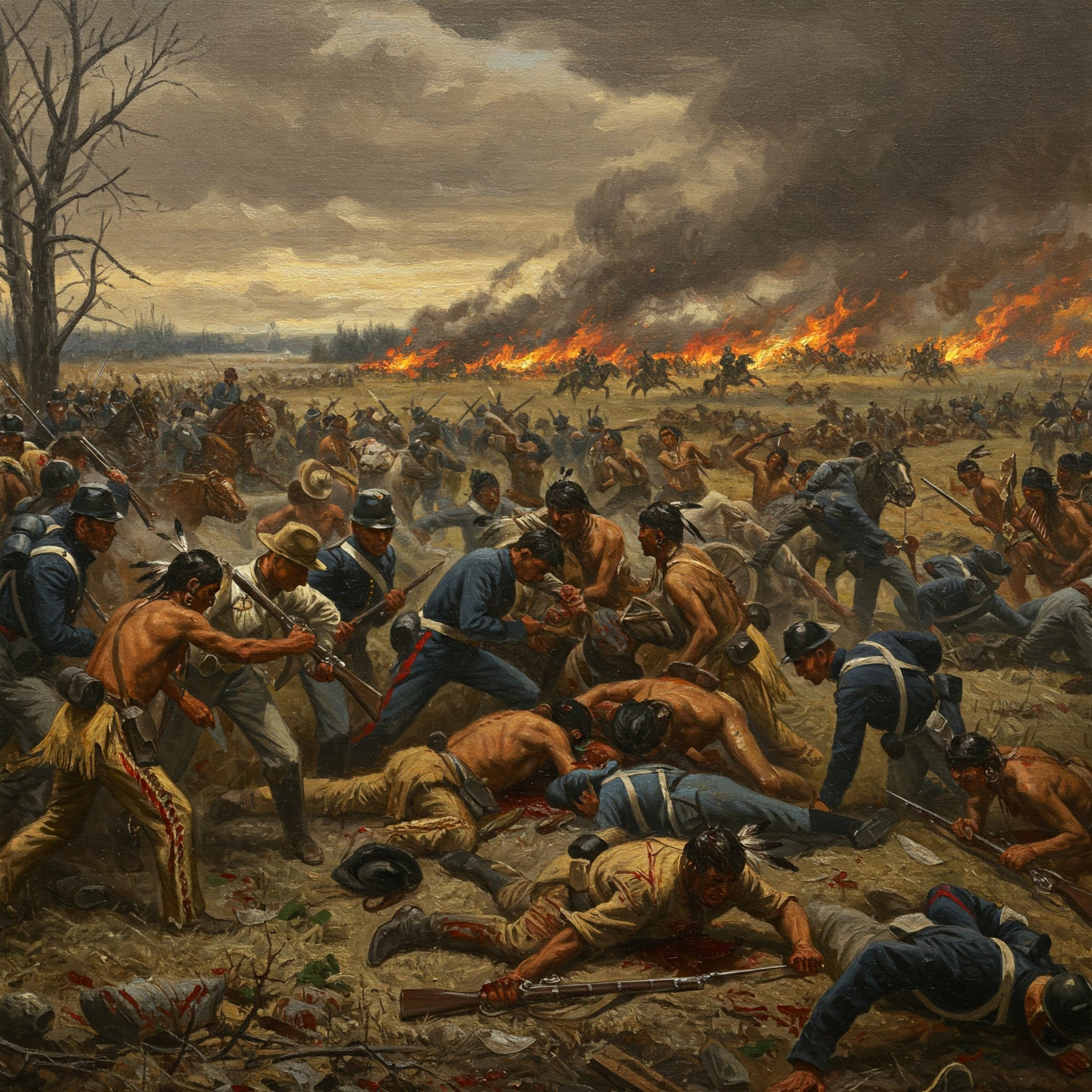 Whispers of Sorrow: Remembering the U.S.-Dakota War of 1862 | n 1862, a brief but devastating conflict unfolded in Minnesota—the U.S.-Dakota War. Lasting only six weeks, its repercussions have echoed through generations, profoundly affecting both the Dakota people and settler descendants. Families were torn apart, lives were lost, and communities were forever changed. Today, the pain and memories of that time still linger, reminding us of the deep scars left by this tragedy. Join us as we honor the memories of those impacted, delving into personal stories and historical accounts to shed light on this pivotal moment in history. Through understanding and reflection, we hope to foster healing and awareness of the enduring legacy of the U.S.-Dakota War.Stay connected for updates and exclusive content:mprnews.orgMusic by Mystical_Dreamer from PixabayMusic by Mystical_Dreamer from PixabayMusic by Mystical_Dreamer from PixabayMusic by TuneTrove from PixabayMusic by Ajay Ahuja from PixabayMinnesota Historical Society: Offers detailed accounts of the war's causes, events, and aftermath. MNHS.ORGUniversity of Minnesota's Center for Holocaust and Genocide Studies: Provides insights into the conflict's impact on both the Dakota people and settlers. CLA.UMN.EDUU.S.-Dakota War of 1862 Website: Features research resources, publications, and educational tools related to the war. USDAKOTAWAR.ORGMinnesota Historical Society's Primary Sources Compilation: A collection of letters, diaries, and reports from the period, offering firsthand perspectives. LIBGUIDES.MNHS.ORGMNopedia: Provides an overview of the war, including key events and figures involved. MNOPEDIA.ORGWikipedia: Offers a comprehensive summary of the conflict, including its causes, major battles, and consequences. EN.WIKIPEDIA.ORG | — | ||||||
| 2/10/25 | 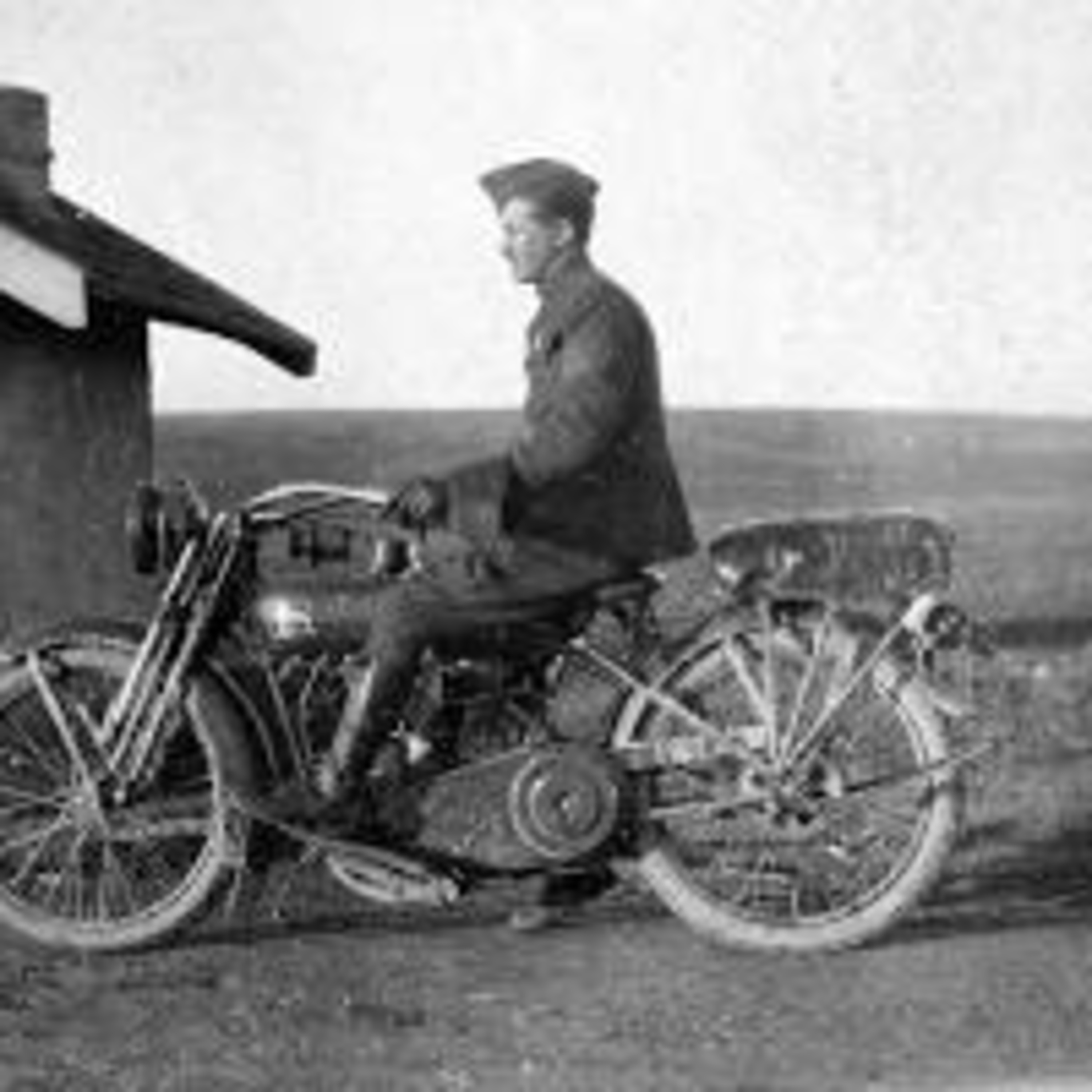 Harley-Davidson: The Badass, the Busted, and the Bullshit | Buckle up, because Cullen and Jamie are taking you on awild-ass ride through the gritty origins of Harley-Davidson—the good, the bad, and the downright fucked up. From its early days in Milwaukee to shady pre-WWII dealings in Nazi Germany, the disastrous AMF years that almostkilled the brand, and the environmental scandals they tried to sweep under the rug, this isn’t your grandpa’s Harley story. We’re talkinglawsuits over engine sounds, biker gang drama, and how Harley went from outlaw machines to overpriced electric bikes that don’t even growl. This one’s a bumpy ride, folks.🔗 Listen now on Patreon:patreon.com/THO420📸 Follow the madness on Instagram:@TimeMachineDiariesIGGWIAIO1IUJBXKJ, WWUMWB5AQXN5GG8D, 9OWZT8XLA9VYOP28https://pixabay.com/music/alternative-hip-hop-motivational-rap-281061/Cover Art: https://www.endscuoio.com/military-motorcycles-in-world-war-one/Music byovana lane fromPixabayBooks & Publications:Harley-Davidson: A History of the World's Most Famous Motorcycle by Margie Siegal(Covers Harley's evolution from its early days to becoming a global icon.)The Harley-Davidson Motor Company: An Official Eighty-Year History by David K. Wright(Detailed official history, including the company’s growth and major milestones.)Milwaukee Marvel: The History of Harley-Davidson by Tom Murphy(Focuses on the company's cultural impact and its role in American manufacturing.)At the Creation: Myth, Reality, and the Origin of the Harley-Davidson Motorcycle, 1901-1909 by Herbert Wagner(Dives into the very early years of Harley-Davidson and its founders.)Documentaries & Video Sources:Harley and the Davidsons (Discovery Channel Mini-Series)(A dramatized but historically grounded series covering the origins and rise of Harley-Davidson.)The History of Harley-Davidson (History Channel Documentary)(Provides a factual timeline of Harley's rise, struggles, and reinvention.)Online Resources & Archives:Harley-Davidson’s Official Website(Company history and archival material straight from the source.)Harley-Davidson Museum (Milwaukee, WI)(Museum archives include historical photos, bikes, and firsthand documentation.)Magazine Articles:Cycle World and Motorcyclist Magazine archives(Feature in-depth articles on Harley's history, engineering, and cultural impact.)The Milwaukee Journal Sentinel(Local newspaper covering Harley’s history from a hometown perspective.) | — | ||||||
| 2/7/25 |  Random Thought | Just sharing a random thought... | — | ||||||
| 2/3/25 |  Secrets of the Sands | Music by Noru from Pixabay Music by Lidérc from Pixabay Music by Praz Khanal from Pixabay Music by Ada79452 from Pixabay 4SD93QJOAO1WC2SL What Caused the Bronze Age Collapse?" – History.com HISTORY.COM "Bronze Age Collapse" – World History Encyclopedia WORLDHISTORY.ORG "What Caused The Bronze Age Collapse Of Civilization? (5 Theories)" – TheCollector.com THECOLLECTOR.COM "Did climate change help cause the Bronze Age to collapse?" – The Bulletin THEBULLETIN.ORG "Lessons From The Last Time Civilization Collapsed" – NPR NPR.ORG | — | ||||||
| 1/29/25 | 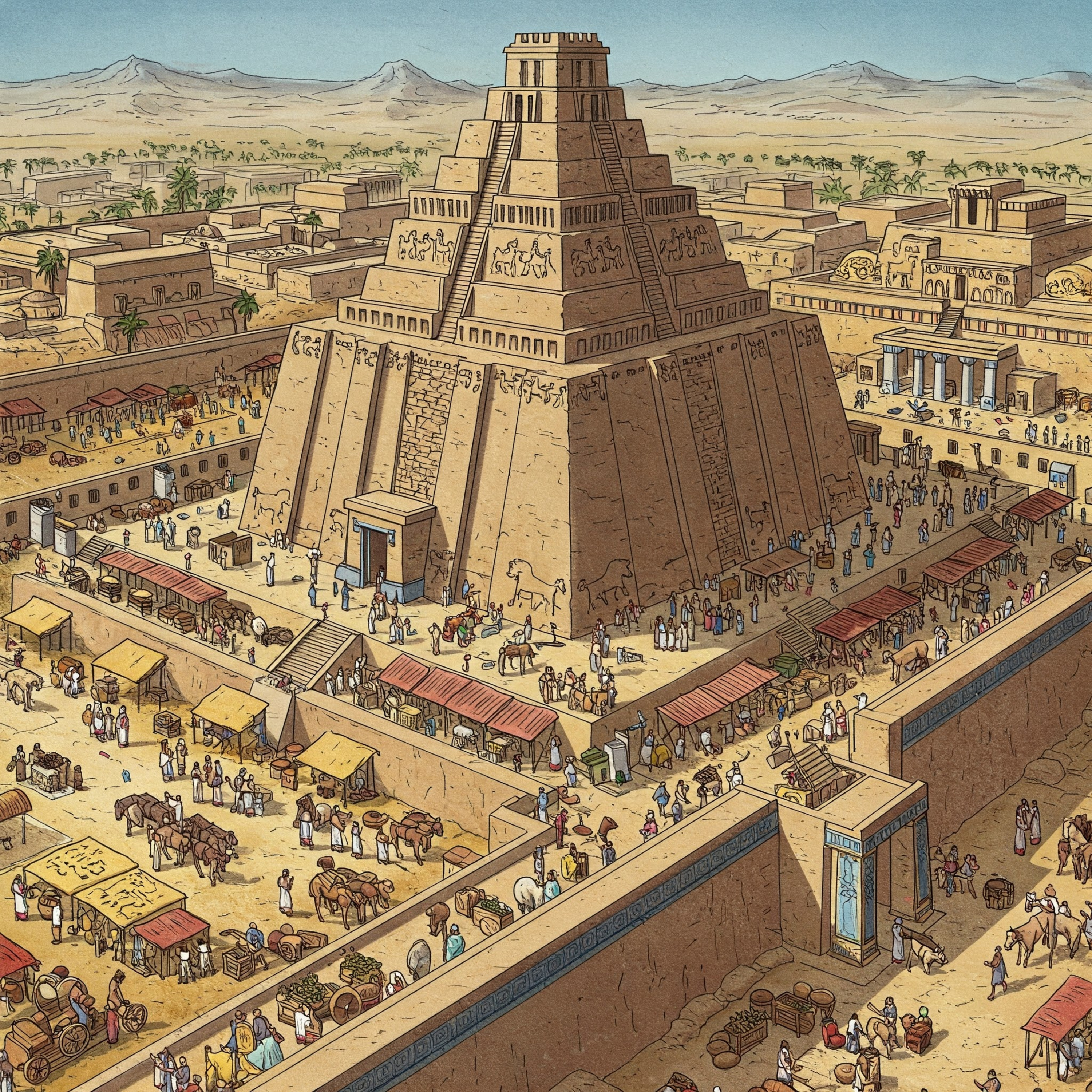 Uruk - Blood and Bricks at the Dawn of Civilization | In this intense episode of Time Machine Diaries, Cullen takes you back to 3,200 BCE to the brutal and bloody beginnings of Uruk, the world’s first city. Discover how sacrifices, labor, and harsh laws were woven into the very fabric of this ancient society. From towering ziggurats to the first known writing system, Uruk set the stage for everything that would come after. Explore the harsh realities of city life, the dark rituals that defined its culture, and the innovations that shaped the future of civilization. Join us for a gritty dive into the rise of urban life—one where power, fear, and survival were the ultimate currencies. patreon.com/THO420 | — | ||||||
| 1/23/25 |  The Greatest Raid of All Time | Join us as we embark on a journey through history, reliving the intensity and drama of the St. Nazaire Raid, a mission that stands as a testament to the indomitable spirit of those who dared to challenge tyranny in its darkest hour. patreon.com/THO420 | — | ||||||
| 1/17/25 | 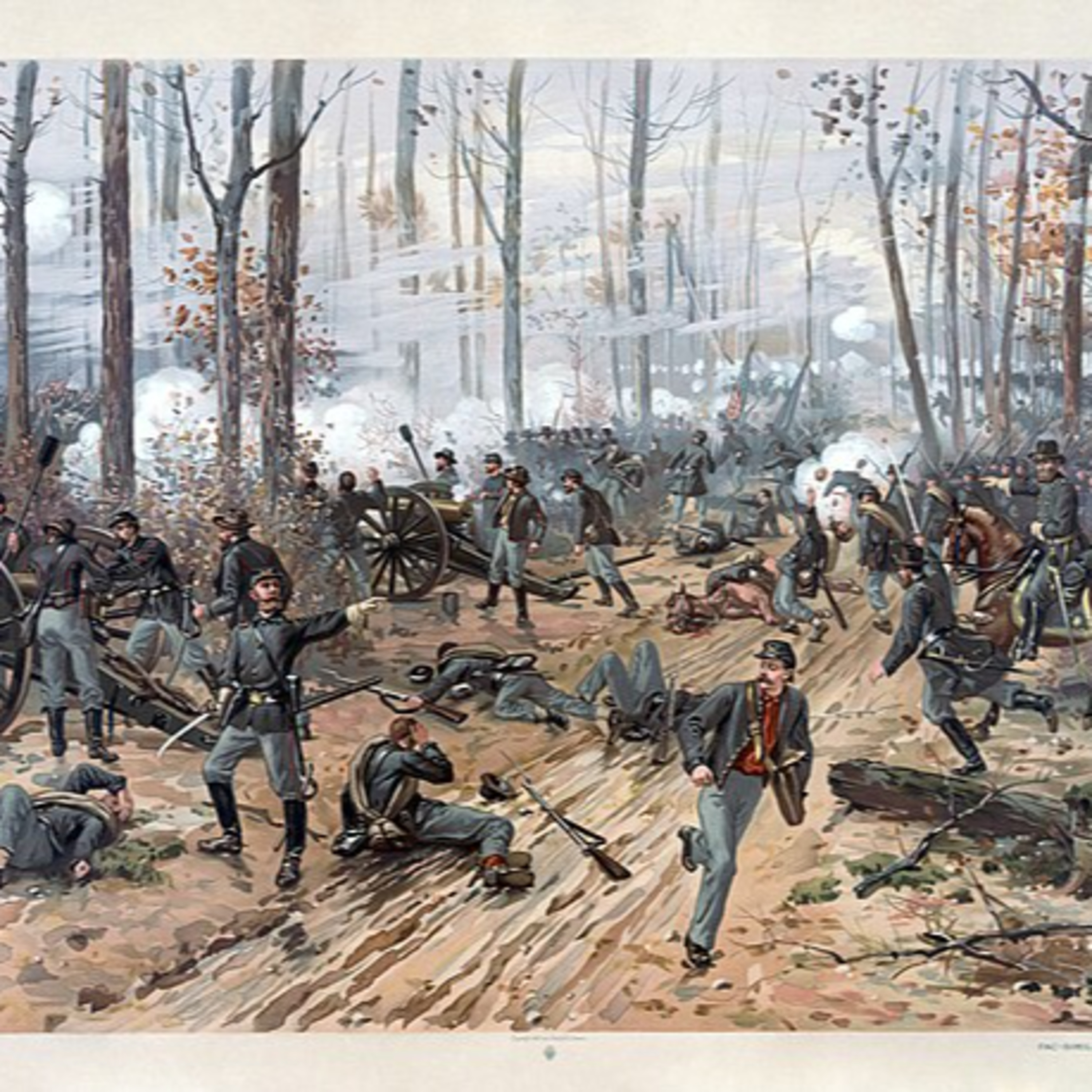 Echoes of Valor: The Battle of Shiloh Hill | Journey back to the bloody battlefields of the Civil War as we delve into the chilling history of Shiloh Hill. Explore the haunting legends, the tragic stories of the fallen, and the enduring impact of this pivotal conflict on the American landscape. Prepare to be transported back in time as we uncover the secrets of this enigmatic site. https://en.wikipedia.org/wiki/Battle_of_Shiloh#/media/File:Thure_de_Thulstrup_-_Battle_of_Shiloh.jpg https://www.battlefields.org/learn/quizzes/how-well-do-you-know-battle-shiloh https://pixabay.com/ patreon.com/THO420 | — | ||||||
Showing 23 of 23
Sponsor Intelligence
Sign in to see which brands sponsor this podcast, their ad offers, and promo codes.
Chart Positions
2 placements across 2 markets.
Chart Positions
2 placements across 2 markets.