
Insights from recent episode analysis
Audience Interest
Podcast Focus
Publishing Consistency
Platform Reach
Insights are generated by CastFox AI using publicly available data, episode content, and proprietary models.
Est. Listeners
Based on iTunes & Spotify (publisher stats).
- Per-Episode Audience
Est. listeners per new episode within ~30 days
1 - 1,000 - Monthly Reach
Unique listeners across all episodes (30 days)
1 - 5,000 - Active Followers
Loyal subscribers who consistently listen
1 - 500
Market Insights
Platform Distribution
Reach across major podcast platforms, updated hourly
Total Followers
—
Total Plays
—
Total Reviews
—
* Data sourced directly from platform APIs and aggregated hourly across all major podcast directories.
On the show
Recent episodes
Quorum Sensing: Rediscovering the Rules of Bacterial Life Featuring Wolf Prize and Canada Gairdner Award Laureate Bonnie Bassler
Apr 16, 2026
1h 18m 55s
The Strange and Wonderful World of Symplectic Geometry Featuring Wolf Prize Winner Yakov Eliashberg
Dec 2, 2024
46m 35s
Using AI To Solve Biology Problems in Minutes Instead of Years Featuring Nobel Laureate John Jumper
Aug 10, 2024
1h 00m 01s
How We Sense Pain? Featuring Nobel Laureate Professor David Julius
Apr 10, 2024
56m 44s
Social Links & Contact
Official channels & resources
Official Website
Login
RSS Feed
Login
| Date | Episode | Description | Length | |
|---|---|---|---|---|
| 4/16/26 | 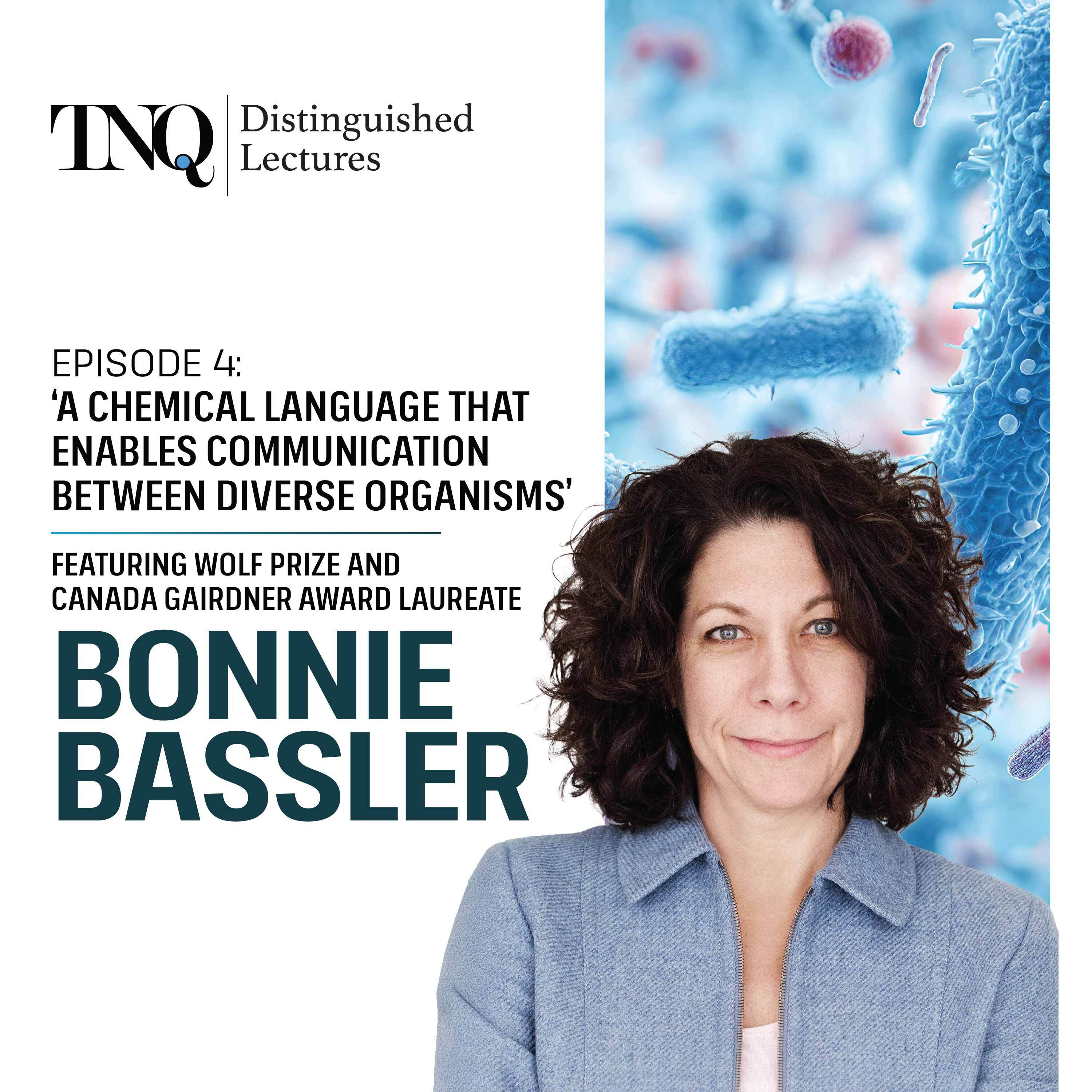 Quorum Sensing: Rediscovering the Rules of Bacterial Life Featuring Wolf Prize and Canada Gairdner Award Laureate Bonnie Bassler Quorum Sensing: Rediscovering the Rules of Bacterial Life Featuring Wolf Prize and Canada Gairdner Award Laureate Bonnie Bassler | In this episode of TNQ Distinguished Lectures, Professor Bonnie Bassler, a molecular biologist and Wolf Prize and Canada Gairdner Award Laureate, talks about her work in quorum sensing – a process of cell-to-cell communication in bacteria. We learn about how she was part of the revolutionary discovery of quorum sensing that challenged the 500 year-old dogma that bacteria are simple, solitary creatures, and how her work can potentially lead to new treatments for bacterial infections and novel ways to control harmful bacteria. Joining her in conversation is Ramaseshan Ramachandran, well-known science journalist and former science correspondent for The Hindu newspaper and Frontline Magazine. To know more about Bonnie Bassler and her work, visit https://www.tnqdistinguishedlectures.org/about-speaker/bonnie-bassler.php To know more about TNQ and the Distinguished Lectures series, visit https://www.tnqdistinguishedlectures.org TNQ Foundation is a not-for-profit foundation set up in India to support basic research in mathematics and the life sciences. The Foundation also supports the arts and animal welfare. The Foundation's main outreach programme is the annual series of lectures in life sciences and mathematics, called the TNQ Distinguished Lectures in Life Sciences and TNQ Distinguished Lectures in Mathematics', respectively. It also manages the TNQ Inspiring Science Awards for the life sciences and TNQ Numbers & Shapes for mathematics. https://tnq.foundation CREDITS Host: Dr Ramaseshan Ramachandran Guest: Professor Bonnie Bassler Produced and Created for TNQ This is a Maed in India production Head of Production: Mae Mariyam Thomas Project Manager: Shaun Fanthome Producer: Ruchi Sawardekar Director & Video Editor: Jishnu Guha Mix Engineer: Kartik Kulkarni Asst. Sound Recordist & Sound Editor: Nihar Temkar Production Coordinator: Natasha Vakil | 1h 18m 55s | |
| 12/2/24 | 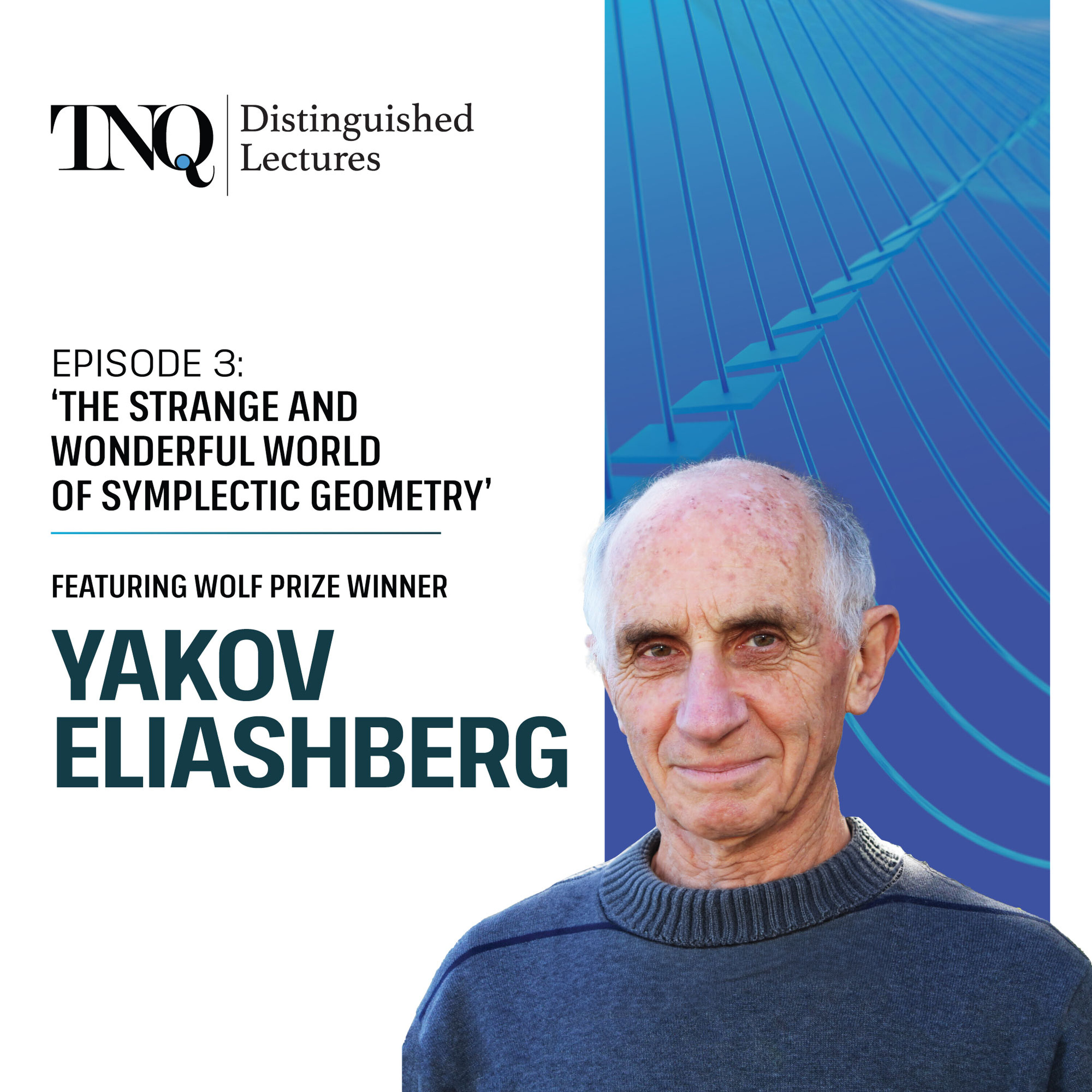 The Strange and Wonderful World of Symplectic Geometry Featuring Wolf Prize Winner Yakov Eliashberg The Strange and Wonderful World of Symplectic Geometry Featuring Wolf Prize Winner Yakov Eliashberg | In this episode of TNQ Distinguished Lectures, Yakov Eliashberg, a recipient of the Heinz Hopf Prize as well as the Wolf Prize in Mathematics, discusses his journey into geometry and maths, starting from his early success in Olympiads and the Soviet educational system. He reflects on his immigration to the U.S. and his pioneering work in symplectic geometry - a field with roots in Hamiltonian mechanics. He explores symplectic geometry's unique balance of rigidity and flexibility while delving into symplectic field theory and its links to quantum field theory, along with potential applications in physics. Joining him in conversation is Ramaseshan Ramachandran, well-known science journalist and former science correspondent for The Hindu newspaper and Frontline Magazine. To know more about Yakov Eliashberg and his work, visit https://www.tnqdistinguishedlectures.org/about-speaker.html To know more about TNQ and the Distinguished Lectures series, visit https://www.tnq.co.in/ CREDITS Host: Dr Ramaseshan Ramachandran Guest: Yakov Eliashberg Produced and Created for TNQ This is a Maed in India production Head of Production: Mae Mariyam Thomas Project Manager: Shaun Fanthome Producer: Meghna Gulati Sound Editor & Mix Engineer: Lakshman Parsuram | 46m 35s | |
| 8/10/24 | 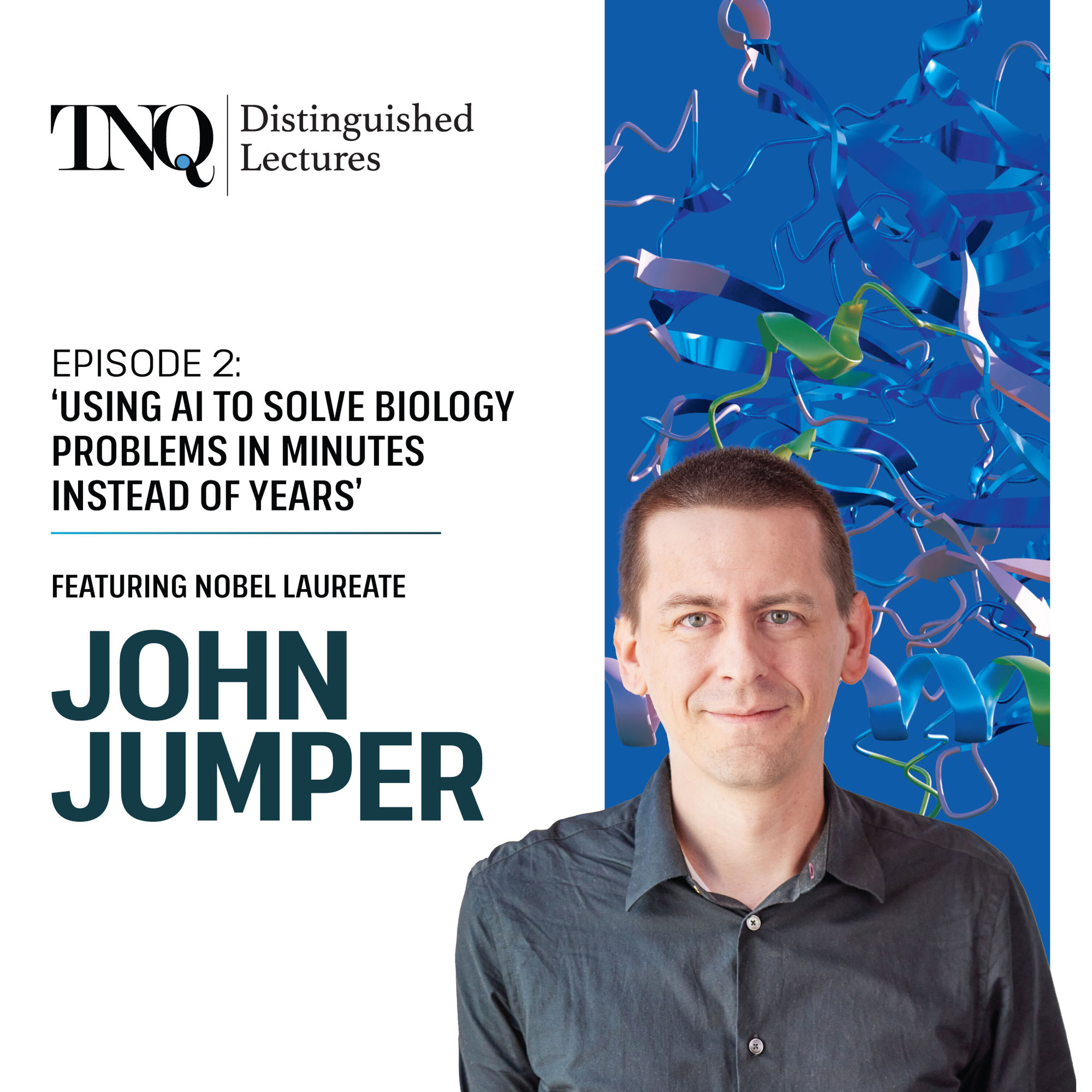 Using AI To Solve Biology Problems in Minutes Instead of Years Featuring Nobel Laureate John Jumper Using AI To Solve Biology Problems in Minutes Instead of Years Featuring Nobel Laureate John Jumper | In this episode of TNQ Distinguished Lectures, Dr John Jumper, a recipient of the Breakthrough Prize, talks about his work on AlphaFold, the AI tool which predicts the three-dimensional structure of proteins. As the project lead, Dr Jumper discusses the intricacies and difficulties in predicting accurate protein structures and how biology as a science is perfectly suited to using the tools of AI to find solutions to such complex questions, which usually take years, in a couple of minutes. Dr. Jumper also breaks down the difference between machine learning and deep learning and how these powerful tools of AI will change the future of science and discovery. Joining him in conversation is Ramaseshan Ramachandran, well-known science journalist and former science correspondent for The Hindu newspaper and Frontline Magazine. To know more about Dr John Jumper and his work, visit https://www.tnq.co.in/johnjumper/ To know more about TNQ and the Distinguished Lectures series, visit https://www.tnq.co.in/ CREDITS Host: Dr Ramaseshan Ramachandran Guest: Dr John Jumper Produced and Created for TNQ This is a Maed in India production Head of Production: Mae Mariyam Thomas Project Manager: Shaun Fanthome Producer: Sean D’mello, Ruchi Sawardekar Sound Editor & Mix Engineer: Kartik Kulkarni | 1h 00m 01s | |
| 4/10/24 | 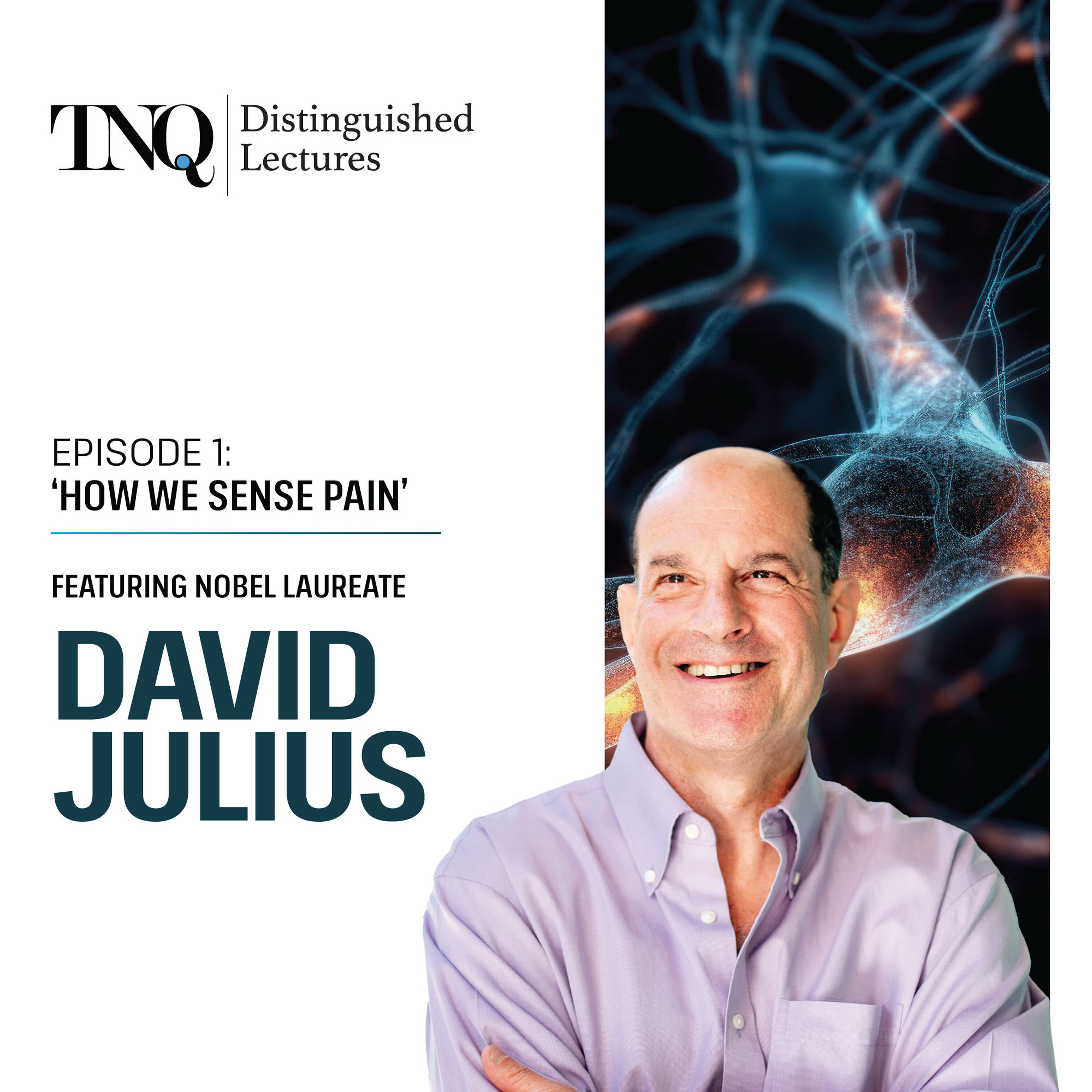 How We Sense Pain? Featuring Nobel Laureate Professor David Julius How We Sense Pain? Featuring Nobel Laureate Professor David Julius | In this episode of TNQ Distinguished Lectures, Professor David Julius, a physiologist and Nobel Prize laureate, talks about his work on molecular mechanisms for pain sensation and heat including the characterization of the TRP-V1 and TRP-M8 receptors that detect capsaicin, menthol, and temperature. We get to know why birds don’t respond to capsaicin, thresholds for TRP receptors and whether they're affected by regional or racial differences, and his seminal contribution of the neural and molecular basis for the sense of temperature and pain. Joining him in conversation is Ramaseshan Ramachandran, well-known science journalist and former science correspondent for The Hindu newspaper and Frontline Magazine. To know more about Dr David Julius and his work, visit https://www.tnq.co.in/davidjulius/ To know more about TNQ and the Distinguished Lectures series, visit https://www.tnq.co.in/ CREDITS Host: Dr Ramaseshan Ramachandran Guest: Professor David Julius Produced and Created for TNQ This is a Maed in India production Head of Production: Mae Mariyam Thomas Project Manager: Shaun Fanthome Producer: Sean D’mello, Ruchi Sawardekar Sound Editor & Mix Engineer: Kartik Kulkarni | 56m 44s |
Showing 4 of 4
Sponsor Intelligence
Sign in to see which brands sponsor this podcast, their ad offers, and promo codes.
Chart Positions
2 placements across 2 markets.
Chart Positions
2 placements across 2 markets.