

Insights from recent episode analysis
Audience Interest
Podcast Focus
Publishing Consistency
Platform Reach
Insights are generated by CastFox AI using publicly available data, episode content, and proprietary models.
Total monthly reach
Estimated from 1 chart position in 1 market.
By chart position
- 🇳🇿NZ · Management#143500 to 3K
- Per-Episode Audience
Est. listeners per new episode within ~30 days
150 to 900🎙 Daily cadence·119 episodes·Last published today - Monthly Reach
Unique listeners across all episodes (30 days)
500 to 3K🇳🇿100% - Active Followers
Loyal subscribers who consistently listen
200 to 1.2K
Market Insights
Platform Distribution
Reach across major podcast platforms, updated hourly
Total Followers
—
Total Plays
—
Total Reviews
—
* Data sourced directly from platform APIs and aggregated hourly across all major podcast directories.
On the show
Recent episodes
The Leadership Power of Tiny Experiments with Winnie da Silva
May 20, 2026
Unknown duration
Stop Telling, Start Asking with Winnie da Silva
May 13, 2026
Unknown duration
Why Your Influence Is Falling Short with Winnie da Silva
May 6, 2026
Unknown duration
Why Leadership Development Fails with Winnie da Silva
Apr 29, 2026
Unknown duration
You’re Solving the Wrong Problem with Winnie da Silva
Apr 22, 2026
Unknown duration
Social Links & Contact
Official channels & resources
Official Website
Login
RSS Feed
Login
| Date | Episode | Description | Length | ||||||
|---|---|---|---|---|---|---|---|---|---|
| 5/20/26 |  The Leadership Power of Tiny Experiments with Winnie da Silva | “Leadership growth happens when we begin practicing new behaviors in the real world.” - Winnie da SilvaSome of the biggest leadership breakthroughs don’t come from massive reinventions. They come from one small shift repeated consistently over time.In this episode, I’m digging into why so many leaders get stuck thinking about growth instead of actually practicing it and why tiny experiments might be one of the most powerful tools for real leadership development.You’ll hear me discuss:Why leaders often get trapped thinking about growth instead of practicing new behaviorsHow tiny experiments reduce overwhelm and make meaningful change feel more achievableWhy confidence is usually built through action and repetition, not before itThe power of small, consistent leadership behaviors over dramatic transformationHow reflection frameworks like “plus, minus, next” help create sustainable growthWhat I learned from running my own public leadership experiment around strategic thinkingWhy experimentation, adaptability, and continuous learning are becoming essential leadership skills todayResourcesWinnie da Silva on LinkedIn | On the Web | Substack | YouTube | Email - winnie@winnifred.orgTiny Experiments in Leadership Thinking episode - December 2025 | — | ||||||
| 5/13/26 |  Stop Telling, Start Asking with Winnie da Silva | “Leadership at scale isn’t about having all the answers—it’s about drawing out other people’s thinking.” - Winnie da SilvaWhy do so many leaders feel like they have to carry all the answers, and what is it actually costing them?In this episode, I unpack one of the most overlooked leadership tools: asking better questions. I share why constantly jumping in with solutions can quietly limit your team’s thinking, and how shifting toward thoughtful, open-ended questions can completely change the way you lead. It doesn’t mean stepping back or losing authority, but it does elevate the quality of conversations, decisions, and ownership across your team.You’ll hear me discuss:Why having all the answers can actually hold your team backHow asking questions creates ownership instead of dependencyThe connection between inquiry and reducing defensivenessHow better questions uncover hidden risks, assumptions, and blind spotsWhy leaders who ask more questions tend to make stronger decisionsHow questions build trust and increase accountability across teamsSimple, real-world questions you can use in conversations starting todayResourcesWinnie da Silva on LinkedIn | On the Web | Substack | YouTube | Email - winnie@winnifred.orgExample Questions: Understanding someone’s thinking“That’s an interesting point. Tell me more about what you're thinking.”“When you say X, what does that mean to you?”“What would need to be true for this to work?”“What do you care most about in this situation?”Collaboration and partnership“How might we best partner together on this?”“What role would you like me to play here?”“What decision do you need from me today?”Feedback conversations“What feedback do you have for me?”“What’s hard to tell me?”“What are we not talking about that we probably should be?”Vision and goals“If you and your team could only achieve one thing this year, what would it be?”“What challenge, if solved, would make the biggest difference?”“What are your top priorities and why?”Problem-solving and decision-making“What might be the root issue underneath this?”“What are we implicitly saying no to by saying yes?”“What data would change your mind?” | — | ||||||
| 5/6/26 |  Why Your Influence Is Falling Short with Winnie da Silva | “The issue isn’t the strength of the idea. It’s whether it connects to what the other person cares about.” - Winnie da SilvaWhy do some ideas land instantly… while others just hang in the air, no matter how well you explain them?In this episode, I break down a simple but powerful leadership concept that can completely change how you influence others, especially when you don’t have formal authority. I share how understanding what people truly care about (their “currency”) can shift conversations, build trust faster, and help your message actually stick.You’ll hear me discuss:Why strong arguments alone don’t guarantee influenceWhat “currency” really means and how it shows up in everyday leadershipHow to spot what someone values based on their behavior and prioritiesSimple ways to reframe your message so it connects and landsHow this applies to stakeholders, feedback, trust-building, and big conversationsWhy influence is less about pushing your point and more about aligning with what matters to others Resources Winnie da Silva on LinkedIn | On the Web | Substack | YouTube | Email - winnie@winnifred.org | — | ||||||
| 4/29/26 |  Why Leadership Development Fails with Winnie da Silva | “The goal isn’t ideas—it’s behavior change that drives business results.” - Winnie da SilvaWhy do so many leadership programs fall flat even when the content is solid? I’ve seen this play out time and time again over the past two decades. It’s rarely about the quality of the program itself. It’s about what’s happening around it. In this episode, I break down the two factors that actually determine whether leadership development creates real, lasting change. I also share where things tend to go wrong.You’ll hear me discuss:Why leadership development only works when both the leader and the organization are fully engagedThe mindset shifts I consistently see in leaders who grow the fastestWhat it really looks like to apply leadership development in real time (not just learn it)How organizational culture and senior leadership behavior can make or break development effortsWhy treating leadership development as a “check-the-box” exercise leads to poor resultsWhat needs to be in place for leadership growth to actually stick and drive business outcomes ResourcesWinnie da Silva on LinkedIn | On the Web | Substack | YouTube | Email - winnie@winnifred.org | — | ||||||
| 4/22/26 |  You’re Solving the Wrong Problem with Winnie da Silva | “In leadership, the visible problem is often just the symptom.” - Winnie da SilvaIs the problem you’re trying to solve actually the real problem or just the most obvious one?In this episode, I unpack why so many leadership challenges don’t get resolved the way we expect, and how quickly jumping to solutions can keep us stuck in the same cycles. I share a real client story and walk through how to slow down just enough to uncover what’s really driving the issue, so you can create solutions that actually last.You’ll hear me discuss:Why the visible problem is often just a symptom, not the root causeHow pressure and urgency push us into solving the wrong thingThe difference between surface issues and deeper organizational dynamicsA real example of how misalignment at the top created slow decision-makingThe role of trust, expectations, and avoided conversations in team challengesSimple questions I use to dig deeper and challenge my own assumptionsHow pausing, gathering input, and testing solutions leads to better outcomes ResourcesWinnie da Silva on LinkedIn | On the Web | Substack | YouTube | Email - winnie@winnifred.org | — | ||||||
| 4/15/26 |  Why High Performers Get Coaches with Winnie da Silva | “Coaching isn’t remediation. It’s acceleration.” - Winnie da SilvaIs executive coaching really just a last resort for struggling leaders… or is that completely missing the point? In this episode, I unpack one of the biggest myths around coaching and share what I actually see in my work with high-performing leaders. I explain why leadership coaching is about growth, not fixing, and why the right support at the right time can completely shift your leadership impact.You’ll hear me discuss:Why coaching is often misunderstood as a performance fix instead of a growth acceleratorWhat really changes when a strong leader steps into a bigger, more complex roleHow blind spots show up even for high performers and how I help uncover themWhy reflection is something most leaders don’t get enough of (and why it matters)How coaching creates space to think differently, test ideas, and navigate complexityThe difference between coaching and other tools like feedback, training, or performance managementA real example of how one leader expanded their impact by shifting how they influence and make decisions Resources Winnie da Silva on LinkedIn | On the Web | Substack | YouTube | Email - winnie@winnifred.org | — | ||||||
| 4/8/26 |  My Role. Your Growth. The Results with Winnie da Silva | “Real leadership work isn’t about fixing people—it’s about addressing root issues.” - Winnie da SilvaAre you stepping into bigger leadership… but still thinking and operating the same way?In this episode, I break down what it really takes to grow as a leader when the pressure, complexity, and expectations all level up. I share how I work with leaders and teams, the frameworks behind that work, and why lasting change comes from mindset shifts instead of quick fixes.You’ll hear me discuss:Who I work with and the types of leadership transitions and challenges they faceWhy leadership is less about industry and more about mindset and peopleWhat executive coaching actually looks like and how it drives real resultsWhy leadership development must lead to behavior change, not just learningThe three core areas of my work: coaching, leadership development, and team effectivenessHow to tell if a team is truly effective (and what to look for)Why sustainable results come from addressing root causes, not quick fixesResourcesCelebrating 20 Years of Transformative Leadership EpisodeWinnie da Silva on LinkedIn | On the Web | Substack | YouTube | Email - winnie@winnifred.org | — | ||||||
| 4/8/26 |  Think Differently. Transform How You Lead with Winnie da Silva | “Most leadership problems aren’t what they seem.” - Winnie da SilvaYou might think the issue in front of you is the real problem… but what if it’s just the surface? This season, I’m shifting things a bit. Instead of longer guest conversations, I’m bringing you shorter, more focused episodes designed to help you think more clearly, challenge your assumptions, and take immediate action in your leadership. Because the truth is, most leadership challenges aren’t as straightforward as they seem, and if we don’t slow down and look deeper, we risk solving the wrong problem entirely.In this episode, I’m setting the stage for what’s ahead and sharing why this shift matters, especially if you’re navigating complex, messy, real-world leadership situations.You’ll hear me discuss:Why many leadership problems are often misdiagnosed at first glanceWhat tends to sit beneath common challenges like performance issues or communication breakdownsHow unexamined assumptions and internal narratives can quietly shape your leadership effectivenessWhy solving only what’s visible can lead you to miss the bigger issueThe idea that leadership isn’t about fixing people, but about addressing root causesHow asking better questions can become your most powerful leadership toolWhat it looks like to adapt your leadership approach based on people and contextThe frameworks I use with clients to build trust, experiment, and lead more intentionallyHow this season is designed to give you practical, usable insights you can apply right away ResourcesWinnie da Silva on LinkedIn | On the Web | Substack | YouTube | Email - winnie@winnifred.org | — | ||||||
| 3/18/26 |  Freedom Firm: Rescue, Restoration, Justice with Leah Henck | Today's episode includes a discussion of child sex trafficking and sexual exploitation. While our goal is awareness and prevention, some listeners may find this topic difficult. Please take care of yourself and feel free to pause or skip this episode if needed.“Rescuing one girl matters - because that one life can change the future of an entire family.” - Leah HenckHow does trafficking continue to thrive in plain sight - even in places with laws designed to stop it?In this special episode, I sit down with Leah Henck, President of Freedom Firm USA, to talk about the reality of child sex trafficking in India and the long, persistent work required to fight it. Freedom Firm partners with law enforcement, the courts, and social workers to rescue girls, support their healing, and pursue justice against those responsible.Leah shares powerful stories from the field and explains why real change requires more than rescue. It also requires addressing the systems that allow exploitation to continue.You’ll hear us discuss:How Freedom Firm began and why its mission focuses on rescue, restoration, and justiceWhy rescuing girls alone isn’t enough without changing the systems that allow trafficking to continueHow traffickers often move girls across regions or countries to isolate and control themWhat it takes to work with police and the judicial system in places where trafficking has been normalized for decadesThe emotional and practical challenges girls face after being rescuedWhy every survivor’s path to healing looks differentHow convictions against traffickers can slowly change an entire regionThe role vulnerability plays in trafficking everywhere, including in the United StatesWhy community awareness and support are critical in preventing exploitationHow one rescued girl can break a cycle that may have existed in her family for generationsResourcesLeah Henck on Freedom Firm | Freedom Firm Facebook | Freedom Firm Instagram | Sign up for Monthly Impact Update Email | Email: leah@freedomfirm.org Winnie da Silva on LinkedIn | On the Web | Substack | YouTube | Email - winnie@winnifred.org | — | ||||||
| 12/29/25 |  Tiny Experiments in Leadership Thinking with Winnie da Silva | “Leadership growth doesn’t have to come from huge reinventions. Often, it comes from tiny experiments.”Busyness has a sneaky way of convincing us that it equals importance - and for a long time, I let that idea drive how I measured my value as a leader. In this bonus episode, I’m sharing what happened when I decided to interrupt that pattern with one small, intentional experiment. No grand strategy. No perfectly mapped plan. Just 45 minutes a week to think - really think - and see what surfaced.You’ll hear me discuss:How I realized I was buying into the belief that my leadership value is tied to productivityWhy I committed to a short, weekly strategic thinking practice and what I hoped it might changeHow strange and uncomfortable it felt at first to sit with no agenda, no screen, and no clear outcomeWhy even 30 minutes of protected thinking time turned out to be more than enoughHow rest, reflection, and permission played a bigger role than I expectedWhat I noticed about my thinking carrying over and deepening between sessionsWhy sticking to pen and paper helped me trust my own thinking instead of outsourcing itHow one meaningful conversation with a trusted colleague reshaped my strategic clarityWhy strategic thinking doesn’t have to be a solo activity to be effectiveWhat consistency, accountability, and keeping the bar low actually made possible ResourcesWinnie da Silva on LinkedIn | On the Web | Substack | YouTube | Email - winnie@winnifred.org | — | ||||||
Want analysis for the episodes below?Free for Pro Submit a request, we'll have your selected episodes analyzed within an hour. Free, at no cost to you, for Pro users. | |||||||||
| 12/17/25 |  How Leadership Confidence Gets Tested with Winnie da Silva | “When leaders lose confidence, it’s usually traced back to these four patterns: the unknown, the comparison, the undermining relationship, and the identity transition.”Confidence doesn’t usually disappear overnight. More often, it slips away quietly, shaped by patterns we don’t always notice while we’re inside them. After two decades of coaching leaders, building teams, and watching incredibly capable people question themselves, I started to see the same confidence breakdowns show up again and again. In this episode, I’m wrapping up The Confidence to Lead series by sharing the four patterns I see most often when leadership confidence starts to erode and what it actually takes to rebuild it from the inside out.You’ll hear me discuss:How operating in the unknown erodes confidence when expectations are unclear, success isn’t defined, and feedback feels vague or inconsistentWhy comparison quietly undermines leadership confidence, especially when we measure ourselves against someone else’s style, presence, or definition of successHow undermining relationships and low psychological safety can wear down even the strongest leaders over timeWhy identity transitions - like promotions, role changes, or industry shifts - often trigger self-doubt, even when you’re fully qualifiedReal client stories that show how these patterns play out in everyday leadership momentsThe questions I use in coaching to help leaders identify which pattern might be impacting them mostPractical ways to rebuild confidence in each situation, without waiting for permission, validation, or perfect conditions ResourcesWinnie da Silva on LinkedIn | On the Web | Substack | YouTube | Email - winnie@winnifred.org | — | ||||||
| 12/10/25 |  The Confidence You Learn with Dr. Angela Stopper | “Confidence is a skill. It is a skill just like every other skill that we have, that we can use, that we practice.” - Dr. Angela StopperConfidence can feel so uneven. Solid in one moment and shaky in the next. It’s one of those topics that shows up in almost every leadership conversation I have, yet most of us still aren’t quite sure how it actually works. Is it innate? Is it something you earn? Or does it grow through experience?In this episode, I sit down with Dr. Angela Stopper, Chief Learning Officer at UC Berkeley, who has spent years looking at confidence from a completely different angle. Angela sees confidence as a skill - a set of competencies we can practice, strengthen, and shape so it feels authentic to who we are. Her model makes the entire idea of “being confident” feel far more doable and a lot less mysterious.You'll hear us discuss:Why treating confidence as a skill makes it accessible to literally everyoneThe six competencies in Angela’s model and how they work togetherThe many ways the “confidence gap” shows up and why it isn’t just a gender issueHow outside reactions, expectations, and bias can shape our sense of confidenceThe pressure to not be “too much,” especially for women, and how Angela coaches people through thatThe role courage plays in leadership and why it’s often misunderstoodThe connection between confidence and making decisions, even when the outcome isn’t guaranteedHow mistakes and small experiments build resilience and help confidence grow over time ResourcesAngela Stopper on LinkedInWinnie da Silva on LinkedIn | On the Web | Substack | YouTube | Email - winnie@winnifred.org | — | ||||||
| 12/3/25 |  The Confidence You Build with Julienne H. Silverman | “It’s not that you already know the answers or already are perfect at something, but that you believe that you can get there.” - Julienne SilvermanConfidence can look rock–solid from the outside… but inside, it’s usually a mix of courage, doubt, experience, improvisation, and a whole lot of personal growth. And sometimes the biggest boosts to our confidence come from the moments we’d never expect.In this episode, I sit down with investment banking executive Julienne (Julie) Silverman for a truly grounded and honest conversation about what confidence actually feels like and how it evolves over the course of a career. Julie shares stories from her early days managing the legendary New York restaurant Pastis all the way through her senior roles on Wall Street today, and she opens up about the shifts, pivots, and lessons that shaped her leadership.You’ll hear us discuss:How Julie defines confidence in a way that feels surprisingly freeing and why it has nothing to do with perfection.The unforgettable Courtney Love story that taught her how to handle pressure and trust her instincts long before she worked in finance.What the “arc of confidence” looks like and why confidence often dips when you step into bigger, more challenging roles.How she navigates ambiguity in entrepreneurial environments while keeping both daily decisions and long-term goals in view.The subtle, gendered expectations around confidence at work and the small habits that help women show up with more presence.Julie’s go-to advice for younger women: introduce yourself with your full name, take a literal seat at the table, and own your spot in the room.Why being fully out at work has strengthened her leadership, and how authenticity creates deeper relationships and real confidenceResourcesJulienne H. Silverman on LinkedIn | On the WebWinnie da Silva on LinkedIn | On the Web | Substack | YouTube | Email - winnie@winnifred.org | — | ||||||
| 11/26/25 |  Rest as a Leadership Strategy with Winnie da Silva | “We are not meant to force ourselves into monochromatic, one-tone grinds that look and feel the same every single day.” - Winnie da SilvaHigh-performing leaders love a good challenge, so here’s one: can you actually sit still without feeling guilty? Most of us can’t, and there’s a reason for that. Pushing through isn’t always strength, but sometimes the moment you slip into self-neglect without even noticing. In this episode, I wrap up our month-long series on “excellence without exhaustion” by taking a deeper look at how awareness, rhythm, and tiny experiments can shift the entire way we lead. I also share a personal conversation with my daughter that completely reframed how I think about rest… and honestly, it stopped me in my tracks.You’ll hear me discuss:How my daughter’s off-hand comment revealed a deeply ingrained family belief that “doing” equals worthWhy rest can’t just be about recovering so you can work harder againThe difference between pushing through as a strength and pushing through as a liabilityThe subtle early signals our bodies give us when stress is building and why catching them mattersWhat natural biological rhythms look like and how they can guide smarter, more sustainable performanceHow forcing our bodies to match our calendars erodes creativity, wisdom, and compassionWhy tiny experiments (not big overhauls) create real and lasting changeThe simple nighttime practice I use to stop rumination in its tracksHow revitalization becomes an act of humility and even a spiritual resetQuestions you can start using today to notice your patterns, shift your rhythm, and build rest back into your leadershipWinnie da Silva on LinkedIn | On the Web | Substack | YouTube | Email - winnie@winnifred.orgLearn More About SapiensOverview of Sapiens - A short video introduction to Sapiens and their mission to help people in intense jobs manage stress and sustain performance.Video: The Diagnostics Journey - See what it’s like to go through the full Sapiens Stress & Resilience Diagnostic and Human Performance Journey.Sneak Peek: Sapiens Workshop - Get a behind-the-scenes look at a real Sapiens workshop with a CFO team.Mentioned StudiesImpact of long exhales on down-regulating the nervous system and improving moodImpact of microbiome composition on social decision makingThe connection between stress and empathyLink between empathy and inflammationSpecial Offer for ListenersJan-Philipp Martini, founder and CEO of Sapiens, is offering Transformative Leadership Conversations listeners a 20% discount on the Sapiens Stress & Resilience Diagnostic and Habit-Change Program, valid through the end of 2025.It’s a four-month journey that begins with a comprehensive at-home diagnostic — including stress-hormone and cortisol analysis, ECG monitoring, and recovery analytics — followed by three months of expert-guided habit coaching and monthly progress tracking.Whether stress has already started to take a toll — on your body, your work, or your relationships — or you’re simply curious about how your body responds under pressure, this program can help you understand what’s happening beneath the surface and make small, data-informed changes that build lasting performance and wellbeing.If you’d like to learn more or see if this program is right for you, you can book a free 15-minute discovery call with a member of the Sapiens team using this link:???? Book a ConsultationWhen you sign up, use the podcast code - TLC — and visit www.be-sapiens.com for full details. | — | ||||||
| 11/19/25 |  The Biology Behind Effective Leadership with Martin Redigolo and Jan-Philipp Martini | "Chronic stress is anti-correlated with all the things you want to have as a leader. It's anti-correlated with empathy, it's anti-correlated with creativity, and it's anti-correlated with complex decision making.” - Jan-Philipp Martini“If you can get more insight into what drives you, you can handle yourself — and your leadership — much better.” – Martin RedigoloStress has a funny way of showing up long before we notice it - our bodies feel it first, and our calendars catch up later.In this episode, I bring Martin Redigolo and Sapiens founder Jan-Philipp Martini together so we can connect the dots between the science, the story, and the real human experience of leading under pressure. Martin actually went through the full Sapiens Stress & Resilience Diagnostic, and he shares what the process was like, what surprised him, and how the results shifted the way he understands himself as a leader.And because Jan-Philipp is with us too, we dig into the “why” behind the data - how stress shows up in the body, what most leaders overlook, and how small, realistic habit shifts can make a huge difference in how you feel and how you perform.This conversation pulls the whole series together in a way that’s super grounded, practical, and honestly… eye-opening.You’ll hear me discuss:How Martin’s diagnostic unfolded and the parts of the process that were surprisingly simple (and surprisingly revealing)The moments when the data challenged what he thought he knew about his own stressHow the ECG and cortisol analysis make invisible stress completely visibleThe three core questions the Sapiens report answers for every leaderThe subtle patterns in your day that can drive fatigue or restlessness without you realizing itWhy it matters to work with your biology before trying to change your mindsetHow chronic stress quietly undermines things like empathy, creativity, and decision-makingThe shifts Martin is making now - at work and at home - because of what he learneda few habit changes that are simple, doable, and grounded in real sciencewhat sustainable leadership actually looks like when you’re aiming for excellence without exhaustionResourcesJan Philipp Martini on Sapiens | LinkedInMartin Redigolo on Web | LinkedInBook a 15-minute free demo consultation - LinkResearch: How We Measure Stress Using Body Data and Self-Assessments: Read hereWinnie da Silva on LinkedIn | On the Web | Substack | YouTube | Email - winnie@winnifred.orgLearn More About SapiensOverview of SapiensA short video introduction to Sapiens and their mission to help people in intense jobs manage stress and sustain performance.Video: The Diagnostics JourneySee what it’s like to go through the full Sapiens Stress & Resilience Diagnostic and Human Performance Journey.Sneak Peek: Sapiens WorkshopGet a behind-the-scenes look at a real Sapiens workshop with a CFO team.Mentioned StudiesImpact of long exhales on down-regulating the nervous system and improving moodImpact of microbiome composition on social decision makingThe connection between stress and empathyLink between empathy and inflammationSpecial Offer for ListenersJan-Philipp Martini, founder and CEO of Sapiens, is offering Transformative Leadership Conversations listeners a 20% discount on the Sapiens Stress & Resilience Diagnostic and Habit-Change Program, valid through the end of 2025. | — | ||||||
| 11/12/25 |  The Science of Sustainable Success with Jan-Philipp Martini | “Sapiens is an idea, first of all, that we can perform at a high level and at the same time work in harmony with our biology.” - Jan Philipp MartiniHave you noticed some people seem to thrive under pressure while others slowly burn out? What if stress isn’t the enemy but the secret ingredient to lasting performance? In this episode, I sit down with Jan-Philipp Martini, founder and CEO of Sapiens, to explore what really happens when ambition collides with biology. Jan shares how his own health crisis became the turning point that led him to rethink everything he knew about high performance. Together, we unpack the science behind stress, why it’s not the villain we’ve made it out to be, and how tuning into your body’s signals can transform the way you lead and live.You’ll hear us discuss:Jan’s journey from high-pressure management consulting to creating a company that helps leaders measure and manage stress through dataWhat his diagnosis with type 1 diabetes taught him about the hidden cost of “pushing through”Why stress itself isn’t bad and how understanding your body’s natural rhythms can actually unlock better performanceThe difference between restlessness and fatigue, and what those states reveal about your biologyHow stress shows up in the body - long before burnout hits - and the early signs we tend to ignoreThe three stress archetypes (green, yellow, orange) and what they say about where you are on the stress spectrumHow leaders can catch weak signals - like irritability, gut issues, or sleeplessness - before they turn into full-blown problemsSimple ways to sync your daily habits with your body’s natural rhythm so you can sustain excellence without exhaustionResourcesJanPhilipp Martini on Sapiens | LinkedInBook a 15-minute free demo consultation - LinkResearch: How We Measure Stress Using Body Data and Self-Assessments: Read hereLearn More About Sapiens • Overview of Sapiens: A short video introduction to Sapiens and their mission to help people in intense jobs manage stress and sustain performance. • Video: The Diagnostics Journey: See what it’s like to go through the full Sapiens Stress & Resilience Diagnostic and Human Performance Journey. • Sneak Peek: Sapiens Workshop: Get a behind-the-scenes look at a real Sapiens workshop with a CFO team. Mentioned Studies• Impact of long exhales on down-regulating the nervous system and improving mood • Impact of microbiome composition on social decision making • The connection between stress and empathy • Link between empathy and inflammation Special Offer for Listeners: Jan-Philipp Martini, founder and CEO of Sapiens, is offering Transformative Leadership Conversations listeners a 20% discount on the Sapiens Stress & Resilience Diagnostic and Habit-Change Program by using the code TLC at www.be-sapiens.com, valid through the end of 2025.Winnie da Silva on LinkedIn | On the Web | Substack | YouTube | Email - winnie@winnifred.org | — | ||||||
| 11/5/25 |  Caring Too Much at Work with Martin Redigolo | “The stress I carried slowed me down — I couldn’t think clearly, and I didn’t recognize myself anymore.” - Martin RedigoloWhat if the very thing that makes you successful is also what’s slowly breaking you down? In this episode, I sit down with design and business leader Martin Redigolo for a raw, honest conversation about stress - not just the kind that keeps you up at night, but the kind that shapes you as a leader. From the high-intensity worlds of Deloitte, BCG, and Manion to his personal turning points, Martin opens up about how ambition, responsibility, and caring deeply for others can collide. This one’s about learning to lead without losing yourself.You’ll hear me discuss:How Martin’s early career excitement blurred the line between passion and pressure and why it took years to notice the differenceWhat happens when your strengths as a caring, people-focused leader start to work against youThe tension between wanting to do right by others and holding yourself to impossible standardsHow disconnecting from your core values (like fairness and care) can quietly turn stress into self-doubtThe moment Martin realized he was “standing in his own way” and what it taught him about rebuilding trust in himselfWhy structure, trusted people, and simple routines can be lifelines when stress takes overThe one piece of coaching advice that completely changed how he leads under pressureResourcesMartin Redigolo on Web | LinkedInWinnie da Silva on LinkedIn | On the Web | Substack | YouTube | Email - winnie@winnifred.org Get 20% off Sapiens’ four-month Stress and Resilience Diagnostic and Habit Change Program—which includes biological stress testing and expert coaching - by using the code TLC at www.be-sapiens.com, with the offer valid through the end of 2025. | — | ||||||
| 10/29/25 |  The Hardest Leadership Question with Winnie da Silva | “People do change - sometimes by choice, sometimes by necessity, but always through connection.” - Winnie da SilvaCan people really change? Or are we just fine-tuning the version of ourselves that already exists? After 20 years of coaching and consulting leaders, I still find myself coming back to this question because it’s one that sits at the heart of every transformation story I’ve ever witnessed. In this final episode of my 20-year celebration series, I’m pulling back the curtain on what I’ve learned about how change really happens and why we rarely do it alone.You’ll hear me discuss:The real question behind “Can people change?” and why it often starts with asking if I can change.What it actually means to change how you show up, not who you are.The story of “Marty,” a quiet executive who learned to project confidence without becoming someone he’s not.The four kinds of change - intentional transformation, deliberate reinvention, situational upheaval, and identity disruption - and how they show up in real life.Why relationships are the scaffolding of change - the people who stretch us, challenge us, and hold up the mirror we sometimes need.Two powerful stories of leaders who transformed - one by choice, one through challenge - and what their journeys reveal about reclaiming your own story.How true change starts as an internal shift but becomes real only through connection. ResourcesWinnie da Silva on LinkedIn | On the Web | Substack | YouTube | Email - winnie@winnifred.org | — | ||||||
| 10/22/25 |  The Lie (Almost) Every Leader Believes with Winnie da Silva | “Leadership isn’t about how much you do. It’s about how we think, how we connect, and how courageously we act on what really matters.” - Winnie da SilvaIs the biggest lie you’ve been told about leadership the one you’ve been telling yourself? The one that says your worth as a leader is measured by how much you do - how productive, busy, and available you are. In this episode, I’m pulling back the curtain on one of the most common and costly leadership lies: that doing determines your value. I’ll share what it’s really costing us - our clarity, creativity, and connection - and how we can start leading from a place of deep thinking instead of constant doing.You’ll hear me discuss:Why leaders (myself included) struggle to let go of the need to constantly prove their value through actionHow our obsession with busyness is quietly draining our best ideas and strategic thinkingWhat deep thinking really looks like and how it can transform not only how we lead, but how we liveHow “white space” can become one of the most powerful leadership tools on your calendarThe simple, practical steps I’m taking to carve out time to think (and how you can experiment with your own version)Why leadership isn’t something we prove. It’s something we practice ResourcesWinnie da Silva on LinkedIn | On the Web | Substack | YouTube | Email - winnie@winnifred.org | — | ||||||
| 10/15/25 |  Celebrating 20 Years of Transformative Leadership with Winnie da Silva | “Every challenge you face builds your leadership muscle for the next one.” - Winnie da SilvaWhat makes someone take a leap with no safety net - and end up building a life and career more meaningful than they ever imagined? Twenty years ago, I turned down two job offers, quit my job, and had no real plan - just an 18-month-old baby, a husband between startups, and a mortgage. Looking back now, it was one of the best (and scariest) decisions I’ve ever made.In this episode, I open up about that journey. How I went from social work to corporate consulting to entrepreneurship and what I’ve learned about leadership, growth, and trusting yourself when the path ahead is anything but clear.You’ll hear me discuss:Why great leadership always starts on the inside and how real change begins with ourselvesThe pivotal moment that pushed me to walk away from “safe” and build something on my own termsWhat it really took to transition from social work to business consulting (and why theater skills helped!)How saying “no” to the wrong opportunities can open the door to the right onesThe lessons I’ve learned from launching my own podcast - imperfectly, impatiently, and all on my ownWhy learning to take the long view has shaped everything from my client relationships to my definition of successResourcesWinnie da Silva on LinkedIn | On the Web | Substack | YouTube | Email - winnie@winnifred.org | — | ||||||
| 9/30/25 |  MBA Students Rethink Leadership with Gerard Beenen | ‘’What’s inspiring is seeing MBA students shift from seeing leaders on a pedestal to realizing leadership is about collaboration and bringing people along.” - Gerard BeenenDo the next generation of business leaders think about leadership in a totally different way? What if it wasn’t about authority, charisma, or titles - but about building trust, creating clarity, and inspiring people to move together toward something bigger? In this special bonus episode, I sit down with Gerard Beenen, professor of management and leadership consultant, to explore how MBA students are rethinking leadership in real time. Together, we connect their reflections to two powerful frameworks - transformational leadership and self-determination theory - and talk about what those ideas mean for anyone leading today.This isn’t just theory from the classroom. You’ll hear directly from Gerard’s MBA students at Carnegie Mellon as they share how their definitions of effective leadership have shifted during their studies. Their voices are honest, insightful, and sometimes surprising - and they might challenge some of the assumptions you’ve been carrying about what leadership really is.In this episode, you’ll hear:The surprising moment in history when leadership research almost disappeared and how it came back stronger than everWhy the old “great person” theory of leadership still lingers in how we think about leaders todayThe full range of leadership styles, from laissez-faire to transactional to transformational, and why transformational leadership continues to inspire changeThe four “I’s” of transformational leadership and how they show up in everyday leadership momentsReal stories from MBA students as they move from task-orientation and authority toward collaboration, trust, and long-term purposeHow transformational leadership connects directly to self-determination theory - one of the most influential ideas in motivation researchThe three core psychological needs we all share (autonomy, competence, and relatedness) and how they shape motivation at workWhy it’s not just about motivating your direct reports - you can apply these theories in 360 degrees with your peers, your leaders, and across your whole organizationPractical ways to create conditions where people feel empowered, inspired, and aligned without putting yourself on the hook to “motivate everyone” all the timeResourcesGerard Beenen on Cal State Fullerton | LinkedIn | Academia.eduWinnie da Silva on LinkedIn | On the Web | Substack | YouTube | Email - winnie@winnifred.org | — | ||||||
| 9/24/25 |  Prototyping Better Leadership with Elliot Felix | “If you’re not listening to your customers, to your students, to your users, then you run the risk of using generic best practices that work in situation X, but might totally face plant in situation Y." - Elliot FelixIs the future of higher education about piling on more programs, services, and systems, or about focusing on what truly helps students succeed? And how often do colleges and universities leap to solutions before asking what students actually need?In this episode of Transformative Leadership Conversations, I sit down with Elliot Felix, author of The Connected College, to explore what higher ed leaders - and really, leaders everywhere - can learn about breaking silos, designing better student experiences, and leading through complexity and change. Elliot brings stories from campuses across the country, along with practical tools and a fresh way of thinking about leadership.You’ll hear us discuss:Why “less with more” helps institutions focus resources on what makes the biggest difference for studentsHow everyday habits of prioritization create clarity for leaders, faculty, and staffThe double diamond framework and how defining the right problem first improves student outcomesWhat design thinking looks like when universities listen to students and design around their experienceHow prototyping new programs can reduce risk and build confidence before scaling upThe danger of overwhelming faculty and staff with too much information, and how to strike a healthier balanceThe leadership myth Elliot once believed and how working with students and campuses changed his perspectiveResourcesElliot Felix on the Web | The Connected College Book | The Connected College Podcast | LinkedInWinnie da Silva on LinkedIn | On the Web | Substack | YouTube | Email - winnie@winnifred.org | — | ||||||
| 9/17/25 |  Hope and Leadership in Education with Gwendolyn Freed | “For leaders today, the question isn’t just how to sustain our institutions, but how to create reasons for hope in the field.” - Gwendolyn FreedWhat does it really take to step into the presidency of a college during one of the most complex and challenging times for higher education and the arts? And how do you lead with both strength and hope when the pressures - political, cultural, and financial - are constantly shifting?In this episode of Transformative Leadership Conversations, I sit down with Dr. Gwendolyn Freed, the new president of the Minneapolis College of Art and Design (MCAD). Gwen brings a remarkable mix of experiences across higher education, nonprofit leadership, journalism, and the art.You’ll hear us discuss:The surprising shift that happens when people see “your presidency walk into the room” rather than just youHow Gwen thinks about balancing MCAD’s long history with its future identity and growthWhat it really means to listen to and serve such a wide range of stakeholdersThe challenges and opportunities of leading an arts and design college in today’s political and cultural climateWhy Gwen finds so much hope in students and their creativityHer take on AI - where it doesn’t belong and where it absolutely can spark new possibilitiesThe leadership lessons she’s learned that translate far beyond higher educationResourcesGwendolyn Freed on MCAD | LinkedInWinnie da Silva on LinkedIn | On the Web | Substack | YouTube | Email - winnie@winnifred.org | — | ||||||
| 9/10/25 |  Lessons from Higher Education for Every Leader with Winnie da Silva | “In higher education, success can’t always be measured in numbers. Leaders are shaping something far more enduring: global citizens who will contribute to the world.” - Winnie da SilvaWhat happens when the very institutions built to shape future leaders are suddenly shaken to the core? Higher education is facing pressures unlike anything we’ve seen before - political battles, the rise of generative AI, ongoing questions of safety, and cultural divides that threaten its very purpose. The truth is, these challenges don’t just affect universities; they mirror the pressures leaders everywhere are up against. So what can we learn from the people leading in higher ed right now?You’ll hear me discuss:Why higher education has become such a critical and contested space in our country’s futureHow generative AI is raising new questions about the very purpose of learningThe impact of campus safety concerns and the rise of school violence on students’ sense of belongingThe erosion of healthy debate and why academic freedom matters more than everThe political attacks shaping what can and cannot be taught in classroomsFour big leadership lessons I’ve seen firsthand from working with presidents, professors, and their teamsA preview of the three incredible guests joining me this month to share their own journeys and insightsResourcesWinnie da Silva on LinkedIn | On the Web | Substack | YouTube I Email - winnie@winnifred.orgStudies referenced:Americans' Confidence in Higher Education Down SharplyHow to Save the American UniversityStudents Hate Them. Universities Need Them. The Only Real Solution to the A.I Cheating CrisisThe Typical College Student Is Not Who You Think | — | ||||||
| 8/27/25 | 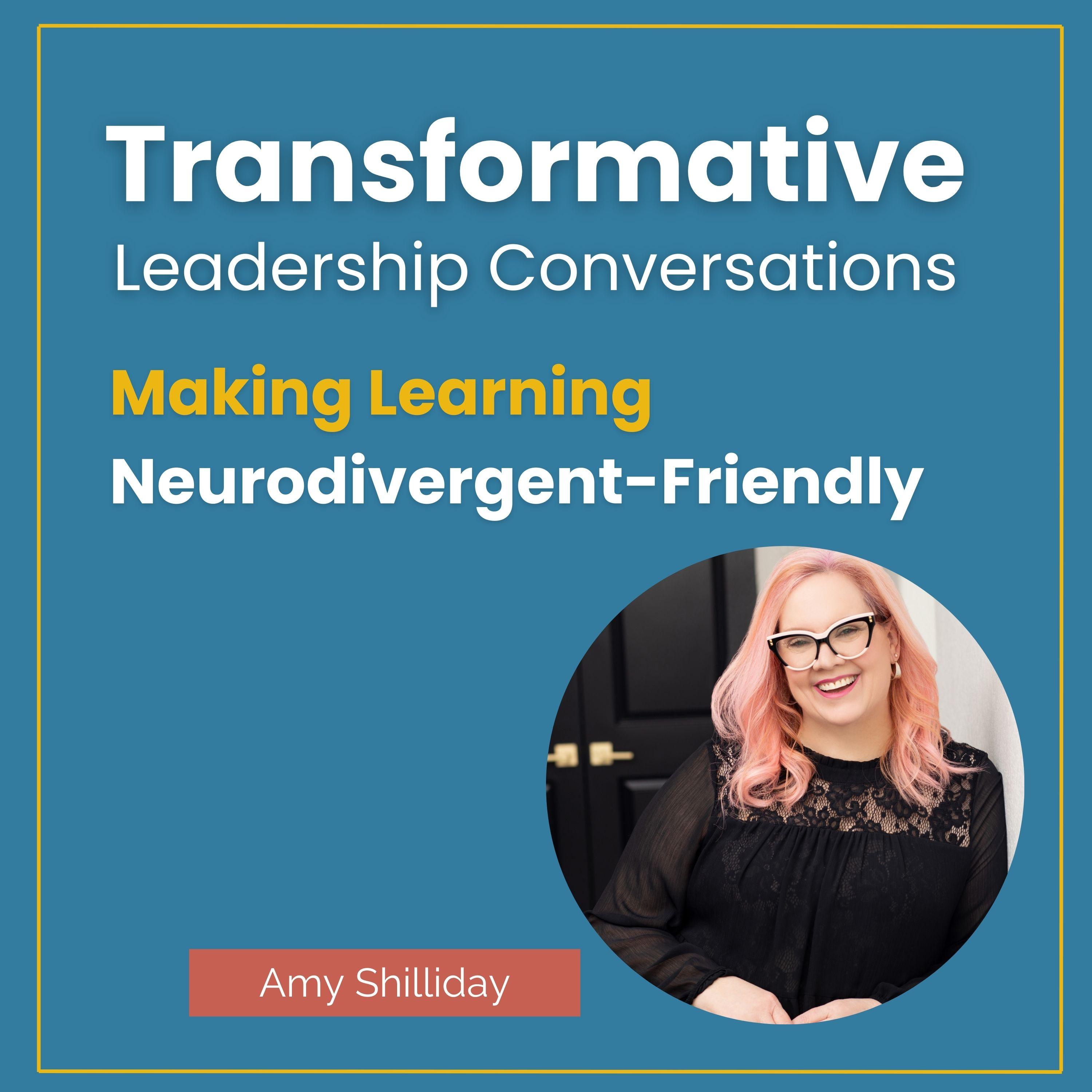 Making Learning Neurodivergent-Friendly with Amy Shilliday | “People with ADHD aren’t asking for sympathy. They’re saying: here are my pain points and here’s what I need in order to be successful.” - Amy ShillidayWhat if the very traits we often label as “challenges” are actually hidden superpowers? And what would it look like if leaders truly understood how to support neurodivergent employees - not just to cope, but to thrive?In this episode of Transformative Leadership Conversations, I sit down with Amy Shilliday, a learning experience designer, neurodiversity advocate, and founder of Shilliday Vaughan Consulting. With over 25 years in corporate learning and development, Amy has seen firsthand how small shifts in the way we design learning and lead teams can completely change the game - not just for those with ADHD or other neurodivergent profiles, but for everyone.You’ll hear us discuss:Why ADHD and other neurodivergent traits are less about deficits and more about different operating systemsHow “universal design for learning” can transform training and onboarding for every employee, not just somePractical ways leaders can coach team members with ADHD without micromanaging or labelingThe power of disclosure - when, how, and why someone might choose to share their diagnosis at work or in an interviewWhat leaders with ADHD themselves can do to embrace their strengths, manage their energy, and lead authenticallyWhy self-care isn’t optional and how burnout shows up differently for neurodivergent professionalsResourcesAmy Shilliday on the Web | LinkedInThe UDL GuidelinesEdge Foundation (Sir Richard Branson)Feel Good Productivity (Ali Abdaal) - An excellent way for anyone, especially ND folks, to set realistic goalsWhen All Minds Thrive (Saskia Schepers) - Helps leaders realize the benefits of and support methods for ND employeesWinnie da Silva on LinkedIn | On the Web | Substack | YouTube | Email - winnie@winnifred.org | — | ||||||
Showing 25 of 120
Sponsor Intelligence
Sign in to see which brands sponsor this podcast, their ad offers, and promo codes.
Chart Positions
1 placement across 1 market.
Chart Positions
1 placement across 1 market.